
WINTER/SPRING 2026
LETTER FROM THE PRESIDENT
Dear Members,
Just a brief note to thank everyone who attended a Zoom talk, or a meeting in Boston over the past year, your support of our organization is always welcomed and appreciated. Zoom talks allow us to engage speakers who would never have been able to travel here and address the Club in person, and our meetings in Boston allow us to keep in touch and learn from members and friends who we don’t always get to see.
So going forward we strongly encourage, as always, you to renew your memberships for the next program year as soon as you can (and not forget!) and consider perhaps giving a presentation yourself on a subject that interests you. In addition, Program Director Anne Lanning is always looking for new speakers, so if you know of, or have read about, someone with an interest or expertise in a certain subject that you think would be of interest to our group, please contact Anne with any names or suggestions.
Have a great summer,
Martha Pinello President
Page 1
‘CERAMICS STORIES’ BEGIN OUR WINTER /SPRING SEASON
For the first program of the CSC Winter/Spring season Program Director Anne Lanning introduced our guest speaker via Zoom, the well-known Rob Hunter whose career spans forty years as a professional archaeologist and ceramic historian. Rob specializes in ceramics at colonial period sites as well as recently concluding a tenure as editor of Ceramics in America, a publication of the Chipstone Foundation as well as writing numerous articles himself on a wide range of ceramic subjects. His presentation for our club was entitled Ten Ceramics Stories from Wedgwood to Disney having arranged his presentation around a collection of vignettes that reflected his ceramics journey.
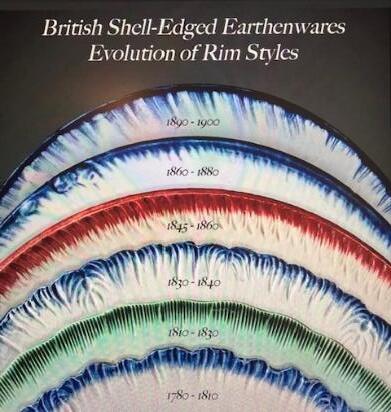
Rob began with the moment that launched his interest in historical ceramics when, as a young archaeologist in 1978 he discovered a group of Pearlware shards that dated to 1780. He was amazed that fragments could be dated so specifically. Having later found a shell-edged dish in a local antiques shop he thought he had found an 18th century treasure. He later discovered that the dish was made about 1910. He was embarrassed by the error and vowed to learn everything about the subject. There were endless volumes dedicated to the numerous categories of English ceramics, but nothing had been written on the humble shell-edged patterns. Rob threw himself into researching the humble shell-edged patterns, collecting hundreds of pieces along the way and writing articles and a book that basically launched his career in historical ceramics. See below…
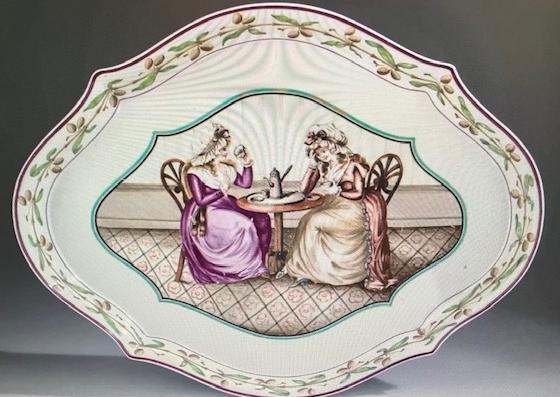
Rob acknowledges that making mistakes is a large part of the learning process and as collectors he hopes that we may benefit from other enthusiasts’ mistakes as well as our own. Rob recalled the time he visited Alistair Sampson’s shop in London; he was the premier dealer in English pottery and Rob discovered a remarkable tea tray there which he knew would have great interpretive value for an American museum. (See above right) The tray’s label declared it a rare example of Staffordshire Pearlware, circa 1790, attributing it to James Neale and Robert Wilson. Rob acquired the piece and had it shipped home. Upon unpacking his treasure, he held it up and noticed he could see the shadows of his fingers through the tray. How could this be as Neale & Wilson made cream and pearlwares which are never translucent? Upon extensive research, Rob discovered that
Neale & Wilson briefly experimented with making a translucent ware but abandoned the project. Rob’s tray was a truly rare survivor. The moral of the story being that one can sometimes find a treasure almost anywhere with a little knowledge and a little luck.
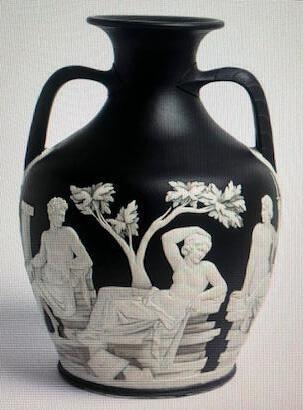
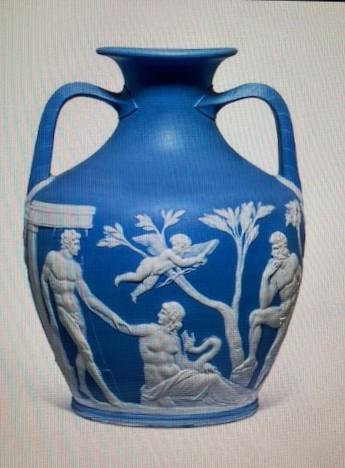
As Rob’s background is in archaeology he has always been attracted to the story of the Portland Vase and the eventual copies made by Josiah Wedgwood. It was one of the discoveries that changed the course of English ceramics in the 18th century and underlies Wedgwood’s interests in Greek, Roman, Etruscan and Egyptian antiquities. The Roman glass Portland Vase inspired Wedgwood to years of ceramic experimentation and to recreating this masterpiece. And it was an unexpected opportunity that arose to connect the Wedgwood vase with an American historic site, namely Drayton Hall in Charleston South Carolina. It seems the owner of the grand plantation house, Charles Drayton, made an 1802 journal entry in which he mentions a ‘Barberini’ (Portland) vase amongst cargo on an arriving ship. Was it a Wedgwood first edition, or made by another maker, or a plaster copy? Well, we’ll probably never know, but as an American Wedgwood afficionado, Rob would like to think it was the real thing. (See below)
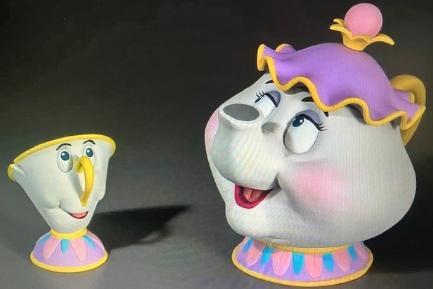
This Wedgwood connection to a specific person or family is just part of an overall world connection with ceramics in human history. Rob maintains that no matter the time or place potters can be seen as creators, alchemists, conjurers, and magicians. Across the world, creation myths regard the making of pottery as a powerful spiritual act in which the shaping of the world was analogous to the shaping of clay. God made Adam from earth, Eve was created from a rib - an item also a tool used to shape clay. Pots have lips, mouths, necks, shoulders, bodies, bellies, waists and feet, not to mention the phrase ‘Mug-Shot’ as a reference to the human face. No one understood the anthropomorphic connections between people and pottery better than Walt Disney as exampled here by two of his characters from Beauty and the Beast: “Mrs. Pot” and “Chip”.
One of Rob’s favorite books on pottery-making cultures is The Jealous Potter by Claude Levi-Strauss in which the author makes several observations: To this day the word “pottery’ mirrors the magic involved in its creation and the struggle with forming a vessel from earth through the use of fire (revered by many ancient cultures as magical as potters use it to ‘trick’ the clay into another form. To this day the word ‘potter’ mirrors deep-seated ideas of creation, transformation and life itself.
Ceramics have been made throughout the world for at least 10,000 years, but it wasn’t until the Chinese Tang Dynasty (618-907) that potters developed the secret of making hard, translucent porcelain with the use of a secret component - kaolin clay. The Chinese monopoly was broken when Augustus the Strong of Saxony financed the alchemist Frederick Bottger, who then discovered the porcelain recipe in the early 18th century. Surprisingly, the next big development didn’t take place in England or France, but the Carolinas when a Philadelphia potter, Andre Duche, discovered kaolin deposits and developed a porcelain body. The main kaolin deposit was known as Cherokee Clay which was shipped to London to supply manufacturers there who created hard paste porcelain tea wares c. 1744-1745. This small group of “A Wares” (for the single ‘A’ mark on the reverse of the pieces) are extremely rare today and are mostly in museums. See below
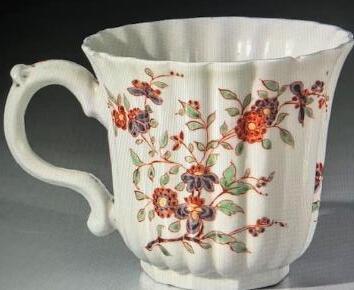

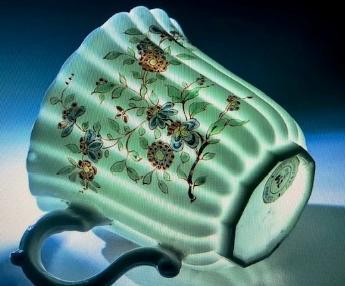
The mystery surrounding hardpaste porcelain in America got more interesting in 2016 in Philadelphia when a series of excavations yielded a group of both imported and Philadelphia made wares – one of which - a small punch bowl of unusual body and translucency proved to be of Philadelphia origin. Since then three other examples have come to light.
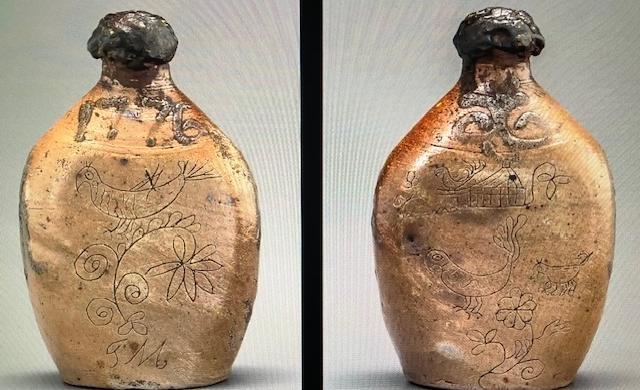
As for stoneware, one of the most fascinating examples that has come Rob’s way was a small saltglazed pottery flask associated with pottery owner Capt. James Morgan of Middlesex County, NJ. And is dated 1776. The mouth is sealed with resin or wax to hold the spirits, and the decoration closely resembles that of powder horns of the period and this specific piece icludes an image of a mythical being the ‘Jersey Devil’ whose name lives on today in the state’s hockey team.
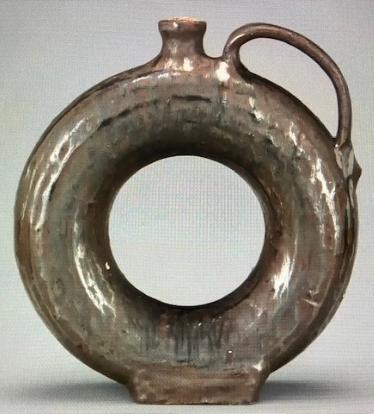
Ceramics have always been associated with magical qualities. One such form is the ring bottle which has an association going back to classical antiquity – from Greece, Rome and later, medieval Europe. A ring bottle of American origin appeared at auction and Rob acquired it, with an inscription along the foot for a Dr. Peter Davis, and dated 1888. Dr. Davis was actually involved in the practice of ‘Hoo-Doo’, which in the American South of the 19th century was a large part of African culture.
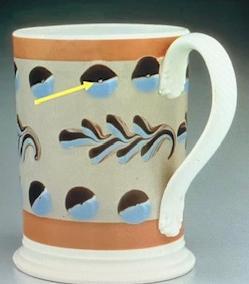
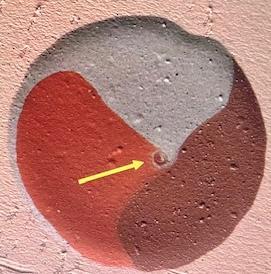
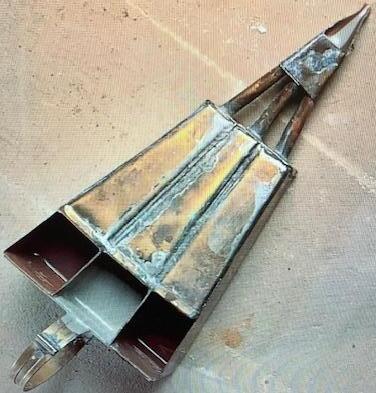
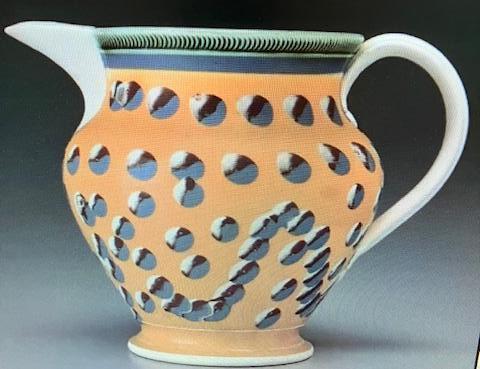
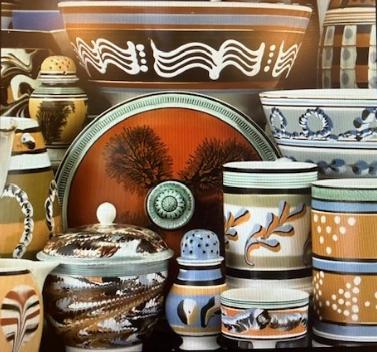
Some of the most magical of British ceramics for Rob are the so-called Mocha wares, both in their appearance and in the technology used to produce them, e.g. the ‘Cats Eye’ circle which one sees frequently in this decoration always has a small circle near the drop’s center. This is produced by a special tool that contains three colors of slip to fall onto the vessel’s surface (See below third image). These cats’ eyes can be dripped in succession forming a line called cabling. With the introduction of transfer printing in the ceramics industry uniformity and conformity of patterns was made possible. So how do we consider mocha ware where each piece is different, the only structure is that imposed by the object itself? The fluid slip is applied by hand, directed by chance and gravity allows for the creation of each unique specimen. The emphasis is on improvisation, creation and the expressive hand of the maker.
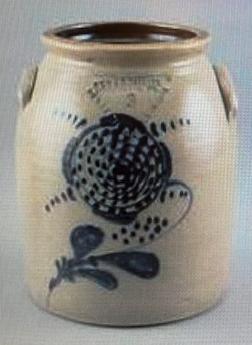
No matter how long and hard we study, new insights change how we look at things. Rob has long been interested in American stonewares, a product that was made in this country throughout the 19th century. Crocks not only provided a much-needed function – the safe preservation and storage of food – but also provided much needed decoration to the domestic interior. Rob sees a connection between these often boldly painted crocks and the modern-day refrigerator: providing both decoration and function to our kitchens. From the Lascaux cave paintings to 19th century crockery, and beyond this ancient need to embellish our environment underlies all the decorative arts studies.
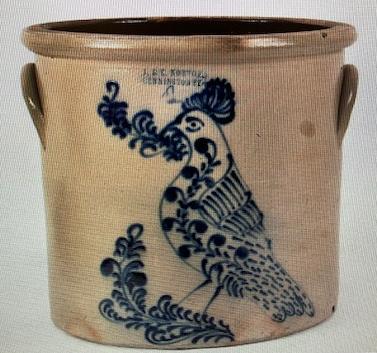
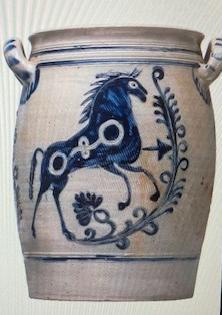
In conclusion, Rob’s advice to us all was that “You should never stop looking and always look with fresh eyes and an open mind” .
FEBRUARY IS ‘WORCESTER MONTH’
The CSC convened, on a very cold and snowy February day via Zoom which allowed members to enjoy a brilliant talk on Worcester porcelain from the comfort of their own homes. Our speaker, Christine Gervais, was introduced by Program Director Anne Lanning as the Curator of Decorative Arts, the Museum of Fine Arts, Houston where, since 2002, she’s been responsible for the acquisition, research, and exhibition of pre-1900 decorative arts. Her talk was entitled Luxury in Worcester Porcelain in the Rienzi Collection.
For those of us who haven’t visited the Rienzi Collection, it comprises one of two house museums owned by MFA Houston. The superb collection of Worcester – part of a jaw-dropping collection of fine and decorative arts – was assembled by philanthropists Carroll Sterling Masterson and her husband Harris Masterson III. Harris appears to have been the collector and Carroll, who descended from Texas oil money, appears to have financed his addiction. Harris started to collect in London while stationed there during World War II, he acquired over eight hundred pieces over his lifetime reflecting both his individual taste and providing a thorough overview of Worcester’s production. The collection is especially strong in examples from the late 1760s into the 1770s, as Page 6
well as from the late 19th/early 20th century, in addition to examples from the early 19th century Flight & Barr period. It is this expansiveness of examples which sets the Rienzi Collection apart from others.
The Worcester Porcelain Factory began in 1751, located on the River Severn with a partnership agreement of fifteen stockholders, the ‘inventors’ of the ware being physician John Wall and apothecary William Davis. Their goal was to produce wares to compete with Chinese export porcelain, and, like their competitors, they unable to create hard paste porcelain. So instead, they mixed white clays and ground glass to create a translucent and vitreous soft paste porcelain which could accommodate both under and over-glaze decoration. In 1752 the partners purchased Benjamin Lund’s Bristol porcelain factory, allowing Worcester to use soap rock in its formula. This led Worcester wares to be more resistant to cracking when in contact with hot liquids which in toun allowed the factory to focus on tea and coffee ware production. Once this formula was established, they moved on to a wider variety of forms and decoration such as cream boats, sauce boats, and jugs in addition to tea and coffee wares.
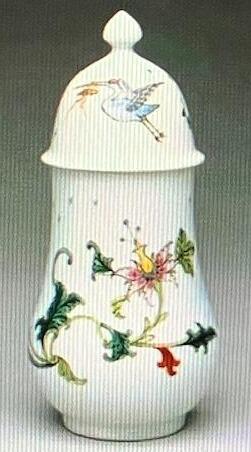
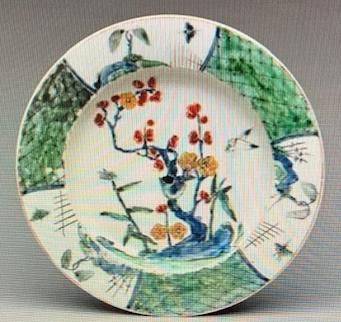
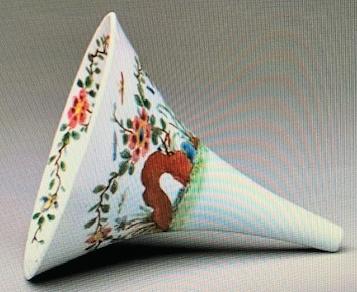
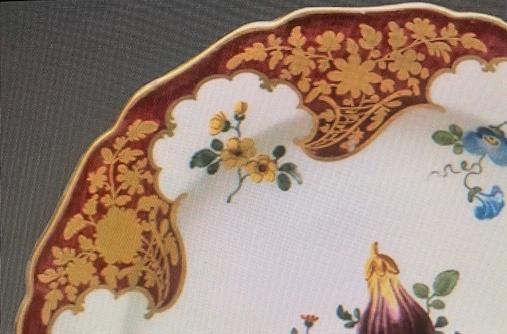
C. 1758 Worcester Mustard Pot with a Chinese-themed design referred to as the ‘Honeysuckle’ or ‘Hibiscus’ Pattern. Dry mustard was reasonably priced and was a popular accompaniment to unseasoned meats or fish. CENTER: a Worcester plate with decoration after Japanese kakiemon colors and designs – the factory rarely copied Asian or European designs directly but interpreted them, using them as inspiration. RIGHT: Chinese and Japanese inspired designs decorate a very rare Worcester wine funnel circa 1753-1755.
During the 1760s, Worcester introduced blue and white decorated wares, some with ‘powder blue grounds’ – a technique which required blowing the powdered blue color through a gauze-tipped straw; producing a finished product with an overall blue ground. Over 214 blue and white patterns were produced at Worcester. Page 7
LEFT:
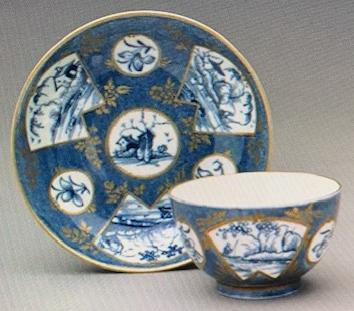
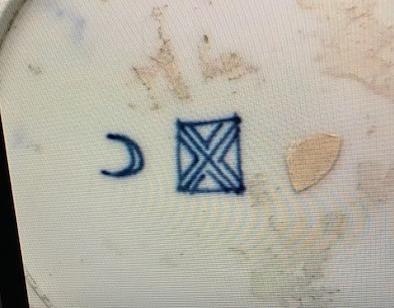
LEFT: A ‘Powder Blue’ ground is used here to great effect to show off the fine hand-painted gilded decoration on this tea bowl and saucer – note the Chinese inspired landscapes within fan-shaped reserves. Circa 1760s. RIGHT: To continue the exotic Asian theme, faux Chinese style marks were added to the bottoms of pieces.
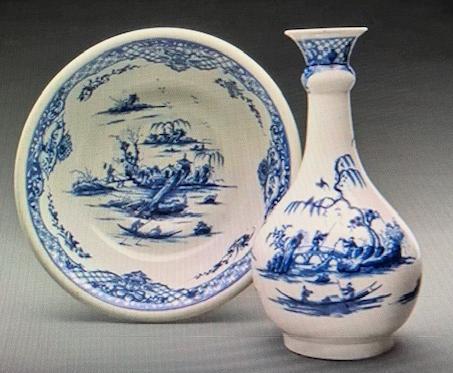
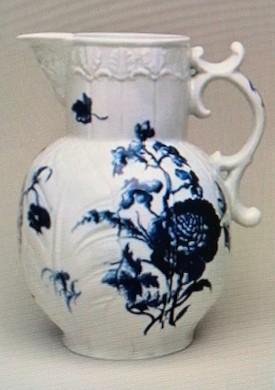
LEFT: Guglets and Basins were created to be placed in bedrooms for washing; they were a relatively short-lived product replaced in the early 19th century by open jugs. The boating and water motifs on these two pieces are decorative and reflect their contents. Circa 1760s. RIGHT: The jug, referred to in the period as a ‘Dutch Jug’ in Worcester inventories, was most likely used to serve cider or other alcoholic drinks.
During the late 1750s Worcester was starting to look at other European factories for inspiration such as Meissen and Chelsea for color palettes including European landscapes within reserves amongst trailing flowers. The factory excelled at this sort of decoration.
From the late 1760s, Sevres replaced Meissen as the biggest influence on Worcester’s products, although it is important to emphasize that Worcester did not copy or completely ‘knock-off’ competitors’ products but rather preferred to interpret and be inspired by others’ work and make it their own. See next page…
Page 8
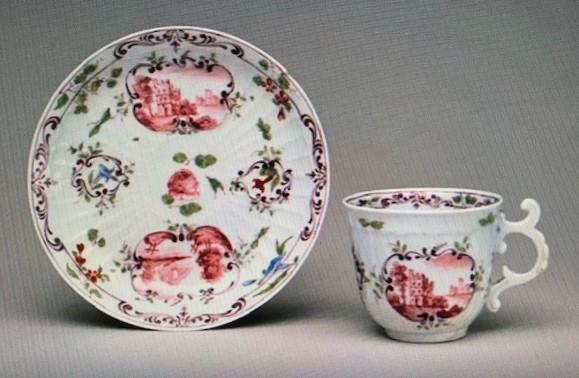
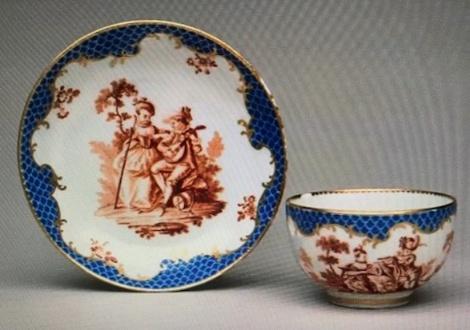
Left: Circa 1750s Meissen-inspired teacup & saucer. Right: Circa 1770s Sevres-inspired tea bowl & saucer with figural painting in the manner of Antoine Watteau.
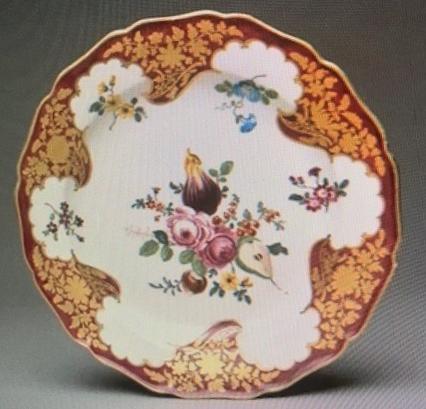
During the 18th century it was not uncommon for factories to have well-known decorators render designs for them, the most notable was James Giles who maintained an atelier in London and was well-known for bird, fruit, and flower designs of this period – Worcester supplying him blanks to be painted. Another decorator of the period, Jefferys Hamett O’Neale, actually worked from 17601770 at the Worcester factory. BELOW LEFT & CENTER: Examples of the Hope-Edwards service, circa 1770, demonstrating the level of skill and quality produced by James Giles. RIGHT: An example of the work of Jeffreys Hamett O’Neale, circa 1766, who worked onsite for Worcester.
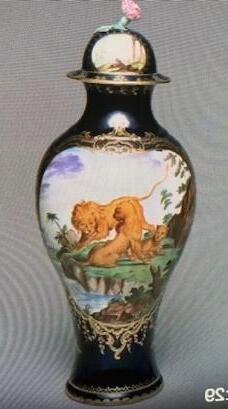
Although Chelsea, Bow and Derby manufactured figures from the 1750s onward, Worcester was not recognized until the early 20th century for its work in that form. 18th century figures from Worcester do not have the spirit, delicacy, or balance of the figures of other factories as the soap rock clay at Worcester did not lend itself to modeling. But although they are not the finest figural work of 18th century, they are rare and sought-after as so few exist.
Other interesting forms from Worcester in the Rienzi Collection from the later 18th century is a fine Ice Pail dating to the 1760s; the form is rare as they were made in three pieces and few were produced. There is also a Punch Pot – basically an over-sized teapot, but it lacked the strainer in the pot at the base of the spout. And lastly, the Collection has a plate in the ‘Duke of Gloucester Pattern’ from a dinner service made for the brother of the George III. An earlier similar service was commissioned from Chelsea, but the quality did not meet the Duke’s approval and a second service was ordered.
Page 9
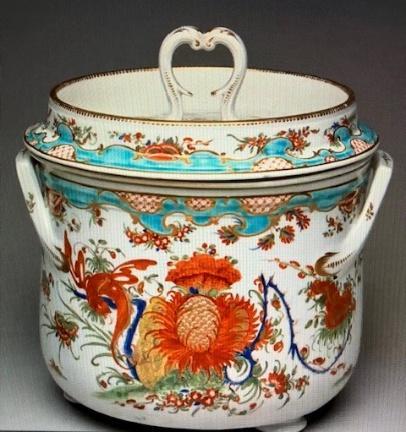
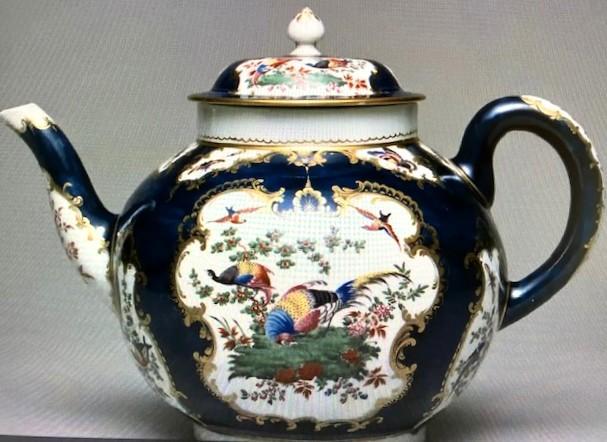
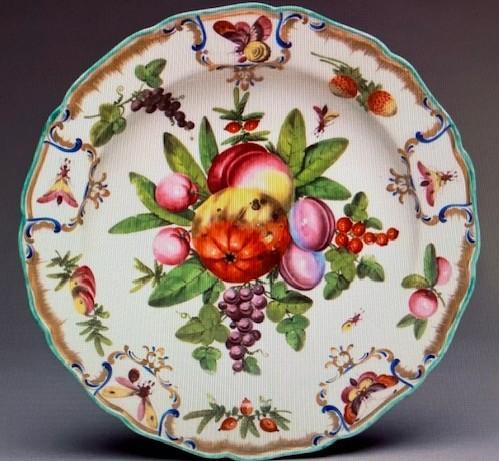
LEFT: An ice pail in the ‘Jabberwocky Pattern’ based loosely upon Japanese designs – although the turquoise border is more of a European conceit. The pattern name is probably a later title, most likely made up by an antiques dealer to make it sound more exotic. CENTER: a superb Punch Pot hand-painted with vibrantly colored Japanese birds with flower sprays in reserve against a ‘Blue Scale’ ground – motifs borrowed from Sevres porcelain. RIGHT: a plate from the famed ‘Duke of Gloucester service – This was the first royal commission from the Worcester Factory, circa 1773.
In 1783, Dr. Wall dies and, by this time, Worcester has lost its position as one of the most successful and innovative factories due to Wedgwood, Liverpool and Caughley. Thomas Flight, a London jeweler and banker, steps in and acquires the factory. In 1788, George III visits the factory, praises its work and grants it a Royal Warrant; this patronage permits the expansion of the company. Thomas Flight travels to France and visits the firm of Diel & Garrard and enters an arrangement with them to supply French porcelain blanks to the London shop providing ground colors, gilding and new shapes. There remained though, at Worcester some remarkably talented decorators and gilders and the factory retained its reputation for some of the highest quality work in the industry. One such talented gilder was Charlotte Hampton who was highly regarded and instructed others in the art working at the factory from 1785-1790.
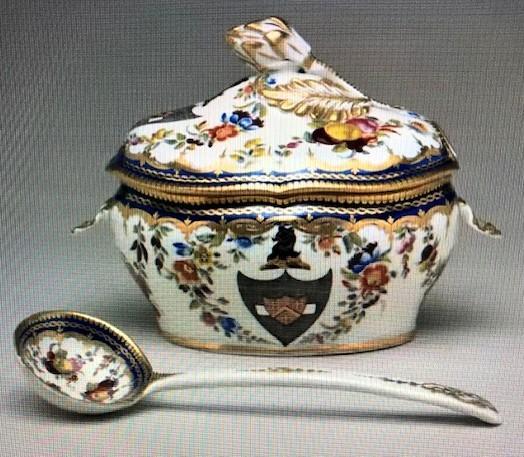
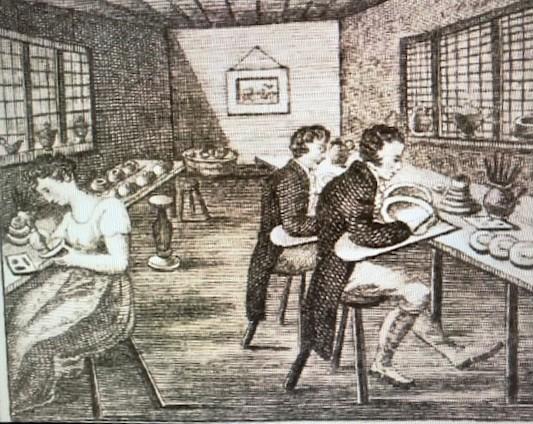
Above Left: An example of Charlotte Hampton’s gilding on this elegant dessert tureen and ladle. Right: A period print of a porcelain factory’s decorating studio – note the woman decorator. Page10
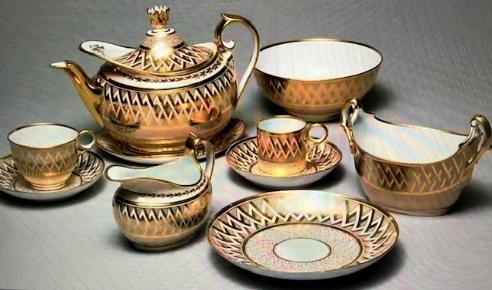
As the factory moved into the late 18th and early 19th century it continued to maintain the highest standards of decorating and quality. George III ordered a service in 1788, and his son, the future William IV ordered the famous ‘Hope’ service which reflects the interest in a more classical style as by the early 1800s shapes and forms conformed to a new classical, Napoleonic’ look.
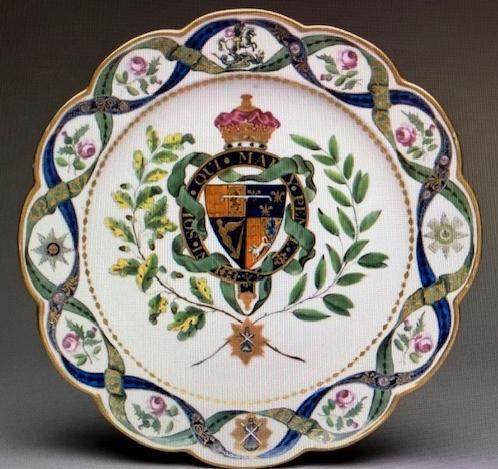
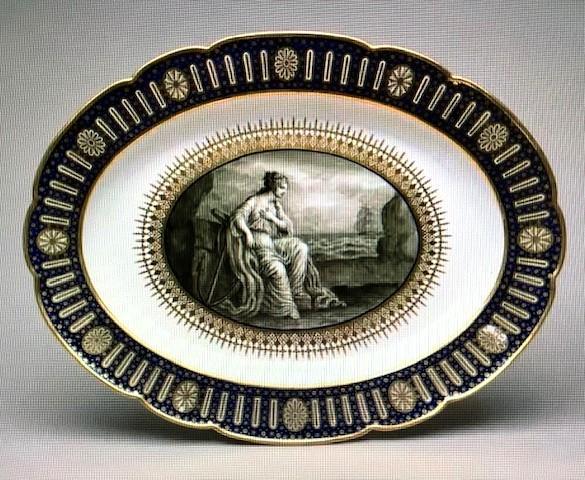
ABOVE LEFT: A plate from the service ordered for George III, the central ring around the shield inscribed “Honi Soit Qui Mal Y Pense” from the Order of the Garter; ABOVE RIGHT: An oval dish from the ‘Hope’ service ordered by William IV with superbly rendered grisaille images of Hope within finely detailed gilded and cobalt blue borders. BELOW: A Worcester teaset from the first decade of the 19th century reflecting the decidely classical look in form, the gilding of the highest quality.
Our speaker concluded saying this was all just the ‘tip of the iceberg’ and invited everyone, when next in Houston, to visit the Museum of Fine Arts! Page 11
FELLOW MEMBER /PROFESSIONAL POTTER TELLS HIS CERAMIC STORY IN MARCH
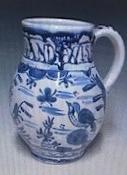
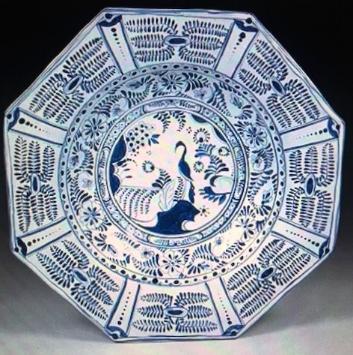
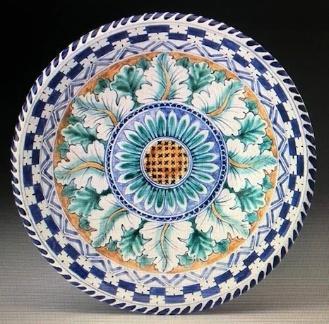
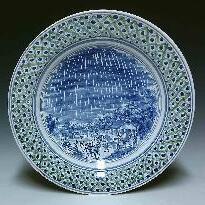
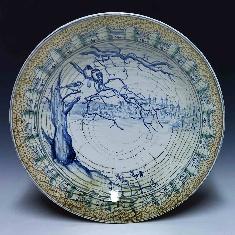
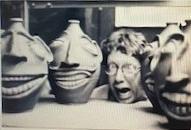
Our March program continued as a Zoom presentation with our annual Vivian Hawes Lecture, it being our annual commemoration of this longtime member, past president, and much-respected ceramics scholar who did so much for our organization. Program Director Anne Lanning welcomed fellow member Steven Earp as our speaker who established Steven Earp Redware in Shelburne Falls, MA in 2004 and has written many articles on the subject. His talk was entitled A Potter’s Journey into the World of Delftware which was a stylistic study, mostly through the world of plates and chargers that he has inhabited over the years, along with their influence on the objects that he has created.
His journey began in the early/mid 1600 where there was a group of Dutch potters mimicking Chinese porcelain. He observed that almost everything you see in delftware is linked to Chinese porcelain and its trail of influence on northwestern European markets. This well-known timeline seems, though, to neglect Chinese influence on earlier cultures such as Egyptian, Iraqi, Persian and Uzbeki – it basically leaves its influence on the entire length of the Silk Road. Chinese influence also traveled along the northern African continent from Morocco, into the Iberian Peninsula and thus on to Mexico with colonial rule, as well as into Byzantium in the 13th century, and Turkey and the Ottoman empire by the 17th century.
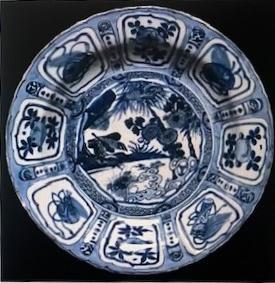
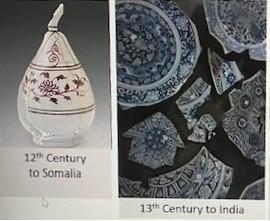
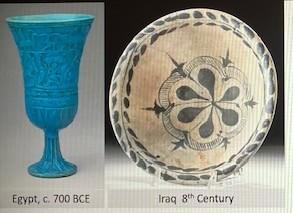
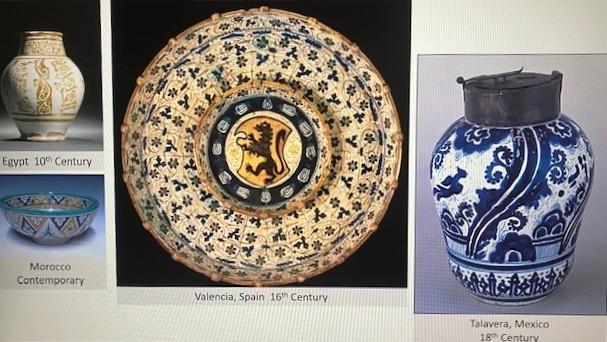
TOP LEFT: Image of an early 16th century Chinese Kraakware charger; the other images all illustrating the scope of Chinese ceramic influence across the globe and the centuries. Page 12
Due to violence and dislocation caused by the Reformation and Counter-Reformation, some Protestant potters and their communities moved north and out of Italian pottery centers to more welcoming Moravia in modern day Austria and the Czech Republic.
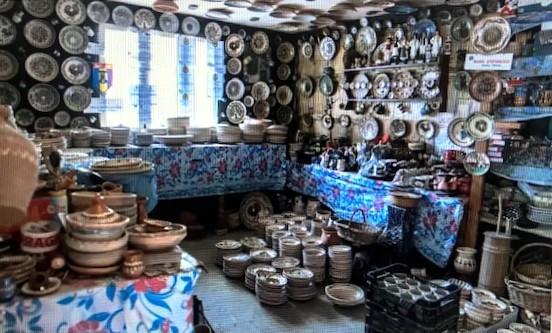
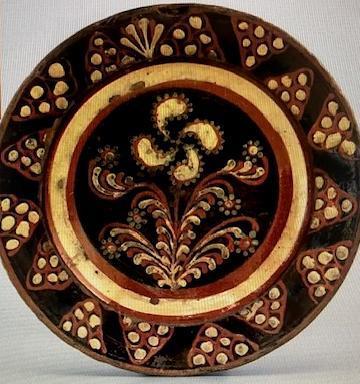
Contemporary Pottery Shop, Romania. Right: Slipware Plate, Alamance County, NC, c. 1830
These Hobbeners (as they were known) spread their “Hobbenerware” through Eastern and Central Europe where their influence can still be seen in the pottery of these regions. Some of the more adventurous of this group emigrated, ending up in North Carolina adapting to local geographic and geologic conditions to create Moravian slipwares (Above Right).
Back in Europe, France, England, and the Netherlands were all developing their own versions of faience in the early 17th century and this spreads into faience developing all over Europe. Dutch traders made their way to Japan and shared their concept of Petit Feu, or low-fired enamels, with potters such as the Kakiemon family with whom it became a specialty. Of course, the Chinese, not to be outdone, adapted the technique, which was made mostly for export, where it is referred to as Famille Verte today.
In England, delftware spread quickly to Scotland, Wales, and Ireland. And by the early 19th century pretty much every country in Europe was producing its own porcelain or delftware. See below:
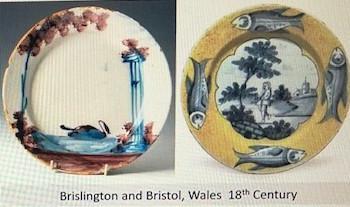
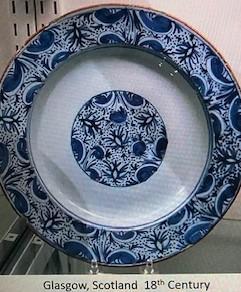
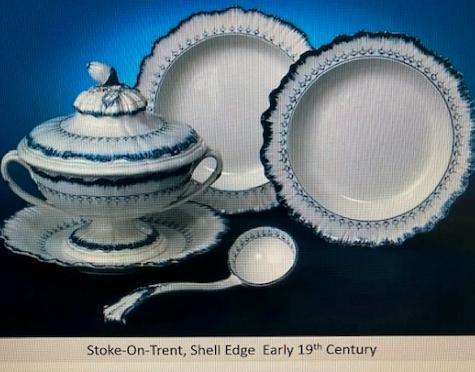
13
Left:
After our world-wide whirlwind of the history of delftware, Steven gave the group a little background into how he got interested in delftware. In the 1980s, as a nascent potter he was part of a large group that looked to expanding beyond and adding to the standard Western ceramic timeline to include other cultures, people’s voices, and aesthetics from around the world. One of the takeaways from his early experiences was how many potters from around the world associate their work with the places they live and where they come from. Steve wanted to incorporate this concept into his own work, but it was at this point, Steve realized how little he knew about the pottery and work in his own backyard of New England. It was at this point his education continued at the Hervey Brooks Pottery at Old Sturbridge Village…
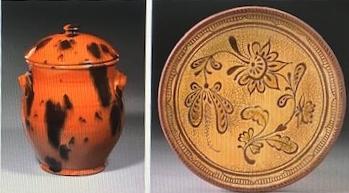
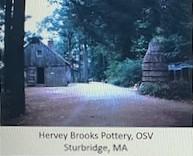
Since some of the early wares of western Massachusetts were delftwares, he thought he should try his hand at it. He was eventually approached to replicate originals in museums’ collections for their gift shops. Through this process he came to believe that replicating an object is the single most common way to learn about making and decorating pottery. From this experience he learned such techniques as sponging, sgraffito, and powdering. Starting with blue and white wares with foliate designs, he moved on to polychrome pieces, and eventually what he thought the most difficult – the rendering of people. His journey and work continues today…..
A CLUB FAVORITE ‘BITS ‘N’ PIECES IN APRIL
On April 23rd members gathered at the King’s Chapel Parish House for a perennial favorite: Bits “N’ Pieces meeting where members bring in objects from their own collections for discussion. As usual the objects on display represented the variety of interests of our members but despite it being a perfect Spring day, attendance was lower than previous programs. What was presented, though, was interesting and varied, and as usual, came with a story…
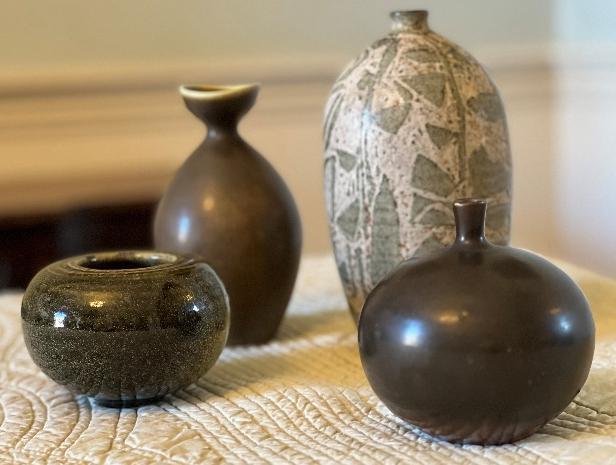
First, a group of mid-20th century wares, brought in by Martha Pinello, accompanied by a rather detailed and interesting back story. The pieces were created by Charles and Martha Dickinson, both born in 1928 in the southern U.S., Charles was from Alabama, Martha was from Kentucky. Charles’ family migrated to Detroit where Charles attended Cas Technical High School – a magnet school to train young designers and engineers for the motor industry. He then received a BA in art history from Columbia, graduating Phi Beta Cappa before going on to Cranbrook Art Institute where he got an MFA in Graphic Design.
Martha Dickinson was born in Kentucky into a farming family, but her father died three months after she was born, and her mother had to move the family to Detroit where she found work in a factory. Martha’s mother and her older siblings put Martha and her brother through college. Martha attended Cas Tech but didn’t meet her husband there. She then moved onto Wayne State University receiving a BFA and a MFA in painting, graduating with honors. During this time, she also studied ceramics and created beautiful incised and wax resist pots (one pictured above).
Charles met Martha at the A.J. Hendersen Advertising Agency in Detroit where Charles was an Art Director and Martha worked in production.
After marrying they moved to New York City where Charles got a job on Madison Avenue and Martha continued to paint, design posters for musicals, design the family Christmas card and create ceramics. Martha died at age 41. In the sixteen years they were together Martha and Chuck created a family and art together. Martha’s body of work is fully realized for such a young artist. What touched Martha Pinello was that these two people grew up with nothing, came from nowhere, and yet both overcame any obstacles and went on to have very fulfilling, creative lives together, Martha especially managing to paint and to create beautiful pottery. Martha speculated at how many other people have dealt with such obstacles and yet left some legacy of beautiful objects?
15
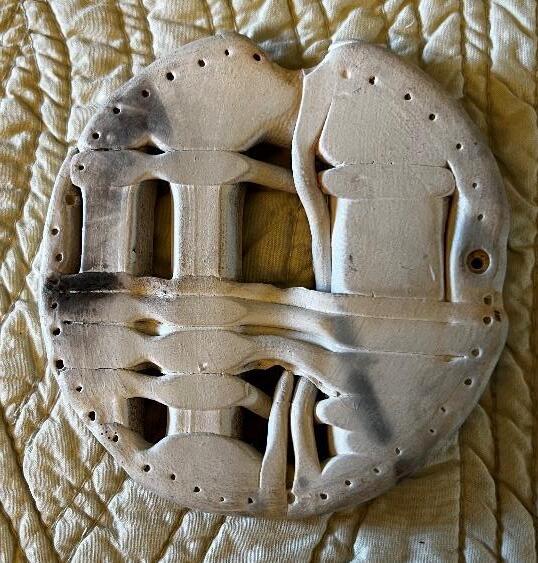
Abigail Homer brought in this abstract ceramic disc, measuring 3 ¾” in diameter and was created by contemporary ceramic artist Judy K. McKee who has pieces in the collection of the Museum of Fine Arts. Whether to be worn as a piece of jewelry or held and contemplated in one’s palm, its design and shape appeals and beckons.
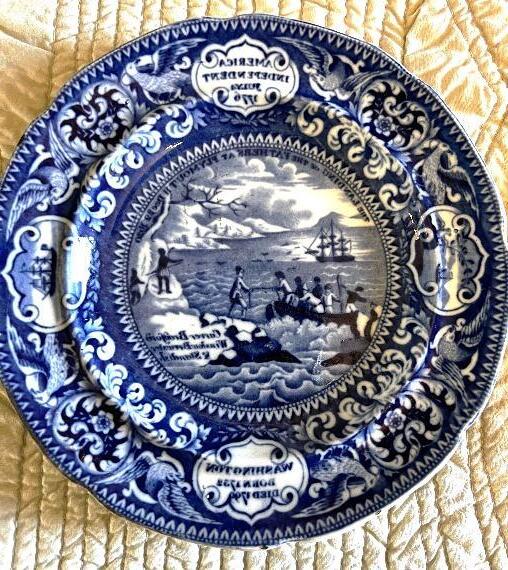
Carolyn Parsons Roy brought in two richly decorated transfer-printed commemorative plates. The first one on the left is inscribed THE LANDING OF THE FATHERS AT PLYMOUTH Dec 22 1620, ca. 1834-1846, produced by Enoch Wood & Sons, 1818-1846 Burslem, Staffordshire, Impressed mark “ENOCH WOOD & SONS/ BURSLEM” around an eagle with a shield Pearlware, transfer-printed in blue and about 6 3/8” in diameter.
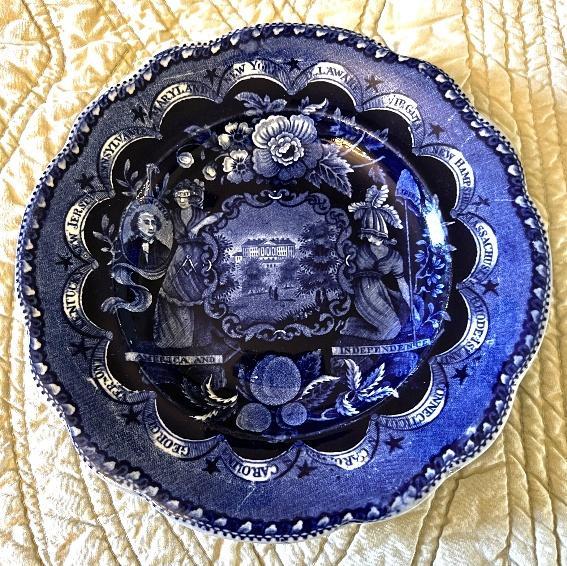
The second plate on the right is from the States Series or America and Independence Series. It is transfer-printed pearlware by Ralph and James Clews, Cobridge, Staffordshire, 1814-1834.
Page 16
It has an impressed mark “CLEWS WARRENTED STAFFORDSHIRE” in circle around a crown and also measures 6 ¾” in diameter. It is from the “States Series” and features a border inspired by a symbolic representation of the transition from a loose confederation of thirteen colonies to a bond ultimately representing the United States of America. Benjamin Franklin created and published the design of a chain of linked circles each with the name of one of the original colonies in 1776 for use on Continental currency. The following year the chain appeared on a silk Revolutionary War flag of the 2nd New Hampshire Regiment of the Continental Army, now in the collection of the New Hampshire Historical Society. Along with appliqued triangles creating a version of the Union Jack in the canton and a sunburst with thirteen rays in the middle of the flag, the legend “WE ARE ONE” is painted in the center of the sunburst, leaving no doubt as to the meaning. Thirteen gold-painted interlocking circles, each with the name of a colony painted in black, surround the sunburst.
Weaving national symbols such as Plymouth Rock, the Mayflower, and a border with eight American eagles in naturalistic poses, along with the names of the founding fathers: Carver, Bradford, Winslow, Brewster, and Standish, mention of Washington’s life dates and the date of America’s Independence, July 4, 1776 wares in this pattern were tidy packages that appealed to citizens proud of their history. It is important to consider that the central image was the work of artists working in America which was then turned into a commodity by a Staffordshire firm and sold back to Americans. By the end of the 19th century, commemorative plates were “perhaps more highly prized than any other historical Staffordshire wares, especially by all descendants from and lovers of the Pilgrims” according to Alice Morse Earle. Her book, “China Collecting in America”, first published in 1892 was an influential guide for collectors for decades afterwards.
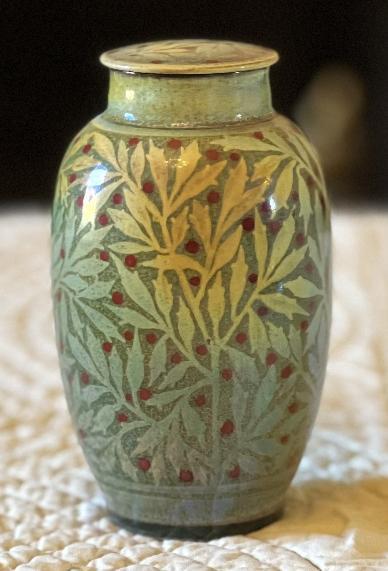
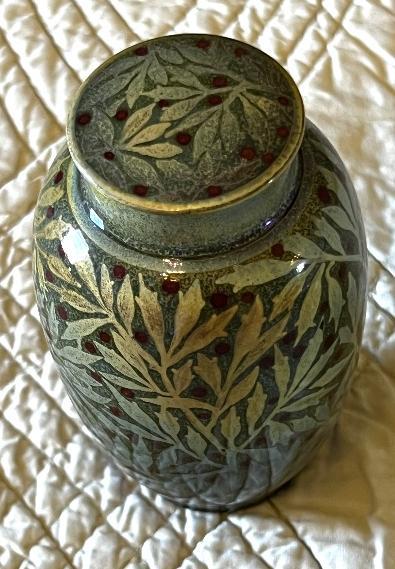
Member Nic Johnson always has a treasure or two to share with us and as usual he did not disappoint. First, he discussed a small, covered jar (first two images) that was made by the Pilkington’s factory in Lancashire which was well-known from the 19th century as a tile manufacturer. Around 1905 a man by the name of William Burton was engaged to set up an Art Pottery Studio with a goal to create Iridescent Lustre wares; this little covered jar is an example of these efforts. Page 17
Nic shared a period image of the staff of decorators – the usual cast of late Victorian bearded men in austere suits but remarked that he also knew there were women decorators as well on staff, but for some reason they weren’t included in the image. The best part of the story is that Nic acquired this charming piece fifty-five years ago from a lady with a large Pilkington’s collection in London whose father was William Burton had worked at the factory.
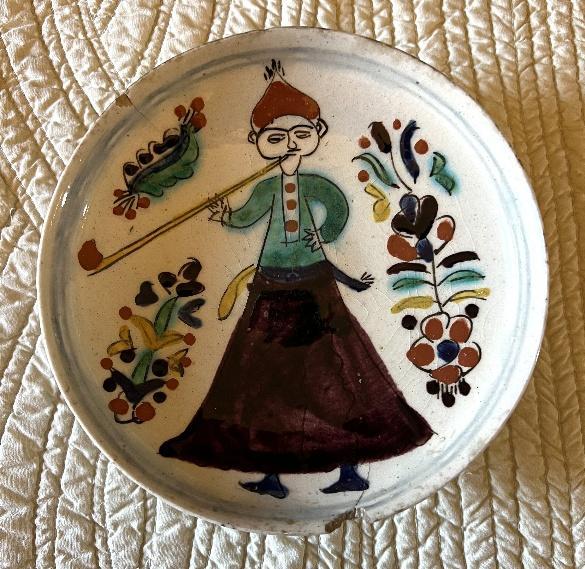
The third image includes a rare find of Nic’s, recently acquired on e-bay …it’s an 18th century Turkish Kutahya ware saucer. Most likely part of a tea/coffee surface, these souvenir pieces almost always have hand-painted figures, mostly of women, and occasionally men, surrounded with several stylized foliate/floral designs. An early catalogue refers to the women as ‘Courtesans’; the men usually have some attribute of their status; this fellow appears to have a pipe.
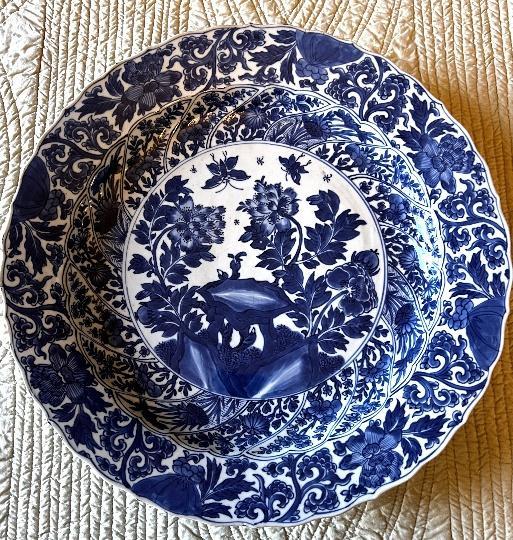
And the final contributions to the program were from yours truly, newsletter editor Jeffrey Brown, who shared some recent acquisitions, all of which came with a story, which seemed to have been the theme of the day. First, (left), a Chinese export porcelain 14” charger, dating to around 1690, from the reign of the Emperor Kangxi with overall floral decoration. One of a pair that came into prominent porcelain dealer Polly Latham’s shop about thirty years ago when I had just started working there. An acquaintance walked in, took one look at the chargers and bought them immediately! I was shattered as I had wanted them so badly. The gentleman collector has recently died, and I finally acquired them from the man’s estate after waiting 30 years. It is a prized addition to my collection as it has memories of a friend who was an astute collector from whom I have learned a great deal over the years.
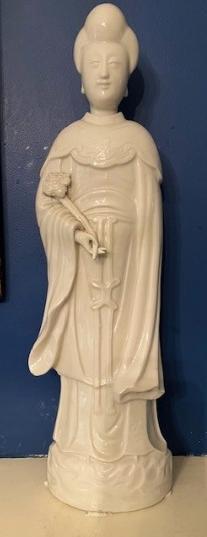
Second image, center, one of a pair of Chinese 17” figures of the Buddhist Goddess of Mercy, Quanyin, who is always seen holding a ruyi scepter which basically translates into “What you wish”. The figures were always in Polly Latham’s shop, like mascots, for at least 25 years, and when she closed, I finally acquired them – a reminder of my good fortune to have been able to work and learn for thirty years surrounded by such beautiful objects. They are also Kangxi period, late 17th century, most likely made in the pottery at Dehua where they specialized in white, undecorated porcelain wares. Page 18
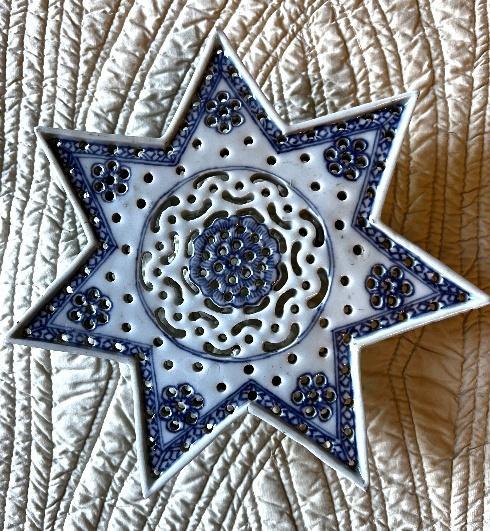
The third image is a Chinese export porcelain 8” seven-pointed star-shaped, footed trivet, late 18th century. Called Heptagrams, they have ancient and complex meaning and why they were chosen to be trivets is a mystery. They are rare forms as they were probably easily broken and discarded). One was in the sale of prominent dealer Elinor Gordon’s collection where it was catalogued as a “punch strainer” which would seem impractical (and very messy). Jeffrey recently acquired it from an online auction where it was described as a “punch funnel”! You can decide.
THE PROGRAM YEAR CLOSES WITH STORIES FROM THE MFA BOSTON
The Ceramics Study Club of Boston concluded its program season with an amazing presentation by Thomas Michie, long-time CSC member and now retired Senior Curator of European Decorative Arts & Sculpture at the Museum of Fine Arts Boston. The images he shared with us covered the period between 2015-2025 and included bequests and purchases for the museum as well as his tales of some of the remarkably generous donors, scholars, and friends that made these donations possible. Often a curator is seeking approval to obtain an object for which there isn’t even a gallery or category in which it can be placed, but if the piece is such an outstanding example that one hopes it will spark enough interest to encourage more interest and a new collecting direction. Thom had a long and varied list of beautiful objects from a wide range of museum friends and donors. What follows is just the editor’s choice of the diversity of ceramics acquired during Thom’s tenure.
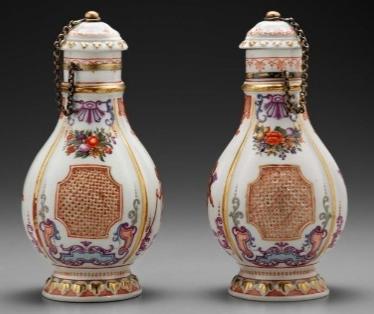
Above Left: Bettina Looram de Rothschild’s Du Paquier bath salts from Langau, the Rothschild country estate in southwestern Austria. Bettina was the daughter of Clarice and Alphonse de Rothschild of Vienna. The family fled Austria at the time of the annexation of Austria in 1938. Their art collections, library, and properties were looted-- and ultimately restituted to the family.
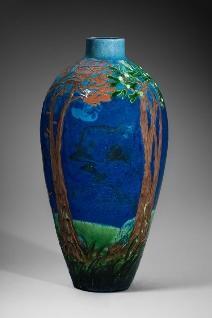
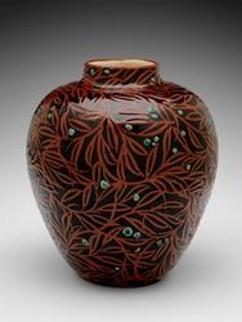
Above Right: L: Max Lauger, for Tonwerke Kandern factory, Germany. Ca. 1897 2015.3042
Lauger was a leading member of the German Arts and Crafts movement. Studied painting and interior design in Karlsruhe. He began designing ceramics ca. 1890 in the Art Nouveau style. His ceramics were sold by Siegfried Bing in Paris. Lauger won gold medals at the Paris 1900 and St. Louis 1904 World’s Fairs. Gifts of the late Parker Prindle, who bought these at Brimfield.
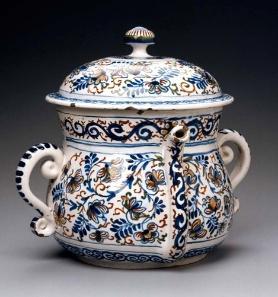
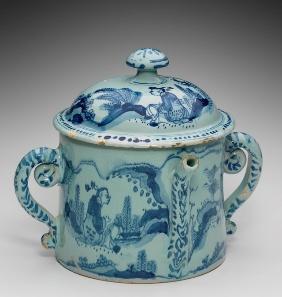
First Two Images: Posset Pot, about 1680, English, possibly Bristol Tin-glazed earthenware. Gift of Dr. Lloyd E. Hawes 62.1220a-b. Posset Pot, ca. 1680, English, about 1670-90. Tin-glazed earthenware. Gift of Frederick Vogel III and family in loving praise and honor of Anne H. Vogel on the occasion of her 75th birthday 2016.127a-b.
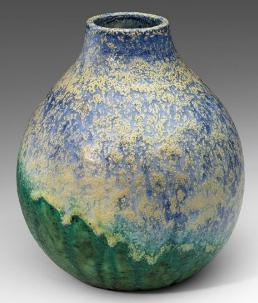
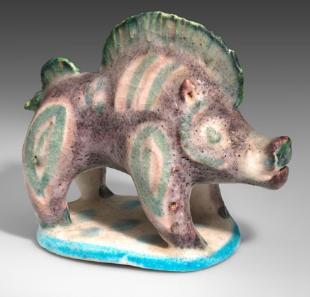
Third & Fourth Images: Marcello Fantoni (Italian, 1915-2011). Vase with volcanic glaze, about 1955. Glazed earthenware. Gift of Clifford S. Ackley 2022.189. Guido Gambone (Italian, b. 1909 - d. 1969). Wild Boar, about 1950-59 Stoneware Gift of Clifford S. Ackley 2022.190
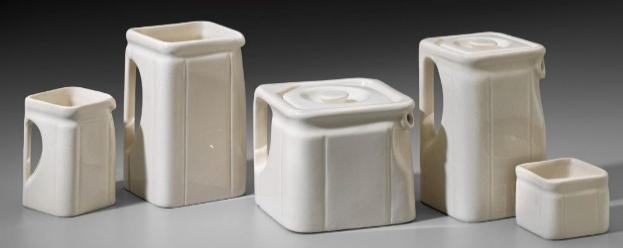
Above Left, Tea/Coffee set made for Cunard line steamships, used between 1920 and 1950. Slipcast. Made by James Sadler and Sons, ceramics manufacturer founded in Burslem in 1882, specialized in teapots (esp. the “Brown Betty” variety). No projecting spouts or handles made them easier for packing and transport and avoided chips. Probably used in 2d class (1 st class would have used plated silver. Gift of Joan L. Nissman and Morton C. Abromson of Brookline
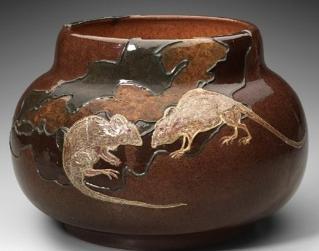
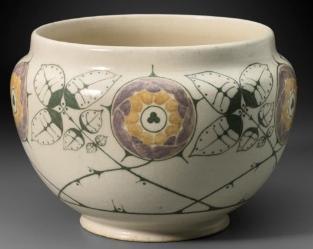
Above Right, Two Bowls; De Distel Pottery, Amsterdam, Brown Bowl, ca. 1899-1900. Factory was established in 1895, and early wares feature plant and animal designs. Cream Ground Bowl: De Distel Pottery, Amsterdam, ca. 1905. The Art Nouveau-inspired decoration on a matte ivory ground color was the specialty of Bert Nienhuis, the De Distel factory’s chief designer from 19001911.
Large gift of 39 pieces of Dutch art pottery from Justin Schiller and David Dennis. Book dealers and collectors of early children’s books, Chinese propaganda art, as well as Dutch modernist decorative arts and prints. Represent the estate of Maurice Sendak
Page 20
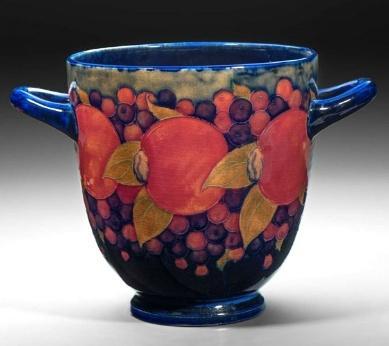
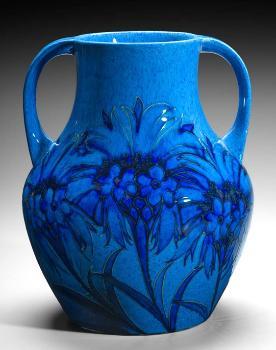
Lauger was a leading member of the German Arts and Crafts movement. He studied painting and interior design in Karlsruhe. He began designing ceramics ca. 1890 in the Art Nouveau style. His ceramics were sold by Siegfried Bing in Paris. Lauger won gold medals at the Paris 1900 and St. Louis 1904 World’s Fairs. Gifts of the late Parker Prindle, who bought these at Brimfield!
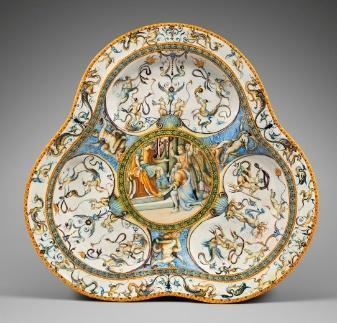
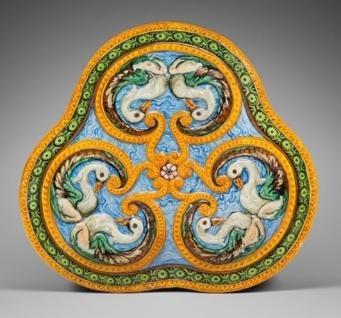
2021.150 Workshop of Orazio and Flaminio Fontana, Urbino. Trilobe Basin, ca. 1565-75
Tin-glazed earthenware, colored enamels. 18 x 18 in.
Grotesque designs on a white ground around a central medallion. Scene of Roman emperor with supplicants. The reverse molded with three pairs of stylized swans framed by scrolls and a small rosette in the center, set against a wavy blue ground in imitation of water.
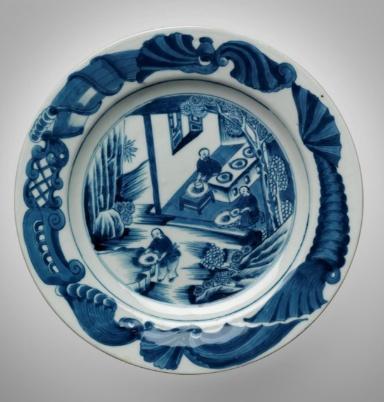
(Images, bottom. previous page)
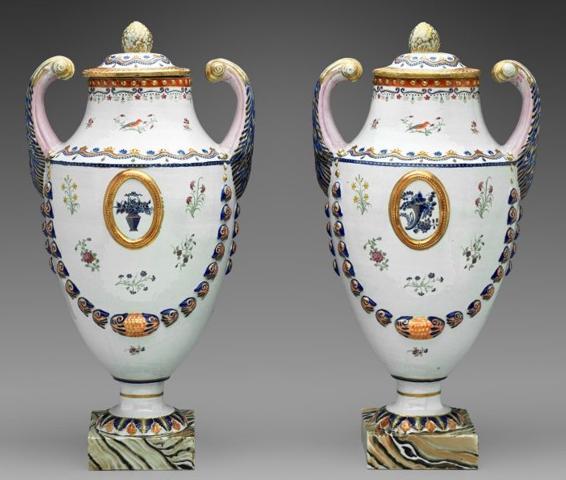
L: 2016.569 Plate, ca. 1730-50, Gift of William Viall in memory of his mother, Gretchen Viall. One of a numbered series (this is #18), probably for the Dutch market, and said to show steps in the production of tea. However, as Bill Sargent points out, David Sanctuary Howard and John Ayers described in 1978 that the series depicted a variety of product production, not just tea. Sargent also points out that the distinctive border may have been inspired by French faience produced at Rouen Center: 2020.348.1-2 Pair of monumental CEP Urns (24 in. tall). Frannie Colburn gift in honor of the 150 th anniversary of the MFA
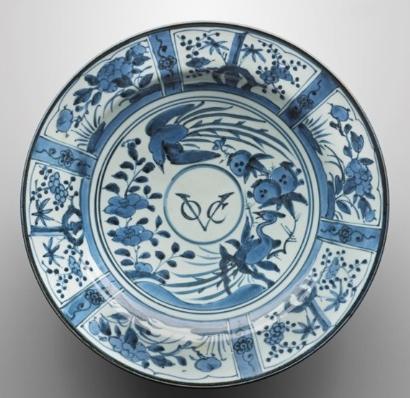
Right: 2023.1220 Japanese porcelain, VOC dish. Bearing the symbol of the Dutch East India Company. 14 in. diam. Mid-17th century.
R:
WISHING EVERYONE A VERY FUN, RELAXING SUMMER… AND HAPPYCOLLECTING!
Jeffrey Brown, Editor
22
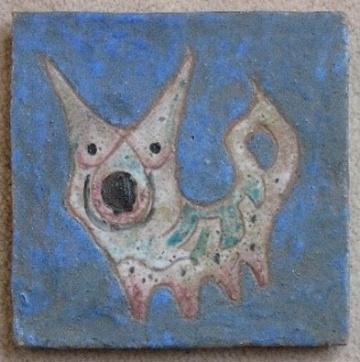
L: Harm Henrick Kamerling Onnes, Dutch, (1893 -1985). Tile. Gift of Clifford Ackley 4 ¾ in. square. 2024.2253
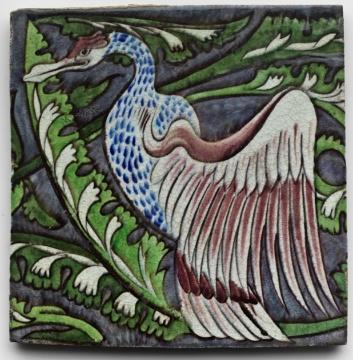
William De Morgan, Tile with Fantastic Bird, ca. 1880. Gift of Cliff Ackley in honor of TSM. Dodo bird?