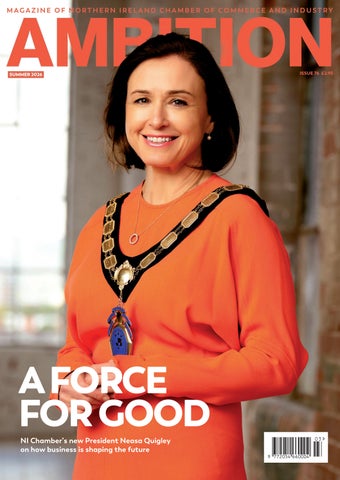
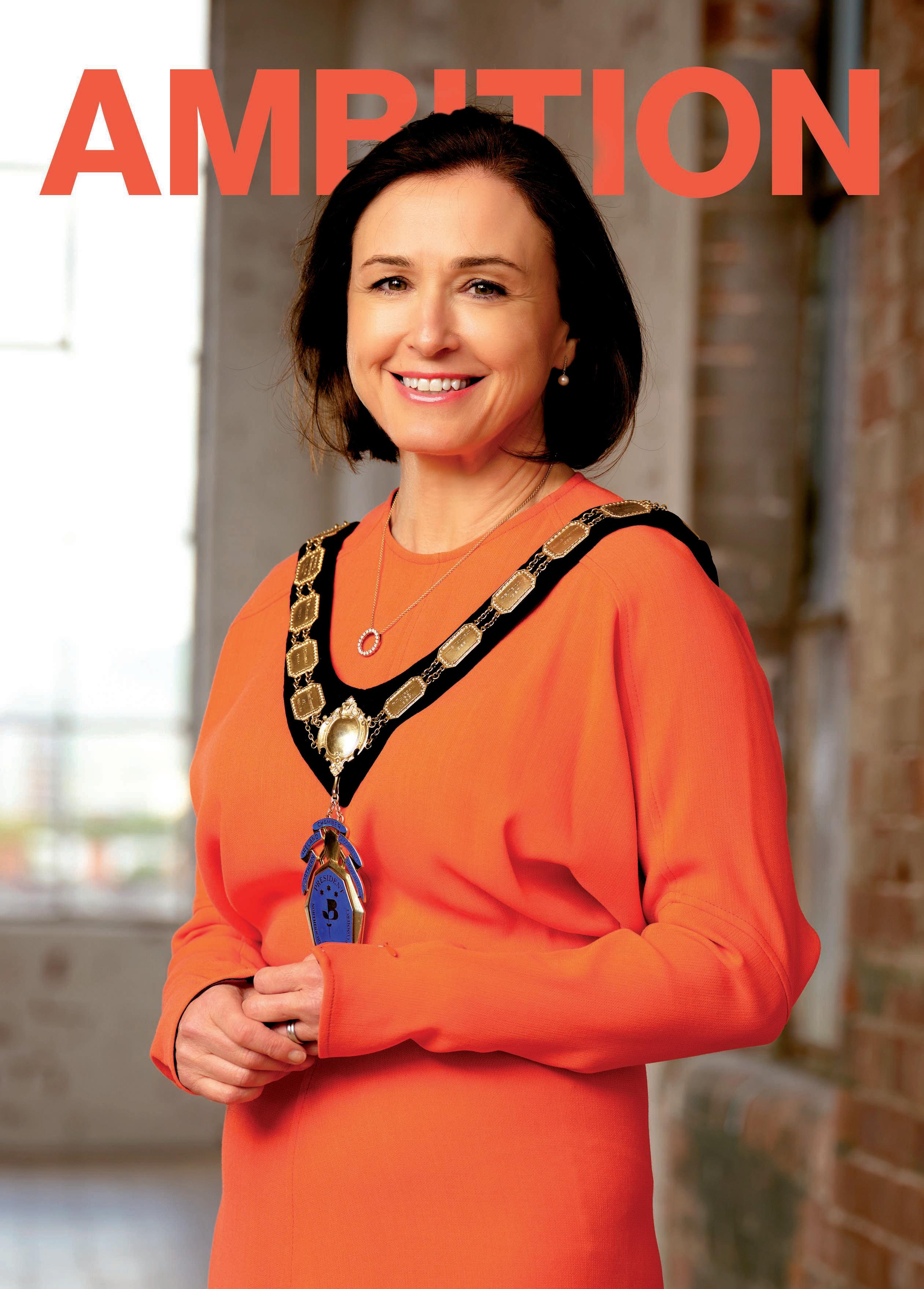
A FORCE FOR GOOD
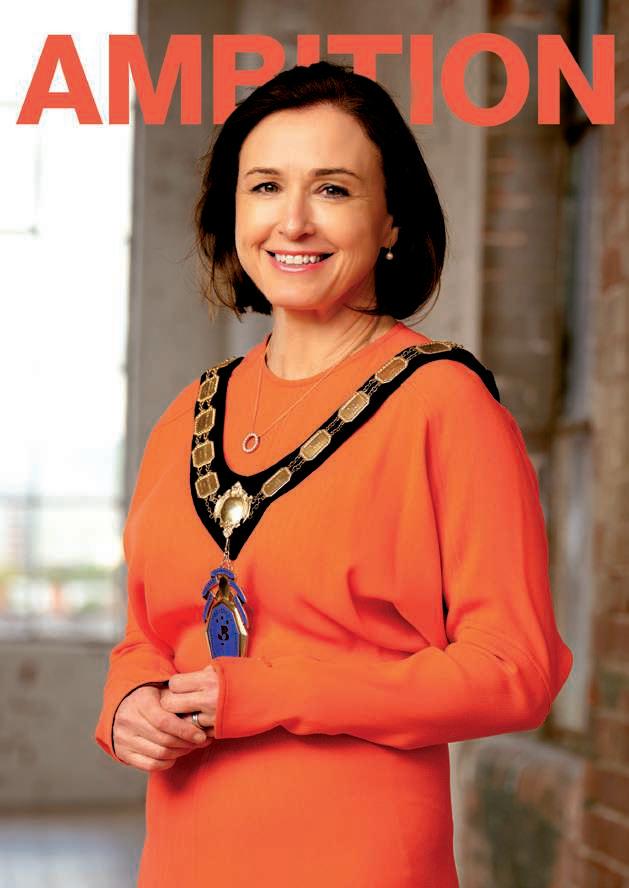
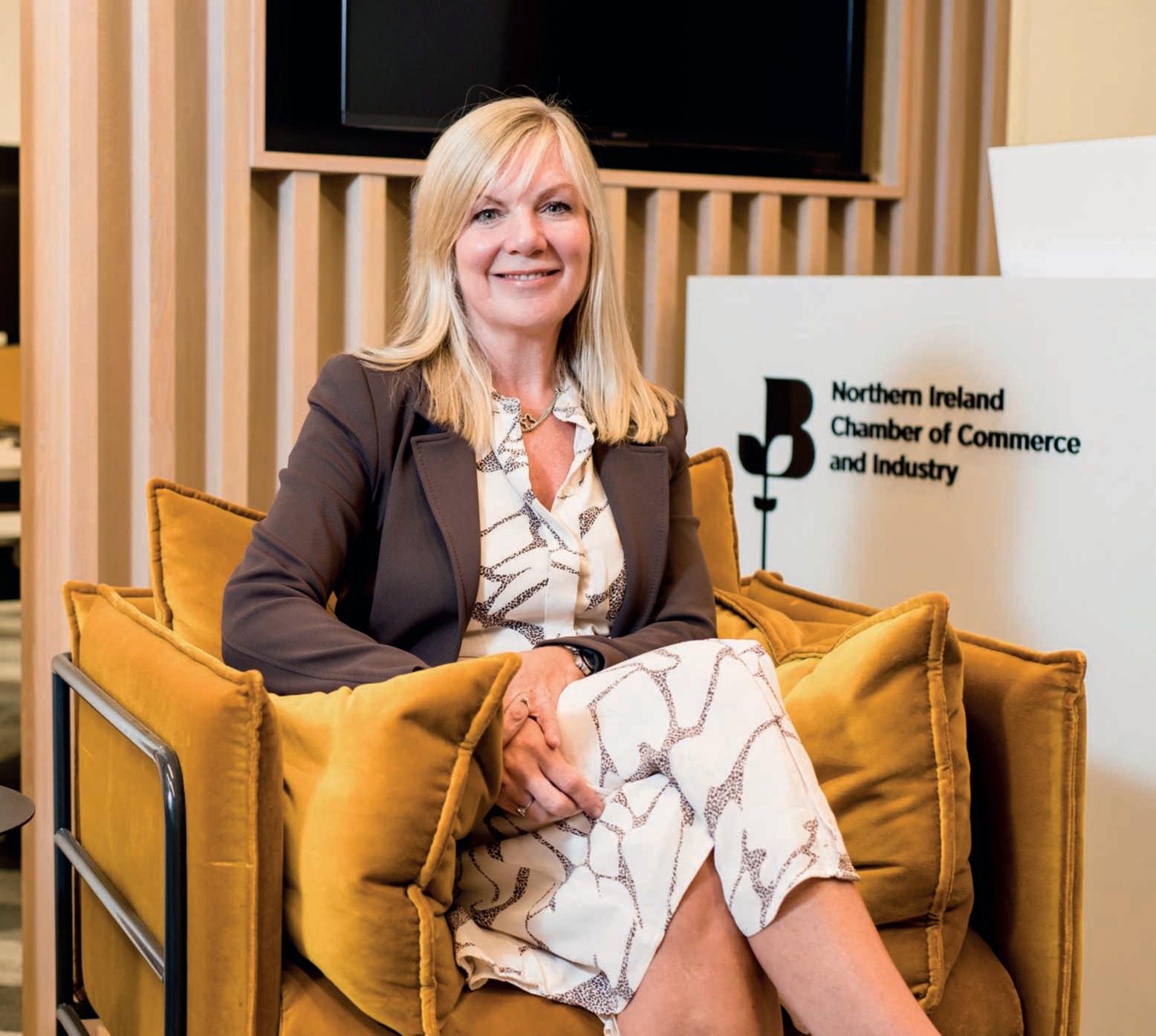
NI Chamber’s new President Neasa Quigley on how business is shaping the future








Managing Editor: Olivia Stewart Interviews: Emma Deighan Publisher: Chris Sherry Advertising Managers: Lorraine Gill & Julie Patterson Editorial Assistant: Abbie Vauls Email addresses: olivia.stewart@nichamber.com / l.gill@ulstertatler.com / j.patterson@ulstertatler.com Websites: www.northernirelandchamber.com / www.ulstertatler.com Publisher: Ulster Tatler Group, Unit 26 Ormeau Businss Park, Belfast, BT7 2JA Tel: 028 9066 3311 Printed by: W&G Baird, Antrim. Front Cover Photo by: Khara Pringle
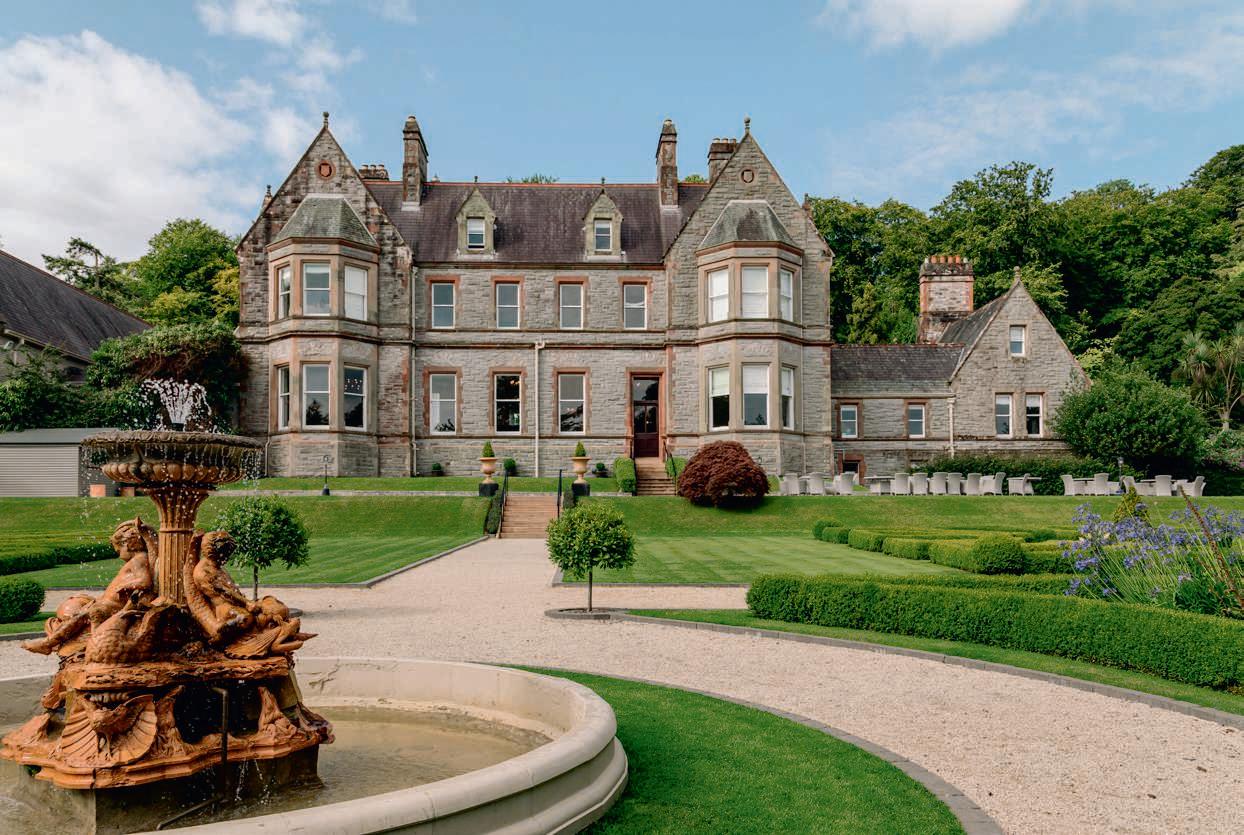
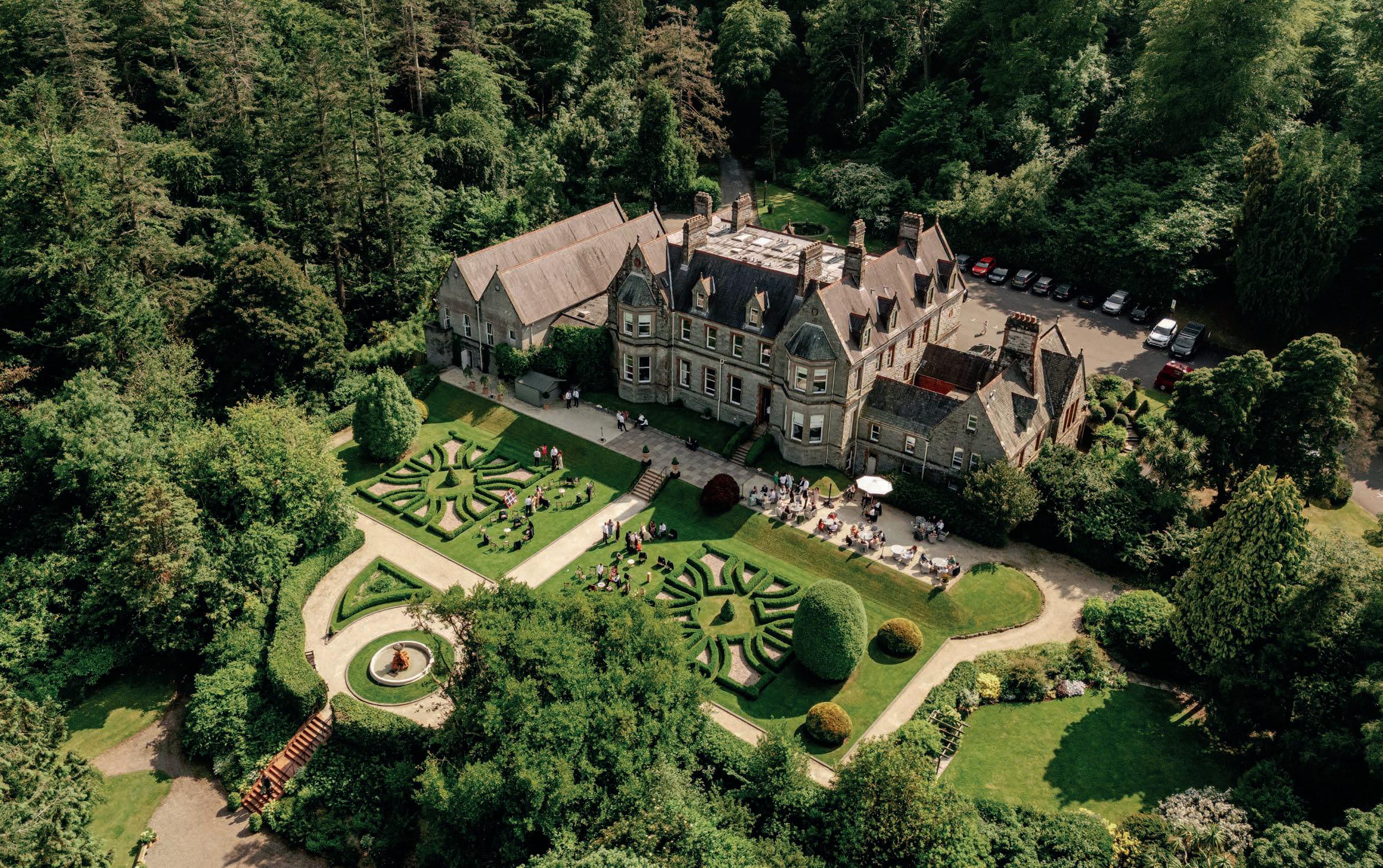
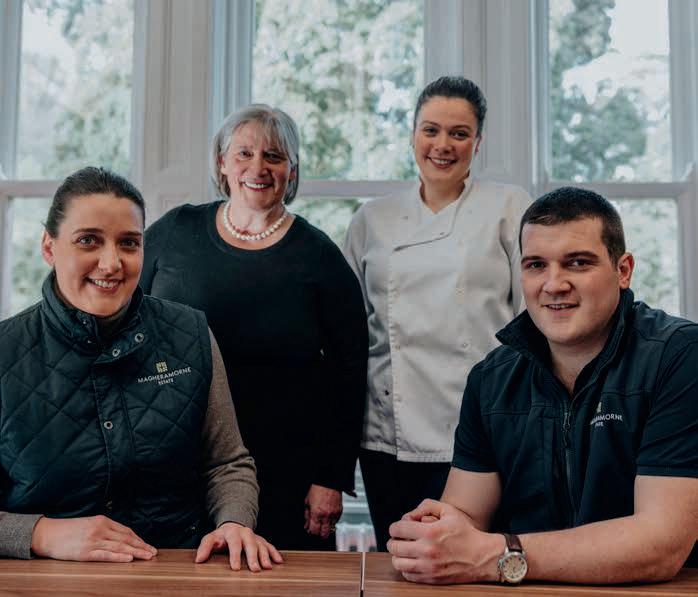
The family behind the business of Magheramorne Estate share their success story in developing one of Northern Ireland's destination venues.




Visit Belfast joins forces with Galgorm Collection to propel international tourism growth
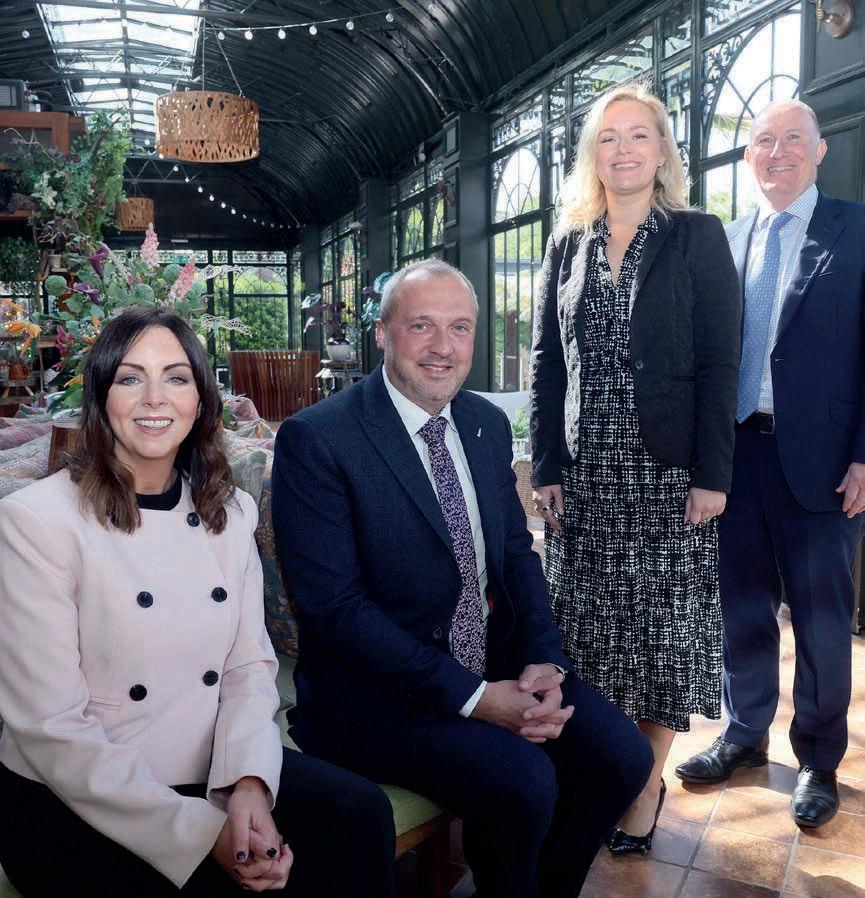
Visit Belfast has announced a major tourism partnership, advancing its longstanding relationship with one of Northern Ireland’s leading hospitality groups. The five-year strategic partnership with Galgorm Collection will focus on increasing visitor numbers, elevating global visibility and maximising economic impact across the region.
The partnership will leverage Galgorm’s extensive portfolio of awardwinning hotels, luxurious spas and fine dining restaurants, integrating them into a comprehensive destination offering, particularly within the luxury and experiential tourism sectors, while building on its established investment in the tourism and hospitality sector in Belfast and throughout Northern Ireland.
Gerry Lennon, CEO of Visit Belfast, said collaboration is essential to driving sustainable tourism growth, adding: “We are delighted to welcome Galgorm Collection as a strategic partner, formalising a relationship built over more than two decades of collaboration across tourism and destination development initiatives.
“Their dedication to quality and innovation aligns perfectly with our goal of positioning Belfast as a world-class destination. Together, we can amplify our international reach, attract diverse audiences and deliver substantial economic benefits for the city and the wider region.”
SistersIN announces new partnership with Eakin Healthcare
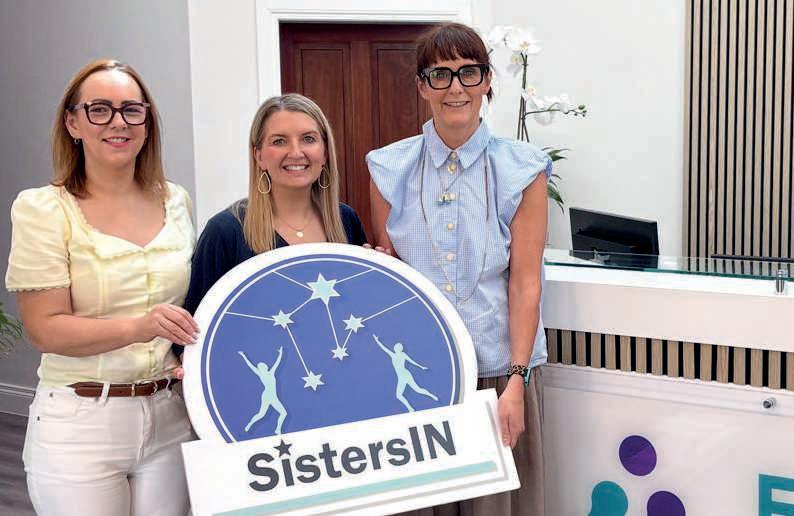
SistersIN has announced a new partnership with Eakin Healthcare, who joins the programme as a Growth Partner, supporting the continued growth of the leadership and mentoring initiative for 16–18-year-old girls across Northern Ireland.
Through this partnership, Eakin Healthcare will support SistersIN’s mission to empower young women with the confidence, leadership skills and real-world networks needed to shape their futures through leadership modules, projects, mentoring and job shadowing.
Gillian McKeown, director of operations and growth at SistersIN, said:
“We are delighted to welcome Eakin Healthcare as a Growth Partner for SistersIN. Their commitment to improving lives, investing in people and creating opportunities for talent to thrive makes them a strong fit for our mission of empowering the next generation of female leaders across Northern Ireland.
“Partnerships like this are essential in helping us expand the reach and impact of the programme, ensuring more young women can access mentoring, leadership development and meaningful insight into the world of work as they prepare for their future careers.”

GilbertAsh named one of the UK’s best places to work
Construction and fit-out contractor, Gilbert-Ash, has been named one of the UK’s best places to work for the second consecutive year.
The company, which has played its part in the creation of some of the most iconic buildings in the UK and Ireland, has been included in this year’s Sunday Times Best Places to Work list.
This UK-wide workplace survey recognises and celebrates leading employers across a range of sectors. Gilbert-Ash was also highly commended in the Sunday Times’ Best Places to Work 55+ category.
L-R Rachael McGuickin, Visit Belfast Deputy CEO and Director of Business Development, Sustainability and Transformation, Colin Johnson, Galgorm Collection CEO, Lynsey Gordon, Galgorm Collection and Gerry Lennon, Visit Belfast CEO.
Grace McGroggan and Adele Martin from Eakin Healthcare join Gillian McKeown from SistersIN to launch their Growth Partnership.

Lakeland Dairies announces £24.5 million investment
The investment will strengthen the company’s manufacturing base and support future growth in key export markets. It will focus on expanding production capacity at the Ballyrashane site through significant upgrades to liquid milk packing and butter production facilities, alongside further sustainability-focused improvements across the operation.
Speaking on behalf of the company, Colin Kelly, CEO of Lakeland Dairies, said: “This significant investment in our Ballyrashane site reflects our commitment to the future and our
ambition to grow in both domestic and international markets. The programme will expand capacity in liquid milk packing and butter production, and will support new product development, allowing us to meet growing demand in export markets. The project will also deliver wider environmental benefits, further enhancing the site’s energy sustainability performance.”
Invest NI has offered LacPatrick Dairies, part of Lakeland Dairies, £2.5 million towards the investment through its Agri-Food Investment Initiative (AFII).
Muldoon joins Azets in next phase of growth
Accountancy and advisory firm Muldoon is joining Azets, the international accountancy and business advisory group, marking the next phase of growth for the business while strengthening its ability to support clients across Northern Ireland and beyond. Now into its fourth decade, the firm provides accounting, tax, audit and advisory services to more than 860 clients across a broad range of sectors.
The business employs over 40 people and is led by Managing Partner Raymond Tiffney alongside Sean Muldoon and Robbie Barr, all of whom will remain with the business following completion of the transaction. Muldoon will immediately rebrand as Azets.
Raymond Tiffney, managing partner at Muldoon, said: “This is an important and positive step for our business, our people and our clients.
“Muldoon has built a strong reputation over many years through trusted relationships, high-quality advice and a very personal approach to supporting clients. Protecting those relationships and that culture was critically important to us throughout this process.
“Joining Azets gives us access to broader specialist expertise, deeper capability and increased investment, while allowing us to continue supporting clients in the same relationship-led way that defines our business today.”
DWF in Belfast celebrates
10 years in Northern Ireland
DWF, a global provider of integrated legal and business services, is celebrating 10 years of its Belfast office.
Since opening in Belfast in 2016 through the acquisition of C&H Jefferson, DWF has built on its strong foundations to establish a significant multidisciplinary presence in the market, delivering a broad range of legal services to clients across the private and public sectors. Over the past decade, the office has experienced significant and sustained growth, driven by strong client relationships, strategic investment and the expertise of its people. In the last year, headcount in Belfast has increased by more than 20%, bringing the team to over 150 colleagues.
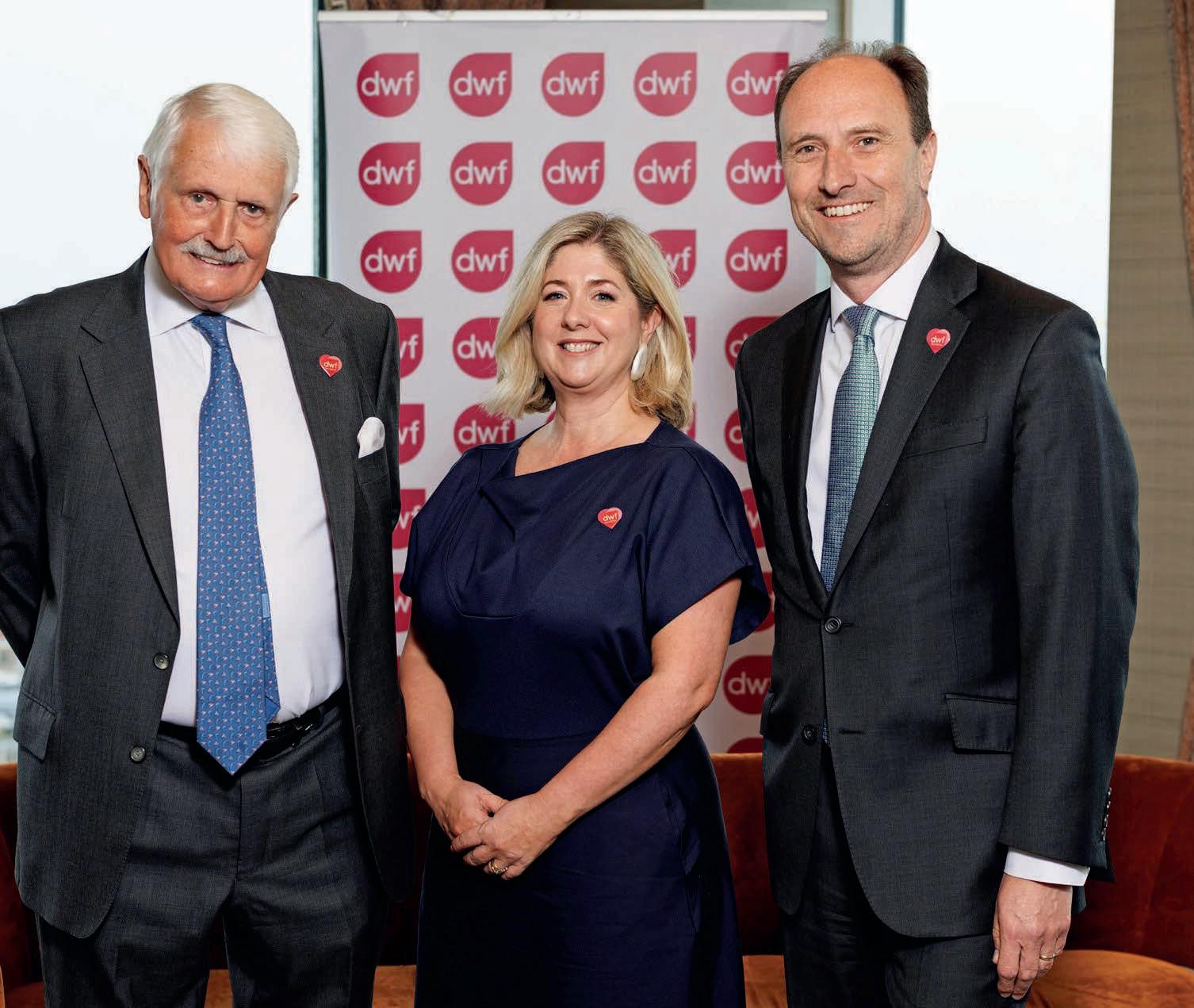
across Northern Ireland and the wider DWF network.”
Commenting on the milestone, Julie Galbraith, managing partner of DWF in Belfast, said: “Celebrating 10 years in Belfast is a milestone we are incredibly proud of. It is a testament to the commitment and talent of our colleagues, the trust of our clients and the strength of the relationships we have built
“We have grown significantly over the past decade, both in the scale of our team and the breadth of services we offer. I would like to sincerely thank our colleagues, particularly those who have been part of this journey from the beginning, for creating such a supportive, ambitious and collaborative culture within our office.”
Wealth manager of the year
Davy UK has been named Scotland and Northern Ireland Wealth Manager of the Year at the City of London Wealth Management Awards 2026. These highly regarded, client-voted awards are among the most respected honours in the UK wealth management sector.
Since opening our Belfast office in 2007, we have built a strong and enduring presence in Northern Ireland, overseeing £2.4bn of client assets across the region. Winning this award is a testament to the trust our clients place in us and to the commitment of our team who consistently deliver long-term, client-focused outcomes. Visit us at davyuk.co.uk/get-in-touch

Davy Private Clients UK, Davy UK and Davy Capital Markets UK are the trading names of J & E Davy (UK) Limited. J & E Davy (UK) Limited is authorised and regulated by the Financial Conduct Authority. J & E Davy (UK) Limited is a Davy Group company and also a member of the Bank of Ireland Group.
Foyle Cup extends title partnership with O’Neills

John Murphy of O’Neills Sportswear and Diolain Ward, Committee Member of the O’Neills Foyle Cup, pictured alongside Emma Johnston and Imogen Holden of O’Neills Sportswear at the Peace Bridge as they announce that O’Neills will continue as Title Partner of the Foyle Cup for 2026.

The Foyle Cup has confirmed that O’Neills Sportswear will continue as Title Partner of one of Europe’s leading youth football tournaments for 2026, extending a successful partnership into a seventh consecutive year.
The renewed agreement sees Ireland’s
largest sportswear manufacturer continue its longstanding support of one of Europe’s biggest and most respected youth football tournaments as preparations begin for another major summer of football across the North West.
The Irish-owned and operated company
Arthur Cox marks 30 years in Northern Ireland
Arthur Cox has marked its 30th anniversary in Belfast, celebrating three decades at the forefront of the legal and business landscape in Northern Ireland.
The 30 year milestone was celebrated with a special reception at Seahorse, Grand Central Hotel, which saw clients, colleagues and friends of the firm gather to reflect on its journey and continued growth in the region.
Lynsey Mallon, managing partner at Arthur Cox Northern Ireland, said:
“Marking 30 years in Belfast is a significant milestone for our firm. Since establishing in 1996, we have been proud to play a leading role in the development of Northern Ireland’s legal and business community.
“The breadth of our work is hugely significant. We have advised on multiple complex, marketleading transactions and projects that deliver lasting value for clients and the economy.
“We are deeply grateful to our clients and colleagues for the trust and support they have shown us over the years. Their confidence has been central to our success and growth.”
Uform acquires TKC
specialises in the design, manufacture, personalisation and global supply of sportswear, providing teamwear and apparel to clubs, schools and organisations across Ireland, the UK and international markets.
Since being established in 1992, the Foyle Cup has grown into one of the world’s premier youth football events, welcoming elite academies and grassroots clubs from across the UK, Ireland, Europe, North America and beyond.
John Murphy of O’Neills Sportswear said: “We’re incredibly proud to continue our partnership with the Foyle Cup and remain involved with one of the world’s leading youth football tournaments.
“Over the past number of years, we’ve seen firsthand the scale of the event and the positive impact it continues to have across the North West and the wider football community throughout the island of Ireland.
“The tournament has earned a fantastic reputation internationally for the experience it provides young players, coaches and supporters, while also showcasing the very best of the region each summer.”
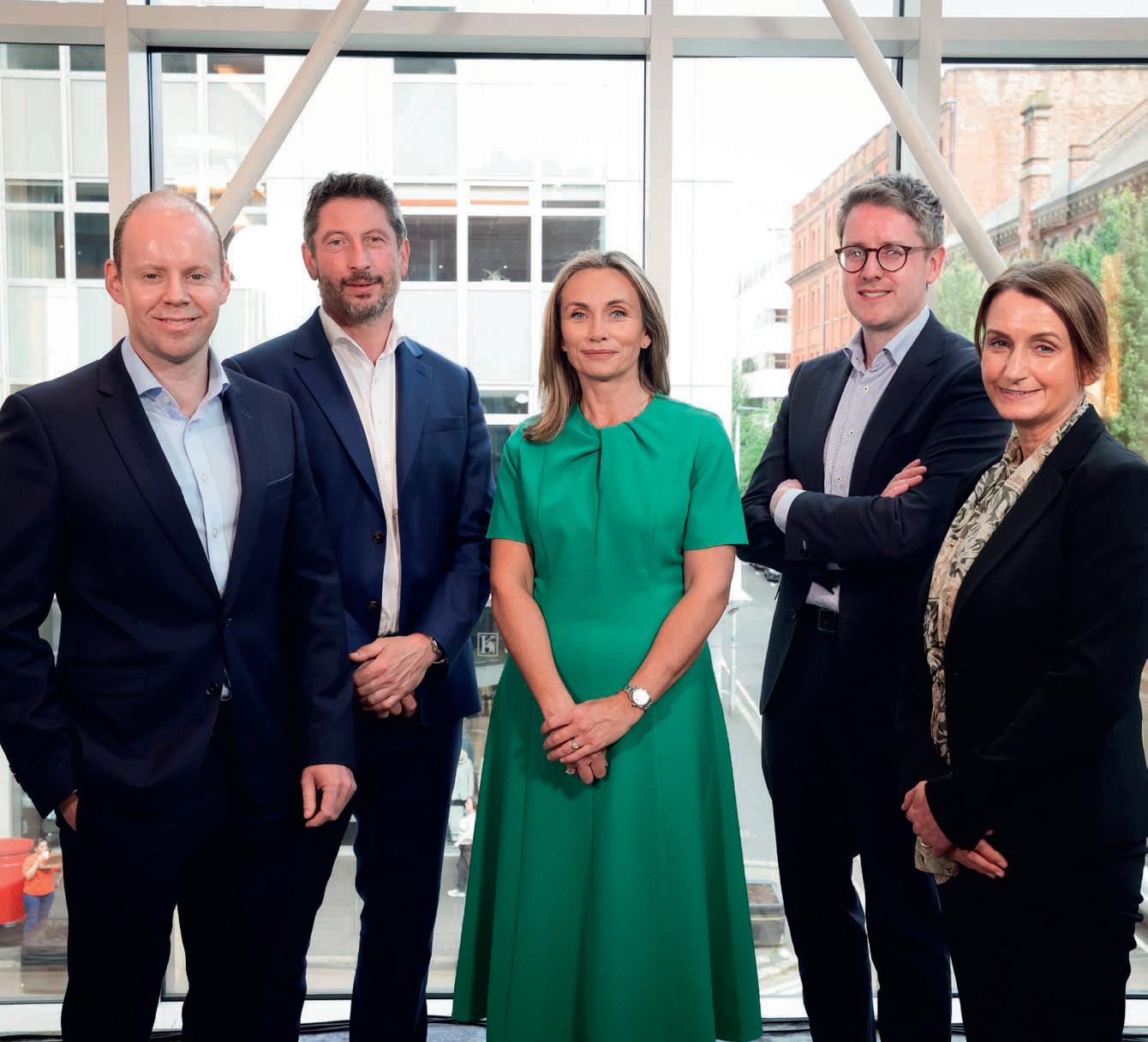
Uform, an industry leader in the supply of doors and accessories to the kitchen, bedroom and living space markets across the UK and Ireland, has announced the acquisition of TKC, strengthening the Uform Group’s position within the kitchen sector.
Uform has also announced that David Adams will join as chief executive officer to lead the next phase of growth for the com-
bined Uform and TKC businesses. David brings significant senior leadership experience and a strong track record of driving growth, operational performance and customer service. Commenting on his appointment, he said, “I am excited to be joining Uform at such an important point in its development. The combination of Uform and TKC creates a compelling platform for growth, and I look forward to working with the team to build on the strong foundations of both businesses and deliver for our customers.”
















NI leading in AI adoption, confidence and early commercial impact, new research shows
Trinity College Dublin and Microsoft Ireland research has found that organisations in Northern Ireland have moved beyond earlystage AI experimentation, with stronger integration into day-to-day operations and higher levels of confidence, competitiveness and workforce impact. Drawing on insights from 300 senior leaders across the island of Ireland, spanning both the public and private sectors, the AI Economy Ireland 2026 report provides a snapshot of the current state of AI adoption and organisational readiness.
AI adoption is already mainstream across Northern Ireland organisations. Almost all organisations (94%, compared to 92% in ROI) say they are either using or planning to develop AI tools internally, while 62% already have AI tools implemented and in active use, compared to 39% in the ROI, indicating a more advanced stage of deployment and operational integration.
The value case for AI is also becoming increasingly clear. More than seven in 10 organisations (72%, compared to 48% in ROI) report moderate or significant productivity improvements from AI adoption, while 42% say AI has already improved competitiveness, compared to 26% in ROI, pointing to tangible commercial impact beyond efficiency gains. The research also highlights high levels of organisational confidence and AI readiness in Northern Ireland. Some 86% consider themselves AI literate (compared to 72% in ROI), while 44% strongly agree that their organisation is AI literate, compared to 19% in ROI, suggesting strong confidence in internal capability, governance and readiness to scale AI use.
Catherine Doyle, General Manager, Microsoft Ireland, said: “Northern Ireland has a real opportunity to become an AI Frontier region by leading in how AI is adopted and scaled across business and public services. This research shows organisations moving beyond experimentation and embedding AI into everyday operations.
“Strong adoption, workforce readiness and clear competitiveness gains provide a solid foundation for growth. The priority now is to support organisations of all sizes to move from experimentation to implementation, while ensuring AI is deployed responsibly to boost productivity, public services and economic competitiveness.”
Ulster Bank May Growth Tracker – sharpest fall in output since December 2022
The latest Ulster Bank Regional Growth Tracker signalled a renewed reduction in business activity in Northern Ireland’s private sector, following stability in April.
New business also decreased amid geopolitical tensions and strong inflationary pressures, while companies expressed a pessimistic outlook. On a more positive note, employment increased slightly.
The headline Business Activity Index – a seasonally adjusted index that measures the month-on-month change in the combined output of the region’s private sector – dropped to 43.3 in May from 50.0 in April. The reading signalled a first reduction in output in five months, and one that was the steepest since December 2022.
The drop in output in Northern Ireland was the sharpest of the 12 monitored UK areas in May. For the first time in just over two and a half years, all four broad sectors posted reductions in business activity.
Sebastian Burnside, chief economist for Ulster Bank, commented: “The impacts of geopolitical tensions took their toll on the Northern Ireland private sector in May. Firms were buffeted from different angles, not only by steep inflationary pressures but also general uncertainty and challenges with customer demand.
“Worries about price rises in particular meant that firms were concerned about the future, and expressed a pessimistic outlook for the first time in almost three and a half years.
“Bucking the generally downbeat nature of the May data was a renewed increase in employment as firms looked to build their operating capacity. If the demand situation continues to deteriorate, however, it is hard to see job creation being sustained in the months ahead.”
Mark Crimmins, Ulster Bank managing director corporate, commercial and business banking, added:
“Our latest Ulster Bank Growth Tracker data shows the stark impact of inflationary pressures on Northern Ireland businesses. Uncertainty around pricing, caused by ongoing geopolitical tensions, is continuing to erode confidence.
“At Ulster Bank, we will continue to review impacts on our customers across Northern Ireland and how best we can support them through these challenges.”
Almac Group delivers record year of growth
Almac Group has announced record financial results for the year ending 30 September 2025, with revenue, profit and employee numbers all reaching their highest levels to date. Annual accounts show revenue increased to £1.1 billion, up £71.9 million (7%) on 2024. Pre-tax profit rose by 16% to £138.9 million, compared with £119.3 million in the previous year, while employee numbers have grown by 6% over the same period.
Almac reinvests all profits back into the company to support long-term growth. These latest results mark the fifth year of Almac Group’s £500 million+ global capital investment programme, first announced in November 2021. Since then, employee numbers have increased by more than 2,000, with over half of these new roles created in Northern Ireland.
The programme includes major investment across diagnostic and pharmaceutical development and manufacturing, clinical production and distribution, commercial manufacturing and packaging, global cold-chain infrastructure, and analytical services. It also supports significant campus improvements designed to enhance the working environment for employees.
Almac now employs more than 7,900 people worldwide and plays a vital role in helping develop, manufacture, test and distribute essential medicines for patients around the globe. During the financial year, the Group supported the development and ongoing commercial supply of hundreds of life-saving drugs across more than 20 therapeutic areas, including oncology, cardiology, immunology, gene therapy and neurology.
Alan Armstrong, Almac Group chairman and CEO, said: “These results reflect another successful year for Almac and demonstrate the resilience of our long-term growth strategy in a changing global environment.”
As a privately owned company, we are proud to reinvest our profits to support our global clients, drive innovation and expand our capabilities. None of this would be possible without the exceptional commitment of our people across the globe.”






Switching to electric vehicles?



Switching to electric vehicles brings many benefits for your business. Whether you’re a sole trader, SME or a large corporate, we provide flexible, tax-efficient leasing options for all your cars and vans. Let us handle the details so you can focus on driving your business forward.
Drive Smart. Drive Electric.
OCO Global
Belfast-headquartered OCO Global partners with governments, economic development agencies and companies to design and deliver solutions that scale investment, expand exports, attract talent and build innovative ecosystems. With a global office network, the firm provides strategic advice to clients across Ireland, the UK, Europe, the US and further afield.
The firm has recently strengthened its advisory capability with the appointment of Andrew Webb as managing director – economics.
Returning to OCO Global more than a decade since he first worked there, Andrew will lead the firm’s newly established Economics practice, supporting clients on economic strategy, investment attraction, sector development and place competitiveness. We spoke to Andrew about Northern Ireland’s economic prospects, the changing nature of inward investment, and the opportunities and challenges facing the region in an increasingly competitive global environment.
“The Northern Ireland economy has built upon its strong growth in highly productive and competitive industries, such as fintech, health and life sciences, the creative industries, and cyber security,” says Andrew.
“Businesses are ambitious, but over the last few years, local SMEs have been forced to navigate difficult economic circumstances and pressures, whether that be the pandemic, the Ukraine War, the slow economic growth in the UK or conflict in the Middle East but our local businesses and SMEs are a proven, global economic force in GB, Europe and beyond.”
Andrew’s return to the firm marks the beginning of a new era for OCO Global, with enhanced advisory capabilities across the UK and Ireland to support its global investment and economic development work.
“Our new economics practice will focus on providing economic insight and strategy that will directly support investment attraction, sector development and place competitiveness,” he says.
“This will include work on infrastructure funding, investment readiness, economic strategy and the development of investment propositions, alongside appraisal, evaluation and economic impact analysis to support public investment and policy decisions.”
With further growth plans in sight, the firm sees opportunities for the new practice to provide expert insights to clients across the UK and Ireland, and to work closely with international teams to support clients globally.
“There has been a global shift in the inward investment environment, and many of the same factors affecting competition for investment apply across
World. We have a Belfast footprint, but we are very much plugged into the global market,” says Andrew. He explains that Northern Ireland’s competitive edge over other regions throughout the globe is under threat and the current model of investment attraction is being challenged.
“Labour costs, tax regimes and the availability of property were previously the dominant factors in decision-making for companies when choosing where to invest, and investment agencies have been promoting these benefits within their respective regions with considerable success. During this period, Northern Ireland built a strong track record of attracting investment in industries such as cyber security, advanced manufacturing, and fintech,” says Andrew.
“However, going forward critical infrastructure is becoming more important than ever in attracting inward investment, good jobs and highly productive industries. Challenges with wastewater infrastructure, an outdated planning system, low housebuilding levels and high levels of economic inactivity could place the region at a disadvantage.”
Andrew stresses that other locations are facing similar challenges, but those that come out on top will be thinking about the bigger picture.
“Regions should no longer be thinking about competing for individual projects, and instead, should focus on creating an entire ecosystem that is attractive to inward investors,” he says.
“That means aligning universities, skills systems, infrastructure investment, and policy delivery around priority sectors.
It’s also important to acknowledge that inward investment and indigenous growth are not mutually exclusive – in fact, they both contribute to the development of a diverse and desirable business landscape and a more sustainable economy.”
Northern Ireland already has some unique selling points, but he says the foundations need to be strengthened to ensure the region is putting itself in the best position.
“Our unique dual market access under the Windsor Framework is absolutely a strength, and we have certain sectors with well-established skills bases with some multinational companies already taking advantage of that,” he explains.
“However, addressing the fundamental infrastructure will be paramount to staying competitive. Energy availability and stability is becoming increasingly important, particularly in the current climate, and companies will be looking at the longterm and whether a location has the right conditions for their business to grow.”
Looking to the future, Andrew sees the need for a united approach from all stakeholders to see the region flourish and is excited to work with OCO Global to provide learnings and insights from the global market to local clients, and vice versa.
“Since OCO operates across the globe, we are in a perfect position to share insights from other countries and find new ways of working,” he says.
“We’ve also a lot to shout about on this island and have made significant progress in attracting big multinationals. Now, it’s about how we take it forward and continue to progress in a more competitive environment.”
the
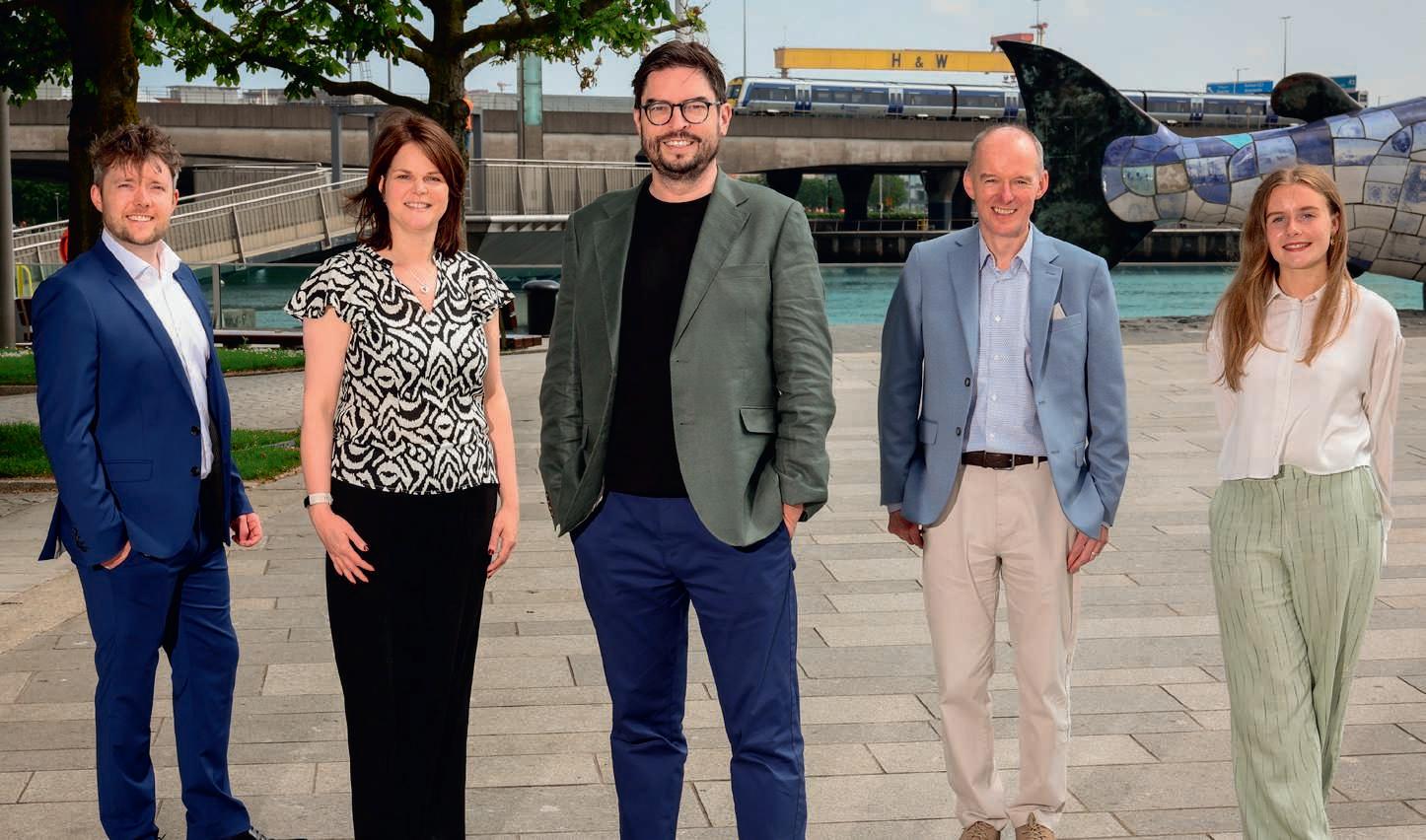
(Left-to-Right) Andrew Park, Director Data Analytics; Naomi Byrne, Managing Director Belfast; Andrew Webb, Managing Director Economics; John McIlroy, Manager; and Alice Gallagher, Senior Analyst, OCO Global.







A Decade of Progress and a Future Built on Ambition
While we will release our latest financial results in due course, I can say with confidence that this has been our fifth consecutive year of strong progress. That consistency matters. It demonstrates the strength of our strategy, the resilience of our model and the commitment of our people. It also provides a strong platform to invest, innovate and grow.
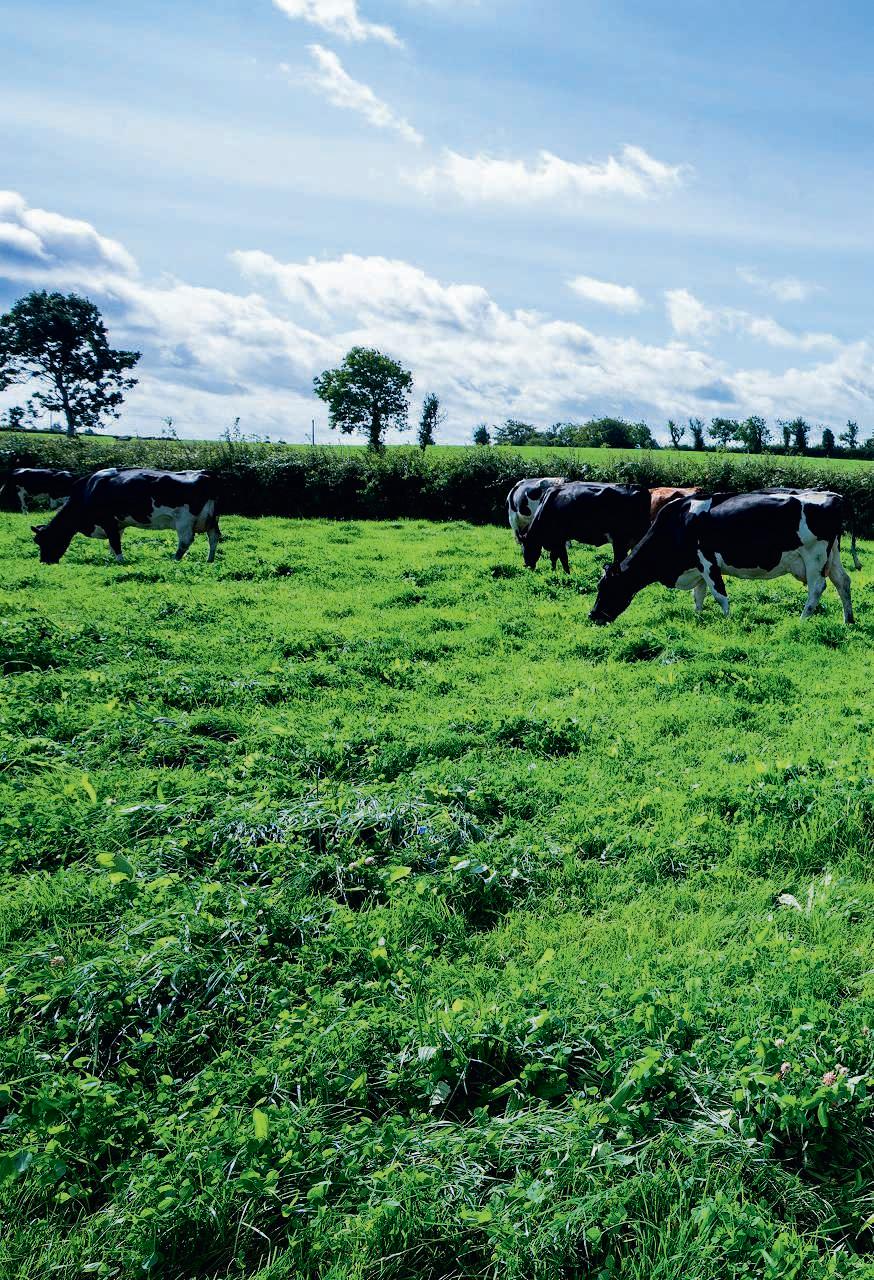
One of the clearest indicators of our success is the strength of our milk pool. We continue to grow a sustainable, high quality supply base, and we are proud to have paid a competitive and sustainable milk price throughout the 2025/26 financial year. This included an additional, year-end – 1p per litre on all milk supplied, a decision that returned over £10 million directly to our members. That is £10 million of profits redistributed back into farm businesses and rural communities across Northern Ireland. It is the co-operative model working exactly as it should; value created by our farmers, returned to our farmers.


Our ability to deliver that value is underpinned by long-term investment. In 2025, we completed a £70 million investment at our Dunman facility, the largest single investment in our history. This has significantly enhanced our cheddar production and whey processing capabilities, enabling us to meet growing demand across the UK, Ireland, Europe and global markets. The investment has strengthened our competitiveness and positioned us for sustained growth.

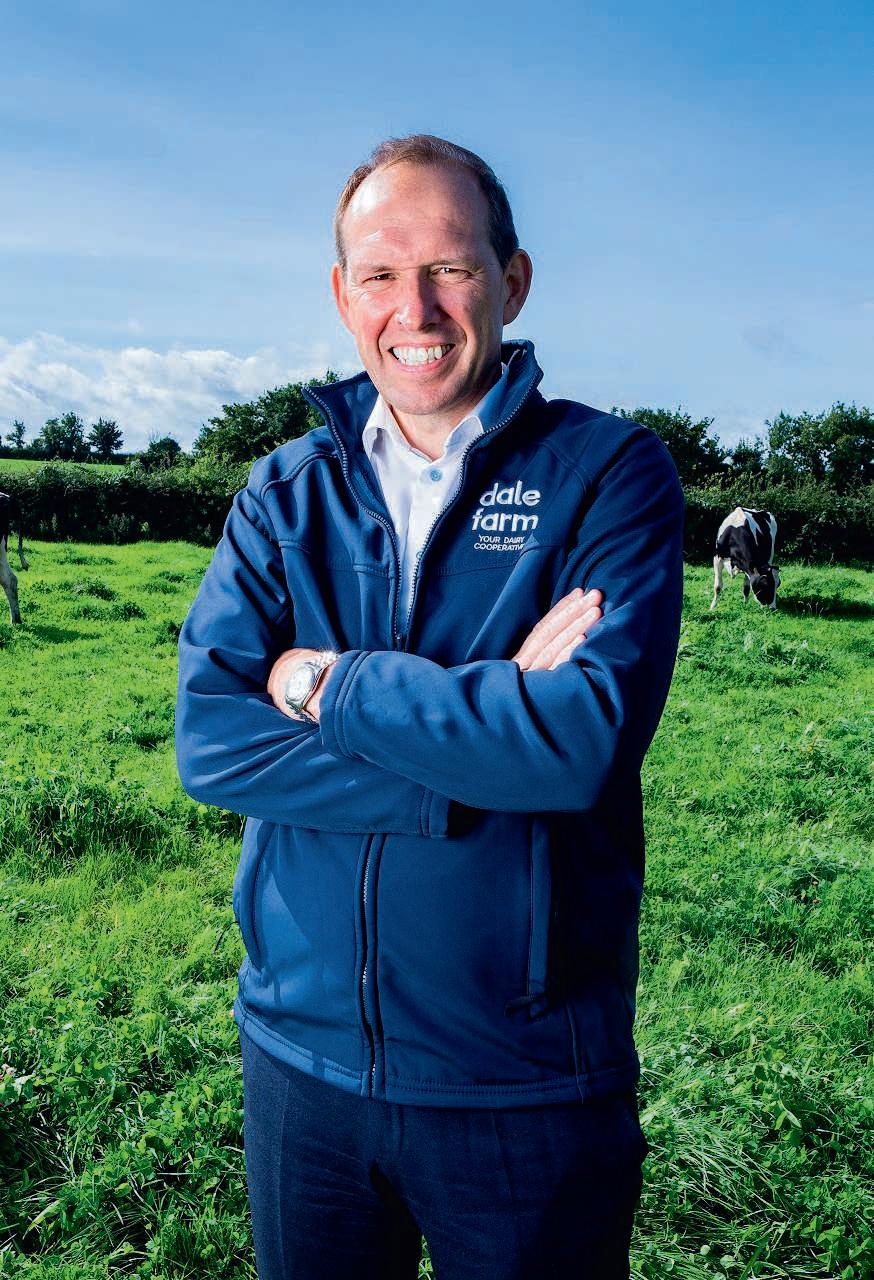
By Nick Whelan, Group Chief Executive, Dale Farm and Vice President, NI Chamber
That next phase is already underway. Further upgrades to our new cheese plant will be completed this year, increasing throughput to 6 tonnes per hour. These works will be completed by autumn and will take our total cheddar capacity at Dunman to 100,000 tonnes. This is a major strategic development for our coop and will support our growth ambitions for many years to come.
Alongside investment in infrastructure, we are also investing in the future of our business through our sustainability strategy. We are now in year three of our Future Strong programme, which is driving meaningful progress across environmental performance, energy efficiency, animal welfare and responsible sourcing. We have taken a significant step forward by upgrading the Dale Farm portal, allowing us to determine sustainability metrics tailored to each individual farm. Our nutrient management programme is also designed to deliver bespoke nutrient plans for each farm. We strongly commend the government’s sustainability initiative and remain fully supportive; however, we recognise the critical need for greater collaboration across the industry and for progress to accelerate if we are to achieve meaningful change.


Sustainability is integral to our long-term competitiveness and to the expectations of our customers, consumers and members. As a farmer-owned co-op, we have a responsibility to lead, and we are determined to do so. Nor is our focus

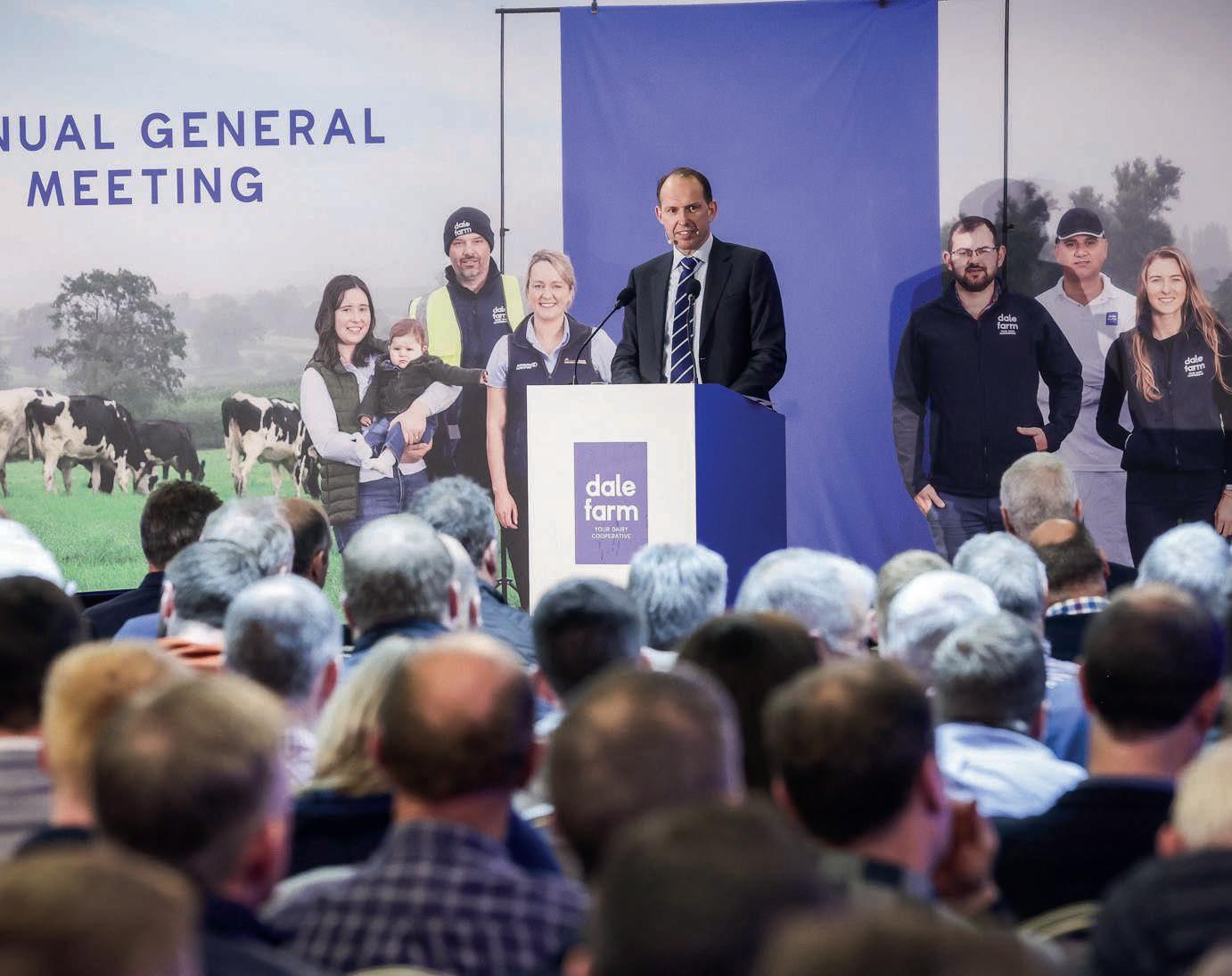
“The dairy industry is evolving rapidly, and the businesses that succeed will be those that combine operational excellence with digital intelligence.”
solely on farm – we are transforming every aspect of our operations and facilities to become as sustainable and efficient as possible.
Another major area of focus is digital transformation. Last year, we commenced an ambitious programme to modernise systems, enhance data capability and improve efficiency across the group. This is a significant undertaking, but it is essential. The dairy industry is evolving rapidly, and the businesses that succeed will be those that combine operational excellence with digital intelligence. Our programme will enable faster decisionmaking and greater agility across the organisation.
But while investment, technology and strategy are vital, the real heart of Dale Farm is, and always has been, our 1,200 employees. They are the driving force behind our success. Across our sites, from production to logistics to commercial teams, we have colleagues who bring skill, commitment and pride
to their work every day. Over the past decade, we have invested heavily in training, development and leadership capability, and that investment is paying dividends. We are building a culture where people can grow, contribute and thrive.
And we are growing. As we enter the next phase of our strategy, we are strengthening our operational and commercial capability to match the scale of our ambition. This includes expanding our teams across Commercial, Marketing, Commercial Finance and Innovation – areas that are critical to delivering our growth agenda. Dale Farm is now a major player in global cheddar markets, selling across the UK, Europe, the Middle East and North Africa. In fact, 80% of what we produce is sold outside of Northern Ireland. These roles reflect the scale of opportunity ahead, new markets, new categories and new ways to add value. Looking ahead, we have reached a crossroads. We have expanded our
cheese capacity, and we are now seeking our next major value-led opportunity.
We understand the global megatrend around health, wellness and protein, and we are excited about the potential this presents. We are committed to exploring this further, including the possibility of partnerships, acquisitions or targeted investment to position our co-operative for long-term growth.
Our focus is simple. We want to continue to build a strong, sustainable and competitive co-operative that delivers for our farmers, our customers, our employees and our communities. We will do this by staying commercially sharp, operationally excellent and relentlessly ambitious. We will continue to invest in our people, our sites and our capabilities. And we will remain committed to the values that have guided us for more than 70 years: collaboration, resilience, innovation and long-term thinking.
Dale Farm is a business built on ambition, and that ambition has never been stronger.
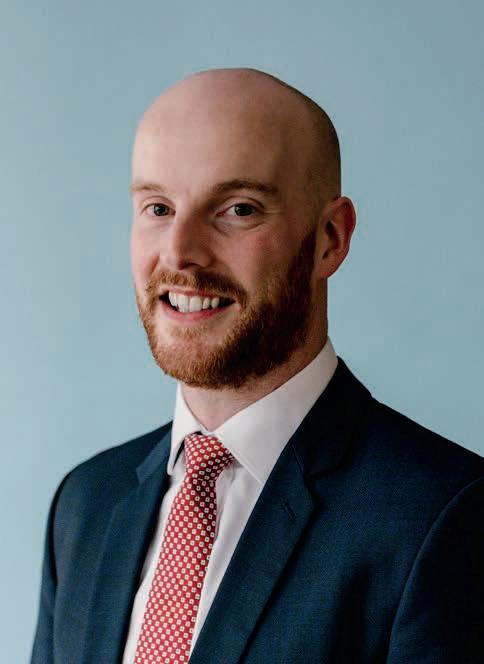
Columnist
Peter Graham Director, Deal Advisory, HNH Partners
Meet the Trailblazer
The Spark: What inspired you to take on the role that you have now?
I started my career in forensic accounting at a ‘Big Four’ firm, but corporate finance was the area that really drew me in as it is such a forwardlooking industry. You are helping clients to achieve important goals, whether that’s growing their business, securing investment or ultimately recognising the value of their life’s work through a sale. That combination of strategy, dealmaking and helping business owners realise their ambitions was what attracted me to the role and led me to join HNH Partners in 2017.
Breaking New Ground: How are you innovating or doing things differently?
One of HNH’s biggest strengths is our presence in the local market and the depth of our understanding of Northern Ireland businesses.
We are consistently one of the most active firms locally when it comes to transactions and that gives us a strong understanding of the deal landscape, funding environment and what businesses need to do to position themselves for growth or investment. With offices in Belfast and Edinburgh, we are fully invested in our local economies, which makes a real difference.
Growth: What has been the most exciting milestone in your journey so far?
Moving into a Director role at HNH in 2025 was definitely a proud milestone personally, but from a deal perspective, it has also been exciting to see the scale and ambition of Northern Ireland businesses continue to grow over recent years. Being involved in transactions that help companies secure investment, expand internationally or achieve successful exits is hugely rewarding because you can see the direct impact of the work you do for clients.
Resilience: What has been the biggest challenge, and how did you overcome it?
One of the biggest challenges in corporate finance is the level of responsibility involved. There is a huge amount of trust placed in advisers to guide clients through what can be a very demanding process and in a large amount of cases one they will only go through once.
The way to overcome that is through preparation, communication and building strong relationships with clients so they feel supported throughout every stage of a transaction.
Motivation: What drives you personally to keep pushing boundaries, even when it gets tough?
For me, it comes back to the responsibility you have to clients. You want to achieve the best possible outcome for clients because the deal is often tied to years of hard work and personal sacrifice.
That responsibility is something I take very seriously. It motivates you to keep pushing for the best result and to maintain high standards, even during challenging periods or complex transactions.
Inspiration: Is there a person who has influenced the way you lead?
My dad has undoubtedly been the biggest influence on me professionally and personally. He was a Chartered Accountant himself and always taught me the importance of doing the right thing. In professional services, resilience, integrity and trust are absolutely critical, so that advice has always stayed with me.
Sector focus: Where do you see your industry heading in the next 5–10 years, and how are you preparing for it?
I think we will continue to see an
increasing amount of transactions with a cross-border element. Our client base has continued to broaden and we have invested in our team and service lines to ensure we have the skills required to service the SME Market.
We also expect to see continued private equity interest in Northern Ireland businesses. Companies here are becoming more ambitious, more scalable and increasingly attractive to external investors.
At HNH, we’ve already seen that in recent years with transactions involving businesses such as Connected Health, CWC Group and Xperience. There is a growing recognition of the quality of businesses operating here and the opportunities they present.
Advice: What’s the one piece of advice you’d pass on to others starting out in your industry today?
Absorb as much information and experience as you can early in your career. Technical knowledge is obviously important, but so are the softer skills such as networking and relationship building that can make a huge difference in the long term.
“We are consistently one of the most active firms locally when it comes to transactions and that gives us a strong understanding of the deal landscape.”
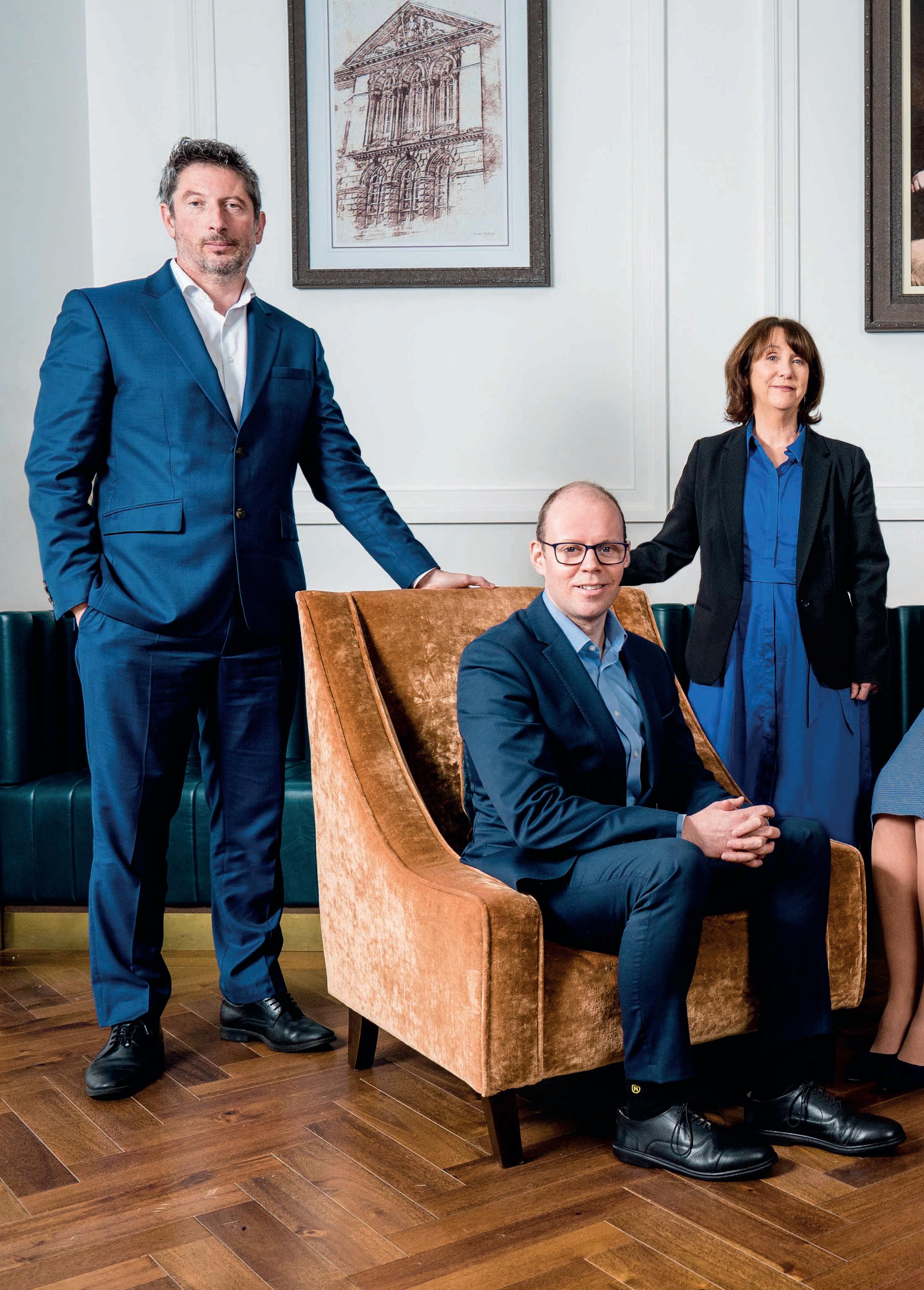

Arthur Cox: 30 Years At The Heart Of Northern Ireland’s Growth Story

Over the past three decades, Arthur Cox has become deeply embedded in the economic story of Northern Ireland, playing a central role in many of the developments that have shaped the region’s modern economy. As the firm marks 30 years in Northern Ireland, Managing Partner Lynsey Mallon reflects on the scale and breadth of that contribution.

“There are many landmark developments that have helped shape Northern Ireland economically, socially and culturally - and Arthur Cox has been at the heart of many of them,” Lynsey says.

“The breadth of our work is hugely significant. Whether it is infrastructure, tourism, energy, inward investment, technology or sport, we have consistently been integral to projects that have had a lasting impact on the region.
“Arthur Cox’s Corporate and M&A practice is widely
recognised as a market leader, having advised both indigenous businesses and global buyers on many of the region’s most high profile and strategically significant M&A transactions.”

ELEVATING NORTHERN IRELAND ON THE GLOBAL STAGE Tourism and regeneration provide some of the highest profile examples of Arthur Cox’s vast expertise. Long before Northern Ireland became an internationally recognised destination, Arthur


Cox was acting on projects that would help redefine the region’s global image.
The firm was involved in the development of the Giant’s Causeway Visitor Centre, the gateway to Northern Ireland’s only UNESCO World Heritage Site, while also playing a role in the redevelopment of the Odyssey Pavilion and the regeneration of Crumlin Road Gaol.
Today, the tourism and hospitality sector continues to evolve, with Arthur Cox advising on projects including the landmark sale of the Slieve Donard Resort and the development of Dunluce Lodge, overlooking Royal Portrush Golf Club.
“Thirty years ago, Northern Ireland’s tourism potential was only beginning to emerge,” continues Lynsey. “There were many foundational developments that helped reposition the region internationally, with landmark projects such as Titanic Belfast playing a major role in accelerating that momentum. We were proud to be involved in providing advice in relation to the project and to support a development that has become such an important part of Northern Ireland’s tourism offering.”
Sporting infrastructure has been another defining area. Arthur Cox acted on behalf of the Northern Ireland Executive and the Department of Culture, Arts & Leisure as majority funders of the landmark Regional Stadia Programme, helping to deliver the redevelopment of the Affidea (formerly Kingspan) Stadium and the National Football Stadium at Windsor Park, while continuing to advise on the ongoing Casement Park project.
SUPPORTING ECONOMIC GROWTH
Arthur Cox has also been heavily involved in infrastructure and utilities projects underpinning economic growth across the region. The firm advised on Project Kelvin, the high-speed undersea cable that transformed broadband connectivity in Northern Ireland, and on the Gas to the West project, which extended gas infrastructure into new parts of the region.
“Infrastructure projects are often the foundation for wider economic growth,” explains Lynsey. “Whether that is connectivity, utilities, energy security or digital infrastructure, these projects create the conditions for Northern Ireland to thrive long term.”
The firm’s influence can also be seen across education, healthcare and housing. Arthur Cox acted for Ulster University on the development of its Greater Belfast Campus and the creation of Northern Ireland’s first data centre and enterprise zone at Coleraine. In healthcare, meanwhile, the firm advised on the South West Acute
Hospital in Enniskillen, acting for the European Investment Bank on the delivery of the landmark facility and acted as the legal advisor to private equity firm Exponent on its major £300 million majority investment in the Kingsbridge Healthcare Group. Across housing, Arthur Cox has advised housing associations and developers on thousands of new social housing units delivered through competitive designand-build models over the past 15 years.
“Some of the projects we are most proud of are those that have a direct and lasting impact on people’s everyday lives,” Lynsey says. “Healthcare, education and housing are critical sectors for Northern Ireland’s future, and it is hugely rewarding to contribute to developments that will benefit communities for generations.”
ADVISING GLOBAL FIRMS
ENTERING NORTHERN IRELAND MARKET
Alongside public sector and infrastructure work, the firm has supported many of Northern Ireland’s most significant corporate transactions and inward investment projects. The firm also supports Invest Northern Ireland across its investment and grant activity, supporting a key driver of the Northern Ireland economy and helping facilitate business growth and inward investment across the region.
Across aerospace and manufacturing, Arthur Cox advised on Airbus’ acquisition of elements of the Boeing business in Northern Ireland, Singapore Aerospace’s acquisition of JW Kane Precision Engineering, and has acted as long-term adviser to Thompson Aero Seating.
The firm has also played a key role in helping international businesses establish operations in Northern Ireland.
“Northern Ireland has become home to major international businesses and sophisticated global investment, and one of the most satisfying aspects of our work is helping businesses establish and grow in the region.”
For Lynsey, however, Arthur Cox’s legacy is not simply defined by periods of economic success. Some of its most important work has been delivered during times of crisis and uncertainty.
“You cannot reflect on 30 years in business without acknowledging the challenges organisations have faced,” says Lynsey. “Businesses need trusted advisers most during periods of disruption. That is where experience and specialist expertise really matter.
“In the run up to and following Brexit, we advised international clients and locally based businesses on complex supply chain and cross-border trading
“Northern Ireland has become home to major international businesses and sophisticated global investment, and one of the most satisfying aspects of our work is helping businesses establish and grow in the region.”
issues, helping them manage the transition with clarity and confidence. Supporting clients through significant change and finding commercial solutions has always been a key part of the role we play as trusted advisers.”
CONTINUING TO BUILD ON 30-YEAR LEGACY
Today, Arthur Cox Northern Ireland continues to grow across corporate, banking and finance, disputes, real estate, construction, energy, technology, employment and public sector work, supported by a strong partner-led team and deep sectoral expertise.
“The strength of the practice today comes from the quality of our people and the depth of our expertise,” Lynsey remarks. “Clients increasingly need multidisciplinary advice across complex issues, and our ability to bring together specialists from across the firm is a major asset.”
Looking ahead, Lynsey believes the same qualities that defined the firm’s first 30 years will remain essential in the decades to come.
“Northern Ireland has shown enormous resilience and ambition over the past three decades, and we are proud to have played a major part in that story,” she concludes. “What gives us confidence about the future is the strength of the relationships we have built over the past 30 years.
“We have grown alongside our clients and alongside Northern Ireland itself. The ambition now is to continue building on that legacy for the next 30 years and beyond.”
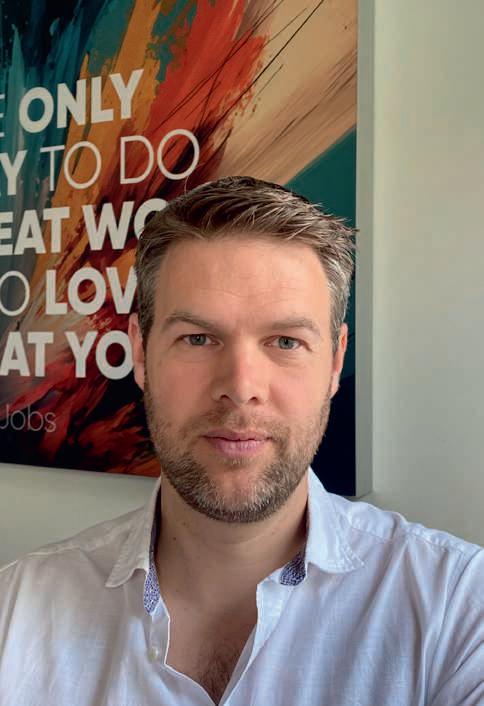
Columnist
Jamie McMinnis Managing Director, MAD Colour
MAKING YOUR BRAND IMPOSSIBLE TO IGNORE:
The Evolution of Display with MAD Colour
In today’s crowded marketplace, brands aren’t just competing on product or price; they’re competing for attention. Nowhere is that competition more evident than in physical spaces; exhibitions, events, retail and workplaces. These are the moments where first impressions count and lasting perceptions are formed.
Businesses invest heavily to “show up.” Yet, too often, their display fails to stand out. A generic pop-up, low grade materials or lacklustre design can quietly undermine credibility. Clients judge a brand by what they see: the build quality, the visual impact, and how confidently a space tells its story.
Expectations have changed. Live environments are now one of the most powerful drivers of trust and buying intent. With that opportunity comes pressure to perform; the gap between being remembered and being overlooked has never been smaller.
THE PROBLEM: OUTDATED DISPLAY IN A MODERN MARKET
Traditional display solutions haven’t kept pace with modern expectations. Heavy, single-use builds and basic popup systems offer limited impact and no flexibility. They’re often difficult to transport and time-consuming to install with limited reuse potential.
Outdated displays don’t just limit visual impact; they restrict performance. They fail to deliver the flexibility, efficiency and sustainability that modern businesses need to compete, stand out and maximise return on their investment.
The Shift: Smarter, More Sustainable Solutions
THE DISPLAY INDUSTRY IS EVOLVING AND FAST. Businesses are moving towards modular, reusable systems that combine strong visual impact with ease of use. Lightweight aluminium frames paired with fabric graphics create seamless, premium environments that can be reconfigured and reused across multiple events & campaigns.
This isn’t just a visual upgrade; it’s a smarter way to operate. Faster installs reduce time on site, hired hardware reduces cost, reusable systems cut waste, and flexible setups keep brands looking fresh without constant reinvestment.
THE SOLUTION: FULLY INTEGRATED SYSTEMS, BUILT FOR IMPACT
MAD Colour is unique as everything is brought together under one roof; creative design, vibrant print, inhouse fabrication and digital integration.
Operating from a 40,000 sq ft facility in Belfast, the team delivers fully integrated display solutions with speed, consistency and the reassurance of a local partner backed by 50 years’ experience.
At the core of this modular approach is the globally utilised REXframe system. Lightweight & robust aluminium structures with interchangeable fabric graphics allow brands to create bold, high-impact environments that evolve with every campaign, without the cost of starting from scratch.
In-house dye-sublimation fabric printing and frame fabrication results in high-quality display solutions delivered at pace and built for modern marketing.
MAD Colour can also remove the
“Businesses invest heavily to “show up.” Yet, too often, their display fails to stand out.”
headaches of transport and storage. With options to hire display hardware plus full installation and dismantling services; businesses can focus on engagement and leads, not managing the kit.
The service is further extended with hire options for digital screens, freestanding touch totems and event furniture including counters, desks, tables and seating. This allows businesses to elevate their presence without significant upfront investment and clients benefit from both cost efficiency and a more sustainable approach to brand display.
REAL IMPACT WHERE IT MATTERS
In a world where perception is formed in seconds, display is no longer a support act. How you represent your business is central to the brand identity & values. MAD Colour understands that true impact goes beyond aesthetics; the key is creating environments that build confidence, spark engagement and leave a lasting impression.
Ultimately, it’s not about your brand showing up; it’s about standing out!
MAD Colour offers the creativity, expertise, and end-to-end delivery to make it happen. Go MAD, get results.
Young Voices From Portadown and Ballyclare
Unite for Loneliness Awareness Week Concerts
Two rural primary school choirs from Portadown and Ballyclare came together as part of Loneliness Awareness Week, celebrating the role music plays in strengthening community connections and fostering a sense of belonging among young people.
Special performances took place at Millennium Court in Portadown on June 17, and at The Courthouse, Antrim on June 19, featuring pupils from St John the Baptist Primary School, Portadown, and Fairview Primary School, Ballyclare.
Among those attending the performance in Portadown was Alderman Lavelle McIlwrath, the newly installed Deputy Lord Mayor of Armagh City, Banbridge and Craigavon Borough Council.
The concerts followed a programme of rehearsals and vocal workshops led by acclaimed choral facilitator Charlotte O’Hare.
Speaking in advance of the two performances, Charlotte O’Hare said: “It’s been so joyous and inspiring working with the schoolchildren of St John the Baptist in Portadown, and Fairview Primary in Ballyclare. From the very first session they showed so much enthusiasm, positivity and creativity, which is what musicmaking should be all about!
“It’s amazing that in only a few sessions together they managed to learn six songs! And it’s been so special bringing the two schools together, and I’m so excited for them to perform, singing songs


all about the power of friendship and community.”
Organised by the newly established Oakleigh Music Trust Ltd, and the trust’s Founding Sponsor, Ulster Carpets Ltd, the project aimed to provide young people with meaningful musical experiences while encouraging confidence, friendship and connection through shared performance.
Taking place during Loneliness Awareness Week, the events highlighted the positive impact music and singing together can have on wellbeing and community spirit.
The initiative was also endorsed and supported by the Arts Council of Northern Ireland through its Rural Engagement Programme.
Richard Yarr, Founder and Chair of The Oakleigh Music Trust Ltd, said: “These performances are a wonderful opportunity for young people to come together, develop their confidence and share music with their communities. Singing together creates connection, and that spirit is at the heart of these events. We are very grateful to our Founding Sponsor, Ulster Carpets, and to Tayto NI
for their additional sponsorship support.”
Nick Coburn, Group Chief Executive Officer, Ulster Carpets said: “At Ulster Carpets, we are passionate about creating a positive and lasting impact in the communities we serve. As a founding sponsor, we are incredibly proud to support an initiative that is helping young people across Northern Ireland build confidence, develop meaningful friendships and foster a sense of connection. These are vital life skills that will benefit them for years to come, and we remain committed to supporting opportunities that improve the lives of future generations.”
Ann Hutchinson Kane, Director, Tayto NI, said: “We are delighted to support the Oakleigh Music Trust and the schools involved in such an important project. Music, friendship and community connection are beautifully embodied in the coming together of these young people, and it will be wonderful to see these events develop in the future.”
The concerts culminated in a combined choir performance featuring pupils from both schools in front of invited community groups and individuals.
Oakleigh Music Trust.
Oakleigh Music Trust - Nick Coburn and Dalreen Buchanan - Ulster Carpets with Richard Yarr, Sheila Davidson and children from both schools.





































Growth On The Horizon
Belfast Harbour has been a constant in the region’s economy for nearly 200 years, continually adapting to the evolving needs of the city it serves. Over the past 25 years, the port has invested £692 million in capital projects, and now Belfast Harbour has set its sights on the future, unveiling planned investment of £1.3 billion within its Belfast Harbour 2050 Masterplan: Horizons of Opportunity. Ambition speaks to Chair of Belfast Harbour Commissioners, Dr Theresa Donaldson about what the road to 2050 looks like.
“Currently Belfast Harbour handles 70% of Northern Ireland’s seaborne trade, with our estate spanning across 2,000 acres of land and 1,000 acres of water. Belfast Harbour is the only integrated environment in Northern Ireland connecting global trade, logistics, clean energy and property development in one place,” says Dr Donaldson.
“Our 2050 Masterplan represents the next phase of investment planned to secure the port for future generations. It provides a clear framework for sustained investment in port infrastructure that offers long-term value for our customers, tenants, the public and the wider Northern Ireland economy.”
The plan sets out a range of opportunities and priorities over the next 25 years, identifying £1.3 billion worth of port infrastructure investment, as well as additional housing and regeneration opportunities worth between £500 million and £750 million
External forecasts prepared by port Master Planning experts Haskoning indicate that trade volumes through Belfast Harbour could increase from around 24 million tonnes today to over 30 million tonnes by 2050 under steady growth scenarios. This figure could exceed 40 million tonnes under
higher growth scenarios.
As capacity tightens at other ports, Belfast Harbour is putting the scale of its estate to work, supporting trade growth that benefits customers and the wider economy.

“As demand for trade continues to grow and space becomes constrained elsewhere, we are thinking long term to secure the future port capacity. We believe Belfast Harbour is uniquely positioned to support the expected scale of growth and become the principal maritime gateway on the Dublin Belfast Economic Corridor,” explains Dr Donaldson.
“In the face of global uncertainty, we’re evolving in line with how global trade and supply chains are being reshaped. The decisions we make now will be felt in the year 2100, so we’re planning the decisions that must be taken today to ensure existing infrastructure can keep pace with capacity requirements.”
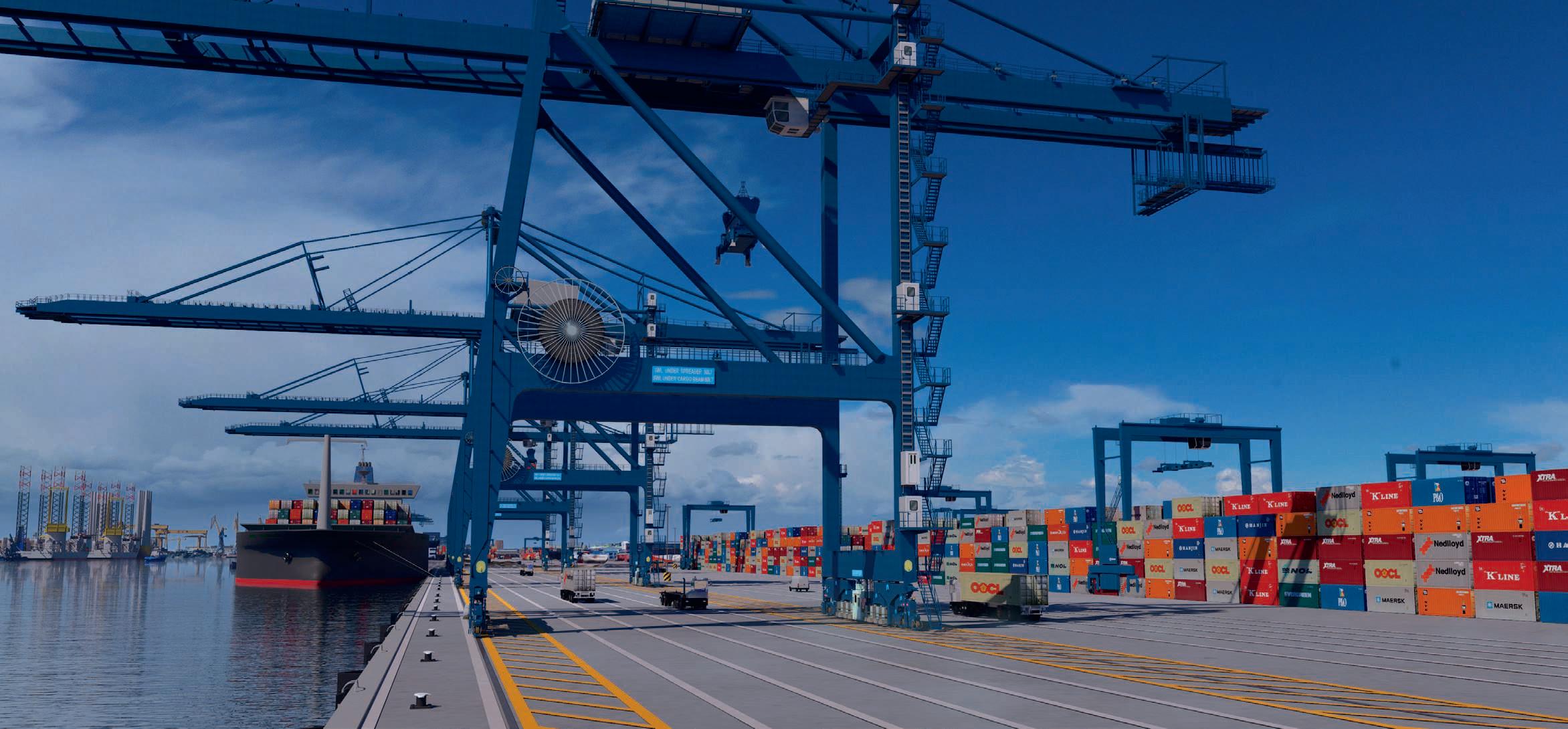
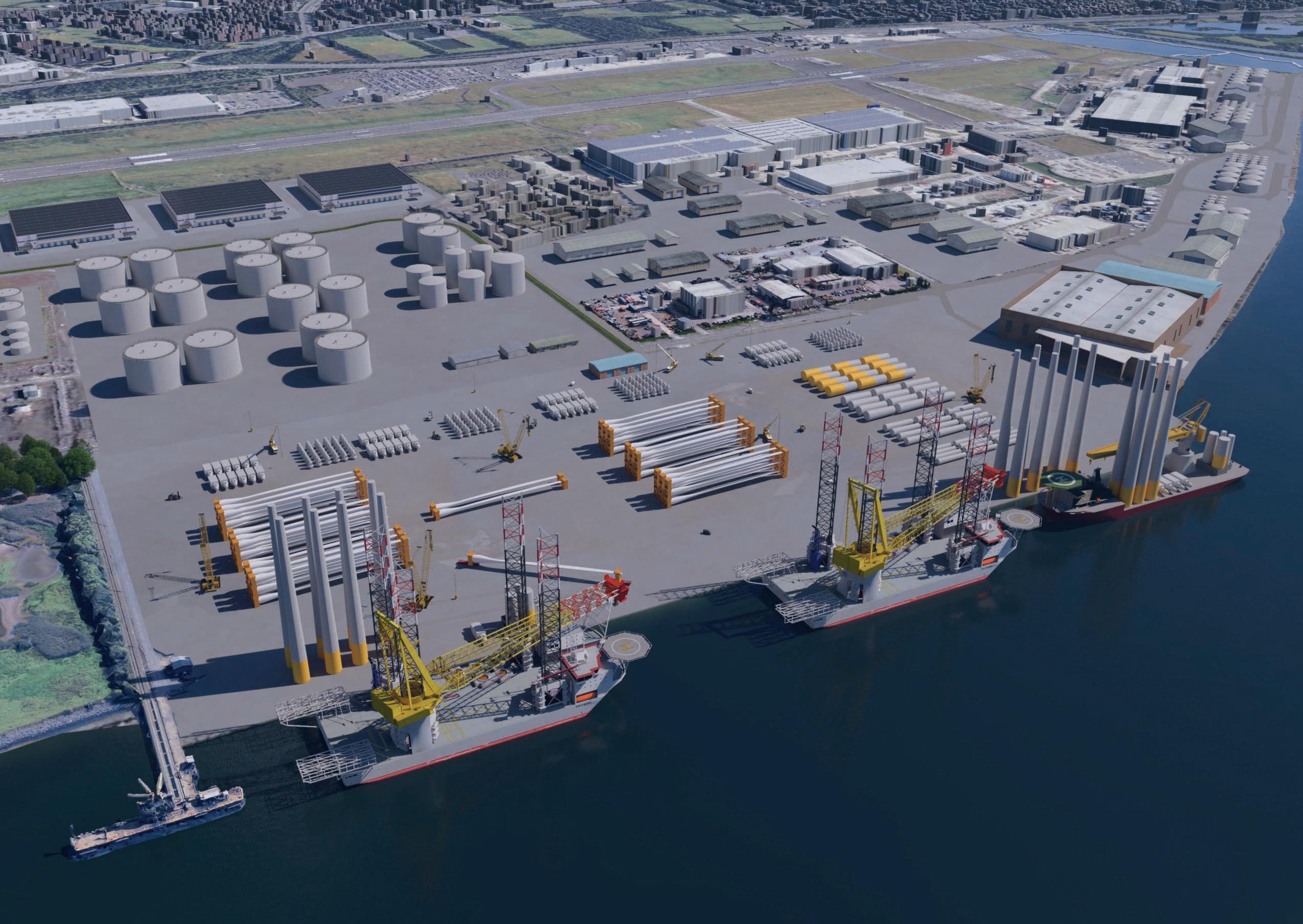
Belfast Harbour’s 2050 Masterplan is set out in three phases. Horizon 1 is well underway and includes the development of the new £90 million deepwater berth, which will support growth in the cruise and offshore wind sectors.
“The first horizon of the Master plan mirrors our current five-year strategy and is being fully planned and executed.







“In the face of global uncertainty, we’re evolving in line with how global trade and supply chains are being reshaped.”







From 2030, we’re turning our focus to a period of scaled expansion. During this time, we hope to see the redevelopment of Stormont Wharf, the longest deepwater quay on the island of Ireland, as well as other projects including a new logistics park near Belfast City Airport and the expansion of Belfast Harbour Marina,” says Dr Donaldson.
The third horizon lays out a series of major projects including Belfast’s first land reclamation project in 25 years to create a new container terminal, along with a clean energy hub.
“Across the next 25 years, our ambition to remain a key maritime gateway on the east coast of the island of Ireland does not falter. Belfast Harbour is a key driver of the regional economy, and this plan seeks only to increase that contribution,” says Dr Donaldson.
Independent analysis by Ulster University and Grant Thornton found that the investments set out in the Masterplan have the potential to increase the economic output enabled by Belfast Harbour to approximately £12 billion in GVA annually, up from £8.8 billion currently. Research also found
that projects within the Masterplan could support around 5,500 construction jobs in Northern Ireland.
“The Masterplan is ambitious, and if we want to see the economic growth envisioned come to fruition, Belfast Harbour must rely on constructive collaboration over the next 25 years,” says Dr Donaldson.
“The Masterplan requires coordination across government, regulators and infrastructure providers to navigate challenges in transport connection, electricity grid reinforcement, wastewater provision and wider planning policy.”
The Masterplan has been developed over the past two years through extensive engagement with customers, tenants and public bodies. Although not a statutory requirement, Dr Donaldson emphasises the Board’s decision to involve the public and stakeholders in their planning.
“From the start, we have wanted this Masterplan to represent a vision of the city and the region that is grounded in practical delivery, taking into account what city stakeholders and residents need,” she says.
“Belfast Harbour is a cornerstone of the Northern Ireland economy. We have been trusted to deliver for the city of Belfast as its maritime gateway for global trade. The trust placed in us has enabled us to operate with a pioneering spirit, acting on opportunities for growth that has catapulted Belfast’s reputation as a city of excellence.”
Innovation has always been at the forefront for Belfast Harbour, and Dr Donaldson says the Masterplan aims to continue that legacy.
“In 1996, Belfast Harbour welcomed our first cruise vessel to Belfast, at a time when many people did not think the city was ready for the rest of the world. Today, cruise tourism generates more than £26 million for the local economy annually,” she explains.
“Through collaboration and conviction, Belfast Harbour plans to continue to deliver new opportunities and grow existing industries over the next 25 years. Belfast has the potential to be home to the principal port on the Dublin Belfast Economic Corridor, and Belfast Harbour’s 2050 Masterplan is the first step in bringing this vision to life.”
Concept visual showing use of D1 deepwater quay to support deployment of offshore wind turbines
Talk to Musgrave - the leading convenience retail experts.
Whether you’re looking to convert or to sell your business, freehold or leasehold, talk to us. We’re an award winning, family owned business with 150 years of entrepreneurial heritage, supporting thousands of independent retailers. We believe local ownership creates better businesses and stronger communities, and through innovation in food-to-go and store design, we create new opportunities for growth. Our track record of building successful brands is widely recognised – including Frank and Honest, now the largest on-the-go coffee brand on the island of Ireland.
To find out how we could grow good business, contact:
Barry Holland, New Business and Acquisitions Manager barry.holland@musgrave.ie | 07795 965204 Denis McLaughlin, Business Development Manager denismc@musgrave.ie | 07881 938374 Terence Lagan, Business Development Manager terence.lagan@musgrave.ie | 07775 009699 229 STORES ACROSS SUPERVALU, CENTRA AND MACE IN N.I.




As international expansion becomes a priority for more businesses, the tax implications of operating across multiple jurisdictions are increasing in both scale and complexity. For Grant Thornton
Northern Ireland, this shift reflects a broader evolution in how the firm delivers value, bringing together technical expertise and an integrated, cross-border approach to client service.
Jonathan Megaw, Large Corporate & International Tax director, explains how this is underpinned by Grant Thornton’s move to unite its global member firms into a cohesive, multinational platform, enhancing collaboration across jurisdictions and enabling clients to access the full breadth of the firm’s international capabilities.
“At a practical level, we no longer view a Northern Irish business as solely a local client,” he explains. “If that company has operations in the US or Europe, it is equally a client of those Grant Thornton firms, and vice versa. That mindset has significantly increased collaboration across the firm.”
This integrated model is most visible in how client engagements are delivered. Rather than working in isolation, Grant Thornton is increasingly bringing together specialists from multiple jurisdictions to address complex challenges collectively.
“What differentiates us is the ability to put the right people in the room at the same time, whether that’s US, UK or Irish tax expertise, and work through issues as a single team,” Jonathan says. “It’s a genuinely joined-up global approach, and clients see the value in that immediately.”
Nowhere is this more evident than in the growing collaboration with counterparts in the United States. With a particular focus on the West Coast, Jonathan has made several trips to key markets including the Bay Area, Seattle and San Diego, meeting both existing and prospective clients.
These visits are deliberately hands-on. While they often generate immediate project opportunities, their primary purpose is longer-term – building relationships, understanding client needs, and strengthening the firm’s reputation in complex markets.
“There’s a clear difference when you engage with clients face to face,” Jonathan notes. “You gain a much deeper understanding of their business, their challenges, and where you can add value.”
The range of businesses engaged during these trips is broad, spanning mid-market companies, multinationals, and smaller firms scaling internationally. Yet, despite the variation in size, the underlying areas of focus are often consistent.
“Whether it’s a relatively small business or a very large multinational, the fundamentals tend to be the same,” Jonathan explains. “What changes is the level of complexity and the scale.”
These conversations are also revealing clear trends facing internationally active businesses. While topics such as Pillar Two, the Global Minimum tax rules, continue to generate interest, transfer pricing has emerged as a consistent and central theme.
“Transfer pricing comes up in almost every discussion, particularly in the US,” Jonathan notes. “Tax authorities are focusing heavily on it, which is increasing both scrutiny and demand for advice. As a result, clients are becoming more aware of the need to get it right.”
Business conversations are indicating that despite a strong appetite for international growth, there is also a clear preference for simplicity.
“Clients want to expand in a way that is efficient and scalable, without creating unnecessary complexity,” Jonathan explains. “That means designing structures that work now but can also evolve as the business grows.”
Working closely with US-based businesses has also highlighted some notable differences in market dynamics. Access to capital is typically stronger, enabling faster growth, while ownership structures often involve private equity or venture capital backing rather than the family-owned models more common in Northern Ireland.
In innovation-driven regions such as the Bay Area, the influence of emerging technologies is also impossible to ignore.
“AI is a constant topic of conversation,” Jonathan says. “It’s key that we as advisors spend time understanding the impact it is having on our clients’ business and how our advice and offerings need to adapt accordingly.”
Despite these evolving dynamics, the firm’s core approach to client relationships remains consistent. The focus is on delivering practical, commercially grounded advice in line with a client’s stage of growth.
“We’re not looking to overcomplicate things,” Jonathan explains. “The priority is to get the fundamentals right and then build from there. This phased approach tends to resonate strongly with clients.”
This is particularly important for businesses entering new markets, where early structuring decisions can have longlasting consequences.
“If those are addressed properly from the outset, most other challenges can be managed,” Jonathan says. “Where businesses run into difficulty is when they expand without fully considering how profits will be allocated or extracted. That’s where inefficiencies and avoidable costs can arise.”
Jonathan points to a recent example of an Ireland/UK origin business that expanded into the US without taking tax advice. The result was an inefficient structure, misaligned profit allocation, and no transfer pricing framework in place.
“Once we worked with the business to restructure and put the right systems and governance in place, the difference was substantial,” he says.
It is a clear illustration of the value of early, informed decision-making and of the role that a coordinated, crossborder advisory model can play in supporting it.
As businesses continue to look beyond their domestic markets, that combination of global reach and local expertise is becoming increasingly important. Grant Thornton’s ability to bring both together is what ultimately enables its clients to navigate complexity and realise the full potential of international growth.
“What differentiates us is the ability to put the right people in the room at the same time, whether that’s US, UK or Irish tax expertise, and work through issues as a single team.”
Clandeboye Lodge completes £2.5 Million Refurbishment Programme
One of Northern Ireland’s leading boutique hotels, Clandeboye Lodge, has marked the completion of an ambitious £2.5 million five-year refurbishment programme with the launch of a new Garden Room extension at its award-winning Coq & Bull brasserie.
Located in Bangor, Co. Down, the fourstar independently owned hotel has long been recognised as one of Northern Ireland’s premier hospitality destinations. Renowned for its warm welcome, stylish interiors and commitment to quality among both leisure and business guests.
The Garden Room represents a significant evolution of the Coq & Bull brasserie.
Light-filled and architecturally striking, the new space adds 48 covers and seamlessly blends contemporary design with views of the hotel’s landscaped grounds, enhancing the relaxed yet refined atmosphere for which the brasserie is known. It is the final milestone in a wider programme of investment that has transformed the property over the past five years.
The launch of the 56m2 Ultra-Luxe suite established a new benchmark for premium accommodation at the hotel, featuring a bathroom with quartzite clad walls, a freestanding copper bath and a range of luxurious design touches. Building on this success, the Dressing Room suite was launched adding a fresh level of luxury and
versatility to the accommodation offering, followed by the enhancement of all guest room fixtures and furnishings.
Beyond the guest rooms, a major extension to the hotel’s dedicated events building, complete with a highly crafted natural stone façade, has created a more impressive sense of arrival, while ongoing investment in the hotel’s landscaped gardens ensures the grounds remain one of its most defining features, offering an ever-changing backdrop that evolves through the seasons. Together, these projects reflect a clear and consistent vision: to enhance every stage of the guest journey through thoughtful, long-term investment.
That commitment has also helped Clandeboye Lodge establish itself as a leading event destination just 15 minutes’ drive from Belfast. Its dedicated events complex sits apart from the main hotel amid mature woodland – with flexible, contemporary facilities that accommodate everything from board meetings and away days through to product launches, award ceremonies and gala dinners for up to 350 guests. The Green Meetings and Green
Tourism Silver Award reflect the hotel’s commitment to delivering exceptional events responsibly and sustainably.
In an increasingly competitive market, it is this combination of continuous investment, exceptional facilities and unwavering commitment to quality that sets Clandeboye Lodge apart. The completion of its five-year refurbishment programme not only strengthens its position as a leading hospitality destination today but ensures it remains a destination of choice for business and leisure guests alike for years to come.
Pim Dalm, managing director of Clandeboye Lodge, said: “We are committed to continually investing in and enhancing everything we offer at Clandeboye Lodge, with every decision guided by our focus on delivering an exceptional guest experience and supporting long-term sustainability. While ongoing investment helps create the distinctive setting for which Clandeboye Lodge is renowned, it is the dedication and passion of our employees that shape the exceptional guest journeys we are proud to provide.”

NI Chamber Chief’s UPDATE
Suzanne Wylie, Chief Executive, NI Chamber
As we look ahead to the summer months, there are plenty of opportunities for NI Chamber members to get to know each other in some new and social ways. Throughout July and August, we’ve created space for conversation and connections in more relaxed surroundings.
Welcome New Members
A Safe Space to Be Me
Abbey Autoline
AGD Renewables
Assisi NI
Bask Solar
Beonic
CIDO
Cloudguard
Club 24 Fitness
Commercial Business
Communications
Cushon Money
DailyPay Inc
Dare to Du
Data Direct
Elevare Advisory
Gilford Castle Estate
Gray + Press Accountants
Hurree
iDig Training
Indaver
Intermodal Innovations
IQ & Co
Like Architects
Luxus Accommodation
Maneely McCann
Mascott Construction
Mercury Hermes
Mid-Ulster MEGA
Mr Sparrow
Net Company
NI Golf Tours
Oxbow Talent
Price Bailey
Renaissance IT Distributor
RKD
Ross & Adam
SCA Consultancy
SD Create
Select Automation
Senergy Innovations
Shift4Now
Signstik
Silver Apples Digital
Thompson Aero Seating
Thrive Now Group
Trade Harmonizer
Transmission Investment
Valor Homes
Vertiv
Visiting Angels
Visual Narrative
Watershed
*To become a member of NI Chamber join online at www.northernirelandchamber.com or phone the membership team on 028 9024 4113
Our Friday morning run club in Belfast’s Ormeau Park is back by popular demand and has already generated lots of interest, so we hope to see many new faces there. Those weekly runs are the perfect training ground for the ‘Stormont Run Around’ – a 5K race in support of Cancer Fund for Children on the evening of Friday 21 August.
Our first charity race will not only raise money for an exceptional cause but also promises to be a really energetic and enjoyable experience. If you haven’t already, I would strongly encourage you to enter a team and join the fun. And on the subject of fun, we’d also love to have your company at our summer social on the evening of Thursday 13 August.
For those of you who aren’t runners, there are still ample opportunities to network and learn with us. Our summer programme includes a host of topical, free-to-attend webinars on areas including productivity, cyber security and IT resilience, as well as Rules of Origin, Incoterms and lots more on the international trade front.
Alongside all of this, we are also preparing to host a significant delegation of senior US executives from North Carolina in late August. Hosted over several days through our strong relationship with North Carolina Chamber, this visit will bring a cohort of influential, decisionmaking leaders to Northern Ireland. The scale of opportunity is significant, offering members in relevant sectors the chance to engage directly with senior figures exploring investment, partnership and collaboration.
From early-morning runs to international connections, this is a summer of real variety. Bringing people together is what NI Chamber does best. So, this summer, I encourage you to get involved and make new connections that will support your business long after the summer months have passed.
Brown & Brown announced as newest NI Chamber Patron
Brown & Brown provides insurance, risk management and advisory services to a diverse client base, from SMEs to multinational organisations.
Welcoming the announcement, Suzanne Wylie said: “Brown & Brown is a significant addition to NI Chamber’s esteemed group of patron organisations. With a strong international capability and a growing presence across the UK and Ireland, its decision to support NI Chamber through patronage is both welcome and important. As we expand our own suite of services and business growth initiatives, we are grateful for their support and look forward to working together to champion Northern Ireland as a great place to do business.”
Shauna Graham, Area Managing Director, Brown & Brown UK, added: “NI Chamber plays an influential role in driving economic growth across Northern Ireland, bringing business and policymakers together, shaping the conditions for economic growth and championing the ambition of local firms. Supporting businesses to grow and manage risk is at the core of what we do at Brown & Brown, and that aligns closely with NI Chamber’s focus on helping companies to scale and compete. Becoming a Patron is a natural extension of our membership, and we are proud to support an organisation that is playing such a pivotal role in shaping prosperity across the region.”
Brown & Brown joins a network of NI Chamber Patrons who play a key role in enabling the organisation’s work with members, policymakers and partners to drive


economic progress. They include Agnew Leasing, Balcas, Belfast International Airport, Belfast Harbour, Caterpillar, Danske Bank, Eakin Healthcare, Galgorm Collection, Ulster
NI Chamber sets the pace


University, Legacy Wealth Management, Pilgrims, Narratology, Pinsent Masons, Power NI, Queen’s University Belfast, Randox, Ulster Bank and Ulster Carpets.
NI Chamber is off and running with plans for its inaugural 5K race. Set to take place on Friday 21 August, it is a chance for businesspeople to step away from their desks, lace up their trainers and raise money for Cancer Fund for Children.
Supported by headline sponsor Kingsbridge Private Hospital Group, supporting sponsor Phoenix Energy and media partners Irish News and Q Radio, the after-work event will raise vital funds for Cancer Fund for Children.
Announcing the run, Suzanne Wylie, Chief Executive, NI Chamber, said: “The Stormont Run Around is a brilliant opportunity to bring our business community together in a social way, while supporting the incredible work of Cancer Fund for Children. I would encourage teams and individuals from every organisation to sign up, get involved and play their part in raising vital funds for young people and families who need it most. Whether you are chasing a personal best or simply taking part, every step will make a difference.”
The race will follow the Stormont Parkrun route. Afterwards, participants and supporters can enjoy a well-earned BBQ at Stormont Pavilion, included in the ticket price.
The entry fee is £22 per person, plus a voluntary contribution to Cancer Fund for Children.
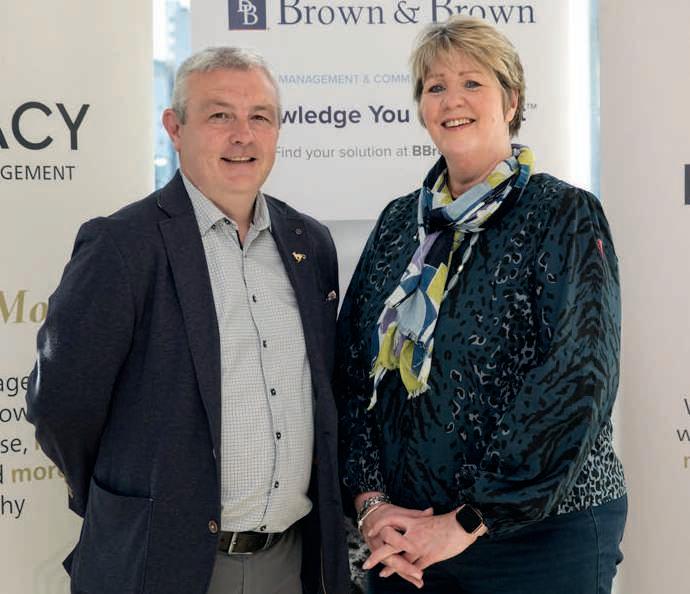
Suzanne Wylie, CEO, NI Chamber and Shauna Graham, Area Managing Director, Brown & Brown.
About Annette McManus (IntoMedia Group);Claire Winter (Kingsbridge Private Hospital Group); Suzanne Wylie (NI Chamber) and Maria Small (Cancer Fund for Children).

Traitors star headlines Annual Lunch
The Traitors winner, Rachel Duffy, was the special guest at NI Chamber’s 2026 Annual Lunch on Friday 19 June in Titanic Belfast. The event brought together more than 500 business leaders, policymakers and stakeholders from across Northern Ireland for one of the most anticipated dates in the business calendar. Hosted by NI
Chamber’s new President, Neasa Quigley, the lunch marked her first major engagement in the role. The 2026 Annual Lunch was delivered with the support of NI Chamber’s Communications Partner BT, alongside supporting sponsors Cleaver Fulton Rankin, GMcG, Honeycomb Jobs and Dell Technologies.
Movement on Good Jobs Bill ‘welcome’
NI Chamber has joined business groups including CBI NI, Employers Federation Northern Ireland, FSB NI, IOD NI and Manufacturing NI in welcoming movement on the ‘Good Jobs’ employment rights bill. The groups responded, saying: “We welcome the Minister’s decision to exempt micro-businesses from the proposed trade union access provisions. This recognises the pressures facing our smallest employers, but it does not address the wider concerns the Employment Rights Bill continues to raise for businesses of all sizes.
“We have spent the last decade navigating low growth, EU exit, the pandemic and sustained cost pressures. These are not abstract challenges; they shape decisions on investment, recruitment and growth every day.
“We continually test and assess the mood of those we represent, including in this past week. We have a responsibility to speak honestly on their behalf. Small, large, homegrown and FDI employers accept that employment laws should be updated but as has been heard directly by the Minister and the Department, they have not been convinced and remain alarmed at some of the proposals.
“Our concern remains that legislation of this scale cannot be properly scrutinised within the time available, given its potentially far-reaching consequences for employers and employees alike. We have now learned that much of the detail, including the legal requirements
on employers, will be left to secondary legislation, meaning key aspects of the framework may never receive the full and transparent consultation and Assembly scrutiny that proposals of this significance require.
“Issues remain across several areas but, on trade union access, there remains deep concern that the proposals go well beyond international norms and, even with Friday’s proposed easement, it would remain one of the most expansive workplace access regimes anywhere in the world.
“If any statutory rights of access are to be considered, they must be matched by equivalent legal protections for frontline managers and staff. The final framework must include robust and workable safeguards for employers in primary legislation, and there remains a need for much more engagement on both trade union access and recognition.
“We all want to see good legislation which improves protections for employees and for good firms. Getting this law right is important so we continue to press for a balanced and workable approach that supports constructive employee relations while safeguarding Northern Ireland as a place to invest, grow and create jobs.
“We have written to the Minister seeking an urgent meeting with the 22 signatories to our April 2026 letter so that the business community can engage directly and constructively on the significant issues this Bill still presents.”
The King’s Birthday Honours
81 people from across Northern Ireland were celebrated in The King’s Birthday Honours List. A particular congratulations to the NI Chamber members awarded for their contributions to entrepreneurship and economic development, community, charity and heritage.
COMMANDER OF THE ORDER OF THE BRITISH EMPIRE (CBE)
JOSEPH O’NEILL
CEO, Belfast Harbour. For services to business and to the community in Belfast.
OFFICERS OF THE ORDER OF THE BRITISH EMPIRE (OBE)
JOHN PAUL HARKIN
Director, Alchemy Technology Services. For services to economic development and to entrepreneurship.
MUKESH SHARMA
Deputy chair and trustee, The National Lottery Heritage Fund and chair, Northern Ireland committee, National Lottery Heritage Fund. For services to heritage.
MEMBERS OF THE ORDER OF THE BRITISH EMPIRE (MBE)
GEOFFREY WILLIAM AGNEW
Joint executive group chair, Henderson group. For services to business and to the community in Northern Ireland.
MARTIN JOHN AGNEW
Joint executive group chair, Henderson group. For services to business and to the community in Northern Ireland.
TREVOR ANNON
Managing director and chair, Mount Charles. For services to business, to sport and to charity in Northern Ireland.
WESLEY DAVID ASTON
Lately Chief Executive, Ulster Farmers’ Union. For services to agriculture.
GEORGE ALEXANDER FLEMING
Chair, Fleming agri products. For services to business, to employment and to apprenticeships.
MAURICE HENRY GEDDIS
Co-founder and co-chair, Avondale Foods Ltd and ENE Ltd. For services to innovation and entrepreneurship in Northern Ireland.
Pictured: Mairead Scott (Honeycomb Jobs); Stephen Cross (Cleaver Fulton Rankin); Brian Morrisey (BT); Neasa Quigley (NI Chamber President); Susan Dunlop (GMcG) and Michael Morgan (Dell Technologies).
NI CHAMBER APPOINTS NEW BOARD MEMBERS
At its Annual General Meeting on Friday 29 May, NI Chamber welcomed three new board members representing the finance, professional services and technology sectors. Mark Crimmins, Cara Haffey and Mark McCormack will also join fellow Board members on the council.
MARK CRIMMINS
Regional Managing Director for Ulster Bank in Northern Ireland
Mark Crimmins is an experienced senior banking leader with over 25 years’ expertise across corporate, commercial and business banking. He currently serves as Regional Managing Director for Ulster Bank in Northern Ireland, where he oversees all aspects of Corporate, Commercial and Business Banking.
A Chartered Banker and a fellow of the Institute of Chartered Accountants in Ireland, Mark holds a BA Hons in Accounting from the University of Ulster and a Diploma in Accounting from Queen’s University Belfast.
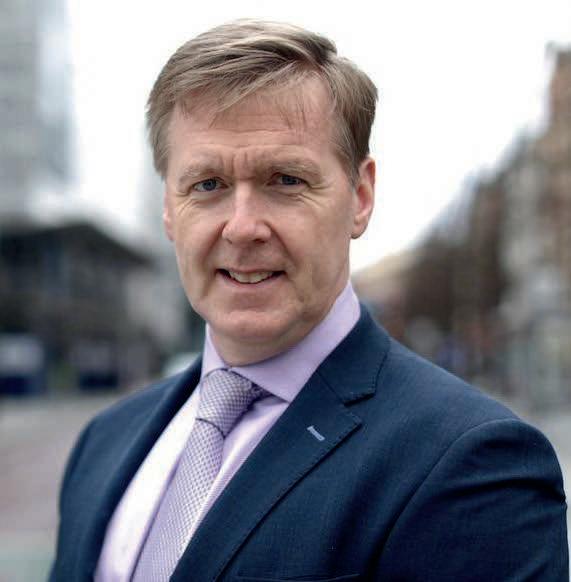
WELCOME TO NEW COUNCIL MEMBERS.
Representatives of more than twenty member organisations have also been appointed to NI Chamber’s Council.
Erin McFeely, Alchemy Technology Services
Michaela Diver, A&L Goodbody
Terry Waugh, Action Renewables
Barbara Henry, Caterpillar
CARA HAFFEY
Deals Partner, PwC
Cara is a Deals Partner at PwC in Belfast and serves as its UK firm’s leader of industry for industrials and services.
Cara was brought up in Lisburn, left for University in Lancaster, worked for British Airways and trained with PwC in Scotland. Returning home eight years ago, Cara has worked across the Northern Ireland M&A market and enjoys strategically advising her clients on growth, acquisitions and transactions. She is currently chair of Lisnagarvey Hockey Club and is a past chair of a Birmingham based social enterprise, Innovating Minds.

MARK MCCORMACK
Managing Director, Aflac Northern Ireland
Mark McCormack is Chief Technology Officer for Aflac and Managing Director for Aflac Northern Ireland: Aflac’s Centre for Advanced Technology located in Belfast, which comprises of 170 IT and cybersecurity professionals.
As Chief Technology Officer for the company, Mark has responsibility for critical enterprise-wide functions supporting the business: Enterprise Architecture, Digital Product Management, Digital Experience, Software Engineering Excellence, IT Learning & Development, Cloud capabilities, and Core Infrastructure.
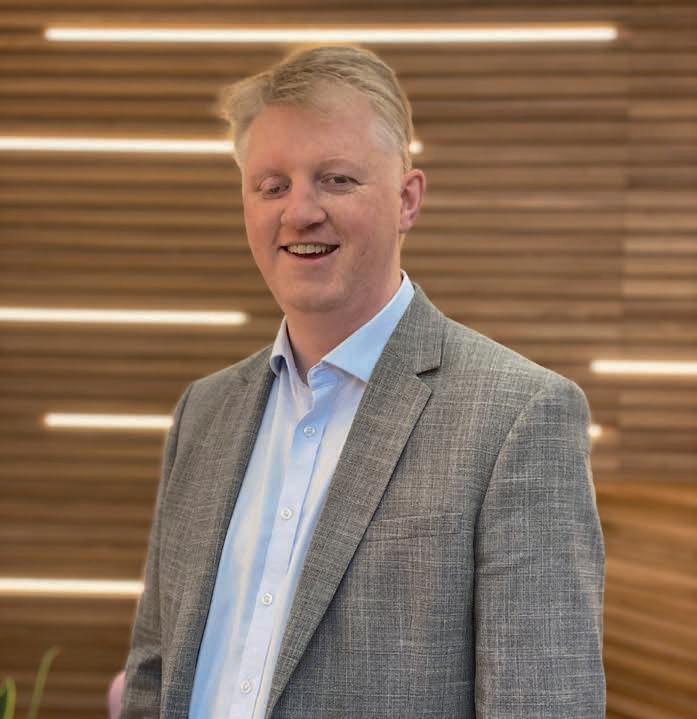
Gareth Deering, Denroy
Andrew Fleming, Derry Chamber
Brian Hegarty, ESB Group
Sean Breen, EY
Katrien Roppe, FinTrU
Adrian Johnston, Innovation Commissioner
Keith Liggett, Legacy Wealth Management
Michael Bower, Open University
Edel Bach, Pilgrims Europe
Marina Donohoe, QUBIS
Ursula Devine, Seagate
Chris Monroe, Smiley Monroe
Emma Kerins, SSE
David Creighton, Thales
Laura McCorry, Tourism NI
Nigel Walsh, Ulster Bank
Getting Momentum behind Global Growth
NI Chamber’s Annual Economic Conference ‘Momentum’ returned to Galgorm Resort in Ballymena in April, with a focus on Global Growth.
Delivered in partnership with headline sponsor Ulster Bank and supporting sponsors, BT, Pinsent Masons and Netcompany, the half-day conference explored international trade, innovation and public sector transformation.
More than 300 delegates heard from Peter Foster, World Trade Editor for the
Financial Times, as well as Sebastian Burnside, Chief Economist at NatWest Group and Minister for the Economy, Dr Caoimhe Archibald MLA.
A panel session on world-leading innovation examined how Northern Ireland can drive productivity growth and create high-value jobs by strengthening innovation clusters, translating research into commercial impact.
A separate panel addressed global trade, considering how Northern Ireland
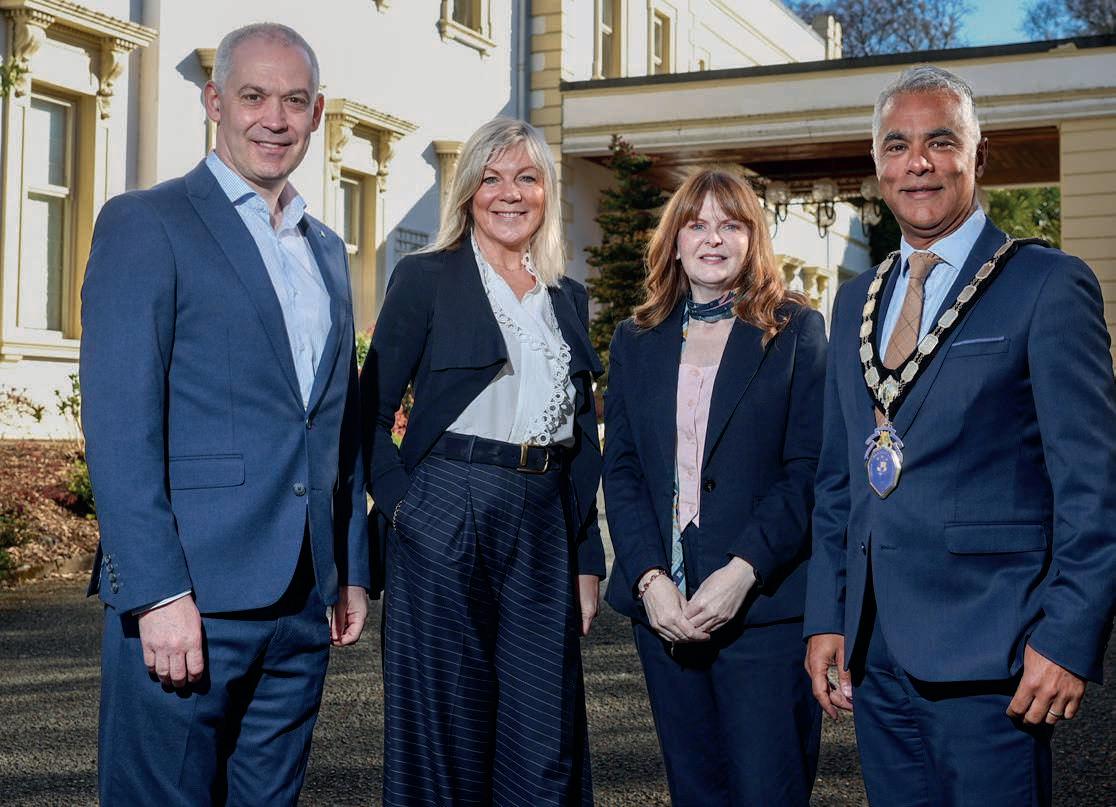
businesses can turn international access into growth through improved export readiness, market diversification and better support on finance, logistics and compliance.
There was also a specific session on public sector reform, exploring the international best practice Northern Ireland could adopt to deliver faster planning and infrastructure, more effective regulation and procurement and datadriven public services.
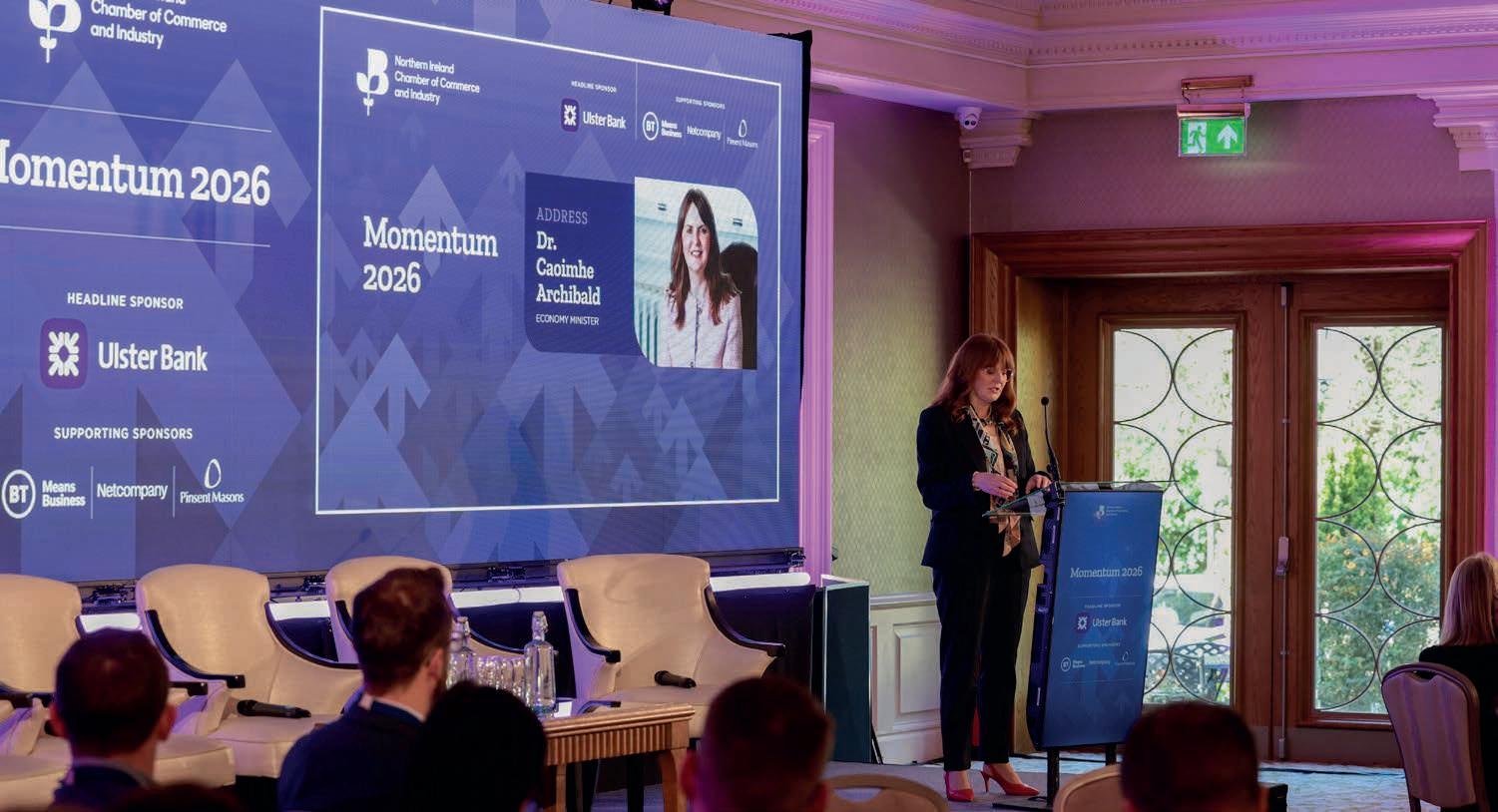
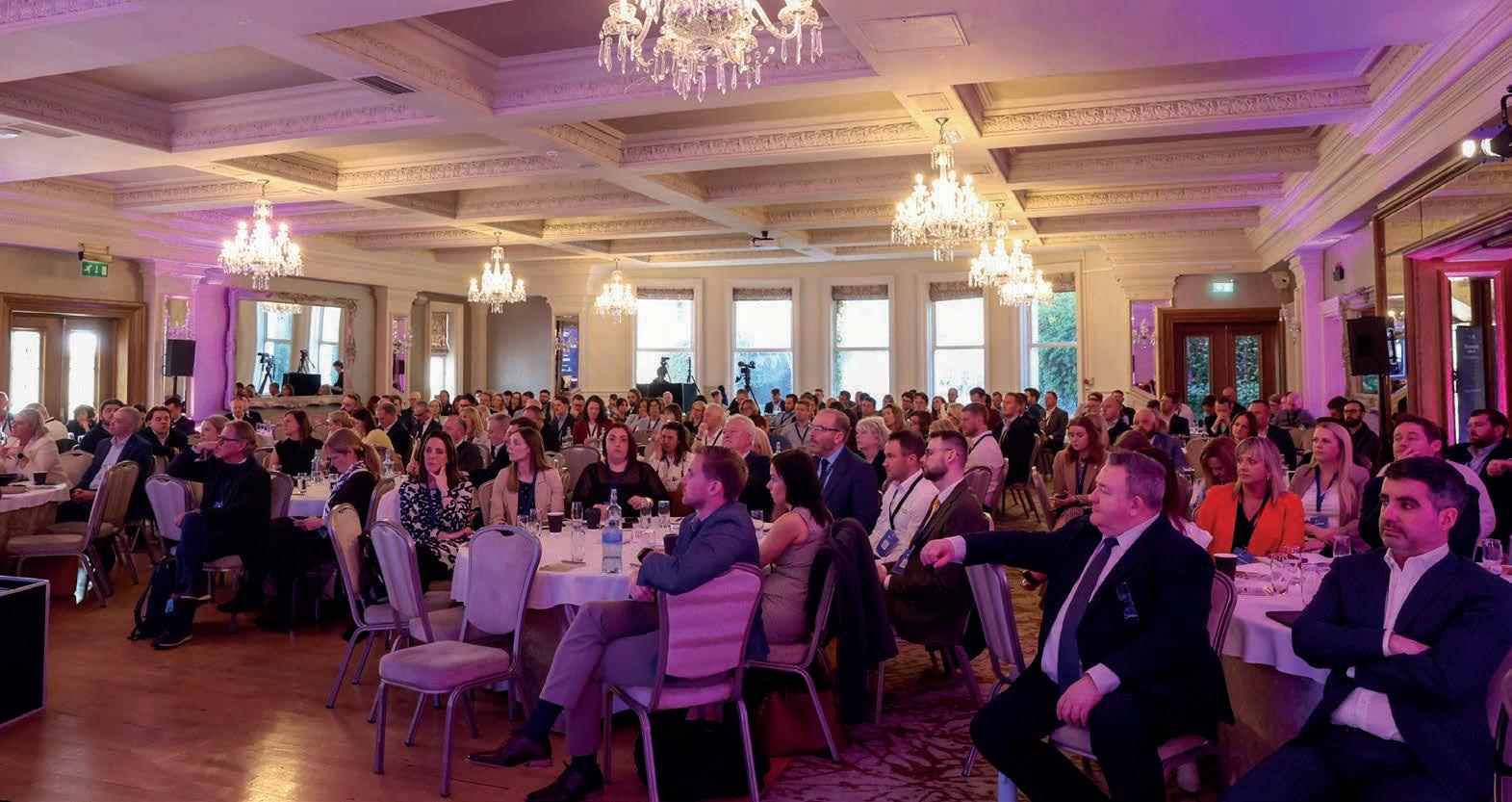
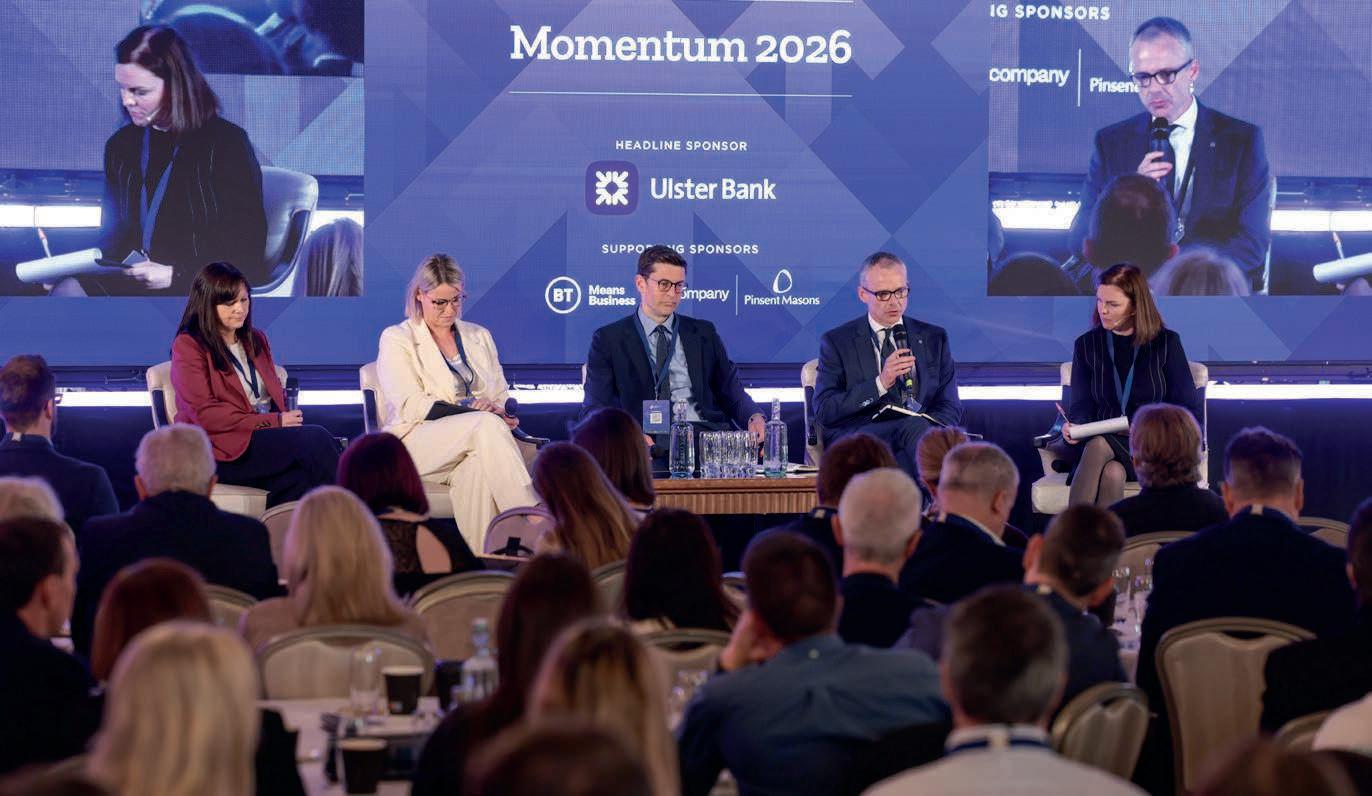
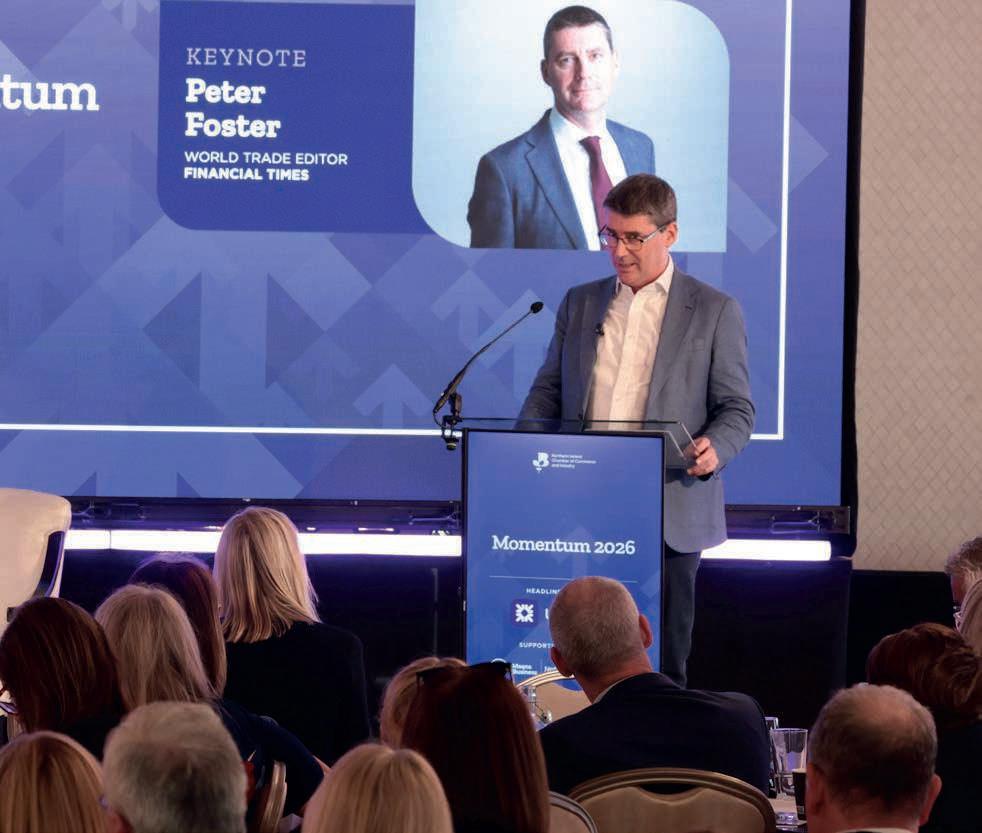
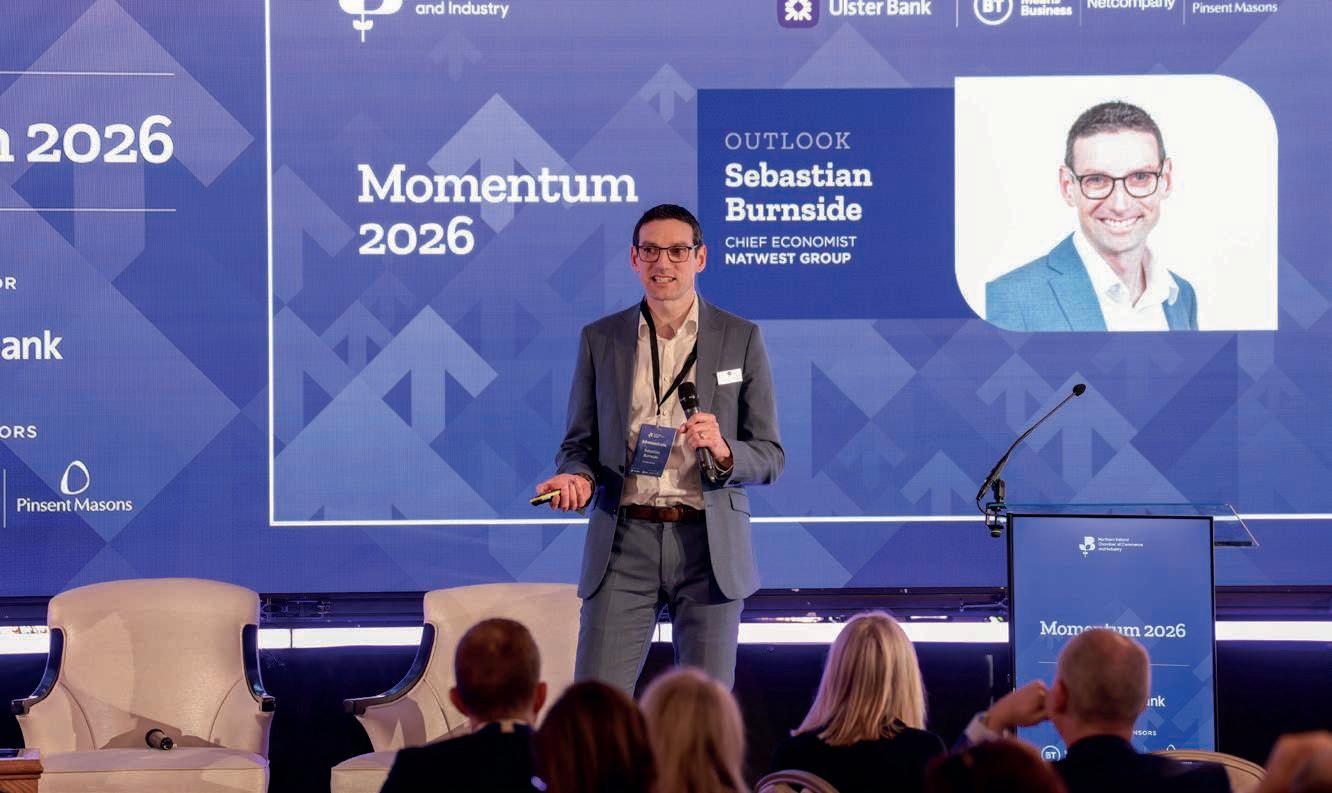
Nigel Walsh (Ulster Bank); Suzanne Wylie (NI Chamber); Economy Minister Dr. Caoimhe Archibald and Kailash Chada (NI Chamber).
Economy Minister Dr. Caoimhe Archibald.
More than 300 delegates attended the event.
The Trading Globally Panel included Natwest Group, Pinsent Masons, British Chambers of Commerce and Invest NI.
Peter Foster, World Trade Editor, Financial Times.
Sebastian Burnside, Chief Economist, Natwest Group.
Resilient but constrained: weak demand, high costs and trade frictions lead to uneven growth in NI economy
In the lead-up to the ongoing Middle East crisis, growth signals in the Northern Ireland economy remained weak and uneven in Q1 2026, with little evidence of confidence or momentum building. That is according to the latest Quarterly Business Insights report from NI Chamber and Queen’s University Belfast. While most key indicators remain marginally positive, meaning slightly more firms report improvement than deterioration, the margins remain narrow and have not strengthened. The overall picture is one of an economy that is holding up but failing to build sufficient momentum to support stronger growth.
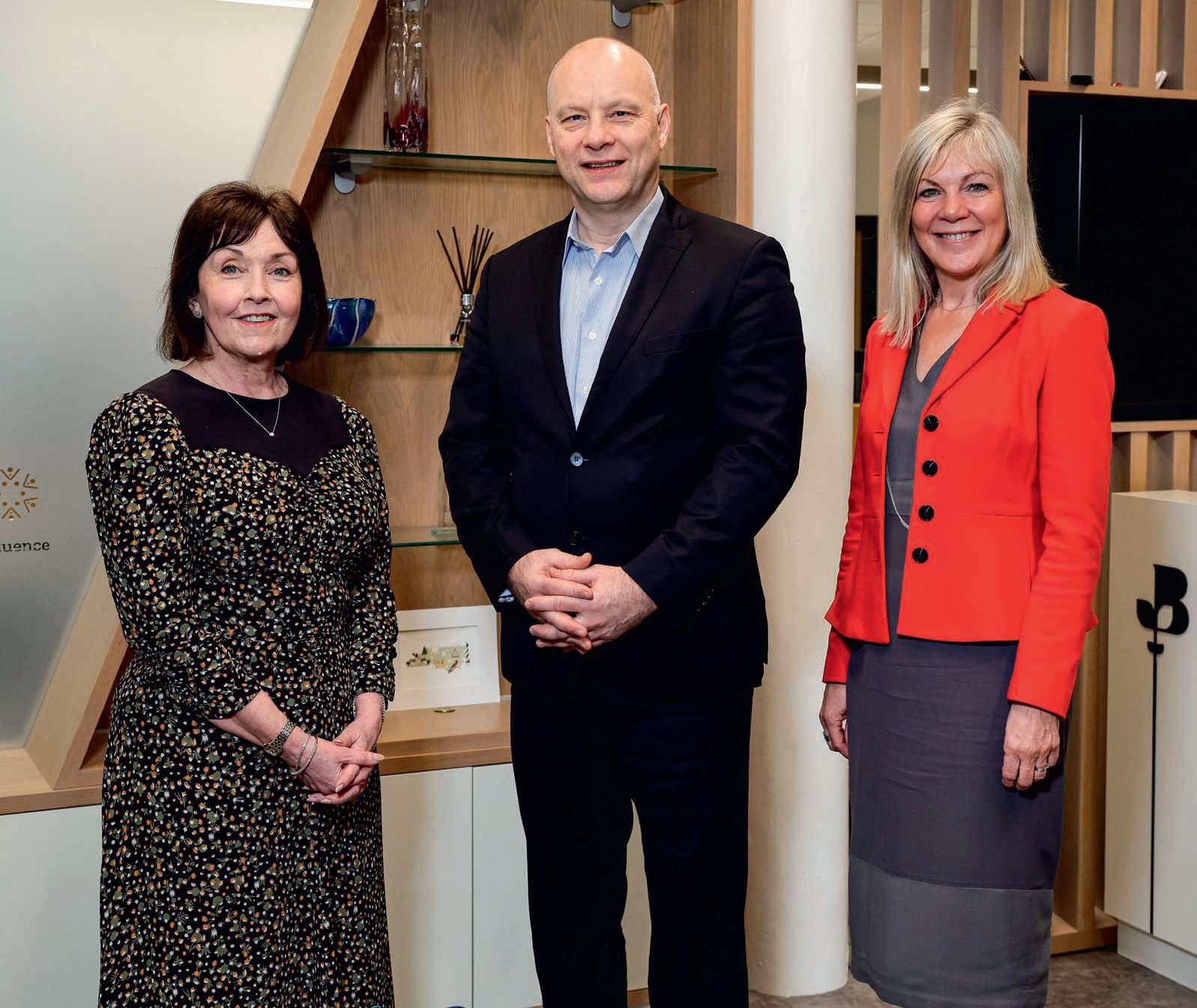
Profitability
Around 72% of firms report some level of profitability, indicating that most businesses remain in positive territory. However, this is largely driven by moderate rather than strong performance. Only 10% of firms report high profitability, while the largest share (44%) report moderate profitability, pointing to an environment where firms are trading, but not strongly. Cost pressures remain firmly embedded. Price balances are still clearly positive across manufacturing and services, indicating continued cost pass‑through, particularly for labour costs. As a result, margins remain under pressure despite broadly positive activity indicators.
Confidence
Business confidence remains positive but eased slightly in Q1 2026. Turnover expectations stand at +28% in both manufacturing and services businesses, pointing to steady rather than strengthening optimism. Profit expectations are also positive, though more subdued, at +9% in manufacturing and +14% in services, highlighting continued pressure on margins.
Investment intentions are positive but cautious. Training investment continues to lead, with stronger balances in both sectors. Capital investment remains more modest, indicating a continued reluctance to commit to large scale spending.
Recruitment
Recruitment activity strengthened in Q1 26, but this is not translating into stronger employment growth. Hiring remains active but is increasingly focused on replacement rather than expansion, reflecting ongoing skills shortages and capacity constraints. Recruitment difficulties are extremely elevated, with 100% of manufacturers and 77% of services firms reporting difficulties in filling vacancies.
Just over half of firms (54%) currently employ graduates, while 41% have never done so. Among firms that do employ graduates, 28% report reducing graduate recruitment over the past two to three years, compared to 17% increasing it, citing skills mismatch and cost pressures as key reasons.
Trade
The impact of the Windsor Framework remains uneven. Around 46% of firms report some impact, with the main challenges relating to clarity on NI/EU rules (61%), use of the Trader Support Service (45%) and regulatory divergence (40%). Those impacted continue to face complexity and an administrative burden.
Views on the ‘goods at risk’ test reflect this picture. Amongst those with a view there is a clear balance in favour of a review of the test, with 35% supporting a review compared to 8% opposed. This is driven by concerns around cost, administrative burden and lack of clarity.
Commenting on the findings, Suzanne Wylie, Chief Executive of NI Chamber said that while businesses continue to trade and many are investing in people, they are doing so in an increasingly challenging environment:
“This report confirms that even before the recent escalation in the Middle East, businesses in Northern Ireland were operating in a fragile, low growth environment. We stand ready to work in partnership with the UK Government to best understand and support businesses through this challenging period.
“At the same time, the Northern Ireland Executive must not lose sight of the long term structural issues firmly within its control, starting with putting Northern Ireland on a credible path to financial sustainability through a comprehensive review of public spending.
“At the same time, we urgently need progress on the long standing barriers to growth that continue to hold back investment, particularly skills, planning, and wastewater capacity constraints that are preventing development right across Northern Ireland.”
Stressing that Northern Ireland ‘needs greater ambition for its economic future’ she said: “Businesses want to see an agreed, long term economic plan that provides clarity, certainty and direction, and which we can all get behind. With the right policy framework in place, firms are ready to invest, grow and play their full part in delivering sustainable economic growth.”
She also stressed that reducing unnecessary complexity is essential if the Windsor Framework is to provide the stability and certainty that businesses need:
“On trade, it is vital that both the UK and EU continue to uphold their commitments under the legal text of the Windsor Framework to keep its operation under constant review. That must include reviewing the ‘goods at risk’ test to ensure it is as simple, proportionate and up‑to‑date as possible, and reflects the capabilities of modern supply‑chain technology.”
Professor Richard Ramsey, Professor of Practice at Queen’s Business School, added: “The Q1 results point to an economy that is proving resilient, but where weak demand, persistent cost pressures and severe labour market constraints continue to limit momentum. Northern Ireland’s relative UK performance increasingly reflects resilience rather than strong growth.”
Chamber Events
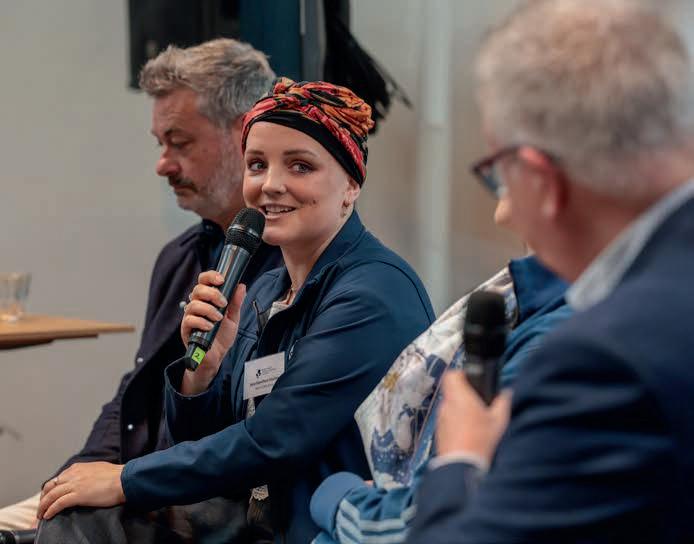
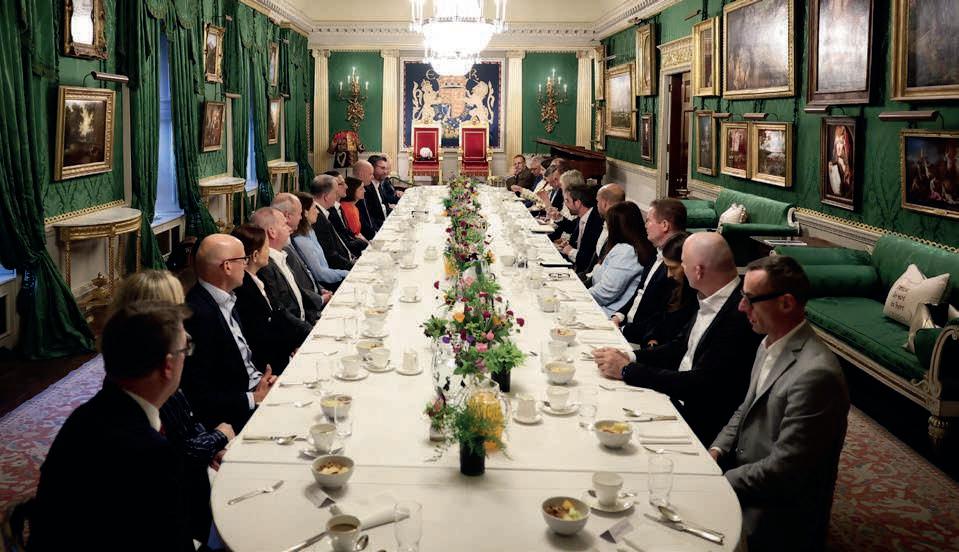
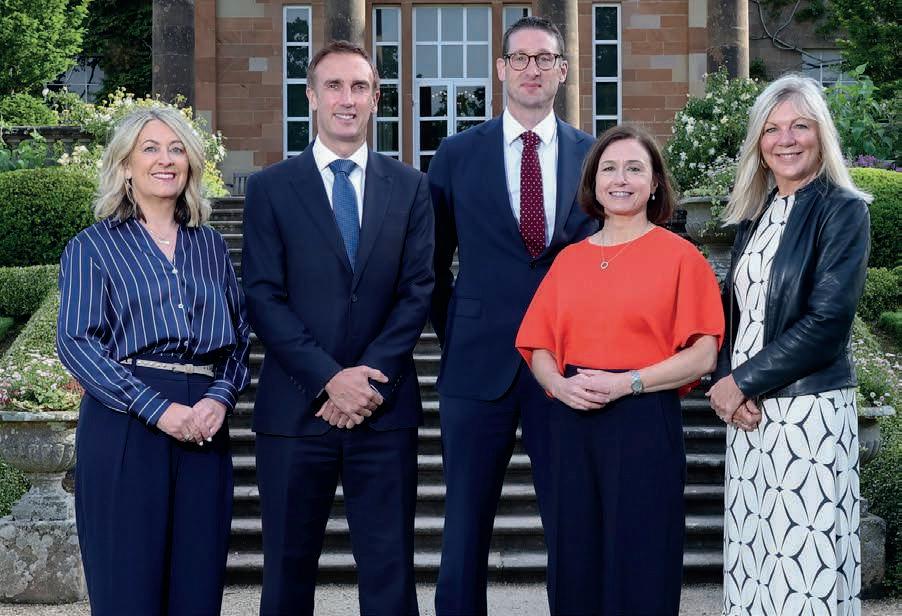
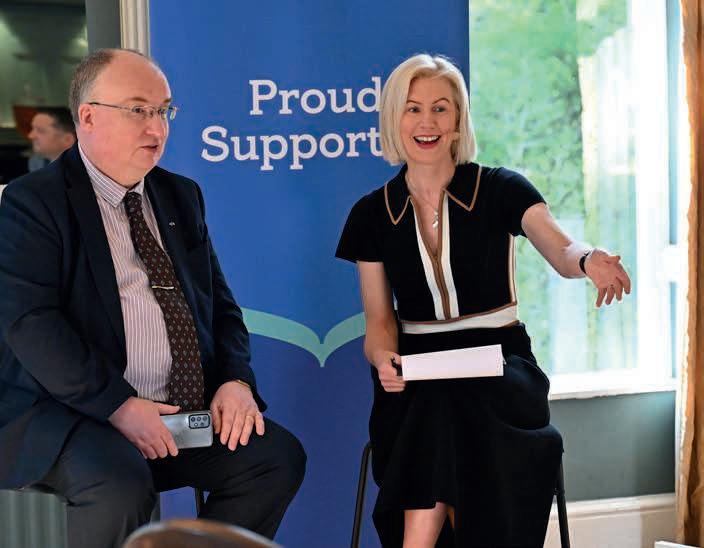
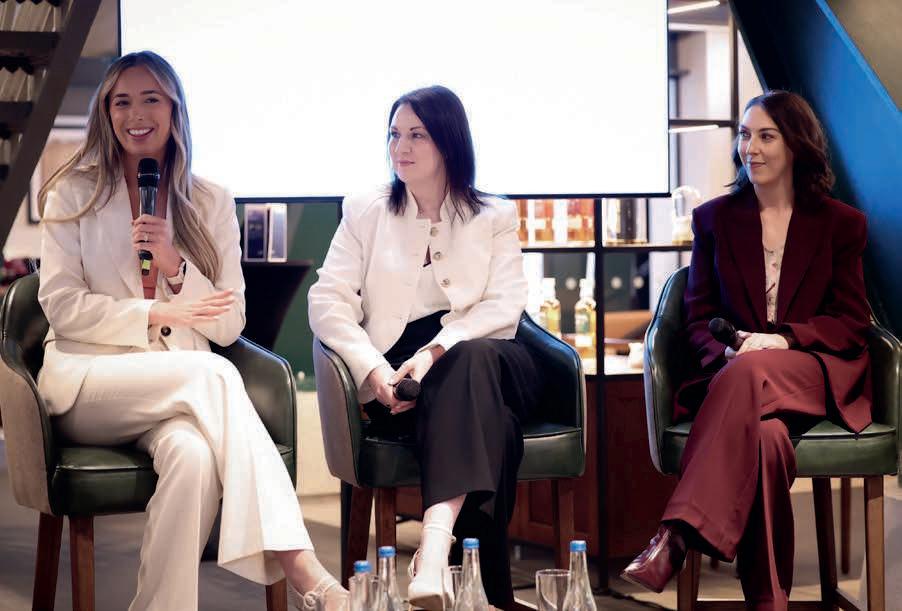
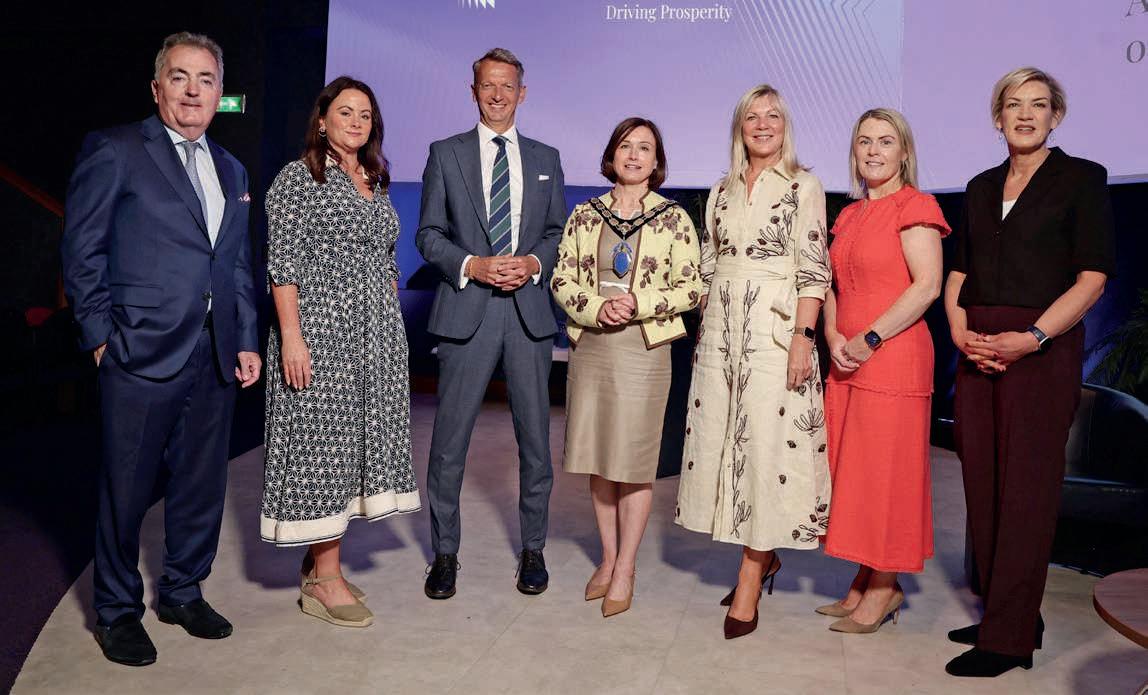
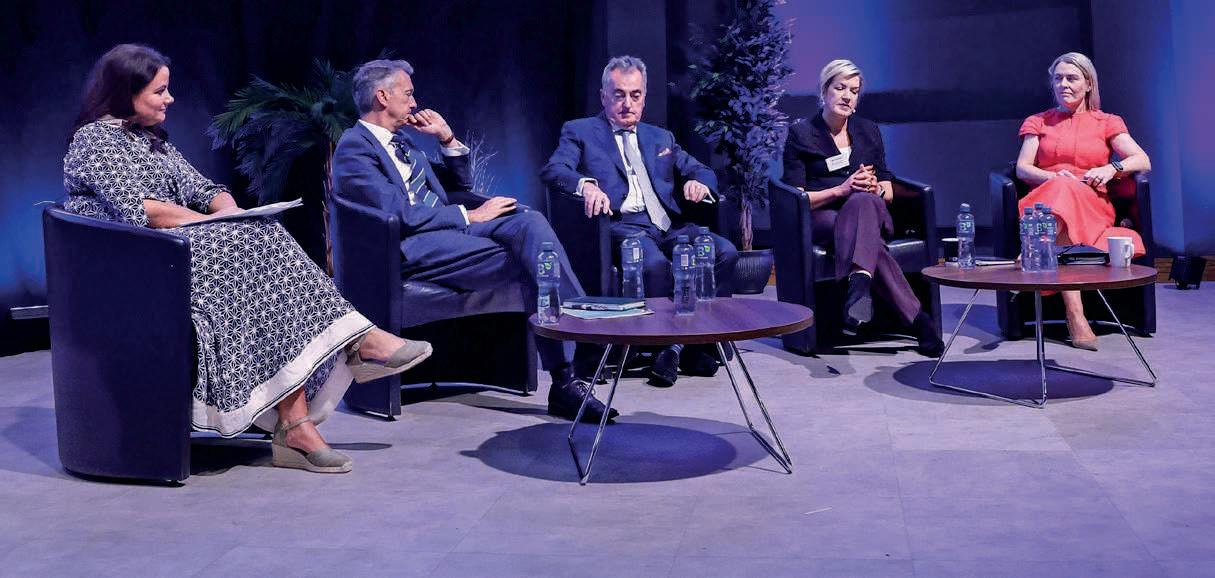
1. Iona Hamilton-Stubber, Burren Balsamics, speaking at Grow with Danske Bank.
2. Attendees at the most recent CEO Circle in Hillsborough Castle.
3. Camilla Long, Bespoke Communications and Michael Gerner, Precise Proposals helping members prepare for Meet the Buyer.
4. Caroline Walker, Historic Royal Palaces, Stephen Gallagher, SSE Airtricity, Neasa Quigley, Carson McDowell, John Mathers, Barclays, and Suzanne Wylie at Hillsborough Castle & Gardens for the CEO Circle.
5. Laura Murphy, Oatco Superfuel, Geri Wright, Lidl Ireland and Northern Ireland, and Claire Bacon, Titanic Belfast address marketing professionals.
6. Kirsty Dillon, MCS Group and Royan Trowlen, Uform at the Future Workforce Series in Dungannon in partnership with NIE Networks.
7. Sean O’Driscoll, Economic and Social Research Institute, Professor
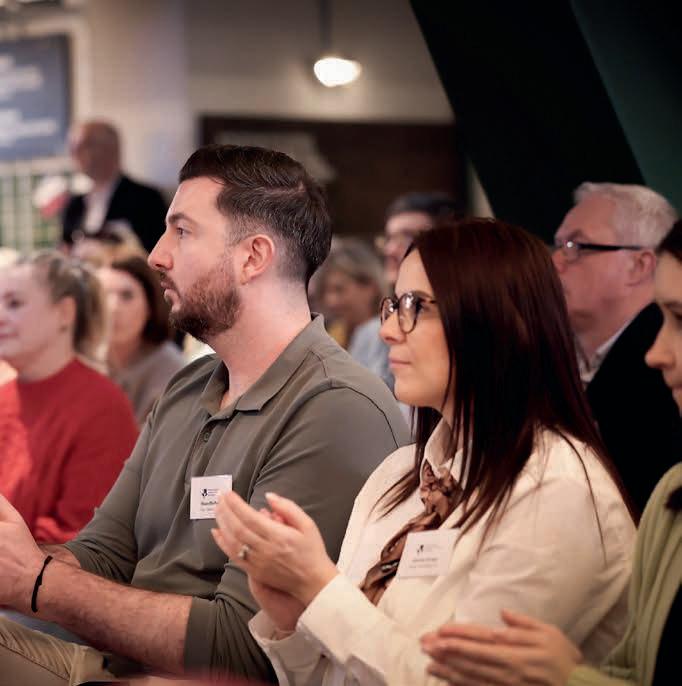
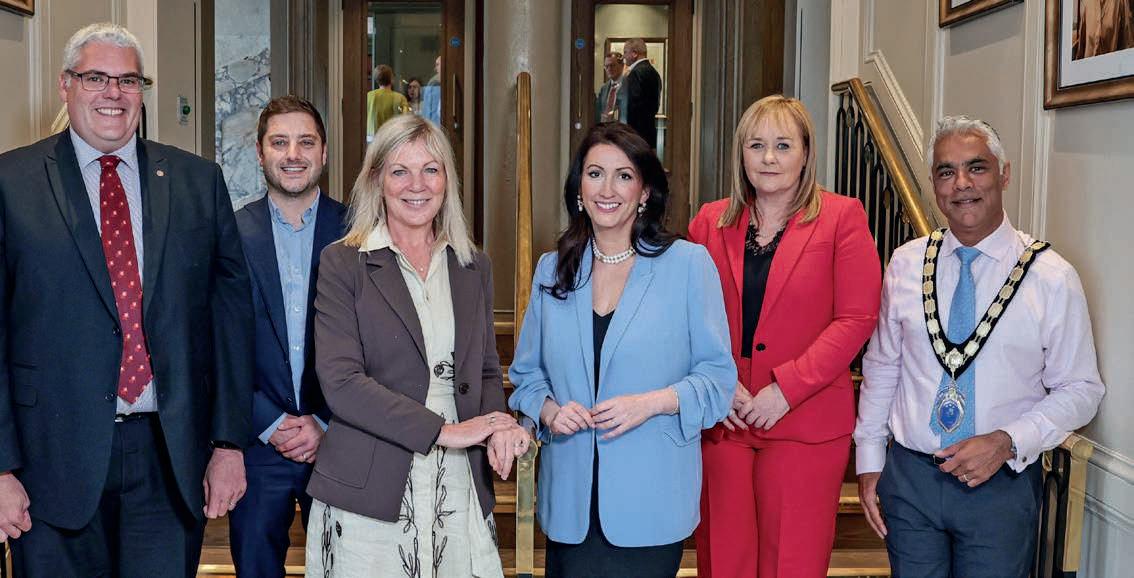
Jodie Carson, Ulster University, Andy Haldane, British Chamber of Commerce, Neasa Quigley, NI Chamber President, Suzanne Wylie, NI Chamber, Ashleen Feeney, KPMG, and Margeret Hearty, InterTrade Ireland at Competing to Win following the AGM.
8. Sharon Rutherford, Insula Wellbeing crafting the perfect pitch at Winning Business with Bank of Ireland.
9. Gemma Savage, Andor Technology and Shaun Mulhern, Andor Technology at Business Breakfast for marketing professionals.
10. Jodie Carson, Ulster University, Andy Haldane, British Chambers of Commerce, Sean O’Driscoll, Roaring Waters, Margaret Hearty, InterTradeIreland, and Ashleen Feeney, KPMG, speaking at Competing to Win.
11. Gavin Robinson MP, Greg Acton, Suzanne Wylie, Emma LittlePengelly MLA, Michelle McIlveen MLA and Kailash Chada at NI Chamber’s roundtable with DUP leaders.









The Stormont Run Around

5K RACE | FRIDAY 21 AUGUST | 5.30PM | STORMONT

Entry Fee: £22 per person.
Can your Sales team outrun Finance? Can Marketing outpace IT? Join NI Chamber for a 5K race in support of Cancer Fund for Children.




In pictures: Annual Lunch
More than 500 business leaders attended NI Chambers 2026 Annual Lunch in Titanic Belfast on Friday 19 June. As well as an address from the President, Neasa Quigley, guests at the lunch also head from Rachel Duffy, winner of the hit BBC series, The Traitors. NI Chamber’s 2026 Annual Lunch was delivered with the support of headline sponsor BT, alongside supporting sponsors Cleaver Fulton Rankin, GMcG, Honeycomb Jobs and Dell Technologies.
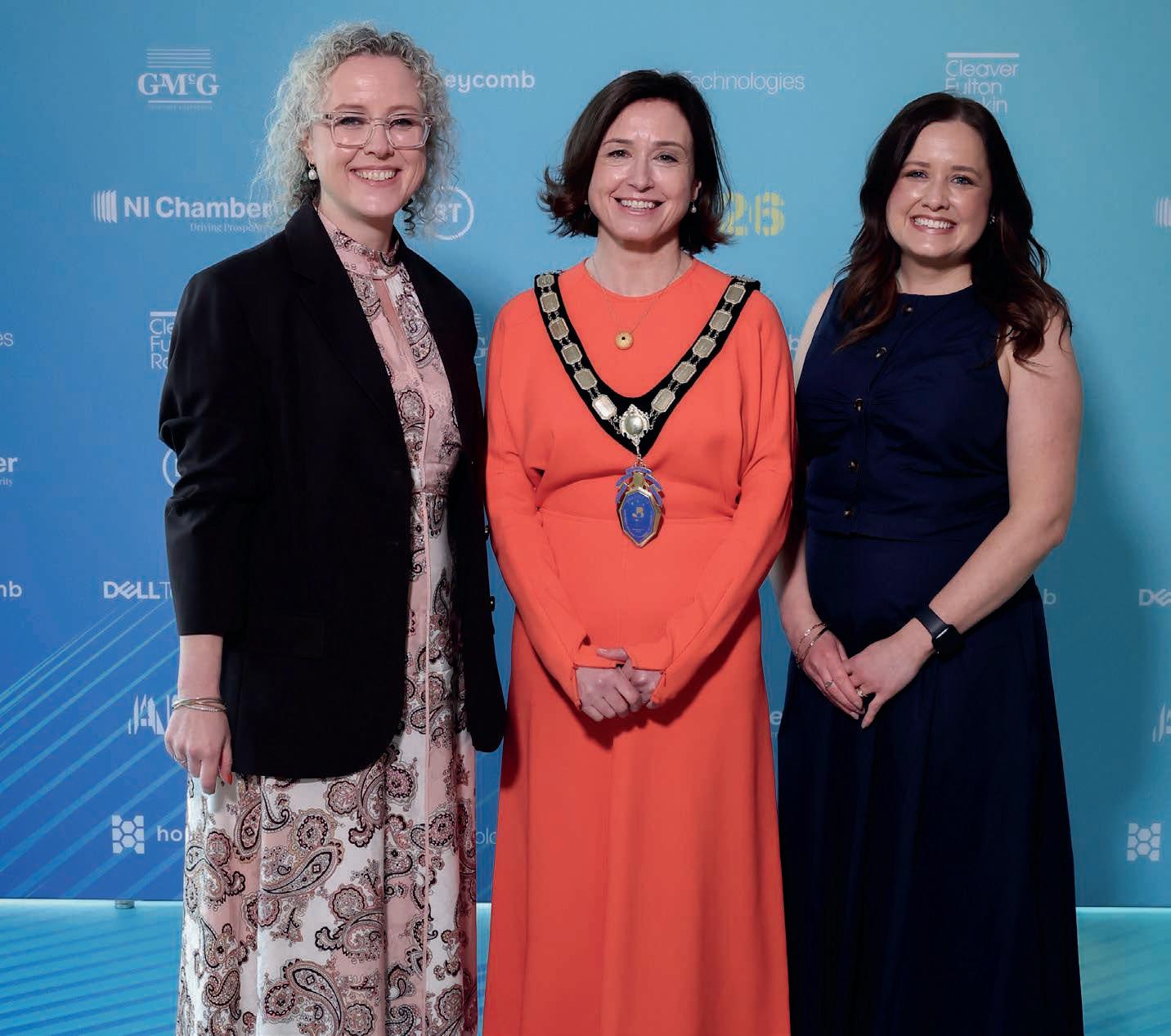
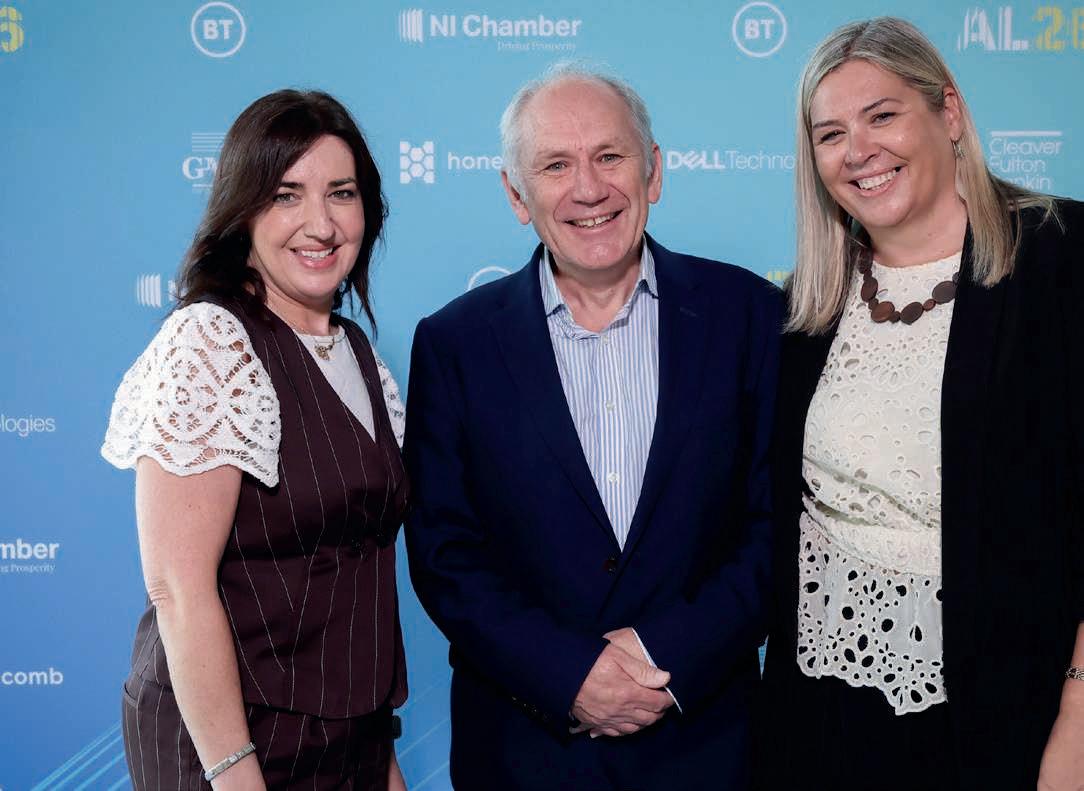
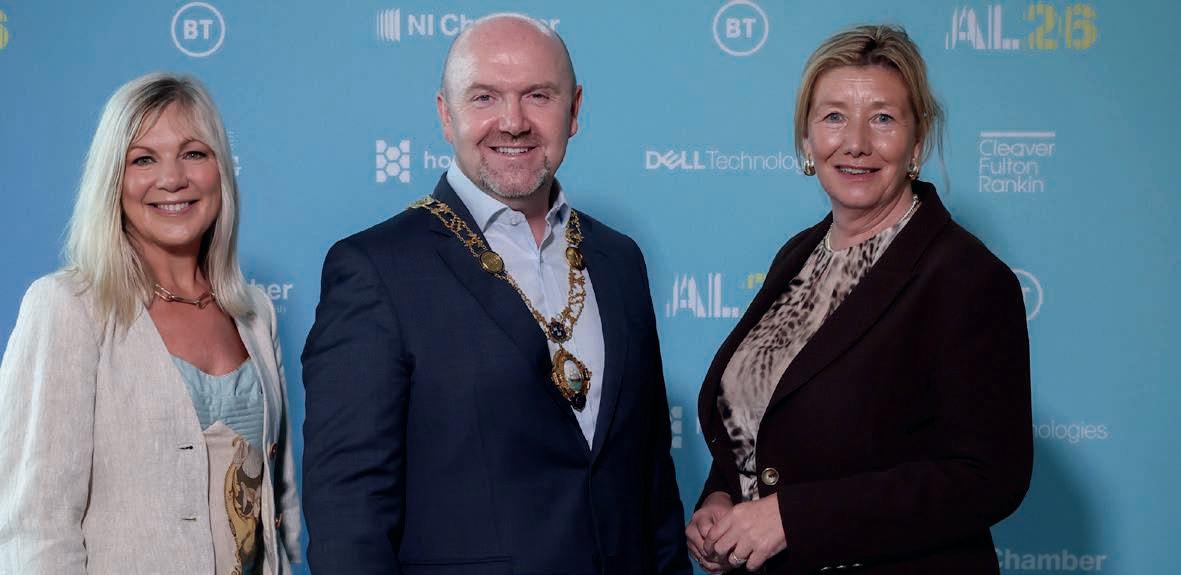
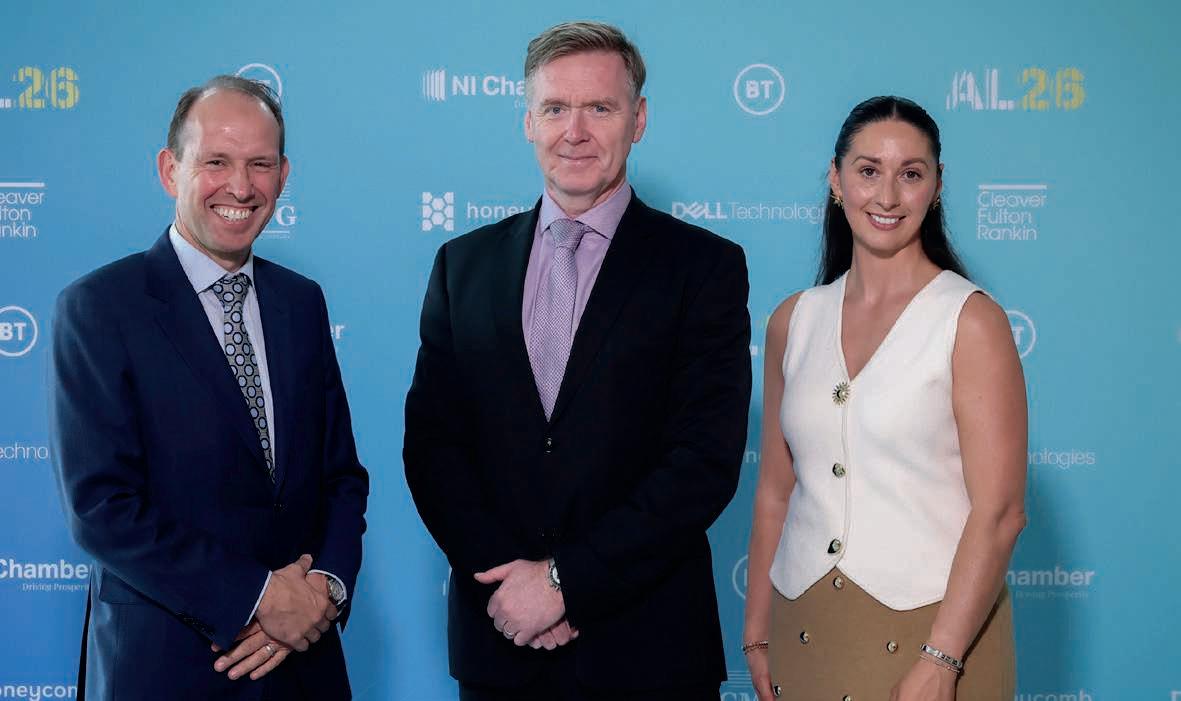
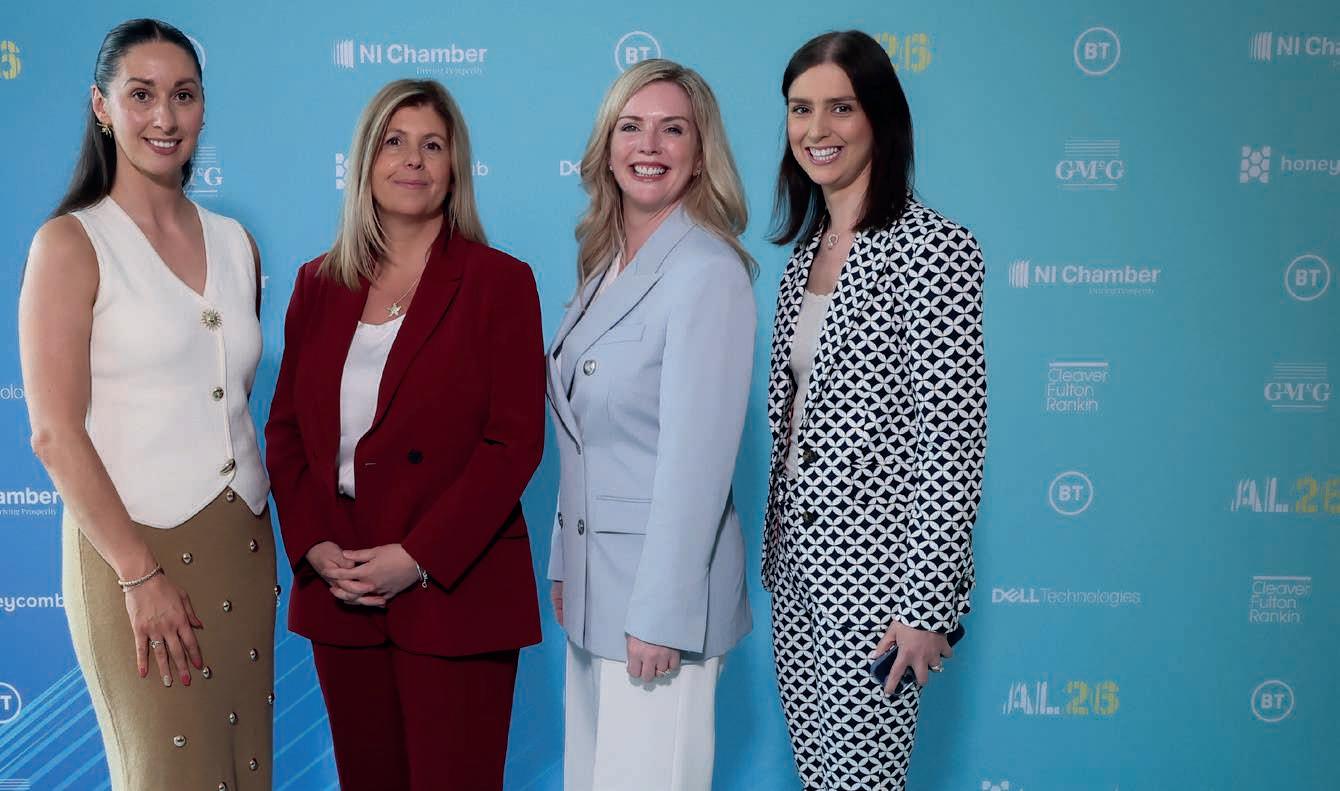
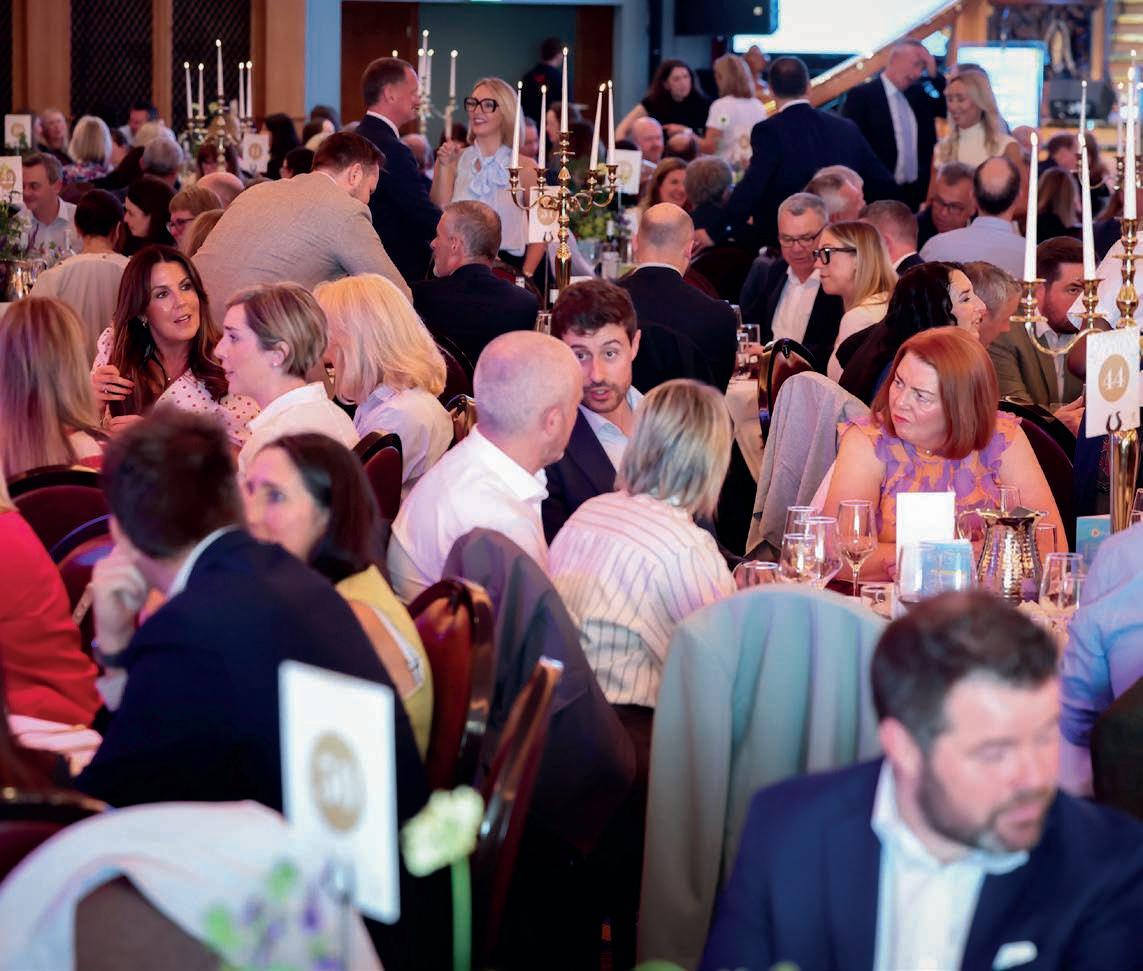
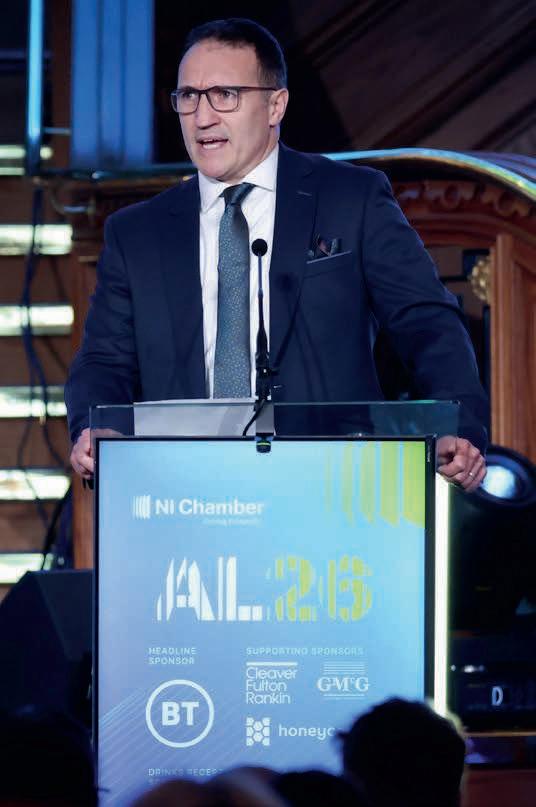
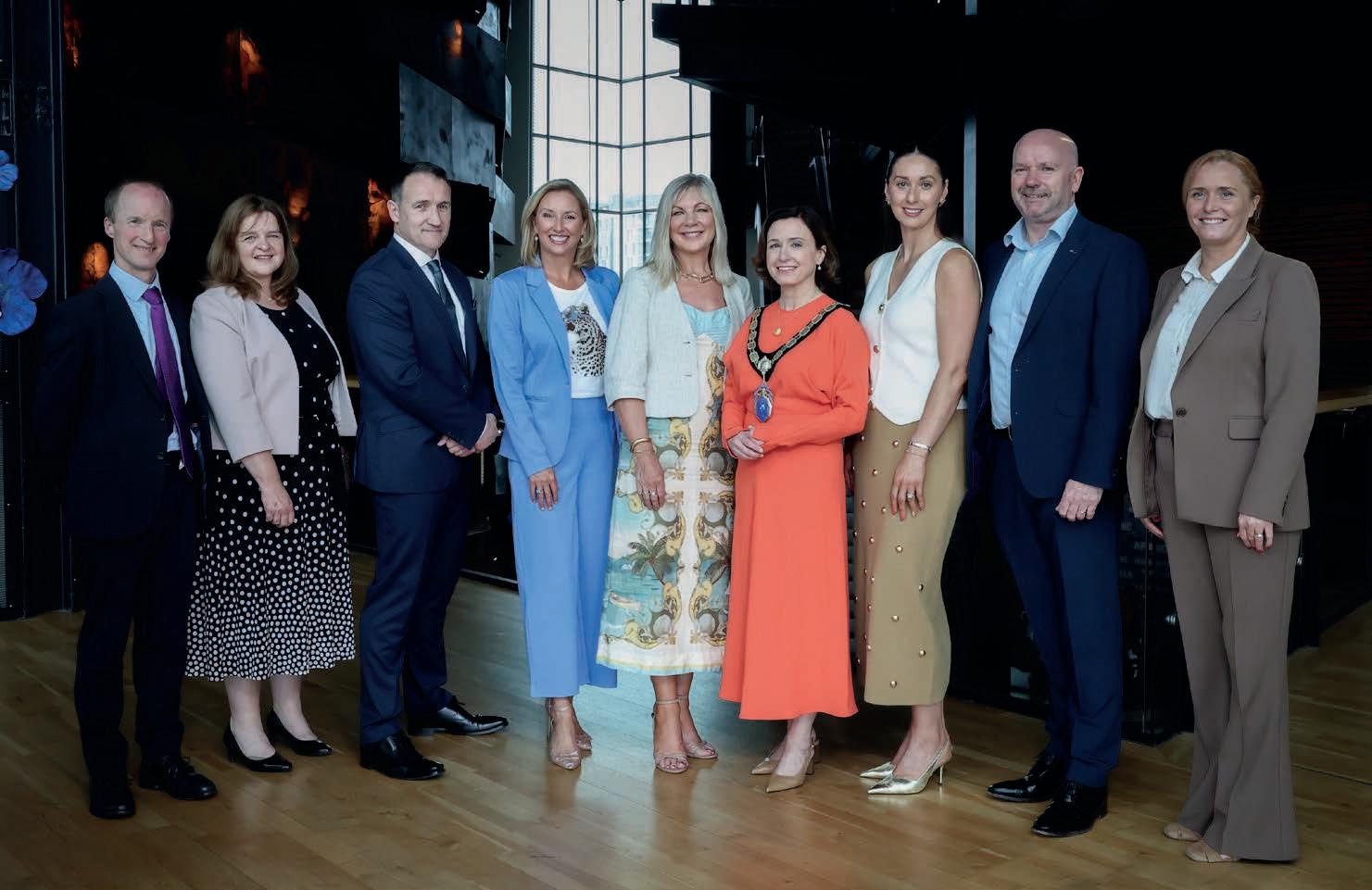



Newry, Mourne and Down: Delivering Growth, Investment and Opportunity


Newry, Mourne and Down District Council (NMDDC) is fast emerging as one of Northern Ireland’s most dynamic and ambitious regions for business, investment and sustainable growth. Combining strategic location, strong civic leadership and a clear, long-term vision, the district is creating tangible opportunities for investors, indigenous businesses and local communities alike.


Positioned at the heart of the Dublin–Belfast Economic Corridor (DBEC), one of the most significant economic zones on the island, Newry, Mourne and Down offers unrivalled connectivity. Businesses located within the district benefit from seamless access to two capital cities, a network of international airports and key ports, including Warrenpoint Harbour. This connectivity is reinforced by high-quality road and rail infrastructure, as well as 98% gigabit-capable broadband coverage, ensuring the district is fully equipped to support the needs of modern, digitally driven enterprises.
Chairperson of Newry, Mourne and Down District Council, Councillor Glyn Hanna, said, “Newry, Mourne and Down is a district with confidence, ambition and clear direction. Through sustained investment in infrastructure, regeneration and our business base, we are creating the conditions where enterprise can thrive. Our location on the Belfast–Dublin corridor, combined with the strength of our people and our natural assets, positions us strongly to compete for investment at a regional, national and international level.”
DRIVING REGENERATION AND INVESTMENT
NMDDC is not only planning for the future, it is actively delivering a coordinated and strategic programme of regeneration and economic development. The Council is transforming towns and urban centres across the district, creating vibrant places that support both economic activity and quality of life.

Central to this vision is a £64.4 million regeneration programme in Newry City. This ambitious scheme includes the development of a new Theatre and Conference Centre, a Civic and Regional Hub, and significant public realm improvements designed to enhance accessibility and the overall visitor experience. These projects will help reposition Newry as a modern, competitive urban centre capable of attracting inward investment while supporting local enterprise.
Complementing this is the development of Newry City Park. This flagship project will provide high-quality green space in the heart of the city, supporting health, wellbeing and placemaking, while adding further to the area’s attractiveness as a location for both business and living.

These schemes form part of a wider programme of capital investment supported by the Belfast Region City Deal, which will see almost £200 million invested across the district over the next decade. This investment will deliver transformative projects across infrastructure, tourism, digital innovation and regeneration, ensuring the district remains competitive and future-focused.






“Positioned at the heart of the Dublin–Belfast Economic Corridor (DBEC), one of the most significant economic zones on the island, Newry, Mourne and Down o ers unrivalled connectivity.”





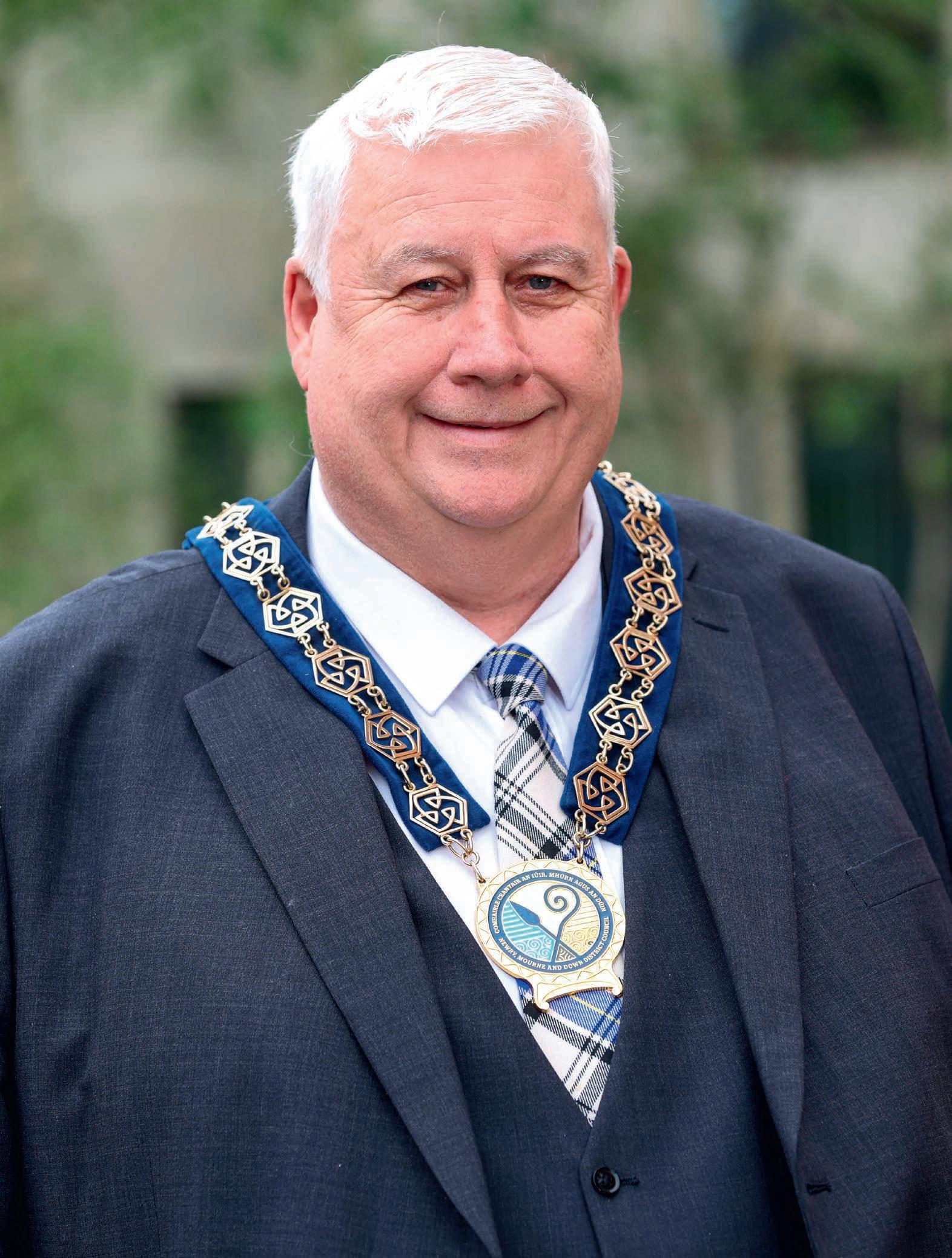
UNLOCKING COMMERCIAL GROWTH
Ensuring the availability of high-quality commercial space is a key priority for NMDDC. In response to growing demand, the Council has introduced a £3 million Grade A Office Development Grant Scheme, aimed at accelerating the delivery of modern, flexible and sustainable workspace within Newry City Centre.
This intervention is designed to stimulate private sector investment by supporting both new developments and the repurposing of existing buildings. It aligns with changing workplace trends, particularly the shift towards hybrid working and the increasing importance of energy efficiency and employee wellbeing. Alongside this, the Local Enterprise Partnership (LEP) Commercial Property Grant continues to play a crucial role in supporting smaller-scale commercial development. By helping businesses invest in and improve their premises, the scheme is enabling growth at a local level while contributing to the overall regeneration of town centres across the district.
Together, these initiatives are strengthening the district’s proposition for key growth sectors, including professional services, financial services, digital and consultancy. Increasingly, these sectors are seeking connected, high-quality locations that offer value, flexibility and strong lifestyle benefits, an offer that Newry, Mourne and Down is well positioned to deliver.
A STRONG BUSINESS BASE AND SKILLED WORKFORCE
Newry, Mourne and Down is home to the third-largest business base in Northern Ireland, underlining its growing economic significance. The district’s economy is both diverse and resilient, encompassing sectors such as advanced manufacturing, construction, agri-food, tourism and digital industries. At the heart of this success is a skilled, ambitious and entrepreneurial workforce. With over half of the population under the age of 39, the district benefits from a young and economically active demographic.
Educational attainment levels are strong, with a high proportion of students achieving key academic benchmarks and progressing to further and higher education.
The district is well supported by a network of regional colleges and enjoys proximity to leading universities along the Belfast–Dublin corridor, ensuring a steady and sustainable talent pipeline. Employers benefit from access to a workforce with a broad and evolving skillset, spanning technical disciplines such as engineering and manufacturing, as well as professional, digital and creative industries.
Equally important is the district’s culture of entrepreneurship. A strong base of small and medium-sized enterprises, combined with a high level of self-employment and startup activity, contributes to a vibrant business ecosystem that encourages innovation, collaboration and growth.
A PLACE TO LIVE, WORK AND THRIVE
While economic performance is critical, NMDDC recognises that long-term success is rooted in creating places where people genuinely want to live, work and build their futures.
Newry, Mourne and Down is home to over 100 miles of coastline, a UNESCO Global Geopark and 33% of Northern Ireland’s Areas of Outstanding Natural Beauty, providing a unique environment that supports wellbeing, outdoor recreation and work-life balance.
For businesses, this focus on placemaking is a key advantage. The ability to attract and retain talent is closely linked to quality of life, and Newry, Mourne and Down offers a compelling proposition in this regard. Employees can access rewarding career opportunities while enjoying a high standard of living, strong community ties and a rich cultural and natural environment.
A DISTRICT WITH AMBITION
Looking ahead, NMDDC’s ambition is clear: to create a prosperous, inclusive and sustainable region where enterprise can flourish and communities can succeed.
As Newry, Mourne and Down continues to evolve, it stands as a compelling example of how strategic leadership, partnership working and a strong sense of place can drive meaningful economic transformation.
For businesses and investors seeking a connected, ambitious and opportunity-rich location, the message is clear – Newry, Mourne and Down is open for business.
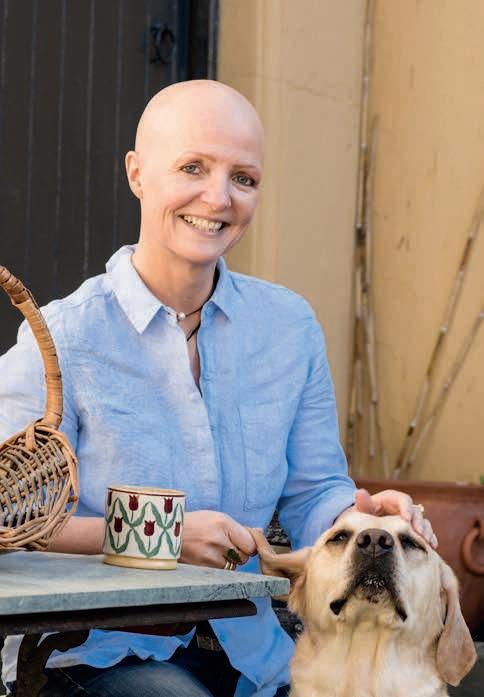
Columnist
Jane Shaw Health Coach & Therapist
From Local Impact to Global Voice: Why So Many Leaders Still Hold Themselves Back
Many purpose-driven leaders are ready for a bigger stage. Their work is proven. Their communities trust them. Their ideas have depth, relevance, and urgency. However, something contracts when the opportunity comes to step into a wider field of influence, to speak more publicly, or scale more boldly.
They hesitate. They over-prepare. They dilute the message. They tell themselves they are not ready, not qualified enough, not strategic enough, not “that kind” of leader.
On the surface, resisting a larger exposure can look like a mindset issue: imposter syndrome, lack of confidence, perfectionism, or fear of failure. But from a trauma-informed and neurophysiological perspective, holding back is often a body-based protection strategy, not simply a thinking problem.
Safety is the nervous system’s first priority. This matters because the nervous system is not primarily concerned with success, recognition, or reach. If speaking out, being seen, taking up space, or standing apart have previously been associated with criticism, exclusion, shame, punishment, or loss of belonging, the body may learn to interpret visibility as threat.
The work of trauma-informed physicians and researchers such as Dr Aimie Apigian speaks to this idea. She emphasises that trauma is not only what happened to a person, but what became encoded in the body as a survival response. In leadership terms, this means a person may consciously desire growth while their physiology is still organised around protection.
Similarly, psychiatrist and neuroscientist Dr Ruth Lanius has contributed significantly to our understanding of how trauma affects the brain, body, and sense of self. Her work on dissociation, threat responses, and altered states of self-experience
helps explain why high-functioning leaders can appear capable externally while internally experiencing shutdown, fragmentation, or disconnection when they move towards greater visibility.
The leader may not be lazy, resistant, or lacking ambition but instead mobilising against an old biological alarm.
THE BODY-BASED ROOTS OF HOLDING BACK
Self-silencing often begins as an intelligent adaptation. At some point, being quieter may have preserved attachment to an important early caregiver. Being agreeable may have reduced conflict. Staying useful may have earned approval. Not challenging the room may have kept belonging intact.
Over time, these adaptations can harden into leadership constraints. A fixed mindset does not always begin as a belief such as “I cannot grow.”
Sometimes it begins as a body state: tightness in the chest, collapse in the posture, shallow breathing, a blank mind, nausea, fatigue, or an urge to disappear when a bigger opportunity appears.
The body then recruits thoughts to justify the state, such as; “I need more credentials;” “Other people are better placed to say this,” or “I should wait until I am clearer.”
These thoughts may sound rational, but underneath them is a nervous system trying to prevent exposure. The fixed mindset can have a somatic foundation with the body saying: staying small is safer. This is particularly powerful for purpose-driven leaders, because their work is often tied to identity, values, and service. To be visible is to reveal what matters, not just to promote a business, which raises the emotional stakes. Visibility can awaken old fears: being judged, misunderstood, envied,
rejected, or seen as disloyal by the very community one came from.
For leaders moving from local impact to a global voice, the fear is rarely only, “What if I fail?” More often, it is, “What will it cost me to be seen?”
VISIBILITY AND THE FEAR OF LOSING BELONGING
Leadership growth often requires a shift in belonging. A person may begin in a local ecosystem where their role is familiar and accepted but as their voice expands, they may no longer fit the old expectations. They may become more visible than peers, more outspoken than family norms allowed, or more differentiated than their culture once encouraged.
The nervous system can interpret differentiation as danger. This is especially true for those whose early environments made belonging conditional on compliance, achievement, emotional caretaking, or silence.
In such cases, the move to a bigger stage is experienced not only as opportunity but as possible exile.
A GROWTH WAY FORWARD
Conventional confidence advice can fall short when it focuses only on positive psychology. A somatic-oriented approach instead supports the body to experience visibility, voice, and expansion as tolerable, safe, and eventually empowering.
The world needs more leaders who can remain embodied while being visible. It needs voices that are not polished into neutrality, but grounded enough to speak with clarity, courage, and authenticity.
Leaders can carry their impact into the wider world more effectively through the profound practice of becoming physiologically safe enough to be seen, a practice whose ripples extend beyond the boardroom and into society.
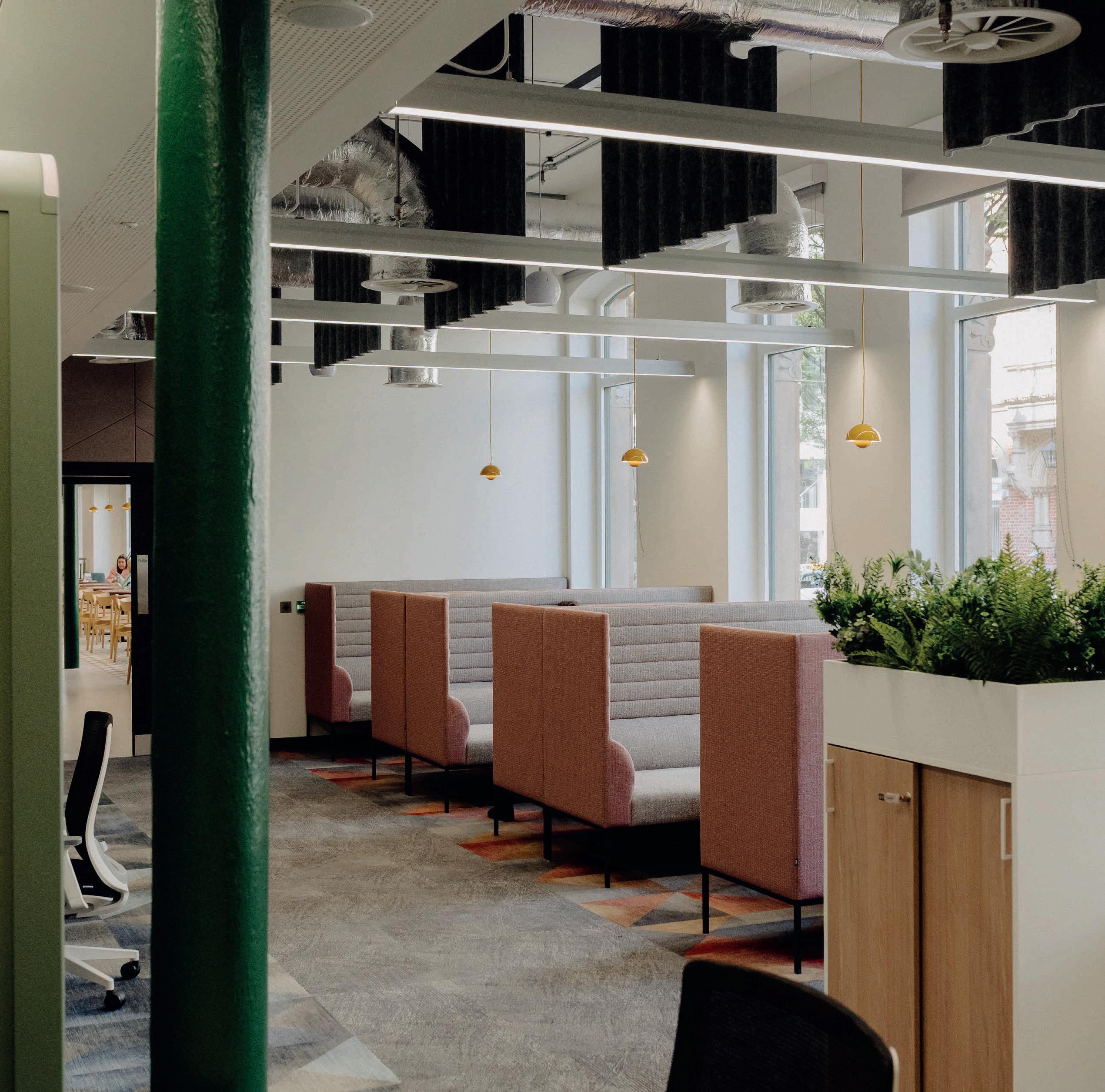


Why Acoustic Design is the Secret Weapon of High-Performing Workspaces

When businesses think about workplace design, attention is often focused on what people can see. Furniture, finishes, lighting and layout tend to dominate the conversation. Yet one of the most influential aspects of a successful workspace is something that often goes unnoticed when it’s done well: acoustics.
As open-plan offices continue to evolve and hybrid working becomes the norm, sound has become one of the biggest factors affecting how people experience the workplace. Today’s offices need to support collaboration, focused work, video calls and informal conversations, often all at the same time.
At Innov8 Workspace Solutions, we regularly see businesses invest heavily in workplace improvements, only to find that
noise and distraction continue to impact employee experience. While aesthetics and functionality remain important, acoustics is often the missing piece that brings a workspace together.
Good acoustic design is not about creating silence. Offices should feel active and engaging. The goal is to manage sound in a way that supports different types of work while reducing unnecessary distractions. In our experience, successful
acoustic design is built around three key principles: interruption, absorption and privacy.
INTERRUPTION: STOPPING NOISE BEFORE IT TRAVELS
The first step in controlling sound is preventing it from spreading throughout a workspace.
Sound naturally reflects off hard surfaces such as walls, ceilings, floors
and glazing. In open-plan environments, conversations and background activity can travel much further than people realise, creating distractions that impact concentration and productivity.
Interruption focuses on breaking up those sound paths before they become a problem. This can be achieved through a combination of furniture, finishes and workplace planning. Desk screens, acoustic baffles, textured wall treatments and ceiling features all help disrupt sound waves and reduce their reach.
Layout also plays a significant role. Creating dedicated zones for collaboration, separating high-traffic areas from focus spaces and considering how different teams interact with the workplace can all contribute to better acoustic performance.
At Innov8 Workspace Solutions, our in-house design studio considers acoustics as part of the wider workplace strategy from the earliest stages of a project. By understanding how teams work, communicate and move through a space, acoustic challenges can often be addressed through thoughtful planning, zoning and furniture specification before more complex interventions are required.
ABSORPTION:
MATERIALS THAT WORK HARDER
Once sound enters a space, the next challenge is managing how it behaves. Hard surfaces reflect sound, creating reverberation and increasing the overall noise level within an office. This is where absorption becomes essential.
Materials such as textiles, acoustic panels, upholstered furniture and soft floor finishes help absorb sound energy and reduce echo. The result is a calmer, more comfortable environment where conversations remain clear and background noise is less intrusive.
Many people associate acoustic solutions with wall panels or ceiling treatments, but furniture can be equally effective. High-backed seating, acoustic booths, upholstered screens and feltwrapped elements all contribute to reducing reverberation while serving practical workplace functions.
The most successful solutions are rarely confined to a single product or area. Instead, acoustic performance is achieved through a layered approach that combines multiple materials and design elements throughout the workplace. By incorporating absorptive materials into the overall design, businesses can improve workplace comfort without compromising aesthetics.
PRIVACY: CREATING SPACE TO FOCUS
Not all workplace noise is negative. Conversation, collaboration and social
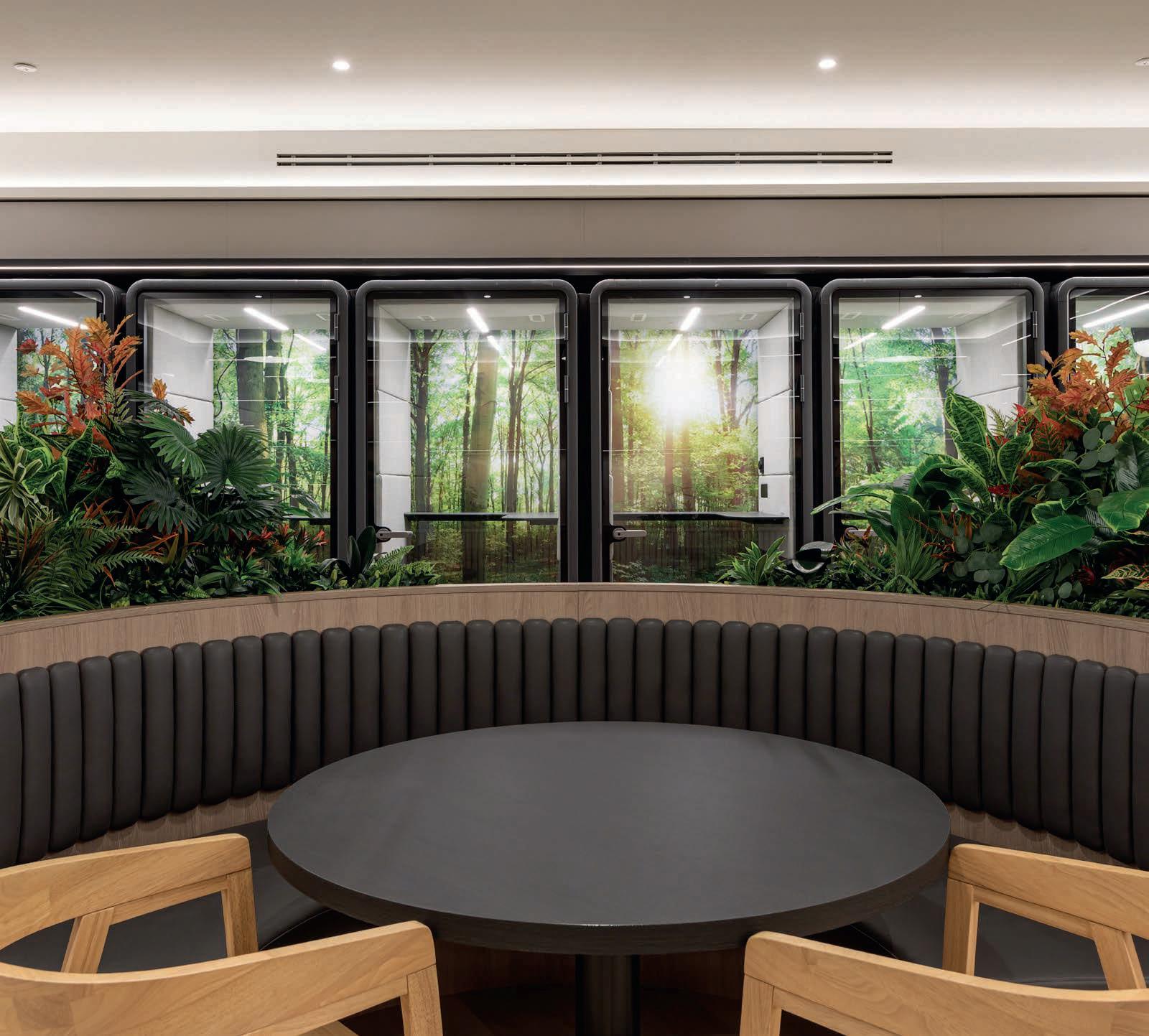
interaction are important parts of a healthy workplace culture. However, there are times when people need privacy.
Whether it’s a confidential meeting, a client call or simply a task that requires concentration, employees need spaces that allow them to focus without interruption.
Acoustic privacy can be achieved through a combination of workplace planning and furniture solutions. Highbacked booths, acoustic pods and semienclosed collaboration spaces create areas of refuge without isolating people from the wider workplace.
The placement of these spaces is just as important as the products themselves.
Positioning quiet areas away from busy social zones and using furniture to create natural acoustic buffers can dramatically improve the user experience.
One of the biggest shifts in workplace design over recent years has been recognising that employees rarely work in a single way throughout the day. People move between collaboration, focused work and virtual meetings. Effective acoustic design supports that flexibility by providing a variety of settings suited to different tasks.
A NEW WORKPLACE STANDARD
Acoustics is no longer an afterthought in workplace design. As businesses place greater emphasis on employee wellbeing, productivity and workplace experience, sound has become a critical component of successful environments.
The most effective solutions do not rely on a single product or material. They
“One of the biggest shifts in workplace design over recent years has been recognising that employees rarely work in a single way throughout the day.”
combine thoughtful planning, intelligent furniture choices and carefully considered finishes to create spaces that support the people using them.
Through our design studio, we have seen first-hand how addressing acoustic challenges can transform the way a workplace feels and functions. The most successful projects treat acoustics as an integral part of the design process rather than a problem to solve later.
When acoustics are considered from the outset, workplaces become more comfortable, more productive and more adaptable. Meetings are easier to hold, focused work becomes easier to achieve and employees have greater control over how they use their environment.
Ultimately, great workplace design is about more than creating a space that looks impressive. It is about creating an environment that helps people perform at their best. Acoustic design may be one of the least visible elements of a workspace, but its impact is impossible to ignore.
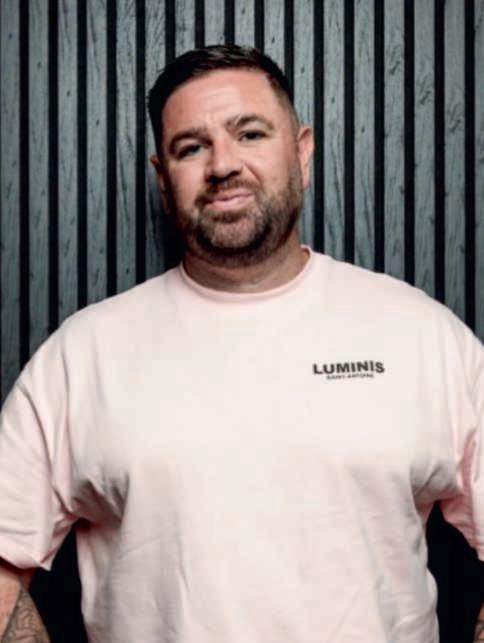
Columnist
Ciaran May
The More Reflective You Are, The More Effective You Are
We live in a business culture that rewards speed but is it sustainable?
Most leaders are moving from one meeting to the next, one problem to the next, one quarter to the next, without ever really stopping. On the surface that can look like ambition and productivity, but busyness and effectiveness are not the same thing.
Some of the most effective leaders I’ve worked with are not the loudest people in the room or the busiest. They are often the most self-aware. They have developed the ability to pause, reflect and respond intentionally instead of reacting emotionally to everything around them.
Carl Jung once said, “Until you make the unconscious conscious, it will direct your life and you will call it fate.” I think that quote applies massively to leadership and performance in modern business.
A lot of leaders are operating on autopilot without even realising it. They have lost awareness of how they are actually operating often sleepwalking into burnout and overwhelm which inevitably gets carried into team meetings and often home life and relationships too.
The reality is that teams rarely outperform the emotional state of the people leading them. If a leader is reactive, overwhelmed and unclear, it spreads like wild fire burning structure and clarity to the ground,
This is why self-reflection is not a luxury, it is a high performer’s greatest asset.
When I talk about reflection, I’m
not talking about sitting in silence on a mountain for six hours journalling. I’m talking about creating intentional moments to think clearly. To step back long enough to ask difficult but necessary questions. How am I actually leading right now? What energy am I bringing into my team? Am I responding intentionally or simply reacting to pressure? What behaviours am I modelling under stress?
Most organisations spend huge amounts of time analysing strategy, financials and operational performance, but very little time helping leaders analyse themselves. That’s dangerous because burnout, poor culture and leadership breakdown rarely happen overnight. They build quietly through repeated unconscious patterns.
The founder who ties their self-worth to productivity. The leader who cannot delegate because control makes them feel safe. The manager who avoids difficult conversations because they are uncomfortable. The business owner who says yes to everything and slowly burns themselves into the ground trying to hold it all together.
Unchecked patterns eventually become identity. Reflection interrupts that cycle. It creates awareness and awareness changes behaviour.
I’ve seen leaders completely transform their effectiveness once they become more self-aware. They communicate better under pressure. They listen
more effectively. They stop bringing unnecessary emotion into decisionmaking. They become calmer, clearer and more intentional, not because they suddenly discovered some revolutionary business strategy, but because they stopped operating unconsciously. Ironically, slowing down to reflect is often the thing that improves performance the most. I often say that we need to slow down to speed up.
In elite sport, reflection is built into the process. Athletes review performances constantly because they know awareness creates improvement. Business should be no different. The best leaders are not the ones sprinting endlessly from task to task. They are the ones who can create enough space to think clearly while everyone else is reacting emotionally around them.
That is what sustainable high performance actually looks like, building the awareness to lead yourself effectively under pressure over the long term. Because ultimately, the more reflective you are, the more effective you are.
Here are 5 simple questions to ask yourself at the end of each week
• How do I think the week went?
• How do I feel the week went?
• What is one thing that went well?
• What was the biggest obstacle I experienced?
• What is one thing I can do to improve next week?
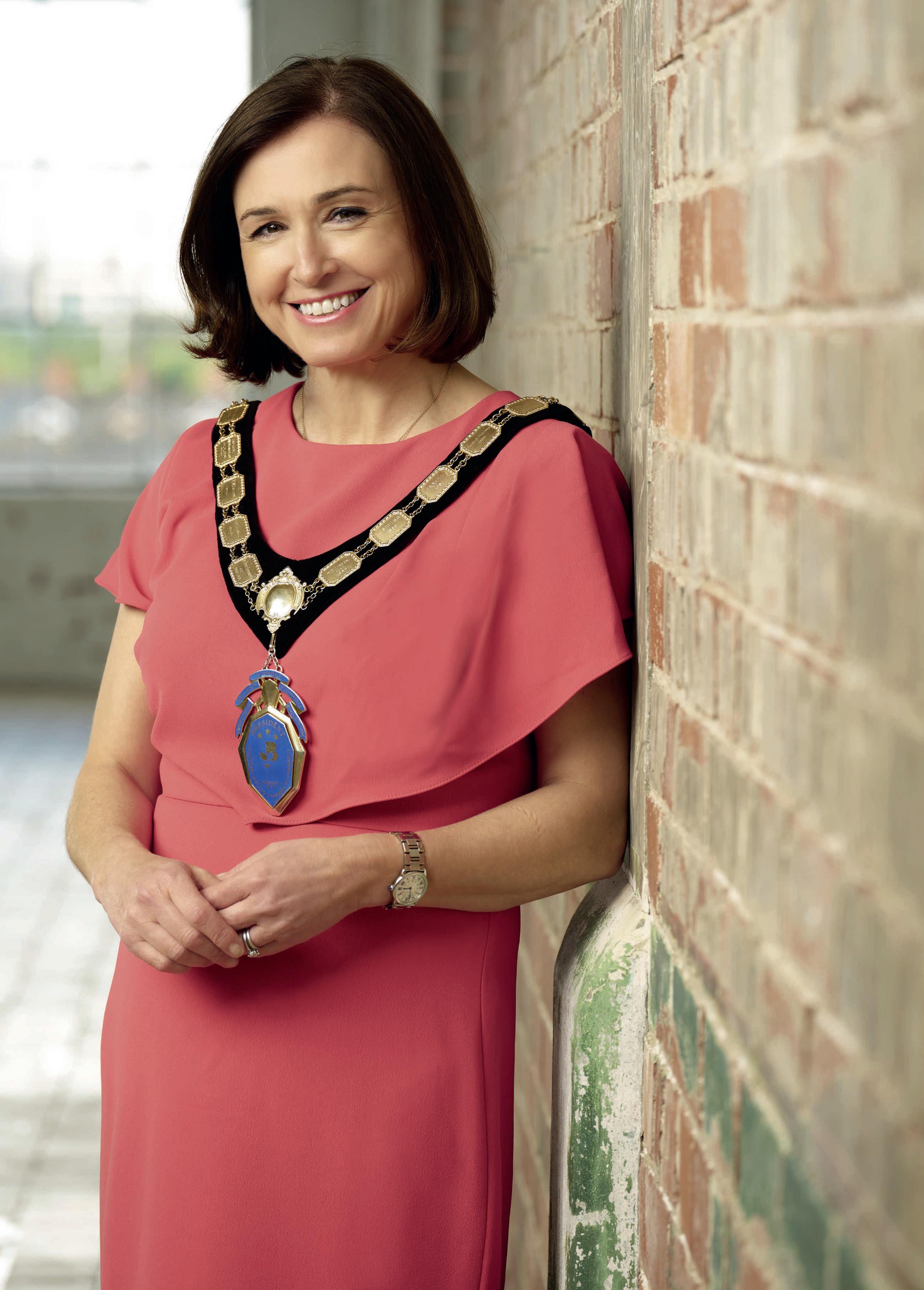

A Force for Good

Neasa Quigley Steps Into The Presidency of NI Chamber At A Time When Business Leadership Has Rarely Mattered More
After consecutive years of challenge and uncertainty, it is business that has continued to create jobs, invest in communities and drive growth.
Now, representing NI Chamber members at the highest level, Neasa is focused on one clear message: business is not just part of the economy – it is a force for good which is central to its future.
As joint head of corporate at Carson McDowell, Northern Ireland’s largest independent law firm, Neasa has spent more than 25 years advising businesses in Belfast and Dublin.
Having joined the firm as a partner in 2010, she went on to serve as senior partner from 2019 to 2026, overseeing a period of significant growth in which turnover increased by more than 60%.
Her experience spans mergers and acquisitions, private equity and project finance, with a particular focus on the energy and technology sectors; industries that sit at the centre of many of the economic challenges and opportunities facing Northern Ireland today.
That perspective, built at the heart of business decision-making, is one she now brings to her presidency.
“Moments like this are a reminder of why business matters,” she says. “At its best, business creates opportunity, raises living standards and gives people reasons to believe in the future.”
GROUNDED IN EXPERIENCE
Working closely with companies as they scale has given Neasa a direct view of both the pressures and the potential within the economy. Her role has always involved helping organisations navigate uncertainty while planning for the long term. It is a vantage point that reinforces her belief in the resilience of Northern Ireland business.
“In the past ten years, our members have had to navigate Brexit, Covid, political instability and wider global disruption,” she says.
Each of those events has had a cumulative effect, increasing costs, delaying investment and testing confidence. Yet through it all, businesses have continued to employ, invest and adapt.
“That resilience deserves recognition,” she adds. “But resilience
on its own is not an economic strategy.”
A COMMUNITY SHAPING SOCIETY
For Neasa, the contribution of business goes far beyond economic performance. It is about the role it plays in shaping people’s lives and strengthening communities.
“When businesses succeed, they create jobs. They invest in people, support communities and help raise living standards,” she says.
Across NI Chamber’s membership, that impact can be seen in the opportunities being created, from apprenticeships and graduate programmes to careers in high-growth sectors like advanced manufacturing, cyber security and fintech.
“These businesses aren’t just participating in the economy – they are shaping it,” she says.
FROM RESILIENCE TO GROWTH
Looking ahead, Neasa is clear that unlocking the full potential of the Northern Ireland economy will depend on creating the right trading conditions.
“If we want firms to invest, hire and grow, the conditions around them must support that ambition,” she says.
That includes ensuring policy strikes the right balance, supporting employees while enabling businesses to remain competitive.
Reflecting on the Good Jobs Bill, she says, “Everyone wants to see legislation that protects employees and supports responsible employers. At a time of weak economic growth and high costs, businesses are right to ask what it will mean for competitiveness, investment and job creation.
“At its best, business creates opportunity, raises living standards and gives people reasons to believe in the future.”
“NI Chamber welcomed the Minister’s recent decision to exempt micro-businesses from certain provisions. That is a positive step which came about after extensive engagement. But important issues remain, particularly around trade union access and the time available for proper scrutiny. Legislation of this scale must be workable, balanced and properly thought through.
“As President, I will keep making the case for an approach that supports good employment practice without making it harder for businesses to grow. Because ultimately, good jobs depend on successful businesses and one cannot exist without the other.”
THE POWER OF PARTNERSHIP
Unlocking further growth, she argues, will require greater collaboration, within government and between the public and private sectors.
“We need real collaboration within government and between government and public and private sectors, taking full advantage of the expertise, capital and experience that already exists and which business has repeatedly shown it is willing to provide.”
That includes addressing longstanding challenges in areas such as infrastructure and energy, where high costs and security of supply impact on our competitiveness.
“We should look at collaborative models that have worked elsewhere, like the Accelerating Infrastructure Taskforce in Ireland, where a structured panel of independent industry experts and leaders from major public bodies advise government on unblocking barriers to critical infrastructure delivery. We need that same urgency here. Business is ready to invest but investment needs certainty.”
A GROUNDED CONFIDENCE
“The challenges are real,” she concludes, “but so too is the determination and collective strength of Northern Ireland business to meet them and as President, members have my full commitment that NI Chamber will continue to make the case for the conditions business needs to thrive and continue backing them as they grow.”
Impact Players leads call for more women in leadership
More than 500 people from across business and sport gathered in Belfast as Impact Players returned to the city to deliver a highenergy leadership experience. Taking place at the ICC Belfast, the event brought together some of the most influential voices from across sport, business, media and culture, headlined by broadcaster and author Clare Balding. Delegates heard from a powerful line-up of speakers including Northern Ireland football legend Rachel Furness, Olympian and performance expert Shirley McCay, leadership coach Michelle Moore, Everest summiteer Jen Copeland, and communications strategist Nicole Osborne, alongside voices from business, media and elite sport.
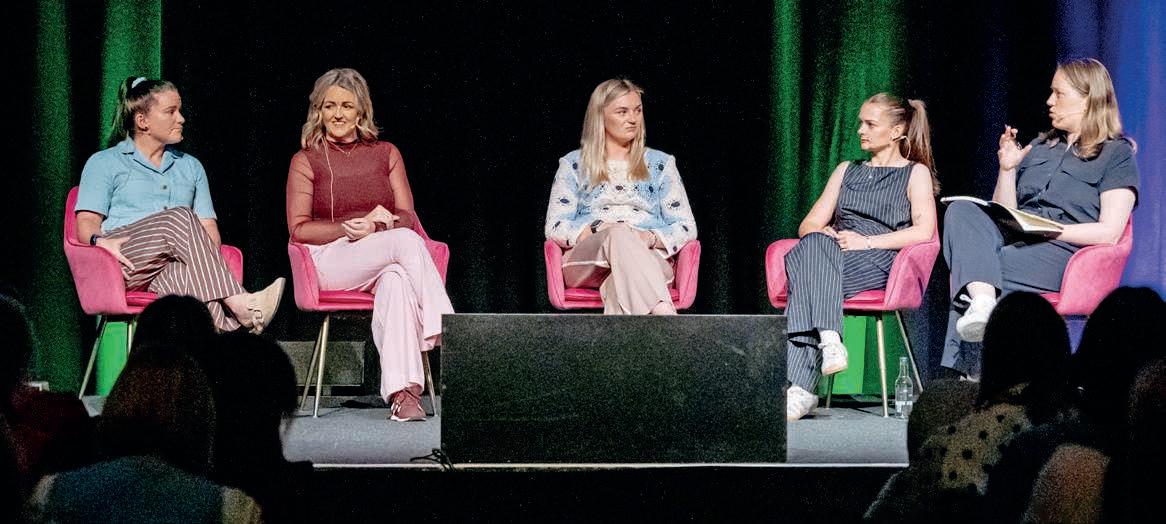
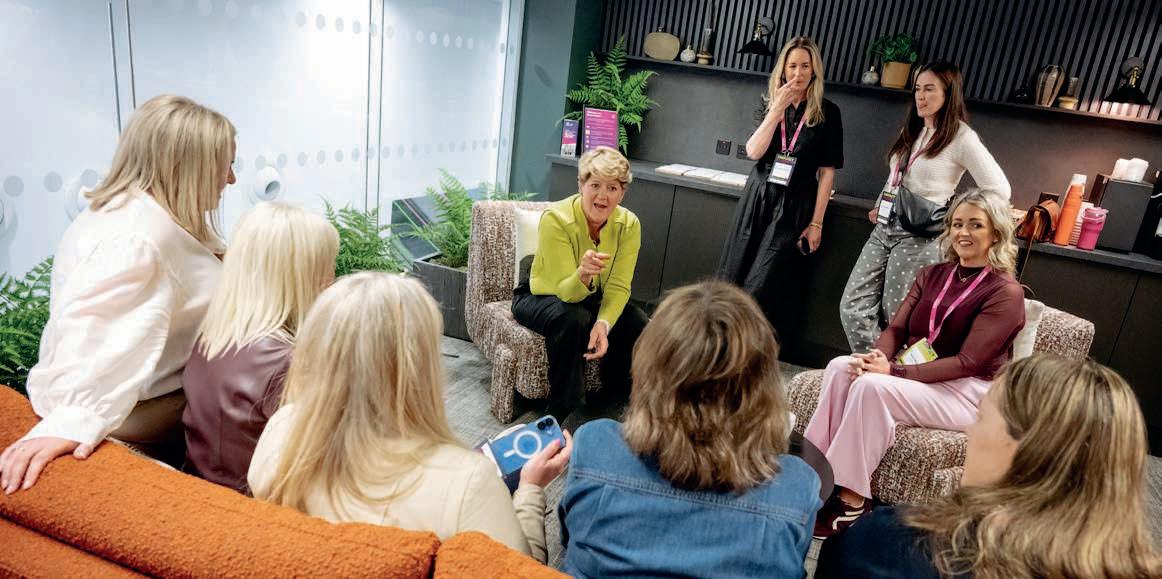
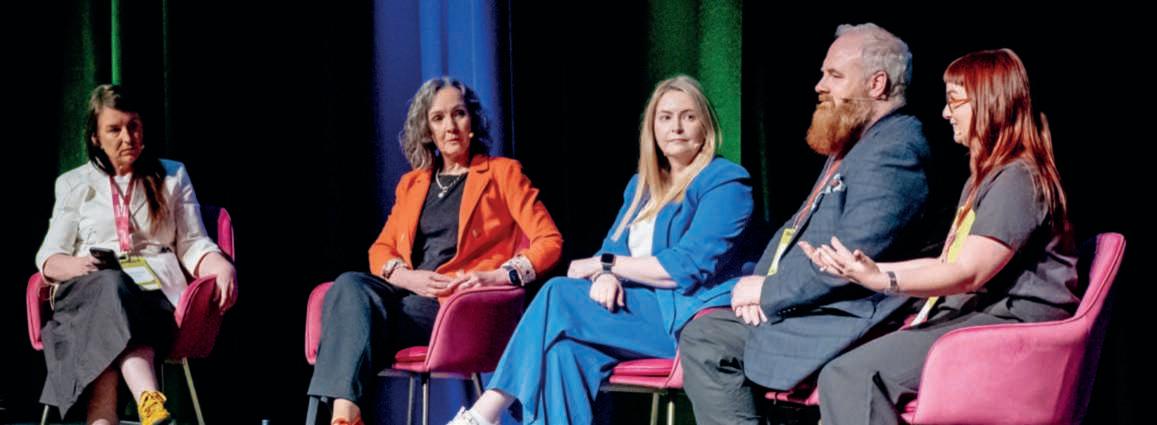
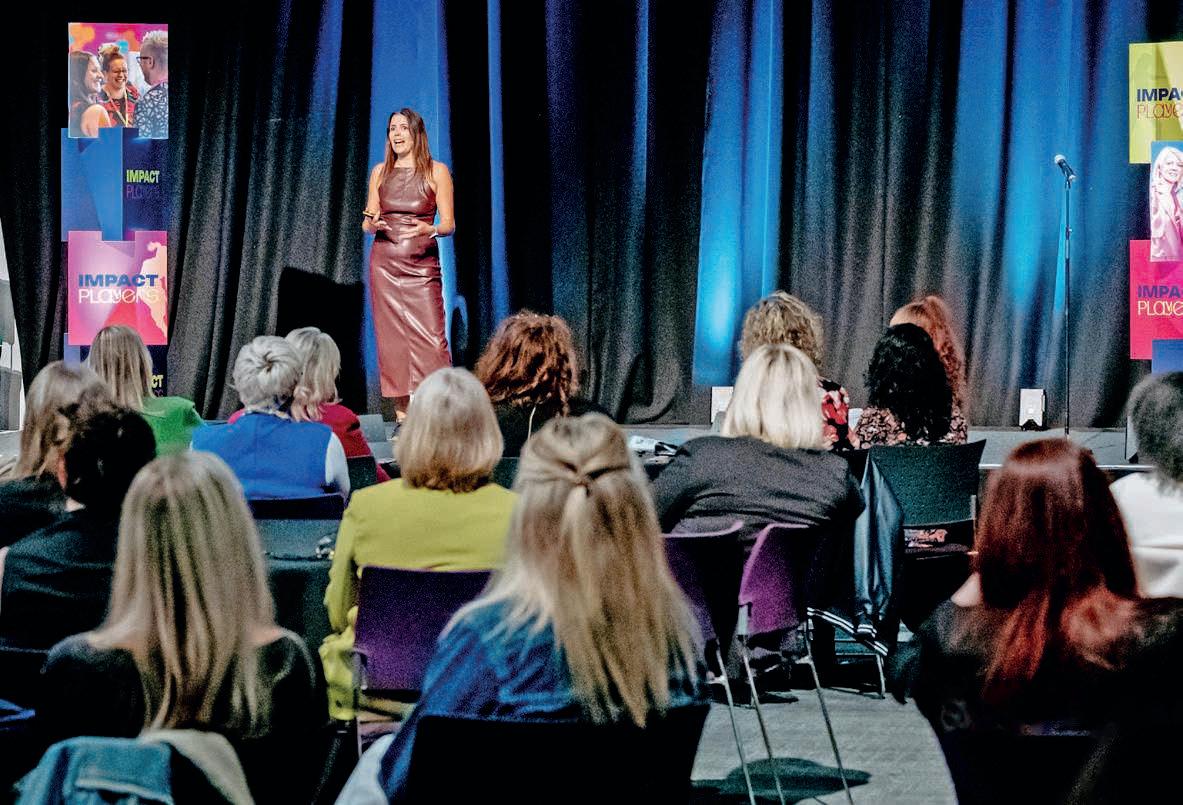
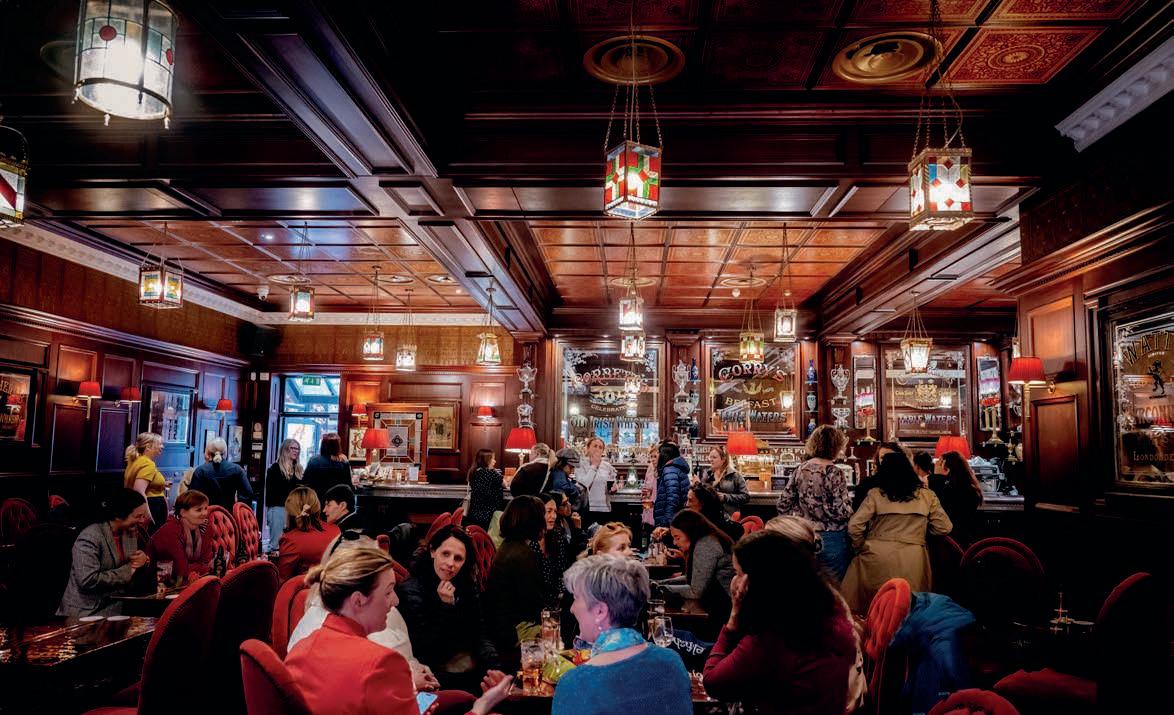
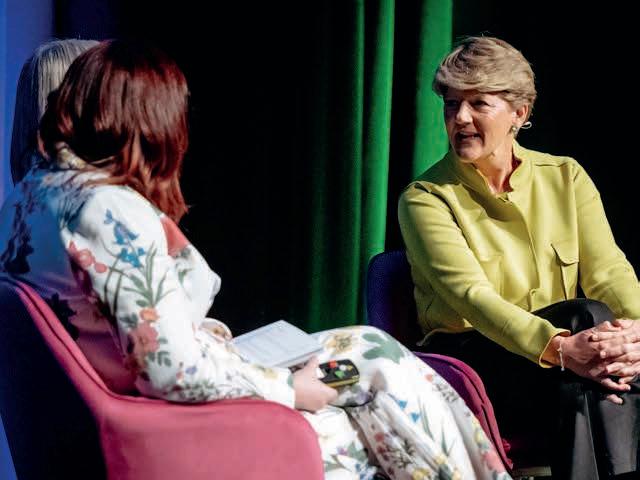

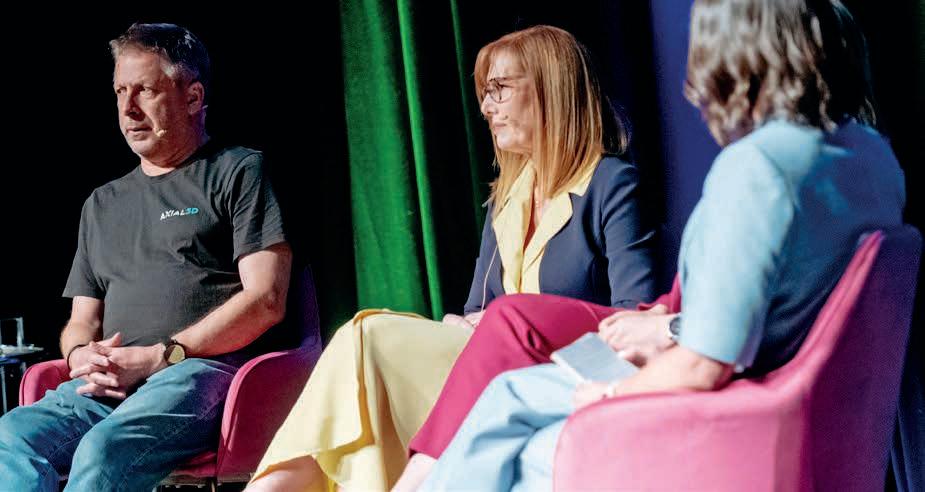
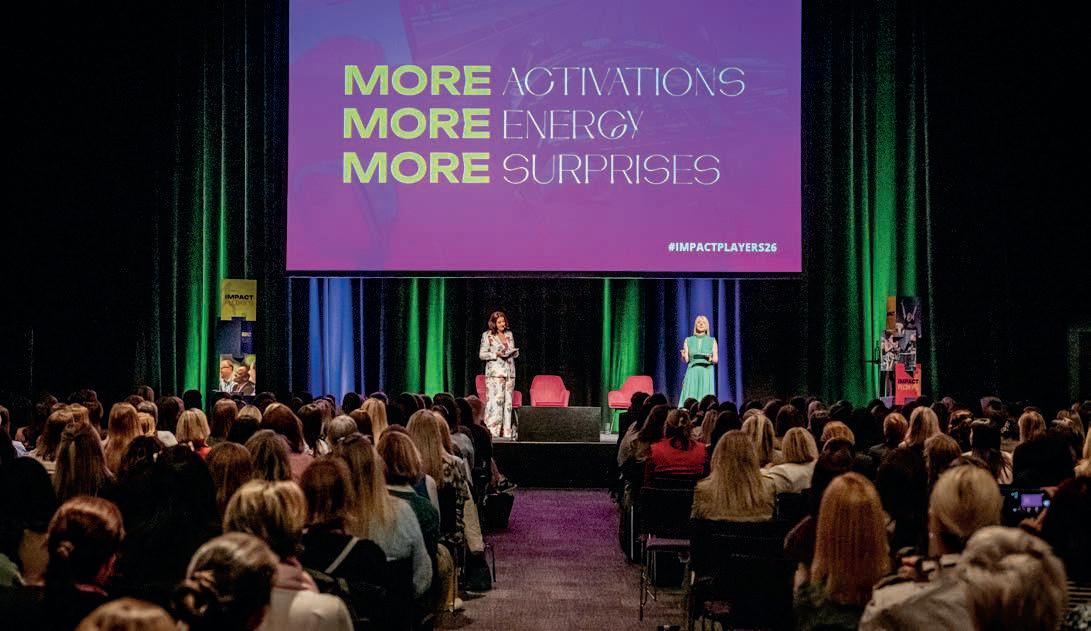
How Collaboration is Transforming Recycling Performance
Joseph Doherty, CEO Re-Gen
Collaboration in the recycling industry is creating real-time data on packaging’s recycling performance in the supply chain informing future decision making
“Effective recycling is not just about processing blue and black bin waste; it is about companies, partnerships, and shared knowledge.”
In 2026 the goal of achieving net zero is now more than a mantra; it is a key requirement to ensure a cleaner world for this and future generations.
Environmental solutions necessitate collective action and collaborative partnerships within the recycling industry are a key lever to achieve this.
Effective recycling is not just about processing blue and black bin waste; it is about companies, partnerships, and shared knowledge.
DRIVING CIRCULAR ECONOMY SOLUTIONS THROUGH COLLABORATIVE PARTNERSHIPS
Recycling is only one part of the sustainability puzzle. True environmental impact depends on executing a circular economy strategy that is well defined, executed with precision and provides relevant data outputs.
POLYTAG IS SPEARHEADING COLLABORATION WITHIN THE RECYCLING INDUSTRY
Polytag, one of Europe’s leading recycling
technology companies based in Deeside Cheshire, has been at the forefront of company collaboration within the recycling industry. The company provides digital tag-and-trace solutions to improve plastic recycling rates and supports the circular economy, and this provided the catalyst for collaboration within the recycling sector.
Polytag has partnered with over 12 recycling centres across the United Kingdom, where it has installed its stateof-the art camera units. These units can identify and track the plastic recyclates as they pass through the participating recycling centres’ processes. All plastic packaging that has unique QR codes and invisible UV tags is instantly detected by the unit, providing real-time data and allowing producers to assess their plastic recycling performance.
Since 2025, Ocado Retail and Waitrose have tagged their full milk range, enabling them to gain insight into what happens to their packaging after it has been recycled by customers. Both retailers are in the process of exploring other packaging formats to expand their data collection. Another client,
M&S, previously tagged milk bottles and is currently reviewing which packaging formats to expand to next.
Re-Gen based in Northern Ireland, one of Europe’s most technologically advanced recycling centres, was one of the first companies to collaborate with Polytag. It has been an outstanding success and will continue as retailers navigate technological advancements to enhance circular economic strategies.
BUSINESS COLLABORATION CAN IMPROVE REGULATORY POLICY EXECUTION
The introduction of the extended producer responsibility scheme (EPR) in 2023 with mandatory data collection and the first invoices being sent out in October 2025 to producers (brand owners and manufacturers) has made it even more important for companies and brands to trace their packaging as it passes through the supply chain. The Polytag collaboration with the retailer participants has assisted the producers with their EPR calculations as they now have for the very first time valid data regarding their plastic recycling performance in the supply chain.
A BUSINESS COLLABORATION THAT COULD INFLUENCE FUTURE EPR POLICY CHANGE
Polytag has just launched its White Paper (5 March 2026) that is asking for EPR policy change. It is stating that producers should be incentivised if they are adopting sustainable packaging strategies that will allow more of their packaging to re-enter the supply chain and in turn support the circular economy.
COMPANY COLLABORATION IS VITAL AND WILL CONTINUE TO DRIVE FUTURE RECYCLING STRATEGIES
As sustainability becomes a global priority, partnerships will continue to shape the future of recycling. Recycling is more than a project; it’s a partnership. And through collaboration, we can ensure that progress in waste management leads to a healthier, more sustainable tomorrow, benefiting this generation and those that follow.
Powering ConversationsBetter
In a period marked by geopolitical instability, volatile wholesale markets and the longterm challenge of reaching net zero, Northern Ireland businesses are facing an increasingly complex utilities landscape. According to John French, Chief Executive of the Utility Regulator, engagement and transparency have never mattered more.
For almost two decades before Covid-19, energy prices remained relatively stable for households and businesses alike. Since then, global instability, conflict and market volatility have dramatically reshaped the landscape, making utility costs far less predictable. As Utility Regulator Chief Executive, John French, explains, that shift means consumers and businesses can no longer afford to take a passive approach to energy.
“We want to engage,” he says. “We want to try to make the markets as user-friendly for the business consumer as possible. We want to make sure that they are transparent, people are accountable within the markets, and we want businesses to actively engage to ensure they get the best price.”
The Utility Regulator is Northern Ireland’s independent economic regulator for electricity, gas and water. Its role is to ensure those sectors operate fairly, sustainably and in the best interests of domestic and business consumers.
“We oversee the market and make sure that it’s operating fairly so consumers can be confident that they’re paying a fair price for the services they receive,” John explains. “But we also provide stability to the market through dependable regulation. That brings stability and trust, which then allows energy and water companies to invest in Northern Ireland.”
It is the only multi-sectoral economic regulator in the UK covering energy and water together, something John believes brings advantages when it comes to long-term infrastructure and sustainability planning.
“When you’re regulating monopoly industries, you’re constantly learning from one price control to the next,” he says. “Regulating across those industries allows you to bring stability and consistency across sectors in Northern Ireland.”
The Utility Regulator’s Corporate Strategy 2024-2029, titled Protecting Consumers on the way to Net Zero, outlines four key objectives: supporting the just transition to net zero; securing Northern Ireland’s energy supply, and water and wastewater services; enabling best-in-class utility companies; and delivering high levels of consumer protection.
That balancing act between decarbonisation and affordability is one of the biggest challenges facing regulators and policymakers today.
“That is the current and growing challenge for regulators, policymakers and the energy industry,” John says. “How do we move towards net zero while ensuring the energy we provide remains affordable and allows economic growth?”
He points to the structure of Northern Ireland’s electricity generation market as part of the issue. “Across the island of Ireland, there is one wholesale electricity market, and some of those prices are among the most expensive in Europe,” he explains. “That’s mainly because of the generation mix we have, which is heavily dependent on gas-fired generation, alongside wind and solar, which are less predictable than things like hydropower or nuclear.”
The last five years, he says, have demonstrated just how vulnerable energy markets can be to global events.
“Gas prices were stable for around 20 years leading up to the Ukraine crisis. Gas traded at around 50 to 60 pence per therm for many years and then rose dramatically during the crisis. We’ve also seen further volatility again due to conflict in Iran. Unfortunately, where we thought this year would see price decreases, we are now likely to see increases again.”
For businesses, the advice is to stay engaged and actively manage energy use and contracts.
“Businesses need to be active in the market and search out what’s best for them,” he says. “Shop around for the best price. Businesses should look at whether they can minimise usage through energy efficiency measures, whether they can generate some energy on site through solar panels, or potentially use battery storage to help manage demand.”
Supporting businesses through those challenges has become a focus for the Utility Regulator. In recent years, it established a dedicated non-domestic consumer protection team and introduced a range of new protections for business consumers.
One major development was the introduction of licence modifications in February 2026, along with a new Code of Practice to strengthen protections for non-domestic consumers planned for later this year.
“The Code of Practice will set a base level that all suppliers must provide,” John says. “It will provide a minimum level of standards and protection for all business consumers in Northern Ireland.”
The protections introduced by the licence modifications include requirements for suppliers to publish transparent pricing information for small businesses, provide greater clarity around security deposits, and remove barriers preventing businesses on deemed contracts from switching supplier.
The work ties closely into the Utility Regulator’s wider Consumer Protection Programme, which includes workstreams related to improving standards of service, enhancing protections, research, debt and affordability.
Another key initiative is the organisation’s Non-domestic Consumer Insight Tracker Survey, which examines how businesses engage with the energy market and highlights the issues that impact this consumer group.
“What we recognised three years ago was that business consumers had different needs and challenges. Larger businesses may have dedicated energy managers constantly looking at efficiency and procurement, but smaller businesses are often much closer to domestic consumers in terms of support needs.”
That has led to more direct engagement with specific sectors, including agriculture.
“We’re now looking at specific business sectors,” he says. “The farming community may need additional support, and we’ll
continue looking across sectors to understand different pressures.”
Stakeholder engagement has become a growing priority across the organisation’s work. Through partnerships with organisations including NI Chamber, the Federation of Small Businesses and Manufacturing NI, the Utility Regulator is aiming to better understand the realities facing firms on the ground.
“We very much see the Utility Regulator as part of the fabric of Northern Ireland,” John says. “There isn’t just one business community. There are different sectors with different pressures, whether that’s manufacturing, agriculture or small business. We cannot sit in an ivory tower. We need to understand what businesses are dealing with and see if there’s anything within our regulatory powers that can support them and make life easier.”
That approach has also informed the Utility Regulator’s recent Consumer Energy Charters, developed alongside suppliers, government departments, the Consumer Council, Advice NI and Make the Call.
The Charters encourage households and businesses struggling with affordability to engage with suppliers early,
access support, explore tariff options and seek advice before debt escalates.
Looking ahead, the Utility Regulator is continuing to expand its focus on transparency and market fairness. This includes consultation work around third-party intermediaries operating between suppliers and consumers, and a new Energy Literacy project aimed at improving consumer understanding of bills, tariffs and supplier relationships.
Ultimately, John says success over the next five years will depend on striking the right balance between sustainability, affordability and economic growth.
“There’s no point achieving net zero targets if ultimately the energy being provided is unaffordable,” he says. “We have to move towards net zero in a way that allows the Northern Ireland economy to thrive.”
“We want businesses to engage with us,” he says. “If there are barriers there, let’s look at how we can reduce them. We want business consumers to get a fair deal, and we want to understand the pressures and concerns they have.”

“We want businesses to engage with us,” he says. “If there are barriers there, let’s look at how we can reduce them. We want business consumers to get a fair deal, and we want to understand the pressures and concerns they have.”

Reinventing Everyday Banking For A Changing World
By George Higginson, Managing Director, Everyday Banking, Bank of Ireland UK
Bank of Ireland recently marked 200 years of service to customers locally. While this was an important milestone to celebrate, our focus is firmly on the future and on delivering unrivalled financial choice now and for generations to come.
Customers today want simplicity and confidence, whether they’re opening their first account, financing a business or planning for retirement. They expect services to work seamlessly around their lives, to be accessible whenever they need them, and to evolve quickly as the world changes.
The financial services sector is experiencing change at a scale and pace we have not seen before. Digital innovation, artificial intelligence (AI), geopolitical uncertainty and shifting customer expectations are reshaping how people engage with banks and manage finances. At the same time, cost-ofliving pressures and economic volatility mean customers value clarity, reassurance and control more than ever.
What this means for us, as a trusted banking partner, is that standing still is not an option.
That’s why we are investing heavily in the fundamentals of everyday banking to improve outcomes for customers. A £100 million, threeyear transformation programme is enabling us to modernise our core platforms, streamline processes, and embed digital and AI capabilities that support faster, simpler and more secure banking.
For customers, that investment translates into tangible improvements: account opening times reduced by 50%; remortgaging that can take place in minutes rather than days; and smarter callhandling technology that helps people reach the right support sooner. These are practical changes, but they matter because they remove friction at timesensitive moments and make the customer experience better and more efficient.
Technology alone, however, does not build trust. Innovation must be guided by a clear understanding of customer needs, and that sits at the centre of how we are evolving our consumer and business offerings. From flexible savings products that give customers more control, to business deposit accounts designed to help organisations manage cash effectively in uncertain markets, it’s about providing the right support at the right time to help customers achieve their financial ambitions.
For businesses, particularly SMEs, banking is as much about partnership as it is about products. Our Business Managers, based across Northern Ireland, spend time with customers to understand the businesses they support and how we can best help them succeed. Those relationships are reinforced by specialist expertise in areas such as international trade, global markets, investment and commercial finance, helping businesses navigate complexity and pursue growth at home and abroad. Increasingly, this also includes support on sustainability, with green lending solutions and practical tools to help businesses take meaningful steps on their ESG journey. Another defining feature of modern banking is choice - not just in products, but in how customers access services. While digital adoption continues to accelerate, physical presence still matters deeply to many consumers.
Our network of 13 branches, staffed by knowledgeable colleagues, remains a vital part of our offering, ensuring customers have access to facetoface service and support when they need it. Alongside this, we are also investing in our

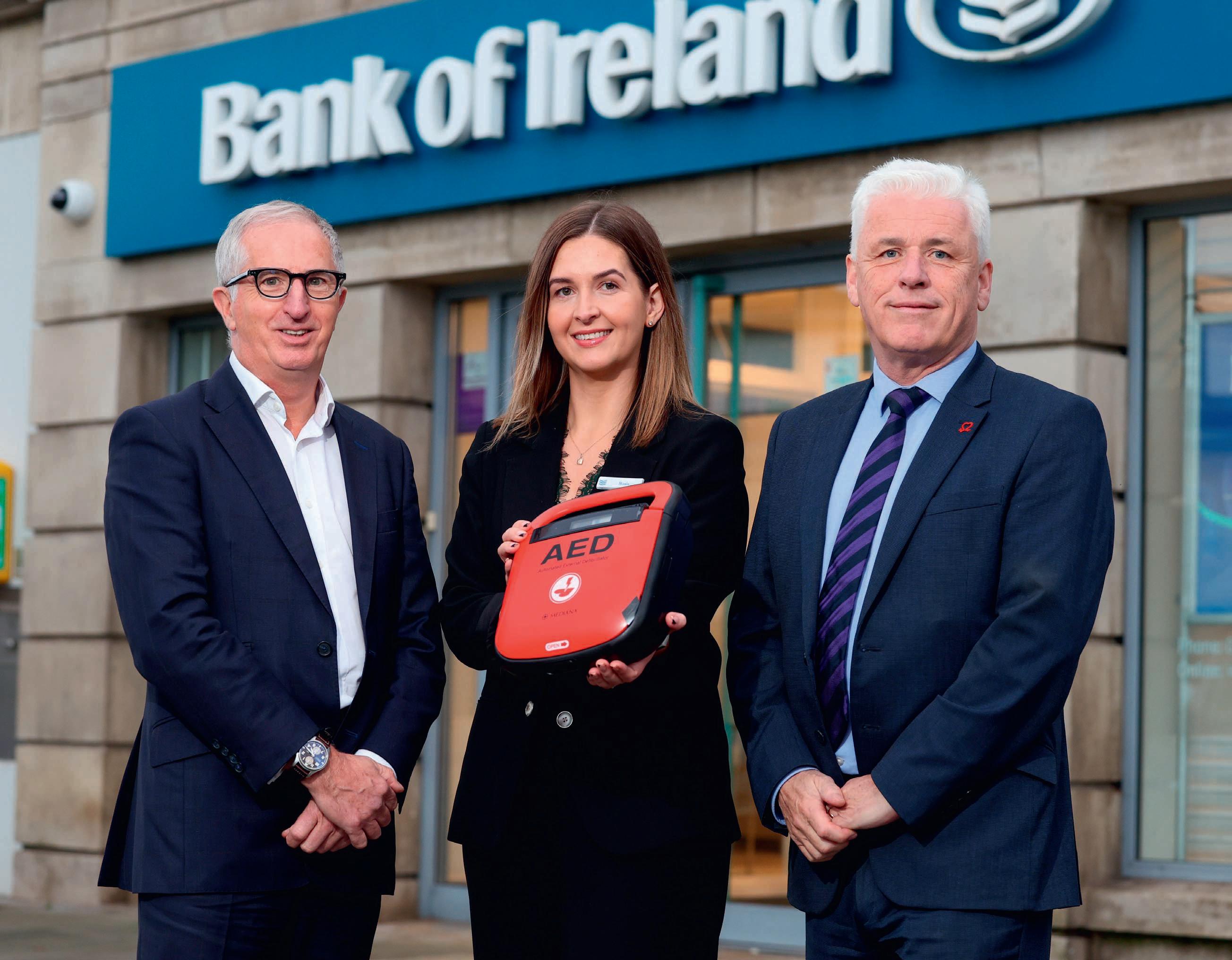
digital channels, with a new banking app developed using the latest technology launching soon. The app will be quicker and easier to use. It gives customers greater control over their banking through enhanced selfservice capabilities, improved security and accessibility, and practical features like being able to blur sensitive financial information, such as account balances, when in public.
Ultimately, our role is to support customers through the financial milestones that shape their lives from supporting entrepreneurs taking their first step into business to helping someone buy their first home.
Whatever the milestone, Bank of Ireland wants to be there every step of the way, reflected in our brand promise, ‘Right with you’, which is built around our goal to support customers at every stage of their financial journey. Our investment extends beyond products and services into the communities we serve. Through financial education, community funding
“For businesses, particularly SMEs, banking is as much about partnership as it is about products.”
and practical initiatives - from fraud awareness to publicaccess defibrillators installed across our branch networkwe play a meaningful role in building financial confidence and community resilience across Northern Ireland. Since 2020, our Community Fund has provided more than £3 million in funding to support organisations and initiatives that champion inclusion and financial capability. In 2025 alone, our Community Engagement team delivered almost 9,000 hours of financial education to schools,
community organisations and businesses to help strengthen financial confidence.
We also ensure that the needs of vulnerable customers are front of mind, through initiatives such as JAM Card and Sunflower lanyard accreditations, SignVideo interpreting for contact centres, and a range of alternative documentation formats. Our online Extra Help Centre brings together everything customers, families and carers need to understand the tools and support available to help them manage their banking.
For us, it’s about making banking work for everyone. We are committed to listening, learning and investing so customers can bank with us in the way that best suits them.
That focus on customers and communities is embedded in our heritage and directly shapes our strategy for the future. It’s about retaining the things that make Bank of Ireland special – our people, branch network and presence in the community, ‘Right with you’.
FAST Appoints New Managing Director Clive Wilson
FAST, one of Northern Ireland’s most innovative end-to-end automation, robotics and software solutions companies, has appointed Clive Wilson to the new position of managing director, to lead the business through its next phase of development.
The appointment marks an important milestone for the company as it continues to build on its strong foundations and shape its pathway through the evolving automation landscape.
Clive brings a wealth of commercial and supply chain experience to FAST, having worked across a range of industries in senior leadership roles, both across the Island of Ireland and internationally.
For the past six years, Clive was a member of the senior leadership team at Coca-Cola HBC Island of Ireland. In the role of supply chain director, he led significant investment in transformational projects, introduced capability and development programmes to foster a high-performance culture, and advanced sustainability initiatives to support long-term business growth.
Clive’s appointment at the helm of FAST marks a significant milestone for the company as it continues to expand its
capabilities in automation, robotics, software-led optimisation, production line integration and semiconductor services, serving both global multinationals and local manufacturers.
Founded in Derry/Londonderry, FAST employs a team of almost 50 specialists and has built long-standing relationships with major global brands such as Seagate. The business is also responding to a rapidly growing portfolio of SMEs looking to improve production efficiencies and address labour and skills shortages.
Another key part of Clive’s focus as managing director will be the continued development and roll out of FAST’s A2 Hub, based in Catalyst in Derry city. This expert service has been established to provide a more holistic assessment of each customer’s automation and digital transformation needs. Based on this analysis, the team goes on to design
and implement bespoke hardware and software solutions that mitigate risk and support long-term operational efficiencies.
Speaking about his appointment, Clive said: “FAST benefits from exceptional talent, a strong culture and deep technical capability, much of which is not yet fully understood beyond the sector. I was drawn to the opportunity to help scale a highlyskilled automation business that is driving efficiencies and solving real problems for manufacturers – from labour shortages to digitalisation and production efficiency. The potential here is enormous, and I’m excited to help the team build on the foundations already in place.”
“Leading FAST excites me because of its scale, complexity, and growth potential. I’m confident I can make a measurable impact by leveraging my proven leadership capability, deep commercial and operational experience, and track record of delivering transformational results.”
Coupled with his understanding of FAST’s products and the markets it serves, Clive is well positioned to drive performance, accelerate strategic execution, and deliver sustainable growth for the business.
His appointment also underlines FAST’s commitment to practising what it delivers, reinforcing its focus on integrated systems, facilities and processes that reflect the digital and automation solutions it provides for clients.
“FAST benefits from exceptional talent, a strong culture and deep technical capability, much of which is not yet fully understood beyond the sector.”
CATHERINE ASHMAN
Head of Marketing & Sales, McKeever Hotel Group

IN THE BUSINESS COMMUNITY
Head of Ireland, Lauralu Ireland &UK
Director of Sales, Voco Belfast
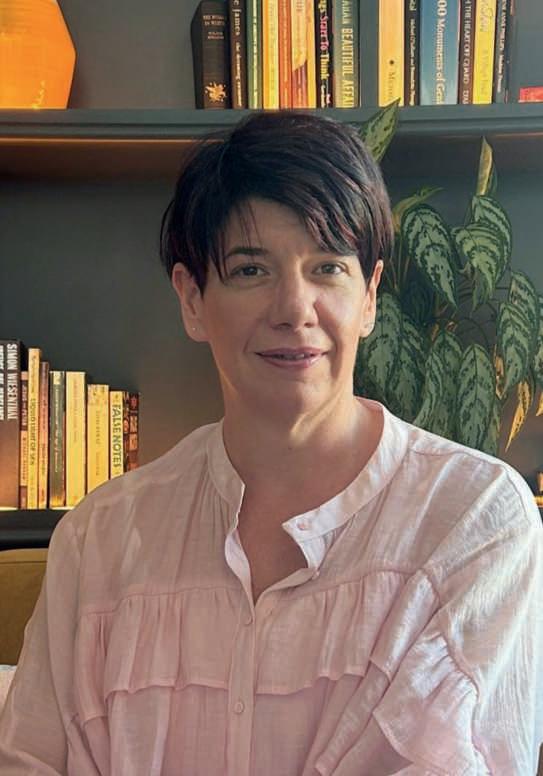
Conference & Events Manager, Slieve Donard

FITZGERALD Partner, Grant Thornton NI

Territory Account Executive, Salesforce

Head of Marketing, Mills Selig

Marketing and Business Development Manager, P.A. Duffy & Co Solicitors
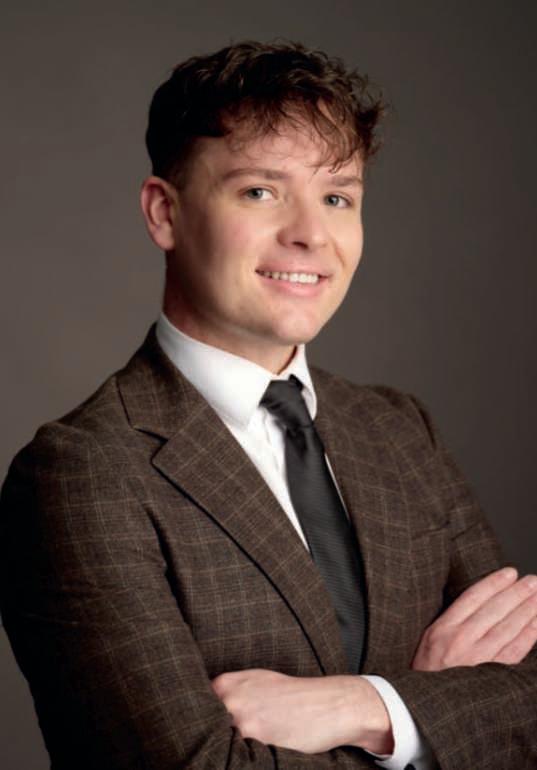
CLARE
SARAH MCGINLEY
CHRIS JARVIS
JUDY HUTTON
RHYS THOMAS
ROSS KANE
LAUREN KINGHAN
Diversity Mark Expands Assessment Panel with Eight New Appointments
The leading accreditation body for workplace inclusion in Northern Ireland has appointed eight new assessors to its independent panel, as demand increases for EDI accreditation and inclusive talent retention strategies, with new data from Oxford Economics and Unum estimating the cost of replacing an employee in the UK at over £30,000 on average.
Diversity Mark’s newly expanded panel of 23 independent sector experts came together for a dedicated team day at Invest NI, focused on collaboration, consistency and strengthening the assessment approach across the panel.
Commenting, Diversity Mark Director Christine White said: “As organisations here face increasing pressures to attract and retain key talent, having access to a dedicated panel of independent specialists ensures local leaders are best placed to embed inclusivity into the bedrock of their workplaces. In doing so, these businesses are better equipped to innovate and succeed, which in turn has a positive ripple effect on the wider economy. I encourage organisations across Northern Ireland who are serious about future-proofing their workforce to reach out to the Diversity Mark team today and take the next step in their inclusion journey.”
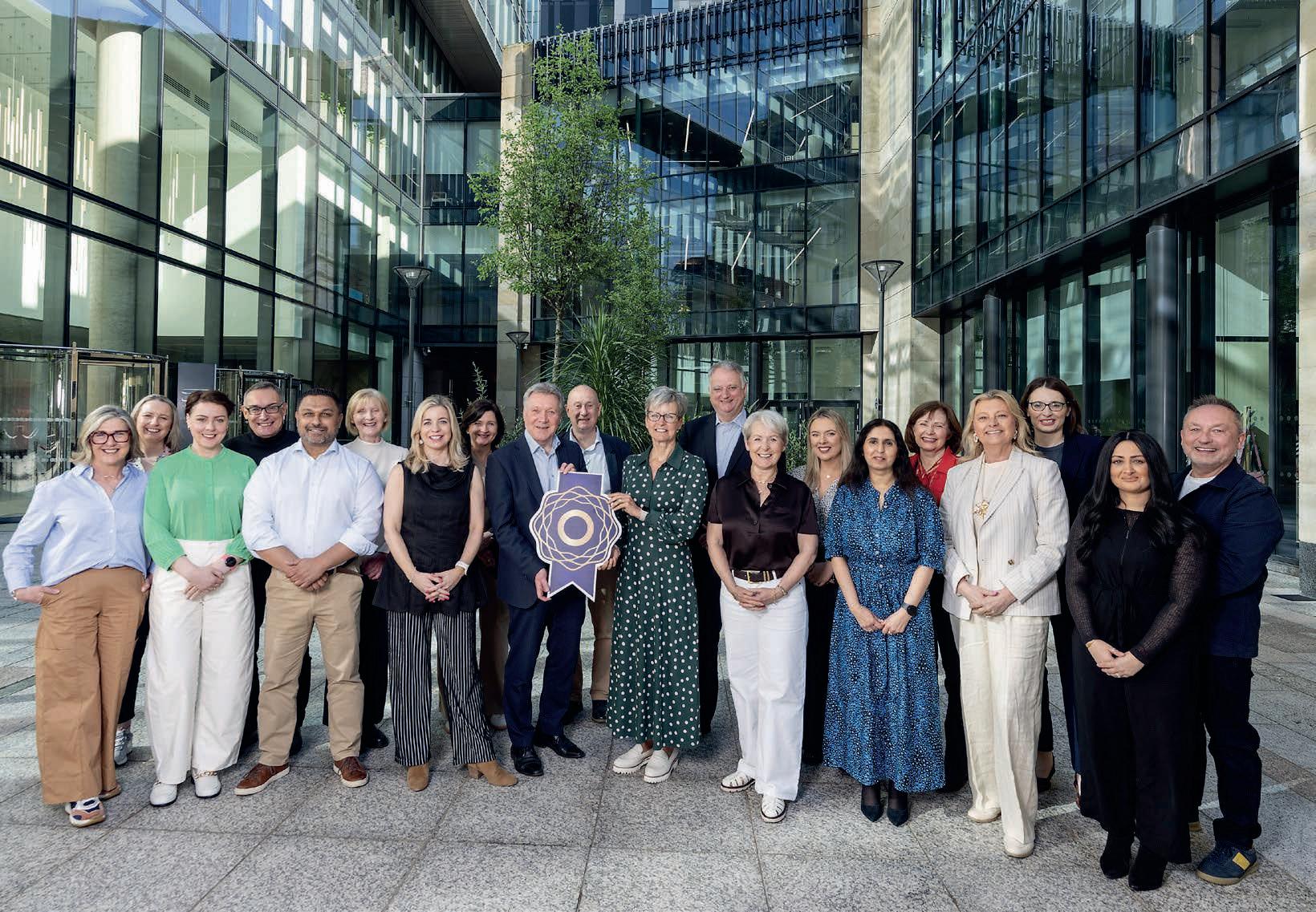
Part of The WiB Group, Diversity Mark has recently invested £90,000 to enhance its digital infrastructure and enable employers to understand and grow their workforce using EDI insights not previously available on a region-wide scale.
Mills Selig Bolsters Corporate Team
Mills Selig has strengthened its corporate practice with a series of significant senior appointments and promotions, marking its fifth consecutive year of growth. The expansion reinforces the Belfast-based law firm’s position as a leading adviser on complex, high-value corporate transactions across Northern Ireland and beyond.
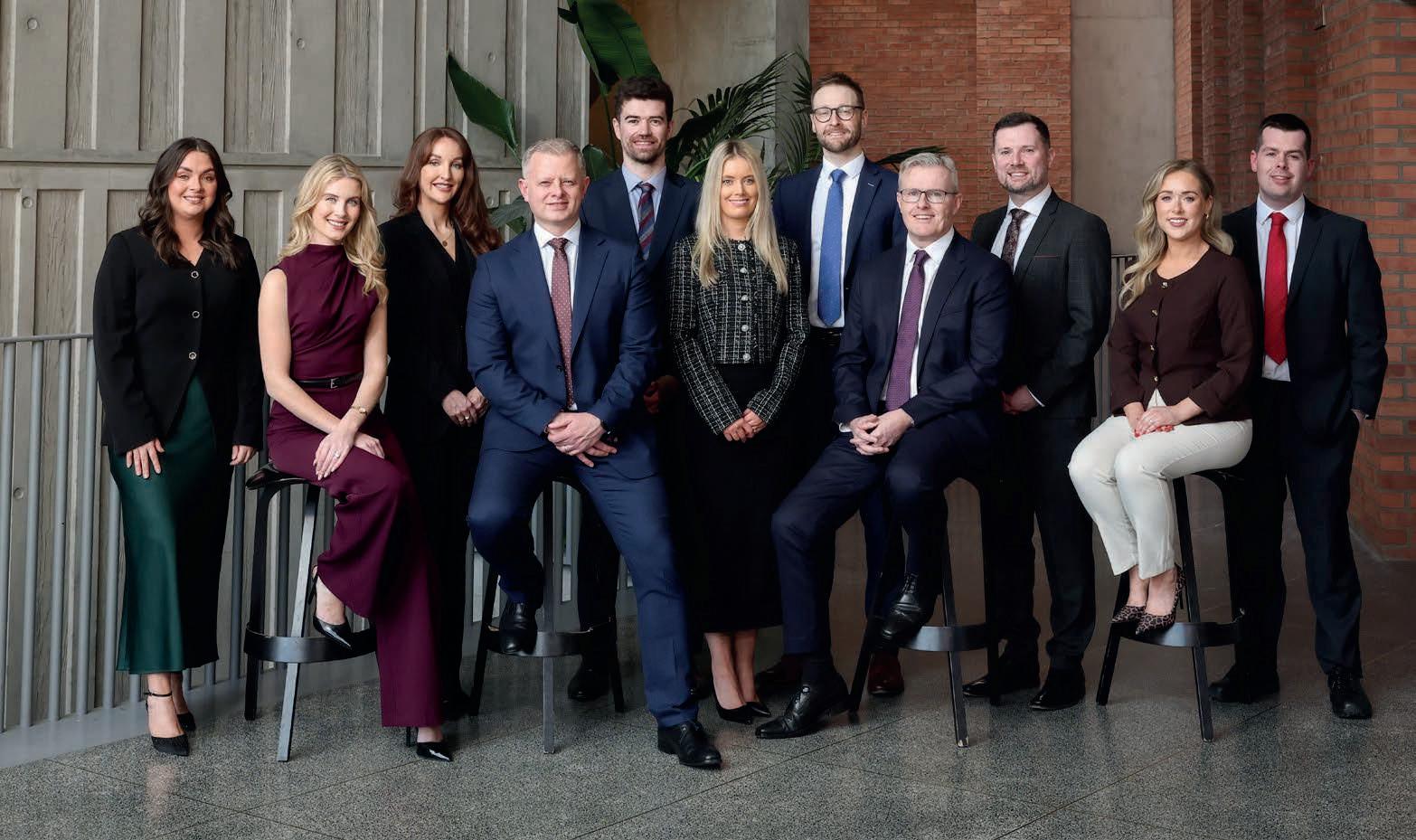
Led by Managing Partner Chris Guy, the expanded Corporate team includes Senior Partner John Kearns, Partners Glenn Watterson and Darren Marley, and newly appointed Commercial Partner Aisling O’Hare. The team’s experience in complex domestic and international transactions positions Mills Selig as a leading legal adviser in the market.
The firm has also promoted Lyndsey McSherry and Emma McCloskey to senior associate, recognising their exceptional contribution to the team’s transactional success and reflecting Mills Selig’s commitment to developing and retaining outstanding internal talent alongside its strategic lateral hires.
The investment comes on the back of a landmark year for the corporate team. In 2025, Mills Selig advised on more than 100 transactions, achieving a record combined deal value of £1.7 billion. This milestone underlines the team’s reputation for delivering commercially astute, solutions-driven advice on some of the most significant transactions in the market.
Diversity Mark’s independent assessment panel, including eight newly appointed assessors, pictured with Christine White, Director of Diversity Mark, and John Healy OBE, Chair of Invest NI, during a recent panel development day at Invest NI.
Mills Selig Bolsters Corporate Team: L-R: Lyndsey McSherry, Emma McCloskey, Jamie Farrell-Murray, Chris Guy, Robert Connor, Aisling O’Hare, Glenn Watterson, John Kearns, Darren Marley, Aveen McGahon, and Christopher Fairfield.
Redefining Social with Gavin Annon
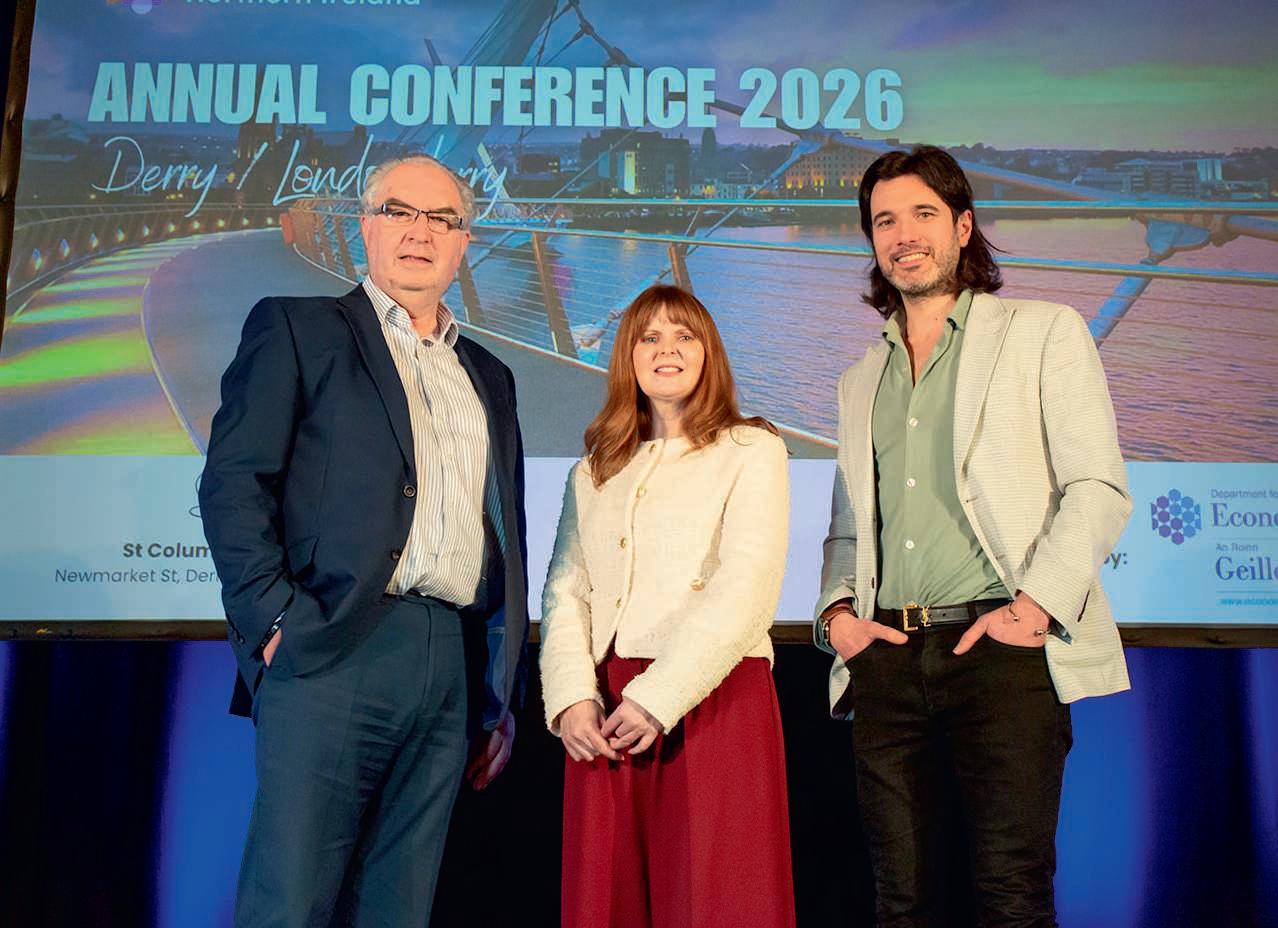
It has been almost six months since Gavin Annon, chief strategy officer of Mount Charles, DJ and ex-President of Belfast Chamber, stepped into the role of chair at Social Enterprise NI (SENI). In that time, he has immersed himself in the world of social enterprises; a group of businesses across NI that contribute nearly £1bn to the local economy and perform a vital function for society, and SENI, the representative body for the sector.
Gavin Annon explained, “I have been in awe of the impact that so many of these social enterprises are quietly having on their local communities. These profit-driven, fully-fledged businesses are dedicated to doing the best for the communities around them. It’s time that more people understood the value of this important sector so with the board and team at SENI, we have developed a new strategy to grow, transform and enrich the social enterprise sector in NI.”
“When I am in the DJ box, I know what songs will bring everyone to the dancefloor; the music effortlessly spreads energy. This reflects what I want to do for the social enterprise sector. I am confident that once the rest of the NI business world truly understands the growing legitimacy of social enterprise, the potential energy
“I have been in awe of the impact that so many of these social enterprises are quietly having on their local communities.”
will be released, spreading better, fairer business practices throughout the economy and growing the SE sector in turn. I want more people to understand this sector so that more entrepreneurs are aware that there is a better way to do business. Research shows that having a social purpose is as important as a salary to attract and retain talent.”
Social enterprise is the term for a business that trades, earns profits, manages cashflow and employs people but dedicates its profits to a social purpose. This setup naturally leads to a more equal, flexible, dynamic business full of people with a passion for what they do. A much-needed antidote to the cutthroat capitalism displayed by many of
the world leaders and billionaires of today. Social enterprises operate in the space between private, public and voluntary sectors. A good example is last year’s Social Enterprise of the Year IncredABLE, a group that creates employment opportunities for people living with learning difficulties and/or autism. This type of social business is especially important in NI where funding from the UK government is not making ends meet for service provision and where we have a long history of radical thought and world-leading innovation. This rise in need has equated to a rise in legitimacy for social enterprises across NI, demonstrated by the inclusion of social value measures in public sector contracts.
Economy Minister Caoimhe Archibald speaking at the recent SENI Annual Conference in Derry said, “I want a social enterprise sector that is confident and visible, integrated into our economic system, supported to scale and innovate and recognised for the economic value it creates, as well as the social impact it delivers.”
Naturally, social enterprises are ahead of the private sector in terms of employing women and empowering them to rise to the top. According to the 2025 NI Social Enterprise Sector Report, 44% of social enterprises are led by women (compared to 16.8% for the business sector*) and 97% have women in the leadership team. The new strategy for SENI will be launched in the coming months. SENI’s team of experts will be focused on growing the sector and its positive influence on a world that is rapidly changing. SENI will help to transform the sector by offering more free or subsidised training and assistance for social enterprise leaders. They will enrich the sector through their highly respected annual events programme and by gathering and analysing important data from their growing membership body. The SENI team will be expanding over the next few months with opportunities in membership and marketing soon to be announced.
Gavin commented, “SENI is a lot like Belfast Chamber in terms of structure and responsibility so there are a lot of shared learnings there. I am looking forward to pushing ahead with all the plans we have to position SENI at the heart of NI’s social enterprise awakening and turning up the volume on all the good this sector does.”
MY AMBITION IS TO...
Andrew Dunbar, General Manager, CASC
From an early age, engineering was never simply a career path for me – it was part of my everyday life. I grew up learning how to fix everything from cars to industrial machinery. Helping my father troubleshoot faults sparked a fascination with how things worked, so much so that I would regularly dismantle everyday objects to explore the mechanics inside. That natural curiosity eventually became the foundation of an engineering career built on problemsolving, continuous improvement, and leading high-performing teams across a range of engineering disciplines.
Today, as I step into my new role as general manager for CASC, I do so with a deep appreciation for the road that has led me here and the people who have coached and mentored me along the way.
My first official engineering role was a placement year with Michelin Tyres as an industrial engineering student, where I was first introduced to the principles of process improvement and operational efficiency. It was an environment that taught me a lot about the value of structure, sequencing, and communication. I quickly realised that even the most efficient systems ultimately rely on effective teamwork. So, while understanding operational processes was important, understanding the people who delivered them was what truly drove success. That early experience has strongly shaped the way I approach leadership to this day.
From there, I transitioned into data analytics with Tata Steel, a move that allowed me to combine analytical thinking with real-world operational understanding. This role was pivotal in strengthening my ability to identify trends, solve complex problems, and develop practical solutions that deliver measurable results.
In 2013, I moved into heavy industrial manufacturing, joining CDE Group, a leading global organisation, that perfectly aligned both my technical interests and my passion for operational excellence. Over the next 12 years with CDE, I gained experience across a wide range of business functions within a rapidly growing organisation, including planning, process improvement, fabrication management, and overall operations management.
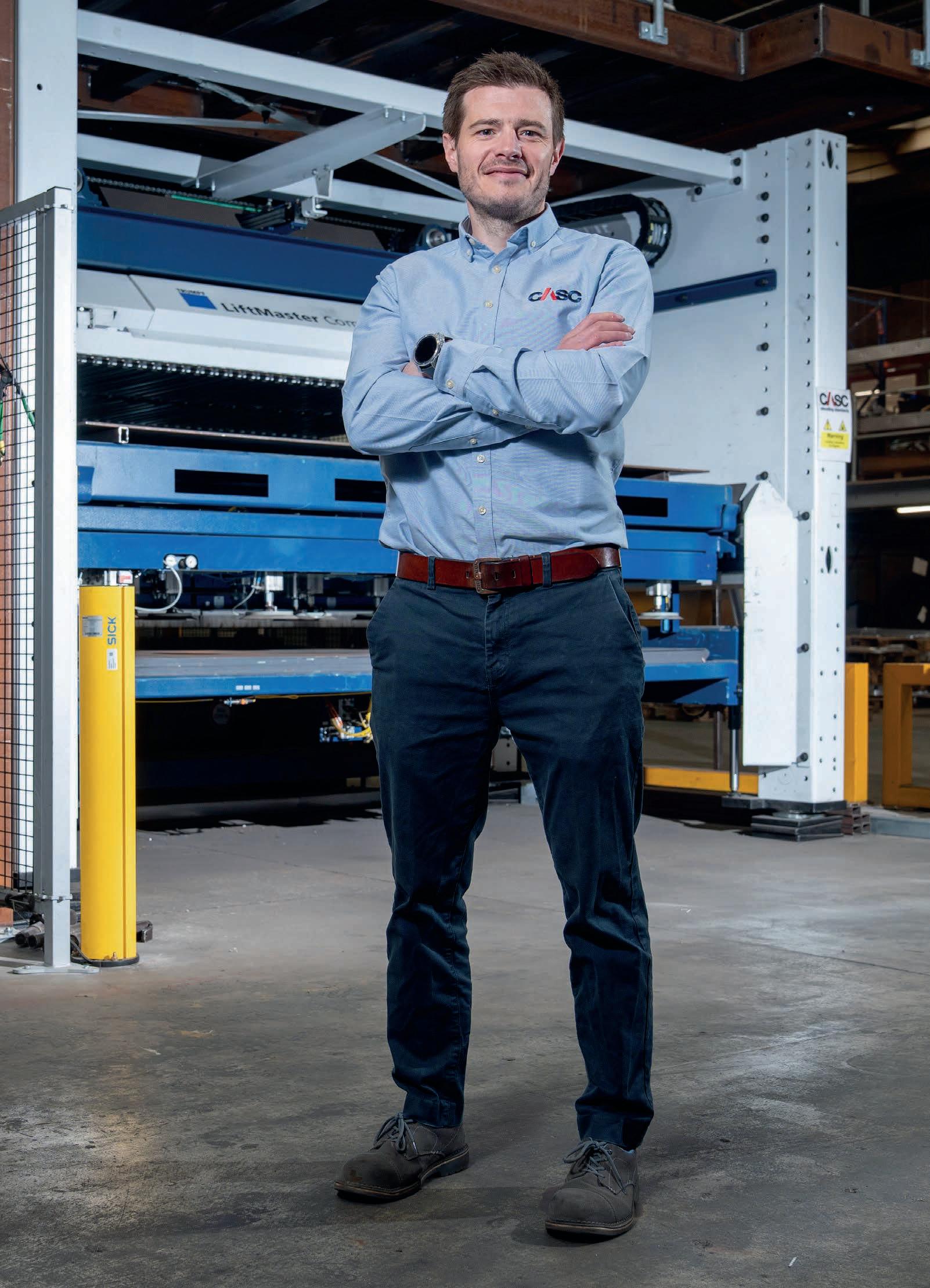
Each role brought new challenges and valuable lessons. Working across multiple engineering disciplines gave me a broader understanding of how high-performing organisations operate across multiple engineering functions.
Following this, I progressed into head of assembly at Thompson Aero Seating, one of the world’s leading players in premium business and first-class aircraft seating manufacture. This experience working in a fast-paced, high-precision manufacturing environment greatly enhanced my understanding of consistency, quality, and high-performance delivery.
Throughout every stage of my career, the greatest lesson I have learned is the importance of the team. No process, strategy, or operational improvement succeeds without the right culture and the best people behind it. I firmly believe that leadership is about inclusion, trust, and support.
That belief in people is one of the main reasons I chose to take on this
new opportunity with CASC as general manager of engineering.
What immediately stood out to me about CASC was the quality of the people within it. There is a clear sense of ambition, skill, and determination throughout the business, having achieved significant global success over the last decade. The company is in an exciting stage of its journey, with an important period of growth ahead.
I saw an opportunity to contribute not only operationally, but culturally as well. As I begin this next chapter, my focus remains the same: building high-performing teams, supporting our people, optimising processes, and creating an environment where individuals can grow together. Engineering and fabrication industries continue to evolve rapidly, and I believe the organisations that will lead the future are those that combine technical excellence with strong, peoplefocused leadership. That’s why at CASC, our key focus is to transform the business through digitalisation and automation.
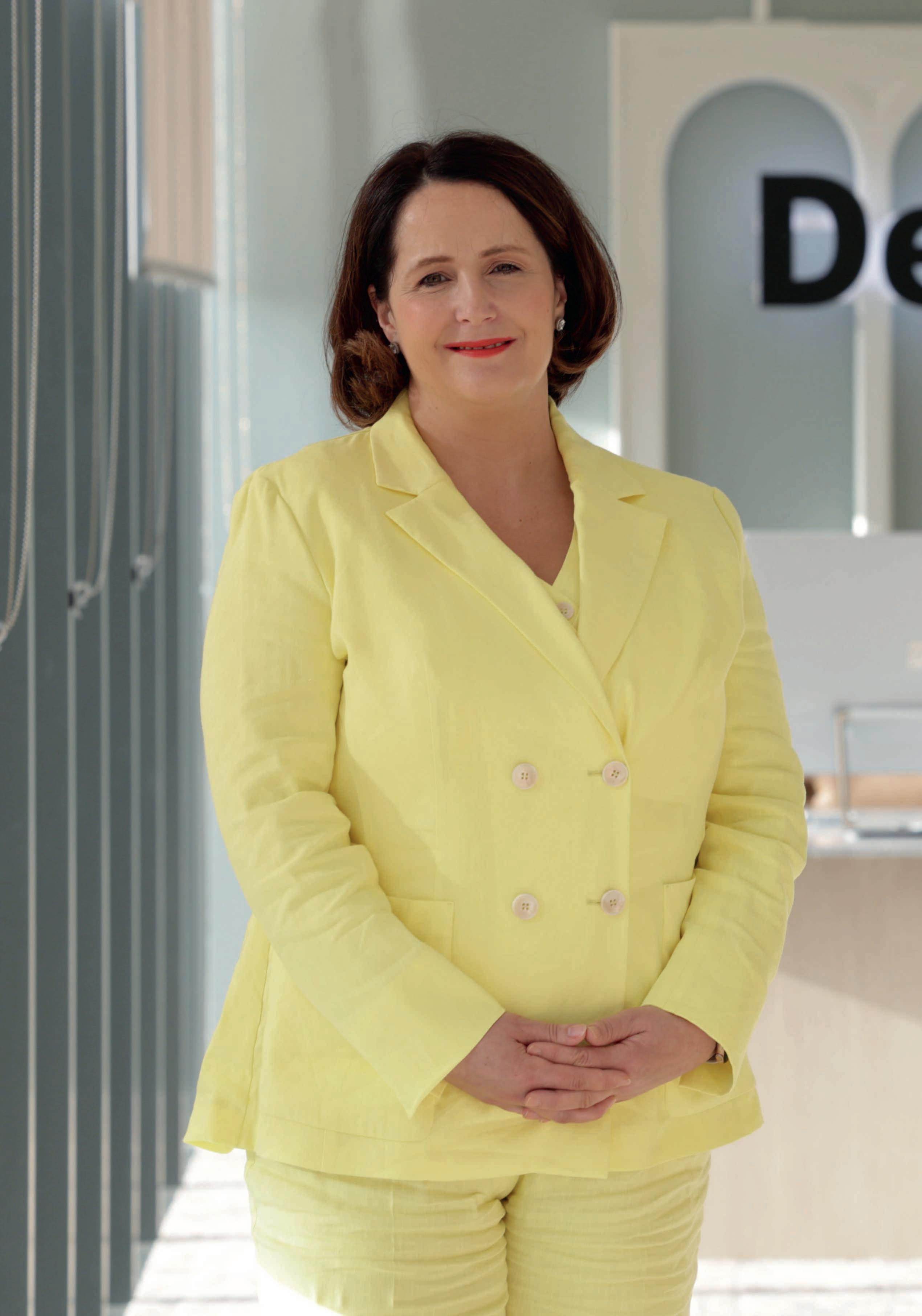

12 Months in the Heart of Belfast








This summer marks one year since Deloitte officially opened its new Northern Ireland office in The Ewart on Bedford Street in Belfast City Centre, with the First Minister, Michelle O’Neill, and Deputy First Minister, Emma LittlePengelly, in attendance to mark the occasion. The new office marked the beginning of a new era for Deloitte and came with a significant commitment to create 500 tech-focused jobs over the next few years. Ambition speaks to office senior partner Marie Doyle about Deloitte’s first 12 months in the heart of Belfast and the wider business landscape in Northern Ireland.
“The past year has been transformative for us in so many ways. Placing our whole team right in the hustle and bustle of Belfast’s business district has given us the opportunity to establish innovative and exciting new collaborations, grow our tech offering and further integrate ourselves into the Northern Ireland business ecosystem,” says Marie.


Marie emphasises that Deloitte is driven by the connection of its teams to their local communities, the networks they build and the impact they make. In 2025, the firm extended its charity partnership with local social enterprise, NOW Group when it joined the firm in The Ewart, taking ground floor space to open the Loaf Café to the public.
“Loaf Café in the Ewart is staffed by NOW Group, clients and provides meaningful employment opportunities for individuals with learning disabilities and autism, supporting




them to develop confidence, skills and independence through work in a truly inclusive environment,” continues Marie. “Our partnership with NOW Group is aligned to our social impact strategy, using our expertise and resources to drive meaningful change on issues that matter most to our people, clients and society.”
With eyes focused on the blossoming tech sector in Northern Ireland, Deloitte partnered with independent science and technology hub Catalyst to open a new site in the building in the latter half of 2025.

“Our partnership with Catalyst on its city centre technology hub has opened new avenues for collaborative working in a way that never would have been possible before,” says Marie.
“It’s a great source of pride to know that we now have the ability to provide organisations that share our ambition to equip people with future-ready skills the space to grow and expand in a city centre location.”

The firm’s office, which incorporates the 16th floor of The Ewart, boasts 360-degree views of Belfast and beyond. The changing face of the city is a particular focus for Deloitte, having tracked its shifting landscape for the last ten years through its annual crane survey which measures the volume of development in regional locations across the UK including Belfast.
Reflecting on this year’s report, Marie says, “Belfast is at a crossroads. The last few years have been defined by



a boom of purpose-built student accommodation, and this year we’ve seen that trend decelerate. As appetite for student accommodation has peaked, we can assume something new will emerge on the horizon. Residential development as the next major phase of expansion in Belfast city centre has long been discussed.”
“There are clear signs of growing demand and ambition for residential homes in the city centre, and city stakeholders remain focused on creating a vibrant, lively and sustainable city centre, which means growing the permanent city centre residential population. With no overwhelming pipeline of new homes emerging, the future of residential in Belfast remains reliant on the opening of new apartments, Loft Lines, this year,
which could trigger new momentum and investment.”
At a time when confidence in public services and government seems increasingly fragile, Deloitte responded with its 2026 State of the State report. Bringing together the perspectives of senior civil servants and elected representatives, alongside the views of the public, Marie says the report offers some hope for Northern Ireland.
“In this year’s report, there is a clear sense that the public wants to see meaningful change and that public sector leaders are equally committed to delivering it. This shared clarity is encouraging and gives me real optimism for the region’s future.”
The report also highlighted that Northern Ireland was the most optimistic region in the UK about the potential for AI to transform public services. Marie
“Our aim is to help people have the career they are passionate about in the places they love.”
stresses the importance of equipping Deloitte’s workforce with the skills to utilise new technology to the fullest.
“AI is changing the way we work across nearly every sector. Deloitte is committed to playing an active role in the preparation of our workforce for the future. A key component of that commitment is the 500 tech-focused jobs we announced last year when moving into The Ewart, and we remain committed to this goal, aligned with our firmwide ambition.”
Deloitte’s commitment has skills training at its heart and over the past year, the company has launched a new AI and Data Analytics Assured Skills Academy and Software Engineering Bootcamp to ensure that the future workforce has the emerging skills required for a new world of work.
“What makes our skills initiatives particularly impactful is their ability to attract people from all walks of life. We’re welcoming graduates, career changers and experienced professionals into the business who each bring their own unique mix of skills and lived experience. Our aim is to help people have the career they are passionate about in the places they love,” says Marie.
“The new skills academy has enabled us to react to growing client demand for technology-enabled skills in a way that strengthens Deloitte’s talent pipeline of leaders for the future.”
“Putting the last year into perspective, Deloitte’s move to The Ewart has put real momentum and energy into our plans for what comes next. There are no illusions of the challenges Belfast must navigate if it is to become the global hub of innovation and expertise we envision. But Deloitte’s role in this future is clear, as a provider of insight and high-quality jobs, leading conversations in the business landscape, and now a cemented citycentre presence.”
Brown & Brown and Legacy Wealth Management: Building Legacy Through Partnership and Experience
In today’s financial landscape, legacy wealth is about more than numbers, it’s about protecting what matters, building strong relationships, and creating something that lasts. That’s a philosophy shared by Legacy Wealth Management and Brown & Brown Insurance, whose partnership brings together long-term financial planning and expert risk protection.
Legacy Wealth Management works closely with clients to help them grow and preserve wealth across generations, while Brown & Brown ensures those assets are protected in an increasingly complex world. Together, they offer a balanced, client-focused approach built around long-term success. That partnership was brought to life recently as joint sponsors of the Ulster Orchestra’s Queen concert at the Waterfront Hall.
Clients and professional connections were invited along for the evening, creating an opportunity to step away from the dayto-day and enjoy a memorable shared experience. The event combined world-class music with a relaxed, social atmosphere, making it easy for clients and partners to connect. It also highlighted a shared commitment to supporting Northern Ireland’s cultural scene.
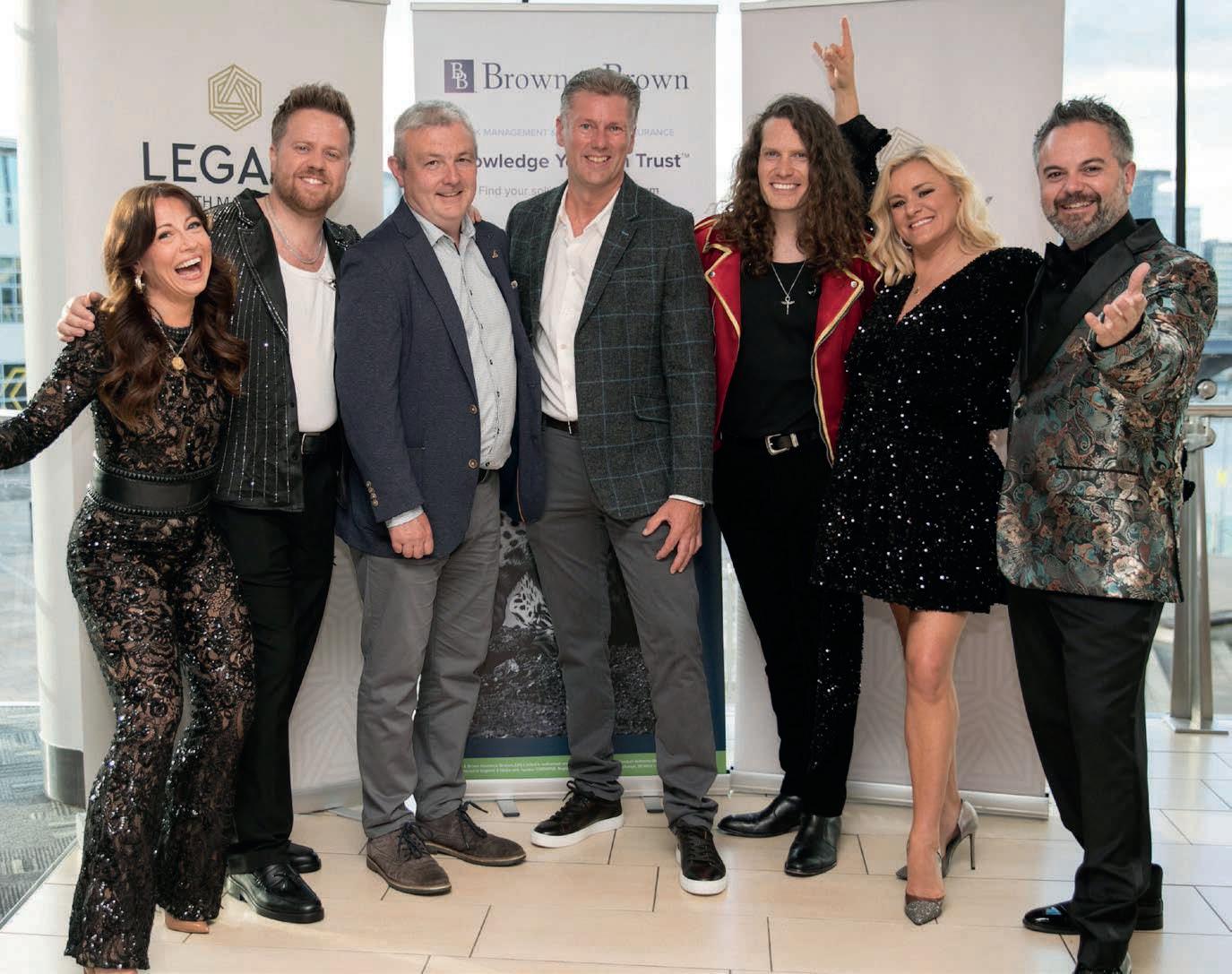
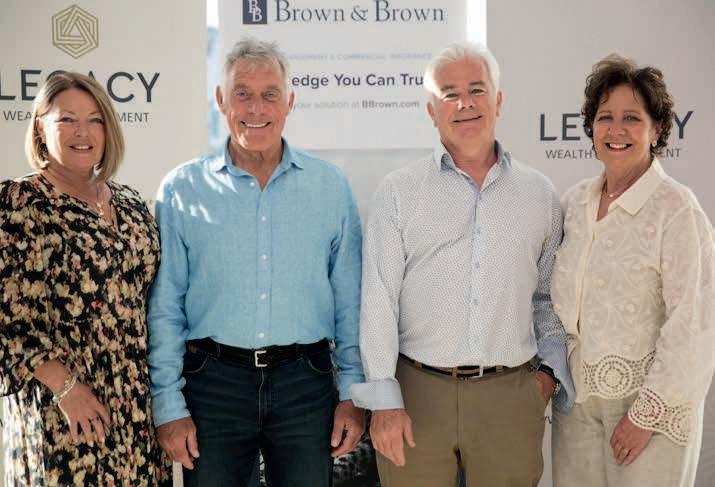
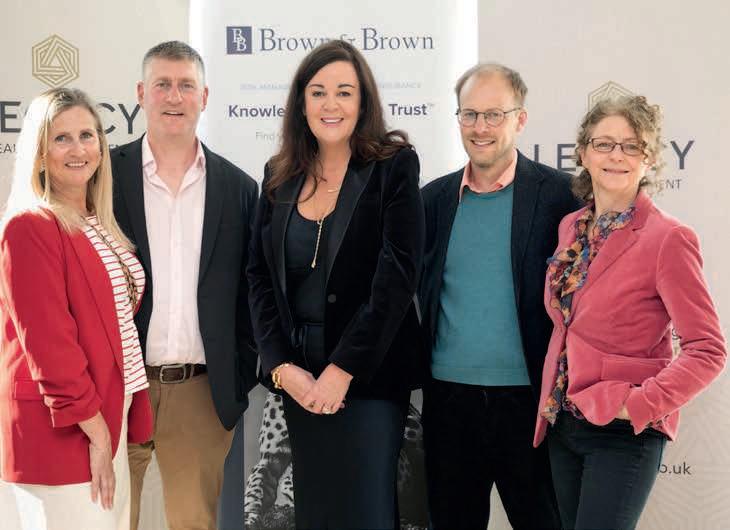
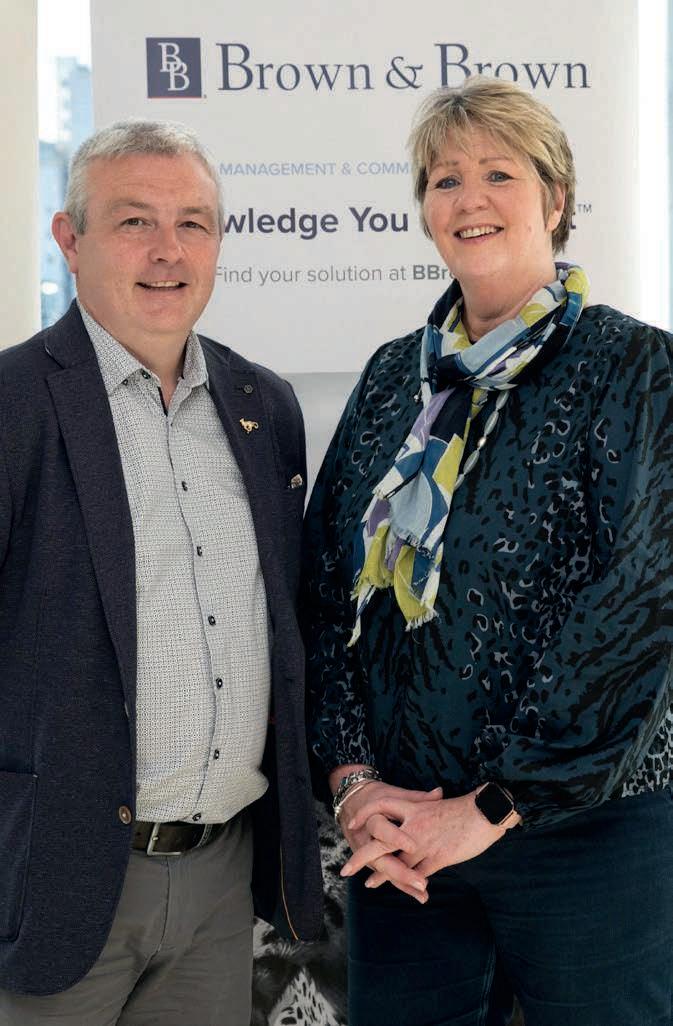
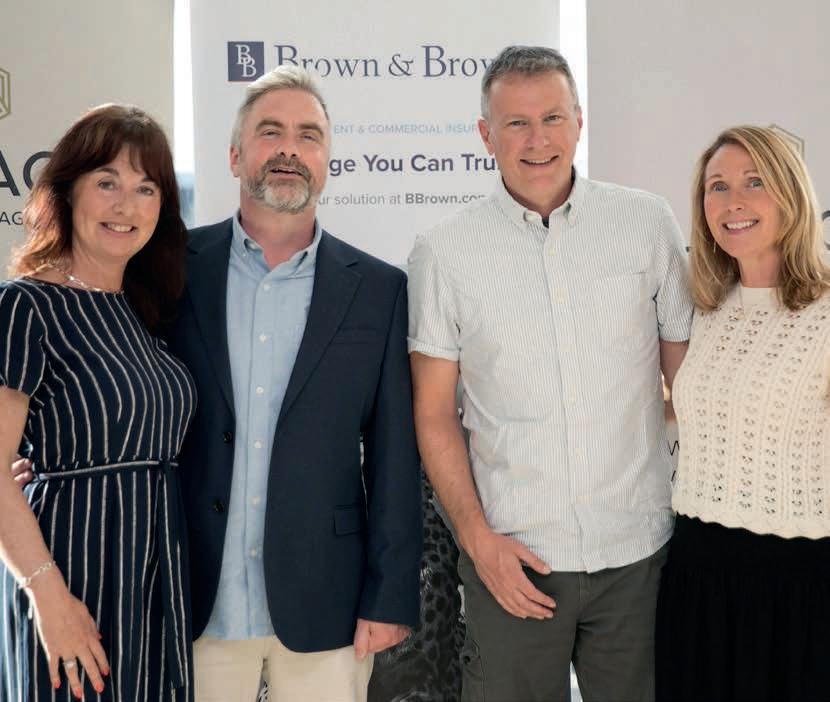
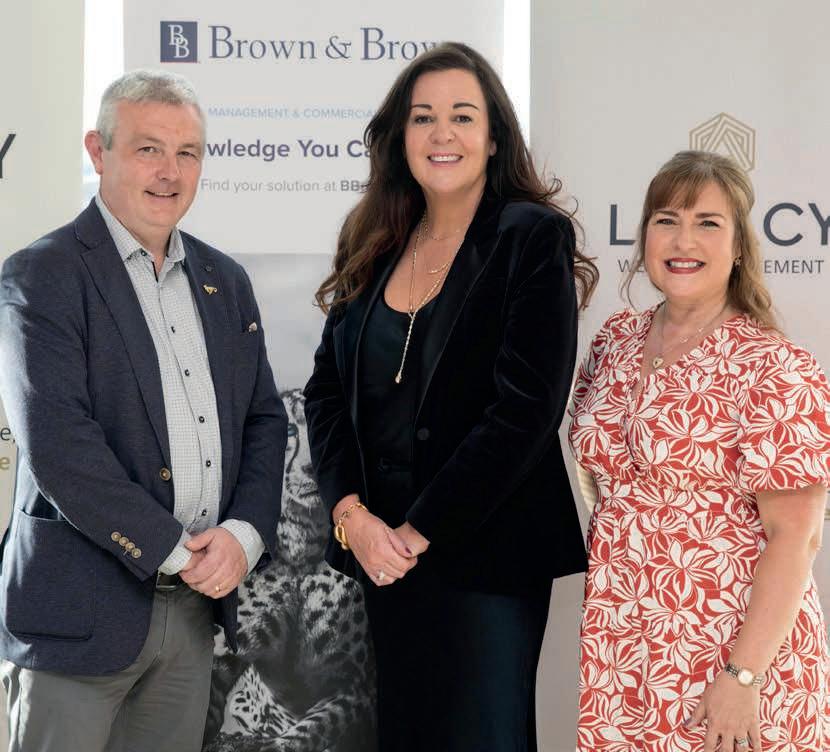
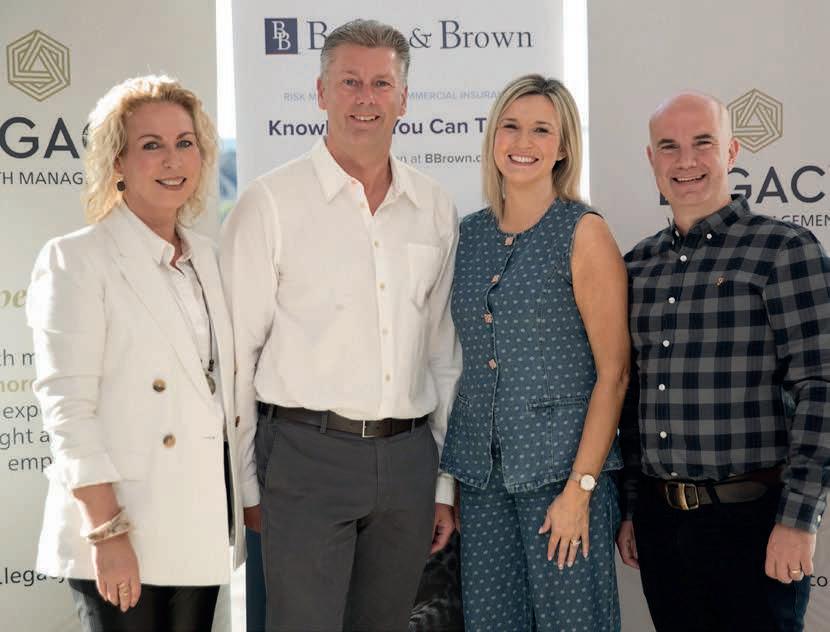







The Mother Of Invention

Business is not for the faint-hearted. For most, survival depends on the ability to adapt and pivot in the tightest of spaces with the strongest ideas often born from uncertainty, pressure and the need to keep moving forward. Few understand that better than Magheramorne Estate’s Co-Founder Jane Allen and her family.
In March 2020, just as the world went into Covid lockdown, Katherine, Sara, James and their mother Jane Allen took on the enormous challenge of renovating and operating a Victorian estate on the shores of Larne Lough –Magheramorne Estate.
The timing could hardly have been worse but what could have become a moment of crisis instead became the beginning of one of Northern Ireland’s most ambitious hospitality success stories.


Six years later, Magheramorne Estate has evolved far beyond the wedding venue it was originally intended to be. Today, the private estate also attracts global corporates seeking meaningful off-sites and retreats, families returning year after year for the immersive “Magic & Mistletoe” Christmas experience, and even book-lovers drawn to the new Magheramorne Literary Festival.
At the heart of it all is the spirit of Jane’s Kitchen, the family catering business founded by Jane almost 40 years ago in her farmyard kitchen where sausage rolls and vol au vents were the order of the day.
“We grew up watching Mum work incredibly hard to deliver beautiful catering for her clients,” says Katherine, head of Sales & Events. “It was all hands on deck as the business evolved from the house into cafés, large events and even catering for royalty. When Magheramorne Estate appeared

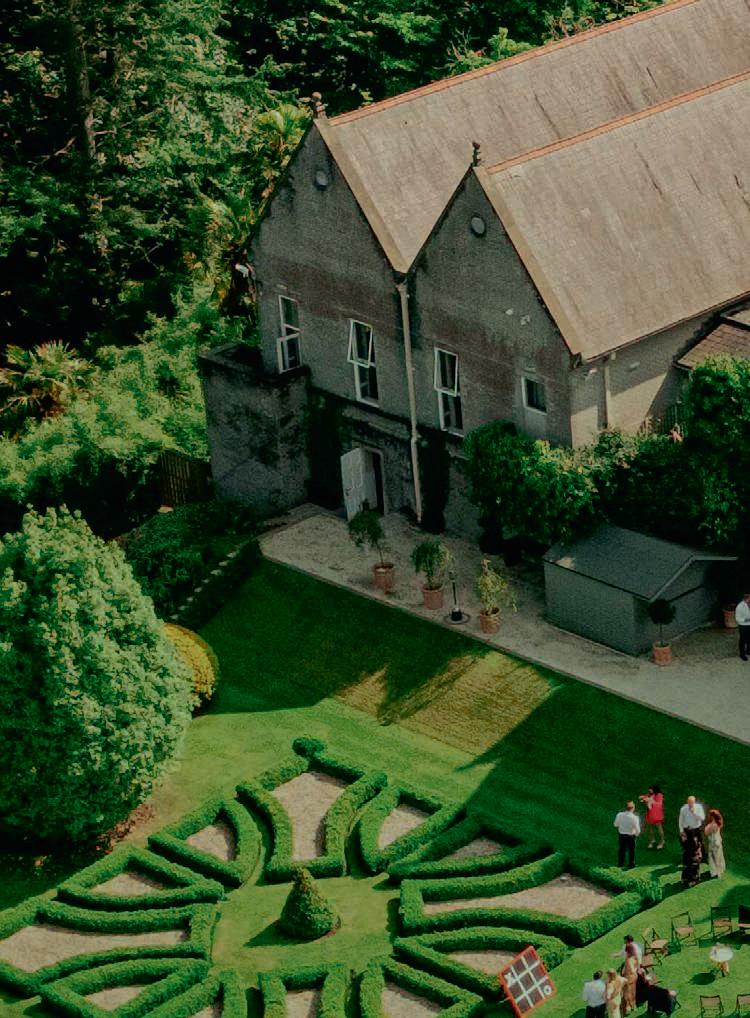
on the market, it felt serendipitous. It was an opportunity to bring everything together, to consolidate what we had learnt, work as a family and create a venue that reflected our values around high-end hospitality.”
“Six years ago, the entire family were on their hands and knees lifting carpets, sanding floors and painting walls while living on site and trying to navigate lockdown restrictions,” says James, the estate’s facilities manager, who oversees the house, courtyard accommodation and 42 acres of woodlands and gardens. “We all have a can-do mentality, but the uncertainty of being unable to open certainly tested us.”
Remarkably, the most volatile period the hospitality sector had ever experienced became a catalyst for reinvention. The Allens rethought staffing, operations and event design. Spaces became more adaptable. Experiences became more personalised. The business diversified rapidly rather than relying on a single revenue stream.
It was during this time that the team launched Magic & Mistletoe, now one of Northern Ireland’s most sought-after Christmas experiences. Combining immersive storytelling, theatrical characters, food experiences and interactive activities across the estate grounds, the event attracts thousands of visitors every year and has become a major seasonal employer within the local area.
The success of the event also sparked further ideas.


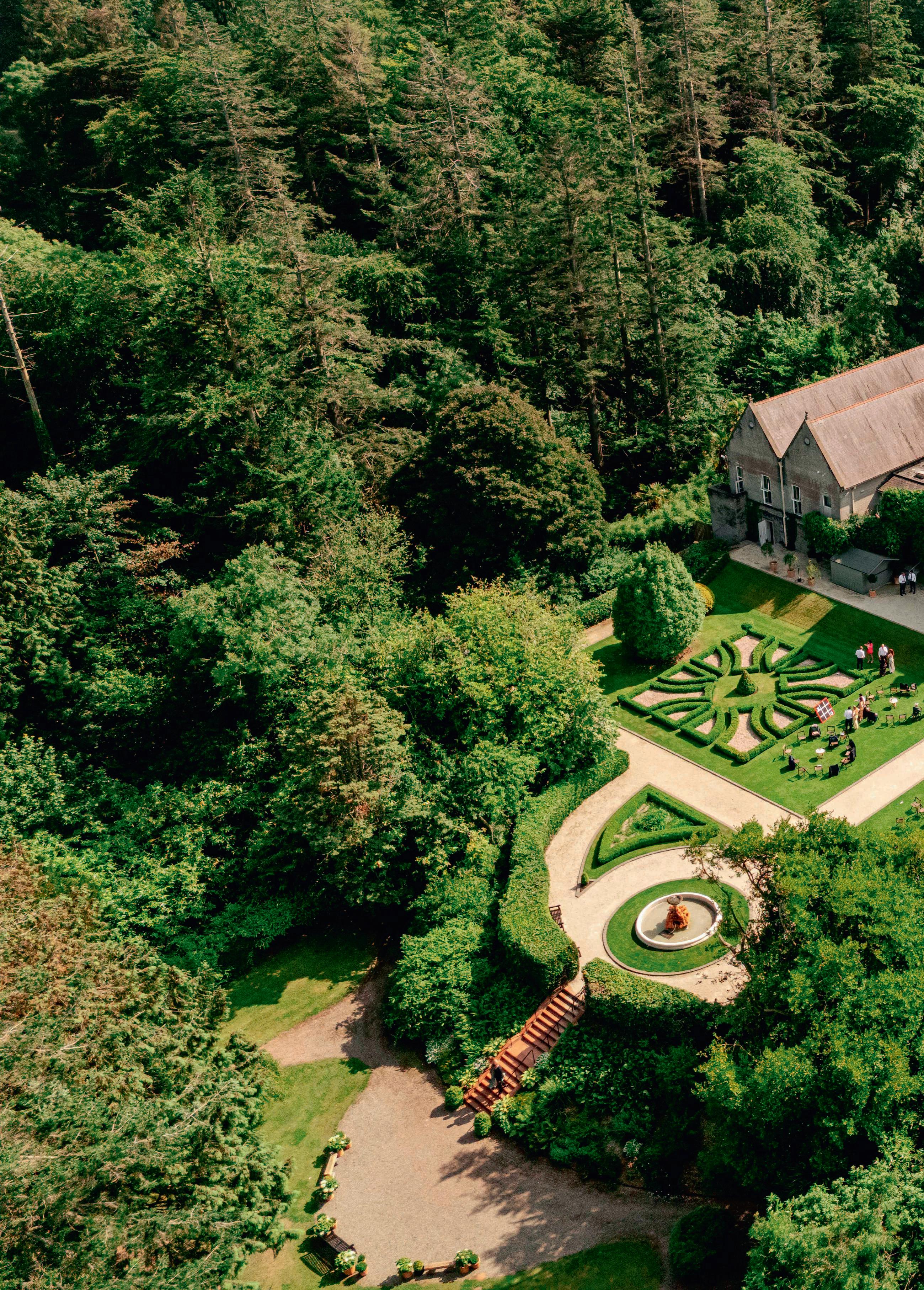
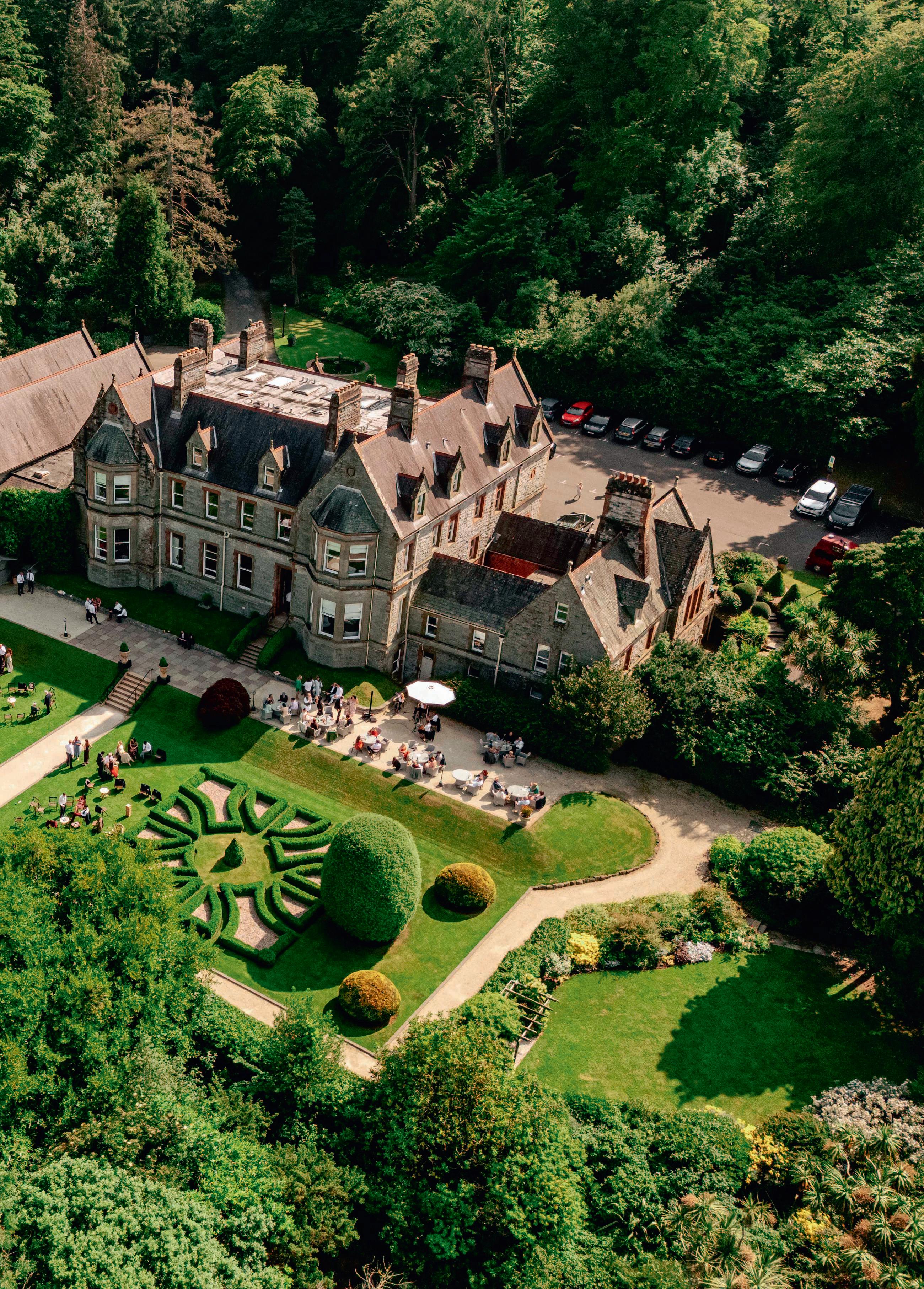
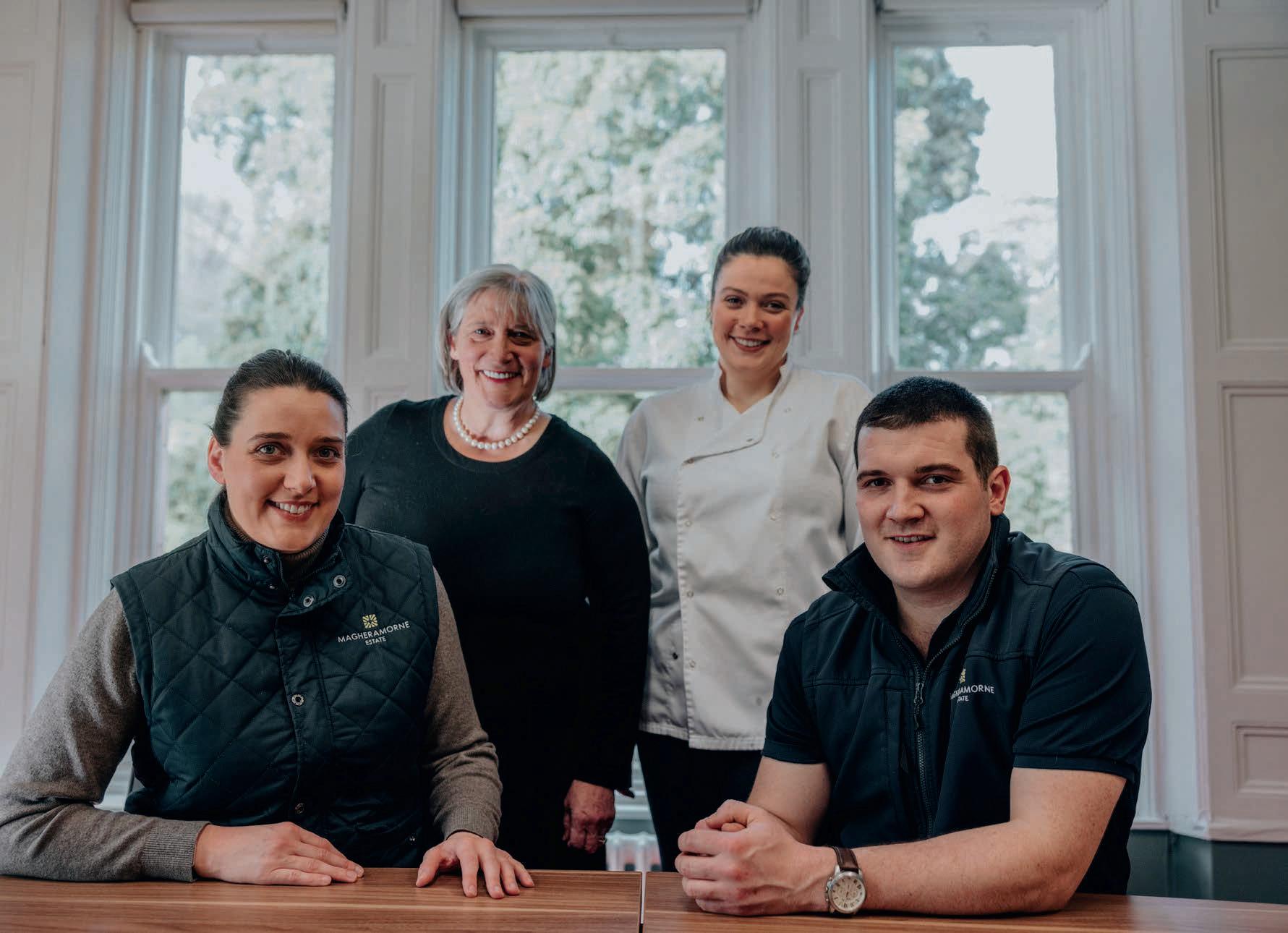
launches or customer events here, utilising the stunning setting to “wow” their clients.
“We realised businesses didn’t just need a venue,” says Sara, head of guest experience at Magheramorne.
“Our clients are discerning, with many of them coming from large global organisations, and we recognise that we have to compete with the best hospitality experiences in the world. ”
Recognising demand from adults seeking festive experiences of their own, in 2025 the estate launched Under the Mistletoe, an adult Christmas experience blending the Christmas trail with cocktails, dining, overnight stays and entertainment in a way that was new to Northern Ireland.
It is this ability to identify opportunities and respond creatively that continues to drive the business forward.
In 2026, the estate held the inaugural Magheramorne Literary Festival, welcoming acclaimed writers, broadcasters and political figures for a weekend of intimate conversations and cultural discussion. Hosted across the
manor house and grounds and curated by festival director Stephen Walker (former political correspondent for the BBC), the event drew audiences from across the UK and Ireland. The event is due to return in March 2027 for its second year, supported by corporate partners who share the estate’s vision for the area and the arts in Northern Ireland, including headline sponsor Larne Port.
Rather than operating as a traditional wedding venue or hotel, Magheramorne has evolved into something far more flexible: a private and exclusive estate that continually reinvents how people gather, celebrate and connect. That has become particularly important in the corporate world.
As businesses increasingly seek meaningful experiences over standard conference facilities, Magheramorne Estate has carved out a niche offering fully private away days, retreats and client events that feel worlds away but are still only 30 minutes from Belfast.
With its extensive grounds, the estate gives teams space to step outside the pressures of daily working life. But it is the attention to detail behind the experience that has helped attract a growing corporate audience.
One company may arrive for a leadership retreat featuring strategy sessions in the Drawing Room, fireside drinks in the Library Bar and fine dining in the Conservatory prepared by the in-house Jane’s Kitchen team. Another may spend the afternoon competing in estate-wide scavenger hunts, taking part in traditional Irish bread-making workshops, or gathering around outdoor firepits for informal conversations after a day of meetings. Others host product
“They needed somewhere people could think differently, connect properly and actually enjoy spending time together, with an expert team ready to make everything happen. Our clients are discerning, with many of them coming from large global organisations, and we recognise that we have to compete with the best hospitality experiences in the world. Our role is to take the pressure off clients and deliver events that feel seamless, warm and first-class.”
Whatever the event, at Magheramorne the focus has remained on creating experiences that feel personal, memorable and rooted in place, and that philosophy extends beyond the estate gates.
From creating employment in the area to utilising local suppliers and supporting charitable causes, Magheramorne Estate has increasingly become a platform for wider community engagement. Partnerships with charities, collaborations with local businesses and support for Northern Ireland’s homegrown talent all form part of the estate’s broader vision.
“There’s a responsibility that comes with operating somewhere like this,” says Jane. “We want the estate to contribute something positive, not just commercially, but culturally and socially too.”
Six years ago, reinvention was never part of the Allens’ original business plan; it was a response to circumstance and uncertainty. But their determination to keep moving forward has resulted in a business and a team that are primed to evolve, reacting to changing expectations, economic uncertainty and shifting consumer habits.
“That’s what continues to drive us,” says Jane, “We’re always thinking about what comes next.”
Perhaps that is why the phrase “necessity is the mother of invention” feels particularly poignant. At Magheramorne Estate, invention runs in the family.
Northern Ireland: The Gateway the World Has Been Waiting For
Dual market access isn’t a policy footnote – it’s the most significant commercial opportunity this island has seen in a generation. The question is whether we’re bold enough to seize it.
Let me be direct with you. I’ve spent over a decade moving goods - more than a million parcels a year for over 70 businesses - and I’ve watched post-Brexit Northern Ireland transform from a logistical headache into something nobody in Westminster or Brussels fully anticipated: an unrivalled competitive advantage.
We sit, right now, in the most uniquely positioned economic zone in the world. The hard part isn’t recognising that. The hard part is doing something about it.
Dual market access - Northern Ireland’s ability to trade freely within both the UK internal market and the EU single market for goods – is the direct product of the Windsor Framework. Whatever your politics on how we got here, the commercial reality is the same. A business in Belfast, Banbridge, or Kilkeel can despatch to Glasgow this morning and ship a pallet to Berlin this afternoon, with no tariffs in either direction. No other jurisdiction in the world can say that.
“Northern Ireland isn’t caught between two markets. We are the bridge between them - and every bridge that gets built generates value for the people who understand how to use it.” Stephen Henderson, CEO - SJ Henderson Fulfilment.
I’ve been calling this the Hong Kong of Europe for a few years, and I’ll stand by that analogy. Hong Kong became a global logistics hub not because it had the biggest port, but because it occupied a uniquely strategic position - a gateway between mainland China and the rest of the world. Northern Ireland holds an equivalent position today. We share a land border with the Republic of Ireland, giving free movement of goods onto the

European continent. We have unrestricted access to Great Britain. We sit at the edge of western Europe, with the Americas just over the water. The trade routes are here. What’s missing is the ambition to capitalise on them.
For local businesses, the opportunity is immediate. If you’re manufacturing or fulfilling here, you can serve both markets from a single base - a proposition no GB or EU competitor can match without dual operations. The cost, compliance, and speed-to-market advantages are real.
For international businesses, the message is even more compelling. The removal of the EU’s €150 de minimis e-commerce threshold is reshaping global supply chains right now. Brands shipping directto-consumer from Asia or North America into EU markets are facing a reckoning - and Northern Ireland, with its regulatory access, skilled workforce, competitive property costs, and world-class support through Invest NI and InterTradeIreland, is positioned to absorb that demand. Not just as a warehouse, but as an active, valueadding node in the global supply chain.
But none of this happens automatically. Policy doesn’t build warehouses. Trade
NI’S DUAL MARKET REACH
450m EU consumers + 67m UK consumers, served from a single NI base
KEY 2026 SHIFT
Removal of the EU’s €150 de minimis threshold is reshaping global e-commerce supply chains
frameworks don’t hire staff. That work falls to us – the business community of Northern Ireland. We must build the infrastructure, develop the talent pipelines, invest in the technology, and make the case to the world that this small patch of land is the most strategically important location for goods movement in the Northern hemisphere.
The decisions we make in the next five to ten years will determine whether Northern Ireland realises its potential as Europe’s industrial gateway, or whether we look back in 20 years and wonder what might have been. I know which side of that story I intend to be on. I hope you’ll join me.
ABOUT THE AUTHOR
Stephen Henderson is the founder and CEO of SJ Henderson Fulfilment, based in Kilkeel, Co. Down. The company moves over one million products annually for 70+ businesses across GB, Ireland, and the EU. A CITI Young Entrepreneur of the Year (UK) and IoD Young Director of the Year (NI), Stephen hosts the Freedom to Grow podcast, covering fulfilment, logistics, trade, and e-commerce growth strategy.
THE WINDSOR FRAMEWORK
NI remains in both the UK internal market and the EU single market for goods
THE OPPORTUNITY
NI as the industrial processing hub for goods moving between GB, EU, Ireland and the Americas
Stephen Henderson | CEO, SJ Henderson Fulfilment Host, Freedom to Grow Podcast.

Innovation Excellence
Clodagh Glasgow is a Belfast manufacturing site lead at Stryker, a global leader in medical technologies dedicated to delivering innovative products and services in med-surg, neurotechnology and orthopaedics that help improve patient and healthcare outcomes.
Since joining Stryker in 2003, Clodagh has developed extensive expertise in manufacturing excellence and MedTech process improvement. Working alongside Andrew Nollar, senior director of emergency care and commercial leader of Stryker’s HeartSine business, who has been with Stryker for 18 years, Clodagh and the Stryker team in Belfast have a particular interest in the advancement of lean principles and methodologies.
Clodagh recently spoke with us about the role of Stryker’s Belfast site as part of the company’s global operations, and the opportunities available at Stryker to those seeking a career in MedTech.
HOW HAS STRYKER’S BELFAST SITE EVOLVED?
The history of Stryker’s Belfast site dates to the 1960s, when Professor John Anderson began developing the world’s first mobile defibrillator at Belfast’s Royal Victoria Hospital. Working in collaboration with American Optical, he subsequently helped create the world’s first portable, battery-operated defibrillator. Weighing just 20kg (44lbs), it was less than half the weight of earlier models and marked a breakthrough in emergency cardiac care.
In 1998, Professor Anderson founded HeartSine in Belfast with the aim of making portable defibrillators accessible to non-medical users. The company launched its first automated external defibrillator (AED) in 2001 and went on to become the UK’s only AED manufacturer. Since then, HeartSine has expanded globally, supplying devices to more than 65 countries. HeartSine was acquired by Physio-Control in 2015, which subsequently became part of Stryker in 2016.
Today, Stryker’s Belfast site is the centre of HeartSine AED design and manufacturing, where it continues its long-standing legacy of innovation in cardiac care.
HOW DOES THE BELFAST SITE CONTRIBUTE TO STRYKER’S GLOBAL OPERATIONS?
Stryker has six manufacturing facilities and three innovation centres across the island of Ireland, with sites in Cork and Limerick in addition to our facility in Belfast. An example of Stryker’s innovation focus in Ireland is the AMagine Institute in Anngrove, County Cork, a global centre of excellence for additive manufacturing, where teams are leading the way in the use of AI, robotics, digital twin technology and other advanced innovations to shape the future of MedTech manufacturing.
The Belfast site is the global home of Stryker’s HeartSine portfolio within the company’s Medical Division’s Emergency Care business and plays a critical role in contributing to ongoing product innovation and operational excellence. Teams design, develop and manufacture AEDs, Pad-Paks and training devices which are used in cardiac emergencies around the world. These products are designed to deliver immediate, life-saving care during sudden cardiac arrest, helping to improve survival outcomes in both public and professional healthcare settings.
HOW DOES STRYKER FOSTER A CULTURE OF INNOVATION AMONG ITS EMPLOYEES?
Innovation is core to Stryker. Stryker fosters it by attracting and developing top talent while empowering employees to improve how they work. Continuous improvement, problemsolving, adoption of new technologies and collaboration help us keep up with a fast-changing healthcare environment and deliver for our customers.
Leaders support employee growth through coaching, while apprenticeships, graduate programmes and leadership initiatives help build a skilled and motivated workforce focused on making healthcare better.

WHY IS LEARNING AND DEVELOPMENT AT THE CENTRE OF STRYKER’S CULTURE?
Learning and development are core to how we operate at Stryker. Our ability to innovate, grow and deliver for customers depends on how we develop our people and ensure they thrive. Rather than treating learning as a standalone activity, Stryker embeds it into the everyday experience of work, making development a continuous and shared responsibility between employees and their leaders.
We support this through structured programmes focused on digital transformation, sustainability and leadership agility which help our teams adapt to industry changes. Employees also have access to tools such as online learning, alongside ongoing coaching and feedback. This creates a culture of continuous learning that supports both individual careers and long-term organisational performance.
WHAT TYPES OF ROLES ARE CURRENTLY IN DEMAND AT THE BELFAST SITE?
At Stryker’s Belfast site, we are currently recruiting across operations leadership and engineering, reflecting continued growth and a focus on manufacturing excellence. Some of the key roles that we are looking to fill include an operations supervisor, a specialist in production planning, test technicians and production operators.
WHAT SKILLS OR QUALITIES DOES STRYKER LOOK FOR IN POTENTIAL CANDIDATES?
At Stryker, there is no single profile or fixed set of skills that defines a successful candidate. We very much value diversity in skills, backgrounds and education, recognising that this variety drives innovation, stronger performance and better outcomes.
That said, there are key qualities that help individuals succeed and grow within Stryker. These include a positive and proactive attitude, strong problem-solving and analytical skills, and a quality-first mindset. The ability to collaborate effectively and work as part of a team is also essential, along with being comfortable performing in a high-performance environment where accountability and delivery matter.
Ultimately, Stryker looks for people who take ownership of their work, enjoy working with others and are motivated to contribute to continuous improvement and shared success.
HOW DOES STRYKER PARTNER WITH LOCAL ACADEMIC INSTITUTIONS TO BUILD TALENT PIPELINES?
Stryker maintains strong, long-standing relationships with local universities and hospitals, which play an important role in talent development, talent attraction and innovation.
Academic partnerships are a key source of future capability for Stryker, giving the organisation access to highpotential graduate and postgraduate enginneers and scientists. Through programmes such as co-op placements and internships, students gain hands-
on industry experience, while Stryker benefits from fresh perspectives and emerging talent. These relationships, supported by leading universities and research centres, have been instrumental in Stryker’s continued growth and innovation on the island of Ireland and around the globe. Many participants have gone on to build long-term careers with Stryker upon graduation, strengthening the connection between education, industry and future workforce development. Anyone interested in exploring career opportunities with Stryker Belfast can find details of all current vacancies on
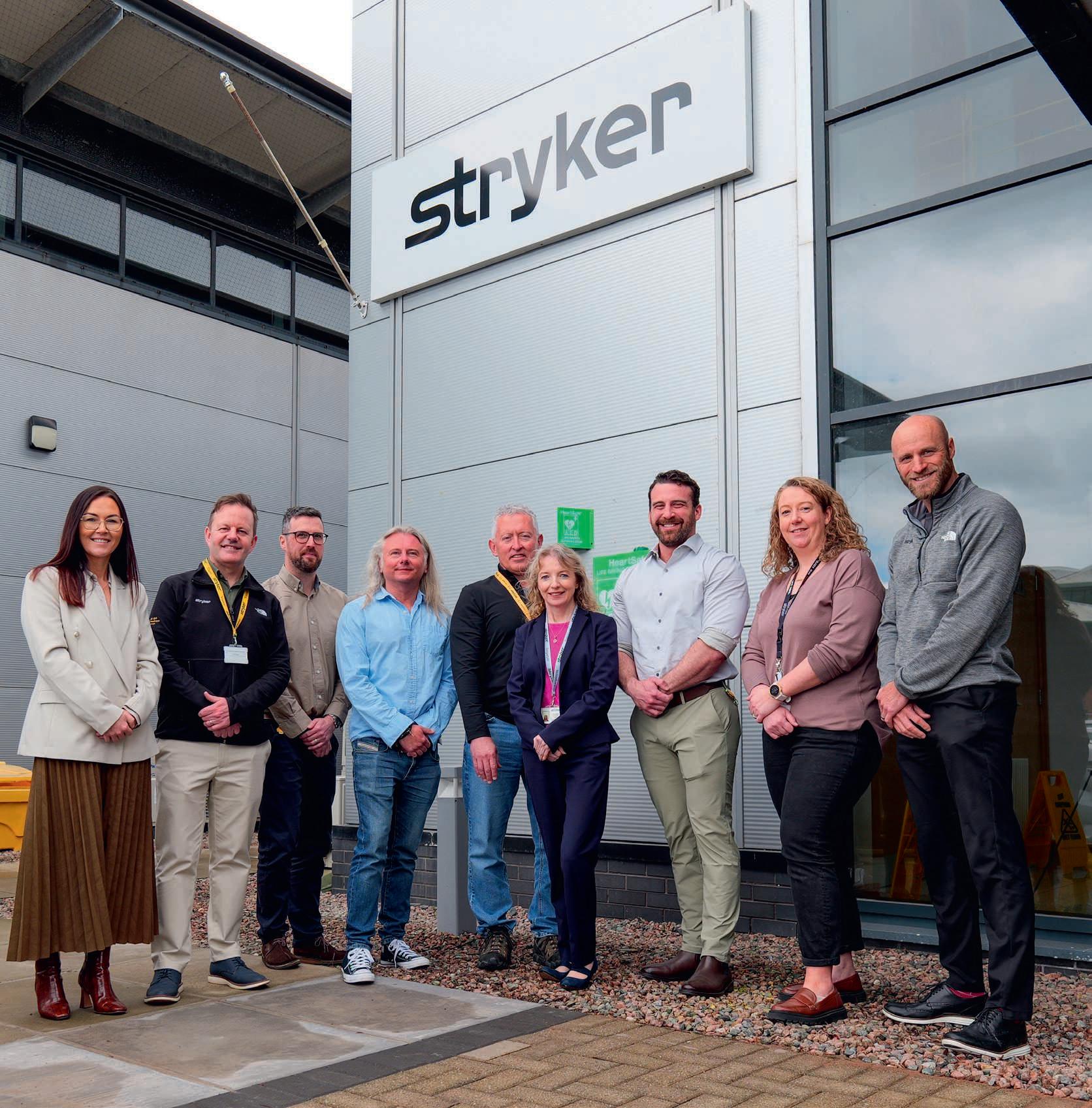
“The history of Stryker’s Belfast site dates to the 1960s, when Professor John Anderson began developing the world’s first mobile defibrillator at Belfast’s Royal Victoria Hospital.”
Built in Northern IrelandSupporting Airports Worldwide
From its headquarters in Dungannon, County Tyrone, Adapt GSE is supplying refurbished and reconditioned airport equipment to operators across global markets.
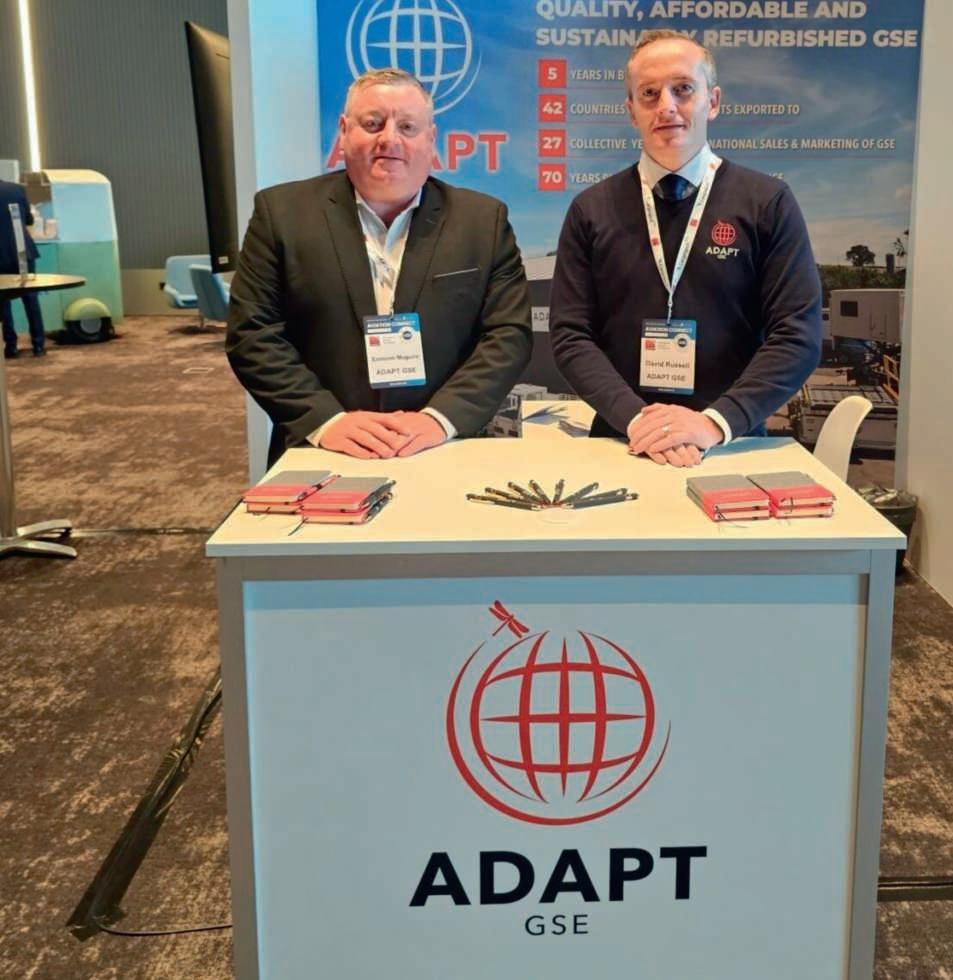
Established during one of the most difficult periods in the aviation industry’s recent history, the company was founded to provide practical, dependable and cost-effective solutions at a time when airports and ground handling operators were reassessing operational priorities and long-term fleet investment.
Since then, Adapt GSE has expanded steadily, supplying equipment to customers in more than 46 countries, all under the leadership of David Russell and Eamonn Maguire.
Built upon extensive experience within engineering and aviation ground support services, the company has developed a reputation for quality refurbishment work, technical expertise and customer-focused project delivery. Long-standing customer relationships and an ability to tailor projects around operational requirements have remained central to the company’s continued growth.
Speaking about the origins of the business, Co-Founder and Director, David Russell explained: “The name was chosen to symbolise the GSE industry’s need to ‘adapt’ to change during the pandemic, along with the wider aviation sector.”
Operating from Northern Ireland has also enabled Adapt GSE to benefit from the region’s strong engineering expertise and long-established manufacturing heritage. This has allowed the company to build a highly skilled team capable of delivering refurbishment work across a broad range of Aviation GSE equipment categories.
The business specialises in the
refurbishment and supply of equipment including baggage tractors, belt loaders, pushback tractors, catering vehicles, PRM Ambulifts and deicers and baggage tractors, amongst others.
Every project is approached with a strong emphasis on operational reliability and long-term performance, recognising the importance of minimising downtime within demanding airport environments.
As operators continue looking for practical alternatives to full fleet replacement, refurbishment programmes have become an increasingly attractive option throughout the industry. By extending the operational lifespan of existing equipment with sustainable refurbishment practices and protocols, Adapt GSE can help reduce procurement costs, shorten lead times and support more sustainable long-term fleet management strategies.
Fellow Co-Founder and Director, Eamonn Maguire added: “Some customers want everything stripped and refurbished which is an extensive refurbishment, whilst others want a more standard service and refurbishment so they can get their operation up and running quickly, whilst guaranteeing functionality.
“This flexibility has become increasingly important as airports continue balancing efficiency, sustainability objectives and changing passenger demand. Adapt GSE works closely with operators to provide solutions tailored to individual operational requirements, whether that involves complete rebuilds, structural upgrades or cosmetic refurbishment work.”
Environmental sustainability has also become an increasingly important area of focus throughout the aviation support sector. As airports and handling operators continue working towards lower-emission operations, demand for refurbished and upgraded equipment has continued to grow.
In response, Adapt GSE has expanded investment into electric and hybrid refurbishment projects as part of its long-term development plans. The company believes the transition towards more sustainable airside operations will continue creating opportunities for refurbishment and modernisation services in the years ahead.
Maguire adds, “We have already commenced this journey, and we see 2026 as a pivotal year for our business in this arena.”
Alongside sustainability, safety and compliance remain key priorities across airside operations. As airports continue introducing enhanced operational
standards and evolving safety procedures, maintaining modern, reliable and compliant equipment has become increasingly important for operators worldwide.
Director David Russell believes continued innovation and operational improvements will remain essential throughout the sector as airside environments continue evolving. “All safety enhancements and innovation must always be welcomed by all parties on the ramp and airside.”
Like many engineering-focused industries, aviation ground support also faces ongoing challenges around skills development and workforce recruitment. Adapt GSE believes apprenticeship programmes and practical technical training will play an important role in developing the next generation of engineers entering the sector.
Russell adds, “I think there needs to be an emphasis put on the likes of apprenticeships that will help upskill the technicians and help fill the evergreatening void of skilled personnel.”
The company believes Northern Ireland’s strong industrial background provides an excellent foundation for supporting future engineering talent, particularly through hands-on training opportunities and longterm technical development initiatives.
Recent expansion into larger operational facilities in County Tyrone reflects Adapt GSE’s continued ambitions for international growth.
Increasing demand from overseas customers has created new opportunities across multiple markets, while further investment is planned across engineering capability, refurbishment facilities and operational infrastructure. Adapt point to sales across 48 countries as testament to their ongoing successes and Maguire added, “We are very lucky to have a highly skilled engineering team of dedicated and focused personnel coming from one of Europe’s leading manufacturing hubs.”
While the company now supports customers internationally, its foundations remain firmly rooted in Northern Ireland. Adapt GSE continues to demonstrate how regional engineering expertise and customer-focused service can compete successfully within the global aviation support industry.
With airports and ground handlers continuing to seek sustainable, reliable and value for money fleet solutions, the company believes refurbishment and equipment modernisation will remain an increasingly important part of the aviation sector’s future.









Delivering a Digitally Connected Future






Since connecting its first broadband customer in 2019 Fibrus has been on a steady route to success, recognition and adoption across Northern Ireland, playing a central role in transforming digital connectivity across rural towns and communities.
Following its completion of Project Stratum, a £200 million Department for the Economy-backed initiative that delivered full fibre broadband to more than 81,000 premises across Northern Ireland, Fibrus was awarded Project Gigabit NI, a £34.6 million UK Government contract funded through the Department for Science, Innovation and Technology (DSIT) and delivered by the Department of Economy.
The programme will bring full fibre broadband to 9,333 of the most rural and hard-to-reach homes and businesses across Northern Ireland, further extending ultrafast, reliable connectivity to areas that have previously been underserved.
The expertise developed through Stratum, particularly by Fibrus and its build partner Viberoptix, is now being applied further afield, including in Cumbria under the UK Government’s Project Gigabit programme. Despite challenging terrain and planning restrictions, Fibrus has successfully met its build targets, drawing on years of experience delivering infrastructure in rural and complex environments.
Together, these programmes, delivered through Hyperfast Networks, Fibrus’ wholesale full fibre network platform, have significantly accelerated the region’s digital infrastructure rollout putting Northern Ireland as the most connected nation in the UK, with coverage now reaching approximately 96%.
Fibrus’ ambition is reflected in its growing customer base, having recently celebrated reaching 150,000 customers across Northern Ireland and Cumbria. By placing customers and communities at the heart of its growth strategy, Fibrus sees these milestones as more than infrastructure delivery; it reinforces its ambition to reshape how rural communities live, work and grow.
Fibrus commissioned a futurist to examine how rural communities could evolve in a rapidly digitalising world.
The findings from its “Future of Rural” report, explored how improved connectivity and infrastructure could unlock longterm economic and social growth, positioning rural areas as “engines of growth” rather than regions in decline.
Building on that research, Fibrus launched its Remote Working Index, identifying the top 10 places to live for remote workers across Northern Ireland and Cumbria.
The index evaluates locations using measures including broadband speed, average house prices, access to coworking spaces, proximity to green spaces, transport connectivity and links to urban centres, providing a detailed picture of the best balance of connectivity, affordability and quality of life.
The Northwest town of Limavady emerged as the highest rank overall, reflecting the growing importance of

strong digital infrastructure in shaping where people choose to live and work.
As a business that champions the flexibility of remote working, Linda McMillan, chief people officer at Fibrus Group, said: “Last year we commissioned a futurist to look at the potential of rural communities as engines for growth, and remote working was just one of the pillars of growth over the next 25 years.”
For Fibrus CEO Dominic Kearns, the company’s mission has remained consistent on addressing long-standing gaps in rural connectivity, “When Fibrus was founded, our sole purpose was to bring communities, homes and businesses a broadband service fit for everyday demands. For years, rural families and businesses across Northern Ireland were promised better and we were the change makers who turned that promise into reality.”
To date, Fibrus has invested over £1 million into communities across NI and Cumbria with £590,000 specifically directed towards organisations in Northern Ireland. This funding has supported grassroots organisations, sports clubs and local charities through programmes including the Fibrus Community Fund, Play it Forward and its chosen Charity Partner initiative.
Managing Director and Chief Financial Officer Colin Hutchinson said the company’s community focus is central to its long-term purpose: “From day one we’ve believed our role goes beyond delivering full fibre broadband; it’s about strengthening the communities we serve.”
A key element of this work is the Fibrus Community Fund, delivered in partnership with Community Foundation Northern Ireland. The fund focuses on tackling digital poverty and promoting inclusion in rural communities donating a total of
“Together, these programmes, delivered through Hyperfast Networks, Fibrus’ wholesale full fibre network platform, have significantly accelerated the region’s digital infrastructure rollout putting Northern Ireland as the most connected nation in the UK.”
£230,000 to grassroots organisations which include North Belfast-based Community Football Company, which recently received funding for extra digital resources for its free Play & Learn programme – a wellness initiative combining soccer and a homework club to promote digital literacy among participants.
Alongside this, Fibrus’ Play it Forward fund, launched in 2023, has provided £150,000 to youth sports clubs across the region. The initiative supports equipment, kits and facility improvements to widen access to sport and physical activity. One beneficiary is Craigavon-based charity Ski Ability NI, which provides ski instruction for children

with additional needs, with funding directly benefiting 50 members.
The wider economic impact of improved connectivity has also been recognised at government level. During a recent visit to Fibrus HQ, UK Telecoms Minister Liz Lloyd said: “Our investment in faster broadband is improving lives and driving economic growth in rural communities across Northern Ireland, making it easier for them to run a business, access public services or simply stay connected with the people who matter most.
“It was great to see the work Fibrus is doing to deliver our Project Gigabit rollout across Northern Ireland, ensuring more rural homes, local businesses and community organisations can benefit from fast reliable connections.”
With major connectivity contracts secured across Northern Ireland and Cumbria, Fibrus continues to expand while investing in resilient communities. Its focus remains on enabling a digitally connected future where geography is no barrier to opportunity, helping position rural areas as centres for economic growth.
DANSKE SMALL BUSINESS DIGITAL ACCOUNT AWARDED MONEYFACTS FIVE-STAR RATING
Danske Bank’s Small Business Digital Account has received a Five-Star Rating from independent financial information provider Moneyfacts.
The rating follows an independent assessment of business current accounts across the UK, comparing fees, features and overall value.
Ryan Mawhinney, Head of Small Business at Danske Bank, said: “Small businesses are at the very heart of the Northern Irish economy. We’re proud to support business customers of all shapes and sizes across Northern Ireland, and we’re committed to supporting smaller firms and start-ups with simple, transparent and flexible banking solutions. It’s fantastic to see our Small Business Digital Account being recognised with a Moneyfacts Five-Star Rating, reflecting our ongoing investment in improving our digital services and commitment to making everyday banking easier for our customers.”
Lee Tillcock, Managing Editor of Business Moneyfacts, added: “The Danske Bank Small Business Digital Account is highly deserving of its Moneyfacts Five-Star Rating. It has a transparent fee structure and provides essential banking features, ideal for smaller firms or startups that need to keep a tight rein on cash flow. Its digital first design makes it a great
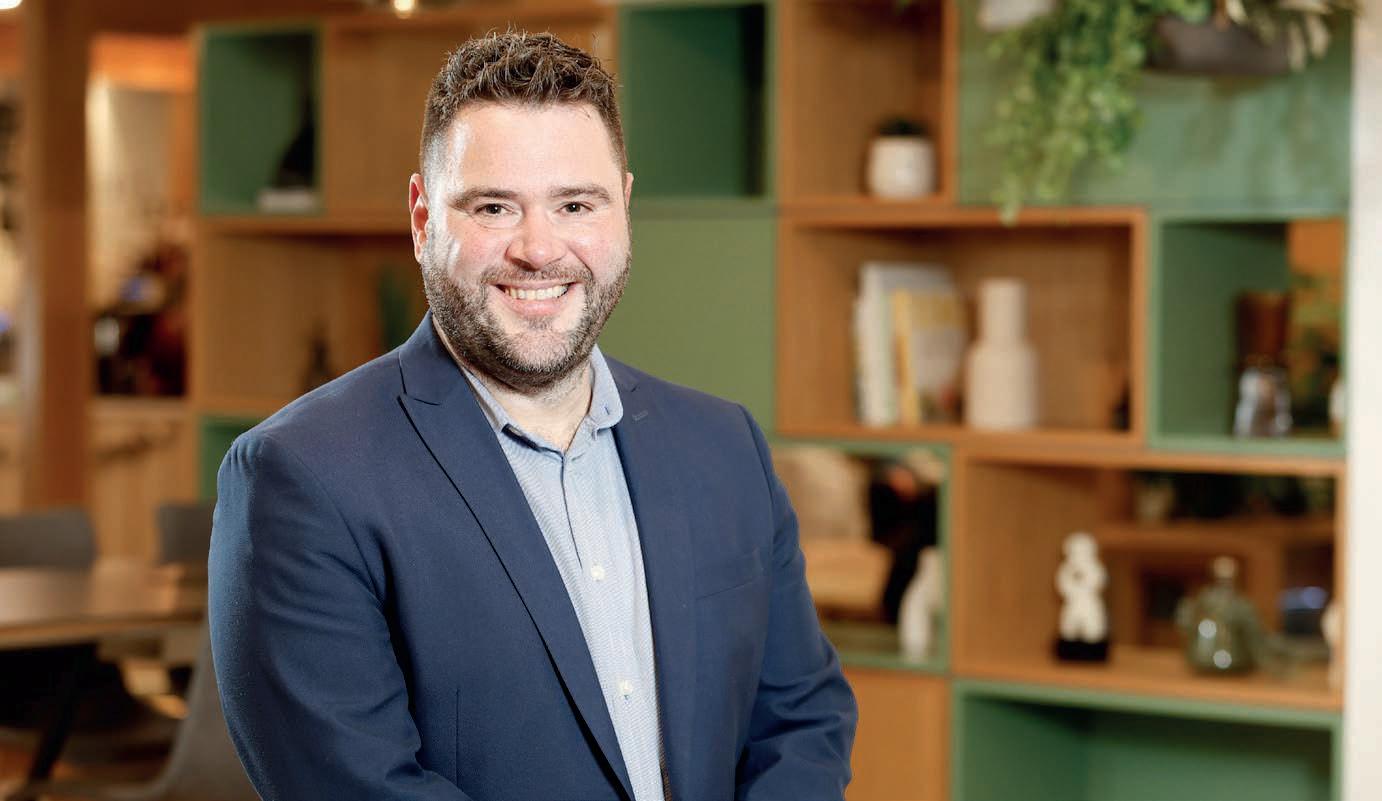
choice for those banking on the go, which can help users save time.
“Vital to the success of businesses, the challenges of the past year have seen the continuing importance of products in the business current account sector further emphasised. The impressive range of features offered to meet the needs of modern-day businesses means that there are plenty of options to consider when
choosing a business current account –something that the sector and regulator are clearly keen to promote. The annual Moneyfacts Business Current Account Star Ratings provide businesses with valuable insight into the quality of the features on offer, before assessing the individual costs.”
Danske Bank’s Small Business Digital Account is aimed at businesses that manage most of their banking online.

Columnist
Laura Busby, Director of Growth and ESG, Identity Travel
Every Journey Supports Something Bigger: We Know Because Ours Does Too
In April 2026, Beyond Business Travel became Identity Travel. The rebrand followed the acquisition of the business in 2024 by Identity Group, a global events company based on the UK mainland. The change in name reflects that change in ownership. What it doesn’t reflect is any change to the Belfast team, the client relationships, or the way the business operates day to day. The same people are doing the same work, with access to more resources and a wider network behind them than ever before.
I joined six months ago. I’ve worked across several multinational travel management companies, so the industry wasn’t new to me. Belfast was. I spent the first few months mostly asking questions and trying not to assume I already knew the answers.
Ballymena-based Shauna Burns has been running this business for nearly a decade, and before that had a career in accountancy. I knew I was in safe hands working with a team that has a deep understanding of the Northern Ireland market and how local businesses operate domestically and internationally.
THE DIFFERENCE BETWEEN BOOKING TRAVEL AND MANAGING IT
What I noticed is that great service and technology, coupled with savings opportunities and data-driven insight, matters to local businesses. Subject matter expertise through knowledgeable, effective relationships is central to what we do.
Most organisations know what they spend and where they spend it, though even this is sometimes fragmented. What they don’t know is how or why. That is where a good travel management company adds real value.
There are more than 40 variables that shape what and how an organisation actually spends on travel. Many
businesses aren’t actively managing these or the leverage they provide, often pulling only a few of them. Around 20% of spend typically sits outside policy, and unused tickets can quietly consume up to 11% of annual budget.
Steve Banks, our CEO, has spent 37 years watching the same pattern repeat across organisations of every size: “Everyone can book travel. Far fewer know how to manage it effectively due to the different stakeholders involved. A travel management company brings this together because it understands how people actually behave with regards to business travel.”
TRAVEL FROM NORTHERN IRELAND HAS ITS OWN LOGIC
The NI dimension matters here more than it might elsewhere. Dublin and Shannon airports have US Customs and Border Protection facilities on site; you can clear American immigration before you board. That changes the logic of how a US trip can get built. Ferry crossings are another one. They are an integral travel solution from Northern Ireland, and it’s important these can be booked alongside flights and hotels, on or offline, in a way many travel management companies still can’t manage. These aren’t selling points. They’re just what travel from here actually involves.
ICC Belfast is one of our clients. We built a travel programme around how they actually operate rather than what was easiest to configure. Something similar applies to the film and production work we do. Shoots don’t run on predictable schedules, and the requests that come in reflect that. It keeps things interesting!
We’ve been busy locally, including hosting a Sustainability Summit in Belfast in partnership with the ICC, alongside a growing programme of events bringing together business and travel industry figures. It reflects
“What I noticed is that great service and technology, coupled with savings opportunities and data-driven insight, matters to local businesses. ”
something we genuinely think is worth the time.
NOT EVERY QUESTION ABOUT TRAVEL HAS A CLEAN ANSWER
What does it actually cost when people arrive unprepared? What would your travel data tell you about how your business runs, if anyone was reading it? Who owns the return on that spend?
The rebrand from Beyond Business Travel to Identity Travel is recent. We’re still in the Scottish Provident Building opposite City Hall, still the same team, still working with the same suppliers. Joining Identity Group has changed the scale of what we can put behind a client’s travel programme.
We design better travel programmes because we know what poorly managed ones cost. Shaped by sixteen years of experience. Built to improve how travel is experienced by the people who rely on it every day.
That’s what we mean by experience changes everything.
Laura Busby is Director of Growth and ESG at Identity Travel, Belfast, and Chair of the Travel Policy Working Group for Planet Plan at the Business Travel Association.


By Blaithin Surgeoner
Blaithin Surgeoner, a Chartered Accountant with over 30 yearsexperience and Partner at Endeavour InformationSolutions,a MicrosoftSolutions Partnerbased in Belfast, that specialisesin bringing optimising customers systems with Microsoft Cloud solutions using a CloudFirst approach
Too often, accounting systems are viewed narrowly as tools to manage ledgers, process
But in today’s fast-moving landscape, growing businesses need more than just bookkeeping. They need agility in order to react to change, integration with an organisation’s other systems and processes, and intelligent management reporting. That’s where Microsoft Dynamics365 Business Central shines: a modern, cloud-based ERP solution that empowers businesses to go beyond accounting — and take control of their entire operation.
AFully Integrated Business Platform:
Designed for small and medium-sized management with operations, sales, service, inventory, and projects. Thisseamless integration eliminates data silos and manual entry, providing one source of truth across the business.
From the moment a saleslead enters the system to when an invoice is paid and stock is replenished; BusinessCentral keeps teams connected and processesstreamlined
Built-in dashboards and real-time reporting departments, allowing for proactive, not reactive decision-making.
MICROSOFT BUSINESS CENTRAL: MORE THAN JUST AN ACCOUNTING SYSTEM

Feature-Rich Capabilities for Modern Businesses: BusinessCentral comesloaded with intelligent features that extend far beyond the capabilities of traditional accounting software:
• FinancialManagement: Robust nominal ledger, multi-currency support, dimensional reporting, bank reconciliation, in one place.
• Customer RelationshipManagement: Track customer interactions, automate sales processes, manage pricing and discounts, and convert quotes to orders seamlessly
• Inventory& Supply Chain: Gain full visibility into inventory levels, suppliers, warehouses, and product movements. Automate reordering and optimise stock to reduce costs and improve delivery times.
• ProjectManagement: Monitor resources, track costs, manage time project.
• WarehouseManagement: Use bin and zone management, barcode scanning, and real-time stock updates to increase
• Manufacturing &Assembly: Plan production, manage BOMs (bills of materials), handle capacity, and track costs assemblers
• ServiceManagement: Schedule service calls, manage contracts, and provide customers with prompt, high-quality support.
Microsoft Integration: What truly sets Business Central apart is its native integration with the Microsoft 365 ecosystem. Users can generate quotes directly from Outlook, export data to Excel, and collaborate in Teams, all without switching context. It also connectsseamlessly with Power BI for advanced analytics and Power Automate for process automation.
Secure, Scalable,and Always Up to Date: Running in the cloud, BusinessCentral provides enterprise-grade security, data backups, and automatic updates — allmanaged by Microsoft. Whether your team is on-site or remote, BusinessCentral lets your team work anytime, from any location or device, and can grow and adapt to meet any changes your business needs without expensive upgrades.
Partnering for Your Success:
Microsoft Solution Partner, we don’t just implement software, we work alongside businesses to tailor BusinessCentral to their -
ing from legacy systems or scaling for new markets, we bring deep product knowledge, industry expertise, and a commitment to delivering value at every stage.
AStrategic Investment: Microsoft Business Central provides agility and intelligence to your business that not only manages the numbers, but also helps drive growth, improve service, and future-proof operations.
Summar y: why not contact us to arrange a free, no commitment consultation, by visiting: www.endeavour-is.com/business-central or calling us on 028 9031 1010 and let’s talk.
Let’s Talk
Microsoft Cloud Expertise That Drives Results
At Endeavour we help our customer s tr ansform the way they work through exper t implementation of Microsoft Cloud team, optimise processes, and dr ive measur able results So, whether you’re migr ating, moder nising, or managing your cloud environment our exper ience across the Microsoft Cloud stack, means we’re with you ever y step of the way.

across any device, with secure access to emails,






Helping customer s to dr ive smar ter interactions through connected CRM, case management, and marketing tools; enabling teams to manage leads, automate workflows, and deliver exceptional service.





Strategy Needs Space to Succeed
Why leadership teams must create time to think collectively – not just operate faster
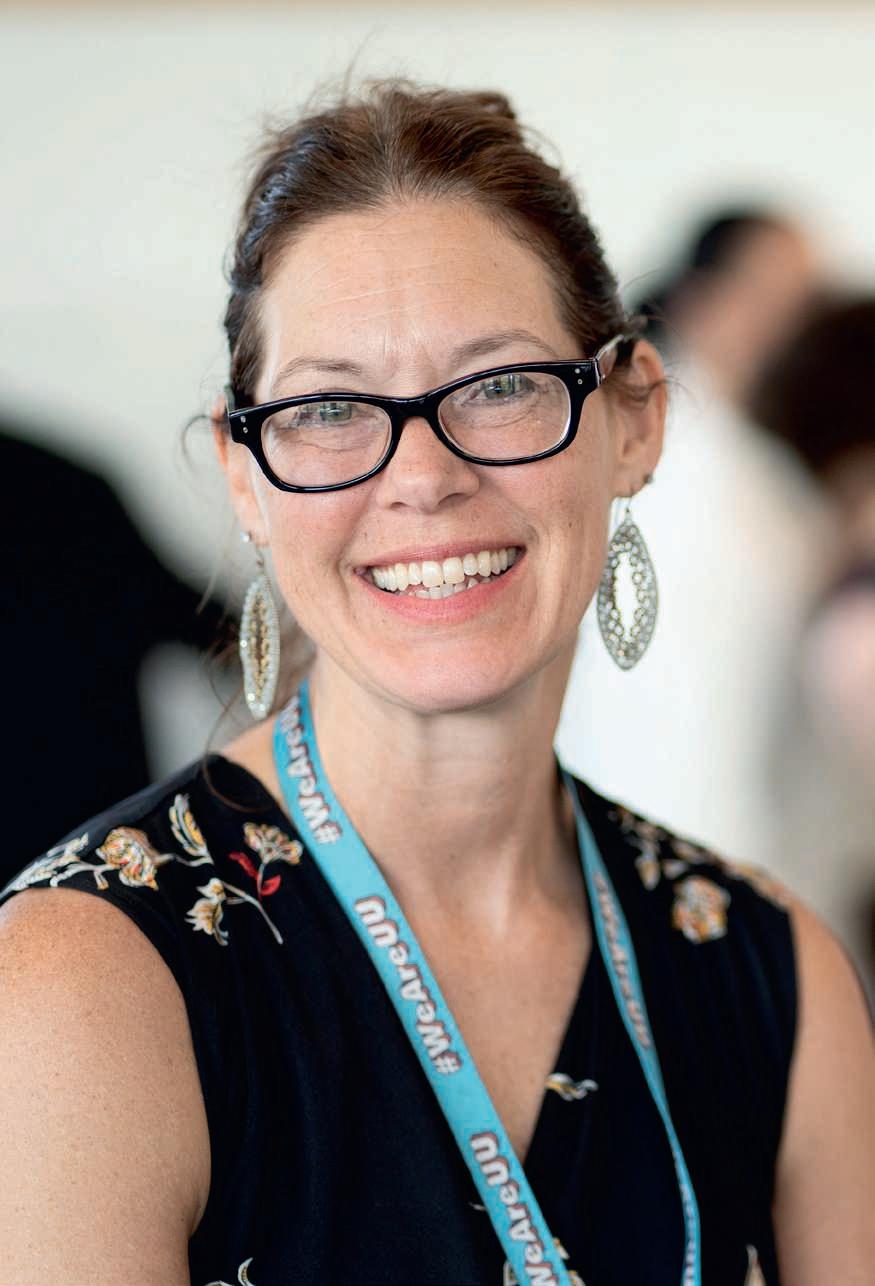
By Nancy Brown, senior lecturer in Management Development and programme director for MSc Executive Leadership, Ulster University Business School.
Most senior leaders understand the importance of strategy. The challenge is rarely ambition or intent – it is creating the time, focus and shared perspective needed to think strategically in the middle of constant operational demand. Leadership teams today are navigating rapid change, competing priorities and increasing complexity. In that environment, strategy can quickly become something that exists in presentations and planning sessions rather than in the day-to-day decisions that shape an organisation’s direction.
The pressure to operate faster often leaves little room for deeper reflection. Yet strategic thinking consistently ranks among the most important leadership capabilities in business today. In a Harvard Business Review survey of 10,000 senior leaders, 97% said being strategic was the leadership behaviour most critical to their organisation’s success.
The most effective organisations recognise that strategic thinking is not an occasional exercise reserved for annual planning cycles. It is a leadership discipline – one that requires space, challenge, alignment and collective reflection. That thinking formed the basis of a recent collaboration between Ulster University Business School and Kainos to design and deliver a bespoke three-day strategy programme for members of the Kainos senior leadership team. While tailored to Kainos’ organisational context, the experience also offered broader insights into how strategic capability can be strengthened at senior leadership level.
STRATEGY AS A COLLECTIVE LEADERSHIP PRACTICE
From the outset, the focus was not on theory for theory’s sake. Instead, the programme was built around the realities of leadership inside a fast-growing international technology business – creating an opportunity for leaders to step back from operational pressures and engage in deeper strategic conversations together.
One of the most valuable aspects of the programme was the cross-functional nature of the cohort. Leaders from across the organisation brought different perspectives, priorities and assumptions into the room. That diversity of thinking created richer discussions and challenged participants to consider not only their own area of responsibility, but the wider organisational impact of strategic decisions.
The programme combined established strategic frameworks with practical application, enabling participants to test ideas against real business challenges and opportunities facing Kainos today and in the future. This programme extended well beyond the classroom, embedding its learning directly into Kainos’ strategic planning processes. Within nine weeks of completion, participants delivered 12 internal strategy presentations, demonstrating a rapid translation of insight into organisational impact. It was a clear progression from theory to action and from action to measurable results.
Brendan Mooney, CEO of Kainos, reflected on the impact of the collaboration: “We collaborated with the faculty at Ulster University Business School to build a highly tailored three-day course
that blended academic rigour with our business context and focused on practical delivery beyond the classroom. The format accelerated learning, created a shared understanding and common vocabulary around our opportunities and challenges, and maintained a clear focus on delivery in the business after the course.”
What emerged strongly throughout the programme was the importance of shared language and collective understanding at leadership level. In many organisations, strategy can become fragmented when different teams interpret priorities in different ways and/or teams confuse strategy with planning. Deliberately creating space for leaders to engage collectively with complex issues fosters alignment, sharpens strategic clarity and supports greater consistency in making informed, well-considered decisions.
THERE IS ALSO A WIDER LESSON HERE FOR BUSINESS LEADERS
In uncertain markets, organisations often respond by accelerating activity. Yet strategy rarely improves through speed. Sometimes the most valuable thing leadership teams can do is to create structured time to pause, reflect and challenge their thinking together.
As businesses continue to navigate economic pressure, technological disruption and changing workforce expectations, strategic capability will increasingly become a differentiator. This extends beyond execution to encompass the ability to explore future possibilities, align collectively and make informed, robust choices.
Collaborations between industry and universities can play an important role in supporting that process, combining academic insight with practical organisational experience to create learning that is directly connected to business reality.
To discuss how a bespoke programme can strengthen strategic capability and leadership alignment in your organisation, contact UUBS’s Business Engagement Team at engage@ulster.ac.uk

Telefónica Tech proud to sponsor 2026 Belfast Telegraph IT Awards
The Belfast Telegraph IT Awards in partnership with Telefónica Tech will return for 2026 and take place at the MAC Belfast on Friday 13 November.


Entries will open in late summer for the eagerly anticipated awards ceremony, which has become an important fixture in the Northern Ireland IT industry since launching back in 2019.
2026 will mark Telefónica Tech’s sixth year as principal sponsor of the event, something VP of Enterprise Health Services, Ellen Dickson, says is testament to the strength of the partnership between the Belfast Telegraph and Telefónica Tech.
“As the title sponsor of the Belfast Telegraph IT Awards, Telefónica Tech is delighted to announce the date for the 2026 Awards, which will once again be a celebration of the innovation, talent and world-class digital leadership thriving right here in Northern Ireland. This is especially important now whenever exceptional companies are having to rise to the challenges created by global constraints, geopolitical turbulence and economic disruption.
“As our tech sector continues to grow and evolve, these awards provide a vital platform to recognise the individuals and organisations shaping our future and thanks to the support and partnership from the Belfast Telegraph, we have worked hard to create and grow a credible awards initiative which truly reflects the continuing growth of this important industry.
“We are excited to announce some new categories this year, reflecting how the sector continues to evolve, and welcome some new, highly credible leaders to our panel of judges. Keep an eye on the Belfast
Telegraph for more details about the new additions for 2026 and key milestones of the campaign throughout the summer.”
Previous winners at the Belfast Telegraph IT Awards in partnership with Telefónica Tech include Allstate NI, Encompass, Rapid 7 and Tom Gray who helped build Kainos, who was honoured with a lifetime achievement award at the 2025 event.
For more information on the awards, including a full list of criteria, terms and conditions, and entry guidelines, visit www.belfasttelegraph.co.uk
“We are excited to announce some new categories this year, reflecting how the sector continues to evolve, and welcome some new, highly credible leaders to our panel of judges.”
Business Editor Margaret Canning and Ellen Dickson from Telefonica Tech.
BELFAST CITY AIRPORT: CONNECTING BELFAST TO BUSINESS
Business travel is entering a defining moment as changing work patterns reshape expectations – and with it, the ability to get in front of clients, colleagues, and partners needs to be faster, simpler, and more direct than ever.
Six years after remote working became embedded in the modern workplace, expectations are shifting again as organisations reassess the balance between flexibility and in-person collaboration.
This is reflected in Forbes’ 2025 report, which indicates that nearly 80% of CEOs expect hybrid roles to transition back to full-time office-based working by 2027, signalling a strong corporate push towards physical workplace consolidation.
For Belfast City Airport, this shift strengthens its position at the heart of Northern Ireland’s connectivity, offering fast, efficient, and stress-free travel for business passengers who need to make every moment count.
“We understand that for business travellers, time matters – whether it’s for meetings, attending events, or making a same-day return journey”, says Katy Best, Chief Commercial Officer at Belfast City Airport.
“Our prime location, just five minutes from Belfast city centre, combined with the efficiency of the airport experience, means passengers can move through the terminal quickly and seamlessly, allowing them to focus on the business opportunities ahead.”
That focus on efficiency and accessibility continues to shape the airport’s wider strategy, ensuring Belfast remains strongly connected to the UK’s key commercial centres.
With direct flights to major UK and European destinations including London, Manchester and Amsterdam, Belfast City Airport offers unrivalled access for business travellers.
“We offer up to 16 daily flights to London and over 190 global connections via our airline partners, helping organisations expand, trade internationally, and attract investment,” continues Katy.
“The introduction of easyJet’s new London Southend service, operating three times weekly from October, further strengthens this network, providing greater access to the UK’s capital, ensuring businesses have more choice and flexibility in reaching key markets.”
As many organisations continue to increase office-based working, it’s no longer simply about reaching destinations, but about doing so in a way that fits around demanding, timesensitive schedules.
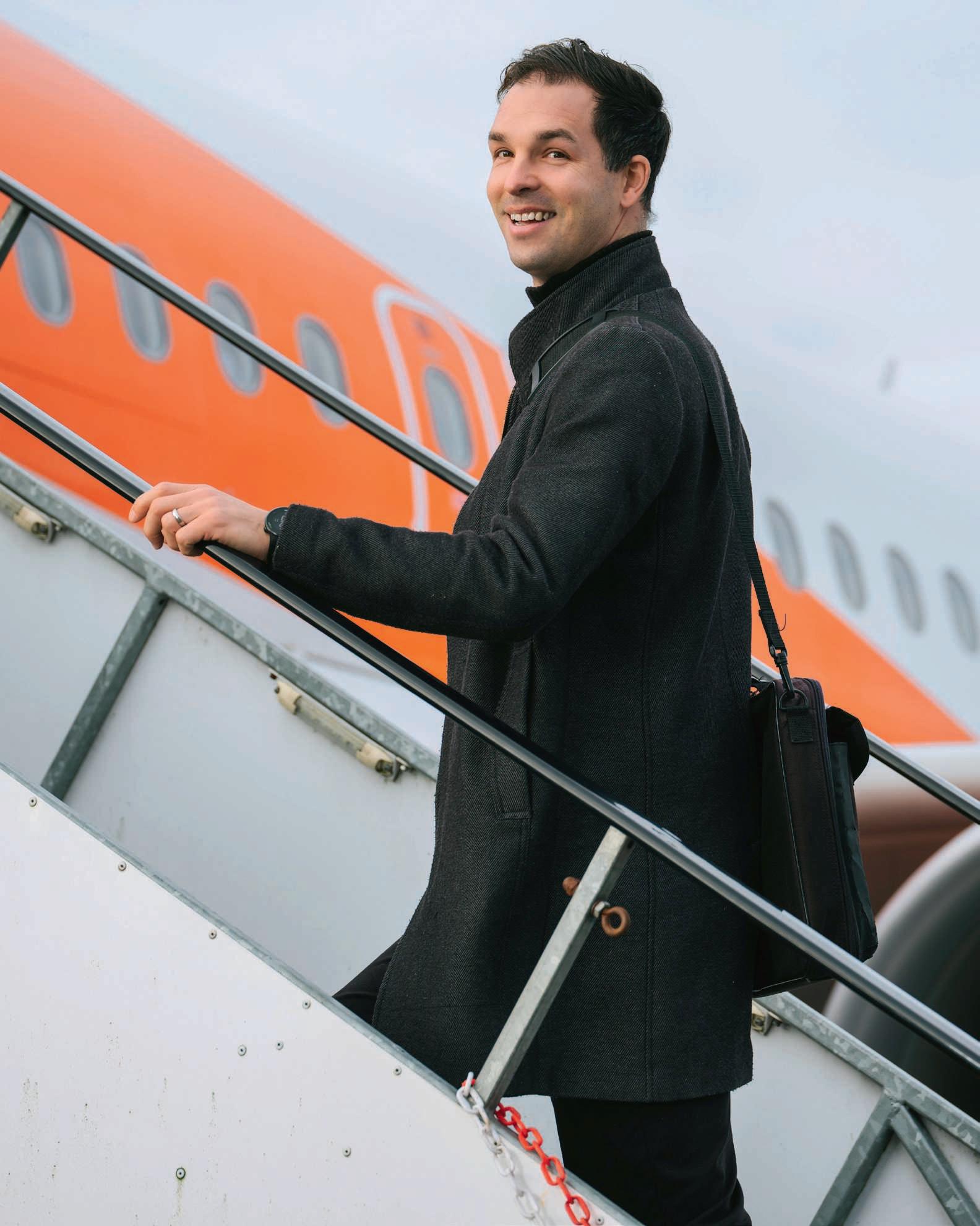
Airports that consistently deliver seamless passenger experiences will remain essential gateways for regional and international connectivity – a standard that continues to be a defining strength of Belfast City Airport.
“Belfast City Airport attracts the third highest proportion of business travellers of any airport in the UK, and it’s easy to see why”, Katy explains.
“We not only offer an extensive network, but our operations are designed around speed and simplicity, ensuring passengers can move quickly from meetings to onward business destinations with ease.”
With its prime location, excellent punctuality and one of the shortest car-
to-gate distances in Europe, coupled with an average security processing time of only six minutes, Belfast City Airport remains the airport of choice for business travellers.
As travel patterns evolve, Belfast City Airport is focused on maintaining frequent, reliable connections to key UK and European markets.
“Connectivity is ultimately about opportunity”, Katy finishes. “Our role is to ensure Northern Ireland remains connected, competitive and open for business.”
For more information about Belfast City Airport, visit belfastcityairport.com.
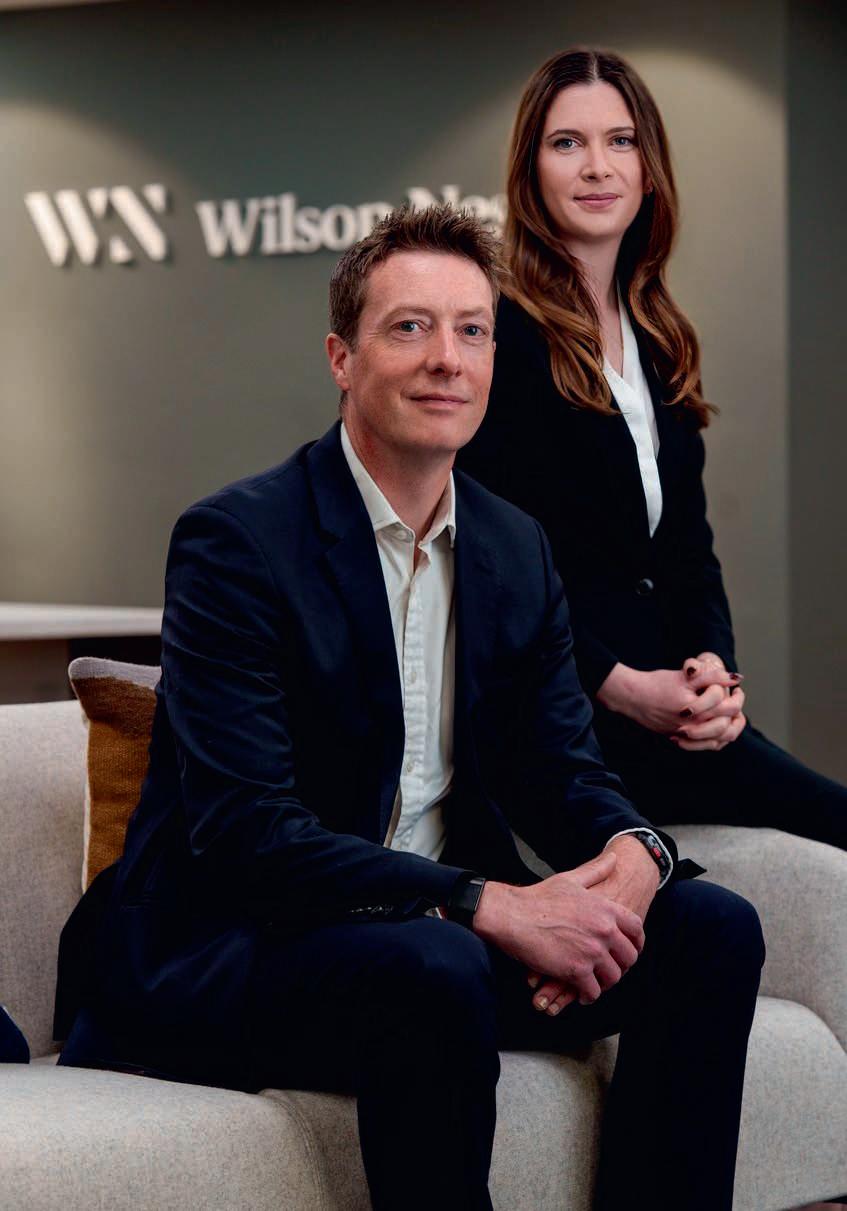
Routes to Resolution
No-one goes into a relationship or business expecting it to fail, however, when there is a breakdown – whether business or personal – the parties involved will often need to avail of legal assistance.
Neil Cahill, partner and head of dispute resolution at Wilson Nesbitt, and Bethan Ratcliffe, associate in Wilson Nesbitt’s Family Law team, discuss the similarities of relationship breakdown between business and marriage partners and compare the routes to resolution and prevention for both scenarios.
When there is a breakdown in relations in either a business partnership or personal relationship, what do you typically see in the first meeting with clients?
Bethan: We know that the breakdown of a relationship is never easy. The clients we speak to are often distressed and uncertain, and emotions can run high on both sides; that can be a tough place from which to begin complex negotiations. Even when both parties agree that the relationship is over and want to move forward, it can be hard to set emotions aside and see eye-to-eye on things like financial arrangements.
Neil: Like Bethan, I think that the main thing that I see is emotion. The break-up of a business relationship is similar to that of a personal relationship. In fact, on many occasions they can be intertwined. People who have business relationships are often also personal acquaintances and/or family members and the ending of that relationship is more than just transactional. The client is always keen to tell you what the other side has done wrong but sometimes there can be a lack of introspection. Therefore, it is essential in that first meeting to show empathy to the client but also be clear in your advice as to how the process will work and explain that any form of litigation is not necessarily a comfortable experience for clients.
How does this initial position typically evolve?
N: It’s a bit like the five stages of grief, namely: denial, anger, bargaining, depression, and acceptance. Lawyers usually enter the fray at the second stage when anger is at its height. In a business dispute, my advice to any party is to seek legal advice. The advantage of this is that, at an early stage, your lawyer can advise you of your options and also look to take some emotion out of the situation. The first step is opening a line of communication with the other side. This is usually done by a formal letter setting out the client’s position whilst, in parallel, setting out a strategy for the client to bring a resolution to the matter.
B: It helps for clients who are going through these difficult experiences to better understand their position, with early advice being essential to providing an awareness of the options available. We want to make sure that our clients’ own unique needs and circumstances are fully considered at the outset so that they can be advised on the most suitable process to achieve resolution. Once that’s done, we typically
start moving forwards by reaching out to the other party, aiming to negotiate a swift and amicable resolution.
What are the options for resolution?
N: Once that line of communication is opened there are various routes open to the client. Probably the most wellknown is an unfair prejudice petition under Section 994 of the Companies Act. These are court proceedings usually taken by a minority shareholder when they believe that a company’s affairs are being run in a manner prejudicial to the petitioner. My advice is that this should be a last resort as such actions can be expensive and could also potentially have an adverse effect on the company that still has to operate during an ongoing dispute.
B: Resolution via negotiation or mediation is a collaborative way to achieve settlement of financial disputes arising from a separation. As Neil says, court proceedings are usually a last resort given the time and expense involved, not to mention the emotional impact on the separating couple. However, when cases cannot be settled by agreement, then court proceedings may be necessary to secure a fair outcome.
How can you prevent disputes from spiralling out of control?
B: Seeing a lawyer is likely to be the last thing on a person’s list when they are getting engaged, but, as unromantic as it sounds, advice at the outset can help people protect their future position. More people are now turning to pre-nuptial agreements which set out how assets will be divided in the event that a marriage breaks down. Post-nuptial agreements are also a popular choice, with the same aim, but these are entered into after marriage.
N: It is a well-known adage that prevention is better than cure and certainly, in these circumstances, I think this is true. No-one enters into a business with someone expecting the relationship to end in a dispute. However, prudent people should consider this when setting up a company by setting out mechanisms to deal with these scenarios in their articles of association or shareholder agreements. Having a clear dispute resolution clause, perhaps requiring alternative dispute resolution (ADR), is always advisable.
Whether you are in a personal relationship or business partnership, it is always better to have agreements in place to protect against any future breakdown in communication or relations which can be emotionally taxing, in addition to incurring significant financial costs. Before entering into a partnership where significant assets are at stake, it is advisable to speak to a specialist solicitor to find out how you can protect yourself when relations go awry.
“Whether you are in a personal relationship or business partnership, it is always better to have agreements in place to protect against any future breakdown.”
ULSTER BANK BACKS BEANNCHOR GROUP’S GROWTH PLANS WITH £30M FINANCE PACKAGE FOR BULLITT HOTEL BRAND
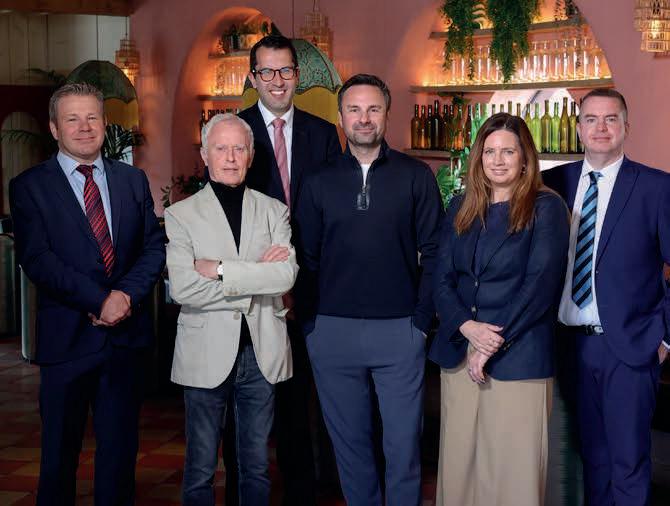
Ulster Bank is backing the continuing growth of hospitality group Beannchor with a significant finance package relating to its popular Bullitt Hotel brand.
The £30m facilities include a refinancing of the Bullitt Hotel in Belfast and funding for the group’s plans in Dublin. These will see a 98-bed, four-star hotel open under the Bullitt brand on Capel Street, a vibrant street in central Dublin, connecting to the River Liffey, Temple Bar and the city’s bustling shopping area on Henry Street.
As part of the development, Beannchor plans to reopen an historic Victorian laneway that has been closed to the public for over 140 years, introducing a number of new eateries and a bar in phase one, with the hotel expected to follow in 2028.
Ulster Bank is a leading bank for the hospitality sector in Northern Ireland having supported a range of local hotelier groups in recent years to grow their portfolios by providing acquisition and development finance.
James Sinton of Beannchor Group says that the financing of both Bullitt Hotels by Ulster Bank is an important part of the group’s growth: “We are extremely grateful to the team at Ulster Bank for their support. This funding represents an important strategic milestone for us and will help enable our expansion plans, including the development of a new Bullitt Hotel in Dublin. Beyond the finance, the Ulster Bank team’s extensive hospitality expertise and insight have been hugely valuable throughout the process,” he says.
Kenton Hilman, head of corporate and property at Ulster Bank, said: “Beannchor is one of Northern Ireland’s most innovative and successful hospitality businesses and we are very pleased to support the group with the refinancing of Bullitt Hotel Belfast and finance for the planned Bullitt Hotel in Dublin. This builds on Ulster Bank’s strong reputation in the hospitality sector and supports one of Northern Ireland’s leading hospitality businesses as it continues to expand and grow in its existing market and in an important new market.”
Beannchor is a family-owned business and was founded by chief executive, Bill Wolsey, a leading Northern Ireland hotelier and businessman, who
this year marks 50 years in business.
The group, whose diverse portfolio of brands includes hotels, restaurants, bars and nightclubs, has a strong track record in the sensitive restoration and reimagining of historic and listed buildings. Landmark projects like Belfast’s Merchant Hotel, The Dirty Onion and The National are amongst the significant regeneration projects completed by Beannchor over the last 50 years. Bullitt Dublin will be its biggest and most complex project to date.
In addition to Bullitt Hotel and Little Wing Pizzeria, the Beannchor Group’s hotels, eateries and bars in Belfast include The Merchant Hotel, Ollies, The National and Sixty6, The Dirty Onion and Yardbird.
Ulster Bank recently appointed Kenton Hilman as its Mid-Market Champion in Northern Ireland – one of 12 that NatWest has appointed across the UK nations and regions.
Commenting on this, Kenton Hilman, said: “Mid-sized businesses in Northern Ireland hold the key to unlocking growth. As one of Northern Ireland’s largest banks for midsized businesses, it is vital that Ulster Bank is representing their concerns and working to remove the barriers to expansion that they face. I look forward to using this platform to build a stronger Northern Ireland economy through championing the interests of midsized businesses.”


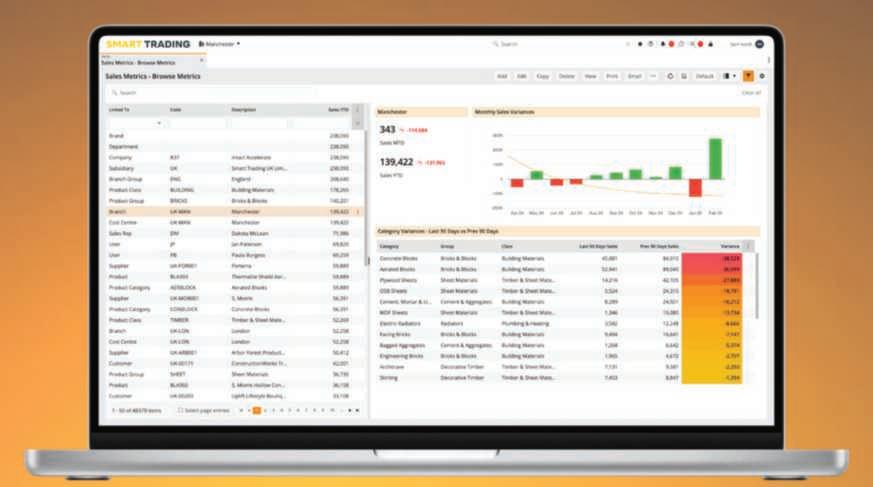































BIG FLEET POWER BIG FLEET POWER for small business budgets.


Innovation over tradition
The BMW 7 Series has always been the company’s rolling statement of intent, and this all-new, seventhgeneration model goes further than any before it.
Described as the most extensive update in BMW Group history, the latest 7 Series acts as the spearhead for bringing Neue Klasse technologies and design thinking into BMW’s existing range, rather than ringfencing them for future standalone models. It arrives at a moment when the luxury saloon is under pressure from high-end SUVs and chauffeur-friendly electric cars, and BMW’s response is to double down on technology, personalisation and electrification – while insisting that driver appeal still matters.
Visually, the new 7 Series introduces Neue Klasse design to BMW’s luxury segment. The look is deliberately monolithic, with clean surfaces, sharper detailing and a noticeably reworked front end. The kidney grille is slimmer and more upright, flanked by ultrathin daytime running lights, while the main headlights sit lower and remain largely hidden until switched on. At the rear, newly designed taillights stretch the full width of the car, reinforcing the sense of scale.
Reaction to BMW’s recent styling has been mixed, and this Seven is unlikely to change every mind. It is assertive rather than elegant in the traditional sense, although the detail work is impressive. Buyers keen to stand out even further will find almost unrivalled scope for personalisation, including a world-first dualfinish paint treatment and over 500 possible BMW Individual colour combinations.
Inside, BMW blends minimalist design with overt luxury and a heavy dose of screen-based technology. The headline addition is BMW Panoramic iDrive running the new BMW Operating System X, projecting key information across the lower edge of the windscreen and pairing it with a large central display.
For the first time in a BMW, the front passenger gets their own dedicated screen as standard, while rear occupants can opt for an
By James Stinson
updated 31-inch 8K Theatre Screen with Dolby Atmos sound and integrated video conferencing. It’s deeply impressive, if arguably more aligned with being chauffeured than driving oneself.
Material quality remains a core strength, with leather, metal and crystal details throughout, and comfort is emphasised by features such as adaptive two-axle air suspension as standard, optional Executive Lounge rear seating and automatic doors with softclose functionality.
At launch, the UK lineup focuses squarely on electric power. Three BMW i7 variants go on sale from September 2026, all using new Gen6 cylindrical battery cells. The i7 50 xDrive offers up to a claimed 452 miles of range, while the i7 60 xDrive comes close behind at 451 miles. At the top of the tree sits the i7 M70 xDrive, with 680hp and a 0–62mph time of 3.8 seconds, albeit with a reduced range of up to 426 miles.
Two plug-in hybrids arrive later in 2026, offering roughly 50 miles of electric-only driving while retaining six-cylinder petrol power. BMW is clearly betting that a broad electrified lineup will satisfy markets still transitioning away from combustion engines.
On the road, BMW promises benchmark ride comfort combined with surprising agility, thanks to standard air suspension, rearwheel steering and an array of new digital chassis systems. Whether buyers will value the depth of technology or find it overwhelming remains to be seen, but the engineering ambition is undeniable.
UK pricing has yet to be confirmed, but based on the outgoing model, expect the new BMW 7 Series to start from around £105,000 for entry-level electric versions, rising well beyond £130,000 for M Performance models and lavish specifications. Order books open ahead of a September 2026 UK launch.
The new 7 Series may not win over traditionalists, but as a hightech luxury flagship, it makes a strong case that BMW’s future is as much digital as it is mechanical.





























Nismo Goes Electric
By James Stinson
The Ariya gets a sporting makeover, but does it deliver? The march towards electrification shows no sign of slowing, and with it comes a steady stream of cars trying to inject a bit of excitement into what has traditionally been a quietly competent segment.
Nissan’s Ariya Nismo is the latest attempt to prove that battery-powered SUVs can stir the soul just as much as they soothe it. On the face of it, the recipe makes sense. Take the regular Ariya – already a refined and capable family EV – and hand it over to Nissan’s Nismo performance division. The result is a sharper, faster, more focused version aimed at buyers who want something a little more engaging without sacrificing everyday usability. That’s the theory at least.
Visually, the Ariya Nismo doesn’t stray too far from the standard car, but there’s enough here to signal intent. A more aggressive front bumper, deeper side skirts and a subtle rear spoiler give it a sportier stance, while Nismo badging and red accents add a bit of theatre.
It’s not overdone, which is probably wise. The Ariya remains a relatively large SUV and dressing it up too heavily might have felt forced. As it stands, the styling tweaks add interest without tipping into boy-racer territory. Inside, the same approach applies. There are sportier seats, revised trim and a few Nismo touches, but the core layout remains unchanged. That means a clean, modern
cabin with plenty of tech and a generally high level of comfort. It’s a pleasant place to spend time, even if it doesn’t feel especially different to the standard version.
Under the skin is where the real work has been done. The Ariya Nismo uses a dualmotor, all-wheel-drive set-up producing in the region of 430bhp, depending on specification. That’s a significant jump over most versions of the regular car and is enough to deliver a 0–62mph time of around five seconds.
In a straight line, it’s predictably quick. Like most electric cars, power delivery is instant and smooth, making overtaking effortless and everyday driving feel brisk. It’s the kind of performance that’s easy to access and hard to fault.
There are tweaks to the suspension, steering and braking too, all designed to make the car feel more engaging. It sits a little lower, feels a touch more planted and certainly responds more keenly than the standard Ariya. The challenge, as ever, is physics. The Ariya Nismo is still a sizeable, heavy SUV and while the engineering efforts are noticeable, they can’t completely disguise that fact.
Push on along a twisting road and it holds its line well enough, with decent grip and composure, but it never quite feels as agile or as playful as the Nismo badge might suggest. There’s competence here rather than genuine excitement.
The steering, while more direct than

before, lacks the kind of feedback you’d hope for in a performance model, and although body control is improved, you’re always aware of the car’s bulk. It’s enjoyable in short bursts rather than something that begs to be driven hard.
On the plus side, the firmer set-up doesn’t completely ruin the ride. It’s a touch stiffer than the standard car, as you’d expect, but still compliant enough for daily use. That balance will likely appeal to buyers who want a bit of edge without compromising comfort too much.
As with most performance EVs, there’s a trade-off when it comes to range. The Ariya Nismo is expected to deliver somewhere in the region of 260–280 miles on a charge (roughly 260 miles depending on driving style and conditions).
That’s respectable rather than classleading, and it will drop if you make regular use of the available performance. For many buyers it will be more than sufficient, but it’s worth noting that less powerful versions of the Ariya go further on a charge.
Charging speeds are in line with the standard car, meaning reasonably quick top-ups on rapid chargers and convenient overnight charging at home.
Where the Ariya Nismo arguably makes the most sense is in day-to-day use. It retains all the strengths of the regular model – a spacious cabin, decent practicality and a smooth, refined driving experience.
There’s plenty of room for passengers, a useful boot and all the connectivity and driver assistance tech you’d expect in a modern EV. In that sense, it remains a very easy car to live with. The added performance and sharper styling simply give it a bit more character, even if they don’t completely transform the driving experience.
That added character doesn’t come cheap, with prices starting from £56,620. That puts it firmly in competition with other performancefocused electric SUVs, many of which offer similar pace and, in some cases, a more engaging driving experience.
The Nissan Ariya Nismo is an interesting step in the evolution of electric cars. It shows that manufacturers are keen to inject personality into EVs, not just efficiency.
It’s quicker, sharper and more distinctive than the standard Ariya, and for some buyers that will be enough. But while it improves on the base car, it doesn’t entirely rewrite the rulebook. The performance is there, the intent is clear, but the excitement is a little muted.
For those wanting a fast, comfortable, allelectric SUV with a hint of sporting intent, it fits the bill. Just don’t expect it to feel like a traditional Nismo model in the fullest sense.

















Choosing a fleet provider based solely on monthly rental is one of the most common, and costly mistakes a business can make. At Agnew Leasing, we take a fundamentally different approach.
As part of the Sytner Group, the UK’s largest motor retailer, we combine over 30 years of industry expertise with a consultative, data-led model built around Whole Life Cost (WLC) analysis. Using Deloitte’s market-leading Car Tax software, we build a financial model tailored to each customer’s business, factoring in CO2 emissions, Class 1A NIC, BIK, fuel reimbursement, VAT recoverability and depreciation, not just the headline rental. The result? Clearer forecasting, better cost control, and smarter vehicle choices that benefit both the company and the driver.

With the fleet industry accelerating towards electrification, our dedicated EV consultancy service helps businesses navigate the transition with confidence. From charging infrastructure advice and driver readiness assessments to modelling the true cost comparison of PHEV versus full EV, we ensure your move to electric is financially sound and operationally seamless.
Every customer also receives an experienced dedicated Account Manager, access to our award-winning Agnew
Fleet Manager (AFM) digital platform, and 24/7 driver support, giving you full visibility and control over your fleet.
Whether you operate 10 vehicles or 500, Agnew Leasing delivers the transparency, technology and trusted advice your fleet strategy deserves.
Get in touch with our Head of Business Development: david.mcewen@agnews.co.uk 028 9009 7282 www.agnewleasing.com









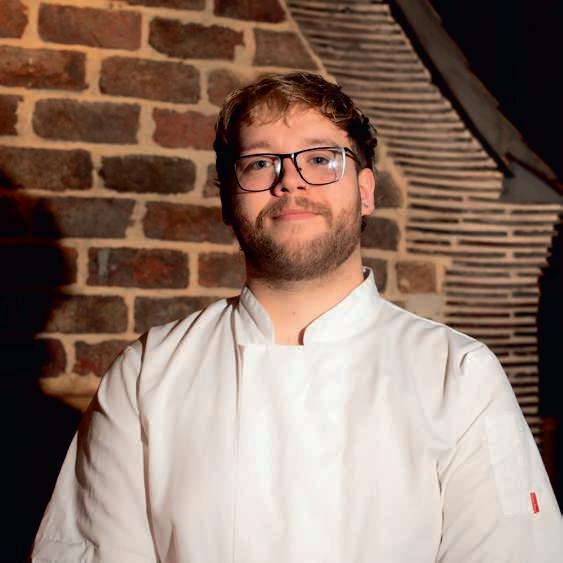
INGREDIENTS
Serves 4:
• 4 skin on seasoned chicken breasts
For the cabbage:
• 1 large hispi cabbage
• 200g mayonnaise
• 40ml truffle oil
• 100g pancetta
• 100g crispy onions
• 100g parmesan
For the sauce:
• shallots
• 6 garlic cloves
• 10g thyme
• 100ml white wine
• 1 litre whipping cream
• 200g savora mustard or wholegrain mustard




McKay | Head Chef
ROAST IRISH CHICKEN BREAST, GRILLED HISPI CABBAGE, TRUFFLE, MUSTARD SAUCE Caeloin
METHOD
1. Start off by putting a large frying pan on a medium heat. Add 40ml of oil into the pan, add your seasoned chicken to the pan, and let them gently fry to build a nice colour. Don’t touch them until they come away from the pan when you gently shake it. Once golden-brown turn over and fry the other side for another minute. Transfer to a tray and place in oven for 12 minutes at 170c.
2. Use the pan you fried your chicken in to sauté off your chopped shallots and thyme. After 4/5 minutes add in your smashed garlic cloves to the pan and continue to cook for another 2/3 minutes. Turn your pan up to a high temperature and add your white wine, reduce until the shallots almost start to fry again. Once this is achieved, add your cream and bring to the boil. Once at the boil turn the heat down to a medium heat and slowly simmer away until reduced by a third. Season heavy with black pepper and add your mustard.
3. For the cabbage, place a large frying pan on a high heat and add your cabbage that is cut into quarters, don’t be scared to get lots of caramelisation on the cabbage, this adds lots of flavour to the dish. Once fried to your required colour, add 100ml of water to the pan and place a lid or a plate on top of the cabbage. Place into the oven for 8/10 minutes. While the cabbage is cooking mix your mayonnaise and truffle together. Bring the cabbage out of the oven once soft with still some bite and add your truffle mayo, pancetta, crispy onions and grated parmesan before placing back into oven for 2 more minutes.
To Serve:

Place your chicken breast beside your dressed cabbage and pour over your sauce and enjoy a nice twist on a classic dish.























Cool Under Pressure
Ulster Tatler’s Abbie Vauls looks at wardrobe pieces that add a pop of colour to suit the summer season, while keeping you cool in the office during the warmer weather.












Yellow Cutwork Scalloped Blouse, Oliver Bonas, £58
Red Longline Pleat Waist Shorts, Oliver Bonas, £60
Tilly Toe Thong Mules Ivory, Monsoon, £55
Nyla Green & Blue Enamel Hoop Earrings, Oliver Bonas, £18
Linen Suit Waistcoat –Cream, Jigsaw, £149
Sunglasses, M&S, £10
Navy Pure Linen Palazzo Trousers, Tu Clothing, £30
Red & Cream Dotty Neckerchief Scarf, Oliver Bonas, £20
Light Yellow Square Neck Gathered Hips Midi Dress, New Look, £39.99
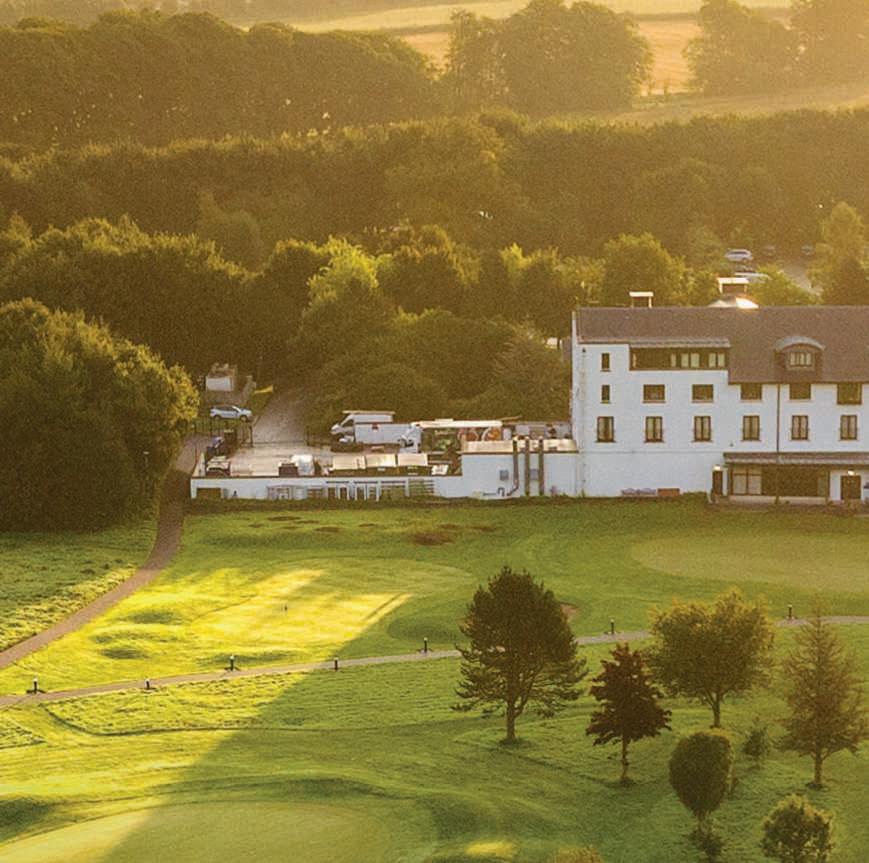

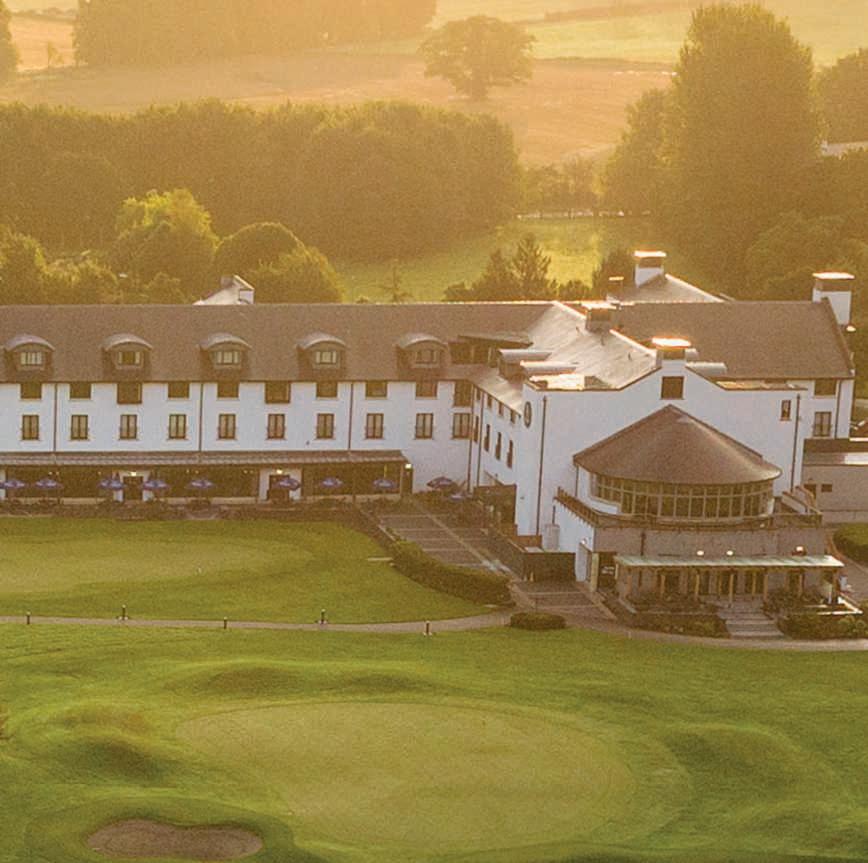
EXPERIENCE EXCEPTIONAL
Stay - Spa - Golf - Conference



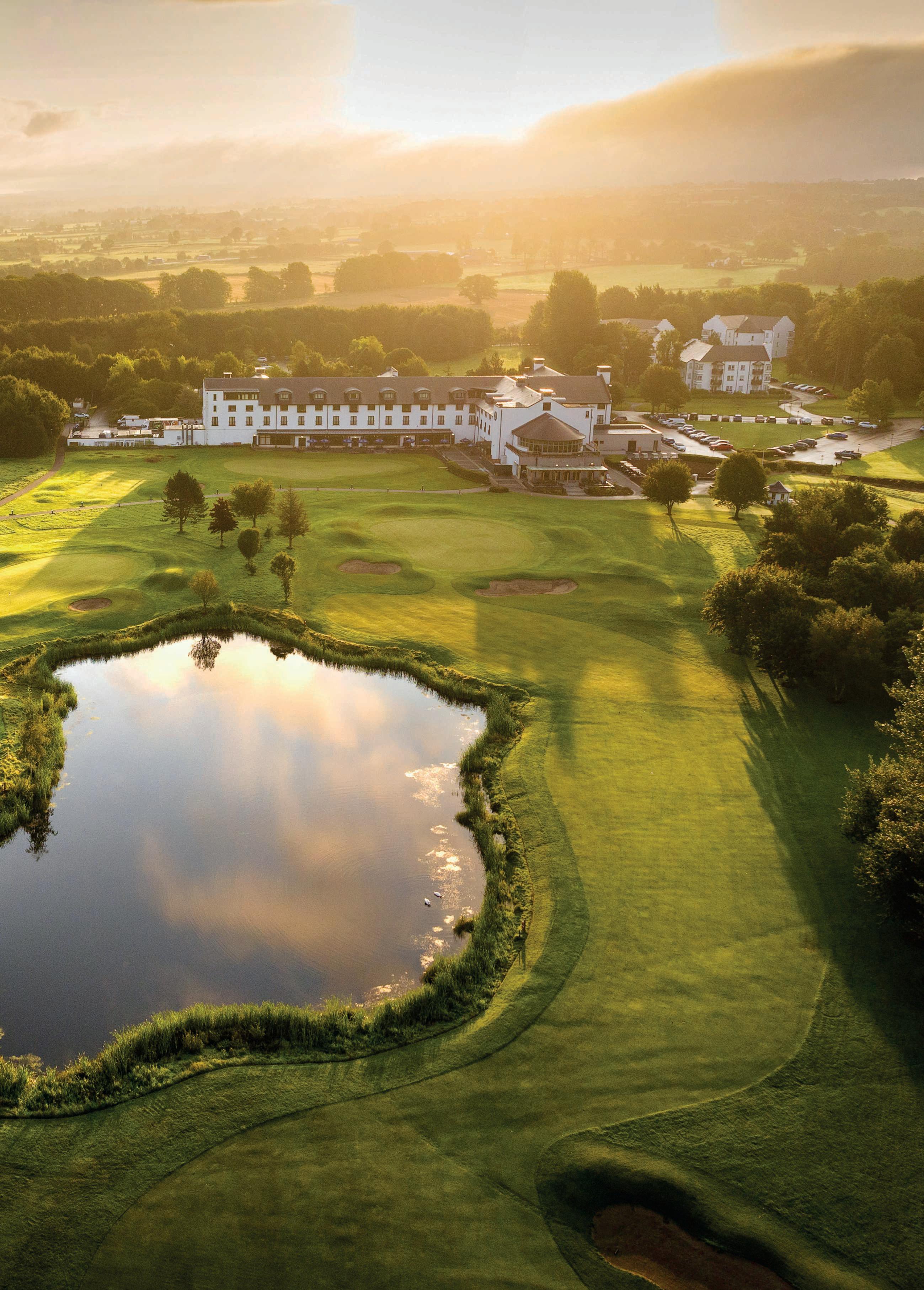

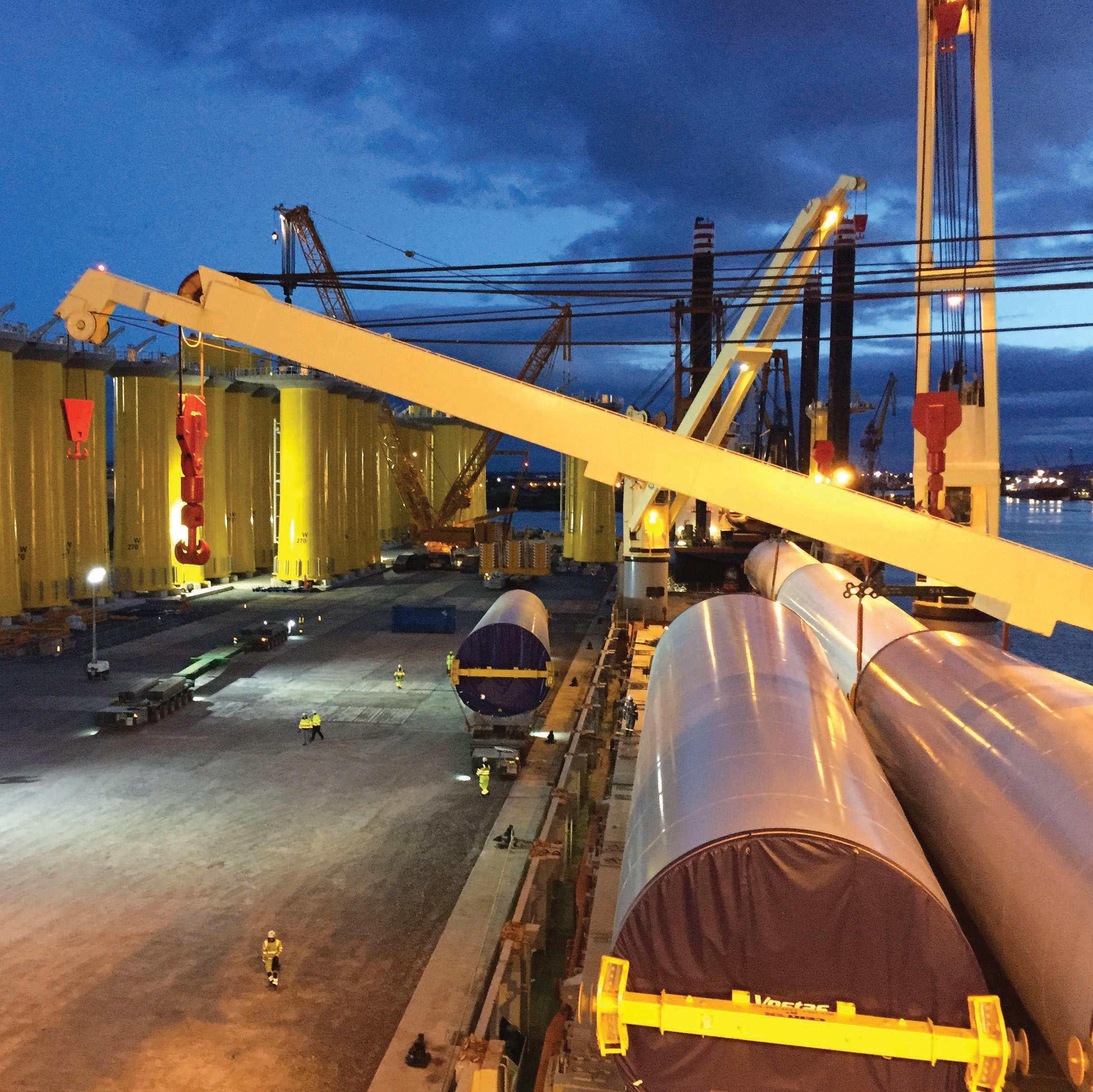
Doyle Shipping Group (Belfast)
101 Airport Road West Belfast BT3 9ED
Phone +44 (0) 28 90 755881
Email customs@dsg.uk