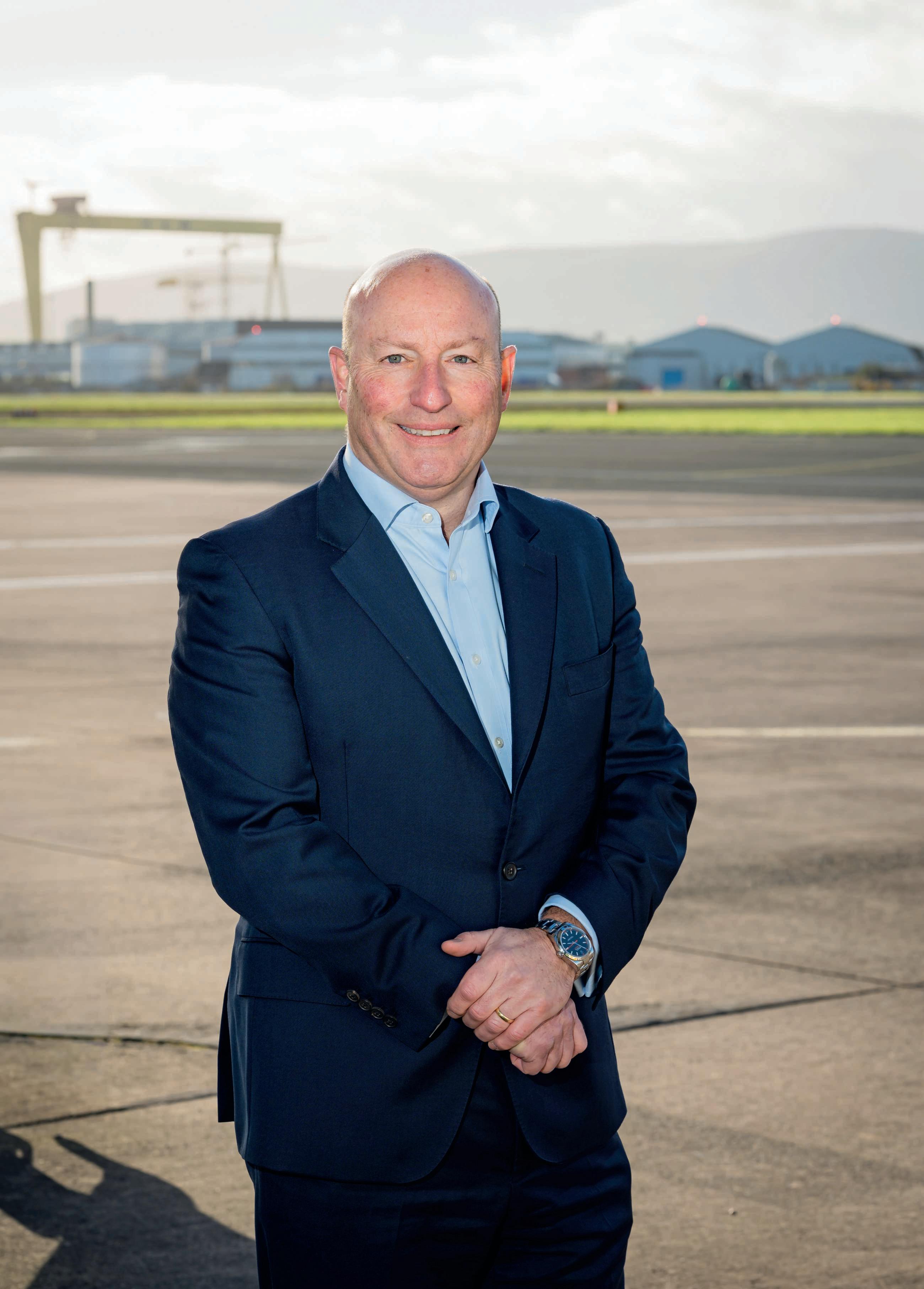

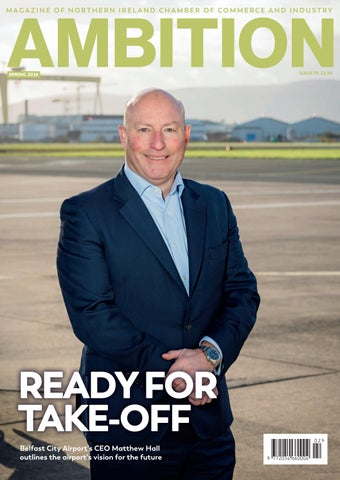

Belfast City Airport’s CEO Matthew Hall outlines the airport’s vision for the future










Managing Editor: Olivia Stewart Interviews: Emma Deighan Publisher: Chris Sherry Advertising Managers: Lorraine Gill & Julie Patterson Editorial Assistant: Abbie Vauls Email addresses: olivia.stewart@northernirelandchamber.com / l.gill@ulstertatler.com / j.patterson@ulstertatler.com Websites: www.northernirelandchamber.com / www.ulstertatler.com
Publisher: Ulster Tatler Group, Unit 26 Ormeau Businss Park, Belfast, BT7 2JA Tel: 028 9066 3311 Printed by: W&G Baird, Antrim. Front Cover Photo by: Paul Jervis Photography






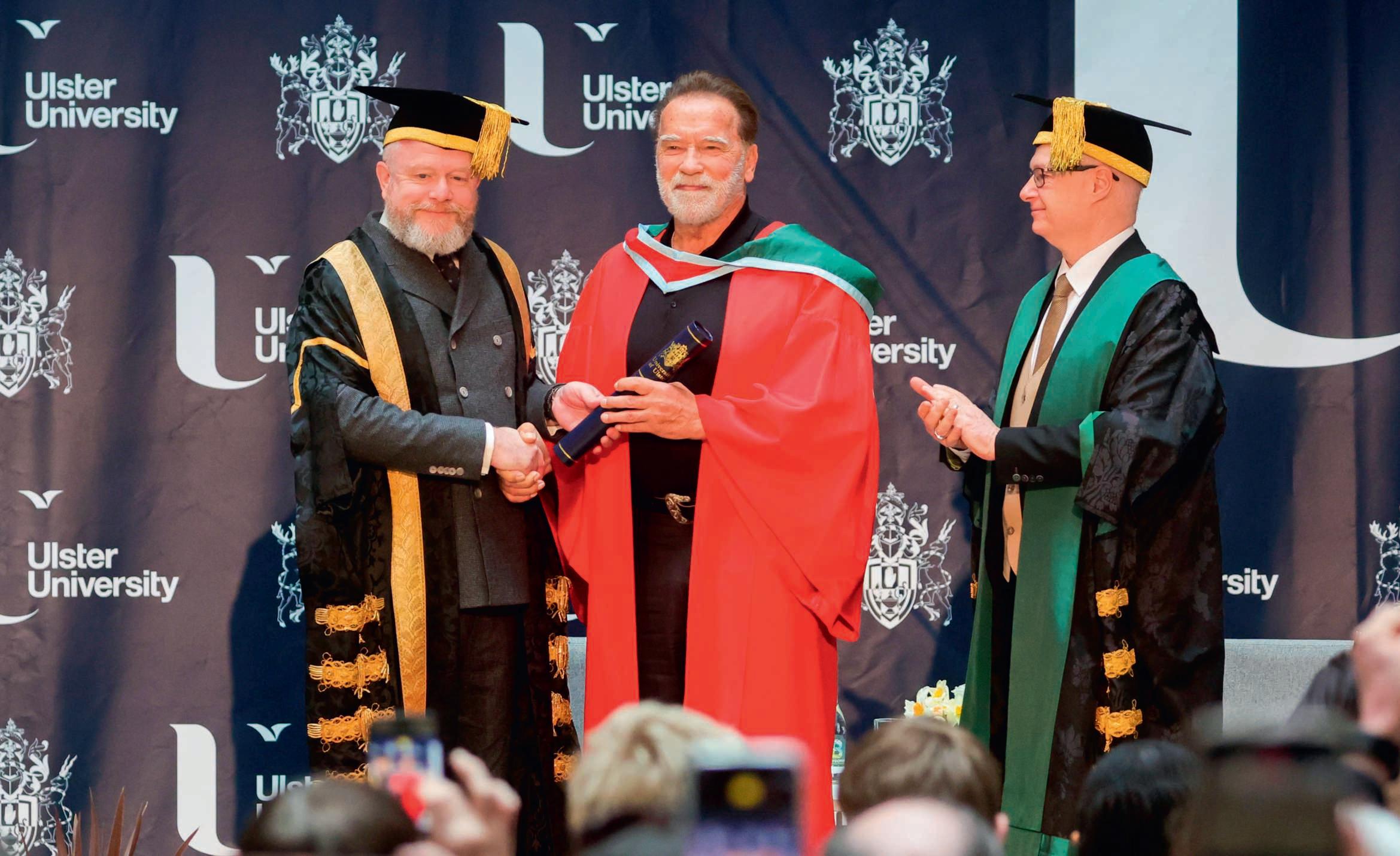
Global screen icon, former Governor of California, Emmy-winning producer and seven-time Mr Olympia recognised for his remarkable contributions to public service, environmental action and the arts
Ulster University awarded an honorary doctorate to Governor Arnold Schwarzenegger at its Belfast campus in recognition of his extraordinary career and his remarkable contributions to public service, environmental advocacy and the arts.
Born in Austria and later emigrating to the United States, Dr Schwarzenegger rose to international prominence as a seven-time Mr Olympia champion before becoming one of Hollywood’s most recognisable actors. He later served as the 38th Governor of California and has been widely recognised for championing environmental action, civic leadership, philanthropy and public service.
The honorary degree also recognises Arnold Schwarzenegger’s contribution to global arts and culture through a film career that helped shape the modern action genre and influence generations of audiences worldwide.
Dr Schwarzenegger’s visit to Ulster University Belfast carries a personal significance – it comes 60 years after his first visit to Northern Ireland. As a young bodybuilder, he landed in Belfast in 1966 where he was unexpectedly invited to speak to an audience following a competition.
From Ulster University, Dr Arnold Schwarzenegger said:
“Sixty years ago, I came to Belfast as a young bodybuilder. I could never have dreamed that I would be back here all these years later to receive an honorary doctorate from Ulster University. It’s wonderful to be back.”
Progressive Building Society has chosen Age NI as its charity partner for the 2026 Annual General Meeting (AGM) of shareholders. Funds of up to £10,000 will be generated through the Member AGM voting process, with Progressive donating £2.50 for every online vote and 20p for each paper vote cast by its eligible members.
This year, the Society’s 111th AGM will be held on Friday 24 April at the Europa Hotel in Belfast.
Progressive Secretary Kyle McRoberts said the Society was delighted to partner with Age NI and support work that makes a tangible difference to older people across Northern Ireland.
“Age NI is there for older people and their families when they need clear answers, practical support and someone to talk to,” he said.
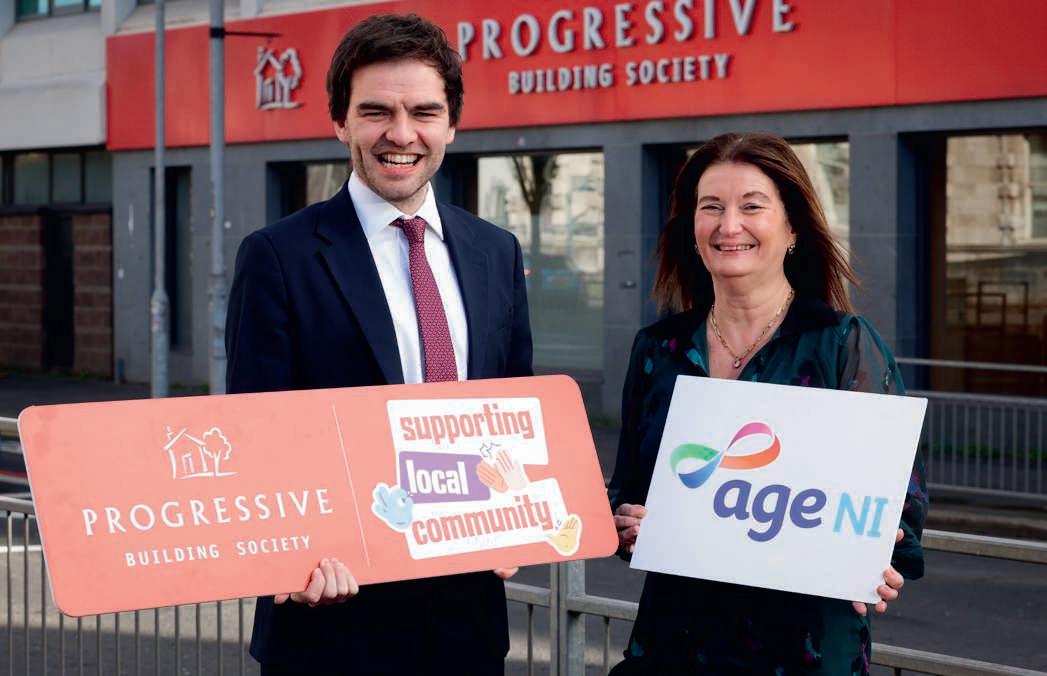
Rosalind Cole, fundraising manager at Age NI, welcomed the partnership and said it would help strengthen support for older people across Northern Ireland.
“Through our advice and advocacy, our friendship and wellbeing services, and our care and community support, we’re working every day to change the way we age,” she said.

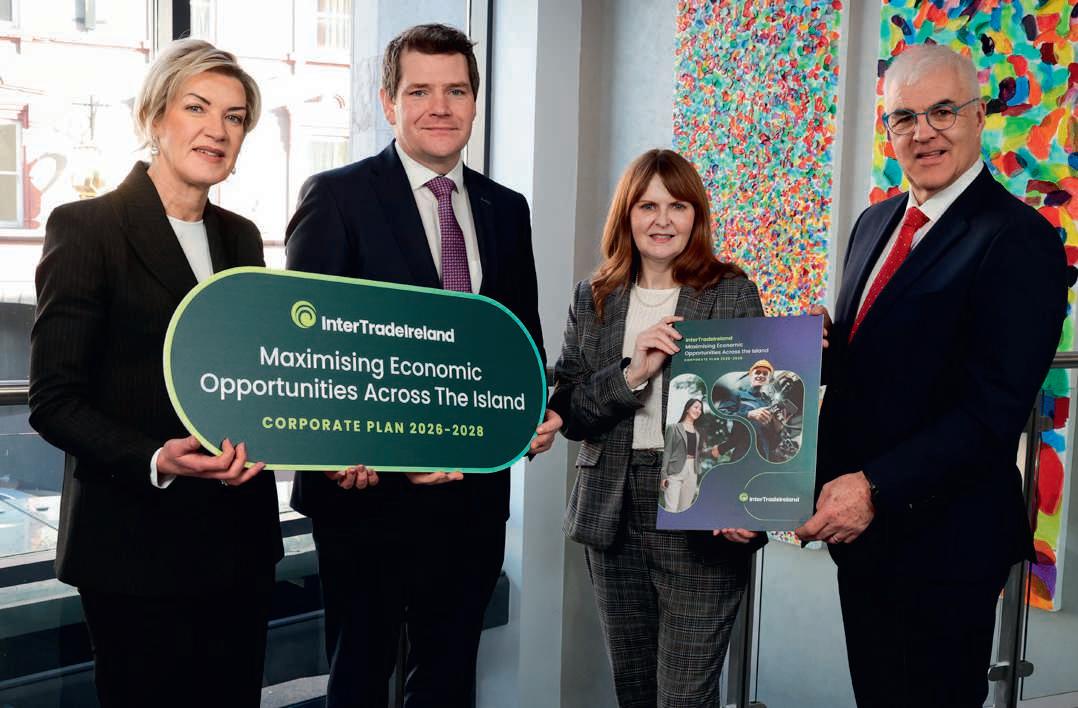
Pictured at the publication of InterTradeIreland’s new 2026-2028 corporate strategy document are (L-R) Margaret Hearty, InterTradeIreland’s chief executive; ministers Peter Burke TD and Dr Caoimhe Archibald MLA; and Richard Kennedy, InterTradeIreland chair.

With all-island trade at a record high of €17/£14.6 billion, InterTradeIreland launched an ambitious three-year strategy to further unlock the full potential of economic collaboration and prosperity on the island of Ireland. Strategically aligned to the Programmes for Government in Northern Ireland and Ireland, the 2026-2028 Corporate Strategy sets out InterTradeIreland’s ambition to maximise all-island economic opportunities and build a more connected, competitive and productive economy across the island. Anchored in four strategic priorities, the new strategy sets out InterTradeIreland’s aims to: Lead All-Island Economic Collaboration, Boost Competitiveness and Productivity, Drive All-Island Trade, and Accelerate Entrepreneurship and Enterprise Growth, with a clear and ambitious vision. Welcoming the new strategy, Minister for Enterprise, Tourism and Employment, Peter Burke TD, said:
“SMEs are at the heart of communities across the island of Ireland, providing employment opportunities and contributing significantly to economic growth. InterTradeIreland’s three-year strategy will position the cross-border market as a springboard for trade, sales and business growth. This, coupled with InterTradeIreland’s commitment to support all-island collaboration and clustering, is the key to building a more diversified, resilient, competitive and globally connected economy.”
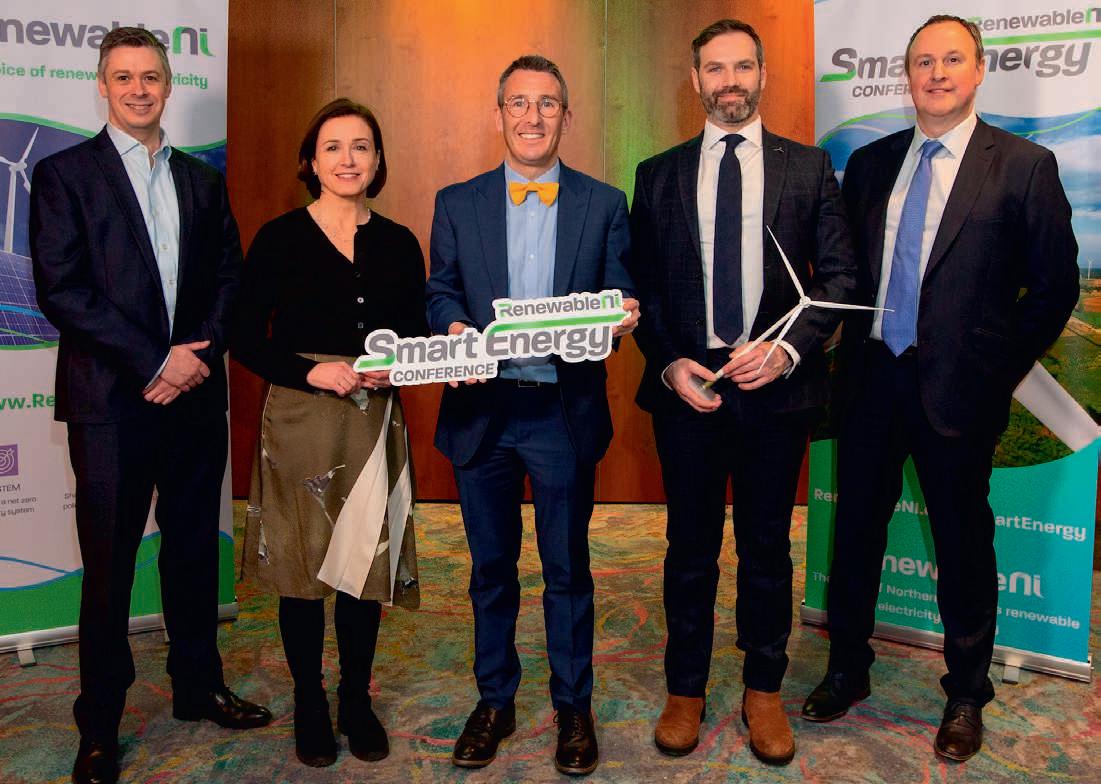
Northern Ireland’s premier renewable energy event, RenewableNI’s Smart Energy conference, took place in Belfast and focused on turning energy ambition into electricity generation.
At a time when energy uncertainty and potential price rises are dominating the headlines, the RenewableNI conference set out the strategic vision and economic benefits to provide the solutions to these issues.
Addressing the 250 delegates, RenewableNI Director Mark Richardson said: “In recent days and weeks, consumers have once again watched energy prices spike due to the war of unintended consequences. The reality of yet another conflict is surging through global markets and landing, as it always does, on the bills of families and businesses who bear the costs without having any say. Energy security is national security.”
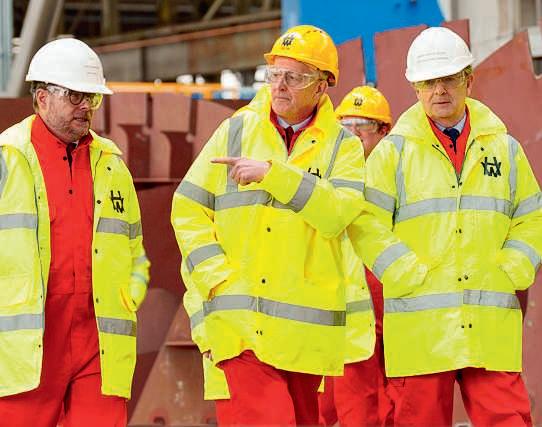
Navantia UK welcomed the Secretary of State for Northern Ireland, Rt Hon Hilary Benn MP, to the Harland & Wolff shipyard, just over a year since the company’s acquisition and the launch of plans to revitalise the historic site for the future.
The visit focused on Belfast’s growing role at the heart of the UK’s shipbuilding capability, with the Secretary of State touring newly extended fabrication facilities, meeting the almost 500-strong workforce including 93 current apprentices, and seeing first-hand how sustained investment is transforming the yard into a modern, competitive and technology-enabled centre for naval shipbuilding and support.
At the core of this transformation is a major recapitalisation programme in Belfast, supported by more than £90 million of investment. This includes a 5,000 square metre extension, upgrades to existing fabrication halls and the installation of advanced manufacturing capability such as a mechanised panel line, robotic cutting systems and automated quality control processes. Together, these technologies are enhancing precision, productivity and scalability, positioning Belfast to deliver complex programmes while strengthening the UK’s sovereign industrial capability.

The visit also highlighted the strength of the local supply chain supporting the revitalisation. Navantia UK is working with a wide range of Northern Ireland-based SMEs to deliver infrastructure upgrades and operational capability, ensuring that investment in the yard translates directly into economic activity across the region. Recent contracts have supported local firms in construction, steel supply, equipment provision and site services, with dozens of specialist roles on site contributing to one of the most significant industrial projects in Northern Ireland.





ST AR TING FROM £87 PER PERSON SHARIN G
PA CK AG E INCL UDES
Overnight stay for2 persons sharing, including a full cooked breakfast, an evening main course and a glassof bubbly each



The Irish League of Credit Unions (ILCU) has published the first all-island report highlighting the community impact of credit unions, showing €8 million worth of contributions in support of communities for FY2024 across the island of Ireland.
The support from individual credit unions took the form of cash through community funds, sponsorships and bursaries to members and organisations within their common bond. Contributions from 305 credit unions supported a diverse range of projects, programmes and organisations in communities across the country, in areas such as education, arts and culture, sport, health and wellness, and sustainability.
In total, close to €8 million was donated by credit unions in 2024 – €7,169,551 million in the Republic of Ireland and £686,383 (€824,415) in Northern Ireland. Of this overall figure, €3.71million was contributed via community funding, €3.5million was contributed via direct sponsorship and €780K was contributed via bursaries and scholarships.


Danske Bank has confirmed that its new Lisburn branch, located at Bow Street Mall, will officially open on 20 April 2026.
Branch Manager Andy Donaldson said: “Our new branch in Lisburn is progressing well, and we look forward to welcoming our customers and the local community to this exciting new space in Bow Street Mall. This relocation highlights Danske Bank’s commitment to supporting the wider Lisburn area by offering a modern banking environment equipped with enhanced self-service facilities for both customers and colleagues. Our team will be on hand to assist with banking needs and ensure everyone feels comfortable in the new branch.”
W5
W5 is marking 25 years as Northern Ireland’s award-winning science and discovery centre, celebrating a quarter of a century during which it has inspired curiosity, expanded access to science, technology, engineering and maths (STEM), and become a cornerstone of Belfast’s cultural and educational landscape.
Since opening its doors in March 2001 as part of the landmark Odyssey development, W5 has welcomed more than 6 million learners and visitors, offering generations the opportunity to explore STEM through hands-on discovery. Named after the five fundamental questions of discovery – Who, What, Where, When and Why – W5 was created to challenge traditional perceptions of science learning and to encourage curiosity in people of all ages.
Over the past 25 years, W5 has become one of Northern Ireland’s most recognisable educational destinations, working closely with local schools, communities and industry partners to deliver experiences that complement traditional classroom learning, while also opening new pathways into STEM careers. W5’s programmes are designed to be inclusive of all learners, with a particular focus on supporting communities facing the greatest barriers to STEM engagement
Victoria Denoon, head of W5, said: “For 25 years, W5 has been a place where curiosity comes alive – a space where young people discover that science is something they can explore, question and shape for themselves. For many visitors, W5 is the moment they realise that STEM is for them.”
AAB launches ‘O ce of the CFO’ service to support growing businesses with flexible finance leadership
In response to the increasingly complex trading environment for businesses, professional services firm AAB has launched a new ‘Office of the CFO’ service designed to give organisations the ability to strengthen their finance leadership and gain clarity in their numbers without the difficulties of recruitment of finance professionals at all levels.
The new offering provides flexible finance leadership and specialist accounting expertise to businesses experiencing growth, navigating complex group or funding reporting requirements or preparing for major transactions. The AAB Office of the CFO team includes more than 50 finance specialists across the UK with senior expertise in operational finance, forecasting, technical accounting, statutory reporting, finance transformation, cash flow modelling and transaction accounting.
















A report on the economic impact of Warrenpoint Harbour Authority (WHA) highlights the port’s growing strategic role as a regional, national and international gateway, now handling £3.4 billion worth of trade annually, which supports £1.1 billion of GVA in Northern Ireland’s economy.
Trade levels at Warrenpoint have doubled since 2000 with 3.4 million tonnes of goods moving through the port annually, accounting for 12% of all Northern Ireland port trade. This significant level of trade, and the wider supply chain it supports, helps sustain more than 18,300 jobs across Northern Ireland.
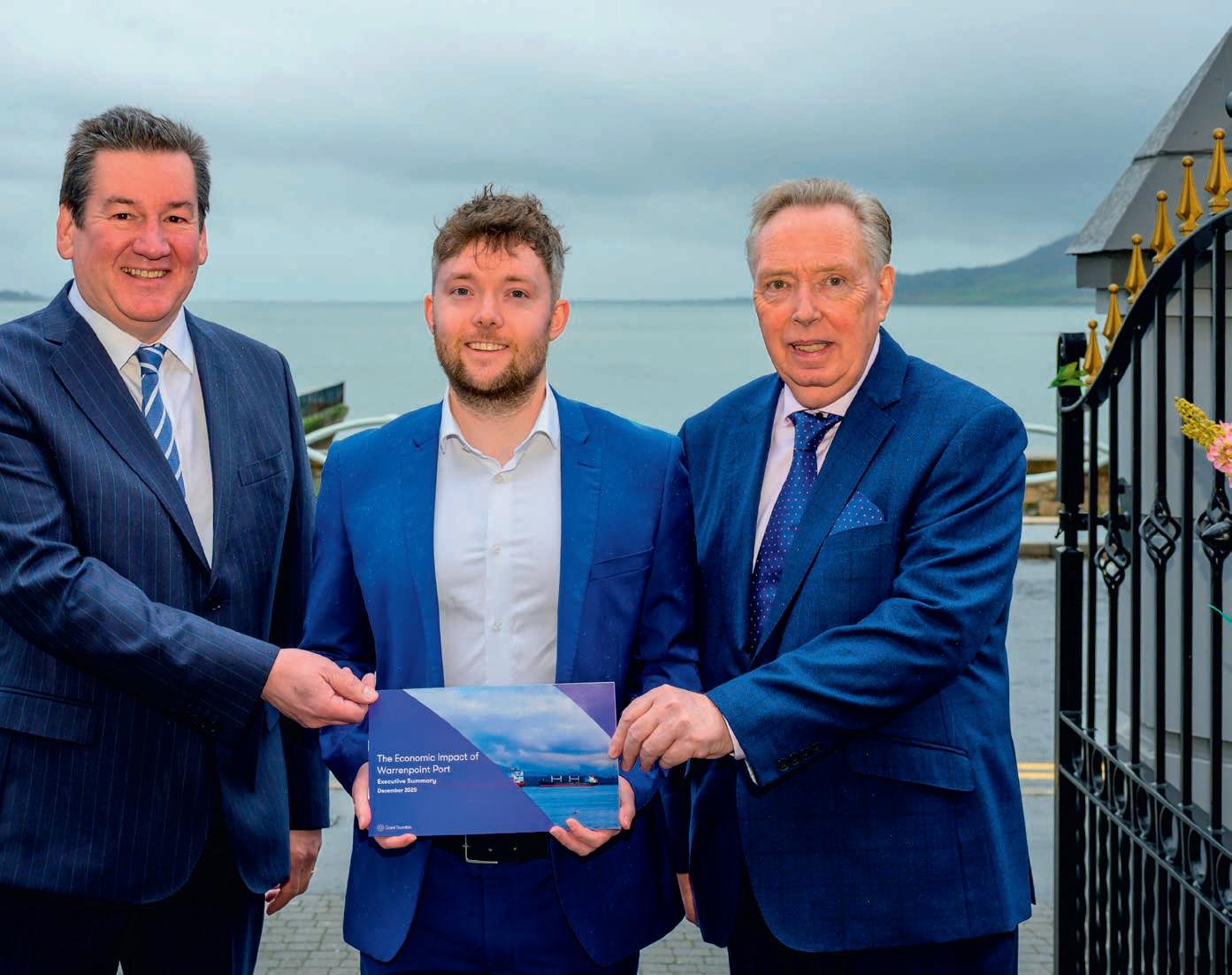
Warrenpoint Harbour Authority Chief Executive David Holmes, Andrew Park (Grant Thornton) and Dr Gerard O’Hare CBE DL, Chair of WHA.
The report, conducted by Grant Thornton, also highlights the Port’s strong financial performance which saw a record turnover of £8.6 million in 2024, nearly three times higher than in 2000. David Holmes, chief executive of Warrenpoint Harbour Authority, said: “This report highlights the port’s growing footprint, not only through increasing trade volumes, but the role it plays in sustaining thousands of jobs and driving economic growth across the island. Strategically positioned, Warrenpoint is a critical gateway for trade and a key enabler of long-term business growth, helping more companies develop, expand, and compete in global markets.”
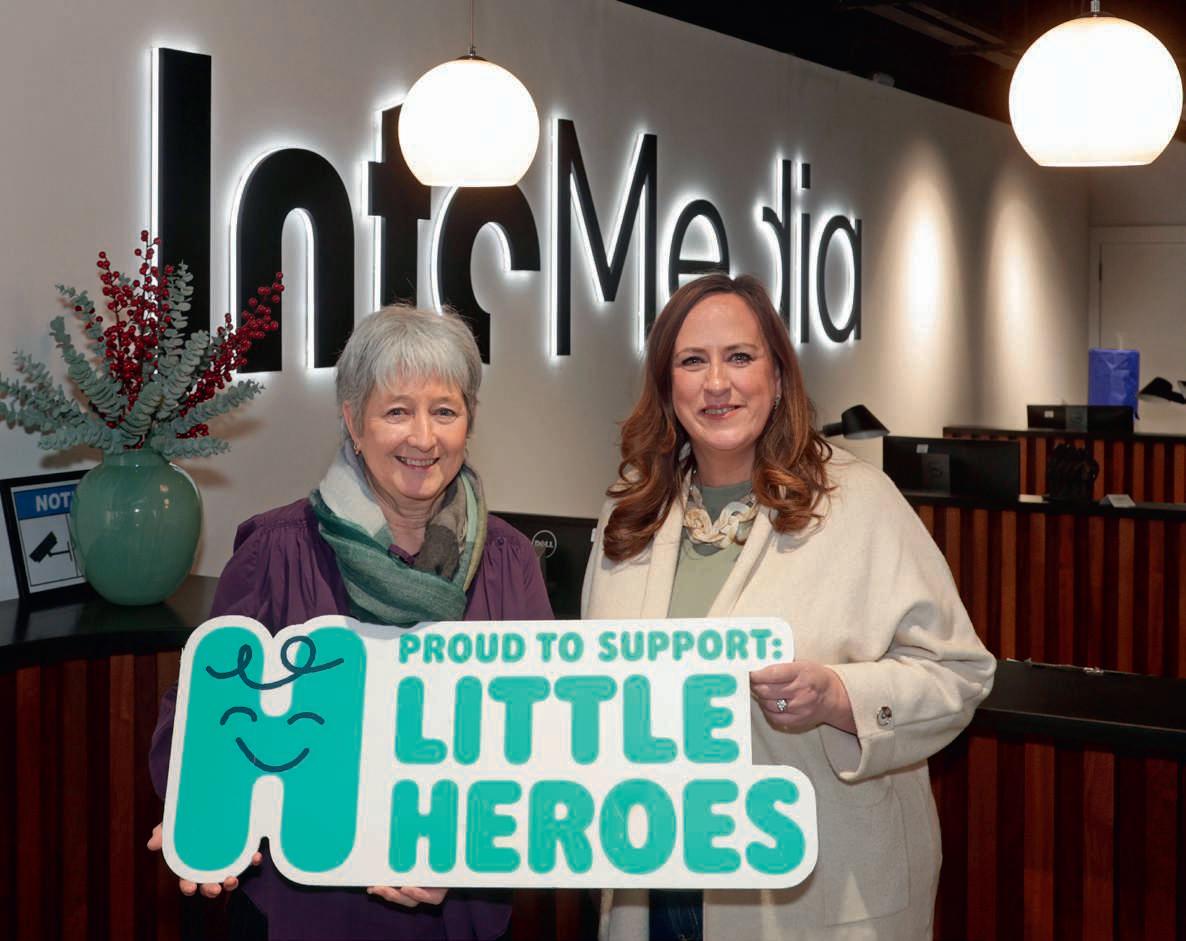
IntoMedia Group, owners of The Irish News, Q Radio and Interpress, has announced Little Heroes, the official charity of the Royal Belfast Hospital for Sick Children, as its 2026 Charity of the Year.
Selected following a company-wide nomination and voting process, Little Heroes was chosen by colleagues across the Group. The charity raises funds exclusively for the Royal Belfast Hospital for Sick Children, supporting essential medical equipment, research into children’s illnesses and enhanced facilities for young patients and their families.

North Down Marquees, based in Carryduff has acquired local events and catering company Table 10 in a move set to strengthen its presence in the events and hospitality market.
The deal marks a significant step forward for the business with ambitious growth plans for its North Down Event & Cater Hire division.
supporting
Anne Sykes, Director, IntoMedia Group, and Mary McCall, CEO, Little Heroes.
Neurovalens, a global leader in non-invasive neurotechnology, has had its first product approved for sale in Europe and the UK after achieving EU Medical Device Regulation (MDR) compliance for Modius Sleep, its prescribed treatment for insomnia.
The company’s Modius technology uses low-level electrical signals to non-invasively stimulate areas of the brain known to influence mental health. This technology is known as electrical vestibular system stimulation (VSS). EU MDR compliance requires medical device manufacturers to meet strict safety, clinical evaluation, and quality management system standards to place products on the EU market. Having achieved MDR compliance, the device has also been registered with the UK medicines and healthcare products regulatory agency (MHRA), meaning Modius Sleep is now compliant for sale across both the EU and the UK. It is among the first Northern Ireland-based companies to achieve EU MDR certification, placing it alongside some of the world’s leading medical device manufacturers.
Galgorm Collection, Northern Ireland’s leading hospitality group of luxury hotels, restaurants and bars, is marking 15 years of support for Simon Community, having raised £180,000 to support people experiencing homelessness over the course of the partnership. This marks Simon Community Northern Ireland’s longest-running corporate partnership, reflecting a sustained and deeply embedded commitment between the two organisations.


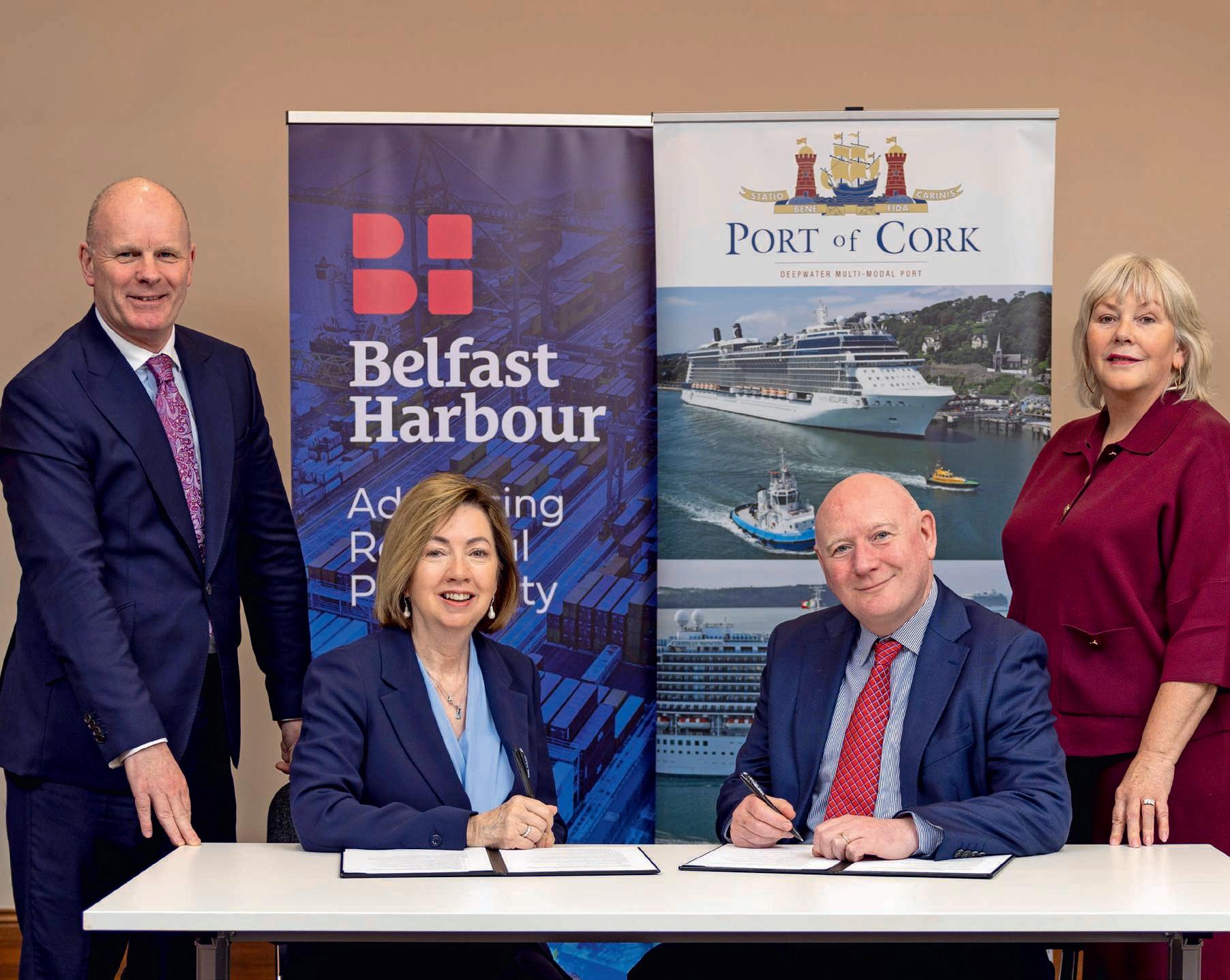
Belfast Harbour Commissioners and the Port of Cork Company have announced the signing of an historic Memorandum of Understanding (MoU) that establishes a strategic partnership designed to accelerate the delivery of offshore wind energy and to boost cruise tourism across the island.
The 10-year agreement creates a formal framework for the two largest cruise ports on the island of Ireland to collaborate on largescale infrastructure projects, green innovation, and digital transformation.
Dr. Theresa Donaldson, chair of Belfast Harbour Commissioners, said: “Belfast Harbour has long been a catalyst for regional prosperity. This agreement with the Port of Cork allows us to scale our ambitions, particularly in the cruise and offshore wind sectors.
“We are committed to using our collective expertise to ensure our ports are worldleading, innovative and sustainable hubs that serve as an economic foundation for future generations.”
Sysco, Ireland’s largest foodservice provider, is expanding its partnership with Meals & More in Northern Ireland. The programme, which tackles holiday food poverty and social isolation, is set to grow from five to 35 clubs in 2026, supported by a £50,000 investment from the company.
As part of this growth, Meals & More will broaden its delivery network from a single partner, Children in Northern Ireland (CINI), to three partners, including Healthy Living Centre Alliance (HLCA) and Feeding Britain NI. This rollout will benefit over 1,000 children at each stage of the programme providing them with access to healthy meals and structured activities during school holidays and helping to reduce isolation, inactivity, and emotional stress. Food provision will also increase significantly, with a projected 42,500 meals planned for 2026/27, up from 14,700 meals in 2025.
Speaking on the partnership, Mark Lee, chief executive officer, Sysco Ireland, said: “Sysco is proud to support Meals & More as it expands vital support across Northern Ireland from five to 35 clubs. This growth will ensure more children and families have access to nutritious meals when they need them most. Beyond funding Meals & More, we are collaborating more closely with Children in Northern Ireland to find practical ways to enhance their programmes.”












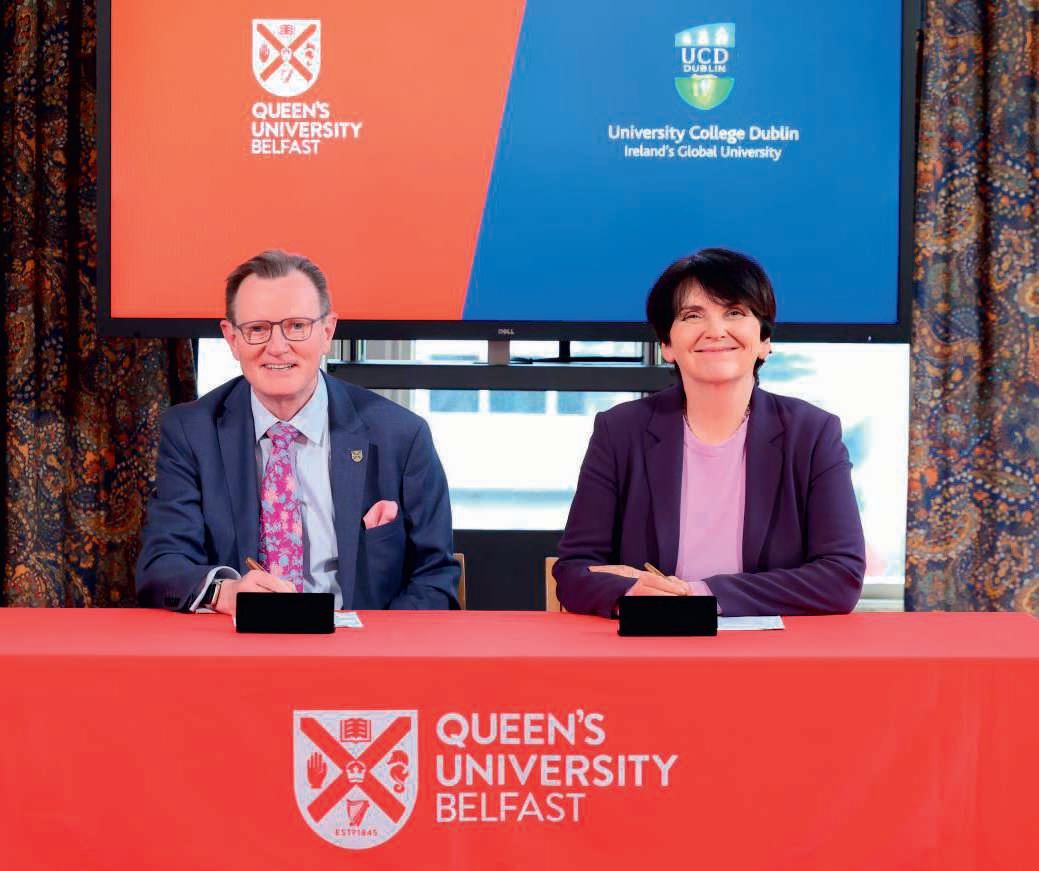
L-R Professor Sir Ian Greer, President and Vice Chancellor, Queen’s University Belfast and Professor Orla Feely, President of University College Dublin
Queen’s University Belfast (QUB) and University College Dublin (UCD) have signed a new Memorandum of Understanding establishing a strategic cross-border partnership between Momentum One Zero at Queen’s and CeADAR, Ireland’s National Centre for Applied AI at UCD.
The agreement sets out a framework for collaboration in applied artificial intelligence, digital innovation, skills development and industry engagement. The partnership will focus on strengthening cross-border applied AI, developing joint research bids across UK, Irish and European funding programmes, exploring joint capital and infrastructure projects, accelerating industry adoption of digital technologies and supporting SME engagement and skills development.
A Joint Project Board will be established to oversee implementation of the MoU and to guide development of a major cross-border AI Alliance involving industry partners, enterprise agencies and government stakeholders.
Charles Hurst Group is introducing two new vehicle brands – Geely and Changan – in Northern Ireland, increasing the choice and value on offer to customers at its Boucher Road retail complex in Belfast.
In a major investment that will create additional new jobs, Northern Ireland’s largest car retailer is introducing the Changan EV brand for the first time with a new showroom in Belfast designed to showcase the fully electric Deepal S07 and S05 compact SUVs.
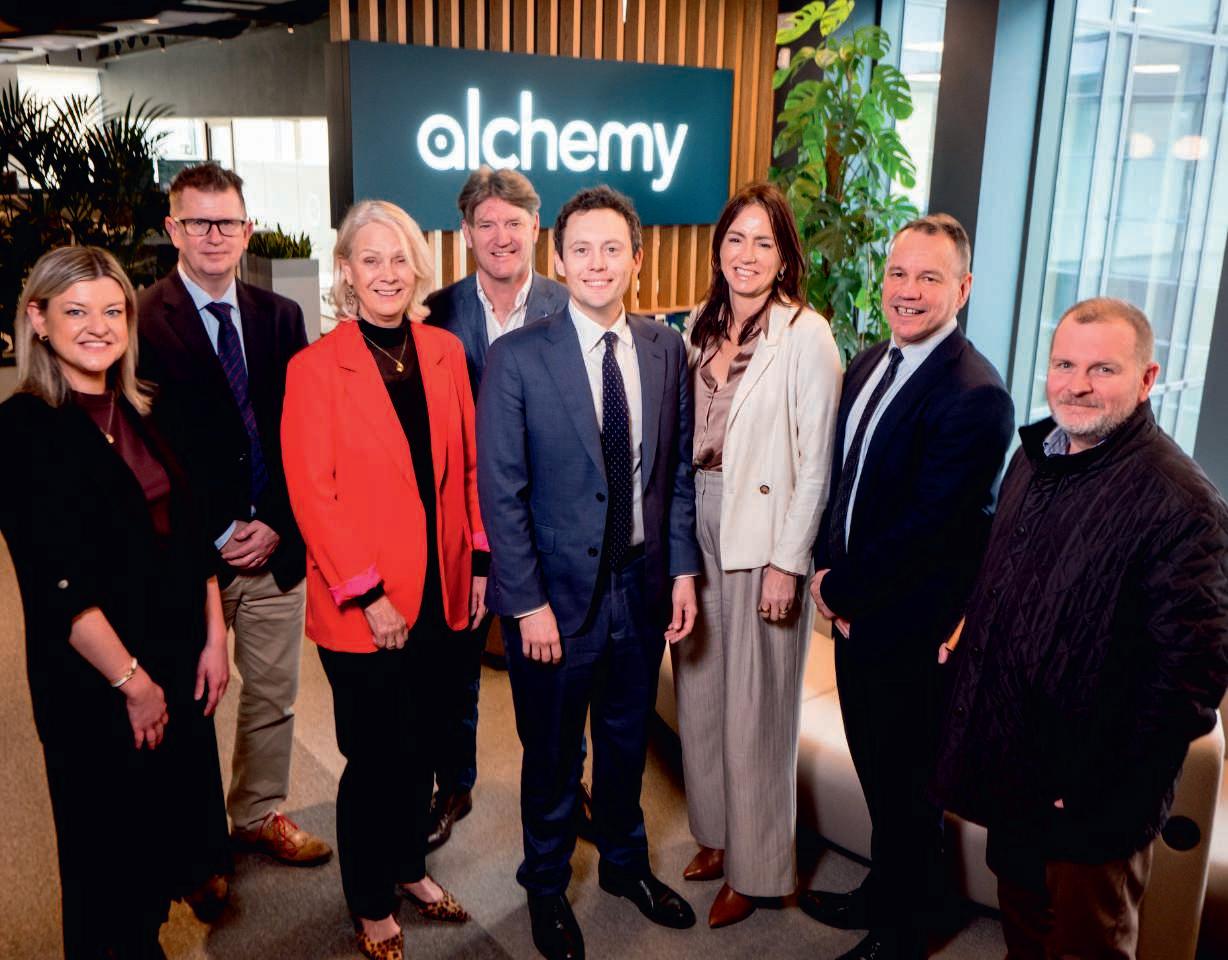
Parliamentary Under-Secretary of State at the Northern Ireland Office, Matthew Patrick MP joined business and regional leaders from across the North West for a strategic roundtable discussion focused on the region’s economic growth and future investment opportunities.
The roundtable, convened by Londonderry Chamber of Commerce and hosted at Alchemy Technology Services, brought together representatives from business to discuss the North West’s economic strengths and the steps required to unlock further growth.
The discussion provided an opportunity to highlight the region’s strong talent base, expanding innovation economy and the strategic role the North West can play in supporting wider economic growth across Northern Ireland. Participants also outlined the practical actions needed to accelerate investment, support business expansion and ensure the region’s long-term economic potential is fully realised.


Vidrala has reported full-year 2025 results in line with prior expectations, in a year marked by weak demand and intense competition. Vidrala is the parent company of leading UK glass manufacturer and bottler Encirc.
In 2025, sales reached €1,465.2 million (-5.4%), while EBITDA amounted to €441 million, improving the margin to 30.1%. Net profit exceeded €219.6 million, equivalent to €6.24 per share (a 6.8% decrease, excluding the effects of the accounting gain arising from the sale of the Italian business in 2024).
These results demonstrate the Group’s ability to generate value even in an unfavourable economic cycle. Vidrala’s CEO, Raúl Gómez, stated that they “are a demonstration of the strength of the business we have built and the decisive impact of the measures adopted to drive geographic diversification – with our entry into South America – and the vertical integration of our operations. They also reflect our firm commitment to industrial investment and cost reduction, in order to continuously adapt our products and services to the expectations of brand owners and consumers.”
Foot Anstey McKees has announced the introduction of ‘Accelerate’, a new early careers programme designed to support first-year law students who may face additional barriers to pursuing a career in law.
The new programme has been created to help address the gap between talent and access to the legal profession and is open to first-year undergraduate law students who meet one or more eligibility criteria designed to ensure it supports social mobility.
Hinch Irish Whiskey Single Malt was named Best Irish Small Batch
Single Malt at the World Whiskies Awards Ireland 2026, a significant recognition that follows Emma Millar’s recent promotion to head distiller and reflects her influence on the development and character of the award-winning liquid.
Emma, who has been part of the Hinch Distillery team since its inception in 2020, has played a central role in developing and shaping the character of the Single Malt, working closely on its maturation journey in ex-bourbon American oak and Oloroso sherry casks to create a finely balanced expression with notes of orange, honey and ginger.
Construction company Henry Brothers has started work on its new flagship office in Magherafelt, marking a major investment in its future and reaffirming its long-standing ties to the Mid Ulster region.
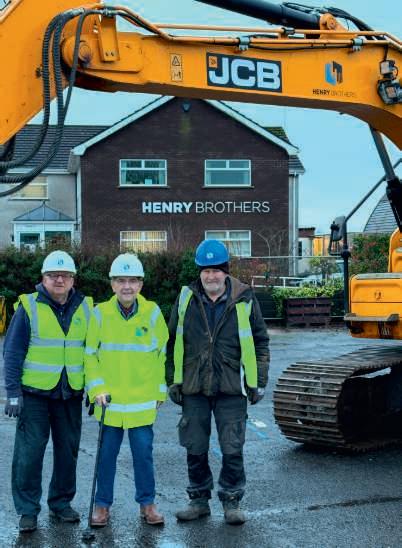
With ground broken by Henry Brothers founder, Jim Henry, and longest-serving team members Ronnie Wilson and George Scott, the expansion will deliver a modern workspace with upgraded facilities and sustainable design throughout, enhancing the working environment and supporting the company’s continued growth.
The build comes as Henry Brothers celebrates 50 years in business – a milestone reflecting half a century of innovation and excellence.
Henry Brothers longest-serving members break ground on state-of-the-art Magherafelt office
Lidl Northern Ireland announces £2.3 million investment in colleague pay increases



Lidl Northern Ireland has announced a £2.3 million investment in employee pay increases for its workforce in the region. It means that Lidl Northern Ireland store and warehouse employees will see their hourly rate rise from £12.40 to £12.80.
Since 2022, Lidl has invested more than £10.8 million in pay rises for employees in Northern Ireland, with employees benefitting from an approximate 27.5% cumulative increase, or an average £6,500 in additional take home pay during the height of the cost-of-living crisis.
This latest investment will see all of Lidl’s 1,300 employees in Northern Ireland benefitting from an average increase of 4% to their ‘Total Rewards’ package. Consisting of a 3% increase to salaries, equal to, on average, £930 per employee per annum and the remainder contributed to industry-leading benefits including pension funds, private healthcare and personal insurance to safeguard employees at every life stage.





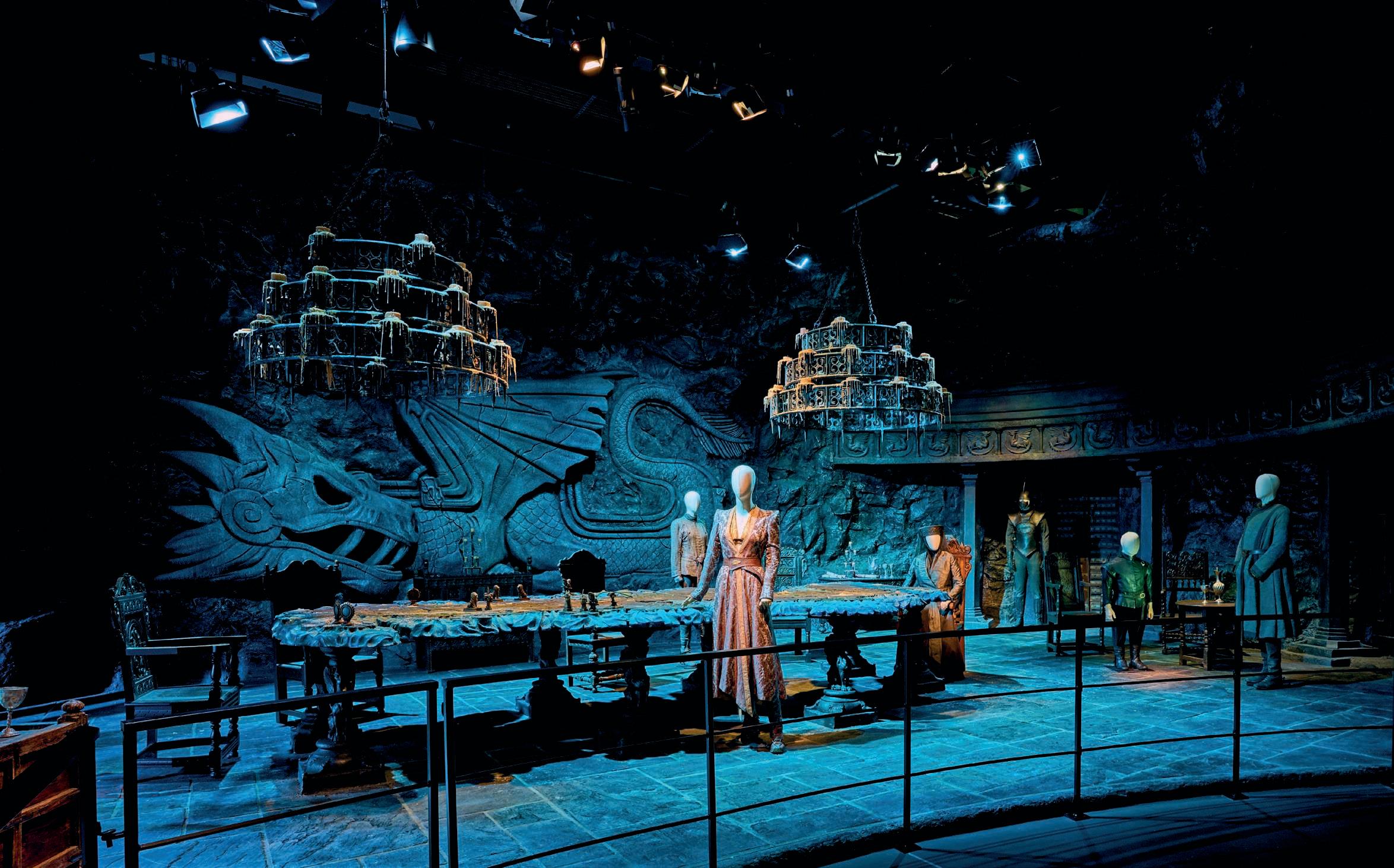
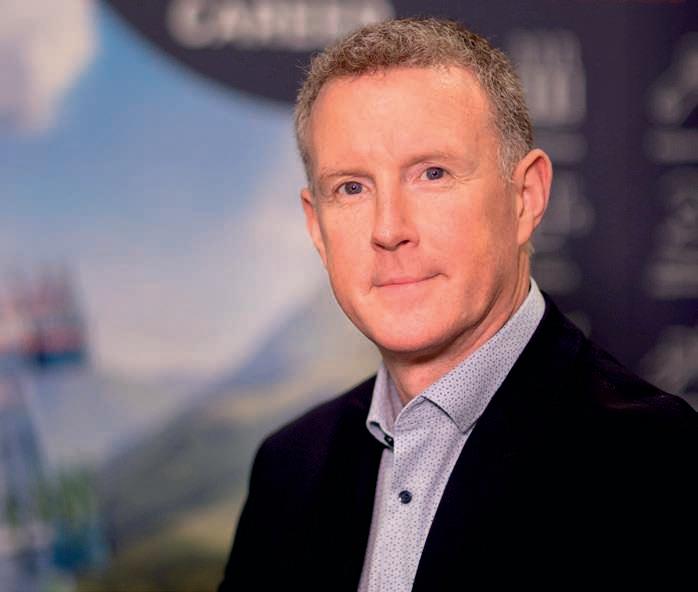
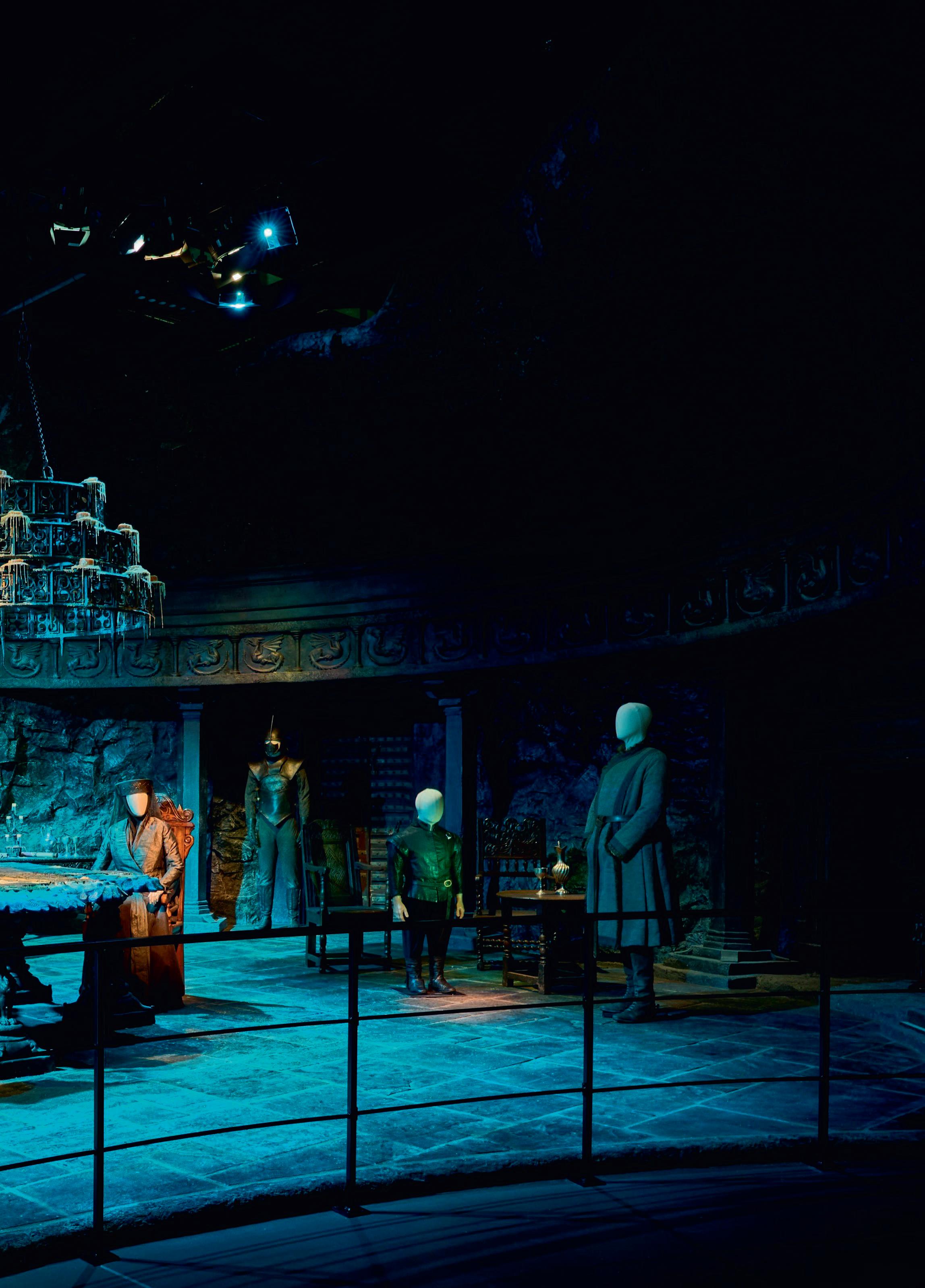
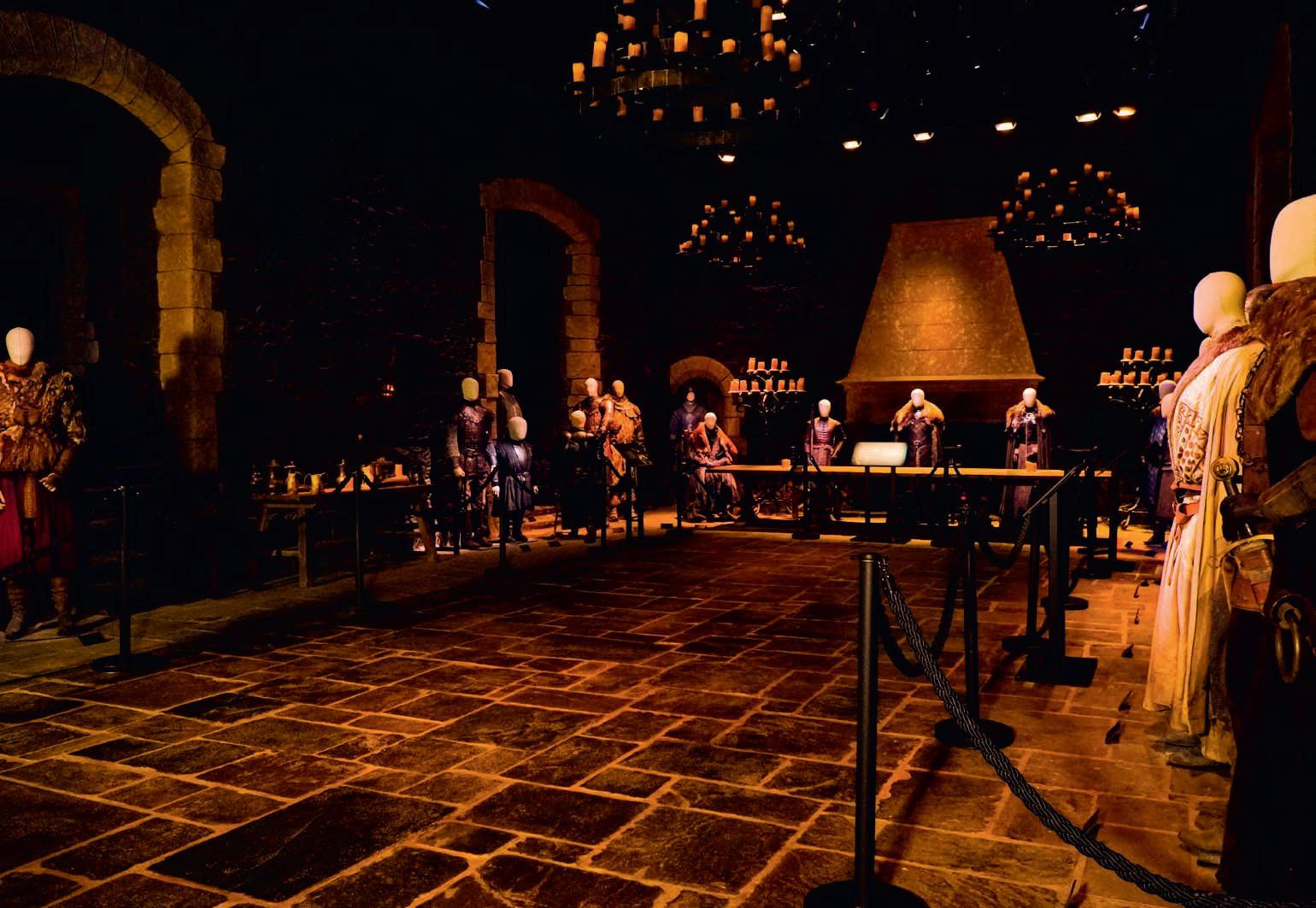
Visitor numbers at the Game of Thrones Studio Tour have surged over the past year, marking its strongest performance since opening in 2022. As the Banbridge attraction grows its international audience, it is also expanding its role in education and Northern Ireland’s developing screen tourism industry. For Sam Harding, managing director, the figures reflect a long-term strategy rather than a sudden spike.
At the Game of Thrones Studio Tour in Banbridge, Q1 2026 is shaping up to be another strong quarter at 60 per cent up already in visitor numbers year on year.
January recorded a 94% year-on-year increase and ticket revenue rose by 61%. Across 2025, visitor numbers increased by 28%, accelerating to approximately 33% in the second half of the year up from 18% in the first half of 2025. International visitors now account for 47.6% of guests, travelling from more than 64 countries.
Those figures are particularly impressive for a tourist attraction that launched in the wake of the pandemic, when travel was still recovering and attention was focused on far bigger headlines. Four years on, the Tour has proven to be a major success story and there’s more to come, says Managing Director Sam Harding.
“It’s not something that’s just happened. If I go back to my beginning, the early days two and a half years ago, it was really about making it as easy and accessible as possible to get tickets. That comes from our key messaging and making it as easy as possible to get here, which is tricky.”
Since joining in September 2023, Sam has overseen operational changes designed to remove friction from the visitor journey which has been instrumental in the attraction’s growth.
shuttle buses we have now weren’t running as frequently – only on weekends and peak days so our guests had a real journey to get to us. We moved that to seven days a week and we increased services from Belfast and Dublin, so it’s not a coincidence. It’s been a couple of years of hard work restructuring the business and building on key relationships.”
The attraction now operates seven days a week from 10am to 6pm. Shuttle services run from The Boulevard retail park, as well as direct routes from Belfast and Dublin. While the park-and-ride operations remains, an operational workaround at a significant cost, is currently in planning process for permanent on-site parking. “This will help the business in many ways. Firstly by allowing our customers to have a far easier journey to us, secondly by reducing a huge cost in running the shuttle bus service and thirdly by allowing us to access our local customers who right now have an additional 30 to 40-minute journey to us when they may only live within the local area.”

“When I started, there were two days a week when we were closed during the slower months. When you are attracting tourists who are only here for a short time and we’re not open, that’s not good,” he says. “The

Sales and marketing have been a central focus too. “One of the challenges we started with in 2022 was that not only were we opening coming out of Covid, which was tough enough, but a lot of tour operators were servicing a backlog of holidays. So we had minimal tour group business, really until 2025 when we started to see that area grow and they’re big drivers of growth,” Sam continues.
He adds that the business did not initially have a fully structured sales team. “Only in the last 12 months have we fully structured that side of the team. Tour operators are so important


“We’d like to see ourselves front and centre of screen tourism.”

and we needed to be properly embedded in that ecosystem where we are a mustsee and must do attraction.”
Stronger links with international tour operators are now contributing a bigger year-on-year growth through that channel. Corporate partnerships with Visit Belfast, Tourism Ireland, Belfast Giants, ABC Council, Excursions Ireland and online ticket agencies have broadened reach across domestic and international markets. These are all fixes that were made possible by Sam’s appointment. His background is impressive and heavily orients on major attractions.
Over the past 20 years he has worked across the US, China, the Middle East and the UK. In Macau he oversaw all nongaming operations for one of the worlds largest casino resorts. Prior to this he developed a new Leisure & Entertainment Division for one the world’s most successful Retail operators based in Kuwait with the $50m KidZania Theme Park, and spent four years with Merlin Entertainments at Alton Towers Resort and Madame Tussauds, and earlier held a hotel management position with Princess Cruises.
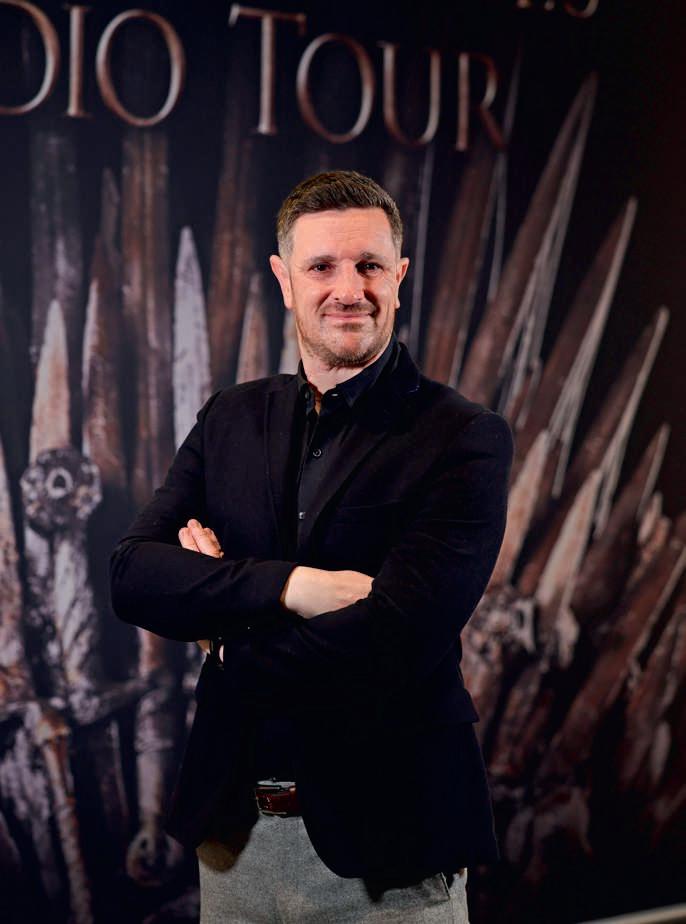
Sam Harding
because the tour itself is age appropriate, despite the show’s rating. It gives young people a chance to see how productions are made and the range of careers behind them.”
With Studio Ulster developments underway and Ulster University expanding its screen-based courses, Sam sees opportunity for deeper collaboration.

“It’s all tourism-linked, high-profile, fast-paced and experiential offerings,” he says. “In a roundabout way, with Game of Thrones, it’s about experience and providing something memorable and unique with a huge focus on the customer experience, working with Warner Bros. to bring the screen to life.”
Positioning the Studio Tour as a leading ‘screen-tourism” attraction has been central to his strategy.
Beyond fan engagement, Sam sees the tour having a broader role in developing Northern Ireland’s screen industry ecosystem.
“There are people who are into film production who come here. You don’t have to have watched it” he says. “What we offer brings you on a journey that shows the evolution of a set, how it was created, behind the scenes and all skillsets that go into making a TV show or film.”

“We’re working with Ulster University on some courses and early engagement with Cinemagic and NI Screen. I’d like it to be more cohesive,” he says.
He draws parallels with his time at KidZania. “After a number of years, we started getting case studies from children who’d been there at a young age and were inspired by those moments to start working towards their careers as doctors, vets or lawyers from their experience at a young age through a proper experience. I’d love that here. I’d like case studies showing who we inspired. That full circle.”
The Studio Tour also supports over 90 jobs and is exploring ways to deepen community integration. However, Sam is clear that permanent on-site parking

The education programme has grown alongside the attraction’s wider ambitions. “There are over 100 careers across the film industry, and it’s a sector that continues to expand,” Sam says. “We started working with primary schools right up to further education groups

Winterfell Hall
would significantly enhance both visitor experience and operational flexibility.
“Parking is a huge improvement to the experience,” he says. “It allows us to be a destination in our own right. We’re a bit of an island at the moment. It allows us to engage the local community more, do things for the local community and open up more.”
The site spans 100,000 square feet, offering scope for future expansion. Sam suggests developments that could appeal to different demographics, including more child-friendly offerings and opportunities for visitors to use the restaurant independently of the full tour.
New HBO productions are already fuelling interest. “There are university students who are 18 now and may not have seen the original series,” he says. “The new shows get them interested. It builds and fuels growth.”
With filming activity ongoing in Titanic Studios and Tollymore Forest with Warner Bros. Sam is keen to position the attraction at the centre of franchise momentum. He sees opportunity for Northern Ireland to capitalise further on screen tourism.
“VisitBritain’s main hook is screen tourism. It’s a big hook and Tourism NI is embracing the same,” he says. “We’d like to see ourselves front and centre of screen tourism, not just in Northern Ireland but everywhere as this is genuinely one of the best offerings around.”
For Sam, the growth story is about more than performance metrics. “It’s a fun proposition,” he says. “But it’s inspirational for careers as well. That’s what we’d like to see.”


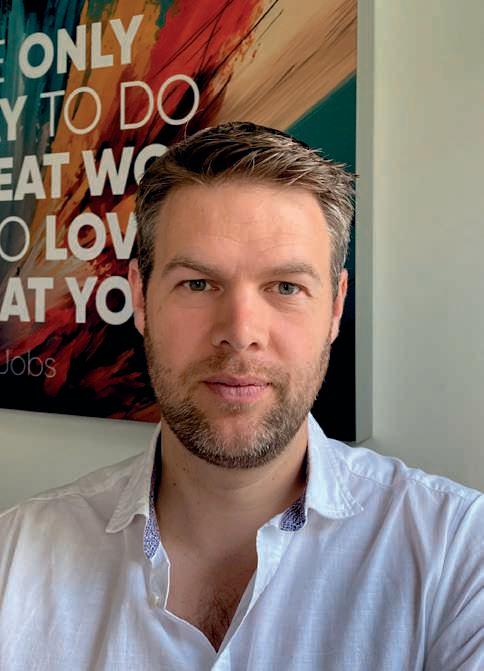
Jamie McMinnis Managing Director, MAD Colour
In today’s crowded marketplace, brands aren’t just competing on product or price; they’re competing for attention.
Nowhere is that competition more evident than in physical spaces: exhibitions, events, retail and workplaces. These are the moments where first impressions count and lasting perceptions are formed.
Businesses invest heavily to “show up”. Yet, too often, their display fails to stand out. A generic pop-up, low grade materials or lacklustre design can quietly undermine credibility. Clients judge a brand by what they see: the build quality, the visual impact and how confidently a space tells its story.
Expectations have changed. Live environments are now one of the most powerful drivers of trust and buying intent. With that opportunity comes pressure to perform; the gap between being remembered and being overlooked has never been smaller.
The Problem: Outdated Display in a Modern Market
Traditional display solutions haven’t kept pace with modern expectations. Heavy, single-use builds and basic popup systems offer limited impact and no flexibility. They’re often difficult to transport and time-consuming to install with limited reuse potential.
Outdated displays don’t just limit visual impact; they restrict performance. They fail to deliver the flexibility, efficiency and sustainability that modern businesses need to compete, stand out and maximise return on their investment.
The Shift: Smarter, More Sustainable Solutions
The display industry is evolving and fast.
Businesses are moving towards modular, reusable systems that combine
strong visual impact with ease of use. Lightweight aluminium frames paired with fabric graphics create seamless, premium environments that can be reconfigured and reused across multiple events and campaigns.
This isn’t just a visual upgrade; it’s a smarter way to operate. Faster installs reduce time on site, hired hardware reduces cost, reusable systems cut waste, and flexible setups keep brands looking fresh without constant reinvestment.
The Solution: Fully Integrated Systems, Built for Impact
MAD Colour is unique as everything is brought together under one roof: creative design, vibrant print, inhouse fabrication and digital integration.
Operating from a 40,000 sq ft facility in Belfast, the team delivers fully integrated display solutions with speed, consistency and the reassurance of a local partner backed by 50 years’ experience.
At the core of this modular approach is the globally utilised REXframe system. Lightweight and robust aluminium structures with interchangeable fabric graphics allow brands to create bold, high-impact environments that evolve with every campaign, without the cost of starting from scratch.
In-house dye-sublimation fabric printing and frame fabrication results in high-quality display solutions delivered at pace and built for modern marketing.
MAD Colour can also remove the headaches of transport and storage. With options to hire display hardware plus full installation and dismantling services, businesses can focus on engagement and leads, not managing the kit.
The service is further extended with hire options for digital screens, freestanding touch totems and event
“Clients judge a brand by what they see: the build quality, the visual impact and how confidently a space tells its story.”
furniture including counters, desks, tables and seating. This allows businesses to elevate their presence without significant upfront investment and clients benefit from both cost efficiency and a more sustainable approach to brand display.
In a world where perception is formed in seconds, display is no longer a support act. How you represent your business is central to the brand identity and values. MAD Colour understands that true impact goes beyond aesthetics; the key is creating environments that build confidence, spark engagement and leave a lasting impression.
Ultimately, it’s not about your brand showing up; it’s about standing out!
MAD Colour offers the creativity, expertise, and end-to-end delivery to make it happen. Go MAD, get results.
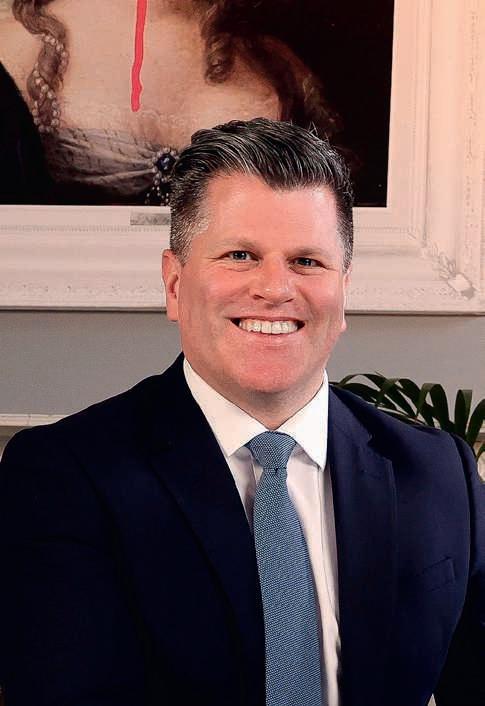
Chris Brown Joint Managing Director, Brown O’Connor Ireland
Ayear out from the NI Assembly election is the perfect moment to take stock. For businesses, the next 12 months are not a waiting period — they are a critical window to prepare, engage and position for success. Those who act early will be the ones best placed to navigate whatever comes next.
Refresh your policy priorities and evidence base
What are the top three issues that matter most to your organisation over the next mandate? More importantly, can you articulate them clearly, concisely and with credible evidence behind them?
Businesses should be reviewing their economic impact data, regulatory or operational barriers, social value contributions, workforce and skills needs and their long‑term investment plans.
Political parties will soon begin shaping their manifestos. If you want your priorities reflected, you need to be able to present a compelling, evidence driven case now — not in the final weeks of the campaign.
Map your stakeholders and strengthen relationships
The 2027 Assembly election will inevitably bring change — new MLAs, new committee chairs, new ministers. However, many of the people shaping policy today will still be influential post election. Established relationships built on trust and transparency are far more valuable than last minute requests during a campaign.
Businesses should be aware of the current cohort of MLAs, their policy interests, and those who influence their
sector. It is important to understand the role of special advisers and party policy teams, and the need to engage more with sectoral and representative bodies and their initiatives, such as the excellent NI Chamber Public Affairs Forum.
Prepare your organisation’s election narrative
Every business needs a clear, consistent narrative that explains who you are, what you contribute and what you need from the next Executive to grow. Make it positive and forward looking, grounded in real world impact, flexible enough to adapt to different political audiences and ultimately relevant to the priorities of the Programme for Government.
Think of it as your organisation’s ‘election‑ready’ story — one that can be used in meetings, written submissions, media engagement and at stakeholder events.
Engage early with party policy processes
Most parties will begin consulting stakeholders well before the formal campaign period. This is the window when ideas are shaped, not just announced. Constructive engagement at this stage is far more influential than reactive engagement later.
Businesses should be responding to policy consultations, offering briefings to party teams, hosting site visits or roundtables and sharing practical insights from their sector.
Stress test your communications and scenario planning
Scenario planning is essential. You don’t need to try and predict outcomes, but
you do need to understand how different political configurations could affect your operating environment.
Elections can shift public debate quickly. Businesses should ensure they have a plan for responding to political developments, clear lines on key issues, a strategy for media engagement and internal communications prepared for staff and stakeholders.
Economic and political uncertainty
The most resilient organisations are those that understand politics not as a cycle of elections, but as a continuous process. Training senior teams, building internal awareness and embedding political monitoring into your decision making will pay dividends long after polling day.
Invest in professionals that understand the ‘triple-play’
Business, politics and the media are linked. There is overlap and you should see your business in the middle of that Venn diagram. The most effective organisations either have in house colleagues or external agency support.
That should not be regarded as a luxury. We only have to see the impact of the Assembly hiatus, impacts of Brexit and the covid pandemic, never mind the whole plethora of day to day issues that create the consistent backdrop of economic and political uncertainty.
Surround yourself with professionals who have mastered the integration of the ‘triple play’ of media, commerce and politics.
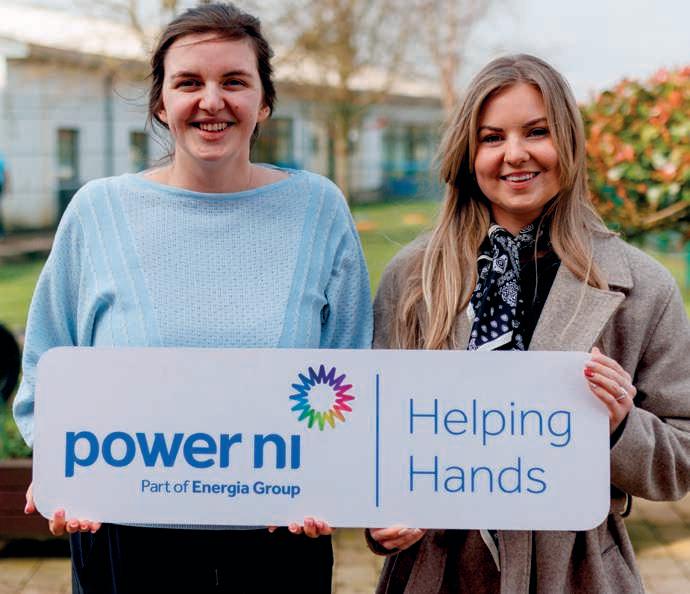
Staff and pupils at a Moira special school are enjoying new additions to their Sensory Garden after Power NI – Northern Ireland’s leading energy provider –donated £600.
The new funding has been used to enhance the existing garden space to offer children a calming and more interactive environment that is designed to support their sensory development, emotional regulation and social interaction. This has been made possible by purchasing new equipment to create meaningful learning experiences for children who benefit from tactile, visual and auditory stimulation as part of their daily routine.
Sensory gardens are particularly valuable for pupils with additional needs, including those with Autism Spectrum Disorder (ASD) or Attention Deficit Hyperactivity Disorder (ADHD) and can also be used for outdoor lessons and activities, helping children build social skills, develop motor skills and enjoy learning in a different environment.
Brookfield Special School, which is home to almost 170 children, was nominated for the Helping Hands fund by Power NI employee Lauren White. The fund is part of the company’s long-running commitment to supporting organisations that play an important role within local communities.
Speaking about the Power NI Helping Hands donation, Lauren said: “It’s great that my employer, Power NI, can provide funding for Brookfield Special School to help create a sensory garden for the children to enjoy. It means a lot to have the opportunity to support the local community in this way.”
Mrs Brand, the school’s senior teacher also expressed her gratitude for the financial donation, adding: “We really appreciate support from Power NI to help make our sensory wish list a reality. By investing in projects like Brookfield’s Sensory Garden, Power NI is helping create inclusive, nurturing spaces where
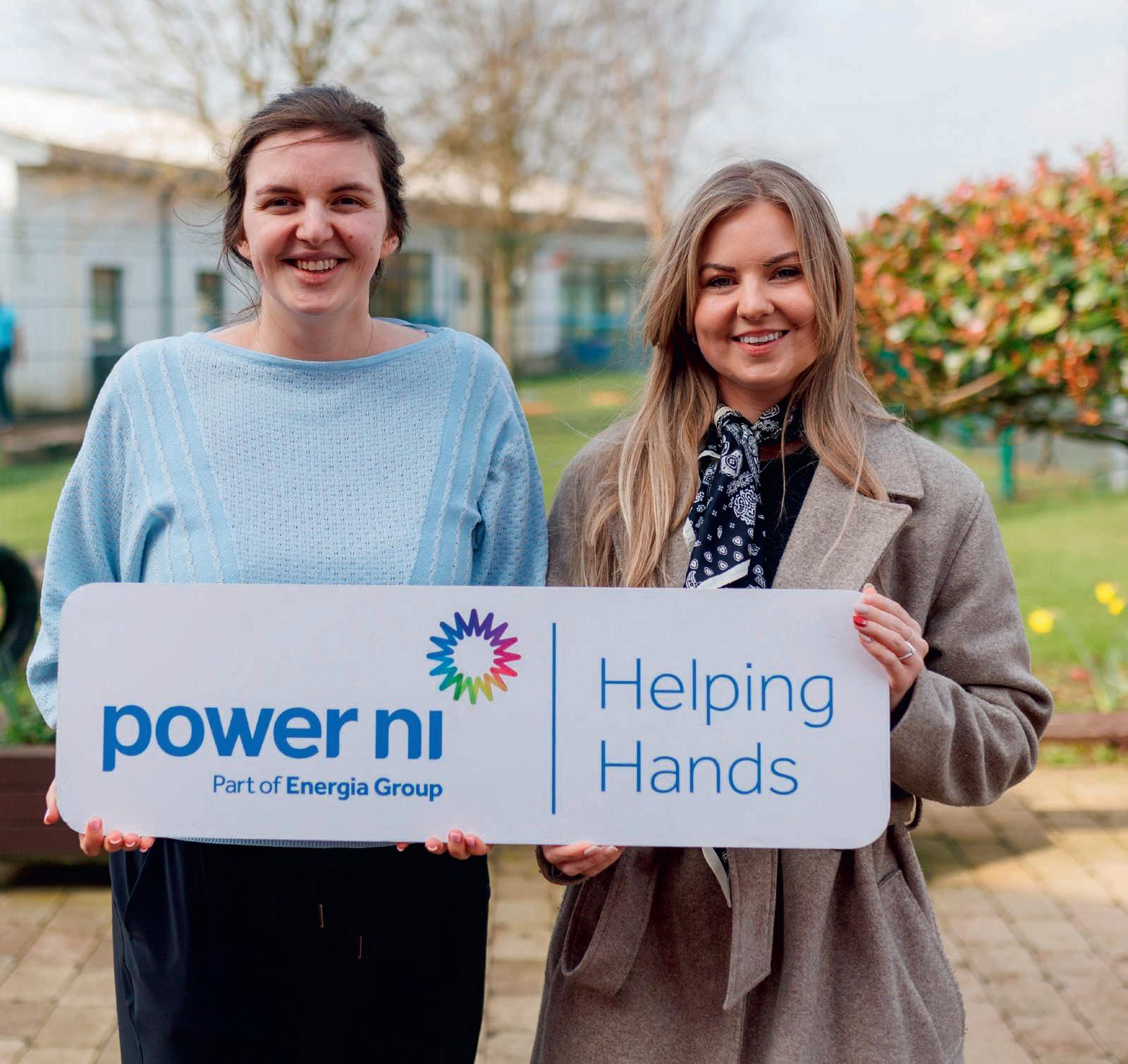
children can learn, play and thrive.”
Power NI is proud to continue its support of important organisations within Northern Ireland’s communities, with the
employee-led Helping Hands initiative one of the ways it strives to assist organisations.
“It’s great that my employer, Power NI, can provide funding for Brookfield Special School to help create a sensory garden for the children to enjoy. It means a lot to have the opportunity to support the local community in this way.”

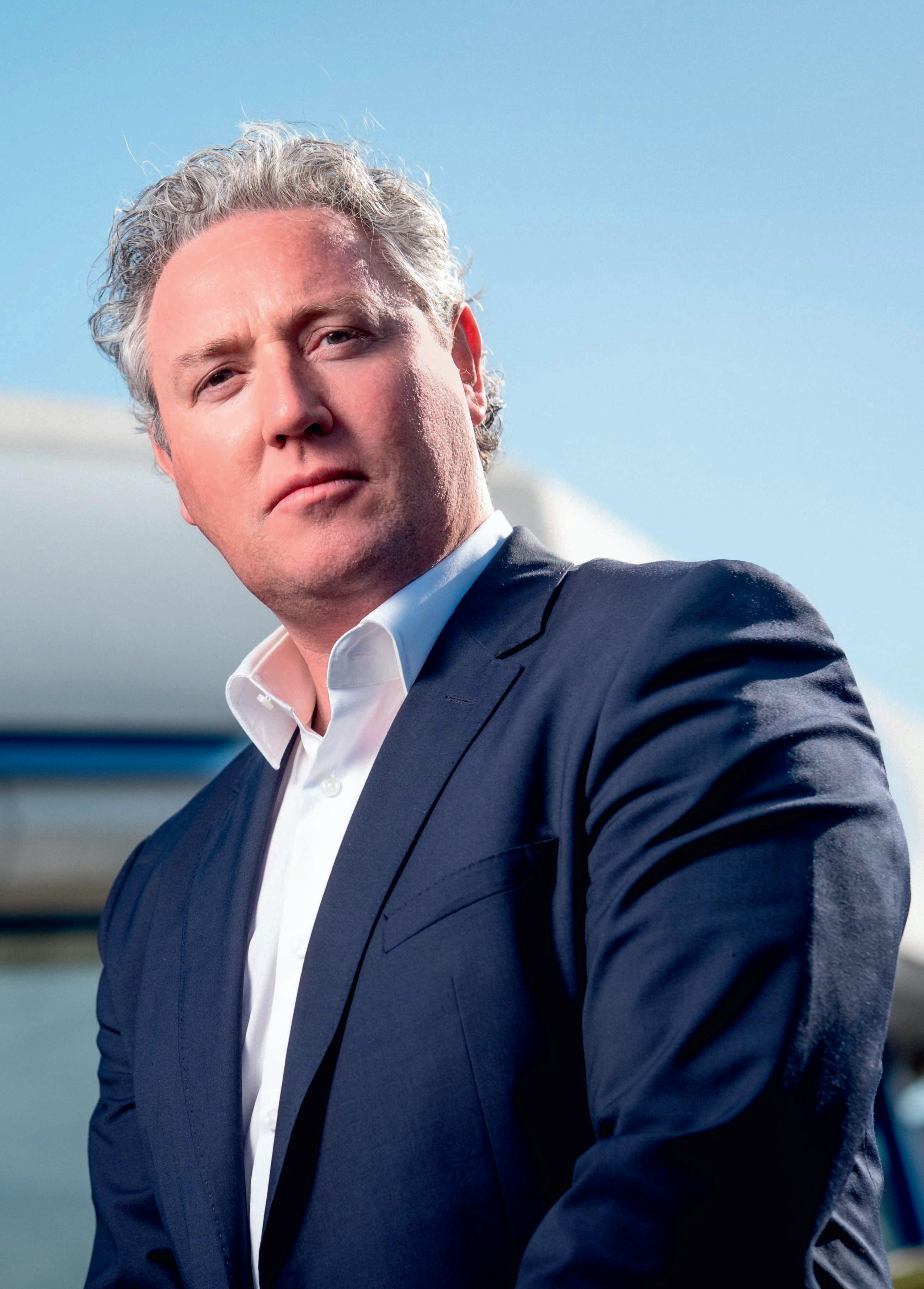
As Desmond Motors marks over six decades in business, Managing Director Garrett Mallon reflects on sustained growth, expansion in electric vehicles and why, in a fast-moving market, the customer must remain firmly in the driving seat.

From a single showroom opened more than 60 years ago, Desmond Motors has grown into Northern Ireland’s largest family-run Ford dealership group. Longevity, Garrett suggests, has brought perspective as well as scale.
“This is one of the most dynamic periods the motor industry has seen,” he says. “There is real innovation and customers have more choice than ever. The challenge is helping people feel confident navigating that change. Trust and reliability matter more than ever.
“As a family-run business with over 60 years behind us, that brings responsibility as well as reputation. People come to us for peace of mind. Choosing your next vehicle should feel straightforward, transparent and trusted, because it has to work for real life.”
The long-standing partnership with Ford has provided strong foundations. Over time, Desmond Motors has built a reputation for dependable service and consistent sales support, becoming a trusted option for private and
commercial customers alike.
That heritage has supported strategic expansion from Derry~Londonderry to Omagh and, most recently, into Belfast, with the opening of a new showroom on Boucher Road last year. Located on the city’s ‘motor mile’, the investment strengthened Desmond’s presence in the capital, creating local jobs and positioning the business for future growth.
Garrett explains: “Boucher Road has long been a focal point for the motor industry here, so it made sense for Desmond Motors to become part of that landscape, while investing in the city’s long-term potential.
“Growth only works if it improves the customer experience. Every decision we take is grounded in long-term sustainability for the business, our people and the communities we serve.”
Change across the automotive sector has reshaped how Desmond Motors views the future. Electrification, digital retailing and shifting expectations have altered both the products on offer and conversations with customers.
“If government and local authorities truly want to see that transition accelerate, then investment in charging networks, grid capacity and incentives has to accelerate too.”


“We see NEVs as a practical evolution of the market rather than a distant ambition. Our job is to o er credible options and clear guidance.”


There is an increasing shift towards New Energy Vehicles (NEVs), encompassing electric, hybrid, plug-in hybrid and emerging fuel cell models. Demand now extends beyond fully electric, as drivers seek a mix of lower emissions, efficiency and everyday practicality.
“NEVs are becoming more popular here,” says Garrett. “Drivers want lower running costs, reduced emissions and the latest technology.
“For some that means fully electric, for others it is hybrid or plug-in hybrid. We see NEVs as a practical evolution of the market rather than a distant ambition. Our job is to offer credible options and clear guidance.”
That thinking has shaped the expansion of Desmond Motors’ NEV portfolio, with the addition of BYD and Geely, two global automotive leaders at the forefront of new energy innovation. Both brands broaden customer choice, with the partnerships reflecting a focus on delivering best-in-class products at highly competitive rates to Northern Ireland drivers, alongside the reassurance of buying from a trusted local business.
Garrett, however, is measured about the pace of transition and feels support is needed.
“There is a clear appetite for NEVs, but it has to be supported in practical ways,” he says. “If government and local authorities truly want to see that transition accelerate, then investment in charging networks, grid capacity and incentives has to accelerate too. The intent is there, but people need confidence that the infrastructure around them is ready.”
Beyond infrastructure challenges, Garrett is optimistic about the wider environment for growth in Belfast.
He says: “We welcome the ambition behind initiatives like the Belfast Region City Deal. That level of longterm investment signals confidence in Belfast’s future and creates a sense of momentum around the city.
“Regeneration, skills development and business support all create a healthier environment for companies to grow and invest. We’re keen to play our part in that too.”
Digital platforms and online sales models have also changed how customers buy, but the role of the dealership is still held in high regard by those in the industry.
“People research more before they arrive, which is positive,” says
“Regeneration, skills development and business support all create a healthier environment for companies to grow and invest. We’re keen to play our part in that too.”
Garrett. “But when it comes to deciding, guidance, transparency and reassurance still count. The human element matters. Our role is to turn a complex purchase into a clear, confident choice.”
As Desmond Motors looks beyond its sixth decade, Garrett returns to a simple principle:
“We’re proud of our history, but focused on the road ahead. Growth only works if it strengthens trust. If we keep the customer at the centre of every decision, everything else tends to follow.”




With our EV Salary Sacrifice Scheme, you can swap part of your salary for a brand-new electric or plug-in hybrid vehicle. No upfront costs, tax-efficient savings, and zero hassle - just smarter driving. It’s more than a car. It’s a smarter, cleaner, more affordable way to drive.
Driving Savings. Driving Sustainability.
“It’s not just about us as an airport wanting to grow. It’s Northern Ireland needing the connectivity to move ahead.”



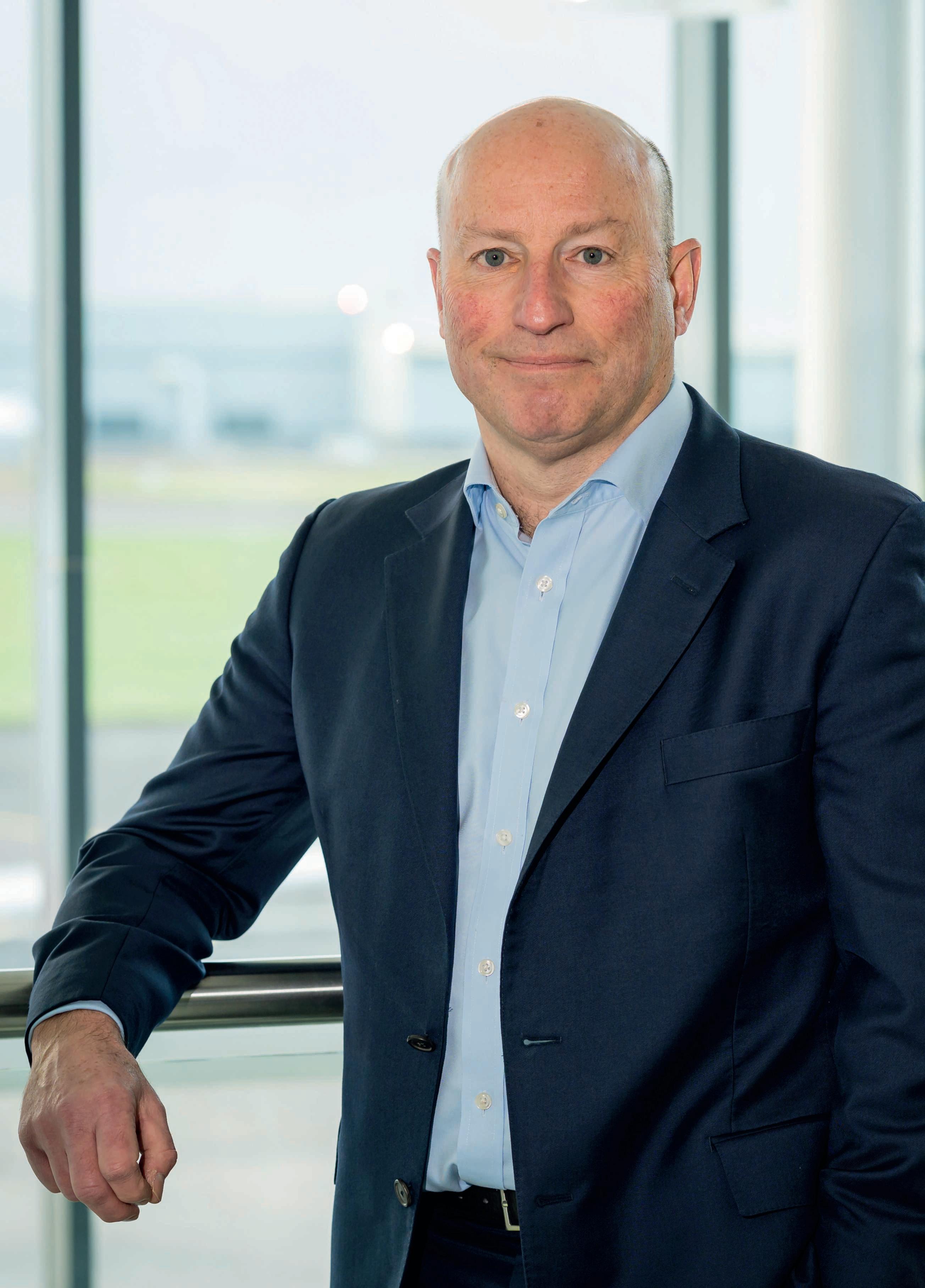
Ambition talks to Matthew Hall, CEO of Belfast City Airport, about the airport’s development plans to improve Northern Ireland’s connectivity.


In a world where connectivity drives commerce, Belfast City Airport is more than a transport hub – it’s a vital pillar of Northern Ireland’s economy.
“For businesses looking to invest or expand in Northern Ireland, having reliable connections is absolutely crucial,” says CEO Matthew Hall. “Our airport provides that link, helping companies access markets, talent, and partners across the UK, Europe, and beyond.”
Located just five minutes from Belfast city centre, Belfast City Airport is perfectly positioned to drive regional growth – a role which will only continue to grow as the Northern Ireland Government realises its Programme for Government (PfG) 2024-2027.
“As a key driver of economic growth, airports play an important role in improving prosperity while making sure we have an economy that works for everyone,” continues Matthew. “Enhanced airport infrastructure and route connectivity strengthen Northern Ireland’s links, attracting investment, encouraging exports, and making Belfast a more attractive place to live, work, and visit.”

Building on this commitment, and following a significant period of consultation in 2025, Belfast City Airport unveiled its Master Plan 2040 in March 2026 – a comprehensive vision for the Belfast City Airport of tomorrow.
“We are grateful to everyone who took the time to engage with the consultation process and are pleased with the strong levels of support shown by a wide variety of stakeholders including our local community, elected representatives, businesses, passengers, trade bodies, and airlines.
“Our Master Plan 2040 is a clear and responsible framework for the airport’s development, ensuring we can continue to support connectivity, economic growth and employment while operating in a way that benefits our local community and delivers against our environmental responsibilities,” Matthew explains.

“By 2040, forecasts suggest that demand for travel to the island of Ireland will double to 90 million passengers per year. Belfast City Airport will be critical in unlocking the regional advantages of this growth, catering for 7 million passengers per year.”





Matthew emphasises that the economic benefits from the realisation of Belfast City Airport’s Master Plan 2040 will be significant. “The increase to 7 million passengers per year would generate £1.7 billion in GVA annually, supporting over 23,000 jobs across Northern Ireland, including 1,100 new roles at the airport,” he says. “In addition to these benefits, our approach to growth will help deliver improved access to employment and training opportunities for those furthest from the labour market.”
This vision could be unlocked through a substantial £200 million private investment that would include an extension of the existing terminal, new aircraft stands, aprons, and taxiway, surface access improvements, and complementary onsite development to include a new hotel and EV charging forecourt.
One of the most exciting prospects in Belfast City Airport’s Master Plan 2040 is the potential development of a rail connection between the airport and Belfast city centre, which would make it the first airport on the island to boast this feature.
“We have recently partnered with Translink to complete and publish a study that confirms a new halt directly serving the airport is feasible and the preferred approach. Our vision is to develop the terminal and connect it to a new station, giving people the option to fly straight in and out of Belfast without relying on cars,” Matthew explains. “From a sustainability perspective, it could be a game-changer – reducing road congestion, cutting emissions, and making travel more efficient for both business and leisure passengers.”
On the airport’s commitment to sustainability, he says: “Embedding sustainability best practice throughout the airport and our operations is vital to ensure our future growth is responsible. Whether it’s related to surface transport, reducing our emissions, or implementing innovative practices, we want to go further. Our Master Plan 2040 enables us to accelerate these ambitions, potentially reaching our goals 10 years sooner than originally planned.”
Belfast City Airport’s commitments to sustainability and the local community are deep-rooted.
“We understand the need to be a responsible neighbour in our community and pride ourselves on creating a positive and longterm social impact,” Matthew continues. “For the last 17 years plus, we have been at the heart of our community, supporting 248 projects with nearly £750,000 in funding. Additionally, our High Flyers Apprenticeship Programme and IGNITE Youth Leadership Programme help young people prepare for the workplace, boosting employment and providing opportunities in competitive fields.”
He adds, “we have already committed to increasing our level of funding to £1 million in the next three years, and if we’re able to grow and deliver what Northern Ireland needs, we’ll be able to continue doing this on a much larger scale.”
As Matthew succinctly sums up: “The economic future for Northern Ireland is rightly ambitious and it’s vital that we enable this potential to be realised. We can’t simply assume this will happen. Northern Ireland has a choice: to seize this opportunity to build a brighter, better-connected future, or to allow constraints to limit what we can achieve.
“It’s not just about us as an airport wanting to grow. It’s about Northern Ireland needing the connectivity to move ahead and how we can help achieve this.”
“Embedding sustainability best practice throughout the airport and our operations is vital to ensure our future growth is responsible.”
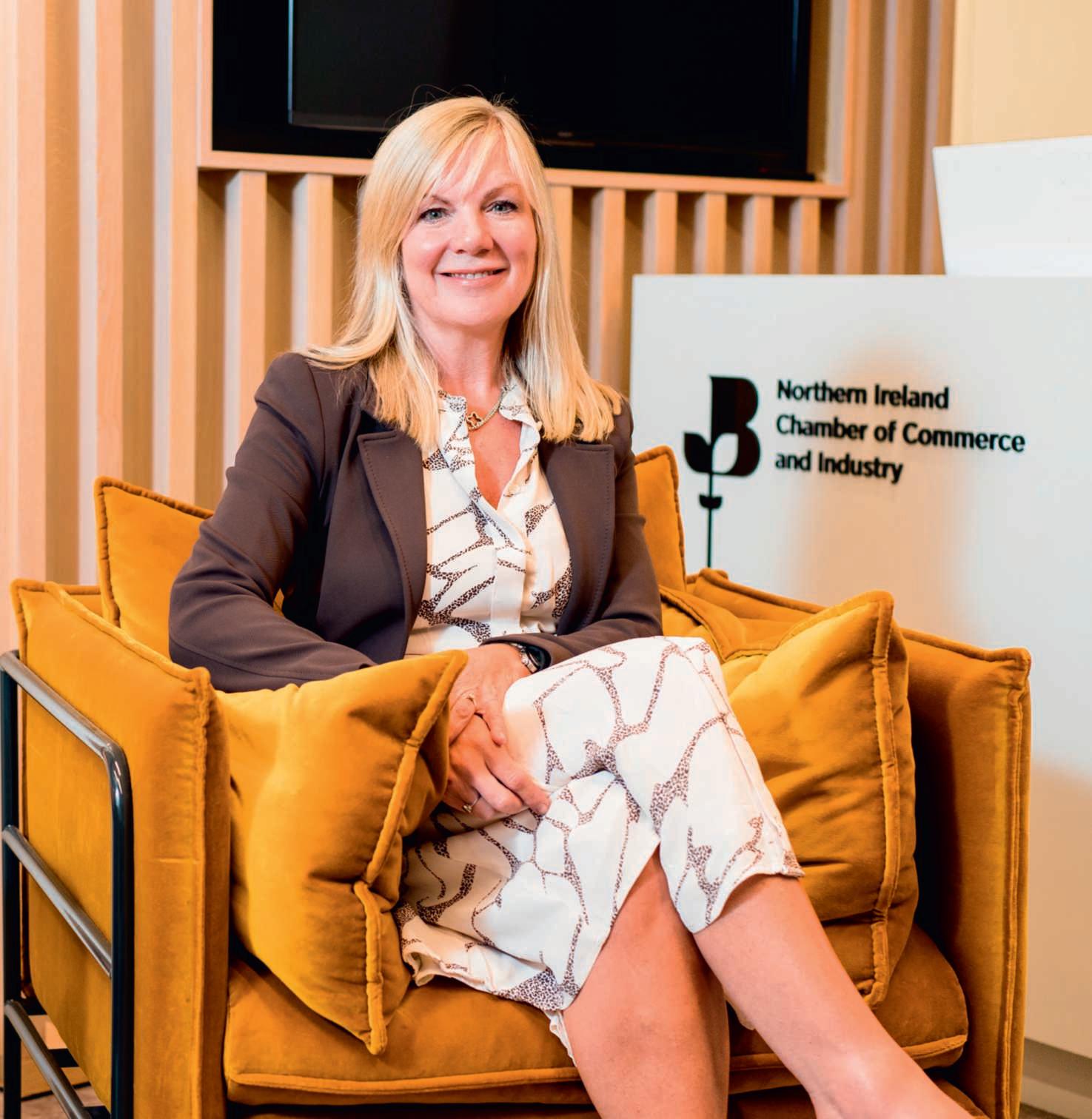
Suzanne Wylie, Chief Executive, NI Chamber
NIChamber’s strength comes from the diversity of our network which spans every sector and part of Northern Ireland. So, we have been especially pleased to welcome such a dynamic mix of new members in recent weeks; from Warrenpoint Harbor in County Down and Camden Group in Co Antrim to leading hospitality, retail and professional services businesses across Tyrone, Armagh, Belfast and far beyond – a very warm welcome to each of you.
Argento
Athena Nexus
Brick Row Consultancy
Camden
Dark Red Design
Euro Auctions
EventSec
Fieldfisher
Flynn
GeoTick
Insula Wellbeing
Karnlea LK Pets
Mango Direct Marketing
MCG Property Group
Momentum Media NI
Natural Resilience
Neighbourgood
Peden Power
People Management
Solutions
People Playbook
RealisingX
SAM NI
Sentinus
Soulbound Security
Sugar Snap
Tax-Wise-Accountants
The Content Lab
Warrenpoint Harbour Authority
Work Life People
March has been a particularly exciting time for us, as it incorporated a series of very targeted engagements in Washington D.C. and North Carolina.
In Washington, NI Chamber had the pleasure of co-hosting a session with BritishAmerican Business and the Northern Ireland Bureau, along with a number of our members. Our select group of guests from AstraZeneca, Atlantic Council and the U.S. Small Business Administration were really energised by what Northern Ireland has to offer and as a Chamber, these are important international relationships we will continue to build on.
As well as a visit to Bank of America’s headquarters in Charlotte, our delegation made some really significant sectoral inroads in North Carolina, particularly in aerospace. These relationships are about opening new doors for our amazing NI supply chain and also about entry to new markets, along with the creation of strategic alliances. The member delegation who travelled with us were exceptional ambassadors for Northern Ireland and the success of the trip is testament to that. Importantly, this work, which is a continuation of our established relationship with NC Chamber is not about oneoff visits. Each of us has a significant amount of follow-up to do, with some really exciting plans in the pipeline, so watch this space!
* To become a member of NI Chamber join online at www.northernirelandchamber.com or phone the membership team on 028 9024 4113
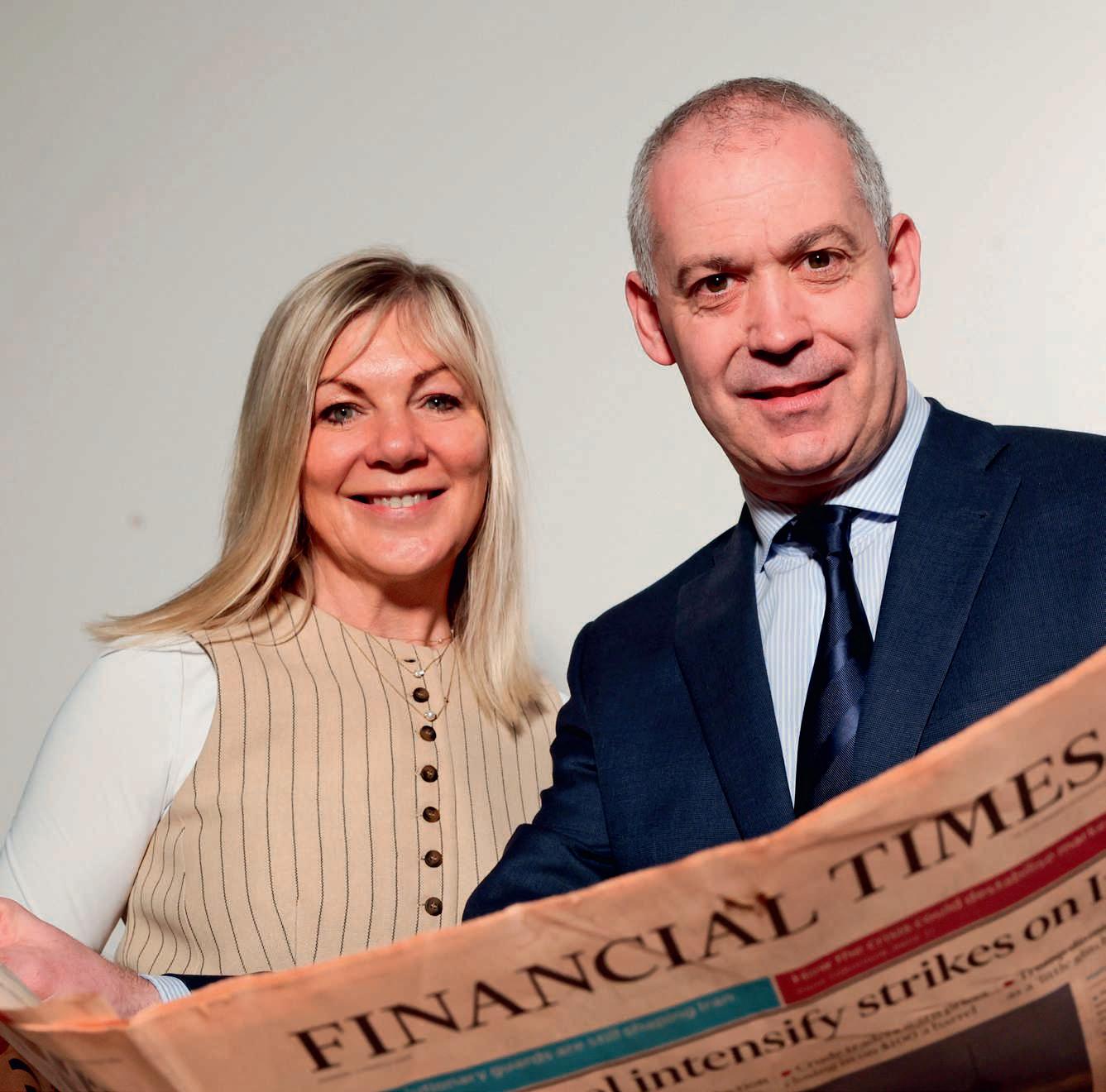
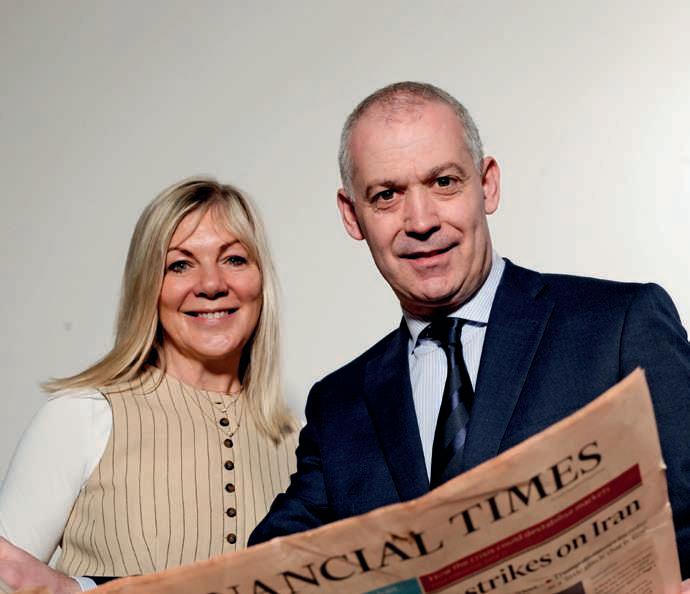
Suzanne Wylie and Nigel Walsh launch the 2026 Momentum conference, which will feature Peter Foster, World Trade Editor for the Financial Times
NI Chamber’s annual economic conference, Momentum will focus on global growth. Now in its third year, the event is set to return to Galgorm Resort in Ballymena on Wednesday 22 April.
Delivered in partnership with headline sponsor Ulster Bank and supporting sponsor, BT, the half-day conference will explore public sector transformation, international trade and innovation through world-leading ideas and best-in-class examples that could be applied in Northern Ireland to boost competitiveness and drive economic prosperity.
Delegates will have the unique opportunity to hear from Peter Foster, world trade editor for the Financial Times. With more than two decades of experience covering global affairs from all sides of the world, Peter will look at the international economic landscape and what changing dynamics could mean for Northern Ireland’s future prosperity. Other headline speakers include Sebastian Burnside, chief economist, NatWest Group and Minister for the Economy, Dr Caoimhe Archibald MLA.
A panel session on ‘World-Leading Innovation’ will examine how Northern Ireland can drive productivity growth and create highvalue jobs by strengthening innovation clusters, translating research into commercial impact and adopting international best practice. An additional panel will address global trade, considering how Northern Ireland businesses can turn international access into growth through improved export readiness, market diversification and better support on finance, logistics and compliance.
NI Chamber has launched its 2026 Regional Networking Series in partnership with new sponsor, the Utility Regulator. The popular programme will once again take business networking on the road, providing opportunities for companies across Northern Ireland to connect and learn.
See page 33 for their first event.
Northern Ireland ‘risks repeating cycles of overspending,
That was the concern raised by NI Chamber as it responded to the Finance Minister’s new multiyear budget consultation. After four years of consecutive overspend, each only resolved through extraordinary Treasury measures, the Chamber says it is time for a strategic shift toward fostering economic growth and transforming the public sector.
Highlighting the need for reform, sustainable growth and efficient spending, Suzanne Wylie, Chief Executive, explained:
“Northern Ireland businesses have never shown such resilience, yet they need clear direction and confidence in public services. That is why we are again calling for an independent review of government spending alongside a long-term economic plan.”
Explaining the call for an independent review, she said:
“Businesses recognise the challenging decisions facing the Executive but they need assurance that funds are used wisely, reforms are tangible and outcomes are improving. While a Treasury ‘open book’ review is encouraging, what is really needed is a comprehensive, independent evaluation.
“Businesses are ready to help drive transformation but first, they need an independent assessment. Now is the moment to launch a comprehensive review of spending and service delivery in Northern Ireland. With informed, transparent decision-making, the Executive could build on these findings through a dynamic transformation framework.”
She also stressed the importance of an Executive-wide long-term Economic Plan, saying:
“A lasting plan is vital to prioritise growth drivers like skills, planning, innovation and infrastructure.
“It is essential for leveraging Northern Ireland’s strengths and providing clear metrics for productivity, exports, skills and private investment. A multi-year Budget without an agreed economic strategy risks short-term allocations overshadowing strategic vision.
“Businesses want to see an agreed Budget succeed. Our members are ready to work with the Executive to turn things around and will back efforts that restore fiscal credibility and encourage growth. Success depends on ambition, transparency and reform; making every pound count, unlocking growth potential and restoring trust in Northern Ireland’s public finances.
“Together with a long-term economic plan, this approach is crucial for building a stable tomorrow –not just for public services, but also for businesses, employing over 70% of the workforce, who are eager to offer more opportunities and better jobs.”
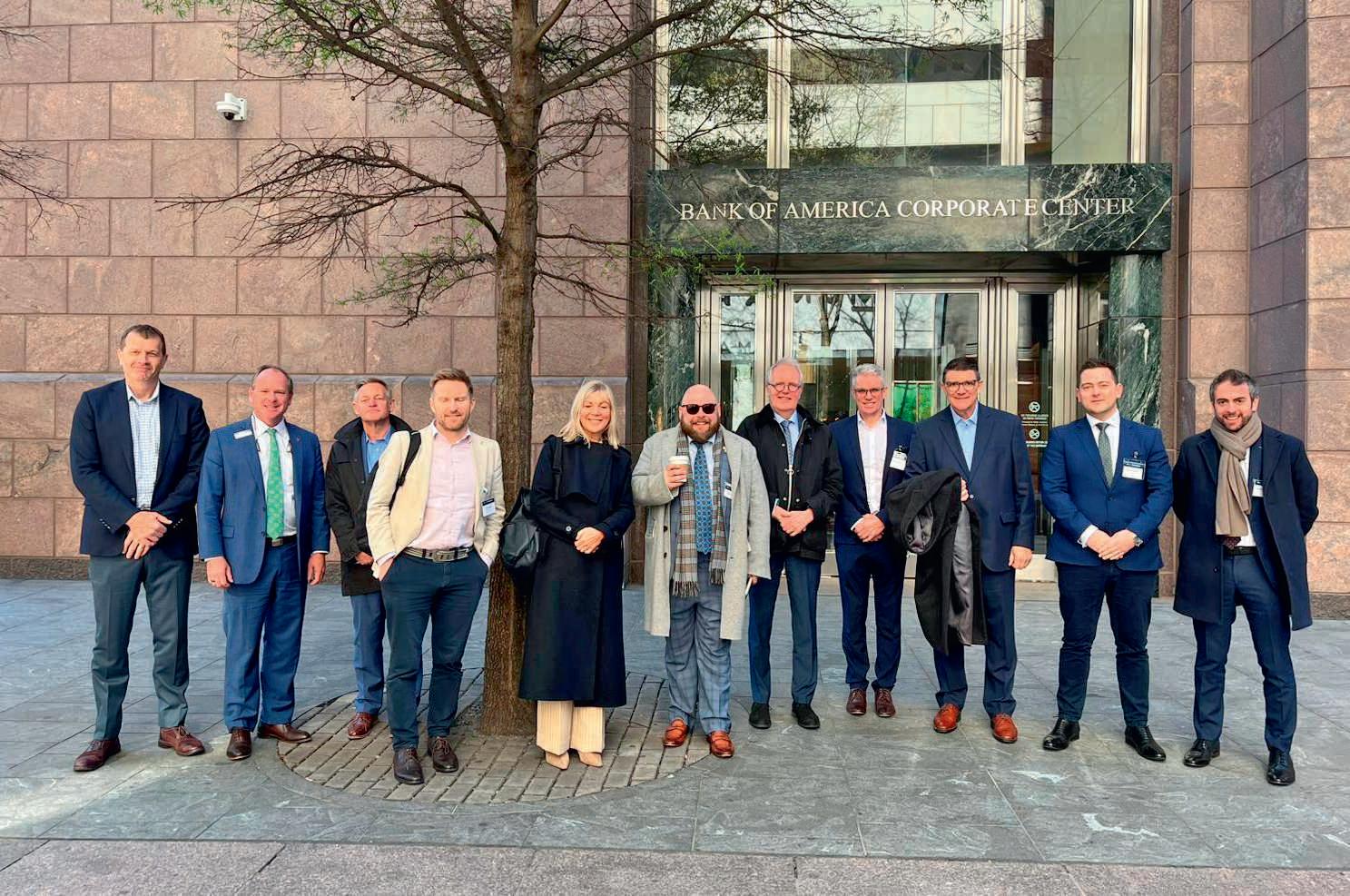
A delegation of NI Chamber members met with Bank of America at its headquarters in Charlotte, North Carolina. It follows a major investment announcement from the Bank that will see it create 1,000 jobs in Belfast.
The NI Chamber delegation, which included a targeted group of businesses and academia from Northern Ireland, welcomed the investment in the region’s financial services sector.
Following the meeting, Suzanne Wylie said: “Bank of America’s decision to establish a major presence in Belfast is a powerful endorsement of Northern Ireland’s talent, competitiveness and global outlook. This was a very productive business-to-business meeting. We were pleased to discuss how NI Chamber and our members can support Bank of America as it scales up its operations and deepens its links with our business ecosystem.”
The meeting was the first engagement during a threeday visit to North Carolina, which focused on seeking out new business, investment and research opportunities. The agenda also included meetings with innovative aerospace firms including Jet Zero, Honda Jet and Collins, and engaging with those in the research and innovation space in areas of common interests. It directly followed a series of engagements in Washington D.C.
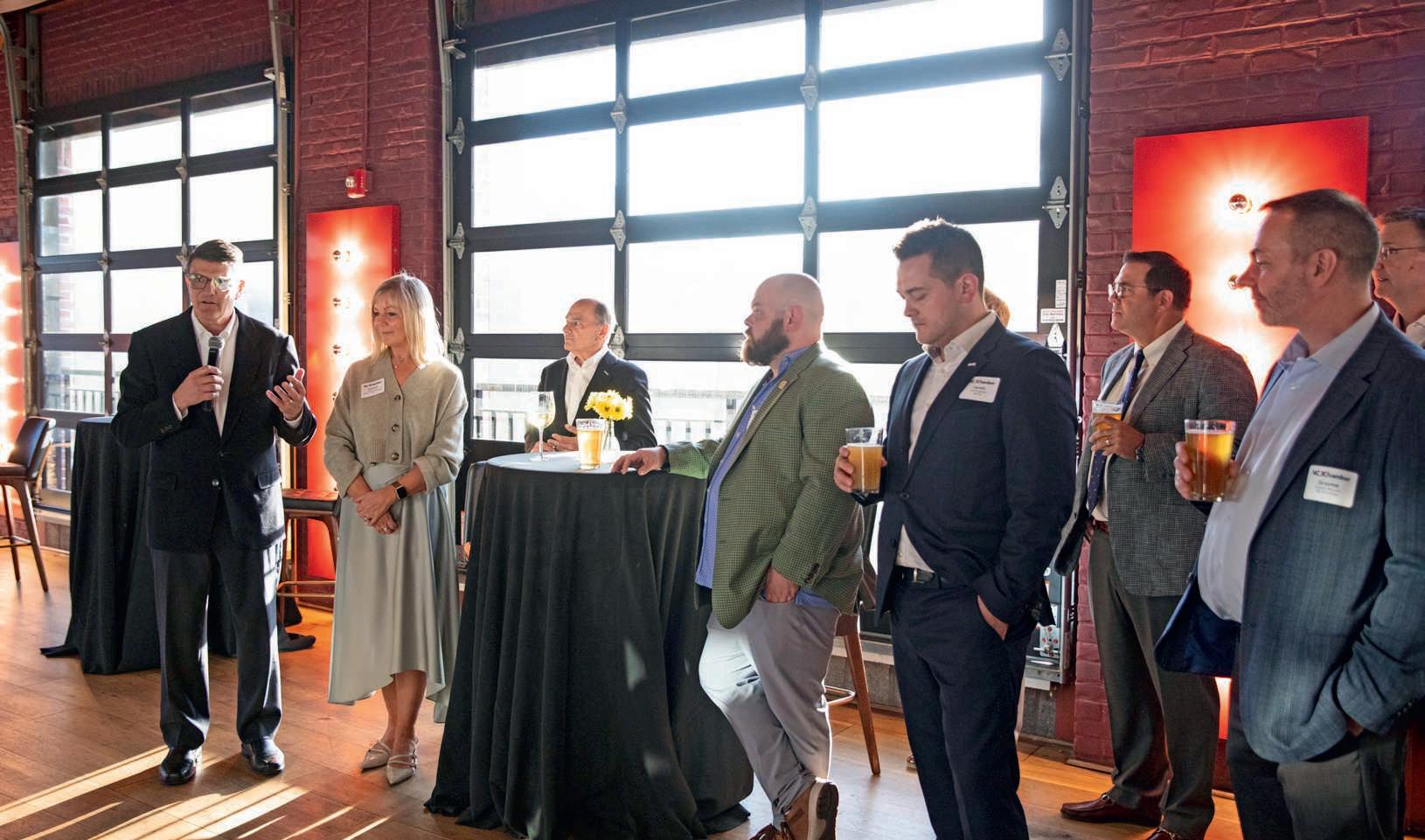

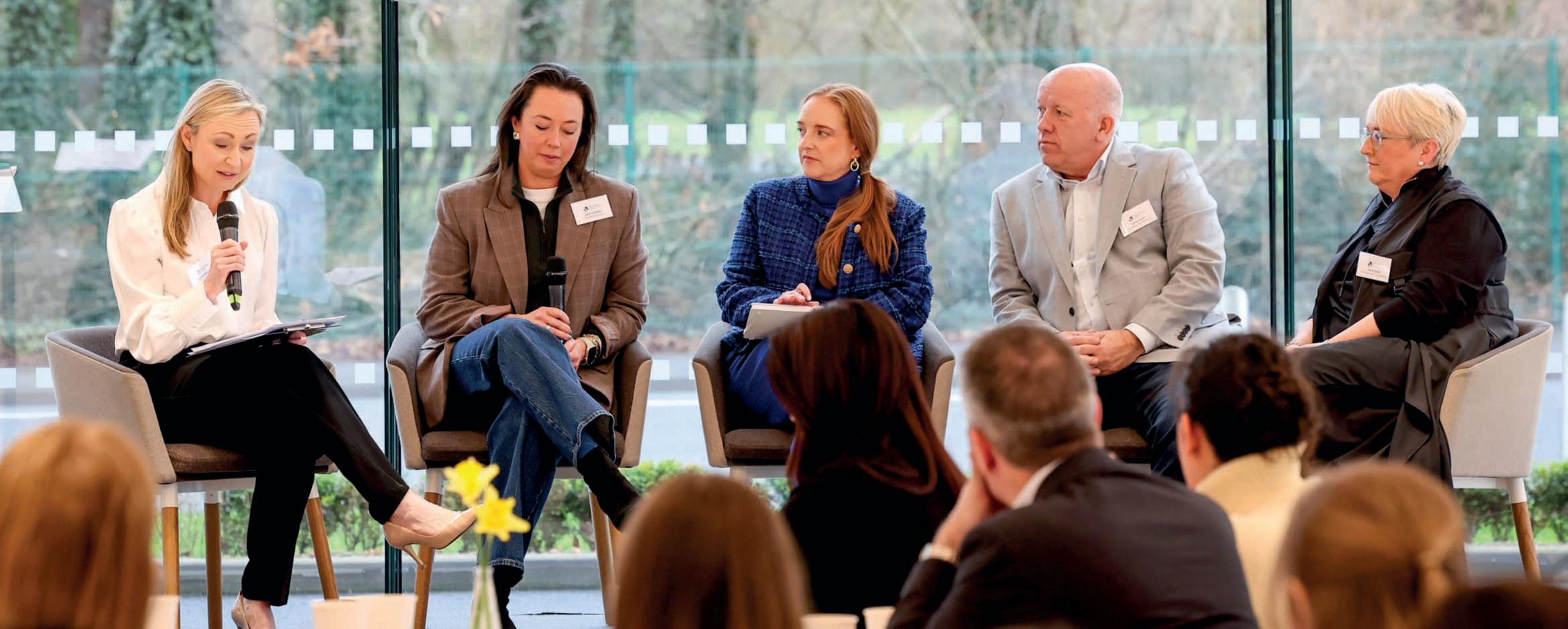
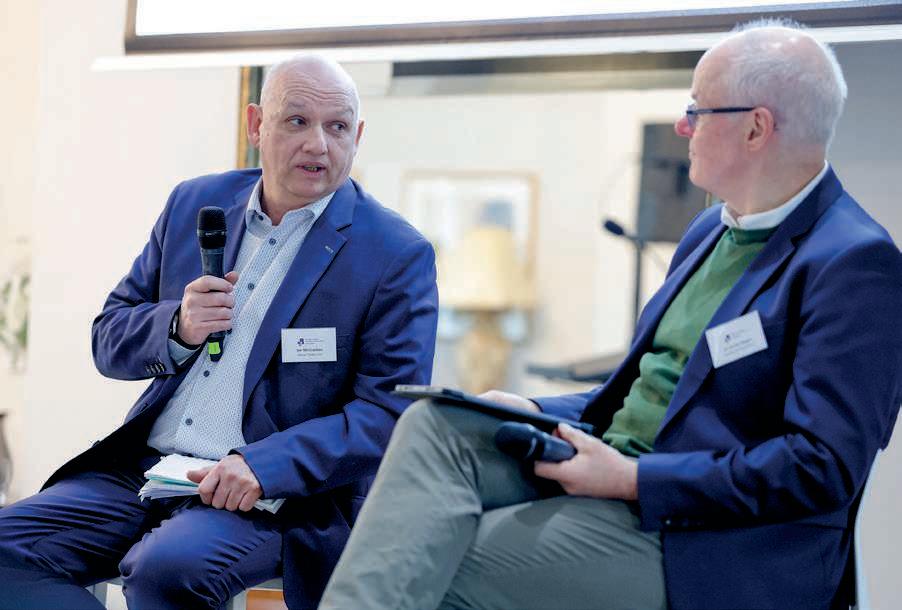
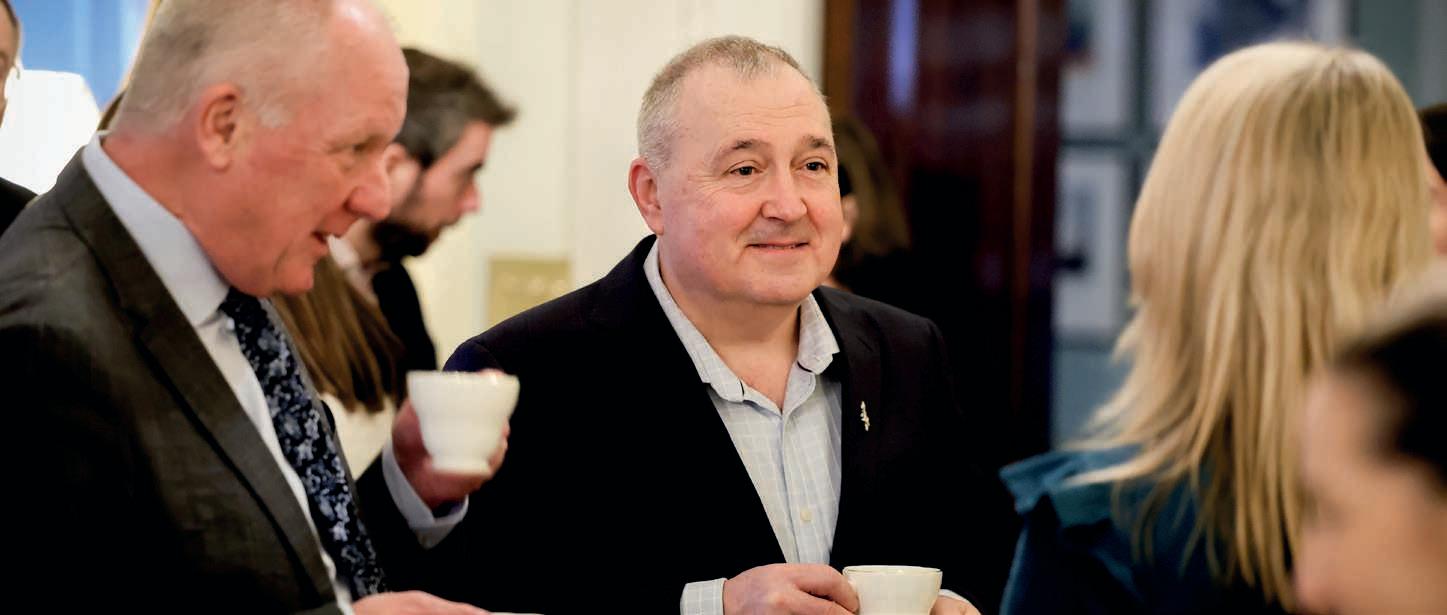
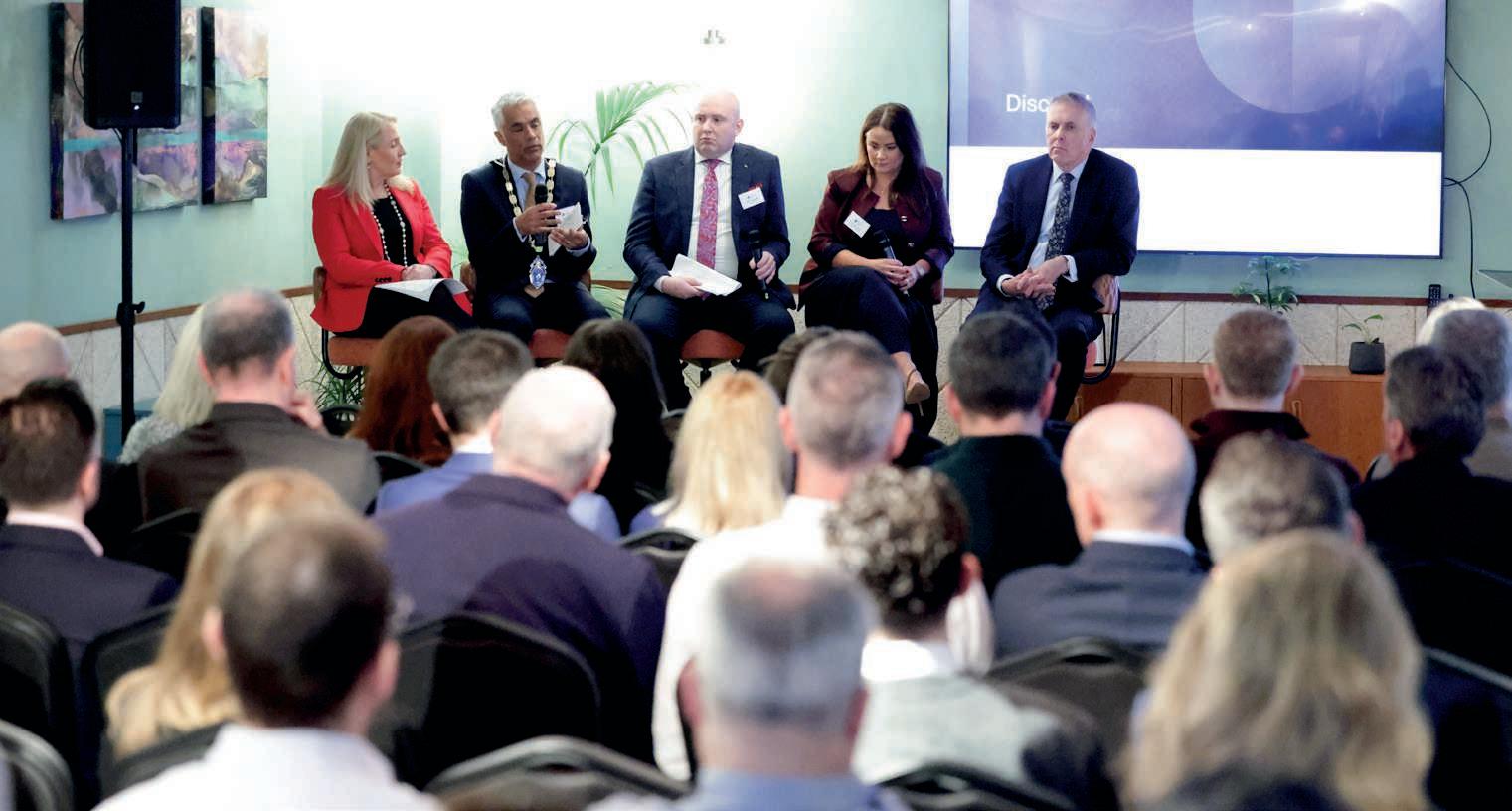
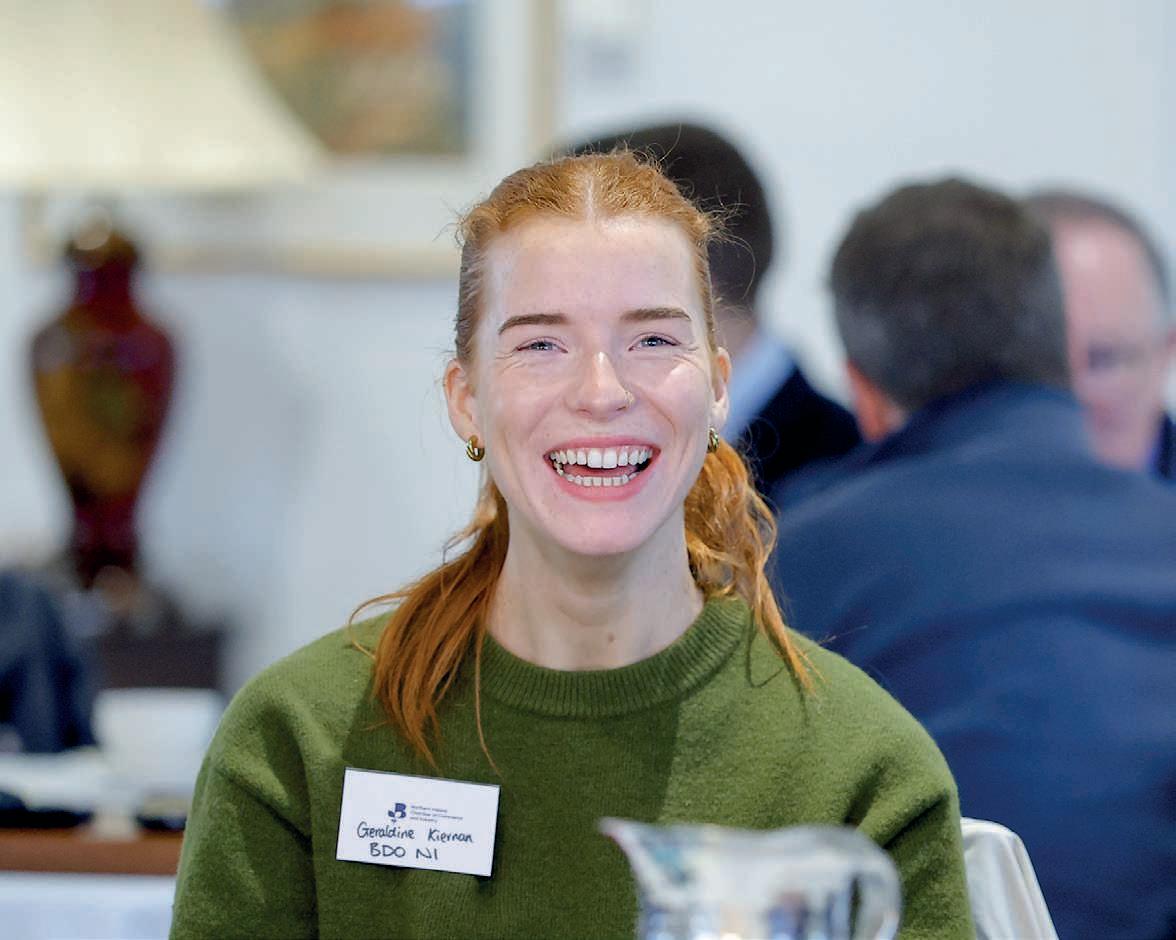
1. Panellists at a business breakfast for HR professionals included people leaders from Mal laghan Engineering, Avondale Foods and Aflac
2. Dr. Declan Bogan delivered a practical workshop at Successful Sustainability with AIB
3. Philip Cassidy (Concentrix Europe) networking at the NI Chamber’s CEO Circle
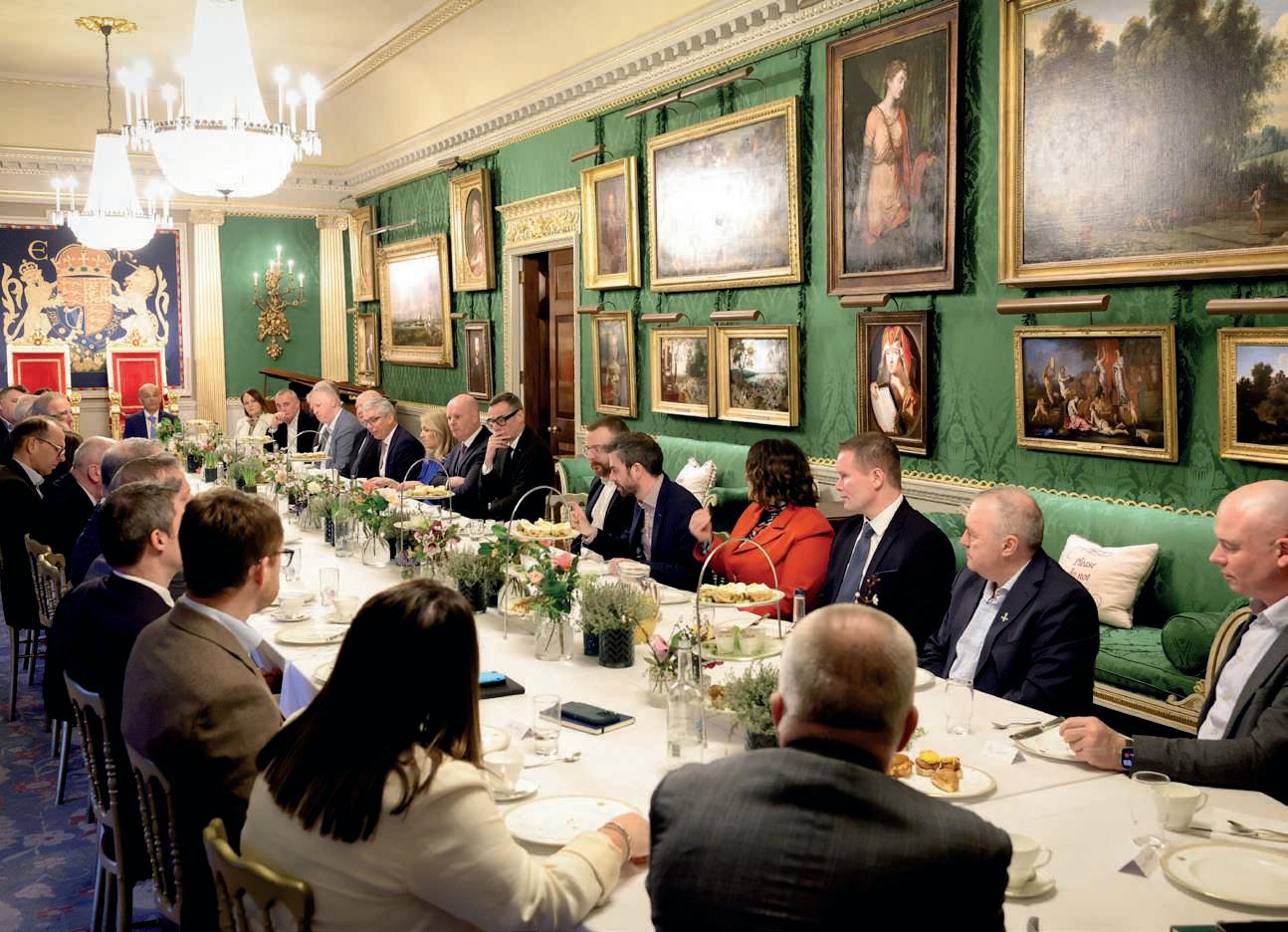
4. A Public Affairs Forum with Phoenix Energy facilitated an in-depth discussion on corporation tax
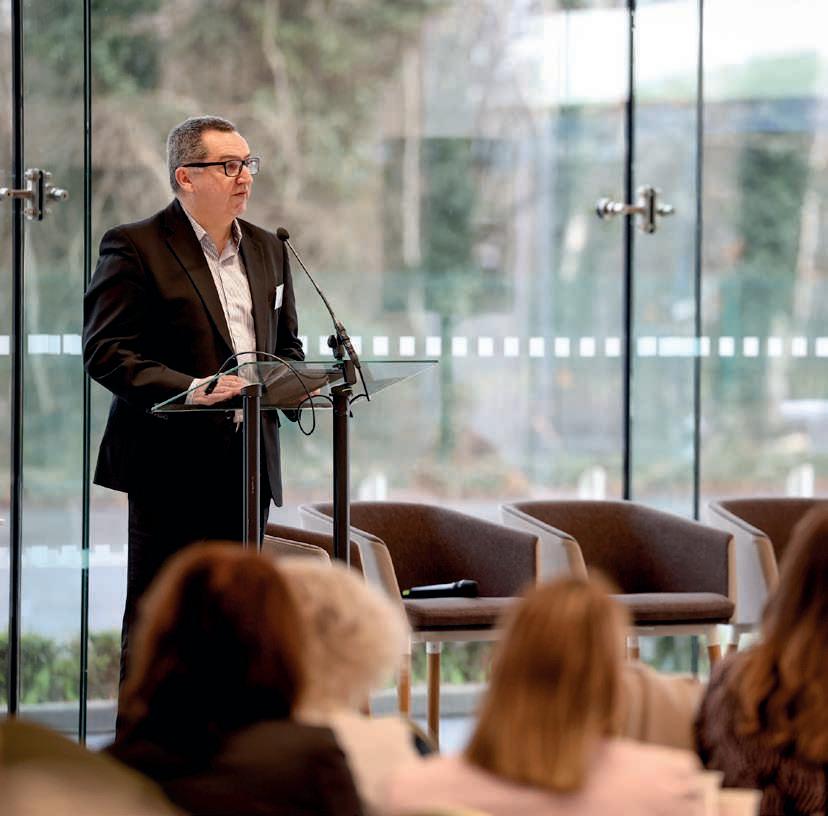
5. Mark Cunningham welcomed delegates to the HR Business Breakfast with Bank of Ireland
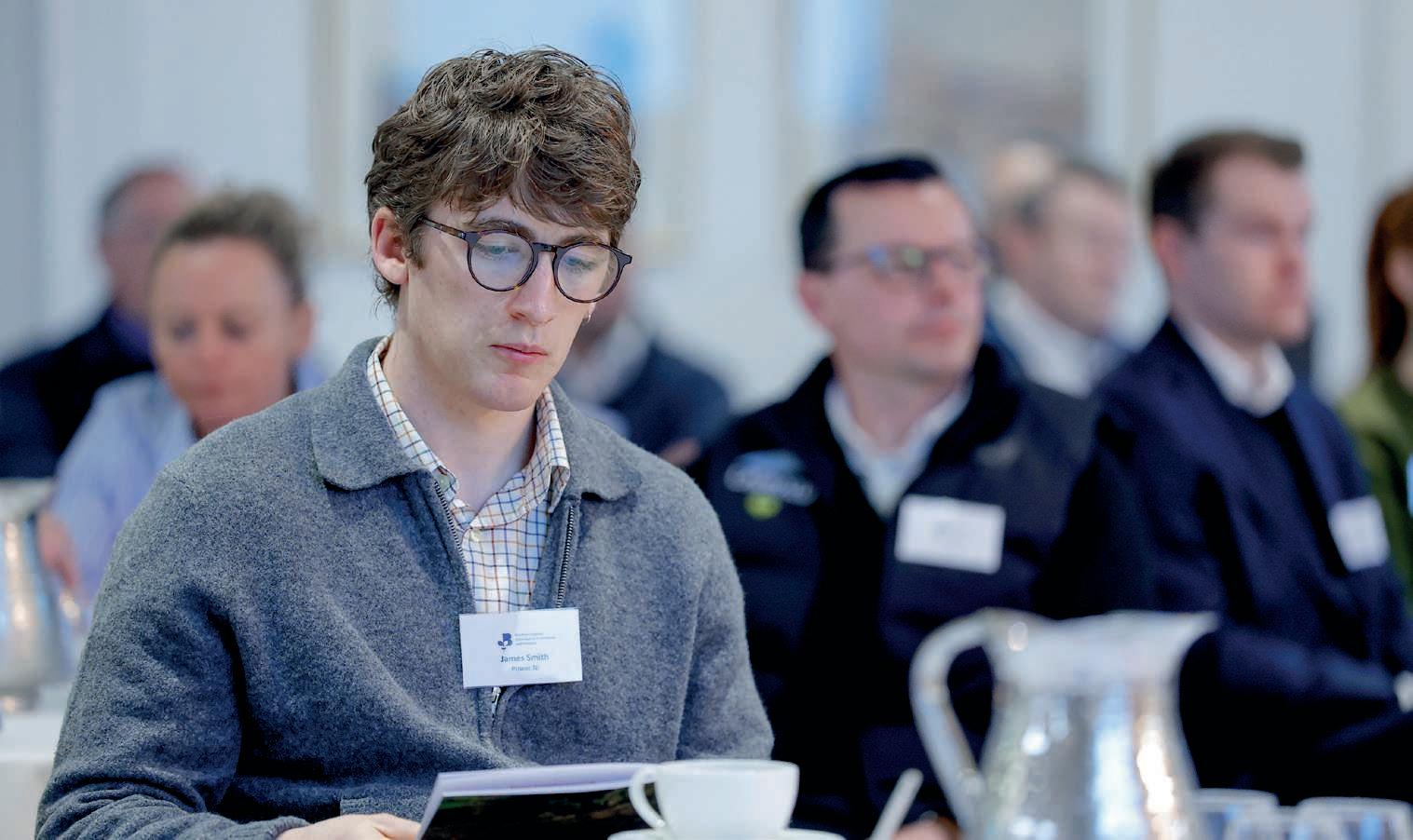
6. James Smith (Power NI) at NI Chamber’s Successful Sustainability event, Creating Value Through Sustainability









SEPTEMBER WEDNESDAY














8.30AM - 1.30PM






St George’s Market, Belfast






























In early April, NI Chamber launched its 2026 Regional Networking Series in partnership with new sponsor, the Utility Regulator.
Announcing the new partnership, Suzanne Wylie, Chief Executive NI Chamber, said: “Regional Networking is one of the most popular series in NI Chamber’s events calendar, attracting more than 500 businesspeople every year. Its popularity demonstrates the power of new connections and sharing experiences. Attendees from all sectors across Northern Ireland return again and again to share their experiences and learn from new perspectives.
“We are really pleased to be working in partnership with the Utility Regulator to deliver the series this year. Together, our teams look forward to meeting members across Northern Ireland and helping new business connections to flourish.”
The first event in the four-part series was held at the iconic Slieve Donard Hotel, Newcastle, Co Down, with key speaker Niamh Taylor, founder and managing director of Digital 24, who offered a focused session on how networking can create real commercial opportunity and growth.
Along with hearing keen insights and strategies, the popular programme provided opportunities for companies across Northern Ireland to network and make valuable connections.

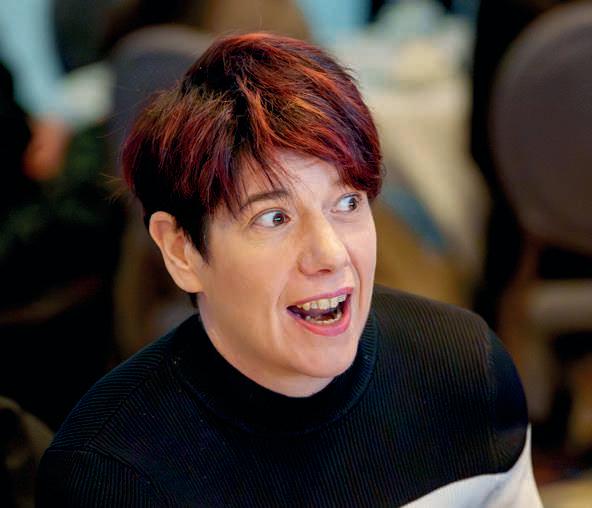
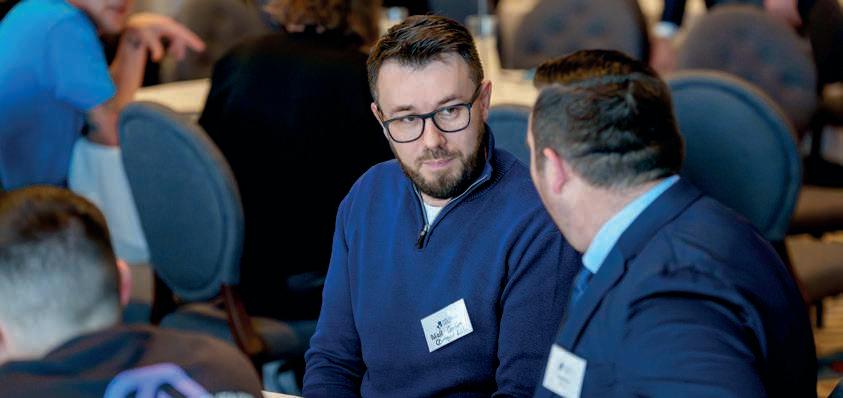
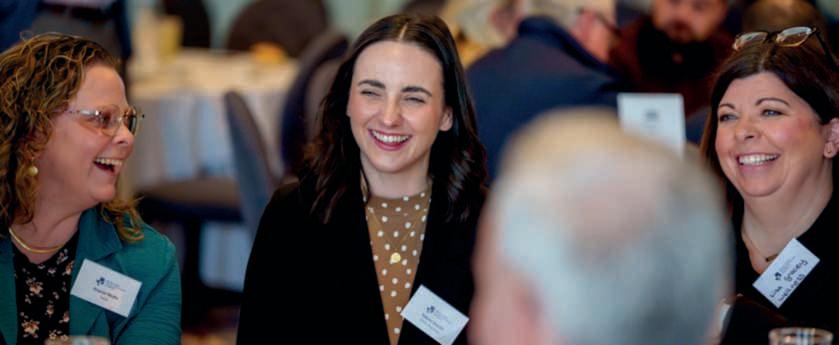


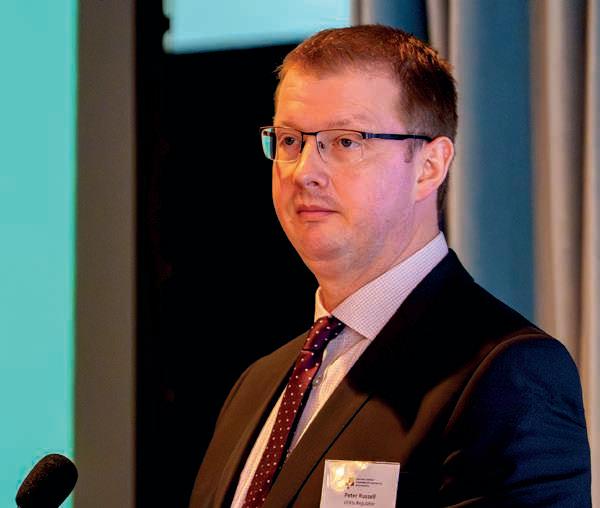
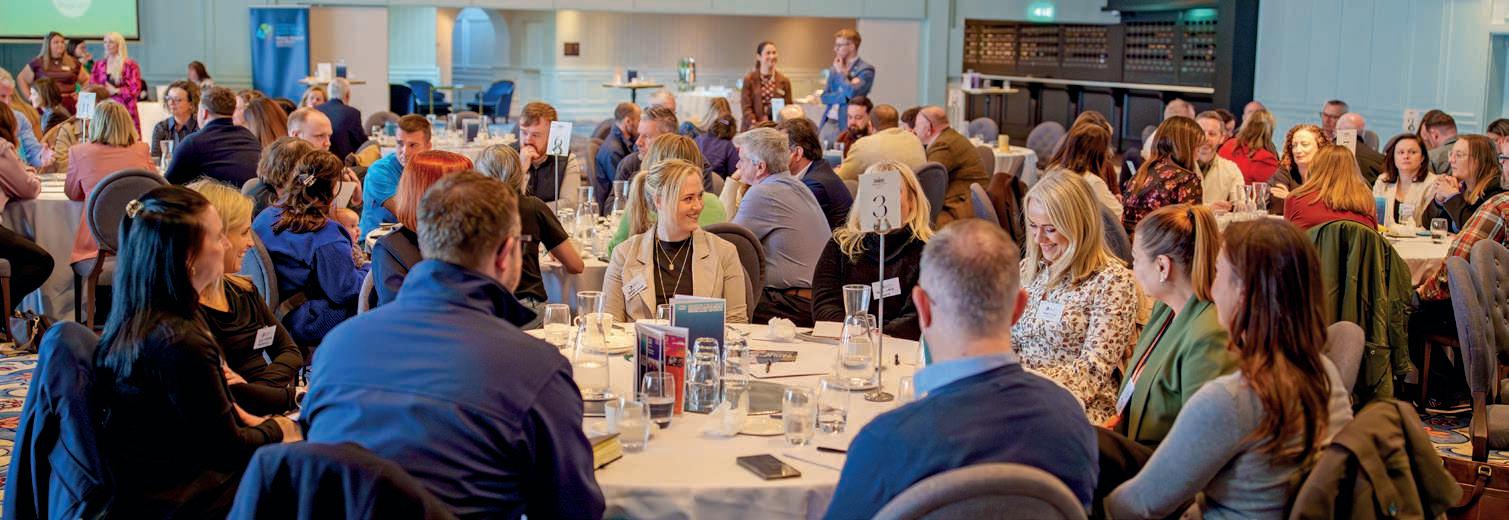
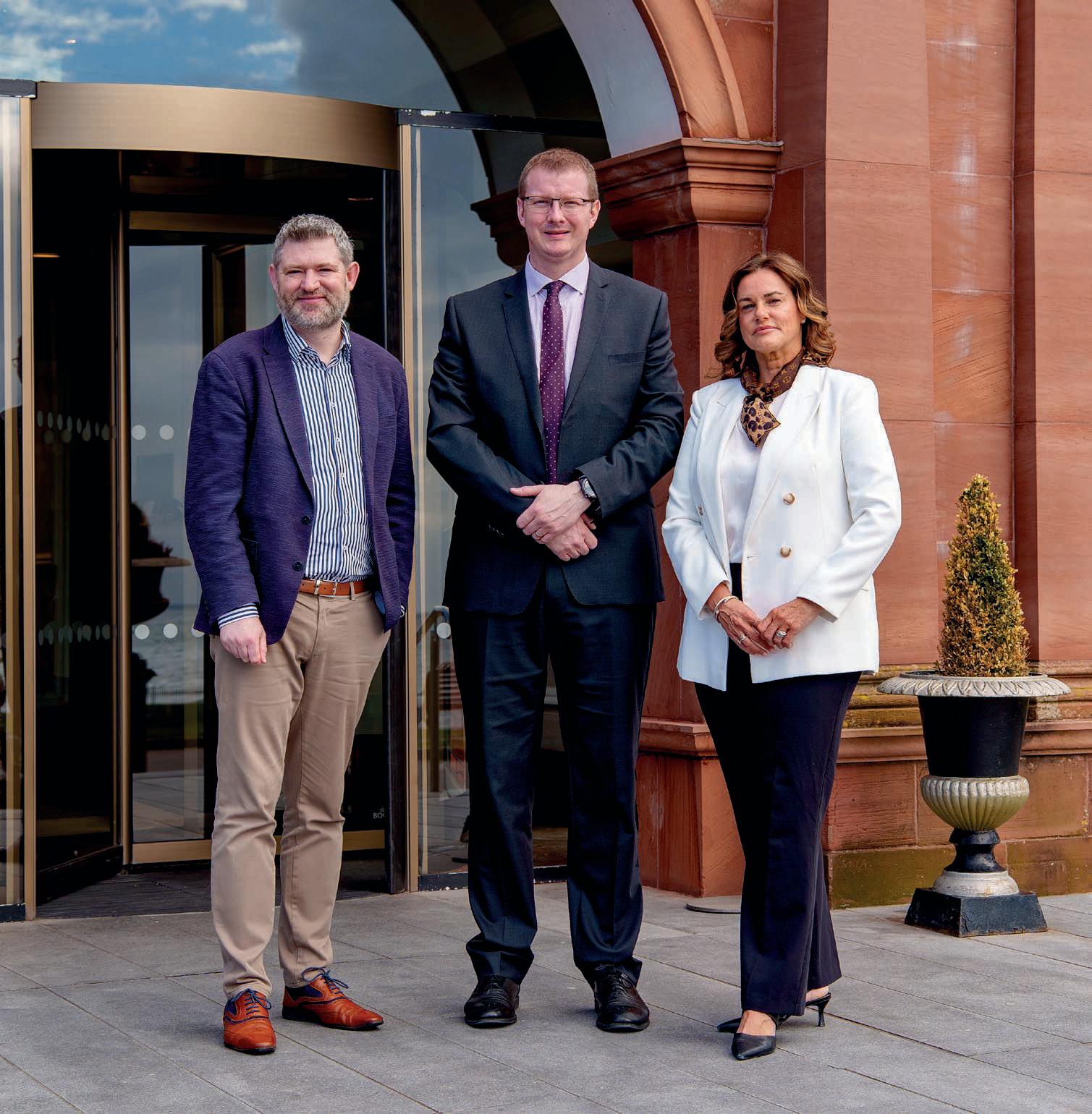
6. NI Chamber’s Regional Networking in partnership with Utility Regulator.
7. Attendees engaging in structured networking.
8. Attendees enjoying the first Regional Networking event of the series.
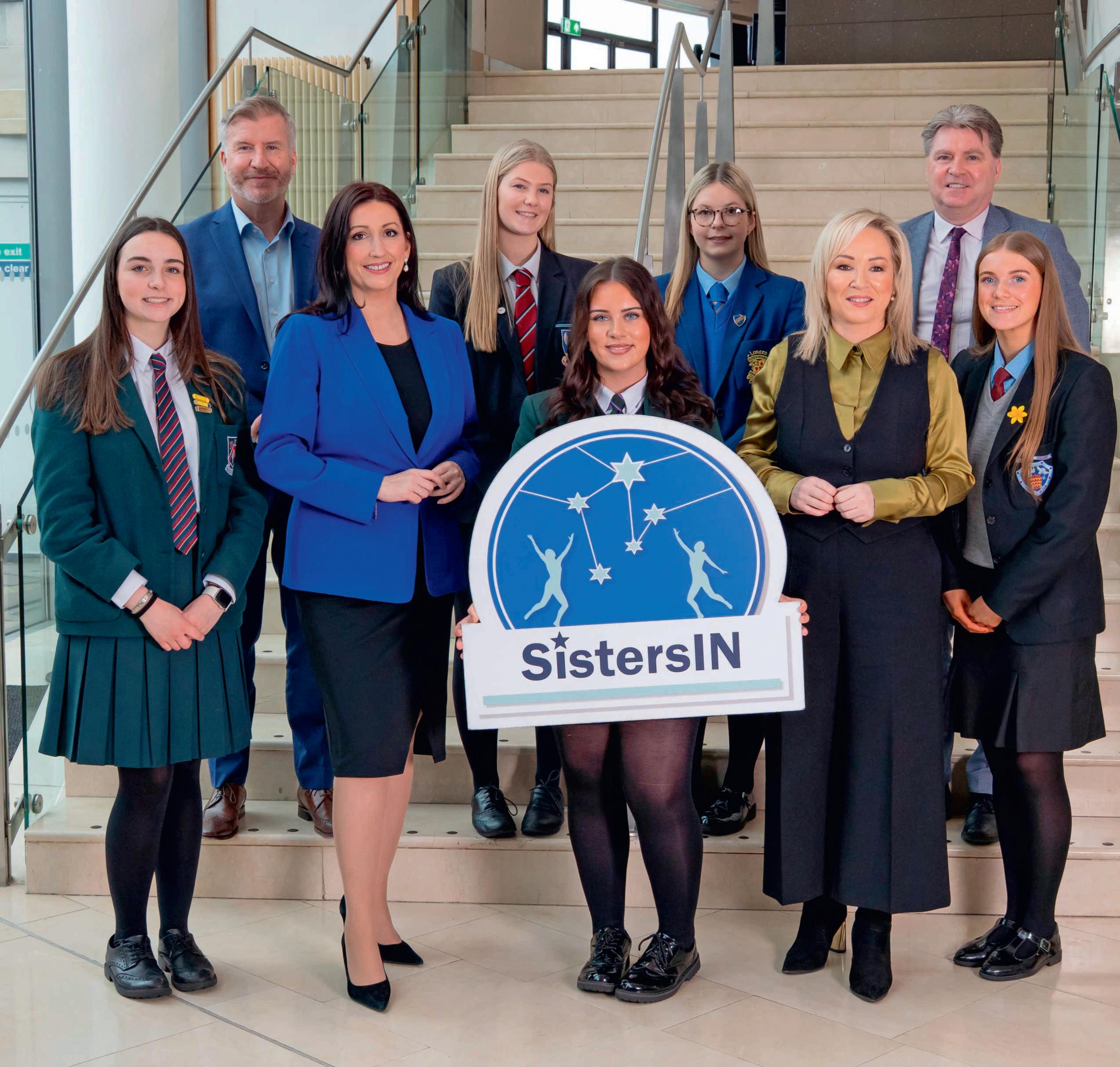
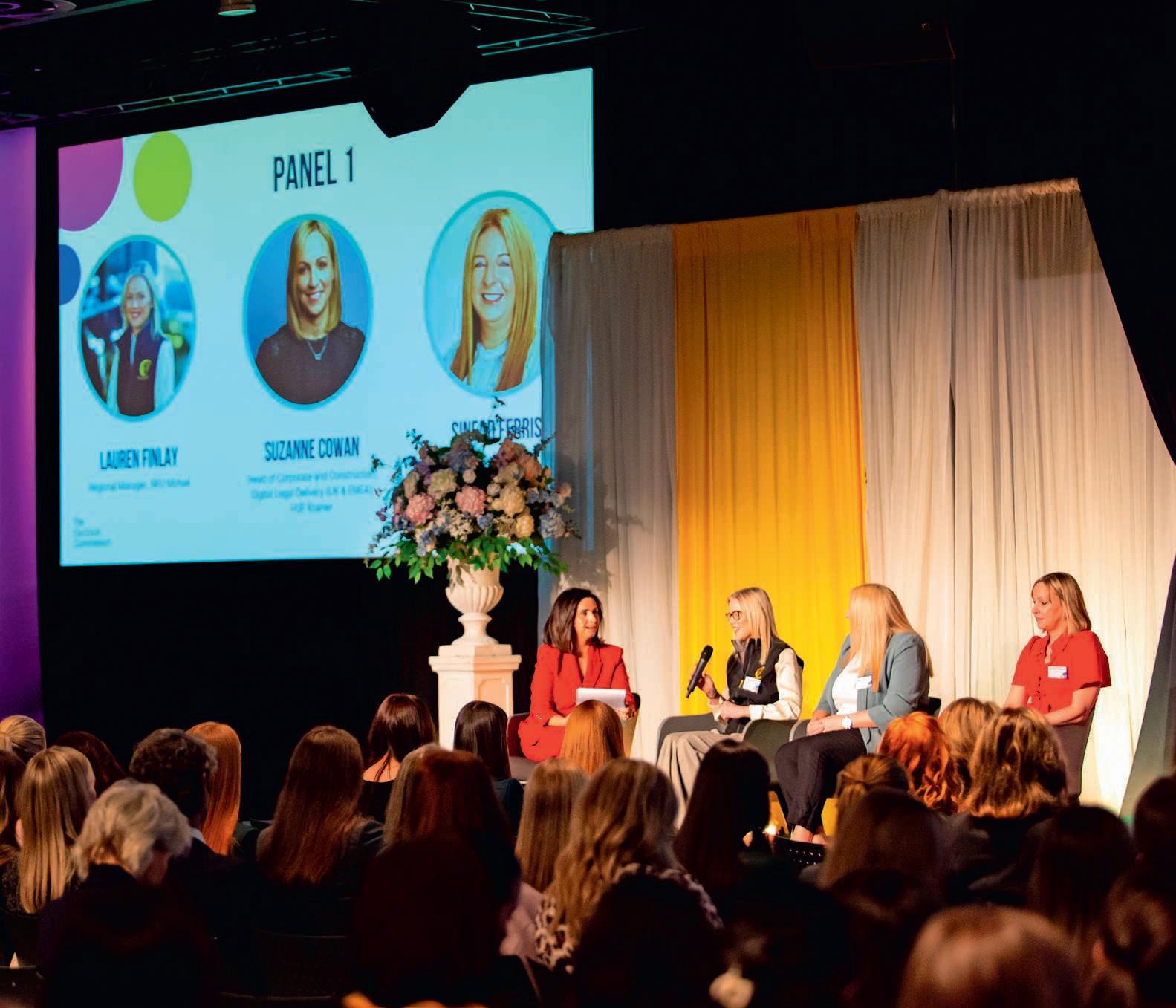
Almost 800 students from 60 schools across Northern Ireland gathered at ICC Belfast to celebrate the completion of the 2025-2026 SistersIN programme at its annual celebration event.
SistersIN is a pioneering leadership and mentoring programme that aims to empower, educate and inspire young women in Northern Ireland by pairing them with mentors from across business, public life, and the community. The locally founded initiative has grown rapidly since its inception in 2022, providing over 2,000 female students to date with the skills, confidence and networks needed to fulfil their potential and take up leadership roles in the future.
The event brought together students, mentors, teachers and supporters to celebrate the achievements of this year’s participants and the wider impact of the programme across Northern Ireland. The annual celebration recognises all those involved, highlighting the positive influence of mentoring while showcasing the confidence, growth and accomplishments of the remarkable young women who have completed the programme.
Speaking at the event, Peter Dobbin, SistersIN founder and chairman, said, “The SistersIN celebration event is one of the highlights of our year. It is an opportunity to recognise the dedication and commitment of our mentors and teachers, and most importantly to celebrate the incredible young women who have taken part in the programme.
“Seeing the confidence, ambition and leadership they have developed over the past year is truly inspiring, and we are proud to support them as they take the next steps in their journey.”
The event included SistersIN partner panels, where speakers shared insights from their own career journeys and reminded those present that taking part in SistersIN is the beginning of their own. Fellow students were invited onto the panels to discuss their experience, and student keynote speakers addressed the impact of the programme.
The celebration also featured inspiring keynote addresses from Judith Gillespie CBE, former Deputy Chief Constable of PSNI, as well as First Minister Michelle O’Neill and deputy First Minister Emma Little-Pengelly.
First Minister Michelle O’Neill said: “It is inspiring to see so many young
“The SistersIN celebration event is one of the highlights of our year. It is an opportunity to recognise the dedication and commitment of our mentors and teachers, and most importantly to celebrate the incredible young women who have taken part in the programme.”
women coming together to celebrate their achievements through the SistersIN programme.
“I have really enjoyed being a mentor in this year’s programme, seeing firsthand how this initiative is helping to build the confidence, ambition and leadership skills of the mentees, while opening up opportunities that will support them in the years ahead.
“By investing in our young people, we are helping to create a more inclusive future where every young woman can realise their full potential.”
Deputy First Minister Emma LittlePengelly said: “The SistersIN programme
is such a fantastic opportunity for young women to build their skills, grow in confidence and feel empowered to become the next generation of female leaders.
“It has been a genuine privilege to be a mentor to Sophie as part of this year’s programme, and one I’ve found as equally rewarding.
“Mentorship is one of the most impactful investments we can make. When we take the time to listen, encourage and guide, we help young women recognise their potential and see what they can become.”
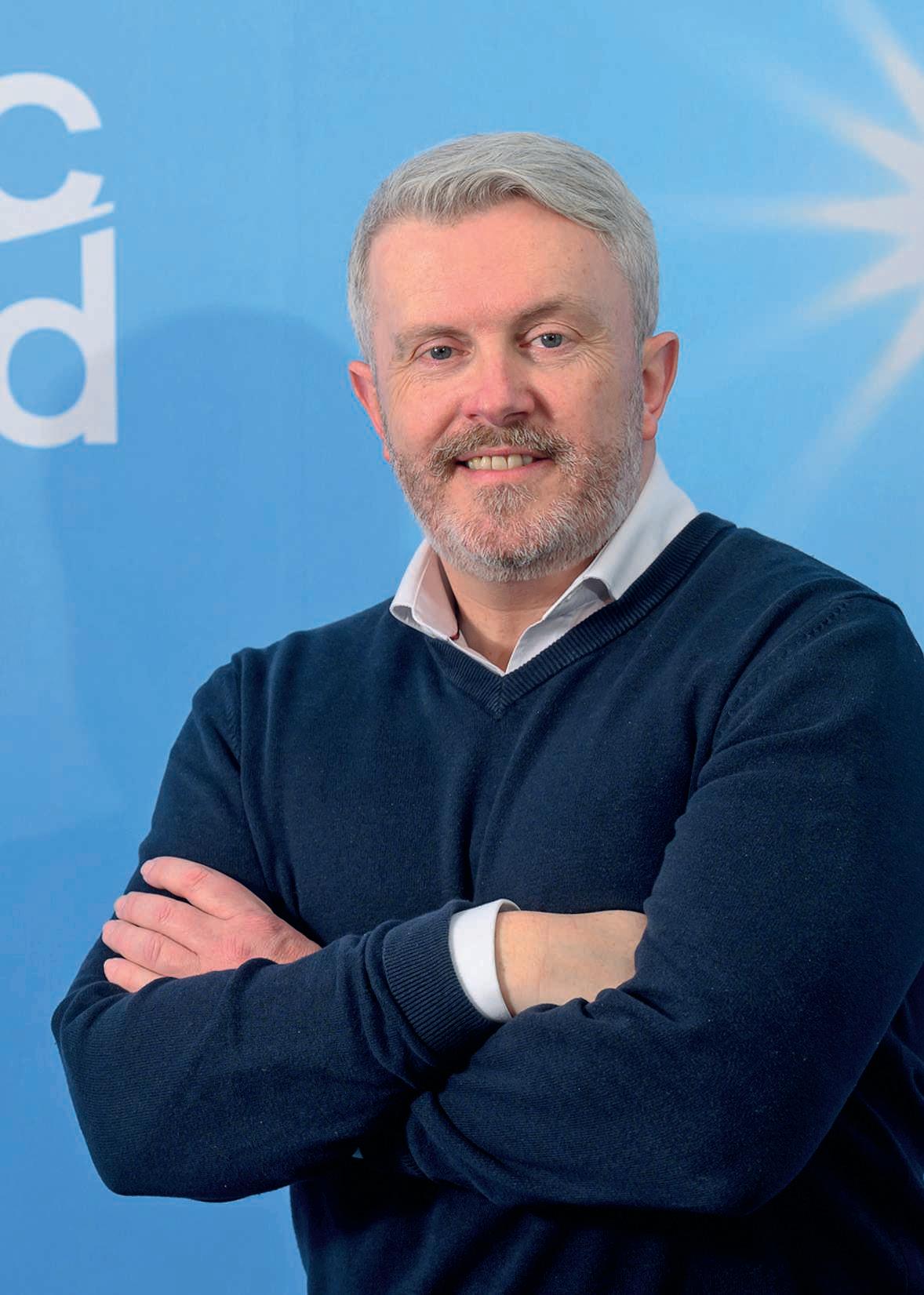
Few costs have become as unpredictable for businesses in recent years as energy, which is why Electric Ireland is not simply an energy supplier, but a strategic, consultancy-led partner says Michael Anderson, customer relationship manager for Northern Ireland.
Global shocks, from the war in Ukraine to the current conflict involving the United States, Israel and Iran, have repeatedly pushed oil and gas markets into volatility, with disruptions to key supply routes sending prices sharply higher and exposing just how vulnerable businesses are to geopolitical events far beyond their control.
In that environment, Electric Ireland is ensuring its business customers have access to insight, guidance and strategy.
Electric Ireland is the retail arm of ESB. It supplies more than 1.2 million residential customers and 95,000 businesses across the island of Ireland, and in Northern Ireland now operates purely in the business market after announcing its exit from the domestic segment in 2024.
A sharpened focus ensures it is not a transactional relationship built around unit price but something far more strategic. Michael Anderson, who operates within Electric
Ireland’s Large Energy user team, sees that change up close.
“We are purely focused on business,” he says of the company’s Northern Ireland position. “I work directly with large energy users in the industrial and commercial sectors. They are some of the biggest customers here, and that’s where our strengths are.”
Michael joined Electric Ireland four years ago, having previously worked in the sector with Firmus Energy. His background spans natural gas distribution and supply along with manufacturing, and some time spent in New Zealand and Australia.
“It’s been both exhilarating and demanding,” he reflects. “I’ve found the energy sector the most interesting. With geopolitical tensions and constant change, there’s always a lot going on.”
The volatility of recent years has permanently altered how businesses view energy procurement.
“If you go back to the energy crisis in 2021 and 2022, you had the outbreak of the Russian-Ukraine war and the reduction of Russian gas supplies to Europe,” he says. “That escalated energy prices and changed the way customers look at the market. The fundamentals shifted for them.”
Currently, the impact of the conflict involving the United States, Israel and Iran is posing new price risks. Northern Ireland’s reliance on imported energy makes these global movements particularly relevant.
“Energy prices are linked to gas markets, and in energy North and South that’s really relevant due to reliance on imports. They directly influence energy costs for customers.
“There’s so much going on around the world at the minute and it does have an effect ultimately on where energy prices are sitting. You only have to read the news to see that there is volatility.”
For businesses, that volatility has elevated energy from an overhead to a strategic line item.
“The conversations we have with businesses aren’t just around price,” he explains. “Our role as a customer relationship manager is to be a consistent point of contact. We’re backed by expert teams with market intelligence and an in-house trading function. It’s a relationship-led model. Customers come first.”
In practical terms, that means helping businesses make informed decisions in a complex and fast-moving market.
“There are strategic decisions about the type of product and contract, and those decisions can impact their competitiveness and resilience,” Michael adds.
Electric Ireland offers a range of contract structures, from fully fixed-price agreements to more flexible, marketlinked products.
“We have fixed-price products for certainty and protection from volatility, which help with planning,” he continues. “Or flexible products allow customers to hedge and engage with the market. They can lock in volumes of energy in line with their strategy, and we support that by providing trading platforms to help ensure efficiency and transparency.”
The key, he stresses, is balance and choice.
“There’s a need to weigh up budget certainty against the benefits and risks of market engagement.”
Michael emphasises that Electric Ireland does not position itself as dictating strategy.
“We would never tell customers what to do. We present the picture of what is happening currently, looking at the timescale of when they’re looking to procure energy. It’s about building that relationship and building trust.”
“Customers need more and more clarity on what they’re signing up to, whether wholesale to fixed costs to flexible, and that leads to better decisions.”
Procurement strategies can evolve quickly as conditions shift, he says. “The strategy is to stay close to customers, to adapt, to listen and understand, and to present the options so they’re empowered to choose what works best. The ethos is transparency.”
That consultative model is increasingly important as contract structures become more nuanced.
“Customers need more and more clarity on what they’re signing up to, whether wholesale to fixed costs to flexible, and that leads to better decisions,” Michael says.
On a day-to-day basis, his role is grounded in communication.
“We’re a consistent point of contact, meeting customers face to face or on Teams calls. That relationship approach ensures they can manage and model when they have to make decisions, whether they have a renewal coming up or are looking ahead.”
He points out that the misconception of switching or reviewing supplier arrangements is solely about chasing the lowest price. This approach, he says, can be limiting.
“It’s not just price. It’s the relationships, the information we can provide, the platforms we provide for them to trade their energy. It’s being able to build up that trust, provide market expertise and put the customer first.”
Alongside volatility, the energy transition has introduced a second layer of complexity in the form of sustainable energy sources.
“You can see that customers are having more and more discussions about that. But it’s still relatively early stages and it’s important for us to provide clarity and explain what their options are.”
For some businesses, that may involve purchasing Guarantees of Origin.
“This is a digital certificate that verifies the renewable origin of electricity and enables traceability through an audited registry system. That may be efficient for their reporting.”
For others, particularly larger energy users with longer-term decarbonisation
goals, more complex structures such as power purchase agreements may be appropriate.
“Compared to a Guarantee of Origin, it’s an agreement with a renewable energy provider for a specific amount of electricity, and we can act as the facilitator. There are different commercial implications.”
Navigating those choices can be confusing, which is where a provider comes in. “We can simplify the complexity, understand what the customer wants and explain the various ramifications. It’s a consultative process, not just transactional. They’re making informed decisions.”
Looking ahead, the twin challenges of volatility and decarbonisation will continue to define the landscape, Michael says, which is why choosing the wrong structure can carry unnecessary complexity.
“While PPAs can offer significant value, their complexity means they may not always be the most practical fit for every customer. In some cases, particularly for smaller users, solutions like Guarantees of Origin may already meet their requirements effectively.”
At the same time, volatility presents opportunities for those equipped to engage with the market.
“If they’re willing to invest time and are discerning, they can avail of the opportunities fluctuating markets can present. But there are risks. It’s important for us to be close to the customer.”
His message to Northern Ireland’s business community is about partnering with a trusted adviser.
“It’s about being transparent, being a partner and taking a consultative approach. We don’t tell customers what to buy. We present the market conditions and they can take a better informed position for their business.”
In an era where energy has become both a strategic risk and a reputational consideration, that shift from supplier to a partnership approach may be the most significant change of all.

Vanessa Hamilton Managing Director, PayEscape
While recent fiscal announcements avoided dramatic tax increases, a combination of frozen thresholds, rising wages and gradual policy changes is quietly reshaping the cost of employment – and businesses should be paying close attention.
At first glance, the UK’s recent fiscal announcements – the 2025 Budget followed by the Spring Statement 2026 – appeared relatively uneventful. There were no major tax rate increases, no unexpected National Insurance changes and no dramatic policy shocks.
Yet beneath the surface, the direction of travel is becoming clearer.
Rather than introducing sweeping reforms, the government is relying on gradual adjustments – frozen tax thresholds, higher minimum wages and targeted tax reforms – that collectively increase the financial and administrative pressures facing employers.
Individually, these policies may seem modest. Taken together, however, they represent a meaningful shift in the cost and complexity of employing staff.
For businesses across Northern Ireland and the wider UK, the message is clear: while the headlines may appear calm, the underlying changes will have real implications for workforce planning, payroll management and long-term financial strategy.
One of the most significant policies remains the continued freeze on personal tax thresholds.
As wages rise, more employees gradually move into higher tax bands without necessarily seeing a real improvement in their living standards. The personal allowance remains fixed at £12,570, while higher-rate thresholds have also been held in place.
For employers, this often becomes visible through payroll queries. Employees receiving pay rises may
question why their take-home pay has not increased as expected. Payroll teams therefore face greater pressure to communicate clearly and ensure deductions are accurate.
In effect, frozen thresholds act as a gradual tax increase that unfolds quietly over time.
Another policy likely to influence reward strategies is the planned reform of pension salary sacrifice arrangements.
From April 2029, only the first £2,000 of pension salary sacrifice contributions will remain exempt from National Insurance. Contributions above that level will become subject to NIC.
For many employers, salary sacrifice has been a tax-efficient way to support retirement saving while enhancing benefits packages. The proposed change may prompt businesses to reassess how they structure reward and benefits, particularly for higher earners.
Although the reform is still several years away, organisations may begin factoring it into longer-term reward planning.
The most immediate cost impact arrives in April 2026 with increases to the National Minimum Wage and National Living Wage.
The new rates include £12.71 per hour for workers aged 21 and over, £10.85 for those aged 18–20, and £8.00 for younger workers and apprentices. These increases will boost earnings for millions of workers. However, they also raise operating costs for employers, particularly in labour-intensive sectors such as hospitality, retail, social care and facilities management.
Many businesses will need to revisit workforce planning, productivity strategies and pricing models to manage these changes effectively.
The Spring Statement 2026 introduced no major new tax measures. Instead, it largely confirmed the government’s intention to maintain the course set out in the Autumn Budget.
This reflects a shift towards a single major fiscal event each year, with the Spring Statement focused primarily on economic updates rather than policy announcements.
However, the absence of new measures does not mean pressure on employers is easing. Frozen thresholds, rising wages and incremental tax changes continue to increase the overall tax burden over time.
As these policies take effect, payroll teams will increasingly find themselves managing the practical impact.
They will need to oversee more employees entering higher tax bands, monitor minimum wage compliance and support workforce planning during pay reviews.
Accuracy, transparency and clear communication will therefore become even more important.
Recent fiscal announcements may not have produced dramatic headlines, but they reinforce a clear direction of travel. Through frozen thresholds, higher wages and incremental policy changes, the cost and complexity of employing staff is gradually increasing.
For employers, the challenge is not responding to one major reform but adapting to a series of smaller changes that accumulate over time.
Businesses that review workforce strategies, strengthen payroll processes and plan ahead will be better positioned to manage these pressures.






Aquiet but important revolution is underway in Belfast. Thomas Kelly, director of operations at Ionic Technologies, tells Emma Deighan how the company’s technology is recovering rare earth elements from end-of-life magnets and why Northern Ireland should seize the opportunity to place the city at the centre of a critical global supply chain.
In a demonstration facility in Belfast, a technology developed at Queen’s University Belfast is quietly positioning Northern Ireland at the centre of one of the most important industrial sectors of the 21st century.
Ionic Technologies, the recycling subsidiary of Australian-listed parent Ionic Rare Earths, has developed a process that recovers rare earth oxides from end-of-life magnets and manufacturing waste. These materials are vital components in electric vehicle motors, wind turbines, robotics and advanced manufacturing equipment.
electric vehicles to robotics and AI-driven manufacturing.”
Without rare earth elements, he explains, the permanent magnets that power many of today’s most important technologies would not exist.
“Without rare earths you don’t have permanent magnets.” Thomas says. “Sustainable practices through recycling are not just an opportunity to do the right thing, they are a necessity for security of supply.”
The technology behind Ionic’s work originated in academic research at Queen’s, where scientists and engineers collaborated within the internationally recognised QUILL research group, one of the world’s longest-established centres for ionic liquid research.
According to Thomas Kelly, director of operations at Ionic Technologies, the technology offers both a sustainability solution and a strategic one.
“We have a process for the recovery of rare earth oxides from end-of-life magnets and materials generated during magnet production,” he begins. “The rare earths we produce are essential to address the growing gap between supply and demand for technologies used in decarbonisation, from wind turbines and
“Queen’s is a fantastic technical partner for us because it brings together chemistry and engineering disciplines in one place. The technology originated there and was spun out into a business before being acquired by Ionic Rare Earths in 2022. They recognised that functional long-loop recycling technology was a game changer for Rare Earths.”
Recycling rare earth materials, he says, offers major advantages compared with traditional mining.“Mining projects can take ten years or more to develop.

Recycling technologies like ours can be deployed far more quickly; we estimate within two years,” he explains.
Today, the global supply chain for rare earth materials is heavily dominated by China, which controls much of the world’s




refining capacity and magnet production. This makes businesses like Ionic vital in a world defined by scarcity and dependency.
“For two of the rare earth products we focus on, the market is currently 100% China,” Thomas says. Recent export restrictions have further highlighted the vulnerability of relying on a single dominant supplier.
“In 2025, export controls changed the landscape dramatically. Companies purchasing rare earth materials from China now have to provide sensitive information about their manufacturing processes to qualify for export licences.”
For Europe and North America, that dependency presents both economic and strategic risks. “There is a big rush globally to establish supply chains that do not rely entirely on China,” Thomas says. “The dependency is unlikely to disappear immediately, but the supply chain in Europe and the US is simply not adequate at the moment.”
Demand projections illustrate the scale of the challenge. By 2028, the world could require around 70,000 tonnes of rare earth materials for magnets, leaving a substantial gap in supply, according to the International Energy Association
“Our particular niche, recycled rare earth oxide production, is significantly underserved. The market we have to grow into is substantial.” That opportunity places Belfast firmly at the centre of the solution.
Ionic’s facility in the city currently operates as a demonstration plant, validating the technology ahead of full
“Without rare earths you don’t have permanent magnets.”
commercialisation. “The plant here was built around three years ago and sits at Technical Readiness Level 8, which is one step before full commercialisation,” Thomas says.
Beyond testing the process, the Belfast site also hosts the company’s intellectual property and technology development capability.
“The technical capability and intellectual property are hosted in Belfast. This is effectively the technology hub of the wider business.”
Several factors have made the city an ideal location. “The first is skills and talent. The workforce we’ve been able to build here, particularly graduates and postgraduates from Queen’s, has been phenomenal.”
The partnership between the company and the university has been central to developing the specialist expertise required for rare earth processing.
“Queen’s has become best in class in developing the competencies needed to support our process and the wider industry,” Thomas adds.
Belfast’s industrial ecosystem also offers strategic advantages. “We sit within the Northern Ireland Maritime and Offshore cluster around Belfast Harbour. In the decades ahead, we expect that the harbour will handle hundreds, maybe thousands of tonnes of magnets, particularly from wind turbines that are being replaced or decommissioned. Being located close to that infrastructure is hugely important.”
Northern Ireland’s unique trading position between the UK and EU also strengthens the city’s appeal, he adds. “NI occupies a unique status within the UK and European trading frameworks. That places us in a strong position to support customers across both markets.”
“If the transition to net zero is to mean anything economically, it must be about more than installing clean technologies. It must also be about building the industries behind them.
“For a region thinking carefully about what a just transition looks like, the work taking place here demonstrates how that can happen in practice. The green economy will not only be powered by new energy systems, but by the supply chains that support them, and Belfast (and Northern Ireland more widely) has an opportunity to position itself within one of the most strategically important of those emerging networks.”
The company’s next step is to move from demonstration to commercial
scale. Plans for a larger facility at Belfast Harbour could produce around 400 tonnes of rare earth oxides per year, potentially supplying around half of the UK’s projected demand for electric vehicle motors.
For the city, the economic impact could be significant. “The project will create over 50 new jobs, all highly skilled and wellpaid technical roles,” Thomas says.
The Belfast team currently numbers 18 people but is expected to grow as the project develops.
“We expect to reach around 25 people in the near term and will be recruiting further as we build the project team for the commercial plant,” he adds.
Globally, the rare earth sector faces a shortage of skilled professionals.
“One of the things that has impressed our parent company most is the capability and expertise we’ve been able to build here. Belfast is becoming one of the centres of excellence in this field.”
For Thomas, the significance of Ionic Technologies extends beyond a single company. The UK Government’s Critical Minerals Strategy has set a target that around 20% of critical mineral demand should ultimately come from recycled sources making Ionic Technologies well positioned.
“We’re strongly aligned with the automotive sector’s plans to bring more manufacturing capability onshore. The UK automotive sector employs between 800,000 and 1 million people, so securing the materials supply chain is extremely important.”
He continues, “The vision is to establish vertically integrated supply chains for rare earth materials and magnets, accelerated by our technology.”
International recognition is already emerging. The project was recently identified by the US-led Forge Initiative as strategically significant, but Thomas believes the scale of the opportunity is not yet fully understood locally.
“For us, we would like to familiarise local stakeholders with what we’re doing and the global significance of it. This is a phenomenal opportunity for Belfast. We have the chance to establish the city as the UK’s advanced manufacturing hub for rare earth materials. This will require alignment and a concerted, acceleraterd effort to ensure that Belfast gets to capitalise on the opportunity to become a key part of the critical minerals landscape globally.”

Grainne Rodgers Director & Transformation Managed Services Lead, PwC Belfast
Change is hard. Whether you’re a council serving hundreds of thousands of residents, a business navigating new market pressures, or a public body adapting to rising expectations, the reality is the same. Transformation demands more than strategy on a page; it demands people with the confidence, skills, and shared purpose to make it happen.
At PwC, we’ve seen this first-hand. As we scaled our own transformation programmes, we recognised something important: lasting change doesn’t happen to organisations - it happens through them. When we trained our own people, we saw an opportunity to bring our clients into that journey alongside us. The result has been powerful. Together, we’ve created change ambassadors who go back into their organisations enthused about the benefits of transformation, equipped to drive delivery, and ready to bring others with them. That ripple effect shifts culture. People become excited about change rather than fearful of it, and organisations gain the right people with the right skills in the right roles to make change stick.
This is exactly the philosophy behind the PwC Local Government Change Academy, which we launched in partnership with the Northern Ireland Local Government Association (NILGA). The Academy is part of our Transformation Managed Service offering and it draws on our experience working with councils across the UK, combining proven methodologies with practical learning to empower participants to deliver real and
sustainable transformation. It equips local government officers with skills in change leadership, project management, communication, behaviour change, and impact measurement - the building blocks of meaningful reform.
The results speak for themselves. We recently celebrated the graduation of ten officers from councils across Northern Ireland through the Change Academy. Across the cohort, we saw noticeable improvements in participants’ confidence and capacity to lead transformational change.
What makes this approach different is collaboration. By bringing councils together in a cohort-based model, we’ve created a network - a community of practice, that supports ongoing improvement long after the programme ends for lasting change.
But this isn’t just a story about local government. The principles are universal. Every organisation facing complexity - whether in the private, public, or voluntary sector - needs people who can navigate ambiguity, engage stakeholders, and embed improvements that those they serve can see and feel.
Northern Ireland is at a pivotal moment. The appetite for reform is real, and the talent to deliver it exists. What’s needed is the investment in people and skills to unlock that potential. At PwC, we’re proud to be playing our part - not by doing change for organisations, but by empowering them to lead it themselves.
If your organisation is ready to move from aspiration to action, the journey starts with your people. Let’s make change happen, together.
“People become excited about change rather than fearful of it, and organisations gain the right people with the right skills in the right roles to make change stick.”


Chris Donnelly, deal advisory director at KPMG in Northern Ireland, says the bullish local mergers & acquisitions (M&A) market provides opportunity for investors and business owners alike.
The Northern Ireland M&A market has begun 2026 with a sense of confidence and momentum. This is reflected in the findings of our KPMG Ireland M&A Outlook 2026, which points to a robust island of Ireland deal environment.
The survey indicates that a clear majority of dealmakers expect activity levels to increase or remain stable in the year ahead, signalling confidence in market fundamentals and deal pipelines, despite ongoing macro and geopolitical noise. More detailed due diligence has become standard practice, but for well prepared companies this has reinforced deal confidence rather than acted as a barrier to execution.
Encouragingly, valuation expectations remain robust. Our M&A Outlook highlights that 90% of respondents expect valuations to remain stable or rise in 2026.
Northern Ireland benefits from a deep and competitive corporate banking market, with UK, ROI and international banks based here continuing to play an active role in funding acquisitions, refinancings and growth initiatives. We saw
particularly strong appetite from locally-based banks for mid-market and large debt opportunities in 2025 and expect this to continue in 2026.
Alongside the banking market, private equity continues to play an increasingly important role. With significant levels of undeployed capital, private equity investors remain active across Northern Ireland, particularly in sectors that lend themselves to buy and build strategies, operational enhancement and international expansion. This is a funding area that is still maturing in Northern Ireland versus other parts of the UK and we expect it will continue to drive growth in M&A activity.
In addition to financial investors, strategic buyers are playing a growing role in Northern Ireland M&A activity. Well capitalised UK, European and international corporates are increasingly targeting Northern Ireland businesses, attracted by strong management teams, specialist capabilities, defensible market positions and competitive cost structures.
At the same time, large Northern Ireland headquartered corporates are becoming more outward looking, using M&A to accelerate growth, enter new geographies, acquire complementary technologies and deepen customer relationships. With balance sheets strengthened over recent years
and increased confidence in execution, acquisitive Northern Ireland businesses are actively pursuing opportunities across Great Britain, Ireland and further afield. This combination of inbound strategic interest and outbound acquisition activity is adding depth to the market. Within our own local pipeline, we at KPMG have witnessed a notable increase in the number of mandates to support large corporates in identifying and executing domestic and international acquisitions.
Our survey suggests that M&A activity by sector expectations in Northern Ireland broadly mirror wider island of Ireland trends at the top of the market, with Technology and Healthcare & Life Sciences expected to remain highly active, driven by digitalisation, IP led growth and demographic demand.
Beyond these sectors, Northern Ireland M&A continues to be shaped by its established strengths in Manufacturing and Agribusiness, where globally competitive, export focused businesses continue to attract interest from both trade buyers and private equity. By contrast, Energy, Infrastructure and Construction activity is expected to remain more muted versus ROI, reflecting lower levels of large scale infrastructure
investment relative rather than a lack of underlying demand.
Geopolitical and macroeconomic uncertainty persists – as it has throughout most of the past decade, from Brexit and Covid to periods of hyperinflation, evolving tariff regimes and now the war in Iran. While a prolonged conflict and sustained pressure on energy prices would, over time, increase the risk of this uncertainty feeding through into transaction activity, there is currently little evidence of this translating into reduced deal appetite. Capital remains available, valuations are holding and the combination of a strong corporate banking market, engaged private equity investors and active strategic buyers continues to support deal execution.
For business owners, the key differentiator remains preparation. Early focus on financial robustness, succession planning, strategic clarity and operational resilience significantly enhances both transaction optionality and outcomes.
“ Within our own local pipeline, we at KPMG have witnessed a notable increase in the number of mandates to support large corporates in identifying and executing domestic and international acquisitions.”
A place for your business to flourish
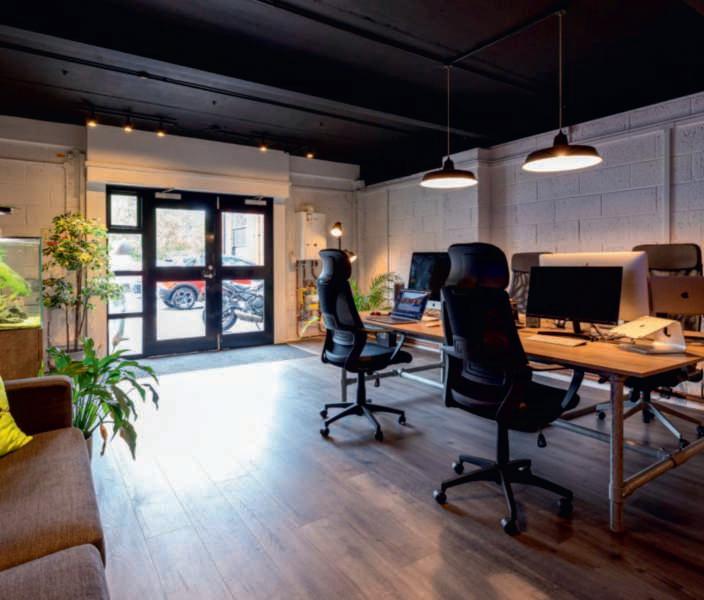
to love?

Rachel Withers Senior Lecturer and Programme Manager
Help to Grow: Management is a 12‑week leadership and management programme designed to strengthen SME capability, improve performance and support long‑term, sustainable growth.
SMEs are the backbone of Northern Ireland’s economy. With 89% of businesses classed as micro‑enterprises, they drive employment, innovation and regional prosperity. Yet leaders today operate in a complex landscape shaped by digital change, evolving customer expectations, skills shortages and economic uncertainty.
At Ulster University Business School (UUBS), we recognise these pressures. Help to Grow: Management, designed with industry partners and delivered by academic experts and business practitioners, equips leaders with the tools, confidence and strategic mindset required to navigate change and unlock new opportunities.
Why Help to Grow: Management Makes a Difference
In many SMEs, urgent operational demands can overshadow long‑term planning. The programme gives leaders protected time and structured support to refocus, build capability and implement meaningful change. It helps leaders to:
• Sharpen strategic focus – Strengthen long‑term planning, use data more effectively and spot opportunities for innovation or diversification.
• Develop leadership skills – Empower teams, build practical leadership capability and lead confidently through change.
Embrace digital transformation –Explore tools that enhance productivity, customer experience and efficiency.
• Produce a tailored Growth Action Plan – A practical roadmap that applies learning directly to their organisation.
Flexible, Practical Learning Designed for SME Realities
The programme blends online learning, in‑person workshops, mentoring and
peer support across 12 weeks:
• Eight concise online modules
• Four in‑person workshops
• Ten hours of 1:1 mentoring for tailored guidance
• Peer‑group learning
• Access to a growing alumni community
This structure allows leaders to step back, gain fresh perspective and immediately apply new approaches within their business. With 90% of the cost funded by the UK Government, it offers high‑quality leadership development at an accessible investment for SMEs across Northern Ireland.
Participants describe the programme as both practical and transformative, particularly the opportunity to learn from peers facing similar challenges.
Aaron Platt, business director at WG Buchanan & Sons Ltd., shared:
“I started the Help to Grow programme in April 2024 and completed it in early 2025.
During that period, our turnover grew from £6 million to just under £7 million, a 16% year-on-year increase, and I don’t believe that is a coincidence.
“The programme supported us through a period of management change, strengthened decision-making and created a peer network I continue to rely on. Working closely with other businesses on the course enabled us to share practical solutions to common challenges and led directly to collaboration on modernising our office layout and automating aspects of our day-to-day operations.
“Ongoing links with the University also enabled us to access consumer insight through the Who Buys My Food platform, strengthening our relationship with Tesco and contributing to sales growth.”
Antoinette Thorpe, licensed insolvency practitioner & CEO of Artemis Insolvency Services Limited, reflected:
“After more than 25 years navigating the complexities of financial services and acting in insolvency cases, I entered
the Help to Grow: Management Course looking for a fresh perspective – and it definitely delivered. For any leader transitioning into the small business sector, the modules provide an essential ‘mindset reset.’
“The curriculum offers a brilliant balance of theory and practical application, particularly around scaling, diversification and entering export markets. However, the true ‘NI factor’ is the ‘network’. The relationships forged with fellow entrepreneurs and course providers have endured long after the final module, creating a lasting ecosystem of support. It is an invaluable investment for any manager or director looking to sharpen their strategic edge and harness the talent within their team for sustainable growth.”
Delivered by UUBS academics and experienced mentors, the programme brings together research‑informed insight and practical tools leaders can put into practice immediately. It focuses on the core areas of leadership, digital adoption, financial management, people development, marketing and strategic growth – helping participants build the confidence and capability to strengthen performance in a sustainable way.
As UUBS marks over 50 years of impact, our commitment to supporting Northern Ireland’s business community remains central to our mission. Help to Grow: Management plays a vital role in preparing leaders to navigate change, drive innovation and contribute to the region’s long‑term economic success.
With 90% government funding, your contribution is just £750 – a small investment with the potential for significant impact.
For more information contact Rachael Withers, programme manager, at r.withers@ulster.ac.uk











When Jeremy Eakin joined the family business in 1992, it was still a Northern Ireland success story in the making. Today, Eakin Healthcare has become an international medical device group with a footprint across the UK and beyond, a workforce now close to 800 employees, and products sold into 60 countries, supported by direct sales and marketing teams in seven markets.


But for Jeremy, the story has moved into a new phase. Having stepped back from executive leadership, he is now a Non-Executive Director, advising the CEO and board, while also taking on additional responsibilities through the Pat Eakin Foundation and as Pro-Chancellor and Chair of the Audit and Risk Committee at Ulster University.
“My brother and I are second generation and approaching retirement age,” he begins. “There is no third generation currently involved in the business and we didn’t want to sell the company. It remains family-owned, but it is no longer family-managed. We appointed a new CEO, Padraic Dempsey, who leads the executive team and reports to the board.”
Padraic oversees the firm’s global strategy and operations, including major investments such as a £19m centre of excellence in Comber and a £9m production line in Cardiff.
Jeremy describes the transition as a deliberate shift in governance. “I have tried to step back as much as possible. Padraic has full executive authority and reports to the
Jeremy Eakin may have stepped back from his CEO role at the family firm, Eakin Healthcare, but the business is in capable hands for further global growth, while Jeremy will continue to contribute to the business community here through another role at Ulster University.
board. I engage with him regularly and provide the family’s perspective, but operational control rests entirely with him.”
Eakin Healthcare’s origin story begins with a clinical need.


“My father was a retail pharmacist of his generation,” Jeremy says. “Pharmacists at that time often made their own creams and developed their own formulations. He was trying to help patients who were experiencing sore and irritated skin around a stoma, which is a common and distressing issue.”
The breakthrough product was the Cohesive® Seal. “It functions like a washer around a tap,” he explains. “It is a mouldable skin protector that creates a secure seal. It is still available today and remains one of our best-selling products.”

He contrasts it with earlier solutions. “Before that, patients used tubes of paste, many of which contained alcohol. They could sting and were uncomfortable. The Cohesive Seal offered a more patient-friendly alternative.”
His father, he says, was “a product developer at heart.”
“He focused on developing the product and refining the manufacturing technique. Commercialisation was not his primary interest, so initially the product was supplied under another company’s brand.”

Jeremy’s arrival marked a change in direction. “I began exporting and focusing on international markets,” he says.
“My background was in Business Studies, with a specialism in international business, and that shaped the next phase of growth.”


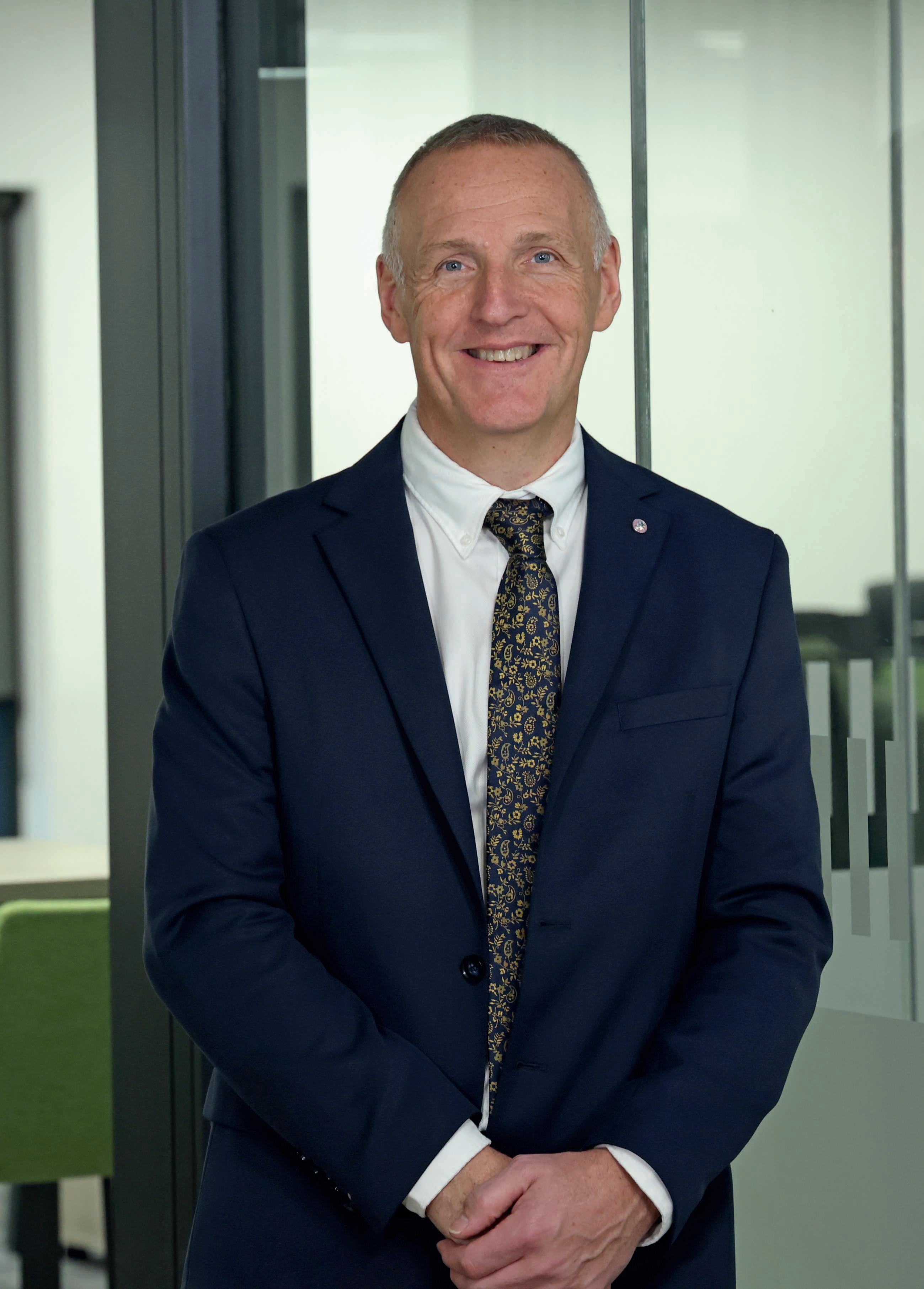
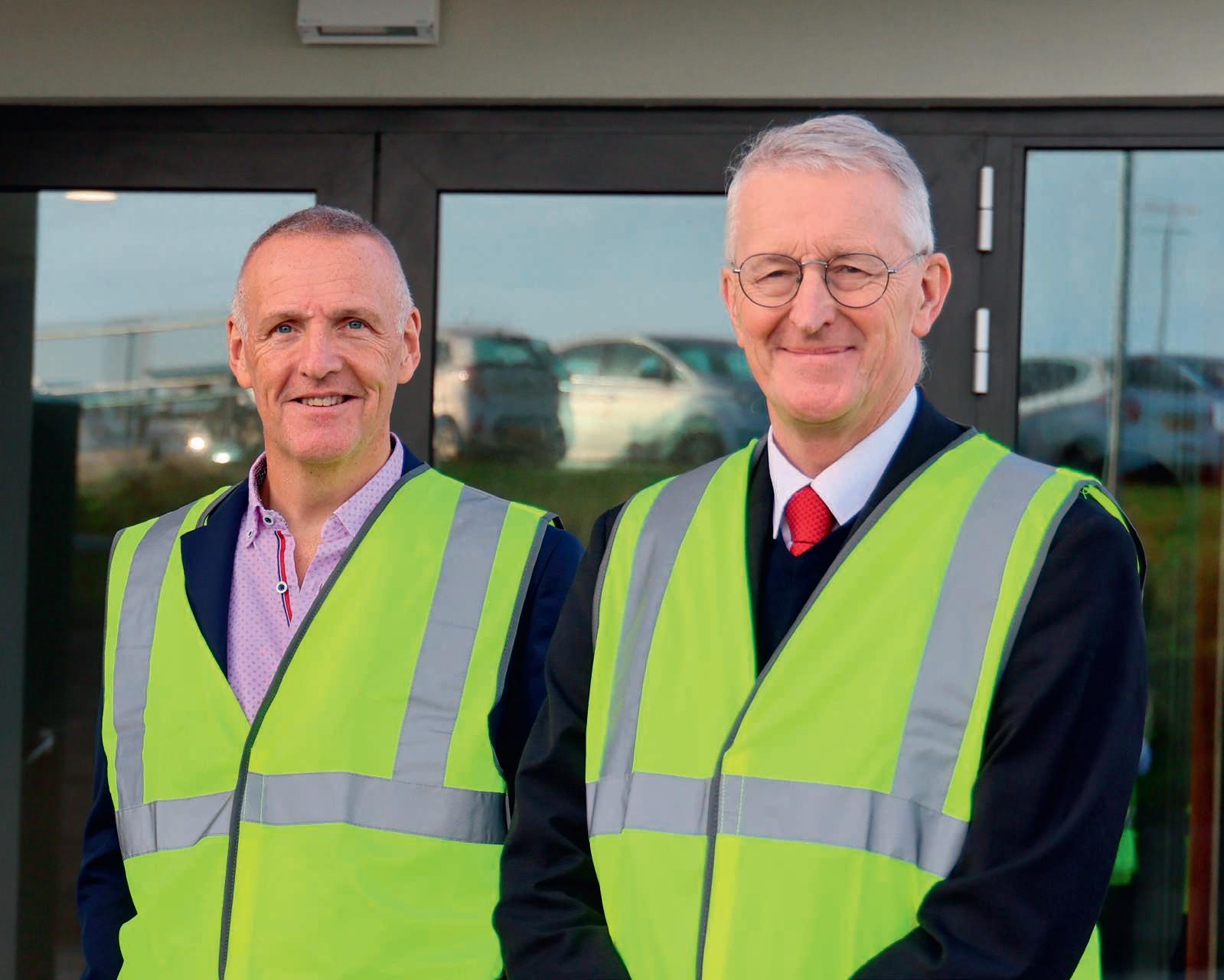
The early milestone for the company was its internationalisation. “We moved beyond our home market and began building our own brand presence internationally, rather than relying solely on distributors.”
Strategic acquisition followed. One of the first was a Cardiff-based company that manufactured ostomy bags. “That strengthened our manufacturing capability.”
The acquisition of Armstrong Medical marked a further step change. “Acquiring Armstrong Medical brought us into respiratory care. It expanded our customer base and broadened our product portfolio significantly.”
Today, the group spans ostomy, respiratory and surgical products. “We now have hundreds of SKUs across half a dozen product ranges,” Jeremy says. “We sell in 60 countries, with direct sales and marketing teams in seven. The UK is our largest market. We have a strong presence in the United States through distribution, and France is currently one of our fastest-growing markets.”
With around 800 staff and three manufacturing sites in Comber, Coleraine and Cardiff, as well as sales offices across the UK and in Japan and other international locations, Eakin Healthcare is one of the most impressive family business success stories to emerge from Northern Ireland.
But Northern Ireland remains central, Jeremy says. “Comber is our home base and head office. We are very proud of our Northern Irish roots.”
In recent years, the company has embarked on a significant programme of capital investment, with approximately £120 million pumped
into acquisitions and expansion. “We are expanding all three manufacturing sites. There is a major extension nearing completion in Comber. In Coleraine, we have developed a new dedicated facility focused on a specific product base. In Cardiff, we have invested in a state-of-the-art manufacturing facility for colostomy bags. We have also strengthened our UK logistics infrastructure,” Jeremy explains.
For him, stepping back from executive leadership, even at a time of growth and expansion, created space for new responsibilities.
“The Pat Eakin Foundation is a separate legal entity,” he explains. “When I stepped down as CEO, I wanted to dedicate more time to developing the family’s philanthropic work. Historically, it had not been strategically coordinated.”
The foundation receives annual proceeds from the business. “It is not a fundraising charity. It provides grants and awards to charitable organisations and supports the communities in which our employees are based, from healthy lifestyle initiatives to social engagement programmes. We believe that people thrive through integration and community connection.”
His appointment to the Ulster University Council has been another significant development.
“It has been a steep learning curve,” he admits. “I have spent my entire career in a family-owned private sector business, focused on revenue, customers and operational performance. Moving into the education sector has taken me outside my comfort zone.”
He describes the Council’s function as governance-focused. “It is akin to a board of governors. The role is about
governance of the overall institution and supporting the Vice-Chancellor in moving the university forward.”
Despite early imposter syndrome, he sees strong overlap. “You realise that many skills are transferable. It is extremely rewarding to feel that you can give back to such an important institution.”
Looking at the market from his new position, he is realistic about the pressures the business will face under new leadership, pressures felt across the healthcare manufacturing sector.
“In the long term, there is less money available from governments and insurers to fund the healthcare needs of ageing populations,” he says. “There will be a continued shift towards preventative care and selfmanagement. Supporting patients to manage their own care will become increasingly important.”
Short-term pressures are more operational. “Labour costs and material costs are rising significantly. Because we supply the NHS and large insurance providers, pricing flexibility is limited. At the same time, we are continuing to invest in long-term product development.”
Looking ahead, growth is still on the cards. “It is about refining and developing products. Healthcare systems require greater value. When I say cost-effective, I do not mean cheaper. I mean delivering more value for the same investment. That is where we must continue to persuade and support healthcare providers.”
For Jeremy Eakin, the focus now is influence rather than execution. As Non-Executive Director, philanthropist and university governor, he remains closely connected to a Northern Ireland business that has gone global, while shaping how its legacy, and his own, will evolve.
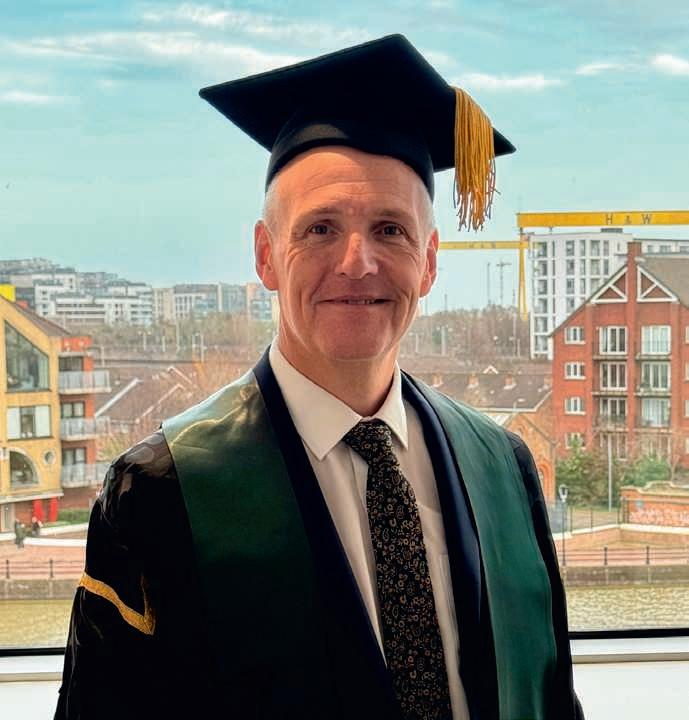
Six student-powered ‘companies’ from schools across Northern Ireland have reached the final stage in this year’s Young Enterprise NI awards and will be hoping their business idea and entrepreneurial approach secure the top award at the ceremony in Belfast City Hall in April.
The six school teams shortlisted are Fair Play from Strathearn School, Seed the Season from Cullybackey College, Kabloom from Limavady Grammar School, Root & Rise from Lurgan College, Looped from Glenlola Collegiate and Emotion Commotion from Fivemiletown College.
The companies each won their respective regional competition and pitched their business ideas to an esteemed panel of judges and in front of an audience at Queen’s University Belfast Business School.
The businesses reflect a wide range of ideas and interests, from a memory game designed by Fair Play to Seed the Season’s range of seeded products, Kabloom’s gardening kits, Root & Rise’s painted flower jars and mindful journal, Looped’s handcrafted recycled rope bracelets and Emotion Commotion’s innovative card game.
Young Enterprise NI chief executive, Carol Fitzsimons MBE, said:
“We are absolutely delighted to reveal this year’s shortlist and to celebrate the exceptional standard of talent, creativity and entrepreneurial thinking shown by students from right across Northern Ireland.
“This year’s finalists have demonstrated real innovation, teamwork and determination in developing products and ideas with genuine commercial potential. Supporting the next generation of entrepreneurs is vital to the future strength of our economy, and the Young Enterprise NI awards play an important role in helping young people build the confidence, skills and ambition they need to succeed.
“We are hugely grateful to the many businesses and partners who continue to
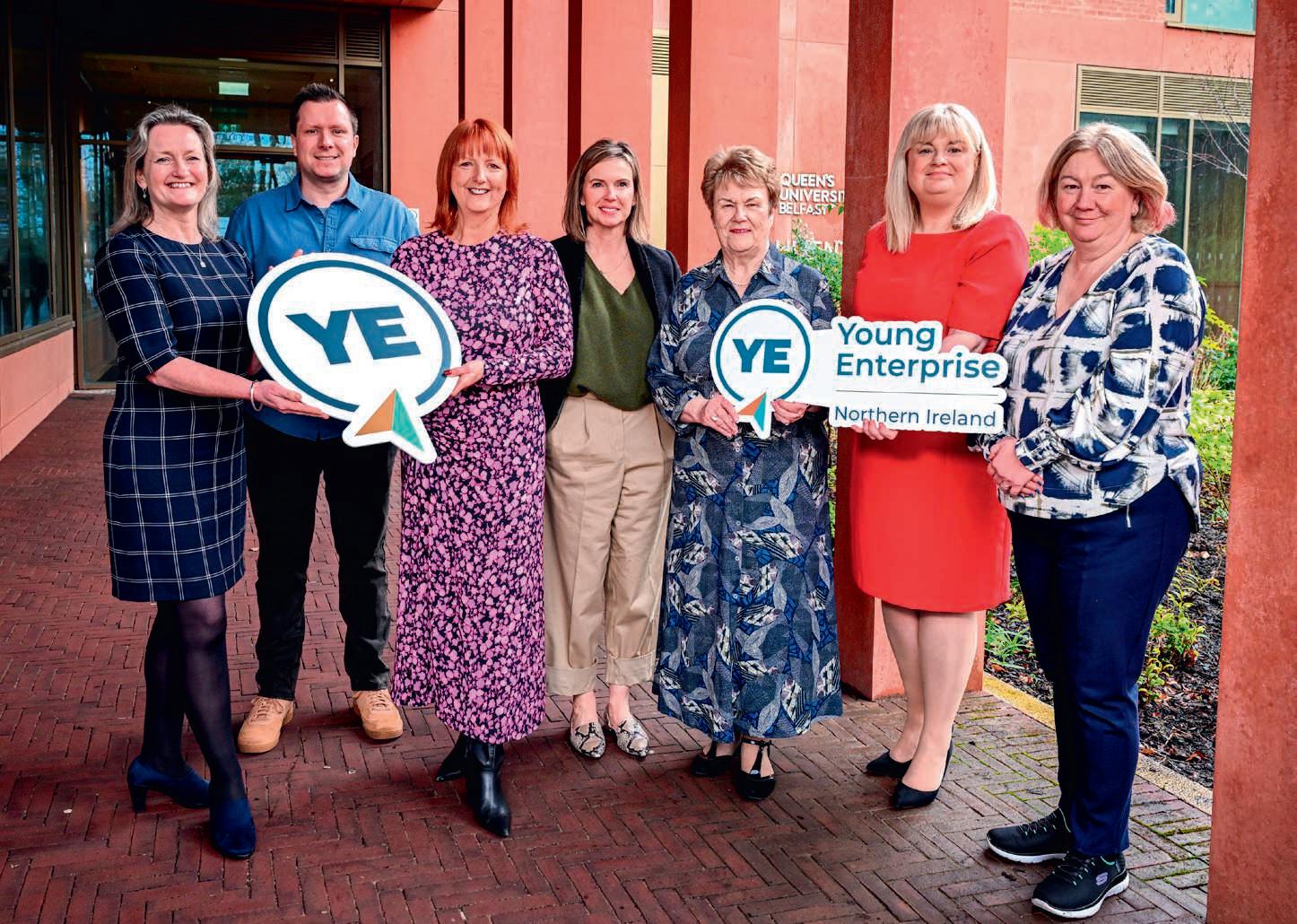
support our work and make opportunities like this possible. Congratulations to every student who took part, and especially to our finalists as they prepare for this year’s awards.”
Professor Sir Ian Greer, President and Vice Chancellor of Queen’s University Belfast added:
“At Queen’s University Belfast, we are proud to support an initiative that gives young people the opportunity to develop these skills and build their confidence. Activities like this play an important role in nurturing early entrepreneurial ambition, encouraging students to think creatively, solve problems and take their ideas further.
“It is hugely encouraging to see so many young people already demonstrating the qualities of the next generation of business leaders, and we are delighted to be part of helping them on that journey.”
This year’s judging panel included Carol Fitzsimons MBE, Chief Executive at Young Enterprise, Adam Ewart, Founder and CEO at Send My Bag, Judith Totten MBE, Founder and CEO at Upstream ABL, Julie McCandless, Professor of Practice Organisation, Work and Leadership
at Queen’s University Belfast, Vera McWilliam, Trustee Director at Institute of Export Foundation, Donna Parker, Managing Director – NI Network at Staffline and Lorna McAdoo, Head of ESG at Version 1.
“We are absolutely delighted to reveal this year’s shortlist and to celebrate the exceptional standard of talent, creativity and entrepreneurial thinking shown by students from right across Northern Ireland.”
As managing director of Solmatix, Neville leads the region’s fastest-growing renewable energy company, delivering solar solutions at scale for commercial, public sector and domestic clients. But his journey with the business is as personal as it is professional.
Solmatix was founded in 2008 on the family farm with humble beginnings. Neville made the significant decision to buy the company back in 2023 – a move that reflected both his belief in the business and his ambition for what it could become.
“It was about bringing the business back to its roots,” he explains. “Solmatix was built on relationships, trust and doing things the right way. I wanted to make sure those values remained at the centre as we moved into our next phase of growth.”
That next phase has been transformative. In just three years, Solmatix’s turnover has grown from £3.6 million to £15 million, with projections to reach £25 million within the next three years. Alongside this growth, the company has significantly expanded its team and operational capacity, enabling it to deliver large-scale solar installations across Northern Ireland, ROI and beyond.
For Neville, however, growth is only meaningful if it is sustainable, both commercially and environmentally.
“The opportunity within renewables is huge, but it comes with responsibility,” he says. “Our focus is on delivering quality projects that perform over the long term. Customers are making major investments, and they need confidence that what we install today will deliver value for years to come.”
That long-term mindset runs through the culture of Team Solmatix. Investment in training, safety and operational excellence has been central to the company’s ability to scale while maintaining high standards.
“We’ve worked hard to build a team that takes pride in what they do,” Neville says. “Our people understand that every
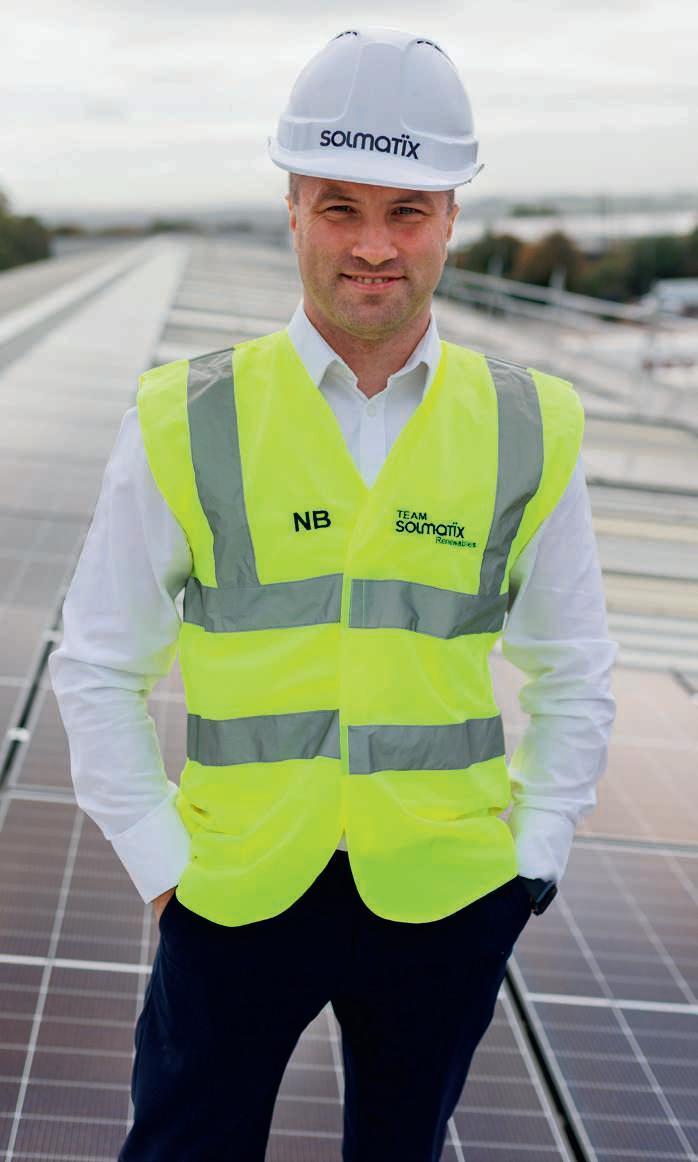
project represents a customer’s trust in us. Protecting that trust is what drives our standards.”
Relationships, he believes, remain the most important currency in business.
“Most of our growth has come through repeat work and referrals. That only happens when you deliver consistently and when you’re honest with customers, even when the conversation isn’t an easy one.”
Beyond the commercial success, Neville is motivated by the wider impact of the work Solmatix is delivering. Each installation helps organisations reduce energy costs, improve resilience and lower carbon emissions - practical steps that support Northern Ireland’s transition to a lower-carbon economy.
“The energy landscape is changing quickly,” he says. “Businesses are facing cost pressures and increasing sustainability expectations. Solar is no longer a ‘nice to have’; it’s becoming a strategic decision for many organisations.”
Neville’s commitment to sustainability is
“Our focus is on delivering quality projects that perform over the long term. Customers are making major investments, and they need confidence that what we install today will deliver value for years to come.”
also reflected personally, with renewable technologies installed at his own home.
“I believe leaders should stand behind what they’re asking others to invest in,” he says.
Looking ahead, the focus for Solmatix is on scaling responsibly – increasing capacity, strengthening partnerships and continuing to invest in people.
“The next stage for us is about controlled growth,” Neville explains. “We want to expand our reach without losing what makes us different – our culture, our standards and our focus on long-term relationships.”
For Neville, the “business baton” is not just about growth figures or market share. It’s about stewardship. Building a strong, values-led organisation that creates opportunity for its team, delivers real value for customers and contributes positively to the region’s economic and environmental future.
“We’re proud of how far we’ve come,” he says. “But the real focus is on what we’re building for the long term.”

We will plant 50,000 trees in partnership with We spend £240M on local food and drink annually
We will plant 50,000 trees in partnership with We spend £240M on local food and drink annually
We will plant
50,000 trees in partnership with We spend £240M on local food and drink annually


We will plant 50,000 trees in partnership with We spend £240M on local food and drink annually farmers, makers and the communities we live and work in. That’s why…
We will plant 50,000 trees in partnership with We spend £240M on local food and drink annually
At Musgrave, we love supporting local suppliers, farmers, makers and the communities we live and work in. That’s why…
We’re supporting people with autism & learning difficulties
We’re supporting people with autism & learning difficulties
We’re supporting people with autism & learning difficulties
We’re supporting people with autism & learning difficulties
We’re supporting people with autism & learning difficulties


We’ve raised £4.4M for our charity partners
We’ve raised £4.4M for our charity partners
We’ve raised £4.4M for our charity partners
We’ve raised £4.4M for our charity partners

We’ve raised £4.4M for our charity partners




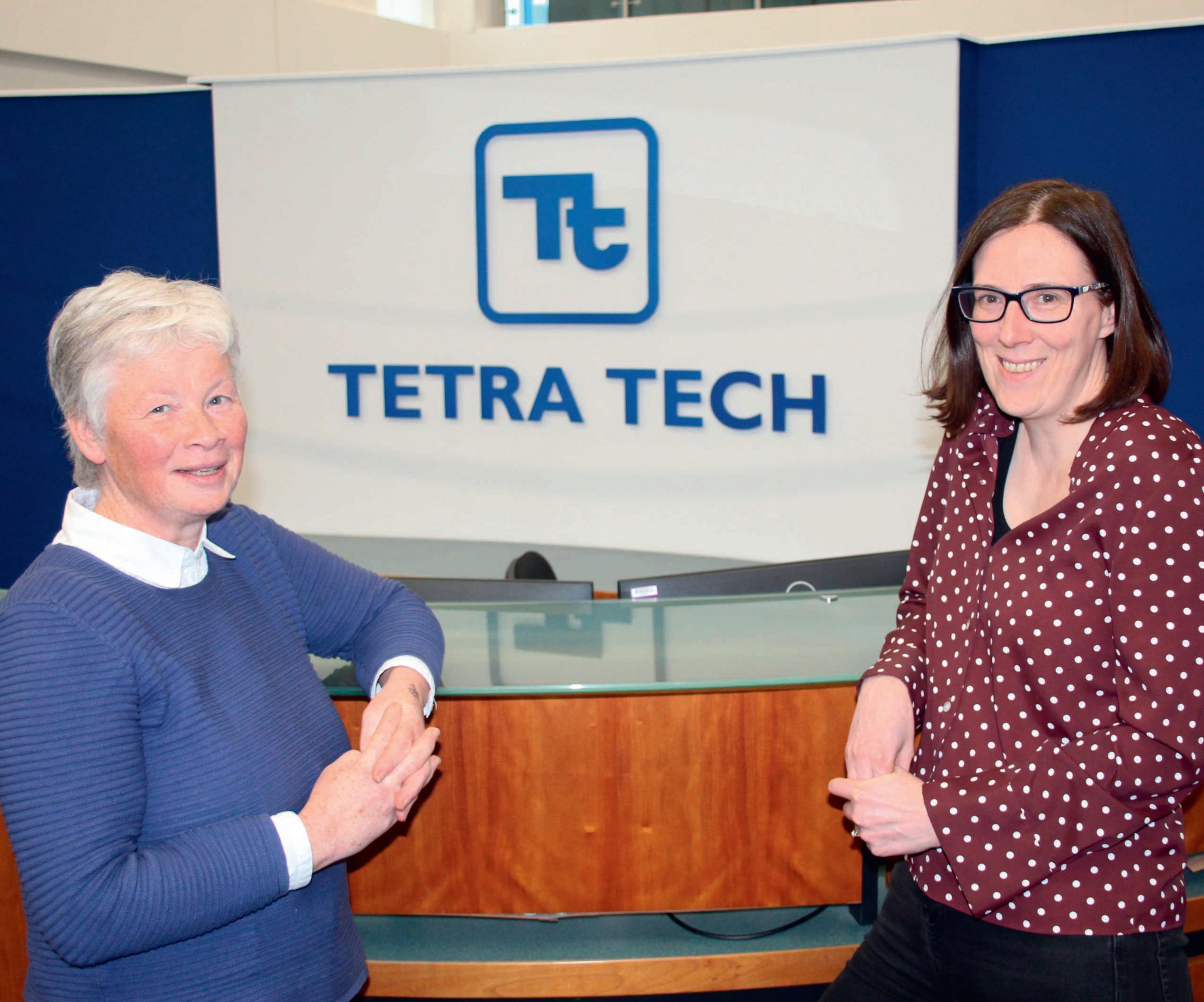
Laura Devlin, director in Quantity Surveying, and Jane McMeekin, principal in Structural Engineering at Tetra Tech in Belfast, discuss a business that operates at the heart of some of the region’s most significant projects, while quietly shaping how infrastructure is planned, costed and delivered.
Tetra Tech, a global engineering and consulting firm headquartered in Pasadena, California, has become an increasingly influential player in Northern Ireland’s built environment, combining international expertise with a longestablished Belfast base. It is currently supporting some of the region’s most important builds, including the new
Children’s Hospital and Strule Shared Education Campus in Omagh.
“We support clients with cost management across construction projects, mainly in the public sector, particularly healthcare and education,” explains Laura, whose role spans the full lifecycle of projects, from early-stage planning through to completion. “We take
jobs from inception to completion, tender the works and look after them through delivery.”
While the Tetra Tech name may feel relatively new to some, the Belfast operation itself is anything but. “The Belfast base, formerly known as WYG, has been here for over 30 years,” Laura says. “We have a long-standing presence in the region.” Tetra Tech’s growth in the UK and Ireland over the last seven years has been remarkable with now almost 6,000 people across the Europe region, 1,200 of whom are based across the island of Ireland. In addition to WYG, RPS Group joined Tetra Tech in 2023, significantly expanding Tetra Tech’s environmental and sustainability expertise across the UK and Ireland and this spring RPS Group fully transitioned to adopt the Tetra Tech brand. More recently, Irish consultancy Carron + Walsh, founded in 2010, joined Tetra Tech which brought longestablished regional expertise with newer, high-growth capability to the company.
Laura has been with Tetra Tech since she graduated in 2006. That continuity is reflected in the wider team. “There is a good level of staff retention,” she says. “I’ve worked with many of the same people in quantity surveying and project management for the last two decades.”
Being part of a global organisation brings clear advantages, particularly when it comes to accessing specialist knowledge. “There’s a huge pool of knowledge you can reach out to,” Jane says. “You can go onto the main network and connect with people at all levels, including directors. No one is afraid to share knowledge.”
While much of Jane’s day-to-day work remains within the UK and Ireland, that global access is increasingly important. “Sustainability, for example, is such a broad subject,” she explains. “It’s useful to be able to draw on expertise from across the business when needed.”
Laura agrees, particularly in emerging areas such as water infrastructure. “We’ve recently been looking more closely at water capability and infrastructure. We’re well known for that experience in America, especially in California, and we can draw on that knowledge when needed. While our core work is here, there’s no limit to where we can seek expertise from.”
As the construction sector adapts to net zero targets, Tetra Tech’s role is evolving alongside it. “From a cost perspective, sustainability is becoming a much bigger part of what we do,” Laura says. “We have a dedicated sustainability department, but from a commercial
“We support clients with cost management across construction projects, mainly in the public sector, particularly healthcare and education.”
side we’re feeding into design processes, looking at whole-life costing and wholelife carbon. It’s definitely becoming more and more part of our role.”
While Northern Ireland remains a core focus, both see growing opportunity across the island of Ireland. “We’ve always had a strong foothold in healthcare and education in Northern Ireland,” Laura says. “Now we’re expanding into the Republic of Ireland, particularly in those sectors.”
The company’s expansion is helping support that growth. “Tetra Tech is always looking to grow and expand, but it’s about alignment, making sure it fits with what we do and how we can best serve our clients,” she explains. “For example having RPS join Tetra Tech has made it easier to work in the south, where we’ve been building relationships over the last few years.”
Looking ahead, both expect continued demand in core infrastructure areas, despite wider global uncertainty. “It’s difficult to predict long-term with the current geopolitical situation,” Jane says. “Nobody really knows. But there will always be a need to rebuild and invest.” Closer to home, the priorities are clearer. “Education is a big one,” she says. “Schools need investment. Roads will continue, and we’ll see ongoing development in areas like healthcare, factories and data centres.”
Laura points to government policy as a key driver. “There is a strong push on the construction of new hospitals,” she says. “And as Jane says, there are significant opportunities across the island of Ireland, particularly with school projects and wider public infrastructure.”
Despite its global scale, the Belfast office retains a strong, supportive culture, something both say contributes to its high staff retention. “It’s a good company to work for. There’s a high level of staff retention, and once people are in, there’s a lot of opportunity. If you want to explore something different or even travel, they will support that,” Laura says. Jane agrees. “We’re a big company, but at heart it feels like a small company,” she says. “People support one another, and we all bring different specialisms. That balance is what makes it work.”
That sense of stability is reflected in the team’s growth. “Within structural engineering, it’s been steady,” she adds. “We retain staff, and that allows relationships to develop and knowledge to build over time.”
Both also highlight changing routes into engineering and construction careers, as well as a shift in gender balance. Jane’s own path is a case in point. “I studied medicine and dropped out, then worked as a chef with Paul Rankin at Roscoff,” she says. She went on to win Young Chef of the Year before returning to education. “Engineering is a good career, and if you want to go back to education and do it, you should.”
The industry itself is evolving. “When I started, it was very male dominated,” Jane says. “Now, especially post-Covid, there are far more women coming through, particularly through apprenticeship schemes.”
Laura has seen similar change. “In our department there are still more men, but in meetings and across projects we’re seeing more women in the industry,” she says. “Among apprentices, particularly in Tetra Tech, there’s now a larger percentage of females, which is a big shift.”
Tetra Tech may be one of many global organisations shaping the built environment in Northern Ireland, but it does so quietly. Its Belfast office remains grounded and ambitious.
“Sometimes the size of the company can make people wary,” Laura says. “But Belfast is a small entity within that. We want people to understand what we do here and the projects we’re involved in.” Jane agrees. “There are opportunities to work globally if people want that,” she says. “But equally, it’s a supportive, local team. It’s a really good place to work.”
With strong staff retention, aligned acquisitions and access to global expertise, Tetra Tech’s Belfast operation is well positioned not just to grow, but to play a central role in delivering the infrastructure and buildings that will define Northern Ireland’s future.


By Blaithin Surgeoner
Blaithin Surgeoner, a Chartered Accountant with over 30 yearsexperience and Partner at Endeavour InformationSolutions,a MicrosoftSolutions Partnerbased in Belfast, that specialisesin bringing optimising customers systems with Microsoft Cloud solutions using a CloudFirst approach
Too often, accounting systems are viewed narrowly as tools to manage ledgers, process
But in today’s fast-moving landscape, growing businesses need more than just bookkeeping. They need agility in order to react to change, integration with an organisation’s other systems and processes, and intelligent management reporting. That’s where Microsoft Dynamics365 Business Central shines: a modern, cloud-based ERP solution that empowers businesses to go beyond accounting — and take control of their entire operation.
AFully Integrated Business Platform:
Designed for small and medium-sized management with operations, sales, service, inventory, and projects. Thisseamless integration eliminates data silos and manual entry, providing one source of truth across the business.
From the moment a saleslead enters the system to when an invoice is paid and stock is replenished; BusinessCentral keeps teams connected and processesstreamlined
Built-in dashboards and real-time reporting departments, allowing for proactive, not reactive decision-making.

Feature-Rich Capabilities for Modern Businesses: BusinessCentral comesloaded with intelligent features that extend far beyond the capabilities of traditional accounting software:
• FinancialManagement: Robust nominal ledger, multi-currency support, dimensional reporting, bank reconciliation, in one place.
• Customer RelationshipManagement: Track customer interactions, automate sales processes, manage pricing and discounts, and convert quotes to orders seamlessly
• Inventory& Supply Chain: Gain full visibility into inventory levels, suppliers, warehouses, and product movements. Automate reordering and optimise stock to reduce costs and improve delivery times.
• ProjectManagement: Monitor resources, track costs, manage time project.
• WarehouseManagement: Use bin and zone management, barcode scanning, and real-time stock updates to increase
• Manufacturing &Assembly: Plan production, manage BOMs (bills of materials), handle capacity, and track costs assemblers
• ServiceManagement: Schedule service calls, manage contracts, and provide customers with prompt, high-quality support.
Microsoft Integration: What truly sets Business Central apart is its native integration with the Microsoft 365 ecosystem. Users can generate quotes directly from Outlook, export data to Excel, and collaborate in Teams, all without switching context. It also connectsseamlessly with Power BI for advanced analytics and Power Automate for process automation.
Secure, Scalable,and Always Up to Date: Running in the cloud, BusinessCentral provides enterprise-grade security, data backups, and automatic updates — allmanaged by Microsoft. Whether your team is on-site or remote, BusinessCentral lets your team work anytime, from any location or device, and can grow and adapt to meet any changes your business needs without expensive upgrades.
Partnering for Your Success:
Microsoft Solution Partner, we don’t just implement software, we work alongside businesses to tailor BusinessCentral to their -
ing from legacy systems or scaling for new markets, we bring deep product knowledge, industry expertise, and a commitment to delivering value at every stage.
AStrategic Investment: Microsoft Business Central provides agility and intelligence to your business that not only manages the numbers, but also helps drive growth, improve service, and future-proof operations.
Summar y: why not contact us to arrange a free, no commitment consultation, by visiting: www.endeavour-is.com/business-central or calling us on 028 9031 1010 and let’s talk.
help them adapt faster, work smarter, and deliver results.






Management











Using the latest Microsoft Cloud applications and ser vices, we help our customers overcome their challenges and make their visions a realit y. With Dynamics 365 Business Central we provide a business management sales, services, and oper ations within a single, easy-to-use application to get the insights needed to drive your business forward and be prepared for what’s next.
Contact us for more information and a demonstration of how Dymanics 365 Business Central can help deliver the right results for your business.


Since it was first established, Aflac Northern Ireland had a clear ambition: to create a global centre of excellence for technology and cyber security while also ensuring that business growth and sustainability went hand in hand.
A thriving technology hub employing more than 170 professionals, Aflac NI has always steered clear of measuring success purely by focusing on the bottom line, instead marking itself on how it lives up to that ethos of sustainability with equal importance.
Aflac NI is part of the global supplemental insurance provider Aflac, which supports millions of customers in the US and Japan.
Mark McCormack, managing director of Aflac NI and chief technology officer, met with Ambition to reflect on the success of its impact in Northern Ireland and its vision for the future.
He said that leading the company in Belfast had always been about “building a business that has a lasting positive impact for our people, our community, our international business and the wider technology sector”.
“That means thinking long-term about how we attract and develop talent, how we create an inclusive culture and how we contribute to the community around us.”
That philosophy underpins Aflac NI’s commitment to things that make the world a better place, which places people and opportunity at the centre of its strategy.
One of the most visible expressions of that commitment is Aflac NI’s growing focus on developing Northern Ireland’s future technology workforce.
This year, the company is launching its first fully structured work experience programme, alongside an expanding apprenticeship pathway in partnership with Belfast Met.
The initiative reflects a belief that businesses must play an active role in nurturing future talent. “The technology sector in Northern Ireland is incredibly dynamic, but its continued success depends on ensuring young people can see clear pathways into it,” Mark added.

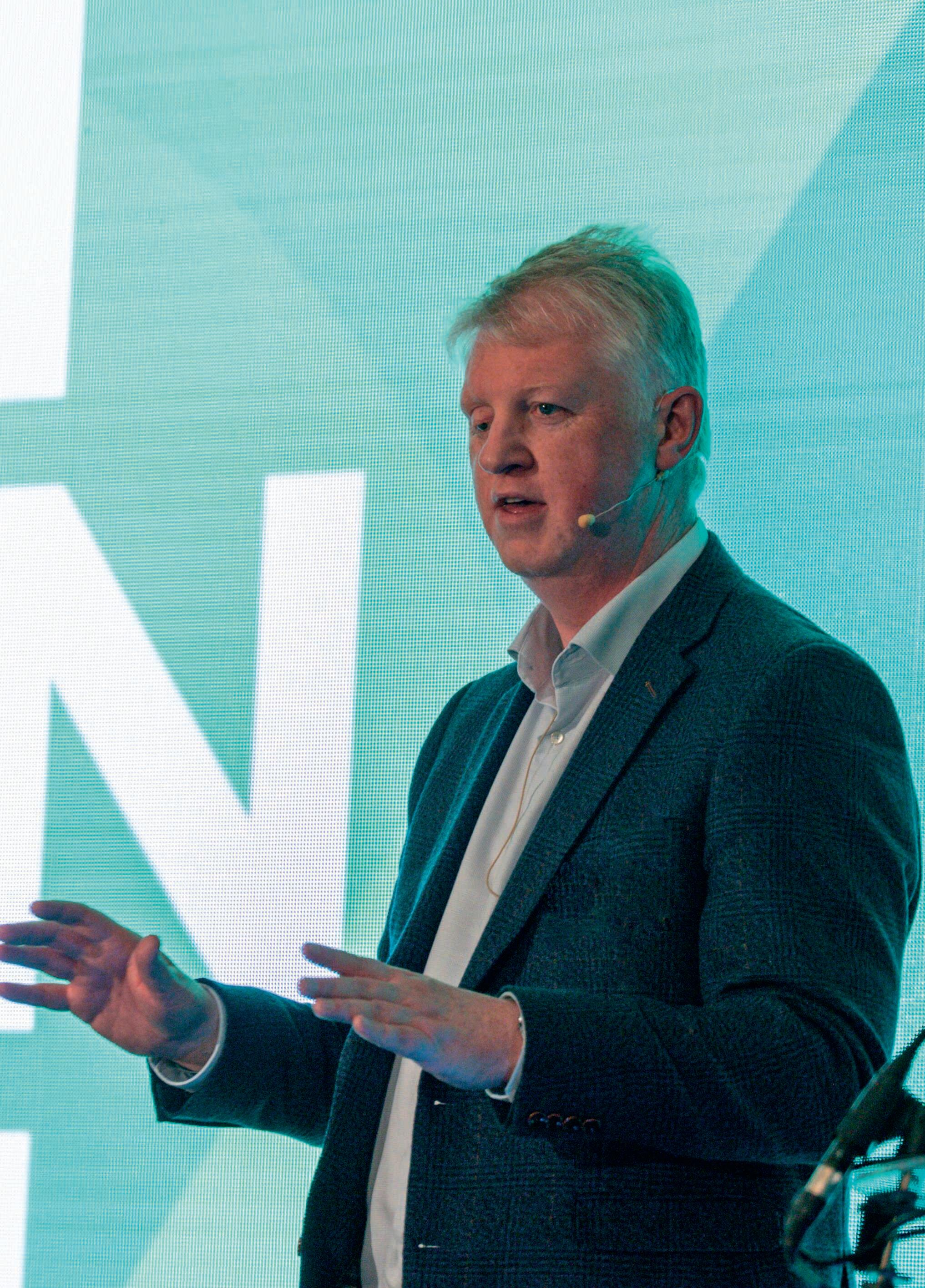
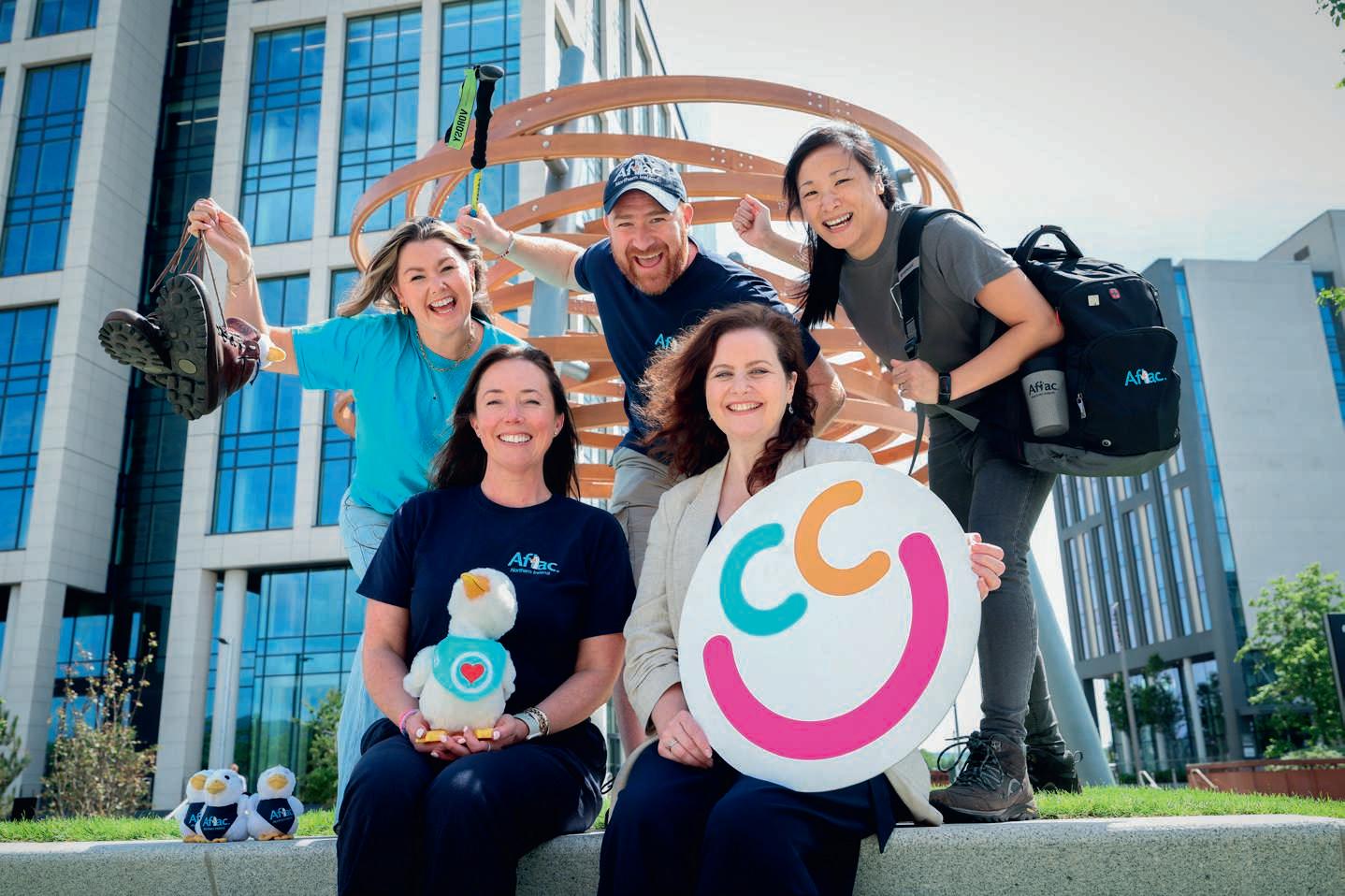
The new programme is designed for students aged 16–19 who are beginning to consider their career options. Rather than simply observing workplace activity, participants will gain hands-on experience across a range of teams, from engineering and cyber security to business support functions.
“We wanted to create something that genuinely adds value for students,” Mark said.
“They will have the opportunity to engage with our teams, participate in structured learning sessions and interact with colleagues across the organisation.”
Alongside dedicated work experience placements, Aflac NI also provides an expanding apprenticeship programme as an alternative route into technology careers for those who wish to earn while they learn.
Mark said initiatives like these represent a vital investment in the long-term sustainability of the sector.
“If Northern Ireland is to maintain its reputation as a global technology hub, we must continue to grow the talent pipeline. By supporting young people early in their journey, we can help build the skills and confidence that will power the next generation of innovation.”
Developing talent is only part of the picture. For Aflac NI, building a sustainable workforce also means ensuring that everyone can thrive from the moment they arrive.
The business has established an active DEI committee that works to embed inclusion into everyday working life.
“Providing opportunity for everyone to thrive is essential for innovation,” said Mark. “Technology thrives on different perspectives, experiences and ideas.”
Aflac NI’s approach focuses strongly on fostering a culture of belonging and allyship and building a strategy centred on education, awareness and engagement.
This has included workshops, as well as celebrations of cultural events across the calendar year.
Mark added: “These initiatives help create conversations and understanding. They also reinforce the message that everyone has a role to play in creating a well-rounded workplace.”
The impact of this work has been widely recognised. Aflac NI has obtained CORE accreditation from Business in the Community NI in recognition of its commitment to integrating corporate responsibility into the way it does business.
While talent development and workplace culture form key pillars of Aflac NI’s approach, the organisation’s commitment to sustainability also extends throughout its team and into the wider community.
“Aflac’s purpose has always been about supporting people during challenging times and that ethos naturally extends to how we engage with the communities around us,” said Mark.
In Northern Ireland, the business has developed a particularly strong partnership with the Children’s Cancer Unit Charity (CCUC), which supports the Children’s Cancer and Haematology Unit
at the Royal Belfast Hospital for Sick Children.
Through a range of employee-led fundraising initiatives – from charity challenges to volunteering activities –the team has directly raised more than £100,000 to support the charity’s work.
“What makes this achievement especially meaningful is that it’s driven by our employees. There’s a genuine passion among our people to give back and make a difference,” Mark added.
The company has also introduced the award-winning My Special Aflac Duck® to Northern Ireland. The interactive robotic companion is designed to help children undergoing cancer treatment express their emotions and prepare for medical procedures.
“It’s an example of how Aflac’s global mission can translate into tangible support for families locally,” said Mark.
For Mark, the various strands of Aflac NI’s activity, from talent development and inclusive culture to community engagement, all contribute to a broader vision of sustainable growth.
“We want to create a business that not only delivers world-class technology solutions but also strengthens the ecosystem around it,” he said.
That means continuing to collaborate with education providers, industry partners and organisations across Northern Ireland to support the development of skills and opportunity.
“The region has built a strong reputation internationally for its technology sector,” said Mark.
“Maintaining that momentum requires businesses to take a long-term view and invest in people, and we are proud to play our part.”
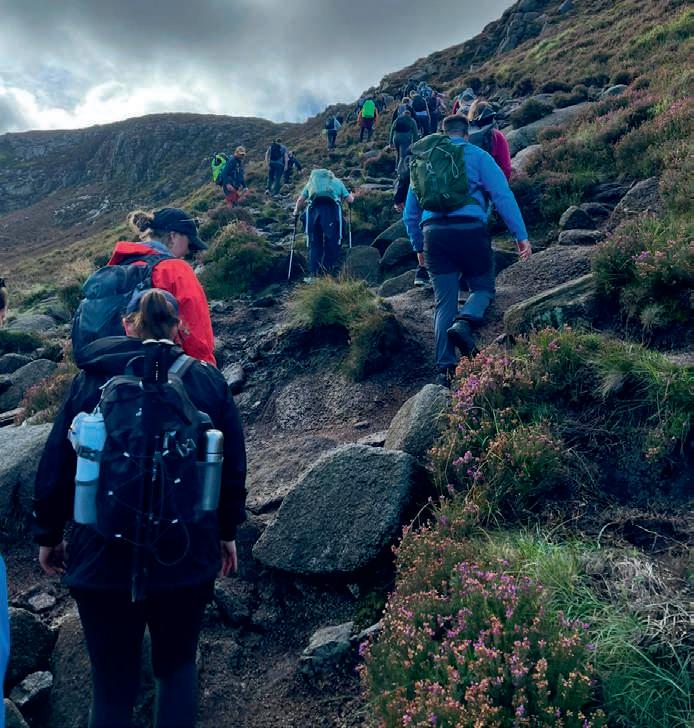

Sam Brailli Senior FinOps Consultant, Telefónica Tech
For most organisations, the real challenge of cloud isn’t the cost itself, but the lack of financial accountability and oversight in how cloud decisions are made. Whether a business has already migrated to public cloud or is just beginning its cloud transformation, leaders are increasingly realising that their original cost expectations rarely match reality. As cloud usage grows, so too does the urgency to build financial accountability into the way technology teams operate. This is where FinOps helps organisations take control of cloud spend by aligning usage, cost and business value across technology and finance teams.
Understanding what FinOps really is FinOps is often mistaken for cloud cost optimisation or reporting, but it is a strategic discipline that aligns cloud spending with business value. A mature FinOps practice creates a culture where teams understand the financial impact of technical decisions, engineering feels ownership of cloud usage, and collaboration between finance and technology becomes part of everyday work.
To succeed, a FinOps function must blend several capabilities: strong cloud and infrastructure knowledge; financial and commercial literacy; stakeholder management; data analytics; and understanding of FinOps and automation platforms.
Building this mix of skills internally takes time and the right people. Organisations must consider not just cost, but readiness. So, how do you decide between building an in‑house team and bringing in a consultancy?
How do we build an effective FinOps team?
It’s not a simple question, because establishing a successful FinOps practice requires far more than appointing a cost‑focused analyst or implementing a reporting tool. It demands skills, cultural alignment and an operating model that embeds financial responsibility across engineering, product and finance teams.
While every organisation’s journey is unique, most paths fall into three categories: building internal capability, partnering with specialists or adopting a hybrid approach that evolves over time.
For many organisations, owning FinOps internally is the long‑term ideal. Internal teams understand the business context better than any external partner; the systems, history, quirks and people involved, which often makes them more effective at influencing behaviours and driving lasting cultural change.
But building a FinOps team from scratch is difficult. Skilled practitioners are scarce, and hiring the right mix of cloud, financial and analytical expertise can take months. Even once in place, creating the FinOps frameworks, governance models and the reporting pipelines to establish the communication channels can take time. During this period, cloud costs continue to grow, and organisations may struggle to capture value quickly.
If rapid progress is essential, or existing teams are stretched, building internally can delay results.
2:
Many companies accelerate their journey by partnering with a specialist consultancy or managed FinOps provider. This brings immediate access to skilled professionals who have built and run FinOps capabilities across multiple industries, along with proven methodologies, tooling strategies, and reporting pipelines.
The primary advantage is speed. A consultancy can rapidly assess cloud environments, identify optimisation opportunities and establish foundational processes. There’s no lengthy recruitment, no need to upskill teams before seeing value and less risk of early missteps slowing progress.
However, outsourced models aren’t perfect. Without developing internal
capability, the FinOps practice may remain dependent on external support and struggle to embed culturally. These engagements also come with a cost, and a prearranged duration, meaning long‑term success requires clear planning around knowledge transfer and internal ownership.
In reality, the most effective approach for organisations can be a hybrid model. By combining external expertise with internal capability building, companies can accelerate early wins while still developing sustainable long term ownership. A hybrid model typically follows this pattern: 1. A consultancy establishes the foundation
2. Internal teams shadow, learn and gradually take ownership
3. Expert support remains available for complex challenges, multi cloud environments or leveraging additional skills before opening new positions
This approach offers speed without sacrificing internal maturity. It’s particularly valuable in organisations operating across Azure, AWS or multi cloud platforms, where specialist knowledge is essential.
How Telefónica Tech supports your FinOps journey
Telefónica Tech provides flexible FinOps support tailored to an organisation’s maturity, from short term accelerators to fully managed services or co‑delivery models that build internal capability.
Our team combines cloud architecture expertise, financial accountability and practical FinOps experience across Azure, AWS and multi‑cloud environments, working with engineering, product and finance teams to integrate FinOps into everyday operations.
If you’re considering how to establish or scale your FinOps capability, we can help determine the right approach for your organisation.
Group Operations Director, McKeever Hotels

Chief Executive Officer, CreevX

Senior Director in Property and Facilities Management, CBRE NI

Principal and Chief Executive, Belfast Metropolitan College
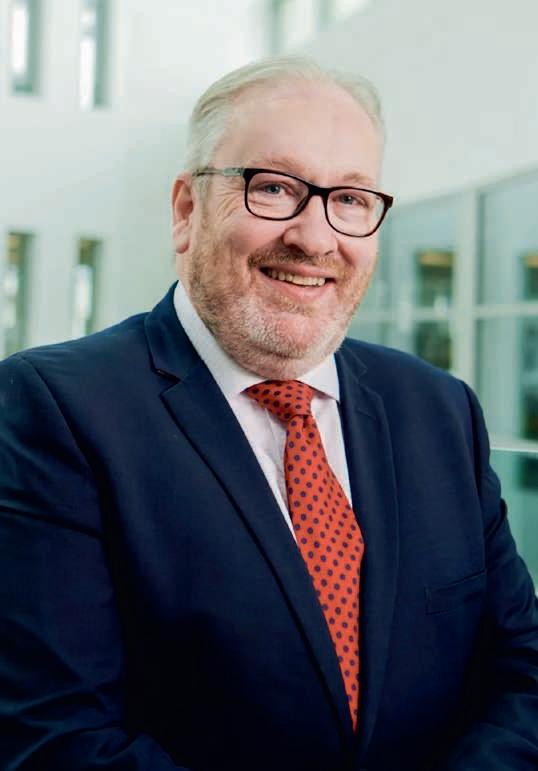
Head of Commercial Development, Belfast City Airport

Managing Director, Avondale Foods
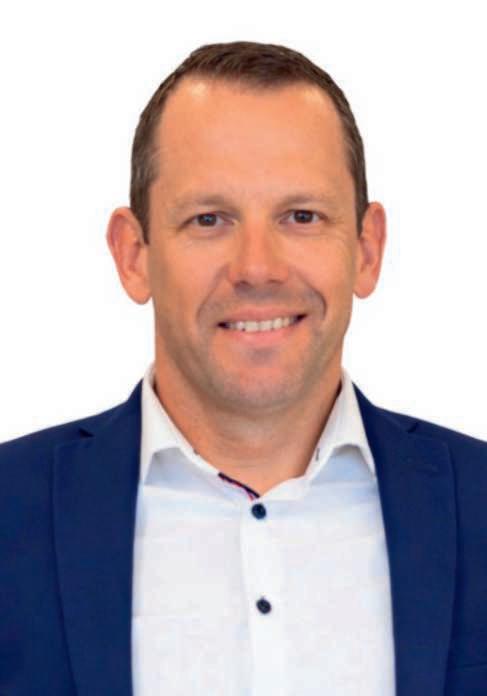
Managing Director – Head of Business Development, FinTrU

General Manager, The Fitzwilliam Hotel Belfast

Danske Bank UK has announced that Julie-Ann Haines will succeed Vicky Davies as chief executive on 1 July 2026. Julie-Ann Haines, who has a Northern Irish family background and was raised in Scotland, is the former CEO of Principality Building Society –Wales’s biggest financial services organisation.
Chair of the Bank’s Board, Martin Stewart, said:
“We are extremely grateful to Vicky for her outstanding contribution over her five year tenure as CEO, during which she has led the Bank with drive, purpose and a clear strategic vision. When she leaves her post later this year, she will do so in the knowledge that the Bank is in robust health and well positioned for future growth.
“In Julie Ann Haines, we have appointed a proven leader who is widely respected across the financial services industry. She is someone who has extensive customer focused leadership experience, combined with a track record of delivering commercial and operational success. Vicky will formally hand over to Julie Ann on 1 July 2026, subject to regulatory approval. In the interim both leaders will work closely together to ensure there is a well managed and smooth transition.”
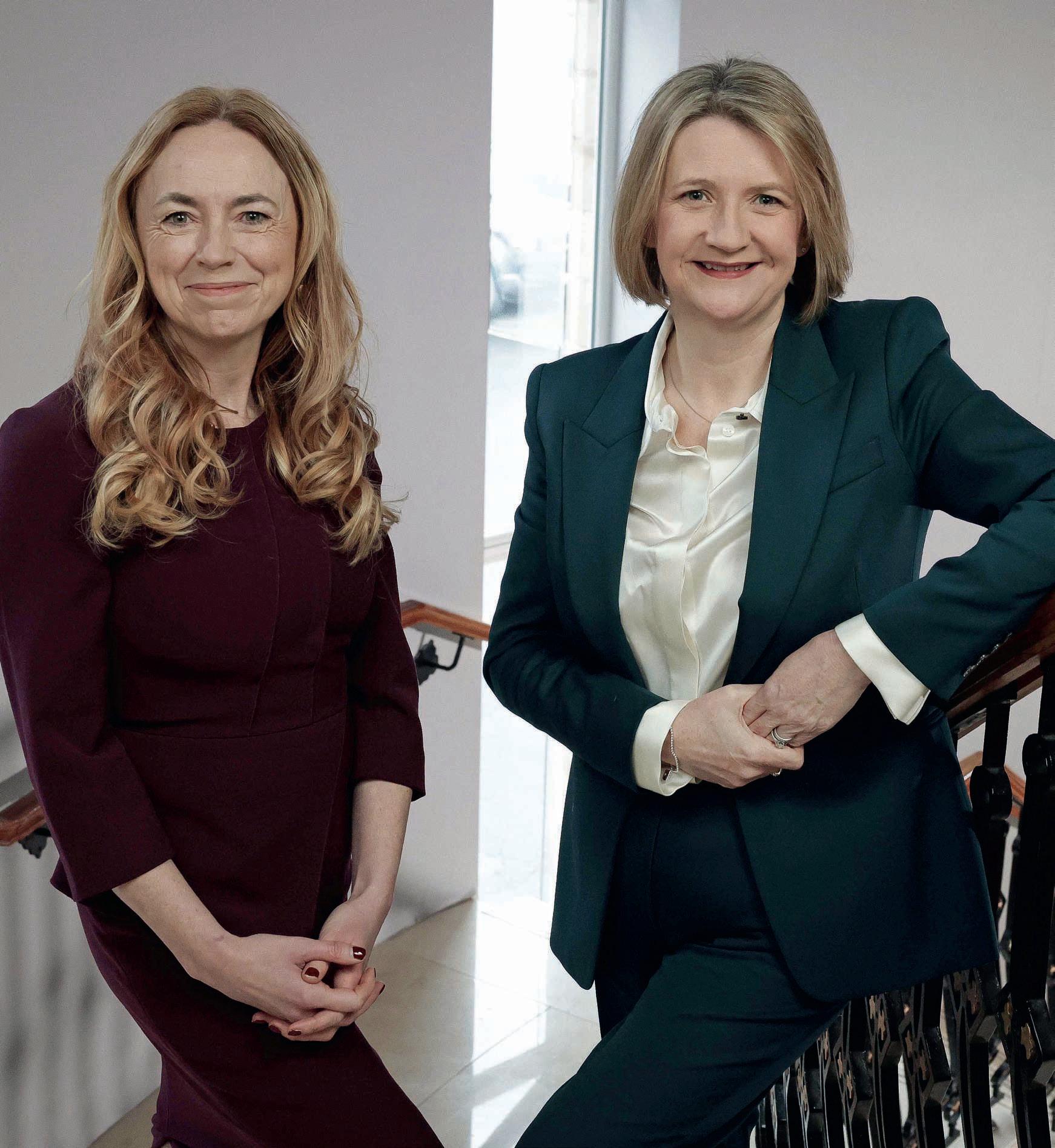
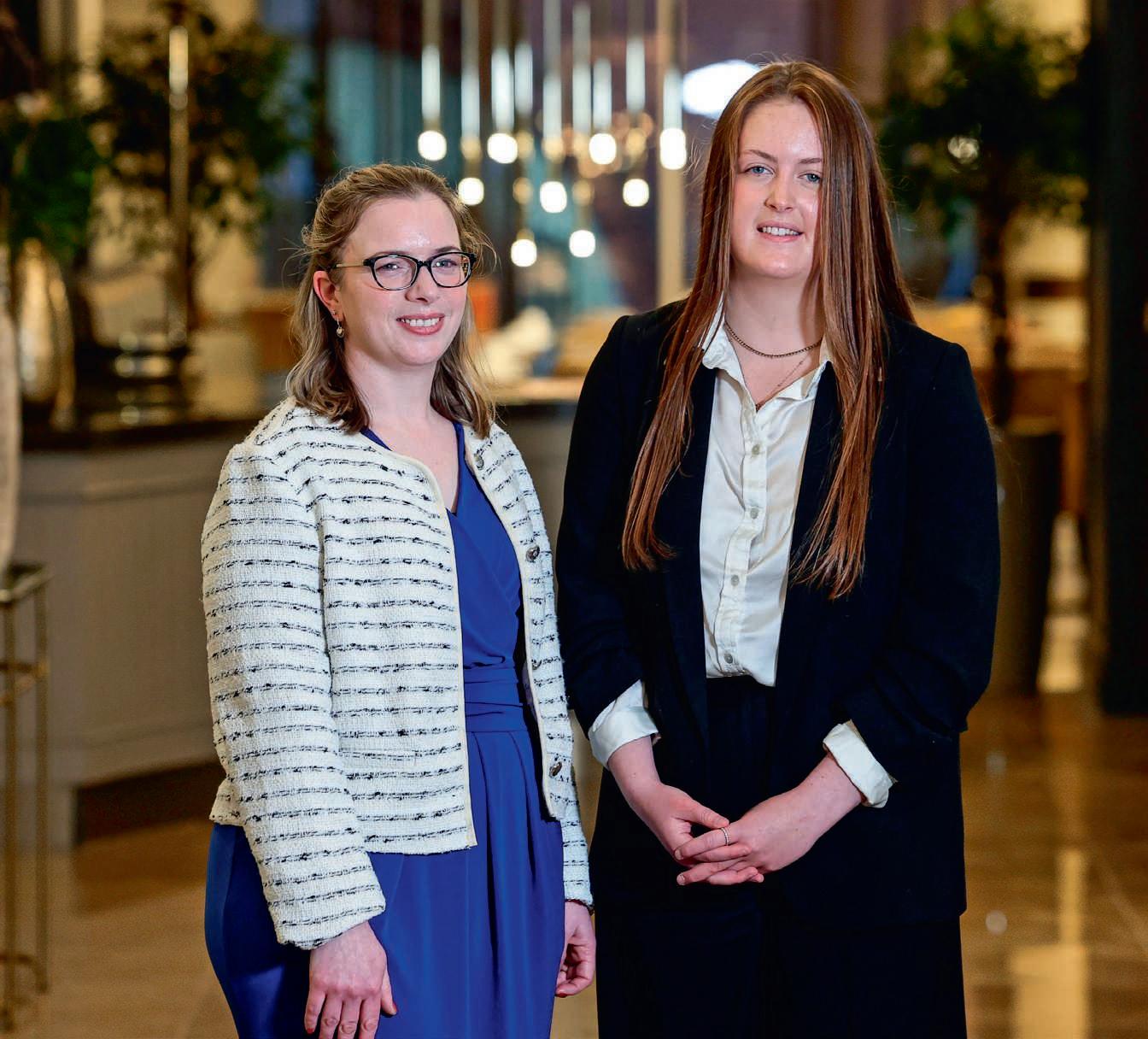
Cleaver Fulton Rankin has expanded its legal teams with the appointment of two new professionals, reinforcing the firm’s position as a leading force within the commercial legal market.
The firm welcomes Rebecca O’Flaherty as associate director within the Banking & Finance team. Rebecca brings extensive experience advising clients across a broad range of sectors on complex corporate transactions, further enhancing the department’s depth of expertise.
Stephen Cross, head of Banking & Finance, comments:
“We are pleased to welcome Rebecca to the Banking & Finance team. Her strong transactional experience enhances our ability to deliver commercially focused, high‑quality advice. She will be a valuable addition as we continue to support major financial institutions and borrowers across the market.”
In addition, Aisling Park has joined the firm as a paralegal in the Private Client department. Aisling’s appointment enhances the team’s capacity to deliver tailored, specialist guidance on personal legal matters.
Michael Graham, head of Private Client adds:
“We are delighted to have Aisling join the Private Client team. Her support will help us continue providing tailored, specialist guidance across a wide range of personal legal matters.”
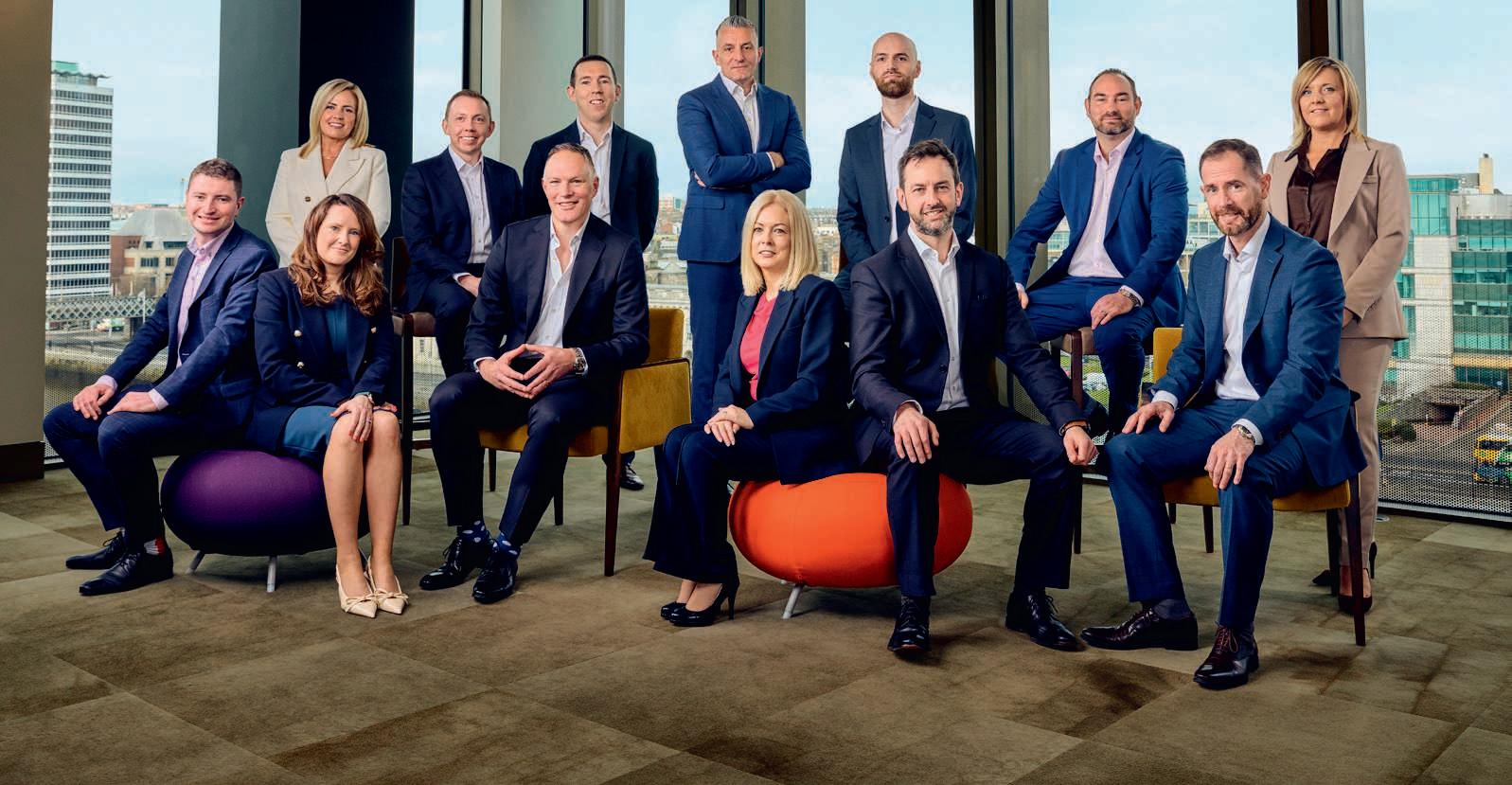
Grant Thornton has announced the appointment of 12 new partners to its advisory, tax and audit practices across the island of Ireland, with two of the appointments made at its Belfast office.
Their appointments come at a period of exceptional growth and transformation for the firm, as the Grant Thornton Advisors multinational platform continues to expand following recent strategic transactions with high-performing professional services firms across the Americas, Europe, the Middle East and the Asia Pacific region.
The new partner appointments come after the announcement in January that, following the creation of over 70 new roles in its Belfast office last year, Grant Thornton has signed a lease for 23,000 sq ft of office space across two floors in The Ewart on Bedford Square and plans to move into the building in early 2027.

Lauren McGaughey, recently appointed director of Openreach Northern Ireland
European law firm Fieldfisher has signed a 10-year lease agreement with EY, which will see the firm relocate from its existing Belfast office to Adelaide Exchange, a premium Grade A development in the heart of the city’s traditional business district. This marks one of the largest property transactions in Belfast in recent years and represents a major milestone in Fieldfisher’s ongoing growth strategy.
The move to Adelaide Exchange is scheduled for late spring 2026. Fieldfisher will occupy nearly 20,000 sq ft across the ground and first floors, a significant expansion from its current 14,000 sq ft premises in the Titanic Quarter.
This growth will be supported by the recent appointment of Stuart Marks as business services centre director. Stuart, who will help drive operational excellence and strategic expansion, said:
“This move underlines our commitment to Belfast as a key part of our international network and creates a modern, dynamic workplace at Adelaide Exchange that will help us attract talent and deliver outstanding service to clients. The new space will enable greater efficiency and innovation, supported by enhanced technology and streamlined processes, all while fostering collaboration and creativity.”
Openreach has confirmed a senior leadership appointment in Northern Ireland, with Lauren McGaughey formally taking on the role of director after a year leading the team on an acting basis. Former director Garret Kavanagh will move into a new UK-wide role on his return from family leave.
Lauren joined Openreach in 2013 and brings extensive experience across commercial and network operations. Over the past year she has successfully led the Northern Ireland business, overseeing strong progress on broadband upgrades across the region and making ultra-reliable full fibre technology available to 92 per cent of Northern Ireland.
Lauren McGaughey, director of Openreach Northern Ireland said: “I’m delighted to be asked to lead the team in Northern Ireland. Openreach’s investment and delivery has already secured Northern Ireland’s place as the most digitally connected region in the UK, and I’m excited to build on that momentum by connecting even more homes and businesses to faster, reliable broadband. We now have a unique competitive advantage – particularly for businesses – with opportunities to scale, attract investment and operate with the confidence of fast, dependable connectivity.”
Stuart Marks, recently appointed Business Services Centre Director for Fieldfisher.

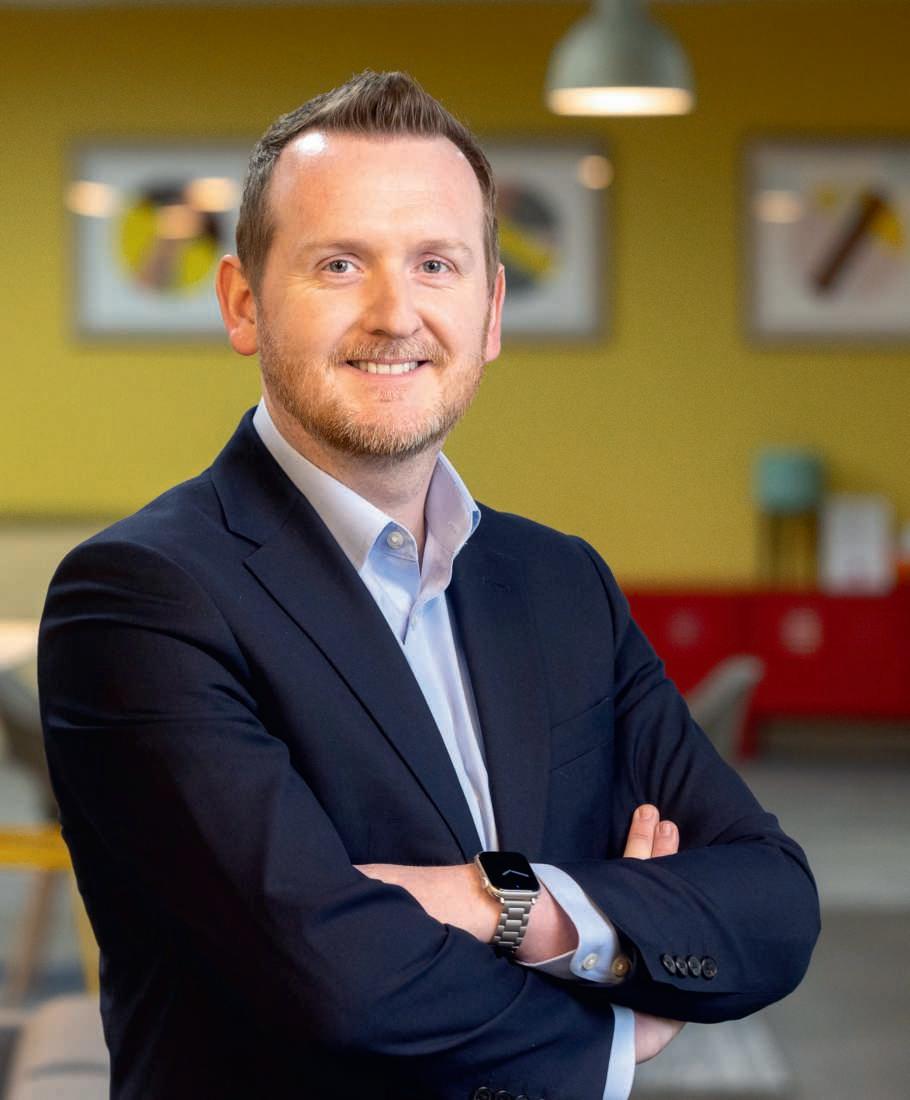
When Cavanah Kelly became part of Cooper Parry (CP) last year, it marked a significant milestone in creating what’s now one of the UK and Ireland’s most progressive professional services groups.
For more than 25 years, the MidUlster firm built a formidable reputation as one of the region’s most respected accountancy and business advisory practices. Now part of CP, that strong local foundation is being amplified by the reach, services and ambition of a national business.
It’s Northern Ireland team brings together more than 100 people and seven partners, many with training and experience gained at global firms including PwC, KPMG and EY. What draws them to CP is the chance to combine big-firm expertise with something many professionals value just as much: staying rooted in the communities where they live and work.
Twenty-five years ago, Des Kelly saw an opportunity to build something different. Businesses, particularly outside of Belfast, wanted expert advice but delivered in a more personal and tailored way than the traditional Big 4 model often allowed. Des explains, “We’re a business that understands its clients and their business needs because we share that same entrepreneurial spirit. Mid-Ulster is home to a remarkable concentration of ambitious, fast-growing companies, many operating on an international stage.”
CP is building a next-gen professional services group designed around what modern businesses actually need from their advisers – deep technical expertise from specialists but also from people who understand the pressures of running a business, who communicate clearly and stay close to clients’ ambitions.
Today CP offers services spanning audit, business services and outsourcing, deals and forensic accounting alongside legal, restructuring, tax, transaction services and wealth management.
Whilst many of the team are based out of the Dungannon office, they are also able to draw on CP’s wider national
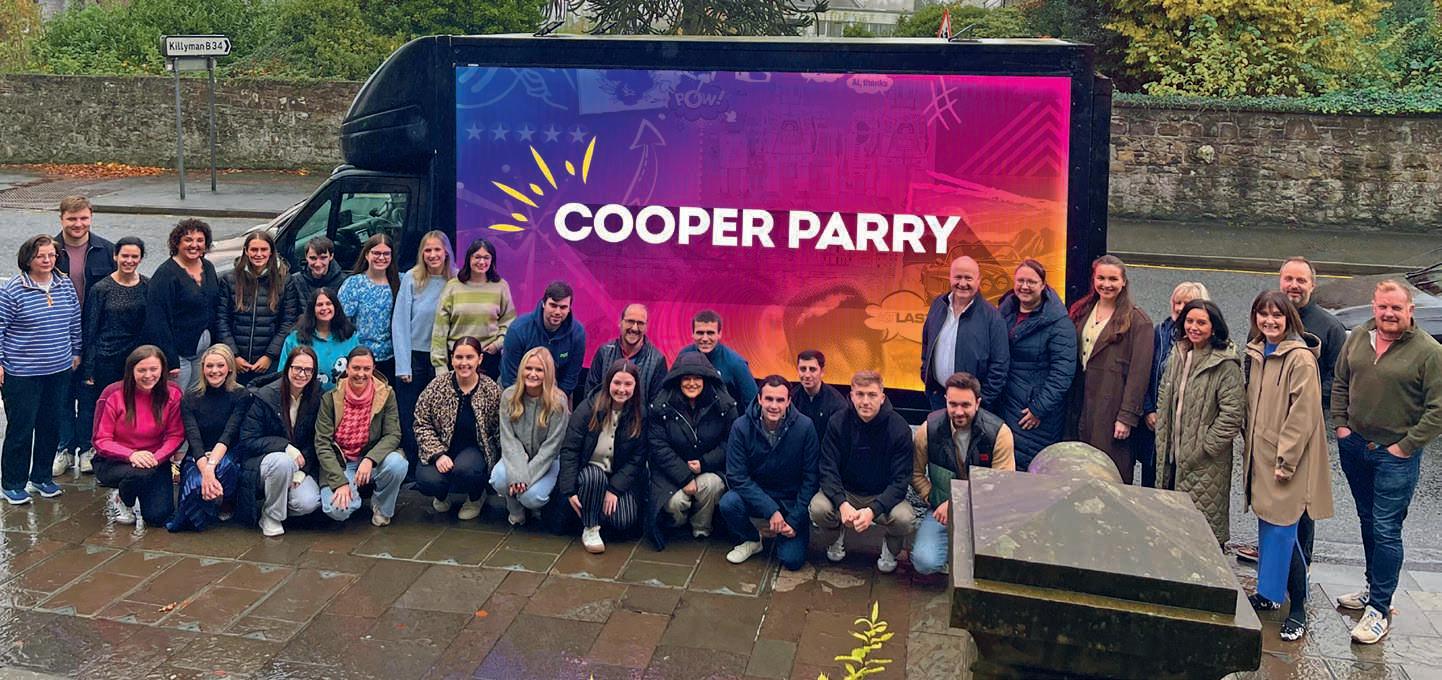
and international connections, sector specialists and technology to support clients wherever they operate.
That blend of local connection and wider capability is exactly what makes CP distinctive.
Partner Catherine Martin who started her career at a Big 4 firm believes the strength of what CP offers clients lies in the way it combines expertise with accessibility.
“Our clients value straight-talking practical advice,” she says. “They can pick up the phone and speak directly to the people doing the work. Their business needs are at the heart of everything we do. We bring the breadth of knowledge you would expect from a Big 4 firm but with the local understanding and energy that reflects a local mindset of getting things done.”
Sarah McGirr, a senior audit manager who’s previously worked for two of the Big 4 firms in Belfast, says the move has opened up new opportunities for both her clients and her career.
“Being part of Cooper Parry means there’s a much larger network of people I can draw on,” she explains. “There’s also real investment in technology and better processes which ultimately allows me to focus on what matters most: building relationships with clients and understanding their needs. At the same time, I’m able to balance that with family life which is incredibly important to me.”
Killian Kiernan who specialises in forensic accounting joined CP from KPMG after taking a career break to travel in
Australia. Now based near Donegal, he’s able to combine challenging work with an outdoor lifestyle.
“The flexibility makes a huge difference,” he says. “I can work on really interesting cases here in Northern Ireland while also collaborating with colleagues across the UK. Living near the coast and still being to develop my career is something I really value.”
Similarly, Ciara McGuire made the move after training with KPMG in Belfast. With a young family the daily commute was becoming less appealing.
“At Cooper Parry I’ve been able to take on more responsibility and develop my role in restructuring,” she says. “I also get more direct time with clients which is incredibly rewarding. It means I’m growing professionally while still having the balance I want for my family.”
Clients benefit from an engaged, ambitious team. They get direct access to partners but also benefit from working closely with the people delivering the work day to day. It’s a model that fits well with the entrepreneurial nature of many Northern Ireland businesses and reflects CP’s wider ambitions.
As Catherin Martin puts it:
“Cooper Parry is attracting the next generation of talent and the next generation of clients,” she says. “People who want to be part of something that feels different. It’s about combining expertise, relationships and fresh thinking to genuinely make a difference for the businesses we work with.”
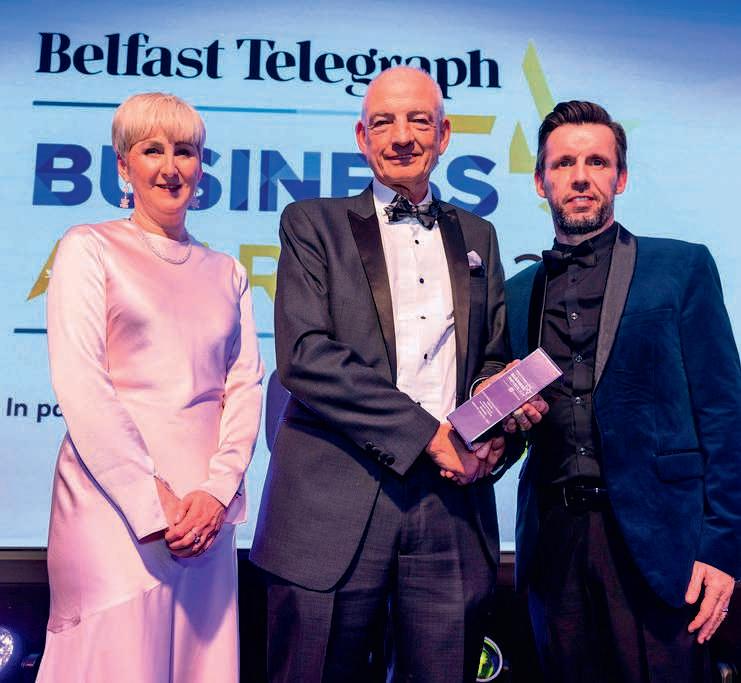
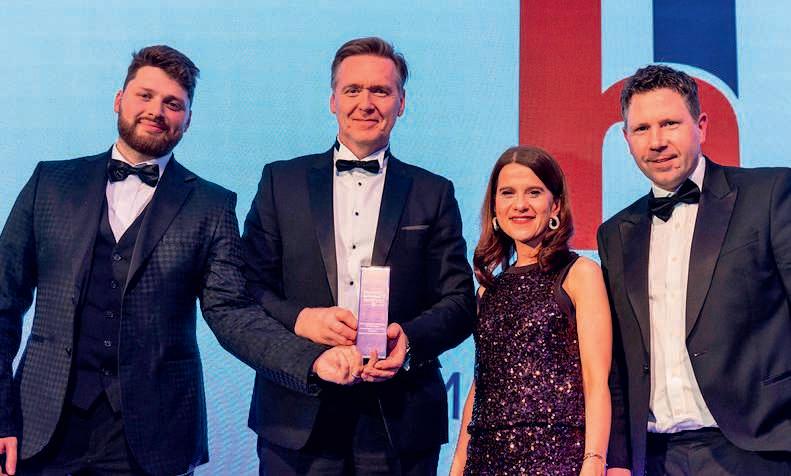
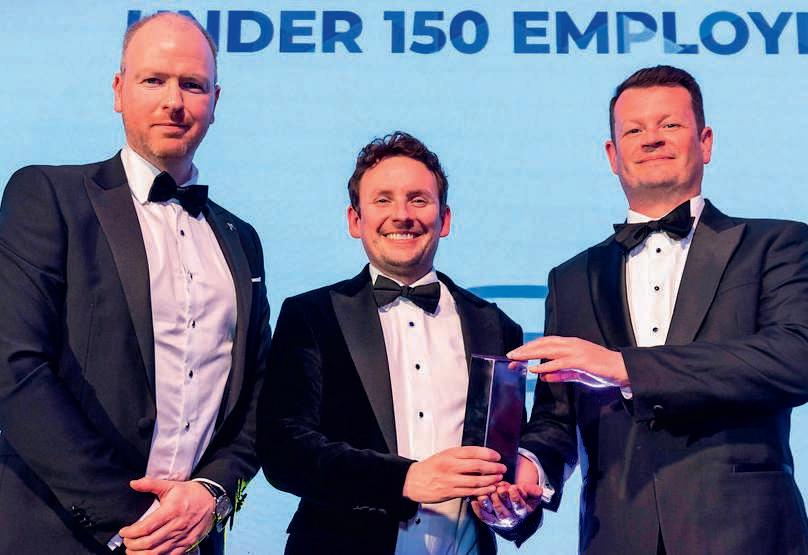
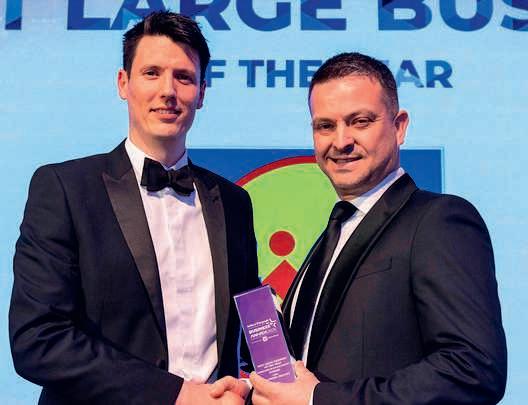
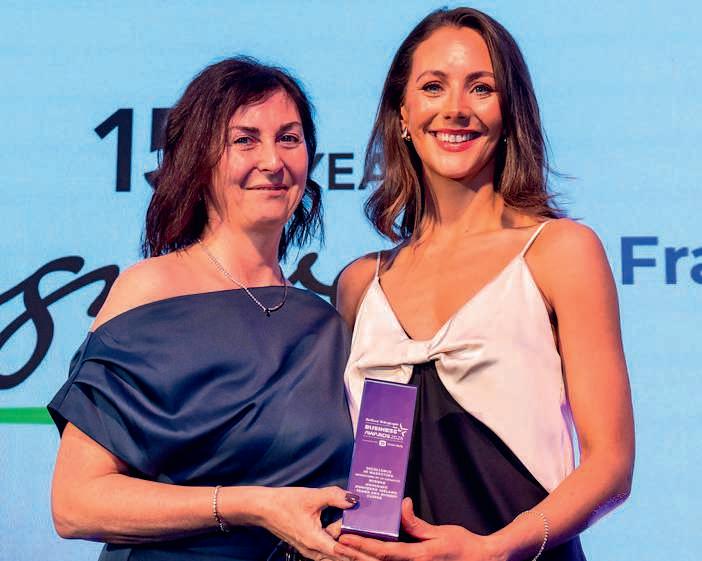
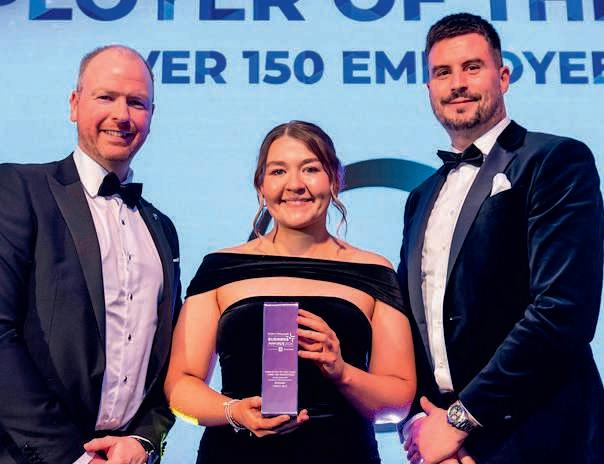
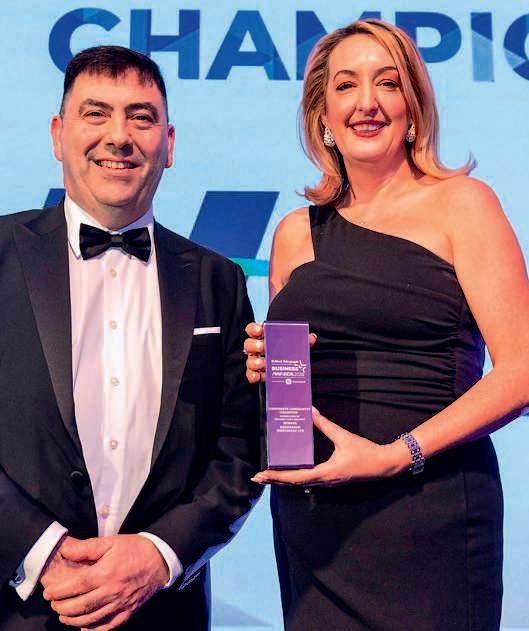
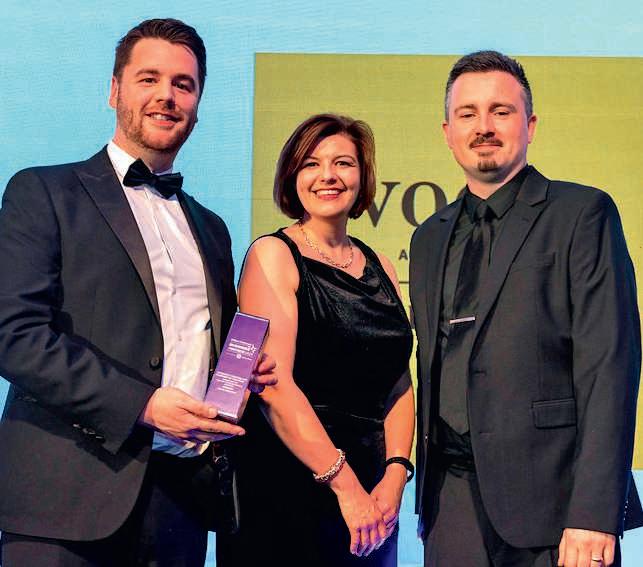
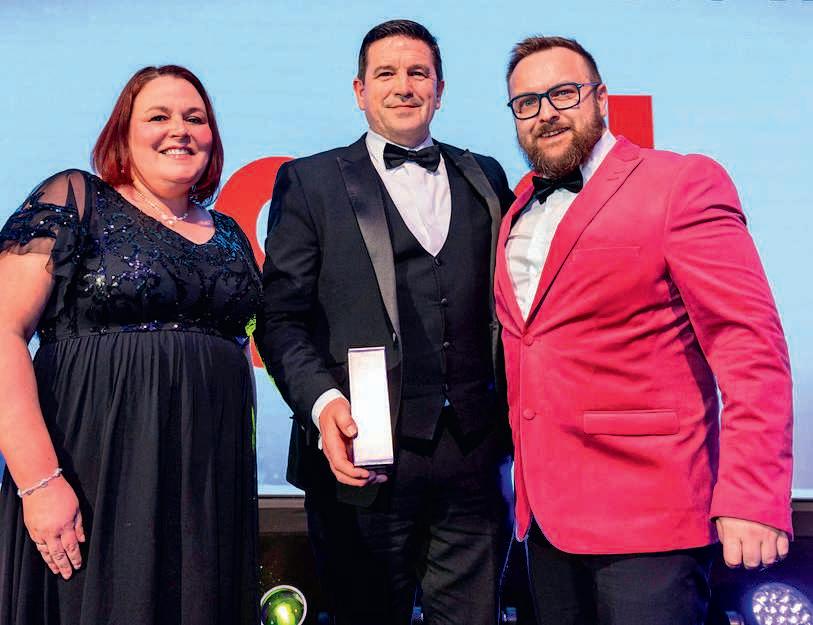
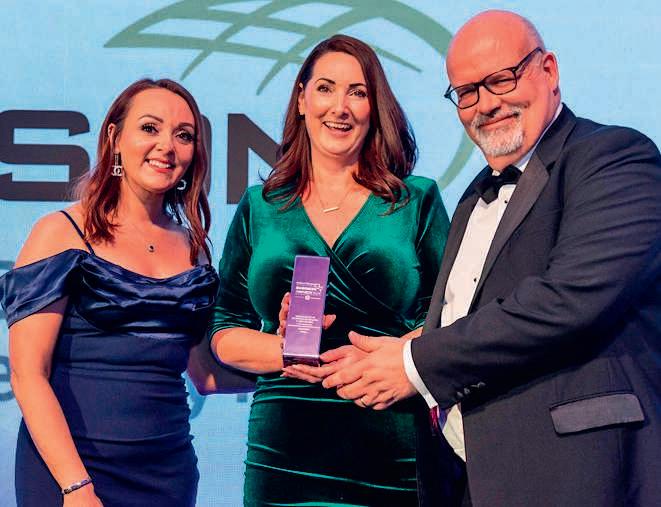
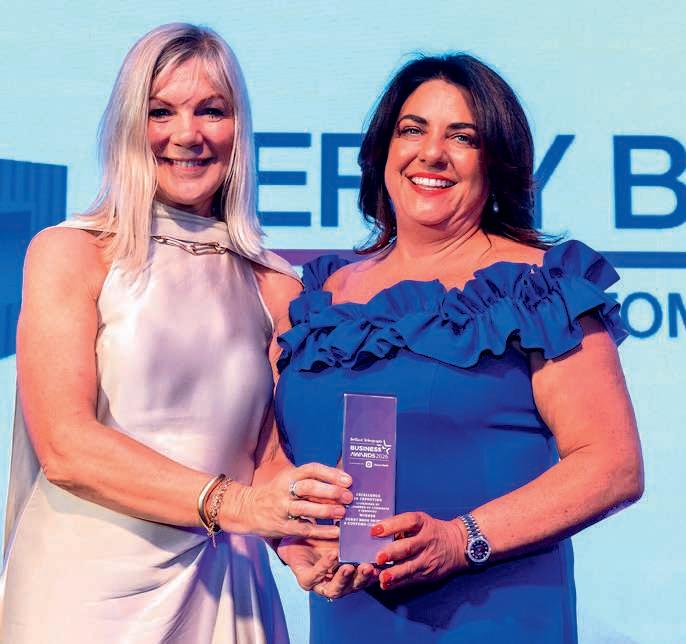
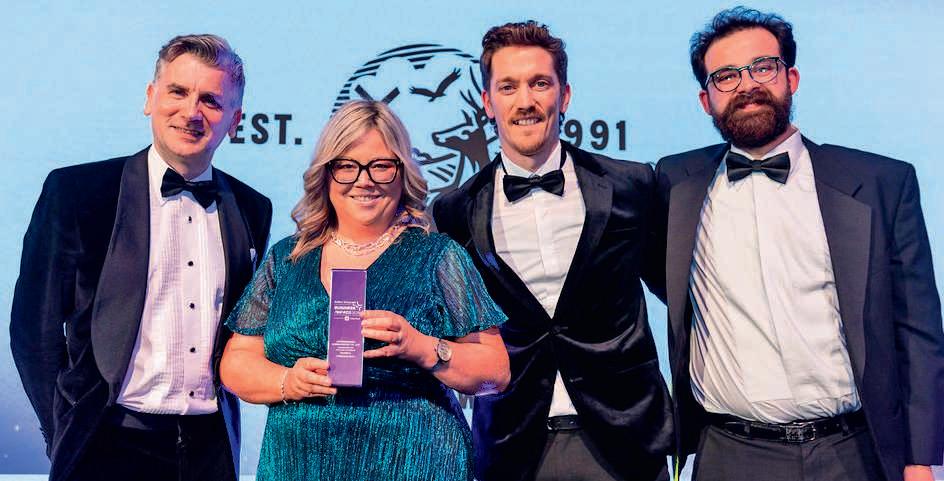















Adecade after entering the Northern Ireland market, Shoosmiths’ Belfast o ce has grown from a client-led foothold into a 50-strong operation with expanding specialisms, cross-border capability and a clear role within the firm’s wider UK strategy, Andrew Jennings, Corporate Partner and Head of the company’s Belfast base, tells Emma Deighan.
For Andrew Jennings the Shoosmiths Belfast story is one of steady evolution rather than overnight transformation. “We’ve been established in the Northern Ireland market for 10 years now and have evolved significantly during that time,” he begins.
Shoosmiths entered Northern Ireland in 2016 through its merger with McManus Kearney. At that time, the practice was largely focused on debt recovery and insolvency. Andrew explains, “Shoosmiths’ entry into the market was client-driven, about providing solutions on the ground in Northern Ireland. The tie-up with McManus Kearney was a way into that.”
What has followed, he says, is sustained growth and broadening capability. “We’ve seen the growth and evolution of the firm locally. We’ve expanded the practice areas, added key service lines like real estate, corporate and litigation to have a broader offering in the market. We’ve seen
an increase in headcount and revenue, and that has enabled us to introduce wider support services, including a local compliance team.”
Today, the Belfast office employs around 50 staff. “It’s a firm of meaningful scale,and a really nice place to work, where we want the best people doing the best work,” he says, reflecting on a piece of early advice that shaped Shoosmiths’ path here. “Early in my career, a supervisor said ‘the best business development is a job well done’ and that is something that we have seen to be true and which has driven our continued growth.”
That philosophy, he says, is behind the expansion of specialisms and services. “In the past five years we have seen, bigger transactions and more complex work coming into the local office. We’ve doubled down on quality and the ability to work on large complex matters.”
A key strength for the wider firm is Shoosmiths Belfast’s ability to straddle markets. The team here services Northern Ireland-based clients, Irish businesses entering the UK market, UK clients investing into Northern Ireland, and often, international clients.
“We work with a broad range of clients. Whilst Real Estate and Litigation are Northern Ireland-focused teams, within Corporate we do UK-wide work. It’s good to have that mix and be able to offer that
to clients, and for people coming into the firm to be, and to feel, part of Shoosmiths as a whole.”
Andrew joined the firm in 2021 and has been Head of Office for the past year. His priorities are clear. “It’s about us growing and becoming a leading law firm locally and internationally. There are a number of elements to that.
“We as a firm have revisited and refreshed our core sectors. These have evolved, exemplified by Technology which expanded to become Technology & AI. Our Consumer & Retail sectors, alongside Financial Services, Energy & Infrastructure are key within our Belfast office too. In addition, locally, we do a lot of work within our Mobility, Logistics & Manufacturing sector, particularly for automotive clients.”
Sector alignment, he says, allows the firm to deepen expertise. “When you look at the growth of the firm, you can see the increase and complexity of our core work. Sector alignment allows us to have that specialism and evolve with that. It’s about offering real value.”
Its litigation team is strong, active in financial services, acting for clients including Santander and NatWest. The real estate team advises developers and high street brands such as Wagamama andKrispy Kreme here. On the corporate side, the work ranges from early-stage tech companies to venture capital firms, including with the likes of Foresight and Business Growth Fund, as well as mainstream corporates undergoing restructuring.
“We’re serving Northern Ireland businesses, but we’re also helping companies from outside NI coming in and indeed businesses going out beyond NI and into the UK more broadly, where we as a firm can cover UK law aspects and ensure that we work as part of the wider Shoosmiths offering.”
And work continues to flow through a wide sales funnel. “A lot of it comes through connections, referrals, or people who have moved and returned with relationships,” says Andrew.
Challenges are rife in the world of law but some have presented opportunity. Brexit, once a source of uncertainty, has become part of the operating landscape. “Brexit happened 10 years ago. I remember at the time transactions being put on hold until people knew what it looked like. What I’ve seen since then is the resilience of Northern Ireland businesses to work through the Protocols and see the opportunity.”
Andrew believes Northern Ireland’s unique position continues to attract
“When you look at the growth of the firm, you can see the increase and complexity of our core work. Sector alignment allows us to have that specialism and evolve with that. It’s about o ering real value.”
interest. “We seek to offer our advice to organisations coming into the local market, often they do so because they are able to access a high quality talent pool of well-trained people. Even from the skyline of Belfast now, the types of companies coming in have really benefited from that over the past 10 years.”
The pandemic also reshaped how business is done. “Covid has changed things too. We no longer have to do everything face to face. It’s opened up international expansion. You can do so much remotely and the turnaround for meetings is quick.”
Looking ahead, he says Energy and Technology are driving significant demand. “Renewable energy has been a focus for us over the past five years, and we see that increasing. We have experience in energy M&A and we’re keen that continues. Across the UK, we as a firm have seen a real increase in our work in the Sector, which bolsters our offering, given that expertise.”
Shoosmiths Belfast’s entrepreneurial ecosystem is also maturing. “With the rise of AI, we do a lot in the venture capital space and private equity. That will continue. Belfast is really increasing in its ideas and entrepreneurship and that always attracts interest from investors.”
And while competition in the market is strong, Andrew says it’s the firm’s expertise that will drive it forward. “We’re experts in what we do. We’re an ambitious firm and we want to drive value for our clients. We want to provide an excellent client experience and help them achieve their goals”.
“For us in Shoosmiths, experience and specialism are key. We are a centre of excellence. If the expertise is in Belfast, that’s where it will be rolled out.”
Automotive work, delivered on a Europe-wide basis, is one example of a niche carved out from the Northern Ireland base.
Looking ahead, artificial intelligence is both a client issue and an internal priority. “AI is a hot topic. As a firm, we’ve been encouraging applicants to show where
they would harness AI. We’ve integrated AI tools like Microsoft Copilot.”
The company has even introduced a firm-wide incentive, a bonus scheme linked to AI Usage. “When we hit certain prompt targets, it unlocks a bonus across the firm. It’s novel, but it shows how seriously we’re taking it and seeking to drive adoption.”
The firm has also partnered with Belfast-based tech company Enzai to develop AI Comply, a product designed to ensure AI usage is compliant.
Alongside this, Shoosmiths has been investing in a suite of technology-enabled legal products through its Shoosmiths EIGHT platform, which brings together tools designed to help businesses manage legal processes more efficiently. These include solutions supporting areas such as subject access requests, contract lifecycle management and AI-powered contract review, enabling in-house teams to handle complex regulatory and operational challenges more effectively.
“We’re looking to be entrepreneurial and to see solutions that support corporates and in-house lawyers.” All of this feeds into the firm’s wider 2030 strategy which is about focused growth.
“We do have big growth plans and we all have a role to play in that. It is clientdriven not growth for growth’s sake”.
“We’re keen to recruit really good people who will bolster our offering, our specialism and our expertise. Sector alignment is important. People who offer something new will be an important part in that process.”
Ten years on, Shoosmiths’ Belfast office has moved far beyond its origins as a market-entry solution. It is now positioned as a hub capable of straddling Northern Ireland, the UK and Europe, with ambitions aligned firmly to 2030 and beyond.
As Andrew puts it: “We want the best people doing the best work, wherever that expertise sits. If that’s Belfast, then Belfast will lead.”
The vital work of six different charities has been boosted by the presentation skills of students from schools in Portadown, Lurgan and Tandragee.
This year’s School Charity Challenge – organised by Ulster Carpets and the John Wilson Memorial Trust – saw teams from St John the Baptist’s College, Lurgan Junior High School, Tandragee Junior High School, St Ronan’s College, Clounagh Junior High School, and Killicomaine Junior High School taking part.
Each team had to make a presentation about the work of their chosen charity and demonstrate how more funding can make a difference.
The top prize of £5,000 was shared between Lurgan Junior High School for their presentation on Action Mental Health, and St John the Baptist’s College who highlighted the work of Women’s Aid.
As part of the challenge, all of the other teams were rewarded with a donation of
“The concept behind the School Charity Challenge is to help students to gain a better understanding of the work done in their communities by different charities and how it makes a difference.”
£1,000 for their charities. Tandragee JHS for Baby Basics, St Ronan’s College for The Blossom Children’s Unit, Clounagh JHS for The Pantry and Killicomaine JHS for Rosie’s Trust.
Nick Coburn, Group CEO of Ulster Carpets and trustee of The John Wilson Memorial Trust, said, “It is getting tougher for all charities to secure funding so this year we have increased the total prize fund.
“The concept behind the School Charity Challenge is to help students to gain a better understanding of the work done in their communities by different charities and how it makes a difference.
“All the presentations were very professional and reflected the hard work and enthusiasm of all the students. They can be proud of the fact that they have helped secure some vital funding for their chosen charity.”

ST JOHN THE BAPTIST WINNER
The joint winning team from St John the Baptist College who have won £2,500 for Women’s Aid for their presentation on the charity’s work to combat violence against women.
Now in its fourth year, the School Charity Challenge is organised by The John Wilson Memorial Trust, which was set up in memory of the late John Wilson, son of Ulster Carpets founder, George Walter Wilson, and is dedicated to supporting local community projects.

The
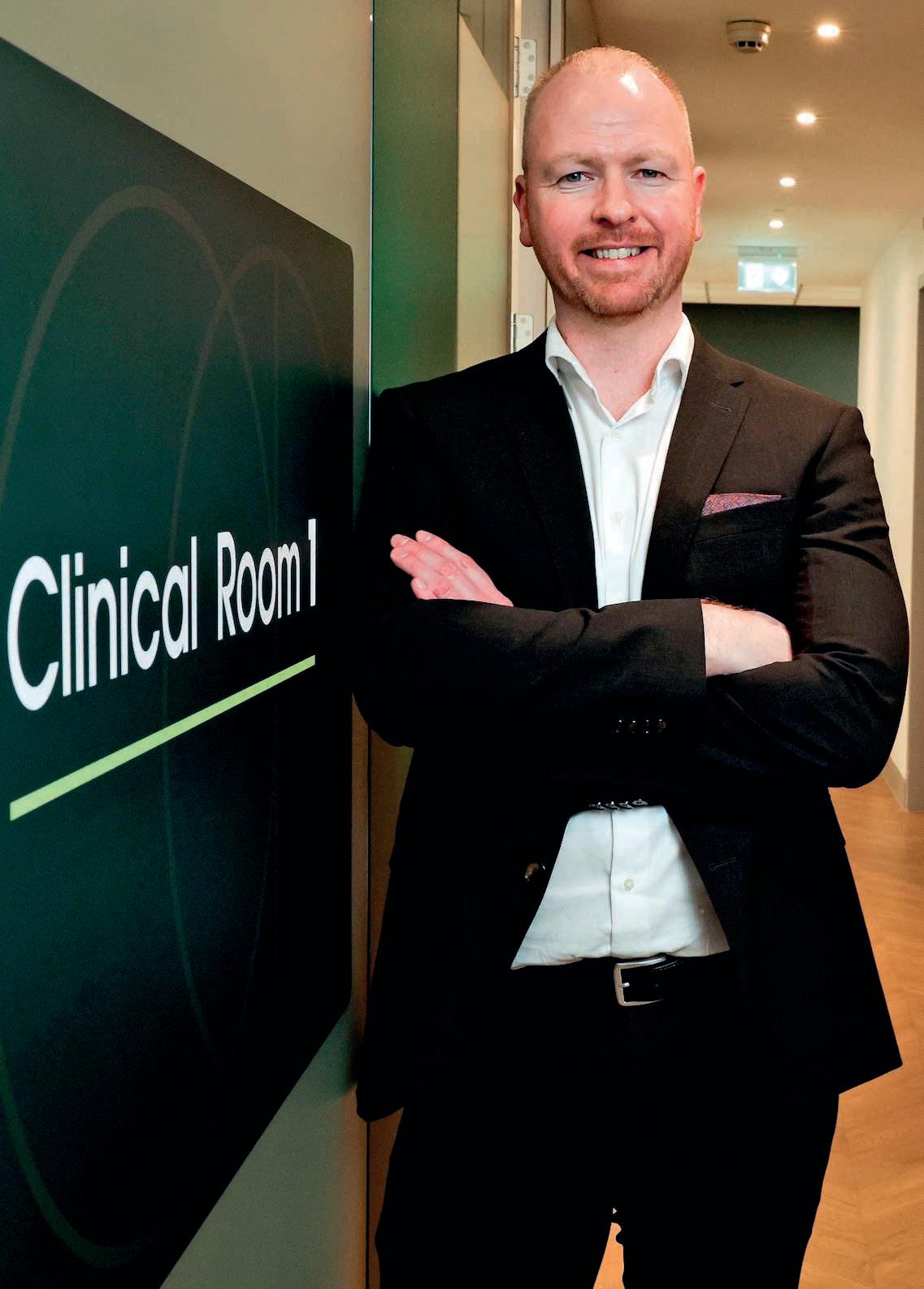



A new 3,000 sq ft private GP clinic has opened right in the centre of Belfast o ering, among other services, GP appointments, scanning, urgent care, minor surgery and ADHD specialisms.

The significant investment by Duality Healthcare is creating 10 new jobs including GPs, nurses and admin sta .
The clinic, at the former Deloitte office on Bedford Street, is the latest in a number of Duality Healthcare clinics across Northern Ireland. A further two clinics are expected to open in other parts of Northern Ireland this year, bringing its total number of clinics to seven.
The company currently employs over 60 people with clinics in Newry, Ballymena, Omagh and Derry in addition to the Belfast operation. Duality Healthcare also recently announced an innovative partnership with Gordons Chemists aimed at bringing enhanced virtual and faceto-face GP services to Gordons locations across Northern Ireland.
At the heart of Duality Healthcare’s business model are two principles: affordability and accessibility. It offers an individual membership plan starting from £34.99 per month, alongside payas-you-go options, including virtual GP appointments. It is also now offering membership plans for couples, families and over-65s as well as corporate packages for businesses across the province.

Its flexible corporate healthcare plans are designed to keep workforces healthy, supported and thriving. Corporate healthcare plans can help reduce the cost of sickness absence leave, tackle the growing problem of presenteeism, enhance a company’s wellbeing programme, provide monthly insight into your people’s health and wellbeing, and show that you are a caring employer and improve wellness at work.
Commenting on the new Belfast clinic, John McEvoy, CEO of Duality Healthcare says: “Opening our Belfast city centre location is a key milestone in Duality’s

growth. Being right in the heart of the city puts Duality exactly where we need to be: embedded in a busy neighbourhood, easy to reach with fantastic transport connections, affordable, with appointments designed around the pace of city life allowing us to stay close to the people we serve.”
Sarah Marks, chief operating officer at Duality Healthcare, says: “Duality Healthcare is addressing a genuine and growing challenge within the healthcare system: access to timely, high-quality care delivered in a way that is clinically robust, patient-centred and scalable. Our business is built around clinical leadership, real-world delivery and an understanding of regulatory and operational realities and we strongly believe that demand for the services we offer from the new Belfast clinic will be extremely strong.”
The new Belfast clinic represents an investment of more than £500,000 by Duality Healthcare and follows the announcement that the company secured £4.5m in funding through an investment round in August. The clinic has been created and fitted out to the highest standards with support from suppliers including ROC Contracts Limited, McConnell Property Limited, Herron Contractors Limited, SignDsign and TSA Planning.

“Duality Healthcare is addressing a genuine and growing challenge within the healthcare system: access to timely, high-quality care delivered in a way that is clinically robust, patient-centred and scalable.”

BT has announced a major new deal worth up to £200m with Northern Ireland Electricity Networks (NIE Networks) to deliver enhanced connectivity, cyber security and IT to support critical services for homes and businesses across the country.
The contract will see BT provide the energy company with a suite of services including improved network infrastructure, strengthened connectivity and a team of dedicated professionals to guard against cyber security threats.
BT will also be responsible for ensuring a high quality of service and support across the business, day-to-day management of network infrastructure and data hosting.
The deal will support NIE Network’s digital transformation, which aims to modernise the key services and infrastructure that provide electricity across Northern Ireland. Initially the contract will run for five years, with the option to extend by up to another 10 years.
NIE Networks owns the electricity network across Northern Ireland, consisting of approximately 2,300km of transmission network and 58,800km of distribution network. It is also the operator for the distribution network and is responsible for the safe, secure and reliable supply of electricity to 966,000 homes, farms and businesses.
The partnership is designed to support local jobs, build digital skills and create supply-chain opportunities across Northern Ireland.
Chris Sims, chief commercial officer at BT Business, said: “Electricity networks are part of the critical infrastructure that keeps Northern Ireland running, and they rely on technology that is secure, reliable and resilient by design. That’s where BT comes in.
“With evolving cyber threats, protecting essential services is more important than ever and organisations rely on digital connections they can trust.
“With our experience in supporting
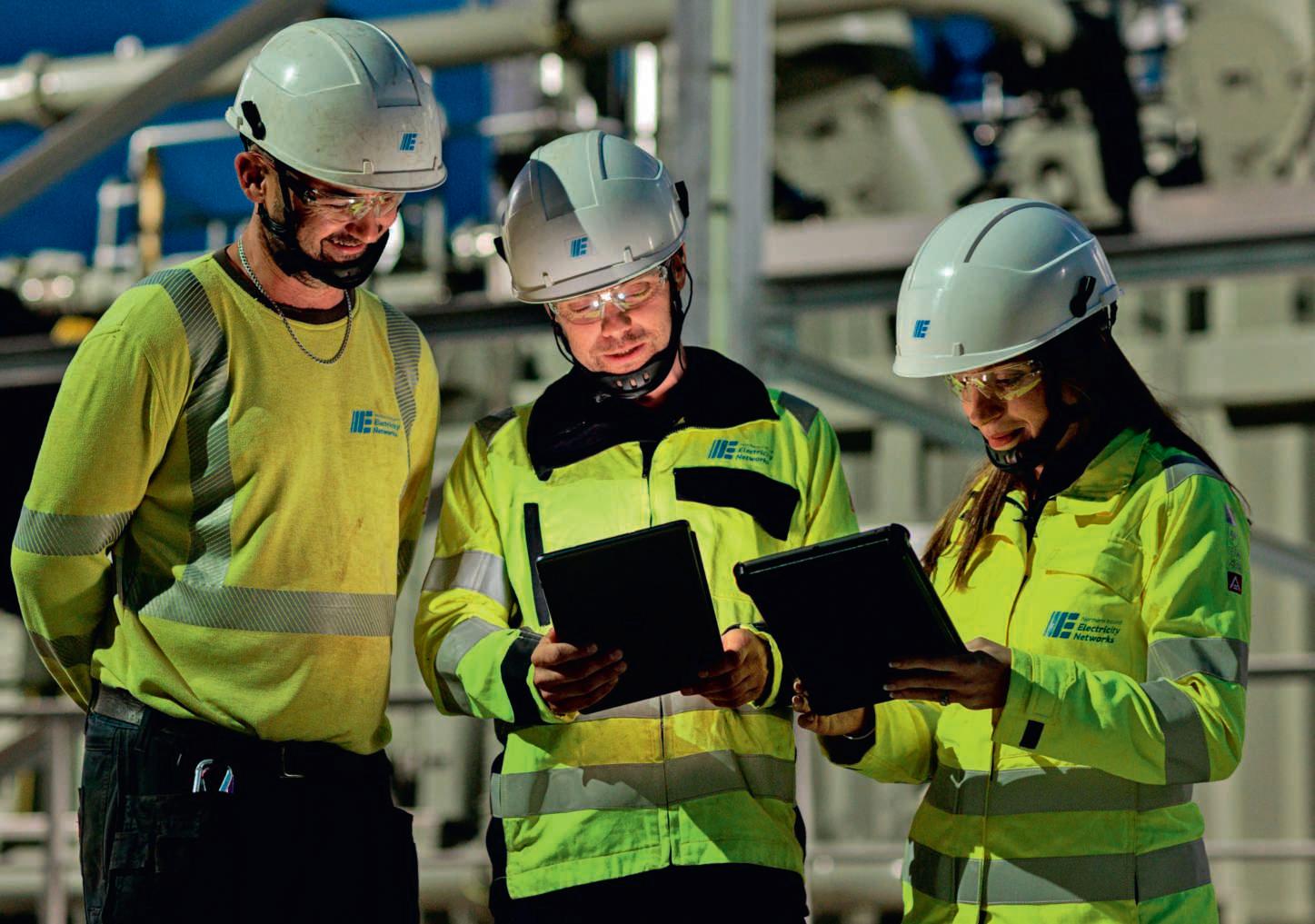
“This multi-year partnership is a win-win for Northern Ireland’s economy supporting local jobs, skills development, and supply-chain opportunities.”
critical services and our long-standing presence in Northern Ireland, we are in a unique position to provide the secure, trusted connectivity and specialist expertise that will help strengthen the network for years to come.”
The deal will also enable a move to more sustainable infrastructure and networks, supporting NIE Networks to reach their sustainability and net zero ambitions.
Rohan Kapoor, chief information officer of NIE Networks, commented: “This multiyear partnership is a win-win for Northern Ireland’s economy supporting local jobs, skills development and supply-chain opportunities.
“The collaboration will also help meet Northern Ireland’s energy needs, increasing our technological capabilities
and enabling further electrification, renewables integration and emerging flexibility markets — all of which have a positive impact on the Northern Ireland economy and the NI Executive’s net zero targets.”
BT Group has a strong presence in Northern Ireland, employing more than 3,400 people and providing an economic boost of £630 million. It is also responsible for generating £1 in every £110 produced in the region according to an independent report.
In 2023 it officially unveiled a multimillion-pound refurbishment of its flagship Belfast Riverside office, boasting state-of-the-art technology and collaboration spaces for colleagues from its EE, BT Business and Openreach units.
Danske Bank and Triangle Housing Association have agreed a new £22m revolving credit facility that will support the housing association’s programme of development of new homes across Northern Ireland.
Headquartered in Ballymoney, Triangle is one of the longest established housing associations in Northern Ireland, employing close to 500 people and managing over 1,600 units of social housing, including supported living accommodation. As it approaches its 50th year of operation, Triangle has an active development programme of new units of accommodation throughout Northern Ireland.
The new package will underpin Triangle’s plans to finance the development of between 100 and 150 new social housing units over the next 18 months, helping to meet the growing demand for homes throughout the region.
So far this year, Triangle Housing Association has already handed over 70 new homes across Antrim, Ballymoney and Limavady, providing much-needed housing in local communities. In addition, there are currently over 100 new homes under
construction in Coleraine, Ballymoney, Cullybackey, Limavady and Maghera, further demonstrating the organisation’s ongoing commitment to increasing housing supply. Triangle is also preparing to sign contracts imminently and commence on-site work for multiple new projects before the end of the financial year.
Alan Crilly, finance director at Triangle, said: “This loan facility is particularly important at a time when housing stress is increasing, grant levels have reduced and constraints on the public purse are at an all-time high. By working with strong financial partners such as Danske Bank, Triangle Housing Association can continue to progress its development plans and play a key role in meeting the needs of people in communities across Northern Ireland by delivering new social housing.
“As Triangle Housing Association approaches our 50th anniversary next year, our commitment to our vision of ‘Building Better Lives Together’ and our mission to enhance lives by providing homes, supporting individuals and families and sustaining communities, remain as strong as ever.”
Dominic O’Neill, senior corporate

banking manager at Danske Bank said: “We are really pleased to continue our relationship with Triangle Housing by providing this significant financial package which will enable it to expand its housing provision and support communities through the development of high-quality social housing across Northern Ireland.
“Danske Bank has been a lead provider of finance to the social housing sector in Northern Ireland for many years and we want to continue to help the sector to thrive and meet the needs of people across Northern Ireland. This funding underscores our commitment to supporting communities across Northern Ireland.”



























Tell












































Tell















Which




06 COFFEE HOUSE OF THE YEAR
Tell us the best coffee shop you have been to lately? Simply let us know where you think deserves to be crowned Coffee House of the Year.
11 AESTHETIC CLINIC OF THE YEAR


Tell us which clinic you think deserves to win the title of Aesthetic Clinic of the Year. Which aesthetic clinic has worked wonders for you?

07 RESTAURANT OF THE YEAR
Where have you had your best meal lately? Just let us know the name of your favourite restaurant.
08 SPORTSPERSON OF THE YEAR
All we need is the name and sport of the person you are voting for.
09 HAIRDRESSING SALON OF THE YEAR
In this category just let us know the name of your favourite hairdressing salon.
12 BUSINESSWOMAN OF THE YEAR
All we need is the name and company of the person you are voting for along with a statement of up to 500 words on why they should win.

THE COURTYARD, CARRICKFERGUS DUFFY RAFFERTY Communications
10 CELEBRITY OF THE YEAR
For this category just let us know the name and profession of the person you are voting for.
13 BUSINESSMAN OF THE YEAR
All we need is the name and company of the person you are voting for along with a statement of up to 500 words on why they should win.

14 FASHION DESIGNER OF THE YEAR
All we need is the name of the designer you are voting for along with a statement of up to 500 words on why they should win.

15 ARTS PERSONALITY OF THE YEAR
Send us the name of the person you are voting for along with a statement of up to 500 words on why they should win. We are looking for someone who works in any field within the arts or an artist who has made a significant contribution to the arts scene.

16 FAMILY BUSINESS OF THE YEAR
All we need is the name of the business you are voting for along with a statement of up to 500 words on why they should win.
THESE AWARDS ARE NOT VOTED ON BY THE PUBLIC
17. OUTSTANDING CONTRIBUTION AWARD
This award is given to a business person who has made significant contribution to their sector over many years.
TERMS AND CONDITIONS
How to vote?
It’s simple, just pick the category and the company/person you want to vote for at ulstertatler.com, following the guidelines below. Just remember that we are looking for local companies/people who have made a significant contribution to life in Northern Ireland and you can vote for as many categories as you want. A shortlist for each category will be published in the August edition of Ulster Tatler. An independent judging panel will then decide on the winner for each category. Please note that the decision of the judges is final and no correspondence will be entered into. If you are voting for someone in categories 1 to 11, all you need to do is let us know the name of the person or company you are voting for, along with their company contact details, where appropriate. For categories 12, 13, 14 and 15 in addition to their name, contact details and category, please forward a short statement (maximum 500 words) on why the entry should win. Categories 16-19 are not voted on by the public. Whoever you vote for must be from Northern Ireland or based here. All short listed nominees must be prepared to take part in pre and post show event publicity. In order for your vote to count you must fill in all your contact details.
GET VOTING AND BE IN WITH A CHANCE OF WINNING A SELECTION OF GREAT PRIZES.
18 BEST DRESSED ON THE NIGHT
This accolade will be judged and awarded at the Ulster Tatler Awards ceremony. This category is not voted on by the public.
19 SPECIAL MERIT AWARD
Previous recipients include the Northern Ireland football team, Ulster rugby legends Rory Best, Tommy Bowe and Tyrone GAA.
20 LIFETIME ACHIEVEMENT AWARD
This award is given to someone who has made a significant contribution to life in Northern Ireland. Past winners include Ciaran Hinds, Gerry Armstrong, Michael Longley, Dame Mary Peters, Brian Friel, Sir James Galway, Gloria Hunniford, Phil Coulter and Terri Hooley.
DUFFY RAFFERTY Communications











Fujitsu NI’s Melanie McMordie talks to Ambition about influence, inclusion and building a leadership culture within a global business where women thrive.





From its Belfast and Derry/ Londonderry bases, Fujitsu Northern Ireland delivers digital services across the public and private sectors, spanning everything from cloud management to security, network services and AI.
It is a business built on complex delivery and long-term partnerships.


For Client Managing Director Melanie McMordie, leading that operation is about creating a culture of inclusivity and confidence. However, her route into the IT industry almost did not happen. Her career began in science. “At school, I was naturally drawn to science and problem solving, which led me to study pharmaceutical science. That foundation equipped me with strong analytical and critical thinking skills that have remained central throughout my career.”
But the trajectory that followed was not what she had initially planned. A pivotal moment came when she left the pharmaceutical sector and stepped
into a call centre management role. While it appeared at first to be a major departure, the experience proved formative.
“Although it felt like a significant shift at the time, it was there that I discovered a genuine passion for operations and customer experience, an interest that ultimately became my pathway into the IT industry.”
From there, Melanie built her career through a series of operational and customer-facing leadership roles, developing expertise in client engagement, delivery and strategy. That progression ultimately led to her appointment as Client Managing Director for Fujitsu Northern Ireland in April 2025.
“My role centres on ensuring we deliver meaningful value for our clients while supporting our people and driving sustainable growth across the organisation,” she explains.
Since stepping into the position, one of her main priorities has been shaping


the company’s next phase locally, “building on the strong foundations already in place while identifying new opportunities for digital transformation and innovation,” Melanie says.
As a leader, she prioritises nurturing a positive team culture. “I believe the greatest impact of my leadership comes through culture and people.
Empowered teams consistently deliver the strongest outcomes, so a significant part of my role is creating clarity, fostering collaboration and helping individuals understand how their work contributes to our wider strategic goals.”
She describes her leadership style as collaborative and inclusive. “I place strong emphasis on inclusion, open communication and cultivating environments where people feel confident sharing ideas and constructively challenging thinking,” she adds.
Within a large global technology organisation that employs more than

600 people across Northern Ireland and over 113,000 globally, Melanie believes female leadership is about much more than representation.
“To me, female leadership is about unlocking possibility not only for individuals, but for the culture and future of the organisation. It goes beyond representation to embody influence, inclusion and the confidence to shape meaningful change.
“Over the past couple of decades, I’ve seen workplaces evolve from male-dominated leadership teams to far more balanced environments, and that transformation has strengthened innovation, collaboration and the quality of our decisions.”
At Fujitsu, that progress is visible not just culturally but in measurable outcomes. “It’s reflected in our data, with a gender pay gap of 10.1% compared with 15.6% across the wider industry.”
Like many women in technology, Melanie’s journey has not been without its challenges. She encountered barriers earlier in her career.
“There were moments when leadership teams were still heavily male-dominated, and the path to progression could feel less visible. Navigating those barriers meant focusing on what I could control, delivering strong results, building trusted relationships and having the confidence to step forward for opportunities even when they felt a little out of reach.
“At Fujitsu, initiatives such as our internal Male Allies Charter reinforce that inclusion is not just a women’s issue, it is a shared responsibility. When allies actively challenge bias and open doors, it accelerates meaningful change.”
Mentorship and sponsorship, she adds, were instrumental in her own progression. “The support of senior colleagues who advocated for me, encouraged my development and created space for me to grow made a significant difference. Their belief helped strengthen my confidence as a leader and showed me firsthand how powerful sponsorship can be in creating a more inclusive environment for talent to thrive.”
The issue of representation is something Melanie feels strongly about, not just as a leader but as the mother of two teenage daughters.
“At school, I was naturally drawn to science and problem solving, which led me to study Pharmaceutical Science. That foundation equipped me with strong analytical and critical thinking skills that have remained central throughout my career.”
“Our school engagement ambassadors deliver ICT and employability workshops, and we support initiatives such as Shared Education for Positive Innovation, which brings young people together to design solutions to sustainability and societal challenges,” Melanie continues.
“Encouraging gender balance early is critical, but change also needs leadership commitment,” she adds.
As Fujitsu celebrates its 90th anniversary globally, the company is also marking four decades of presence in Northern Ireland.
“With offices in both Belfast and Derry/Londonderry, we have long championed local talent and built strong relationships with our colleagues, many of whom, including a significant number of women, are leading the way across key areas of our business,” she says.
Locally, the company’s strategy is guided by four key pillars: people, planet, prosperity and peace. “This is reflected in our transformational membership with Business in the Community Northern Ireland, our engagement with the Northern Ireland Chamber of Commerce and Industry, and our corporate partnership with the Centre for Democracy and Peace Building Fellowship,” Melanie explains.
“The importance of visible, genuine female role models feels even more personal,” she says. “I want them to grow up believing that leadership is not only possible for them, but something they can aspire to on their own terms.”
She is also involved in mentoring initiatives such as SistersIN, helping young women build confidence and explore opportunities in technology. It is a role she says allows her to support others in finding their voice and building confidence. “Those moments of connection can completely shift someone’s trajectory.”
Within Fujitsu, mentoring is embedded in the culture. “At Fujitsu, mentoring is recognised as a key part of how we nurture talent and open up opportunities.”
However, across the wider sector, there is still progress to be made. Women currently represent around 26–29% of the technology workforce in Northern Ireland’s software industry, with the imbalance beginning early in education.
Through these initiatives, Fujitsu is combining its global reach with meaningful local impact.
“We are drawing on Fujitsu’s global heritage to deliver meaningful local impact, supporting communities, economic growth and helping to create long-term opportunities across Northern Ireland.”
For women aspiring to leadership roles, Melanie’s advice centres on confidence and continuous learning.
“Back yourself and keep learning,” she says. “Having the confidence to step forward, even before you feel completely ready, combined with a commitment to continually grow and stretch yourself, will open doors you may not expect.
“Most importantly, remember that leadership isn’t about fitting a mould, it’s about bringing your authentic self, your perspective and your voice. That is your greatest strength.”

Maire Nawaz Director, Beecome More
Change is no longer an occasional disruption. For most organisations, it has become a constant: new strategies, new structures, new technologies and new expectations. While change can create opportunity, it can also create uncertainty, fatigue and resistance if it is not handled well.
This is where leadership matters most. Because during periods of change, people do not look for certainty about outcomes. They look for stability in leadership.
Why Change Feels So Challenging for Teams Change often fails not because the strategy is wrong, but because the human impact is underestimated.
For teams, change can trigger questions such as What does this mean for me? Will I still be valued? Do I have the skills to succeed in this new environment? Is this change temporary or permanent?
When these questions go unanswered, uncertainty grows, engagement drops and productivity can suffer. Leaders play a critical role in addressing this uncertainty. Not by having all the answers, but by creating clarity, reassurance and direction.
The Leader’s Role During Change
Leading through change is not about pushing harder. It is about leading more intentionally. Strong leaders recognise that during times of change:
• Communication must increase, not decrease
• Consistency becomes more important than speed
• Visibility builds confidence
• Empathy strengthens trust
Change does not require leaders to be perfect. It requires them to be present. When leaders acknowledge challenges openly, explain the rationale for change and remain steady in their
approach, teams feel supported even when outcomes are still evolving.
Creating Clarity When Everything Feels Unclear
One of the most important leadership skills during change is clarity. Not clarity about every detail, but clarity about:
• What is changing
• Why it matters
• What remains the same
• What is expected right now
When clarity is absent, people fill the gaps with assumptions. Often, those assumptions are more negative than reality. Effective leaders communicate early, communicate honestly, and repeat key messages consistently. They also create space for questions and feedback, recognising that understanding develops over time.
Balancing Confidence with Empathy
Change requires confidence, but it also requires empathy. Leaders who focus solely on outcomes can unintentionally dismiss the emotional impact change has on individuals. Equally, leaders who focus only on reassurance may avoid making the difficult decisions change demands. The most effective leaders balance both.
They demonstrate confidence in the direction while acknowledging uncertainty. They remain decisive while staying open to dialogue. They support people without lowering expectations. This balance builds credibility. Teams are more willing to adapt when they feel heard, respected and guided.
Consistency as an Anchor
During change, consistency becomes an anchor. Consistent leadership behaviours create a sense of stability even when structures or processes are evolving. This includes regular check-ins, predictable
communication rhythms, clear decisionmaking frameworks and fair and transparent actions.
When leaders remain consistent in how they lead, teams feel safe enough to adapt. Consistency does not mean rigidity. It means reliability. And reliability builds trust.
Developing Change-Ready Teams Change should not always feel disruptive. Over time, organisations can develop the capability to adapt more effectively.
Leaders who build change-ready teams focus on encouraging learning and curiosity, normalising feedback and reflection, supporting skill development and reinforcing resilience rather than perfection
When teams trust their leaders and understand the bigger picture, change becomes something they engage with rather than resist. This requires leaders to move away from control and towards empowerment.
• Change is constant, but leadership provides stability
• Clear, consistent communication reduces uncertainty
• Empathy and confidence must work together
• Consistent leadership behaviours build trust during disruption
• Change-ready teams are developed, not demanded
Leading through change is not about controlling every outcome. It is about guiding people through uncertainty with clarity, consistency and confidence. When leaders focus on how they show up during periods of change, they create environments where people feel supported, capable and ready to move forward.

Over the past decade Northern Ireland’s technology sector has developed into a serious player in the global digital economy, attracting sustained international investment and building a reputation for delivering complex technology programmes across multiple industries.
Global firms increasingly view the region as a credible base for innovation, delivery and longterm growth.
A highly skilled workforce, competitive operating environment and strong university links have helped create a technology cluster that consistently punches above its weight. Crucially, Northern Ireland’s unique access to both UK and EU markets continues to make it particularly attractive to organisations
looking for stability and connectivity in an increasingly uncertain global landscape.
The North West region is now firmly establishing itself as an important part of that story. Investment is accelerating, the talent pipeline is expanding and Derry~Londonderry is increasingly attracting companies that want to build significant delivery capability outside traditional technology centres. For organisations seeking to scale, the North

West offers access to a growing skills base combined with the advantages of a smaller, highly collaborative ecosystem.
Several developments are helping to drive that momentum. Ulster University’s commitment to expanding the Magee campus to 10,000 students by 2032 represents one of the most significant investments in higher education the region has seen and will reshape the local talent pipeline in the years ahead. At the same time, regeneration projects associated to the City Deal are transforming Derry~Londonderry into a place where companies can build and scale while offering employees an exceptional quality of life.
Alchemy Technology Services has grown alongside that transformation. Founded in 2018 and headquartered in Derry~Londonderry from the outset, we specialise in digital transformation for the global insurance industry. Our teams support insurers with complex platform implementations, upgrades, testing and cloud adoption, helping organisations modernise core systems that sit at the heart of their business. As a Guidewire Advantage Partner, we work with insurers across Europe and further afield on largescale technology programmes.
The business has expanded quickly in recent years. A 2023 acquisition in London strengthened our presence in the UK insurance market. Our trajectory reached a defining moment last year when Alchemy became part of NTT DATA, the global technology and consulting organisation headquartered in Japan.
Joining a business of that scale marks a major step forward for the company. NTT DATA operates in more than 50 countries and supports some of the world’s largest organisations through complex digital transformation programmes. Becoming part of that global network significantly strengthens our ability to deliver for clients while providing access to broader capability, resources and expertise. Importantly, it also reinforces the role that Derry~Londonderry can play within an international technology ecosystem.
Since the acquisition, NTT DATA has established a Global Centre of Excellence for Guidewire delivery in Derry~Londonderry using the ‘Alchemy Way’ model to inform delivery in key markets around the world. This has seen members of the local team deployed internationally to guide and mentor new colleagues in our approach, ensuring

“A central part of that strategy is Alchemy’s Talent Engine. The model is simple
but
effective. We
recruit strong graduates, invest heavily in training and place them into real client projects early in their careers. Through structured development, mentoring and industry certification, we are building a pipeline of specialists in insurance technology while giving people the opportunity to develop long-term careers here in Northern Ireland.”
our distinctive quality standards are embedded consistently. Importantly, it sends a clear message about the confidence global technology leaders have in the talent base here in the North West.
My recent appointment as director for Northern Ireland comes at a particularly interesting moment for the business. The focus now is on building on the momentum already created expanding our delivery capability, strengthening partnerships with universities and regional stakeholders and continuing to create high-value career opportunities in the North West.
A central part of that strategy is Alchemy’s Talent Engine. The model is simple but effective. We recruit strong graduates, invest heavily in training and place them into real client projects early in their careers. Through structured development, mentoring and industry
certification, we are building a pipeline of specialists in insurance technology while giving people the opportunity to develop long-term careers here in Northern Ireland.
That approach benefits both the business and the wider economy. It allows us to deliver complex programmes for global insurers while ensuring talented people can build international careers without leaving the region. As Northern Ireland’s technology sector continues to mature, that kind of long-term investment in people will be critical to sustaining growth.
For companies operating in Northern Ireland’s technology sector, the direction of travel is clear. The region has the skills, the infrastructure and the ambition to compete internationally and the North West is playing an increasingly important role in that story.
ERP provider Intact has announced it is rebranding to GenetiQ (pronounced gen-et-ic), marking a defining milestone in the company’s evolution as a modern, cloud-first ERP platform for merchants, wholesalers and distributors.
Founded in Ireland, the business has grown from its origins as a financeled system into a full end-to-end ERP platform supporting inventory-driven businesses across Ireland, the UK, the USA and Australia/New Zealand.
The name GenetiQ reflects both the industry DNA built into the platform through decades of working alongside customers, and the intelligent, adaptive technology that powers it.
The rebrand follows the 2024 launch of the company’s cloud-native platform, GenetiQ Cloud, and a multi-million euro investment in modernising its technology stack, including scalable cloud infrastructure, automation and practical applications of AI.
Justin Lawless, Chief Executive Officer, said:
“GenetiQ marks the next stage in our journey as a company. The platform we’ve built over the past few years reflects the direction we set for the business, and the new name simply brings that into focus.
Our software now supports far more of our customers’ day-today operations than when we first began, and the genetics of the businesses we serve remain built into everything we do. While the name and look are evolving, our independence and long-term commitment to customers remain unchanged.”
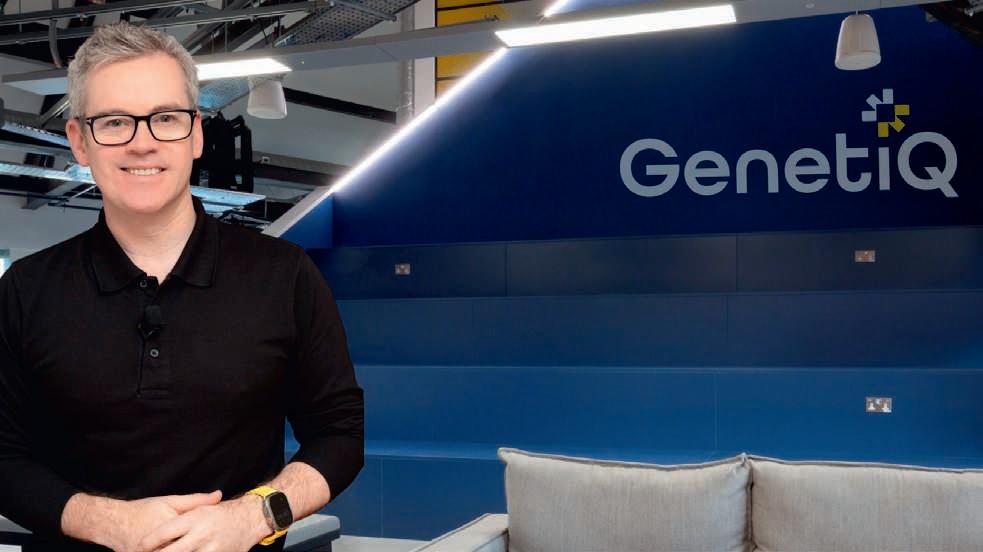
product development and expansion.
Jenny Melia, Chief Executive Officer of Enterprise Ireland, commented:
The Intact name originated from ‘Integrated Accounts’, reflecting the platform’s early focus on finance. Today, GenetiQ delivers financial, operational and commercial capability in a unified system designed for scale and continued growth.
The company remains proudly independent and family-run, guided by the same ownership and leadership team and backed by Goodbody Capital. As part of its growth strategy, GenetiQ plans to recruit 140 additional team members over the next two years to support continued
“Enterprise Ireland has worked closely with Justin, Aidan and Paul since the early days of Intact and is delighted to see this strategic move. GenetiQ demonstrates the strength of Irish-founded technology companies building globally scalable platforms, and we look forward to supporting the team in this next phase of growth.”
For customers and partners, the transition represents continuity. The same teams, products and customer focus remain in place, with product branding aligning under the GenetiQ name in upcoming updates.
More information on the rebrand is available at www.genetiqsoftware.com.
































A familiar badge returns in an unfamiliar form, writes

James Stinson
ord has resurrected the Explorer name for Europe, but anyone expecting a hulking, sevenseat American SUV will need to reset their mental image.
The new Explorer is an allelectric, midsized family car built on Volkswagen’s MEB platform – the same underpinnings used for the ID.4 and ID.5. It’s a curious collaboration; one that promises Ford character with Volkswagen hardware. Whether it fully succeeds is another matter.
On first impression, the Explorer looks the part. It has chunky styling, upright proportions and a confident stance that lends it presence without going fullblown American XXL. This is a more manageable, more European Explorer, aimed squarely at family buyers who want something modern, electric and relatively practical, but who don’t want to spend highend luxury money.
Inside, Ford has gone for a clean, upright cabin dominated by a large, tilting portrait touchscreen. There’s decent space overall and plenty of storage, including a deep centre console dubbed the “MegaConsole”. The driving position is comfortable and visibility good, though some cabin plastics feel a bit hard for a car priced where the Explorer sits. It doesn’t look cheap, but neither does it deliver the plush ambience of some Asian rivals who are now setting new benchmarks for interior design and tech.
On the road, the Explorer is competent rather than thrilling.

Steering is light and predictable, and ride quality is broadly comfortable, although sharper bumps do make themselves felt.
Ford has traditionally engineered its cars to feel nimble and engaging, but with the Explorer sharing VW foundations, that spark doesn’t always shine through. It’s not bad –far from it – but it isn’t as fun or as precise as a traditional Ford hatchback or crossover.
Depending on the version, the Explorer offers either a singlemotor rearwheeldrive setup or a more powerful dualmotor allwheeldrive option. Performance is
brisk enough, especially in the AWD variant, but this remains a familyminded EV rather than a sporty one. Range depends on the battery fitted. Ford quotes up to 374 miles from the rearwheeldrive Long Range version, or around 233 miles for the Standard Range, which is decent but not game changing.
Charging speeds are competitive, and the Explorer can make good use of rapid chargers when you find them.
Where the Explorer does score points is ease of use. The infotainment software is intuitive enough after a short acclimatisation, and the large screen is genuinely handy without feeling too fussy. Ford’s decision to keep some physical controls for essential features is welcome. There’s generous cabin space for passengers, and the boot – though not classleading – is big enough for family life.
Ford pitches the Explorer as an electric SUV that blends American attitude with European practicality. And in fairness, it comes with plenty of equipment even at the bottom of the range. The entrylevel Select trim brings 19inch alloy wheels, a heated windscreen, keyless entry, dualzone climate control, adaptive cruise control, heated front seats and steering wheel, a 14.6inch touchscreen with wireless smartphone integration and a suite of driverassistance tech. It’s a decent specification, and reassuringly you don’t have to pay extra for the essentials.
However, you do pay quite a bit overall. The new Explorer doesn’t go after the bargain end of the market, and that puts it up against rivals with newer technology or more premium interiors. And while the Ford badge still carries respect, it doesn’t have the cachet of a premium manufacturer nor the disruptive appeal of emerging electricfirst brands. That leaves the Explorer in a slightly awkward middle ground.
Prices start from around £35,285 for the Standard Range rearwheeldrive version. The Long Range model sits closer to £41,885, while dualmotor variants push towards the £50k mark. These aren’t unreasonable figures for a midsized electric SUV, but neither are they inexpensive, especially when some rivals deliver more range, more flair or more advanced tech at similar price points.
If you’re already a Ford fan, or simply want an electric SUV that’s straightforward, practical and inoffensive, the Explorer will tick most boxes. If you want the sharpest driving dynamics, the plushest interior or the best value, it may struggle to keep your attention.




























James Stinson

By James Stinson

MG has taken another confident step into the familySUV battlefield with the arrival of the MGS9 PHEV, its first full sevenseat model and arguably one of the most spacious cars the brand has produced to date. It enters a highly competitive market at a strategic price point, though its rather awkward name may take buyers a little longer to warm to.
At nearly five metres long, the MGS9 PHEV is substantially larger than the MG HS it sits above in the lineup, bringing genuine threerow flexibility. With all seats upright, the boot offers 332 litres, expanding to 1,000+ litres when the third row is folded away. This ensures enough room for everything from the weekly shop to a full family holiday. MG insists this is proper sevenseat accommodation rather than a token 5+2 layout, and rivals such as the Skoda Kodiaq, Kia Sorento and Peugeot 5008 will likely take note of the interior space on offer.
The MGS9 PHEV uses the brand’s familiar plugin hybrid setup: a 1.5litre turbocharged petrol engine paired with a 24.7kWh battery, giving up to 62 miles of electriconly range. For many drivers this will comfortably cover daily commutes or schoolrun duties without
waking the petrol engine. MG has worked hard to position the MGS9 PHEV as an efficient, lowrunningcost option in the largeSUV class, and on paper at least, it succeeds.
Inside, the cabin aims to elevate MG’s valuedriven reputation. Twin 12.3inch digital screens sit behind a single glass panel, complemented with useful physical shortcut buttons; a panoramic sunroof, trizone airconditioning and heated, ventilated massaging seats are standard or available depending on trim. MG has also fitted up to 16 driverassistance technologies, contributing to its fivestar Euro NCAP rating.
While MG’s latest model brings size, specification and efficiency, its styling remains conservative and the model name “MGS9” feels clunky compared with more memorable rivals. Additionally, while MG’s interiors have improved markedly in recent years, perceived quality still trails the more premium European brands it now aims to compete with.
Where the MGS9 PHEV will win the hardest is on value. UK ontheroad prices start at £34,205 and top out at £36,945 –significantly undercutting many established sevenseat PHEV rivals. Orders are open now, with the first cars arriving in UK showrooms soon.
By James Stinson


Volvo calls the new EX60 its most important electric model yet – and the claim may hold up. Revealed in Stockholm in January, the all electric, five seat SUV lands in what has become the world’s most competitive EV segment, positioned between the compact EX30 and the range topping EX90.
With premium rivals from BMW, Audi and Mercedes circling, Volvo must deliver something truly distinctive. On first impression, the EX60 does exactly that, promising class leading range, ultra fast charging and a calmer, more refined interpretation of Scandinavian luxury. At the core is Volvo’s new SPA3 platform, a dedicated EV architecture built around a structural battery and incorporating
weight saving “megacasting”. By replacing hundreds of smaller components with large aluminium sections, Volvo improves rigidity, cuts waste and reduces embedded carbon. The result, the company claims, is the lowest carbon footprint of any Volvo EV so far – even matching the smaller EX30.
But it’s the numbers that will draw the most attention. In its longest range P12 AWD specification, the EX60 can travel up to 503 miles on a single charge, outpacing not only other Volvos but many key premium competitors. The mid spec P10 AWD offers around 410 wmiles, while the rear drive P6 delivers up to 385 miles. All benefit from rapid charging capability: on a 400kW charger, the EX60 can add up to 211 miles in just ten minutes – where infrastructure allows. Performance is equally assured. The P12 AWD produces 670bhp and reaches 60mph in under four seconds. The P10 AWD’s 503bhp provides a more balanced, everyday feel, while even the entry P6 RWD delivers a robust 369bhp – competitive against many mainstream alternatives.
Design-wise, the EX60 is unmistakably Volvo, with clean surfacing, soft contours and the signature Thor’s Hammer lighting. Inside, Volvo introduces its new “software defined” approach: a cleaner digital layout replaces the upright touchscreen, running an updated Android Automotive OS with sharper graphics and a new AI powered assistant. It’s tech forward yet retains the simplicity current owners value.
Pricing from around £56,000, however, puts the EX60 firmly among German rivals with established EV line ups. Still, the overall package feels confident and well judged. The EX60 is roomy, refined and thoughtfully engineered – exactly the kind of smart, understated EV Volvo needs. Beneath its calm exterior lies some of the brand’s most advanced technology yet, setting it up to be a serious contender in a fiercely competitive segment.















Government confirm Tax Easement policy for PHEVs
In the latest Budget, the government have confirmed the use of a nominal CO2 value of 1g/km for BIK calculation purposes for EU6eBIS and equivalent ‘UN’ approved PHEV models. Introduced retrospectively from 1st January 2025 and will run until 5th April 2028. This will apply to both Northern Ireland market and mainland GB market vehicles.
To qualify, the conditions that a vehicle must satisfy to be eligible for the easement are, the:
• vehicle was first registered on or after 1 January 2025
• vehicle’s CO2 emissions figure is 51 or more
• vehicle was registered under any emission standard other than Euro 6d-ISC-FCM or Euro 6e
• car’s electric range figure is 1 or more
Further investigations into the policy reveal that any new vehicle tested under the new regime will also qualify for the easement to be applied to them for BIK purposes.
In simple terms, all PHEVs will be classed for BIK purposes under 50g/km meaning the BIK % applied will depend on the car’s EV Range, therefore the table applies for BIK rates:
Please note that the vehicle’s original and official CO2 figure will remain in place for Road Tax purposes and Funding Rate purposes.
If you would like further information on this or any other query in reference to Contract Hire & Leasing, or vehicle funding, please contact us on 02890386600 or email david.mcewen@agnews.co.uk We will be happy to help you with your next car or van choice.
Opinions expressed in Ulster Tatler Group publications are those of the individual contributors and do not necessarily represent the views of the publishers. Ulster Tatler Group do not accept responsibility for the views of the correspondents or contributors. Whilst every e ort has been made to ensure that all the material within is accurate at the time of going to press, Ulster Tatler Group cannot be responsible for mistakes arising from clerical or printing errors. Advertisements for Ulster Tatler Group publications are accepted only on condition that the advertiser warrants that the advertisement does not in any way contravene the provisions of the Copyright Text and Advertising Trade Descriptions Act 1968. Where advertisements and art work have been specially designed for Ulster Tatler Group, copyright is strictly reserved.
May not be reproduced in any form without written consent from the publishers. The publishers will institute proceedings in respect of any infringement of copyright. Please note that whilst every e ort is made to ensure that any submitted items which you wish returned are sent back in the condition in which they were received, Ulster Tatler Group cannot accept responsibility for any loss or damage. All items submitted are at the owner’s own risk. Manuscripts and photographs/ illustrations submitted should be accompanied by a stamped addressed envelope. If possible do not send original or irreplaceable material - to avoid disappointment please send copies only. The Publishers - Ulster Tatler Group - reserve the right to reject any advertisement submitted.

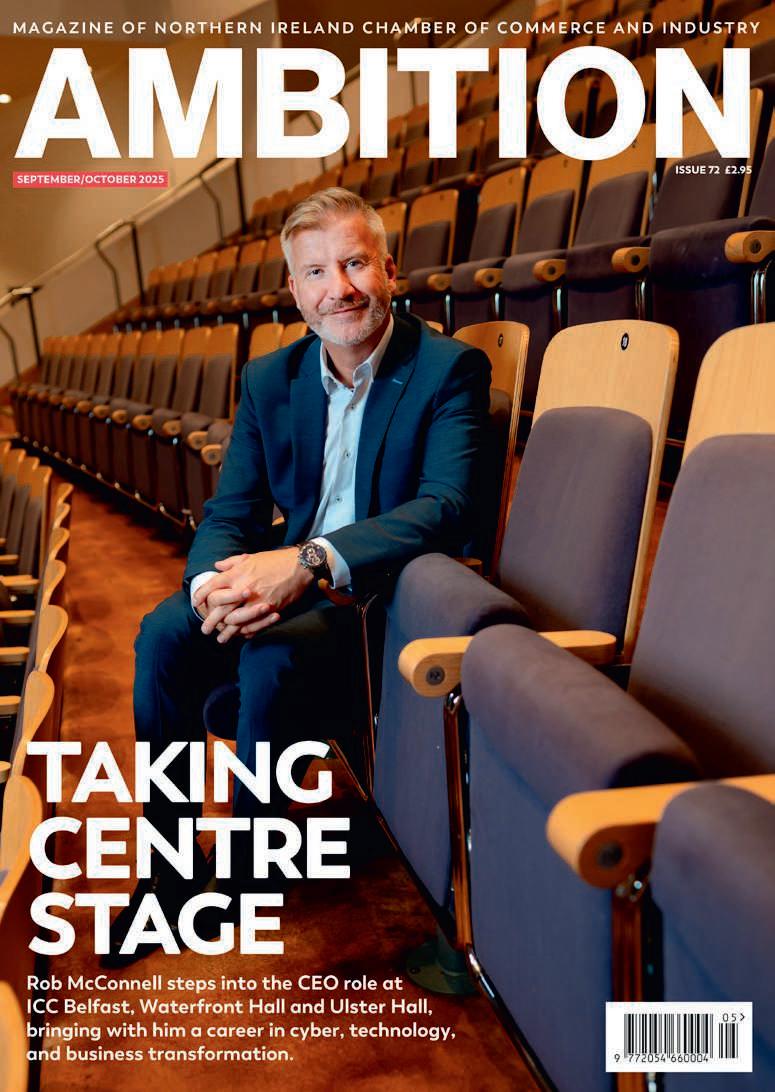


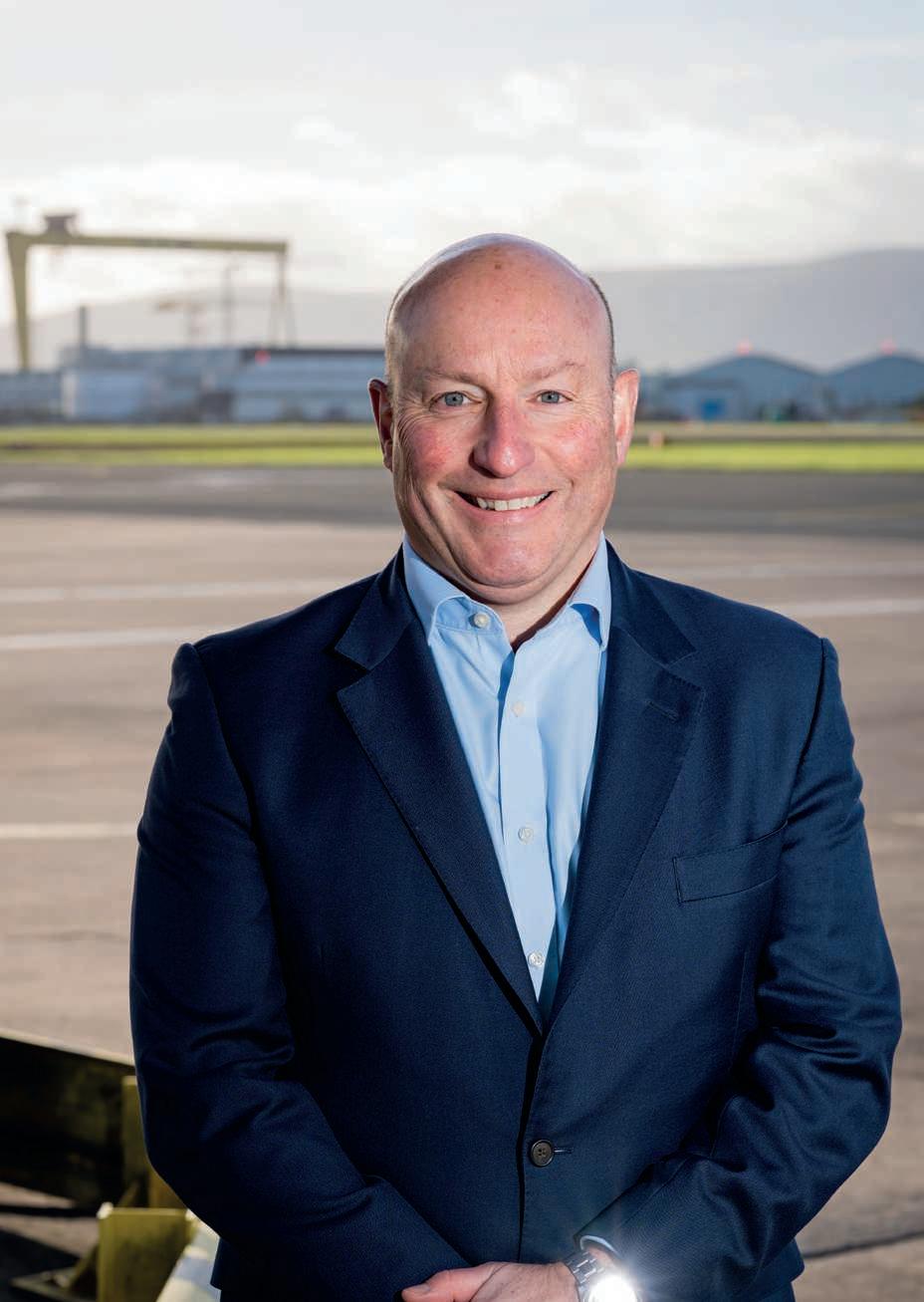



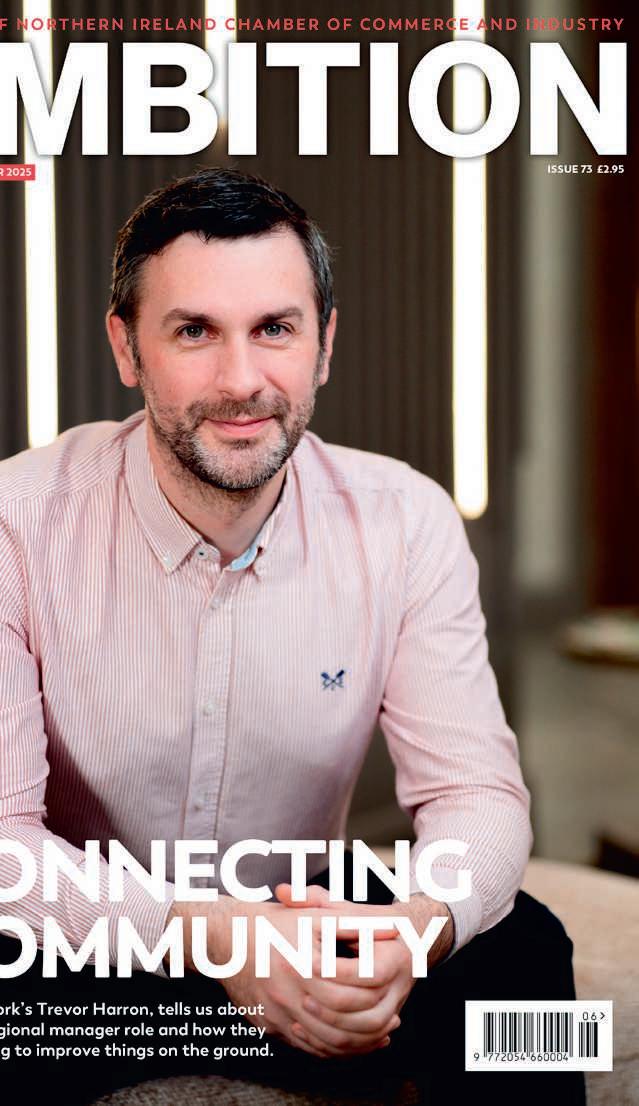




For the hash brown:
• 2kg potato
• 1 litre vegetable oil
• 1 onion, grated
• 10 garlic cloves, crushed
• 100g cornflour
• 10g salt
• 15g black pepper
For the Bearnaise sauce:
• 4 egg yolks
• 15ml warm water
• 15ml white wine vinegar
• 300g melted butter
• 100g chopped tarragon
• 5g salt
• Lemon to taste
For the sour cream and chive seasoning:
• 100g dried chives
• 100g onion powder
• 100g milk powder

For the poached egg:
• 1 litre water
• 100ml white wine vinegar
• 4 large free range eggs

Caeloin
For the hash brown:

1. Grate the potato on the most coarse section of your grater, then soak the potato in cold water for 5 minutes.
2. Squeeze the potato through a kitchen cloth to remove as much starch as possible. Place it into a pan, cover with the oil and bring to a simmer.
3. Once the potato is slightly softened, add your onion and garlic and cook for another 3-4 minutes.
4. Drain your oil and add your cornflour and seasoning. Once cooled enough to touch, shape your hash browns however you prefer: classic rectangle shape or pressed into a mould.
5. Freeze for 30 minutes then deep fry at 1800C for 2-3 minutes until golden brown. Season with your sour cream powder.
For the Bearnaise sauce:
1. Add the egg yolks to the bowl with the warm water and white wine vinegar and set over a pan of boiling water – do not allow the bottom of the pan to touch the water.



2. Whisk together, removing the bowl from the heat every 10 seconds so the eggs don’t scramble. Whisk until the yolks have doubled in volume – it should become very light.
3. Pour the warm butter into the eggs in small parts, whisking to incorporate each time. Remove from the pan so the sauce can cool down a little and slowly whisk in the rest of the butter. When incorporated and smooth, stir in the tarragon leaves and lemon juice. Season to taste and serve. Don’t worry if the sauce splits – add a dash of cold water while stirring and it will come back together.
For the sour cream and chive seasoning:
1. Place your chives, onion and milk powders into a blender (make sure it’s completely dry). Blend to a fine powder.
For the poached egg:
1. Place 1 litre of water on the heat with 100ml of white wine vinegar. Bring to the boil and add your four eggs, reduce the heat to medium and gently simmer your eggs for 3 minutes.
2. Lift out gently and place on some kitchen paper to make sure you don’t make the hash brown soggy.
To serve:


1. Place a large spoon of your Bearnaise sauce on a plate, then your hash brown dusted liberally with your seasoning powder on top.
2. Place 3-4 large slices of Ewing’s smoked salmon on top, add your poached egg and enjoy.


























Ulster Tatler’s Abbie Vauls looks at on-trend spring pastels to brighten up your SS26 work wardrobe.





















Do you know an influential woman who deserves to be recognised for her outstanding contribution to life in Northern Ireland? All we need is her name, relevant category and a statement (up to 200 words maximum) on why she should be recognised. TO NOMINATE SOMEONE VISIT ULSTERTATLER.COM
CATEGORIES
1. ENTREPRENEUR
Recognising those women who have taken a leap of faith and developed their business within the last three years.
2. OUTSTANDING CONTRIBUTION TO HEALTH
Recognising those women who have made a contribution to society through their work in the health sector.
3. CONTRIBUTION TO FASHION
Who in your opinion stands out in their contribution to the fashion industry in Northern Ireland?
4. WOMEN WHO HAVE OVERCOME ADVERSITY

This award is to recognise women who have overcome adversity in their personal life.
5. CONTRIBUTION TO BEAUTY
We want to hear about women who play a key role in the advancement and developments in the beauty industry.
MOST FASHIONABLE LADY
This accolade will be judged and awarded on the day. This category is not voted on by the public.
INFLUENTIAL WOMAN OF THE YEAR 2026
This award is given to someone who has made a significant contribution to life in Northern Ireland. This award is not voted on by the public.
TICKETS
Ticket price includes: Drinks reception, two course lunch, fashion show and a goodie bag. Numbers limited, tickets will be sold on a first come, first served basis.
For further information contact: Julie Patterson on 028 9066 3311 or email j.patterson@ulstertatler. com
£85 (per person)









HOW TO NOMINATE SOMEONE?
It’s simple, just pick the category and woman you want to vote for at ulstertatler.com, following the guidelines below. Just remember we are looking for women who have made a significant contribution to life in Northern Ireland (no matter how big or small). You can nominate someone in as many categories as you want but you can only nominate someone once in each category. A shortlist for each category will be published in the June UIster Tatler. An independent judging panel will then decide on the winner in each category. Please note that the decision of the judges is final and no correspondence will be entered into. Whoever you nominate must be from Northern Ireland or based here. All the short-listed nominees must be prepared to take part in pre and post-event publicity. In order for your nomination to count you must fill in your contact details. VOTING CLOSES WEDNESDAY 22ND APRIL 2026, TO NOMINATE SOMEONE VISIT ULSTERTATLER.COM.




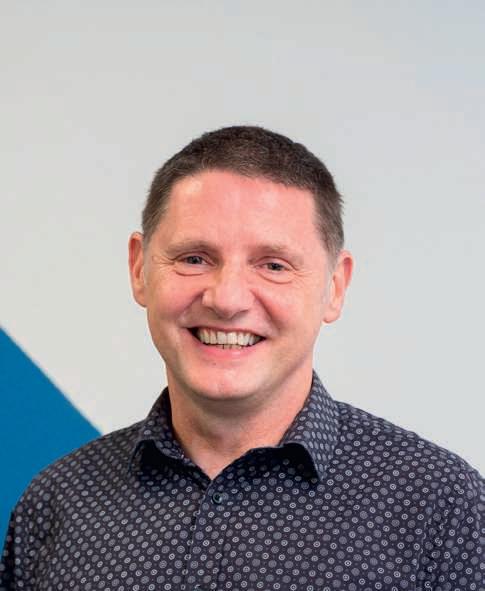
Gary O’Brien Director at Safe Harbour Security
What inspired you to take on the role that you have now?
My career began in the IT and telecommunications industry after graduating, and over the past 10–15 years I witnessed a significant rise in cyber attacks. Through working with both enterprise organisations and SMEs, I saw first-hand how differently they approach cybersecurity. SMEs, in particular, are often the overlooked “soft underbelly” when it comes to cyber resilience. That realisation motivated me to make a meaningful difference by focusing on helping SMEs strengthen their security posture.
How is your business innovating or doing things differently?
We take a human-centred approach to cybersecurity. Rather than applying one-size-fits-all solutions, we focus on understanding each organisation’s priorities, critical assets, and potential business impacts. We intentionally avoid the traditional consultancy model and instead deliver a cyber-first, security-focused service built on quality, practicality, and long-term resilience.
What has been the most exciting milestone in your growth journey so far?
Several milestones stand out: achieving our own professional accreditations, securing our first customers, growing our team, launching new services, and expanding the business while adapting to an ever-changing threat landscape. Each step has reinforced our commitment to delivering trusted cybersecurity services.
What has been the biggest challenge, and how did you overcome it?
One of the biggest challenges in our
industry is the cybersecurity skills gap. We addressed this by developing talent internally growing our own consultants alongside experienced professionals and penetration testers, while also mentoring graduates. This approach has allowed us to build a strong, capable, and sustainable team.
What drives you personally to keep pushing boundaries, even when it gets tough?
I am driven by the growth of our company here in Derry/Londonderry and the opportunity to create highskilled jobs that contribute to the local economy. Building something that leaves a lasting mark outside of Belfast, while striving to be best-in-class, keeps me motivated even during challenging times.
Is there a person who has influenced the way you lead and how?
I have read many biographies of great leaders in sport and business, but none stands out like Ernest Shackleton. His failed attempt to cross Antarctica became a masterclass in leadership because he put people before ambition. In the face of overwhelming odds, Shackleton showed resilience, emotional intelligence, and decisive leadership protecting morale, leading from the front, and ensuring every member of his crew survived one of the harshest environments on the planet.
Where do you see your industry heading in the next 5–10 years, and how are you preparing for it?
Artificial intelligence will fundamentally reshape both cyber attacks and cyber defence. As threat actors adopt AI to scale and automate attacks, defenders
must evolve their detection and response capabilities. We are preparing by taking a realistic, risk-based approach cutting through the noise and providing practical consultancy that helps customers defend effectively while leveraging AI safely and strategically.
What’s the one piece of advice you’d pass on to others starting out in your industry today?
Be prepared for hard work, challenges, and constant learning. Celebrate the small wins along the way! They build momentum and resilience for long-term success
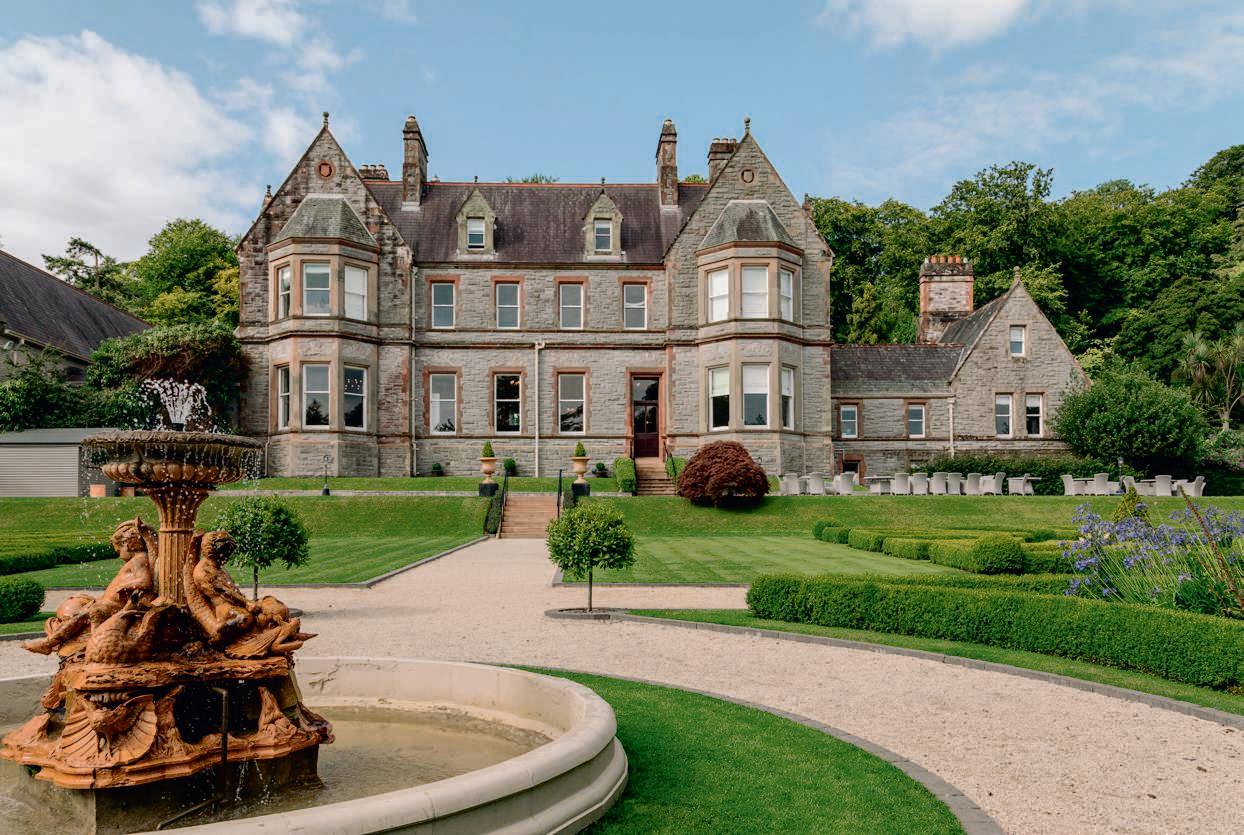
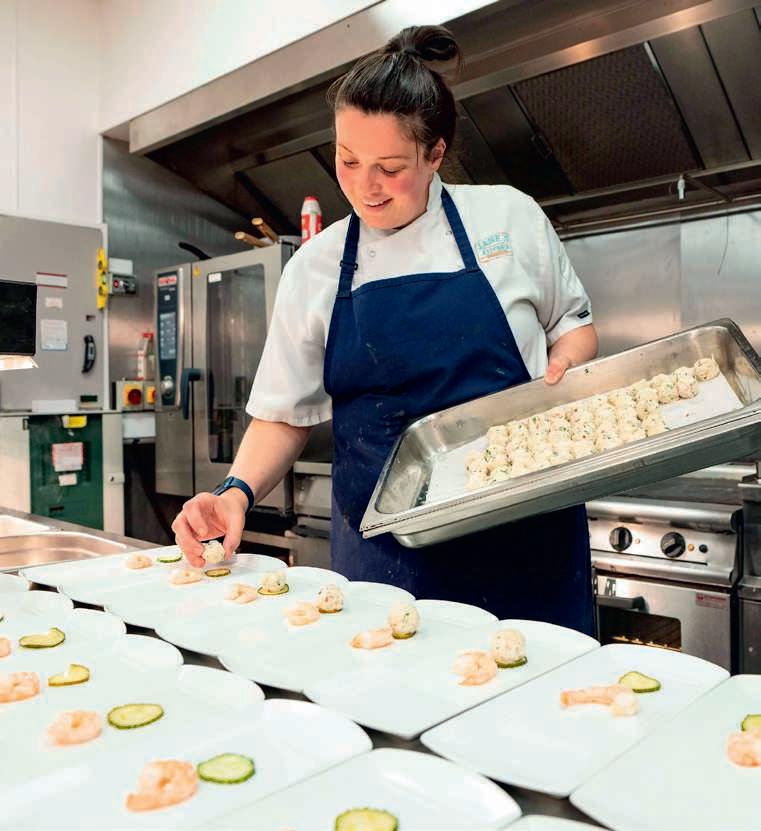










AI is reshaping how organisations work...fast! This practical workshop gives you the clarity, skills and confidence to use it responsibly and e ectively.








What AI really is and what it isn’t


How to use traditional vs generative AI for real value


How to navigate ethics, bias and governance



Practical prompting skills you can use immediately



Where AI can boost performance across your organisation


A tailored action plan to guide your next steps

One day duration: £225+vat The Mount Conference Centre, Belfast, BT6 8DD.
12th Jun 08th Oct 15th Dec