
![]()


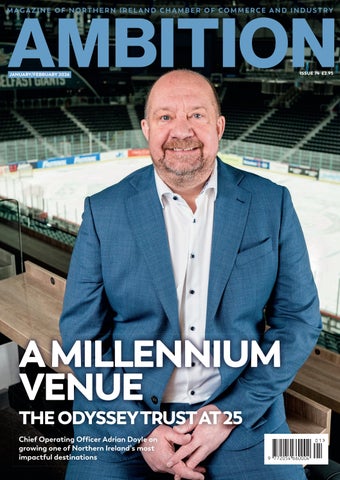
Chief Operating Officer Adrian Doyle on growing one of Northern Ireland’s most impactful destinations
Eyelid reduction (Blepharoplasty)
Brow lift
Split earlobe repair
Ear Reshaping (Pinnaplasty)
Lip lift


Joanne
l.gill@ulstertatler.com / j.patterson@ulstertatler.com


The First Minister and deputy First Minister have welcomed a £9 million investment by O&S Doors to install a biomass-fuelled Combined Heat and Power (CHP) system. The investment is cofunded by the Shared Island Sustainability Capital Grant Scheme, with a grant of £2.4million.
O&S Doors is the first business across the island of Ireland to install the system. It will turn MDF dust, which is normally transported off site for processing in Europe or to landfill, into 6.3 million units of energy to power its heating and manufacturing processes.
The new system will burn in excess of 10,000 tonnes of MDF dust per year to generate 1 MW of electricity which will save 1,500 tonnes of carbon per annum from the company’s operations.

John Toomey, CEO of O&S Doors said: “As a company we are committed to achieving net-zero emissions by 2028 through investments in electric vehicle adoption and zero waste landfill operations. This new CHP project is another central pillar to


Lidl Northern Ireland has announced its ambition to invest £31 million in the Derry City and Strabane District Council area over the next five years. The investment would see the retailer expand its footprint in the area by a further three stores, creating more than 100 new jobs in store and sustaining more than 500 jobs throughout the construction phases.
With 44 stores currently in Northern Ireland, including stores in Strabane and at Buncrana Road/Springtown Road in Derry-Londonderry, Lidl’s plans include two new stores in the Waterside and Creggan areas of the city, and a third in Castlederg.
Pictured: Gordon Cruikshanks, Regional Managing Director for Lidl Northern Ireland, and Robert Ryan, Chief Executive Officer of Lidl Ireland and Northern Ireland.
this ambition enabling us to reduce our reliance on purchasing electricity and reduce production of emissions linked to off-site MDF waste transport.
“This investment also aligns with our growth strategy to expand our Dungannon site in the future by providing us with reliable, costeffective renewable energy. We are also hopeful that the new CHP system will increase our efficiency and productivity by removing waste handling constraints in our manufacturing process.”
This is one of three projects in the north which has received funding from the Shared Island Sustainability Capital Grant Scheme awards made by Invest Northern Ireland.
Caption: Pictured L-R are: Alison Currie, Chief Development Officer, Invest NI, First Minister Michelle O’Neill, John Toomey, CEO, O&S Doors, and Minister for the Economy Dr Caoimhe Archibald.
Consello, the leading global advisory and investing platform, announced a new long-term partnership with Major champion Shane Lowry.
Under the partnership, Lowry will serve as a Consello Ambassador, with the Consello logo appearing on his golf apparel throughout the PGA and DP World Tour season and at related appearances.
Consello says the partnership reflects its continued commitment to sport and aligns with the firm’s Sports and Entertainment business, which advises teams, leagues, owners and investors on strategy.
2025 was another record year for Stena Line freight volumes on its three Belfast services with growth of 1.0% increasing volumes to almost 600,000 freight units shipped from Belfast to Cairnryan, Liverpool (Birkenhead) and Heysham.
Demand for freight services to and from Belfast has been increasing steadily in recent years with the Belfast-Liverpool (Birkenhead) route in particular growing in popularity as evidenced by a record number of freight units being shipped: over 270,000.
Paul Grant, Stena Line Irish Sea North Trade director, said: “The 2025 results underscore Belfast’s position as one of the most strategically important business hubs across the Stena Line network.
“These routes provide vital infrastructure linking NI and GB. Our Irish Sea business has been transformed over the last three decades through a combination of fleet and port investments along with the continued support of our customers.
“It was fitting that we were able to name and launch a new purpose-built ship, Stena Futura, in Belfast Harbour in our record 2025 year, and our 30th anniversary year in Belfast Harbour.
“Stena Line continues to have a positive outlook for its Belfast services which is why we are about to introduce a second purposebuilt ship, Stena Connecta, on our Belfast-Heysham service.”


McAleer & Rushe has been appointed as the main contractor for the delivery of a new 300-unit development for Knight Dragon at Greenwich Peninsula, one of London’s most ambitious regeneration projects.
The appointment follows the official groundbreaking on 2 December, a milestone marked jointly by McAleer & Rushe and Knight Dragon to formally commence construction on site.
Located within the Lower Riverside neighbourhood, M0121 will feature two residential buildings ranging in height from seven to 30 storeys, designed in a distinctive U-shaped layout that complements the neighbouring plots.
The scheme will deliver high-quality homes with access to communal internal and external amenity spaces, together with landscaped courtyards and new areas of public realm, reflecting the scale, context and design ambition of the Peninsula masterplan.
In addition to the M0121 appointment, McAleer & Rushe has also been named Preferred Contractor for Peninsula Quays, a significant 866-unit residential scheme at Greenwich Peninsula that will continue the evolution of the waterfront community.
Jonathan O’Neill, senior director at McAleer & Rushe, commented: “We’re delighted to be entrusted with the delivery of this visionary residential scheme. M0121 marks an exciting next chapter in the continued transformation of Greenwich Peninsula and represents a strong addition to our growing portfolio of large-scale regeneration projects in Greenwich.”
Caption: McAleer & Rushe has been appointed as the main contractor for the delivery of M0121, a new 300-unit development for Knight Dragon at Greenwich Peninsula, one of London’s most ambitious regeneration projects.
The latest Access to Finance Report 2026, published by Enterprise Northern Ireland and the British Business Bank, reveals that 18% of Northern Ireland’s small and medium-sized enterprises (SMEs) experienced barriers when accessing finance – a slight improvement on previous years and broadly in line with Wales (19%), but higher than Scotland (13%).
The research shows that just over half (56%) of Northern Ireland SMEs are currently using external finance, the lowest proportion among the UK’s devolved nations. Despite this, demand for funding remains strong, with 42% of smaller businesses anticipating a need for additional finance over the next 12 months.
Regan McFarland, Partnerships and Sales manager at the NI Football League, said the partnership showcases the growth of both NIFL and SmartPayNI.
“We’re delighted to announce SmartPayNI as our official payments partner.
“This partnership marks another important link-up with a successful local company and is a hugely positive step forward for the league and, in particular, our member clubs and their fans.”
Managing director of SmartPayNI, John Glackin, added: “SmartPay NI’s partnership with the Northern Ireland Football League allows us to bring secure, cashless payment solutions to football across Northern Ireland, improving efficiency, transparency and the overall experience for everyone involved in the game.”
The Mount Charles Group is investing £1 million in a major revamp of its food and beverage offering at Belfast International Airport, part of the VINCI Airports network.
The Group said the investment will include the redesign and upgrade of its Northern Quarter offer supporting the airport’s ongoing transformation programme.
Mount Charles Chief Strategy Officer, Gavin Annon, said the investment reflected the strength of the company’s long partnership with the airport, which has been built up over 20 years.
“This £1 million investment is a tangible
commitment to Belfast International Airport and to the people who deliver the Northern Quarter experience every day.
We’re investing in the physical environment – the fit-out and re-design –and in the labour and training required to deliver a premium, hospitality-led offer.
“We’re proud to be creating new, local employment opportunities in the Northern Quarter while supporting local contractors and suppliers who are helping to deliver this transformative upgrade for passengers.”
Kate Sherry, Belfast International Airport, chief commercial officer, said, “Mount
Charles has been a trusted partner for two decades and this investment in the Northern Quarter forms an integral part of our £100m airport transformation programme. The new offering will deliver an enhanced, higher-quality food and beverage experience for travellers, while creating valuable local employment.”
Pictured: Stacey McAlister, Operations Director, Mount Charles; Gavin Annon, Chief Strategy Officer, Mount Charles; Kate Sherry, Chief Commercial Officer, Belfast International Airport.

For 30 years, we’ve supported NI businesses of every size. With local, attentive service, flexible leasing options, and nationwide coverage, we’re proud to keep Northern Ireland moving, one business at a time.
Local Service. Nationwide Reach.

Northern Ireland’s electricity Transmission System Operator SONI has signed up to the Menopause Accreditation Programme, a new learning initiative delivered in association with Work Life People.
The move will educate employees on the menopause and strengthen the support available to colleagues in the workplace.
SONI is the first company in Northern Ireland to sign up for Work Life People’s accreditation programme, which provides a comprehensive support framework built around six eLearning courses designed to build practical knowledge and confidence around the menopause.
Neurovalens, a global leader in non-invasive neuro-technology, has been granted medical device De Novo approval from the US Food & Drug Administration (FDA) for Modius Lean, its prescribed treatment for weight management.
Based in Belfast, Northern Ireland, Neurovalens is a pioneering medical device company that specialises in leveraging the power of neuroscience and advanced technology to address a variety of global health challenges across a range of at-home treatments in both metabolic and mental health.
The company’s Modius technology uses low-level electrical signals to non-invasively stimulate areas of the brain known to regulate key functions such as the management of sleep, anxiety and overall metabolic health.
Modius Lean is specifically designed to help people manage their weight by delivering a small and safe electrical pulse to the brain for a period of 60 minutes before bed, during which users can do other activities, such as watching TV or reading.
The decision by the FDA was secured following a pivotal clinical trial carried out across the US and the UK, with the UK site overseen by Ulster University. The study included 241 overweight and obese adults and found that participants who used Modius Lean experienced a clinically meaningful reduction of 13% in visceral fat over six months while preserving lean muscle mass. The study’s findings have been published in Nature’s Scientific Reports Journal.
Fibrus has released a report which highlights the extraordinary potential of the UK’s rural communities as engines of growth.
The Future of Rural report, commissioned by Fibrus and authored by Applied Futurist, Tom Cheesewright, looks ahead to 2050 and uses scenario planning and the latest data projections to explore how rural areas can lead the way in economic, environmental, and social transformation.
The report outlines three predictions for how the UK’s rural areas might look in 2050 and concludes that with targeted investment, particularly in connectivity and infrastructure, the UK’s rural communities can help address some of the nation’s biggest challenges, from demographic change to climate resilience.
Dominic Kearns, CEO and Co-Founder, Fibrus, said:

“At Fibrus, we set out to transform connectivity in rural areas, bringing them out of the digital dark ages and into a future of highspeed, reliable broadband. This report reinforces our commitment to those communities, highlighting their immense potential and the vital role they play in the UK’s growth.
“Too often, the UK’s urban areas and capital cities dominate when it comes to policy, pounds and progress, yet we have seen first-hand the level of entrepreneurship and agricultural best practice that is powering the nation from a grassroots level through improved digital access. We will not stop championing rural communities and driving progress until every home and business is truly connected.”
Phoenix Energy has been recognised by GRESB as a world-leading network utility for its environmental, social and governance sustainability.
GRESB is an industrydriven organisation committed to assessing the environmental, social and governance (ESG) sustainability performance of Real Estate and Infrastructure assets around the globe. It is the most well-established standard used by institutional investors to measure and benchmark the ESG sustainability performance of their portfolios and funds.


Zenith Information Technology Solutions, formed in 2012 by Managing Director, Gareth Clements, is a leading IT Managed Services provider, specialising in delivering innovative, reliable, and secure technology solutions for businesses across industries. Our mission is to empower organizations by offering a wide range of IT services that enhance operational efficiency, safeguard against cyber threats, and drive digital transformation. With a focus on proactive support and security, Zenith ensures that your IT infrastructure remains optimized and resilient in an increasingly complex technological landscape.
• Remote Monitoring & Management (RMM)
• Antivirus (AV) Protection
• Microsoft 365 Services
• Endpoint Detection & Response (EDR)
• Phishing Protection
• Security Awareness Training
• Cyber Essentials Certification
• Hosting Services
• SaaS Protection & Alerts
• Ransomware Protection
• Voice-over-IP (VoIP) Solutions


Following the creation of over 70 new roles in its Belfast office last year, Grant Thornton has announced that it has signed a lease with MRP for 23,000 sq ft of office space across two floors in The Ewart on Bedford Square and plans to move into the building in early 2027. The firm has experienced significant growth in the last decade, increasing its headcount from 30 to 250 people by the end of last year. Its rapid expansion in 2025 alone saw Grant Thornton strengthen its position as one of the region’s leading professional services firms. This substantial increase in staff reflects sustained growth across the business, driven by increasing client demand for high-quality advisory, audit and tax services.

Morrow Communications has teamed up with two of the biggest names in NI broadcasting to officially launch its communications readiness service for senior leaders and spokespeople.
The firm has joined forces with training academy Kellyvision, founded by respected broadcasters Donna Traynor and Ronan Kelly, to unveil The Briefing Room, providing full-service media and stakeholder preparedness support and communications coaching.

Between them, Donna Traynor and Ronan Kelly bring decades of experience from some of the UK and Ireland’s most recognisable media outlets, including RTÉ, BBC, UTV, U105 and Downtown Radio.
As Morrow Communications celebrates its 40th anniversary this year, the company is formalising this longstanding partnership to meet a growing demand for communications readiness and resilience across both the public and private sectors.
The Culloden Estate & Spa has announced the completion of a £500,000 investment in its guestrooms, reinforcing the 5-star property’s commitment to the ongoing enhancement of its luxury guest experience.
The investment follows a strong year of growth for the estate, which has included a marked increase in visitors from both the Republic of Ireland and American markets over the last 12 months.
Cormac Fadden, general manager of the Culloden Estate & Spa, said: “We are delighted to unveil our newly upgraded bedrooms, which have been thoughtfully designed to reflect the character of the estate while balancing timeless luxury with contemporary comfort. Our bedrooms play a central role in the guest experience and this investment underscores our commitment to creating restorative spaces where guests can relax, from elegant interiors to beautifully finished bathrooms, with wellbeing at the heart of every design decision.”


Fostering inclusive workplaces isn't just 'the right thing to do' – it's a business imperative.

By shaping a workplace culture that fosters collaboration, inclusion, and fresh perspectives, you create an environment where employees thrive –and your business grows.

When our staff feel valued, we do our best work for our clients. The Diversity Mark accreditation process has helped us measure progress, hold ourselves accountable and reinforce our ongoing commitment to building an inclusive culture where everyone can thrive
Michael Neill, Head of Office
A&L Goodbody Belfast

Take the first step
Visit our website to book a call with one of our team

Amy Dillon Principal Engineer at Design ID
My ambition is not just to deliver good engineering, but to change who feels they belong in the profession.
Early in my career, during my first placement on site, a construction manager told me: “Civil engineering is the last bastion of man.” I was the youngest – and the only female – on site, and surrounded by people who looked nothing like me. I felt isolated, experienced intimidation, and came very close to leaving the industry altogether. At the time, I thought that maybe I simply was not the right type of engineer.
Today, I am an award-winning chartered civil engineer, an associate engineer, a senior leader at Design ID, and the founder of a national STEM outreach programme that has reached thousands of young people. That comment did not push me out of engineering, but it stayed with me, and over time it shaped my ambition: to ensure that no one else feels engineering is closed to them.
My career began on site, working as a site engineer on complex, high-pressure projects including a car manufacturing plant, a contaminated petrochemical site, and major city-centre redevelopments. I learned a lot on those sites, but I still felt as though I didn’t quite fit the mould. I was less interested in the day to day setting out and more drawn to understanding why projects failed, why mistakes were repeated, and how systems could work better.
I moved into design, developing technical skills on industrial and waste infrastructure projects, but again felt there was something missing. I was searching for something more, when I became heavily involved in STEM outreach, organising large-scale school competitions and developing hands-on workshops that introduced engineering as creative, collaborative, and impactful.
That search for meaning led me back to site with Farrans Construction, working on the Northern Spire Bridge in my home city of Sunderland. As a senior site engineer, I managed large packages of works and teams of operatives. It was there that I proved to myself that I belonged technically, but also that my real strength lay in seeing the bigger picture. I was drawn to improving processes, reducing

rework, and helping teams perform better under pressure.
I later joined Design ID, bringing together contracting experience, design knowledge, and health and safety expertise. I have since played a key role in helping the business grow, expanding our technical capability and strengthening leadership, safety, and training frameworks across the company. Alongside this, I continued to invest in my own development, completing further qualifications in health and safety leadership and business management.
Some of my most rewarding work has come in moments of challenge. On projects such as a bridge replacement, when a critical crane operation failed, I coordinated designers, contractors, and clients to redesign the lift safely, avoiding delays and saving significant cost. These moments reinforced my belief that engineering excellence isn’t just getting the calculations right; it’s staying calm, communicating clearly, and solving problems when everything’s falling apart. My ambition expanded significantly during maternity leave, when I founded The Big Bridge. What began as a bit of a mad idea became a 13-metre buildable bridge that we take into schools and communities around Northern Ireland and Ireland, allowing young people to work alongside real engineers and experience teamwork whilst understanding all the different roles involved in major construction projects. In two years, the programme has reached
more than 5,000 students and is now the flagship initiative of the Think Design Engineer Foundation, which I lead as director.
The Foundation brings together industry, professional bodies, and educators to deliver meaningful STEM engagement, particularly for young people who may never have considered engineering as an option. The feedback we receive is simple but powerful: “I want to be an engineer like you!”
In 2025, I was honoured to win a national engineering award – The WES Prize at The Institute of Engineering and Technology Young Woman Engineer of The Year Award. In the past I have also been named as one of the Top 50 Women in Engineering and the Royal Academy of Engineering’s Young Engineer of the Year. While awards are incredibly affirming, they matter most because they give visibility to different routes into engineering and different leadership styles. For many years, I thought being empathetic, reflective, and purpose-driven meant I was the wrong type of engineer. I now know those qualities are exactly what the profession needs.
My ambition is to keep building bridges: between industry and education, between technical excellence and social impact, and between young people and futures they may not yet see for themselves. Civil engineering should never be a bastion. It should be a bridge.


Gemma Hamilton, Head of Origination, BGF
Family businesses are a key part of the economy in Northern Ireland with over 120,000 familyowned businesses across the region employing more than 400,000 people, according to Family Business UK.
Family-run enterprises are often set apart by their deep-rooted experience passed down through generations and a strong sense of shared values and loyalty. They often serve as pillars of their communities, frequently providing employment to several generations within the same families.
Seeing my dad build and run his own fire protection and mechanical services business gave me a real appreciation for the challenges and rewards of family businesses. It’s something that’s stayed with me, and now at BGF I’m proud to support a wide variety of family-owned companies on their growth journeys.
The Government’s Autumn 2024 Budget had major implications for family-owned businesses across the UK, in particular the changes to the Business Relief scheme that are set to take effect in April. These changes will alter the potential tax treatment of shares in family-owned businesses, and as such it will be important to factor these changes into any succession planning.
Business Relief currently allows individuals to claim up to 100% relief on Inheritance Tax (IHT) on qualifying business assets. From April, the government will reduce the rate of relief available for unlisted shares in trading companies; this is where many family and privately-owned businesses could
be impacted by IHT. In the original announcement there was set to be a £1m allowance for shares to receive 100% IHT relief, but any shares above this value would attract 50% IHT relief at the time of the shareholder’s death.
The 2025 Autumn Budget did, however, clarify that the allowance will be transferable between spouses and civil partners, and at the end of year the Government announced the allowance threshold would be raised to £2.5m. Therefore, couples will have a total allowance of £5m for full IHT relief.
The increase in allowance is a welcome announcement for businesses. However, Northern Ireland is home to a high number of well-established, profitable and ambitious family businesses, therefore we expect that many companies will still be impacted.
With mere months until these changes come into effect, this is the time for family-owned businesses to plan for the future if they have not already done so.
Exploring the benefits of growth capital investment could be the next move for families considering how to fund future tax liabilities. For example, families who are not looking to fully sell or exit their business right now, but are seeking to release funds from their business can use growth capital to do so. This is in addition to using growth capital to acquire shares from family members to help with succession planning and/or pass the business down to the next generation of their family ahead of an eventual exit event.
BGF has supported many family businesses UK & Ireland wide with
business model changes and an injection of capital to grow shareholder value.
Recently we invested in specialist healthcare provider CWC Group, owned and operated by sisters Aisling Byrne and Shauna Byrne, to support the rollout of additional specialist care homes across the region. CWC Group provides high-quality domiciliary, residential nursing and disability care across seven locations throughout Northern Ireland. As part of the process, BGF has made the connection to a sector expert nonexecutive director to help guide the strategic direction of the business and is now providing help and support with the roll-out of new locations.
Another great example of supporting family businesses is BGF’s investment in Woodland Kitchens to fund the strategic acquisition of JTC Furniture Group based in Scotland. Woodland was founded by Brian McCloskey in 1987 as a kitchen showroom operation in Ballymena. Today, it is led by Brian’s son, Connor, and is now one of the leading kitchen, bedroom and bathroom cabinet suppliers in Northern Ireland. Post-acquisition, the partnership has created one of the largest cabinet producers in the UK, with a turnover in excess of £50 million.
I am genuinely excited and proud to know that family businesses will continue to be the backbone of Northern Ireland’s economy. But with new considerations to be made, it’s crucial for owners to act now to safeguard their legacy. This is the time for founders to seek expert guidance, explore fresh strategies, and take decisive steps to protect and futureproof what they’ve built.


Anthony Heaney Co-founder at SQUINT Creative
CGI has been part of our lives for decades through games and film. Over the last two years, it has moved decisively into advertising and marketing. The stage has shifted from a single TV spot to the phone in your customer’s hand.
In that world, you have seconds, not minutes.
Our CGI campaigns regularly reach millions organically. They travel because the moments feel real enough to believe and bold enough to share. If it makes you look twice and send it to a mate, we are on the right track.
How CGI is working now
CGI works best when it feels real and useful. Think social moments that look plausible on familiar streets, so people stop, question what they are seeing and share it. That attention is anchored by product clarity delivered in seconds. Cutaways and texture close-ups show quality, scale and how something works.
The brands getting the most value are not treating CGI as a one-off. They build a system. A premium 3D master asset is created once, then adapted across social, digital OOH and product pages. The same asset supports sales decks and PR.
That shift explains why CGI has surged over the past two years. It has moved from cinematic polish to practical, repeatable brand tools designed for the feed.
Which leads to the natural question. What is next?
The next step: AR that helps people buy Augmented Reality is the logical evolution. It is web and games-based
technology meeting marketing where customers already are.
CGI earns attention. AR turns attention into participation.
It lets people try, place and understand a product in their own space, on their own phone, shortening the path to yes. Think of CGI as the spark and AR as the follow-through.
Where AR delivers value
AR turns interest into action across the customer journey.
With connected packaging, a quick scan opens a browser-based experience that shows the product in 3D, offers care tips and suggests compatible accessories. Packaging stops being the end of the journey and becomes the start of a relationship.
As a field sales tool, AR becomes a portable showroom. Products are placed at true scale in a client’s space, finishes are switched live and internals are revealed. When everyone sees the same thing in context, objections drop and sign-off speeds up.
In ecommerce and retail, try-at-home reduces uncertainty. A sofa in the living room. A façade finish on a house. A bottle on a shelf. The result is stronger add-to-basket rates and fewer returns because expectations are set before purchase.
What this means for Northern Ireland brands
Social-first CGI delivers outsized organic reach when it blends the familiar with the impossible, proving what is possible even without heavy media spend. AR then drives conversion by answering “will this work for me?” in a tap.
A single high-quality 3D asset now works across social, web, sales and events, so value compounds rather than vanishing after one placement.
Why use CGI and AR in 2026
Because the market has shifted. Buyers research on mobile. As privacy rules tighten, traditional ad targeting is losing effectiveness. Teams need attention and clarity. CGI delivers speed and control. Build once, tailor everywhere.
AR turns that attention in action by letting people try, place and understand products in their own space. Just as importantly, AR is measurable. Brands can track total views and unique users, dwell time, device usage, geographic reach, time-based trends and custom interactions, with data export available for reporting.
The bottom line
CGI is not new. The use case is.
When you design for mobile first, you are forced to simplify the story, reuse more effectively and raise the quality of the final output. Add AR and attention becomes action. A product placed in a room. A confident step towards purchase.
For Northern Ireland brands, this is a practical path to growth and a better customer experience in a market that rewards both creativity and clarity.
If you would like to see how this could work for your next launch, packaging refresh or event, we would love to talk. At SQUINT Creative, we build campaigns people remember.

Regus has announced the opening of a new floor of serviced offices in Belfast city centre, with the extension of its centre at Lincoln Building in Great Victoria Street. The expansion of its facility was delivered by Andras House ltd, the owners of the building, with an investment of over £650,000.
The Lincoln Building centre is now the largest Regus location in Northern Ireland with a total area of 18,000 sqft. The new investment will provide 36 office suites, ranging in size from 2 desks to larger offices with 14 desks, 3 meeting rooms, a co-working area where Regus clients can book a desk in a collaborative work environment and a café area which provides spaces for informal networking.

that take up of the spaces at the centre has begun at pace, explaining:
The Regus model provides flexible workspace that is tailored to the needs of businesses of all sizes. The centre provides a full-staffed reception where the Regus team assist clients with services and welcome visitors. The offices have been designed and constructed to the high standards of Regus specification, which includes acoustic partitions, air-conditioning throughout, glazed screens to provide daylight, digital access control and a free secure wifi and data network.
Regus is part of International Work Group (IWG) which operates in more than 120 countries worldwide with over a dozen brands including HQ, Spaces and Signature. IWG customers can access thousands of locations worldwide enabling them to remain productive no matter where they are.
The Great Victoria Street is managed by Regus on behalf of Andras House who own the building. Rajesh Rana, Managing Director of Andras, said:
“Our partnership with IWG started in 2023 when we opened the Regus centre in Lincoln Building. This first foray into the serviced office sector was a roaring success, as it achieved full occupancy within a matter of months. This encouraged us to invest into the centre to double its size. The location on Great Victoria is highly accessible and sustainable, being right beside Grand Central Station and on the line of the Glider southern route to Queens University and south Belfast.”
“Lincoln Building has a popular gym on its ground floor, Bodyscape Fitness, which provides free yoga and fitness classes to Regus clients, focussing on wellbeing and healthy living. Bodyscape will also offer free membership to Regus clients, allowing users to train in this 24/7 club at a time that suits them.”
Nicola Ledlie, Area Sales Manager for Regus explained

“We have already sold a number of the offices and have numerous enquiries coming in from clients wishing to relocate to central Belfast. Our clients appreciate having the flexibility to scale up or down, and it’s great to see businesses establish themselves and grow with us over many years. Regus clients appreciate the high specification of offices we provide along with the services we deliver, with the opportunities for collaboration and networking. The centre provides an expanded number of meeting rooms and telephone booth rooms for customer use.
“We are now fully open, and we would encourage anyone interested to call in, and we’ll be happy to show our wonderful new facility”.
Rajesh concluded:
“The delivery of this facility was a great example of teamwork by our consultants and contractors. The fit-out of the facility was completed by Barrett Contracts, based in Omagh, who always deliver the highest quality with a professional approach. The centre was designed by Philip Rodgers Interior Design, with building services design by SCC Consulting, and all brought together by Contract Administrators Johnston Houston.
Its going so well we are already working up plans for a further expansion!”
Benefits of Regus membership include:
• Custom offices
• Day offices
• Office membership
• Co-working
• Virtual offices and
• Meeting rooms
Visit: www.regus.com/en-gb for more details.


By Lee Surgeoner
LeeSurgeoner,Partner at Endeavour InformationSolutions, a Microsoft Solutions Partnerbased in Belfast, that specialises in bringing customersintothe Microsoft Cloud using theirextensive client experience gained over nearly twodecades with their Cloud First approach
theory to everyday reality, and for many organisationsit is now arriving through tools they already use. Microsoft Copilot represents
embeds AI directly into familiar Microsoft 365 applicationssuch as Word, Excel, Outlook, Teams, and Power Platform
For business owners, the question is no done, but how to adopt it in a way that delivers real value while also managing risk.
More Than an AI Chat Tool
Microsoft Copilot is not a standalone chatbot or experimental add-on. It is an AI assistant built into the Microsoft ecosystem, designed to support everyday business tasks your team undertakes using natural language
Copilot can draft and summarise documents, analyse data in Excel, generate presentations, recap meetings in Teams, assist with email management in Outlook, and help automate processes using Power Platform — all while respecting existing Microsoft security and compliance controls.
The result is an AI capability that works within

Productivity Gains with Real Impact
which then translatesinto improved with examples such as:
Faster content creation reports, emails, proposals, and presentations can be generated in seconds
Improved insightfromdata – users can ask questions of their data without advanced technical skills.
Reducedadministrativeburden –meeting summaries, action points, and follow-ups are automated.
Empowered employees more time on decision-making, problem-solving, and customer engagement.
Despite the potential, Copilot is not without challenges. As with any AI-driven solution, thoughtful preparation is essential
Key considerationsinclude:
Data access andpermissions –Copilot can surface information users already have access to, which can highlight historic issues with data governance.
Accuracy andoversight –AI-generated content must be reviewed and validated, particularly in regulated or customer-facing environments
User adoption – without guidance and training, employees may struggle to trust or fully utilise the tool
Cost management –Copilot licensing should be aligned with clear business use cases to ensure return on investment.
These are not reasons to avoid Copilot, but reasons to approach adoption strategically setting clear requirements and expectations from the start
Governance First, Technology Second
Successful Copilot adoption depends less on the technology itself and more on readiness ensuring the business understands:
•Where their data lives and who can access it
•lot and which do not.
• existing policies.
•What training and change management are required
Without this foundation, organisations risk under-realising the value or potentially introducing unnecessary complexity.
Summary: more, why not contact us to arrange a free, no commitment consultation and demos, by visiting https://www.endeavour-is.com or calling us on 028 9031 1010 and let’s talk.


The Al Assistant add-in* for Microsoft 365 that helps you and your teamto getmore done .

Copilot in Wo rd and Outlook helps yo u dr aft, summar is e, and rewr ite content instantl y. Tu rn rough ideas into prof essional document s and emails in seconds

Copilot in E xcel to identify trends , c reate fo rm ulas , gener ate visuals and ask natu ra l language questions to get deep insights on yo ur data fast .

Consolidatio no f Knowledg e
Connects with yo ur existing data (emails , calendar s, documents, repo rt s, policies an d procedures) to pr ov id ef ast and contextua l suppo rt to yo ur team whenev er they need it
• Saves your team time wor king on repetitive tasks;
•Boosts creativity and productivity;
•Increases focus by handling common tasks automatically;
•Provides enterprise-grade security & pr ivacy; and
•Is always available and always lear ning the best way to deliver value to your business
* Copilot requires additional license
Harnessing the power of Microsoft’s latest AI innovations, we help our customers unlock new levels of productivity and creativity with Microsoft 365 Copilot Seamlessly integrated into familiar applications like Word, ideas into impact. By combining the intelligence of Large Language Models with your business data, Copilot helps to empower your team to work smar ter, communicate more effectively, and stay focused on what matters most — helping you stay agile, infor med, and ready for the future.
Contact us for more information and a demonstration of how Microsoft 365 powered by Copilot can help to deliver the r ight results for you and your business.


Ben Jarvis, Data & AI CTO, Telefónica Tech
Lessons, trends, and the road ahead for data & AI
You’ve probably heard a lot about AI transformation lately, and 2025 showed us just how quickly that transformation is accelerating. 2025 marked a pivotal year for data and AI, with Telefónica Tech at the forefront of helping organisations navigate the shift from experi-mentation to enterprise intelligence. As AI technologies matured, the conversation has shifted from hype to the delivery of tangible, measurable business value, and we’ll see more of that as 2026 progresses.
THE SHIFT LAST YEAR
2025 was shaped by economic challenges, including increased costs, higher national insur-ance, and tax rises, which has pushed a renewed focus on operational efficiency. A recent Deloitte survey found that UK finance leaders expect operating costs to rise over the next 12 months, a clear signal of the financial constraints organisations continue to face.
As a result, organisations are no longer investing in technology for trend’s sake. They are de-manding clear return on investment. Data and AI have become critical enablers of that ROI, helping businesses optimise operations, protect margins, and ultimately survive in challenging conditions. For some, failure to modernise has resulted in real consequences, with many una-ble to withstand the financial and operational pressures. This was one of the big lessons of 2025.
This means that data and AI can’t remain the domain of specialist teams. These skillsets are becoming embedded in daily workflows and influencing decisions at every level of the enter-prise. Organisations
without accessible, high-quality data are now at a clear disadvantage, lacking the insights required to act with speed and confidence.
Generative AI has become both a powerful enabler and a clear signal that data and AI were no longer the domain of specialist teams alone. Its rapid adoption exposed a fundamental truth: AI can only perform when the data behind it is governed, trusted, and well understood. Organisations learned that without provenance and integrity, scale simply amplifies risk. In response, leaders began integrating data catalogues with AI model inventories and risk registers, embed-ding accountability into everyday decision making and turning compliance into a driver of per-formance. Above all, 2025 reinforced that rigorous data stewardship is not an overhead, but the foundation for responsible, effective AI.
WHAT’S NEXT IN 2026?
Looking ahead to the rest of 2026, the evolution of AI, data, and cloud is converging around a common goal: faster, more accountable decision-making at scale. The rise of agentic AI will be central to this shift. Inspired by Microsoft’s Frontier Firm vision, organisations will increasingly deploy autonomous agents that analyse, act, and make recommendations under human super-vision. As multiple agents begin working together across functions, the need for clear frame-works for accountability, governance, and transparency will move from theory to operational necessity.
At the same time, intelligence itself is becoming continuous rather than retrospective. Static reporting is giving way to real-time insight, enabled by platforms such as Databricks Zero Bus and Microsoft Fabric’s Real-Time Intelligence. With the ability to act on live data as events un-fold,
organisations can optimise operations in the moment rather than after the fact. This rein-forces the value of AI systems that are both responsive and governed.
This shift is unfolding within increasingly hybrid and multi-cloud environments. Over the next 12 months, organisations will continue to adopt architectures that prioritise flexibility, resilience, and cost optimisation. Interoperable platforms, built on open formats like Delta and Parquet and supported by cross-cloud APIs, will allow data, workloads, and AI models to move seam-lessly across environments without costly reengineering.
Together, these trends point to 2026 as a year of data to value acceleration. As AI becomes more autonomous, real-time, and distributed, success will depend less on experimentation and more on execution. Organisations that combine maturity assessments, strong governance frameworks, and sharper prioritisation will be best positioned to turn data and AI ambition into measurable results – faster and at scale.
In short, 2025 proved that organisations must modernise to survive, with those that invest in data and AI foundations leading the next phase of transformation, and looking ahead into 2026, the priority will be creating scalable and trusted data foundations capable of supporting in-creasingly autonomous AI systems while ensuring security and regulatory compliance.
Throughout 2026, it is evident that organisations integrating strong data architectures with a strategic focus on AI innovation will be best equipped to achieve substantial progress and gain a competitive edge from these technologies.
When Damian Wilson launched Share Energy in 2024, he wasn’t simply adding another venture to his energy portfolio. He was challenging the assumptions of a market historically dominated by large corporations and price-driven transactions.
“We’re a retail organisation first, an IT company second and an energy supplier third,” says Damian, CEO of Northern Ireland’s most disruptive new player in the energy market.
It’s an unconventional hierarchy that reflects Damian’s unconventional professional journey, from computer science graduate to global IT consultancy director and eventually to senior roles across Northern Ireland’s energy sector during one of its most transformative periods.
Damian’s energy career began with Budget Energy more than 15 years ago, just as Northern Ireland’s market opened

up. Four years later he joined Click Energy, focusing heavily on technologyled solutions. Those experiences shaped his long-term vision: to build an energy supplier truly designed around customers rather than corporate structures.
Share Energy is the result of that vision. Although widely acknowledged for its profit-share model, the company is far more than a financial pioneer. Its mission is rooted in putting people and planet first, offering fair, transparent pricing while empowering customers to reduce their energy consumption through smart technology and meaningful insights.
Transparency and trust underpin the brand’s rapid growth. Maintaining a 4.3/5 Google rating (86%), Share Energy prioritises customer satisfaction through clear communication and problem solving. Leadership maintains close oversight of customer feedback, with processes in place to address concerns quickly and turn challenges into positive outcomes through direct engagement and accountability.
But the company’s true differentiator lies in its combination of advanced IT infrastructure, engaged community and exceptional customer service.
Share Energy has invested heavily in a bespoke digital platform with izon, a digital marketing solutions provider with specialist expertise in the energy sector. The resulting platform gives customers real, actionable understanding of how they use energy. Its customer portal includes advanced analytics and Bluetooth payment solutions, all designed to help households and businesses monitor consumption, identify inefficiencies and make more sustainable choices.
For Damian, sustainability isn’t a marketing slogan; it’s foundational. Share Energy actively helps customers cut unnecessary usage rather than simply selling more units. The company’s new Community Champion role is part of that mission, supporting local organisations with energy education, efficiency guidance and community-led
engagement. Sponsorship of over 23 local groups, comprising a mix of sports teams and charities, across Northern Ireland reinforces its commitment to building resilience at grassroots level.
Internally, Damian leads with the same values he hopes to see across the industry. A zero-blame culture paired with clear accountability empowers staff to innovate and grow. Many of the original team members have progressed into senior positions, a sign of the company’s commitment to nurturing local talent and building a long-term workforce.
Operating across Derry and Belfast, the company is also contributing to regional employment while raising standards across the market. Its single tariff approach ensures fairness for new and existing customers alike; a stark contrast to legacy models where loyalty often resulted in higher bills.
Damian says the timing of Share Energy’s launch was deliberate. “Consumer behaviour shifted significantly after Covid,” he explains. “People became more proactive and more comfortable switching suppliers without traditional door-to-door sales. We built a digital first model that meets today’s expectations. It’s simple, transparent and centred around the customer.”
As the energy landscape continues to evolve, from decarbonisation commitments to the increasing adoption of smart technologies, Share Energy is positioning itself at the intersection of innovation and responsibility. Damian believes the future of energy in Northern Ireland depends on suppliers who not only deliver competitive pricing but also help customers understand and reduce their environmental impact.
Share Energy’s early success suggests he might be right. By blending technology, sustainability, community investment and a redefined customer experience, Damian is proving that ethical business models and commercial growth are not mutually exclusive.
By Matthew Hall, Chief Executive at Belfast City Airport

As we reflect on 2025 and look ahead, it is clear that Northern Ireland is on a promising path to realise the ambitions set out in the Programme for Government 2024–2027 (PfG).
Outlining key priorities aimed at improving the lives of people in Northern Ireland, with a focus on economic growth, public services, and social issues, the PfG recognises the importance of a competitive and sustainable economy that works for all.
Within that framework, improving air transport accessibility is recognised as a vital enabler of productivity, economic development, and social inclusion. At Belfast City Airport, we are ready to play our part in delivering that vision through 2026 and beyond.
With air travel demand steadily increasing, Northern Ireland’s airports are expected to handle around 21 million passengers annually by 2040, with approximately 7 million passing through Belfast City Airport alone. It is essential that this growth is managed responsibly, supporting the PfG while improving connectivity, promoting regional balance, and creating opportunities for employment and enterprise.
To support this, in 2025, Belfast City Airport launched its draft Master Plan 2040. This long-term vision outlines how we can meet future demand, deliver world-class infrastructure, and contribute to sustainable prosperity across the region.
The draft Master Plan is more than a framework for expansion – it represents a commitment to local communities, the environment, and the wider economy. If realised, it could unlock more than £200 million in private investment and contribute £1.7 billion in annual GVA. This, in turn, would strengthen the region’s appeal to investors, startups, and multinationals, as well as enhancing its attractiveness as a place to live, work, and visit.
Employment growth is a key component of this vision. Should our draft Master Plan be realised, it could double the airport’s workforce to over 2,200 people while supporting more than 23,000 jobs across the region.
We are also encouraging the use of cleaner, quieter, new generation aircraft, which would mean that all growth can be achieved within our existing noise contour and without the need for a runway extension.
As part of our vision, we have teamed up with Translink on a feasibility study that identified an opportunity for a new rail
halt directly connected to the extended terminal building. If delivered, it would see Belfast City Airport potentially become the first rail connected airport on the island of Ireland.
By enhancing regional air links, encouraging new routes, and supporting the development of local businesses, we can help generate employment, boost tourism, and strengthen the economy. This will ensure that the benefits of growth are felt not just in Belfast, but across the entire region.
Belfast City Airport has always played a unique role in Northern Ireland’s story. The task now is to ensure that role remains relevant, responsible and resilient in the years ahead. The draft Master Plan provides the framework, but it is how we act, listen, and adapt that will ultimately define our success.
Feedback from stakeholders and the local community has been positive, helping us shape the final version of the Master Plan, which is expected to be published in 2026.
As we look to the future, our ambition is clear: to remain an airport that serves the region not just today, but for generations to come.


County Armagh-based customs and compliance provider Allied Fleet Services has announced a £500,000 investment that will create 15 new jobs.
The investment will also see Allied Fleet Services, founded in 2017 and headquartered in Armagh with operations across the UK, Ireland, Europe and India, rebrand to Allied Group as part of its evolution into a multi-service customs, compliance and logistics support provider.
The business has also relocated to new state-of-the-art headquarters at Edenaveys Industrial Estate in Armagh and launched a new corporate website that reflects its broadened service offering and strengthened Group identity.
The investment reflects the scale of the organisation’s recent growth, with the business recording a 45% increase in revenue in 2024 and a further 12% rise in 2025, along with workforce growth from 15 employees in 2024 to 21 in 2025.
This uplift in revenue has been driven primarily by the expansion of the company’s customs and regulatory compliance services, as businesses seek greater support to navigate the complexities of trading in and from Northern Ireland.
Rising demand for accurate and compliant cross border customs support across the UK, Ireland and Europe has also contributed to this growth, with customers ranging from private individuals to manufacturers, FMCG firms, transportation operators and healthcare providers.
The Armagh-based company’s transition to Allied Group brings its core services together under three specialist divisions, with Allied Customs delivering expert and compliant customs clearance across the UK, Ireland and Europe.
Allied Freight provides end-to-end freight forwarding and logistics solutions, while Allied CBAM supports businesses as they prepare for the introduction of the EU Carbon Border Adjustment Mechanism.
Stephen McAneney, founder and director of Allied Group, said: “This investment represents a major milestone for our organisation and reflects the significant growth we have achieved in recent years.

“Customs and compliance sit at the heart of what we do, and the transition to Allied Group reflects the natural evolution of our organisation as we expand our service offering through our three specialist divisions and strengthen our role in supporting cross border trade across the UK, Ireland, Europe and further afield.
“The creation of new jobs, our move to larger headquarters in Armagh and the launch of our new website will give us the capacity to support more customers, more efficiently, across increasingly complex regulatory and cross border environments.
“Our growth has been driven by diversification and by the trust our clients place in us to deliver compliant, reliable and solutions-focused support. As regulatory frameworks continue to evolve, particularly in areas such as customs and emerging mechanisms such as CBAM, our priority is to ensure businesses have the clarity, capability and confidence they need to trade without disruption.”
The company’s introduction of Allied CBAM is a direct response to growing uncertainty in the market, giving businesses a clear and practical solution as new EU carbon reporting obligations come into effect.
With importers facing stringent disclosure requirements, increased audit scrutiny and the risk of financial penalties for non-compliance, the new division ensures customers receive the guidance and regulatory expertise needed to navigate CBAM with confidence and avoid operational disruption.
Mr McAneney added: “Throughout our journey, we have focused on anticipating customer challenges and delivering practical, compliant solutions. The introduction of Allied CBAM is a natural extension of this approach. With new regulations coming into force, there remains significant uncertainty in the market around what will be required.
“CBAM will create real operational and financial pressure for many businesses, with strict reporting obligations and the risk of penalties or delays for those who do not comply. Our role is to provide customers with certainty and a clear route through these requirements.
“We make sure they remain protected, compliant and penalty free, with goods moving as expected even as the regulatory landscape becomes more complex.”

Jake Cashion, Vice President of Government Affairs, NC Chamber
North Carolina was recently ranked the No. 1 state in the United States for workforce development, a distinction that reflects more than a moment of success. It is proof that a longterm, employer-driven strategy is working.
For policymakers and business leaders, workforce development is often discussed as a challenge to be managed. In North Carolina, we have treated it as a competitive advantage to be built intentionally, collaboratively, and with a clear eye toward the future of our economy. That approach has paid off.
For more than a decade, North Carolina’s business community has been clear about its top priority: workforce availability. In fact, employers in our state have ranked workforce availability as their number-one issue for nine consecutive years.
Rather than treating that concern as cyclical or sector-specific, the NC Chamber worked with business leaders, educators, and policymakers to align workforce policy with real-world demand. The goal was simple: ensure that education and training systems respond to the needs of employers, not the other way around.
This demand-driven approach has reshaped how North Carolina thinks about talent. We have focused on creating multiple pathways into the workforce, strengthening alignment between industry and education, and ensuring that workers can move seamlessly between learning and earning throughout their careers.
North Carolina’s workforce success did not come from a single programme or reform. It is the result of sustained investment across the entire talent pipeline, from early childhood education to post-secondary
training and continuous upskilling.
Community colleges play a central role in this system, offering flexible, employerresponsive training that can quickly adapt to changing industry needs. Universities contribute by producing high-skill talent and research capacity that supports innovation across sectors such as life sciences, advanced manufacturing, and technology.
At the same time, the state has expanded access to short-term credentials, apprenticeships, and work-based learning opportunities that allow individuals to enter or re-enter the workforce more quickly.
A strong workforce strategy must also address the factors that determine whether people can participate in the labour market at all.
In North Carolina, that has meant confronting challenges such as housing affordability, childcare access, and workforce re-entry for justice-involved individuals. Employers understand that talent cannot show up to work if these foundational issues remain unresolved.
Business leaders have been vocal in advocating for policies that expand workforce participation, including childcare solutions that allow parents to return to work, housing strategies that help people afford to live in the communities where they work, and targeted reforms that reduce unnecessary barriers for individuals seeking employment.
North Carolina’s workforce strength is inseparable from its broader economic performance.
We are a manufacturing-heavy state with a diverse economy that includes financial services, life sciences, agriculture, logistics, and advanced manufacturing.
As companies consider where to invest, expand, or relocate, workforce readiness consistently ranks among the top decisionmaking factors.
The ability to offer employers a deep, adaptable talent pool, supported by a competitive business climate, reliable infrastructure, and affordable energy, has positioned North Carolina as a destination for domestic and international investment alike.
Importantly, workforce development has also enabled growth beyond major urban centres. Rural communities across the state are leveraging talent strategies to attract manufacturing, food processing, and logistics operations that provide long-term economic stability.
While North Carolina’s workforce strategy is rooted in local priorities, its lessons extend well beyond our borders.
Employer-led systems, aligned education pathways, and sustained policy focus are not uniquely American concepts. They are principles that apply in any economy seeking to compete globally, including regions like Northern Ireland that value skills, innovation, and long-term growth.
What North Carolina’s experience demonstrates is that workforce success does not happen by accident. It requires consistency, collaboration, and the willingness to make hard policy choices that prioritise long-term competitiveness over short-term wins.
As our economies become more interconnected, partnerships between business communities across the Atlantic matter more than ever. Sharing ideas, best practices, and lessons learned strengthens not only individual regions, but the global economic ecosystem we all depend on.
North Carolina’s workforce ranking is a milestone, but more importantly, it confirms that when strategy meets execution, results follow.


“ When I arrived, Odyssey was a building site,” he recalls. “Now, 25 years later, we are a worldclass destination welcoming over a million visitors every year. We host major global tours, have an ice hockey team that has become a symbol of the city and have built a science and discovery centre admired across the UK and Ireland. The scale of change has been extraordinary.”

As The Odyssey Trust marks 25 years at the heart of Belfast’s cultural, sporting and educational scene, Chief Operating Officer Adrian Doyle reflects on a journey that began as an ambitious millennium project and has grown into one of Northern Ireland’s most impactful destinations.
as the charity to oversee the investment in Northern Ireland’s Millennium Project. From the outset, its purpose was clear, and it remains unchanged today: to advance public education and to provide facilities for leisure and recreation that improve wellbeing and bring people together.


Founded in 2000, The Odyssey Trust was established

These charitable goals are realised through a unique mix of assets. Today, the Odyssey site includes The SSE Arena, the Belfast Giants, W5 and W5 LIFE, creating a vibrant hub


of learning, leisure and live entertainment at the heart of the city.
For more than 25 years, Odyssey has been Northern Ireland’s premier education and entertainment destination. Adrian adds, “From world-class concerts and international sporting events to hands-on STEM exploration, everything we do is about creating memorable, life-changing experiences.”
The scale of Odyssey’s impact is significant. Over the past 25 years, the site has generated £2.1 billion in expenditure for the local economy and delivered an estimated £400 million in social impact. The Arena alone has hosted more than 3,000 events, sold over 13 million tickets, staged more than 1,100 concerts and over 770 ice hockey games, with demand for live experiences continuing to grow year on year.
“What happens on our site ripples across the region,” Adrian explains. “Every major event supports hotels, restaurants, transport providers and tourism businesses. We play a critical role in making sure Northern Ireland stays firmly on the global touring map, not an afterthought, and not a place that artists skip.”
Over the years, that has meant hosting landmark moments such as the MTV European Music Awards, BBC Sports Personality of the Year, and major international sporting events, including the Boston Bruins travelling to play the Belfast Giants.
At the core of that success are Odyssey’s people. “Our staff are truly the heartbeat of the organisation,” says Adrian. “They are passionate, committed and focused on delivering the best experience every time for customers, colleagues and partners alike.”
Partnerships are equally central, particularly with local suppliers and community organisations. “Local partnerships give us agility, reliability and resilience, especially in a live events environment,” he says. “Being a charity that supports other charities is part of our DNA.”
That commitment has seen Odyssey partner with organisations such as Northern Ireland Hospice, Alzheimer’s Society, Air Ambulance NI and Little Heroes. In June 2025, Odyssey’s ‘Hospice Hockey’ event brought together current and former Giants, celebrities and sporting figures for a unique exhibition game that raised over £129,000 for Northern Ireland Hospice.
It’s not just about live experiences; education sits just as firmly at the heart of The Odyssey Trust’s mission. Since opening in 2001, W5, Northern Ireland’s award-winning science and discovery
centre, has inspired curious minds and played a vital role in providing inclusive, accessible STEM education to over 6 million users.
“W5 is not about replicating what happens in schools, colleges or universities,” Adrian says. “The focus is on sparking curiosity, creativity and confidence, helping people of all ages discover how the world works.”
This ambition expanded further in 2022 with the opening of W5 LIFE, a dedicated digital skills and learning hub delivering OCN-accredited programmes in partnership with organisations such as Microsoft and The King’s Trust.
“It is about linking education with employability,” Adrian explains. “We reach people at every stage of life, including those who may have fallen through the gaps, and give them the skills and confidence to move forward.”
Technology now plays a central role across the site, including digital learning, customer experience, safety, security and sustainability. In the Arena, major investment has transformed food and beverage offerings, modernised premium spaces and introduced self-serve kiosks as well as Amazon’s ‘Just Walk Out’ technology, making the venue the first indoor arena in Europe to offer frictionless retail.
“We are committed to a digital-first approach,” says Adrian. “This is not for the sake of technology, but because it genuinely improves experiences and helps us operate better.”
Asked about stand-out moments, Adrian points to the creation of the new ‘Odyssey 25 Club’, which celebrates the artists, acts and promoters who have helped shape the venue’s story. He also highlights the Giants’ enduring championship success and community impact.
“They said it wouldn’t last,” Adrian smiles. “But 25 years later, the Giants are still capturing hearts and changing lives.”
Looking ahead, the vision is clear: to continue building social, educational and economic value across Northern Ireland while staying true to the Trust’s founding purpose.
“Our job now is to keep evolving, to strengthen our role in global touring and sport, expand our STEM and skills programmes, grow our ESG impact and deepen our community partnerships. The mission has not changed, but the opportunity ahead of us is bigger than ever.”
After 25 years, one thing is certain. What began as a millennium vision has grown into a legacy, shaping Belfast and Northern Ireland for generations ahead.


AD Sustainability
AMD
AuditComply
Barrett Steel
Braidwater Group
Brown O’Connor
Communications
Career Reboot
Centre for Competitiveness
Cresit
Duality Health Enterprise
Glens of Antrim Group
Innov8 Workspace Solutions
Innovative Automated Solutions

ASuzanne Wylie, Chief Executive, NI Chamber
cross Northern Ireland, businesses continue to demonstrate remarkable determination and optimism, even as they navigate a challenging economic landscape. Our latest Quarterly Business Insight survey shows that many firms remain confident about their own prospects, with a clear majority expecting growth in the months ahead. This speaks to the ingenuity and resilience that define our membership base.
Jacobs
JP Corry
Karyn Maguire Consulting
Louise Maguire Coaching
MacGen Power Generation
Mediation NI
Ping Group
Power to Switch
Renewable Partnerships
Safe Harbour Security
Sarella James Training Services
Satori Accounting
SERE Motors
Speed Motion Films
Sustainable Ventures
* To become a member of NI Chamber join online at www.northernirelandchamber.com or phone the membership team on 028 9024 4113
At the same time, we recognise that broader conditions remain difficult and optimism about growth in the wider Northern Ireland economy is much more subdued. Demand is still soft for many, cost pressures persist and recruitment challenges continue to affect firms across sectors. The Finance Minister’s decision to stop the Reval 2026 process provided essential breathing space at a critical moment, and we’re committed to engaging with him on next steps.
Inside, you’ll find out more about our new energy position paper, which highlights the need for clarity on long-term issues such as heat policy, transport decarbonisation and grid capacity. These factors are fundamental to competitiveness and will shape the ability of businesses to invest and grow. Our thanks go to every member of the Energy Task & Finish group for their contribution to this important work over the past year.
Despite these pressures, there is a great deal to look forward to. The first half of the year brings a busy programme of NI Chamber events, offering practical insights, valuable networking and meaningful opportunities for members to engage on shared priorities. These moments of connection are a vital part of how we support and champion businesses of all sizes.
We are also delighted to welcome a diverse group of new members from across Northern Ireland who have recently joined our community. Their commitment to collaboration and growth strengthens the collective voice of this Chamber and we look forward to supporting them, and all our members, in the months ahead.
NI Chamber hosted its annual President’s Banquet in ICC Belfast on 27 November. The black-tie event celebrated the phenomenal success of The Open, looking at its legacy and role in driving economic prosperity across the region. This year the star guests included Sky Sports presenter, Nick Dougherty, PGA Professional Golf Coach, Georgia Ball and former Ryder Cup Captain, Paul McGinley. The Banquet was supported by headline sponsor BT; supporting sponsors Tughans, Barclays, Brown & Brown, Mattioli Woods, Charles Hurst and Tourism NI as well as drinks reception sponsor VANRATH; drinks partner Diageo; entertainment sponsor Gray’s Communications and media partner, Bauer Media Group.


6. Declan Cooley (BT) and David Lissah at the Innovation Business Breakfast.
7. The Concentio Chamber Choir performed at NI Chamber’s Annual Carol Service in St Anne’s Cathedral.
8. NI Chamber’s Energy position paper was launched at an energy forum in BT.
9. James Kuht, CEO at Pair delivering an AI masterclass to senior business leaders.
10. Professor Cathy-Gormley Heenan at the senior leader’s AI masterclass.
11. Dr Andrew Woods, CATAGEN spoke at a GROW with Danske Bank event.
12. CATALST colleagues Sonya Kerr (Chief Commercialisation Officer); Kurtis Irwin (VP of Global Catalysis); Dr Laura Dornan (Senior R&D Engineer) and Émer Rafferty (Chemical Engineer).
13. Idir Boudaoud and Alan McCall with Olivia Stewart (NI Chamber) inside the London Stock Exchange.


Growth signals in the Northern Ireland economy remain weak and uneven with demand, investment and hiring all stuck in a cautious range.
Areport published by NI Chamber in partnership with Queen’s University Belfast shows that while 59% of firms in Northern Ireland expect their own business to grow in 2026, optimism about growth in the wider Northern Ireland economy remains much weaker, with only 23% expecting growth. Conducted in Q4 25, the survey results illustrate that current business conditions remain resilient but subdued. Demand conditions are soft and at the same time, cost pressures remain elevated.
80% of businesses who responded to this survey report that they are trading well (32%) or reasonably (48%), while 13% say they are just covering costs. 6% report that they are struggling. This points to an environment in which most businesses are coping but where relatively few are thriving and a significant minority remain under pressure.
This picture is reinforced by demand conditions, with 47% of businesses reporting some slowdown in demand in Q4 2025. This is down slightly from 51% in Q3 but still elevated by recent standards. Most of this weakness is described as a small rather than significant slowdown, suggesting a broad-based softening in activity rather than a sharp contraction. Taken together, this indicates a trading environment characterised more by weak growth, with continued pressure on margins and limited signs of a strong rebound in demand.
The net balance of firms expecting turnover to grow over the next 12 months is +38% in manufacturing and +51% in services, pointing to solid but not exceptional optimism. Profit expectations are also positive, though more subdued, at +16% in manufacturing and +27% in services.
Investment intentions are positive but cautious. As in previous cycles, training investment remains stronger than capital spending, particularly in services, while manufacturing intentions are more volatile but have been somewhat firmer over the past two years. Overall, investment plans point to gradual, selective spending rather than a broadbased expansion in capacity.
Pressure on prices remains elevated across both manufacturing and services, with a relatively large share of businesses in both sectors (59% manufacturing and 44% services) expecting to raise prices over the next three months. Overall, the
data points to a persistently high pricerise environment rather than a decisive easing.
This ongoing pressure is being driven primarily by internal cost pressures. Labour costs remain the single largest source of upward pressure on prices in both sectors, impacting 91% of manufacturing and 85% of services firms, with no sign of meaningful easing. In manufacturing, input costs worsened in Q4 2025, particularly for raw materials and fuel. In services, utilities and other overhead costs are edging up, reinforcing the sense that cost pressures are broadbased rather than confined to one or two areas.
Alongside these cost pressures, external and policy-related concerns remain prominent. Inflation and business taxation continue to be cited as the most pressing issues facing firms in both manufacturing and services. At the same time, concerns about competition and business rates are edging up, particularly in services, while interest rates and exchange rates remain secondary but persistent concerns. Taken together, this points to an environment in which firms continue to face sustained cost and pricing pressures, limiting scope for margins to recover and keeping inflationary dynamics alive.
While hiring intentions improved modestly in Q4 2025, they remain cautious by historical standards. The net balance of firms expecting employment to grow over the next three months increased to +23% in manufacturing (from +17%) and to +19% in services (from +15%). This indicates that more firms are planning to increase headcount than reduce it.
By contrast, actual recruitment activity has eased more clearly. The proportion of firms trying to recruit fell back this quarter, from 80% to 68% in manufacturing and from 69% to 53% in services. This confirms a broad-based softening in hiring appetite, particularly in services, and suggests that many firms are becoming more cautious about actively expanding their workforce.
At the same time, recruitment difficulties remain elevated for those firms that are hiring. In Q4 2025, 84% of manufacturing firms and 67% of services firms report difficulties in filling vacancies.
Commenting on the survey findings, Suzanne Wylie, Chief Executive, NI Chamber, said:
“These findings show an economy that is flatlining, with weak demand (including export orders), rising costs and little sign of momentum in the final quarter of
“Headline indicators in official data may suggest Northern Ireland is holding up better than some regions in Great Britain, but this can mask the more cautious mood we’re hearing from businesses on the ground. ”
2025. Businesses are coping, but far too few are growing – and this should be a wakeup call for the Executive. With just over a year left in this mandate, its legacy will be judged on whether it confronts these pressures or allows them to harden.
“The recently published non-domestic rates revaluation only amplifies the risks: with hospitality at the sharp end at a time when wage, energy and insurance costs are already at breaking point. Unless ministers act quickly on key drivers, they risk overseeing a prolonged period of stagnation and even business failures.”
Richard Ramsey, Professor of Practice at Queen’s Business School, added:
“Headline indicators in official data may suggest Northern Ireland is holding up better than some regions in Great Britain, but this can mask the more cautious mood we’re hearing from businesses on the ground. Only 23% of firms expect the Northern Ireland economy to grow in the year ahead, despite far stronger expectations for their own turnover – a clear signal that confidence in the wider economic environment remains subdued.
“Policymakers should be careful not to draw comfort from relative comparisons when UK wide growth is already so weak. Northern Ireland isn’t outperforming a strong economy – it’s simply stagnating more slowly than other regions. That distinction matters, particularly as businesses now face a crystallised, structurally higher cost base.”


Every week there’s another announcement about AI: a dizzying valuation of an AI startup, some fiendish benchmarks exceeded, or another groundbreaking feature release. They’re all impressive, but you’re probably left wondering why the news articles don’t cover the one thing you actually care about: “How can AI help me grow my business right now?”. In this article, I’ll try to put this right.
In 2020 I helped to build the Prime Minister’s Data Science team in 10 Downing Street, charged with bringing data and AI into senior government decisionmaking. There was plenty of enthusiasm for “using AI” in the centre of Government, but less clarity about how it would help in practice.
Progress came when we reversed the logic and focussed on defining the core problem we wanted to solve, rather than leaping ahead to the solution. In your case it might be launching a new product or growing your client base – for us it was improving the quality of data and evidence supporting the country’s decision-making.
Once we’d defined that problem and measured the current level of data and evidence supporting decision-making in the centre of Government (there was... room for improvement) it gave our team a clear goal to aim for, and we could measurably see which things were working. Adopting AI became part of the solution – particularly
where leaders needed to model trade-offs between different policy decisions – but crucially everything we did was measured against whether it solved a problem that the organisation cared about, not whether it was a flashy solution.
Many firms now face the same challenge. AI is far more capable than it was in 2020, yet plenty of organisations don’t know what they’re solving for – are you trying to grow your business, drive efficiency or launch new products? Defining the problem you’re trying to solve can really improve AI adoption and buy-in.
Having defined your overarching goals, as a leader it’s tempting to define how you’re going to use AI to achieve them – but I’d advise you to resist this temptation.
After No.10, I became the CTO of a military regiment and arrived with a suitcase of preconceived use cases for AI in combat. Then I was deployed on operations and learned an obvious truth: I was not the expert in the regiment’s problems.
The soldiers were. So, we changed our approach. Rather than keeping the AI team at headquarters, we deployed them on operations and had them report to a soldier.
The soldiers who took on that responsibility nicknamed themselves the “Nerd Herders”, and whilst the name was unpopular with our AI experts, the results

were unarguable. When domain expertise is combined with AI expertise, AI becomes a forcemultiplier. It does not conjure value from thin air; it amplifies the insight of people who already know what matters. For business, the implication is simple: do not confine AI capability to a specialist team or person. Equip your domain experts – often those closest to customers and operations – with the AI skills to test ideas quickly and safely. They are best placed to choose the problems worth solving that contribute to the business goal you’ve set.
Since late last year we’ve been fortunate enough to work with Northern Ireland Chamber of Commerce – who have set a quite extraordinary example on AI adoption. They enrolled 20 employees onto our AI Masterclasses – which teach people AI Mastery with learning personalised to their role and business goals, so the learning can quickly translate to results. AI adoption has rapidly spread across functions – from event delivery to finance and member communications – while leadership has seen a visible shift from “can AI do this?” to “how can we reimagine how we work with AI?”
“Many firms now face the same challenge. AI is far more capable than it was in 2020, yet plenty of organisations don’t know what they’re solving for – are you trying to grow your business, drive efficiency or launch new products?
Defining the problem you’re trying to solve can really improve AI adoption and buy-in.”
We’ve now partnered together to open the Northern Ireland Chamber AI academy to members. On 10 November, an initial cohort of 139 professionals joined from a wide range of Northern Ireland organisations. Within two months, 27% had Certified with AI Fundamentals and some are already progressing to Mastery. Collectively, 92% of participants said the quality of their work had improved and 95% said work felt more fulfilling once
they applied the skills day to day. Members’ use cases have been refreshingly concrete and tied to the business outcomes they care about: tightening job adverts and interview rubrics to hire better candidates, producing clearer client communications to win more business, and drafting firstpass budgets and cashflow narratives to ensure money gets spent on the things that drive growth.
The next step is neither grand nor glamorous. Set yourself a clear business goal that AI can contribute to, empower your workforce with the AI Mastery to reimagine how they work, and track the results.
Northern Ireland has a strong tradition of practical innovation. The Chamber’s commitment to serious AI Mastery that translates to real business results – first internally, then for members – deserves real credit. We’re excited to hear more stories from local businesses exceeding their targets by adopting AI to reimagine how they work.
By James Kuht MBE, CEO and CoFounder of Pair
Dr James Kuht MBE is CEO and cofounder of Pair, a software platform that helps organisations build AInative workforces through personalised, rolespecific AI training and adoption support.


NI Chamber provides members with the opportunity to target individuals from the NI business community via a dedicated eshot service.


NI Chamber has published a new position paper outlining industry-led energy priorities for the remainder of this Assembly mandate and the next. ‘Building Momentum with Common Purpose’ sets out a series of deliverable policy actions that Ministers and Departments can progress between now and the end of the next mandate in 2032.
The paper is the first major output from NI Chamber’s recently established Energy Taskforce. Drawing on direct input from businesses across sectors, it identifies what must happen now to strengthen energy security, reduce system costs, accelerate decarbonisation and support economic growth.
Setting out consensus-based recommendations from industry that are intended to accelerate rapid and meaningful change, the document makes clear and actionable suggestions.
Those recommendations include the development of a long-term economic strategy to guide investment and policy prioritisation, as well as the establishment of an all-party working group to educate and encourage cross-party political leadership for the energy transition.
The position paper stresses that across power, heat and transport, there is a need for policy clarity and timelines to build business and investor confidence. This includes agreed and clear policy on how
we will heat our homes and businesses in the future. It also points to the need to engage consumers with transparent communication and targeted support for energy efficiency.
When it comes to the electricity grid, this report stresses the need to prioritise grid upgrades and storage solutions and the socialisation of grid connection costs in early 2026. It also calls for progress on enabling legislation, highlighting how current delays in legislative action, such as the Renewable Electricity Price Guarantee Bill and the Offshore Installations Bill, hold back investment and the development of new technologies.
Additionally, it advocates for the development of biomethane in our gas network, highlighting the need to decarbonise heat and transport through pragmatic, sector-specific interventions.
Launching the position paper, Suzanne Wylie, Chief Executive, NI Chamber, said: “Our new position paper is all about delivery. It has been designed to provide constructive support for Northern Ireland’s energy transition at a time of significant challenge and opportunity. Businesses are ready to invest, but they need clarity, certainty and coordinated leadership. By taking forward these practical actions now and carrying them through into the 2027–32 mandate, Northern Ireland can convert the energy transition into a genuine economic opportunity and also reduce costs.”
Alan Campbell, Chief Executive at NI Chamber’s Energy Partner, SONI, added: “This position paper rightly focuses on the practical steps needed to make better use of our renewable resources and grid capacity and enhance security and quality of supply. Targeted action – particularly on grid and innovation in power system operation, alongside public engagement –will deliver significant long-term benefits for consumers, industry and the wider economy.”
Draft budget confirms need for a £1.25-per-week solution to unblock wastewater crisis
The Wastewater Infrastructure Group representing housing, construction and business organisations including the Construction Employers Federation, the Chartered Institute of Housing, the Northern Ireland Federation of Housing Associations, Manufacturing NI and NI Chamber, has warned that the Draft Budget 2026–30 recognises but will not resolve Northern Ireland’s growing wastewater infrastructure crisis.
Independent analysis commissioned jointly by NI Chamber, CEF and NIFHA with Grant Thornton and Turley last year, together with the findings of the NI Fiscal Council estimated that a £2.0bn funding gap in capital infrastructure for wastewater was preventing 6,150 homes being built over the next three years, resulting in 2,530 jobs lost from the construction sector, and an estimated
potential £271.4m of gross value added to the Northern Ireland economy.
The Draft Budget includes additional funding for water infrastructure through a 5% increase in household regional rates. This is welcome but it still falls far short of the level required to remove development constraints across the region. The coalition estimates that a funding gap of £1.36bn for the draft budget period (2026-2030), and £1.29bn for the next Price Control period remains. Without fully addressing that gap, the Group says the same bottlenecks will continue to block growth and make families in Northern Ireland worse off.
Against this backdrop, the Group is renewing its call for a low cost, progressive infrastructure levy, payable through the rates system. This levy would average out at an £1.25 per household per week or £65 per annum – down from the £100 per average household the group had suggested in June 2025. This would create a long-term sustainable, multiyear investment model for NI Water and enable stalled housing, industrial and regeneration projects to proceed.
A WIG spokesperson said:
“The Draft Budget rightly identifies wastewater as a strategic priority, but it does not close the funding gap that is blocking new homes and business development across Northern Ireland. A modest, progressive levy of £1.25-per-week per average household remains the most practical, affordable and fair way to unlock essential investment, support economic growth and protect our environment.
“Under the Group’s proposal, households on benefits and housing association tenants would be exempt, while contributions would scale with property value - ensuring the levy is fair, progressive and affordable. For example, a house in less affluent parts of Belfast with a market value of £109,000 and a rates bill of £422 would face a levy of £23 a year or approximately 44 pence per week whilst those with larger homes valued above £400,000 in North Down with a rates bill of £3,815 would pay more – a levy of £204 a year or approximately £3.90 per week.”
The spokesperson continued:
“The Draft Budget makes clear that the Executive cannot meet wastewater needs from existing capital envelopes. Our proposal sets out a solution via a progressive investment model that protects the most vulnerable households. For around a pound a week, Northern Ireland could better protect the environment, unlock housing, support inward investment, protect jobs and end the development moratoria affecting dozens of towns.”
The Group argues that wastewater capacity has now become one of the most binding constraints on Northern Ireland’s

economic potential, hitting homebuilding, manufacturing expansion and towncentre regeneration. Without an agreed innovative, long-term funding model this year, these constraints will continue into the next decade.
The popular Business Breakfast with Bank of Ireland series returns for 2026, starting with a session for HR professionals.
Designed specifically for people leaders across Northern Ireland, the breakfast will bring together HR professionals and senior leaders from a wide range of sectors to explore what effective people practices look like in a rapidly changing employment landscape.
February’s breakfast marks the launch of the 2026 Business Breakfast Series, delivered by NI Chamber in partnership with Bank of Ireland with the support of SME Partner, Power NI. Now in its fifth year, the series provides learning and networking opportunities for ambitious professionals working in core business areas that over the coming months are also set to include marketing, innovation and finance.
Welcoming the Finance Minister’s decision to stop the Reval 2026 process, Suzanne Wylie, Chief Executive, NI Chamber, said:
“NI Chamber welcomes the Finance Minister’s decision not to proceed with the Reval 2026 proposals. Our member businesses, particularly those in the hospitality sector, have been deeply concerned about the scale of potential cost increases during this protracted cost of doing business crisis.
“Earlier this week, NI Chamber published economic survey results showing intensifying cost pressures across every sector. In light of today’s decision, we will now write to the Minister to seek clarity on next steps and request a meeting to discuss the urgent issue of the cost of doing business.
“Businesses need a rating system that supports competitiveness. NI Chamber will continue to press for a transparent and sustainable approach.”
Mark Richardson, the new director of RenewableNI, steps into the role at the trade body at a time when Northern Ireland has slipped from its former lead in the race to a zero-emission electricity system by 2035. Catch-up is finally in motion, he tells Emma Deighan, but there is serious work ahead.
RenewableNI is the membership organisation that represents and advocates for Northern Ireland’s renewable electricity sector. Among its members it counts developers, engineers, legal, finance and supplychain companies. In 2025 it appointed Mark Richardson as its new director. He joined at a pivotal moment; one he describes as both opportunistic and urgent.
He says Northern Ireland was once a clean-energy leader, hitting over 50% renewable electricity in 2022. Today, generation has slipped and investment has stagnated while Scotland and the Republic of Ireland push ahead. Stormont’s stalemate and slow planning are among the stumbling blocks, but Mark
is clear about what it will take to move forward.
“In my short tenure, it seems to me as though Northern Ireland was once a leader. I do not know why that cannot happen again, but since then generation has declined. Essentially it comes back to political paralysis slowing progress. In ROI and Scotland they kept momentum up; they persevered in ways that NI has stalled.”
Mark took up his new role after nearly five years at Scottish Renewables, where he progressed through senior policy roles in onshore wind, consenting and offshore wind before becoming head of offshore.
“It is very similar to Northern Ireland,” he says. “Same weather, same needs.” He also worked in partnerships and


stakeholder engagement with Rewriting Earth, supporting climate and biodiversity initiatives. His career has increasingly centred on planning, policy and industry collaboration.
His focus now is on making RenewableNI “more strategic and streamlined” and closing the chapter on what his predecessor Steven Agnew described as NI’s policy vacuum. Loss of momentum stemmed largely from a political standstill. Without legislation NI lost support schemes and investor confidence.
The newly published Renewable Electricity Price Guarantee, released by DfE earlier this year and guaranteeing stable prices for renewable electricity, is, Mark says, the most important step. “REPG’s final scheme design was published in September. However, we are still waiting for terms and conditions and the timescale for the draft bill going to the Assembly is now ‘by summer recess’ rather than last autumn as expected. RenewableNI will continue to engage with DfE during consultation period. Delivery at pace is vital.” He adds, “There are fewer than 500 days left in the Assembly mandate. We need that legislation, policy, auction schedule and auction guarantee.”
RenewableNI, in partnership with A&L Goodbody, recently hosted a seminar on the REPG, bringing members, industry stakeholders and DfE representatives together to walk through the final scheme design and the planned 2027 auction. It was clear there was concern that timelines could slip and the developments be delayed.
Quick wins now come from “moving REPG to delivery, accelerating planning reform, which is unfit for purpose, and pushing a competitive grid”, Mark says.
“Three-year planning approvals here versus 18 months in ROI,” Mark notes as another stumbling block. “To unlock projects, we need more planners. There are not enough people and we need a more digital process. Planning can be cumbersome. We need statutory timelines for deadlines and to stick to them.”
Planning here is notoriously not just slow but unpredictable. RenewableNI is collaborating with Royal Town Planning NI and the Department for Infrastructure to educate planners and bring in training schemes by spring. Mark points to Scotland’s sector deal, where they pushed for determinations within 12 months and up to 24 months where
“In my short tenure, it seems to me as though Northern Ireland was once a leader. I do not know why that cannot happen again, but since then generation has declined. Essentially it comes back to political paralysis slowing progress. In ROI and Scotland they kept momentum up; they persevered in ways that NI has stalled.”
public inquiries were required saying it showed ‘commitment’. Here, he wants processes streamlined “without reducing rigour. Renewables need to be in the right places and reviewed appropriately. But as an economic growth enabler, we need it streamlined.”
Despite delays, the pipeline for renewable electricity projects is strong.
“We work with RenewableUK and Wind Energy Ireland; there is enough in place to meet future demand,” he says. But without REPG, “these projects will not progress to construction. Those investments will lose interest or move elsewhere”.
“RenewableNI’s membership survey shows a pipeline of 2.6 GW of wind and solar, enough to meet 80% by 2030. Around 450 MW of these projects have already secured consent, the majority of which are onshore wind, accounting for approximately 370 MW. That is enough to power 260,000 homes.
“There is also a growing storage pipeline, with around 4 GW in the pipeline
overall and approximately 1.5 GW already consented. This will allow the transition from fossil fuels, enabling stored electricity onto the grid for peak demands, such as every household putting the kettle on before The Traitors! It also addresses “dunkelflaute”, a German word for a lull, or in this case periods with no sun or wind.
“However, grid constraints, planning delays and uncertainty around storage frameworks remain barriers.”
Even with challenges, RenewableNI’s own growth shows appetite. Membership has more than doubled since 2021, even after moving from free to a tiered fee structure, allowing RenewableNI to grow its team, still small but producing “a big bang for our buck” through alignment with RenewableUK and Wind Energy Ireland. The organisation now helps coordinate training, skills and policy engagement.
Looking ahead, Mark says ports will need to scale and skills will require sustained attention. Work is underway through the Department for the Economy’s Green Skills Delivery Group. “There is always a lack of engineers and electricians and we need upskilling to address that.” He praises Women in Renewables for helping shift a maledominated sector. “We need that diversity and different people from different walks of life.”
Universities are also aligning with courses in renewables becoming more attractive to young people, especially with its income potential compared to declining oil and gas.
For businesses he is clear that decarbonising electricity use is now essential. “It is not optional. This will impact your cost base, your compliance and your attractiveness as an employer and having lower, more stable energy costs is only positive for your business.”
RenewableNI’s Smart Energy Conference on 26 March will explore the opportunity for supply chain companies, driving the reforms, infrastructure and skills needed.
By 2035 the gains span energy security, cleaner air, price stability, inward investment and supply-chain growth. Mark notes that 2030 is now fewer than 1,500 days away, “fewer without weekends,” which lands as a sobering reminder. “We got there before. We can get there again. It is about stability and pushing on,” he says.

Elaine Clarke, Director of Employment Relations Services, Labour Relations Agency
Conflict among colleagues is not an uncommon feature in the workplace. In larger organisations it may be absorbed or managed quickly by an experienced HR team. In small and micro businesses that may not have a dedicated HR function, it is likely to have a more immediate and disruptive impact.
The financial implications are also significant. Workplace conflict is estimated to cost the Northern Ireland economy a staggering £1billion every year. For employers, management time associated with each issue typically equates to around £1,000. From the perspective of a small business, that cost represents time diverted from core activity and from customers who rely on timely service. The most effective way to reduce these pressures, in our experience, is to intervene at the appropriate juncture.
This is where our mediation service can help, offering a practical and confidential route for resolving interpersonal problems before they escalate into formal disputes.
Mediation allows the people involved to talk through what has gone wrong, understand each other’s perspective and agree a clear way forward. The service is free, impartial and future focused. For smaller employers in particular, it provides structure and support at a point where informal conversations have not been sufficient and formal action would be premature.
Something we often hear from employers is that they see the early indicators but feel unsure about what to do next. They may sense that two
colleagues are struggling to work together, or that communication has started to break down. Without an HR specialist to consult, there can be understandable hesitation about stepping in.
The risk is that a manageable issue festers, morale drops and the conflict becomes embedded. Our advice is to act before that happens.
A straightforward conversation with the individuals involved is usually the right starting point. If concerns remain, mediation may be the next proportionate step.
At the Labour Relations Agency, we continue to provide confidential and impartial mediation services for organisations of all sizes – at no cost. When we receive a referral, our mediators speak to each participant individually to explain the process and ensure they are willing to engage.
Only when everyone understands the purpose do we bring the parties together. The goal is always to find a workable agreement that allows the individuals to rebuild their professional relationship.
It is worth acknowledging that mediation may not be suitable for every situation. Where an investigation is required or where serious misconduct is alleged, employers should follow their formal procedures. However, for issues linked to communication difficulties, personality differences or misunderstandings, mediation remains a strong option.
Something we’ve observed is that organisations who use mediation early quite often find that it helps to stabilise
teams, maintain morale and avoid formal action. It can also help managers feel more confident in handling sensitive issues, knowing that they have a clear and well-supported process available to them.
We shouldn’t forget that preventative steps can make a meaningful difference too. Clear communication, accessible policies and routine check-ins all help reduce the likelihood of conflict. These measures benefit every organisation, regardless of size. For micro and small employers in particular, they create a foundation that makes early intervention easier and more natural.
Northern Ireland’s businesses rely on strong and productive working relationships. Protecting these relationships is vital both for our economic stability and growth, with mediation offering a practical and effective way to address problems at an early stage before they become costly or more difficult to manage.
If you are working in a small or micro business, our dedicated team at the Labour Relations Agency remains available to discuss whether mediation is suitable for your situation and to guide you through the process.
Early advice can lead to earlier resolution. Employers who act promptly place themselves in a stronger position to maintain productive and positive workplaces.
If you need support on any workplace matter, we are here to help.


THE SUCCESS OF SENSOTEQ, BCC’S GLOBAL BUSINESS OF THE YEAR.


Sensoteq’s recognition as Global Business of the Year at the British Chamber of Commerce Awards marks a significant milestone for the company, which has established a strong position in machine health monitoring.
Judges praised its “impressive international business, showing growth in revenue, people and customers across all continents.” The award highlights the scale of its ambition as it continues to expand overseas.
Alan McCall and Idir Boudaoud founded Sensoteq after long careers in engineering roles focused on wireless sensing and predictive health monitoring. Their work had covered automotive and medical applications, including tyre pressure and fluid quality sensing as well as oxygen level, heart, and brain monitoring. After nearly 20 years in a large corporation, they decided it was time to create something of their own.
Alan says, “We wanted to do something different and bring more innovation into the world by building something ourselves.” They began by thinking about how their experience could be applied to predictive health monitoring in the industrial world. Machine health monitoring offered a clear opportunity, and the initial focus was automotive. This widened quickly to sectors such as mining and quarrying, where unplanned downtime carries a high cost.
Alan says that wherever they went, the same issues appeared. “What became clear very quickly was that, no matter where we were in the world, industries were facing the same problems: lack of visibility into machine health, unplanned downtime and productivity and operating efficiencies.” Sensoteq set out to build a strong wireless machine health monitoring system that could give customers useful insight and help them cut financial and energy losses.
The company established itself first in
North America and has since expanded into more than 50 countries.
Growing internationally was not without its challenges. Idir says, “One of the biggest challenges was finding the right commercial model to compete effectively in a region without having a local physical presence.” Identifying suitable partners was equally important. These partners needed to understand local conditions and match Sensoteq’s standards and ambition.
Timing also mattered: “Different regions operate on very different calendars. For example, avoiding Chinese New Year in Singapore and Malaysia, summer shutdowns in Australia, or August holidays across much of mainland Europe. Accurate forecasting required a strong understanding of regional seasonality, holidays, and financial cycles,” Idir explains.
The company addressed these issues through careful study of each market. Idir says, “We overcame these challenges

by investing time in understanding each market properly.” Trade missions helped them build networks quickly and gain a clearer sense of regional expectations. Some markets adopted the technology faster than expected. “Countries such as Chile, Indonesia, and Norway have really stood out,” Idir says. In these places, brand awareness was stronger than anticipated, especially in industries that require sturdy solutions such as mining, energy, and oil and gas. He adds, “What surprised me most was the openness and speed of adoption.”
Although Sensoteq now operates internationally, its base in Northern Ireland remains central to its progress. Alan says local universities “have been absolutely critical to our success.” The company has drawn on its expertise in wireless and antenna testing, machine learning, and AI. Student placements have created a steady pipeline of talent, with many returning to full‑time roles after graduating.
The wider Northern Ireland tech community also played an important part in the company’s early years. Through meetups, events, and networking, the founders connected with others who were willing to share challenges and lessons. Invest NI supported the firm from the beginning, helping with marketing, recruitment, R&D, and exporting. Alan
says this support “made a tangible difference.”
Winning Global Business of the Year prompted a moment of reflection. “We felt extremely proud,” Alan says. “This award is really a reflection of the incredible team behind Sensoteq who have made it all possible,” he added.
The award also strengthens the company’s standing overseas. Alan says it “gives us greater credibility and visibility in international markets, reinforcing to customers and partners that Sensoteq is a serious, global business and a trusted long‑term partner.”
PLANS FOR EXPANSION AND
The company’s next phase focuses on strengthening its position as an end‑to‑end condition monitoring provider. Idir says this means “having more people in each region, closer to our customers, enabling faster response times and stronger relationships.” Sensoteq aims to expand into more than 80 countries. Innovation remains central to its plans. The company listens closely to customers, watches emerging technology trends, and responds quickly to market needs. It intends to bring new products to market every year. Idir says, “innovation never sleeps, and neither does our drive to keep improving what we do.”
Sensoteq’s recognition as Global Business of the Year at the British Chamber of Commerce Awards marks a significant milestone for the company, which has established a strong position in machine health monitoring. Judges praised its “impressive international business, showing growth in revenue, people and customers across all continents.”
PwC UK and the Northern Ireland Local Government Association (NILGA) are delighted to announce the launch of the PwC Local Government Change Academy.
Building on the successful delivery of the Academy across local authorities in Great Britain, NILGA is proud to support the launch of the first public sector Change Academy in Northern Ireland.
This comprehensive learning and capability-building programme is designed to help local government officers confidently navigate complex transformations with speed and impact.
The PwC Change Academy combines PwC’s expertise in change management, professional skills, design thinking, leadership, and transformation with practical, hands-on learning experiences.
The academy is created to provide local government participants with the skills, tools, and mindset needed to effectively lead change in the evolving local government sector.
“Our local government sector is facing significant levels of change, from digital transformation and workforce shifts to evolving expectations and increasing financial pressures,” said Cllr Billy Webb, NILGA President. “I welcome NILGA’s

initiative in supporting the PwC Local Government Change Academy. This programme will empower our local government officers and teams not only to manage change effectively but also to embed it, turning strategy into sustained outcomes for councils and communities.”
Katie Johnston, local and devolved government leader, PwC UK, said: “We are very pleased to be launching the PwC Local Government Change Academy and

supporting local government officers, alongside NILGA, as they navigate complex change. The Change Academy draws on our experience working with councils across the UK, combining proven methodologies with practical learning to empower participants to deliver real and sustainable transformation.”
Helen Carmichael, PwC Change Academy director for Northern Ireland, said: “Across Northern Ireland, councils are moving from talking about change to delivering it. With ten officers from four councils coming together in this cohort, we’re building the confidence, skills, and shared methods that turn good ideas into better services, faster. It’s a practical boost to our reform agenda, equipping teams to navigate complexity and embed improvements that residents can see and feel.”
Participants will gain practical skills in key areas, including change leadership, project management, communication, behaviour change, and measuring change impact. The academy combines PwC’s proven methodologies with interactive learning approaches to ensure immediate application on the job.

Barbara McKiernanManaging Director.
As Vanrath marks 25 years, Emma Deighan talks to Managing Director Barbara McKiernan about talent, workforce expectations and how NI employers can adapt.
Twenty-five years is a long time in recruitment. In that time Northern Ireland has moved from largely print-based
hiring and long tenures to a competitive, candidate-driven landscape shaped by hybrid work, accelerated salaries, international competition and a different set of employee expectations.
Few firms have had a clearer view of those shifts than Vanrath. Founded in 2000 by Wayne Sullivan, a qualified
chartered accountant, the company began life as a specialist recruiter in accountancy and information technology. The model worked. Demand for specialist skills remained high, particularly in the busy tech market of the early 2000s.
Managing Director Barbara McKiernan joined the company 20 years ago when
it was still a small specialist operation. The firm was acquired by Neil McKibben in 2024, who had held a 50% share since 2018. “When I joined there were two accountancy and two IT recruiters. Wayne was an accountant and the IT market was very buoyant then. Essentially we have grown with the market.”
Organisations were increasingly asking for help outside of accountancy and IT, but the company chose to expand on its own terms. “We wanted to avoid becoming a generalised agency so it was about bringing in slow and considered, careful hires who knew their markets,” Barbara says. Today those specialist desks span permanent and temporary recruitment, with associate directors managing contract functions in IT and accountancy to engineering, health and HR to built environment, supported by deep client relationships across a wide range of industries.
The business has also seen the trends that sit underneath client demand. She has seen the rise and retrenchment of in-house recruitment teams. “It is not always viable to have large in-house recruiter teams long-term and this ebbs and flows. Some companies may need them when they are scaling so they hire recruiters to find talent, then when they get their target hires there is no need for that team.”
From a handful of specialist recruiters, Vanrath has grown to a headcount of circa 50, with two new hires already this year. Both came from in-house recruitment backgrounds, reflecting that cycle in the market and, perhaps, a slowdown in IT powerhouse recruitment drives.
She says the NI hiring landscape itself has changed just as dramatically. “When we launched the NI market was localised, relationship-driven. People used to stay in roles for long periods. A lot of hiring happened through print ads and networking.” Today the landscape looks different. “A lot of sectors are candidateled, highly competitive and open competitive,” she continues, explaining that after Covid, remote working created an unusual dynamic for Northern Ireland candidates who could secure remote London roles at higher salaries, often attending the office only once a month or once a week. That trend has since shifted, with many organisations pushing staff back into the office up to four days per week. As a result, some NI-based employees now face regular travel to London and struggle to transition into NI roles without taking significant pay cuts.
Vanrath differentiates itself in the market by investing in technology, strong employer branding and candidate networks. Candidates expect speed,
“We want a lasting impact on the NI labour market, helping businesses to attract and retain the right talent.”
clarity and options, and the company’s recruitment model has become increasingly consultative, Barbara says. “Candidates know our consultants. We have sector-specific staff who get to know them over the years.”
Vanrath also takes a distinctive approach to sourcing. “We do not headhunt. Some companies do. We do not give all staff LinkedIn licences to go rogue. I don’t think that is good practice.” Instead, the company invests heavily in marketing and brand visibility. “We spend significantly more than most agencies on advertising. We host a lot of thought leadership roundtables and we play an active part with local Chambers. We also sponsor numerous events with CIPD, Institute of Chartered Accountants and WIB to name a few.” Its database is sizeable and curated, with around 40,000 candidates, all of whom the agency has had conversations with. “Ours is personal; the conversation, the history. It is very sector-specific.”
Vanrath’s vantage point offers insight into the most significant shifts in employee behaviour. Barbara has seen the explosion and decline of the tech sector, the intensity of salary inflation and the shift from employer-led to employeeled markets. The most dramatic difference today is what candidates value.
“Candidates are placing value on flexibility, purpose, development,” she says. The first question most ask now is about days in the office. Salary matters, but it is no longer enough to secure or retain strong talent. “If you are an employer and you want to keep candidates engaged in your business, you need a sense of purpose they align to. Keep your values and goals clear and get employees to buy into that. You need your offering and leadership to be right.”
Leadership is a particular sticking point. “Many people do not leave a job; they leave a manager. A lot of managers get promotions for being strong in the role but without the experience in managing people. If you do not get leadership
right, you will have a high turnover of employees.”
Her view is that top-performing employers understand that salary alone is not enough. Success comes from moving quickly, keeping the process personal and being upfront about the role when a strong candidate appears. “Show them why your business is where an employee wants to be, where they will feel valued and supported before the competition gets in.”
Recruitment partners can play a role in this. “Our consultants are always selling, but only ones they believe in. If we know the client and its culture, we can find a candidate that not only joins but stays and thrives.”
Barbara has also seen how informal reputations influence decision-making. “There are a lot of candidates who will say no because they know someone who worked there and they did not like it. It is up to us to provide the information and manage expectations that ultimately get the right people.”
Internally, Vanrath maintains a culture that is a central focus of the business. “Culture is critical to us. We put a huge focus on it and we are so protective of what we have built and it has never been better. There is an emphasis in the team on mentoring and celebrating success together. We put value on people’s personalities.”
The company polls its staff regularly and the most recent results scored 4.8 out of 5 for happiness, pride, respect and loyalty. The company also continues to invest in artificial intelligence and technology to stay ahead.
Looking to the future, Barbara expects a shift from turbulence to growth. “We have had the busiest January in a number of years so I would love to predict a steady growth in the market.” She sees potential in renewable energy, medtech, engineering and manufacturing, and sales as a recognised profession. She also believes technology will return once inward investment picks up again.
Celebrating its 25th year, Vanrath plans to keep deepening its sector expertise and investing in consultants and technology. The business is also part of a broader ecosystem. “Because Neil McKibben owns Vanrath and Custom House, we can provide office space. We have a fullservice offering in terms of a base and employees.”
She concludes, “We want a lasting impact on the NI labour market, helping businesses to attract and retain the right talent. Ultimately we want to make NI a place where skilled professionals want to make this the place to be. We love the local business community and are proud to play a small part in shaping it.”

Northern Ireland continues to grapple with one of the highest economic inactivity rates in the UK, with some 27% of workingage adults not currently in the labour market. As a result, there is a growing sense of urgency from businesses across industries to ensure that people, and in particular the next generation, are equipped with the skills potential employers want to see.
As Group chief executive of Dale Farm, Board member at entrepreneurship skills youth charity Young Enterprise NI and vice president at NI Chamber, Nick Whelan understands the issues businesses face daily, and the need for a greater
focus on skills development locally.
Dairy company Dale Farm employs over 1,200 people across the UK. It is a cooperative, meaning the 1,300 dairy farmers that supply the company with milk also own the business.
Speaking at the recent Young Enterprise NI Business Breakfast, Nick reflected on how people skills are core to the success of Dale Farm, and for the agri-food sector.
“Our industry is first and foremost a people industry,” Nick explained. “We feed people. Across the supply chain we support 113,000 jobs and are at the heart of thriving rural communities across Northern Ireland. And it is the

people within our industry that drive that success. In certain roles technical skills are of course vital, but it is people skills that really enable businesses to thrive and adapt. At Dale Farm we take pride in our culture, sharing a can-do attitude in a supportive environment that encourages the development of people skills like communication, collaboration and leadership.”
At the event, Nick spoke about the need for collaboration between business and education, and government departments, to ensure that young people are better prepared for a workplace that is constantly evolving, particularly in the context of AI.
“Advanced technologies are transforming workplaces whether it is on the factory floor, on the road or in the office. Therefore, it has never been more important to ensure the next generation of leaders are equipped with the skills needed to thrive in an ever-changing environment. That is a responsibility we share with educational bodies and government departments.”
A key policy ask from NI Chamber is the establishment of a single, accountable, and industry-led Workforce Development Agency that addresses Northern Ireland’s persistent labour market shortages. This agency would manage skills investment to ensure funding aligns with the evolving needs of the economy and prioritises demand-led training over supply-led approaches.
NI Chamber also supports the objective of the proposed 16–18 legislation, which aims to keep young people engaged in education, training or apprenticeships until age 18.
As the Department of Education undertakes the Curriculum Reform process outlined in the ‘A Foundation for the Future: Developing Capabilities Through a Knowledge-Rich Curriculum in Northern Ireland’ report, there is an opportunity to bring these workplace skills into the classroom.
As Nick explains, “The Curriculum Review proposes to embed work readiness by introducing a capabilities framework that places greater emphasis on transversal skills like collaboration, resilience and adaptability that young people should achieve through the acquisition of ‘powerful knowledge’. Employers can support this shift by moving beyond traditional advisory roles
toward the co-delivery of content.”
This collaboration would be strengthened through the establishment of an industry-led Workforce Development Agency, and partnerships with organisations like Young Enterprise NI, which allow business leaders to mentor students directly, transforming the classroom into a pipeline for the entrepreneurial and technical talent required by the future economy.
He highlights the work that Young Enterprise is already achieving in this space with the support of the local business community.
Following the suspension of the NI Executive in 2022, Young Enterprise NI had all public funds withdrawn, leading to a financial crisis that could have ended the work of the charity.
Nick explains, “As a Board member, I have seen the value that Young Enterprise brings to developing entrepreneurial skills in young people from all backgrounds. These skills are vital, in addition to academic qualification, helping young people as they look to plan out their future career pathways. The economy needs entrepreneurs. I know first-hand at Dale Farm that our economy needs entrepreneurs, from our farmer owners to the entrepreneurial teams who support our business.”
Today, Dale Farm is joined by over 80 businesses, including Lynas Foods, Musgrave and Henderson, who partner with Young Enterprise to drive social impact and develop local talent. The scale of this impact was recently showcased at the “Big Market” event, where business leaders toured over 120 student-led businesses involving more than 800 participants. Whelan notes
that witnessing the impact the business community can have on these young people is inspiring, as these students represent the future success of the Northern Ireland workforce.
At the Big Market event, which followed the Business Breakfast, the business leaders toured over 120+ student businesses from local schools, with over 800 students participating.
Speaking at the YE Business Breakfast, Carol Fitzsimons MBE, CEO of Young Enterprise NI spoke of the important role the NI business community had played in the role of the charity over the last year. “Our business partners, such as Dale Farm, have been critical in allowing the charity to continue our work developing entrepreneurial skills in young people over the last year. The role of enterprise education is recognised globally as one of the foundation factors in building an entrepreneurial economy, and having volunteers from local business telling the story of the role of business in the NI economy is a critical part of our work. We have a skills crisis. We need to take action now to support the next generation as they prepare for an unknown workforce, and we are able to do this in partnership with the business community.”
Reflecting on the role business can play in developing young people, Nick Whelan concluded: “What brings me real pleasure and hope is seeing the impact the business community can have in helping young people in education develop the skills they need for future success. These are exactly the skills that will set them up for the workforce, and it’s fantastic for Dale Farm to be able to partner with Young Enterprise and support young people in this journey.”


Mark McCrory
Senior Lecturer in Business Management, Executive MBA Programme Director
Digital disruption isn’t a passing trend; it’s the new normal for business. From artificial intelligence to data-driven decisionmaking, technology is rewriting the rules across every industry. For today’s leaders, the question isn’t whether to embrace digital transformation, but how to lead it with confidence and clarity.
At Ulster University Business School (UUBS), we believe leadership in the digital age goes far beyond technical know-how. It demands strategic vision, cultural agility, and the courage to navigate uncertainty. That’s why our Executive MBA programme includes modules such as Leading Digital Transformation & Innovation, designed to equip leaders for the realities of a rapidly evolving economy.
Digital transformation is often viewed as a technology project. In reality, it’s a leadership challenge. Organisations succeed when their leaders can:
Think strategically in a digital context
Understand how technology investments create value and competitive advantage.
Shape organisational culture
Recognise that transformation works when people embrace change. Learn how to build agile, innovative teams. These capabilities are embedded throughout the programme, preparing leaders to respond to global trends: using data for smarter decisions, embedding sustainability into business models, and managing risk in uncertain markets. Through live projects and industry partnerships, participants develop solutions they can implement in their own organisations.
The pace of technological change
means leaders must move beyond reacting to disruption; they need to drive it. The Executive MBA programme empowers participants to lead transformation with purpose and impact.
The Leading Digital Transformation & Innovation module blends theory with practice, from collaborating with locally owned HeadCoach, led by CoFounder Eoin Doyle, to gaining insights from Laura Moore, European head of Customer Data-Driven Marketing at Samsung, on the company’s AI-driven future. Later in the module, a simulation gives participants the chance to apply their learning independently, working in new contexts to design and champion viable digital transformation and innovation strategies. These experiences underline a simple truth: futureready leadership demands purposeful innovation and the confidence to lead change.
“Having just recently completed the Leading Digital Transformation & Innovation module, I feel more confident and fluent as a leader navigating today’s digital world. Particularly with the scale, pace, and opportunities of AI advances, the module provided sources of cuttingedge technologies and tools in addition to theoretical frameworks.
“Having multiple opportunities to utilise these tools in the module, I have also applied these in my own workplace to great benefit, and this has helped accelerate our own digital strategy. This highlights how the programme continually evolves to address the realtime needs and challenges of businesses, ensuring it remains relevant and current while best equipping leaders like myself for the future.”
• Samantha Cairns, Executive MBA Student, EMEA Senior Supply Manager at Hyster-Yale Group
The module is led by Dr John Bustard who explains: “With the advancing impact of technology and AI Labs vaunting the nearing of Artificial General Intelligence (AGI), recognising good strategy and having the competency to see it through become even more imperative. AI fails when treated as solely a technological challenge and real progress only happens when a human-centred approach is adopted toward nurturing people’s active learning capacity integrated through strategy (with efficacy). This module builds on others on the programme to exercise that strategic muscle toward transformation and innovation focus for our participants.”
As UUBS celebrates 50 years of shaping business education, our mission remains clear: to empower individuals with an entrepreneurial mindset and develop a skilled pipeline of leaders who can deliver sustainable value in times of complexity and change. Our approach is rooted in partnership, working with industry, policymakers, and learners to co-create solutions that matter. The Executive MBA is more than a programme. It’s a transformative journey that prepares leaders to harness technology responsibly, champion innovation, and build resilient, inclusive organisations.
The next decade will bring challenges we can’t yet imagine but one thing is certain: leadership will be tested by disruption. At UUBS, we see this as an opportunity, to give leaders the mindset and capabilities to shape the future, not be shaped by it.
Contact us at engage@ulster.ac.uk to find out more about the Executive MBA and how it can help you become a future-ready leader.
Herbert Smith Freehills Kramer (HSF Kramer), Belfast, is delighted to continue its partnership with Ulster University Law School in recruiting new law degree apprentices to join their team in 2026. This marks the third year Ulster University will offer its innovative LLB Law (Degree Apprenticeship) programme and the second year of HSF Kramer’s involvement. The firm proudly welcomed its first apprentice, Niall Brolly, in September 2025 as he commenced his Digital Legal Delivery Apprenticeship.
HSF Kramer’s Digital Legal Delivery (Digital) team is the firm’s dedicated “New Law” capability, designed to enhance the delivery of legal services through the seamless integration of legal expertise, technology, and process innovation. Bringing together lawyers, process designers, data analysts, technologists, and legal operations specialists.
As a fully integrated part of HSF Kramer’s international network, Digital works in close collaboration with core teams in Disputes, Corporate, Real Estate & Construction, Employment, Finance, and Funds. Operating globally, with hubs in the US, UK, South Africa, Australia, and Asia. During an apprenticeship within the Digital Legal Delivery Practice Group, students will gain experience across the Disputes and Transactions Legal teams, as well as several other specialist teams within the group.
This rotation offers students the chance to become fully immersed in each area, developing a deep understanding of

how these teams operate and collaborate. The experience provides a breadth of knowledge and unique perspectives that will enrich their professional development.
We asked Niall, who comes from Banbridge, what motivated him to pursue a Law Degree Apprenticeship?
The media is abound with articles on how there is a far greater number of graduates in the UK labour market than graduate jobs, how AI is reducing the number of entry-level roles in the jobs market, and how difficult it is to gain a graduate job. A Degree Apprenticeship seemed to have an answer for this. With the Law Degree Apprenticeship, I don’t have to choose between gaining extensive work experience in the legal industry, and receiving a high-quality legal education at university, as both are seamlessly integrated into the one programme.


What attracted you to the opportunity of working with HSF Kramer Belfast?
HSF Kramer is a leading global law firm. But what really attracted me to Herbert Smith Freehills Kramer Belfast and set it apart from other law firms was the Digital Legal Delivery Practice Group. The Practice Group combines leading, innovative technology with legal expertise to best support our clients. Emerging technologies such as AI have already had a large impact on our lives and will transform the way we work. The opportunity to gain exposure to and experience in these new technologies at the very start of my career was too valuable an opportunity to pass by.
What have you enjoyed most about the Digital Legal Delivery Apprenticeship so far?
I have really enjoyed working with the team in the practice group. Everyone at the firm is very friendly and welcoming and always makes time to provide help and guidance where needed. I have had numerous opportunities to speak to different lawyers and technologists and gain rich insights into their work that just wouldn’t be possible through attending an insight day as a regular student. It also helps me to engage to a far greater degree with my studies at university, as I can apply the experience I gain in my work to the content I study in my lectures and seminars, and vice versa. There is also a strong emphasis within the practice group on building relationships with colleagues and supporting individuals to pursue meaningful activities. So far, I have had the opportunity to attend a group walk and breakfast at the office to mark World Mental Health Day, and an office pool competition after work!
What advice would you share with someone who is considering applying for the 2026 Digital Legal Delivery Apprenticeship?
I would recommend researching the firm and Digital specifically. Knowing a bit about the practice group and what they do will go a long way in the application process. It is also useful to reflect on why you want to work in the legal sector and with legal technology and try to reflect this in your application. The best advice I can offer is to ask your institution’s careers advisor or department for support. This can be an invaluable source of support, and your careers advisor can help with interview preparation and skills. Lastly, it is important to be yourself and showcase
“Digital adaption is presenting businesses with efficiencies and opportunities at pace and Herbert Smith Freehills Kramer is no different. Continuing to support their clients with this rapid change, they have created a collective of the best analytical legal minds with investments in cutting-edge technology and technologists in their Digital Legal Delivery practice which was established 15 years ago in Belfast.”
your interests, hobbies and talents. Think about what you can offer the firm and try to showcase why you are a great fit for the role.
The course director at Ulster University, Amanda Zacharopoulou shared, “This is a work-based-training programme for students to earn while they learn. We are especially delighted to build upon the partnership with HSF Kramer and the other firms that are involved in the scheme who provide the on-the-job training and mentorship to support the learning that students complete in the
classroom. We are indebted to the vision and commitment of HSF Kramer in pursuing this programme”.
“The Degree Apprenticeship has the potential to improve access to study and is a fundamentally work-based curriculum that delivers experiential learning beyond what was currently available in the study of Law in NI. The programme includes a new work-based project specific to the apprenticeship programme where firms work with the University and the apprentice to identify key issues within their practice to which the apprentice can then apply their understanding of legal theory to, and in completing the project they add tangible value to the organisation”.
“Degree Apprenticeships are a great way to attract high quality talent and grow staff within your organisational culture, or to promote or retrain existing staff that have the potential to progress their careers in your organisation. For the Law programme, the apprenticeship will involve spending four days per week with the employer, and one day attending University. The University component of the training is fully funded by DfE, which makes a Degree Apprenticeship even more attractive to applicants”.
Applications for the 2026 Digital Legal Delivery Apprentice with HSF Kramer will open in February 2026. If you would like more information on how to apply please contact Rodney Scullion, recruitment adviser, by email to rodney.scullion@hsfkramer.com
Apprenticeships at Ulster University For further information please go to https://www.ulster.ac.uk/ apprenticeships
If you want to find out more about the programme, please contact Amanda Zacharopoulou, course director, by email to a.zacharopoulou@ulster.ac.uk or Dr Evan Vellis, Centre for Apprenticeships on e.vellis@aulster.ac.uk

Jane Shaw Health Coach & Therapist
In business, we spend a great deal of time refining strategy, developing skills, and optimising performance. Yet identity is one of the most powerful determinants of success that often remains unexamined.
Identity is not simply who we think we are. From a psychological and neuroscientific perspective, it is a deeply embedded internal model – an unconscious set of assumptions about what is safe, possible, and expected of us. This internal model shapes our behaviour long before conscious decision-making comes into play.
Much of identity is formed early in life, particularly in response to emotionally charged experiences. When a child learns that being outspoken attracts criticism, the nervous system adapts. When visibility leads to disapproval or withdrawal of connection, the psyche learns to stay small. These adaptations are not flaws; rather they are survival strategies encoded through experience.
Neuroscience helps us understand why these patterns are so persistent. Repeated early experiences strengthen specific neural pathways, particularly within the default mode network – the system associated with self-referential thinking and our internal narrative about “who I am.” Over time, these patterns become efficient, automatic, and largely unconscious. What once helped us stay safe becomes the lens through which we interpret opportunity, risk, and ambition.
Depth psychology has long described these patterns as complexes which are emotionally charged clusters of beliefs, memories, and bodily responses that influence behaviour outside of conscious awareness. When a complex is activated, we don’t feel like we are making a choice; we feel like we are being ourselves. In reality, we are responding from an outdated internal structure.
This is why identity often becomes visible only when it is disrupted.
Consider redundancy. For many high-performing professionals, a role or title becomes fused with identity. When it disappears, the nervous system experiences not only uncertainty, but threat. The question “What do I do now?” quickly becomes “Who am I without this?” Similar identity ruptures can occur through health challenges, business failure, or even success that outgrows the self-concept that created it.
While these moments can be painful, they also reveal an important truth: identity is not fixed. It is adaptive, and therefore changeable.
Developmental psychology research supports this view. Dr Claire Zammit describes identity as something that evolves in stages, particularly as individuals move into greater leadership, visibility, and contribution. At each stage, an old identity – often organised around safety, approval, or control – must give way to one oriented toward purpose, self-authorship, and impact.
The challenge is that most people wait for a crisis to prompt this shift.
From a neuroscientific standpoint, this makes sense. The brain is energyefficient and resistant to change. Without sufficient emotional or environmental pressure, it prefers familiar neural pathways, even when they limit growth. However, intentional identity work can stimulate change without requiring a breakdown.
The first step is developing more conscious awareness. When we can observe our internal narrative rather than be fused with it, activity in the prefrontal cortex increases, creating greater choice and flexibility. Questions such as “What belief about myself is operating here?” or “When did this way of being first become necessary?” help
move identity from the unconscious to the conscious domain.
The second step is repatterning through action. The brain does not change through insight alone. It changes through experience. Small, deliberate behaviours that contradict an old identity – speaking up when silence feels safer, setting boundaries where overfunctioning once lived, allowing oneself to be seen – create new neural evidence. Over time, the nervous system learns that expansion does not equal danger.
Depth psychology would describe this as integrating disowned aspects of the Self. Neuroscience would call it neuroplasticity. In practice, it feels like becoming more whole.
Importantly, this is not about abandoning competence, humility, or diligence. It is about loosening the grip of identities formed in conditions that no longer exist. When identity shifts from self-protection to self-expression, effort decreases and impact increases.
For leaders, entrepreneurs, and professionals, this work often marks the difference between incremental progress and genuine transformation. Skills and strategies are essential, but they cannot override an identity that is organised around staying in old childhood patterns rather than feeling fully alive.
If you sense that you are capable of more than your current patterns allow, that may not be a motivation problem. It may be an identity one.
And the invitation is not to wait for life to force the question but to explore deliberately, and with support, our old patterns, before the cost of staying the same becomes too high.
The Northern Ireland Cyber Security Centre (NICSC) continues to inform small organisations, charities, voluntary sector groups, and individuals on how they can best protect themselves from cyberattacks. The NICSC works closely with the National Cyber Security Centre (NCSC) to share cyber security best practice and promote its tools and services.
Cyber incidents can have far-reaching consequences, disrupting operations, draining finances, compromising sensitive data, and damaging reputations. Attackers exploit human error and gaps in IT systems to infiltrate organisations, targeting valuable information such as customer records and payment details.
The latest Cyber Security Breaches Survey 2025 reveals that over four in ten businesses (43%) reported having experienced a cyber security breach or attack in the last 12 months. Of businesses that experienced a breach or attack during this period, phishing attacks remain the most prevalent and disruptive

type of breach or attack (experienced by 85% of businesses).
The work of the NICSC and its resources help small organisations strengthen their defences, prepare for incidents, detect threats, and respond effectively.
CYBER SECURITY TOOLS/SERVICES
Many small organisations consider that cyber security is complicated and costly to implement. The NCSC offers a range of tools and services to help small organisations defend against cyber threats. These include:
THE CYBER ACTION TOOLKIT
This free, easy-to-use toolkit has been created specifically for small organisations as an initial step toward strengthening cyber resilience.
The toolkit provides recommendations tailored to the size and needs of organisations and allows users to progress at their own pace, track progress, and monitor achievements and milestones.
Offering Foundation, Improver, and Enhanced levels the toolkit sets out
actionable steps to empower small organisations to take control of their cyber security.
It is available online at cybertoolkit. service.ncsc.gov.uk.
Cyber Essentials is the UK Government’s basic standard for cyber security.
It involves a self-assessment that is independently verified. All organisations answer the same set of questions about their scope, staff, devices, and work locations, as well as five key controls: user access, secure configuration, updates, firewalls, and malware protection. A senior leader must approve the responses, which are then checked by an independent assessor. Once approved, you receive a certificate and are listed in the directory of certified organisations.
Cyber Essentials certification includes automatic cyber liability insurance for any UK organisation who certifies their whole organisation and has less than £20m annual turnover.

Once you have passed Cyber Essentials, you can advance to Cyber Essentials Plus, which provides a hands-on audit of your systems. To find out more visit: iasme.co.uk/cyber-essentials.
BENEFITS OF CYBER ESSENTIALS CERTIFICATION
More Resilient
92% fewer insurance claims are made by organisations with the Cyber Essentials controls in place.
More Trusted
89% of organisations would recommend certifying to other organisations like theirs.
More Competitive
69% of those with Cyber Essentials believe that it has increased their market competitiveness.
More Informed
88% believe Cyber Essentials has improved their understanding of cyber security risks.
CYBERNI WEEK: STRENGTHENING OUR COLLECTIVE RESILIENCE
If you are interested in learning more about protecting your business and improving your cyber resilience, mark your calendars.
CYBERNI WEEK 2026
RETURNS ON 2–8 MARCH 2026
In today’s connected world, understanding risks and learning how to protect our businesses is essential. The theme for CyberNI Week 2026 is ‘Collaborating to Strengthen Cyber Resilience’. It will bring together the public sector, industry, academia, charities, voluntary organisations, and citizens to share best practices, showcase innovation, and inspire the next generation of cyber professionals.
The flagship event of the week will be the CyberNI Conference on 3 March which will bring together cyber security professionals and senior leaders from the public and private sectors. In addition during the week, several events will be held for small organisations to help
“Cyber incidents can have far-reaching consequences, disrupting operations, draining finances, compromising sensitive data, and damaging reputations.”
enhance cyber resilience and readiness for potential cyber incidents.
For more free resources and guidance on cyber security best practices, contact NICSC at info@ nicybersecuritycentre.gov.uk or visit www.nicybersecuritycentre.gov.uk.

“In my second year I feel like I’m really building on that knowledge and developing my skills even further through hands-on work and learning.”
Jamie Nelson, Danske Bank Apprentice
Danske Bank has opened its Danske Futures Higher Level Apprenticeship Programme, Danske Futures, for 2026 and is looking for 15 new apprentices to join the business.
Danske Futures is a fully funded degree programme delivered in partnership with Ulster University. It enables apprentices to study part time for a BSc Hons in Leading on Customer Operations while gaining valuable, hands-on experience with the bank.
The programme has attracted a diverse range of participants over the years, from recent school leavers to individuals
looking for a career change later in life. Successful applicants will secure a permanent, salaried position in the bank’s Personal Banking or Operations teams, giving them the opportunity to earn while they learn.
The new apprentices will join the bank in the summer of 2026, gaining unique insights and professional development as they work alongside various teams in Danske Bank and bring their studies to life in their roles. Since its launch in 2018, the programme has provided mentoring, training and a host of development opportunities for over 100 colleagues.
Jamie Nelson, currently on his second
year of the programme said: “Being a Danske Futures apprentice has been an amazing experience so far. In my first year, I was able to gain real insight into how different areas of the bank operate and contribute to its success. Now, in my second year I feel like I’m really building on that knowledge and developing my skills even further through hands-on work and learning. The programme has exposed me to jobs I didn’t even really know existed and has given me a clear pathway to a career in financial services. I’d encourage anyone thinking of a career in banking or financial services to think about applying.”
‘YOU LEARN AS YOU GROW’
Paula Leathem, Head of HR at NIE Networks and former apprentice
As head of HR at NIE Networks, Paula Leathem leads a team of HR and payroll professionals. She is an Ulster University graduate who has achieved a postgraduate diploma and an ILM Level 5 in Executive Coaching. However, for Paula, the journey to senior leadership began as an apprentice and it’s a career pathway she remains a strong advocate for.
“Apprenticeship schemes are the future talent pipeline of any organisation,” she says.
“Starting out as an apprentice has had a huge impact on my career, especially for someone who values practical experience and working with people. My apprenticeship gave me the early opportunity to immerse myself in real work tasks. By doing this I gained confidence and was able to apply my knowledge immediately. Working alongside other colleagues meant I could develop early relationships that still stand to this day. Often these individuals acted as mentors throughout my career.
“Being in an organisation as an
apprentice means you learn as you grow discovering how the business operates, how teams work best together and how to deal with more difficult situations. As an apprentice, I learned skills I still apply today. Those include technical and job-specific skills built also people skills like empathy and understanding people, building relationships and trust as well as adaptability, problem solving and resilience. And of course, the value of continuous learning.”
For young people considering this route, Paula’s advice is clear. “It is a fantastic way to start your career in an organisation. You will gain real-world experiences from day one, earn while you learn, and develop practical skills that employers value.
“Seize every opportunity that comes your way. Apprenticeships can lead to future senior roles because you understand the business from the ground up. When you’re in, build your profile in the organisation. And stay curious and committed - the more you invest in your learning and development during your apprenticeship the more doors will open for you later as you progress in your career.”


“The opportunity to continually solve complex problems drew me in” Ewan Leckey, M&E Craft Fitter Apprentice, NI Water
Ewan Leckey from Strabane joined NI Water as a M&E Craft Fitter Apprentice after sixth form at school.
“I discovered this NI Water Apprenticeship through my cousin, who inspired me with his experiences, especially the chance to work with equipment like pumps, motors and gearboxes. This hands-on learning and the opportunity to continually solve complex problems drew me in.
“A typical day could mean working with a mentor and going anywhere in the North West, working on clean water and wastewater sites, tackling tasks such as unblocking pumps or installing motors. The role offers constant learning, from multiskilling with electricians to completing various training courses like Water Hygiene and Forklift Training, all of which boost my confidence.
“My ambition is to master M&E Services, mentor others and become known for innovative problem-solving. It is a great apprenticeship with great people who look after you. You are learning while you work and every day you learn something new. You go to college once a week which gives you more confidence within your work.
“I highly recommend applying for this year’s apprenticeship scheme for its supportive environment and excellent training, both on the job and at college.”


When BT Business announced a leadership transition in Northern Ireland, its message was one of continuity rather than disruption. Emma Deighan talks to Paul Murnaghan, director of BT Business Devolved Nations, and his successor here, Brian Morrissey, the new director of BT Business NI.
BT is reshaping its leadership structure across the devolved nations, with longstanding Northern Ireland lead, Paul Murnaghan, moving into a new role as director of BT Business Devolved Nations and Brian Morrissey stepping into the position of leading BT Business Northern Ireland.
For local businesses, the change does not signify a remarkable shift in what they are used to; both leaders share an ambition to strengthen Northern Ireland’s digital backbone and elevate its role within the wider UK economy. Both also highlight that the security of our digital connectivity, data capability and AI will be core drivers of Northern Ireland’s competitiveness and attractiveness for investment over the next decade. The goals are the same but the leaders are different.
Structurally, the model, Paul says, now resembles a chairman and CEO dynamic, with Paul orchestrating the devolved nations strategy and Brian leading operational delivery in Northern Ireland.
“Having worked in NI for many years, I now have responsibility for all our business customers across the devolved nations,” he said. “My objective is to foster trusted partnerships with all BT Group stakeholders.” He is accountable for financial and engagement performance across the three nations, while Brian leads the Northern Ireland operation and reports directly to him.
Brian previously looked after BT’s public sector accounts. An Ulster University graduate, he has a degree in Communications, Advertising and Marketing. His trajectory slightly changed as he decided to pursue technology after a master’s in Computing Information Systems. He spent his early career with Capita as an IT developer moving into a Solutions Architect role, four years of which were spent in London.
“That role gave me significant exposure to larger, more frequent opportunities with a wide range of multinational organisations across the UK,” he says. “An opportunity came up in BT and I took it. I’ve always had ambitions to do this job, stay in this place and work at a senior level. I’m passionate about what we do at BT and I’m delighted to be part of it.”
The changes at the top of BT represent continuity rather than correction. The
sentiment is that when something works, you build on it. Within BT Group, Belfast is regarded as an exemplar. Paul remarked that colleagues in London often say “#BemoreBelfast” in recognition of the region’s customer relationships and collaborative working, adding, “I am really proud when I hear that.” It is a formula he is bringing to the Scottish and Welsh operations.
Brian continues: “We’ve built strong, trusted relationships, and now we’ll elevate them with greater innovation, deeper customer insight, and solutions that drive growth across connectivity, security, managed services, data centres, data sovereignty and AI and other valueadded services our customers rely on.”
Paul emphasised that Northern Ireland’s operational strengths are well understood within BT. He pointed to the authenticity and trust built with customers over many years, and BT working together, making our “whole” much richer than “the sum of our parts”. “Our BT brand in NI is something all colleagues are rightfully proud of. We enjoy strong customer relationships who advocate strongly, arguably more so than in any other part of the UK.” Those relationships, he said, are underpinned by “people, culture and collaboration.”
Throughout the conversation, the two leaders repeatedly returned to an idea: that Northern Ireland is unusually well placed for digital innovation, testing and deployment. With a population of approximately 1.9 million people, we are neither too large nor too small. We are well connected to key stakeholders and our talent pool, particularly from universities, is exceptional, and with the unique differentiation of dual market access, we have many of the ingredients to take real advantage of our Goldilocks region,” said Paul.
Real-world deployments were highlighted as evidence of this edge and BT’s role in a wider economic capacity. “We have superior fixed connectivity compared to anywhere else in the UK and Ireland,” Paul said. “Our 5G capability has already been tested in real-world scenarios such as the driverless vehicle pilot, Harlander, by Belfast Harbour Commissioners last year.”
The pilot project in Belfast’s Titanic Quarter used cameras and radar for navigation with Level 4 autonomy
(safety operator present). BT was a lead technology partner, providing the high-speed connectivity infrastructure to support autonomous operations via a specialised 5G private network that ensured secure, stable and real-time data transmission.
Brian adds, “Paul has used Northern Ireland as an innovation hub, bringing new technology to NI. That work will continue,” referencing live collaborations across public and private sectors including ports, universities, public service and across civic society.
“We share the passion about wanting NI to be a better place. We want to attract better FDI and whilst BT is commercial, we are genuinely invested through chairing and listening and having conversations that need to be had.”
Both leaders pointed to the investment in two data centres in Belfast and a Security Operations Centre in BT’s Lanyon Place as providing further opportunities. Brian noted that BT’s approach to innovation is rooted in understanding customer outcomes, describing how teams challenge themselves to surface “unconsidered needs” that customers may not yet have identified. This consultative approach, he said, enables better decisions on AI, automation, cybersecurity and digital transformation.
“AI is here,” Brian said, “it is not coming over the hill. We challenge ourselves, we talk about unconsidered needs that customers haven’t considered for three or four years down the line and we’re trying to understand a customer’s business outcome and merge our knowledge of tech and how those solutions can support and deliver better value and the right outcome and that comes through dialogue.”
Paul adds, “BT is backing NI, and whilst we have well intentioned groups doing the right thing” they are not always being done in unison.
“There are still system-level constraints that hold us back,” he continued. “We need the public sector and business community to adopt a more balanced view of risk. A whole-of-government approach to economic growth is essential.
“Productivity growth is the path to prosperity. We’re still lacking vital components like wastewater infrastructure and a strong skills pipeline to match our ambitions. This limits

growth. While we’ve enjoyed nearly three decades of peace, our foreign direct investment doesn’t compare to that of the Republic of Ireland. We need to attract more investment and retain the talent our universities produce so they can thrive here in Northern Ireland.”
Northern Ireland, he argued, has a tendency to be conservative and let others lead, but unlocking growth will require more calculated risk-taking. Standing still, he warned, ultimately weakens competitiveness and outcomes. The region already has real strengths in fintech, digital health, pharma and cybersecurity, and with Openreach moving towards around 97% full fibre coverage, it is ahead of the curve on infrastructure and over-the-top services. The conditions for foreign investment, talent retention and skills development are there, but greater boldness is needed to realise that potential.
Brian agreed, saying, “We want and need to attract further private sector investment. We want people to look at the skills and infrastructure and see what we can do here.”
Internally, BT will be working on its own culture, with Brian describing the tone that Paul established in Northern Ireland as “upfront, very transparent, authentic,
empathetic and passionate.” “Three things anchor our business: people, business and customers,” he said.
To support that environment, Brian led the Healthy Place to Work programme in Northern Ireland, focused on improving physical, mental and emotional wellbeing. “The accreditation wasn’t what I was after; I wanted a mechanism to create a positive vibe. If we could make everybody one percent stronger than they are today that will have a serious impact on our business and your business. The rewards have been more than satisfactory; the feedback has been positive. It’s more about a mechanism through which we can extract feedback and see how people were feeling, and then address tension points.”
Paul added, “We want to have people who want to be here. Engaged colleagues enable good customers.”
Looking ahead, Brian says the most exciting aspect of the role is “continuing to deliver value for customers and driving growth with purpose, bringing innovation and thought leadership. I fully recognise that I am building on the shoulders of giants,” and crucially that requires “having great, strong people around me,” something he intends to continue prioritising.
“We share the passion about wanting NI to be a better place. We want to attract better FDI and whilst BT is commercial, we are genuinely invested through chairing and listening and having conversations that need to be had.”
Paul’s focus, meanwhile, is on lifting the capabilities of Scotland and Wales to match Northern Ireland’s performance without putting “a hole in the bottom of Brian’s boat.”
Both believe Northern Ireland has the ingredients and BT has the scale and ambition, and together that creates a powerful platform for growth. The opportunity now is to turn digital strength into economic advantage. Both leaders are aligned on working with NI plc to make that happen.

Armagh-based airport equipment specialist Adapt GSE is targeting growth in international markets after agreeing a new funding package with Danske Bank, guaranteed by UK Export Finance (UKEF).
Adapt GSE is a leading provider of premium and sustainably refurbished ground support equipment (GSE) such as mobile passenger stairs, push back tractors, de-icer trucks, catering and cabin cleaning trucks, PRM Medical/Ambulift Assist trucks, cargo handling loaders, belt conveyor loaders, baggage tractors and ground power units.
Co-founded in 2020 by industry veterans Eamonn Maguire and David Russell, Adapt GSE currently exports to more than 40 companies globally but sees additional opportunities for
growth in Western and Eastern Europe, East Asia, Africa, the UK and Canada in the sustainable refurbishment and electrification of older diesel-powered equipment.
Danske Bank has provided finance to support the next phase of the company’s growth, guaranteed by UKEF’s General Export Facility (GEF).
David Russell, co-founder of Adapt GSE, said: “Our mission is to deliver innovative, high-quality and sustainably refurbished GSE solutions that enhance operational efficiency, value and safety in the aviation industry. We have a bold ambition to be the global leader in the refurbishment of GSE assets with a particular focus on our adaptability, experience and commitment to customer satisfaction. Every airport in every country in the world uses the equipment we supply, and with airport
GSE capacity forecast to double in the next 20 years, we believe our ambition is a realistic one.”
Eamonn Maguire, co-founder of Adapt GSE, added:
“Danske Bank has been a fantastic bank to work with. Our relationship manager Caroline O’Hagan took time to visit the company and spend time with us, before introducing us to Bernie Kerr to look at trade finance options. They have been extremely professional, responsive and credible and I wouldn’t hesitate to recommend them to other businesses.”
Danske is an approved GEF provider to UKEF, the UK’s export credit agency, which provides trade finance and insurance to assist UK exporters of all sizes and exports in a range of sectors, including goods, services and intellectual property.
Bernie Kerr, head of trade and export finance at Danske Bank, said:
“International trade can be complex and risky for businesses, so trade finance and working capital solutions backed by the UK Export Finance guarantee facility is one way to help businesses fulfil contracts or bid for new business to support further growth. We are really pleased to have been able to provide this working capital package to Adapt GSE, in partnership with UKEF, to support the company as it seeks to expand in existing and new markets in the next five years.”
Lauren Dougherty, export finance manager for Northern Ireland at UKEF, said: “Adapt GSE is a fantastic example of a Northern Ireland business with genuine global ambitions. Through our General Export Facility, we’re proud to support the company as it expands into new international markets, bringing sustainable aviation solutions to airports around the world. This partnership with Danske Bank demonstrates how UKEF can help exporters across the UK unlock growth opportunities on the global stage.”

Mick O’Reilly Power NI Product Innovation Lead
EV adoption is accelerating, with well over 30,000 battery cars now on our roads.
A combination of lower costs, reduced emissions, dealer perks and switch incentives are proving to be a hit with customers, making more consider swapping out their old combustion engine cars for a more sustainable battery-powered alternative.
EV numbers are increasing and as the largest electricity supplier in Northern Ireland, we are keen to help our customers make a smooth transition to a cleaner and more sustainable future.
The most compelling reason to switch to an electric vehicle is the positive impact it has on overall air quality by slashing CO2 emissions, and that is before considering the lower maintenance and daily running costs compared to petrol and diesel-powered vehicles.
With more than 30,000 batterypowered passenger cars already on local roads, this number is expected to increase rapidly due to falling purchase prices, improved vehicle efficiency and driving range, and an ever-expanding choice of makes and models to suit all tastes and budgets.
Car manufacturers, supported by their dealer networks, are adopting aggressive pricing strategies, ensuring EVs are more accessible to both private and business customers. It makes the decision to go electric easier and more attainable for many more people – and that’s before you delve into the wide range of aftersales packages that are currently available.
Motorists are seeing EVs listed at prices that were unthinkable 12 months ago. If you combine that with lower dayto-day running costs and maintenance bills compared to petrol and diesel cars,
you soon begin to appreciate why the argument for switching to an electric vehicle is just so compelling.
At Power NI, we are focusing our efforts on ensuring that electricity tariffs are not left behind in this transition, and that several EV-specific tariffs are available to new and existing owners of zero-emission and plug-in vehicles. These have been introduced to reduce the costs of home-charging for plug-in hybrid and battery electric car owners, with a choice of tariffs that suit their charging needs.
With two bespoke options available, customers have the choice of an Economy 7-type tariff offering, EV Nightshift, which allows EV owners to take advantage of a cheaper off-peak rate, or if charging at night doesn’t suit, Power NI has an alternative tariff, EV Anytime, which promises flexibility to charge at any time of the day at a fixed energy rate.
What’s more, just as EV owners are doing their bit for the environment and reducing CO2 emissions, the energy for Power NI EV tariffs is supplied from renewable resources*.
We are ready to play our part supporting both existing and new customers who decide to go down either the plug-in hybrid or fully electric avenue. Our home EV tariffs keep charging costs down, while our trusted partners take the hassle out of installing a home charger at residential properties. From initial survey to final sign-off, you are in safe hands with Power NI.
The question is no longer, “Can I go electric?”, but rather it’s, “Why would I not?”. As the automotive industry continues to steer into an electric future, and at increasing speed, consumers are the ones who stand to benefit.
“The most compelling reason to switch to an electric vehicle is the positive impact it has on overall air quality by slashing CO2 emissions, and that is before considering the lower maintenance and daily running costs compared to petrol and dieselpowered vehicles.”
Power NI, part of Energia Group, has announced a new partnership with Keep Northern Ireland Beautiful through the sponsorship of the Green Flag Award Programme, reinforcing a shared commitment between Power NI and Energia Group to supporting communities and high-quality environmental standards across Northern Ireland.
The Green Flag Award is an internationally recognised benchmark for the management of parks and public spaces, setting clear standards for safety, sustainability and local community engagement. Awarded sites must meet rigorous criteria and reapply annually to retain their status, ensuring consistently high standards.
There are currently 118 Green Flagrecognised sites across Northern Ireland, including traditional parks, communitymanaged green spaces supported by voluntary groups and heritage sites recognised for excellence in the care of historic features.
Power NI’s sponsorship will support the continued delivery and growth of the Green Flag initiative locally, with a particular focus on expanding the network of community-led Green Flag sites. The programme plays an important role in ensuring people, regardless of where they

live, have access to well-managed green and open spaces that support physical and mental wellbeing, environmental sustainability and community pride.
The Green Flag Award Programme also promotes best practice across the green space sector, providing guidance, assessment and recognition for those organisations, staff members and volunteers responsible for managing public spaces. By recognising excellence and encouraging continuous improvement, the scheme strengthens long-term stewardship of local environments.
William Steele, the director of customer solutions at Power NI, said: “We are
proud to sponsor the Green Flag Award Programme in Northern Ireland and to partner with Keep Northern Ireland Beautiful on a programme that delivers tangible benefits for local communities.
“High-quality green spaces are vital to health, wellbeing and social connection, and this partnership supports the people and organisations working to maintain them,” he added.
“Our sponsorship will help grow the network of Green Flag community sites, encouraging local groups and residents to take an active role in caring for their environment and creating spaces that can be enjoyed by people of all ages.”
Ulster Bank colleagues have raised over £155,000 for charity partner Air Ambulance Northern Ireland.
Air Ambulance Northern Ireland works in partnership with the Northern Ireland Ambulance Service to provide the region’s Helicopter Emergency Medical Service (HEMS). The service delivers critical pre-hospital medical care to seriously ill or injured patients, bringing a consultant doctor and paramedic directly to the scene of an incident. Operating 365 days a year, the air ambulance can reach any part of Northern Ireland within approximately 25 minutes, providing interventions that can be the difference between life and death.
Ulster Bank colleagues across branches, the contact centre, head office, and support teams organised a wide range of fundraising activities, contributing to the significant donation that will help sustain this essential, lifesaving service for communities across Northern Ireland.
In addition to fundraising, teams have also been volunteering with the charity through the bank’s ‘do good, feel good’ programme, something Terry Robb, Head of Retail Banking at Ulster Bank, says has deepened the partnership.

“Our partnership with Air Ambulance Northern Ireland has gone from strength to strength, and I’m immensely proud of our colleagues who continue to give their time, energy and skills so generously to this great cause. Raising £155,000 is an incredible achievement, and we know that every contribution helps the medical teams deliver critical care when and where it is needed most.
“Visiting the base and seeing the work of the crew firsthand has been a fantastic motivator for our teams and so we also extend our thanks to everyone at Air Ambulance NI for their collaboration,
which has really enhanced how we approach this partnership. Expressing thanks for this year’s donation, Colleen Milligan at Air Ambulance Northern Ireland, said: “We are grateful to each of the Ulster Bank team members for their outstanding support. Air Ambulance NI is the charity that works in partnership with the Northern Ireland Ambulance Service to provide the Helicopter Emergency Medical Service. The team are needed on average twice per day and can be airborne in about 5 minutes and provide interventions at scene that can be the difference between life and death. As a local charity that relies so much on fundraising in aid of the service, this support is crucial. Each day, Air Ambulance NI needs to raise over £8,000 and all contributions make a difference.”
Executive Director, Baker McKenzie

Board member, FinTrU

Tax Manager, Sumer NI

Managing Director, GRAHAM

Recruitment Consultant, Kenect Recruitment NI

Business Analyst, Upstream ABL

Partner, Lewis Silkin

Transport Manager, RTU

A&L Goodbody (ALG) has further expanded its Northern Ireland team with the appointment of six newly qualified solicitors, bringing the Belfast office to over 140 lawyers and business services professionals.
Catherine Sheppard, Holly Emerson, Holly Molloy, Luca StClair, Martyn Doherty and Niall O’Hare have all completed ALG’s awardwinning Trainee Solicitor Programme in Belfast.
Martyn and Niall join ALG’s Litigation department, while Holly Emerson strengthens the Property team. Catherine and Luca take up roles within the Corporate team with Holly Molloy joining Banking.
These new appointments underline the firm’s commitment to nurturing the next generation of lawyers and ensuring a strong pipeline of talent across its Northern Ireland practices. Their transition into qualified roles supports the continued growth and development of the Belfast office.

Shirley Blair, of counsel at ALG in Northern Ireland, said: “Nurturing the next generation of legal talent is a core priority for the firm. Our newly qualified solicitors bring exceptional capability, fresh perspectives and real ambition to their practice areas. Each member of
represents
and we are delighted to welcome them into their new roles.”

Northern Ireland’s electricity Transmission System Operator, SONI (System Operator for Northern Ireland), has announced the appointment of two new independent nonexecutive directors to its Board.
Former Audit Partner Michael Kidd will join the SONI board as a non-executive director alongside Dr Jayesh Parmar, an international energy and policy expert.
Speaking about the appointments, SONI Chair, Dr Peter McNaney CBE, said:
“We are delighted to welcome Dr Jayesh Parmar and Michael Kidd to the Board. They both bring a wealth of experience and expertise that will complement the already strong skill set of the SONI Board.
“We are in a really significant and exciting phase of our journey here at SONI and we look forward to working with Michael and Jayesh as we continue to build our skills, experience and expertise to drive the success of SONI, Northern Ireland’s Transmission System Operator.”
Aleading Northern Ireland waste management company is set to transform its operations with a £16m investment in a state-of-the-art 4,200m² recycling facility at its Nutt’s Corner headquarters in Co. Antrim.
Supported by Bank of Ireland through a Green Capex Loan, the new recycling facility will specialise in processing construction, demolition and industrial materials. It incorporates cuttingedge technology designed to enhance operational efficiency, minimise waste, and support sustainable, scalable growth.
The investment represents a key element of the McKinstry Group’s strategy enabling real-time waste monitoring for reporting capabilities for both the Group and its supply chain partners.
Charlotte McCann, associate director, Corporate Banking NI at Bank of Ireland, said: “We are pleased to support McKinstry Group with this important green investment which will be transformative for their business, driving efficiencies through automation and delivering significant environmental benefits.”
“At Bank of Ireland we are working closely with our customers to help them achieve their sustainability linked growth plans and we have access to a range of products and expertise to help companies, large and small, make positive investments towards a more sustainable future.”
Darren McKinstry, managing director of the McKinstry Group, said: “As a family business with decades of experience in this industry, our objective has been to develop a world class materials recycling facility capable of meeting both our current and future requirements. This has been a carefully considered project as we have worked to identify partners who shared our vision and values.
“Bank of Ireland has been a valued financial partner for many years. They have consistently demonstrated a

genuine understanding of our business, our ambitions and how they can support us in achieving our commercial and sustainability goals.
“This facility will be transformational, not only for our business and customers but for the wider waste sector. We have collaborated closely with Kiverco and other key partners to realise a shared
vision of creating the most innovative and efficient construction, demolition, and industrial recycling plant in the industry.
The advanced technology integrated throughout the new facility will provide real-time, waste specific data, improving waste management practices and enhancing reporting capabilities across our entire supply chain.”
“At Bank of Ireland we are working closely with our customers to help them achieve their sustainability linked growth plans and we have access to a range of products and expertise to help companies, large and small, make positive investments towards a more sustainable future.”
Ulster Orchestra has been hitting all the right notes for children at Craigavon Area Hospital.
Ulster Orchestra musician and facilitator Cecily Smith Nesbitt along with Ulster Orchestra musician Zuzanna Edmonds have provided a number of interactive music sessions that included a mixture of story-telling and accompanying music.
Linzi Hughes, ward manager at Blossom Children’s Ward, explained that the music sessions benefit children, parents and staff.
“They just create a lovely atmosphere for everyone,” she said. “We get a lot of children and their parents who will be feeling anxious about their hospital visit and the music is a wonderful distraction that creates a real sense of calm.”
Lucy McCullagh, Ulster Orchestra’s head of Community Engagement and Grants, added, “Live music has a healing quality that can improve wellbeing and


mental health and these sessions are a great opportunity for us to show the importance of listening and actively participating in live music.”
The music sessions are sponsored by Ulster Carpets, who have been supporting the important outreach work of the Ulster Orchestra for over a decade.
“We are privileged to support Ulster Orchestra through this special initiative,” said Nick Coburn, group chief executive officer at Ulster Carpets. “This is the third music session at Blossom Children’s Ward and the response from the local community has again been hugely positive.”


Phillip Brett MLA, Chair of the Assembly Economy Committee
As we enter 2026, Northern Ireland’s economy stands at a critical point. Businesses across manufacturing, services, agri-food and technology have shown resilience and ambition despite sustained cost pressures, skills shortages and regulatory complexity. The responsibility now rests with those of us in public office to match that effort with delivery.
This year must be about making Northern Ireland work. That is my vision as chair of the Assembly Economy Committee, and it is the standard against which I believe economic policy and delivery should be judged.
Business does not operate in political cycles or abstract debate. It operates in real time, making decisions based on access to skills, planning timelines, infrastructure capacity, energy costs and regulatory certainty. When those fundamentals are not in place, confidence weakens and opportunity is lost.
As chair of the Northern Ireland Assembly Economy Committee, I see first-hand how gaps between ambition and execution affect investment decisions, expansion plans and job creation. I take that responsibility seriously. My role is not simply to oversee discussion, but to challenge delay, scrutinise delivery and ensure that economic policy reflects reality on the ground.
Economic growth is not an abstract objective. It is the foundation on which public services, living standards and opportunity depend. Without growth, we cannot sustainably fund healthcare, education or policing. That reality should guide every economic decision taken in 2026.
Northern Ireland has real strengths. We continue to attract investment in advanced manufacturing, aerospace, cyber security and financial services. Indigenous businesses remain the backbone of the economy, employing people across every council area. From my engagement with employers, it is clear that confidence matters. Political leadership should reinforce success and support ambition, not undermine it.
At the same time, businesses consistently tell me that uncertainty, delay and policy drift create costs that cannot easily be absorbed. Making Northern Ireland work means focusing relentlessly on outcomes: investment secured, projects delivered and people progressing into good-quality employment.
Skills shortages remain one of the most immediate constraints on economic growth. Employers across multiple sectors
tell me directly that demand for skills continues to outpace supply, limiting productivity and expansion.
Northern Ireland does not lack strategies in this area. The challenge has been delivery. In my role as chair, I have been clear that progress depends on faster implementation, better coordination across departments and a stronger emphasis on employer-led training.
Expanding high-quality apprenticeships, supporting upskilling and reskilling within the existing workforce and ensuring careers advice reflects real labour market opportunity must be priorities in 2026. Too many young people remain disconnected from opportunity while vacancies go unfilled. That is not sustainable economically or socially, and it is something I am determined to keep challenging.
A planning system that is slow, unpredictable and under-resourced continues to act as a brake on development. I hear repeatedly from businesses that planning delay adds cost, deters investment and stalls housing and commercial projects.
While some recent improvements are welcome, confidence in the system remains fragile and application levels have fallen. Economic development starts with
planning. If Northern Ireland is to compete effectively with neighbouring jurisdictions, 2026 must be the year when planning reform moves from discussion to decisive action.
This is an issue I will continue to press with urgency, because delay is not neutral. It has real economic consequences.
Northern Ireland businesses have shown remarkable resilience in navigating the Windsor Framework, but the costs and complexity remain real. Additional bureaucracy, labelling requirements and regulatory divergence continue to impose friction that firms elsewhere in the United Kingdom simply do not face.
The Democratic Unionist Party has been clear and consistent: Northern Ireland’s place within the UK internal market must be fully protected in practice, not just in principle. Despite repeated claims, the promised benefits of so-called dual market access have not materialised at scale for the vast majority of businesses.
Evidence presented through the Economy Committee has shown that very few firms can point to tangible commercial advantage, while many face increased cost and disruption.
Funding schemes and mitigation measures,
while welcome, do not remove the underlying problem. No amount of financial support can compensate for barriers to internal UK trade, ongoing regulatory uncertainty or the imposition of rules over which Northern Ireland has no say.
From an economic perspective, this matters deeply. Competitiveness depends on certainty, simplicity and confidence. Businesses need to know that Northern Ireland is a fully functioning part of the UK economy, able to trade freely within its own country. As chair, I will continue to ensure that the real-world impact of the Windsor Framework on businesses is rigorously scrutinised and clearly articulated.
A strong economy depends on good jobs. It also depends on a business environment that remains competitive and flexible, particularly for small and medium-sized enterprises.
As legislation such as the Good Jobs Bill progresses, it is essential that outcomes are fair, workable and proportionate. Businesses want to do the right thing by their workforce, but they also need clarity and certainty. In my role, I am committed to ensuring that scrutiny prevents bad law that harms businesses, increases costs and risks jobs.
Making Northern Ireland work cannot be achieved by government alone. It requires partnership between business, educators, investors and policymakers.
In my role as chair, I place a strong emphasis on engagement with business organisations, individual employers and representative bodies. That dialogue is essential if scrutiny is to be meaningful and if policy is to deliver real economic impact.
Businesses are up for the challenge. I am up for the challenge too.
2026 should be judged not by intentions, but by results. If we focus on growth, skills, competitiveness and reform and if we work together, Northern Ireland can move from stability to success.
This is the year to focus on making Northern Ireland work.
Anew year marks a new era for Belfast’s Innovation Factory with the appointment of Cara Dallat as centre director.
Cara has recently joined the Innovation Factory team and brings ambitious plans to take the business to the next level, supported by Belfast City Council, Oxford Innovation, and the local West Belfast community.
Launched in 2016, the Innovation Factory has grown into a well-established serviced office hub in the heart of West Belfast. The centre offers free parking, an onsite café and catering services, modern meeting rooms and conference facilities, dedicated desk spaces, co-working areas, virtual office services, and in-house business support.
Cara has been impressed by the diversity of resident companies, which
span a wide range of sectors, from aerospace technology firms such as Iconic to creative sole traders like Connect the Dots. The friendly atmosphere and collaborative nature of the businesses based at the Innovation Factory have fostered a tight-knit community where companies actively support one another and do business together.
“Our customers network regularly and fully support one another as they grow and develop,” Cara said. “The building has a fantastic atmosphere with a real buzz of energy around business. I’m extremely excited and honoured to be working with these businesses and the wider local community. We have ambitious plans to drive occupancy by developing meaningful connections with local businesses and residents, supporting
job creation and skills development, and ensuring the Innovation Factory continues to be relevant and valuable to the local community.”
For further information on the Innovation Factory’s plans for 2026 and beyond visit www.innovationfactoryni. com.

Champion Timber, the independent timber merchant founded in 1929, is leading the way in modern merchant technology by implementing GenetiQ, Intact’s browser-based, cloud-native ERP platform, to drive improvements across multiple areas of the business.
Built around three core principles: delivering unrivalled service, range and quality, Champion Timber recognised that developing these strengths in a fast-changing market meant investing in technology that could evolve alongside the business.
After using its previous ERP system since 2008, the company reached a point where development had largely ceased as the product approached its end of life. Rather than simply following it onto a new platform, Champion Timber saw this as an opportunity to do more with systems and data and defined some clear priorities:
“There were five areas we wanted to improve: stock management, production planning, efficiency, reporting and profitability,” Glen Murphy, Operations Director at Champion Timber explained. “An overarching part of these headings was to further improve our overall trade customer experience and speed of transaction because if they’re not working, they’re not earning.”
With those priorities set, Champion Timber evaluated a range of ERP options and mapped them against those requirements. GenetiQ emerged as the strongest overall fit, particularly around ease of use for branch teams, quality of reporting and how it supports day-to-day trading.
“When Intact demonstrated what GenetiQ could do against our requirements, it came out top in most areas compared to the competition,” said Glen Murphy, Operations Director at Champion Timber. “The system felt very fluid and easy for staff to navigate so they can deal with customers quickly and efficiently.”
Beyond core trading and reporting, Champion Timber also wanted a system that could support its delivery promise and connect with other platforms as its digital landscape evolves. GenetiQ’s transport functionality and API-led integration approach were therefore important factors in the decision.
“The transport functionality looked strong and innovative to further enhance service to our customers. The integration options give us confidence that we can share data easily with other platforms,” Glen Murphy said.
For Champion Timber, choosing a new ERP platform was as much about future-proofing the business as it was
about meeting today’s requirements. The team wanted an environment that would keep pace with evolving technology and give them the freedom to refine their operations over time, rather than locking them into a fixed model.
“Seeing that GenetiQ is browser-based and cloud-native gave us confidence that it’s built on a modern footing,” said Glen Murphy, Operations Director at Champion Timber. “It gives us the flexibility and efficiency we’re looking for today, and the capacity for long-term growth.”
Alongside this, Champion Timber was keen to avoid being locked into a rigid way of working. The team wanted a system that could support consistent processes where needed, but still give them room to evolve and refine how they operate.
“One thing we got from GenetiQ was that, whilst it’s a strong system, there is plenty of flexibility too. That gave us faith that if we want to adapt or change in the future, the system will allow us to do that.”
As well as addressing day-to-day operational needs, Champion Timber wanted its new ERP to make it easier to use data in a more targeted, customerfocused way. Reporting and sales insight were a core part of the brief, not just for internal management information, but to shape how the business serves its customers.
“The reporting is phenomenal, in terms of the ability to slice and dice data at your fingertips without relying on someone in our IT department to build reports,” said Glen Murphy.
At a customer level, the team saw an opportunity to use those insights to refine how they support and communicate with their trade base.
“Sales reporting was an area that will help us focus more on our customers’ spending habits,” Glen Murphy explained. “It will enable us to tailor our approach, marketing and offers to customers to best suit their needs.”
Champion Timber was also looking for a partner it could trust to deliver a complex implementation with minimal disruption to the business. The way Intact approached the process – from early conversations through to planning – was a key part of the decision.
“Throughout the process Intact have been very transparent and professional, with no pressure to make a decision or hit
artificial deadlines,” said Glen Murphy, Operations Director at Champion Timber. “Their implementation programme was on a different level to what others were able to offer, which gave us confidence we’d have the right team in place.”
Beyond functionality, Champion Timber were pleased to partner with a business whose outlook reflected its own focus on independence and longterm relationships. Intact’s presence and values-led approach were important in that regard.
“Like Intact, we’re independent and want to stay that way, so are aligned in terms of values as well as our belief that they can provide the flexibility to evolve our business, adapt and keep ahead of our competition.”
“Champion Timber knew exactly what they needed and weren’t afraid to invest in new technology to get there,” said Mark Gurney, Group Sales Director at Intact, “Working with independent businesses like Champion who share our values and long-term thinking is exactly why we built GenetiQ the way we did.”
As an early adopter of GenetiQ, Champion Timber is pairing nearly a century of their specialist expertise with cutting-edge cloud-native technology from a longstanding, trusted partner. The new system will support the company’s ambition to refine operations, deepen customer insight, and continue strengthening its offer, while Intact provides the technology and partnership to help turn those plans into reality.
www.intactsoftware.com


Kia’s smallest EV yet promises big things – bold design, clever tech and a price that could put electric driving within reach of the masses, writes James Stinson.
Kia is on a mission to make electric cars mainstream, and its latest creation – the EV2 – might just be the car to do it.
Fresh from its debut at the Brussels Motor Show, this pint-sized crossover is Kia’s smallest EV yet, but don’t let its size fool you. It’s packed with big ideas, clever tech and a price tag that could tempt even the most EV-sceptical drivers.
The EV2 slots into Kia’s growing electric family as the smallest sibling. At just over four metres long, it’s roughly the size of a Ford Puma, yet it packs the confident stance of a proper SUV. Think upright proportions, chunky wheel arches and Kia’s signature ‘tiger face’ front end, all wrapped up in a boxy silhouette designed to maximise interior space. It’s a car that looks ready for city streets but wouldn’t feel out of place on a weekend escape.
And speaking of weekends, Kia’s design team clearly had lifestyle in mind. The EV2’s GT-Line trim – coming later in 2026 – adds sporty touches like high-gloss black accents and 19-inch wheels, perfect for those who want their eco-friendly ride to turn heads at the local coffee shop.
In a segment where numbers matter, Kia is promising up to 278 miles on a single charge with the long-range 61kWh battery. That’s class-leading and comfortably ahead of rivals like the Renault 4. For those who stick closer to home, the standard-range model offers 196 miles from a 42.2kWh pack – still more than enough for the daily grind.
Charging is refreshingly straightforward. Both versions use a 400V system, and Kia says you can go from 10% to 80% in about 30
minutes on a rapid charger. Plus, the EV2 is the first Kia to offer 11kW and 22kW AC charging, making home charging quicker and more flexible.
Step inside and the EV2 feels anything but entry-level. Kia calls the interior concept a “Picnic Box,” and it’s easy to see why. There’s a sense of openness, with fabric-rich materials and a wraparound dashboard that feels inviting rather than clinical. Higher trims get Kia’s triplescreen setup – two 12.3-inch displays and a 5.3-inch climate screen – while the new ‘Lite’ infotainment system keeps costs down without skimping on essentials like over-the-air updates.
Practicality is another strong suit. Rear seats slide and recline, giving you flexibility whether you’re hauling luggage or stretching out on a long drive. Boot space tops out at 403 litres with the seats forward, and there’s even a 15-litre frunk for your charging cables.
Despite its accessible price point – expected to start around £26,000 – the EV2 doesn’t cut corners on tech. Advanced driver assistance systems like Highway Driving Assist 2 and Smart Cruise Control 2 are on the menu, along with clever features like Remote Smart Parking Assist. Yes, you can park the car from outside using the key – perfect for those tight city spaces.
Connectivity is equally impressive. Digital Key, Kia’s app integration, and Plug & Charge functionality make life easier, while bidirectional charging (Vehicle-to-Load and Vehicle-to-Grid) adds versatility for powering devices or even feeding energy back to the grid.
Kia has also leaned into sustainability, using bio-based plastics, recycled PET fabrics and BTX-free paints throughout the EV2. It’s a thoughtful touch that aligns with the car’s mission: making electric mobility not just attainable, but responsible.
The Kia EV2 feels like a game-changer. It’s stylish, practical and packed with features you’d expect from cars costing far more. And with prices starting around £26,000, it’s clear Kia wants to make electric driving something everyone can enjoy. Production kicks off in Slovakia this spring, and UK deliveries aren’t far behind. If you’ve been waiting for an affordable EV that doesn’t feel like a compromise, this might just be it.

028 9038 6600
agnewleasing.com

Leasing for Everyone


A bold new Alpine aims straight at the premium EV pack, writes James Stinson Alpine isn’t usually the name you hear when people start talking about premium electric crossovers – but that might be about to change. The French performance brand, better known for featherweight sports cars, is stepping into the EV fastback arena with the new A390, and it’s doing it with real confidence.
Let’s start with the numbers, because
Alpine clearly wants attention. In the UK, the A390 GT kicks off at £61,390, rising to £65,390 for the Premiere Edition and £69,390 for the top spec GTS. That means it undercuts Porsche’s Macan Electric while edging into BMW iX3 territory – a very intentional bit of pricing psychology.
And what do you get for that? Quite a lot. All models share an 89kWh battery and a clever tri motor all wheel drive system - one motor up front, two at the back – giving the A390 a rear biased, torque vectoring feel that Alpine hopes will carry some of its sports car DNA into a very different segment. Power is punchy: 400hp in the GT and Premiere Edition (0–62mph in 4.8s) and a muscular 470hp in the GTS, trimming the 0–62mph dash to 3.9s.
Range? You’re looking at up to 345 miles (official) for the GT and Premiere Edition, or
312 miles if you opt for the more aggressive GTS. Charging is just as competitive: the A390 can gulp down electrons at 190kW DC, taking the battery from 15% to 80% in around 25 minutes. An 11kW AC charger comes as standard, with 22kW included on the Premiere Edition.
Inside, Alpine has gone for a blend of tech forward and tactile. You get a pair of large digital displays, Google built in services, over the air updates and a choice of sporty interior treatments depending on the trim. The GT starts things off with 20 inch wheels and Alcantara trimmed sports seats. The Premiere Edition adds visual flourishes like a black roof, blue callipers and hands free parking. The GTS finishes the job with 21 inch alloys, an Alcantara headliner and upgraded audio – a clear attempt to give the car a ‘range topper’ swagger.
Overall, the A390 feels like Alpine testing the water but doing it with purpose rather than tentativeness. It’s not just another electric crossover – it’s a statement of intent. Orders are being taken now, with first UK deliveries landing in spring, and if Alpine’s goal was to make buyers think twice before defaulting to a Porsche or BMW, it may just have pulled it off.
Volkswagen has pulled the wraps off the second generation T Roc, and while the outgoing model was a runaway success –more than two million sold since 2017 – the new version arrives with a sharper brief.
This isn’t just an update; it’s a reset. Longer, more refined and now powered exclusively by hybrid engines, the 2026 T Roc marks a significant step forward for VW’s small SUV game.
With prices from £31,620, the T Roc slots confidently between the T Cross and Tiguan, carrying a new air of maturity. It now rides on the MQB Evo platform, bringing a 122mm stretch in length and welcome gains in cabin space and practicality. Boot space climbs to 475 litres, up on the previous model, helping cement the T Roc’s reputation as a lifestyle friendly companion for families, commuters and weekend wanderers alike.
Design wise, it’s familiar yet fresh. The coupé esque profile remains, but the new face – with wraparound LED light bars and an illuminated VW badge – adds a modern edge, while bold colour options and wheel
designs up to 20 inches give buyers plenty of scope to personalise. Inside, the story gets even more interesting. Volkswagen has clearly listened to criticism of the previous cabin. Hard plastics are out; soft touch materials and fabric trimmed dashboard surfaces are in. Every model gets a sophisticated 12.9 inch infotainment system, with the brand’s latest tech suite, including Travel Assist and Park Assist Pro.
Under the bonnet, electrification takes centre stage. The new range launches with 1.5 litre mild hybrid eTSI engines producing 114bhp and 148bhp, paired exclusively with a seven speed DSG transmission. Full hybrid options – VW’s first in this segment – follow later this year.
The T Roc’s appeal has always been its blend of
style, usability and that sweet spot size for UK roads.
This new model builds on that formula with greater efficiency, more tech and a far more premium feel. For drivers wanting a crossover with personality and everyday versatility, the 2026 T Roc looks set to be one of the standout contenders of the year.


028 9038 6600
agnewleasing.com

Leasing for Everyone
Government confirm Tax Easement policy for PHEVs
In the latest Budget, the government have confirmed the use of a nominal CO2 value of 1g/km for BIK calculation purposes for EU6eBIS and equivalent ‘UN’ approved PHEV models. Introduced retrospectively from 1st January 2025 and will run until 5th April 2028. This will apply to both Northern Ireland market and mainland GB market vehicles.
To qualify, the conditions that a vehicle must satisfy to be eligible for the easement are, the:
• vehicle was first registered on or after 1 January 2025
• vehicle’s CO2 emissions figure is 51 or more
• vehicle was registered under any emission standard other than Euro 6d-ISC-FCM or Euro 6e
• car’s electric range figure is 1 or more
Further investigations into the policy reveal that any new vehicle tested under the new regime will also qualify for the easement to be applied to them for BIK purposes.
In simple terms, all PHEVs will be classed for BIK purposes under 50g/km meaning the BIK % applied will depend on the car’s EV Range, therefore the table applies for BIK rates:
Please note that the vehicle’s original and official CO2 figure will remain in place for Road Tax purposes and Funding Rate purposes.

If you would like further information on this or any other query in reference to Contract Hire & Leasing, or vehicle funding, please contact us on 02890386600 or email david.mcewen@agnews.co.uk We will be happy to help you with your next car or van choice.


Ulster Tatler’s Fashion & Beauty Editor, Joanne Harkness, looks at on trend shoes for 2026.


Serves: 6–8 people
For the Beef:
• 1.4–2kg Aged Beef Sirloin (or fore-rib/rib-eye for home cooking)
• Salt & Pepper
For the Madeira Gravy:
• Beef trimmings (from the joint)
• ½ Bottle Madeira
• 1 Bulb of Garlic,
• 1 Bunch of Thyme
• 500ml Chicken Stock
• 500ml Beef Stock
• Cornflour
For the Yorkshire Puddings:
• 200ml Milk
• 200ml Whole Egg
• 200g Plain Flour
• Salt & Pepper
• Beef Dripping for Cooking.
Andrew Turner Executive Head Chef
A timeless Sunday roast served every week at the Old Inn. Using Irish sirloin of beef, slow cooked overnight and finished with a rich jus gras gravy and classic Yorkshire puddings.
Friday
Prepare the Beef - Ask your butcher to trim and tie the beef joint, keeping the trimmings for the gravy. Season generously with sea salt and black pepper, then refrigerate uncovered for 24 hours.
Saturday Night
Slow Roast Overnight - Preheat the oven to your preferred doneness:
58°C – Medium rare
63°C – Medium
68°C – Medium well
72°C – Well done Pat the beef dry, place it on a rack over a tray to catch any fat, and cook for 12 hours. The beef cannot overcook at this temperature.
Make the Yorkshire Batter - Blend the milk, eggs, flour, salt and pepper until smooth. Cover and refrigerate overnight for best results.
Sunday
Sear the Beef - Remove the beef from the oven, sear in a hot pan with oil & butter, garlic and thyme until the fat is rendered down and the joint is caramelised all over, remove from the pan and allow to rest.
Roast the Beef Trimmings - While the pan is hot, add the beef trim to the garlic and thyme and roast in a hot oven (200°C) for 30mins.
Make the Gravy - Deglaze the roasting pan with Madeira, scraping up all the caramelised juices. Add the chicken and beef stock, simmer for 30 minutes, then strain and press to extract maximum flavour. Lightly thicken with cornflour, keeping the beef fat for a traditional jus gras.
Cook the Yorkshire Puddings - Heat the oven to 200°C. Place a Yorkshire pudding tray with beef dripping into the oven until smoking hot. Pour in the batter and bake until risen and golden, soft or crisp to your preference.
Rest and Slice - Slice the rested beef just before serving to retain its juices.


ast year, Northern Ireland’s business community demonstrated remarkable resilience and determination. Across manufacturing, services and our growing tech sector, firms worked hard to adapt and compete.
However, in 2026, we know that resilience alone is not enough. Businesses are stretched and that is not due to a lack of ambition or effort. It reflects sustained cost pressures, particularly from wages and taxation, that are stretching the capacity of even the best-managed firms.
Sustainable growth depends on an environment that gives businesses the confidence, support and capacity to invest, innovate and scale. In that context, 2026 must be the year when the Northern Ireland Executive delivers on the critical devolved levers underpinning economic growth.
Skills: matching talent to opportunity
Skills shortages remain one of the most significant constraints on economic growth in Northern Ireland. From digital and cyber skills to engineering, construction and green technologies, employers are struggling to find the people they need. This is not a future challenge; it is a present reality that limits productivity and could deter inward investment and local business expansion.
In 2026, the Executive must deliver a skills system that is responsive enough to meet labour market demand. For the last number of years demand has outstripped supply. Failure to address this would mean eroding Northern Ireland’s competitive advantage, leaving our workforce unprepared and our economy behind as the world accelerates into the AI-driven future.
Wastewater: removing a critical brake on development
Wastewater capacity has become one of the most acute and visible barriers to economic development and housing supply. Our outdated, underfunded infrastructure is no longer a problem that can be patched up – it is at breaking point. The lack of capacity in the system is actively damaging our economy, choking the construction sector and placing our ability to meet basic housing needs in jeopardy.
This is not merely an infrastructure issue; it is an economic competitiveness issue and the consequences are vast. New commercial projects are being delayed or cancelled altogether and investors who might otherwise bring jobs and opportunity to Northern Ireland are choosing to put their money elsewhere.
But there is an alternative. This crisis should be seen as an ‘invest-to-save’ opportunity. By reforming how we fund and deliver wastewater infrastructure we can unlock housing growth, revive construction, protect our environment and support the long-term health of our economy.
Planning: enabling timely and confident investment
It must be acknowledged that three years on from challenging reports from both the Northern Ireland Audit Office and the Public Accounts Committee, there has been progress on planning with some recent improvements in processing times. However, this is against the backdrop of a considerable fall in applications. Restoring confidence in the system will take time but it is critical for economic growth.
As we watch neighbouring jurisdictions tackle planning challenges through legislative reform, in 2026, the Executive must get behind more radical planning reform and use the remainder of this mandate to remove any barriers to introducing legislative reform to the planning system in the next mandate.
From stability to success
2026 must be judged on outcomes, not intentions.
Northern Ireland has talent, ideas and ambition. What we need now is a shared vision and the courage to act. If we don’t, we’ll stumble into the next election cycle with no plan and no progress. That simply cannot happen.
NI Chamber stands ready to work in partnership with the Executive, providing insight, evidence and collaboration. The opportunity is clear. The challenge now is execution.
Kailash Chada, President, Northern Ireland Chamber of Commerce and Industry


AI is reshaping how organisations work...fast! This practical workshop gives you the clarity, skills and confidence to use it responsibly and e ectively.


What AI really is and what it isn’t


How to use traditional vs generative AI for real value


How to navigate ethics, bias and governance


Practical prompting skills you can use immediately


Where AI can boost performance across your organisation


A tailored action plan to guide your next steps

One day duration: £225+vat The Mount Conference Centre, Belfast, BT6 8DD.
19th Mar 12th Jun 08th Oct


