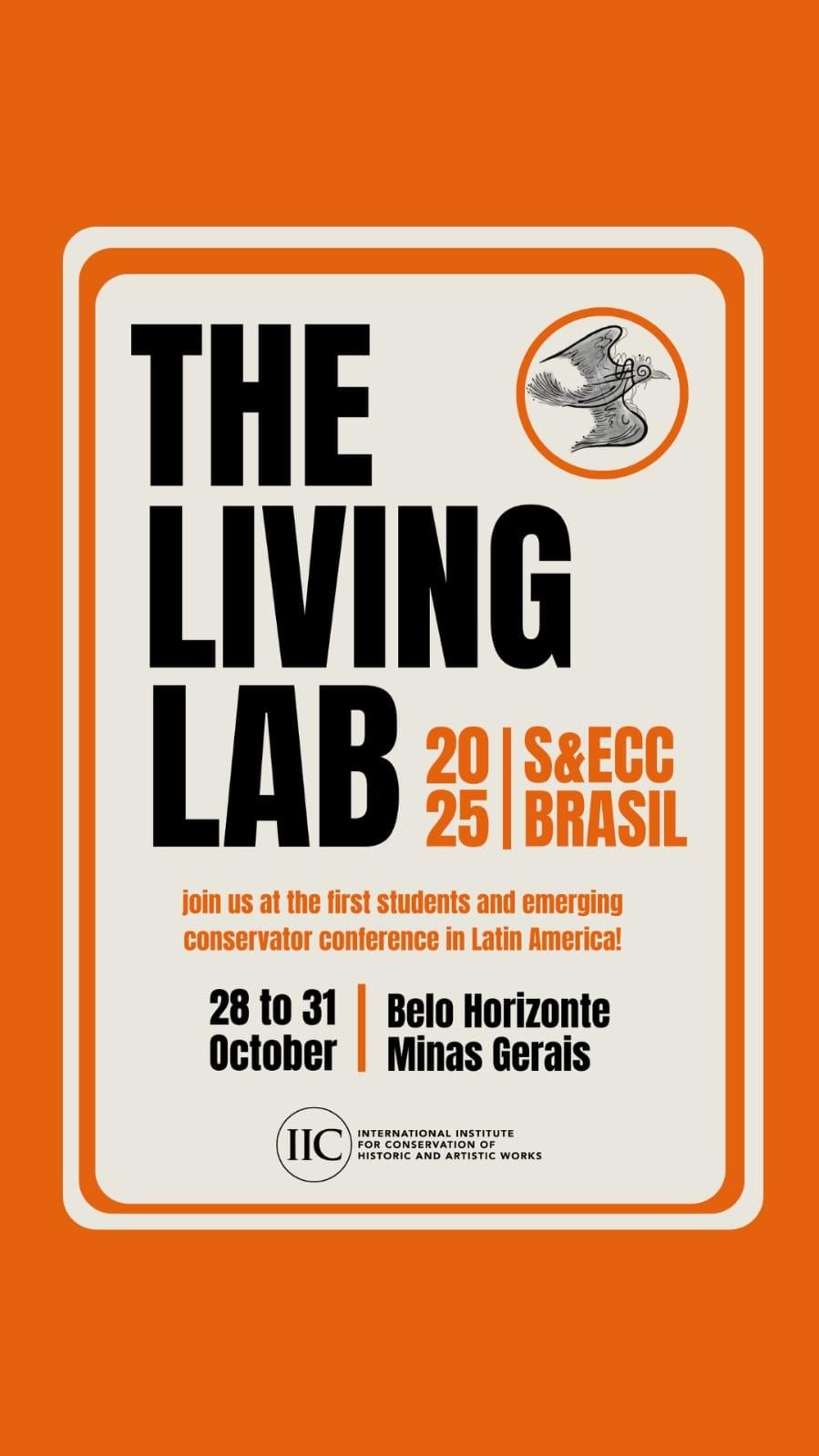
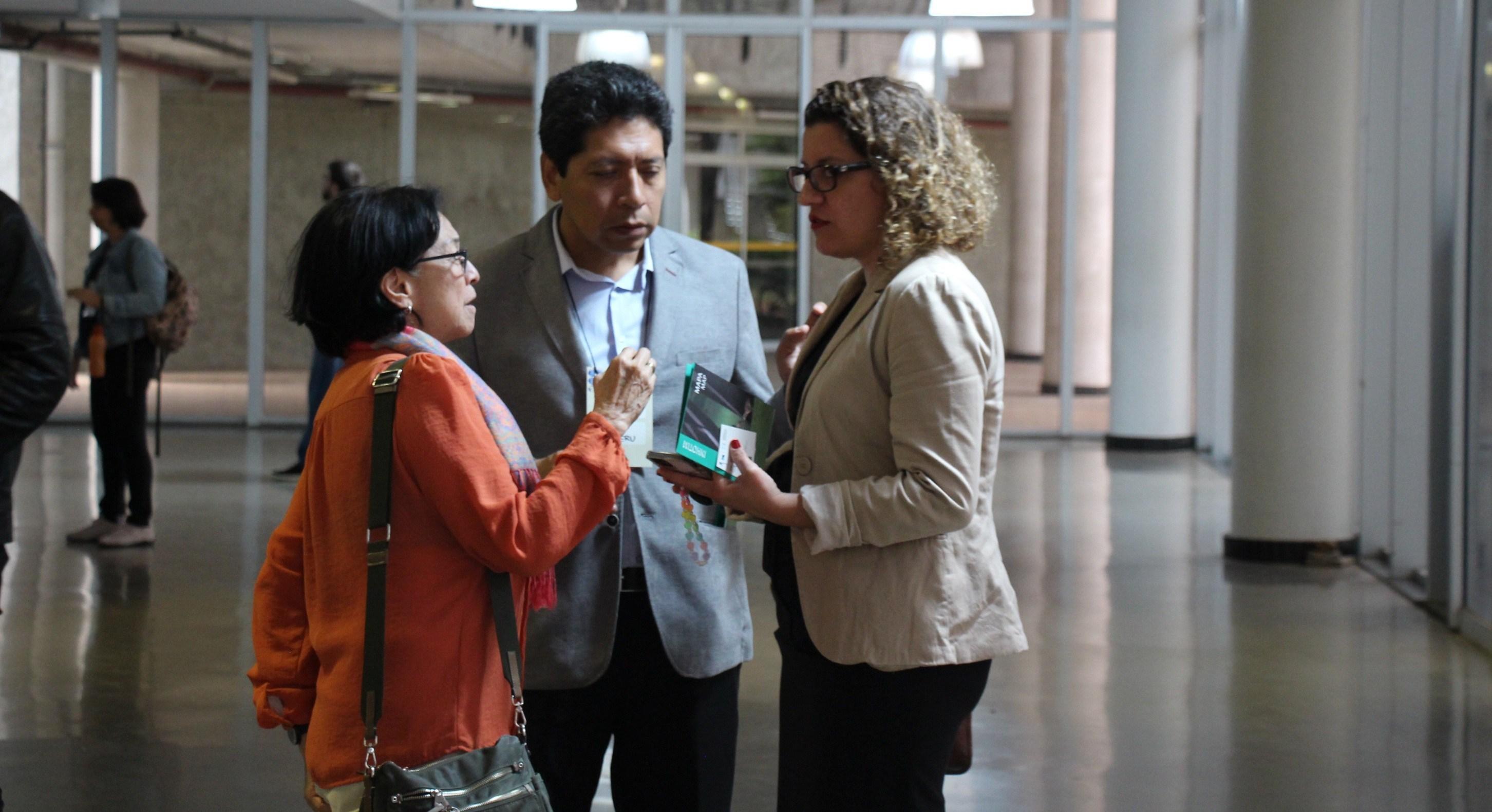
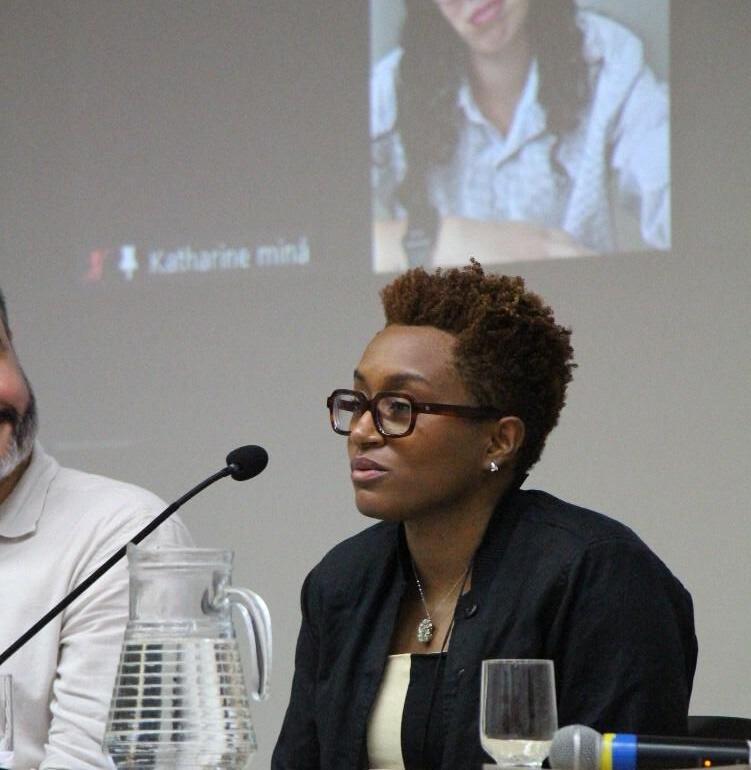
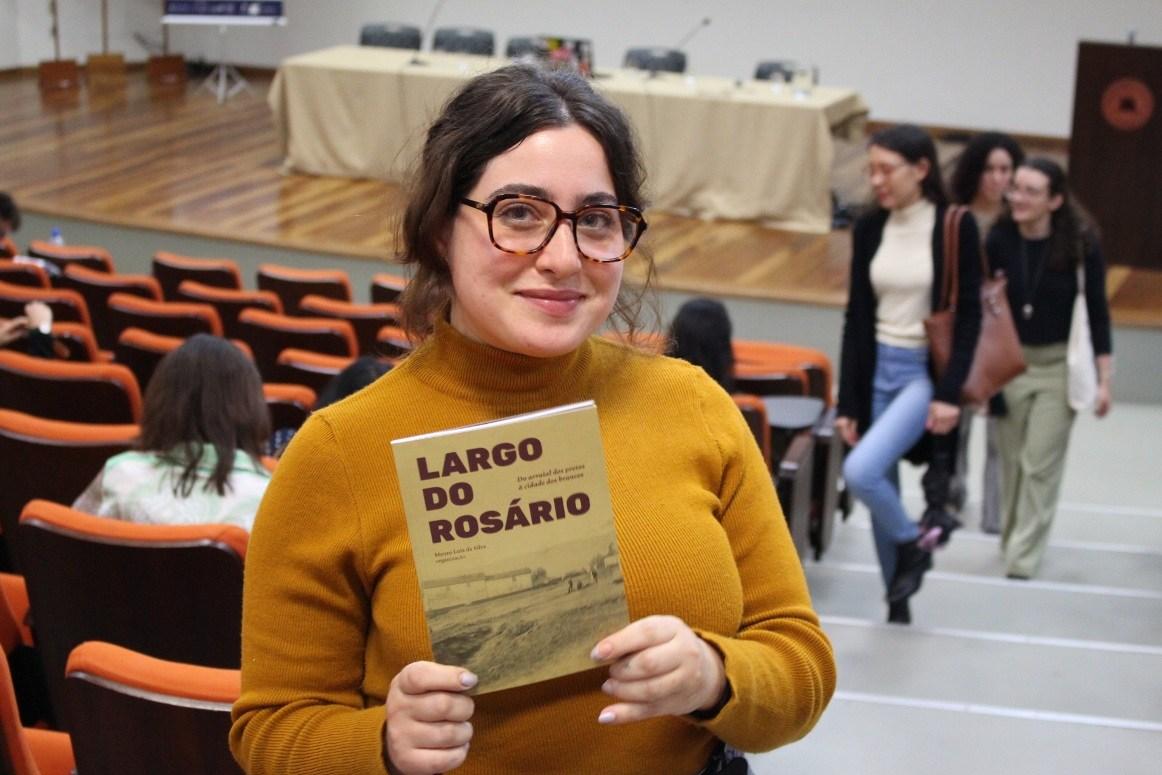
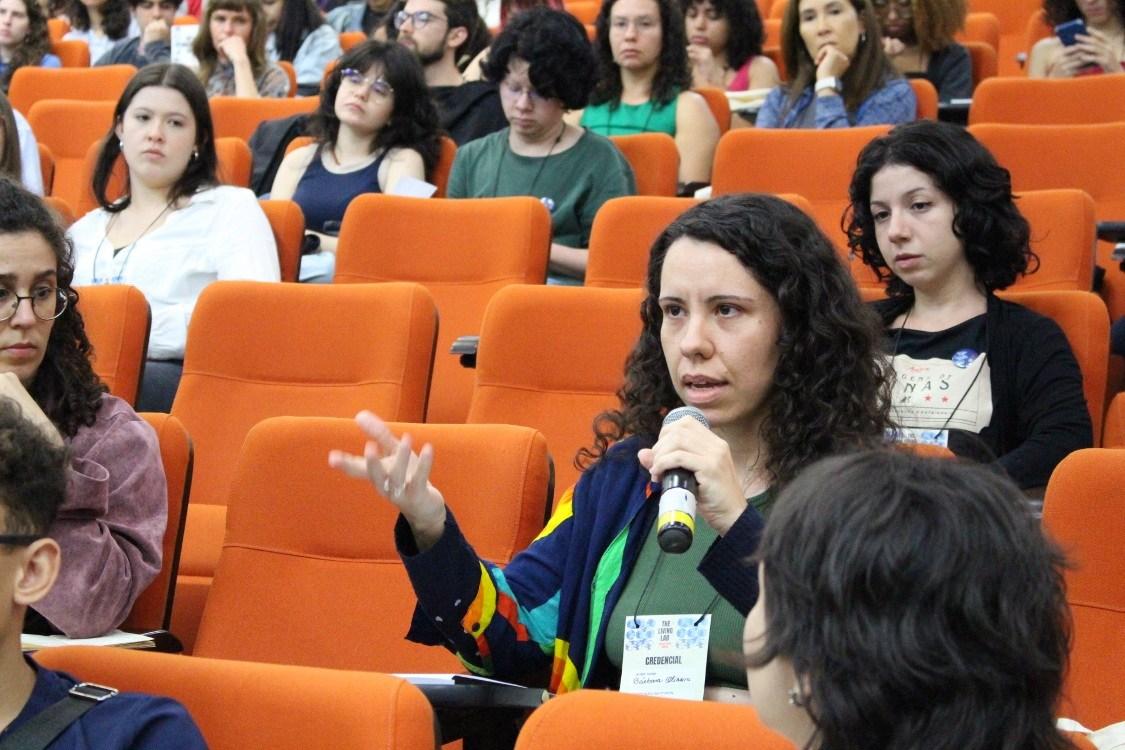
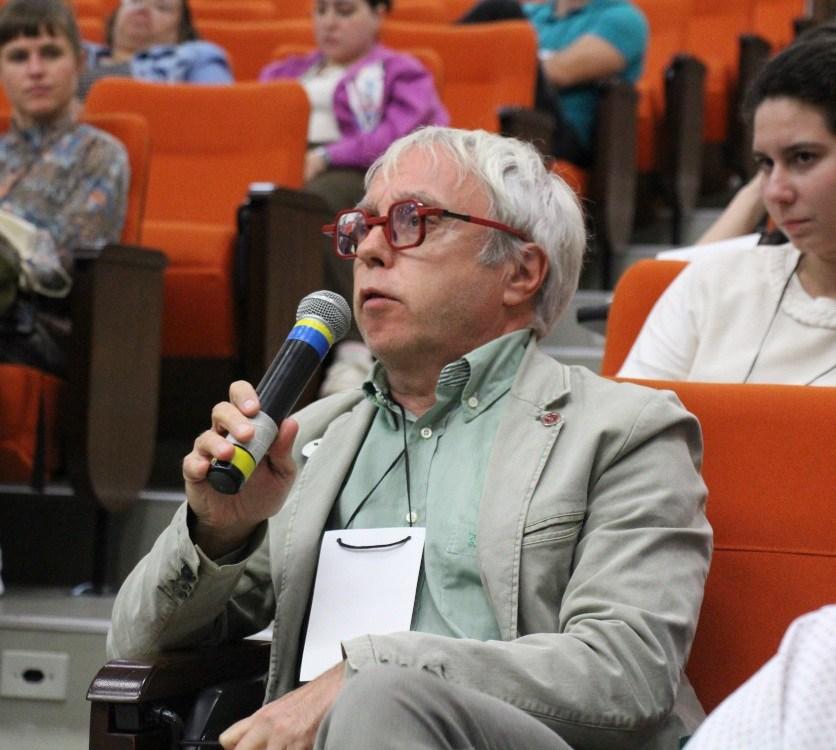
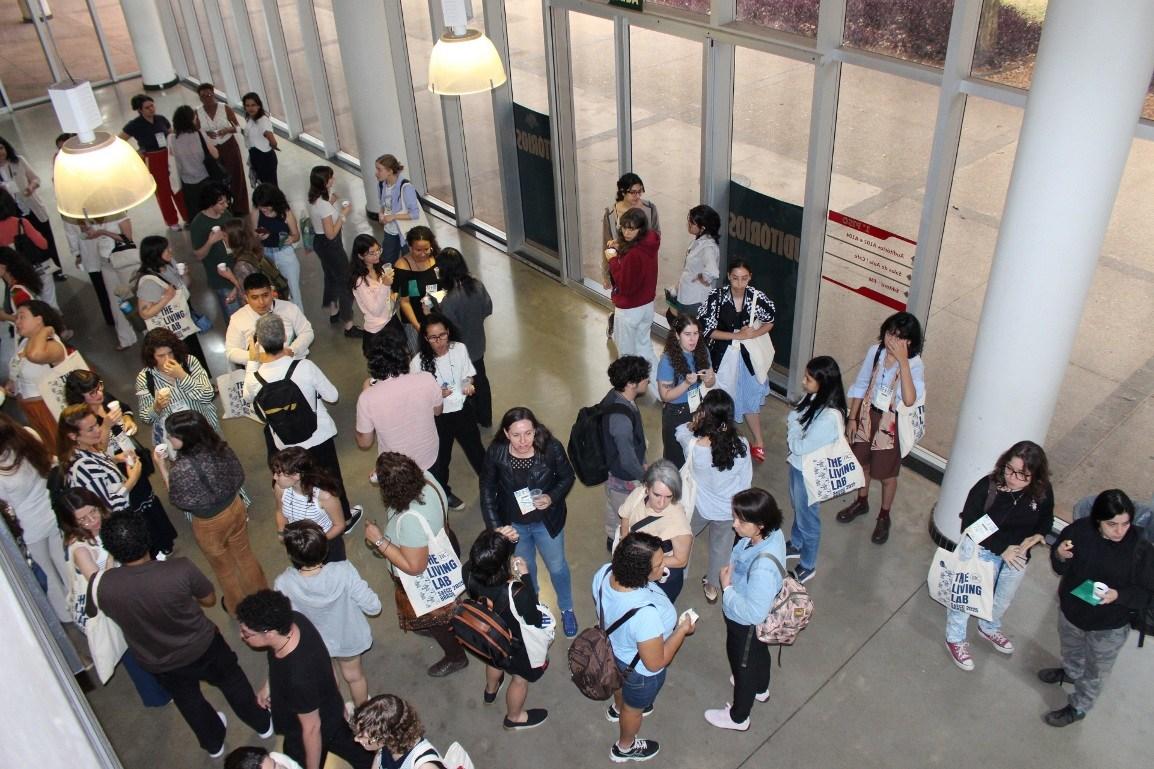
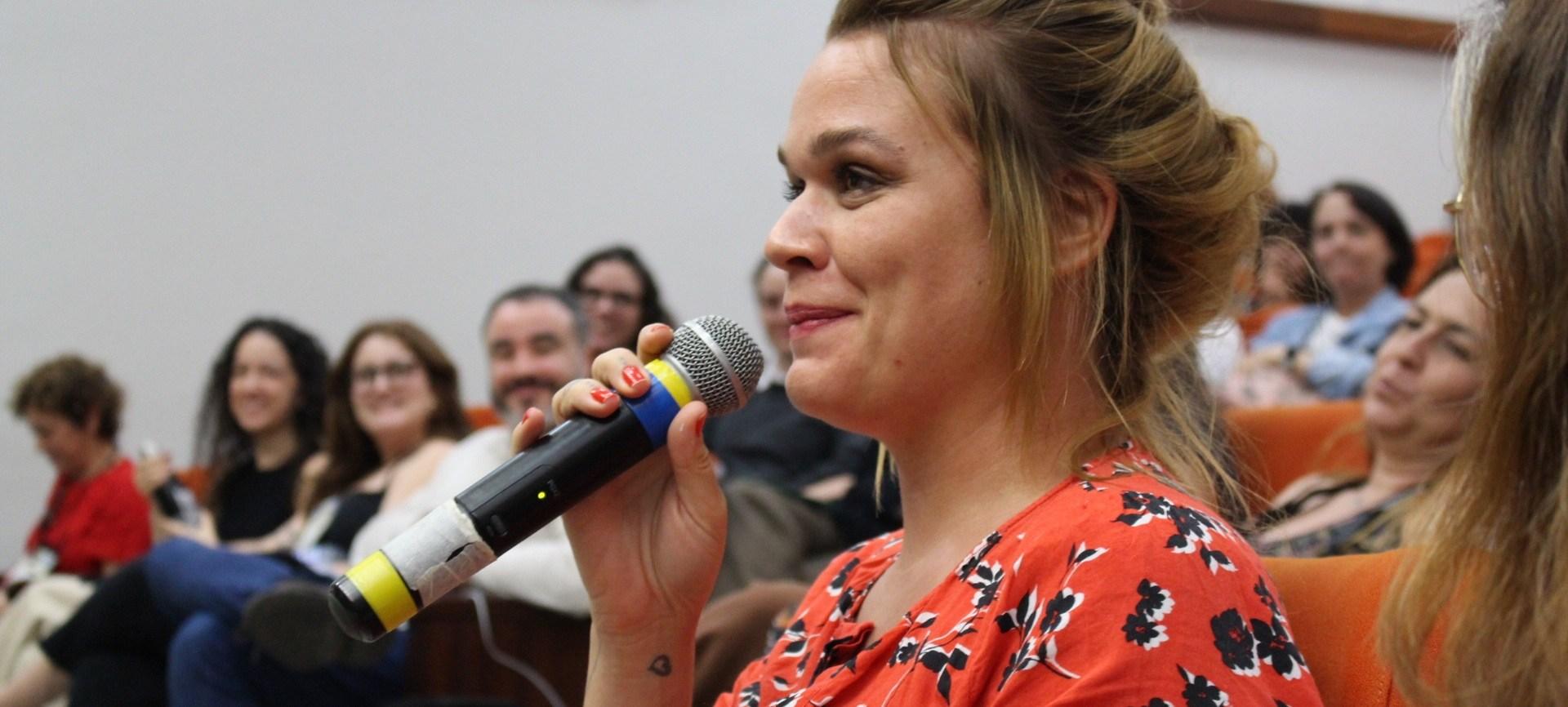
How S&ECC celebrated and explored the Latin American perspective
NiCContributing Staff
Sharra Grow, Editor in Chief news@iiconservation.org
Marina Herriges, Consultant for Reframing Conservation Through Sustainability marina.herriges@iiconservation.org
Alexandra Taylor, Book Reviews Coordinator and Associate Editor alexandra.taylor2@outlook.com
Ellie Sweetnam, Fellowship and Membership Programme Manager Ellie.Sweetnam@iiconservation.org
About NiC
Published six times a year, NewsinConservation(NiC) provides a platform for members of the conservation community to share the latest research, interviews, and reviews; to promote new events, products, and opportunities; and to call for papers, ideas, and involvement. NiCalso provides updates from the IIC Council and Regional Groups. NiCcontinues to evolve to better fit the needs and interests of our increasingly global conservation profession. Join IIC Today!
Submissions
For the June-July 2026 issue, editorial submissions due 1 May 2026. Advert artwork is due 15 May 2026 Submissions and queries to news@iiconservation.org
Click for more on article GUIDELINES and the NiC sponsor RATE CARD
Get in Touch
NewsinConservationis published by The International Institute for Conservation of Historic and Artistic Works, 3 Birdcage Walk, London SW1H 3JJ Website: iiconservation.org
Email: iic@iiconservation.org
ISSN 1995-2635
Cover Image
Disclaimer
Whilst every effort is made to ensure the accuracy, sufficiency and completeness of information contained in this publication, neither the IIC nor its Editors shall be liable to any party for any loss and/or damage arising from (i) any errors or omissions in such information and (ii) the use of, or reliance on, any method, product, instructions or ideas in this publication, in each case to the fullest extent permitted by law. The opinions stated in individual articles belong to the author(s) and do not necessarily reflect those of the IIC, its officers or Council. Information contained in this publication is strictly for educational purposes and aims to provide helpful information on the topics discussed. Any information relating to a product, method or treatment is not meant to be, nor should it be taken to be, an endorsement of such product, method or treatment.
Maldives among islands loosing heritage to climate change
The C Word podcast shortlisted for major Museums + Heritage Sector Impact Award
The Keepers of Black Photography
Update on heritage in Iran
New Michelangelo artworks?
12 Feature Articles
The Significance of Ancient Knowledge for Developing Sustainable Conservation: Using the Conservation of a Kang Table in the Beijing Palace Museum as an Example , by Yangfan Xie and co-authors Wang Na and Yun Zhang
Forgotten by Time in Transylvania: The need for modern -day conservation efforts to save an 18 th-century iconostasis, by Ioan Oprea
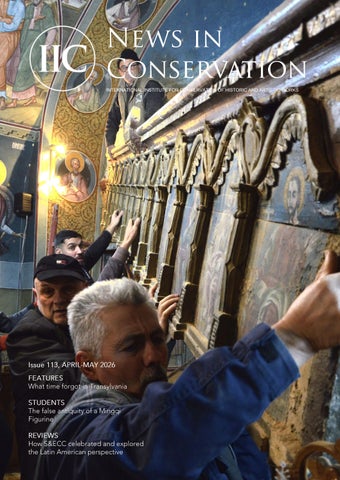
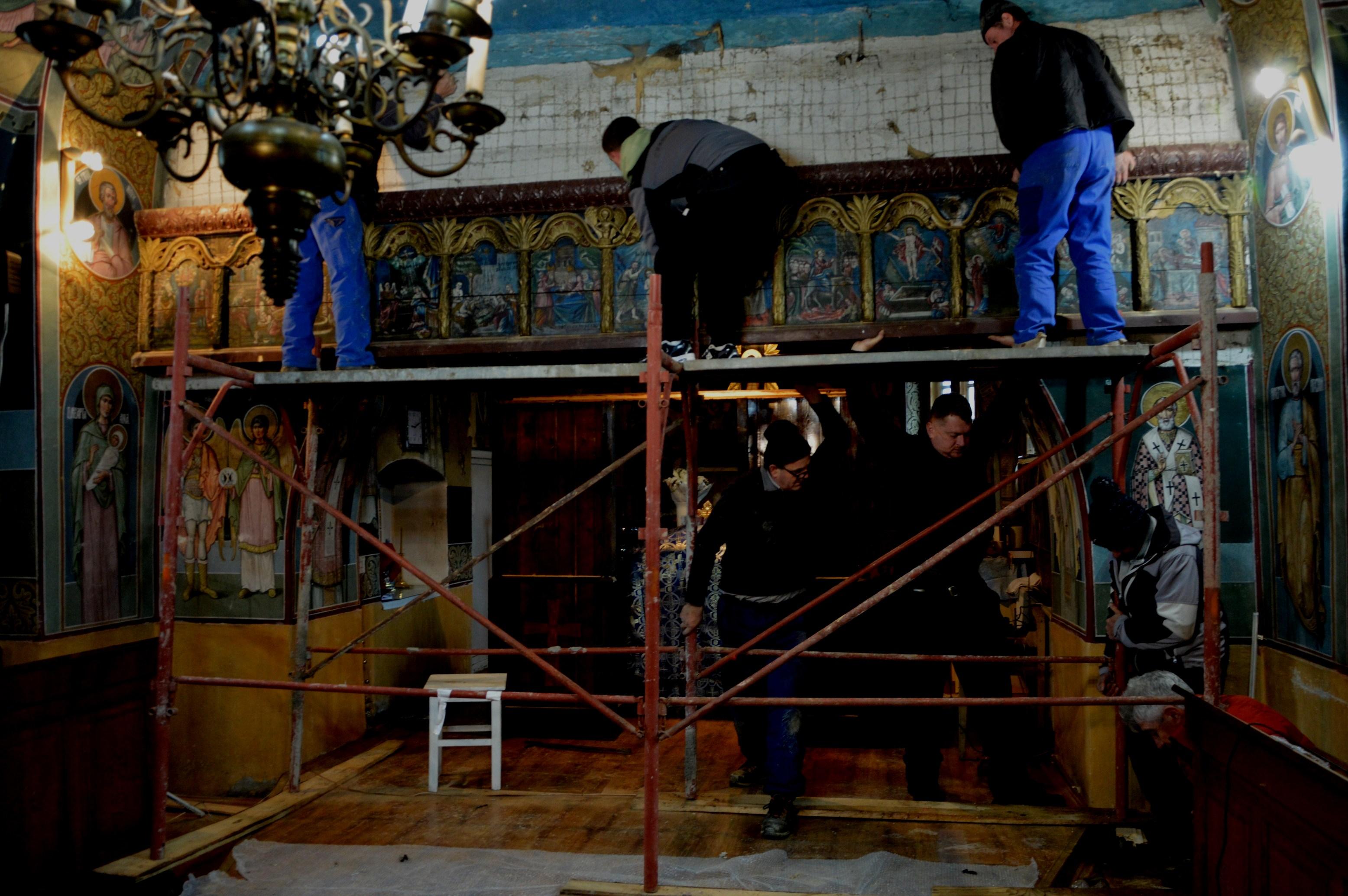
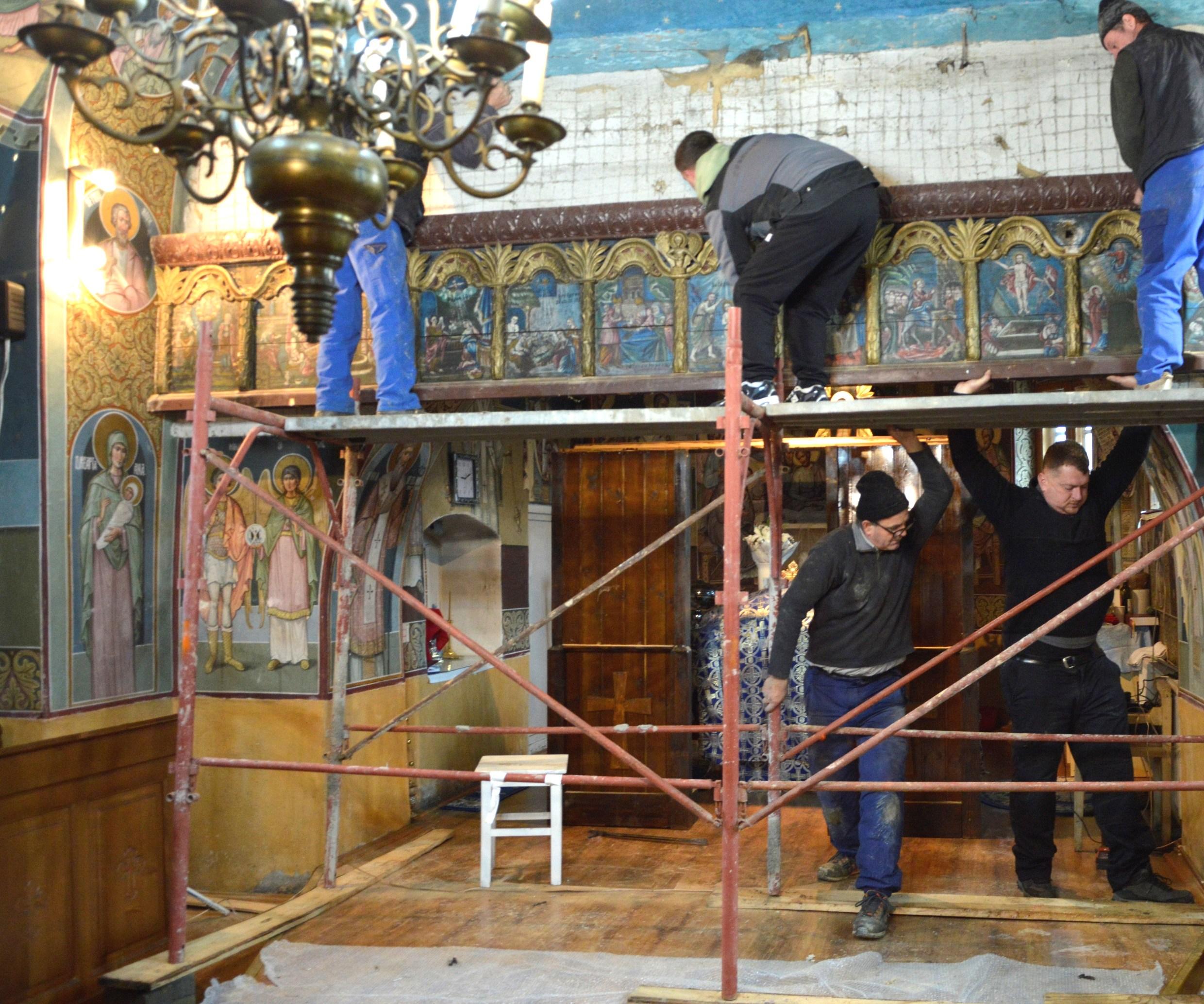
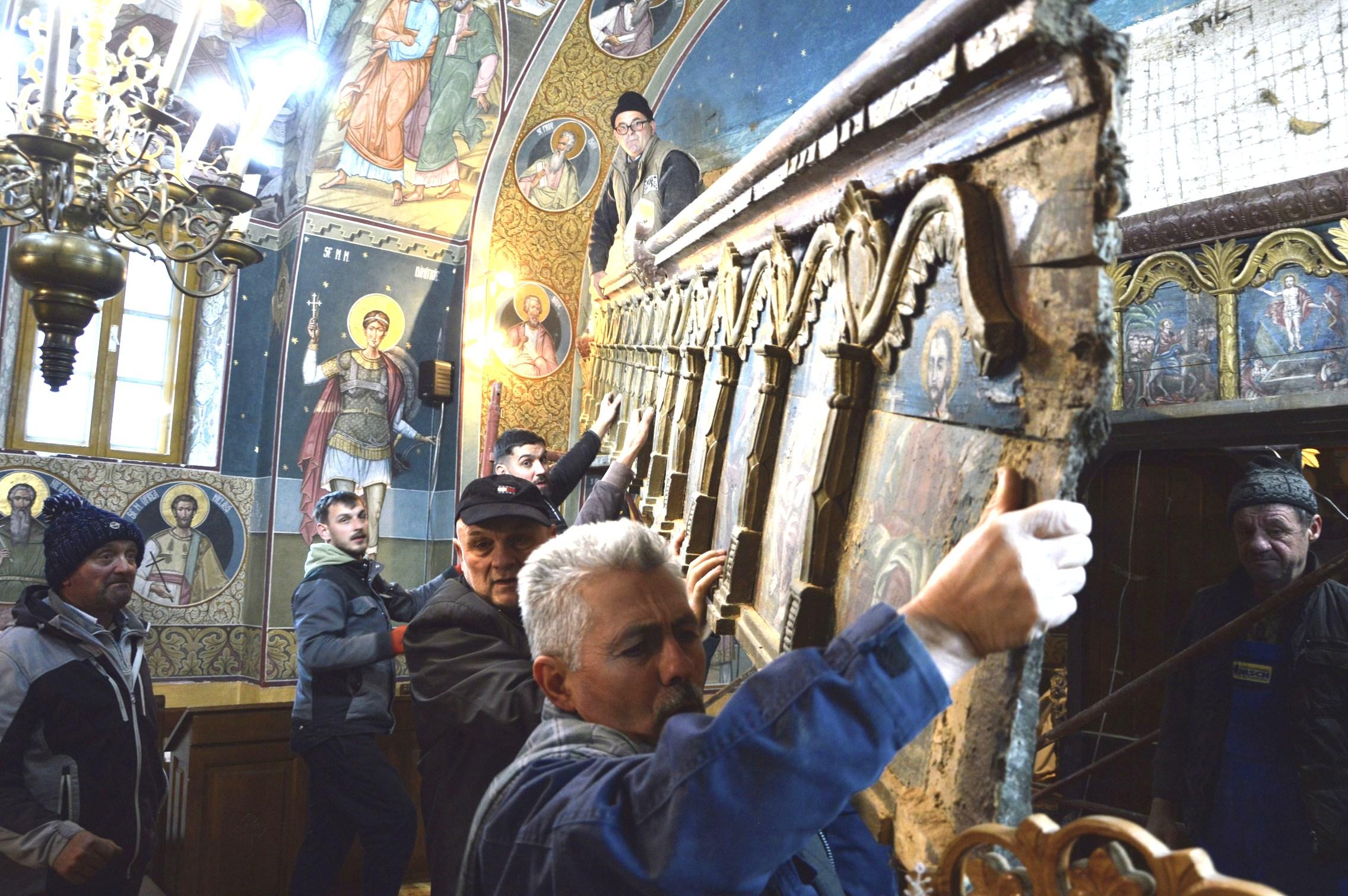
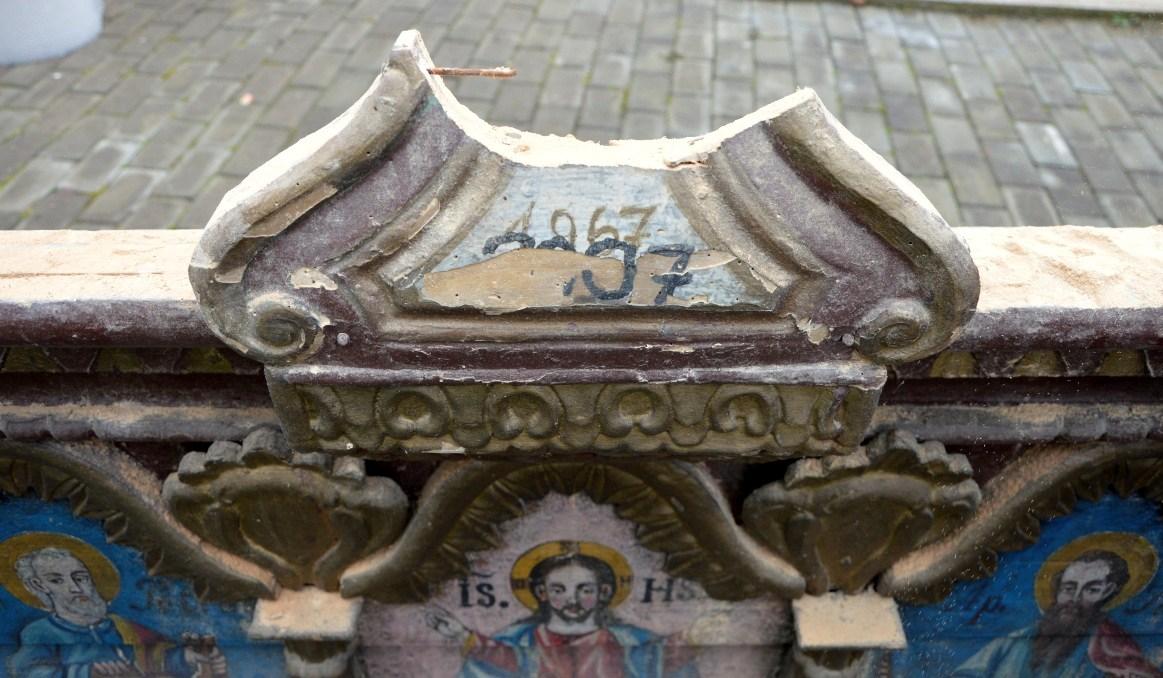
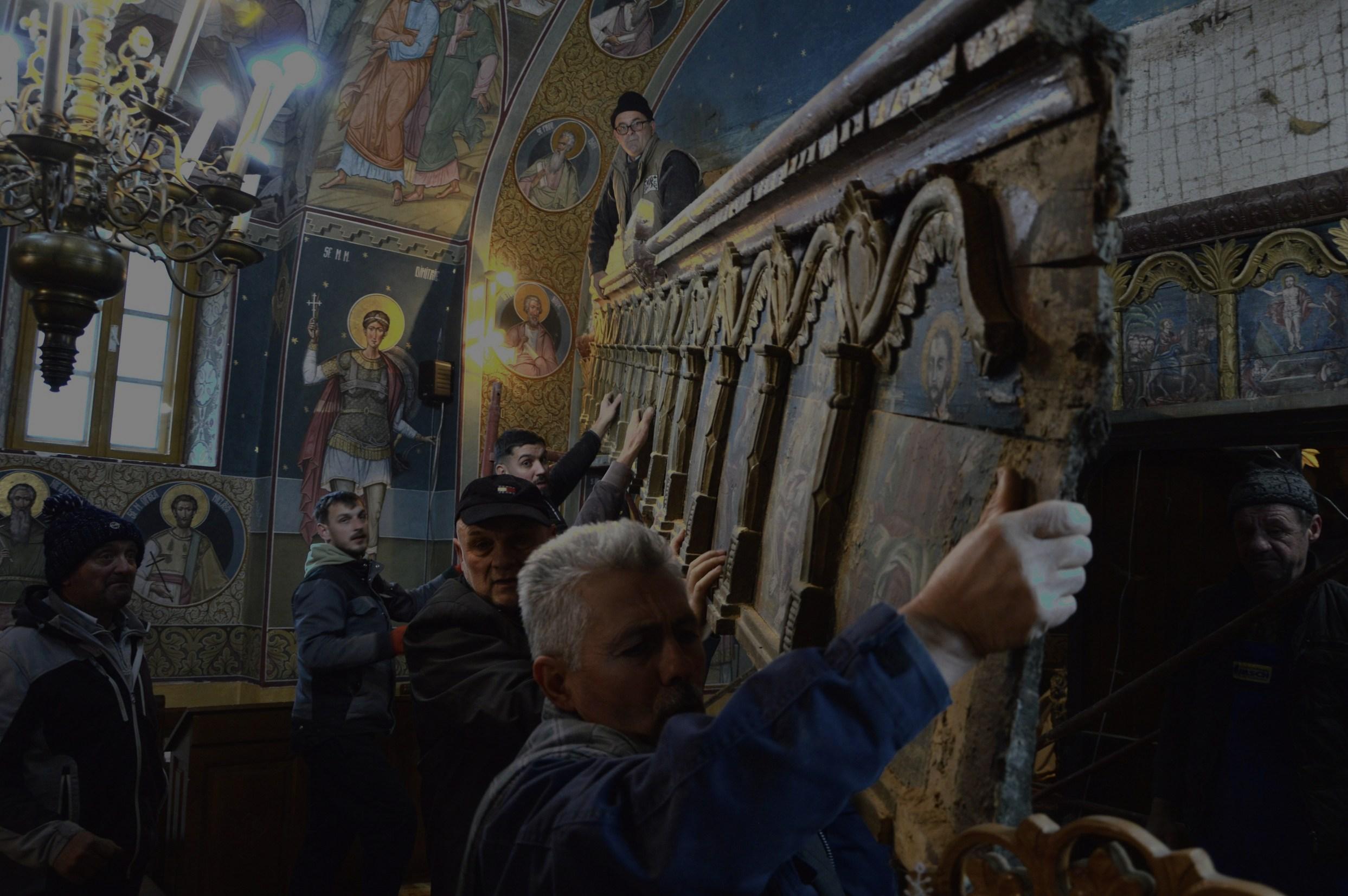
Front and back covers: The third stage of the iconostasis removal: dismantling the Apostles' Tier, located beneath the Crucifixion cross. (Story on p. 20)
26
IIC News
Registration is Open: IIC Congress Ghent 2026
IIC Membership Rates for 2026-27
Spotlight on Studies in Conservation Latest Articles , by Lucy Wrapson, Deputy Editor, Studies in Conservation
IGIIC Event Announcements
IIC Annual Review 2024 -2025
IIC Annual General Meeting 2026 Minutes
Fellowship Corner
In Memoriam Marco Grassi, by Rebecca Rushfield
38 Student & Emerging Conservator
Conserving What Changes: Navigating a Collection ’s Variability Through Epistemology , by Vanessa Magalhães Pinto
False Antiquity How Science Exposes Museum Objects: A Case Study of a Mingqi Figurine , by Zofia Pogoda
54 Book Reviews
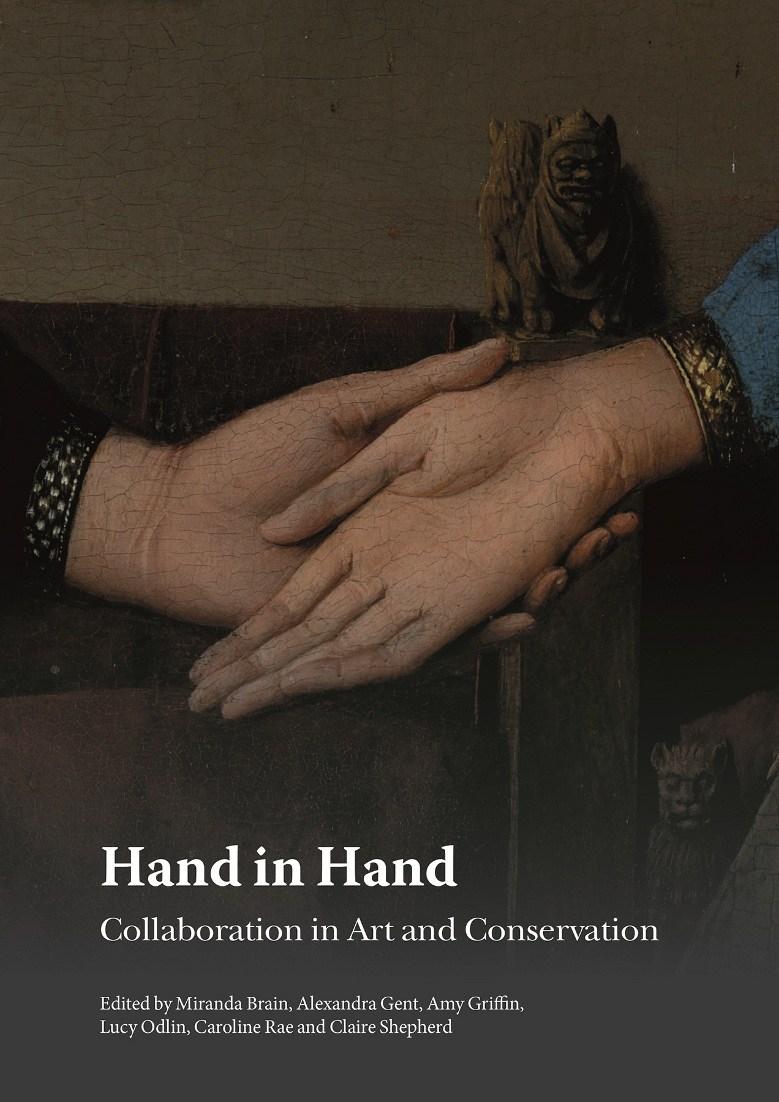
Hand in Hand: Collaboration in Art and Conservation, reviewed by Farideh Fekrsanati
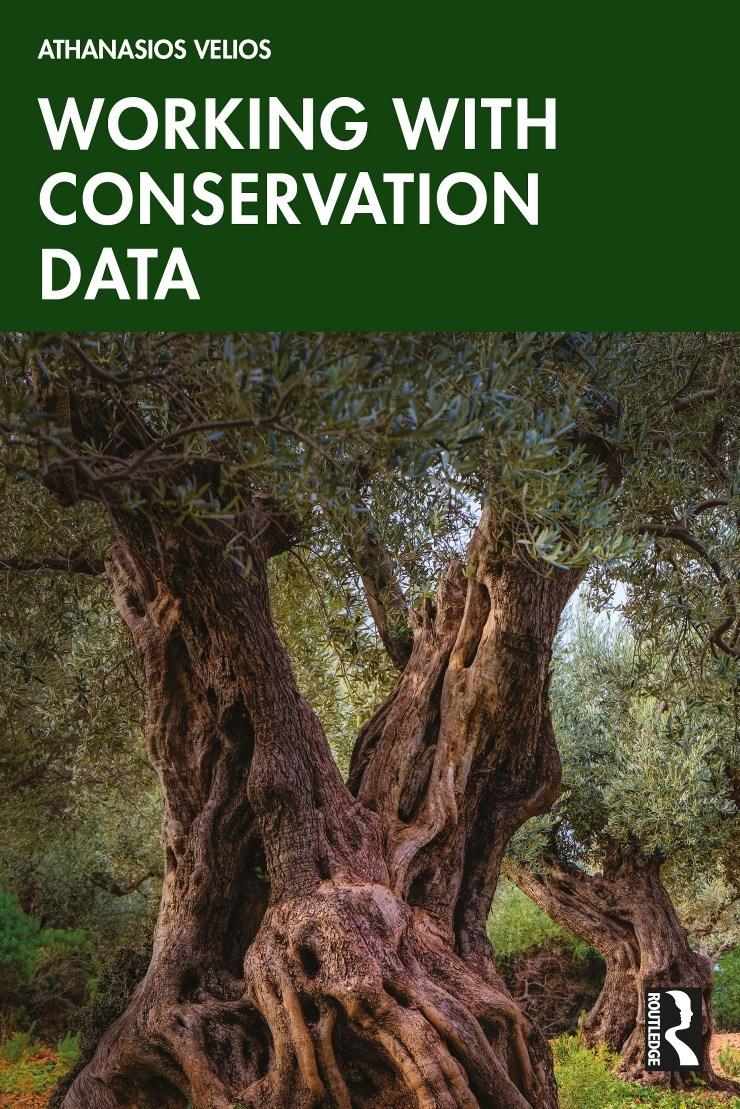
A Grammatica of Documentation: Reviewing Working with Conservation Data by Athanasios Velios, reviewed by Maria Franzon
60 Event Reviews
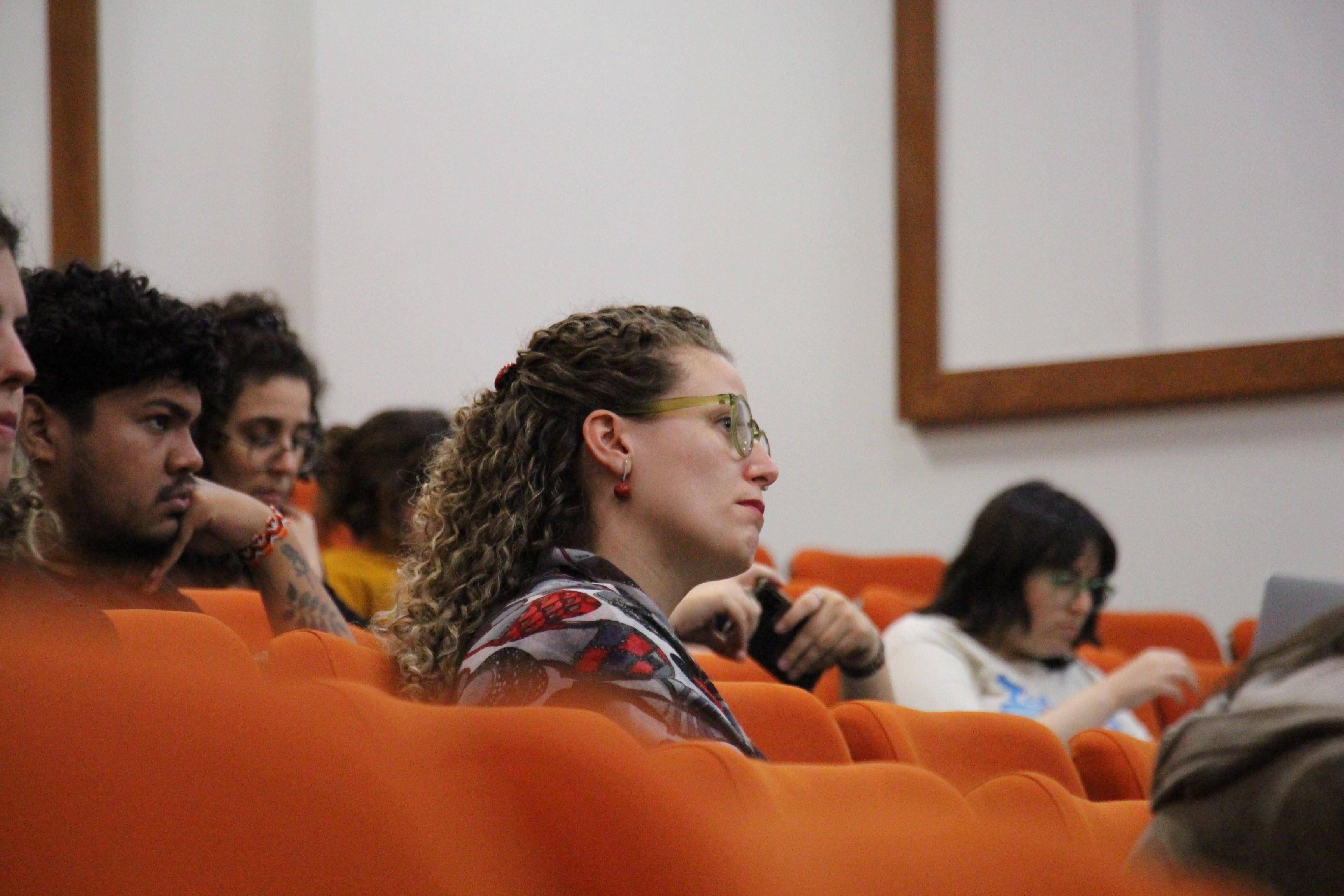
Reflections on S&ECC and the Future for Conservators, by Christina Cachia and Mariana Onofri
J Editor ’s Sounding Board
ust over a year ago, we began a fun mapping adventure, building the NiC Pin Map on which we chart the locations of our News in Conservation stories. The project was inaugurated with an article by Alexandra Taylor (which was fitting, as this project was her brainchild), recounting her road trip to a church in Scotland holding countless secrets from centuries past. You can read her article, All Roads Lead to Rosslyn, HERE
With each new issue, we pin the locations and links for place -specific articles. Terence Besaka took us to the National Museum of Cameroon to discuss the care of its collection, Zeljana Jurkovic wrote poetically on the vernacular architecture of the United Arab Emirates and what it can teach us about passive environmental control. Tomas Markevicius and his colleagues shared their research with us from a green conservation -focused symposium at the Lithuanian Academy of Sciences
If you haven ’t taken the opportunity to explore our interactive story Pin Map , there is no time like the present! And if your spot on the map is lacking in pins, then let this be the impetus for sharing your projects, research, and perspectives with News in Conservation .
Sharra Grow Editor -in-Chief, News in Conservation
News in Brief
MALDIVES AMONG ISLAN DS LOOSING HERITAGE TO CLIMATE CHANGE
Small island nations are increasingly fighting to protect their cultural heritage from the accelerating impacts of climate change, which is now recognized as a serious and systemic threat. According to UNESCO, climate change endangers not only physical heritage sites but also intangible cultural elements such as traditions, knowledge systems, and community identity especially when displacement disrupts ways of life.
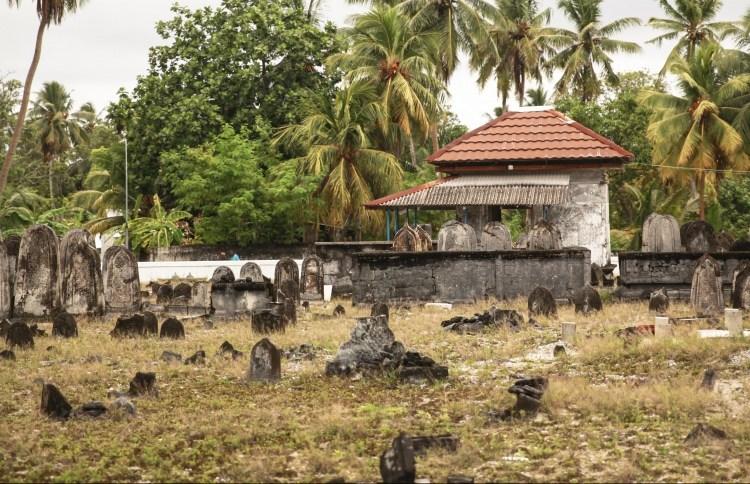
Low -lying island states are particularly vulnerable. Rising sea levels, coastal erosion, and extreme weather are already damaging or destroying culturally significant locations. In the Maldives, for example, the 900year-old Koagannu Cemetery sits just 50 meters from the shoreline and faces ongoing erosion from the encroaching ocean. Local authorities and communities have implemented emergency measures such as sandbags, seawalls, and beach nourishment to slow the damage, but these are temporary solutions to a growing problem.
The crisis extends beyond physical sites to everyday cultural practices. Fishing, a central part of Maldivian identity, is being disrupted by warming ocean temperatures that are altering fish migration patterns. Tuna, which accounts for the vast majority of the country ’s catch, is moving into deeper waters, forcing communities to adapt both economically and culturally. In response, the government is investing in new technologies, infrastructure, and diversification strategies to sustain this vital tradition.
A similar situation is unfolding in Pacific island nations such as Palau, where cultural heritage is deeply tied to land, coastlines, and ecosystems. Coastal erosion threatens historically significant sites like ancient villages and stone structures. In response, the government is working with local communities to identify and protect key heritage locations through national adaptation planning. Importantly, these efforts emphasize the value of traditional knowledge, encouraging a
revival of practices such as taro cultivation, which supports both food security and cultural continuity.
Internationally, the issue of cultural heritage loss has begun to gain recognition within climate policy frameworks. The Paris Agreement ’s Global Goal on Adaptation now includes cultural heritage as a priority area, with specific indicators aimed at preserving traditions and sites using Indigenous and local knowledge. While this marks progress, significant challenges remain particularly around funding.
Financial support for adaptation is far below what is needed. Estimates suggest developing countries will require hundreds of billions of dollars annually by 2035, yet current funding levels are only a fraction of that. Without sufficient investment, many planned measures to protect cultural heritage may never be fully implemented.
Ultimately, small island nations are on the front lines of both climate change and cultural loss. As rising seas force some communities to relocate, they risk losing not just land but also the cultural connections embedded in those places. The challenge is both technical and deeply human: deciding what aspects of heritage can and should be preserved, and how to do so in the face of rapid environmental change.
“Small island nations are on the front lines of both climate change and cultural loss. ”
While the problem is global, its effects are most acute in these vulnerable regions. The strategies developed by island nations combining scientific innovation, traditional knowledge, and international advocacy may ultimately serve as a model for protecting cultural heritage worldwide in an era of climate crisis.
THE C WORD PODCAST SHORTLISTED FOR MAJOR MUSEUMS + HERITAGE SECTOR IMPACT AWARD
The C Word: The Conservators ’ Podcast has been shortlisted for the Museums + Heritage Sector Impact Award 2026, a significant global award celebrating nominees ’ contribution to museums, galleries, and heritage.
The podcast created by conservators for the conservation community sits alongside major national organisations and sectorleading initiatives on this year ’s shortlist, reflecting its sustained and wide -reaching impact on the profession.
With over 250,000 downloads, listeners in more than 120 countries, and 144 episodes produced across nine years, The C Word has become a vital platform for discussion, debate, and professional reflection within conservation.
The nomination recognises the podcast ’s contribution to driving positive change across the museums and heritage sector particularly in areas such as workforce wellbeing, equitable work practices, diversity and representation, and sector transparency.
Through open and often challenging conversations, the podcast has
helped raise awareness of issues such as unpaid internships and precarious labour; support professional development and CPD across career stages; amplify underrepresented voices within conservation; encourage greater visibility and public engagement for conservators; and foster a culture of honesty, reflection, and accountability.
By bringing conversations traditionally held behind closed doors into the public sphere, The C Word has played a key role in reshaping how conservation is discussed within institutions, classrooms, and across the wider sector.
“We started the podcast to bring conservation conversations out of the staff room and into people ’s ears. Being recognised at this level especially alongside national institutions is incredibly meaningful for a small, independent, and largely volunteer -run project. ”
The Museums + Heritage Awards celebrate innovation and impact across the global sector, with this year’s shortlist spanning organisations from the UK and internationally. Winners will be announced at a ceremony in London on 13 May 2026.
For more information about The C Word podcast, visit: https://thecword.show/
“Archives are not neutral or purely institutional spaces. Instead, they are deeply shaped by power, history, and lived experience. ”
THE KEEPERS OF BLACK PHOTOGRAPHY
Co -organized by Laylah Amatullah Barrayn and Professor Emilie Boone, NYU Accra (Ghana) hosted the symposium, To Collect & Collate: The Keepers of Black Photography , in March.
The three -day event brought together artists, scholars, archivists, and community practitioners, to explore what it means to care for, interpret, and sustain Black photographic archives within a decolonial and community -centered framework.
A central theme of the symposium was the idea that archives are not neutral or purely institutional spaces. Instead, they are deeply shaped by power, history, and
lived experience. Organizers emphasized that traditional understandings of archives often tied to museums or academic institutions can create distance from the communities whose histories they contain. In contrast, participants argued for a broader view: archives also exist in homes, personal collections, and community networks, where memory is actively preserved and transmitted across generations.
This reframing led to a critical reconsideration of language. Early plans for the event described archivists as “unsung, ” but this term was rejected because it implied invisibility from an external perspective. In reality, many of these keepers are already well known and valued within their own communities. This shift reflects a larger effort to
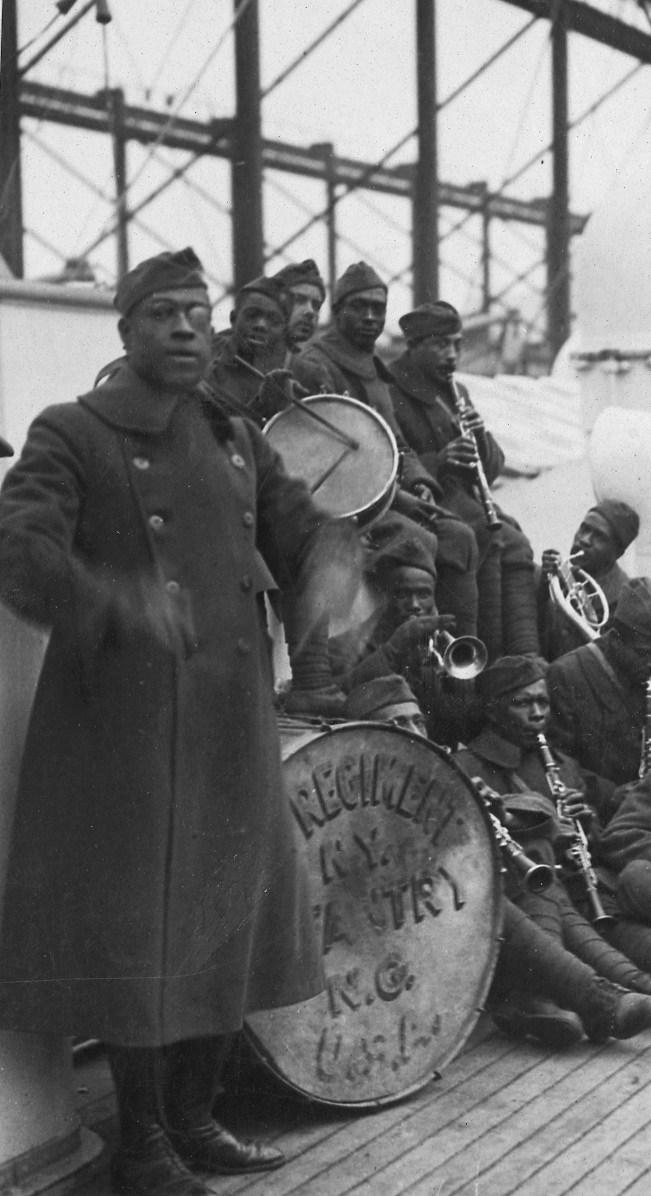
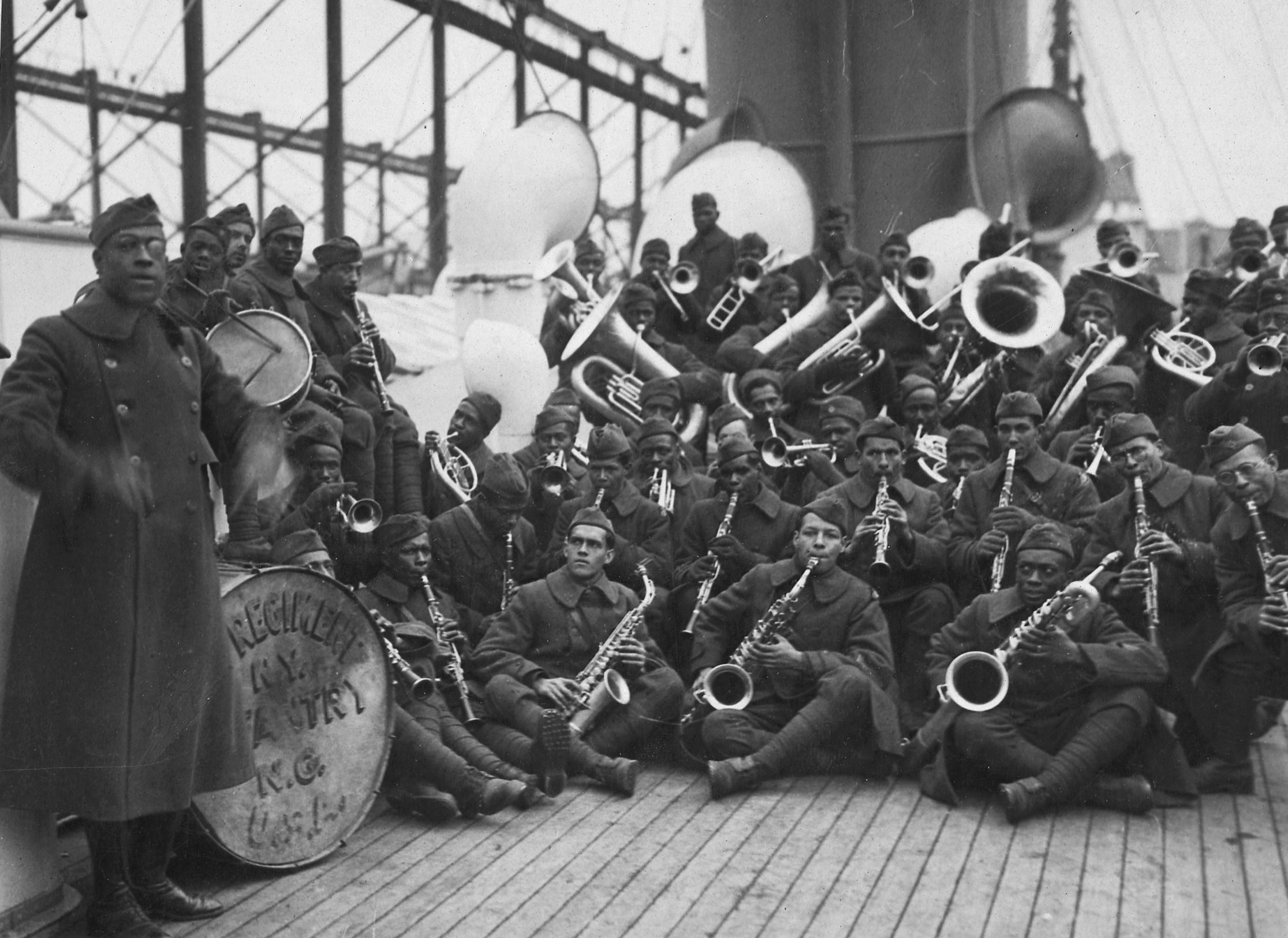
African American Jazz Band and Leader Back with the African American 15 th New York National Guard (later known as the 369th Infantry Regiment or “Harlem Hellfighters ”. This was the first regiment formed in New York to fight in World War I. Image by Underwood & Underwood (12 February 1919). Public Domain made available through the US National Archives and Records Administration
Left: The C Word: The Conservator ’s Podcast logo. Courtesy of The C Word staff.
challenge dominant narratives and recognize existing systems of knowledge and care that have long operated outside formal institutions.
The symposium also highlighted the concept of “memory work ” as essential to the survival of people of African descent. Photography, in this context, is both a tool of documentation and a site of tension. As one speaker explained, photographic archives can be “liberatory and violent ” at the same time: they preserve histories and identities, but they also reflect the ways photography has historically been used to control, categorize, or misrepresent Black subjects.
Participants explored how to navigate these complexities through ethical archival practices.
Questions of ownership, access, and compensation were central. For example, discussions addressed whether archivists especially those working outside major institutions should be financially supported, and how to ensure that communities retain agency over their own histories. The balance between accessibility and protection emerged as a key challenge: making archives widely available while respecting cultural sensitivities and preventing exploitation.
Another important focus was the role of communitybased institutions and new archival models. Initiatives such as independent archives and cultural centers were presented as vital spaces for preserving Black visual history on their own terms. These efforts often combine scholarly research with grassroots
engagement, ensuring that archives remain relevant and responsive to the communities they represent. Ultimately, caring for Black photographic archives is not just about preservation but about redefining the archive itself. It involves shifting authority away from traditional gatekeepers and recognizing the distributed, lived nature of memory. By centering community knowledge, ethical responsibility, and historical awareness, these keepers are reshaping how photographic history is understood and maintained.
In this way, the symposium reflects a broader movement within photography and cultural heritage: one that challenges institutional norms, foregrounds marginalized voices, and treats archives as dynamic, living practices rather than as static repositories of the past.
UPDATE ON HERITAGE I N IRAN
The ongoing conflict between Iran, the United States, and Israel has caused extensive and deeply concerning damage to Iran ’s cultural heritage, affecting historic monuments, museums, and UNESCO World Heritage sites. Reports from multiple sources highlight that the destruction is both widespread and, in many cases, indirect caused by nearby explosions, shockwaves, and infrastructure strikes rather than deliberate targeting alone.
One of the most prominent incidents involves a 17thcentury Safavid -era palace in Isfahan, damaged during strikes aimed at nearby government buildings. The blast effects harmed the interior of Chehel Sotoun Palace, a key component of a UNESCO -listed Persian garden complex, as well as nearby historic structures such as Ali Qapu Palace and the Masjed -e Jameh
(mosque). These sites are central to Iran ’s architectural and artistic legacy, and even limited structural damage can have long -term conservation consequences.
More broadly, the scale of destruction is significant. Iranian officials report that at least 120 cultural sites including museums, palaces, and historic buildings have been damaged across the country. Independent tracking projects by archaeologists have identified dozens of confirmed cases, though experts stress that the true number is likely higher due to restricted access and ongoing conflict. Earlier estimates suggested at least 56 sites had already been affected in the initial weeks of the war.
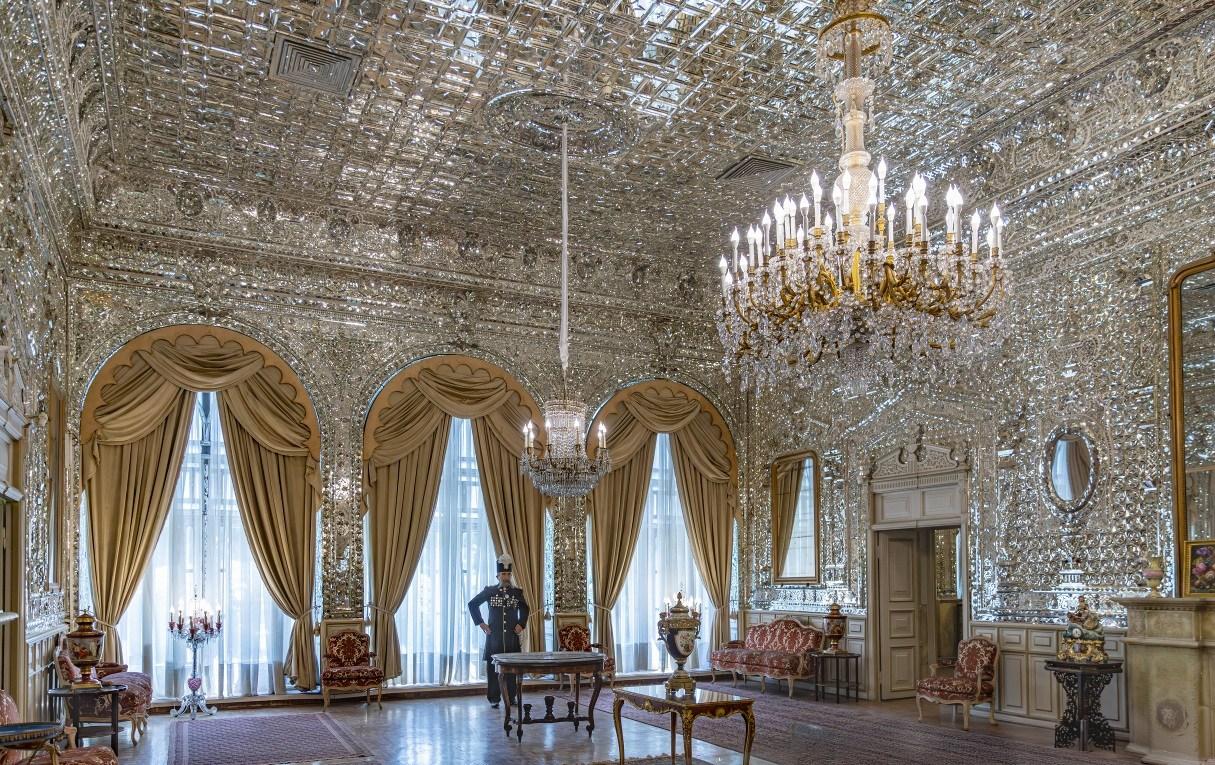
Tehran has also seen major heritage impacts. The Golestan Palace, Iran ’s only UNESCO -listed site in the capital, suffered shattered windows, damaged mirrorwork, and structural stress from nearby airstrikes. Other sites, including Saadabad Palace and historic museums, have also been hit or compromised. In some cases, entire structures such as a Safavid -era governor ’s palace in Isfahan have reportedly been destroyed.
Beyond physical damage, the conflict has disrupted efforts to document and protect heritage. Internet shutdowns within Iran have limited the ability of international organizations and researchers to assess damage in real time, complicating emergency conservation responses. Meanwhile, UNESCO and other heritage bodies have issued urgent warnings, emphasizing that even indirect damage to protected sites may violate international conventions safeguarding cultural property during armed conflict.
The broader implications extend beyond Iran. Cultural heritage experts warn that the destruction represents an irreversible loss not only for the country but for global history. Iran contains tens of thousands of registered historic sites spanning millennia (such as the Shanidar Cave featured in Issue 111 of NiC , p. 8 -15), and many are located near modern infrastructure or strategic targets, increasing their vulnerability in contemporary warfare.
Overall, the damage underscores how modern conflict endangers cultural heritage on a large scale. Even when not directly targeted, historic sites remain highly susceptible to nearby military activity, raising urgent questions about the effectiveness of international protections and the long -term preservation of shared human history.
NEW MICHELANGELO ARTWORKS?
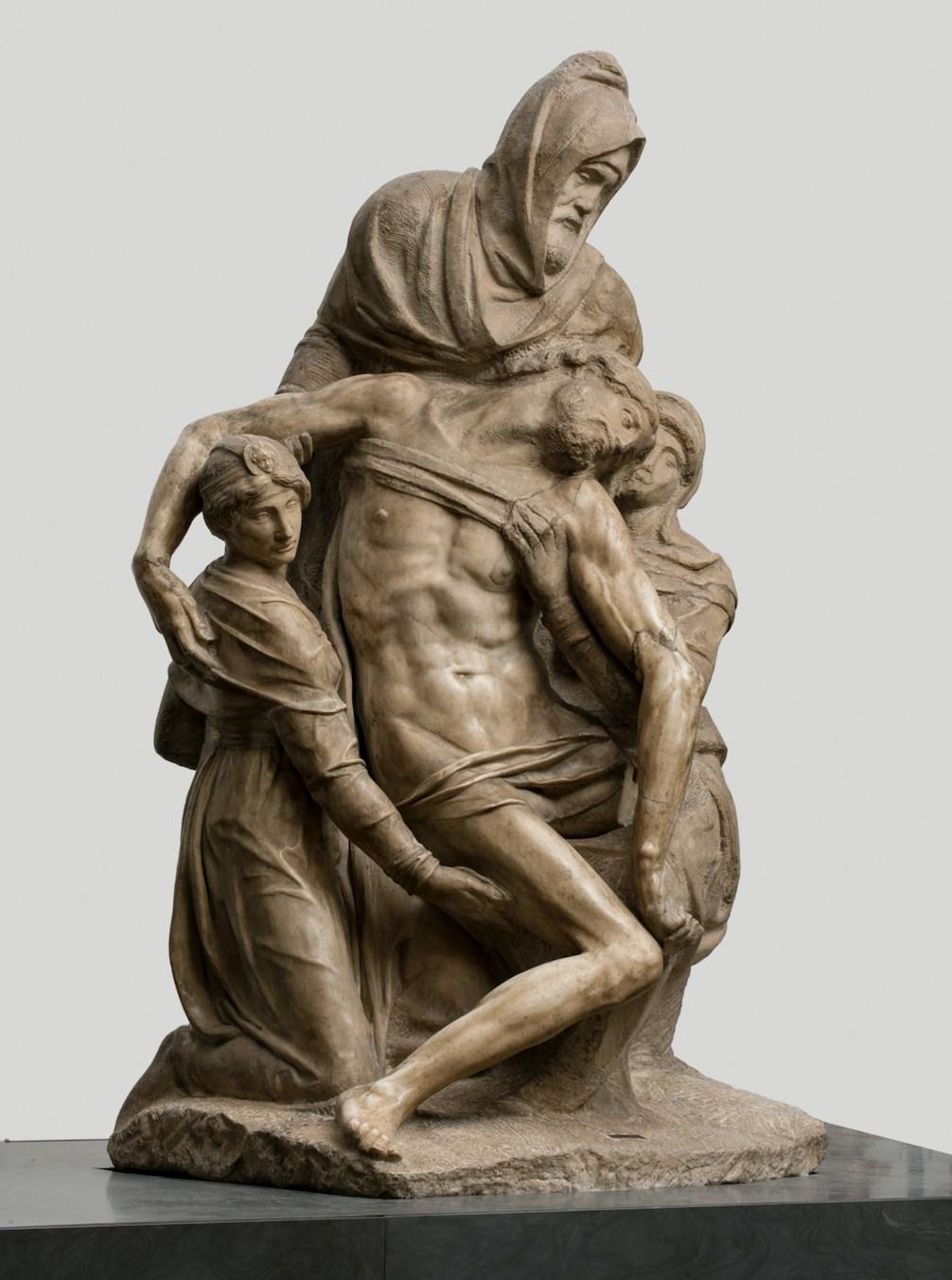
The Michelangelo Buonarroti canon may still be expanding more than 450 years after his death, as two newly proposed attributions a painting and a sculpture have stirred excitement and debate in the art world.
The first concerns a painting known as the Spirituali Pietà , depicting the Virgin Mary holding Christ. Initially cataloged as the work of an anonymous 16th –17th century artist, it was purchased by a private collector who noticed unusual markings and sent it for scientific analysis. Researchers at the Royal Institute for Cultural Heritage in Belgium dated the painting to between 1520 and 1580, aligning with Michelangelo ’s lifetime. Pigment analysis further supported the attribution: materials such as cochineal red and smalt blue were con- sistent with those used during the Renaissance and even with Michelangelo ’s known works, including the Sistine Chapel ceiling.
Technical imaging also revealed monograms embedded within the original paint layer, indicating they were not later additions. Stylistic comparisons such as cross -hatched brushwork and anatomical details suggest parallels with known Michelangelo compositions. Scholars involved in the study argue the painting may represent an important transitional step toward his later sculptural works, drawing
Michelangelo ’s Bandini Pieta/ Wikimedia Commons . Licensed under CC BY -SA 4.0
Left: Mirror Hall in Golestan Palace, Tehran, Iran (2024) Image taken before the 2026 damage. Image by
More News
LA MUSEUMS AND BIZOT GREEN PROTOCOL
A group of leading Los Angeles art institutions has announced a joint commitment to climate action through the adoption of the Bizot Green Protocol, a set of sustainability guidelines designed to reduce the environmental impact of museums while protecting artworks and cultural collections.
LACMA
comparison to his Bandini Pietà , though such claims still require broader scholarly consensus.
The second attribution is more controversial. An independent Italian researcher, Valentina Salerno, has proposed that a marble bust of Christ housed in the Basilica of St. Agnes Outside the Walls is also by Michelangelo. Her argument is based not on stylistic analysis but on a decade of archival research, including wills, inventories, and correspondence. These documents suggest that some of Michelangelo ’s works were deliberately hidden after his death, possibly to keep them from unwanted heirs and to preserve them for future generations.
Salerno ’s theory challenges the long -held belief that Michelangelo destroyed many of his late works.
Instead, she argues that his students safeguarded them in secret locations, dispersing them over time potentially explaining how previously unknown works might surface in unexpected places like churches. However, the bust attribution remains unverified and contentious. Unlike the painting, it has not undergone scientific testing, and experts have yet to weigh in formally.
Together, these claims reflect a broader trend of renewed interest in Michelangelo, fueled in part by recent high -profile discoveries and sales such as a preparatory drawing that fetched $27.2 million at auction. Whether or not the new attributions hold, they highlight both the enduring fascination with the artist and the evolving methods scientific and archival used to reassess his legacy.
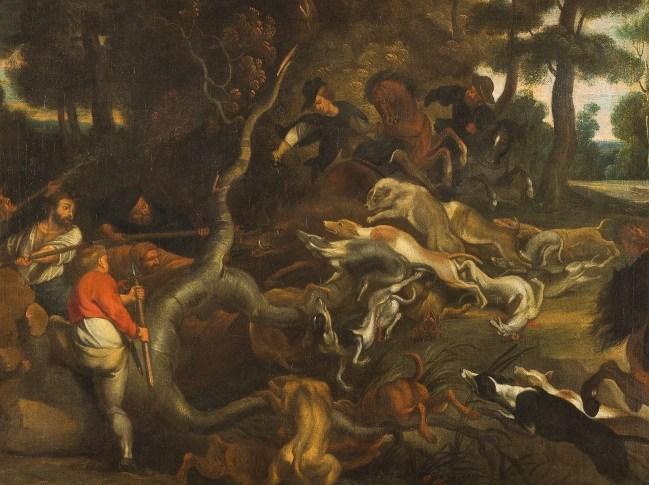
DRESDEN MUSEUM WINS TEFAF
This year ’s Tefaf Museum Restoration Fund (TMRF) has been awarded to Dresden ’s Gemäldegalerie Alte Meister for its restoration of The Boar Hunt (161618) by Peter Paul Rubens.
Image: Boar Hunt, circle of Rubens. Hargesheimer Kunstauklionen/Wikimedia Commons. Public Domain
NEW YORK LANDMARKS
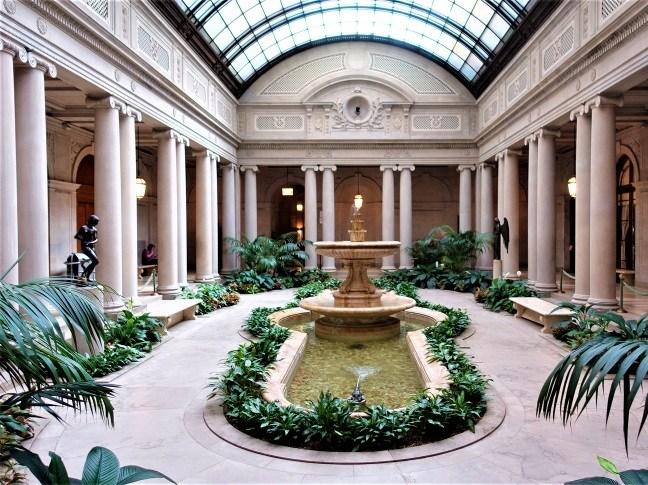
The New York Landmarks Conservancy has announced the winners of the 2026 Lucy G. Moses Preservation Awards, the Conservancy ’s highest honors for excellence in preservation. The Award recipients demonstrate outstanding and challenging preservation projects that occur throughout the city.
Image: Frick Collection (2017) Joyofmuseums/Wikimedia Commons . Licensed under CC BY -SA 4.0
Image:
(2015) by Ro b Corder/ Flickr. Lisenced under CC BY -NC 2.0
The Significance Ancient Knowledge for Developing Sustainable Conservation
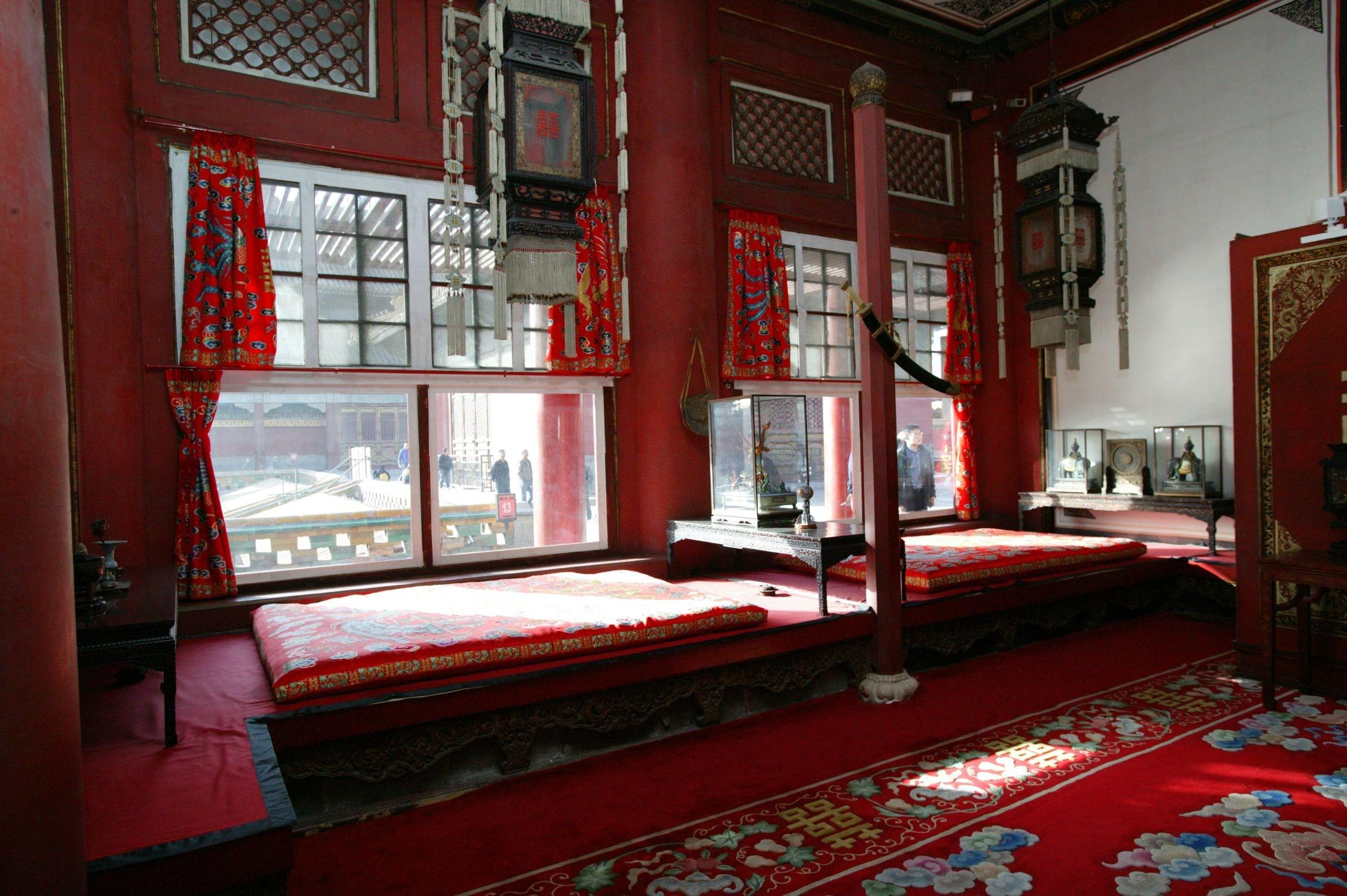
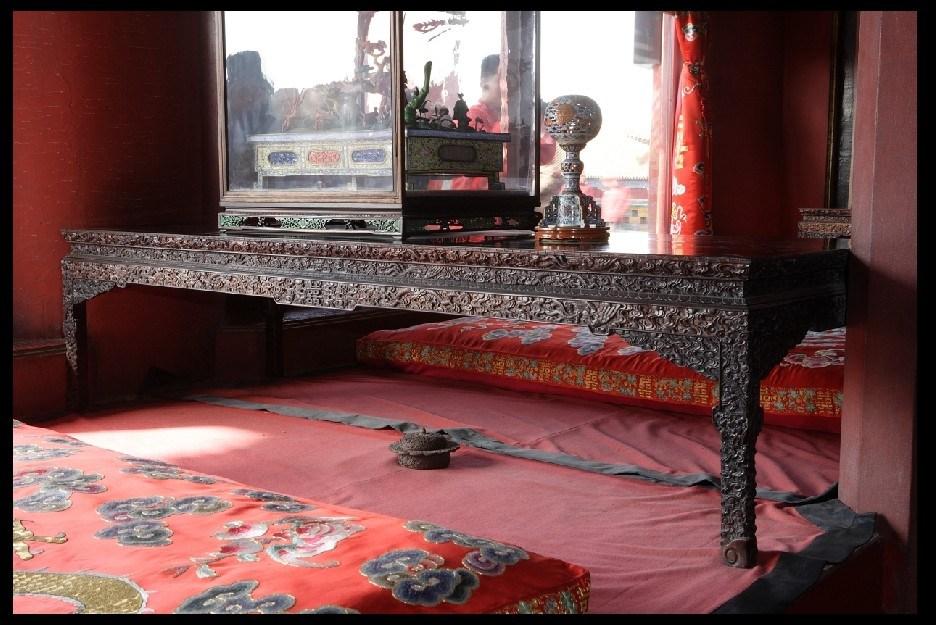
Partial view of the interior of Kunning Palace with examples of kang tables on display. Image courtesy of Yangfan Xie and the Palace Museum
Significance of Knowledge Developing Conservation
Using the Conservation of a Kang Table in the Beijing Palace Museum as an Example
By Yangfan Xie and co -authors Wang Na and Yun Zhang
THE REDISCOVERY OF T RADITIONAL NATURAL DYEING TECHNIQUES
The finish on traditional Chinese painted furniture is most commonly believed to have been created using a lacquer technique, yet little research has been done in question of this assumption. Recent restoration projects of late Qing Dynasty imperial furniture have revealed striking evidence suggesting the surfaces were likely dyed using materials and methods akin to natural dyeing, rather than lacquering. These techniques, while sharing close ties with traditional textile dyeing, demonstrate a distinct craftsmanship. This revelation has prompted me to conduct in -depth research into the subject.
Natural dyeing techniques have historically been used for dyeing textiles and paper in China. Despite their ubiquity, it remained unclear whether these techniques and materials were used to color wood surfaces, as this has been an underexplored area of
research. Currently, traditional wood restoration in China primarily uses synthetic materials, such as black and red sodium powders mixed with ink, to match colors. However, even after waxing, these materials still fade severely and are not environmentally friendly.
Regarding natural coloring techniques, restoration experts have observed through material analysis that while furniture crafted with traditional methods may experience fading and peeling over time, these materials demonstrate superior color retention and stability compared to modern restoration pigments. This natural coloring system could potentially replace synthetic dyes, making the revival of these lost techniques a sustainable and eco -friendly solution for heritage preservation.
The historical production and application processes for these coloring materials are not very clear, but for several centuries, the existence of rich and diverse wood relics with similar processes proves the
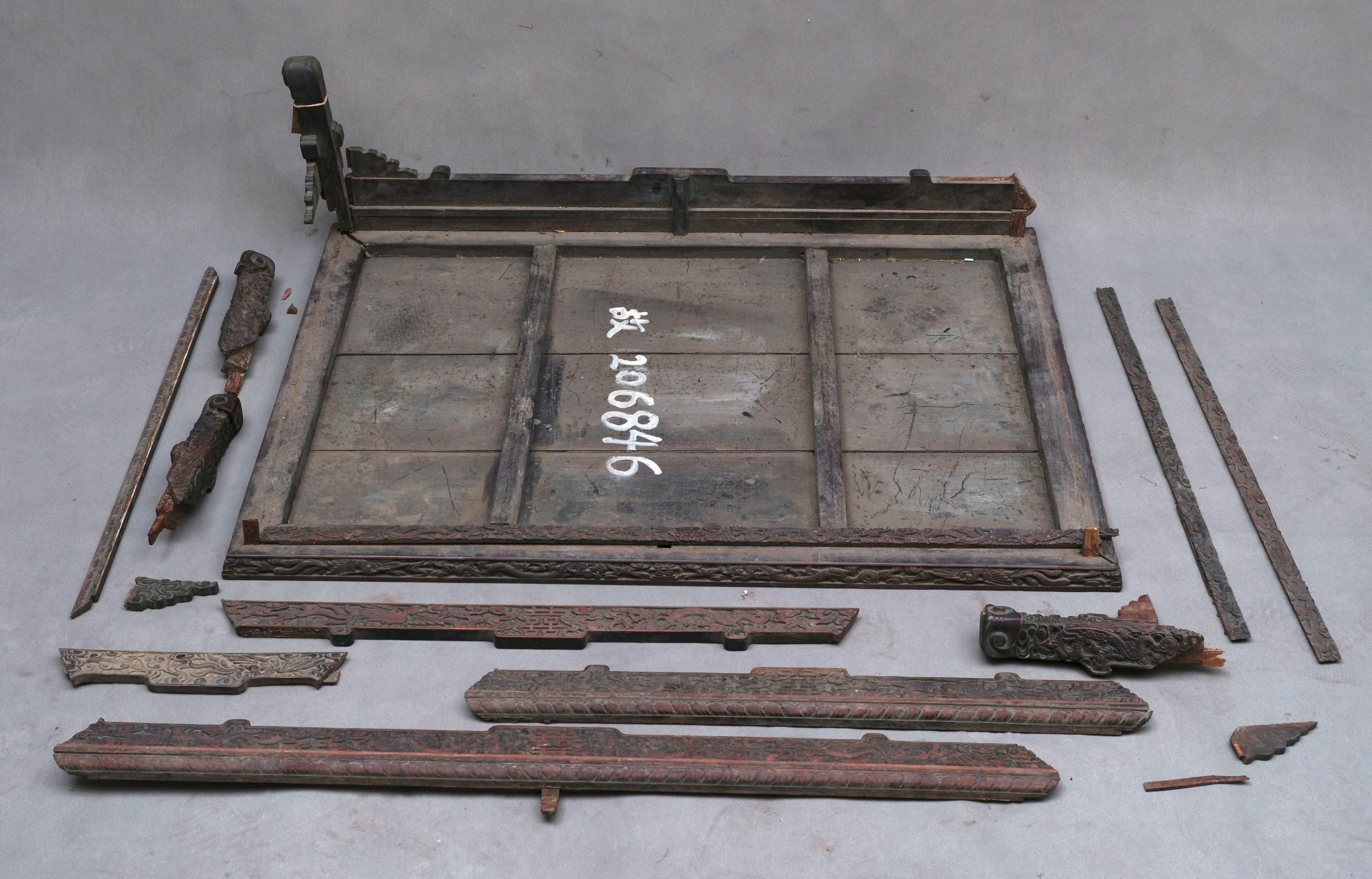
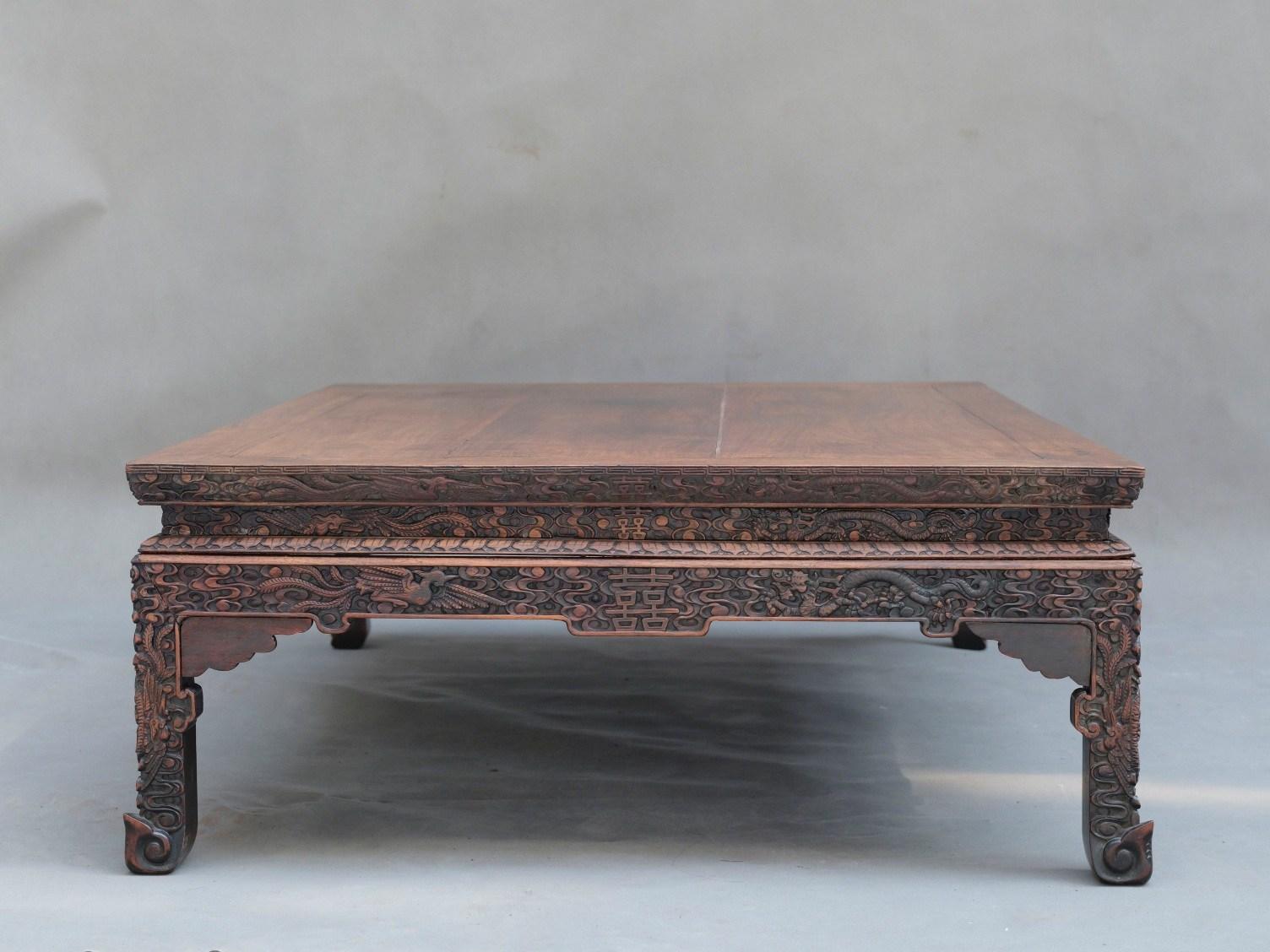
Top left: The kang table before treatment.
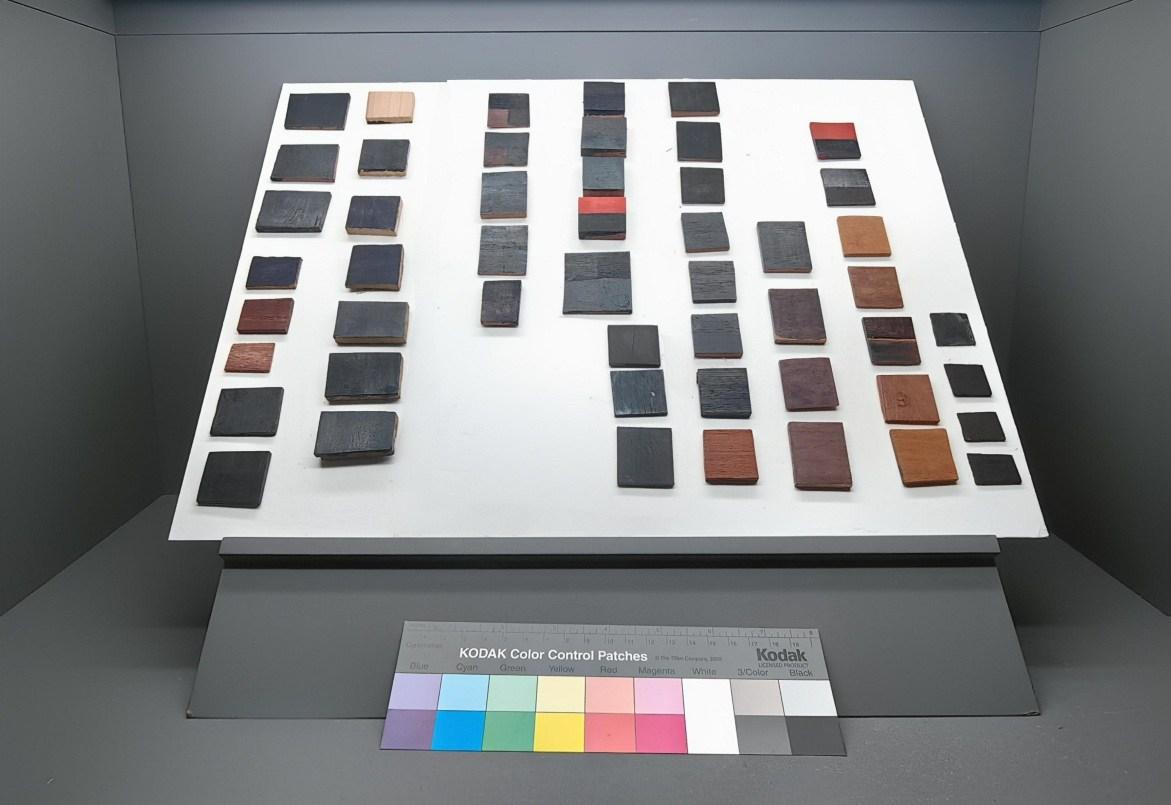
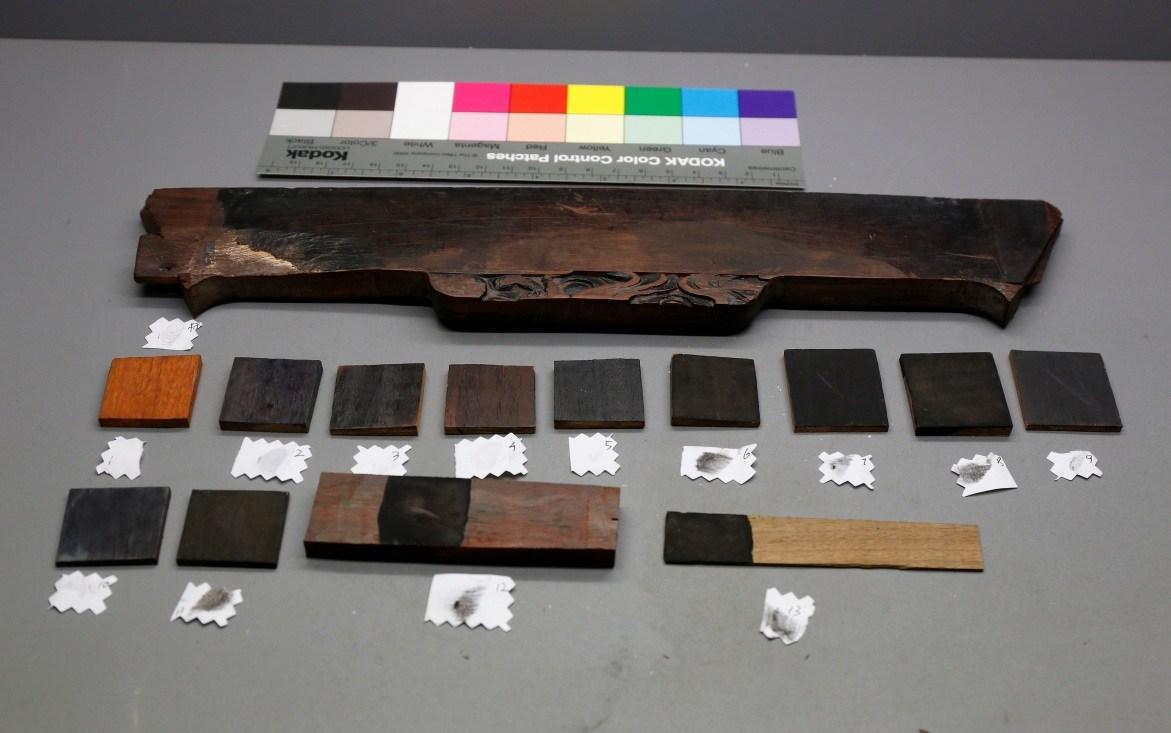
Top right: Dyeing experiments conducted using different historical archival recipes
Bottom right: Dyeing experiments and polishing tests using logwood, gallnut, and black alum.
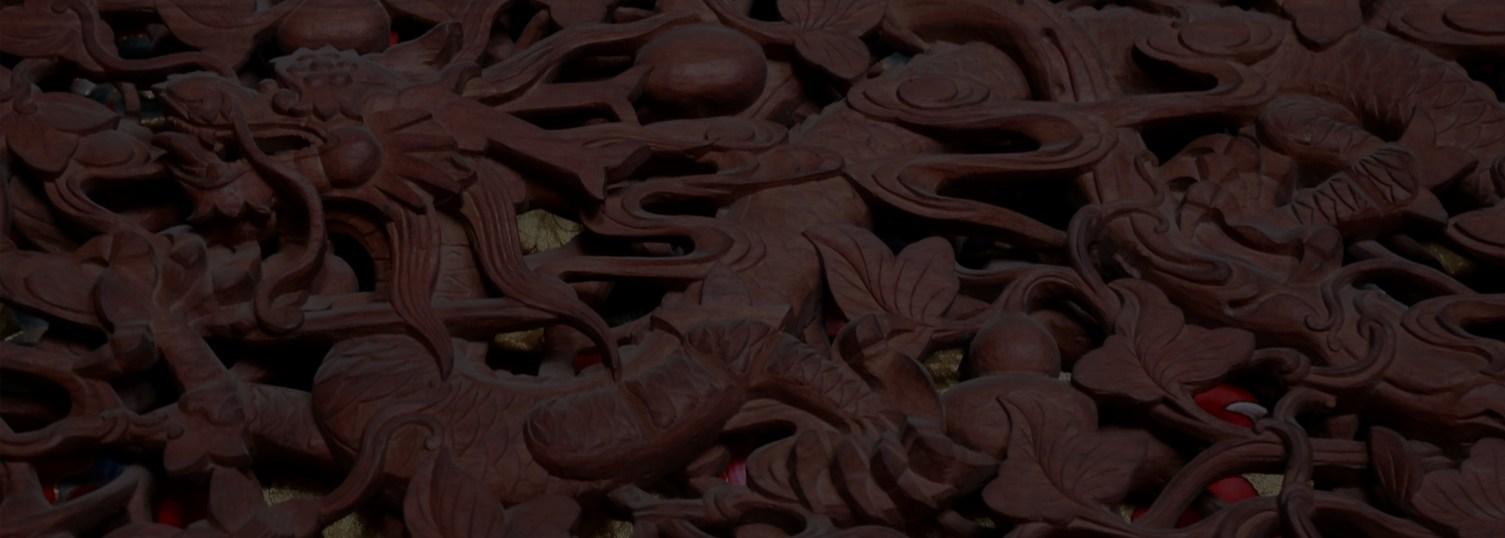
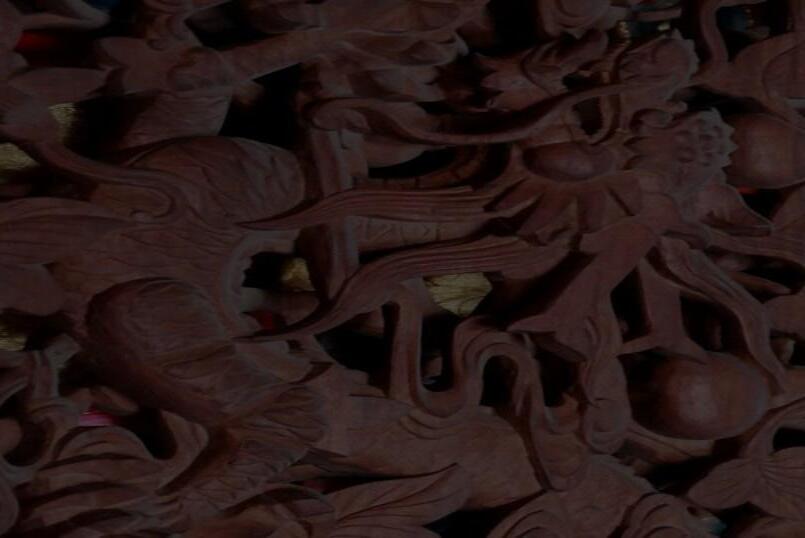
Bottom: Detail of carved dragon pattern within the wood frame. Image courtesy of the Palace Museum
All images courtesy of Yangfan Xie and The Palace Museum
persistence of its history and the complexity of the formula. We addressed the knowledge required for dye solution restoration through analyzing the organic and inorganic components of historical samples. We also compared component data from material characterization with archival formulations to replicate the optimal dye solution ratio.
Upon completion of this work, we also aimed to resolve practical restoration challenges by evaluating coloring performance and visual effects, as well as by controlling specific color production processes.
Our objective was to exert a green impact on conservation practices by reducing reliance on synthetic dyes and exploring historically utilized traditional natural renewable materials. We hope our new findings reintroduce a lost traditional coloring material to the toolkit of modern wooden furniture restorers a material that better aligns with the principles of material and craft authenticity.
PRACTICAL EXPLORATIO N OF THE CONSERVATION OF QING COURT KANG TABLES FO R IMPERIAL WEDDINGS
As a case study, we chose a kang table decorated with themes of imperial weddings from the late Qing Dynasty. This is a shortlegged table generally placed on a kang (which is a heated platform used as a gathering or sleeping space in traditional Chinese culture). There are 11 similar tables in the Qianqing Palace. This piece of furniture is made of rosewood, carved with dragons and phoenixes and the Chinese character "happiness".
We faced multiple challenges in devising the best conservation
treatment procedure. Firstly, we discussed how to recreate the structure with minimal intervention to ensure its long -term safety. Secondly, we needed to find a way to confirm the materials used in historical restoration and the original materials without sufficient ancient documentation. Thirdly, in order to restore its aesthetic value, we needed to decide which coating techniques and materials should be used.
The purpose of this conservation treatment was to reconstruct the furniture, to recreate and document the traditional craftmanship knowledge and materials of its original colored coating, and to restore its aesthetic value. Our ultimate goal was to return the table
to the original display space, restoring the integrity of the space and its associated artifacts. This kang table is a good representation of the imitation red sandalwood furniture of the late Qing Dynasty, so its conservation will play a key role in future restoration strategies for other furniture from this period.
Since these traditional furniture dyeing techniques had been lost to history, we could only find similar knowledge in ancient archives. In order to understand and recreate the coating technology of this table, team members used chromatography combined with high resolution mass spectrometry and Raman spectrometry to detect the colorants on the lime fill material,
as well as the colorants of the historical restoration layers and original wooden layers. Test results indicate that the coating on the filler contains natural dyes such as sappanwood and industrial dyes such as magenta, malachite green, and methyl violet. The coating on the decorative rosewood accessories contains natural dyes such as sappanwood and tannins ( Galla Chinensis ), as well as industrial dyes such as magenta, malachite green, and methyl violet. These tests suggest that natural dyes may have been used initially, while industrial synthetic colorants were used in subsequent restorations. The results of the analysis and the records found in ancient documents together illustrate the complexity of this coating and provide a basis for us to understand the materials and technology, which informed our development of a restoration plan.
In light of these test results, the conservation team opted to use natural dyes instead of synthetic
“The study of ancient technology and the recreation of intangible cultural heritage can provide methods for sustainable conservation while ensuring authenticity and integrity. ”
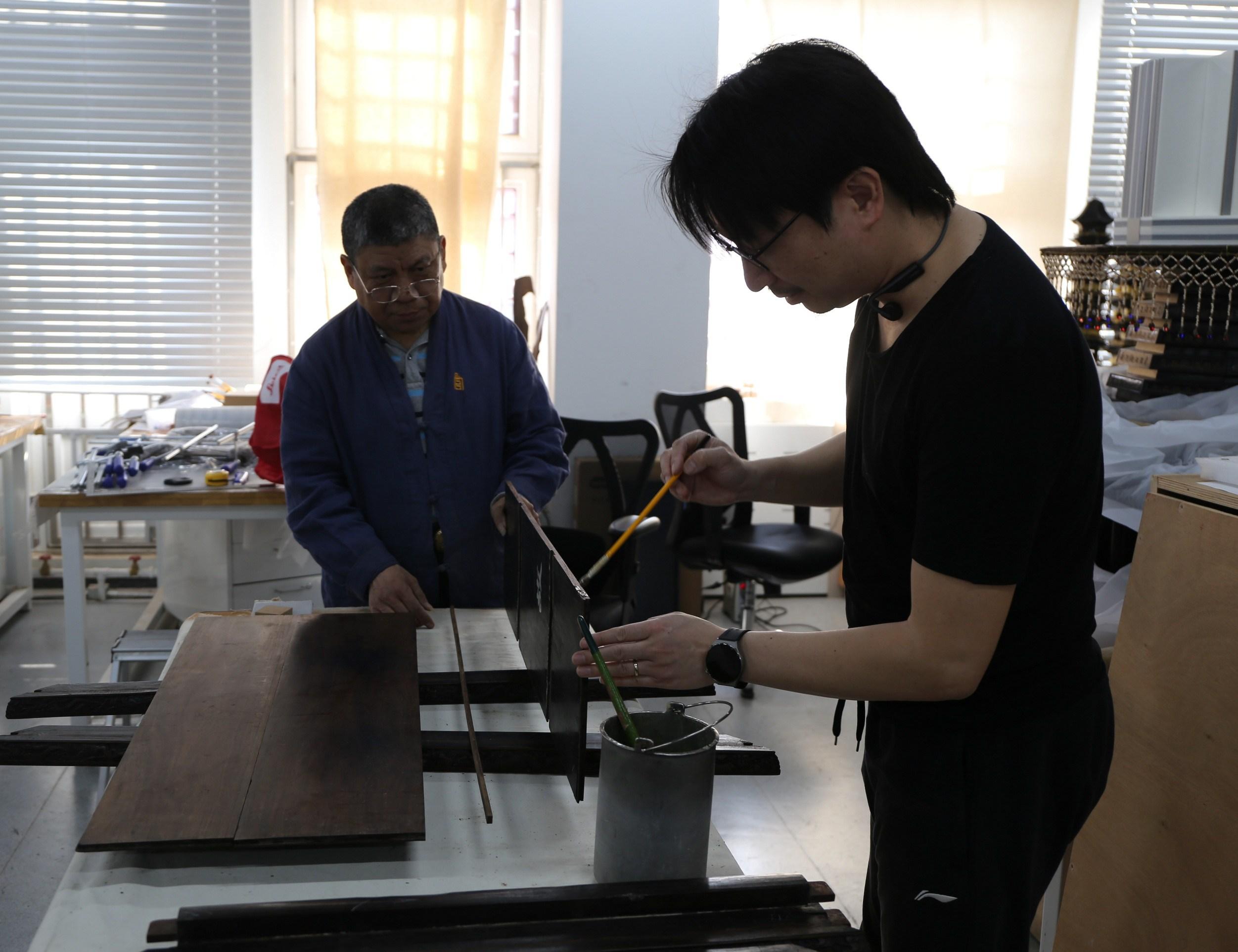
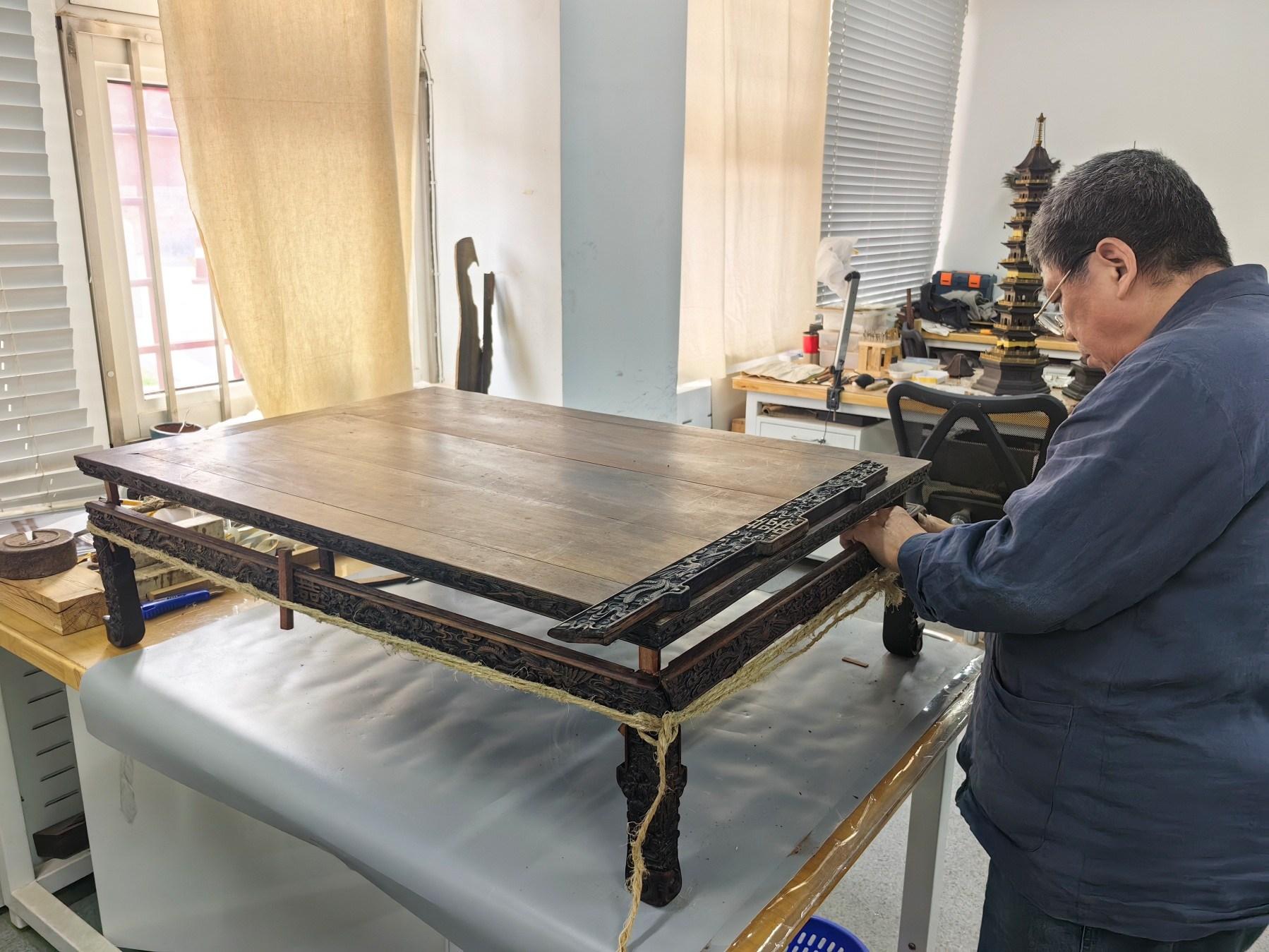
Left and top right: During treatment of the kang table.
Right: Detail of carved dragon pattern within the wood frame.
Images courtesy of Yangfan Xie and the Palace Museum
chemical dyes. Specifically, we used sappanwood, Galla Chinensis , and black alum, which are commonly used in traditional imitation red sandalwood coloring techniques as documented in ancient archives. These dyes were added to a medium of water and gelatine to fix the colors. Finally, the traditional hot wax process was used to produce the top surface layer. Based on the results of dyeing experiments and spectrophotometric analysis, a dye solution was prepared by boiling 400 ml of water with 22 grams of sappanwood, 8 grams of schizandra, and 10 ml of black alum (10 ml of water and 2 grams of ferrous sulfate).
To test the prepared treatment materials, the dye solution was first applied to the surface of wood samples using a brush after the samples were sanded with grass. Finally, a layer of hot wax was applied to the surface. The resulting samples meet the required standards for color, gloss, and transparency.
To begin treatment, the restoration team cleaned the dirt from the surface of the kang table, removed the aging fish bladder glue, rebuilt the broken leg structure, and filled the gaps in the tabletop. They experimented with the previously devised staining processes to hone the formula to best suit this table. The reconstructed and severely discolored parts were then stained using this process. The aged beeswax layer was removed and replaced with a new wax coating. The overall structure and coating of the furniture were successfully reconstructed restoring its aesthetic value while also preserving its historical significance.
REFLECTIONS AND VALU E SUMMARY OF THE CONSERVATION PRACTIC E
This successful restoration process (researched, tested, and applied) of the water -dying provides valuable experience for restoring similar Chinese Qing dynasty furniture in the Palace collection. Along with the already stated observations from this study, the process is simple, environmentally friendly, and can be maintained for continued use. Although natural materials are not yet durable enough, this restoration of coating technology has sustained value for later maintenance and conservation.
The Beijing Palace Museum has a large number of Qing dynasty palace furniture pieces coated in this historical style, so the restoration of coating craftsmanship has broader significance for the future restoration of furniture. However, the base materials used for furniture in the Qing dynasty were diverse, and the coloration craftsmanship for different types of softwoods and hardwoods could also differ. Therefore, specific restoration strategies that differ from our own may need to be developed for each piece of furniture.
The study of ancient technology and the recreation of intangible cultural heritage can provide methods for sustainable conservation while ensuring authenticity and integrity. Modern testing technology plays a key role in determining the original materials. Interdisciplinary cooperation provides diverse methods for conservation.
Left: Detail of carved dragon pattern within the wood frame.
Top left: Kang table after treatment.
Top right: Partial view of the interior of Kunning Palace with an example of a kang table on display.
Images courtesy of Yangfan Xie and the Palace Museum
ACKNOWLEDGEMENTS
This study is the result of the Palace Museum's Cultural Heritage Protection and Transmission Laboratory, whose assistance is gratefully acknowledged for the funding of the restoration research.
Yangfan Xie holds an MA in sculpture from Central Academy of Fine Arts. In 2014, he joined the Palace Museum and is currently an associate research fellow of the Department of Conservation and Restoration. He has mainly worked on movable and immovable wooden cultural property in the Palace Museum including furniture, objects, sculptures, the interior decoration of traditional wooden structure buildings, etc. fanyangxie@126.com
Wang Na holds a Ph.D. in materials science and engineering from Xi’an Jiaotong University. In 2015, she joined the Palace Museum and is currently a senior research fellow for the Department of Conservation Science. She is mainly engaged in the scientific research of organic materials in cultural relics, the evaluation of aging of Ming and Qing dynasties lacquerware, and the research of lacquering technology. wangna031625@hotmail.com
Yun Zhang, associate research fellow, graduated from Beijing University of Chemical Technology in 2017 and obtained a doctorate in science. She worked at the Department of Conservation Science and Research in the Palace Museum and engaged in the material analysis and the conservation of organic movable heritage. zhangyun325@126.com
While conservation is part of the foundation of most museums and collections public or private across the world, conservation is also one of the cultural heritage fields with some of the most complex challenges, constantly working against time while trying to preserve as much heritage as possible. Even with all the advancements of the modern world, some places have been seemingly forgotten by time, with all their fantastic history and heritage still in its original place. This paper focuses on one such situation demonstrating the great need for continued preservation efforts.
Forgotten by Time in Transylvania
The need for modern-day conservation efforts to save an 18th-century iconostasis
By Ioan Oprea
During the late autumn of 2025, the Museikon team were informed about an on -going situation in Buninginea, a remote mountain village near Alba Iulia (Romania) a typical hamlet of the Apuseni Mountains. The local Orthodox parish was about to replace its old iconostasis with a new one. Not having a clear idea of its age or historical significance, the parish asked for our help.
We, Museikon, are the youngest department of The National Museum of The Union in Alba Iulia, and we specialize in ecclesiastical art and related issues exactly the type of heritage at the Buninginea parish. The National Museum opened this new department in 2017, which is officially the first and only state museum dedicated to saving, understanding and preserving the complex ecclesiastical heritage in Romania. Now nearing our 10 -year anniversary, we continue seeking to save and store icons, books, church banners, chalices, and various precious objects of the old Romanian ecclesiastic traditions while remaining open to the viewing public.
As luck would have it, Museikon is located just about 70 kilometers away from the Buninginea hamlet at the edge of the Apuseni Mountains. The Museum ’s existence here in Alba Iulia is no mere coincidence, as this area has been well known for centuries for its wealth of ecclesiastic monuments, churches, and paintings from the 16 th to 19 th centuries as well as being a renown spiritual center for the old Romanian national identity. Now, with the Museikon, the National Museum and its collections strive to continue the traditions started here in the Apuseni Mountains several hundred years ago, as well as protect and honor this ancient sacred art.
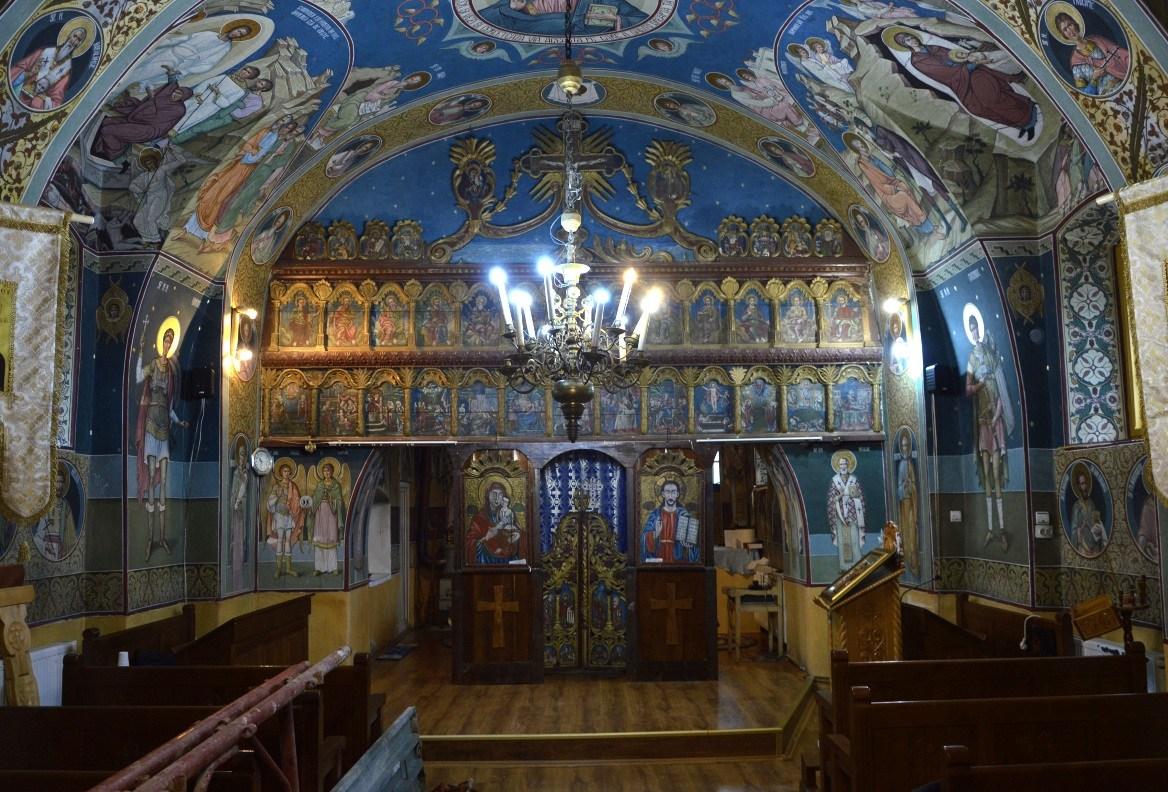
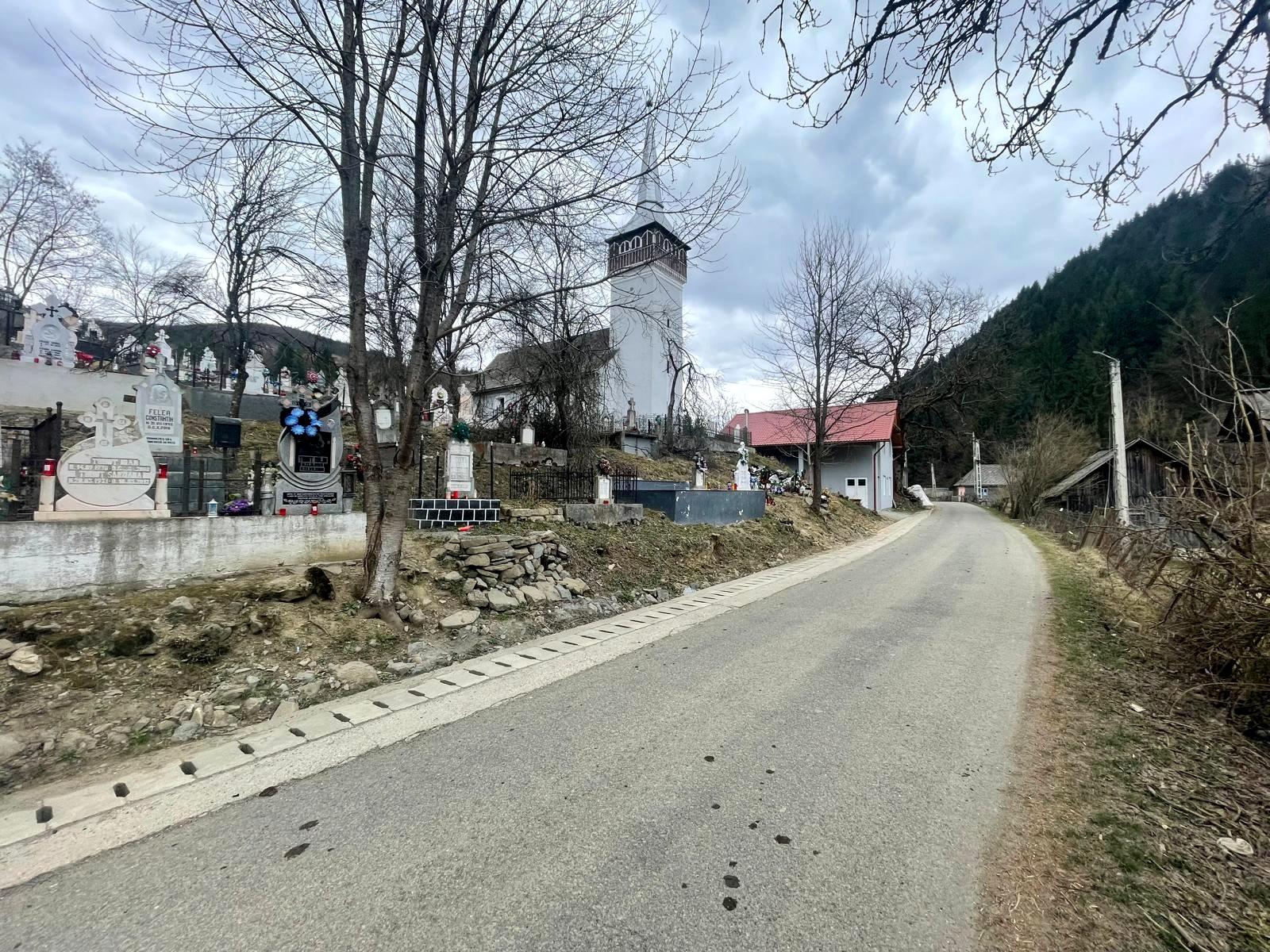
Left: The inside view of the church shows the iconostasis in the background, mounted against a stone and brick wall.
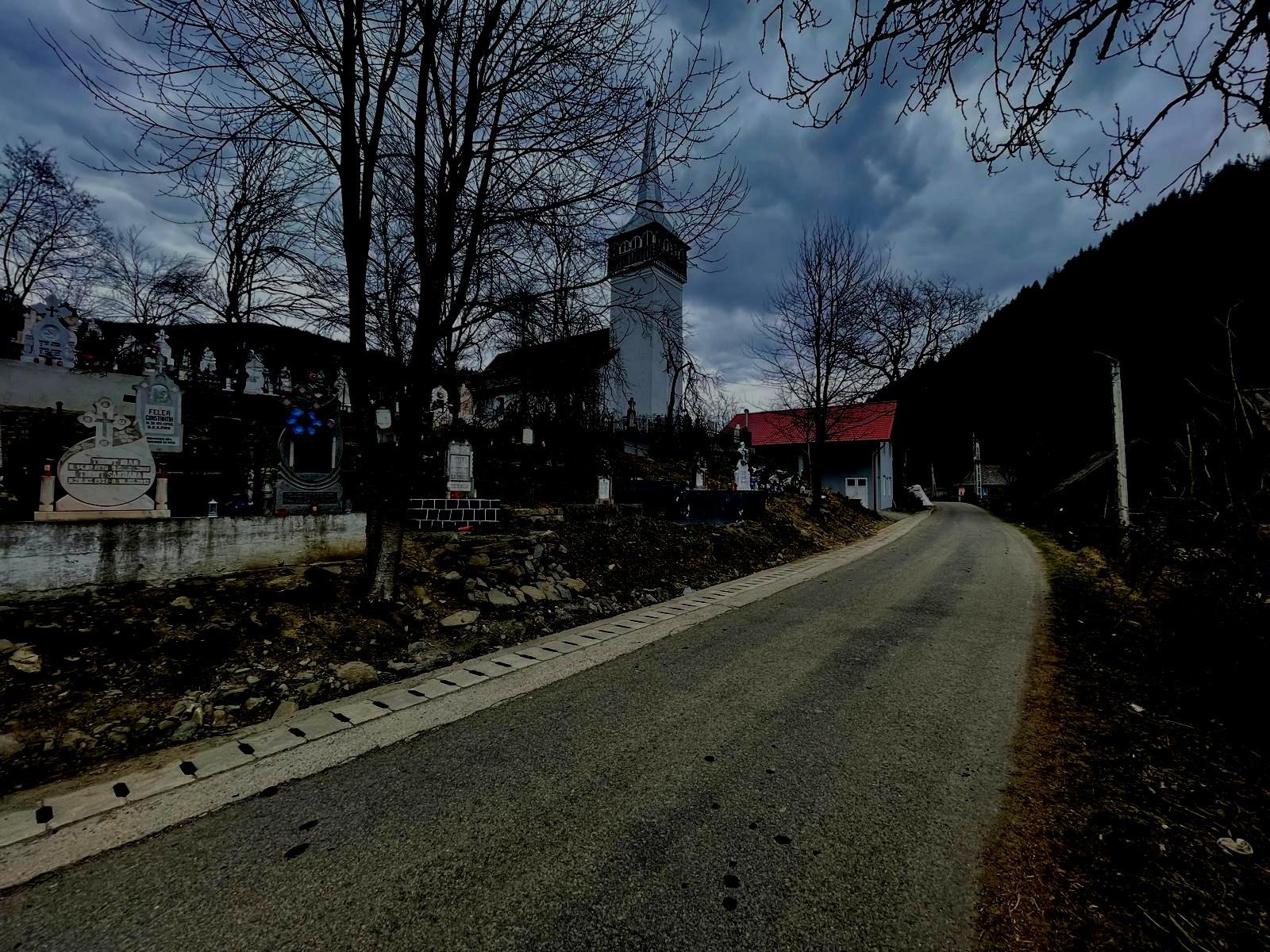
Right: View of the church viewed from the road, entering Buninginea. Images courtesy of Ioan Oprea.
Responding to the call, we formed a small team and started the preservation process for the iconostasis. The church tower looms up over the trees as you enter Buninginea hamlet. Surrounded by the hamlet ’s cemetery, the church majestically dominates the entrance to the settlement a bitter token of remembrance of Buninginea's former prosperity.
Once a well -developed settlement, with inhabitants who grew prosperous through mining activities and wood processing, the hamlet today stands on the brink of dissolution. Located a few kilometers away from the main road, few
people still live here in this remote and rugged, forested mountain area. As the old saying goes, 'time is friend to no man', and such is the fate of so many of these mountain villages and hamlets along with their centuries of stories.
Ms. Ana Dumitran, head of the Museikon department, first filled out the official expert report, and when observing some of the stylized angels, she immediately recognized the hand of Simion Silaghi -Sălăgeanu . a well -known painter and gilder from
“As the old saying goes, 'time friend to no man', and such is fate of so many of these mountain villages and hamlets along with their centuries of stories.
the 18th century, further highlighting the urgent need to save the precious heritage ensemble.
An iconostasis constitutes the primary liturgical and architectural partition within an Orthodox church, functioning as a symbolic boundary between the altar and the nave.
In the specific context of the Apuseni Mountains' vernacular architecture, the Buninginea parish iconostasis is a significant monumental ensemble, measuring six meters in length. Carved from timber and adorned with hagiographic cycles, it serves as a visual synthesis of core Christian dogma. The preserved structure features two distinct painted registers, each characterized by substantial dimensions (together they are 5.6 meters in length and 1.2 meters in
height). Key salvaged components include the Royal Doors the central liturgical focal point alongside the crowning elements of the composition the Crucifixion and the Molenii (referring to the mourning icons of the Virgin Mary and St. John).
In the project ’s second phase, we went on -site to evaluate the condition of the iconostasis as well as the general environmental conditions of the building including the temperature and relative humidity; during this process, the church remained in use with all its accoutrements as well as the sovereign icons, the deacon ’s angelic doors, and the royal doors. We also made note of the technical equipment and tools we would need for the dismantling of the iconostasis as well as materials for crating and transporting it to the Museum.
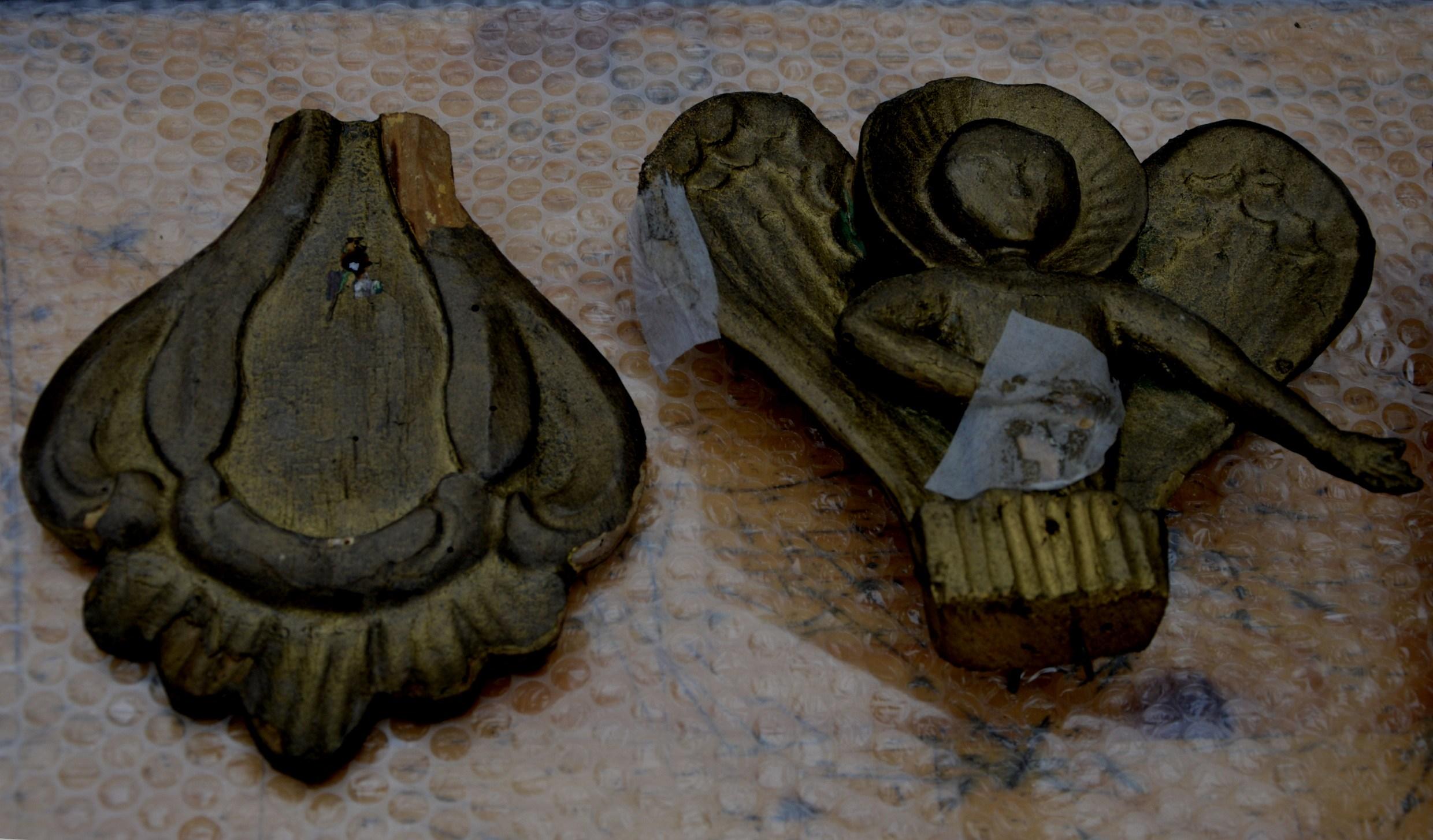
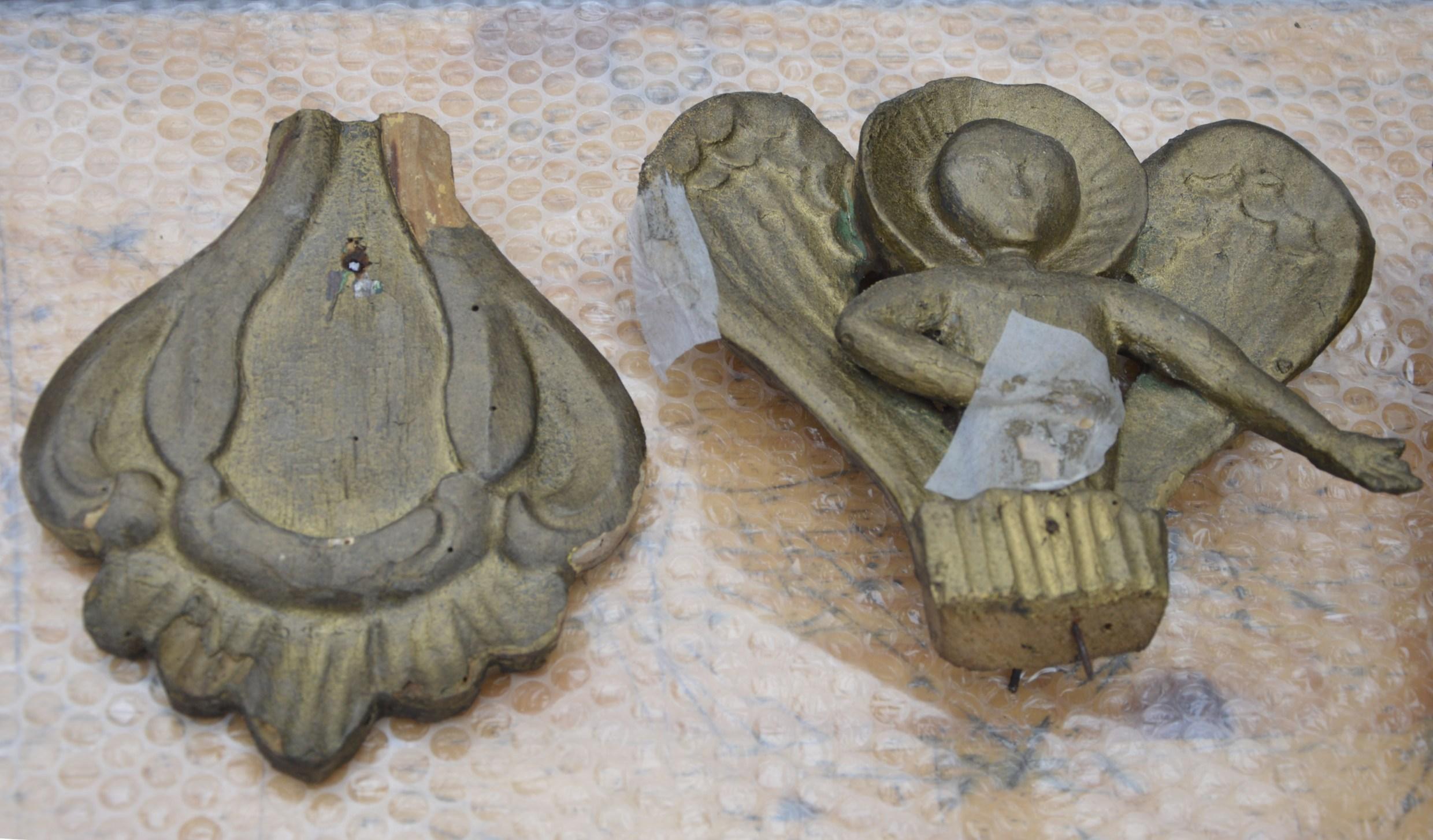
Left: the local team of craftsmen, responsible for the construction and installation of the new iconostasis. Right: example of carved wood stylized angel typical of Simion SilaghiSălăgeanu. Images courtesy of Ioan Oprea.
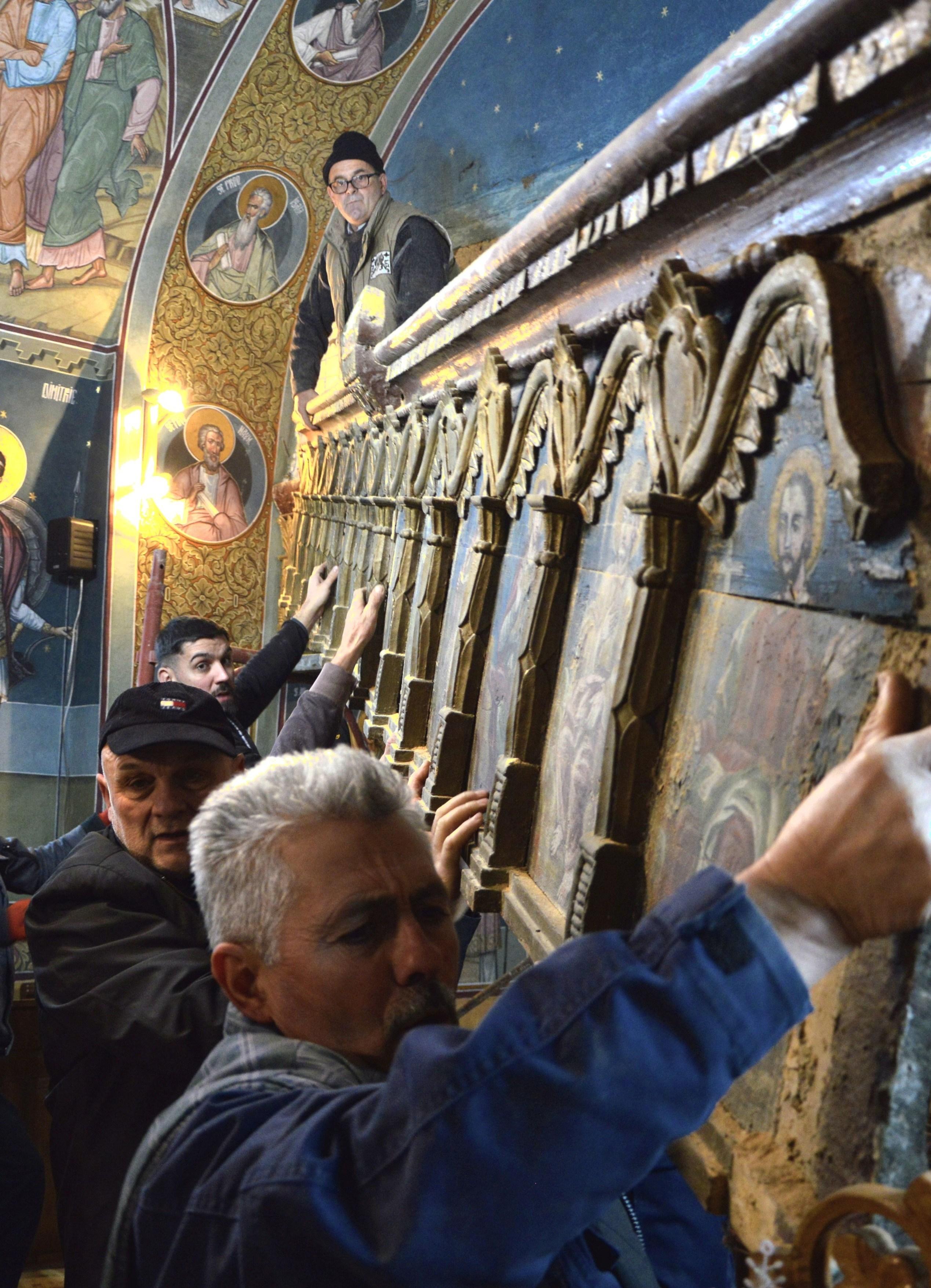
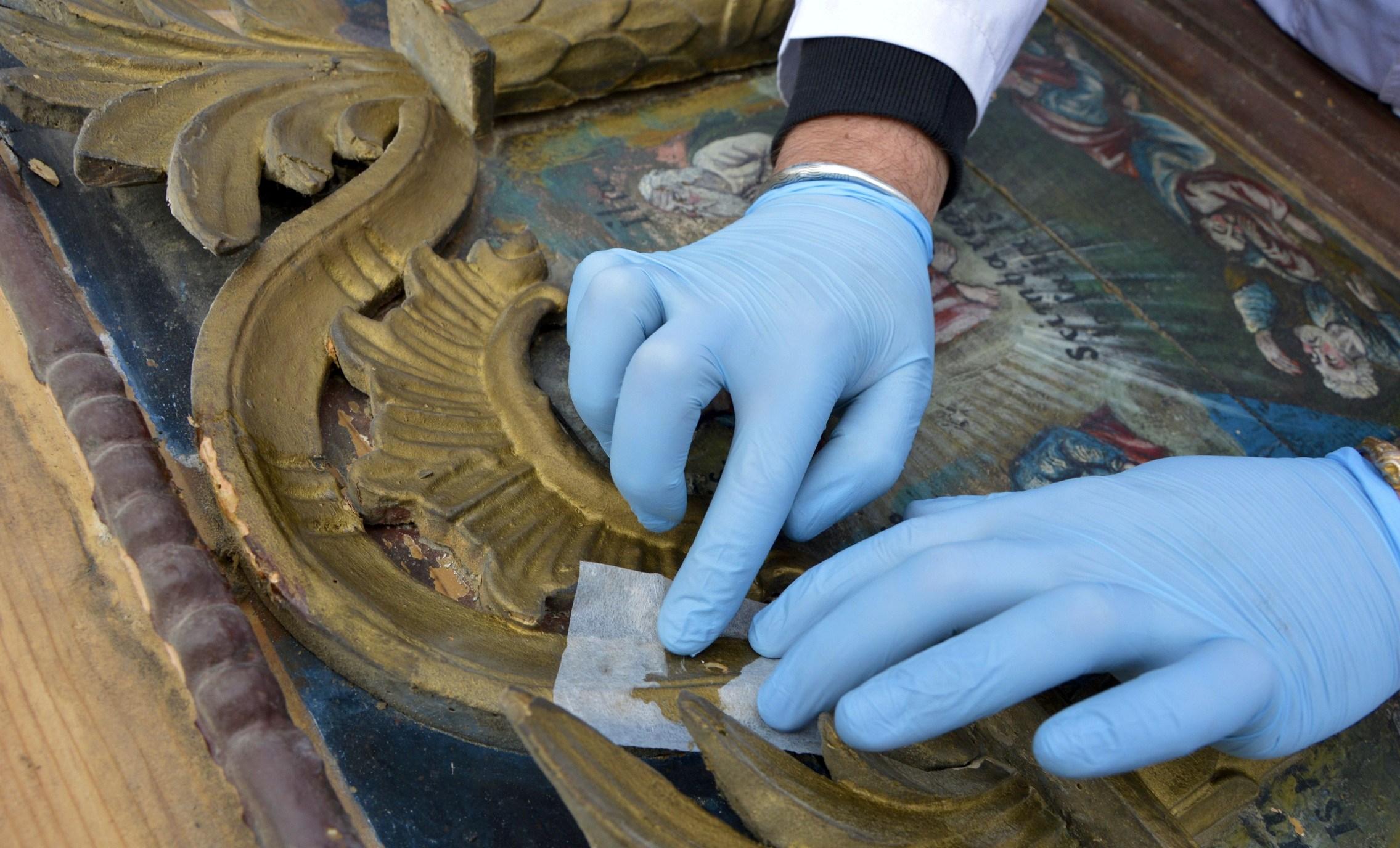
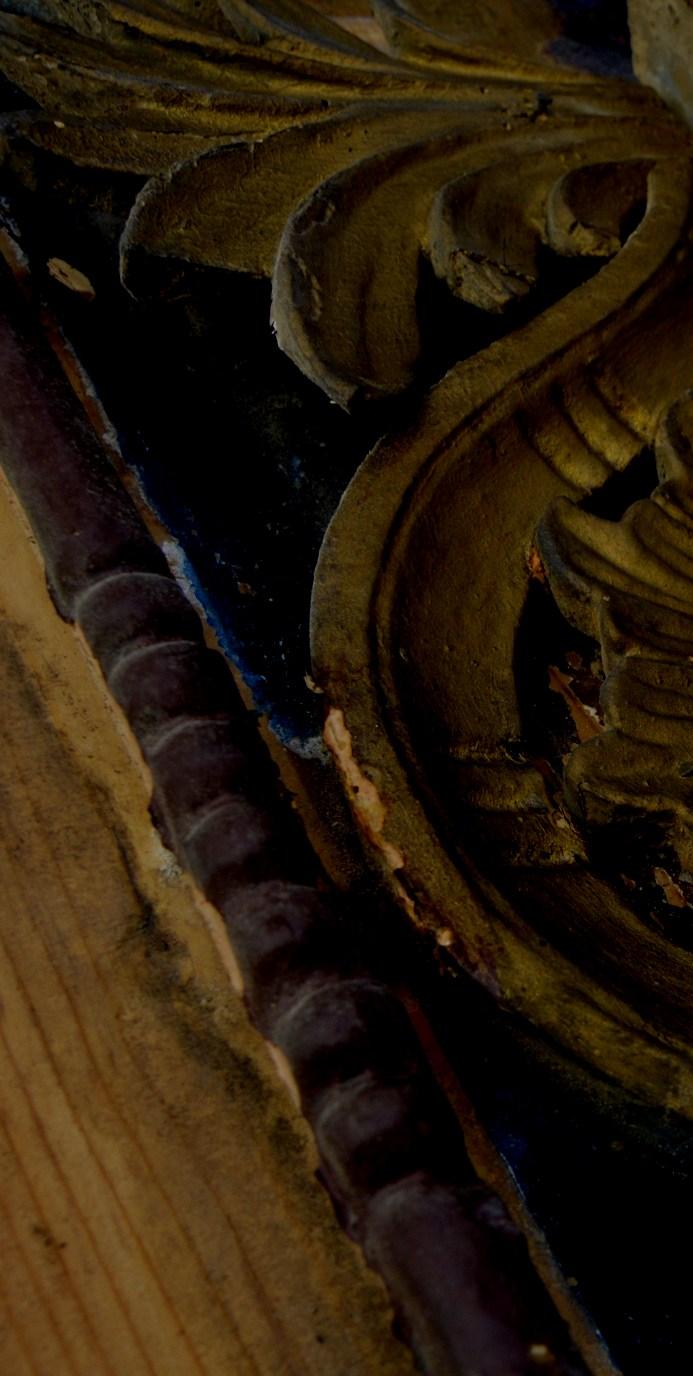
Top: The third stage of removal: dismantling the Apostles' Tier, located beneath Crucifixion cross.
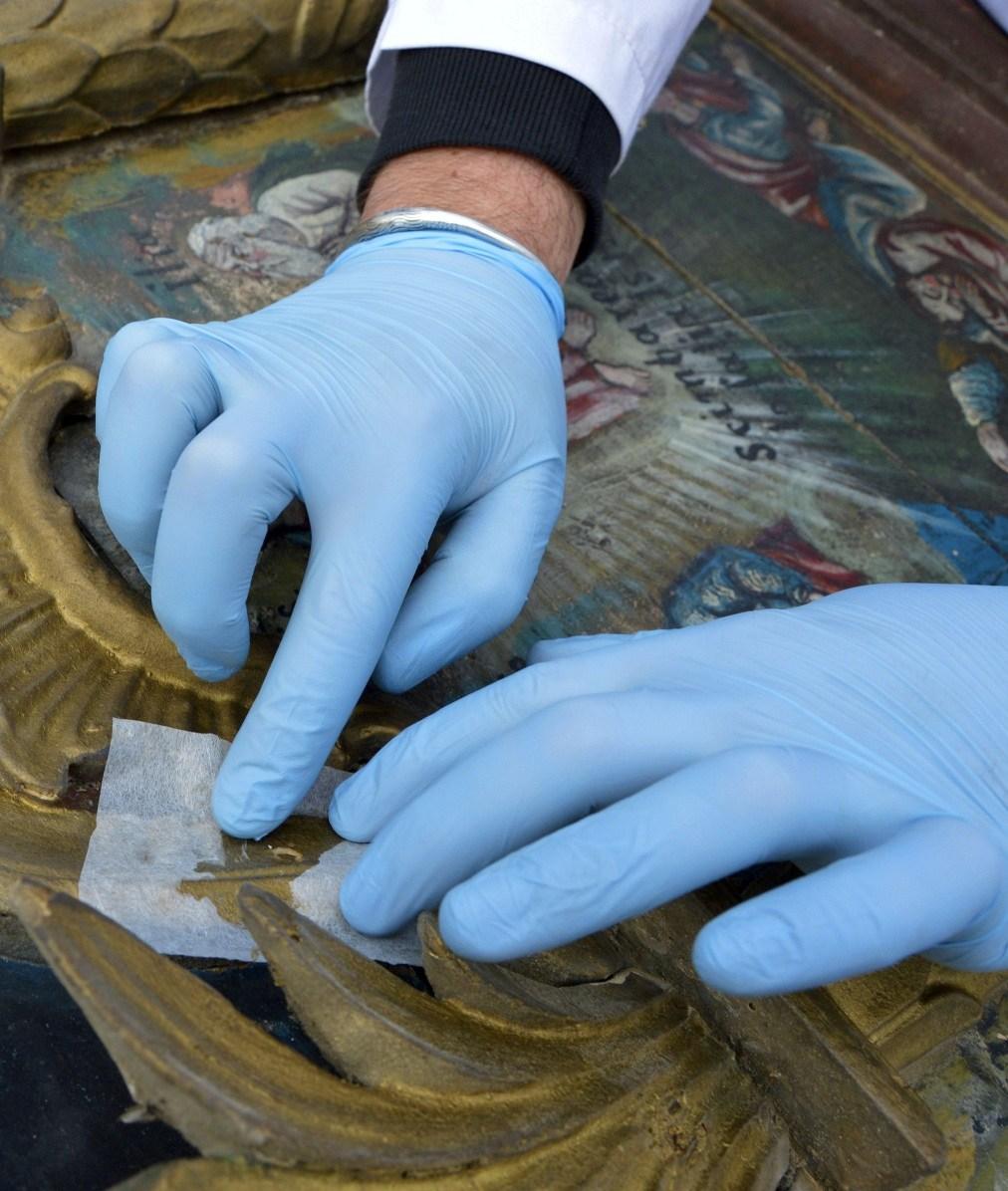
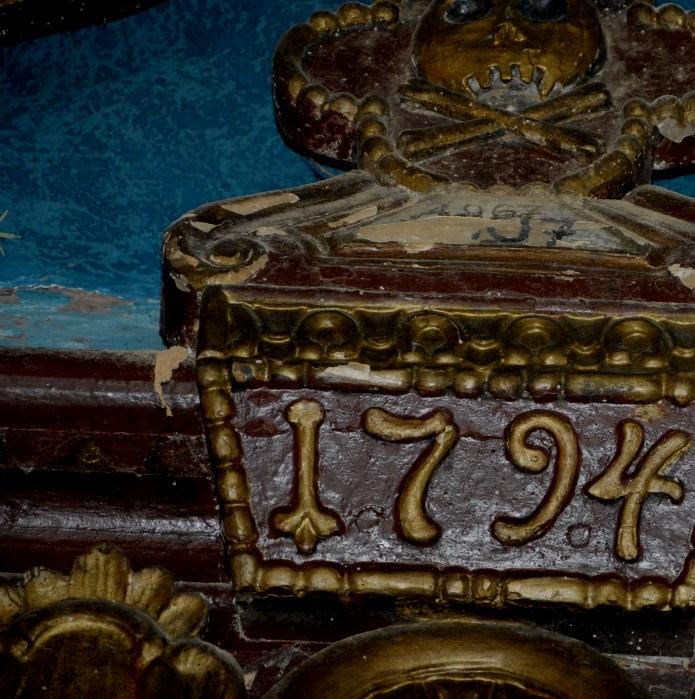
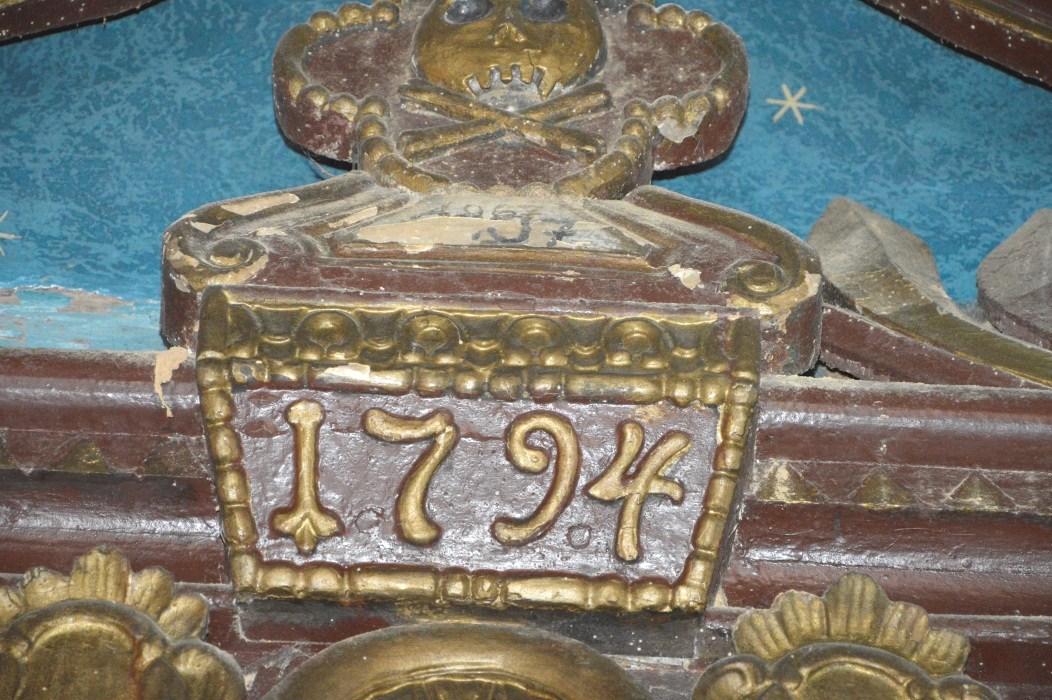
Center: The application of Japanese tissue to critically degraded areas for structural stabilization. Bottom left: The original year of creation carved and painted.
Bottom right: A view of the top portion of the original carved date with other dates later inscribed above, marking different periods of restoration. All images courtesy of Ioan
Oprea.
Serving its religious patrons and welcoming visitors from its perch on a gently sloping ridge, the church has dominated the entrance to the hamlet of Buninginea for over 200 years. On the iconostasis crowing, beneath the cross depicting the Crucifixion , the year “1897” had been painted over the originally carved “1794” which marked the year of its creation. This added date is evidence that the iconostasis underwent restoration nearly 100 years after its initial construction and installation in the church. The year 1794 is also the first historical mention of this church, although the hamlet surely had a church before this date; it is a well-known fact that stone churches in these mountains eventually replaced earlier wooden constructions.
Following the preliminary conservation assessment, we decided to dismantle the iconostasis for immediate transport to the Museum. The situation became more urgent due to the local parish's desire to replace the old iconostasis with a new one; consequently, the entire first phase of work had to be completed just a few days before Christmas.
old iconostasis, marking the beginning of a new journey for this historic work of art, its next place of rest to be a museum where we hope it will continue to be admired for centuries to come.
This serves as a compelling memento of the challenges and need for public awareness and the on -going protection of invaluable heritage still held within local communities.
We were assisted by the local team of craftsmen responsible for the construction and installation of the new iconostasis. Upon deinstallation, we could see the centuries -old wall where the old iconostasis was affixed in 1794. The craftsmen demonstrated exceptional skill in dismantling the old structure, showing a deep understanding of how the large wooden sections were joined and how the cross moline was anchored into the masonry knowledge likely passed down from generation to generation.
For over 200 years, the church has seemingly functioned with little interruption, and the iconostasis has remained in use throughout this period, hence the severe state of decay in which we observed it last year. After all this time, the locals decided to part with their
Together, with my colleagues Dr. Monica Druță (conservator) and Daniele Burnete (restorer), we carefully proceeded with the cleaning and removal of thick layers of dust and an impressive amount of frass caused by an ongoing xylophagous insect infestation. This damage has weakened the entire structure to the point of disintegration and breakage, leading to the total loss of certain sculpted and painted areas. In the next phase after cleaning, we performed an emergency stabilization using Japanese tissue paper to secure the paint layers that were in imminent danger of flaking or loss. The intervention continued with the application of a specialized biocide solution (PER -XIL10) to eradicate the infestation. Subsequently, all components were hermetically sealed to undergo a controlled treatment phase before being transported to the Museum's dedicated quarantine space. Following the confirmed cessation of biological activity, the formal restoration process will commence.
The emergency conservation measures undertaken for the Buninginea iconostasis have been a successful and fulfilling endeavor. The destruction of the iconostasis was averted, and the ensemble was transferred to the Museum ’s laboratories for treatment. In the near future, the restored iconostasis will be reintegrated into the national heritage, preserved as a significant testament to the history and spirituality of the Apuseni Mountains. This episode serves as a compelling memento for the larger cultural heritage community regarding the challenges and the vital necessity of public awareness initiatives and of the on -going protection of invaluable heritage still held within local communities.
Ioan Oprea works as a conservator for Museikon, the newest branch of the National Museum of The Union (Romania). He seeks to acquire a deeper understanding of the museum profession worldwide. Ioan ’s responsibility is to ensure the safety of the exhibitions and storage spaces, maintaining a healthy microclimate for the icons, books and paintings carefully preserved in this sanctuary dedicated to the sacred art of Transylvania.
Membership Rates 2026 -27
First and foremost, we are an organisation that brings conservators and conservation professionals together globally. Our members are at the heart of everything we do and we remain dedicated to ensuring IIC stays inclusive, connected and accessible.
In recognition of the ongoing global cost of living challenges and broader economic pressures affecting our community, we have made the decision to keep membership subscription rates unchanged for the 2026 -27 membership year starting 1 July. This means that, for the second consecutive year, fees will remain at the same level. We hope this provides some stability and reassurance, and reflects our commitment to supporting our members during uncertain times.
We understand that many of you are navigating financial constraints, both personally and professionally. By maintaining current subscription rates, a loyalty discount and discounts based on country bands , we aim to ensure that continued access to IIC ’s network, publications, Congresses, learning resources, and professional community remains affordable and as accessible as possible.
In addition, we are proud to continue our “Pay Membership Forward ” initiative for another year. This programme enables us, together with the generosity of our members, to extend support to colleagues around the world who may otherwise be unable to join or maintain their membership with IIC. In particular, we are focused on assisting those living and working in regions experiencing instability, conflict, or other highly challenging conditions.
The strength of IIC lies in its global community, and initiatives like this help ensure that no colleague is excluded due to circumstances beyond their control. We encourage members to consider contributing a donation where they are able as part of the membership renewal process, helping us to broaden access and strengthen our shared professional network.
Thank you for your continued support, engagement, and commitment to the IIC community.
Spotlight on Studies in Conservation Latest Articles
By Lucy Wrapson Deputy Editor, Studies in Conservation
Ultramarine (a natural sodium silicate mineral) was the most expensive medieval pigment the highest quality grades of the lapis lazuli stone processed into pigment could exceed the price of gold, and the processing requirements were complex. In European medieval and Renaissance art, ultramarine was often reserved for depicting the Virgin Mary ’s robe. Yet despite its widespread use in western Europe, it was sourced almost exclusively from Afghanistan its name (meaning beyond the sea) suggestive of otherness and exoticism.
Recent ground -breaking work from Nasim Kookesh at the University of Melbourne re-centres ultramarine and its production in the Persian and Islamic contexts. In “Ultramarine Blue in Persian Sources: Historical Methods of Lapis Lazuli Processing and Imitation Pigments ” (Studies in Conservation , February 2026) she reveals methods of production and refinement of the pigment distinct from those of the European tradition, including novel extraction and processing techniques. To date, historic sources from this milieu have not been included in the literature in English, despite the name of the unprocessed form of the stone ‘Lapis Lazuli ’ having its roots in both Latin and Arabic and its origins in the Afghan province of Badakhshān, Tajikistan ’s Pamir Mountains and Pakistan ’s Chagai Hills.
Kookesh has examined a range of manuscripts from artists’ treatises, calligraphy guides, encyclopaedias and mineralogical texts to medicinal compendia, spanning from the 11 th to the 18 th centuries. What this reveals is a progression from washing techniques to more complicated processing, which limits the use of alkaline materials, which is distinct from the European methodologies. The article also reveals a tradition of use of other pigments in imitation of ultramarine, as indicated via the authentication methods for real ultramarine described in the texts. Kookesh makes the valuable point that conservators must consider the importance of analytical verification of ultramarine ’s use when making decisions in the treatment and interpretation of Persian and Islamic works of art.
The article demonstrates the benefit of moving beyond Eurocentric narratives in the production and refinement of ultramarine and will be of wide -ranging interest to conservators and art historians as well as those interested in the history of science and material culture.
This open access paper will be in Issue 72, 2026 .
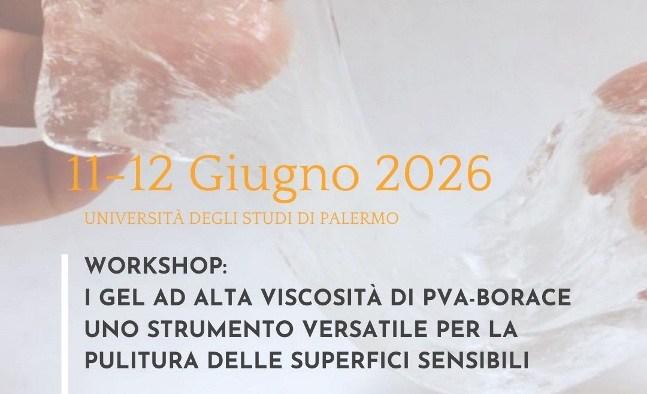
PVA –Borax Gel Workshop: Palermo – NEW DATE
UNIVERSITY OF PALERMO, PALERMO
June 11–12, 2026
We have a new edition of the theoretical –practical workshop dedicated to PVA –Borax gels. The next destination will be Palermo, and the course will be led by our instructors, Andrea Del Bianco and Augusto Giuffredi. Participants may express their interest in joining the workshop until 31st March at info@igiic.org
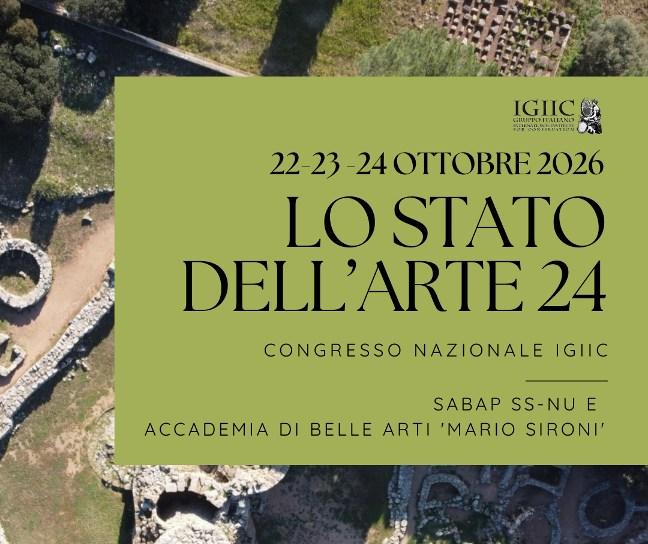
LO STATO DELL'ARTE 24: Sardinia
MARIO SIRONI ACADEMY OF FINE ARTS, SASSARI
October 22–23–24, 2026
Sardinia will be the next region to host State of the Art 24 , at the Academy of Fine Arts in Sassari from October 22 to 24, 2026! The call for abstracts is focused on the following topics: archeological conservation of waterlogged materials and sites, issues related to project planning and intervention; diagnostics, research and applied studies; preventive conservation; and ethics and sustainability in the conservation of cultural heritage.
THE CALL FOR ABSTRACTS IS OPEN UNTIL APRIL 20!
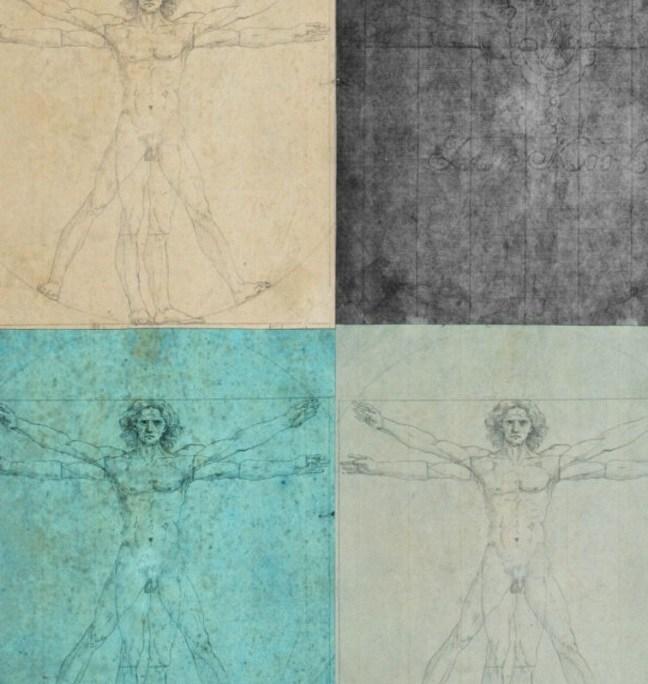
The 19th Century in the Arts: Images on Paper, from Drawing to Print Media —Techniques, Collections, and Conservation
BRERA ACADEMY OF FINE ARTS, MILAN 23 November 2026
Also in 2026, we renew our collaboration dedicated to the 19th century together with the Brera Academy of Fine Arts. The third edition of the study day, The 19th Century in the Arts. Research and Dialogues on Conservation , aims to open an interdisciplinary discussion dedicated to 19th-century paper materials with the objective of fostering dialogue between technical and scientific studies, diagnostic investigations, and conservation treatments, as well as with other institutions involved in training and research.
CALL FOR ABSTRACTS OPEN UNTIL MAY 25
Annual General Meeting 2026
The seventy -sixth Annual General Meeting of the International Institute for Conservation of Historic and Artistic Works took place at 6:30 pm (GMT) on Monday 26 th January 2026 1 Birdcage Walk, Westminster, London, SW1H 9JJ was the address given on the notice for attendance with online participation for attendees via Zoom teleconference. (You can view the full meeting minutes HERE)
Present from Council : Juergen Vervoorst (President, in the Chair), Jane Henderson (Secretary -General), Luiz Souza (Deputy President/ online), Joyce Townsend (Director of Publications), Tom Learner (Director of Congress), James Brooke Turner (Treasurer), Helen Griffiths (Director for Legal Counsel), Rachel Rivenc (Director of Professional Development and Standards), and Mariana Escamilla Martinez (Director of Communications).
Fellows and Members In -Person: Alex Owen, Antonio Cardoso, Barry Knight, Boris Pretzel, Gerry Alabone, Helen Hughes, James Black, Josephine Kirby, Joshua Hill, Pip Laurenson, Mikkel Scharff, Sarah Staniforth, Sylvia Sumira, Vincent Daniels.
Fellows and Members Online: Adam Klups, Ana Paula Hirata Tanaka, Andreas Burmester, Ann Shaftel, Ashley Lingle, Barbara Buckley, Chris Collins, Clare Finn, Claudia Barra, David Leigh, Dee Stubbs -Lee, Donatella Banti, Francesca Whymark, Hazelle Page, Ida Hovmand, James Licari, Jessica Lafrance -Hwang, Jonathan Ashley -Smith, Joyce Hill Stoner, Kate Seymour, Lauren Fonto, Lisa Swedberg, Lora Angelova, Lori Wong, Marina Byrro, Meaghan Monaghan, Nicole Prawl, Patricia Smithen, Rebecca Latourell, Rebecca Rushfield, Rosanna Kuon, Sarah Noble, Sarah Scaturro, Stephanie De Roemer, Sharra Grow, Thanasis Velios, Thomas Roby, Valentina Castillo, Yacy Froner, Yiota Manti, Yong Situ.
In attendance: Sarah Stannage (Executive Director) and Ellie Sweetnam (Fellowship and Membership Engagement Manager)
Juergen Vervoorst, President, in the Chair, extended a welcome to all those present, and called the 76 th meeting to order at 6.30 pm noting that the Annual General Meeting was in -person and by videoconference convened by proper notice to IIC members circulated on the 22 December 2025 with all reports including the annual accounts available to view on IIC ’s website and with this the attendance requirements of Article 11 have been met. There were no direct or indirect conflicts of interest declared in the proposed business to be transacted at the meeting. The President reminded members that following the business of the AGM there would be a member consultation regarding the proposed changes to IIC ’s Articles of Association and Secretary General role.
Thanks were given and recorded to outgoing IIC Council Members, Duygu Çamurcuoglu, Meaghan Monaghan, David Saunders and Joyce Townsend as well as the Secretary General Jane Henderson. Their exceptional service has made a lasting contribution to IIC, and they will all be greatly missed.
The Secretary General, Executive Director and Fellowship and Member Engagement Manager were declared as the tellers to record votes at the meeting. The minutes of the last Annual General Meeting in January 2025 were published on the IIC website and circulated to members electronically. The minutes were confirmed by members as read and a true and correct record by show of hands and were digitally signed by the President. The Notice calling the present Annual General Meeting was published on the IIC website and sent to all eligible members by e -mail. The Notice was declared as read by a show of hands. The Reports and Financial Statements were sent by e-mail to members, in December 2025 and published in the IIC website. Members agreed by show of hands that the Reports and Financial Statements could be taken as read.
The president provided an overview to the year under review, it shows that IIC was able to be resilient to volatile events. In particular, we delivered our IIC Lima Congress, offering IIC ’s first Congress in Latin America, with connection in -person to conservators across the continent and through live hubs as well as participants online
in over 70 countries making networking and learning affordable for a new tranche of first-time attendees to IIC ’s major international conference.
We also worked collaboratively with other conservation and culture sector organisations, offered new and innovative CPD to our members, made progress on climate action, and continued to spread good practice, including through our major journal Studies in Conservation and sector digital magazine News in Conservation . We continue to build on the work from this sometimes difficult but ultimately innovative year, extending our membership geographically and offering opportunities and support to all members of IIC.
IIC ’s accounts have been audited by Sayer Vincent LLP and a review of IIC ’s financial reports and accounts was undertaken and signed by the auditors, showing that IIC made a healthy surplus at the year -end, although it was noted that there is continued volatility to global markets impacting IIC ’s investment portfolio.
In respect to the Ordinary Resolutions included in the notice to members, these were taken together. The votes online in advance and at the meeting were combined. Members resolved to approved by a majority 59 votes (For), for the following resolutions:
Resolution 1: To receive and consider the Reports of the Council and the Auditors and the Financial Statements for the year ended 30 June 2025
Resolution 2: To authorise the Council to appoint auditors and to fix their remuneration for the ensuing year.
On the basis of this, resolutions 1 and 2 were duly adopted.
The President made members aware at the AGM, that election statement has been checked and reviewed by the Talent and Participation Committee and were published on the IIC website.
There was one proxy vote to consider.
It was confirmed the following candidates were standing for election:
Director of Fellowship : Mikkel Scharff FIIC
Director of Professional Development & Standards: Rachel Rivenc FIIC Ordinary Member of Council : Anastassia Belessioti FIIC; Lee Bilson, FIIC; Jessica Lafrance -Hwang James Licari FIIC; Amanda Pagliarino FIIC Boris Pretzel FIIC; Luiz Souza FIIC
Resolution 3: To elect a Director of Fellowships Mikkel Scharff was standing for election. On the basis of the total vote, Mikkel Scharff was duly elected by majority for a three -year term.
Resolution 4: To elect a Director of Professional Development & Standards
Rachel Rivenc was standing for re-election. On the basis of the total vote, Rachel Rivenc was duly elected for a further three -year term.
Resolution 5: To elect two Ordinary Members of Council
On the basis of the total vote and by majority, Luiz Souza and Boris Pretzel were duly elected as Ordinary Members of Councils, Luiza Souza for a second term of three years and Boris Pretzel for a first term of three years.
Resolution 6: To transact any ordinary business
Juergen Vervoorst, noting that there was no further business, declared the annual general meeting closed at 7 p.m. (GMT).
Members were invited to attend the member consultation regarding proposed changes to the Articles of Association and Secretary General role, after which the guest lecture by Professor Peter Stone, President of Blue Shield International would begin.
Juergen Vervoorst, IIC President Chair of the meeting
Fellowship Corner
Marcos Tascon is an analytical chemist who graduated from the Universidad Nacional de La Plata, where he also earned his PhD in analytical chemistry. He is vice -director of the Centro de Estudios sobre Patrimonios y Ambiente at Universidad Nacional de San Martín. Additionally, he has an associate professor position (tenure) in the restoration and conservation degree program at UNSAM and an associate researcher position at CONICET. His research focuses on developing micro - and non -invasive analytical techniques mainly based on mass spectrometry for the rapid characterization of compounds in environmental sciences and cultural heritage. Marcos has authored approximately 50 publications in prestigious journals and delivered over 80 presentations at national and international conferences. He is currently an associate editor for Frontiers in Analytical Science (Frontiers) and a member of the Early Career Advisory Board for Advances in Sample Preparation (Elsevier).
Siobhán Conyngham is an accredited freelance painting conservator based in Ireland with over forty years of experience working for museums, galleries, historic houses, and private clients. She studied history of art at University College, London, and trained as a conservator with Paul d'Aguilar (Courtauld). She specialises in the treatment of easel paintings and murals, ranging from early to contemporary works. Her approach prioritises minimal intervention, ensuring all conservation treatments respect the artist ’s original intent while safeguarding the artwork ’s longevity. She is an advocate of the thread -by-thread tear mending technique, as taught by Professor Winfried Heiber, and has published papers citing examples supporting this. She is an active member of the Institute of Conservator Restorers of Ireland (ICRI), having been on conference and editorial committees, and also an ECCO representative during her time as a board member.
IIC Fellow Marcos Tascon is vice -director of the Centro de Estudios sobre Patrimonios y Ambiente . Image curtesy of Marcos Tascon.
Siobhán Conyngham, FIIC, is an accredited freelance painting conservator based in Ireland . Image courtesy of Siobhán.
Dr Nikolas Sarris is a senior book and paper conservator at the National Library of Greece, with a PhD from the University of the Arts London. He has previously worked at the British Library, St Catherine’s Monastery in Sinai, the monastery of St John Theologian, Patmos, Greece and the Conservation School of Zakynthos, Greece as an assistant professor. He has taught widely and been involved in several international projects as a consultant, conservator, or project leader, with various organizations including UNESCO, the ALIPH Foundation, The Thesaurus Islamicus Foundation, the EU Commission as reviewer on HORIZON projects, the Centre for the Study of Manuscript Cultures, Hamburg University, the Ligatus Research Centre and Conservators Without Frontiers. His research and work interests focus on the conservation and study of manuscripts and historic bookbindings of the Eastern Mediterranean and the preservation of library collections in endangered environments in the Middle East and Africa.
Sarah VanSnick is the head of preservation and conservation at Trinity College Dublin, where she leads the conservation team, chairs the Library Sustainability group and is part of the team working on the redevelopment of Trinity College ’s iconic Old Library. Sarah has a background in preventive conservation, gaining her diploma in collections conservation and management from Fleming College, Canada and has worked for The National Archives UK and the Victoria and Albert Museum, London, becoming an accredited conservator with Icon in 2014. She has published on diverse topics including risk and value assessment, climate resilience, mould management, and the preservation impact of digitising archival collections.
Dr Nikolas Sarris, FIIC, is a senior book and paper conservator at the National Library of Greece . Image courtesy of Nikolas Sarris.
IIC Fellow Sarah VanSnick is head of preservation and conservation at Trinity College Dublin . Image courtesy of Sarah VanSnick.
Marco Grassi
July 7, 1934
Florence, Italy
By Rebecca Rushfield
Marco Grassi was a conservator of European Old Master paintings, a connoisseur and scholar, an author of brilliant essays, a member of the Sovereign Military Order of Malta and the Society of the Cincinnati, a raconteur, a mentor, and a gentleman. While born in Florence, Italy into a family of art dealers with a grandfather who was a paintings restorer at the Uffizi Gallery as an eleven year old boy he came to the U.S. with his family at the end of World War II.
After graduation from Princeton University in 1956 and U.S. Army service stationed in Paris, he returned to Florence and, with the encouragement of his father, began an apprenticeship in the Uffizi’s restoration workshop followed by four years of formal training at the Istituto Centrale per il Restauro in Rome. He then set up a private practice in Florence in 1962. Baron Hans Heinrich Thyssen -Bornemisza
March 30, 2025
New York City
became one of his clients, and Marco travelled back and forth between Lugano, Switzerland and Florence for a number of years, finding himself in Lugano on November 4, 1966 when the Arno flooded Florence.
With civic unrest and political instability growing in Italy in the late 1960s, he and his family returned to the United States in 1971 where he set up a studio in New York City, treating paintings for private clients and museums, mentoring young conservators, and building a world class library to rival the one his brother inherited after their father died. To his studio located first in a building in the Soho neighborhood of Manhattan and later in his Upper East Side townhouse came scholars, students, and colleagues, all of whom were greeted with warmth and courtesy. He was generous in sharing his knowledge with all of them.
taken at the launch party for
Keith Christiansen, former Chairman of the Department of European Paintings at the Metropolitan Museum of Art captured this in a eulogy he gave at a memorial service in October 2025: “Marco had that special gift for making people feel at ease... Marco seemed to me able to converse on any subject. And with that natural affability that was second nature to him, he put you immediately at ease. He invited me to come to his studio, and it was there that we began a long friendship from which I also benefitted professionally in multiple ways. ” Half a century later, David Goist, conservator of paintings and painted surfaces and former
chief conservator of the North Carolina Museum of Art, recalled that in the later 1970s when he was an intern with Bernard Rabin, Rabin took him to meet Marco Grassi at his New York studio where Goist “was in awe of his class and grace. ” Conservator Abraham Joel of Fine Arts Conservation in New York City met Marco forty years ago at the Detroit Institute of Arts. He remembers that they “stayed in touch while I was in Detroit, but before I moved to New York, his invaluable advice was instrumental in helping me open a studio here. Marco was always ready to lend a hand, and one always knew he would advise and execute if needed. ”
I met Marco Grassi in 2003 when I interviewed him for the American Institute for Conservation Oral History Project. In that interview he spoke of his participation in the rescue effort after the Florence Flood. That interview led to a symposium on the 40th anniversary of the Flood and a more than 20 -year friendship. Although Marco was a much more accomplished and recognized conservator than I, he treated me (as he treated everyone) as his equal and invited me to special events where he was a speaker including the International Study Conference Cesare Brandi and the Development of Modern Conservation and Restoration Theory (N ew York, O ctober 4, 2006), the symposium The Future of Permanence in an Age of Ephemera (Consulate General of France, October 21, 2016), and the launch of his book, In the Kitchen of Art: Selected Essays and Criticism, 200320, held on April 13, 2021. Of that wonderful book, Franklin Einspruch, Marco ’s fellow contributor to The New Criterion, wrote, “’An ivory tower is a fine place as long as the door is open, ’ says one of Darby ’s Aphorisms. Having so faithfully, intelligently, and perceptively served in the kitchen of that tower, Grassi has graciously thrown open the doors, laid down a welcome mat, and set out espresso and biscotti for us. This reader is grateful and delighted. I read it in awe of Grassi ’s erudition and culture, and can think of no art writer alive who might match them. ”
Marco Grassi led a long, full, and productive life, but for those who knew him personally, it was too short.
Image
Marco ’s book , In The Kitchen of Art, in April 2021. Marco is in the middle, Rebecca Rusfield on the left, and Roger Kimball, Editor and Publisher of The New Criterio, which held the launch party, is on the right. Photo taken by Daphne Youree, made available courtesy of Marco Grassi and Rebecca Rushfield.
Navigating a Collection’s Variability Through Epistemology
Wh Cha Conserving
By Vanessa Magalhães Pinto
The gap between recommended parameters and the reality of a museum located in a socioeconomically vulnerable context whose collection also raises conceptual and ethical issues highlights the difficulty of implementing technical and normative guidelines, especially in the face of structural, budgetary, and specialized staff limitations. It was within this context that I began my research and professional practice in the field of conservation in Brazil, leading me to seek an understanding, through interdisciplinary studies, of how these challenges shape everyday practices and
influence the formulation of viable preservation strategies.
After graduating in conservation -restoration of cultural heritage from the Federal University of Minas Gerais (UFMG) in 2014, I enrolled as a master ’s student in the graduate program at the same institution. My master ’s research focused on the work of the artist Arthur Bispo do Rosario from a conservation perspective and involved on -site research at the Bispo do Rosario Contemporary Art Museum in Rio de Janeiro.
What nges ing
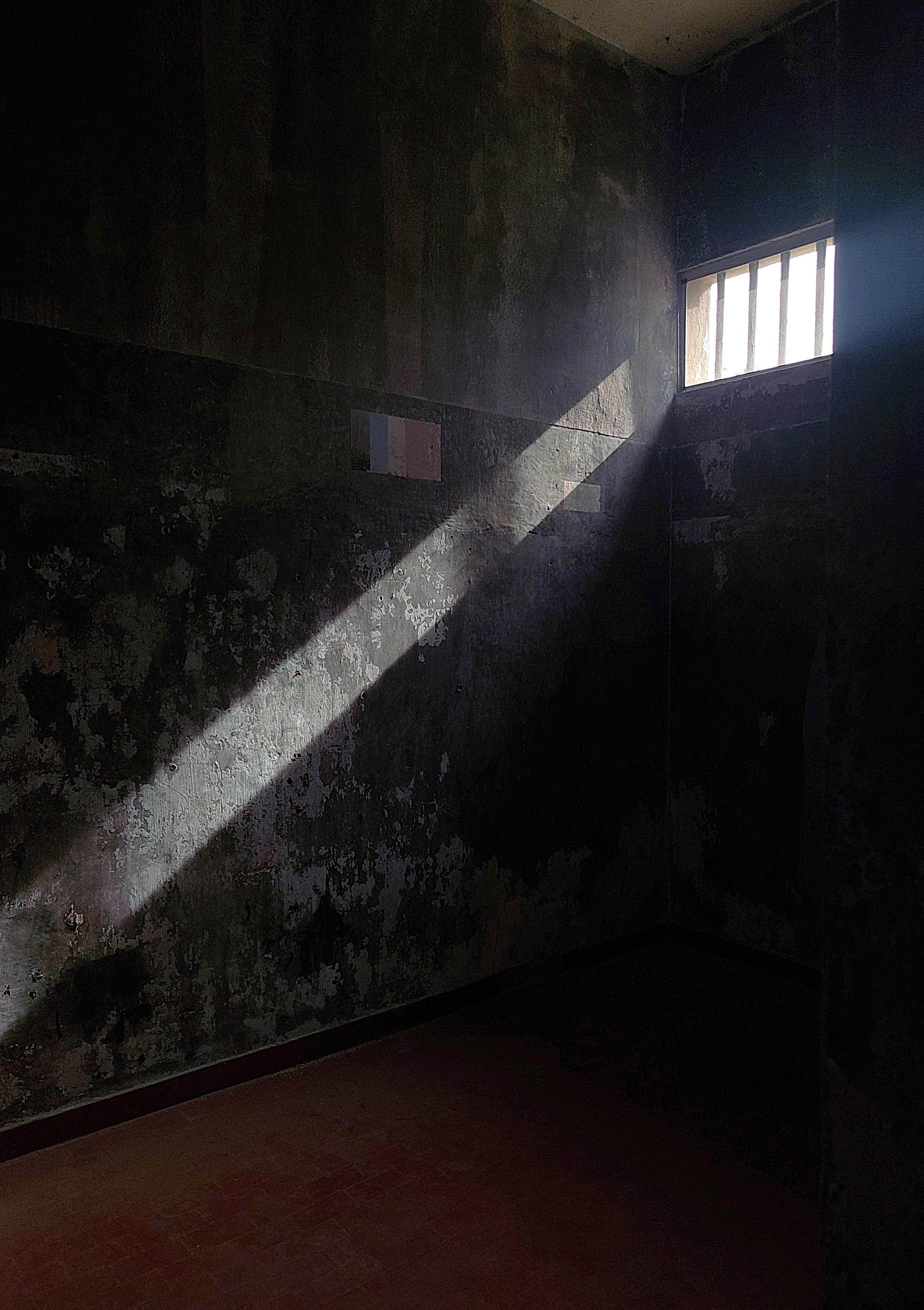
Interior view of one of the psychiatric isolation rooms inhabited by Arthur Bispo do Rosario, where he accumulated, kept his objects and produced his works. Image by the author.
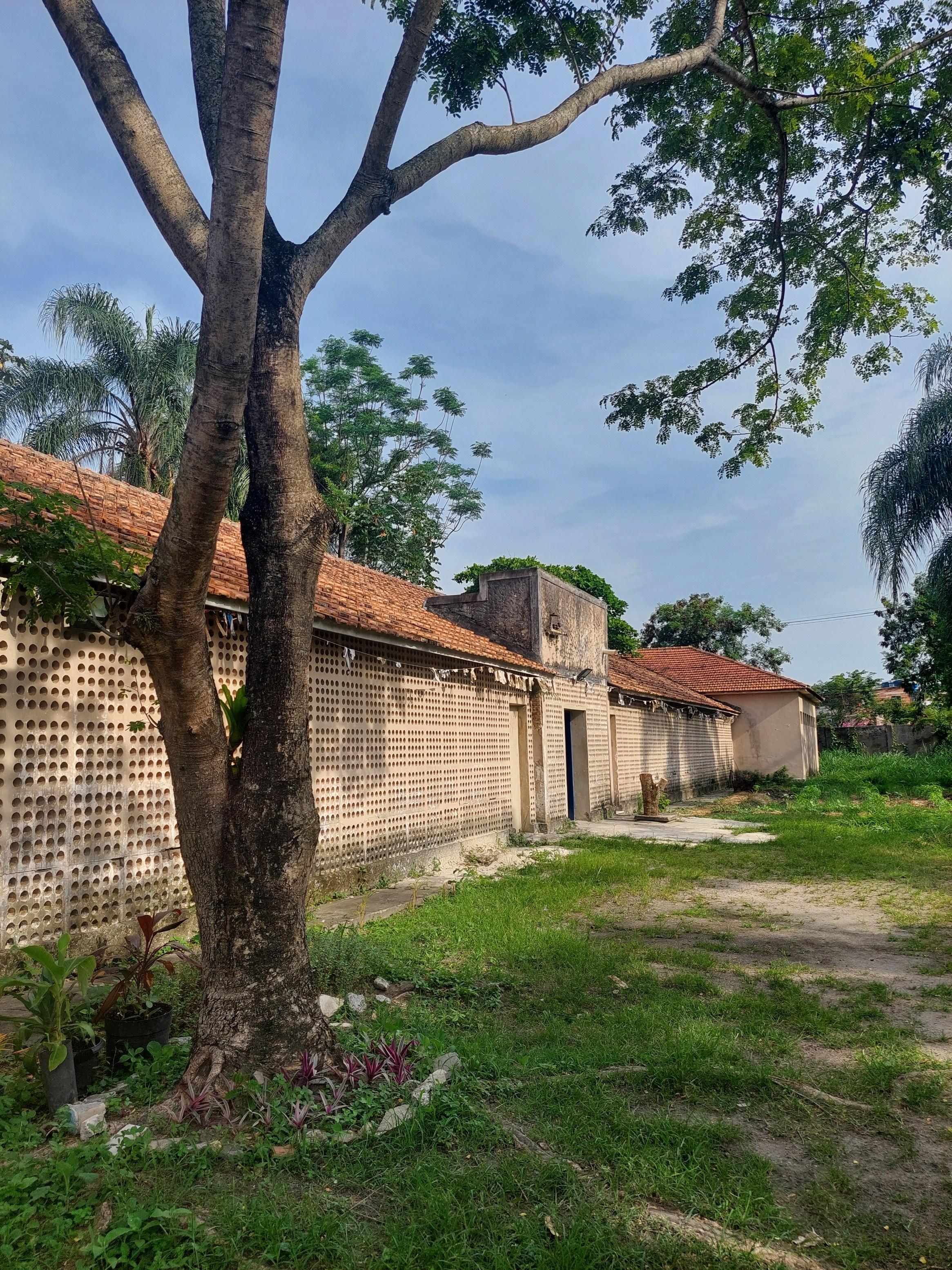
The museum is part of the municipality ’s public mental health system and is located on the site of the former Juliano Moreira Colony, a large psychiatric hospital complex that is now decommissioned. Bispo do Rosario was hospitalized there during the last decades of his life (1964-1989), where he produced the majority of his art.
My on -site research into the social and geographical context in which this production was conceived and is now preserved as a museological collection prompted critical reflection on the circumstances of Bispo do Rosario ’s artistic practice. These reflections were crucial for interpreting the artist ’s materials and techniques, assessing the collection ’s condition, and supporting proposals for conservationrestoration procedures. This perspective became even more significant in light of the fact that the artist developed his works through the collection of objects and materials drawn from the everyday life of the hospital complex, relying on forms of articulation within the context of long -term psychiatric hospitalization to obtain the items he needed. Two examples of techniques developed by Bispo do Rosario involve the blue threads he used to embroider and cover objects, obtained by unravelling uniforms worn by himself and other hospitalized patients, and the textiles employed in his works, which were mostly bedsheets. As a consequence of their previous use, these materials bore visible signs of wear and physical alteration Moreover, the works produced by Bispo do Rosario were kept by him in the psychiatric isolation spaces where he lived. Analyzing the environmental context in which these objects had been kept was essential to identifying highly precarious conditions, including poor air circulation and high
humidity. This led me to consider, through my analyses, that during the period in which the works were conceived, the materials appropriated by the artist were already undergoing processes of advanced stages of deterioration. These pre -existing deteriorations therefore constitute records of conditions marked by neglect under which both the objects and the artist himself lived.
Another factor considered in my research was that, although Bispo do Rosario ’s production has been artistically legitimized as contemporary art, its purpose was closely linked to the messianic identity he understood himself to possess one of the factors that led to his psychiatric hospitalization. Consequently, he did not employ an artistic discourse to speak about his works, thereby complicating the interpretation of his possible intentions regarding its aesthetic and conceptual dimensions. Bispo do Rosario produced his objects while preparing himself physically, through practices such as fasting, for the day he believed he would be recognized by humanity as Jesus Christ. He did not refer to himself as an artist and, during his lifetime, at times refused to exhibit his works. In this sense, although his production is classified as contemporary art, my research raises questions about how it has been artistically mediated and preserved.
Exterior view of the Ulisses Viana Unit at Juliano Moreira Colony, where the psychiatric isolation spaces inhabited by Arthur Bispo do Rosario are located. Image by the author.
“…
the materials appropriated by the artist were already undergoing processes of advanced stages of deterioration — conditions marked by neglect under which both the objects and the artist himself lived. ”
After defending my master ’s thesis in 2017, I worked as a conservator at the same museum. Its peculiar organizational structure balanced the social and educational care of the community remaining from the decommissioned psychiatric hospital with the management of Bispo do Rosario ’s artistic legacy. Beyond the particularities of the social context in which the collection is preserved and managed, the conservation work also involved addressing the absence of documentation on the artist ’s production. Compounding this, Bispo do Rosario ’s production is characterized by a constitutive process that breaks with conventional parameters for classifying artistic objects. The works were installed in clustered arrangements alongside
the architecture of the hospital ’s isolation rooms. Bispo do Rosario did not date his works or distinguish those still in progress from those considered complete, and he constantly reorganized both his works and the objects grouped in the spaces where they were stored. Moreover, gaps in the museological documentation of these objects ’ conservation history hindered the assessment of the collection ’s condition and the proposal of appropriate treatments. In addition, there were many discrepancies between the objects ’ appearance and their representation in photographic and film records from the 1980s, when Bispo do Rosario was still alive. These discrepancies were not solely the result of conventional deterioration or
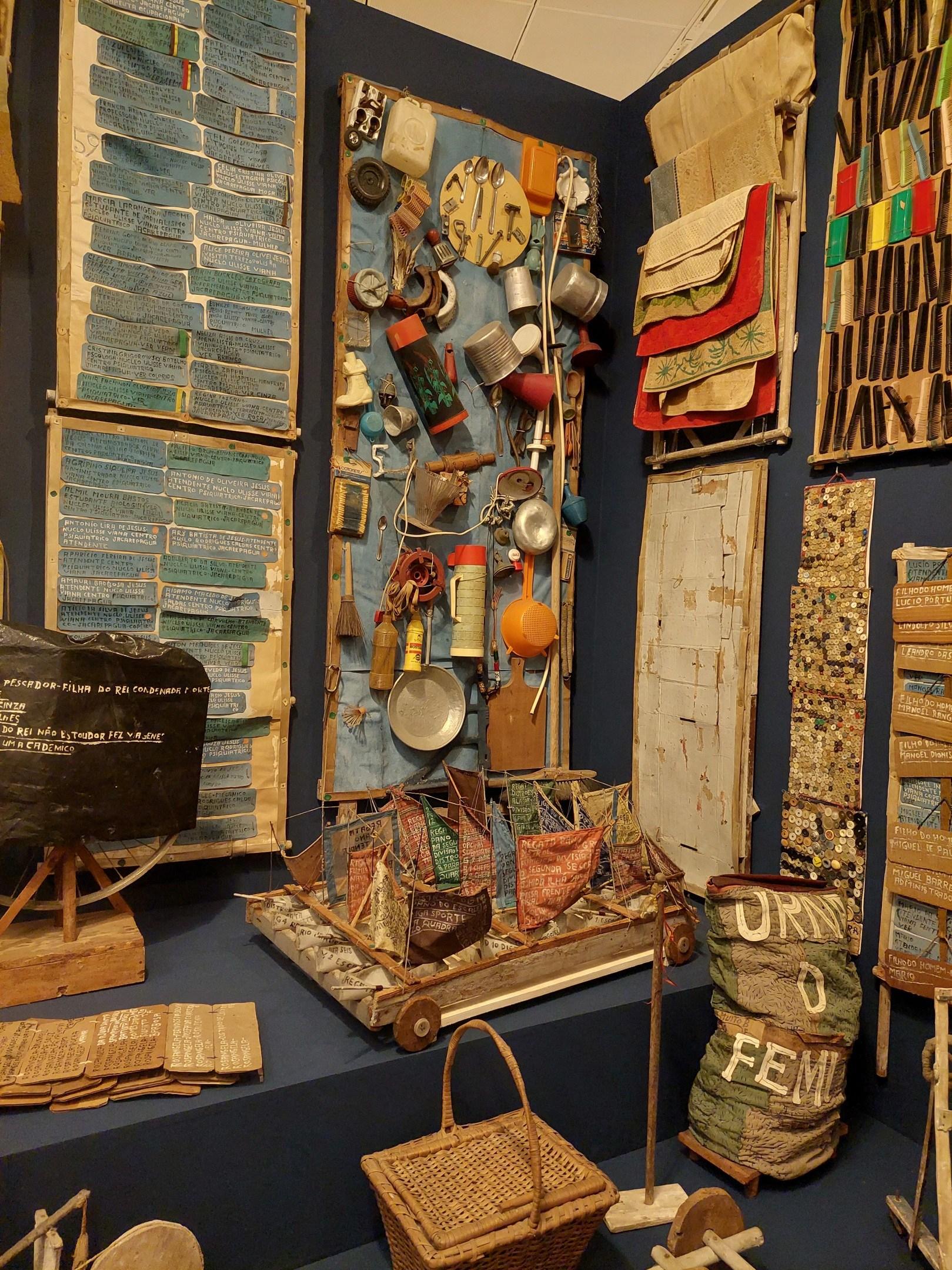
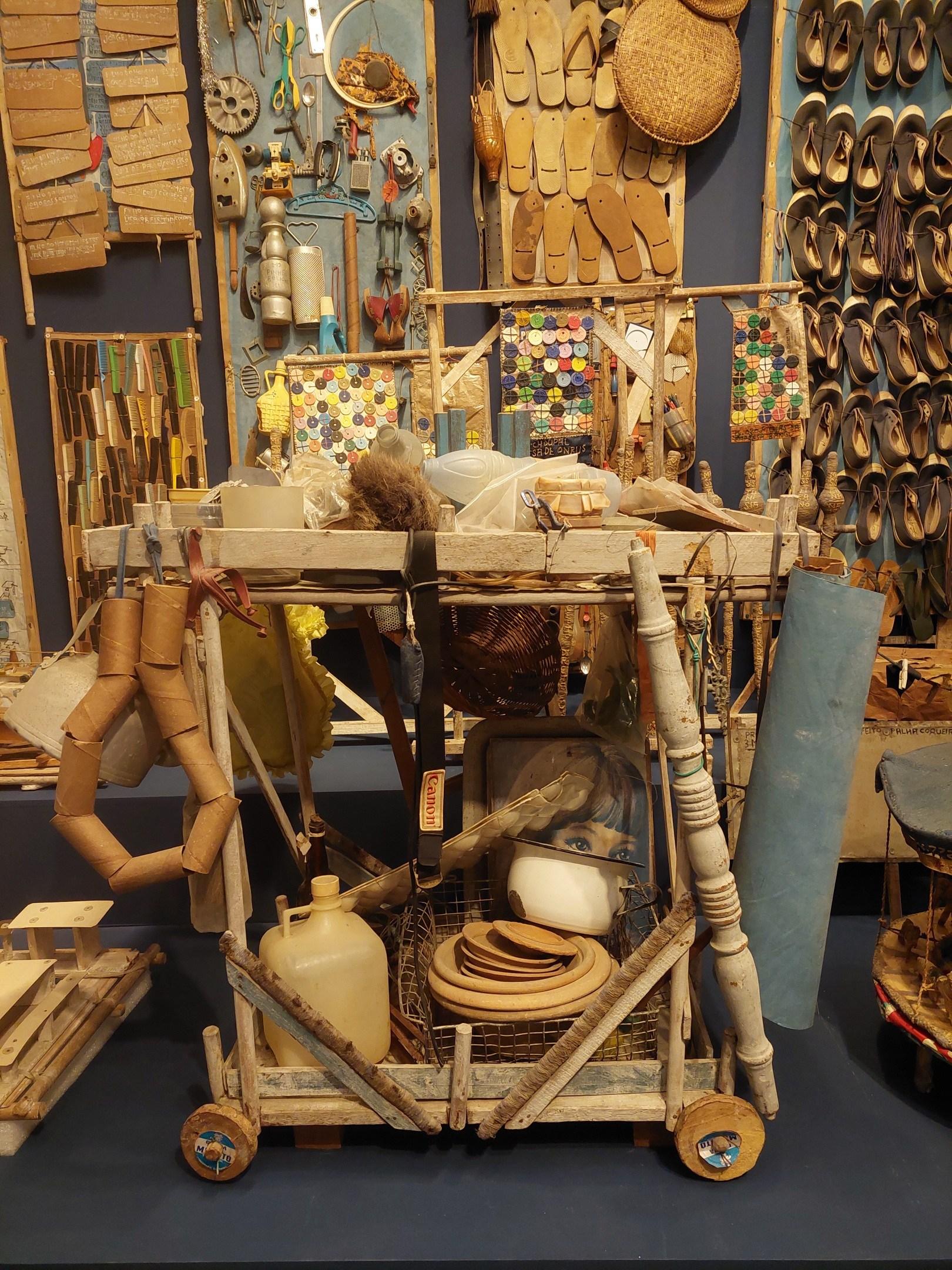
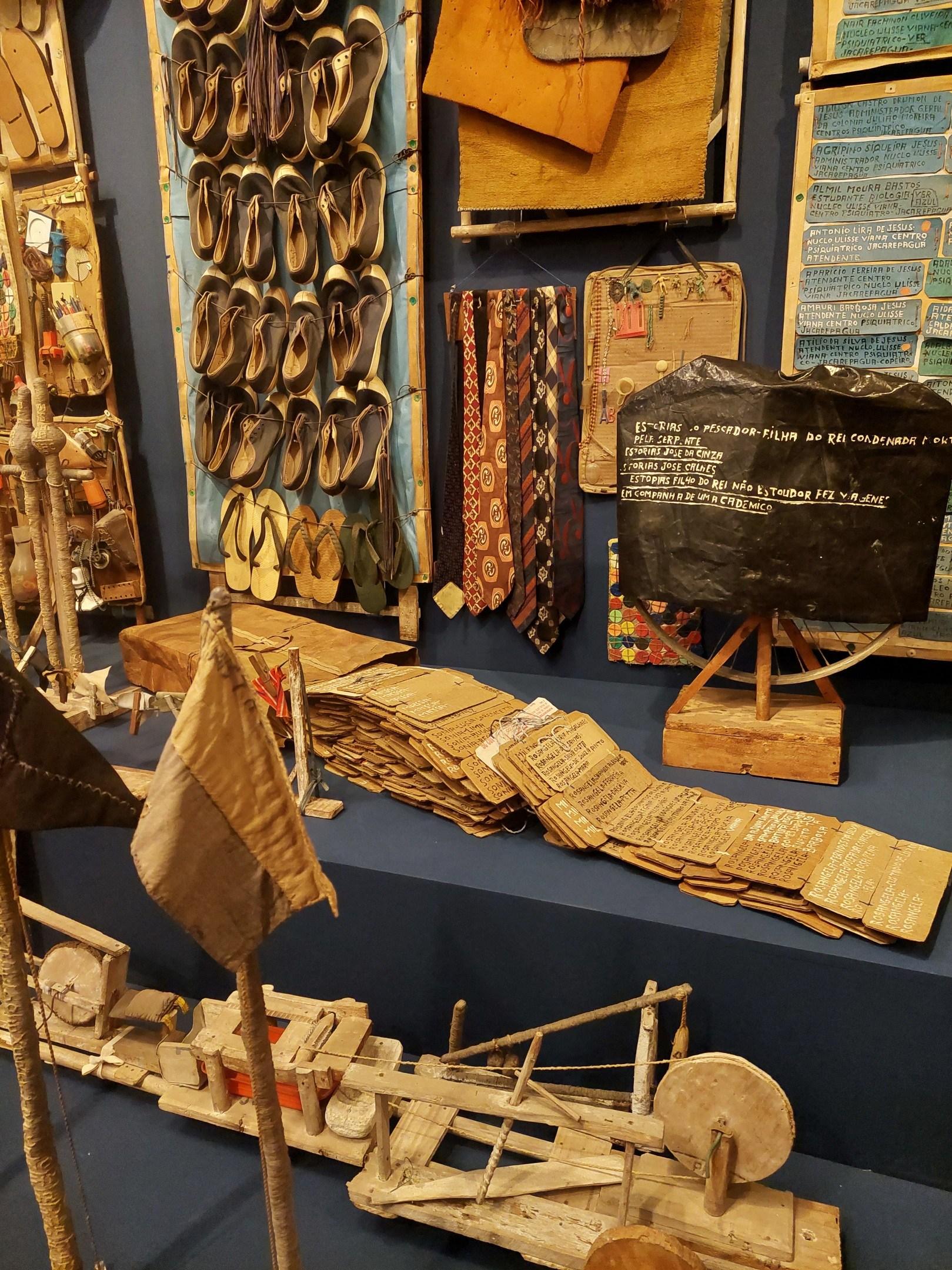
Exhibition view of Bispo do Rosario: Eu Vim – Aparição, Impregnação e Impacto (2022). Itaú Cultural: Left and right: Various works, n.d. Collection Museu Bispo do Rosario Arte Contemporânea.
Center: Untitled, n.d., assemblage, carpentry, sewing, writing, painting and perforation, 108 x 98 x 56 cm
intrinsic factors; they also reflected physical alterations, such as the segregation and reorganization of materials and objects, potentially related to posthumous artistic agency and curatorial practices.
These issues led me to examine more closely the photographic and film records documenting the artist’s production at different times. Such images can offer insights into the objects ’ former characteristics, the way they were kept by the artist, and their display in different exhibitions, thereby enabling a more precise assessment of their current condition. From the observation of these records, the following questions initially arose: given the discrepancies in the ways
Bispo ’s legacy was arranged and presented through different curatorial and exhibition approaches, what discourses lay behind these various modes might of dissemination? Might these conceptions have been linked to the legitimization of Bispo ’s legacy as contemporary art and, following the process of artistic agency, suggest an interest in introducing new interpretations of the objects? What photographic images reveal about the various contexts that shaped Bispo ’s production at the time these records were created? In what ways does reducing an artistic object ’s understanding to its appearance at a given moment obscure the contextual histories embedded in its trajectory? How, then, can the conservation of a collection
“... any analysis the conservation state of this work must not only material terioration the constant ity shaped rial discourses
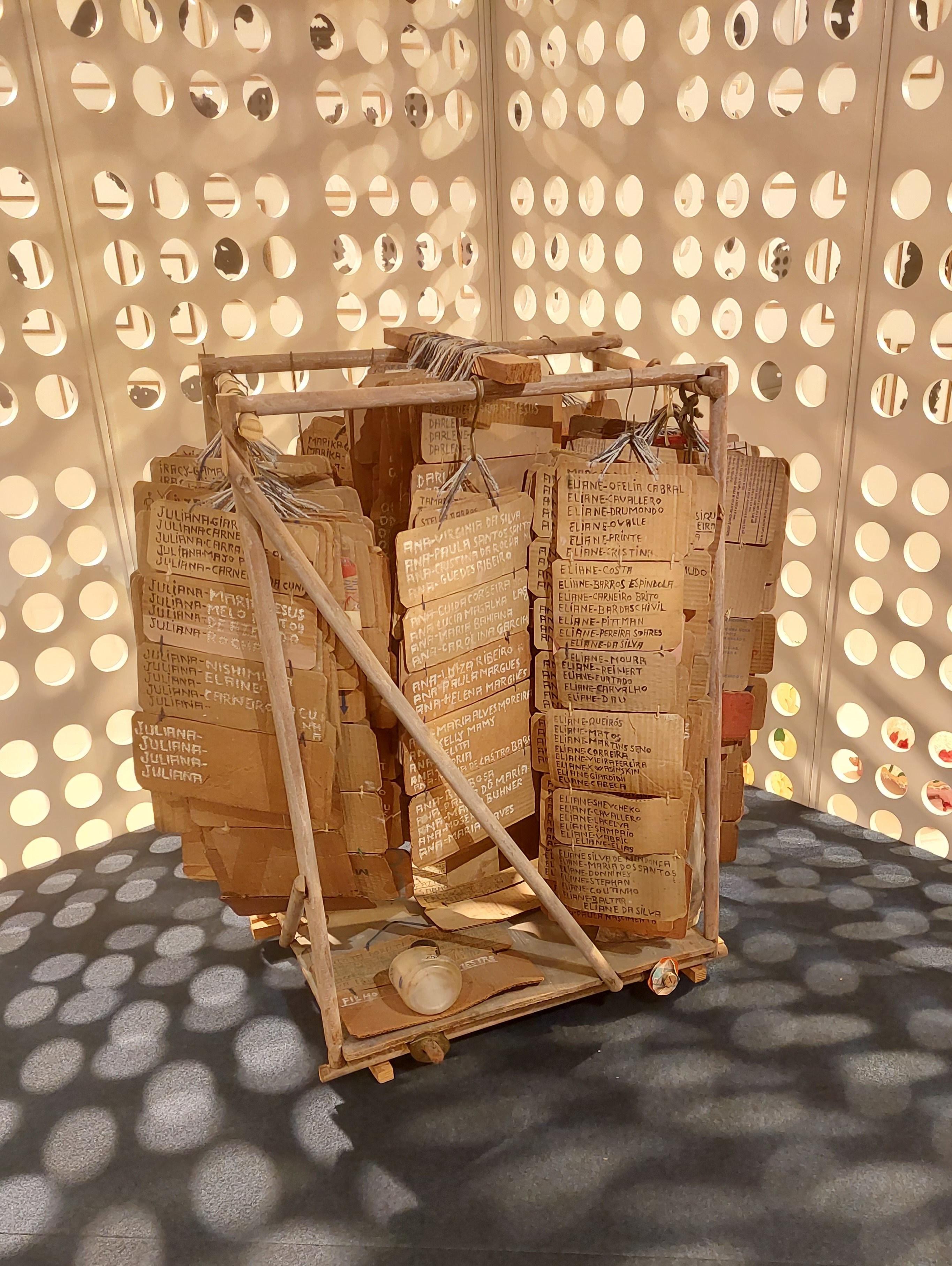
Exhibition view of Bispo do Rosario: Eu Vim – Aparição, Impregnação e Impacto (2022). Itaú Cultural. Untitled , n.d., assemblage, carpentry, sewing, writing, painting and perforation, 95 × 60 × 55 cm. Collection Museu Bispo do Rosario Arte Contemporânea.
analysis of conservation this body of must consider material deterioration but also constant variabilshaped by curatodiscourses …”
with such particularities be approached?
Working on the conservation of Bispo do Rosario ’s works therefore required me to reflect on ethical limits and responsibilities, particularly in regard to the preservation of sensitive narratives, respect for the artist ’s cultural integrity, and the mediation between institutional and individual memory. Consequently, I recognized the need to continue my research, this time adopting an interdisciplinary perspective including art history and theory, with the aim of understanding the collection ’s history in relation to the Museum ’s institutional history and Bispo do Rosario’s biography. In 2019, I began my doctoral studies in the graduate program in visual arts at Federal University of Rio de Janeiro (UFRJ), with a research focus on history and art criticism.
During my doctoral studies, I began by interpreting Bispo do Rosario’s artistic production based on his own discourse and by understanding him as possessing a singular epistemology. Subsequently, by tracing connections between the visual records, curatorial discourses, and the different ways the collection has been managed within the museum framework, I came to see that its current state of conservation is partly shaped by its passage through different epistemes after the artist ’s death. My research shows that, in addition to
curatorial approaches aimed at presenting the objects through different art world discourses, some initiatives sought to reassemble the artist ’s works as they were originally arranged by the artist and, through exhibition design, referenced the arrangement of his objects in psychiatric isolation spaces. In short, some alterations aimed to present the objects through different epistemological frameworks, while others sought to recover aspects of their past configurations. Consequently, any analysis of the conservation state of this body of work must consider not only material deterioration but also the constant variability shaped by curatorial discourses, which may involve, for example, the removal or addition of specific supports.
This study highlighted for me the importance of recognizing the dynamic identity and variability in how artistic production understood as contemporary art can be exhibited. From this perspective, I emphasize the difficulty of establishing conservation and intervention criteria for collections whose cultural biographies are marked by semantic changes, particularly in contexts of budgetary constraints. Ultimately, this research demonstrates that interpreting the conservation history of a collection may require interdisciplinary approaches, and that the challenges it presents must be considered from a dialectical and transversal perspective.
Vanessa Magalhães Pinto is an art conservator with a bachelor ’s degree in conservation -restoration of cultural heritage from the Federal University of Minas Gerais. She holds a PhD in history and theory of art from the Graduate Program in Visual Arts at the Federal University of Rio de Janeiro and a master ’s degree in cultural heritage preservation from the Federal University of Minas Gerais.
How Science Exposes Museum Objects: A Case Study of a Mingqi Figurine
By Zofia Pogoda
Museums around the world hold objects regarded as historical artefacts with long and often unquestioned histories. The value of material cultural heritage is founded primarily on the historical truth it embodies. For a long time, this truth was assessed mainly on the basis of stylistic iconographic analysis and archival documentation which, as practice shows, may be incomplete, erroneous, or deliberately falsified.
The development of scientific methods in conservation research has led to historical objects increasingly becoming sources of new questions. One such case is a mingqi figurine from the collection of the National Museum in Szczecin (Poland), whose analysis
revealed that an object long believed to be ancient conceals an entirely different history.
I worked on the conservation of this sculpture as part of my master ’s thesis in conservation and restoration of works of art at Nicolaus Copernicus University in Toruń, under the supervision of Dr Aleksandra GralińskaGrubecka. The figurine was delivered to me as 19 fragments resembling a set of clay puzzle pieces. According to museum documentation, it had been identified as a mingqi figurine from the Tang dynasty period (618–907 CE), which entered the collection of the National Museum in Szczecin after World War II from German museum collections in the region.
Mingqi are Chinese sepulchral sculptures placed in tombs, whose origins date back to the Neolithic period and reflect ancient Chinese beliefs concerning the afterlife. They reached their greatest development during the Han dynasty (206 BCE –220 CE), when mingqi replaced the practice of burying living human sacrifices and real everyday objects in the graves of rulers and aristocracy. It was believed that after death, the figurines would come to life and assume the roles of real people, animals, and objects, ensuring protection, comfort, and prosperity for the deceased in the afterlife. The sculptures were produced using reusable moulds and subsequently assembled, while the heads were modelled individually. As a result, many very similar figures have
survived, although almost none are identical (Niemyjska and GralińskaGrubecka 2023, 136 -141).
The analysed figurine, made of sun-dried clay and covered with a painted layer, depicts a woman seated on her heels most likely a musician playing a drum, as suggested by the remains of drumsticks held in her clenched hands, although the instrument itself has not survived. The object exhibits a low degree of anatomical realism and lacks the finesse of authentic Tang -dynasty mingqi figurines.
The conservation process included disinfection, double structural consolidation due to the extreme fragility of the clay, reassembly of broken fragments, filling of losses, and reconstruction of the hairstyle
and one hand. During the treatment it became clear that some of the fragments supplied with the object did not originally belong to it. Among them were four hands, of which only one could be attributed to the figurine with a high degree of probability. The remaining fragments differed significantly in form from the preserved material and from the photographic documentation. The absence of iconographic analogies became the first clear indication that the attribution of the figurine as authentic mingqi might be questionable.
Analyses of the technological structure of the object, particularly FTIR and XRF examinations, demonstrated that the figurine does not originate from the Tang dynasty period but most likely
dates to the 19th or early 20th century. This conclusion is further supported by the unnatural modelling of the form, which contradicts the principle of realistic representation that was fundamental to mingqi according to traditional beliefs, the more realistic the figure, the better it could fulfil its role as an animated duplicate in the afterlife.
However, the most decisive evidence was the presence of Schweinfurt green a synthetic copper pigment (copper acetoarsenite) in the green paint layer. This pigment was discovered in 1800 by Edler von Mitis and introduced into production in 1814 by Friedrich Wilhelm Russ and Wilhelm Sattler in Schweinfurt (Rudniewski, et al. 2018, 109 -110) (von Liebig 1823, V. 23, 412 -413).
Due to its extremely high arsenic content, it was found to be toxic and was withdrawn from use in the early 20th century. Crucially, the pigment was not applied secondarily, because it occurs at the same stratigraphic level as the other paint layers, which unequivocally excludes the possibility of an ancient origin for the object.
The discovery that the figurine is not an ancient artefact is not an isolated case. Alongside the growing European fascination with Chinese culture, intensive trade in craftsmanship between China and Europe developed, as well as the production of chinoiserie objects of Chinese craftsmanship incorporating elements of European aesthetics, or European decorative arts incorporating Chinese stylistic features. For collectors, even the possession of objects “in the Chinese style ” produced in Europe was a manifestation of erudition and refined taste. Copying Chinese motifs was a way of publicly paying homage to a craft perceived as exceptionally valuable (Mancuso 2022, V. 1, 29 -30). In Chinese artistic tradition, copying the works of earlier masters is itself an expression of continuity and respect, which further facilitated the acceptance of such practices (Fong 2003, V.2, 263). However, European fascination with the Orient and the lack of clearly documented provenance also fostered the development of the black market in antiquities ( Michalak 2025 ).
Today, works of art and archaeological artefacts continue to be systematically looted from countries affected by political or economic instability, as well as from highly developed states, and then sold on the black market for a fraction of their true value. During armed conflicts, this practice intensifies, and profits from illegal sales are often used to finance further violence, as occurred, for example, during the terrorist activities of the socalled Islamic State in Iraq and Syria (Westcott 2020, 6-9). Civilians also exploit wartime chaos to remove objects of high material and cultural value.
According to data from the United States Department of Justice and UNESCO, crimes related to the illegal trade in works of art constitute the third most lucrative form of organised crime, after drug and arms trafficking. This phenomenon is particularly acute in regions with limited protection and border control, which facilitates the smuggling of cultural goods for example, within the Schengen Area.
“Today, works of art and archaeological artefacts continue to be systematically looted from countries affected by political or economic instability, as well as from highly developed states …”
Smuggling and illegal trade in works of art represent one of the greatest threats to the integrity of the world ’s cultural heritage. Objects are stolen from museums, temples, public and private buildings, and archaeological sites and are then sold through illegal auctions, private collections, or even displayed in galleries and museums that do not always reliably verify their provenance. The practice involves extensive criminal networks, including looters, intermediaries, document forgers, gallery owners, and even art conservators (Jakubowski 2014, 389–421).
The presented case study of the mingqi figurine demonstrates that
the authentication process of a museum object is rarely a one -anddone affair. The history of this figurine shows that two key roles of the conservator are to help verify an object ’s history through analytical research and that conservation serves not only a technical but also an ethical function. In an era of increasing illegal trade in cultural property and widespread falsification of provenance documents, material analysis helps to distinguish authentic historical objects from those, for example, created in response to collector demands both in the past and present.
Access the full bibliography for this article HERE .
Zofia Pogoda is an early -career art conservator -restorer holding a master ’s degree from Nicolaus Copernicus University in Toruń, Poland. She has experience working with a wide range of threedimensional historic and archaeological objects, as well as sculpture and architecture including metal, stone, ceramics, mosaics, wood, sun-dried clay, and palaeontological bones.
Hand in Hand Collaboration in Art and Conservation
Edited by Miranda Brain, Alexandra Gent, Amy Griffin, Lucy Odlin, Caroline Rae and Claire Shepherd
Archetype Publications: 2024
Paperback / 118 pages / £40 / $80
ISBN 9781916642027
H and in Hand Collaboration in Art and Conservation is a compilation of papers presented at the British Association of Paintings ConservatorRestorers conference of the same name, held at the National Maritime Museum in Greenwich, London in 2023. The conference theme, and as a result the publication, focuses largely on the field of paintings conservation and addresses a variety of different projects (from larger collections to individual works of art) that explore collaboration between conservation, art history, and the sciences (analytical disciplines), as well as collaboration with others such as related communities, public outreach initiatives, the artist, the artist ’s family or the artist ’s estate.
The book begins with a foreword and acknowledgements referring to the contextual and financial setting of the publication within the framework of the conference, followed by a short introduction.
In the introduction, Claire Shepherd writes, “Collaboration has always been an important component of art production and is essential to the working practice of conservators today ”. This statement neatly introduces the two main themes of the book: collaboration in examining works of art with the aim of gaining deeper
knowledge about the works and their context to inform decision -making processes or spark further research; and the exploration of historical collaboration in the making of works of art. Both themes are inherently interconnected, which is illustrated throughout the book.
The introduction offers a short overview of all twelve very diverse case studies included in the volume and highlights the key outcomes of each. The case studies represent all but one of the presentations given during the conference and reflect an international selection of professionals working in institutions, private practice and teaching institutions.
The case studies follow a clear structure, beginning with an introduction to the artwork and the research question(s), followed by information on the collection or artwork relevant to the study. Details of the research undertaken and the team(s) involved are then presented, followed by results and conclusions. This structure not only highlights the collaborative nature of the research carried out but also provides the reader with deeper insights into the artwork ’s history, creation and treatment. Each case study also offers further references.
The larger group of projects highlights detailed studies achieved through close collaboration between art historians, conservators and scientists, often addressing questions about the making process, conservation treatment and decision -making. This interdisciplinary approach enables a comprehensive examination of each work, leading to new insights into techniques, materials and art -historical context. It provides excellent examples of successful interdisciplinary collaboration between these fields. The book clearly demonstrates the importance of cross -disciplinary research in fully understanding and evaluating the complexity of artworks and underlines the value of combining different sources of information (visual, archival and
analytical). Different perspectives often spark questions that might otherwise not be asked. In many of the case studies, the results of the examinations also provide further insight into the collaborative making process of the artworks. This is particularly well demonstrated in “From Record to Image: Creating The Field of the Cloth of Gold " by Rosanna de Sancha, Claire Chorley and Claire Shepherd, as well as in “Collaboration across centuries? Investigating the reworking of Hexham Abbey ’s ‘Ogle ’ altarpiece ” by Alice Limb and Lucy Wrapson, which explores the history of the work.
An additional benefit of the projects presented is that each describes the application of research methods such as visual examination, archival research of historical sources, and the use of a range of imaging and spectroscopic techniques. The reader is therefore provided with a rich resource of examples demonstrating the application and results of different analytical tools, which may assist in decision -making in comparable cases.
Some of the case studies stand out in particular because they offer new insights or achieve results that may suggest innovative approaches within the field of conservation.
Diamond and Julia Nagle describe the collaborative process of working directly with the artist Emma Prempeh on the treatment of her own work, Go Liming, which had been significantly damaged prior to an exhibition. The conservators worked together with the artist through remote guidance via video calls to achieve the stabilisation of the painting.
In “A facsimile For a Lady: Glasgow Museus ’ Unfinished Portrait of an Unknown Lady ” by Miria José Pietro Pedregal, the author describes how a digitally produced replica of the work was used to simulate potential treatment outcomes and inform in the decision -making, offering an alternative approach to the conservation process. The project is additionally interesting because the treatment process formed part of a television programme.
In “Indigo: Collaboration, Collections, Conservation, Chemistry ” by Jenny Williamson, Cecile Charbonneau and Ann Hunter, the authors were able to secure grant funding not only to carry out their research, but also to develop an exhibition and outreach programme through which their findings were shared with a wider audience.
In “Bridging the Gap: Reconsidering the Artist ’s Involvement in the Conservation Process ”, the authors Virginia Nouwen, Yetunde Odediran, Olympia
In conclusion, the case studies presented in this book clearly demonstrate the successes and benefits of collaboration across different disciplines. In some instances, the complexity and challenges of collaborative work are mentioned; however, the authors generally do not elaborate on the process involved in establishing the relationships and trust required for successful collaboration before a project begins, nor on how these relationships are maintained and supported during and after the projects are completed.
Overall, the book is highly engaging and offers valuable insight into the investigation of works of art through collaborative practice between different disciplines. It also serves as a useful source of information for readers interested in learning more about the types of examinations that can be carried out and the insights that can be gained about the artworks through such research.
Farideh Fekrsanati is head of art handling at the Stedelijk Museum Amsterdam, Netherlands. Her work focuses on global collections and contemporary art. Her research interests centre on cultural materials in museums, collaborative practice in conservation, access to collections, collection use and preventive conservation.
A GRAMMATICA OF DOCUMENTATION
Reviewing Working with Conservation Data by Athanasios Velios
Working With Conservation Data
By Athanasios Velios
Routledge: 2024
162 pages / 36 B&W illustrations
ISBN 9780367410063
On the publisher ’s website, the book is described as “a practical, step -by-step guide that describes how to approach the issue of documentation in a professional conservation environment ” which, to a documentation nerd and conservator like me, sounded both intriguing and potentially very useful. I became curious enough to try to get hold of the book.
linked data, standards and ontologies, vocabularies and thesauri. The book is like a grammar of documentation - not a dictionary but a grammatica .
Reviewed by Maria
Franzon
Upon opening it, I realised it was not an easy read. From my point of view, conservation and the conservation process do not become more theoretical than this. The book is philosophy, hardcore scientific theory, linguistics, data modelling and computer science. To fully appreciate it, one needs to be familiar with concepts and terminology such as CIDOC -CRM, open
My guess is that the book represents a big step outside the documentation comfort zone for most conservators. We are more used to and trained in discussing the softer aspects of conservation theory and philosophy, such as conservation ethics and scientific history. Yet documentation really is the foundation of everything in conservation. It is our tool for understanding the object and its history. We need a language structure and a grammar.
So, is the book relevant? Yes, indeed it is. I am more than thrilled
that someone has written it. I particularly love seeing the structure of conservation documentation data laid out so clearly. But would I recommend that my fellow conservators to read it? Not necessarily.
It all depends on your goals in relation to your own conservation documentation practice. For most conservators, it may be enough simply to know that the book exists, and to allow colleagues involved in developing workplace documentation systems, templates and structured databases to read it in full. However, if you are even a little bit curious about how to structure and optimise your documentation data to ensure its quality or to explore future uses then there are certainly parts of the book that are both helpful and engaging, even for everyday work in the conservation studio.
What I really like about the book and what makes it relevant to me as an object and textile conservator is
that the author ’s starting point for data modelling is grounded in the underlying question of why we document our work in the first place. It relates to our desire to make history accessible, to our research questions, and to our wish to query data effectively. In simple terms, to create meaningful conservation documentation, we need to identify what data is required to answer the questions that researchers and conservators may ask, today or in the future. In this, Velios ’ book helps clarify what data we need to record in our conservation processes and how it should be structured.
The book is relatively short. Across its seven chapters, Velios defines important concepts such as different types of documentation, how to create forms and structure data records, strategies of integrating heritage data, the use of vocabularies and thesauri, and methods for sharing conservation records. If I were to pick out one thing from the book to share, it would be the Conservation Core Model presented in the final
Left:
Figure 7.2 in Working With Conservation Data, courtesy of Athanasios Velios.
Right: Book cover for Working With Conservation Data , courtesy of Getty Publications
chapter (figure 7.2). I believe this is a valuable model to have at the core of one ’s conservation practice. It maps out where different types of conservation data belong within a structured documentation workflow.
In simplified terms, and as I understand it, Velios centres the different conservation processes around the physical object and defines four main categ ories of conservation data:
1. Production the basic data needed to understand the object, including construction, materials, manufacturing and dating
2. Deteriorating processes and effects condition descriptions and assessments, forming the basis for all conservation decision -making
3. Remedial conservation active conservation interventions, documenting techniques and materials used for future reference
4. Preventive conservation - preventive conservation measures, monitoring techniques and environmental data analysis to support future assessments
This may not be entirely new, nor is it rocket science, but it does establish the fundamental building blocks.
Perhaps the most important audience for a book like this is not the everyday conservator, but rather system administrators developing collection management systems who need to understand the processes and structure of conservation documentation.
For a trained conservator, the essence of the book may feel rather instinctive, and whether we need to theorise about it at this level is open to debate. In much of our daily documentation work, we manage quite well using our training and instincts much like speaking a language fluently without being able to explain all its grammatical rules.
However, by expanding our understanding of the ‘grammar ’ of conservation documentation and data, we can not only improve communication with system administrators and database developers, but can also optimise how we structure our documentation in daily practice whether in predefined forms, structured database fields using controlled vocabularies and thesauri, or in free -text records.
So why is all this structure so important? Because a welldefined, consistent, and to some extent standardised use of conservation data will not only benefit future generations of conservators, but will also enable us to connect the dots. By linking and relating conservation information, across fields and across worlds, new patterns emerge. Sharing is caring, and shared conservation data will enable better research; expand knowledge; and connect insights across objects, collections and conservation methodologies worldwide.
Although I would not necessarily describe this as a book for everyone, I hope I may have encouraged a few of you to take note and go in for a closer look to explore its contents.
Maria Franzon is a conservator at the National Historical Museums in Stockholm, Sweden. She holds an MSc in conservation and has extensive experience in conservation documentation strategies and systems development. She is also an editor of the Swedish podcast Konserveringspodden.
Image courtesy of IIC -S&ECC organizers
The IIC ’s Student and Emerging Conservator Conference was held in South America for the first time since its launch in 2011, taking place at the Universidade Federal de Minas Gerais in Belo Horizonte, Brazil from 28-31 October 2025. This also marked the conference ’s first edition outside of Europe. Hosting it in Brazil was an important step toward expanding access, creating networking possibilities, and opening professional opportunities for the large community of young conservators and restorers in Latin America.
The conference explored several central topics for students and emerging conservators, including how to establish a studio, adopt more sustainable practices, collaborate effectively with clients and artists, and more. While organized roundtables offered practical guidance and valuable insights, they also raised a larger question: how can we apply these skills to shape a stronger future for our profession? On the first day, Salvador Muñoz -Viñas offered particularly thought -provoking perspectives for the future, outlining how diverse approaches might enable us to actively shape the future of conservation within today ’s socio -economic political climate. This included the practice of either adapting ourselves to this changing ecosystem (as Muñoz -Viñas describes it) or reacting against it.
Muñoz -Viñas ’s talk had intrinsically set the trajectory for the final day, which unfolded under the theme “Towards Tomorrow ”. This theme shifted the focus toward the future of emerging conservators, illuminating possible paths forward and encouraging critical reflection on how the challenges ahead might begin to be addressed. This article thus reflects on those
discussions to examine what kind of barriers the future of conservation is faced with and how we may continue to address them more holistically.
CONSERVATION IS NOT NEUTRAL: ETHICS, HUMANITY AND POSITION TAKING
It is important to note that during the first day of this conference, a significant event occurred in Brazil: a large -scale police operation in Rio de Janeiro ’s Alemão and Penha favelas resulted in 121 deaths. Padre Mauro, who is a priest and curator at the Museum of Urban Quilombos and Favelas* (MUQUIFU), brought this tragedy to the first discussion table on the fourth day, titled ‘Other Museum Configurations ’, highlighting issues that extend beyond conservation but are nonetheless essential and deeply fundamental to both our work and its underlying purpose. Padre Mauro had emphasised the importance of taking a clear position within the field of cultural heritage. If we do not position ourselves, for whom are we safeguarding objects and culture?
* A quilombo is a community in Brazil originally formed by enslaved Africans who escaped from slavery, as well as their descendants. Historically, quilombos functioned as spaces of resistance, autonomy, and cultural preservation. Today, quilombola communities are legally recognized and hold collective rights to their ancestral territories. A favela is an umbrella term for several types of impoverished neighbourhoods in Brazil, referring most often to the slums or ghettos built by the residents at the outskirts or hillsides of large cities.
communities risks emptying conservation of its humanity. In the context of the large -scale police operation in Rio de Janeiro, the question is no longer whether conservation should engage with such realities, but for whom and for what purpose heritage is being preserved. Every act of conservation involves choices that reflect values and power structures, whether acknowledged or not. Claiming neutrality in the face of systemic violence reinforces historical silences in this case in particular, regarding black, peripheral, and favela territories, whose cultural production is often excluded from official narratives of heritage. Initiatives such as the MUQUIFU demonstrate that conservation can and must operate as an act of recognition and symbolic reparation. In this sense, humanity becomes not an abstract principle, but a guiding commitment: one that challenges heritage professionals to align technical practice with social responsibility and justice.
To speak of conservation as a purely technical and neutral practice is to overlook its ethical foundations. Cultural heritage does not exist independently of the people and territories that give it meaning. Safeguarding objects while ignoring the violence, exclusions, and inequities experienced by their
These ethical concerns raised during the conference are not new. Similar questions have long been articulated within conservation discourse yet essentially remain unresolved. In 2016, Sanchita Balachandran identified the profession as being at a critical juncture, a diagnosis that, nearly a decade later, feels increasingly urgent rather than resolved:
“Our profession is at a turning point. We can maintain the status quo as the world changes around us, making us even less vital to the urgent concerns of the
day, or we can acknowledge our own past and begin to think and work differently in the present. What is at stake here is not what conservation is, but what conservation could be.
“Conservation in the 21st century can no longer just be about objects. Conservation also has to be about the people whose lives are inscribed on them. ”
That this statement remains so resonant today suggests that while the language of ethics and inclusion has become more visible within conservation discourse, the structural transformation required to support it has been slow to materialise. The discussions raised during the S&ECC, particularly those foregrounding humanity, social justice, and positionality, can therefore be understood not as isolated interventions, but as part of an ongoing and unfinished reckoning within the profession.
If the future of conservation is to move beyond reflection toward meaningful change, it becomes necessary to consider the broader underlying conditions within which conservation practice operates.
In the context of today ’s geographical, political, economic, and
environmental climate, how do emerging conservators envision their future? While important progress has been made in areas such as sustainability and diversity, lasting change cannot occur without addressing the wider hierarchies that shape professional possibilities and constraints.
At the same time, cultural practice increasingly unfolds within a global landscape marked by political instability, environmental degradation, and escalating investment in militarisation at the expense of social and ecological wellbeing. As recent uprisings and conflicts have demonstrated, these dynamics are already affecting cultural institutions and artistic production as is seen with the United States under the current administration. In such a climate, conservation cannot remain insulated from wider societal forces, nor can ethical commitments translate into meaningful change without sustained engagement beyond the field itself.
SUSTAINABILITY AND I TS LIMITS
One area in which this tension between intention and structure becomes particularly visible is sustainability. While considerable effort is being made to render conservation practices greener, these efforts often remain largely symbolic. As Leonardo Tavares pointed out on the third day during the ‘Substituting toxic products with
more sustainable ones ’ roundtable, even when conservators choose seemingly greener options such as agar, these materials are often mass -produced at potentially harmful scales, ultimately undermining the notion of true sustainability. The industrial production of natural resources like agar is only one small example of the broader environmental damage that persists. Oil extraction, intensive agriculture, and deforestation continue unabated, while emissions from fossil fuels keep rising. In this context, as world -leading powers prioritise economic interests over meaningful climate action, it may be more productive to redirect our attention and energy toward holding these leaders accountable and pressuring them to implement the structural changes that are both vital and necessary.
EUROCENTRISM, KNOWLE DGE HIERARCHIES, AND LOCAL PRACTICES
Beyond material sustainability, Ogechukwu Okpalanoize ’s discourse during the same roundtable highlighted persistent Eurocentric biases within conservation practice that are still very much present today. She emphasized that some of the most sustainable
“Greater investment in local conservation technologies would... challenge dominant conservation models by recognising local knowledge as a source of innovation rather than a marginal supplement. ”
Image courtesy of IIC -S&ECC organizers
approaches to treating objects in Nigeria, giving an example of a wooden artefact, rely on locally accessible materials and methods deeply rooted in tradition. Yet, despite their effectiveness and sustainability, these practices were not recognized as legitimate conservation methods until validated by conservators at major European institutions. Locally sourced conservation materials and methodologies are not simply alternatives; they are often the most sustainable and contextually appropriate approaches. Yet the lack of research funding and institutional support for these practices reflects broader structural inequalities within the field. Greater investment in local conservation technologies would not only strengthen the care of cultural objects within their communities of origin but would also challenge dominant conservation models by recognising local knowledge as a source of innovation rather than a marginal supplement.
REPATRIATION, PERCEP TION, AND CULTURAL AUTHORITY
These biases are also evident in the limited and selective repatriation of cultural heritage objects. In many cases, repatriation functions as a symbolic act aimed at improving the public image of European
nations rather than addressing historical injustices. This was evident in France ’s 2017 repatriation of 26 looted artefacts out of approximately 7,000 held in public French institutions to Benin, an act that many Beninese viewed not as a genuine restitution, but as a token gesture.
The persistence of such perceptions was underscored by a recent encounter during a taxi ride in São Paulo. When the driver learned that his passenger lived in London, he expressed a desire to visit the British Museum to see its Egyptian collection. When the possibility of visiting Egypt as a more contextual and immersive engagement with these artefacts was raised, the driver responded that he still preferred the British Museum, believing that the most significant works were housed there. This exchange illustrates how colonial hierarchies of value continue to shape global perceptions of cultural authority.
Only when these objects whose significance extends far beyond economic value to encompass vital cultural and historical meaning for their communities are returned to their countries of origin can their cultural and social value be disseminated globally in a meaningful and equitable manner. However, as long as repatriation remains partial and
All images courtesy of
symbolic, the development of conservation infrastructure, institutional capacity, and professional expertise within source countries is likewise constrained, perpetuating dependency on Western institutions and reinforcing existing inequalities.
WHO GETS TO PARTICIP ATE? INEQUALITY WITHIN CONSERVATION SPACES AND INTERNATIONAL EXCHANGE
Questions of access and mobility further reveal how these inequities persist within conservation, shaping who is able to participate in professional networks, international discourse, and decision -making spaces. Conferences, training opportunities, and professional exchanges are often framed as international and inclusive, yet participation remains uneven and frequently dependent on geography, funding, and institutional affiliation. When mobility is asymmetrical, so too is knowledge production. When understood in this way, access and mobility are not peripheral logistical concerns, but central sustainability issues, as they directly shape how knowledge, authority, and professional futures are distributed in the field.
The S&ECC provides a telling example. While this edition marked the conference ’s first occurrence
outside Europe, only a limited number of participants travelled from outside Latin America. This contrasts sharply with the regular presence of international delegates at comparable events held in Europe, where mobility is often facilitated by stronger institutional support, funding structures, and visa accessibility. Rather than an anomaly, this disparity reflects broader patterns of unequal access within the field. Exchange cannot be considered genuinely international if it depends primarily on the movement of practitioners from lessresourced contexts toward established centres of authority.
of IIC -S&ECC organizers
“The discussions coming out of the Student and Emerging Conservator Conference underscore that conservation does not exist in isolation from the political, economic, and social realities of the world it seeks to preserve. “
Such asymmetries raise critical questions about whose voices are amplified and whose expertise is rendered peripheral. When emerging conservators from certain regions face disproportionate financial, administrative, or political barriers to mobility, the profession risks reproducing the very hierarchies it seeks to challenge. Access to professional spaces is not merely a matter of individual opportunity but a condition that shapes the collective knowledge, priorities, and future directions of conservation.
Addressing these imbalances requires moving beyond symbolic gestures of inclusion toward sustained structural support. This may involve rethinking how conferences are organised, how funding is distributed, and how professional value is assigned across geographic and institutional contexts. Without such efforts, the promise of a more equitable and globally representative conservation field risks remaining aspirational rather than achievable, thus limiting international exchange between peers.
FROM REFLECTION TO R ESPONSIBILITY
The discussions coming out of the Student and Emerging Conservator Conference underscore that conservation does not exist in isolation from the political, economic, and social realities of the world it seeks to preserve. The challenges explored throughout the conference from sustainability and Eurocentrism to repatriation, access, and mobility are not isolated
failures of practice, but interconnected consequences of broader systems of power.
At their core, these systems reflect repeated decisions made in the absence of empathy, accountability, and ethical responsibility toward the communities most affected by them. When cultural, environmental, and human considerations are consistently subordinated to economic growth, institutional prestige, or political expediency, conservation risks becoming detached from the very humanity it claims to serve. Addressing this requires collective action and sustained collaboration across educational, cultural, and professional institutions. If ethical values, social responsibility, and empathy are embedded within institutional cultures from an early stage, future generations may be better
equipped to approach cultural heritage in a more holistic and equitable way.
For emerging conservators, engaging with these realities may feel daunting. Yet the conversations fostered during the S&ECC demonstrate a growing willingness within the field to confront difficult questions and to imagine alternative futures. Positioning conservation within its wider socio -political context is not an abandonment of professional responsibility, but a necessary extension of it. If conservation is to remain relevant, humane, and accountable, it must actively resist value -neutrality and align its practices with empathy, justice, and respect for the lives, communities, and environments from which cultural heritage derives its meaning.
Mariana Onofri is a Brazilian art conservator. She has professional experience in painting and wooden sculpture conservation, as well as preventive conservation. Mariana has worked with public institutions in Brazil and is actively engaged in discussions on professional regulation and community engagement in heritage conservation. She served as co -chair of the Student and Emerging Conservator Conference 2025 (S&ECC 2025) of the International Institute for Conservation of Historic and Artistic Works (IIC).
Christina Cachia is a paintings conservator currently based in Brazil. She has developed her practice across both private studios and public institutions, spending much of this time with Royal Museums of Greenwich. Her interests include computational approaches in conservation, contemporary art challenges, and the structural conservation of panel paintings. She also contributes to collaborative research projects within the field and serves on the Council of the British Association of Paintings Conservators -Restorers (BAPCR).
News in Conservation
NewsinConservationis published by The International Institute for Conservation of Historic and Artistic Works, 3 Birdcage Walk, London SW1H 3JJ
Website: iiconservation.org
Email: iic@iiconservation.org
ISSN 1995-2635
The International Institute for Conservation of Historic and Artistic Works (IIC) is a learned society, a registered charity and a company limited by guarantee with no share capital. Charity No 209677. Company No 481522.