As part of our continued commitment to diversity, equity and inclusion, we would like to share our updated organizational Indigenous Land Acknowledgment that was developed in partnership with local Indigenous partners:
with
A
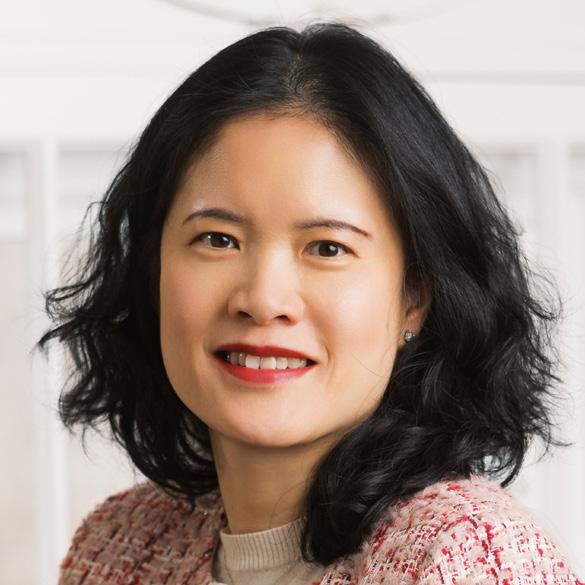
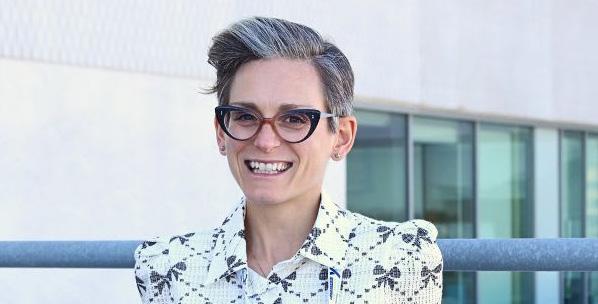
message from Dr. Jennifer Tsang MD, PhD
Executive Director and Chief Scientist, Niagara Health Knowledge Institute
In 2025, the Niagara Health Knowledge Institute (NHKI) invested in its people.
We secured Ministry of Health (MOH) funding for our own Clinician Investigator Trainee, a first for community hospitals in Canada, welcomed our first PhD scientist and first PhD student. We established our Patient and Family Engagement in Research Committee, embedding patient perspectives into our research foundation.
The NHKI’s growth reached a national level in 2025. Achieving Canadian Institutes of Health Research (CIHR) eligibility formally recognized us as a credible research entity, and we secured a CIHR grant to convene over 50 knowledge holders across eight provinces to co-develop indicators of hospital research capacity, shaping what research-ready community hospitals look like. Nationally, we led the Accelerating Clinical Trials (ACT) Portfolio Hospital scheme and the Canadian Community Intensive Care Unit (ICU) Research Network. Internationally, the NHKI brought our community hospital perspective to a global research capacity forum in Rwanda.
What we built in 2025 is the foundation from which the NHKI will grow, contribute and lead.
A message from
Harpreet Bassi, PhD
Executive Vice-President, Strategy, Research and Redevelopment
At the NHKI, research starts and ends with patients. We generate new knowledge to improve care, embed research into care and build capacity at our community hospital through this dedicated research institute.
Through growing national and international partnerships, the NHKI teams are helping bring new evidence, ideas and approaches directly into clinical care, giving patients access to leading-edge studies and therapies close to home. The NHKI team is demonstrating locally, nationally and internationally why and how research at community hospitals is imperative to improving care and access to innovations for all patients regardless of where they live.
Over the past year, we’ve expanded our clinical trials and patient-centred research, with a strong emphasis on understanding what matters most to patients and using those insights to improve outcomes and care experiences. I’m incredibly proud of what the NHKI is building.
Thank you to the researchers, clinicians and community members who share our belief in the power of research to make care better.
Year in Review
This year, the NHKI advanced on two fronts: consolidating the foundations that sustain our research mandate and extending our reach across Niagara and beyond. By investing strategically in people, partnerships and processes, we turned that investment into momentum, strengthening our capacity to support a growing research portfolio, cultivate meaningful collaborations and demonstrate what a community hospital research institute can achieve.
In 2025, the NHKI took deliberate steps to strengthen the systems and relationships that underpin high-quality research, training and mentorship by:
Supporting researchers, learners and staff through consistent, reliable processes
Strengthening internal workflows and governance to support growing research activity
Investing in team development and knowledge sharing
Deepening partnerships with Niagara Health, academic institutions and community collaborators
Strengthening our national and international presence as a leader in community hospital research
Through these efforts, the NHKI continued to evolve as an established and responsive research enterprise, always in service of generating evidence that improves the health and care of the communities we are privileged to serve.
Hosted the CIHR-funded RICH-Canada National Meeting, advancing community hospital research nationally
NH ranked second nationally in recruitment for the EPCAT III (Venous Thromboembolism Prevention Following Total Hip and Knee Arthroplasty) clinical trial, expanding patient access to leading-edge research
Hosted the NHKI Research Day, advancing a culture of inquiry
Launched Research in Community Hospitals - Continuing Professional Development (RICH-CPD) Research Learning Modules, expanding research capacity locally, nationally and internationally
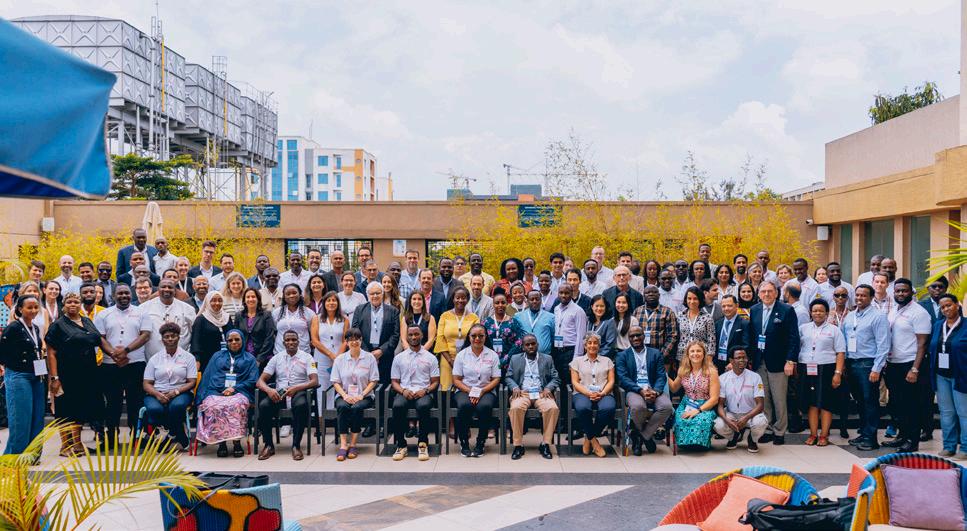
Executive Director and Chief Scientist served as an invited speaker at Building Global Acute Care Research Capacity Meeting (Kigali, Rwanda), elevating NH’s leadership in global research capacity building
Held inaugural Patient and Family Engagement in Research Committee meeting, integrating the lived experience into research priorities
Executive Director and Chief Scientist awarded a competitive provincial research grant, demonstrating the NHKI’s research excellence and competitiveness
Secured an Ontario MOH-funded Clinician Investigator Program training position – the first in Canada at a community hospital – advancing research training and leadership
Director, Research Operations served as an invited speaker in the inaugural Research and Education for Advancement in Community Hospitals (REACH) webinar series, highlighting the NHKI’s leadership in advancing research in community hospitals
Achieved CIHR eligibility to administer research funding, strengthening NH’s autonomy in securing and managing federal research investment
Submitted first CIHR grant through NH as the administering institution, reflecting growing institutional readiness for national funding
Welcomed the NHKI’s first PhD trainee under the supervision of the Executive Director and Chief Scientist, strengthening research training and mentorship
Secured a $2M philanthropic investment from Norgen Biotek Corp. to advance research at NH
Appointed Director, Research Operations and Research Scientist, expanding institutional research capacity
NH Interprofessional Practice Award for Excellence in Research awarded to Caitlin Leblanc, Research Nurse (Oncology), celebrating excellence in clinical research practice
Stories in action - grounded in community
These stories highlight how our work is shaped by local relationships, community needs and on-the-ground collaboration across Niagara. They reflect the value of being rooted in place and practice, and how strong community connections support meaningful, practical research.
Building research together: the NHKI engages patient partners in advancing care
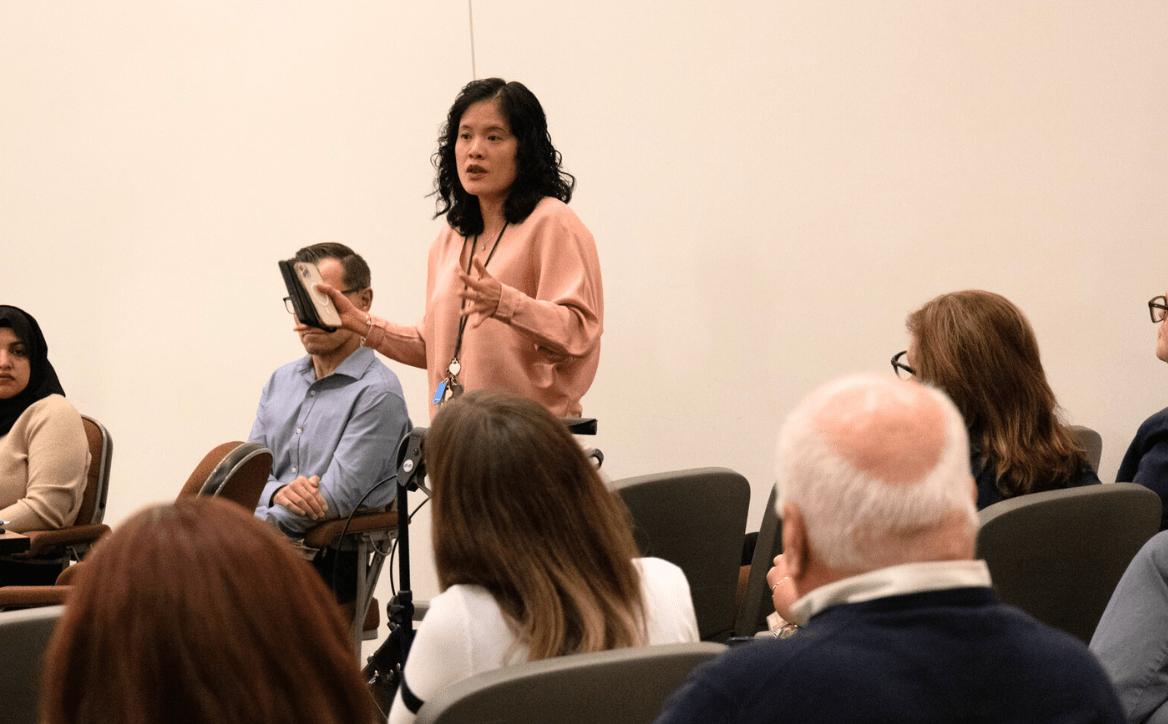
In September 2025, the NHKI hosted an engagement session that brought together members of the Niagara Health Engagement Network (NHEN) and hospital researchers to share current research and discuss how patients and families can play a stronger role in shaping future research.
The session highlighted how research is growing through the NHKI, with a clear focus on involving patients and the
community as partners in advancing care. Presentations discussed both active and completed studies, such as the CYCLE physiotherapy trial exploring in-bed cycling for ICU patients to support earlier recovery and better outcomes.
NHKI leaders emphasized that a critical area of focus for the NHKI is keeping patients and families at the centre of research planning so future projects are practical, accessible and grounded in community needs.
Feedback from participants helped inform engagement efforts, including the launch of the NHKI’s first Patient and Family Engagement in Research Committee who will actively participate in the research life-cycle and help to shape local research priorities and processes.
Patient Partners described the session as informative and motivating, reinforcing the value of community involvement in research and the NHKI’s growing role in advancing care. The event also marked the start of broader outreach, with additional community engagement sessions planned across Niagara.
‘It felt like the best of both worlds’: Niagara-born medical students return home for summer research
Niagara-born medical students Bianca Marcella and Prey Patel spent the summer in Niagara working on locally relevant research through a Medical Student Research Studentship with the NHKI.
Marcella’s project aimed to improve research consent in the ICU by conducting a literature review to understand how the quality of informed consent is assessed from the perspectives of patients, families and research staff. Patel’s research explored what is currently known about how passive music therapy might reduce anxiety and distress for patients with dementia in the Emergency Department.
Both students said returning home to contribute to research in their community was meaningful, and they plan to continue their work and stay connected to research at the NHKI in the future.
‘I saw first-hand how patient care and research intersect’: the NHKI showcases summer student research
For four budding health researchers, a summer at the NHKI offered more than just a glimpse into hospital research — it was a chance to tackle real-world projects that will help shape patient care in Niagara.
Through the Summer Student Research Scholarships, the students advanced priority projects in areas from patient safety to sepsis research, building valuable skills while strengthening the NHKI’s capacity to conduct research in a community hospital setting.
At the end of their summer placement, the NHKI welcomed partners, staff and guests to hear from this year’s research scholarship recipients, who presented the projects they worked on.
The program, offered in partnership with Brock University, McMaster University’s Thrombosis and Atherosclerosis Research Institute (TaARI), Niagara College and the University of Niagara Falls Canada, provides students with hands-on research experience in a hospital setting, while contributing to projects that can improve patient care.
“Their work this summer has advanced important research priorities for NH, and strengthened our collective capacity for innovation in healthcare” says Dr. Jennifer Tsang. “These placements give students the opportunity to contribute to meaningful, real-world projects while developing the skills and experience they need to excel in their future careers”.
“This program is the result of collaboration and a shared commitment to developing future healthcare leaders. By working alongside our researchers and clinicians, students not only contribute to meaningful projects but also gain the confidence and skills to shape the future of healthcare.”
“ ”
- Elaina Orlando
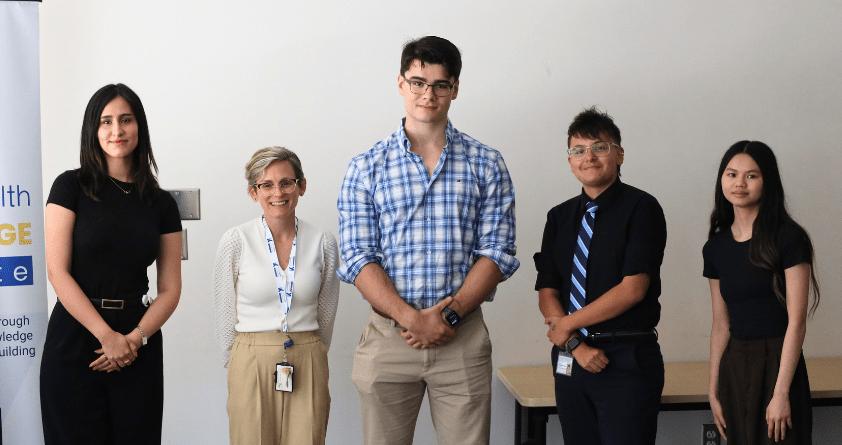
Student Ghazal Mohavedi, Elaina Orlando, Director, Research Operations at the NHKI and students Liam MacInnis, Sebastien Duguay and Grace D’Angelo
Stories in action - outward growth
These stories focus on how the NHKI is extending its reach beyond established spaces and ways of working. They highlight new partnerships, broader collaboration and emerging opportunities that build on strong foundations and allow our work to reach further in scope and impact.
From Niagara to Kigali: Local research innovation showcased on the global stage
The NHKI’s work to make research more accessible in community hospitals reached a global audience this year when Dr. Jennifer Tsang presented at the Building Global Acute Care Research Capacity meeting in Kigali, Rwanda. The meeting brought together nearly 200 health researchers and clinicians from Africa, Asia, Europe and North America, including representatives from the World Health Organization and the CIHR.
Dr. Tsang shared the NHKI’s RICH-CPD online learning modules, designed to make practical research skills easier to access for hospitals of all sizes. The modules focus on study design, patient and family engagement and integrating equity, diversity, and inclusion into research, and were developed by NHKI researchers, learners and staff.
The presentation showed the global relevance of the NHKI’s approach. Clinicians and researchers from several countries have since asked to adopt the RICH-CPD modules, and they are now being built into a new international research education initiative. Closer to home, the modules are helping the NHKI staff build confidence, work more closely with patient partners, and support evidence-informed research projects across programs. By sharing local innovation on a global stage, the NHKI showed how community hospitalbased research can contribute to stronger health systems and better patient care, both locally and worldwide.
more information.
‘Community hospitals can transform care’ Elaina Orlando on building research capacity at NH
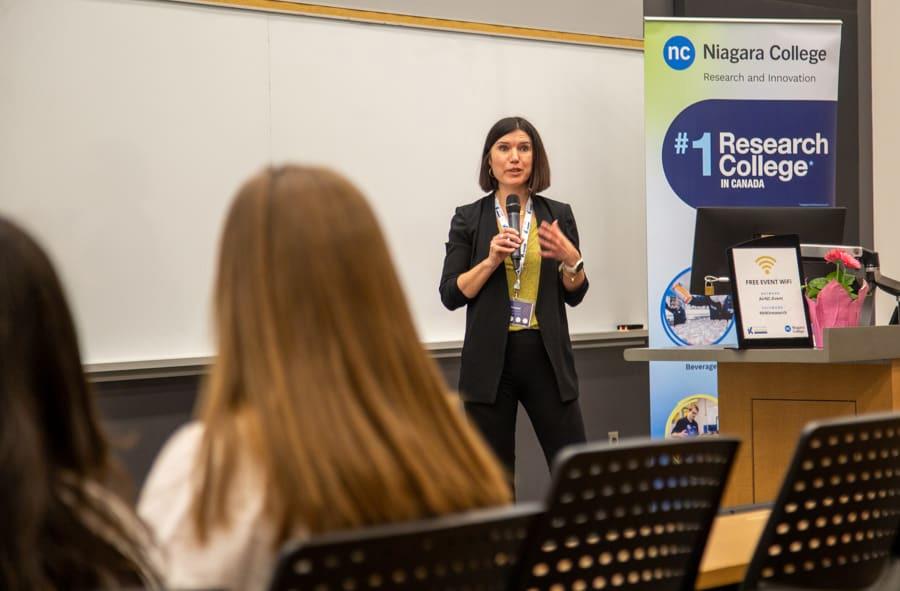
Elaina Orlando shared how building research capacity in a community hospital strengthens care close to home. With a background in public health and health services research, Orlando leads efforts to shape how research is conducted, taught, and shared at NH. She points to funding and communities of practice as key supports that have enabled hospitals to launch studies, retain staff and develop infrastructure and policies that sustain research activity. Orlando highlights that when community members know research is happening where they receive care, they want to be part of it, helping run studies more efficiently and get new treatments to patients faster. Under her leadership, the NHKI supports multiple clinical research programs and continues to explore opportunities for growth, community engagement and research that benefits patients locally and across Canada.
Building Global Acute Care Research Capacity meeting attendees representing international organizations. Scan for
NHKI Research Day underscores the importance of community in improving healthcare
The NHKI’s Research Day brought together more than 170 attendees from nine health and academic organizations at Niagara College’s Daniel J. Patterson Campus in Niagara-on-the-Lake. The day featured poster presentations, research talks, workshops and a keynote focused on patient engagement and partnership in community hospital research.
Keynote speaker Dr. Kerry Kuluski, reflected on her shift toward more collaborative research and challenged researchers to move beyond top-down approaches and work alongside patients, families and communities as partners in research co-design.
Throughout the day, researchers shared projects grounded in community hospital settings, showing how patient partnership is shaping study design and real-world impact. Workshops offered practical tools for building inclusive research practices. The event also marked the release of the NHKI’s second annual Research Report, highlighting progress in building research capacity and supporting the next generation of health researchers.
Strong turnout and engaged discussion reflected growing momentum for patientoriented research at NH, and a clear shift toward building better care with communities, not just for them.
“By growing research in community hospitals, we can give patients in Niagara more equitable access to innovative therapies through clinical trials.”
- Dr. Jennifer Tsang
Niagara Health receives $250,000 grant to lead a provincial study on boosting community hospital research
The NHKI was awarded a provincial grant to lead a multi-site study focused on strengthening research capacity in community hospitals across Ontario.
Through this work, the NHKI is examining practical ways to better support clinicianled research, integrate research into dayto-day care and reduce barriers that limit participation in studies.
The project brings together partners from community hospitals and research organizations to identify shared challenges, test approaches and develop tools that can be used across settings.
The study reflects a growing emphasis on building research where care is delivered, so more patients can benefit from evidenceinformed practice closer to home.
Dr. Kerry Kuluski, the Dr. Mathias Gysler Research Chair in Patient and Family Centred Care at Trillium Health Partners’ Institute for Better Health
NH secures prestigious federal eligibility for health research funding
NH has achieved a major milestone by being recognized as eligible to apply directly for federal health research funding through the CIHR, a distinction usually held by universities, large academic hospitals and only a few community hospitals in Canada.
This new eligibility means NH can compete for significant CIHR grants to support health research, expand clinical studies and bring research-driven care closer to patients in the Niagara region.
To earn this status, the organization underwent a rigorous, nine-month review process and submitted a detailed application of more than 400 pages demonstrating its research infrastructure, governance and ethical standards.
Elaina Orlando said the recognition reflects how far the organization has come. “This recognition is a significant step forward for Niagara Health,” she said, noting the hospital now has the structures and safeguards needed to conduct highquality research. “Every research study we undertake has the potential to translate into better outcomes for our patients and our community.”
““Every research study we undertake has the potential to translate into better outcomes for our patients and our community.”
- Elaina Orlando
”
Previously, NH researchers could only access CIHR grants by holding academic appointments through partner universities. With direct eligibility, the hospital will be able to lead its own projects and support more investigators who may not have university affiliations but have strong research ideas.
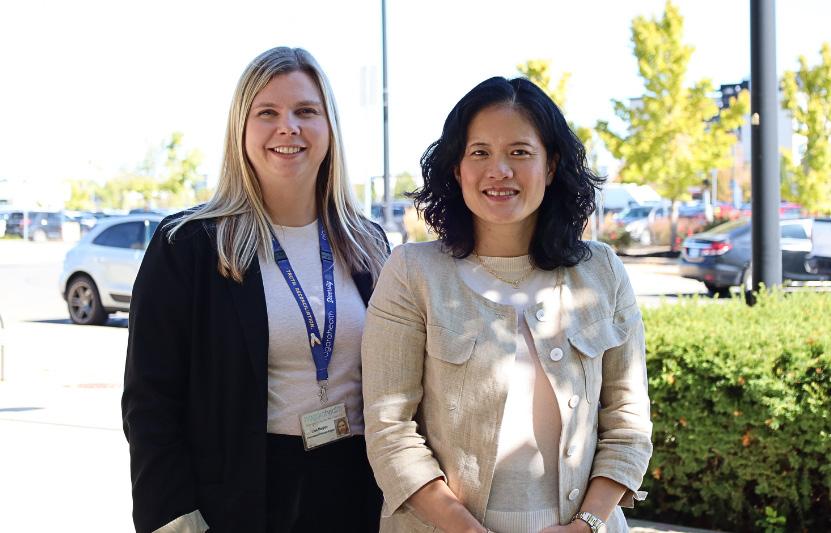
The effort to achieve eligibility was led by Dr. Jennifer Tsang with the application package prepared by Orlando with support from Lisa Begley. When the approval finally arrived, team members described it as a thrilling and rewarding moment after months of preparation.
Looking ahead, the new status strengthens the hospital’s ability to attract and keep top healthcare talent by signaling that Niagara is a place where clinicians and researchers can grow their careers while contributing to meaningful research.
Lisa Begley, Senior Financial Analyst and Dr. Jennifer Tsang
The NHKI gathers top Canadian health researchers to improve community hospital research tracking and expand access to advancements in care
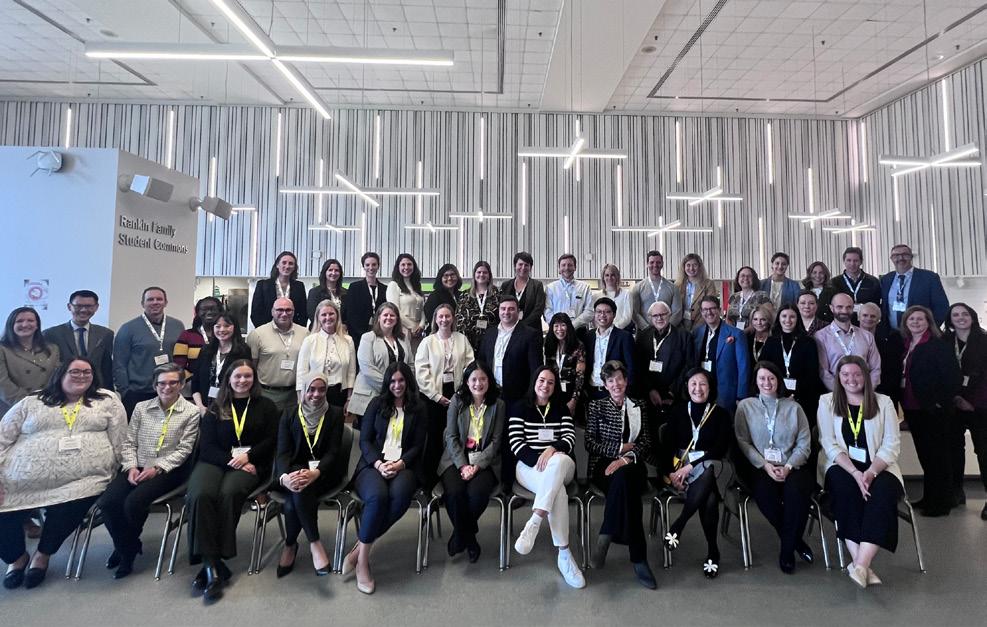
In early 2025, the NHKI brought together leading health researchers and administrators from across Canada for a national meeting focused on improving how research activity is tracked and shared in community hospitals.
The one-day session, held under the Building Capacity for RICH-Canada initiative, convened more than 50 experts from eight provinces to begin developing a standardized approach to reporting research infrastructure and productivity.
Currently, there is no uniform framework for tracking research done in Canadian hospitals, which can make it harder to understand the full scope of research activity and how findings are translating
into improvements in care. By working toward a consensus on indicators and measurement strategies, the group aims to create a tracking system that more accurately reflects research’s impact on patients, care delivery, and health outcomes. This provides consistent data to help hospitals plan, evaluate and grow research programs.
The NHKI’s leadership underscored that most Canadians receive care in community hospitals like NH, and that expanding research capacity in these settings is essential if patients are to benefit equitably from innovations in clinical trials and quality improvement. A consistent research-tracking framework can help ensure that research findings are integrated into care more quickly and illustrate that hospitals outside major academic centres are visible contributors to evidence generation. During the meeting, participants began identifying criteria and practical strategies for measurement. The work will be shared at health system conferences and has been published to support adoption across hospitals nationally.
This meeting reflects the NHKI’s broader commitment to strengthening research in community hospitals so that evidence-informed practice becomes a core part of care delivery.
“NHKI is leading the way in how research is conducted outside of major academic centres, and that’s incredibly important. Most people in this country receive care in community hospitals, not teaching hospitals. For too long, research and clinical trials have been out of reach in those settings. We’re finding ways to improve that and, ultimately, improve people’s health and well-being.”
- Harpreet Bassi
National meeting attendees representing organizations from across Canada
NHKI by the numbers
This year’s numbers reflect a period of steady growth grounded in strong foundations. They capture the scale of research activity supported by the NHKI, the people and partners involved and the expanding reach of our work across Niagara and beyond. Together, these figures offer a snapshot of how growing our roots has enabled us to reach further in research, education and collaboration.
58
Number of active multi-centre clinical research studies
629
Number of patients enrolled in multicentre clinical research studies
2.9M
Value of successful grant applications with NH researcher participation
Number of research staff
11 9
Number of research volunteers
Total research expenditure for fiscal year 25-26: $1,952,702.97
Funding sources:
30
Number of publications by authors affiliated with NH
The NHKI's growing national profile was further demonstrated through the publication of a peer-reviewed manuscript documenting our establishment and early impact, offering practical insights for community hospital leaders seeking to build research capacity in their organizations.
Scan the QR code to read the publication.
Global collaborations
Through studies, publications, meetings, invited presentations and research networks, the NHKI staff and collaborators continue to build and maintain global connections that strengthen the quality and reach of our work.
Looking ahead to 2026
Clinical trials
Continue trials that improve patient experiences and outcomes.
Knowledge dissemination
Focus on increasing research outputs and knowledge sharing.
Growing our team
Expand capacity across both clinical and health systems roles.
NHKI strategic initiatives
RICH-Canada Program
The RICH-Canada Program supports sustainable research in community hospitals across Canada by advancing research, promoting knowledge translation, strengthening advocacy and building a national community of practice.
Clinical Research Portfolio
The Clinical Research Portfolio drives high-quality, multidisciplinary research by enabling a broad portfolio of investigator-led, industry-supported and multi-centre clinical studies.
Patient Experience and Engagement in Research
The Patient Experience and Engagement in Research Program promotes equity and system-aligned care at NH by ensuring research reflects community needs through collaboration with patients and families.
Care for Older Persons
The Care for Older Persons Research Program aims to improve health and care for older adults in Niagara by advancing research and translating evidence into person-centred, system-wide practice.
Research Training and Mentorship
The Research Training and Mentorship Program supports research skill development through accessible learning opportunities for students, trainees and healthcare professionals.
Learning Health System
This initiative aims to develop and evaluate a Learning Health System (LHS) framework that fosters a culture of continuous improvement, where research, data and clinical practice are seamlessly integrated to drive evidence-informed care, optimize patient outcomes and support system-wide innovation at NH.
Partnerships and sponsors
Thank you to our funding partners
McCall MacBain Foundation
Niagara Health Foundation
Accelerating Clinical Trials Consortium
Canadian Critical Care Trials Group
Canadian Institutes of Health Research
Ontario SPOR SUPPORT Unit
Physicians’ Services Incorporated Foundation
Brock University
McMaster University
Niagara College
University of Niagara Falls Canada
Yousef Haj-Ahmad Family Foundation
Dr. Jennifer Tsang, Executive Director and Chief Scientist, NHKI
jennifer.tsang@niagarahealth.on.ca
Elaina Orlando, Director, Research Operations, NHKI elaina.orlando@niagarahealth.on.ca