2026/27
Justice and Fitness Studies

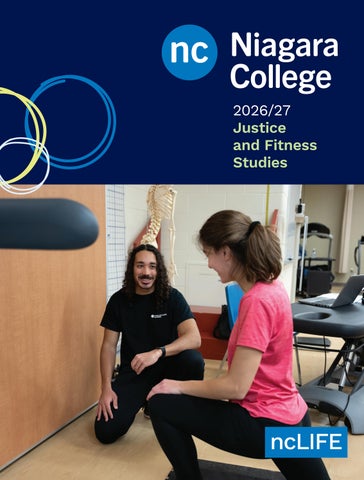
2026/27
Nestled in the vibrant Niagara Region, minutes from a renowned tourism hub brimming with daily events, Niagara College (NC) boasts over 120 innovative programs across its Welland and Niagara-on-the-Lake campuses. These locations offer unique living labs, advanced facilities for hands-on learning, numerous on-campus jobs, world-class applied research, and small, supportive classes.
Benefitting from proximity to diverse cultural attractions, entertainment, and the Canada-US border, both campuses foster a warm, supportive culture and deliver relevant programs with real-world experience. Passionate faculty prioritize student success, creating a distinctive educational journey.
Conveniently located and easily accessible via major highways and the Niagara Transit Commission, NC’s campuses are approximately a 20-minute drive apart, connecting students to major urban centers and the US border.
Niagara College acknowledges that we are gathered on the shared traditional lands of the Anishinaabe (pronounced: ahnish-naw-bay) and Haudenosaunee (pronounced: ho-dehneh-show-nee). We offer our sincere gratitude to them as the stewards of this land, which is protected by the Dish With One Spoon Wampum agreement’s three principles: to take only what you need, leave enough for others, and always keep the dish clean. Today, many First Nations, Métis, and Inuit communities from across Turtle Island continue to live and work in this territory. Acknowledging the peoples whose territory we are on, and the agreements that guide their stewardship of the land, reminds us to reflect on and respect their unique relationship to this land. It also is an invitation for all of us to identify and engage in actions that respect and reinforce our commitments to Truth and Reconciliation and Indigenous Rights.
Getting here
No matter which direction you are travelling from, both the Welland Campus (WC) and Daniel J. Patterson Campus in Niagara-on-theLake (NOTL) are easy to get to thanks to the transportation corridor and vast network of highways which connect Niagara College to both Canada’s largest city, and the most populous regions of the USA. It takes approximately 20 minutes to drive between the campuses. Transit options are available.
Driving Times (in minutes)
Hamilton: 45
Oakville: 55
Milton: 60
Brantford: 60
Mississauga: 60
Transit
Local transit in the Niagara Region makes it easy to get where you need to go with the UPass covering bus fares as part of student fees.
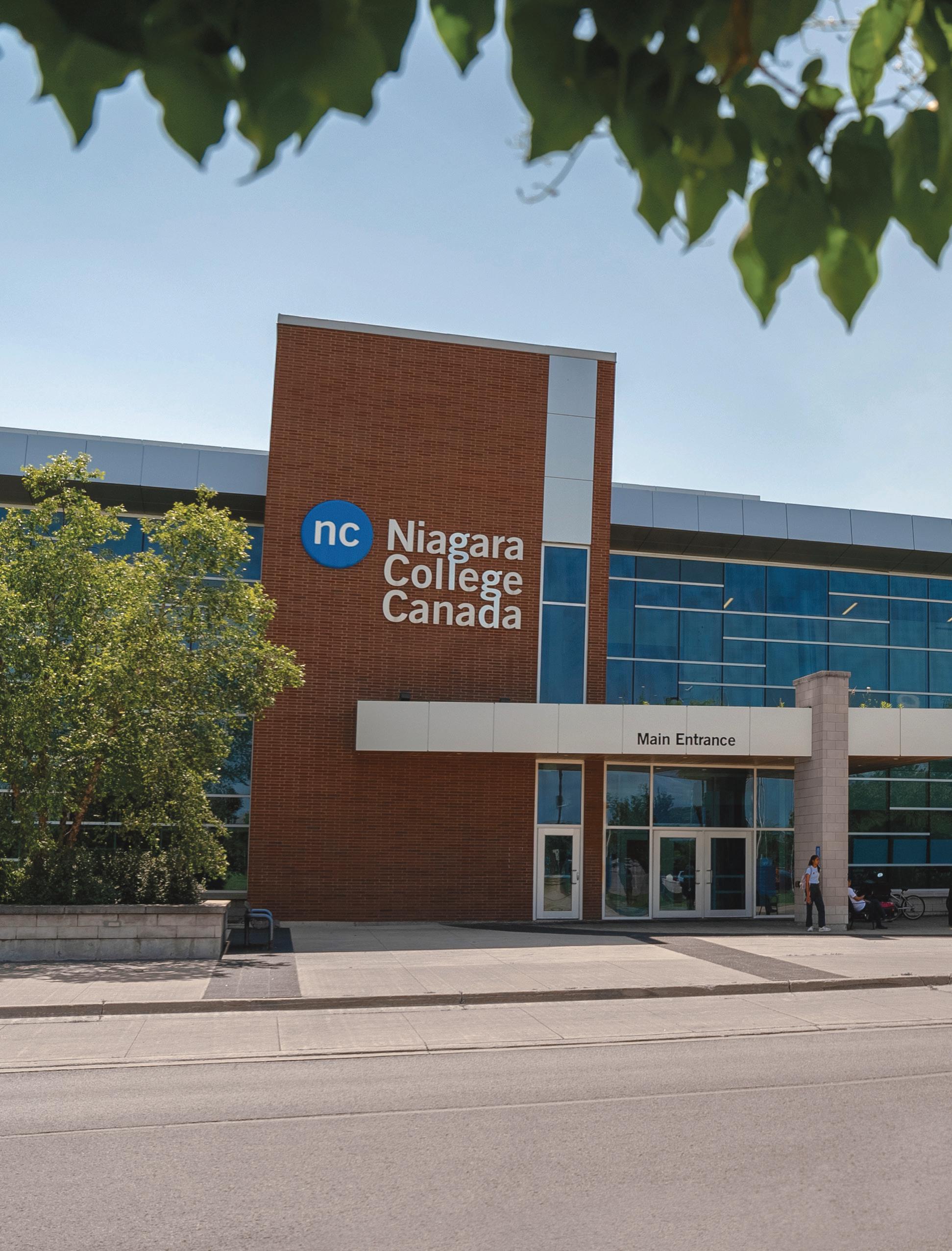
Recognized for its commitment to sustainability and naturalization, the Welland Campus is located in a welcoming community in the heart of the Niagara Region.
There’s plenty to experience at the Campus, which has seen expansions, additions, and renovations to every section of the facility. The original home of Niagara College, this campus is a leader in sustainable technology and operates state-of-the-art, modern learning environments designed to help students succeed in their education and career training.
This campus houses the schools of: Academic and Liberal Studies, Allied Health, English Language Studies, Justice and Fitness, Media, Myhal School of Nursing, Part-Time Studies, Technology, and Trades (including apprenticeships).
Campus Highlights
Applied Health Institute
Dental Clinic
Eva M. Lewis Library and Learning Commons
Green Automotive Technology Lab Justice and Fitness Training Centre
Marilyn I. Walker Centre of Excellence in Visual Arts and Technology
Massage Therapy Clinic
Rankin Technology Centre Research and Innovation
Residence
Simplii Financial Athletic Centre
Teaching Hair Salon
Walker Advanced Manufacturing and Innovation Centre
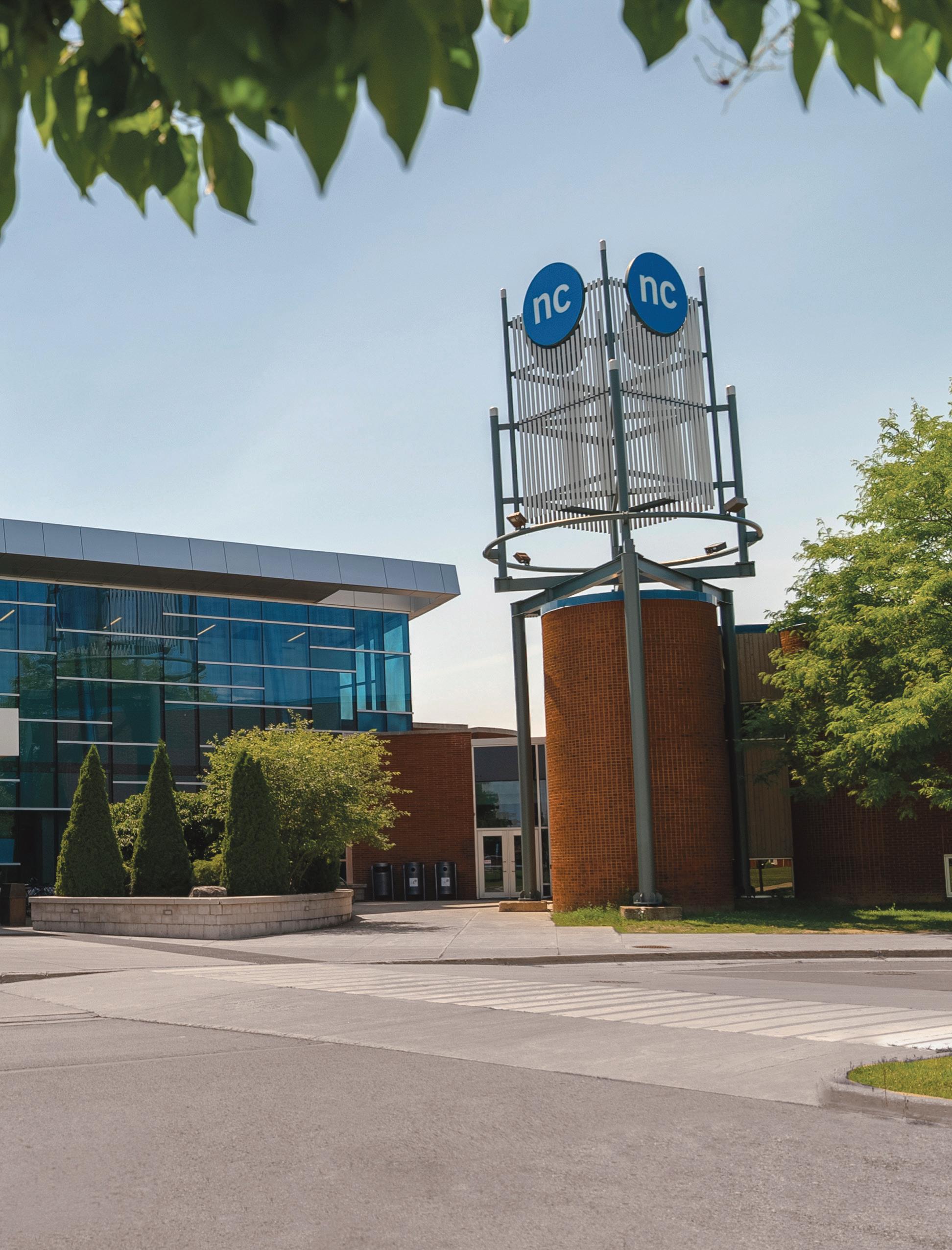









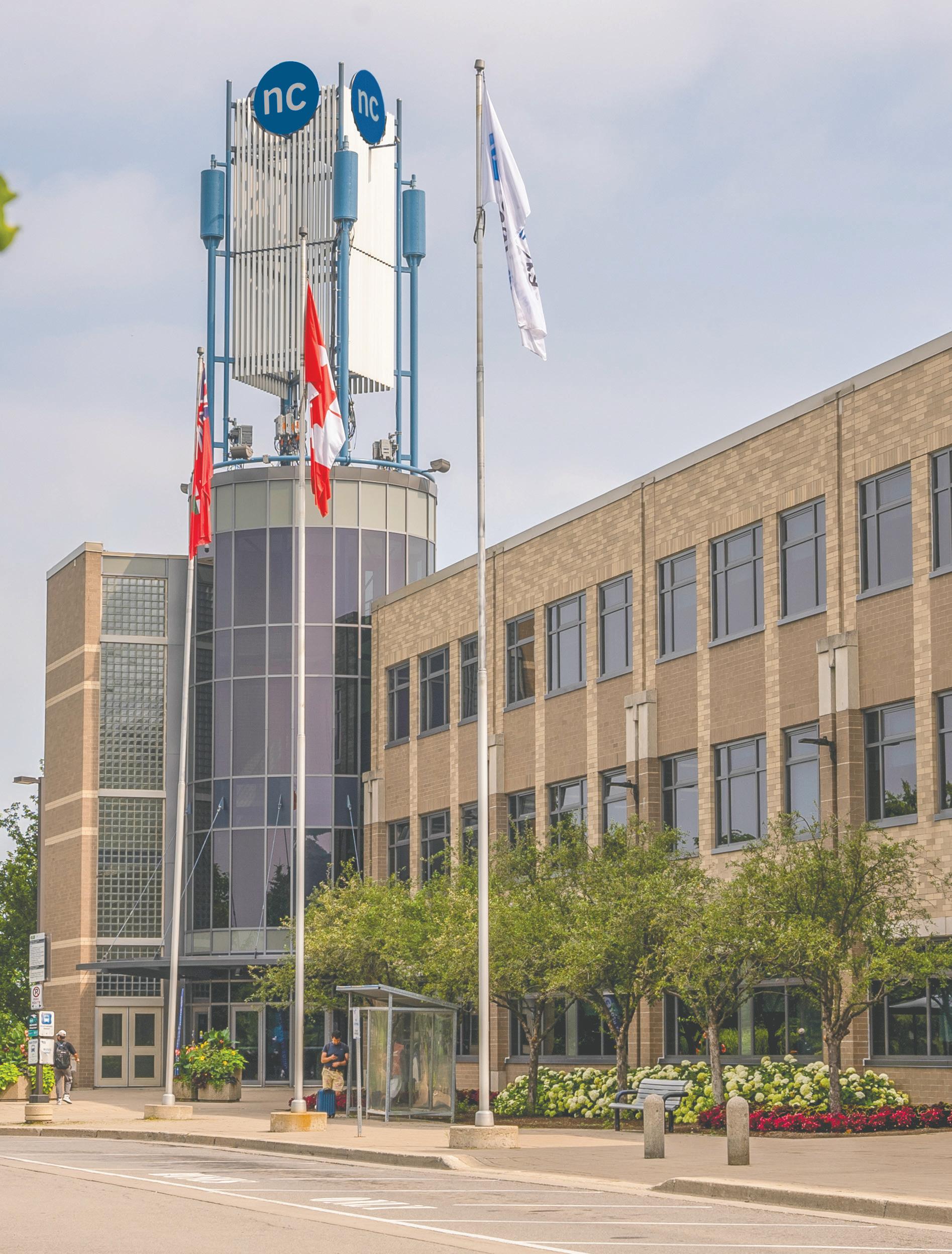
The Daniel J. Patterson Campus in Niagara-on-the-Lake is located between Glendale Avenue and the Queen Elizabeth Way, a transportation corridor between Toronto and the United States.
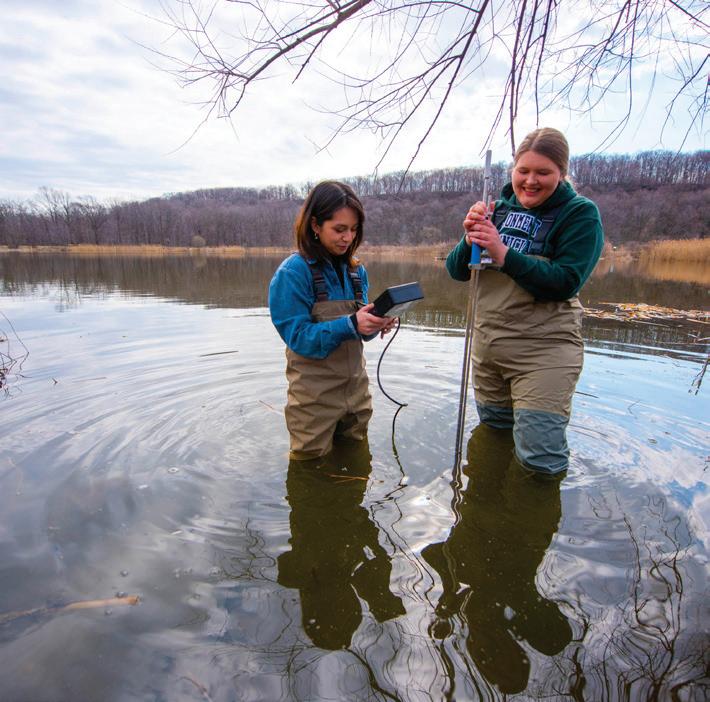
The Campus is the centre for NC’s business, community services, hospitality, environmental, culinary and wine programs. It has blossomed into a masterpiece of hands-on learning through the innovative development of several on-campus teaching enterprises. It has most recently seen the addition of a state-of-the-art fitness and research centre in the Marotta Family Innovation Complex.
This campus houses the schools of: Academic and Liberal Studies, Business and Management, Community Services, Culinary Arts, Environment and Horticulture, Hospitality and Tourism, and Wine, Beer and Spirits.
Campus Highlights
40-Acre Vineyard
Benchmark Restaurant
Cannabis Research and Teaching Facility
Ecological Lagoons and Wetlands
Marotta Family Innovation Complex
Pop-Up Culinary, Wine, Beer and Spirits Events

Research & Innovation
Residence
Teaching Brewery
Teaching Distillery
Teaching Greenhouse
Teaching Spa
Teaching Winery







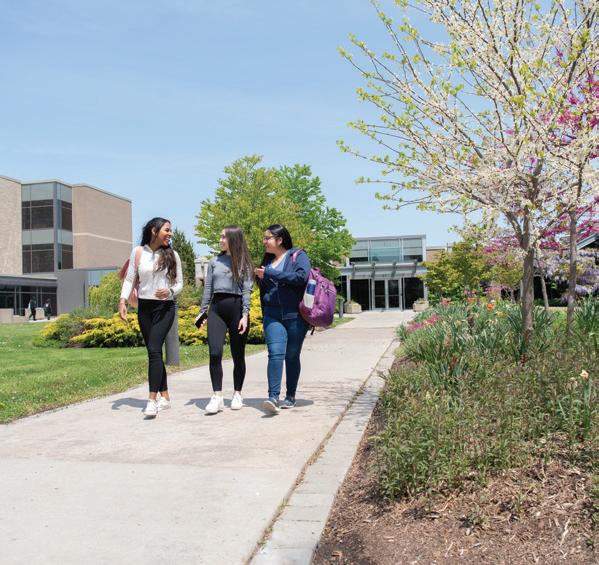

NC Life is our commitment to providing a rich, engaging, and supportive experience that goes beyond academic instruction, aiming to foster personal growth, community connection, and career readiness for all its students. It’s about the energy, community, and possibilities that define being a student at Niagara College.
Student Experience
We are committed to nurturing the whole person. We understand the value of being welcoming and caring.
Academic Excellence
Academic excellence and student success are the focus in everything we do.
Environmental Sustainability
A sustainable future for our planet and our communities is important to us. It’s about working together to create a better future for generations to come.
Partner Engagement
Our success is built on strong partnerships. We work with others to create opportunities for our students and to actively support our communities.
Global Reach
As Canada’s leading global college, we are focused on driving positive change through global education and training. We embrace diversity in all its forms and bring together cultures and experiences to prepare world-ready graduates.
Niagara College offers distinct areas of study that are perfectly suited to your success. More than 120 degree, diploma, graduate certificate and advanced-level programs have graduated more than 120,000 students since 1967 and we welcome thousands of new students each year to our culturally diverse and vibrant campuses.
NOTE: please review complete program admission requirements at niagaracollege.ca/admissions
The following pages outline the programs being offered for 2026-2027 and are categorized by area of study. Reference the colour and symbol codes below to help determine start dates, credential type, and delivery modes.
START TERM: • September • January • May
CREDENTIAL TYPE:
4-Year Bachelor’s Degree
1-Year Certificate
1-Year Graduate Certificate
2-Year Diploma
3-Year Advanced Diploma Certificate of Apprenticeship
CAMPUS:
NL: Niagara-on-the-Lake Campus
WE: Welland Campus
OL: Online
DELIVERY MODE:
IP: In-Person
HYB: Hybrid
OL: Online
WIL.: Work-Integrated Learning opportunity
In-person: In-person programs delivered in a face-to-face, on-campus format. Students and instructors will meet in person the majority of the time. However, this delivery may also include some online components, such as:
› Access to and completion of online resources, videos, or other course materials hosted in the learning management system (LMS) or on thirdparty sites
› Asynchronous learning components, such as self-paced modules or simulations
› Synchronous learning components, such as online class meetings or office hours
Online: Online programs do not meet in person. Although all delivery is online, how and when students are expected to engage with their courses can vary.
Synchronous: Focus on students attending lectures, meet with their peers, and connect with their instructors at the same time using online lecture tools. Some online asynchronous work such as:
› Modules, simulations, or other course materials
› Completion of assignments
› Tests and quizzes
Asynchronous: Students will work independently without simultaneous meetings with peers or the instructor. Primarily independent with some synchronous online work such as:
› Scheduled tests or quizzes
› Group projects
› Presentations
Hybrid: Delivery will be split between in-person and online. Students will be expected to attend regular in-person sessions of the course on campus. Online components may be delivered synchronously or asynchronously.

• Ontario College Diploma (or Equiv) in Police Foundations or Protection, Security and Investigation (Law and Security Administration) or Bachelor’s Degree in Criminology, Law and Justice, Criminal Justice, Criminal Justice and Public Policy, Criminology and Justice, Sociology, Legal Studies and Political Science* Proof of English proficiency; Completion of the Physical Readiness Evaluation for Police (PREP) test *Should your Ontario College Diploma or Bachelor's Degree be outside the above fields of study, related work experience may be considered (as determinded by the College).
OSSD or Equivalent, ENG 12 (C) or (U)
• Bachelor’s Degree in Exercise Science, Human Kinetics, Kinesiology or Physical Education. Applicants who have studied outside of these fields, may be considered on an individual basis. And; Proof of English proficiency
OSSD or Equivalent, ENG 12 (C) or (U); BIO 11 (C) or (U) or 12 (U) or CHEM 11 (U) or 12 (C), or (U) or PHY 11 (U) or 12 (C) or (U) or Exercise Science - (PSE4U) or Introductory Kinesiology - (PSK4U) or SCI - (SNC4M)
• OSSD or Equivalent, ENG 12 (C) or (U)
• Bachelor’s Degree, preferably in a related discipline (as determined by the College) and; Proof of English proficiency.
OSSD or Equivalent, ENG 12 (C) or (U)
OSSD or Equivalent, ENG 12 (C) or (U)

Program code: 0250
Campus location: Welland Start term: Sep
niagaracollege.ca/0250
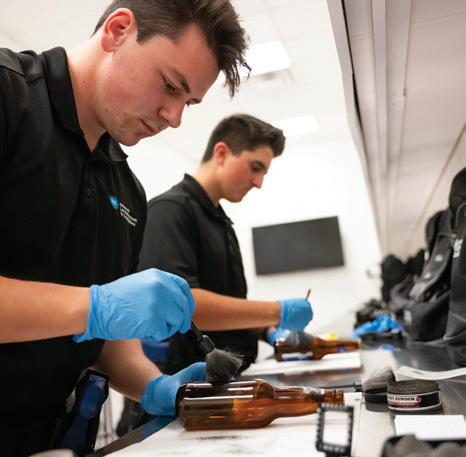
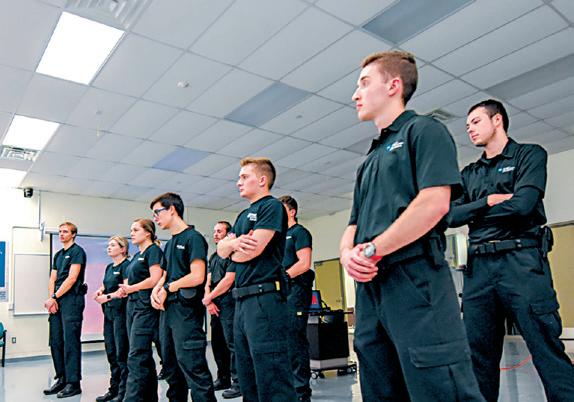
This program elevates justice-related diploma or degree holders with advanced investigative skills for law enforcement careers. Applied learning is central, featuring simulated crime scene labs, the Justice Studies Simulator Lab, and police service field placements (contingent on police screening). Expert faculty, comprised of former police officers, impart real-world investigative knowledge. Students conduct community policing research and lead the “SafeWalk” program, gaining practical experience. The curriculum builds on previous Police Foundations, Protection, Security and Investigation diplomas, or justice studies degrees. Graduates are prepared for diverse roles in the public and private justice sectors, equipped with essential investigative techniques and practical experience.
Program Highlights:
› Significant applied learning opportunities in simulated crime scene labs; the Justice Studies Simulator Lab; and field placement opportunities, including a ride-a-long program offered in partnership with Niagara Regional Police and other Ontario police services (applicants must successfully complete a police screening).
› Expert faculty comprised of former police officers with extensive investigative experience.
› Students conduct community policingbased applied research projects and have an opportunity to lead the “SafeWalk” program.
› Builds on a previous Police Foundations or Protection, Security and Investigation diploma or justice studies-related university degree.
Career Opportunities:
› Municipal, provincial or federal law enforcement agency
› Police service
› Private or corporate investigations
Admission Requirements:
Ontario College Diploma (or equivalent) in Police Foundations or Protection, Security and Investigation (Law and Security Administration); or Bachelor’s Degree in Criminology, Law and Justice, Criminal Justice, Criminal Justice and Public Policy, Criminology and Justice, Sociology, Legal Studies and Political Science*; Proof of English proficiency; and Completion of the Physical Readiness Evaluation for Police (PREP) test.
*Should your Ontario College Diploma or Bachelor’s Degree be outside the above fields of study, related work experience may be considered (as determined by the College).
Additional Requirements:
Criminal Record Check; Physical Fitness. Details at niagaracollege.ca/0250

Term Course
ONE Police Applicant Procedure and Preparation
Applied Community Policing
Document Analysis
Advanced Crime Scene Analysis
Case Preparation and Documentation Physical Fitness for Policing Ethics and Leadership
Field Placement I - Advanced Law Enforcement
TWO Advanced Document Analysis
Advanced Police Studies
Evidence and Court Procedure Professionalism in Policing
Advanced Physical Fitness for Policing
Psychological Emergencies and Intervention Strategies
Conflict Resolution
Field Placement II - Advanced Law Enforcement
Program code: 0170
Campus location: Welland Start term: Sep
niagaracollege.ca/0170
Are you interested in a career path that enables you to have a meaningful impact on troubled youth and adults? As a Correctional Worker, you provide counsel and support to incarcerated individuals and assist them in making positive choices about life after parole.
Program Highlights:
› Incorporates case management theory and practical experience.
› Focuses on interpersonal communication, problem-solving and professional ethics.
› Over 400 hours of in-field work experience results in industry skills and knowledge and connects students with potential employers.
› Program can be completed in 10 months by graduates from any Ontario College Police Foundations and Protection, Security and Investigation diploma programs.
Career Opportunities:
› Attendance counsellor
› Bail officer
› Case manager
› Community residential counsellor
› Community service order coordinator
› Correctional officer
› Crisis centre counsellor
› Federal parole officer
› Life skills counsellor
› Outreach worker
› Probation and parole supervisor
› Program facilitator
› Treatment counsellor
› Victim services worker
› Youth worker/counsellor
Admission Requirements:
OSSD or equivalent, ENG 12 (C) or (U).
Recommended Courses: Aboriginal Beliefs, Values, and Aspirations in Contemporary Society 11 (C), Canadian Politics and Citizenship 11 (O), Challenge and Change in Society 12 (M), Introduction to Anthropology, Psychology, and Sociology 11 (M), Understanding Canadian Law 11 (M).
Additional Requirements:
Criminal Record Check, First Aid and CPR, Health Requirement, Physical Fitness.
Details at niagaracollege.ca/0170

PROGRAM
Term Course
ONE Computer Applications Essentials of Writing to be Understood Basic Law
Introduction to Community and Justice Services Fitness and Lifestyle Management I Fitness Lab l Psychology Introduction to Sociology I
TWO Communications for Justice Studies II Work Experience Issues Intervention Strategies for Clients at Risk Crisis Intervention Introduction to Youth and Family Law Advanced Law Fitness and Lifestyle Management II Fitness Lab II General Education Elective*
THREE Experiences - Justice Services Worker Case Management I Community Services I Field Placement - Community and Justice Services
FOUR Case Management II Community Services II Issues in Criminology and Corrections Equity, Diversity and Inclusion in Canada Criminology
Physical Fitness - FITCO Fitness Lab - FITCO Abnormal Psychology
*1 course required
Program code: 0260
Campus location: Welland
Start term: Sep
niagaracollege.ca/0260
Do you aspire to gain the expertise and skills that are essential to optimize the performance of athletic populations or design programs to support individuals living with chronic conditions?
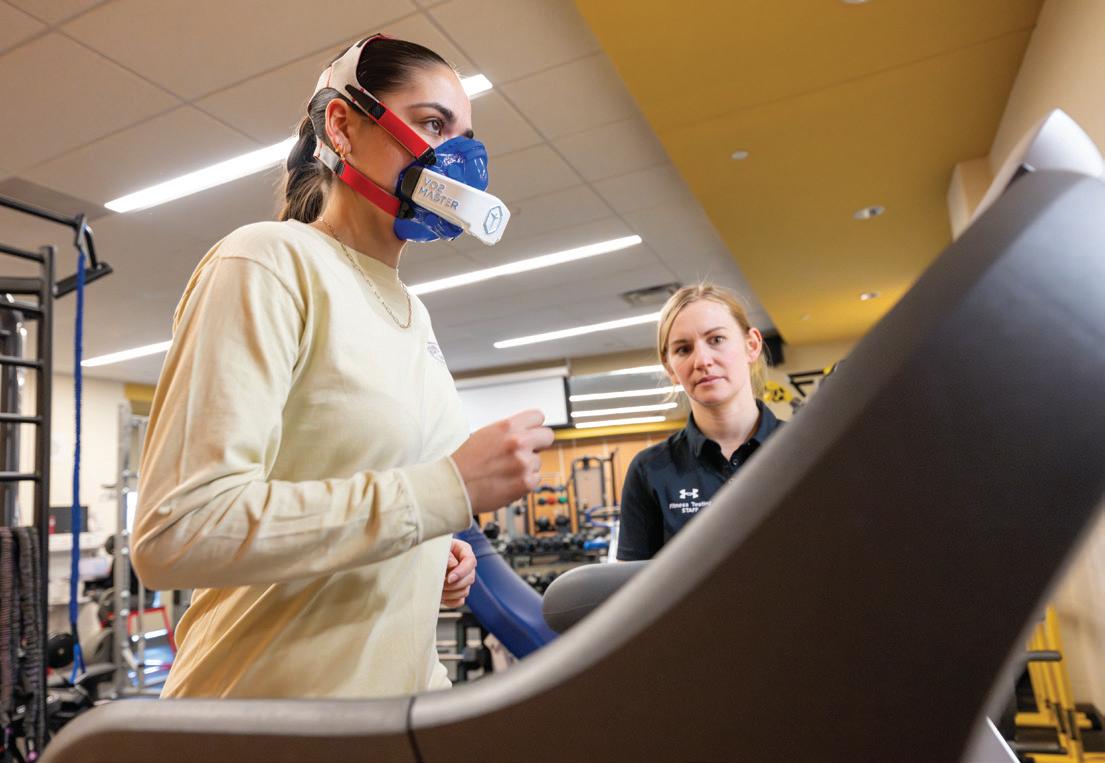
The Exercise Science for Health and Performance graduate certificate advances your undergraduate degree with targeted theory and practical coursework. Placement opportunities support your preparation for industry credentialling. You will gain knowledge and skills in areas of counselling, assessing and prescribing tailored exercise programs for athletes, as well as individuals managing various chronic health conditions.
Program Highlights:
› Applied learning opportunities to develop skills required to work with various populations
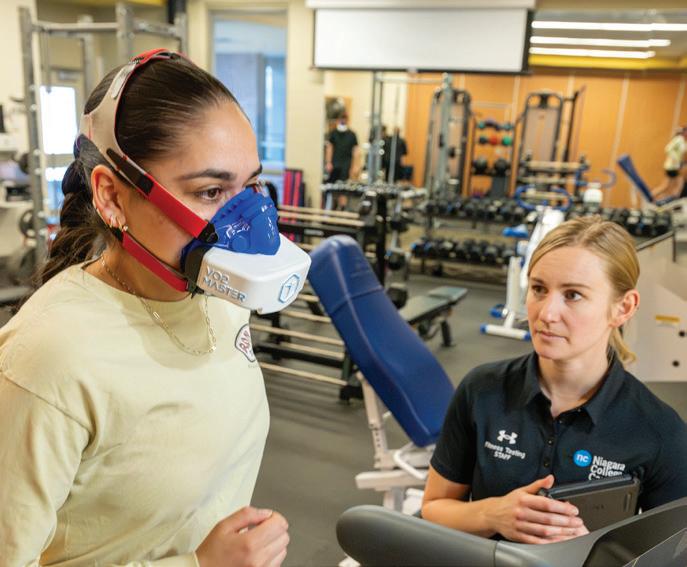
› Labs are equipped with advanced tools to test (VO2max, spirometry, ECG etc.) and train (plyometrics, Olympic lifting, Injury rehabilitation etc.) athletic and clinical populations
› Gain the knowledge and skills to challenge certifications from industry leading organizations such as the Canadian Society for Exercise Physiology (CSEP), National Strength and Conditioning Association (NSCA), Canadian Strength and Conditioning Association (CSCA), College of Kinesiology Ontario (COKO), American College of Sports Medicine (ACSM) as well as other prominent international organization certifications
Career Opportunities:
› Clinical and wellness centres
› Commercial or private fi tness centre
› Health and rehabilitation centre
› Municipal and community services centres
› Occupational testing
› Organization with corporate wellness program
› Private practice
› Sport and Performance Centre
› Wellness centre
› Canadian Armed Forces
Admission Requirements:
Bachelor’s Degree in Exercise Science, Human Kinetics, Kinesiology or Physical Education. Applicants who have studied outside of these fields, may be considered on an individual basis AND Proof of English proficiency.
Additional Requirements:
Criminal Record Check; University Course Work; Communicable Disease Surveillance.
Details at niagaracollege.ca/0260
PROGRAM
Term Course
ONE Client Education and Behaviour Change
Training Techniques
Exercise Prescription
Advanced Fitness Assessment
Occupational Testing and Workplace Evaluation
Field Placement I
TWO Exercise Prescription for Special Populations
Fitness Assessment for Special Populations
Advanced Nutrition
Injury Mechanisms and Management
Career Preparation
Field Placement II
Program code: 0232
Campus location: Welland
Start term: Sep
niagaracollege.ca/0232
Are you eager to pursue a career as a fitness and health professional, inspiring clients and engaging with the community to promotion healthier lifestyles? Become a leader in the Fitness and Health Promotion industry. A combination of classroom, hands-on and placement experiences allow the opportunity to develop skills to counsel, motivate and educate others on various components of fitness and health. Specific course work will prepare you to assess, prescribe and evaluate exercise programs for individuals and groups.
Program Highlights:
› 150 hours of practical work experience during two field placement opportunities.
› Engagement in advanced practical experiences equips students with the skills and knowledge necessary for successful entry into the fitness industry
› Graduates may challenge nationally and internationally recognized specific certifications from industry leading organizations to become group exercise leaders, certified personal trainers and strength and conditioning professionals.
› Graduates can pursue a variety of educational pathways to achieve degree completion.
Career Opportunities:
› Community or recreation centre
› Health and rehabilitation centre
› Private or commercial fi tness centre
› Self-employment
› Sport and performance training centre corporate/employee wellness
Admission Requirements:
OSSD or equivalent, ENG 12 (C) or (U), Bio 11 (C) or (U) or 12 (U) OR Chem 11 (U) or 12 (C) or (U) OR Phys 11 (U) or 12 (C) or (U) OR Exercise Science (PSE4U) OR Introductory Kinesiology (PSK4U) OR Science (SNC4M).
Recommended Courses: Healthy Active Living Education 12 (O). Related volunteer or co-operative work experience.
Additional Requirements:
Criminal Record Check; First Aid and CPR; Communicable Disease Surveillance.
Details at niagaracollege.ca/0232

PROGRAM
Term Course
ONE Musculoskeletal Anatomy
Essentials of Writing to be Understood Mathematics for Fitness and Health
Valuing Healthy Living Physiology
Fitness Assessment I
General Education Elective*
TWO Communication
Exercise Physiology
Client Coaching
Fitness Assessment II
Training Techniques I
Equity, Diversity and Inclusion in Canada
THREE Exercise Prescription
Group Exercise
Introduction to Biomechanics
Nutrition in Exercise Science
Special Populations I
General Education Elective*
Field Placement I - Fitness
FOUR Fitness Marketing and Entrepreneurship
Community Health Promotion
Prevention And Treatment Of Athletic Injuries
Personal Training
Special Populations II
Training Techniques II
Field Placement II - Fitness
*1 course required
Program code: 0200
Campus location: Welland
Start term: Sep / Jan niagaracollege.ca/0200
Do you have a desire to make a difference in your community and an interest in serving and protecting the public by upholding the law?
As a Police Foundations graduate, you play an active role in the law enforcement system, ensuring public safety by maintaining law and order: protecting members of the public and their property; and preventing, detecting and investigating crime.
Program Highlights:
› Reality-based curriculum taught by former police officers with extensive investigative and operational experience.
› Gain practical, in-field experience via volunteer opportunities with municipal police services and local service agencies.
› Hands-on experiential learning in the Justice Studies Simulation Lab.
› Students who successfully complete first year and the First Aid course are eligible to write the Ontario Security Guard licensing exam.
› Obtain a Protection, Security and Investigation diploma in eight additional months of study (based on available space and admission requirements).
Career Opportunities:
› By-law enforcement officer
› Military police
› Municipal, provincial or federal police services
› Private investigation
› Private security
NOTE: Students with criminal charges or convictions for which a pardon has not been granted will be significantly limited in employment opportunities in the field of criminal justice.
Admission Requirements:
OSSD or equivalent, ENG 12 (C) or (U).
Recommended Courses: Aboriginal Beliefs, Values, and Aspirations in Contemporary Society 11 (C), Canadian Politics and Citizenship 11 (O), Challenge and Change in Society 12 (M), Introduction to Anthropology, Psychology, and Sociology 11 (M), Understanding Canadian Law 11 (M).

Term Course
ONE Essentials of Writing to be Understood Canadian Justice System
Law Enforcement Principles
Psychology
Sociology and Canadian Society
Fitness and Use of Force Management I
General Education Elective*
TWO Communications for Justice Studies II Criminology
Criminal and Civil Law
Provincial Off ences
Fitness and Use of Force Management II
Ethics and Code of Conduct Contemporary Social Issues
THREE Police Powers I Interviewing and Investigations
Criminal Code and Police Services Act Principles of Investigation and Articulation
Community Policing
Fitness and Use of Force Management III
Equity, Diversity and Inclusion in Canada
FOUR Youth in Conflict with the Law
Criminal Code and Federal Statutes
Investigation and Evidence
Conflict Management in Law Enforcement
Traffi c Management
Criminal Procedure and Trial Preparation
Fitness and Use of Force Management IV
General Education Elective*
*1 course required
Program code: 0233
Campus location: Welland
Start term: Sep
niagaracollege.ca/0233
Do you have a university degree and are looking for a challenging and rewarding career in law enforcement and investigations? As a Police Foundations graduate, you play an active role in the law enforcement system, ensuring public safety by maintaining law and order: protecting members of the public and their property; and preventing, detecting and investigating crime.
Program Highlights:
› Build on your university degree and benefit from recruitment opportunities with this accelerated one-year program.
› Reality-based curriculum taught by former police officers with extensive investigative experience.
› Gain practical, in-field experience via volunteer opportunities with municipal police services and local service agencies.
› Hands-on experiential learning in the Justice Studies Simulation Lab.
› Protection, security and investigation or police foundations training are mandatory requirements for employment in Canada’s Military Police Force.
Career Opportunities:
› By-law enforcement officer
› Military police
› Municipal, provincial or federal police services
› Private investigation
› Private security
NOTE: Students with criminal charges or convictions for which a pardon has not been granted will be significantly limited in employment opportunities in the field of criminal justice.
Admission Requirements:
Bachelor’s Degree, preferably in a related discipline (as determined by the College) AND Proof of English Proficiency.

PROGRAM OUTLINE
Term Course
ADVANCED STANDING
ONE Essentials of Writing to be Understood Law Enforcement Principles Psychology Ethics and Code of Conduct Fitness and Use of Force Management I Fitness and Use of Force Management II
TWO Criminology Communications for Justice Studies II Criminal and Civil Law Sociology and Canadian Society Contemporary Social Issues General Education Elective*
THREE Police Powers I Canadian Justice System Interviewing and Investigations Criminal Code and Police Services Act Principles of Investigation and Articulation Community Policing Equity, Diversity and Inclusion in Canada Fitness and Use of Force Management III
FOUR Youth in Conflict with the Law Provincial Offences Criminal Code and Federal Statutes Investigation and Evidence Conflict Management in Law Enforcement Traffic Management Criminal Procedure and Trial Preparation Fitness and Use of Force Management IV
*1 course required
Program code: 0212
Campus location: Welland
Start term: Sep / Jan niagaracollege.ca/0212
Are you interested in a dynamic career where you can have a meaningful impact on the safety and security of Canada and Canadians both domestically and abroad? As a graduate of the Protection, Security and Investigation (Customs Border Services) program, you will have excellent interpersonal and communication skills, a good eye for detail, the ability to correctly apply various legislative instruments while targeting and investigating potential illegal activity at Canada’s Ports of Entry, in Canada and outside the country.
Program Highlights:
› Unprecedented job growth.
› Curriculum taught by former federal government officials with extensive investigative and operational experience.
› Gain practical, in-field experience via volunteer opportunities with local service agencies.
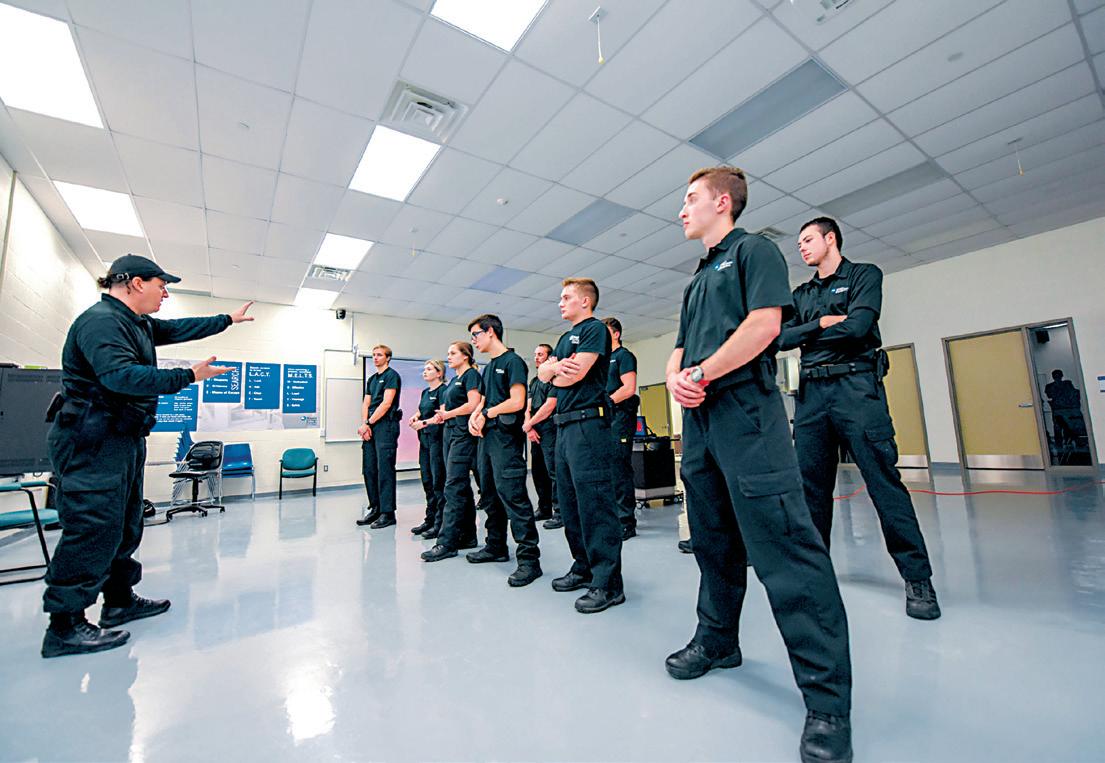
› Hands-on Justice Studies Simulation Lab and experiential learning.
› Students who successfully complete the first year of the program and the First Aid course are eligible to write the Ontario Security Guard licensing exam.
› Opportunity to obtain a diploma in Police Foundations in eight additional months of study (based on available space and admission requirements).
Career Opportunities:
› Canada Border Services Agency
› Corporate law enforcement
› Federal and provincial government agencies
› Municipal law enforcement
› National security and defence
› Private investigation
› Private security
› Security consulting
NOTE: Students with criminal charges or convictions for which a pardon has not been granted will be significantly limited in employment opportunities in the field of criminal justice.
Admission Requirements:
OSSD or equivalent, ENG 12 (C) or (U)
Recommended Courses: Aboriginal Beliefs, Values, and Aspirations in Contemporary Society 11 (M), Canadian Politics and Citizenship 11 (O), Challenge and Change in Society 12 (M), Introduction to Anthropology, Psychology, and Sociology 11 (M), Understanding Canadian Law 11 (M).
Term Course
ONE Essentials of Writing to be Understood Canadian Justice System
Law Enforcement Principles Fitness and Use of Force Management I Psychology
Sociology and Canadian Society
General Education Elective*
TWO Communications for Justice Studies II Criminology
Criminal and Civil Law
Provincial Off ences
Fitness and Use of Force Management II
Ethics and Code of Conduct Contemporary Social Issues
THREE Customs Procedures I
Report Writing - Customs and Immigration Fundamentals of Canadian Immigration Law Interviewing and Investigations
Security Risk Management
Equity, Diversity and Inclusion in Canada
General Education Elective*
FOUR Customs Brokerage Customs Procedures II Principles and Practices of Canadian Immigration, Refugee and Citizenship Laws
Criminal Code and Federal Statutes
Comparative Criminal Justice Studies
Fitness and Use of Force Management III
*1 course required
Program code: 0211
Campus location: Welland
Start term: Sep / Jan niagaracollege.ca/0211
Looking for a distinctive, rewarding, and challenging career where your investigative skills are used in the private sector of law enforcement? As a graduate of the Protection, Security and Investigation (Private Security) program, your critical thinking, research and interviewing skills will serve you well in effectively responding to potential threats to organizations and private citizens.
Program Highlights:
› Curriculum taught by former police officers with extensive investigative and operational experience.
› Gain practical, in-field experience via volunteer opportunities with local service agencies.
› Hands-on experiential learning takes place in the Justice Studies Simulation Lab.
› Students who successfully complete the first year of the program and the First Aid course are eligible to write the Ontario Security Guard licensing exam.
› Opportunity to obtain a Police Foundations diploma in eight additional months of study (based on available space and admission requirements).
Career Opportunities:
› Airport and pre-boarding security
› Business establishment investigator - security
› Corporate security
› Municipal law enforcement
› Private investigator/detective
› Security consulting
› Theft prevention
NOTE: Students with criminal charges or convictions for which a pardon has not been granted will be significantly limited in employment opportunities in the field of criminal justice.
Admission Requirements:
OSSD or equivalent, ENG 12 (C) or (U).
Recommended Courses: Aboriginal Beliefs, Values, and Aspirations in Contemporary Society 11 (M), Canadian Politics and Citizenship 11 (O), Challenge and Change in Society 12 (M), Introduction to Anthropology, Psychology, and Sociology 11 (M), Understanding Canadian Law 11 (M).

PROGRAM
Term Course
ONE Essentials of Writing to be Understood
Canadian Justice System
Law Enforcement Principles
Fitness and Use of Force Management I Psychology
Sociology and Canadian Society
General Education Elective*
TWO Communications for Justice Studies II Criminology
Criminal and Civil Law
Provincial Offences
Fitness and Use of Force Management II
Ethics and Code of Conduct
Contemporary Social Issues
THREE Surveillance Techniques Interviewing and Investigations
Security Risk Management
Equity, Diversity and Inclusion in Canada
General Education Elective*
FOUR Public and Corporate Security Investigation and Evidence
Fitness and Use of Force Management III
Private Investigations
Security Procedures
Security Operations Management
*1 course required

We’re proud of our leading role in Ontario’s thriving college system, and our commitment to preparing students to not only succeed, but drive innovation in today’s job market – locally and globally. From our supportive student culture to our state-of-the-art learning facilities, the best way to discover Niagara College is to visit us in person and see for yourself what sets us apart.
If you can’t visit us in person, check out photos and videos of our campuses and interact with our always-on-duty virtual tour guide as we demonstrate the many reasons to choose NC.
Looking for more information on programs or possible career options before making your final application decision? Join one of our recruitment officers for a College Exploration Information Session and discover our programs and the many career options with which they align. With our commitment to student success top of mind, NC recruiters also provide guidance on the application process.
This is your day to tour, ask questions, gather information and explore. Our faculty, staff, and current students are here to support you so please make yourselves at home and dream big. Get the full experience by taking a tour of our campuses and visiting the residences. Residence will be offering an inside look at living on campus, as well as offering giveaways and information about their social programming.
Open House Nov 8, 2025
Open House Mar 28, 2026
Attendees may enter to win up to $5,000* towards fees for Sep 2026, Jan or May 2027.
*OPEN HOUSE TUITION AWARD contest rules and information: The tuition award amount is credited towards tuition for September 2026, January 2027 or May 2027 towards entry into a new program intake. A winner will be selected at random from all official entries collected and will be notified by phone and/or email. Awards cannot be deferred to another intake and hold no cash value. Some restrictions apply. See niagaracollege.ca/openhouse.
†Financial assistance including endowed awards, declining awards, and entrance scholarships via TSA are subject to certain restrictions and regulations. Award application deadlines and application instructions can vary depending on the award. To find awards you may be eligible for, begin searching at niagaracollege.ca/finaid.
Choosing your program is an important step on your path to your future. We are always ready to answer your questions and provide guidance to ensure you are ready to apply. Take a look at the following pages that contain answers to some of the most common questions we get asked. There is information about paying for and financing your education, what you need to meet admission requirements, how to apply for residence or housing, and lots of information about the special service areas that we offer to all students.
You can always start by visiting the Niagara College website where you can find convenient tabs to all of the information you need to know.
Each program listing in this guide provides information on the minimum requirements for admission. This information is also available on the Niagara College website.
niagaracollege.ca/admissions
Many NC programs begin in September of each year while some are also available in January or May. Program availability and the current status may change and are updated daily on the Niagara College website.
niagaracollege.ca/status
Niagara College welcomes applicants from around the globe. To apply, individuals need to complete and submit the international student application found on the NC International website.
international.niagaracollege.ca/how-to-apply


Ready to apply? Visit the Ontario Colleges website to begin your application today.
Note that applications are subject to a non-refundable fee.
NOTE: The minimum academic requirements pertain to most programs. Some programs may also require: specific pre-requisite courses, preadmission testing, attendance at an information session, participation in an audition session, submission of a portfolio, completion of an essay or questionnaire or additional assessment of equivalency to required courses. It is important to note that meeting admission requirements does not guarantee admission to Niagara College programs.

All fees shown are based on the 2025-26 academic year. Tuition and fees for 2026-27 in all funded postsecondary programs may change without notice. Co-op programs have an additional fee of $575.00 per co-op term. Costs for materials are also added to some programs.
The basic annual fees listed here are tuition and essential fees.
Fees include: Academic Advising, Peer Services, Technology, Athletics and Recreation, Campus Safety, Career Services, Financial Aid Offices, Counselling and Mental Health, Health Services, Student Buildings, Student ID Cards, Transit Pass, Achievement and Records, Student Health Plan, SAC Advocacy, SAC Resources, SAC Membership, SAC Social Engagement, SAC Clubs, SAC Services, Student Engagement, Sustainability, and Alumni. For the most up-to-date fee information, please visit the NC website.
niagaracollege.ca/fees international.niagaracollege.ca/fees
and fees are subject to change without notice.

Beginning your postsecondary student journey comes with a lot of questions. Thankfully we have compiled a list of some of the most common things individuals want to know before making such an important decision.
Non-Competitive Programs
Applications to OPEN programs are processed on a first-come, firstserved basis starting in November each year. NC Admissions will continue to issue acceptances to open programs until the capacity is met up to the start of the term.
Competitive Programs
Note that key dates can be subject to change with the most up-to-date information found on the NC website. niagaracollege.ca/dates
Last date to apply for equal consideration to a competitive program:
Last date to submit portfolio, test scores, and/or final grades in required courses for consideration to competitive programs:
Feb 1, 2026
Feb 27, 2026
Earliest admission offer date for competitive programs: Mid March JAN 2027
Last date to apply for equal consideration to a competitive program: Jun 5, 2026
Last date to submit portfolio, test scores, and/or final grades in required courses for consideration to competitive programs: Jul 10, 2026
Earliest admission offer date for competitive programs: Late July
Last date to apply for equal consideration to a competitive program: Oct 30, 2026
Last date to submit portfolio, test scores, and/or final grades in required courses for consideration to competitive programs:
Nov 20, 2026
Earliest admission offer date for competitive programs: Late November
How do I apply and is there an application fee? The application for Canadian citizens, permanent residents, and convention refugees is available online at ontariocolleges.ca for a non-refundable application fee. You can apply to a total of five programs, with no more than three choices at any one Ontario college. For more information, please visit ontariocolleges.ca. International applicants see below:
I am an international (visa) applicant: Niagara College welcomes students from over 100 different countries. To apply as an international student, you must complete and submit the web application form for international students, along with your official transcripts, graduation documents from high school and/or university, and provide proof of English proficiency (if applicable). Upon receiving the information provided, we will assess your application. If you meet the eligibility criteria and the program remains available, you will receive an Offer of Admission, accompanied by a request to submit a deposit by a specified deadline. Upon timely submission of the deposit by the deadline, along with meeting the academic requirements, you will receive a Letter of Acceptance, and we will initiate the process of obtaining a Provincial Attestation Letter on your behalf. These documents are essential for your study permit application and cannot be transferred.
International applicants may apply online at: international.niagaracollege.ca/apply
For more information contact: Niagara College International 100 Niagara College Boulevard, Welland, Ontario, Canada, L3C 7L3
Phone: 905-988-2910, ext. 7151 Fax: 905-735-2413
Email: international@niagaracollege.ca
How will I know if the College has received my application? The Admissions Office will send an email and mail an acknowledgement brochure to you after your application has been received from ontariocolleges.ca. The mailing will indicate if there are specific pre-admission requirements for the programs for which you have applied and due dates for test scores, portfolio and transcript submissions. You can also find this information at: niagaracollege.ca/par
Are accommodations provided in the admissions process for students with disabilities?
If you wish to request accommodation for pre-admission testing, please contact the Accessibility Services office prior to the test date.
Phone: 905-735-2211, ext. 7778 or visit: niagaracollege.ca/hwas/services/accessibility/tests/
Do I need to provide my transcript(s)?
Please ensure that proof of all admission requirements is received by the Admissions Office within 3 weeks of submitting your application, or no later than the date noted in the chart under Important Dates.
If you are currently enrolled as a full-time high school student in Ontario, your school should forward transcript information directly to ontariocolleges.ca. If you are not currently enrolled in Ontario as a full-time high school student, you must request an official high school transcript be sent directly to ontariocolleges.ca For information on how to request Ontario high school and postsecondary transcripts, please visit niagaracollege.ca/transcriptrequirements
Does the College consider transcripts from outside of Ontario?
Applicants whose Canadian secondary school studies have been completed outside the province of Ontario must submit evidence of equivalent standing. Recognized equivalents to the Ontario Secondary School Diploma (OSSD) are: Alberta–grade 12, British Columbia–grade 12, Manitoba–grade 12, New Brunswick–grade 12, Newfoundland–grade 12, Nova Scotia–grade 12, Prince Edward Island–grade 12, Quebec–high school leaving certificate (secondary V), Saskatchewan–grade 12, Yukon, the Northwest Territories and Nunavut–grade 12. Applicants who have been educated outside of Canada are considered on an individual basis. International credential assessment services are available at icascanada.ca or wes.org/ca
Does the College consider alternatives to an Ontario secondary school diploma?
Applicants who provide documentation for Ontario Secondary School Diploma (OSSD) equivalency from any of the following sources will be considered on an individual basis.
› Academic and career entrance (ACE)
› Canadian adult education credential (CAEC)
› Home schooling (individual assessment is required) For further information, please contact the Admissions Office at Phone: 905-735-2211, ext. 7619 or Email: admissions@niagaracollege.ca.
Does the College consider transcripts from private career colleges?
Most private College courses and/or credentials are not acceptable as admission requirements for Niagara College programs. Please contact the Admissions Office at admissions@niagaracollege.ca for assistance with your particular program of interest.
Can I apply as a mature student?
If you are age 19 or older as of the first day of classes, and do not have an Ontario secondary school diploma (OSSD) or equivalent, you may be considered for admission as a mature student. You must meet all specific admission requirements (courses, portfolio, written statement, audition, pre-admission testing, etc.) For the program to which you are applying. Equivalency testing is available in mathematics and English for applicants age 19 or older. Testing is not available for biology, chemistry or physics. Test fees are payable at the time the test is written.
To review eligibility for admission, please contact the Admissions Office at Phone: 905-735-2211, ext. 7619 or Email: admissions@niagaracollege.ca.
What are English language proficiency requirements?
If you have earned the equivalent of the Ontario Secondary School Diploma (OSSD) from outside of Canada, you will be required to provide proof of one or more of the following:
› Grade 12 English at the (C)or(U) level (Ontario high school curriculum)
› Niagara College Mature Student Test for English
› ACE English (Academic Upgrading)
› International credential assessment for studies outside of Canada
If English is your subsequent language, the College (for the purposes of admission to standard non competitive programs) will also accept the following as proof of English proficiency:
TOEFL
TOEFL
All postsecondary (undergraduate) programs*
All degree & post-graduate programs
Paper Based: 500, Computer Based: 173, iBT: 80 Minimum: 20 Writing, 20 Speaking
Paper Based: 550, (TESL: 600)
Computer Based: 213 (TESL: 250) iBT: 85 Minimum: 22 Writing, 22 Speaking, (TESL: 101, 27 Speaking, 23 Listening, 27 Writing, 24 Reading)
IELTS All postsecondary (undergraduate) programs* 6.0–No individual band under 5.5
IELTS All degree & post-graduate programs 6.5–No band under 5.5
CAEL
EAP
EAP
PTE
PTE
Duolingo
All postsecondary (undergraduate), degree & post-graduate programs* 60–No individual band under 50
All undergraduate programs
All degree & post-graduate programs
Completion of Level 5 English for Academic Preparation program with 70% and no individual grade under 50%
Completion of Level 5 English for Academic Preparation program with 75% and no individual grade under 60%
All postsecondary (undergraduate) programs* 58+, with no individual skill under 53
All degree & post-graduate programs 60+, with no individual skill under 57
All postsecondary (undergraduate) programs* 105+, with no individual subscore below 95
Duolingo All degree & post-graduate programs 120+, with no individual subscore below 100
*Excluding Pharmacy Technician. For details visit niagaracollege.ca/pt
The College provides both short and long-term intensive English as a subsequent language programs for foreign trained students who plan to attend Niagara College, or a university, and need to improve their English language proficiency before starting their academic studies.
NOTE: Niagara College strives to ensure the accuracy of the information in this publication. Academic curriculum is continually reviewed and revised to ensure programs and courses remain relevant and meet all Ministry regulations. The College reserves the right to cancel or make changes to any course or program, fee, procedure, or campus location at any time.
Schedules: The college makes every attempt to maintain consistent schedules however, please note that timetables are subject to change. The scheduling of classes generally occurs from 8:30 a.m. to 10:30 p.m. Monday to Thursday, and from 8:30 a.m. to 6:30 p.m. on Friday.
Please refer to our website at niagaracollege.ca for the most accurate and up-todate information.
Financial aid—scholarships, bursaries and loans—are available to eligible students. Visit Financial Aid to explore all of your options, including scholarships, bursaries, OSAP, and other financial resources.
niagaracollege.ca/finaid

What is it? The Ontario Student Assistance Program (OSAP) is a financial aid program that can help you pay for college or university.
OSAP offers funding through grants which is money you don’t have to pay back and student loan which is money you need to repay once you’re done school.
When you apply for OSAP, you are automatically considered for both grants and a loan. If you don’t want to take a loan, and you’re a full-time or part-time student, you can decline it after your application is approved.
OSAP can help you pay for many important things you need to complete your studies at college such as tuition; books and equipment; fees charged by your school; and even living expenses (full-time students only) and child care (for full-time and part-time students with children).
To learn more, visit the provincial website. ontario.ca/osap

Scholarships and bursaries are resources to help you finance your postsecondary education. Niagara College offers over $3 million in scholarships and bursaries each year for domestic students. NC’s graduates succeed in our community thanks to support of our many donors and friends who recognize the importance of a Niagara College education. Be sure to visit our financial aid website for details.
niagaracollege.ca/finaid
Numerous scholarships can be found through online resources. Below are some websites which are not affiliated with Niagara College, but do offer information regarding scholarship opportunities and additional financial aid information.
scholartree.ca studentawards.com
scholarshipsCanada.com
For details about scholarships specific to international students.
international.niagaracollege.ca/scholarships

Looking to extend your educational experience beyond the classroom while meeting new people, forming life-long friendships, and getting involved in everything NC offers?
From student leadership opportunities to experiencing a global community that connects you to students from all over the world, living in residence enables you to explore self-growth and development in a social and supportive community. You will be surrounded by residence advisors committed to helping you transition into your new accommodations.
› Flexible payment options and only pay for the academic year instead of a typical 12-month lease
› Just steps from campus
› Furnished two bedroom suites featuring a kitchen (containing a fridge and microwave), three-piece bathroom, and Wi-Fi Internet (may vary).
› Students supply linens, cutlery and small, CSA-approved appliances (e.g. a toaster or a kettle).
› Controlled access and on-site management.
› 24 hour monitoring and visitors sign in.
› 24/7 access to a self-serve canteen or marketplace.
Welland T: 905-732-9700 ext 3800 email: info.welland@niagararesidence.ca

› Online applications Fall/Winter Academic Term open on February 1st (or next business day).
› Applications received on or before April 15th will be included in the acceptance lottery. After April 15th applicants are considered first-come, first-served if rooms available.
› Applicants will be notified by email within 3 business days of April 15th.
› Please see the Residence website for full details and dates for alternate terms.

niagararesidence.ca
Niagara-on-the-Lake T: 905-641-4435 ext 3900 email: info.notl@niagararesidence.ca
NOTE: Niagara College strives to ensure the accuracy of the information in this publication. Please note that the academic curriculum is continually reviewed and revised to ensure that Niagara’s programs and courses remain relevant and meet all Ministry regulations. The College reserves the right to cancel or make changes to any course or program, fee, procedure, or campus location at any time. Schedules: The College makes every attempt to maintain consistent schedules however, please note that timetables are subject to change. The scheduling of classes generally occurs from 8:30 a.m. to 10:30 p.m. Monday to Thursday, and from 8:30 a.m. to 6:30 p.m. on Friday. Some programs may have extended schedules.
Visit niagaracollege.ca for up-to-date information.
Niagara College