THE ROLE OF WHOLEGRAINS IN WEIGHT MANAGEMENT
Wholegrains offer numerous health benefits as they are full of nutrients and fibre. They are also promoted to aid weight management. This article will explore the mechanisms and evidence related to this.
For full article references please email info@ networkhealth group.co.uk
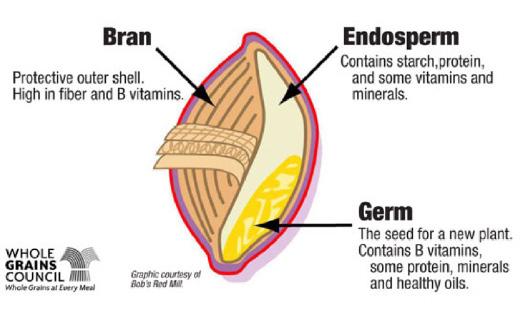
Wholegrains are defined as the intact, ground, flaked or cracked kernels which remain after the removal of inedible parts of the grain (such as the hull and husk), with the starchy endosperm, nutrientdense germ and high fibre-bran present in the same relative amounts as they exist in an intact kernel.1,2 Wholegrains are fantastically nutritious and can contain up to 75% more nutrients than refined grains, specifically providing starchy carbohydrate, fibre (mainly insoluble fibre, but some also contain soluble fibre), protein, B vitamins, folic acid, vitamin E, omega-3 fatty acid, gut friendly short-chain fatty acids and minerals such as iron, manganese, zinc, selenium and copper.2,3
Studies have linked a diet high in wholegrains with numerous health benefits, such as a 20% reduced risk of bowel cancer and a 30% reduction in the risk of Type 2 diabetes, heart disease and stroke.2-5
Bran
Protective outer shell. High in fibre and B vitamins.
POTENTIAL MECHANISMS OF WHOLEGRAINS IN WEIGHT MANAGEMENT
Wholegrains are high in starchy carbohydrates and low in fat, therefore, compared to high fat foods, they have a relatively low calorie content (4kcal per gram of carbs versus 9kcal per g of fat),2 so, displacing higher calorie food may be one reason why a diet high in wholegrains may be beneficial for weight management.6
As wholegrains generally have a low glycaemic index (GI), they slowly release carbohydrate into the blood and stabilise blood glucose levels; this, coupled with the high fibre content of wholegrains, is thought to promote satiety, control appetite and reduce urges for snacking.2 Depending on the fibre composition, it has been suggested that the mechanisms for increasing satiety include:6,7
• increased time and effort of chewing resulting in a slower eating rate;
Endosperm
Contains starch, protein and some vitamins and minerals.
Germ
The seed for a new plant. Contains B vitamins, some protein, minerals and healthy oils.
Figure 1: Wholegrain anatomy
Table 1: Types of wholegrains*
Whole wheat including spelt wheat, durum wheat, whole wheat flour, wheat flakes, bulgur wheat and buckwheat
Brown rice and wild rice
Whole barley including hull-less or naked barley, but not pearled
Whole rye and rye flour
Oats, including: hull-less or naked oats, rolled oats, oatmeal and oat flakes
Maize (corn)
Millets
Quinoa
‘Ancient grains’ e.g. kamut, freekah
*Adapted from BDA Food Facts ‘Wholegrains’2 and SACN report on ‘Carbohydrates and Health’5
• decreased gastric emptying;
• alteration of gut hormone secretion;
• slower energy and nutrient absorption;
• lower postprandial blood glucose and lipid levels.
EVIDENCE FOR WHOLEGRAINS AND WEIGHT MANAGEMENT
There is some observational evidence which suggests that diets high in wholegrains are associated with lower levels of obesity, for example, ‘The Nurses’ Health Study’8 found that women who consumed a high intake of wholegrains consistently weighed less than those with lower wholegrain intakes, and those with the highest fibre intake had a 49% lower risk of extreme weight gain. A recent large cross-sectional study from the US also found that ‘greater wholegrain consumption [was] associated with better intakes of nutrients and healthier body weight in children and adults’.9 Similar findings have also been reported in the UK.10
In terms of interventional trials, an early study11 relating to bread intake found that roughly 83% of subjects consumed more calories when white bread was provided compared to wholemeal bread. Similarly, Howarth et al (2001)12 found that adding 14g of fibre per day to subjects’ diets during a weight loss trial resulted in a 10% decrease in calorie intake and a weight loss of >1.9kg.
However, when the current body of research was analysed by the Scientific Advisory Committee on Nutrition (SACN, 2015),5 they reported that there was insufficient evidence
to suggest that wholegrains have an effect on BMI, change in body weight, body fatness or fat distribution; and there was no effect identified between dietary fibre intake, GI or GL on energy intake or body weight change. Nevertheless, based on limited evidence, SACN did find that high intakes of wholegrains may decrease total energy intake and an association was also found between high carbohydrate low fat diets and a lower BMI (see Table 2 opposite).
SACN acknowledge that the discrepancy between wholegrain classification in different countries presented as a limitation in examining the combined effect of wholegrains; for example, in Sweden and Denmark wholegrain products must contain 50% or more wholegrain ingredients on a dry matter basis and in the UK and US wholegrain products must contain 51% or more wholegrain ingredients on a wet weight basis, whereas in Germany wholegrain bread must contain 90% wholegrain ingredients.5,13
ADVISING ON WHOLEGRAIN INTAKE
Although there are no specific UK guidelines for daily wholegrain intake, the Eatwell Guide and also the NICE guidelines on Obesity Prevention (2006) recommend basing meals on starchy carbohydrates choosing ‘wholegrain versions where possible’.14,15 Furthermore, the recent SACN report on Carbohydrates and Health5 advised that adults should consume at least 30g of fibre per day and in order to reach this a significant daily intake of wholegrains is needed.
Table 2: Summary of relevant findings from SACN’s report on Carbohydrates and Health5
Topic Effect Identified?
Wholegrains and energy intake
Diets high in carbohydrates and low in fat
Oat fibre, beta-glucan and barley fibre and energy intake
Dietary fibre intake and body weight
Dietary fibre intake and energy intake
Cereal fibre excluding oat fibre and energy intake
Higher dietary fibre breakfast cereals and energy intake
Glycaemic index (GI) and eating motivation
Dietary fibre and body fatness in children/adolescents
Glycaemic load (GL) and weight change
GI or GL and body weight change, BMI or body fatness
Wholegrains and change in body weight and BMI
Wholegrains and body fatness and fat distribution
GI and GL and energy intake
Yes - biologically relevant effect, higher wholegrain consumption is associated with reducing energy intake
Yes - biologically relevant effect, associated with a lower BMI
No
No
No
No
No
No
No
No
Insufficient evidence
Insufficient evidence
Insufficient evidence
Level of available evidence
Limited
Limited
Adequate
Moderate
Moderate
Moderate
Moderate
Moderate
Limited
Limited
Inconsistent evidence NA
However, some countries have specific daily wholegrain recommendations for adults (see Table 3).16
The most recent National Diet and Nutrition Survey (NDNS) from 2012-201417 found that the average fibre intake for adults in the UK is below recommended levels at 13-14g/day, which includes fibre found in wholegrains and also fruit and vegetables. Data from the previous NDNS (2008-2011)18 has been analysed specifically for wholegrain intake, which reported that the average daily wholegrain intake (dry weight) was low, at 20g per day for adults and 13g per day for children/teenagers. Furthermore, it was found that 18% of adults and 15% of children/ teenagers did not consume any wholegrain foods.
It, therefore, appears that ongoing health promotion related to wholegrains is needed in the UK, such as advising the replacement of refined starchy carbohydrates with wholegrain versions (see Table 4). In order to maximise tolerance and minimise potential gut irritation, it is important to increase wholegrain intake gradually, drink plenty of fluid and to be physically active for at least 150 minutes per week.19
When reading food labels, it is useful to highlight that ‘multigrain’ does not indicate wholegrain (rather it means that the product contains more than one different type of grain),2 and fibre intake can be optimised by choosing ‘high fibre’ varieties of wholegrain products which contain >6g of fibre per 100g.20
Table 3: Wholegrain recommendations for adults
Women: 3-6 servings, men: 4.5-6 servings (age dependant).
Australia
Canada
Denmark
Sweden
United States
1 serving = 1 slice of bread, ½ cup cooked rice/ pasta/noodles, ½ cup of porridge, ⅔ cup cereal flakes, ¼ cup of muesli, ¼ cup of flour, 3 crispbreads, 1 crumpet.
At least 48g of wholegrains daily from age 9 onwards.
At least 75g of wholegrains per day (based on a 2,400kcal diet); therefore ~63g per day for a 2,000kcal diet.
75g of wholegrain per 2,400kcal diet; i.e. roughly 70g for most women and roughly 90g for most men.
Women: 3-6 servings, men: 3-8 servings (age dependant).
1 serving = ½ cup cooked rice/bulgur/pasta/cooked cereal, 1 ounce dry pasta, rice or other dry grain, 1 slice bread, 1 small muffin (weighing one ounce).
Table 4: Wholegrain foods and ideas for use (adapted form: BDA food factsheet ‘Wholegrains’2)*
Type of food Wholegrain version
Whole oats including rolled oats and oatmeal
Breakfast cereal
Bread and crackers
Weetabix, Shreddies, Shredded Wheat, bran flakes, puffed wholegrains and wholegrain muesli
Wholemeal, granary, wheatgerm, wholegrain with multi-grain, seeded, mixed-grain, soya linseed, rye (pumpernickel) bread
Wholemeal tortilla
Portion size = 1 serving Ideas for use
1 Tbsp
3 Tbsp
1 medium slice bread
½ tortilla
Wholemeal pitta bread ½ pitta
Whole wheat crackers or rye crispbread
Oatcakes
Flour
Meals
Snacks
Wholemeal, wheat germ, buckwheat, unrefined rye, barley, oatmeal and oat flour
Brown rice, whole barley (not pearl), bulgur (cracked) wheat, quinoa
Whole wheat pasta
Whole wheat noodles
Wholegrain cereal bars
Oats cakes
Wholegrain rice cakes
Popcorn (plain)
Wholemeal scone
2 crackers
2 oatcakes
NA
2 heaped Tbsp (cooked)
3 Tbsp
1 nest
1 cereal bar
2 oatcakes
2 rice cakes
2-3 cups
½ scone
Wholegrain breakfast cereals 3 Tbsp
With milk or yoghurt and fruit for breakfast or as a snack, as a topping for crumbles, as a snack. Avoid those with added sugar and salt.
In place of white bread/tortillas/pitta bread, cream crackers and sweet biscuits.
In baking or recipes in place of white flour.
In place of refined rice/pasta/noodles, in casseroles, sauces, soups, and salads.
In place of sweets, crisps and savoury snacks, cream crackers and sweet biscuits.
*There is currently no advice on what amount of wholegrains to eat in the UK but many experts in other countries say to aim for 3 servings per day
CONCLUSION
Wholegrains have numerous health protective qualities and in the UK, we could benefit from increasing our daily intake. Specifically in relation to weight management, a high wholegrain intake may help to reduce total calorie intake and it is
interesting that high carbohydrate low fat diets have recently been associated with a lower BMI; however more research is needed to clarify whether wholegrain intake has a direct effect on BMI, change in body weight, body fatness or fat distribution.