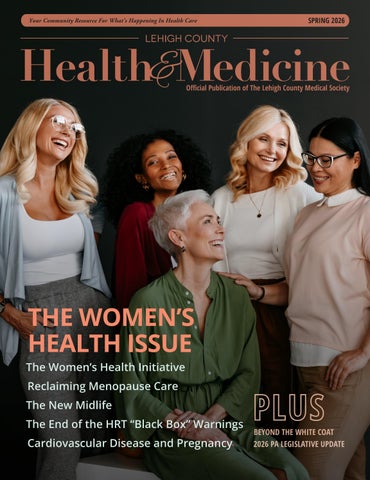

THE WOMEN’S HEALTH ISSUE






















Here we are, getting ready for the spring edition of Lehigh County Health & Medicine! This spring, we bring you an edition concentrating on important women’s health issues.
We begin with a letter from our past president, Chaminie Wheeler, DO. She describes how the camaraderie among physicians is a powerful reminder of the shared purpose that unites us across specialties and practice settings. Thank you, Dr. Wheeler, for two great years under your guidance.
Make sure to read the article on cardiovascular disease and pregnancy. The article highlights how pregnancy—which should be an exciting and joyful time—carries significant cardiovascular risks that can be life‑threatening, especially for women with preexisting heart disease or hypertension. The article emphasizes the critical need for multidisciplinary monitoring during pregnancy and the early postpartum period, when complications frequently arise and are easily overlooked.
Menopause is receiving much public attention, with women across the Lehigh Valley and the nation demanding care that reflects current science—delivered with compassion and practical support. Although healthcare has not always kept pace, there is real reason for optimism as the medical community becomes better equipped to provide evidence‑based, trustworthy care—and our region helps lead this shift. This is a must read.
While we’ve mentioned only a sampling of the articles, you will find many more inside, so please read on.
Hopefully you will enjoy this issue—and past ones—as we continue exploring how medicine and wellness strengthen our communities here in Lehigh County. If you would like to revisit previous editions or read Lehigh County Health & Medicine online, you can find them anytime at https://lcmedsoc.org/our publication.




A rare and beautiful example of a barn renovation with vaulted spaces, architectural details, re-purposed barn beams, and antique wood. Perfectly positioned amidst 90 acres. Offered for $4,350,000
/ (610) 346-8800

Captivating panoramas unfold through walls of glass, perfectly positioned in a stunning array of interior and exterior spaces. Set on 53 acres with woods, meadows, lake and pond. Offered for $3,500,000

An updated stone farmhouse on 13 acres, complete with inground pool, bank barn with stable, guest house, detached studio space, and panoramic views of the Bucks County countryside. Offered for $2,600,000



Surrounded by 73 acres in the heart of the Pocono Mountains, this remarkable 13,000 sqft home includes an indoor pool, commercial gym, media room, library and more. Offered for $1,575,000


Nestled amid rolling hills just minutes from the Delaware River, wood floors & walls of windows bring warmth & light to the home’s beautifully appointed interiors and expansive floor plan. Offered for $1,295,000 Carol C. Dorey


In a world-class neighborhood, this luxury detached condo is within walking distance to the Weyhill Golf Course of the Saucon Valley Country Club. Offered for $1,050,000


A reimagined farmhouse nestled on 6.27 acres, this custom built home is complemented by traditional farm outbuildings, including an historic PA bank barn. Offered for $875,000

On one of Historic Bethlehem’s most admired streets, this 1835/45 historic brick home offers a great opportunity to invest in a highly visible and high volume location. Offered for $650,000

Foxfield ~ Lower Saucon Twp
Windhorse Farm ~ Tinicum Twp
Lanes End Farm ~ Middle Smithfield Twp
Weyhill Cottage ~ Lower Saucon Twp
Twin Ponds Manor ~ Lower Saucon Twp
The Bethlehem Star ~ Bethlehem Twp
The Gilded Nest ~ Williams Twp
Spring Hill ~ Durham Twp
LEHIGH COUNTY
P.O. Box 8, East Texas, PA 18046 610-437-2288 | lcmedsoc.org
2026 LCMS BOARD OF DIRECTORS*
Kimberly Fugok, DO President
Alissa Romano, DO President-Elect
Gregory Wheeler, DO Vice President
Oscar A. Morffi, MD Treasurer
Charles J. Scagliotti, MD, FACS Secretary
Chaminie Wheeler, DO Immediate Past President
*effective February 1, 2026 - for two-year terms
CENSORS
Laura Nicole Oswald, MD Mia Mattioli, MD
TRUSTEES
Wayne E. Dubov, MD
Kenneth J. Toff, DO Mary Stock, MD, MSCP
EDITOR
David Griffiths Executive Officer

Patricia Maran, MD, MA, and Jacqueline Blas, BS, BA, MS
SHOW UP AND STAND TOGETHER
Thank You for the Privilege
CHAMINIE WHEELER, DO IMMEDIATE PAST PRESIDENT, LEHIGH COUNTY MEDICAL SOCIETY
It has been one of the greatest privileges of my professional life to serve as the 167th President of the Lehigh County Medical Society (LCMS). While I am deeply grateful for the opportunity to lead, what I will always cherish most is not a title or a single accomplishment—it is the fellowship and camaraderie I experienced with my fellow physicians.
A colleague of mine often reminded us that, as physicians, we have far more in common than anything that divides us. Regardless of specialty, practice model, or employment status, we entered medicine for the same reason: our patients. Over the past two years, I found myself returning to that truth and realizing I had not felt that depth of professional kinship since my days as a resident.
Why was that?
I believe the answer lies in a simple but uncomfortable truth—as healthcare has become increasingly corporatized, physician leadership and physician unity have steadily eroded.
As a medical student, I remember eating lunch with my attending in the physician’s lounge. There was a steady flow of physicians passing through— colleagues who knew one another not only professionally, but personally. They knew each other’s families. They shared their
lives. They talked through patient care together. Those moments of connection fostered collaboration, accountability, and excellence. Care plans were refined, and the quality of care improved for the patient.
Trust was built.
I know I am dating myself, but this was before the era of smartphones— certainly before they became a fifth appendage. Meaningful, interdisciplinary conversations were commonplace, and patients were treated as whole human beings rather than as disconnected body parts.
I also remember how upset my attendings were when the hospital eliminated physician lunches. Yet no one pushed back. They adapted. They finished rounds, went home, and continued paying the same medical staff dues even as benefits quietly disappeared.
What I have come to realize is that physicians, by nature, tend to follow the rules even when those rules work against us. Most of us were not the class bullies in grade school. We were the ones rewarded for compliance, diligence, and doing what was expected. That instinct serves patients well. But too often, it has left us unprepared to advocate for ourselves.
Over the years—working across multiple health systems in three different states—I never again witnessed that same level of collegiality. Physician lounges dwindled into little more than a refrigerator, a coffee machine, and a few tea bags. And with each small loss, something far greater slipped away: the unity that once empowered physicians to advocate for one another, for our profession, and ultimately, for our patients.
This reflection is not about nostalgia. It is about recognizing what we have lost and about understanding that reclaiming physician leadership requires us—once again—to stand together.
A fellow pediatrician connected me with a past president of the Pennsylvania Medical Society (PAMED). As I tried to articulate what I was witnessing in medicine—a slow, steady erosion of physician autonomy slipping away one drop at a time—I struggled to find the right words. He listened carefully, then offered advice that would ultimately change my path: “If you want to change medicine, you must be active in your local medical society.”
And so, after living in the Lehigh Valley for more than a decade, I finally joined the Lehigh County Medical Society and was invited to one of the board meetings.
What I found surprised me.
The leadership of LCMS consisted of the very same independent physicians I had seen rounding in our hospitals for years, physicians I had known only through brief hallway exchanges and passing encounters. Yet here they were, engaged, thoughtful, and deeply committed to preserving the integrity of our profession. I began by attending board meetings and serving as a delegate. It did not take long to recognize the significance of this work.
I was energized by the realization that meaningful change does not begin in distant boardrooms removed from patient

care. It begins locally with physicians who are willing to show up.
During my time as President, LCMS hosted numerous events focused on continuing medical education, maintenance of certification, and legislative advocacy. While each was important, the most meaningful—and by far the most well attended—was an event that spoke directly to the lived experience of every physician in the room.
We convened an expert legal panel to address critical issues affecting physicians today, including Pennsylvania’s passage of HB 1633, signed into law by Governor Shapiro, which limits restrictive covenants for physicians to no more than one year. We also addressed venue shopping and the devastating impact of nuclear verdicts, and we confronted the scope of practice infringement, an issue that strikes at the very heart of patient safety and physician accountability.
At another physician wellness event in Lehigh County—organized in response to alarming rates of burnout—a speaker discussed stress management techniques, including stimulating the vagus nerve with ice placed on the wrist. Afterward, a surgeon in the audience offered a moment of striking honesty: “It’s not my surgeries or my patients that cause my stress. It’s my inbox, filled with clinically irrelevant hoops I have to jump through just to take care of my patients.”
The room fell silent, because every physician recognized the truth in his words.
Yet alongside these challenges, we also witnessed something profoundly encouraging. Because of genuine engagement and authentic connection, LCMS grew significantly over the past year. Our membership expanded to include our young generation of physicians, particularly residents and fellows who are eager to learn, lead, and preserve the
integrity of our profession. That growth was so meaningful that LCMS earned an additional delegate to represent us in the 2026 House of Delegates. It was a tangible reminder that when physicians unite, show up, and invest in one another, real results follow.
These experiences are why I am deeply grateful to be part of the Lehigh County Medical Society. In a healthcare system that can make physicians feel small, LCMS reminds us that when physicians unite, our voices matter, our leadership matters, and our patients benefit.
Across local, state, and national levels, a movement is restoring physician leadership grounded in clinical judgment, professional integrity, and the physician patient relationship. Through organized medicine, our resolutions have become state laws that benefit patients and doctors alike, including restrictive covenants, advancing physician advocacy, and reaffirming our role as leaders in healthcare.
It begins—as it always has—with physicians standing together, showing up for one another, and refusing to let the heart of our profession quietly disappear.
Physicians are trained to do the right thing—even when it comes at a personal cost. We take unpaid call, assume liability, and sacrifice time with our families because it is expected of us and because our patients need us. Few professions are asked to give advice for which they are legally liable without compensation, yet physicians do so every day. That same sense of duty must now extend beyond individual sacrifice to our profession itself.
What I have come to understand is that physician leadership begins the moment we refuse to let others define our profession.
When physicians show up and stand together through the Lehigh County
Medical Society, change follows. Voices are heard. Leadership is restored. And the physician patient relationship returns to where it belongs—at the center of care. This is why the wisdom of Sir William Osler remains so relevant today: “The good physician treats the disease; the great physician treats the patient who has the disease.” Physician leadership and unity are not abstractions. They are what allow us to practice medicine as it was always meant to be practiced—centered on the patient, not the system.
Our profession does not need more distance. It needs connection.
Thank you for the privilege of allowing me to serve as your President over the past two years. It has been an honor to stand alongside you in the service of our patients and our profession.

Beyond the White Coat: WHY THE LEHIGH COUNTY MEDICAL SOCIETY MATTERS MORE THAN EVER
In an era defined by administrative burnout, shifting healthcare landscapes, and the increasing isolation of clinical practice, the decision to join a professional organization is often met with a skeptical: “What am I actually going to get out of this?”
It is a fair question. Today, physicians are pressed for time and inundated with requests for dues from national boards, specialty colleges, and alumni associations. Amidst this noise, the Lehigh County Medical Society (LCMS) stands apart as a vital, local lifeline.
We asked our members about why they value LCMS membership and here’s what they shared:
WAYNE DUBOV, MD
DIRECTOR OF ACUTE REHABILITATION
CONSULTATIVE SERVICES AND LVHN
LEHIGH VALLEY HEALTH NETWORKJEFFERSON
I have been a member of LCMS for over 33 years, on the LCMS Board since 1993, and am a past president. I enjoy the camaraderie of our meetings and gaining the knowledge of what is occurring locally and nationally in the practice of medicine. Members of the LCMS welcome medical students and residents to become involved—I consider it an important part of physician training. It is important to learn about the practice of medicine,
including how physicians can keep their autonomy and compete with other allied health providers. The LCMS and PAMED allow us to represent the needs of our patients. We—physicians—are best able to decide what is needed for the patients we treat. We welcome all to participate and have the common goal of improving the care of our patients.
MIA MATTIOLI, MD, FACP ACADEMIC HOSPITALIST
ST. LUKE’S UNIVERSITY HEALTH NETWORK
I first joined PA Medical Society (PAMED) as a student—I went to medical school in Hershey, PA, and a classmate told me there was free food at an event at the nearby hotel. That night, I joined PAMPAC as the student representative. In my first two years of medical school, it became evident that state and federal policies do indeed shape healthcare. It was frustrating to me to have a plan for a patient that I could not make happen because they had no ride share services, no home help, or simply no insurance to cover their prescription costs. Joining PAMED was a critical way for me to start learning about healthcare policy. I moved away for the next decade, and upon returning to Pennsylvania, my first move was joining the medical society. I think the society, especially LCMS, has taken a unique stance on advancing direct primary care. As a hospitalist, primary care isn’t my field, but through LCMS, I
have learned more about the critical role it plays in fulfilling the primary care needs across Pennsylvania. It’s the best way to get real time information and participate meaningfully in healthcare decision making. Joining a society is how you stay at the table.

To learn more about the Lehigh County Medical Society and how you can reap the benefits of membership, go to https:// lcmedsoc.org/become-a-member-or-renew.












At MADJ, we specialize in helping medical practices and health systems of all sizes thrive in competitive landscapes. From small beginnings to significant success, our tailored strategies have transformed healthcare providers into community cornerstones. If you’re ready to iMADJine the possibilities for your medical practice, let’s start the conversation

HE
W MEN’S HEALTH INITIATIVE
Reframing the Research
The Women’s Health Initiative (WHI) is one of the largest and most influential long term health studies ever conducted in the United States. Launched by the National Institutes of Health (NIH) in 1991, it was designed to address the lack of medical data that specifically focused on postmenopausal women. Because of its massive scale—over 161,000 women—it fundamentally changed how doctors treat menopause, heart disease, and bone health today.
WHY WAS IT STARTED?
Before the 1990s, many medical studies focused primarily on men. There was a widespread belief that Hormone Replacement Therapy (HRT) was a panacea that could prevent heart disease and memory loss in aging women, but there wasn’t a large scale clinical trial to prove it. The WHI was created to test that theory and other common health assumptions.
THE THREE MAIN PARTS OF THE STUDY
The WHI wasn’t just one experiment; it was a massive “team science” effort consisting of three clinical trials and one observational study:
• Hormone Therapy: Tested whether estrogen (with or without progestin) prevented heart disease and fractures.
• Dietary Modification: Tested whether a low fat diet reduced the risk of breast and colorectal cancers and heart disease.
• Calcium and Vitamin D: Tested whether supplements prevented hip fractures.
• Observational Study: Tracked the health habits and medical histories of 93,000+ women to identify new risk factors.
THE KEY FINDINGS
The study is most famous for its hormone therapy trial, which ceased in 2002 because the researchers found unexpected risks:
• Hormone Therapy: The study found that combined hormone therapy (estrogen + progestin) increased the risk of breast cancer, heart disease, stroke, and blood clots in the older participants studied. This caused an immediate, massive drop in HRT prescriptions worldwide.
• Low-Fat Diet: The trial showed that a low fat diet didn’t significantly lower the risk of heart disease or cancer, though it did show a potential reduction in deaths from breast cancer over the long term.
• Calcium/Vitamin D: These were found to provide only a modest benefit for bone density and didn’t necessarily prevent fractures in women at average risk.
THE COURSE CORRECTION
It is important to note that since the initial 2002 panic, the WHI data has been re analyzed, particularly regarding the
findings around HRT. The original study’s average participant age was 63, which is much older than the typical woman starting menopause (usually around age 51). Modern experts now clarify that for younger women (under 60) in early menopause, HRT is generally considered safe and effective for treating symptoms like hot flashes, even if it isn’t recommended for “disease prevention.”
WHY IT MATTERS TODAY
The WHI is the reason we have the “informed consent” model for menopause today. It ended the era of “one size fits all” prescriptions and forced the medical community to personalize treatment based on a woman’s specific age and health risks.

HYPNOSIS
CAN HELP YOU AND YOUR PATIENTS WITH ...
• Smoking cessation
• Weight management
• Stress management
• Pain management
• Control habits Call 570-617-5323 or visit Streamhypnosis.com for more information.
Vanessa Perez Weiss Certified Consulting Hypnotist Streamhypnosis.com | 570-617-5323 vperezweiss@streamhypnosis.com


MEETING THE MOMENT
Reclaiming Menopause Care
Within Our Medical Community
MARY STOCK, MD, MSCP
the Women’s Health Initiative (WHI). Those initial headlines were alarming and had a very real impact— prescribing dropped sharply, patients were frightened, and the medical professionals and organizations responded based on overwhelming caution rather than nuance.
20 years later, our understanding has evolved substantially.
We now recognize that the WHI results were often oversimplified and applied too broadly. Continued research has improved our understanding of who is most likely to benefit from menopausal hormone therapy (MHT) and under what circumstances risks are lower. We also better understand differences between hormone types, doses, delivery systems, and patient profiles. Medicine is doing what it does best as a science over time—learning, refining, and improving.
Just as importantly, today’s most common hormone therapy regimens are not the same medications or doses used decades ago. Lower dose approaches, such as modern transdermal estrogen options, and the use of micronized progesterone have reshaped risk conversations. Recent FDA black box updates renewed public anxiety, but these primarily reinforce risks already known for older oral combinations, and they do not negate the reassuring safety profile of widely used modern therapies when appropriately prescribed.
In short, science has progressed. Treatment discussions deserve to reflect that progress.


SYMPTOMS ARE REAL—AND WOMEN DESERVE RELIEF
For many women, menopause is not simply about hot flashes and night sweats—although those alone can be life altering. It may involve sleep disruption, cognitive fog, mood changes, joint pain, sexual discomfort, vaginal dryness, bladder symptoms, or recurrent urinary infections. These symptoms affect intimacy, emotional health, employment, community engagement, and self identity.
The encouraging reality is that treatment helps.
Hormone therapy can meaningfully reduce vasomotor symptoms, improve sleep, enhance quality of life, and prevent osteoporosis in appropriate candidates. For women unable or not interested in using systemic hormones, effective non hormonal therapies exist. One of the safest and most underutilized tools in medicine—vaginal estrogen—remains extraordinarily effective, with minimal systemic absorption and powerful benefits for sexual health and urinary comfort.
This is an area where medicine’s role is both clinical and deeply human. Listening matters. Believing women matters. Offering updated, evidence based options matters.
A RENEWED COMMITMENT FROM THE MEDICAL COMMUNITY
Perhaps the most encouraging trend is not simply the evolving science—it is the evolving medical response.
Across specialties, clinicians are increasingly acknowledging that menopause care deserves intentional learning, skill, and attention. Many physicians trained during eras when menopause education was limited or shaped primarily by the WHI, now recognize that they want more tools, more clarity, and more confidence in counseling patients.
We are seeing:
• More clinicians are pursuing formal training and certification
• Expanded conference offerings and continuing education programs
• Growing interest across OB/GYN, internal medicine, family medicine, psychiatry, urology, and other fields
• Institutional conversations about women’s health equity and access
• Collaborative care models—versus siloed responsibility—are developing
This is not about ownership. It is about shared commitment. It signals something important about the culture of medicine here and nationally—clinicians genuinely want to meet women where they are, provide up to date care, and avoid allowing misinformation or outdated fear to dictate treatment.
WHEN SPECIALTY EXPERTISE MATTERS
While many menopause concerns can be managed by primary care clinicians who feel comfortable and informed, specialty menopause care remains essential for some patients—particularly women with elevated breast cancer risk, significant cardiovascular disease, a history of blood clots, complex endocrine history, surgical
menopause, or those many years past their final menstrual period contemplating hormone therapy for the first time. Collaborative partnerships—rather than fragmented care—serve these patients best.
This reflects another strength of our medical community—women in the Lehigh Valley benefit from a healthcare environment where cross disciplinary collaboration is valued.
WHY THIS WORK MATTERS FOR OUR REGION
Supporting women through menopause is far more than symptom control. It strengthens workplaces. It stabilizes family systems. It improves mental health. It prevents fractures, reduces suffering, builds institutional trust, and honors the lived experience of women who have spent decades contributing to family, workforce, and community. It is also a matter of dignity. Women deserve medical care that respects their needs, validates their symptoms, and reflects scientific integrity.
The Lehigh Valley is a region defined by resilience, innovation, and compassion. As our clinicians increasingly embrace continuing menopause education and our health systems continue to support this focus, we affirm something profound—women’s health is not niche, optional, or secondary. It is central to community health.
When medicine evolves thoughtfully, women feel better. Lives get better. Communities get stronger.
And that is a future worth leaning toward.

With an Advertisement in Lehigh Health!
Connect with 8,500+ readers through Lehigh Health featuring physician-focused news, society updates, and timely health and medical content.
Contact us before the next issue drops at Sales@HoffPubs.com or 610.685.0914 x715
THE NEW MIDLIFE
Navigating the Stages of Menopause



For decades, menopause was discussed as a singular, sudden event—a “change of life” that arrives unannounced and departs just as quickly. However, menopause is not a cliff off which women plunge—it is a sophisticated, multi year transition that reshapes a woman’s biology.
At its most basic level, menopause is defined as the point in time exactly 12 consecutive months after a woman’s final menstrual period, marking the permanent end of reproductive fertility as the ovaries cease releasing eggs and transition away from primary hormone production.
However, focusing only on that 12 month milestone misses the broader story. The journey is actually a collection of distinct stages—perimenopause, menopause, and post menopause—each defined by shifting hormonal tides and unique clinical markers. Understanding these stages is more than just a biology lesson; it is the essential roadmap for modern care.
Here is the breakdown of the four main stages as they are defined today:
• Pre-menopause (The Baseline)
You have regular cycles, and while your hormones might fluctuate slightly month to month, there are no noticeable clinical changes in your cycle length or flow.
• Perimenopause (The Transition)
This period is divided into two phases:
Early Transition: Your cycles remain mostly regular, but the length might vary by seven days or more (e.g., a 21 day cycle followed by a 29 day cycle). This is often when “brain fog” and sleep disturbances start.
Late Transition: You begin skipping periods entirely. Once you have gone 60 days or more without a period, you are in the late phase. This is typically when hot flashes and night sweats become most intense as estrogen levels fluctuate wildly before dropping.
• Menopause (THE Moment in Time)
Technically, menopause is not a “stage” but a specific milestone, as it is the point in time that is exactly 12 consecutive months after a woman’s last period.
• Post-menopause
This is the stage that lasts for the rest of a woman’s life.
Early Post-menopause: The first five to eight years after that 12 month milestone. This is a critical “window of opportunity” for bone and heart health interventions.
Late Post-menopause: The period when hot flashes usually subside, but the risks for osteoporosis and cardiovascular changes increase due to the permanent low estrogen environment.
References
Menopausal status, transition, and age at menopause with accelerated biological aging across multiple organ systems: findings from two cohort studies, Yi Xiang, Qiong Meng, Zitong Huang, Ning Zhang, Yuan Zhang, Xianbin Ding, Jianhong Yu, Baimakangzhuo, Leilei Liu, Xiong Xiao , Xing Zhao; Aug 6, 2025; pmc.ncbi.nlm. nih.gov/articles/PMC12330081/
Menopause; Kimberly Peacock, Karen Carlson, Mari M. Ketvertis; Dec 21, 2023; https://www.ncbi.nlm.nih.gov/ books/NBK507826/
Perimenopause, menopause and postmenopause: What to know and how to treat the symptoms; Dec 10, 2025; https://health.ucdavis.edu/blog/ cultivating-health/perimenopausemenopause-and-postmenopausewhat-to-know-and-how-to-treat-thesymptoms-/2025/12


A NEW ERA FOR MENOPAUSE CARE
The End of the HRT
“Black Box” Warnings
KIMBERLY LEGG-CORBA, DO
On November 10, 2025, a landmark shift in women’s healthcare took place at the Hubert H. Humphrey Building in Washington, D.C. Secretary of Health and Human Services (HHS) Robert F. Kennedy, Jr., and U.S. Food and Drug Administration (FDA) Commissioner Dr. Marty Makary, MD, MPH, announced the removal of the long standing “black box” warnings on Hormone Replacement Therapy (HRT) products.
I was honored to be invited to and to attend this event alongside Second Lady Usha Vance, Secretary of Labor Lori Chavez DeRemer, and over 200 healthcare professionals—mostly women. The atmosphere was one of profound relief and scientific vindication.
CHALLENGING 24 YEARS OF “MEDICAL DOGMA”
The catalyst for this change was a rigorous expert reanalysis of the 2002 Women’s Health Initiative (WHI) data. Dr. Makary reviewed the expert panel’s findings and stressed there is no statistically significant increase in breast cancer mortality associated with HRT when used appropriately. He noted that for nearly 24 years, “medical dogma” surrounding the initial WHI findings led to restrictive warnings—known as “black box” warnings—that discouraged over 50 million women from seeking relief for menopausal symptoms.
Consequently, the FDA has begun removing prominent boxed warnings regarding cardiovascular disease, breast cancer, and dementia from several estrogen and combination HRT products.
PROFESSIONAL CONSENSUS AND CLINICAL NUANCE
The American College of Obstetricians and Gynecologists (ACOG) has commended this regulatory update. While the broad warnings are being phased out, clinical experts— including those from The Menopause Society and the Endocrine Society—emphasize a balanced approach:
• Shared Decision-Making: Treatment should be individualized based on a patient’s specific health history.
• The “Critical Window”: Benefits are highest, and risks are lowest when HRT is initiated in women under age 60 or within 10 years of menopause onset.
• Delivery Method Matters: Transdermal options (patches, gels) are often preferred for those with clotting or cardiovascular concerns, as they carry a lower risk of venous thromboembolism (VTE) than oral tablets.
• Vaginal vs. Systemic: Low dose vaginal estrogen remains the gold standard for Genitourinary Syndrome of Menopause (GSM) with minimal systemic absorption.
It is important to distinguish that these FDA labeling changes apply only to regulated, FDA approved HRT. ACOG and the FDA continue to withhold endorsement of “custom” compounded hormones due to a lack of standardized safety and efficacy data.
UPDATED GUIDELINES FOR CLINICIANS
In late 2025 and early 2026, the FDA approved updated drug labeling that removes prominent boxed warnings on several menopausal hormone therapy products (estrogen alone, combination HRT, and some vaginal estrogens), including statements about cardiovascular disease, breast cancer, and probable dementia risk. These revisions were initiated after a comprehensive review of available scientific evidence showing that the older boxed warnings— based largely on early analyses of the WHI—overstated risks for many women when HRT is used appropriately. Six representative products (oral and topical systemic estrogen, progestogen, and vaginal estrogen) have already had their labels revised, and more companies are updating labels.
WHAT REMAINS AND WHY IT MATTERS
While major risk statements were removed from the boxed warning, important safety information is still included in prescribing information and package inserts: e.g., endometrial cancer risk with unopposed systemic estrogen in women with a uterus (requiring progestogen for protection). It is also worth noting that the update does not mean HRT is risk free. Risks vary by age, time since menopause, personal history, route, and formulation. However, these nuances now drive clinical decision making rather than a broad alert.
PRESCRIBING HRT—INDICATIONS SINCE FDA LABELLING CHANGE
Following the landmark FDA labeling changes, the clinical approach to Hormone Replacement Therapy (HRT) has shifted from a one size fits all warning to a more nuanced, evidence based strategy. This updated framework allows clinicians to focus on individualized care, prioritizing the specific timing and delivery methods that offer the greatest benefit with the lowest possible risk.
The primary indications for HRT now focus on treating moderate to severe vasomotor symptoms, such as hot flashes and night sweats, as well as managing Genitourinary Syndrome of Menopause (GSM), which responds exceptionally well to low dose vaginal
estrogen. Additionally, HRT serves as a vital tool for preventing bone loss in younger women when nonhormonal options are insufficient. Central to these guidelines is the “critical window hypothesis,” which suggests that initiating therapy within 10 years of menopause onset—or before age 60—yields the most favorable benefit risk profile, particularly regarding cardiovascular health. Conversely, starting therapy later in life may carry higher risks and reduced efficacy.
Formulation and route of administration are also critical factors in modern prescribing. Transdermal estrogens, such as patches and gels, are often preferred over oral versions because they carry a lower risk of venous thromboembolism (VTE), making them a safer choice for women with cardiovascular risk factors. For those with an intact uterus, the addition of a progestogen remains a clinical necessity to protect against endometrial hyperplasia and cancer.
Despite the removal of broad warnings, risk stratification remains essential; HRT is generally contraindicated for those with a history of estrogen dependent cancers. For patients with a history of stroke or cardiovascular disease, a collaborative approach involving cardiology input and shared decision making ensures that treatment aligns safely with the patient’s personal health goals.
KEY TAKEAWAYS FOR CLINICIANS
HRT remains a first line, evidence based option for significant menopausal symptoms when individualized appropriately (especially in women under 60 and within 10 years of menopause). It is no longer constrained by broad boxed warnings about serious long term risks for many products—labeling now reflects more nuanced, evidence based considerations. Professional guidelines emphasize patient centered care, shared decision making, and risk stratification (age, time since menopause, personal/family history). Means of administration, dose, and symptom profile should guide regimen choice, keeping risks like VTE, cardiovascular disease, and breast cancer in context.
THE BOTTOM LINE
The removal of the black box warning marks the end of an era of fear based prescribing. We can finally provide millions of women the relief they deserve based on 21st century science rather than outdated misconceptions.
References
https://www.econtalk.org/what-modern-medicine-gets-wrong-withmarty-makary/#:~:text=Criticism%20of%20the%20American%20 medical,are%20devoted%20to%20c orrecting%20them.
https://www.youtube.com/watch?v=aOcKiP5h8KA
https://www.acog.org/news/news-releases/2025/11/ acog-president-says-label-change-on-estrogen-will-increase-access-tohormone-therapy?utm_source=chatgpt.com
https://www.fda.gov/news-events/press-announcements/ fda-approves-labeling-changes-menopausal-hormone-therapyproducts?utm_source=chatgpt.com
https://www.fda.gov/drugs/drug-safety-and-availability/ menopausal-hormone-therapies-updated-prescribing-information
Cardiovascular Disease & Pregnancy
POTENTIAL FOR HEARTBREAK

While pregnancy is a time of perceived joy, happiness, and nervous anticipation, families often confront unforeseen medical complications that disrupt the mother’s delicate health. Cardiovascular disease (CVD) complicates roughly 1 – 4% of pregnancies in the U.S. While maternal morbidity and mortality related to congenital heart disease have remained relatively stable in many developed nations—at roughly 11% and 0.5%, respectively—the U.S. has seen a troubling upward trend. Between 2000 and 2010, the incidence of heart disease rose from 6.4 to 9.0 per 10,000 delivery hospitalizations. This rise is driven by an aging maternal population and a higher frequency of acquired conditions, with the most common life threatening presentations during pregnancy or the postpartum period being heart failure, myocardial infarction, arrhythmia, and aortic dissection.
Normal physiologic adaptations of pregnancy can unmask disease, resulting in the mother experiencing cardiomyopathy, hypertensive disorders, arrhythmias, and coronary artery dissection—some of the most common serious cardiac presentations during pregnancy or postpartum. One need not look very far to realize that preexisting hypertension markedly increases rates of heart failure and myocardial infarction. For women with preexisting cardiovascular disease, these physiologic changes can tip a compensated heart into decompensation. Hypertension markedly raises risk: rates of myocardial infarction and heart failure are reported to be 13 fold and 8 fold higher, respectively. As more women with acquired cardiac conditions survive to reproductive age—and more women postpone starting their families to a later age—the number of pregnant patients with underlying heart disease continues to rise. Even in otherwise healthy women, pregnancy creates major cardiovascular risks.
PATRICIA MARAN, MD, MA, AND JACQUELINE BLAS, BS, BA, MS

Risk stratification reveals deep disparities and specific clinical triggers that contribute to these outcomes. Age and race are among the most significant predictors of risk; women over the age of 40 face 30 times the risk of cardiovascular complications compared to those under 20. Furthermore, systemic inequities are reflected in the data: non Hispanic Black women are 3.4 times more likely to die from pregnancy related cardiovascular complications than non Hispanic white women.
Understanding these risks requires a look at the profound physiological stress pregnancy places on the heart. Driven by surges in estrogen, progesterone, and the activation of the renin angiotensin aldosterone system (RAAS), the body undergoes a massive increase in cardiac output, heart rate, and plasma volume, while systemic vascular resistance (SVR) simultaneously decreases. While blood pressure initially drops, it typically climbs again in the third trimester. Additionally, the mechanical compression of the inferior vena cava by the growing uterus can lead to postural hypotension and significant lower extremity edema.
Monitoring during pregnancy and postpartum—the danger does not end at delivery— should be performed by a multidisciplinary cardio obstetrics team and should include close surveillance of blood pressure, volume status, and symptoms such as chest pain, dyspnea, or rapid weight gain, which may signal heart failure or other decompensation. While heart rate and blood pressure normally decrease within 48 hours of birth, blood pressure often spikes again between days three and six postpartum.
One of the most dangerous times to experience cardiovascular complications is during the first month postpartum. When visitors are fawning over the baby, and attention has turned from the mother to the newborn, the mother is much more apt to experience symptoms of chest pain, dyspnea, or rapid weight gain—all of which may signal heart failure. But as any mother can relate, it is quite difficult to discern the normal, overwhelming feelings of those sleepless first nights versus what might be a medical emergency. The first week postpartum is an especially high risk window because rapid fluid shifts and elevated blood pressure can trigger pulmonary edema, arrhythmias, or hypertensive complications in vulnerable patients.
Women with underlying CVD are particularly susceptible to pulmonary edema during this window due to increased hydrostatic pressure and decreased colloid osmotic pressure. This risk is highest for those with severe heart disease, those receiving excessive IV fluids, or patients battling preeclampsia.
One of the most heart wrenching examples of these dangers is illustrated in the HBO documentary Being Serena. Despite being a professional athlete—a world class tennis player who competed in and won the Australian Grand Slam while pregnant—Serena Williams subsequently faced life threatening cardio pulmonary complications during her postpartum period. This emphasizes the fact that Black women have almost a threefold risk of maternal mortality than their white peers. Overall, maternal morbidity and mortality related to heart disease remain significant, making careful
monitoring during pregnancy and especially the early postpartum period critical.
Serena Williams is now a spokesperson and advocate for exploring medical health options for weight loss and improved metabolic fitness, having used GLP 1s after giving birth to her second daughter. While initially marketed for weight loss, the scientific community is starting to realize the utility of these drugs—Ozempic, Wegovy, and Zepbound—categorized as GLP 1s, for many other health issues. As obstetricians, we know that women should not be taking these medicines in pregnancy. But what we don’t know is how these medicines may be incorporated into a woman’s fertility journey and be considered a preventative medicine before conceiving, rather than in response to weight gain correlated with perimenopausal and menopausal hormonal shifts. If cardiovascular disease in pregnancy is to be avoided—ultimately improving overall morbidity and mortality—future research ventures need to evaluate the utility of these medicines earlier in a woman’s health journey.
Many of us who practice obstetrics and gynecology—caring for women through their lifespan—think of pregnancy as a foreshadowing of what health factors may arise as we age. Pregnancy should be a time of hope—a time when we envision our children’s happiness and how their presence may bless our future days.
References
Ahmad WA, Khanom M, Yaakob ZH. Heart failure in pregnancy: an overview. Int J Clin Pract. 2011 Aug;65(8):848-51. doi: 10.1111/j.1742-1241.2011.02714.x. PMID: 21762308.
Davis MB, Arendt K, Bello NA, Brown H, Briller J, Epps K, Hollier L, Langen E, Park K, Walsh MN, Williams D, Wood M, Silversides CK, Lindley KJ;
American College of Cardiology Cardiovascular Disease in Women Committee and the Cardio-Obstetrics Work Group. Team-Based Care of Women With Cardiovascular Disease From Pre-Conception Through Pregnancy and Postpartum: JACC Focus Seminar 1/5. J Am Coll Cardiol. 2021 Apr 13;77(14):1763-1777. doi: 10.1016/j.jacc.2021.02.033. PMID: 33832604; PMCID: PMC8238394.
Mehta LS, Warnes CA, Bradley E, Burton T, Economy K, Mehran R, Safdar B, Sharma G, Wood M, Valente AM, Volgman AS; American Heart Association Council on Clinical Cardiology; Council on Arteriosclerosis, Thrombosis and Vascular Biology; Council on Cardiovascular and Stroke Nursing; and Stroke Council. Cardiovascular Considerations in Caring for Pregnant Patients: A Scientific Statement From the American Heart Association. Circulation. 2020 Jun 9;141(23):e884-e903. doi: 10.1161/CIR.0000000000000772. Epub 2020 May 4. Erratum in:
Circulation. 2020 Jun 9;141(23):e904. doi: 10.1161/ CIR.0000000000000845. Erratum in: Circulation. 2021 Mar 23;143(12):e792-e793. doi: 10.1161/CIR.0000000000000970. PMID: 32362133.


BEYOND THE SHUTDOWN
HOW RESTORING INTEGRITY IN HEALTHCARE SPENDING CAN EMPOWER PHYSICIANS AND PATIENTS
CHAMINIE WHEELER, DO
The recent government shutdown, while widely portrayed as partisan gridlock, quietly revealed something profoundly important to those of us who care for patients every day. Behind the political headlines was a deeper, non partisan truth: The structure of federal healthcare spending is drifting further away from patients and their care, and events like these offer rare opportunities to redirect the system back toward people rather than institutions.
The central issue underlying the shutdown was whether to continue the temporary COVID era premium
subsidies called “enhanced premium tax credits” (PTCs)— designed for pandemic relief, which grew into one of the largest direct funding streams ever created for insurance companies—should expire or be continued. Originally a short term emergency measure, these “COVID credits” quickly became a permanent expectation, masking the true cost of insurance, weakening price competition, and fueling enrollment practices that benefited insurers without improving patient access.
New research brought forward during this debate helped clarify what
physicians have long sensed: these subsidies dramatically inflated insurer revenue while offering limited value to patients. A recent issue brief from the Joint Economic Committee (JEC), Long Overdue: Enhanced Premium Tax Credits Should Expire, highlighted that the design of COVID era subsidies prioritized maximizing enrollment regardless of cost, reducing pressure on insurers to keep premiums in check. By subsidizing rising premiums rather than controlling them, the subsidies created an “unsustainable policy” in which federal dollars increasingly supported the financial health of large insurers more
than the actual health of American families. Even when these enhanced premium credits expire, PTC spending in 2026 is still projected to remain more than double pre 2021 estimates. This is a stark reminder that temporary policies frequently outgrow their purpose—often in ways that compromise system integrity.
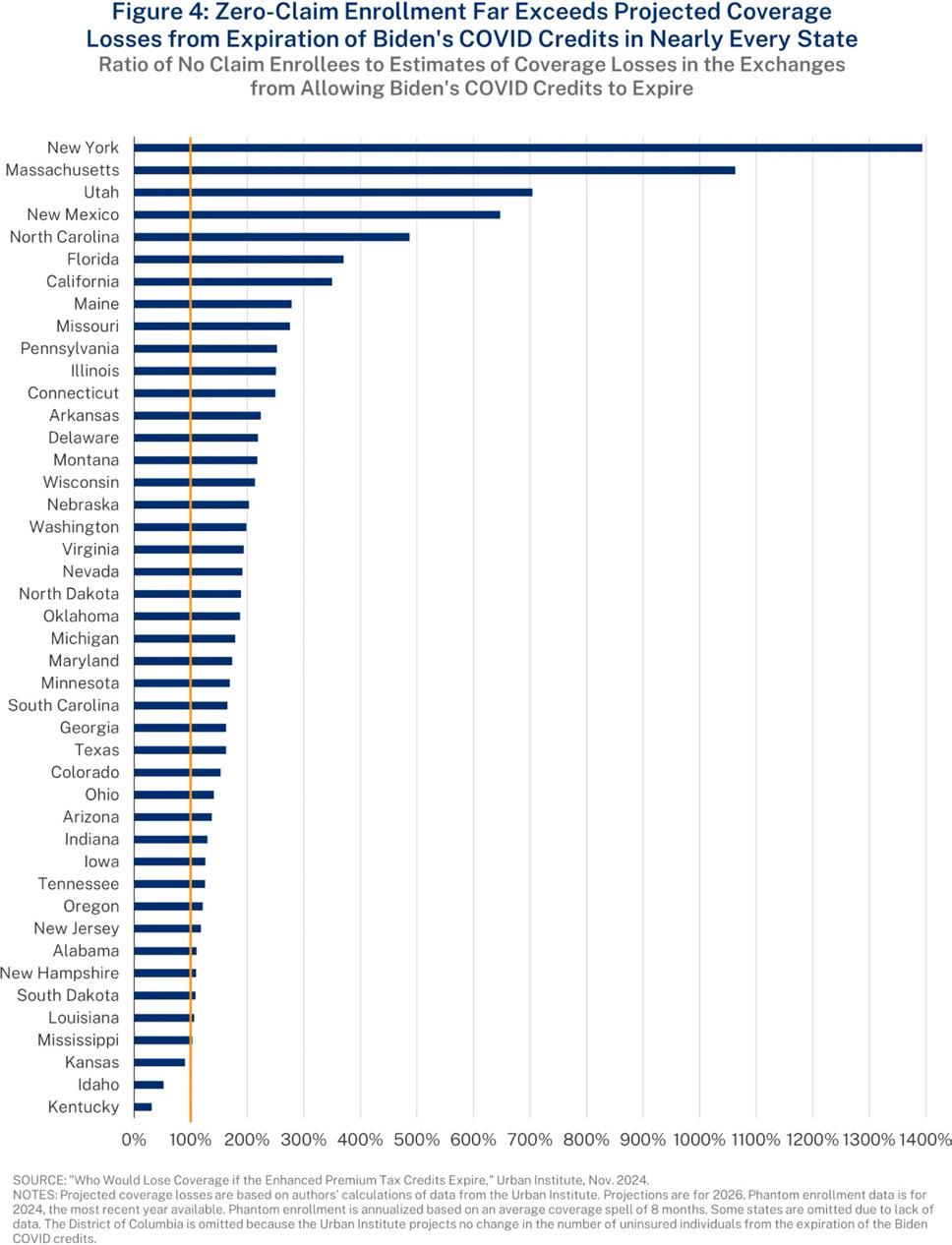
One of the most concerning findings from the JEC analysis is the dramatic growth of what the brief calls “zero claim enrollees.” These are people enrolled in subsidized plans whose insurers receive payments on their behalf even though the individuals file no medical claims at all. Since the introduction of the enhanced subsidies, the rate of these zero claim enrollees has nearly quadrupled, now reaching about 35% of all ACA exchange participants. This was roughly 12 million people. In fully subsidized plans, 40% of enrollees filed no claims.
The contrast with typical private insurance markets is dramatic, where only 15% of enrollees usually go a year without submitting a claim. For physicians, this raises troubling questions about access, patient engagement, and whether patients even realize they are enrolled. For taxpayers and policymakers, it reflects a structural inefficiency—one in which one subsidy dollar benefits consumers for every two that are wasted or absorbed by insurers and intermediaries.
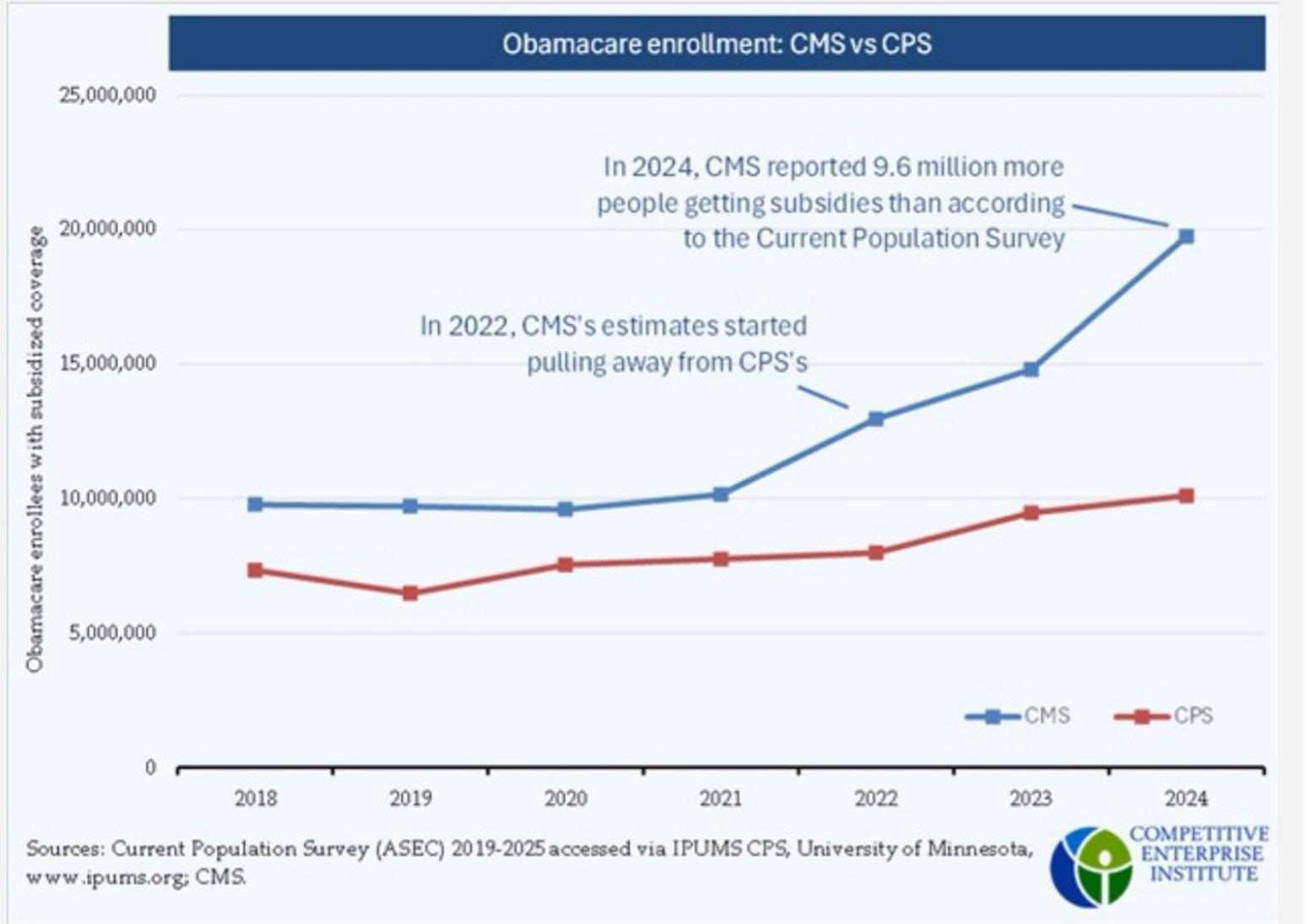
These concerns are reinforced by research from Jeremy Nighohossian at the Competitive Enterprise Institute, who found a staggering increase in phantom enrollment in 2024. His analysis of federal data revealed that twice as many people were enrolled in exchange plans as reported having coverage, creating a much wider gap than existed before the COVID era subsidies.
Some of these cases are believed to involve improper or fraudulent enrollments, including instances where individuals were signed up without their knowledge by unscrupulous brokers, purely so insurers could collect subsidy payments. Paragon Health Institute estimates that as many as 6.4 million people may have been improperly enrolled in 2025. These structural vulnerabilities were magnified by the enhanced premium tax credits (PTCs), which created strong financial incentives for insurers and brokers to increase enrollment volume regardless of patient need or care utilization.
At the same time, premiums in ACA plans rose rapidly. Since 2014, ACA plan premiums have increased almost twice as fast as employer sponsored premiums, even as networks narrowed and deductibles grew. By 2024, many families reported paying monthly premiums yet facing $5,000 to $9,000 deductibles, leading many to express a heartbreaking but familiar sentiment: “I have insurance, but I still can’t get care.” The enhanced subsidies masked the rising cost of these plans by allowing many enrollees to pay $0 premiums, but the underlying prices paid by taxpayers continued to climb steeply. With nearly half of subsidized enrollees paying nothing out of pocket, the pressure for insurers to keep premiums affordable all but disappeared.
This context is essential for understanding why Congress
ultimately declined to extend the COVID era subsidies during the shutdown negotiations. When the government reopened, it did so without adding the additional $40 billion per year in payments sought by insurers. The original ACA subsidy structure was restored, and almost immediately, fraudulent or inactive enrollments began to decline.
Many workers returned to employer sponsored plans that are often more comprehensive and stable because marketplace plans no longer appear artificially cheap.
These shifts—while administrative on the surface—marked a deeper realignment of incentives in the healthcare market. They also marked the first meaningful break in the cycle of subsidies driving higher premiums, leading to higher subsidies, and further divorcing insurance pricing from the realities of patient care.
With insurer directed subsidies no longer expanding, policymakers began asking a simple but transformative question: If federal healthcare dollars are no longer flowing automatically to insurers, where should they go instead? This opened the door to a patient centered alternative known as the HSA Option. Instead of sending CSR dollars to insurers where they historically encouraged “silver loading” and further premium inflation, the HSA Option directs those funds into patients’ Health Savings Accounts (HSA). This shift corrects pricing distortions, is projected to reduce premiums by about 12%, continued on next page >
and saves taxpayers roughly $30 billion. More importantly for physicians, it places healthcare dollars directly in the hands of families, who can use a simple debit card to pay for real care—primary care, direct specialty care, mental health, imaging, labs, medications, dental and vision services, and out of network visits. It also makes innovative models like Direct Primary Care (DPC) more accessible by allowing patients to use HSA funds for monthly membership fees.
For the medical profession, this represents a hopeful and overdue realignment. When patients control their healthcare dollars, access improves, bureaucratic waste decreases, and insurers must once again compete on price and value. Physicians can practice medicine with greater transparency and autonomy. Care becomes anchored in relationships rather than in administrative hurdles. Clinicians are free to prioritize prevention, continuity, and whole person care, which are practices consistently shown to improve outcomes and reduce long term costs. Independent practices, including DPC clinics, can thrive in this environment—building direct, trusting partnerships with patients without the burden of insurance middlemen.
Crucially, allowing the enhanced subsidies to expire and refusing additional insurer payments also protected Medicaid integrity. With fewer improper enrollments and reduced opportunities for states or brokers to manipulate federal match funds, resources can be redirected to the children, seniors, disabled individuals, and low income families who truly rely on Medicaid. This is fiscal stewardship aligned with clinical ethics, an approach that honors patients’ dignity while strengthening the safety net.
What began as a shutdown rooted in political disagreement has, unexpectedly, created space for a profoundly patient centered course correction in American healthcare. It disrupted a subsidy structure that fueled inefficiency, waste, and distorted incentives, and it cleared the way for solutions that prioritize people over
institutions. The combination of restored subsidy rules, reduced fraud, strengthened employer coverage, and the emergence of the HSA Option marks a rare moment when the system is bending back toward transparency, choice, and trust.
For physicians, this is a moment of genuine hope and a chance to reclaim the practice of medicine from the layers of bureaucracy that have long overshadowed patient care. It is a reminder that even in a complex system, reforms that align dollars with actual care can restore the physician patient relationship, improve outcomes, and bring humanity back to the center of healthcare.
References
Centers for Medicare & Medicaid Services (CMS). Affordable Care Act Marketplace Enrollment, Subsidy Data, and Cost-Sharing Reduction Reports. U.S. Department of Health and Human Services, various years.
Congressional Budget Office (CBO). Reports on Affordable Care Act Subsidies, Cost-Sharing Reduction Payments, and Federal Spending Projections. Congress of the United States, various years.
Competitive Enterprise Institute (CEI). Analyses of ACA Premium Trends, Subsidy
Effects, and Marketplace Enrollment Patterns. Competitive Enterprise Institute, various years.
Government Accountability Office (GAO). Reviews of Affordable Care Act Oversight, Improper Payments, and Subsidy Administration. U.S. Government Accountability Office, various years.
HealthCare.gov. Health Insurance Marketplace Eligibility, Plan Categories, and Premium Tax Credit Rules. Centers for Medicare & Medicaid Services, www. healthcare.gov.
Kaiser Family Foundation (KFF). Reports on Health Insurance Premiums, Deductibles, Network Trends, and ACA Marketplace Data. KFF, various years.
Paragon Health Institute. Research on ZeroClaim Enrollees, Improper Enrollment, COVID-Era Subsidies, and Marketplace Incentive Distortions. Paragon Institute, various years.
U.S. Census Bureau. Current Population Survey: Health Insurance Coverage Data. U.S. Department of Commerce, various years.
Pennsylvania General Assembly
2026 PENNSYLVANIA LEGISLATIVE OUTLOOK

The Pennsylvania General Assembly returned to session at the end of January, where both the House and Senate met the week of January 26th. As PAMED looks ahead to the 2026 Pennsylvania legislative landscape, it is clear it will be dominated by elections.
The gubernatorial election will take place this November— sitting Governor Shapiro and State Treasurer Stacy Garrity have already announced their candidacies. This is also year two of the 2025 2026 legislative session—all 203 PA House seats and 25 of the 50 PA Senate seats will be contested.
Given this environment, the Republican controlled Senate and the Democratic controlled House can be expected to move a relatively large number of bills in 2026 that have no chance of passing the other chamber but are intended to send political messages to the electorate. With that backdrop, PAMED is continuing to monitor and advocate on key issues, including:
• Midwives: Senate Bill 507 (Brown), a bill that would update provisions in the Medical Practice Act of 1985 regarding the practice of midwifery to include licensing certified midwives. The bill passed the Senate in October, moved quickly in the House, and is expected to receive final approval in the first quarter of 2026.
• Maternal Health: House Bill 1088 (Steele) and House Bill 1234 (Mayes), legislation requiring both private and government provided health insurance to cover blood pressure monitors for pregnant or postpartum patients,
passed the House and are awaiting consideration in the Senate.
• Private Equity: There has been significant legislative interest in getting something done on regulating the involvement of private equity in healthcare. Numerous bills have been introduced, and public hearings have been held on this issue in both the House and Senate. To date, only House Bill 1460 (Borowski) has moved, passing the House last summer. That bill was referred to the Senate Institutional Sustainability and Innovation Committee; the committee continues to work on the issue, but does not appear ready to move legislation at this time.
• Scope of Practice: PAMED remains vigilant on all “scope of practice” legislation and continues to advocate for physician led team based care. Senate Bill 25 (Bartolotta) and House Bill (Guenst) on independent practice for nurse practitioners; House Bill 1000 (Frankel) on prescriptive authority for psychologists; and Senate Bill 197 (Brown) on physical therapist direct access are just some of the “scope of practice” bills on which PAMED is actively engaged.
• Artificial Intelligence (AI) Use in Healthcare: Various committees in both the House and Senate have already held or will be holding hearings on various aspects of the use of AI in healthcare. To date, no bills have been moved, but PAMED continues to monitor all developments on this issue.
Your new digital gateway to the latest WellSpan advances.
With articles, research updates and exclusive insights tailored for physicians, MacroScope is our new content platform to inform and inspire. We look forward to sharing medical innovations, clinical research and new technologies that will empower and inform your professional journey.
• Stay up to date: Keep abreast of the latest developments across various specialties.
• Gain insights: Benefit from expert analyses and studies that can directly impact your practice.
• Expand your network: Connect with other experts shaping the future of healthcare.
For another healthy dose of valuable medical content, subscribe to our companion publication. Complete the subscription form on MacroScope online for delivery to your home or office three times a year.