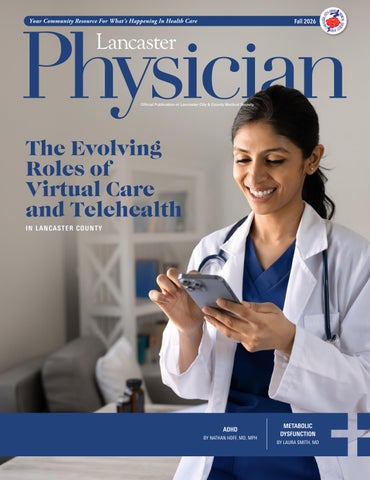
Fall 2026
The Evolving Roles of Virtual Care and Telehealth I N L AN CAST ER COU NTY
ADHD BY NATHAN HOFF, MD, MPH
METABOLIC DYSFUNCTION BY LAURA SMITH, MD
We’re advancing breast cancer detection with AI. Because early diagnosis is lifesaving. WellSpan is putting revolutionary breast care AI technology to work to help identify breast cancer earlier and with greater accuracy. While our highly trained radiologists continue to review every breast screening image, we’re utilizing AI to help identify the smallest breast cancers earlier than ever before. Because when it comes to early detection, you have WellSpan on your side. WellSpan.org/Mammo
contents FALL 2026
2025/2026 Board of Directors
PERSPECTIVES
OFFICERS
The Evolving Roles of Virtual Care and Telehealth in Lancaster County
Robin M. Hicks, DO President UPMC Supportive Care & Palliative Medicine
Sarah Eiser, MD Immediate Past President Penn Medicine Lancaster General Health Physicians Lancaster Physicians for Women
p. 24
Christopher R. Scheid, DO President-elect UPMC Senior Care
David J. Gasperack, DO Vice President WellSpan Health
James M. Kelly, MD Treasurer Penn Medicine Lancaster General Health Physicians Family Medicine Lincoln
Best Practices 6
Advanced Navigation Technology at UPMC Lititz Improves Precision in Minimally Invasive Spine Surgery
10 Penn Medicine LG Health Brings Advanced HIPEC Cancer Treatment to Lancaster County
8
Penn State Health Expands Women’s Health Services in Lancaster County, Prepares to Open Level II NICU
12 Women With Preeclampsia Have 4x the Risk of Hypertension Later in Life: WellSpan Health Program Connects At-Risk Moms With Lifesaving Postpartum Follow-Up Care
Lena Dumasia, MD Secretary Lancaster Cancer Center
DIRECTORS Mitchell B. Crawford, DO | WellSpan Philhaven Stacey S. Denlinger, DO | UPMC Lititz Wound and Hyperbaric Center
Laura H. Fisher, MD | Lancaster Family Allergy Abby Geletzke, MD | UPMC Breast Health Associates Carey Hung, DO | Resident, UPMC Lititz Hayley A. Kong, MD | Resident, Lancaster General Hospital
Karen A. Rizzo, MD, FACS | Lancaster Ear Nose and Throat, LLC
Danielle Rubinstein, DO | Penn Medicine Lancaster General Health Physicians Geriatrics
Daniel J. Schlegel, MD, MHA, FAAFP | Penn State Health Middletown
Alison N. Schuster, MD | Resident, Lancaster General Hospital
In Every Issue 4
President’s Message
23 Perspectives
14 Healthy Communities
26 News & Announcements
20 Patient Advocacy
31 Legislative Updates
EDITORS Dawn Mentzer Beth E. Gerber Lancaster City & County Medical Society
Lancaster Physician is a publication of the Lancaster City & County Medical Society (LCCMS). The Lancaster City & County Medical Society’s mission statement: To promote and protect the practice of medicine for the physicians of Lancaster County so they may provide the highest quality of patient-centered care in an increasingly complex environment.
Content Submission The Lancaster Physician magazine welcomes recommendations for editorial content focusing on medical practice and management issues, and health and wellness topics that impact our community. However, we only accept articles from members of the Lancaster City & County Medical Society. For more information or submission suggestions, please email bgerber@lancastermedicalsociety.org.
Hoffmann Publishing Group is the official publisher of the Lancaster City & County Medical Society’s Lancaster Physician magazine. FOR ADVERTISING OPPORTUNITIES CONTACT: Ad Sales, Sales@HoffPubs.com, 610-685-0914 x715 © 2026 All rights reserved. No portion of this publication may be reproduced electronically or in print without the expressed written permission of the publisher.
L A N C A S T E R M E D I C A L S O C I E T Y. O R G
President’s Message
Hello Lancaster County, As we welcome the fall season, I’m especially pleased to share this issue of Lancaster Physician—my first President’s Message since beginning my term as President of the Lancaster City & County Medical Society. It is truly a privilege to serve in this role, and I’m looking forward to the year ahead and to finding new ways to strengthen and connect our local physician community. In this issue, we explore metabolic health and ADHD, the continued evolution of virtual care and telehealth across Lancaster County, and resources for families experiencing the profound loss of a child. We also have the opportunity to recognize PAMED’s Top Physicians Under 40—an encouraging reminder of the talented physicians shaping the future of medicine in Pennsylvania.
Robin M. Hicks, DO
As physicians, our work extends well beyond diagnosing and treating illness. We educate, advocate, support patients and families through some of their most difficult moments, and continually adapt as medicine evolves. I hope this issue offers useful information, new perspectives, and a reminder of the strength of our local medical community.
You’re proud to be a physician. Support the organization dedicated to serving you and your passion.
That community is strongest when physicians across specialties, health systems, and stages of their careers are connected and engaged. As we look ahead to the coming year, I encourage our current members to renew their LCCMS membership—and to invite a colleague who is not yet a member to join us. The more physicians we bring together, the stronger our collective voice and our ability to support one another and the community we serve.
United we are stronger and can work together to make a positive impact in Lancaster County medicine and beyond.
Thank you for all you do for your patients, your colleagues, and our community. I’m honored to serve as your president and look forward to what we can accomplish together.
If you aren’t already a member, we hope you’ll consider a membership investment in LCCMS.
Warmly,
-RH
Scan the QR code below to learn more.
LCCMS CALENDAR OF EVENTS PAMED House of Delegates Friday, October 23 - Sunday, October 25 Hershey Lodge (hybrid event)
Holiday Social & Foundation Benefit Saturday, December 5, 6:30 - 10 p.m. Lancaster Country Club
Visit lancastermedicalsociety.org
Wondering how to keep up with important LCCMS and PAMED news and updates? Follow us on Facebook at
Follow us on Instagram at
www.facebook.com/LCCMS
www.instagram.com /lancastermedicalsociety
LANCASTER
4
PHYSICIAN
Visit our website at www.lancastermedicalsociety.org
Fa l l 2 0 2 6
NEW PRESIDENT PROFILE: ROBIN HICKS, DO Where are you from and where did you study medicine? I grew up in Western Massachusetts and attended the University of Vermont, where I studied biology and music. I went to medical school at Lake Erie College of Osteopathic Medicine in Erie, Pennsylvania. I completed my family medicine residency at what is now UPMC Lititz, followed by a fellowship in Hospice and Palliative Medicine at the Medical University of South Carolina in Charleston. I returned to Lancaster County after fellowship and have been practicing here since 2018. Why did you want to be a physician? Medicine was part of my life from an early age. Both of my grandfathers were physicians, and my mother practiced as a maternity nurse for 45 years. I saw firsthand the impact they had on the lives of their patients and families, and I wanted a career that would provide that same kind of meaningful connection with people. I was ultimately drawn to palliative medicine because it allows me to care for the whole person—not just a disease—and to help relieve suffering for patients and their loved ones during some of the most difficult moments of their lives. What are the biggest changes you’ve seen in medicine since you began practicing? One of the biggest changes has been the increasing complexity of medicine. We have more treatments, more technology, and more options for patients than ever before, which is wonderful, but it can also make navigating illness much more complicated for both patients and physicians. At the same time, medicine has become increasingly fragmented. Physicians are often separated by health systems, specialties, electronic medical records, and growing administrative demands. I think that makes it even more important that we intentionally find ways to stay connected to one another and remember that medicine is fundamentally a human profession. What (or who) has helped you become the doctor you are today? Countless people have shaped the physician I am today. My grandfathers and my mother were my earliest examples of what it means to care for others. I have also been fortunate to learn from many incredible attending physicians and colleagues throughout my
training and career, including many who still practice here in Lancaster County. But some of my greatest teachers have been my patients and their families. Every patient encounter teaches me something—about medicine, communication, suffering, resilience, or simply how to better care for the next person who walks through the door. If you had one piece of advice for those just starting out, what would it be? Take care of yourself as intentionally as you take care of your patients—physically, emotionally, mentally, and spiritually. Medicine is an incredibly rewarding career, but it can also take everything you are willing to give it. You cannot sustainably care for other people if you continually neglect yourself. I would also encourage young physicians to surround themselves with people who understand this career and will support them through both its joys and its challenges. You do not have to do this alone. If you could recommend one book for today’s medical students, what would it be? I would recommend Dare to Lead by Brené Brown. Medicine teaches us a tremendous amount about science and clinical decision-making, but being a good physician also requires courage, vulnerability, empathy, and the willingness to have difficult conversations. Those skills become increasingly important as you move through your career, whether you are caring for patients, working with colleagues, or leading a team. How has LCCMS helped you in your career? I have been involved with LCCMS since my second year of residency in 2015. It has given me the opportunity to build relationships with physicians outside of my own specialty and health system, including physicians in independent practice. Those relationships matter. They help us care for patients, learn from one another, share challenges and successes, and understand perspectives outside of our own organizations. LCCMS has also introduced me to organized medicine and advocacy, including the Pennsylvania Medical Society House of Delegates, where physicians have an opportunity to help shape policy and advocate for our profession and our patients.
LANCASTER
5
PHYSICIAN
Why should physicians be engaged in the local medical society? Lancaster County has a uniquely diverse medical community, with multiple major health systems as well as independent practices of all sizes. LCCMS provides something increasingly rare: a place where physicians can come together simply as physicians, regardless of where we work or what specialty we practice. We need that connection. No one understands the privilege, responsibility, pressures, and challenges of being a physician quite like another physician. We need each other, and we cannot afford to practice in isolation. What are your goals as LCCMS president? My biggest goal over the next two years is to help break down some of the silos that exist between health systems and specialties and bring physicians together. I want LCCMS to create opportunities for physicians to know one another as people, not simply as a name in the medical record or someone on the other end of a phone call. I hope that greater connection will also build greater understanding and empathy for what our colleagues in different specialties and practice environments experience every day. Ultimately, I want physicians in Lancaster County to feel that LCCMS is their organization—a place where they can connect, collaborate, advocate, and support one another. What else would you like readers to know about you? I met my husband in medical school, and we now have two wonderful boys, ages six and three. As a family, we love watching and playing sports, traveling, trying new restaurants, and playing music together. Medicine is a huge part of my life, but my family continually reminds me that it is only one part of who I am—and I think that perspective has made me a better physician as well.
L A N C A S T E R M E D I C A L S O C I E T Y. O R G
best
pr ctices ALSO IN THIS SECTION • Penn State Health Expands Women’s Health Services in Lancaster County, Prepares to Open Level II NICU • Penn Medicine LG Health Brings Advanced HIPEC Cancer Treatment to Lancaster County • Women With Preeclampsia Have 4x the Risk of Hypertension Later in Life: WellSpan Health Program Connects At-Risk Moms With Lifesaving Postpartum Follow-Up Care
ADVANCED NAVIGATION TECHNOLOGY AT UPMC LITITZ IMPROVES PRECISION in Minimally Invasive Spine Surgery
S
pine conditions can lead to debilitating pain, numbness, tingling, and weakness. Without proper treatment, symptoms may continue to worsen.
To help visualize and operate on the spine, UPMC Lititz has recently acquired a new intraoperative spinal navigation system. This navigation system offers both optical and electromagnetic (EM) tracking capabilities and integration with external devices including microscopes. It also offers a broad array of instruments and core software applications for neurosurgery and spine procedures, including: • Biopsy • Tumor resection • Catheter placement • Deep brain stimulation (DBS) lead placement
Although more than 90% of spine problems can be treated without surgery, some require surgical intervention to improve symptoms and prevent further damage. While traditional spine surgery requires long incisions and moving large sections of muscles away from the spine, minimally invasive spine surgery uses small incisions. Computerized microscopes and highly specialized cameras designed for viewing the body internally assist surgeons with visualization and control.
LANCASTER
6
PHYSICIAN
Fa l l 2 0 2 6
P r ov i d i n g t h e b e s t m e d i c a l , s u r g i c a l , a n d a es t h e ti c s ki n c ar e in L an ca s t er, PA fo r a lm o s t 50 yea rs.
In the operating room, before the surgery is started, a specialized x-ray machine is used to complete a three-dimensional CT scan. The navigation system is able to recognize optical markers on the surgical instruments and match their location to the corresponding location on the CT scan.
SECOND OFFICE
NOW OPEN IN
M o u n t Joy
The three-dimensional view of the spine provides the surgeon with the blueprint of exactly where instruments are and what lies in their path in real time. This technology helps surgeons navigate complex or distorted structural changes in revision surgeries. Surgeons are provided with better visibility of the spine on two large, high-definition touchscreen monitors, which provide ultimate flexibility in interacting with the system.
DAL Dermatology Associates of
LANCASTER
N E W P R OV I D E R S | AC C E PT I N G N E W PAT I E N T S
The system provides real-time tracking and continuously updates positioning data, helping surgeons maintain accuracy during complex spine procedures. During spinal fusion surgeries, it guides the precise placement of pedicle screws and interbody fusion devices. “By tracking our instruments precisely, navigation reduces the risk of misplacement of screws and cages,” says Isaac Nivar, DO, orthopaedic spine surgeon at UPMC Lititz. “Navigation often allows us to work through smaller incisions and lessen exposure, minimizing tissue disruption and reducing the overall physical footprint of the procedure.”
(717) 569-3279
DERMLANC.COM
In some cases, intraoperative spinal navigation can reduce a patient’s overall radiation exposure compared to standard X-ray imaging by using preoperative imaging data. This may reduce the need for continuous fluoroscopy, lowering radiation exposure for patients and surgical staff.
M O U N T J OY O F F I C E
LA N CAST E R O F F I C E
| 970 E MAIN ST | | MOUNT JOY | PA | 17552 |
| 1650 CROOKED OAK DR | #200 | | LANCASTER | PA | 17601 |
This holiday season, shop with purpose and support entrepreneurs with Intellectual Disabilities and Autism
“Compared to traditional methods, navigation offers greater precision during hardware placement and may help reduce the risk of complications,” says Dr. Nivar. “The navigation also helps facilitate minimally invasive techniques, which means smaller incisions and less disruption to surrounding tissues.” Once used only for minor disc herniations or mild degenerative disease, minimally invasive techniques can now treat many spinal conditions including spinal deformity, tumors, trauma, infection, and degenerative conditions such as degenerative disc disease and spondylolisthesis.
Heart GALLERY & MARKET
In addition to smaller incisions, the benefits of minimally invasive spine surgery include: • Improved function • Less postoperative pain • Less scarring • Less soft-tissue damage • Quicker recovery time • Reduced blood loss • Shorter hospital stays
Open Friday & Saturday at Park City Center
Next to Raymour & Flanigan 142 Park City Center, Lancaster, PA 17601
The advanced capabilities of this navigation system will benefit both patients and surgeons in Lancaster County and beyond.
LANCASTER
7
PHYSICIAN
L A N C A S T E R M E D I C A L S O C I E T Y. O R G
Best Practices
A Penn State Health obstetrician-gynecologist checks the baby’s position during a patient exam at Lancaster Medical Center’s Medical Office Building.
Penn State Health Expands Women’s Health Services in Lancaster County, PREPARES TO OPEN LEVEL II NICU
P
atients in Lancaster County now have greater access to specialized women’s health services closer to home as Penn State Health expands its obstetric and gynecologic (OB-GYN) offerings in the region. The health system has added fertility services, maternal-fetal medicine, and complex family planning at Penn State Health Lime Spring Outpatient Center, strengthening a continuum of care that will extend further with the opening of a Level II neonatal intensive care unit (NICU) at Lancaster Medical Center on Oct. 31. Growing Access to Specialized Care The expanded services were made possible through provider recruitment and growth within the OB-GYN team, according to Jen Snyder, senior director of Penn State Health OB-GYN practice sites. “Now that our team has grown, we care for patients both in the Medical Office Building next to Lancaster Medical Center and at Lime Spring Outpatient Center,” Snyder said. “It’s a huge benefit that patients don’t need to drive to Hershey but, in most instances, can stay in their community for care.”
LANCASTER
8
PHYSICIAN
Fa l l 2 0 2 6
Fertility specialists now provide consultations and follow-up care in Lancaster County, while procedures continue to be performed at Penn State Health Milton S. Hershey Medical Center. The addition of maternal-fetal medicine specialists and advanced ultrasound technology also gives patients with higher-risk pregnancies access to specialized evaluation and monitoring closer to home.
“When the new NICU opens, our babies will be able to stay here and be with their moms, who can participate in their care until their baby can go home.”
Access has improved for routine care as well. Most gynecologic patients can be seen the next day, while obstetric visits are scheduled according to clinical need and stage of pregnancy.
— Shannon Hittle, Nursing Director of Lancaster Medical Center’s Family Birthing Suite
The expanded team also includes certified nurse-midwives who provide seamless care from prenatal visits through delivery, including around-the-clock support in the hospital. “This is a service that has become increasingly important to our patients and is a key part of our integrated care model, helping distinguish our program,” Snyder said. Enhancing Care for Newborns As maternal services expand, Lancaster Medical Center is also preparing to care for newborns who require additional support after birth. The new Level II NICU will allow moderately ill or premature infants to receive specialized care closer to home. The unit will care for infants born at 32 weeks’ gestation or later who need enhanced monitoring, respiratory support, or treatment beyond what a standard newborn nursery can provide. “Currently, if a baby is born at Lancaster Medical Center and needs a higher level of care, we have to transfer them to Penn State Health Golisano Children’s Hospital, which has the region’s highest-level NICU,” said Shannon Hittle, nursing director of Lancaster Medical Center’s Family Birthing Suite. “When the new NICU opens, our babies will be able to stay here and be with their moms, who can participate in their care until their baby can go home.” The average NICU stay is expected to be two to five days. The unit will include a private isolation room, two private bays, a dedicated procedure room, bedside reclining chairs and private family bathrooms, supporting a family-centered care environment.
“They’re all coming in highly trained and highly experienced,” Hittle said. “We’re also increasing the physician coverage to three full-time neonatologists and 24/7 coverage by advanced practice providers. And, we have a lactation consultant who can address all the special feeding needs that a NICU baby might have and support moms who want to continue breastfeeding.” For infants requiring more advanced intervention, Lancaster Medical Center will remain closely connected to Penn State Health Golisano Children’s Hospital and its Level IV NICU. “We always have Hershey as our backup and support,” said Valerie Ritter, vice president and chief nursing officer at Lancaster Medical Center. “We also continue to have all their consult services available to us, such as cardiology, ophthalmology, and endocrinology.” As the opening date approaches, NICU staff are conducting simulations and workflow testing to ensure everything runs smoothly. “We’re excited to grow and better serve our community,” Ritter said. “The addition of NICU services means more mothers can feel confident choosing Lancaster Medical Center, knowing that specialized newborn care is available close to home, and the full resources of Penn State Health Golisano Children’s Hospital are nearby.”
Other NICU levels of care include: • Level I: Basic newborn care • Level III: Comprehensive care for critically ill or very premature infants • Level IV: The highest level of care, including advanced specialists and surgical care Experienced Team, Sysytemwide Support The Level II NICU will be staffed by experienced neonatal nurses, many of whom previously worked in Level III NICUs.
LANCASTER
An architectural rendering shows a patient care bay in Penn State Health Lancaster Medical Center’s new Level II NICU, scheduled to open on Oct. 31.
9
PHYSICIAN
L A N C A S T E R M E D I C A L S O C I E T Y. O R G
Best Practices
Several members of the gynecological team that completed care of the first patient to receive HIPEC treatment at the Ann B. Barshinger Cancer Institute.
Penn Medicine LG Health Brings Advanced HIPEC Cancer Treatment TO LANCASTER COUNTY
F
or many patients diagnosed with advanced ovarian cancer, treatment begins after difficult news. Because symptoms are often vague and no effective screening test exists, most ovarian cancers are discovered at Stage III or IV, when the disease has already spread throughout the abdomen. Even with surgery and chemotherapy, long-term survival remains challenging.
The surgery is performed at Lancaster General Hospital, where two gynecologic oncologists works together to remove the tumors. After the tumor removal is complete, heated chemotherapy is circulated throughout the abdomen for 90 minutes before the operation is completed. Patients typically are hospitalized for five to ten days and need four to six weeks for recovery.
Penn Medicine Lancaster General Health recently introduced a new treatment designed to improve those outcomes. In spring 2026, the gynecologic oncology team from the Ann B. Barshinger Cancer Institute performed its inaugural Hyperthermic Intraperitoneal Chemotherapy (HIPEC) procedure, making a highly specialized treatment previously available to Lancaster County patients that previously required patients to travel to larger tertiary centers.
“This is an exciting step forward for our hospital because it allows us to offer a more advanced, evidence-based treatment option locally,” said Bethany Bustamante, MD, a gynecologic oncologist with LG Health. Researchers believe HIPEC works through several mechanisms. The heat itself has direct cancer-killing effects, improves chemotherapy penetration into tissues, increases cancer cell sensitivity to treatment, and helps target microscopic disease that may remain after surgery.
Combining Surgery and Heated Chemotherapy HIPEC is used during cytoreductive surgery, a procedure designed to remove all visible cancer from the abdominal cavity.
LANCASTER
10
PHYSICIAN
Fa l l 2 0 2 6
“For ovarian cancer patients, targeting microscopic residual disease is critical,” Bustamante said. “HIPEC augments what we aim to do surgically: eliminate residual and microscopic disease.”
“This is an exciting step forward for our hospital because it allows us to offer a more advanced, evidence-based treatment option locally.”
A Meaningful Survival Benefit The strongest evidence supporting HIPEC comes from a landmark 2018 study published in the New England Journal of Medicine. The trial compared outcomes of ovarian cancer patients who underwent surgery alone with those who received surgery plus HIPEC. The result: patients who received HIPEC lived approximately 12 months longer overall, without a meaningful rise in serious complications. “That’s really breathtaking in ovarian cancer research,” Bustamante said. HIPEC is not appropriate for every patient with ovarian cancer. The best outcomes are reported in carefully selected Stage III patients who receive chemotherapy first, followed by interval debulking surgery when the disease has shrunk enough to allow complete removal of visible cancer. Candidates must also have adequate kidney function, nutritional status, and overall health to tolerate the procedure.
— Bethany Bustamante, MD, Gynecologic Oncologist with LG Health.
For ovarian cancer patients and their families, the greatest benefits are receiving advanced care closer to home and the opportunity to improve survival. “Bringing this capability to our hospital expands access for patients within our community,” Bustamante said. “And reduces the need for travel elsewhere.”
A Year-Long Effort to Build the Program From initial discussions to the first procedure, bringing HIPEC to Lancaster took more than a year. The effort required hospital approvals, contracts for specialized equipment, and extensive training and education for teams across the organization. Nursing, pharmacy, and surgical staff developed new workflows, including processes for chemotherapy preparation and administration. Standardized perioperative and postoperative care protocols also were incorporated into the hospital’s electronic health record system.
MEDICAL BILLING MADE SIMPLE
“Implementing HIPEC is really a team endeavor,” Bustamante said. “From patient selection to a tumor board to intraoperative management to post-op monitoring, this is truly a multidisciplinary process.” The program relies on collaboration among surgeons, anesthesiologists, nurses, surgical technologists, perfusionists, pharmacists, advanced practice providers, intensive care teams, and inpatient nursing staff.
YOUR SOLUTION FOR: • Accounts Receivable • Claims Submission, Management Appeals, Denials • Credentialing Service • Patient Billing
Care Close to Home Seamless coordination among LG Health’s clinical teams has resulted in a a smooth launch. To date, LG Health has performed two HIPEC procedures, with additional cases planned. Early results have been encouraging. Both patients progressed through treatment successfully, and the first has completed chemotherapy and entered surveillance.
LANCASTER
RELIANCE MEDICAL BILLING SOLUTIONS https://reliancembs.com/ 717-740-2622 simple@reliancembs.com
11
PHYSICIAN
L A N C A S T E R M E D I C A L S O C I E T Y. O R G
Best Practices
Through WellSpan’s Postpartum Preeclampsia Follow-Up Program, patients receive education, outreach, and support to help reduce long-term cardiovascular risk.
Women With Preeclampsia Have 4x the Risk of Hypertension Later in Life WELLSPAN HEALTH PROGRAM CONNECTS AT-RISK MOMS WITH LIFESAVING POSTPARTUM FOLLOW-UP CARE
P
icture a 32-year-old woman at a routine visit. She looks healthy, her labs are clean, and standard cardiovascular risk calculators say low risk. But two years ago, she delivered a baby early because of preeclampsia. If that history never comes up, her cardiovascular risk may stay hidden for decades.
may disappear from the record once the postpartum problem list is resolved, leaving the long-term risk unrecognized. For PCPs, that makes pregnancy history an essential part of cardiovascular prevention. Many patients are young, feel healthy, and are focused on their growing children rather than their own long-term heart health. Asking about preeclampsia, documenting it, and referring before symptoms appear can turn a missed risk marker into years of prevention.
Hypertensive disorders of pregnancy are recognized as important markers of future cardiovascular disease. Yet many patients are “cleared” after the postpartum period and move forward without long-term risk assessment, education, or follow-up. The diagnosis
LANCASTER
12
PHYSICIAN
Fa l l 2 0 2 6
A pregnancy diagnosis with lifelong implications The American Heart Association and American College of Cardiology recognize hypertensive disorders of pregnancy as sex-specific cardiovascular risk enhancers. That designation matters because these diagnoses can reveal elevated risk years before traditional cardiovascular signs appear.
“Pregnancy is a stress test for the heart. That’s why the American College of Obstetricians and Gynecologists recommends regular cardiovascular assessment starting within three months of delivery for these patients.”
“Women who have experienced preeclampsia face at least twice the risk of cardiovascular disease and approximately four times the risk of developing hypertension later in life,” says Adrienne Topic, MD, a WellSpan cardiologist. “Those risks are even greater when preeclampsia occurs early, recurs, or leads to preterm delivery.” How WellSpan Health supports the postpartum handoff The Postpartum Preeclampsia Follow-Up Program at WellSpan Health provides access to cardiovascular follow-up care at all cardiology practices, including those in Lancaster County. Additional cardiology champions are being added throughout the system to expand expertise and improve access for patients. Patients can also be given the option to be seen virtually. The program identifies at-risk patients and connects them with appropriate follow-up care, helping prevent their heightened cardiovascular risk from being overlooked after obstetric care ends. Samantha Stover, RN, coordinator for the Postpartum Preeclampsia Follow-Up Program, frames it simply: “Pregnancy is a stress test for the heart. That’s why the American College of Obstetricians and Gynecologists recommends regular cardiovascular assessment starting within three months of delivery for these patients.”
— Samantha Stover, RN, coordinator for the Postpartum Preeclampsia Follow-Up Program
5.
Patients diagnosed during pregnancy can enroll in Babyscripts, a maternity care program, for home blood-pressure monitoring and education.
The program is working. As of July 2026, the registry had identified 5,478 women with hypertensive disorders of pregnancy since 2021, and that number continues to grow. That’s about 1 in 6 deliveries at WellSpan Health facilities. More than 50% of these women have reconnected with primary care for cardiovascular follow-up care.
1.
An Epic registry identifies patients with hypertensive disorders who deliver at WellSpan Health facilities.
Partnering with cardiology Patients don’t have to meet strict criteria to warrant a referral to a cardiologist. Persistent hypertension, concerning symptoms, strong family history, or preeclampsia without prior follow-up are all reasons for PCPs to refer patients to cardiology. And it’s never too late: patients qualify no matter how many years postpartum.
2.
Approximately three weeks postpartum, patients receive information about the diagnosis, long-term cardiovascular risk, and how to reconnect with primary care through MyWellSpan, WellSpan Health’s patient portal, or by mail.
“Patients may not develop symptoms until damage has already occurred,” says Adrienne Topic, MD. “When we begin seeing findings such as chest pain, EKG abnormalities, or left ventricular hypertrophy, there may already be evidence of end-organ damage.”
3.
The patient’s PCP, or OB-GYN if no PCP is listed, receives a corresponding note.
4.
Epic SmartSets help streamline clinical decision-making by bundling recommended referrals, laboratory testing, and follow-up care into a single workflow. At WellSpan Health, these evidence-based tools include guidance on recommended lab work and the timing of cardiology and primary care follow-up appointments.
Referrals go to WellSpan Health cardiologists who focus on these patients across the system’s birthing facilities. The goal is co-management with primary care: Cardiologists help with risk assessment, medication management, and echocardiography or other testing when needed, while PCPs continue routine prevention and monitoring.
The workflow follows these steps:
LANCASTER
Caught early, that 32-year-old gets decades of prevention instead of a late diagnosis.
13
PHYSICIAN
L A N C A S T E R M E D I C A L S O C I E T Y. O R G
Healthy Communities
The Diagnostic and Statistical Manual of Mental Disorders Fifth Edition Text-Revision (DSM-5-TR) describes attention-deficit/ hyperactivity disorder (ADHD) as a “neurodevelopmental disorder defined by impairing levels of inattention, disorganization, and/or hyperactivity-impulsivity” (American Psychiatric Association [APA], 2022). Approximately seven million (11.7%) U.S. children aged 3–17 years and 15.5 million (6%) of U.S. adults have a diagnosis of ADHD (Health Resources and Services Administration, 2026; Staley, 2024). ADHD is a clinical diagnosis based on the DSM-5-TR criteria. Gathering the necessary information requires a detailed clinical interview with the patient and often requires obtaining collateral information from family, significant others, or teachers (APA, 2022; Farone et al., 2015). Questionnaires (e.g. Vanderbilt ADHD Diagnostic Rating Scales (VARS), Adult ADHD Self-Report Scale (ASRS), Wender Utah Rating Scale (WURS)) and neuropsychiatric testing may be useful but are not necessary or sufficient to make the diagnosis. SYMPTOMS Per the DSM-5-TR, to make the diagnosis of ADHD, six or more (five or more for those over age 16) inattentive and/or hyperactive symptoms must have persisted for six months or more. Symptoms must be present in two or more settings (such as at school, work, and home), interfere with the individual’s ability to function, and not be attributable to substance use or another medical condition or psychiatric disorder. Importantly, the age of onset of several of these symptoms must have been before age 12, and ADHD cannot be diagnosed if symptoms began after age 12. Symptoms of inattention and disorganization may include difficulty staying on task, not seeming to listen when spoken to, losing important items, and being forgetful. Symptoms of hyperactivity-impulsivity may include fidgeting, trouble staying seated, interrupting conversations, and excessive talking. Typically, the presentation of ADHD changes as the patient ages, with symptoms of hyperactivity diminishing into
SYMPTOMS, DIAGNOSIS, PREVALENCE, TREATMENTS & PROGNOSIS
NATHAN HOFF, MD, MPH
WellSpan Philhaven
LANCASTER
14
PHYSICIAN
Fa l l 2 0 2 6
late adolescence and adulthood while inattention and impulsivity persist (APA, 2022; Farone et al., 2015). PREVALENCE Diagnoses of ADHD among adults increased between 2020 and 2023 (Paul, 2024). The reasons for this are multifactorial and may include but are not limited to: 1.
The broadening of diagnostic criteria between DSM-IV and DSM-5 (increasing the age of onset from 7 to 12, decreasing the symptom threshold for patients ≥17 years of age from six to five symptoms, enabling ADHD to be diagnosed in the presence of an autism spectrum disorder, loosening the impairment standard from “clinically significant” to “reduces quality of functioning” (APA, 2022; Farone 2015)
2.
Increased awareness and destigmatization of mental health and mental health treatment
3.
The demands and “always on” culture of modern life
4.
Worsening symptoms during the COVID-19 pandemic (Paul, 2024)
5.
Diagnosis of adults, especially adult women, whose diagnoses were missed in childhood due to fewer external or hyperactive symptoms (Du, 2025; Wolraich, 2019)
TREATMENT Treatment recommendations for ADHD vary to some degree based on age. The first line treatment in pre-school aged children is non-pharmacological behavior management (Wolraich et al., 2019). Beyond that age group, first-line treatment is stimulant or non-stimulant medication +/- behavioral management or CBT (Eom et al., 2023; Farone et al., 2015, Wolraich et al., 2019). A recent network meta-analysis (Nourredine et al., 2026) shows that stimulants have a modest benefit over non-stimulant medications in terms of efficacy.
4
Faraone, S. V., Asherson, P., Banaschewski, T., Biederman, J., Buitelaar, J. K., RamosQuiroga, J. A., Rohde, L. A., Sonuga-Barke, E. J. S., Tannock, R., & Franke, B. (2015). Attention-deficit/hyperactivity Disorder. Nature Reviews Disease Primers, 1(15020), 15020. https://doi.org/10.1038/nrdp.2015.20 5 Gosling, C. J., Garcia-Argibay, M., De Prisco, M., Arrondo, G., Ayrolles, A., Antoun, S., Caparos, S., Catalán, A., Ellul, P., Dobrosavljevic, M., Farhat, L. C., Fico, G., Eudave, L., Groenman, A. P., Højlund, M., Jurek, L., Nourredine, M., Oliva, V., Parlatini, V., … Cortese, S. (2025). Benefits and harms of ADHD interventions: umbrella review and platform for shared decision making. BMJ, 391, e085875. https://doi.org/10.1136/ bmj-2025-085875 6 Health Resources and Services Administration. (2026). National Survey of Children’s Health: Attention-Deficit/Hyperactivity Disorder (ADHD) Prevalence and Health Care Access, 2024. Maternal and Child Health Bureau. https://mchb.hrsa.gov/sites/default/ files/mchb/data-research/ADHD-NSCH-Data-Brief.pdf 7 Kosheleff, A. R., Mason, O., Jain, R., Koch, J., & Rubin, J. (2023). Functional impairments associated with ADHD in adulthood and the impact of pharmacological treatment. Journal of Attention Disorders, 27(7), 669–697. https://doi.org/10.1177/10870547231158572 8 Nourredine, M., Jurek, L., Hamza, T., Cipriani, A., Subtil, F., Parlatini, V., Farhat, L. C., Veronesi, G. F., Efthimiou, O., Salanti, G., & Cortese, S. (2026). Pharmacological interventions for ADHD: a systematic review and dose–effect network meta-analysis. The Lancet Psychiatry, 13(6), 485–495. https://doi.org/10.1016/s2215-0366(26)00091-x 9 Paul, M. L., Sheth, P., Davis, R., Chrusciel, T., & Messias, E. (2025). Incidence of Attention‐Deficit/Hyperactivity Disorder Between 2016 and 2023: A Retrospective Cohort. Psychiatric Research and Clinical Practice, 7(1). https://doi.org/10.1176/appi. prcp.20240121 10 Staley, B. S., Robinson, L. R., Claussen, A. H., Katz, S. M., Danielson, M. L., Summers, A. D., Farr, S. L., Blumberg, S. J., & Tinker, S. C. (2024). Attention-Deficit/Hyperactivity Disorder Diagnosis, Treatment, and Telehealth Use in Adults — National Center for Health Statistics Rapid Surveys System, United States, October–November 2023. MMWR. Morbidity and Mortality Weekly Report, 73(40), 890–895. https://doi.org/10.15585/ mmwr.mm7340a1 11 Wolraich, M. L., Hagan, J. F., Allan, C., Chan, E., Davison, D., Earls, M., Evans, S. W., Flinn, S. K., Froehlich, T., Frost, J., Holbrook, J. R., Lehmann, C. U., Lessin, H. R., Okechukwu, K., Pierce, K. L., Winner, J. D., & Zurhellen, W. (2019). Clinical practice guideline for the diagnosis, evaluation, and treatment of attention-deficit/hyperactivity disorder in children and adolescents. Pediatrics, 144(4), 1–25. https://doi.org/10.1542/ peds.2019-2528
PROGNOSIS Most patients can expect meaningful improvement in core ADHD symptoms with treatment, though gains are largest in the short term and dependent on staying on treatment (Gosling et al., 2025). Beyond symptom control, treatment of ADHD is associated with improved quality of life; better academic and occupational performance; higher graduation and post-secondary transition rates; and lower rates of accidents, injuries, mortality, substance use, and sleep issues (Kosheleff et al., 2023). It is important for patients and clinicians to understand that ADHD is often a chronic condition; many patients will not respond to the first treatment tried. Potential adverse effects require monitoring, and benefits tend to attenuate when treatment is stopped. Sources: 1 American Psychiatric Association. (2022). Neurodevelopmental disorders. In Diagnostic and statistical manual of mental disorders (5th ed., text rev.). 2 Du, C., Zhao, D. Z., & Ganti, L. (2025). Prevalence of Undiagnosed Attention Deficit Hyperactivity Disorder. Health Psychology Research, 13. https://doi. org/10.52965/001c.128096 3 Eom, T.-H., & Kim, Y.-H. (2023). Clinical Practice Guidelines for Attention-deficit/ Hyperactivity Disorder: Recent Updates. Clinical and Experimental Pediatrics (Online), 67(1). https://doi.org/10.3345/cep.2021.01466
LANCASTER
15
PHYSICIAN
L A N C A S T E R M E D I C A L S O C I E T Y. O R G
Healthy Communities
METABOLIC DYSFUNCTION A DRIVING FORCE BEHIND CHRONIC CONDITIONS
LAURA SMITH, MD UPMC Lititz
Y
our neighbor and your coworker have lost weight with the newest weight loss injections. Your favorite social media influencer swears that a certain supplement will speed up your metabolism. Everywhere you look, people are talking about metabolic health without using those words.
and damage to blood vessels and organs. Studies have found that the loss of pulsatile insulin secretion (which accounts for 75% of normal insulin release) and more continuous insulin exposure will lead to desensitization and the development of insulin resistance.3
But what is metabolic health? And how does it impact the medical care physicians provide to patients? In a broad sense, metabolic health refers to your body’s ability and efficiency at converting food into usable energy to meet the needs of required bodily processes. A more comprehensive view of metabolic health includes a complex set of biochemical mechanisms. Metabolic dysfunction occurs when these mechanisms lose their efficiency. Worldwide, greater than 30% of women and 25% of men are affected by metabolic syndrome.1
It is worth noting that there are some racial and ethnic disparities which increase the risk for insulin resistance and lower the threshold at which it develops. The Bogalusa Heart Study examined 377 children and adolescents and found that African American children had significantly higher insulin responses and higher insulin secretion compared with Caucasian children. Japanese populations also have lower thresholds for insulin resistance, suggested by the Japanese Obesity Society’s waist circumference cutoffs of 85cm for men (33.5 inches) and 90cm for women (35.4 inches).
The National Cholesterol Education Program (NCEP) Adult Treatment Panel (ATP) III criteria is standard for a diagnosis of metabolic syndrome.2 This is defined as the presence of three or more of the following items:
When monitoring patient’s metabolic health with lab work, fasting insulin will often become elevated before an elevation in blood glucose or hemoglobin A1C. Identifying patients with fasting insulin and normal blood glucose/HgbA1C provides an opportunity to intervene and reverse metabolic dysfunction before it produces diagnoseable disease.
• Elevated waist circumference ≥ 40 inches in men or ≥ 35 inches in women • Elevated triglycerides ≥ 150 mg/dL • Reduced HDL-C ≤ 40 mg/dL in men or ≤ 50 mg/dL in women
ABDOMINAL OBESITY Upper-body obesity correlates strongly with insulin resistance and development of metabolic syndrome. High caloric intake results in excess visceral adipose tissue. Excess adipose tissue increases circulating free fatty acids (FFAs) which worsen insulin resistance in muscle and increases hepatic glucose production.
• Elevated blood pressures ≥ 130mmHg systolic blood pressure or ≥ 85 mmHg diastolic blood pressures • Elevated fasting glucose ≥ 100 mg/dL The two major underlying risk factors impacting the development of metabolic dysfunction are insulin resistance and abdominal obesity.
Adipose tissue also operates as a remarkable endocrine organ, producing several proinflammatory cytokines (such as interleukin-6 and tumor necrosis factor-α).4 These cytokines increase insulin resistance in multiple tissues. Additionally, elevated levels of C-reactive protein (CRP) are also noted to be elevated in patients with abdominal obesity.
INSULIN RESISTANCE Most often, insulin resistance occurs as people consume highly processed, energy-dense foods with poor nutritional value. This calorie surplus (due to a combination of excess energy intake and reduced energy expenditure) stimulates excess insulin release. As insulin levels increase, tissues become less responsive, leading to elevated blood sugar levels, increased fat storage, inflammation,
LANCASTER
The ATP III criteria reflect the impact of abdominal obesity by utilizing waist circumference as one of the diagnostic criteria for metabolic syndrome as opposed to BMI. 16
PHYSICIAN
Fa l l 2 0 2 6
CHRONIC CONDITIONS Metabolic dysfunction increases the risk for many of the chronic conditions that impact the care we provide to patients every day. TYPE 2 DIABETES Insulin resistance is the major driver of type 2 diabetes. As the body’s ability to regulate blood sugar declines, glucose levels rise, increasing the risk of complications affecting the eyes, kidneys, nerves, and cardiovascular system. Metabolic syndrome increases a patient’s risk for diabetes five-fold as compared to the general population. Once a patient develops type 2 diabetes, their cardiovascular risk increases as well. ARTERIOSCLEROTIC CARDIOVASCULAR DISEASE (ASCVD) Atherogenic dyslipidemia consists of an aggregation of lipoprotein abnormalities (elevated serum triglycerides and apoB, increased small LDL particles, reduced HDL-C) which directly contributes to plaque formation in arteries. The smallest LDL particles carry the greatest atherogenic risk. An atherogenic diet (one rich in saturated fats and cholesterol) will further increase the risk for development of ASCVD. The pro-inflammatory cytokines from excess adipose tissue also produce a higher risk for acute cardiovascular syndromes. Additionally, elevated levels of plasma CRP increase the risk of myocardial infarction. METABOLIC ASSOCIATED STEATOHEPATITIS (MASH) Excess fat accumulation in the liver has become increasingly common and is closely associated with insulin resistance. In some individuals, steatotic liver disease can progress to scarring and liver dysfunction, with severe cases progressing to cirrhosis, liver failure, and liver cancer. HYPERTENSION Metabolic abnormalities can affect blood vessel function, kidney regulation, and inflammation, contributing to high blood pressure and further increasing cardiovascular risk. OBESITY While obesity and metabolic dysfunction are not synonymous, they frequently coexist. Excess visceral fat—the fat stored around internal organs—is particularly
associated with insulin resistance and chronic inflammation. REVERSING METABOLIC DYSFUNCTION The encouraging news is that we can often reverse metabolic dysfunction and re-establish metabolic health with lifestyle modifications. NUTRITION Metabolic dysfunction can be reversed with a focus on whole food plant-based (WFPB) nutrition; a diet that is centered around fruits, vegetables, whole grain, nuts, seeds, and beans. Changing dietary patterns to decrease saturated fats and trans fats, decrease dietary cholesterol intake, decrease sodium intake and decrease simple sugar intake will assist in reducing systemic inflammation and reversing insulin resistance. Distribution of calories is also important. Chrononutrition, the pattern of food intake in a 24-hour window, asserts that the circadian regulation of metabolic pathways changes how foods are metabolized differently throughout the day.5 The NHANES 2015-2018 study found that a longer eating duration (an eating window greater than 12 hours) is associated with a higher prevalence of abdominal obesity in adults and a higher prevalence of hypertriglyceridemia in the elderly.5 Patients should be encouraged to limit their eating window to no more than 12 hours. (I often tell patients that 7AM to 7PM is their eating window and 7PM to 7AM is their fasting window.) Additionally, decreasing caloric intake throughout the day, with their last meal containing fewer calories than their first meal, will also improve metabolic health. EXERCISE Patients should be encouraged to follow the Physical Activity Guidelines set forth by the Department of Health and Human Services.6 For optimal health benefits, adults should be encouraged to participate in 150-300 minutes of moderate intensity cardiovascular exercise weekly or 75-150 minutes of vigorous intensity cardiovascular exercise weekly. If a patient is successful in establishing this regimen, they should be encouraged to continue expanding their exercise minutes as benefits will continue with increased cardiovascular exercise. Exercise has been shown to acutely lower insulin levels and gradually increase insulin
LANCASTER
17
PHYSICIAN
sensitivity. While studies have found that accomplishing the required exercise minutes in two days as opposed to seven days (traditionally referred to as “weekend warriors”) will provide the same cardiovascular benefit, encouraging some form of movement daily will produce more consistent glucose and insulin reduction. PHARMACOTHERAPY The advent of GLP-1 receptor agonists has reshaped our treatment of metabolic dysfunction. These medications improve blood sugar control, reduce systemic inflammation, and promote weight loss with subsequent reduction of waist circumference. Identifying patients who meet the clinical guidelines for GLP-1 use (BMI ≥ 27 kg/ m2 with obesity-associated comorbidity or BMI ≥ 30 kg/m2 without comorbidity) and encouraging a weight loss discussion is the first step. When choosing a GLP-1 for use, consider past medical history. Patients with Obstructive Sleep Apnea (OSA) will garner additional benefit from use of Zepbound (tirzepatide). Those with ASCVD will achieve cardiac risk reduction from the use of Wegovy (semaglutide). Patients with MASH can see a reduction in hepatic fat deposition and associated inflammation with use of Wegovy. While the prevalence of metabolic syndrome and its resultant chronic conditions has been increasing, we can create opportunities to reverse metabolic dysfunction and improve patients’ overall health. References: 1 Noubiap, J.J., Nansseu, J.R., Nyaga, U.F. et al. Worldwide trends in metabolic syndrome from 2000 to 2023: a systematic review and modelling analysis. Nat Commun 17, 573 (2026). 2 Grundy SM, Cleeman JI, Daniels SR, et al. Diagnosis and management of the metabolic syndrome: An American Heart Association/National Heart, Lung, and Blood Institute Scientific Statement. Circulation. 2005;112(17):2735-2752. doi:10.1161/ CIRCULATIONAHA.105.169404. 3 T h o m a s , C . , & C o rk e y, B . E . ( 2 0 1 9 ) . Hyperinsulinemia: An early indicator of metabolic dysfunction. Journal of the Endocrine Society, 3(9), 1727–1747. 4 Després JP, Lemieux I. Abdominal obesity and metabolic syndrome. Nature. 2006 Dec 14;444(7121):8815 Zitting K, Vujovic N, Yuan RK, Isherwood CM, Medina JE, Wang W, et al. Human resting energy expenditure varies with circadian phase. Curr Biol 2018;28:1-6. 6 Physical Activity Guidelines for Americans: Executive Summary
L A N C A S T E R M E D I C A L S O C I E T Y. O R G
Passion Outside of Practice
It’s our pleasure to highlight a Lancaster City & County Medical Society member’s “passion outside of practice” in each issue of Lancaster Physician. Beyond their commitment to health care, LCCMS members have many other talents, skills, and interests that might surprise you. In this issue, we’re thrilled to feature Steven Woratyla, MD, FACS, and his passion outside of practice.
Steven P. Woratyla, MD, FACS Surgical Specialists of Lancaster
Trail Bike Riding
Would you briefly describe your passion outside of practice for those who might be unfamiliar with it? One of my hobbies that I enjoy outside of my surgical practice is rail trail bike riding. My wife and I have hybrid trail bikes, and we use them frequently on the local trails in Lancaster County. We also like to explore new trails and towns in Delaware, Maryland, Virginia, and other parts of Pennsylvania. I find this an enjoyable way to interact with nature while also getting some quality exercise. It is very interesting to explore new areas and experience local history. Many of these trails pass through old mining or logging towns that were once bustling, or they follow old canals that were used for trade and commerce a century ago. I enjoy reading and learning about life in those eras. We also enjoy long weekends exploring new towns where these trails intersect. How did you develop an interest in your passion outside of practice? We were very active riding bikes with our children as they were growing up. We started when our first child was one year old, carrying him in a bike seat on the back of my bike. When our children moved on with their lives, we began more adventurous and longer trail rides. In 2019, we did a bike tour of Portugal, and that really got us started. We now will commonly take rides in the 25–40 mile range. How long have you been participating in this activity? We have been riding our trail bikes for 35 years now and enjoying rail trail riding for the past 10 years. Why is this pursuit special to you? Rail trail riding is very relaxing for me. I feel close to nature when riding, which is very reinvigorating after a long work cycle. It gives me some time to think about life and also some mental “downtime.” I also enjoy the fulfillment of getting some quality exercise time. Seeing the trails as they change through different seasons is something I look forward to. I really enjoy the local history as well. Many of these trails are steeped in local history centered around the trade and commerce of the era. I find it very interesting to learn about life in the 19th and early 20th centuries. Additionally, it is special to me because it is an activity my wife and I enjoy together. What else would you like readers to know about this passion? Our local area here in Lancaster County has an amazing array of quality rail trails. We especially enjoy the Warwick to Ephrata rail trail as we can access it by riding from our house. We have also explored Pennsylvania and surrounding states and have found many very interesting locations in which to enjoy this hobby. I would encourage everyone to take advantage of and enjoy the resources we have in our area. Pictured here are Dr. Woratyla and his wife, Liz, on several rail trail rides: Top: Delaware and Lehigh Rail Trail near Jim Thorpe, Pa. Center: Warwick to Ephrata Rail Trail in Lititz; Bottom: Ben Cardin Recreational Trail, which is part of the larger Chesapeake and Delaware Canal Trail in Maryland and Delaware.
LANCASTER
18
PHYSICIAN
Fa l l 2 0 2 6
Restaurant Review
And the drinks deserve their own mention. The cocktails are fantastic, and Gibraltar has an impressive wine program, with more than 350 selections. Even if you aren’t someone who knows much about wine, the staff makes it easy to find something you’ll enjoy without making it intimidating. Of course, the biggest reason to go is the food. Gibraltar is particularly known for seafood and Mediterranean-inspired cuisine, with a focus on wild-caught fish and shellfish, seasonal dishes, and locally sourced produce. The menu changes throughout the year, so there is usually something new to try, but we almost always gravitate to the seafood. My wife’s favorite is the lobster cocktail, which has become almost a required order whenever we go. My favorite is the Dover sole on Thursday nights. It’s presented and filleted tableside, which makes it feel a little special even after you’ve ordered it more than once. If you love seafood, it’s worth planning a Thursday night around it.
GIBRALTAR RESTAURANT G
JASON HIGGS, DO
UPMC Memorial Hospitalist Services
ibraltar has been one of our favorite Lancaster restaurants for years. What we love most about it is that it somehow manages to be both a special-occasion restaurant and a place where we can stop after work, sit at the bar, order a drink and a few things to eat, and immediately feel at home. Over the years, Gibraltar has become the backdrop for quite a few memories for our family. My wife and I have had many date nights there, we’ve attended and hosted work events in the private dining spaces, and we celebrated my in-laws’ 50th wedding anniversary there. But we’re just as happy stopping in on a weeknight for a quick bite at the bar after a long day. That versatility is a big part of why we keep coming back. The atmosphere strikes a great balance—upscale and polished without ever feeling stuffy. The bartenders and servers are consistently warm, attentive, and incredibly knowledgeable. Whether we’re asking about a cocktail, choosing a bottle of wine, or deciding between seafood specials, the staff always seems to know the menu inside and out while still making the experience feel relaxed.
LANCASTER
19
PHYSICIAN
There are plenty of other great options, from the raw oyster bar and branzino to lobster pasta and other seasonal fish preparations. While we may debate what to order for dinner, dessert is settled before we even arrive—we agree to share the affogato. Every time. Espresso poured over ice cream is about as simple as dessert gets, but theirs is the perfect ending to the meal. We’ve also had wonderful experiences with Gibraltar’s private dining spaces. For a work dinner, family celebration, or other gathering, you get the same amazing food and attentive service in a setting that allows everyone to sit together and enjoy the evening. Lancaster County has an incredible restaurant scene, and we’re fortunate to have so many excellent choices. Gibraltar remains one of the places we return to again and again. The food and drinks are excellent, but ultimately, it’s the combination of consistently great food, genuinely kind people, and all the memories we’ve made there that keeps us coming back. It has become one of “our places” in Lancaster—and one we’re always happy to recommend.
Gibraltar Restaurant 488 Royer Drive Lancaster, PA 17601 717-397-2790 gibraltargrille.com
L A N C A S T E R M E D I C A L S O C I E T Y. O R G
Patient Advocacy
PREGNANCY AFTER STILLBIRTH A G U I D E T O U N D E R S TA N D I N G L O S S , H E A L I N G , & H O P E — AND RESOURCES TO TURN TO FOR HELP
P
regnancy is often a time of excitement, anticipation, and dreams for the future. Families celebrate milestones such as seeing their baby’s first ultrasound, feeling those first movements, choosing a name, decorating a nursery, and gathering with loved ones to prepare for a new arrival. Parents imagine who their child will become and look forward to the life they will share together. For some families, however, those hopes and expectations are suddenly shattered by the devastating words: “There is no heartbeat.” In a single moment, the joy of expecting a baby is replaced by profound grief and unimaginable loss. Parents are often faced with difficult decisions they never anticipated making, including whether to pursue genetic testing or an autopsy, how to honor their baby’s memory, and whether to collect photographs or keepsakes. Many struggle with unanswered questions and wonder whether anything could have been done differently. Feelings of sadness, guilt, anger, self-blame, helplessness, and disbelief are common. Even sharing the news with family, friends, and coworkers can feel overwhelming and surreal. The loss of a baby is not only the loss of a pregnancy. It is the loss of hopes, dreams, plans, and a future that was already taking shape in the hearts and minds of parents and loved ones. Grief after stillbirth can affect emotional, physical, and psychological well-being for months or years afterward. For many families, these effects become especially significant when considering or experiencing a future pregnancy. STILLBIRTH AS A PUBLIC HEALTH CONCERN Although discussed less frequently than many other pregnancy complications, stillbirth remains one of the most common adverse pregnancy outcomes in the United States, affecting nearly 21,000 families each year. Worldwide, more than 2 million families experience a stillbirth annually. In the United States, stillbirth is defined as the death of a fetus before birth at 20 weeks of gestation or later. Recent national data indicate a stillbirth rate of approximately 5.5 per 1,000 births, meaning that roughly 1 in every 180 pregnancies ends in stillbirth. Although stillbirth rates are substantially higher in many low-resource settings, the United States continues to report higher rates than many other high-income countries. Stillbirth affects individuals and families across all racial, ethnic, and socioeconomic groups; however, significant disparities persist. Non-Hispanic Black and Native Hawaiian or Other Pacific Islander individuals experience stillbirth rates approximately twice of those observed among non-Hispanic White individuals. These inequities highlight the ongoing need for targeted public health interventions, equitable access to care, and LANCASTER
20
PHYSICIAN
SERENA WU, MD
Maternal and Fetal Medicine, Obstetrics and Gynecology Penn State Health Lime Spring Outpatient Center
Fa l l 2 0 2 6
continued efforts to address social determinants of health. Research suggests that as many as one-quarter of stillbirths may be preventable through improved identification of risk factors and implementation of evidence-based interventions. Continued efforts to prevent stillbirth have the potential not only to improve pregnancy outcomes but also to reduce the profound emotional, familial, and societal burden associated with these losses. PREGNANCY AFTER STILLBIRTH: A UNIQUE HIGH-RISK EXPERIENCE For families who conceive following a stillbirth, often referred to as a “rainbow pregnancy,” the journey is frequently characterized by both hope and fear. While a subsequent pregnancy may represent healing, renewed optimism, and the possibility of new beginnings, it is often accompanied by significant anxiety and emotional distress. Parents commonly struggle to reconcile excitement about the current pregnancy with memories of the baby they lost. Routine prenatal milestones that once brought joy may instead trigger fear and uncertainty. Feelings of hypervigilance, worry, grief, and post-traumatic stress are common throughout the pregnancy. Beyond the emotional challenges, pregnancies following stillbirth may also carry an increased risk of adverse obstetric outcomes. Concerns regarding fetal well-being, recurrent complications, and pregnancy viability often necessitate closer surveillance and more frequent contact with healthcare providers. The combination of medical risk and emotional vulnerability places these pregnancies in a uniquely high-risk category. As a result, patients experiencing pregnancy after stillbirth often benefit from comprehensive, multidisciplinary care that extends beyond routine obstetric management. Effective support should integrate specialized prenatal monitoring, perinatal mental health services, bereavement-informed care, and consistent communication from healthcare professionals. RESOURCES FOR PARENTS AFTER STILLBIRTH There is no singular way or timeline for grieving. Feelings may change from moment to moment, and each parent, partner, and family member may navigate their grief differently.
SUPPORT FOR YOU AND YOUR FAMILY • Bereavement counseling: A counselor with experience in pregnancy or infant loss can provide a private place to discuss grief, trauma, anxiety, depression, or concerns about a future pregnancy. • Peer support: Speaking with other parents who have experienced stillbirth may lessen feelings of isolation. • Support for partners and family: Partners, grandparents, siblings, and other loved ones may also need support. Grief can look different for each person. • Faith or cultural support: If meaningful to you, consider connecting with a faith leader, cultural community, or spiritual-care provider. PENNSYLVANIA AND LOCAL RESOURCES • Share of Lancaster: Provides support, education, remembrance opportunities, and peer connection for families affected by pregnancy or infant loss in Lancaster County and surrounding communities. Visit shareoflancaster.org. • Pennsylvania 211: Call 211 or visit pa211. org to find local grief counseling, mental health services, support groups, financial assistance, and other community resources. • Postpartum Support International: Offers perinatal mental health support, including resources for parents experiencing pregnancy or infant loss. Current PSI HelpLine: Call 1-800-944-4773 or Text “Help” to 800-9444773 (English). Visit www.postpartum.net. • Hospital bereavement programs: Your delivery hospital may have a bereavement coordinator, chaplain, social worker, or support group. Ask your care team about local options. ONLINE AND NATIONAL SUPPORT RESOURCES • First Candle: provides grief support, education, and peer-support groups for families affected by stillbirth, miscarriage, and infant death. Bereavement Support Line: 1-800221-7437. Visit www.firstcandle.org. • Share Pregnancy and Infant Loss Support: Peer support groups, online communities, education, and remembrance resources. Visit nationalshare.org. LANCASTER
21
PHYSICIAN
• Star Legacy Foundation: Stillbirth education, support, advocacy, and online groups for bereaved families. Visit starlegacyfoundation.org. • PUSH for Empowered Pregnancy: Support, education, and connection for families affected by stillbirth. Visit pushpregnancy.org. • The Compassionate Friends: Peer-led support for families after the death of a child, including local chapters and online support. Phone: 877-969-0010. Visit www. compassionatefriends.org. • The MISS Foundation: Ongoing support for families after the death of a child, including forums, support groups, and education. Phone: 602-279-6477. Visit www.missfoundation.org. • International Stillbirth Alliance: Information and links to parent-support organizations worldwide. Visit stillbirthalliance.org. • National Maternal Mental Health Hotline: Call or text 833-TLC-MAMA (833-852-6262) for free, confidential support 24 hours a day. Available in English and Spanish. • After-hours urgent concerns: Go to the nearest emergency department for urgent physical concerns. HELPFUL STEPS IN THE DAYS AND WEEKS AHEAD IMMEDIATELY AFTER AN ADVERSE PREGNANCY OUTCOME • Accept help with meals, childcare, errands, and communication with others. • Decide who you would like to tell and how. It is okay to ask a trusted person to share updates on your behalf. • Consider time away from work or school. Your employer’s human-resources department may explain available bereavement or family-leave options. • Memorial activities—such as naming your baby, creating a memory box, writing a letter, planting a tree, or attending a remembrance event—may feel meaningful. These choices are personal, and there is no expectation to do any of them. Continued on page 22
L A N C A S T E R M E D I C A L S O C I E T Y. O R G
Patient Advocacy
• Postpartum changes, including bleeding, breast milk production, fatigue, and body changes, can be especially difficult after a loss. Let your care team know what support would be helpful.
• Discussing known or possible causes of death and implications for future pregnancies. • Coordinating referrals to grief counselors, social workers, chaplains, peer-support programs, and perinatal mental health specialists.
YOUR FOLLOW-UP CARE A follow-up visit can be used to review available test results, including placental findings, genetic testing, and autopsy results, if performed. It is also an opportunity to discuss physical recovery, emotional support, contraception, and planning for a future pregnancy, whenever and if you wish.
• Arranging genetic counseling when appropriate. • Providing preconception counseling or Maternal-Fetal Medicine consultation before or early in a future pregnancy. • Developing a personalized plan for monitoring, support, and communication throughout a subsequent pregnancy.
You may wish to write down questions before your appointment: • What do we know about why our baby died?
• Exploring complementary therapies and supportive resources that may promote emotional well-being during pregnancy.
• Are any test results still pending? • Does this change the chance of this happening again?
You do not have to navigate this experience alone. Support is available, and seeking help is a sign of strength. Healing does not mean forgetting. It means finding a way to carry your baby’s memory forward while caring for yourself and your family.
• Would genetic counseling or a Maternal-Fetal Medicine consultation be helpful? • What support is available for grief, anxiety, depression, or trauma?
CONCLUSION Stillbirth is a life-changing loss that affects thousands of families every year. The grief that follows can be profound, complex, and deeply personal. No two families experience loss in the same way, and there is no right timeline for healing.
• What might care look like in a future pregnancy? PREGNANCY AFTER LOSS COLLABORATIVE CENTER Given the complex medical, emotional, and psychological needs of families after stillbirth, specialized multidisciplinary care can play an important role in recovery and future pregnancy planning.
For families who choose to pursue another pregnancy, the path forward is often filled with both joy and uncertainty. Compassionate, multidisciplinary care can help address the unique emotional and medical needs that arise during this journey.
The Pregnancy After Loss (PAL) Collaborative Center at Penn State Health, made possible by a 2026/2027 Innovation Grant awarded by the Pennsylvania Medical Society (PAMED), was established to provide coordinated, compassionate care for individuals and families navigating life after stillbirth and other pregnancy losses. Through collaboration among specialists in Maternal-Fetal Medicine, Behavioral Health, Complex Family Planning, Social Work, Internal Medicine, and Reproductive Endocrinology and Infertility, the Center offers comprehensive support before, during, and after a subsequent pregnancy.
Most importantly, no family should have to navigate this experience alone. Support is available, and seeking help is a sign of strength. While healing does not mean forgetting your baby, it can mean finding a way to carry your baby’s memory forward while caring for yourself, your family, and the future you continue to build. DISCLAIMER Please Note: The organizations and resources included in this article are provided with the hope of offering comfort, support, and practical assistance to individuals and families who have experienced pregnancy loss. Inclusion in this article does not constitute an endorsement of any specific organization, program, or service. Grief after the loss of a baby is deeply personal, and every person’s journey is unique. The resources listed here may offer different types of support, and not every resource will be the right fit for everyone.
The goal is to create a safe, welcoming environment where patients and families can process their loss, obtain answers whenever possible, and receive individualized support as they move forward. Services may include: • Additional prenatal visits and fetal surveillance • Bedside ultrasounds and individualized monitoring plans • Warm handoffs to behavioral health and supportive services • Grief and bereavement support • Pregnancy-after-loss support groups
While every effort has been made to ensure the accuracy of the information provided, contact details, services, eligibility requirements, and availability may change over time. Readers are encouraged to verify current information directly with each organization before reaching out. If you are experiencing an urgent medical concern, contact your healthcare provider, call 911, or seek emergency medical care. If you are experiencing a mental health crisis or are concerned about your immediate safety, call or text 988 or seek emergency assistance right away.
• Coordination of complementary therapies • Preconception and future pregnancy counseling Whenever you feel ready to discuss future family-building plans or review your prior pregnancy history, the center’s team is available to support you. Referrals may be made by your obstetrician, primary care provider, behavioral health provider, or through self-referral. Consultation may include:
Most importantly, please remember that you are not alone. Support is available, and reaching out for help is a courageous step toward healing. There is no right or wrong way to grieve, and it is okay to seek support in whatever way feels right for you and your family.
• Reviewing placental pathology, laboratory studies, genetic testing, and autopsy results when available.
LANCASTER
22
PHYSICIAN
Fa l l 2 0 2 6
Perspectives
The Evolving Roles of Virtual Care and Telehealth IN LANCASTER COUNTY SUSAN SHELLY, WRITER
W
hile the use of telehealth has increased dramatically since the onset of the coronavirus pandemic, the practice is nothing new.
As early as the 1950s and ’60s, healthcare providers were starting to use the telephone to connect with patients in remote areas. NASA has routinely employed telehealth to monitor the well-being of astronauts during space missions and conducted early in-flight health testing on animals. The American Telemedicine Association was founded in 1993 to promote the use of telehealth for more patients, and by the start of the pandemic in 2020 many systems supporting virtual care were already in place. Although telehealth and virtual care services are largely embraced by both patients and health care providers, significant variations exist in state and federal policies affecting its use and reimbursement. Despite that, the use of virtual care continues to expand, with many predicting it’s still in its early stages of use. Lancaster Physician reached out to the health care systems serving Lancaster County to learn more about the types of telehealth services they offer and how patients are responding to them. We spoke with representatives from WellSpan Health, Penn Medicine Lancaster General Health, UPMC, and Penn State Health. WELLSPAN HEALTH Virtual care benefits patients and providers and its use will continue to grow as the practice becomes increasingly commonplace and widely accepted, predicted Dr. Timothy Switaj, vice president Continued on page 24 LANCASTER
23
PHYSICIAN
L A N C A S T E R M E D I C A L S O C I E T Y. O R G
Perspectives
and chief population health officer at WellSpan Health. In most cases, care can be delivered virtually in less time Dr. Timothy Switaj than in person, Switaj said. It can reach people in areas lacking medical facilities or providers, and it benefits patients with mobility issues or who lack transportation to appointments. “I don’t see a lot of downsides to virtual care,” he said. “Some patients may have reservations, but from a delivery standpoint there are a lot of benefits.”
as insect bites, sinus infections, or vomiting are advised to seek virtual on-demand or walk-in urgent care, while individuals experiencing symptoms that require an in-person examination are directed to a walk-in urgent care center. Potentially critical conditions, such as chest pain or a head injury, are referred directly to emergency care. Switaj said the service is effective and offers patients flexibility for when and how their care is delivered.
Switaj noted that telehealth is particularly valuable in the area of behavioral health, where care is built around talking between patients and providers. WellSpan behavioral health providers deliver about 60% of care through virtual sessions, providing convenience for them and their patients.
Further Expansion Predicted Virtual care will expand into specialty care areas such as gastroenterology, dermatology, and hematology, Switaj predicted, and is already in use on the surgical side for pre- or post-operative care. Physicians also can employ telehealth to check post-surgical incisions or other wounds.
“It’s extremely successful,” Switaj said. “I personally think telehealth is the reality of behavioral health care.”
“We’ll see more and more applications put into use as comfort levels with providing care virtually continue to increase,” he said.
Virtual Nursing and Other Uses of Telehealth WellSpan has seen positive outcomes from its virtual nursing program, which enables a nurse at a station to employ two-way cameras to monitor numerous patient rooms and perform administrative tasks, such as delivering discharge information or assessing pain.
Telehealth will become more widely used in workplaces as employers seek to make care for employees accessible on site and can be offered at gathering spaces in rural areas for patients who may not have reliable internet service.
That assistance frees up bedside nurses and gives them more time to administer in-person care. Implemented in May 2023, the virtual nursing program has resulted in increased patient satisfaction and less turnover of nursing staff. “It’s been a great program,” Switaj said. “It’s well liked by both patients and staff.” Patients have also responded favorably to WellSpan’s Get Care Now, a tool that advises what level of care may be appropriate for various conditions, ranging from allergies to uncontrolled bleeding, and enables patients to schedule in-person or virtual appointments for primary or urgent care. Virtual urgent care, known as On Demand Care, is available 24 hours a day. Get Care Now provides an online chart that recommends the level of care a patient may need. Those suffering from conditions such
The rise of telehealth and virtual care since the beginning of the coronavirus pandemic is not accidental, Switaj asserted, but based on an increased understanding of its value and the breadth of how it can be employed. “It’s the result of the realization that virtual care is an important part of health care,” he said. PENN MEDICINE LANCASTER GENERAL HEALTH Penn Medicine Lancaster General Health (LG Health) is Dr. Vito DiCamillo increasingly relying on virtual care and telehealth to expand its services to patients in schools, workplaces, senior facilities, and their homes, according to Dr. Vito DiCamillo, associate chief medical officer. It also offers Lancaster General Health OnDemand, a service that enables patients to access 24/7 virtual urgent care every day of the year. “A lot of what we’re doing with virtual care is about being able to offer convenience for LANCASTER
24
PHYSICIAN
our patients and families,” DiCamillo said. LG Health has begun partnering with some schools within the Manheim Central School District to provide on-site virtual care for students. A student who is not feeling well can report to the school nurse’s office, where the nurse can perform a virtual exam using a small, handheld medical telehealth medical examination device. The device has attachments that enable the examiner to measure the student’s temperature and take photos of the ear canal, eardrum, and throat. It also can record images of skin rashes, bites, and other irritations, and can serve as a stethoscope to record lung sounds and listen to bowel noises. Information gathered in the nurse’s office is then transmitted to a LG Health facility, where it is examined by a health care provider who can recommend further care or prescribe a medication to treat the condition. “It’s beneficial because a child can be examined without leaving school or having parents need to leave work to take them to an appointment,” said DiCamillo. Similar arrangements are already in place at local companies that participate in Lancaster General’s HealthWorks, an employer-sponsored primary care and employee health program that enables employees to access health care at clinics located within or close to their workplaces. Currently, LG Health is exploring partnerships with some area retirement communities, which also could take advantage of on-site exams for residents. “That could eliminate some of the need for patients to be transported for physical exams and create a more convenient and comfortable care setting,” DiCamillo said. Lancaster General Health OnDemand As an alternative to its walk-in urgent care centers, LG Health offers OnDemand for patients who have urgent, non-life-threatening symptoms such as sinus infections, skin rashes, allergies, coughs, nausea, or urinary tract infections. Same-day appointments generally are available and can be made on the health care system’s patient portal. Providers assess
Fa l l 2 0 2 6
gathered information and can offer care remotely or refer patients to a brick-andmortar facility for further evaluation, such as medical tests. While OnDemand is popular with patients and often an appropriate form of care, its providers cannot treat health concerns that may be life threatening or require an in-person evaluation, such as chest pain, head injuries, changes in vision or hearing, ear infections, difficulty in breathing, or abdominal pain. “It’s not right for every case, but it very often can get the ball rolling,” DiCamillo said. Looking Ahead at Virtual Care DiCamillo predicts that telemedicine will continue to increase in use, particularly with remote patient monitoring. “We’re using that more and more,” he said. “I think that’s probably the future of medicine.” He noted the value of telemedicine in areas such as behavioral health and diagnosing communicable diseases such as measles but acknowledged it is not a replacement in every case for in-person care. Looking ahead, he stressed the importance of making telehealth available in rural areas where residents sometimes don’t have access to reliable internet services and accessing transportation can be a problem. LG Health is exploring the possibility of establishing care hubs at sites such as a family physician’s office, fire company, or public library where patients could access telehealth services to connect them with a specialist or receive other types of care. “I think we’re going to be seeing more care along those lines,” DeCamillo shared. “We’re always trying to be innovative and making sure we put patient access first.” UPMC As a UPMC emergency room physician, Dr. Erik Kochert was keenly aware of the value Dr. Erik Kochert of virtual care and telemedicine before the practices became commonplace during the coronavirus pandemic. The health system has long employed a 24/7 telestroke program that connects community and partner hospitals with UPMC’s
Comprehensive Stroke Center, based at UPMC Presbyterian in Pittsburgh.
aware of many patients who have expressed dissatisfaction.”
A patient suffering stroke symptoms who arrives at the UPMC Lititz or other emergency department is quickly connected with a stroke neurologist at UPMC Presbyterian using secure telemedicine technology.
Virtual Care Remains Underused Although the use of telehealth and virtual care has greatly increased since the beginning of the pandemic, Kochert feels it is still in its early stages.
The specialist consults with the UPMC Lititz emergency team to diagnose and treat the patient quickly, assuring the best possible outcomes for patients.
“I think it still is underused, personally,” he shared. “There are still plenty of opportunities to use it more and more.”
“To me, that’s the best example of the use of telehealth in the emergency department,” said Kochert, who also serves as vice president of medical affairs at UPMC Lititz. “It’s a very successful program that’s been extremely valuable over the years it’s been in place.” The use of virtual consultations similar to those employed with the telestroke program has increased significantly over the past several years, Kochert said, and are common in specialties such as addiction medicine, infectious disease, behavioral health, endocrinology, and palliative medicine. A special cart equipped with a camera and audio equipment is placed at the foot of a hospital bed, enabling a physician to view and communicate with the patient. Although not appropriate in the case of every patient, this use of telehealth is valuable because it enables specialists to remain in one location and interact with more patients than they’d be able to otherwise see. “It really streamlines the workflow and saves time for a physician who otherwise would have to be traveling to different locations to see patients,” Kochert explained. UPMC AnywhereCare Kochert also cited UMPC AnywhereCare, a virtual service that gives adult and pediatric patients 24/7 access to care using a computer or mobile device. That service, which is used to treat conditions such as sinus infections, urinary tract infections, tick bites, and rashes, is accessed through a UPMC patient portal and has been very favorably received by patients. “Most patients are really happy with these types of services as they become more accustomed to using them,” Kochert said. “I’m not
LANCASTER
25
PHYSICIAN
Telehealth, including remote patient monitoring, is especially beneficial to patients who are homebound or have transportation difficulties. “As our communities become more and more comfortable using telehealth, this type of care will continue to expand,” he said. PENN STATE HEALTH Christopher LaCoe was named vice president of virtual care for Penn State Health in July Christopher LaCoe 2020, a time of unprecedented demand for telehealth services amid a surging coronavirus pandemic. Patient appointments through Penn State Health OnDemand, the health system’s primary telehealth service, had at that point increased by 7,500% from the previous year, according to a press release issued at the time of LaCoe’s appointment. “2020 was sort of the high-water mark for the use of telehealth,” LaCoe said. “Patient demand forced us to turn to a platform we hadn’t used very much at all before that.” The ability to communicate with and treat patients virtually was extended that year to 1,200 Penn State Health providers, creating a previously unimagined network of care that has grown steadily since. “That was a foundational time, and for Penn State Health, it was a starting point,” LaCoe said. Since then, telehealth services have become widely used in a variety of applications, including COMMpanion powered by Penn State Health, a virtual-first primary care program, and Penn State Health Home Recovery Care program, known as Hospital at Home. The use of telehealth also has enhanced the Continued on page 26
L A N C A S T E R M E D I C A L S O C I E T Y. O R G
News & Announcements Frontline Spotlight Group health care system’s community-based health outreach programs, LaCoe explained, making it possible for underserved populations to access care through their schools, workplaces, and other places within their communities. Patients will have even more access to telehealth services later this year when Penn State Health completes its transition from its current electronic health record (EHR) system to Epic, LaCoe noted.
Penn Medicine Lancaster General Health Thoracic Surgery
“Patients will have enhanced telehealth access through the MyChart app,” he explained. “It will be one-stop shopping for deciding when and how they’d like to be seen.” The portal will enable patients to view their medical records and test results, schedule appointments, indicate their preference for a virtual or in-person visit, communicate with their care team, request prescription renewals, receive care reminders, and complete other tasks.
Dr. David J. Cziperle, MD; Dr. Abby White, DO; and Kelly Hikes, PA-C, are a team of compassionate providers who specialize in advanced care for patients with benign and malignant thoracic conditions. They are board-certified surgeons with decades of surgical experience, allowing patients to receive university-level care close to home. Additionally, they provide care to patients who travel from out of state and to international patients who come to Lancaster to receive highly specialized and customized care.
“It’s a very consumer-centric system,” LaCoe said. “We know that’s what patients want, and we’re doing everything we can to meet their needs.” Usage Will Continue to Increase While the use of telehealth and virtual care has surged since 2020, LaCoe predicts the technology is still in its early stages.
Specializing in minimally invasive surgical techniques, they are respected, accomplished leaders in da Vinci robotic surgical techniques. The group also established a recurrent pleural effusion clinic in Lancaster, which is one of a small number of programs of its kind in the United States. The clinic provides a full spectrum of treatment options so that patients with pleural effusions and pleural-based disease may breathe better and receive optimal care for their underlying disease process.
Virtual care will continue and grow as a valuable tool in addressing physician shortages, especially in primary care, he said. In addition to physicians meeting remotely with patients in real time, individuals can be directed to asynchronous e-visits, during which they submit health information for a clinician to review and respond to at a later time. Agentic AI, which are AI systems that can initiate contact with patients, process medical information, generate a plan for ongoing care, schedule appointments, and complete other tasks, also will be increasingly important.
The group coordinates care with the referring providers, ensuring seamless communication and continuity of care. The team is available 24/7, and patients are offered an in-person appointment within one to two business days. Additionally, each patient receives expedited access to multidisciplinary care, which may include input from medical oncology, interventional pulmonology, radiation oncology, interventional radiology, pathology, nurse navigators, and social workers, as well as financial counselors.
“We’re going to have to find ways to care for many with few,” LaCoe said. “These will be valuable tools to help us do that.” Telehealth is generally very popular with patients, meaning that health care systems will need to increase its use to stay current and meet patient demand. Not doing so risks losing patients and being shut out of the market, according to LaCoe.
The focus of the Penn Medicine thoracic surgery providers is to provide comprehensive, evidence-based, highly specialized care to patients in a compassionate and caring environment. Sometimes the care journey begins with the thoracic team, and other times the team provides second-opinion care. In both instances, the team never loses sight of the fact that it is an honor and a privilege to provide care to someone who needs their services. The Penn Medicine thoracic surgeons are passionate about interacting with patients by clearly explaining diagnostic and treatment options in a non-hurried, patient- and family-centered environment to lessen each patient’s burden of concern.
Also, telehealth and virtual care are cost effective options to in-person care and offer care that is reliable and convenient. “Telehealth and virtual care will not eliminate the need for in-person care and brick-and-mortar facilities,” LaCoe said, “but the use of these services will continue to increase.” While implementing telehealth services requires an upfront investment in technology and infrastructure, the long-term cost advantages are significant. Virtual Care has consistently demonstrated the ability to provide care that is comparable to, and in many cases better than, traditional delivery models. “As technology continues to evolve, the combination of lower costs, improved access, and high-quality outcomes will remain key drivers of virtual care adoption,” LaCoe said.
LANCASTER
Penn Medicine Lancaster General Health Thoracic Surgery is located at the Ann B. Barshinger Cancer Institute, 2108 Harrisburg Pike, as well as the LG Health Lebanon Pavilion, 1701 Cornwall Road, Lebanon, PA. Their office hours are Monday through Friday, 8 AM -5 PM.
26
PHYSICIAN
WE’RE MORE THAN BONES & JOINTS
We’re Berks County’s Best Choice for Comprehensive Orthopedics and Sports Medicine!
Kenneth McAlpine Jr., MD • Stephen Longenecker, MD Christopher Schumacher, MD • Gary Canner, MD Jessical Ertel Worrell, PA-C • Denise Donahue, MD Bryce Petersheim, PA-C • Daniel Hawkins, PA-C
Patients, community members, and physicians alike trust us for their comprehensive orthopedic and sports medicine care. DISCOVER WHY
L A N C A S T E R M E D I C A L S O C I E T Y. O R G
News & Announcements Member Spotlight
Pennsylvania Medical Society Celebrates the Brightest Young Physicians with Top Physicians Under 40 Awards
Dean Campbell, MD, Nephrology
Mitchell Crawford, DO, Psychiatry
Earlier this year, the Pennsylvania Medical Society (PAMED) announced the recipients of its annual Top Physicians Under 40 awards, recognizing the most exceptional early-career physicians who are making a profound impact in medicine. Nominated by their peers and carefully selected by a committee of PAMED members, these outstanding professionals embody the future of patient care and medical innovation in Pennsylvania. “Each of these candidates stands out for their exceptional achievements,” said Edward Balaban, DO, FACP, FASCO, president-elect and member of the awards committee. “Their passion for medicine and commitment to advancing patient care will help shape the next generation of health care.” This year’s honorees represent a broad range of specialties, showcasing the diverse expertise shaping Pennsylvania’s healthcare landscape. Lancaster County physicians were well represented with the most honorees in any Pennsylvania county. Award winners include Dean Campbell, MD, Nephrology; Mitchell Crawford, DO, Psychiatry; Julia Goroff, DO, Pediatrics; Robin Hicks, DO, Hospice & Palliative Medicine; and Sophia Estella Horwath, MD, Geriatric Medicine. Dr. Dean Campbell joined Hypertension & Kidney Specialists in 2019, after completing his fellowship at the University of Pittsburgh
Julia Goroff, DO, Pediatrics
Robin Hicks, DO, Hospice & Palliative Medicine
Medical Center where he served as Chief Fellow. Inside the practice, Dr. Campbell is the APP manager and liaison, and he works closely with advanced practice providers and the nursing team, offering education, structure, and guidance. Dr. Campbell is also involved in improving health care beyond the HKS walls, working with Lancaster General Health Community Care Collaborative, bringing an important clinical perspective to those conversations and serving as a strong advocate for better coordination and access to care. “Overall, Dr. Campbell is an outstanding physician with a sincere dedication to his patients, our practice, and the broader community. His mix of clinical skill, steady leadership, and genuine compassion makes him highly deserving of recognition among Pennsylvania’s “Top 40 Under 40.” I am proud to work alongside him and even prouder to offer this recommendation,” shared his nominator. Dr. Mitch Crawford leads WellSpan Health’s system-wide addiction services programs, serving communities across a wide section of South and Central Pennsylvania. Since joining WellSpan, he has grown their services exponentially, including expanding the number of providers prescribing treatment for opioid use disorder from about ten to more than 200 today. He also co-founded and serves as the medical director for an innovative program called
LANCASTER
28
PHYSICIAN
Sophia Estella Horwath, MD, Geriatric Medicine
START (Specialized Treatment and Recovery Team), where he continues to practice clinically. In addition, he co-chairs the Opioid Stewardship Steering Committee and serves on multiple workgroups, including physician impairment and drug diversion. He also frequently assists the system in work beyond the scope of primary addiction medicine. His nominator shared, “Mitch is a compassionate, caring physician who truly strives to have a positive impact on society. In his clinical practice, he is loved by patients and delivers consistently outstanding quality and patient experience. He is also a very driven leader and uses his talents to create meaningful and sustained improvements to health care delivery. He is very well-respected by colleagues and shows leadership at a level well beyond what would be expected for his comparatively short tenure in medicine.” Dr. Julia Goroff works at the Clinic for Special Children, a world-renowned non-profit that provides specialized care for children with complex genetic and rare metabolic disorders, particularly within the Amish and Mennonite communities of Lancaster County and beyond. Her commitment to the Clinic began during her residency, where she was struck by the “trust and mutual commitment” between families and providers. Now, as a full-time pediatrician, she serves as a vital bridge between cutting-edge genomic medicine and the daily
Fa l l 2 0 2 6
needs of families, ensuring that Pennsylvanians with rare conditions receive world-class care in their own “backyard.” “Dr. Goroff is not merely a clinician; she is an active participant in the advancement of medicine. The Clinic for Special Children is a hub for translational research, and Dr. Goroff works alongside laboratory teams and genetic counselors to translate complex genetic findings into actionable clinical treatments. Her background—including her recognition on the Sidney Kimmel Medical College Clinical Educators Honor Roll (2021–2024)—highlights her dedication to medical education and her role in shaping how the next generation of doctors approaches rare disease management,” remarked her nominator. Dr. Robin M. Hicks is a board-certified physician in Family Medicine and Hospice & Palliative Medicine and serves as Medical Director of Supportive Care and Palliative Medicine for UPMC Central PA, where she leads a growing regional program spanning seven hospitals and multiple outpatient practices. After completing a one-year Hospice and Palliative Medicine fellowship at the Medical University of South Carolina in Charleston, she and her family chose to return to Central Pennsylvania because of the people, the community, and the place they had come to love. Her nominator remarked, “She has been integral in making positive changes in her department, including improving relationships with referring providers, bringing evidence-based practice to patients needing palliative and hospice care, and providing teaching services to educate future physicians and nurse practitioner students about palliative care. Dr. Hicks is a compassionate and caring physician. She is thorough and thoughtful in her management and goes above and beyond for her patients.” The final recipient from Lancaster County is Dr. Stella Horwath, Program Director of the LGH Geriatrics Fellowship Program. In addition to working on recruitment of fellows, curriculum design, faculty development, and education of future geriatricians, she also develops the curriculum for LGH Family Medicine Residents on their geriatrics rotation and educates medical students from across the state who have a special interest in geriatrics. Dr. Horwath serves as the Lancaster Site Lead for the Health Resources and Services Administration Geriatric Workforce Enhancement Program, which expands the reach and impact of geriatric education across the region. In January, she was named the Chief of Geriatrics at Lancaster General Health. Her nominator stated that she “is dedicated to the health of all Pennsylvania residents by providing high quality, comprehensive geriatric care to her patients. Her care of patients in the skilled nursing facility extends beyond the patient by engaging families through clear communication, resource coordination, and thoughtful goals-of-care discussions. Her proactive approach focuses on improving quality of life, reducing avoidable hospitalizations, and helping her patients remains safely at home whenever possible. She has always been generous with her time, willing to share her knowledge and expertise with learners, colleagues, and the community, to ensure that her knowledge and skills can be passed on to future generations.” To qualify for this distinguished recognition, physicians must be PAMED members under the age of 40. Their dedication to advancing health care and enriching the lives of patients exemplifies the highest standards of medical excellence. For a full list of the 2026 awardees, please visit pamedsoc.org/winners.
LANCASTER
29
In Memorium: Fran Kennel Kratz On June 28, 2026, at the age of 51, Fran Kennel Kratz entered into eternal peace, surrounded by those she loved, after a courageous journey with cancer. Fran lived a life defined by her deep love for her family, selfless service to others, unwavering faith, compassion, and generosity. Born on November 30, 1974, in Lancaster, Fran was the daughter of Larry and Marilyn (Headings) Kennel. She grew up in Mount Joy and graduated from Lancaster Mennonite High School before attending Elizabethtown College. She went on to earn her medical degree from the University of Pittsburgh School of Medicine, where she also completed her residency in emergency medicine, beginning a career devoted to caring for others. Although she was an accomplished emergency medicine physician who deeply valued her profession, Fran’s greatest joy was her family. She was a devoted wife to Steve and a loving and supportive mother to Lily, Logan, and Lucas. She treasured every opportunity to cheer on her children as they pursued their passions—whether watching Lily soar over jumps on horseback or spending countless evenings and weekends on the sidelines of Logan’s and Lucas’s soccer games. Their dreams became her dreams, and there was nowhere she would rather be than supporting them. Fran loved the outdoors, visiting greenhouses, drawing and painting, decorating cookies, tubing on Pine Creek, horseback riding, attending sporting events, and vacationing with her family. The desire to serve others was woven into every part of who Fran was. She cared for her patients with skill, compassion, and humility, treating each person with dignity and kindness. Fran leaves behind a legacy of compassion and selfless service that lives on in the countless lives she touched. She is survived by her beloved husband of 30 years, Steve; her children, Lily, Logan, and Lucas; her parents, Larry and Marilyn (Headings) Kennel; her brother, Reuben (Donna) Kennel; her sister, Sarah (Scott) Haines; her brother, Nathan (Terah) Kennel; her parents-in-law, Ray and Mary Kratz; her brothers-in-law, Jeff Kratz, Jeremy (Leah) Kratz, and Phil (Jen) Kratz; 22 nieces and nephews; and many extended family members, friends, colleagues, and grateful patients whose lives were forever changed by knowing her. The family is deeply grateful to the physicians, nurses, and staff of Lancaster Cancer Center and Caring Hospice Services for the compassionate care and support they provided throughout Fran’s journey. Their kindness, encouragement, and dedication brought comfort not only to Fran, but to our entire family, and we will always be grateful. In lieu of flowers, memorial contributions may be made in Fran’s name to the Healing Journey Foundation at www.healingjourneyfoundation.org.
PHYSICIAN
L A N C A S T E R M E D I C A L S O C I E T Y. O R G
FRONTLINE GROUPS FALL 2026 Frontline Practice Groups have made a 100% membership commitment to LCCMS and PAMED. We thank them for their unified support of our efforts in advocating on your behalf and facilitating an environment for physicians to work collaboratively for the benefit of the profession and patients. Avalon Primary Care BestFit Virtual Health + Wellness, PLLC Carter MD Aesthetics Community Anesthesia Associates Community Services Group Conestoga Eye Dermasurgery Center, PC Dermatology Associates of Lancaster, Ltd Dermatology Physicians, Inc DermDox Dermatology Centers PC – Leola Eye Associates of Lancaster, Ltd Family Eye Group Family Practice Center, PC – Elizabethtown Glah Medical Group The Heart Group of Lancaster General Health Hospice & Community Care Hypertension & Kidney Specialists Lancaster Arthritis & Rheumatology Care Lancaster Cancer Center, Ltd
Lancaster Family Allergy Lancaster Plastic Surgery Associates Lancaster Skin Center, PC LNC Oculoplastics Luz Medicine Manning, Rommel & Thode Associates Nemours duPont Pediatrics Lancaster Patient First – Lancaster Penn Medicine Lancaster General Health Care Connections
Penn Medicine Lancaster General Health Physicians Family Medicine Lincoln
Penn Medicine Lancaster General Health Physicians Family Medicine Norlanco
Penn Medicine Lancaster General Health Physicians Thoracic Surgery
Samuel S. La, MD WellSpan Radiology Services – Ephrata Community Hospital Rodney Mayhorn, MD Riya Bhalodia student
Hospital
Penn State Health Medical Group – South Lancaster
Pennsylvania Specialty Pathology
New Members Ashley Altman, MD
Retina Associates of Lancaster Spencer Phillips, MD Union Community Care – Lancaster Brightside Union Community Care – Lancaster Downtown Union Community Care – Lancaster SouthEast Union Community Care – Lancaster West End UPMC Breast Health Associates UPMC Heart and Vascular Institute UPMC Lititz Wound and Hyperbaric Center UPMC Primary Care, Ephrata WellSpan Family Health – Georgetown WellSpan Family Medicine – West Main Street WellSpan Interventional Radiology at Ephrata WellSpan Philhaven – ACT – Lancaster WellSpan Physiatry – Ephrata Community
Parth A. Javia, DO Penn Medicine Lancaster General Health Physicians Hospitalists Ethan M. Kline student Ethan F. Keller, MD
Darshan Shah, MD Justin P. VanDerMolen, DO WellSpan Hospitalists – Ephrata Community Hospital Vishal V. Win student
Nathan S. Liu student
REINSTATEMENTS Samantha L. Bush, DO Penn Medicine Lancaster General Health Physicians Geriatrics
Angela M. Montalvo, DO PinnacleHealth Hospitalist Services – Lititz
Dorothy C. May, MD Penn Medicine Lancaster General Health Physicians Eichenlaub and May
Elaina B. Truax Russo, MD Penn Medicine Lancaster General Health Family Medicine New Holland
Lisa Priester practice administrator - Surgical Specialists of Lancaster
Daniel A. Russo, MD Penn Medicine Lancaster General Health Family Medicine Lititz
Sarah Shugar student Nicholas Von Weit, DO WellSpan Hospitalists – Ephrata Community Hospital
LANCASTER
30
PHYSICIAN
Lancaster City & County Medical Society (LCCMS) is your home to help you deal with local and regional health care issues. When you join LCCMS, to network, learn, share ideas, and advocate locally, you also join Pennsylvania Medical Society (PAMED), the voice of Pennsylvania’s physicians, advancing quality patient care, the ethical practice of medicine, and advocating for the patients they serve. PAMED works with the LCCMS to promote physician leadership, education, professional satisfaction, practice sustainability, and the public’s health. To join or renew your LCCMA/PAMED membership, contact PAMED at 800.228.7823 or visit them online at www.pamedsoc.org/join.
Fa l l 2 0 2 6
LEGISLATIVE UPDATES FALL 2026 As Pennsylvania moves into the new fiscal year, lawmakers have finalized a state budget that includes continued investments in physician workforce programs and several significant health care and education initiatives. At the same time, the General Assembly has approved another transfer of funds from the Pennsylvania Professional Liability Joint Underwriting Association (JUA), a move PAMED continues to oppose. Meanwhile, a closely watched special election in Butler County has provided an early glimpse into the political landscape ahead of November’s general election. State Budget Enacted Gov. Josh Shapiro signed the FY 2026-27 budget into law on July 12 after lawmakers reached a bipartisan compromise following a 12-day impasse. The $50.85 billion spending plan increases overall state spending by approximately 3.7% while avoiding any broad-based tax increases and preserving the state’s $8 billion Rainy Day Fund. To balance the budget, lawmakers utilized transfers from special funds and deferred certain Medicaid managed care costs into the next fiscal year. For PAMED, the budget maintains funding for the Department of Health’s Primary Health Care Practitioner line item, which supports Pennsylvania’s physician loan repayment and state-funded residency programs. The continued investment preserves increased funding levels secured during recent budget cycles. Other notable provisions include: • Mental Health Services: $41 million increase, including funding for the 988 crisis response network and walk-in crisis stabilization clinics. • Education: $678 million in new funding for public education, including support for underfunded schools and special education programs.
• Infrastructure: Creation of a $775 million Rapid Bridge and Road Deployment Program. • Taxpayer Relief: $216.7 million for the Working Pennsylvanians Tax Credit. • Biotechnology and Innovation: Launch of the Innovate in PA 2.0 initiative with $125 million to support biotechnology startups and life sciences clinical trials. • Childcare Support: $30 million for workforce recruitment and retention initiatives. Additional Transfer from the Joint Underwriting Authority The budget’s accompanying Fiscal Code legislation also includes another transfer of funds from the Pennsylvania Professional Liability Joint Underwriting Association (JUA) to the General Fund. The JUA serves as Pennsylvania’s legislatively established malpractice insurer of last resort, providing coverage options for physicians unable to obtain insurance through the traditional marketplace. In 2017, legislation authorized the transfer of $200 million in JUA surplus funds to the General Fund. After years of litigation, federal courts ultimately upheld the Commonwealth’s authority to make the transfer, and the funds were transferred in August 2025. Subsequent legislation enacted in 2025 restructured the JUA and established an annual process requiring the Pennsylvania Insurance Commissioner to identify funds exceeding the organization’s minimum operational reserves. As part of that process, the commissioner reported that $14.3 million was available for transfer this year. Consequently, the FY 2026-27 budget includes a transfer of $14.3 million from the JUA to the General Fund. PAMED has consistently opposed transfers from JUA. It is important to note, however, that these funds originate from premium payments made by physicians insured through the JUA
and investment earnings generated by the authority, and do not involve monies from the MCARE Fund. Butler County Special Election Remains Unofficial A special election held Aug. 18 to fill a vacancy in Pennsylvania’s 12th House District produced one of the closest legislative contests of the year. The seat became vacant following the resignation of former Rep. Stephenie Scialabba (R-Butler) earlier this year. The district, located in Butler County, includes Cranberry, Adams, and Jackson townships, along with several surrounding communities. According to unofficial results, Democrat Brandon Dukes received 8,434 votes while Republican Scott Timko received 8,346 votes, a margin of just 88 votes. Results remain unofficial pending completion of the county’s election certification process. While the outcome will determine representation for the remainder of 2026, it will not affect Democratic control of the Pennsylvania House. The result nonetheless has attracted significant attention, as the district has been represented by Republicans for more than 30 years and was carried by President Donald Trump by approximately 18 percentage points in the 2024 election. The race may provide both parties with an early indicator of voter sentiment heading into the fall campaign season. Dukes and Timko will face each other again in the Nov. 3 general election, which will determine who represents the district for a full two-year term beginning in 2027. As lawmakers return their focus to legislative priorities for the remainder of 2026, PAMED will continue monitoring budget implementation, physician workforce investments, and policies affecting Pennsylvania physicians and patients.
For more information about any of the items mentioned above, please visit the Advocacy Section of PAMED’s website at
www.pamedsoc.org/advocacy LANCASTER
31
PHYSICIAN
Whoops. Whoa. Whelp. We’ve heard it all. (And we know how to treat it.)
Walk-in Orthopaedic Injury Clinic Injuries can surprise you. The care you receive for them shouldn’t. We have locations across central Pennsylvania to offer real-time care for orthopaedic and sports-related injuries. Our team of experts are proficient in pain — from broken bones to muscle or tendon injuries and joint issues. And with no appointment needed, you can always expect convenient care that treats your unexpected injuries. Visit UPMC.com/InjuryClinic to learn more.