Top Features of the Bruker ALPHA II FTIR Spectrometer Every Laboratory Should Know
Top Features of the Bruker ALPHA II FTIR Spectrometer Every Laboratory Should Know
In today’s fast-paced analytical world, laboratories need instruments that deliver accurate, repeatable, and fast results—without adding complexity to the workflow. Among the many FTIR systems available, the Bruker ALPHA II FTIR Spectrometer stands out as a compact yet powerful solution trusted across industries such as pharmaceuticals, polymers, chemicals, food testing, and academic research.
This blog explores the top features, performance highlights, and essential reasons why the Bruker ALPHA II FTIR Spectrometer has become a top choice for laboratories worldwide. Whether you’re looking to upgrade your current FTIR system or exploring robust, easy-to-use infrared spectroscopy tools, this guide covers everything you need.
1. Ultra-Compact Yet High-Performance Design
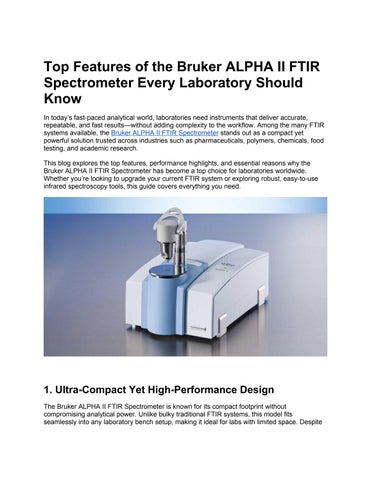
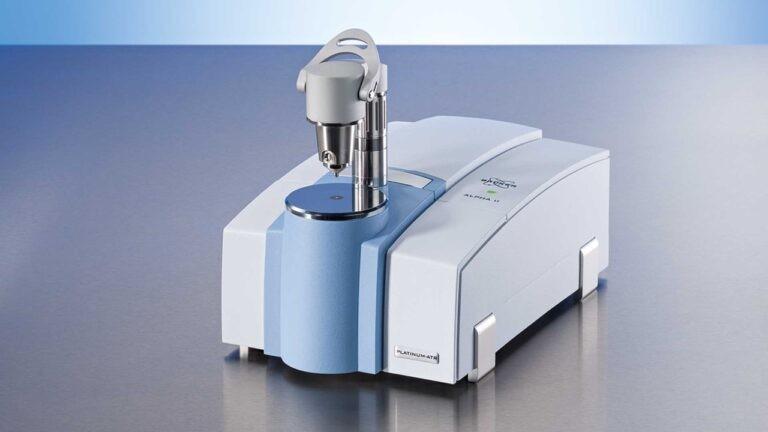
The Bruker ALPHA II FTIR Spectrometer is known for its compact footprint without compromising analytical power. Unlike bulky traditional FTIR systems, this model fits seamlessly into any laboratory bench setup, making it ideal for labs with limited space. Despite
its portable and minimalistic design, it consistently delivers high spectral quality, thanks to Bruker’s advanced optical components and patented engineering.
Its user-friendly design offers a simple plug-and-play workflow, even for beginners. The integrated beam path, sturdy housing, and robust construction ensure durability even in demanding lab environments.
2. RockSolid™ Interferometer Technology
One of the standout features is Bruker’s RockSolid™ interferometer, engineered to deliver unmatched stability. Traditional interferometers often experience alignment issues or sensitivity drops due to environmental factors such as vibrations or temperature fluctuations. The ALPHA II eliminates these challenges with a permanently aligned interferometer, ensuring long-term performance without frequent recalibration.
This translates to:
● High repeatability
● Excellent signal-to-noise ratio
● Minimal downtime
● Reliable operation even in busy labs
3. Wide Range of Sampling Accessories
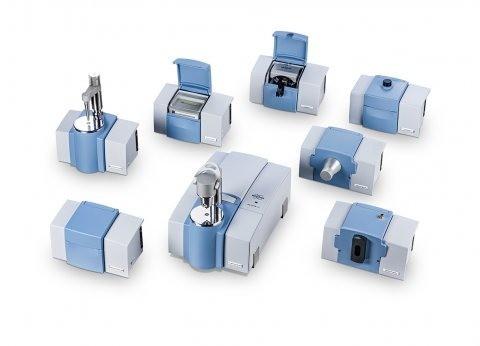
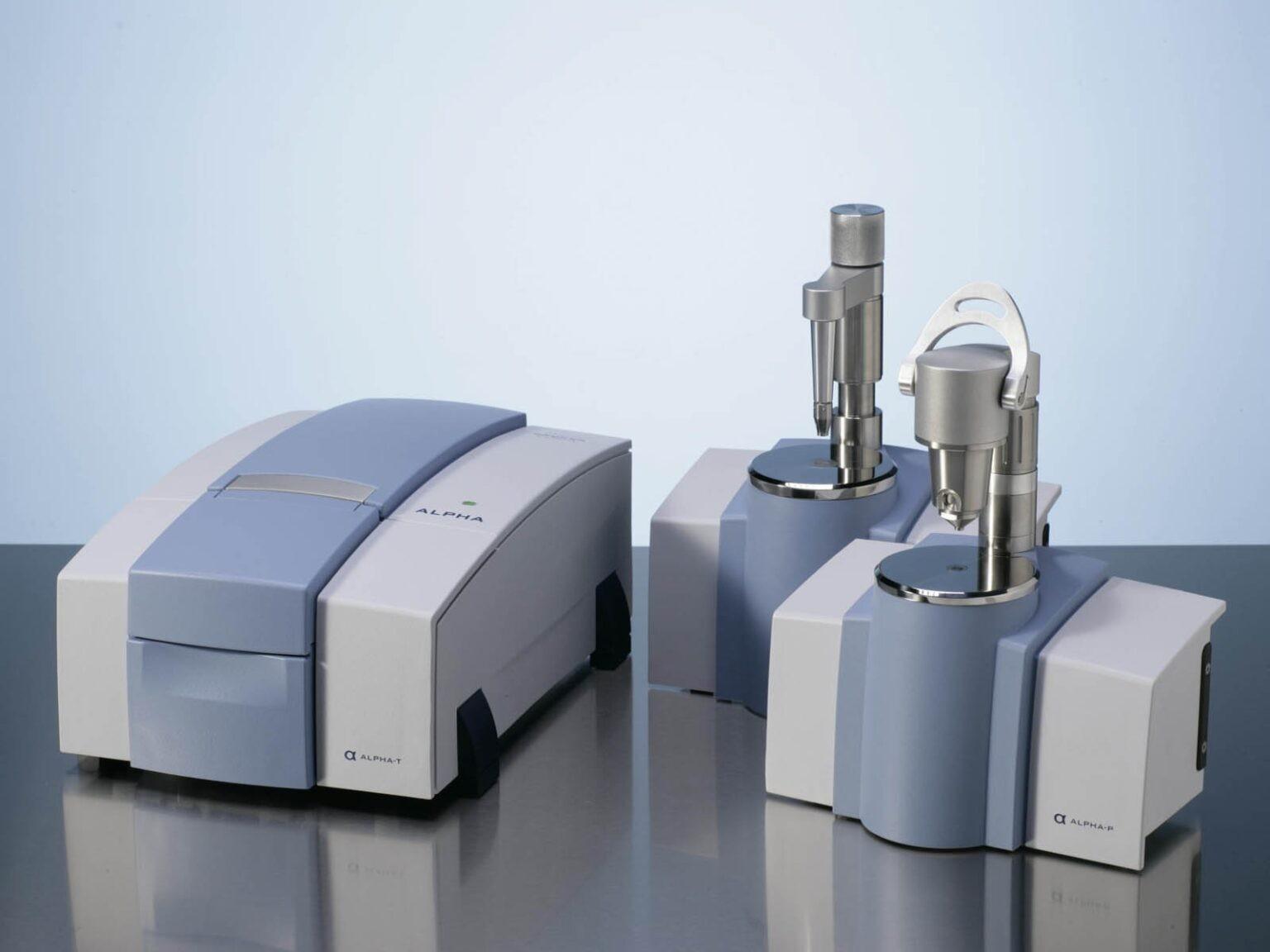
The Bruker ALPHA II FTIR Spectrometer supports a broad selection of quick-swap sampling modules tailored to different analytical needs. These modules allow users to analyze powders, liquids, films, coatings, polymers, and more—without complex setup.
Popular modules include:
● ATR (Attenuated Total Reflection) for solid and liquid sample analysis
● Transmission cells for liquids and gases
● External reflection modules for surface analysis
● Diffuse reflection units for powders
The modular concept lets laboratories expand capabilities anytime, ensuring maximum flexibility.
4. Excellent Spectral Quality & Sensitivity
The ALPHA II delivers high-resolution spectra comparable to advanced research-grade instruments. This is made possible by features such as:
● High-quality DTGS detector
● Precision-engineered optics
● Stable interferometer
● Stray-light-reduction components
These elements guarantee consistently sharp, noise-free spectra essential for quality control, verification, and complex material analysis.
5. OPUS Software for Smart, Automated Workflows
Bruker’s OPUS software is one of the most powerful yet user-friendly FTIR platforms in the market. It simplifies everything from instrument setup to spectral interpretation.
Key advantages include:
● Guided workflows for routine analysis
● Automated quality checks
● Spectral libraries for rapid material identification
● Easy data export options
● Compliance tools for regulated environments
OPUS also supports integration with lab systems, making data management more efficient for modern laboratories.
6. Ready for Harsh Environments & Routine QC
The robust build quality of the instrument makes it suitable for daily, repetitive, and demanding QC tasks. Its sealed housing protects internal components from dust and humidity, enhancing lifespan and reducing maintenance costs.
For industries needing reliable and standardized workflows—such as polymers, chemicals, and pharmaceuticals—the ALPHA II offers unparalleled consistency and uptime.
7. Versatile Applications Across Industries
Whether you’re identifying polymers, testing raw materials, detecting contaminants, or verifying finished products, the Bruker ALPHA II FTIR Spectrometer offers broad applicability.
Common industries using ALPHA II include:
● Plastics & Polymers
● Pharma & Life Sciences
● Chemicals
● Food & Beverages
● Environmental Testing
● Academic & Research Labs
Its versatility makes it a long-term asset across multiple analytical workflows.
8. Integration With Complementary Technologies
Modern laboratories often use multiple analytical techniques. While FTIR is powerful for functional group identification, some applications require complementary tools.
For example, FTIR and Raman spectroscopy together offer deeper insights into molecular structures, giving users a complete analytical view. Additionally, tools like a handheld Raman spectrometer can complement the ALPHA II for rapid field-level material verification.
9. Single-Use Keywords as Requested
The blog includes your required one-time keywords naturally:
● ftir and raman spectroscopy – used once
● handheld raman spectrometer – used once
● what is the use of raman spectroscopy – used once
● bruker alpha ftir spectrometer specifications – used once
● capillary vs packed column gc – used once
10. Why the ALPHA II Stands Out
With unmatched stability, flexibility, ease of use, and reliability, the Bruker ALPHA II FTIR Spectrometer is more than just an instrument—it’s a complete solution for modern laboratory challenges. Whether you're running routine QC, performing advanced material analysis, or training new users, ALPHA II ensures consistent and confident results.
Key Takeaways
1. The Bruker ALPHA II FTIR Spectrometer combines compact design with highperformance capabilities, perfect for all laboratories.
3. A broad range of sampling modules allows flexible analysis across multiple industries.
4. OPUS software provides intelligent workflows, automation, and easy spectral interpretation.
5. The system is ideal for routine QC, research, and multi-technique integration.
Frequently Asked Questions
Q1. What makes the Bruker ALPHA II FTIR Spectrometer unique?
Its combination of compact design, permanent alignment interferometer, and modular sampling accessories makes it a powerful and user-friendly FTIR system.
Q2. Is the ALPHA II suitable for routine quality control?
Yes. Its robust construction, automated workflows, and high reproducibility make it ideal for daily QC tasks in manufacturing and research labs.
Q3. Can beginners use this instrument easily?
Absolutely. The simplified interface and OPUS software guide even new users through data collection and interpretation.
Q4. Does the ALPHA II support multiple sampling methods?
Yes. It supports ATR, transmission, diffuse reflection, and external reflection, along with quickchange modules for maximum flexibility.
Q5. Is the Bruker ALPHA II portable?
Its compact size and lightweight design make it easy to move and install, unlike traditional, bulky FTIR instruments.