Capillary Columns in Gas Chromatography_ Performance, Applications, and Comparison with Packed Colum
Capillary Columns in Gas Chromatography: Performance, Applications, and Comparison with Packed Column GC
Gas chromatography (GC) remains one of the most powerful analytical techniques used in laboratories worldwide Whether it’s pharmaceuticals, petrochemicals, food safety, environmental testing, or forensic science, GC plays a vital role in separating and analyzing volatile compounds At the heart of this technique lies the column the component responsible for separation efficiency and analytical accuracy.
Among the different types available, capillary columns have become the preferred choice in modern laboratories due to their superior resolution and sensitivity However, traditional systems such as packed column GC are still relevant in certain applications. Understanding the difference between these two column types and choosing the right analytical instruments supplier can significantly impact laboratory performance.
In this blog, we’ll explore capillary columns in detail, compare them with packed column GC systems, and discuss how trusted suppliers like Nexus Analyticals support laboratories in making the right choice.
What Are Capillary Columns?
Capillary columns, also known as open tubular columns, are narrow tubes made of fused silica with an internal coating of stationary phase Unlike packed columns, which are filled with solid particles coated with stationary phase, capillary columns have an open inner wall where the stationary phase is applied as a thin film
These columns typically have:
● Internal diameters ranging from 0 1 mm to 0 53 mm
● Lengths between 15 meters and 60 meters (or more)
● Thin stationary phase coatings for high-efficiency separations
Their design allows for better separation of complex mixtures due to reduced band broadening and improved efficiency.
How
Capillary Columns Work in Gas Chromatography
In gas chromatography, a sample is vaporized and carried by an inert gas (such as helium or nitrogen) through the column As the analytes travel through the column, they interact with the stationary phase. Compounds that interact more strongly move more slowly, while others elute faster
Because capillary columns have a larger surface-area-to-volume ratio and no packing material, they offer:
● Higher resolution
● Greater sensitivity
● Faster analysis times
● Better peak shapes
These features make them ideal for trace-level detection and complex sample analysis
Advantages of Capillary Columns
1. Superior Resolution
Capillary columns provide significantly better separation efficiency compared to packed column GC systems. This allows for clearer identification of closely related compounds.
2. Higher Sensitivity
Due to narrow internal diameters, capillary columns produce sharper peaks, improving detection limits
3. Reduced Sample Requirement
Smaller sample volumes are needed, which is beneficial when working with limited or valuable materials
4. Faster Analysis
Optimized designs reduce run times without compromising accuracy
5. Wide Application Range
They are used in pharmaceuticals, petrochemicals, environmental monitoring, flavor and fragrance analysis, and forensic investigations.
Understanding Packed Column GC
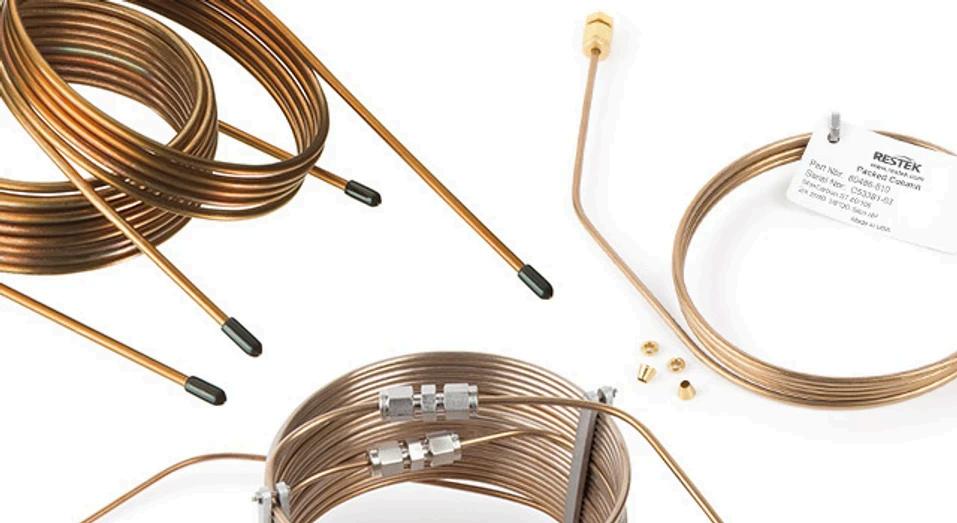
While capillary columns dominate modern applications, packed column GC systems are still used in specific scenarios. Packed columns are typically shorter and wider, filled with solid support material coated with stationary phase.
Characteristics of Packed Column GC:
● Larger internal diameter (2–4 mm)
● Shorter length (1–5 meters)
● Higher sample capacity
● Lower resolution compared to capillary columns
Packed column GC is often preferred for:
● Permanent gas analysis
● Industrial process monitoring
● Applications requiring high sample loads
Although they may not provide the same level of resolution as capillary columns, packed columns remain robust and cost-effective for certain industrial uses
Capillary Columns vs Packed Column GC
Typical
For laboratories focused on precision and trace-level detection, capillary columns are typically the preferred option. However, for high-capacity industrial analysis, packed column GC systems can still be practical
Choosing the Right Column for Your Laboratory
Selecting the appropriate column depends on:
● Nature of analytes
● Required resolution
● Detection limits
● Sample volume
● Instrument compatibility
● Regulatory standards
Consulting with an experienced analytical instruments supplier ensures that your GC system is configured optimally for your application
The Role of a Trusted Analytical Instruments Supplier
Purchasing GC columns is not just about selecting specifications from a catalog A reliable supplier provides:
Technical Consultation
Understanding your application helps determine the correct column length, diameter, and stationary phase
Installation Guidance
Proper column installation prevents leaks, contamination, and performance issues
Ongoing Support
Regular maintenance, troubleshooting, and calibration ensure long-term performance.
Access to Genuine Products
Authentic columns maintain analytical integrity and system compatibility
Why Choose Nexus Analyticals?
When sourcing capillary columns or solutions for packed column GC systems, working with a trusted supplier like Nexus Analyticals makes a significant difference
Nexus Analyticals is known for delivering high-quality analytical instruments and consumables to laboratories across industries Their expertise extends beyond product supply they provide consultation, training, technical support, and preventive maintenance services.
What Sets Nexus Analyticals Apart?
● Expert guidance in selecting GC columns
● Support for both capillary and packed column GC systems
● Reliable after-sales service
● Quick response technical assistance
● Strong industry knowledge
By partnering with Nexus Analyticals, laboratories gain access to quality products and dependable support, ensuring optimal performance and compliance with industry standards.
Applications of Capillary Columns
Capillary columns are widely used in:
Pharmaceutical Industry
For impurity profiling, solvent residue analysis, and drug formulation testing.
Environmental Analysis
For detecting pesticides, pollutants, and volatile organic compounds (VOCs).
For hydrocarbon analysis and fuel testing
Food and Beverage Testing
For flavor compound profiling and contamination detection
Forensic Science
For drug identification and toxicology analysis
Their high efficiency makes them essential for laboratories that require precise, reproducible results
Future Trends in GC Column Technology
Advancements in stationary phase chemistry, column coating technologies, and temperature stability are enhancing performance Modern capillary columns now offer:
● Improved thermal stability
● Reduced column bleed
● Enhanced durability
● Greater compatibility with advanced detectors
As analytical requirements become more stringent, column technology continues to evolve to meet industry demands
Key Takeaways
● Capillary columns provide superior resolution and sensitivity compared to packed column GC systems
● They are ideal for trace-level detection and complex sample separation
● Packed column GC remains useful for high-capacity and gas analysis applications
● Choosing the right column depends on application needs and system compatibility
● Partnering with a trusted analytical instruments supplier like Nexus Analyticals ensures proper guidance, installation, and long-term support.
Frequently Asked Questions
Q1. What is the main difference between capillary columns and packed column GC?
Capillary columns offer higher resolution and sensitivity, while packed columns provide higher sample capacity but lower separation efficiency.
Q2. Are capillary columns suitable for trace analysis?
Yes, capillary columns are ideal for trace-level detection due to their narrow diameter and sharp peak performance.
Q3. When should packed column GC be used?
Packed column GC is often used for permanent gas analysis and applications requiring larger sample volumes
Q4. How do I choose the right GC column?
Selection depends on analyte type, required resolution, sample volume, and instrument compatibility Consulting an experienced supplier helps ensure the correct choice
Q5. Does Nexus Analyticals provide support for GC systems?
Yes, Nexus Analyticals offers consultation, supply of capillary and packed columns, installation guidance, and technical support for GC systems.