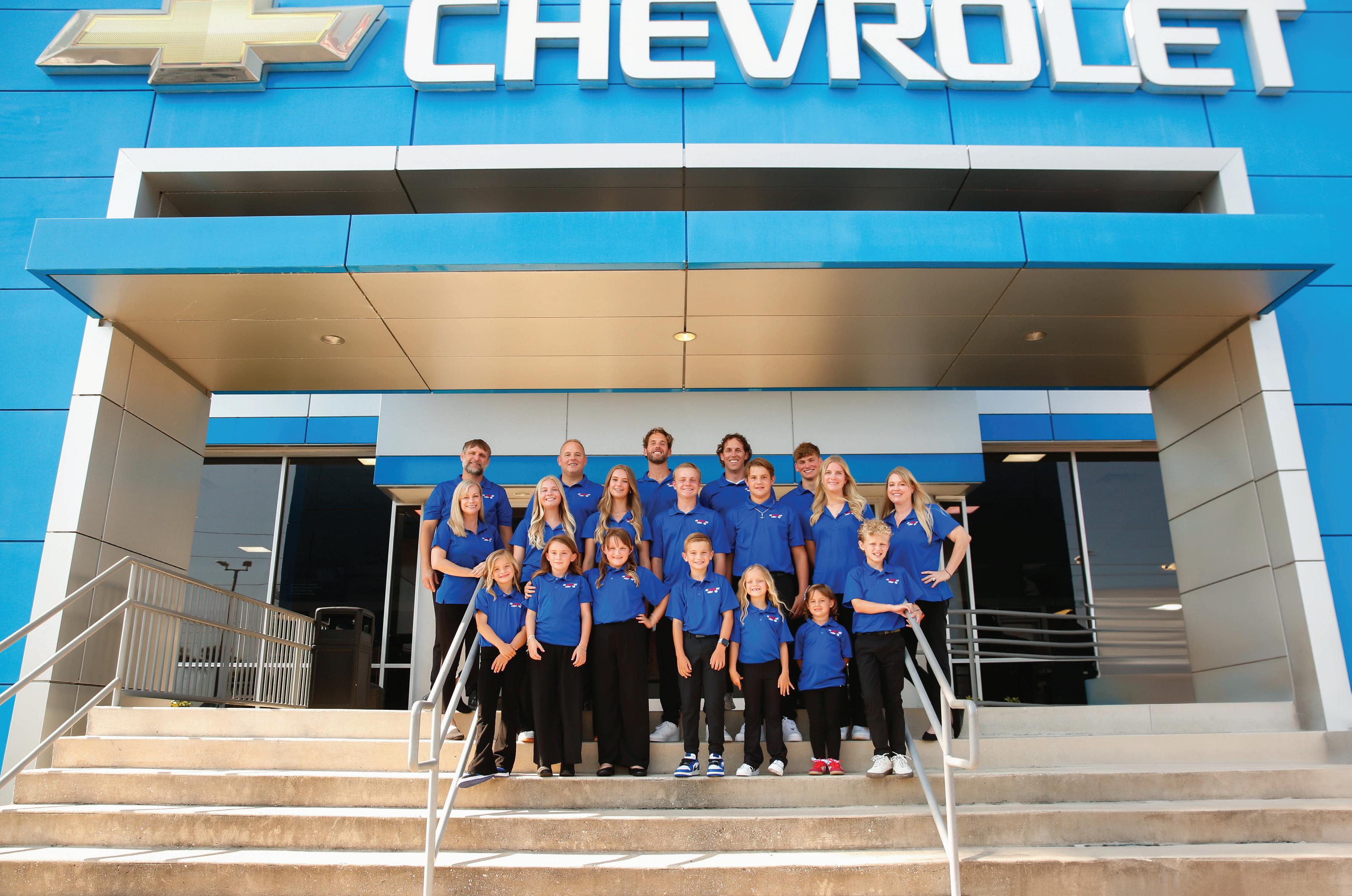
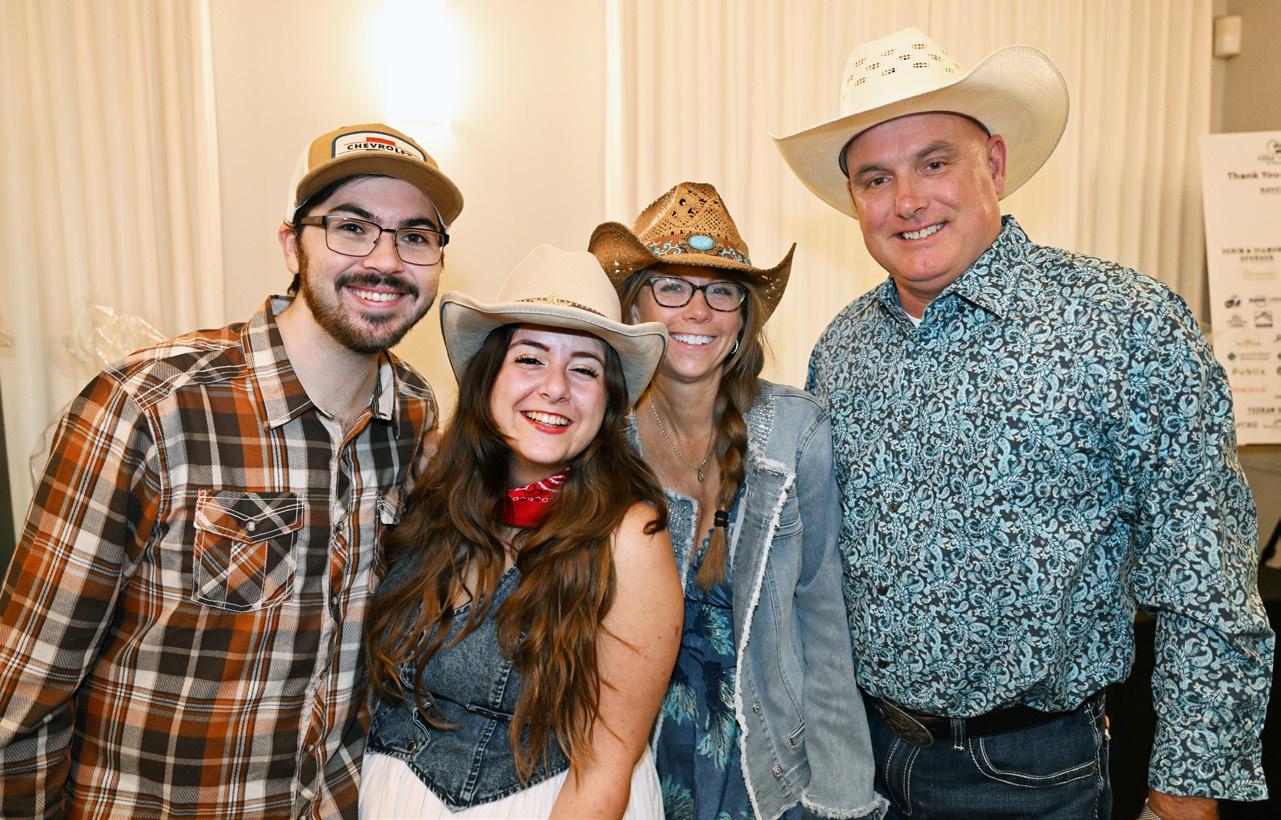
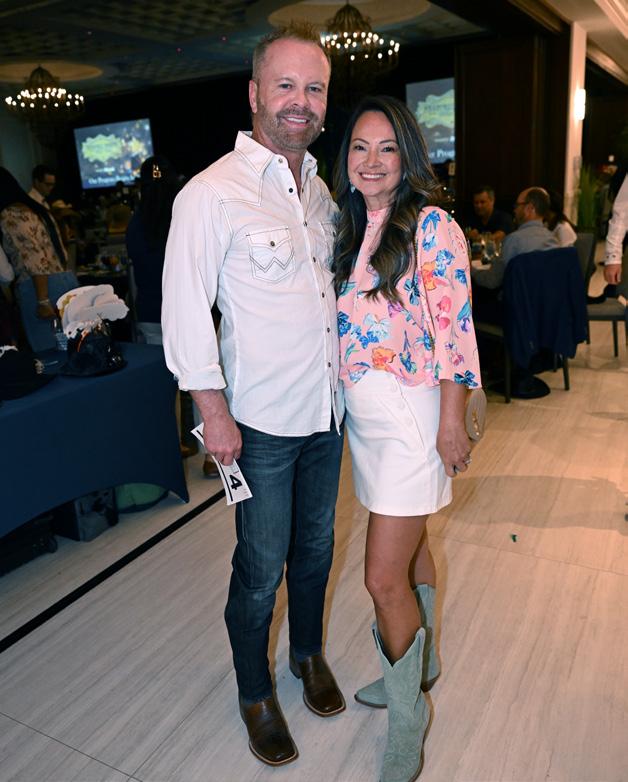
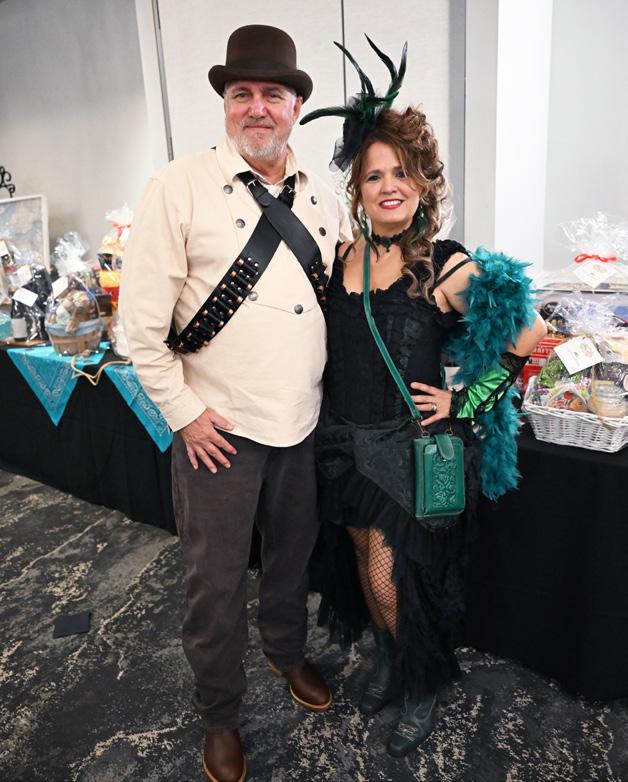
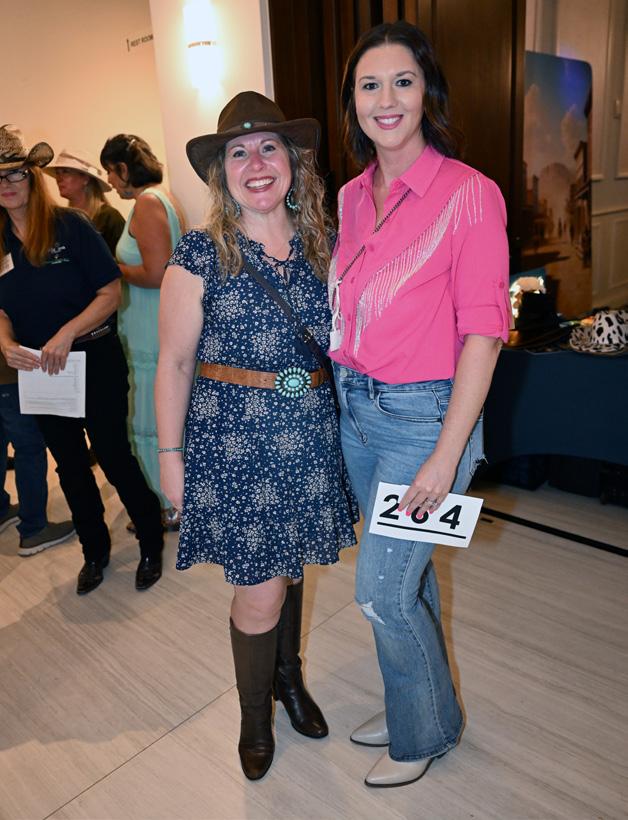
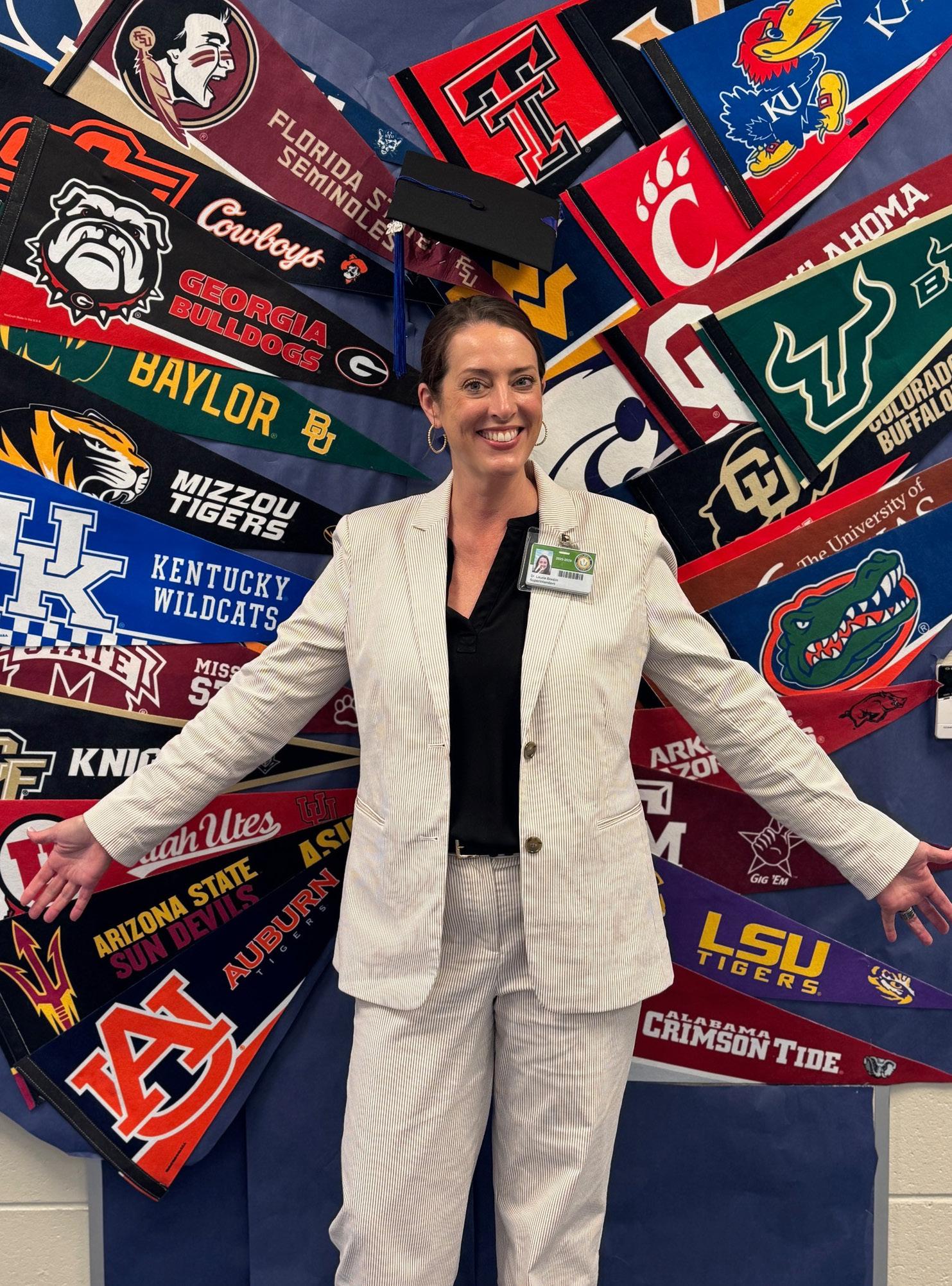
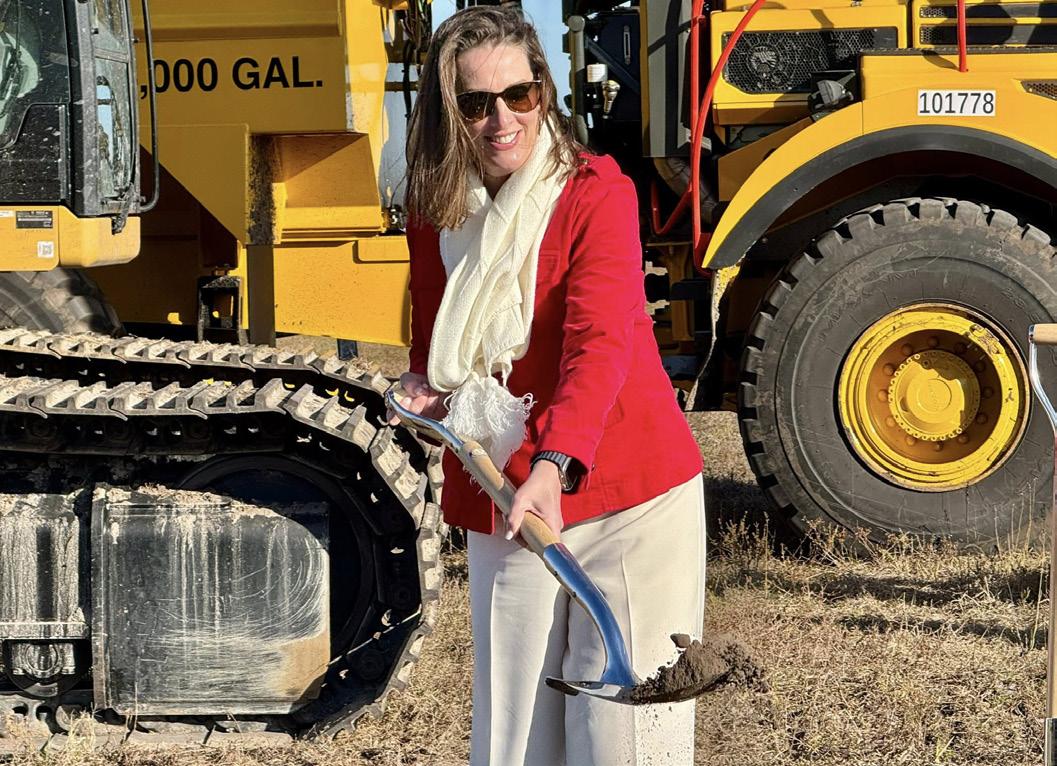
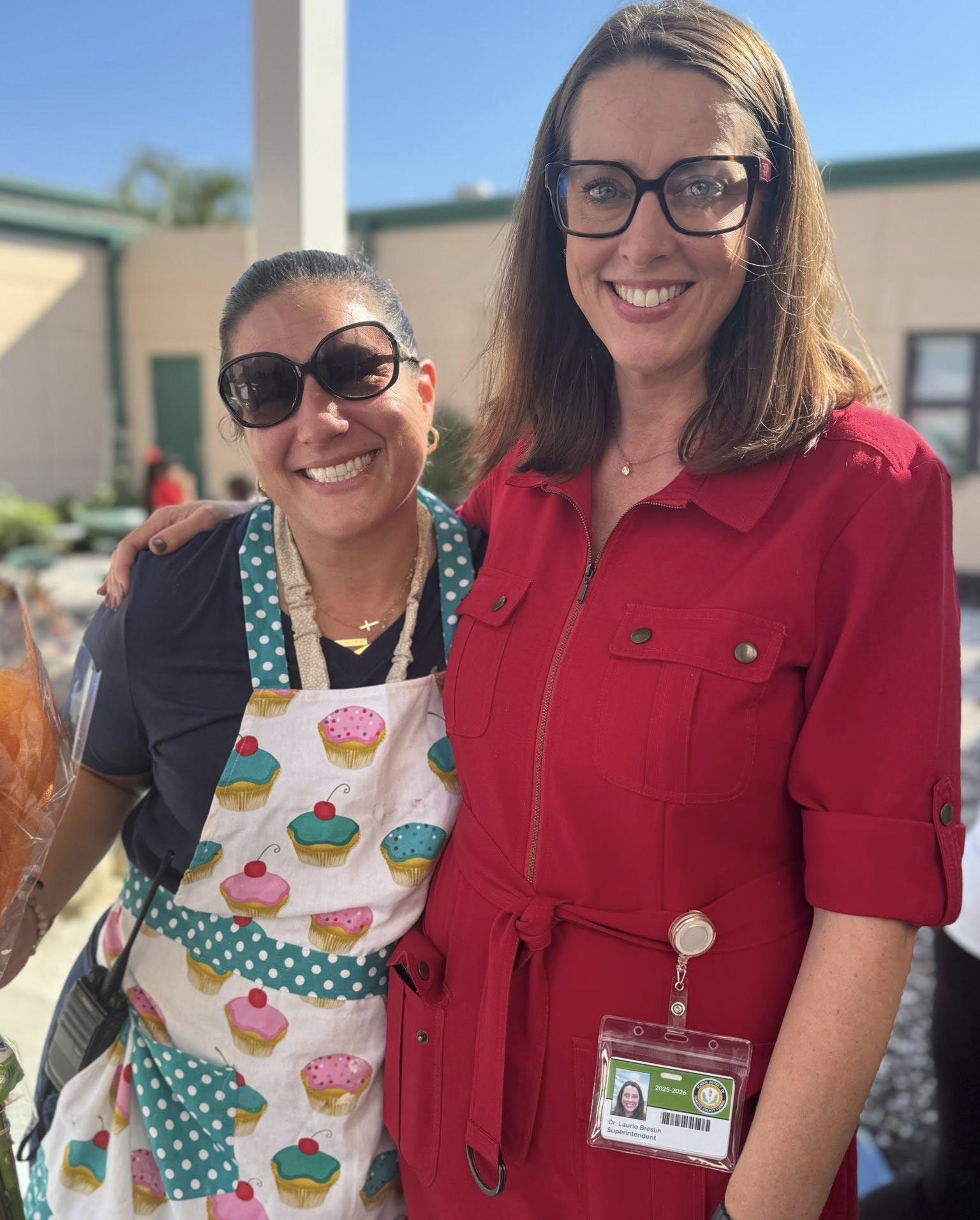
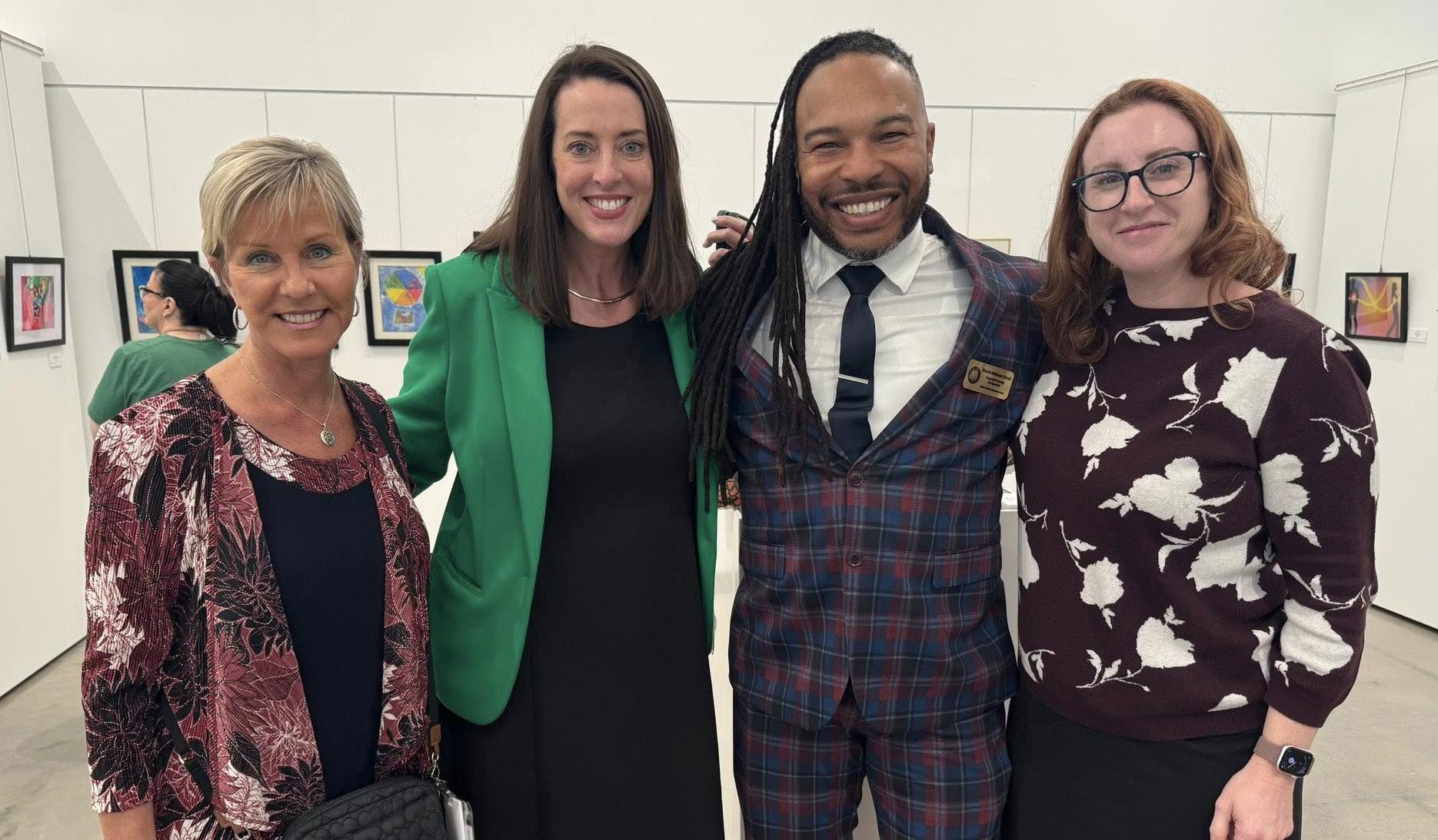
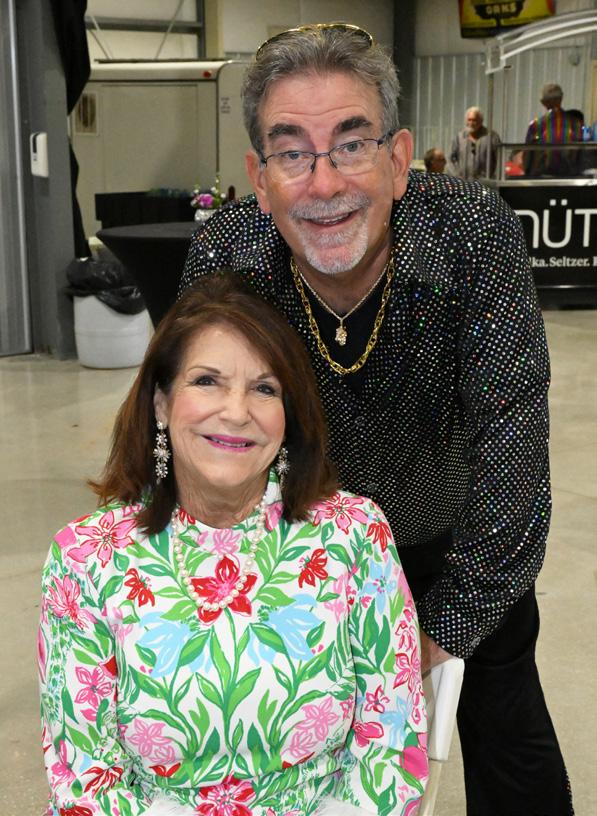
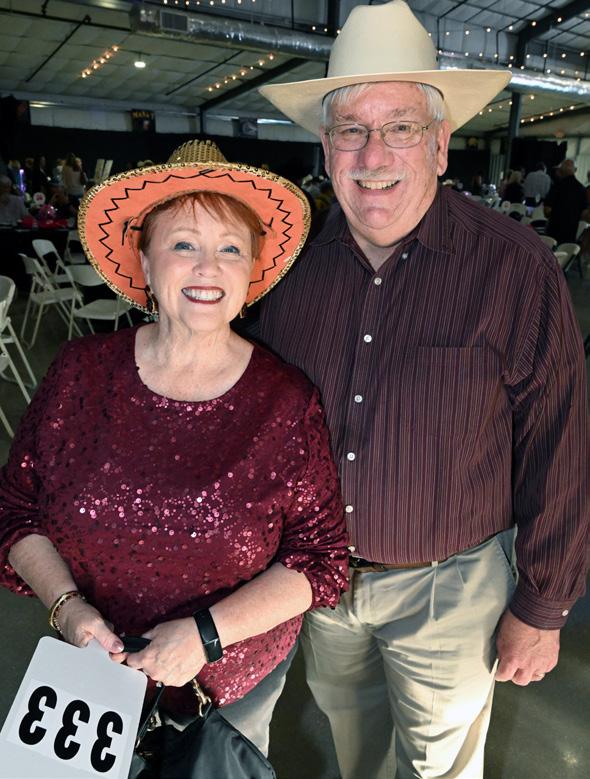
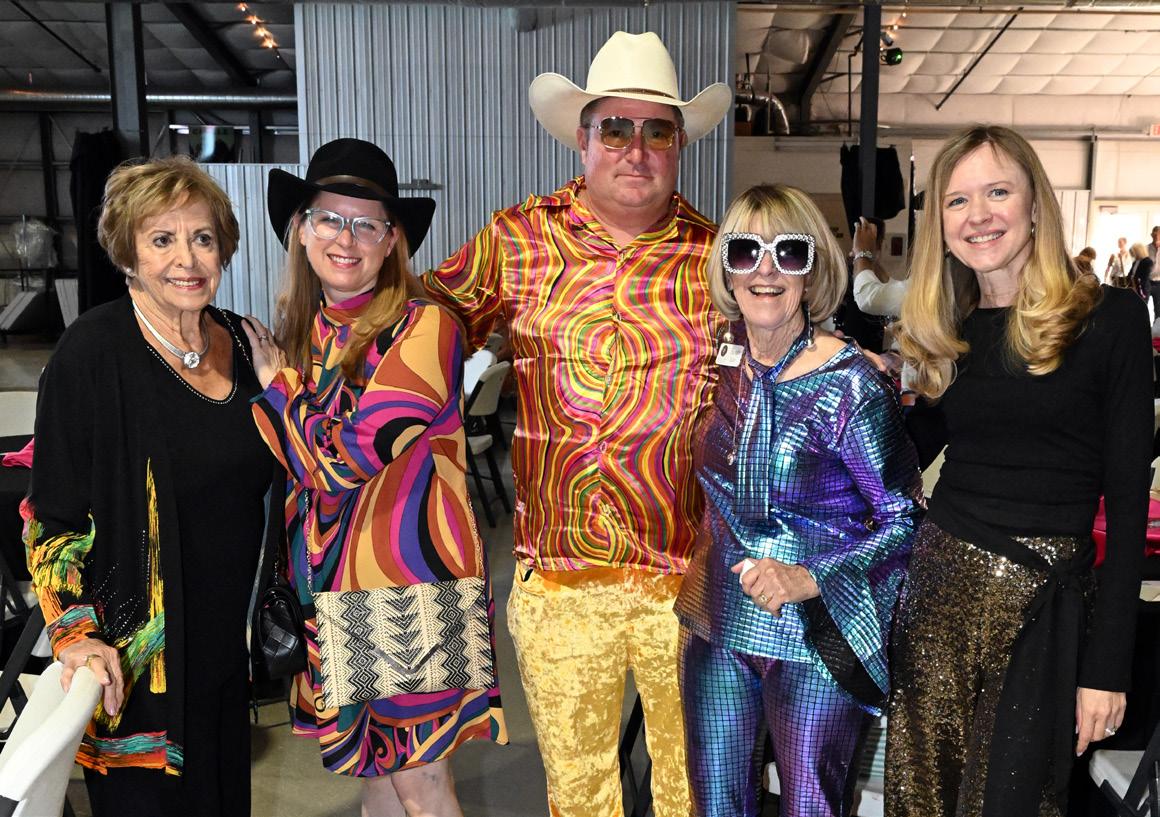
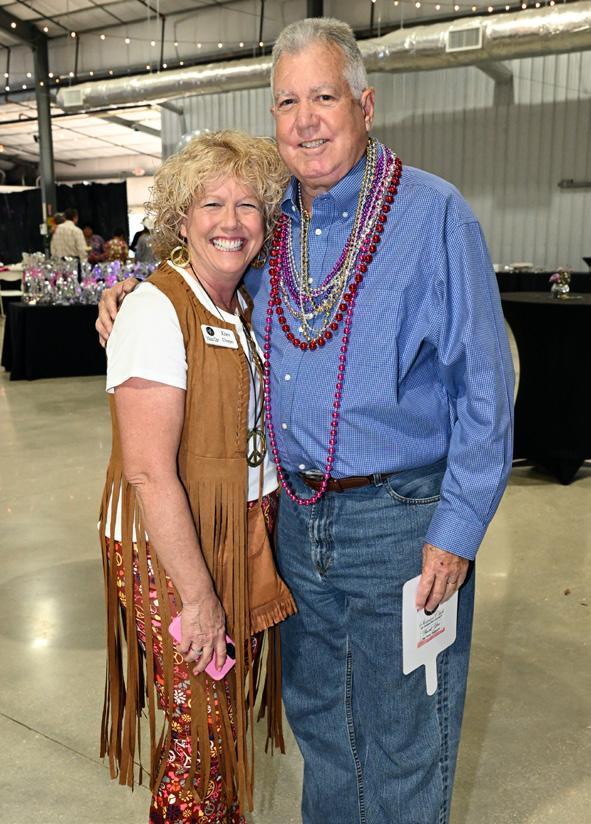
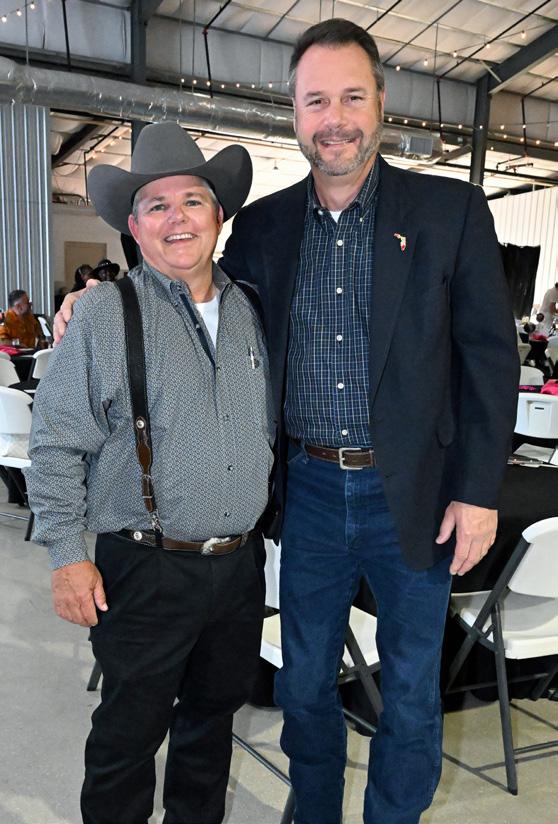
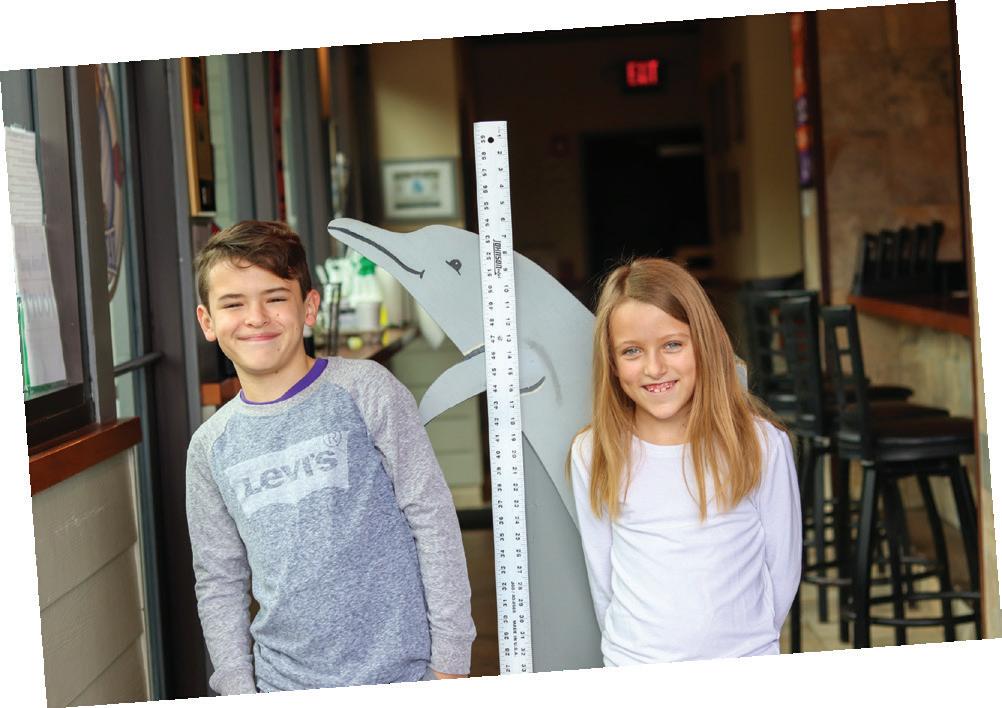
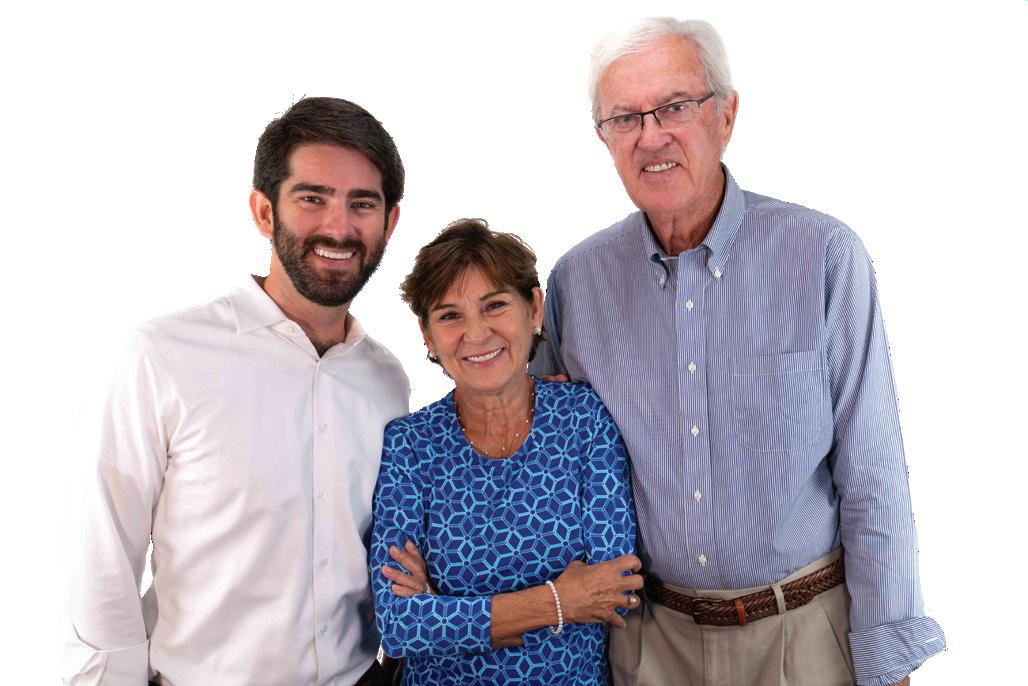
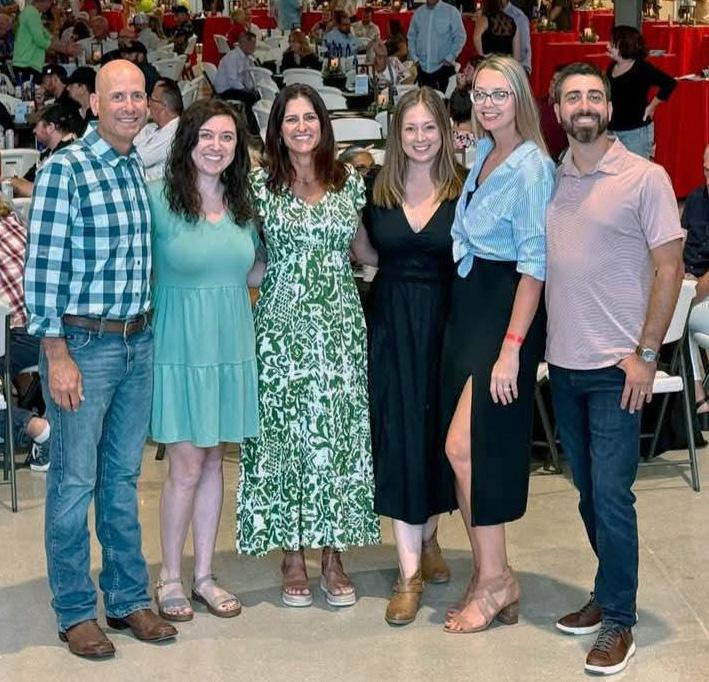
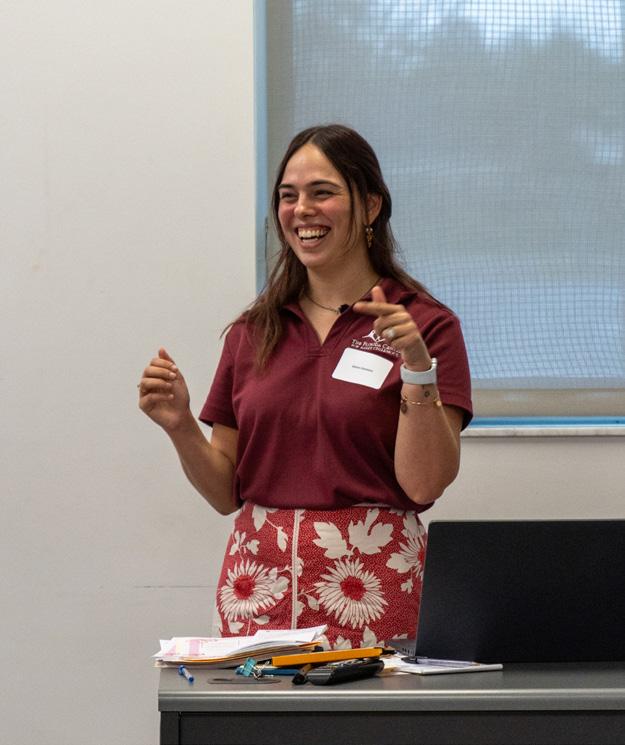
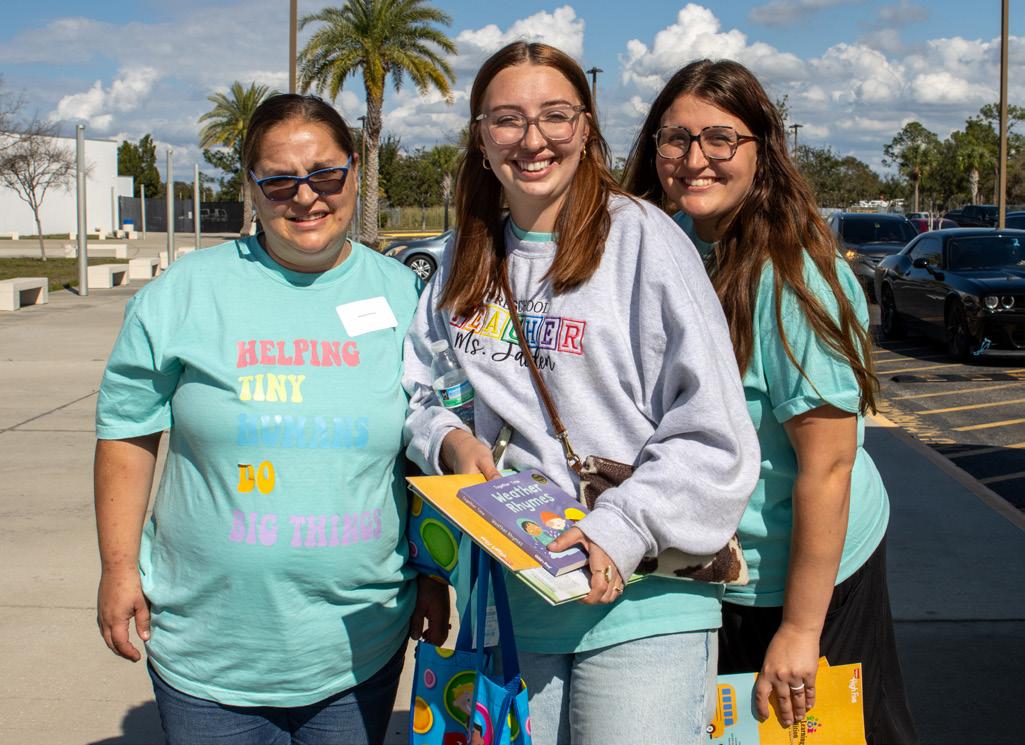
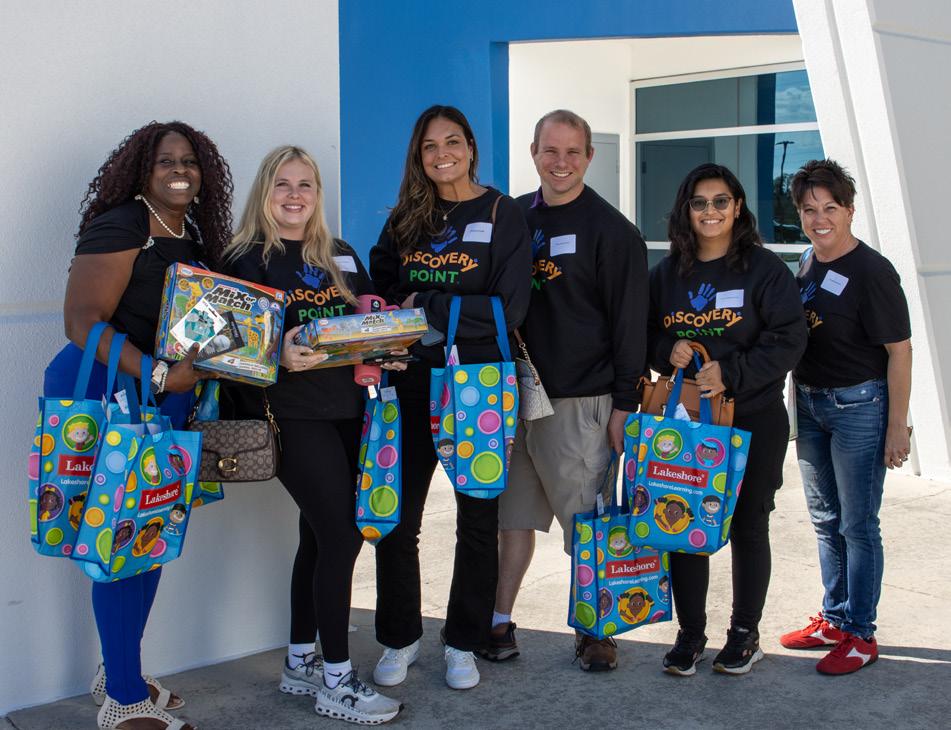
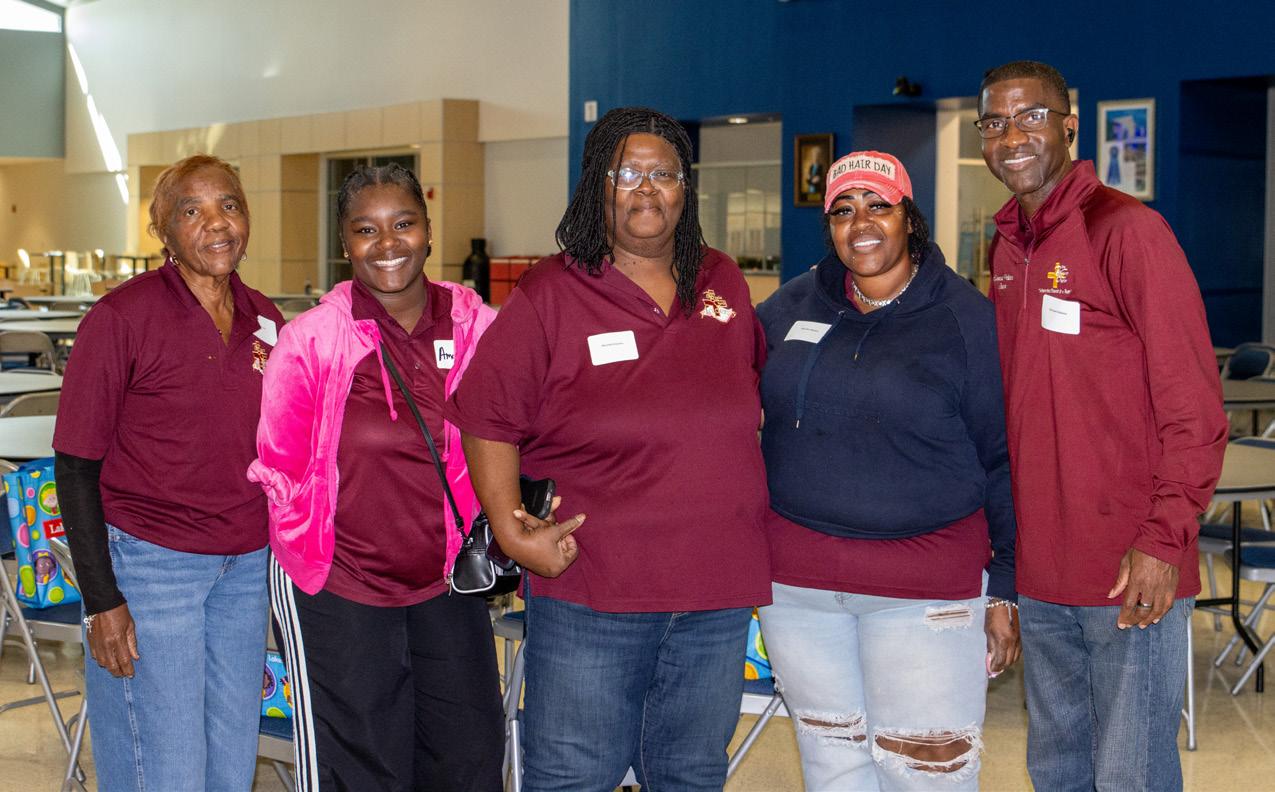
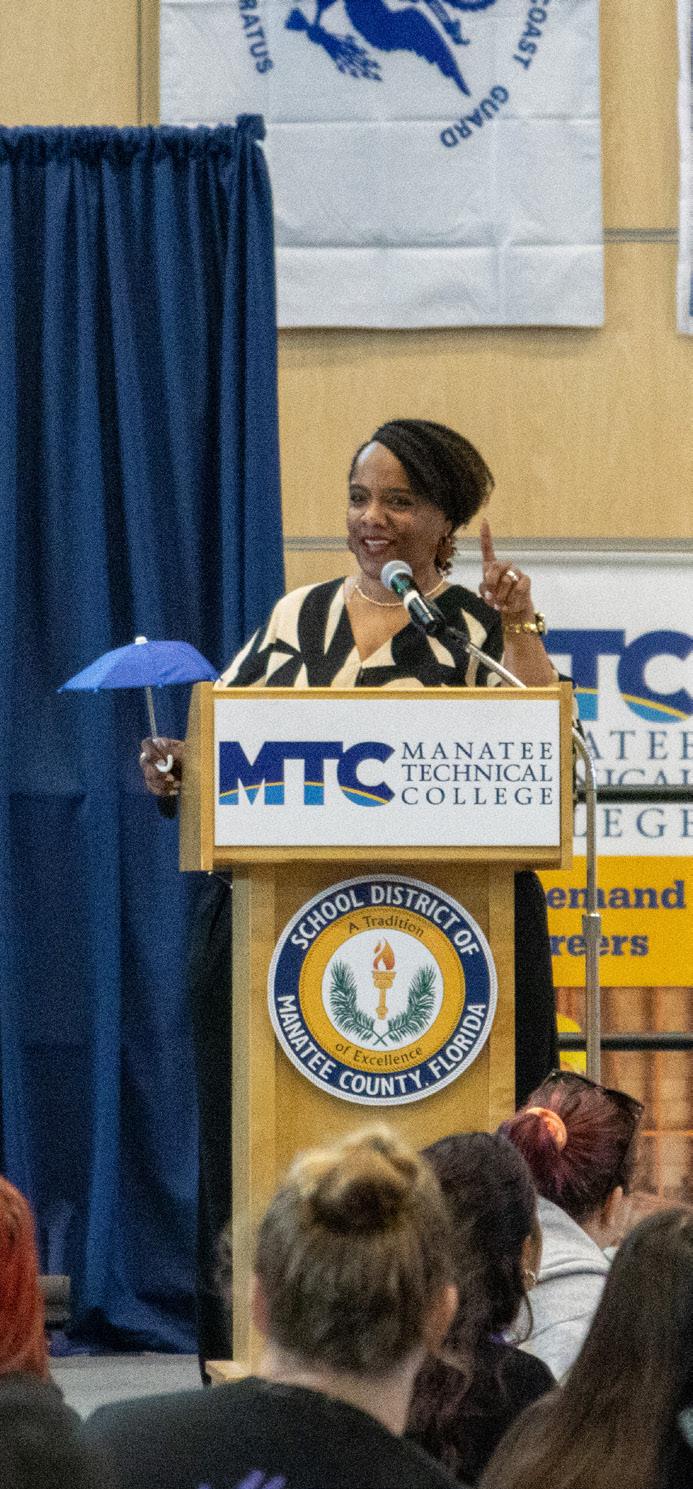
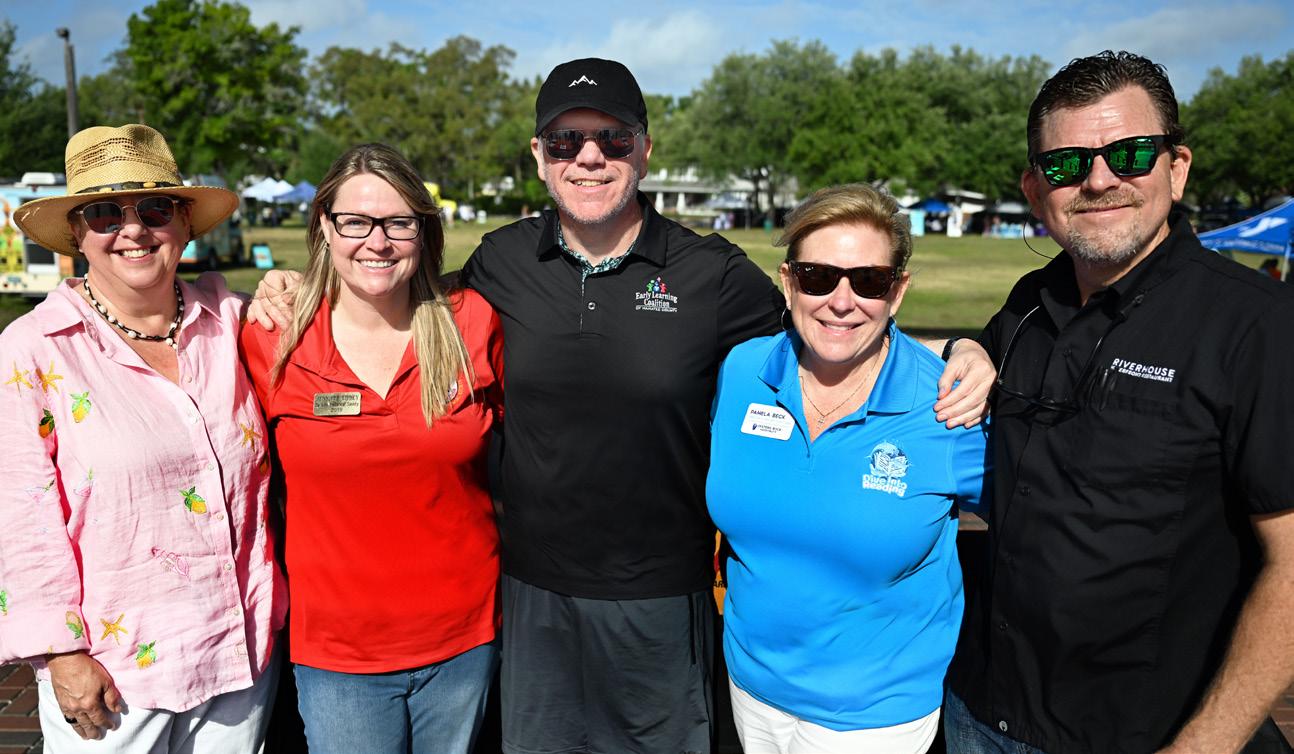
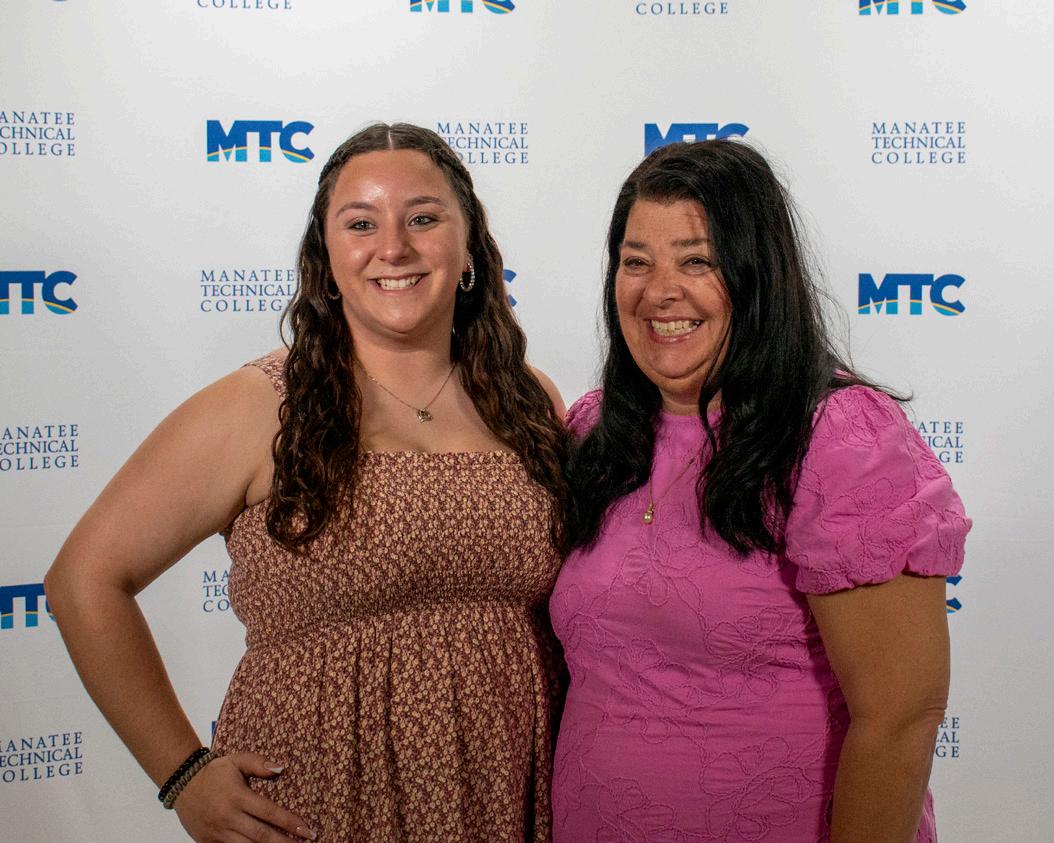
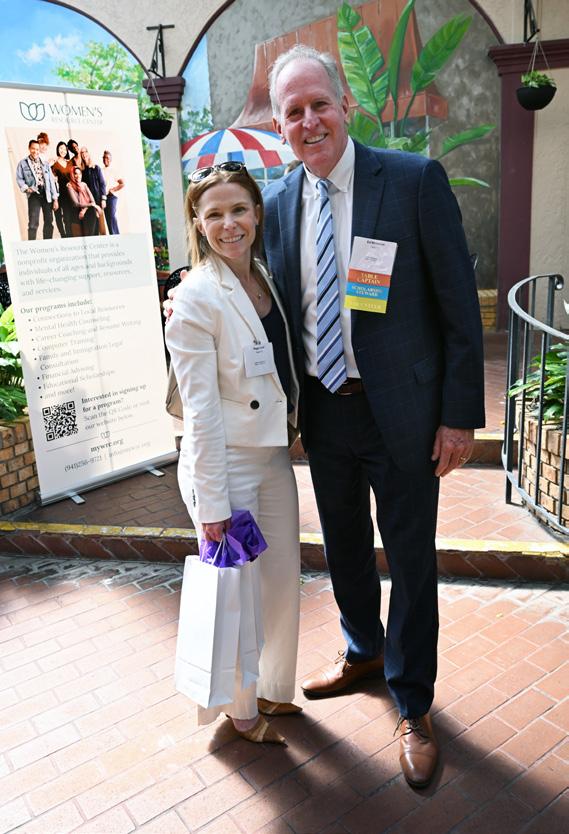
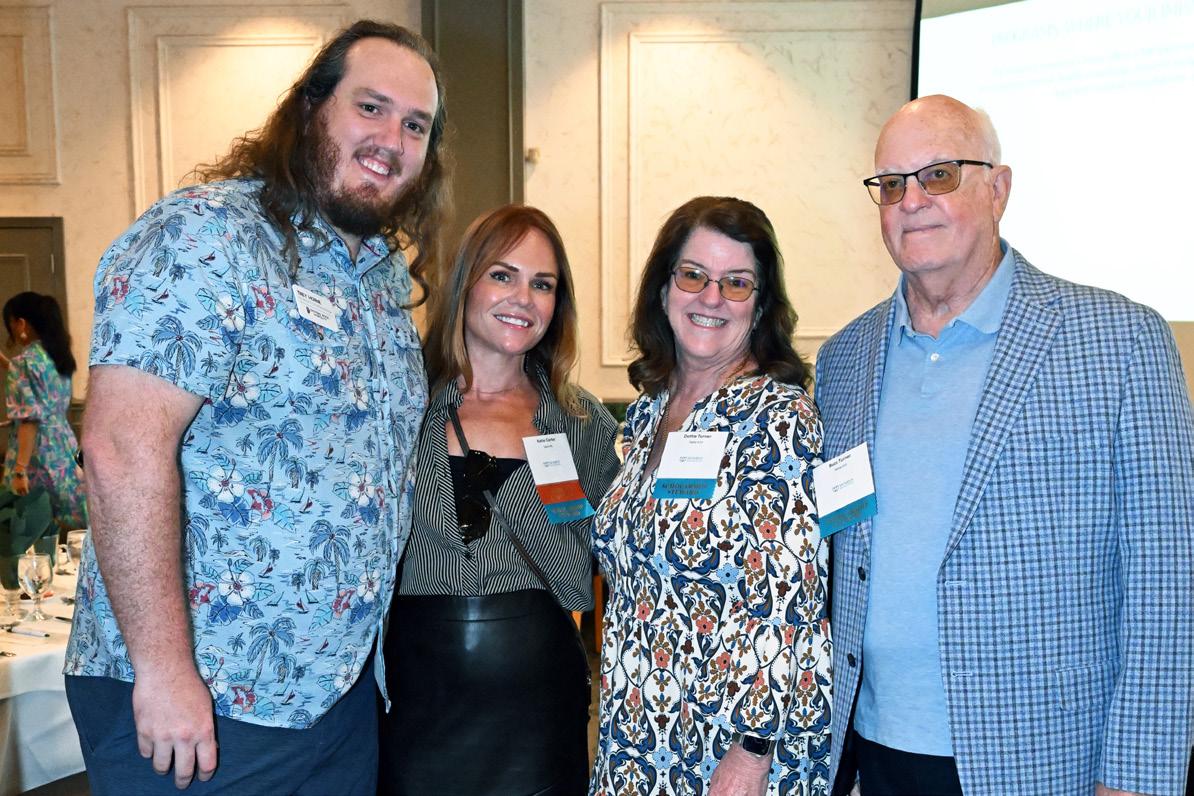
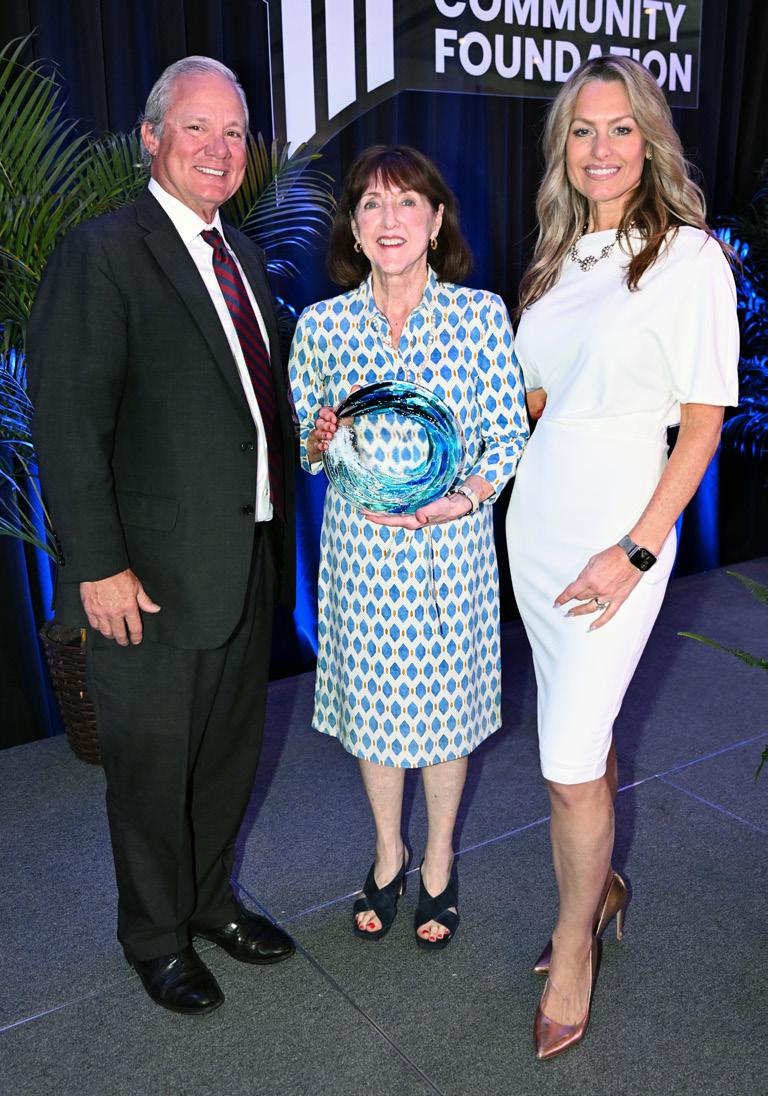
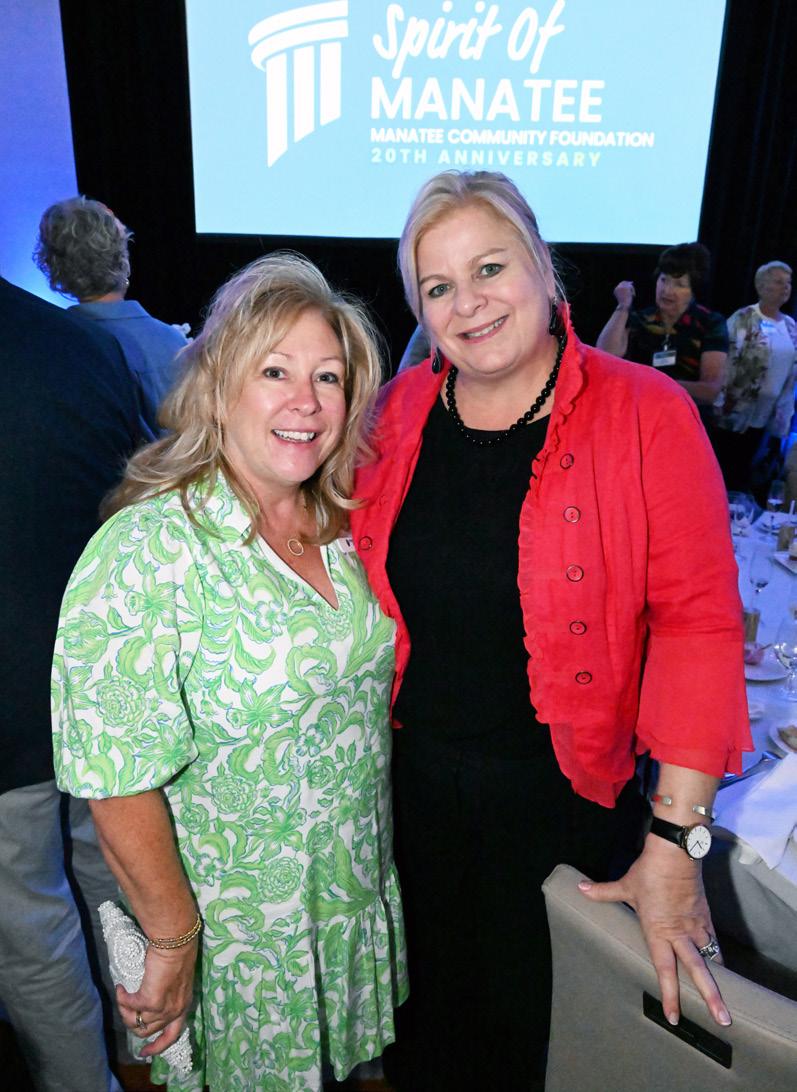
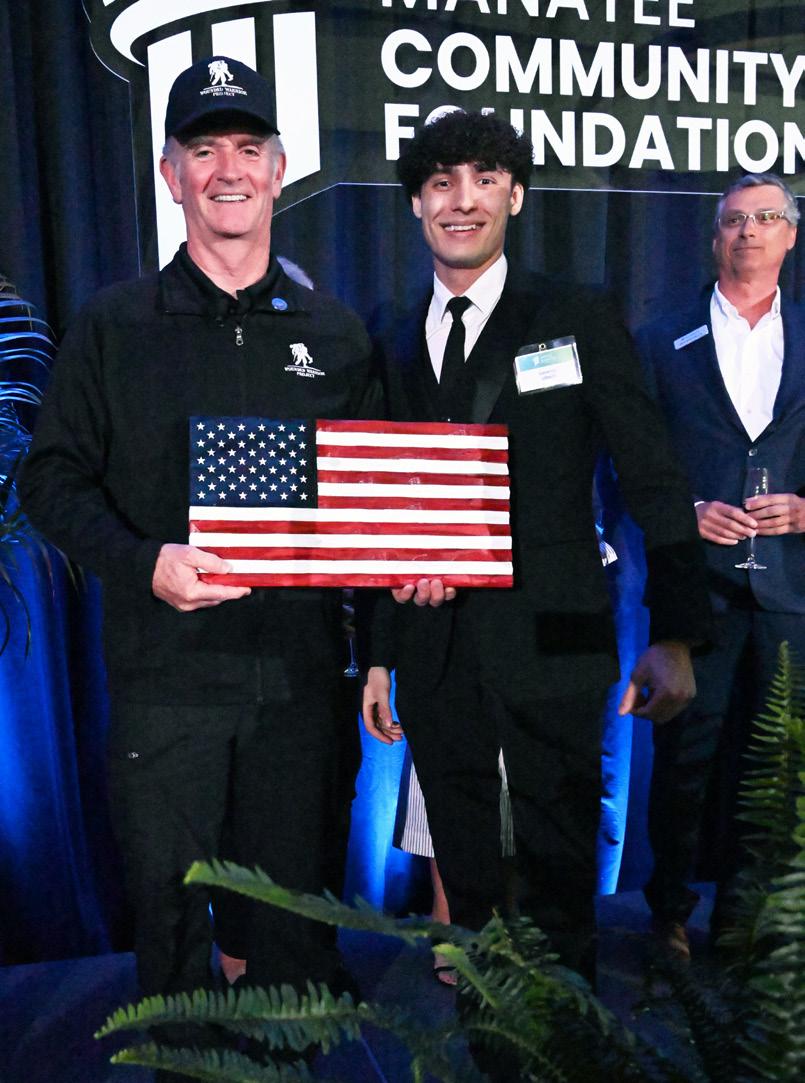
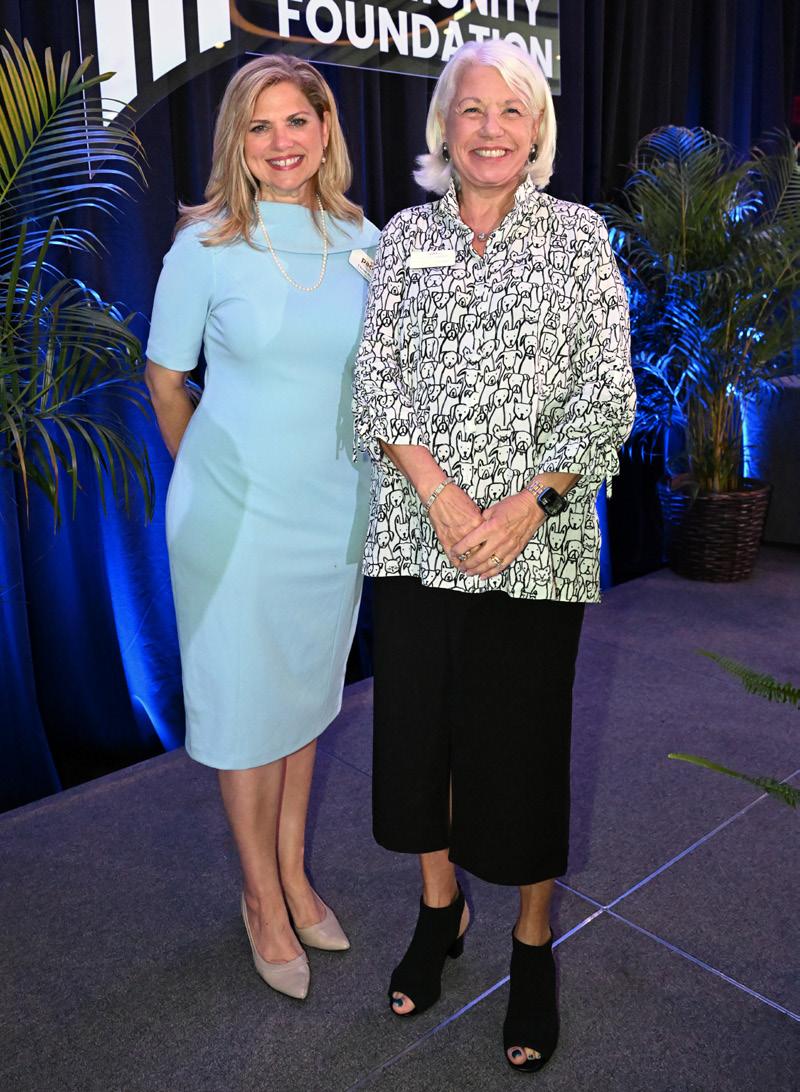
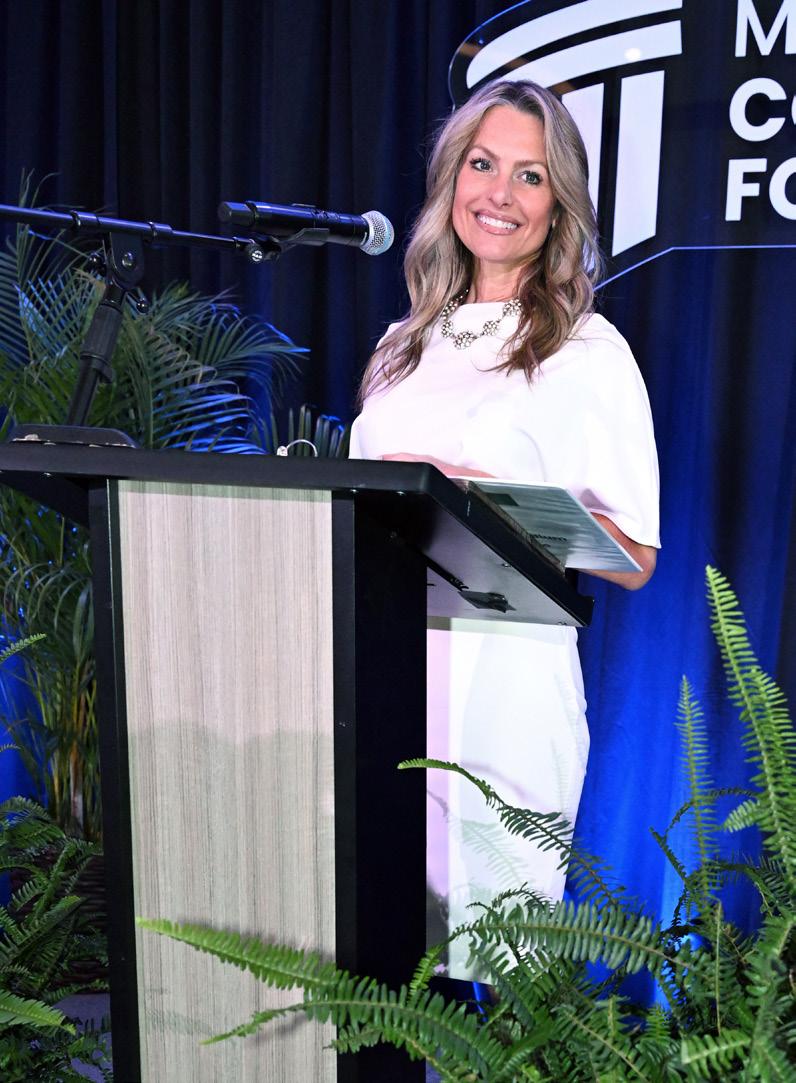
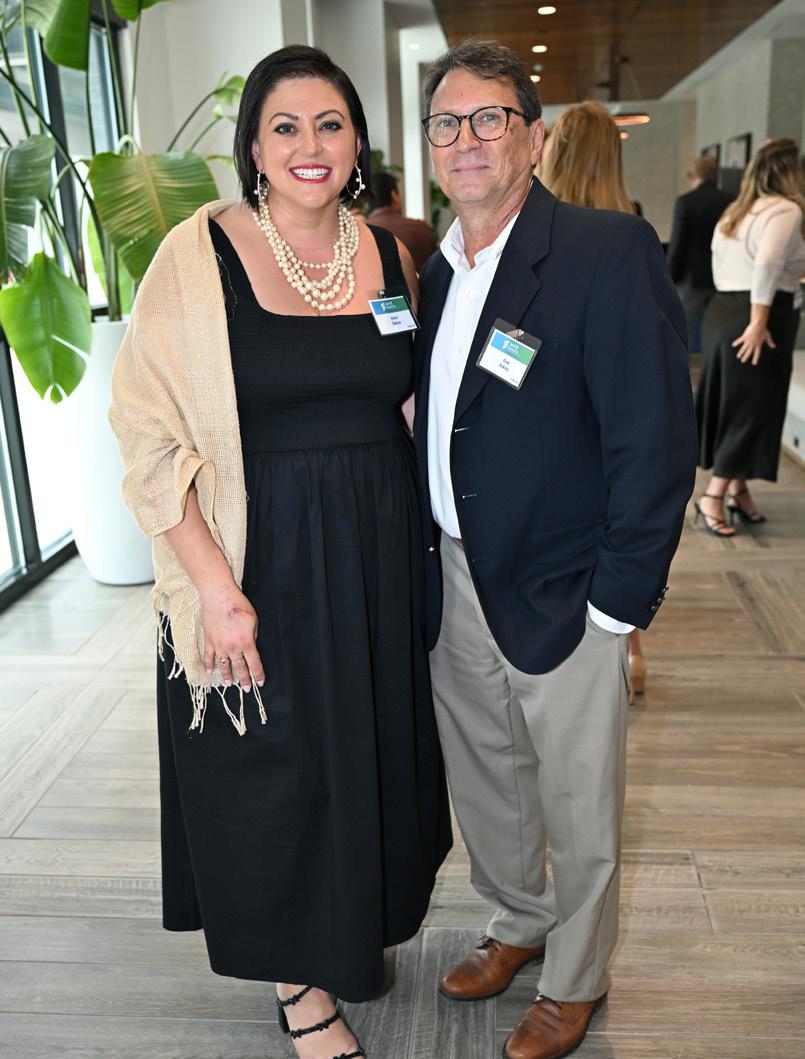
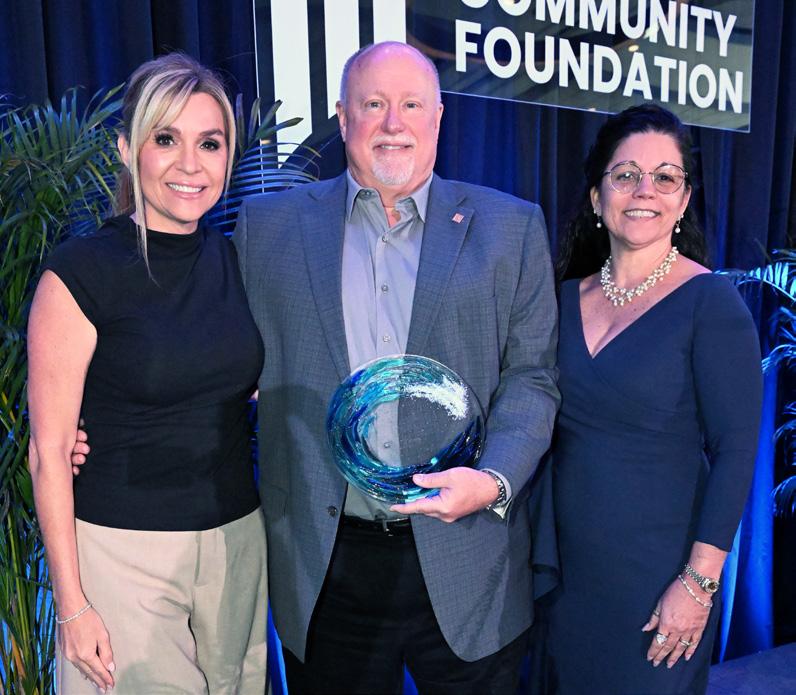
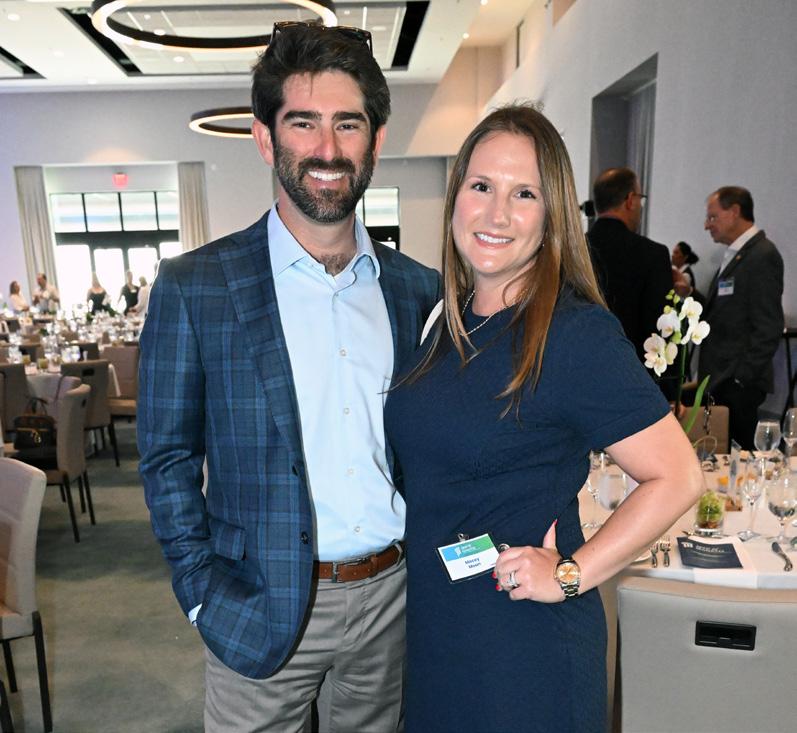
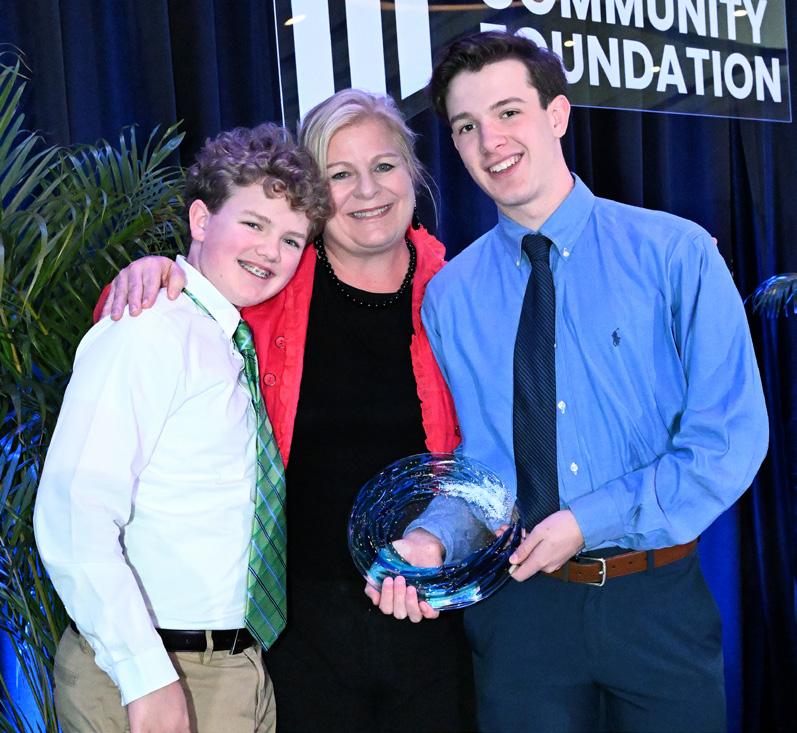
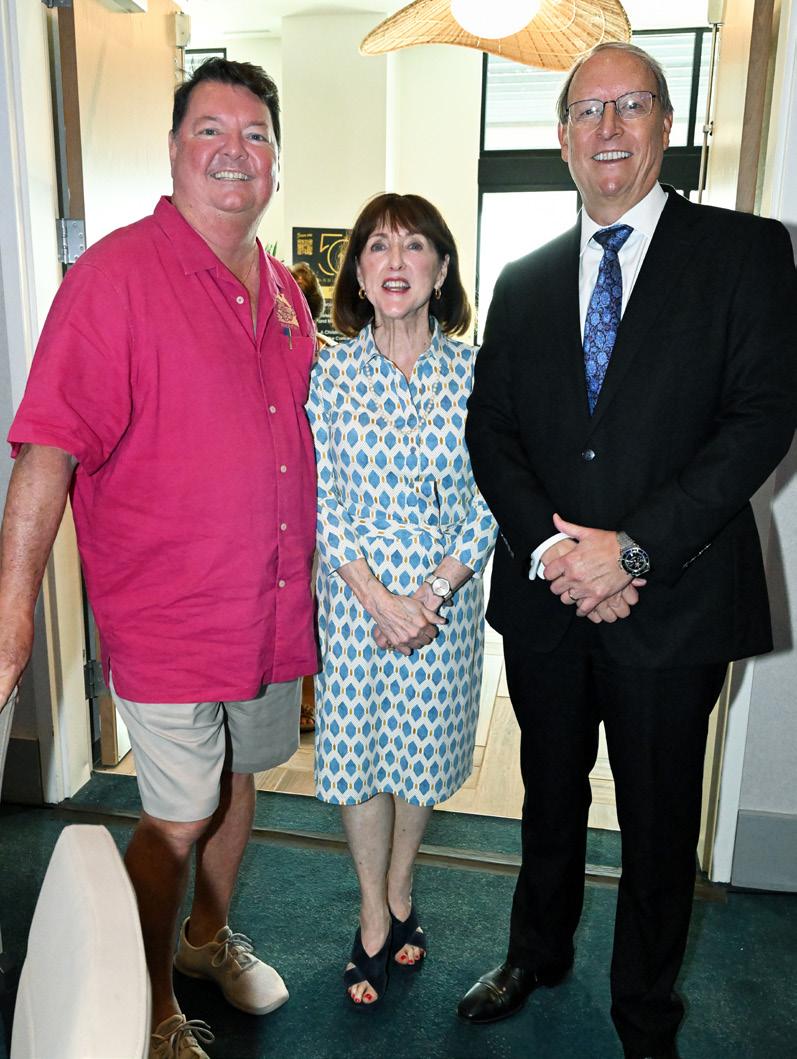
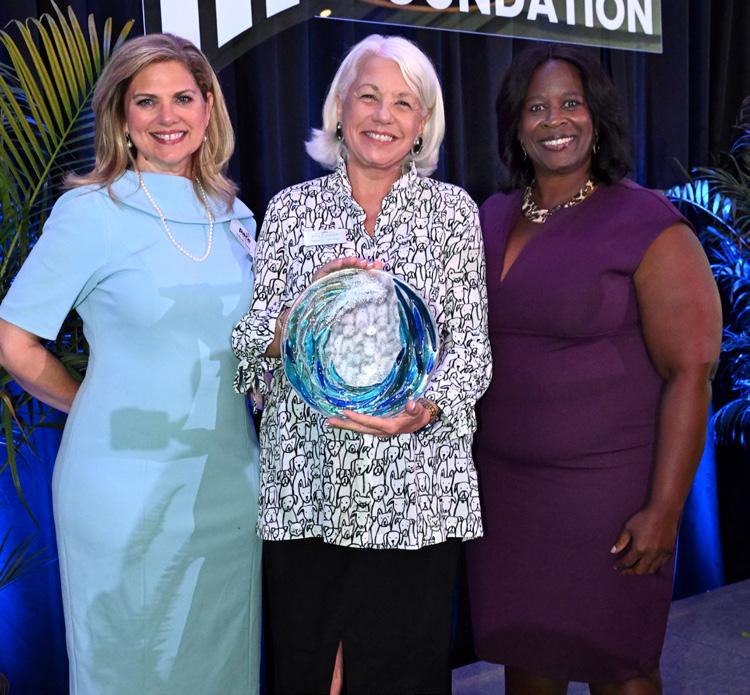
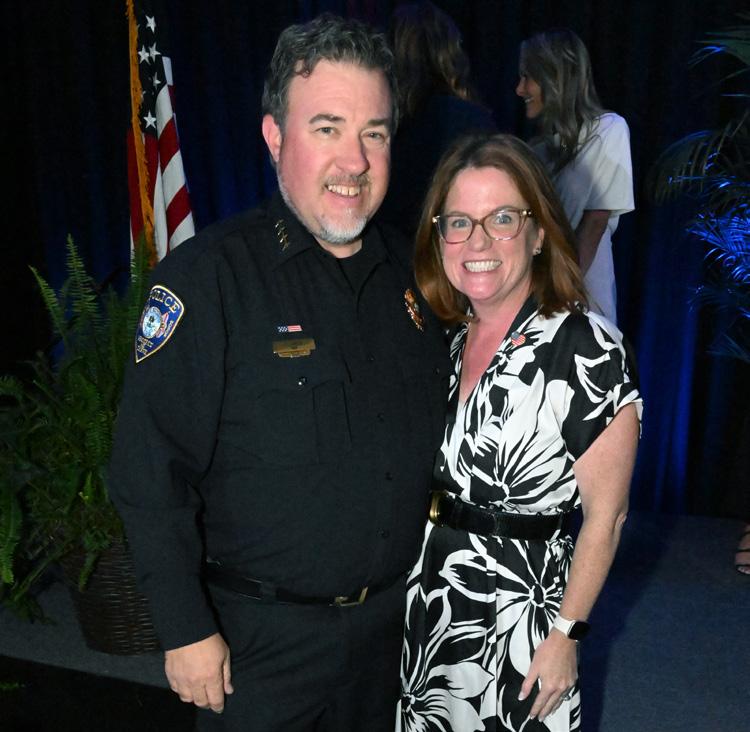
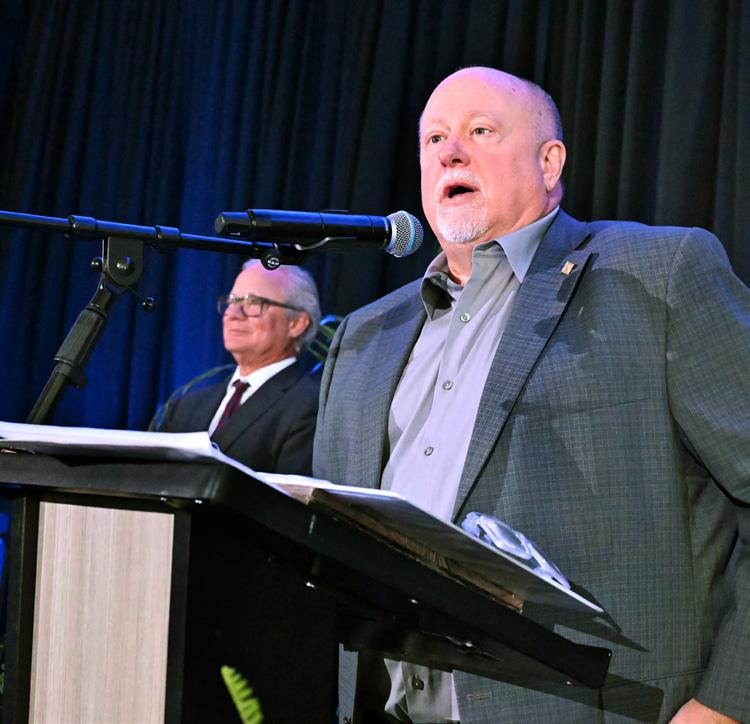
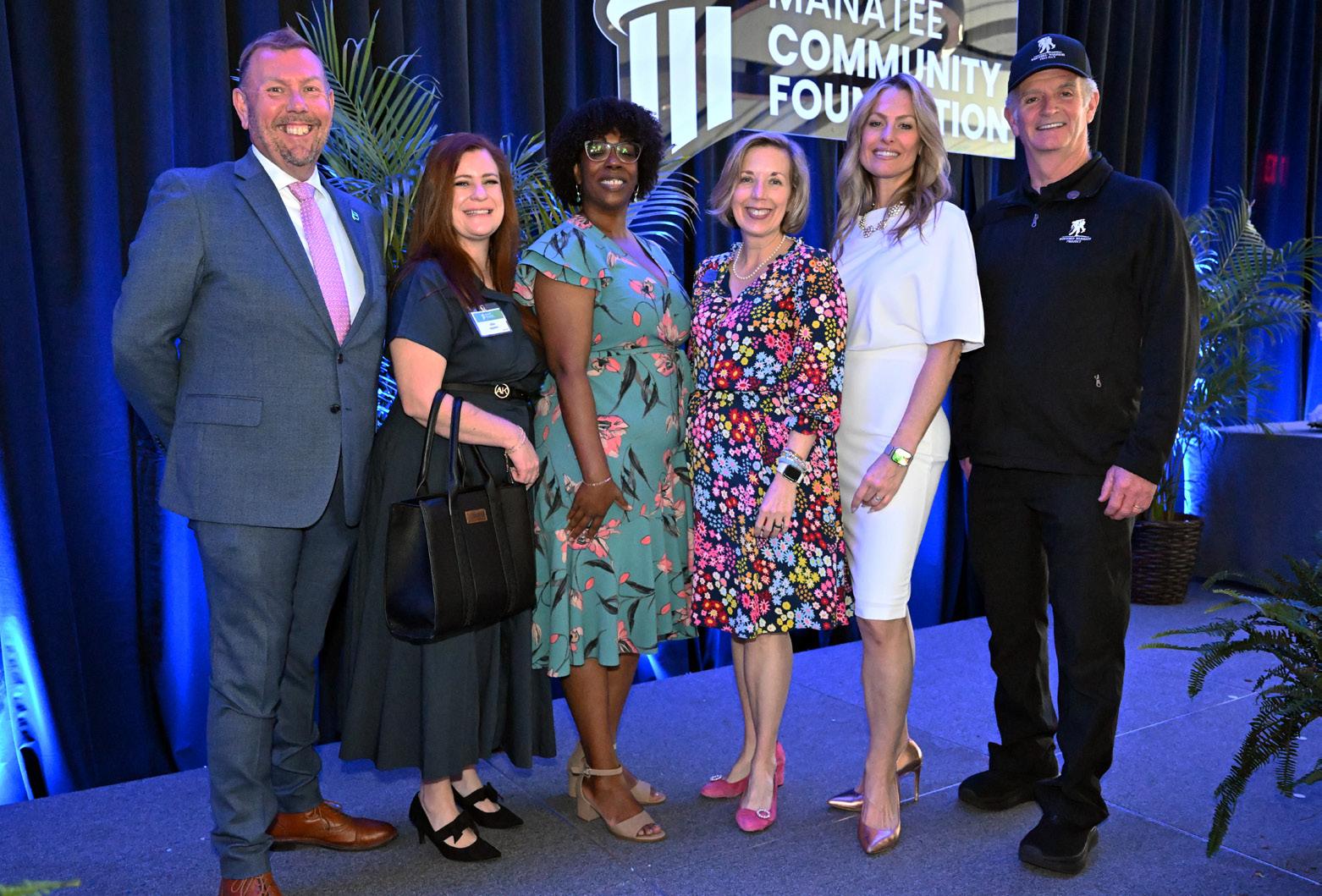
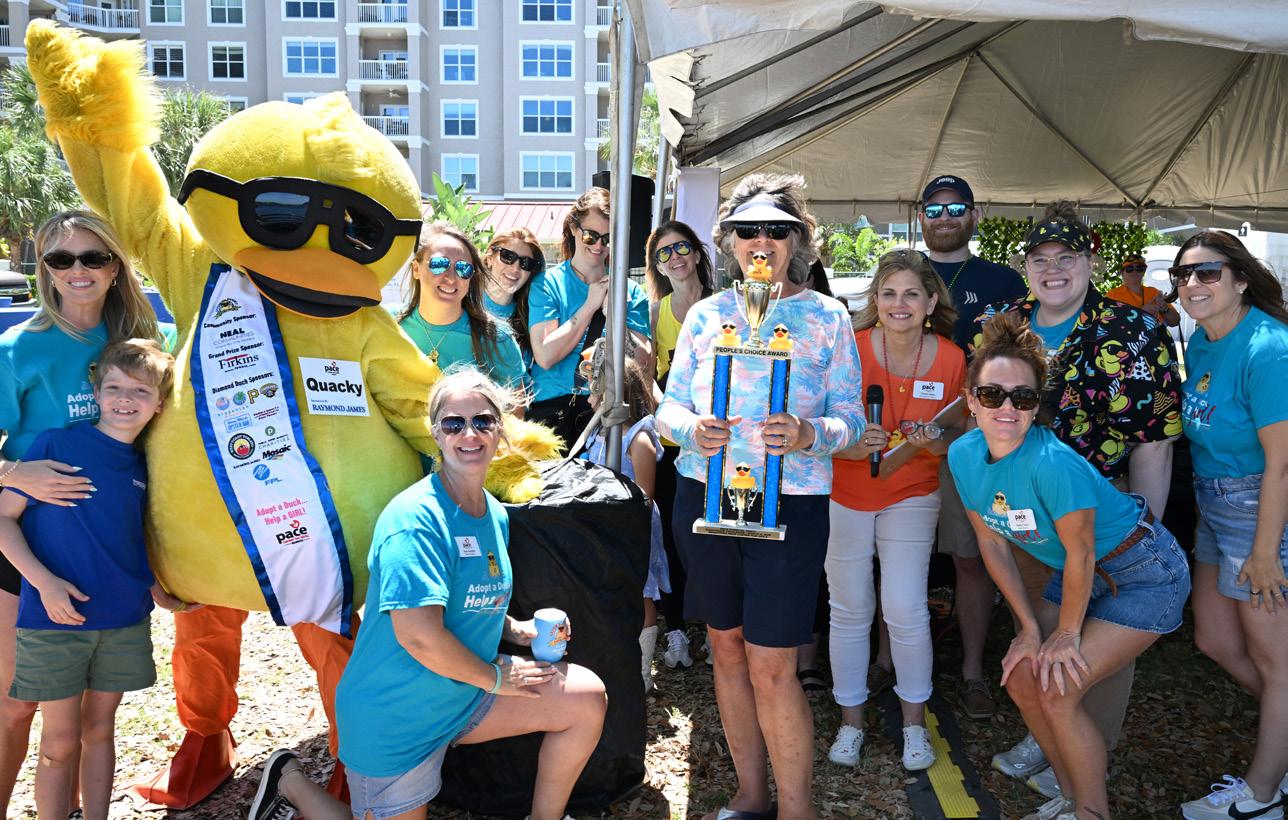
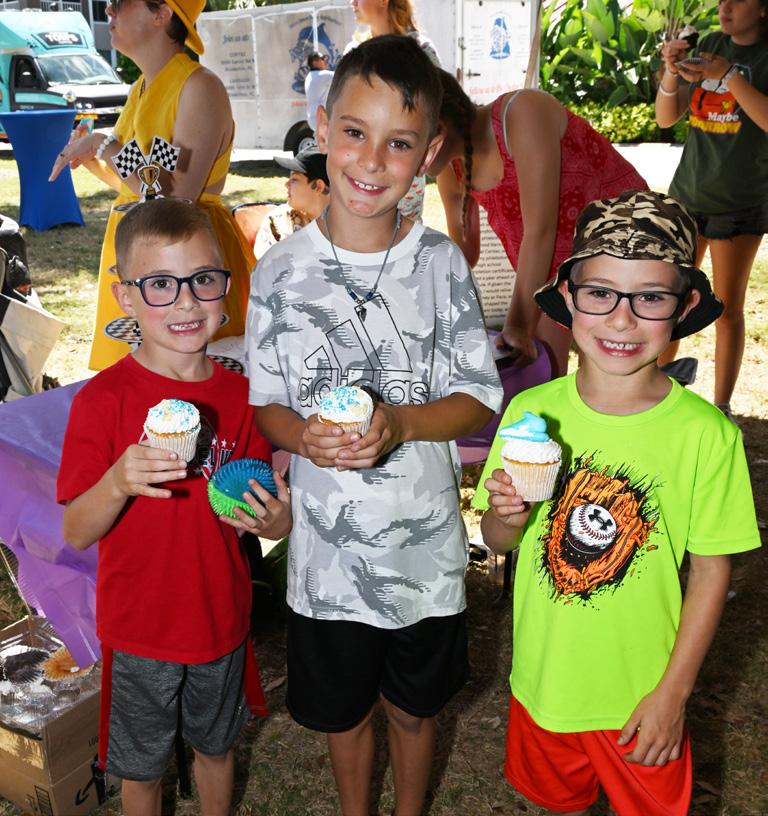
Superintendent Dr. Laurie Breslin, Heather Felton, Cindy Spray, Charlie Kennedy, Chad Choate III, Richard Tatem
NEXTGEN and the Early Learning Coalition do not endorse or warrant any products or services contained herein, unless otherwise expressly noted. The opinions expressed herein are those of the authors. Submitted materials will not be returned. Whole or part of this publication may not be used or duplicated in any way without written permission from the Early Learning Coalition.
The Early Learning Coalition is a 501(c)(3) nonprofit organization committed to ensuring affordable and creditable early child care and early education through School Readiness and Voluntary Prekindergarten (VPK) programs. Sponsorship by the Early Learning Coalition of Manatee County and the State of Florida, Division of Early Learning and Manatee County Government.
How the Suncoast Credit Union Foundation is using small change to create real change in our region
WORDS: Shannon Evans
PHOTOS: Suncoast Credit Union Foundation
When was the last time you held a penny? As a child, thrilled to spot that flash of copper on the ground? Or maybe you were sorting through a handful of change from a cashier (and remembered why you usually use a card). Perhaps you dropped the pennies into a tip jar, glad not to weigh down your wallet.
Pennies don't count for much these days; the U.S. Mint has even decided to suspend their production. But small
amounts can accomplish big things when they come together. The Suncoast Credit Union founded its charitable foundation with that idea at its heart.
Since 1990, the Suncoast Credit Union Foundation has turned everyday card use into valuable support for children and families in the communities Suncoast serves, including Manatee County. Each time a member uses a Suncoast debit or credit card, four cents go to the foundation. While no one handles actual
copper pennies in these transactions, the model still points to the power of a cent. Those small contributions have added up to more than $61 million in giving, including more than $3.5 million in scholarships for students pursuing higher education.
To keep that impact close to home, the foundation separates its funding by region. That means dollars generated through everyday transactions in Manatee County go back into local
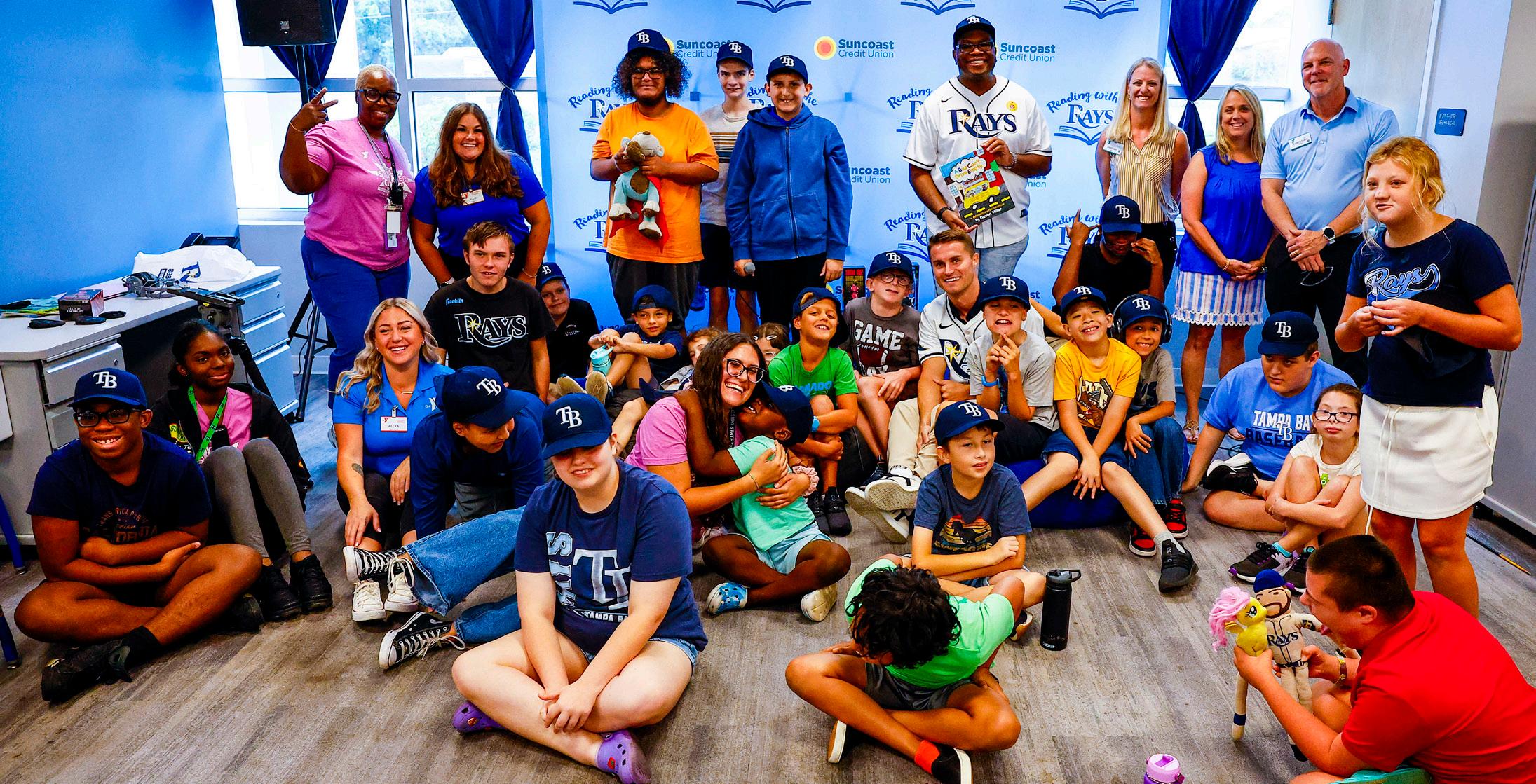
Suncoast partners with Tampa Bay Rays to promote summer reading
organizations. And the more that members use their cards, the more funding flows back into the community, which creates a steady cycle of giving that grows over time.
Jeffrey Kunberger, who became Executive Director of Suncoast Foundations in 2025, has worked with the credit union for eighteen years, including three years on the grants committee. He has watched these four-cent contributions create opportunities for countless families and students—and he wants to make sure members, both current and potential, understand their role in how it works.
"It's important to us that the pennies stay local," Jeffrey says. "If you live in Manatee County and use your card at Target or Publix, you’re helping us do good in your own community. We want our members to feel good knowing they're making an impact through their normal spending."
So where exactly do all these pennies go?
In its early years, the foundation focused mainly on scholarships, awarding modest amounts to local students and handling applications on paper through Suncoast branches. But eventually, that effort widened to grants for schools, education foundations, hospitals, and other nonprofits serving children and families.
Today, Jeffrey describes the foundation's focus as 'cradle through college,' with priorities including child hunger, early literacy and kindergarten readiness, trauma counseling, and post-secondary education. They fund organizations that hold 501(c)(3) status, have operated for at least two years, and can demonstrate stability. Because Suncoast wants to steward its members' dollars wisely, it favors programs that reach the greatest number of people with the funds available. A few local partners include the School District of Manatee County, Manatee Education Foundation, Take Stock in Children Manatee, Meals on Wheels, and State College of Florida.
Early learning remains one of the foundation's clearest priorities. "We know kindergarten readiness is a huge factor," Jeffrey says. "Children who start
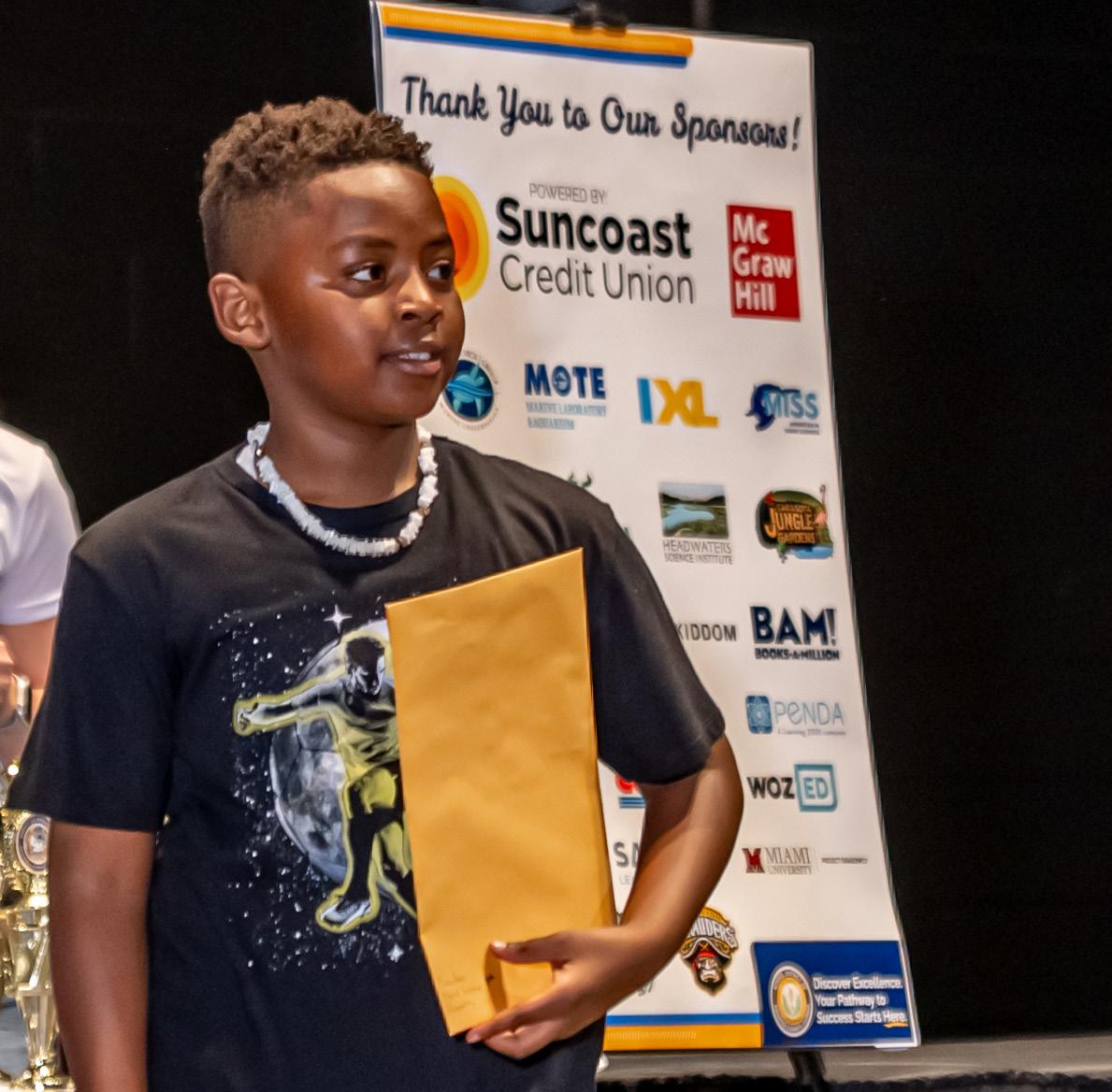
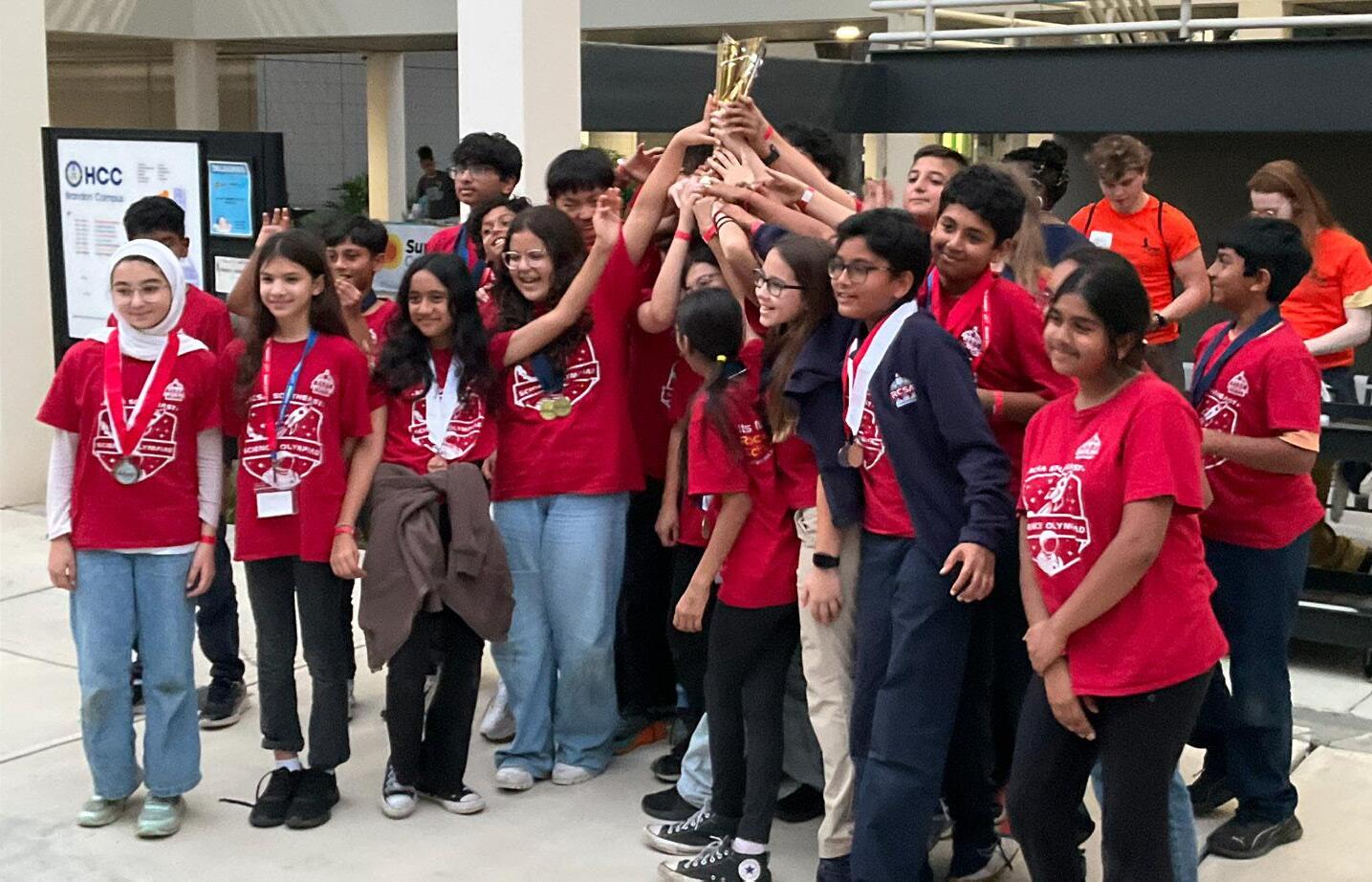
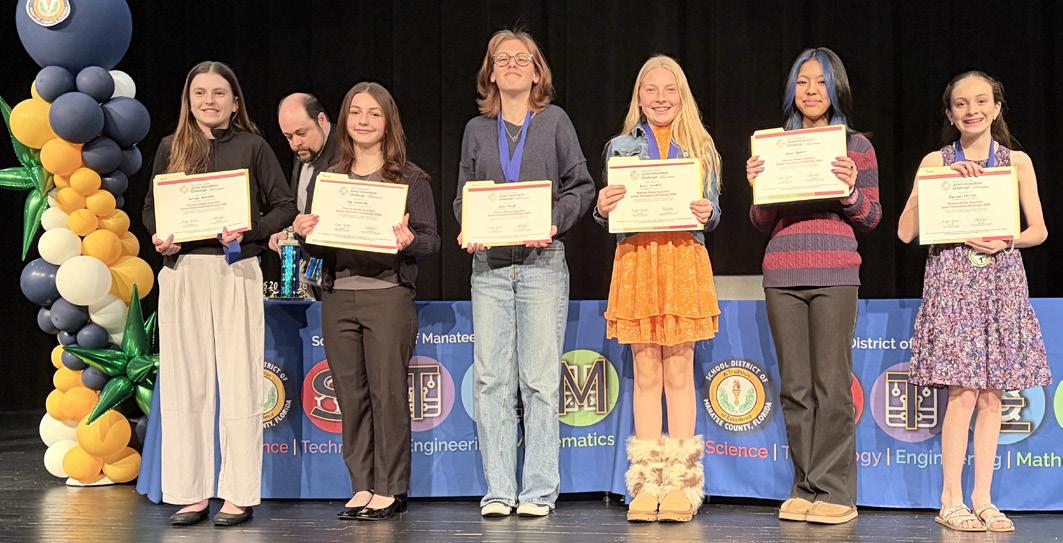
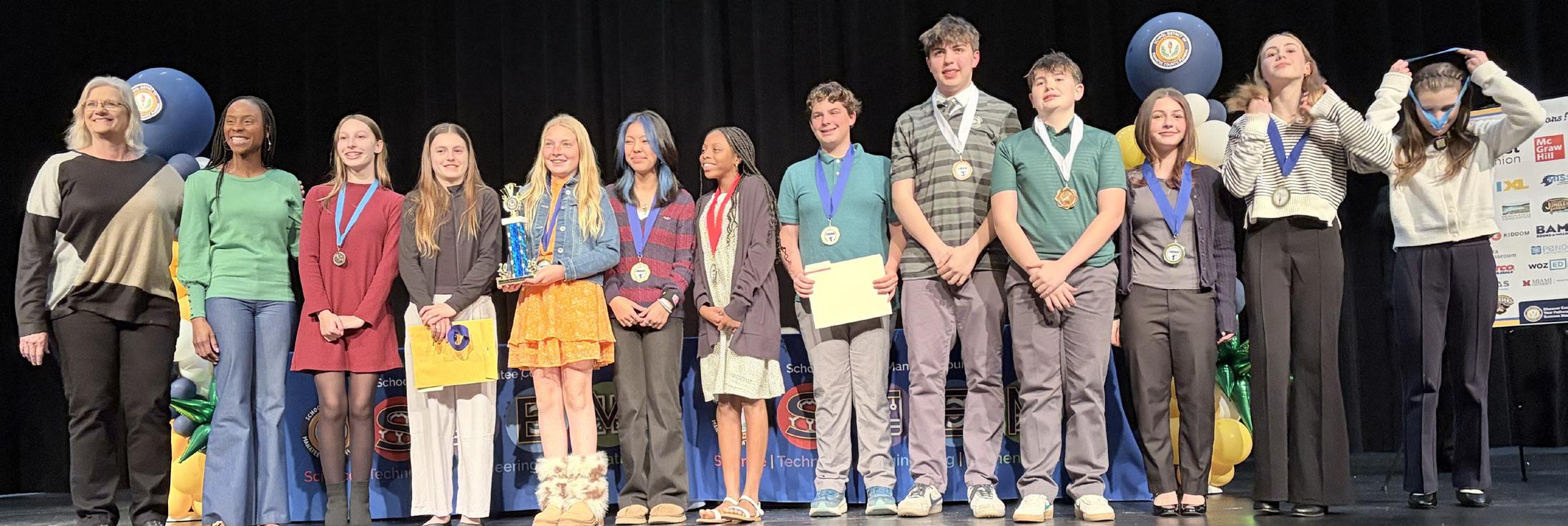
Winners of the Science Olympiad, which features hands-on engineering challenges
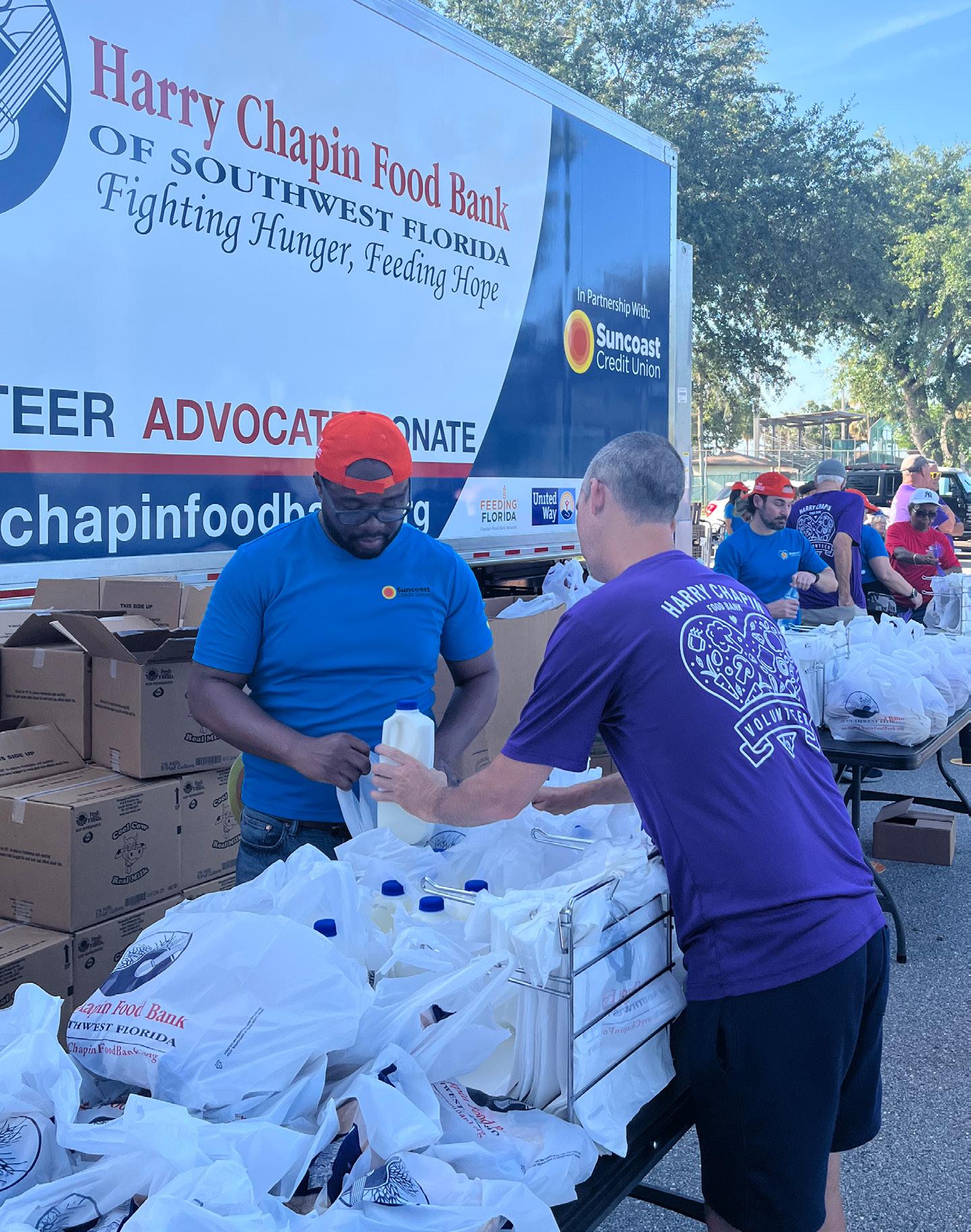
Harry Chapin Food Bank truck
school ready to learn are more likely to read proficiently by third grade and stay on track in math by fifth. Those early gains often carry through to graduation." For that reason, Suncoast invests in programs that reach children early, before they slip behind. "Children not ready at the start often fall behind," Jeffrey adds. "That affects whether they graduate and eventually enter the workforce prepared."
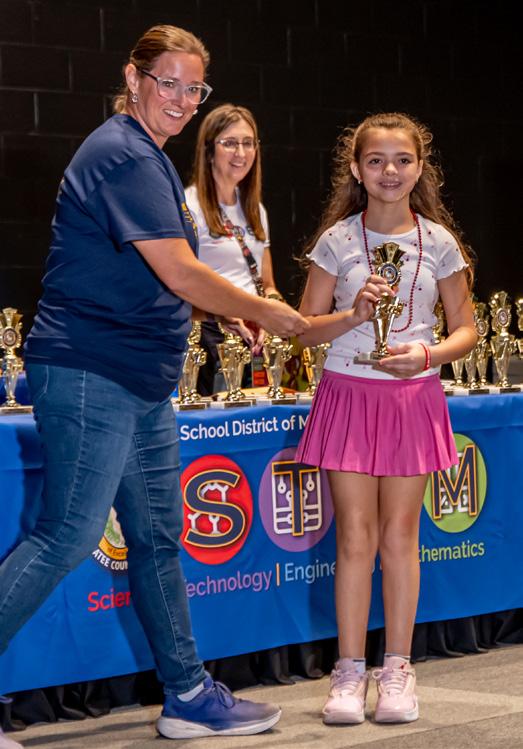
The foundation's education work extends beyond early childhood and reaches classrooms across grade levels. In Manatee County, that includes programs
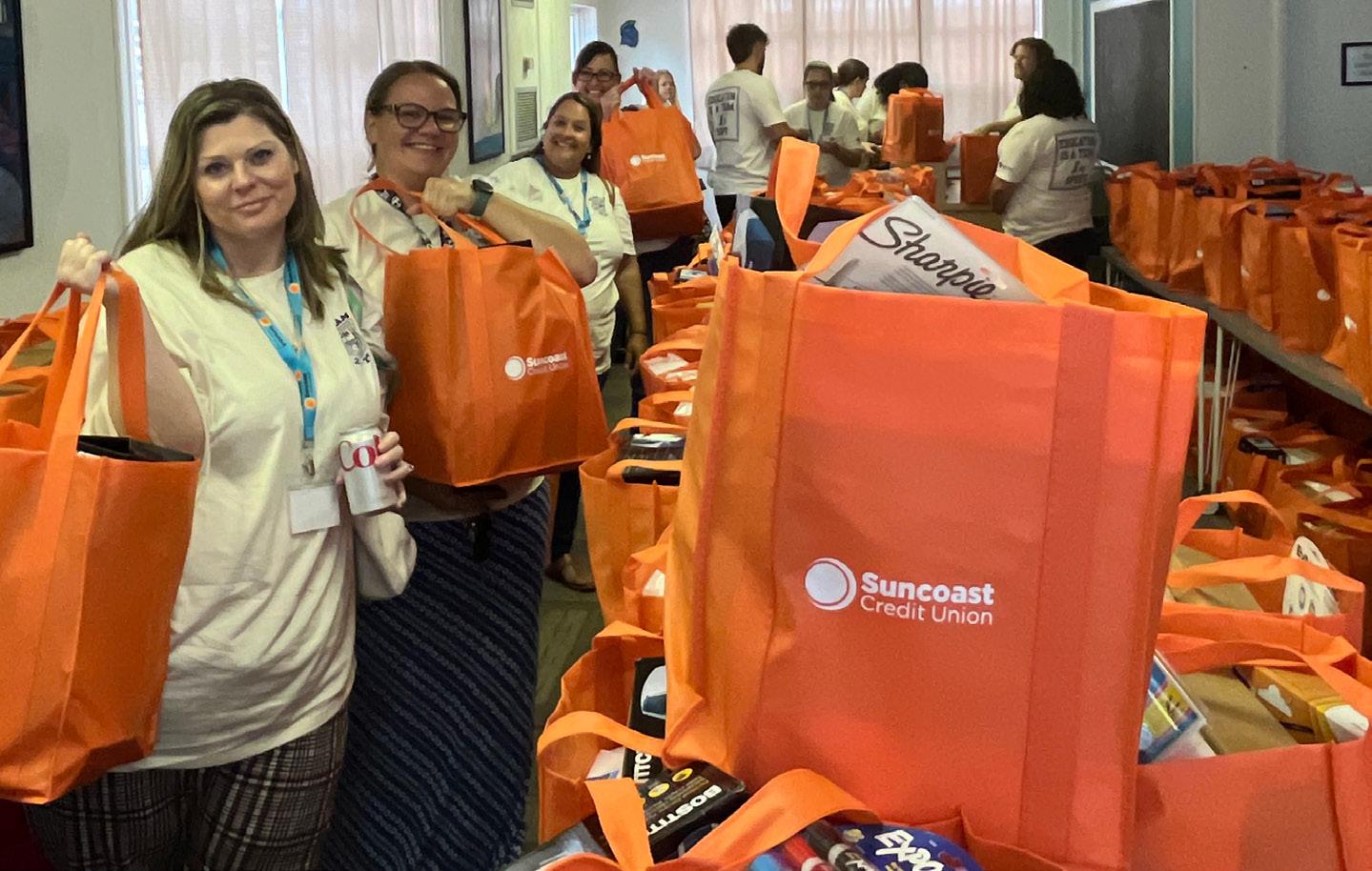
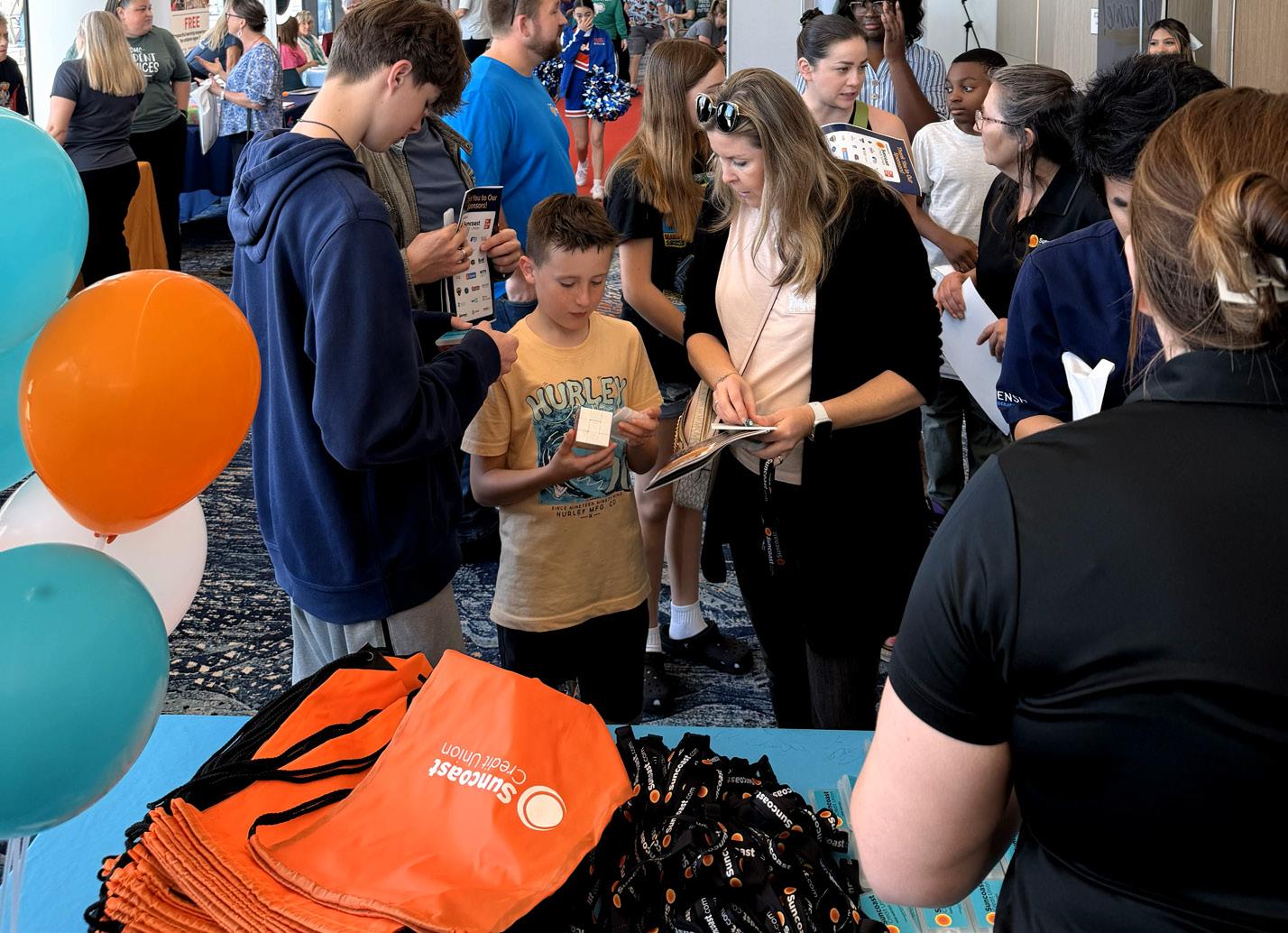
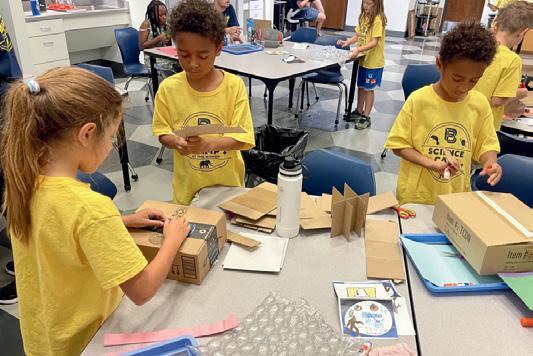
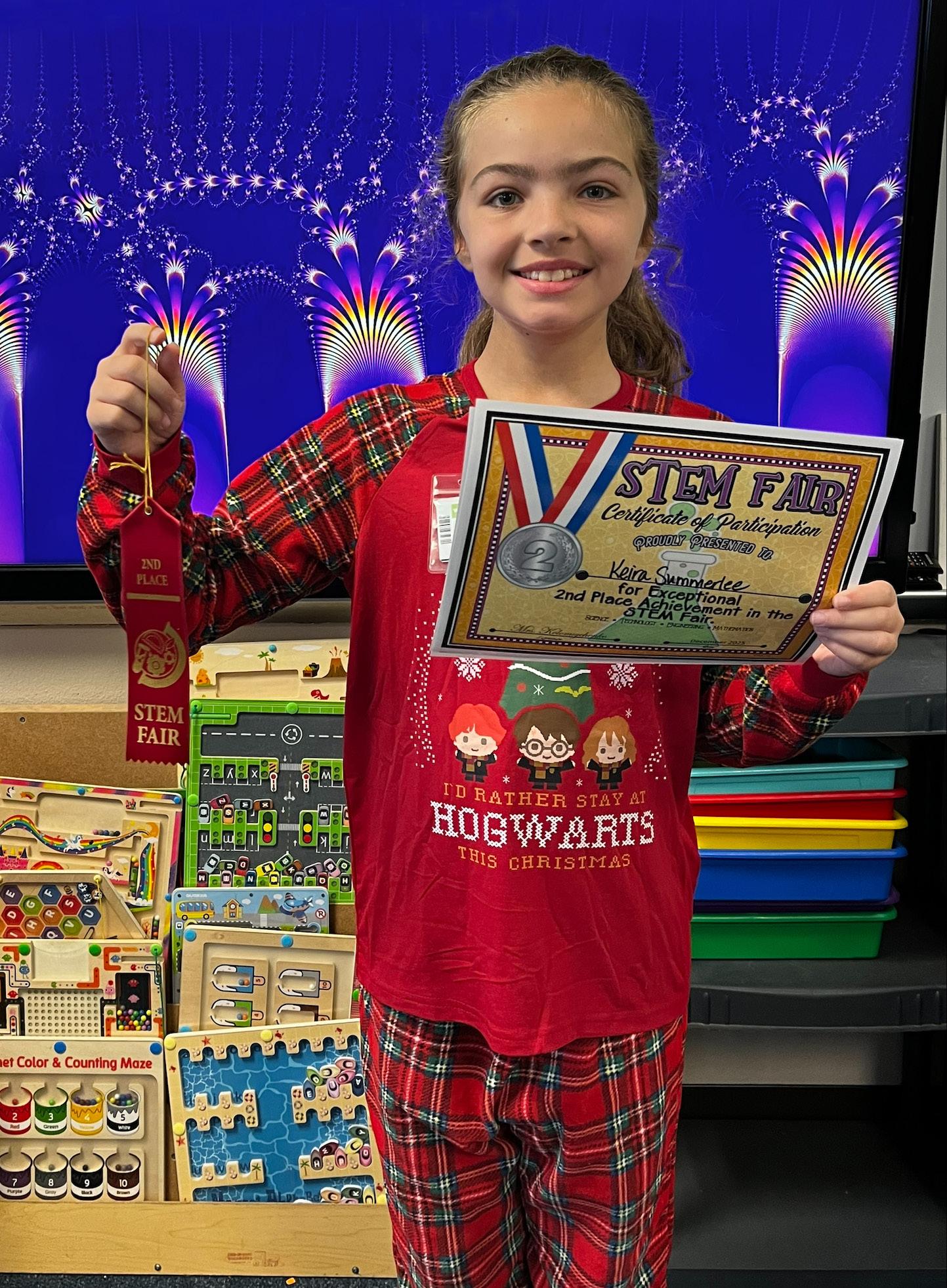
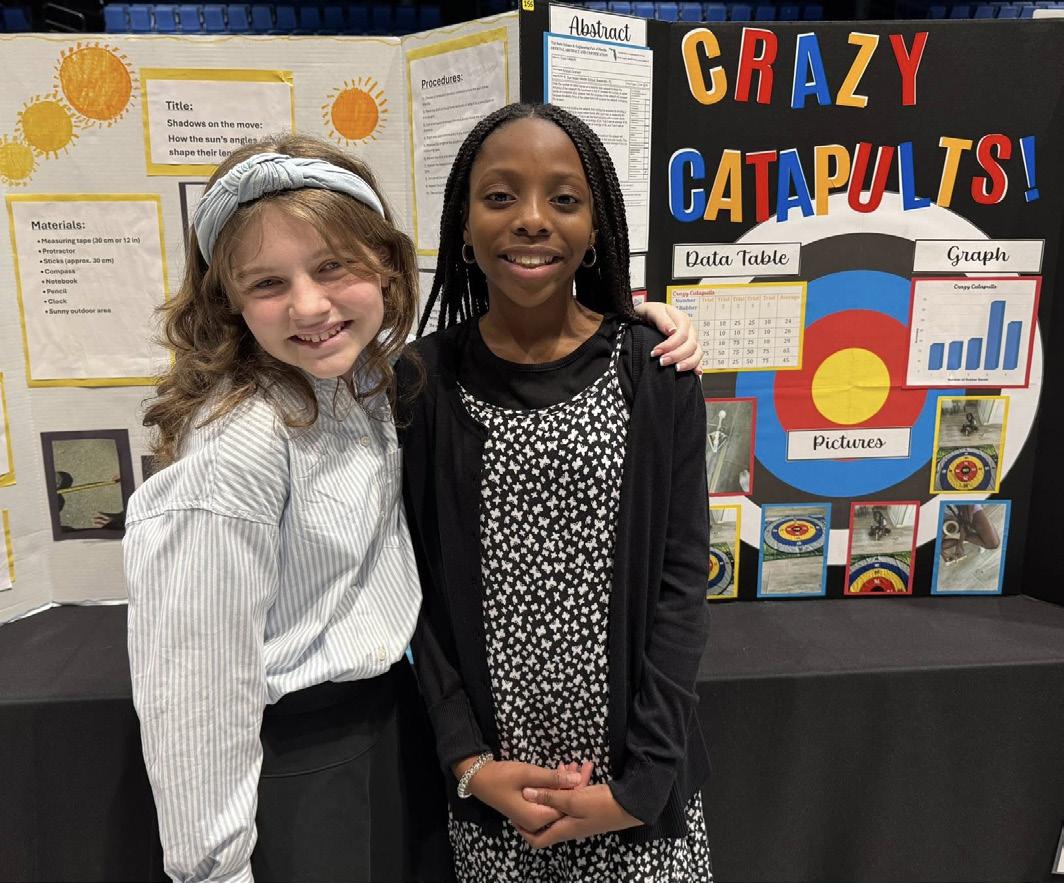
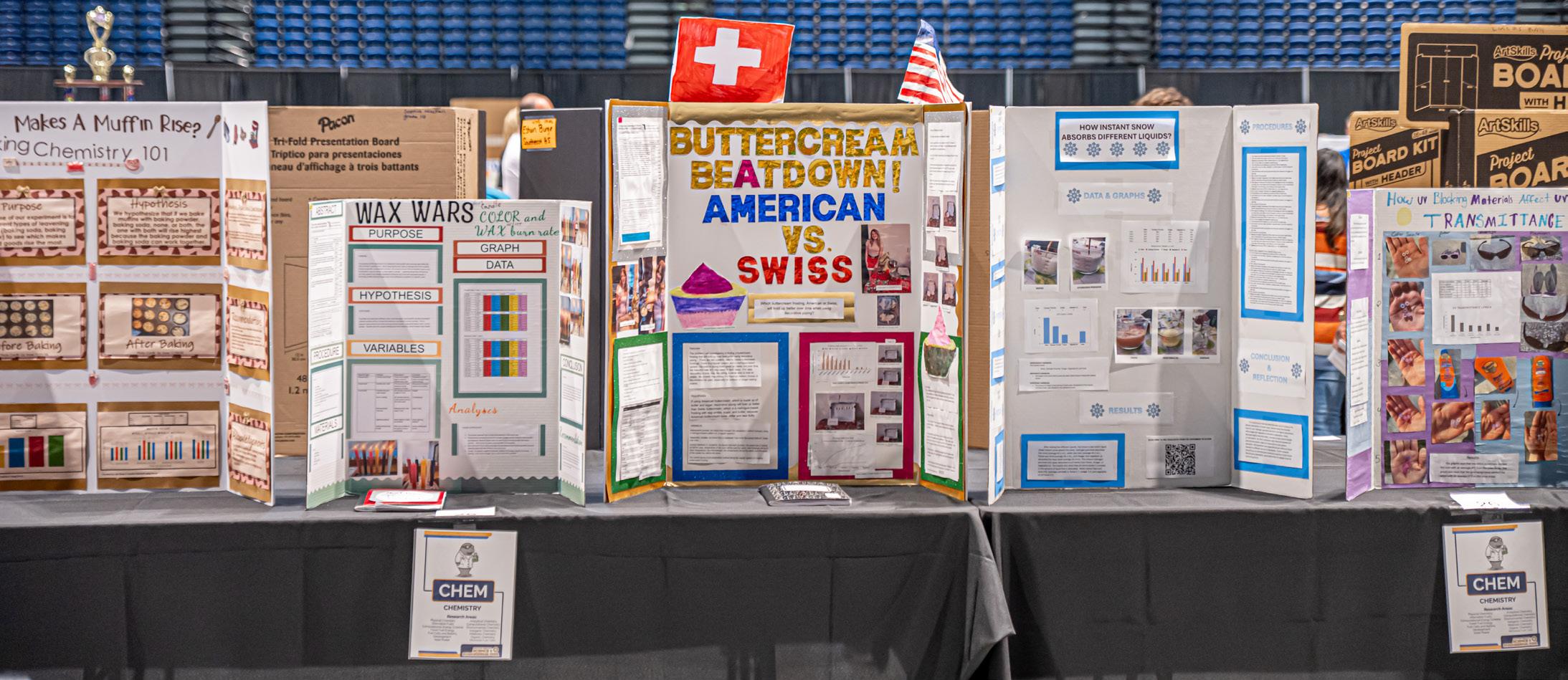
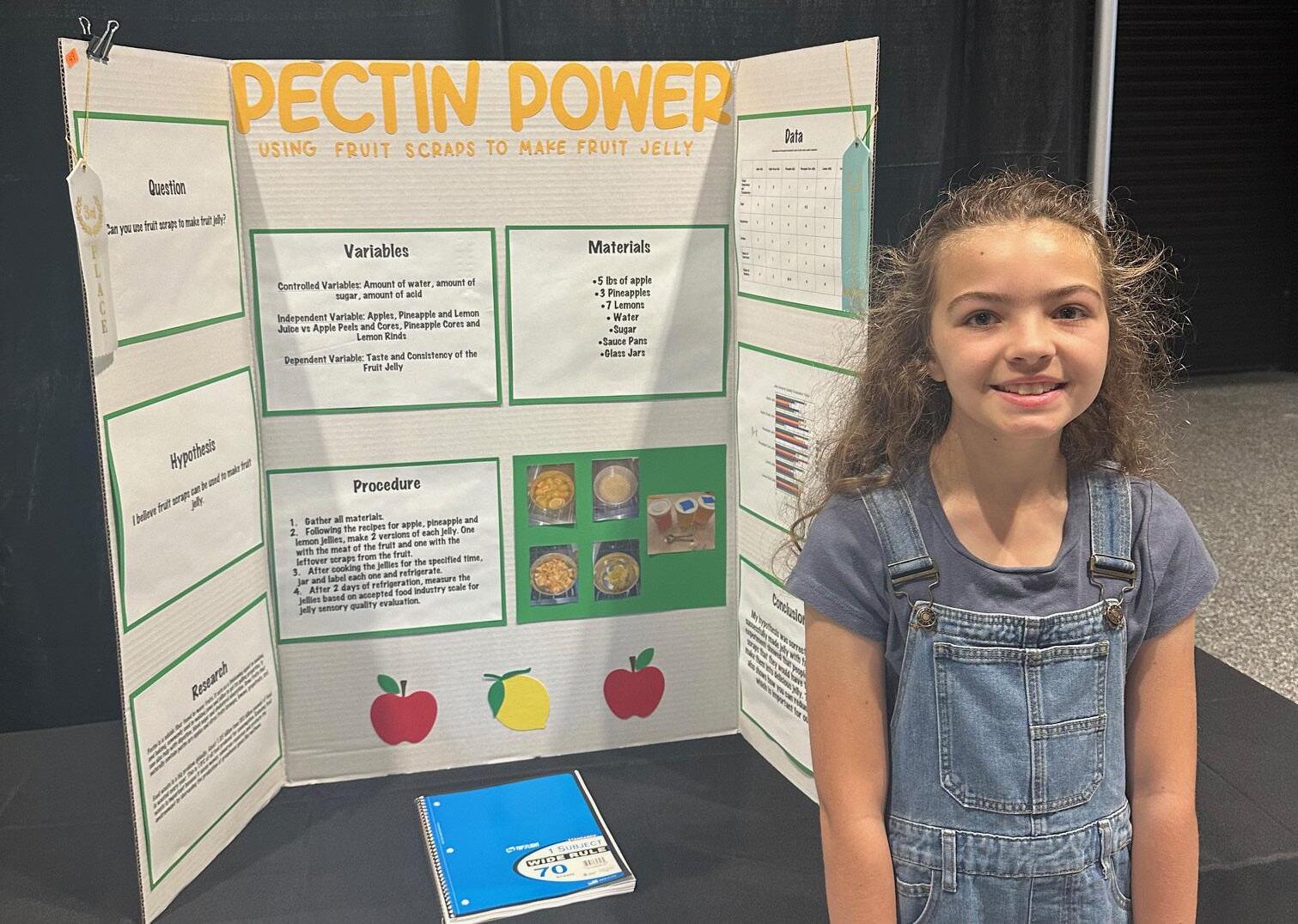
like the district's STEM Showcase, which gives students a chance to tackle handson science and engineering challenges. It also extends to new teachers, who receive supplies as they prepare their classrooms for the year ahead.
Another focus is childhood hunger. During the summer, many kids lose the dependable breakfasts and lunches they receive at school. That loss puts more pressure on food banks and meal programs, and it gives those four-cent contributions another way to make an impact. Suncoast has supported the Harry Chapin Food Bank and sponsored
Providing supplies to new teachers
a refrigerated truck that brings food directly into the community and helps reach families who might otherwise go without it.
As local, state, and federal funding shrinks, the foundation has stepped in to cover needs once met elsewhere. That response portrays Suncoast's broader view of a financial institution's role in the community it serves. Here, Jeffrey points to one key difference between credit unions and banks: banks operate under Community Reinvestment Act requirements that legally require them to invest in their communities, but credit unions don't. In Suncoast's case, he says, the decision to give back comes from a sense of responsibility and from a belief that improving community life comes with the job. He sees the foundation as an extension of the credit union's larger mission to improve the financial lives of its members.
Asked what he hopes changes for the children and families the foundation reaches, Jeffrey settles on one word: opportunity. "We hope they have opportunities they wouldn't otherwise have had," he says. "That could mean the opportunity to attend college debt-free or with less debt. It could mean access to a medical procedure they otherwise could not afford. At the heart of it, we want to create opportunities for kids to be kids, and then to grow up to be great citizens of Florida."
The foundation's story has grown far beyond what its founders first imagined. Jeffrey believes they would feel astonished by its reach.
"It would surpass all their expectations to see how much good has come from this idea and how many lives it has touched," he says. "I would thank them for thinking outside the box. We want to keep building on that."
The penny may be disappearing from everyday life, but its value has not vanished everywhere. In the right hands, even the smallest amount can add up to something powerful. NG
Pennies Add Up with Suncoast Credit Union
AAs the largest credit union in Florida, Suncoast Credit Union helps 1.4 million members live their best financial lives. Part of that mission includes giving back to the communities where their members live, work and play through the Suncoast Credit Union Foundation.
The foundation pays it forward with their Pennies AddUp program. Every time a member uses a Suncoast debit or credit card, four cents are donated to the Foundation. Those little donations add up to millions each year, helping local kids and schools.
“We believe our giving model empowers our members to make a difference simply by being a part of Suncoast,” explains the foundation’s Executive Director, Jeffrey Kunberger. “This unique approach creates a virtuous cycle, turning everyday transactions into a lasting positive impact in their own communities.”
Since the Pennies Add Up program began in 1990, more than $61 million has been donated to support efforts promoting the education, health and emotional well-being of young people in our area. Allocated funds go to over 275 charities, foundations and nonprofit organizations to improve the lives and opportunities of young people throughout Florida.
This investment in education includes annual college scholarships. Since 1990, Suncoast Credit Union Foundation has provided more than $3.2 million in scholarships to high school seniors seeking higher education.
The Foundation has also partnered with the Consortium of Florida Education Foundation to award $164,000 in student scholarships for graduates of the Class of 2025. In Manatee County alone, the Foundation supports the Take Stock in Children Program, teacher impact grants through the Manatee Education Foundation and scholarships at State College of Florida. All of this from the “Pennies Add Up” philosophy!
As credit union membership grows, so will its ability to help children and young adults throughout the state.
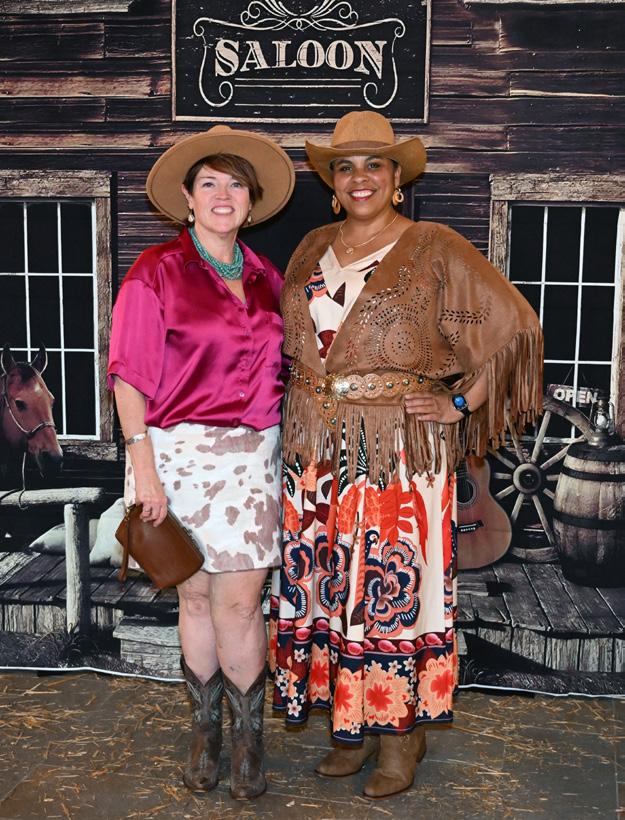
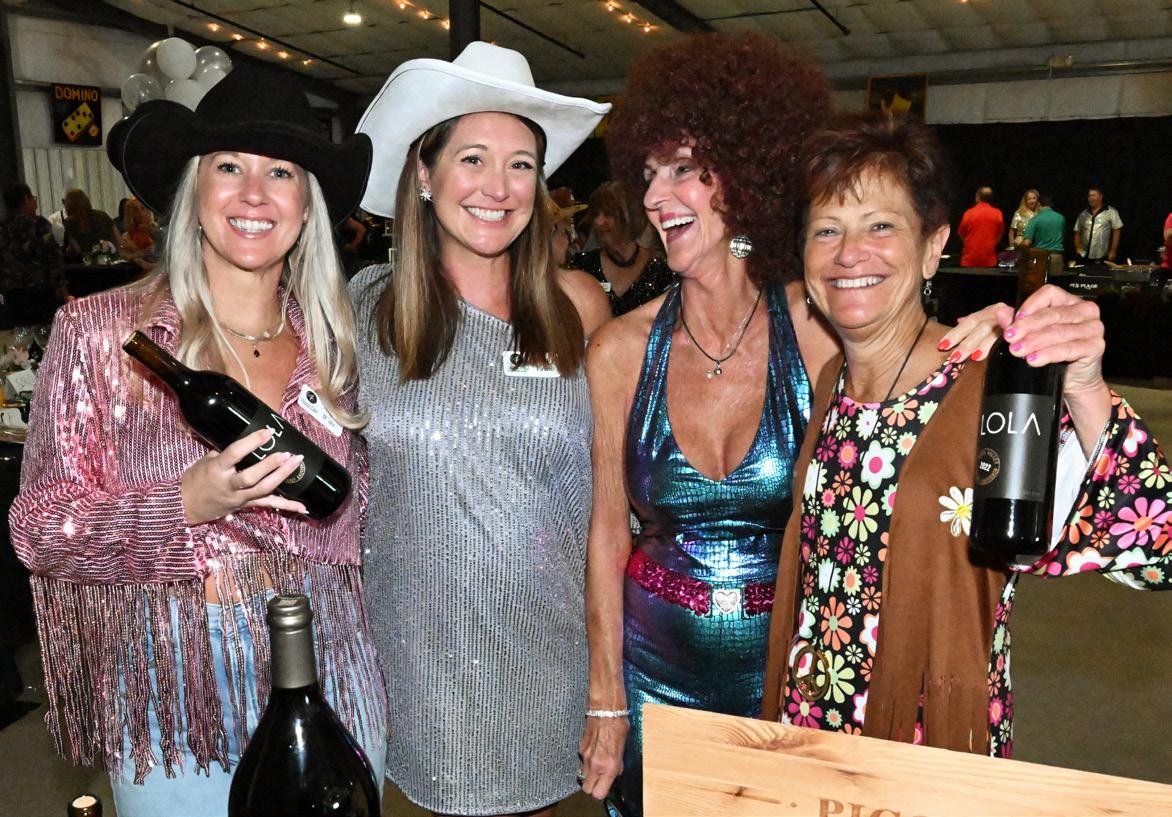
TROPICAL NIGHTS IN THE WILD WEST
PHOTOS: Wendy Dewhurst
It’s heartbreaking to think about how many kids rely on food pantries during the summer months when school meals aren’t available. Summer should be a time for kids to play, relax, and create memories but for far too many, it’s a time filled with anxiety.
The Food Bank of Manatee is here to help, serving 95+ Manatee County Food Pantries —but the need is so great, we cannot do it alone. The Food Bank of Manatee is the only food bank based in Manatee County. We rely 100% on our community for support.
Each week during the nine-week summer break, with your support, we will provide approximately 22,200 meals for children and families in our community—with a specific focus on low-income, high-need areas of Manatee County. At a cost of $1.50 per meal , we are asking for your support and the support of the entire community to help feed those in need.
Please donate what you can to make a difference in the lives of these kids and their families. Every little bit of support helps to bring hope when it’s needed most!
www.MealsOnWheelsPLUS.org
Tandem is partnering with ELC Manatee to build a pool of substitute teachers who can support local child care centers If you love working with children and want flexible, meaningful work, this opportunity is for you Through
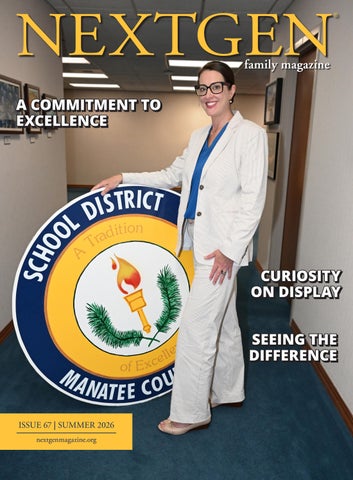
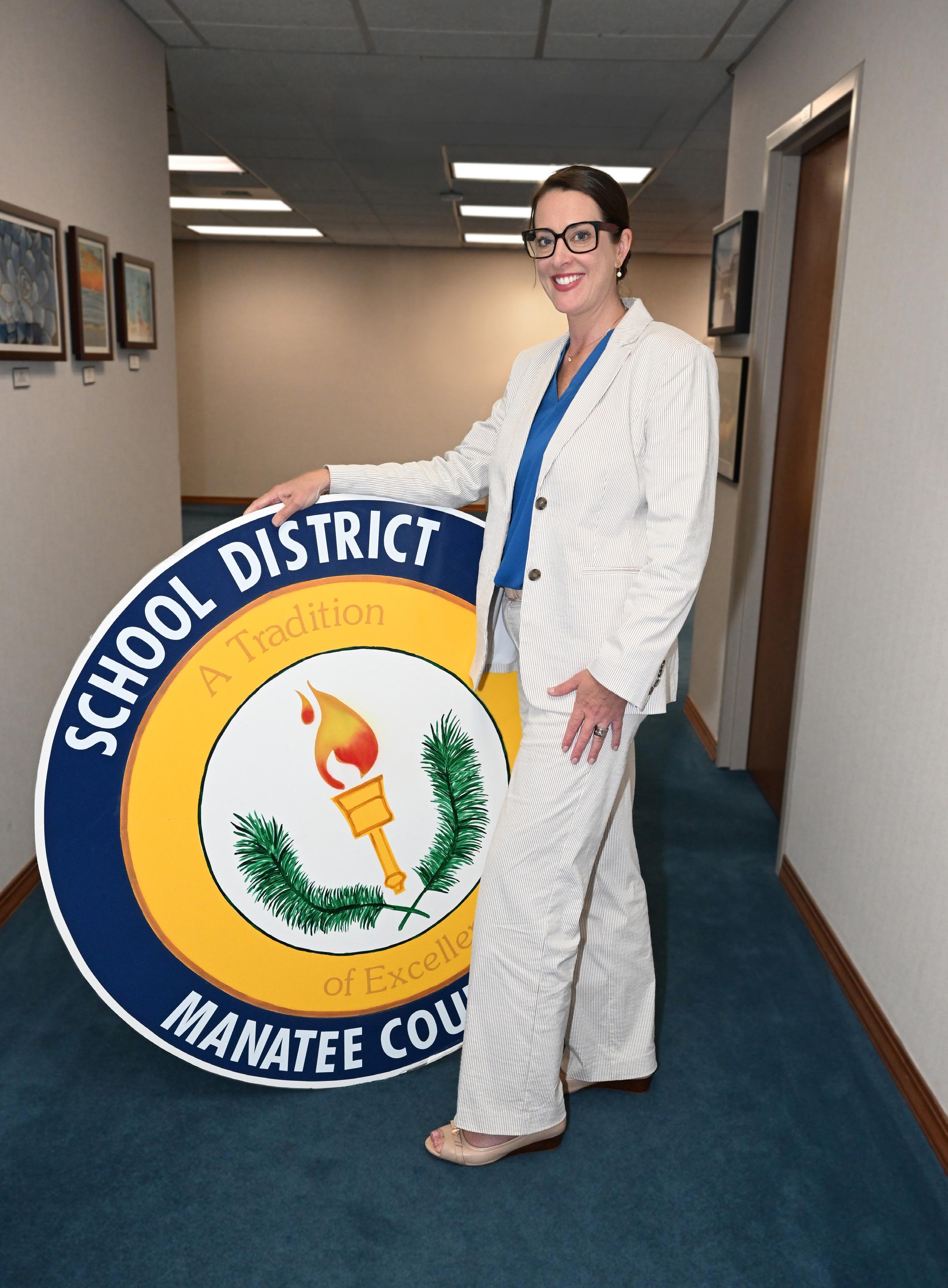
A Commitment to Excellence
PHOTOS: Melissa Parker, SDMC Communications Department
Dr. Laurie Breslin is closing out her first school year as superintendent with a clear sense of purpose. In this conversation with NEXTGEN Family Magazine, she talks about her own journey into education, what she looks for in strong schools, and why preparing students for what comes after graduation remains central to the work ahead.
NG: You've shared that you didn't originally plan to go into education. What changed for you, especially during those first shadowing experiences?
LB: Entering education has been a meaningful journey. Influential role models, including my mother and older brother, helped shape my perspective, though I initially hesitated to pursue teaching. As I was weighing my future career steps, a few teachers graciously invited me into their classrooms, and I was instantly hooked. Through those experiences, I developed a strong passion for supporting student learning. Teaching offers a clear sense of purpose because it gives us the chance to positively impact students' lives and open doors to new possibilities.
NG: Tell us about someone in your school years who made a lasting impression on you. What did they do that stood out?
LB: When I was in high school, I took a Peer Counseling class taught by Sue Kinnan. This elective helped students build skills to assist their peers. Every week, we also walked to a nearby elementary school to read to younger students. Years after graduation, I began my teaching career and discovered that Mrs. Kinnan had become a curriculum specialist at the district level, focusing on reading support. Remarkably, my former teacher guided me again, this time as a colleague. Moments like that show the strength of community. We continually help one another grow, and that creates a better system for our students.
NG: What has your career as a teacher, principal, and now superintendent taught you about leadership, especially when you have to make difficult decisions that affect students and families?
LB: My journey from the classroom to district leadership has taught me that leadership is ultimately about responsibility, especially when decisions are complex and impact students,
families, and staff in very real ways. At every level, I've learned that the most effective leaders stay grounded in what is best for students while also taking the time to listen, gather input, and understand the full context of a situation.
Difficult decisions often come with competing perspectives, and I've learned that transparency and communication are critical. Even when decisions are hard, people want to know that they were heard, that the process was thoughtful, and that the focus remains on doing what is right for students. Leadership in those moments requires both courage and empathy, being willing to make tough calls while never losing sight of the people those decisions affect.
Ultimately, leadership is not about having all the answers, but about staying focused on purpose, building trust, and making decisions with integrity.
NG: How did growing up in Manatee County affect the way you lead the district today?
LB: Growing up in Manatee County has had a lasting impact on my leadership. I attended Manatee schools, and I plan to retire one day as a Manatee resident. That means I refuse to settle for anything less than excellence for our schools. I believe in our past accolades, our current successes, and what we have yet to achieve. I know we are a strong school district, and I want the entire community to know that. I want the entire state to see it.
NG: When you think about a healthy school system, what do you look at besides test scores?
LB: While academic performance is important, it is only one indicator of a healthy school system. I look at the whole child and the overall system that supports them. That includes student engagement, attendance, and a sense of belonging. Students learn best when they feel safe, connected, and supported.
I also pay close attention to the strength of our workforce. Teacher and staff retention, morale, and the quality of professional learning are critical indicators of system health. When educators and school leaders feel valued and supported, that directly translates into stronger outcomes for students.
Additionally, I look at how well we are preparing students for life beyond graduation. That includes college and career readiness, access to advanced coursework, career and technical education opportunities, and whether students are leaving our system with real options and a clear path forward.
Finally, I consider the strength of our relationships, with families, community partners, and stakeholders. A healthy school system is one that builds trust, communicates openly, and works collaboratively to support students.
In the end, a truly strong school system is not defined by a single metric, but by a combination of academic success, student wellbeing, staff capacity, and community confidence.
NG: What do you think families need most right now, and how well do you think schools are meeting those needs? Where is that partnership working, and where could it be stronger?
LB: Families today are looking for three core things from their schools: meaningful opportunities for their children, a safe learning environment, and trust maintained by timely and accurate information. In our schools, we see strong partnerships where schools are proactive in communicating with families, creating welcoming environments, and offering programs that connect learning to realworld opportunities. When families feel informed and included, trust grows, and that partnership becomes a powerful driver of student success.
We should continue finding new ways to involve families as true partners in education, not simply as receivers of information. That means encouraging two-way conversations and helping families feel equipped to support their children's academic growth. Strong schools build strong communities, and our aim must be to keep strengthening those partnerships so every family feels included, respected, and confident in their child's education.
NG: What is one question you wish more parents would ask their child after school?
At the same time, we know those connections can always grow stronger. It is important not only to communicate often, but to do so clearly, consistently, and in ways all families can access.
LB: There is no wrong question to ask your child at the end of the school day. Any interest in their learning is a positive interaction. As a parent, I lean toward questions that require more than a yes or no answer. One of my favorite things to ask is, "What do you look forward to at school tomorrow?"
NG: When you visit a school, what do you notice first?
LB: While data and outcomes matter, I'm looking for a place where students are known, challenged, and supported every single day. I look closely at what is happening in classrooms. Are students actively engaged in learning? Are teachers facilitating meaningful instruction and checking for understanding? Do our teachers have what they need to perform at their highest
ability, or is there something more we can do to support teacher needs?
Beyond that, I notice how adults collaborate and how visible leadership is within the building. A strong school has a shared sense of purpose, where everyone is working together to support students.
NG: Can you tell us about a recent conversation or moment with a student that has stayed with you?
LB: As a lifelong learner, I believe in the importance of reflection. One moment that has forever stayed with me occurred after a high school graduation. A student that I worked particularly close with to be sure that the student earned their high school diploma said to me after they walked across the stage, "What am I going to do now?" This was many years back, but it struck a chord in me. I spent some time reflecting on this. It is not enough to just see a student graduate. We must prepare students for post-secondary. All students need a plan, and it is a mission of mine to be sure that we do this across the district.
Graduation is a celebration of all that has been accomplished, but it is also a celebration of the future possibilities. We are going to be sure that all students know what those possibilities are for their future.
NG: Looking back on this school year, where do you feel the district made the most progress, and how is that shaping your priorities for next year?
LB: This school year, I believe we made the most meaningful progress in strengthening both our academic focus and our
operational alignment as a district. We've sharpened our attention on literacy and student achievement, while also taking important steps to ensure our systems, whether in staffing, budgeting, or support services, are more aligned to the needs of our schools.
We also made progress in building stronger communication and trust, both internally with our staff and externally with families and the community. That foundation is critical, because sustained improvement only happens when people feel connected, informed, and part of the work.
As I look ahead, those gains are shaping a clear set of priorities. We will continue to accelerate academic growth, with a particular emphasis on literacy and middle school outcomes. At the same time, we will deepen our focus on attendance and engagement, recognizing that students have to be present and connected in order to learn.
Operationally, we will stay disciplined in improving efficiency and ensuring resources are directed where they have the greatest impact on students. And just as importantly, we will continue investing in our people, recruiting, retaining, and supporting high-quality educators and leaders across the district.
NG: What are you most looking forward to in the new school year?
LB: Ultimately, next year is about building on our momentum and moving from alignment to acceleration, so that every student in our district experiences success. NG
MANATEE’S SLEEP BABY SAFELY PROGRAM
Manatee County’s Sleep Baby Safely program features local facts, direct messages, and easy-to-remember tips for parents, caregivers, and everyone caring for babies to protect them from suffocation when they are laid down to sleep. PROTECT BABIES IN MANATEE COUNTY FROM SUFFOCATION EVERY NIGHT AND EVERY NAP
SAFE SLEEP ABCs: ALONE, BACK, CRIB
Always put babies to sleep alone on their back in an empty crib with only a firm mattress and tight-fitting sheet.
SHARE A ROOM, NOT A BED
Bring baby’s crib into parent’s room, and never lay baby to sleep on a soft surface like an adult bed, couch or air mattress.
STAY ALERT WHILE FEEDING BABY
Set an alarm and always return baby to crib after feeding. Breastfeed, if possible – it’s best for baby.
• Child care providers
• Parents, guardians, and grandparents
• Community members
• First Responders for direct on-site education
• Pediatrician and women’s health offices
• Guardian education groups
• Also available - Train the Trainer
Learn more at: www.elc-manatee.org/SleepBabySafely
Contact us at: communityengagement@elc-manatee.org or (941) 757-2900 ext. 2500
Early Childhood Education
Step 1:
Early Childhood Education Pre-Apprenticeship
Length: 300 hours - Approximately 16 weeks - Students must be at least 18 years old.
Dual Enrollment: Yes
Delivery: On-Campus; Day
Test for: DCF 45 Hour Certification
Job Titles: Child Care Teacher, Teacher Aide
Annual Wage: $32,370 (not including earned
)
Step 2:
Early Childhood Education Apprenticeship
Length: Approximately 18 months
Dual Enrollment: No
Delivery: On-Campus; Evening
Job Titles: Child Care Teacher
Annual Wage: $32,370 (not including earned overtime wages) Source:
Step 3: Child Care Center Operations
Length: Approximately 8 weeks (45 Hours)
Dual Enrollment: No
Delivery: On-Campus; Evening (Tuesday & Thursday)
Job Titles: Child Care Center Director
Annual
$54,950 (not including
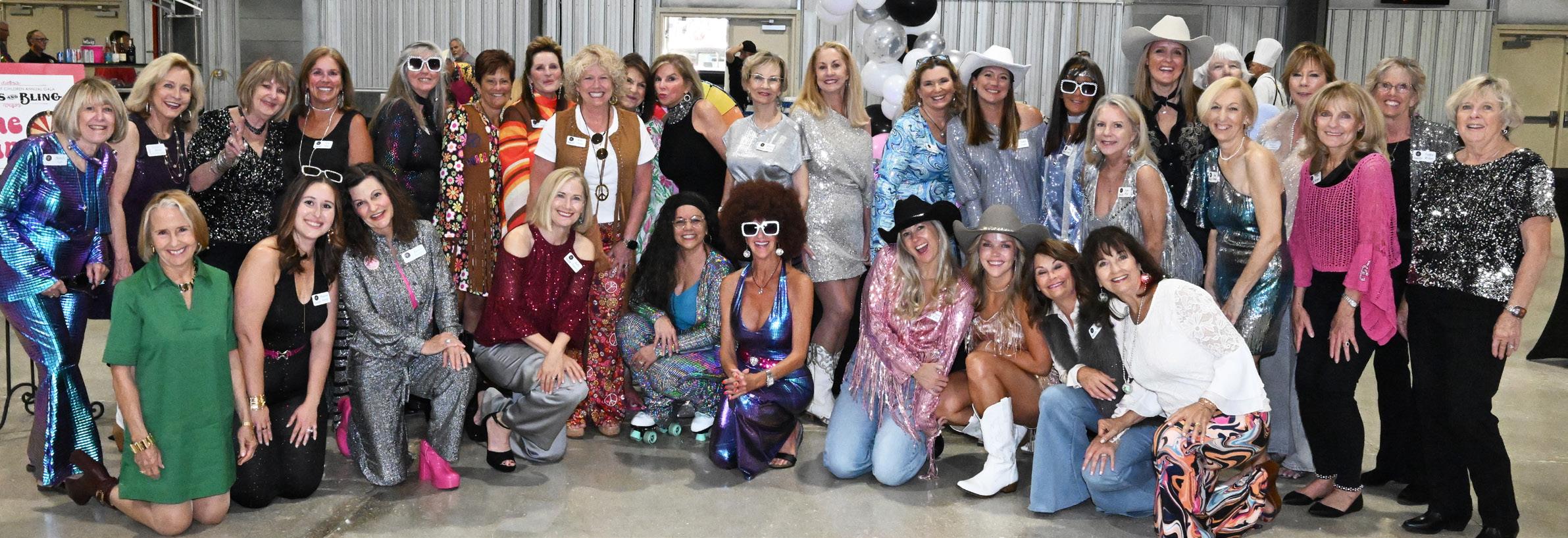
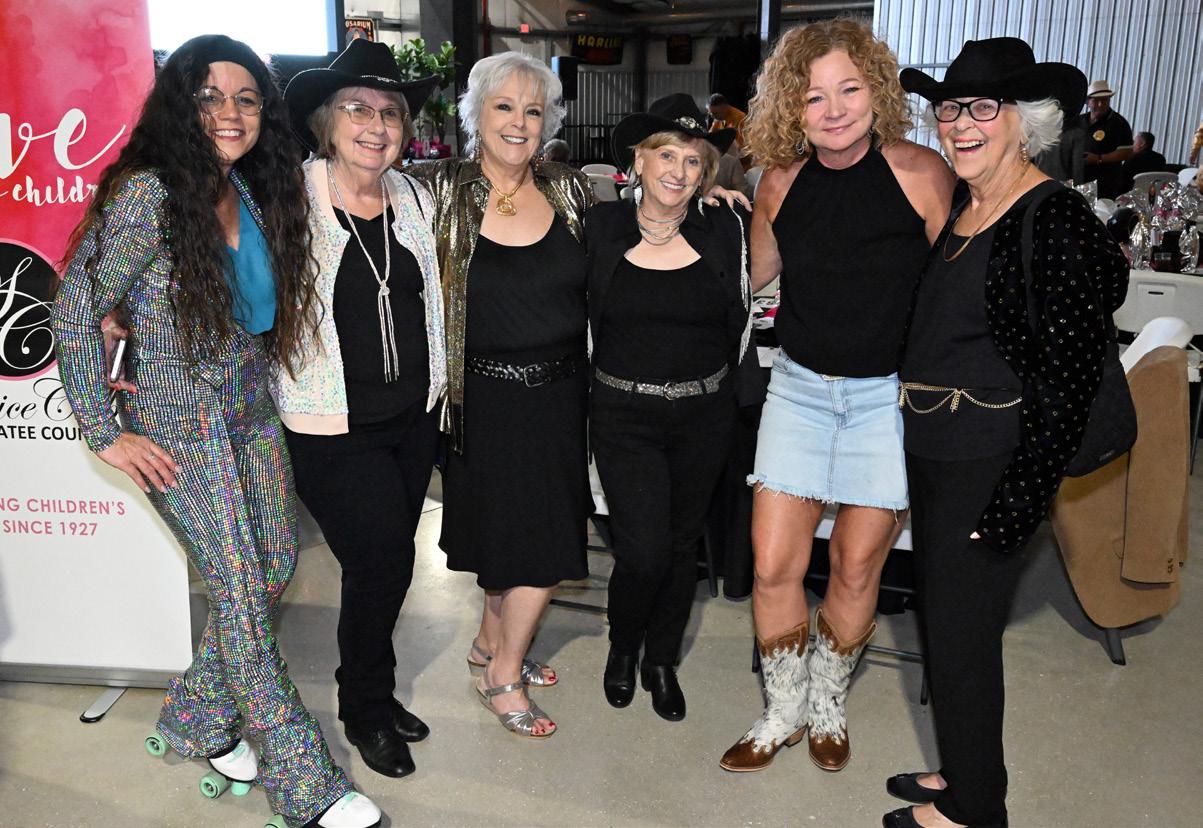
FOR THE LOVE
OF
CHILDREN GALA
PHOTOS: Wendy Dewhurst
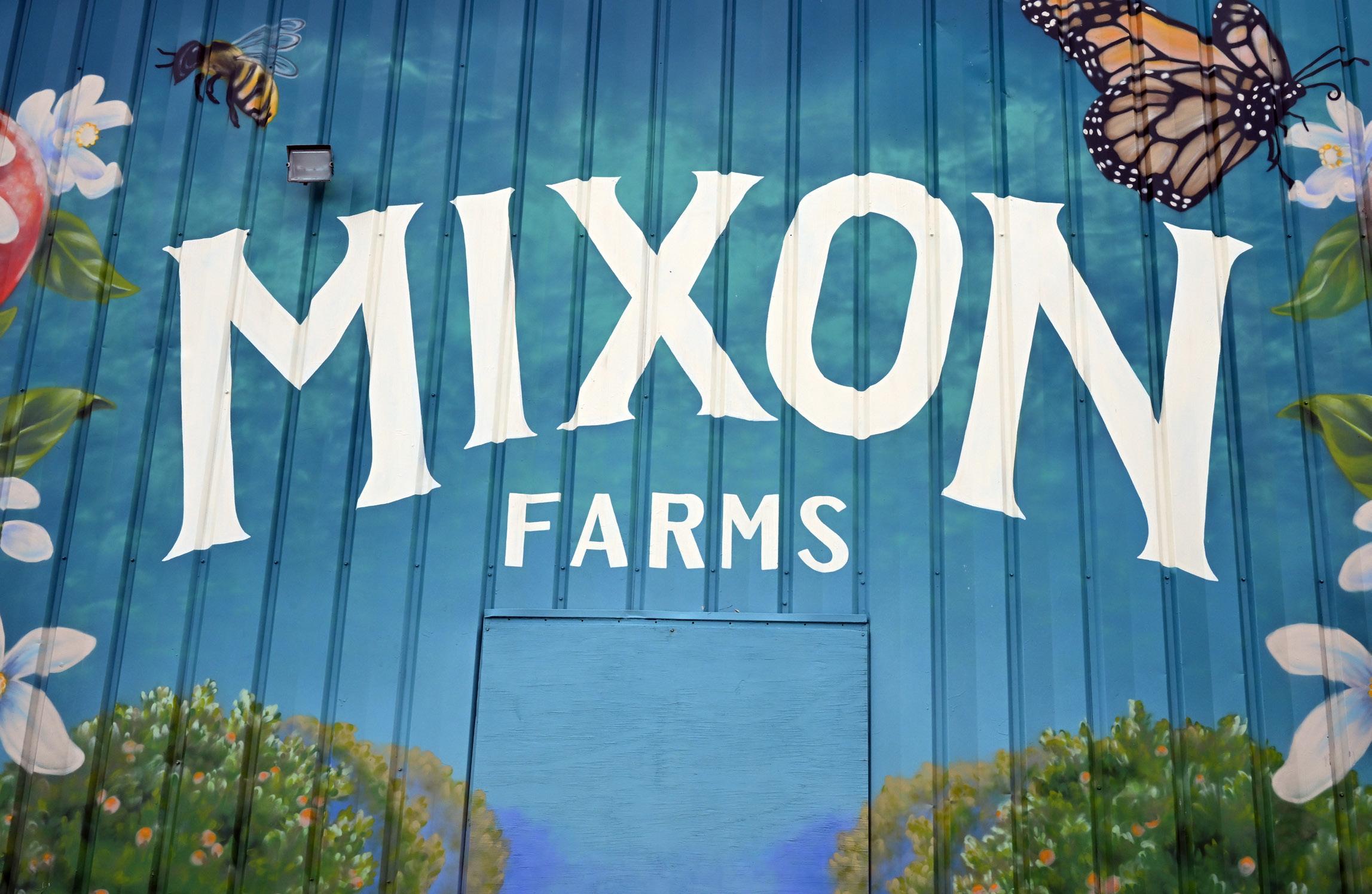
For over 80 years, Janet and Dean Mixon operated Mixon Fruit Farms off 27th Street East in Bradenton. But after the citrus greening disease and rising insurance costs, the Mixons made the difficult decision to put the property up for sale. That decision began with conversations with the Manatee County Board of County Commissioners, and in 2025, they voted to purchase 39 acres of the Mixon Fruit Farms property to preserve a piece of history and to create a legacy of continued agricultural initiatives.
Leading the charge for Manatee County to purchase the property was County Commissioner Amanda Ballard. "It's such a special place that has meant so much to the residents of Manatee County for generations," Amanda said. "Preserving local agriculture is essential to maintaining the character, economy, and heritage of Manatee County."
Now under county ownership, the property is entering a new chapter as a community space. The county plans to continue private events at the farm, add public programming such as movie and music series, and eventually create a library with a commercial teaching kitchen. The property is also now home to the Mixon Farms Market.
"The Mixon Farms Market not only supports our local farmers and small businesses, but it also creates meaningful
Mixon In Bloom
WORDS & PHOTOS: Wendy Dewhurst
opportunities for residents to connect directly with the people who grow their food and sustain our agricultural traditions," Amanda continued. "We want this to be the opportunity for our neighbors, local groups, and volunteers to literally help this space bloom."
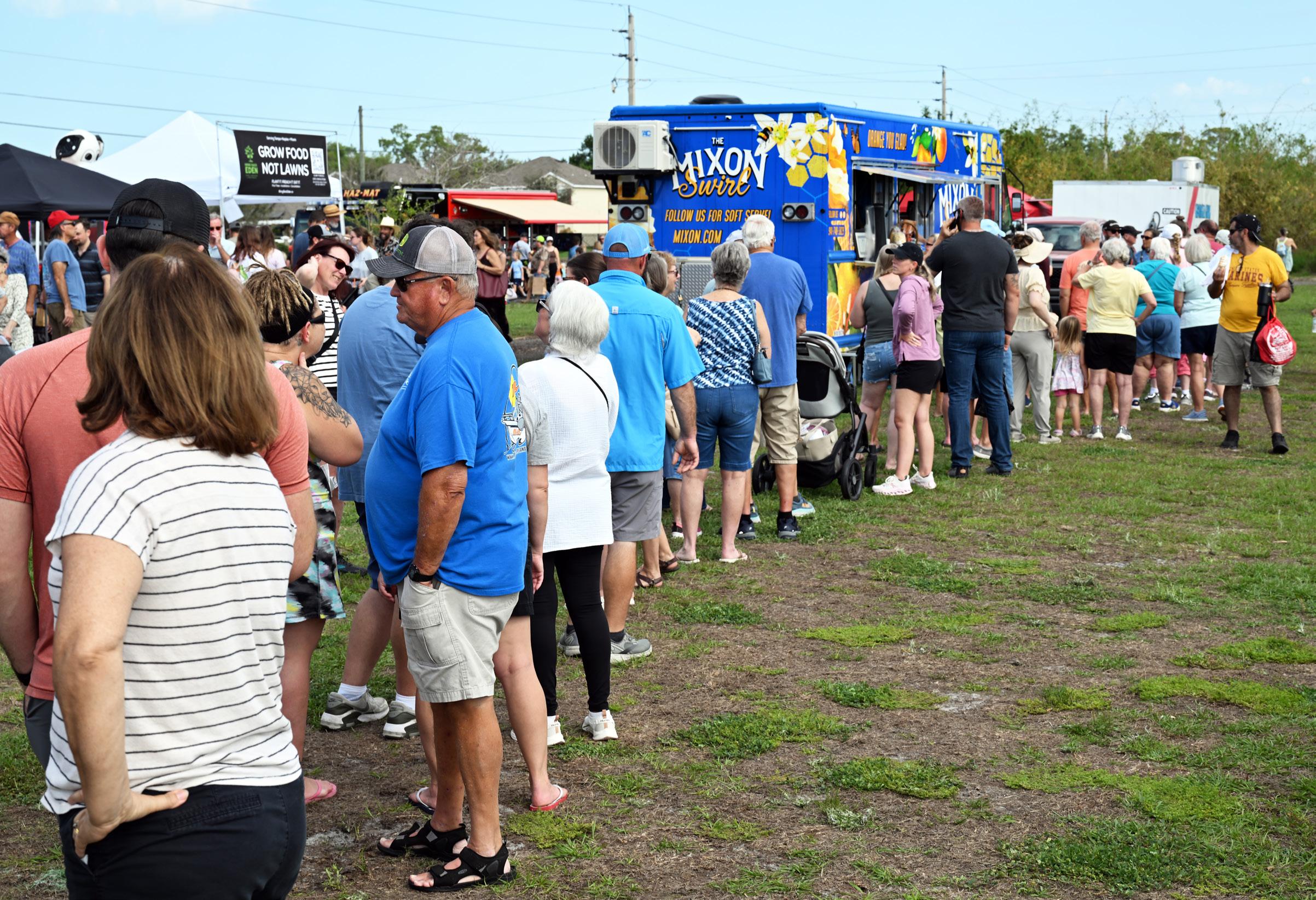
On March 16, 2026, the inaugural Mixon Farms Market kicked off on a beautiful Sunday morning. The cars were lined up to get into the parking lot to be the first to explore and shop the variety of local vendors offering fresh foods, as well as handmade
goods and specialty items. Both kids and adults enjoyed "Ag Adventure Day" with a touch of a tractor area showcasing real tractors, farming tools, and agriculture up close. Everyone loved petting the adorable baby cows from Dakin while learning about the family-owned, 4thgeneration dairy farm.
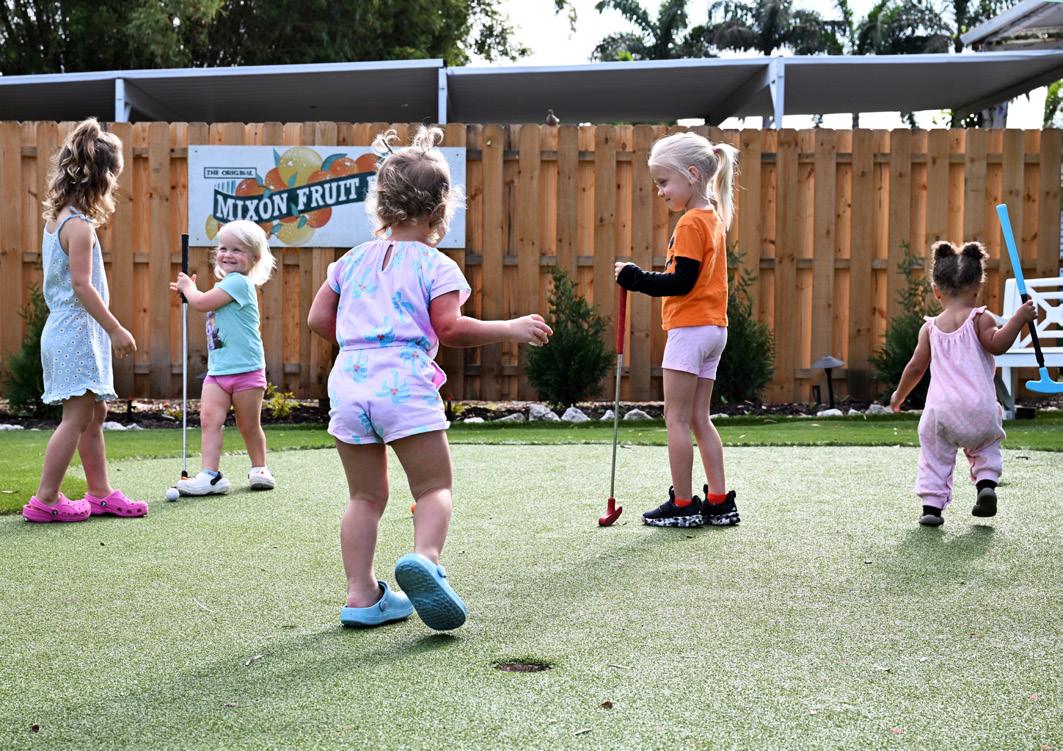
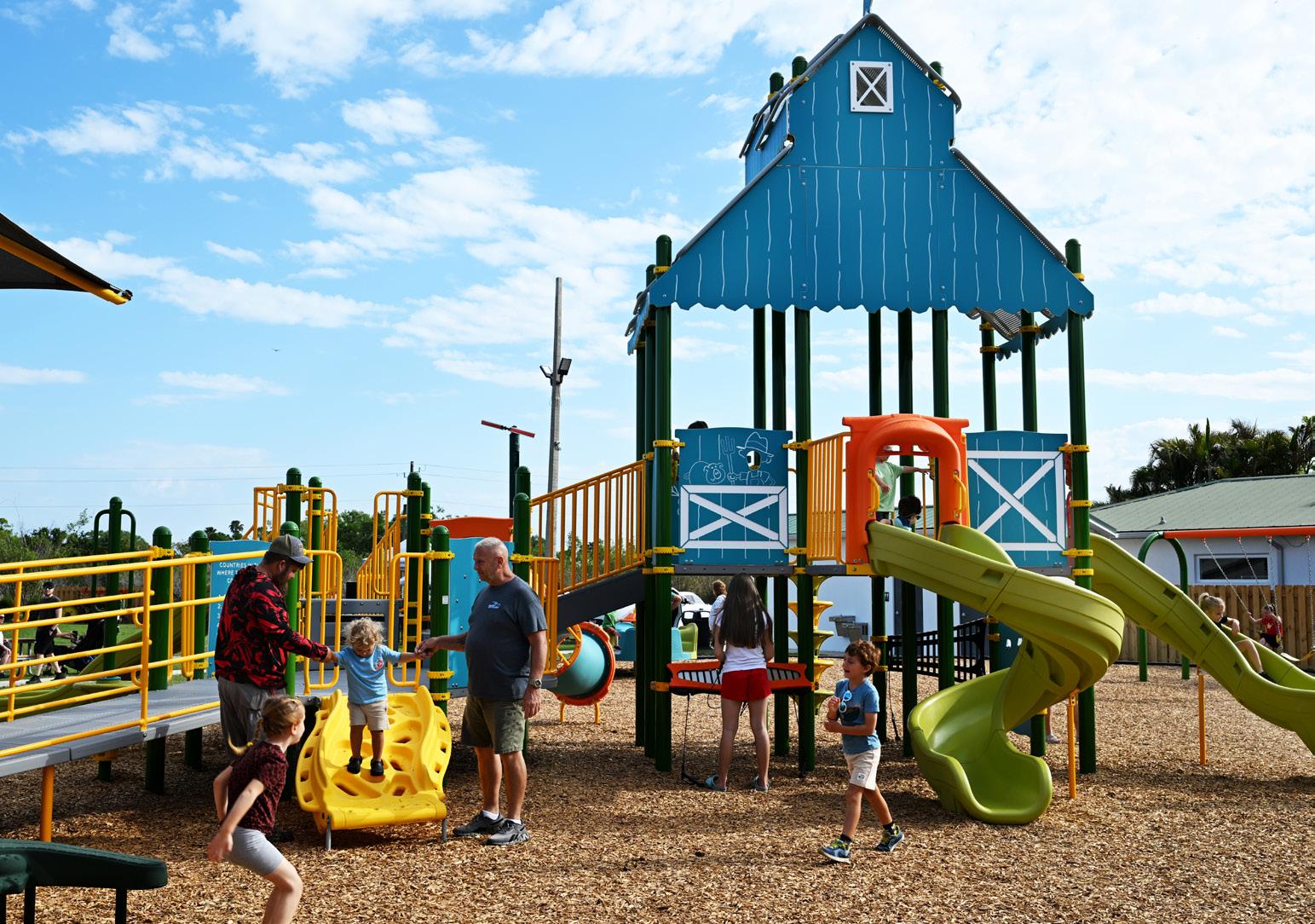
While enjoying live music from the Jesse Daniels Band, families also enjoyed a barn-themed, wheelchairaccessible playground and a putt-putt course. Guests were able to tour the Gazebo and Grand Pavilion, where a styled mini-wedding was showcased, highlighting the venue's charm and event possibilities.
Rachel Desrosier, Manatee County Government event supervisor, said the inaugural Mixon Farms Market welcomed more than 2,500 visitors and featured over 40 vendors. She also thanked The Veranda View for curating the agriculture adventure area and creating an engaging experience for guests of all ages.
"It was amazing to see the community come together, supporting local vendors, enjoying fresh treats, and making memories with family and friends," she said. "Looking ahead, we're excited to continue activating the Grand Pavilion and Gazebo at future markets, giving visitors a chance to experience these beautiful event spaces in action."
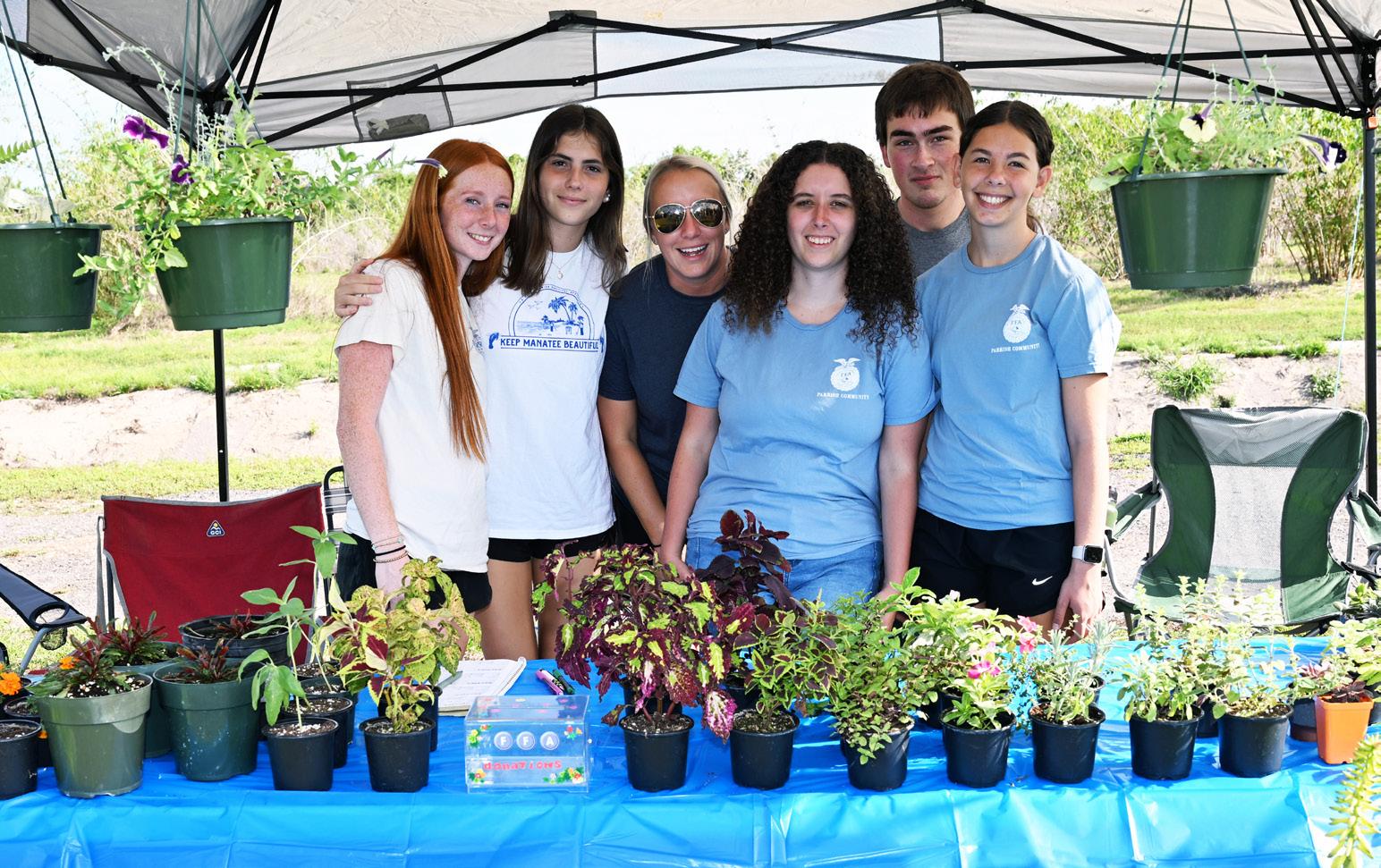
Students from the Parrish Community FFA kicked off their spring break by selling some of their greenhouse plants at the market. "It was great hanging out, getting to know the community, and promoting agriculture!" one of them said. "Thank you to Manatee County for hosting this event and allowing us to have a booth."
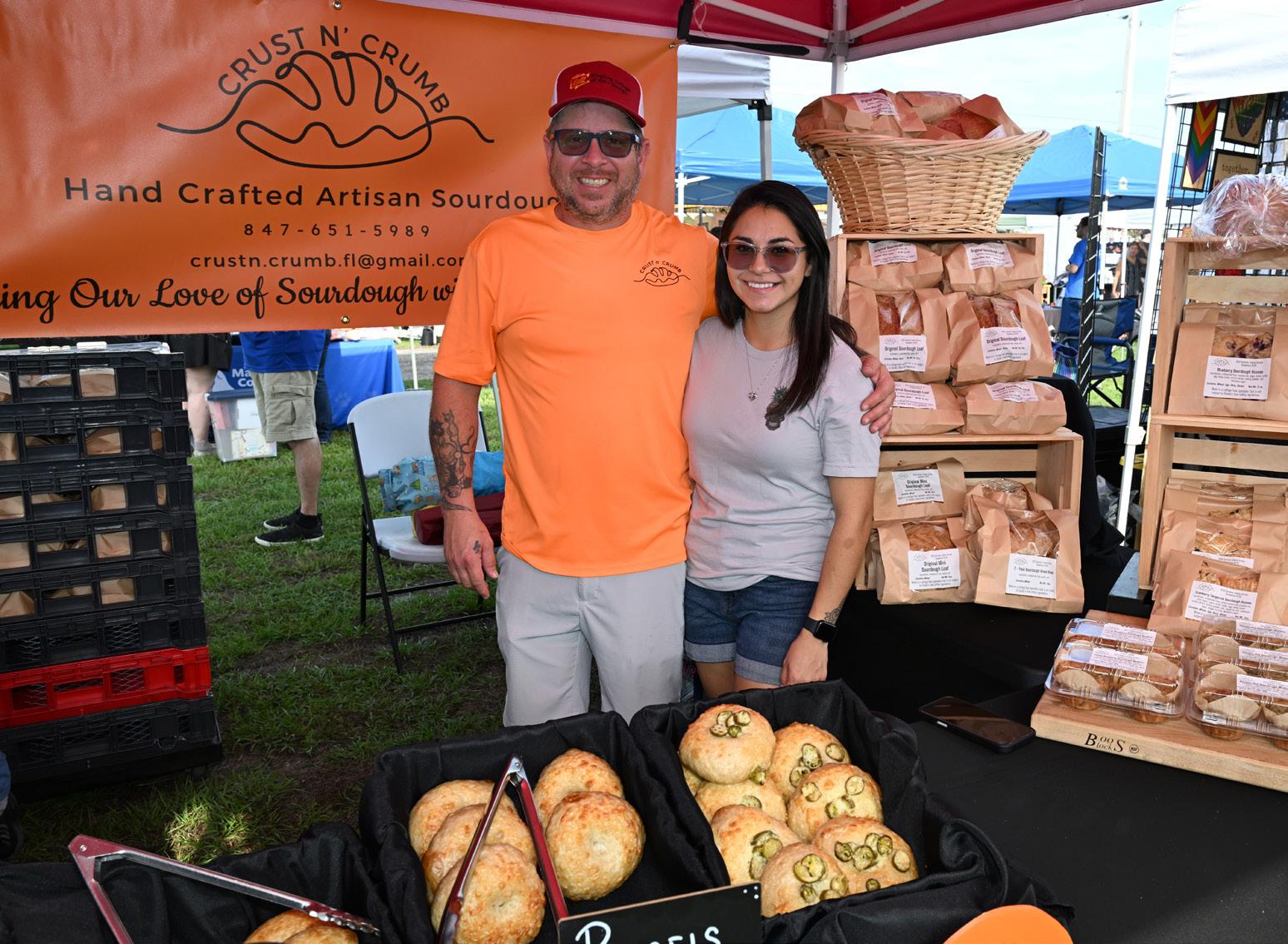
Crust N' Crumb vendors Adam and Yahaira Shimer said, "Being at markets is the heart of Crust N' Crumb. It's where flour turns into friendships, where the smell of fresh bread meets morning laughter, and where every loaf we bake finds its way into the hands of our community. The markets aren't just where we sell—they're where we belong."
Beyond the excitement of opening day, the market also reflected something deeper about what Mixon Farms has meant to the community over the years. John Taylor, owner of Veranda View, tells how Mixon Farms holds a special place for his family.
"Mixon has been a staple of the Samoset and Elwood Park community for decades," he said, "From school tours to watching the Wallendas perform." Preserving a community site like this, he said, is about more than nostalgia or keeping a safe place to gather. "It brings the community closer together and creates space for neighbors to build trust and camaraderie."
John said the future of Mixon will bring value not only to the surrounding neighborhood, but to all of Manatee County. He sees the property as a place where people can reconnect with agriculture, learn where their food comes from, and better understand their role as stewards of the land. He also spoke about the importance of conservation and being mindful of ecological impact, water use, waste, and other everyday choices that affect Florida's way of life. "That's why my wife and I continue to invest many hours in projects like The Mixon Farms Market in Manatee County."
Casey Zempel, Communications Manager for the Government Relations Department, said the turnout at the first Mixon Farms Market showed how much the property still means to the community. "Thanks to the vision and leadership of the Manatee County Board of County Commissioners, this land has been preserved to ensure future generations have a place to
play, to learn where their food comes from, and to experience the beauty of agriculture firsthand. It also means that life's most meaningful moments, like weddings, will continue to be celebrated in a setting that's truly special."
As expected, the farm's next chapter means a great deal to the Mixon family. "This is what Dean and I prayed for," said Janet. "We were approached by several developers, and we knew we couldn't let that happen."
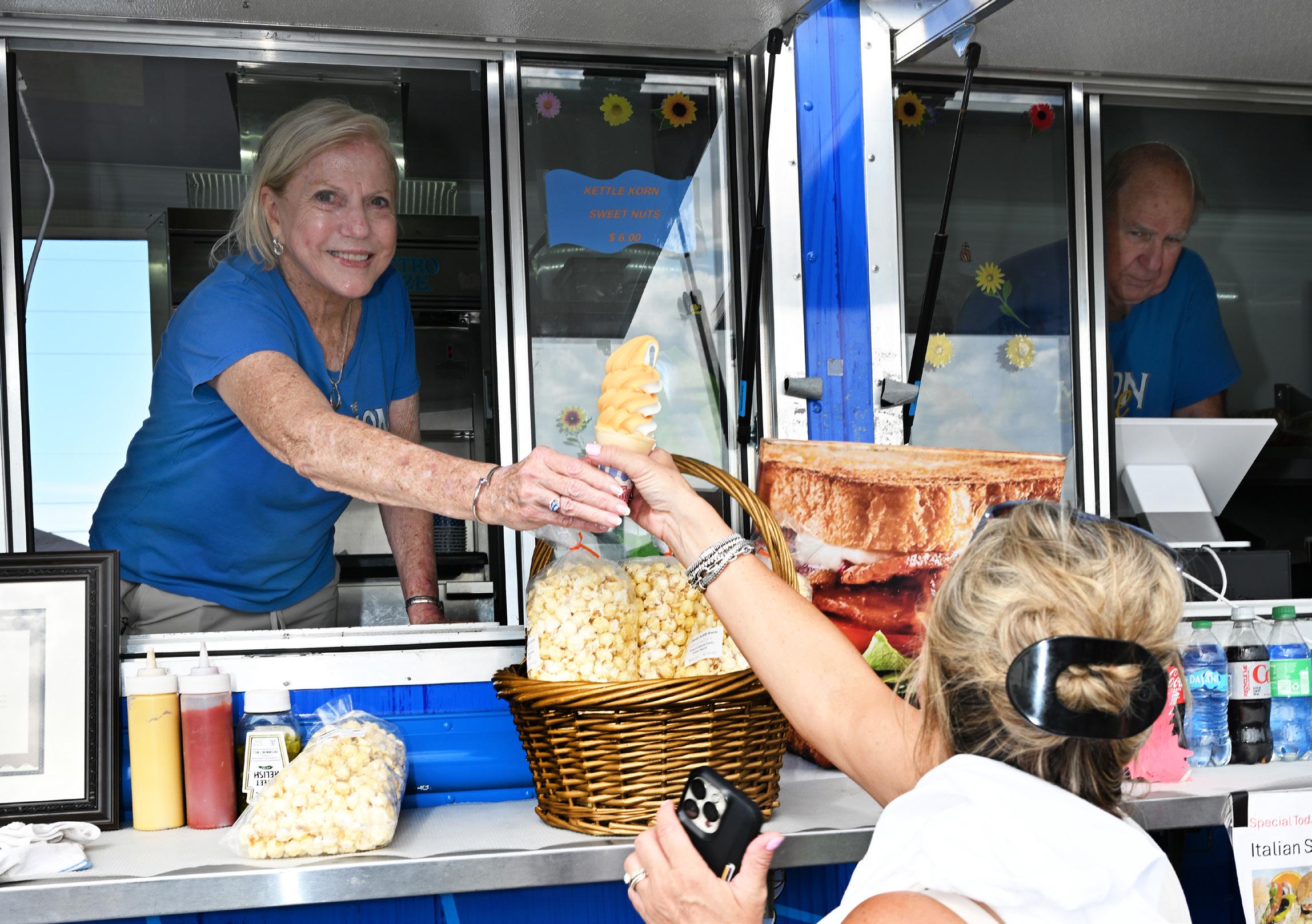
After closing the farm in 2023, Janet and Dean found another way to stay connected to the community through the Mixon Swirl food truck. Janet said it allowed them to keep in touch with longtime customers and meet people who had never visited the farm. "That's one of the reasons I wanted to do the food truck, so people could still find us," she said. Although Janet and Dean are passing the Mixon Swirl along to a nonprofit, she said she is glad it will continue on in a meaningful way.
As Mixon Farms moves forward, that sense of connection remains at the heart of the property's new life. Mark your calendars for the next Mixon Farms Market on May 24. The market will then pause for the summer and return in September, continuing through next May on the third Sunday of each month.
A new, beloved community tradition is taking root once more. NG
Highlighted Benefits:
Low student-teacher ratio
Research-based curriculum
Exciting, play-based learning
Nutritious breakfast, lunch, snack
Health development screenings
Effective support for disabilities
Family involvement activities, resources, and advocacy
A No-Screen Season for Healthier, Happier Kids RECLAIMING SUMMER:
WORDS: Christa Hardin
As summer is approaching, families in Manatee and Sarasota counties have a chance to step away from the social media habits that can take hold during the school year and make more room for real-world experiences.
How can you do this? Try to plan for a "no-screen summer" of sorts. This doesn't mean eliminating technology entirely, but you can limit recreational screen time while filling children's days with play, exploration, and human connection.
Why it matters
In his acclaimed book The Anxious Generation, social psychologist Jonathan Haidt links the sharp decline in adolescent mental health in the early 2010s to the shift from a "play-based childhood" to a "phone-based childhood." He argues that constant connectivity and screen-based entertainment interfere with children's social and neurological development. The goal isn't perfection, but rather a shift in how your kids spend unstructured time. When boredom strikes, the default response shouldn't be handing over a device. Instead, summer offers an opportunity for the independent exploration and creative play that support healthy development.
Simple ways to start
Here are a few ideas:
y Age-appropriate games during long waits at amusement parks, in doctors' offices, or on road trips, including group phone games like Charades or Out of the Loop
y Morning or evening bike rides
y Designated television time, such as an hour after dinner or on weekend mornings
y Regular library visits that children can look forward to each week
y Free or low-cost children's camps at schools or churches
y Audiobooks during car rides that give the family something to share and talk about
y Board games or puzzles that encourage face-to-face interaction
y A day trip or weekend picnic at a park
y Cooking or baking projects where children help make meals
y Nature walks or hikes focused on observation and conversation
y Backyard camping, drive-in movies in Ruskin, or stargazing nights
This journey toward fewer screens takes some planning, but the returns far exceed the costs. Why not start the summer with a trip to an art supply store? Quality markers, sketch pads, modeling clay, watercolors, and craft materials provide openended possibilities that screens cannot replicate.
As for more active ideas, swimming lessons offer both physical activity and an essential safety skill for Florida families. Our rec centers and beaches also give kids space for basketball, volleyball, and other forms of real-world interaction with peers, which Haidt identifies as crucial for social skill development.
Don't forget season passes to local parks, zoos, nature centers, or amusement parks! Places like Busch Gardens are less pricey, and after a few visits, the cost evens out. Unlimited access removes the pressure to "maximize" each trip, allowing families to visit casually and frequently. Regular outings to familiar places help children develop confidence in real-world navigation and social interaction.
One of the hardest and most valuable parts of a no-screen summer is allowing children to be bored. Without screens, they often return to forgotten toys, invent games, build forts, make art, read, or daydream. These activities, while perhaps less immediately stimulating than digital entertainment, build the attention span, creativity, and self-direction that screenbased childhood undermines. Haidt argues that children need independent exploration to grow into capable adults. A summer with less screen access gives them room to develop their own interests and learn to manage time and emotions without constant digital stimulation.
What this looks like at different ages
It's true that middle schoolers may resist more, especially if their friends stay constantly connected. Clear communication about the 'why' matters. It also goes a long way to involve them
in planning alternatives and allow occasional exceptions for staying in touch with friends. Some families may find that a phone without internet access makes the transition easier (in our family, we use Gabb).
Teenagers present the greatest challenge because so much of their social life happens online. For them, a modified approach may work better, such as limiting social media and gaming while keeping text communication, or setting device-free times instead of trying to eliminate screens entirely.
Haidt notes that families face a collective action problem. When other children have unlimited device access, limits can feel like punishment. Summer offers a chance to coordinate with friends, neighbors, or relatives on shared boundaries so children feel less social pressure and more support for real-world play.
The benefits of even one screen-free summer can extend far beyond those few months, too. Children who rediscover the pleasure of physical play, creative projects, and unstructured outdoor time often carry those habits with them. They develop confidence in their ability to entertain themselves, build stronger relationships with family and peers, and often sleep better, focus better, and regulate emotions more easily.
Parents often find the first week or two the most challenging, with children complaining of boredom or asking for devices. But after that adjustment, many families notice that children become more creative, engaged, and genuinely happier. Designated phone-checking times can also make the shift easier.
A no or low-screen summer represents one concrete stepfamilies can take to restore the play-based childhood that supports healthy development. By filling children's days with real-world experiences, human connection, and opportunities for independent exploration, you're giving them the gift of a childhood that builds resilience rather than undermining or shortcutting it, and they'll find their own lives enriched in the process. NG
ADVANCED SURGICAL CARE
Tailored To You
From minimally invasive robotic surgery to complex open procedures, we’re committed to providing quality, patient-centered care that prioritizes recovery and outcomes.
Jose Erbella
MD, FACS, DipABLM
Surgical Oncology & General Surgery
Master Surgeon 714 Manatee Avenue E, Bradenton, 34208 | 941-212-2010
Dr. Erbella specializes in early recovery, minimally invasive procedures and robotic surgery.
Nikalesh Reddy
MD, FACS
Thoracic & General Surgery
Master Surgeon 714 Manatee Avenue E, Bradenton, 34208 | 941-212-2010
Dr. Reddy specializes in minimally invasive general surgery with a special emphasis on lung cancer surgery.
Alexander Erbella MD
Surgical Oncology & General Surgery
Master Surgeon 714 Manatee Avenue E, Bradenton, 34208 | 941-212-2010
Dr. Erbella offers various surgical services with a focus on cancer, laparoscopic and robotic procedures.
Stelios Rekkas
MD, FACS, FASMBS
Bariatric & General Surgery
Master Surgeon 714 Manatee Avenue E, Bradenton, 34208 | 941-212-2010
Dr. Rekkas serves as the director of bariatric surgery at Manatee Memorial Hospital, specializing in bariatric and general surgery.
Michelle DesChamplain MD, FACS Vascular Surgery
714 Manatee Avenue E, Bradenton, 34208 | 941-212-2010
Dr. DesChamplain offers an array of services and procedures to treat complex cases of arterial and venous disease.
Stacey South MD
Gynecologic Oncology
Master Surgeon 3425 University Pkwy., Suite 102, Sarasota, FL 34243 | 941-746-7507
Dr. South specializes in gynecologic surgical oncology, offering services and procedures centered on women’s health.
Developmental Milestones: 4 to 5 Year Olds
WORDS: www.healthychildren.org
Before you know it, the somewhat calm 3-year-old becomes a dynamo of energy, drive, and more out-ofbounds behavior. At the same time, their mind is a font of imaginative ideas. The "monsters" they talk with at school, or the "dragon" who helps them across the street, are normal tall tales for 4- to 5-year-olds. All of this behavior and thinking will help your child build a secure foundation as they approach kindergarten.
Here are some other milestones you can look for.
Movement Milestones
y Stands on one foot for 10 seconds or longer
y Climbs stairs alternating feet without support
y Hops, somersaults
y Swings, climbs
y May be able to hop on one foot
Milestones in Hand and Finger Skills
y Copies triangle and other geometric patterns
y Draws person with at least three body parts
y Prints some letters
y Dresses and undresses without assistance
y Unbuttons and buttons medium-size buttons
y Uses fork and spoon
y Usually cares for own toilet needs
Language Milestones
y Recalls part of a story
y Uses four-word sentences
y Uses words that are 100% understandable by strangers
y Uses future tense
y Tells longer stories
y Says name and address
Cognitive Milestones
y Can count 10 or more objects
y Correctly names at least four colors
y Better understands the concept of time
y Knows about things used every day in the home (money, food, appliances)
Social Milestones
y Wants to please friends
y Wants to be like her friends
y More likely to agree to rules
y Dresses and undresses without much help
y Engages in well-developed imaginative play
y Brushes teeth
y Shows more independence and may even visit a next-door neighbor by self
Developmental Health Watch
Because each child develops in her own particular manner, it's impossible to predict exactly when or how your own preschooler will perfect a given skill.
The developmental milestones listed here will give you a general idea of the changes you can expect as your child gets older. Don't be alarmed if their development takes a slightly different course. Talk with your pediatrician, however, if your child displays any of the following signs of possible developmental delay for this age range.
y Shows extremely fearful or timid behavior
y Shows extremely aggressive behavior
y Is unable to separate from parents without major protest
y Is easily distracted and unable to concentrate on any single activity for more than five minutes
y Shows little interest in playing with other children
y Refuses to respond to people in general, or responds only superficially
y Rarely uses fantasy or imitation in play
y Seems unhappy or sad much of the time
y Doesn't engage in a variety of activities
y Avoids or seems aloof with other children and adults
y Doesn't express a wide range of emotions
y Has trouble eating, sleeping, or using the toilet
y Can't differentiate between fantasy and reality
y Seems unusually passive
y Cannot understand two-part commands using prepositions ("Put the cup on the table," for example, or "Get the ball under the couch.")
y Can't correctly give their first and last name
y Doesn't use plurals or past tense properly when speaking
y Doesn't talk about their daily activities and experiences
y Cannot build a tower of six to eight blocks
y Seems uncomfortable holding a crayon
y Has trouble taking off their clothing
y Cannot wash and dry their hands NG
Seeing the Difference
The Vision Foundation offers a clearer path to vision care for Manatee County kids
WORDS & PHOTOS: Wendy Dewhurst
Children with undetected vision problems often struggle academically, athletically, and personally.
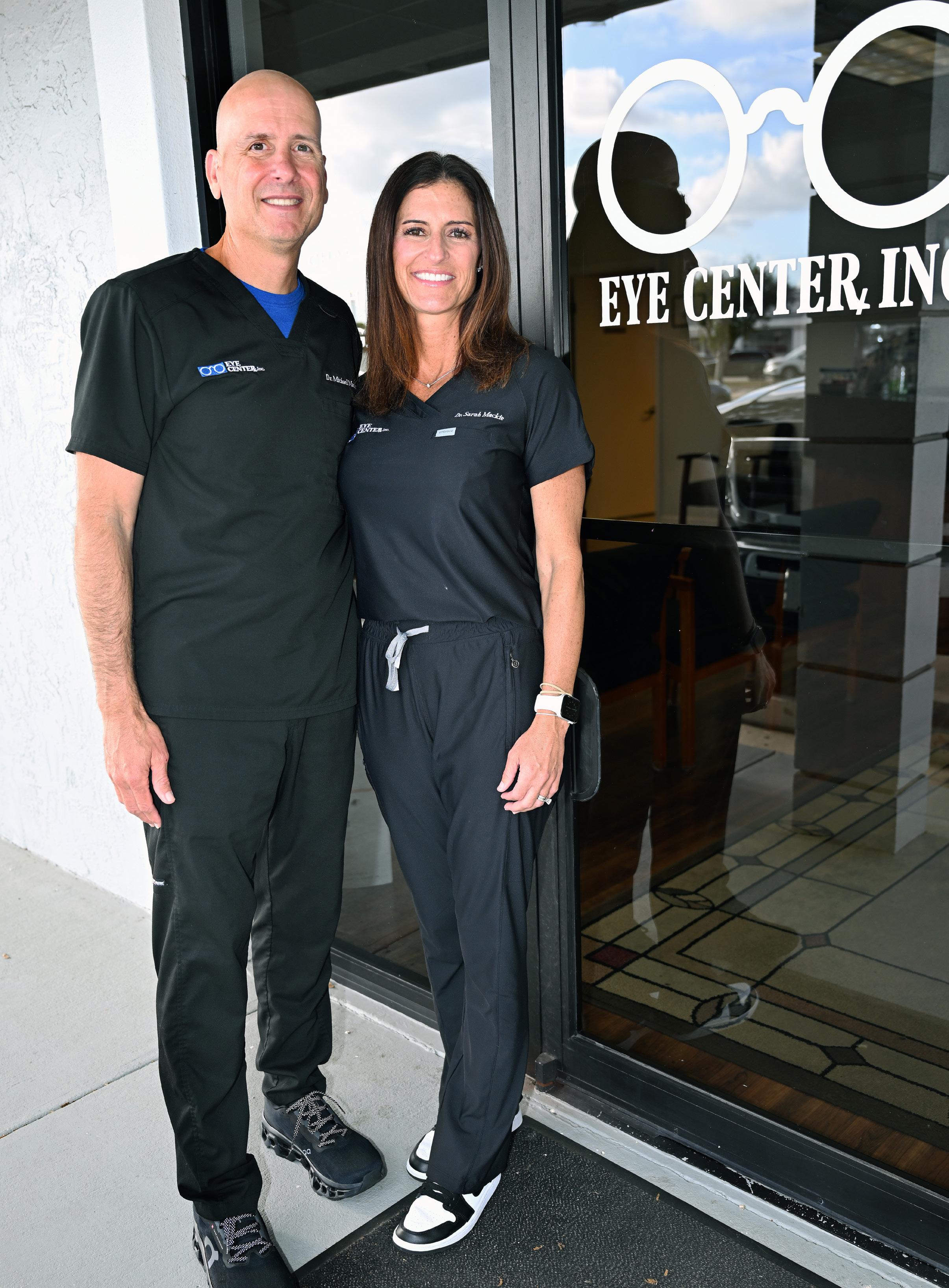
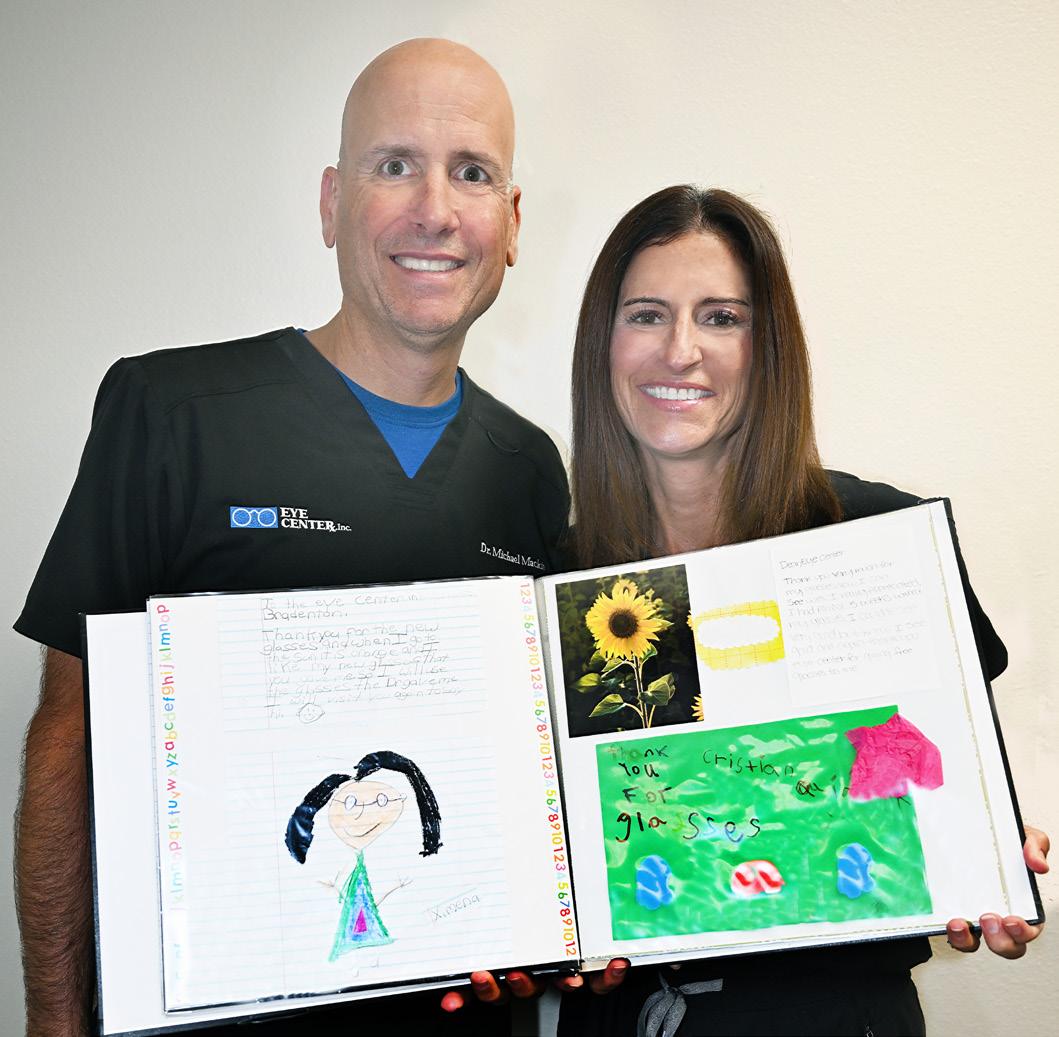
While you let that sink in, meet Dr. Michael and Sarah Mackie, with Eye Center Inc., and the founders of The Vision Foundation.
Michael is a native of Manatee County, and both his parents were educators in the Manatee School District. Both Michael and Sarah were very active in the community throughout their young professional lives; they served on a multitude of boards and chaired many fundraising events for local charitable organizations.
"After Sarah and I took ownership at the Eye Center, we were approached by two Manatee County School nurses who have a long history in the education system," Michael said. "They presented us with a scrapbook from 2010 that they had put together with photographs and thank yous from many of the kids who had received donated glasses over the years from the Eye Center. Until that point, we had taken for granted
what our donations were doing and had never really thought about the actual impact we were having on these kids' lives. Looking through that heartfelt book gave us the desire to take it to the next level. That's when we created the Eye Center Vision Foundation."
The next step felt like a natural one. They began planning a fundraising event to support the mission they cared deeply about. Sarah focused on one idea, raising students' "Eye-Qs," a nod to the connection between clear vision and learning. With help from community partners, including Gold Coast Eagle Distributing and the Hernando De Soto Historical Society, that idea grew into Beertopia, a craft beer and food festival (usually in August) that raises funds for children's eye care in Manatee County.
Working together has always come naturally for the couple, although Michael admits it was not always easy. After they assumed ownership of Eye Center Inc., they made it a priority to separate their professional life from their personal life. They worked at different physical locations and met at least once a week for lunch, not as husband and wife, but as business partners managing a company. They did not discuss personal issues during those meetings and tried, whenever possible, not to bring work issues home. The gray area between work and personal life often came through their community involvement. Before they had children, they seemed to be attending a charitable dinner almost every week, something they never saw as a chore because they enjoyed each other's company so much. Giving back to the community was something they always enjoyed doing together.
"I love being a part of the Eye Center, and I love continuing the legacy that Dr. John Marcin started," Michael said. "This place is home to me, and a part of me lives here, as it does with Sarah."
About the Vision Foundation
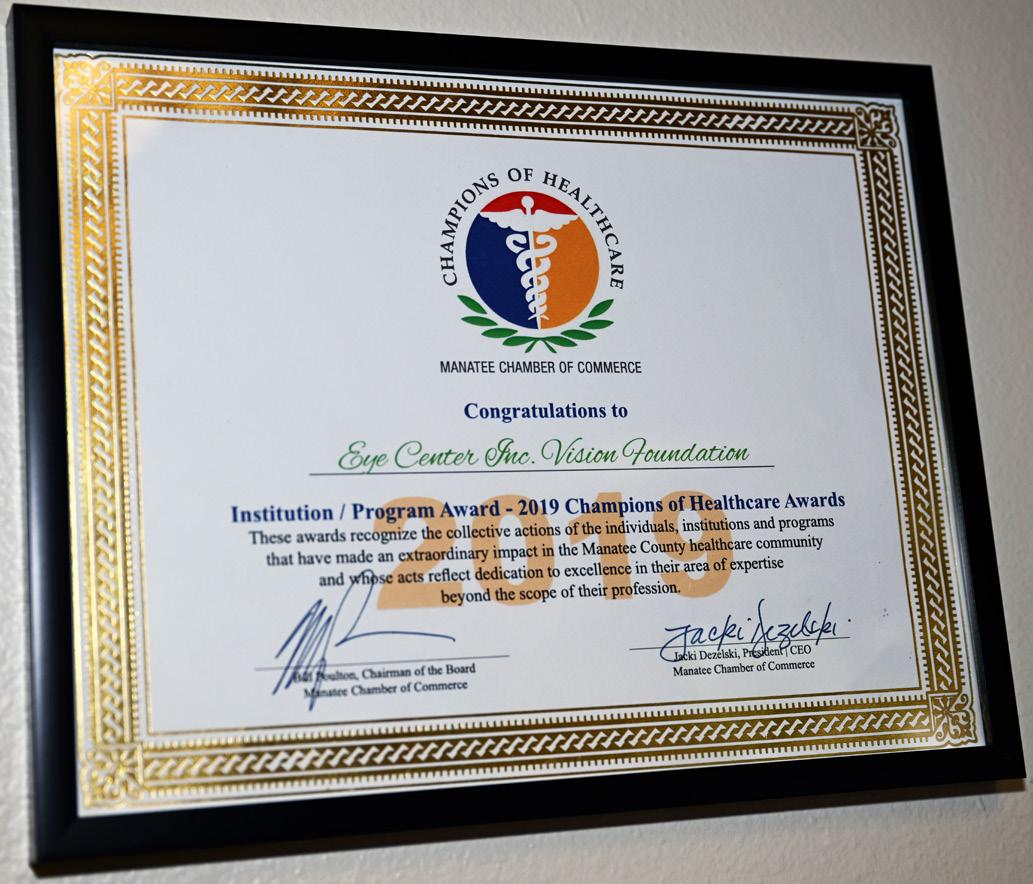
The doctors at the Eye Center have made community care a central part of their work, with a special focus on children who may not otherwise receive needed vision services. Through the Eye Center, Inc. Vision Foundation, they help provide eye care and glasses for Manatee County children in need.
Working closely with Manatee County school nurses, the foundation provides free eye exams and a complete pair of glasses to local students who need them. The foundation also supports patients at Turning Points in Bradenton, which serves people experiencing homelessness and those at risk of becoming homeless in Manatee County.
"Access to vision care is incredibly important for children," Eye Center associate Dr. Madison Easterling explains. Clear, comfortable vision is foundational for how they learn, grow, and experience the world. In early childhood, the visual system is still developing, and undetected problems can interfere with important developmental milestones. As children get older, so much of learning becomes visual, from reading and writing to using technology, that even small vision issues can have a negative impact. "The challenge is that access isn't always easy." For many families, she noted, the barriers come down to time, cost, and awareness. Parents are busy, and if a child is not actively complaining, an eye exam can fall down the priority list. She added that many parents assume school or pediatrician screenings are enough, even though those screenings can miss many common vision problems. Financial barriers also matter, especially for families without vision insurance or for children who routinely break their glasses.
"Because kids rarely recognize that their vision is abnormal, they often don't ask for help," she said. Vision plays a much bigger role in education than many people realize. Much of classroom learning is visual, so if a child is not seeing clearly or comfortably, that child is already working at a disadvantage. Madison explained that the issue does not always look like obvious blurry vision. Sometimes it shows up as eye strain, difficulty focusing, or trouble tracking words across a page. Those issues can lead to poor reading comprehension, slower learning, and frustration with schoolwork. They can also look like behavioral problems.
"Over time, that academic struggle can start to affect a child's confidence," Madison said. When reading or paying attention in class feels consistently difficult, children may begin to think they are not as capable as their peers. She said she often sees
children labeled as inattentive or struggling learners when the real issue is an underlying vision problem that has not been identified. "The encouraging part is that when these issues are diagnosed and treated, the change can be significant," she said, adding that something as simple as a pair of glasses can truly change a child's life.
Eye Center Associate Brad Laudicina recalled a case that has stayed with him over the years, about a young girl who was born extremely premature and developed retinopathy of prematurity. Despite everything she had already overcome, she later experienced severe retinal detachments in both eyes, followed by cataracts at a very young age. Her vision was rapidly declining, and without treatment, she was at real risk of losing it entirely.
"The challenge was that she had no insurance, and time was critical," Laudicina said. Through the Eye Center Vision Foundation, the team was able to cover the cost of both her retinal and cataract surgeries so she could receive care without delay. Today, that young girl has vision she otherwise may have lost. Her mother later wrote, "Without their help, I don't know what we would have done… now she has sight back." Brad said the story captures the purpose of the foundation, making sure finances are never the reason someone goes without visionsaving care.
"When a child puts on glasses and sees clearly for the first time, I watch as their expression changes," said Eye Center Associate Dr. Paige Laudicina. "It's a special moment: their eyes widen, they often smirk, and I see their realization, as faces come into focus, and details of the surrounding world sharpen. It feels deeply meaningful and very rewarding, and I'm always grateful to be a part of it."
It starts with a clearer vision, but the impact reaches much further. Through the Vision Foundation, one pair of glasses can help a child's whole world look different. NG
For more information about The Vision Foundation, visit https://www.eyecenterinc.com/vision-foundation/
IS YOUR CHILD GOOD TO GROW?
As a parent, you want to give your child the best start in life by making sure their development is on track. The Early Learning Coalition of Manatee County (ELC) aims to help with early detection of physical or learning challenges in a child’s life by offering FREE developmental screenings for children 2-months to 5- years of age.
Why Screen?
Early Intervention equals better outcomes. Screening is a quick check of a child’s development. By completing the Ages and Stages Questionnaire Developmental (ASQ-3) and Social-Emotional Developmental Screening (ASQ: SE-2), parents/caregivers can gain insight into their child’s strengths, find new milestones to celebrate and reveal any areas where a child may need support. By understanding a child’s development, parents/ caregivers can know what to look for next and determine if a child needs further assessment or support in one or more areas
What Happens After an ASQ Screening?
• Our Child Development Specialist reads and interprets the developmental screening (ASQ-3 & ASQ:SE-2) data.
• Developmental activities and a copy of the completed screenings are provided.
• For scores that indicate a child may benefit from further evaluation, our team can also facilitate referrals to local agencies at Early Steps (birth-3 years) and Child Find/FDLRS (3-5 years) with parental/caregiver consent.
Scan here to complete an (ASQ: SE-2) social-emotional ASQ Questionnaire for your child.
Warm Line
Scan here to complete an (ASQ-3) developmental ASQ Questionnaire for your child.
The Warm Line is a free resource, information and referral service for parents/guardians, centered on children with special needs and disabilities in Manatee County.
ELC of Manatee County Warm Line (941) 757-2900 ext. 2405
State of Florida Warm Line (toll-free) (866) 357-3239
ELC INSIDER
CONTENTS
44 MCYC 2026...
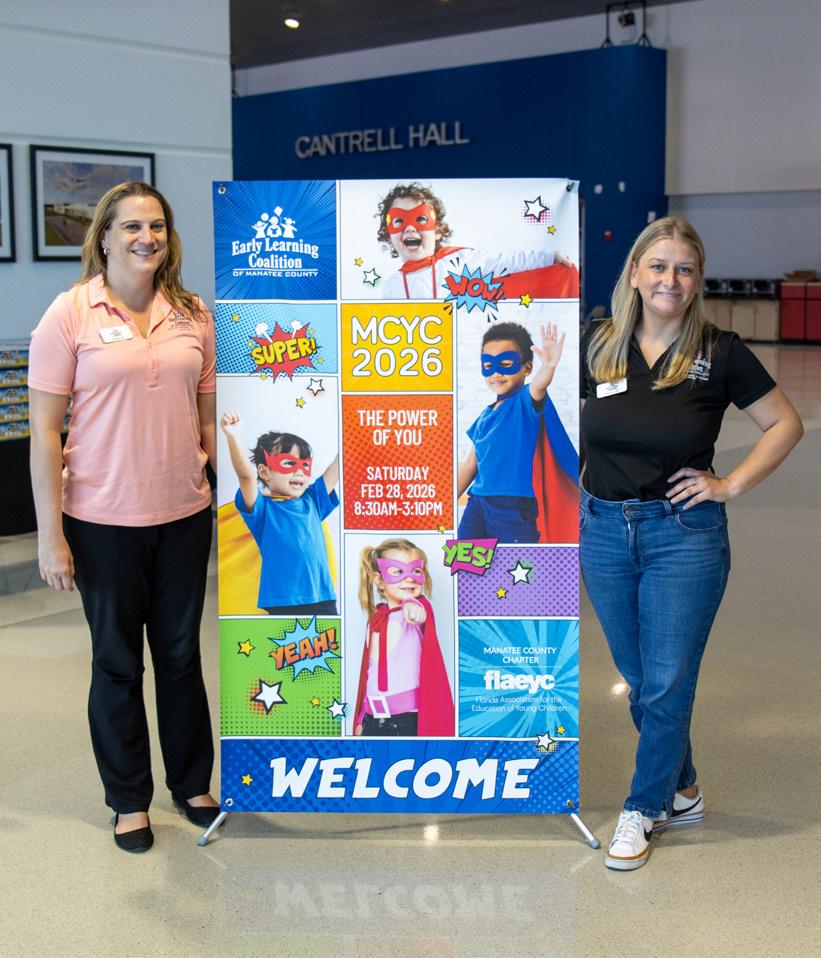
The 2026 Manatee Conference on Young Children (MCYC) was a day for those shaping the future to collaborate, recharge, and walk away with practical tools to make a difference in their classrooms.
46 250 YEARS OF AMERICA!
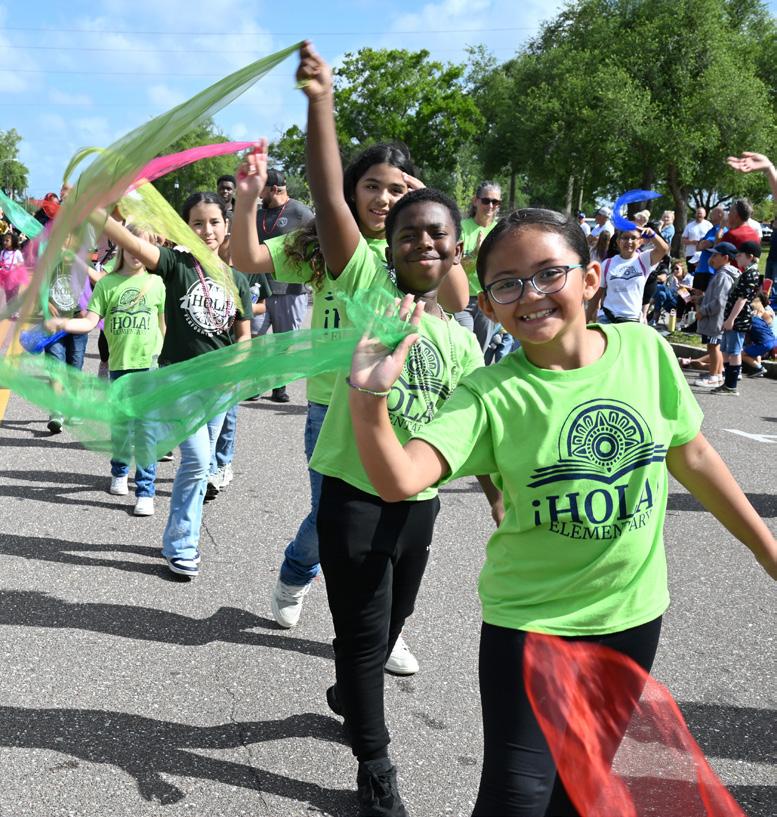
Patriotic floats, community fun, and conquistadors filled Palmetto for the 78th DeSoto Children's Parade— ending with unforgettable moments at ELC's Party in the Park!
48 CHILD CARE PROVIDER DIRECTORY
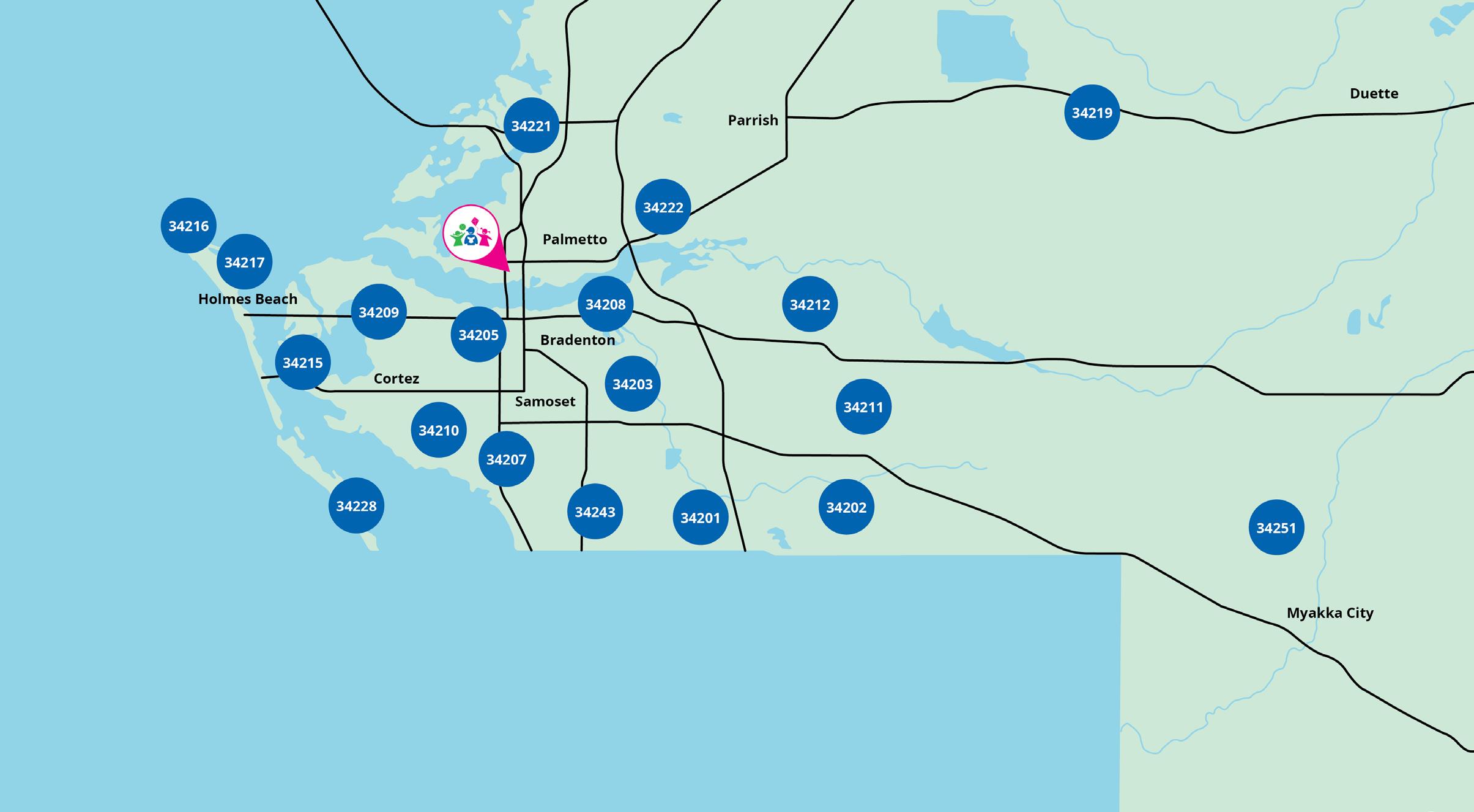
Are you l ooking for quality child care in Manatee County? Search our listing of hundreds of Voluntary Prekindergarten (VPK) and School Readiness (SR) providers by zip code.
54 NO SMALL ROLE
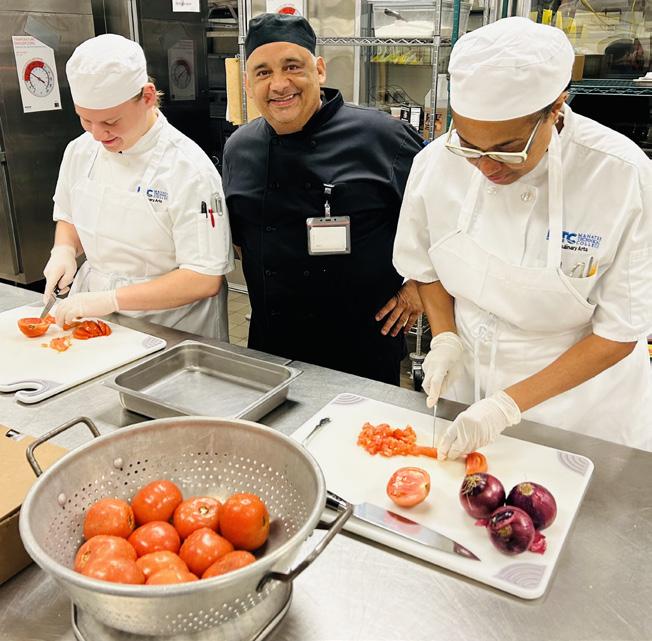
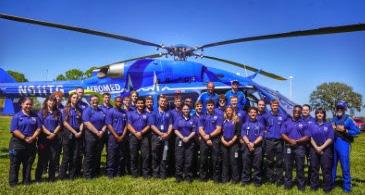
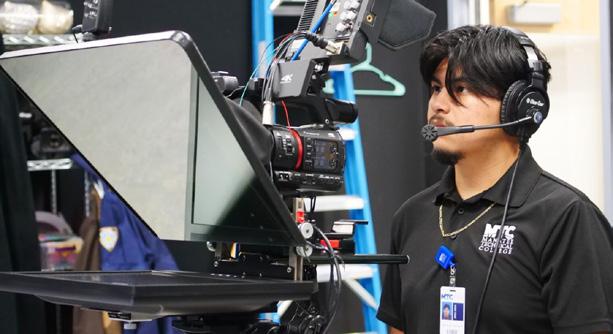
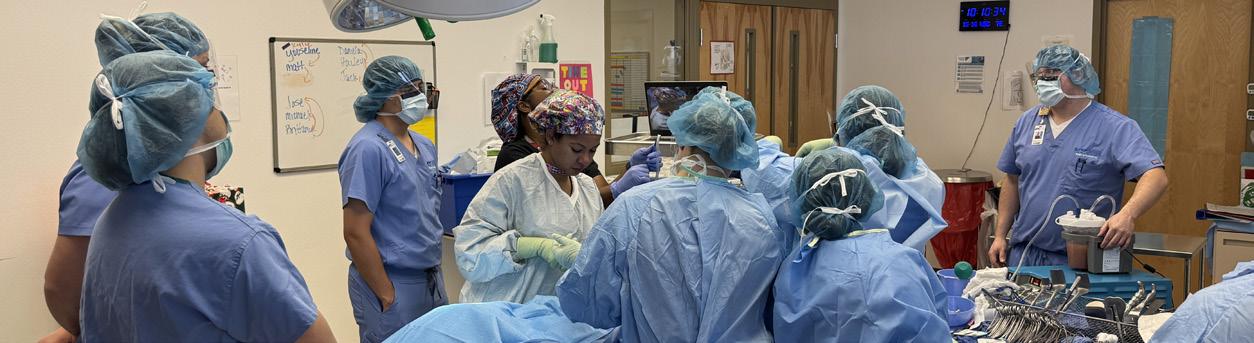
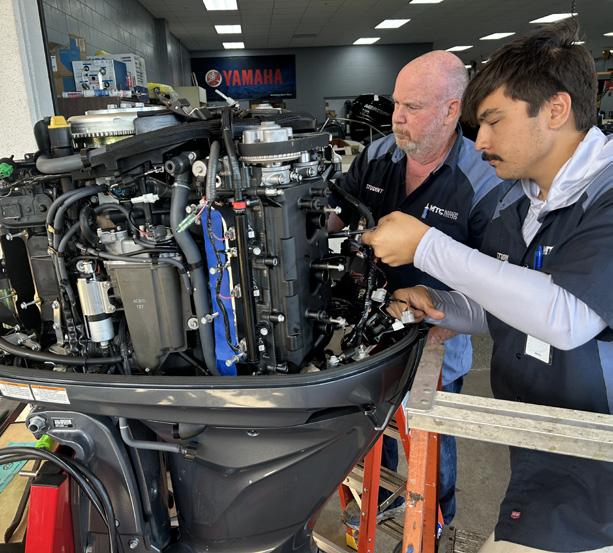
To help give every child the strongest start, the Early Learning Coalition of Manatee County (ELC) funds MTC's Pre-Apprenticeship Program to build up a skilled early learning workforce.
The Power of You MC YC 2026...
WORDS: Shannon Evans PHOTOS: Katelyn Disbro
Early childhood educators juggle a lot, so it is easy to lose sight of a few important truths. Children, while small and still developing, are still people. They bring their experiences with them into every setting, even when they don't yet have the words to name their feelings or the skills to manage them well. Educators are people, too. They carry their own stress and personal challenges into the classroom. And because young children are always watching, they often learn as much from how adults act as from what adults say.
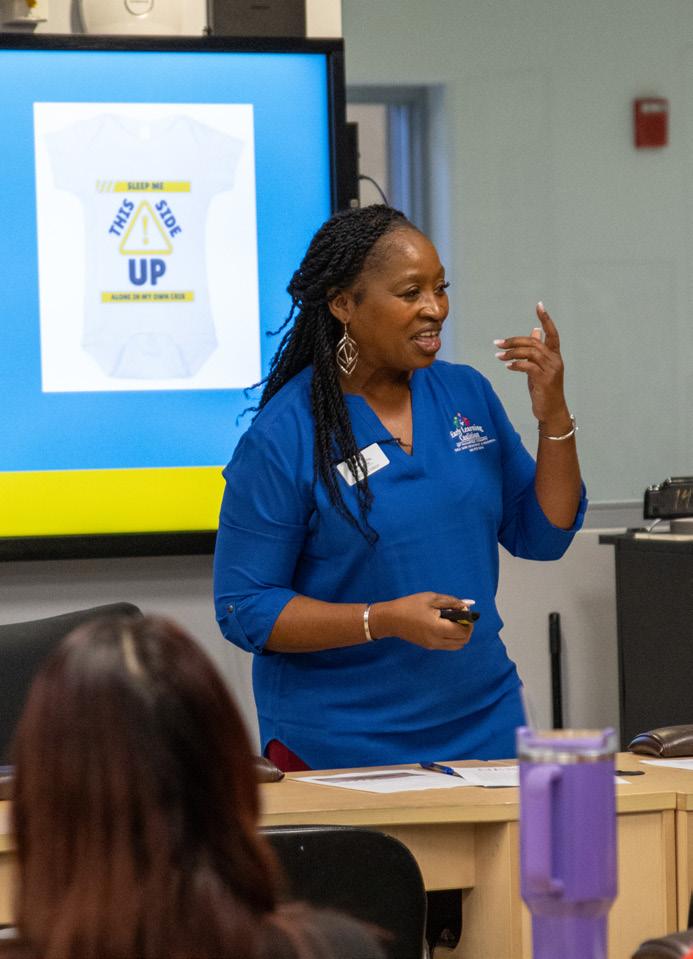
These ideas shaped this year's Manatee Conference on Young Children (MCYC), held in February at Manatee Technical College, which the Early Learning Coalition of Manatee County (ELC) hosted. Almost 250 early childhood educators gathered for a day of learning and connection centered around the theme The Power of You. Dr. Nefertiti Poyner of Devereux Advanced Behavioral Health offered a keynote presentation focused on resilience, reminding educators that children learn how to handle stress and challenges by watching the adults around them. Her main message could be summed up as, "Resilient children need resilient adults."
As communities across Florida are still recovering from hurricanes Ian, Milton, and Helene, Dr. Poyner described how those experiences can affect young children in ways that surface later through their behavior or in difficulty regulating emotions.
In early learning environments, educators often become the steady presence who helps children feel safe enough to learn and grow. Research from the Devereux Adult Resilience Initiative highlights the importance of supportive relationships and healthy self-regulation. When adults strengthen their own resilience, they create classrooms where children can build those same skills.
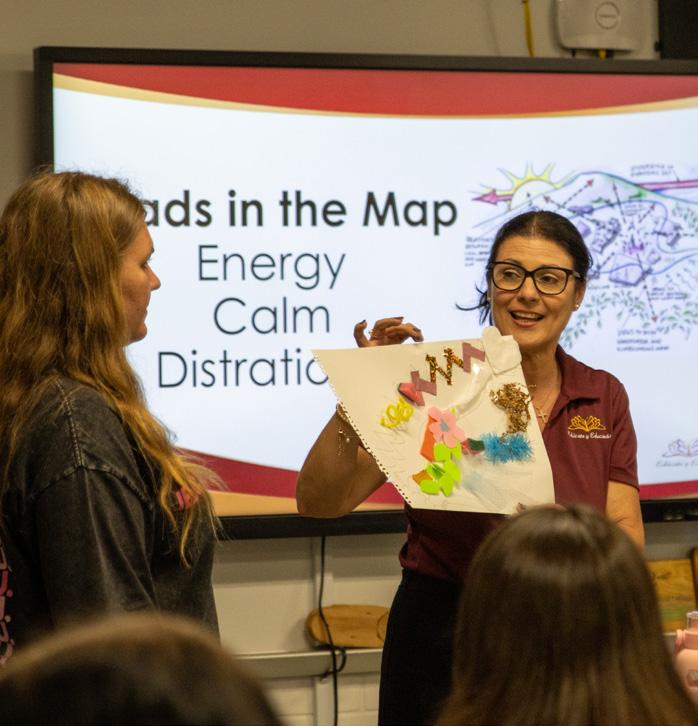
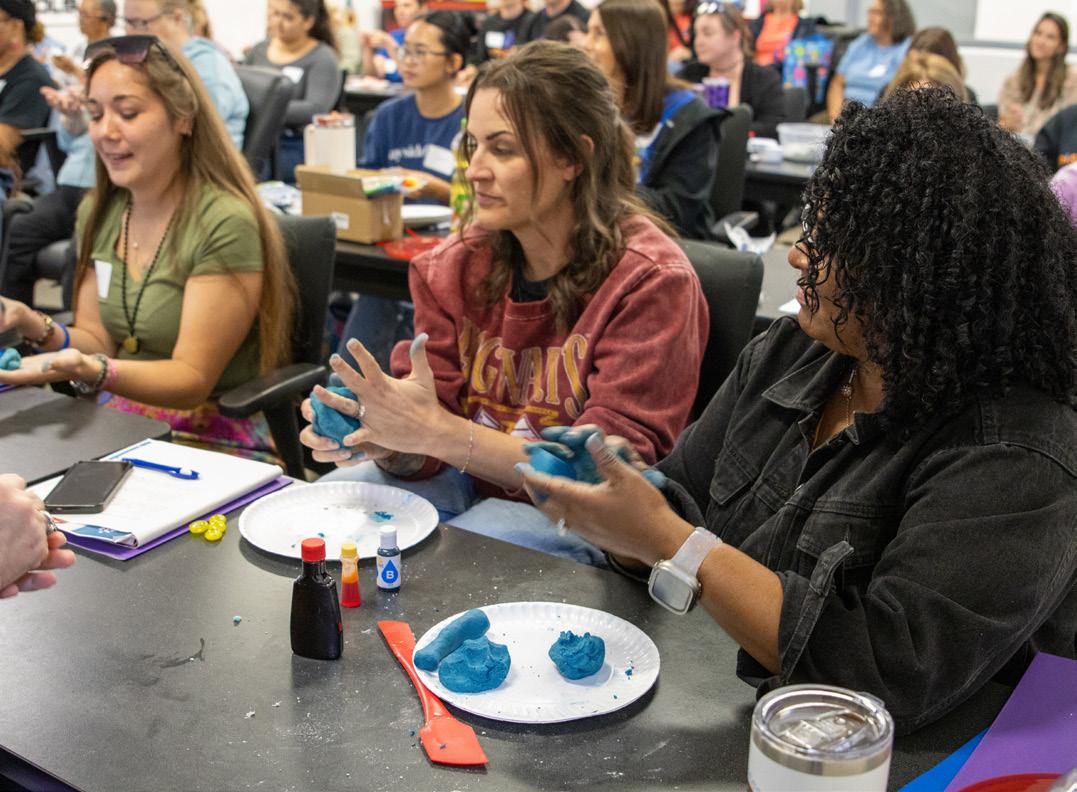
Throughout the conference day, educators attended breakout sessions on topics such as creating calming corners, behavior support, communication, and self-care. In between, they visited the conference's 20-plus vendors and connected with colleagues from across the county.
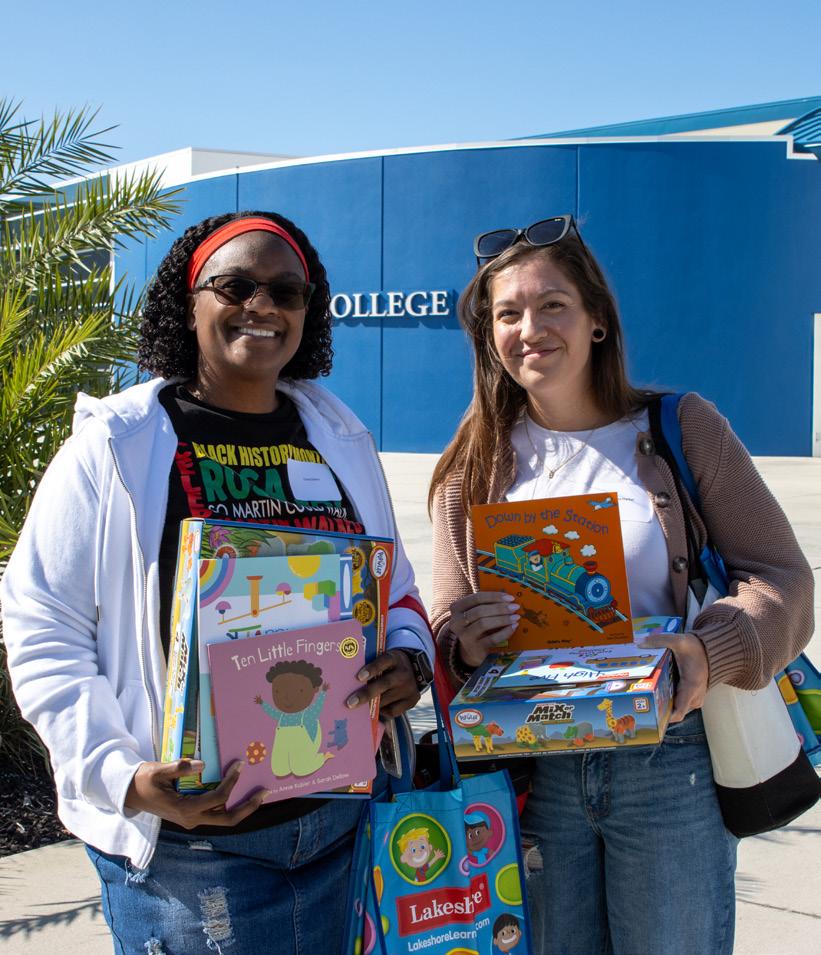
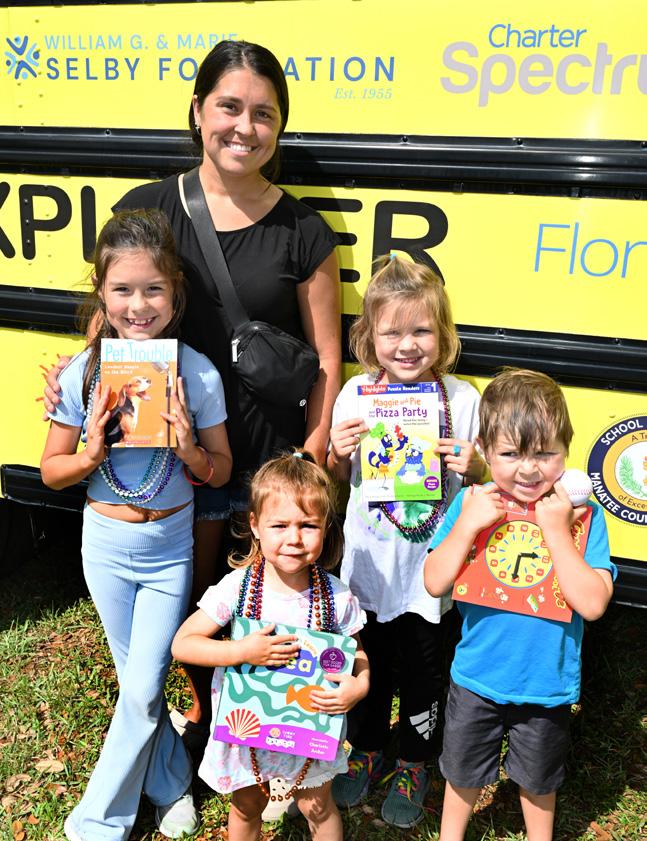
Attendees also brought donations for Nate's Honor Animal Rescue, earning raffle entries and a chance to meet two rescue puppies that quickly stole the spotlight. Many educators also stepped aboard the ELC Explorer Book Bus to pick out a free book for their classrooms, and attendees went home with a "Build Your Bounce" resilience kit from Devereux and giveaways from Lakeshore Learning.
As these educators continue the daily juggling act in their own classrooms, they'll have a few more tools in their toolkit—not just to build their own resilience but to model it for the little ones watching. NG
250 Years of America!
WORDS: Shannon Evans
PHOTOS: Wendy Dewhurst
Patriotic color swept through Palmetto as families gathered along 10th Street for one of the community's favorite traditions, the De Soto Children's Parade, now in its 78th year. This year's theme was "250 Years of America," inviting kids to look back at the nation's story while imagining what comes next.
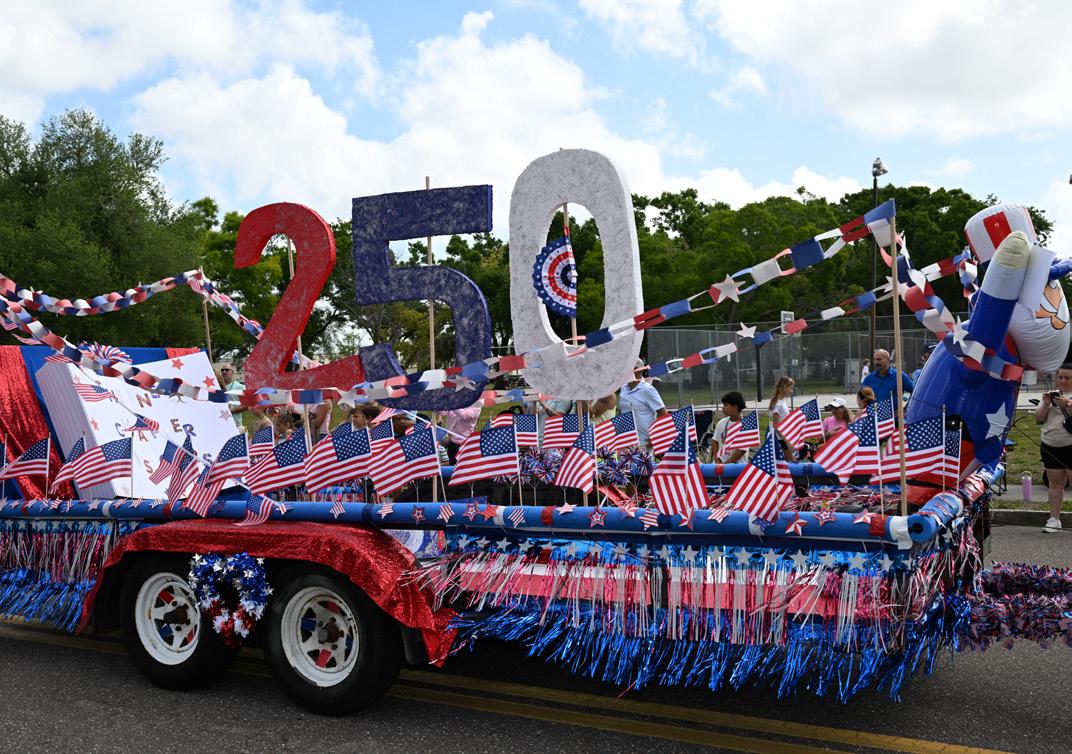
Presented by the Early Learning Coalition of Manatee County, the parade gave local schools, child care centers, and community groups a chance to celebrate America in creative ways. Floats highlighted the theme from all kinds of angles, from a tribute to Team USA and America's Olympic success to a cheerful train inspired by The Little Engine That Could, plus plenty of red, white, and blue, including a giant "250" surrounded by fluttering American flags.
Judges looked for originality as well as strong presentation and connection to the theme. They had plenty to consider! Congratulations to the following winners:
Best Use of Theme: Harvey K-8
Most Imaginative: Brave Enough Books
Most Colorful: ¡Hola! Elementary School
Most Crowd Pleasing: Harvey Shark Twirlers
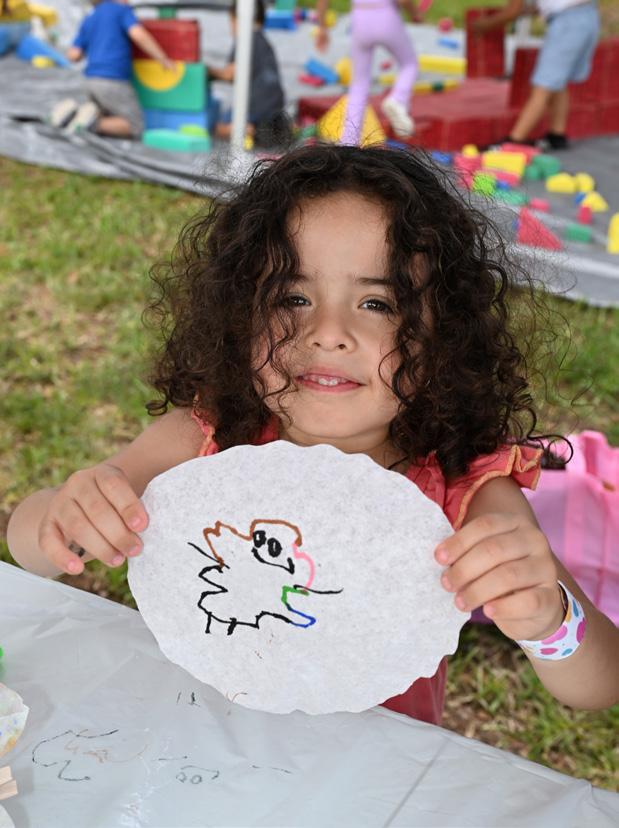
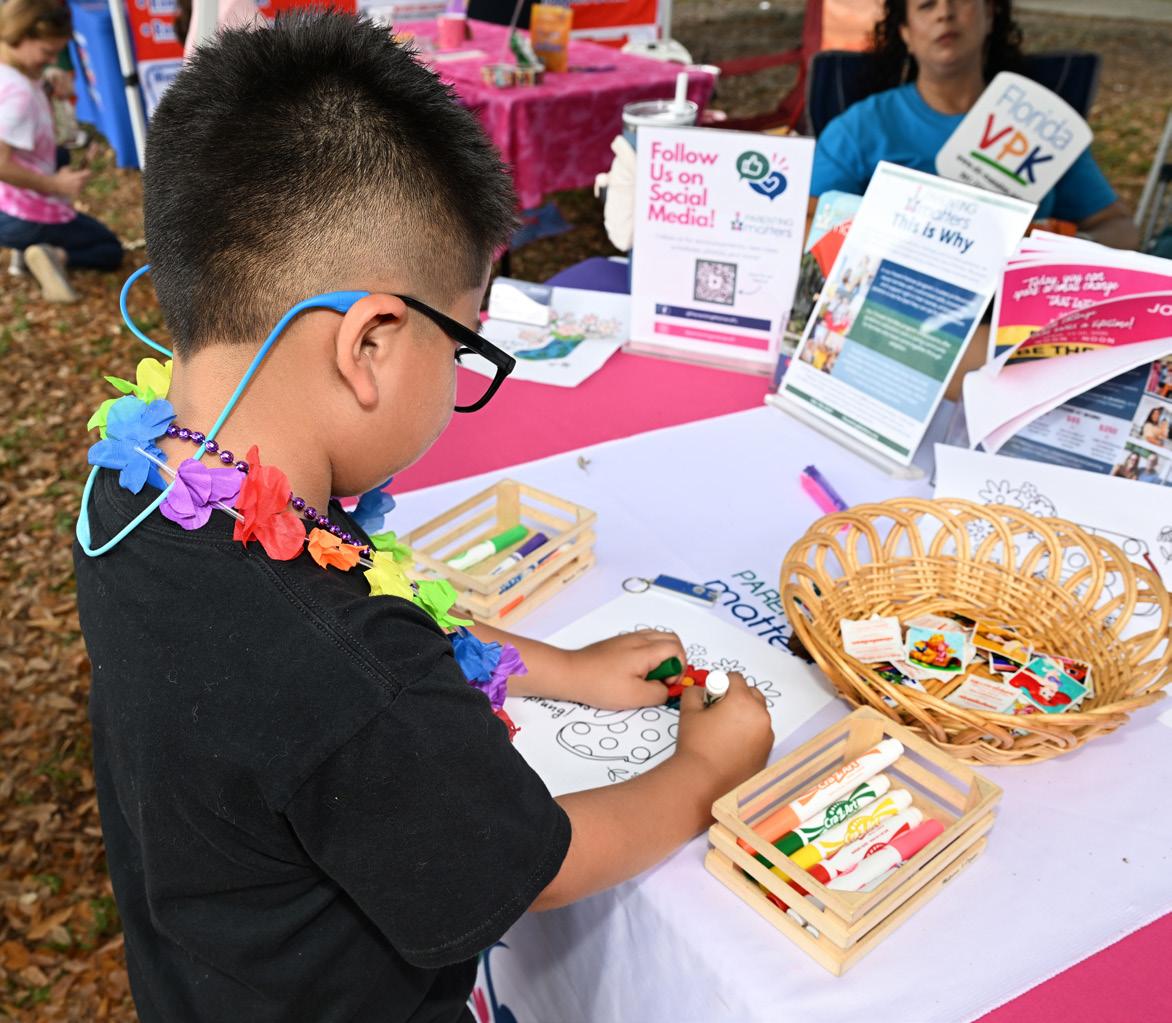
When the parade reached Sutton Park, the celebration continued with the traditional Party in the Park, where kids picked out free books from the ELC's Book Buses, made
butterfly crafts, and joined in activities built around movement and healthy habits.
Community partners joined in the fun, including The Bishop Museum of Science and Nature, Oysters Rock Hospitality, Manatee Children's Services, Manatee Crimestoppers, Parenting Matters, the Safe Children Coalition, and many more.
Thank you to all who took part! It was a joyful way to honor the nation's past alongside the kids who will help define its future. NG
CHILD CARE PROVIDER DIRECTORY
The child care providers listed in this directory are contracted with the Early Learning Coalition of Manatee County. For more information on Child Care Resource and Referral services, call (941) 757-2910 or visit our website at www.elc-manatee.org.
34202
A Readiness Learning Academy 9045 59th Avenue Circle East Bradenton, FL 34202 (941) 727-9354
All Gods Children Preschool 11107 Palmbrush Trail Lakewood Ranch, FL 34202 941-739-2776
Braden River Elementary 6125 River Club Blvd. Bradenton, FL 34202 941-753-0958
Walker Family Child Care 3213 44th Drive East Bradenton, FL 34203 941-752-6629
34205
Ballard Elementary 201 10th Street West Bradenton, FL 34205 941-753-0958
Bright Futures Daycare & Preschool 1617 26th Street West Bradenton, FL 34205 941-251-5436
Bright Minds Daycare Center 3815 26th Street West Bradenton, FL 34205 941-213-9749
First For Kids Children's Christian Center 603 11th Street West Bradenton, FL 34205 941-748-0824
La Petite Academy 4301 37th Street West Bradenton, FL 34205 941-756-5227
Our Kids West 2425 38th Avenue West Bradenton, FL 34205 941-752-1715
Prine Elementary 3801 Southern Parkway West Bradenton, FL 34205 941-753-0958
Puppy Patch Preschool 1116 35th Street West Bradenton, FL 34205 941-748-6648
Reaching For The Stars Academy 2239 14th Street West Bradenton, FL 34205 941-748-3901
Smiling Faces Academy 910 19th Street West Bradenton, FL 34205 941-756-1234
VPK Provider
SR Provider
VPK & SR Provider
For a complete list of child care providers and other specialty programs available in your area, please scan the QR code or visit https://elc-manatee.org/Choosing-aChild-Care-Provider.
Smiling Faces Junior Academy 1720 11th Street West
Bradenton, FL 34205 941-747-3925
St. Joseph School
2990 26th Street West
Bradenton, FL 34205 941-755-2611
Step Up Suncoast Rise & Shine Early
Learning - West Bradenton 2531 9th Avenue West Bradenton, FL 34205 941-750-6667
Teachable Moments Learning Center
3005 26th Street West
Bradenton, FL 34205 941-900-1022
Toad Hall Children's Center
4004 8th Avenue Drive West
Bradenton, FL 34205 941-746-3951
Toddler's Inn Child Care Center 1017 5th Street West
Bradenton, FL 34205 941-281-2523
Tree of Life Preschool
2200 26th Street West
Bradenton, FL 34205 941-747-1756
Trinity Children's Center
3200 Manatee Avenue West
Bradenton, FL 34205 941-748-8608
Victoria Morgan
Family Day Care Home
2809 8th Street Court West
Bradenton, FL 34205 941-251-6431
34207
A Child's Galaxy Preschool
4417 20th Street West
Bradenton, FL 34207 941-755-6302
Bayshore Elementary 6120 26th Street West
Bradenton, FL 34207 941-753-0958
Children's Nest of Manatee
6228 26th Street West
Bradenton, FL 34207 941-807-1605
D.C.'S Childcare Center
5035 26th Street West
Bradenton, FL 34207 941-746-6090
DeSoto Boys & Girls Club of Manatee County 5236 30th Street West Bradenton, FL 34207 941-758-3828
Happy Go Lucky 1606 55th Avenue West Bradenton, FL 34207 941-752-4608
Kid's Club Child Development & Educational Center of Bradenton 5105 26th Street West Bradenton, FL 34207 941-900-2812
Learning With Love
2712 47th Avenue West
Bradenton, FL 34207 941-751-4989
Learning! Kidz Zone 2211 53rd Avenue West
Bradenton, FL 34207 941-254-7859
Loving Hands Daycare 1204 60th Avenue West
Bradenton, FL 34207 941-755-6306
CHILD CARE PROVIDER DIRECTORY
Next Generation Academics
4635 26th Street West
Bradenton, FL 34207
941-345-4040
34208
A Growing Start Childcare Center
2611 9th Street East
Bradenton, FL 34208
941-580-2789
Bashaw Elementary 3515 57th Street East
Bradenton, FL 34208 941-753-0958
Countryside Academy for Children 5807 18th Avenue East Bradenton, FL 34208 941-747-3044
DC's Childcare Center 708 32nd Avenue East Bradenton, FL 34208 941-345-0453
Grandma's Babysitting Center 1728 26th Avenue East Bradenton, FL 34208 941-580-4804
House of JBaby's Preschool 1300 Manatee Avenue East Bradenton, FL 34208 941-896-7415
Johnson K-8 School of International Studies
2121 26th Avenue East Bradenton, FL 34208 941-753-0958
Kids Castle Learning Center 202 3rd Avenue East Bradenton, FL 34208 941-201-6799
Step Up Suncoast Rise & Shine Early Learning - Parkland 6432 Parkland Drive Sarasota, FL 34243 941-750-6667
34251
Myakka Early Learning Center 37190 Singletary Road Myakka City, FL 34251 941-322-2605
Myakka Elementary 37205 Manatee Avenue Myakka City, FL 34251 941-753-0958
ELC Board Member Spotlight: Elida Mujic
The Early Learning Coalition (ELC) carries out its mission with expert input from its board of directors. In this series, we'll feature each board member, highlighting their passion for early learning and the positive impact they're making in the community.
NG: How long have you been on the ELC Board, and what inspired you to get involved?
EM: I joined the ELC Board three years ago because, in my work with the Department of Children and Families, I see the long-term challenges families face when they lack a strong foundation. I wanted to build a system that ensures children are school-ready and supported from the beginning. I see this work as breaking cycles before they start and helping every child in our community begin with a fair chance.
NG: What's your career or background?
EM: My career is rooted in gratitude and community service. In 1999, I immigrated to the U.S. as a refugee from Bosnia and Herzegovina. My first point of contact here was the Department of Children and Families through its Resettlement Program. The support they provided to my seven-month-old son and me was life-changing. For the first time, we felt safe and free.
That experience shaped my path. I chose to dedicate my career to giving back and have now served the State of Florida for over 20 years. I began in the Office of Economic Self-Sufficiency, specializing in public assistance determination, before moving into community engagement as a liaison in Hillsborough County. Since moving to the Manasota area in 2013, I have served as a Client Relations Specialist and now as the Circuit Community Development Administrator. I hold a bachelor's degree in international business from St. Petersburg College and a degree in Natural Science from Serbia.
NG: What's your favorite thing about being on the board?
EM: I value the chance to work at the top of the upstream model. Throughout my career in child welfare and human services, I have often worked with families during times of crisis. Serving on the ELC board allows me to focus on prevention by helping ensure every child has a good foundation before challenges grow into crises. It's rewarding to shift the focus from intervention to empowerment.
I am also a strong believer in interagency collaboration, and the ELC board puts that into action. Education, government, and private business come together to solve local problems. We look beyond classrooms to support families and strengthen the local economy. Being part of a team that can improve communitywide stability keeps me motivated.
NG: How do you view the importance of early education in shaping a child's future?
EM: It's the most critical period for setting a child's developmental path, laying the groundwork for future learning, social interaction, and emotional resilience. In my experience with human services and child welfare, high-quality early education can be a powerful intervention.
NG: What activities or hobbies bring you the most joy?
EM: Those centered on connection and the outdoors. Spending time with family and volunteering in the community remind me of the purpose behind my career. These moments provide a meaningful reset. Having come to this country seeking safety, I find peace in being with loved ones in a community I have helped build. Connecting with people in informal settings keeps my perspective fresh and strengthens my empathy. I also enjoy learning and exploration, including travel, nature walks, and staying active.
WORDS: Shannon Evans
PHOTOS: Katelyn Disbro
No Small Role
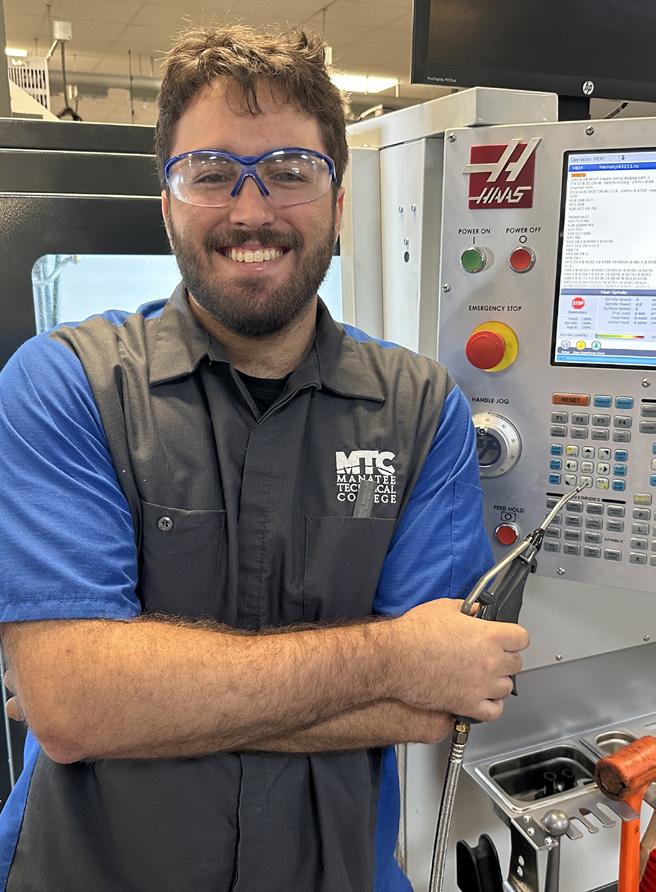
Katie Miller turned her love of working with children into a career through MTC's Early Childhood Education Pre-Apprenticeship Program
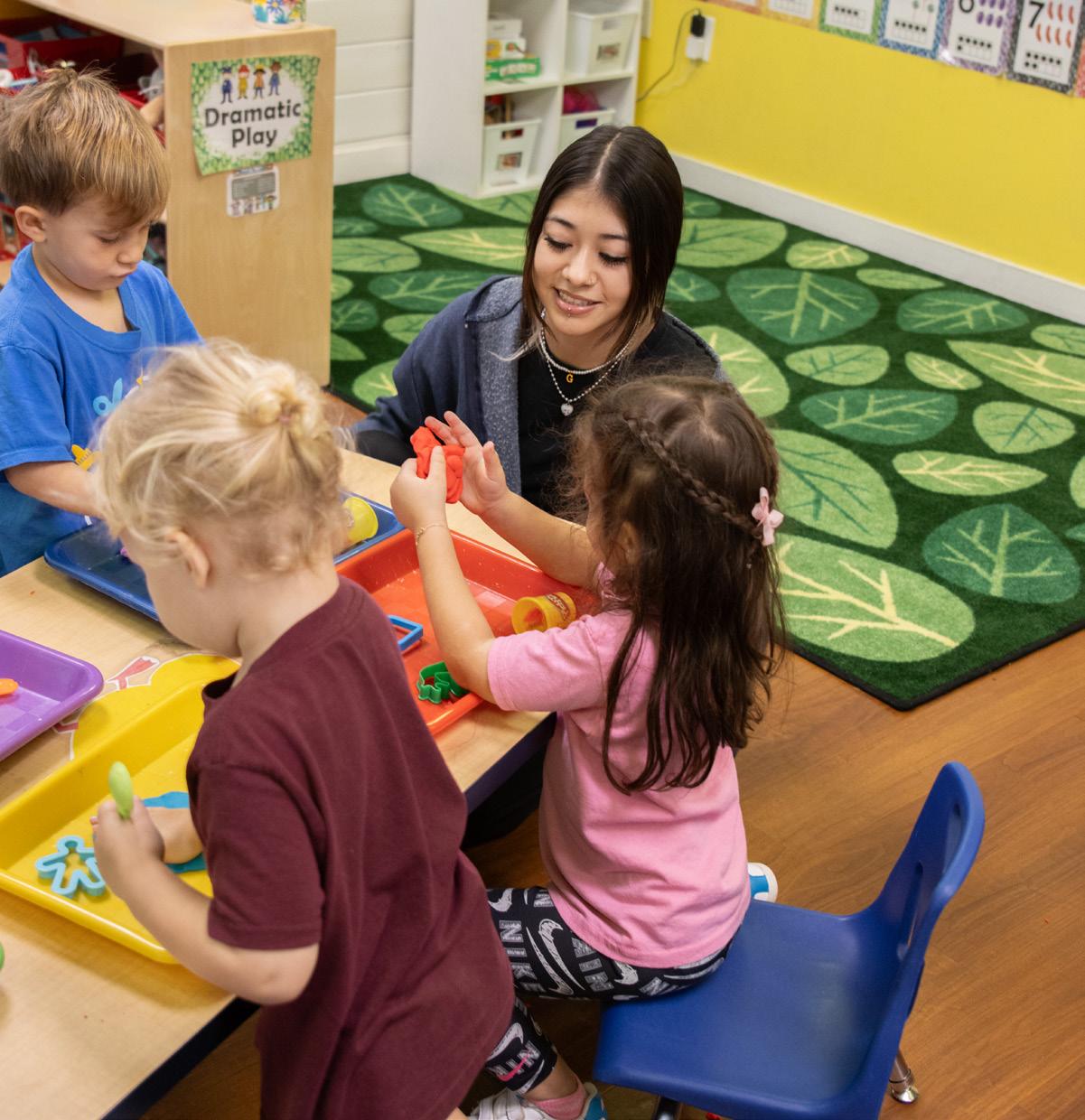
Taking care of young children is serious work, even if it mostly looks like (messy) play. With kids around, there's often playdough on the floor, paint spattered across the table, and after snack time, crumbs everywhere. But somewhere in the middle of all that noise and motion, children are learning. And the people leading those classrooms carry a big responsibility, helping these kids build the habits and skills they need for kindergarten and that will impact them long after school is finished.
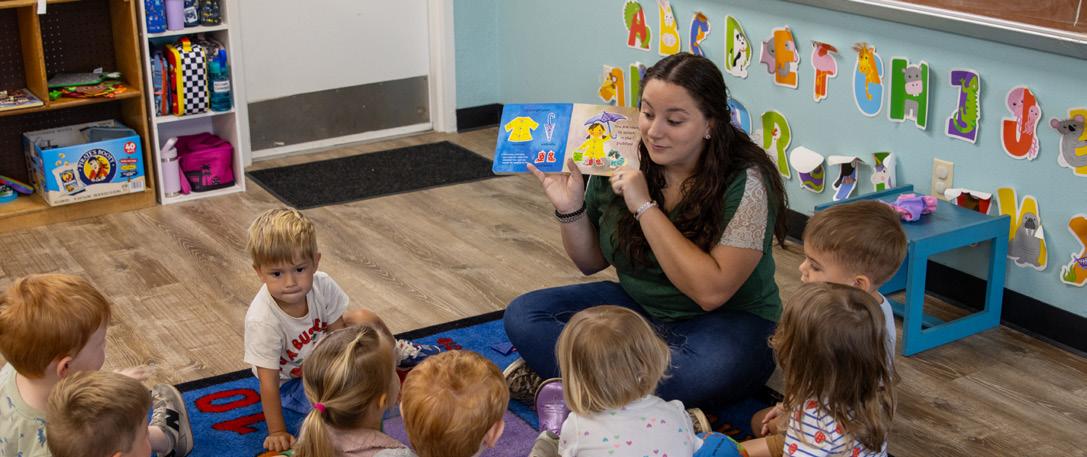
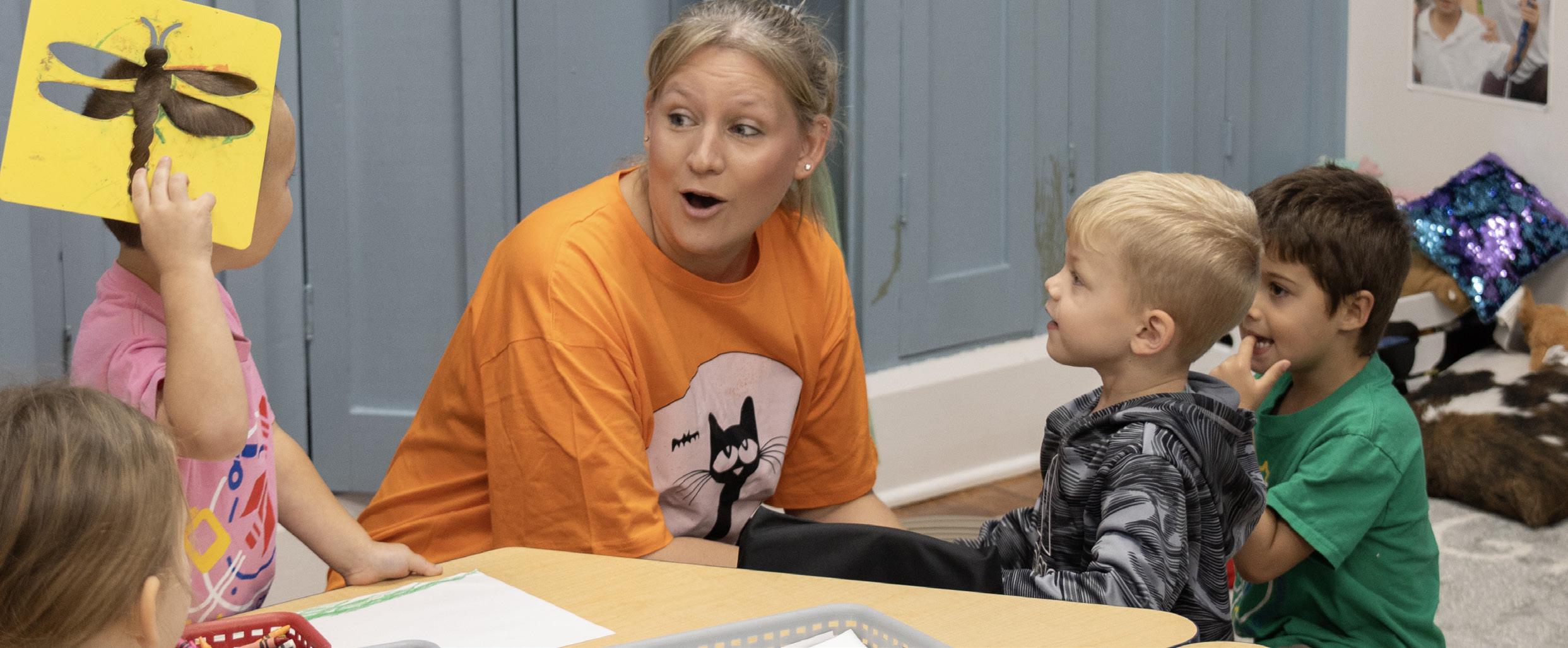
The Early Childhood Education Pre-Apprenticeship Program at Manatee Technical College helps build that workforce of early educators locally. It's a 15-week course that preps students with both the knowledge and hands-on experience they need to succeed in child care settings.
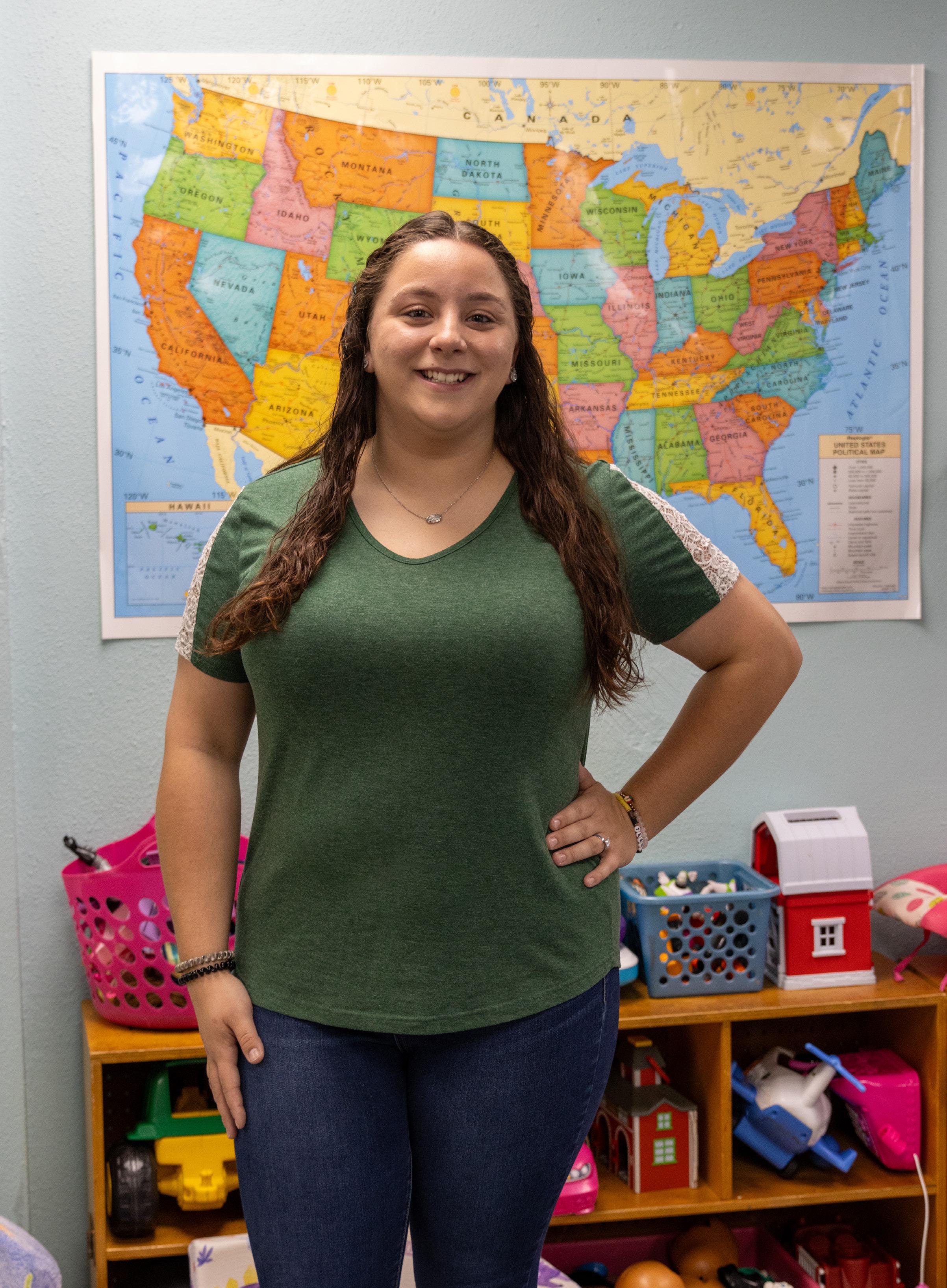
Katie Miller, now working at Trinity Children's Center in Bradenton, completed the program and turned that training into a career. Her story shows how quickly the right opportunity can lead to meaningful work.
"I have always loved being around kids," Katie says. "I have two younger brothers who I helped take care of growing up, and I babysat a lot in middle and high school. At playgroups, I was always the one helping the younger kids play and get on the playground equipment. I knew I wanted to teach or work with children in some way, and eventually I realized how important the early years are and how much they affect who children become." Such a brief window of time in a child's life, she saw, yet with lasting impact.
After graduating from Manatee High School in 2024, Katie was still figuring out the best path forward when she learned about MTC's early childhood program. Later, she connected with MTC staff at a college fair. She liked the idea of going straight into practical training without the cost and time commitment of a traditional four-year route. After touring the classroom at MTC, she decided the program was the right fit.
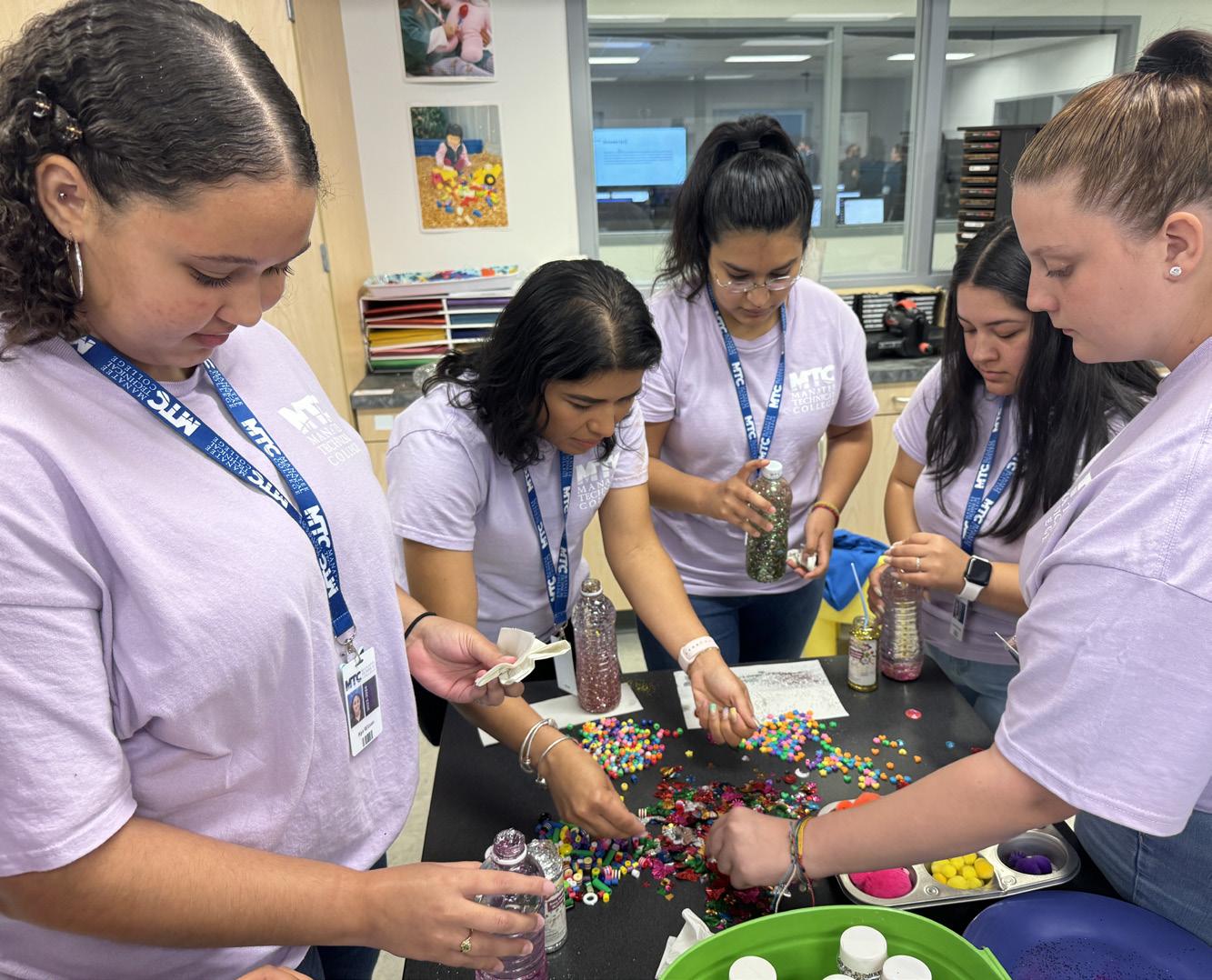
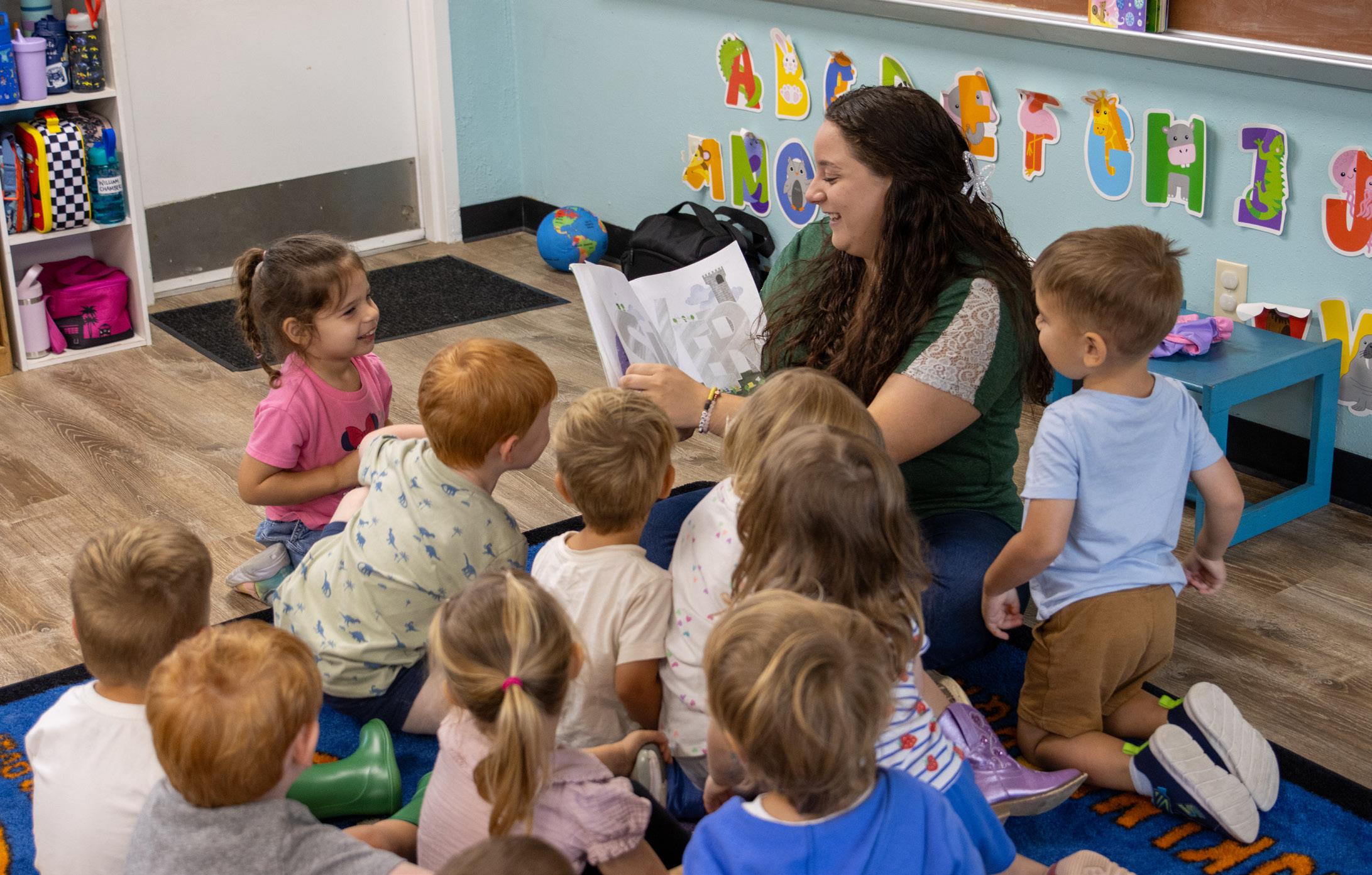
During the 15 weeks, the students learn what a career in early childhood education will entail. They study things like child development, safety, and classroom management, and they practice working (and playing) in a model classroom.
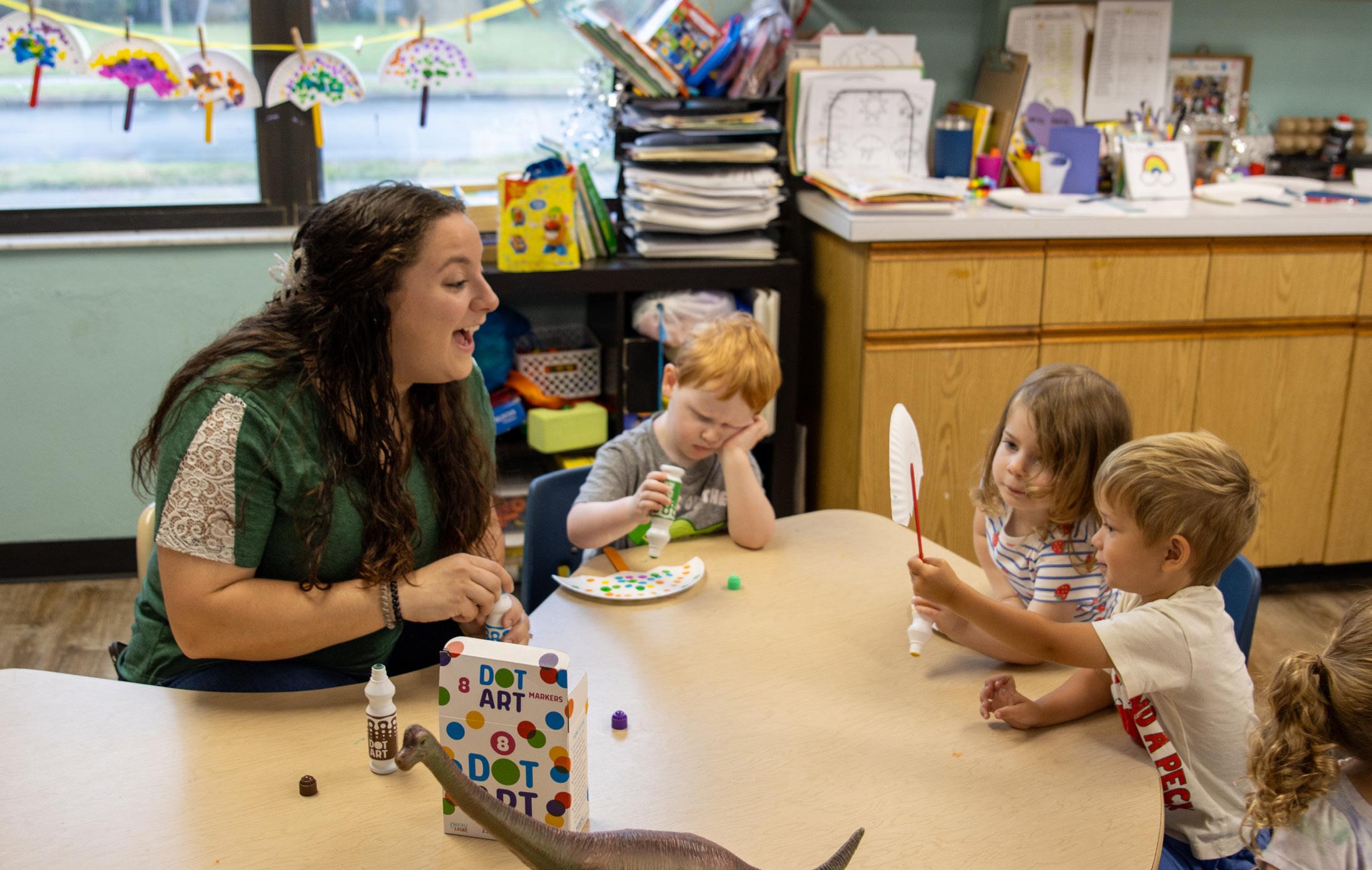
"We played with Play-Doh and made slime," Katie says, grinning. "We also created lesson plans and saw how to incorporate learning into play." That hands-on side of the program helped sharpen something she had not fully understood before: for young children, play isn't something happening separately from learning but is how they learn. The activities students practice during the program—the sensory play and repetition, the movement and routines— are exactly what help kids grow and build confidence, and, equally important, how they learn how to function in a group. Katie had always been comfortable around children, but the program helped her see more clearly what was happening beneath the surface of those everyday interactions. Besides the practical classroom training, the program also helps students take the next step into the field. Participants
complete the required DCF training; they get help with resume writing and interview practice as well as exposure to local child care settings. The Early Learning Coalition of Manatee County (ELC) helps cover the cost of the program, making it more accessible for students who want to begin working with children without taking on the expense of a longer degree path. The program can also help open the door to a job, with many students going on to work at local child care centers while continuing their training through the Level I Apprenticeship.
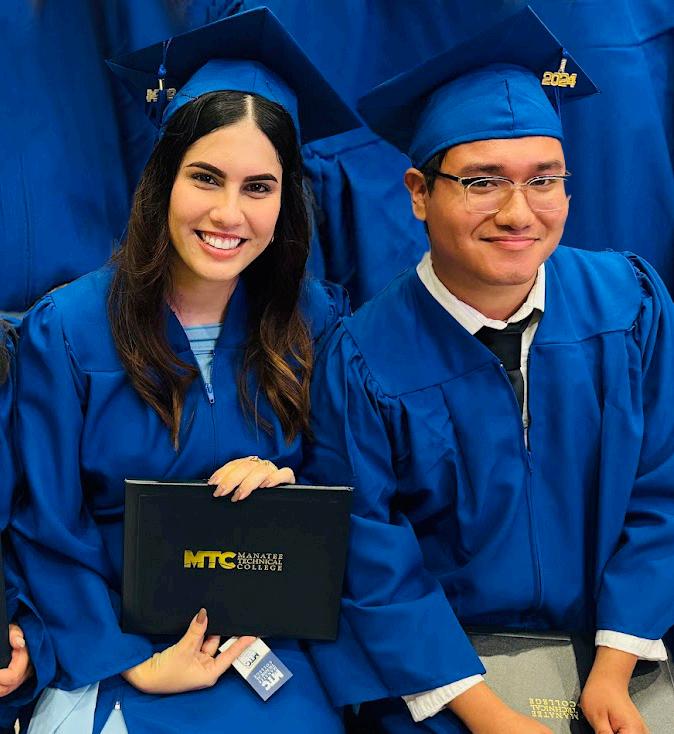
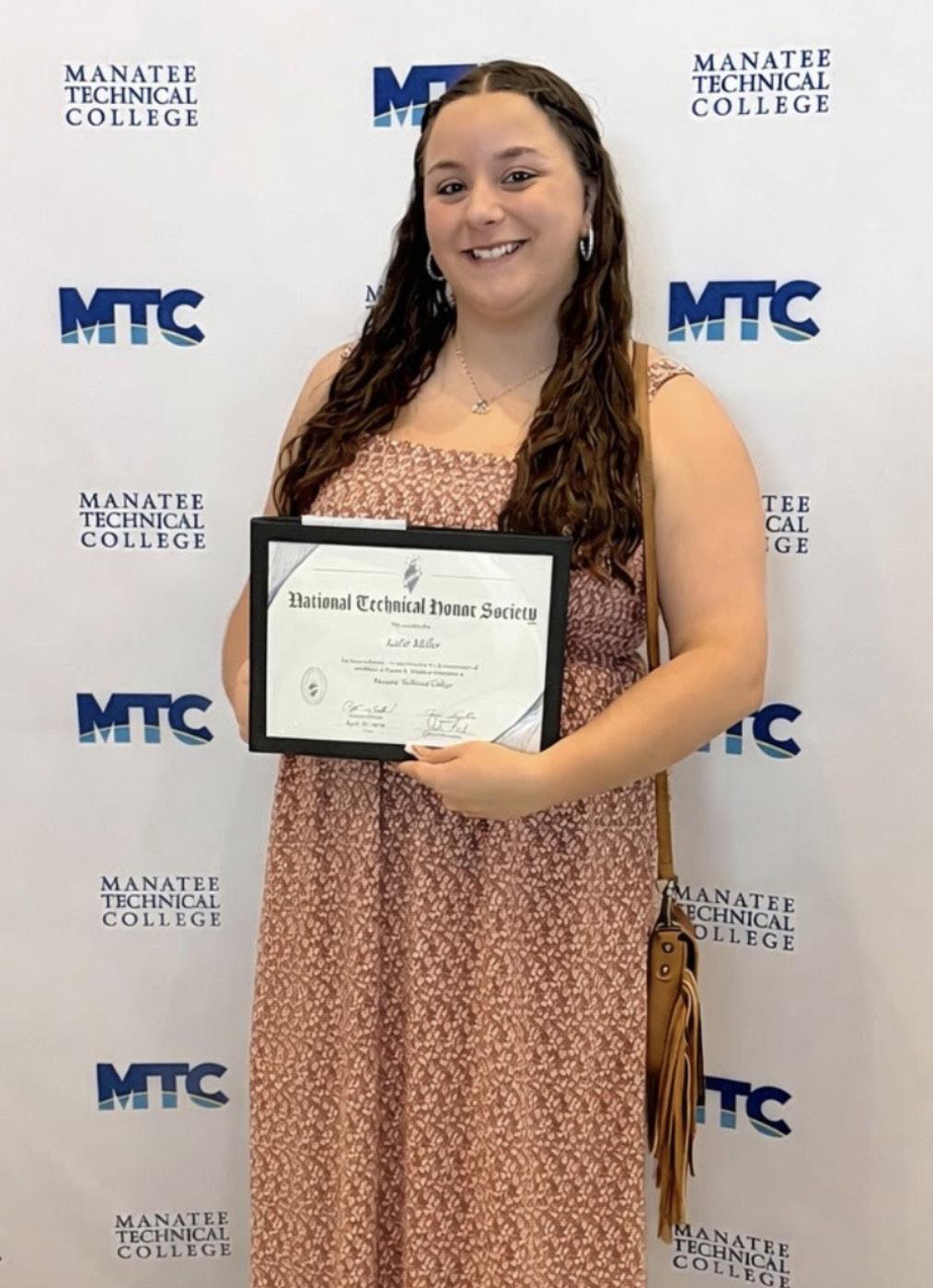
That's the path Katie is on now, working at Trinity during the day and finishing up Level III of the apprenticeship program one night a week (she's set to graduate in June). This past April, after her teacher nominated her, Katie was also inducted into the National Technical Honor Society, which honors students who excel in career and technical education. At the ceremony she received a special tassel and cord for graduation. For someone so early in her career, the recognition is even more evidence that Katie is where she's meant to be.
For now, Katie's putting her expertise to work in Trinity's age two classroom. It's an important in-between age, when they're still very young but learning quickly and beginning to take in so much of the world. They're starting to test their independence, but they still need lots of guidance, which means the adults in the room are constantly helping them practice how to communicate and follow routines, not to mention navigating big feelings. It's safe to say the kids keep Katie busy—and endlessly entertained.
"Every single day is something exciting and new," she says. "Their little personalities are just so enjoyable. Even if you're having a hard day, the kids lift you up." She explains how their end-of-day routine includes dance parties, waving scarves
and egg shakers, and playing with bubbles. Those rituals help the kids burn off energy before pickup time, but they also remind Katie why she enjoys the work. "I just like hearing the laughter," she adds.
Looking back, Katie would agree that MTC's program added many practical benefits to her journey in becoming an early childhood educator. The costs were covered. She logged training hours, studied child development, and learned safety protocols. But the sense of confidence she gained can't be understated. What once felt like a natural love for being around children became a clearer picture of the kind of teacher she wanted to be and the role she could play in children's lives. And just as important as the coursework was the support behind it. Katie points out that her instructor, AnnaMaria Mascherino-Carleton, also helped her feel ready for the classroom. "There were days when I wondered if I could really do this, but Ms. AnnaMaria encouraged me to keep going."
Having confidence in this field is crucial, because early education asks a lot of its teachers. Some people might see this career as simply supervising children, but to instruct little minds and hearts in how to listen and share, how to join in, how to calm down and try again—in other words, how to live well in the world and to live well with others—is no small role. For students just entering this field, having training and support behind them can make this huge responsibility feel a little more manageable.
"If anyone's thinking about enrolling in this program, do it. It's amazing," Katie says. "It gives you so many tools, resources, and trainings that help you step into the classroom feeling prepared. It has truly shaped the teacher I am today." NG To apply for MTC's Early Childhood Education PreApprenticeship Program, visit www.manateetech.edu or call (941) 751-7900 for more information.
✓
✓
✓
Access to vetted, state-compliant substitutes for call-offs, PTO, breaks, and ongoing coverage
Coverage of Tandem’s administrative fee, so providers are responsible only for paying each substitute’s hourly rate
Professional development on workforce and staffing practices
How It Works
Set up for free and post jobs to connect with compliant substitutes
Post a shift and set the hourly rate for substitute teachers
We pay the worker and then bill you for their wages, with no additional fees
Over 20 years ago, we worked with local environmental experts and governments to relocate Florida Scrub Jays to 850 acres designated as habitat as part of the mining process. That initial relocated population has grown, changing the regional outlook on the Florida Scrub Jay from likely going extinct to being the most significant population remaining in southwest Florida. to learn more visit www.mosaicco.com
RAINY DAY FUN
WORDS: Nemours KidsHealth
When rain or snow puts a damper on playing outside, and cabin fever is driving everyone bonkers, these quick play-and-pretend ideas will keep kids occupied and happy for hours:
Put on a Show With Homemade Puppets
We've all created puppets out of cotton socks, paper bags, markers, and a handful of buttons. But kids can get really creative with a cool grab-bag of puppetry accessories that you gather and store in a special Puppet Box. As you're cleaning the house or shopping at grocery, thrift, or dollar stores, keep an eye out for fun adornments for homemade puppets.
Collect and buy: glitter, dried beans, sequins, tinsel, pipe cleaners, string, ribbons, yarn, buttons and appliques, holiday decorations, stickers, seashells, etc. (beware of small objects, though, that could pose a choking hazard for small children).
Also, keep your Puppet Box stocked with must-have items like glue, scissors, washable markers, Popsicle sticks, and a needle and thread (when sewing, supervise young kids or do sewing projects yourself). Also, keep a few small cardboard boxes — folded and flattened for easy storage — to cut out and color for nifty background scenes and props.
Build a Fort
Get out some old sheets, blankets, or comforters and drape them over the living or dining room furniture. (Be extra careful around breakable and valuable items.) Use ribbons from your sewing kit, or hair scrunchies and hair ties to secure the bottoms of the fabrics to chairs and tables.
Have kids create a secret password that allows outsiders (e.g., Mom and Dad, siblings) into the private hideaway. Give your kid
a battery-operated camping lantern, sleeping bags, campingthemed books, and flashlights for that added outdoorsy appeal.
Create a Rainy-Day Dress-Up Chest
Keep an eye out for interesting old clothes items and accessories around the house, on discount racks, and at dollar stores or thrift shops. Stock up on scarves, funky hats (cowboy hats, sombreros, team baseball caps, construction hard hats, etc.), costume jewelry, shoes (adults' and kids'), shirts (oversized white shirts for doctors' lab coats, Hawaiian shirts for a luau, etc.), dresses, skirts, and jackets. Collect any piece of clothing or accessory that could lend itself to make-believe.
Put the items in a sturdy plastic storage bin or cardboard box. Then pull out the dress-up chest for plenty of imaginationpowered entertainment during rainy or super-snowy days.
Make Thank-You
Gifts
Kids often like to thank their caregivers, grandparents, aunts and uncles, teachers, babysitters, neighbors, and child care workers. Bake a few batches of cookies that your child can lovingly decorate and wrap with colored plastic wrap and ribbons; or create thank-you cards on regular old printer paper or construction paper. Add special glued-on adornments like family photos, ribbons, glitter, and buttons (again, beware of small objects that could pose choking hazards for babies and toddlers).
Help improve kids' spelling and letter identification skills by letting them type and print out their own messages in fancy fonts on the computer. Instead of doing crafts just to get through the day, this project will help kids feel like their time and efforts are being spent on a greater purpose — giving to someone they care about. NG
Redefining What's Possible: More Than One Way Forward
WORDS: Women's Resource Center
There is a quiet, meaningful shift happening in the lives of many women. More than in earlier generations, women today have room to make decisions about work, family, money, and the shape of their own futures.
Over the past several decades, women have made major gains in education, and those changes have opened doors. Today, women are not only keeping pace with men in higher education but in many cases moving ahead. Among adults ages
25 to 34, women are more likely than men to hold a bachelor's degree. Across the broader adult population, women also slightly outpace men in college attainment. Women now make up more than half of the college-educated labor force in the United States, reflecting a long-term change that has reshaped what is possible for many families and communities. Education is not only an academic milestone. For many women, it has become one of the clearest paths to greater independence, stronger earning
potential, and a wider sense of possibility.
That has also changed women's financial lives. More women are participating in the workforce and building financial security. Nearly half of employed women now hold a bachelor's degree or higher. Single women in the United States also own millions more homes than single men, a sign that more women are creating stability and investing in their futures on their own terms.
Still, progress has not erased every barrier. Women in the United States still earn less on average than men, and the gap is often wider for women of color. Over time, those differences can shape savings, retirement, and longterm security in lasting ways. So, while women may have more options than earlier generations, those options are not always equally supported or equally accessible.
This matters because financial stability shapes what choices are available to a person. It affects whether someone can leave an unhealthy situation, make a career change, support a family, return to school, or plan for the future with some measure of confidence. In that sense, financial well-being is closely tied to freedom.
We are also seeing change in the traditional timelines that once shaped a woman's life. Women are marrying later than they once did, and more are choosing not to marry at all. Many are having children later, and some are deciding not to have children. These changes don't signify a completely new model but suggest something broader and more meaningful: women are living with more room to decide what fits their own lives.
That may look different from one person to the next. A woman may be a mother, a leader, an artist, a caregiver, a business owner, a student, or something else entirely. She may move through many roles across a lifetime. The point is not that one path has replaced another, but that more women now have the chance to define success for themselves.
Even when policies and systems lag behind, culture is moving forward. We see it in how women talk to one another, in how daughters are raised differently than their mothers were, and in the growing understanding that there is no "right" way to be a woman. A quiet confidence is emerging, along with a recognition that fulfillment does not have to look the same for everyone.
At the Women's Resource Center, we see this every day. Women come to us not because they are lacking, but because they are building. Economic stability is often the foundation, but the path to it is layered and deeply personal. It may include career coaching, financial education, legal services, or mental health support. It may involve navigating a transition, re-entering the workforce, leaving a difficult relationship, or simply asking, "What do I want next?"
What we have learned is this: When women are supported in practical, whole-person ways, they are better able to build the lives they want. Support does not tell women who to be. It helps create the conditions that allow them to choose for themselves. And as women's lives grow more varied, there is an opportunity to meet one another with more generosity and less judgment. Not every woman will choose the same path, and she shouldn't have to. A healthier community makes room for different choices, different seasons of life, and different definitions of fulfillment.
When we show up for each other, as mothers, daughters, friends, and colleagues, we strengthen the very progress we are celebrating. Support is not just kind; it is powerful. It creates momentum.
While culture continues to evolve, systems and policies often take longer to catch up. That is why civic engagement matters. When women vote, advocate,
and help shape policy, we create a world that reflects the realities we are already living, one where women have not only the ability to pursue their own paths, but the support to do so fully.
Perhaps the most hopeful part of this moment is that many women are no
longer inheriting one narrow script for how life is supposed to look. More and more, they are writing their own. And our role is not to decide what that life should be. It is to make sure women have the support, resources, and encouragement to build it well. NG
Supported Scholar Luncheon
PHOTOS: Wendy Dewhurst
We are proud to support those who nourish because when great life lessons are learned, great lives are lived.
Nourishing communities.
On The Bookshelf
REVIEWS: Colleen Hartnett
Getting Ready: ASL (American Sign Language)
By Anthony Lewis (Birth
to 3)
Another of Anthony Lewis' Sign About series, Getting Ready features multicultural children, the word, the child performing the sign, and an explanation of how to make the sign. From "wake up" to "bed/sleep," this book includes 40 different signs. It's a great introduction to sign language for readers of any age, and its sturdy board book format also makes it child-friendly.
Bus Buddies (Finn's Fun Trucks)
By Finn Coyle, Illustrated by Srimalie Bassani (4-6)
Explore the wide variety of buses used to take visitors around the city, get commuters to and from work, and entertain fans in huge stadiums. Bus Buddies builds vocabulary while introducing different kinds of transportation. Readers are asked about a specific type of bus and given an illustration, which is then explained on the next page. A must for truck-loving boys and girls.
Ultimate Bug Rumble (Who Would Win?)
By Jerry Pallotta, Illustrated by Rob Bolster (7-9)
Ultimate Bug Rumble presents 16 fierce insects. Part of the nonfiction series Who Would Win, the book is packed with facts, realistic illustrations, and photos. Learn about each insect inside and out (literally) and then compare the insects to see which one will be the ultimate champion.
Stealing Home: The Story of Jackie Robinson
By Barry Denenberg (10-12)
This Scholastic biography tells the story of baseball superstar and American hero Jackie Robinson. From very humble beginnings to becoming the first four-letter athlete in UCLA's history and a lieutenant in the Army during World War II, readers follow Robinson's journey to becoming the first Black man to play in the all-white major leagues and, later, his induction into the Baseball Hall of Fame. Read how Jackie's path would take him far beyond the baseball field. This story highlights his courage in breaking Major League Baseball's color barrier and his work as a civil rights activist. The 50th Anniversary edition offers a fresh look at an American legend, complete with photographs.
STOP, LOOK
It’s an ELC Book Nook
Community Book Nooks are supplied with FREE books available from birth - 12 years old to support reading in everyday places. Children can browse from a variety of titles the Early Learning Coalition of Manatee County has supplied to our Book Nook sites and choose one to take home. Book Nooks are placed at local business and community locations to serve children and their families. Look for a book to enjoy with your child when already visiting one of the locations listed below:
● Anna Maria Oyster Bar Locations: Landside Bridge St. Pier Cortez Ellenton University Town Center
● Early Learning Coalition of Manatee County 600 8th Ave W #100, Palmetto, FL 34221
We encourage all families to carry books everywhere. They are great to use when waiting for appointments, waiting for a meal, or to spark conversation on a long car ride. Children who are not yet readers can still gain valuable literacy skills by turning the pages and enjoying illustrations.
Interested in having a Book Nook at your business? Email communityengagement@elc-manatee.org
Reading Tips Consejos de Lectura
Birth-One Year Old/Nacimiento-Un Año de Edad
● Read with varied voice levels and pitch to keep their attention. Lea con varios niveles de voz y tono para mantener su atención.
● Make books easily accessible to children with supervision. Haga que los libros sean fácilmente accesibles para los niños con supervisión.
One-Two Years Old/Uno-Dos Años
● Read the same books repeatedly, so they can fill in words and point to pictures. Leer los mismos libros repetidamente, para que puedan completar palabras y señalar imágenes.
● Choose calm, soft stories for before rest times, and silly, upbeat books for more active parts of the day. Elija historias tranquilas y suaves para antes de los tiempos de descanso, y libros bobos y alegres para las partes mas activas del dia.
Three-Six Years Old/Tres-Seis Años
● Use your finger to follow text from left to right across the page as you read. Use su dedo para seguir el texto de izquierda a derecha a lo largo de la página mientras lee.
● Recognize words in the environment by reading labels and signs all around. Reconocer palabras en el entorno leyendo etiquetas y letreros por todas partes.
Seven-Nine Years Old/Siete-Nueve Años
● Encourage meaningful reading experiences with both independent and shared readings. Fomentar experiencias de lectura significativas con lecturas independientes y compartidas.
● Help your child make connections in the book. Ayude a su hijo a hacer conexiones en el libro.
Ten-Twelve Years Old/Diez-Doce Años
● Talk about the meaning of the book before, during, and after reading, and help your child make connections. Hable sobre el significado del libro antes, durante y después de la lectura, y ayude a su hijo a hacer conexiones.
PHOTOS: Wendy Dewhurst
The first five years of your child’s life lay the foundations for learning, health and behavior. As your child’s first teacher, you can prepare your child for success in life by providing a safe, consistent and loving environment.
The Early Learning Coalition of Manatee County provides Child Care Resource and Referral Serivces to families based on thier individual needs.
Child Care Resource and Referral Services can help your family by providing:
Information about School Readiness and Voluntary Pre-Kindergarten programs.
A customized list of local child care options from trained Child Care Resource and Referral Specialists.
Information about quality child care and early learning programs.
Financial assistance strategies and opportunities. Referrals to other community resources and programs. Call today to speak to one of our trained Child Care Resource and Referral Specialists!
Early Childhood Education
Early Childhood Education Pre-Apprenticeship
Students must be at least 17 years old
Length: Approximately 16 weeks
Dual Enrollment: Yes
Delivery: On-Campus, Daily
Test for: DCF 45 Hour Certifification
Job Titles: Child Care Teacher, Teacher Aide
Child Care Center Operations
Length: Approximately 8 weeks (45 Hours)
Dual Enrollment: Yes
Delivery: On-Campus, Evening (Tuesday & Thursday)
Test for: DCF Director’s Credential
Job Titles: Child Care Center Director
Early Childhood Education Apprenticeship Program
Length: Approximately 2 Years
Dual Enrollment: Yes
Delivery: On-Campus: Evening
Test for: DCF Staff Credential
Job Titles: Child Care Teacher
Curiosity on Display
The Manatee
Regional Science
and Engineering Fair lets students explore big questions and share what they discover…
WORDS: Shannon Evans
PHOTOS: School District of Manatee County
Curiosity is the wick in the candle of learning.
—William Arthur Ward
If you're a parent, you're probably used to your kids asking all kinds of questions. Why is the sky blue? How do airplanes stay in the air? What is the internet? Or that classic question that suddenly makes you wish you had paid more attention in science class, How does electricity work?
It's funny how such questions can catch us off guard, but they're crucial for how children learn and grow. Curiosity helps them explore their world. And that curiosity also inspired hundreds of elementary students in Manatee County as they prepared their projects for the Manatee Regional Science and Engineering Fair (MRSEF) this past January.
Thirty-two schools, including 18 elementary schools, participated in this year's fair, with about 150 elementary-level projects. The students asked questions like, How does light color affect plant growth? What makes a paper airplane fly farther? Which bridge design holds more weight? What is the best way to wash your hands? How much fertilizer does a cucumber need to grow well?
"Our main goal for elementary students centers on engaging them in the scientific process, whether they're conducting an experiment or working through an engineering challenge," says Lynne Johnston, STEM Coordinator for Manatee County schools. "We want them to work hands-on, to investigate something that interests them and learn how scientists approach questions about the world."
A strong project, Lynne explains, begins with a clear, unique question and follows a complete process. Students collect data and organize it using charts, graphs, and tables; whatever's on their display board, it needs to include enough detail that the judges and other viewers can easily understand. What materials
did they use? What steps did they take? What were the results? What conclusion did they reach?
"I should be able to look at your project and recreate your experiment," Lynne adds.
Clear expectations help students build better projects; Dane Gottsch, Secondary Science Instruction Specialist for Manatee County schools, helped lay that groundwork. The fair's organizers used the Secondary Science and Engineering Fair Handbook he created as a starting point, then adapted it for elementary students. With all the paperwork and logistics involved, Dane wanted to make things easier for students and school staff so the fair could do what it's meant to do: help kids build an interest in science at a young age.
The Big Day(s)
After months of work, the event unfolded at the Bradenton Area Convention Center. Middle and high school students were bused in for judging on Friday, while elementary students and their families later got to see the projects during Saturday's STEM Showcase.
"Watching the kids' faces when they walked into that huge space and saw their boards set up was amazing," Lynne says. "They had all dressed professionally, too, as they'd been asked to. Some of them came in, and their jaws dropped. You could tell they felt honored seeing their work displayed at such a big event."
"There are a lot of logistics that go into it," Dane adds, "but the tablecloths, decorations, and setup all helped create that atmosphere. There really was a sense of awe when you walked in."
For the secondary students, organizers announced each school like they were a team at an athletic event, which added to the celebratory feel. Lynne points out how kids often get recognition for their achievements in sports or performing arts, but not always for academic work.
"That's one of the things I love about STEM competitions, including this fair," she says. "For academically minded students, the fair gives them a chance to feel excited and proud of their abilities. They get to study something that interests them, come up with an engaging way to present it, and then talk about it. And when they win an award, that's their work. They earned that."
Students need a good question and a clear display board. As they move into higher levels of competition, however, they also need to explain their findings clearly and answer judges' questions well. That's one reason Dane encourages students to choose a topic they genuinely care about. Not only are they spending a lot of time on the project, but students tend to speak more confidently when they're interested in the subject.
Hands-On Fun
Willis Elementary delivered one of the top performances at this year's fair, earning multiple category placements as well as the Elementary School Distinguished Excellence Award.
Kelly Kolomiychenko, who has taught at Willis for 19 years, works with students from kindergarten through fifth grade and focuses on hands-on science and creative problem-solving. In STEM, she said, students come in expecting to learn by doing, working together, and figuring things out as they go. The fair builds directly on that experience.
"Science and engineering fairs are important at every grade level, but starting in elementary school gives students the background knowledge and experiences that can support them in middle school, high school, and even future careers," Kelly says.
Among Willis Elementary's standout students was fifth grader Keira, who earned third place in the Earth & Environmental Science category at the district level, plus four tickets to Jungle Gardens. Her project, Pectin Power: Using Fruit Scraps to Make Fruit Jelly, explored whether leftover parts of fruit, like apple
peels and cores, pineapple cores, and lemon rinds, could be turned into something useful instead of thrown away. It was a practical idea pointing to the bigger issue of how scraps destined for the trash could help feed people who don't have much food.
She also learned more about the science behind jelly itself, including what makes it set and how the ingredients work together. Just as important, she said, the project gave her a chance to do something she genuinely enjoys.
"I think the fair is a great learning opportunity and, overall, really fun," she says. "I love science; it's one of my passions."
Keira's enthusiasm is easy to see, but the fair reaches students at all levels of interest. Dane has noticed how it can change the way many of them experience school.
"For a lot of kids, academics can feel dry, just something they have to get through," he says. "But even when a project wasn't highly competitive, I could tell students were having fun with it. They were outside, smiling and taking measurements in the real world. They're doing something. Learning, and building skills, and actually excited about it."
And this is just the beginning for these students. The same process continues in middle and high school, where projects can grow more advanced, with more complex questions. This year, 19 middle and high school students advanced from the county to the state level, and two students, along with an alternate, qualified for the International Science and Engineering Fair in Phoenix, Arizona.
A Community Effort
The students put in a lot of work on their projects, and Lynne and Dane both point out how many other people help make the day possible. Alongside the school district's team of about twenty, community members pitch in in practical ways, from setup and cleanup to sponsoring the event and its special awards.
And the fair always needs more volunteer judges. Because every project is judged three times, making sure each one receives equal attention takes a significant amount of time and coordination. Serving as a judge lets community members support local students and take part in an experience that leaves a lasting impression.
Maybe not every student will grow up to be a scientist or engineer, but the hope is that they'll remember the fun of experimenting and the joy of discovery. If that happens, then the Manatee Regional Science and Engineering Fair will have done its job, helping these kids become adults who continue to display a sense of curiosity and wonder about the world. NG
For more information about MRSEF, visit www.manateeschools.net/mrsef.
If you're interested in becoming a volunteer judge or sponsor, scan the QR code here.
For decades, researchers have been studying what happens when school lets out for the summer, and the findings are hard to ignore. When kids step away from learning and don't stay engaged, some of that progress slips. In fact, students can lose more than 2 months of reading growth over the summer.
The impact isn't the same for everyone. Children from families with fewer resources often feel it the most, and over time, those gaps can grow year after year.
With support from The Patterson Foundation, the Suncoast Campaign for Grade-Level Reading works across Charlotte, DeSoto, Manatee, and Sarasota counties to keep kids reading, curious, and connected to learning all summer long. Through partnerships with summer camps and learning programs, families are invited to make reading part of their everyday routines in fun, meaningful ways.
THIS BOOK IS COOL! is a free series of 100 webisodes designed for incoming PreK–3 students. Since launching on June 1, 2020, the program has reached thousands of children across the Suncoast, helping them build strong reading habits and even receive free books along the way.
Encouraging families across the Suncoast to build reading into the rhythm of summer
Families who register for the program receive:
y 20 books for each registered child entering pre-K through 3rd grade this August
y TBIC! activity guide with engaging projects that correspond to the books
y Access to TBIC! online webisodes
y Reward bracelets and brag-tags to celebrate reading
Registration may be closed, but the fun doesn't have to stop. Visit your local library to check out books from the 2026 Book Guide, then follow along in the Webisode Library. Each webisode includes downloadable activities to keep the learning going. NG
If you missed registration and still want to participate, you can:
y Scan the QR code to access the book list
y Scan the QR code to explore the webisodes and activities
LUCKY DUCK RACE
PHOTOS: Wendy Dewhurst
is a publisher and distributor of books, toys, games and audio/visual materials for children ages 0-5.
Features include:
Family and Friends
Physical and Mental Health STEM
Social and Emotional Learning Books for Babies, Infant/Toddlers
Our dedication is to the young child, and creating materials that support interactive learning for babies, infant/toddlers and pre-school aged children and their families. We are particularly focused on multicultural and bilingual education, and with some of the country’s leading educators in Spanish and bilingual media, have created a program of bilingual learning for young children and their families and caregivers.
We look forward to working with you and discovering how we can extend the learning for your students and families. Please allow us to assist you in any way we can!