PICKLEBALL FACILITIES
Mechanized hitting partners offer more for all racquet sports
In the rush to cash in on pickleball, do your research
Jim Loehr’s lessons impact generations
Grow the game in your community during Park & Rec Month

5
5
6
6
6
PICKLEBALL FACILITIES
Mechanized hitting partners offer more for all racquet sports
In the rush to cash in on pickleball, do your research
Jim Loehr’s lessons impact generations
Grow the game in your community during Park & Rec Month
5
5
6
6
6
July is National Park and Recreation Month, and a perfect time to grow the game in your community.
P. 22
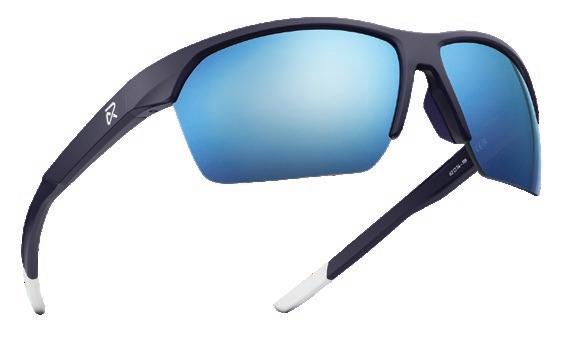
The right sunglasses will not only protect your players, but will make a visible difference on court. P. 26 BALL MACHINES Ball Control
Technology continues to become more sophisticated as ball machines offer more for tennis, pickleball and padel players. P. 36
PICKLEBALL FACILITIES Gold Rush, or Fool's Gold?
In the rush to cash in on pickleball, make sure you do the research, planning and due diligence. P.


World Team Tennis, the pioneering mixedgender team tennis league founded by Billie Jean King and others in 1974, will relaunch in December, geared toward today’s sports and entertainment landscape, the organization says.
WTT’s opening night is set for Dec. 2 at the Barclays Center in Brooklyn, N.Y., before beginning a home and away competition window featuring
and two women’s—and a mixeddoubles Supertiebreaker. WTT has been moved outside of the traditional tennis calendar, creating a dedicated window that fits players’ schedules.
“World Team Tennis has been ahead of its time for 50 years,” says WTT CEO Stephen Amritraj. “We’re not simply bringing the league back— we’re building it with intention as an inclusive, differentiated property at the intersection of sport, culture and entertainment.”
city-based teams, top-ranked players, and a new format staged across major-market arenas. A new ownership model offers competing players equity in the league, a first in tennis, aligning athletes with WTT’s longterm success.
“This league has always been about innovation and making tennis more accessible,” says Billie Jean King. “It’s inspiring to see that spirit carried forward in a way that connects with how fans engage with sports today.”
The new WTT match format will feature four singles sets—two men’s
In an email that went out May 11 to all members of the Racquet Sports Professionals Association along with RSPA industry partners, former RSPA CEO John Embree announced that Brian Dillman had left the organization and that the board asked Embree, who previously led the RSPA for 11 years, to serve as interim CEO.
WTT is designed to bring fans closer to the action through immersive technology, live in-venue entertainment, music, and enhanced storytelling. Coverage will be executiveproduced by Emmy-Award winner Michael Davies and Embassy Row, part of Sony Pictures Television.
“I think fans are going to have a lot of fun with this,” says pro Jessica Pegula. “The matches are shorter, the team energy is different, and having players share in the ownership of the league creates a deeper level of commitment.”
“We’re excited about the return of a revamped World Team Tennis that gives more people access to our sport by bringing high-level, profes sional tennis into more markets,” adds USTA Chairman of the Board, President and Interim Co-CEO Brian Vahaly. “When fans see the best athletes in the world up close, it inspires them to pick up a racquet and helps grow the sport.”
John Embree
“I’m writing to share an update and, more importantly, offer reassurance as to the state of our association,” Embree wrote. “The [RSPA] board of directors asked if I would come back to serve as interim CEO, as these are uncertain times for the racquet sports industry. I accepted with a clear sense of responsibility and respect for this organization and the professionals it represents.
“My role is to provide steadiness, continuity and guidance while the RSPA looks to the future,” Embree continued. “I’m confident in the strength of our collective voice and the enduring value of a professional home that puts standards and careers first. Today, the RSPA remains focused on supporting you as a professional and strengthening the credibility of racquet sports. Our certifications, professional development and member services continue as planned, guided by the values that have earned trust for decades.”

This year’s US Open theme, “Celebrating Our New York Story,” is brought to life with artwork created by award-winning Brooklyn-based artist Eugenia Mello. With activations sur rounding and during the 2026 event, the USTA will celebrate the history, people, energy and heart of both the US Open and New York City.
The theme art incorporates iconic imagery of each of the five boroughs: Queens’ famous Unisphere, the Manhattan skyline, the Brooklyn Bridge, the Bronx’s New York Botanical Garden and the Staten Island Ferry. During the Open, Mello will create a live mural painting on the grounds of the USTA Billie Jean King National Tennis Center. Merchandise featuring the theme art is available at USOpen.org.
About three weeks after the University of Arkansas announced it was cutting both its men’s and women’s tennis programs, the college has reversed its decision and is reinstating them. The decision to reinstate came about because former players pledged about $5 million over two years—some in increments of $25 a month, reports CBS affiliate KFSM—as a short-term solution to the programs’ budget issues.
The decision to cut the programs, announced April 24, produced an outcry from the tennis industry, USTA, ITA and former and current college players.
“We are thankful for our generous donors that have stepped forward with commitments to provide shortterm funding for both programs,” said Director of Athletics Hunter Yurachek. “While this support does not represent a permanent solution, it offers a viable path forward.
Accordingly, I have recommended … we reinstate both programs effective immediately.”
Yonex has partnered with the USTA Foundation to help expand tennis access in under-resourced communities. Through a more than $700,000 commitment, Yonex will serve as the official equipment sponsor of the USTA Foundation’s Community Impact Hubs (CIH), providing Hub organizations with tennis racquets, balls, nets and more.
Launched in 2025 in 10 underresourced communities, the CIH initiative builds on the Foundation’s efforts to transform the lives of young people. As part of this commitment, Yonex has allocated $270,000 over the next three years to resurface courts at Hubs.
“We are proud to partner with the USTA Foundation to help expand access to the sport, invest in safe and welcoming places to play, and support young people as they build confidence, leadership skills and brighter futures,” says Yonex USA President LaNiece Douglas.
The USTA has renamed its Industry Sales department the National Industry Partnerships and Growth, to better capture the department’s market impact and core mission of mobilizing the industry, connecting the player and growing the game.
The team, which will still be led by Managing Director Mickey Maule, includes Cy Dofitas, Director of Grassroots Partnerships; Justin Landis, Senior Manager of Grassroots Engagement; Zach Frampton, Senior Manager of Digital Business Development; Bridgett Ebanks, Manager of Events; and Shaye Longwell, Operations Coordinator. (Brooke Austin is moving to Director of Player Pathway and Concierge Services in the USA Tennis Division.)
PRESIDENT/PUBLISHER JOHN HANNA
MANAGING DIRECTOR ROBYN SOBELSON EDITOR PETER FRANCESCONI peter@acepublishinggroup.com
MANAGING EDITOR CORY SEKINE-PETTITE
ART DIRECTOR GARON HART
PRODUCTION MANAGER MEGAN WILLIS mwillis@nspmag.com
SPECIAL CONTRIBUTOR BOB PATTERSON
CONTRIBUTING EDITORS
KIM BASTABLE, CYNTHIA CANTRELL, PEG CONNOR, JOE DINOFFER, JUDY LEAND, GREG MORAN, KENT OSWALD, CYNTHIA SHERMAN, MARY HELEN SPRECHER, JOE TEDINO
CONTRIBUTING PHOTOGRAPHER DAVID KENAS
CIRCULATION MANAGER AMY FINE afine@nspmag.com
RACQUET SPORTS INDUSTRY
9040 Roswell Rd., Suite 210 Atlanta, GA 30350
ADVERTISING DIRECTOR JOHN HANNA jhanna@nspmag.com/770-650-1102, x125
APPAREL ADVERTISING CYNTHIA SHERMAN cstennisindustry@gmail.com/203-558-5911
ADVERTISING EXECUTIVES SHERRY GASAWAY JENNIFER GONZALEZ
Racquet Sports Industry is published 10 times per year: monthly, January through August, with combined issues in September/October and November/December, by New South Publishing, Inc., 9040 Roswell Road, Suite 210, Atlanta, GA 30350. Periodicals postage paid in Atlanta, GA and additional mailing offices (USPS# 004-354). July 2026, Volume 54, Number 7, (C) copyright 2026 by New South Publishing, Inc.
All rights reserved. Racquet Sports Industry, RSI and the logo are trademarks of New South Publishing, Inc. Printed in the U.S.A. Yearly subscriptions $25 in the US, $50+ elsewhere. Postmaster: Send address changes to Racquet Sports Industry, 9040 Roswell Road, Suite 210, Atlanta, GA 30350. Racquet Sports Industry is the official magazine of the USRSA, RIRG and ASBA. Looking for back issues of Racquet Sports Industry? Visit the archives at our website at TennisIndustryMag. com for free digital versions.



Holabird Sports was named Babolat’s Retailer of the Year for 2025, reflecting the retailer’s commitment to the Babolat brand, strong partnership and dedication to delivering a bestin-class player experience.
“Holabird Sports has consistently gone above and beyond to grow the
game and elevate the Babolat brand in their market,” Babolat noted in a press release.
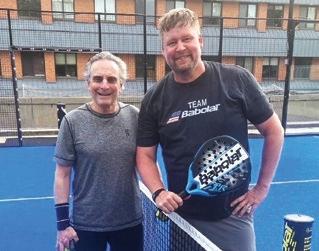
“This recognition is a testament to their hard work, innovation, and the incredible team behind their success. Congratulations to the entire time, including co-owners Brian Hirshfeld and David Hirshfeld.” (David is shown at right with Babolat sales rep Luke Kairys.)
The USTA was recently presented the Dr. Robert Harney Leadership Award by Move United at the organization’s annual Education Conference held in Cape Cod, Mass. The award, created in October 2012, honors a company, organization or individual that has demonstrated and provided extraordinary leadership in the adaptive sports movement. Accepting the award on behalf of the USTA was Director of Adaptive Tennis Evan Enquist.
Penn tennis balls have been named the official ball of Tennis Channel.
Pickleball brand Selkirk Sport has acquired Bread & Butter Pickleball Company, a design-forward brand known for its energetic identity and high-performance products that will expand the Selkirk portfolio with a differentiated brand that speaks to a distinct consumer segment.
The Vasco Group, headquartered in Massillon, Ohio, a nationwide provider of sports surfacing construction, repair and reconstruction services, has acquired Howard B. Jones & Son Inc. of Mount Pleasant, S.C., and Court Surfaces of Florida, headquartered in Jacksonville. The acquisitions expand Vasco’s Southeast presence.
All men’s and women’s hard-court ITF World Tennis Tour tournaments on the USTA Pro Circuit will feature electronic line-calling (ELC) for the first time ever. For the next five years, the USTA will utilize the ELC system developed by tennis technology company PlayReplay on every match court.
The US Open’s reimagined mixed doubles championship garnered the Sports Breakthrough of the Year Award from Sports Business Journal
The Association of Pickleball Players unveiled the APP Asia Tour, which will be comprised of six events in six countries. Events will be in Malaysia (July), China (October), Thailand (October), Chinese Taipei (November), India (November) and Vietnam (December).
In a five-year partnership, Oura is the Official Sponsor and Wearable Fitness Device Partner of the US Open, USTA and USTA Coaching.
CourtReserve has launched “Reserve with Google.” When a club enables it, a “book online” button shows up directly on their Google Business Profile. Players searching for courts nearby can book without navigating to a website, creating an account, or holding a membership.
The International Tennis Hall of Fame and Cerity Partners announced a multi-year title sponsorship of the Hall of Fame Open, the ITHF’s combined ATP Challenger and WTA 125 tournament. The Cerity Partners Hall of Fame Open is slated for July 5-12 and is the only grass court tournament on the ATP and WTA Tours outside of Europe.
Oceanview Life and Annuity is the new title sponsor of the 2026 Oceanview USA Pickleball National Championships, Oct. 31–Nov. 8 at the Barnes Tennis Center in San Diego.
In his new book, “One Day Better,” mental performance coach Jeff Troesch shares concepts gained over 35 years coaching professional tennis pros and athletes in the world’s most highpressure sports. Troesch has helped pro players win all four Grand Slams, coached five NCAA tennis programs, and served as the Mental Training Director for IMG Academy. Visit 8020books.com

Subscribe to the USTA’s new “Inside American Tennis” free substack, a one-stop destination for all the non-stop excitement that has come to define the sport in the U.S., at insideamericantennis.substack.com.
Phonak, a global leader in hearing solutions, announced the launch of its nationwide “Hear to Win” campaign and has entered an exclusive sponsorship with USA Pickleball.
INTENNSE has named Wilson as the racquet, ball and string for the upcoming season. All practice, match and play at INTENNSE Arena will be conducted exclusively with Wilson tennis balls. The sponsorship also delivers direct support to the league’s 80 players, providing them with racquets and strings throughout the season.
USTA Coaching announced new collaborations designed to strengthen the pipeline of future tennis professionals. Through a newly established program, USTA Coaching will work with Ferris State University, Hope College and Methodist University to further align academic preparation with the evolving needs of the tennis industry.
The collaboration is intended to support students pursuing careers in tennis by creating stronger connections between university programs and the professional coaching ecosystem. By working together, the institutions and USTA Coaching aim to help students gain earlier exposure to industry resources, professional standards and development opportunities that support careers in coaching and racquet sports leadership.
Students enrolled in Professional
Tennis Management and Racquet Sports Management programs will have expanded opportunities to engage with USTA Coaching resources and development tools. The initiative is designed to help bridge the gap between academic study and realworld experience while supporting the long-term growth of the tennis profession. Visit www.ustacoaching.com.
The U.S. Padel Association has officially designated October as National Padel Month, a first-of-itskind, industry-wide initiative to grow participation, showcase elite competition and recognize the individuals and organizations shaping the sport’s rise in the U.S.
The month-long campaign brings together three signature programs: grassroots learn-to-play clinics at member clubs across the country, the US Open Padel Championships and
the inaugural USA Padel Awards.
“The growth we have seen over the past few years has been exceptional, and National Padel Month is our way of channeling that momentum and bringing padel to more people,” says Bill Ullman, president of the USPA (visit padelusa.org).
The learn-to-play component activates USPA member clubs as local hubs for beginner programming throughout October. The US Open Padel Championships, Oct. 2-4, serves as the competitive centerpiece of the month, bringing together top players. And the inaugural USA Padel Awards recognizes the players, coaches, clubs and advocates who have driven the sport’s growth.
Pickleball Inc. said it raised a record $225 million recently. The investment comes from Apollo Global Management’s new sports

fund, Apollo Sports Capital, and Dundon Capital Partners, owned by billionaire Tom Dundon. The new funds bring the total investment in Pickleball Inc. to $315 million and raise the value of Pickleball Inc. to a reported $750 million. The deal also merges the PPA Tour and Major League Pickleball.
Pickleball Inc. will take on a portfolio of pickleball assets previously owned by Dundon, including Pickleball Central, a leading site for pickleball equipment. The portfolio also includes the PickleballTournaments.com software, pickleball court installer Just Courts, and indoor pickleball franchise The Picklr.
“This investment allows us to fully integrate the sport into one cohesive ecosystem—uniting professional pickleball, consumer goods, technology and media under a single, unified platform,” said MLP and PPA Tour CEO Connor Pardoe. Dundon and the Pardoe family will remain majority shareholders in the business after the investment.
Apparel company Boast and Volition America have launched the Volition x Boast Collection, an apparel line that blends performance innovation with classic American sport style. The collection brings together Volition America’s mission-driven design ethos—supporting military families and honoring service—with Boast’s legacy as the original American tennis brand.
The collection features men’s pieces, including a new short-sleeve piqué Henley pullover, performance piqué polo, court shorts, lightweight layers, signature graphic tees, and hats. Each style is crafted from technical fabrics, with details such as co-branded logos and subtle faded camouflage, alongside a palette of red, white, black and blue.
“Boast has always stood for individuality and authenticity within
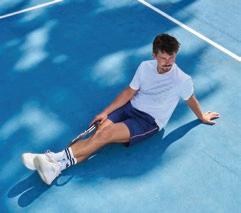
racquet sports,” says Boast President and CEO
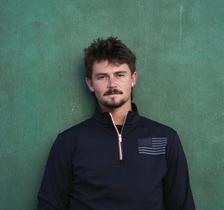
Matt Feuer. “Partnering with Volition allows us to celebrate those roots while supporting a meaningful mission and connecting with a broader, purpose-driven audience.”
Visit Boastusa.com.
The USTA will add an eight-team qualifying round to this year’s US Open mixed-doubles tournament. The added round, played on Aug. 24 for the last two spots in the 16-team main draw, is a boost for traditional

doubles specialists, who were largely left out of last year’s mixed event in favor of singles stars.
The Open revamped the event last year and moved it to Fan Week, before the start of singles main-draw play. Eight teams got in by the players’ combined singles rankings, with the remaining teams given wild cards.
For this year’s mixed-doubles event, the first round and quarterfinals will be played Aug. 25, with the semifinals and final on Aug. 26.
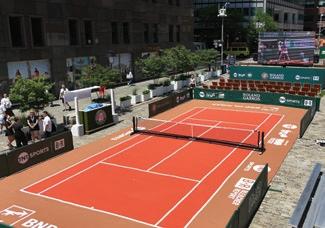
Shaughnessy Sports Construction of Freehold, N.J., brought a bit of Roland Garros to NYC with a custom RollX court by AT Sports installed on Fulton Street with seating and a large screen for French Open watch parties.
“It was a pleasure working with AT Sports and their RollX portable court system, and a huge thank you to TNT Sports and Solomon Group for making this French Open-inspired setup in Lower Manhattan possible,” says Shaughnessy Sports Construction owner Bill Shaughnessy.
A study published in the journal Applied Geochemistry by scientists from NYU and the University of Washington has revealed that green clay tennis courts are absorbing massive amounts of carbon dioxide.
How does a tennis court trap greenhouse gases? It comes down to a natural geological process known as “enhanced rock weathering.” The study also found that 92 percent of green clay courts reach net-zero emissions in less than two decades.
To find out more, visit hartru.com and click on “What’s New.”

The USTA Texas Board of Directors has named Frank Kelly as the new Executive Director of USTA Texas. Kelly , who has been interim Executive Director since Fred Viancos resigned earlier this year, served as USTA Texas President (2015-2016) and many other leadership positions within the USTA both locally and nationally.
Philippe Oudshoorn is now the Global Director for Pickleball for Head. His previous position was Marketing & Brand Director–North America for Tecnifibre.
Lexi Barbee (Sewanee University), Haley Levine (Hobart & William Smith Colleges) and Marielle Sauber (Smith College) are the three finalists for the 2026 ITA Ann Lebedeff
Award, selected based on their exemplary efforts in all that come with being a student-athlete.
Mark Parsons is the new Director of Racquets at the Country Club of New Canaan, Conn., facilitated by McMahon Careers.
Dillan LaFrance of New Orleans, who will attend Morehouse College, and Danielle Hood of Atlanta, who will attend Savannah State University, were each awarded $5,000 as recipients of the 2026 USTA Althea Gibson HBCU Scholarship.
Venus Williams delivered the commencement address in May to Loyola Marymount University’s Class of 2026, urging the graduates to “go for the wins” and pursue their ambitions without fear of failing.
Shane King has joined the Junior
Tennis Champions Center (JTCC) in College Park, Md., as Chief Operating Officer. He recently served as COO at ACT, leading a team of more than 600 employees while overseeing the $100 million operation for standardized testing of student readiness for college.
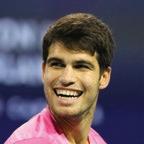
Global tennis icon Carlos Alcaraz has become the new Global Brand Ambassador for Ant International, a leading global digital payment, digitization and financial technology provider, and its key brands.
OLLY, the leading wellness brand known for innovative, benefitforward supplements, announced a partnership with professional tennis champion, activist and mother Naomi Osaka.

Renowned coach Carlos Goffi, 73, of Blythewood, S.C., passed away May 11, following a seven-year battle with cancer. After a successful junior career representing Brazil in international tournaments, Goffi became one of the pioneer student-athletes from Brazil to attend college in the U.S., playing for the University of Corpus Christi and University of Kansas. He began his coaching career in 1975 at the Port Washington Tennis Academy in New York, working closely with John McEnroe, Peter Fleming and Mary Carillo and later coaching John and Patrick McEnroe on the ATP Tour. He published the

bestseller “Tournament Tough: A Guide to Junior Championship Tennis,” in 1984. He’s been a keynote speaker at international tennis conferences and was voted Coach of the Year by his peers in 1991. In 2024, he received the Lifetime Achievement Award from the Global Professional Tennis Coach Association.
Memorial contributions may be made to the Carlos Goffi Tournament Tough Legacy Fund at tournamenttough.com/legacy.
Steve Zalinski, former Dunlop exec, USTA Southern Tennis Service Representative for South Carolina, and dedicated volunteer, passed away May 23 at age 81. The Durham, N.C., resident, a member of the South Carolina Tennis Foundation Hall of Fame, was a coach, mentor and friend to many in this industry.
Australian tennis great Mal Anderson, a major champion and central figure in one of the sport’s
most successful eras, died May 11 at the age of 91. Anderson claimed the 1957 US Championships singles title (now the US Open) and won doubles titles at the 1957 French Championships and 1973 Australian Open, along with the mixed doubles title at the 1957 Australian.
Award-winning Associated Press sportswriter and longtime tennis journalist Howard Fendrich passed away May 21 at age 55, following a battle with cancer.
Former USTA Texas President (1985-1986) and longtime tennis leader and volunteer Barbara Smith of Austin died on April 27.
Former New England Lawn Tennis Association (now USTA New England) president (1968-69) and 1995 USTA New England Hall of Fame inductee Harry Kirsch of Newton, Mass., passed away earlier this year, at age 94.
I enjoyed the Our Serve in the June issue, “Extra Help Needed,” about college tennis and thought you made some good points. But you ignored the elephant in the room: The dominance of foreign players makes these college programs more expendable, in my opinion. American taxpayer money at the big state schools going to all-foreign teams is tough for people to swallow. Only four Division 1 teams feature all American players. When we get more Americans playing college tennis, I think schools will be less likely to put them on the chopping block.
Tim Noonan Atlanta
In Wyoming, we’re anticipating potential negative impacts to high school sports and activities, due to cuts in property taxes. I’ve been working with Phil Harder, president of the Wyoming High School Tennis Coaches Association, to create a “Why Tennis?” pitch deck presentation for upcoming school board meetings. We are also creating an
advocacy document for all tennis teams and tennis entities in Wyoming to sign that will be read into the public record at the upcoming state legislative sessions. If we don’t proactively and collectively speak up, it becomes easier for tennis to be cut. We’re circling the wagons.
Peg Connor Executive Director–USTA Wyoming
I read Carlos Salum’s piece in the June issue, “Becoming Better Humans,” about the late Jim Loehr. I was the Administrator of Science for the USTA under Doug MacCurdy from 1999 to 2001, and Jim was on the Sport Science Committee. Jim was approachable, friendly and inclusive. He was an honest and brilliant man, willing to share his knowledge and expertise. We all miss him.
Bill Aronson Miami
We welcome your comments and opinions. Please email them to peter@acepublishinggroup.com


RSI CHAMPIONS OF TENNIS
Help us recognize the best in this industry with RSI’s 2026 Champions of Tennis Awards.
Last January’s issue of Racquet Sports Industry magazine marked the 25th year that we named our Champions of Tennis Awards. We had a record number of nominations for our awards last year, and we honored a record 38 winners in 34 categories. (You can see the 2025 winners at right.)
We’ve been honored over the past quarter century to annually recognize individuals, organizations and companies that have gone above and beyond in helping to make a difference in this industry and in positively impacting the lives of millions of people. But we know there are so many more out there who are deserving of recognition. And we once again need your help in bringing to light these often unheralded heroes of this sport and business.
To nominate, all we require is an email with some basic information (or as much detail as you’d like to supply). There is no formal nomination form. We’d like to know:
» Nominee’s name, location and contact info (phone, email). Note, you can self-nominate.
» Award category (see last year’s winners at right). Don’t worry if you’re unsure of the category; we’ll find a home for your nominee. (Note, we don’t give awards in every category each year, and we are flexible—we can add categories as new initiatives and trends come up in this industry.)
» Why you think the person or organization is right for the award. This can be brief, or detailed, and you can include supporting material if you’d like.
» Your contact email and phone—for our internal use, in case we have questions.
» Email your nomination by Sept. 18 to peter@acepublishinggroup.com and put “Champions” in the subject line. (Our awards will be in the January 2027 issue.)
Thank you for your help in recognizing this industry’s Champions of Tennis!
Person of the Year: Jodie Adams
Lifetime Achievement Award: Ray Benton, Marcia Bach, Cliff Drysdale
Tennis Industry Merit Award: Randy Stephens
Tennis Industry Service Award: Lisa Minihan
Game-Changer Award: USTA Coaching
USTA Service to the Industry Award: Marilyn Sherman, Jenny Schnitzer
Pro/Specialty Retailer of the Year: Ray’s Rackets
Private/Commercial Facility of the Year: Overland Park Racquet Club
Municipal Facility of the Year: Cary Tennis Park
Builder/Contractor of the Year: Randy Resley/Sport Court of the Rockies
Commercial Executive of the Year: Scott McCulloch
Sales Rep of the Year: Adrian Bolton (Tecnifibre/Lacoste)
Grassroots Champion of the Year: Laura Weygandt
Junior Tennis Champion of the Year: Nouri El-Hajjar
Wheelchair Tennis Champion of the Year: Evan Enquist
Community Tennis Association of the Year: Abilities Tennis Association of North Carolina
Stringer/Racquet Technician of the Year: Jay Palmieri
Public Park of the Year: Truxtun Park, Annapolis, Md.
High School Coach of the Year: William Graham
Tennis Advocate of the Year: Paul Pittman
Park & Recreation Agency of the Year: Chicago Park District
Youth Tennis Provider of the Year: Don Johnson
Adaptive Tennis Champion of the Year: Wendi Eusebio
NJTL of the Year: Sportsmen’s Tennis & Enrichment Center
Adult Tennis Provider of the Year: Phoenix Black Tennis Club
Innovative Tennis Event/Initiative of the Year: US Open Mixed Doubles, INTENNSE
Benefit Event of the Year: Stars Servin’ Up Love
School Facility of the Year: Ed Yarbrough Tennis Complex
College Tennis Facility of the Year: Hurd Tennis Center at Baylor
Public Tennis Facility of the Year: Vancouver Tennis Center
PTR Member of the Year: Gavin Glider
RSPA Member of the Year: Bunny Bruning
USTA Coaching Member of the Year: Nancy Abrams
USTA Section of Year: Florida
Categories not awarded last year:
Mass Merchant/Chain of the Year
Online Retailer of the Year
Youth Tennis Facility Developer of the Year
Innovative Media Coverage of the Year
A pioneering view of mental toughness is shaping generations of athletes and coaches.
By Mary Helen Sprecher
When Jim Loehr, widely regarded as a pioneering figure in the science of sports psychology, passed away in April, nobody disputed his impact on a field that had evolved, frankly, because he drove it forward.
Nor did anyone dispute the idea that Loehr’s philosophy had turned the sports industry on its head. That philosophy was that success in all things—academia, business and particularly the field of competitive play—could all be traced back to individual character.
For Loehr, that was simple. For everyone else, it was unthinkable. What about practice? Natural talent? Self-discipline? The will to win?
All are important, noted Loehr, and not to be taken for granted. But it was the mental toughness of the individual, as well as that of his or her coach, that propelled the athlete forward.
Some of those lessons will forever be imprinted upon tennis greats who were guided by Loehr, including Jim Courier, Pete Sampras, Monica Seles and Gabriela Sabatini. Even more, though, Loehr’s philosophies can be used by those just entering the sport, or by those at any level who seek improvement.
Good coaching can help develop stronger backhands and more accurate serves. Mental toughness contributes to better focus, a positive mindset and a stronger overall player when rallies are long and tiring, and when doubts could creep in.

“We live in a world that celebrates work and activity, ignores renewal and recovery, and fails to recognize that both are necessary for sustained high performance.”
— Jim Loehr
In much the same way a game deserved absolute focus, Loehr believed the only way to shape winners was to give them absolute and undivided attention.
“It’s not how many hours you put in with a client or on a project,” he noted. “It’s the quantity and quality
of your energy—your focus and force—that determine whether that time is valuable.”
His books (17 in all) are filled with enduring lessons. Even when reduced to sound bites, they provide insights for playing, coaching, club management and even manufacturing as it pertains to the racquet sports industry.
And all of it, he noted, needed to be done with attention to detail and with unwavering energy. To Loehr, energy was the resource that should never be squandered; the wise and judicious use of it was part of the formula for success. Time, he noted, had value only when it intersected with energy.
“The most important asset you need to protect in order to manage the demands of a job or an investment portfolio is your production of energy. And just like with money, if you do a great job managing your energy, you’ll get a great return.”
Loehr eschewed the concept of multitasking; he was famous for saying there was no way to do two things at once effectively. It was, after all, a way of diminishing the energy that should be spent pursuing one goal.
According to Loehr, it was one of the “barriers to full engagement; negative habits that block, distort, waste, diminish, deplete and contaminate stored energy.”
Another bad habit of athletes, he stated, was celebrating victories but paying no attention to the self-care that should follow. “We live in a world that celebrates work and activity, ignores renewal and recovery, and fails to recognize that both are necessary for sustained high performance.”
His final lesson also resonated. After play, in the wake of success or failure, lurked another piece of the puzzle. Giving back was, in Loehr’s view, an essential aspect of a successful life, and it was incumbent upon every individual to find opportunities for volunteerism.
“It is a mark of courage to set aside self-interest in order to be of service to others or to a cause.”
July is National Park and Recreation Month, and a perfect time to grow the game in your community.
By Mary Helen Sprecher
In honor of July being National Park and Recreation Month, here are some numbers to crunch:
40Percentage of tennis that is played in parks (USTA 2025 Tennis Participation Report). In addition, approximately 70 percent of all tennis is played on publicly accessible facilities—including parks, schools, community centers and other no-cost areas.
150,000-plus
The number of parks in the U.S. (Trust for Public Land)
27.3 million
The number of Americans who play tennis (SFIA 2026 Topline Participation Report)
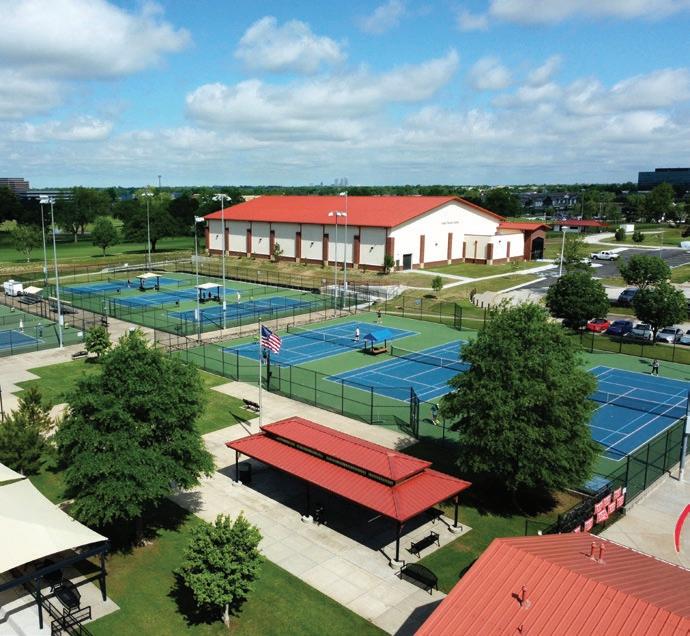
“Park courts are where so many people will experience tennis for the first time,” says Marcia Bach, vice chair of the USTA’s National Public Parks Committee and a longtime public parks advocate. “And as the USTA continues to work toward the goal of 35 million players by 2035, parks and recreational facilities are going to be essential to the growth of the game.”
Additionally, Bach is a longtime volunteer with and former employee of the City of Bloomington (Minn.) Parks and Recreation Department, organizing the summer tennis program that introduces tennis to the community and keeps it front and center. “It is delivering these programs and maintaining these facilities that helps us keep our sport strong,” she adds. “I’ve always been passionate about parks.”
Park tennis programs may be as structured—or as unstructured—as staffing and funding allow. However, either way, they remain not just an entry point but a mechanism of social connection, notes Mallory Weber, chair of the USTA National Public Parks Committee. “It gives anyone the chance to get out and be active, whether they are playing in programs or leagues or just being social. It’s incredibly inclusive; all you need to do is go out and play. There is something for everyone.”
For tennis providers, connecting with and collaborating with your local public park & rec agency can help grow the game in your community and, with its customer base, help boost your own business, too.
Weber is a product of public tennis courts and is enthusiastic about the fact that they offer barrier-free access to the sport. “Nobody in my family knew how to play, but we would go out to the courts and bump the ball around and I just fell in love with it.”
The USTA continues to infuse money into public courts. The organization’s Tennis Venue Services department recently celebrated
two decades of working to bring new facilities and courts online and renovating and updating existing facilities to keep them playable. In 2024, TVS issued about $1.8 million in grants for tennis infrastructure. For 2025, the pool of grant funding available was increased to more than $10 million, and the amount continues to rise, creating increased opportunities for organizations interested in improving facilities. (More information on TVS is available at USTA.com/facilities.)
Bach believes the USTA’s commitment will be instrumental to keeping park courts (as well as other publicly available facilities) in game-ready condition, something that is never lost on a player, whether they are swinging a racquet for the first time, or whether they have been in the sport for years. “The USTA is doing so much to help improve courts and give players that good experience,” she says.
And for park and rec entities that want to boost their programming offerings, the USTA has resources. The best news of all: It does not require the hiring of a full-time pro. Options include leagues for adults and children, Cardio Tennis and a variety of programs at all levels. (For more information, visit USTA.com/parks.)
“We really encourage parks to take advantage of all these resources,” says Weber. “It can be a game-changer.”
Two years ago, the USTA announced a partnership with the National Recreation and Park Association (NRPA). USTA is providing direct funding to support NRPA’s Health and Wellness pillar work in promoting health and well-being through access to physical activities and nutrition opportunities. Additionally, the USTA is an official sports partner of NRPA.
Multiple parks have worked with USTA to access TVS funding as well
as to forge partnerships with local sections in order to start up new programming that turned courts into vibrant community hubs. (Three examples of these collaborations can be found in the USTA website section relating to parks, under the heading, “Parks Spotlight.”)
“These are wonderful examples of what parks can be,” notes Bach, “and that’s really only the beginning. I have lived and breathed the life of parks and rec and I understand the importance it has to the health of the community."
Ideas for programming and facility assistance are available at USTA. com, along with specific resources such as the USTA/Parks & Recreation State Associations Directory, Public Park Ambassador Guide, Park Agency Tennis Assessment, Public Parks Resource Guide, and more.


has led to key collaborations that are growing the game
By Judy Leand
By every measure, the USTA’s Park Agency Tennis Assessment of the Columbus (Ohio) Recreation & Parks Department (CRPD) has been a resounding success.
The assessment took place in 2023 and resulted in a key recommendation to strengthen the partnerships between CRPD, USTA Midwest’s Ohio Valley territory, the Greater Columbus Tennis Association (GTCA), and Columbus Schools. “Since the assessment,
area,” says Amick. Other recommendations included adding dedicated staff to oversee racquet sports programming, instruction and maintenance; expansion into year-round programs; and leveraging the high demand for tennis by evaluating an indoor solution. Court resurfacing at certain parks was also on the docket, and three facilities are now slated to receive funding from USTA Tennis Venue Services.
“One recommendation in particular was to add dedicated staff to oversee tennis,
collaboration between these groups has advanced significantly,” says Jim Amick, USTA Midwest’s CEO for Ohio Valley.
For example, GCTA provides more than $13,000 to run programming, plus additional funds to help with equipment and hiring of summer teaching staff. Ohio Valley Tennis Association (OVTA) kicks in more than $4,000 to help run programs in schools and provides equipment as requested. It also works with Columbus City Schools to offer P.E. teacher training, and provides additional tennis opportunities led by an outside coach.
“The USTA park agency assessment produced personalized, expert recommendations and actionable deliverables to improve tennis delivery in the Columbus
which led to the hiring of Mikaela Black in early 2025 as CRPD’s director of racquet sports,” notes Amick. “This has allowed all three organizations to become major factors in the community’s tennis growth.”
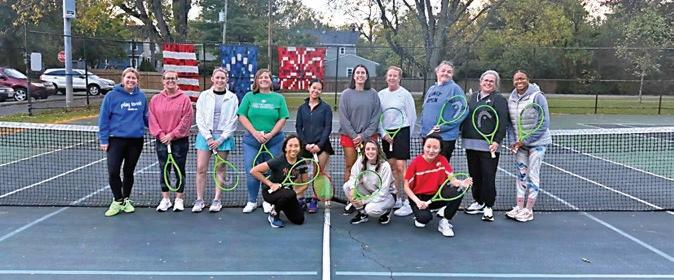
In fact, Black’s presence has been a game-changer. Besides regularly communicating with all of the local tennis organizations, she helps coordinate a growing number of programs and events, including training P.E. teachers, running junior camps and adult Red Ball Tennis programs, along with other lessons, instructions and programming—which impact hundreds of adults and kids.
“Before the assessment, only four community centers offered tennis,” Black says. “Now there are 12 centers, and
eight schools were also added between January and May of this year. We offer Red Ball for ages 3 to 15, an adult Red Ball program and a Ladies’ night. Parents really like it, community members love it, and it makes tennis accessible.
“We’re really trying to be a hub for development. Our long-term goal is to get local high school and college students involved with kids’ programs,” she adds.
Tara Hayes, OVTA’s community development coordinator, is delighted with the progress. “Once Mikaela was hired, everything changed. With her drive and her knowledge of tennis, she really hit the ground running. She started asking about grants, equipment, NJTLs and programming. We have had numerous meetings brainstorming how to revamp CRPD’s summer tennis program.”
As the only Community Tennis Association in Central Ohio, GCTA has had a long-standing relationship with the Rec & Parks Department, notes GCTA President Lori Brown. While GTCA has provided funding to help improve access to tennis throughout Columbus, CRPD has, in return, offered its courts for summer adult leagues at discounted rates.
“Recent developments have seen Rec & Parks directing additional resources to tennis, and GCTA increasing its monetary and volunteer support for CRPD,” says Brown. "CRPD has created an amazing pipeline of communication and enthusiasm between the organizations.”
GCTA is now partnering with CRPD to provide tennis and education to underresourced youth through a USTA NJTL chapter at the Feddersen Community Center. “With CRPD’s increasing focus on tennis and ongoing efforts to refurbish its tennis facilities, we feel we’ve only just begun," adds Brown.
“Bernita Reese, the Columbus Rec & Parks Director and a member of the American Academy for Park and Recreation Administration, made everything possible,” adds Todd Carlson, Senior Director for USTA TVS. “She was the glue that brought together the park & rec agency, local tennis organizations, USTA districts and the Midwest Section— all working together to help grow the game and grow and improve tennis infrastructure at the grassroots.”
Sponsored content. For more on how USTA’s Tennis Venue Services can help your facility or project, visit usta.com/facilities or email facilities@usta.com

The right sunglasses will not only protect your players, but will make a visible difference on court.
By Judy Leand
Playing racquet sports outdoors is fun and invigorating, but sun and glare can be tough on the eyes. Many manufacturers are now designing featurepacked sunglasses that can be used in a variety of light conditions, can be fitted with prescription lenses, come in polarized and non-polarized options, and incorporate non-slip materials.
In fact, there are now so many options and proprietary technologies available, it can be difficult for consumers to choose. The most important aspect is the lenses, and choosing the right tint will improve vision and comfort. For racquet sports such as tennis, pickleball and padel, brown, amber and copper lenses are popular because they enhance the contrast of the yellow ball while boosting overall depth perception, and they work well in bright and partly cloudy conditions.
Yellow/orange tints are best for low-light situations. Vermillion/red lenses will highlight the ball against a green background, but they can distort colors more than brown lenses. Green tints are best for bright sun and will balance contrast and preserve natural color. Gray tints preserve natural colors while dimming brightness, while pink and rose lenses improve contrast and reduce strain in shifting light conditions. Additionally, while polarized lenses reduce glare, they can sometimes distort depth perception, making it difficult to judge distance, which is why many players prefer nonpolarized versions.
Here are some models for summer that are sure to be clear winners. (Prices are suggested retail.)
GOODR.COM
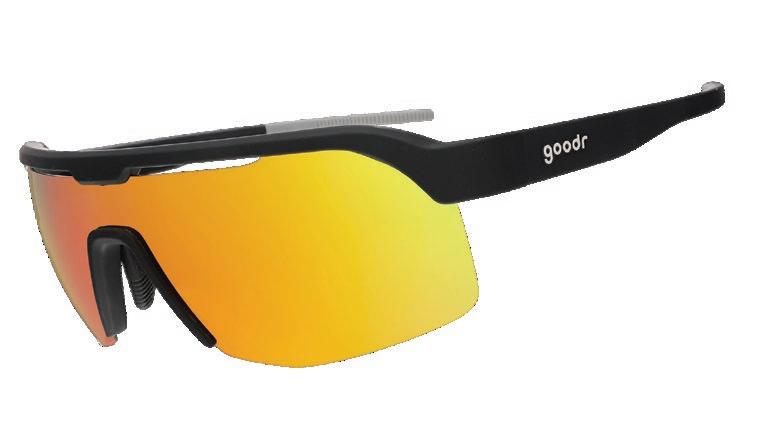
The Bolt G Do It for the Victory Dance ($45) wrap style is available in a variety of colorways and has ventilated lenses to help avoid fogging. The model features an adjustable nose piece for a customized fit that won’t slip or bounce, and the lenses are polarized and offer UV400 protection. Mirrored reflective lenses provide enhanced eye protection and glare reduction for matches played in direct sunlight. The half-rim Flex G Country Club Crasher ($45) is more of a

MAUIJIM.COM
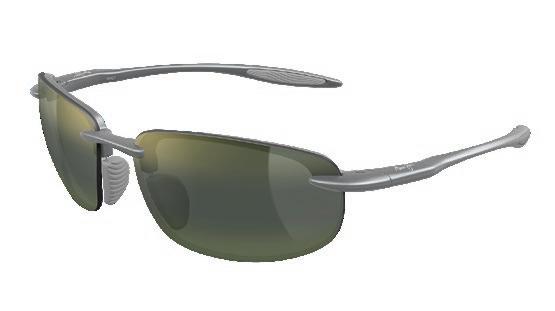
Part of the collection ‘Elima, the Ho’Okipa Ultra ($269) polarized rimless sunglasses come in a wide range of vibrant colors and premium materials. They boast curving temples and the brand’s signature Wavy Pattern on the nose pads and temple tips. Maui Ultra lightweight and impact-resistant lenses provide intense color resolution with PolarizedPlus2 lens technology that blocks harmful UV rays and eliminates 99 percent of glare. For those needing a prescription version, the lenses are available in single vision and progressive, and all are digitally surfaced and retain the full benefits of PolarizedPlus2 technology.
OAKLEY.COM
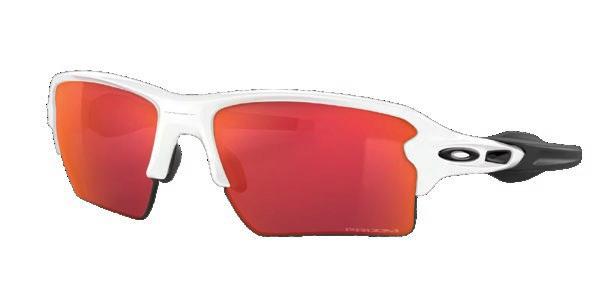
The Flak 2.0 XL ($214) has a standard size frame with enhanced lens coverage. Key features include lightweight O Matter frame material; Unobtanium earsocks and nosepads for increased comfort and performance; impactresistant Prizm lenses to enhance color, contrast and detail; and a choice of Polarized and Iridium lens options. Also available with Oakley Authentic Prescription Lenses.
RIAEYEWEAR.COM
Developed specifically for smaller face shapes, the Versa [Court HD+] ($199) semi-rim frame style provides impact protection, great coverage and an excellent field of view for a seamless visual experience on the court. Made in Italy, this frame features adjustable temple tips to ensure optimal fit, and houses RIA’s proprietary Zeiss Court HD+ lenses that enhance contrast and visual clarity. Available in prescription.
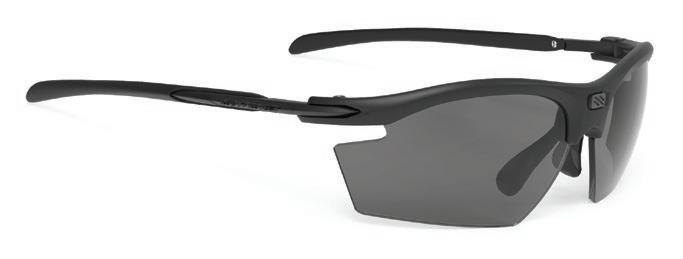
RUDYPROJECTNA.COM
The Rydon ($241.49), pictured here with Stealth Matte Black Frame and Smoke Black Lens, is part of the brand’s Pickleball Collection. The model offers 100 percent UVA/ UVB protection, and provides true color perception while reducing overall brightness, making them ideal for bright, sunny conditions. Other features include a wide array of interchangeable lenses ($68.24 each), and adjustable antislip nosepads and temples. The Rydon is also easily fitted with prescription lenses.
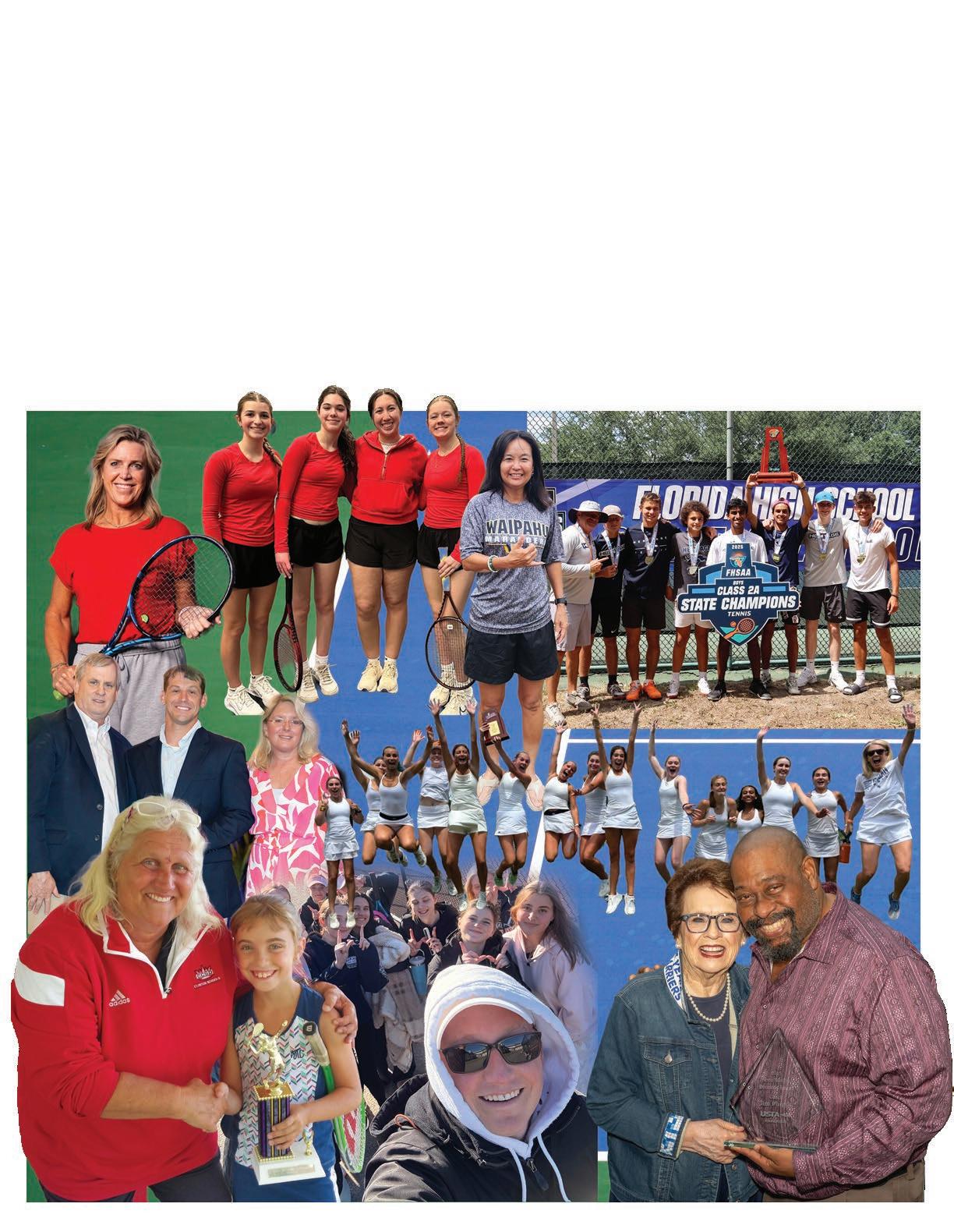
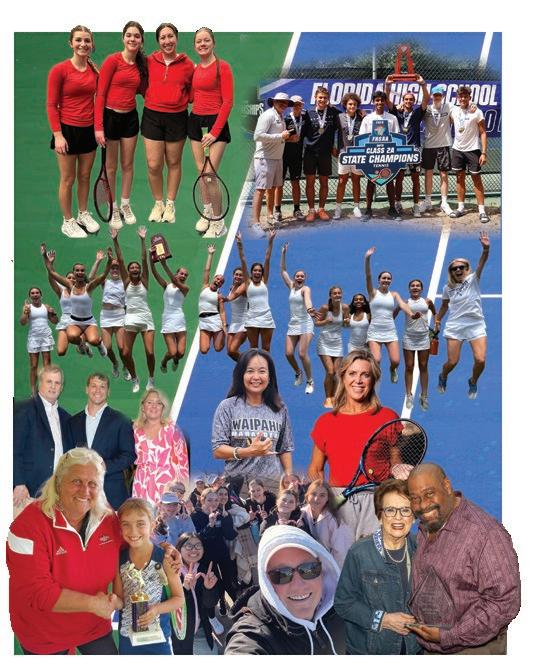
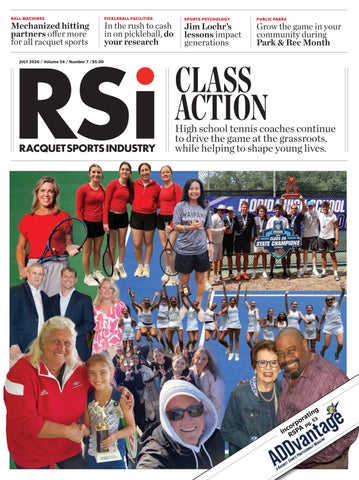
Throughout the country, high school tennis coaches continue to drive the game at the grassroots, while helping to shape young lives.
Compiled by Judy Leand
Brian Schleifer has spent more than three decades shaping one of the most dominant high school tennis programs in Florida at American Heritage Delray, and his resume continues to grow. At this year’s FHSAA Tennis State Championships, he led the Stallions to both the Boys’ and Girls’ Team State titles, along with both overall doubles state titles. It was the latest chapter in a career defined by sustained excellence.
Under Schleifer’s leadership, American Heritage has claimed 45 district titles, 24 state titles, and the 2023 Boys’ National Championship. He has tallied more than 500 career wins and earned over 30 Coach of the Year awards from the Sun Sentinel and Palm Beach Post, been named Florida Dairy Farmers Coach of the Year 16 times, and received national recognition as an NFHS Coach of the Year, ESPN guest speaker and USTA mentor coach.
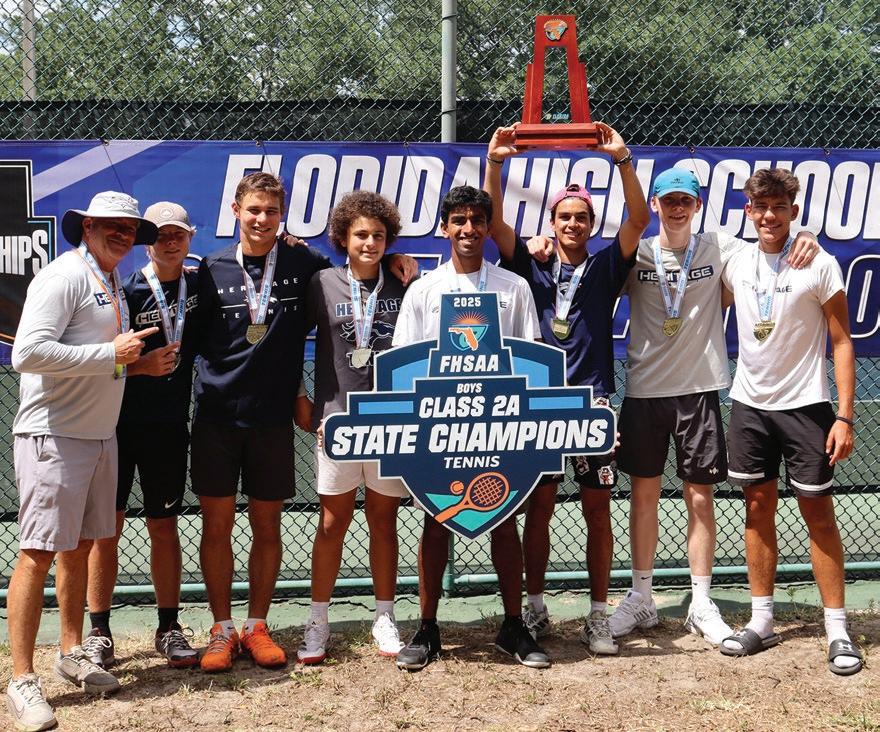
Earlier this year, American Heritage honored that legacy by naming its tennis courts after Schleifer. This is a huge honor and a rare feat in the high school tennis space, but Schleifer has been a true champion when it comes to building a great program. Behind the numbers is a coach whose influence extends well beyond the court, mentoring generations of studentathletes and leaving a lasting mark on the school and surrounding community.
—Jaret Kappelman
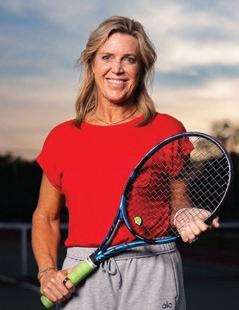
Over the course of Debra Murray’s nearly three-decade tenure as head tennis coach at Guilderland High in Guilderland, N.Y., the school’s girls’ team has never recorded a single losing season. Just last fall, the squad maintained an undefeated record straight until the section championship final.
While Murray is quick to credit the athletes themselves for the strong run of excellence, the one constant in all those years has been Murray herself. “I believe high school athletic programs should focus on teaching young people values and lifelong habits, as well as provide a positive social experience,” she says. “I strive to teach my players leadership skills, accountability, good sportsmanship, a good work ethic, teamwork and persistence.”
To that end, in 2025, Murray recommended three players to participate in the Girls Leadership Academy for Service and Sport (GLASS). The students traveled to Costa Rica for 10 days, where they volunteered for Special Olympics, hosted several clinics for local youth and participated in leadership workshops. The experience proved transformative for the teenagers, which is exactly what Murray hoped. It’s just one example of why Murray is so beloved by her charges—and why she’s won a whole trophy case of accolades for her efforts over the years, including USTA Eastern’s Coach of the Year distinction in 2025.
“I am passionate about tennis, and I enjoy sharing my love of the game,” Murray says of her role. “I hope that I instill that love [in my players], along with a passion to never give up.”
—Scott Sode

As head coach of Waipahu High School’s Soft Tennis, JV Girls and Varsity tennis teams, Denise Yamada’s approach is to emphasize teamwork, effort and learning to do one’s best, rather than focus solely on winning.
“I learned how to play tennis on the tennis team at Waipahu and was inspired by all the great players who set an example of good sportsmanship, great character and championship tennis,” Yamada says. “I’ve coached at Waipahu High School for over 20 years and have always tried to instill character and discipline in the players on the various teams.” The most recent of her many coaching awards was being named Coach of the Week by radio station KSSK, which serves the Honolulu market.
She notes that the students who come out for tennis are a diverse group with varying levels of experience. “My coaching staff and I spend a lot of time teaching new players about this incredible sport, where they not only learn how to play tennis, but also learn life lessons.”
For James F. Phipps, tennis and coaching were not part of the plan. “No one in my neighborhood played tennis,” Phipps says. “I just wanted to play baseball, but my mom said that if I didn’t try tennis, I couldn’t play baseball.” While his mom’s demand first brought him to tears, ultimately it led him to the sport that would give him a new outlook and purpose in his life.
While competing and coaching for Millersville University of Pennsylvania, Phipps was diagnosed with Idiopathic Thrombocytopenic Purpura. The rare autoimmune disorder landed him in the hospital and his doctors gave him a poor outlook. But Phipps says he felt an energy, and he knew he wanted to live his life doing the things he wanted to do. Tennis once again became that thing.
Phipps fell back on his coaching skills and began teaching lessons as he recovered back at Millersville. He strung racquets, gave lessons and helped coach the team. His tennis knowledge and coaching reputation quickly turned into a career. He coached numerous USTA Middle States Zonal teams, became the head men’s coach at Franklin and Marshall, and for the last 26 years he has been teaching physical education and coaching tennis at Lancaster Country Day School.
Along the way, Phipps acquired many accolades such as the Dick Green Community Service Award as well as USTA district awards including Teaching Professional of the Year. He was also inducted into the Black Tennis Hall of Fame, class of 2024.
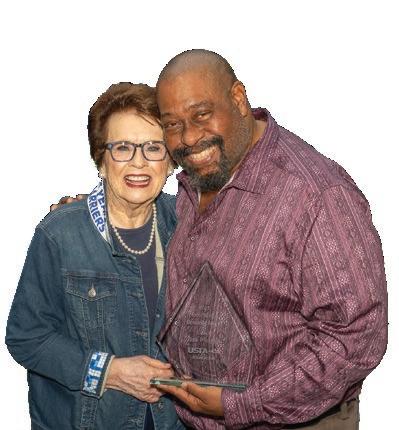
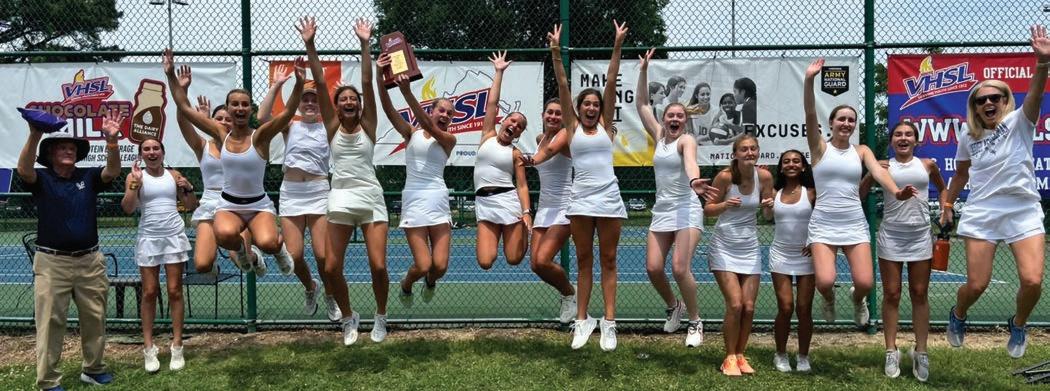
In the Douglas S. Freeman High School tennis community in Richmond, Va., girls’ tennis coach Larry Parpart has attained legendary status, and even after nearly 50 years he is still looking for ways to grow as a coach.
In fact, no head coach in Virginia high school girls’ tennis history has more wins than Parpart, who holds an all-time girls’ tennis coaching record of 576-156.
However, Parpart’s success has
never been defined by wins alone; he has built a culture centered around teamwork. For Parpart, the key to longevity in coaching comes down to creating an environment where every player feels valued and part of something bigger than themselves.
“Make it fun for the players. Everybody wants to win matches. Most come in wanting to win more than others. That is just part of life. But make it fun, make it a team atmosphere,” says Parpart. “Demand the same for all the players whether they are the best player or someone who is still developing their game. Everybody
As a boys’ and girls’ tennis coach for six years and head coach for three years at Mooreville High School in Mooreville, Miss., Jamie Roberts is dedicated to the development of all players and inspires his entire team by example. He demands good sportsmanship, accountability and learning life lessons on-court. He constantly lets players know it’s more about the journey and not the match results.
That being said, in 2025 Roberts led Mooreville High School to its first 3A regional championship in 12 years. He remains very active in organizing Junior Team Tennis opportunities for all players, he runs Saturday morning free match play for all students and juniors, and he created the Sadie Down Memorial Tournament, honoring Mooreville High School student Sadie Down, who succumbed to cancer.
Staff members of USTA Mississippi credit Roberts with using a great network of volunteers dedicated to the development of all players, and being “a wonderful communicator and listener to all levels of athletes.”
has a role on the team. Make them feel important. If they feel important then they will work hard to get better and that creates a great atmosphere among each other.”
Parpart has truly built a lasting team culture. In 2025, he was recognized as the 2024-25 National Coach of the Year by the National Federation of State High School Associations (NFHS) Coaches Association.
Since he started coaching in 1978 (after agreeing to coach tennis for just one season), his impact on the sport and the students he has coached is undeniable.
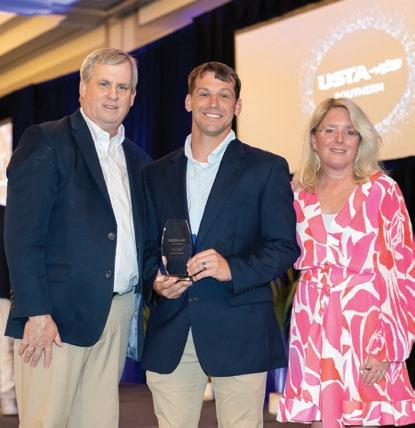

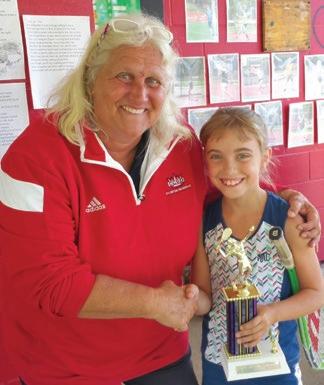
Cindy Rasche has been involved in tennis for 42 years as a player, coach, official and administrator, and was honored as part of the class of 2025 for the USTA Iowa Hall of Fame. She currently serves as the girls’ tennis head coach for the Clinton High School River Queens, is on the USTA Iowa Board of Directors, chair of the state’s Diversity & Inclusion Committee, and also runs River Cities Tennis and Pickleball, a four-court indoor facility.
“Tennis in Clinton, Iowa, is Cindy Rasche,” says John Terpkosh, a fellow 2025 USTA Iowa Hall of Fame inductee and friend of Rasche.
“Giving more than 40 years of her tennis expertise has made a difference here. School varsity championships and a successful (community tennis association) and indoor tennis facility have been a part of her legacy.”
Among Rasche’s other accolades are being named a Young Educator of the Year, a Gold Key Award winner in teaching, a multi-time Iowa Coach of the Year and a National Federation of State High School Associations Tennis Coach of the Year.
“I hope that I have touched many lives through tennis and that I have created—with the help of other people—kids who will be successful in life,” she says. —David Smale
For Carlos Melgar-Petrain, tennis is more than a game—it’s a vehicle for building character. While his “day job” involves navigating complex data as a business analyst at Mass General Brigham, his true impact is felt across the courts of New England.
Now in his third year coaching the Uxbridge High School girls’ varsity team, Melgar-Petrain has become a staple of the local tennis community. He recently expanded his reach as a Tennis in the Parks coach and has steered the Worcester (Mass.) Social Tennis League, which he founded, through an impressive 18 seasons over the last six years.
“Being a coach is a privilege,” says Melgar-Petrain. “It’s about shaping character and being a guide through the ups and downs. Watching players grow is a reminder that we have a chance to make a lasting impact.”
Melgar-Petrain’s influence extends far beyond the baseline. A former high school and college standout, he currently serves on the USTA New England Coaches Commission and was on the USTA National Coaches Task Force. His expertise has made him a sought-after voice in the industry, moderating vital virtual seminars on high-school team expectations and co-presenting “The Perfect Hour” at New England’s 2025 Tennis Weekend. Most recently, Melgar-Petrain represented the bridge between collegiate play and professional coaching in the 2026 ITA Alumni Career Spotlight Series.
Whether he’s organizing volunteer games or mentoring the next generation of coaches, Melgar-Petrain continues to help set the tone for the future of the sport.
—James Maimonis
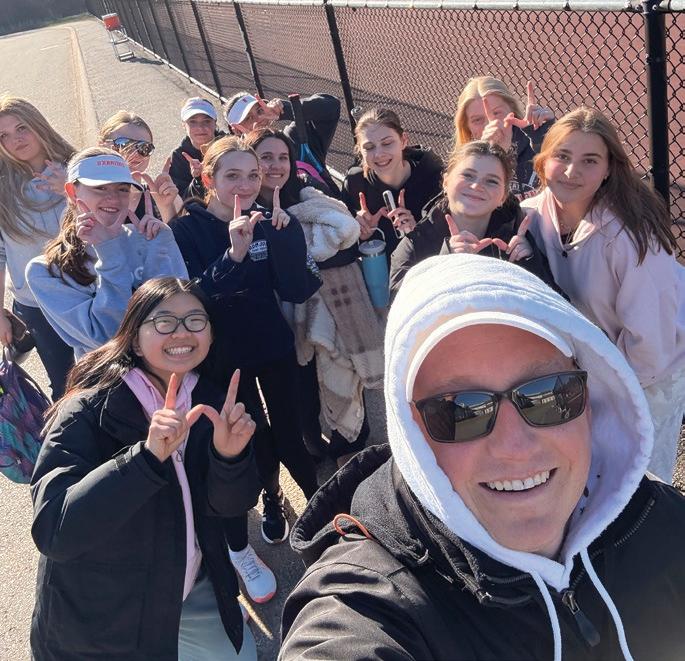
Sammy Maxwell, a fifth-grade teacher and head coach for both the boys’ and girls’ tennis programs at Danville Community High School in Danville, Ind., sees tennis as a means of growth and inspiration for her students and the community that supports them.
Her use of two USTA programs, Swing, Hit & Ace and Junior Team Tennis, fueled interest in the sport, and with that growth Maxwell wanted access for more students. She knew tennis wasn’t the sport of choice for many students due to low awareness and limited court availability. So, she rallied her peers.
“We had a really small coaching staff, but we were all on the same page: We could have a great program if we had a feeder,” she explains. “It did take a couple of years of us just showing our administration how much we cared and how much we wanted the program, but we had a lot of people on our side.”
The initiative gained momentum, growing from six courts to 12 and allowing for the creation of a strong middle school program that has been instrumental in giving students the opportunity to learn the fundamentals of tennis in a supportive environment.
As both a teacher and a tennis coach, Maxwell loves seeing her students pick up a racquet. She gets to see the full arc of their growth—from shy fifth-graders to confident high-school athletes. Even after graduation, former players have stayed connected to the program, sometimes returning to mentor younger athletes.
Those lasting relationships reflect the culture Maxwell has built. As a female head coach, she occupies a traditionally male-dominated space and demonstrates that leaders are defined not by gender but by impact.
Growing tennis doesn’t have to start at elite levels—it starts with access and a commitment to others.
—Molly Kinnick
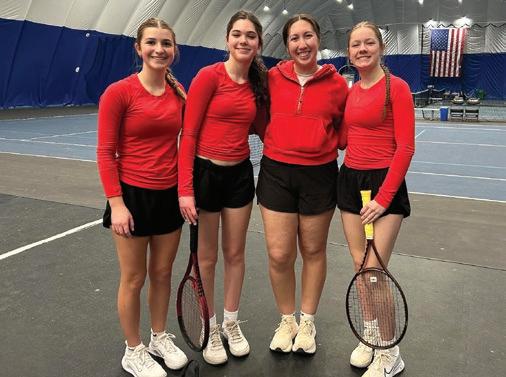
The Schkade name is synonymous with the championship culture of the Farmersville Independent School District tennis program, representing a multi-generational legacy of excellence on the court. Stephen Schkade has been the driving force behind the program’s modern success, leading the Farmers to district titles and deep post-season runs with a coaching style that emphasizes both technical precision and mental toughness.
This tradition of leadership is a true family affair; Schkade followed in the footsteps of his father, the late Marvin Schkade, a legendary figure in Texas high school tennis who built the foundation of the Farmersville program over decades of service. Under the elder Schkade’s mentorship, the program became a regional powerhouse, a torch that his son carried forward to ensure the Schkade family remained the architects of Farmersville’s enduring reputation as a “tennis town.”
In fact, Farmersville ISD recently opened its renovated tennis facility, officially dedicated as the Marvin J. Schkade Tennis Complex. The venue—funded in part by a $200,000 investment from the USTA—boasts eight championshipgrade outdoor courts with integrated LED lighting, elevated bleacher seating, improved ADA accessible pathways, shaded player benches and upgraded storage amenities.
“We want to fill these courts up in the evenings during the summer with tournaments, lessons and leagues,” Schkade says. “We just want to grow a passion for tennis here in Farmersville, like what I grew up with in the ’70s and early ’80s when the entire town was part of tennis.”
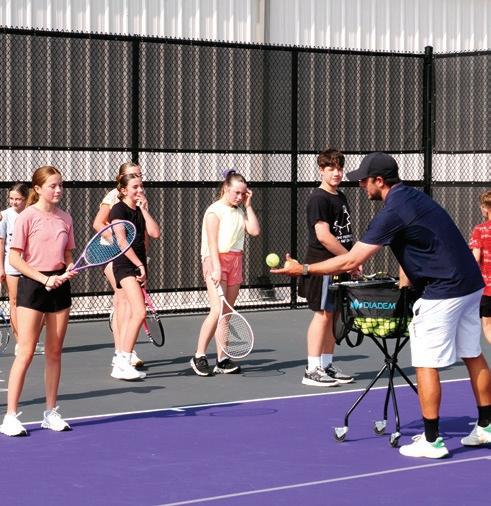

As technology becomes more sophisticated, ball machines are offering more for tennis, pickleball and padel players.
By Kent Oswald
While private clubs and academies have traditionally been the drivers of the ball machine business, lighter machines with greater artificial intelligencedriven personalization options make schools, public facilities and individuals likely key markets for a potentially explosive sales future. Additionally, a wider range of pricing options for machines, more throwing choices and increasingly sophisticated technology, including advances in programming apps and AI, mean these mechanical hitting partners are continuing to evolve. All of this is opening up more eyes—and budgets—to the benefits tennis, pickleball and padel ball machines offer as hitting and training partners.
(Suggested retail prices quoted are for standard models, but options are available on all models, so price points will vary.)
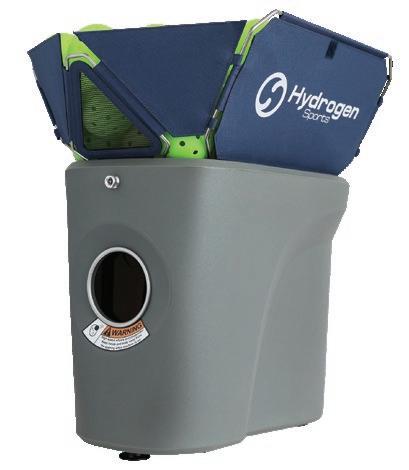
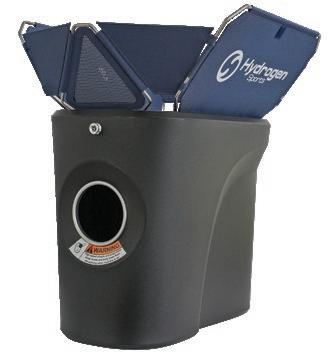
Founded by Apple Pencil inventor Jonah Harley, the company currently offers two 18-pound machines built for individual use. The Proton ($1,695), featuring a quick-swap battery and controlled through either mobile or Smart Watch app, throws from its 100-ball capacity at speeds up to 70 mph and with spin up to 3,000 rpm. The Electron ($1,695), through its Smartphone App or Nano remote, offers 17 pre-programmed drills and the ability to customize a wide array of workouts utilizing the 80-ball hopper, 65 mph top speed for throws, and maximum spin of 1,500 rpms.
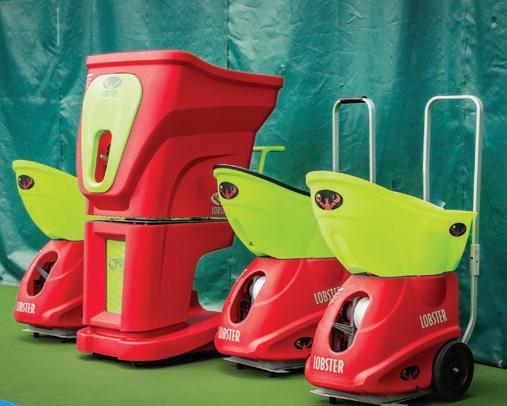
Leading the American-built tennis ball machine lineup are the Phenom Two ($4,399) and Phenom ($3,899), electricpowered, remote-controlled machines featuring customizable drills, dynamic oscillation, multiple spin options, and ball speeds up to 80 mph—designed to simulate realistic matchplay scenarios and support advanced player development.
Lobster’s Elite Grand Series combines portability with enhanced customization, including pre-loaded and fully customizable drills, oscillation controls, and appconnected training capabilities. The Elite Series (starting at $1,179), available in both battery-powered and electric models, offers straightforward, reliable training with userfriendly controls, oscillation features and a spin option. The Elite Grand Five LE ($2,999) is designed to create more dynamic and engaging practice sessions. Lobster’s Grand Series and Phenom Series machines are compatible with Goatly, the company’s AI-powered training app that delivers guided workouts, voice-led coaching, automated drill adjustments, and personalized training experiences designed to help players train smarter and stay motivated.
Lobster’s electric-powered Pickle Phenom ($3,899) features a 185-ball hopper, pre-loaded drills for game-based scenarios, and spin, speed and oscillation deliveries, with ball speeds ranging from 20 to 65 mph. The Pickle Champion ($1,999), available in battery or electric models, provides a 125-ball hopper, multiple oscillation settings and spin control—ideal for players looking to build consistency and confidence.
The Lobster Padel Ball Machine ($1,299) offers a portable, battery-operated solution with a 150-ball capacity, random oscillation, adjustable feed rates and speeds up to 80 mph.
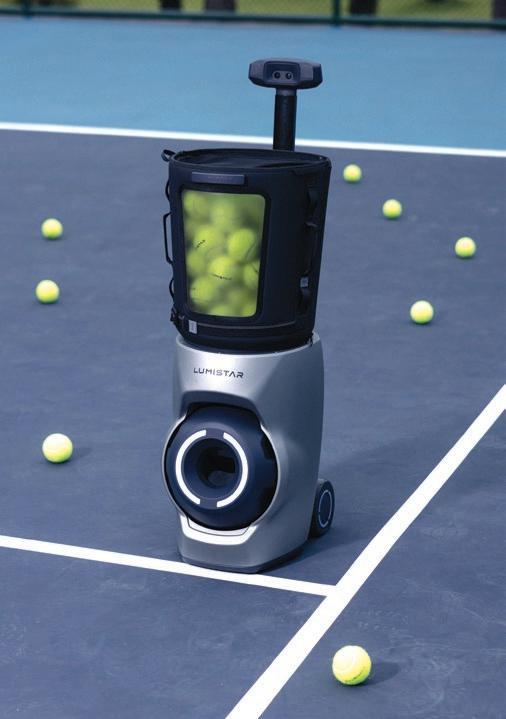
Taking training to a new level, the Tero ($1,199) is voice-activated through a sweatband, allowing a choice of 252 builtin drills, with tosses up to 86 mph and spins plateauing at nearly 8,000 rpm for the estimated four hours of battery life. The hopper holds 80 balls, shooting out every 1.5 seconds for play in three different modes: rally for steady hitting, AI match for probing your weaknesses, and random for keeping you on your toes. Feedback, including hitting statistics and actionable suggestions for improvement, is available immediately after every practice session.
Later this year will see the debut of the Tero Pro ($2,000 est.), which will add a mobile feature to the machine to create even more angles to deal with, real-time feedback on shots, and two additional playing modes: One that will provide an opponent hitting at one-half step above the NTRP rating you enter into the app, and another letting you take on the hitting patterns of top pros.
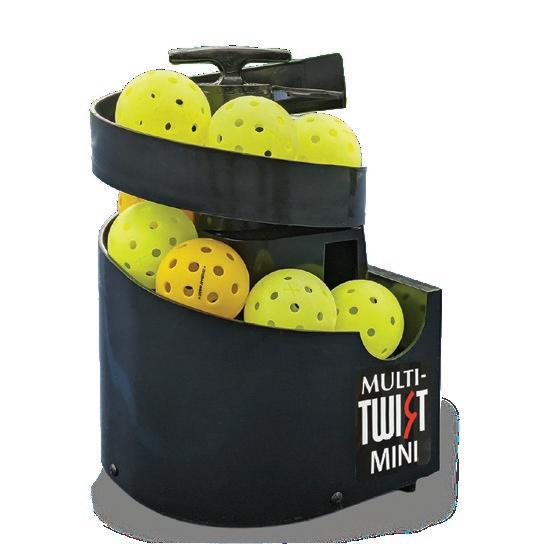
The Multi-Twist ($350), 25 inches tall and 11 pounds, is available in both battery and AC-powered options and comes with five toss options and five-second spacing between feeds. Sibling Multi-Twist Mini ($300), 17 inches tall and 6 pounds, also offers five toss options with 3.5-second spacing, and synchronizes with a retrieval net into the Infinity Play System ($430), delivering an unlimited practice ses sion. Both the 28-ball Multi-Twist and 14-ball Mini handle regulation tennis balls, transition balls and pickleballs.
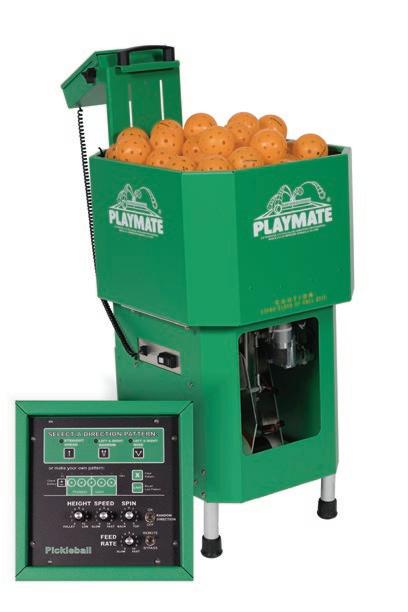
The iGrand Slam ($9,295), endorsed by the Racquet Sports Professionals Association (as is the whole lineup), is an exceptional addition to any facility. Controlled through the iPlaymate tennis app and available for multiple controllers, features include a 300-ball reservoir, the ability to save and create drills, hit against pre-programmed shots, track workouts, and compare results. Shot patterns, directions and ball arc are customizable, and five realistic service options are available to return against.
Also featured in the line are the iGenie ($7,795), an outstanding value for tennis club owners that features remote-controlled, pre-programmed, custom and shared drills, a 300-ball hopper, throwing up to 90 mph with spin, height and location options, as well as the ability to track player metrics. The Pickleball Machine ($3,695 w/battery; $3,795 w/AC adapter) has a 150-ball hopper, remote control, the ability to oscillate up to five spots, and advanced randomization of throws at a multitude of heights, speeds, spins, feed rates and directions.
Padel options include the iSmash ($6,195) with the iPlaymate Receiver ($1,095) delivering workouts from a 300-ball hopper, throwing directed or random topspin, backspin shots at a variety of heights, and controlled with a remote programmable through iPhones, iPads or iPod Touch and in conjunction with the “Like My Drill” app. All machines come with a three-year limited parts warranty.

The 48-pound SP Smart ($2,049) offers both battery and AC/ DC power options for up to eight hours of play. It delivers balls up to 95 mph from the 300-ball hopper with varying spins, angles and elevations. The SP Quest ($1,799) shares the same flexible power options and features heavy topspin and underspin feeds with adaptive vertical oscillation and programmable shot placement. The SP Ignite ($1,349) throws at up to 95 mph with adjustable topspin, backspin, and random horizontal and vertical oscillation in a battery-powered design with optional AC use. The SP Launch ($1,099) weighs 42 pounds while still offering 95 mph feeds, adjustable spins, random oscillation, elevation control and the ability to save up to three custom user settings.
The SP Padel Pro Plus ($1,099) offers customizable drills, adjustable spins, and reliable shot placement, a 300-ball hopper, and four- to five-hour battery life. The SP Pickleball Pro Plus has a 200-ball hopper, four- to five-hour batter capacity, and a wireless remote controlling tosses up to 80 mph.
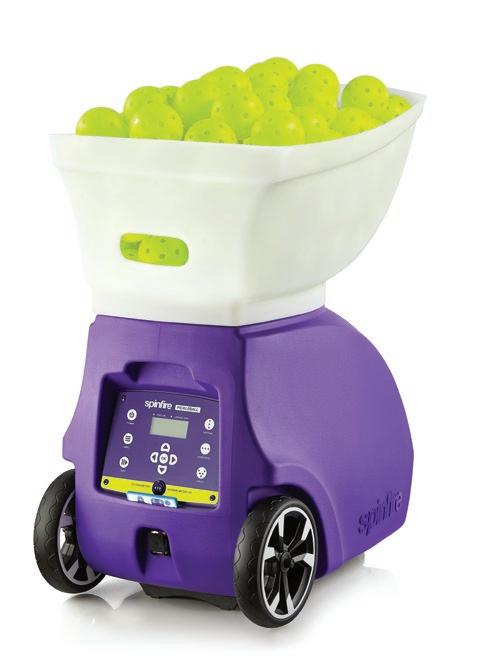

SPINFIREUSA.COM
The flagship Spinfire Pro 2 Tennis ($2,599) combines easy voice-controlled AI drill creation through the Spinfire app on iOS, Android and smartwatches with internal oscillation, fully customizable drills, adjustable spin, speeds up to 80 mph and a 150-ball capacity. The lightweight and easily maneuverable Spinfire Pro 2 Pickleball ($2,599) and Spinfire Pro 2 Padel Ball Machine ($2,599) deliver the same connected training experience in both battery and AC-powered configurations.
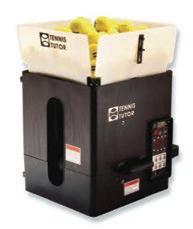
The full line of options for everyone, from beginners to the most advanced tennis, pickleball and padel players, is powered by portable battery-powered machines offering up to four hours of use on public courts to high-performance AC models for home courts and club use. Notable tennis models include the Tennis Tutor ProLite ($1,119) and the Tennis Tutor Plus Player ($2,039), which offers spin controls and a Player Mode to simulate an opposing player. Home courts can benefit from the Tennis Tower ($2,055) and Shotmaker Deluxe ($4,550), featuring a six-shot program and player simulation.
Pickleball models range from the key functions of the ultra-compact Pickleball Tutor Mini ($879) to the Pickleball Tutor Plus Ultra ($1,799), offering built-in pre-programmed shots and drills ranging from dinks to drop shots to drives and thrown with topspin, underspin or even side spin.
The newest additions to the line are the lightweight Padel Tutor Mini ($869) with all the basic features and the Padel Tutor ($1,545), which adds spin control, ball speeds up to 75 mph and greater battery capacity. Standard features on these and company ball machines include adjustable trajectory from groundstrokes to lobs, random oscillation, ball interval setting and simple battery recharging.
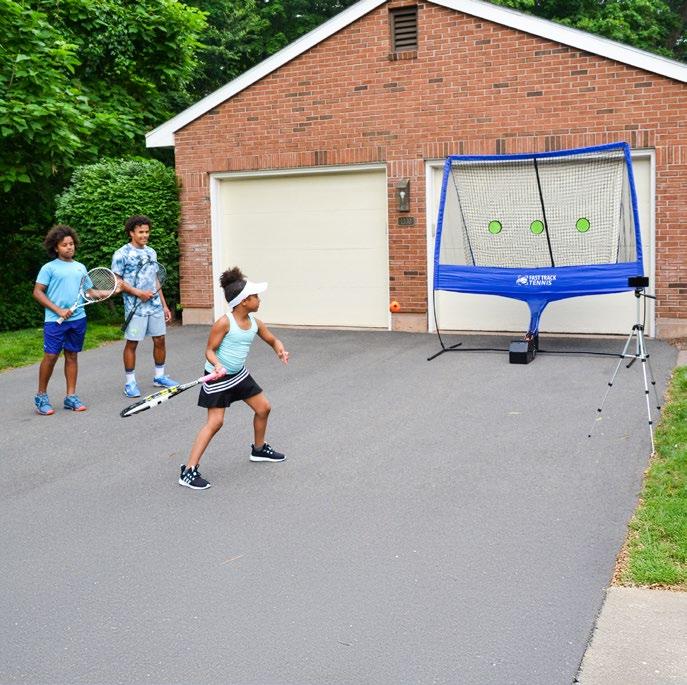
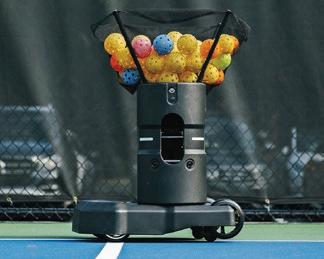
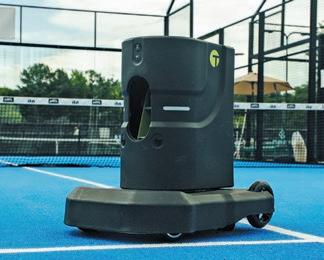
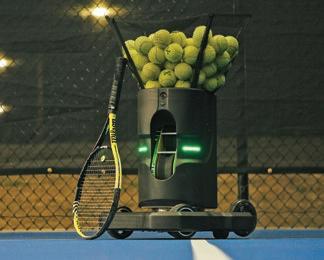

1,000+ feeds per hour. No wasted time picking up balls. Pair with FTT apps to learn, practice and play anytime anywhere.
The 35-pound Partner V2 ($2,245), endorsed by Donald Young, is a mobile platform delivering topspin and backspin at up to 3,000 rpm and flat shots at speeds ranging from 10 to 70 mph. The machine is adaptable to tennis, pickleball and padel, with AI-customizable drills, app-based programming, and a rechargeable battery offering up to five hours of play. Complementing each ball thrower is a Rover ($2,295) an AI-navigated ball-collecting machine that continuously gathers, so the hitting never stops to take on the tedious task of trekking about the court to herd balls back to the machine.
In
the rush to cash in on pickleball, make sure you do the research, planning and due diligence to set
up for success.
By Mary Helen Sprecher
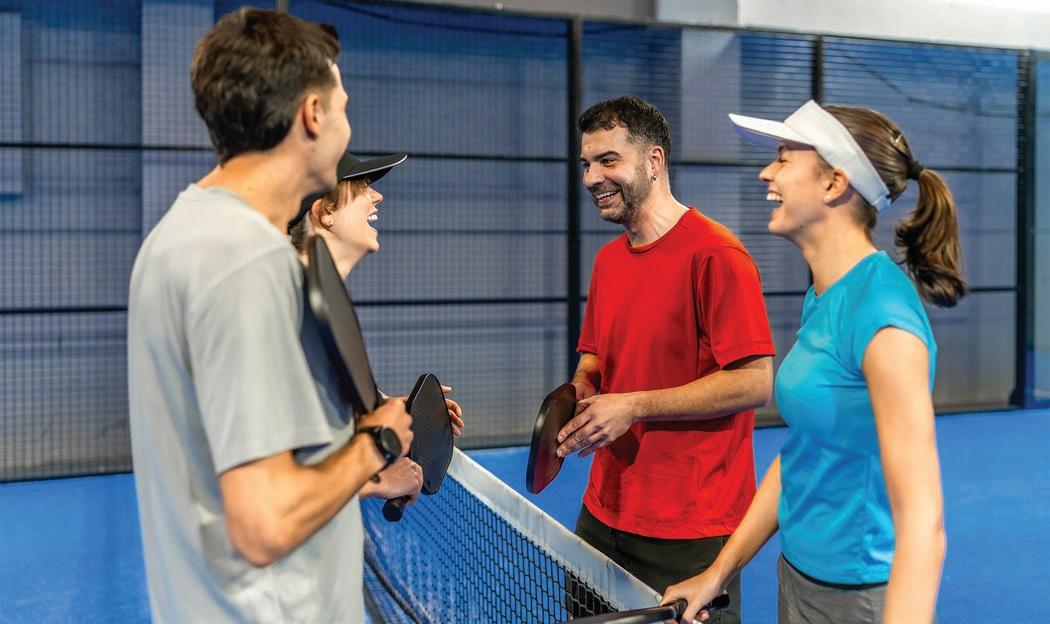
Pickleball went (very quickly) from being a fringe sport to a growing sport—then to the sport. But with that came a unique problem: Too few courts to handle the number of players, something that was noted in a survey by the Sports & Fitness Industry Association and DUPR.
Rushing to fill the need have been not just park & rec departments and private clubs, but a variety of franchise organizations using the “picklemall” concept of setting up clubs in big-box stores, warehouses and other retail spaces that are no longer operational, as well as those who recommend builds from the ground up.
Enormous growth in the franchise venue space has been propelled by organizations touting clubs as a slam-dunk investment with guaranteed ROI, as well as a high-profile place to host tournaments and championships.
Unfortunately, however, the cracks are starting to show in the marketplace because, as it turns out, if you build it, the players won’t necessarily come.
To Carl Schmits, USA Pickleball’s Chief Technical Officer, it’s a scenario eerily similar to that of the racquetball boom and bust that took place in the late 1970s and early 1980s. “Back then, we saw overbuilding and just an irrational exuberance,” Schmits notes. “These huge clubs were going in with dozens of courts. Then, the sport lost players and there were a lot of unused courts being converted to aerobics studios and weight rooms.”
USA Pickleball isn’t the only one paying attention. Franchise Inspector,
a resource for prospective investors, has also noted the issue—and emphasized that it’s not the sport that is the problem; it’s the business model.
“Pickleball as a sport is thriving,” a Franchise Inspector article notes.
“Pickleball franchises as investments remain largely unproven.”
Schmits agrees. “On the surface, it looks great, but it is an unverified business operation.”
In buying into a franchise (or even when putting up an independent club), buyers commit a significant amount of capital, often taking out loans and liquidating retirement funds in order to buy into the franchise, purchase equipment and set up courts.
However, if the club under-performs, the individual is out a substantial amount of money—something
never mentioned in the promotional process. “And a lot of people don’t understand the risk,” says Schmits.
Problems have already been noted by sports facility contractors who stop work when owners get behind on payments, having expected a fast startup and immediate ROI.
“I recently was hired by a franchisee of a large national pickleball brand to build out their facility,” said a court contractor who spoke on the condition of anonymity. “I was the second court builder that was brought on, since the first builder wasn’t paying their subcontractors. That first builder was suggested by and supported by the national franchise, which is now doing nothing to protect or help the franchisee.”
Meanwhile, the contractor notes,
the owner has a half-completed club and is being sued for non-payment by the last construction crew, while the bank is holding up any further payments. “The club owner is going to lose their entire fortune fighting this and the franchise has been silent the entire time—meanwhile promoting this contractor at other locations.”
In many cases, says Schmits, problems can be traced back to the planning stages—the most important part of the building process and the one that is most often overlooked in the rush to install. After noting a rapid proliferation in calls asking for information about planning and setting up courts, USA Pickleball

partnered with Ground Rule, which specializes in sports facility development and management.
A direct result of this partnership has been a suggested framework of questions that need to be answered and a process that should be followed before signing on the dotted line. “We have a questionnaire that helps us initiate the discovery process and allows us to have a meaningful conversation about the project,” Schmits says. “We ask them about their master plan and you’d be shocked—a lot of people don’t have one.”
Many pickleball facility business failures, Schmits notes, come down to a combination of factors:
Lack of Due Diligence: Often, wouldbe club managers, in the rush to sign onto what they see as a sure thing, don’t research the market carefully— if at all.
“You need to do a deep dive on your market,” Schmits says. “That includes a feasibility study: the potential economic impact, research into the demographics and research into your competition, meaning how many other facilities are within a reasonable drive. You have to know the market potential and you have to have a business plan.”
In many cases, competition will not take the form of other clubs, Schmits says; it will include places players can access without cost, such as those at the park and rec level.
“Someone may not want to purchase a 12-month membership if they live in an area with good weather most of the time, particularly if there is a place they can play free of charge. They may just decide to save their money and play in the winter with an extra layer of clothes on.”
Looking Only on the Bright Side: It’s easy to get caught up in the excitement of a booming sport. However, notes the anonymous sports contractor, it is equally important to have a well-rounded picture of the business prior to committing.
“If someone is buying into a franchise, they should check nonreferences. Don’t just call the owners
USA Pickleball often learns about courts where noise complaints have been lodged by neighbors because, as it turns out, no studies were done ahead of time.
that the franchise tells you are good references, dial other owners, other franchises, etc. Most franchisees may not want to speak out against their owners, but there is a lot to be learned from what they don’t say. And if people are afraid to speak, that is also a warning sign.”
Another tip: “No, there will not be 300 members signing up in the first month. Many clubs take six to 10 months to get that kind of membership.”
A Lack of the Whole Picture: Successful pickleball facilities require a holistic approach; one excellent reference can be found in the publication, Pickleball Courts: Construction & Maintenance Manual, which USA Pickleball co-publishes with the American Sports Builders Association (and available at www. sportsbuilders.org).
Lack of Site Investigation: A vacant big-box store that initially looks perfect for redevelopment may have problems with electrical systems, plumbing, mold, etc.—all of which will need to be addressed before the facility can be converted for use. The cost of those improvements must be borne by the club owner.
Additionally, notes Schmits, it is imperative to do an acoustic assessment prior to installing outdoor facilities. USA Pickleball often learns about courts where noise complaints have been lodged by neighbors because, as it turns out, no studies were done ahead of time.
Problems with Construction: Payment will need to be rendered to all contractors and subcontractors (those
working on the building itself, as well as those who are putting in the pickleball surface, nets and divider fencing and other amenities), according to the agreed-upon schedules. No builder or subcontractor will agree to put off being paid until the club starts making money.
Lack of Club Management Experience: Enthusiasm for, and even love of, pickleball is great—but, as they say, it doesn’t pay the bills. It also doesn’t create a knowledgeable club owner.
Successful club management demands specific expertise, not just of a specific sport but of all aspects of club operations: member recruitment (and retention), employee acquisition, management, insurance and bonding, payroll management, budgeting and financial management, and many other areas of competency. Teaching professional organizations such as the PTR/PPR and the RSPA, along with the Club Management Association of America, offer education and certifications in these areas.
“Passion alone won’t make a facility successful,” adds Schmits. “The homework needs to be done in advance. If it isn't done, the story ends with a whimper.”
But it doesn’t have to.
“Right now, we are in a period that is a lot like the Wild West,” notes Schmits, “which came along with the gold rush. The rules were loose and a lot of decisions were being driven by passion and greed, which led to a number of failures. There were, however, some people whose enterprises were very successful, but they were the ones whose decision-making was driven by not just passion, but also integrity and planning.”
LEGACY
Every one of us leaves a legacy in the relationships we create and are part of, every day.
By Pete Scales, Ph.D., RSPA, PTR, USTA Coaching
Ihave been thinking lately about legacy, what we leave behind. A lot of my colleagues, like me, are in their 70s and older. We’ve been teaching tennis and racquet sports for a long time. We are now in the legacy phase of our career.
As I write this, I’m battling a rare form of blood cancer I was diagnosed with out of the blue in February. Through complications with the chemo dose, I ended up spending 12 nights in the hospital, where doctors later told me it was touch and go. With my new treatment regimen, I’m now cautiously optimistic that the next few months will bring some sort of remission.
But all this has made me think a lot about the imprint we leave as our careers end, and about how we should be encouraging our newer or younger pros to start thinking about that early on— not wait until long into their careers.
Some of us may leave a more tangible legacy in the writing or speaking we do, or starting a racquet sports program for kids with special needs, or hosting annual fundraisers for our local food pantries, or, as my wife Martha and I have done, starting a small college scholarship fund for our high school tennis students.
Not everyone does that. But every one of us leaves a legacy in the relationships we create and are part of, every day. Our relationships with our students, their parents, and with our fellow pros and staff in our programs define who we are, and at the end of
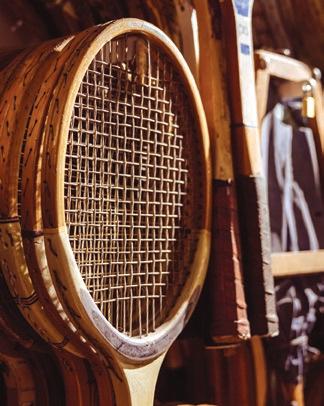
our careers, leave a lasting impression. I have mainly been a team coach, coaching high school tennis for 35 seasons (and I’m hoping for season 36 if this battle goes the right way). I’m sure there have been some students I didn’t make much of an impact with, but I’d say I’ve had a positive impact on the overwhelming majority of those I’ve taught and their families. That’s a legacy I feel proud of. But that hasn’t just happened. To build relationships that truly impact people’s lives, you need to be intentional, not casual. You need to show them you care for them. Most coaches and pros are by nature people who care about others. But you also need to give them the supports they need when they need them, challenge them
to stretch just the right amount at the right times, empower them to gradually become their own coaches and need you less, and connect them to people and opportunities in racquet sports that, without you, they wouldn’t otherwise have had.
Some relationships stand out, of course. As a team coach, I had favorite teams, and it was the relationships that made for those favorites. Often, it wasn’t only winning that defined my favorites; it was the effort, the learning and the great sports-person-ship under adversity that bonded us as a team. But in any moment, you know what my favorite team is? It’s the one I’m coaching now.
That’s legacy. I think my students will remember Compete-LearnHonor. That’s my legacy. Your legacy is how you treated your students, how what you did influenced who they were and are as both players on the court and full persons, human beings off the court. You have the privilege of having something to do with who they are today, and who they will become.
Mentor everyone you can, say yes whenever a younger pro asks to talk with you, always be available to connect with whomever wants to connect with you. Show them care, provide support, challenge and empower them, connect them with others. That’s legacy.
You don’t need a court named after you or articles or speeches. The influences you had on shaping who your students and colleagues become through the relationships you had with them will live on as your legacy. Start being intentional about it today.
Pete Scales is a developmental psychologist and creator of the CompeteLearn-Honor™ approach to coaching and person-player development (www. competelearnhonor.com). Coach Pete writes “The Bench” column for RSI. Contact him at coachpetementalgame@gmail.com.
We welcome opinions and comments. Email peter@acepublishinggroup.com.





I’m writing to share an update and, more importantly, offer reassurance as to the state of our association. The Board of Directors reached out to me and asked if I would come back to serve as interim CEO, as these are evolving times for the racquet sports industry. I accepted with a clear sense of responsibility and respect for this organization and the professionals it represents.
I want to acknowledge and thank Brian Dillman for his dedication and advocacy. His service to the RSPA and to the profession is sincerely appreciated.
My role during this period is to provide steadiness, continuity and guidance while the RSPA looks to the future. I’ve worked in the industry for a long time, and I previously served as CEO for the RSPA for 11 years. I’m confident in the strength of our collective voice and the enduring value of a professional home that puts standards and careers first.
Today, the RSPA remains focused on supporting you as a professional and strengthening the credibility of racquet sports. Our certifications, professional development and member services continue as planned, guided by the values that have earned trust for decades.
It’s an honor to serve you again. Thank you for the work you do every day and for the pride you bring to this profession.



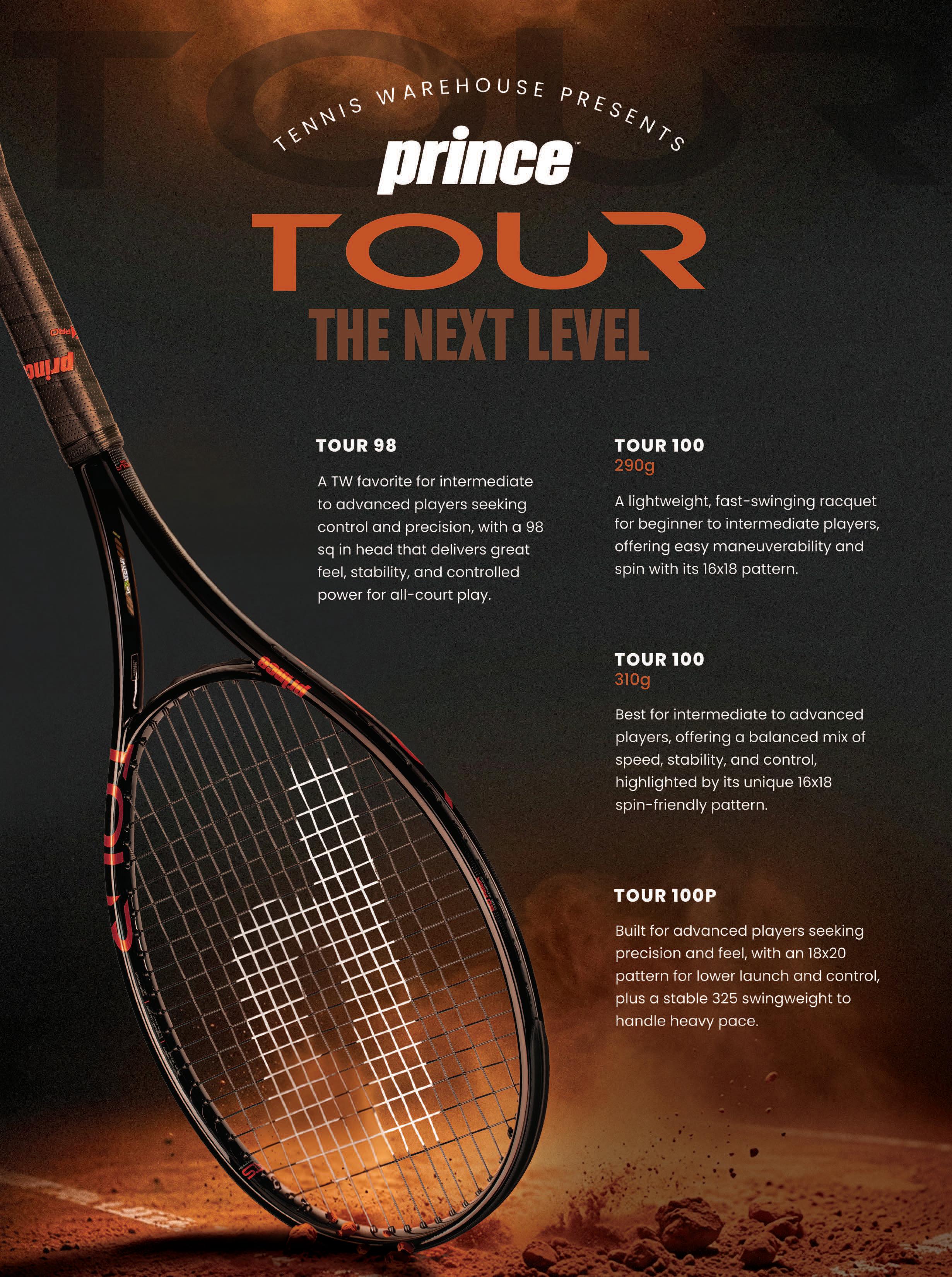


Scott Burton, RSPA Vice President
Iwas 37 years old, standing in the middle of a production nightmare that had already dragged on far too long. That afternoon, I was buried in calculations, trying to trace the source of an error on a project that had become increasingly frustrating. Line by line, number by number, I was attempting to make sense of something that, in the end, wasn’t even mine to begin with.
And that’s when it hit me.
I stopped and had a simple but uncomfortable thought: Do I really want to spend the rest of my career searching for other people’s mistakes—or carrying 100% of the responsibility when things go wrong?
On paper, my role as a manufacturing engineer checked all the right boxes. It was stable, technical and respected. And to be fair, there were parts of it I genuinely enjoyed—especially seeing a product come to life from a concept. There’s something deeply satisfying about watching an idea become reality.
But over time, I realized it wasn’t the work itself that wore me down—it was the environment surrounding it.
There was an ongoing sense that something wasn’t right. No matter what was accomplished, it never quite felt like enough. The energy in the room often leaned more toward frustration than fulfillment. Eventually, I found myself asking a much bigger question: If we only get one shot at this life, why spend most of our waking hours in an environ-
ment that drains us—surrounded by people we never would have chosen to share that time with? That question stayed with me.
Tennis had always been more than a hobby. I was a 4.5 tournament player who was deeply invested in improving—spending countless hours on the practice court, competing, learning and refining my game. Tennis challenged me in a way that felt constructive rather than draining. It demanded focus, discipline and patience, but it also gave something back in return.
Time on the court didn’t drag—it disappeared.
Around that time, one of my coaches said something that stayed with me:“Your people skills are really strong. People like you. Imagine if you could help them improve their tennis game.”
It wasn’t a grand moment, but it planted a seed.
That afternoon on the production floor forced me to connect everything. I realized I was investing most of my energy into an environment that drained me, while the thing that energized me—and now had the potential to positively impact others—was something I was keeping on the sidelines. Still, the doubts were real.
I was 37 years old. Most of the coaches I knew had played college tennis. I hadn’t. They had followed the traditional path; I hadn’t. I
couldn’t help but wonder: Am I already too late? Am I risking my financial future by starting over?
Fortunately, I didn’t make the decision alone. I had two mentors who believed in me—at times, more than I believed in myself. Their confidence gave me just enough courage to move forward.
So I committed.
I gave myself a 12-month window to begin the certification process through the United States Professional Tennis Association, now known as the Racquet Sports Professionals Association. I took a deep breath and went all in.
The transition didn’t happen overnight. For the next 13 years, I balanced two worlds—working my engineering career during the day while steadily building a future in tennis. It required patience, discipline, and persistence, especially during periods when progress felt painfully slow. But over time, something changed.
I wasn’t simply learning how to teach tennis—I was building a life that felt aligned with who I truly was. Working
in parks and recreation allowed me to connect with players of all ages and skill levels while becoming part of something larger than myself.
In 2010, I was invited to serve on the Southern California Board of the association. What began as a way to give back evolved into 16 years of service, including my final four years as Southern California Division president. I originally believed that chapter of volunteer leadership would mark the completion of my service to the organization. But once again, another door opened.
Recently, I accepted a position on the organization’s National Board of Directors as vice president. Serving at that level carries both tremendous responsibility and profound meaning. Board leadership helps shape the future and direction of the entire association, and I consider the opportunity one of the highest honors of my professional life. What started as a midlife career pivot has evolved into a journey far greater than I ever imagined when I first stepped onto this path.
I eventually stepped fully into tennis and founded Burton Tennis Company—a decision that was entirely my own. It wasn’t something I was told to do, nor was it part of any traditional roadmap. It was simply a choice I believed in deeply.
Now, as I mentor younger players and share my story, I can honestly say I’m proud of the difficult decisions I made during one of the lowest points in my life—and grateful that I had the courage to act.
What I found wasn’t just a new career. It was a new way of living.
Since committing fully to racquet sports, work no longer feels like work. It feels like a meaningful daily experience—something I care deeply about, something that continues to challenge me, and something that allows me to help others grow.
Over the years, I’ve come to think of life as a long hallway lined with doors. Some stay closed. Some we walk past out of fear or uncertainty. And some
require us to take a deep breath before turning the handle and stepping into the unknown.
Every meaningful chapter of my life came from opening one of those doors. Engineering was one. Tennis was another. Coaching, leadership, mentorship and service all waited behind doors I never originally planned to walk through. But each experience taught me something—not only about success, but about fulfillment, purpose, and who I wanted to become.
This journey has taught me that we rarely discover our purpose all at once. We find it by continuing to move forward, staying curious, and having the courage to explore what might exist on the other side of the next door.
The hallway is long. The possibilities are endless. My coaching tip to you… continue to open doors within the racquet’s profession. Continue to educate and keep energized! That’s what makes the journey worth taking.

Collin Brazan | RSPA Director of Marketing
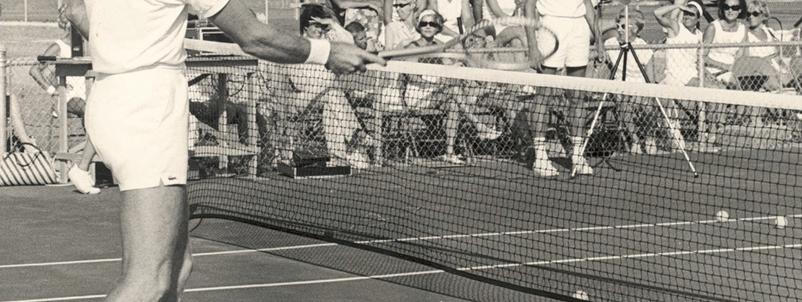
For more than seven decades, Ron Woods has been a steady and influential presence in tennis, earning him induction into the RSPA Hall of Fame. His journey began at age 12 on the courts of Corpus Christi, where early instruction in fundamentals and sportsmanship shaped a lifelong commitment to tennis. From those beginnings, Woods built a career rooted in teaching, service and leadership, impacting tennis at the local, sectional and national levels.
Throughout his career, Woods has served the sport in nearly every capacity imaginable. He has held leadership roles within the RSPA Texas Division, volunteered extensively across the industry and dedicated countless hours to growing programs and facilities for the benefit of the community. Just as important, he has spent decades on court with players of all ages and abilities, from beginners to nationally ranked juniors. His Hall of Fame induction recognizes a career defined by service, mentorship and a genuine love for tennis that brings people together.
Q: What Has Kept You Serving the Tennis Industry for So Long?
A: I want to give back. Even when I was directing programs, one of the things that just pleased me so much was to see people out there having fun. And watching people learn and grow with the game and just experiencing the joy of the game and being able to be involved with a sport that can have people get together, make new friends and socialize. I just love the sport because it has so much to offer.
Q: You’ve spent a lot of your volunteer time working with youth. What’s so special about this group?
A: It’s so gratifying to see them grow. I appreciate just being able to be on the court with them and work with them, as far as trying to develop their game, through their strokes and footwork, and their strategies.
Q: Is there a particular moment in your career where you really felt the impact you have on others?
A: I have so many, whether it be a kid I worked with who won State, or a 3.0 lady or a team I worked with that went to sectionals and did well. There’s no particular moment because I worked with so many people. And it’s not because of me that they achieved, it’s because of them. I was just an avenue for them to achieve more in life through tennis.

Q: How has your time with the RSPA enabled you to shape so many lives?
A: A lot of the programs I ran contained learnings from my peers. The association helped me grow, helped me get ideas to run my programs and educated me on how to do it better.
Q: What is the one takeaway you would like your fellow members to take from your career?
A: Serve with a purpose. When you’re running your programs, keep in mind who you are serving. Every person you run into is going to have a different slant as to how they want to absorb the game. You don’t give your customer what you think they want; you give them what they want. You’re serving them, and when you serve, you want to hit an ace.
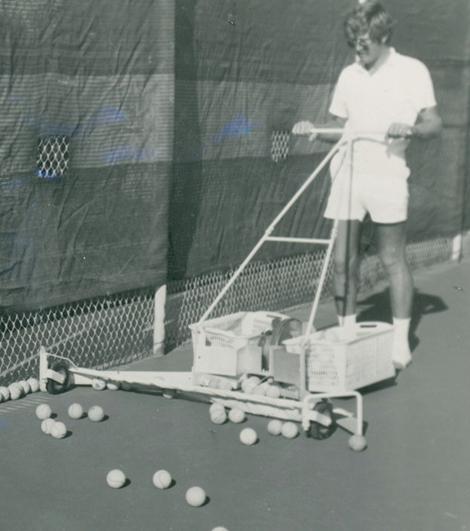

The Racquet Sports Professionals Association extends its deepest condolences on the passing of Dr. Jim Loehr, a world-renowned performance psychologist and a transformative figure in tennis and sport. Dr. Loehr was inducted into the RSPA Hall of Fame in recognition of his extraordinary impact on the game.
Dr. Loehr’s groundbreaking work in mental toughness and energy management shaped generations of coaches, players and leaders. Over more than three decades, his influence reached far beyond the court, impacting athletes across sports as well as professionals in business, medicine and the military.
Dr. Loehr worked with more than 17 number-one-ranked athletes and teams across professional tennis, golf, basketball, football, hockey, boxing, motorsport, and the Olympics. He authored 19 books,
including the co-authored bestseller “The Power of Full Engagement.”
Throughout his career, Dr. Loehr gave tirelessly to this community with his time, energy and innovative insights into mental training. His pioneering work inspired our members to become better coaches and better people. He cared deeply about this community, and in his Hall of Fame acceptance speech, he expressed sincere gratitude to all of you—his peers— for your support throughout his journey.
We extend our heartfelt sympathy to his family and to the many coaches, players and colleagues whose lives he influenced. His legacy will continue to guide our profession for generations to come.



Sportsfield Specialties, Inc. provides confidence and leadership in the manufacturing and sale of sports construction equipment for all levels. Let our sales team and industry partners assist you with the design, engineering, and installation of your next project. Our experience and expertise makes us the leader in sports construction equipment.


Introducing Sportsfield Specialties new line of PaDelhi™ Outdoor Panoramic & Indoor Full Panoramic Padel Court Systems proudly manufactured in the USA. Our Padel Court Systems feature an engineered design and user-friendly installation comprised of durable raw materials and high-quality manufacturing processes. Sportsfield’s PaDelhi™ Padel Court Systems incorporate everything needed for installation, including the structural posts with welded base plates, wire mesh frames, tempered glass panels, light posts/fixtures, posts/net, synthetic turf surfacing, and sand infill material.
Coming Soon: PaDelhi™ Outdoor & Indoor Base Plate Padel Court Systems
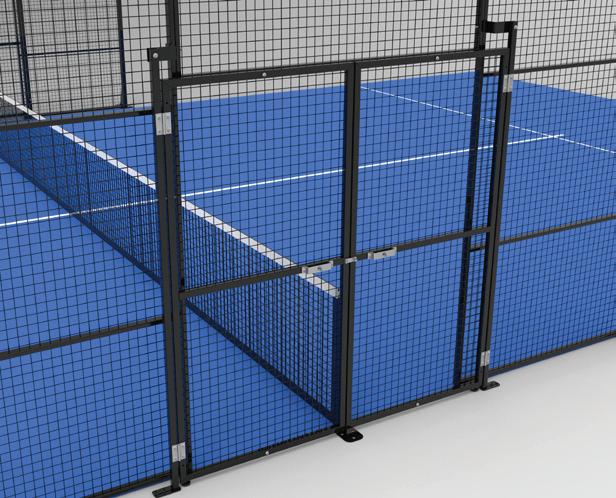
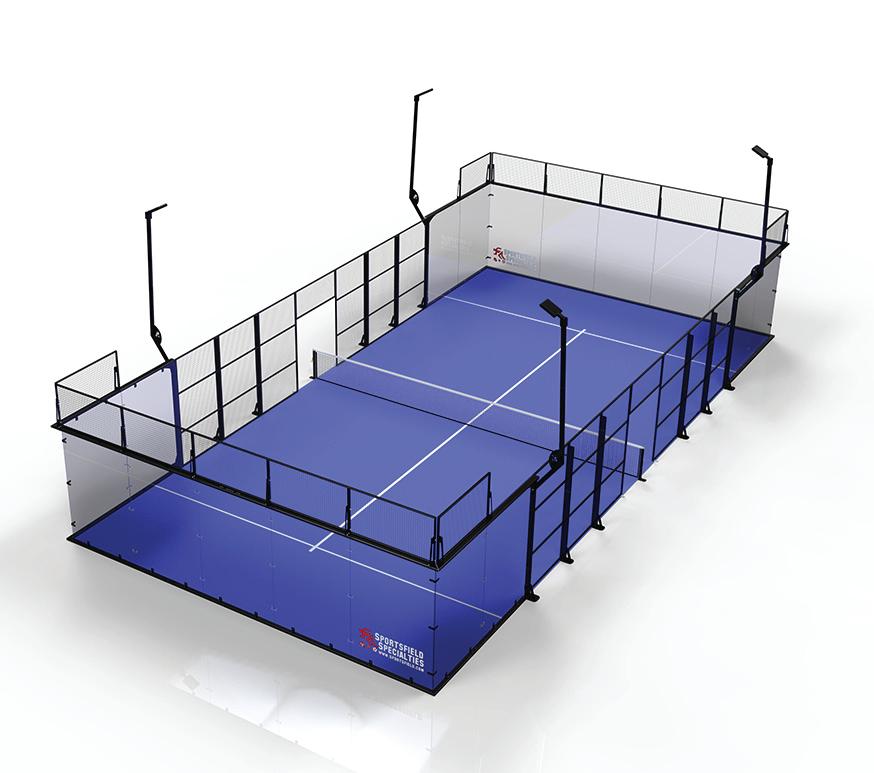

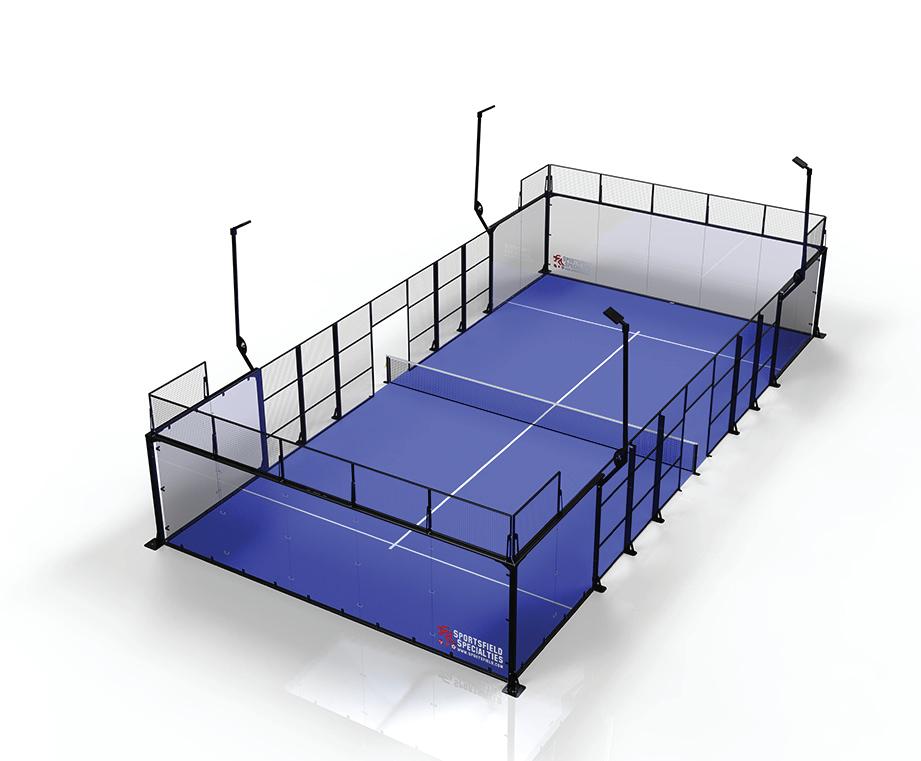
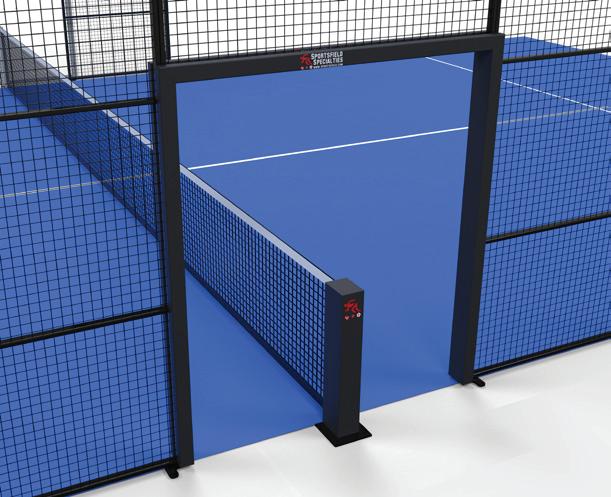

When the 2026 International Tennis Hall of Fame induction ceremony takes place in Newport, Rhode Island on August 29, devotees of the sport will be following the festivities with a sense of awe and reverence that is even more far reaching than usual. Switzerland’s redoubtable Roger Federer—an inimitably elegant craftsman and arguably the most universally popular player tennis has ever known—will cap his incomparable career by adding Hall of Fame membership to the multitude of honors he has already amassed, including 20 major singles crowns, 103 singles titles altogether and a record 237 consecutive weeks spent residing on the top the mountain at No. 1 in the world.
To be sure, Federer will stir a reservoir of emotions among those assembled in Newport—and millions of others all over the planet—when he delivers what will inevitably be a speech observers everywhere remember for the rest of their lives.
But the fact remains that Federer will be joined in Newport by another illustrious individual who is also thoroughly worthy of Hall of Fame status. Moreover, she is one of the few people who could share a stage with the larger than life Federer and not be overwhelmed or obscured. I am referring, of course, to none other than Mary Carillo of the United States. She will be enshrined as a contributor and the way I look at it that label fits her exceedingly well.

I have known Carillo since 1977, the year she claimed her highest honor as a player. She captured the French Open mixed doubles title that spring alongside John McEnroe. The two left-handers had a blast in the process of securing that Grand Slam title in Paris, and the game’s insiders took note of Mary right then and there. She kept distinguishing herself on the court in the ensuing years during a brief career, playing until 1980, rising to a singles peak ranking at No. 33, competing with an exuberance few of her peers could equal. Slender and swashbuckling in such an appealing way, Carillo was an entertaining performer who refused to take herself too seriously yet simultaneously revered the professionalism of the seasoned veterans she was competing against.
Carillo’s brittle knees, however, were the enemies of her aspirations, forcing her to conclude her playing days in her early twenties. But fate intervening in that fashion was the best thing that ever happened to her. Even before she quit competing, Carillo got a taste of how she could flourish as a commentator and it was unmistakably a match made in heaven. Once she devoted herself
wholeheartedly to broadcasting, Carillo swiftly discovered the affinity she had for that forum. Meanwhile, the tennis public found in Carillo a fresh and distinctive voice they had been waiting to hear. She brought supreme originality to her craft, mixing a natural sense of humor with sharp insights, poking fun at herself while painting portraits of the players that were loaded with authenticity and intelligence.
Carillo has long been busy behind the microphone, turning into a superstar in her field. By the middle of the 1980s, her prominence was fully established and her credentials were unassailable. She started her rapid ascent by providing color commentary on women’s tournaments alongside Al Trautwig for USA Network in the early eighties, gaining valuable experience week after week, growing more comfortable with every passing telecast. In decade after decade ever since, from her early twenties into her late sixties, Carillo has made her presence known to the point where she became ubiquitous.
Carillo’s extraordinary wit and wisdom have always been the twin motors of her success, enabling her to make an


impact on a wide range of networks including NBC, HBO, CBS, ESPN, NBC, TNT and Tennis Channel. She has done outstanding commentary at all four major tournaments in the game of tennis and what has strikingly set her apart has been an unwavering commitment to journalism on the air. Carillo is not simply an announcer interpreting why particular players are succeeding or failing, but more so she is a reporter giving the viewers a larger sense of what is happening on the periphery which might later clarify the central course of events on the court. She shows up for her telecasts fully prepared, armed with background material culled on her own which she releases at opportune moments to enlighten the viewers from a unique perspective.
Through the years and over the decades, Carillo has done it all as a tennis broadcaster of the front rank, but her talent as an announcer transcends the sport she loves more than any other. She has covered no fewer than 17 Olympic Games, and has contributed mightily to the highly regarded “Real Sports” on HBO. She has been a popular host and co-host at the Westminster Kennel Club and National Dog Shows, and has even co-authored three books.
The diversity of her endeavors has allowed Carillo to explore the full boundaries of her potential, and it is appropriate that she has been the
recipient of six Emmy and three Peabody awards. To say that she has been prolific would be a serious understatement, but the quantity of her work is considerably less important than the quality. That has been apparent all along her scintillating journey through the broadcasting world. Another strength of Carillo’s is her adaptability. No matter who is sitting alongside her in the booth, she seems to bring out the best in them. Among the many luminaries with whom she has joined forces at major venues is, of course, John McEnroe. By the early 1990s, Carillo had branched out to call men’s matches as well those contested by the women, and her skills have been every bit as impressive in that capacity.

In the mid-1980s, I had the good fortune to work with Carillo and the late Bud Collins as a commentator for Madison Square Garden Network at the Virginia Slims Championships in New York’s fabled Madison Square Garden. She was the ultimate professional, brilliant and buoyant when analyzing the action,


congenial and amusing when she interviewed the players on court afterwards. As a colleague, she made me feel entirely comfortable and at home, teasing me about my photographic memory, always treating me and all of her colleagues as equals. She viewed herself quite simply as one of us.
I am eagerly anticipating going to Newport in late August to witness this singular celebration. Irrefutably, Roger Federer will be embraced affectionately by the fans on that auspicious occasion for a sterling career as a sportsman of the highest order and a shot maker nonpareil. He will be lauded for being a singularly transcendent modern champion who has inspired general sports fans immeasurably and made them appreciate tennis more effusively than they ever could have imagined.
But I am certain that an exhilarated Mary Carillo will stand up on that stage proudly alongside Federer, knowing that she fully deserves her Hall of Fame honor. She has been the most masterful communicator on tennis of her time, and the feeling grows that her speech in Newport will be a character defining moment as well as the capstone of her career. I wouldn’t miss it for the world.
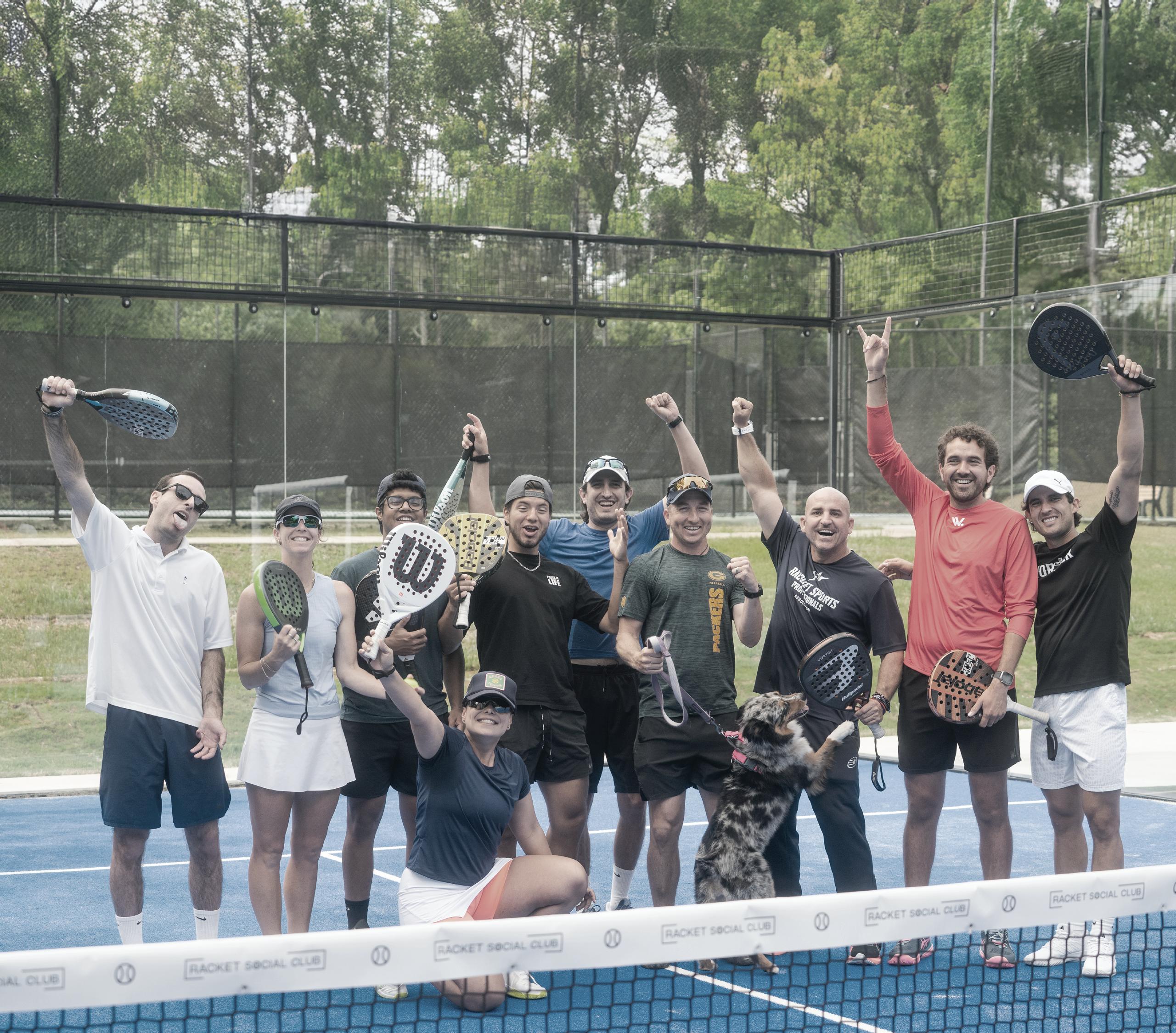




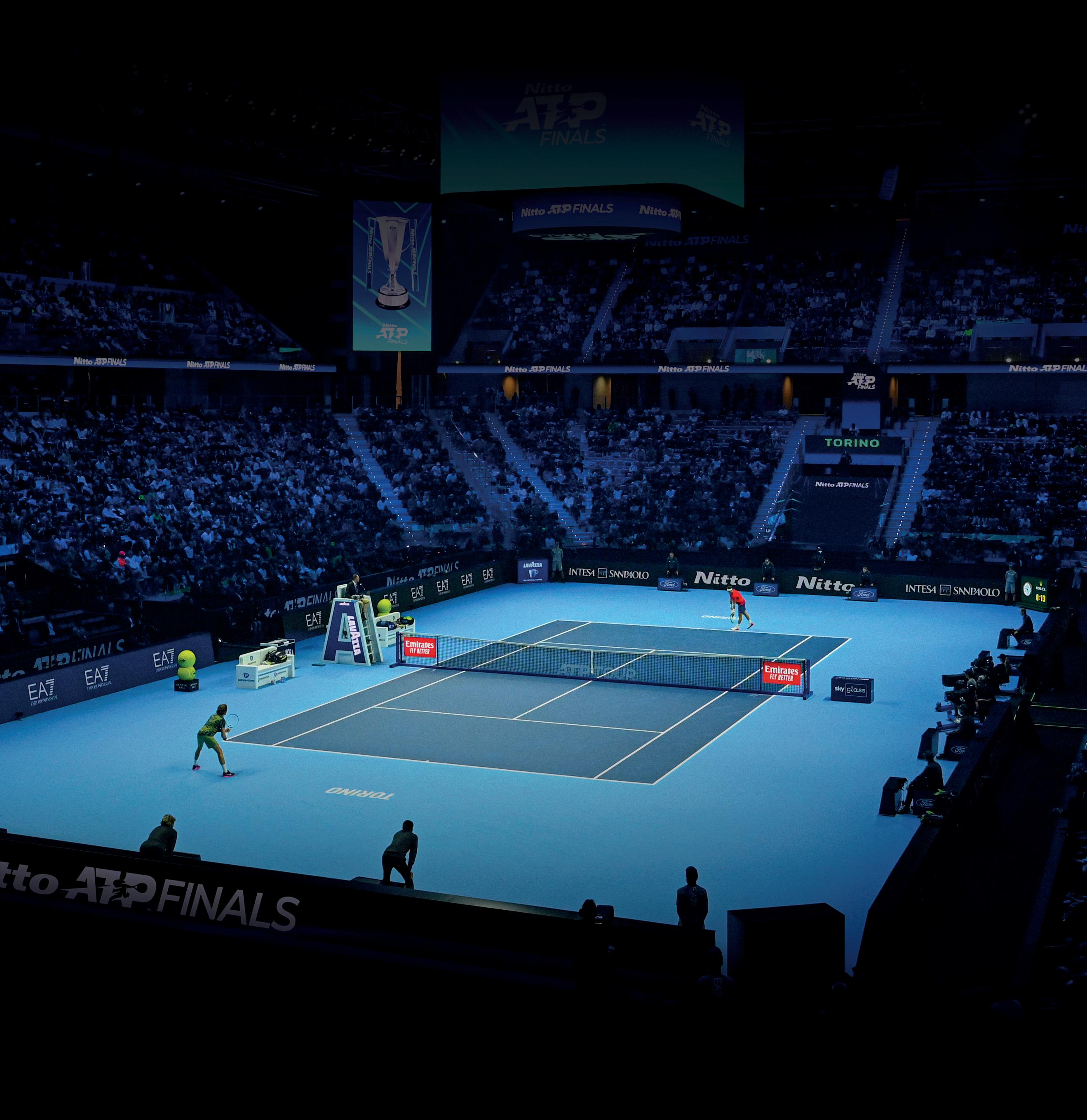
OFFICIAL BALL OF RSPA TENNIS COACHING




RECYCLABLE PAPER LID MADE FROM 30% RECYCLED PLASTIC
Linda Gordon | RSPA Director of Membership

Racquet sports grow because people invite others in.
A coach encourages an as sistant to get certified. A director points a colleague toward professional resources. A facility leader helps a prom ising instructor find a clear path forward. Careers in this industry rarely start in isolation.
The RSPA’s Refer & Earn program exists to support the reality that many of our careers start with a connection. It gives members a simple, practical way to grow their professional network, strengthen the sport and offset the cost of membership and key resources along the way.
Most racquet sports professionals already refer colleagues informally. You share advice. You answer questions. You point people in the right direction. Refer and Earn simply recognizes that effort and gives it structure.
When you refer a colleague who applies for certification or membership, you receive a $50 credit you can use with the RSPA. That reward can be used to help make membership renewal and oth er professional resources more affordable.

President. Mark Faber
First Vice President Kevin Theos
Vice Presidents ..Molly Card-Beckmann, Jenny Gray, Milos Vasovic, Mel McRee and Scott Burton
Immediate Past President Trish Faulkner
Interim CEO & Contributing Editor John R. Embree Legal Counsel George Parnell
Referral rewards can be applied toward:
• Membership renewal
• Education and certification resources
• Other key professional tools offered through the RSPA
The program is not a one‑time incen tive. It is an ongoing way to reduce friction and make long‑term participation more sustainable.
At the same time, the colleague you re fer gains access to a clear, credible pathway into the profession. They are not guessing where to start but rather stepping into a community.
Strong professional networks are built over time through trust.
Refer & Earn helps you grow your net work intentionally by:
• Bringing qualified professionals into your local and national community
• Strengthening the talent pool at facilities and divisions you care about
• Creating more connections across sports, roles and regions Every referral adds another profession al who understands the expectations of the industry and contributes to its credibility. Over time, that strengthens opportunities for everyone.
The quality of the racquet sports experience depends on the people delivering it. Coaches, instructors and directors shape how players learn, how pro grams operate and how facilities succeed.
By referring colleagues into certification and membership pathways, you help raise the standard of the profession. You help ensure that those entering the field are sup ported and educated rather than navigating it alone.
Refer & Earn fits naturally into ev eryday conversations. It does not require sales language or extra effort. You might refer:
• An assistant coach ready to take the next step
• A colleague expanding into a new sport
• A facility staff member looking for formal credentials
• A peer who wants stronger profes sional support
If you are already having those conversations, you are already doing the work. You should get credit for it! All you have to do is ask the prospective member to list your name when filling out their RSPA application. Racquet sports have always ad vanced through people helping people. Referral keeps that tradition alive while supporting modern career paths and your professional needs.
Whether you are early in your career or decades in, your role in shaping the profession matters. The colleagues you bring in today influence the quality, stability and credibility of the industry tomorrow.