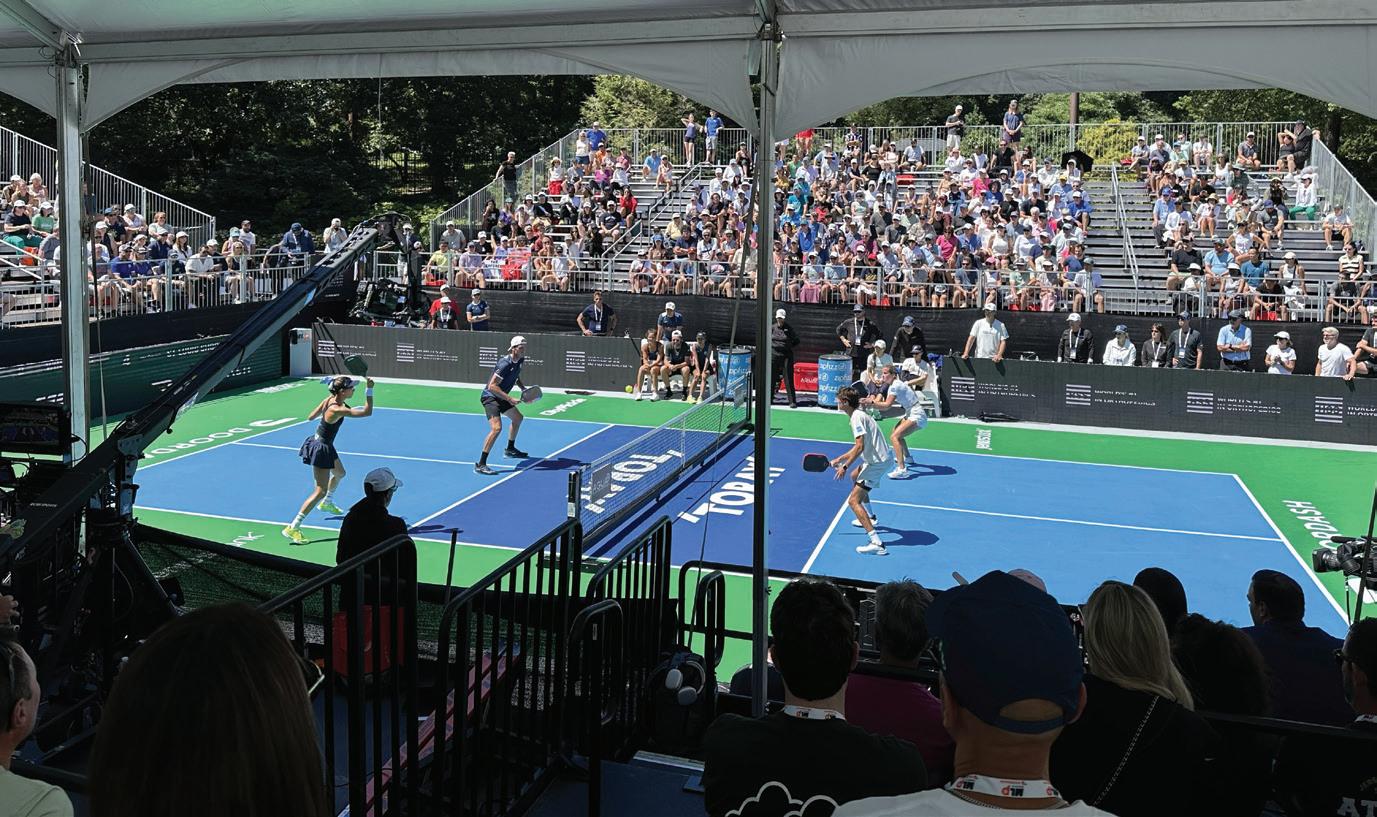
Our Champions of Pickleball push the sport forward
A powerful new event is helping drive tennis engagement
2026 / Volume 54 / Number 4 /$5.00
Portable court surfaces are bringing flexibility to facilities
Tennis Australia’s Craig Tiley tapped as new USTA CEO CONSTRUCTION
GAINING
Great Gains!
2026 TENNIS PARTICIPATION STUDY
IndustryNews
Information to help you run your business
USTA Appoints Craig Tiley as Chief Executive Officer
In a much-anticipated move, the USTA has named Craig Tiley, the accomplished Chief Executive Officer of Tennis Australia, as its next CEO. Industry watchers had speculated for months that Tiley, who earlier in his tennis career had spent an extensive time working in the U.S., was at the top of the list of candidates.
Widely recognized for driving growth in tennis participation in Australia, Tiley’s distinguished career spans successful leadership in col-
this process, our top priority was identifying the right leader to accelerate participation growth and help us achieve our goal of 35 million players by 2035,” said USTA Board Chair and interim Co-CEO Brian Vahaly. “Craig brings a rare combination of global credibility at the highest level of the sport and a proven commitment to growing the game at the grassroots. As we look to fully leverage the power of the US Open as a platform for inspiration
legiate coaching, running community tennis, and administration of the Australian Open. He will formally assume his responsibilities as USTA CEO in the coming months as he continues to work with Tennis Australia to ensure a smooth transition of leadership.
“From the very beginning of
and growth, Craig’s leadership and understanding of the entire tennis ecosystem will be invaluable.”
Tiley added, “I am truly honored to step into the role of CEO of the USTA later this year. I’ve long admired the organization’s leadership in growing the game across the United States and the extraordinary success of the
US Open. Tennis has shaped my life— personally and professionally—and having begun my tennis journey in the U.S. as an NCAA championship coach, this opportunity feels like a full-circle moment. I’m excited to return to American tennis and to work alongside our leadership locally and nationally to continue building the sport’s reach, impact and future.”
A native of South Africa, Tiley has a deep history in American tennis.
As the head coach of the University of Illinois men’s tennis team from 1994 to 2005, he guided the team to an NCAA Division I National Championship in 2003 with a 32–0 record. Tiley was twice named Wilson/ITA Division I National Coach of the Year and was inducted into the ITA Men’s Collegiate Tennis Hall of Fame. Tiley volunteered with USTA National and the USTA Midwest Section.
He also has led grassroots tennis growth in Australia; in 2025, the sport had 8.3 percent growth, more than any other sport in that country. Tennis is second only to soccer in terms of participation Down Under. Over the last five years, online court bookings in Australia tripled and overall participation grew by 30 percent. Coach membership grew 44 percent over the last five years and female coaches grew by 60 percent, now representing 33 percent of the total coaching workforce in Australia.
As CEO of Tennis Australia since 2013 and Australian Open Tournament Director since 2006, Tiley has been a globally recognized champion for innovation and playerfirst initiatives. Under his leadership, the Australian Open continually broke attendance and revenue records, becoming one of the world’s most innovative and successful global sporting events.
Craig Tiley
Mike
Reed
Joins
AT
Sports as Faultline Div. Manager
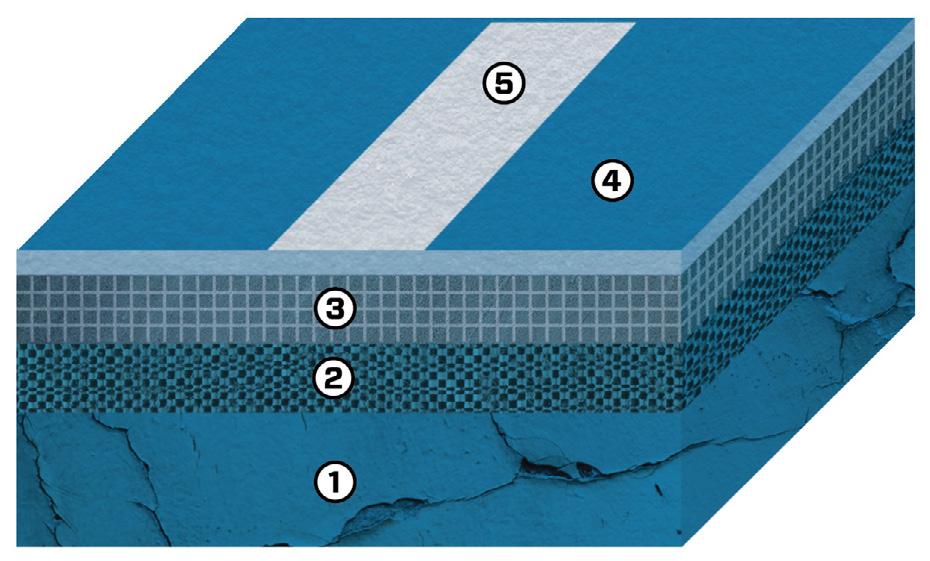
Mike Reed is the new manager for the Faultline Division of AT Sports, specializing in structural crack repair and long-term surface solutions. The Faultline product line includes the Faultline Crack Repair Kit, SB Glue, Sport Patch, Fill-N-Fix, Crack Filler Repair, and Fiberglass and Polyester/ Polyfiber Systems.
“AT Sports is a turnkey provider of everything needed to prep, fix, repair, paint and equip your court projects,” says Reed, who brings more than 18 years of experience in the sport surface and court repair industry. “My goal is to ensure you have the most effective and dependable solutions available through the Faultline product line to help you deliver high-quality, lasting results for your customers.”
Visit ATSports.com or contact mike@atsports.com
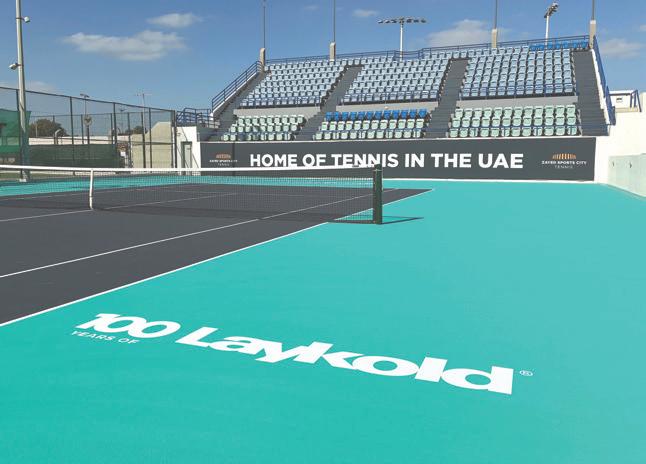
Laykold Begins Its Centenary Year Transforming the Sport
The earliest known reference to Laykold as a tennis court surface dates back to 1926, and over the past century the brand, which is the official surface of the US Open, has played a transformative role
in the development, global spread and success of tennis. The first hard courts of the 1920s borrowed technology from road surfacing.
Manufacturers developed cold-pour asphalt, literally “laid cold,” marking the beginning of Laykold and the modern hard court. Over the next 100 years, generations of legendary players competed and trained on Laykold surfaces.
In 1935, Don Budge and Bobby Riggs contested the final of the Pacific Coast Tennis Championships on Laykold at Berkeley Park. Fifty years later, in 1985, the first-ever Lipton International Players Championships women’s final featured Martina Navratilova and Chris Evert. Forty years on, the 2025 US Open, also played on Laykold, was won by Aryna Sabalenka and Carlos Alcaraz.
By removing the cost, maintenance burden and seasonality associated with grass and clay, Laykold lowered the barrier to entry for players world-
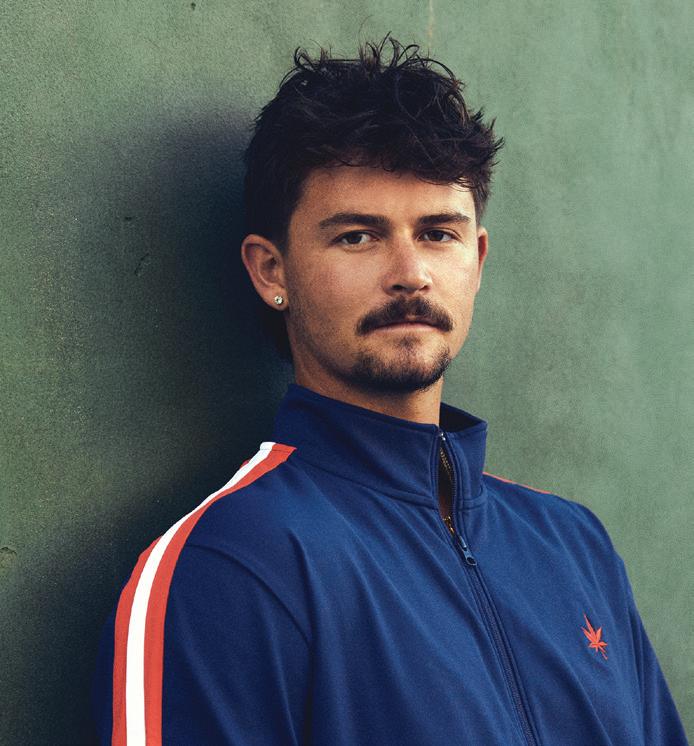
Boast Apparel Signs U.S. Player JJ Wolf
Apparel brand Boast has signed American tennis standout JJ Wolf. The company says Wolf, known for his intense on-court presence, relentless determination, and modern edge, embodies the company’s ethos—"confidence without compromise, performance with personality, and just the right dose of unpredictability.”
Raised in Cincinnati, Wolf rose through the ranks as an Ohio State Buckeye, earning Big Ten Tennis Athlete of the Year honors in 2019, the same year he turned professional. In February 2023, Wolf reached a careerhigh ATP singles ranking of World No. 39, punctuated by a breakthrough run at the 2023 Australian Open, where he advanced to the fourth round. Now, after recovering from injury and beginning a new chapter with a new coach, Wolf is focused on returning to peak form, building momentum, and energizing crowds with his distinctive style of play.
JJ Wolf
wide. This shift helped democratize the sport and accelerate its global expansion. Without hard courts, tennis would likely have remained a niche sport confined to private clubs. Today, Laykold is the surface of choice for leading tennis events around the world, including the US Open, Miami Open, BNP Paribas Open at Indian Wells, Abu Dhabi Open, Wuhan Open, Mexican Open, and numerous ATP, WTA and ITF tournaments globally. Visit laykold.com.
Florida ‘Pickle-Brawl’ Results In Injuries, Couples’ Arrest
Law enforcement officials were summoned to the Spruce Creek Country Club in Port Orange, Fla., on Feb. 8 when a fight broke out on the pickleball court, involving up to 20 people, according to the Volusia County Sheriff’s Office.
Officials say several people sustained injuries, including a 70-year-old man, and a Forida couple was arrested after witnesses said the pickleball match became contentious when a 63-year-old player, Anthony Sapienza, accused his opponent of stepping into the kitchen on a volley. According to an affidavit, the teams exchanged insults before Sapienza punched one of the victims and hit him in the face with a paddle. Sapienza and his wife, Julianne Sapienza, were arrested after the incident, with a court date set for early March.
USRSA Names New Certification Tester
The newest certification tester for the U.S. Racquet Stringers Association is Myong Yong Koo of South Korea, who is the first Korean to be certified as a USRSA Master Racquet Technician. Myong has more than 37 years of experience in coaching and racquet technology and is an RSPA Elite Professional and PTR Professional. He's served as an official stringer for major events including the WTA Korea Open and Davis Cup. A prominent influencer, he manages a leading YouTube tennis academy.
Short Sets
Celebrate tennis and fitness during National Hit to Be Fit (HTBF) Weekend, May 15 to 17, aligned with National Tennis Month. This will be the third year recognizing Hit to Be Fit, with the event expanding from one day to a full weekend. USTA Cardio Tennis Consultant Michele Krause is looking to have at least 300 sites around the country engaged in HTBF, with a flagship event at the USTA National Campus. For more information, visit www.cardiotennisinstructor.com.
The latest innovation from Sports Interiors is the Wireless Lighting Control System, powered by Lutron, designed to work seamlessly with the company’s LED lighting solutions. Sports Interiors says with the system, users can easily adjust brightness, save energy and enhance the player experience. Visit SportsInteriors.com.
K-Swiss provided more than 600 shoes for the 2026 BNP Paribas Open in Indian Wells in March, as ball persons were outfitted with the new Hypercourt Express 3. K-Swiss also is collaborating with Lululemon’s top athletes, as the brand marked its first year as the official apparel outfitter for the BNP Paribas Open.
ESPN’s coverage of the 2026 Australian Open across ESPN, ESPN2 and the ESPN App was up 29 percent yearover-year, ranking as the most-viewed Australian Open on ESPN since 2020. All key demos experienced growth, including women (+23%) and young adults 18-34 (+61%).
CourtsApp, the first AI-powered court marketplace for racquet and paddle sports, is the “official guest booking partner” for the National Pickleball Center in Naples, Fla., home to the US Open Pickleball Championships. With 65 courts in East Naples Community Park, the venue will host the 10th Annual US Open April 11-18.
A new paddle sport now played in 16 countries is “Padel Pingpong,” invented in Sweden in 2020. It’s basically table tennis played either as doubles or singles inside a glass-walled court, in which the ball can rebound off the
walls. It uses a larger ball, higher net, a shorter, round-edged table and drop-shaped paddles. Take a look at padelpingpong.com.
Vilnius, Lithuania, will host the 2026 IBTA World Blind Tennis Championships Aug. 23-29 at the SEB Arena, an ITF-certified National Training Center that is the largest indoor tennis complex in Central Europe. Blind Tennis Lithuania (Blind Sport Ltd.) has been selected to organize the 2026 event. Visit internationalblindtennis.org.
Centerline Athletics LLC has been named an Official Apparel Partner for the 2026 season of INTENNSE pro events. The company will outfit INTENNSE pro players, coaches and league stakeholders in Centerline performance apparel across the 2026 and 2027 seasons, and will include co-branded merchandise available for fans.
Cliff Drysdale Tennis will manage the tennis operations at the refurbished Grove Isle Racquet & Yacht Club, on the exclusive island of Grove Isle in Miami’s Coconut Grove neighborhood. Cliff Drysdale Tennis also is managing operations at the rebranded Racquet Social Club at Windward Lake in Alpharetta, Ga., formerly the Windward Lake Club.
The Association of Pickleball Players has announced a partnership with ISDIN as the official sun care partner of the APP Tour, bringing its skincare products to pickleball players and spectators at APP Tour events.
The Pro Padel League, with 10 professional padel teams across the U.S., Canada and Mexico, has launched PPL II, a new player development initiative designed to identify, support and elevate the next generation of PPL players for North America–based talent. The new league will feature 10 pairings, four regular season events across North America, guaranteed compensation and prize money totaling more than $350,000. Visit ProPadelLeague2.komo.site.
The Vasco Group has acquired Schubert Tennis, a leading asphalt and clay tennis, pickleball, and multi-sport court services provider headquartered in Cincinnati.
PRESIDENT/PUBLISHER JOHN HANNA
MANAGING DIRECTOR ROBYN SOBELSON
EDITOR PETER FRANCESCONI peter@acepublishinggroup.com
MANAGING EDITOR CORY SEKINE-PETTITE
ART DIRECTOR GARON HART
PRODUCTION MANAGER MEGAN WILLIS mwillis@nspmag.com
SPECIAL CONTRIBUTOR BOB PATTERSON
CONTRIBUTING EDITORS KIM BASTABLE, CYNTHIA CANTRELL, PEG CONNOR, JOE DINOFFER, JUDY LEAND, GREG MORAN, KENT OSWALD, CYNTHIA SHERMAN, MARY HELEN SPRECHER, JOE TEDINO
CONTRIBUTING PHOTOGRAPHER DAVID KENAS
CIRCULATION MANAGER AMY FINE afine@nspmag.com
RACQUET SPORTS INDUSTRY 9040 Roswell Rd., Suite 210 Atlanta, GA 30350
ADVERTISING DIRECTOR JOHN HANNA jhanna@nspmag.com/770-650-1102, x125
ADVERTISING EXECUTIVES SHERRY GASAWAY JENNIFER GONZALEZ
Racquet Sports Industry is published 10 times per year: monthly, January through August, with combined issues in September/October and November/December, by New South Publishing, Inc., 9040 Roswell Road, Suite 210, Atlanta, GA 30350. Periodicals postage paid in Atlanta, GA and additional mailing offices (USPS# 004-354). April 2026, Volume 54, Number 4, (C) copyright 2026 by New South Publishing, Inc.
All rights reserved. Racquet Sports Industry, RSI and the logo are trademarks of New South Publishing, Inc. Printed in the U.S.A. Yearly subscriptions $25 in the US, $50+ elsewhere. Postmaster: Send address changes to Racquet Sports Industry, 9040 Roswell Road, Suite 210, Atlanta, GA 30350. Racquet Sports Industry is the official magazine of the USRSA, RIRG and ASBA. Looking for back issues of Racquet Sports Industry? Visit the archives at our website at TennisIndustryMag. com for free digital versions.
UF Launches New Format for Director of Racquet Sports
The University of Florida has launched a new, more accessible format for its Director of Racquet Sports (DORS) curriculum, designed to meet the realities of today’s industry but still fully online and self-paced.
Curriculum has been restructured into two focused courses, lowering the initial cost. Course 1 focuses on “Facilities, Operations, and Marketing in the Era of Multiple Racquet Sports,” while Course 2 addresses “Leadership, Management and Finances for the Racquets Leader.”
Faculty includes UF Director Kim Bastable, industry consultant Doug Cash and former Lifetime VP Ajay Pant. The DORS curriculum is the only course recognized by RSPA, PTR and USTA Coaching as the industry’s most comprehensive academic business and leadership credential. Each course is $1,295, with a $100 discount on Course 1 available
by using code: EQUIPME.
UF has also introduced Personal Brand Management for the Racquets Industry, a practical course designed to help professionals position themselves for career advancement, which concludes with each student receiving a private consulting session with search professional Len Simard. Tuition is $285, using discount code WELCOME40. Visit www.UF-DORS.com
K-Swiss Names Sales Force Moves During 60th Year
K-Swiss has named Dustin Perry as Head of Sales–U.S. Performance for footwear and apparel, as the brand celebrates its 60th anniversary and continues the evolution of its sales organization nationwide. A former All-American tennis player, Perry brings more than 25 years of experience, including 12 years in the tennis industry with Prince Racquet Sports, followed by 13 years leading Oakley’s
Global Military wholesale business.
In addition, the brand has added Elizabeth Shaw to cover Texas, Arkansas, Louisiana and Oklahoma, and Kevin Klabunde to lead Arizona, Southern California, Utah and Southern Nevada. Shaw brings extensive retail and wholesale experience, including time as a buyer for Neiman Marcus, and most recently built a top-performing territory with Lucky in Love. Klabunde brings more than 25 years of experience across tennis and pickleball.
Additionally, veteran representatives Lisa English expanded into North Carolina and portions of South Carolina, while Dave Wahlgren expanded into Virginia, West Virginia, Delaware and Maryland.
USPA Launches Platform for Tournament Management
The U.S. Padel Association (USPA) has launched a comprehensive Tournament Management System,
developed in partnership with Tournated and World Padel Rating (WPR). The USPA now offers a unified web platform and mobile app that brings together all USPAsanctioned tournaments, automated player rankings and streamlined tournament operations.
The new platform replaces outdated manual processes with automated systems that make it easier for players to compete, organizers to run events, and clubs to grow the sport in their communities.
Tournated has been adopted by over 100 governing bodies globally, including national sports federations and Olympic committees, with more than 40 organizations in racquet sports alone. Tournated’s platform allows USPA to preserve its brand, manage its data and provide a unified digital experience for all stakeholders—players, clubs, tournament organizers and fans— through one official system. For more, email info@padelusa.org.
AT Sports Named Official Surface Provider for PPR
AT Sports is the official surface provider for the Professional Pickleball Registry. Through this partnership, AT Sports will support the PPR’s mission to educate and certify pickleball teaching professionals by providing industryleading surface expertise and innovation.
“Pickleball is evolving quickly, and so are the expectations around performance, safety and consistency,” says Tracy Lynch, Vice President of Business Development at AT Sports.
“Partnering with PPR allows us to work directly with the teaching professionals, leaders and governing bodies of the game to enhance the overall playing experience. We’re excited to share our knowledge, support their programs and help elevate the playing experience for players everywhere.”
The partnership will include AT
Sports’ involvement across PPR educational events, conferences and digital platforms around the world in an effort to help instructors and facility decision-makers better understand how surface selection impacts playability, ball response and athlete performance.
SafeSport Releases Results Of National Coaches Survey
The U.S. Center for SafeSport recently released the results of the organization’s first-ever "National Coaches Survey: Building Safer Sport Together." Recognizing the importance of coaches and instructors within sport ecosystems, the survey gathered coaches’ perspectives and experiences related to abuse and misconduct as well as coach satisfaction, burnout, and norms and behaviors. Nearly 3,500 coaches and instructors responded to the survey, which was administered at the end of 2025.
The survey found that 92% of
coaches agreed that coaching has had a positive impact on their lives, and—marking current perceptions among survey takers—76% of coaches felt confident that concerns raised about athlete safety would be appropriately addressed by their sport organization.
On the other hand, coaches noted incidents of abuse and misconduct directed at them and at athletes:
• 46% of coaches said that while coaching, they had at some point been the target of verbal harassment or abuse.
• 56% of coaches who experienced verbal harassment or abuse while coaching indicated that the source of the mistreatment was most often parents of athletes.
• 46% of coaches were aware of other coaches within the last five years shouting at an athlete in a frightening, threatening or belittling manner.
• Additionally, 35% of coaches
stated that barriers to implementing and upholding athlete safety policy were related to organizational communication, fairness and mistrust.
USA Pickleball Announces Grow the Game Grants
USA Pickleball, through its charitable arm, USA Pickleball Serves, has announced the latest Grow the Game Grant awardees, supporting schools, parks and recreation departments, and community organizations working to introduce pickleball to new and underserved audiences across the country. This round of Grow the Game Grants is expected to impact more than 44,000 individuals.
“Through USA Pickleball Serves, we’re not just growing the sport, we’re investing in communities, creating access points for young players and first-time participants, and ensuring pickleball continues
to be inclusive, welcoming and impactful nationwide,” says USA Pickleball CMO Jose Moreno. The USA Pickleball Serves Grow the Game Grant awards equipment bundles to schools and community organizations that are launching or sustaining pickleball programs and expanding access to the sport. Visit usapickleball.org/serves.
Federer HOF Induction Sells Out in 2 Minutes
The International Tennis Hall of Fame induction ceremony for Roger Federer in August sold out in two minutes after tickets went on sale in February. Federer will be inducted Aug. 29 along with broadcaster Mary Carillo. In addition to the 900 tickets originally available for the ceremony on the Horseshoe Court, the Hall will open its 3,600-seat stadium for a watch party—and all 4,500 tickets were gone in two minutes.
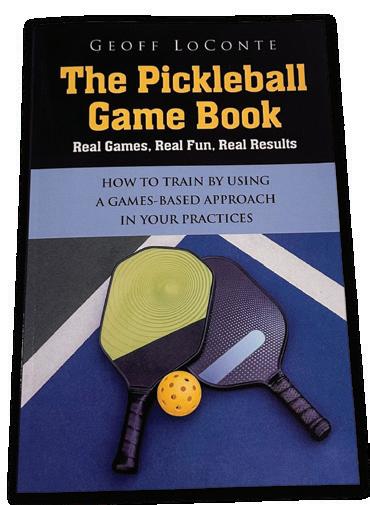
Educator, Coach Releases ‘Pickleball Game Book’
Author Geoff LoConte’s new book, “The Pickleball Game Book: Real Games, Real Fun, Real Results,” is a comprehensive guide designed to help readers bring their pickleball skills to the next level. LoConte, who has a background in education, has received coaching certifications in all the major accredited coaching organizations, including RSPA, PTR, PPR, IPTPA. He is also the Head Coach Developer for Pickleball for the RSPA Eastern Division, and has worked with all levels and ages of players. The book is at bookstores or online at the Apple iTunes store, Amazon, or Barnes and Noble.
APP Humana Cup Sets 2026 Tour for Pros 50+
The Association of Pickleball Players and Humana Inc. have announced the 2026 event calendar for the Humana Cup, a season-long team competition for professionals aged 50 and older. Humana is the official healthcare partner of the APP Tour.
“We are thrilled to bring another season of Humana Cup to the APP’s competitive landscape,” said APP Founder Ken Herrmann. “We are grateful for the support of our terrific partners at Humana, who join us in showcasing some of the world’s best and most experienced players in pickleball history.”
Now entering its third full season, the Humana Cup is the first-of-itskind season-long team competition format exclusively for professional pickleball players in two divisions: Champions (50 and older) and Masters (60 and older). The 2026 Humana Cup will take place over seven APP Tour events: Seattle (March 26-29), Cincinnati (June 11-14), Chicago (July 23-26), Detroit (Aug. 20-23), Louisville (Oct. 15-18), Arizona (Nov. 12-15) and the APP Tour Championships (Dec. 3-6).
OnCourt OffCourt Offers Serve Stand Training Aid
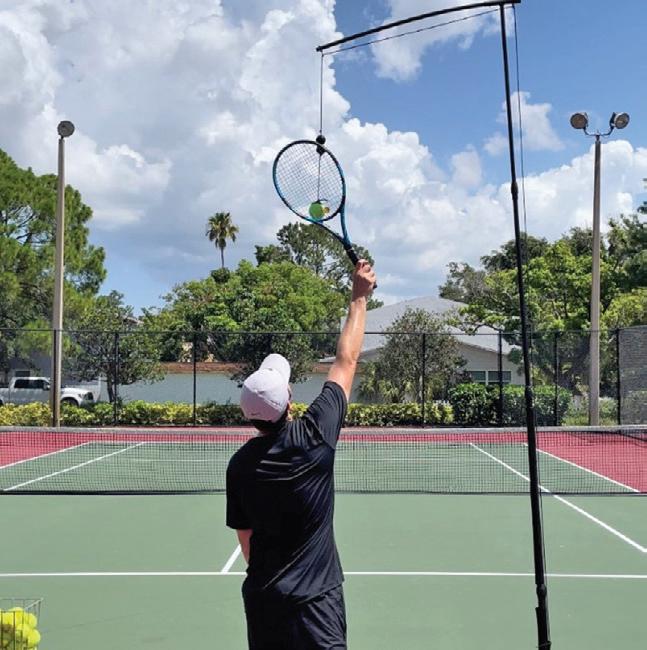
The latest tennis training aid from OnCourt OffCourt is the Serve Stand, developed in partnership with Online Tennis Instruction. It’s designed for players of all skill levels, both for solo training and coaching sessions. Suggested retail is $199.95. Contact 1-888-366-4717 or visit www. OnCourtOffCourt.com
People Watch
ESPN has reached a multi-year deal with 2003 US Open champion and former World No. 1 Andy Roddick, who will serve as an analyst for both match and studio coverage. Roddick, who retired in 2012 from professional tennis, will join ESPN’s tennis commentator roster just prior to Wimbledon.
Forbes featured Billie Jean King on its Innovator 250 List, a celebration of “the business leaders, founders and entrepreneurs who aren’t just inventors, but have transformed entire industries and created new ones."
Picklebalm, a topical analgesic formulated for pickleball players, announced a partnership with Kate Fahey, the No. 2-ranked women’s singles professional pickleball player. The collaboration marks a significant milestone in Picklebalm’s expanding athlete roster, which now includes both Fahey and Hunter Johnson, the No. 1-ranked men’s singles player.
Agassi Sports Entertainment Corp., a sports entertainment and innovation company focused on racquet sports, has announced that George Mackin has joined the Company as a strategic consultant. Mackin is a former managing partner of the Tennis Media Company.
The Bench
When Not to Coach
Your students need to know when not to hit the ball, and you need to know when to let them figure it out for themselves.
By Coach Pete Scales, Ph.D. RSPA, PTR, USTA Coaching
We coaches and pros spend most of our time teaching students how to hit the ball, how to strategize and compete with this or that style player, how to use efficient footwork and move to the right positions on the court, etc. We spend a lot of time telling our students things.
But one of the hardest skills to strengthen is to help students think for themselves, and a sub-skill within that, when not to hit the ball. Developing those skills calls on coaches and pros to also learn to do more observing and less talking, knowing when not to coach, especially during matches or games.
Let’s start with players first. The two most important moments for players to learn to say no to hitting the ball are during the serve, and in response to a hard-hit mid-court drive from their opponent.
SAY NO TO BAD TOSSES!
I can’t put a number on how many times over 35 seasons of high school tennis coaching and individual lessons that I’ve tried to help my players to be more disciplined about not hitting ineffective tosses. If the toss is the most important part of the service motion, then students need to get more picky about which tosses they hit and which they catch (and then reset with a good, deep breath and start their service motion again).
This is not merely a physical skill— it is a mental one. We have a time limit—20 to 25 seconds in tennis depending on the league you’re playing in, and 10 seconds after the score has been called in pickleball, more or less—so there is some inherent pressure that keeps us from being able to try 10 ineffective tosses before deciding to hit one.
Even people who are blissfully unaware of how many seconds they have can also feel social pressure to get on with the serve already— how many errant tosses can you do before your opponent starts getting impatient? None of us wants to look like a jerk out there. So all these mental pressures are part of what helps propel us to hitting tosses we at some level know are not great tosses.
I tell players they have time for up to three tosses and that they have all the time in the world to be deliberate and picky about it. This is not entirely true, of course, but it seems to relax them.
In practices and lessons, we take as many tosses as it takes to get a good one, but then we talk about why each of the rejected tosses was not going to lead to an effective serve. We talk about proper grip on the ball, the straight arm, use of the knees on the toss, when to release the ball, where the eyes should be looking, how high it should be, how far to the right or left, how far into the court. This is all to help players get a deeper mental and physical understanding of how to put the tossed ball where it needs to be, so they can feel what an effective toss feels like in mind and body.
Spend more time like this, helping
students say no to ineffective tosses, and their serve quality will noticeably improve.
SAY NO TO OUT BALLS!
This skill is important in both tennis and pickleball, but is even more critical in pickleball, where the shorter court means a lot of hard-hit balls from mid-court are going to fly long. The adage, “If it’s high, let it fly,” is still a nice shorthand rule. If it’s coming at you fast around head level, and you’re mid-court to kitchen line in pickleball, or mid-transition zone to service line in tennis, there is a good chance that ball is going out. Have students stand in those court positions and you or another student fire a variety of hard-hit balls. They have to call “in” or “out” and hit the proper shot if they think it will be “in.”
In tennis, balls hit on an even higher trajectory and going deep, including loopers and deep lobs, are
often balls players have a hard time judging, mainly because they simply haven’t practiced reacting to them enough. When you know players have hit a ball that almost certainly was going long, ask them to tell you, was that ball going to land in or out? Repeated questioning like that helps them develop better ball recognition skills, as do traditional exercises like seeing how far away they can see the brand name or number on the incoming ball.
Another tactic that helps is, as soon as they see a high and deep ball coming, have them practice the footwork for getting far back behind the ball, behind the baseline if they need to. It’s much easier to judge whether the ball is going out or staying in if you’re well behind it.
SAY
LESS!
One of the hardest skills for coaches or pros to learn, if they are game-day
Pros and coaches need to have the mindset that we are helping students be their own coaches
coaches, is when to shut up and just let their players figure it out. After all, we know a lot, so we have a lot to share.
As I grew as a teaching pro, I learned to say less and demonstrate more in practices, and let my players struggle longer in matches, instead of jumping in too quickly to give them strategy or tactical advice. Pros and coaches need to have the mindset that we are helping students be their own coaches. When we ask them a lot of questions during practices and lessons—instead of giving them the answers—we set the stage for increasing our students’ skill at making in-match decisions on the fly, being their own coaches.
Freeze play after a point ends and ask questions like: What was your purpose for that shot? What were you trying to accomplish with that play? What was your reason for moving there, or not moving? What’s your opponent doing that’s hurting you? What are you doing that’s hurting your opponent? Did you have any other
options than the shot you took?
Of course, in practice and lessons we want to correct ineffective technique, but even then, we also want to emphasize shot selection and purpose, and give students more opportunities to make those tactical and strategic decisions on their own. The better students understand technically and strategically, the more we need to hold back on match or game days, I think, and give them the chance to make more adjustments on their own.
Knowing when to say no to hitting the ball, and when to hold back at least temporarily from offering coaching advice, are critical skills for players and coaches/pros that most of us could spend a lot more time on. If we do, our players’ games will significantly improve.
Coach Pete is a developmental psychologist known internationally for his work in promoting positive
youth development, and the creator of the acclaimed Compete-LearnHonor™ approach to coaching and person-player development, that places effort, learning and character above winning as goals in youth sports (www.competelearnhonor.com). A certified tennis teaching professional by three credentialing bodies, he has been a boys’ and girls’ tennis coach at Parkway South High School in Missouri for 35 seasons, and has been published in industry and consumer outlets. In addition to his column for Racquet Sports Industry, he is a regular mental game columnist for the National Alliance for Youth Sports. His award-winning books for coaches, parents, and students on CompeteLearn-Honor and the mental and emotional game in sports are available on Amazon.
Have a question for Coach Pete? Email him at coachpetementalgame.com and put “The Bench” in the subject line.
Court Installation
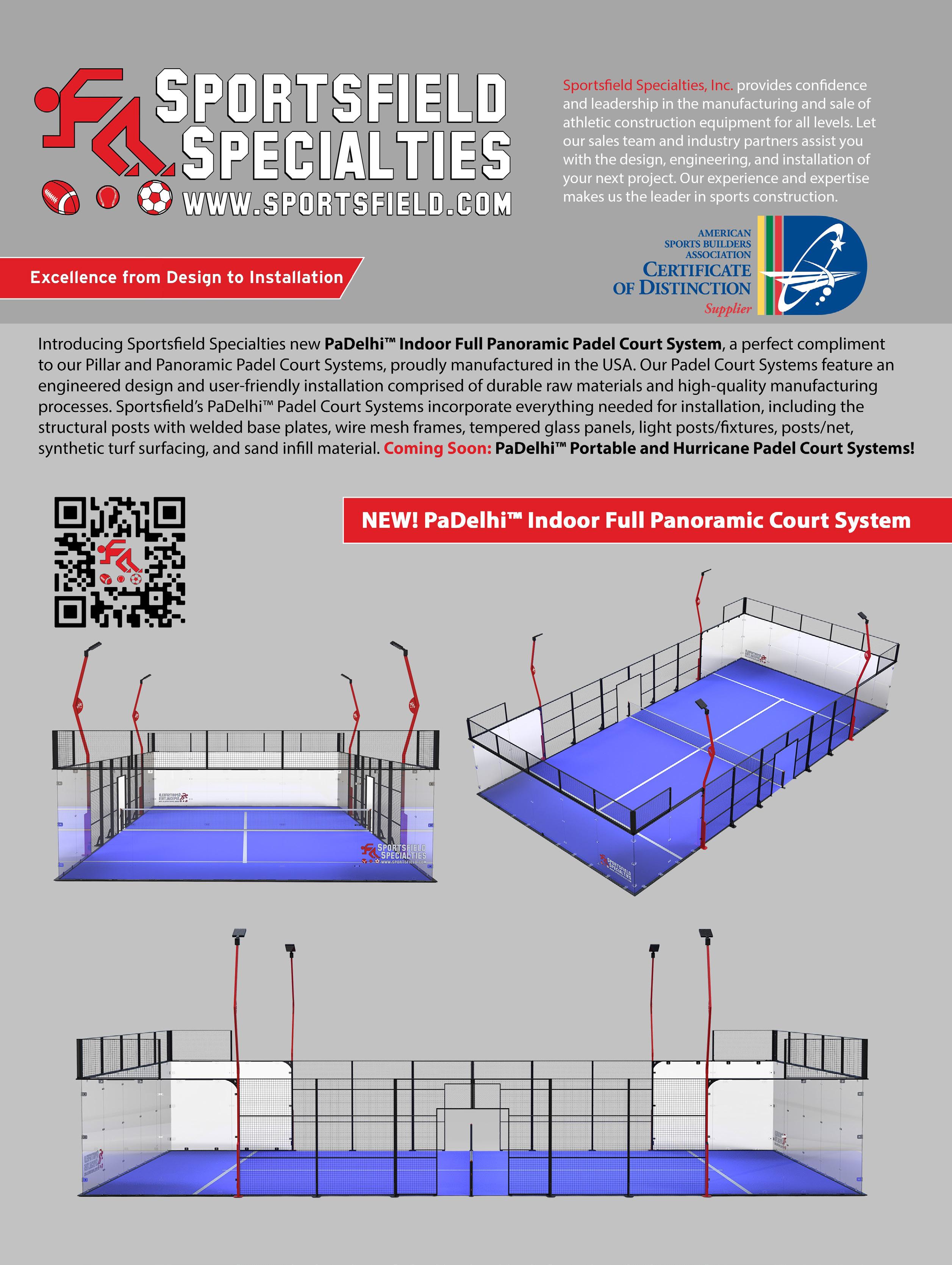
PADEL COURTS
Building Blocks?
The acceleration of padel court construction is bringing up some key considerations for installers and owners.
By Mary Helen Sprecher
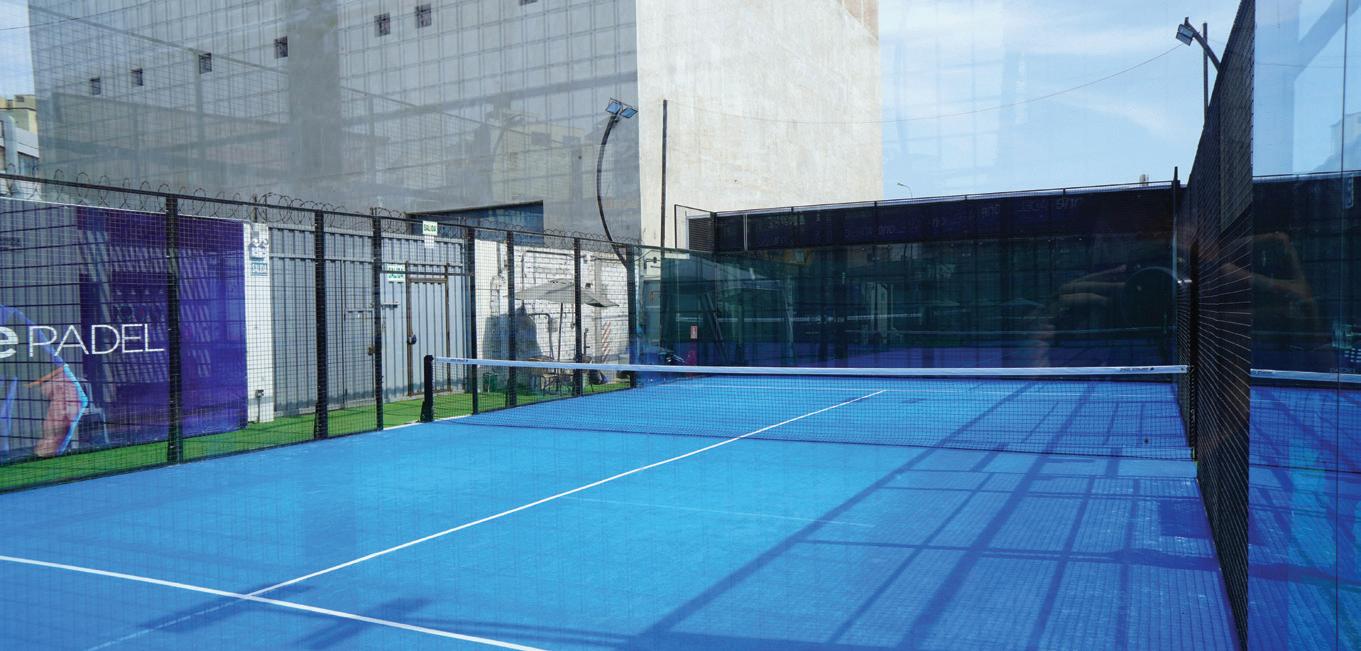
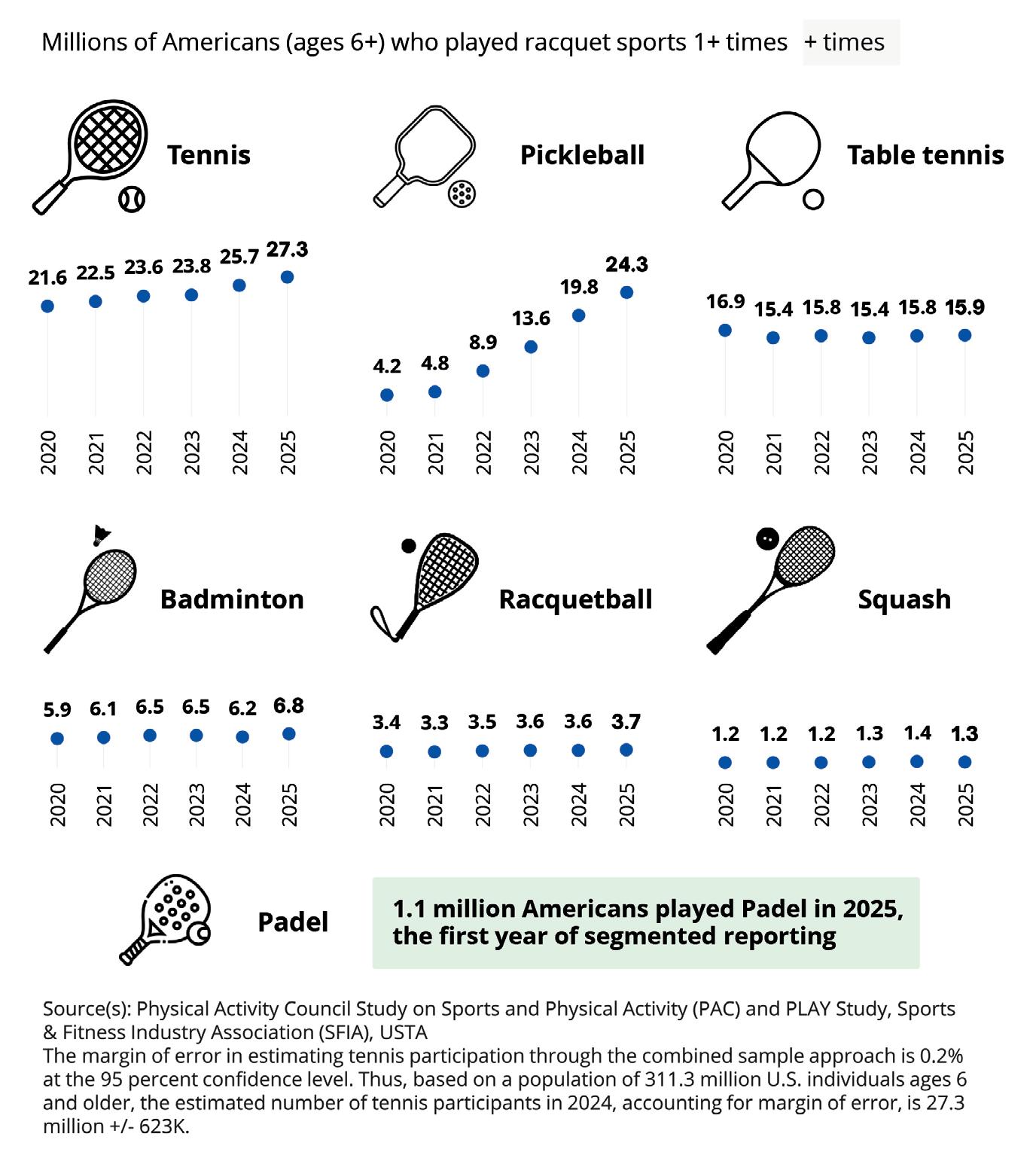
Padel is being heralded as the up-and-coming court sport in the U.S. In fact, according to a report by the International Padel Federation, Florida has emerged as the fastestgrowing market for padel, followed by Texas, California and New York. And while it does not even approach the number of tennis courts (or pickleball courts, for that matter), the acceleration is good news.
Part of the need for a skilled sportspecific contractor is the sheer logistics of the job. The glass panels can weigh in excess of 400 pounds each (and a court kit generally contains more than a dozen panels of glass).
Last fall in England, while a court was being assembled by college students, an accident resulted in the deaths of two men and a third sustaining catastrophic injuries. In this case, an attempt to save money
There are headwinds to this growth, however, and paradoxically, they are caused by that very same acceleration: In the rush to add new courts, owners are forgoing some key considerations:
Skilled Installation: Courts arrive in kit form but installation should never be considered a D-I-Y job. Using skilled court contractors is absolutely necessary to build a structurally sound base, to assemble the court itself and to secure it to the base. (Should courts come with lighting, an electrical contractor will also be required.)
came at a terrible cost. That incident, along with others where injuries and problems came as the result of inexpert work, has led to the Sport and Play Contractors Association (SAPCA) issuing a statement against “installing in haste.”
Often, the practice of using unskilled labor to build sports facilities results in substandard construction, such as a tennis court built to incorrect dimensions or a pickleball court with birdbaths that collect water each time it rains. That problem is exacerbated by the fact that general internet searches often result in inaccurate information.
Environmental Considerations: The sound made by padel games in progress is a frequent source of complaints. Another concern is the fact that the glass panels present an ecological hazard, as evidenced by multiple bird strikes.
“We put up a court in October for a client in Maine,” says Northeast Padel’s Eric Loftus. “Unfortunately, that’s migration season and they called to tell us birds were dropping like flies. The owner bought some bird-safe decals and that took care of the problem.”
A variety of decals can be purchased inexpensively online and installed on the exterior of the glass walls of the court; these are visible to birds but do not interfere with either the player or spectator experience.
Other environmental concerns have to do with courts that are lighted for night play, which can present a hazard to local wildlife. Environmental assessments performed prior to court installation can help to identify and mitigate potential problems; however, these steps are sometimes forgotten.
Permitting: Another problem (not limited to padel facilities but certainly noticeable there) is that in the rush to install courts, the permitting process is being overlooked, if not outright sidestepped. One such incident unfolded recently in Palm Beach County, Fla., when two residents made headlines for trying to get local officials to grant a permit for their court—after it had gone up.
According to contractors, if owners pay attention to these and other considerations, such as good base construction and the fact that courts chosen should be engineered to handle local wind loads, facilities are likely to be a success, and to provide a positive experience for players.
The publication, Padel Courts: Installation & Maintenance Manual, can be purchased from the American Sports Builders Association’s website, www. sportsbuilders.org
Teaching Pros
CAREERS
Critical Information
A long-term, comprehensive USTA-UF study is aimed at creating a sustainable, rewarding career path in the racquets industry.
By Kim Bastable
Every teaching professional knows this reality: Courts are full and participation numbers look strong.
Yet clubs, parks, schools and academies quietly struggle to answer a much harder question: Who will be coaching five years from now?
Tennis has long relied on passion to fuel its workforce. Coaches love the game. They love teaching. They love the relationships. But passion
grounds and a love for the sport.
The question is: Why don’t people respect professions within tennis and choose them?
This is where we lack any substantive information.
For decades, the industry has made decisions based on snapshots: one-time surveys, anecdotal conversations, exit interviews after it is already too late. These approaches tell us what coaches are feeling in a
alone does not sustain a profession when there is so much competition. Increasingly, organizations and clubs are seeing talented coaches leave—not just the club, but the industry altogether. Others never enter coaching in the first place, despite deep playing back-
moment—but not why those feelings develop, how they change over time, or which interventions might actually work.
Recognizing this gap, the USTA, in partnership with the University of Florida Department of Sport Management, has launched a
comprehensive five-year research initiative designed to answer two critical questions facing the future of tennis:
• Why do coaches stay—or leave— the profession?
• What drives, or deters, the next generation from entering coaching at all?
‘LONGITUDINAL’ DATA
Investing in a study that spans five years is invaluable to—finally— identify and address our big questions. This “longitudinal” study follows the same individuals over time, allowing researchers and industry leaders to observe how working conditions, leadership, compensation, career pathways and well-being interact and evolve. Instead of guessing which factors lead to burnout, disengagement or turnover, longitudinal data reveals patterns, tipping points and causeand-effect relationships that shortterm studies simply cannot capture.
“For too long, the industry has relied on anecdotal evidence to solve systemic challenges. If we want to build a coaching community that is younger, more diverse and more engaged, we must move beyond short-term thinking,” says Craig Morris, CEO of USTA Coaching.
“By investing in this landmark five-year study with the University of Florida, we are finally grounding our strategy in science rather than assumptions. This research isn’t just about tracking numbers—it’s about understanding the human experience of our coaches. The insights we gain will allow us to create a more
sustainable, rewarding career path, ensuring the coaching profession is as healthy and vibrant as the sport itself.”
In addition to the insights gleaned from this study, tennis is going to stand out in the sports research world. This will be one of the first longitudinal studies of the psychology behind coaching turnover and one of only a few longitudinal studies in sport management. The study is poised to change the way the world thinks about human resource management in the sports industry, more generally, in addition to the obvious benefits toward improving the tennis coaching ecosystem.
The University of Florida's Department of Sport Management was chosen as a partner due to its strong expertise in sports research. Dr. Jasamine Hill is a leading researcher on sport industry employees and is the foremost expert on psychological safety in sport. Dr. Chris McLeod is the foremost expert on professional athlete employment and development. He has helped other sport organizations create interventions to improve employee well-being and development.
Dr. Christine Wegner leads UF’s Institute for Coaching Excellence and is a leading expert in sport for development and program evaluation. And I’m the University of Florida Professor of Practice/ Director of Professional Racquets Management.
CREATING BETTER ENVIRONMENTS
The study will include surveys and focus groups as its research methods. Its first-year goal will be to establish a baseline of tennis coaches’ current experiences around job engagement, burnout, workaholism, psychological well-being, job satisfaction and occupational turnover intentions. Stage 2 of the study will involve follow-up interviews to delve deeper into responses.
“I’m excited by this research because it seeks to create a
more holistic and better work environment for tennis coaches and professionals who shape athletes’ lives daily,” says Hill, the principal investigator. “And as a former sport employee who once struggled with burnout, I feel personally invested in improving those conditions for others in the sport industry.”
The hope is that U.S. tennis clubs and organizations can begin to implement changes that evolve from this study sooner rather than later. Although this is a five-year study, recommendations will come periodically throughout the study, allowing the industry to understand and, hopefully, respond to evolve toward a more sustainable tennis coaching profession.
The goal is to identify 450 coaches
and follow as many as possible to get a great picture of workplace wellbeing, leadership trends and opportunities for retention improvement.
All of us in the tennis and racquets industry have our theories on what needs to happen to improve retention and impact coach wellbeing, but none of us knows for sure. It will be fascinating to finally understand what coaches are truly experiencing.
Interested in sharing your story with the study? Whether full-time, part-time, certified or uncertified, professionals at all levels are welcome to enter the research portal at https:// aceadvisorycommunity.com/ to be considered for the study.
TYPTI was announced on Jan. 18, 2026. In that time, the following has transpired: America’s Newest Racquet Sport
• #1 Selling Racquet YTD at Tennis Warehouse Including Tennis, Pickleball, Padel, Squash
• Sold ~14-Fold Racquet Forecast
• Sold ~ 4-Fold Ball Forecast
• More Than All Pickle, Padel & Squash Combined
• Zero Racquet Or Ball Returns
• Over 300 Clubs Interested In Programming TYPTI
• Over 25 Countries Want To Bring In TYPTI
• Discussions With 12 New Event Operators
• >100 News Stories On TV, Radio, Print, Web Including: CBS, Fox, SBJ, TMZ, US, LA Times, People, AOL, Daily Mail, Bloomberg, MSN
See You At Racquet X
•TYPTI On Court Exhibition – Saturday @ 12 pm
•TYPTI Panel – Stage X – Sunday @ 12:30 pm
TYPTI.com
Great Gains
With the latest research showing participation increases across tennis, the sport moves closer to the USTA’s “35 x 35” goal.
By Mary Helen Sprecher and Peter Francesconi
To download a pdf of the latest participation study, search for “2026 U.S. Tennis Participation Report.”
When the USTA announced its plan to grow tennis participation to 35 million players by 2035, it was received as an audacious goal, at best.
Doubters cited the headwinds: too many other sports were competing for the attention of children in their formative years, tariffs would make equipment more expensive, there were not enough courts for players to use—and the list went on.
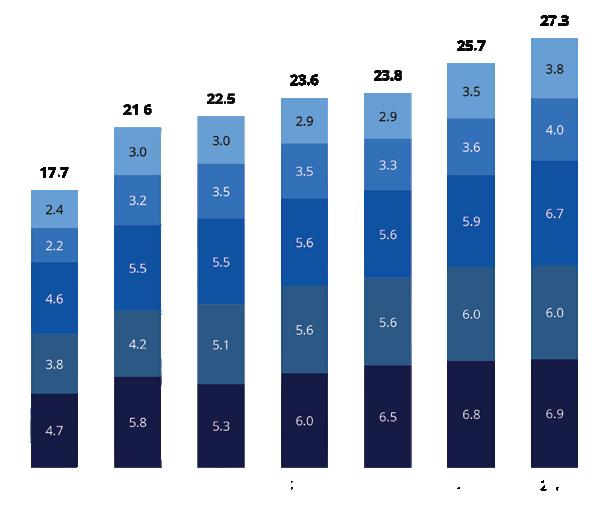
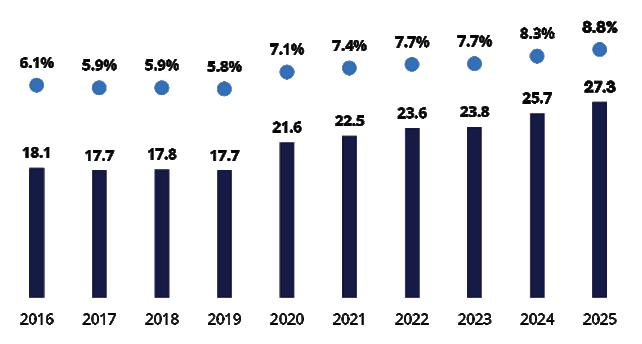
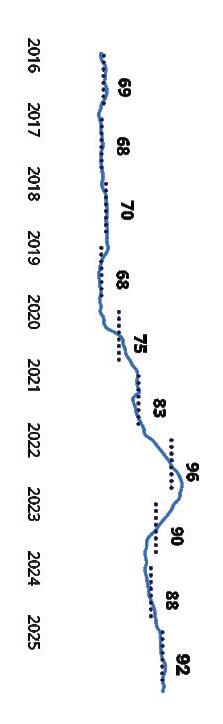
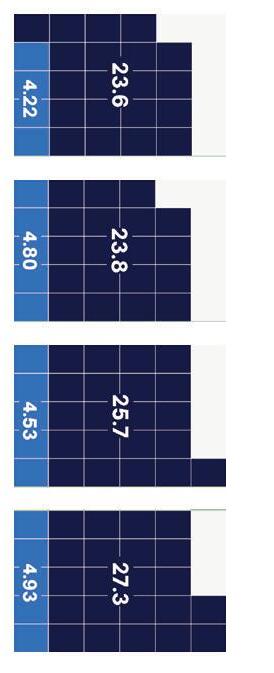
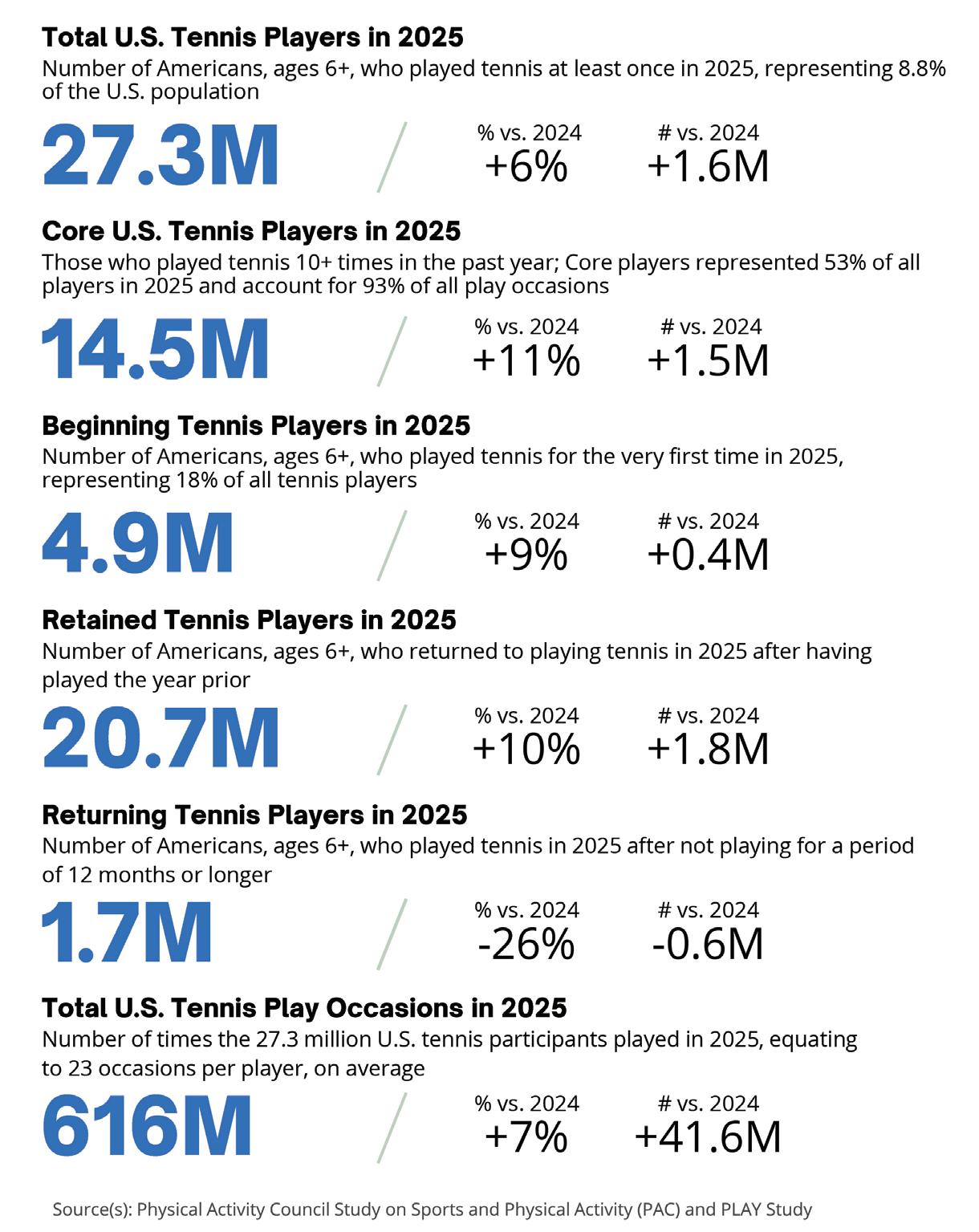
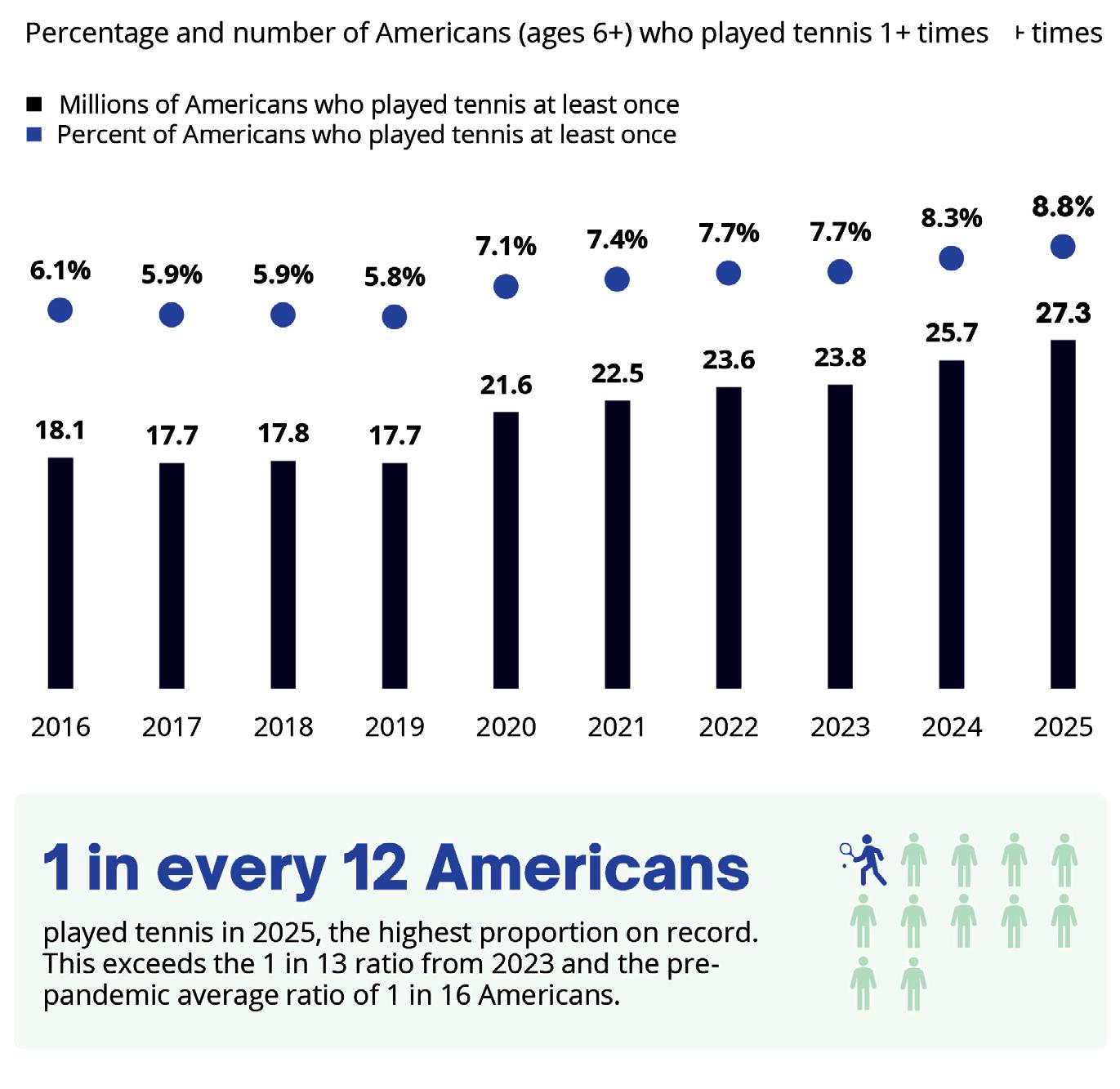
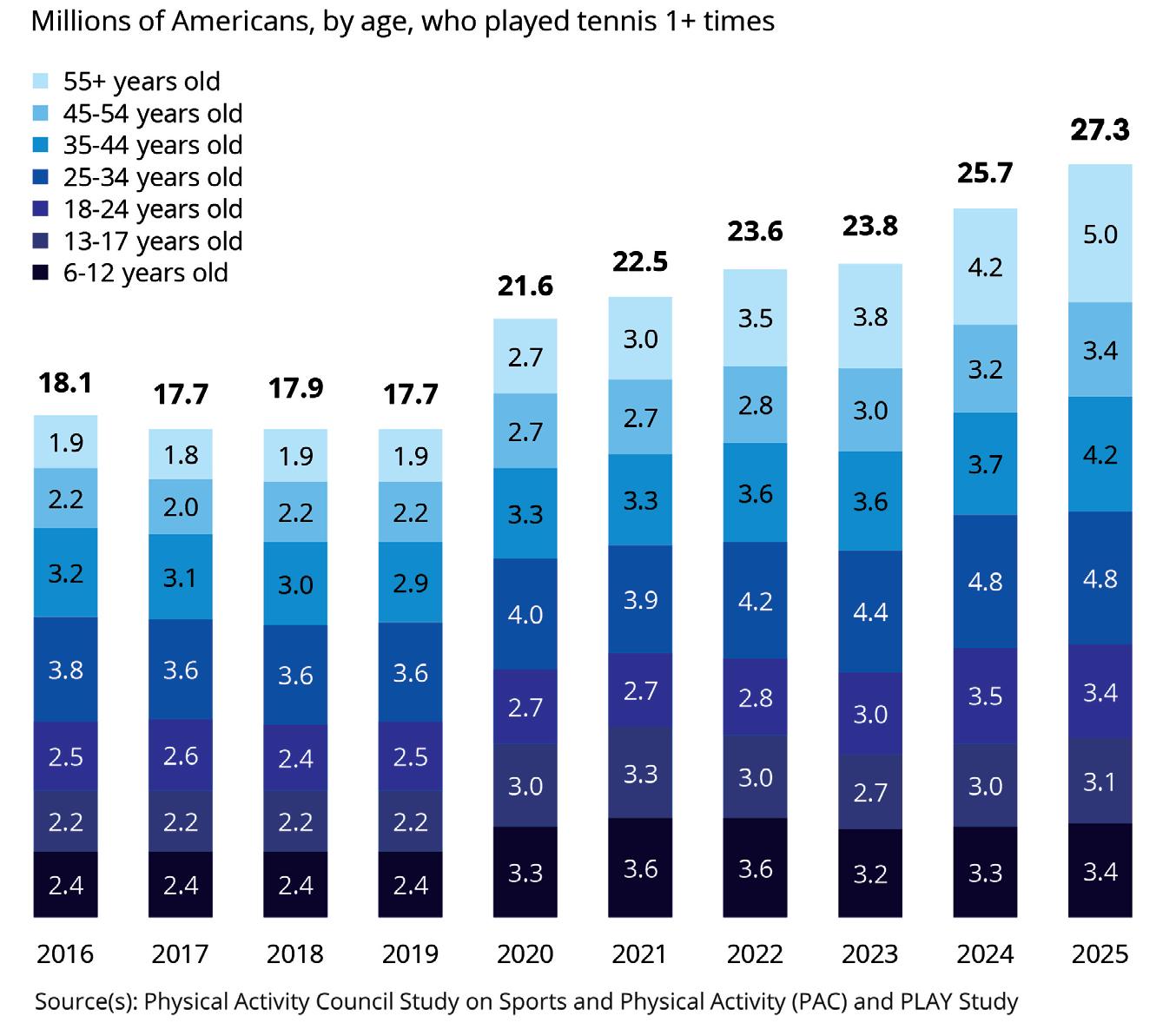
Now, though, that 35 by 35 goal sounds a lot more attainable, thanks to some recent news: a boom of 1.6 million players over the course of 2025 that brings the total to a new high of 27.3 million players in the U.S.
According to the latest 2026 U.S. Tennis Participation Report by the Physical Activity Council (PAC), which is based on year-end 2025 data, tennis participation in the U.S. has grown by 54 percent since 2019, adding nearly 10 million players over six consecutive years of growth.
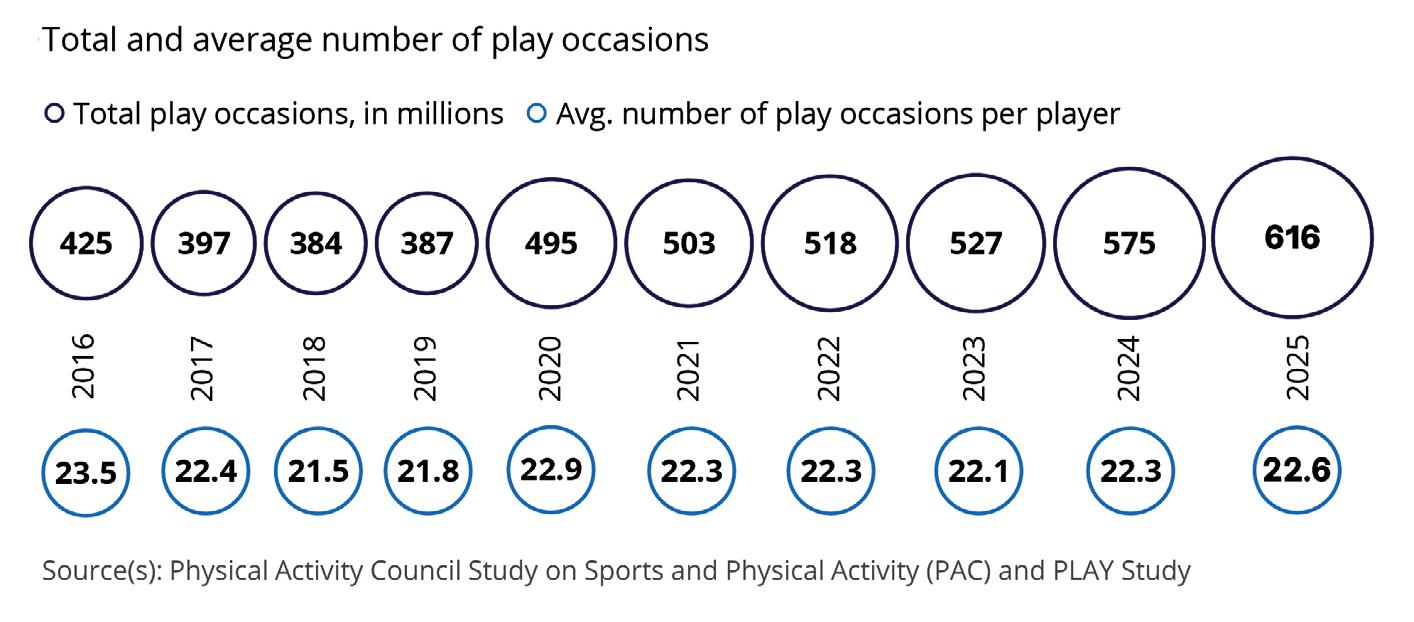
The uptick was driven by multiple factors, including an increased number of play occasions and more players coming into, and staying in, the sport.
(It's worth nothing that these aren’t just “USTA” numbers; the annual PAC Study has tracked sports participation since 2007, using the same methodology for now 122 separate sports, fitness and recreational activities, and the numbers generated are used extensively for all sports. PAC is a partnership of major governing bodies and trade associations in the U.S. sports & leisure industry. In addition, since 2021, the PLAY Study (formerly known as the Participation and Engagement Study) has provided supplemental data through a partnership with the USTA and National Golf Foundation.)
The findings indicate that tennis
growth was additionally tied to two rising player groups: women and players of color, meaning tennis is more diverse than it ever has been:
• In 2025, 1.1 million more women took to the court than in 2024, representing a 10 percent increase over the previous year.
• The number of Black/African Americans playing tennis increased by more than 454,000 (14 percent), Hispanic/Latino players were up more than
550,000 (12 percent) and Asian/ Pacific Islander players grew by more than 260,000 (10 percent). All three of these groups represent greater percentage growth than the overall increase.
“This sustained participation growth reflects strong demand for our sport across a diverse range of communities nationwide,” says Brian Vahaly, Chairman of the Board and interim Co-CEO, USTA.
Key 2025 Numbers
KEY PARTICIPATION STATS
• “Core” Tennis Players Increased: More people are hitting the courts more often. The number of core players, defined as individuals who played 10 or more times in the past 12 months, increased by 1.5 million to a record 14.5 million in 2025, which is an 11 percent increase over 2024 and now more than half (53 percent) of all players. For this industry, core players are the heart of the market—they by far buy the most equipment, take the most lessons and clinics, participate in leagues, and book the most court time.
• Play Occasions are Up: The increase in core players helped drive total play occasions to 616 million, a 7 percent increase (41.6 million) over the previous year.
• Player Retention Rates: Another key stat for the industry is how many players remain in the sport. The PAC Study indicated that in 2025, more players (80 percent from 2024) stayed in tennis, which is a higher rate than the year before. These 20.7 million players who stayed in tennis represent a 10 percent increase (or 1.8 million additional players retained).
• Returning Players: The study also showed that 1.7 million players returned to tennis after having been away from the sport for more than a year.
• New Player Numbers Showing Gains: An all-time high 4.9 million players entered the sport in 2025, according to the survey, which is an increase of 9 percent year over year.
This combination of retained/ returning players and new players represents a key, desirable scenario
for tennis—greater commitment among the base of players, along with substantial new growth.
• Another Potential Pool of Players: More than 25 million respondents to the study noted that while they currently do not play tennis, they are “very interested” in trying it. This represents a strong subset of individuals that could shift to a playing population, given the opportunity.
To be fair, the number of those “interested” in the sport has for years always been fairly high. What we as an industry haven’t
yet figured out is how to make this sport more welcoming and accessible to best take advantage of this interest.
• Age 35+ and Youth Opportunities: Established adults (age 35-plus) drove nearly 95 percent of all growth, totaling 1.5 million players and setting record highs across all segments, according to the study, indicating the sport’s solid positioning for health, wellness and social benefits. In addition, 200,000 more children (ages 6 to 17) took up tennis in 2025.
Overall U.S. Participation
• More Courts for More Players: To keep growth sustainable, USTA needs an inventory of facilities, particularly at the public and municipal level (where more than 60 percent of tennis is played) to allow for affordable play, especially in under-resourced areas. The goal is to ensure there are 350,000 courts (including both traditional and non-traditional playing spaces), or one for every 100 players. Currently, it’s estimated that there are nearly 190,000 tennis courts in the U.S.
A key player in this sector has been the USTA’s Tennis Venue Services (TVS), which in 2024 celebrated two decades of working to bring new facilities and courts online and renovating and updating existing facilities to keep them playable.
In 2024, TVS issued about $1.8 million in grants for tennis infrastructure. For 2025, that grant amount budgeted was increased to $10 million (although they awarded substantially more than that), creating more opportunities for facility construction and improvement at the public and community level. In 2026, the grant amount is expected to be at least $10 million. The TVS grant application process was streamlined as well, making it easier to apply for funding.
• More Opportunities to Learn Tennis: Another USTA goal, folding into player growth, has been to raise the standard of coaching and increase the number of available SafePlayapproved coaches to over 80,000 nationwide. This includes both professional coaches and those who provide on-court instruction and facilitation in parks, public
Trend in Play Occasions
Racquet Sports Participation
facilities and at schools.
“As we advance toward our goal of 35 million players by 2035, we will continue investing strategically to ensure this momentum translates into sustained participation and a stronger tennis ecosystem,” says Vahaly.
• Tennis as a Longevity Booster: The USTA isn’t the sole source of good news. A recent article in the Washington Post highlighted the role of sports in increasing individual longevity, and cited a study performed in Denmark that showed tennis players lived almost 10 years longer than their sedentary peers—and longer than soccer players, swimmers and
Trend by Age
the other recreational athletes included in the analysis.
Tennis was highlighted as providing a full-body workout and helping to improve balance (lessening the risk of falls) while building bone density. It was also seen as approximating interval training because players alternate between bursts of movement and periods of rest.
Additionally, the researchers stated, tennis creates a cognitive challenge and promotes socialization, two key factors in healthy aging. Finally, it is a low-risk sport that is easier to take up than team sports, requiring only one partner.
The Washington Post article also quoted data from other international studies showing that playing racquet sports was linked to a lower risk of death during the follow-up period than any other sport or form of exercise studied.
Vahaly says the marching orders remain clear for USTA: “Our goal is to expand access so more people across this country can play the world’s healthiest sport and experience the physical, mental and social benefits it has to offer.”
To download a pdf of the latest participation study, search for “2026 U.S. Tennis Participation Report.”
Celebrating the Best in Pickleball Providers
In this first installment for 2026, RSI recognizes people and organizations that continue to make pickleball the fastest growing sport.
Compiled by Judy Leand
INDUSTRY SERVICE AWARD
Brad Carroll
Through decades of leadership in sports surfacing and facility development, AT Sports President Brad Carroll has consistently focused on elevating the player experience while helping clubs, venues and organizations bring high-quality courts to life.
AT Sports, based in Canton, Ga., manufactures premium coatings and sports surfacing products for court construction and installation, collaborating with top professional court builders and facility designers, and connecting local pickleball and racquet sports providers with qualified and expert contractors.
As a driving force behind the advancement of pickleball facilities and infrastructure, Carroll’s impact extends well beyond individual projects. He has played a meaningful role in moving the sport forward
through contributions to the development of surface standards, the creation of innovative products that solve real-world surfacing challenges, and a commitment to building strong industry partnerships that support long-term growth. From collaborating with leading organizations such as the PPA to supporting facility operators and developers nationwide, he has prioritized solutions that ensure consistency, performance and sustainability across the sport.
By championing innovation, investing in partnerships, and helping shape the infrastructure behind pickleball’s rapid expansion, Carroll has demonstrated exceptional service to the industry and continues to play a pivotal role in advancing the game at every level.
INDUSTRY SERVICE AWARD
David Johnson
David Johnson is a globally acclaimed pioneer in the pickleball industry. He co-founded leading online retailer Pickleball Central in 2006, ultimately acquiring Pickleball Tournaments.com and Pickleball, Inc. He also founded and operated Pickleball Station, one of the first dedicated indoor pickleball facilities in the world. Since selling these companies to Dundon Capital (PPA Tour, MLP, Carolina Hurricanes, etc.), Johnson has provided expert consulting services to a wide array of pickleball facilities, manufacturers and other pickleball companies.
Johnson also publishes and writes the monthly subscription newsletter, The Business of Pickleball, and serves as CEO for the International Association of Pickleball and Padel Facilities, leading the only trade association dedicated to the growth and success of the pickleball and padel industries.
“David Johnson is an industry icon,” says Dan Santorum, chief consultant for The Directors Club of America, an organization that focuses on building careers in racquet sports and hospitality. “One reason that pickleball has grown is his work in, and on behalf of, the sport. He is an ambassador for the sport and a huge cheerleader.”
PPR MEMBER OF THE YEAR
Wayne Bullock
Recognized as a driving force behind Utah’s pickleball scene, Wayne Bullock currently oversees the largest tennis and pickleball program in the state. Working with a small group of passionate players, he convinced the city of St. George to build some of Utah’s first pickleball courts, and he now serves as assistant recreation manager and head tennis and pickleball pro for the city, running leagues, clinics and training programs at the Little Valley Pickleball Complex.
RSPA PICKLEBALL MEMBER OF THE YEAR
Jason Grigg
Boasting more than 25 years of tennis and pickleball coaching experience, Jason Grigg is an Elite Professional with the Racquet Sports Professionals Association (RSPA), most recently serving as the Director of Racquet Sports at The Greencroft Club in Charlottesville, Va. He also is certified by the International Pickleball Teaching Professional Association (IPTPA).
RESORT OF THE YEAR
Kiawah Island Golf Resort, Kiawah Island, S.C.
Bullock also founded the Fall Brawl, one of the country’s largest and longest-running amateur pickleball tournaments. Over the past 14 years, the event has grown to nearly 1,100 players.
“When you talk about coaches who represent the highest standard—who care more than most, go the extra mile, and make every person feel seen—that is Wayne,” says Sarah Ansboury, vice president of the Professional Pickleball Registry (PPR). “From building programming at a public facility with only a few courts, to leading one of the largest tournaments in the country, he has consistently elevated the game. He creates opportunities that touch every aspect of pickleball. Wayne is a true testament to quality coaching, leadership and putting people first.”
A former college tennis player at Ferris State University, Grigg has held leadership roles across the industry, including serving as Immediate Past President of the RSPA Mid-Atlantic Division and earning the division’s Pro of the Year award in 2021. He also serves as the Pickleball Coach Developer for the Mid-Atlantic Division, where he leads the pickleball task force.
“Jason played a central role in developing the curriculum for the RSPA’s pickleball pathway, helping establish the foundation for how coaches are trained and supported at every level," says Ramona Husaru, chief development officer for the RSPA. "His commitment to elevating coach education is reflected in the high-quality standards and thoughtful structure he brought to the pathway’s design. We are proud to recognize his contributions and dedication to advancing the RSPA Pickleball coaching education.”
The Kiawah Island Golf Resort’s Roy Barth Tennis Center, named after the venue’s director of tennis emeritus, has been completely renovated and is now under the direction of Roy’s son, Jonathan Barth. The center, which consistently earns top accolades for its facilities and instruction, currently has six dedicated pickleball courts as well as four mixed courts lined for pickleball and tennis. A newly renovated pro shop offers equipment and apparel.
Pickleball lessons, clinics and personalized coaching are all available on-site, and pro player Jake Kusmider recently joined the resort’s team as a full-time pro.
“Both Roy Barth and his son, Jonathan, realized that pickleball would take off, and the sport has helped the resort’s business because more people want to play pickleball now,” says Dan Santorum, chief consultant for The Directors Club of America. “Kiawah is a destination resort for racquet sports and has a long tradition of excellence.”
“It’s really hard to overstate how revolutionary pickleball has proved for our overall racquet sports operations,” notes Bryan Hunter, the resort’s director of public relations. “Pickleball has allowed us to reach more guests and members who are spending more time here.”
CTDW/IMPACT CONFERENCE
Community Tennis
Growing the Grassroots
The USTA’s combined
Community Tennis Development
Workshop and Impact Conference proves to be a powerful and engaging vehicle for local providers.
By Peter Francesconi
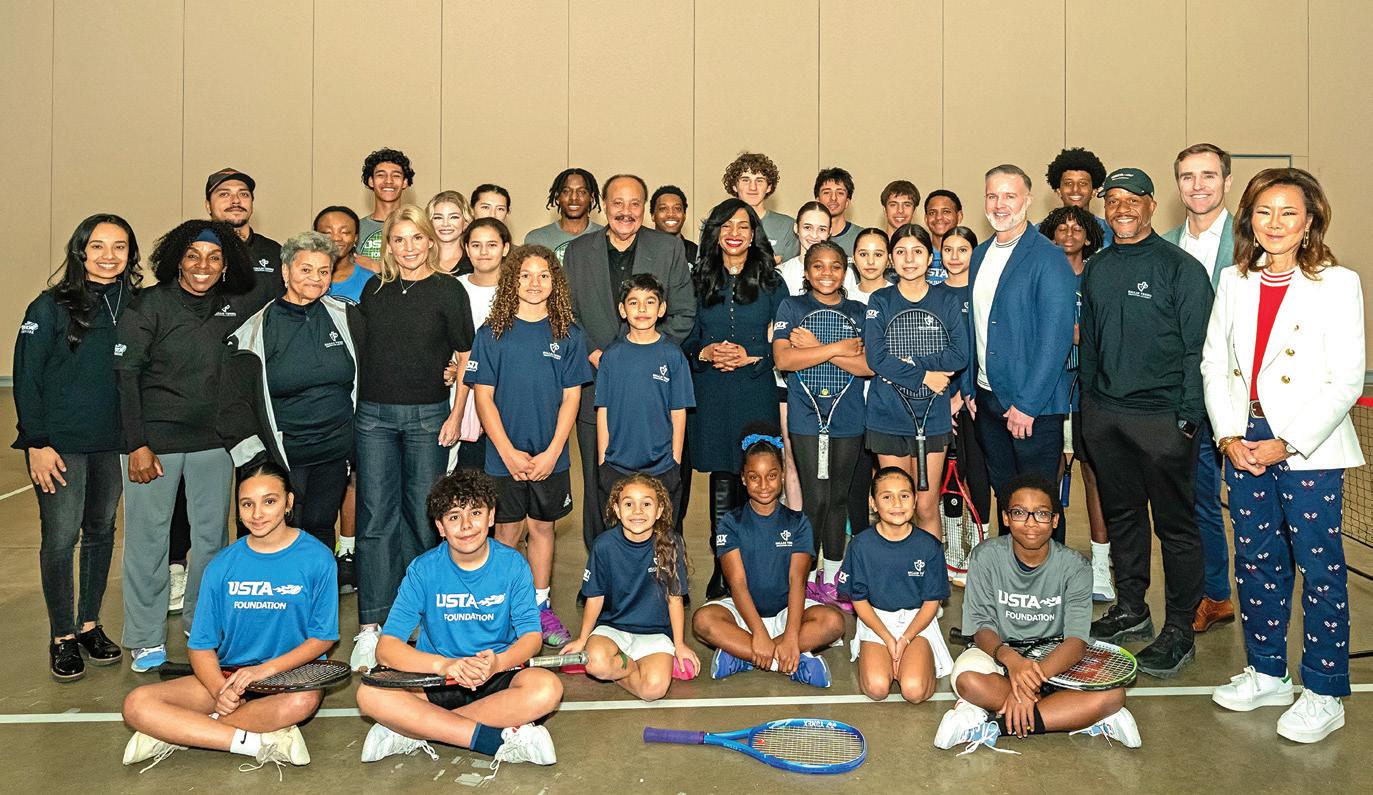
In February, the USTA brought back a key conference and workshop that, in the past, had a huge influence on grassroots tennis growth in the U.S. The USTA Community Tennis Development Workshop, last held about 10 years ago, was this year combined with the USTA Foundation’s Impact
the USTA that combines tennis, education and mentorship to help prepare young people from underresourced communities for their futures. The Foundation also is the home of the National Junior Tennis & Learning (NJTL) program.
The event also marked the return of the USTA Community Tennis
Conference for three packed days of presentations from experts and peers, offering practical approaches to growing the game at the grassroots and advocating for tennis locally.
The combined event attracted more than 600 attendees from across the country to the Gaylord Texan Resort and Conference Center in Grapevine, Texas. It was the fourth edition of the annual Impact Conference, presented by the USTA Foundation (ustafoundation.com), which is the social impact arm of
Development Workshop (CTDW), which for years had been a key event on the calendar for tennis providers such as Community Tennis Associations (CTAs), parks & recs, schools, and other community tennis leaders as a forum to share ideas, network, build great coaching and programming, advocate for tennis locally and much more.
BECOMING ‘PROVIDER FIRST’
The rationale for connecting the CTDW and the Impact Conference
is straightforward. “We should be learning from each other, not operating in silos,” Brian Vahaly, USTA Chairman of the Board and interim Co-Chief Executive Officer, told the attendees at the opening session. “We know CTAs and NJTLs are both driving tennis in their communities. It’s critical when you leave here that you have a deep understanding of how the USTA can help. You represent access, you represent experience. This supports our ambitious goal of 35 million players by 2035.”
Vahaly told the audience that the USTA will “look different. We will be ‘provider first,’ focusing on our sections and focusing on the people out there delivering the sport. Everybody in here should know the power this sport can provide. We need our providers to succeed. We want more and more money going down to the ecosystem, not caught up in the bureaucracy.”
In the reach-out to providers, Vahaly talked about USTA Coaching. “Coaches are the delivery system of our sport, and for too long we weren’t doing enough to support them,” he said. “We know that when players find a coach that they love, they are more apt to stay in our sport.”
He also mentioned the larger investment into tennis facilities. In past years, “We were only spending $1 million to $1.5 million. We’re now spending over $20 million to improve facilities. We now have data … when people see new courts, they want to get out there and play. We’re putting more dollars into our ecosystem,” Vahaly said.
The conference was bolstered by the recent good news on the participation front (see page 26), with more than 27.3 million players as of year-end 2025, a sixth consecutive year of participation growth. Along with that, there were increases in “core” players and play occasions, in addition to key tennis participation gains for diverse populations.
“The momentum behind our sport and our organization is real, and it belongs to each of you,” Vahaly concluded. “You’re making tennis feel
welcoming and accessible. Tennis is absolutely stronger than ever. What we’re doing matters. I’m incredibly proud to be in this with you.”
IMPACTING COMMUNITY
The USTA Foundation also took center stage, with CEO Ginny Ehrlich discussing how the Foundation works to “transform the lives of young people from underresourced communities.” There currently are 272 NJTL chapters throughout the U.S., serving nearly 234,000 young people with about 20 hours per week of educational programming and 25 hours per week of physical activity (which includes nearly 50,000 kids who played tennis for the first time).
“Ninety-five percent of our young people said they strengthened their social-emotional learning skills through NJTL,” she noted, “and 89 percent said they received quality youth development support.”
Ehrlich also pointed out that 98 percent of NJTL youth graduate from high school on time, and 85 percent enter post-secondary education.
Core NJTL programs, in a variety of formats, include afterschool programs and summer learning opportunities. The Foundation also has the Williams Family Excellence Program, which supports high-performance training and competition, college scholarships, and career pathways and development.
And the Foundation supports a new initiative—Community Impact Hubs, which currently enables 10 NJTLs to expand by adding family tennis, before and afterschool programming, coach recruitment and training, and expanded court access. “The projection is by the end of 2027, we’ll reach 630,000 young people and adults through [the Community Impact Hub] program,” Ehrlich said.
A highlight of the weekend was a conversation with Martin Luther King III and Arndrea Waters King, the co-founders of “Realize the
Dream,” moderated by LA Times journalist LZ Granderson. Realize the Dream is a national initiative that calls on people to turn small moments into acts of service that strengthen community and honor the legacy of Dr. Martin Luther King Jr., promoting positive change through service and volunteerism.
The organization has a goal of reaching 100 million hours of service by Dr. King’s 100th birthday in 2029, and the USTA Foundation has pledged 800,000 service hours by the end of this year in support of that goal. “Dad was very concerned about building community,” said King III. “Sports has the capacity to bring people together.”
The CTDW/Impact Conference agenda included general sessions on attracting entry-level adult players, moderated by Simon Gale, the USTA’s Senior Director–Racquet Sports Development; building a “best in class organization,” with USTA Chief People & Culture Officer Henry Lescaille; and “Data-Driven Advocacy for Community Impact,” with Patrick Briaud, USTA Managing Director–Tennis Advocacy.
“Reimagining Coaching” was presented by Megan Rose, USTA Coaching Managing Director and Head of Business Development, who outlined three key priorities for 2026: Recruiting new coaches under 35 years old; having 20 percent quarterly active users across the USTA Coaching ecosystem; and signing up 12,500 coaches in the USTA Coaching community.
REACHING THE GRASSROOTS
Breakout sessions ran the gamut for tennis organizations and providers, covering coach recruitment and retention, succession planning, advocacy tools, empowering volunteers, using data effectively, engaging staff and volunteers, launching profitable tennis programs and much more. The Resource Fair highlighted vendors including Babolat, Head, Wilson, Court Reserve, Diadem and Save My Play; USTA volunteer committees
such as CTAs, Parks and Advocacy; and USTA departments and programs including digital tools & resources, research & analytics, USTA Coaching, SafePlay and more.
ENERGY AND PASSION
Former national board member Emily Schaefer of the Houston Tennis Association was instrumental in leading the task force to bring back the CTDW. “The people I saw from old CTDWs, and now this new one, are all very excited. You just can’t match the energy of having so many grassroots tennis people in one space.”
“So many people have come up to me and said the CTDW was the best thing the USTA did,” added Ted Loehrke, the USTA Managing Director–Head of Section Partnerships. “So, we’re happy to bring this back.” Plans for future conferences are being discussed.
“This conference gave me a better understanding of how to serve and makes me appreciate who I’m serving, and what I’m doing to serve,” said Jennifer Guiles Robinson of the Ron James Youth Tennis Program, an NJTL in Florence, S.C. “It’s about more than tennis; it’s about advocacy and impact.”
“I always try to come back with ideas I can implement,” noted Richard Evans of the Lake Travis Tennis Association in Texas. “This has given me great ideas, and the interaction with peers is outstanding.”
A discussion with USTA Eastern Executive Director & CEO Amber Marino and U.S. Army aviation officer Rumeal Lewis, an NJTL alumnus, discussed the impact of NJTLs and this sport. “It’s not just about tennis,” Lewis said. “It’s about everything else. I remember some of the times I played tennis, but I remember all the interactions from the people more than anything. It’s important to focus on the people aspect.”
“I definitely second that,” added Marino. “It’s about the ordinary stuff. This is why I love the sport. Get to know the people, get to know your community. When you can build that community support, it just makes a huge difference.”
CourtConstruction
On the Move!
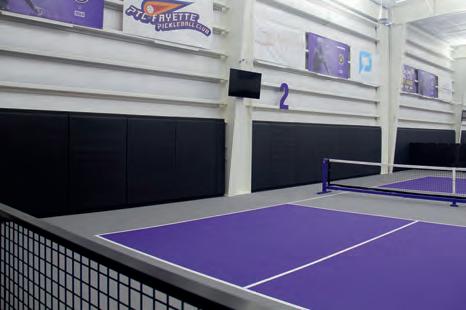
Portable court surfaces are bringing new flexibility to racquet/paddle facilities and tournament spaces.
By Mary Helen Sprecher
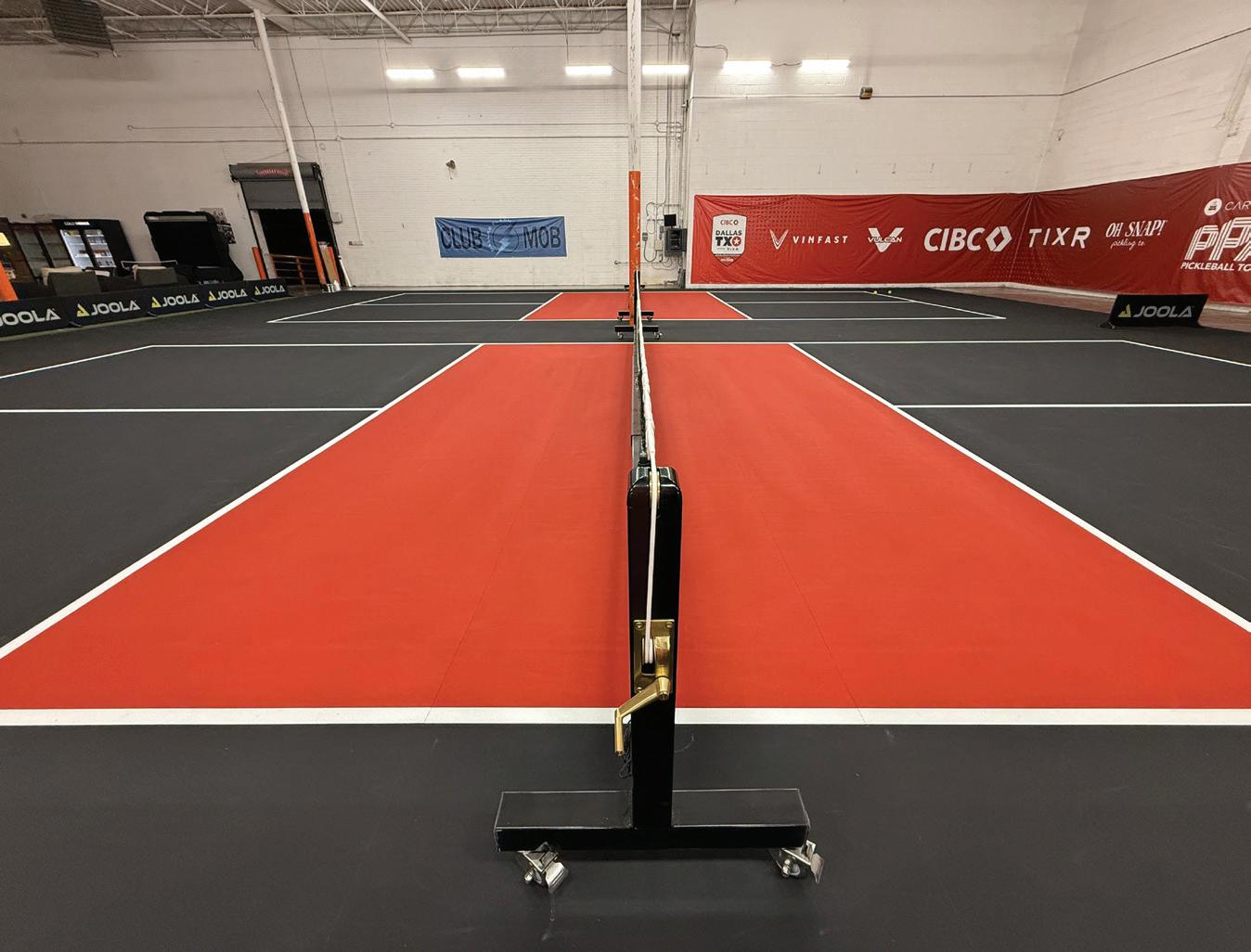
For a long time, creating courts on an as-needed basis meant delineating playing areas using tape, cones or spray paint.
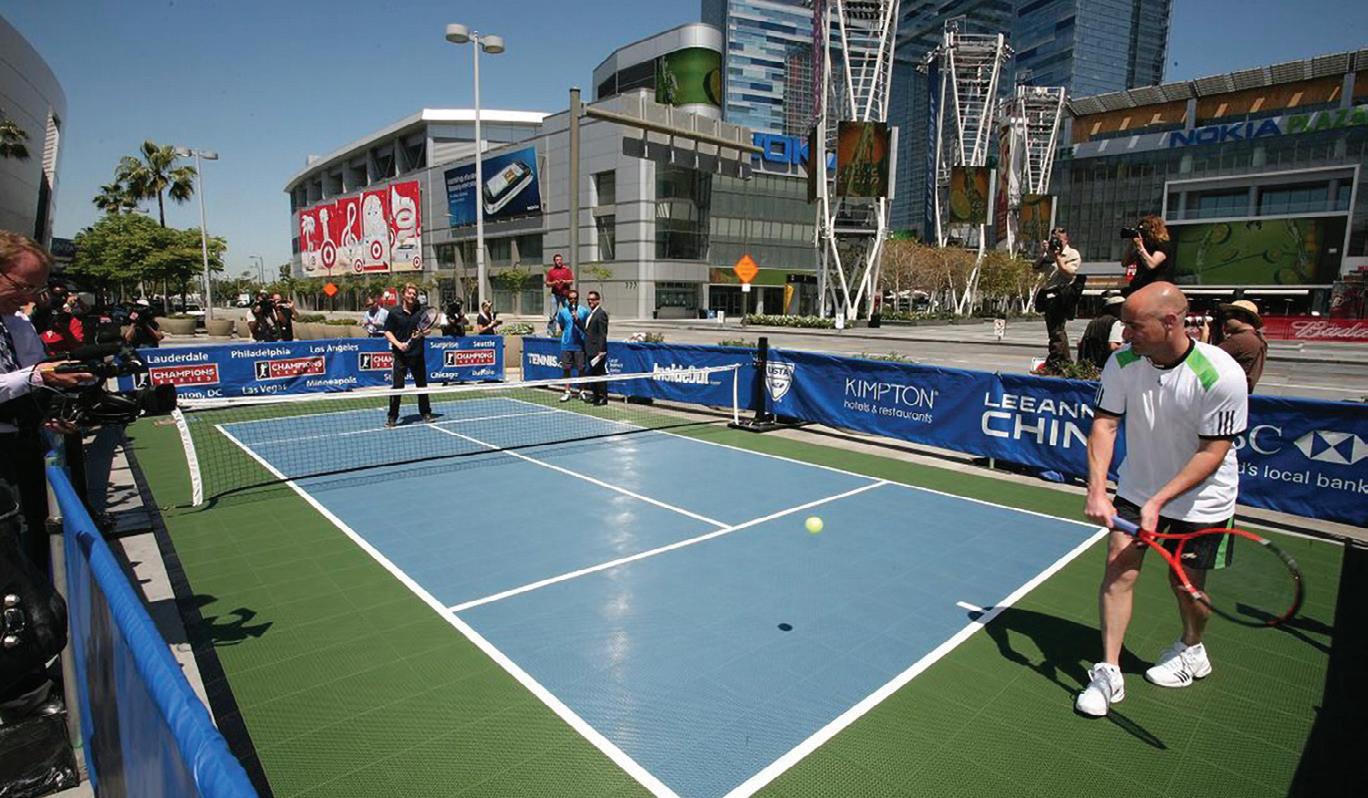
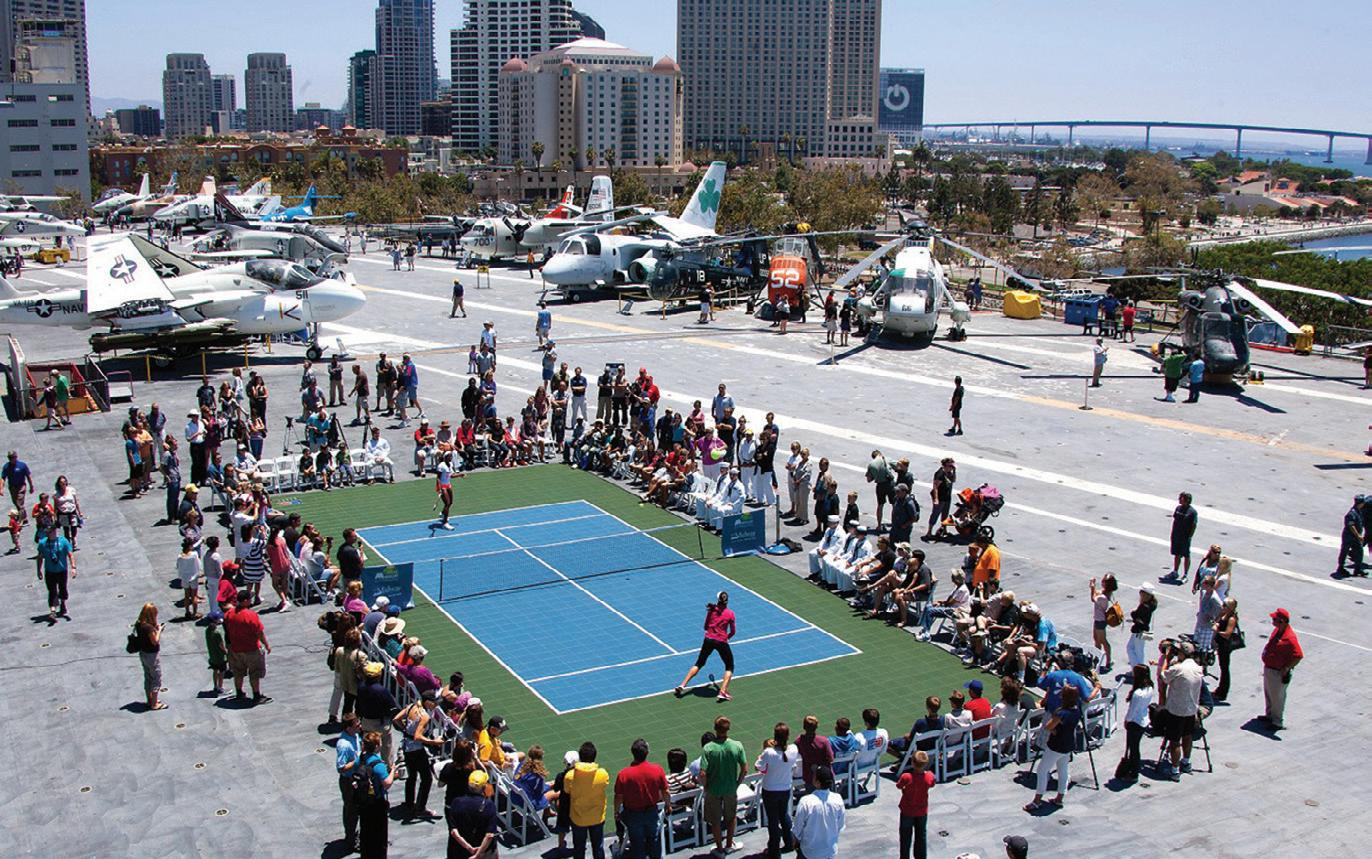
Now, temporary surfaces have come into their own as a market sector and are increasing opportunities to host competitive and recreational play in pickleball (or tennis, for that matter), either once or on an ongoing basis.
“The conversation is shifting from, how do we get people to the courts, to, how do we bring courts
to people?” says Nathan Holm of PickleRoll, a manufacturer of interlocking flooring. “That flexibility has opened the door to new uses and possibilities.”
“The innovation in surface performance has really helped drive the market forward,” says Tracy Lynch of AT Sports, which makes rollout surfaces. “With traveling events like the PPA Tour and Major League Pickleball, for example, more places are needed to host play.”
Increasingly, manufacturers are developing and marketing their
own systems, which fall into three categories:
Rollout Systems are put down like a carpet. They can be rolled back up when not in use. The entire court may be delivered on one roll, or in sections on several rolls that are seamed together with special tape.
Modular Systems are made of interlocking high-impact polypropylene tiles that snap together. Tiles are specifically engineered for performance sports. Systems are shipped on pallets.
Interlocking Flooring differs from modular systems in that pieces are flexible and fit together, either with a seaming tape or in a manner similar to puzzle pieces.
All systems can be ordered in a variety of colors. Custom logos and lettering are also available, as are mini courts.
SOUND BASE IS ESSENTIAL
While the surfaces couldn’t be more different, they do have a common denominator: All require a flat, structurally sound base.
“Either concrete or asphalt are our recommended bases,” says Jake Angrisano of Matéflex, one of the modular systems in the marketplace. “Since the tiles conform very well to the underlying base, any dips, cracks or undulations can be felt by players. A flat, smooth and solid base is what will achieve the best ball bounce and quality of play possible, regardless of the sport.”
Tom Magner of California Sports Surfaces (which produces two different systems), notes that portable courts provide a tremendous opportunity to showcase sports.
“We took one of our portable courts to FSB [the International Trade Fair for Sport and Leisure Facilities, held annually in Cologne, Germany] and what we very quickly realized was that a lot of people there were just seeing pickleball for the first time. They were so excited to go out and swing a paddle. The buzz it was generating was just incredible.”
Within the U.S., convention centers and arenas that cater to large youth travel tournaments in sports like volleyball and basketball, or that regularly host pickleball and tennis as part of large multi-sport events like senior games and state games, are increasingly purchasing their own temporary surfacing, which they can then monetize when competitions come to town.
Another sector of the portable surface market that is experiencing enormous growth is that of franchise clubs. Dubbed “picklemalls,” since many are located in defunct department and big-box stores, these entities use portable systems as part of their business model. Many franchise companies, seeing an opportunity to promote turnkey operations, have inked “official surface” agreements with manufacturers.
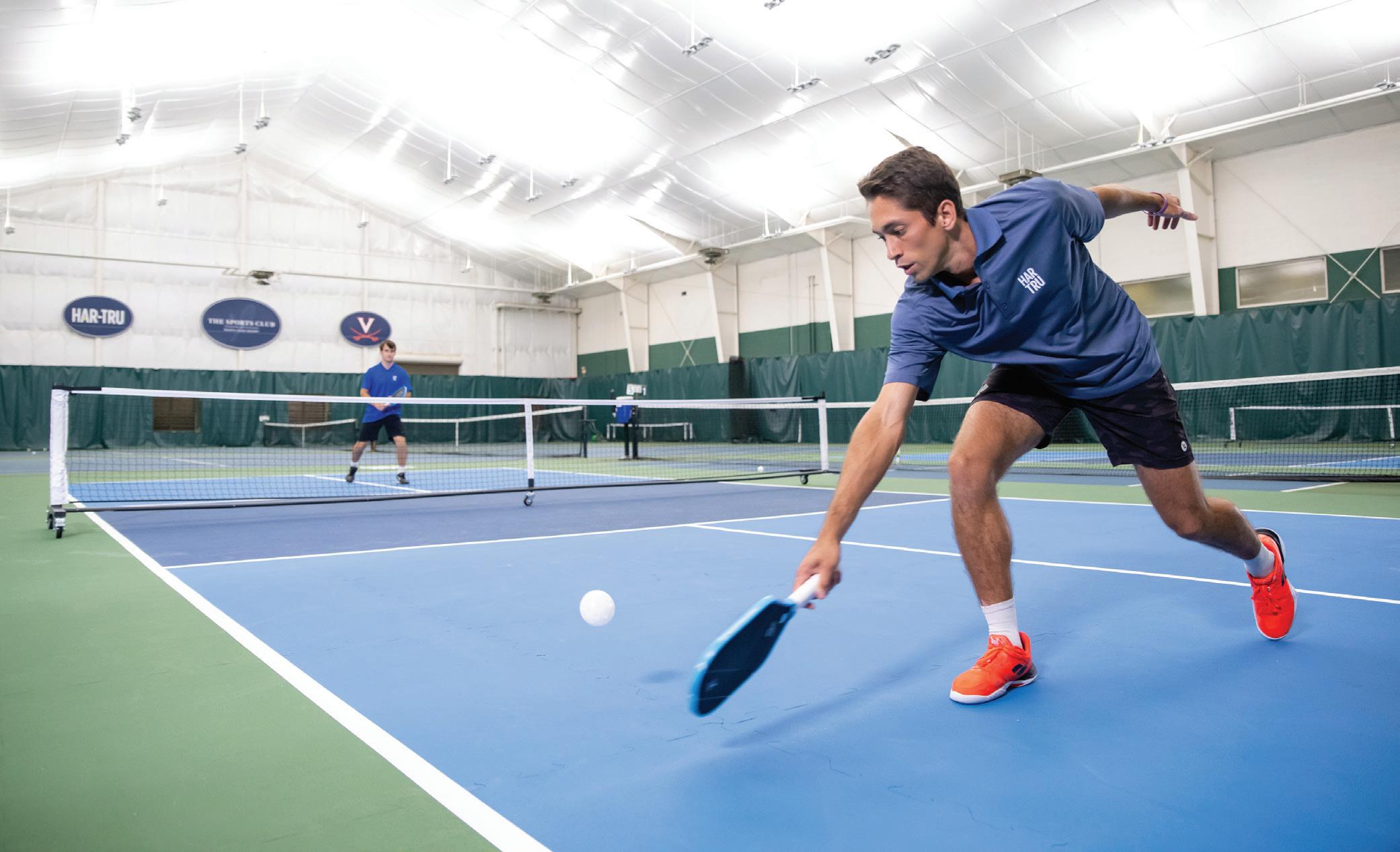
According to Brandy Sapp, who is with Har-Tru, which offers interlocking
flooring, portable surfaces as a whole are an excellent fit for such venues, where the indoor dimensions may vary and where, in some cases, floors must be laid around preexisting structures like columns.
The fast-growing “eatertainment” sector, a hybrid of sports and hospitality, is also feeding the portable surface sector, as is the residential market.
“These surfaces are good for backyard courts,” says Magner. “Not only can they be played on, but you can take it back up if you’re going to have a family party.”
RESEARCH YOUR OPTIONS
While all surfaces have the same goal of allowing courts to be created quickly and easily, buyers should research their options carefully and ask questions, including:
Is this surface best for indoor or outdoor use? “Some surfaces are good for both, while others work best in only one given setting,” notes Sapp. “Be sure to ask about that.”
How long does it take to install and break down the system?
Factor in how many courts you will need and consider the number of individuals who are available to work on it.
Can the surface be set up and broken down multiple times or will that damage it? Some surfaces are designed to be installed and removed as needed, while other portable surfaces are at their best when they can be left down for longer periods or even adhered to the substrate.
What kind of storage space is necessary? Discuss company recommendations, including how the surface should be stored and whether special equipment will be needed to move it.
If needed, can the surface host multiple sports? “We’re seeing convention centers and other buyers
who want to put on big events in different sports,” says Randy Resley of Court Builders of the Rockies, part of Court Builders of America. “In some cases, they are ordering tiles without any markings on them and temporarily lining the playing areas using tape.”
How many courts can I safely fit into the space that I have?
For all dimensions, refer to two publications from the American Sports Builders Association (both are available at www.sportsbuilders. org ):
• Tennis Courts: Construction & Maintenance Manual
• Pickleball Courts: Construction & Maintenance Manual
Do you as the potential buyer already have a stable base?
“Smooth concrete is the gold standard,” says Holm. However, he notes that other surfaces work well, including tile, asphalt and even hardwood.
A court is only as good as the base beneath it. If that base has
cracks, is uneven, shows damage from water infiltration or is in any way compromised, this must be addressed before the court surface is installed. Consult with a sport-specific contractor about the integrity of any base prior to putting down a surface.
How damage-resistant is the product and how easily can it be repaired? Will repaired areas be noticeable?
What kind of maintenance is necessary to keep the product in good shape as per the warranty terms? Make sure to ask about cleaning methods, as well as recommended footwear.
“If you’re looking into purchasing a surface,” says Resley, “you need to have the full conversation first. Come in with all the information, including how many courts you need, what your budget is, how much maintenance you can do, what kind of staff you have for setup and breakdown, and what sports you’ll be hosting. It will help you choose the best product.”
A Successful Mission
In Mars, Pa., the school district, along with USTA TVS, launched a project to reconstruct and expand the aging high school tennis facility.
By Judy Leand
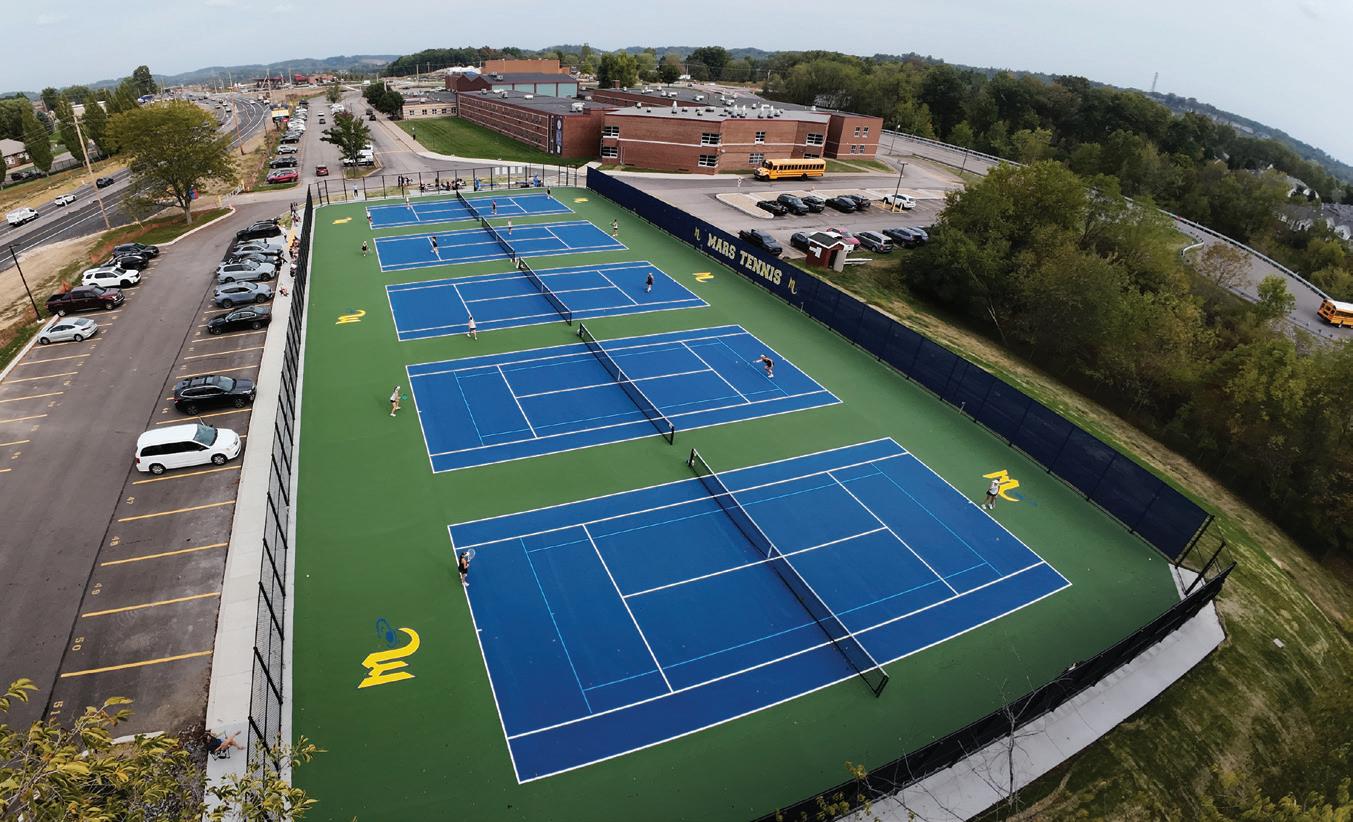
Mars Area High School, located just north of Pittsburgh, is in Mars, Pa.—a town known for its quirky extraterrestrial theme and prominent flying saucer landmark in the town square. And with an eye toward the future, and its key utilization of “space,” the school district recently completed a total reconstruction, upgrade and expansion of its tennis facility.
The project replaced three old tennis courts and aging infrastructure with five new courts. Construction began in April 2025 following the conclusion of the spring boys’ tennis season and was completed in September, in time for the girls’ fall season.
The new courts feature a durable, all-weather hard surface, marked with the district’s blue and gold “Mars” logo.
The project included new fencing, nets, windscreens (with custom team name) and dedicated spectator seating.
Two of the courts have blended lines for shorter-court tennis. Construction also included providing electrical conduit and hookups to allow for the addition of lighting in the future.
“I’ve been a coach here for 26 years, and the three existing courts were in pretty bad shape,” says Mark Varlotta, girls’ varsity tennis coach and boys’ assistant varsity coach at Mars Area High School. “We needed a total upgrade, so the three old courts were ripped out and moved, and then two new courts were added.” The total cost of the project came to approximately $639,000.
“USTA Tennis Venue Services was very helpful, easy to connect with and very responsive throughout the process,”
Varlotta adds. “The TVS consultants made a lot of suggestions and offered invaluable input regarding materials, dimensions, fencing and proper layout— it was a smooth and comprehensive process.”
He also points out that USTA TVS offered financial support and expertise as well as help with outreach and networking.
In addition to serving Mars Area High School students and faculty, the courts are open to the public, and plans call for tournaments, clinics and other tennis initiatives, including USTA programs.
“The new tennis courts at Mars Area High School come at a perfect time as the community continues to grow,” says Kelle Cunningham, the USTA Middle States Section Community Tennis Manager for the Allegheny Mountain District. “Their central, highly visible location makes them a shared asset for every neighborhood. This summer’s youth programming will bring kids together and provide meaningful community tennis opportunities.”
“Our new courts, along with reaching into the community, will help get people around here excited about tennis again, spread the word throughout the community, and get people out playing,” Varlotta says. “The USTA will work with gym teachers and coaches to provide some equipment, which will help get kids interested in the sport. Our plan is to host USTA-sponsored events such as tournaments and clinics as early as this summer.”
“It’s always great to see schools investing in tennis and opening their courts to the community,” says Todd Carlson, the USTA’s Senior Director–Tennis Venue Services: Partnerships & Strategic Planning. “The enthusiasm from Mark and other gym teachers in the school district, combined with the involvement of other community members and leaders, will help make tennis in the Mars area truly take off.”
Sponsored content. For more on how USTA’s Tennis Venue Services can help your facility or project, visit usta.com/facilities or email facilities@usta.com.
Your Career
Your Financial Timeline
In a new book, a longtime industry professional offers key financial advice for each stage of your career.
By Greg Moran
In his new book, “Beyond Hours & Dollars: A Career Guide for Rackets Professionals,” industry professional Greg Moran shares the lessons he’s learned during his nearly 50 years in this business. This comprehensive book covers every aspect of being a professional, and aspiring to be one. And importantly, it’s all offered for free—Moran wants to make it available to anyone interested in starting, growing and improving themselves and their careers. For more information, visit beyondhoursanddollars. com. Moran can be reached at GMoran@ beyondhoursanddollars.com.
Here, we excerpt Chapter 2 of “Beyond Hours & Dollars.”
Whether you’re in your 20s starting your career, your 60s thinking about retirement, or somewhere in between, having a financial plan will help ensure a comfortable future for you and your family.
As soon as possible, begin working with a certified financial planner. He can help you design, review and adjust your plan as you move through the various stages of your life. If you’re not yet able to afford a professional, below are some general financial guidelines to get you started.
YOUR 20S
• Create a budget. Keep track of how much money you have coming in and be conscious of your spending. Buy what you need first, what you want second. Review your budget every three months. If you’re a freelance pro, you might be paid in cash. Cash is easy to spend, so be sure to set aside some for savings and taxes. There are a lot of great budgeting apps available online to help you get started. Every Dollar, Goodbudget and YNAB are among the most recommended. Check out a few and see which you like best.
• Start saving. Get in the habit of saving by living below your means and paying yourself first. This means, with every paycheck, put money into your savings account before spending any elsewhere. Creating an emergency fund should be a priority. Try to have three to six months of expenses saved for the unexpected.
• Establish good credit. Building good credit will help when you go for a loan to buy a car, rent an apartment or apply for a mortgage. The easiest way to establish credit is to open a credit card and pay off the balance every month. Be very careful. It’s easy to fall into the trap of maxing out multiple cards and
then being able to make only the minimum monthly payment. When that happens, interest fees are added to your balance, making it more difficult to pay it off. I once had a pro in my office, in tears, telling me he had maxed out several cards and was over $45,000 in debt.
• Get insured. Even though you’re young, health insurance is a must. You might be giving a lesson, step on a ball and badly sprain your ankle. The treatment could cost close to $2,000. Or you develop elbow issues from feeding thousands of balls every day. Treatments like massage, physical therapy, over-the-counter medication, cortisone injections and elbow supports can cost between $1,000 and $5,000. Without health insurance, that money comes out of your pocket. Having health insurance will protect your savings as well as give you peace of mind.
• Begin planning for retirement. People who start contributing to a retirement plan in their 20s are able to retire earlier and with significantly more money than those who start later. If you work for an organization that offers a 401(k), sign-up. Contribute as much as you can, but at least the minimum amount to receive an employer match, if it’s offered. While it is tempting to think of retirement as being too far off to consider, it is essential to lay a foundation now.
YOUR 30S
Life can change quickly in your 30s and your financial planning has to keep up. Perhaps you’ve gotten married and started a family. Now is definitely the time to work with a financial advisor who can design a long-term plan for you. Here are a few things to focus on.
• Increase your savings. Continue contributing as much as you can to any employer plans. Make sure your
emergency fund covers a minimum of three to six months of necessary expenses.
• Become an investor. Work with your advisor to invest additional savings in a mix of stocks, bonds and CDs to build your portfolio. Maintain a long-term vision, no matter what the market is doing. If you have children, begin a college fund.
• Buy a home. A home can be a great investment. However, be sure you can afford it. A common rule of thumb says that your monthly mortgage payment should be 25 percent or less of your post-tax income.
• Get life insurance. If you have a spouse or children, life insurance will provide financial security for your family in the event something happens to you.
• Write a will. Having a will allows you to control the distribution of your assets in the event of your death, as well as ensure that your wishes are followed. Ascertain that you have documents such as a living will and/or advance directive in order as well.
YOUR 40S
You’re approaching your peak earning years. You may be earning a lot of money, so be careful to avoid what’s known as lifestyle creep. This is when a person's or family’s spending increases as their income does. It can happen consciously or subconsciously and can lead to situations where former luxuries become necessities. Lifestyle creep can make it difficult to save for longterm goals like retirement, home ownership or a child’s education.
Certainly, you should enjoy your financial success. After all, you can’t take it with you. However, don’t lose
“Certainly, you should enjoy your financial success. After all, you can’t take it with you. However, don’t lose sight of your long-term financial goals.”
— GREG MORAN
sight of your long-term financial goals. Increase your savings, protect what you have and plan for the future. Here are a few things to consider:
• Continue to invest. If club ownership is your dream, now might be the time to explore that.
• Begin thinking about retirement. Consult with your advisor to review how your money is invested, set specific goals and verify that you’re on track.
• Increase your insurance. Consider adding umbrella and disability policies. Also think about increasing your life insurance as your income increases.
• Include your family. If you have a partner, make sure you’re on the same page regarding your financial goals and future plans. Keep no secrets from each other.
YOUR 50S
Review where you are and adjust as advised to ensure your future security. Now’s the time to:
• Plan for retirement. Look at what you’ve saved and calculate what your expenses may be. Set a timeframe for when you’d like to retire. If you’re behind, see how much more you can save. If you have adequate savings and have a retirement date set, lower your risk. Your advisor can help you determine the appropriate level of risk in retirement investments.
• Eliminate debt. As you get closer to retirement, focus on paying down debt and avoid accumulating more. Live within your means.
• Consider long-term care insurance. If you were to develop a chronic illness or disability, this type of insurance would cover things like in-home nursing care; occupational, speech, physical and rehabilitation therapy; nursing homes and hospice. Most financial experts
recommend considering long-term care insurance in your late 50s as premiums are lower when you’re younger and healthier.
• Create or refine your estate plan. You should already have a will but if not, meet with an attorney and write one.
YOUR 60S
This is the time to make decisions about how you’ll handle your finances in retirement. Be sure to:
• Be specific. Think about when you want to retire. Will you stay where you are or move? What will your expenses be? Make sure you and your partner agree.
• Explore Social Security and Medicare options. Both can make a significant financial difference in retirement. Understand the timing, rules and regulations so you can take maximum advantage of both.
Your financial advisor can help you understand your options, as well as the relative advantages and disadvantages of each.
• Create a retirement paycheck. Include income from Social Security, savings, pension, real estate, etc. Calculate what you’ll need to cover expenses and decide how best to make withdrawals. Aim to keep enough in cash to cover one to two years of expenses so you’re not forced to sell in a down market.
YOUR 70S (AND BEYOND)
If you’ve stayed on track and have not panicked during the inevitable economic ups and downs, you can begin to enjoy what you’ve worked so hard to achieve. As you move forward:
• Strike a balance. A lot of seniors remain active and continue to work. Many pros still teach a few hours a week or volunteer for a local grassroots program. Travel, family and new hobbies can also be fulfilling. Find the balance that suits you personally and economically.
• Modify your retirement income plan as needed. Continue to meet with your advisor. You may need more income early in your retirement and less as time goes by. Keep on top of resources and expenses.
• Update your legacy and charitable planning. Make sure your beneficiary designations, wills, trusts and charitable giving plan reflect your wishes. Be open with your family about what you’ve set up so there are no surprises.
Again, my goal is to get you to think with a long-term vision. Everyone’s situation is different, but if you pay attention to your finances throughout your working years, you’ll be in good shape when the time comes to put down your racquet.
Three Key Takeaways
• Start early and be disciplined. Create a budget, save consistently and build good credit in your 20s so you develop strong financial habits that last a lifetime.
• Adapt as your life changes. With each decade, adjust your financial plan—from buying a home and investing in your 30s, to protecting against lifestyle creep in your 40s, to securing retirement income and long-term care options in your 50s and beyond.
• Plan for security and options later in life. By your 60s and 70s, thoughtful financial planning ensures you can retire comfortably, work only if you want to, and leave a meaningful legacy.
Your Serve
A Sound Following
Blind and visually impaired tennis may be the fastest growing adaptive racquet sport you’ve never heard of.
By Samir Mahir
In the quiet hum of a tennis court, a different kind of rhythm is taking hold. It’s not the squeak of shoes or the thud of a felt-covered ball, but the rattling sound from bearings inside a foam ball that defines the sport of blind and visually impaired tennis. This adaptive sport is on a remarkable journey from a single Japanese schoolyard to the brink of the world’s biggest stages.
The story of blind tennis begins with Miyoshi Takei, a Japanese student who lost his eyesight at the age of 18 months. At just 16 years old in 1984, Takei dreamed of playing tennis alongside his sighted peers. Refusing to let his disability define his limits, he worked tirelessly to invent a new way to play. The breakthrough was the development of a specialized foam ball containing iron bearings, allowing players to track its trajectory by sound. By 1990, Takei’s dedication had culminated in the firstever tournament for visually impaired players in Japan. Takei himself dominated the sport for over two decades before his tragic death in 2011.
The establishment of the International Blind Tennis Association (IBTA) in 2014 formalized efforts to expand the sport. In 2017, the first IBTA world championships were held in Spain. In 2023, the sport was played in 17 countries after the Covid pandemic slowed participation. Today, the IBTA is comprised of 34 member nations across Europe, the Americas, Africa and the Asia-Pacific region. This rapid expansion was evident at the 2024 World Championships in Italy, which drew 117 players from 20 countries—the largest turnout in the sport’s history.
The sport’s growing popularity is also attracting new talent, such as world No. 1 men’s player Naqi Rizvi who was born and raised in South Asia. In the U.S., we have two new trailblazers: Jessica Gonzalez and Dante Alejandro, both ranked No. 12 in the world in their respective categories. While blind tennis has its own championships, the ultimate prize remains inclusion in the Paralympic Games. The International Paralympic Committee (IPC) requires that a sport be “widely and regularly practiced” in at least 32 countries across three continents—a threshold the sport has already reached. There are still hurdles, including a lack of funding and visibility compared to wheelchair tennis. However, IBTA remains optimistic that
We welcome opinions and comments. Email peter@acepublishinggroup.com. ADAPTIVE SPORTS
the sport will one day be part of the Paralympics.
To meet these ambitious goals, the IBTA has forged critical partnerships, including with the International Blind Sports Federation (IBSA). This alliance has already yielded results, with blind tennis debuting at the 2023 IBSA World Games in Birmingham, UK. Last October, the IBTA signed a Memorandum of Understanding with the International Tennis Federation, aiming to integrate blind tennis into the broader tennis ecosystem.
The sport reached another historic high in January. At the 2026 Australian Open, the inaugural Blind and Low Vision Showdown was held, marking the first time a blind tennis event had been integrated into a Grand Slam tournament. Thanks to Tennis Australia, sixteen top IBTA ranked players competed in a Laver Cup-style format (Team Australia vs. Team World), with the home side emerging victorious. Later this year, the top blind tennis players will gather in Vilnius, Lithuania, for the 2026 IBTA World Championships, and the sport will feature prominently at the IBSA World Games in Uzbekistan in June 2027.
Blind tennis is proving that sport is truly for everyone. As the sound of the ball echoes across courts worldwide, the call for Paralympic inclusion grows louder than ever.
SAMIR MAHIR is president of the IBTA and serves on the USTA Northern California Board. He held leadership roles at IBM, Tennis Australia and Vision Australia. He can be reached at samir.mahir@internationalblindtennis.org.
YOUR CAREER PARTNER – AN UPDATE AND A PROMISE TO A CENTURY MORE
HOW TO GROW YOUR LESSON BOOK
RACQUET SPORTS AS A TOOL FOR INCLUSION
THE WOMEN SHOULD STAND BY BEST OF FIVE SETS AT THE MAJORS CERTIFICATION CALENDAR
Your Career Partner – An Update and a Promise
If you’ve felt the energy across our industry, you’re not imagining it. Racquet sports are accelerating at a historic pace. According to the SFIA (Sports Fitness Industry Association), tennis participation in the United States has climbed to 27.3 million players, pickleball has climbed to 24.3 million participants, squash has reached approximately 1.4 million players, padel is exploding globally with over 30 million participants and gaining meaningful traction in the U.S. market with more than 1.1 million players and platform tennis continues its steady performance in its core regions. Tennis and pickleball combined now have larger participation in the United States than golf (SFIA, 2025)!
It’s lasting, structural growth, as 75% of facilities have more than one racquet sport and are expanding. According to the National Golf Foundation, consumers are spending more time at golf facilities with additional amenities like pickleball, tennis and health and wellness offerings. And the demand for trained, credentialed, forward-thinking professionals has never been greater. That puts us, the Racquet Sports Professionals Association, at the center of something very special.
Tennis Is Our Foundation. Five Sports. One Membership.
Tennis remains our foundation. It is our history, our credibility and our anchor. Tennis is the majority of all our backgrounds, but today’s racquet professionals operate in a broader universe and it is greatly expanding because the consumer is demanding it. That’s why our position is clear: Tennis is our core. Five Sports. One Membership. Tennis. Pickleball. Padel. Squash. Platform Tennis. Our professionals are leaders across that portfolio. Facilities are evolving and so must we. The most successful professionals today understand how to build programming across multiple disciplines, while maintaining and enhancing the “customer experience” that defines true expertise. That is exactly what RSPA certification represents.
Growth That Is Measurable
As a mark of our growth, our latest membership survey delivered a powerful signal:
Net Promoter Score (NPS): 81—up from 63 last year
Net Promoter Score is a well-known method of using a single survey question to gauge customer satisfaction with a product or company. In our survey, respondents were asked this question: “How likely are you to recommend our association?” That kind of increase does not happen by chance. It happens because we listened. We adjusted. We executed.
In 2025, we delivered 227 total events, which included certification workshops, 17 Division Conferences and our World Racquets Conference. To help our members move their careers forward, we hosted dozens of webinars focusing on Professional Development and Member Benefits. This is in addition to the local and divisional networking and professional development events that were organized across the U.S.
Based on our 2025 employee engagement survey, the RSPA is proud to be considered a great place to work. We scored a 70% engagement rate, which measures in the top 25% of all US companies (for profit and notfor-profit). The highest ratings of satisfactions were 1) Job Satisfaction, 2) Culture, 3) Organization, 4) Engagement, 5) Teamwork and 6) Trust. Our team understands that everything we do must serve one purpose: elevating your career.
To help serve our members better and provide real value, members now have access to:
• A newly designed website: RSPA.net
• A free, easy-to-navigate resource to post and seek positions, with the redesigned career portal (jobs.RSPA.net). More than 300 employers listed over 700 jobs in 2025.
• An improved healthcare offer with Gallagher.
Dillman, RSPA CEO
• An upgrade to tennisresources.com coming in 2026.
• Our National Headquarters—your professional home, including our training center. We welcome members to visit and leverage our onsite resources.
• New brand partners, including: Völkl Tennis, and our Official Online Retail Partners in Tennis Warehouse, Padel Warehouse and Pickleball Warehouse.
And we look forward to welcoming you to the World Racquets Conference in Dallas, September 20–23.
These initiatives are part of a broader strategy, as our strategic pillars guide every decision:
1. Membership Development & Engagement
2. Partnership Development
3. Brand Strength
4. Value Enhancement
5. Organizational Excellence
Every initiative ties back to one question: How does this elevate our members and enhance their careers?
A Promise
Let me be clear. This growth is not something we take for granted. The participation numbers are impressive. The momentum is in our favor, but momentum without leadership fades. Today, we all can defend and strengthen our position in the market, protect our industry, elevate professionalism and strengthen our career pathways to ensure that when facilities look for leadership, they look to the RSPA.
I believe that racquet sports professionals sit at the center of the modern facility experience. We drive engagement, high consumer impressions and create community. We mentor the next generation and we influence culture. We create measurable economic impact inside facilities every single day. Everything we do is rooted in one principle: strengthening your future. Together, we will define what leadership in racquet sports looks like for the next decade.
Brian Dillman RSPA CEO
Delivering Real Value for You
NEW OFFICIAL SPONSOR
PREMIUM TENNIS RACQUET, STRING, GRIP,
Jenny Gray, RSPA Vice President
As the Racquet Sports Professional Association approaches its 100th anniversary in 2027, it is impossible not to reflect on the remarkable people who have shaped nearly a century of growth, community and excellence. Among the most notable are Bob Stubbs and Fred Ashhurst, our longest-standing living certified members, each celebrating an extraordinary 79 years of service. Their careers span eras of tremendous change, yet their stories, along with the perspectives of our newest certified professionals, reveal something timeless. Dedication, mentorship and passion remain at the heart of our association.
Racquet sports have evolved in countless ways. Equipment, teaching methods and the business of coaching look very different today than they did decades ago. Yet the motivations of our professionals have stayed consistent. For nearly 100 years, personal and professional development, camaraderie and a desire to serve others have defined who we are. Ron Woods, Master Professional,
To a Century More
That spirit of involvement often begins early. Volunteering through your local district or division builds confidence and a sense of belonging, and many longtime members credit their success to saying yes early and often. I can relate. Encouragement from my mentors on the Texas Board in 2003 nudged me to volunteer at the annual Texas Buying Show. That single decision shaped the course of my career and opened doors to opportunities and friendships I never could have imagined. That path led me to a position on the Texas Division Board and the divisional presidency, and eventually to an opportunity to serve on the National Board starting in 2022. One of the most valuable lessons I have learned is that stepping out of our comfort zones into new opportunities can yield remarkable results.
squash. This shift mirrors the realities of our daily work at clubs, facilities and parks, where professionals now offer programming across multiple racquet sports to better serve members and meet the expectations of managers and owners.
59-year member and national president from 2005 to 2007, captures this perfectly: “I don’t feel that the general membership has changed that much since I first joined. Our members all want to improve their teaching and business skills and maintain camaraderie amongst ourselves.”
For our newer members, the association’s long history can feel both inspiring and intimidating. Jesus Salgado reflects, “Entering my first year as an RSPA member, I initially felt a sense of humility and nervousness. Reaching out for guidance felt intimidating at first, but doing so became one of the most impactful decisions of my career.” Now in his second year, Jesus has become involved through his divisional conference and has already built meaningful connections and networking opportunities. His experience mirrors what so many of us have discovered. When you reach out, the RSPA community reaches back.
Of course, an organization approaching a century of existence has inevitably experienced change. Over the past 99 years, RSPA has adapted alongside the industry, including several name changes that reflect the expanding world of racquet sports. The most recent rebranding in 2024 embraced tennis, pickleball, padel, platform tennis and
Immediate Past President Trish Faulkner, Master Professional and 58-year member, believes the timing of the name change was ideal. “Our name change came at exactly the right time in the industry, and it cemented us as the leaders in the racquet sports certification and education area for our members, general managers and our clients.” I agree wholeheartedly. Tennis may have brought most of us into the industry, but embracing the broader racquet sports community has allowed us to grow our club and facility programs in meaningful ways. Newer professionals are already feeling the positive impact of our most recent rebranding. As Henry Borts, a member for one year, shares, “My first impressions of the RSPA community and its culture exceeded all expectations. The tools at my disposal for professional development and networking are largely responsible for the recent leap in my career.”
Even as the industry evolves, our longest-serving members continue to emphasize the importance of relationships and networking with peers. Ken McAllister, Master Professional, former national vice president and 51-year member, offers simple but powerful advice: “Take advantage of meetings and conferences to share ideas with experienced professionals. The seminars are very good, but the connec-
our association. A highlight of my own career was following in her footsteps as a Master Professional and Alex Gordon Professional of the Year recipient. Her example has set a tone of involvement, tions with other professionals will be far more important.”
The World Racquet Conference (WRC) is another constant in our association. Each year, the WRC brings bigger and better education and networking opportunities, and we are already looking forward to the 2026 WRC, which will be held in Dallas, Texas, from Sept. 20 to 23. One constant at these conferences is Avis Murray, Master Professional and 55-year member. Avis has attended nearly every WRC since 1982. She believes, “Being together in-person with your colleagues and attending the great education sessions, and especially networking, makes you feel excited to be where you are.” Her consistent attendance is a testament to her belief in
positivity and excellence.
As we look toward RSPA’s 100th birthday, the reflections of longtime members remind us of what truly defines this association. For Jack Michalko, Southwest executive director, former national vice president and 57-year member, “The RSPA has been a way of life for me.” As a 25-year member, I could not agree more. Across generations, the message is clear. While the racquet sports industry continues to evolve, the values that unite us—excellence, learning and community—remain as strong today as they were in 1927.
How to Grow Your Lesson Book as the New Pro at a Club
Stepping into a new role as a teaching professional at a club can feel daunting. You may have the skills and credentials, but none of that matters if members do not yet know you, trust you or feel comfortable booking time on your court. Growing your lesson book is not about aggressive marketing. It is about visibility, connection and delivering clear value from day one.
The most successful club pros focus first on becoming a familiar, approachable presence. In the first 30 to 60 days, simply being seen matters. Spend time on court during peak hours, introduce yourself to players, learn names quickly and take an interest in matches happening around you. A genuine compliment on a well-struck shot goes a long way. The goal is not to sell lessons immediately, but to stop being “the new pro” and start being “our pro.”
Once members recognize you, make it easy for them to say yes. Many players hesitate to book private lessons right away, so offering low-barrier entry points is critical. Short complimentary stroke evaluations, small group introductory clinics, cardio tennis sessions or free doubles strategy hours invite participation without pressure. These experiences build comfort and curiosity and often lead naturally to private instruction.
When you do get that first lesson, retention becomes far more important than marketing. A strong first session sets the tone for everything that follows. Ask players what they want before you begin, focus on one or two key improvements rather than overwhelming them and make sure they feel a tangible
difference quickly. End each lesson with a clear takeaway and a suggested next step. Whenever possible, rebook before the player leaves the court.
Group programming is another powerful growth tool. Well-structured clinics allow you to scale your time while building your reputation across multiple members at once. Weekly level-based clinics, doubles tactics sessions, morning groups or junior-adult combination classes all create energy and community. Often, private lessons follow group participation, not the other way around.
Behind the scenes, club staff can be invaluable allies. Front desk teams, trainers and managers are often the first people members speak to when they have questions. Building strong relationships by learning names, expressing appreciation and keeping staff informed about your offerings increases the likelihood they will recommend you and introduce you to new members naturally.
It is equally powerful when members trust other members. With permission, highlight success stories, recognize improvements and celebrate milestones. When players see progress being acknowledged, they want to be part of it. Pairing newer players with regulars in clinics also accelerates trust and engagement.
Consistent communication ties everything together. You do not need elaborate marketing campaigns. A simple weekly or biweekly email outlining upcoming clinics, available lesson slots and one useful tip keeps you top of mind.
Geoff Browne | RSPA Member
Clear sign-up systems and well-placed flyers around the club reinforce your visibility. Above all, aim to be known as the pro who solves problems. Players do not simply want to hit balls. They want to win more matches. Lessons that focus on match-play patterns, doubles positioning, serve and first-ball execution and smart decision-making resonate deeply. When players see results, your lesson book grows on its own.
Referrals will come naturally when members are happy, but do not be afraid to ask in a low-pressure way. A simple comment about being available to help friends or partners who want to improve is often enough.
Finally, remember that building a full lesson book is a long game. The pros who succeed consistently show up on time, bring energy to every session, treat beginners with respect and remain positive and professional in every circumstance. Over time, consistency builds trust, and trust becomes demand for clinics and lessons.
Racquet Sports as a Tool for Inclusion: How Coaches Shape Access & Belonging
Tennis has always been more than a sport. At its best, it is a vehicle for confidence, connection and community. Yet for many individuals and families, access still feels out of reach, not because of interest or ability but because of barriers embedded in facilities, programming and leadership.
As racquet sports professionals, we sit at the center of this reality. Coaches are often the first point of contact, the cultural gatekeepers and the most consistent presence in a player’s journey. That makes inclusion not a “nice to have” but a professional responsibility and a defining opportunity for the racquets industry moving forward.
Inclusion Is Not a Trend — It’s a Foundation
Inclusion is often treated as a program or initiative, but in practice it is a mindset. It shows up in who feels welcome when they walk onto a court, who sees themselves represented in leadership and whether programs are designed with flexibility rather than assumptions.
Through my work across nonprofit organizations, municipal partnerships, adaptive tennis initiatives and industry
collaboration, I have seen that inclusion is not about lowering standards. It is about widening the door. When racquet sport environments are intentionally inclusive, participation grows, retention improves and communities strengthen.
For our industry, inclusion is also a sustainability issue. If we want tennis to thrive for the next generation, we must reach beyond traditional pipelines and invest in coaches who can serve diverse populations with empathy, professionalism and purpose.
The Coach’s Role in Shaping Belonging
Coaches do far more than teach technique. We shape culture and lives.
A welcoming environment starts with small but powerful actions, language that invites rather than intimidates, programming that meets players where they are and a willingness to adapt rather than exclude. For new players, especially those from underserved communities or nontraditional backgrounds, feeling like they belong often determines whether they return after their first session.
RSPA professionals are uniquely positioned here. As certified leaders, RSPA coaches carry both technical credibility and ethical responsibility. We model professionalism not only in instruction but also in how we listen, support, advocate and show up.
In my experience, the most successful programs are built by coaches who see themselves as community partners, not just instructors. They understand that trust is built long before a forehand improves.
Adaptive Tennis: Expanding What’s Possible
Adaptive tennis deserves special attention because it challenges outdated ideas about who the sport is for.
Working alongside adaptive programs has reinforced an important truth: accessibility is innovation. Adaptive tennis does not limit the sport. It expands it. When coaches are trained and empowered to work with athletes of all abilities, tennis becomes a platform for dignity, independence and achievement.
RSPA’s role in educating and supporting coaches in adaptive pathways is critical. The more professionals who feel confident teaching adaptive tennis, the more inclusive the entire industry becomes. This is not a niche. It is a growth opportunity that aligns directly with the core values of tennis. Access is not just about courts. It is about opportunity.
Underserved Communities and Access to Opportunity
Many communities face barriers related to cost, transportation, awareness and historical exclusion. Through partnerships with municipalities, schools and nonprofits, tennis professionals can help
bridge those gaps. I have seen underutilized spaces transformed into thriving community hubs, and I have seen how consistent coaching presence builds long-term engagement.
When programs are designed intentionally, with scholarships, entry-level pathways and culturally aware coaching, tennis becomes a source of stability and pride. These efforts require planning, patience and partnership, but the return is significant. They create stronger communities and a broader, more resilient player base.
Why Inclusion Matters for the Industry’s Future
The racquets industry is at an inflection point. Participation numbers alone do not tell the full story. Retention, coach sustainability and leadership development matter just as much.
Inclusive environments keep players engaged longer. They create pathways for future coaches, officials and administrators. They also attract partners, funders and municipalities that increasingly
prioritize community impact.
Coaches who embrace inclusion are better prepared to lead in today’s tennis landscape. They communicate more effectively, adapt more readily and build programs that last.
RSPA Coaches as Leaders in Inclusion
RSPA has long stood for professionalism, education and leadership. Inclusion aligns naturally with that mission.
By supporting continuing education, adaptive training and community-focused programming, RSPA empowers coaches to lead with both confidence and competence. Inclusion is not separate from excellence. It is an expression of it.
When RSPA professionals commit to inclusive practices, they strengthen the credibility of the entire industry. They
demonstrate that tennis is not exclusive by design but intentional in its welcome.
Moving Forward with Purpose
Inclusion does not require perfection. It requires commitment, awareness and a willingness to adapt, learn and lead.
Every coach can take meaningful steps, including listening to their community, seeking education, partnering with local organizations and reflecting on how their programs serve a broader audience. Together, these actions shape the future of tennis.
As professionals, we have both the opportunity and the responsibility to ensure the sport reflects the diversity, resilience and potential of the communities it serves. When we do this, we do not just grow the game. We strengthen it. And that is how tennis becomes not just a sport but a true tool for inclusion and belonging.
THE WINDSCREEN BUILT FOR BETTER PLAY
BUILT FOR COMPETITIVE PLAY
From wind control during match play to long-term UV durability, Aer-Flo Sports windscreens are engineered specifically for tennis and pickleball environments. Our systems improve visibility, reduce distractions, and maintain a professional court appearance season after season.
Consistent Play Conditions: Reduce wind interference for more accurate ball tracking.
Professional Court Aesthetics: Clean, uniform appearance for events or tournaments.
Long-Term ROI: Fade-resistant materials built for heavy daily use. AerFloSports.com DISTRIBUTED BY THE
The Women Should Stand by Best of Five Sets at the Majors
Steve Flink, International Tennis Hall of Fame
As the 2026 Australian Open concluded majestically with Carlos Alcaraz establishing himself as the youngest male player ever to complete a career Grand Slam a day after Elena Rybakina captured the women’s singles crown in style, tournament director Craig Tiley proclaimed that he believed it was time to consider a sea change for the female competitors. Tiley—widely revered by the players for his sterling tennis mind—stunned many longtime observers of the sport by putting on the table of discussion the notion of the women switching from best of three set contests to best of five in the latter stages of the major in Melbourne— perhaps as early as next year.
He said, “It’s something we should put on the agenda and start talking to the players about, because there were some [women’s] matches in those last rounds this year that would have been fascinating had they been three out of five sets. We should look at the last few matches—the quarters and the semis and the finals—and make the women’s side best of five. I don’t know if the players would want to do it or not, but it is something we need to consider on the women’s side.”
One reason Tiley was inspired about exploring this possibility was the fact that fans were so exuberant about
the two enthralling five-set Australian Open semifinals played by the men, with Alcaraz fending off Alexander Zverev and ten-time champion Novak Djokovic upending two-time defending champion Jannik Sinner. Also uppermost on Tiley’s mind, apparently, was Rybakina’s rescue mission from 0-3 down in the final set of her stirring three-set, final-round victory over Aryna Sabalenka. Tiley is envisioning a brave new world for the Australian Open with the women performing under the same scoring guidelines as the men down the homestretch of the tournament, and flourishing. He believes tennis fans would rejoice at the prospect of the women potentially playing best of five. Even longtime followers of the game too easily forget that the best-of-five format for women has been put to the test before. At the U.S. Championships— the forerunner for the U.S. Open—the female players did play best-of-five set matches in the early years of the event. From 1891-1901, they went with best of three up until the finals, but switched to best of five for these ‘Challenge Round” matches. Five times in that span, those contests were settled in the full five sets. But the prevailing view back then among
amateur players and officials was that the women were better off competing in best of three set clashes, and so best of five was abandoned.
But nearly a century later, as the game exploded with popularity and the women players turned into another breed of athlete altogether, the best-offive format was revisited. Starting in 1984 and continuing through 1998 at the Virginia Slims and Chase Championships held indoors at the fabled Madison Square Garden in New York, the women experimented once more with best-offive set finals. That initial year, the sport’s esteemed pace setters Martina Navratilova and Chris Evert fittingly collided in the final, with Navratilova victorious 6-3, 7-5, 6-1.
Many of the finals in that 15-year stretch were decided in three or four sets. But a few featuring some of the game’s most charismatic players did go the distance. In 1990, the dynamic left-hander Monica Seles was pushed to the hilt by the topspin artistry of Gabriela Sabatini. Seles outperformed Sabatini in a dandy
6-4, 5-7, 3-6, 6-4, 6-2. Six years later, the redoubtable Steffi Graf was victorious in another five-set, final-round skirmish at the Garden, defeating the 16-year-old Swiss stylist Martina Hingis 6-3, 4-6, 6-0, 4-6, 6–0.
That confrontation raised a lot of eyebrows. Hingis was in the middle of her teens and not as durable physically as she would later become. Graf was 27 and had always been a consummate professional ready to battle unswervingly for hours on end to win a big match, but the fact remained that she, too, was ailing.
Both players suffered considerably during this pendulum- swinging showdown in New York. Hingis was hindered by severe cramps while Graf was hampered by a sore back and a bad left knee. Although Graf played some scintillating tennis to win the third and fifth sets without dropping a game, the fact remained that was she far from one hundred percent physically. Hingis, meanwhile, seemed sorely compromised by the demands of best-of-five sets, which contributed to her cramping. They still put on a good show, but the prevailing view was that the best-of-five format was detrimental to both players, and not in the best interests of the spectators either. Interestingly, the men tried to move in the opposite direction back in the 1970’s. Both Roland Garros and the U.S. Open—perhaps looking to lessen the workload of the players and wanting to find out if the public preferred shorter early round contests—experimented with best-of-three-set matches for the male players. The French Open went with best of three from 1973-75 in the first two rounds, shifting to best of five the rest of the way. The U.S. Open elected to have the men play best of three sets across the first three rounds from 1975-78, returning to best of five over the last four rounds.
Neither the players nor the public were very receptive. The powers that be realized it made no sense to have different rules for different stages of the tournament, and most of the leading male players believed the majors should stick with tradition and stay with best of five across the board.
Will the best women players in the sport now embrace best of five in the latter stages of a major? I doubt it.
After Tiley sent shock waves out into the tennis ecosystem by deliberately making his views public, in short order a number of top women players were asked how they felt about it. Most of them were not enamored about the idea. Six-time major singles champion Iga Swiatek was intrigued yet unsure, thinking that the longer matches might favor her. Wimbledon and U.S. Open finalist Amanda Anisimova said, “I feel like that would be a crazy idea for us.” Others were more nuanced with their views, open to the possibility but not necessarily endorsing it.
The view here is that the women should reject Tiley’s well-intentioned vwillingness to take what might be an excessively audacious step. They have always flourished in best-of-three set competition. The men have long known how
to pace themselves at the Grand Slam championships, understanding what it takes to recover from a rigorous five-set match swiftly, showing up for their next encounter rested and ready. The women would need to grow accustomed to a set of competitive circumstances this generation has never known.
They should refuse to go against the grain of tradition. It seems to me that women’s tennis must preserve a system that suits them beautifully. As tennis authorities have said repeatedly over the years, “Never change a winning game.”
CERTIFICATION CALENDAR PREVIEW
APRIL 2026
MAY 2026
*Check Certification Calendars on RSPA.net for the most up-to-date information
APRIL
NO.1 BALL ON TOUR
OFFICIAL BALL OF RSPA TENNIS COACHING
RECYCLABLE PAPER LID MADE FROM 30% RECYCLED PLASTIC
Improving Warm Up in Pickleball
As a longtime tennis player of 60 years and an RSPA Elite Professional who recently began teaching pickleball, I dislike the typical warmup used in the sport. It reinforces the stereotype that pickleball is a game for older adults who can barely move.
Ninety-nine percent of the warmups I observe last fewer than five minutes and consist only of light dinking, when there are many more complexities to pickleball than that. No other shots are hit. It is no surprise that injuries spiked when the pickleball boom began, because players were not warming up properly and preparing themselves for more variables in a game or match.
I have been advocating for a
pickleball warmup that closely resembles a traditional tennis warmup:
• Two players stand behind the kitchen line and hit volleys
• Then practice overheads while their opponents hit drives, resets and lobs for about five minutes
• The players then switch positions and repeat the drill
• All players should then stand on the baseline to practice serves from both sides, just as they would in tennis or platform tennis, along with returns of serve.
Warming up with practicing the serve is most important, as I have rarely seen pickleball players
Ron Pinsky, RSPA Member
practice their serves and returns before starting a game or match. It is best to warm up by hitting all your shots while also scouting your opponents’ tendencies and style of play instead of only dinking and starting the game without much information.
For example, with a more dynamic warmup, you can learn:
• Are they left-handed or right-handed?
• Are they short or tall?
• Do they hit with heavy spin?
By replicating the thorough tennis approach to warming up, pickleball players will be truly ready to play with only a light sweat and they’ll be more prepared to have fun.
PADDLES
PICKLEBALLS
PORTABLE NETS NET POSTS
BALL CARTS BACKPACKS
P PADDLE GRIPS
BALL PICK-UPS
COURT LINES
BALL MACHINES
WINDSCREENS
COURT PAINT
COURT BENCHES
LED COURT LIGHTING
There’s More to Platform!
Ichatted with the RSPA’s head platform tennis coach developer, Mike Cochrane, to learn about his experience spearheading the platform tennis certification pathway and the value that he sees in obtaining a certification in this sport.
Some history on the sport—in 1928, on the hunt for an outdoor winter sport close to home, Jimmy Cogswell and Fessenden Blanchard built an elevated multi-purpose wooden platform for deck tennis, which allowed for insulation and heating equipment. Enhancements, such as adding the fenced lining in 1929, lighting in 1930 and changes to ball color specification in 1963, have led to what the sport is today! And Mike grew up in the same city where platform tennis was born, so it seemed inevitable that the sport would be a part of his life in the years to come. He took up the sport in his teenage years, playing in tournaments such as the Chicago Charities APTA Grand Prix, and eventually joined our association to achieve an Elite level of certification in tennis and platform tennis, along with a professional level of certification in pickleball. In 2018, John Embree, the USPTA’s CEO at the time, had invited him to be a speaker at one of our national conferences. It was then that he requested Mike to spearhead the development of a platform tennis certification for the association.
Our inaugural certification workshop took place on Dec. 18, 2019 in Paoli, Pa. Since then, we have had 427 members get certified in the sport and we are seeing growth with more scheduled workshops every year. We’ve had more than a 190% increase in members who either applied for the certification as a new member or
NATIONAL BOARD OF DIRECTORS
President. Mark Faber
First Vice President Kevin Theos
Vice Presidents ..Molly Card-Beckmann, Jenny Gray, Milos Vasovic, Mel McRee and Scott Burton
Immediate Past President Trish Faulkner
CEO & Contributing Editor Brian Dillman Legal Counsel George Parnell
added it as a sport to their existing membership. Mike has created a smooth and unintimidating barrier of entry, emphasizing that if you have experience in just about any racquet sport, platform tennis would be an excellent addition to your toolbox.
The certification is a oneday, five-hour workshop. The coach developer emphasizes the seven unique shots in platform tennis: backhand volley, controlled drive, push overhead, deck lob, serve return and first volley. Learning positioning is a crucial part of the experience, explained Mike, as it’s different than in tennis, where in doubles, each partner covers 50% of the court. In platform, each partner covers a third, leaving a third open. During the testing portion of the workshops, applicants will show their feeding capabilities, how they teach the usage of screens and a presentation of a private and group lesson.
While the Midwest, Northeast and New England are the hotspots for the sport, you can also find courts in Arizona, California, Florida, Georgia (where the Peachtree Invitational is hosted), South Carolina and Virginia! Mike said he would like to see the sport expand into more public facilities so that it’s more accessible, as platform tennis has a bit of a stigma of being a country club sport. The APTA, American Platform Tennis Association, has done a great job of providing grants to clubs and facilities to be able to grow the sport and build more courts across the country, he says.
“This sport makes you a much more well-rounded professional. Clubs and facilities are hiring a director of racquets, not a director of (enter one racquets sport here)
ADDVANTAGE MAGAZINE
Linda Gordon | RSPA Director of Membership
anymore,” Mike said.
Mike has, and continues to, put a lot of careful thought into the overall certification and learning outcomes that pathway applicants achieve, so whether you are someone already teaching the sport, the RSPA is the place to start. And as a member, you receive 25% off all products through Master Athletics!
Reach out to the membership or certification team here at our national headquarters with any questions about the sport itself or how to get started in becoming a platform tennis certified professional! If you are already certified and interested in becoming a coach developer, facilitating workshops for the RSPA to get some extra bit of income, just reach out to your division’s executive director for more information. The passion that Mike has for the sport shone through the phone, and there is a reason that he has made a career out of coaching and promoting the sport! Visit RSPA.net, give us a call at 407-634-3050, option 2, or email membership@rspa.net to get started.