For women coaches, systemic workplace structures are barriers
PICKLEBALL
Pickleball continues to grow, but so do noise complaints
RESEARCH
The racquet/paddle category is a big plus for rec sports
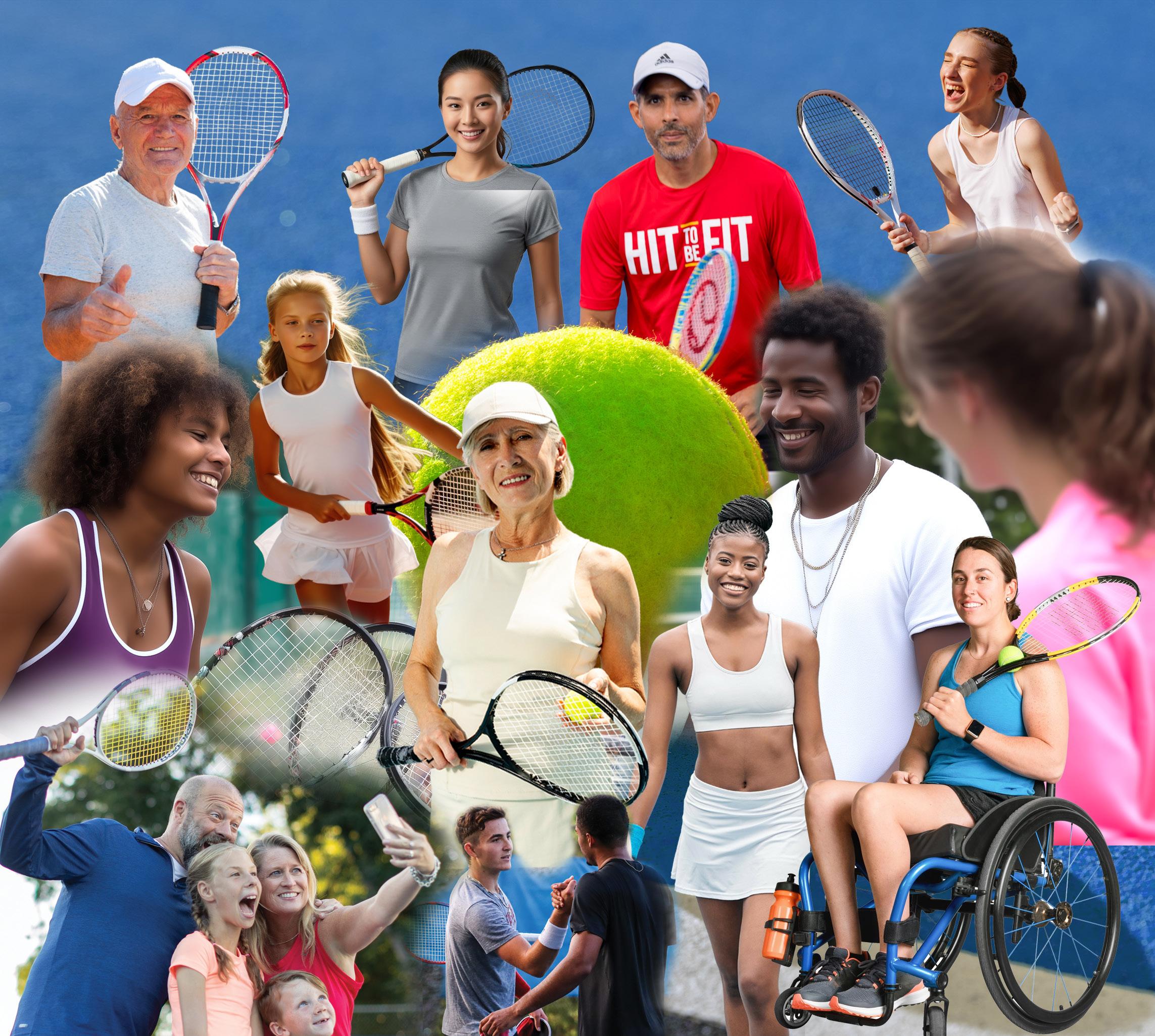
IN MAY, WE ALL PLAY!
With support from all areas, National Tennis Month is the perfect vehicle to drive the world’s healthiest sport.
2026 NATIONAL TENNIS MONTH
OurServe
EDITOR'S NOTE
Shouting It Out
Promoting
and marketing
this sport at the grassroots—like advocating for tennis—is something we all need to be involved in.
At the end of March, I attended the USTA Annual Meeting & Conference in Orlando—and came away inspired. At the opening session, USTA Board Chair and President Brian Vahaly touched on a lot of important topics, but what really resonated with me is how he’s committed to growing tennis at the grassroots and supporting providers.
Vahaly then introduced Craig Tiley, the current CEO of Tennis Australia, who will soon start that same job here with the USTA. Tiley, too, talked about the importance of supporting the sport at the recreational level, and using the US Open to help do that.
All of this was exciting to hear—I’ve long said the pro game will always take care of itself, but where we really need to place our energy, resources and emphasis is in supporting and growing tennis at the grassroots.
One of the key ways to grow this sport at the local level is National Tennis Month (NTM) in May (see page 29). At the Annual Meeting, I was pleased to hear this from the USTA national staff: “National Tennis Month is our loudest megaphone.”
What's key here is this revitalization of NTM in the past five years came directly from the volunteers, from those who are in the trenches and who know what it takes, and what this industry needs, to grow tennis. They understand that while we may have terrific national programs and initiatives, this sport will not grow unless it’s promoted and marketed locally. And who best to help provide this sort of input than people, providers and players who are at the grassroots.
Yet, for all the great synergies and collaboration we have among grassroots providers, USTA staff and the industry, we need to continue to
push things. After years of tossing it around, we finally have an actual Advocacy staff and department within the USTA (again, pushed first by the volunteers), which is truly going to help drive and coordinate efforts to grow this game. But there are a few other ideas I think can help grow this sport for the long term.
If NTM truly is the USTA's "loudest megaphone," NTM itself deserves a dedicated national staff person—someone devoted to driving it and preparing for it six months out of the year.
Both Vahaly and Tiley mentioned tying the US Open better into recreational growth of the game. How about declaring the first day of the Open "National Tennis Day" in the U.S.? Like NTM, it will give local provides another massive platform to tie into the world's biggest tournament.
And then there's "marketing"—yes, too often a loaded word in the USTA, but so critical to growing the game at its base. We need to bring back a volunteer Marketing Committee in the USTA. When it comes to growing the game at the grassroots, we need this perspective from the volunteers, from those actually delivering the game locally. I realize years ago staff was wary of volunteer “meddling” in this area, but times have changed, relationships have changed. Again, it was the volunteers who first pushed for NTM, it was the volunteers who saw the need for “advocacy” within the USTA.
We need to use all the tools we have to promote and grow this game, and volunteers are the best tool.
Peter Francesconi Editor Peter@AcePublishingGroup.com
PRESIDENT/PUBLISHER
JOHN HANNA
MANAGING DIRECTOR
ROBYN SOBELSON
EDITOR PETER FRANCESCONI peter@acepublishinggroup.com
MANAGING EDITOR CORY SEKINE-PETTITE
ART DIRECTOR GARON HART
PRODUCTION MANAGER MEGAN WILLIS mwillis@nspmag.com
SPECIAL CONTRIBUTOR BOB PATTERSON
CONTRIBUTING EDITORS KIM BASTABLE, CYNTHIA CANTRELL, PEG CONNOR, JOE DINOFFER, JUDY LEAND, GREG MORAN, KENT OSWALD, CYNTHIA SHERMAN, MARY HELEN SPRECHER, JOE TEDINO
CONTRIBUTING PHOTOGRAPHER DAVID KENAS
CIRCULATION MANAGER AMY FINE afine@nspmag.com
RACQUET SPORTS INDUSTRY 9040 Roswell Rd., Suite 210 Atlanta, GA 30350
ADVERTISING DIRECTOR JOHN HANNA jhanna@nspmag.com/770-650-1102, x125
ADVERTISING EXECUTIVES SHERRY GASAWAY JENNIFER GONZALEZ
Racquet Sports Industry is published 10 times per year: monthly, January through August, with combined issues in September/October and November/December, by New South Publishing, Inc., 9040 Roswell Road, Suite 210, Atlanta, GA 30350. Periodicals postage paid in Atlanta, GA and additional mailing offices (USPS# 004-354). May 2026, Volume 54, Number 5, (C) copyright 2026 by New South Publishing, Inc.
All rights reserved. Racquet Sports Industry, RSI and the logo are trademarks of New South Publishing, Inc. Printed in the U.S.A. Yearly subscriptions $25 in the US, $50+ elsewhere. Postmaster: Send address changes to Racquet Sports Industry, 9040 Roswell Road, Suite 210, Atlanta, GA 30350. Racquet Sports Industry is the official magazine of the USRSA, RIRG and ASBA. Looking for back issues of Racquet Sports Industry? Visit the archives at our website at TennisIndustryMag. com for free digital versions.
IndustryNews
Information to help you run your business
Tiley, Roddick Join Vahaly to Open USTA Annual Meeting
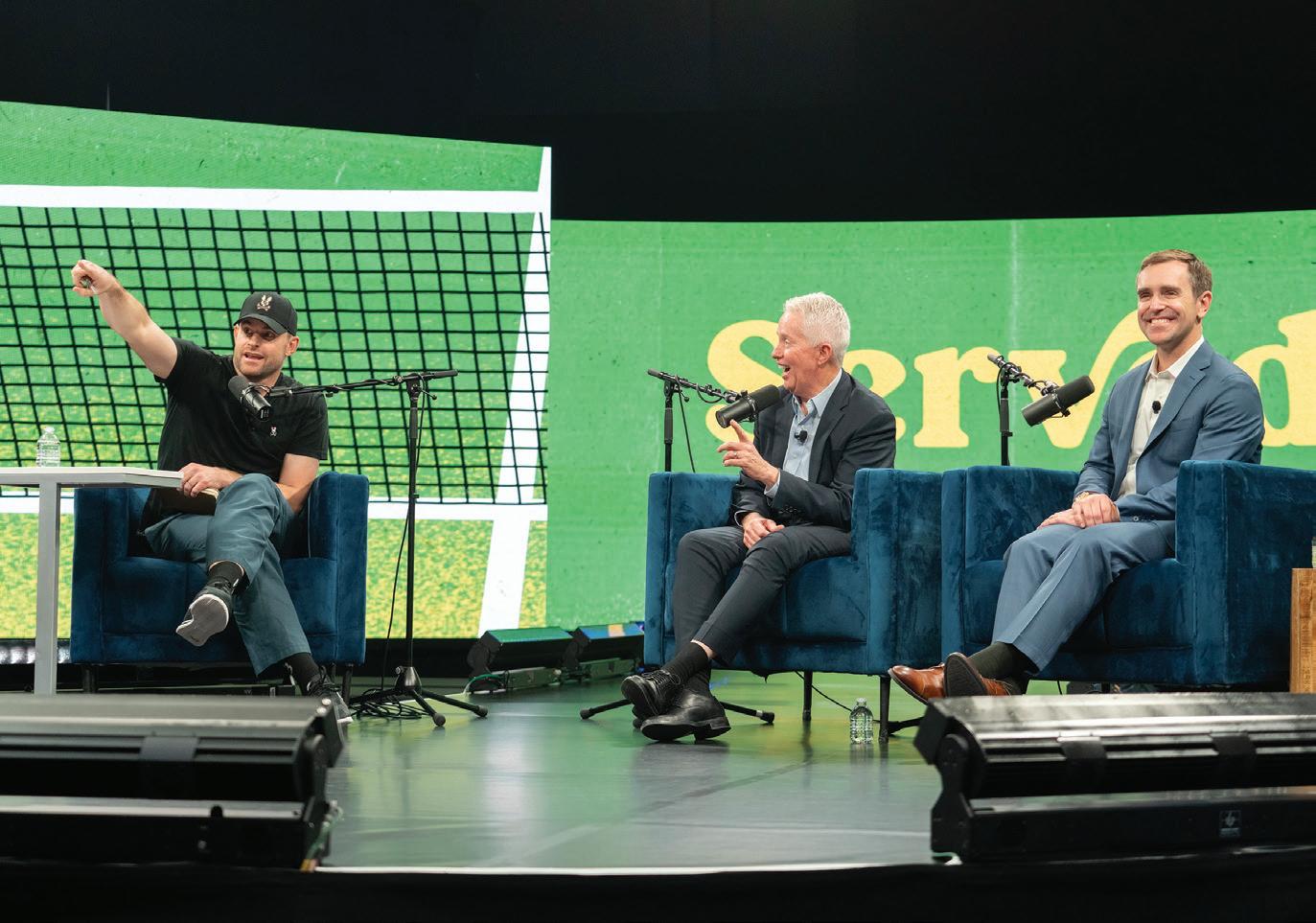
The USTA Annual Meeting and Conference kicked off March 26 in Orlando, Fla., with an innovative and attentiongrabbing opening session. USTA Chairman of the Board, President and Interim Co-CEO Brian Vahaly opened the conference, which saw 1,000 attendees, and talked about the sport’s recent good news in participation, then he brought on Craig Tiley, the CEO of Tennis Australia who will join the USTA as its new CEO in coming months. (See RSI’s April 2026 issue, page 5.)
Vahaly and Tiley were then joined by Andy Roddick, former champion and current tennis broadcaster/ podcaster, who sat down with them to record an episode of his popular
“Served” podcast, which was set to be released a few weeks later.
Vahaly pointed out that in Australia, with Tiley as CEO, tennis grew by about 30 percent. Currently in the U.S., with the goal of 35 million players by 2035, Vahaly said, “We’re trying to get more dollars down to the local grassroots level. We’re thinking about the actual customer—who is the player and what do they need?”
Tiley, who also is the longtime tournament director of the Australian Open, is looking to use America’s Grand Slam to connect with the grassroots sport. “How do we use the US Open to grow and support the sport? How do we connect it to the community more?” he asked.
Martin van Daalen Steps Down as PTR CEO
Martin van Daalen, who joined the Professional Tennis Registry as its Chief Executive Officer last November, has stepped down from the role. His resignation was effective March 18.
“On behalf of the PTR Board of Directors, I would like to sincerely thank Martin for his dedication and service to PTR,” Lynne Rolley, PTR Board Chair, said in a press release on March 20, which announced the resignation. “We are grateful for his leadership and the contributions he has made to our organization, and we wish him all the best in his future endeavors.” Rolley has been appointed Interim Chief Executive Officer.
Rolley brings decades of experience to the role, including a distinguished career as a touring professional representing the U.S. and competing at the highest levels of the sport, including Grand Slam events. Following her playing career, she served as Director of Women’s Tennis for the USTA and coach of the Fed Cup Team, Pan American Games, and U.S. National Teams around the world, among other leadership roles.
“PTR has a proud legacy and an important role in the global racquet sports community,” Rolley said. “I look forward to working closely with the Board, our staff and our members as we build on that foundation and continue to elevate coaching standards around the world.” PTR said more updates on its leadership moves will be provided in coming weeks.
Andy Roddick (from left) hosted his "Served" podcast during the opening session of the USTA Annual Meeting, with Tennis Australia CEO Craig Tiley and USTA Board Chair Brian Vahaly.
‘Hit to be Fit’ Expands to Full Weekend in May
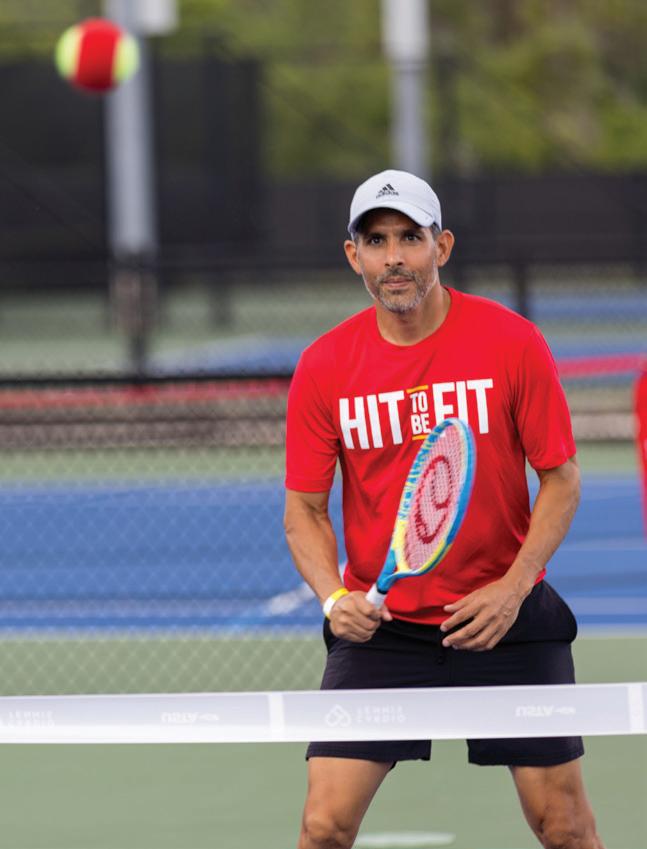
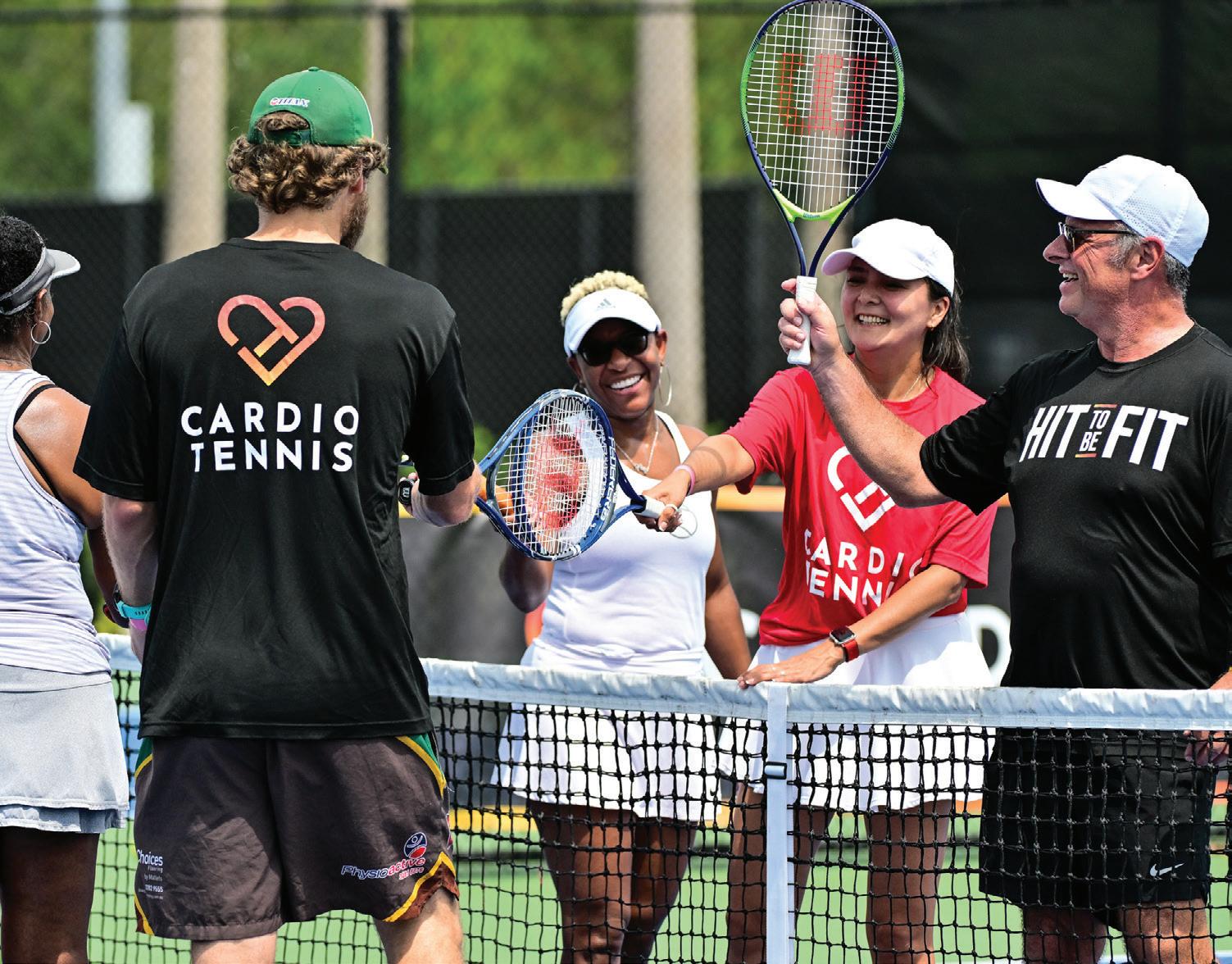
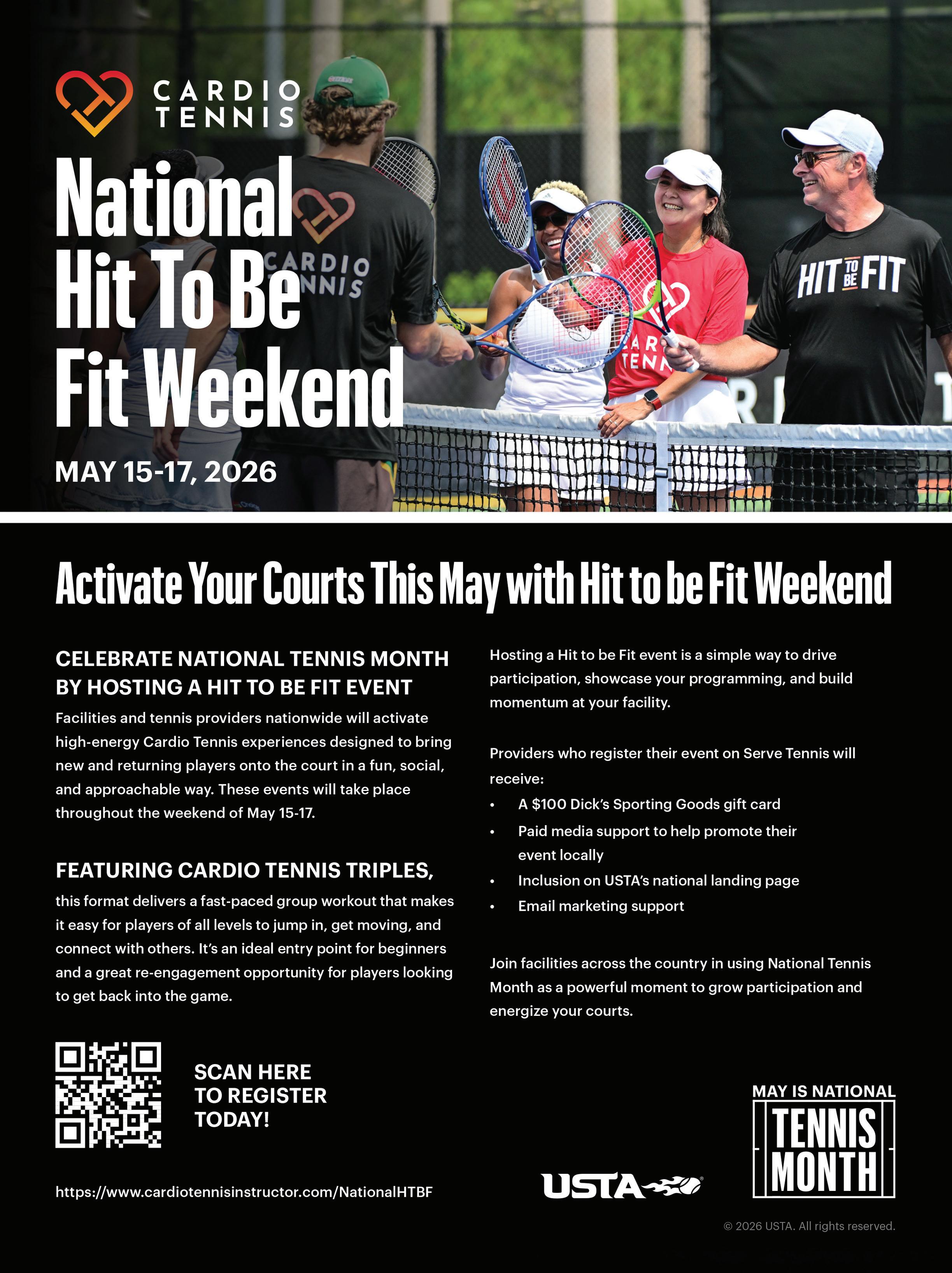
Celebrate tennis and fitness during National Hit to Be Fit (HTBF) Weekend, May 15 to 17, aligned with National Tennis Month. This will be the third year recognizing Hit to Be Fit, and the event has expanded from one day to a full weekend. USTA Cardio Tennis Consultant Michele Krause is looking to have at least 300 sites around the country engaged in HTBF, with a flagship event at the USTA National Campus. Visit USTA.com/ NTM or cardiotennisinstructor.com.
McMahon Careers Launches Two Sold-Out CRSE Cohorts
McMahon Careers has launched the Certified Racquet Sports Executive (CRSE) Class of 2026, and for the seventh consecutive year, the leadership development CRSE program has sold out. In addition, 2026 is the second straight year that the program has filled two cohorts within the same calendar year.
The CRSE program helps prepare racquets professionals to lead programs, manage teams and think strategically at an executive level. Over the course of the program, participants engage in immersive classroom sessions, peer collaboration, and executive-focused curriculum that connects technical expertise, operational management and leadership development. Visit www.mcmahoncareers.com/crse
Short Sets
The court and club management platform CourtReserve was named the title sponsor of the Intercollegiate Tennis Association’s College Tennis Weekend, which was held March 27-29 at college tennis facilities across the U.S.
Franklin Sports served as the Official Title Sponsor of the US Open Pickleball Championships, which was held in April in Naples, Fla.
For the first time in history, a USA Badminton national championship event will be hosted in Kansas. Visit Wichita, in partnership with Wichita’s Edge Sports Complex, will host the USA Badminton 2026 YONEX U.S. Junior National Championships, set for July 8-14. The event is expected to draw more than 600 youth athletes from across the U.S.
The 11-court Picklr Centereach indoor pickleball club on New York’s Long Island announced a partnership with Orlin & Cohen Orthopedic Group, naming the practice its Official Orthopedic and Sports Medicine Partner.
Bloomberg News reports that Tennis Channel, has “started selling its streaming service” on Amazon’s Prime Video Channels store, an “initial step in an expansion that will include” Roku’s premium subscriptions and other distributors. Bloomberg also says TC has “secured distribution in sportsfocused TV packages" sold by DirecTV, FuboTV and Comcast, and that TC’s traditional TV network is “one of only a few to grow its audience during the twilight years of cable.”
INTENNSE has announced that Boast will serve as an Apparel Partner of the Challenge Series for the 2026 season, extending the partnership launched last season. The company will design and provide official on-court uniforms for all INTENNSE Challenge Series players and coaches. Also, INTENNSE has announced that the Inspiring Children Foundation, based in Las Vegas, will be the exclusive charity for the league.
This year, skincare brand La RochePosay expanded its partnership with the Miami Open from Official Sunscreen Partner to Official Skincare Partner. The company says the amplified agreement underscores the brand’s deepening commitment to promoting sun safety in sports, its leadership in the global sun care market, and overall skin health awareness initiatives.
Kitchen Blockers, the first-of-its-kind lensless protective eyewear for pickleball, has been named an official retail partner of urban pickleball company CityPickle. The partnership places Kitchen Blockers inside CityPickle’s Times Square club in New York City. The company has positioned safety as a core part of pickleball’s growth, working as an official partner of DUPR, USA Pickleball and the Junior PPA.
The Pro Padel League (PPL), which has 10 teams across the U.S., Canada, and Mexico, announced the closing of a $15 million Series A funding round led by Charlotte Hornets Co-Chairman & Governor Rick Schnall. This funding marks the PPL’s second major investment in less than a year, following $10 million in seed funding received in March 2025. The new funding will be used to support the league’s growth, with a focus on team infrastructure and player development across all levels of the sport.
The Greater Atlanta Christian School varsity boys’ tennis team won the 2026 National High School Tennis Championship Powered by USTA & WTN at the USTA National Campus recently, claiming the national title against the top high school teams in the country.
The Bucks County Tennis Association, Inc. was recognized recently by USTA Middle States as Community Tennis Association of the Year for delivering affordable, community-based tennis programming to Bucks County, Pa.
Registration Open for RSPA World Racquets Conference
Registration has opened for the RSPA World Racquets Conference 2026, which will be Sept. 20-23 at the Omni Dallas Hotel. This year’s theme—Reach for the Stars: Shaping Your Professional Journey—invites providers to “lean into growth, stretch past comfort and elevate your career as a racquet sports professional.” Visit RSPA.net.
RSPA, CDT/PBI to Share Educational Content for Pros
The RSPA has signed an agreement with Cliff Drysdale Tennis (CDT) and Peter Burwash International (PBI) to collaborate and share content across educational platforms, designed to enhance the education of racquet sports pros and coaches worldwide. CDT/PBI and RSPA will share industry knowledge, expand professional development opportunities, and support each other’s key initia-
tives—including the growth of padel in the U.S. and joint educational programs and conferences. By aligning their expertise and resources, the organizations aim to elevate racquet sports programming and operations worldwide. In addition, RSPA members will gain access to CDT/PBI’s network of travel opportunities and exclusive travel benefits.
“This mutual collaboration will provide coaches and professionals with insights from industry leaders, ultimately elevating the racquet sports experience for players, facilities, and communities alike,” said CDT/PBI President and CEO Scott McCulloch.
“At the RSPA, everything we do is about supporting professionals,” added RSPA CEO Brian Dillman. "Partnering with CDT and PBI allows us to bring even more high-quality education, resources and opportunities to our members. This collaboration strengthens the entire racquet sports community.”
City
Council Closes Pball Courts in Martinez, Calif.
After a year of operational challenges, extensive neighborhood feedback, and a formal staff recommendation, the City Council of Martinez, Calif., voted to permanently discontinue pickleball play at the Hidden Valley Sports Courts, effective immediately. The eight pickleball courts, converted from tennis courts, opened in February 2025, but have generated persistent noise and traffic/parking complaints from nearby residents. Despite multiple mitigation efforts, the courts’ proximity to homes led the City Council to conclude that pickleball play is not a compatible use at this location.
“We understand that this has been a difficult and emotional issue for many in our community,” said Mayor Brianne Zorn. “Over the past year, we have heard from residents, players and neighborhood groups, and the Council carefully weighed all of that input in reaching this decision.”
USTA Names Recipients of Grassroots Tennis Awards
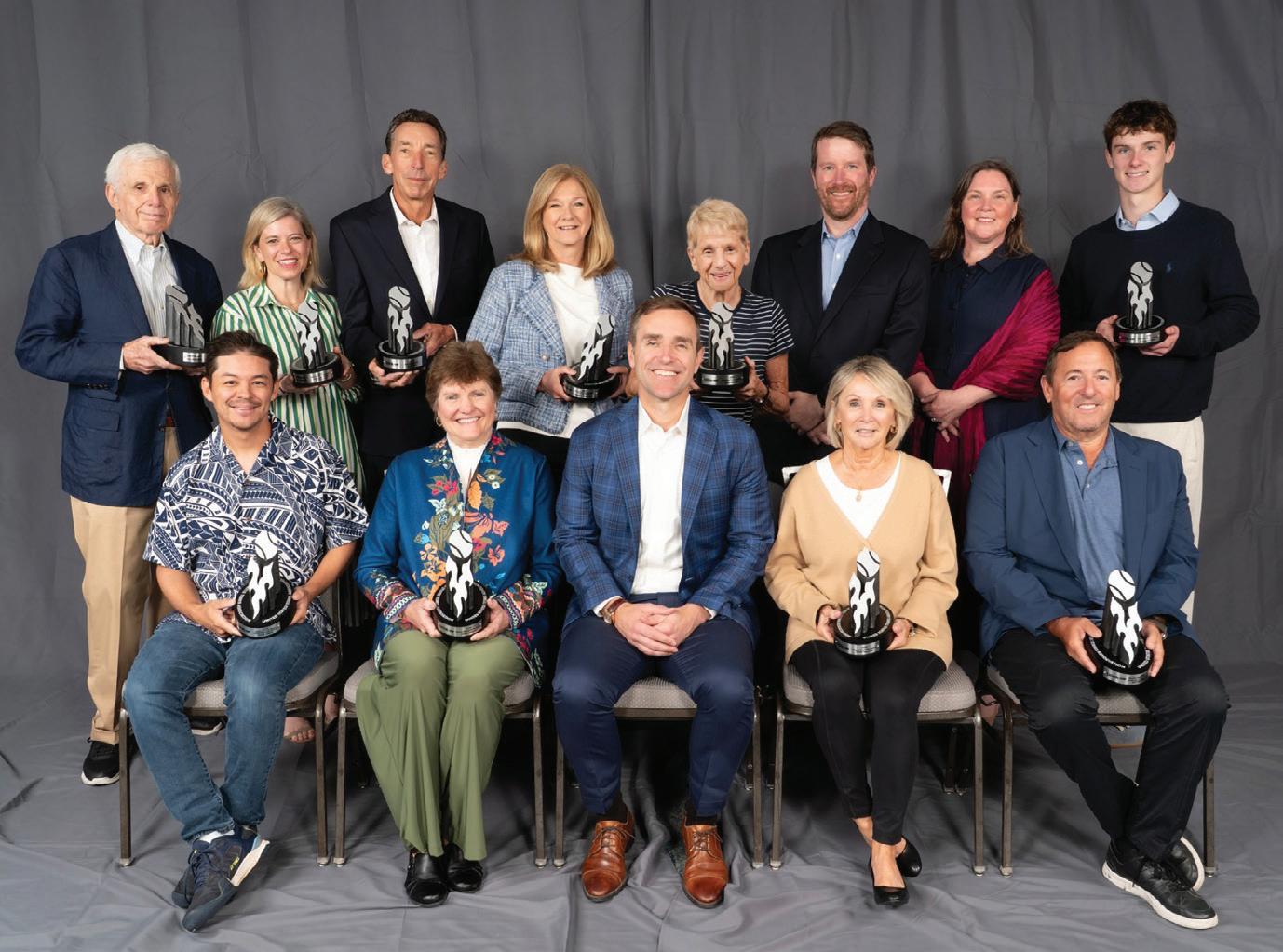
The USTA honored its annual national awards recipients for their dedication and contributions to growing the sport of tennis both locally and nationwide. The awards were presented at the USTA Annual Meeting & Conference in Orlando, Fla., in March.
» Adaptive Tennis Award: HERO New York (New York City)
» Barbara Williams Service Award: Laura Canfield (Feasterville, Pa.)
» Brad Parks Award: Jim Tierney (Palm Beach Gardens, Fla.)
» Eve Kraft Community Service Award: Jennifer Edmonson (Baton Rouge, La.)
» Family of the Year: The Meyer Family (Rockport, Maine)
» Janet Louer JTT Organizer of the Year: Shane Cashen (Kaneohe, Hawaii)
» League Organizer Award: Kathy Hinrichs (Destrehan, La.)
» Member Organization of the Year: SPORTIME Randall’s Island/John McEnroe Tennis Academy (New York City)
» NJTL Founders’ Service Award: Ray Benton (College Park, Md.)
» NJTL of the Year Award: Portland Tennis & Education (Portland, Ore.)
UTR Sports, Baseline Vision Partner to Expand ELC
UTR Sports, a global leader in racquet sports ratings and technology and operator of the UTR Pro Tennis Tour, has announced a partnership expansion with Baseline Vision to integrate real-time data streaming and electronic line calling (ELC) into the UTR Pro Tennis Tour (UTR PTT) worldwide. The multi-year partnership builds on a 2025 pilot held at more than 80 UTR PTT events in the U.S. and Europe.
Baseline Vision is a portable, AI-powered system that brings real-time line calling, performance stats and video analysis to any court without the need for pre-existing infrastructure, such as external power or internet. It’s ideal for ease of setup and travel, and there is no requirement for additional devices to be in the hands of chair umpires, says the company.
NGI Sports Pairs Rally Series Surface With Even Flow Acrylics
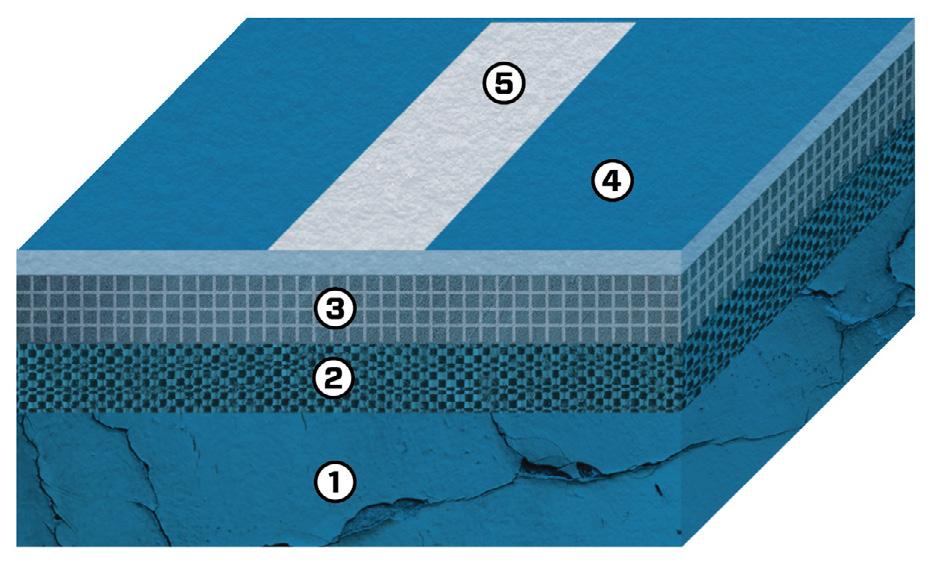
NGI Sports’ Rally Series, announced in December at the ASBA Technical Meeting, is an adaptation of the company’s urethane foam products now fully adhered to the existing asphalt or concrete surface, which NGI says offers ideal cushioning and ball response for tennis and pickleball.
The Rally Series of surfaces are the 100, with no foam; 300, with 3mm urethane foam; and 500, with 5mm of urethane foam, which the company says offers “unmatched compression resistance and longevity of the inherent cushion guaranteed for life.”
To accompany the surfaces, NGI Sports is launching Even Flow Acrylics, which is a comprehensive line of acrylic surfacing products the company says is ideal for use on NGI overlay systems and is a high-quality paint for any surface. Even Flow Acrylics are available in concentrate or textured options, are 100 pure acrylic paint with no fillers, and are formulated to provide long-term elongation and color retention.
For more information, contact 800-835-0033 or info@ngisports.com.
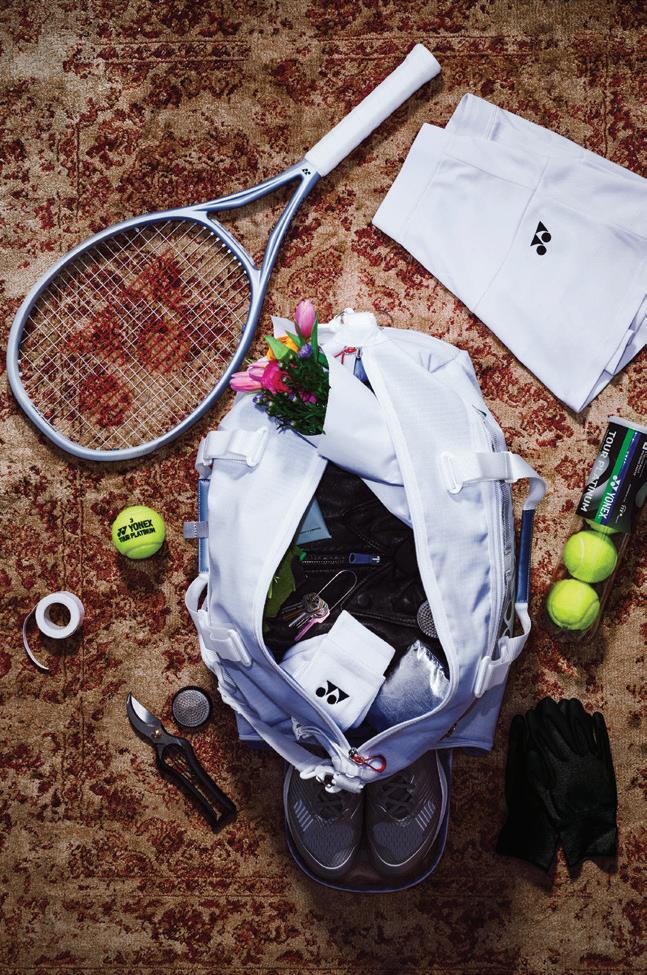
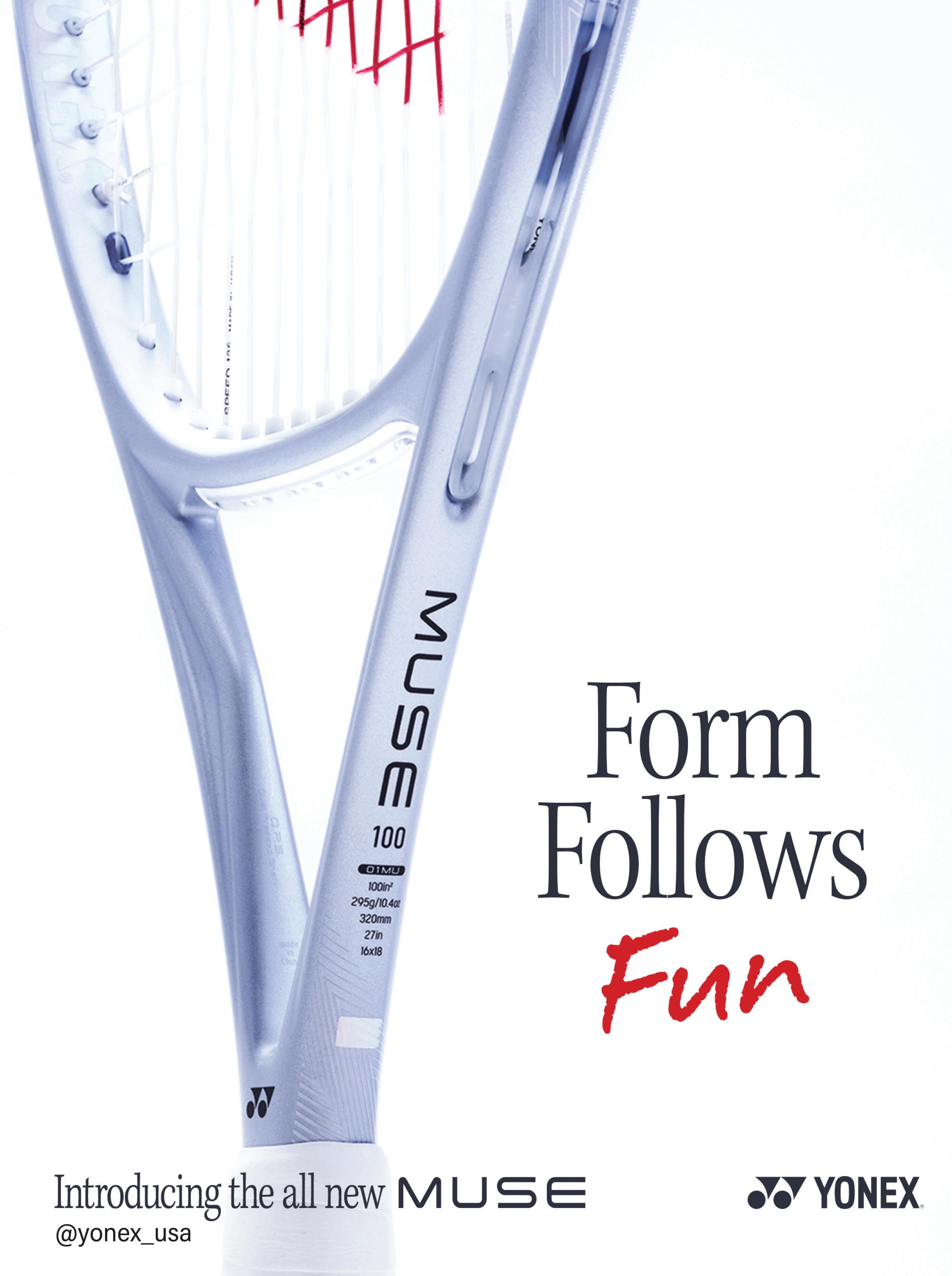
The newest tennis racquet from Yonex is the Muse, which launched in late April and is “designed to reduce stress on the body and mind,” says the company, empowering recreational players to feel re-inspired.
Yonex says the frame, which was in development for five years, offers exceptional maneuverability and comfort, smooth handling and efficient power transfer, addressing “common sources of mental and physical stress during rallying” and allowing players to “enjoy tennis at their own rhythm.”
The Muse series consists of five models: 98, 100, 100L, 100SL and 107. Head sizes (in square inches) correspond with the model names, and the string pattern is 16 x 18 for each 27-inch frame. At the heart of the Muse is the Synchro Frame, which Yonex says is a new structural concept that synchronizes three core technologies—Isometric, Uniform Impact Grommet, and Energy Flow Shaft—to provide smooth handling, stable performance and reduced fatigue.
Yonex also is launching the Muse capsule collection, which matches the design of the racquets and includes bags, shoes, strings and vibration dampeners. For more info, visit www. yonex.com.
Yonex Debuts New Muse ‘Less Stress’ Racquets
Gamma Sports Files For Chapter 11 Protection
Gamma Sports, which has been a key manufacturer for tennis, pickleball and other racquet/paddle equipment and apparel, filed for Chapter 11 protection from creditors in the Western District of the U.S. Bankruptcy Court in March. The company sells both wholesale and retail and is based in Pittsburgh, Pa.
The Pittsburgh Business Times reported that based on a tax form submitted with the Chapter 11 petition, “Gamma had gross sales in 2024 of about $14.23 million and posted a loss of about $3.26 million.”
The company was founded in 1963 by a nuclear engineer, Harry Ferrari, who was an avid tennis player who developed a patented irradiation process to improve synthetic tennis strings.
People Watch
Babolat has extended its partnership with World No. 7 Félix Auger-Aliassime. He currently plays with the Babolat Pure Aero 98.
In a deal reportedly worth $3.5 million a year, Emma Raducanu has become the newest global ambassador for Uniqlo. The British star left Nike to join the Japanese brand in time for this year’s Indian Wells event. Off the court, she’ll promote Uniqlo’s LifeWear apparel and collaborate on the brand’s community programs.
USTA New England will induct three people into its section Hall of Fame for 2026: players June Ferestien and Jeff Landau and contributor Peter Francesconi. The induction will be June 4 in Newport, R.I., at the International Tennis Hall of Fame.
Australian tennis coach and former pro player Marinko Matosevic has been suspended for four years under the Tennis Anti-Doping Program. An independent tribunal determined that Matosevic committed five anti-doping rule violations between 2018 and 2020, including the use of a prohibited method through blood doping and facilitating another player to blood dope, providing advice to other players on how to avoid positive tests, and use of the prohibited substance clenbuterol.
Rafa Nadal Academy Padel Tour Expands to the U.S.
After establishing itself as one of Europe’s fastest-growing amateur padel circuits, the Rafa Nadal Academy Padel Tour is expanding into the U.S. in 2026. This strategic growth has been supported from the beginning by Babolat, the Tour’s Official Technical Sponsor and a key partner since its launch three years ago.
Following two successful editions in Spain and the launch of the Italian circuit, the Rafa Nadal Academy Padel Tour is hosting four new events in the U.S. The U.S. circuit began in Miami this past March. It will continue April 24-26 at “Padel 39” in Austin, Texas; then move to “Ultra Padel Miami” May 8-10; and conclude at “Reserve New York” in Manhattan at a date to be determined.
In addition to Babolat, the Rafa Nadal Academy Padel Tour’s expansion is supported by Playtomic, the world’s largest community of racket sport players and clubs.
Tennis Association Treasurer in Md. Charged with Fraud
A former Maryland Republican Party official, who is listed as the treasurer for the Anne Arundel County Tennis Association, among other organizations, has been charged with wire fraud and money laundering, according to court filings unsealed in late March.
An indictment alleges that James Appel, head of Annapolis-based advisory firm GOP Compliance, transferred $100,000 each from the tennis association’s account and from a political campaign account to his personal bank account, using his GOP Compliance account as an intermediary. He used the bank statements for a refinancing loan on a boat, according to the indictment, which alleges Appel defrauded both the tennis association and the unnamed politician. Appel and his attorney did not immediately respond to questions.
The Bench
Gaining the Advantage
If you want your students to play smarter on the court, teach them to anticipate like a senior player.
By
Coach Pete Scales, Ph.D. RSPA, PTR, USTA Coaching
I’m a senior player. Age 76. When I first started learning tennis, at age 42, I hated playing the old guys in open play. I could out-hit them, out hustle them, outlast them physically. But they always managed to take my game away. How? They used slices, junk balls and lobs more than the younger players.
But do you know the real reason why they caused me so much grief? With all their experience, they had something that I didn’t have: anticipation.
These senior players knew, almost before I contacted the ball, where my shot was going to go. So they got a great jump on it. Even before their
own ball hit my side of the court, they knew what that ball was probably going to make me have to do, so they were ready and balanced for that, too.
And because of their sharp anticipation, they also didn’t have to rush. They seemed way faster than they should have been, yet hardly ever seemed frantically in a hurry to get to the ball. They were patient, not having to hit a winner, because they knew the sequence of events that would likely happen, if they hit the ball here or there, with this or that much spin, height over the net, etc. They anticipated that everything would be a two- or three-shot combo, ultimately pulling an error out of their opponent.
All that, because of anticipation.
For a coach, there are a few good ways to teach anticipation. First, when you have your players playing points, games or matches, freeze play frequently, and ask them why they did the move they just did—what did they think the impact would be on the opponent? What’s that move going to make happen or lead to on your opponent’s side? How will they have to probably react? It gets them thinking more about the reason for their shots and movement, the purpose.
Second, teach stroke production that emphasizes shot combinations, not just hitting the stroke in isolation. For example, when I teach the drop shot, yes, when they’re first learning I have them do a bunch of drops to specific targets. Self-feed and then from partner or pro feed. But we try to get quickly to rehearsing the drop as a two-shot combo: hit the first ball deep to pin your opponent back, then hit the drop to the side farthest from the opponent, so they have to run the longest distance. Feed them and then have them work the combo into point play—but always focusing on a two-shot combo. Teaching +1s on serve and return does the same thing. Serve + what? Your best shot, usually a forehand. Same for the return. Again, it’s getting the student to think in terms of executing their own patterns, sequences and
combinations, and seeing all that flowing from their opponents.
Third, after the match is really under way—the first couple of games in tennis, or the first five points in pickleball—have them concretely identify what their opponent is doing to them, and what they are doing to their opponent. I have a worksheet on this in my Compete-Learn-Honor Playbook: Who’s Doing What to Whom? (visit competelearnhonor. com) It’s too complicated to do in a real league or tournament match, but in practice matches, give them a timeout or two so they can concretely reflect like that. They very quickly will learn to see those patterns in real matches, and be able to do a Who’s Doing What to Whom analysis fast in their heads in real time on the fly. It’s another way of strengthening their anticipation skills.
So, although I don’t recommend all the other stuff that comes from being an older player (aches and pains, slowness, poor eyesight), if you want your students to play smarter on the court, teach them to play like the senior players who they think can’t play—teach them how to anticipate like a senior.
Peter C. Scales, Ph.D., RSPA, PTR, USTA Coaching, Coach Pete, is a psychologist and long-time high school tennis coach who created the acclaimed Compete-LearnHonor™ Approach to youth sports person and player development and coaching (www.competelearnhonor. com). He has been a mental strength consultant to college tennis teams, high-performance tennis juniors, and adult pickleball players at all levels, including world top 10
pros. In addition to Coach Pete’s mental game columns for Racquet Sports Industry magazine and the National Alliance for Youth Sports, he is the author of the award-winning books Mental and Emotional Training for Tennis: Compete-LearnHonor (Coaches Choice, 2019), which the National High School Tennis Coaches Association called “one of the best books ever on the mental game,” and The Compete-LearnHonor™Playbook: Simple Steps to Take Your Mental & Emotional Tennis & Pickleball Skills to a New Level (Coaches Choice, 2023), which BetterPickleball calls a “masterclass” in the mental game. Both books are available on Amazon.
Have a question for Coach Pete? Email him at coachpetementalgame.com and put “The Bench” in the subject line.
Industry Event
Celebrating Racquet Sports
The 2026 edition of RacquetX signals a new era of ‘collaboration, crossover and collective growth in the industry.’
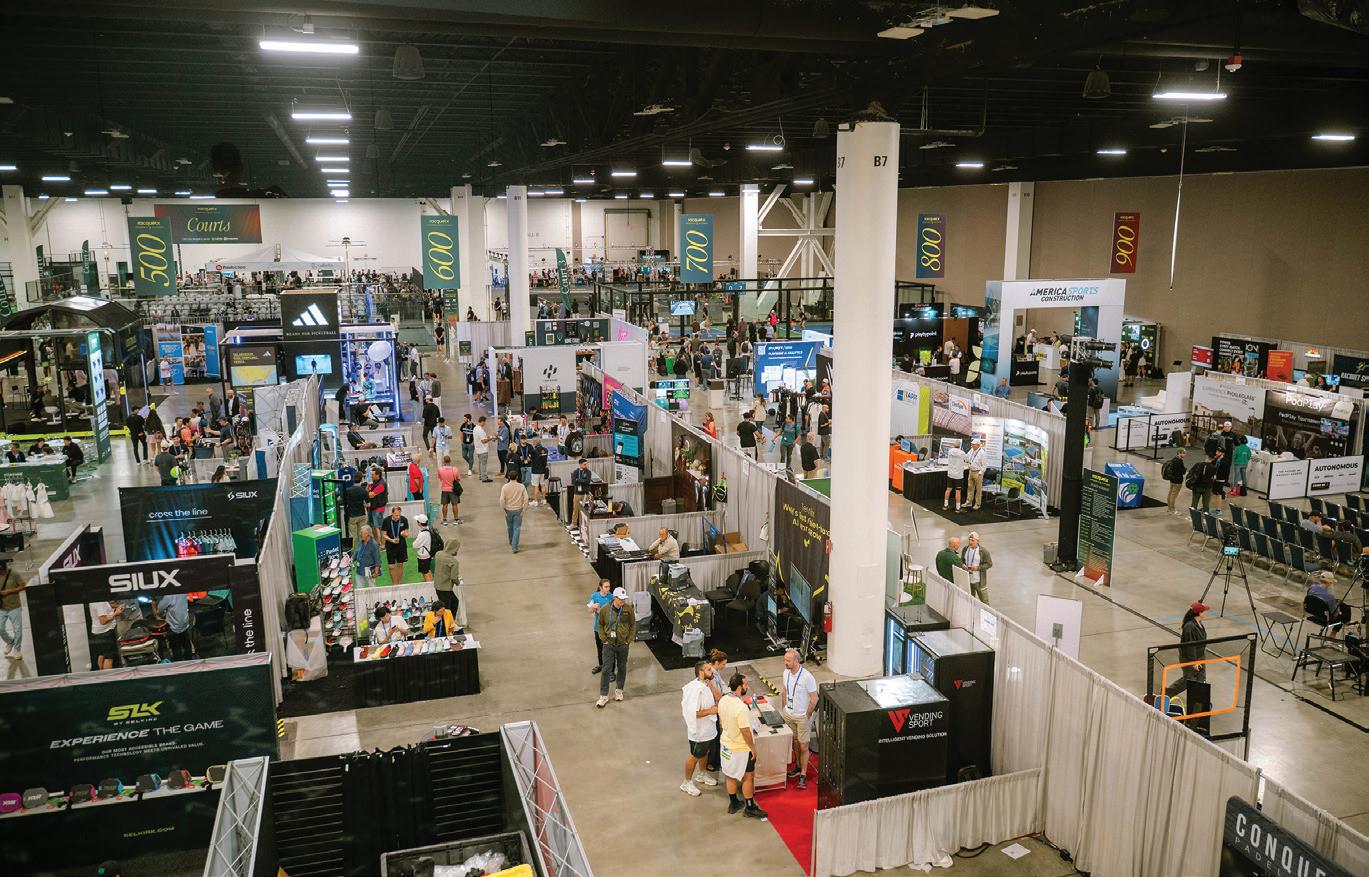
The fourth annual RacquetX took place March 13-15 at the Broward County Convention Center in Fort Lauderdale, bringing together thousands of business leaders and players and more than 175 companies for a “festival and celebration of all
racquet sports.” The event included “athletes, brands, creators, investors, and innovators from across tennis, padel, pickleball, squash, badminton, racquetball, table tennis, and emerging racquet sports sectors,” and organizers termed it “the most impactful show to date.”
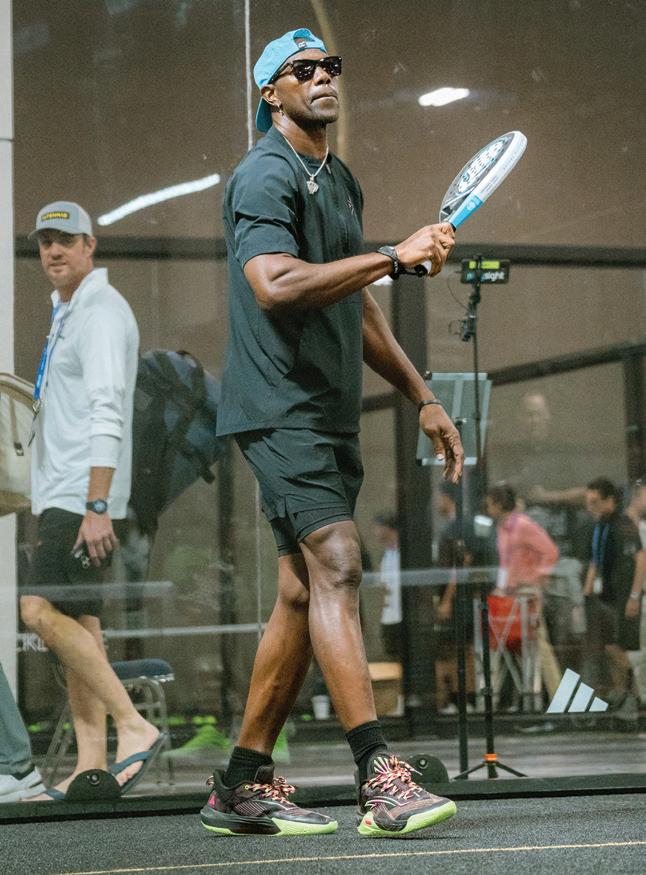
In addition to the exhibitors, the show floor included 10 racquet/ paddle courts for play and company activations for pickleball, padel, tennis, Cardio Tennis and the new sport of TYPTI, which is played on a pickleball court with a strung racquet and foam ball. Celebrities and athletes also showed up on the courts and on the presentation stage, including NFL Hall-of-Famer Terrell Owens, NFL Pro Bowl wide receiver Jarvis Landry and former ATP World No. 5 Kevin Anderson.
The 2027 edition of RacquetX will be back in Fort Lauderdale, April 9-11. Visit theracquetx.com.
RacquetX Founder Robyn Duda moderates a session.
TYPTI Founder Steve Bellamy demonstrates the new sport.
Raising The Bar
QUALITY OF LIFE
Cooperative Learning 50
years ago, an understated master at bringing people and groups together kept the tennis community thriving in Puerto Rico.
By Joe Dinoffer
Most people probably think they understand what “cooperation” means. But I’m hoping we can challenge and expand your understanding and appreciation of the importance of cooperation, and in how we can help create a more cooperative environment where we work.
I go back 50 years when, from 1975 through 1984, I was the vice president of marketing for Peter Burwash International. I was often sent to tennis facilities that were transitioning from one tennis director to another, which frequently were challenging changes to make.
In the spring of 1976, a hotel management company acquired a prominent hotel in Puerto Rico with a legendary 10-court tennis facility known as the “Racquet Club.” The new company renamed the property the Carib-Inn.
Peter Burwash was well-acquainted with the management company’s owner, Dick Squires, who wanted to make a fresh start with the property. The longtime director of tennis, Juan Rios, was an incredibly popular local legend, but within a few weeks of the ownership change, I was tapped to be director of tennis, taking over from Rios, who was 20 years my senior and beloved by local players, which included hundreds of club members. You can imagine how skeptical they were when I, a 22-year-old newcomer, was introduced at a club gathering.
The facility was outstanding, and it hosted the most important junior tournaments in Puerto Rico. Just one annual week-long event, the Puerto Rico Junior Sectionals, brought in more than 2,000 players in all age groups. Those were the hey-days of tennis in Puerto Rico.
The blessing for me was that the
chairman of the tennis committee and president of the PRLTA (now known as Puerto Rico Tennis) at that time was Tuto Fernandez, the father of tennis legend Gigi Fernandez. (Tuto even had Gigi take lessons from our new head teaching pro, Ted Murray, who contributed to her outstanding skills at the net.) The legacy left by the PRLTA is significant—nearly every junior age group boasted No.1 players coming out of Puerto Rico in this era. In addition to Juan Rios, Puerto Rico tennis coaching was propelled toward excellence by coaching legend Welby Van Horn, who directed the programs at the Hilton Hotel Tennis Club.
When we came in, we were, of course, the outsiders—arriving just after a highly contested purchase and name change of the hotel and Racquet Club. It was arguably the most prominent membership club in Puerto Rico at the time, and the atmosphere was tense. How much credibility and respect did I have upon my arrival? Little to none!
But Tuto Fernandez, a prominent medical doctor, was the consummate tennis harmonizer—well-respected, with great integrity, who knew the local tennis politics and was able to navigate the various self-interest groups with the ease of a cool-headed doctor working in an over-flowing emergency room.
This was my first real firsthand opportunity to closely observe a master of cooperation at work—planting and nourishing real understanding among various groups with differing interests, opinions and attitudes. Tuto Fernandez led behind the scenes. He led “softly,” with astounding listening skills combined with intelligence, along with an open mind and empathetic heart. And through his leadership, he brought together the tennis community in Puerto Rico.
Now, 50 years later, I still remember, and have taken to heart for my whole career, Tuto’s internal qualities of integrity, humility and cooperation. These lessons are something we all need to absorb, not just in our careers, but as characteristics in our lives.
Retailing
When Parents Are the Purchasers
An SFIA report provides insights into purchasing behaviors when it comes to youth equipment and apparel.
By Mary Helen Sprecher
While it is a given that parents pay for lessons and coaching in sports, what hasn’t always been clear is who drives the train when it comes to purchases like equipment and apparel.
Now, that information is available through the Sports & Fitness Industry Association’s inaugural Team Sports Parents’ Insights Report. And while that report found sport-specific data only on the largest youth sports participation categories (baseball, softball, flag football and soccer), its takeaways can be broadly applied to the youth racquet sports industry— and particularly, to those who sell the equipment and apparel for which parents shop.
According to the SFIA, the purpose of the study was to gain a deeper understanding of how parents navigate the youth sports landscape, focusing on their purchasing behaviors, motivations and participation patterns.
“Understanding the full sports ecosystem includes listening to those on the frontlines—parents and families,” the report notes. Among the insights:
Purchasing behaviors among parents reflect a desire for value and quality and are additionally driven by input from children. Across general and sports-specific
purchases, parents also seek trusted brands. Sales and promotions have a significant influence on decisions. Surprisingly, sponsorships and endorsements by pro athletes or governing bodies carry relatively little weight. Additionally, the responsibility for buying sports equipment is almost evenly divided between mothers and fathers, although the report didn’t address whether mothers do the primary buying for their daughters, or fathers for sons.
Parents shop using a combination of traditional and digital channels. Brick-and-mortar stores remain the preferred purchase point, though many parents combine in-store and online shopping. Online-only shopping is the least common, despite its convenience; parents and children prefer to look at items up close before purchasing.
What makes purchasing easier?
A more streamlined, affordable process. Convenience and bundled offers, as well as product comparisons, are secondary but still notable advantages that can help close a sale.
Parents have strong feelings about youth sports. Overall, parents believe their children learn valuable lessons and stay active and healthy because of sports. Also, about 85 percent of all parents surveyed described themselves as being engaged with their children’s sports.
Parents with good memories of their own time in youth sports are likely to support their children’s sports programs. However, pressures such as costs and facility access are likely to factor into their decisions of where to enroll their children for instruction and coaching.
The Team Sports Parents’ Insights Report is available for purchase from the SFIA at sfia.org.
Strategic Moves
A new study indicates that the challenges of attracting and retaining women coaches is driven more by systemic workplace structures.
By Judy Leand
From participation, viewership, marketing and investment to leadership roles and coaching, women’s sports are more popular and visible than ever. However, there remains a glaring problem when it comes to the retention of women coaches.
A new national report from USTA Coaching and Tucker Center for Research on Girls & Women in Sport finds that men continue to dominate coaching leadership roles across sports, highlighting a persistent disconnect between participation and leadership representation. In tennis, USTA Coaching estimates there are between 25,000 and 35,000 tennis coaches in the U.S., of which about 25 percent are women. Currently, women make up about
34 percent of the USTA Coaching community.
More specifically, the research concludes that women’s attrition from coaching is driven less by personal choice and more by systemic workplace structures—including compensation, advancement pathways and work culture—that determine who can sustain a career in the profession.
The findings were informed in part by discussions at a cross-sport working summit held during the 2025 US Open. The framework for change includes leadership accountability, compensation transparency, inclusive access to professional networks, sustainable work expectations and modern facility standards.
The upshot: It’s not enough to
simply recruit women coaches— retention is key.
SUSTAINING CAREERS
Toward this end, USTA Coaching is already advancing many of these principles, according to Megan Rose, Managing Director and Head of Business Development & Operations for USTA Coaching. Launched as a national platform to modernize coach education and professionalize coaching pathways, USTA Coaching provides flexible certification models, tiered development opportunities and structured support designed to strengthen access and retention.
Earlier this year, USTA Coaching introduced its inaugural Women in Coaching Cohort, a 10-month national leadership experience for 25 diverse women coaches across the tennis ecosystem. The program focuses on leadership development, financial literacy and career longevity—areas identified in the report as critical to sustaining women’s careers.
“This is a long-term commitment, especially when it comes to supporting more women in coaching,” says Rose. “As we continue building out programs through 2026 and beyond, our focus is on expanding access, strengthening development pathways, and creating more inclusive opportunities for women to enter and stay in the profession.”
Rose adds, “The kind of impact highlighted in this report, from improving representation to addressing systemic barriers, will take time. What matters is that we are building the right foundation now and measuring progress along the way to drive lasting change for women in coaching.”
NOT JUST ABOUT TENNIS
USTA Coaching views its initiative as a shared opportunity across the entire sports ecosystem.
“Rather than focusing on any one organization, we’re encouraged by the growing awareness and willingness to address the barriers
USTA COACHING
that women in coaching face,” Rose explains.
“For us, it’s about working alongside partners at every level including schools, collegiate programs, community organizations and industry leaders, to create more inclusive pathways and better support systems. Real progress happens when everyone is moving in the same direction, and our role is to help provide the tools, education and momentum to support that shift.”
Although the report’s findings don’t suggest a priority regarding how and when each component (such as pay, professional infrastructure or other reforms) should be addressed, Rose is adamant that a one-size-fits-all approach will not work.
“What the findings do suggest is that organizations begin with leadership commitment and accountability, listen directly to women coaches about the barriers they are facing, and then pick one or two high-impact issues to address with real resources and follow-through,” she says. “In many cases, that may mean starting with pay equity, workplace structure, advancement opportunities or work-life culture, because those are among the issues most closely tied to retention. The broader point is that progress is more likely when organizations move from broad statements of support to focused, measurable action.”
policies, pay equity, more inclusive access to decision-making spaces, a healthier work-life culture, or greater investment in leadership development. Change starts with broader awareness, then the key is to move from general support to concrete action.”
In the short term, “The goal is to help sports organizations move from awareness to action by identifying the barriers that are having the biggest impact on women coaches and beginning to address them in a more intentional way,” Rose says. “That includes building accountability, strengthening support structures, and generating greater momentum around retention and advancement.”
Longer term, the goal is broader structural change that would involve creating environments where more women not only enter coaching but are able to stay, grow and lead over time. Ultimately, the effort is about making coaching a more sustainable and equitable profession for women across all sports, notes Rose.
“This report reinforces something we’ve long believed: When coaches are supported, the entire sport benefits. For women in coaching, that means not only creating more entry points, but also ensuring they have the community, resources and opportunities to grow and lead,” says Rose.
Women’s Leadership Roles Rise in NCAA Sports
Representation of women in key leadership positions, including athletics directors, head coaches and college presidents, continues to trend upward, signaling progress both on the field and in decisionmaking roles. In fact, women’s influence across college athletics reached a record high during the 2024-25 academic year, according to NCAA Sports Sponsorship and Participation data.
While this is positive news, there’s still plenty of room for improvement. Here are the key takeaways.
LISTEN TO THE COACHES
Rose suggests that a great place for any organization to start is by listening to their women coaches about the barriers they are facing, and then identifying one or two areas where meaningful change can happen quickly. “That could include stronger parent-coach
“USTA Coaching is designed to be part of that solution. By building clearer pathways, investing in education, and fostering a more connected and inclusive coaching community, we have an opportunity to create meaningful, lasting change. It’s about shaping a future for tennis where everyone can see themselves in the game and feel supported to stay in it.”
• Female head coaches: 5,126 (up 13 percent over 10 years)
• Female college presidents or chancellors: 378 (up 27 percent since the NCAA began tracking the data in 2017)
National Tennis Month
In May, We All Play!
With support from all areas of the industry, National Tennis Month is the perfect vehicle to drive the world’s healthiest sport.
Over the last five years, the industry has continued to embrace and support National Tennis Month for the month of May as a way to offer tennis providers a platform to use to grow the game in their communities and to grow their own businesses.
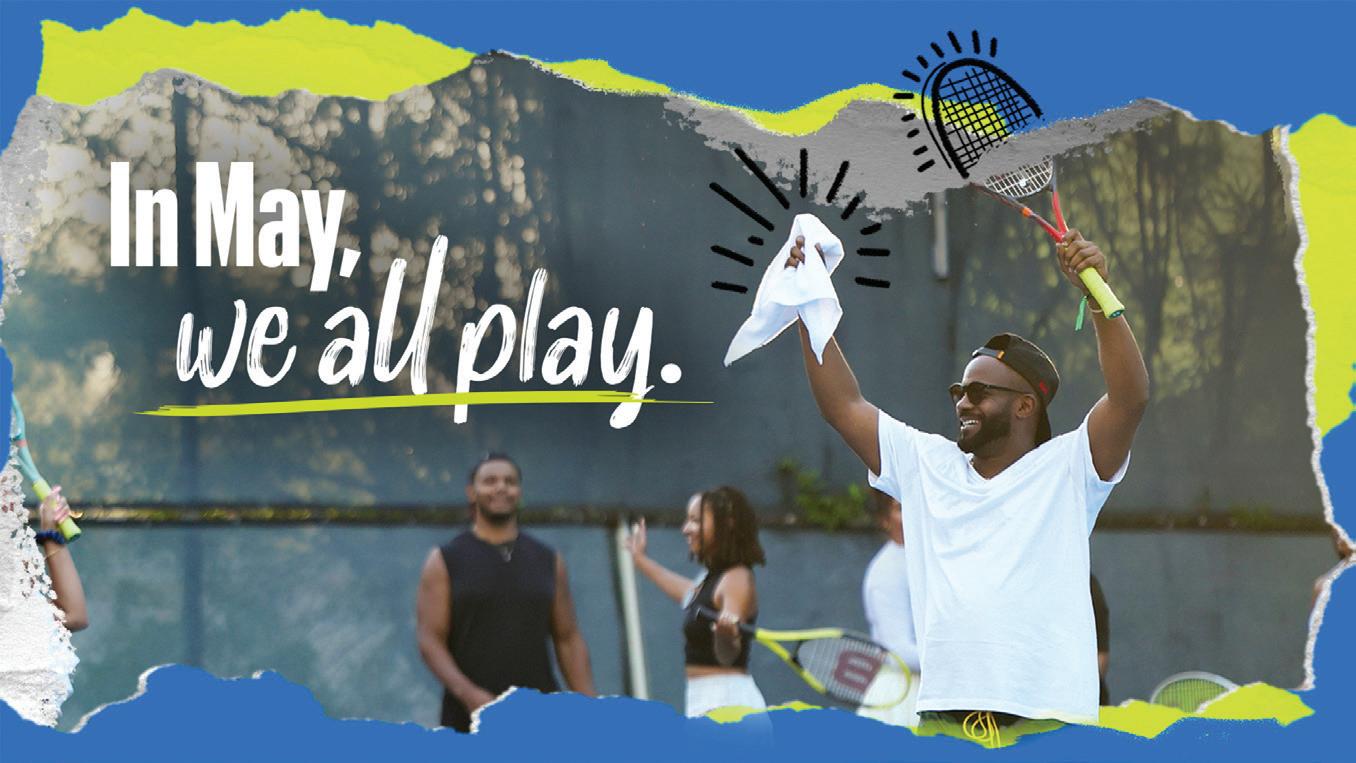
And this year, NTM is getting a brand refresh from the USTA with the “In May, We All Play” campaign— along with a vibrant and fun new look targeting the social side of the game. This “growing the game together” shift is designed to help inspire more people to try tennis; reach those who expressed an interest in playing tennis (estimated to be about 25 million in the latest participation research); re-engage existing and lapsed players; and empower providers to activate NTM locally.
The reinvigoration of National Tennis Month started in 2021, when USTA volunteers saw the need to have a local “hook” to help grow tennis at the grassroots, so they
started pushing the idea of bringing back NTM. The USTA staff, USTA Sections and other industry groups and companies got on board, and over the last five years have devoted increasing support and resources to NTM. What they realize is that every tennis provider—teaching pros/ coaches, facilities, park & recs, CTAs, NJTLs, retailers, manufacturers and more—can use this annual platform to help bring new players into local programs, inspire lapsed players to re-engage with the sport, and energize existing players to play more and buy more equipment, lessons and court time.
And, while there isn’t any direct evidence for this, there’s a good chance that NTM played a major part in this past year’s 6 percent participation increase to 27.3 million tennis players in the U.S. (the sixth consecutive year of participation growth), and to the increase in retention this sport has experienced. In fact, a senior marketing manager
at the USTA says NTM is “the loudest megaphone” the industry has for tennis advocacy and growing the sport.
KEEPING IT LOCAL
An important focus for NTM has always been on the “local” aspect of promoting the game and hosting tennis experiences. For the most part, programming and events are left up to whatever local tennis providers decide is best for their own communities.
Significantly, providers of all types can also tie their regular May programming into National Tennis Month, benefitting locally from this nationwide promotion. USTA section and local staff and volunteers, along with retailers, also have been buying into NTM, running events, exhibitions and promotions in May. In fact, a number of sections offer grants for providers that run programs for NTM (check with your USTA section).
As interest in NTM has grown over the years, the USTA is looking to try to track what’s been going on through registering events on Serve Tennis, and through reporting on local or state National Tennis Month proclamations that have been issued. This reporting, while not mandatory, has helped to show how things have been growing from year to year, and helps to state the case for continued support for this important annual initiative. But NTM events don’t need to be “official” through Serve Tennis—anything you do as a tennis provider in May can and should tie in with National Tennis Month. As a provider, use this local promotional platform, including online resources, to help grow what you do.
PROMOTING NTM
For tools and resources you can use to help promote NTM, and tennis in general, visit the recently updated USTA.com/NTM website. Tennis providers should click “Host an
Event” to list their NTM events on a searchable database. Consumers can click “Find an Event” to narrow in on NTM happenings in their communities.
Among the resources for NTM are marketing and promotional material, much of which is customizable, NTM artwork, and press releases and press release templates.
One of the most popular resources on the USTA.com/NTM site has been the “proclamation” templates that providers can download, customize and submit online for states, communities or even schools to declare May as National Tennis Month. (A quick search of your state or local government website will usually reveal an easy, online procedure for submitting a request for a proclamation.) Having a local or state proclamation is a great way to generate publicity and interest in tennis. Anecdotal evidence indicates that last year, dozens of proclamations for National Tennis Month were issued around the country.
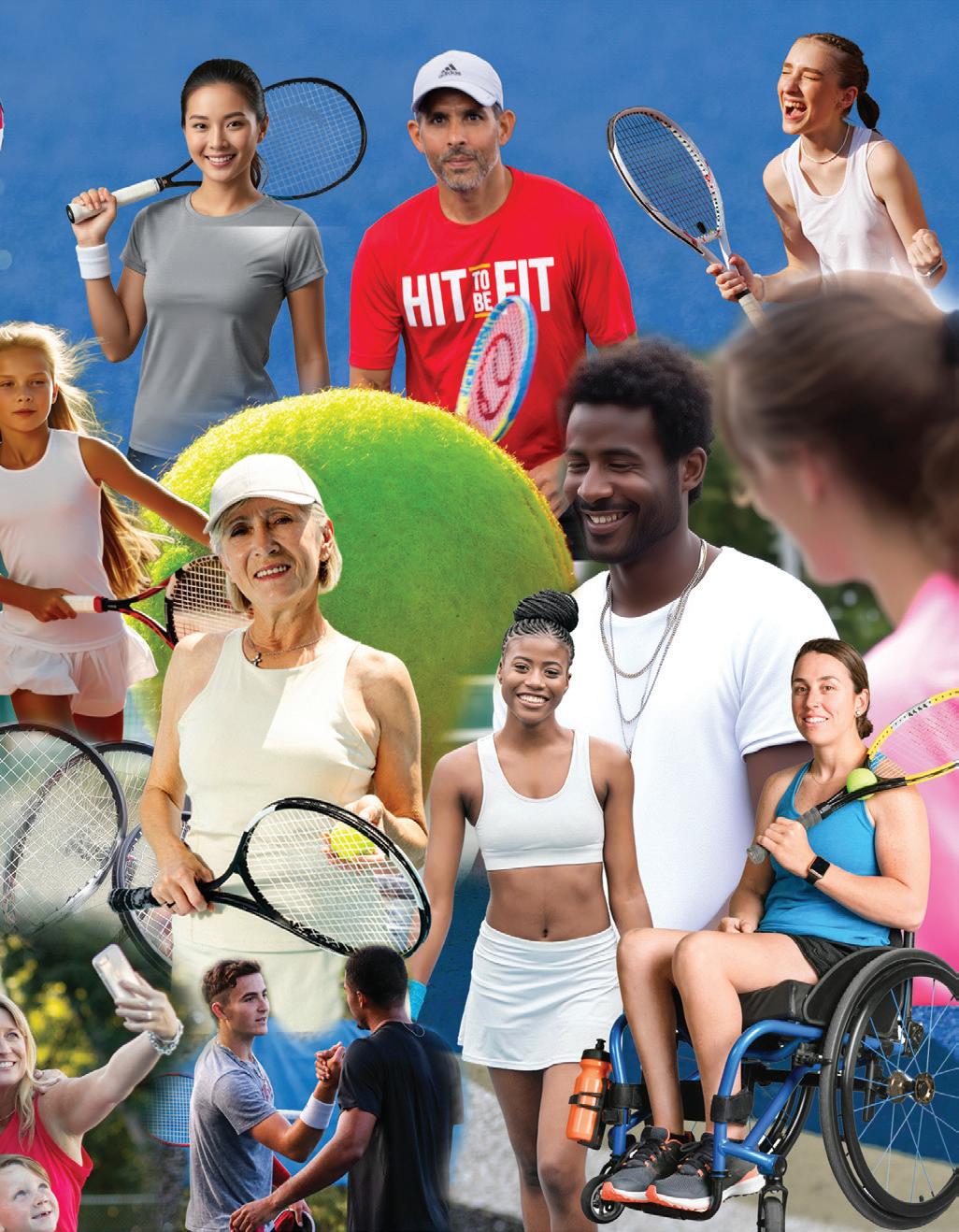
Another major promotion for NTM is the annual “Hit to be Fit,” a Cardio Tennis and Red Ball Tennis event that this year has been expanded to a full weekend, May 15-17. Hit to be Fit (HTBF) will involve hundreds of facilities across the country (including the USTA National Campus in Orlando) in a nationwide celebration of the health and wellness benefits of tennis. The event is designed to unite the tennis community with fun, highenergy activities, including Red Ball Tennis and Cardio Tennis Triples, a fast-paced, inclusive format that showcases tennis as fitness. Visit cardiotennisinstructor.com for more on HTBF.
Nationwide promotion of NTM includes digital and paid media, storytelling through influencers and other social media, and email, app and push communications to consumers. These elements combine with local activations such as provider-hosted events and community experiences, cultural and heritage moments, and Serve
Tennis activations to increase the visibility of tennis as a health and fitness activity and recreational priority.
INDUSTRY SUPPORT
More and more top businesses are stepping up to help support National Tennis Month, including Fage yogurt, which is a key US Open sponsor. This year, Fage will run a US Open sweepstakes to win a pair of tickets to their luxury suite at the Open, which includes airfare and hotel (see usta.com/NTM for official rules). The company also will launch a tennis-inspired recipe just for NTM, in addition to using its presence on social media and in the marketplace to boost awareness.
But that’s not all. NTM has dozens of promotional partners, including top retailers who are using NTM to help drive business and interest in tennis, such as Dick’s Sporting Goods, Tennis Warehouse, PGA Tour Superstores, Tennis Point, Tennis Express, Tennis Plaza in Florida and Game, Set, Match in Colorado and Las Vegas—all tying into NTM to help support the sport.
USTA Connect Partners such as Recycleballs and Court Reserve also are on board, as are major tennis, sports and fitness clubs including Midtown, Cliff Drysdale Tennis/ Peter Burwash International, Invited, Genesis, Sportime and Life Time. Key industry partners all supporting NTM include Tennis Industry United, Head, Wilson, Babolat, Dunlop, ITA, ATA and NRPA, along with the educational website GoNoodle.
“There really is something for everyone, so retailers, brands, providers and ultimately consumers all win,” notes Mickey Maule, USTA Managing Director for Industry & Sales. “National Tennis Month is a fantastic opportunity for anyone to come out and see all the tennis community has to offer. We want people to get out and enjoy the world’s healthiest sport!”
RACQUET/PADDLE SPORTS
Industry Research
Playing Together
It’s time to look at the racquet/paddle category as one big positive for the American recreational sports scene.
By Mary Helen Sprecher, with Peter Francesconi
The Sports & Fitness Industry Association (SFIA) Topline Participation Report for 2026 comes bearing good news for anyone in the industry: Racquet sports are up.
But that report also comes bearing a valuable lesson: The sum of racquet sports is greater than its parts. It’s time to look at the industry as a whole—not as one sport vs. another in a battle for popularity, court space or players, but holistically in terms of racquet/paddle sports as its own ecosystem.
SFIA studies the landscape of sports—participation trends, activity
rates, play occasions and more—over broad-based categories like Team Sports, Fitness Sports, Outdoor Sports, Water Sports … and Racquet Sports. By the SFIA’s definition, the “Racquet Sports” category includes:
• Badminton
• Cardio Tennis
• Padel (a new entrant in this year’s report, according to SFIA)
• Pickleball
• Racquetball
• Short Court Tennis (Pop Tennis/ Paddle/Platform)
• Squash
• Table Tennis
• Tennis
If the USTA’s “35 million players by 2035” campaign is successful, then 10 percent of the U.S. population (or roughly 35 million people in the next 10 years) will have played tennis. Currently, the U.S. participation rate for tennis, with 27.3 million players in 2025, stands at 8.8 percent.
But right now, 20.6 percent of the U.S. population is playing tennis or some other form of racquet/paddle sport. This combined 2025 number, where everyone’s share of the pie is growing, is something we need to celebrate and promote in this industry.
MULTI-SPORT FACILITIES
There has been a growing trend in the construction of multi-sport facilities (the USTA National Campus in Florida is one example, hosting tennis, pickleball and padel), and clubs, too, are branching out, using indoor spaces to host sports like badminton and table tennis.
The American Sports Builders Association even added a new category to its awards program
2025 Racquet Sports Participation
Racquet Sports Participation Rate—10-Year Trend
Percent of U.S. population ages 6+ engaged in racquet/paddle sports
Source: 2026 Topline Participation Report
last year: Outstanding Tennis & Pickleball Facility, in recognition of the growing number of multi-sport venues as communities recognize the value of both sports.
And make no mistake, more people are using those courts (and participating in other activities as well) than ever before. The SFIA report found that in 2025, 80.5 percent of Americans ages 6 and older—an estimated 250 million people—participated in at least one sport or fitness activity, marking the seventh consecutive year of growth since 2019 and the highest participation rate recorded since SFIA began tracking activity.
What’s more, core participation, defined as the individuals who participate in the majority of play occasions for each activity, continued to grow in 2025,
reaching 158.8 million Americans. Additionally in 2025, core participation did not show a decline, as it had in previous years.
SFIA added a new metric to this year’s report: an evaluation of how many individuals are meeting the recommended federal physical activity benchmark of 150 minutes of moderate-intensity activity per week. This is an improvement over the measuring standards of previous years.
A BOOM FOR ALL
But if we zero in on racquet sports as a whole, here’s what else we see: Ascending growth along descending age lines. A total of 10.4 percent of all Baby Boomers participated in racquet sports. Gen X had a 15.8 participation share, Millennials had 22.7 percent and Gen Z had 27.1
percent. (The participation rate of each generation also grew overall between 2024 and 2025—and many have shown consistent gains since 2021.)
Who are these younger adults and where are they playing? Well, to see that, we have to zoom back out and look at the adult sports industry through a different lens.
Officials at the Sport & Social Industry Association, an organization founded in 2010 to assist with the burgeoning growth of adult sports leagues, say pickleball is one of the more popular sports offered. Table tennis is another offering in many cities.
Participation in league and club sports provides adults with not only the ability to play sports and remain active after high school or college, but that it helps participants make
friends after moving away from home and into new cities to take jobs.
But to return to the SFIA report, there is good news across racquet sports. The clear leader was pickleball, which increased 22.8 percent year-over-year, maintaining its position as the dominant multiyear growth leader across all tracked sports, up an extraordinary 171.8 percent over the past three years.
Pickleball wasn’t the only winner, though; in fact, across all racquet sports studied, there is good reason for optimism. Six of the eight sports listed near the top of this article showed strong year-over-year gains.
Padel, as noted above, was new to the study in 2025 so had no comparison data available. The SFIA data did note that the only racquet sport to record a decline was squash. Something worth noting, however, is that since squash will be featured in the 2028 Olympics (and since it is likely US Squash, the national governing body, will promote beginner clinics and other activities designed to bring in new players), there is every reason to believe the sport will recoup those losses.
TENNIS PLAYER GAINS
Again, looking outside the SFIA, there are some notably positive growth statistics for tennis. According to the USTA’s 2026 U.S. Tennis Participation Report, tennis participation nationwide set a new high in 2025, growing by 1.6 million players (up 6 percent) to 27.3 million Americans. (See our tennis-specific
story in the April 2026 issue of RSI.)
For those paying attention, that moves the USTA closer to its goal of “35 by 35,” the effort to create 35 million players by 2035, which would make the U.S. the top tennisplaying nation (by population) in the world.
Core players, which the USTA defines as those playing tennis 10 or more times in the past 12 months), also grew to a record 14.5 million, representing more than half of all participants. This marked an 11 percent increase over 2024 and helped drive total play occasions to 616 million, a 7 percent increase over the previous year.
PARTICIPATION CHALLENGES
SFIA has identified some pain points for racquet sports, however. Youth respondents who are currently inactive identified specific sports they would consider playing in the next 12 months. While soccer, basketball and baseball were mentioned, no racquet sport appeared on that list.
Unfortunately, even though as individuals age their interests often change to singular pursuits, racquet sports did not make an appearance, either—not even among Boomers. You would think that should be a sweet spot for racquet sports; unfortunately, it’s not—not even with the growth of pickleball.
As always, SFIA remains concerned about the cost of activities, which can present a formidable barrier to participation. Inactivity on the part of teens (ages 13 through 17)
is going up (with an increase of 4.4 percent year over year), something that could be related to the financial obstacles facing those who might otherwise want to become involved in sports.
This bears out the data included in SFIA’s inaugural First Half Game Plan: Key Moves in Sports Participation Report, which was released last summer.
As SFIA noted, “With the current economic uncertainty— especially around tariffs—it is not surprising that the report revealed that increased costs remain the most significant barrier to youth sports participation, with 41 percent of parents citing it as the primary barrier to their children participating in sports.”
Unfortunately, if healthy habits are not developed in youth, it can lead to a sedentary lifestyle. SFIA’s data noted that Americans are more likely to be inactive at older ages, and that women were slightly more likely to be inactive than men.
But, with an industry that can say it affects the lifestyle and health of more than 20 percent of all Americans, there is a lot to celebrate, and a lot of opportunity.
SFIA produces its Topline Participation Report each year, in which it captures activity rates and trends for Americans ages 6 and older across 126 different sports, fitness and leisure activities. The report is free to SFIA members and available for purchase for $700 for nonmembers by visiting sfia.org
Pickleball
Sound Concerns
As pickleball’s popularity grows, so do complaints about noise. How are communities, and the industry, responding?
By Joe Tedino
Pickleball noise complaints have reached a fever pitch in city council meetings and courtrooms across the country. By one count, more than 200 lawsuits have been filed by homeowners seeking relief from the repetitive sounds of pickleball that can reach inside homes and disrupt daily life.
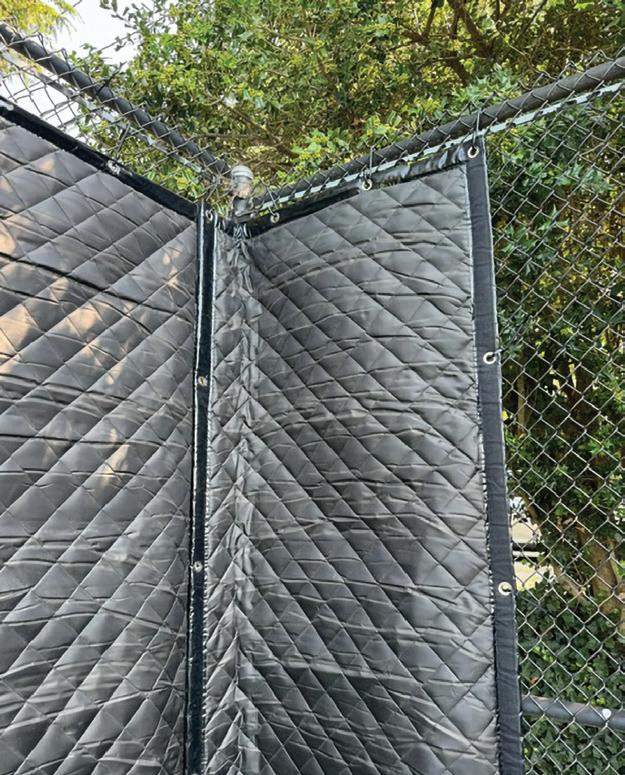
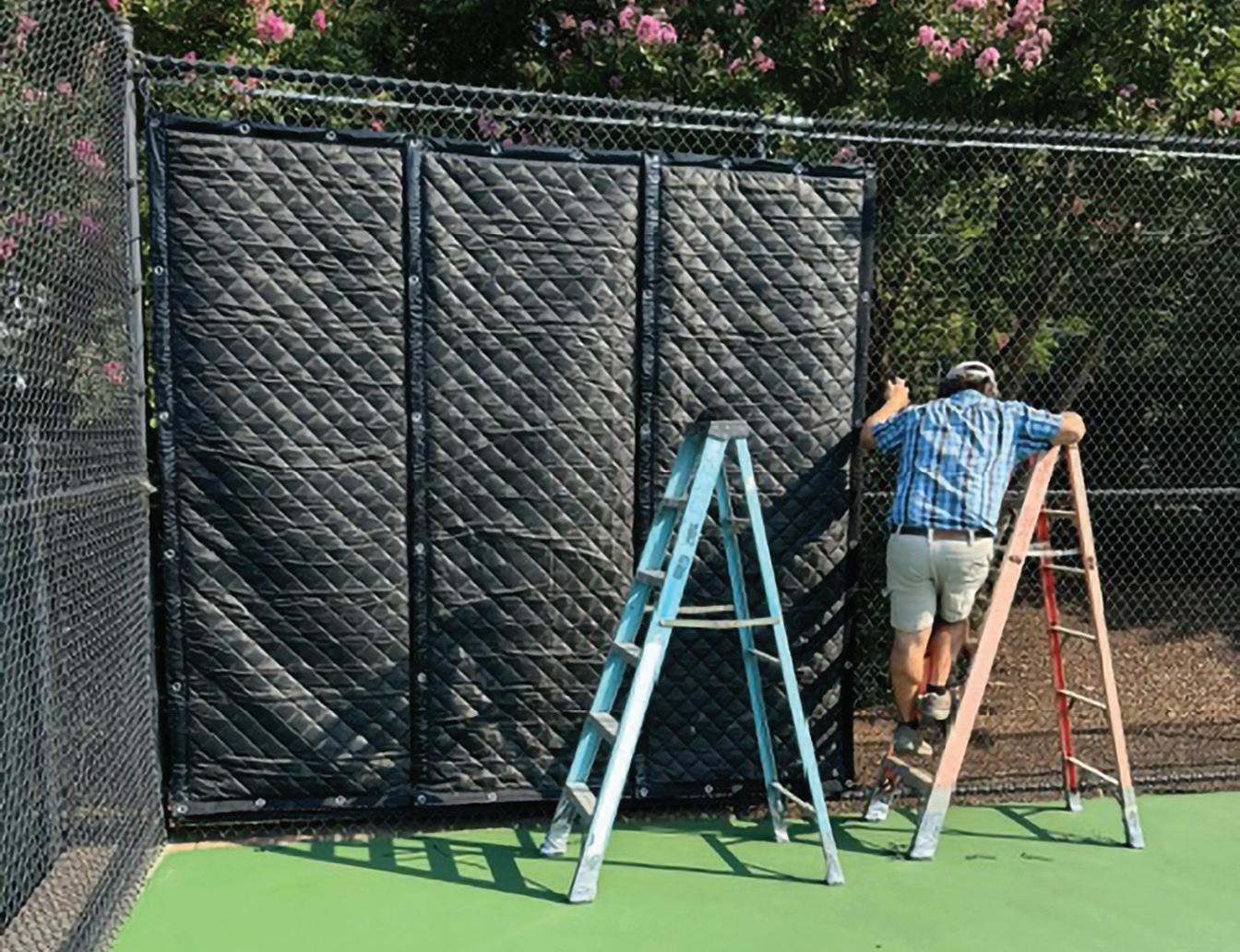
The pickleball ecosystem has developed quieter paddles and balls, sound-blocking barriers, and other solutions to address concerns. At the same time, cities have enacted ordinances requiring courts to be set back as much as 600 feet from residential homes; others require acoustic studies or recommend
putting new courts indoors.
“It is a more serious issue than people realize,” says Tom Hinding, owner of Serve and Smash in Branford, Conn., and president of court builder the Hinding Group, which installed a 15-foot-tall sound barrier last year at a country club in Old Lyme, Conn., to address residents’ complaints.
“We are definitely seeing people trying to shut down courts,” he adds. “It varies depending on where you are in the country. The situation in Newport, R.I., has gotten so bad that it is impossible to obtain a city permit to build courts” because of objections from neighbors.
At the extreme, the city council
of Carmel, Calif., where Clint Eastwood was once mayor, voted last year to completely ban outdoor pickleball. And this past March, the Martinez, Calif., city council voted to immediately and permanently discontinue pickleball play at the eight-court Hidden Valley Sports Courts, which opened in February 2025. Other cities are trying to accommodate both sides by granting conditional-use permits that can limit playing hours.
As pickleball’s popularity grew, so did noise complaints. Last year, more than 2,300 pickleball courts were added nationwide, bringing the total to more than 82,000, according to USA Pickleball, the sport’s governing body. At the same time, underused tennis courts in public parks were converted to pickleball, often without informing nearby residents.
“That’s a shock to the system for some of them,” says Carl Schmits, USA Pickleball’s chief technology officer. “That for me is the basis of where the greatest number of conflicts are—these rapid conversions to address public demand.”
As conversions sped up,
homeowner’s associations and individuals sued local governments for not protecting their wellbeing. A suit filed by a doctor in the Ontario, Canada, town of Niagara-on-the-Lake a few years ago claimed the town had violated its own noise standards by allowing pickleball at a public park. “This affected my health, affected my work performance and affected, altogether, my life,” the plaintiff told the provincial court. The suit prompted the town to close the outdoor courts and build six indoor courts instead.
ZONING AS A SOLUTION
The battle spilled into city halls and civil courtrooms because traditional noise ordinances do not address the impulsive and repetitive noise from pickleball, making it difficult to regulate through decibel limits alone, according to an American Planning Association report published last year. Measuring decibels works well for continuous noises like traffic or construction equipment, but not for sharp, impulsive noises. As a result, municipalities have turned to setbacks and other regulations, according to Charles Laehy, an engineering consultant and attorney who wrote the APA report.
Leahy reported that the Centennial, Colo., city council
The pickleball ecosystem has developed quieter paddles and balls, sound-blocking barriers, and other solutions to address concerns.
amended land-use codes to require a minimum setback of 250 feet from homes as part of noise reduction efforts in 2023. The measure also included limiting daily play to between 8 a.m. and 8 p.m. Park City, Utah, went further and required a setback of 600 feet from residential property lines, although that could be cut to 150 feet if a court builder installed approved sound barriers after an acoustics study.
Dale Van Scoyk, owner of Pickleball Sound Mitigation Consulting, believes courts within 200 to 300 feet of homes will require attention. “Even with a setback of 300 feet,” he says, “some sort of mitigation, some sort of attention, either with quiet paddles and equipment or by some sort of barriers may be needed,” he told attendees at the RacquetX industry conference in March. “Within a hundred feet, it’s difficult to get the sound level down to a point where it’s going to be acceptable to residents.”
Another issue arises when homes sit on higher ground than nearby pickleball courts. “Even if you put a barrier along the side of the court, that sound can go over the barrier
and up to the upper level of homes,” he noted. “So, it complicates finding a solution when the courts are lower than the houses.”
While setbacks satisfy neighbors, the sport’s governing body favors other options because excessive setbacks will limit the amount of land available for pickleball.
“Our overall counsel on this is that setback is not the approach to solving this,” Schmits says. “Having a goal is, and you reverse engineer the solution, which consists of distance, mitigation panels, equipment—all of those things add up.” Adding trees or shrubs around a court can reduce some noise, he says.
“Our message is consistent,” he says. “Get an acoustic assessment done. These are tools you can use to drive the overall sound footprint down. We take an approach that this is an equation. It is not one size fits all.”
HOMEOWNERS ARE NOT WINNING EVERYWHERE
Last August, Hillsborough County commissioners in Florida rejected a proposal to pause new pickleball courts near homes, despite residents’ complaints about escalating noise. Commissioner
Joshua Wostal wanted to halt new court construction within 250 feet of residences. He told colleagues that his research uncovered more than 200 lawsuits nationwide and warned that converting tennis courts into pickleball could propel the county’s 1,000 HOAs into costly legal battles, a risk underscored by a lawsuit already filed by residents in Apollo Beach to block tennis court conversions.
The pickleball industry has addressed the noise issue with new equipment, including quieter foamcore paddles and foam-covered balls that can reduce the noise output by 25 to 50 percent, Schmits says. “The sport continues to evolve,” he notes, “because of the equipment, which is becoming quieter through the use of new technology.”
He notes manufacturers have taken on the challenge to lower the sound from pickleball courts, with foam-core paddles, foam balls and barriers that use tempered glass or advanced lightweight fabrics. Looking ahead, Schmits envisions attaching a transducer to a panel that could transmit an opposing waveform to cancel out the noise or a masking sound such as white noise.
Still, Leahy contends that these solutions do not sit well with the player community. “The barriers are not liked, the quiet equipment is not liked, the limitations on hours are not liked,” Leahy says. Trying to keep the peace among players and homeowners, he adds, puts city officials in a “pressure cooker” environment.
Meanwhile, USA Pickleball continues to provide guidance to builders on the impact of installing courts at specific sites. But the lowhanging fruit, in Schmits’ view, is to limit pickleball hours to reduce the noise exposure of those living nearby. Closing the courts from 12 p.m. to 4 p.m., for example, can serve to make living near the courts more acceptable.
“The municipality or the HOA can be in control of how often people play,” Schmits says, “and the impact is lowered significantly.”
Pickleball’s ‘Phantom Pops’
Last year, the nonprofit advocacy group Quiet Communities surveyed 440 people from 260 communities in the U.S., Canada, Australia and New Zealand to find out how pickleball noise affects their daily lives. About 80 percent of them, most living within 300 feet of the courts, said “constantly” or “often.” One respondent wrote, “I cannot think, I cannot concentrate. I can’t do anything in my house.”
Kathleen Romito, a physician and scientific research advisor who led the Quiet Communities survey, said about 75 percent of respondents claimed to hear the noise inside their homes. More than half of the respondents said they have moved or would like to move away from the courts. Besides hearing noise while pickleball is being played, neighbors also report hearing “phantom pops,” Romito says.
“The phantom pops are extremely concerning from a health perspective,” she told RSI. “They are commonly reported awakening people in the middle of the night and can last three to six months after people move away. Experts are concerned this may be a sign of trauma or noise-induced tinnitus, raising medical concerns because of its link to dementia.”
RACQUET SELECTOR
EQUIPMENT
Selective Service
A diverse inventory, no matter the size of your store, will keep players satisfied.
By Bob Patterson, USRSA Executive Director
Taking the time to understand your customer’s needs and fitting that player with a proper racquet will not only close the sale, but it also will keep that customer loyal and telling others about your great service.
But first you must have a diverse inventory and the knowledge to provide that perfect fit. No matter the size of your store or shop, having the right selection is paramount to successful sales and happy customers. You also need to know the specifications of the racquets and understand how those specs will fit your customer’s skill level and needs. An excellent place to start is the Racquet Selector Tool, available to USRSA members at RacquetTech. com. On the following pages, we list more than 400 frames currently on
UNDERSTANDING THE SPECS (see the Racquet Selector Chart on the following pages)
1. HEAD SIZE: Square-inch measurement of the hitting surface (strung area).
2. LENGTH: Length of the frame from the butt of the handle to the top of the hoop.
3. WEIGHT: Overall weight of the STRUNG racquet, listed in both ounces and grams.
the market, including new models. All are in the USRSA database.
Keep in mind, a “diverse inventory” doesn’t necessarily mean a massive inventory. Whether your racquet wall has six models or 60, you can still provide a diverse selection for your customers. Try to make sure you’re supplying what your customers need, but also make sure the selection is diverse enough to fit a variety of playing styles. Keep duplications to a minimum, especially if your selection is small. Start with the demographics of your customer base. If your customers are primarily hard-core juniors, you’ll want to skew your selection toward them, but don’t overlook potential customers, too. Narrowing your selection too much can be a self-fulfilling prophecy. If you don’t have the space or the budget to stock a diverse enough selection, supplement your offerings by having demo racquets available of other models and special order what your customers need.
Having a varied inventory, no matter the size, will ensure that you have a frame for almost every player and won’t miss sales. Providing top-notch customer service and taking the time to properly fit your customer with a racquet ensure their loyalty for years to come.
4. BALANCE: Measurement from the butt end of the racquet to the “Balance Point,” measured in centimeters.
5. FLEX: Measurement of the strung racquet’s stiffness using the Babolat Racquet Diagnostic Center (RDC).
6. SWING WEIGHT: The dynamic inertia of the strung racquet measuring the distribution of mass along the length, in kg x cm2.
7. POWER FORMULA: Determined by an algorithm in the USRSA Database using key specs that contribute to power of the strung racquet: Length, Head Size, Flex and Swing Weight.
RACQUET SELECTOR
Angell Sport
ASi 2.0 (72 holes)
100 Each racquet made to custom specs
CL 100 (70 holes) 100 Each racquet made to custom specs
CL 105 (70 holes)
CL 90 (68 holes)
CL 97 (70 holes)
CL 97 (76 holes)
CR 100 (70 holes)
CR 100 (74 holes)
CR 97 (70 holes)
CR 97 (76 holes)
CT 100 (70 holes)
CT 97 (70 holes)
CT 97 (76 holes)
K SEVEN 100 (72 holes)
K SEVEN 98 (72 holes)
Babolat
Each racquet made to custom specs
Each racquet made to custom specs
Each racquet made to custom specs
Each racquet made to custom specs
Dunlop
USRSA Racquet Selector Chart compiled by David Bone
RACQUET SELECTOR
TEN JR
(265g) 100 Racquet not received in time for print $149.00
Blade 98 18x20 (version 10) 98 Racquet not received in time for print $299.00
Blade 98 Pro 16x19 (version 10)
Blade 98 Pro 18x20 (version 10)
Blade 98S (version 10)
Burn
Burn
Burn 100 S (version 5)
Clash
Clash 100L (version 3)
Clash
Pro
Pro
Pro
VCORE
VCORE
Your Serve
Heart of the Community
The transformation of a public park in Casper, Wyo., into a recreational and cultural hub started with tennis.
By Angela Emery
Casper Community Tennis Foundation
For many years, our family lived just four blocks from Washington Park. It was an easy walk—down our treelined neighborhood streets and up the grassy hill to the courts. Both of our kids played their high school tennis matches there, and my husband and I spent countless hours on those courts ourselves. Washington Park was woven into our daily life in other ways, too—watching our son play baseball on the adjacent field, walking our dogs, and simply being part of the rhythm of a park that felt like an extension of home.
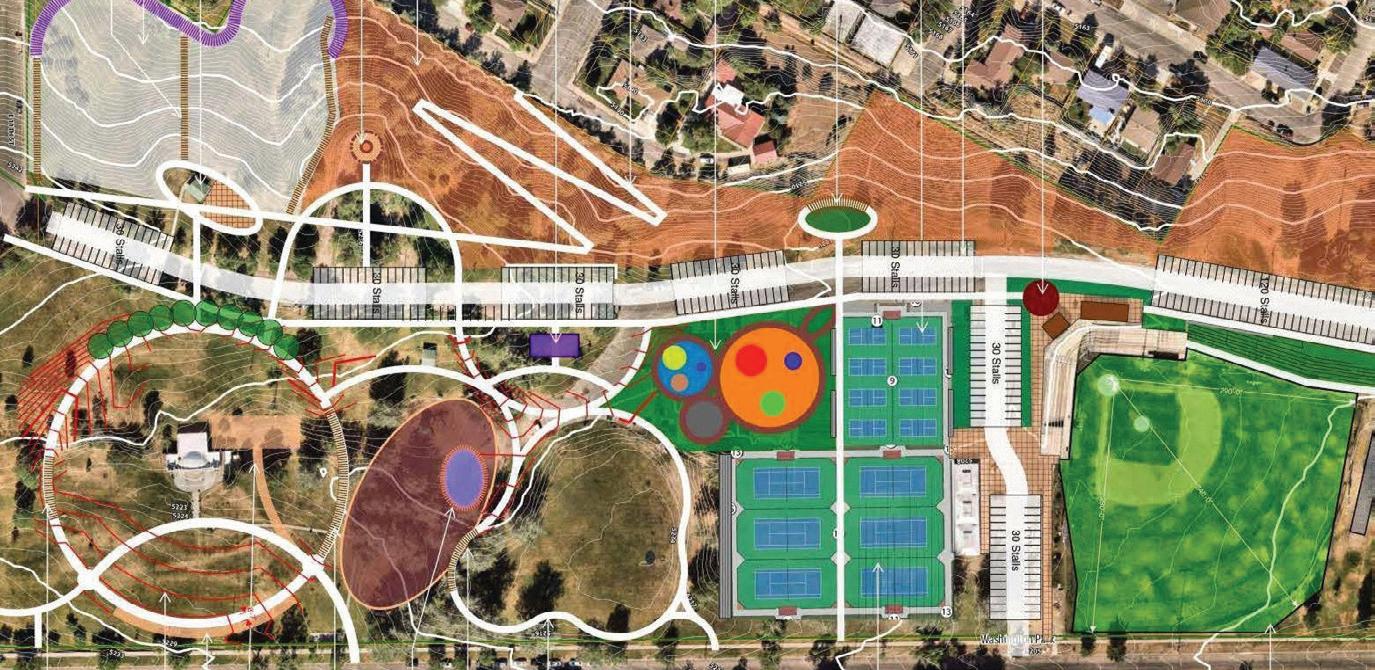
Washington Park has been the heart of tennis in Casper, Wyo., for nearly a century. Built in 1938 through the National Youth Administration, it was the place where generations learned to play, where community leagues thrived, and where Natrona County
High School athletes carved out their competitive beginnings. The courts had been resurfaced in 2010 with help from the USTA, but by 2021, they were once again in poor shape.
The tipping point came after the opening of the 10-court Casper Tennis Complex. That project proved what was possible when the city and the Casper Community Tennis Foundation worked together. With that momentum, our attention shifted to Washington Park.
With encouragement from parks expert Jodie Adams, and with the steady partnership of Todd Carlson (Senior Director of USTA Tennis Venue Services), along with City of Casper champion Zulima Lopez, we began exploring the Land and Water Conservation Fund (LWCF) grant. What started as a tennis-focused renovation expanded into something
much larger. The grant process challenged us to imagine Washington Park as a true “community hub”— multi-sport, multi-generational, and deeply connected to the city’s recreational and cultural identity.
That vision took shape quickly: the four old tennis courts would be replaced with six courts, we would add eight pickleball courts, upgrade the Little League field, improve the swimming complex, enhance the bandshell, and redesign the flow to make the park more welcoming and functional. When the city’s LWCF application earned the highest score of all 2023 submissions, it affirmed what we already felt—that this project was not just timely, but transformative. Funding followed. Support from the USTA and the Daniels Fund helped close critical gaps. Construction began in September 2025, with completion expected by this summer. But even before the first shovel hit the ground, the project was already reshaping the community. It strengthened Casper’s bid to host the State Tennis Tournament. It sparked a middle school tennis pilot program—filling a long-standing gap in youth access. It even prompted conversations about reopening the Casper College courts. Washington Park is proof that when city leaders like Zulima, nonprofits, funders and residents come together, we can honor our past while building for the next generation. As Zulima says: “Investing in new courts and other park activities is helping to protect a beloved public space where friendships form, confidence is built and lifelong memories begin.”
Most of all, the renovation is a testament to what happens when a community chooses to imagine boldly—and then commits to making that vision real.
For more on how USTA’s Tennis Venue Services can help your facility or project, visit usta.com/facilities or email facilities@usta.com.
We welcome opinions and comments. Email peter@acepublishinggroup.com.
PUBLIC PARKS
BEYOND THE INVOICE: WHY TRUE VALUE CAN’T BE DISCOUNTED STRENGTHENING OUR IMPACT THE SECRET TO BETTER RACQUET/PADDLE TECHNIQUE
DEVELOPING COACHES IS A BUSINESS STRATEGY THEMES OF INDIAN WELLS 2026
Beyond the Invoice: Why True Value Can’t Be Discounted
Brian Dillman, RSPA CEO
In the racquet sports industry, as in any business, there is a recurring temptation to shop for the lowest price. Competitors often race to the bottom, stripping away services to offer the cheapest possible entry point. But for the modern professional, there is a vital distinction that often gets lost in the fine print:
“Price is what you pay; value is what you keep.”
At the Racquet Sports Professionals Association (RSPA), we don’t compete on price. We compete on the depth of our relationships and the speed of our solutions, thus serving as a trusted partner, not a transaction. To understand the value of membership, you don’t get this from looking at a brochure or webpage; you observe a typical day in our office. While a “budget” association might provide you with a login and an automated FAQ, the RSPA provides a membership services team, a national headquarters, an 800 number, 15 Divisional Executive Directors, an active National Board and thousands of volunteers to provide a personalized approach to each one of our members. On any given Monday, our ecosystem is in constant motion serving our members.
A Typical Monday at the RSPA
• Career Launching: A 23-year-old aspiring pro from our Southern Division reached out, looking to transition into a fulltime role.
Within hours, she wasn’t just a “lead” in a database; she was personally
introduced to our Membership Director Linda Gordon, the executive director and the president of her division. She didn’t just get a certification; she got a network.
• Job Recommendations: One of our executive directors (ED) wrote two reference letters which led to two professionals in his division getting new roles and opportunities. For one of them, this was the second time this type of recommendation was provided and the second hiring our ED helped to facilitate.
• Instant Infrastructure: A veteran member in the Intermountain Division needed a corrective action plan template for a staff member. He didn’t have to spend hours searching the web or drafting from scratch. We had a professional template in his inbox in under 30 minutes.
• A “Clubhouse” Culture: We don’t just have an office; we have a home for our members. Whether it’s a member from the Northern Division using our Lake Nona office as a workspace for the day, a Chicago-based pro dropping by to discuss insurance for his parks business, or a local pro hosting a district meeting, our doors are open for all members, no matter their needs.
• Access to Expertise: Besides providing the physical space, our office also provides member resources to help with your personal branding. Need a new headshot for your LinkedIn page, or recommendations on your social media strategy? Our staff is here to assist with expert advice and has
you covered with resources to help you advance in your career journey.
• Specialized Advocacy: From helping a member navigate the USTA Foundation to raise funds for Boys and Girls Clubs, to providing data on the emerging padel market and its demographics, we act as the research and development arm for your personal brand. Our Midwest Division held a women’s conference call with over 30 members joining and sharing their experiences and challenges in the industry and ultimately ideating and crafting a plan to get more women into the industry.
• Letters of Endorsement: A member from Texas reached out in need of an endorsement letter as part of their visa application to stay and work in the United States. We gave it to them within the hour.
The Power of the Template (and the Person)
One of the most frequent requests we receive is for “the paperwork.” This past Monday, a Southern Division member needed a director of racquet sports contract to present to his board. We didn’t just send a generic PDF; we customized it to reflect his specific responsibilities. That is the difference between a transaction and a transformation. A cheap membership gives you a file; a valued membership gives you a personalized, finished product that helps you win with your board or management. We help you sell yourself, in whatever format is required.
Investing in Your Future
If you’re looking for the cheapest option, it’s out there and maybe the RSPA isn’t the place for you. However, if you’re looking for resume advice to break into a new market, a seat at the table in Orlando and a community of peers who answer the phone when you call, you belong here.
• To our current members: We’re here for you. Whether you need a contract, a connection, career advice, new headshot or a place to work for an hour or host a meeting, your membership resources are ready at your disposal.
• To potential members: This is just the tip of the iceberg. We invite you to experience what happens when an association views you as a partner rather than a line item and number. And our powerful network is what our members continue to rave about. It’s often stated that ‘your network is your net worth’ and
this certainly holds true for the RSPA network.
• To our former members: We’ve evolved. The RSPA of today is faster, more agile, ultra connected, and more member-centric than ever before. You can now benefit from five certifications (tennis, pickleball, padel, squash and platform tennis) under one membership. Tennis is our core, and together we’re leading and shaping the fast-evolving racquet sports industry. We’d love to have a conversation about what we’re up to and how we can be of service.
Price is a one-time cost. Value is a lifelong return. Let’s build your career together.
Want to engage in a truly valuable RSPA brand experience?
Join us at the RSPA World Racquets Conference in Dallas, Texas, Sept. 20-23 at the Omni Dallas
Hotel, and experience the RSPA membership value and community. This year’s theme—Reach for the Stars: Shaping Your Professional Journey—invites you to lean into growth, stretch past comfort and elevate your career as a racquet sports professional. Dallas, bold and full of possibilities, provides the perfect backdrop to chart the next phase of your professional journey, where you’ll learn from industry experts on how to elevate your knowledge in coaching, leadership and operations. The World Racquets Conference will be our most immersive experience yet, connecting you with industry experts and equipping you with practical, applicable tools to apply on and off the court. Visit RSPA.net or call 833-OUR-RSPA for more info and to register.
Brian Dillman RSPA CEO
Milos Vasovic, RSPA Vice President
IStrengthening Our Impact
Strengthening Our Impact
am immensely proud to serve on the Racquet Sports Professionals Association (RSPA) Board of Directors alongside some wonderful and dedicated professionals, led by Mark Faber. He is one of the most dedicated individuals I have ever met and is deeply passionate about the RSPA and its growth. I am honored to play a small part in helping bring his vision to life.
As Mark mentioned in his article earlier this year, over the next two years our association’s goals will be guided by four key questions:
1. Is this good for our membership?
2. Will this help attract and retain members?
3. How does this affect us financially?
4. Does this increase our thumbprint and impact on the racquets sports industry?
I want to focus on question number four—
“How we can continue to expand our influence and strengthen our impact within the industry?” “How we can continue to expand our influence and strengthen our impact within the industry?”
We received outstanding confirmation that our efforts are working during the Club Management Association of America (CMAA) World Conference in Anaheim, where BoardRoom Magazine recognized RSPA as Association of the Year for 2025. This recognition reinforces that we are a viable and respected organization in our industry.
I feel privileged to work in the racquets industry and have experienced tremendous growth across tennis, pickleball and more recently, padel. With this growth comes both opportunity and responsibility — to clearly communicate our importance to club success and to continue developing future leaders.
One of my primary goals as a board member is to strengthen our relationship with the CMAA. Many of our professionals work in the country club sector and
we must become the primary racquets partner to the association that dominates that space. While we already have a meaningful presence, I believe we can — and will — accomplish much more.
In a perfect world, RSPA would represent the racquets industry in the same way the PGA of America represents golf.
It is encouraging to see more racquets professionals becoming involved
with CMAA and pursuing its education and certification programs. This increases our credibility, expands career pathways and creates opportunities for racquets professionals to move into senior leadership roles — including general manager positions.
We already have strong examples of this progression, such as Brian Thomas, General Manager at Orinda Country Club in California, and Ian Munroe, COO at the Winter Park Racquet Club in Florida.
Racquets professionals and directors possess many of the leadership skills required to be effective club executives. Since COVID, the importance of racquets programming has become even more visible and respected. Many new club members cite the racquets area as the primary reason they join, highlighting the vital role we play in member satisfaction and overall club success.
To successfully manage large club programs, our professionals must develop strong financial acumen,
public speaking ability, leadership skills, HR knowledge, writing proficiency, scheduling expertise, merchandising insight, and event planning and execution skills — all in addition to being exceptional players and teachers. CMAA offers extensive educational resources in all of these areas.
If you are interested in becoming involved with CMAA, I encourage you to start by speaking with your general manager. Expressing a proactive desire to learn and grow will be appreciated by strong leadership. Attending a local CMAA chapter event as a guest is an excellent first step to explore whether deeper involvement is right for you.
Another outstanding opportunity is the CMAA BMI Sports and Recreation Management program held annually in Scottsdale, Arizona—a five-day, 40-hour intensive program designed to explore all aspects of club recreational operations. The RSPA already has a presence there, with our CEO Brian Dillman serving as one of the presenters.
Nothing would make me happier than seeing more racquets professionals serving in prominent leadership roles within our clubs. We have the necessary skills. It is our responsibility to create clear pathways for the next generation and demonstrate that the racquets industry offers a viable, rewarding, and dynamic career — both on and off the court. If that sounds appealing to you and you have any questions, contact me at mvasovic@cherokeetcc.org.
More RSPA professionals in the boardroom means greater credibility, stronger influence and increased viability for our association. That is something we should all strive toward.
The Off-Hand Is the Secret to Better Racquet/Paddle Technique
Pete Scales | RSPA Member, Ph.D.
There are a lot of touch points in any racquet or paddle sport that contribute to more effective technique. But one that doesn’t get as much attention as it should—especially among beginning and intermediate players—is the use of the off or non-dominant hand. At whatever level your students are, proper use of the off-hand will dramatically strengthen their stroke production.
On the forehand (FH), assuming a semi-open stance—which is the most common in baseline rallying—using the off-hand (left hand for a righty and right hand for a lefty) to push the racquet or paddle into the slot position at around shoulder height accomplishes three critical objectives: 1) it forces the player’s shoulders and hips to rotate and coil, and helps load weight onto the outside leg, which then adds significant power when the shoulders and hips uncoil as the hitting arm swings into and through the ball, and the loaded leg explodes up and forward; 2) it creates accurate spacing of the racquet/paddle from the body, keeping it far enough away from the body so the swing path forward is far more likely to hit the ball at the correct point of contact, as compared to ending up with a cramped swing when the hitting arm is too close to the body; and 3) it keeps the player balanced during the rotation/ coiling and loading phase, and during the uncoiling and exploding phase, so the correct contact point is reached and the player can also recover more quickly and efficiently.
On the two-handed backhand (BH) everything is just reversed, but the effects are the same. For a righty, the top hand is their left, their off-hand. The left hand
pulls the racquet into the slot position. This achieves the same benefits of rotation of shoulders and hips, and loading of the left leg, and spacing of the racquet/ paddle from the body, as on the FH. Executing all that effectively sets the stage for them exploding up and forward as weight is transferred from the back leg to the front and the off or top hand leads the body to lean into the shot with the weight now on the front leg.
On the one-handed BH, the off-hand plays a critical role in both the slice BH or the drive BH. On the slice, the off-hand and arm go back as the hitting arm goes forward, like a ballet dancer—think Swan Lake. I often say to my students, when I demonstrate this, “I’m a swan!” they laugh and roll their eyes in a “there goes Coach Pete again” look. But they remember it! Doing that “swan” move also helps to both keep them balanced and propel the forward-leaning motion of the hitting arm and body. And on the drive and topspin BH, the off-hand and arm go back but also around the body, helping to puff the chest out and aid in the lift and power of the stroke, as well as keeping the player balanced.
On the one-handed BH volley, the off-hand and arm play the same balancing and forward-propelling role as on the 1h BH slice, and look pretty much the same. On the FH Volley, the off-hand and arm stay on the same plane as the hitting arm and racquet/paddle, as if they were tied together in parallel. The off-hand used in this way helps get the player’s head closer to the ball—which helps with clean contact—and helps with balance, which aids in quicker recovery back to ready position after the volley is hit. That off-hand role also helps control the shape of the dropshot, in all the same ways as the volley or one-handed slice.
Serve and Overhead
Of course, the off-hand and arm are the tossing hand and arm, and in tennis are absolutely critical to a good start to anyone’s serve. But for the tennis serve, properly tucking that tossing arm into the abdomen as the racquet moves from racquet drop upwards toward the ball also helps keep the body from over-rotating, so it adds to clean contact and power. On the overhead, whether in tennis or pickleball, the off-hand and arm are what we use to track the incoming lob, and get into the “power triangle” position, with racquet/paddle above the shoulders as one side of the triangle, and the off-hand and arm on the other side of the head as the second side of the triangle, and our shoulders as the base. Without using the off-hand and arm this way it is a lot harder to keep the hitting arm up and cocked but also steady, all of which adds to a cleaner contact.
The best way to teach all of this is through a lot of shadow swings and really helping students feel what their body feels like when they use the off-hand and arm properly. Then gradually introduce tapping the ball, and then hitting it. But the foundation is shadow swings to get that body awareness. Work this into your lessons and practices, and watch your students’ stroke production get way more effective!
Developing Coaches is a Business Strategy:
Why
Developing Coaches is a Business Strategy: Why Growth is Your Greatest ROI
Growth is Your Greatest ROI
Juan Garcia | RSPA Member
For years, club owners and directors defined their prestige by the number of courts they owned, the caliber of their membership roster, or the trophies won by their high-performance juniors. While these markers remain relevant, they are no longer the primary indicators of a sustainable business.
In today’s environment, the most successful clubs are defined by the quality of their people—specifically, the coaches who represent the brand every single day on the court. Investing in these individuals is not a luxury or an “extra” for the budget; it is a core business strategy.
Clubs that invest intentionally in professional development consistently experience measurable, bottom-line benefits:
• Lower staff turnover and reduced recruitment costs.
• Stronger parent and member trust, leading to higher retention.
• Clearer program identity that differentiates the club from local competitors.
• A healthier internal culture that attracts top-tier talent.
• Consistent delivery across courts, ensuring the “product” is the same at 4 p.m. as it is at 8 a.m.
A developed coach does far more than feed balls or run drills. They act as a brand ambassador, a conflict-resolution specialist, and a culture setter. They reduce friction between stakeholders and multiply leadership across the organization. Yet, despite these clear advantages, many clubs hesitate to invest, often paralyzed by a singular fear.
The Real Risk Isn’t Losing Developed Coaches
The most common objection to professional development is a familiar one: “What if we invest in them and they leave?”
It is an understandable concern. Development requires time, emotional energy, and financial resources. No director wants to feel like they are subsidizing the training of a future competitor. However, this fear is fundamentally misplaced.
The greater risk is not that developed coaches leave. The greater risk is that undeveloped coaches stay.
When an organization avoids investing in its people, it doesn’t actually save money—it merely defers the cost. That cost eventually manifests in “silent leaks” within the business: frustrated parents, stalled junior pathways, internal gossip, and leadership burnout. An underdeveloped coach who remains in your system becomes a bottleneck. They slow progress, drain the energy of their peers, and quietly normalize mediocrity.
Professional development sends a psychological signal to your staff: You matter here. We see a future for you. Even when a developed coach eventually moves on—as some inevitably will—they leave behind a vacuum that is easier to fill because they helped build a stronger system and a higher standard of excellence. In this light,
development isn’t just a retention tool; it is quality control.
The
Myth of the “Natural” Coach: Why Technical Excellence Isn’t Enough
For decades, the tennis industry has operated under the comforting but expensive myth that great players automatically become great coaches. This “playing-to-teaching” pipeline assumes that technical mastery of a forehand somehow translates into the ability to manage a classroom, navigate a difficult conversation with a parent, or align with a club’s strategic vision.
Technical ability may win respect on day one, but it is rarely what keeps a client for year five. When clubs rely solely on playing résumés rather than professional development, the damage shows up in the “soft” areas of the business:
• Communication Gaps: A coach may know why a player is missing a volley but lack the emotional intelligence to explain it to a frustrated teenager or a demanding parent.
• Alignment Issues: Without development, coaches often become “independent contractors” within a club, teaching their own methodology rather than the club’s unified curriculum.
• Inconsistent Experience: A member’s experience becomes a “coach lottery”—their satisfaction depends entirely on which personality they are assigned, rather than the club’s brand standard.
Emotional Intelligence as Operational Infrastructure
In the modern club, we are no longer just in the business of sport; we are in the business of relationships. Today’s clients are purchasing more than court time; they are buying clarity, consistency, and a sense of belonging.
In this context, Emotional Intelligence (EQ) is no longer a “soft skill.” It is operational infrastructure. When a coach lacks the professional development to manage their own triggers or read the room, the business suffers. Small misunderstandings escalate into membership cancellations. Staff meetings become battlegrounds of ego rather than centers of innovation. Conversely, clubs that prioritize EQ through mentorship and feedback create an environment where issues are addressed early and trust becomes a competitive advantage.
Mentorship Over Micromanagement
When faced with an underdeveloped staff, many directors default to microman-
agement—tighter rules, more checkboxes, and constant correction. This is a reactive approach that treats the symptoms rather than the disease.
True development means teaching a coach how to think, not just what to do. It involves creating a “Shared Language” across the staff. When every coach understands the why behind the club’s standards, they stop resisting them. They move from a mindset of compliance to a mindset of ownership.
A coach who feels supported and challenged is a coach who stays. More importantly, they are a coach who represents the club with pride when the director isn’t watching.
The Future of the Industry
The future of the racquet-sports industry will not be decided by who employs the most former professionals or who has the newest court surface. It will
be decided by who develops the most complete professionals.
Technical excellence keeps the lights on, but professional development keeps the organization standing through market shifts and staff transitions. The strongest clubs are those that view their coaches as their most valuable depreciating or appreciating assets. Through intentional investment, they ensure those assets appreciate every single year.
The real cost of inaction is a slow slide into irrelevance. The real opportunity for modern leadership is to build a culture where growth is the standard, and where the development of the human being is just as important as the development of the athlete.
THE BALL OF THE SUNSHINE DOUBLE
ON TOUR
From Indian Wells to Miami and beyond. Dunlop is the ball of choice for the Sunshine Double and No.1 ball used on the ATP Tour.
Rivalries And the Future are the Themes of Indian Wells 2026
Steve Flink, International Tennis Hall of Fame
PHOTO CREDIT: Fred Mullane, CameraWorksUSA
As the first Masters 1000 tournament of the tennis season, the BNP Paribas Open at Indian Wells held on the hard courts of California is often a good barometer of not only the current state of the game but also what might be heading our way in the future. And so it was again this year at a showcase American sporting festival.
Ultimately, the final round for the men featured a revitalized Daniil Medvedev versus a resolute Jannik Sinner, who was doing all he could to jumpstart his 2026 season. In the women’s title round contest, Aryna Sabalenka stood across the net from a surging Elena Rybakina as their rivalry took on new dimensions and greater prominence.
This was, after all, the third time in a row that these two supreme players met on a very significant occasion over a five-plus month span, with Rybakina striving to repeat her final round triumphs over the world No. 1 at the 2025 WTA Finals and the 2026 Australian Open. Rybakina was determined to maintain her recent mastery of Sabalenka while the woman from Belarus was anxious to turn the tables on her formidable rival. Sabakenka did just that spectacularly.
After serving for the match at 5-4 in the third set but failing to get across the finish line, she eventually achieved victory in a spellbinding tie-break, saving a match point at 5-6 with a brave and brilliant backhand crosscourt winner. Sabalenka prevailed in a classic
battle 3-6, 6-3, 7-6 (6). Going back to the start of 2025, it was her 27th win in 30 tie-breaks, which is evidence that the world No. 1 is essentially a high stakes poker player on a tennis court.
The ramifications surrounding these skirmishes could be resounding. Medvedev had suffered through a couple of difficult seasons since he had last appeared in a Masters 1000 final two years ago at Indian Wells. The 2021 U.S. Open champion and five-time runner-up at the majors seemed to have moved permanently past his prime, going without a singles title of any kind from the spring of 2023 until the autumn of 2025. But he captured two titles prior to Indian Wells this year, and then toppled Carlos Alcaraz for only the third time in nine career meetings in the penultimate round. He had not beaten the Spaniard since the 2023 U.S. Open.
At Indian Wells, Medvedev took apart Alcaraz 6-3, 7-6(3) with the most sustained and potent barrage of firepower from the backcourt that
this level consistently for the better part of three years. Sinner, meanwhile, was looking for his first title of 2026 after securing six championships a year ago. Both players wanted to garner the Indian Wells crown very badly, but Sinner deservedly came through 7-6 (6), 7-6 (4) over Medvedev in a hard fought, final round duel. He now joins Roger Federer and Novak Djokovic as the only men ever to claim all six Masters 1000 hard court crowns.
Neither player broke serve in this high quality confrontation. Sinner narrowly succeeded in the first set tie-break and then rescued himself from 0-4 down in the second set tie-break with a scintillating seven consecutive points carrying him to his first Indian Wells title. It was a timely tournament win for the 24-yearold Italian. Sinner will likely experience some fringe benefits from taking this title as he embarks on the clay court season and sets his sights on a breakthrough at Roland Garros— the only major he has not yet conquered. To be sure, the exploits of Sinner and Sabalenka at Indian Wells will have lingering psychic rewards for both players across the rest of 2026. Meanwhile, Rybakina and Medvedev will remain front and center as well in the upcoming months.
In my view, however, there was an Indian Wells round of 16 match contested between Sinner and a charismatic young Brazilian that could well have long range implications. Joao Fonseca is 19, still growing into his talent, and nowhere near the peak of his powers. Fonseca captured the hearts, minds and imaginations of observers all over the world last year, commencing that campaign with
an exhilarating first round win over No. 9 seed Andrey Rublev at the Australian Open. He took two singles titles on the ATP Tour in 2025, winning 26 of 42 matches, earning new admirers everywhere he went with his swashbuckling style and magnetic court presence.
Too often he has been slowed down by injuries, but the fact remains that Fonseca is unwavering. He has that swagger known only to champions and an unassailable work ethic that can get him anywhere he wants to go in his trade. Others walking in Fonseca’s shoes would have gone on court at Indian Wells against Sinner somewhat intimidated by the stature of an opponent who has already amassed four Grand Slam singles titles.
Fonseca, though, lives to shine in the spotlight. He approached his first ever meeting with Sinner in precisely the right frame of mind, realizing he needed to meet this moment forthrightly. From the outset of a spellbinding encounter, Fonseca was trading punches from the backcourt with his formidable rival surprisingly well. He was going toe to toe with the explosive Sinner, and often outhitting the world No. 2 with an unanswerable brand of firepower. In particular, Fonseca was lacing his forehand with such pace, depth and precision that Sinner was hard pressed to combat it. The tennis was breathtaking on both sides of the net.
Fonseca handsomely passed the pressure test by erasing break points against him at 3-3 and 4-4 in the open-
ing set. He walloped a majestic forehand winner to save the first break point in the seventh game, and released a terrific second serve to wipe away the second one in the ninth game on his way to 6-6. Then the Brazilian surged to a 6-3, triple set point lead in the tie-break. Sinner, however, summoned his extraordinary inner strength and singular poise to capture five points in a row to seal that opening set.
Wells will recollect years from now how stupendously he performed while still in his teens in a character and career defining moment.
Fonseca soon found himself down 5-2 in the second set but refused to surrender, fighting his way into another tiebreak. He established a 4-3 lead in this sequence before Sinner’s savvy and experience enabled him to collect four clutch points in a row to pull off a 7-6 (6), 7-6 (4) victory. And yet, in many ways, Fonseca had triumphed mightily with his inspiring performance in defeat. He was simply not awestruck by facing a great champion. Fonseca signaled to Sinner and the public at large that he relishes every chance he will surely have in the near future to compete against the best players in the world on the premier stages.
The way I see it, Joao Fonseca will get his grounding over the next couple of years and by 2028 will be right up there near the top of the ladder. Many who happily witnessed his stellar performance against Sinner this time around at Indian
CERTIFICATION CALENDAR PREVIEW
MAY 2026
JUNE 2026
RSPA.net for availability
Certification Calendars on RSPA.net for the most up-to-date information
JUNE
The Rise of Padel: A New Opportunity for Racquet Sports Operators
OOver the past decade, padel has emerged as one of the fastest-growing racquet sports worldwide.
After experiencing rapid expansion across Europe and South America, the sport has begun gaining significant traction in the United States as clubs, developers, and racquet sport facilities introduce padel courts to new audiences. For operators in the racquet sports world, padel is a logical next step one that complements traditional sports while attracting a broader range of players.
A major driver behind padel’s momentum is its accessibility to a broad range of players. The sport’s relatively quick learning curve allows beginners to become comfortable and enjoy the game early on, while still offering enough strategy and depth to engage experienced racquet sport athletes. Because padel is most often played in doubles, it naturally encourages social interaction and helps foster strong community engagement within clubs and facilities. For many racquet sports operators, this balance between accessibility and competitive play has helped fuel steady participation growth.
As more organizations introduce padel to their programming, the design and construction of the courts themselves play a critical role in the overall player experience. Unlike many traditional racquet sports, padel is played on an enclosed court that incorporates tempered glass walls and steel framing making structural precision and material quality especially important. Proper site preparation, engineering, and installation all contribute to courts that deliver consistent play, durability, and long-term performance. Facility developers must also consider factors such as lighting, turf, and
overall court layout to support both player comfort and efficient operations. For venues installing multiple courts, thoughtful planning can enhance the social atmosphere that makes padel so appealing while also allowing facilities to host leagues, clinics, tournaments, and other programming that keep players engaged. For many clubs already operating tennis, pickleball, or other racquet sports programs, integrating padel courts can create new opportunities for member engagement while maximizing the use of available space.
As the number of padel facilities expands across the U.S., the quality of court infrastructure becomes increasingly important. Padel courts are high-use environments, and their enclosed design requires durable materials and precise installation to maintain consistent performance over time. Factors such as proper site preparation, engineering, and building to local codes and wind speeds play an important role in ensuring reliable playability while protecting the long-term investment made by facility operators.
For many organizations entering the padel market, working with experienced sports infrastructure providers can help ensure courts meet professional standards and are built to perform for years to come. Companies like Sportsfield Specialties bring decades of experience in sports construction, manufacturing, and installation to projects across the country. As the first U.S. based manufacturer, Sportsfield designs and produces
Article and Image Provided By
regulations, building codes, and installation requirements. This approach helps streamline communication, maintain quality control, and ensure courts are delivered and installed efficiently.
Beyond construction, successful padel facilities often focus on creating environments that encourage long-term engagement. Programming such as leagues, clinics, tournaments, and social events plays an important role in building communities around the sport. When supported by well-designed infrastructure and reliable court systems, these activities help facilities create experiences that keep players returning and introduce new audiences to the game.
As padel continues to expand across the U.S. thoughtfully designed facilities will play an important role in supporting the sport’s long-term development. New courts are introducing padel to players in a growing number of regions, creating opportunities for clubs, communities, and racquet sport operators alike. With participation steadily increasing, well-built courts and strong facility planning will help ensure the sport continues to grow in a sustainable and engaging way.
For racquet sport operators already looking toward the future of their facilities, padel represents an opportunity to expand programming, attract new players, and create vibrant social environments built around the next generation of racquet sports.
Let’s catch up! Let’s catch up!
The mission of our organization is to champion the passion for racquet sports by developing professionals who lead with integrity, innovate in coaching and inspire an inclusive racquet sports industry. The RSPA has so much to offer, and it’s our job to make sure that you remain aware of some of our most exciting programs while new benefits, certifications, and partnerships are announced. Our Junior Racquet Sports membership and mentorship program, our Hero’s Discount, the Refer & Earn and the Advancing Development and Diversity (ADD) programs show our commitment to our mission and reflect our commitment to membership development and value enhancement.
The Junior Racquet Sports Apprentice membership was created in 2024 to give those aged 13 - 18 an entry into the racquet sports industry. At just $50, this membership provides access to our Tennis Resources platform, with hundreds of educational videos and webinars, the ability to apply for our mentorship program and discounted pricing to our divisional and national conferences, where they can get a glimpse at the professional development and networking opportunities that come with being a member. The mentorship program, led by our national board vice president Kevin Theos, facilitates mentor-mentee pairings twice a year. It is a wonderful opportunity for these kids to be able to shadow and learn from some of the most passionate members in our association and see what a career in racquet sports
NATIONAL BOARD OF DIRECTORS
President. Mark Faber
First Vice President Kevin Theos
Vice Presidents ..Molly Card-Beckmann, Jenny Gray, Milos Vasovic, Mel McRee and Scott Burton
Immediate Past President Trish Faulkner
CEO & Contributing Editor Brian Dillman
Legal Counsel George Parnell
entails. Whether it be at an assistant pro level or a director of racquet sports, the mentors provide information about their skills and experiences. And this program is not only for our apprentice membership, but anyone in our organization is also able to take advantage of this opportunity to learn, network and discover all that there is in the career of a racquet sports professional.
For our existing members, a great benefit that we offer to those who promote the association —co-workers, employees, etc.—is the Refer & Earn program. For every new applicant that you refer to the organization (up to 6 in a calendar year), you receive a $50 credit on your account that can be used towards membership renewal, certification workshops, conference registrations and pro shop purchases. Just make sure that the person you have referred puts your name down on the application, and at the beginning of every month, we will send you a letter notifying you of any credits added to your account. This is a wonderful opportunity to get a kickback for your efforts in promoting and growing the organization that you are a part of!
Our Hero’s Discount, which is a 25% membership dues discount to all teacher, first responder and active or retired military, is another offering that we created in an effort to thank those who are at the core of every community. This is applied to annual renewals as a small gesture of gratitude for all that these individuals do for the community. Simply
Linda Gordon | RSPA Director of Membership
email us at membership@rspa.net with a photo of your valid Government ID (active and former military), badge or applicable ID (active first responders) or valid active certificate (active licensed teacher), and we will notate your account and honor the discount moving forward!
The ADD program was started by the RSPA with a goal of providing an opportunity for socioeconomically disadvantaged individuals with a passion for teaching racquet sports to receive free training, certification and initial membership, removing financial barrier to entering the profession. Requirements include meeting a specific socioeconomic criterion, determined via the application questionnaire, along with demonstrating a genuine desire to teach and promote racquet sports. If approved, members receive a free application fee and first year of membership, 50% off membership dues for their second year and 25% off their third year. The ultimate end goal being that this member, using their certification, professional development and network of professionals that they have gained, is able to find a position that is able to support them.
As always, the team here is available for any questions, feedback, or just to chat about what the RSPA can do for you. I want to emphasize that myself and our team, including our board and executive committee, would not be here without our members, and anything we can do to help show you the true value of your membership and advance your career in whichever direction you need, that’s what we are here to do every day! Reach out to membership@rspa.net or call 407-634-3050, option 2.
ADDVANTAGE MAGAZINE
Brazan Layout/Design
Schetritt Editorial Assistance
Weatherford, Laumaur Lindsay, Ramona Husaru, Ashlynn Webb, Lily Cring Circulation Tim Baum RSPA World Headquarters 11961 Performance Dr. Orlando, FL 32827 407-634-3050 – www.RSPA.net