Know the difference between actual and reference tension
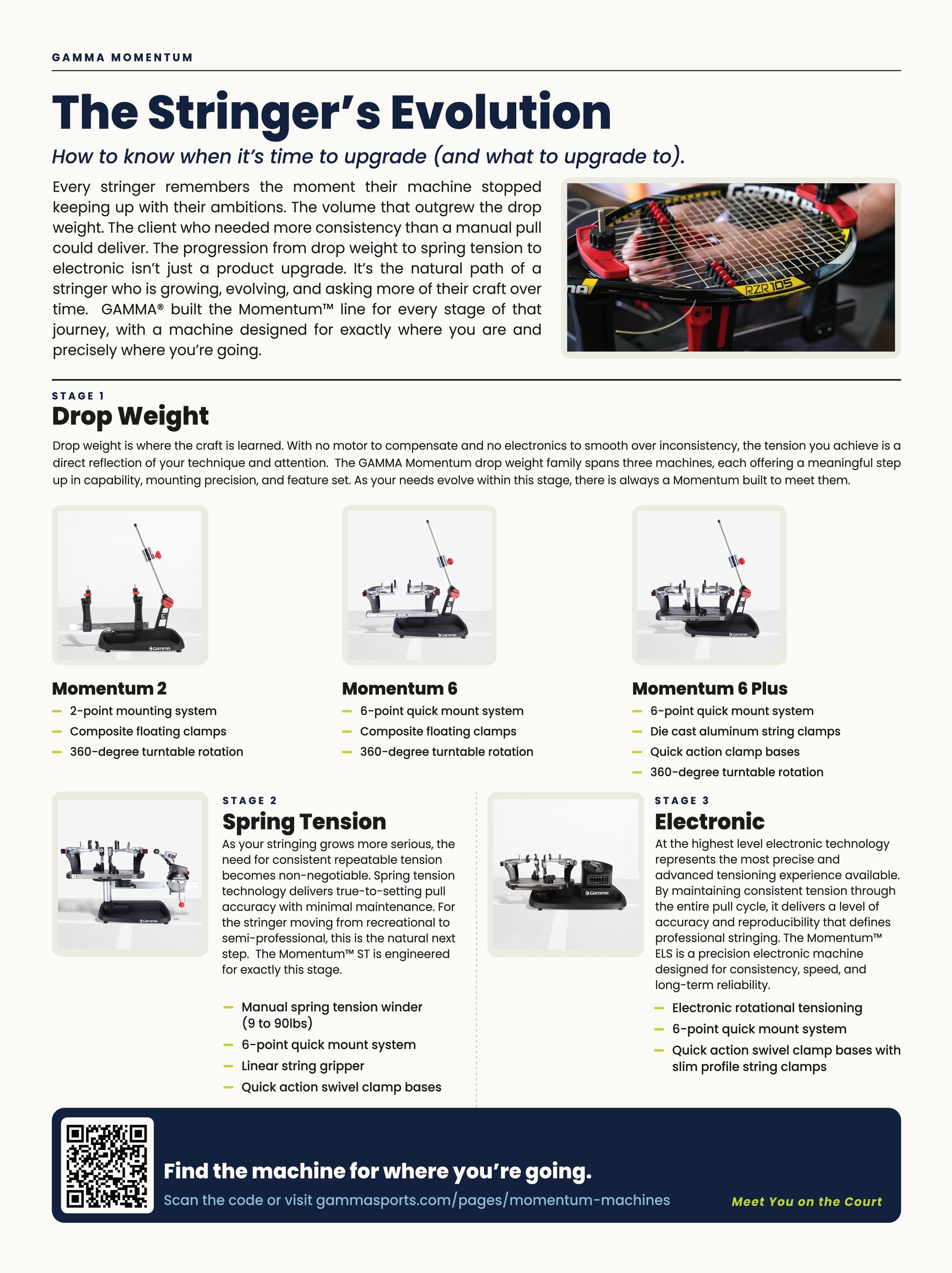
Use our guide to find the right stringing machine for you
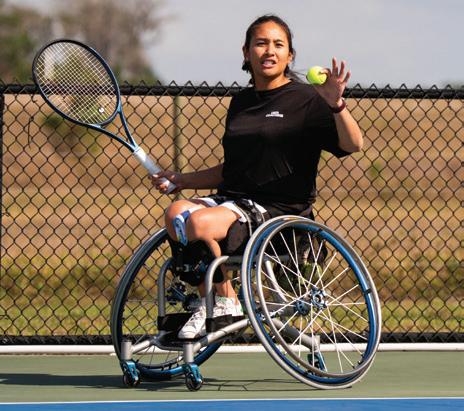
Across the country, wheelchair tennis stars inspire and push limits
Know the difference between actual and reference tension
Use our guide to find the right stringing machine for you
Across the country, wheelchair tennis stars inspire and push limits
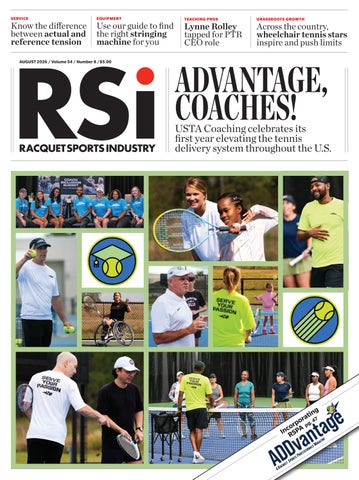
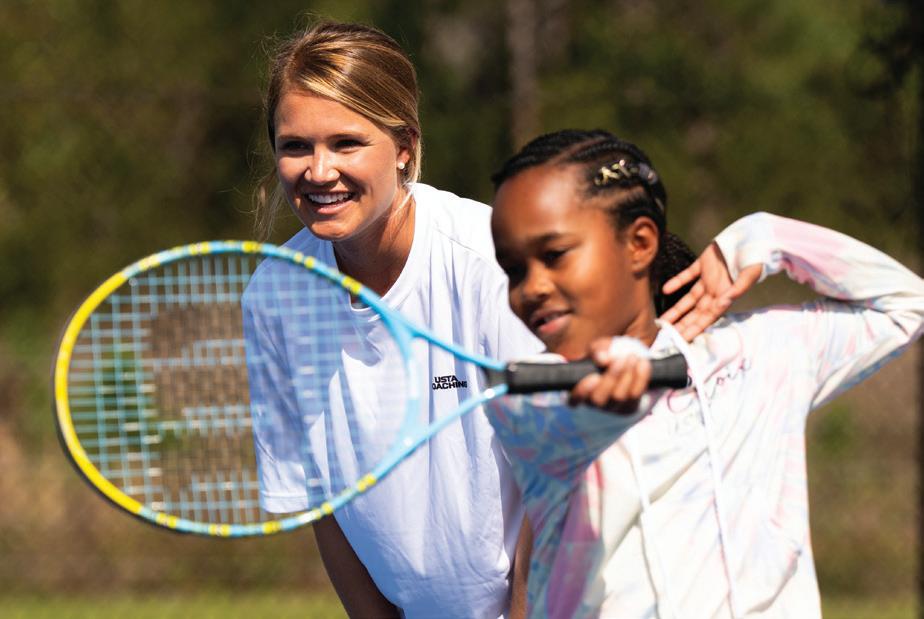
USTA Coaching celebrates its first year elevating the tennis delivery system throughout the U.S.



5 ITF rebrands as 'World Tennis,' with new vision
5 Lynne Rolley is named CEO for PTR
6 BJK to speak at inaugural Coaches Open in NYC
6 Babolat celebrates padel with U.S.-exclusive collection
6 USTA awards $100,000 in wheelchair tennis grants
8 U.S. Blind Tennis Association announces first national chps
8 Tennis players can keep prize money pre-college enrollment
8 Short Sets 10 CDM/PBI holds Summit; debuts 'Racquet Works'
12 Nominate now for RSI's Champions of Tennis Awards
13 USA Pickleball Serves
of
New
for PTR The Professional Tennis Registry has named Lynne Rolley as its new Chief Executive Officer.
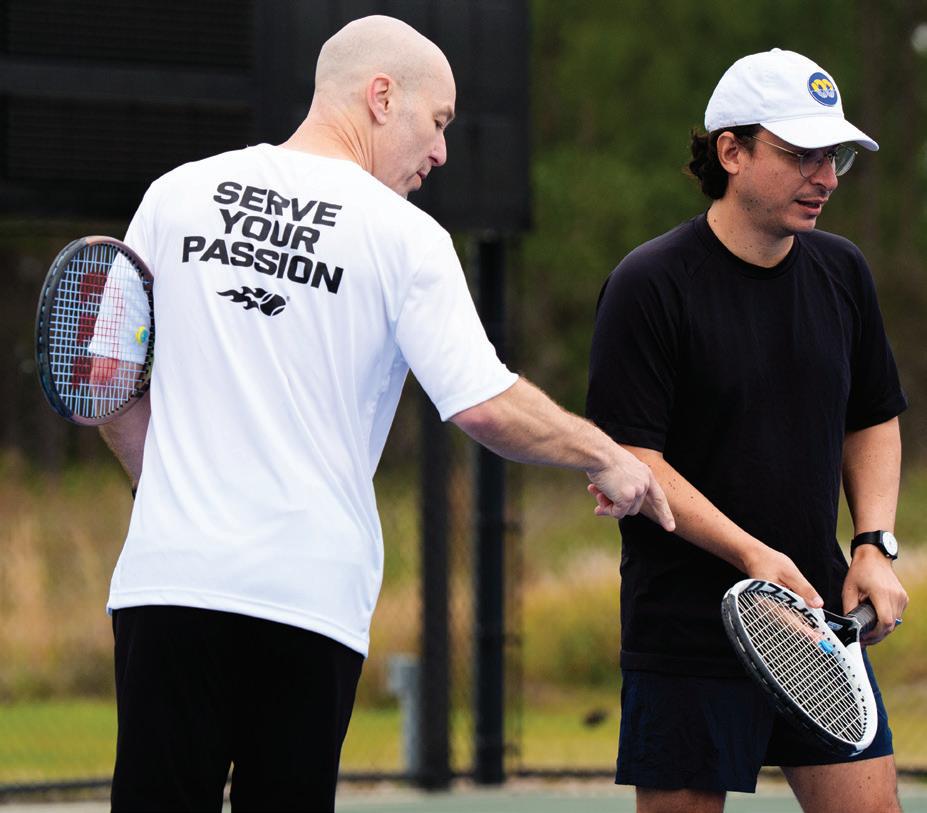
TECH Tension Headaches? Understand the difference between reference tension and actual string-bed tension.
PROVIDERS Advantage, Coaches
USTA Coaching celebrates its first year elevating the tennis delivery system throughout the U.S. P. 23
stringing machine is your No. 1 asset. Use our annual guide to help you choose the right one.

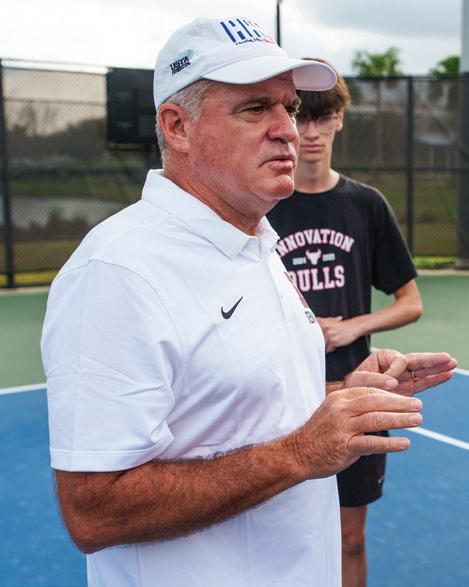
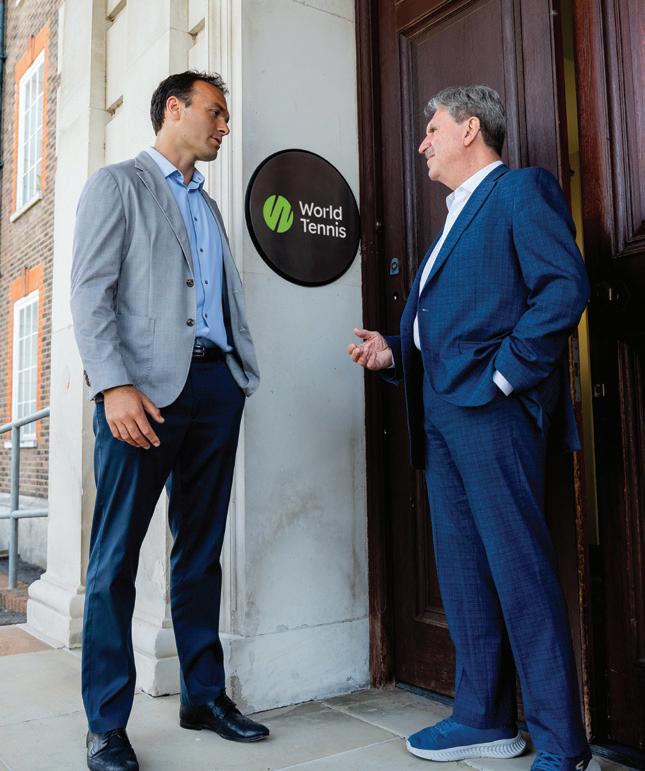
The International Tennis Federation (ITF), the organization that has governed tennis on a global basis since 1913, in June rebranded to “World Tennis” and announced its vision for the long-term sustainable growth of the sport worldwide.
In an open letter by World Tennis President David Haggerty (at right) and Chief Executive Ross Hutchins, the organization pledged to reinvest back into the game at least 85 percent of all income it generates each year for the next decade—with the goal to empower its 214 national tennis associations—and committed to drive collaboration across the sport.
“Our ambition is to grow the game in all corners of the world, handin-hand with 214 national tennis associations and stakeholders across the tennis ecosystem,” says Haggerty. “This includes increasing participation, further developing the pathway for future stars to rise to the top, and providing more access, regardless of age, gender or background.”
World Tennis outlined five strategic priorities:
1. Growing participation, by connecting and aligning one of the largest networks of national associations across world sport to increase the number of recreational players, of all ages and abilities.
2. Powering future stars, by delivering enhancements to the World Tennis global player pathway, a main talent pipeline to the professional game, which will build new markets and provide more competitive opportunities.
3. Elevating official nations competitions, by strengthening the Davis Cup, Billie Jean King Cup and World Team Cup events.
4. Ensuring a sport fit for the future, by ensuring tennis appeals to future audiences, and by innovating, connecting nations digitally, protecting integrity and trust, evolving governance and advancing player wellbeing.
5. Raising investment to grow the game, by securing new and stronger revenue streams along with longterm partnerships, and supporting reinvestment into tennis via national tennis associations worldwide.
World Tennis also revealed its goal for the sport to achieve ambitious new levels of global participation, targeting strong growth in the numbers playing tennis worldwide from 106 million players to 140 million by 2035—an increase of more than 30 percent.
The Professional Tennis Registry in June named Lynne Rolley as Chief Executive Officer, following her appointment as Interim CEO in March. Rolley served as Chair of the PTR Board of Directors and brings more than five decades of coaching, leadership and industry experience to the role.
“With Lynne’s leadership, vision and deep connection to PTR’s mission, we are confident in the future direction of our organization,” says Karl Hale, PTR Board Vice Chair. “Her lifelong commitment to coach education and the game itself makes her uniquely positioned to lead PTR.”

Her extensive résumé includes serving as Director of Women’s Tennis for the USTA and coaching the Fed Cup Team, PanAm Games, and U.S. National Teams. She has held leadership roles at premier facilities, most recently serving as Executive Director of Tennis at La Quinta Resort and PGA West. As a player, she achieved Top 10 rankings in the U.S. and earned multiple national titles.
“We have an incredible opportunity to continue evolving how we support coaches—not just through education, but by creating clear career pathways and providing meaningful resources that help coaches grow, lead and build lasting futures,” Rolley says. “I’m excited about the future of PTR, PPR, PCR and PPTR and the opportunity to continue strengthening our community.”
Billie Jean King will be among the speakers and presenters at the inaugural Coaches Open, presented by USTA Coaching, Aug. 25-27 at the Hilton Midtown in New York City. The event will include on-court demos, workshops, networking, a trade show and more. Attendees must be members of the USTA Coaching community.

As of press time in late June, other featured speakers included Will Guidara, bestselling author of “Unreasonable Hospitality” and former co-owner of Eleven Madison Park, ranked the No. 1 restaurant in the world, and John Wroblewski, the head coach of the U.S. Women’s National Hockey Team.
The Coaches Open, which follows in the footsteps of the former, wellregarded USTA Tennis Teachers Conference, is designed to be “a celebration of coaches and the impact they make every day.” The event offers practical content—including specialty workshops and on-court demos at Louis Armstrong Stadium—networking mixers and cohort meetups, and a Trade Show & Innovation Showcase. Visit ustacoaching.com.
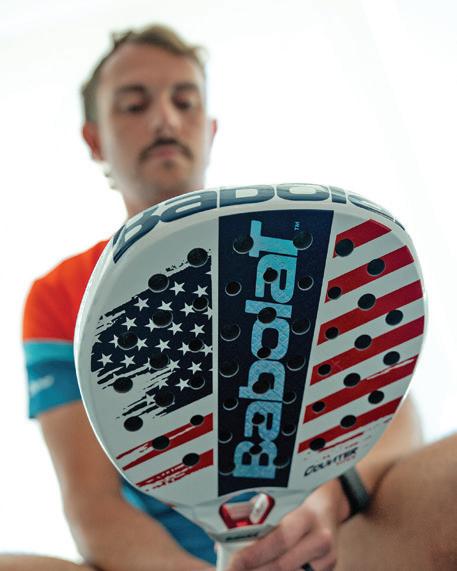
Babolat Celebrates Padel With U.S.-Exclusive Paddle Collection
Babolat has unveiled its new USAexclusive padel collection featuring the Counter Viper and Energy paddles. The limited-edition, red, white and blue collection was created specifically for the U.S. market. The paddles are designed for players of every level.
“Whether you’re competing at a high level or picking up a racquet for the first time, these models deliver the performance and innovation players expect from Babolat,” says Bill Edell, National Sales Director for Babolat US.
The Babolat USA Counter Viper (suggested retail price $360) is built for strategic players seeking maximum precision and explosive power to turn defense into offense. The Babolat USA Energy (SRP $150) is lightweight and maneuverable, designed to deliver comfort, easy power and effortless movement. Visit babolat.com.
The USTA is awarding more than $100,000 in USTA Wheelchair Tennis Grassroots Grants to 44 wheelchair tennis programs nationwide. Grants were awarded to local organizations that promote and develop wheelchair tennis and use the sport to help build stronger, healthier communities. Since awarding its first grants in 2008, the USTA has provided more than $1 million in financial support to wheelchair tennis programs across the country. Grant amounts were based on each program’s existing budget and the organization’s future programming needs. Recipients can use the award to support coaching, court
PRESIDENT/PUBLISHER JOHN HANNA
MANAGING DIRECTOR ROBYN SOBELSON EDITOR PETER FRANCESCONI peter@acepublishinggroup.com
MANAGING EDITOR CORY SEKINE-PETTITE
ART DIRECTOR GARON HART
PRODUCTION MANAGER MEGAN WILLIS mwillis@nspmag.com
SPECIAL CONTRIBUTOR BOB PATTERSON
CONTRIBUTING EDITORS
KIM BASTABLE, CYNTHIA CANTRELL, PEG CONNOR, JOE DINOFFER, JUDY LEAND, GREG MORAN, KENT OSWALD, CYNTHIA SHERMAN, MARY HELEN SPRECHER, JOE TEDINO
CONTRIBUTING PHOTOGRAPHER DAVID KENAS
CIRCULATION MANAGER AMY FINE afine@nspmag.com
RACQUET SPORTS INDUSTRY
9040 Roswell Rd., Suite 210 Atlanta, GA 30350
ADVERTISING DIRECTOR JOHN HANNA jhanna@nspmag.com/770-650-1102, x125
APPAREL ADVERTISING CYNTHIA SHERMAN cstennisindustry@gmail.com/203-558-5911
ADVERTISING EXECUTIVES SHERRY GASAWAY JENNIFER GONZALEZ
Racquet Sports Industry is published 10 times per year: monthly, January through August, with combined issues in September/October and November/December, by New South Publishing, Inc., 9040 Roswell Road, Suite 210, Atlanta, GA 30350. Periodicals postage paid in Atlanta, GA and additional mailing offices (USPS# 004-354). August 2026, Volume 54, Number 8, (C) copyright 2026 by New South Publishing, Inc.
All rights reserved. Racquet Sports Industry, RSI and the logo are trademarks of New South Publishing, Inc. Printed in the U.S.A. Yearly subscriptions $25 in the US, $50+ elsewhere. Postmaster: Send address changes to Racquet Sports Industry, 9040 Roswell Road, Suite 210, Atlanta, GA 30350. Racquet Sports Industry is the official magazine of the USRSA, RIRG and ASBA. Looking for back issues of Racquet Sports Industry? Visit the archives at our website at TennisIndustryMag. com for free digital versions.



time, equipment, recruitment and events, including tournaments and camps. Organizations interested in starting a wheelchair tennis program or seeking more information should email wheelchairtennis@usta.com.
The U.S. Blind Tennis Association (USBTA) announced the inaugural U.S. Blind Tennis National Championship will be Aug. 7-9 at Brady’s Run Park in Beaver County, Pa. The tournament marks the first U.S. national championship in the sport’s history and showcases the continued growth of blind and low-vision tennis nationwide. Athletes will compete in singles and doubles competition across multiple sight classifications.
“This championship is something
our community has worked toward for years,” says USBTA President Murray Elbourn. “For the first time, blind and low vision athletes from across the country will have the opportunity to compete for a national title while demonstrating the skill, determination and passion that define our sport.”
“The inaugural U.S. Blind Tennis
The 2026 Billie Jean King Cup by Gainbridge Finals, set for Sept. 22-27 in Shenzhen, China, will begin with a clash between 11-time champions Czechia and 2025 semifinalists Great Britain. Other nations vying for this year’s title are Spain, Kazakhstan, Ukraine, Belgium, China and Italy. A record 148 nations entered the women’s World Cup of Tennis this year.
The USTA and Electrolit have a multi-year partnership that sees hydration beverage Electrolit becoming the Official Electrolyte Beverage of the US Open, beginning this year. The product will be available to all US Open players in branded oncourt coolers. Electrolit also will have promotional space on the USTA Billie Jean King National Tennis Center grounds.
Racquet sports platform Playtomic has become an Official Partner of Team Europe, the first European team competing in Major League Pickleball.
The USTA was recently recognized by Inspiring Workplaces as one of North America’s Top 100 Most Inspiring Workplaces, and one of just five organizations honored in the Government/Non-Profit category. Judges cited the USTA’s culture, commitment to the mission, and the way the organization invests in and supports its people.
The feature-length documentary “Novak Djokovic: The Wolf in Winter” will premier on Aug. 20 on Prime Video.
National Championships is a historic milestone that reflects the tremendous growth of adapted tennis and the dedication of the athletes, volunteers, coaches and advocates who have helped build this community,” adds Evan Enquist, director of Adaptive Tennis for the USTA. Visit www. usblindtennis.org.
College athletes in all sports will be permitted to accept prize money without restrictions ahead of college enrollment, thanks to help from tennis players Reese Brantmeier and Maya Joint. Previously, restrictions limited tennis players from retaining more than $10,000. The shift comes after the NCAA agreed to a proposed $2.02 million federal class-action lawsuit led by co-plaintiffs Brantmeier
The inaugural season for the American Tennis Circuit (ATC) launches in November, with its premiere tournament at the University of Miami. ATC says it expects to stage up to 20 events across some of America’s most iconic university campuses, with draws featuring elite, WTA-ranked women competing close to home and close to fans. Visit atcsports.us.
The USTA Foundation and the Realize the Dream initiative joined forces in June to commemorate Juneteenth by launching over 100 volunteer opportunities through the USTA Foundation’s NJTL network. The effort mobilized more than 3,000 volunteers for a nationwide service movement with the goal of achieving 800,000 service hours by the end of 2026.
For the 10th consecutive year, USTA Utah participated in and showcased tennis at the annual Utah Pride Parade, which saw more than 50,000 people in attendance. Utah’s tennis community is actively engaged in the support of LGBTQ+ players, and each year, approximately 100 participants walk with the Utah Tennis contingent.
Hightower is the Official Wealth Management Partner of US Squash.
Prevagen is the official brain supplement partner of the Association of Pickleball Players Tour.

and Joint, which was filed recently in the U.S. District Court for the Middle District of North Carolina.
Brantmeier, the reigning NCAA champion at the University of North Carolina, brought the initial anti-trust claim in 2024 after forfeiting the bulk of the $48,913 earned at the 2021 US Open and missing the 2022 fall season when the NCAA disputed some of the expenses she submitted from that tournament, reports Tennis.com.
At the 2024 US Open, Joint was unable to keep most of the $147,000 earned from her second-round showing ahead of entering the University of Texas. The Aussie, who followed protocols, would later turn professional that December.
The two sides in this case had originally come to an agreement in February, requesting 60 days to finalize the terms. The majority of the settlement covers attorneys’ fees and other administrative costs, with Brantmeier and Joint each receiving $10,000.
The fifth annual Racquets Summit for Cliff Drysdale Management/Peter Burwash International was held in mid-May at the Chateau Elan Winery & Resort in Braselton, Ga., featuring presenters that included Allistair McCaw, Marcos del Pilar, Roger Crawford, Sarah McQuade, Linda Low, Kim
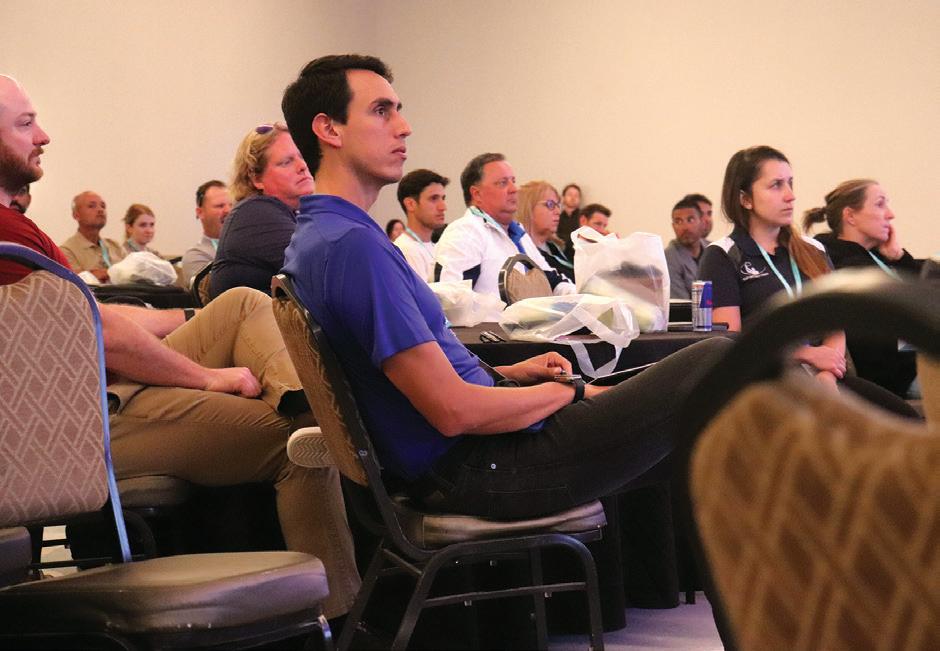
Bastable, Ajay Pant, Robyn Duda and many others. Topics covered CDM/ PBI core themes of leadership, hospitality and mentorship. More than 100 people attended from the company’s global network, as well as partners from Troon, USTA, RSPA and PTR. The event also featured the launch of the education and learning platform Racquet Works, which the company says is “a complete ecosystem built around the business of racquets,” designed to provide a centralized destination for ongoing learning, development and support for the entire racquet sports industry. Educational pathways and resources for Racquet Works extend into every aspect of club and facility success. Visit racquetworks.co.


We’re looking for your help and suggestions for Racquet Sports Industry magazine’s 26th Annual Champions of Tennis Awards. We’ve been honored for this past quarter century to annually recognize individuals, organizations and companies that have gone above and beyond in helping to make a difference in this industry and in positively impacting the lives of millions. But we know there are so many more out there deserving of recognition. There is no formal nomination form. All we require is an email with some basic information (or as much detail as you’d like to supply). We’d like to know:
» Nominee’s name, location and contact info (phone, email). Note, you can self-nominate.
» Award category—see the July 2026 issue, page 19, for categories, or call up the digital edition free at tennisindustrymag.com. However, don’t worry if you’re unsure of the category; we’ll find a home for your nominee.
» Why you think the person or organization is right for the award. This can be brief, or detailed, and you can include supporting material if you’d like.
» Your contact email and phone—for our internal use, in case we have questions.
» Email your nominations by Sept. 18 to peter@acepublishinggroup.com and put “Champions” in the subject line. (Our awards will be in the January 2027 issue.)
USA Pickleball Serves, the charitable arm of USA Pickleball, announced the recipients of its 2026 Play It Forward Grants, awarding funding to two community-driven projects that will expand access to pickleball and create new opportunities for recreation, connection and healthy living.
Pickleball Iowa County in Williamsburg, Iowa, and the City of Hillsboro in Hillsboro, Kan., will each receive $25,000. Both projects will support the construction of new outdoor pickleball courts. For more info, visit usapickleball.org/serves.
The Association of Pickleball Players (APP) has announced the event calendar for the 2026-27 APP Selkirk Collegiate Series, the nation’s premier
pathway to crowning the college pickleball national champions. Beginning this fall, eight qualifier events will pave the path to the 2027 APP Selkirk U.S. Collegiate Championships.
The 2026-27 APP Selkirk U.S. Collegiate Series qualifier events will be:
» Oct. 31–Nov. 1, 2026, San Diego, Calif., Barnes Tennis Center
» Nov. 21–22, 2026, Washington, D.C., Down the Line Sports Center
» Jan. 16–17, 2027, St. Louis, Mo., Chicken N Pickle
» Jan. 23–24, 2027, Punta Gorda, Fla., PicklePlex
» Jan. 30–31, 2027, Chattanooga, Tenn., The Flying Pickle
» Feb. 6–7, 2027, Houston, Texas, Chicken N Pickle
» Feb. 13–14, 2027, Springfield, Mass., Pickleball Kingdom
» Feb. 20–21, 2027, Boise, Idaho, The Flying Pickle
In total, 48 teams will compete at the 2027 APP Selkirk U.S. Collegiate Championships, held Mar. 12-14 at The Flying Pickle in Las Vegas. The top four teams from each regional qualifier will receive automatic bids to the national championships (totaling 32 teams), plus 16 at-large bids. The nation’s elite college players will battle for $90,000 in prize money, including $5,000 per qualifier and $50,000 in the APP Selkirk U.S. Collegiate Championships. More info is available at TheAPP.global.
Pickleball paddle maker JOOLA says it has reached a settlement with Proton, resolving all claims from the patent infringement litigation JOOLA filed with the International Trade Commission (ITC) on April 7. The settlements concern JOOLA’s
On Aug. 25, just days before enshrinement in the International Tennis Hall of Fame in Newport, R.I., Roger Federer will play in an exhibition at the US Open, along with Andy Roddick, John McEnroe and Andre Agassi.
Tennis legend Stan Smith will be the guest of honor for the 2026 Youth Tennis San Diego Annual Gala, which will be Sept. 19 at the Barnes Tennis Center in San Diego. The theme is “An Evening Celebrating Tennis Heritage & Legends.” YTSD serves more than 15,000 youth. For more information, visit www.ytsd. org/gala.
Agassi Sports Entertainment (ASE) has strengthened its push into sports technology, coaching
education and digital media by signing legendary tennis coach Darren Cahill to a long-term partnership agreement.
Dev Parmar is the new Director of Racquets & Wellness at Chartwell Golf & Country Club in Severna Park, Md. The placement was facilitated by McMahon Careers and Racquets Search & Hire.
Six college players—singles players Reese Brantmeier, Sebastian Gorzny, Brandon Carpico and Nikita Filin, and doubles players DJ Bennett and Ava Esposito—earned US Open Main Draw Wild Cards by winning American Collegiate Player Wildcard Playoff Titles. Katrina Scott and Trevor Svajda earned wild cards into US Open Qualifying.
proprietary Propulsion Core technology—specifically as embodied in the Proton Flamingo pickleball paddle.
JOOLA’s Propulsion Core technology is protected by a portfolio of utility and design patents. In reaching these agreements, Proton has recognized JOOLA’s innovation and acknowledged JOOLA’s contributions to advancing the sport of pickleball.
As part of the agreement, Proton will continue to sell the affected products through the summer. Proton will mark the affected products with JOOLA’s propulsion core patent numbers, and will add a “Powered by JOOLA” sticker to the packaging. All manufacturing of the affected products will be discontinued immediately.
“JOOLA’s Propulsion Core technology is the foundation of the modern pickleball paddle, and we are pleased to have reached a resolution with Proton,” said Richard Lee, CEO of JOOLA. “We will continue to pursue fair outcomes with the remaining defendants as we protect the technology we built that defines the modern game.”


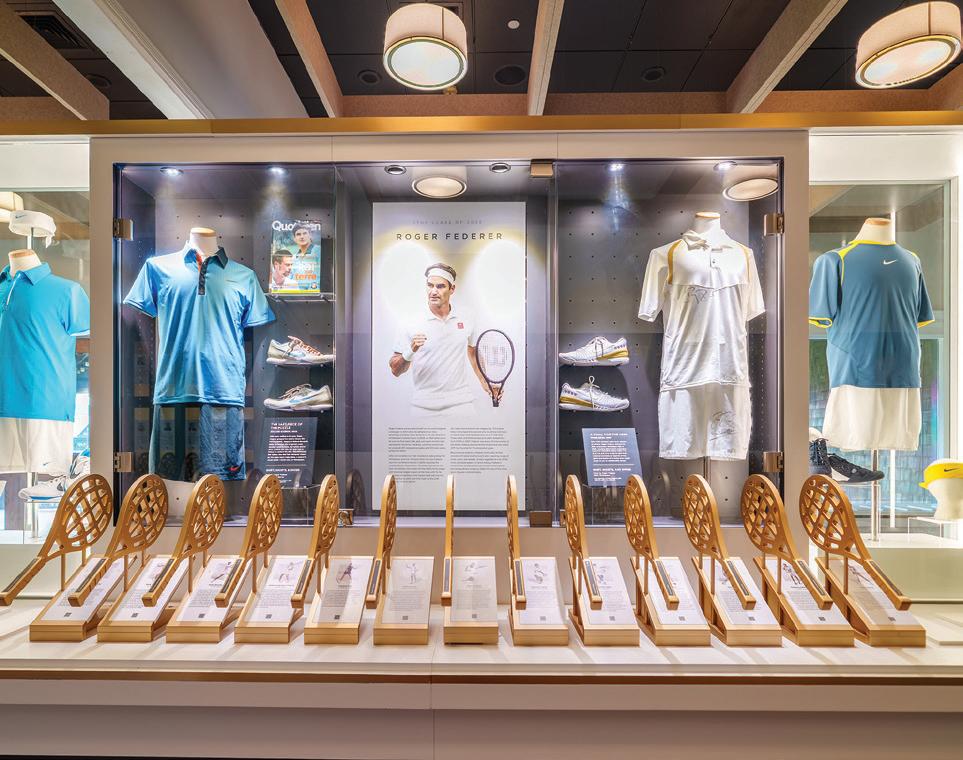
The International Tennis Hall of Fame (ITHF) unveiled new museum exhibits celebrating the moments, achievements and individuals that have shaped tennis history. These exhibits serve as a centerpiece of the lead-up to the Aug. 29 Induction Celebration, which will welcome into the Hall of Fame tennis icon Roger Federer and broadcaster and journalist Mary Carillo in the Contributor Category.
A museum-wide exhibit, “Tennis, Transcended: Roger Federer’s Path to Greatness,” invites fans to relive defining chapters of Federer’s legendary career through a collection of memorabilia and milestones that trace his rise from promising young talent to one of the most accomplished and beloved figures in tennis history. The newly opened installation includes tribute
cases in the Hall of Famers Gallery and additional memorabilia showcased throughout the museum.
The Hall of Famers Gallery includes a tribute case recognizing Carillo and her enduring contributions to tennis as both a competitor and one of the sport’s most respected voices and storytellers. The case includes her Olympic memorabilia, highlighted by the torch she carried at the 2010 Vancouver Winter Games, along with her 2023 Emmy Award and numerous credentials and mic flags.
Billie Jean King Cup, and the 50th anniversary of wheelchair tennis.
Visitors can also explore enhancements to the museum’s Global Gallery, including exhibits on the Davis Cup,
The Museum is open seven days a week. General admission tickets are $25, and children 12 and under receive free admission. For more information, visit tennisfame.com.


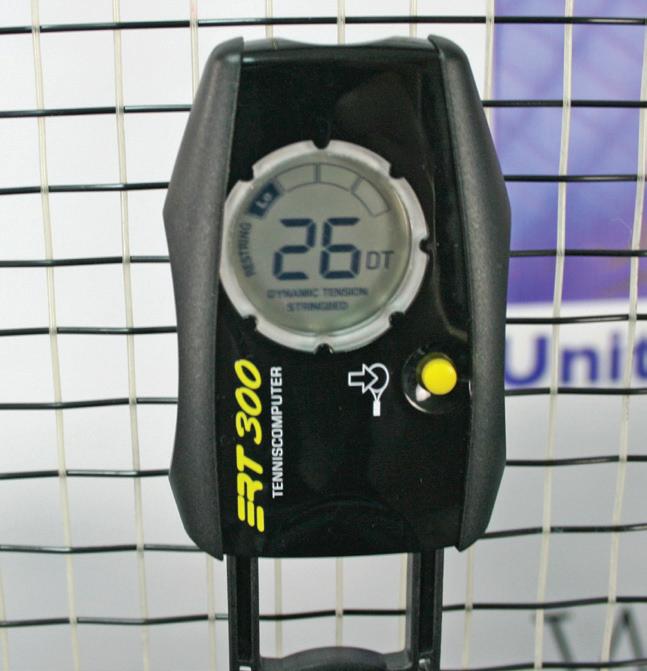
Understanding the difference between reference tension and actual string-bed tension can change how you approach consistency in stringing.
By Albert Murata, MRT
If you string a racquet at 52 pounds, what do you expect the actual tension to be when you measure it?
Most players would assume it would measure exactly 52. But in reality, it could be higher—or it could be lower. The truth is, the number you set on the stringing machine (reference tension) and the actual tension of the string bed are not the same thing. And understanding why can make a big difference in how you approach stringing and discussions about it with your clients.
REFERENCE TENSION VS. ACTUAL TENSION
Reference tension is the number you set on your stringing machine—for example, 52 pounds. It is the tension that your machine pulls, providing it is calibrated properly.
Actual tension, on the other hand, is the stiffness of the string bed once the racquet is fully strung. This is typically measured after the racquet comes off the stringing machine using a device that measures string response through deflection or vibration, with some tools also using sound to estimate stiffness.
These two numbers rarely match exactly—and that’s where things get interesting.
UNCONTROLLABLE FACTORS
There are several variables that influence actual tension, and some are outside the stringer’s control.
1. Racquet Head Size: Larger head sizes tend to produce lower tension readings because the strings are longer and more flexible. Smaller head sizes usually read higher.
2. String Pattern: Open patterns yield lower tension readings; dense patterns increase string-bed stiffness.
3. Stringing Machine Differences: There’s ongoing debate about whether constant-pull machines produce tighter results than lockout machines. In practice, results can be comparable, but machine type can still influence the outcome.
4. String Material: Different string types behave very differently. For example, synthetic gut strung at 52 pounds may produce a higher tension reading than a polyester string at the
same reference tension. Hybrid setups can fall somewhere in between.
While some variables can’t be controlled, others are entirely in the stringer’s hands.
1. Machine Calibration: A stringing machine is only as accurate as its calibration. Regular checks are essential, especially if the machine has been moved or heavily used.
2. String Clamp Maintenance: Dirty clamps can allow strings to slip during installation, leading to inconsistent tension. Keeping clamps clean and functioning properly is critical— especially when working with slick, coated strings.
3. Stringing Technique: Even on the same machine, two stringers can produce different results. Factors such as tensioning consistency and stringing speed can influence the final tension. In practice, experienced stringers focus less on the number itself and more on the consistency of the result.
At the end of the day, the goal isn’t to chase a specific reference tension—it’s to achieve a consistent and predictable result that translates into reliable performance on court. For stringers, that means controlling the variables you can control and understanding the ones you can’t. Remember, the key to quality stringing isn’t just hitting a number—it’s delivering a consistent feel, racquet after racquet.
Albert Murata is a USRSA Master Racquet Technician who was recognized in 2025 as Racquet Sports Industry’s Stringer of the Year. He shares his knowledge of the game, his experience and expertise with inciteful, informative and entertaining videos on his YouTube Channel. Check him out at https://amstringing.com
USTA COACHING
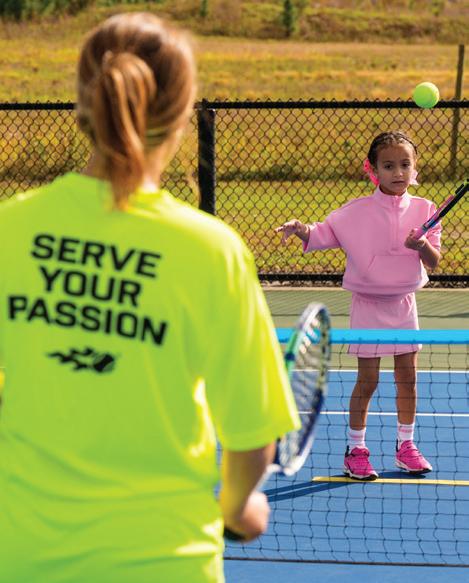
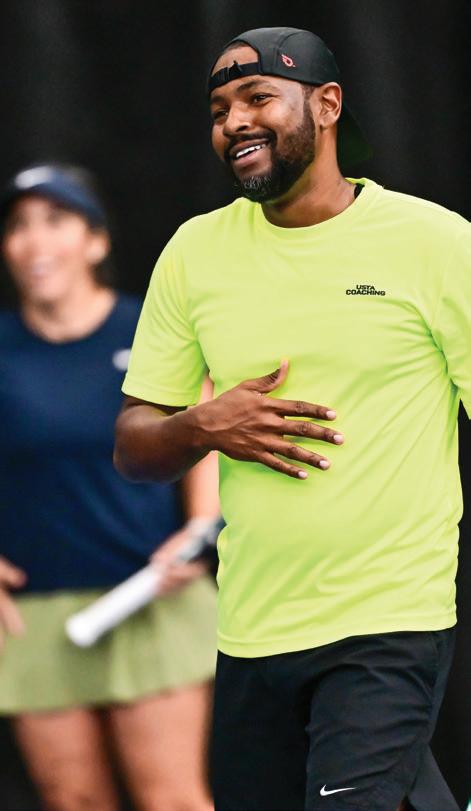
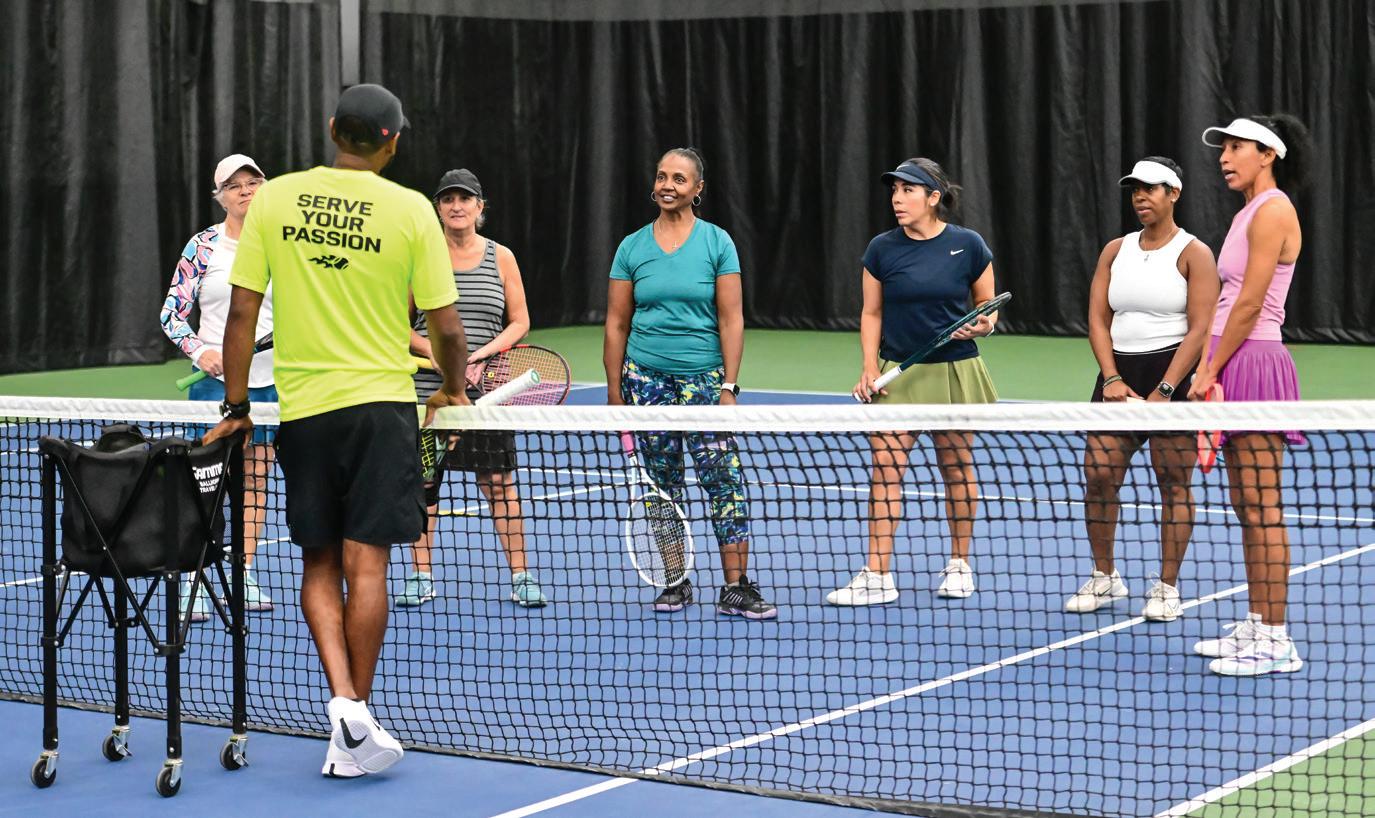
USTA Coaching celebrates its first year elevating the tennis delivery system throughout the U.S.
By Jennifer Squires
When USTA Coaching launched on Aug. 13, 2025, it arrived with an ambitious promise: to support, educate and elevate everyone who helps deliver tennis in America. One year later, that promise has become a reality with a robust digital platform, a growing community and a clearer pathway for coaches at every level, from parents and volunteers introducing the game for the first time
to full-time professionals building and sustaining lifelong careers.
The first year has shown that USTA Coaching (www.ustacoaching.com) is not simply a certification program or a benefits package. It’s an effort to strengthen the delivery system of American tennis. Coaches shape the first impression a player has of the sport. They determine whether a clinic feels welcoming, whether a young athlete feels seen, whether a new adult
player returns and whether a facility can grow programming with consistency and quality. By investing in coaches, USTA Coaching is investing in the player experience itself.
“USTA Coaching was created with an ambitious vision: to elevate the coaching profession and build a stronger, more connected system for developing coaches across the United States,” says Craig Morris, CEO of USTA Coaching.
“The success of our first year demonstrates both the tremendous demand for this work and the essential role coaches play in the growth of tennis. By continuing to invest in coaches, we can improve the experience of every player and strengthen the future of our sport.”
PATHWAY FOR EVERY COACH
USTA Coaching establishes accessible entry points for parents, teachers, volunteers, school coaches, emerging coaches, part-time instructors and career professionals.
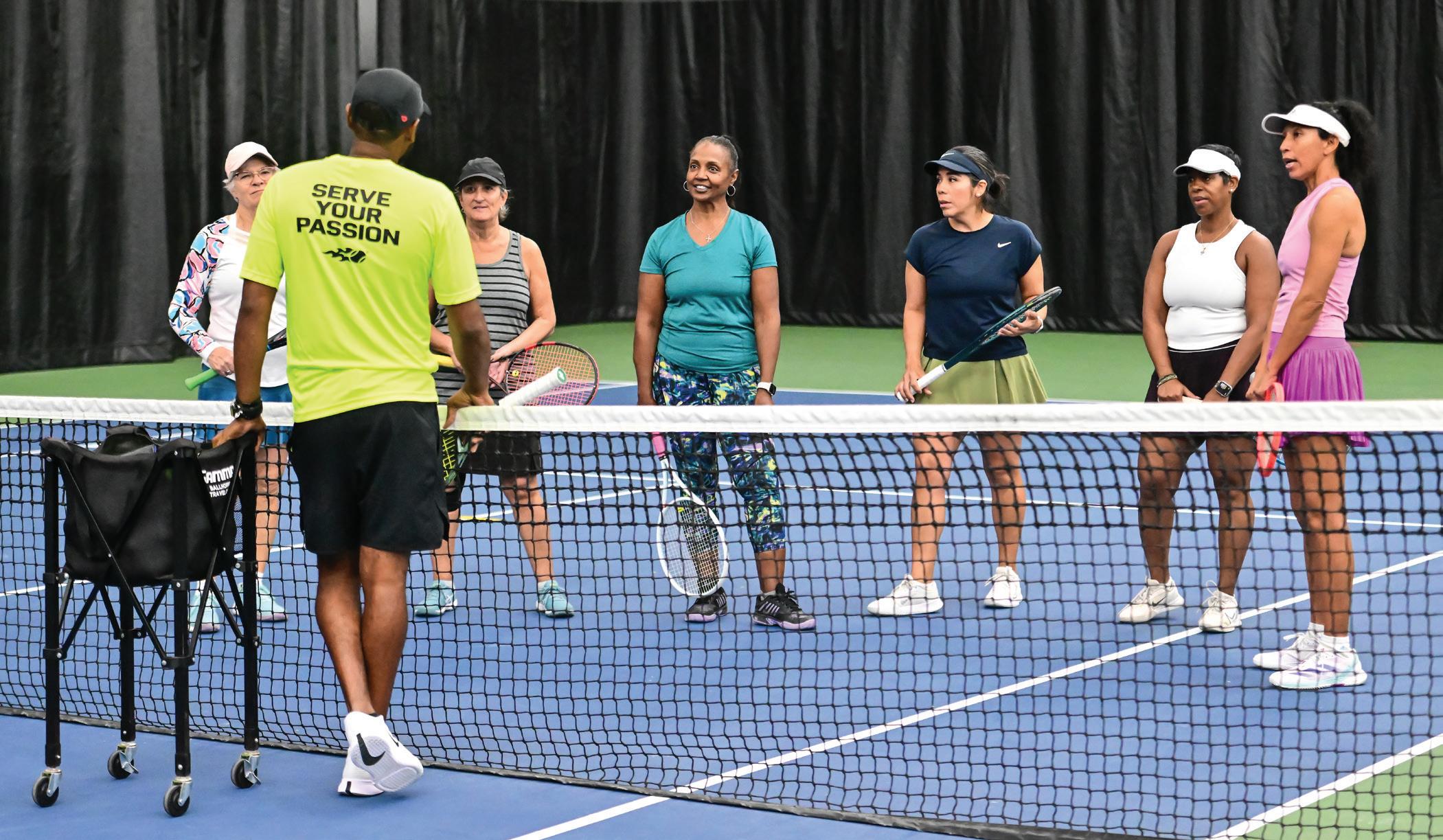
» USTA Coaching has grown to more than 15,000 community members in its first year, including coaches, parents, volunteers, school providers, facility leaders and emerging professionals.
» Women now represent 35 percent of the USTA Coaching community, supported by initiatives such as the Women in Coaching Cohort and Serving All: Aspiring Coaches powered by WeCOACH.
» Coaches under age 30 make up 26 percent, driven by high school incentives, Spring Break Tennis engagement and NJTL and Community Impact Hub programming geared toward under-30 coaches.
Its education model allows coaches to learn online, attend in-person workshops and pursue badges and certifications aligned with their role and goals. The pathway is intentionally flexible, giving coaches the ability to build skills at their own pace while still working toward recognized standards. Currently, more than 15,000 individuals have signed up in the past year.
» More than 1,500 coaches have attended 135 USTA Coaching workshops led by experienced professional coach developers, most taking place at 44 Coaching Education Centers in the U.S. and Puerto Rico.
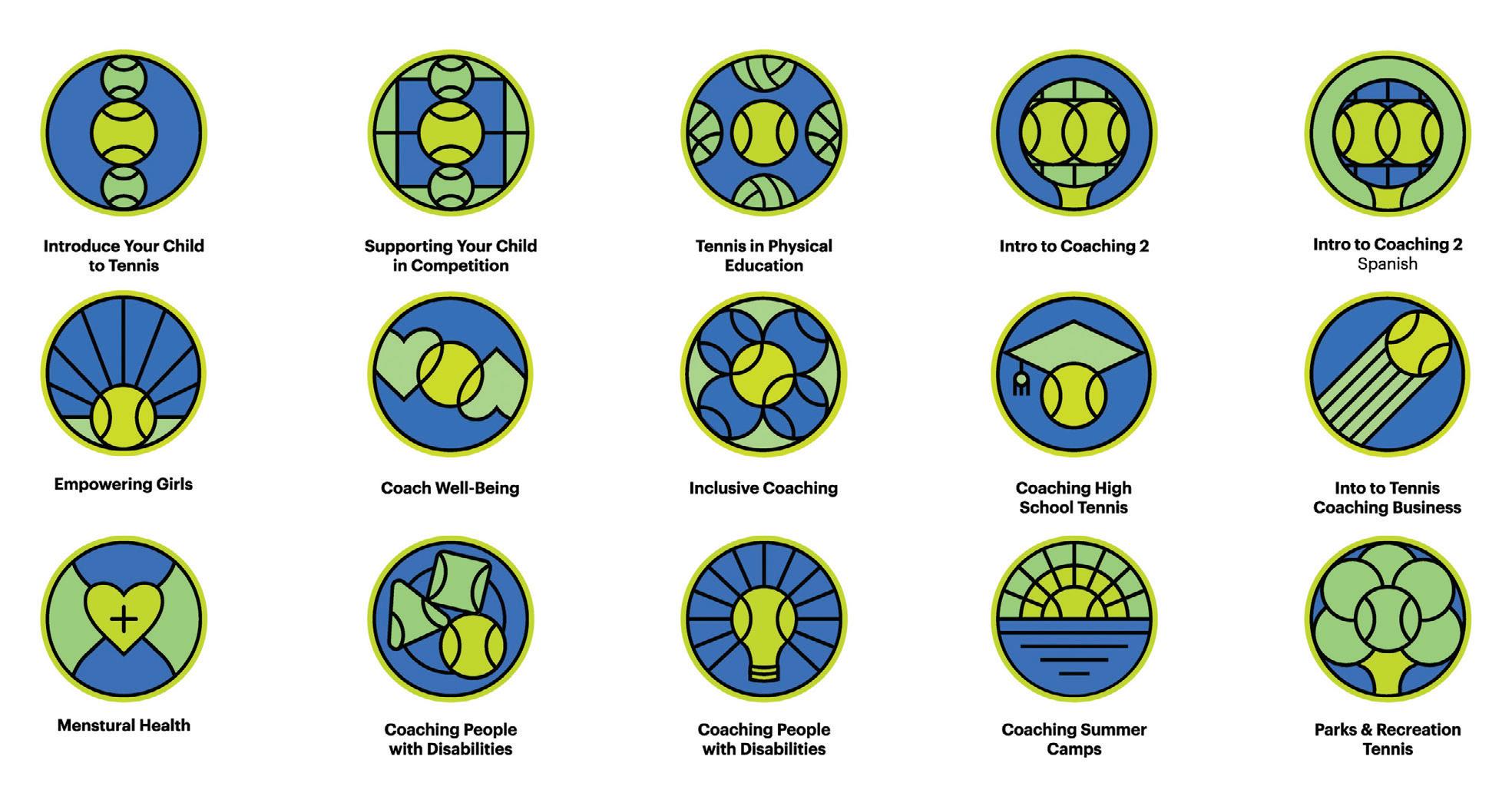
» USTA Coaching members can now engage with 31 badges and 118 hours of online education, reflecting significant progress across the education pathway.
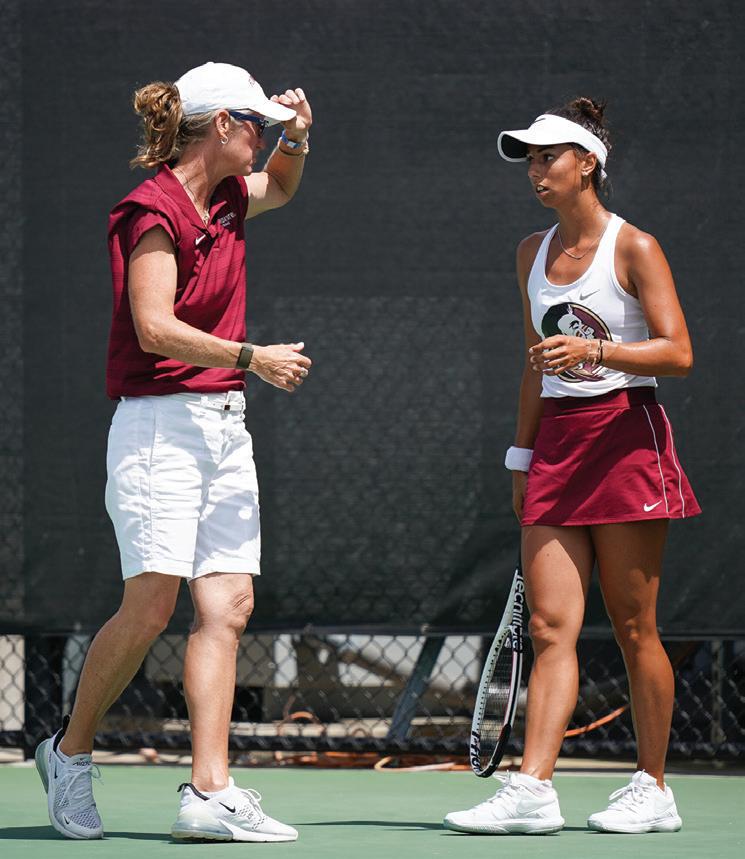
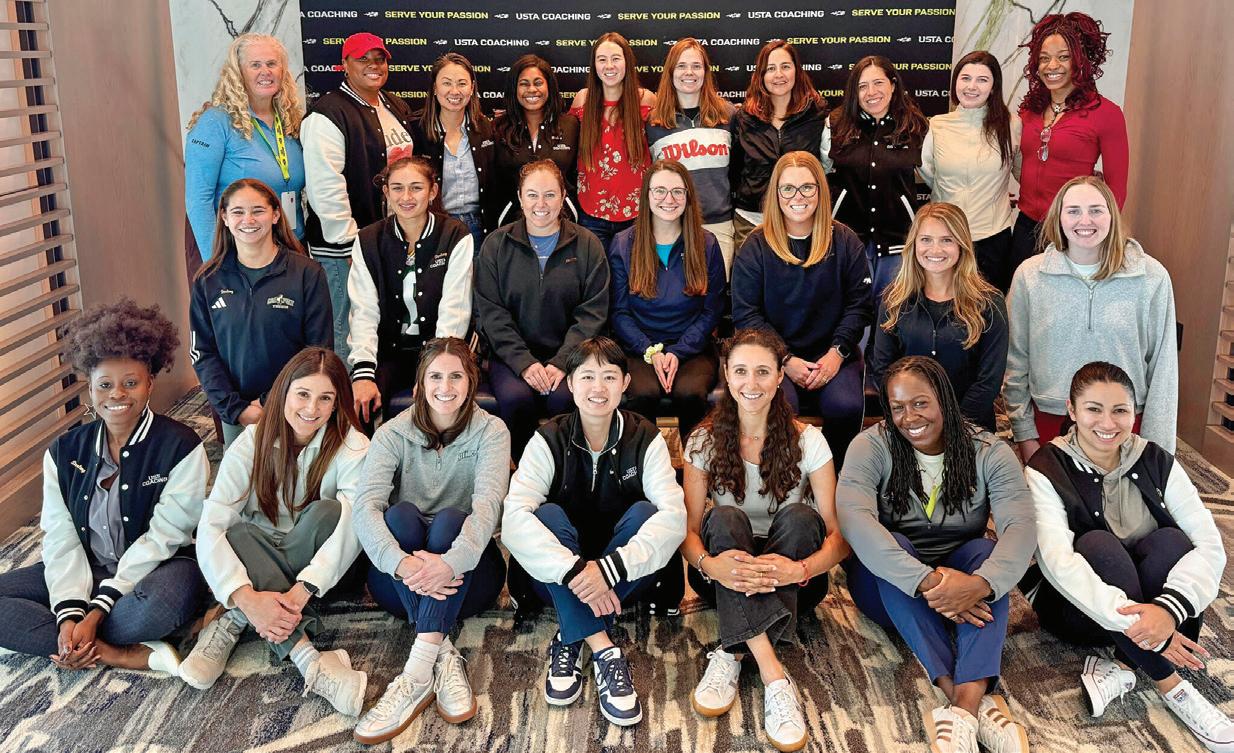
USTA Coaching’s Women in Coaching Cohort launched in January with 25 established female coaches from across the country. The program began with a three-day in-person experience at the USTA National Campus in Lake Nona, followed by virtual programming through August and a reunion at the 2026 Coaches Open.
USTA Coaching also partnered with WeCOACH on Serving All: Aspiring Coaches powered by WeCOACH. The eightmonth program supports collegiate women tennis players who are considering coaching careers through education, mentorship, leadership development and an in-person summit in Orlando. Together, the programs support women already leading in tennis while helping build the next generation of female coaches.
“What has been most exciting about USTA Coaching’s first year is seeing coaches from every part of the country and every level of the game embrace the opportunity to learn, connect and grow together,” says Megan Rose, USTA Coaching’s Managing Director and Head of Business Development and Operations.
“The numbers tell an important story, but the real success is the community taking shape: coaches sharing ideas, building relationships and feeling more supported in the work they do every day.”
Recognizing that instruction alone isn’t enough to sustain a career, the program also prioritizes comprehensive professional support. Coaches need tools, career development, benefits and a professional network. Membership benefits include coaching resources, discounts, community connection and, at professional levels, support services including insurance that can help make coaching a more sustainable career. That has resonated with facility operators who manage full-time, parttime and seasonal staff.
The in-person component has expanded through USTA Coaching’s 44 Coaching Education Centers across the U.S. and Puerto Rico. These centers serve as local hubs where coaches can attend workshops and certification programming led by trained professional coach developers. That regional model lowers barriers to participation and gives USTA Sections, facilities and coach developers a direct role in building the coaching ecosystem in their communities.


“It’s great that the program offers certifications and you can transfer over your existing certifications. I like that there
make
it
are different tracks
to
affordable to everybody.
The drills are always at your fingertips online, which is a big help.”
—Lynn Bender, Tennis Director, Macatawa Tennis Club
Just as important, USTA Coaching’s first year has connected coach development to larger industry needs: belonging, leadership, career mobility and the next-generation pipeline. Its work with women coaches, diverse coaches, high school and collegiate athletes, Professional Tennis Management programs and emerging leaders reflects a broader view of what the profession needs to grow. And in August, coaches from around the nation are gathering in New York City for the first-ever Coaches Open, a three-day event featuring inspiring speakers, specialized workshops and on-court demos at Louis Armstrong Stadium.
Career development is becoming another defining part of the platform. The Virtual Career Fair connects facilities and coaches, while professional career consulting with Kopplin Kuebler & Wallace gives coaches guidance on résumés, interviews, negotiation, leadership and the business side of racquet sports. USTA Coaching also plans to launch a tennis-specific job board, giving job seekers and employers a central marketplace for seasonal, part-time, full-time and director-level roles.
After one year, USTA Coaching’s story is still in its opening chapter. The first 365 days were about building the platform, proving the concept and showing coaches that support can be practical, accessible and national in scope. The next phase will be about scale: more coaches educated, more pathways clarified, more facilities connected to talent and more players benefiting from better experiences on court.
“The success of USTA Coaching’s first year reinforces a simple truth: The future of tennis depends on the people who teach, coach, mentor and inspire others to play,” says Butch Staples, the National Racquet Sports Director at Midtown Athletic Clubs. “By creating meaningful pathways for coaches to learn, grow, connect and advance, we are making substantial headway toward achieving our goal of 35 million players by the year 2035.”

USTA Coaching’s education pathway gives coaches multiple ways to grow. Badges provide focused learning in specific areas, while certifications create a deeper professional pathway for coaches ready to advance. (There currently are 31 badges available, with more on the way. A sampling of badges available is shown below.)
The platform includes online learning, in-person workshops and role-based development for parents,
volunteers, school coaches, part-time instructors and career professionals. Topics include introductory coaching, group and private lesson delivery, junior and adult development, wheelchair tennis, Cardio Tennis and athlete-centered coaching.
The goal is practical: Give coaches tools they can use immediately, while helping facilities identify staff members who are committed to continued education.
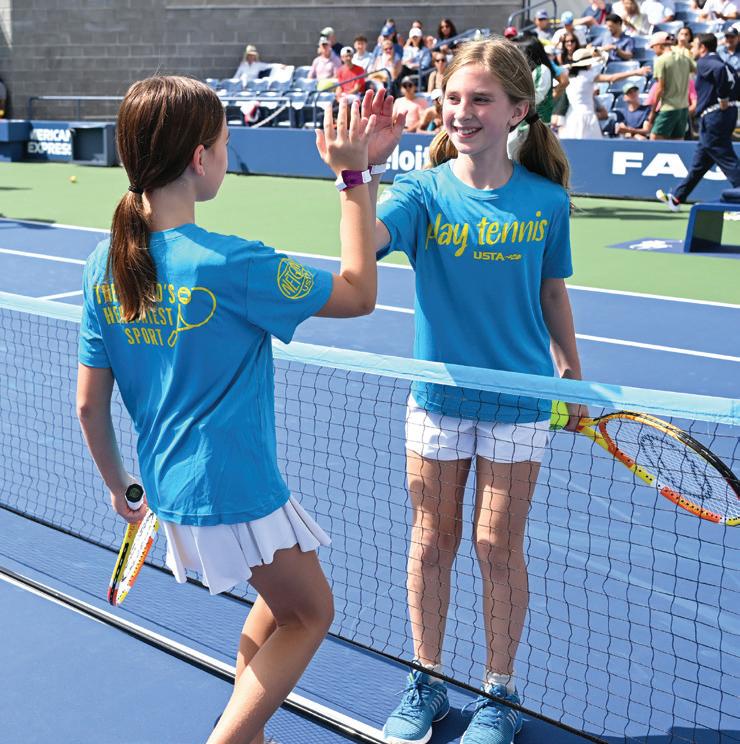
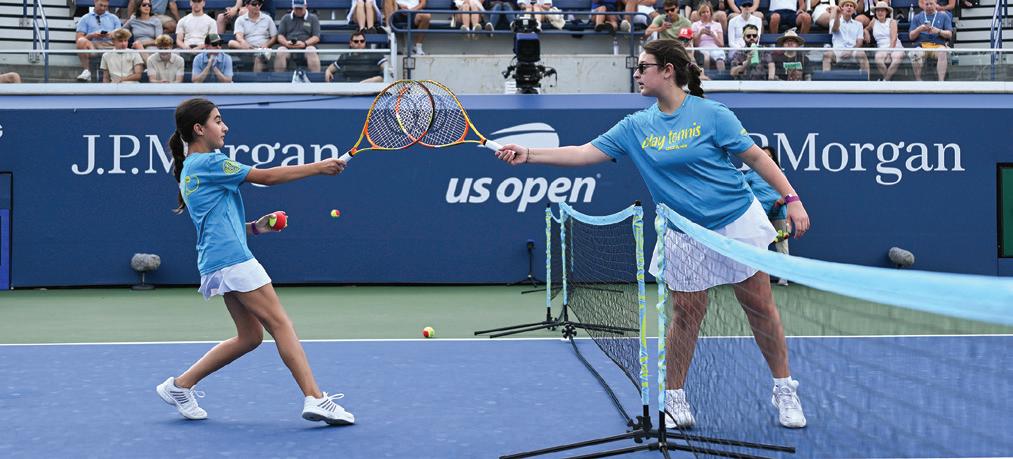
USTA Coaching is working to help young players see coaching as a real career path. Outreach includes high school incentives, Spring Break Tennis engagement, NJTL and Community Impact Hub programming and efforts to onboard more under-30 coaches.
Collegiate outreach includes collaboration with Professional Tennis Management programs and engagement with student-athletes who may be considering careers in tennis. The goal is long-term: connect young people who already love tennis with the education, mentorship and career opportunities needed to stay in the sport.
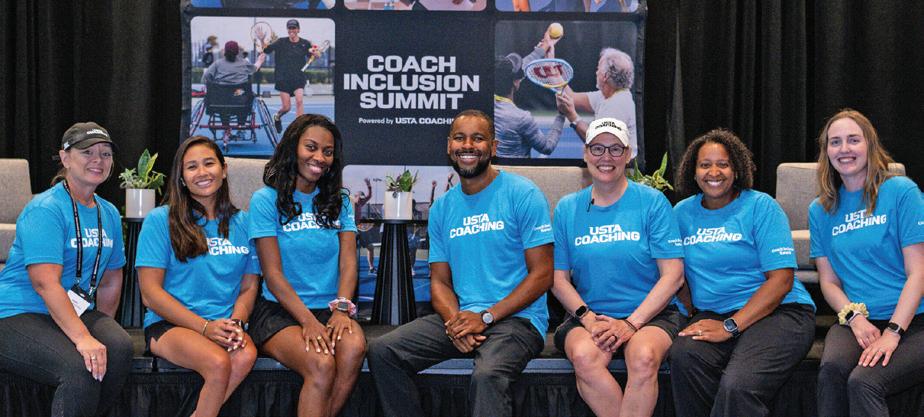
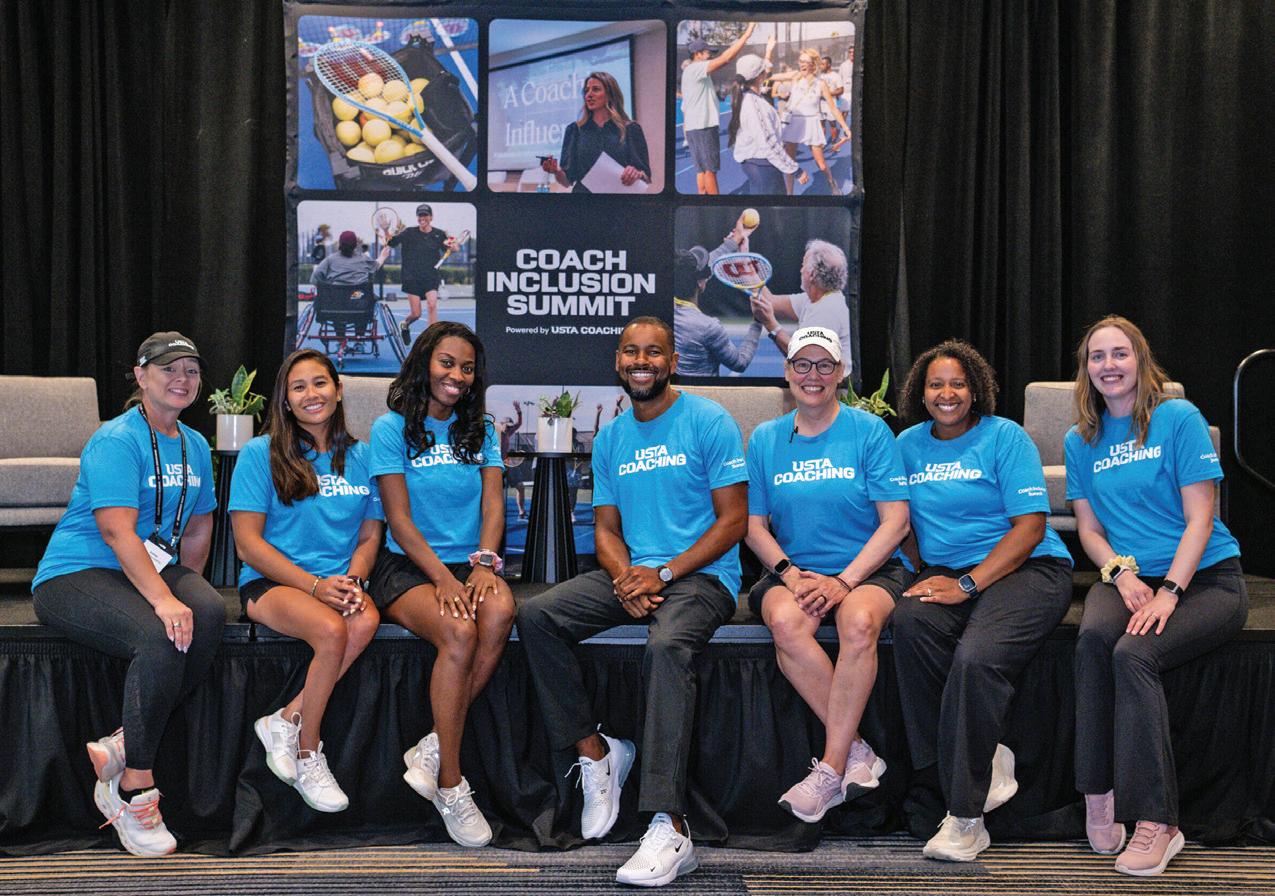
USTA Coaching’s diversity work includes collaboration with the USTA Diversity, Equity and Inclusion department on the Coach Inclusion Summit. In 2026, the Summit expanded to Kansas City in June and will take place at the USTA National Campus in Orlando in December. The effort is designed to give coaches from all backgrounds access to education, connection and professional growth opportunities.
USTA Coaching also is working on HBCU-connected coaching education workshops, Dinkins Grant distribution and a future diverse coach scholarship program. The broader goal is to make coaching education more accessible and to strengthen the communities where tennis is growing.
Jennifer Squires is a writer and content strategist with a background in digital marketing and a focus on sports management and inspirational storytelling. She develops strategic communications for the USTA and other growing enterprises.



With support from USTA TVS and the Missouri Valley section, Hays High School’s new and renovated tennis courts are proving transformative.
By Cindy Cantrell
For the past two years, Superintendent of Schools Ron Wilson oversaw construction of the $100 million Hays High School in Hays, Kan., with a mixture of pride in the project and consternation over the dire state of four of the eight adjacent tennis courts.
“They had just crumbled away, and they looked even worse next to the brandnew building,” says Wilson, referring to the courts’ highly visible location at the
Wilson said he gratefully leaned on the program’s comprehensive support— including advocacy, technical and business guidance, facility management expertise, and parks and recreation resources—when preparing and submitting the application in October 2025. The effort ultimately secured a $140,000 grant from USTA National and an additional $14,000 from USTA Missouri Valley toward the $667,900 project, which
front of the expansive campus, which opened in August 2025. “It was sad.”
With community investment already stretched by a $143.5 million bond and a half-cent sales tax enacted to help repay it, Wilson knew the district would need to find another path to fund the tennis court renovation. His research led to the USTA’s Tennis Venue Services (TVS) grant, which supports the enhancement of existing tennis facilities and development of new venues to expand playing opportunities in communities nationwide.
was completed in April 2026.
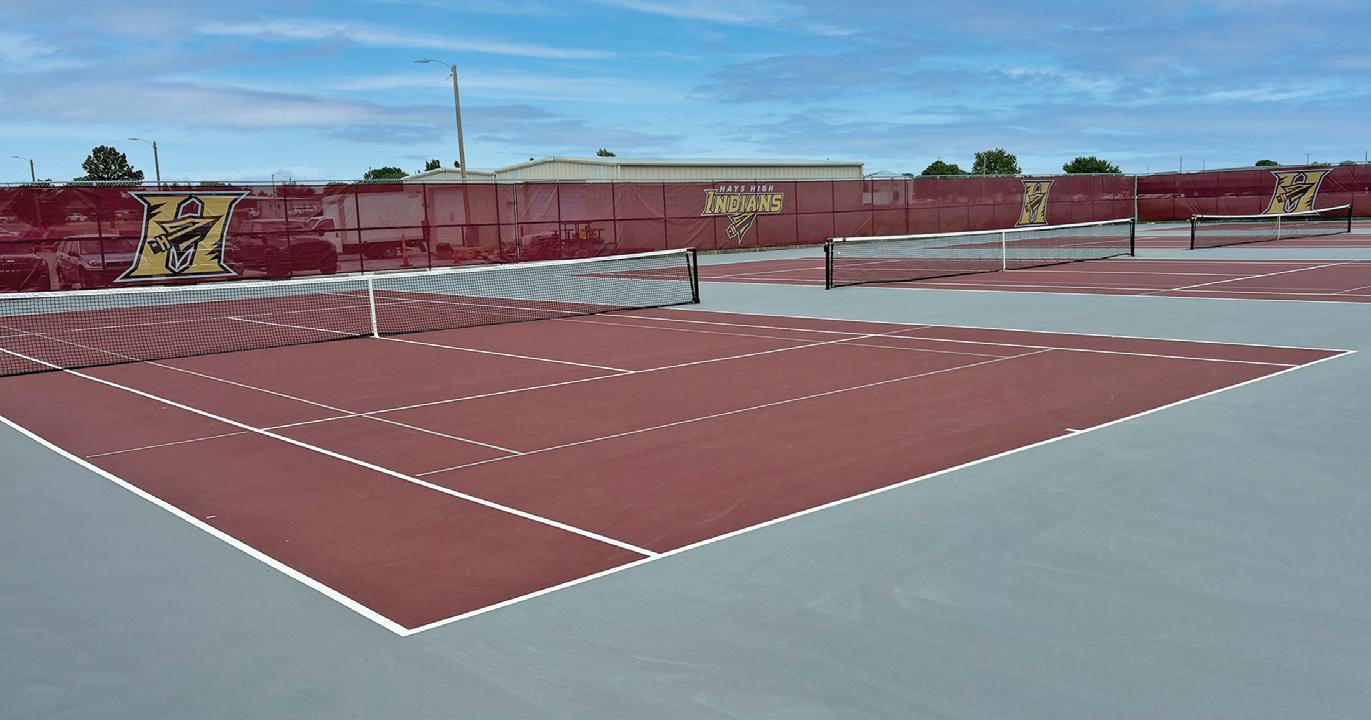
All four 78-foot courts at Hays High School now feature blended lines, with two courts also configured for 36-foot play and two for 60-foot play to make tennis more accessible and enjoyable for children, beginners and seniors with limited mobility. The nine-month project additionally included refurbishment of the four existing courts and the addition of shaded, permanent spectator seating.
“The USTA was excited to work with Hays to support their expansion of courts
at Hays High School,” says Natalie Malnor, a consultant with the USTA TVS team. Since 2005, the USTA’s TVS grant program has awarded more than $34 million in TVS grants, including more than $16 million in 2025, which supported nearly 300 projects impacting more than 2,500 courts.
John Terpkosh, senior manager of Tennis Venue Services at USTA Missouri Valley, adds that helping Wilson navigate the grant application process was “a joy.”
“I want all our clients to feel comfortable, from the first conversation through project completion, and to know we’re going to help make it successful,” Terpkosh says. “Every project creates meaningful impact. It all pays off.”
The renovated courts are already delivering tangible benefits at Hays High School, according to tennis coach Alicia Plante. Previously, the school district was forced to rent courts at Fort Hays State University for both the girls' team in the fall and the boys' team in the spring, but access wasn’t available until 6 p.m.—and only if the university team wasn’t hosting a meet.
Plante says the boys' team welcomed the shift in April from playing under the lights at Fort Hays in colder evening conditions to practicing and competing on their home turf right after school. The expanded access to eight courts also eliminated the need for staggered practices and matches. New windscreens featuring the school mascot and district logos added another layer of identify and team spirit.
“It’s going to be transformative for our program over the long term,” says Plante, noting that the boys' team took pride in showcasing the new courts in May while hosting the Western Athletic Conference. Summer programming at Hays High School already includes tennis camps and community-based adaptive tennis clinics for adults with disabilities, with additional opportunities to incorporate tennis into middle and high school physical education classes.
Wilson echoes the enthusiasm about the project’s impact.
“The courts look phenomenal,” he says. “What this has meant for our kids and for the community is incredible.”

Sponsored content. For more on how USTA’s Tennis Venue Services can help your facility or project, visit usta.com/facilities or email facilities@usta.com
Regardless of the size of your business, your stringing machine is your No. 1 asset. How do you choose the right one?
By Bob Patterson, Executive Director, USRSA
Mercedes or Toyota? Both will get you from point A to point B, but they are very different. And within these two car brands, there are vast differences among the models each manufacturer offers.
The same is true for stringing machines. All will get the job done, but you need to decide which one best suits your particular needs and budget. And you need to decide on all the many options and features available when it comes to choosing a stringing machine.
In vehicles, you wouldn’t choose a slick, low-slung sports car if you intend to explore back roads and mountain trails looking for your favorite camping site. Choosing a stringing machine for your business requires thought and consideration, too, to ensure that the machine you pick not only gets the job done, but also meets your needs now and for the future.
Remember, as we say every year with our Guide to Stringing Machines, consider this purchase an investment. Regardless of the size and scope of your business, your stringing machine is a key asset. Whether stringing rac-
be. Based on your revenue generated from stringing, what can you afford to spend on a machine? This is where the investment part comes into play. The life of most professional machines is several years, so consider the cost against revenue over that period. You want to buy the best machine that you can afford; it will pay dividends in the long run.
As you can see in the chart on the following pages, there is a great variety in stringing machines when it comes to functions, features and pricing. How do you know which machine, and which features, are best for you and your business?
Start by listing out what you absolutely “need” in a stringing machine. Also, list out what you might “want”— other features and functions that would be nice to have, but may not be essential for your business. Then list all your budget concerns, keeping in mind to include any plans for future growth (i.e., adding stringers to your staff, increasing your stringing volume, expanding the retail space, etc.). Always keep in mind, too, that this purchase is an investment in your business.
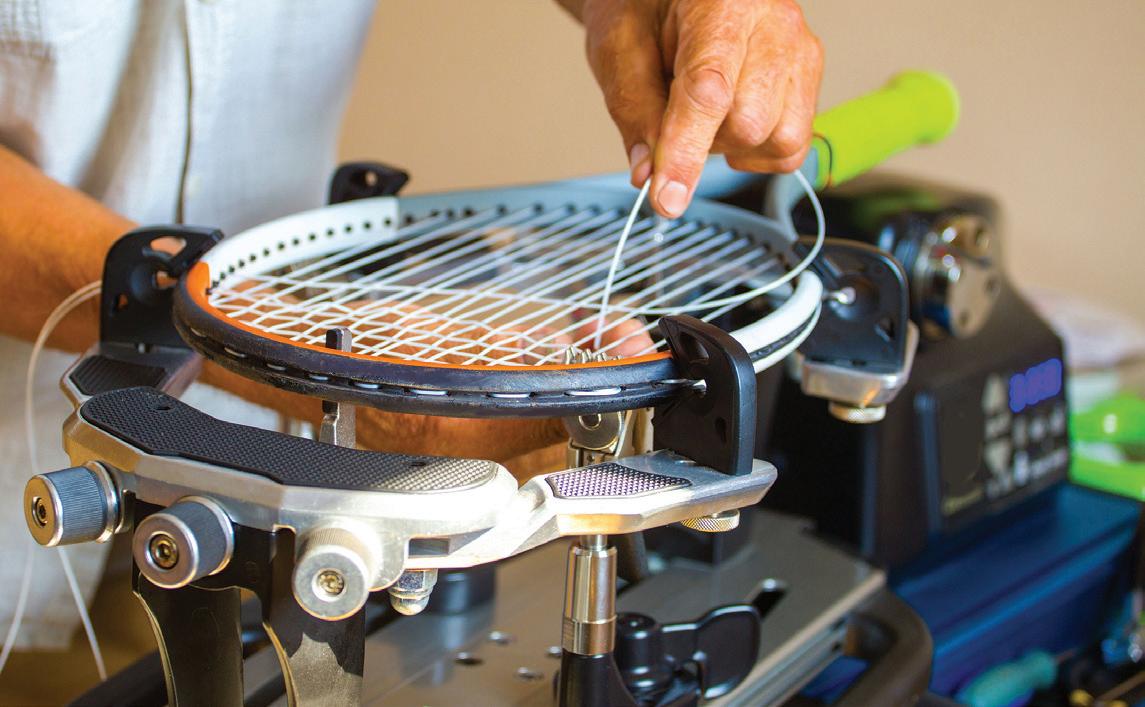
quets is all you do or just one of many aspects of your business, the machine and those who operate it are vital to your success.
Start by analyzing your operation. Consider your volume, or more accurately, what your volume could
Once you have the machine functions/features figured out, it is likely that several models on the market will meet your needs. From that short list, you will then need to consider things like price, warranty and after-sales service to make the final choice.
The USRSA/RSI Guide to Stringing Machines chart on the following pages should give you a great place to start comparing machines. Whatever you decide, make sure you put your investment to good use. Hire and train good technicians and market your services. It will pay big dividends.
Alpha • 800-922-9024 • www.alphatennis.com Pioneer DC Plus Gravity
Babolat • 877-316-9435 • www.babolat.com
Dunlop • 888-215-1530 • www.dunlopsports.com Stringing Machine 2.0 Linear Gripper
GAMMA Sports • 800-333-0337 • www.gammasports.com 5003
HEAD • 1-800-289-7366 option 2 •head.com
HEAD TE 3600 Stringing Machine
Klipper USA • 800-522-5547 • www.klipperusa.com
Klippermate
Klippermate Badminton
Stringway • 800-922-9024 • www.stringway.com
ML100 - O92 - TH+TH18
ML100con - O92 - TH+TH18
ML100 - O92 - T92
- O92 -
Tourna • 800-554-3707 • www.uniquesports.com
Diablo/NoseconeRotationalTensioner
Foot Pedal Tension Activator Self-Calibrating Knob/Dial Tension Setting Clamping LED/LCD Tension Display Multilingual Touch Screen Display Fixed Clampson GlideBars Flying Clamps Dual Swivel Double Action Fixed DualSwivel Single Action Fixed 360-Degree Clampson GlideBars DiamondDustorTng. Carbide Clamps ToolTrayCoverIncluded Extra Features Cover Available StringMeasurerBuilt-InRulerReelRack 50-75 lbs.Over75 lbs. Weight StartingClampDiagonalCutters Needle Nose Pliers Awl Pounds& Kilos Tension Manual Calibration Adjustable Diamond orTungCar. Tension HeadGrip Plus/Minus Touchpad TensionSet FullKeypad Tension Setting KnotTensioningRemovableElectric Tensioner Unit Automated Base Release Clamps NoTool Neededto Adjust Clamps Racquet Stand Cabinet With Drawers Under50 lbs. Tools Included FlyingClampAssemblyInstructions/Video Owners Manual/VideoGuidingAwlBent-NosePliersAssemblyToolsNotes
1


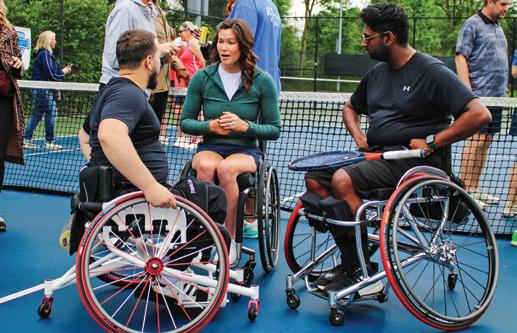
As we celebrate 50 years of wheelchair tennis in 2026, we honor the many people and organizations throughout the USTA Sections that continue to inspire and push limits, making the sport truly accessible to all.
Compiled by Judy Leand
When Aki Wolfson, director of tennis and programming at Commonpoint Tennis & Athletic Center at Alley Pond in Queens, N.Y., was first getting into coaching wheelchair tennis, she watched a player fall out of his wheelchair on court during a local tournament. “My instinct was to run over and help him,” she says. Instead, Wolfson’s mentor, Jana Hunsaker—a preeminent wheelchair tennis advocate—grabbed her arm and stopped her. “Jana said, ‘He knows how to get back on,’” Wolfson recalls. “Sure enough, he pulled himself back into his chair and continued the match without hesitation. At that moment, I began to understand the tremendous independence these athletes have developed.”
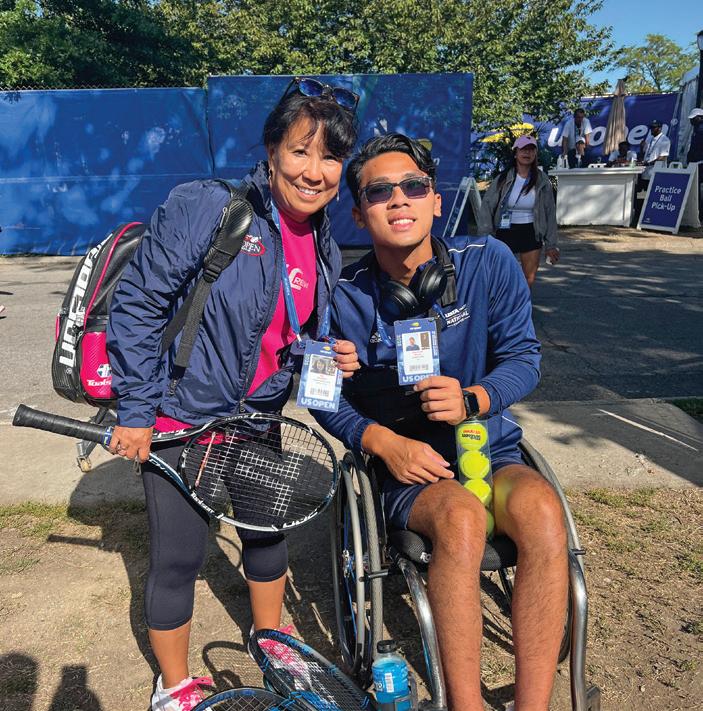
That moment has informed Wolfson’s approach to coaching wheelchair tennis for more than two decades. Over the years she has guided many nationally-ranked players—including Max Wong, who was part of the American contingent that captured the junior wheelchair
championship at the World Team Cup in 2024. She has also taught many who are at a crossroads in their lives.
Watching these transformations keeps Wolfson motivated to continue coaching wheelchair tennis and has also affirmed her belief that tennis is not just a sport; it’s medicine. “I’ve seen the game completely change the trajectory of people’s lives,” she says.
—Scott Sode
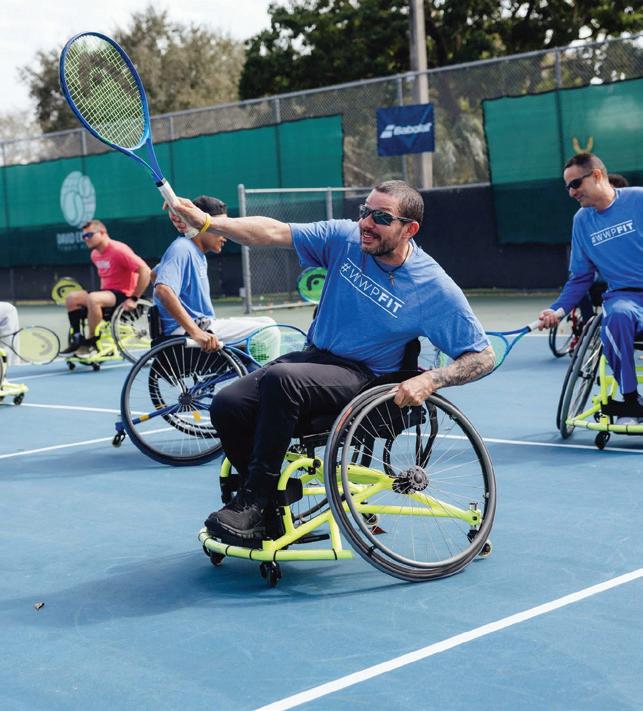
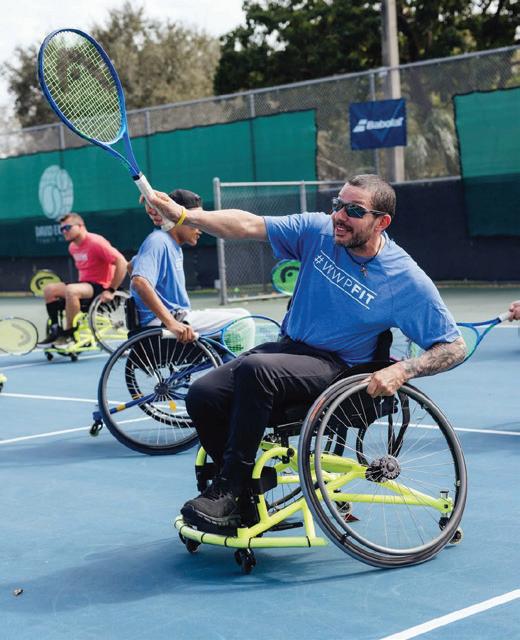
Earlier this year, USTA Florida hosted a Wheelchair Tennis Clinic in partnership with the Wounded Warrior Project. The clinic took place at Continental Tennis Center in Miami (a David Ensignia Tennis Academy-managed facility) and brought together wounded warriors, coaches and community leaders through the power of adaptive tennis.
A group of wounded warriors participated in the clinic, many experiencing wheelchair tennis in a structured setting for the first time. Longtime tennis coach and volunteer Jim Tierney led the on-court
instruction, guiding participants through the fundamentals of wheelchair tennis while emphasizing encouragement, patience and enjoyment of the game. He was joined by David Ensignia pro Bill Hannigan, whose support and hands-on involvement helped create a welcoming and positive environment for all participants.
The clinic served as a powerful reminder of tennis’s ability to bring people together, break down barriers, and create lasting impact. For the warriors, coaches and partners involved, it was truly a meaningful day that celebrated resilience, inclusion and the continued growth of adaptive tennis in Florida.
—Jaret Kappelman
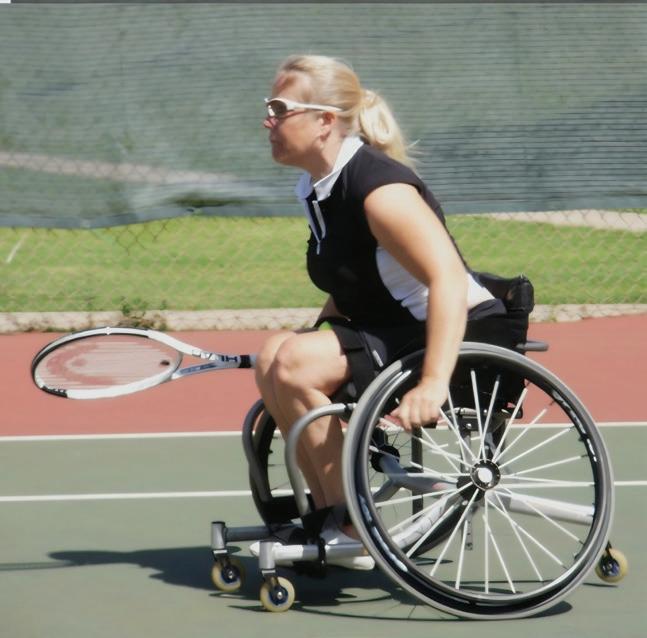
This past November, USTA Hawaii Pacific inducted Beth (Schleisman Arnoult) Montalvo, a distinguished retired American wheelchair tennis player, into its Hall of Fame, with the Outstanding Player Award. The honor recognized Beth’s significant contributions and remarkable career in the sport, particularly her impactful presence on the international stage.
Montalvo, a resident of Kahului, Maui, Hawaii, became a prominent figure in wheelchair tennis after a life-altering ATV 4-wheeler accident in 1991. Despite the challenges, she turned professional in 1998 and retired in 2008, leaving behind a legacy of resilience and athletic excellence.
Her impressive list of achievements include: a gold medal for doubles and a silver medal for singles at the 2007 Parapan American Games in Rio de Janeiro; a top-eight finish in the world as a quarterfinalist in women’s singles at the 2008 Beijing Paralympics; a fourth-place finish in women’s doubles at the 2008 Beijing Paralympics with partner Kaitlyn Verfuerth; a No. 1 U.S. singles ranking in 2004 and an international ranking of No. 10 in 2006; quarterfinalist in singles at the US Open in 2006 and 2007; and finalist in doubles at the US Open in 2005.
Montalvo’s journey exemplifies dedication, sportsmanship and the spirit of overcoming adversity. Her induction into the USTA Hawaii Pacific Section Hall of Fame celebrates not only her athletic prowess but also her inspiring influence on the tennis community.
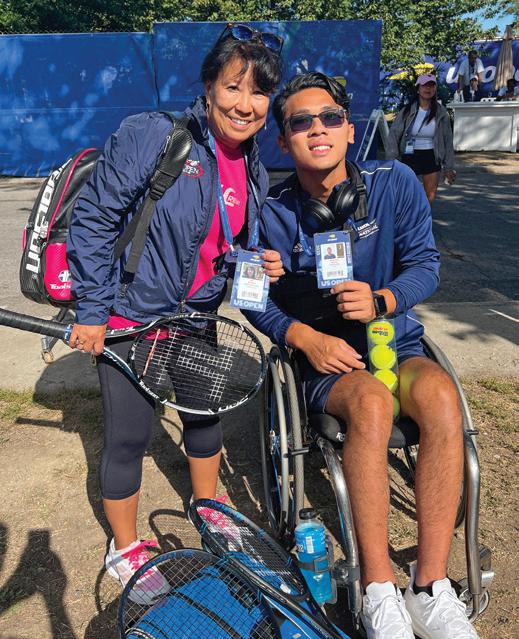
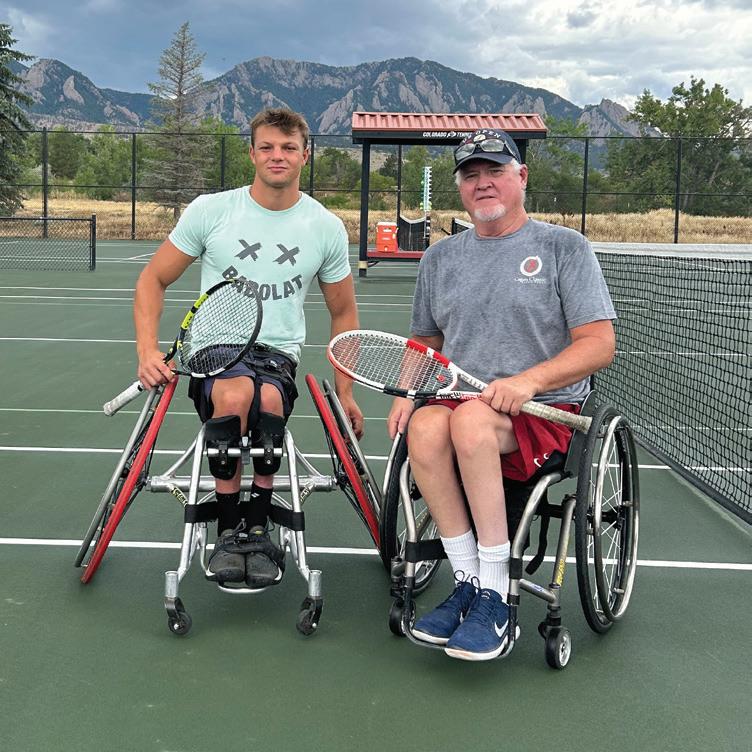
When Scott Douglas won the bronze medal in men’s doubles at the 2000 Paralympic Games in Sydney, he threw his racquets into the stands and officially retired. While this marked the end of his competitive career, he was just gearing up for his next chapter as a respected teacher and coach with more than 20 published peer-reviewed journal articles related to coaching expertise, coach development in parasport and
perceptions of disability.
For the past 15 years, Douglas (at right in photo) has been a professor at the University of Northern Colorado in the department of Kinesiology, Nutrition and Dietetics (Sport and Exercise Science), where he also coordinates the Sport Coaching Minor and Masters programs.
Douglas was introduced to tennis in 1984 when he was a student at the University of Utah, where he experienced a spinal cord injury from a skiing accident. “There was a guy on the local basketball team, the ‘Wheelin’ Utes,’ who rolled into my hospital room and told me about wheelchair basketball and wheelchair tennis,” Douglas says. “After I left the hospital, I attended a free wheelchair tennis clinic at a local club in Salt Lake City.” He soon became hooked.
Douglas’ competitive spirit, work ethic and natural ability led to a very successful career, including a No. 1 world ranking in doubles and No. 6 in singles. In the midst of his competitive career, he developed a passion for coaching due to “a yearning to learn everything I could about the game to become a better player myself.” He earned his P1 Level USPTA certification in 1992—the first coach in a wheelchair to earn that level of certification—and launched a successful
coaching career. Although Douglas retired from coaching in 2024, he continues to consult and offer sport psychology advice to players.
—Rachel Morley
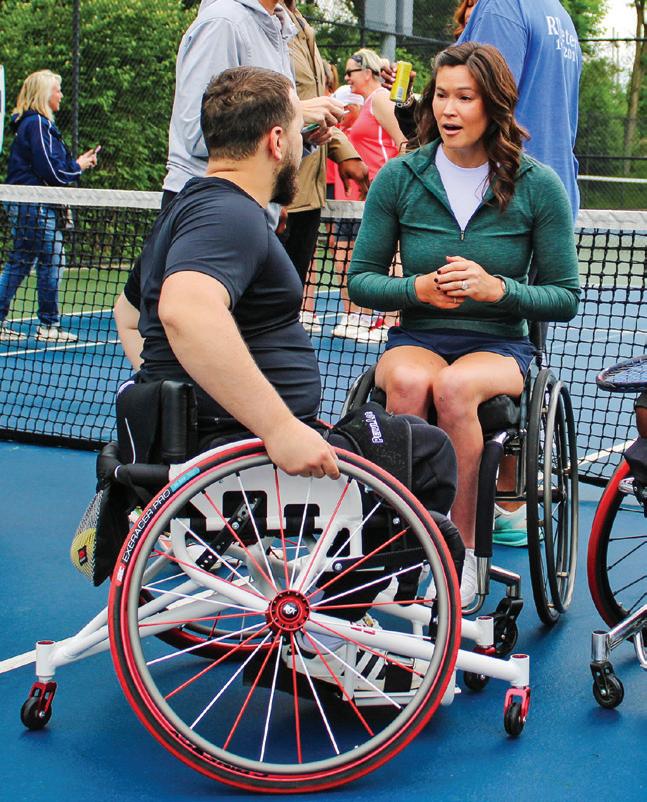
What’s better than a sports crossover that brings two powerhouse athletes together for one incredible goal? Not much.
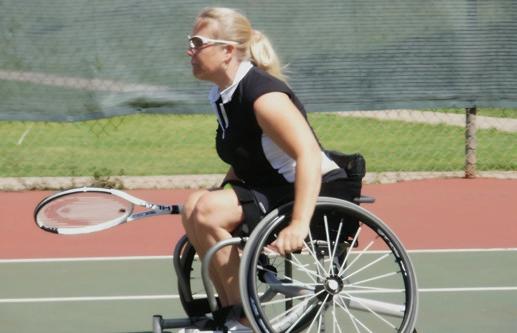
Highland Park Tennis Club (HPTC) members, some of Pittsburgh’s top wheelchair tennis players, along with local community members came together to celebrate the 50th Anniversary of Wheelchair Tennis and National Tennis Month in a star-studded tennis event. Threetime Paralympian and Wimbledon Champion Dana Mathewson joined forces with two-time Pro Bowler for the Pittsburgh Steelers, Ryan Shazier, to support players during a highenergy Triples Tennis Event benefitting both HPTC and the Ryan Shazier Fund for Spinal Rehabilitation.
A few raindrops couldn’t dampen the excitement on the courts, which drew nearly 20 enthusiastic participants competing for prizes like “best
dressed team” and “most points.” A special bonus included Mathewson staying long after the main event ended, generously coaching and sharing elite-level tips during a small group session with HPTC’s wheelchair tennis players.
For HPTC, this collaboration comes during a monumental milestone. The club is proudly celebrating 25 years of providing free tennis clinics to the Pittsburgh community. Driven by a core mission to promote health, friendship and purpose, HPTC ensures that tennis truly is a sport for a lifetime. Its thriving wheelchair tennis program stands as a shining example of this commitment to adaptive sports and a more inclusive community. —Katie Miness
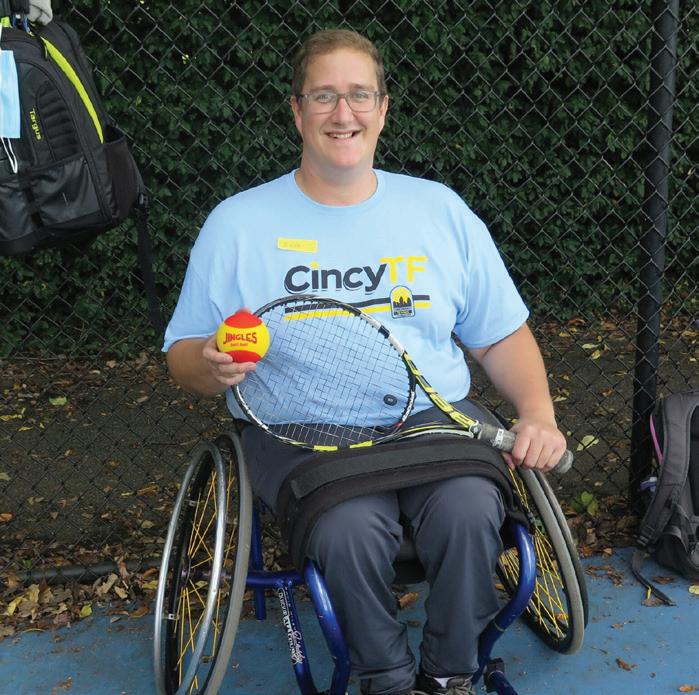
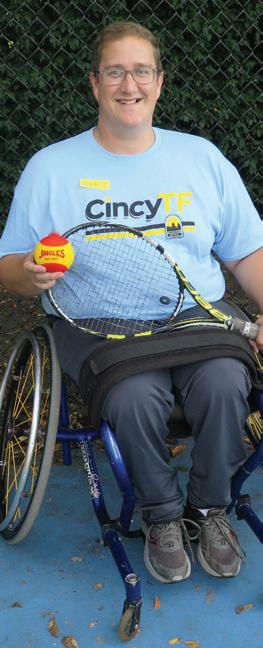
Currently serving as the director of wheelchair and adaptive tennis for the Cincinnati Tennis Foundation, Zack Sikora has helped create a welcoming community. Off the court, he created and hosts a podcast, “Rolling Forward with Zack Sikora,” to show people what’s possible in both sports and life. In 2024, he received the Bender Family Wheelchair Performance Award from USTA Midwest’s Ohio Valley District. Sikora, who was born with spina
bifida, was on the junior national USTA wheelchair tennis team and became the No. 1 junior wheelchair tennis player in the United States. In 2019, he helped the Cincinnati Tennis Foundation develop wheelchair tennis clinics for adults. The program later expanded to juniors, and adaptive clinics followed.
Through programming, Sikora has helped players of all abilities grow their independence. He fosters a positive environment and introduces players to the physical, mental and emotional health benefits of tennis. He shows players the camaraderie of the sport—something that is often not available for kids with differing needs—and he provides relentless support to make tennis accessible to everyone. —Molly Kinnick
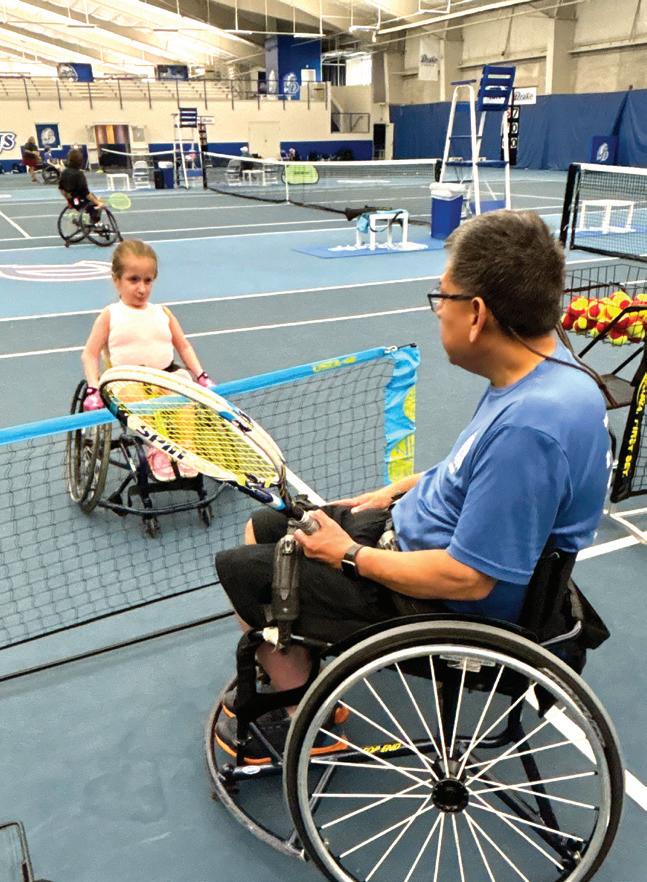
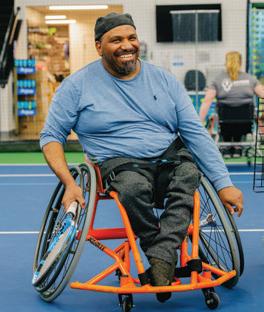
Bob Juarez’s entire life has been about service. So, it’s only natural that tennis is now a part of it. After a career in the military, Juarez served his community as a firefighter. He suffered a spinal cord injury on the job, resulting in him needing to use a wheelchair. But that has hardly slowed him down.
Now his passion is to provide recreational activities for others in wheelchairs—including organizing the Quad Cities Adaptive Sports Association Wheelchair Tennis Tournament, which took place in June in Moline, Ill. The 2026 iteration celebrated the 50th year of the invention of wheelchair tennis, and the event remains the only USTA-sanctioned wheelchair tennis tournament in USTA Iowa.
“I knew I wanted to help other people in a different way after my injury,” says Juarez. “I found out that with sports, I was able to do that.”
Interestingly, even though he was very active, Juarez didn’t play tennis before his injury. After the injury, John Terpkosh, the USTA Missouri Valley’s senior manager of Tennis Venue Services, introduced him to wheelchair tennis. Less than three years later, Juarez and a few others founded the Quad Cities Area Adaptive Sports Association. They networked with various tennis clubs as well as parks and recreation departments to provide opportunities. In addition to the annual tennis tournament, the Quad Cities Area Adaptive Sports Association offers wheelchair tennis opportunities such as summer play, a local league and junior clinics.
—David Smale
Founded by Thomas Dodd and serving communities primarily throughout Southeastern Massachusetts and Rhode Island, the South Coast Wheelchair Tennis Foundation is celebrating its 10th anniversary in 2026. Since its founding, more than 200 players have taken part in the organization’s programs, including approximately 55 participants in the past year alone.
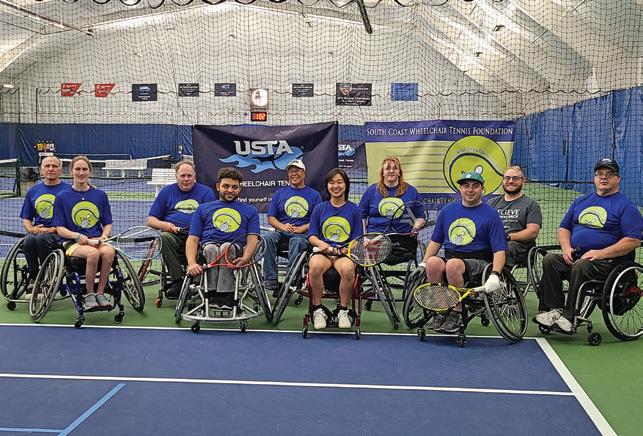
“It’s hard to put into perspective that it’s been 10 years,” Dodd says. “It feels like it went by quickly, but when you look back, we’ve accomplished a lot with a relatively small group.”
After running wheelchair tennis clinics on his own for nearly five years, Dodd formalized the effort by establishing South Coast and becoming an official USTA Community Tennis Association, helping expand its reach through grants, volunteers and additional resources. Today, the organization offers weekly play sessions, clinics and development opportunities for wheelchair tennis players of all experience levels.
As the organization has grown, so has Dodd’s leadership within the wheelchair tennis community. He serves on the USTA National Wheelchair Tennis Committee and volunteers with several USTA New England and national initiatives focused on expanding access to the sport, supporting player development and creating new opportunities for wheelchair athletes.
Lately, Dodd’s focus has shifted toward coaching and player development. He continues to invest in his own education through USTA Coaching tools, certifications and webinars while leading many of the organization’s clinics and instructional programs. Looking ahead, South Coast’s annual tournament, which will take place at the Emilson YMCA in Hanover, Mass., in August, will become the organization’s first-ever USTA Level 4 sanctioned wheelchair tennis event, giving competitors the opportunity to earn national ranking points without having to travel outside of New England.
—James Maimonis
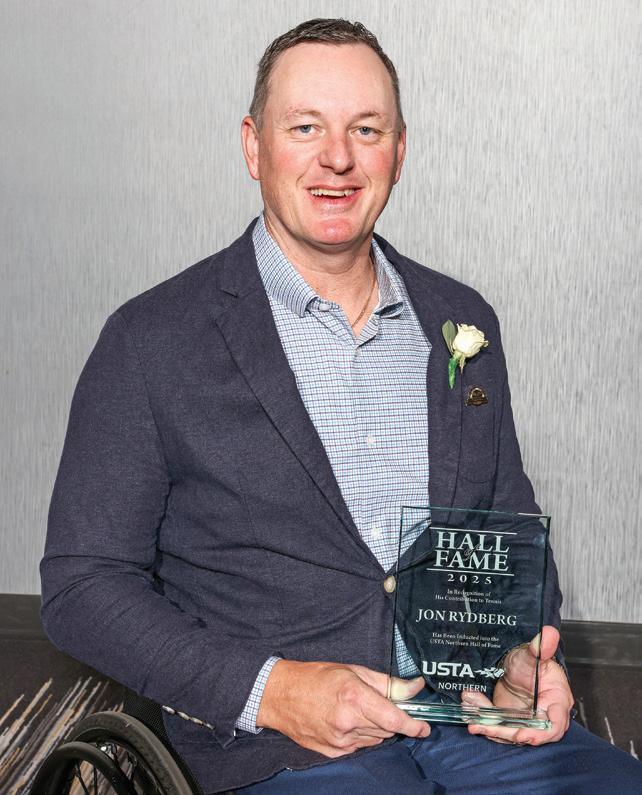
A native of Pine City, Minn., Jon Rydberg is an accomplished international wheelchair tennis player and coach whose career spans over two decades. He was the top-ranked wheelchair tennis player in the U.S. and ranked 12th in the world during his time on tour. He made his Paralympic Games debut as a 26-year-old in Athens, Greece, in 2004, followed by Beijing in 2008, London in 2012, and the Rio Paralympic Games in 2016.
Rydberg’s full circle moment is now being a national coach, where he delivers the game of tennis to communities around the world, including the USTA Northern Section. His coaching highlights range from being the USTA National Coach for all Team USA players to being the head tennis coach at East Ridge High School in Woodbury, Minn. His expert knowledge continues to grow the wheelchair and adaptive tennis space.
“Tennis can be a frustrating sport at times, but the process is what’s great,” says Rydberg. “The fact that you can play anyone, not just other wheelchair players, is a huge bonus we have that other sports cannot replicate. On top of that, we can play tennis forever! So, enjoy the great shots, and learn from the bad ones.”
The 2026 USTA Northern California Wheelchair Tennis All-Comers Camp took place in April at the Spalding G Wathen Tennis Center at California State University–Fresno. The twoday camp welcomed six juniors and
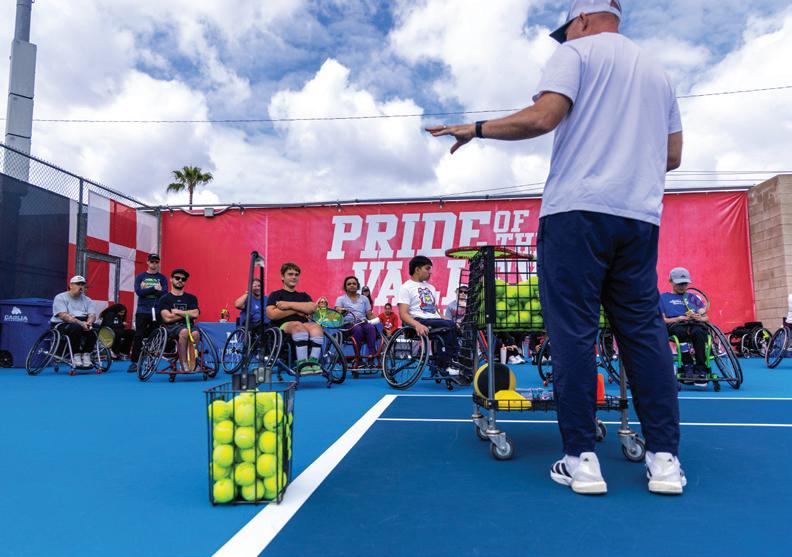
12 adults, ranging from beginners to experienced players. Led by USTA National Coaches John Devorss and Brendan Fitzpatrick, the event left a strong impression on Fresno State Recreation Therapy students, who had the opportunity to see the strength, skill and determination involved in adaptive tennis firsthand.
“Tennis itself is not an easy sport,” noted Darian Hill, a student in the Recreation Therapy program, “and the fact that all the participants are doing this while in a wheelchair, I think is just out of this world awesome!”
Added fellow student Daylene Salas Vega, “This is one of many examples of adapted sports. Tennis takes a lot of strength, a lot of endurance, a lot of hand-eye coordination, and it’s really impressive to see that all [these participants] want to do is get a chance to play.”
Participants engaged in match play, drills, technical development and strategic training designed to help improve their wheelchair tennis skills and elevate their overall
game. With the generous support from Valley Children’s Adaptive Sports and the Fresno State Women’s Tennis coaching and team staff, the Northern California All-Comers camp was a tremendous success.
—Christy Perez
An adaptive tennis initiative continues to gain momentum in the Puget Sound region, thanks to a partnership between USTA Pacific Northwest and Access Tennis Seattle (ATS). Founded by Anthony Anderson, Johann Tan and Dan James, ATS was created to harness the power of tennis as a vehicle for connection, empowerment and inclusion for individuals with disabilities.
“We’re committed to providing programming for anyone who wants to play,” says James. “Whether someone is discovering tennis for the first time or reconnecting with the sport, we want them to feel like they belong.”
ATS runs programming at three area tennis centers: Galbraith Tennis Center in Tacoma through
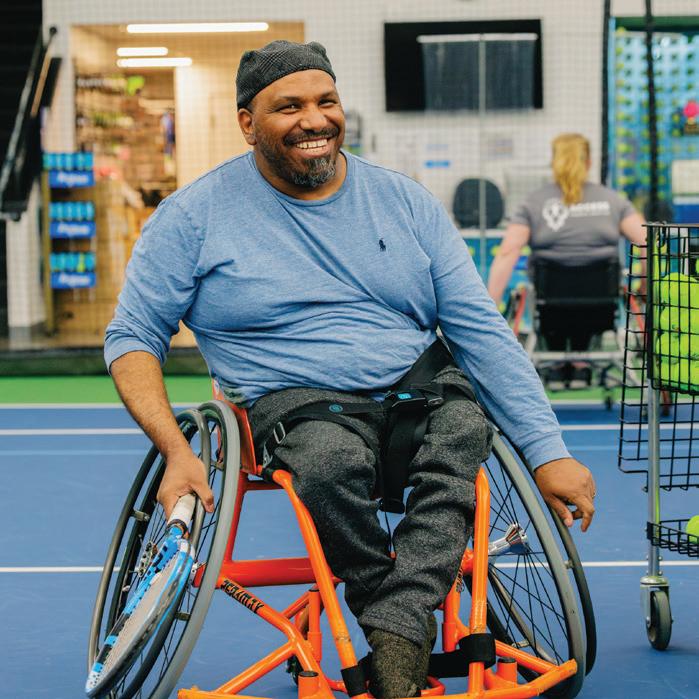
a partnership with USTA PNW, along with additional programming at Robinswood Tennis Center in Bellevue, and Tennis Center Sand Point in Seattle. One of the core goals of ATS is to reduce transportation barriers by ensuring no participant has to travel more than 30 minutes to attend a session.
What began as a shared vision between three passionate advocates has become a growing movement—one that’s redefining what access to tennis can look like. As ATS and USTA PNW continue working together to expand opportunities for adaptive athletes, the message is clear: Everyone deserves a place on the court.
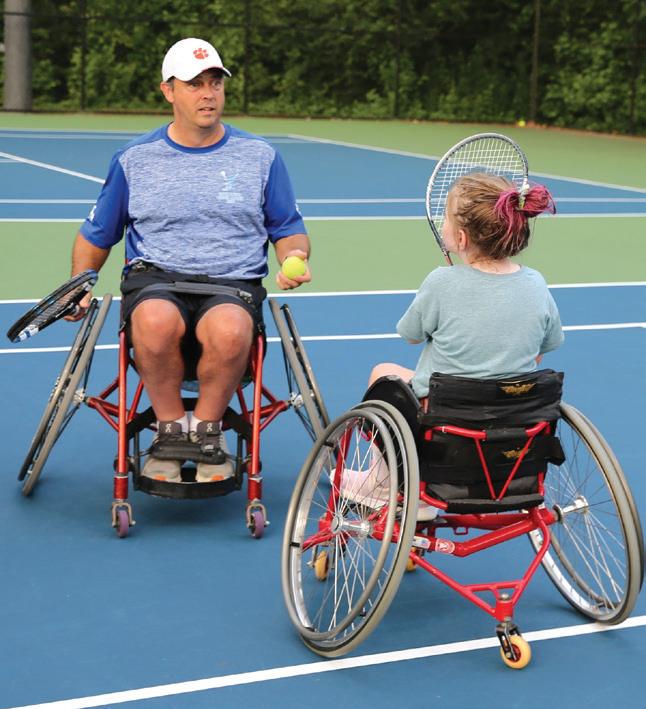
In 2010, Rob Popelka’s doctors discovered a tumor on his spinal cord, resulting in permanent paralysis. During his rehabilitation, he discovered wheelchair tennis, and now, as a member of the USTA Southern Wheelchair Tennis Committee, he has been thrilled to promote wheelchair tennis this year, the 50th anniversary of the sport’s invention.
In 2025, Popelka received the USTA Southern Wheelchair Excellence Award, and he has become a prominent resource in the section. His accomplishments include starting

a Facebook page called Wheelchair Tennis Atlanta, which became a hub for players and volunteers, and he has written grants to purchase new chairs that he loans out to others. Popelka also helped launch the BlazeSports America Wheelchair Tennis program in Atlanta, and has served as a coach for the last six years. Additionally, he works with the Shepherd Center wheelchair tennis team in Atlanta.
“Rob has been much more than a coach to BlazeSports; he has been a true partner in building our Wheelchair Tennis program. From day one, he has believed in what this program could be and has poured his time, expertise and heart into helping it grow,” says BlazeSports America Executive Director Dawn Churi. “He cares deeply about every athlete, about growing opportunities in the sport and about the future of wheelchair tennis.” —Rhiannon Potkey
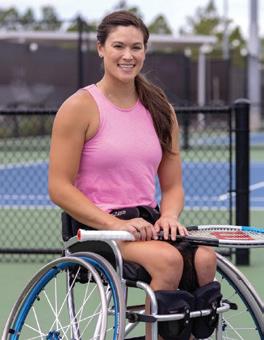
Dana Mathewson is one of the most influential figures in wheelchair tennis history: a former American No. 1 women’s player, Grand Slam doubles
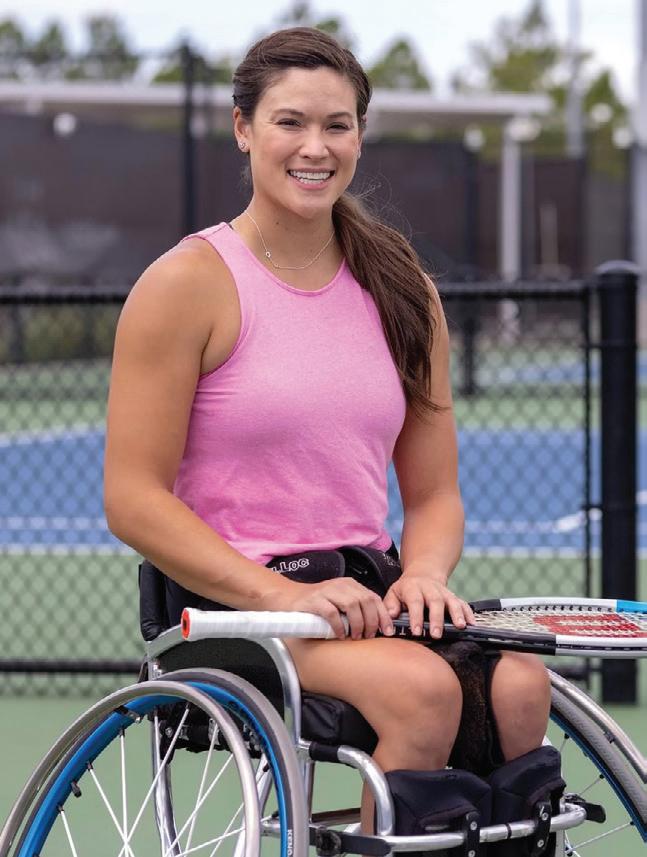
champion, three-time Paralympian, and global ambassador for the sport. But her impact on wheelchair and adaptive tennis transcends rankings and trophies.
At age 10, Mathewson was diagnosed with transverse myelitis, a rare neurological disease that left her partially paraplegic. At 13, she picked up her first tennis racquet, and has since credited tennis as “that pivotal piece” to figuring out her identity.
Mathewson now serves as a coach, hitter and mentor at the USTA National Campus in Orlando, has been involved in several USTA Coaching workshops, and currently sits on the USTA’s Elite Athlete Committee. But what matters most to her today is the legacy she builds for the next generation of wheelchair and adaptive athletes, especially among young girls entering the sport. She hopes to be a role model and source of inspiration for junior athletes.
“There’s not a lot of women in wheelchair tennis—and wheelchair sports in general—for young girls to look up to,” Mathewson says. “I remember when I was first starting, there were a few [women wheelchair players] in tennis that changed everything for me. Karin Korb was a big one, and Sharon Clark. They were the best players in wheelchair tennis for our country at the time. And they were at that first camp that I ever went to in San Diego where I picked up a racquet for the first time.”
She adds, “If I could inspire a handful of girls, that means more to me than if you were to say I could win another Grand Slam.” —Riley Shear
Dr. Barry Wortham’s dedication to Texas tennis is deeply rooted in the San Antonio community, where he has been a steady advocate for
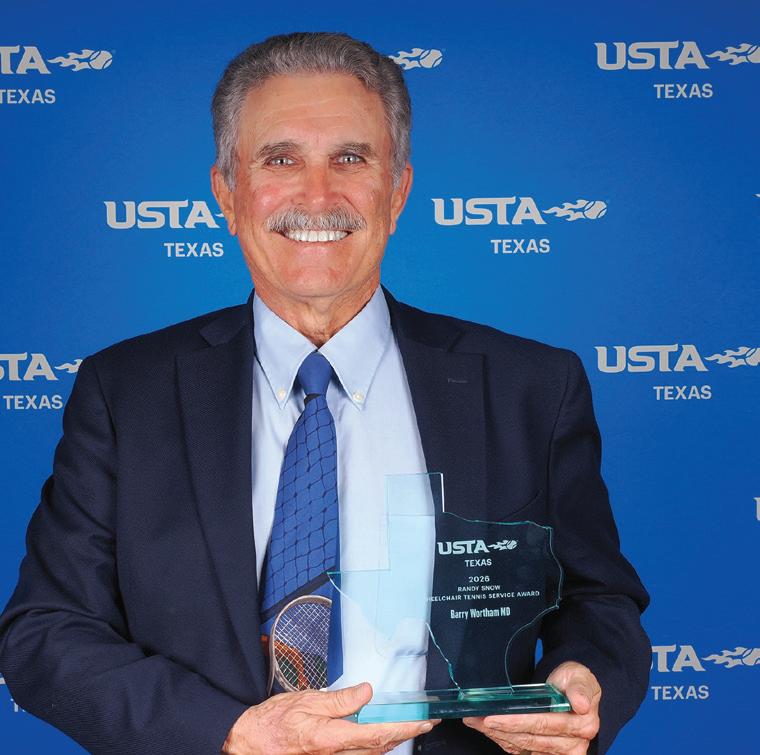
inclusion. He has spent the better part of two decades ensuring that the physical and social boundaries of the sport are replaced by an open invitation to compete.
While many know him through his service on the San Antonio Tennis Association board or his position on the USTA Texas Wheelchair Committee, his most profound impact is found at the grassroots level. As a central figure in the South Texas Regional Adaptive & Para Sports (STRAPS) program at Morgan’s Wonderland, he has been instrumental in implementing year-round opportunities for wheelchair athletes to expand their horizons, develop their skills and find a community.
In February 2026, he won the USTA Texas Randy Snow Wheelchair Tennis Service Award. Much like the award’s namesake, Wortham understands that the sport’s future depends on creating sustainable pathways for players of all abilities.
“As a U.S. Army Medical Corps veteran and healthcare professional by trade, Dr. Wortham is incredibly passionate about using tennis as a vehicle for improving the lives of wheelchair athletes and making the ‘World’s Healthiest Sport’ accessible to everybody,” says Cindy Benzon, USTA Texas Wheelchair Tennis Coordinator.




John Embree, RSPA Interim CEO
As you are reading this, it will have been more than two months since I am “back in the saddle” at the RSPA. What a whirlwind it has been! I was flattered that the RSPA Board of Directors asked me to return on an interim basis. I am committed to making a difference.
I want to sincerely thank those of you who have contacted me since coming back. It has been very gratifying and motivating to hear from so many who are glad that I have agreed to take on this responsibility. My commitment to those who reached out and to all of you in our association and within the tennis industry at large is that I will do my absolute best to execute the BOD’s vision for change that can sustain the health of our association for years to come. I hope I can count on you for support as well. We have a lot of work to do and I am optimistic it will result in an association that supports you well into the future. In the time that I have been here, I have received a ton of feedback about
a concern that the RSPA has lost its way and that our emphasis on so many racquet sports is detracting from our commitment to tennis. I can understand how people might feel that way.
will be the driver for your business and for this association.

“Rest assured, tennis is at the core of what we all do”
“Rest assured, tennis is at the core of what we all do.”
Rest assured, tennis is at the core of what we all do. We all got into the industry because of our lifelong passion for the sport. It is part of our very fabric, our soul. We live and breathe tennis every day. It is essential to have the expertise to deliver pickleball, padel, platform tennis and squash because that is what your customers want. However, tennis is and always

My ask of everyone is that when you speak to fellow members and they express concern about our direction, let them know that tennis is who we are. We cannot take our eyes off the ball. And for those who would prefer that we go back to our original name, that horse has left the barn. Pivoting is not an option. It is also imperative that we grow our top line while shaving costs. It is just that simple. Membership is our largest revenue line item, which means we must focus on attracting new members, retaining those who are already in the RSPA family and reconnecting with those who may have walked away for a period of time. We want them back!
On the expense side, we can no longer do things that are “nice.” Just because we have done it before does not mean we should keep doing it. If it is not essential to our business, that item will likely be eliminated. That might not make a lot of people happy, but I cannot help that. I was asked to make tough decisions, and they won’t win me any popularity contests.
For example, we must address our technology so that the customer experience is far better than it has been in the past. We are reengineering our professional development pathway. Our education content must be updated and revamped. We have to make it easier for people to come into the association, especially those who have been trained or who have worked under RSPA Master Professionals and directors of tennis. Our headquarters is in need of some TLC, which we will address over the

coming months. These are just some of the many ways we are focusing on improving the member experience and I remain focused on ensuring that the association can live up to its mission long after I leave my post.
And we still have much to celebrate, as next September, we will commemorate our centenary. It’s a milestone that should and will be honored. It begs the question: what does the next 100 years look like for RSPA? The time is right to reboot and reconsider our place in the tennis ecosystem. It is incumbent on us to be bold, courageous and decisive. As I said, we cannot keep doing things as we have always done and expect different results. Isn’t that the definition of insanity?
The world has changed dramatically in the last few years and is changing almost daily with technology. If we are going to be relevant in the years to
come, we must evaluate what is working and what is not working and we must eliminate those functions that are not having a positive impact on our business.
Stay tuned as we go through this transition, as we are invested in listening to our membership and making the decisions that keep the association serving you for another century and beyond. As always, you are welcome to reach out to me with any comments or questions at john.embree@rspa.net. Your support of the RSPA is greatly appreciated. I hope we’ll see you in Dallas for the World Racquets Conference 2026 (WRC26).



Mark
Faber
| RSPA President & RSPA Elite Professional

As they say, “Everything is bigger in Texas,” and the RSPA is taking that personally.
The World Racquets Conference 2026 is rolling into the Dallas Omni Hotel September 20-23, and we are bringing everything with us: big education,
big networking, big celebrations and an experience so powerful it will have you questioning why you ever missed one of these before.
Buckle up, Dallas. We are just getting started.
Bigger alone is not what we are after. WRC26 is setting its sights on something far more exciting than big. We are going powerful.
Powerful education that sharpens your skills and sparks new ideas. Powerful recognition that puts your accomplishments in the spotlight where
they belong. Powerful networking that connects you with the most passionate, talented and forward-thinking professionals in the racquet sports world.
The Industry Is Changing
Here is a fact worth noting: at least 75% of facilities across the country are now offering more than one racquet sport. Tennis. Pickleball. Platform. Padel. The racquet sports landscape is expanding at a pace that is as exciting as it is exhilarating and the professionals leading that charge deserve a conference that keeps up.
Enter WRC26.
The RSPA has heard you loud and clear. This year’s conference is delivering educational content across our three biggest racquet sports—with our highest concentration in tennis, our core—alongside sessions focused on leadership and personal growth. Because we know that the best professionals in this industry never stop learning and we are here to fuel that fire in the best way possible.

This Will Be An Experience NOT an Obligation
Let’s be honest, nobody gets excited about sitting through a conference that feels like a checklist. The WRC is something entirely different and if you
have been before, you already know it.
WRC26 is a fully immersive experience designed to elevate every single person who walks through those doors. Whether you are a seasoned teaching professional who has seen it all, a club director juggling a million things at once, a program manager navigating the exciting world of multi-sport facilities or an emerging leader who is just getting started — there is a seat at this table with your name on it.
Every session, every connection and every moment has been thoughtfully designed to challenge you, inspire you and send you home ready to take on the world — or at the very least, your facility.
Professional development can sometimes feel like an obligation. Not here.
This year’s educational lineup is loaded with sessions that are relevant, dynamic and genuinely exciting, covering the full spectrum of what it means to be a racquet sports professional in 2026. Think of innovative coaching strategies for tennis, pickleball and padel. Think of smart business management and membership growth tactics. Think of leadership development that actually sticks.
These sessions are designed to genuinely move the needle in your career and you will feel the difference the moment you get home and put it all into action.
One of the most exciting features of WRC26: We are turning the spotlight directly on YOU and the incredible members of this community.
The conference will dedicate meaningful time to honoring and celebrating member accomplishments because great work deserves to be recognized loudly and proudly. If you have been putting in the work, growing your programs, elevating your facility and making racquet sports better for everyone around you, Dallas is where you get your moment.
Come ready to cheer for your colleagues and maybe even take a bow yourself.
Ask anyone who has attended a WRC what their favorite part was and more often than not, they will tell you it was not a session. It was the conversation over coffee between sessions. The late evening discussion that turned into a business idea. The connection made with a colleague from across the country that turned into a friendship for life.
WRC26 is packed with intentional, meaningful networking opportunities designed to bring the best of our industry
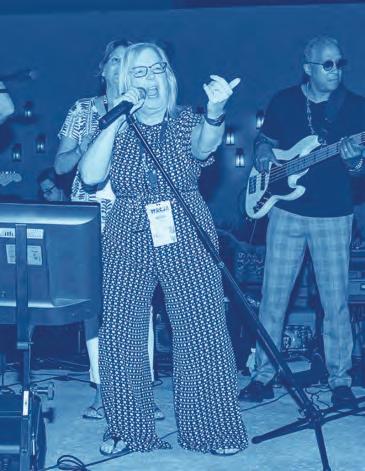
together in a genuine and energizing way. Because when racquet sports professionals connect, incredible things happen.
Our industry grows stronger when its people grow closer. And nobody does that better than this community.
This Is RSPA 2.0 — And the Best Is Yet to Come
WRC26 is bigger than an annual gathering. It is a statement, a declaration that the RSPA is moving forward with purpose, passion and an
unwavering commitment to the career professionals who make this industry extraordinary.
We are building RSPA 2.0 together — a bolder, stronger, more dynamic association built on growth, excellence and community. And WRC26 is where that vision truly comes to life.
The future of racquet sports is bright, exciting and full of possibilities. And it is being shaped by professionals just like you.
So Here Is the Deal — Be There.
No excuses. No FOMO. Just four incredible days in Dallas with the best community in racquet sports.
Come ready to learn something new. Come ready to celebrate something great. Come ready to meet someone who changes your perspective. And come ready to leave more inspired, more energized and more excited about this industry than ever before.
As the fight song of the NCAA Men’s National Team Tennis Champions school song says, “The Eyes of Texas are Upon You.” The RSPA knows that not just the state of Texas is watching, but the entire industry’s eyes are watching us as we deliver the World Racquets Conference 2026.
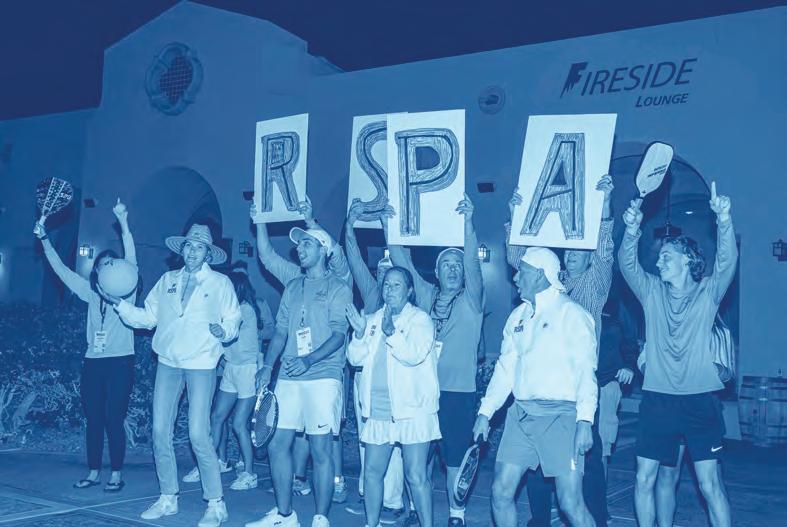
I look forward to seeing you there!


















Collin Brazan | RSPA Director of Marketing

Professional Development & Networking Opportunities
WRC26 in Dallas brings a packed schedule of professional development and networking across four thoughtfully designed days that will leave attendees with insights that are impactful and immediately actionable. Not ideas in the abstract, but approaches that have been tested, discussed and shared by peers who understand the day-
sional journey.
The value of the conference extends well beyond when the sessions end. We know that the conversations between them—in hallways or beside the court — often carry equal weight. A brief exchange in a hallway, a follow-up question after a session or an introduction to a new colleague can open the door to new ideas and new partnerships.
to-day demands of the racquet sports industry.
From Sunday through the end of Wednesday, the conference schedule reflects the reality that professional growth happens best in community.
WRC26 offers a comprehensive lineup of professional development sessions spanning coaching, leadership and operations. With on-court demonstrations and classroom discussions, attendees will get to move between application and understanding with ease. Whether refining technical skills, exploring new ways to lead teams or strengthening the business side of a facility, the schedule is built to support every part of the profes-
WRC26 is designed with that in mind, delivering an environment where those interactions are constant and where the profession continues to move forward through shared experience.
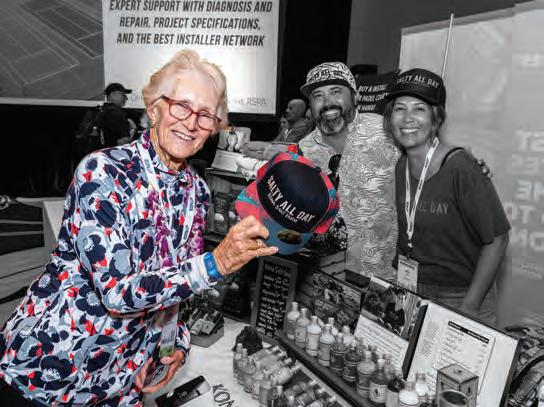
After the professional development schedule wraps on Sunday, our networking events kick off with one of the most interactive elements of the week, the Vendor Village. More than a trade show, it is a hands-on environment where you can engage directly with the brands shaping racquet sports.
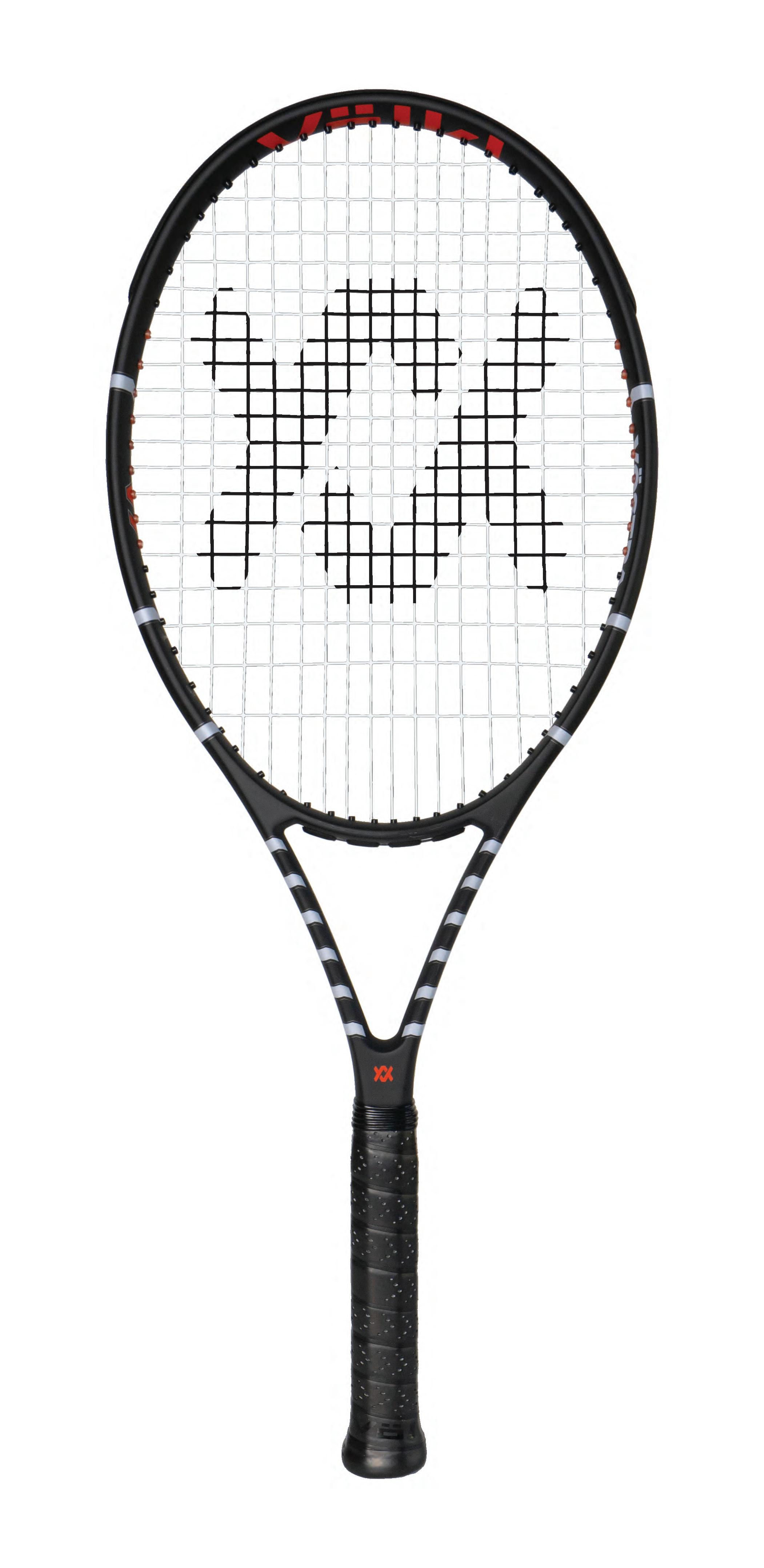
Attendees have the opportunity to explore equipment, test products and have meaningful conversations with industry partners and endorsees. This year, that experience expands with the addition of new partners such as Volkl Tennis and Centerline, along with a phenomenal space from Tennis, Pickleball and Padel Warehouse. The presence of brands like these will give professionals a chance to experience new products firsthand.

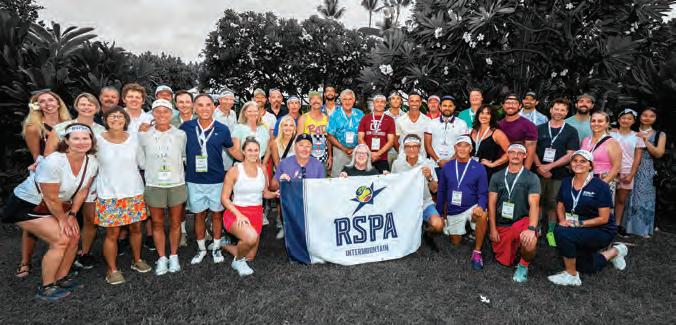
On Monday, join us as our opening session brings our conference theme, “Reach for the Stars: Shaping Your Professional Future” into focus and shows you how the professional development for the week will help you live into it. Later, the Feeding Contest brings our community together for competition, where the energy of the event naturally draws conversation and makes it a great setting for building connections across divisions.
WEDNESDAY WEDNESDAY

TUESDAY TUESDAY
Tuesday shifts into a more relaxed pace with the Networking Happy Hour. It allows professionals to reconnect, reflect on what they have learned and explore ideas with peers in a way that feels both structured and genuine.
The conference concludes on Wednesday evening with our greatest focus on community of the week. The Awards Ceremony highlights the contributions and achievements of professionals across our association. And afterwards, our much-requested Division Parties make a return in the evening to offer a more personal setting to connect
with professionals from your area. Your divisions will communicate the details of each party, allowing you to wrap the conference with relationships you can continue to foster when you return home.
The WRC26 schedule offers a shared experience that reflects how professionals grow in the real world: through continuous learning, through practice and through meaningful connection with others in the field.
As the RSPA approaches its 100th anniversary, this year’s conference serves as a reminder that the profession is shaped collectively. Each session attended, each conversation held and each relationship built becomes part of a larger movement forward.
Sportsfield Specialties, Inc. provides confidence and leadership in the manufacturing and sale of sports construction equipment for all levels. Let our sales team and industry partners assist you with the design, engineering, and installation of your next project. Our experience and expertise makes us the leader in sports construction equipment.


Introducing Sportsfield Specialties new line of PaDelhi™ Outdoor Panoramic & Indoor Full Panoramic Padel Court Systems proudly manufactured in the USA. Our Padel Court Systems feature an engineered design and user-friendly installation comprised of durable raw materials and high-quality manufacturing processes. Sportsfield’s PaDelhi™ Padel Court Systems incorporate everything needed for installation, including the structural posts with welded base plates, wire mesh frames, tempered glass panels, light posts/fixtures, posts/net, synthetic turf surfacing, and sand infill material.
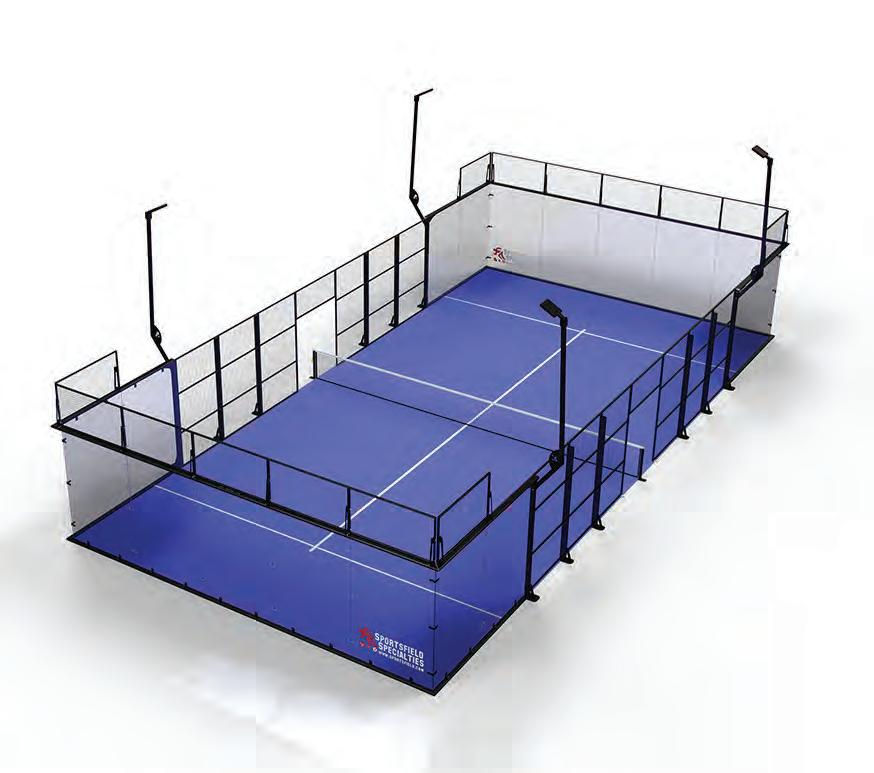

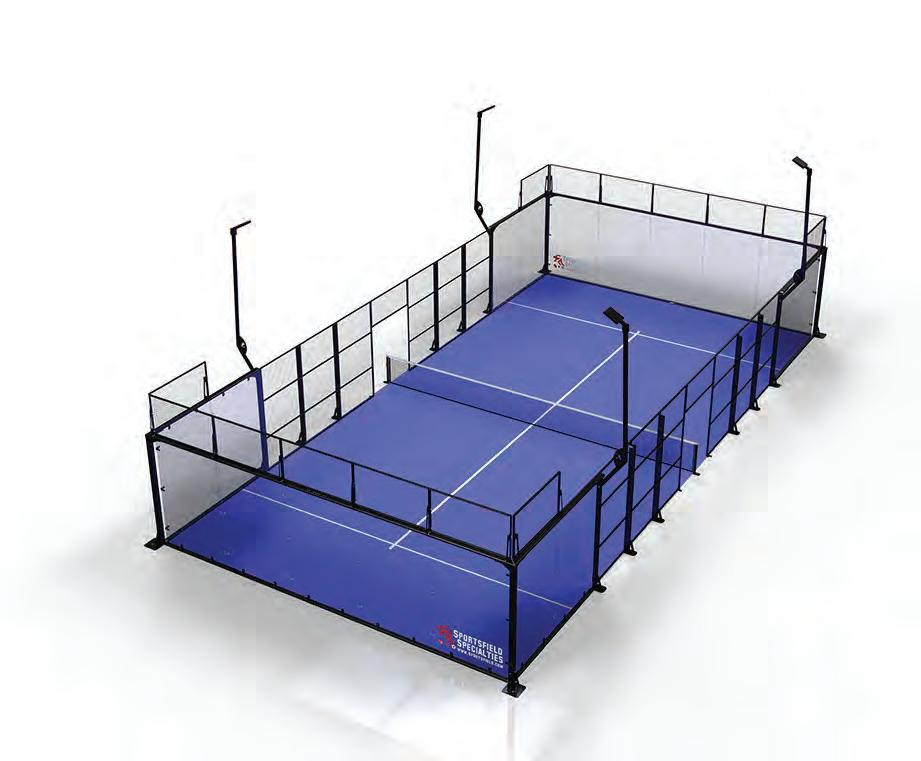


Andy Zingman | RSPA Member
Over the years, I have observed tennis academies and coaching systems across the world— from Florida, California and Texas to Argentina, Brazil, Europe, the Middle East and Mexico. Across these diverse tennis cultures, I have consistently observed the same training mistake in net-game development: players spend far too much time practicing volleys from unrealistically close positions near the net.
Typically, players stand only a few feet away from the net, exchange comfortable volleys, establish rhythm quickly and leave practice feeling confident about their net skills. Yet, during real matches, those same volleys often collapse under pressure.
The reason is simple: the practice environment does not reflect the actual demands of competition.
In live match play, players rarely begin points standing comfortably at the net waiting for an easy volley. The true challenge is not the volley itself. The challenge is the transition to the net.

In competitive tennis, net play is dynamic and connected to the rally that precedes it. A player typically strikes a groundstroke—whether flat, topspin or slice—and then transitions forward while the point is still developing.
That movement creates a rapid sequence of technical and physical demands:
• Changing efficiently from a groundstroke grip to a continental grip
• Moving forward while maintaining balance and body control
• Timing the split-step as the opponent makes contact
• Positioning the shoulders and body correctly during transition
• Executing the first volley under pressure while continuing forward momentum
• Recovering immediately for the next shot
When players only practice static volleys from close range, they bypass this entire chain of movement and decision-making.
As a result, they may improve isolated volley technique while failing to develop a functional net game that survives under real competitive conditions.
The
One of the most misunderstood aspects of net play is that the first volley is rarely easy.
At higher levels of tennis, opponents are trained to make approaching players uncomfortable through low-passing shots, dipping balls, heavy topspin and lobs. The incoming player must therefore manage balance, positioning, timing, and shot selection simultaneously.
This is why transition training matters so much.
A player who can consistently control the first volley earns the opportunity to move forward and finish points offensively. A player who cannot manage that transition phase will often lose control of the point before ever establishing offensive net position.
Once players become comfortable with these movement patterns, drills should evolve into live competitive scenarios.
A highly effective progression includes:
1. Transitioning forward from the baseline or mid-court
2. Managing a difficult first volley
Effective net training must recreate realistic match situations rather than isolated technical repetition.
Practices should begin farther back in the court—either from the baseline or from transitional positions inside the court. Players should approach behind realistic shots such as:
• Deep approach drives
• Transition slices
• Aggressive mid-court balls
• Swing volleys taken before the bounce

Train the Movement, Not Just the Volley
The biggest mistake in volley development is separating the volley from the movement that creates it.
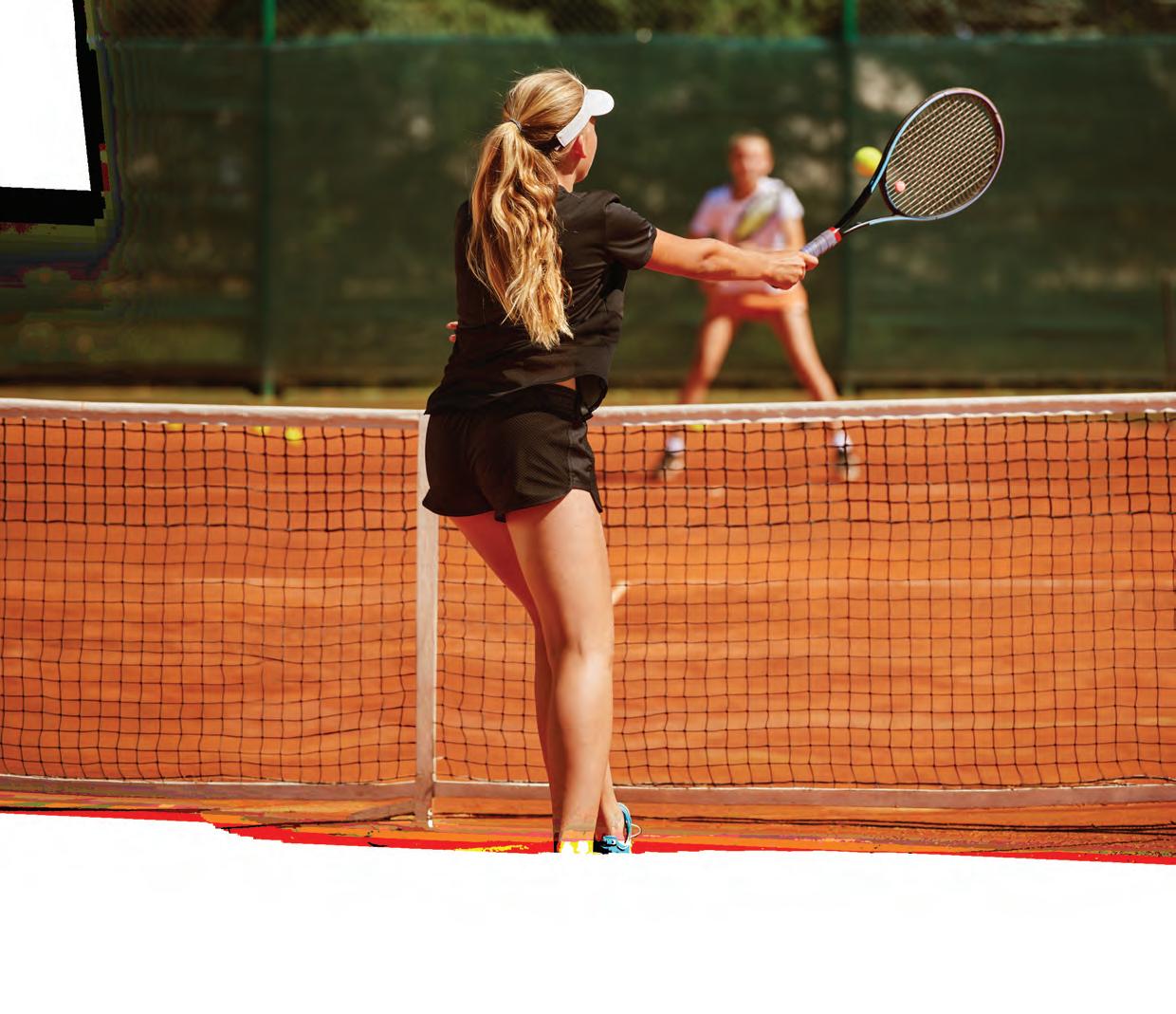
3. Advancing closer to the net
4. Finishing the point with an offensive volley or overhead
This type of training creates benefits for both players. While one player develops transition skills and first-volley control, the opponent simultaneously improves passing shots, defensive lobs and counterattack patterns.
Modern tennis requires versatility at the net. The swing volley, in particular, has become an increasingly important weapon for attacking floating transition balls before they bounce and for maintaining offensive momentum during forward movement.
True improvement happens when players learn to transition efficiently, control the difficult first volley, recover their positioning and earn the opportunity to finish points from close range.
Static volley exchanges may create the illusion of improvement, but real net play is built through movement, timing, balance and decision-making under pressure.
Stop training the volley as an isolated shot.
Start training the complete transition that makes effective net play possible.

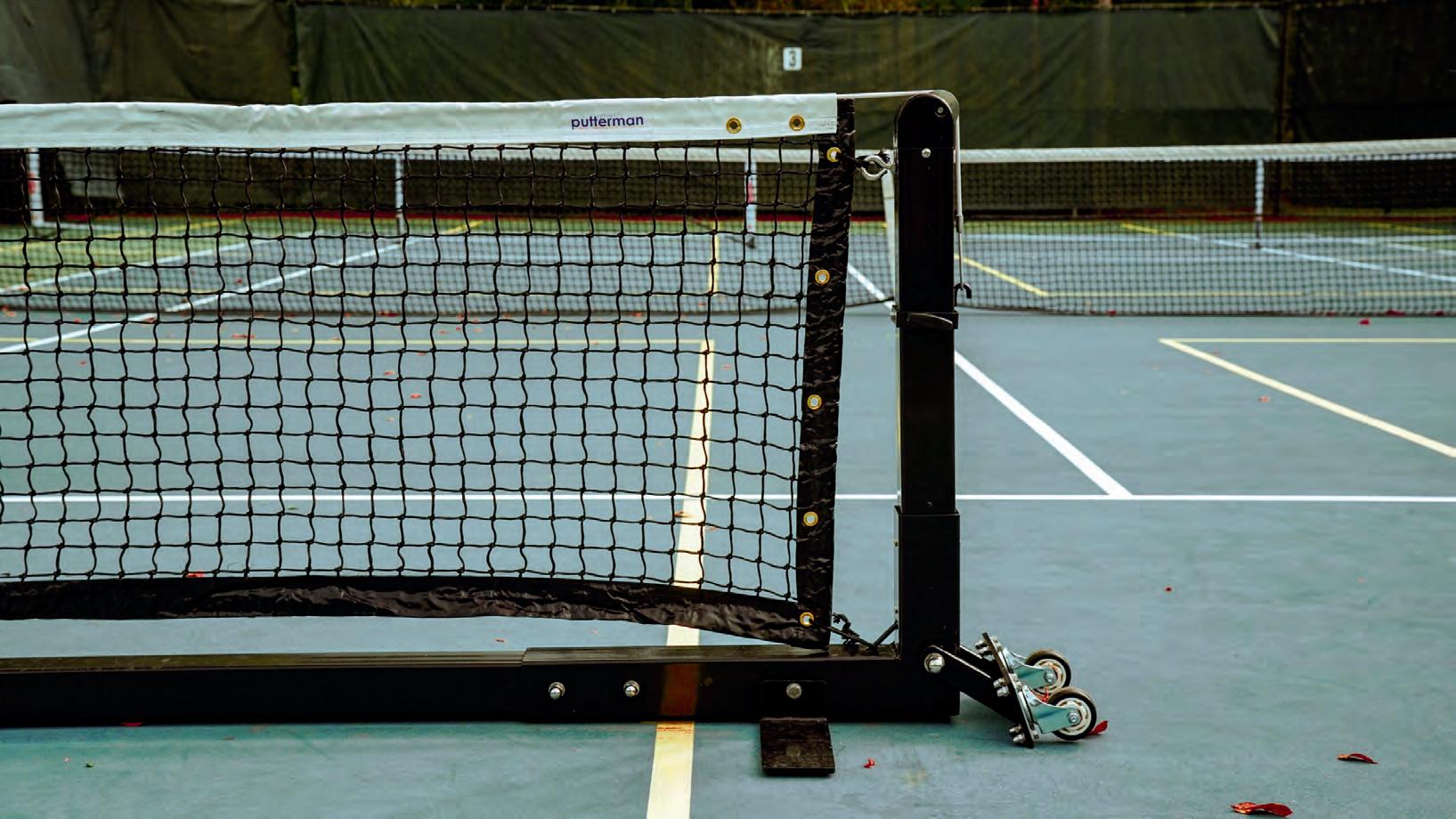



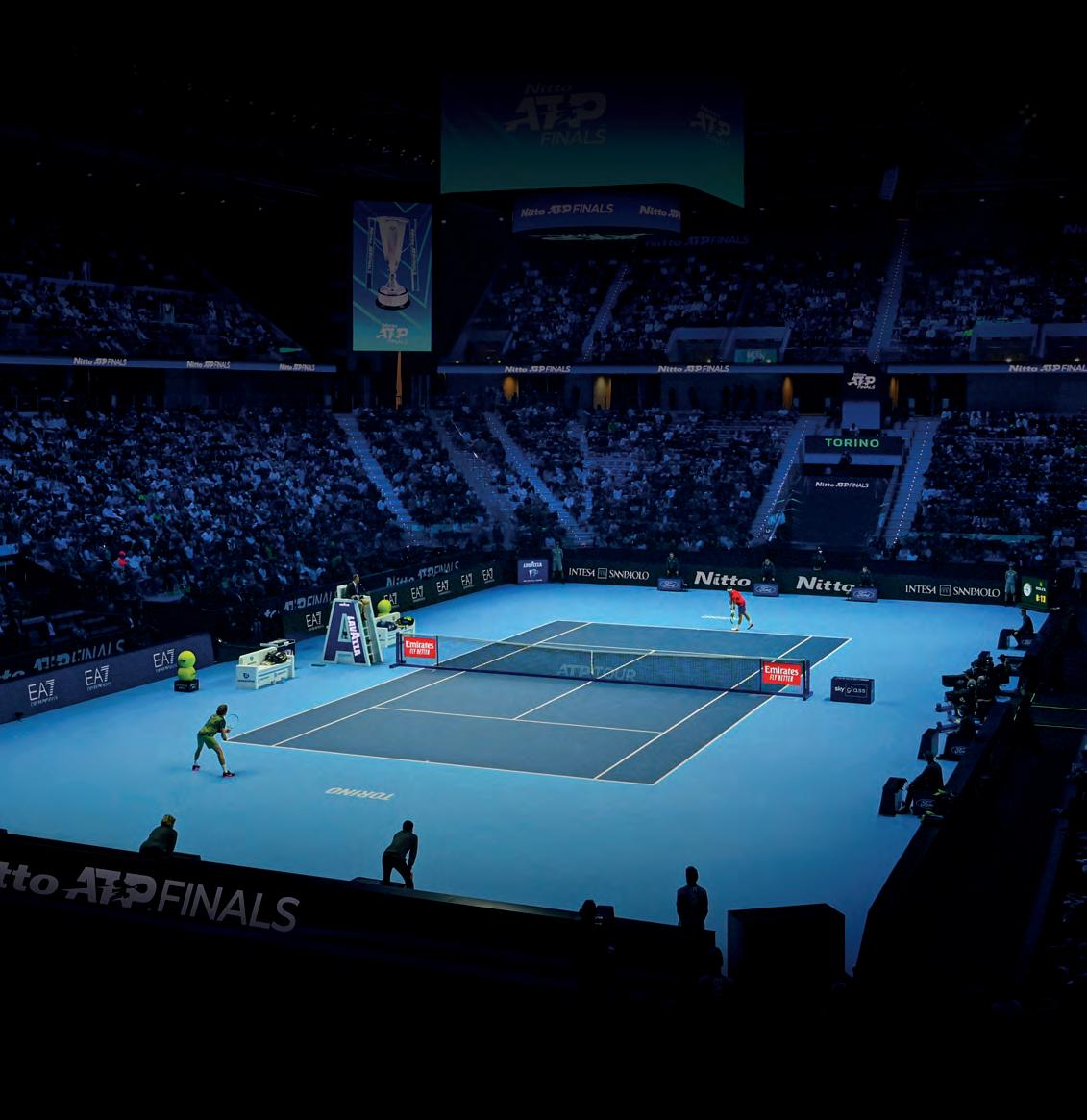
OFFICIAL BALL OF RSPA TENNIS COACHING




RECYCLABLE PAPER LID MADE FROM 30% RECYCLED PLASTIC


Laumaur Lindsay, RSPA Marketing Specialist
When we chose to host the annual World Racquets Conference in the heart of downtown, we considered the rich culture, amazing cuisine and lively atmosphere of Dallas being right at your front door. With WRC26 being a fourday event for you to enjoy, we figured it’d be best to welcome you with the big-city energy and warm hospitality that Texas is known for. Here, you’ll find plenty of ways to unwind and explore just minutes away from the Omni Hotel.
founder, Bob Sambol, as he goes out of his way to greet them at the door before an unforgettable evening.

Bob’s Steak & Chop House: At this nationally renowned steakhouse, quality and service are the key ingredients to creating an excellent dining experience. The menu at this Dallas landmark consists of incredible meats, jumbo shrimp, the freshest salads and delectable desserts. Prepare yourselves for award-winning dishes complemented by a classic décor, as the staff displays its commitment to upholding a warm, friendly environment. Many guests even have the opportunity to meet the
Moak’s Family Texas BBQ: Buckle up for true Southern comfort food as we introduce you to a long-standing family establishment with more than 70 years of combined experience, specializing in tender, flavorful, fall-off-thebone meats. They take pride in cooking their barbecue with customary smoking techniques, providing a rich hickory taste to their ribs and briskets. Moak’s shows its passion for Texas barbecue by perfecting its recipes and emphasizing slow-cooking practices. The allure of this restaurant represents the best of Dallas cuisine, offering traditional dishes and signature creations that keep customers coming back.

Uno Mas Tex-Mex: Looking for a casual lunch, inexpensive dinner or late-night delight? Indulge in downtown views with bold, cheesy creations in every dish, offering authentic Tex-Mex flavors paired with tasty margaritas. Ease into their must-try dishes such as chicken tortilla soup, tender ribeye fajitas, sweet tres leches cake and one of their many diverse tacos. Even the veggie enchiladas have received high praise from meat eaters and veggie lovers.
Dallas World Aquarium: Known for its wildlife conservation efforts, this aquarium is home to many species of land animals and aquatic creatures, providing a unique experience for visitors. Immerse yourself in this beautifully designed facility featuring luxuriant plant life, intricate pathways and an exotic ecosystem. Adults and kids alike will be entertained by the array of birds, reptiles, mammals and fish through its stunning views and educational presentations.


Nasher Sculpture Center: Explore a distinguished collection of contemporary sculptures in this museum, housing more than 300 pieces by Henry Moore, Pablo Picasso, Alexander Calder and other world-renowned artists. Take a moment to enjoy a serene setting in the outdoor garden, complete with calming water features and lush greenery. This is the perfect activity for art lovers and cultural enthusiasts who want to stay close to the conference.

Images From: www. nashersculpturecenter. org/
Klyde Warren Park: This urban park connects Uptown and Downtown Dallas, offering various amenities and events for families to enjoy. Built as a 5.4-acre central gathering space, it is managed by the Woodall Rodgers Park Foundation and open daily from 6 a.m. to 11 p.m. Stroll through a beautiful green space while learning about native plant species or enjoy occasional guest speakers and live performances throughout the day.
Mokara Spa: No need to go far. Located on the fourth floor of the Omni Hotel, this spa offers express massages and full-service treatments starting at $40, with access to showers, a dry sauna and lockers. Pamper yourself in the luxurious relaxation room, which features a stunning view of downtown Dallas and a soothing fireplace. From signature body treatments to quick salon visits, Mokara Spa treats all guests like royalty.



Images From: www.omnihotels. com/


Image From: cowboysdancehall.com
Cowboys Red River Dancehall & Saloon: This upbeat venue features a sprawling dance floor that draws both seasoned dancers and first-timers. With live country bands providing a steady soundtrack of crowd-pleasing hits and free beginner classes during the week, guests can enjoy a true taste of Texas fun in a one-of-a-kind setting.


Image From: www.dbdt.com
Dallas Black Dance Theatre: Bridging the gap between culture and education through the performing arts, this organization showcases contemporary modern dance at the highest level of artistry. Founded in 1973 by Ann M. Williams, it is the oldest operating professional dance company in Dallas, with an expanding national and global audience. Its excellence has been recognized by organizations such as the National Endowment for the Arts in 2008 and the Texas Cultural Trust with a Texas Medal of Arts in 2017.


Deep Ellum: Take a trip through one of Dallas’ most historically and culturally significant neighborhoods. Its roots date back to 1873, when it was known for its residential and commercial spaces. Today, it is celebrated as a creative hub with extensive music, art and dining options.
Revelers Hall: Just a few minutes away, Revelers Hall in the Bishop Arts District offers an energetic live music experience. Sip on classic cocktails, wines and beers while enjoying the sounds of North Texas’ top jazz musicians. Get ready for a lively performance that will keep you moving.
And remember, this is just scratching the surface of what Dallas has to offer. We encourage all attendees to set aside time outside of conference programming, whether that means diving into the city’s vibrant scene or taking time to relax and reset. Taking advantage of these opportunities will enhance your overall experience and make your time even more meaningful.


Images From: www.deepellumtexas.com/explore/
PORTABLE NETS
NET POSTS
BALL CARTS BACKPACKS
P PADDLE GRIPS
BALL PICK-UPS
COURT LINES
BALL MACHINES
WINDSCREENS
COURT PAINT
COURT BENCHES
LED COURT LIGHTING


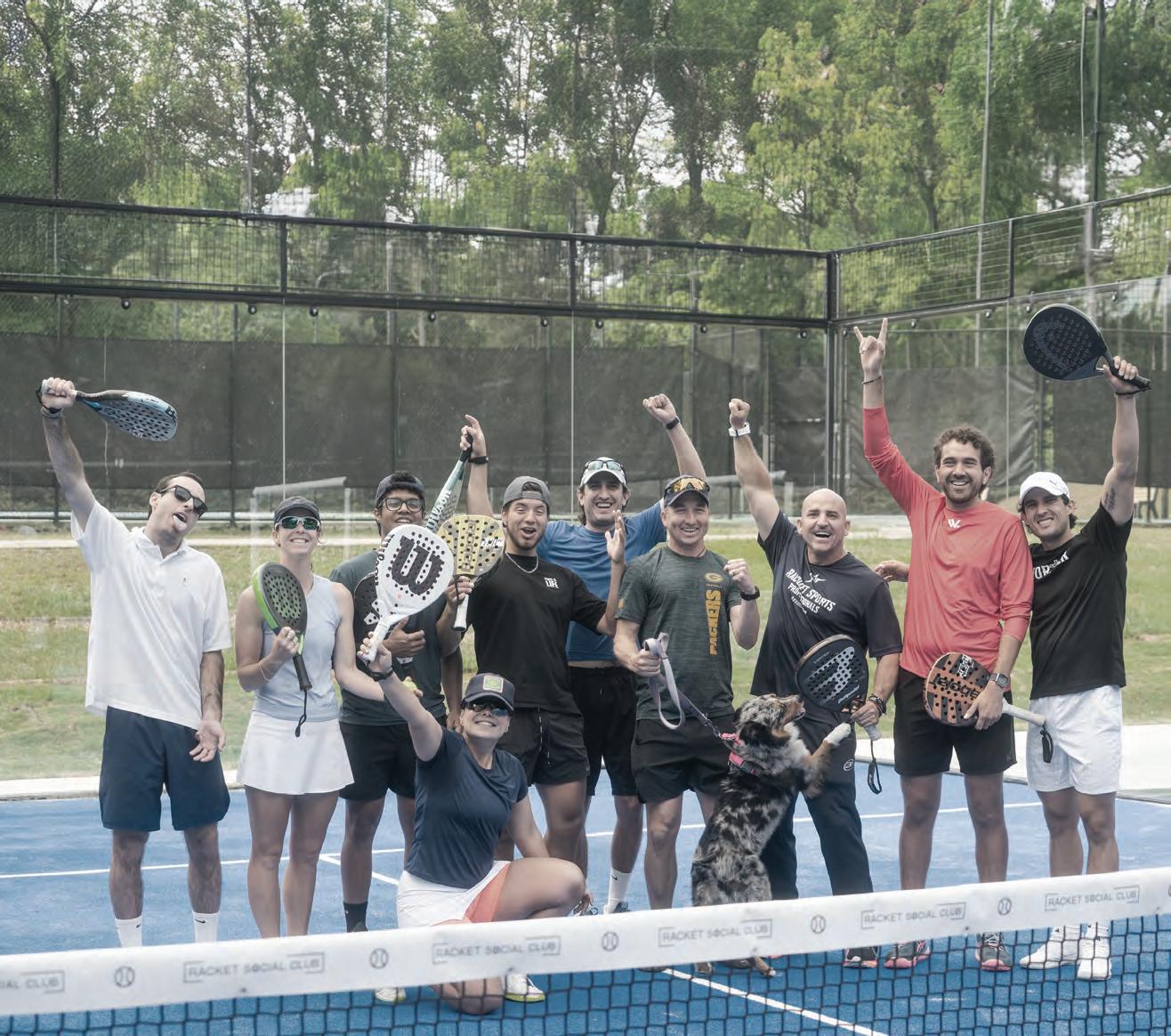



Article Provided By Aer-Flo Sports
As participation in tennis, pickleball, and padel continues to grow across the country, facility owners and racquet professionals are facing a common challenge: creating an exceptional player experience while maintaining courts that look professional, perform well, and stand the test of time.
Players notice when courts are clean, well-maintained, and free from distractions. Members appreciate facilities that reflect pride and professionalism. Tournament directors want venues that showcase their programs and sponsors. Whether you’re operating a private club, municipal complex, resort, school, or community facility, the environment surrounding the court has become an increasingly important part of the overall experience.
That’s where quality windscreens play a critical role.
As the Official Windscreen Provider of the Racquet Sports Professionals Association (RSPA), Aer-Flo Sports has spent decades helping facilities create courts that look better, play better, and last longer.
While windscreens are traditionally known for reducing wind and visual distractions, today’s facilities expect much more from their investment.
Modern windscreens help define the character of a facility. They create cleaner sightlines, improve privacy between courts, and establish a polished appearance that enhances the player experience from the moment someone arrives.
For clubs and organizations looking to strengthen their identity, windscreens
also provide valuable branding opportunities. Logos, school colors, sponsor recognition, facility names, and tournament graphics can transform perimeter fencing into a powerful extension of a brand.
The result is a court environment that feels intentional, professional, and welcoming.
Of course, appearance only matters if the product performs.
Aer-Flo’s TUFFY® Windscreen has earned a reputation for exceptional durability in some of the most demanding court environments across the country. Manufactured using exclusive VIPOL® Matrix fabric, TUFFY® is engineered to resist tearing, withstand harsh weather conditions, and maintain its appearance season after season.
Reinforced edging, brass grommets, UV-resistant materials, and Aer-Flo’s exclusive double-needle lock stitching help ensure long-term performance while minimizing maintenance and replacement costs.
From busy public facilities and school districts to collegiate programs and private clubs, TUFFY® continues to deliver dependable results where durability matters most.
Today’s racquet facilities are investing heavily in their courts, amenities, and member experiences. Windscreens should contribute to that investment— not detract from it.
With Aer-Flo’s CHROMA-BOND® printing technology and a wide selection of color options, facilities can create a customized look that complements their brand while maintaining the perfor-
mance characteristics players expect.
Whether the goal is a clean, understated backdrop or a bold statement that showcases a facility’s identity, Aer-Flo offers solutions tailored to the needs of each court and facility.
Aer-Flo Sports manufactures its products in its state-of-the-art, 100,000-square-foot facility in Lincoln, Alabama. This investment allows AerFlo to maintain strict quality standards, provide dependable lead times, and continue serving sports facilities throughout North America.
The best facilities understand that every detail contributes to the player experience.
From reducing distractions during play to creating a professional appearance that members, guests, and sponsors appreciate, quality windscreens remain one of the simplest and most effective upgrades a court can make.
If you’re planning court improvements, replacing aging windscreens, or looking for new ways to elevate your facility, Aer-Flo Sports is ready to help. Reach out today to your local dealer or visit www.aerflosports.com to learn more. Because great courts deserve great protection.
The professional choice for court protection.
TUFFY® Windscreens help create courts players appreciate and facilities are proud to showcase.
Designed to reduce distractions, improve privacy, and enhance the overall look of your courts, TUFFY delivers the performance today’s tennis, pickleball, and padel facilities demand.
Manufactured from Aer-Flo’s exclusive VIPOL® Matrix fabric and finished with industry-leading construction, TUFFY provides long-lasting durability, vibrant custom graphics, and reliable all-weather performance.
Whether you’re refreshing existing courts or building a new facility, Aer-Flo Sports helps you create a better experience for every player who steps on the court.
Make the Tough Choice. Choose TUFFY. Get a quote today.
Enhance Play: Reduce visual distractions and improve court focus.
Elevate Your Facility: Create a clean, professional appearance players notice.
Strengthen Your Brand: Showcase logos, sponsors, colors & facility identity.
Built for Long-Term Value: Engineered to withstand seasons of play & weather.
Trusted Nationwide: Chosen by clubs, schools, parks, resorts, and tournament facilities.
The conference is your opportunity to reach further, with hands-on experiences and close access to the speakers and brands that are ready to equip you with the tools that can elevate your career. Not only are there going to be some incredible oncourt and in-class sessions, but there are also going to be chances to hop on a court, network and celebrate some of the leaders in our industry. Every morning, attendees can join our open play and experience our biggest sports with their fellow professionals from across the country and world.
The RSPA World Racquets Conference 2026 is a little over a month away. As we are approaching the 100th anniversary of our esteemed organization, we are excited to provide those in the racquet sports industry a chance to Reach for the Stars and shape their legacy.
This year’s conference focuses on the idea that your potential and impact are never fixed, and Dallas will provide an opportunity for you to connect with some of the most passionate and well-versed members of the racquet sports community, immersing yourself in both practical and applicable leadership, operations, and coaching content. The content provided will help to equip you to lead multi-sport facilities, engage a new generation of players, innovate in programming, navigate change and build thriving racquet sports communities at your local level.
President. Mark Faber
First Vice President Kevin Theos
Vice Presidents ..Molly Card-Beckmann, Jenny Gray, Milos Vasovic, Mel McRee and Scott Burton
Immediate Past President Trish Faulkner
Interim CEO & Contributing Editor John R. Embree
Legal Counsel George Parnell
On Sunday you will be able to meet and get your hands on the products of the brands that are shaping the industry and can provide products or services that could help you as an independent pro, pro shop manager, or director/GM at a country club. On Monday, after our national Feeding Competition, the night is yours to explore all that Dallas has to offer, strolling around Bishop Arts District, trying some delicious BBQ and maybe finishing the night with some line dancing!
We’re evolving some of our events, too, like our Networking Happy Hour. Having been a breakfast in years past, this switch will provide for a more relaxed, yet structured, time to keep the conversations rolling that you have been having throughout the week and get a chance to start new ones. Don’t miss your chance on Wednesday to recognize the contributions and achievements within our profession. Texas locals will get to celebrate RSPA Master Professional and national Past President Ron Woods as he is inducted into the Tim Heckler Hall of Fame for his over four decades serving the game of tennis.

Linda Gordon | RSPA Director of Membership

And there’s more! This year’s conference features a heavy dose of professional development sessions focused on tennis, plus opportunities to hone your knowledge of pickleball and padel. You can sign up for our padel certification workshop led by our Lead Padel Curriculum Developer and Head Padel Coach Developer Marcos del Pilar in Dallas just before the start of the conference to come into the event with a new sport under your belt, or you can play it for the first time during open play. Our most immersive experience ever, WRC26 brings tennis, pickleball and padel courts into one space where you will get cutting-edge insights and unprecedented access to some of the most accomplished experts in our industry.
This year’s conference is not something to miss and the official speaker lineup can be found by scanning the QR code below! This is going to be a premier racquet sport event where teaching professionals will leave with the skills, mindset and community support needed to shape a lasting professional legacy in a rapidly evolving industry. You will have a chance to reconnect with your purpose, deepen your expertise and discover the next step in your professional journey. We hope to see you in Dallas next month!

Editorial Assistance Laumaur
Linda
Circulation Tim Baum RSPA World Headquarters 11961 Performance Dr. Orlando, FL 32827 407-634-3050 – www.RSPA.net