Whilst great care has been taken in compiling the information in this brochure, North Kesteven District Council cannot be held responsible for any errors, omissions or alterations contained within it. The inclusion of any establishment within this brochure does not imply any official recommendations by North Kesteven District Council.
Thank you
North Kesteven District Council acknowledges the valuable help given by Down to Earth Promotions, J Ruddock Photography, Mike Hodgson, Crown
RAF Waddington, Keith Campbell Newark Air Museum
Introduction
Lincolnshire, renowned as the ‘Home of the Royal Air Force’, has a vast aviation heritage. The county’s flat, open countryside and its location made it ideal for the development of airfields during World War I, and in World War II Lincolnshire became the home of Bomber Command. Several airfields are still operational and serving the modern-day RAF while former airfields, museums and memorials are witness to the bravery of the men and women who served here in most turbulent times.
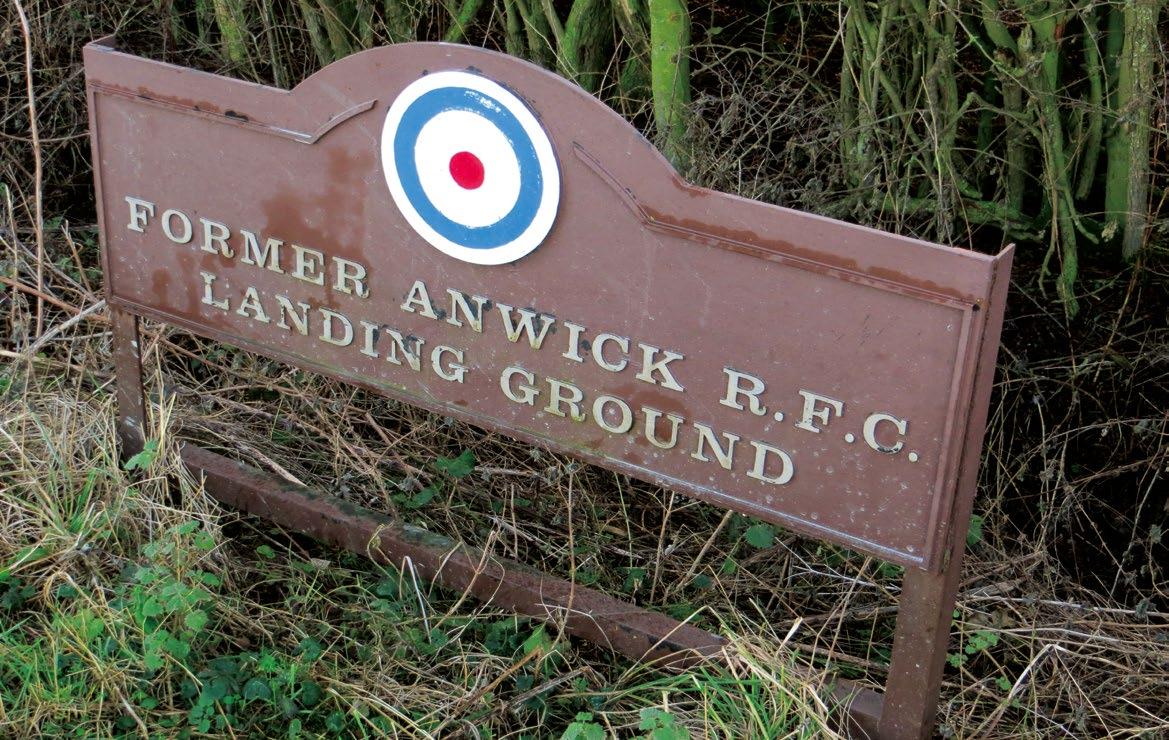
The North Kesteven Airfield Trail is a popular and long-standing publication designed to enable visitors to locate the active RAF stations and former airfield sites – many now identified by distinctive signs – in this part of mid-Lincolnshire. The sites can be visited within a comfortable day’s drive, or for a more leisurely tour, spend a few days combining the trail with visits to the aviation centres and other places of interest close by.
Lincolnshire and World War I
The Lincoln Edge, being a north-south escarpment, (particularly evident at Harmston and Leadenham), had a magnetic appeal to the defence chiefs seeking airfield sites in eastern England. Westerly winds, forced into rising currents, assisted heavilyladen, low-powered biplanes of the Great War when taking off or landing. Their climb outs and speed relative to the ground could be immediate and steeper, and their speed relative to the ground could be reduced more confidently on final approach without fear of stalling. Airfields were established above this cliff at Harpswell, Brattleby, South Carlton, Bracebridge Heath, Waddington, Leadenham and Spittlegate.
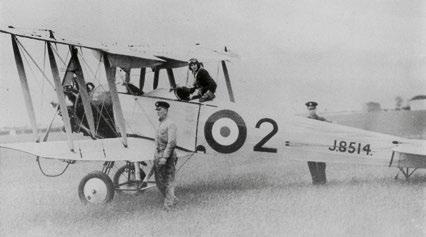
On 1 April 1916, Royal Naval Air Service Station Cranwell, part of HMS Daedalus, opened as a training station to teach officers to fly aeroplanes such as BE2cs, Avro 504s and Sopwith Camels and later airships and kite balloons. RNAS training continued until 1 April 1918, when the RNAS and Royal Flying Corps were amalgamated to form the Royal Air Force. The station then became known as RAF Cranwell.
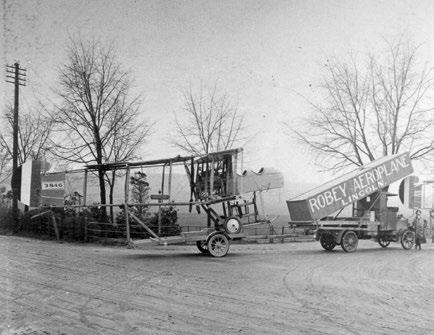
Lincoln itself became one of the top five aircraft manufacturing centres of the Great War with over 5,000 aircraft being constructed in the City’s factories. Many of the Sopwith 806 types from Robey’s works flew to service from West Common. Ruston, Proctor & Co built BE2
biplanes and Sopwith Camels. Many of these were flown straight to the Western Front by the Royal Flying Corps. More Sopwith types were built by Clayton & Shuttleworth. After the end of the war in 1918, only three out of the thirty-seven military aerodromes that had been established in the county remained for the peacetime air force.
Bomber County
As war loomed once again during the mid-1930s, the Royal Air Force began a programme of expansion. World War II was a war in which aviation showed its devastating potential. Each combatant wanted faster machines in the air capable of carrying more armament over a greater distance. The Air Ministry demanded larger airfields with dispersed facilities – hidden, if possible, to reduce the risks of air attack. By 1940 the search for prospective airfields was at full throttle and, situated on the eastern side of the country, Lincolnshire was an ideal launching platform for a possible bomber offensive. Fighter airfields needed a main runway of 4,200 feet (1,280m) and subsidiary runways at least 3,300 feet (1,006m) long. For bombers the requirements were 6,000 and 4,800 feet (1,829m and 1,463m) respectively. Trees and hedges usually had to be grubbed up, although they would remain on maps for security reasons.
As soon as such features were uprooted, waste oil, creosote or black powder was used to imitate ground shadows and deceive enemy reconnaissance aircraft. A runway could not be steeper than 1 in 30. If a 3 tonne truck could be driven on a grass runway without leaving tyre marks it was deemed ready for action. Concrete runways were to be 10 to 16 inches (25 to 41cm) thick, whilst perimeter track or dispersals could manage with a 6 inch (15cm) depth of concrete. Lincolnshire had already accommodated the training needs of the RAF at the Royal Air Force College, Cranwell, which opened
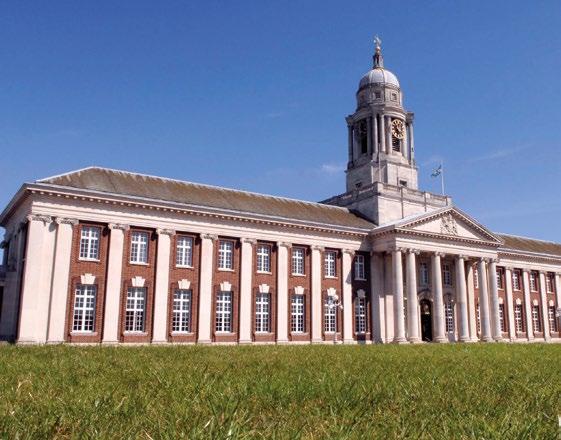
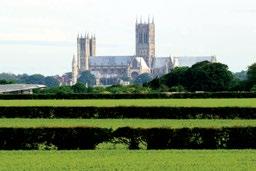
as the first military air academy in the world on 5 February 1920. Many graduates from Cranwell, including Sir Douglas Bader, became distinguished World War II aviators. 5 Group Bomber Command was headquartered at St Vincent’s in central Grantham between September 1937 and October 1943, when its personnel moved to Morton Hall near Swinderby. The squadrons directed by 5 Group flew from many Lincolnshire airfields including Bardney, Coningsby, Dunholme Lodge, East Kirkby, Fulbeck, Hemswell, Metheringham, Scampton, Skellingthorpe, Spilsby, Strubby, Swinderby, Waddington and Woodhall Spa. By the end of the war in 1945, forty-nine airfields in Lincolnshire were operational. Twenty-eight of these were bomber bases –more than any other county in Great Britain. The magnificent Lincoln Cathedral provided a distinguished landmark for pilots during the Second World War and the Airmen’s Chapel now houses the Memorial Books of 1 and 5 Groups, RAF Bomber Command. The books contain the names of 25,611 personnel who died flying from airfields in or near Lincolnshire including 1,233 Canadians and 1,140 Australians. Stained glass windows form the Bomber Command Memorial, Flying Training Command Memorial and the New Zealand Memorial. There are other memorials to units and individuals. A permanent memorial ledger stone to Bomber Command and its personnel was unveiled in August 2006.
The International Bomber Command Centre was opened in 2018 to serve as a point for recognition, remembrance and reconciliation.
The Present Day RAF
When the war ended in 1945, there was no longer the need for so many military airfields. Many of those that had been constructed during the war were closed down, their concrete runways torn up, and returned to agriculture. At some airfields, the domestic quarters on the dispersed sites were used as temporary housing for displaced persons. The more permanent pre-war expansion period airfields remained operational to be developed by the post-war air force. Some like Dunholme Lodge briefly held Cold War roles as air defence missile sites with Bloodhound Surface to Air Missiles.
and if you pause for a while close to one of these airfields, you might be able to admire the precision of today’s air force pilots.
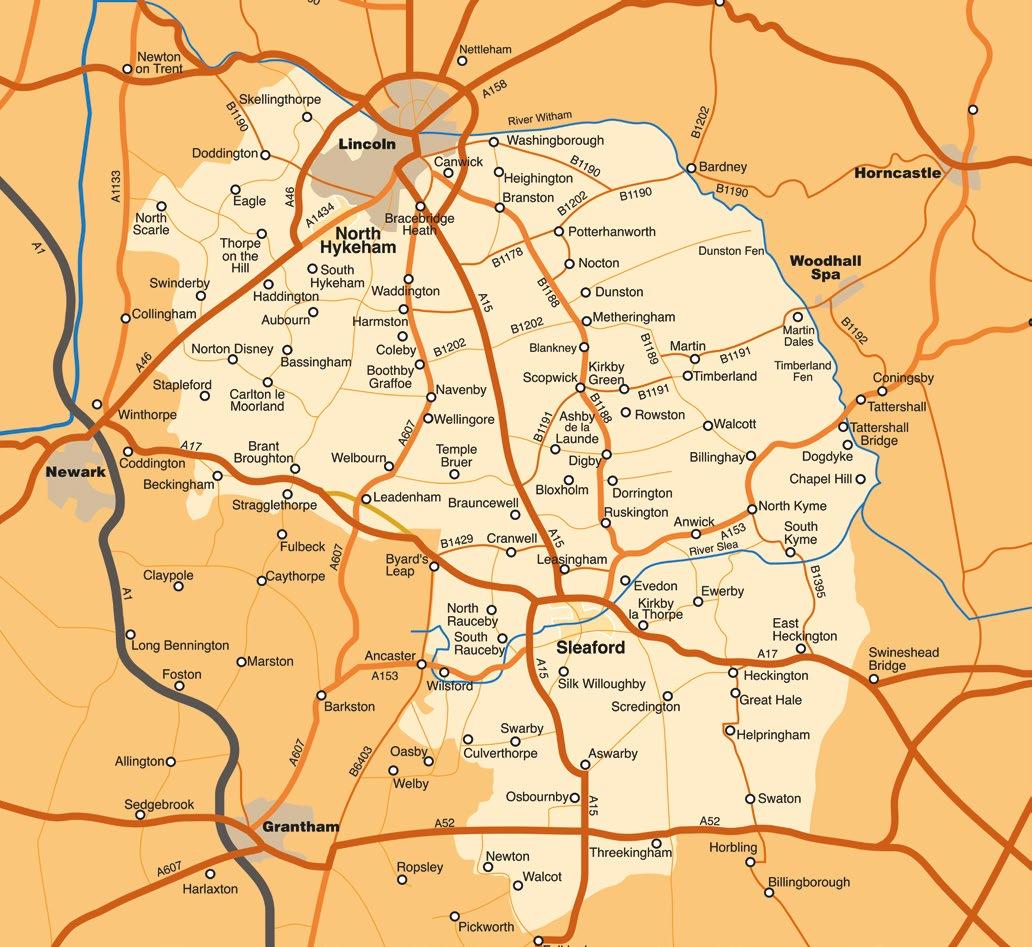
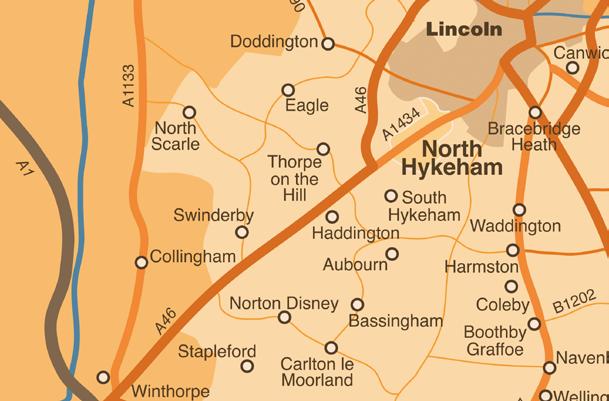
Today, four military stations remain in Lincolnshire: Waddington, Cranwell and Digby in North Kesteven and Coningsby in East Lindsey. The RAF mainly fly their aircraft between 8am and 5pm on weekdays
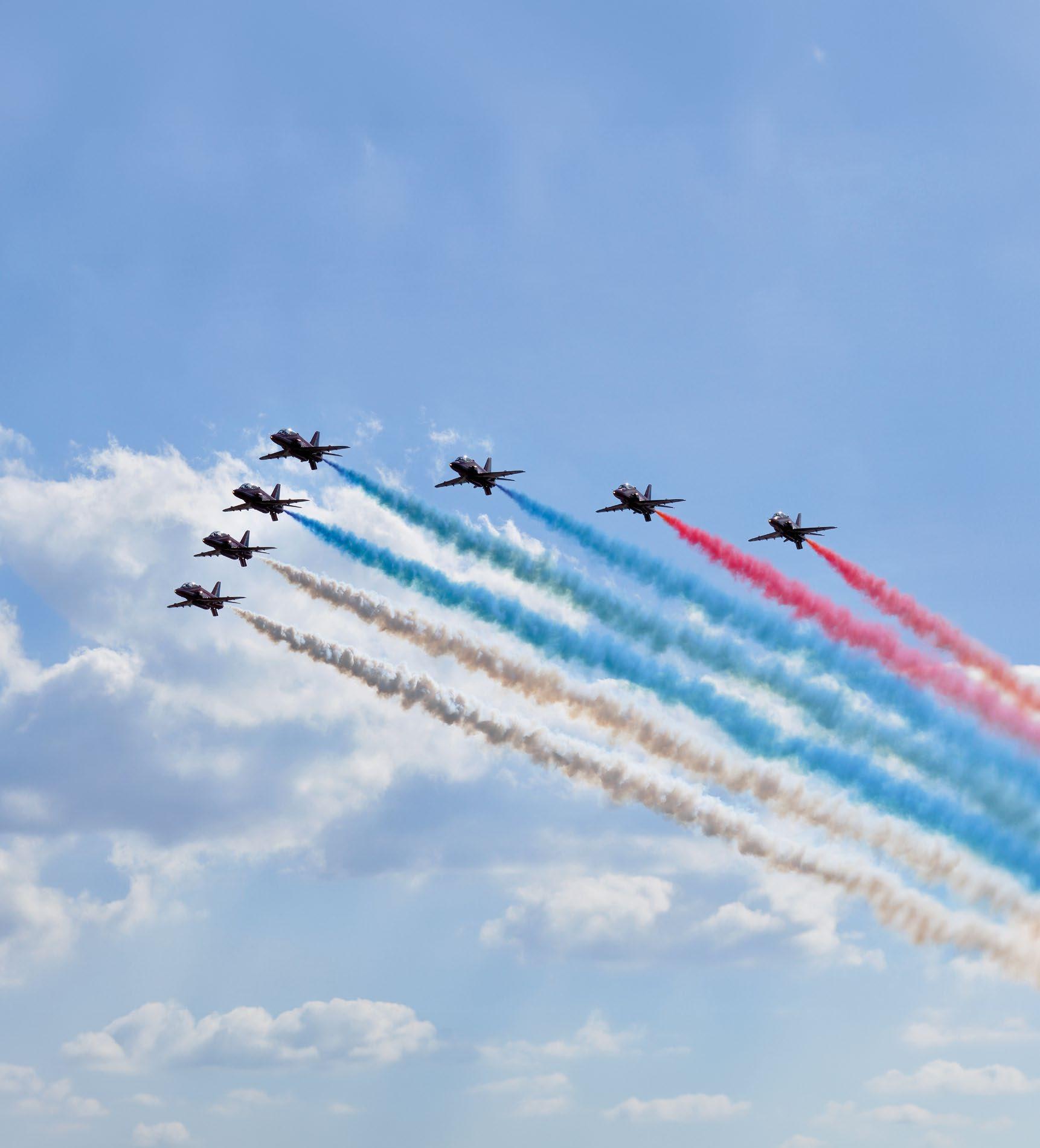
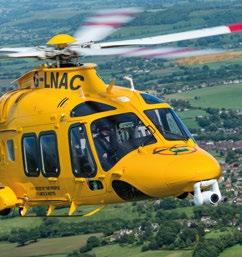
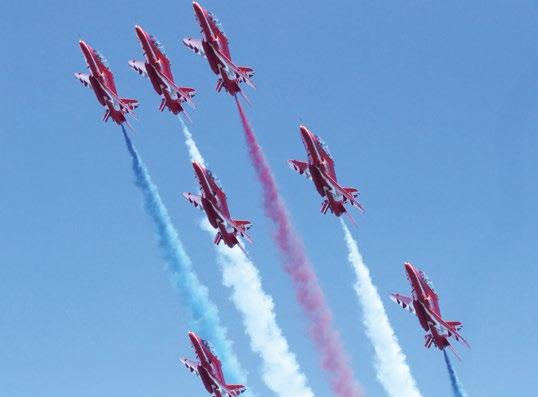
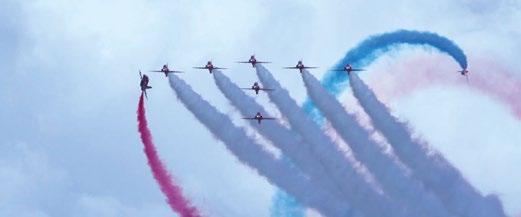
You may catch sight of the Red Arrows practising over RAF Waddington where you can also watch the station’s visiting military aircraft from the public viewing area known as the Waddington Aircraft Viewing Experience (WAVE) on the A15 road. You might even catch a glimpse of the Lincolnshire & Nottinghamshire Air Ambulance that operates from near the WAVE.
Visitors are reminded to observe the official notices and parking restrictions on the perimeters of the operational airfields. The wartime airfields have been returned to agricultural use, so at these sites, please do not leave the public roads or footpaths.
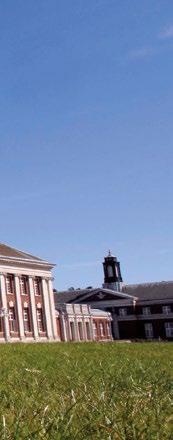
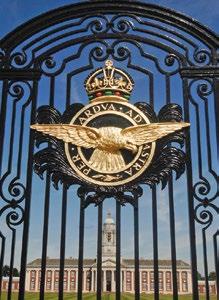
RAF College Cranwell
Anwick
Trees were felled along the roadside and a telegraph wire was run to the site from Ruskington village past Poplar Farm where Jane Glenn had lived since the 1880s. “Aeroplane came down at landing stage. Went to see it. First I had seen down, saw him start off again. Came from Melton Mowbray”. Thus ran the entry for 10 January in her new 1917 diary. The landing ground supported no permanent buildings but covered 54 acres (21.85 hectares) and was equipped with basic lighting (petrol- soaked rags in cans).
Between September 1916 and May 1918
Melton Mowbray was the Headquarters of 38 Squadron which was responsible for landing grounds at Stamford, Buckminster, Leadenham and Anwick. This early air defence unit flew BE2e and FE2b pusher biplanes against every known Zeppelin intruding into Midlands airspace. Zeppelins were seen over South Lincolnshire during November …
Location
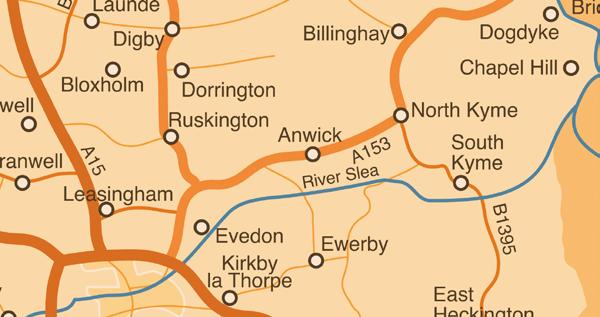
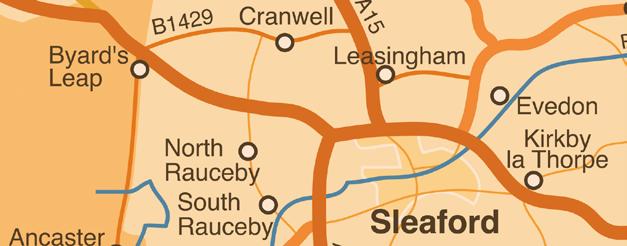
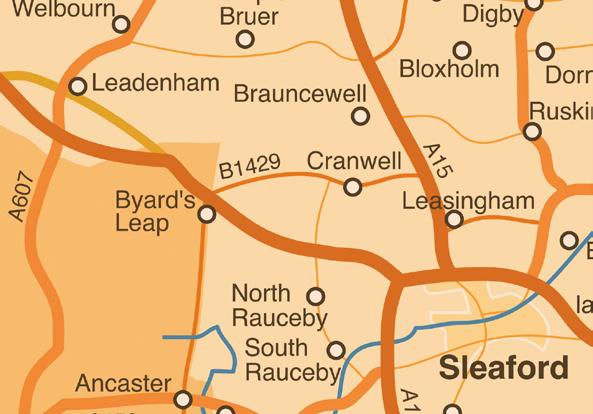
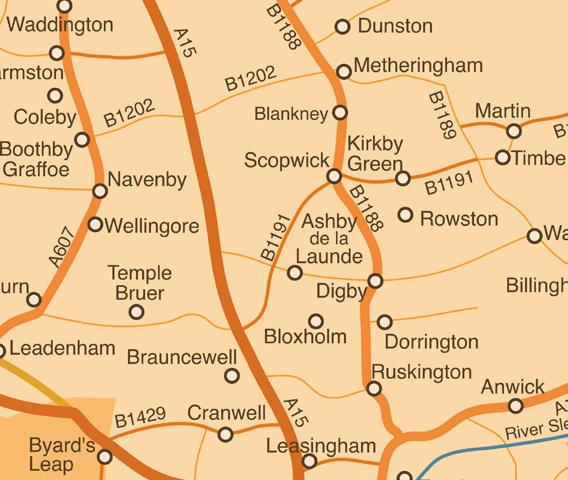
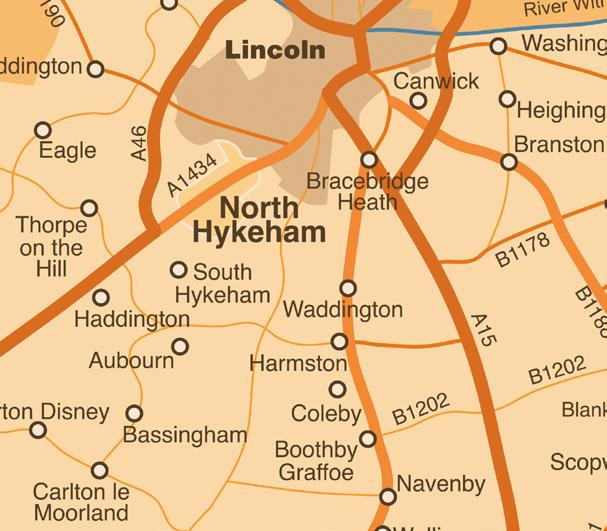
Anwick is a small village, which gave its name to a World War I landing ground approximately a mile NNW of the village church with vehicle access from Ruskington Fen Road. If approaching from RAF Digby drivers should re-join the B1188 at Scopwick and proceed south. On reaching Ruskington turn left at the first crossroads and follow the signs out of the village to Ruskington Fen.
… 1916 and March, May, September and October 1917. They could fly at altitudes of 20,000 feet (6,096m) and, by February 1916, had penetrated as far west as Cheshire. None were intercepted by 38 Squadron which was until July 1917, under the command of Major L.J.E. TwisletonWykeham-Fiennes. Soldiers were stationed at Ruskington Fen and helped local farmers and the preacher at the Wesleyan Chapel. The terror of war came a little too close for comfort in the early hours of 25 September 1917 when nine bombs fell from a Zeppelin on or around Poplar Farm. Two did not explode, but those that did caused craters that drew crowds of sightseers later in the week. “Bombs dropped near to everyone but by the Providence of God” wrote Jane Glenn, “no one was hurt. How thankful we are”.
Twenty years passed and Britain was again at war. The old Anwick landing ground was rigged to appear as a decoy for Digby’s busy airfield. Eight airmen were billeted locally, working on shift when the air attack warnings came. They had nothing but a cramped dugout and an electric generator to light a flare-path. A mobile flashing
beacon would be driven out by truck from Digby to complete the deception of enemy aircrew. When the airmen were not cycling from Digby or in the dugout, they would do odd jobs for the local community.
When two Avro Lancasters collided near Anwick Grange on 2 March 1945 it was the turn of the local farmers to help the RAF. Three aircrew perished in this accident. The survivors were probably treated at the burns unit established in Rauceby Hospital near Sleaford. The decoy site was reportedly abandoned in August 1942. Other local decoy sites were at Dorrington, Branston Fen and Willoughby Walks.
Key dates
¤ World War I – Air defence by 38 Sqn.
¤ World War II – Decoy site for RAF Digby.
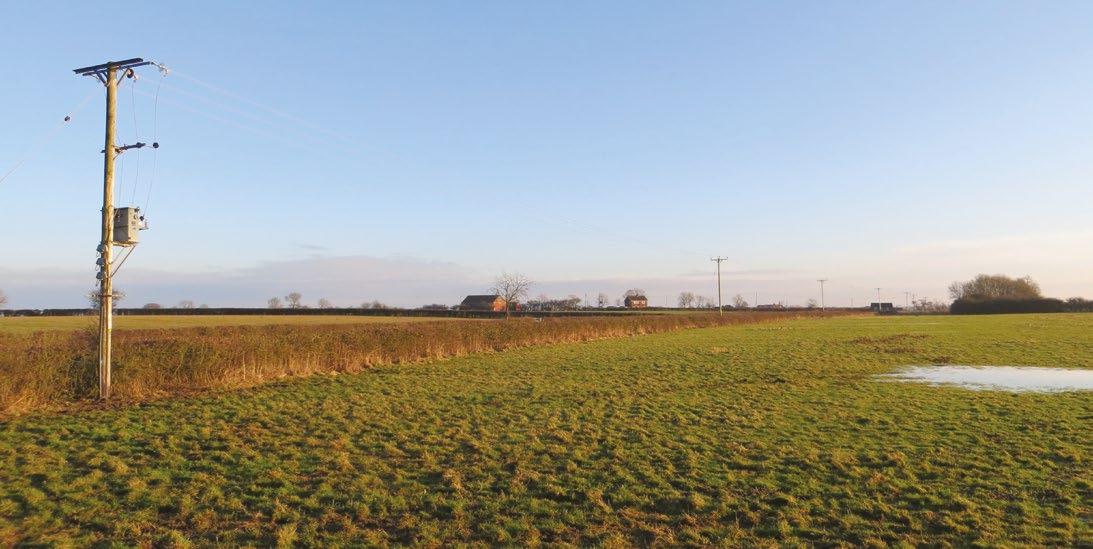
View across the former Anwick landing ground
Bracebridge Heath
Bracebridge Heath was the aircraft manufacturer Robey’s first airstrip – near the cemetery at Bracebridge Heath and had an altitude of 210 feet (64m). A design office here attempted to meet an Admiralty order for an anti-Zeppelin fighter with a wide slab-sided biplane of 250 horsepower. Late in 1916 its third take-off proved to be it’s last, the RobeyPeters ‘fighting machine’ burned out on the roof of the former St John’s hospital which stands alongside Canwick Avenue.
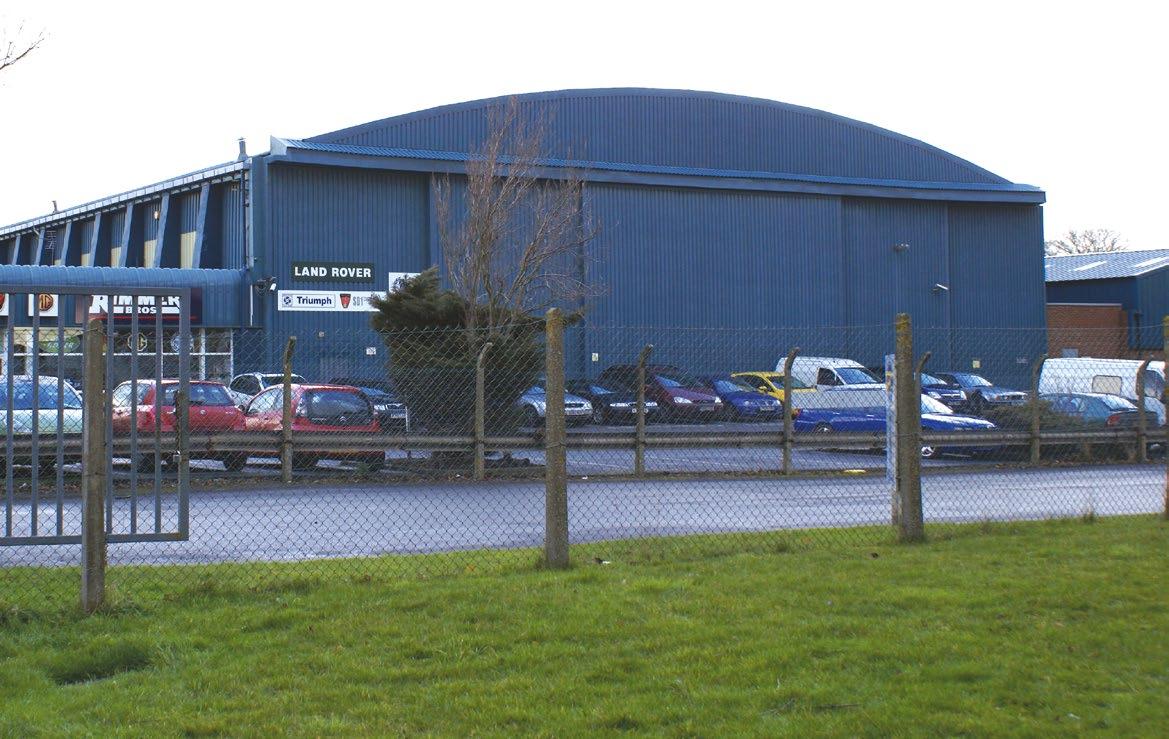
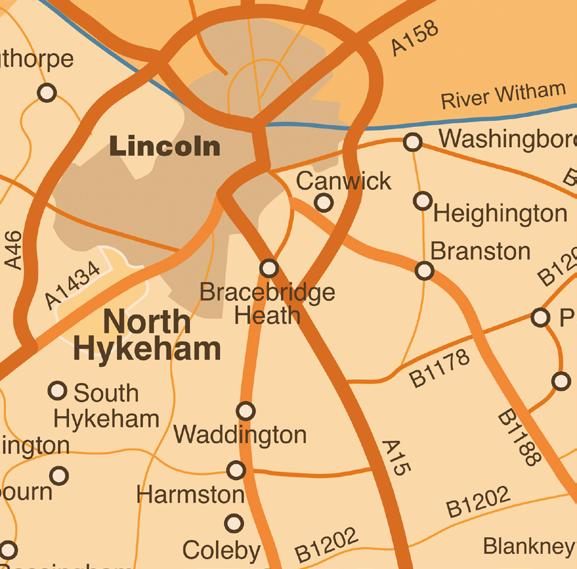
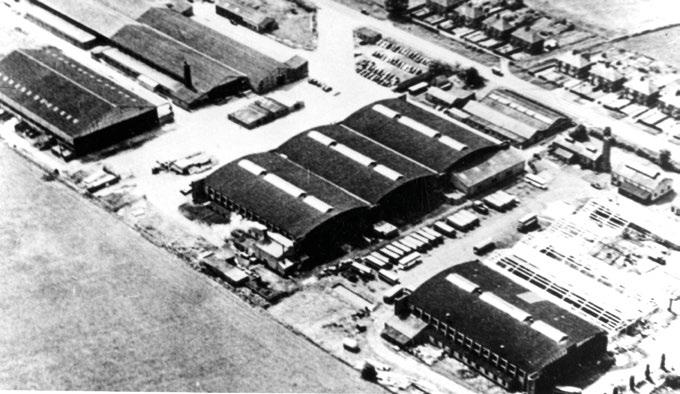
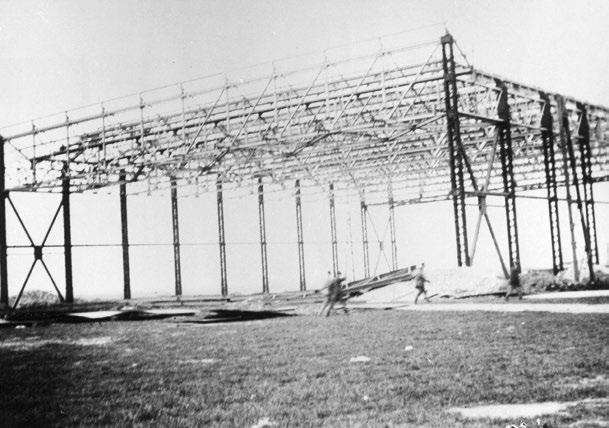
A second aeroplane crashed in the following January. Later in 1917 three triple-span ‘Belfast’ Truss hangars were erected by the Royal Flying Corps. The last complete hangar was demolished a few years ago, leaving only parts of the other two still standing, which can still be seen from the A15. Some air force accommodation was later converted into civilian bungalows and their distinctive shapes may be seen to the west of this Lincoln-Sleaford road.
Location:
If you take the A15 south from Lincoln you will soon recognise the Lincoln Edge which separates these two early flying sites.
The Great War ended before a resident squadron of de Havilland 9 aircraft had achieved operational status at Bracebridge Heath. The proximity of the site to Waddington’s airfield led the Ministry of Supply to requisition the hangars in May 1941 so that the A.V. Roe Company could undertake running repairs to Lancasters and other precious aeroplanes. The A15 south of Bracebridge Heath doubled as a taxiway along which aircraft could be towed.
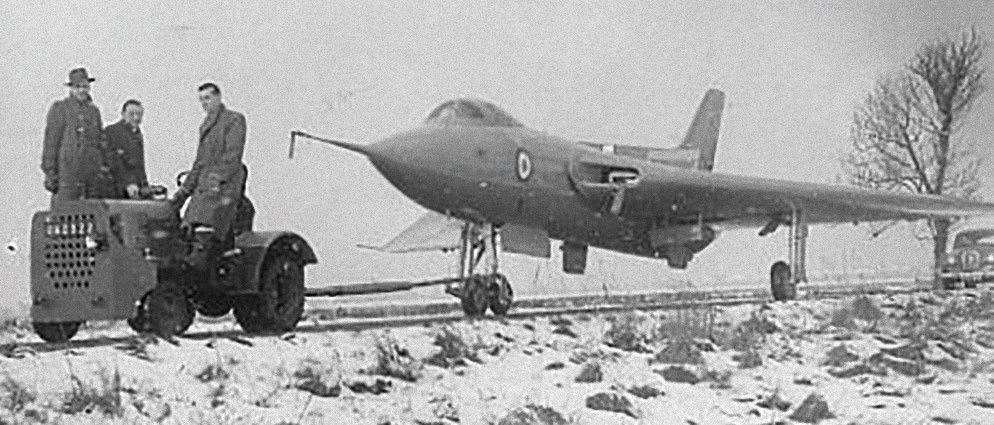
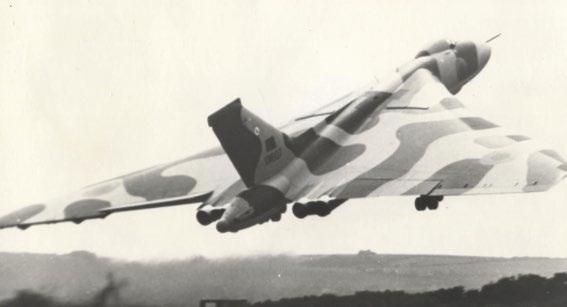
Whilst Avro Anson aircraft were being refitted for the Royal Navy, two high-speed delta-winged aircraft – the single-seat Avro 707A and the two-seat 707C – were completed at Bracebridge Heath from components made in the Manchester area. One of these was refurbished at Waddington for display in the Manchester Museum of Science and Industry. These aircraft were purely experimental but led to the development of the evocative Vulcan, a familiar sight in the local skies for many years. With the demise of Vulcan bomber local operations in 1984, British Aerospace had no further need for a spares warehouse at Bracebridge Heath and the site is now used for commercial purposes.
On private land a short distance along the A15, close to the WAVE are the remains of the Mere Listening Station, which stands as a testament to part of the district’s secret history.
Whilst the current structure is believed to be post World War II, the Mere Listening Station’s history as a ‘Y’ Site can be traced back to just after World War I.
Due to the secretive nature of the site’s role, much of its history has not been fully verified. However during World War II it is thought to have played a key role in the interception of German radio transmissions. The data gathered from this and other sites formed part of the intelligence information supplied to Bletchley Park near Milton Keynes, which was home to the Enigma code breakers.
Key dates:
¤ World War I – The flying-field became an aeroplane proving field and later a RFC landing ground.
¤ World War II – The site became a repair facility for A.V. Roe Company. Their work continued into the jet era with the Avro 707 prototypes being assembled there.
Avro 707 being towed along A15 to RAF Waddington Aerial view of the Bracebridge Heath site
Coleby Grange
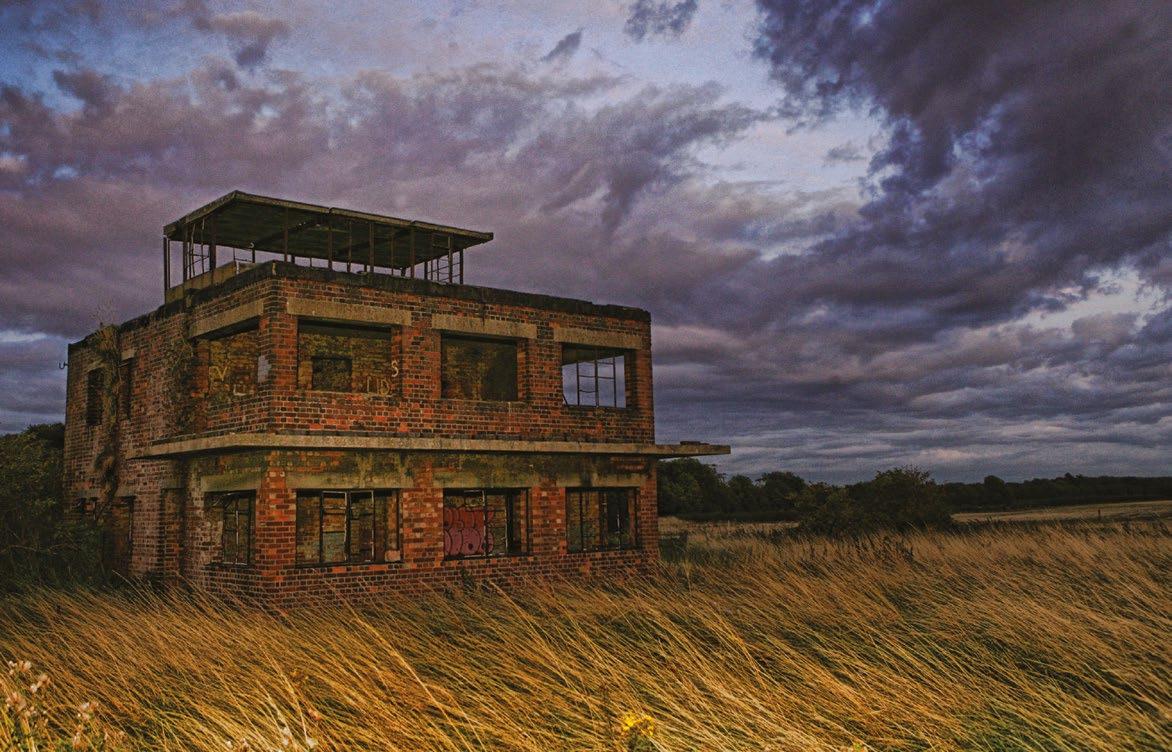
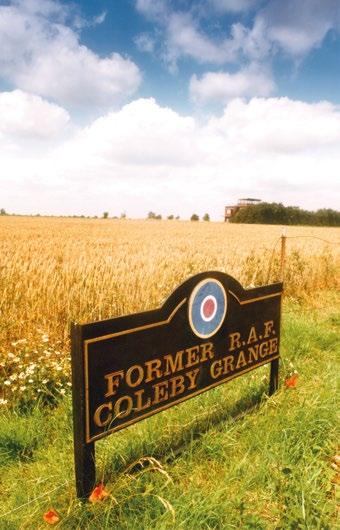
Only 2.5 miles from Waddington, stands the watch tower of Coleby Grange airfield – a short-lived wartime site without paved runways. Although the site was intended as a satellite airfield for Digby, during the summer of 1940 Hurricanes and Defiants from Kirton-in-Lindsey operated from Coleby Grange due to problems in completing another aerodrome.
409 (RCAF) Squadron became the first resident squadron in July 1941. Supplied daily with food and basic essentials by lorries from Digby, personnel were billeted in huts, well-screened by woodland to the east of the A15. This squadron was fully operational by 20 August 1941 earning the nickname “Nighthawks” with their black-painted Boulton Paul Defiants. Sadly the Squadron Commander, Squadron Leader Petersen, was killed flying a …
Location
South along the A15 from Waddington airfield you will pass the remains of an 18th century inland lighthouse known locally as Dunston Pillar. This was reduced in height in 1940 to lessen the risk of Coleby Grange aircraft colliding with it.
… Beaufighter on 2 September 1941 near Metheringham. These twin-engined planes were soon brought into service by the “Nighthawks” and Paul Davoud, their new Squadron Leader, claimed their first enemy aircraft when he downed a Do217 bomber on 1 November 1941. With better radar equipment, four 20mm cannons and six machine guns, Beaufighters gave their pilots an improved chance against the Luftwaffe. In February 1943, during a lull in the German offensive, 409 Squadron changed places with a sister Canadian unit, 410 Squadron, at Acklington. They brought classic Mosquitos with them, swift all-wooden monoplanes that become the scourge of the Luftwaffe and the stars of the film “633 Squadron”.
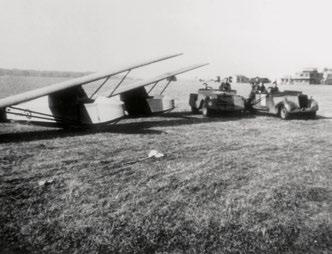
In March 1943 Wing Commander Hillcock inadvertently brought home a souvenir from an intruder raid – 300 feet of copper wire from Apeldoorn Radio Station. Two colleagues had a lucky escape later that year flying through the exploding wreckage of a Do217 which they had attacked. After short spells hosting Oxfords, Defiants and Hudsons of 288 Squadron and the Mosquito night fighters of 307 (Polish) Squadron, Coleby Grange became a satellite of RAF Cranwell accommodating gliders and smaller training aircraft.
Peace returned to Europe and Coleby Grange and all was quiet on the airfield for a decade ending in 1958.
In response to the Soviet deployment of inter-continental missiles such as SS-3, SS-4 and SS-6 the Macmillan government agreed to the deployment of sixty Douglas Thor Intermediate Range Ballistic Missiles.
The majority of these were delivered by air to Hemswell for dispersal to five Lincolnshire airfields. Three launch sites were built during 1958 at Coleby Grange and the personnel of 142 Squadron spent their working hours testing circuits, topping up fuel, reading pressure gauges and so forth until 14 August 1963.
Thor missiles were 65 feet (19.81m) long, 8 feet (2.43m) in diameter and had a main engine thrust of 150,000 lbs (68,040kg). They were perceived as vulnerable and obsolete following the development of Polaris-type systems of attack. Static examples can be seen at the RAF Museum Cosford and at the National Space Centre in Leicester.
Key dates
¤ World War II – 409 (RCAF) Sqn; 410 (RCAF) Sqn; 288 Sqn; and 307 (Polish) Sqn.
¤ Cold War – Thor Intermediate Range Ballistic Missile base.
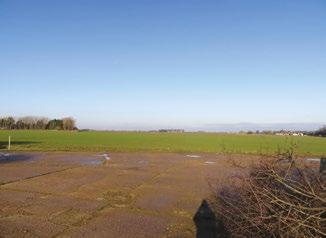
Cadet T1 gliders from 107 EGS at RAF Coleby Grange Views of the former RAF Coleby Grange airfield site
Cranwell
The northern grass airfield can still be seen from Lighter-than-Air Road which leads north from the B1429. The road name commemorates the early use of the site as a Royal Naval Air Service airship training station.
The site had been selected in 1914 because of its flatness, lack of dykes and proximity to coastal bombing and gunnery ranges. The character of the local landscape would, it was thought, make the site relatively difficult for enemies to locate.
Requisitioned farm buildings can still be plainly seen in active use by the Motor Transport Section. The remoteness of Cranwell was marked by a cheeky lament in 1916.
“There’s an isolated, desolated spot I’d like to mention, where all you hear is ‘stand at ease’, ‘quick-march’, ‘slope …
Location
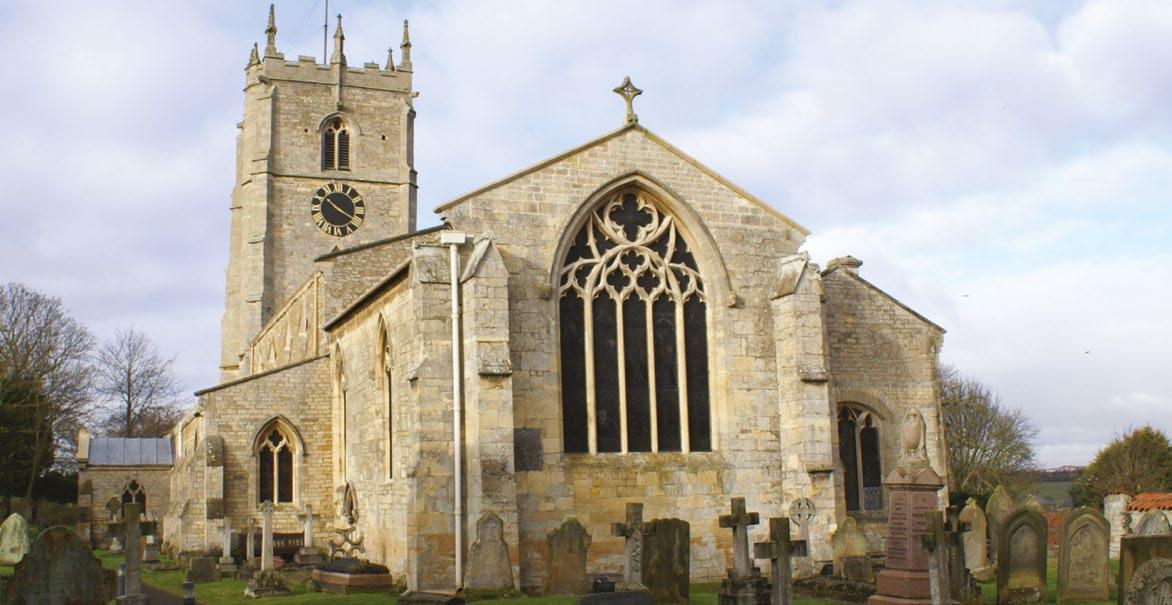
Cranwell is located close to the A17 and A15 roads with signposting from both roads. In the village of Cranwell, many airmen are buried in the village churchyard.
… arms’, ‘attention’. It’s miles from anywhere, by jove it’s a rum’un. A man lived there for 50 years and never saw a woman”.
E.T Willows had started work on non-rigid airships in 1905, ten years before Cranwell had an airfield. He introduced the swivelling propellers that made airships far more manageable. A Willows IV airship combined with a BE2c aircraft fuselage produced the first “Submarine Scout” airship. A giant shed flanked by tall windshield fences was erected on Cranwell’s north airfield during 1916 and 1917, aligned to suit the prevailing south-westerly wind.
Several incidents marred Cranwell’s association with the airship. One crashed near Sleaford in November 1916 attempting a descent into Cranwell. On 26 April 1917 one landed in Mr Wright’s field down at Ruskington Fen. Three men, including Wing Commander C.M Waterlow, were carried aloft dangling from mooring lines and fell to their deaths on 20 July 1917. One week later a heavy storm blew an airship out of control eastwards six miles to descend at Haverholme. Thankfully on this occasion, no one was hurt.
By 1918, when the Royal Naval Air Service (RNAS) and the Royal Flying Corps (RFC) merged to form the RAF, Cranwell camp covered about 3,000 acres (1,214 hectares). At the end of World War I Major General Sir Hugh Trenchard, Chief of Air Staff was determined to reinforce the role of the RAF as an independent force. His wishes prevailed and on 5 February 1920, The Royal Air Force College at Cranwell was opened, the first Military Air Academy in the world. Light biplanes predominated in the training role although a large Vimy
aircraft arrived in 1922 to give air experience flights. Five years later the long runway drew record-breaking aviators to Cranwell. A Hawker Horsley specially adapted for long-range flight covered 3,419 miles (5,502km) in 34.5 hours landing in the Persian Gulf. After a matter of hours, this new world record had been smashed by Charles Lindbergh flying New York to Paris.
Soon afterwards Captain W.G. “Ray” Hinchliffe attempted a westbound crossing of the Atlantic with heiress Elsie Mackay at his side. She, a daughter of Lord Inchcape, was a flying enthusiast prepared to finance the trip. Despite poor weather, they left the George Hotel, Grantham early on 13 March 1928 to board a Stinson Detroiter at Cranwell. Before the next day had dawned both were drowned somewhere west of Ireland.
Key dates
¤ World War I – RNAS Airship Training Station and early RFC
¤ Inter-War years – Royal Air Force College formed
¤ World War II – Training role maintained and continues through to the present day
Dominie navigation trainer on gate guard duties
More successful was a Fairey Long Range Monoplane flight in February 1933. Gayford and Nicholetts flew 5,341 miles (8,595km) from Cranwell to Walvis Bay in South-West Africa in 57 hours.
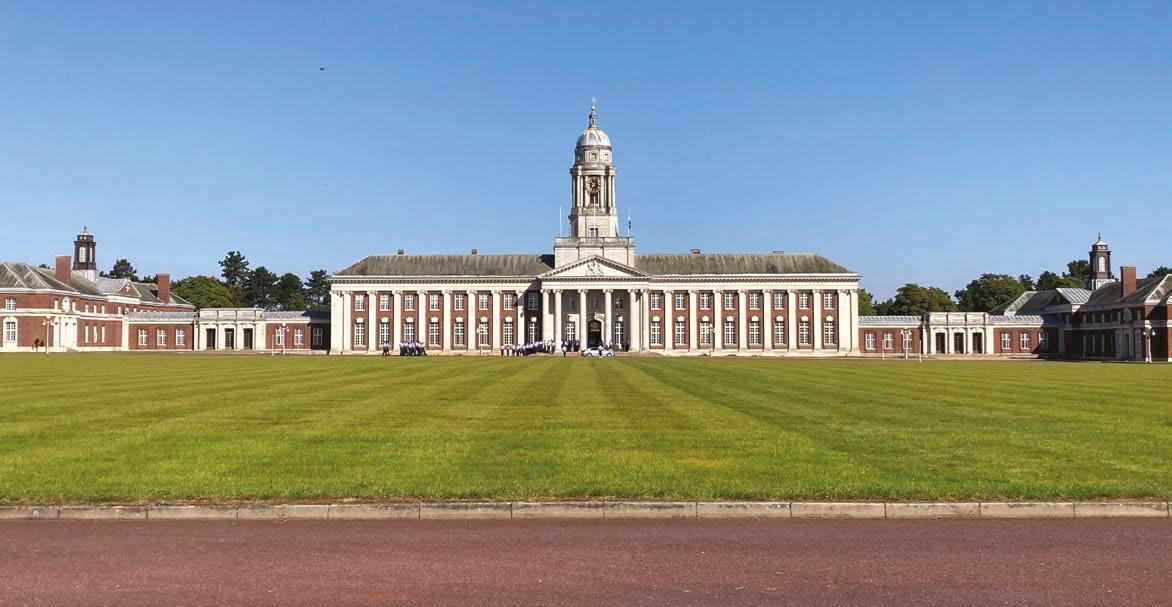
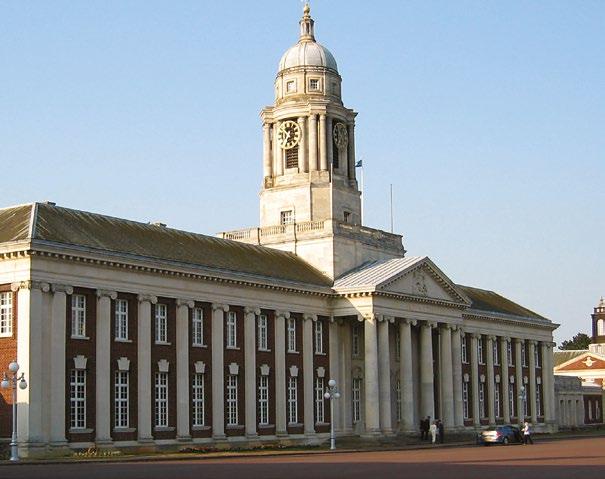
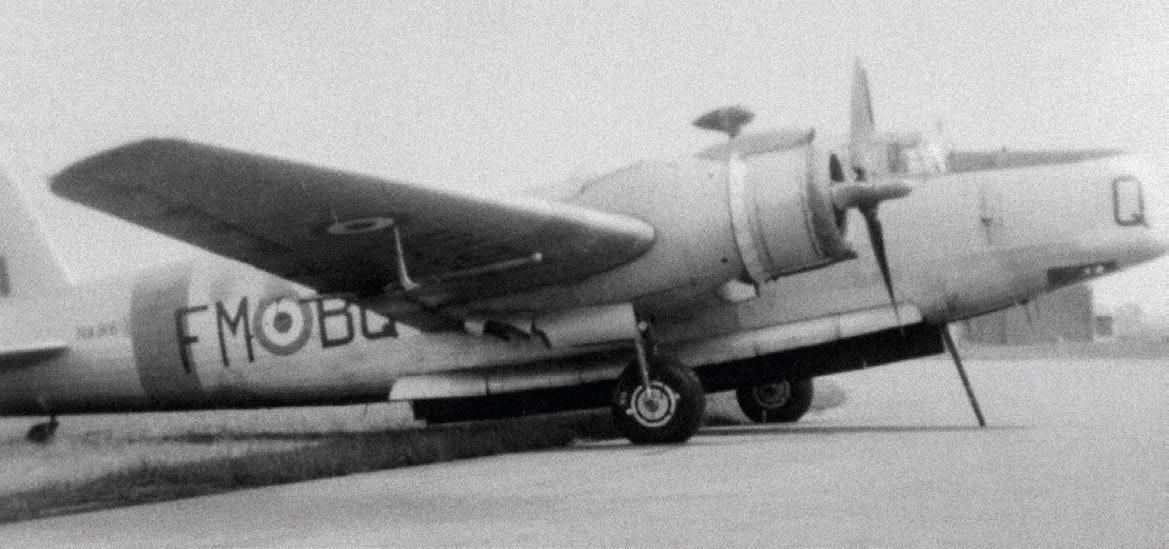
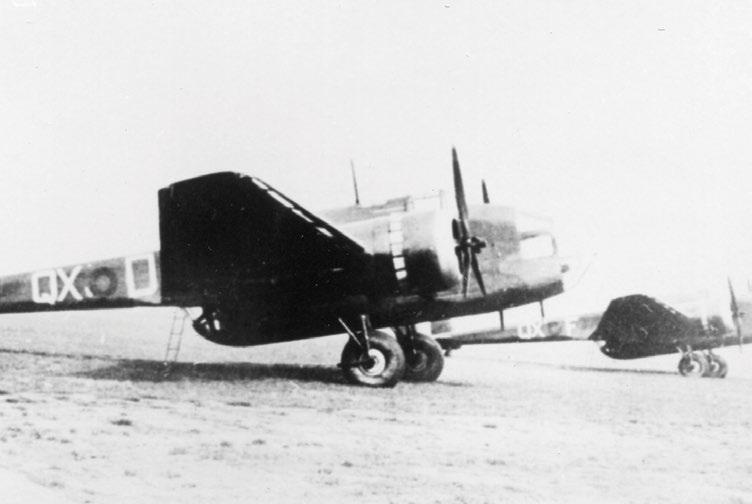
By this time College Hall was nearly complete. A Wren inspired building designed by James West, it is sited on the original flying field. Many of the hangars and classrooms south of the B1429 were also finished at about this time. The training function remained at Cranwell throughout World War II. During that war at least 36 aircraft were written off at, or near Cranwell - a chilling reminder of the hazards of flying training. A Whitley of No. 3 Operational Training Unit (OTU) collided with the roof of College Hall in fog on 18 March 1942.
On 11 April 1940, Cranwell’s medical unit took over the nearby Kesteven Mental Hospital which became No.4 RAF Hospital Rauceby serving wounded pilots and aircrew flying from Lincolnshire. The crash and burns unit was under the control of the excellent burns specialist Squadron Leader Fenton Braithwaite. The pioneering plastic surgeon, Archibald McIndoe, regularly visited Rauceby to perform operations and many of the patients became members of his famous Guinea Pig Club. In 1947 the hospital returned to its previous role and was subsequently closed in 1998. A memorial scroll and plaque commemorate the respective roles of RAF Rauceby Hospital and the crash and burns unit.
Britain’s first jet plane flew from Cranwell. The Gloster E28/39, popularly known as the Pioneer or Whittle, flew westwards from Cranwell’s southern airfield on the evening of 15 May 1941. P.E.G. Sayer, Gloster’s chief test pilot was at the controls. Air Commodore Frank Whittle, an old ...
College Hall, Cranwell
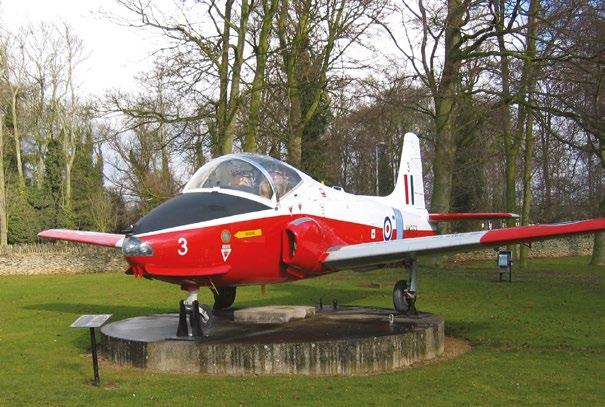
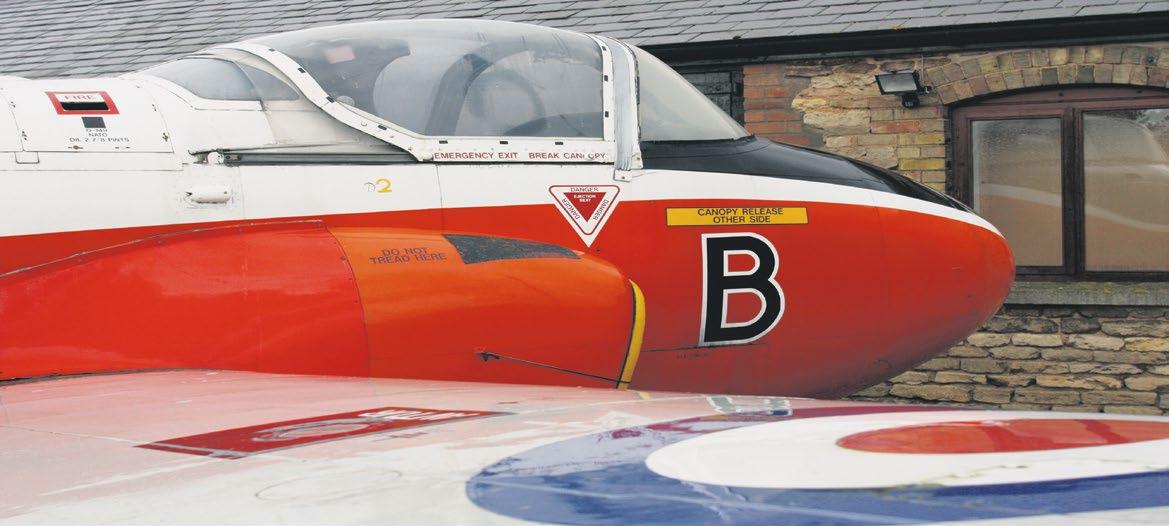
Jet Provost on gate guard duties
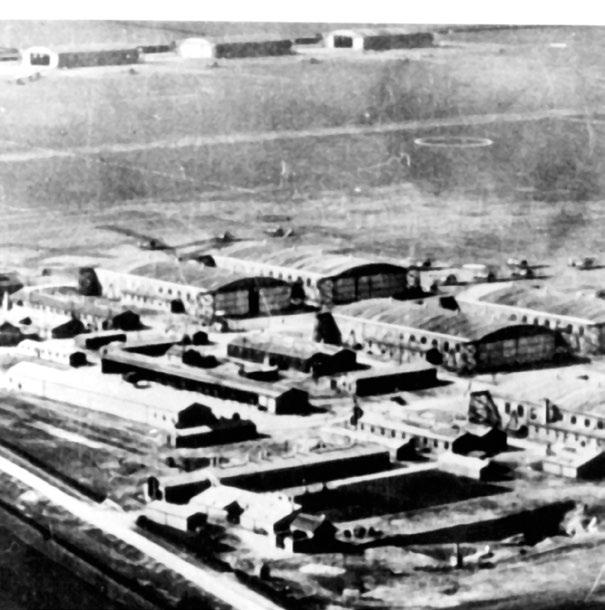
Early aerial view of Cranwell airfield
…Cranwellian, had developed its revolutionary engine which was manufactured at Lutterworth in Leicestershire.
The aircraft flew from Cranwell a further fifteen times and was occasionally dispersed to RAF Balderton, Notts. It was then dismantled and taken to Edgehill in Warwickshire. It is now displayed in the Science Museum in London. Its successors were the twinengined F9/40, which first flew from Cranwell on 5 March 1943, and the Gloster G41 Meteor which saw service at Cranwell from May 1948 onwards.
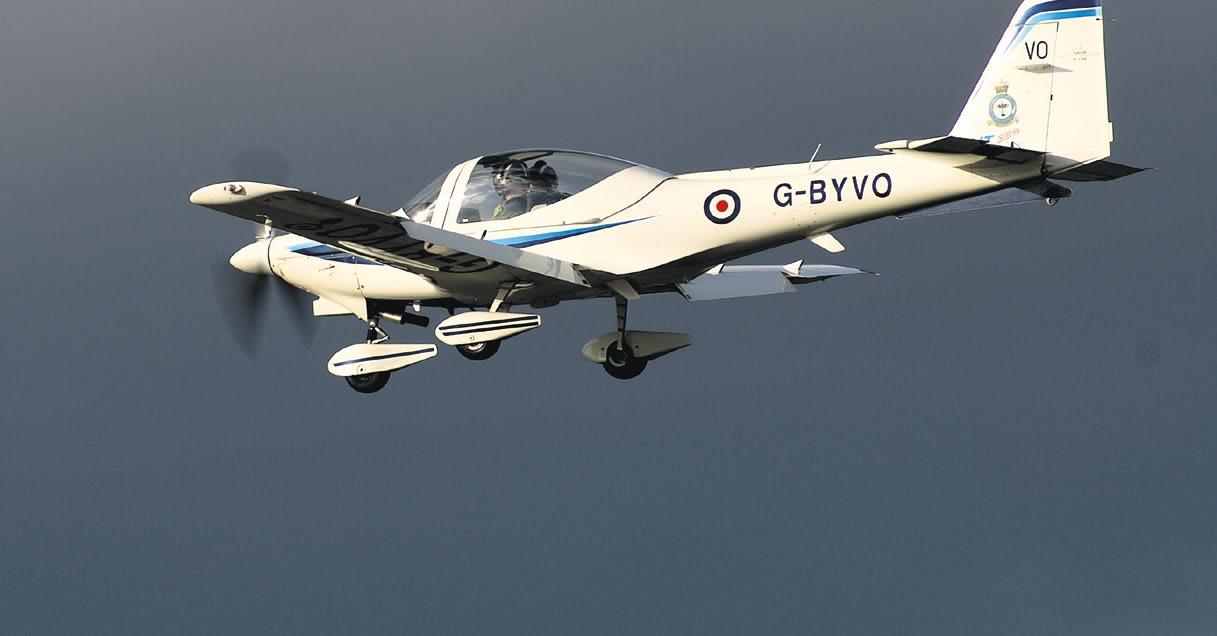
In 1987, the Flying Training School (FTS) at the Royal Air Force College was reorganised at RAF Cranwell. Many aircraft types have been in service here: Avro Tutors; North American Harvards; de Havilland Vampires; Jet Provosts; Tucano and the Bulldog. A Jet Provost is displayed near the gate of RAF Cranwell.
RAF College Cranwell was the world’s first Air Academy and today, it continues to select and train the next generation of RAF officers.
Additionally, it is home to RAF Recruitment, RAF Air Cadets, No 3 and No 6 Flying Training Schools, Central Flying School, Air Warfare School, the Tedder Leadership Academy and Robson Academy and the Band of the RAF College.
On base there is the RAFC Cranwell Heritage & Ethos Centre, where visitors can see artefacts and display boards focussed on aviation history at RAF Cranwell.
A short distance from the College, across the A17 on the minor road to North and South Rauceby, is the Cranwell Aviation Heritage Museum.
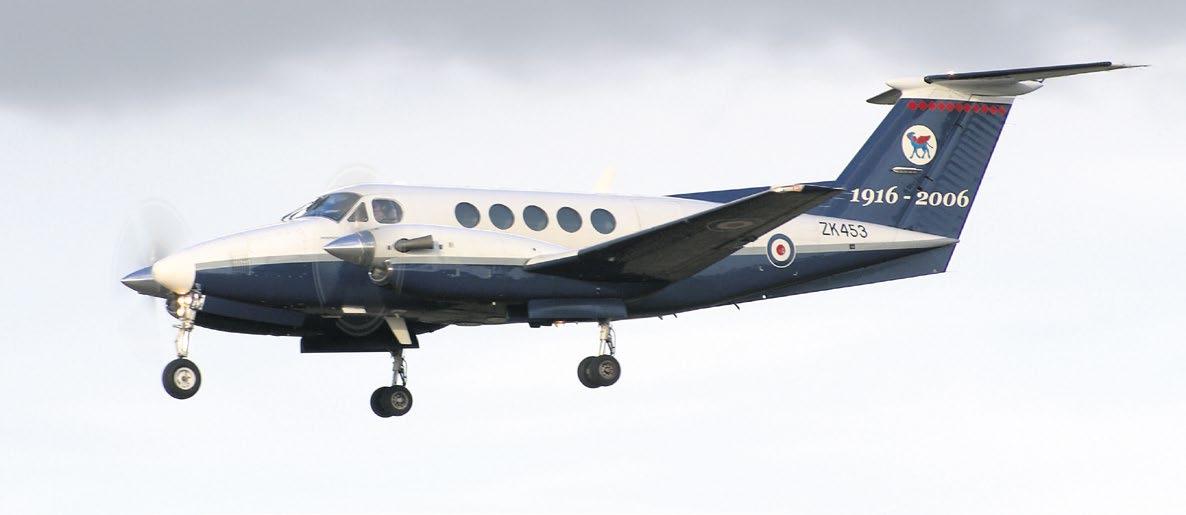
King Air landing at RAF Cranwell
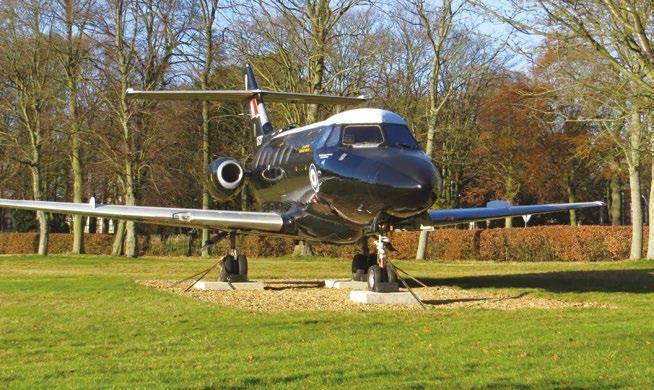
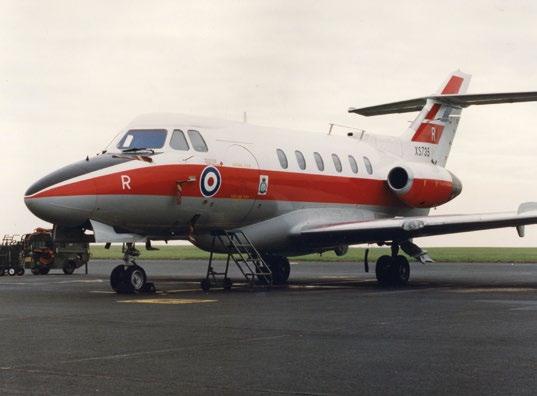
Hawker Siddeley Dominie T1 XS735 No 6 Flying School RAF Finningley
Cranwell Aviation Heritage Museum
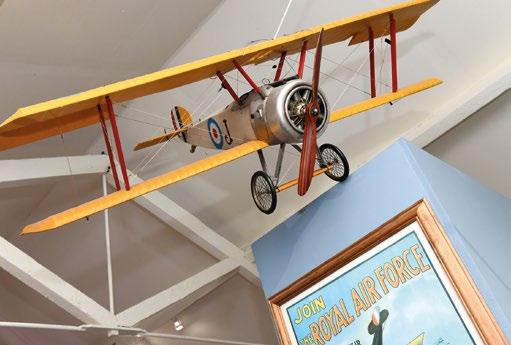
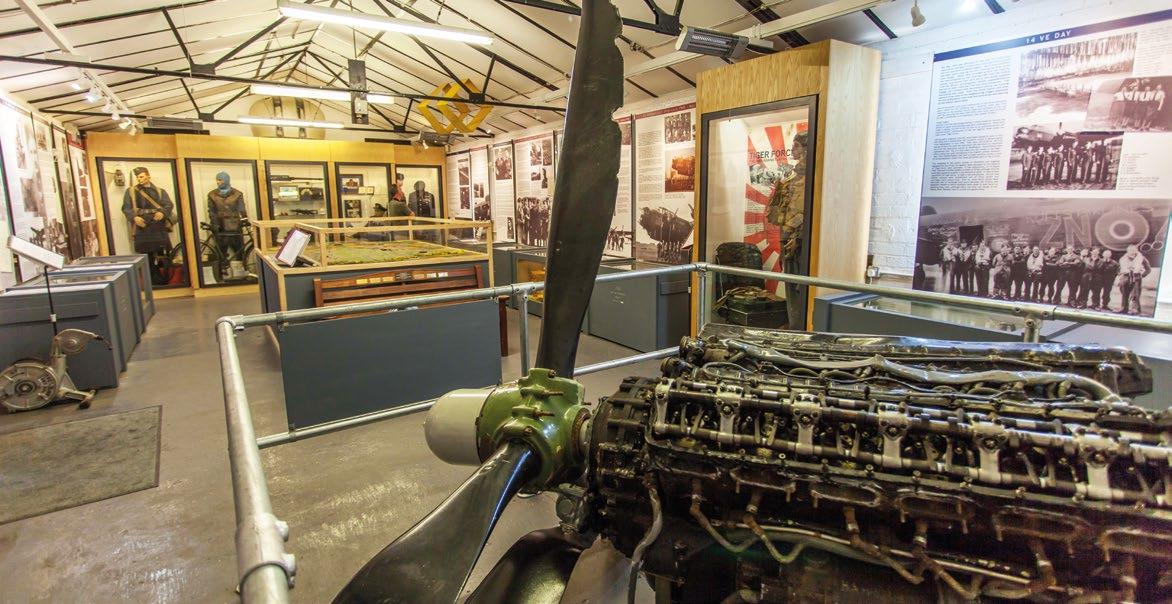
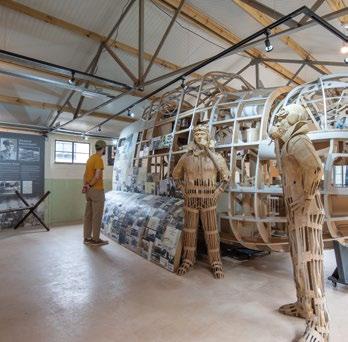
The Royal Air Force College at Cranwell is a famous landmark in RAF history. A fascinating exhibition recalls in words and photographs the early years of the airfield from its origins as a Royal Naval Air Service Station and the establishment of the College as the first Military Air Academy in the world to the present day. The museum also has a changing programme of exhibitions that explores the fascinating world of aviation history. Visit their website for further details.
Location
North Rauceby, Nr Cranwell, Sleaford NG34 8QR
Information
¤ Open: All Year; Friday, Saturday, Sunday and Monday, 10am to 3.00pm (last entry 2.30pm).
¤ Group visits are welcome Tuesday to Thursday by arrangement.
¤ Admission to main exhibition is free however there will be a modest charge for group / school visits.
¤ Contact: 01529 488490
¤ cranwellaviation@n-kesteven.gov.uk
¤ www.cranwellaviation.co.uk
View inside Cranwell Aviation Heritage Museum
RAFC Cranwell Heritage & Ethos Centre
Solely run by volunteers, the RAF Cranwell Heritage & Ethos Centre houses artefacts and exhibitions covering Flying Training at Cranwell and the Central Flying School over the last 100 years. The centre pays tribute to the personnel who strived through adversity to succeed in the RAF. Located close to the RAF Cranwell Main Guardroom, the Centre is open by appointment only during working hours.
Location
RAF Cranwell, Sleaford, NG34 8HB
Information
¤ Open: By appointment only. Group visits are welcome by prior arrangement.
¤ Contact: CRN-PECH-HEC@mod. uk (enquiries) or CRN-RAFCHandE-CentreBookings@mod.uk (bookings)
¤ Admission: Free. Donations welcome
Digby
This station began life as RAF Scopwick training aerodrome in World War I; however the name was changed to Digby in 1920 (TF 045570) following confusion with another station. Digby is no longer an active airfield.
Seven large hangars were completed by the end of 1918 although until the mid 1920s few aircraft were in residence for any length of time. Such memorable types as the Siskin and Vickers Vimy bomber saw service with No.2 Flying Training School (FTS), which had moved north from Duxford.
In the mid-1930s, training continued with more streamlined types such as the Hawker Hart and Fury and two hangars, one still evident today, replaced the seven earlier structures. Some of the married quarters were also constructed at this time of rising international tension.
Location
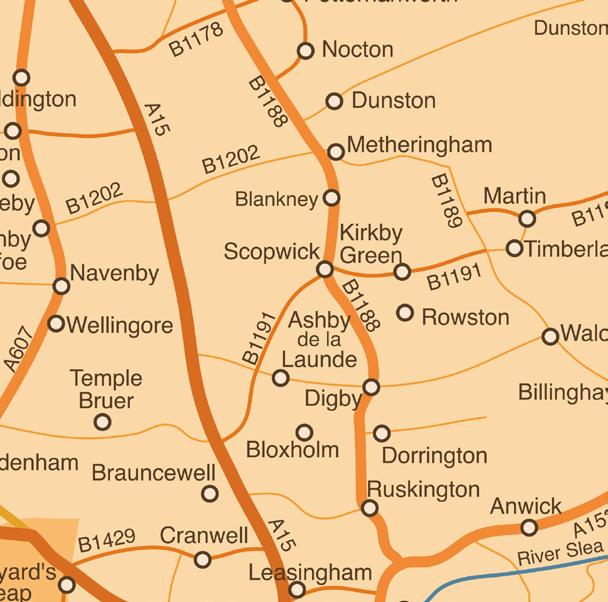
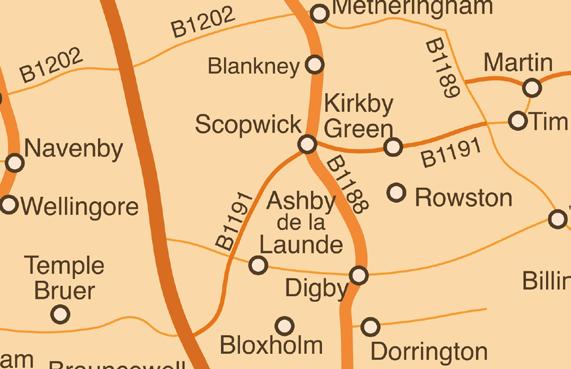
RAF Digby is located just off the A15 road on the B1191 between Ashby de la Launde and Scopwick.
Late in 1937 control of the grass airfield passed to 12 Group Fighter Command. 2 FTS had moved south allowing 46 and 72 Squadrons to fly Gloster Gauntlet and Gloster Gladiator biplanes from Digby. Before the outbreak of war both squadrons had reequipped with the new Hawker Hurricane. After performing admirably in Norway, destroying many German aircraft, sadly eight of the ten Hurricane pilots of 46 Squadron died when the carrier HMS Glorious was attacked and sunk by the pocket battleship the Scharnhorst when returning from Norway in June 1940.
At the start of the war Digby had the unfortunate distinction of being one of the first Lincolnshire airfields to be attacked by the Luftwaffe. The Royal Welch Fusiliers and members of the RAF Regiment manned the anti-aircraft guns and pill-boxes to protect the station.
Within three weeks the squadron, using newly-qualified pilots, many of whom had less than ten hours on type, had reformed as an active squadron now equipped with Spitfires at Digby.
Many other squadrons saw service here before the Battle of Britain drew them southwards to defend London. The Blenheims of 29 Squadron claimed two Heinkel 111 bombers during night operations in August 1940. Flying Officer Guy Gibson (then flying Beaufighter nightfighters with 29 Squadron) was awarded his DFC.
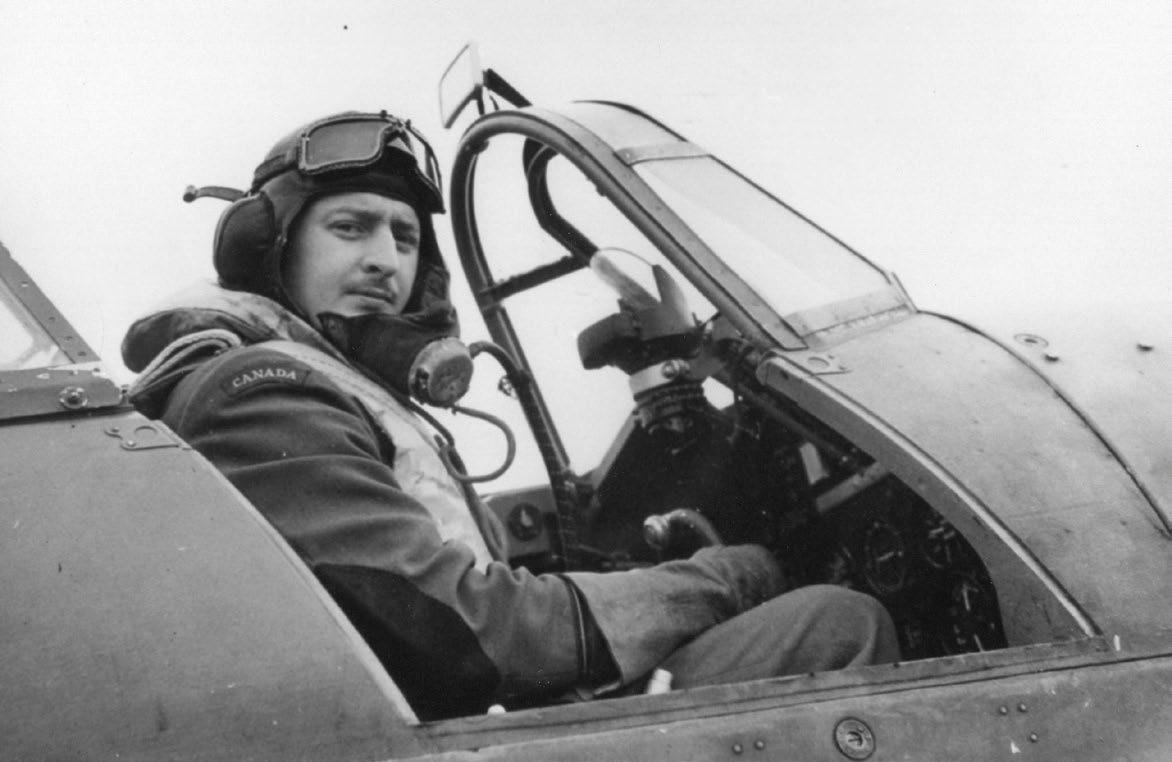
On 11 December 1940, a group of Canadian officers arrived at Digby to form 2 Squadron (RCAF), later renumbered 402 (RCAF). In all eleven Canadian Squadrons flew Hurricanes
Spitfires and Defiants in an air defence role from Digby and its two satellite airfields at Wellingore and Coleby Grange. The airfield became an official Canadian Station known as RCAF Digby on 16 September 1942 and to this day the station crest bears a maple leaf in recognition of this important connection.
Key dates
¤ World War I – major construction work towards the end of the war.
¤ Inter-War years – Training roles with 2FTS.
¤ World War II – Fighter Command role; 46 Sqn; 72 Sqn; 29 Sqn; 2 Sqn RCAF; 203 Sqn RCAF.
¤ Cold War – Training role, then followed by signals role.
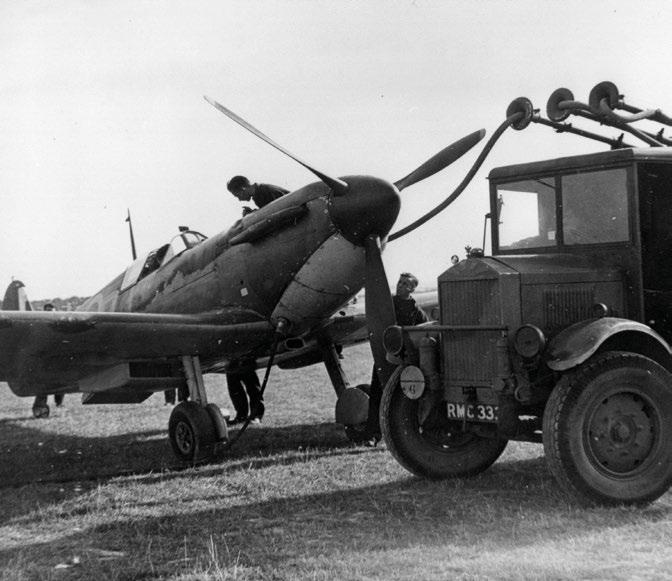
Spitfire being refuelled at RAF Digby
In the latter half of the war Belgian, Polish and Czech nationals also flew Spitfires from this base which had served as a sector (regional) Command Station. Late in 1944, after the Canadians had departed as the 144 Fighter Wing under the command of Johnnie Johnston to support the Allied thrust through France. Digby was left with two squadrons to guard against any sneak attack at vital targets in the area. In addition, a range of aircraft undertook radar calibration work up to the end of the war.
Flying training was reinstated in January 1946 using Tiger Moths. This type was still in use for training purposes until 1952, grading cadets prior to their formal flying training, a role performed by the Elementary Flying Training Squadron at Swinderby some forty years later.
Following a brief period as a Technical Training unit, the role of the Station changed yet again in 1955 with the arrival of No. 399 Signals Unit. This was later joined by 591 Signals Unit and the Aerial Erectors School.
No. 399 Signals Unit changed its name to the Joint Service Signal Unit on 15 September 1998, reflecting its tri-service composition. On 1st April 2005 the Unit became the Joint Service Signals Wing (JSSW) Digby. On 1st August 2008 the Unit changed its name back to the Joint Service Signal Unit (D). The Station has a rich RAF heritage with former Station Commanders including ACM Sir Arthur ‘Bomber’ Harris, MRAF Lord Tedder and ACM Sir Trafford Leigh-Mallory.
Currently, the Station is home to HQ Joint Cyber and Electromagnetic Activities Group (JCG) A UK StratCom organisation which provides signals support to the three services on operations around the world.
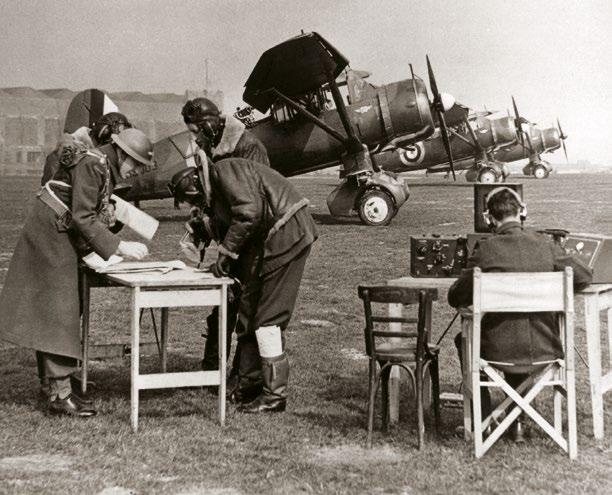
288 Squadron Lysanders at RAF Digby
Type C Hangar being erected at RAF Digby 1935
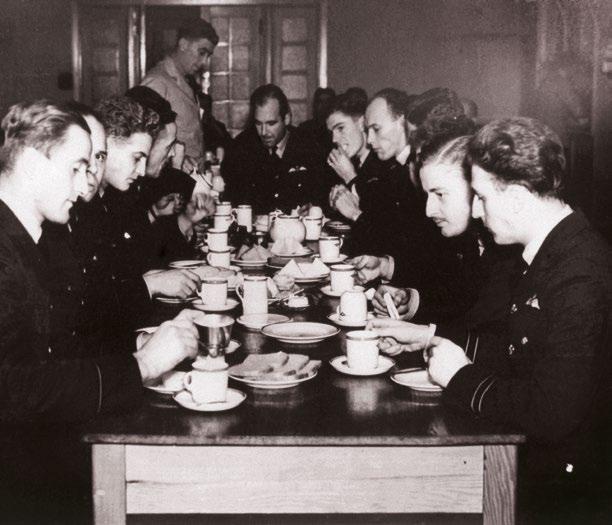
Canadian Officers in the Mess at RAF Digby
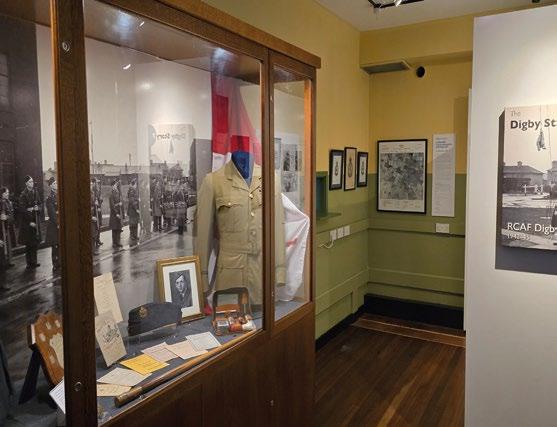
RAF Digby Ops Room Museum
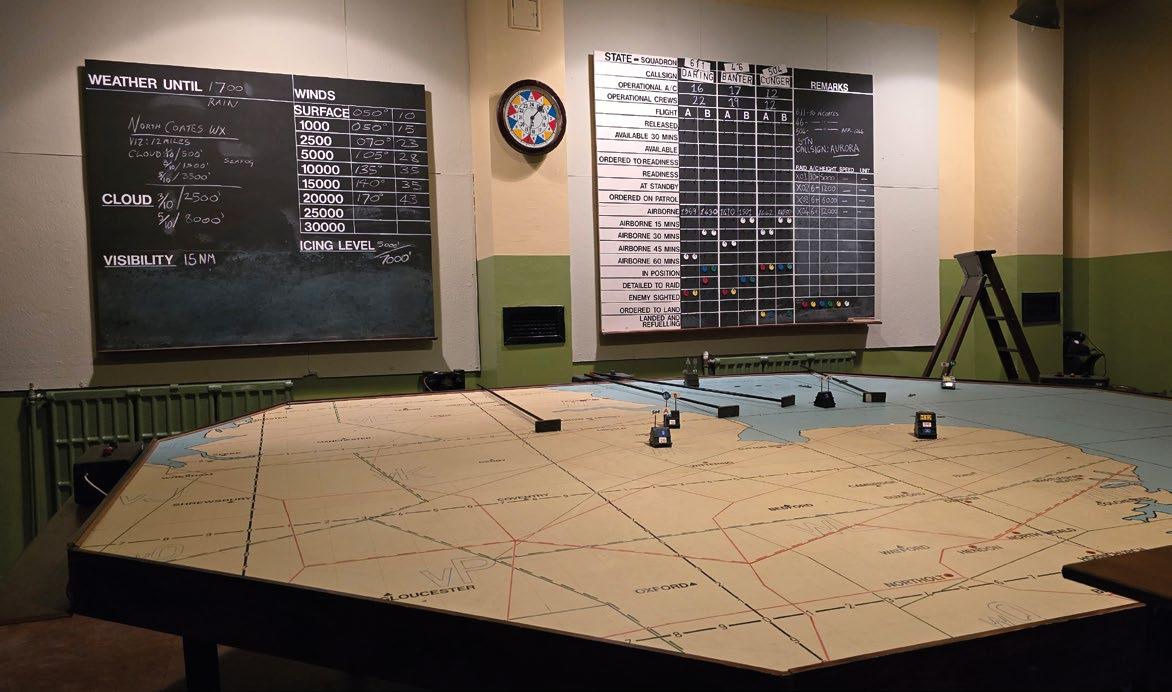
An original, restored 1938 Fighter Command Sector Operations Block which was in use from 1939 to 1941; active before, during and after the Battle of Britain.
Its unique collection of historical objects, documents and photographs tell the rich and fascinating history of RAF Digby from 1918 to 1945, and of the role of the Operations Room. Staffed solely by a team of volunteers, the museum re-opened in May 2025 following a comprehensive renovation.
Location
RAF Digby, Near Scopwick, Lincoln LN4 3LH
Information
¤ Guided tours – by prior booking.
¤ For further details and bookings, please e-mail the visits co-ordinator at enquiries@opsroommuseum.co.uk
¤ Cost – free, donations welcome
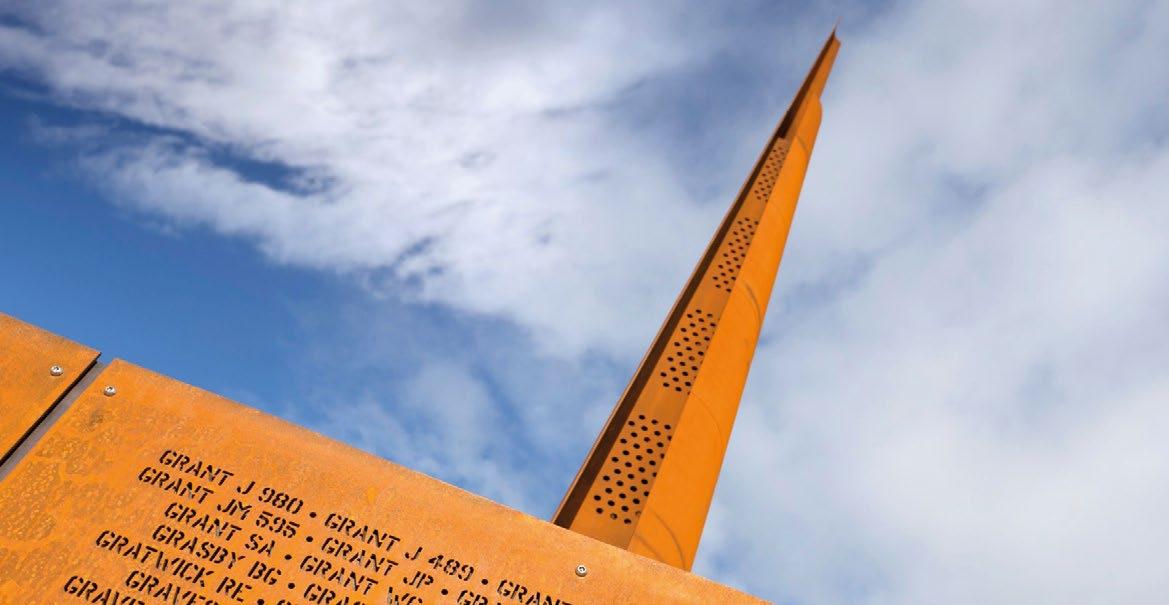
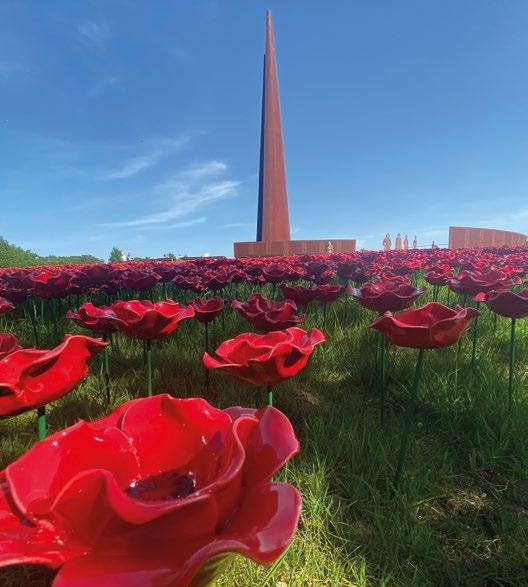
International Bomber Command Centre
The International Bomber Command Centre (IBCC) is a world-class facility to serve as a point for recognition, remembrance and reconciliation for Bomber Command. Providing the most comprehensive record of the Command in the world, the IBCC ensures that generations to come can learn of their vital role in protecting the freedom we enjoy today. Using interactive and immersive exhibitions it tells the stories of those who were there, on all sides.
Location Canwick Avenue, Lincoln, LN4 2HQ
Information
¤ Open Tuesday to Sunday – 9.30am to 5pm.
¤ Closed Mondays except Bank Holidays.
¤ Contact: 01522 514755
¤ www.internationalbcc.co.uk
¤ info@internationalbcc.co.uk
Leadenham
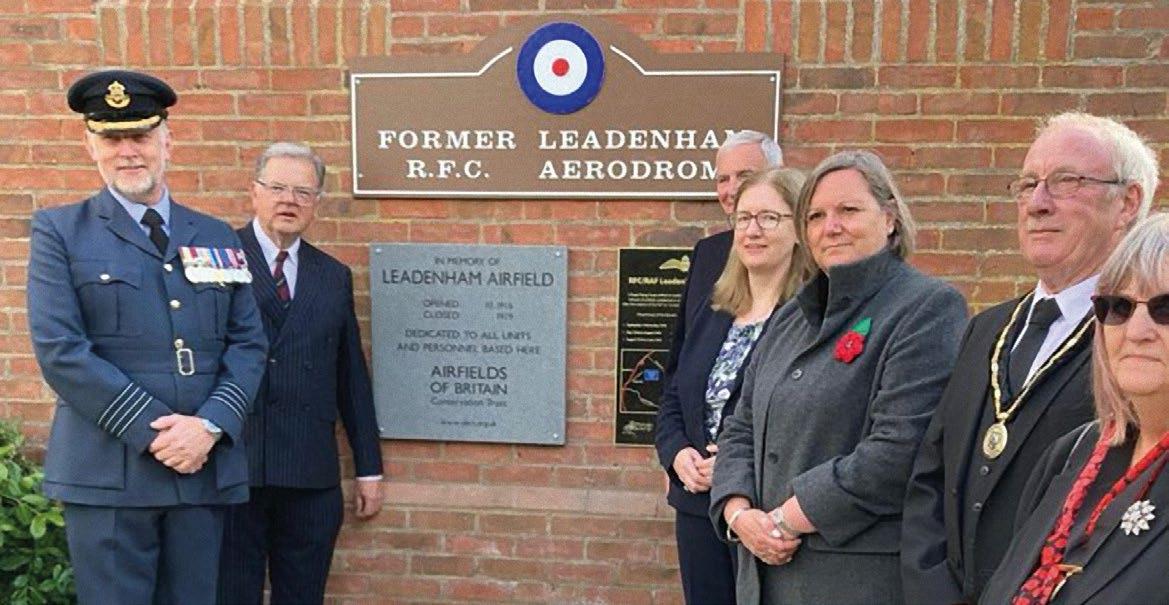
The site, deliberately selected on the crest of the Lincoln escarpment, provided airstrips up to 3,500 feet (1,0667m) long. The first aircraft in residence were four BE2e biplanes constituting C Flight of 38 Squadron. Sheltered by two hangars their task was air defence against the Zeppelin threat. The Zeppelins tended to overfly England by night and no interceptions were made.
After twenty months defending the eastern counties, the Squadron, now with FE2b aeroplanes, was posted to the Dunkirk area in May 1918 with a night bombing task.
The squadron motto “Before the Dawn” hints at the eerie tension that these early nocturnal aviators must have experienced. Instrumentation was severely limited and there were no radio or radar facilities. Some searchlights were positioned at the airfield’s north-western corner and the concrete bases upon which they were mounted can still be seen in the woodland close to the roadside.
Location
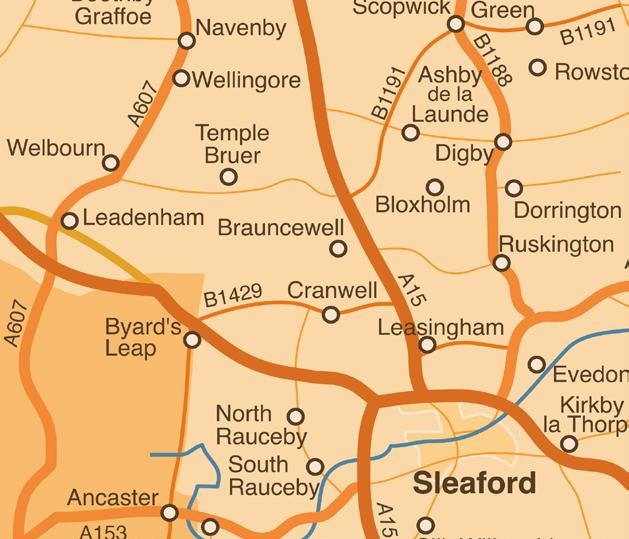
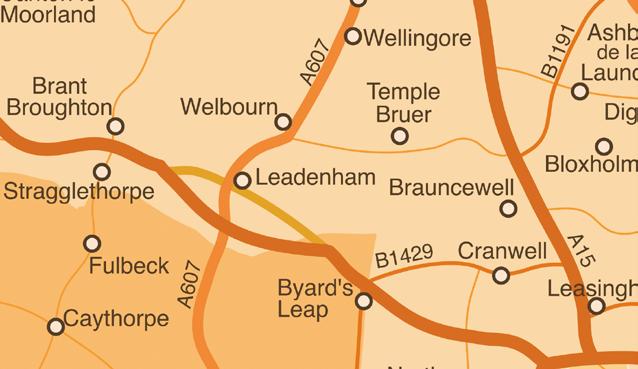
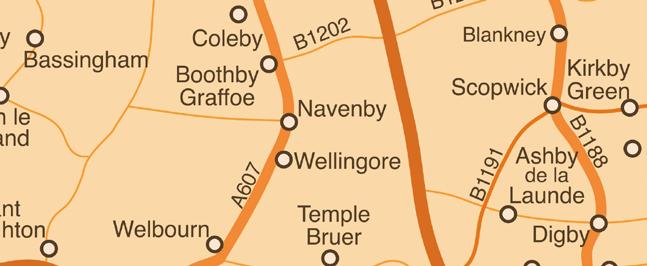
To reach the site of Leadenham airfield, follow the A17 towards Newark taking the right turn onto the signed A607 Lincoln and Grantham and then right again signed Navenby. The third field on the right (just past the Brauncewell turn) was once in the south eastern corner of Leadenham’s 86 acre (34.80 hectare) aerodrome.
Key Dates
World War I – 38 Sqn.
Metheringham
The airfield appears to have been laid out to take advantage of a shallow island of sand and gravel which stands some 50 feet (15.24m) above the level of the adjoining fens. The main runway, nearly north-south in orientation and over one mile (1.61km) in length, was amply suited to use by heavily laden bombers.
In 1943 Alderman George Flintham MBE and his fellow farmers were given only 48 hours-notice to remove their household belongings, livestock and equipment from the chosen site. Oak, birch and rhododendrons were soon uprooted, and the farm buildings demolished.
The site was ready for service by late October and Lancasters arrived on 11 and 12 November 1943. This was 106 Squadron, motto “For Freedom”, who one week later sent a contingent of 18 aircraft to raid Berlin. Four months and…
Location
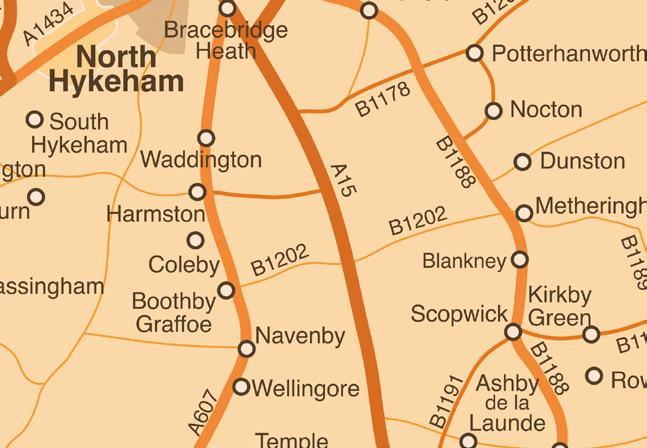
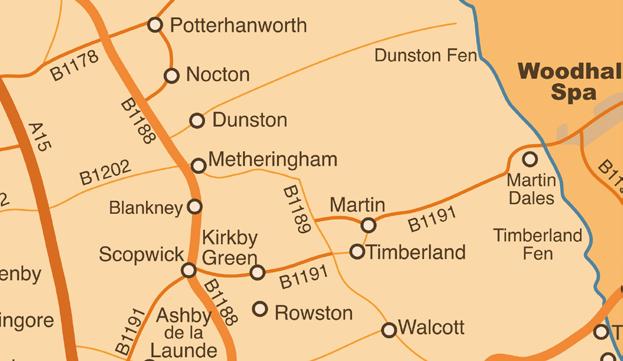
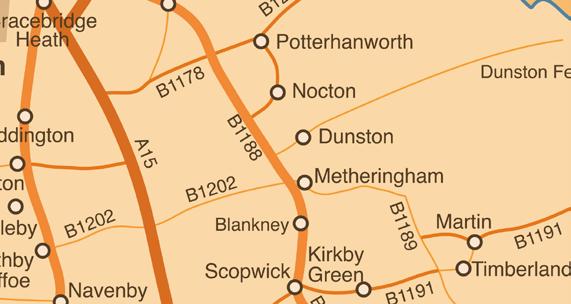
Metheringham village can be approached from the A15 road along the B1202. Take the B1189 road in an easterly direction and after a bend in the road turn left towards Blankney Fen. Here the remains of RAF Metheringham can still be seen where two public roads also follow the tracks of a runway and taxiway.
... fifteen raids later, during which 492 RAF bombers failed to return, over three square miles of that city had been devastated.
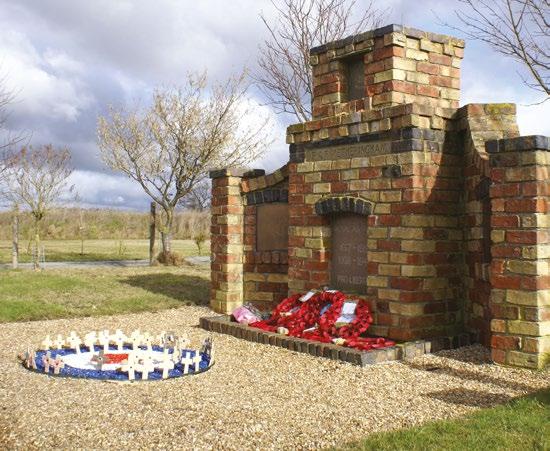
A plaque and Book of Remembrance to 106 Squadron may be seen near the west window inside Holy Trinity Church in the village of Martin. The 106 Squadron memorial service takes place at this church, annually, in the summer. A memorial has also been erected on the site of the airfield.
During the following summer 106 Squadron undertook its first daylight raid and a fog dispersal system known as FIDO became operational alongside the main runway. This landing aid was also fitted at fourteen other airfields in the UK; it involved pumping and burning 1,500 gallons of petrol per minute through perforated pipes lining the runway edges. It took twenty minutes to light an installation and clear the initial smoke.
Group Captain McKechnie, the Station Commander, died on a raid in late August in one of the 57 Lancasters lost from Metheringham operations. Fighter avoidance duties were practised from autumn onwards using Martinets, Spitfires and Hurricanes.
The NAAFI (Navy, Army and Air Force Institutes) provided a focal point for the social activities of upwards of 1,000 airmen and women. It had a large restaurant which had a variety of uses including cinema shows presented by ENSA (Entertainments National Service Association) and the Canadian Salvation Army. Weekly dances were popular and raised funds for causes such as the 5 Group ‘Prisoner of War’ fund. A combined cinema and concert hall was completed in March 1944 which featured up to date films, touring ENSA shows and performances by the station’s own concert party and dramatic society.
Victory in Europe was secured by 8 May 1945. No sooner had the fighters vacated Metheringham than the predominantly Australian 467 Squadron brought its Lancasters from Waddington to form part of “Tiger Force” in conjunction with 106 Squadron. The B-29 attacks on Japan culminating with the atomic bombs brought the Pacific War to a sudden if horrific close and “Tiger Force” was therefore disbanded. Its formation had brought the Metheringham establishment to a peak of 2,000 personnel. A clock and memorial marking the sacrifice of 467 and 463 Squadrons has been erected in tribute near Waddington’s church.
Photographs and memorabilia can be seen at the Metheringham Airfield Visitor Centre and memorial garden. The Centre, situated in a building that formed part of the domestic site, commemorates the role of the airfield and 106 Squadron. Regular events are held at the Centre, which is now home to a Jet Provost trainer, which can be ground run; and a Dakota troop carrying aircraft.
Key dates
World War II – 106 Sqn and 467 Sqn (Tiger Force).
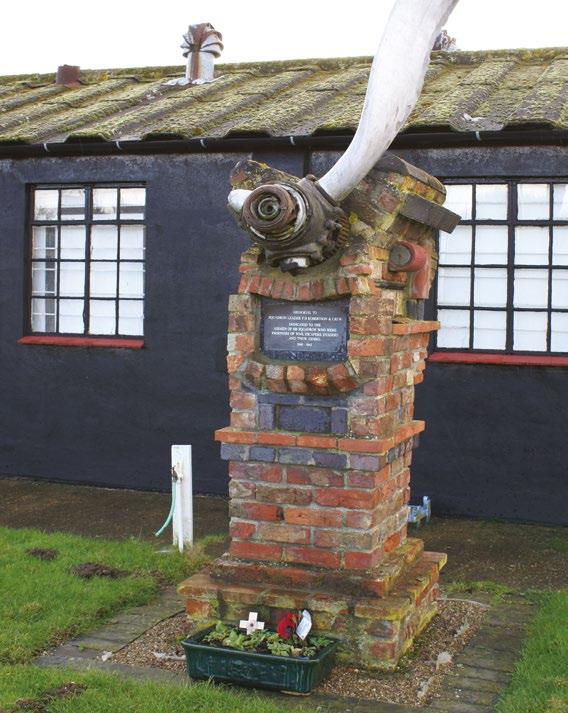
RAF Metheringham memorial
An impressive memorial can also be found on the old airfield; on leaving the Visitor Centre at the exit junction onto the main road follow the road opposite you and then take the first left turn signed to Blankney Fen. Follow this old airfield peri-track for approximately one mile to the memorial.
Close to Metheringham is the site of Nocton Hall. During World War I the Hall was used as a convalescence home for wounded American Officers. It opened officially as an RAF site in 1940 and in 1943 was taken over by the US Army renamed as US Army Seventh General Hospital. At the end of World War II the RAF selected the Hall as its hospital for Lincolnshire and extensive developments were completed before it closed in 1983.
The site was again leased to the USAF between 1984 and 1995. During Gulf War One casualties were treated there. The site is now privately owned.
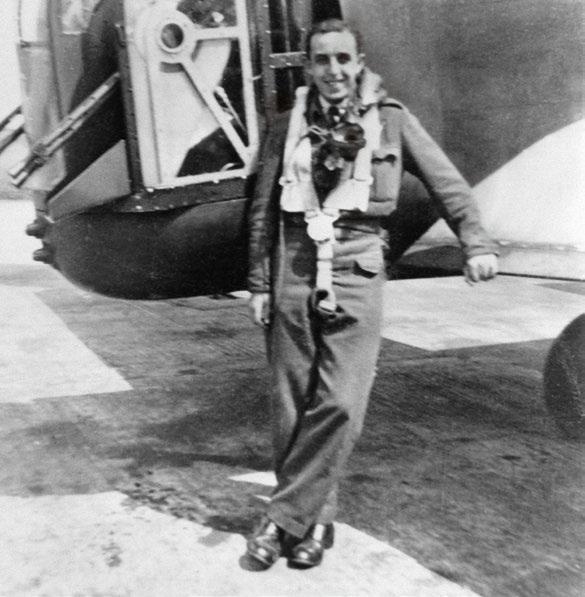
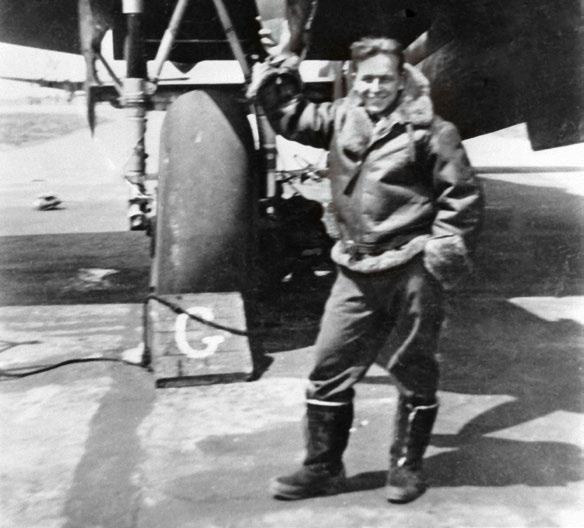
Aircrew member at RAF Metheringham
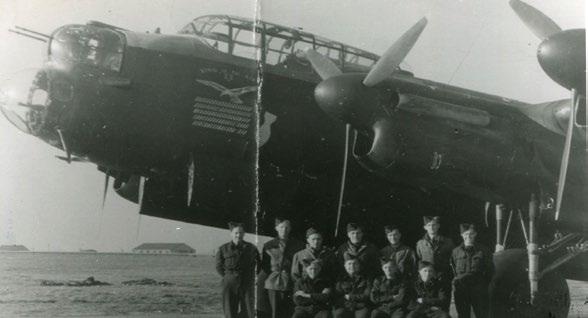
King of the Air Lancaster 106sqn WW2
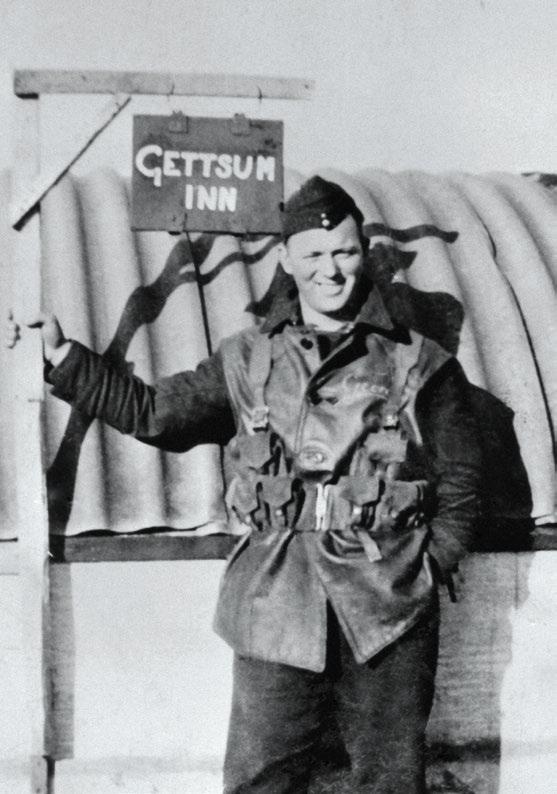
RAF Metheringham ‘Get Sum Inn’
Rear gunner pictured at RAF Metheringham
Metheringham Airfield Visitor Centre
The Visitor Centre recalls life on an operational airfield honouring 106 Squadron. Includes a restored gymnasium and other buildings, which contain artefacts, where a season of lectures and other events are held.
Location
Westmoor Farm, Martin Moor, Metheringham LN4 3WF
Information
¤ Open: Last week in March to the end of October; Wednesdays 10am to 4pm, Saturdays, Sundays and Bank Holidays 11am to 5pm. Group visits at other times by arrangement.
¤ www.metheringhamairfield.co.uk
¤ Tel: 07486 947095
Scopwick
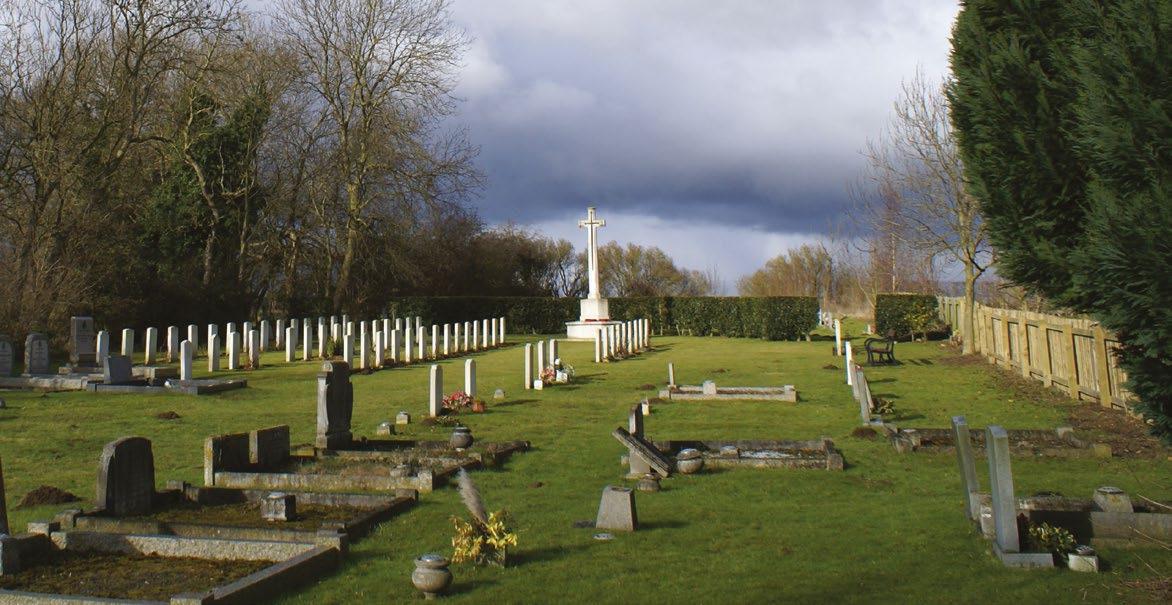
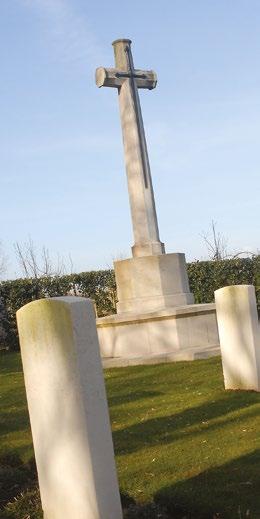
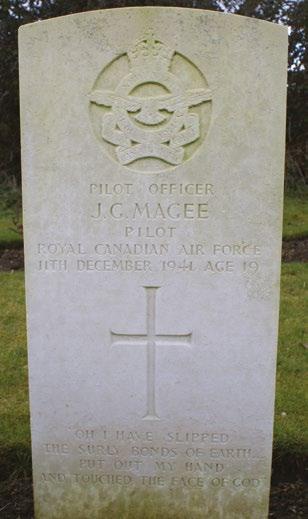
Several British, American, Canadian and German airmen are buried in the Scopwick Commonwealth Graves Cemetery adjoining Vicarage Lane. Also buried here is a 19 year old, Pilot Officer John Gillespie Magee, an American volunteer with 412 Squadron RCAF who is remembered for his poignant poem ‘High Flight’. The verse can be read in Scopwick Parish Church. If the church is closed information regarding obtaining key can normally be found on the notice board.
Location
Scopwick village is located on the B1191 road between Digby and Metheringham.
Information
Follow local signs to locate the Commonwealth War Graves and associated car park.
Washingborough
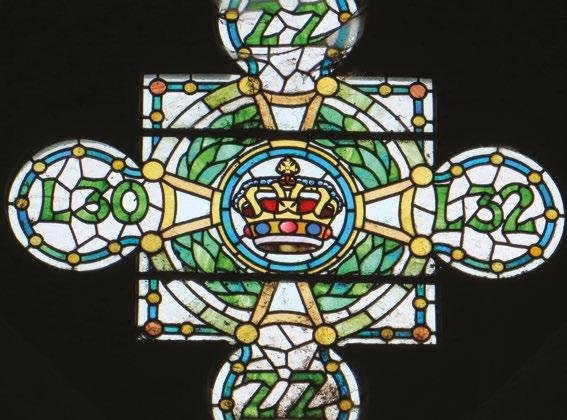
Eight identical stained glass windows in Washingborough Parish Church commemorate a Zeppelin raid suffered by the village in September 1916. They depict a crown surrounded by a wreath with the letter Z used in design and the numbers of two Zeppelins which carried out the raid.
Location
Washingborough village is located on the B1190 road heading out of Lincoln towards Bardney.
Information
Visits to the church by prior arrangement with the vicar.
Skellingthorpe
When 50 Squadron arrived at the newly opened airfield at Skellingthorpe on 26 November 1941 it was the beginning of an association that was to last until the end of the war. The Squadron brought its Handley Page Hampdens from RAF Swinderby and was soon joined at Skellingthorpe by Swinderby’s other resident unit, 455 Squadron, Royal Australian Air Force, also equipped with Hampdens. The Australian unit only remained for a short while, moving to Wigsley, Nottinghamshire, in February 1942.
About the same time, control of the airfield was passed to Swinderby and 50 Squadron began to re-equip with the new Avro Manchester, making its first operational use of the type on the night of 14 April 1942. At the end of the following month the Squadron contributed Manchesters to the first thousand bomber raid on Cologne. During this operation one of the Squadron’s pilots, Flying Officer Leslie Manser earned…
Location
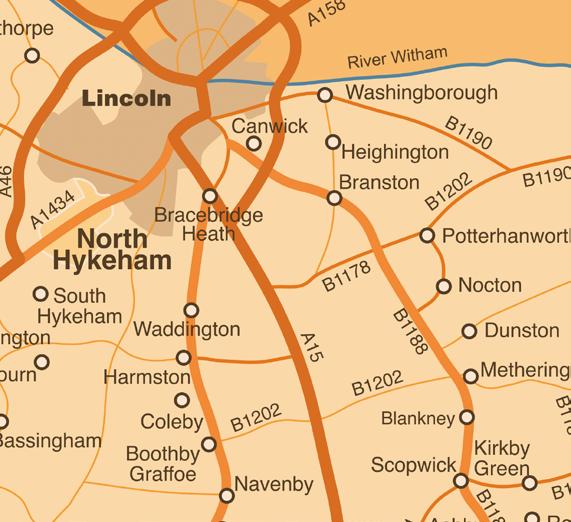
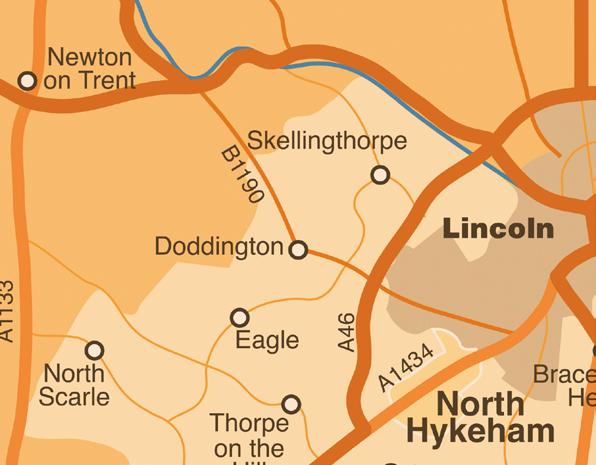
Most of the former airfield site has been taken up by the Birchwood residential development. Travelling north along the A46 bypass and the village of Skellingthorpe is situated west of the A46 and Birchwood to the east.
… a posthumous Victoria Cross for his bravery in pressing on with his attack despite his damaged aircraft, and sacrificing his life so that the remainder of his crew could be saved.
In June 1942 the airfield was closed for runway repairs and 50 Squadron moved back to Swinderby for the summer; returning in September, by now equipped with the Avro Lancaster.
The Squadron operated alone until the end of August 1943 when it was joined at Skellingthorpe by a second line unit, 1485 (Bomber) Gunnery Flight, which brought a mixture of Wellington and Martinet aircraft to the airfield for training duties.
When 1485 Flight left in November 1943 it was replaced by a second front-line squadron. This was 61 Squadron equipped with Avro Lancasters. Except for a short period at the beginning of 1944 when 61 was moved to Coningsby, the two units operated as part of Main Force, Bomber Command until the end of hostilities when both units left the airfield.
July 1945 saw two new squadrons arrive to begin training for Tiger Force. 619 and 463 Squadrons began training but with the end of the war in the Far East both squadrons disbanded on the airfield. By the end of the war the airfield was closed with the last aircraft leaving in October 1945. In 1948 plans were drawn up to provide Lincoln with its own municipal airport using part of the airfield, but they never materialised.
A school built on the former main runway is called the Leslie Manser Primary School (Kingsdown Road) to commemorate Flying Officer Manser.
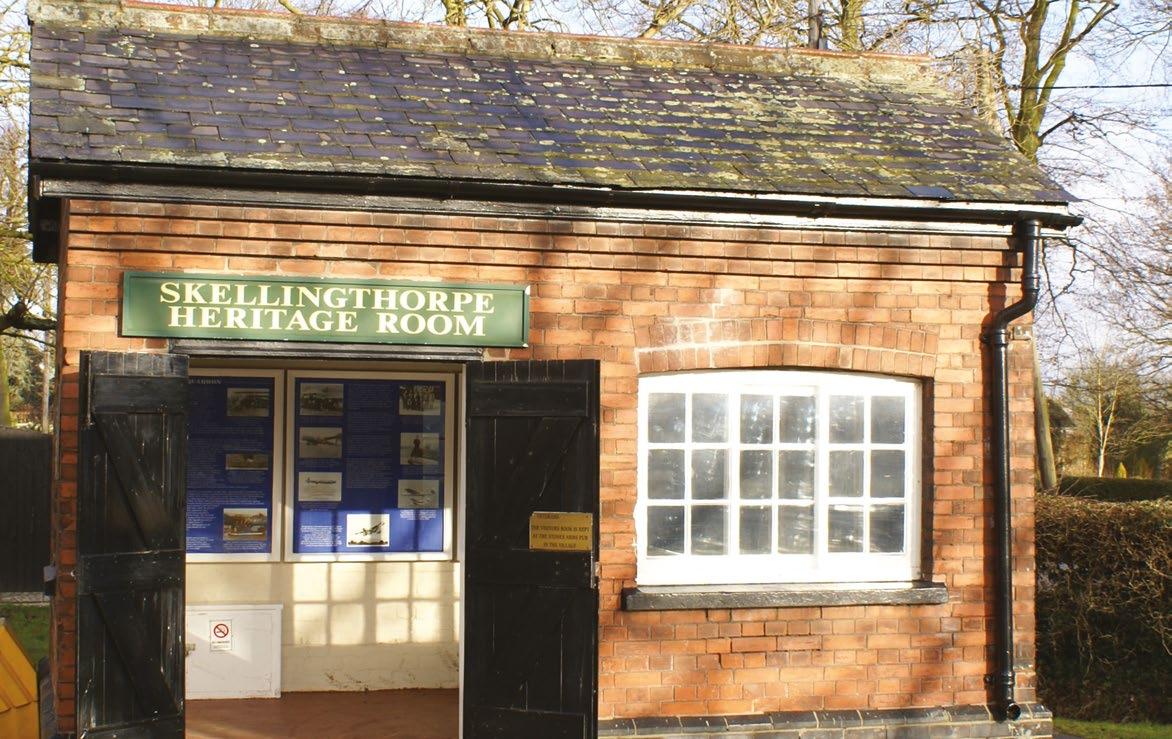
A memorial to the two squadrons can be seen near the Birchwood Leisure Centre (Birchwood Avenue). A further memorial is situated outside Skellingthorpe village community centre where an exhibition of photographs relating to the airfield can also be seen in the Heritage Room opposite.
A short walk from the village is Skellingthorpe Moor Plantation, the site of the bomb storage area. From the community centre, turn right and take the turning right into Waterloo Lane. Continue to the end of the lane and follow the public right of way across the field.
Key dates
World War II – 50 Sqn; 455 Sqn; 61 Sqn; 619 Sqn and 463 Sqn (Tiger Force).
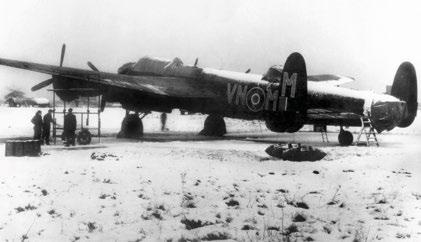
50 Squadron Lancaster at RAF Skellingthorpe
Armament Workshop staffs 1944 Skellingthorpe war memorial
Swinderby
‘Time’ was called for the last time at the Sir Isaac Newton pub which stood uncomfortably close to the threshold of runway 19, the autumn harvest was gathered in and eighty fields made way for a bomber base late in 1939. Aircraft did not arrive until August 1940 when the airmen of 300 (Polish) Squadron and 301 (Polish) Squadron flew thirty Fairey Battles in action. These Poles had already witnessed Nazi aggression on the continent. Their first raid by six aircraft was flown against Boulogne harbour on 14 September 1940.The airfield, located on Thurlby Moor, was named Swinderby simply to confuse the Luftwaffe as to its true location. One decoy airfield was laid out closer to Swinderby village; others existed at Bassingham and Brant Broughton. This was not enough to fox the Luftwaffe who damaged two aeroplanes and severed Group communications during a bombing…
Location
The former RAF Swinderby is best approached from the A46 dual carriageway and is located adjacent to Witham St. Hughs. The RAF station closed in 1993; some original hangars remain in industrial use, but sadly many of the original buildings on the main site were demolished.
… raid on 13 October. By the end of 1940, 32 Wellingtons had been delivered to replace the smaller Battle aircraft and RAF Winthorpe (now home to Newark Air Museum) had opened as a satellite airfield.
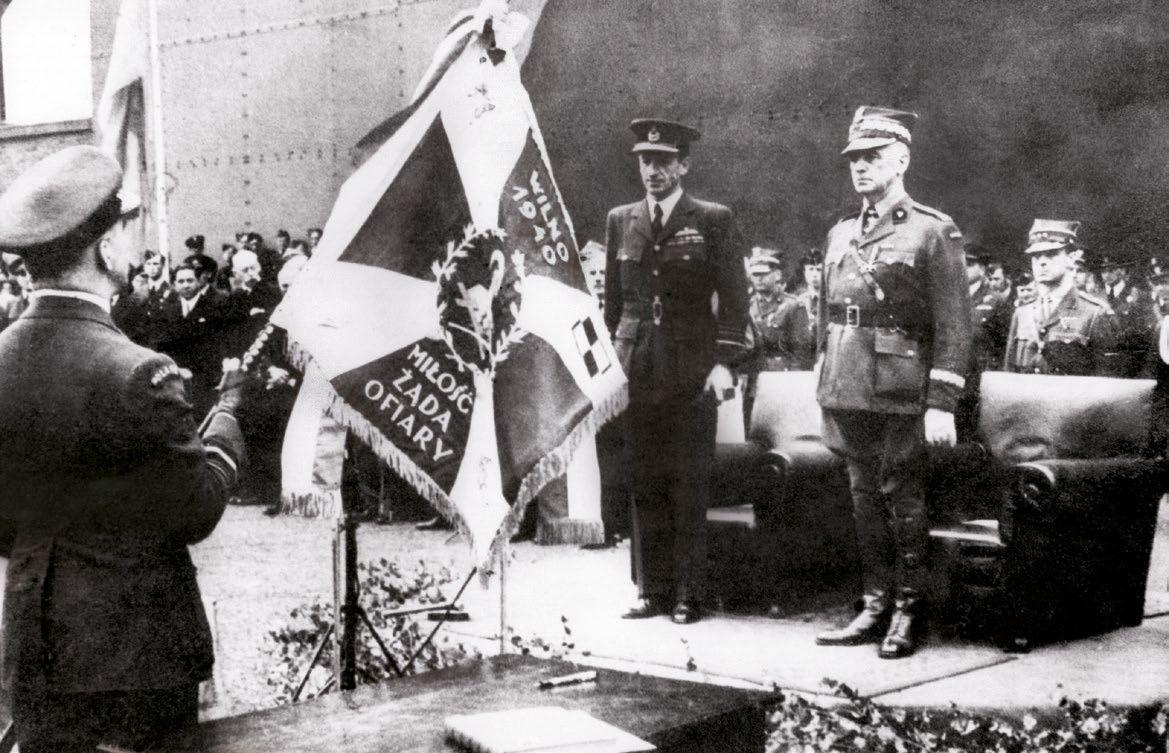
Many locals were impressed by the cheerful, gallant temperament of the Polish airmen and the King and Queen enjoyed their hospitality on 27 January 1941. President Raczkiewicz attended Swinderby on 16 July together with General Sikorski to present the silken Polish Standard (smuggled to Britain via Sweden) to 300 Squadron. Plaques in Norton Disney church pay tribute to the brave airmen of 300 and 301 Squadrons.
No sooner had these two Polish Squadrons left for Hemswell than 50 Squadron arrived at Swinderby with Hampdens. By 13 September 1941 sufficient Australians had arrived to support 455 Squadron - also with Hampden bombers. Two months later their planes were sent to Skellingthorpe to order that three concrete runways could not be laid at Swinderby.
At Skellingthorpe airfield Avro Manchesters were introduced and these spent the following summer at Swinderby while Skellingthorpe was closed for runway repairs. The twin-engined Manchester was
developed into the four- engined Lancaster and 50 Squadron excelled with both. It was suggested that these plucky airmen ought to be billeted at Buckingham Palace to reduce the time spent travelling to receive decorations!
As the bombardment of German cities intensified, Lancasters became vital to the front line. Heavy Conversion Units (HCU), such as 1654 and 1660 HCU operated from Swinderby, had to get by with ‘more tired’ aircraft like the Stirling. By March 1944 there were no fewer than 3,000 personnel in service at Swinderby, regularly entertained by concerts, bands and film shows. The dancing was probably most exuberant on VE day 8 May 1945. Four months later Swinderby staged its first air display before a crowd of 8,000.
Key dates
¤ World War II – 300 Sqn & 301 Sqn (Polish AF); 50 Sqn; 1654 & 1660 HCUs.
¤ Cold War – Air Navigation School; 8FTS; recruit training from 1964 onwards.
RAF Swinderby memorial at Witham St Hughs
Training for peace took the place of training for war and manpower levels fell to suit the accommodation provided. Number 3 hangar became a lecture hall in 1949, including a cutaway Wellington as a training aid for engineers. The Varsity navigation trainer made its RAF debut at Swinderby two years later.
The distinctive twin boom Vampire Jets of 8 FTS trained pilots for the RAF, Fleet Air Arm and overseas air forces between July 1955 and 20 March 1964 when it was disbanded and flying training ceased at Swinderby. The nine month course had included some backwoods survival exercises, a tradition that still continues at Cranwell.
The station took on a new role with the arrival in June 1964 of 7 School of Recruit Training. In July 1970, Number 7 SRT became the RAF School of Recruit Training, and in 1982 WRAF recruit training was moved to Swinderby from Hereford.
The high cost of pilot training led to the formation of the Flying Selection...
RAF Swinderby interpretation panels at Witham St Hughs Village Hall
RAF Swinderby memorial plaque
... Squadron (FSS) at Swinderby in July 1979 with chipmunk T10s. The 14 hour flying programme was designed to assess the aptitude of prospective pilots who had no flying experience. Unsuitable students could be identified in the early stages of training thus saving the RAF considerable expense. The FSS became the Elementary Flying Training Squadron in June 1987.
Close to the village of Swinderby is the site of Morton Hall which became the headquarters of 5 Group Bomber Command following their arrival from St Vincents in Grantham in October 1943. They remained there until the Group disbanded in December 1945. It continued to be used as an RAF unit until the late 1950s and is now an HM Prison. The Hall was severely damaged by fire and subsequently demolished.
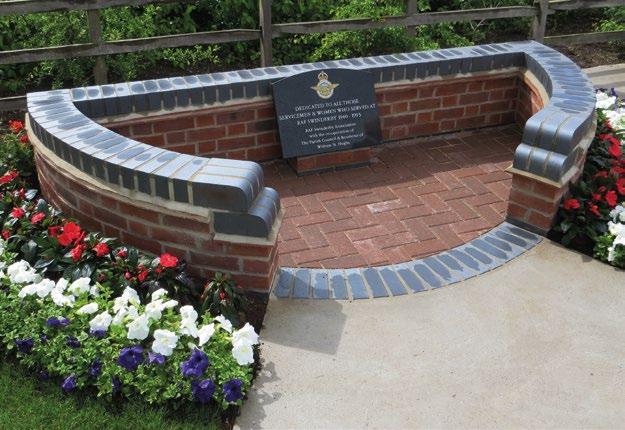
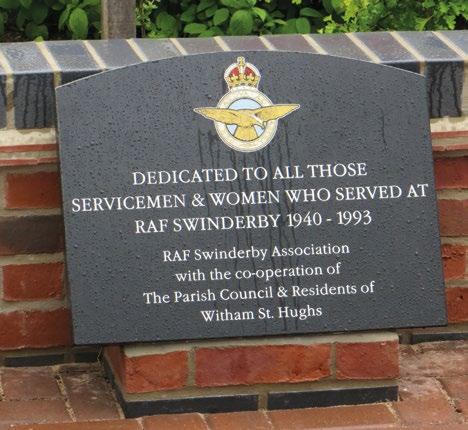
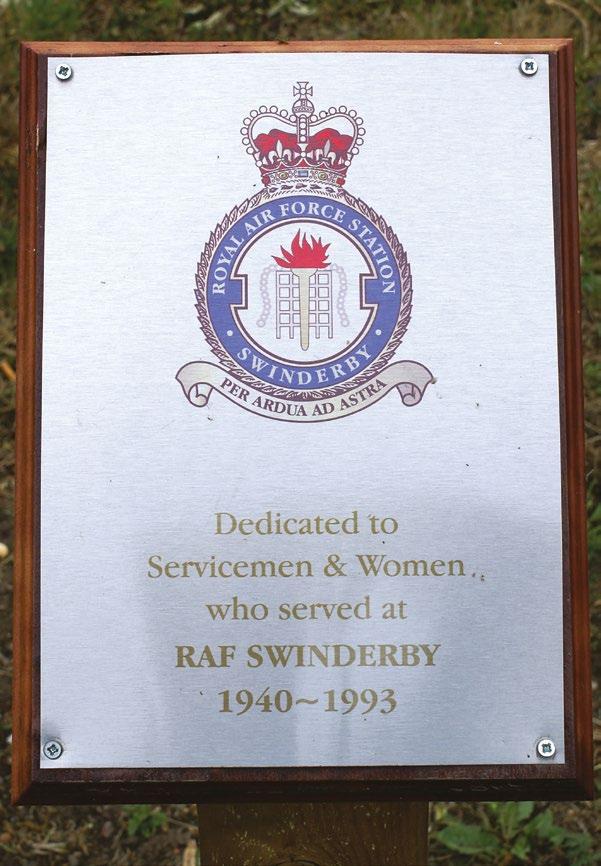
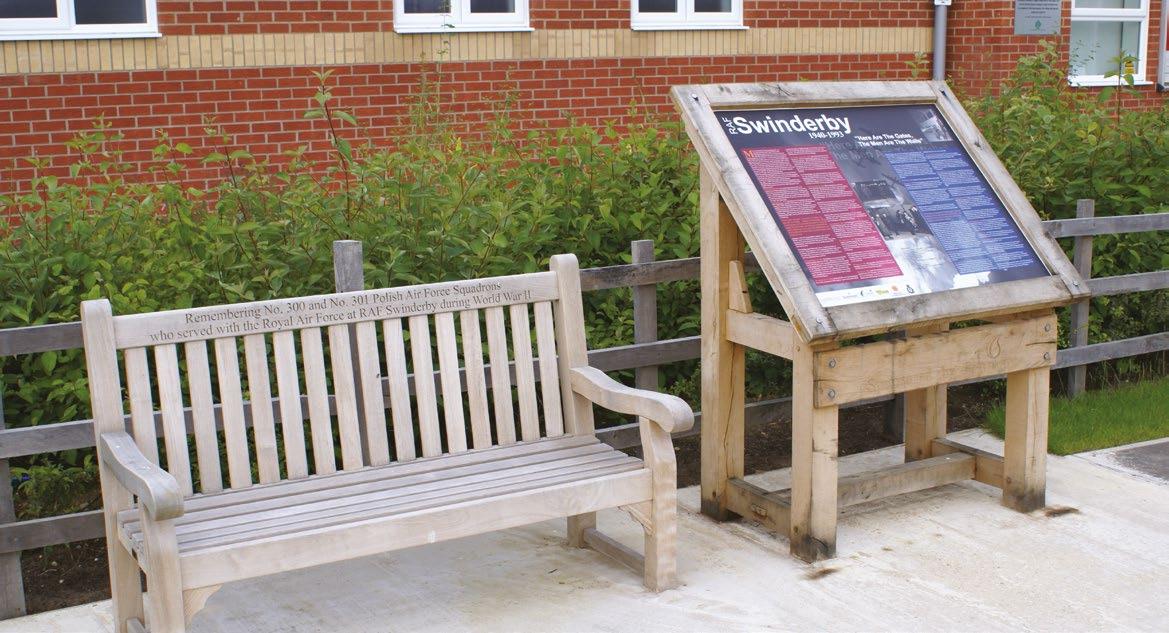
The relatively new village of Witham St. Hughs also now occupies part of the airfield’s former accommodation site. The Village Hall has an interpretation board and bench to commemorate the site’s aviation history. A memorial, which is located outside the Hall was dedicated on 10 May 2014.
Wellington T10 trainer at RAF Swinderby
Former Station Headquarters at RAF Swinderby
Waddington
The airfield began life in 1916 as a busy training station for the Royal Flying Corps. Within two years ten hangars had been built and an Aircraft Repair Section had been established. In the latter half of 1918 an American squadron trained here on British biplanes.
At the end of the Great War the aerodrome closed down, only to reopen in 1926 with the formation of 503 County of Lincoln Squadron, Royal Auxiliary Air Force. 503 served at Waddington until 1938.
As international tension mounted during the 1930s an Expansion Scheme was announced for the Royal Air Force. The Great War hangars were demolished and the five hangars which were built in 19356 as part of that scheme remain. 44 and 50 Squadrons became newly resident with Hawker Hinds, but were re-equipped with Handley Page Hampdens…
Location
RAF Waddington is located between the A15 and A607 roads and there is a public viewing area alongside the airfield on the A15.
… (“flying tadpoles”) by the time of the 1939 Empire Air Day, which attracted nearly 8,000 people to the base.
A few months later and the deadly drama of war displaced the precision flying of the airshow. War was declared on 3 September 1939 and before dusk nine Hampdens were airborne to seek out enemy ships. None were sighted.
In the opening months of World War II enemy shipping provided regular targets for Bomber Command. Mining operations were also undertaken. A Wireless Telegraphy Station was established nearby at Mere.
The value of fighter escorts to bombing raids had yet to be realised. Guy Gibson tells in his autobiography of the friendly rivalry between the “glamour boys” in fighter squadrons and the “bus drivers” of Bomber Command.
During 1940 three Hampdens fully laden with toilet paper and old leaflets departed from Waddington and “bombed” Digby. 29 Squadron responded by sending an unmarked Blenheim to Waddington at 11 o’clock the next morning with an “urgent message” for the Officer Commanding 44 Squadron, who was promptly kidnapped and detained until he had cleared the litter left at Digby.
After a subsequent bout in which a Beaufighter dropped the stolen peakedcaps of Waddington crews into the mud this horseplay threatened to spill over into civvy-street in the Saracen’s Head Hotel near Lincoln’s Stonebow. A cease-fire was ordered by the commanding officers of the squadrons involved and the “Battle of the Snakepit” passed into local folklore.
A more respectable event was the visit of King George VI and Queen Elizabeth to Waddington on 27 January 1941. Avro Manchesters, which first saw service at Waddington, were amongst the aircraft displayed.
Key dates
¤ World War I – RFC station and repair base.
¤ Inter-War years – 503 Sqn RAuxAF; 44 Sqn and 50 Sqn.
¤ World War II – 44 Sqn and 467 Sqn.
¤ Cold War – 21 Sqn; 27 Sqn; 230 OCU; 83 Sqn; 44 Sqn; 50 Sqn; and IX(B) Sqn.
¤ Current – Base Support Wing, Engineering and Logistics Wing and Operations Wing; plus a fourth deployable one, No 34 Expeditionary Air Wing. These comprise of various squadrons.
Hampden of 50 SQN RAF Waddington 1939
On 9 May 1941, enemy mines fell on the village church at Waddington and the station NAAFI. The manageress Miss Raven was amongst the eleven dead and the Raven Club is named in her memory.
The Horse and Jockey on the village High Street became an emergency dormitory for the night. A replacement church was completed in 1954 and an adjacent memorial – to the Australian Squadrons 463 and 467 – was dedicated in 1987.
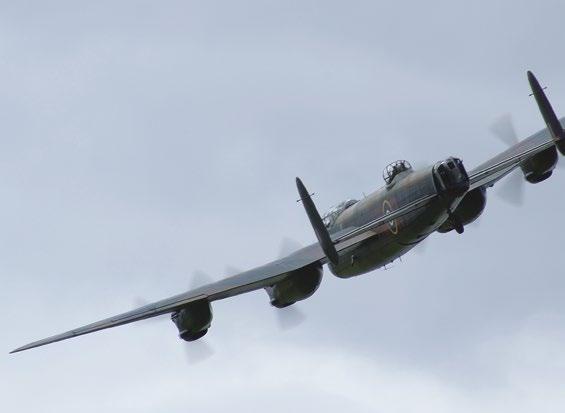
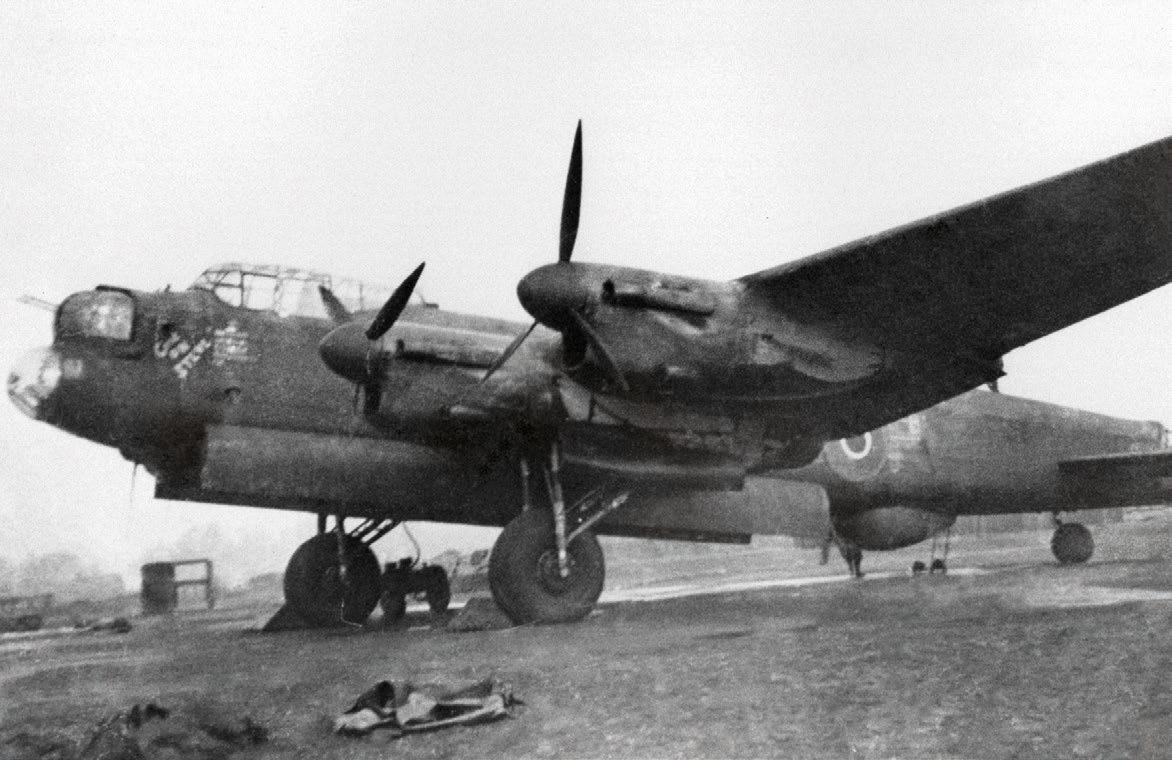
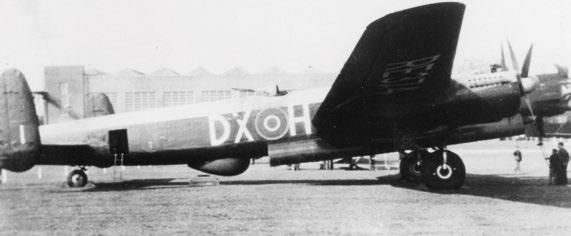
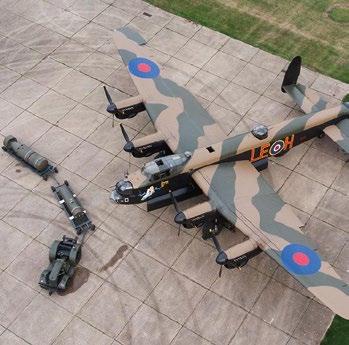
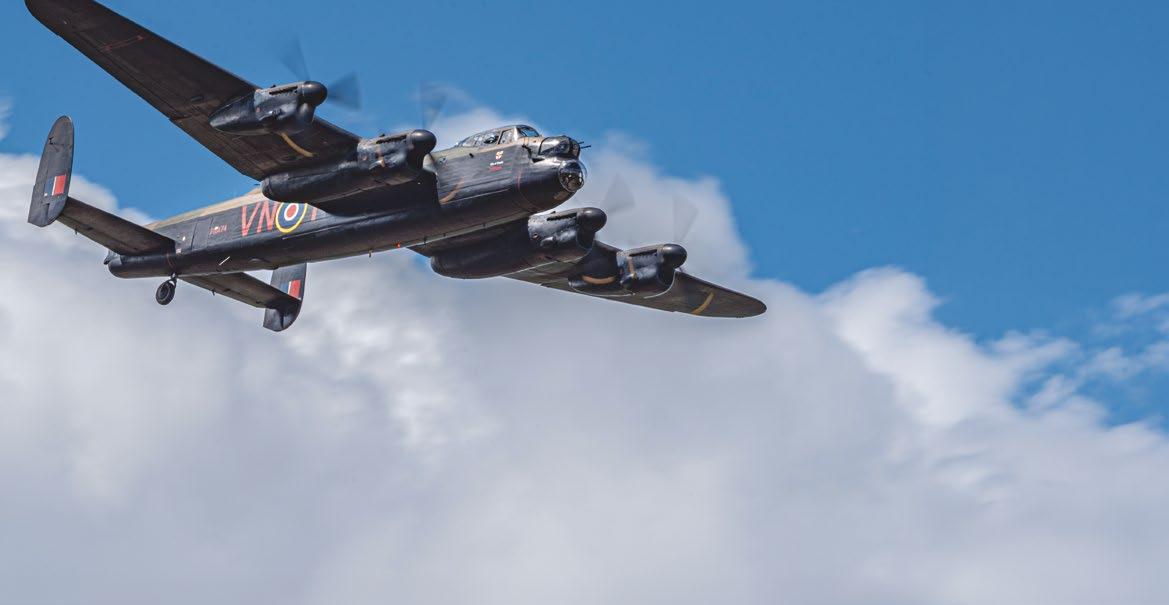
Christmas Eve 1941 saw the delivery of three Lancasters to 44 Squadron, the first to enter RAF service. By the time Air Marshal Arthur “Bomber” Harris (a former C.O. of 44 Squadron) had taken command of the bomber offensive. 44 Squadron was ready to fulfil its motto “The King’s thunderbolts are righteous” with its capable, dependable Lancasters. Examples of this bomber may be seen at the Battle of Britain Memorial Flight at Coningsby, the Lincolnshire Aviation Heritage Centre at East Kirkby and the Royal Air Force Museum, Hendon. The Lancaster displayed at Hendon once served as S-Sugar with 467 Squadron at Waddington. “Jetty” was Waddington’s wartime code name.
The retention of Waddington as a strategically important airfield during the Cold War era was virtually assured when its 1.7 mile (2.74km) long runway was built during 1953. When
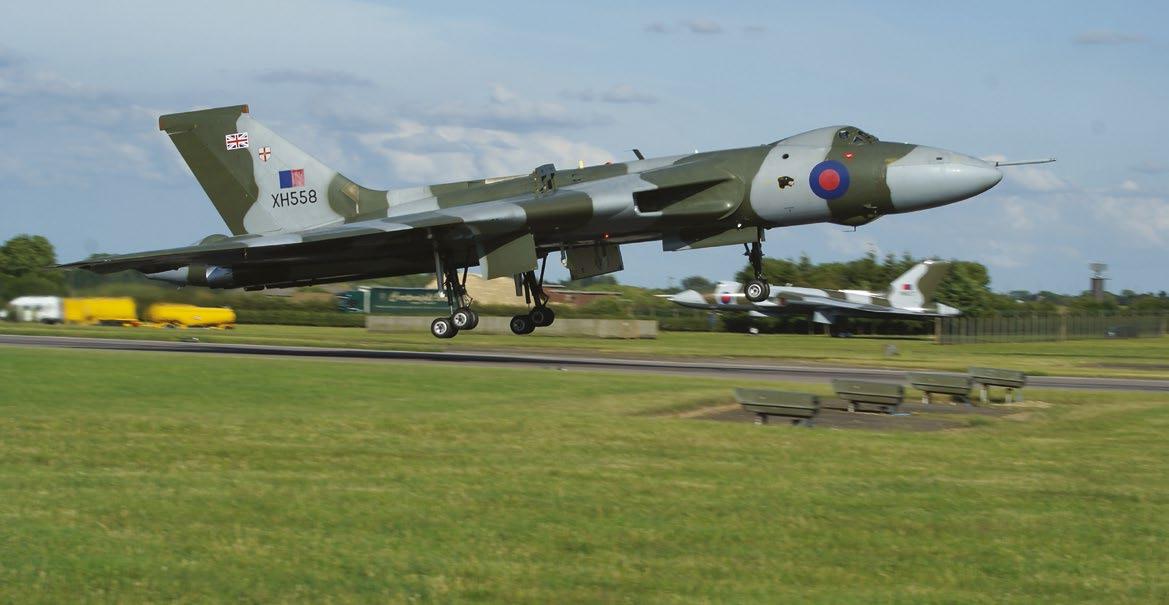
Waddington reopened in June 1955 it received 2 Canberra squadrons, the first Vulcans arrived in May 1957. By August 1961 three squadrons of Vulcans were based at Waddington until the type finally retired in March 1984.
The Vulcan’s potential was enhanced with a re-designed wing, up-rated engines, the Blue Steel nuclear missile and electronic counter measures. In the final months of its operational life the Vulcan served as an improvised refuelling tanker with an angular appendage bolted-on...
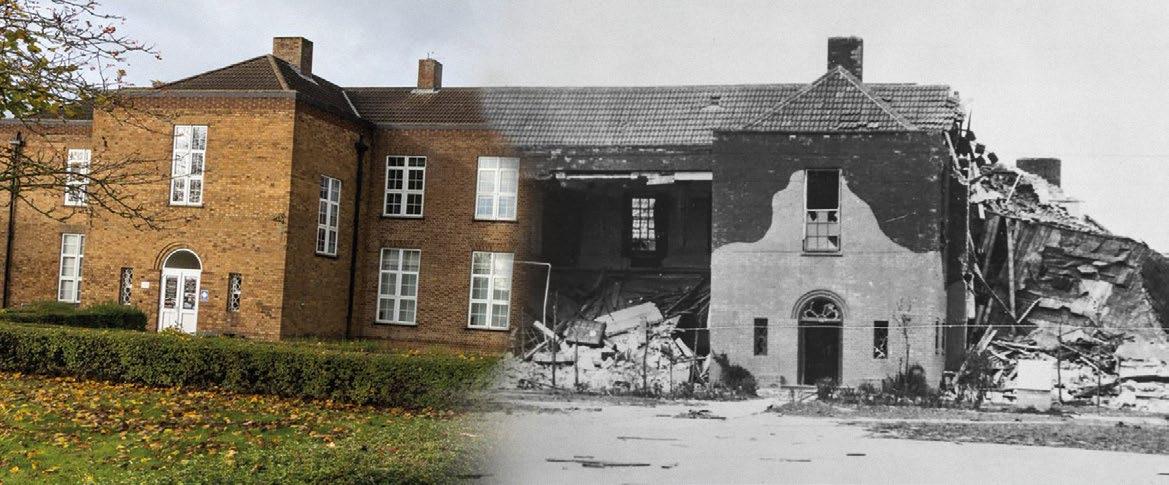
RAF Waddington Heritage Centre ‘Then and Now’
AVRO Lincoln replaced the Lancaster as the post war heavy bomber at RAF Waddington
Vulcan B2 XM607
... beneath its tail cone (the Falklands War had taxed the regular tankers close to their limits).
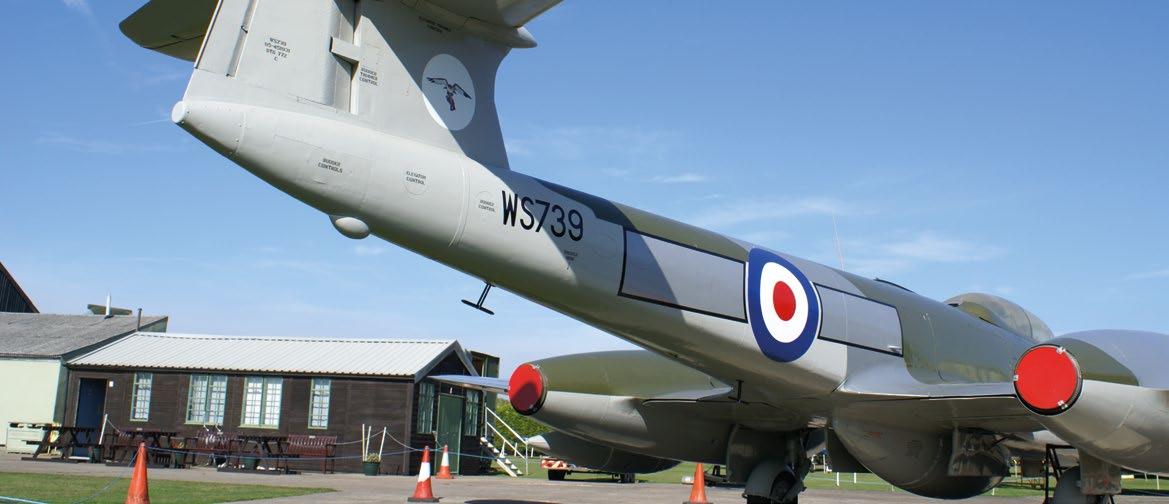
RAF Waddington is also home to AVRO Vulcan XM607, which made history during the Falklands War of 1982, when it flew in the ‘Black Buck’ raids. Another was flown from Waddington to the nearby Newark Air Museum in February 1983. XM594 is on loan to the museum from the Lincolnshire’s Lancaster Association and is displayed alongside a Blue Steel missile, also from the Cold War era.
In October 1980 a memorial to IX(B) Squadron which flew from Waddington 1942-43 and Bardney 1943-45 was dedicated in Bardney village. It features a three-bladed ‘prop’ from a Lancaster bomber. Bardney is situated north-east of Waddington on the B1178.
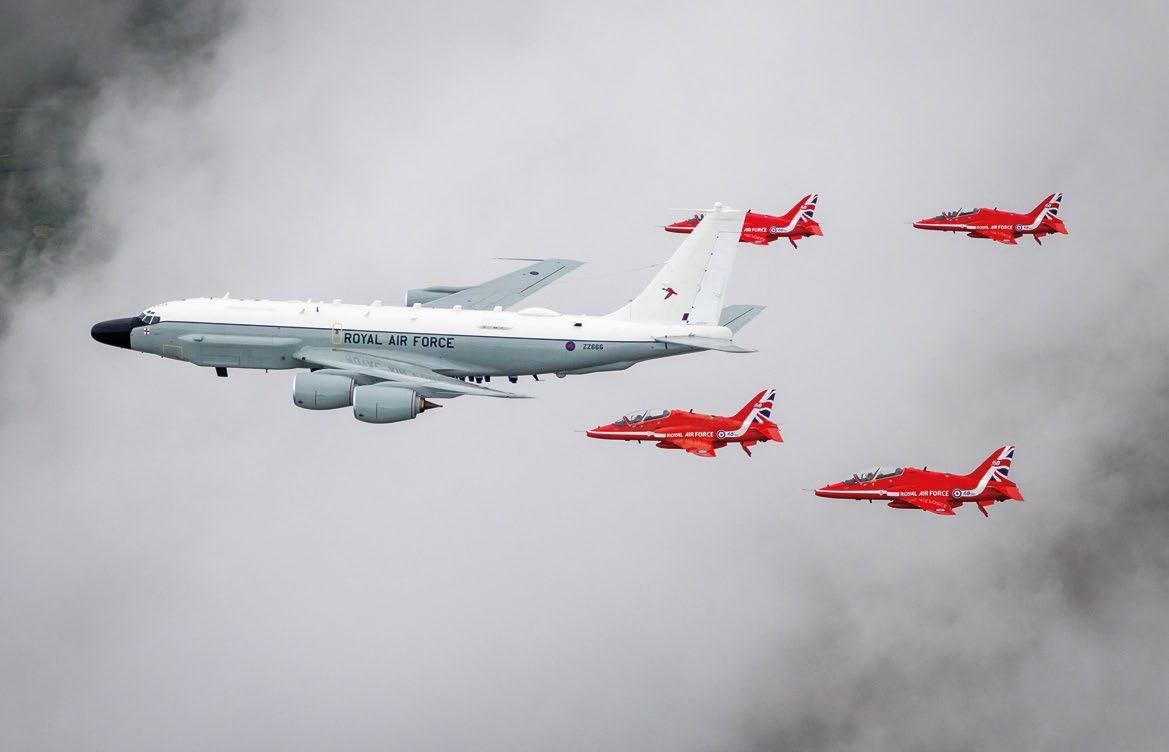
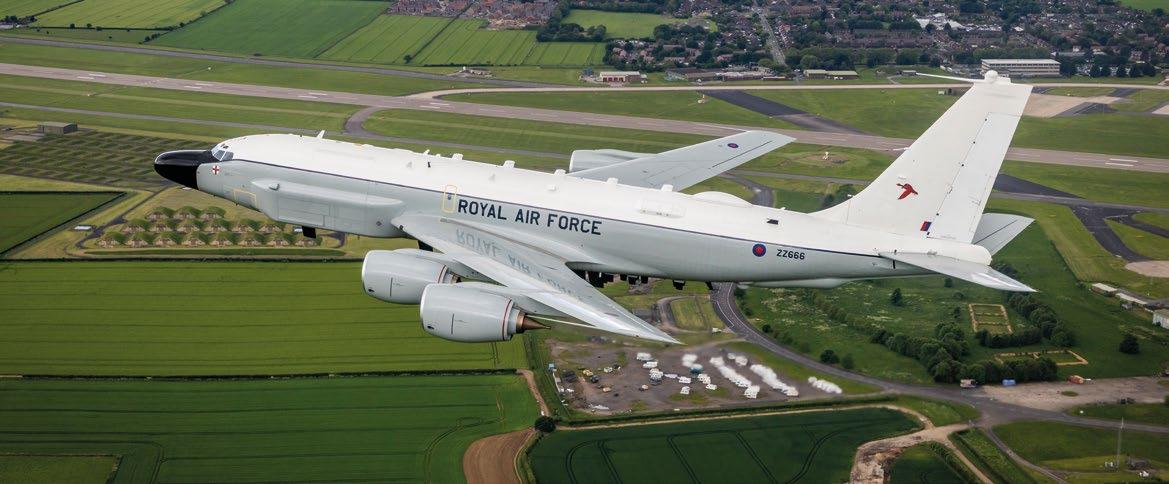
RAF Waddington is one of the RAF’s busiest stations as the hub of UK Intelligence, Surveillance, Target Acquisition and Reconnaissance (ISTAR) and the main operating base for airborne intelligence aircraft and systems. The base is also the home to the Royal Air Force Aerobatic Team (The Red Arrows) Waddington has a Memorial Garden that can be visited by prior application. The garden contains memorials to No 44 (Rhodesia) Squadron, as well as 467 and
463 Squadrons of the Royal Australian Air Force. Remembrance Day and ANZAC Day are commemorated annually in the garden by Squadron Associations.
Rivet Joint over Waddington 2024
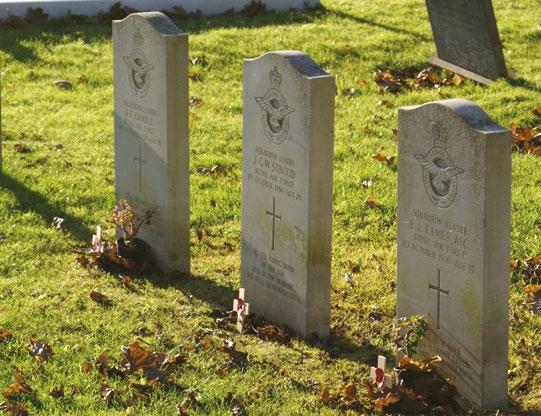
War graves at Waddington church
Red Arrows
RAF Waddington Aircraft Viewing Experience (WAVE)
The RAF Waddington Aircraft Viewing
Enclosure (The WAVE) serves as a safety-first, aircraft viewing site open to the public in Lincolnshire.
RAF Waddington hosts various multinational exercises and is the new home of the Royal Air Force Aerobatic Team (The Red Arrows), making for a great site to visit.
The Wave provides the public with a safe and accessible off-road parking and viewing enclosure.
Location
Sleaford Road, Waddington, Lincoln, LN5 9FG; situated overlooking the airfield on the A15, 5 miles (8km) south of Lincoln.
Information
Open Monday to Friday, 9.30am until 3pm. Times may vary. Admission free.
Red Arrows
RCAF Cobra Warrior
The Centre is open to all civilians and RAF personnel on an appointment basis. It is free, although a small donation to enable the upkeep is appreciated.
Wellingore
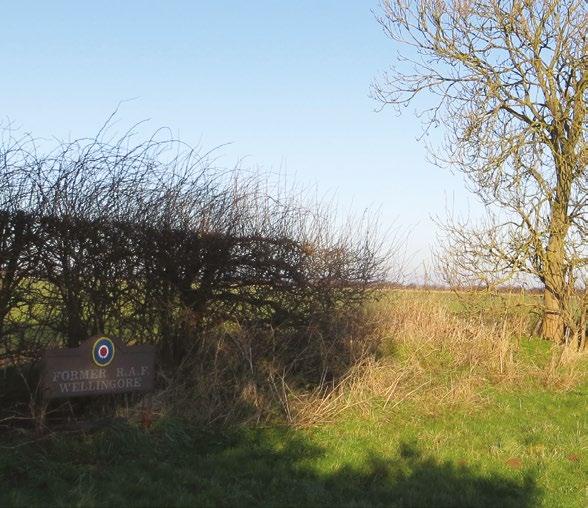
RAF Wellingore had its origins as a naval landing ground in 1917. Biplanes such as the Avro 504 and Sopwith Camel based at Royal Naval Air Station Cranwell used a field at Graves Farm. The landing ground established just west of Ermine Street in 1935 did not coincide with this early site.
Before the outbreak of World War II the Air Ministry had acquired a considerably larger area. By 1940 the intense activity caused by war saw eight curved blister hangars and a paved perimeter track constructed. The flatness of the site and its clear approaches must have assisted the fighter aircrew detached to Wellingore from Digby between July 1940 and March 1944.
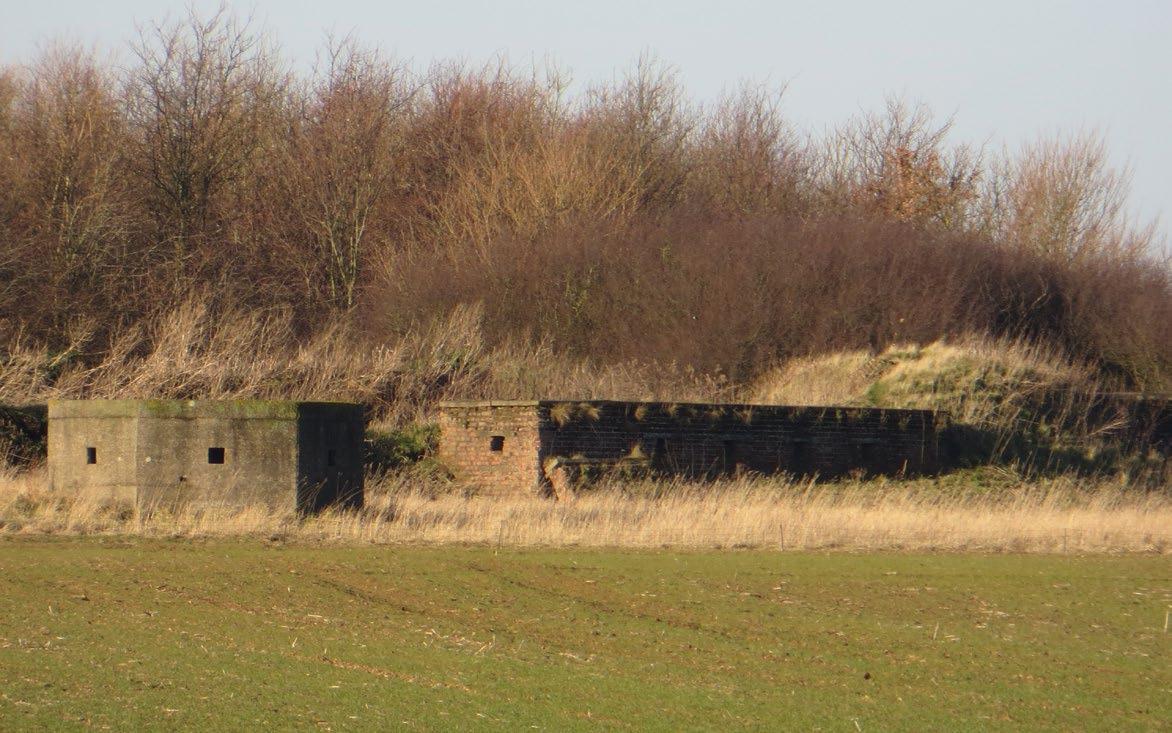
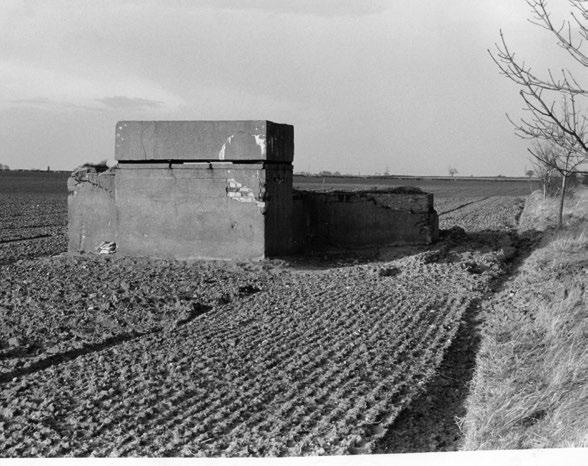
Security was tight and nine pill-boxes were built around the airfield, most of these remain in situ. A few crescent-…
Location
Just off the A607 between Pottergate and the Roman Road called Ermine Street (at SK 990545) is the track which led to Wellingore airfield. The former domestic site lies on the left of Pottergate one mile (1.61km) closer to the village from which the airfield took its name. To gain an overview of the airfield motorists should continue past the domestic site and take the right turn signposted Temple Bruer, then the first right signed Ermine Street for two thirds of a mile when the airfield will be seen to the right.
… shaped mounds are still in evidence. These blast-pens protected dispersed fighters and could also be defended by gunfire when necessary. Each mound contained an air-raid shelter sufficiently large for the personnel likely to be at that dispersal point and defensive positions for two rifle platoons.
As satellite ‘L2’ of RAF Digby, Wellingore was most active whenever Digby was thought to be under threat from German bombers. In these circumstances planes that had been scrambled from Digby might well land at either Wellingore or Coleby Grange. Sometimes the Luftwaffe would throw a spanner in the works. A lone Junkers 88 would, according to Guy Gibson, often loiter above the flare-path waiting to intercept unwary British fighters.
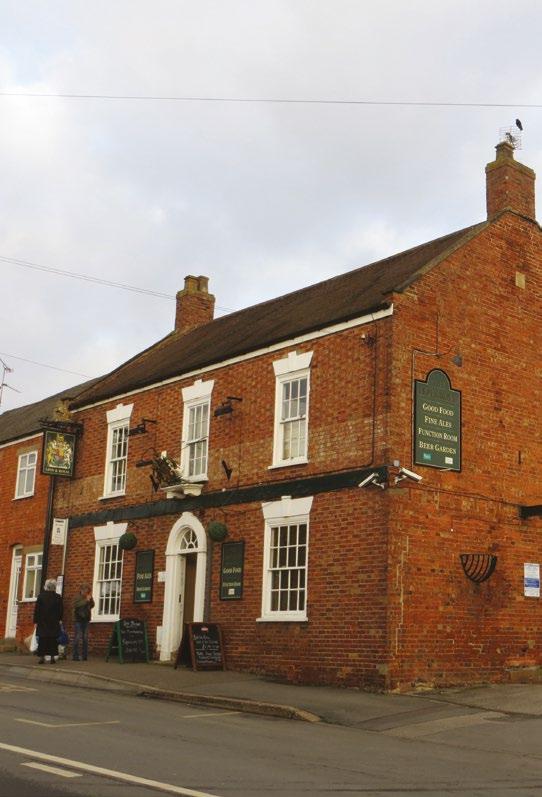
Gibson took charge of A Flight 29 Squadron late in 1940 and he and his new wife Eve spent their honeymoon at the Lion and Royal in the nearby village of Navenby. They received a wedding gift of smoked salmon; imagine their dismay when the landlady brought this delicacy to their table fried in batter!
Other buildings frequented by the military were Coleby Hall (WAAF accommodation), Hill House on Barnes Lane, Wellingore (paratroops and searchlight operators), Heath Farm (airmen’s cookhouse) and The Grange on Hall Street, Wellingore. The Grange pleasantly set in its own grounds, functioned as the officers’ mess. The corporal in charge was an ex-London chef and the food was exceptionally good. Food, bedding and other basic provisions would be delivered daily in lorries from Digby. The men of 29 Squadron saw no action
during 1940 and were therefore dispirited despite their Squadron motto “Energetic and Keen”. The French Canadians of 402 Squadron were similarly eager to fight but saw little action until they left Lincolnshire in 1941 for Rochford (now Southend Airport). From this ‘Battle of Britain’ station they helped to demonstrate the power of the Hawker Hurricane as a bomber. During the same year Hurricanes were being operated from Vaenga in Russia by 81 Squadron. This was one of two RAF Squadrons to have escorted Russian bombers and during its deployment 81 Squadron destroyed 13 German planes in combat. 81 Squadron incorporates a red star in its badge and flew spitfires from Wellingore late in 1942. Another Spitfire Squadron, 154 Squadron, departed Wellingore in November 1942 ...
Key dates
¤ World War I – Naval landing ground.
¤ World War II – 29 Sqn; 402 Sqn; 81 Sqn and 154 Sqn.
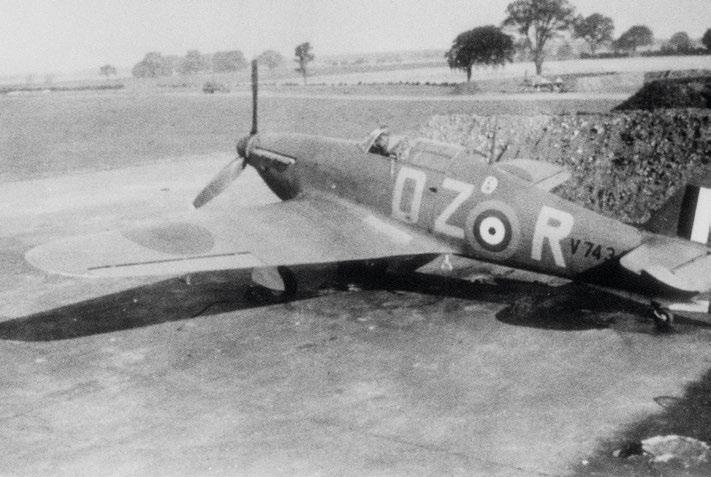
Hurricane fighter dispersed at RAF Wellingore
… for action in northern Africa. Besides attacking ships in Algiers Harbour they drew attention to themselves by downing three German planes on the day they arrived. Squadron Leader D. Carlson was awarded the Distinguished Flying Cross.
During the spring of 1943 Mustang fighters operated in support of Coastal Command from Wellingore. Built in the USA to British specifications these versatile fighters could reach heights up to 41,900 feet (12,771m) and had a range exceeding 2,000 miles (3,219km). Flying at speeds above 400mph (641km/h) the P-51 Mustang became a widely respected fighter plane.
Less spectacular aircraft from Newton and Cranwell used Wellingore for flying training during 1944. Belgian and Canadian Squadrons shuttled between Digby and its
its peak over Western Europe. On 28 July 1945 the Army arrived to adapt the living quarters for use as a camp for former prisoners of war. Within two months 1,000 Ukrainians and Germans were living here, many under canvas. Among their obligatory tasks were road improvements and farm labouring.
Peace returned to Europe and crops instead of propellers were rotated at Wellingore. After five years of lease-holding, the Overton family were given the opportunity in 1951 to buy back the land. The blast-pens are thought to continue in use shielding sugar beet from the icy blast of wind across the heath.
satellite airfields as the air battle reached
Former site of RAF Wellingore
The Lion and Royal at Navenby
Surrounding Aviation Sites
Lincolnshire Aviation Heritage Centre
East Kirkby Airfield, Nr Spilsby, Lincolnshire. PE23 4DE
Step back in time to a WW2 Bomber Command airfield and experience some of the greatest planes in history, including the Lancaster Bomber NX611.
Tel: 01790 763207
Web: www.lincsaviation.co.uk
North Lincolnshire Aviation Heritage Centre
Field House Farm, Redbourne Road, Hibaldstow, Brigg, North Lincolnshire. DN20 9NN
Dedicated to creating a permanent memorial and museum to the memory of those men and women of all nations who served in North Lincolnshire and who took part in the struggle against Nazi tyranny between 1939 and 1945.
Email: nlahc@outlook.co.uk
Web: www.nlahcentre.com
Battle of Britain Memorial Flight Visitor Centre
Dogdyke Road, Coningsby. LN4 4SY
Located within the boundaries of RAF Coningsby, the visitor centre provides public access to the home of the RAF Battle of Britain Memorial Flight (BBMF). The experience is provided in partnership with the Royal Air Force; access to the hangar is by guided tour only and admission charges apply.
Visitors can explore an impressive collection of over 70 aircraft, including historic military planes, civil aircraft, helicopters, and even a Vulcan bomber. The exhibits provide a fascinating journey through the evolution of flight, highlighting important milestones in aviation history.
The Control Tower, Wickenby Aerodrome, Langworth, Nr Lincoln. LN3 5AX
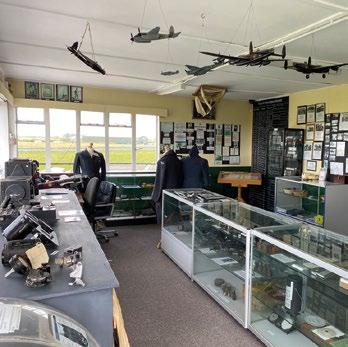
The Wickenby Museum was opened in the upstairs room of the Watch Office in the 1990s and is now filled with interesting artefacts related to RAF Wickenby and the Lancaster Bomber and its crews.
A great day out for the whole family, the visitor centre is housed within a restored and converted former Royal Air Force (RAF) camp, which adds to its historical significance and unique appeal.
Tel: 07396 228655
Email: thorpecampvc@gmail.com
Web: thorpecamp.wixsite.com/visitorscentre
RAF Ingham - Polish Bomber Squadrons Centre
Middle Street, Fillingham, Gainsborough, DN21 5BU
RAF Ingham Heritage Centre tells the stories of the remarkable lives and memories of the men and women (both ground and air crews) of the Polish Air Force Bomber Squadrons, who lived, worked, and flew alongside the RAF during the Second World War.
Tel: 07842 845491
Email: enquiries@rafingham.co.uk
Web: www.rafingham.co.uk
Aviation Heritage Lincolnshire: Supporting the Story of “Bomber County”
Aviation Heritage Lincolnshire (AHL) is a county-wide partnership that brings together museums, heritage centres, RAF sites, volunteers, and local authorities to champion Lincolnshire’s aviation story. Their shared aim is simple: to protect, promote and celebrate the rich aviation heritage that has shaped the county for more than a century. AHL works to ensure this story is recognised not just locally, but on a national and international stage. The partnership spans every era of flight connected with Lincolnshire. Through its member sites, AHL shines a light on milestones across RAF history, including the RAF Digby Ops Room Museum, the Cranwell Aviation Heritage Museum, and the Lincolnshire Aviation Heritage Centre at East Kirkby—home to the much-loved Avro Lancaster “Just Jane”. These sites illustrate the breadth of Lincolnshire’s contribution, from early aviation pioneers and First World War defences to the crucial role Bomber Command played during the Second World War and the technological developments of the Cold War.
Education is an important area of AHL’s work. They provide resources and programmes that
help young people explore Lincolnshire’s aviation story—covering the development of military aircraft, the role of women in the First World War, and life in the county during the height of Bomber Command operations. These learning tools help schools and families connect with the stories behind the county’s landscapes and landmarks.
Remembering Pilot Officer Aston Cooper‑Key
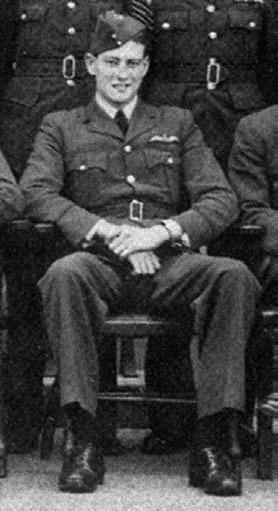
Aviation Heritage Lincolnshire works closely with partners, museums and local communities to ensure that personal stories—especially those at risk of being forgotten—are brought back into the heart of Lincolnshire’s aviation heritage. One such story is that of Pilot Officer Aston Cooper-Key, a young pilot posted to RAF Digby in June 1940 during the re-forming of 46 Squadron.
Just four days after arriving, Cooper-Key took off from Digby in Hurricane P2685 for a co-operation exercise near the Rolls-Royce works in Derby. During the flight, his aircraft developed serious engine trouble. Attempting an emergency landing on the Balfour Recreation Ground, he realised children were playing in the centre of the field. Witnesses saw him keep the canopy open and deliberately steer the stricken aircraft away from them, crashing instead into a nearby railway
embankment. He was thrown clear and died instantly. He was 21 years old. Cooper-Key was buried with full military honours at Scopwick. For decades his bravery was known locally but remained untold more widely. That changed in 2008, when four of the boys who had been playing in the field came forward wishing to properly acknowledge his sacrifice. Working with the station, an honour guard, padre and bugler took part in a moving dedication ceremony at the crash site. To everyone’s surprise, around three hundred people attended— including the city mayor, council members and the BBC—paying tribute on a bright June evening.
Stories like Cooper-Key’s show why partnerships matter. Through shared research, local memory, and committed heritage organisations, Aviation Heritage Lincolnshire helps ensure that extraordinary acts of courage continue to be recognised and remembered.