Salgueiro Ponce de Leon, Camila Selakovich, Stephanie
Publisher/Instructor Jinoh Park
Contact jinohp@uark.edu
*. There is no restriction on academic use of the contents of this book.
*. The copyright of all design results contained in this book belongs to each (student) designer.
INSTRUCTOR’S NOTE
At the beginning of the Fall semester of 2021, I had the opportunity to meet new students in an entirely new context. Despite my convictions about what I did in my previous schools, it is always challenging and a little frightening to start over at a new school. One of the things I was determined to keep was the publication of this book despite difficulties and fears.
Even if instructors and students put their best efforts throughout the semester, the end-of-semester outputs may or may not meet expectations. Regardless of what outputs we achieve, the importance of our process cannot be overlooked. To begin with, this publication is intended to serve as a record of our processes and experiences during the semester.
It is meaningful in many ways to review the processes and experiences. Firstly, you can see what processes and experiences you followed and what outputs you achieved. Upon obtaining satisfactory outputs from each step, you can repeat the procedure and practice it. If you don’t achieve satisfactory results, try another procedure or retry the procedure if it doesn’t matter. Second, you may review your performance levels within each process to determine if there has been any change. It is possible to attain the desired outcome when you know the cause of when your performance was good and when it was poor. Additionally, you can learn from reviewing others’ outputs. That is probably the reason that we are purchasing a design book with the process.
Back in my student days, I was not very satisfied with the first portfolio I developed by simply binding output files for the job preparation that I was required to complete. Although it used to bother me that it would have been better to prepare the portfolio in advance during the break, every break is short and I needed to rejuvenate my body and mind after having completed so many tasks during the semester. I often did not remember what I had learned or what I had missed. Occasionally, I was unable to locate my output files. I therefore found myself holding a portfolio that had nothing to do with what I am passionate about or what I enjoy. It was more like another assignment
than a portfolio of my work as a designer. I hope you will find this publication useful in reclaiming what you have learned and saving what you have accomplished as a designer.
Lastly, I want to say that everyone did a good job last semester. I was happy while making this book since I was able to combine the results as precious as everyone’s efforts into a book.
Jinoh Park, Instructor
04 Findlay, Matthew Pierce
64 Hasa, Esta
130 Jang, Jae Young
216 Salgueiro Ponce de Leon, Camila
278 Selakovich, Stephanie
COURSE DELIVERABLES
#1: LinkedIn Learning “How to Research and Write Using Generative AI Tools” Certificate
#2: Concept Wheel
#3: Your Case for ARCC 2025 or EDRA 56
#4: Critical Analysis
#5: Search Phrase Development with ChatGPT Share + Essay
#6: Systematic Review with ChatGPT
#7: Traditional Literature Review + Essay
#8: Writing an initial literature review
#9: List research variables for your research objectives
#10: Research Question and Sub-questions
#11: Imagine the end of your research + Essay
#12: Writing an initial abstract
#13: Conference Abstract Submission
#14: Writing an initial research method paragraph with Objective method
#15: Writing an initial research method paragraph with Subjective method
#16: Writing an initial research method paragraph with Mixed method
*.Exact Challenge with Ramen
#17: Writing a draft research method paragraph
#18: Writing a draft research quality paragraph
#19: Data Collection Update
#20: Data Collection Update
#21: Data Collection Update
#22: Data Collection Update
#23: Introduction + Literature Review
#24: Method
#25: Findings
#26: Discussion
#27: Conclusion
#28: Full Paper
#28: Full Paper Submission to ARCC or EDRA
#30: Project Overview with Program Evaluation
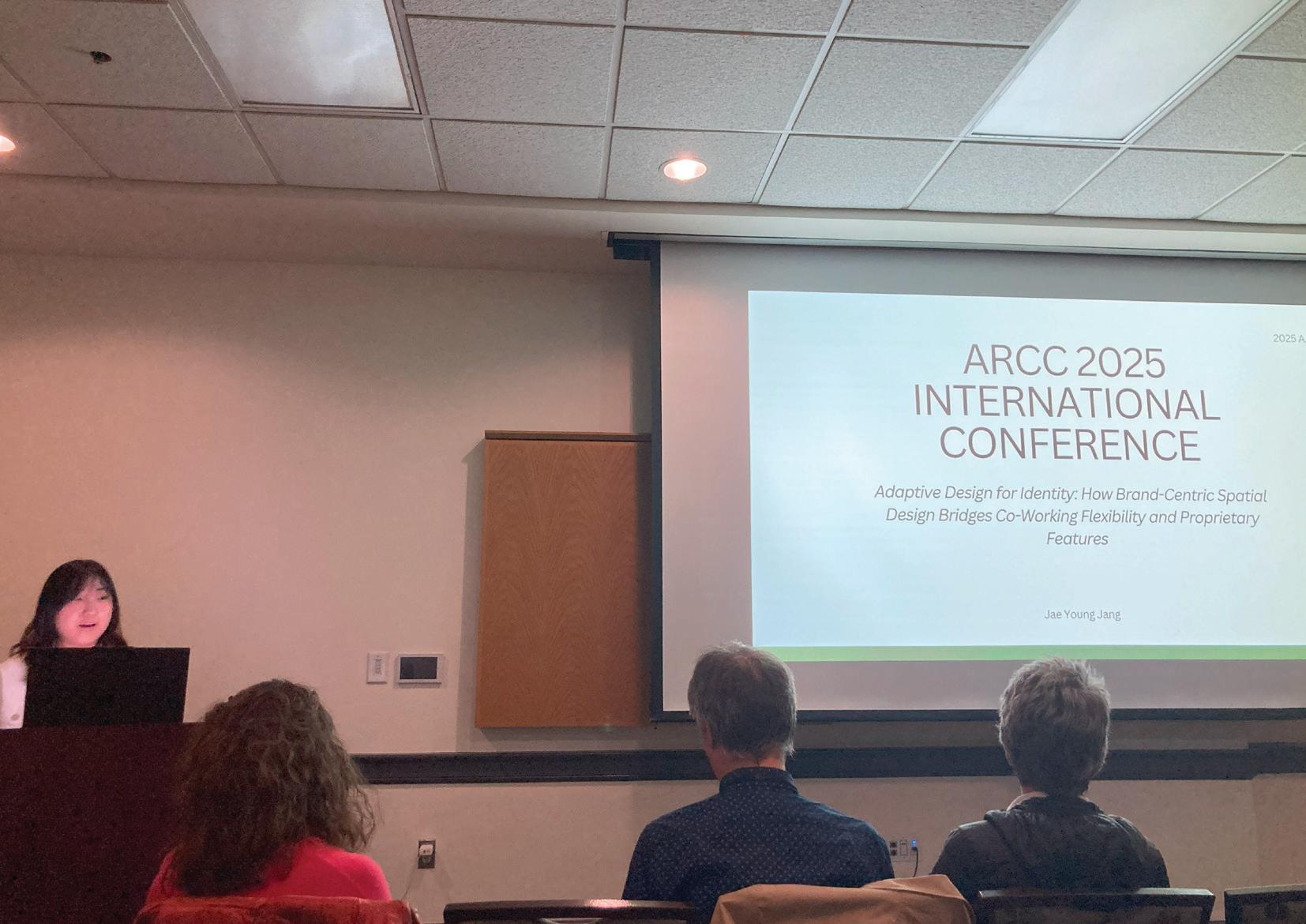
#31: Presentation at ARCC
How to Research and Write Using Generative AI Tools
How do you address and communicate changes that are taking place regarding the company’s move, work-from-home policies, and the new office environment?
Many people fear change and that is probably because change brings uncertainty with it. In this example, executives at a pharmaceutical company have proposed a change in locations to transform their office culture into a collaborative environment with an open office plan. The company also hopes to work with new technologies to allow employees to be more mobile and it will give them an option to work from home. The new facility offers amenities intended to be a consolation for the office’s remote location. The problem states that people in the office have begun spreading rumors about the coming changes which leads me to believe that these plans are being developed by the top level of leadership without the consultation of the rest of the staff. If the pharmaceutical company’s mission is to create a collaborative work environment, then its actions are not in line with its mission.
Moving to a remote location is not a way to promote collaboration or enhance the working relationship of employees. The new facility may have a gym and cafeteria, but it is doing more harm than good by removing its employees from a lively urban metropolitan area. Any amenity that the new location can help to provide was undoubtedly within arm’s reach of the previous office space. Many of the changes being proposed will negatively affect the employees for the sake of a greater ‘sense of collaboration’, there will be a reduced amount of space per employee, and senior staff will no longer have private office space. I am a big believer in the transformative power that a collaborative space can have on productivity and the quality of office life, but if a senior employee has worked years or even decades to earn their own private office space, he will not be excited to hear that he will be giving up his achievement for the sake of his company’s agenda.
An open office floor plan does not automatically mean a more collaborative work environment. Open offices can suffer from lots of noise pollution and some people may be even less inclined to collaborate out of fear of disturbing the people around them. Collaboration can happen in any type of space if you have an office culture that encourages equality and openmindedness. When the highest level of your company is making decisions that will most likely negatively impact the quality of life of many of its employees then they must begin by making changes to the way decisions are made in this office. I don’t think it is unreasonable to conclude that the real reason that the real reason the pharmaceutical office wants to make these changes is for the sake of cost, and if I could make that assumption from the small amount of information that was given then it is more than safe to assume that the company’s employees will draw a similar conclusion.
If the company cares about its employees' work environment, then those said employees should have a say. I believe that the executives should have the final decision but ensuring that the staff feels heard is essential to maintaining a sound working environment. This could easily be done
Matthew Findlay
by an office-wide survey that asses what the staff values, or by slowly attempting to make these changes and documenting the effect on both the employees' satisfaction and company productivity.
The most compelling piece of evidence that this move is all for the sake of a lower cost of rent is the company’s strong desire to introduce a hybrid work environment into its workflow. I understand that hybridized work is becoming more prevalent, and many employees are beginning to expect some form of work-from-home accommodation, but it is reasonable to think that a company that claims that its primary mission is to create a collaborative environment should at least have a seat at its office for all its employees.
Though the tone of this answer has been predominately captious I do not believe that this pharmaceutical company is without hope. Change starts at the top, so company leadership must incorporate employee feedback without giving away the keys to the castle. They should also try making a few of these changes one at a time in their existing office space while recording the change's effects in a quantifiable manner so they aren’t going all in on a plan that may be completely unsuccessful.
ARCC Theme: Technological challenges
I think now is as an exciting time as any to be a curious mind in the field of architecture. I am very excited by all the questions that surround the development of engineered timber products, and I believe that some of the faults of these engineered timber products may go unstudied out of fear of illegitimizing the commercial value of Mass timber construction, there are several questions I thought might make for interesting topics
1) Mass timber buildings are becoming increasingly desirable due to their carbon sequestering abilities, I think it is important to measure the amount of carbon collected by different structural elements (particularly those on the interior) to see if a timber element’s location directly impacts the amount of carbon collected by that element.
2) I would like to see the scale of the impact that the creation and use of different laminates affects the environment, lamination is the only unsustainable part of Engineered timber products.
3) Shigeru Ban is not only known for his design genius but also for his innovative use of materials. He has created beautiful (and massive) structures from material like paper tubes, polycarbonate sheeting, and ceramic printed glass. I would be curious to do a research project that considers the commercial application of these materials, and the long process that would have to occur for one of these materials to be recognized by the IBC.
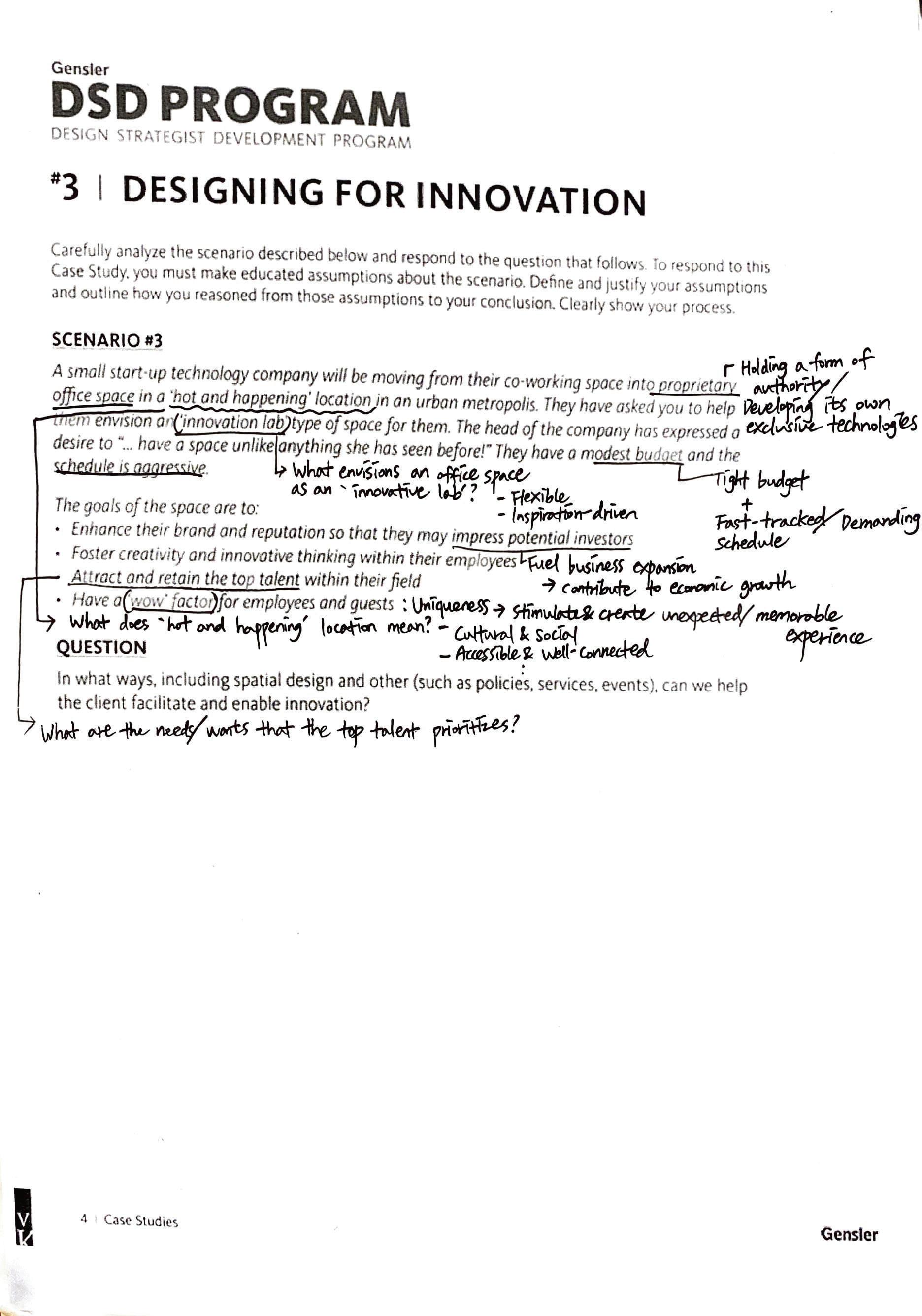
CA S E ST UD I E S
DIRECTIONS
We believe the best way we can assess your skills, aptitude, and overall potential for the DSD Program is to expose you to client challenges based on actual Gensler Strategy projects. Your response to one of these case studies will help demonstrate how you perform across a range of important criteria for our work:
• approach a tough, potentially ambiguous design problem
• make strategic decisions about the client issues on which it is most important to focus
• reason logically using facts and data and identify and communicate implications
• formulate conclusions and recommendations to solve the problem
• articulate your thoughts in a written and graphic format
• problem solve, both analytically and creatively
• understand the basic principles of the design industry
Below are three case studies posing challenges that Gensler design strategists often face on projects.Please respond to only one (1) Case Study – feel free to choose the one best suited to your skills and experience. Your response should be a mixture of written and graphic communication and must be fully integrated with your overall Personal Dossier
TIPS
• Make a few key points but make them very well.
lenges ly sol our e, p ma easoned
You must upload your Personal Dossier along with your complete online job application by the deadline. Refer to the “How to Apply” page on the website for details on the Personal Dossier
• We are not looking for a ‘right answer’—we want to understand how you think and present your ideas. We are looking for your process, not solutions.
• Develop the scenario with well-reasoned assumptions—draw from your own experience and research.
• Provide logical justification and reasoning for your responses.
• Embrace the ambiguity and respond as you see fit
• Communicate your response through both graphics and written word.
vide mbrace esponse easoning e
• Relax and have fun. You should learn a lot about yourself and the type of work we do through responding to these Case Studies.
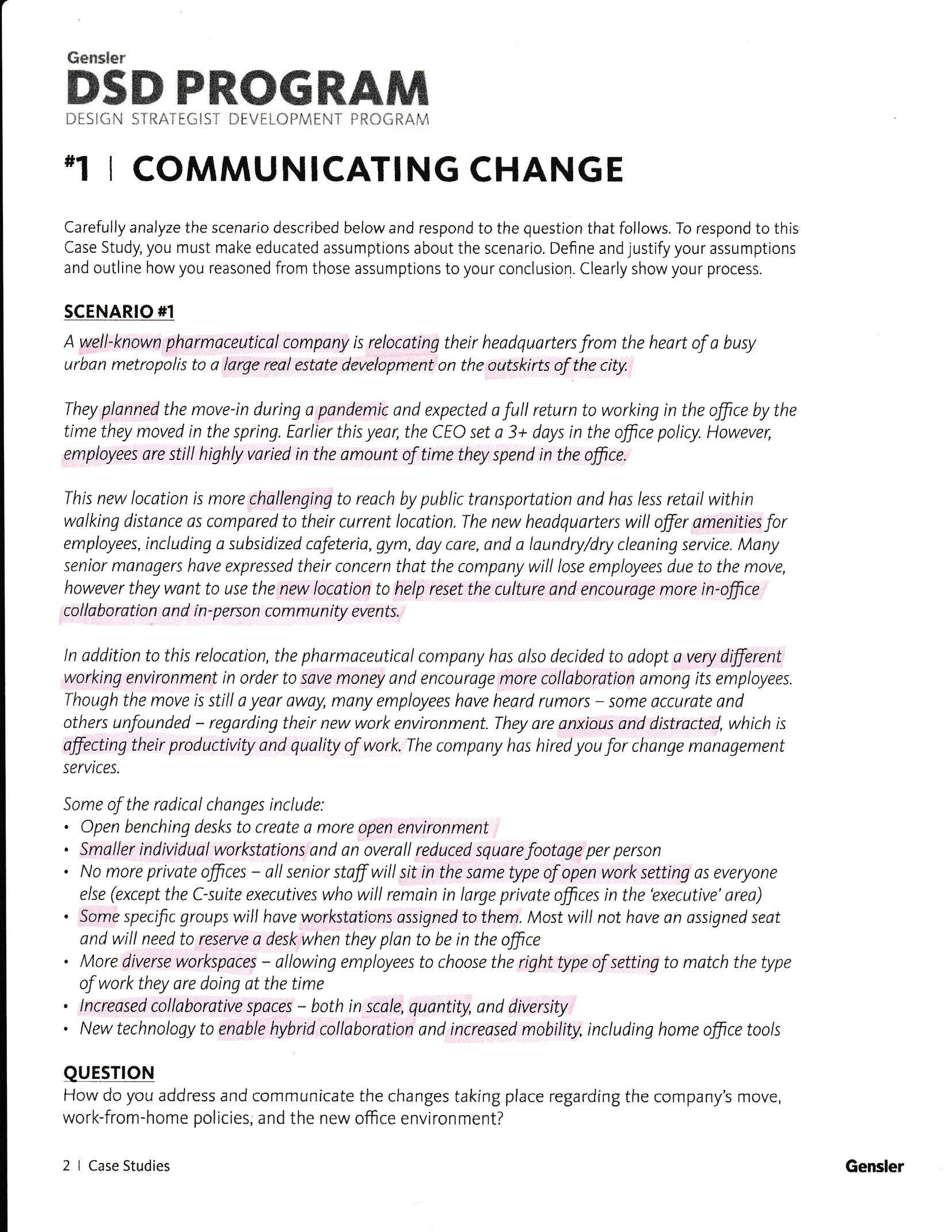
# 1 I COMMUNICATING CHANGE
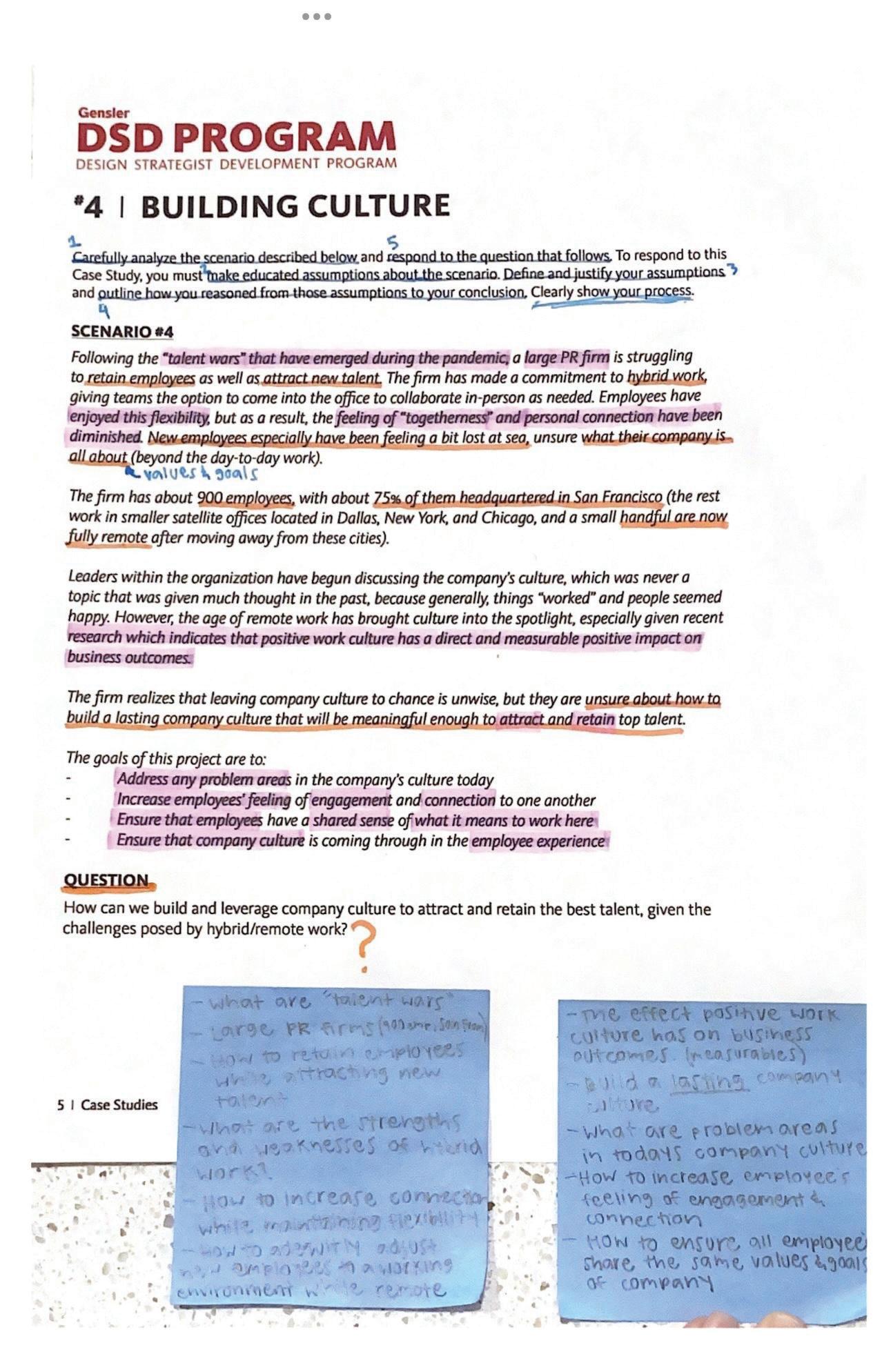
Carefully analyze the scenario described below and respond to the question that follows. To respond to this Case Study, you must make educated assumptions about the scenario. Define and justify your assumptions and outline how you reasoned from those assumptions to your conclusion. Clearly show your process.
SCENARIO #1
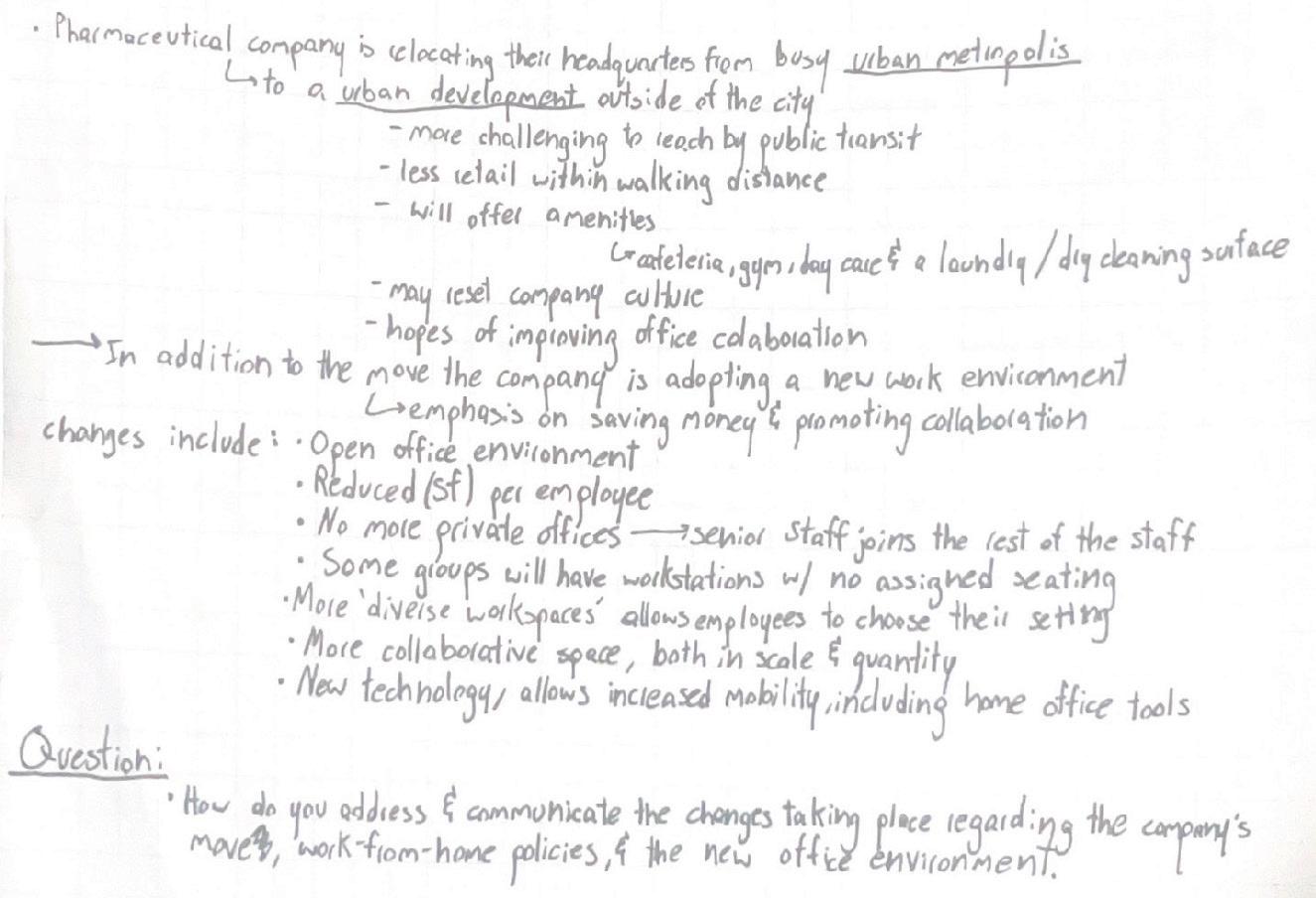
A well-known pharmaceutical company is relocating their headquarters from the heart of a busy urban metropolis to a large real estate development on the outskirts of the city.
They planned the move-in during a pandemic and expected a full return to working in the office by the time they moved in the spring. Earlier this year, the CEO set a 3+ days in the office policy. However, employees are still highly varied in the amount of time they spend in the office.
This new location is more challenging to reach by public transportation and has less retail within walking distance as compared to their current location. The new headquarters will offer amenities for employees, including a subsidized cafeteria, gym, day care, and a laundry/dry cleaning service. Many senior managers have expressed their concern that the company will lose employees due to the move, however they want to use the new location to help reset the culture and encourage more in-office collaboration and in-person community events.
In addition to this relocation, the pharmaceutical company has also decided to adopt a very different working environment in order to save money and encourage more collaboration among its employees. Though the move is still a year away, many employees have heard rumors – some accurate and others unfounded – regarding their new work environment. They are anxious and distracted, which is affecting their productivity and quality of work. The company has hired you for change management services.
Some of the radical changes include:
• Open benching desks to create a more open environment
• Smaller individual workstations and an overall reduced square footage per person
• No more private offices – all senior staff will sit in the same type of open work setting as everyone else (except the C-suite executives who will remain in large private offices in the ‘executive’ area)
• Some specific groups will have workstations assigned to them. Most will not have an assigned seat and will need to reserve a desk when they plan to be in the office
• More diverse workspaces – allowing employees to choose the right type of setting to match the type of work they are doing at the time
• Increased collaborative spaces – both in scale, quantity, and diversity
• New technology to enable hybrid collaboration and increased mobility, including home office tools
QUESTION
How do you address and communicate the changes taking place regarding the company’s move, work-from-home policies, and the new office environment?
Matthew Findlay, Thoughts on Generative AI
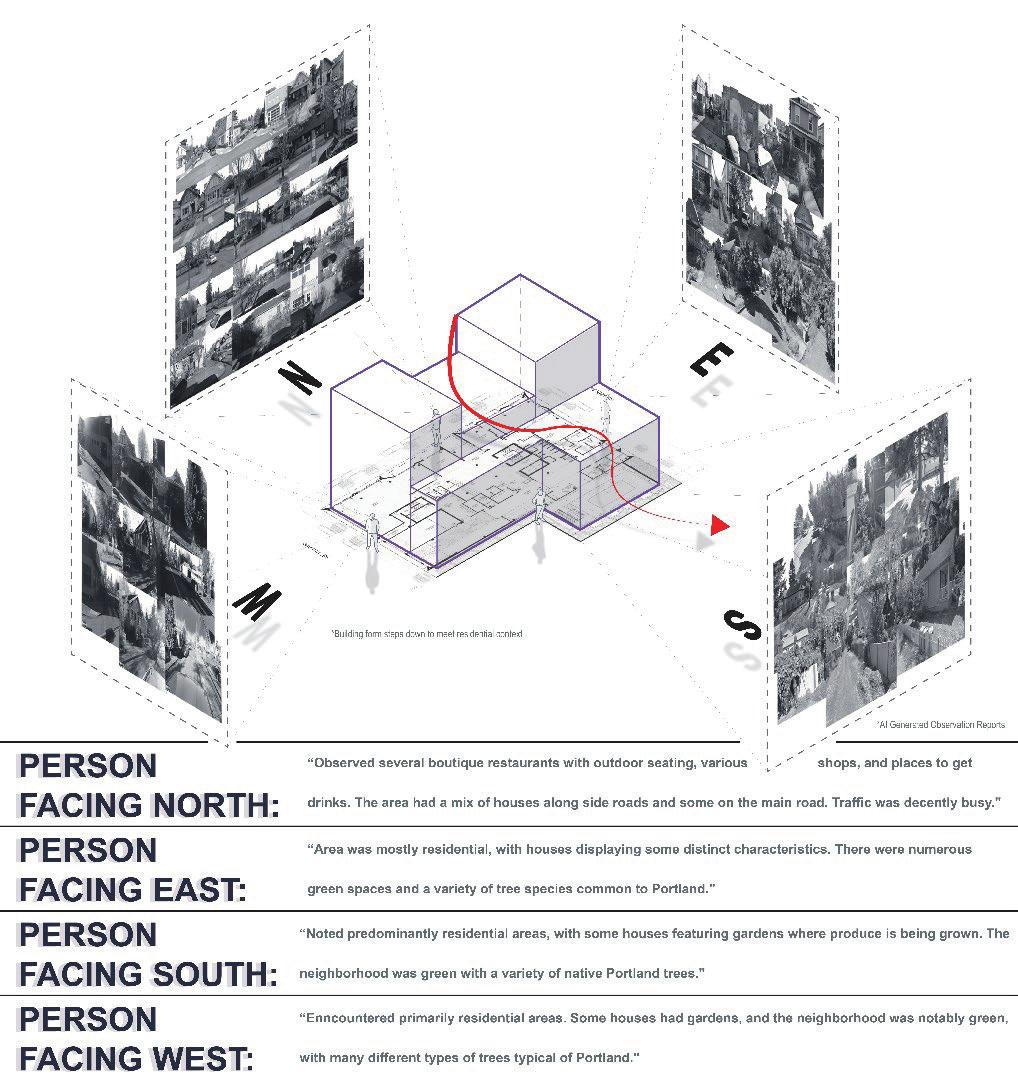
For me I think generative AI has served as a very valuable tool for writing, it makes it much easier to refine your work and have it viewed through a critical lens. AI is not yet at a point where it is the only tool that should be used for creating a project, but I believe it is going to be an essential addition to efficient workflow. I will use AI to assist with research, the formatting of papers, and collecting ideas. I think the chatbot’s potential to help think of innovative ideas is a very exciting idea. Here is an example of how I have already considered a way to combine the chatbot’s ability to write from a perspective different than my own: First I used this prompt: “I need you to write four different quotes as if you were speaking from the perspective of someone who is taking a test, make the four different tones unique but only focused on the task at hand. the task is for the participant to walk around a neighborhood and make note of what they were seeing as they walk around. here is what Participant One sees: a bunch of boutique restaurants with cool outdoor seating, places to get drinks small shops, and many houses along the side roads and some on the main road, decently busy traffic, they are in Portland. Participants two three and four mostly see houses, some are interesting, some people are growing different types of produce, very green neighborhoods with many different species of trees native to the Portland area. write as four separate quotations”. The Chatbot’s feedback assisted me in making this diagram:
You can see in the bottom right corner of the drawing that I credited generative AI for fabricating these observation reports. Incredibly useful because I do not have the time or resources to visit the site of this precedent study.
Here's a revised approach that incorporates the technological challenges, particularly focusing on the transformative power of materials, into the research and communication strategy for the case study scenario:
1. Understanding the Relocation and its Implications
- **What to Research:**
- *Reasons for Relocation*: Investigate the company’s motivations for relocating, including strategic goals, cost savings, and the desire to reset the company culture.
- *Impact on Employee Commutes*: Assess the challenges posed by the new location, such as transportation accessibility and the lack of nearby amenities.
- *Employee Retention Risks*: Analyze the concerns about potential employee turnover due to the relocation and changes in the work environment.
- **How to Research:**
- Conduct surveys or focus groups to gather employee opinions on the new location.
- Utilize transportation data and research on urban planning to understand the impact on commutes.
- Review case studies from Gensler or similar companies that have undergone significant relocations to identify successful strategies.
2. Addressing Work -from -Home Policies
- **What to Research:**
- *Effectiveness of Current Policies*: Evaluate how the 3+ days in the office policy is functioning and its effects on productivity and morale.
- *Employee Preferences and Adaptations*: Understand the reasons behind varying levels of in- office attendance.
- *Hybrid Work Best Practices*: Research industry trends, including Gensler’s own projects that successfully integrate hybrid work environments.
- **How to Research:**
- Conduct a survey to capture detailed feedback on the work-from-home policy.
- Analyze productivity data and employee engagement metrics.
- Benchmark hybrid work strategies, including those implemented by Gensler in similar contexts.
3. Communicating the New Office Environment
- **What to Research:**
- *Employee Concerns and Rumors*: Identify the most prevalent concerns and rumors about the new office environment.
- *Benefits of New Design Features*: Explore the advantages of open benching, reduced square footage, and increased collaborative spaces, with a focus on how innovative materials and technologies can enhance these features.
- *Transformative Role of Materials*: Research the use of new materials that Gensler has employed in past projects to create more adaptive and sustainable work environments.
- **How to Research:**
- Host town halls or Q&A sessions to address employee concerns.
#5: Search Phrase Development with ChatGPT Share + Essay
Matthew Findlay, Thoughts on Generative AI
- Interview architects and materials experts, particularly those associated with Gensler, to understand how cutting- edge materials can transform office spaces.
- Review Gensler case studies that highlight the use of innovative materials and technologies in office design.
4. Managing Employee Anxiety and Productivity
- **What to Research:**
- *Sources of Anxiety*: Investigate the specific aspects of the move and new office environment that are causing employee anxiety.
- *Impact on Productivity*: Measure how these anxieties are currently affecting work quality and output.
- *Support Systems*: Assess the effectiveness of existing support systems and identify opportunities to enhance them using advanced technologies or new materials.
- **How to Research:**
- Conduct anonymous surveys to gather insights on employee concerns and their impact on productivity.
- Track productivity metrics over time, correlating them with periods of heightened anxiety.
- Consult with HR and wellness experts to explore the potential for using new technologies or materials (e.g., soundproofing, ergonomic furniture) to improve well-being.
5. Technological Integration for Hybrid Work
- **What to Research:**
- *Adoption of New Technologies*: Assess the readiness of employees to adopt technologies that support hybrid work, including AIdriven collaboration tools and digital twins for workspace management.
- *Home Office Tools*: Identify the tools and resources that employees need to work effectively from both home and the new office.
- *Training and Support*: Research best practices for rolling out new technology, ensuring that employees are trained and supported.
- **How to Research:**
- Conduct a technology needs assessment, focusing on how advanced materials and AI can enhance both home and office workspaces.
- Develop pilot training programs for new technologies and gather feedback from participants.
- Review Gensler’s use of digital fabrication and other advanced technologies in recent projects to identify applicable strategies.
6. Cultural and Organizational Change Management
- **What to Research:**
- *Cultural Reset Goals*: Clarify the company’s objectives in using the new office design to reset company culture, particularly how the use of innovative materials can play a role.
- *Employee Adaptation*: Study how employees might adapt to the open office environment, particularly in the absence of private offices and assigned seating.
- *Resistance to Change*: Identify sources of resistance and develop strategies to address them using both traditional methods and the integration of advanced materials.
- **How to Research:**
- Review organizational change models and apply relevant ones to this scenario.
- Conduct workshops with leadership to develop a cohesive communication strategy that highlights the benefits of the new environment and materials.
Matthew Findlay, Thoughts on Generative AI
- Analyze case studies where Gensler has successfully managed cultural shifts, particularly through the innovative use of materials.
7. Developing a Communication Strategy
- **What to Research:**
- *Effective Messaging*: Develop key messages that align with company goals and address employee concerns, emphasizing the role of new materials and technologies.
- *Communication Channels*: Identify the most effective channels for communicating these changes, whether through emails, digital platforms, or in-person meetings.
- *Feedback Loops*: Establish continuous feedback mechanisms to adjust communication strategies as needed, incorporating digital tools such as AI- driven sentiment analysis.
- **How to Research:**
- Study previous communication strategies used by the company or Gensler and their effectiveness.
- Conduct stakeholder analysis to tailor messages to different employee groups.
- Test different communication approaches with pilot groups and use advanced analytics to measure their effectiveness.
8. **Technological Challenges and Transformative Materials**
- **What to Research:**
- *Role of Advanced Materials*: Investigate the role of new materials, such as those used in automated building systems, digital fabrication, and neuroscientific modalities, in transforming workspaces.
- *Gensler’s Innovative Use of Materials*: Review Gensler projects that have successfully integrated these materials to enhance the design and functionality of workspaces.
- *Potential Disruptions and Transformations*: Analyze how these materials could disrupt traditional office environments and support the company’s goals for the new headquarters.
- **How to Research:**
- Explore case studies of Gensler projects that have utilized advanced materials to solve similar challenges.
- Conduct interviews with material scientists, designers, and Gensler associates who specialize in integrating new materials into architectural designs.
- Evaluate the potential long-term benefits and challenges of implementing these materials in the new headquarters.
Process and Implementation:
- **Assumptions and Justification**: Clearly define and justify any assumptions about the scenario, especially regarding the adoption of new materials and technologies.
- **Integrated Communication**: Ensure that both written and graphic elements of your response work together to convey your process and recommendations, particularly how advanced materials can play a transformative role.
- **Embrace Ambiguity**: Use the ambiguity in the scenario to explore multiple potential solutions, including the innovative use of materials, and communicate them effectively.
This approach not only addresses the scenario provided but also integrates the technological challenges and the transformative potential of new materials, particularly in the context of Gensler’s projects. By following these steps, you'll be able to create a comprehensive, well-reasoned, and forward-thinking case study response.
#5: Search Phrase Development with ChatGPT Share +
Matthew Findlay, Thoughts on Generative AI
Certainly! Below is a list of comprehensive search phrases that you can use in academic research portals to conduct a literature review for your case study. These phrases are designed to help you find high- quality, relevant literature that aligns with the scenario and research objectives:
Relocation and Employee Retention
- "Corporate headquarters relocation and employee retention"
- "Impact of office relocation on employee productivity and morale"
- "Challenges and strategies in corporate relocation"
- "Urban-to-suburban relocation effects on workforce"
- "Employee satisfaction and office location"
- "Case studies on corporate office relocation"
Hybrid Work Policies and Productivity
- "Hybrid work models and employee productivity"
- "Remote work policies and their impact on organizational culture"
- "Effectiveness of hybrid work environments in the post-pandemic era"
- "Work-from-home policies in large corporations"
- "Balancing remote and in- office work: Best practices"
- "Hybrid work environments and employee engagement"
Office Environment and Design
- "Open office design and employee collaboration"
- "Impact of open-plan offices on productivity and well-being"
- "Office design trends: Open spaces vs. private offices"
- "Workplace design and its impact on organizational culture"
- "Collaborative spaces in modern office design"
- "Case studies on open benching and hot- desking"
Change Management and Communication
- "Change management in corporate restructuring"
- "Effective communication strategies during organizational change"
- "Employee engagement during times of change"
- "Managing resistance to change in the workplace"
- "Communication strategies in organizational transitions"
- "Leadership and change management in corporate environments"
Technological Integration in Workplaces
- "Adoption of new technologies in corporate settings"
Matthew Findlay, Thoughts on Generative AI
- "AI- driven collaboration tools in hybrid workplaces"
- "Digital twins and their application in office design"
- "Impact of new technologies on workplace productivity"
- "Technological innovations in modern office environments"
- "Case studies on the integration of digital tools in corporate offices"
Transformative Role of Materials in Architecture
- "Innovative materials in office design"
- "The role of new materials in sustainable architecture"
- "Impact of advanced materials on workplace design"
- "Digital fabrication and its influence on modern architecture"
- "Case studies on the use of new materials in office environments"
- "Material innovation and its impact on corporate real estate"
Employee Well -being and Support Systems
- "Workplace design and employee well-being"
- "Mental health support in corporate environments"
- "Impact of workplace changes on employee well-being"
- "Employee wellness programs in corporate settings"
- "Ergonomics and workplace design"
- "Case studies on employee well-being in changing work environments"
Cultural Change and Organizational Development
- "Organizational culture change in response to office relocation"
- "Strategies for cultural reset in corporate environments"
- "Leadership in cultural transformation"
- "Employee adaptation to new work environments"
- "Organizational development and cultural change management"
- "Case studies on cultural change in corporations"
General Case Study Research and Methodology
- "Best practices in case study research"
- "Qualitative methods in organizational case studies"
- "Case study research in corporate settings"
- "Mixed-methods approach in case study research"
- "Frameworks for conducting high- quality case studies"
- "Case study analysis in architecture and design" Using these search phrases
#5: Search Phrase Development with ChatGPT Share + Essay
Matthew Findlay, Thoughts on Generative AI
Certainly! Below is a revised version that integrates the investigation of modifying the existing space and the role of biophilia into the previously outlined Gensler scenario:
1. Understanding the Relocation and its Implications
- **What to Research:**
- *Relocation vs. Space Modification*: Compare the benefits and drawbacks of relocating the headquarters versus making targeted modifications to the current office space, focusing on employee satisfaction and cost- effectiveness.
- *Impact on Employee Retention and Productivity*: Assess how both approaches might affect employee retention, productivity, and overall well-being, particularly in the context of maintaining a sense of continuity.
- **How to Research:**
- Conduct a comparative analysis of case studies where companies opted to modify their spaces instead of relocating.
- Interview stakeholders to gauge their preferences and concerns regarding relocation versus modification.
Addressing Work -from -Home Policies
- **What to Research:**
- *Impact of Modified Spaces on Hybrid Work*: Explore how changes to the existing office, especially with biophilic design elements, can support hybrid work models and encourage in- office attendance.
- *Employee Adaptation to Hybrid Environments*: Investigate how modifications, such as introducing natural elements, might enhance employee adaptability and reduce anxiety about returning to the office.
- **How to Research:**
- Review literature on how biophilic design influences employee engagement in hybrid work environments.
- Conduct surveys to understand employee preferences for in- office versus remote work in modified spaces.
3. Communicating the New Office Environment
- **What to Research:**
- *Communication of Space Modifications*: Develop strategies to communicate the benefits of modifying the existing space, focusing on how biophilia can improve the office environment.
- *Employee Perceptions of Biophilic Design*: Understand how employees perceive the integration of natural elements and how this can be leveraged in communication efforts.
- **How to Research:**
- Host focus groups to gather feedback on proposed space modifications and biophilic elements.
- Review successful communication campaigns from Gensler projects that emphasized the role of biophilia in office design.
4. Managing Employee Anxiety and Productivity
- **What to Research:**
- *Role of Biophilia in Reducing Anxiety*: Examine how the introduction of natural elements in the existing office can mitigate anxiety related to workspace changes.
- *Productivity Benefits of Biophilic Spaces*: Research the direct impact of biophilic design on employee productivity and mental health.
- **How to Research:**
- Analyze case studies and scientific research on the psychological benefits of biophilia in office environments.
Matthew Findlay, Thoughts on Generative AI
- Conduct pre- and post-intervention studies to measure changes in anxiety levels and productivity after implementing biophilic elements.
5. Technological Integration for Hybrid Work
- **What to Research:**
- *Integration of Biophilia with Technology*: Explore how biophilic design can be paired with new technologies, such as smart lighting or climate control, to create a more adaptive work environment.
- *Enhancing Hybrid Collaboration*: Assess how biophilic modifications can work alongside technological tools to improve collaboration between in- office and remote employees.
- **How to Research:**
- Review Gensler projects that successfully integrated biophilic design with advanced technologies.
- Conduct interviews with technology and design experts to identify best practices for combining biophilia and technology.
6. Cultural and Organizational Change Management
- **What to Research:**
- *Cultural Impact of Space Modification vs. Relocation*: Evaluate how making changes to the existing space, rather than relocating, can influence organizational culture, particularly in maintaining a connection to the company’s history and identity.
- *Biophilia as a Cultural Reset Tool*: Investigate how biophilic design can serve as a symbolic and practical tool for resetting company culture, emphasizing health, sustainability, and employee well-being.
- **How to Research:**
- Conduct workshops with leadership to align cultural goals with space modifications.
- Review organizational change models that incorporate environmental design as a key component of cultural transformation.
7. Developing a Communication Strategy
- **What to Research:**
- *Messaging the Benefits of Biophilia*: Create a communication strategy that highlights the role of biophilia in improving the workplace environment, focusing on employee health and well-being.
- *Feedback Mechanisms for Space Modifications*: Develop channels for continuous feedback from employees on the effectiveness of space modifications and the integration of natural elements.
- **How to Research:**
- Study Gensler’s communication strategies in similar projects, focusing on how they promoted the benefits of biophilic design.
- Test different messaging approaches with pilot groups and refine based on feedback.
8. Technological Challenges and Transformative Materials
- **What to Research:**
- *Role of Biophilic Materials*: Investigate how innovative, sustainable materials can be used in modifying existing spaces to enhance biophilic design and support a healthier work environment.
- *Gensler’s Use of Transformative Materials*: Explore Gensler’s application of advanced materials in office environments to understand how these can be leveraged in the current project.
- **How to Research:**
- Review case studies from Gensler and other firms that have successfully used transformative materials to enhance biophilic design.
- Interview material scientists and architects to explore the potential of new materials in creating adaptive, health-promoting workspaces.
Expected Outcomes:
#5: Search Phrase Development with ChatGPT Share + Essay
Matthew Findlay, Thoughts on Generative AI
- A comprehensive understanding of how modifying the existing office space, with a focus on biophilic design, can serve as a viable alternative to relocation, benefiting both employee well-being and organizational culture.
- Practical insights into how biophilic design, paired with technological advancements and innovative materials, can transform the existing office environment into a modern, adaptive space that promotes productivity and quality of life.
- A tailored communication strategy that effectively conveys the benefits of space modification and biophilia to employees, fostering acceptance and enthusiasm for the changes.
By closely integrating the exploration of biophilic design and space modification into the existing Gensler scenario, this approach provides a well-rounded, innovative solution that aligns with the company’s goals while addressing employee concerns and improving overall workplace satisfaction.
Certainly! Below is a comprehensive list of search phrases tailored to the specific focus areas we've been discussing. These phrases will help you conduct a thorough literature review for a high-quality case study on modifying existing office spaces, integrating biophilic design, and addressing the challenges and opportunities within the Gensler scenario.
Relocation vs. Space Modification
- "Comparative analysis of office relocation vs. space modification"
- "Impact of modifying existing office spaces on employee retention"
- "Cost-benefit analysis of office space modification vs. relocation"
- "Corporate decision-making in office space relocation and modification"
- "Employee satisfaction in modified office spaces"
Biophilic Design and Employee Well -being
- "Biophilic design in corporate environments"
- "Impact of biophilic design on employee productivity and well-being"
- "Psychological benefits of biophilic office spaces"
- "Biophilic design as a tool for cultural transformation"
- "Case studies on biophilic interventions in workplace design"
Hybrid Work Models and Office Design
- "Office design for hybrid work environments"
- "Integrating biophilic design with hybrid work policies"
- "Employee adaptation to hybrid work in modified spaces"
- "Hybrid workspaces and their impact on employee engagement"
"Best practices for designing hybrid work environments"
Change Management and Communication
- "Change management strategies for office space modification"
- "Effective communication during organizational change in workplace design"
- "Employee engagement in response to office space changes"
- "Managing resistance to change in workplace environments"
- "Leadership and communication in corporate space modifications"
Technological Integration and Biophilic Design
- "Integrating smart technologies with biophilic design in offices"
Matthew Findlay, Thoughts on Generative AI
- "Advanced materials and biophilic design in modern workplaces"
- "AI-driven solutions for biophilic office environments"
- "Digital twins and their role in adaptive office design"
- "Technology and biophilic design: Enhancing workplace productivity"
Cultural Impact and Organizational Development
- "Impact of space modification on organizational culture"
- "Biophilic design as a catalyst for cultural change"
- "Strategies for maintaining organizational identity during office changes"
- "Organizational development through environmental design"
- "Case studies on cultural transformation through office design"
Employee Well -being and Support Systems
- "Impact of biophilic office design on employee mental health"
- "Workplace design for enhanced employee well-being"
- "Ergonomics and biophilic design in the modern workplace"
- "Employee wellness programs in biophilic environments"
- "Stress reduction through biophilic elements in offices"
Innovative Materials in Office Design
- "Transformative materials in biophilic office design"
- "Sustainable materials in workplace modification"
- "Impact of innovative materials on employee comfort and productivity"
- "Case studies on the use of advanced materials in office design"
- "Material innovation and biophilic design in corporate settings"
Productivity and Work Environment
- "Correlation between office design and employee productivity"
- "Biophilic elements and their impact on cognitive function"
- "Workplace environment and its influence on job performance"
- "Productivity metrics in biophilic office spaces"
- "Designing for productivity in modified work environments"
Leadership and Strategic Decision -Making
- "Leadership roles in space modification projects"
- "Strategic decision-making in corporate real estate"
- "Aligning leadership goals with workplace design"
- "Decision-making frameworks for office space changes"
- "Leadership strategies for integrating biophilia into office design"
Case Study Research and Methodology
Matthew Findlay, Thoughts on Generative AI
- "Qualitative research in workplace design case studies"
- "Methodologies for conducting office design case studies"
- "Best practices in corporate real estate case study research"
- "Mixed-methods approach in workplace design case studies"
- "Frameworks for analyzing case studies in architectural research"
Using these search phrases in academic databases like Google Scholar, JSTOR, PubMed, and others, you can gather a broad range of literature to support your case study. These phrases are designed to help you explore the full spectrum of issues related to modifying office spaces, integrating biophilic design, and addressing the broader context of the Gensler scenario.
#7: Traditional Literature Review + Essay
Matthew Findlay
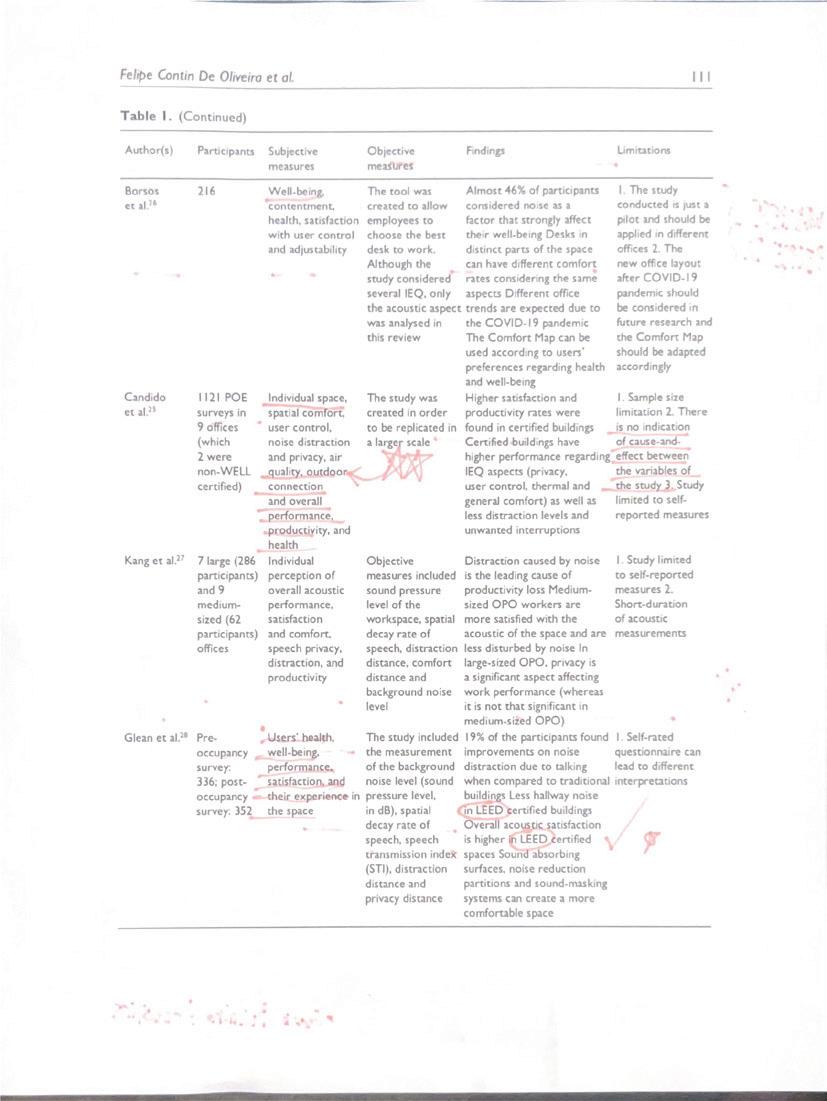
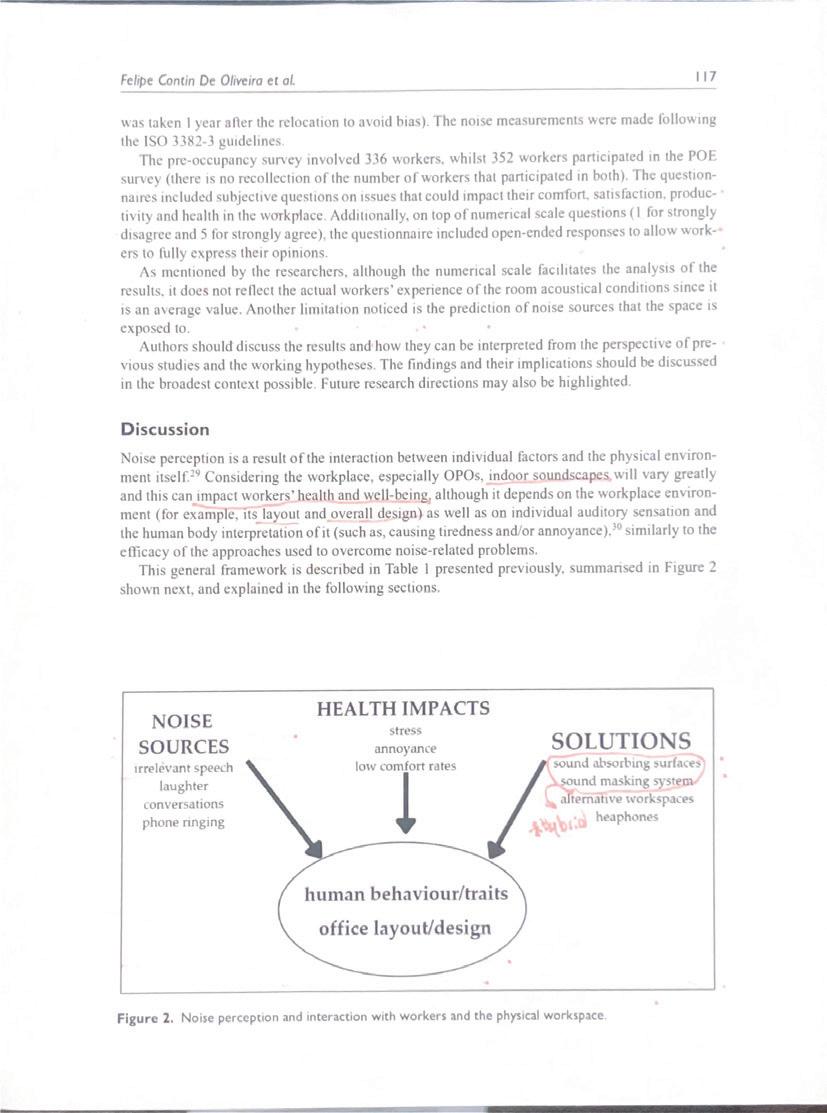
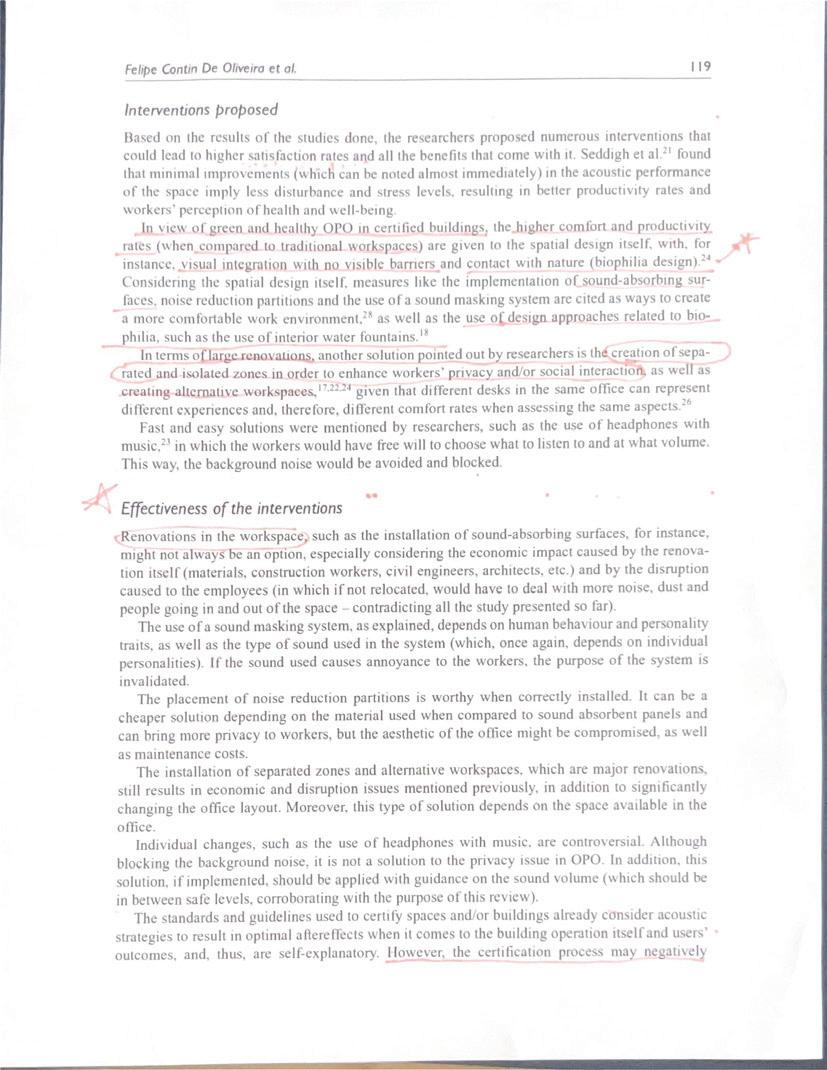
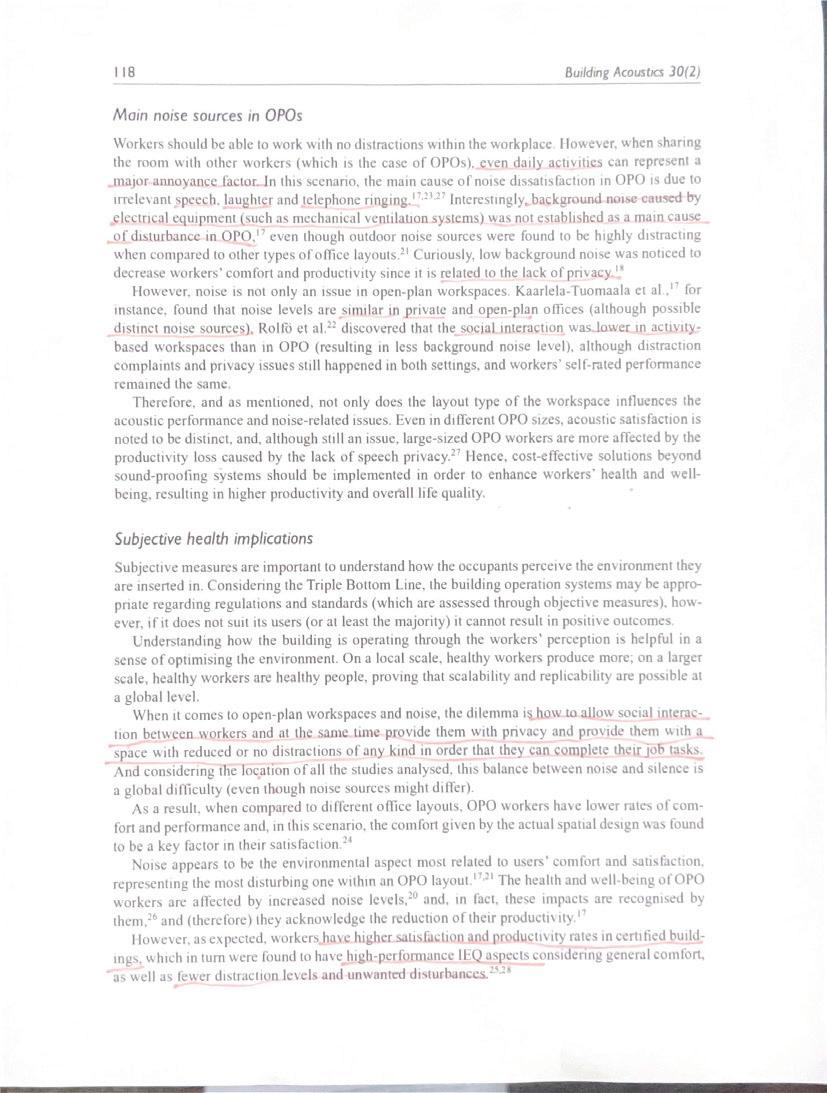
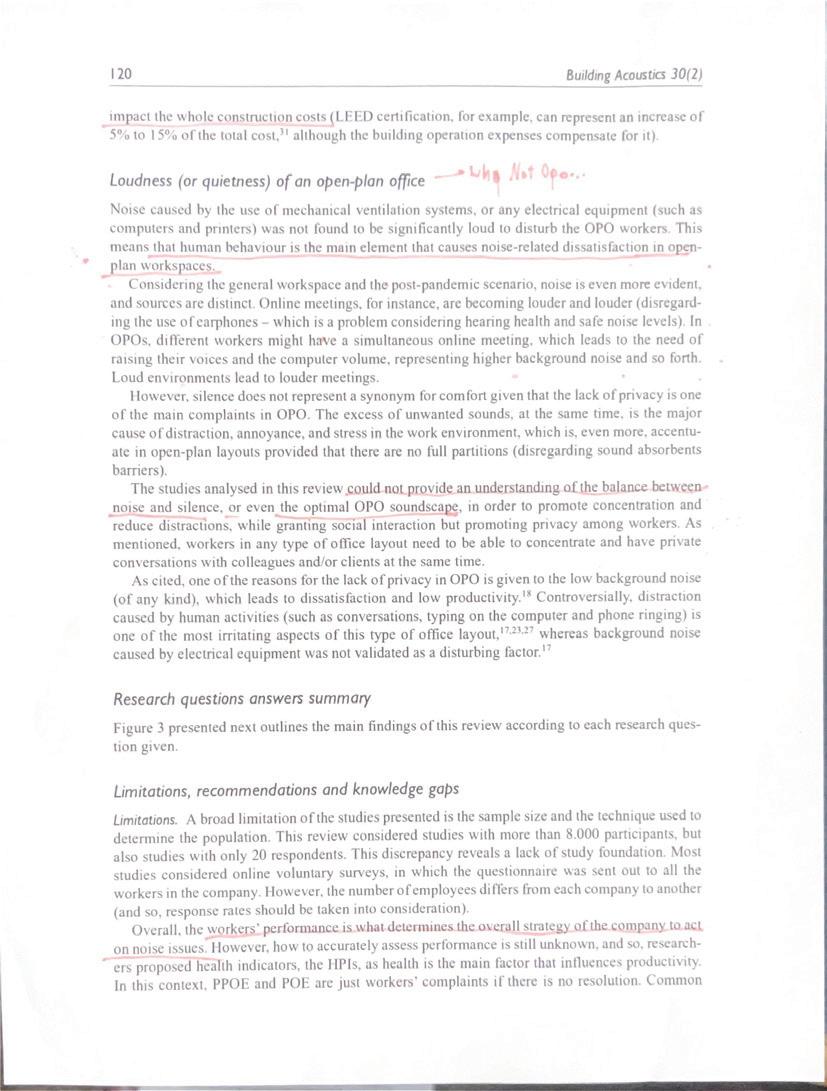
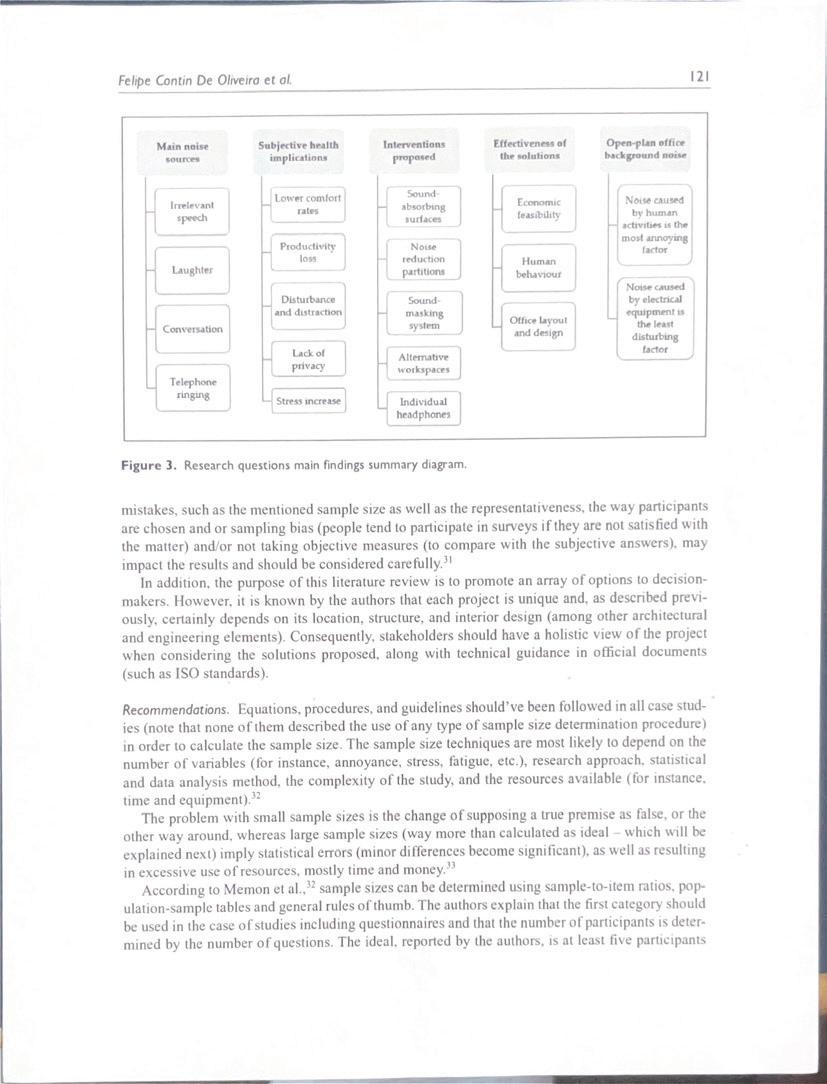
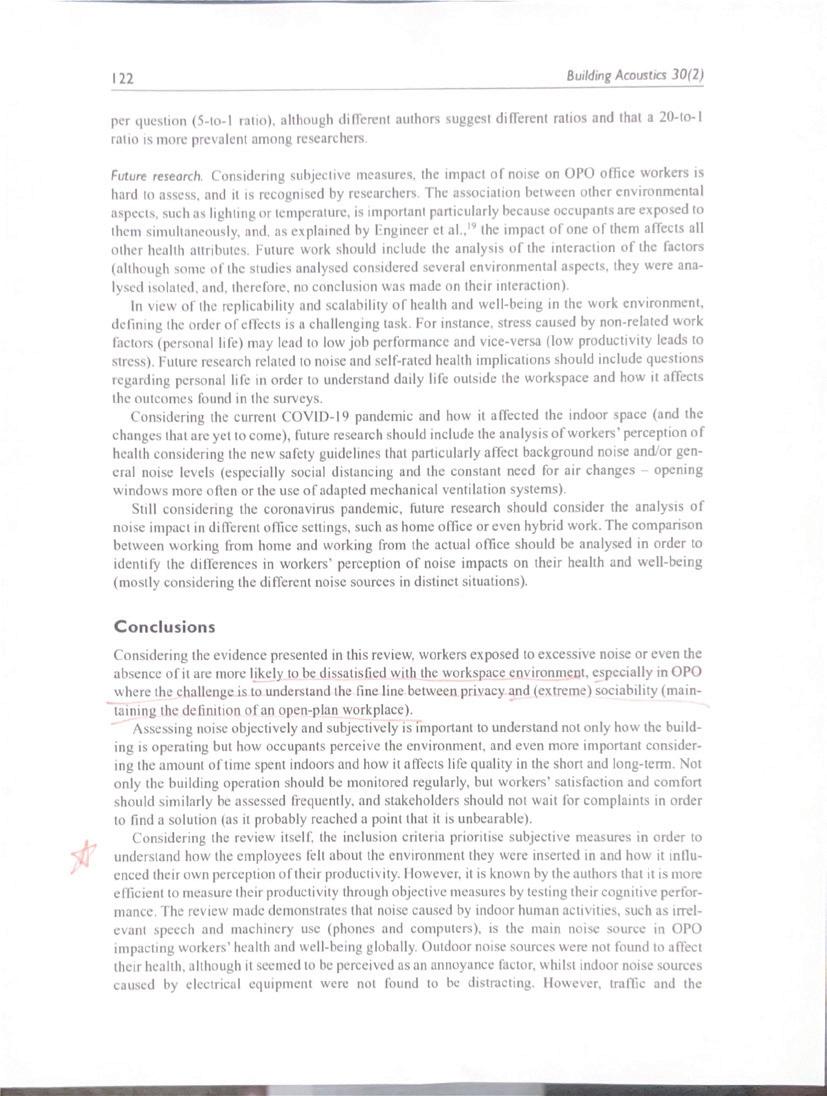
This was an incredibly helpful exercise for finding articles that will be easy to relate to the argument I planned on making in response to the Gensler scenario. I’m considering proposing an argument for scenario one that proposes an office renovation instead of a relocation, and I was hoping to find articles that could disprove some of the ‘collaborative benefits’ that are associated with working in an open office plan. This literary review focuses on studies related to sound and other environmental factors in open- office plans, and it mentions several articles that link positive reception to LEED and other certificate projects. Using Chat GPT to find good search terms was a good starting point for me, but as my ideas started to change, I had to keep updating my search terms which wasn’t easy to keep up with, having gone through the whole process I do believe that Chat GPT saved me a lot of time for this assignment.
Literary Analysis
Introduction:
The workplace and the idea of an idealized office place are constantly changing, and often executive decisions are made regarding changes to the working environment without full consideration of the impact on employee satisfaction and productivity. The executive decision being questioned in this paper is the decision is whether a company should relocate its employees to a new office space or renovate its existing office space. Due to businesses’ obligation to implement hybridized at-home work options into their workflow, the pandemic has catalyzed further discussion and research related to the topic
This literature review will examine the impact of different changes to the workplace so that employee satisfaction will not be compromised in the pursuit of manufacturing the false perception of a stronger workplace culture.
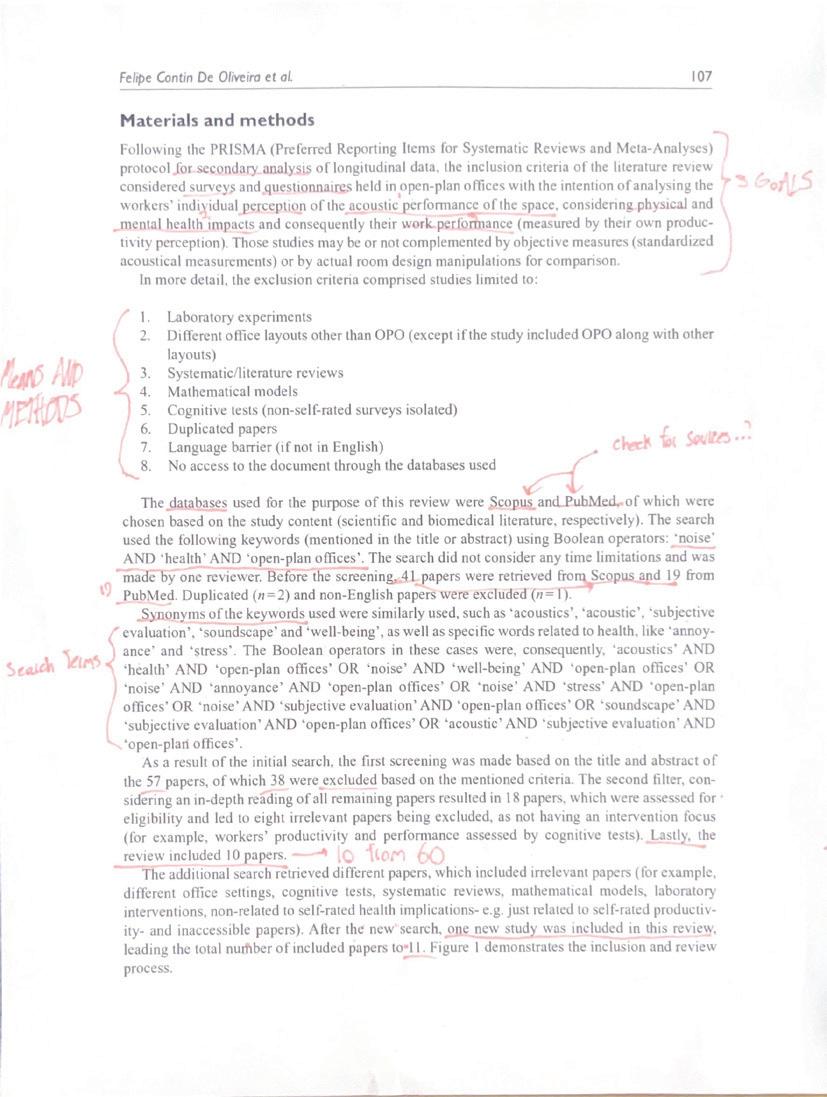
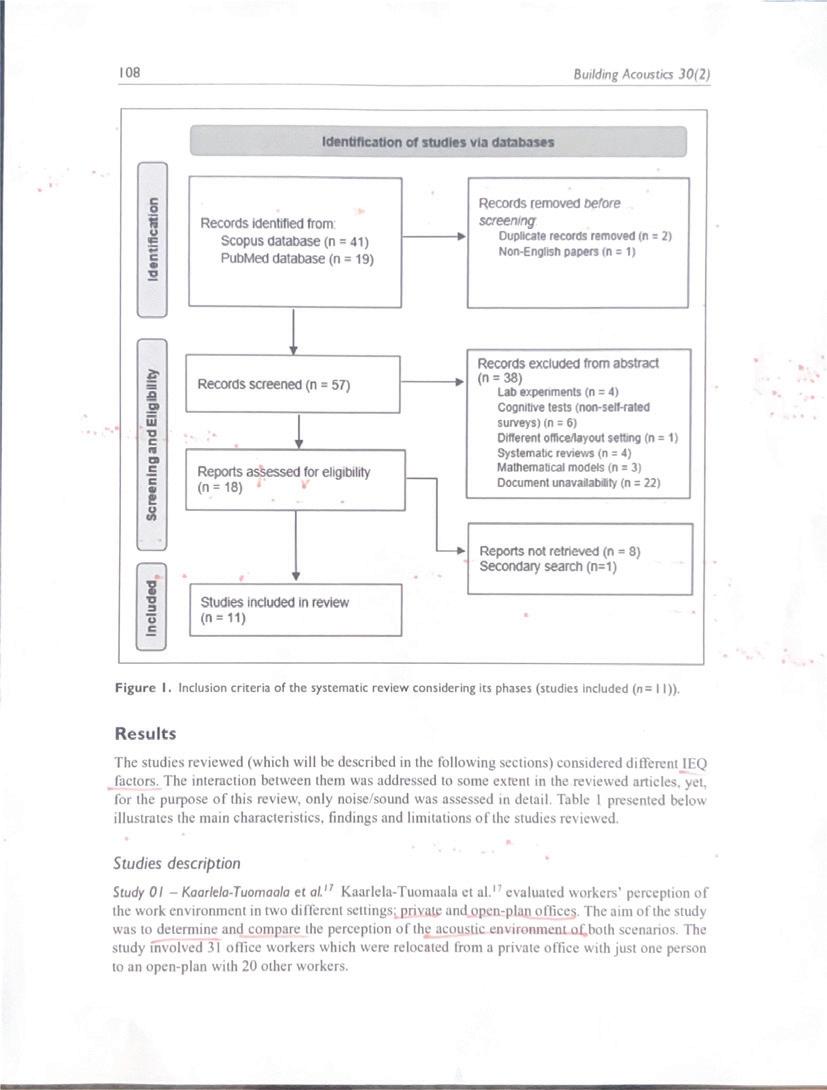
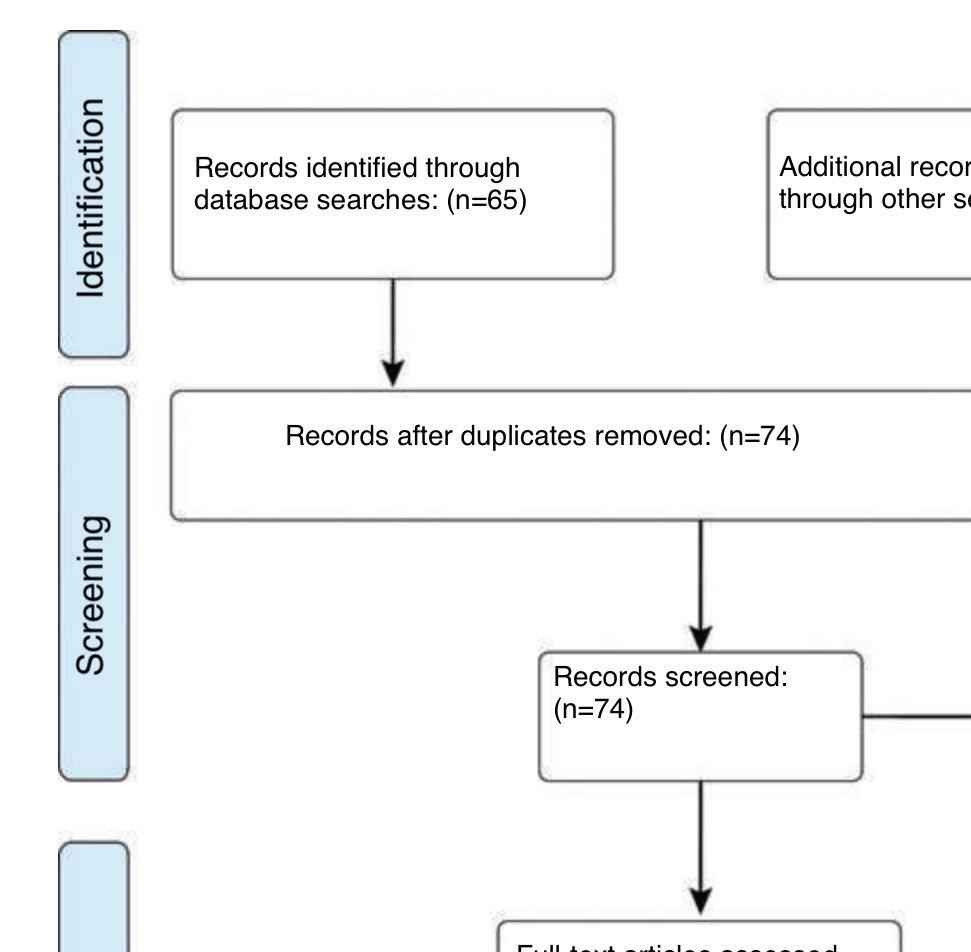
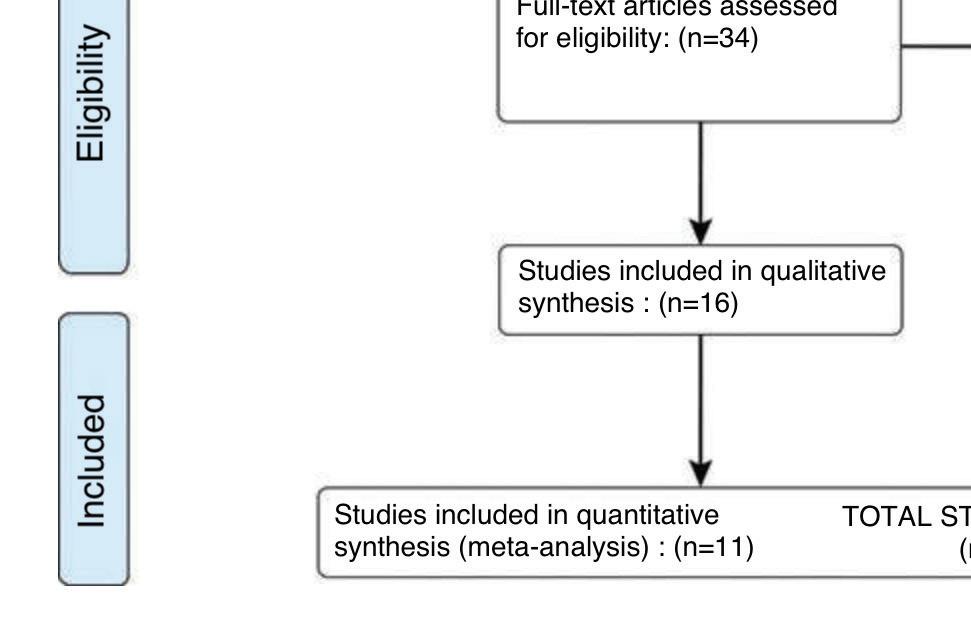
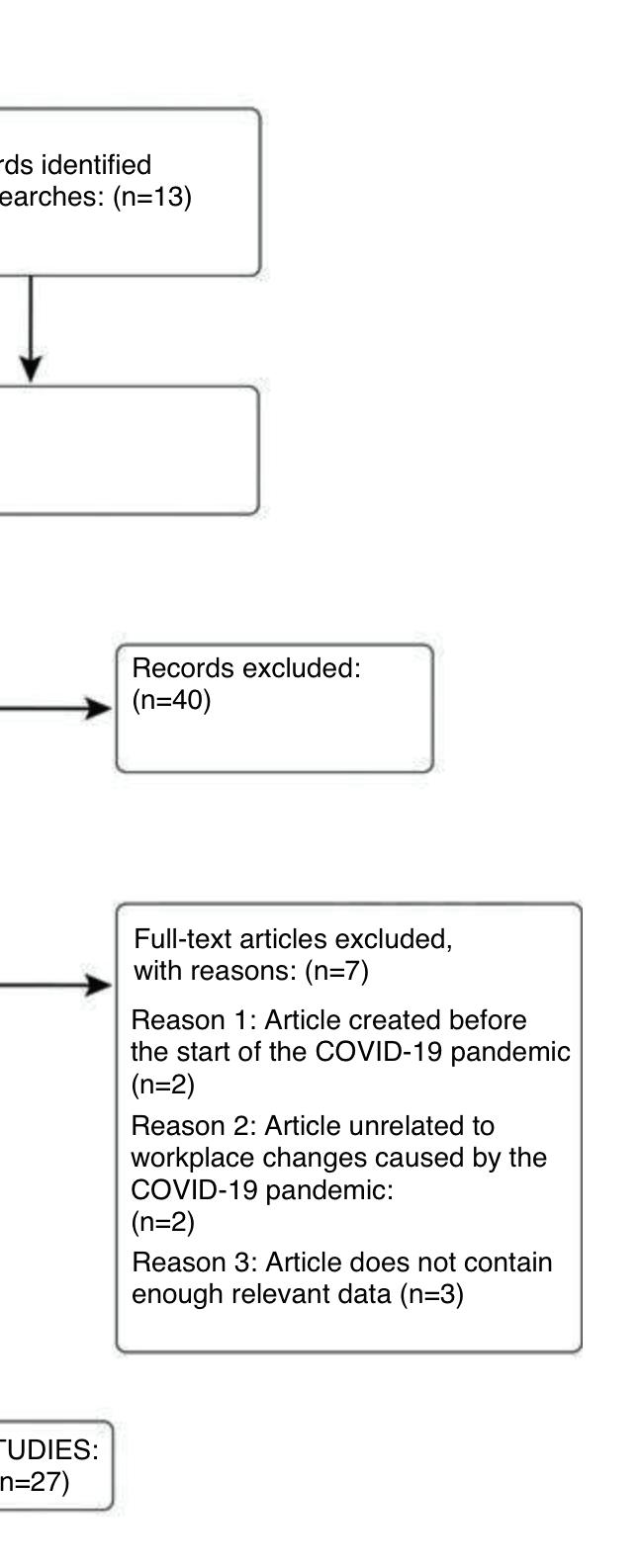
This review was made possible through several different academic research portals including Wiley Online Library, Sage Journals, Research Gate, Emerald Insight, Dergi Park Akademik, PubMed, Scopus, and Science Direct. Key search terms and Boolean operators were used including “Open Office Stress” “Open Office” AND “Privacy” “Office Renovation vs Relocation” “Hybrid Work” AND “Productivity” AND “Office Design” “Office Renovation” AND “Relocation” “Renovation” AND “Biophilia” AND “Collaboration” AND “Production”. As a result, 16 articles were selected from 60 results, and one was redacted due to language meaning that this literary review will focus on 15 articles.
Body:
A theme prevalent in the literature read was the impact that the design of an office has on employee satisfaction and productivity. Lindenberg et al. (2018) found that the type of office workstation employed can significantly impact the mental condition of the employees of use as well as his/her overall physical condition. The study showed that employees who were assigned to open bench seating had both a higher level of physical activity and lower perceivable stress. Though there are many benefits to this style of planning there have also proven to be issues associated with noise level (annoyance) and a lack of privacy in open office layouts. This issue was explored in Traditional Versus Open Office Design: A Longitudinal Field Study (2002). This study showed that transitioning from a traditional office to an open office would often result in decreased employee satisfaction and productivity. Thompson et al. (2023) focused on nature-based solutions and workplace changes while examining employee feedback to inform the design process. This study found that companies that have involved employees in the decision-making process found more success in implementing changes that created a deepened sense of collaboration and a stronger perception of a healthy work culture. Similarly, the two previously mentioned articles (2002) and (2018) both proved that a failure to consult employees about decisions regarding the space they work in
led to dissatisfaction and resistance to said changes, particularly when the changes were drastic, i.e. relocation.
These findings may suggest that an alteration of an existing workplace may be more effective when it comes to improving employee productivity and satisfaction and fostering an environment where employees feel involved and heard.
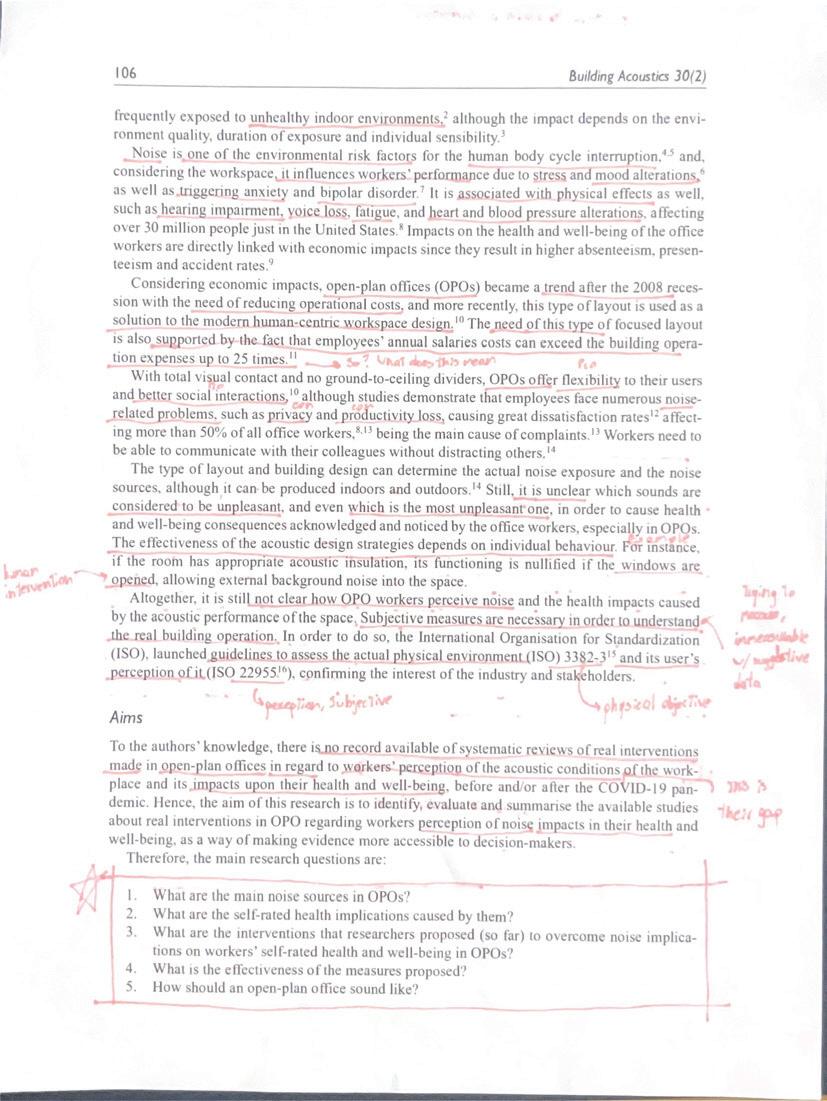
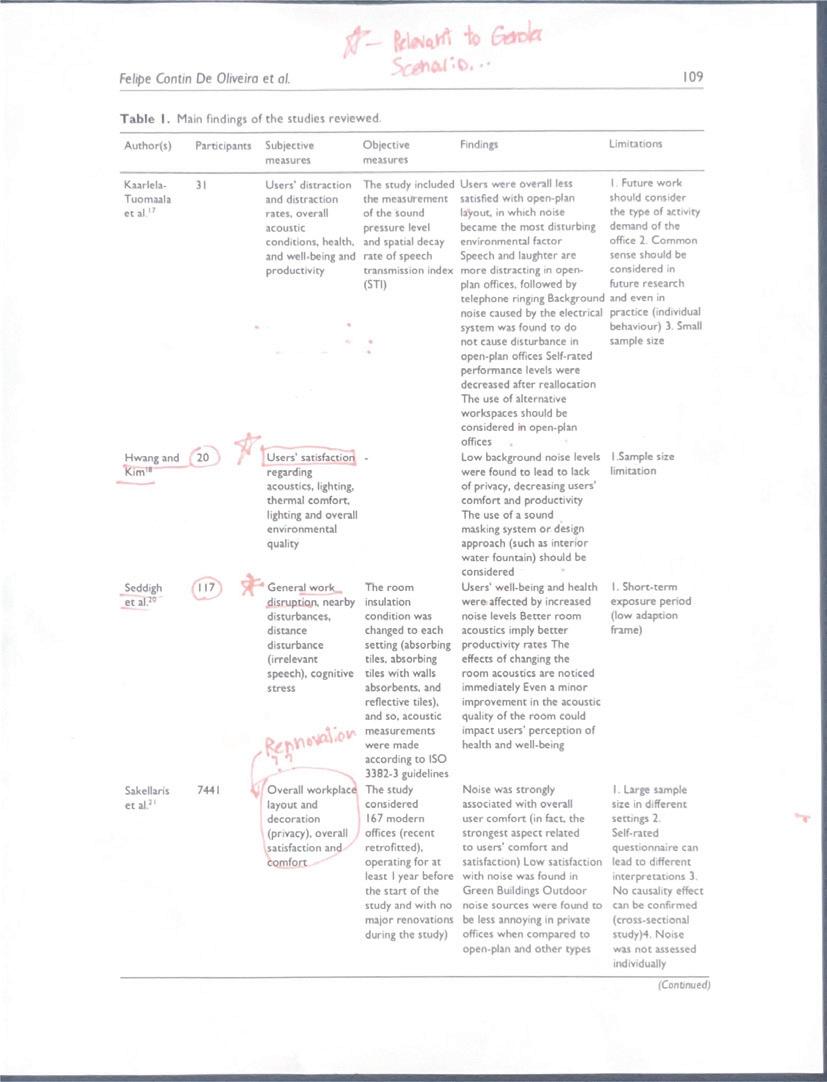
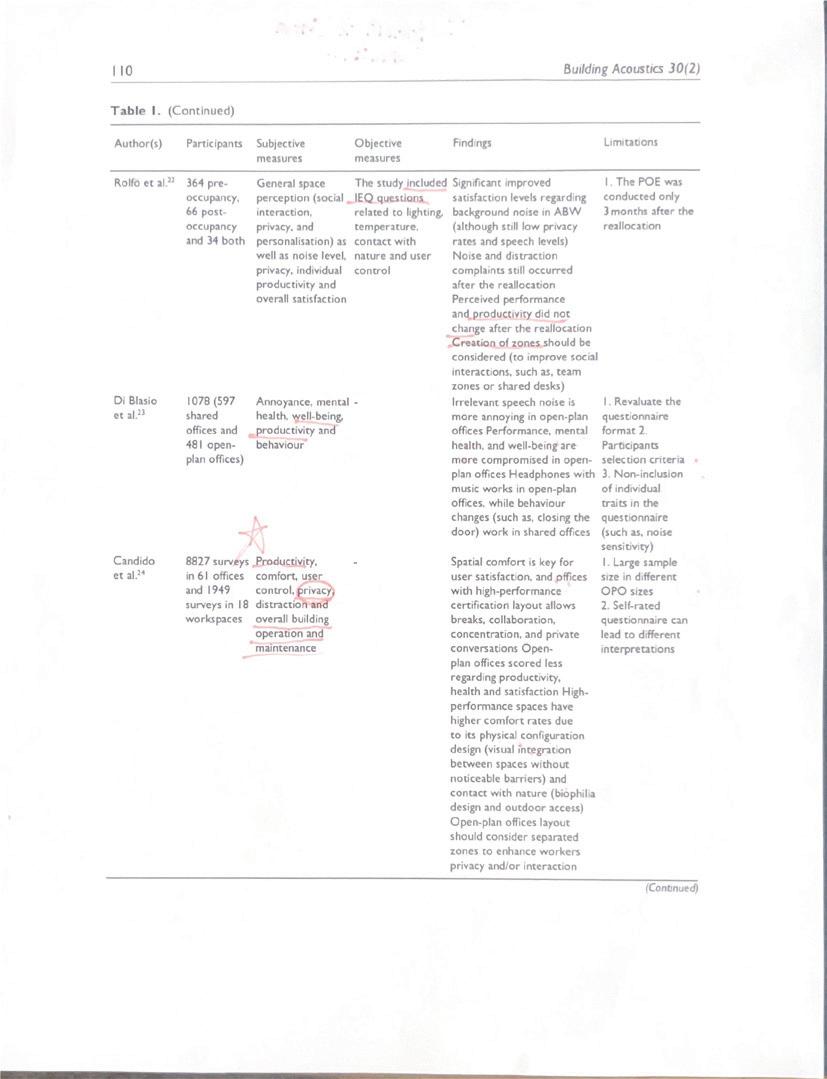
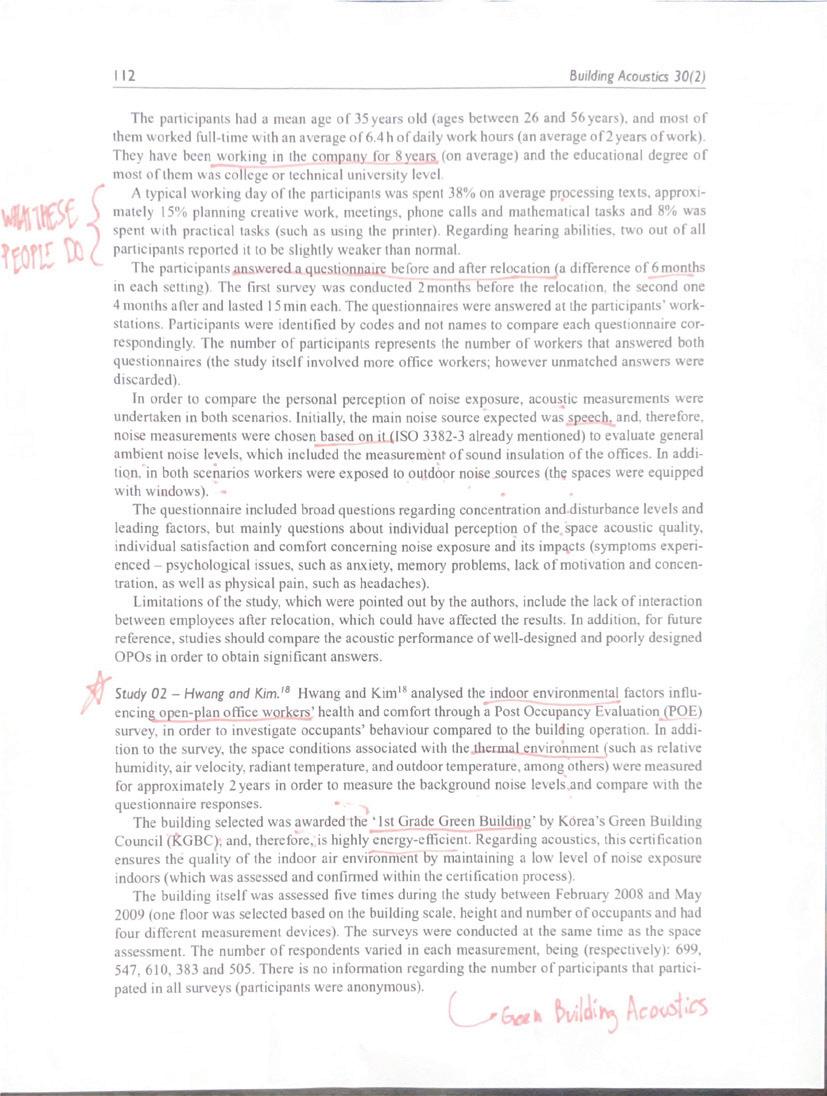
The integration of hybrid work models is an increasingly prominent topic of discussion, and it is another one of the key focuses in this literature. According to Lindberg et al. (2018), hybrid work encourages greater mobility and flexibility, but technology can also stimulate employee disengagement. McNaughton et al. (2021) found that access to light and views can have a great impact on employee’s cognitive performance as well as overall productivity, and this proves that there must be a successful marriage of technology-driven spaces and healthy spaces to properly experience improved productivity and employee satisfaction. Felipe Contin de Olivera et al. (2023) studied the impact that noise and lack of privacy on employees. Higher perceived stress and lower productivity were the result. Noise pollution is something else to be considered in the design of office spaces that emphasize hybridization.
Conclusion:
The Literature listed above focuses primarily on the importance of office design as it relates to productivity, employee well-being (both perceived and physical), the creation of successful collaborative spaces, and the importance of employee involvement in decisionmaking scenarios that pertain to them. It is necessary to focus on how employee satisfaction and productivity can be measured in the long term with changes in the working environment. There may be a lack of information regarding how employee involvement may lead to the greatest possible improvement in productivity and satisfaction. It is important to understand that an individual very well may know what is best for his or her working environment.
Citations
Yunus, E. N., & Ernawati, E. (2018). Productivity paradox? The impact of office redesign on employee productivity. International Journal of Productivity and Performance Management, 67(9), 1918–1939. https://doi.org/10.1108/IJPPM12-2017-0350
Cordero, A. C., Babapour, M., & Karlsson, M. (2020). Feel well and do well at work: A post-relocation study on the relationships between employee well-being and office landscape. Journal of Corporate Real Estate, 22(2), 113-137. https://doi.org/10.1108/JCRE-01-2019-0002
Pan, J., Chen, S., & Bardhan, R. (2024). Reinventing hybrid office design through a people-centric adaptive approach. Building and Environment, 252, 111219. https://doi.org/10.1016/j.buildenv.2024.111219
Inalhan, G., & Finch, E. (2011). Change and attachment to place. In E. Finch (Ed.), Facilities Change Management (pp. 155-173). Wiley-Blackwell.
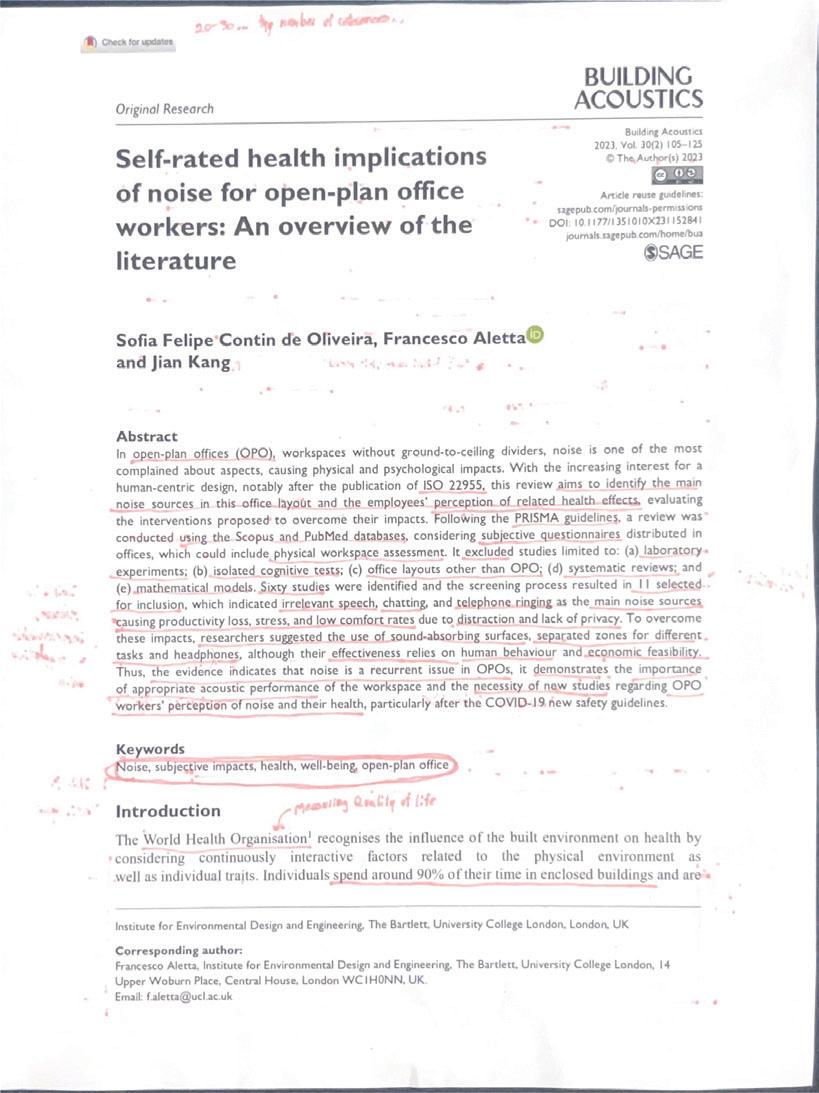
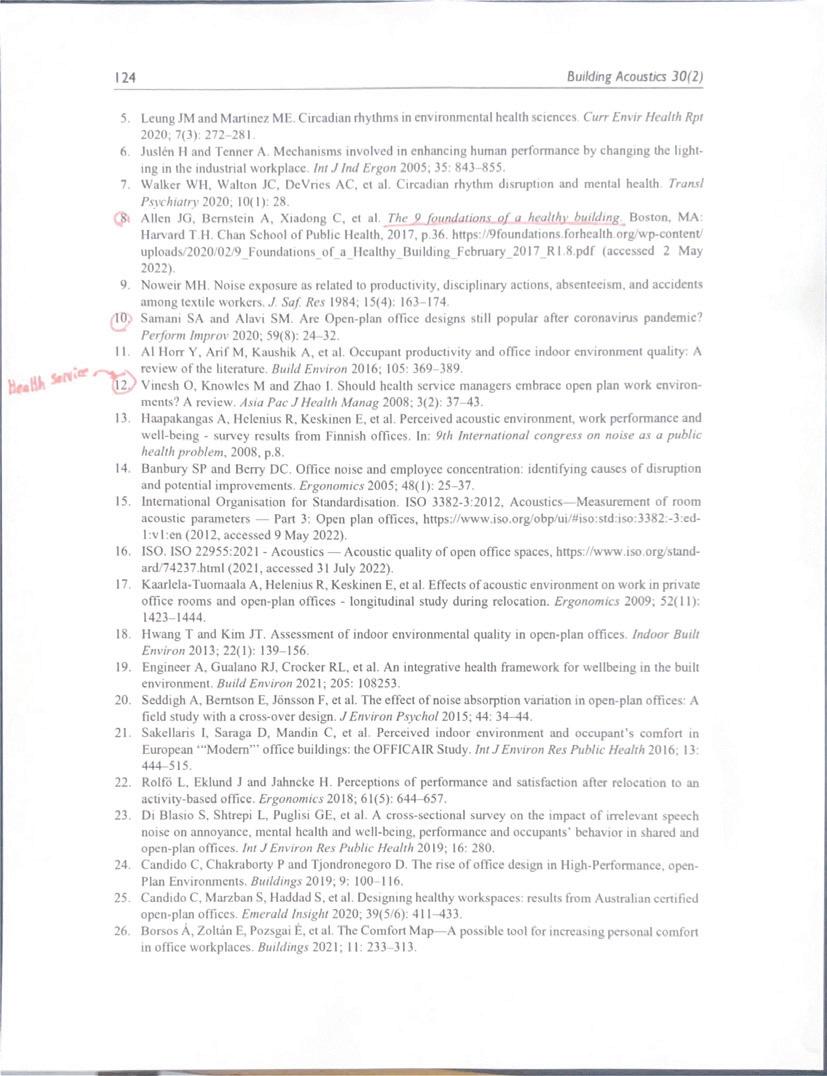
Felipe Contin de Oliveira, S., Aletta, F., & Kang, J. (2023). Self-rated health implications of noise for open-plan office workers: An overview of the literature. Building Acoustics, 30(2), 105–125. https://doi.org/10.1177/1351010X231152841
Sorrento, L. (2012). A natural balance: Interior design, humans, and sustainability. Journal of Interior Design, 37(2), ix–xxiv. https://doi.org/10.1111/j.1939-1668.2012.01075.x
MacNaughton, P., Woo, M., Tinianov, B., Boubekri, M., & Satish, U. (2021). Economic implications of access to daylight and views in office buildings from improved productivity. Journal of Applied Social Psychology, 51(12), 11761183. https://doi.org/10.1111/jasp.12764
Zhao, Y., Zhan, Q., & Xu, T. (2022). Biophilic design as an important bridge for sustainable interaction between humans and the environment: Based on practice in Chinese healthcare space. Computational and Mathematical Methods in Medicine, 2022, Article 8184534. https://doi.org/10.1155/2022/8184534
Thompson, A., Bunds, K., Larson, L., Cutts, B., & Hipp, J. A. (2023). Paying for nature-based solutions: A review of funding and financing mechanisms for ecosystem services and their impacts on social equity. Sustainable Development, 31, 1991–2066. https://doi.org/10.1002/sd.2510
Gray, T., & Birrell, C. (2014). Are biophilic-designed site office buildings linked to health benefits and high performing occupants? International Journal of Environmental Research and Public Health, 11(12), 12204-12222. https://doi.org/10.3390/ijerph111212204
Smith, L. E. (2013). Attention restoration theory and the open office: Addressing mental fatigue in low-stimulus screeners and creative-class workers through biophilic design (Master’s thesis). Savannah College of Art and Design.
Clement, P. (2012). Building energy retrofitting: From energy audit to renovation proposals – The case of an office building in France (Master’s thesis). KTH School of Architecture and the Built Environment, Stockholm, Sweden.
Bodin Danielsson, C., & Bodin, L. (2010). Office Design’s Influence on Employees’ Stress Levels. ARCC/EAAE 2010 International Conference on Architectural Research.
Brennan, A., Chugh, J. S., & Kline, T. (2002). Traditional versus open office design: A longitudinal field study. Environment and Behavior, 34(3), 279-299.
Lindberg, C. M., Srinivasan, K., Gilligan, B., Razjouyan, J., Lee, H., Najafi, B., Canada, K. J., Mehl, M. R., Currim, F., Ram, S., Lunden, M. M., Heerwagen, J. H., Kampschroer, K., & Sternberg, E. M. (2018). Effects of office workstation type on physical activity and stress. Occupational and Environmental Medicine, 75(9), 689-695
Assignment # 9
Matthew Findlay
The Literature listed above focuses primarily on the importance of office design as it relates to productivity, employee well-being (both perceived and physical), the creation of successful collaborative spaces, and the importance of employee involvement in decisionmaking scenarios that pertain to their working environment. It is necessary to focus on how employee satisfaction and productivity can be measured in the long term with changes in the working environment. There may be a lack of information regarding how employee involvement may lead to the greatest possible improvement in productivity and satisfaction. It is important to understand that an individual very well may know what is best for his or her working environment
Qualitative
● Nominal (Unordered categories):
○ Employee agency presence vs. absence of employee input, do the employees believe they have agency in decision-making regarding their working environment
○ The type of decision-making process will differ depending on company hierarchy and structure
○ Workplace design pen office, traditional office, hybrid, dependent on values of employees
○ Employee well-being perceived physical and mental health
○ Employee involvement in renovation/relocation decisions
○ Nature of changes relocation vs. renovation, addition of collaborative space, change in office layout, hybridized work
Assignment # 9
Matthew Findlay
● Ordinal (Ordered categories):
○ Levels of employee satisfaction (high, moderate, low), would have to be acquired through survey…
○ Perceived agency in decision-making strong, moderate, weak, again surveybased
○ Impact of Employee Agency on work culture Positive, neutral, and negative
Numerical Variables:
● Discrete:
○ Number of employees actively involved in decision-making processes.
○ The number of changes made based on employee feedback
○ Number of companies transitioning from top-down decision-making to employeeinvolved models, examples of where this is an applicable strategy
○ Frequency of employee complaints about workspace design changes (postrenovation or relocation).
Assignment # 10
Matthew Findlay
The Literature listed above focuses primarily on the importance of office design as it relates to productivity, employee well-being (both perceived and physical), the creation of successful collaborative spaces, and the importance of employee involvement in decisionmaking scenarios that pertain to their working environment. It is necessary to focus on how employee satisfaction and productivity can be measured in the long term with changes in the working environment. There may be a lack of information regarding how employee involvement may lead to the greatest possible improvement in productivity and satisfaction. It is important to understand that an individual very well may know what is best for his or her working environment
Main Research Question:
● How does involving employees in decisions about changes to their work environment, such as office renovations or relocations, affect their satisfaction, productivity, and the overall workplace culture?
Sub-Research Questions:
● What is the relationship between employee agency and workplace satisfaction in office design changes?
● How does employee involvement in decision-making influence the success of office renovations compared to relocations?
● What role does employee agency play in shaping the balance between hybrid work environments and traditional office setups?
Assignment # 10
Matthew Findlay
● How does the degree of employee involvement in workspace design correlate with longterm productivity?
● What are the primary barriers to employee agency in workplace decisions, and how can these be mitigated?
● How does employee feedback during renovations or relocations affect perceptions of workplace culture?
Matthew Findlay 9/23/2024
How do you use research in your work and how does it inform design?
Research can be an integral addition to workflow because it can provide objective information that informs decision-making An example is the study of office layout and how they can reduce stress and improve employee well-being By considering research I can make an informed decision that will lead to objectively and quantifiably better outcomes
How is evidence produced and how does evidence influence your work?
Evidence can be produced through literature reviews, case studies, and data analysis from real-world examples The process involves gathering quantitative and qualitative data from reliable peer-reviewed sources Evidence-based design is directly rooted in results
What are the core methods, skills, and values needed to do evidence-based design or to produce evidence in your practice or institutional setting?
Analyzing data, conducting surveys, and the ability to incorporate research into design solutions It is important to have a critical eye and to be constantly considerate of possible flaws in the information that you are consuming Flexibility is also a core value because a design must always be able to change in favor of positive results
Does the use of evidence inhibit or enhance the nature of your work?
Evidence can enhance the nature of my work by ensuring that every choice made in the design process is grounded in real data rather than assumptions, this also makes it much easier to defend any decisions made
How does interdisciplinary collaboration play a part in your work?
Interdisciplinary collaboration is important because designing effective spaces requires input from multiple fields In office design, fields like ergonomics, psychology, and technology all have to be included It is also important to include feedback from engineers, interior designers, contractors, and subcontractors
How much evidence is enough and what makes it credible?
Evidence can be considered sufficient when there are multiple studies or reliable data points that can help to support a conclusion from sources like peer-reviewed journals, longitudinal studies, and, real-world data
How are the outcomes of your work translated so that they can be generalized and used by others?
Matthew Findlay 9/23/2024
Outcomes can be translated into practical frameworks and further writings that can be adapted to be used in different types of projects Results can be shared through reports, case studies, or presentations so others may use your findings to hopefully replicate the approaches that are the most successful (or avoid the unsuccessful ones)
From your perspective what should be the future models of education and practice to support an evidence-based practice?
They should emphasize the integration of research and real-world data into the design process I understand that this may be avoided to ensure that design students feel that they have complete creative freedom, but the ability to integrate strategies that have been proven to be successful into the workflow will allow for undoubtedly better projects
Many of the answers to these questions have not changed an incredible amount since the last time that I viewed them, but I do believe that I have a much deeper understanding of how the research process is conducted I believe that this deeper understanding has improved my ability to critically assess sources, and also improved my ability to seek out information that previously seemed inaccessible
I have also come to realize that evidence-based design also emphasizes the importance of interdisciplinary communication because it is not possible to be completely studied in every different subject
The Impact of Employee Participation in Workspace Design on Workplace Culture
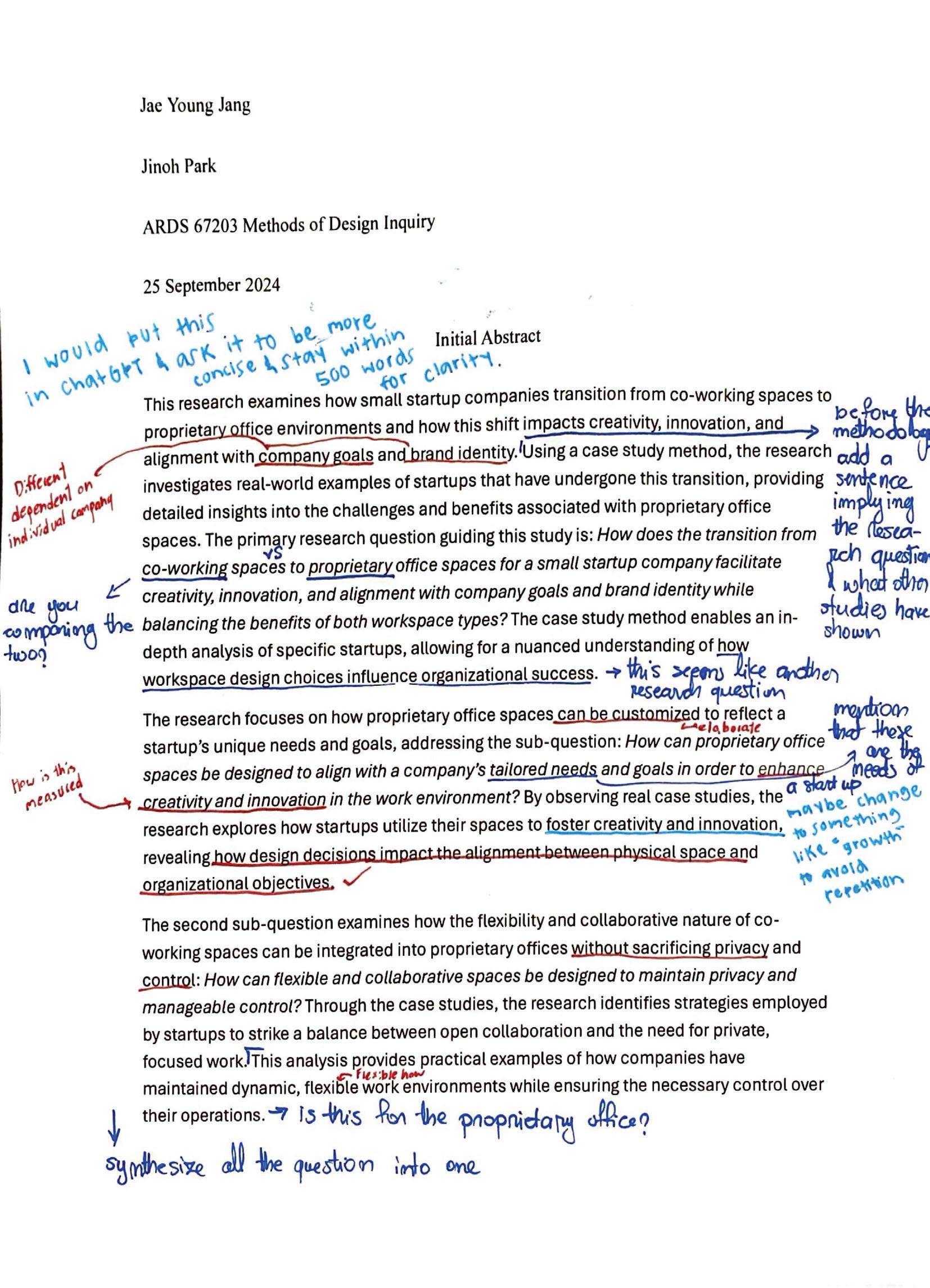
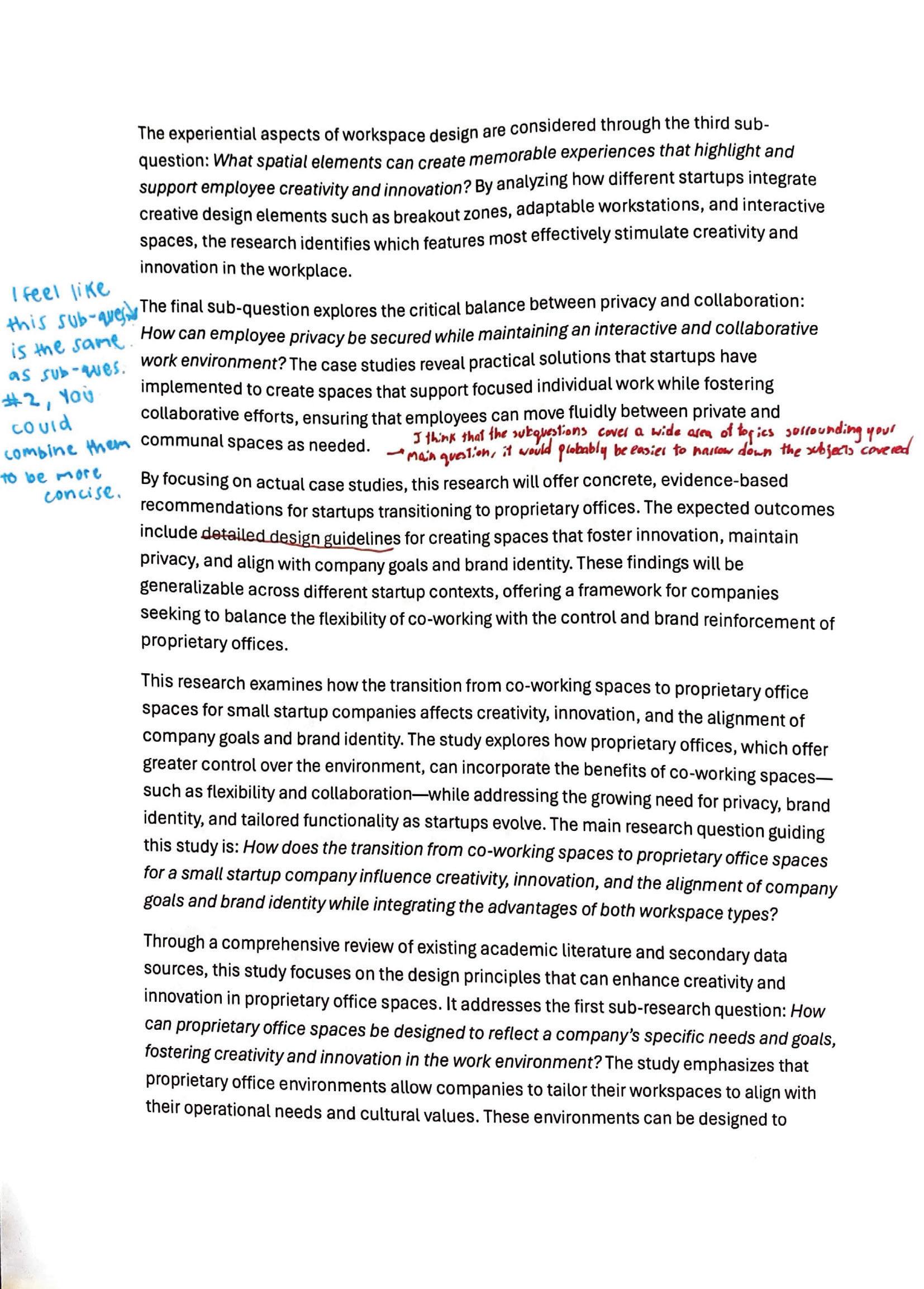
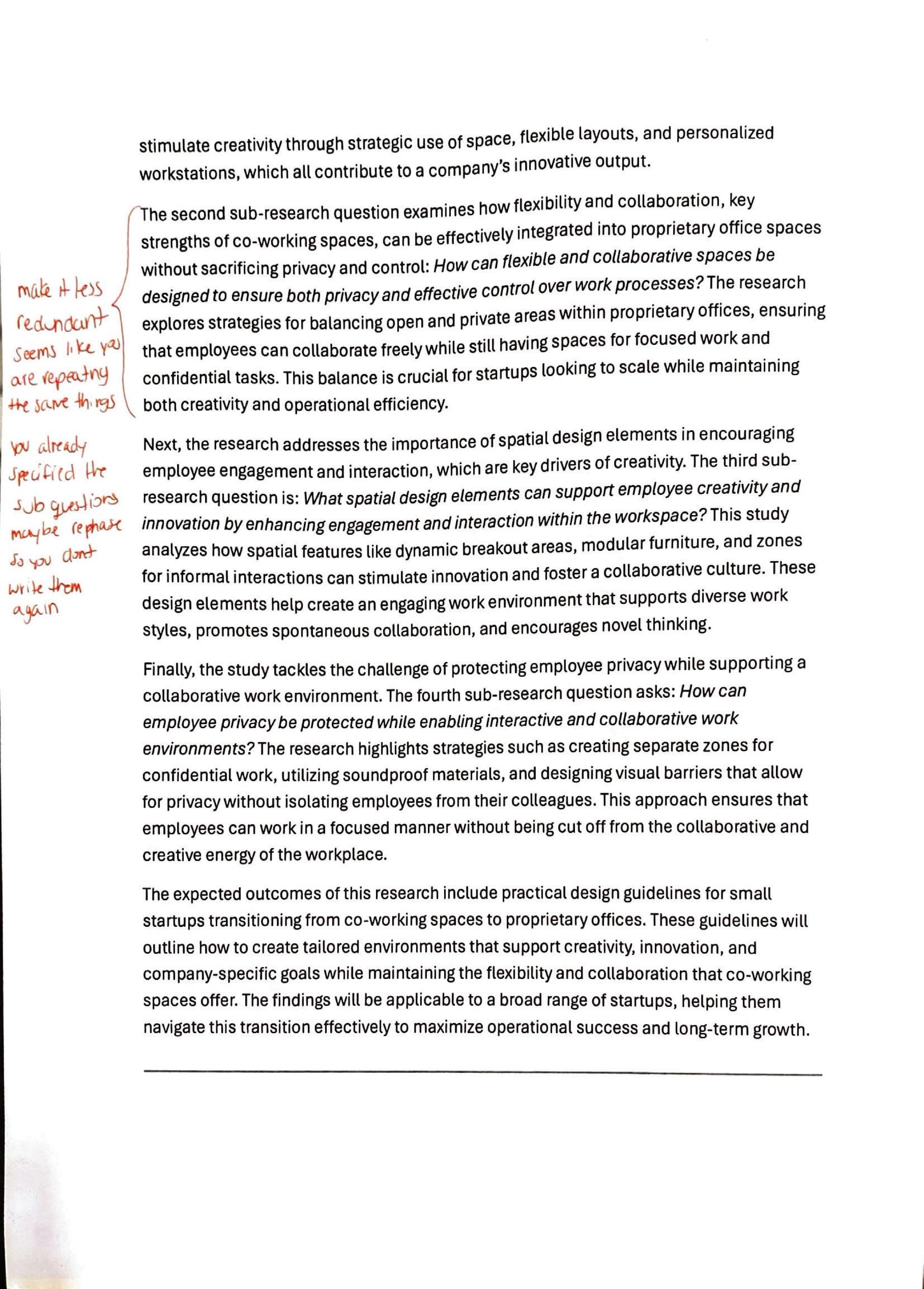
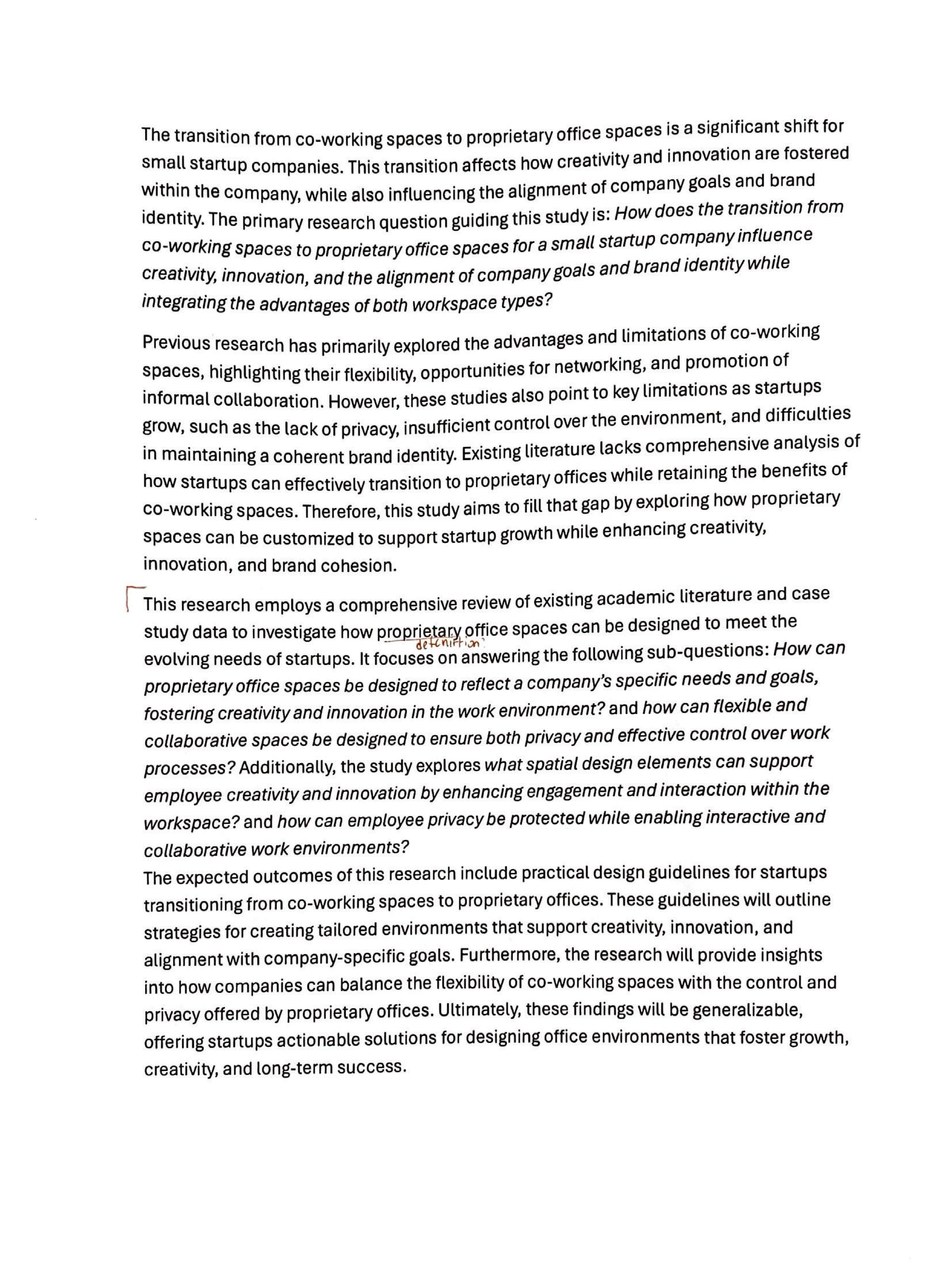
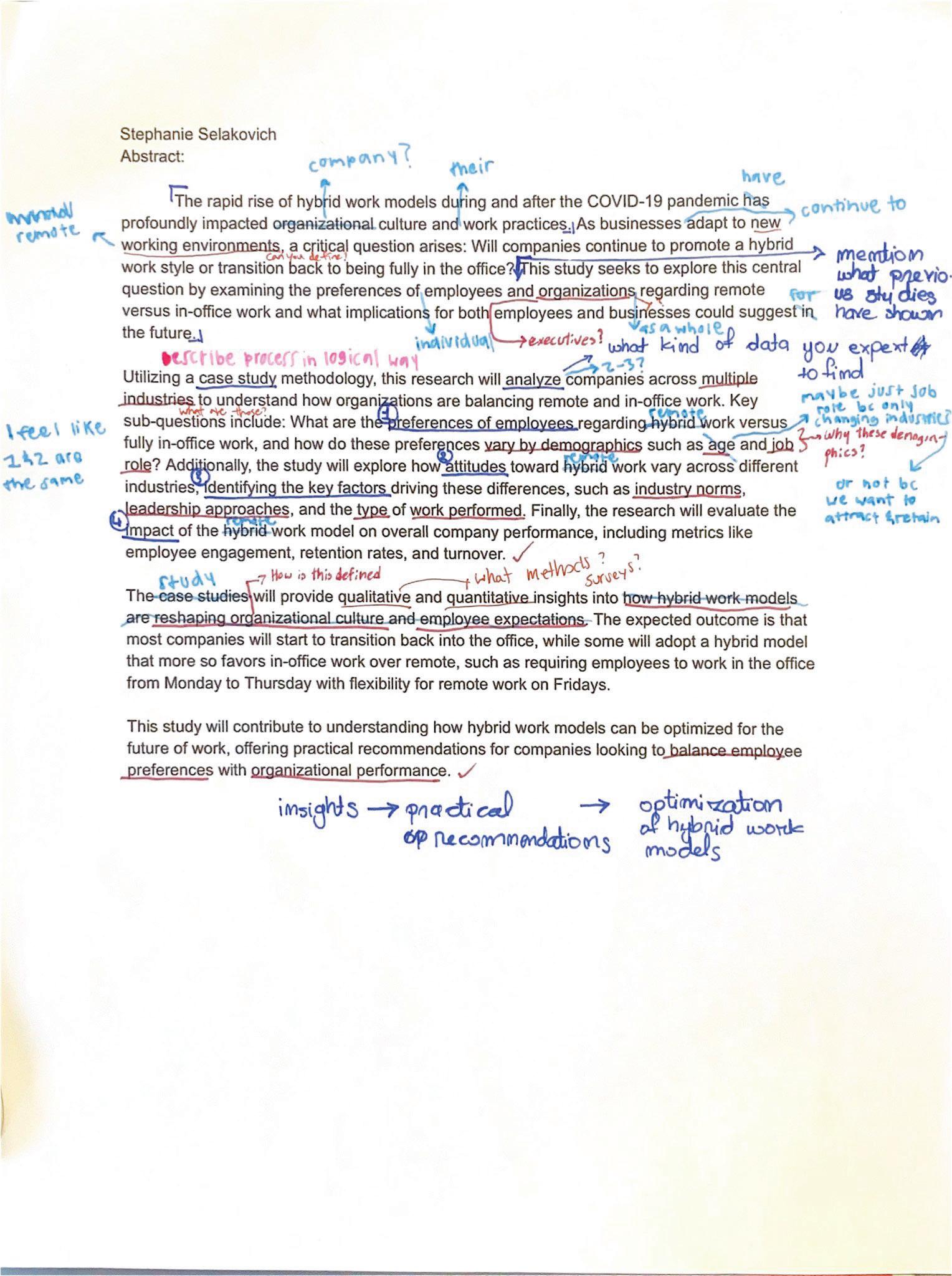
Employee participation in workplace design decisions has emerged as an important factor in influencing job satisfaction, productivity, and workplace culture as organizations recognize the importance of creating work environments that meet employee needs. Literature indicates that workplace features such as privacy, access to natural elements, and noise control are significant influences on employee well-being and productivity. Several studies, such as Lindenberg et al. (2018) and Thompson et al. (2023), suggest that employees experience greater satisfaction and reduced stress when they are involved in the design of their workspaces. Building on this foundation about employee satisfaction and productivity, this study examines the impact of employee involvement in physical workspace decisions on the workplace culture, recognizing that organizations recognize the importance of creating a work environment for their employees. A particular focus is on the impact of direct employee involvement in their work environment on their perception of the workplace, their job performance, and long-term engagement at work. The researchers investigated the central question of the study: “What is the effect of participatory workplace design on workplace culture?” Subquestions will address the contribution of employee input to corporate culture, engagement and long-term productivity, and identifying barriers to effective employee participation. To address the questions, this research conducts a systematic review with the PRISMA framework. As a first step, the author conducted a search using boolean operators on academic research portals such as Wiley Online Library, Sage Journals, Research Gate, Emerald Insight, and ScienceDirect by including the terms “participatory,” “workplace,” “design,” “culture,” “long-term,” and “productivity.” Based on the results of the search, the author filtered the articles by reviewing their titles and abstracts. Secondly, by reading full papers, the authors will identify the relevant papers regarding the effect of participatory workplace design on the culture of the workplace. The authors will extract content regarding how the participatory design process impacts the development of corporate culture, long-term productivity, and employee engagement from the remaining papers after the double filtering process has been completed. Lastly, the extracted content will be organized using thematic analysis. During the course of the semester, the study is expected to provide detailed and meaningful findings. The author expects that this study will fill the knowledge gap regarding the relationship between employee involvement in workspace design decisions and corporate culture, as well as long-term productivity and engagement. As part of the research, we anticipate identifying common barriers to employee involvement, such as organizational structures that limit participation and a lack of communication between employees and management. We will discuss suggestions for overcoming these barriers, emphasizing the benefits of involving employees in workplace decision-making processes. Ultimately, we will contribute to the growing body
of knowledge that illustrates how participatory design can transform workplace environments, resulting in more satisfied and productive employees.
Research Method: A cross-sectional survey design, where you distribute online questionnaires to employees from various organizations that have adopted participatory design approaches. This will allow you to gather first-hand data on employee satisfaction, productivity, and workplace culture.
Participants: Employees from several industries preferably those who have participated in workspace design decisions. Aim for a sample size of 50-100 participants to ensure sufficient data for analysis.
Data Collection:
○ Use a Likert-scale questionnaire to measure employee perceptions of workspace design, their involvement in the process, and its effect on workplace culture, engagement, and performance.
○ Include questions about specific workspace features, such as privacy, noise control, and access to natural elements, and how they correlate with employee satisfaction and productivity.
Secondary Data: Supplement your survey with existing reports on employee satisfaction and productivity metrics from organizations that have implemented participatory design, similar to the approach in your abstract.
Data Analysis: Use descriptive and inferential statistics to analyze relationships between employee participation in design and outcomes such as engagement, corporate culture, and productivity. Pearson correlation or regression analysis would help identify significant trends.
Feasibility: This approach allows for data collection and analysis to be completed within a semester, while thematic analysis of qualitative feedback (if collected) can provide additional depth without extending the timeframe too much.
Research Design (Qualitative):
1. Case Study Selection: Rather than focusing only on companies that have already undergone a participatory workspace design change, I will select organizations that either have varied approaches to workspace design or are considering future design changes. This broader scope will allow me to compare companies that have different levels of employee involvement in workspace decisions. This could include companies with traditional top-down approaches, those considering participatory design, or those in the process of making changes. By doing so, I can capture a range of experiences without limiting my study to companies that have already completed the change.
2. Participant Selection: To maintain the diversity of perspectives without conducting time-consuming interviews, I will collect data from employees via anonymous surveys (possibly administered through Google Forms or some other equivalent). This will allow participants to share their experiences and thoughts about their workspace without needing to allocate specific time for interviews. I can distribute the survey across different departments and roles within the organization, ensuring that responses represent a broad spectrum of employee experiences. These surveys will include structured and open-ended questions to capture both quantitative and qualitative insights.
3. Data Collection:
● Anonymous Online Surveys: The core of my data collection will be the previously mentioned anonymous surveys distributed to employees remotely. The survey will contain Likert-scale questions (to quantify satisfaction, productivity, and engagement) as well as open-ended questions that ask participants to reflect on how involved they feel in workspace decisions about their working environment, their satisfaction with the workspace, and its impact on their productivity and job performance. This method will gather subjective feedback while minimizing the time commitment required from employees.
● Document Review: I will request access to existing company data such as employee satisfaction surveys, performance metrics, or reports on workplace culture and engagement. These documents will give me a better understanding of the company’s current workspace setup and how it affects employees. Additionally, I will review company reports or plans that discuss any future workspace design changes, even if they have not been implemented yet. This allows me to study the potential effects of participatory design without requiring the company to have already undergone a full transition.
● Publicly Available Data: To further minimize the need for company time, I will also collect data from publicly available sources, such as reviews on workplace culture from platforms like Glassdoor, LinkedIn, or corporate websites. These reviews often include
employee feedback on the workspace, engagement, and satisfaction, offering insights that can complement the survey and document review data.
4. Thematic Analysis:
Once I have collected the survey responses and reviewed the relevant documents, I will perform a thematic analysis to identify recurring themes. This could include themes such as "lack of ownership in workspace," "increased satisfaction from customization," or "collaborative environment vs. private space." By analyzing the responses and documents together, I can gain insights into how employee involvement in workspace decisions whether hypothetical or planned might influence workplace culture, satisfaction, and productivity.
5. Cross-Data Comparison:
I will cross-compare the themes identified from the survey data and document reviews to identify patterns. For example, I can compare the responses from employees in companies that allow more employee input with those that have more traditional workspace designs. This comparison will help me understand the relationship between workspace design participation and cultural factors such as engagement, job satisfaction, and performance.
Feasibility:
This approach is fully feasible for remote data collection, as it eliminates the need for interviews or direct observation. The surveys and document reviews can be conducted asynchronously, allowing companies to participate without disrupting their employees’ schedules. The use of existing company documents and public data sources ensures that I gather rich, context-specific data without requiring a significant time commitment from the companies involved.
My Mixed-Methods Research Design:
Case Study Selection: I will select companies with varied approaches to workspace design those with traditional setups, those considering participatory changes, and those that have implemented such changes. This broader scope allows for a more comprehensive analysis of workspace involvement.
Quantitative Data Collection:
● Anonymous Online Surveys: I will distribute structured surveys to employees, focusing on measurable outcomes like satisfaction, engagement, and productivity.
● Performance Metrics: I will request access to company data (e.g., productivity reports, and retention rates) to quantify the impact of workspace design.
● Public Data: I’ll supplement this with publicly available reviews (e.g., Glassdoor) to provide a wider context.
● Qualitative Data Collection:
● Open-Ended Survey Questions: I will gather subjective insights from employees through open-ended questions embedded in the surveys, asking them to reflect on their involvement in workspace design and its impact on their job experience.
● Document Review: Reviewing internal reports and company memos related to workspace decisions will offer qualitative insights to complement employee feedback.
● Publicly Available Information: Additional qualitative data will be gathered from publicly available sources, such as industry reports and employee reviews.
Data Analysis:
● Quantitative Analysis: I will use correlation analysis to assess the relationship between workspace design participation and productivity, satisfaction, and retention.
● Thematic Analysis: I’ll conduct a thematic analysis of the qualitative data, identifying key themes like "ownership of space" and "collaboration barriers."
Cross-Data Comparison: The strength of this mixed-methods approach lies in comparing quantitative trends with qualitative insights, ensuring a fuller understanding of the relationship between workspace design and workplace culture. The quantitative data will validate the patterns and themes uncovered in the qualitative analysis, and vice versa.
While the mixed-methods approach offers a richer, multidimensional view of the research question, its complexity poses challenges. The extra steps collecting both quantitative and qualitative data, analyzing them separately, and then cross-referencing may be difficult to manage within a single semester.
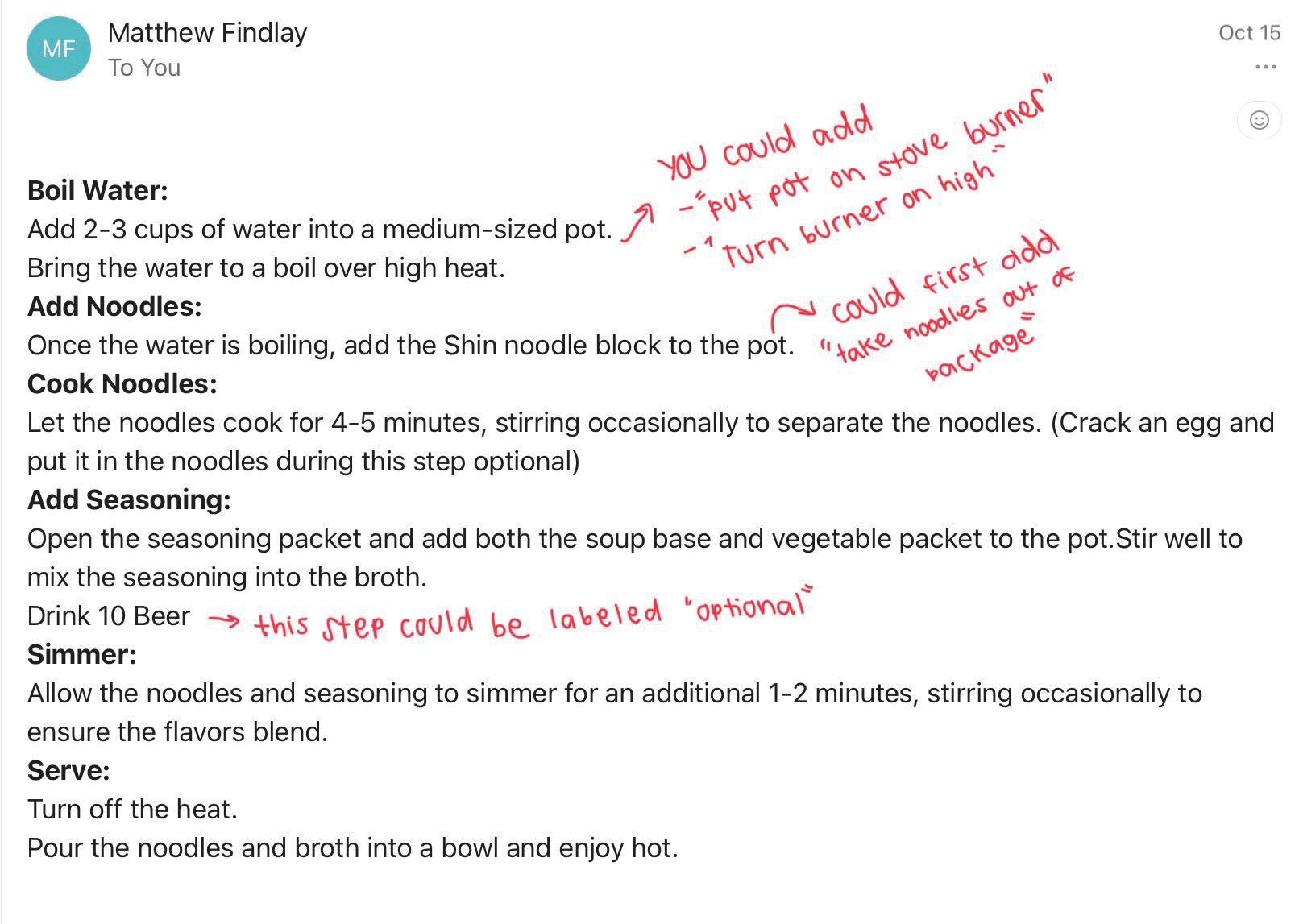
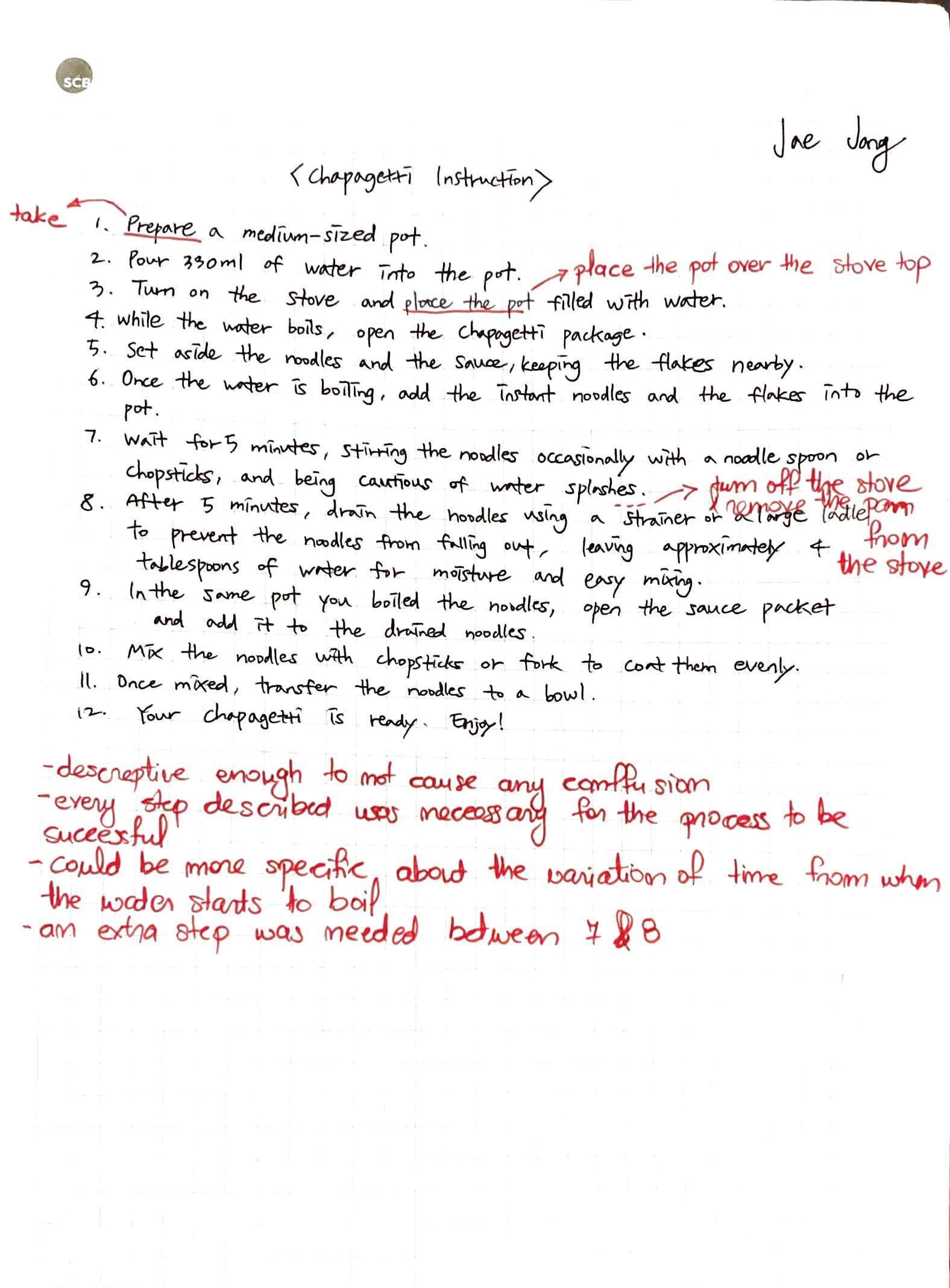
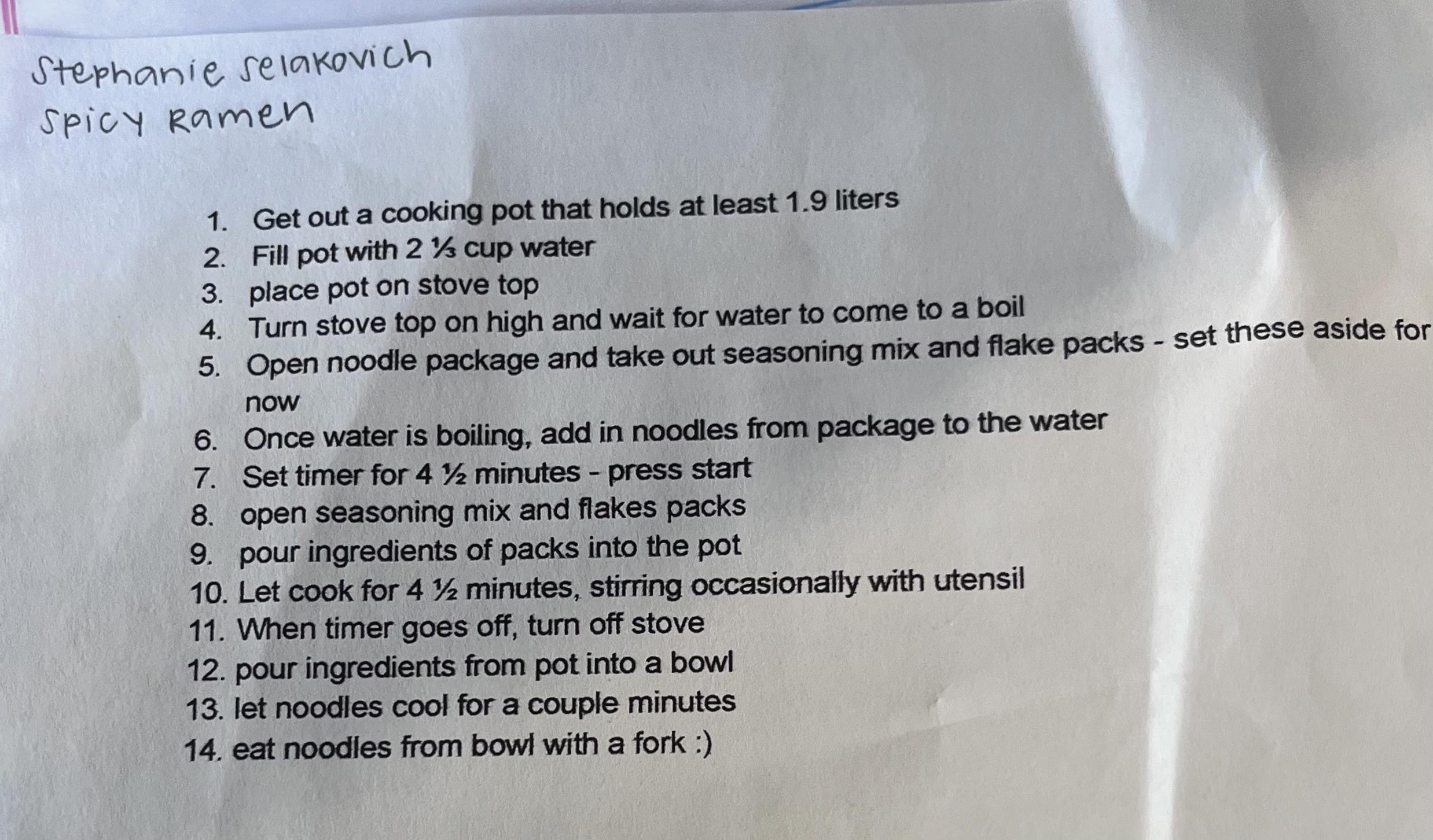
Special Exercise: Exact Challenge with Ramen
Stephanie Selakovich
This assignment helped me to realize how specific I need to be when writing the methodology to my research paper I might have been overly explanatory in my written recipe compared to Matthew’s instructions For example, I go into maybe too much detail by saying things such as stir “with utensil”, eat “with fork”, and set timer to 4 ½ minutes - “press start” This specificity could be redundant, or maybe it is good for an exercise like this Either way, this assignment was a fun, interactive way to learn how I should write my method
#17: Writing a draft research method
Matthew Findlay
Draft Research Methods
For my research, I will use a qualitative approach combined with the PRISMA framework to conduct a systematic review of existing studies on employee participation in workspace design, alongside collecting survey data from multiple employees at one or two companies The PRISMA-guided review will help identify key themes from prior research, such as "employee empowerment" and "collaborative work environments " Simultaneously, I will gather anonymous survey responses from employees, focusing on their perceptions of workspace involvement and how it influences their job satisfaction, engagement, and overall workplace culture By tying the survey results to the themes uncovered in the systematic review, this approach will bridge theoretical research with practical, real-world experiences Though more complex, this method is feasible as I will ideallt focus on a small number of organizations, allowing for a well-rounded understanding of how participatory design impacts workplace outcomes
EMERGING CHALLENGES
technological, environmental, social
Participatory Design’s Role in Enhancing Employee Satisfaction and Productivity: A Systematic Literature Review
Space
Principal Author1, Second Author2, Third Author3
1First Institution, City, State Abbreviation
2Second Institution, City, State Abbreviation
3Third Institution, City, State Abbreviation
Space
Abstract:
This systematic literature review examines the role of participatory design in enhancing employee satisfaction and productivity within workplace environments. Addressing a critical gap in existing research, the study explores how involving employees in workspace design influences engagement, wellbeing, and perceived efficacy. The review applies the PRISMA framework to identify and synthesize findings from 42 studies across design, environmental psychology, and workplace management. The screening process ensured a comprehensive dataset for qualitative synthesis.
The findings reveal that participatory design fosters a sense of ownership and control among employees, which correlates with increased engagement, satisfaction, and productivity. Key themes include enhanced productivity through employee agency, psychological and ergonomic benefits from user-centered design, and the adaptability of participatory practices across sectors such as healthcare, education, and industry. Participatory design is a particularly effective strategy for developing flexible, post-pandemic workplaces that address hybrid work models and evolving employee expectations.
By synthesizing interdisciplinary insights, this review underscores the importance of participatory design in creating adaptable, employee-centered environments. It also highlights opportunities for future research, such as investigating long-term impacts on employee outcomes and the efficacy of participatory approaches in fully remote work contexts. The study provides actionable recommendations for practitioners and researchers aiming to optimize workplace design for contemporary challenges.
Introduction:
EMERGING CHALLENGES
technological, environmental, social
Participatory design is a collaborative approach to design that involves end-users, in the case of this study, how employee input directly influences the design-decision decision-making process. The design decision-making process in corporations is typically a top-down process, participatory design allows employees to voice their insights, feedback, and preferences regarding their working environment.
In this review employee perception of satisfaction and productivity refers to how employees subjectively assess their contentment within their working space. Satisfaction encompasses feelings of comfort and well-being. Perceived Productivity refers to employees’ perception of his or her ability to perform tasks effectively within their working environment. Both of these metrics are equally important because they influence key outcomes valued by businesses: engagement, job performance, and employee retention.
This study addresses the question: ‘Does giving employees greater agency in design decisionmaking positively impact their productivity and satisfaction?’ This question is increasingly relevant in a post-pandemic America where companies are seeking creative ways to adapt to evolving user-centered environments. The research provides a synthesis of data across a variety of existing sources including different fields outside of design so it is important to not be viewed in a design -centric isolation. By following structured steps, setting exclusion and inclusion criteria, using targeted keyword searches, and applying the
Methodology:
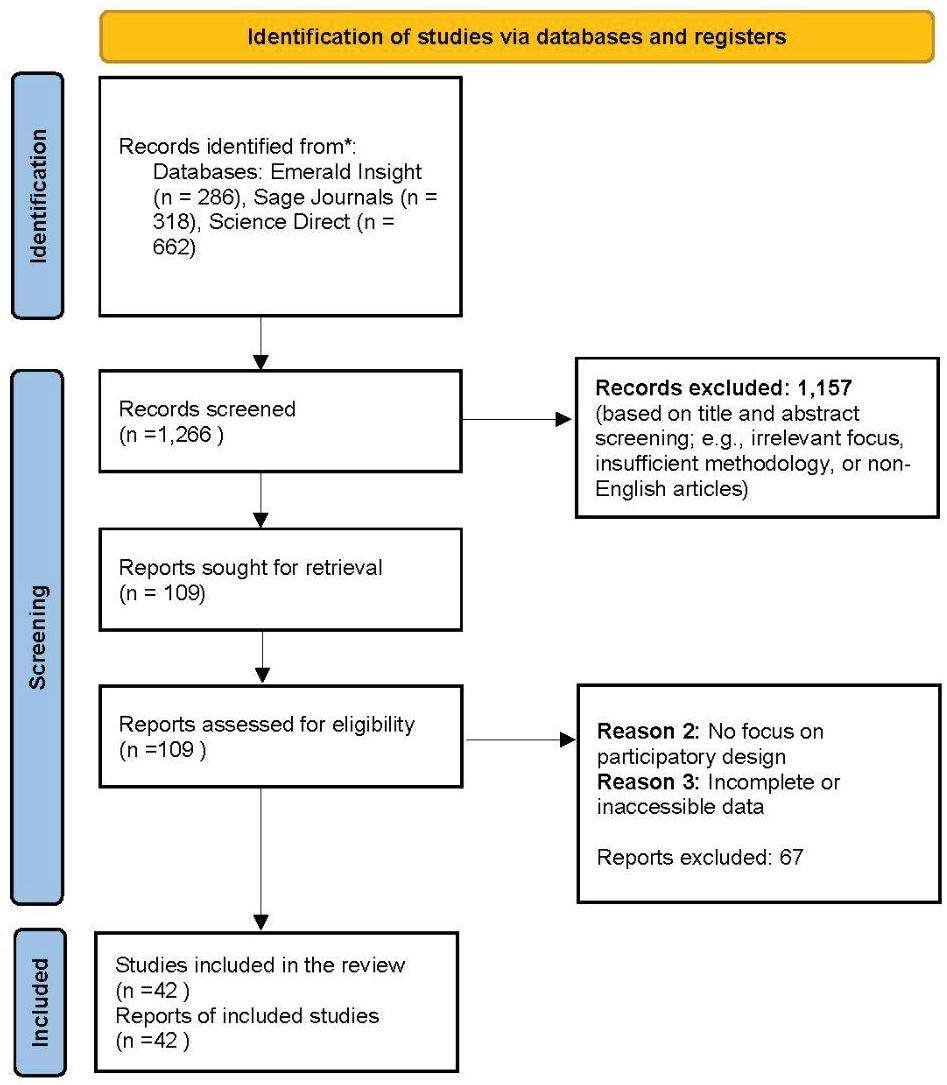
The systematic review uses the PRISMA framework ensuring that only the most relevant studies will be included. The systematic approach will also enable the integration of studies conducted over many years, creating a more diverse pool of information that can be synthesized and applied to address contemporary workplace issues. The research intends to clarify the relationship between the employee experience, employee perception of productivity and satisfaction, and participatory design decision-making. By bridging multiple fields the research will provide a well-rounded and multifaceted examination of the subject, which can inform future research and best practices and hopefully further identify gaps in knowledge. Keywords and boolean operators (i.e. “Employee Involvement AND Office Design” and “Participatory Design AND Workplace”), were used in a search across three academic databases- Emerald Insight, Sage Journals, and Science Direct. The initial searches yielded 1,266 records, Emerald Insight: 286 records, Sage Journals: 318 records, and Science Direct: 662 records. Ultimately, 42 studies met all inclusion criteria. The studies selected provide a diverse comprehensive data set for analyzing the impact of employee involvement in office design on satisfaction, productivity, and adaptability within the workplace.
EMERGING CHALLENGES
technological, environmental, social
Literature Review, Thematic Analysis and Findings:
This section presents an analysis of the literature reviewed organized by key themes that emerged from the data. The themes highlight how participatory design influences employee productivity, satisfaction, adaptability, and cross-disciplinary applications. The findings are drawn from a comprehensive set of studies, providing a multi-faceted perspective on the impacts of participatory design in contemporary workplaces.
A central theme in the literature is how participatory design enhances employee productivity by granting workers greater agency in shaping their physical environment. Research consistently suggests that employees who feel a sense of control over their workspace tend to be more engaged and productive. This connection is grounded in ‘Self-Determination Theory’, which emphasizes a sense of ownership is fundamental to motivation.
For instance, Granath (1999) conducted a case study on car manufacturer Volvo’s production environment. Employees were directly involved in the design process to create a workspace that aligned with their specific tasks and workflow needs. The study found that this participatory approach led to increased alignment with operational goals, increasing productivity. Similarly, Pitt and Bennett (2008) noted that shared office spaces designed with significant employee input led to a strong sense of ownership, which translated into improved productivity metrics. In both cases, the empowerment associated with employee agency in the design process helps to create a workspace more attuned to the functional demands of users which ultimately improves task performance.
Appel-Meulenbroek et al. (2020) observed that activity-based work environments (ABWs) designed with employee feedback provided flexible, task-specific stations that allowed workers to choose spaces that best suited their activities. This flexibility reportedly led to increased productivity and reduced burnout, as employees could select spaces that maximized their comfort and concentration. Collectively, these studies highlight that participatory design, by enhancing employee agency, directly impacts productivity through a combination of autonomy, comfort, and functional alignment with work tasks.
Participatory design also plays a crucial role in creating job satisfaction and employee engagement. Satisfaction in the workplace is closely linked to a sense of well-being, which participatory design supports by allowing for working environments that meet individual and collective needs. Studies demonstrate that when employees participate in design decisions, they are more likely to feel valued, resulting in higher engagement and commitment to their work.
In Lavender et al. (2019), participatory design was applied in a healthcare setting, where hospital employees contributed to the design of medical-surgical patient rooms. This involvement improved spatial functionality and also increased staff satisfaction because the environment was perceived as safer and more ergonomic. Furthermore, Viola and Vidal (2012) explored the psychological benefits of participatory design in ergonomically supportive workspaces. Employees reported reduced stress and greater satisfaction when their input shaped their physical surroundings. This alignment of workspace features with user well-being underscores participatory design’s effectiveness in creating environments that foster psychological comfort, physical comfort, and also engagement.
Somerville and Collins (2008) provide another example through their study of a learner-centered library planning process. Participatory design was instrumental in involving staff and students, resulting in a space that encouraged continuous engagement with the environment. The satisfaction derived from seeing their ideas reflected in the final design fostered a strong connection to the space, demonstrating
EMERGING CHALLENGES
technological, environmental, social
that participatory design is effective not only in office contexts but also in educational and other institutional settings.
The interdisciplinary nature of participatory design is evident in its adaptability across various fields, each of which brings unique insights into its applications and benefits. From corporate offices to healthcare and educational spaces, participatory design has demonstrated a capacity to create environments that meet diverse and complex user needs.
Bjerke et al. (2007), for example, examined the application of participatory design in an industrial workspace, where ergonomics and user input shaped modular workstations. This case highlights the practical value of participatory design in high-demand, task-specific environments where employee safety and task efficiency are paramount. In another cross-disciplinary study, Punchihewa and Gyi (2015) explored participatory ergonomics in addressing musculoskeletal disorders within industrial and office settings. Their findings indicate that involving employees in workstation design reduced health issues and increased satisfaction, demonstrating participatory design’s positive impact on both physical and psychological well-being.
This theme is further supported by Batra and Halder (2024), who studied the role of participatory design in the construction industry, particularly in managing digital tools and workflow integration. The study found that involving construction professionals in digitalization efforts reduced stress and enhanced adaptability, as employees felt better equipped to handle new technological demands. These crossdisciplinary insights suggest that participatory design’s adaptability makes it a valuable approach in diverse sectors, each of which benefits from spaces that are functionally and psychologically aligned with user needs.
The shift towards hybrid and flexible work models has amplified the importance of adaptability in workplace design. In post-pandemic contexts, participatory design has proven instrumental in creating spaces that can evolve with changing organizational needs, especially as employees increasingly expect flexibility.
Sailer (2023) discusses how participatory design can be leveraged to create hybrid workspaces that support both remote and on-site tasks. In this study, user input shaped flexible layouts that could accommodate various work modes, from collaborative meetings to individual, focused work. This flexibility was cited as crucial to maintaining productivity and satisfaction in a post-pandemic landscape, where adaptability is paramount. Similarly, Hassanain (2006) found that customizable workspaces with participatory input enhanced employee satisfaction by allowing individuals to adjust their surroundings based on specific tasks or needs, thereby supporting a more resilient work model in dynamic conditions.
The pandemic has heightened employees’ expectations for work environments that can support hybrid arrangements and varying levels of physical presence. Participatory design responds to these demands by providing employees with input in designing adaptable spaces, thus fostering resilience and reducing stress associated with rigid office layouts.
Conclusion:
EMERGING CHALLENGES
technological, environmental, social
This review examined the impact of participatory design on employee satisfaction, productivity, and adaptability in workplace environments. The findings suggest that participatory design enhances productivity by empowering employees with greater control, which fosters alignment with their work needs. Additionally, participatory design increases satisfaction and engagement by creating spaces that address psychological comfort and well-being. The approach’s adaptability across sectors, from corporate offices to healthcare, underscores its broad relevance.
In post-pandemic workplaces, participatory design supports flexibility, meeting the demands of hybrid work models and evolving employee expectations. This review highlights the value of integrating user input in workplace design, providing insights for architects and organizational leaders. Future research should explore participatory design’s long-term impact, cultural applicability, and potential in fully remote environments to further refine its best practices.
Citations:
Batra, S., & Halder, A. (2024). Toward a flourishing workplace: Exploring the impact of digitalization on young construction professionals' physical–mental well-being. Engineering, Construction, and Architectural Management.
Zerguine, H., Healy, G. N., Goode, A. D., Abbott, A., & Johnston, V. (2024). Co -design and development of the sit-stand e-guide: An e-training program for the optimal use of sit-stand workstations. Applied Ergonomics, 116, 104207.
Anderson-Coto, M. J., Salazar, J., Lopez, J. L.-S., Sedas, R. M., Campos, F., Bustamante, A. S., & Ahn, J. (2024). Towards culturally sustaining design: Centering community’s voices for learning through participatory design. International Journal o f Child-Computer Interaction, 39, 100621.
Khan, M., Raya, R. P., & Viswanathan, R. (2022). Enhancing employee innovativeness and job performance through a culture of workplace innovation. International Journal of Productivity and Performance Management, 71(8), 3179 -3204.
Asojo, A., Vo, H., Fisher, T., & Singh, V. (2022). Shaping health and well -being in a COVID era: The role of design. ArchnetIJAR: International Journal of Architectural Research, 16(3), 473-494.
Sailer, K. (2023). Unworking: The Reinvention of the Modern Office, by Jeremy Myerson and Philip Ross. Contemporary Sociology, 53(1), 73-75.
Colenberg, S., Appel-Meulenbroek, R., Romero Herrera, N., & Keyson, D. (2021). Conceptualizing social well -being in activitybased offices. Journal of Managerial Psychology, 36(4), 327-343.
Appel-Meulenbroek, R., van der Voordt, T., Aussems, R., Arentze, T., & Le Blanc, P. (2020). Impact of activity -based workplaces on burnout and engagement dimensions. Journal of Corporate Real Estate, 22(4), 279-296.
Anasi, S. N. (2020). Perceived influence of work relationship, work load, and physical work environment on job satisfaction o f librarians in South-West, Nigeria. Global Knowledge, Memory and Communication, 69(6/7), 377-398.
Babapour Chafi, M., Harder, M., & Bodin Danielsson, C. (2020). Performance -oriented office environments: Framework for effective workspace design and the accompanying change processes. Applied Ergonomics, 83, 102971.
Lavender, S. A., Sommerich, C. M., Sanders, E. B.-N., Evans, K. D., Li, J., Umar, R. Z. R., & Patterson, E. S. (2019). Developing evidence-based design guidelines for medical/surgical hospital patient rooms that meet the needs of staff, patients, and visitors. Health Environments Research & Design Journal, 13(1), 145-178.
EMERGING CHALLENGES
technological, environmental, social
Davis, M. C., Leach, D. J., & Clegg, C. W. (2019). Breaking out of open -plan: Extending social interference theory through an evaluation of contemporary offices. Environment and Behavior, 52(9), 945-978.
Clegg, G. M. (2018). Unheard complaints: Integrating captioning into business and professional communication presentations. Business and Professional Communication Quarterly, 81(1), 100-122.
Education for Chemical Engineers. (2018). Advancing experiential learning through participatory design. Education for Chemical Engineers, 25, 16-21.
Lundmark, S. (2018). Design project failures: Outcomes and gains of participation in design. Design Studies, 59, 77 -94.
Smith, R. C., & Iversen, O. S. (2018). Participatory design for sustainable social change. Design Studies, 59, 9 -36.
Wineman, J. D., & Barnes, J. (2018). Workplace settings. In Environmental Psychology and Human Well -Being (pp. 167-191). Elsevier Inc.
Punchihewa, H. K. G., & Gyi, D. E. (2016). Reducing work -related musculoskeletal disorders (MSDs) through design: Views of ergonomics and design practitioners. Work, 53(1), 127-142.
Tanuwidjaja, G., Wiyono, A. E., Wibowo, A., Gerry, G., Shinata, L. M., & Raynaldo, R. (2016). Redesigning the traditional foo d kiosk based on local knowledge, case study: Siwalankerto District. Procedia - Social and Behavioral Sciences, 227, 560-567.
Malinverni, L., Mora-Guiard, J., & Parés, N. (2016). Towards methods for evaluating and communicating participatory design: A multimodal approach. International Journal of Human-Computer Studies, 94, 53–63.
Hicks, C., McGovern, T., Prior, G., & Smith, I. (2015). Applying lean principles to the design of healthcare facilities. International Journal of Production Economics, 170, 677–686.
Halskov, K., & Hansen, N. B. (2015). The diversity of participatory design research practice at PDC 2002 –2012. International Journal of Human-Computer Studies, 74, 81-92.
Petrulaitiene, V., & Jylhä, T. (2015). The perceived value of workplace concepts for organisations. Journal of Corporate Real Estate, 17(4), 260-281.
Ahonen, E. Q., Zanoni, J., Forst, L., Ochsner, M., & Kimmel, L. (2013). Evaluating goals in worker health protection using a participatory design and an evaluation checklist. NEW SOLUTIONS: A Journal of Environmental and Occupational Health Policy, 23(4), 537-560.
Bazley, C. M., De Jong, A., & Vink, P. (2012). Expectation changes and team characteristics in a participatory design process Work, 41, 2616-2624.
Perez Toralla, M. S., Falzon, P., & Morais, A. (2012). Participatory design in lean production: Which contribution from employees? For what end? Work, 41, 2706-2712.
Viola, E., & Vidal, M. C. (2012). Job stress management protocol using a merge between cognitive -behavioral techniques and ergonomic tools. Work, 41, 2789-2794.
Kupritz, V. W., & Hillsman, T. (2011). The impact of the physical environment on supervisory communication skills transfer. Journal of Business Communication, 48(2), 148-185.
Niemi, J., & Lindholm, A.-L. (2010). Methods for evaluating office occupiers' needs and preferences. Journal of Corporate Real Estate, 12(1), 33-46.
Somerville, M. M., & Collins, L. (2008). Collaborative design: A learner-centered library planning approach. The Electronic Library, 26(6), 803-820.
EMERGING CHALLENGES
technological, environmental, social
Value-centred interaction design methods. Journal of Information, Communication & Ethics in Society, 6(4), 334 -348.
Pitt, M., & Bennett, J. (2008). Workforce ownership of space in a space sharing environment. Journal of Facilities Management , 6(4), 290-302.
Chan, J. K., Beckman, S. L., & Lawrence, P. G. (2007). Workplace design: A new managerial imperative. California Management Review, 49(2), 6-22.
Luck, R. (2007). Learning to talk to users in participatory design situations. Design Studies, 28(3), 217 -242.
Bjerke, R., Ind, N., & De Paoli, D. (2007). The impact of aesthetics on employee satisfaction and motivation. EuroMed Journal of Business, 2(1), 57-73.
Hassanain, M. A. (2006). Factors affecting the development of flexible workplace facilities. Journal of Corporate Real Estate , 8(4), 213-220.
Lee, S. Y., & Brand, J. L. (2005). Effects of control over office workspace on perceptions of the work environment and work outcomes. Journal of Environmental Psychology, 25(3), 323-333.
Lahn, L. C. (2004). Dilemmas in the development of e-learning at work. Journal of Workplace Learning, 16(8), 466-478.
Danko, S. (2000). Beneath the surface: A story of leadership, recruitment, and the hidden dimensions of strategic workplace design. Journal of Interior Design, 26(2), 1-24.
Granath, J. Å. (1999). Workplace making – A strategic activity. Journal of Corporate Real Estate, 1(2), 141-153.
Reich, Y., Konda, S. L., Monarch, I. A., Levy, S. N., & Subrahmanian, E. (1996). Varieties and issues of participation and design. Design Studies, 17(2), 165-180.
Eshelman, P. (1986). Quality of personal computer work settings: Assessment in facilities with decentralized control. Journal of Interior Design Education and Research, 12(1), 21-30.
EMERGING CHALLENGES
technological, environmental, social
Participatory Design’s Role in Enhancing Employee Satisfaction and Productivity: A Systematic Literature Review
Matthew Findlay1, Jinoh Park1
1The University of Arkansas, Fayetteville, AR
ABSTRACT: This study examines the application of participatory design in the workplace, with a particular emphasis on its effects on the workers’ output, contentment, and perception of the organization’s culture. Using the PRISMA framework, 42 studies were reviewed across the fields of design, environmental psychology, and organizational management. Productivity improves through autonomy, psychological and physical well-being improves, and more inclusive workplace cultures are developed. Empowering employees, the participatory design lets them take part in the and decision ergonomic making needs, of which the physical stress workspace, and enhances well-being. This increase is motivation because and post-pandemic productivity. hybrid Also addressed are psychological work models that may be most effective at enhancing employee-centered and adaptable spaces that combine collaboration and autonomy. Such workspaces could be created through participatory design. Additionally, it may cultivate enhanced organizational culture and increased workplace inclusivity by enhancing listening for diverse voices. However, the review of participatory design is not without its limitations. There is a lack of longitudinal studies that can offer a perspective on the effects in the long run, methods for equitable participation in hybrid and remote work environments, and models that can be easily extended to large organizations. Participatory design can be enhanced by integrating emerging technologies, such as virtual reality and artificial intelligence, to address these challenges. The study reveals that designing sustainable, inclusive, and adaptable workplaces through participatory design is possible. In addressing the gaps identified and advancing the research, participatory design can serve as a crucial enabler of equity and sustainability goals in rapidly changing work environments.
KEYWORDS: Participatory Design, Workplace Culture, Employee Productivity, Employee Satisfaction, and Hybrid Work Models
INTRODUCTION
As a set of values, beliefs, and practices that shape interpersonal dynamics and organizational functioning, workplace culture plays a pivotal role in shaping employee satisfaction, engagement, and productivity (Lee & Brand, 2005). Participatory design, which involves end users in decision-making, has emerged as a critical strategy for enhancing workplace environments in recent years. Involving employees in participatory design fosters a sense of ownership and control over workplaces, which has been shown to improve employee well-being and performance (Granath, 1999; Appel-Meulenbroek et al., 2020). As a result of the COVID-19 pandemic, the importance of user-centered, adaptive workplaces has been further highlighted. Across industries, organizations increasingly recognize the need for flexible work environments that can accommodate hybrid work models and evolving employee expectations (Sailer, 2023) Incorporating employee input into workspace design is a practical solution that allows organizations to develop spaces that are both functional and psychologically supportive (Lavender et al., 2019; Hassanain, 2006). In this way, global efforts are being made to address critical challenges like sustainability, inclusion, and post-pandemic adaptability (Lavender et al. 2019; Hassanain 2006) Despite the growing interest in participatory design, its impact on workplace culture remains understudied. Physical and social factors impact workplace culture, such as the layout of office spaces, the availability of collaborative zones, and the alignment of design elements with organizational values (Bjerke et al., 2007; Pitt & Bennett, 2008). This study addresses this gap by exploring how employee participation in workspace design contributes to a more inclusive, engaged, and adaptable workplace Participatory design is rooted in principles of inclusivity and collaboration, which makes it relevant for addressing the diverse needs of modern workplaces. Activity-based work environments (ABWs), which allow employees to choose spaces that suit their specific tasks, have increased productivity and reduced burnout when designed with user input (Appel-Meulenbroek et al., 2020). Participatory design has also improved spatial functionality and staff satisfaction in healthcare settings (Lavender et al., 2019). The results of these studies suggest that participatory design is more than just a tool to improve individual comfort and performance
1.0 LITERATURE REVIEW
1.1 Enhanced Productivity through Autonomy
EMERGING CHALLENGES technological, environmental, social
A participatory design allows employees to have a greater sense of control over their workspace, which has been shown to increase productivity. Based on the Self-Determination Theory, the relationship between motivation and performance is rooted in a sense of autonomy and ownership (Granath, 1999). A case study on Volvo found that employees actively helped design production environments, aligning spatial layouts with specific tasks. It was found that the resulting workspaces improved operational efficiency and increased task satisfaction (Granath, 1999). ABWs, which prioritize flexibility and user choice, have also demonstrated significant productivity gains. According to AppelMeulenbroek et al. (2020), ABWs designed with employee feedback enabled workers to select spaces optimal for specific tasks, thus enhancing concentration and reducing burnout.
1.2. Psychological and Physical Comfort
Participatory design contributes significantly to psychological and physical well-being by addressing employees' ergonomic and emotional needs. Participatory design has proven to be effective in healthcare settings, where staff often work in high-stress environments. Lavender et al. (2019) found improved spatial functionality and staff satisfaction in medical-surgical patient rooms when hospital employees contributed to the design process. As a result of this involvement, a sense of ownership developed, which contributed to a reduction in stress and an increase in engagement. Employee well-being is also influenced by workplace ergonomics. Workplaces designed ergonomically through participatory methods are associated with lower rates of musculoskeletal disorders and higher job satisfaction (Punchihewa & Gyi, 2016). A modular workstation tailored to employee preferences in industrial settings demonstrated significant improvements in physical comfort and productivity (Bjerke et al., 2007). Furthermore, Viola and Vidal (2012) emphasized how user-centered design can mitigate job stress through participatory approaches that incorporate ergonomic tools.
1.3 Adaptability in Post-Pandemic Workplaces
In the wake of the COVID-19 pandemic, workplace dynamics have fundamentally changed, making adaptability a critical factor in organizational success. A participatory design approach can be used to create flexible workspaces that accommodate hybrid work models. In Sailer's (2023) work, he stressed the importance of integrating user input into the design of collaborative and independent work environments. Using participatory design in this study, modular layouts were developed that could be reconfigured based on changing organizational needs, demonstrating its value in post-pandemic environments. Employees can also customize their workspaces to suit specific tasks, reducing stress and enhancing productivity (Hassanain, 2006). This adaptability aligns with the growing demand for hybrid work models, in which employees alternate between remote and in-office work.
1.4.
Building Inclusive and Collaborative Cultures
Inherently inclusive, participatory design allows diverse voices to shape workplace environments. Inclusion fosters a sense of community and shared purpose, which are essential components of a positive workplace culture. For instance, Somerville and Collins (2008) showed that involving students and staff in library planning led to spaces that encouraged collaboration and continuous engagement. Participatory design can bridge organizational goals and employee needs in corporate settings. A study by Pitt and Bennett (2008) found that employee input into shared office spaces led to a strong sense of ownership, which positively influenced the culture of the workplace. There are, however, challenges associated with inclusivity in participatory design. In some organizations, power dynamics can limit the extent to which employees feel empowered to contribute. To address these dynamics, equitable design processes must prioritize diverse perspectives
2.0 METHODOLOGY
2.1 Research Questions
Employees' productivity and satisfaction may be positively affected by greater agency in design decision-making. Companies are seeking adaptive strategies for workplace design in the context of evolving user-centered workplaces, especially post-pandemic. To address these challenges, participatory design, which emphasizes inclusivity and collaboration, is a promising approach. By synthesizing data from studies such as Granath (1999) and Lavender et al. (2019), which explore the impact of employee involvement on task performance, satisfaction, and adaptability, this study examines the relationship between participatory design and workplace outcomes, including productivity, satisfaction, and adaptability.
2.2 Research Framework
This systematic review followed the PRISMA (Preferred Reporting Items for Systematic Reviews and Meta-Analyses) framework to ensure a rigorous and transparent process. PRISMA facilitates the identification, selection, and synthesis of high-quality studies by providing a structured methodology. A database search was conducted to identify studies, following the main stages of PRISMA. The titles and abstracts of shortlisted studies were screened to eliminate irrelevant or duplicate records, followed by a detailed assessment of the full texts. The synthesis focused on studies that met the established inclusion criteria, ensuring that the findings are based on a robust and relevant dataset. This structured approach guarantees that only studies of sufficient quality contribute to the overall conclusions.
EMERGING CHALLENGES
technological, environmental, social
Figure 1: PRISMA Framework
Emerald Insight, Sage Journals, and ScienceDirect were selected for their relevance to research in design, workplace management, and environmental psychology. With keywords such as “Employee Involvement AND Office Design,” “Participatory Design AND Workplace,” and “User-Centered Design AND Employee Productivity,” comprehensive searches were conducted using Boolean operators. These search phrases were designed to capture a broad spectrum of studies relevant to the research question. To ensure contemporary relevance, the search was limited to peer-reviewed articles published between 2010 and 2024. The databases yielded 1,266 studies: 286 from Emerald Insight, 318 from Sage Journals, and 662 from ScienceDirect. 42 studies were finalized for analysis after duplicates were removed and eligibility criteria were applied. There is a wide variety of workplace settings represented in these studies, including corporate offices, healthcare settings, and industrial workspaces, allowing for a comprehensive understanding of participatory design's application and impact.
Studies were selected based on predefined inclusion and exclusion criteria to maintain their relevance and quality. A study was included if it was peer-reviewed, focused on participatory design in workplace contexts, and provided empirical data on employee productivity, satisfaction, or workplace adaptability. Studies without empirical evidence, those focusing on non-workplace settings, or those published in non-English were excluded. Using these criteria ensured that high-quality studies directly aligned with the research objectives. This final dataset of 42 studies represents a wide range of perspectives and disciplines. It provides a nuanced understanding of participatory design and its influence on workplace outcomes.
To identify key patterns and insights, the selected studies were analyzed thematically. A thematic analysis involves systematic coding of findings based on the research questions, focusing on themes such as productivity, satisfaction, adaptability, and workplace culture. The coded themes were then categorized into broader categories to facilitate comparative analysis across different workplace settings. Quantitative data, such as measures of productivity improvements or satisfaction rates, were analyzed to identify trends and aggregate findings. To provide context and depth to the quantitative data, qualitative insights, including employee narratives and case studies, were incorporated. This mixed-method approach facilitated a comprehensive understanding of the impacts of participatory design on workplace environments
Table 1: Summary of 42 studies
Batra, S., & Halder, A. (2024)
Zerguine, H., Healy, G. N., Goode, A. D., Abbott, A., & Johnston, V. (2024)
Anderson-Coto, M. J., Salazar, J., Lopez, J. L.S., Sedas, R. M., Campos, F., Bustamante, A. S., & Ahn, J. (2024)
Khan, M., Raya, R. P., & Viswanathan, R. (2022)
Asojo, A., Vo, H., Fisher, T., & Singh, V. (2022)
EMERGING CHALLENGES
technological, environmental, social
Digitalization enhances well-being by increasing control, while resilience reduces technostress and burnout.
Participatory design enhances sit-stand workstation training by addressing user needs, improving knowledge retention, and promoting healthier workplace practices.
Participatory design fosters inclusive educational technology by embedding cultural identities and supporting family-centered learning.
Workplace Innovation boosts creativity, job performance, and engagement through flexibility, strategic focus, and employeecentered policies.
Participatory design enhances public health by integrating immediate and long-term safety adaptations in buildings, ensuring well-being and pandemic resilience.
Sailer, K. (2023) “Unworking” redefines office norms by promoting flexible, adaptive, and inclusive work environments, though with limited theoretical depth.
Colenberg, S., Appel-Meulenbroek, R., Romero Herrera, N., & Keyson, D. (2021)
Appel-Meulenbroek, R., van der Voordt, T., Aussems, R., Arentze, T., & Le Blanc, P. (2020)
Anasi, S. N. (2020)
Kämpf-Dern, A. and Konkol, J. (2017)
Lavender, S. A., Sommerich, C. M., Sanders, E. B., Evans, K. D., Li, J., Radin Umar, R. Z., & Patterson, E. S. (2020)
Davis, M. C., Leach, D. J., & Clegg, C. W. (2019)
Clegg, G. M. (2018)
Inguva, Pavan, Daniel Lee-Lane, Anastasia Teck, Benaiah Anabaraonye, Wenqian Chen, Umang V. Shah, and Clemens Brechtelsbauer. (2018)
Lundmark, S. (2018)
Smith, R. C., & Iversen, O. S. (2018)
Wineman, J. D., & Barnes, J. (2018)
Punchihewa, H. K. G., & Gyi, D. E. (2016)
Tanuwidjaja, G., Wiyono, A. E., Wibowo, A., Gerry, G., Shinata, L. M., & Raynaldo, R. (2016)
Malinverni, L., Mora-Guiard, J., & Parés, N. (2016)
Hicks, C., McGovern, T., Prior, G., & Smith, I. (2015)
Social well-being in activity-based offices depends on balancing privacy, identity, and community to support both short-term comfort and long-term fulfillment.
Activity-based workplaces impact burnout and engagement, with comfort boosting productivity and distractions reducing energy, while flexible teleworking enhances well-being.
Positive work relationships and supportive environments enhance job satisfaction, while workload has little impact.
Activity-Based Flexible Offices enhance productivity and satisfaction by aligning workspace design with ergonomic needs, noise control, and clear zoning.
Participatory design improves medical/surgical rooms by enhancing ergonomics, functionality, and safety for staff and patients.
Breakout areas in open-plan offices enhance communication, satisfaction, and well-being, with job autonomy moderating social interactions.
Captioning in business communication fosters inclusivity for deaf and hard-of-hearing individuals, highlighting the need for accessible design and ADA compliance.
Participatory design enhances experiential learning by fostering engagement, critical thinking, and real-world problem-solving.
Participatory design fosters stakeholder growth, learning, and organizational change, even when initial project goals are unmet.
Participatory design drives sustainable social change by fostering community resilience, stakeholder empowerment, and long-term transformation.
Workplace design evolution favors flexible environments that align with culture and tasks, enhancing collaboration and wellbeing while reducing stress.
Participatory design prevents musculoskeletal disorders by integrating ergonomic assessments and user input to enhance workplace health and safety.
Participatory design revitalizes food kiosks by integrating cultural elements, accessibility, and sustainability for inclusive, adaptable solutions.
A multimodal framework in participatory design captures nuanced contributions, improving user understanding, communication, and design refinement.
Lean 3P optimizes healthcare facility design by improving spatial efficiency, patient flow, and staff productivity.
EMERGING CHALLENGES
technological, environmental, social Halskov, K., & Hansen, N. B. (2015)
Petrulaitiene, V., & Jylhä, T. (2015)
Ahonen, E. Q., Zanoni, J., Forst, L., Ochsner, M., & Kimmel, L. (2013)
Bazley, C. M., De Jong, A., & Vink, P. (2012)
Perez Toralla, M. S., Falzon, P., & Morais, A. (2012)
Viola, E., & Vidal, M. C. (2012)
Kupritz, V. W., & Hillsman, T. (2011)
Niemi, J., & Lindholm, A.-L. (2010)
Participatory design research evolves by expanding user involvement, integrating technology, and influencing diverse fields.
Business-driven workplace strategies enhance engagement, efficiency, and spatial use by aligning design with organizational goals and employee needs.
Participatory design improves safety training for immigrant workers by increasing hazard awareness, engagement, and empowerment in high-risk jobs.
Participatory design fosters role clarity and team satisfaction but requires strong leadership engagement to prevent communication breakdowns.
Participatory design in lean production prioritizes efficiency but must integrate worker insights to balance productivity with ergonomic improvements.
CEWAT reduces job stress by combining ergonomic evaluation with participatory task redesign to enhance well-being and workplace safety.
Well-designed workspaces enhance communication skills transfer, while poor layouts and lack of privacy hinder performance.
Comprehensive office evaluations should integrate social and virtual elements to better align workspaces with organizational objectives.
Somerville, M. M., & Collins, L. (2008) Participatory design transforms libraries into collaborative learning hubs by integrating physical and social elements.
Knight, J. (2008)
Pitt, M., & Bennett, J. (2008)
Chan, J. K., Beckman, S. L., & Lawrence, P. G. (2007)
Luck, R. (2007)
Bjerke, R., Ind, N., & De Paoli, D. (2007)
Hassanain, M. A. (2006)
Lee, S. Y., & Brand, J. L. (2005)
Christian Lahn, L. (2004)
Danko, S. (2000)
Granath, J. Å. (1999)
Reich, Y., Konda, S. L., Monarch, I. A., Levy, S. N., & Subrahmanian, E. (1996)
Eshelman, P. (1986)
3.0 FINDINGS
A value-centered approach to interaction design balances innovation with ethics, user welfare, and societal impact.
Hot-desking enhances flexibility but requires strong organizational culture to maintain employee satisfaction and sense of ownership.
Workplace design aligns physical spaces with strategic goals to foster collaboration, innovation, and well-being.
Skilled facilitation in participatory design enhances user involvement, requiring mentorship and training for effective collaboration.
Organizational aesthetics boost satisfaction, creativity, and engagement, especially when employees influence workspace design.
This article identifies 18 factors shaping flexible, sustainable office design, emphasizing modularity, adaptable IT systems, and reconfigurable services to meet evolving needs. It offers key insights for creating future-ready workplaces.
Personal control over workspaces enhances satisfaction and team cohesion, highlighting the need for flexible designs that minimize distractions.
E-learning in workplaces requires balancing digital and traditional methods to address organizational, interface, and participation challenges.
Workplace design shapes corporate identity, attracts talent, and enhances retention by fostering well-being and communitycentered layouts.
Participatory workplace design enhances collaboration, productivity, and adaptability by aligning physical spaces with organizational goals.
Participatory design improves quality and user satisfaction by fostering collaboration and adaptability while addressing power imbalances.
Decentralized workspace design requires informed support to ensure ergonomic standards, quality, and employee well-being.
Participatory design has been found to enhance employee productivity by granting individuals greater agency over their physical environment, a central finding in the literature. Self-Determination Theory holds that motivation and performance depend on a sense of ownership and autonomy (Granath, 1999). Employees who feel empowered to
EMERGING CHALLENGES technological, environmental, social influence workspace design are more likely to engage with their tasks and achieve better results. Granath (1999) documented a case study at Volvo's production facility where employees actively participated in designing workspaces aligned with their tasks and workflows. Through this participatory approach, operational efficiency and task alignment were enhanced, resulting in increased productivity. Pitt and Bennett (2008) discovered that shared office spaces developed with significant employee input led to a strong sense of ownership, resulting in measurable productivity improvements. Additionally, ABWs demonstrate how participatory design affects productivity. According to Appel-Meulenbroek et al. (2020), ABWs developed with employee feedback provided workers with flexible, taskspecific workstations that allowed them to select the most appropriate space for their activities. Employees were able to perform more effectively in these environments since burnout was reduced and focus was enhanced. Across diverse workplace settings, these studies demonstrate that participatory design increases productivity by enhancing autonomy and comfort.
A participatory design contributes significantly to employee satisfaction by instilling a sense of value and inclusion. Well-being is closely tied to satisfaction, and participatory design helps create environments that meet both individual and collective needs. Engaged and committed employees exhibit higher levels of engagement and commitment when their voices are heard and reflected in the workplace design. The study by Lavender et al. (2019) examined the use of participatory design in a healthcare setting, where hospital employees designed medical-surgical patient rooms. As a result of this involvement, spatial functionality was improved, and staff satisfaction was enhanced. This was due to perceptions of increased safety and ergonomics among the staff. Additionally, Viola and Vidal (2012) reported that ergonomic workspaces shaped by employee input improved employee well-being by reducing stress and increasing psychological comfort. In addition to fostering long-term engagement, participatory design allows employees to see how their contributions are incorporated into the final design. In a learner-centered library planning project, Somerville and Collins (2008) demonstrated this effect through the active involvement of staff and students. Their satisfaction at seeing their ideas become reality strengthened their connection to the space, demonstrating participatory design's versatility beyond traditional office settings.
Participatory design has emerged as a critical tool for creating flexible, hybrid workplaces in the wake of the COVID19 pandemic. With employees increasingly expecting workplaces to accommodate varying levels of physical presence, participatory design ensures these spaces remain functional, inclusive, and responsive. Sailer (2023) emphasized the role of user input in shaping hybrid workspaces that support both collaborative and individual work. As a result of participatory processes, flexible layouts allowed organizations to adapt to a variety of work modes, such as remote meetings and focused in-office work. Adaptability was cited as vital for maintaining productivity and satisfaction after a pandemic. Hassanain (2006) stressed the importance of designing workplaces based on employee input. By allowing users to adjust their surroundings based on task requirements, the work model became more resilient and adaptable. The ability of participatory design to respond to dynamic organizational conditions reduces stress and promotes employee well-being, particularly in hybrid work environments.
Due to its interdisciplinary nature, participatory design can be applied to a range of fields, including corporate offices, healthcare, and education. Participatory design's ability to address complex user needs can be demonstrated by each sector's unique insights. According to Bjerke et al. (2007), modular workstations were developed based on ergonomic principles and employee feedback in industrial workspaces. In addition to improving task efficiency, this approach also enhanced safety in high-demand environments. As well, Punchihewa and Gyi (2015) examined participatory ergonomics in the treatment of musculoskeletal disorders in industrial and office settings and reported significant reductions in health issues as well as increased employee satisfaction. In the construction industry, Batra and Halder (2024) examined the role that participatory design plays in managing digital tools and workflows. Researchers found that by involving professionals in the design and integration of these tools, stress was reduced, and adaptability was increased, thus demonstrating the effectiveness of participatory design in supporting technological change. This example demonstrates the versatility of participatory design and its ability to align physical environments with both functional and psychological requirements. These interdisciplinary applications further strengthen the case for integrating participatory approaches in diverse organizational settings.
Sustainability, inclusivity, and employee well-being are inherent aspects of participatory design, as the process fosters long-term engagement with workplace environments, naturally supporting sustainable practices. Moreover, participatory design ensures diverse voices are represented in decision-making processes, aligning with inclusivity goals. As hybrid and flexible work models become more common, participatory design becomes more relevant, as employees seek environments that support their diverse work styles. By adapting spaces based on user input, productivity is enhanced and stress associated with rigid layouts is reduced. Participatory design can transform workplaces into dynamic, user-centered environments capable of meeting the demands of a rapidly changing world, according to these findings.
Participatory design enhances productivity, satisfaction, adaptability, and cross-disciplinary applications in the workplace. Participatory processes align workplace features with employee needs, fostering employee engagement and well-being. This review reveals participatory design's versatility, making it a valuable approach for addressing workplace challenges in the modern world. Participatory design should be explored for its long-term impacts and its scalability across diverse organizational contexts in future research.
EMERGING CHALLENGES
technological, environmental, social
CONCLUSION
The study highlights the transformative potential of participatory design in improving workplace environments by addressing productivity, satisfaction, adaptability, and cross-disciplinary applications. By empowering employees to actively participate in workspace decision-making, participatory design fosters a sense of ownership and autonomy that is correlated with improved task performance and engagement. Based on principles such as Self-Determination Theory, this approach aligns workplace design with the functional and psychological needs of users. Participatory design must contribute to employee satisfaction and well-being. Organizations can foster a culture of inclusivity and engagement by creating environments that reflect individual and collective input. Employee involvement in design processes not only improves the ergonomics and functionality of workspaces, but it also strengthens the emotional connection employees feel with their surroundings. Healthcare, education, and industrial settings demonstrate that these effects extend beyond office settings. A critical advantage of participatory design is its ability to adapt to contemporary workplace challenges. With hybrid and flexible work models becoming more prevalent, workplaces must be able to accommodate a variety of work modes. By incorporating participatory design into workplaces, organizations can create environments that support both collaborative and individual activities. Adaptability is particularly valuable for reducing stress and fostering resilience in post-pandemic contexts. In addition to its broad applicability, participatory design is an interdisciplinary process. In the construction industry, participatory design offers versatile solutions for aligning physical environments with operational goals, from ergonomics to digital tools. Participatory approaches provide actionable strategies for creating functionally and psychologically aligned spaces by integrating insights from diverse fields, including environmental psychology, organizational management, and design. Participatory design has many benefits, but it also presents challenges that deserve further investigation. A critical area for future research is ensuring equitable participation, addressing logistical and cost barriers, and balancing the needs of diverse stakeholders. Furthermore, the long-term impacts of participatory design on employee outcomes and organizational culture remain underexplored, particularly in fully remote and global organizations. As a result, participatory design offers a valuable framework for creating dynamic, user-centered workplaces. Embedding design processes with employee needs and expectations enhance productivity and satisfaction while addressing broader organizational goals such as inclusivity, sustainability, and adaptability. Participatory design principles provide a pathway for creating empowering and resilient workplaces as workplaces continue to evolve. This research will help refine participatory approaches and explore their scalability across diverse organizational contexts and industries in the future.
REFERENCES
Ahonen, E. Q., Zanoni, J., Forst, L., Ochsner, M., & Kimmel, L. 2013. Evaluating goals in worker health protection using a participatory design and an evaluation checklist. Journal of Environmental and Occupational Health Policy, 23(4), 537-560. https://doi.org/10.2190/NS.23.4.b
Anasi, S. N. 2020. Perceived influence of work relationship, work load, and physical work environment on job satisfaction of librarians in South-West, Nigeria. Global Knowledge, Memory and Communication, 69(6/7), 377-398. https://doi.org/10.1108/GKMC-11-2019-0135
Anderson-Coto, M. J., Salazar, J., Lopez, J. L.-S., Sedas, R. M., Campos, F., Bustamante, A. S., & Ahn, J. 2024. Towards culturally sustaining design: Centering community’s voices for learning through participatory design. International Journal of Child-Computer Interaction, 39, 100621. https://doi.org/10.1016/j.ijcci.2023.100621
Appel-Meulenbroek, R., van der Voordt, T., Aussems, R., Arentze, T., & Le Blanc, P. 2020. Impact of activity-based workplaces on burnout and engagement dimensions. Journal of Corporate Real Estate, 22(4), 279-296 https://doi.org/10.1108/JCRE-09-2019-0041
Asojo, A., Vo, H., Fisher, T., & Singh, V. 2022. Shaping health and well-being in a COVID era: The role of design. Archnet-IJAR: International Journal of Architectural Research, 16(3), 473-494. https://doi.org/10.1108/ARCH-01-2022-0019
Batra, S., & Halder, A. 2024. Toward a flourishing workplace: Exploring the impact of digitalization on young construction professionals' physical–mental well-being. Engineering, Construction, and Architectural Management. https://doi.org/10.1108/ECAM-02-2024-0190
Bazley, C. M., De Jong, A., & Vink, P. 2012. Expectation Changes and Team Characteristics in a Participatory Design Process. WORK, 41(S1), 50995107. https://doi.org/10.3233/WOR-2012-1044-5099
Bjerke, R., Ind, N., & De Paoli, D. 2007. The impact of aesthetics on employee satisfaction and motivation. EuroMed Journal of Business, 2(1), 57-73. https://doi.org/10.1108/14502190710749956
Chan, J. K., Beckman, S. L., & Lawrence, P. G. 2007. Workplace design: A new managerial imperative. California Management Review, 49(2), 6-22. https://doi.org/10.2307/41166380
Christian Lahn, L. 2004, "Dilemmas in the development of e‐learning at work", Journal of Workplace Learning, Vol. 16 No. 8, pp. 466-478. https://doi.org/10.1108/13665620410566432
Clegg, G. M. 2018. Unheard complaints: Integrating captioning into business and professional communication presentations. Business and Professional Communication Quarterly, 81(1), 100-122. https://doi.org/10.1177/2329490617748710
Colenberg, S., Appel-Meulenbroek, R., Romero Herrera, N. and Keyson, D. (2021), "Conceptualizing social well-being in activity-based offices", Journal of Managerial Psychology, Vol. 36 No. 4, pp. 327-343. https://doi.org/10.1108/JMP-09-2019-0529
Danko, S. 2000, Beneath the Surface: A Story of Leadership, Recruitment, and the Hidden Dimensions of Strategic Workplace Design. Journal of Interior Design, 26: 1-24. https://doi.org/10.1111/j.1939-1668.2000.tb00348.x
Davis, M. C., Leach, D. J., & Clegg, C. W. 2020. Breaking Out of Open-Plan: Extending Social Interference Theory Through an Evaluation of Contemporary Offices. Environment and Behavior, 52(9), 945-978. https://doi.org/10.1177/0013916519878211
Eshelman, P. 1986. Quality of Personal Computer Work Settings: Assessment in Facilities with Decentralized Control. Journal of Interior Design Education and Research, 12(1), 21-30. https://doi.org/10.1111/j.1939-1668.1986.tb00082.x Granath, J.Å. 1999, "Workplace making ‐ A strategic activity", Journal of Corporate Real Estate, Vol. 1 No. 2, pp. 141-153. https://doi.org/10.1108/14630019910810999
Halskov, K., & Hansen, N. B. 2015. The diversity of participatory design research practice at PDC 2002-2012. International Journal of Human Computer Studies, 74, 81–92. https://doi.org/10.1016/j.ijhcs.2014.09.003
Hassanain, M.A. 2006, "Factors affecting the development of flexible workplace facilities", Journal of Corporate Real Estate, Vol. 8 No. 4, pp. 213-220. https://doi.org/10.1108/14630010610714880
Hicks, C., McGovern, T., Prior, G., & Smith, I. 2015. Applying lean principles to the design of healthcare facilities. International Journal of Production Economics, 170, 677–686. https://doi.org/10.1016/j.ijpe.2015.05.029
Inguva, Pavan, Daniel Lee-Lane, Anastasia Teck, Benaiah Anabaraonye, Wenqian Chen, Umang V. Shah, and Clemens Brechtelsbauer. 2018 “Advancing Experiential Learning through Participatory Design.” Education for Chemical Engineers 25 (October): 16–21. https://doi.org/10.1016/j.ece.2018.10.001
EMERGING CHALLENGES technological, environmental, social Kämpf-Dern, A. and Konkol, J. 2017, "Performance-oriented office environments – framework for effective workspace design and the accompanying change processes", Journal of Corporate Real Estate, Vol. 19 No. 4, pp. 208-238. https://doi.org/10.1108/JCRE-03-2017-0009
Khan, M., Raya, R. P., & Viswanathan, R. 2022. Enhancing employee innovativeness and job performance through a culture of workplace innovation International Journal of Productivity and Performance Management, 71(8), 3179-3204. https://doi.org/10.1108/IJPPM-09-2020-0466
Knight, J. 2008, "Value‐centred interaction design methods", Journal of Information, Communication and Ethics in Society, Vol. 6 No. 4, pp. 334-348. https://doi.org/10.1108/14779960810921132
Kupritz, V. W., & Hillsman, T. 2011. The Impact of the Physical Environment on Supervisory Communication Skills Transfer. The Journal of Business Communication 1973, 48(2), 148-185. https://doi.org/10.1177/0021943610397269
Lavender, S. A., Sommerich, C. M., Sanders, E. B., Evans, K. D., Li, J., Radin Umar, R. Z., & Patterson, E. S. 2020. Developing Evidence-Based Design Guidelines for Medical/Surgical Hospital Patient Rooms That Meet the Needs of Staff, Patients, and Visitors. HERD, 13(1), 145–178. https://doi.org/10.1177/1937586719856009
Lee, S. Y., & Brand, J. L. 2005. Effects of control over office workspace on perceptions of the work environment and work outcomes. Journal of Environmental Psychology, 25(3), 323–333. https://doi.org/10.1016/j.jenvp.2005.08.001
Luck, R. 2007. Learning to talk to users in participatory design situations. Design Studies, 28(3), 217–242. https://doi.org/10.1016/j.destud.2007.02.002
Lundmark, S. 2018. Design project failures: Outcomes and gains of participation in design. Design Studies, 59, 77–94. https://doi.org/10.1016/j.destud.2017.07.002
Malinverni, L., Mora-Guiard, J., & Pares, N. 2016. Towards methods for evaluating and communicating participatory design: A multimodal approach. International Journal of Human-Computer Studies, 94, 53–63. https://doi.org/10.1016/J.IJHCS.2016.03.004
Niemi, J. and Lindholm, A. 2010, "Methods for evaluating office occupiers' needs and preferences", Journal of Corporate Real Estate, Vol. 12 No. 1, pp. 33-46. https://doi.org/10.1108/14630011011025906
Perez Toralla, M. S., Falzon, P., & Morais, A. 2012. Participatory design in lean production: which contribution from employees? For what end?. Work (Reading, Mass.), 41 Suppl 1, 2706–2712. https://doi.org/10.3233/WOR-2012-0514-2706
Petrulaitiene, V., & Jylhä, T. 2015. The perceived value of workplace concepts for organisations. Journal of Corporate Real Estate, 17(4), 260-281. https://doi.org/10.1108/JCRE-06-2015-0014
Pitt, M., & Bennett, J. 2008. Workforce ownership of space in a space sharing environment. Journal of Facilities Management, 6(4), 290-302. https://doi.org/10.1108/14725960810908154
Punchihewa, H. K. G., & Gyi, D. E. 2016. Reducing work-related musculoskeletal disorders (MSDs) through design: Views of ergonomics and design practitioners. Work, 53(1), 127-142. https://doi.org/10.3233/WOR-152126
Reich, Y., Konda, S. L., Monarch, I. A., Levy, S. N., & Subrahmanian, E. 1996. Varieties and issues of participation and design. Design Studies, 17(2), 165-180. https://doi.org/10.1016/0142-694X(95)00000-H
Sailer, K. 2023. Unworking: The Reinvention of the Modern Office, by Jeremy Myerson and Philip Ross. Contemporary Sociology, 53(1), 73-75. https://doi.org/10.1177/00943061231214609dd
Smith, R. C., & Iversen, O. S. 2018. Participatory design for sustainable social change. Design Studies, 59, 9-36. https://doi.org/10.1016/j.destud.2018.05.005
Somerville, M. M., & Collins, L. 2008. Collaborative design: A learner-centered library planning approach. The Electronic Library, 26(6), 803-820. https://doi.org/10.1108/02640470810921592
Tanuwidjaja, G., Wiyono, A. E., Wibowo, A., Gerry, G., Shinata, L. M., & Raynaldo, R. 2016. Redesigning the traditional food kiosk based on local knowledge, case study: Siwalankerto District. Procedia - Social and Behavioral Sciences, 227, 560-567. https://doi.org/10.1016/j.sbspro.2016.06.115
Viola, E., & Vidal, M. C. 2012. Job stress management protocol using a merge between cognitive-behavioral techniques and ergonomic tools. Work, 41, 2789-2794. https://doi.org/10.3233/wor-2012-0525-2789
Wineman, J. D., & Barnes, J. 2018. Workplace settings. In Environmental Psychology and Human Well-Being (pp. 167-191). Elsevier Inc. https://doi.org/10.1016/B978-0-12-811481-0.00007-X
Zerguine, H., Healy, G. N., Goode, A. D., Abbott, A., & Johnston, V. 2024. Co-design and development of the sit-stand e-guide: An e-training program for the optimal use of sit-stand workstations. Applied Ergonomics, 116, 104207. https://doi.org/10.1016/j.apergo.2023.104207
How to Research and Write Using Generative AI Tools
Course completed by Esta Hasa Aug 22, 2024 at 05:06AM UTC 1 hour 15 minutes •
The relocation of the headquarters from a busy urban setting toward the outskirts, as well as the reset that the company wants to do about encouraging in-person collaboration, seems to be a result of the occurring challenges of affordability and inefficiency that come with working remotely. Despite the initial response of the workers not fully receiving the change and the worries of the company that the workers might leave because of the move, I think that the communication of the changes can made so the benefits coming with this situation are understood. The amenities coming with the new place would improve the work experience, while on the other hand having the workers not work remotely would increase their efficiency As a result of the move towards the outskirts of the city, can be expected a further development of the area.
The scenario of this case study relates to the social challenges formulated by ARCC. The communication of change becomes of interest because of the response of the workers towards the new environment, and the changes in the modality of working while being in a different setting where they will need to consider their commuting as well.
Through this case study I will be able to address the changes by first evaluating the expected outcomes, while being able to communicate the flexibility of expected adjustments.
#5: Search Phrase Development with ChatGPT Share + Essay
Esta Hasa
Methods of Design Inquiry
Assignment #5: Search Phrase Development with ChatGPT Share + Essay
AI writing generative tools like ChatGPT are instrumental in the first stages of research, helping clarify initial questions to build a better understanding of the topic, as more information is being processed to be synthesized from a broad database of information that you might not be able to stump upon through the initial browsing. The information provided from the conversation with AI might not always be factual, and we as writers should be selective towards it. To be intentional with its use means to ask questions phrased adequately. can be answered by a collection. Rather than conducting the research for you, generative AI should be used to explore methodologies that would serve your research and perspectives on your selected topic.
During the conversation that I had with ChatGPT to develop search phrases for the research case studies, I was introduced to methods used in the corporate world to address existing concerns of the workforce. This information helped me construct a better insight into the given scenario. These inner perspectives provide me with search phrases to investigate, as well as raise context clues that warrant further exploration. The use of generative AI should function as a back-and-forth conversation as you feed it with key points based on your understanding and research, to be prompted new questions and perspectives that might enrich your understanding.
I have had previous experience using AI image generation to develop design proposals I have employed it iteratively in the process to broaden strategies of ideation by using it as a digital sketchbook where I could test ideas and concepts. However, it is crucial to engage with AI ethically, ensuring that it serves as a tool for constructing an original work
To effectively integrate generative AI into future works, it is needed to develop a good understanding of its flow and potential while establishing clear boundaries of when to use it and when to stop using it. Gaining control over this process signifies using AI when it serves to enhance my insights, and equally recognizing when I need to apply my expertise and judgment.
A well-conducted literature review can provide valuable insights and context for your case study. Here’s a comprehensive set of search phrases tailored to the key aspects of your case study, including workspace design, hybrid work, change management, and employee adaptation:
General Workspace Design and Office Layout
1. "Open office design effectiveness"
2. "Impact of open plan offices on employee productivity"
3. "Flexible workspace design best practices"
4. "Modular office layout advantages"
5. "Designing workspaces for hybrid work environments"
6. "Collaborative workspace impact on team performance"
7. "Effectiveness of benching desks in modern offices"
Hybrid Work and Remote Work
8. "Hybrid work model benefits and challenges"
9. "Impact of remote work on employee productivity"
10. "Best practices for hybrid workspaces"
11. "Technology solutions for hybrid work environments"
12. "Employee adaptation to hybrid work"
13. "Effectiveness of remote collaboration tools"
Change Management in Workspace Transitions
14. "Change management strategies for office relocation"
15. "Communicating workplace changes to employees"
16. "Managing employee resistance to workspace changes"
17. "Best practices for implementing office redesign"
18. "Impact of workspace changes on employee morale"
19. "Case studies on office relocation and employee adaptation"
Employee Adaptation and Behavior
20. "Employee adaptation to new work environments"
21. "Changing workplace habits and behaviors"
22. "Effect of workspace design on employee behavior"
23. "Employee response to hot-desking and unassigned workspaces"
24. "Impact of workspace personalization on employee satisfaction"
25. "Strategies for promoting positive workplace behavior changes"
Performance and Productivity in New Workspaces
26. "Impact of workspace design on decision-making"
27. "Workspace design and complex decision-making"
28. "Performance outcomes of different office layouts"
29. "Link between workspace design and operational efficiency"
30. "Effectiveness of diverse workspaces for various tasks"
Health and Well-being in the Workplace
31. "Workplace design and employee well-being"
32. "Impact of ergonomic design on productivity"
33. "Office design and stress reduction"
34. "Health benefits of on-site workplace amenities"
35. "Designing workplaces for mental health and wellness"
Future Trends in Office Design
36. "Future trends in office workspace design"
37. "Innovations in office design for hybrid work"
38. "Emerging technologies in workplace design"
39. "Predictions for post-pandemic office environments"
40. "Adapting office spaces to future work trends"
Combining and Applying Search Phrases
To maximize the relevance of your search results, consider combining search phrases or using Boolean operators (AND, OR, NOT) to narrow down or expand your search. For example:
• "Impact of open office design on employee productivity AND employee well-being"
• "Best practices for hybrid workspaces OR flexible workspace design"
• "Change management strategies AND office relocation"
Additional Tips
Use academic databases: Search in academic databases like Google Scholar, JSTOR, PubMed, and university libraries.
Review references: Look at the references of relevant articles to find additional sources.
Filter by recent publications: Focus on recent studies to ensure the information is up-to-date, especially considering the fast-evolving nature of workspace design and hybrid work trends.
By using these search phrases, you should be able to gather a comprehensive set of academic resources that will support a high-quality and well-rounded case study.
#7: Traditional Literature Review + Essay
Esta Hasa
Methods of Design Inquiry
Assignment #7: Traditional Literature Review
Reading the articles and making annotations is more effective than simply processing them through ChatGPT. Actively identifying important information and highlighting important sections promotes a better understanding of the topic Additionally, this approach allows for the discovery of new concepts that may prove useful for further research but were not part of the initial search. While using ChatGPT to summarize articles and extract relevant information is useful for filtering sources and not spent much time articles that won’t be of use, reading the material is essential for refining the research question and developing a thematic outline of the study.
Ultimately the combination of both approaches maximizes efficiency while providing a comprehensive understanding of the topic, and further conduct meaningful and well informed research.
Esta Hasa
Methods of Design Inquiry
Assignment #8: Initial Literature Review
Transitions in the workspace following a relocation can be divided into four phases: the prelocation phase, the confrontational phase, the progressive and the stabilized phase (Tuzcuoğlu, Yang, de Vries, Sungur, & Appel-Meulenbroek, 2021). The transitional process of workspace relocation requires change management to address the associated insecurities by providing all necessary information and framing the differences as new opportunities. For this literature review, I explored three primary areas of post-pandemic office environments, change management during workspace transitions, and the effect of collaborative workspaces on team performance. Using search phrases search phrases such as “Post-pandemic” and “Office Space”; “Change Management” and “Workspace Transitions”; “Team Performance” and “Collaborative Workspaces”, I utilized different academic search portals like Taylor & Francis Online, Sage Journals, Wiley Online Library, to gather relevant information.
Collaboration involves mutual engagement among participants to achieve shares goals or engage in a coordinated effort (Varela, Putnik, & Romero, 2022). Teams function in interdependent systems, and macrocognition occurs in teams as a complex cognitive process that involves knowledge building in problem solving contexts (Fiore, Rosen, Smith-Jentsch, Salas, Letsky & Warner, 2010). rganizations within knowledge-based industries, behaviors that do not foster stronger team collaboration should be addressed and reshaped. Coordination and communication become complicated in a distributed coordination space. High organizational support and a functional homework environment are crucial in maintaining or increasing work engagement levels, as timely technical support, clear communication, and proper guidance on using work tools significantly impact engagement (Mäkikangas, Juutinen, Mäkiniemi, Sjöblom, & Oksanen, 2022)
The concept of "coordination decrement" describes that distributed teams of members that collaborate remotely through technology over time, face challenges and inefficiency compared to co-located teams (Fiore, Salas, Cuevas, & Bowers, 2003). Findings indicate that physical workspaces can foster innovation by shifting away from rigid bureaucratic structure toward more fluid and collaborative environments, through elements such as flexible workstations, the integration of new technologies, and the role of proximity in stimulating creative interactions (Laing & Bacevice, 2013). Remote work has wide-reaching impacts on HRD (Human Resource Development) practices, including areas like learning and development, productivity, communication, workload management, and people management skills. Effective remote working requires specific adaptations in these areas (Gifford, 2022).
The post-pandemic transition from remote work back to the physical office has introduced new behavioral patterns among employees that don’t favor interactions. Following the post-pandemic transition back to physical offices, hybrid models combining in-office and remote work have emerged as the preferred practice. The coworking model recognized before the pandemic as predominantly physical and community driven, shifted to hybrid setups that integrate digital tools and remote collaboration (Orel, Demir, Tagliaro & Rus, 2024). The practice of working remotely
disrupted organizational routines, increased communication demands, and reduced overall productivity due to longer weekdays and constant virtual interactions (McPhail, Chan, May, & Wilkinson, 2023). It has become evident the need of fostering workspace awareness (the understanding group members have about their peer’s presence, behavior, and interactions in a shared space) (Cooper & Haines, 2008) in virtual collaboration settings to enhance group members’ actions to improve decision quality and consensus. It has been identified that employees face challenges in maintaining constant connectivity, which can hinder productivity and lead to stress (Hasbi & van Marrewijk, 2024). Strategies that can be implemented to enhance the employee engagement in post-pandemic workspaces, are the inclusion of employees in organizational decisions, the customization of engagement practices, and an increase in autonomy on how employees manage work responsibilities (Pass & Ridgway, 2022). Future trends are predicted to adopt more hybrid models, Coworking spaces may increasingly serve as extensions of corporate workplaces and region-specific coworking models will emerge especially in rural areas as a response to decentralization, while it becomes necessary for policies to support coworking spaces become crisis resilient (Orel, Demir, Tagliaro & Rus, 2024).
Effective management of change is crucial to align an organization’s strategies, structures, and processes with internal and external needs (Todnem, 2005). Emergent change approaches which recognize and adapt to complexity, by effectively communicating to address specific employee’s concerns, are more effective across a range of contexts (Higgs & Rowland, 2005; Allen, Jimmieson, Bordia, & Irmer, 2007). Change approaches, such as the planned change model, are criticized for being too rigid and for assuming stable conditions, which do not align with the fastchanging environment most organizations encounter (Todnem, 2005)
Uncertainty, particularly about job security, implementation processes, and strategic direction, is a major consequence of organizational change ( Allen, Jimmieson, Bordia, & Irmer, 2007 ) Organizational changes may be met with employee resistance, as they can disrupt a sense of belonging and identity (Zanin & Bisel, 2019). Effectively managing this resistance requires leaders to address not only the procedural technicalities of change but also the emotional and identityrelated concerns of employees (van Dijk & van Dick, 2019). In the post-pandemic context with many workers practicing hybrid models, there is a need to extend GVC (global value chains) literature beyond a firm-centric focus to include labor processes and worker management, as many workers now operate remotely outside firm settings. Remote work is not entirely decontextualized but recontextualized, leading to new spatial and technological implications for workers (Donnelly & Johns, 2020). Resistance emerges not as open opposition but as continued adherence to the old values (Larson & Tompkins, 2005). Trust is significant in how employees appraise and seek information, as they would prefer to receive different types of information from different sources (Allen, Jimmieson, Bordia, & Irmer, 2007) A concretive control system of management is based on shared values rather than top-down hierarchical directives within a team, challenging traditional assumptions about power and control hierarchies in organizations (Larson & Tompkins, 2005) Leadership behaviors that focus on framing change (leaders helping to shape the understanding and direction of change) and building capacity (enabling individuals and the company to adapt and grow) are associated with greater success (Higgs & Rowland, 2005)
This literature review examines the concepts of collaborative team performance in post pandemic workspaces and explores how change should be communicated to employees in these involving conditions. The complexities of managing workspace transitions are highlighted in the context of shifting from hybrid work models. While existing studies provide valuable insights, there remains a need for further research into the long-term impact of hybrid work models on sustaining team performance, signaling an important area for future investigation.
List of References
Tuzcuoğlu, D., Yang, D., de Vries, B., Sungur, A., & Appel-Meulenbroek, R. (2021). The phases of user experience during relocation to a smart office building: A qualitative case study. Journal of Environmental Psychology, 74, 101578. https://doi.org/10.1016/j.jenvp.2021.101578
Fiore, S. M., Salas, E., Cuevas, H. M., & Bowers, C. A. (2003). Distributed coordination space: Toward a theory of distributed team process and performance. Theoretical Issues in Ergonomics Science, 4(3–4), 340–364. https://doi.org/10.1080/1463922021000049971
Varela, L., Putnik, G., & Romero, F. (2022). The concept of collaborative engineering: a systematic literature review. Production & Manufacturing Research, 10(1), 784–839. https://doi.org/10.1080/21693277.2022.2133856
Laing, A., & Bacevice, P. A. (2013). Using design to drive organizational performance and innovation in the corporate workplace: implications for interprofessional environments. Journal of Interprofessional Care, 27(sup2), 37–45. https://doi.org/10.3109/13561820.2013.792043
McPhail, R., Chan, X. W., May, R., & Wilkinson, A. J. (2023). Post-COVID remote working and its impact on people, productivity, and the planet: an exploratory scoping review. The International Journal of Human Resource Management, 35(1), 1–29. https://doi.org/10.1080/09585192.2023.2221385
van Dijk, R., & van Dick, R. (2019). Navigating Organizational Change: Change Leaders, Employee Resistance and Work-based Identities. Journal of Change Management, 9(2), 143–163. https://doi.org/10.1080/14697010902879087
Larson, G. S., & Tompkins, P. K. (2005). Ambivalence and Resistance: A Study of Management in a Concertive Control System. Communication Monographs, 72(1), 1–21. https://doi.org/10.1080/0363775052000342508
By, R. T. (2005, December). Organizational Change Management: A Critical Review ResearchGate.
Higgs, M., & Rowland, D. (2005). All changes great and small: Exploring approaches to change and its leadership. Journal of Change Management, 5(2), 121–151. https://doi.org/10.1080/14697010500082902
Allen, J., Jimmieson, N. L., Bordia, P., & Irmer, B. E. (2007). Uncertainty during organizational change: managing perceptions through communication. Journal of Change Management, 7(2), 187–210.
Zanin, A. C., & Bisel, R. S. (2019). Concertive resistance: How overlapping team identifications enable collective organizational resistance. Culture and Organization, 26(3), 1–19. https://doi.org/10.1080/14759551.2019.1566233
Orel, M., Demir, F., Chiara Tagliaro, & Rus, A. (2024). Pandemic-Driven Evolution: The Reshaping of Coworking Spaces in the (Post) COVID-19 Era. Journal of Real Estate Literature, 1–20. https://doi.org/10.1080/09277544.2023.2298070
Fiore, S. M., Rosen, M. A., Smith-Jentsch, K. A., Salas, E., Letsky, M., & Warner, N. (2010). Toward an Understanding of Macrocognition in Teams: Predicting Processes in Complex Collaborative Contexts. Human Factors: The Journal of the Human Factors and Ergonomics Society, 52(2), 203–224. https://doi.org/10.1177/0018720810369807
Cooper, R. B., & Haines, R. (2008). The Influence of workspace awareness on group intellective decision effectiveness. European Journal of Information Systems, 17(6), 631–648. https://doi.org/10.1057/ejis.2008.51
Hasbi, M. M., & Alfons van Marrewijk. (2024). Navigating Tensions in the Organizational Change Process towards Hybrid Workspace. Journal of Change Management, 1–26. https://doi.org/10.1080/14697017.2024.2379253
Pass, S., & Ridgway, M. (2022). An informed discussion on the impact of COVID-19 and “enforced” remote working on employee engagement. Human Resource Development International, 25(2), 1–17.
Donnelly, R., & Johns, J. (2020). Recontextualising remote working and its HRM in the digital economy: An integrated framework for theory and practice. The International Journal of Human Resource Management, 32(1), 1–22.
Mäkikangas, A., Juutinen, S., Mäkiniemi, J.-P., Sjöblom, K., & Oksanen, A. (2022). Work engagement and its antecedents in remote work: A person-centered view. Work & Stress, 36(4), 1–25. https://doi.org/10.1080/02678373.2022.2080777
Gifford, J. (2022). Remote working: Unprecedented Increase and a Developing Research Agenda. Human Resource Development International, 25(2), 1–9. tandfonline. https://doi.org/10.1080/13678868.2022.2049108
#9: List research variables for your research objectives
Esta Hasa
Methods of Design Inquiry
Assignment #9: Research Variables
This literature review examines the concept of collaborative team performance in post-pandemic workspaces, assessing the effectiveness of collaborative work models in improving team outcomes and exploring how workers can transition back to physical offices while adapting to new spaces designed to support these models. While current studies provide valuable insights into the functioning of hybrid work models in the post-pandemic period, there is still a gap in understanding their long-term impact on sustaining team performance as organizations shift toward pre-pandemic norms. Additionally, as employees face relocation and workspace changes, further research is needed to evaluate how these environments can effectively support workers during periods of transition.
- Qualitative Variables
Nominal
• Outcomes of team performance (is the team being productive by performing well)
• The transition process from one working model to another
• Sustainability of team performance (is the team constantly performing well despite sudden changes in their routine)
• The nature of changes in the workspace (organizational or physical changes, planned or unplanned)
• Workspace resilience to transitions (is the workspace flexible to changes that might occur in the future)
Ordinal
• Effectiveness of collaborative working models
• Satisfaction of team performance
• Adaptation rate to a new working model
• Evaluation of the satisfaction towards a working model
- Quantitative Variables
Discrete
• Lastingness of the periods of transition
Continuous
• Evaluation of parameters of workspace performance
- Independent variables
• Outcomes of team performance
• Adaptation rate to a new working model
• Evaluation of the satisfaction towards a working model
- Dependent variables
• Sustainability of team performance
• Workspace resilience to transitions
• Effectiveness of collaborative working models
• Satisfaction of team performance
• Lastingness of the periods of transition
- Controlled variables
• The nature of changes in the workspace
• Evaluation of parameters of workspace performance
Esta Hasa
Methods of Design Inquiry
Assignment #10: Research Questions
This literature review examines the concept of collaborative team performance in post-pandemic workspaces, assessing the effectiveness of collaborative work models in improving team outcomes and exploring how workers can transition back to physical offices while adapting to new spaces designed to support these models. While current studies provide valuable insights into the functioning of hybrid work models in the post-pandemic period, there is still a gap in understanding their long-term impact on sustaining team performance as organizations shift toward pre-pandemic norms. Additionally, as employees face relocation and workspace changes, further research is needed to evaluate how these environments can effectively support workers during periods of transition.
Main Research Question:
How do collaborative work models and workspace changes influence sustained team performance and employee adaptation as organizations transition from hybrid to traditional office settings in the post-pandemic context?
Sub Research Questions:
How do employees perceive the effectiveness of their work environment during and after the transition back to physical offices?
What role does the design of physical workspaces play in supporting collaborative team performance after a period of remote work?
How do management practices need to evolve to support employees in adapting to changes in both workspace and work models?
How do different organizational cultures influence the success of transitioning from hybrid work models back to in-office settings?
Esta Hasa
Methods of Design Inquiry
Assignment #11: Expected Outcome
1 How do you use research in your work and how does it inform design?
Research plays an important role in informing design, as it allows for a better understanding of the challenges of behavioral shifts toward evolving working environments The research identifies how spaces can improve collaboration, flexibility and productivity by addressing issues like reduced interaction and communication breakdowns, common in the post pandemic and hybrid work environments.
2 How is evidence produced and how does evidence influence your work?
Evidence is produced through surveys, case studies, and data analysis that explore employee behaviors, dynamic of workspaces, and organizational outcomes. These insights become valuable for how people interact with their environments and how these spaces impact productivity and collaboration. Evidence serves as a foundation for informed and strategic decision making for effective and supportive workspaces. For example, data on employee stress and communication challenges in hybrid models can lead to design prioritizing comfort and connectivity.
3. What are the core methods, skills, and values needed to do evidence-based design or to produce evidence in your practice or institutional setting?
Some methods that support the evidence-based on my case can be analyzing other cases that made the transition from hybrid to collaborative models to identify the best practice, or analyzing data that measures performance, engagement levels, and productivity in relation to the workspace. The gathered data would require interpretation and understanding of the key factors and indicators. Evidence-based design becomes valuable for designing flexible workspaces that ensure evolving based on the change of work habits and needs.
4. Does the use of evidence inhibit or enhance the nature of your work?
Evidence enables innovation as it creates a focus for the number of possible challenges, as it also helps anticipate potential issues. Design produced based on evidence has a greater quality and impact, as it is purposeful and responsive to evolving work practices.
5. How does interdisciplinary collaboration play a part in your work?
In workspace transitions and collaborative environments input from disciplines such as organizational psychology, human resources, technology, and architecture, becomes important as it provides insights into team dynamics, digital tools, and adaptation into new environments. This cross-functional understanding ensures functionality, support and the alignment with organizational goals and needs of the workforce
6. How much evidence is enough and what makes it credible?
Evidence becomes relevant when it is supported from different sources on cross-functional research, and if it responds to current issues. I think that its credibility is based on the methodology used to retrieve the information and how it was later processed to be analyzed.
7. How are the outcomes of your work translated so that they can be generalized and used by others?
Different organizational contexts can draw from the principles of flexible workspaces or working models that enhance collaboration, as these become best practices of successful strategies to modify working environments. Insights of the researched themes can become scalable solutions that provide actionable recommendations
8. From your perspective, what should be the future models of education and practice to support an evidence-based practice?
A multidisciplinary approach to issue-solving would provide a well-rounded understanding that is based on research, while it strengthens data literacy and the ability to analyze evidence. Integrating insights from adjacent fields of knowledge makes for refined solutions toward faced challenges Research driven approaches provide for adaptability to future scenarios by designing models that are responsive to change.
I have gained a more specific and data driven understanding, shifting from a vague reliance on research that was relying on general observations and feedback, to a more methodological approach. This approach emphasizes data analysis, interdisciplinary insights, and evidence-based decision making that supports adaptability
My understanding is now nuanced on credible evidence and how to generalize outcomes for better actionable outcomes and impactful design strategies,
Esta Hasa
Methods of Design Inquiry
Assignment #12: Initial Abstract
In the post-pandemic context, organizations are facing significant challenges as they transition from hybrid work models back to traditional office settings. This shift, which often coincides with relocations and changes in how work is structured, has altered how teams collaborate and maintain performance. As companies return to in-person work, it has become clear that managing these transitions effectively, while ensuring continued productivity, employee engagement, and team cohesion, is a complex task. While previous research has shown that hybrid work models offer flexibility, research has shown that they can lead to communication issues, lower engagement, and difficulty maintaining strong team dynamics.
This study aims to investigate how collaborative work models and changes in workspaces affect team performance and employee adaptation as organizations move from hybrid to traditional office settings. The research will explore how these two factors collaborative practices and physical office environments interact and influence long-term team performance and employee adjustment during and after the transition. The study will examine both the immediate challenges of returning to the office and the lasting impacts on organizational success, providing insights into how workspaces and team structures can be optimized in a post-pandemic context.
Using a case study approach, the research will analyze secondary data from existing case studies, industry reports, and organizational records related to similar transitions. This method will allow for an in-depth exploration of real-world examples, highlighting strategies that have worked well and those that have posed difficulties for organizations in managing these shifts. By examining these sources, the study seeks to uncover trends that can guide future workspace design and collaborative practices.
The study aims to contribute to the body of knowledge on post-pandemic work environments, offering actionable insights that can inform workspace design and management strategies in the evolving workspaces. The findings will be particularly relevant to organizations seeking to optimize performance and collaboration as they navigate the complexities of transitioning back to traditional office models.
ChatGPT generated abstract
The COVID-19 pandemic significantly altered workplace dynamics, prompting the widespread adoption of hybrid work models that combined remote and in-office work. As organizations begin transitioning back to traditional office settings, concerns about maintaining team performance and employee adaptation have become paramount. Previous research has demonstrated that while hybrid work models offer flexibility, they can lead to communication breakdowns, decreased employee engagement, and challenges in sustaining team cohesion. This research explores how collaborative work models and workspace changes influence sustained team performance and employee adaptation as organizations transition from hybrid to traditional office settings.
With the inability to conduct direct field research due to participant recruitment challenges, this study will employ a combination of secondary data analysis, expert interviews, and a literaturebased comparative case study approach. By analyzing existing data from prior case studies, organizational reports, and industry publications, this research will assess how workspace design, management practices, and organizational culture influence successful transitions. Additionally, expert insights will offer a broader understanding of the critical factors that support team performance and adaptability in evolving work environments.
The study seeks to answer the main research question: *How do collaborative work models and workspace changes influence sustained team performance and employee adaptation as organizations transition from hybrid to traditional office settings in the post-pandemic context?*
To address this, the study will explore four sub-research questions:
1. *How do employees perceive the effectiveness of their work environment during and after the transition back to physical offices?*
2. *What role does the design of physical workspaces play in supporting collaborative team performance after a period of remote work?*
3. *How do management practices need to evolve to support employees in adapting to changes in both workspace and work models?*
4. *How do different organizational cultures influence the success of transitioning from hybrid work models back to in-office settings?*
The research will utilize archival case studies to draw comparisons between organizations that have transitioned successfully and those that faced challenges. Expert interviews will provide additional depth, offering professional perspectives on best practices in workspace design and change management. These insights will form the basis for evidence-backed recommendations, focusing on designing flexible, collaborative spaces that enhance productivity and employee well-being during transitions. Through this blended approach, the study aims to contribute to the body of knowledge on post-pandemic work environments, offering actionable insights that can inform workspace design and management strategies in the evolving landscape of work. The findings will be particularly relevant to organizations seeking to optimize performance and collaboration as they navigate the complexities of transitioning back to traditional office models.
#14: Writing an initial research method paragraph with
Esta Hasa
Methods of Design Inquiry
Assignment #14: Initial Research Method – Objective
The type of data selected is of a secondary nature and comes from existing industry reports, records on organizational performance, and case studies that tackle on the transitional process of work practices. The selection criteria of the data take into consideration the organizational size, companies in knowledge-based industry sectors, and the specification of the time as post COVID-19 pandemic. The data was produced by these organizations through employee engagement surveys, team performance metrics, and reports on workspace utilization. A comprehensive comparison across varied work environments provides the basis for identifying trends and patterns. Organizations that have experienced both hybrid and in-person work models will be selected and a purposive sampling will be used. Variables to be measured include employee engagement levels, productivity rates, communication frequency, and collaboration effectiveness. Established performance indicators such as KPIs, employee retention rates, and task competition times will be used to quantify the variables. The selected data will be processed to ensure accuracy and consistency through statistical methods of regression analysis and correlation analysis, in order to identify potential cause-and-effect relationships between workspace design and team performance. Furthermore, variance analysis (ANOVA) will be applied to examine differences between hybrid and traditional office settings in terms of performance variables. The findings will complete the full picture of specific workspace attributes that drive cohesion, productivity, and adaptability in a team environment, contributing to the development of hypothesis for future organizational strategies.
Esta Hasa
Methods of Design Inquiry
Assignment #15: Initial Research Method – Subjective
The qualitative research approach explores the subjective experience of employees during the transition through their perception and attitude for shifting from hybrid to the traditional work setting. Existing case studies and focus group transcripts will be the source of collecting the data. The selection criteria are based on organizations that have undergone workspace transitions within the past three years, which have conducted employee feedback surveys and leadership reports on change-management practices. Through these case studies can build complete narratives on the whole process of these transitions. A purposive sampling method will be applied for the selection of data to reflect a variety of roles, team structures, and organizational structures. Key variables derived from this data and measured qualitatively are employee adaptation, perceived team cohesion, satisfaction with workspace design, and management support during the transition. These variables will be identified to take into account subjective aspects of the personal experience of employees and the organizational dynamics that cannot be otherwise quantifiable. Recurring themes will be extracted from the gathered data and thematic analysis will be the method used to process and analyze the data. The schematic identification of the themes will focus on how the workspace design and collaborative practices impact team performance and employee adaptation. Through this subjective approach, the research will provide insights into the social dimension of returning to the physical office, aiding evidencebased recommendations for creating supportive and adaptive work environments.
#16: Writing an initial research method paragraph with Mixed
Esta Hasa
Methods of Design Inquiry
Assignment #16: Initial Research Method - Mixed
A mixed method research design is employed to address the complexity of addressing team performance and employee adaptation while transitioning from hybrid to traditional work settings. The blend of using quantitative and qualitative data allows for an exploration of the complex factors that influence team dynamics, employee engagement, and workspace design. The quantitative data documents the levels of employee engagement, rates of productivity, communication frequency, and collaboration effectiveness. This data is drawn from case studies on industry records and organizational reports. The variables extracted from the gathered data will be measured using KPIs, employee retention rates, and task competition times. The processing of this data through statistical methods such as regression analysis, correlation analysis, and ANOVA, will identify relations between workspace design and team performance, as well as the differences between hybrid and traditional office settings. The qualitative data that will complement the quantitative data includes case studies of employee feedback surveys and focus group transcripts A better understanding about satisfaction with workspace design, perceived team cohesion, and management support during transition, will be formed by analyzing the qualitative data. Thematic analysis will be applied to identify the reoccurring themes of how employees perceive the workspace, how their adaptation affects team performance, and how organizational practices influence their experience. The research question will be answered through statistical models to identify the workspace attributes that mostly impact team performance, while the qualitative narratives explore the specific designs that promote cohesion. This combination of the different types of data becomes valuable to identify how teamwork practices adapt to changes in the workspace, providing strategies for an optimized flexibility and improved team cohesion during transitions.
Exercise: Exact Challenge with Ramen
Esta Hasa
Methods of Design Inquiry
Assignment #17 Revised: Research Method
This study employs an exploratory case study approach that utilizes secondary data drawn from existing industry reports, organizational performance records, and relevant case studies focused on the transitional processes of work practices. The selection criteria for the data take into consideration various factors, including organizational size, the specific focus on companies within knowledge-based industry sectors, and a defined timeframe post-COVID-19 pandemic. This ensures that the analysis reflects current challenges and ongoing adaptations in the workplace.
The review will employ the PRISMA framework to assess studies on hybrid and in-person work models, facilitating a rigorous and transparent study selection and data extraction. Key variables to be measured in this research include employee engagement levels, productivity rates, communication frequency, and collaboration effectiveness. Established performance indicators such as Key Performance Indicators (KPIs), employee retention rates, and task completion times will be employed to quantify these variables, providing a robust framework for analysis.
Furthermore, the data collected will be systematically categorized into recurring themes identified through the literature review, including productivity, collaboration, and employee adaptation. A thematic analysis will then be conducted on the categorized data, employing statistical methods such as regression analysis and correlation analysis to uncover relationships and insights.
Comprehensive comparison across varied work environments will form the basis for identifying trends and patterns reflecting how collaborative practices and workspace design influence team outcomes. This analysis aims to highlight successful strategies that have fostered team cohesion, maintained productivity, and optimized workspace design during transitions. By focusing on these aspects, the study seeks to provide actionable insights for organizations navigating the complexities of post-pandemic work models.
Esta Hasa
Methods of Design Inquiry
Assignment #18: Draft Research Quality
The research quality will be ensured through a clear, well-organized, and reliable approach, combining thorough analysis with practical relevance. It starts with a careful review of a comprehensive database that reflects real-world practices, helping to capture important aspects of organizational changes. To ensure the accuracy and consistency of the data, key variables such as productivity, employee engagement, communication, and collaboration will be selected. These variables will be measured using well-established performance indicators, ensuring that the data is objective and reliable across different cases.
The use of thematic analysis will further support research quality by identifying important patterns, trends, and cause-and-effect relationships. This method will help uncover how workspace design, management practices, and team collaboration impact organizational performance during transitions. The rigor of this analysis will make sure that the findings are based on solid evidence and offer meaningful insights. The conclusions will not only contribute to the academic discussion on workspace design and team performance but also provide practical recommendations for businesses dealing with post-pandemic transitions. This approach guarantees that the research provides valuable, actionable insights that can be trusted.
By using performance indicators that are widely accepted in organizational studies, the research will maintain consistency across different studies, increasing its credibility. Furthermore, the study will regularly check for biases or inconsistencies that may affect the results, ensuring that conclusions are accurate and well-supported. By integrating these quality control measures throughout the research process, the findings will not only be robust but also widely applicable across various industries facing similar challenges.
Navigating the Shift from Hybrid Work to Traditional Office Models: The Impact of Collaborative Practices and Workspace Design on Team Performance
Introduction
In the wake of the COVID-19 pandemic, global work environments have been transformed, and organizations across various industries have shifted toward remote and hybrid work models (Donnelly & Johns, 2020). Because of these changes, team dynamics, employee well-being, and organizational productivity have been affected (Gifford, 2022; Hasbi & van Marrewijk, 2024). Workspace flexibility and design of offices in transition have been identified to impact the employee experience (Lee, Chong, & Ojo, 2024) and orga nizational outcomes (Ancillo, Gavrila, & Núñez, 2023), and there is an increasing need to understand these relations in the post-pandemic context (Orel et al., 2024). Recent case studies and surveys reveal that hybrid work models have become a preferred ar rangement (Orel et al., 2024), especially among employees with family responsibilities (Pass & Ridgway, 2022 ) and are seen as essential for maintaining productivity and well-being (Mäkikangas et al., 2022). The success of these models relies on the ability to support the various work models of individual focus (McPhail et al., 2023), completing collaborative tasks (Fiore et al., 2010), and professional development (Gifford, 2022).
The rapid and wide-reaching shift to hybrid work models has reshaped how organizations approach workspace design and management. As employees return to physical offices, they face new expectations about the office's role and the need for flexible workspace s that can accommodate both individual and collaborative tasks. This transition has also led to new challenges, including longer and more fragmented workdays (McPhail et al., 2023), an increase in virtual meetings to replace in-person interactions (Lee, Chong, & Ojo, 2024), and unclear future work policies that contribute to anxiety and burnout among employees (McPhail, Chan, May, & Wilkinson, 2023). As the physical office space now evolves from a default work location to a hub for high-value collaboration and community-building, it is crucial to understand the dynamics between workspace design, employee engagement, and team performance in this new context.
The significance of this research lies in its potential to guide organizations in optimizing their work environments for the post-pandemic workforce. By examining how hybrid work models impact team performance, employee well-being, and organizational commitment, this study aims to inform design strategies that foster resilient, adaptable workplaces. In doing so, it will contribute to the growing body of knowledge on how organizations can balance flexibility and structure to enhance both individual and team performance in a rapidly evolving world of work. The research will investigate the implications of these emerging work
patterns, taking into consideration how effective hybrid work models are and how office design supports diverse work styles. By examining case studies and secondary data from recent workplace surveys, this study aims to provide a comprehensive analysis of how flexible work environments impact employee engagement, team productivity, and organizational commitment. Through statistical analyses and cross - cultural comparisons, this research seeks to inform design strategies that can enhance both individual and t eam performance, fostering resilient, adaptable workplaces in a rapidly evolving world of work.
Literature Review
The transitional process of workspace relocation requires change management to address the associated insecurities by providing all necessary information and framing the differences as new opportunities. This literature review explores three primary areas of postpandemic office environments, the effect of collaborative workspaces on team performance, and change management during workspace transitions. Search phrases like “Post-pandemic” and “Office Space,” “Change Management” and “Workspace Transitions,” and “Team Performance” and “Collaborative Workspaces” were used in academic search portals, including Taylor & Francis Online, Sage Journals, and Wiley Online Library, to gather relevant information.
• Impact of Hybrid Models on Employee Interaction and Productivity
The shift from remote work back to physical offices following the pandemic has introduced new behavioral patterns that reduce employee interactions. Hybrid models, combining inoffice and remote work, have become the preferred practice. Before the pandemic, coworking spaces were primarily physical and community - driven, but they have since shifted to hybrid setups incorporating digital tools and remote collaboration (Orel, Demir, Tagliaro & Rus, 2024). The practice of working remotely disrupted organizationa l routines, increased communication demands, and reduced overall productivity due to longer weekdays and constant virtual interactions (McPhail, Chan, May, & Wilkinson, 2023). The importance of in-person communication to foster creativity, trust, and collaboration are supported by the Media Richness Theory (Lee, Chong, & Ojo, 2024). Effective communication through face-to -face interactions cannot be replicated virtually with no obstacles. It has been identified that employees face challenges in maintaining constant connectivity, which can hinder productivity and lead to stress (Hasbi & van Marrewijk, 2024).
Strategies that can be implemented to enhance employee engagement in post -pandemic workspaces include involving employees in organizational decisions, customizing
engagement practices, and increasing autonomy in managing work responsibilities (Pass & Ridgway, 2022). Flexibility in the workspace, such as control over lighting and noise levels, and access to various workspaces, positively impacts engagement by increas ing employees' psychological comfort and satisfaction (Lee, Chong, & Ojo, 2024).
Coworking spaces may increasingly serve as extensions of corporate workplaces, with region-specific coworking models emerging in rural areas as a response to decentralization. Policies that support coworking spaces must also ensure crisis resilience (Orel, Demir, Tagliaro & Rus, 2024).
• Collaboration and Team Dynamics in Hybrid Work Environments
Collaboration involves mutual engagement among participants to achieve shared goals or engage in coordinated efforts (Varela, Putnik, & Romero, 2022). Teams function in interdependent systems, and macrocognition occurs in teams as a complex cognitive process involving knowledge-building in problem-solving contexts (Fiore, Rosen, SmithJentsch, Salas, Letsky & Warner, 2010). In knowledge -based industries, behaviors that do not foster team collaboration should be addressed and reshaped. Coordination and communication become complicated in a distributed coordination space. High organizational support and a functional home working environment are crucial for maintaining or increasing work engagement levels, with timely technical support and guidance significantly impacting engagement (Mäkikangas, Juutinen, Mäkiniemi, Sjöblom, & Oksanen, 2022). Additionally, workspace flexibility, including options such as flex offices and hybrid models, can further support engagement and productivity by allowing employees to choose settings that align with their tasks (Lee, Chong, & Ojo, 2024).
• Physical Workspaces and Innovation
Physical workspaces foster innovation by shifting away from rigid structures to fluid, collaborative environments. Elements like flexible workstations, new technologies, and proximity encourage creative interactions (Laing & Bacevice, 2013). Employee competencies and organizational culture play significant roles in managing workplace stress; supportive cultures that encourage communication and collaboration help mitigate stress, particularly when paired with a workforce that feels confident and capable in i ts roles Jina (Kim & Jung, 2022). Remote work has had extensive impacts on HRD practices, including learning and development, productivity, and workload management. Effective remote work requires specific adaptations in these areas (Gifford, 2022).
• Phases of Workspace Transitions and Managing Employee Resistance
Transitions in the workspace following relocation can be divided into four phases: the prelocation phase, the confrontational phase, the progressive, and the stabilized phase (Tuzcuoğlu, Yang, de Vries, Sungur, & Appel-Meulenbroek, 2021). Uncertainty about job security, implementation processes, and strategic direction during change can lead to employee resistance, which disrupts their sense of belonging and identity (Zanin & Bisel, 2019). Managing this resistance effectively requires addressing both the p rocedural and emotional concerns of employees (van Dijk & van Dick, 2019). Emergent change approaches that recognize and adapt to complexity, and that communicate effectively to address specific employee concerns, are more effective in varied contexts (Hig gs & Rowland, 2005; Allen, Jimmieson, Bordia, & Irmer, 2007).
• Broadening Perspectives on Post-Pandemic Hybrid Models
In the post-pandemic context, where many workers follow hybrid models, the GVC literature should broaden beyond firm- centric focuses to include remote labor processes, as workers now function within new spatial and technological boundaries (Donnelly & John s, 2020). This shift, which evolved rapidly during COVID-19, has led to permanent changes in office space design, focusing physical spaces on collaborative tasks, while routine tasks are often managed remotely, allowing organizations to align workspaces wi th flexible, employeecentric models (Ancillo, Gavrila, & Núñez, 2023).
• Conclusion and Research Gaps
This literature review has explored collaborative team performance in post -pandemic workspaces, focusing on the effectiveness of hybrid work models in enhancing team outcomes, productivity, and employee engagement. The review initially set out to address the broad challenges of transitioning from fully remote to hybrid work models across various sectors. However, after reviewing a range of case studies and relevant literature, the scope of the research was narrowed down to specifically examine knowledge -based industries. These sectors, which rely heavily on collaboration, communication, and innovation, face distinct challenges in adapting to hybrid models (Fiore et al., 2010; Mäkikangas et al., 2022).
The narrowing of the scope reflects a need to better understand how hybrid models affect collaboration and performance in environments where team dynamics and continuous knowledge sharing are essential (McPhail et al., 2023). The research highlights the
importance of flexible workspace design (Lee, Chong, & Ojo, 2024) and the role of clear communication and leadership in fostering effective hybrid work environments (Mäkikangas et al., 2022). While the review provided valuable insights into the functioning of hybrid work models in various sectors, it also identified gaps in understanding how these models specifically impact long-term team performance and employee well-being in knowledgebased industries (Hasbi & van Marrewijk, 2024). Further research is needed to address these gaps and provide more targeted recommendations for organizations in these sectors as they adapt to the evolving nature of work.
Research Methodology
• Research Design
The primary objective of this research is to explore how hybrid work models and workspace design impact team performance, employee engagement, and adaptation. This is crucial for understanding the evolving work environment in the wake of the pandemic and for guiding organizations in adapting their workspaces and practices to support both individual and team performance.
The research is guided by the following questions:
1. How do hybrid work models and workspace designs address the productivity gaps identified in focus-intensive tasks and fragmented workdays for managers and employees?
2. What are the effects of workspace design, communication policies, and tools on collaborative dynamics in hybrid and remote work environments?
3. How do organizations support employee adaptation to increased workloads, rapid changes, and hybrid work transitions through adaptable workspaces and change management strategies?
4. How do cultural differences in preferences for in- office collaboration versus remote autonomy influence productivity, collaboration, and employee adaptation in hybrid work models?
This research adopts an exploratory case study approach, utilizing secondary data from industry reports, case studies, and relevant published sources to analyze how hybrid work models and workspace design influence team performance, employee engagement, and adaptation within knowledge-based industries in the post-pandemic context. By examining these secondary sources, the study aims to identify trends in productivity, collaborati on, and employee well-being as organizations transition from fully remote work to hybrid and inoffice models. The exploratory case study method was selected as valuable in identifying emerging trends in employee adaptation, workspace flexibility, and productivity, offering a deeper understanding of how organizations are navigating these transitions. The use of secondary data provides real-world examples makes the research flexible for analyzing these diverse data sources to uncover patterns and themes related to hybrid work models.
• Data Sourcing and Selection
Data selection focuses on knowledge-based industry sectors and a post-pandemic timeframe, ensuring that the analysis addresses current challenges and lists necessary adaptations for future work practices By focusing on knowledge-based industries, the research is able to explore how these organizations, which rely heavily on collaboration and innovation, are adapting to hybrid work models. Reports including the Gensler Global Workplace Survey 2023, McKinsey’s 2021 Survey, and PwC’s 2024 Global Workforce Hop es and Fears Survey were chosen for their detailed metrics on employee engagement, productivity, and workplace satisfaction.
These sources were selected based on their focus on hybrid work environments, their relevance to knowledge-based industries, and their inclusion of both qualitative and quantitative insights into workplace dynamics. The transition to hybrid work models involves multiple factors such as workspace design, employee engagement, communication practices, and collaboration dynamics. The case study method allows for an in - depth exploration of these elements within the unique contexts of different organizations, providing a detailed understanding of the challenges and opportunities involved.
Although the study did not involve primary data collection, the secondary data referenced a broad participant base. Surveys from Gensler aggregated feedback from thousands of employees, while PwC’s Global Workforce Hopes and Fears Survey collected response s from over 50,000 workers across diverse regions. Case studies from organizations like The Sovini Group included employee feedback and consultation data, further strengthening the analysis. The broad scope of these datasets ensured that the findings were comprehensive and captured a range of perspectives on hybrid work dynamics.
• Overview of the Research Phases
The research process was structured into three distinct phases to ensure a systematic approach to gathering, analyzing, and synthesizing data on hybrid work models and workspace design. Each phase is built upon the preceding one to provide a comprehensive understanding of the research themes: productivity, collaboration, and employee adaptation.
Phase 1
Literature Review and Data Collection - Systematic review of case studies, industry reports, and relevant literature.
-Emphasis on themes like workspace design, employee adaptation, productivity, and collaboration.
Established thematic foundation for subsequent phases.
Phase 2
Secondary Data Collection Key Data Points:
-Productivity gaps in hybrid models.
-Collaboration challenges in hybrid and remote settings.
-Employee adaptation and workload strain.
Formed a comprehensive dataset combining numerical trends and narrative insights.
Phase 3
Data Analysis -Descriptive comparisons: Identified relationships and differences in metrics (e.g., productivity gaps, communication clarity, workload shifts).
-Thematic synthesis: Categorized findings into productivity, collaboration, and employee adaptation.
Derived actionable insights into hybrid work dynamics, addressing gaps and challenges identified during data collection.
Phase 1: Literature Review and Secondary Data Collection
The initial phase involved a systematic review of secondary data from case studies, industry reports, and relevant literature. This review focused on identifying key themes related to workspace design, employee adaptation, productivity, and collaboration i n the context of post-pandemic transitions. The scope of the review was narrowed to knowledge -based industries, which heavily depend on collaboration and communication for effective operations. This phase helped establish the thematic foundation for subseq uent data collection and analysis, ensuring that the research addressed the unique challenges faced by organizations in adapting to hybrid work environments.
Phase 2: Secondary Data Collection
The second phase consisted of gathering data from a wide range of reliable sources, including existing case studies and industry reports, to provide insights into how organizations and employees are adapting to hybrid work models. Industry reports, including the Gensler Global Workplace Survey 2023, PwC’s 2024 Global Workforce Hopes and Fears Survey, and McKinsey’s 2021 Survey, contributed quantitative data on metrics such as employee engagement, productivity, and workplace satisfaction. Additionally, quali tative insights were derived from case studies documenting practical experiences of organizations as they transitioned to hybrid models. These included The Sovini Group’s detailed consultations and surveys about future work arrangements and findings from the case study titled "Why Our Company’s Remote Work System Failed," which highlighted significant challenges faced by organizations in hybrid work practices. The data gathered during this phase provided both numerical trends and narrative insights to form a well-rounded basis for analysis.
Phase 3: Data Analysis
The final phase of the research focused on analyzing the collected secondary data through descriptive comparisons and thematic synthesis to uncover patterns and insights related to hybrid work environments. Descriptive comparisons were used to identify relationships and differences between key metrics, trends, and observations reported across various sources. This approach allowed the study to evaluate data on productivity, collaboration, and employee adaptation within hybrid, remote, and in- office work models without performing statistical testing. By examining the alignment or divergence of metrics across the selected datasets, the analysis highlighted recurring patterns and distinct variations.
Thematic synthesis was conducted to organize the findings into meaningful categories that aligned with the research themes. Qualitative data, drawn from case studies and industry reports, were systematically reviewed and coded to identify recurring themes related to
workspace adaptability, employee adaptation, and communication clarity. This process ensured that the analysis captured the underlying dynamics of hybrid work environments by focusing on the contextual relationships between organizational strategies and em ployee outcomes.
The methodology prioritized a structured and iterative approach to data interpretation, ensuring consistency and coherence in the analysis. Descriptive comparisons provided a basis for evaluating quantitative data trends, while thematic synthesis allowed f or a deeper exploration of qualitative insights. Together, these methods facilitated a comprehensive understanding of the interplay between productivity, collaboration, and adaptation in postpandemic workplace settings. This approach ensured that the analysis was both robust and reflective of the complexities inherent in hybrid work transitions.
• Data Collection Process
The data collection process involved identifying, categorizing, and synthesizing information from selected sources. Key case studies, including "Why Our Company’s Remote Work System Failed," documented specific challenges in transitioning to hybrid models. These case studies were supplemented by industry reports from Gensler, PwC, and McKinsey, which provided broader survey data representing thousands of employees. Publicly available organizational data, including trends in attendance, workload shifts, and retention rates, were also reviewed to incorporate industry-wide perspectives. The scope of the data was narrowed to focus on post-pandemic knowledge-based industries, ensuring that the findings were relevant to sectors heavily reliant on collaboration and innovation.
• Data Analysis Approach
The analysis employed descriptive comparisons and thematic synthesis to derive meaningful insights. Descriptive comparisons highlighted discrepancies and patterns across sources. For example, the Gensler Global Workplace Survey 2023 reported a gap between the average time employees spent in- office and the time needed to maximize productivity, while PwC’s Summit Journal 2020 showed that remote work-maintained productivity for certain tasks but required additional strategies for collaboration. Synthesizing these findings allowed for the identification of trends and differences in productivity requirements across work environments. Thematic analysis further organized
findings into key categories, including productivity, collaboration, and adaptation, enabling a more detailed exploration of each theme.
• Challenges and Limitations
The exploratory case study approach offers valuable insights but presents certain challenges. The reliance on secondary data from specific cases and industry reports may limit the generalizability of findings, as insights tend to be context dependent. The availability of reliable and complete data is important to this research, yet possible inconsistencies across sources may affect coming into a synthesized conclusion. The interpretation of qualitative data through thematic analysis has the possibility for subjective bias, underscoring the importance of consistency and objectivity in analysis. Furthermore, hybrid work models, being relatively new and evolving, pose challenges for capturing long -term trends or assessing their lasting impact on employee engage ment and team performance. To mitigate these issues, the research employed a structured thematic framework to ensure consistency and minimize subjectivity during analysis. The integration of multiple sources helped counteract individual biases, enhancing the robustness of the findings.
Findings
The three central themes that drive this study include productivity, collaboration, and employee adaptation. The data collected from previously conducted and analyzed surveys, case studies, and industry reports, including the Gensler Global Workplace Survey 20 23, McKinsey’s 2021 Survey, PwC’s Global Workforce Hopes and Fears Survey 2024, and the "Working from Home during COVID -19" study. The sources of the data were selected to provide insights into a qualitative approach that is supported by quantitative of co nducted statistical analysis. Through the thematic analysis the impact of hybrid work models and workspace design was explored on employee performance and team dynamics.
These findings reveal an intricate interplay between the themes of productivity, collaboration, and adaptation. Productivity gaps in hybrid models point to the environmental inadequacies for focused work, which subsequently affect collaborative dynamics an d employee well-being. This interdependence suggests that improving one area such as workspace design could have cascading benefits across other domains. The following sections analyze these findings within broader theoretical frameworks and their practica l implications.
• Productivity Gaps in Hybrid Work Models
One of the key findings of this study is the gap in productivity reported by employees in hybrid work models. According to the Gensler Global Workplace Survey 2023, while employees on average spend 50% of their workweek in the office, they report needing 58-68% of their time in the office to maximize productivity. This discrepancy highlights a significant challenge of hybrid work arrangements, particularly for tasks requiring focus and concentration. The analysis suggests that hybrid models, while offering flexibility, may not fully support employees’ needs for a conducive environment for focused work. This productivity gap was further emphasized in the "Working from Home during COVID-19" study, which showed that managers had to reallocate their commuting time to additional meetings, leading to more fragmented workdays. While non-managers used the extra time for personal activities, managers reported that this reallocation did not significantly increase overall productivity but rather led to longer, more fragmented workdays.
Data shows that employees need more in-office time than what hybrid models currently offer underlines the importance of adapting office spaces to support focused work. This finding suggests that organizations may need to reconsider their hybrid work models and increase in-office time for tasks that require high concentration.
• Collaboration in Hybrid and Remote Work Environments
Collaboration was another prominent theme that emerged from the data. The "Why Our Company’s Remote Work System Failed" case study pointed to several challenges in remote collaboration, particularly the absence of spontaneous in -person interactions. This lack of face-to-face communication led to inefficiencies, as virtual meetings could not replace the organic, impromptu discussions that typically occur in an office setting. The Gensler survey and McKinsey’s 2021 Survey both underscored the importance of cl ear communication in hybrid work models. McKinsey’s survey revealed that 40% of employees reported receiving no clear guidance on future work models, while another 28% received only vague information. This lack of clarity led to increased anxiety and decreased employee engagement, negatively impacting collaboration.
The findings suggest that effective communication policies are essential for maintaining collaboration in hybrid and remote work environments. When employees receive clear guidance and communication from leadership, they report higher engagement levels and a greater sense of alignment with organizational goals. The data reinforces the idea that
collaboration in hybrid settings is not solely dependent on physical space but also on the effectiveness of communication strategies and tools. These insights highlight the need for organizations to implement structured communication frameworks to support remote and hybrid collaboration effectively.
• Employee Adaptation and Workload Strain
The theme of employee adaptation was particularly evident in the data from PwC’s 2024 Global Workforce Hopes and Fears Survey, which showed that 45% of employees reported an increased workload, with 62% experiencing rapid shifts in their job responsibiliti es. These changes, coupled with the lack of clear organizational direction, contributed to adaptation strain. The survey also found that 28% of employees were considering switching employers due to these challenges, highlighting the potential retention ris ks associated with rapid work transitions. Employees, particularly those in managerial roles, reported feeling overwhelmed by the increased demands of adapting to new work models, with many struggling to balance the demands of remote work and in-office responsibilities.
The findings also pointed to the importance of adaptable workspace design in supporting employee adaptation. According to the Gensler Design Forecast 2021, adaptable workspaces that allow employees to shift between collaborative and individual work modes can help mitigate the stress associated with rapid transitions. Employees in flexible, amenity-rich environments reported higher satisfaction and better adaptation to changing work patterns. This suggests that organizations should focus on creating workspac es that are not only physically adaptable but also support the psychological well -being of employees during transitions.
• Analysis of the Findings
The analysis of these findings indicates that while hybrid work models offer flexibility, they also present challenges related to productivity, collaboration, and employee adaptation. Productivity, particularly for tasks that require focus, may be compromi sed in hybrid settings if employees do not spend enough time in the office. The hybrid model’s success depends on the organization’s ability to balance in -office and remote work to meet the needs of various tasks. The findings suggest that clear communicat ion is essential to maintaining collaboration and engagement, especially in hybrid and remote work environments. When employees feel informed and aligned with organizational goals, collaboration is more effective, and anxiety is reduced
Theme Metric
Productivity Time needed for peak productivity vs. actual time spent in-office
Fragmented workdays among managers
Collaboration
Adaptation
Lack of clear guidance on hybrid work policies
Data Point Connection to Other Themes
Needed: 58–68%; Actual: 50% (Gensler)
Increased due to remote setups (McKinsey)
40% unclear; 28% vague policies (McKinsey)
Effectiveness of communication strategies Real-time tools improve trust (case studies)
Workload strain and jobswitch considerations
Flexible workspace designs improve satisfaction
Cultural Variations
Preference for in-office collaboration vs. remote autonomy by region (e.g., Asia vs. Europe)
45% workload increase; 28% job-switch intent
Higher satisfaction in adaptable environments
Asia: 70% inoffice; Europe: 55% remote
Insufficient focus time affects collaboration as employees are less prepared and increases adaptation strain when tasks are delayed.
Leads to reduced collaboration quality as managers spend more time in meetings and less time on team alignment.
Increases adaptation challenges as employees experience anxiety and uncertainty, reducing overall productivity.
Strong communication frameworks enhance collaboration and reduce adaptation strain by fostering clarity and alignment.
Increased strain reduces productivity, as employees struggle to balance tasks and experience burnout.
Enhances collaboration by providing suitable zones for teamwork and productivity by enabling focus-intensive work.
Cultural preferences influence adaptation strategies (e.g., policies for collectivist vs. individualist cultures) and shape collaboration practices.
Moreover, the adaptation challenges faced by employees, particularly regarding increased workloads and shifting responsibilities, emphasize the importance of supportive change management and flexible workspace design. Providing employees with adaptable workspaces that can accommodate both collaborative and individual work needs is crucial for enhancing productivity, engagement, and well-being during transitions.
Metric/Theme
Quantitative Data
Productivity 58-68% of time in office needed for peak productivity; actual average is 50%.
Remote Work Preference
Communication Clarity Impact
Increased Workload and Job Switching
Workspace Flexibility and Amenity Needs
73% prefer remote work at least 2 days per week; 55% of executives support flexibility.
40% received no clear vision on work models; 28% vague communication.
45% workload increase; 28% likely to switch jobs, up from 19% in 2022.
43% workplaces effective and high experience; 73% want workspace choice, but many spaces lack redesign.
Video Conferencing Support Only 23% feel offices support video conferencing well.
Cultural Variability
Collectivist vs. individualist cultures have different in- office needs, affecting productivity and engagement.
Source
Gensler Workplace Survey
PwC Summit Journal
McKinsey 2021 Survey
PwC 2024 Survey
Gensler Survey
Gensler Survey
Gensler 2023
The analysis relied on descriptive comparisons and synthesis of findings from the secondary gathered data. Comparisons were made between key metrics, trends, and observations reported across various sources to identify patterns and differences in productivity, collaboration, and employee adaptation in hybrid, remote, and in -office work models. For example, data from the Gensler Global Workplace Survey 2023 highlighted a gap between the average time employees spent in the office (50%) and the time they belie ved was necessary to achieve peak productivity (58–68%). This was compared to observations from PwC’s Summit Journal 2020, which reported that remote work-maintained productivity for certain tasks required additional strategies for collaborative activities. These comparisons provided insights into the differing productivity requirements for various work environments.
Collaboration and communication were explored by synthesizing findings from multiple sources. The McKinsey 2021 Survey highlighted that 40% of employees reported a lack of clear guidance about future work models, leading to reduced engagement and heightene d anxiety. This was contrasted with findings from the Gensler Design Forecast 2021, which emphasized the importance of office spaces as collaboration hubs designed to enhance
teamwork and communication. By comparing these perspectives, it became evident that both physical and organizational strategies played crucial roles in supporting effective collaboration in hybrid models.
Employee adaptation was analyzed by examining reported workload changes and workspace flexibility. Data from PwC’s 2024 Global Workforce Hopes and Fears Survey revealed that 45% of employees experienced increased workloads, with 28% considering switching jobs due to rapid shifts in work responsibilities. These findings were compared to insights from Gensler’s 2023 Survey, which suggested that adaptable workspaces with flexible features helped alleviate adaptation strain. Synthesizing these findings highligh ted the importance of supportive policies and physical environments in facilitating smoother transitions for employees in evolving work models.
Theme Findings
Productivity
Productivity gaps identified: Employees reported needing 58 –68% in-office time versus the actual 50%.
Work environment challenges in hybrid models were noted for focus-intensive tasks.
Fragmented workdays among managers were linked to reallocated commuting time.
Collaboration Lack of face-to-face communication highlighted inefficiencies in hybrid and remote models.
Clear communication policies were associated with higher employee engagement and reduced anxiety.
Tools and structured communication frameworks were essential for effective collaboration.
Employee Adaptation Increased workloads and rapid changes were identified as major stressors.
Adaptable workspaces supporting both collaborative and individual tasks reduced adaptation strain.
Retention risks were linked to workload pressures, with 28% of employees considering job changes.
By conducting descriptive comparisons and synthesizing these findings, the analysis provided a coherent narrative about the interplay between productivity, collaboration, and adaptation in post-pandemic workplace transformations. This approach emphasized the integration of diverse perspectives from secondary data rather than statistical testing.
Overall, the study reveals that organizations must take a holistic approach to workspace design and communication strategies, ensuring that hybrid models provide the right balance of in-office and remote work while supporting collaboration and employee adaptation. The data also underscores the need for organizations to be transparent in their communication and to create flexible environments that help employees manage the challenges of transitioning between work models. These insights provide a foundation f or organizations to optimize their workspace designs and work practices, ultimately improving employee satisfaction, collaboration, and performance in a post-pandemic world.
Discussions
The findings of this study provide a nuanced understanding of hybrid work dynamics, emphasizing the interconnected nature of productivity, collaboration, and adaptation. By examining these themes collectively, the research advances the discourse on hybrid work models and offers actionable insights for organizations navigating post -pandemic transitions.
The research underscores the misalignment between employees' productivity needs and current hybrid work arrangements. Productivity gaps stem from insufficient in- office time for focus-intensive tasks, which are not fully supported in hybrid models. This st udy highlights the importance of evolving hybrid models to balance flexibility with structured in - office schedules. Organizations could address these gaps by prioritizing in - office days for tasks that require deep concentration and collaborative interactions while reserving remote workdays for routine, independent activities. For example, teams could adopt rotational schedules or task-specific office usage plans, ensuring that hybrid arrangements better align with the diverse needs of employees (Gensler Global Workplace Survey 2023; "Working from Home during COVID-19" study; McPhail, Chan, May, & Wilkinson, 2023).
Effective communication strategies are critical for sustaining collaboration in hybrid settings. The study reinforces the pivotal role of structured communication frameworks in reducing ambiguity and aligning employees with organizational goals. Findings f rom the McKinsey survey reveal that a lack of clear communication contributes to employee anxiety
and disengagement (McKinsey’s 2021 Survey; Orel, Demir, Tagliaro & Rus, 2024). Organizations can mitigate these challenges by implementing tools such as real -time collaboration platforms, virtual whiteboards, and regular team check -ins. These strategies not only facilitate spontaneous interactions but also foster trust and alignment within distributed teams. Enhanced communication practices serve as the foundation for maintaining high levels of collaboration and innovation, even in fragmented work environments (Gensler Design Forecast 2021; Lee, Chong, & Ojo, 2024).
Flexible workspace designs play a central role in supporting employee adaptation and wellbeing during transitions. Adaptable environments that accommodate both collaborative and individual work reduce the psychological strain associated with rapid shifts in work models. This study highlights the importance of creating amenity-rich workspaces that foster a sense of control and comfort for employees (PwC’s 2024 Global Workforce Hopes and Fears Survey; Mäkikangas, Juutinen, Mäkiniemi, Sjöblom, & Oksanen, 2022 ). Furthermore, adaptable designs that can quickly respond to evolving needs enhance workplace resilience, allowing organizations to future-proof against potential disruptions. These insights emphasize the need for workspaces to move beyond static layouts, incorporating modular designs, adjustable furniture, and multi-purpose zones to meet diverse employee requirements (Gensler Global Workplace Survey 2023; Ancillo, Gavrila, & Núñez, 2023).
The findings reveal that cultural nuances significantly influence hybrid work dynamics. Collectivist cultures, for instance, tend to prioritize in- office collaboration, leveraging faceto -face interactions for decision-making and team cohesion. In contrast, individualist cultures may favor remote autonomy, emphasizing flexibility and self- direction. Recognizing these variations is essential for tailoring hybrid strategies to specific organizational and regional contexts (Gensler 2023; Donnelly & Johns, 2020 ). Similarly, industry-specific differences such as those between creative industries requiring frequent collaboration and analytical sectors benefiting from uninterrupted focus should guide the implementation of hybrid models. This cultural and contextual sensitivity ensures that hybrid work policies resonate with employees’ values and operational realities (Pass & Ridgway, 2022; Hasbi & van Marrewijk, 2024).
Conclusions
This study provides a systematic understanding of hybrid work dynamics by emphasizing the interconnections between productivity, collaboration, and adaptation in post -pandemic workplace transitions. The research explores the interdependence among these factors and provides a comprehensive framework for addressing hybrid work challenges.
Through the analysis of the data gathered, it emphasized the role that clear communication has in fostering collaboration and reducing employee anxiety. The findings suggest that
flexible workspace design supports the adaptation of employees by enhancing their wellbeing during transitions.
Further research should explore long-term trends in hybrid work dynamics, particularly as organizations refined their models based on employee feedback and evolving technological capabilities. Comparative studies across industries and cultures could provide deeper insights into the universal and context-specific aspects of hybrid work.
By synthesizing findings from diverse sources, this research provides a foundation for organizations to create resilient, adaptable work environments that balance employee needs with organizational goals. In doing so, it contributes to the growing body of knowledge on post-pandemic work practices, offering practical guidance for navigating the evolving world of work.
NAVIGATING THE SHIFT FROM HYBRID WORK TO TRADITIONAL OFFICE MODELS: THE IMPACT OF COLLABORATIVE PRACTICES AND WORKSPACE DESIGN ON TEAM PERFORMANCE
1 ABSTRACT (Section title: Arial 11 CAP bold)
In the post-pandemic era, organizations are faced with complex challenges in transitioning from hybrid to traditional work settings. Even though hybrid models offer flexibility, they are often detrimental to communication, engagement, and team cohesion. Conversely, traditional office environments promote collaboration and structure, but require careful adaptation strategies to maintain productivity and employee well-being. During this transition, this study synthesizes secondary data from industry reports, case studies, and organizational records to examine how workspace design and team structures can be optimized. Through an exploratory case study approach, the research identifies critical themes, including productivity gaps, team dynamics, and adaptation strategies. Collaboration and engagement are facilitated by adaptable workspaces and clear communication frameworks. Providing a balance between individual focus and team interaction in office layouts reduces adaptation strain, while effective communication reduces anxiety when working in a new environment. To support diverse work styles, organizations should integrate structured office environments with adaptable strategies. Taking into account both physical and organizational dimensions, the study provides actionable insights to improve team performance, employee satisfaction, and organizational resilience in a rapidly changing environment.
1.1 Keywords (Paragraph subtitle: Arial 11 lower case bold)
Hybrid work, post pandemic, collaboration, change management, employee engagement.
1
INTRODUCTION
The COVID-19 pandemic has led to changes in global work environments, and organizations across a wide range of industries have shifted towards remote and hybrid work models (Donnelly & Johns, 2020) As a result of these changes, team dynamics, employee well-being, and organizational productivity have been adversely affected (Gifford, 2022; Hasbi & Van Marrewijk, 2024). The flexibility of workspace and the design of transitional offices have been identified to have a significant impact on employee experience (Lee et al., 2024) and organizational outcomes, and understanding these relationships in the post-pandemic context (Orel et al., 2024) is becoming increasingly important. Recent case studies and surveys reveal that hybrid work models have become a preferred arrangement (Orel et al., 2024), especially among employees with family responsibilities (Pass & Ridgway, 2022) and are considered to be essential for maintaining productivity and well-being (Mäkikangas et al., 2022). In order for these models to be successful, they must support the different work models of individual focus (McPhail et al., 2024), completing collaborative tasks (Fiore et al., 2010), and professional development (Gifford, 2022)
Organizations have begun to rethink workspace design and management in response to the rapid and wide-ranging shift to hybrid work models. Those employees returning to physical offices have encountered new challenges as a result of this transition, including longer and fragmented workdays (McPhail et al., 2024), virtual meetings replacing in-person interactions (Lee et al., 2024), and unclear future work policies that contribute to employee anxiety and burnout (McPhail et al., 2024) There is a growing expectation among employees regarding the role of the office as well as the need for flexible work environments that can accommodate both individual and collaborative activities. It is crucial to understand the dynamics between workplace design, employees' engagement, and team performance in this new context as the office space is evolving from a default work location into a hub for high-value collaboration and community building (Gensler Research Institute, 2023)
The significance of this research lies in its potential to shed light on ways in which organizations may be able to optimize their work environments in the wake of a pandemic. The purpose of this study is to examine how hybrid work models affect team performance, employee well-being, and organizational commitment in order to inform the design of workplace strategies that promote resilience and adaptability. Thus, it will contribute to the growing body of knowledge regarding how organizations can balance flexibility with structure to enhance both individual and team performance in a rapidly changing environment. The purpose of this study is to explore the implications of these emerging work patterns, taking into account how effective hybrid work models are as well as how office design supports diverse work styles. Studying case studies and secondary data from recent workplace surveys, this study aims to provide a comprehensive analysis of how flexible work environments impact employee engagement, team productivity, and organizational commitment.
2 LITERATURE REVIEW
The transition from remote work to in-office working environments can pose unique challenges for an employee. In order to address insecurities associated with workspace relocation, change management must provide all the necessary information and framing these differences as new opportunities in order to address the transitional process. This literature review examines three primary areas of post-pandemic work environments, the effect of collaborative workspaces on team performance, and change management during workspace transitions. Several academic search portals, including Taylor and Francis Online, Sage Journals, and Wiley Online Library, were used to gather relevant information, including "Post-pandemic" and "Office Space," "Change Management" and "Workspace Transitions," and "Team Performance" and "Collaborative Workspaces."
2.1 Impact of Hybrid Models on Employee Interaction and Productivity
Following the pandemic, the shift from remote work to physical offices has led to new behavioral patterns that reduce employee interaction. The use of hybrid models, which combine in-office and remote work, has become increasingly popular. Coworking spaces were traditionally physical and communitydriven before the pandemic, but have since evolved into hybrid setups that incorporate digital tools and remote collaboration (Orel et al., 2024) Working remotely disrupted organizational routines, increased communication demands, and reduced overall productivity as a result of longer workweeks and constant virtual interactions (McPhail et al., 2024) The importance of in-person communication to foster creativity,
trust, and collaboration (Lee et al., 2024) is supported by the Media Richness Theory, according to which face-to-face communication is the most valuable medium since it enables the exchange of multiple cues simultaneously (Alexander et al., 2021). Face-to-face communication cannot be replicated effectively without obstacles when it comes to face-to-face interactions. Employees face challenges when it comes to maintaining constant connectivity, which can hinder productivity and cause stress (Hasbi & Van Marrewijk, 2024) Employee engagement strategies that can be implemented in post-pandemic workplaces include involving employees in organizational decisions, customizing engagement practices, and increasing autonomy in managing work responsibilities (Pass & Ridgway, 2022). By increasing employees' psychological comfort and satisfaction, flexibility in the workplace, such as controlling lighting and noise levels, positively impacts engagement (Lee et al., 2024) It is likely that coworking spaces will increasingly serve as extensions of corporate workplaces, with region-specific coworking models emerging in rural areas in response to decentralization. Policies that support coworking spaces must also ensure crisis resilience (Orel et al., 2024)
2.2 Collaboration and Team Dynamics in Hybrid Work Environments
A collaborative effort involves participants engaging in mutual engagement to achieve shared goals or coordinate efforts (Varela et al., 2022). In order to maintain or increase work engagement levels, high organizational support as well as a functional home working environment are crucial (Mäkikangas et al., 2022). In teams, macrocognition occurs as a complex cognitive process involving knowledge-building in problem-solving contexts (Fiore et al., 2010). When working in a distributed shared space, behaviors that do not foster team collaboration should be addressed and reshaped. Further, workspace flexibility, including options such as flex offices and hybrid models, can enhance employee engagement and productivity by allowing them to choose settings that are aligned with their responsibilities (Lee et al., 2024) By shifting from rigid structures to fluid, collaborative environments, physical workspaces foster innovation. The combination of flexible workstations, new technologies, and proximity promotes creative interaction (Laing & Bacevice, 2013). Employee competency and organizational culture play significant roles in managing workplace stress; supportive cultures that encourage communication and collaboration assist in reducing workplace stress, particularly when paired with a workforce that feels confident and capable in its roles Jina (Kim & Jung, 2022). The use of remote work has had a significant impact on Human Resource Development practices, including learning and development, productivity, and workload management. To be effective at remote work, specific adaptations must be made in these areas (Gifford, 2022).
There are four phases to the transition of the workspace following relocation: the pre-location phase, the confrontational phase, the progressive phase, and the stabilized phase (Tuzcuoğlu et al., 2021). During times of change, uncertainty about job security, implementation processes, and strategic direction can lead to employee resistance, which disrupts their sense of belonging and identity (Zanin & Bisel, 2020) Achieving effective resistance management requires addressing both the procedural and emotional concerns of employees (Van Dijk & Van Dick, 2009). In diverse contexts, emerging change approaches that recognize and adapt to complexity, as well as those that communicate effectively in order to address specific employee concerns, are more effective (Allen et al., 2007; Higgs & Rowland, 2005)
This literature review examines the use of hybrid work models in post-pandemic workplaces to enhance team outcomes, productivity, and employee engagement. Initially, the review was designed to address the broad challenges associated with the transition from fully remote to hybrid work models across a variety of sectors. As a result of reviewing a variety of case studies and relevant literature, the scope of the study was narrowed to focus primarily on knowledge-based industries. As a result of their reliance on collaboration, communication, and innovation, these sectors face distinct challenges when it comes to adapting to hybrid models (Fiore et al., 2010; Mäkikangas et al., 2022) The narrowing of the scope reflects a need to better understand how hybrid models impact collaboration and performance in environments in which team dynamics and continuous knowledge sharing are essential (McPhail et al., 2024). Various studies have highlighted the importance of flexible workspace design (Lee et al., 2024) and the role of clear communication and leadership in fostering effective hybrid working environments (Mäkikangas et al., 2022) The review provided valuable insight into the functioning of hybrid work models in various sectors, but it also identified gaps in understanding how these models specifically impact long-term team performance and employee well-being in knowledge-based industries (Hasbi & Van Marrewijk, 2024)
METHODS
3.1 Research Design
Our primary objective is to examine the impact of hybrid work models and workspace design on team performance, employee engagement, and adaptability. A better understanding of the evolving work environments in the wake of the pandemic is essential to the adaptation of organizations to the new workspaces and practices that will support both individual and team performance. The following questions guide the research:1) How do hybrid work models and workspace designs address the productivity gaps identified in focus-intensive tasks and fragmented workdays? 2) What are the effects of workspace design, communication policies, and tools on collaborative dynamics in hybrid and remote work environments? 3) How do organizations support employee adaptation to increased workloads, rapid changes, and hybrid work transitions through adaptable workspaces and change management strategies?, and 4) How do cultural differences in preferences for in-office collaboration versus remote autonomy influence productivity, collaboration, and employee adaptation in hybrid work models?
An exploratory case study approach is adopted in this study, which utilizes secondary data from industry reports, case studies, and other relevant published sources. We will analyze how hybrid work models and workspace design influence team performance, employee engagement, and adaptation within knowledge-based industries in the post-pandemic environment. Using secondary sources, the study aims to identify trends in productivity, collaboration, and employee well-being as organizations transition from fully remote to hybrid or in-office work models. We selected the exploratory case study method in order to identify emerging trends, as well as to gain a deeper understanding of how organizations are coping with these changes. Using secondary data to provide real-world examples allows the research to be flexible in analyzing these diverse data sources in order to uncover patterns and themes related to hybrid work models. This study was structured into three phases to provide a systematic approach to gathering, analyzing, and synthesizing data about hybrid work models and workspace design. The three phases build upon each other to provide a comprehensive understanding of the research themes: productivity, collaboration, and employee adaptation.
Phase 1
Literature Review and Data Collection
Phase 2
Secondary Data Collection
Phase 3
Data Analysis
- Systematic review of case studies, industry reports, and relevant literature.
-Emphasis on the themes of workspace design, employee adaptation, productivity, and collaboration.
Key Data Points:
-Productivity gaps in hybrid models.
-Collaboration challenges in hybrid and remote settings.
-Employee adaptation and workload strain.
-Descriptive comparisons: identified relationships and differences in metrics (e.g., productivity gaps, communication clarity, workload shifts).
-Thematic synthesis: categorized findings into productivity, collaboration, and employee adaptation.
Established thematic foundation for subsequent phases.
Formed a comprehensive dataset which combines numerical trends and narrative insights.
Derived insights into hybrid work dynamics, addressing gaps and challenges identified during data collection.
3.2 Data Collection
The data collection process involved identifying, categorizing, and synthesizing information from selected sources. The selected case studies documented specific challenges in transitioning to hybrid
Figure 1. Overview of the Research Phases
models, and were backed up by industry reports from Gensler, PwC, and McKinsey, which provided broader survey data representing thousands of employees. Publicly available organizational data, including trends in attendance, workload shifts, and retention rates, were also reviewed to incorporate industry-wide perspectives. The scope of the data was narrowed to focus on post-pandemic knowledge-based industries, ensuring that the findings were relevant to sectors heavily reliant on collaboration and innovation
The second phase consisted of gathering data from a wide range of reliable sources, including existing case studies and industry reports, to provide insights into how organizations and employees are adapting to hybrid work models. Industry reports, including the Gensler Global Workplace Survey Comparson 2023, PwC’s 2024 Global Workforce Hopes and Fears Survey, and McKinsey’s 2021 Survey, contributed quantitative data on metrics such as employee engagement, productivity, and workplace satisfaction. Additionally, qualitative insights were derived from case studies documenting practical experiences of organizations as they transitioned to hybrid models. These included CIPD Case Study Report on the The Sovini Group which provides detailed consultations and surveys about future work arrangements and findings from the case study titled "Why Our Company’s Remote Work System Failed," which highlighted significant challenges faced by organizations in hybrid work practices. The data gathered during this phase provided both numerical trends and narrative insights to form a well-rounded basis for analysis.
3.3 Data Analysis
The analysis utilized two complementary methods descriptive comparisons and thematic synthesis to extract meaningful insights about workplace dynamics. These methods were essential for identifying trends, understanding variations, and exploring the connections between productivity, collaboration, and adaptation across hybrid, remote, and in-office work environments. Descriptive comparisons were used to summarize and describe the characteristics of the dataset (Hayes, 2024), as well as identify relationships and differences between key metrics, trends, and observations reported across various sources. This approach allowed the study to evaluate data on productivity, collaboration, and employee adaptation within hybrid, remote, and in-office work models. By examining the alignment or divergence of metrics across the selected datasets, the analysis highlighted recurring patterns and distinct variations. Thematic synthesis was conducted to organize the findings into meaningful categories that aligned with the research themes (Caulfield, 2019). Qualitative data, drawn from case studies and industry reports, were systematically reviewed to identify recurring themes related to workspace adaptability, employee adaptation, and communication clarity. This process ensured that the analysis captured the underlying dynamics of hybrid work environments by focusing on the contextual relationships between organizational strategies and employee outcomes. The methodology prioritized a structured and iterative approach to data interpretation, ensuring consistency and coherence in the analysis. Descriptive comparisons provided a basis for evaluating quantitative data trends, while thematic synthesis allowed for a deeper exploration of qualitative insights. Together, these methods provide a comprehensive understanding of the interplay between productivity, collaboration, and adaptation in post-pandemic workplace settings. This approach ensured that the analysis was both consitent and reflective of the complexities that characterize the transitions occuring for the hybrid work settings.
4 FINDINGS
The three central themes that drive this study include productivity, collaboration, and employee adaptation. The data collected from previously conducted and analyzed surveys, case studies, and industry reports, including the Gensler Global Workplace Survey Comparison 2023, McKinsey’s 2021 Survey, PwC’s Global Workforce Hopes and Fears Survey 2024, CIPD Case Study Report on the The Sovini Group, Gensler Design Forecast 2021 and the "Working from Home during COVID-19" study. The sources of the data were selected to provide insights into a qualitative approach that is supported by quantitative of conducted statistical analysis. Through the thematic analysis the impact of hybrid work models and workspace design was explored on employee performance and team dynamics. These findings reveal an intricate interplay between the themes of productivity, collaboration, and adaptation. Productivity gaps in hybrid models point to the environmental inadequacies for focused work, which subsequently affect collaborative dynamics and employee well-being. This interdependence suggests that improving one area such as workspace design could have cascading benefits across other domains. The following sections analyze these findings within broader theoretical frameworks and their practical implications.
4.1 Productivity Gaps in Hybrid Work Models
One of the key findings is the gap in productivity reported by employees in hybrid work models. According to the Gensler Global Workplace Survey Comparison 2023, while employees on average spend 50% of their workweek in the office, they report needing 58-68% of their time in the office to maximize productivity. This discrepancy highlights a significant challenge of hybrid work arrangements, particularly for tasks requiring focus and concentration. The analysis suggests that hybrid models, while offering flexibility, may not fully support employees’ needs for a conducive environment for focused work. This productivity gap was further emphasized in the "Working from Home during COVID-19" study, which showed that managers had to reallocate their commuting time to additional meetings, leading to more fragmented workdays. While non-managers used the extra time for personal activities, managers reported that this reallocation did not significantly increase overall productivity but rather led to longer, more fragmented workdays. Data shows that employees need more in-office time than what hybrid models currently offer underlines the importance of adapting office spaces to support focused work. This finding suggests that organizations may need to reconsider their hybrid work models and increase in-office time for tasks that require high concentration.
4.2 Collaboration in Hybrid and Remote Work Environments
Collaboration was another prominent theme that emerged from the data. The "Why Our Company’s Remote Work System Failed" case study pointed to several challenges in remote collaboration, particularly the absence of spontaneous in-person interactions. This lack of face-to-face communication led to inefficiencies, as virtual meetings could not replace the organic, impromptu discussions that typically occur in an office setting. The Gensler survey and McKinsey’s 2021 Survey both underscored the importance of clear communication in hybrid work models. McKinsey’s survey revealed that 40% of employees reported receiving no clear guidance on future work models, while another 28% received only vague information. This lack of clarity led to increased anxiety and decreased employee engagement, negatively impacting collaboration. The findings suggest that effective communication policies are essential for maintaining collaboration in hybrid and remote work environments. When employees receive clear guidance and communication from leadership, they report higher engagement levels and a greater sense of alignment with organizational goals. The data reinforces the idea that collaboration in hybrid settings is not solely dependent on physical space but also on the effectiveness of communication strategies and tools. These insights highlight the need for organizations to implement structured communication frameworks to support remote and hybrid collaboration effectively.
4.3 Employee Adaptation and Workload Strain
The theme of employee adaptation was particularly evident in the data from PwC’s 2024 Global Workforce Hopes and Fears Survey, which showed that 45% of employees reported an increased workload, with 62% experiencing rapid shifts in their job responsibilities. These changes, coupled with the lack of clear organizational direction, contributed to adaptation strain. The survey also found that 28% of employees were considering switching employers due to these challenges, highlighting the potential retention risks associated with rapid work transitions. Employees, particularly those in managerial roles, reported feeling overwhelmed by the increased demands of adapting to new work models, with many struggling to balance the demands of remote work and in-office responsibilities. The findings also pointed to the importance of adaptable workspace design in supporting employee adaptation. According to the Gensler Design Forecast 2021, adaptable workspaces that allow employees to shift between collaborative and individual work modes can help mitigate the stress associated with rapid transitions. Employees in flexible, amenity-rich environments reported higher satisfaction and better adaptation to changing work patterns. This suggests that organizations should focus on creating workspaces that are not only physically adaptable but also support the psychological well-being of employees during transitions.
The analysis of these findings indicates that while hybrid work models offer flexibility, they also present challenges related to productivity, collaboration, and employee adaptation. Productivity, particularly for tasks that require focus, may be compromised in hybrid settings if employees do not spend enough time in the office. The hybrid model’s success depends on the organization’s ability to balance in-office and remote work to meet the needs of various tasks. The findings suggest that clear communication is essential
to maintaining collaboration and engagement, especially in hybrid and remote work environments. When employees feel informed and aligned with organizational goals, collaboration is more effective, and anxiety is reduced Moreover, the adaptation challenges faced by employees, particularly regarding increased workloads and shifting responsibilities, emphasize the importance of supportive change management and flexible workspace design. Providing employees with adaptable workspaces that can accommodate both collaborative and individual work needs is crucial for enhancing productivity, engagement, and well-being during transitions (Table 1)
Table 1. Analysis
Theme Metric
Productivity
Collaboration
Time needed for peak productivity vs. actual time spent inoffice
Fragmented workdays among managers
Lack of clear guidance on hybrid work policies
Effectiveness of communication strategies
Adaptation
Cultural Variations
Workload strain and job-switch considerations
Flexible workspace designs improve satisfaction
Preference for inoffice collaboration vs. remote autonomy by region (e.g., Asia vs. Europe)
Data Point Connection to Other Themes Source
Needed: 58–68%; Actual: 50%
Increased due to remote setups
40% unclear; 28% vague policies
Insufficient focus time affects collaboration as employees are less prepared and increases adaptation strain when tasks are delayed.
Leads to reduced collaboration quality as managers spend more time in meetings and less time on team alignment.
Increases adaptation challenges as employees experience anxiety and uncertainty, reducing overall productivity.
Real-time tools improve trust Strong communication frameworks enhance collaboration and reduce adaptation strain by fostering clarity and alignment.
45% workload increase; 28% job-switch intent
Higher satisfaction in adaptable environments
Asia: 70% inoffice; Europe: 55% remote
Increased strain reduces productivity, as employees struggle to balance tasks and experience burnout.
Enhance collaboration by providing suitable zones for teamwork and productivity by enabling focus-intensive work.
Cultural preferences influence adaptation strategies (e.g., policies for collectivist vs. individualist cultures) and shape collaboration practices.
Global Workplace Survey Comparison 2023
What Employees are Saying about the Future of Remote Work (McKinsey, 2021)
What Employees are Saying about the Future of Remote Work (McKinsey, 2021)
Design Forecast 2021 (Gensler)
Global Workforce Hopes and Fears Survey 2024 (PwC)
Global Workplace Survey Comparison 2023
Global Workplace Survey Comparison 2023
The analysis relied on descriptive comparisons and synthesis of findings from the secondary gathered data. Comparisons were made between key metrics, trends, and observations reported across various sources to identify patterns and differences in productivity, collaboration, and employee adaptation in hybrid, remote, and in-office work models. For example, data from the Gensler Global Workplace Survey Comparison 2023 highlighted a gap between the average time employees spent in the office (50%) and the time they believed was necessary to achieve peak productivity (58–68%). This was compared to observations from PwC’s Summit Journal 2020, which reported that remote work-maintained productivity for certain tasks required additional strategies for collaborative activities. These comparisons provided insights into the differing productivity requirements for various work environments. Collaboration and
communication were explored by synthesizing findings from multiple sources. The McKinsey 2021 Survey highlighted that 40% of employees reported a lack of clear guidance about future work models, leading to reduced engagement and heightened anxiety. This was contrasted with findings from the Gensler Design Forecast 2021, which emphasized the importance of office spaces as collaboration hubs designed to enhance teamwork and communication. By comparing these perspectives, it became evident that both physical and organizational strategies played crucial roles in supporting effective collaboration in hybrid models. Employee adaptation was analyzed by examining reported workload changes and workspace flexibility. Data from PwC’s 2024 Global Workforce Hopes and Fears Survey revealed that 45% of employees experienced increased workloads, with 28% considering switching jobs due to rapid shifts in work responsibilities. These findings were compared to insights from Gensler’s 2023 Survey, which suggested that adaptable workspaces with flexible features helped alleviate adaptation strain. Synthesizing these findings highlighted the importance of supportive policies and physical environments in facilitating smoother transitions for employees in evolving work models (Table 2)
Table 2. Analysis
Metric/Theme
Productivity
Remote Work Preference
Communication Clarity Impact
Increased Workload and Job Switching
Workspace Flexibility and Amenity Needs
Video Conferencing Support
Cultural Variability
Quantitative Data
58-68% of time in office needed for peak productivity; actual average is 50%.
73% prefer remote work at least 2 days per week; 55% of executives support flexibility.
40% received no clear vision on work models; 28% vague communication.
45% workload increase; 28% likely to switch jobs, up from 19% in 2022.
43% workplaces effective and high experience; 73% want workspace choice, but many spaces lack redesign.
Only 23% feel offices support video conferencing well.
Collectivist vs. individualist cultures have different inoffice needs, affecting productivity and engagement.
Source
Global Workplace Survey Comparison 2023 (Gensler)
Summit Journal Fall 2020 (PwC)
What Employees are Saying about the Future of Remote Work (McKinsey, 2021)
Global Workforce Hopes and Fears Survey 2024 (PwC)
Global Workplace Survey Comparison 2023 (Gensler)
Global Workplace Survey Comparison 2023 (Gensler)
Global Workplace Survey Comparison 2023 (Gensler)
By conducting descriptive comparisons and synthesizing these findings, the analysis provided a coherent narrative about the interplay between productivity, collaboration, and adaptation in post-pandemic workplace transformations. This approach emphasized the integration of diverse perspectives from secondary data rather than statistical testing.
Overall, the study reveals that organizations must take a holistic approach to workspace design and communication strategies, ensuring that hybrid models provide the right balance of in-office and remote work while supporting collaboration and employee adaptation. The data also underscores the need for organizations to be transparent in their communication and to create flexible environments that help employees manage the challenges of transitioning between work models. These insights provide a foundation for organizations to optimize their workspace designs and work practices, ultimately improving employee satisfaction, collaboration, and performance in a post-pandemic world.
Table 3. Analysis
Theme Findings
Productivity
Collaboration
Productivity gaps identified: Employees reported needing 58–68% in-office time versus the actual 50%.
Work environment challenges in hybrid models were noted for focus-intensive tasks.
Fragmented workdays among managers were linked to reallocated commuting time.
Lack of face-to-face communication highlighted inefficiencies in hybrid and remote models.
Clear communication policies were associated with higher employee engagement and reduced anxiety.
Tools and structured communication frameworks were essential for effective collaboration.
Source
Global Workplace Survey Comparison 2023 (Gensler)
Global Workplace Survey Comparison 2023 (Gensler)
What Employees are Saying about the Future of Remote Work (McKinsey, 2021)
Design Forecast 2021 (Gensler)
What Employees are Saying about the Future of Remote Work (McKinsey, 2021)
Design Forecast 2021 (Gensler)
Employee Adaptation
Increased workloads and rapid changes were identified as major stressors.
Adaptable workspaces supporting both collaborative and individual tasks reduced adaptation strain.
Retention risks were linked to workload pressures, with 28% of employees considering job changes.
5 DISCUSSION
Global Workforce Hopes and Fears Survey 2024 (PwC)
Global Workplace Survey Comparison 2023 (Gensler)
Global Workforce Hopes and Fears Survey 2024 (PwC)
The findings of this study provide a nuanced understanding of hybrid work dynamics, emphasizing the interconnected nature of productivity, collaboration, and adaptation. By examining these themes collectively, the research advances the discourse on hybrid work models and offers actionable insights for organizations navigating post-pandemic transitions. The research underscores the misalignment between employees' productivity needs and current hybrid work arrangements. Productivity gaps stem from insufficient in-office time for focus-intensive tasks, which are not fully supported in hybrid models. This study highlights the importance of evolving hybrid models to balance flexibility with structured in-office schedules. Organizations could address these gaps by prioritizing in-office days for tasks that require deep concentration and collaborative interactions while reserving remote workdays for routine, independent activities. For example, teams could adopt rotational schedules or task-specific office usage plans, ensuring that hybrid arrangements better align with the diverse needs of employees (Gensler Research Institute, 2023; McPhail et al., 2024; Teodorovicz et al., 2022)
Effective communication strategies are critical for sustaining collaboration in hybrid settings. The study reinforces the pivotal role of structured communication frameworks in reducing ambiguity and aligning employees with organizational goals. Findings from the McKinsey survey reveal that a lack of clear communication contributes to employee anxiety and disengagement (Alexander et al., 2021; Orel et al., 2024). Organizations can mitigate these challenges by implementing tools such as real-time collaboration platforms, virtual whiteboards, and regular team check-ins. These strategies not only facilitate spontaneous interactions but also foster trust and alignment within distributed teams. Enhanced communication practices serve as the foundation for maintaining high levels of collaboration and innovation, even in fragmented work environments (Gensler Research Institute, 2021; Lee et al., 2024)
Flexible workspace designs play a central role in supporting employee adaptation and well-being during transitions. Adaptable environments that accommodate both collaborative and individual work
reduce the psychological strain associated with rapid shifts in work models. This study highlights the importance of creating amenity-rich workspaces that foster a sense of control and comfort for employees (Mäkikangas et al., 2022; PricewaterhouseCoopers, 2024). Furthermore, adaptable designs that can quickly respond to evolving needs enhance workplace resilience, allowing organizations to future-proof against potential disruptions. These insights emphasize the need for workspaces to move beyond static layouts, incorporating modular designs, adjustable furniture, and multi-purpose zones to meet diverse employee requirements (De Lucas Ancillo et al., 2023; Gensler Research Institute, 2023)
The findings reveal that cultural nuances significantly influence hybrid work dynamics. Collectivist cultures, for instance, tend to prioritize in-office collaboration, leveraging face-to-face interactions for decision-making and team cohesion. In contrast, individualist cultures may favor remote autonomy, emphasizing flexibility and self-direction. Recognizing these variations is essential for tailoring hybrid strategies to specific organizational and regional contexts (Donnelly & Johns, 2020; Gensler Research Institute, 2023). Similarly, industry-specific differences such as those between creative industries requiring frequent collaboration and analytical sectors benefiting from uninterrupted focus should guide the implementation of hybrid models. This cultural and contextual sensitivity ensures that hybrid work policies resonate with employees’ values and operational realities (Hasbi & Van Marrewijk, 2024; Pass & Ridgway, 2022)
6 CONCLUSIONS (Section title: Arial 11 CAP bold)
This study provides a systematic understanding of hybrid work dynamics by emphasizing the interconnections between productivity, collaboration, and adaptation in post-pandemic workplace transitions. The research explores the interdependence among these factors and provides a comprehensive framework for addressing hybrid work challenges. Through the analysis of the data gathered, it emphasized the role that clear communication has in fostering collaboration and reducing employee anxiety. The findings suggest that flexible workspace design supports the adaptation of employees by enhancing their well-being during transitions. Further research should explore long-term trends in hybrid work dynamics, particularly as organizations refined their models based on employee feedback and evolving technological capabilities. Comparative studies across industries and cultures could provide deeper insights into the universal and context-specific aspects of hybrid work. By synthesizing findings from diverse sources, this research provides a foundation for organizations to create resilient, adaptable work environments that balance employee needs with organizational goals. In doing so, it contributes to the growing body of knowledge on post-pandemic work practices, offering practical guidance for navigating the evolving world of work.
7 REFERENCES
Alexander, A., De Smet, A., Langstaff, M., & Ravid, D. (2021). What employees are saying about the future of remote work | McKinsey (p. 13). https://www.mckinsey.com/capabilities/people-andorganizational-performance/our-insights/what-employees-are-saying-about-the-future-of-remotework
Allen, J., Jimmieson, N. L., Bordia, P., & Irmer, B. E. (2007). Uncertainty during Organizational Change: Managing Perceptions through Communication. Journal of Change Management, 7(2), 187–210. https://doi.org/10.1080/14697010701563379
Caulfield, J. (2019, September 6). How to Do Thematic Analysis | Step-by-Step Guide & Examples. Scribbr. https://www.scribbr.com/methodology/thematic-analysis/ De Lucas Ancillo, A., Gavrila Gavrila, S., & Del Val Núñez, M. T. (2023). Workplace change within the COVID-19 context: The new (next) normal. Technological Forecasting and Social Change, 194, 122673. https://doi.org/10.1016/j.techfore.2023.122673
Donnelly, R., & Johns, J. (2020). Recontextualising remote working and its HRM in the digital economy: An integrated framework for theory and practice. The International Journal of Human Resource Management, 32(1), 84–105. https://doi.org/10.1080/09585192.2020.1737834
Fiore, S. M., Rosen, M. A., Smith-Jentsch, K. A., Salas, E., Letsky, M., & Warner, N. (2010). Toward an Understanding of Macrocognition in Teams: Predicting Processes in Complex Collaborative Contexts. Human Factors: The Journal of the Human Factors and Ergonomics Society, 52(2), 203–224. https://doi.org/10.1177/0018720810369807
Gensler Research Institute. (2021). Design Forecast 2021 Reconnect. Gensler. https://www.gensler.com/publications/design-forecast/reconnect
Gensler Research Institute. (2023). Global Workplace Survey Comparison 2023. Gensler Research Institute. https://www.gensler.com/gri/global-workplace-survey-comparison-2023
Gifford, J. (2022). Remote working: Unprecedented increase and a developing research agenda. Human Resource Development International, 25(2), 105–113. https://doi.org/10.1080/13678868.2022.2049108
Hasbi, M. M., & Van Marrewijk, A. (2024). Navigating Tensions in the Organizational Change Process towards Hybrid Workspace. Journal of Change Management, 24(4), 275–300. https://doi.org/10.1080/14697017.2024.2379253
Hayes, A. (2024, June 27). Descriptive Statistics: Definition, Overview, Types, and Examples. Investopedia. https://www.investopedia.com/terms/d/descriptive_statistics.asp
Higgs, M., & Rowland, D. (2005). All changes great and small: Exploring approaches to change and its leadership. Journal of Change Management, 5(2), 121–151. https://doi.org/10.1080/14697010500082902
Kim, J., & Jung, H.-S. (2022). The Effect of Employee Competency and Organizational Culture on Employees’ Perceived Stress for Better Workplace. International Journal of Environmental Research and Public Health, 19(8), 4428. https://doi.org/10.3390/ijerph19084428
Laing, A., & Bacevice, P. A. (2013). Using design to drive organizational performance and innovation in the corporate workplace: Implications for interprofessional environments. Journal of Interprofessional Care, 27(sup2), 37–45. https://doi.org/10.3109/13561820.2013.792043
Lee, S. H., Chong, C. W., & Ojo, A. O. (2024). Influence of workplace flexibility on employee engagement among young generation. Cogent Business & Management, 11(1), 2309705. https://doi.org/10.1080/23311975.2024.2309705
Mäkikangas, A., Juutinen, S., Mäkiniemi, J.-P., Sjöblom, K., & Oksanen, A. (2022). Work engagement and its antecedents in remote work: A person-centered view. Work & Stress, 36(4), 392–416. https://doi.org/10.1080/02678373.2022.2080777
McPhail, R., Chan, X. W. (Carys), May, R., & Wilkinson, A. (2024). Post-COVID remote working and its impact on people, productivity, and the planet: An exploratory scoping review. The International Journal of Human Resource Management, 35(1), 154–182. https://doi.org/10.1080/09585192.2023.2221385
Orel, M., Demir, F., Tagliaro, C., & Rus, A. (2024). Pandemic-Driven Evolution: The Reshaping of Coworking Spaces in the (Post) COVID-19 Era. Journal of Real Estate Literature, 32(1), 31–50. https://doi.org/10.1080/09277544.2023.2298070
Pass, S., & Ridgway, M. (2022a). An informed discussion on the impact of COVID-19 and ‘enforced’ remote working on employee engagement. Human Resource Development International, 25(2), 254–270. https://doi.org/10.1080/13678868.2022.2048605
Pass, S., & Ridgway, M. (2022b). An informed discussion on the impact of COVID-19 and ‘enforced’ remote working on employee engagement. Human Resource Development International, 25(2), 254–270. https://doi.org/10.1080/13678868.2022.2048605
PricewaterhouseCoopers. (2024, June 24). Global Workforce Hopes and Fears Survey 2024. PwC. https://www.pwc.com/gx/en/issues/workforce/hopes-and-fears.html
Teodorovicz, T., Sadun, R., Kun, A. L., & Shaer, O. (2022). How does working from home during COVID19 affect what managers do? Evidence from time-Use studies. Human–Computer Interaction, 37(6), 532–557. https://doi.org/10.1080/07370024.2021.1987908
Tuzcuoğlu, D., Yang, D., De Vries, B., Sungur, A., & Appel-Meulenbroek, R. (2021). The phases of user experience during relocation to a smart office building: A qualitative case study. Journal of Environmental Psychology, 74, 101578. https://doi.org/10.1016/j.jenvp.2021.101578
Van Dijk, R., & Van Dick, R. (2009). Navigating Organizational Change: Change Leaders, Employee Resistance and Work-based Identities. Journal of Change Management, 9(2), 143–163. https://doi.org/10.1080/14697010902879087
Varela, L., Putnik, G., & Romero, F. (2022). The concept of collaborative engineering: A systematic literature review. Production & Manufacturing Research, 10(1), 784–839. https://doi.org/10.1080/21693277.2022.2133856
Zanin, A. C., & Bisel, R. S. (2020). Concertive resistance: How overlapping team identifications enable collective organizational resistance. Culture and Organization, 26(3), 231–249. https://doi.org/10.1080/14759551.2019.1566233
How to Research and Write Using Generative AI Tools
Building the Ultimate Innovative Lab for Social Wellbeing
As a consistently growing start-up company, being independent and having their own space to increase their innovative ability and sprout their size of the business can become a competitive way to officially advertise their brand to the public and also build a collaborative relationship between the company and the employees. That said, preparing for building its own nest is not only significant for the company but also for the employees who are working for the company Embracing scenario 3 - Designing For Innovation - from the DSD Program, I consider finding and observing the spatial design and functional factors that can lead the start-up company to stand on its own two feet and build their own fulfilling innovative lab.
To specify and develop the spatial design and strategies, I want to connect the theme with ARCC Social Challenges to find compelling solutions. Social challenges highlight the human wellbeing from both physiological and psychological comfort in healthy and healing environments.
Creating a healthy and healing environment is crucial especially to employees who are spending most of their time and efforts within doing their own work, cooperating with colleagues, and resting from the hecticness of work. Reflecting the diverse activities in the space, I am hoping to recognize the importance of sensory experience in the working environment and how that can
affect people to assist them to reach an environmental well-being and ultimately enhance the innovative communication and collaboration of the community
Beyond thinking about the creation of an innovative workspace itself, consider what materials can be beneficial for a sound barrier, what scent can boost energy and creative thinking, and how lighting can efficiently strengthen the quality of the working environment. These can be compiled to create the ultimate innovative lab that a start-up company is willing to present.
How can the site context of a 'hot and happening' location benefit and strengthen the office to envision an 'innovative lab' type of space?
How can the office reach their goal of designing for innovation within a modest budget?
What spatial factors can foster creativity and innovative thinking but also effectively represent their brand identity in space?
What elements can boost the 'wow' factor that can stimulate and create an unexpected / memorable experience but not in an interrupting or distracting condition?
Jae Young Jang
Jinoh Park
ARDS 67203 Methods of Design Inquiry
01 September 2024
Assignment 5: Search Phase Development Essay
Communicating with an AI-generated tool and receiving immediate feedback and solutions from it is a life-changing experience for me. Even if the information the Algenerated tool provides is not always perfectly correct, I can do further research to see if the given information is correct or even existing so that I can realistically save time and effort. However, I believe solely relying on an AI-generated tool for research can be harmful either to the learning process or the learning outcome that I can obtain, but utilizing an AI-generated tool and getting help at the beginning of the research phase when I am able to collect the proper resources or information can make it easier for me to expand my idea and add thoughts or get curiosity on that collected information. Additionally, using an AI-generated tool at the end of the process of writing a research paper can be effective to obtain critical feedback and receive different perspectives that can prevent me from getting stuck on my personal view.
In my experience of using an AI-generated tool for conducting my case study, I was able to receive narrowed-down responses based on the descriptive prompts I provided. Before using it, it was too vague to set a guideline and identify what I do to research on. However, receiving a guideline of the items based on the question I brought up really did help me to think of additional questions and to tail back the key words or phrases from the response that the AI-generated tool provided.
Most of the responses that the AI-generated tool provided to me are similar to my thoughts and assume what I need to research. However, through communication with the tool, it gave me a deeper understanding of ‘how’ to research. Through the guidelines of ‘how’ to research, it steered me to prepare what existing cases I need to research to get deeper solutions.
For my future use of an AI-generated tool, I desire to use it after I build up my main idea with supporting references and items and get help to receive a different perspective that I cannot even think of or imagine, so that I can rethink some part or strengthen my idea.
ME: Scenario 3: A small start-up technology company will be moving from their co-working space into proprietary office space in a ‘hot and happening’ location in an urban metropolis. They have asked you to help them envision an ‘innovation lab’ type of space for them. The head of the company has expressed a desire to “..have a space unlike anything she has seen before!” They have a modest budget and the schedule is aggressive. The goals of the space are to: • Enhance their brand and reputation so that they may impress potential investors • Foster creativity and innovative thinking within their employees • Attract and retain the top talent within their field • Have a ‘wow’ factor for employees and guests You are an expert in case studies in architectural research. I am requesting your consultation. My task is to conduct a case study using the following material with the question “In what ways, including spatial design and other (such as policies, services, events), can we help the client facilitate and enable innovation?”. Please provide me with a guideline that identifies what to research and how to conduct the research. Could you provide a list with bullet points of what needs to be researched after reviewing the following material? Could you please explain how each item on the list should be researched?
AI: Certainly! Here's a guideline to help you conduct your case study for the innovation lab space, focusing on spatial design, policies, services, and events that can facilitate and enable innovation.
RESEARCH AREAS AND GUIDELINES:
1. SPATIAL DESIGN FOR INNOVATION
- open and flexible layouts
- What to Research: Study examples of innovation labs, creative workspaces, and tech offices that prioritize open and flexible layouts.
- How to Research: Look into case studies of companies like Google, IDEO, and others known for their innovative spaces. Examine how open spaces, movable furniture, and collaborative zones contribute to creativity and team collaboration.
- Zoning and Space Allocation
- What to Research: Investigate how zoning (e.g., quiet zones, collaboration zones, and ideation zones) influences productivity and creativity.
- How to Research: Review architectural plans and user feedback from existing innovation labs. Observe how different zones are used throughout the day and their impact on work patterns.
- Incorporation of Natural Elements
- What to Research: Explore the use of biophilic design (integration of natural light, greenery, etc.) and its effects on creativity and well-being.
- How to Research: Study case studies where biophilic design has been implemented in workspaces. Look into surveys and studies that measure employee satisfaction and productivity in such environments.
- Technology Integration
- What to Research: Analyze how cutting-edge technology (e.g., interactive screens, VR/AR stations, rapid prototyping tools) can enhance innovation.
- How to Research: Research examples of innovation labs that heavily integrate technology into their space. Examine the cost-benefit analysis, user interaction, and impact on innovation.
2. POLICIES AND ORGANIZATIONAL CULTURE
- Innovation-Driven Policies
- What to Research: Identify policies that encourage creativity, such as flexible work hours, dedicated time for innovation, and cross-disciplinary collaboration.
- How to Research: Investigate companies known for their innovation (e.g., 3M, Atlassian) and the policies they have in place. Conduct interviews or find interviews with HR leaders or policy designers from these companies.
- Culture of Experimentation
- What to Research: Explore how a culture of experimentation (where failure is seen as a learning opportunity) can be fostered within a company.
- How to Research: Review literature on corporate culture in innovative companies. Conduct case studies or interviews with leaders who have successfully implemented this culture.
- Talent Retention and Attraction Policies
- What to Research: Study the benefits, perks, and career development opportunities that help attract and retain top talent in tech fields.
- How to Research: Look into reports or white papers on talent management in technology firms. Investigate specific case studies on companies with high retention rates.
3. SERVICES AND AMENITIES
- On-site Services
- What to Research: Explore the types of on-site services (e.g., cafes, fitness centers, daycare) that enhance employee well-being and creativity.
- How to Research: Examine case studies of companies offering a wide range of on-site services. Conduct surveys or review employee satisfaction reports from these companies.
- Innovation Support Services
- What to Research: Investigate services like innovation coaching, mentorship programs, and access to external innovation networks.
- How to Research: Look into examples where these services have been implemented, such as in tech incubators or innovation hubs. Evaluate their effectiveness through case studies and success stories.
4. EVENTS AND PROGRAMMING
- Innovation Events and Workshops
- What to Research: Identify types of events (e.g., hackathons, design sprints, guest speaker series) that drive innovation within companies.
- How to Research: Research companies that regularly host such events. Review post-event reports, employee feedback, and the impact on project outcomes.
- Cross-Disciplinary Collaboration
- What to Research: Study how bringing together diverse teams for events or projects can lead to innovative outcomes.
- How to Research: Review case studies where cross-disciplinary collaboration has been successfully implemented. Analyze the outcomes of these collaborations on innovation and product development.
5. BRAND IDENTITY AND ‘WOW’ FACTOR
- Brand-Reflective Design
- What to Research: Explore how spatial design can reflect and enhance a company’s brand identity.
- How to Research: Study companies that have successfully integrated their brand into their office design. Analyze how the design choices (colors, materials, layouts) convey the brand's ethos and attract attention.
- Designing for Impact
- What to Research: Investigate features that provide a 'wow' factor without distracting from work (e.g., unique art installations, interactive displays).
- How to Research: Research spaces that have incorporated such features effectively. Look at how these elements are experienced by employees and visitors and their contribution to the overall atmosphere.
RESEARCH METHODOLOGY:
1. CASE STUDY ANALYSIS:
- Select a range of companies known for their innovative spaces and policies.
- Gather architectural plans, interviews, and user feedback from these case studies.
- Analyze how different aspects of space, policy, and culture contribute to innovation.
2. SURVEYS AND INTERVIEWS:
- Conduct surveys with employees from innovative companies to understand the impact of space, policies, and services.
- Interview architects, designers, and innovation leaders to gain insights into successful design strategies.
3. LITERATURE REVIEW:
- Review academic papers and industry reports on workplace design, innovation policies, and talent management.
- Synthesize findings to identify key trends and best practices.
By following this guideline, you'll be able to gather comprehensive data to answer how spatial design and other factors can facilitate and enable innovation in your client's new innovation lab.
ME: I agree with your responses including objectives and approaches. In addition to your response, I would like to investigate 1. “How can the site context of a 'hot and happening' location benefit and strengthen the office to envision an 'innovative lab' type of space?”, 2. "How can the office reach their goal of designing for innovation within a modest budget?", 3. "What spatial factors can foster creativity and innovative thinking but also effectively represent their brand identity in space?", 4. "What elements can boost the 'wow' factor that can stimulate and create an unexpected / memorable experience but not in an interrupting or distracting condition?" from the material which I shared with you. As you did, could you share your opinion? I would like to see your version of objective and approach about my annotation items to research.
AI: Here’s how you can approach the additional areas of investigation:
1. LEVERAGING SITE CONTEXT OF A 'HOT AND HAPPENING' LOCATION
- Objective: To understand how the unique characteristics of the location can be harnessed to enhance the innovation lab's appeal, functionality, and brand presence.
- Approach:
- Local Cultural Influence: Research how the local culture, art, and architecture can be incorporated into the design. Study examples where companies have integrated local elements into their office spaces to create a sense of belonging and uniqueness.
- Community Engagement: Explore how the innovation lab can engage with the local community (e.g., hosting events, collaborations with local artists or tech groups). Look into case
studies where businesses have successfully integrated community elements to boost their brand and innovation.
- Proximity to Other Innovators: Investigate the benefits of being near other tech companies, start-ups, or innovation hubs. Analyze how proximity to these entities can facilitate partnerships, attract talent, and create a vibrant innovation ecosystem.
- Urban Energy and Vibe: Consider how the fast-paced, energetic environment of the location can be reflected in the interior design. Study spaces that have successfully captured the spirit of their urban environment to energize and inspire employees.
2. DESIGNING FOR INNOVATION WITHIN A MODEST BUDGET
- Objective: To identify cost-effective strategies that can still achieve high levels of innovation and creativity within the office space.
- Approach:
- Prioritize Key Features: Research ways to prioritize spending on elements that will have the most significant impact on creativity and innovation. For example, focusing on flexible furniture, essential technology, and key collaboration areas.
- Utilize Multi-Functional Spaces: Explore designs that incorporate multi-functional spaces to maximize the use of every square foot. Study how other companies have created spaces that serve multiple purposes (e.g., meeting rooms that double as relaxation areas).
- Cost-Effective Materials and Technology: Investigate alternative materials and technologies that provide a high-impact design at a lower cost. Look into examples where budget-friendly materials have been used creatively to deliver impressive results.
- DIY and Upcycling: Consider how DIY projects or upcycling existing furniture can reduce costs. Research case studies where companies have successfully used these strategies to create innovative spaces.
3. FOSTERING CREATIVITY AND REPRESENTING BRAND IDENTITY IN SPACE
- Objective: To explore spatial design strategies that encourage creativity while also visually and experientially representing the company’s brand identity.
- Approach:
- Brand-Centric Design Elements: Research how visual branding elements (e.g., color schemes, logos, brand stories) can be integrated into the design. Study how these elements can be used in subtle yet impactful ways to reinforce the brand without overwhelming the space.
- Creative Collaboration Zones: Investigate how spatial design can create zones specifically intended to foster creativity and collaboration, such as brainstorming rooms, innovation pods, or flexible workspaces. Analyze the balance between creativity-focused areas and spaces that reflect the brand’s core values.
- Storytelling through Space: Look into how the office design can tell the story of the company’s mission, values, and journey. Study examples where the physical space has been used as a narrative tool, allowing employees and visitors to connect with the brand on a deeper level.
- Personalization and Flexibility: Explore how personalizing spaces to align with the company’s brand and allowing for flexibility in use can foster creativity. Research how customization options in furniture, wall art, and even lighting can be used to create a brandcentric environment.
4. BOOSTING THE ‘WOW’ FACTOR WITHOUT DISTRACTION
- Objective: To identify design elements that create memorable experiences for employees and visitors without detracting from productivity or focus.
- Approach:
- Subtle Statement Pieces: Research how strategically placed statement pieces (e.g., an art installation, a unique architectural feature) can create a ‘wow’ effect without overwhelming the space. Look at case studies where a single, impactful element has been used to great effect.
- Interactive and Engaging Elements: Explore the use of interactive elements that can engage users without disrupting workflow. Study examples of interactive displays, touchpoints, or installations that invite participation in a way that enhances the overall experience.
- Lighting and Acoustics: Investigate how lighting and sound can be used creatively to create a dynamic and stimulating environment without causing distraction. Review spaces that have used these elements to create an atmosphere that is both inspiring and conducive to work.
- Unexpected Design Details: Look into how small, unexpected details (e.g., hidden messages, playful features, or unique textures) can surprise and delight without becoming a distraction. Study spaces where these details contribute to a sense of discovery and engagement.
By focusing on these additional research areas, you'll be able to gather insights on how to make the innovation lab not only functional and inspiring but also uniquely suited to the company’s brand, budget, and location.
ME: Could you provide me with 1. an example of an existing company highlighting local culture influence and community engagement; 2. an example of an existing company utilizing costeffective materials and technology within multi-functional spaces; 3. an example of an existing company representing bran-centric design elements into space and personalization and flexibility; 4. an example of an existing company creating unexpected 'wow' moments through interactive and engaging elements in space and sense of discovery?
AI: Certainly! Here are examples of existing companies that excel in the areas you've requested:
1. LOCAL CULTURAL INFLUENCE AND COMMUNITY ENGAGEMENT
- Example: Airbnb Headquarters, San Francisco
- Local Cultural Influence: Airbnb's headquarters is deeply rooted in the cultural context of San Francisco. The design of their office reflects the diverse neighborhoods of the city. Each meeting room is themed after an Airbnb listing from around the world, but the overall aesthetic still pays homage to San Francisco’s rich cultural heritage, with art and décor reflecting local artists and historical elements.
- Community Engagement: Airbnb actively engages with the local community through various initiatives, including hosting community events in their space and partnering with local artists to create artwork for their offices. Their design embodies the idea of "belonging," not just for their users but also for the local community.
2. COST-EFFECTIVE MATERIALS AND TECHNOLOGY IN MULTI-FUNCTIONAL SPACES
- Example: Innocent Drinks, London
- Cost-Effective Materials: Innocent Drinks is known for their creative and budget-conscious office design. Their London headquarters, known as "Fruit Towers," makes extensive use of recycled and upcycled materials. For example, meeting rooms are made from repurposed shipping containers, and much of the furniture is crafted from reclaimed wood.
- Multi-Functional Spaces: The office is designed with flexibility in mind, offering spaces that can serve multiple purposes. For instance, the large cafeteria area doubles as an event space and can be reconfigured for different types of gatherings. This approach allows Innocent Drinks to maximize the use of their space while keeping costs down.
3. BRAND-CENTRIC DESIGN ELEMENTS, PERSONALIZATION, AND FLEXIBILITY
- Example: Etsy Headquarters, Brooklyn
- Brand-Centric Design Elements: Etsy's headquarters in Brooklyn is a perfect example of how a company can integrate its brand identity into its physical space. The design reflects Etsy’s commitment to craftsmanship and sustainability. The space is filled with handmade furniture, art, and décor created by Etsy sellers, showcasing the brand's focus on artisanal products.
- Personalization and Flexibility: Employees have the ability to personalize their workspaces with items purchased from Etsy, adding a layer of individuality that reflects the company's culture. Additionally, the office is designed to be flexible, with movable furniture and adjustable spaces that can be reconfigured to suit different needs, from collaborative work to individual focus.
4.
CREATING ‘WOW’ MOMENTS THROUGH INTERACTIVE AND ENGAGING ELEMENTS
- Example: Google Campus, Mountain View
- Interactive and Engaging Elements: Google is famous for its playful and innovative office spaces, and the Googleplex in Mountain View is no exception. The campus includes interactive elements like slides, video game stations, and themed rooms that encourage creativity and play. These features are designed to be engaging without being overly distracting, providing employees with a break from work that can actually enhance their creativity and productivity.
- Sense of Discovery: Google’s offices are filled with hidden gems, like micro-kitchens and quirky art installations, that surprise and delight employees. The design encourages exploration and creates a sense of discovery, making the office an exciting place to work. These unexpected moments add to the overall experience without disrupting the workflow.
These examples illustrate how different companies have successfully incorporated local culture, budget-conscious design, brand identity, and interactive elements into their office spaces to create environments that inspire innovation and engagement.
ME: Before I start your guided research process, I would like to conduct literature reviews through academic research portals. Could you list a comprehensive set of search phrases to produce a high-quality case study in terms of discovering successful incorporated local culture, budget-conscious design, brand identity, and interactive elements into the office space to create environments that inspire innovation and engagement?
AI: To conduct a comprehensive literature review, you can use the following set of search phrases. These phrases are designed to help you find relevant academic papers, case studies, and articles on the topics of local culture incorporation, budget-conscious design, brand identity, and interactive elements in office spaces:
INCORPORATING LOCAL CULTURE IN OFFICE SPACES
-Local culture integration in office design"
- "Cultural identity in workplace architecture"
- "Designing office spaces with local cultural influences"
- "Community engagement in corporate office design"
- "Case studies on cultural influence in workplace environments"
- "Local context in architectural design of corporate spaces"
- "Urban cultural context in workplace innovation"
- "Place-based design strategies for offices"
BUDGET-CONSCIOUS DESIGN IN OFFICE SPACES
- "Cost-effective office design strategies"
- "Budget-friendly architecture for corporate spaces"
- "Economic materials in workplace design"
- "Affordable innovation in office space planning"
- "Sustainable and budget-conscious office design"
- "Designing multi-functional office spaces on a budget"
- "Low-cost design solutions for creative workspaces"
- "Resource-efficient design in corporate environments"
BRAND IDENTITY IN OFFICE DESIGN
- "Brand representation in workplace design"
- "Corporate identity in office space planning"
- "Designing office spaces that reflect brand values"
- "Spatial branding in corporate environments"
- "Brand-centric architecture in office spaces"
- "Visual branding through office design"
- "Case studies on brand integration in workplace design"
- "Aligning office design with corporate identity"
INTERACTIVE AND ENGAGING ELEMENTS IN OFFICE SPACES
- "Interactive design elements in office spaces"
- "Engagement through workplace architecture"
- "Designing stimulating office environments"
- "Interactive installations in corporate spaces"
- "Creating immersive experiences in workplace design"
- "Engagement and innovation in office interiors"
- "Case studies on interactive office design"
- "Stimulating creativity through office design"
GENERAL SEARCH PHRASES FOR INNOVATION IN OFFICE DESIGN
- "Innovative workplace design for creativity"
- "Office space design fostering innovation"
- "Environmental factors in workplace innovation"
- "Architectural strategies for creative workspaces"
- "Integrating local culture and brand identity in office design"
- "Cost-effective and culturally sensitive office architecture"
- "Interactive elements and brand-centric design in workplaces"
- "Sustainable and innovative design in corporate offices"
- "Cultural influence and engagement strategies in workplace design"
- "Budget-conscious innovation in brand-aligned office spaces"
- "Design strategies for multi-functional and interactive office environments"
SEARCHING FOR SPECIFIC CASE STUDIES
- "Case study on [Company Name] office design"
- "Examples of cultural integration in workplace architecture"
- "Brand identity and interactive design in corporate spaces"
- "Innovative and budget-friendly office spaces case study"
- "Corporate office design reflecting local culture case study"
- "Case studies on multi-functional office space design"
- "Successful interactive elements in workplace environments"
Using these search phrases on academic research portals like Google Scholar, JSTOR, or ResearchGate should help you find high-quality sources to support your case study on office design that inspires innovation and engagement.
Jae Young Jang
Jinoh Park
ARDS 67203 Methods of Design Inquiry
17 September 2024
Revised Initial Literature Review
Start-ups moving from co-working spaces to proprietary offices represent a significant transition toward growth, autonomy, and the establishment of a cohesive brand identity The new clusters will attract, create, and grow business startups throughout several regions of rural America expanding the connectivity of technology and promoting business formation while fostering innovation, commercialization, business acceleration, mentorship, and sustainability (Office of Advocacy, Small Business Administration, 2019). This shift marks not only a move toward greater operational independence but also the ability to control and customize workspace design to reflect the unique goals and culture of the organization. Scholars have explored the benefits of proprietary offices in cultivating a cohesive brand environment, fostering creativity, and supporting innovation. This paper will emphasize how transitioning to proprietary offices can carry the same flexibility as coworking spaces, but with the significant benefit of enhancing a company’s cultural alignment and strategic growth through research from scholarly sources such as Wiley Online Library, ScienceDirect, PubMed, ResearchGate, and Emerald Insight. To gather relevant academic resources, key search terms such as "Transformative Changes," "Interactions," "Co-working Spaces," "Innovation Spaces," "Brand Identity," "Creativity," and "Performance" were used. A total of 9 articles were observed and listed for further analysis of these concepts.
Initially, startups gravitated toward co-working spaces due to their flexibility, costeffectiveness, and opportunities for networking and collaboration. To emphasize the communityfocused and resource-sharing nature of co-working spaces, Capdevila (2014) states that “Coworking spaces distinguish themselves from mere shared offices by focusing on the community and its knowledge sharing dynamics ... co-working spaces are defined as localized spaces where independent professionals work sharing resources and are open to share their knowledge with the rest of the community” (p. 5). By fostering a sense of community, these environments have reshuffled flexible work practices and significantly impacted the lives of flexible workers across the globe (Orel & Dvouletý, 2019). These spaces promote community processes through loosely structured, predominantly informal interactions (Leclercq-Vandelannoitte & Isaac, 2016) These informal interactions are vital for innovation, particularly in knowledge-intensive industries, where they enhance job satisfaction and creativity (Roth, P. 2022).
However, as startups grow, the lack of privacy and security in co-working spaces becomes increasingly limiting. Seddighe et al. (2014) emphasize that, while coworking spaces facilitate social support, they often confront the provision of adequate privacy or dedicated spaces for concentrated individual work. As startups expand, the need for privacy becomes increasingly important, especially for concentrating on individual work or managing confidential tasks. There is a common agreement that physical work environment affects privacy at work... Privacy is described as a condition of physical, psychological, and informational separation of a person from others and of others from a person (Ashkanasy et al., 2014; Bodin Danielsson et al., 2015; Khazanchi et al., 2018). Thus, in proprietary offices, privacy becomes a crucial factor that directly supports not only individual productivity but also the company's ability to manage confidential tasks, enhancing overall operational efficiency.
While coworking spaces offer flexibility, they inherently restrict companies from fully establishing and reflecting their brand identity. Perry and Wisnom (2003) describe proprietary offices, in contrast, allowing brand identity as an integrated system of cues, providing a physical, proprietary representation of the brand. Without control over their surroundings, companies in coworking spaces struggle to build a cohesive brand image and organizational culture, which are essential for long-term success.
However, there are also many significant benefits based on the possession of autonomy and manageable control from proprietary offices. This paper argues that proprietary offices significantly foster creativity and facilitate the innovation process by creating environments that are specifically tailored to their needs and goals. The innovation process provides an organizational mechanism that aims to place these creative activities within a managerial structure (Otto & Wood, 2001). This managerial structure aims to balance the creative needs of the design team against the needs for certainty and control of the business. Thus, the environment should also consciously connect with the firm’s innovation process (Moultri, 2017). As companies expand, As companies expand, integrating coworking principles into proprietary offices, in particular, requires shifts in managerial culture, focusing on greater management by objectives. These spaces, tailored to the company's needs, can attract top talent by fostering new opportunities for quality connections and collaboration (Leclercq-Vandelannoitte & Isaac, 2016)
This paper argues that utilizing the benefits of manageable control and allowing tailored needs and goals, the organization of a community can possess innovation while maintaining the internal quality connections and collaboration. To sum up, the transition from co-working spaces to proprietary offices provides a balanced environment that merges the flexibility of the former with the control and privacy of the latter. This shift ultimately fosters an environment conducive
to creativity and innovation while ensuring alignment with company goals and identity Further research should focus on how to maintain the benefits of co-working spaces such as flexibility and collaboration while strengthening the benefits of proprietary office spaces such as manageable control, privacy, and cultivation of brand identity, which expects to maximize the stimulation of creativity and innovation.
References
Ashkanasy, N. M., Ayoko, O. B., and Jehn, K. A. (2014). Understanding the physical environment of work and employee behavior: an affective events perspective. J. Organ. Behav. 35, 1169–1184. doi: 10.1002/job.1973
Capdevila, I. (2013). Knowledge dynamics in localized communities: Co-working spaces as microclusters. SSRN. Electronic Journal.
Leclercq-Vandelannoitte, A., & Isaac, H. (2016). The New Office: How Coworking changes the work concept. Journal of Business Strategy, 37(6), 3–9. https://doi.org/10.1108/jbs-102015-0105
Moultrie, J., Nilsson, M., Dissel, M., Haner, U., Janssen, S., & Van der Lugt, R. (2007a). Innovation spaces: Towards a framework for understanding the role of the physical environment in Innovation. Creativity and Innovation Management, 16(1), 53–65. https://doi.org/10.1111/j.1467-8691.2007.00419.x
Office of Advocacy, Small Business Administration. (2019). Small Business News: 2019 Emerging Leaders Initiative and Regional Innovation Clusters. The Military Engineer, 111(721), 94-97. Society of American Military Engineers
Orel, M., & Dvouletý, O. (2019). Transformative changes and developments of the Coworking Model: A Narrative Review. Studies on Entrepreneurship, Structural Change and Industrial Dynamics, 9–27. https://doi.org/10.1007/978-3-030-26245-7_2
Perry, A., and D. Wisnom. 2003. Before the brand: Creating the unique DNA of an enduring brand identity. New York: McGraw Hill Professional.
Roth, P. (2022). Why serendipitous informal knowledge sharing interactions are key to boundary spanning and creativity. Work, 72(4), 1673–1687. https://doi.org/10.3233/wor-211275
Seddigh, A., Berntson, E., Bodin Danielson, C., and Westerlund, H.(2014). Concentration requirements modify the effect of office type on indicators of health and performance. J. Environ. Psychol. 38, 167–174.doi: 10.1016/j.jenvp.2014.01.009
Jae Young Jang
Jinoh Park
ARDS 67203 Methods of Design Inquiry
18 September 2024
Research Variables
Conclusion:
This paper argues that utilizing the benefits of manageable control and allowing tailored needs and goals, the organization of a community can possess innovation while maintaining the internal quality connections and collaboration. To sum up, the transition from co-working spaces to proprietary offices provides a balanced environment that merges the flexibility of the former with the control and privacy of the latter. This shift ultimately fosters an environment conducive to creativity and innovation while ensuring alignment with company goals and identity Further research should focus on how to maintain the benefits of co-working spaces such as flexibility and collaboration while strengthening the benefits of proprietary office spaces such as manageable control, privacy, and cultivation of brand identity, which expects to maximize the stimulation of creativity and innovation
Categorical Variables
Nominal
• Workplace Type: Co-working Space / Proprietary Office Space
• Benefits of Workplace: Flexibility / Collaboration / Manageable Control / Privacy / Brand Identity
• Company Goal Alignment
• Company Identity Alignment
• Presence of Creativity and Innovation
• Presence of Brand Identity
Ordinal
• Level of Flexibility (Low, Moderate, High)
• Level of Collaboration (Low, Moderate, High)
• Degree of Control (Low, Moderate, High)
• Degree of Privacy (Low, Moderate, High)
• Alignment with Company Goal (Low, Moderate, High)
• Alignment with Company Identity (Low, Moderate, High)
• Creativity and Innovation Ranking (Basic, Intermediate, Advanced)
Numerical Variables
Discrete
• Number of Flexible Tools / Spaces (ex. Modular furniture or partitions, Adaptable rooms, multi-functional rooms)
• Number of Collaborative Tools / Spaces (ex. Shared workstations, Team collaboration tools)
• Number of Privacy Tools / Spaces (ex. Private offices, independent pods)
Continuous
Can be measured through survey / assessments
• Level of Privacy
• Level of Innovation
• Creativity Score
• Control Scale
• Privacy Scale Independent Variables
• Type of Workspace: Co-working Space vs. Proprietary Office Space
• Level of Manageable / Customizable Control
• Degree of Privacy in the Workspace
• Degree of Flexibility in the Workspace
• Degree of Collaboration in the Workspace
Dependent Variables
Can be measured through employee survey / feedback, employee innovation rates, project outcomes
• Level of Creativity (Affected by factors such as workspace type, privacy, flexibility, and collaboration)
• Level of Innovation (Affected by factors such as workspace type, privacy, flexibility, and collaboration)
• Alignment with Company Goal (Influenced by the workspace type, degree of control, and flexibility)
• Alignment with Company Identity (Influenced by customization and control within proprietary office spaces)
• Scale of Work Productivity (Impacted by flexibility, privacy, and collaboration)
• Job Satisfaction (Influenced by privacy, flexibility, control, and the type of workspace)
Controlled Variables
• Number of Employees
• Employee Roles / Functions
• Company Size
• Industry Type
• Location of Workspace
Jae Young Jang
Jinoh Park
ARDS 67203 Methods of Design Inquiry
18 September 2024
Research Variables
Conclusion:
This paper argues that utilizing the benefits of manageable control and allowing tailored needs and goals, the organization of a community can possess innovation while maintaining the internal quality connections and collaboration. To sum up, the transition from co-working spaces to proprietary offices provides a balanced environment that merges the flexibility of the former with the control and privacy of the latter. This shift ultimately fosters an environment conducive to creativity and innovation while ensuring alignment with company goals and identity. Further research should focus on how to maintain the benefits of co-working spaces such as flexibility and collaboration while strengthening the benefits of proprietary office spaces such as manageable control, privacy, and cultivation of brand identity, which expects to maximize the stimulation of creativity and innovation
Main Research Questions:
• How does the transition from co-working spaces to proprietary office spaces for a small startup company facilitate creativity, innovation, and alignment with company goals and brand identity while balancing the benefits of both workspace types?
Sub Research Questions:
• How can proprietary office spaces be designed to align with a company’s tailored needs and goals in order to enhance creativity and innovation in the work environment?
• How can flexible and collaborative spaces be designed to maintain privacy and manageable control?
• What spatial elements can create memorable experiences that highlight and support employee creativity and innovation?
• How can employee privacy be secured while maintaining an interactive and collaborative work environment?
Jae Young Jang
Jinoh Park
ARDS 67203 Methods of Design Inquiry
23 September 2024
Expected Outcome
1. How do you use research in your work and how does it inform design?
The focus is on the research of transitioning from co-working spaces to proprietary offices. The research focuses on creating spaces that balance innovation, brand identity, privacy, and active collaboration with flexibility.
2. How is evidence produced and how does evidence influence your work?
Evidence is produced by analyzing existing academic research and case studies, using both quantitative and qualitative data, to understand how proprietary offices create tailored environments that foster creativity and innovation.
3. What are the core methods, skills, and values needed to do evidence-based design or to produce evidence in your practice or institutional setting?
The key values are brand identity, privacy, and fostering creativity with flexibility and collaboration. Research highlights the importance of balancing the flexibility found in coworking spaces with the control and brand coherence possible in proprietary offices
4. Does the use of evidence inhibit or enhance the nature of your work?
The use of evidence provides a foundation for the transition from co-working spaces to proprietary offices. Evidence supports that proprietary spaces offer the flexibility
necessary for startups while also promoting a stronger brand identity, privacy, and creativity, all of which are vital for long-term growth and operational efficiency.
5. How does interdisciplinary collaboration play a part in your work?
Interdisciplinary collaboration is essential for addressing psychological needs such as privacy and manageable control while designing spaces that foster creativity and innovation
6. How much evidence is enough and what makes it credible?
Sufficient evidence is gathered when multiple studies, especially those on co-working and proprietary office spaces, support key aspects like brand identity, privacy, creativity, and innovation.
7. How are the outcomes of your work translated so that they can be generalized and used by others?
The outcomes of this research are translated into general guidelines for startups and growing companies looking to move from co-working spaces to proprietary offices with manageable control and autonomy.
8. From your perspective what should be the future models of education and practice to support an evidence-based practice?
Future models of education should emphasize interdisciplinary collaboration, incorporating case studies of different workspaces, and how they impact creativity, innovation, and brand identity
Comparison:
In the process of working on assignment 4, where I annotated the research question, to assignment 11, where I completed the initial literature review, I found that the framework for approaching the research question remained consistent. It continued to focus on key concepts such as 'proprietary office space,' 'innovation lab,' 'creativity,' and 'innovative thinking,' all within the context of a 'hot and happening' space, while being mindful of budget constraints.
However, after collecting relevant academic research papers to support my evidence, I realized the importance of an interdisciplinary approach in considering solutions. This not only broadened my perspective but also strengthened the validity of my evidence by incorporating key research variables.
More importantly, this process has helped me develop solutions that not only address the research question but also positively impact both people and the work environment
Jae Young Jang
Jinoh Park
ARDS 67203 Methods of Design Inquiry
25 September 2024
Initial Abstract
ChatGPT generated:
This research examines how small startup companies transition from co-working spaces to proprietary office environments and how this shift impacts creativity, innovation, and alignment with company goals and brand identity. Using a case study method, the research investigates real-world examples of startups that have undergone this transition, providing detailed insights into the challenges and benefits associated with proprietary office spaces. The primary research question guiding this study is: How does the transition from co-working spaces to proprietary office spaces for a small startup company facilitate creativity, innovation, and alignment with company goals and brand identity while balancing the benefits of both workspace types? The case study method enables an in-depth analysis of specific startups, allowing for a nuanced understanding of how workspace design choices influence organizational success.
The research focuses on how proprietary office spaces can be customized to reflect a startup’s unique needs and goals, addressing the sub-question: How can proprietary office spaces be designed to align with a company’s tailored needs and goals in order to enhance creativity and innovation in the work environment? By observing real case studies, the research explores how startups utilize their spaces to foster creativity and innovation, revealing how design decisions impact the alignment between physical space and organizational objectives.
The second sub-question examines how the flexibility and collaborative nature of co-working spaces can be integrated into proprietary offices without sacrificing privacy and control: How can flexible and collaborative spaces be designed to maintain privacy and manageable control? Through the case studies, the research identifies strategies employed by startups to strike a balance between open collaboration and the need for private, focused work. This analysis provides practical examples of how companies have maintained dynamic, flexible work environments while ensuring the necessary control over their operations.
The experiential aspects of workspace design are considered through the third sub-question: What spatial elements can create memorable experiences that highlight and support employee creativity and innovation? By analyzing how different startups integrate creative design elements
such as breakout zones, adaptable workstations, and interactive spaces, the research identifies which features most effectively stimulate creativity and innovation in the workplace.
The final sub-question explores the critical balance between privacy and collaboration: How can employee privacy be secured while maintaining an interactive and collaborative work environment? The case studies reveal practical solutions that startups have implemented to create spaces that support focused individual work while fostering collaborative efforts, ensuring that employees can move fluidly between private and communal spaces as needed.
By focusing on actual case studies, this research will offer concrete, evidence-based recommendations for startups transitioning to proprietary offices. The expected outcomes include detailed design guidelines for creating spaces that foster innovation, maintain privacy, and align with company goals and brand identity. These findings will be generalizable across different startup contexts, offering a framework for companies seeking to balance the flexibility of coworking with the control and brand reinforcement of proprietary offices.
This research examines how the transition from co-working spaces to proprietary office spaces for small startup companies affects creativity, innovation, and the alignment of company goals and brand identity. The study explores how proprietary offices, which offer greater control over the environment, can incorporate the benefits of co-working spaces such as flexibility and collaboration while addressing the growing need for privacy, brand identity, and tailored functionality as startups evolve. The main research question guiding this study is: How does the transition from co-working spaces to proprietary office spaces for a small startup company influence creativity, innovation, and the alignment of company goals and brand identity while integrating the advantages of both workspace types?
Through a comprehensive review of existing academic literature and secondary data sources, this study focuses on the design principles that can enhance creativity and innovation in proprietary office spaces. It addresses the first sub-research question: How can proprietary office spaces be designed to reflect a company’s specific needs and goals, fostering creativity and innovation in the work environment? The study emphasizes that proprietary office environments allow companies to tailor their workspaces to align with their operational needs and cultural values. These environments can be designed to stimulate creativity through strategic use of space, flexible layouts, and personalized workstations, which all contribute to a company’s innovative output.
The second sub-research question examines how flexibility and collaboration, key strengths of co-working spaces, can be effectively integrated into proprietary office spaces without sacrificing privacy and control: How can flexible and collaborative spaces be designed to ensure both privacy and effective control over work processes? The research explores strategies for balancing open and private areas within proprietary offices, ensuring that employees can collaborate freely while still having spaces for focused work and confidential tasks. This balance
is crucial for startups looking to scale while maintaining both creativity and operational efficiency.
Next, the research addresses the importance of spatial design elements in encouraging employee engagement and interaction, which are key drivers of creativity. The third sub-research question is: What spatial design elements can support employee creativity and innovation by enhancing engagement and interaction within the workspace? This study analyzes how spatial features like dynamic breakout areas, modular furniture, and zones for informal interactions can stimulate innovation and foster a collaborative culture. These design elements help create an engaging work environment that supports diverse work styles, promotes spontaneous collaboration, and encourages novel thinking.
Finally, the study tackles the challenge of protecting employee privacy while supporting a collaborative work environment. The fourth sub-research question asks: How can employee privacy be protected while enabling interactive and collaborative work environments? The research highlights strategies such as creating separate zones for confidential work, utilizing soundproof materials, and designing visual barriers that allow for privacy without isolating employees from their colleagues. This approach ensures that employees can work in a focused manner without being cut off from the collaborative and creative energy of the workplace.
The expected outcomes of this research include practical design guidelines for small startups transitioning from co-working spaces to proprietary offices. These guidelines will outline how to create tailored environments that support creativity, innovation, and company-specific goals while maintaining the flexibility and collaboration that co-working spaces offer. The findings will be applicable to a broad range of startups, helping them navigate this transition effectively to maximize operational success and long-term growth.
#1 Abstract
The transition from co-working spaces to proprietary office spaces is a significant shift for small startup companies. This transition affects how creativity and innovation are fostered within the company, while also influencing the alignment of company goals and brand identity. The primary research question guiding this study is: How does the transition from co-working spaces to proprietary office spaces for a small startup company influence creativity, innovation, and the alignment of company goals and brand identity while integrating the advantages of both workspace types?
Previous research has primarily explored the advantages and limitations of co-working spaces, highlighting their flexibility, opportunities for networking, and promotion of informal collaboration. However, these studies also point to key limitations as startups grow, such as the
lack of privacy, insufficient control over the environment, and difficulties in maintaining a coherent brand identity. Existing literature lacks comprehensive analysis of how startups can effectively transition to proprietary offices while retaining the benefits of co-working spaces. Therefore, this study aims to fill that gap by exploring how proprietary spaces can be customized to support startup growth while enhancing creativity, innovation, and brand cohesion.
This research employs a comprehensive review of existing academic literature and case study data to investigate how proprietary office spaces can be designed to meet the evolving needs of startups. It focuses on answering the following sub-questions: How can proprietary office spaces be designed to reflect a company’s specific needs and goals, fostering creativity and innovation in the work environment? and how can flexible and collaborative spaces be designed to ensure both privacy and effective control over work processes? Additionally, the study explores what spatial design elements can support employee creativity and innovation by enhancing engagement and interaction within the workspace? and how can employee privacy be protected while enabling interactive and collaborative work environments? The expected outcomes of this research include practical design guidelines for startups transitioning from co-working spaces to proprietary offices. These guidelines will outline strategies for creating tailored environments that support creativity, innovation, and alignment with company-specific goals. Furthermore, the research will provide insights into how companies can balance the flexibility of co-working spaces with the control and privacy offered by proprietary offices. Ultimately, these findings will be generalizable, offering startups actionable solutions for designing office environments that foster growth, creativity, and longterm success.
#Revised Abstract_9/26
The shift from co-working spaces—shared, flexible environments fostering collaboration—to proprietary office spaces—customizable, private environments—indicates a critical transition for small startups. While co-working spaces offer flexibility and collaborative interactions, proprietary offices provide the manageable control and customization for aligning a company’s goals, such as boosting productivity, fostering innovation, and reinforcing brand identity through physical space. This research explores: How does the transition from co-working spaces to proprietary office spaces for a small startup influence creativity, innovation, and the alignment of company goals and brand identity while integrating the benefits of both workspace types?
Previous research has explored the benefits of co-working spaces, highlighting their flexibility, collaborative interactions, and shared resources. However, as startups grow, these spaces can restrict the ability to maintain individual privacy, ensure consistent branding, and control the working environment. Proprietary offices, on the other hand, offer the potential for customization
but lack the interactive collaboration and flexibility co-working spaces afford. This research aims to investigate how startups can influence the benefits of both workspace types during their growth phase. By focusing on how proprietary office environments meet evolving company needs and enhance brand identity, this study aims to clarify the impact of workspaces on creativity and innovation.
This study will conduct a systematic review of academic literature and secondary data to examine companies that have transitioned from co-working spaces to proprietary offices and have found ways to balance the benefits of both workspace types. The focus is on investigating the following sub questions: How can flexible and collaborative spaces be designed to ensure both privacy and control over work processes? and How can a work environment integrate flexible, collaborative areas while ensuring privacy and manageable control? The research will also explore how to preserve privacy without compromising collaboration. Observations on these companies' growth and adaptation to maturity will help address these questions.
The expected outcomes of this research include the development of design guidelines for startups transitioning from co-working spaces to proprietary offices These guidelines will provide practical strategies for creating office environments that align with a company's specific goals such as optimizing productivity, fostering collaboration, and promoting growth while reinforcing brand identity through spatial design. Ultimately, these insights will offer startups guidance for designing workspaces that balance the strengths of both co-working and proprietary environments, supporting long-term growth and brand cohesion
Jae Young Jang
Jinoh Park
ARDS 67203 Methods of Design Inquiry
07 October 2024
Initial Research Method_Objective
Quantitative Research Method
• Sample Selection – A sample of companies that have transitioned from co-working spaces to proprietary office spaces within the last 5 years.
o Questions to Answer:
- How many companies will be included in the study?
- What criteria will be used to select companies (e.g., industry, size, growth stage)?
- How will you ensure diversity in the sample (different industries, locations, etc.)?
• Objective – The goal is to measure the relationship between workspace characteristics (such as flexibility, collaboration, privacy and branding) and company outcomes (such as productivity, innovation and corporate identity)
o Questions to Answer:
- What specific elements will represent each characteristic (e.g., open-plan offices for flexibility, branding elements in office design)?
- How will you define and measure productivity and innovation (e.g., task completion rates, number of new products developed)?
- How will you evaluate corporate identity reinforcement (e.g., employee perception surveys, brand alignment with physical space)?
• Numerical Data Collection – Data will be collected on employee satisfaction levels, perceived privacy, collaboration rates, and the extent to which the workspace reinforces brand identity.
Additionally, quantitative data such as stock price trends and business performance indicators (e.g., revenue growth) will be gathered both before and after the transition. News reports will also be analyzed to capture any significant public statements or shifts in corporate identity during the transition period.
o Questions to Answer:
- What specific questions will you ask employees regarding their experience with the workspace (e.g., "How satisfied are you with the level of privacy in the current workspace?")?
- How will you ensure the questions address each of the workspace characteristics?
- What time frame will be considered for stock price trends and performance indicators (e.g., 1 year before and 1 year after the transition)?
- Which business performance indicators will be analyzed (e.g., revenue growth, profit margins)?
- How will you source and analyze news reports (e.g., search for specific keywords like "corporate identity," "rebranding," or "office transition")?
• Innovation Metrics – Innovation-related data will include task completion rates and measurable outputs of innovation (e.g., the number of new products or ideas developed).
o Questions to Answer:
- How will you measure innovation outputs (e.g., number of patents filed, new product launches)?
- Will you track these metrics over time to understand their relation to workspace transitions?
- How will you ensure the innovation data is comparable across different companies?
• Statistical Methods – Statistical techniques will be used to determine how specific workspace features, such as layout and design, directly impact creativity and innovation.
o Questions to Answer:
- What statistical methods will you use?
- How will you assess the strength of the relationship between workspace features and outcomes (e.g., flexibility and innovation)?
- How will you deal with inconsistencies in the data?
• Compare Data Across Industries and Company Sizes - Compare data from companies of different industries and sizes to identify trends.
o Questions to Answer:
- How will you categorize companies by industry and size (e.g., tech, finance, small vs. medium enterprises)?
- Are there patterns or significant differences based on company type (e.g., do tech startups benefit more from flexible workspaces compared to other industries)?
- How will you ensure the data is comparable across different sectors?
• Draw Conclusions - Based on the analysis, draw conclusions about which workspace characteristics most significantly affect creativity, innovation, productivity, and brand identity.
o Questions to Answer:
- What are the most significant workspace features that drive innovation and productivity?
- How do different industries prioritize workspace characteristics differently?
- What are the implications for companies considering a similar transition from co-working spaces to proprietary offices?
• Develop Practical Guidelines - Based on the findings, develop a set of practical design guidelines for startups transitioning from co-working spaces to proprietary offices.
o Questions to Answer:
- What specific design features should startups prioritize to foster creativity and innovation?
- How can startups balance flexibility and privacy in proprietary offices?
- How can the office design align with and reinforce the company's corporate identity?
Jae Young Jang
Jinoh Park
ARDS 67203 Methods of Design Inquiry
09 October 2024
Initial Research Method_Subjective
Qualitative Research Method
• Objective
The objective is to explore how the transition from co-working spaces to proprietary office environments impacts creativity, innovation, and the alignment of company goals with corporate identity
• Systematic Literature Review
(Population and Intervention Focus)
: A systematic literature review examines the broader context of startups transitioning from co-working spaces to proprietary offices and how this transition impacts creativity, innovation, and brand alignment.
Method: Conduct a systematic review using the PRISMA framework to identify and examine relevant academic papers, industry reports, and case studies.
• Case Study Selection
(Population and Intervention Focus)
: Select 3-5 case studies of startups (e.g., Uber, Spotify, Hootsuite) that transitioned from co-working spaces to proprietary offices to explore how this change affected their work environment and innovation processes.
Procedure:
1. Gather publicly available information such as press releases, architectural design reports, industry white papers, and news articles that document these companies’ workspace transitions.
2. Use company websites and external sources such as media coverage, annual reports, or third-party case studies (e.g., published by architectural firms or business magazines) that discuss the changes in their office environments.
3. Examine qualitative factors analyzing operational success metrics (e.g., increased revenue, employee retention, brand identity enhancement) that have been reported post-transition.
• Data Collection and Thematic Analysis (Comparison and Outcome)
: Collect and compare pre-transition and post-transition data, focusing on corporate identity alignment, innovation, and employee satisfaction.
The thematic analysis categorizes findings according to impact levels (e.g., increased creativity, more privacy, greater alignment with brand identity) and identifies common patterns and potential challenges in transitioning from a co-working space to a proprietary office.
• Emerging Questions (Outcome)
: What specific spatial designs foster both privacy and collaboration in proprietary office spaces?
How do proprietary office environments impact long-term innovation compared to coworking spaces?
What strategies do startups use to maintain flexibility in a customized office environment?
Jae Young Jang
Jinoh Park
ARDS 67203 Methods of Design Inquiry
16 October 2024
Initial Research Method_Mixed
1. Data Collection
Qualitative Data Collection:
• Systematic Literature Review:
The PRISMA framework will be used to collect academic papers, industry reports, and case studies on startups transitioning to proprietary offices, focusing on creativity, innovation, and corporate identity.
(Sources: Academic papers, company reports, design case studies, and media reports).
• Case Study Selection:
3-5 case studies, such as Uber, Spotify, and Hootsuite, will be selected based on factors like industry type, company size, and recent transitions. Data will be gathered from publicly available sources, including media reports, company websites, and third-party case studies.
Quantitative Data Collection:
• Performance Metrics:
Data such as stock prices, revenue growth, and productivity levels before and after
workspace transitions will be collected from publicly available databases, annual reports, and news articles.
2. Data Analysis
Qualitative Analysis:
Thematic analysis will be employed to identify key themes such as privacy, collaboration, and innovation using manual coding in Word or Excel. Pre- and post-transition data will be compared to assess changes in company culture and identity alignment.
Quantitative Analysis:
Statistical techniques like correlation and regression using Excel or Google Sheets will analyze relationships between workspace characteristics and company outcomes such as productivity and innovation. Trends will be visualized through charts and graphs to compare industries and company sizes.
3. Interpretation and Forecasting
Qualitative and Quantitative Interpretation:
Case study comparisons will reveal common patterns and challenges, while statistical analysis will provide insights into the relationship between workspace features and company success. Projections will be made about future workspace transitions using historical trends and performance data.
4. Outputs
Synthesis:
Combined findings will inform practical guidelines for startups transitioning to proprietary offices, offering strategies to balance flexibility and privacy, reinforce corporate identity, and maintain collaboration and innovation.
Emerging Questions:
• How can office designs balance privacy and collaboration?
• How do proprietary offices impact long-term innovation?
• How can companies adapt office designs to evolving needs?
Special Exercise: Exact Challenge with Ramen
Takeaway from this exercise:
This exercise offers a deeper understanding of why every step of instructions should be as precise as possible. Precision in instructions ensures that the observation can be understood by anyone while maintaining the same takeaways, process, and results. This prevents ambiguous and vague understanding, preserving reliability and credibility. And ultimately, this approach strengthens the credibility of the research process and its findings.
Jae Young Jang
Jinoh Park
ARDS 67203 Methods of Design Inquiry
21 October 2024
Revised Draft_Research Method
This research takes a qualitative approach to explore how startups transitioning from co-working spaces to proprietary offices affect creativity, innovation, and the alignment of corporate identity. A systematic literature review will be conducted, focusing on case studies, industry reports, and prior research related to workspace transitions. Companies like Uber, Spotify, and Hootsuite, which have made this shift, will be the primary focus, as they provide real-world examples of how these transitions impact various aspects of business performance. The data will be collected from publicly available sources, such as company reports, architectural design studies, media articles, and press releases.
Thematic analysis will identify patterns related to privacy, collaboration, and innovation, examining how workspace layouts, employee feedback, and design features influence company culture and operational performance. Privacy will be assessed through workspace layout data, while collaboration will be evaluated using employee feedback and design elements that promote interaction. Innovation will be explored by reviewing reports on new product launches, creativity initiatives, and adaptive design. By comparing the work environments before and after the office transition, the research seeks to highlight how changes in workspace design shape company
identity and innovation processes. The goal is to provide actionable insights for startups undergoing similar transitions, focusing on strategies to maintain a balance between privacy and collaboration while fostering innovation.
While a limitation of this study is the lack of access to detailed internal data, such as unpublished employee feedback or confidential performance metrics, triangulating multiple public data sources will help provide a well-rounded understanding and views of each case. The research aims to offer practical strategies for startups with consideration of privacy, collaboration, and innovation in their evolving office spaces, focusing on balancing privacy and collaboration while encouraging innovation during workspace transitions.
Jae Young Jang
Jinoh Park
ARDS 67203 Methods of Design Inquiry
21 October 2024
Draft_Research Quality
Research Quality: Data Collection and Data Analysis
Data Collection
To ensure strong research quality, the data collection process is built on a foundation of credible and diverse sources. A systematic review of the literature will draw from case studies, industry analyses, company reports, and media coverage. By focusing on publicly available materials such as company publications, design case studies, and reports from third-party sources, the research ensures transparency and replicability. Drawing from multiple sources allows for crossverification, adding depth and reliability to the findings. Although access to internal company data is limited, using a range of external data sources strengthens the research by offering varied perspectives. For instance, in addition to examining workspace design through quantitative metrics, the research will integrate qualitative insights from employee feedback found in public reports. This approach gives a complete view of how companies have managed their workspace transitions.
Data Analysis
Thematic analysis will be employed to systematically examine the data. Themes related to privacy, collaboration, and innovation will be manually coded, ensuring a consistent approach to
identifying patterns across different sources. By comparing pre- and post-transition environments, this method allows for the identification of key shifts in company culture and operational performance. To enhance the reliability of the thematic analysis, recurring themes will be tracked across multiple case studies, ensuring consistency in how the data is interpreted.
Although the research focuses on qualitative data, it will also include some measurable aspects, such as the amount of private versus collaborative spaces and the number of innovation-related activities, to ensure the findings are based on clear, observable trends.
Though the research is based on publicly available data, efforts to enhance its depth through multiple data sources and cross-case analysis will ensure a robust and comprehensive understanding of how workspace transitions impact startups. This systematic approach to both data collection and analysis enhances the overall research quality, making the findings valuable and actionable for companies undergoing similar transitions.
EMERGING CHALLENGES
technological, environmental, social
Adaptive Design for Identity: How Brand-Centric Spatial Design Bridges Co-Working Flexibility and Proprietary Features
Jae Young Jang
University of Arkansas
ABSTRACT: As startups transition from co-working spaces to proprietary offices, they face challenges in balancing flexibility, collaboration, and shared resources while embedding their corporate identity. Co-working spaces provide adaptability and networking for early-stage startups but often lack the branding and control necessary for organizational growth. Conversely, proprietary offices support privacy, customization, and alignment with company goals but may sacrifice the collaborative advantages of co-working environments. This study investigates how the transition from coworking to proprietary spaces balances these advantages to enhance creativity, innovation, and alignment with company goals.
Using a case study approach, the research focuses on Spotify’s shift from RocketSpace to its proprietary New York office. These examples illustrate the broader dynamics of workspace transitions, as both environments represent contrasting approaches to collaboration, branding, and adaptability. A systematic literature review and thematic analysis of pre-and post-transition data reveal that brand-centric spatial design in proprietary offices fosters stronger organizational identity and employee engagement. Visual and descriptive data of the case study environments highlight how tailored spatial strategies support productivity, innovation, and cultural alignment. The findings emphasize the potential for transitioning startups to integrate flexibility with brand-focused customization, creating workplaces that inspire innovation and align with strategic goals This research contributes actionable strategies for designing adaptive workspaces that balance adaptability with identity, addressing the evolving dynamics of workspace design.
As startups transition from co-working spaces to proprietary office spaces, they face the challenge of maintaining the adaptability and collaboration of shared environments while embedding their unique brand identity (Chen et al., 2022; Contigiani & Levinthal, 2019; DeSantola & Gulati, 2017). This shift offers a pivotal opportunity to transform physical workspaces into reflections of a company’s “personality, DNA, and soul” to differentiate themselves from others (Actiu, 2024). This alignment with company goals and values fosters employee engagement by enhancing “productivity, community, and alignment with company culture” (WeWork, 2019). Additionally, brand-centric design in proprietary offices supports both employee well-being and client satisfaction (Actiu, 2024).
Beyond these advantages, workplace design can balance “collaborative interactions with the need for privacy and autonomy,” creating “impactful experiences” that promote a sense of belonging (Agrest, 2023). However, there are gaps remaining in understanding how proprietary office spaces achieve this compared to co-working environments. Co-working spaces are valued for their adaptability and networking opportunities, offering flexible environments that foster collaboration and “experimentation,” but they often lack the cohesive branding necessary for long-term organizational alignment (Uhl‐Bien et al., 2007; Logan, 2012; Chen et al., 2022; Contigiani & Levinthal, 2019; DeSantola & Gulati, 2017). In contrast, proprietary offices allow companies to integrate brand-centric spatial features that support both employee engagement and productivity, provoking stronger connections to organizational identity through the creation of “experiential brand moments” that reflect organizational values and actively engage employees (Braunstein, 2022; Mosley, 2012; Gensler, 2024).
Previous research highlights the transformative role of spatial design in fostering creativity and innovation A systematic literature review identifies architectural and interior elements that support creativity and promote ideation and focus, particularly in workplaces reflecting brand identity (Thoring, Mueller, Desmet, & Badke-Schaub, 2020, p. 309; Mullenix, 2023). Similarly, the Gensler Global Workplace Survey (2024) finds that brand-aligned office spaces positively impact employee engagement, well-being, and loyalty, while SHRM Research (2023) further emphasizes their link to higher job satisfaction and reduced turnover This aligns with evidence suggesting that intangible spatial characteristics, which
EMERGING CHALLENGES technological, environmental, social embed a brand’s value and identity, can evoke “emotional values” and contribute to “delivering a distinctive brand experience” (Mosley, 2012).
However, despite these insights, a significant gap remains in understanding the transition from co-working spaces to proprietary offices particularly for startups that face challenges in branding, employee engagement, and innovation which as Bevolo (2010) emphasizes, can be addressed by utilizing the “unique ability” of brand-centered spaces to act as “drivers” of societal and organizational change by reflecting and aligning with the “cultural values” of the organizations and societies they represent. For example, RocketSpace in San Francisco serves as an “accelerator space” fostering collaboration and active networking opportunities (Logan, 2012). However, a visual observation of RocketSpace’s generic design reveals the lack of brand alignment needed as companies mature and grow (Office Snapshots, 2011). Defining “unique brand attributes” that resonate with employees and customers becomes crucial for companies to establish authenticity and cohesion (Lemley, 2010).
In contrast, Spotify’s New York office demonstrates the advantages of proprietary spaces overcoming these limitations Featuring elements such as “string wall-a Spotify signature” for connectivity and efficiency, alongside “rotating gallery for up-and-coming or under-the-radar artists” that embed creativity into the culture and further reinforce Spotify’s identity (Spotify Newsroom, 2018). Such spaces illustrate how “branded, hyper-personalized, and experience-driven” environments connect employees to their company’s identity and culture (Mayfield, 2023).
This study addresses the gap in understanding how proprietary offices balance branding, collaboration, and flexibility by examining Spotify’s transition from RocketSpace to its New York office. Specifically, it explores (1) how does brandaligned spatial design impact employee engagement and productivity, (2) how do proprietary spaces facilitate stronger connections to organizational identity compared to co-working environments, and (3) what spatial elements balance collaboration, privacy, and brand reinforcement during workspace transitions.
The Role of Spatial Design in Embedding Brand Identity
Spatial design plays a significant role in shaping organizational identity by embedding a company’s culture and values into its physical working environment, aligning organizational culture with “brand ethos” to gain “distinctive brand attitudes and behaviors” that ultimately differentiate the organization (Mosely, 2012, p.235). Ahmed and Hashim (2022) argue that internal branding through strategic spatial design strengthens employee loyalty, emphasizing how it can evoke deeper connections to organizational values. Similarly, Kegel (2016) highlights that thoughtful workspace design enhances communication, collaboration, and performance by fostering psychological conditions that positively influence employees’ connection to their organization. Braunstein (2022) amplifies the importance of “experiential brand moments” to reflect organizational identity and engage employees. For example, interactive lobbies and transitional spaces can create a “wow moment” that showcases brand values, turning the workplace into a space that reflects and supports organization’s culture (Braunstein, 2022). As D’Esopo and Diaz (2010) argue, experiential moments created by sensory cues through elements like imagery, textures, and spatial flows not only convey a brand’s identity, but also “encompass the multi-faceted experiences” that leave a lasting impression on people.
Spotify’s New York office exemplifies this approach, integrating its music-focused identity through spatial features such as the “string wall,” rotating art installations, and collaborative zones designed for creativity and innovation (Spotify Newsroom, 2018). These design elements not only promote employee engagement but also reinforce Spotify’s cultural values, embodying a “distinctive brand ethos” that connects “interpersonal” and environmental interactions (Mosley, 2012). Conversely, co-working spaces like RocketSpace prioritize flexibility and functionality over brand identity, offering active networking and collaboration through open layouts but lacking cohesive cultural alignment in their design, which Temporal (2014) notes, such misalignment can lead to “mixed messages,” wasted resources, and a weaker brand identity, highlighting the importance of spaces that reflect unique brand attributes and cultural values to strengthen organizational identities.
Impact of Brand-Aligned Spatial Design on Employee Engagement and Productivity
EMERGING CHALLENGES
technological, environmental, social Academic studies support the idea that brand-centric design enhances engagement and productivity by creating coherent brand experiences. For example, Thoring, Mueller, Desmet, and Badke-Schaub’s (2020) systematic review of creative workspace design identifies key spatial features such as open layouts, flexible furniture, and stimulating decor that promote creativity and engagement. This is further supported by D’Esopo and Diaz’s (2010) findings that environments embedded with visual and sensory elements can shape employees’ experiences to align with spatial strategies, fostering a stronger connection with the brand. Gensler (2008) outlines four modes for successful work performance focus work, collaboration, learning, and socializing each of which benefits from brand-aligned spatial design that combines practicality with brand storytelling This is exemplified by Gensler’s Synopsys office, where the integration of biophilic elements, collaboration areas, and wellness rooms creates an environment that drives “connectivity and productivity” while addressing these work modes (Kaiser & Zuhoski, 2024). Open layouts can reinforce a brand’s emphasis on teamwork, while “separate areas for collaboration, focused work, and relaxation” provide necessary privacy and concentration (Watson, 2024).
METHODS
Research Design
This study integrates qualitative research design to explore the relationship between brand-centric spatial design and organizational identity, collaboration, and employee engagement (Kegel, 2016; Actiu, 2024; Gensler, 2024). It focuses on the key objectives of (1) how does brand-aligned spatial design impact employee engagement and productivity, (2) how do proprietary spaces facilitate stronger connection to organizational identity compared to co-working environments, and (3) what spatial elements balance collaboration, privacy, and brand reinforcement during workspace transitions To address these questions, the study compares Spotify’s New York office and RocketSpace, two contrasting workplace contexts. Spotify’s proprietary office exemplifies a workspace that reinforces brand identity through curated spatial elements such as the “string wall” and rotating galleries (Spotify Newsroom, 2018) RocketSpace, in contrast, highlights co-working environments that prioritize flexibility and networking but lack cohesive brand alignment in their design (Logan, 2012; Office Snapshots, 2011). This comparative method provides insights into how spatial design influences organizational alignment and employee experiences.
DATA COLLECTION
This study incorporates a multi-dimensional approach to explore the impact of brand-centric spatial design on organizational identity, collaboration, and employee engagement (1) Case Studies
• Spotify’s New York Office
Visual and descriptive data were collected from publicly available reports and articles (Spotify Newsroom, 2018; SEGD, n.d.), highlighting branded spatial features such as “string wall” design, collaborative zones, and artistic installations (Spotify Newsroom, 2018), emphasizing their role in employee engagement and brand reinforcement.
• RocketSpace
Comparative data were gathered from articles and visual observations (Office Snapshots, 2011; Logan, 2012), emphasizing the functional layout of co-working spaces supporting flexibility and networking, while illustrating the absence of cohesive brand alignment.
Industry Reports
• Gensler Global Workplace Survey (2024)
This report provides both quantitative and qualitative insights into the impact of spatial design on employee engagement, productivity, and satisfaction.
• SHRM’s State of Employee Experience Report (2023)
This report explores the connection between spatial design, job satisfaction, and employee retention, offering a broader perspective on creating effective, engaging workplaces (2) Academic Literature
EMERGING CHALLENGES technological, environmental, social
The research by Thoring et al. (2020) and Koeslag-Kreunen et al. (2018) identifies spatial strategies that promote creativity and collaboration, while Uhl-Bien et al.’s (2007) framework on adaptive spaces informs the alignment of flexible designs with organizational goals
Visual Data Collection
Photographs and video of Spotify and RocektSpace’s office environments were observed to identify branding elements, collaborative zones, and adaptive features (Spotify NewsRoom, 2018; Office Snapshots, 2011; Logan, 2012). Observational data from Office Snapshots capture RocketSpace’s functional but generic layout, while Spotify’s environment showcases brand-centric features that foster creativity and innovative “dynamic workplace” (SEGD, n.d.).
DATA ANALYSIS
This analysis combines thematic and visual approaches to explore how spatial design influences organizational identity, collaboration, and employee engagement, while addressing broader implications for workplace design strategies that respond to societal challenges and foster innovation.
Case Study Analysis
The comparative analysis of Spotify’s proprietary office and RocketSpace’s co-working environment focuses on branding, collaboration, and adaptability. Spotify’s New York office integrates distinctive spatial features, such as the “string wall” and “rotating art installations,” actively reflecting the company’s brand identity and fostering employee engagement and creativity (Spotify Newsroom, 2018; SEGD, n.d.). In contrast, RocketSpace prioritizes flexibility and networking through its functional, open layout, offering adaptability but lacking cohesive branding for early-stage startups (Logan, 2012; Office Snapshots, 2011). As Temporal (2014) highlights, the absence of brand alignment can lead to “mixed messages,” resource inefficiencies, and weaker organizational identity, emphasizing the necessity of tailored branding to build long-term organizational cohesion
Industry and Thematic Analysis
Findings from the Gensler Global Workplace Survey (2024) highlight how brand-aligned workspaces balance collaboration and privacy to enhance employee satisfaction and retention Similarly, SHRM’s State of Employee Experience Report (2023) establishes a strong relationship between spatial design, job satisfaction, and employee retention. As Kegel (2016) highlights, thoughtful workspace design fosters psychological conditions that enhance communication, collaboration, and organizational performance, evident in Spotify’s brand-aligned office, which connects deeply with employees emotionally, reduces turnover, and fosters a stronger connection to organizational culture (Kegel, 2006; SHRM, 2023).
To explore the central themes of branding, adaptability, and engagement, a thematic analysis was pursued, guided by Uhl-Bien et al.’s (2007) concept of adaptive spaces. This framework provided a perspective to explore the dynamic connection between spatial design and organizational goals, highlighting how flexible and responsive environments support collaboration, productivity, and organizational alignment, while ultimately benefiting teams by inspiring continuous improvement while reflecting organizational values (Koeslag‐Kreunen et al., 2018).
Spotify’s New York office exemplifies these principles by integrating collaborative zones and private areas for focus that align with Uhl-Bien et al.’s (2007) framework This balance supports both productivity and innovation, providing actionable insights for designing spaces that evolve with organizational needs. Such adaptability is particularly crucial for early-stage firms, which often having “experimentation” in adaptable co-working spaces before shifting to proprietary offices that align more closely with strategic goals (Chen et al., 2022; Contigiani & Levinthal, 2019; DeSantola & Gulati, 2017).
Figure 2 illustrates how adaptive dynamics in spatial strategies foster cohesive and productive work behaviors. Environments that balance individual focus with team interaction such as Spotify’s branded collaborative spaces and private zones create “adaptive space” and alignment, addressing productivity needs while fostering engagement and innovation (Bäcklander, 2018)
EMERGING CHALLENGES
technological, environmental, social
Supporting insights from Thoring et al. (2020) highlight the importance of open layouts and adding stimulative features in fostering creativity, while Koeslag-Kreunen et al. (2018) emphasizes how collaborative spaces enhance team learning and knowledge exchange. Spotify reflects these principles through flexible layouts and branded elements like the "string wall," enabling dynamic workflows that inspire innovation and align with organizational goals. As Bäcklander (2018) notes, adaptive spaces foster heterogeneity, transparency, and respectful interactions, encouraging collaboration and autonomy while strengthening connections to organizational identity.
Figure 2: Team states indicating adaptive dynamics generating goal outcomes. Source: (Bäcklander, 2018).
Visual Data Analysis
Visual analysis reveals key contrasts between the workspaces At Spotify, branded features such as the “string wall” and artistic installations connect employees to the company’s identity (Spotify Newsroom, 2018) In contrast, RocketSpace’s functional layout supports a flexible, network-driven co-working environment but lacks branding elements, illustrating the limitations of generic co-working spaces in fostering organizational alignment (Office Snapshots, 2011; Logan, 2012). As Ahmed and Hashim (2022) point out, cohesive brand experiences are essential for engaging employees with a company’s mission, a goal effectively achieved in proprietary environments like Spotify’s. FINDINGS
This section explores (1) how brand-aligned spatial design impacts employee engagement and productivity, (2) how proprietary spaces facilitate stronger connections between employees and organizational identity, and (3) what spatial elements balance collaboration, focus, and brand reinforcement to drive innovation.
Figure 3, captured from SHRM’s 2023 report, illustrates the key factors influencing employee satisfaction: engagement (42%), organizational culture (35%), physical space (12%), and technology (11%) Spotify’s brand-aligned zones support these findings by integrating flexibility with spaces tailored to individual and team needs, fostering well-being and productivity. This strategic alignment not only meet employee satisfaction but also contributes to fulfilling the company’s long-term values and goals.
Comparative Analysis of Co-Working vs. Proprietary Spaces
The analysis of RocketSpace and Spotify’s New York office highlights contrasting impact on branding, collaboration, and organizational identity throughout employee experience.
The spatial design of RocketSpace highlights the challenge of generic co-working environments, which prioritize flexibility within a collaborative network system over branding (Logan, 2012). As shown in Figure 4 and 5, RocketSpace’s functional layout supports early-stage startups but fails to embed a cohesive organizational identity. This conveys the limitations of co-working environments in maintaining long-term alignment with company values, as they often challenge to balance “collaborative interactions with the need for privacy and autonomy” to create “impactful experiences that give employees a sense of belonging” (Agrest, 2023).
The findings emphasize the critical role of adaptable spatial strategies in balancing collaboration, focus, and brand reinforcement to stimulate innovation. Spotify’s flexible zones, writable surfaces, and creative installations, such as DJ booths, exemplify how spatial design can simultaneously support individual focus and team collaboration. These features align with Uhl-Bien et al.’s (2007) concept of adaptive spaces, which highlight the importance of dynamic environments in fostering organizational alignment and innovation.
As shown in Figure 6 and 7, Spotify’s curated design foster seamless transition between collaborative and private spaces, creating a work environment conductive to both ideation and focus (Mullenix, 2023). This adaptability not only enhances productivity but also provides the framework necessary to support innovation. RocketSpace’s limited variety in spatial design illustrates the constraint of generic layouts in nurturing long-term creativity and alignment with organizational goals.
Figure 4: The intimate proximity within RocketSpace’s working environment. Source: (Office Snapshots, 2011).
Figure 5: The lounge area as part of the working environment. Source: (Office Snapshots, 2011).
EMERGING CHALLENGES
technological, environmental, social
A flexible and creative space, featuring height-adjustable furniture and writeable surfaces.
7: A DJ Booth area, reflecting the company’s commitment to connecting with creators. Source: (Spotifiy Newsroom, 2018)
8: Comparison of access to various workspace types in high- and low-performing environments. Source: (Gensler Global Workplace Survey, 2024)
DISCUSSION
The findings highlight the critical role of spatial design in bridging organizational identity and employee engagement during the transition from co-working spaces to proprietary offices. Proprietary offices, such as Spotify’s New York workspace, demonstrate the value of brand-centric features, including curated installations and adaptable layouts. (Spotify Newsroom, 2018). These elements foster creativity, innovation, and emotional connection among employees, aligning spatial strategies with organizational goals to create cohesive environments that enhance productivity and employee satisfaction (Uhl-Bien et al., 2007; Kegel, 2016).
Figure 6:
(Spotifiy Newsroom, 2018)
Figure
Figure
EMERGING CHALLENGES
technological, environmental, social
In contrast, co-working spaces like RocketSpace prioritize flexibility and networking but lack the personalized branding needed for organizational growth and cultural alignment (Logan, 2012; Office Snapshots, 2011) This aligns with Ahmed and Hashim’s (2022) observation that cohesive brand experiences foster stronger connections between employees and organizational values.
Thematic analysis further reveals that adaptive spatial configurations are crucial for balancing collaboration, focus, and brand reinforcement. Uhl-Bien et al. (2007) emphasize how flexible layouts facilitate engagement and align with organizational goals, while Thoring et al. (2020) identify dynamic spatial features as pivotal role for fostering creativity and collaboration. Koeslag-Kreunen et al. (2018) show that shared spaces enhance team learning behaviors, supporting organizational alignment and innovation. Spotify’s flexible zones with creative installations exemplify these principles, effectively balancing autonomy and collaboration to strengthen both productivity and engagement. Conversely, RocketSpace’s open layouts supporting functionality and networking lack brand-specific elements that are necessary for reinforcing organizational identity. These comparative approaches showcase the importance of tailored spatial strategies in transitioning from co-working to proprietary environments, effectively bridging the functional benefits of flexibility with the deeper impacts of brand identity and engagement to support an organizational mission (Uhl-Bien et al., 2007; Thoring et al., 2020; Koeslag-Kreunen et al., 2018).
CONCLUSION
This study demonstrates the essential role of spatial design in supporting startups transitioning from co-working spaces to proprietary offices by addressing challenges in branding, collaboration, and flexibility. While co-working spaces like RocketSpace provide networking opportunities and adaptability, their generic designs often fail to foster a deeper organizational identity. On the other hand, proprietary offices, such as Spotify’s New York workspace, align physical environments with cultural values, promoting creativity, employee engagement and cohesive brand alignment
The findings emphasize how adaptive layouts and brand-centric elements such as collaborative zones, modular furniture, and creative branded installations enable organizations to balance the flexibility of co-working environments with the tailored benefits of proprietary environments. This balance enhances employee satisfaction and organizational performance, creating workplaces that inspire innovation while reflecting the company’s unique identity.
This research provides practical strategies for startups navigating workspace transitions, advocating for the gradual integration of proprietary features into co-working environments to ensure effective alignment with organizational values. By embracing these strategies, organizations can create environments that resonate with employees, foster engagement, and further address the evolving demands of modern workspaces while sustaining their unique identities.
EMERGING CHALLENGES
technological, environmental, social REFERENCES
Actiu. "Branding of Spaces to Define Your Brand Identity." Actiu, 2024. https://www.actiu.com/en/articles/design/branding-of-spaces-to-define-your-brand-identity/ Agrest, A. "Designing a Workplace with an Authentic Connection to Brand Values." Work Design Magazine, February 2023. https://www.workdesign.com/2023/02/designing-a-workplace-with-an-authentic-connection-to-brandvalues/
Ahmed, U., and S. Hashim. "Sustainable Brand Management: The Role of Internal Brand Management and Intrinsic Motivation in Building Employee’s Brand Relationship Quality towards Organization’s Brand." Sustainability 14, no. 24 (2022): 16660. https://doi.org/10.3390/su142416660
Bäcklander, Gisela. "Doing Complexity Leadership Theory: How Agile Coaches at Spotify Practise Enabling Leadership." Creativity and Innovation Management 28, no. 1 (2019): 42–60. https://doi.org/10.1111/caim.12303
Bevolo, Marco, and Reon Brand. "Brand Design for the Long Term." Design Management Journal 14, no. 1 (2003): 33–39.
Braunstein, Layne. "Experiential Brand Refresh: Breathing New Life into Your Company’s HQ and Culture." NBBJ, June 10, 2022. https://esidesign.nbbj.com/experiential-brand-refresh-breathing-new-life-into-your-companyshq-and-culture/
Chen, H., Yao, Y., Zan, A., and Elias G. Carayannis. "How Does Coopetition Affect Radical Innovation? The Roles of Internal Knowledge Structure and External Knowledge Integration." Journal of Business & Industrial Marketing, 2020.
Contigiani, Andrea, and Daniel A. Levinthal. "Situating the Construct of Lean Start-Up: Adjacent Conversations and Possible Future Directions." Industrial and Corporate Change 28, no. 3 (2019): 551–564.
DeSantola, Alessia, and Ranjay Gulati. 2017. "Scaling: Organizing and Growth in Entrepreneurial Ventures." Academy of Management Annals 11 (2): 640–668.
D’Esopo, Michael, and Fabian Diaz. 2010. "Mapping the Customer’s Experience Through Brand Design." Design Management Review 21 (4): 38–47.
Gensler. "Global Workplace Survey 2024: Moving Beyond Employee Presence to Workplace Performance." Gensler Research Institute, 2024.
Gensler. 2008 U.S. Workplace Survey. Gensler, 2008. https://www.gensler.com/uploads/document/126/file/2008_Gensler_Workplace_Survey_US_09_30_2009.pd f.
Kaiser, Katie, and Jacqueline Zuhoski. "Synopsys: Benefits of Leaning into Brand Identity and Culture." Gensler, September 12, 2024. https://www.gensler.com/blog/synopsys-benefits-of-leaning-into-brand-identity-andculture
Kegel, P. R. "People in Spaces: How Perception of the Physical Work Environment Impacts Employee Engagement and Employee Outcomes." PhD diss., Rollins College, 2016. https://scholarship.rollins.edu/dba_dissertations/5
Koeslag-Kreunen, M., P. Van den Bossche, M. Hoven, M. Van der Klink, and W. Gijselaers. 2018. "When Leadership Powers Team Learning: A Meta-Analysis." Small Group Research 49: 475–513. https://doi.org/10.1177/1046496418764824
Lemley, David. "The Road to Authentic Brand Is Littered with Design." Design Management Review 19, no. 2 (2010): 16–20.
Logan, Duncan. 2013. "Inside RocketSpace's New San Francisco Workplace." Interview by TechCrunch. YouTube. September 4. https://youtu.be/bjLiHdso5GM?si=vzylIr_73z4pxYUX
EMERGING CHALLENGES technological, environmental, social Mayfield, K. "Coworking: What’s Right for Your Brand?" Gensler, 2023. https://www.gensler.com/dialogue/31/coworking-whats-right-for-your-brand
Mosley, Richard. Employer Brand Management: Practical Lessons from the World's Leading Employers. Hoboken, NJ: John Wiley & Sons, 2014.
Mullenix, R. "How Space Impacts Creativity in the Hybrid Workplace." NBBJ. 2023. https://www.nbbj.com/ideas/howspace-impacts-creativity-in-the-hybrid-workplace
Office Snapshots. "RocketSpace Coworking, San Francisco." Office Snapshots, August 15, 2011. https://officesnapshots.com/2011/08/15/rocketspace-coworking-san-francisco/
Uhl-Bien, M., R. Marion, and B. McKelvey. "Complexity Leadership Theory: Shifting Leadership from the Industrial Age to the Knowledge Era." The Leadership Quarterly 18 (2007): 298–318. https://doi.org/10.1016/j.leaqua.2007.04.002
SEGD. n.d. "Spotify New York." SEGD. Accessed November 19, 2024. https://segd.org/projects/spotify-new-york/ SHRM Research. "The State of Employee Experience 2023: Understanding the Role of Physical Environment, Culture, and Technology." Society for Human Resource Management, 2023.
Spotify Newsroom. "Office Tour: Behind the Scenes at Spotify’s Creative, Collaborative NYC HQ." Spotify, April 2, 2018. https://newsroom.spotify.com/2018-04-02/office-tour-behind-the-scenes-at-spotifys-creativecollaborative-nyc-hq/
Temporal, Paul. Branding for the Public Sector: Creating, Building and Managing Brands People Will Value. Hoboken, NJ: Wiley, 2014.
Thoring, K., R. M. Mueller, P. Desmet, and P. Badke-Schaub. "Spatial Design Factors Associated with Creative Work: A Systematic Literature Review." Artificial Intelligence for Engineering Design, Analysis and Manufacturing 34, no. 3 (2020): 300-314. https://doi.org/10.1017/S0890060420000232
Watson, N. "Open Plan Office Design: Striking a Balance." OP Group, March 22, 2024. https://officeprinciples.com/insights/open-plan-office-design
Adaptive Design for Identity: How Brand-Centric Spatial Design Bridges Co-Working Flexibility and Proprietary Features
Jaeyoung Jang1, Jinoh Park1
1The University of Arkansas, Fayetteville, AR
ABSTRACT: Coworking spaces transitioning to proprietary offices face significant challenges in balancing flexibility, collaboration, and shared resources while maintaining their unique brand identities. Early-stage startups require the adaptability and networking opportunities of co-working spaces, but long-term growth requires customization and branding. However, proprietary offices risk sacrificing the collaborative benefits of shared environments in exchange for privacy, tailored design, and alignment with company goals. In this study, we explore how startups can navigate these transitions by integrating the benefits of both workspace types to enhance creativity, innovation, and organizational alignment. Through a case study approach, the research examines Spotify's transition from RocketSpace, a co-working environment, to its proprietary New York office. They contrast the functional but generic layouts of co-working spaces with the brand-centric and adaptive features of proprietary offices to illustrate the broader dynamics of workspace transitions. Research methodologies include systematic literature reviews, case study analyses, and thematic synthesis of pre- and post-transition data supported by visual and descriptive analysis. Organizational identity, employee engagement, and cultural alignment are strengthened by brand-centric spatial design in proprietary offices. The use of collaborative zones, flexible layouts, and creative installations demonstrate how tailored spatial strategies can support productivity, innovation, and well-being. Startups can use these strategies to design adaptive workspaces that balance collaboration, privacy, and brand reinforcement. This study provides practical insights into how to create environments that inspire innovation and align with strategic objectives by exploring the evolving dynamics of workspace design.
While transitioning from co-working spaces to proprietary office environments, startups face the dual challenge of maintaining adaptability and collaboration while embedding their unique brand identities. RocketSpace, for example, is widely known for its flexibility, affordability, and ability to foster networking and innovation among early-stage startups (Logan 2013). As organizations grow, these spaces often fail to provide the privacy, customization, and cohesive branding necessary for scaling operations and reinforcing corporate identity (Office Snapshots 2011). Startups have a unique opportunity to align their physical environments with their organizational goals and values through this transition from co-working to proprietary offices. Proprietary offices allow startups to design workspaces that reflect their culture, mission, and brand ethos. Spotify's New York office includes features such as a string wall and rotating art installations to reinforce its music-centric identity, encouraging employee engagement and fostering innovation (Spotify Newsroom 2018). In addition to enhancing employee loyalty, satisfaction, and productivity, branded environments foster a sense of belonging and align with an organization's values (Ahmed and Hashim 2022). The lack of branding and customization in co-working spaces, however, can weaken organizational identity and detract from employee engagement (Mosley 2012). A workplace that balances collaboration, privacy, and branding requires understanding how spatial design impacts these transitions. Studies have explored the role of spatial design in fostering creativity and innovation, particularly in environments that reflect the organization's brand identity (Thoring et al. 2020). A cohesive brand narrative can be created by intangible elements of design such as textures, spatial flows, and visual cues (Braunstein 2022). As a result of brand-aligned design strategies, proprietary offices can serve as catalysts for organizational growth, enhancing employee well-being as well as client perceptions (Gensler 2024) However, gaps remain in our understanding of how startups transition from co-working spaces to proprietary offices. There is more to the process than just logistical adjustments; it involves changes in organizational culture, branding, and operational strategies (Cheong et al. 2024) Coworking spaces like RocketSpace allow startups to experiment and network, but proprietary offices allow them to reinforce their unique identity in the physical environment, reinforcing cultural alignment and strategic objectives (Office Snapshots 2011; Logan 2013). In this study, we investigate how startups can leverage brand-centric spatial design to navigate workspace transitions. It examines three critical questions: a) How does brandaligned spatial design affect employee engagement and productivity?, b) How do proprietary offices facilitate stronger connections to organizational identity than co-working spaces?, and c) What spatial elements balance collaboration,
EMERGING CHALLENGES technological, environmental, social privacy, and branding during workplace transitions? Using a qualitative, three-phase approach, this study provides actionable strategies for designing adaptive workspaces that inspire innovation and align with organizational goals. This study emphasizes the broad dynamics of workspace transitions by examining the transition of Spotify from RocketSpace to its New York headquarters. This study contributes to both academic discourse and practical applications by offering insights into how startups can create environments that foster creativity, innovation, and longterm growth (Zahra 2024)
1.0 LITERATURE REVIEW
Transitioning from co-working spaces to proprietary offices involves considerations of branding, collaboration, privacy, and employee engagement. This literature review examines the key themes relevant to understanding these transitions, including the benefits and limitations of co-working spaces, the role of proprietary offices in fostering organizational identity, the impact of brand-centric spatial design on employee engagement, as well as the wider implications of spatial strategies on workplace productivity and innovation.
1.1 Co-working Spaces: Flexibility and Collaboration
As startups seek flexible, cost-effective environments conducive to collaboration and networking, co-working spaces have become a popular choice. These spaces provide a shared infrastructure and opportunities for cross-pollination of ideas, which are especially useful to early-stage companies with limited resources (Logan 2013). Known as "accelerator spaces," co-working spaces like RocketSpace in San Francisco foster dynamic ecosystems where startups can prosper through networking and resource sharing (Logan 2013). It is these environments that encourage "experimentation," which allows startups to test ideas and adapt quickly to market changes (Contigiani and Levinthal 2019). In general, however, co-working spaces are not designed for scaling organizations because of their generic design. It can be difficult to establish a cohesive organizational identity in these environments due to a lack of branding and privacy (Office Snapshots 2011). For instance, RocketSpace's open layouts and muted design focus on functionality rather than individuality, limiting startups' ability to differentiate themselves as they grow (Office Snapshots 2011). As a result, tailored workspaces must balance flexibility, branding, and privacy, paving the way for the transition to proprietary offices (Forooraghi et al. 2023)
1.2 Proprietary Offices: Branding and Identity
It is possible for startups to create unique spaces that reflect their brand identity and values by setting up a proprietary office. Researchers have found that brand-centric spatial design helps employees become more engaged, loyal, and involved in their organizations' cultures (Ahmed and Hashim 2022; Mosley 2012). As an example, Spotify's New York office incorporates distinctive design elements, such as a "string wall" and rotating art installations, to reinforce its cultural identity and foster creativity (Spotify Newsroom 2018). In these branded environments, employees are able to connect emotionally with their organization, promoting a sense of belonging and alignment with its mission (Braunstein 2022). Furthermore, proprietary offices offer greater privacy and customization options. This type of environment is different from co-working spaces, as it can be customized to support specific work modes, such as focused tasks, collaboration, and relaxation (Gensler 2024; Watson 2024). It is often incorporated to enhance employee well-being and productivity to utilize flexible layouts, modular furniture, and biophilic elements (Kaiser and Zuhoski 2024). Adaptability ensures that the workspace evolves along with organizational needs, supporting long-term growth and innovation (Zahra 2024). Despite these advantages, transitioning to proprietary offices comes with challenges, including significant costs and the risk of reduced collaboration opportunities (Haase and Eberl 2019) In order to design effective workplace transitions, it is essential to understand how to balance these trade-offs.
1.3 Brand-Centric Spatial Design and Employee Engagement
Brand-centric spatial design integrates an organization's values and culture into its physical environment, enhancing employee engagement and productivity (Mosley 2012). D'Esopo and Diaz (2009) argue that sensory cues, such as images, textures, and spatial flows, convey a brand's identity while leaving a lasting impression on employees. A sense of pride and motivation can be fostered among employees through these elements (Braunstein 2022). A Gensler Global Workplace Survey (2024), highlighting a positive correlation between branded environments and employee satisfaction, further supports the impact of brand-centric design on employee engagement. The creation of branded workspaces aligns employees' daily experiences with their organization's goals, promoting greater productivity and reducing employee turnover (Meacham and Anderson 2024) The influence of interactive features like writable surfaces, collaborative zones, and art installations has been shown to be positive (Spotify Newsroom 2018; SEGD n.d.). This alignment, however, requires careful consideration of spatial elements that balance branding with functionality. If branding is overemphasized without aligning with practical and strategic goals, it can lead to inefficiencies and disengagement (Ward et al. 2020) A successful brand-centric design integrates adaptive features that support diverse work modes while reinforcing the identity of the organization (Ahmed and Hashim 2022).
1.4 The Role of Spatial Strategies in Workplace Productivity and Innovation
By addressing the diverse needs of employees, spatial design contributes to workplace productivity and innovation. Studies have identified key design elements that enhance creativity and collaboration, including open layouts, flexible furniture, and stimulating decor (Thoring et al. 2020). As a result of these features, dynamic workflows and knowledge exchange are enabled, thereby supporting team learning behaviors and organizational alignment (Koeslag-Kreunen et al. 2018). Due to their ability to customize spatial configurations, proprietary offices are ideal for implementing these strategies. As an example, Spotify's office includes both private areas for focused work and open areas for collaboration,
EMERGING CHALLENGES
technological, environmental, social reflecting Uhl-Bien et al.'s (2007) concept of adaptive spaces. By balancing individual autonomy with team interaction, these environments promote innovation and organizational growth (Bäcklander 2019). The generic layouts of coworking spaces, on the other hand, often lack the flexibility necessary for sustained productivity. While these environments are excellent for fostering networking and experimentation, their lack of customization can constrain creativity and hinder long-term organizational alignment (Office Snapshots 2011). As startups scale, it becomes increasingly important for them to transition to proprietary offices, where spatial strategies can be tailored to meet evolving needs (Thoring et al. 2020)
In spite of the growing interest in workplace design, several gaps remain in the understanding of the transition from coworking spaces to proprietary offices. Existing research focuses primarily on the benefits and limitations of these environments in isolation, with little attention being paid to how startups navigate the scaling transition between them (Coviello et al. 2024). Furthermore, although studies have explored the role of branding in workplace design, particularly in fostering innovation, there is a lack of empirical evidence about how brand-centric spatial strategies affect employee engagement and organizational identity during transitions (Kaiser and Zuhoski 2024) In this study, we examine how startups can leverage spatial design to balance the collaborative advantages of co-working spaces with the branding and customization benefits of proprietary offices. An analysis of Spotify's transition from RocketSpace to its New York office provides insight into designing adaptive workspaces that support creativity, innovation, and long-term growth (Spotify Newsroom 2018).
2.0 METHODOLOGY
2.1 Research Design
This study employs a qualitative research design to examine how brand-centric spatial design impacts employee engagement, organizational identity, and collaboration during the transition from co-working spaces to proprietary offices. A comparison of Spotify's New York office and RocketSpace provides insight into contrasting workplace environments. A curated spatial element, such as the "string wall" and rotating art installations, reinforces Spotify's brand identity while fostering employee engagement (Spotify Newsroom 2018). By contrast, RocketSpace emphasizes the benefits and limitations of co-working spaces, which prioritize flexibility and networking but lack cohesive branding (Logan 2013; Office Snapshots 2011). As a result of these cases, an in-depth examination of how spatial design impacts organizational alignment and employee satisfaction can be conducted.
2.2 Case Study Approach
A comprehensive understanding of the research questions is achieved by integrating multiple data sources. For both case studies, descriptive and visual data were collected from publicly available sources. (Spotify Newsroom 2018; SEGD n.d.) Spotify sources included articles, reports, and visual data that featured branded spatial features, such as collaborative zones and artistic installations. In addition to connecting employees to the company's identity, the "string wall" also fosters creativity and innovation (Spotify Newsroom 2018). As a contrast, data for RocketSpace was derived from industry reports and observations published by Office Snapshots (2011) and Logan (2013), emphasizing its open layouts and networking-oriented spaces, but also emphasizing a lack of brand alignment. Additionally, this study incorporated industry reports such as the Gensler Global Workplace Survey (2024) and SHRM's State of Employee Experience Report (2024) to provide a broader perspective on how spatial design influences employee engagement, satisfaction, and productivity (Gensler 2024; SHRM 2024) To further reinforce these insights with empirical evidence, this study incorporates the LeesMan Index (2019), particularly its ‘Impact Code’, which draws on responses from over 500,000 employees worldwide to assess workplace performance (LeesMan 2019). The report reinforces the need to balance spaces for both individual and collaborative work (LeesMan 2019). The findings represent the significance of individual focused work, with 92% of global respondents considering it essential to their productivity, while 55.8% highlight the importance of collaboration-focused work (LeesMan 2019). This aligns with the comparative analysis of RocketSpace and Spotify, showing how spatial branding strategies can shape workplaces that foster both concentration and teamwork interactions (Spotify Newsroom 2018; Office Snapshots 2011) In order to contextualize the case studies, the findings from these reports were incorporated into the thematic analysis. In identifying spatial features such as branding elements, collaborative zones, and adaptive features, visual data, such as photographs and videos, played a critical role. The purpose of this study was to examine how Spotify's branded design elements create a cohesive work environment, whereas RocketSpace's functional layout supports flexibility but lacks a clear organizational identity (Ward et al. 2020).
2.3. Data Analysis
The relationship between spatial design and organizational dynamics was explored using thematic and comparative analyses. This study focused on identifying patterns and recurring themes within the collected data, which were categorized under branding, collaboration, privacy, and adaptability (Kegel 2016) Several branding themes were developed based on Spotify's use of signature spatial features, such as the "string wall," which emphasizes its musicfocused culture and fosters employee engagement. Unlike Spotify, RocketSpace emphasized functionality and networking without a strong visual or cultural identity. To evaluate the differences between Spotify's proprietary office and RocketSpace's co-working environment, a comparative analysis was conducted. Spotify's branded spaces support employee engagement and organizational identity by integrating creativity and privacy. In contrast, RocketSpace prioritized networking and flexibility, making it suitable for early-stage startups, but not for fostering long-term organizational alignment (Bevolo and Brand 2003)
EMERGING CHALLENGES
technological, environmental, social
The findings were validated and verified using triangulation. To identify consistent themes and insights, visual, descriptive, and literature data were cross-referenced. Spotify's insights were validated by multiple sources, including visual observations and articles, while RocketSpace's characteristics were confirmed by industry reports and descriptive accounts. Triangulation was conducted by systematically comparing visual observations, such as photographs of workspace layouts and branded installations, with descriptive reports and literature. For example, Spotify’s “string wall” illustrated the integration of brand alignment, validated through a combination of photographs and detailed descriptions in industry articles (Spotify Newsroom 2018). This approach aimed to align data from multiple sources while identifying recurring themes, including branding, privacy, and collaboration. By integrating multiple perspectives, this process minimized potential bias and enhanced the reliability of the findings Further enhancing the reliability of the findings was the iterative coding process for thematic analysis. The study relied entirely on publicly available data, eliminating the need for participant consent or institutional review board (IRB) approval. Copyright guidelines were strictly followed throughout the research process, and all sources were properly cited. This study had several limitations. Compared to Spotify, where richer visual and descriptive data were available, RocketSpace relied heavily on secondary data. Furthermore, the findings cannot be generalized to other industries or organizational contexts because they are focused on two specific cases. By incorporating primary data collection and examining additional case studies across diverse settings, future research could address these limitations.
3.0 FINDINGS
Several factors are at play within coworking spaces and proprietary offices, such as branding, collaboration, and adaptability. An analysis of RocketSpace and Spotify's New York offices revealed key insights regarding the influence of spatial design on organizational identity, employee engagement, and workplace functionality (Meacham and Anderson 2024). Through an examination of branding strategies, collaborative dynamics, and the adaptability of spatial layouts, the findings address the research questions.
There is a significant difference between RocketSpace's New York office and Spotify's in terms of brand-centric spatial design. RocketSpace provided a neutral environment emphasizing functionality and resource sharing as a co-working space. Despite fostering inclusivity for various startups, it also lacked the ability to project a distinct identity for any specific organization (Logan 2013; Office Snapshots 2011). Startups were limited in their ability to align their workspace with their organizational values due to the absence of strong branding elements. The Spotify office in New York, on the other hand, illustrated the ability of tailored spatial elements to reinforce brand identity through proprietary spaces. As a visual and functional centerpiece, Spotify Newsroom's "string wall" installation represented the company's musicfocused mission (Spotify Newsroom 2018). A curated collaborative zone and artistic installations further emphasized Spotify's creative ethos, creating an environment that resonated with its employees and reinforced its organizational culture. Employee engagement was significantly impacted by branding in spatial design. Those working in branded environments reported being more connected to their organization's mission and values (Gensler 2024) Consequently, employees felt a stronger sense of purpose in spaces that visually and functionally supported their roles (Wohlers et al. 2017), which resulted in increased satisfaction and productivity. However, RocketSpace's lack of branding may have limited employees' ability to form a cohesive connection with their work environment (Mosley 2012).
3.2. Collaboration and Networking
The dynamics of collaboration and networking also differed significantly between the two case studies. As a result of RocketSpace's open and flexible layout, startups were able to interact easily. A collaborative atmosphere was fostered by shared spaces, such as communal workstations and lounge areas (Logan 2013). Early-stage startups relied heavily on networking and peer support to grow and innovate (Uhl-Bien et al. 2007) Privacy and focus were also challenges associated with the open layout. A lack of dedicated private spaces often limits startups requiring confidential discussions or intensive focus (Office Snapshots 2011). Despite their ability to support collaboration, co-working spaces
EMERGING CHALLENGES
technological, environmental, social often sacrifice privacy and concentration in order to support collaboration. By incorporating zones tailored to specific work modes, Spotify's proprietary office addresses these challenges. Team interactions were supported by collaborative areas, such as meeting rooms and open lounges, while employees were able to focus without distractions by private pods and enclosed offices (Spotify Newsroom 2018). With this zoning approach, Spotify managed to balance collaboration with privacy, allowing employees to choose the environment that suited their needs. Co-working spaces excel in fostering external collaboration and networking, but proprietary offices are better suited for internal collaboration within a single company. Proprietary offices like Spotify's integrate team-based and individual work zones to facilitate diverse work styles (Demir and Lukes 2024)
3 3 Adaptability and Flexibility
Workspace design's adaptability is a critical factor influencing its functionality and long-term viability. With RocketSpace's open layout and modular furniture, startups can reconfigure spaces as needed. Early-stage companies with evolving needs and limited resources benefited particularly from this adaptability (Logan 2013). As a result, this flexibility was constrained by the inherent limitations of the co-working model, including inability to integrate branding elements or make permanent modifications (Johns et al. 2024) A more advanced approach to adaptability was demonstrated by Spotify's proprietary office. Incorporating modular furniture, movable partitions, and flexible layouts, the office supported a wide range of activities, from creative brainstorming sessions to focused individual work (Spotify Newsroom 2018). Plants and natural lighting contributed to the office's adaptability by creating a calming and productive work environment that could accommodate employees' changing needs. Adaptable design features were found to enhance employee satisfaction and productivity. Having the option to choose workspaces suited to their immediate needs, whether for collaboration, focus, or relaxation (Mullenix 2023), empowered employees. In addition to supporting organizational resilience, this adaptability allowed the workspace to evolve in conjunction with the company's growth and changing operational requirements (Cheong et al. 2024)
3 4 Employee Engagement and Well-Being
In this study, it was found that spatial design has a significant impact on employee engagement and well-being. Employees working in branded environments, like Spotify's New York office, reported feeling more connected to their organization's mission, which translated into higher motivation and productivity (Spotify Newsroom 2018). The integration of artistic and branded elements reinforced the company's identity while also creating a visually stimulating and inspiring work environment. Findings from the Leesman Index (2019) further emphasize how workspace design directly supports employee productivity and engagement. According to the data, 92% of employees consider individual focused work essential to their productivity, yet only 76.9% feel their current workplaces sufficiently support this need
Figure 2: The intimate proximity within RocketSpace’s working environment (Left) and the lounge area as part of the working environment (Right). Source: (Office Snapshots 2011).
Figure 3: A flexible and creative space, featuring height-adjustable furniture and writeable surfaces (Left) and DJ Booth area, reflecting the company’s commitment to connecting with creators. Source: (Spotify Newsroom 2018)
EMERGING CHALLENGES technological, environmental, social (Leesman Index 2019). On the other hand, 55.8% of employees recognize the importance of collaboration focused work, with 73.6% experiencing adequate workplace support (Leesman Index 2019). This contrast identifies the significance of collaboration focused workspace design that balances both individual concentration and team collaboration, reinforcing how thoughtful branding can foster deeper engagement. These findings emphasize the need for workspaces that effectively accommodate both focused tasks and teamwork. Figure 4 visually illustrates this contrast, showing the difference between how employees prioritize their work styles and the level of support their workplaces provide. By comparison, a generic design of RocketSpace, limited its ability to foster deep engagement among its users. The open layout and shared resources supported networking, but the lack of personalized or branded elements reduced the sense of belonging for individuals (Logan 2013). The importance of creating spaces that align with an organization's values and culture is highlighted by this limitation. The study also found that biophilic elements and ergonomic furniture contributed to the physical and mental well-being of employees. Spotify's use of natural lighting, plants, and adaptable workstations enhances employee comfort and reduces stress (Yin et al. 2019). The findings are consistent with existing research emphasizing the role of spatial design in promoting well-being and reducing workplace stress (Yin et al. 2019).
importance and support for individual and collaboration focused work. Source: (Leesman Index 2019) and (Right) Comparison of access to various workspace types in high- and low-performing environments. Source: (Gensler Global Workplace Survey 2024)
3 5 Challenges and Limitations in Workspace Transitions
Startups face unique challenges when transitioning from co-working spaces to proprietary offices. These findings highlight several barriers, including the financial and logistical challenges associated with establishing and maintaining a proprietary office. These challenges can be particularly challenging for startups that are used to the cost-effective and resource-sharing model of co-working spaces (Becker and Endenich 2022) Furthermore, the transition often requires startups to balance the need for branding and customization with the practical demands of functionality and flexibility The transition often requires startups to balance branding and customization with functionality and flexibility, with Gensler (2024) emphasizing the importance of adaptable office designs that support both collaborative and focused workspaces. Wohlers et al. (2017) further highlight that these environments can improve productivity and enhance employee satisfaction. By incorporating adaptive spaces, startups can embed their branding while maintaining the flexibility needed for growth (Zahra 2024). Spotify's move from RocketSpace to its New York office illustrates how these challenges can be addressed through strategic spatial design. Spotify created a workspace that was aligned with its organizational goals and accommodated the diverse needs of its employees by prioritizing branding, collaboration, and adaptability (Spotify Newsroom 2018). Nevertheless, this case illustrates the resources and planning required to achieve such a balance, which may not be feasible for all startups (Haase and Eberl 2019).
The findings of this study are specific to RocketSpace and Spotify, but several generalizable insights can be drawn from them. It cannot be overstated how important branding is when it comes to spatial design. It is crucial for startups transitioning to proprietary offices to reinforce cultural alignment and enhance employee engagement by integrating their organizational identity into the physical environment (Mosley 2012) Secondly, creating functional and adaptable workspaces requires balancing collaboration and privacy. A work zone designed to accommodate different work modes can address this balance, allowing employees to choose the workspaces that are suitable for their tasks (Gensler 2024) Lastly, modular furniture and biophilic elements enhance the long-term functionality and resilience of workspaces, enabling organizations to evolve alongside their needs (Yin et al. 2019).
Figure 4: (Left) Comparison of
EMERGING CHALLENGES
technological, environmental, social 4.0 DISCUSSION
The findings highlight the critical role of spatial design in bridging organizational identity and employee engagement during the transition from co-working spaces to proprietary offices. Proprietary offices, such as Spotify’s New York workspace, demonstrate the value of brand-centric features, including curated installations and adaptable layouts. (Spotify Newsroom 2018). These elements foster creativity, innovation, and emotional connection among employees, aligning spatial strategies with organizational goals to create cohesive environments that enhance productivity and employee satisfaction (Uhl-Bien et al. 2007; Kegel 2016). In contrast, co-working spaces like RocketSpace prioritize flexibility and networking but lack the personalized branding needed for organizational growth and cultural alignment (Logan 2013; Office Snapshots 2011). This aligns with Ahmed and Hashim’s (2022) observation that cohesive brand experiences foster stronger connections between employees and organizational values.
Beyond Spotify, another example is Uber, which transitioned from RocketSpace to a proprietary headquarters, further identifying how companies evolve their work environments as they grow. Initially, Uber was based in a co-working space, taking advantage of its flexibility and networking opportunities during its early growth phase. However, as the company expanded, it transitioned into a custom-designed office that better met the needs for collaboration, productivity, and brand identity (Interiors + Sources, 2022). This transition highlights the importance of balancing adaptability with tailored spatial strategies to support long-term employee engagement and innovation.
Thematic analysis further reveals that adaptive spatial configurations are crucial for balancing collaboration, focus, and brand reinforcement. Uhl-Bien et al. (2007) emphasize how flexible layouts facilitate engagement and align with organizational goals, while Thoring et al. (2020) identify dynamic spatial features as pivotal role for fostering creativity and collaboration. Koeslag-Kreunen et al. (2018) show that shared spaces enhance team learning behaviors, supporting organizational alignment and innovation. Spotify’s flexible zones with creative installations exemplify these principles, effectively balancing autonomy and collaboration to strengthen both productivity and engagement. Conversely, RocketSpace’s open layouts supporting functionality and networking lack brand-specific elements that are necessary for reinforcing organizational identity. These comparative approaches showcase the importance of tailored spatial strategies in transitioning from co-working to proprietary environments, effectively bridging the functional benefits of flexibility with the deeper impacts of brand identity and engagement to support an organizational mission (Uhl-Bien et al. 2007; Thoring et al. 2020; Koeslag-Kreunen et al. 2018).
CONCLUSION
This study demonstrates the essential role of spatial design in supporting startups transitioning from co-working spaces to proprietary offices by addressing challenges in branding, collaboration, and flexibility. While co-working spaces like RocketSpace provide networking opportunities and adaptability, their generic designs often fail to foster a deeper organizational identity. On the other hand, proprietary offices, such as Spotify’s New York workspace and Uber’s headquarters, align physical environments with cultural values, promoting creativity, employee engagement and cohesive brand alignment (Interiors + Sources, 2022) The findings emphasize how adaptive layouts and brand-centric elements such as collaborative zones, modular furniture, and creative branded installations enable organizations to balance the flexibility of co-working environments with the tailored benefits of proprietary environments. This balance enhances employee satisfaction and organizational performance, creating workplaces that inspire innovation while reflecting the company’s unique identity Additionally, the shift of companies like Uber further strengthens the broader relevance of these findings. Like Spotify, Uber transitioned from a co-working space to a proprietary office that better aligned with its long-term operational and cultural goals (Interiors + Sources, 2022). This research provides practical strategies for startups navigating workspace transitions, advocating for the gradual integration of proprietary features into co-working environments to ensure effective alignment with organizational values. By embracing these strategies, organizations can create environments that resonate with employees, foster engagement, and further address the evolving demands of modern workspaces while sustaining their unique identities.
REFERENCES
Ahmed, U., and S. Hashim. 2022. Sustainable Brand Management: The Role of Internal Brand Management and Intrinsic Motivation in Building Employee’s Brand Relationship Quality towards Organization’s Brand. Sustainability 14, no. 24: 16660 https://doi.org/10.3390/su142416660
Bäcklander, Gisela. 2019. “Doing Complexity Leadership Theory: How Agile Coaches at Spotify Practise Enabling Leadership.” Creativity and Innovation Management 28, no. 1: 42–60 https://doi.org/10.1111/caim.12303
Becker, Sebastian D., and Christoph Endenich. 2022. “Entrepreneurial Ecosystems as Amplifiers of the Lean Startup Philosophy: Management Control Practices in Earliest-Stage Startups.” Contemporary Accounting Research 40, no. 1 (December): 624–67. https://doi.org/10.1111/1911-3846.12806
Bevolo, Marco, and Reon Brand. 2003. “Brand Design for the Long Term.” Design Management Journal (Former Series) 14, no. 1 (January): 33–39. https://doi.org/10.1111/j.1948-7169.2003.tb00337.x Braunstein, Layne. 2022. Experiential Brand Refresh: Breathing New Life into Your Company’s HQ and Culture. NBBJ, June 10. https://esidesign.nbbj.com/experiential-brand-refresh-breathing-new-life-into-your-companys-hq-andculture/ Cheong, Calvin W., Long She, Lan Ma, Sitara Karim, Ling‐Foon Chan, Poh Ling Chong, Pai Wei Choong, et al. 2024. “Building a Culture of Innovation: Innovation 360°.” Global Business and Organizational Excellence 43, no. 6 (April 18): 5–23.https://doi.org/10.1002/joe.22255
EMERGING CHALLENGES
technological, environmental, social Contigiani, Andrea, and Daniel A. Levinthal. 2019. "Situating the Construct of Lean Start-up: Adjacent Conversations and Possible Future Directions." Industrial and Corporate Change 28, no. 3 (March 15): 551–64. https://doi.org/10.1093/icc/dtz013
Coviello, Nicole, Erkko Autio, Satish Nambisan, Holger Patzelt, and Llewellyn D.W. Thomas. 2024. “Organizational Scaling, Scalability, and Scale-up: Definitional Harmonization and a Research Agenda.” Journal of Business Venturing 39, no. 5 (September): 106419 https://doi.org/10.1016/j.jbusvent.2024.106419
D’Esopo, Michael, and Fabian Diaz. 2009. “Mapping the Customer’s Experience through Brand Design.” Design Management Review 20, no. 4 (December): 38–47. https://doi.org/10.1111/j.1948-7169.2010.00035.x
Demir, Ferhat, and Martin Lukes. 2024. “Collaboration of Corporates with Coworking Spaces: Different Pathways to Develop Innovation Capabilities.” R&D Management 55, no. 1 (June 19): 282–99.https://doi.org/10.1111/radm.12697
Forooraghi, Melina, Elke Miedema, Nina Ryd, Holger Wallbaum, and Maral Babapour Chafi. 2023. “Relationship between the Design Characteristics of Activity-Based Flexible Offices and Users’ Perceptions of Privacy and Social Interactions.” Building Research & Information 51, no. 5 (March 7): 588–604. https://doi.org/10.1080/09613218.2023.2180343
Gensler. 2024. Global Workplace Survey 2024: Moving Beyond Employee Presence to Workplace Performance. Gensler Research Institute. https://www.gensler.com/doc/research-global-workplace-survey-2024.pdf
Haase, Alexander, and Peter Eberl. 2019. “The Challenges of Routinizing for Building Resilient Startups.” Journal of Small Business Management 57, no. sup2 (November 1): 579–97 https://doi.org/10.1111/jsbm.12511
Interiors + Sources. 2022. Uber’s Reimagined Office Raises Workplace Design to a New Level. March 4. I+S Design. https://www.iands.design/home/article/10180812/ubers-reimagined-office-raises-workplace-design-to-a-new-level Johns, Jennifer, Edward Yates, Greig Charnock, Frederick Harry Pitts, Ödül Bozkurt, and Didem Derya Ozdemir Kaya. 2024. “Coworking Spaces and Workplaces of the Future: Critical Perspectives on Community, Context and Change.” European Management Review, May 14 https://doi.org/10.1111/emre.12654
Kaiser, Katie, and Jacqueline Zuhoski. 2024. Synopsys: Benefits of Leaning into Brand Identity and Culture. Gensler, September 12 https://www.gensler.com/blog/synopsys-benefits-of-leaning-into-brand-identity-and-culture Kegel, P. R. 2016. People in Spaces: How Perception of the Physical Work Environment Impacts Employee Engagement and Employee Outcomes. PhD diss., Rollins College https://scholarship.rollins.edu/dba_dissertations/5 Koeslag-Kreunen, M., P. Van den Bossche, M. Hoven, M. Van der Klink, and W. Gijselaers. 2018. “When Leadership Powers Team Learning: A Meta-Analysis.” Small Group Research 49: 475–513. https://doi.org/10.1177/1046496418764824
Leesman. 2019. Workplace Experience Revolution Part 2. October. https://www.leesmanindex.com/wpcontent/uploads/2019/10/Leesman-EwX-P2-Second-Digital-Edition.pdf
Logan, Duncan. Inside RocketSpace's New San Francisco Workplace. Interview by TechCrunch. YouTube. September 4, 2013 https://youtu.be/bjLiHdso5GM?si=vzylIr_73z4pxYUX
Meacham, Kristina, and Kirsteen E. Anderson. The Case for Employee Experience. SHRM Research. Accessed December 28, 2024. https://www.shrm.org/content/dam/en/shrm/research/CPR-222701_ResearchEmployee%20Experience_FullReport.pdf
Mosley, Richard 2012. "Managing the Brand Experience." In Employer Brand Management: Practical Lessons from the World’s Leading Employers, 229–42. https://doi.org/10.1002/9781119208051.ch18
Mullenix, R. 2023. How Space Impacts Creativity in the Hybrid Workplace. NBBJ. https://www.nbbj.com/ideas/howspace-impacts-creativity-in-the-hybrid-workplace
Office Snapshots. RocketSpace Coworking, San Francisco. Office Snapshots. August 15, 2011. https://officesnapshots.com/2011/08/15/rocketspace-coworking-san-francisco/ SEGD. n.d. Spotify New York. SEGD. Accessed November 19, 2024. https://segd.org/projects/spotify-new-york/ Spotify Newsroom. 2018. Office Tour: Behind the Scenes at Spotify’s Creative, Collaborative NYC HQ. Spotify, April 2. https://newsroom.spotify.com/2018-04-02/office-tour-behind-the-scenes-at-spotifys-creative-collaborative-nyc-hq/ Thoring, Katja, Roland M. Mueller, Pieter Desmet, and Petra Badke-Schaub. 2020. “Spatial Design Factors Associated with Creative Work: A Systematic Literature Review.” Artificial Intelligence for Engineering Design, Analysis and Manufacturing 34, no. 3 (July 29): 300–314. https://doi.org/10.1017/s0890060420000232
Uhl-Bien, M., R. Marion, and B. McKelvey. 2007. “Complexity Leadership Theory: Shifting Leadership from the Industrial Age to the Knowledge Era.” The Leadership Quarterly 18: 298–318. https://doi.org/10.1016/j.leaqua.2007.04.002 Ward, Ella, Song Yang, Jenni Romaniuk, and Virginia Beal. 2020. “Building a Unique Brand Identity: Measuring the Relative Ownership Potential of Brand Identity Element Types.” Journal of Brand Management 27, no. 4 (March 2): 393–407 https://doi.org/10.1057/s41262-020-00187-6
Watson, N. 2024. Open Plan Office Design: Striking a Balance. OP Group, March 22. https://officeprinciples.com/insights/open-plan-office-design
Wohlers, Christina, Martina Hartner-Tiefenthaler, and Guido Hertel. 2017. “The Relation between Activity-Based Work Environments and Office Workers’ Job Attitudes and Vitality.” Environment and Behavior 51, no. 2 (October 31): 167–98. https://doi.org/10.1177/0013916517738078
Yin, Jie, Nastaran Arfaei, Piers MacNaughton, Paul J. Catalano, Joseph G. Allen, and John D. Spengler. 2019. “Effects of Biophilic Interventions in Office on Stress Reaction and Cognitive Function: A Randomized Crossover Study in Virtual Reality.” Indoor Air 29, no. 6 (September 11): 1028–39. https://doi.org/10.1111/ina.12593
Zahra, Shaker A. 2024. “How Startups Create New Knowledge That Spark Disruptive Innovations.” Canadian Journal of Administrative Sciences / Revue Canadienne des Sciences de l’Administration 41, no. 4 (December): 451–64. https://doi.org/10.1002/cjas.1771
How to Research and Write Using Generative AI Tools
Course completed by Camila Salgueiro Aug 22, 2024 at 04:28AM UTC 1 hour 15 minutes •
Creating an innovation lab for a start -up technology company is a great chance to mix creativity, flexibility, and adaptability in a workspace. The company’s goals to impress investors, encourage creativity, attract top talent, and create a “wow” factor require a unique design. My proposal includes flexible zones, seasonal changes, and adaptable furniture that help the space grow with the company while staying fresh and inspiring. This design uses modular areas, innovation pods, and cultural events to build an environment where creativity and collaboration can thrive.
This project connects well with the ARCC theme focused on new technologies in building design. Data -driven design is important for making sure the space is used effectively and for improving employee well -being. Materials like Cross-Laminated Timber (CLT) and 3Dprinted elements make construction quicker and more sustainable, while also allowing for customizable and flexible design features. Adding neuroscientific ideas like adjustable lighting and sound also helps create a space that supports creativity an d focus.
For my future career in retail and hospitality design, this project is very useful. In retail and hospitality, it is important to create memorable experiences, like how this innovation lab is designed to impress employees and visitors. The ideas of flexibi lity, adaptable spaces, and using advanced materials can easily be applied to designing cafes, restaurants, hotels, and stores. The focus on seasonal changes and dynamic events can work well in retail environments that need to stay engaging and interesting . Also, learning how data -driven design and neuroscientific ideas impact user experience is valuable for designing spaces that attract and keep customers.
Overall, this project shows how important it is to use innovative design strategies that are not only flexible and efficient but also create a unique experience. These are the key skills I want to develop for my career in retail and hospitality design.
#3 I DESIGNING FOR INNOVATION
Carefully analyze the scenario described below and respond to the question that follows. To respond to this Case Study, you must make educated assumptions about the scenario. Define and justify your assumptions and outline how you reasoned from those assumptions to your conclusion. Clearly show your process.
SCENARIO #3
A small start-up technology company will be moving from their co-working space into proprietary office space in a ‘hot and happening’ location in an urban metropolis. They have asked you to help them envision an ‘innovation lab’ type of space for them. The head of the company has expressed a desire to “... have a space unlike anything she has seen before!” They have a modest budget and the schedule is aggressive.
The goals of the space are to:
• Enhance their brand and reputation so that they may impress potential investors
• Foster creativity and innovative thinking within their employees
• Attract and retain the top talent within their field
• Have a ‘wow’ factor for employees and guests
QUESTION
In what ways, including spatial design and other (such as policies, services, events), can we help the client facilitate and enable innovation?
How can we integrate technology through the design? (CLT, 3D printing, modularity, everchanging furniture, digital tools)
How can the space be designed to adapt to the changing needs of the company over time?
Which advanced materials are feasible within the budget and timeline? CLT, 3D, repurposed materials
What role can digital tools and data play in optimizing the workspace for creativity? What type of digital tools are available?
What policies or services can support a culture of innovation? ( flexible space, flexible hours, wellness team events)
Types of cultural events? example: hackathon, events witht he community?
whats specific branding elements? small tech company, innovation lab, wow factor, how can it connect to the urban metropolis, in a cultural level and design wise?
What trends in office design and innovation spaces should be considered or avoided? How can the design differentiate this space from others in the same market or industry?
My experience with generative AI has been very valuable in helping me expand my research perspective. It gave me a clear starting point, which helped me organize my thoughts and decide which themes were most important to explore. The AI was very useful in suggesting relevant questions and phrases, guiding me to find more concise and targeted literature reviews. This made my research process easier and helped me understand better how to approach complex topics in a systematic way.
At first, my research approach was to ask short, broad questions based on what I noticed in the DSD case. This helped me outline the general themes I wanted to explore, but it was difficult to find detailed and meaningful answers because the questions were too vague. The AI, on the other hand, offered a more refined method by breaking down these broad questions into specific, actionable research paths. My original strategy was too general, but the AI's suggestions showed me the best ways to start researchin g each topic and explained why these methods would be more effective. This difference was important because, while I was focusing on broad ideas, the AI provided a detailed roadmap that made my research more precise and insightful.
In the future, I plan to use generative AI as a helpful tool to improve my research process. By using its ability to narrow my focus, I can avoid the problems of asking too broad questions and instead concentrate on the specific aspects of a topic that are most relevant. The AI can help me create a clear outline of importance, making it easier to prioritize the key themes and ideas that should guide my research. I can also use it to create well -structured research questions, making sure that each question h as a purpose and is aligned with my overall objectives. By using AI in this strategic way, my research will become more efficient and targeted.
1. Understanding the Client’s Vision and Culture
• Why: Understanding the client’s unique vision and culture is foundational. It shapes all aspects of the design, ensuring that the workspace aligns with the company’s goals and values.
• Research Questions :
o What are the company’s vision, mission, and values?
o How does the company define innovation and creativity?
o What cultural aspects should be reflected in the workspace design?
• Priority: Highest. This informs the direction of all other research and design decisions.
2. Trends in Office Design for Innovation
• Why: Current trends provide insights into what’s working in modern office design, particularly in fostering creativity and innovation. This helps ensure that your design is contemporary and effective.
• Research Questions :
o What are the latest trends in office design that promote creativity and innovation?
o How do flexible workspaces contribute to a creative environment?
o What role do collaboration zones and creative spaces play in fostering innovation?
• Priority: High. A strong understanding of trends will guide your design decisions, helping to align with industry standards and expectations.
• Why: In the technology -driven environment of a start -up, digital tools and data play a crucial role in enhancing creativity and productivity. Understanding these tools is essential for designing a cutting -edge innovation lab.
• Research Questions :
o What digital tools are available to enhance creativity in the workplace?
o How can data -driven insights optimize workspace design and employee well-being?
3. Role of Digital Tools and Data in Optimizing Workspace Creativity
o What role do smart office technologies play in fostering innovation?
• Priority: High. Technology integration is a key differentiator in creating a space that supports innovation.
4. Spatial Design Considerations
• Why: The physical layout and design elements directly impact creativity, collaboration, and productivity. This is the core of your design work.
• Research Questions :
o How does spatial arrangement influence creativity and collaboration?
o What materials, lighting, and acoustics are best suited for an innovationdriven environment?
o How can the balance between open and closed spaces enhance productivity?
• Priority: High. A deep dive into spatial design will enable you to create a space that meets the company’s functional and aesthetic needs.
5. Designing a Space that Adapts to Changing Needs Over Time
• Why: Flexibility and adaptability are critical for a growing start -up. Designing a space that evolves with the company ensures long -term usability and relevance.
• Research Questions :
o How can modular design principles be applied to create a flexible workspace?
o What role does ever-changing furniture play in adaptability?
o How can the workspace design evolve with the company’s growth?
• Priority: High. This ensures the design remains viable and effective as the company evolves.
6. Integration of Technology through Design
• Why: Integrating technology, such as CLT, 3D printing, and modular systems, ensures that the space is not only innovative but also sustainable and adaptable.
• Research Questions :
o How can CLT and 3D printing be used in the construction and design of the workspace?
o What modular systems and digital tools support flexibility and sustainability?
o How can smart technologies be integrated into the design to future -proof the space?
• Priority: Medium-High. Technology integration supports adaptability and futureproofing, critical for a dynamic company.
7. Branding and Reputation Enhancement
• Why: The workspace should reflect and enhance the company’s brand, helping to impress investors, attract talent, and communicate the company’s identity.
• Research Questions :
o How can office design enhance the company’s brand and reputation?
o What design elements can be used to make a strong brand statement?
o How can the workspace be designed to attract top talent and impress potential investors?
• Priority: Medium. Important for external perception, though secondary to the functional aspects of design.
8. ‘Wow’ Factor in Office Design
• Why: Creating a memorable and impressive space can boost morale and make a lasting impression on visitors.
• Research Questions :
o What design elements create a ‘wow’ factor in office spaces?
o How can the ‘wow’ factor contribute to employee motivation and visitor impressions?
o What unique features can be incorporated into the design to make it stand out?
• Priority: Medium. While important for initial impressions, it should complement rather than overshadow functionality and adaptability.
9. Case Studies of Similar Companies
• Why: Learning from other companies’ successes and challenges provides practical insights and inspiration for your project.
• Research Questions :
o What lessons can be learned from other innovative office designs in the tech industry?
o How have similar start -ups successfully created innovation -driven workspaces?
o What challenges did these companies face, and how were they overcome?
• Priority: Medium. Case studies offer valuable context but should support, not lead, your design approach.
10. Innovation -Enabling Policies and Services
• Why: Policies and services that support innovation are critical for creating an environment where creativity thrives.
• Research Questions :
o What workplace policies foster innovation and creativity?
o How can services like mentorship programs and creative workshops be integrated into the design?
o What role do flexible working hours and remote work options play in supporting innovation?
• Priority: Medium. Policies enhance the design but are more focused on the company’s internal operations.
11. Budget Management and Cost -Effective Design
• Why: With a modest budget, finding cost -effective yet innovative design solutions is crucial to project success.
• Research Questions :
o What cost -effective design strategies can be employed without compromising on innovation?
o How can materials be repurposed or reused to save costs?
o What multi -functional design elements can maximize the budget?
• Priority: Medium. While budget considerations are always important, they should not limit creativity or adaptability.
12. Location-Specific Considerations
• Why: The urban environment influences accessibility, branding, and the cultural context of the design.
• Research Questions :
o How does the urban location impact the design and function of the workspace?
o What local cultural and environmental factors should be considered?
o How can the workspace be designed to take advantage of its metropolitan setting?
• Priority: Medium. Important for contextual design but secondary to the company’s internal needs and goals.
13. Sustainability and Future -Proofing
• Why: Sustainable design ensures the longevity and environmental responsibility of the project, aligning with broader industry trends.
• Research Questions :
o How can sustainable materials and methods be incorporated into the design?
o What strategies can be employed to future -proof the workspace against technological advancements?
o How can the design balance sustainability with functionality and aesthetics?
• Priority: Medium. Important but often integrated into other aspects of the design, such as adaptability and technology integration.
14. Future Trends and Emerging Technologies
• Why: Understanding emerging trends ensures that your design remains relevant and innovative over time.
• Research Questions :
o What are the future trends in workspace design?
o How can emerging technologies be incorporated to enhance innovation?
o What long-term industry shifts should be anticipated in the design?
• Priority: Medium-Low. While future trends are important, your focus should primarily be on current, actionable insights.
Introduction:
In today’s rapidly evolving business landscape, the design of workspaces has become a crucial factor in shaping the productivity, creativity, and overall success of businesses. Startup technology companies face the challenge of fostering innovation while adapting to unpredictable growth and shifting market demands. Traditionally, office design was viewed as merely functional; however, recent research underscores the important role that spatial design plays in influencing employee behavior, enhancing team dynamics, and promoting a culture of innovation.
M Methodology for Literature Review :
To explore how workspace design influences innovation, particularly through modular and flexible furniture, I conducted a literature search using databases such as Google Scholar, JSTOR, and Scopus. I used search terms like “modular furniture,” “startup of fice design,” “flexible workspace,” and “innovation in office spaces.” This search yielded approximately 45 papers published between 2010 and 2023. I filtered these papers based on relevance to startup environments and the focus on flexible or modular furn iture, narrowing down to 13 key studies, including Colenberg, Jylhä, and Arkesteijn (2021), that explore the relationship between workspace design, employee health, and innovation. These studies form the basis of this literature review, which will explore themes such as the critiques of open office designs, the benefits of flexible workspaces, and the psychological impacts of modular environments on employee satisfaction and productivity.
B Body :
I Critiques of Open Office Designs
Open office designs, once announced as the future of collaborative workspaces, have received significant criticism in recent years. Kim and de Dear (2013) argue that while open offices are intended to promote interaction, they often result in noise, distractions, and a lack of privacy, which ultimately hinder productivity and innovation. These findings are echoed by Bernstein and Waber (2019), who identify that open office layouts frequently fail to meet the evolving needs of dynamic teams, especially in startup environments that require bot h collaboration and focused work.
Laing (2020) highlights that open-plan designs can often lead to a "one -size-fits-all" approach, limiting the ability to create distinct zones for different work activities. This limitation is particularly pronounced in startups, where project needs can sh ift rapidly, and employees
need spaces for both individual focus and collaborative brainstorming. The lack of flexible furniture to create temporary partitions or reconfigure spaces quickly often exacerbates these issues.
II. Modular and Flexible Furniture as a Solution
As a response to the limitations of open office designs, modular and flexible furniture systems have gained attention as a more adaptable solution. Bernstein and Waber (2019) emphasize that flexible furniture, which allows for the reconfiguration of worksp aces to suit the immediate needs of teams, is crucial in fostering innovation. Startups, which thrive on fluidity and rapid changes, benefit from environments where spaces can be adapted for different tasks ranging from large group meetings to quiet, indiv idual work.
Becker and Steele (2016) support this argument by demonstrating that modular designs enable organizations to be more agile. Their research shows that employees who can control their physical environment, whether by adjusting furniture layouts or creating t emporary privacy zones, experience higher levels of satisfaction and engagement. This autonomy is key for startups, where spontaneous collaboration and periods of concentrated individual work are both essential to innovation.
I III. Psychological Impact of Flexible Environments
O'Neill and Wymer (2011) delve deeper into the psychological impact of flexible environments, noting that employees in adaptable workspaces feel less constrained and more empowered to experiment with their surroundings. This sense of autonomy not only enhances creativity but also reduces feelings of stress and dissatisfaction. Becker and Steele (2016) echo these findings, emphasizing that flexible furniture contributes to a sense of empowerment, which in turn boosts overall workplace morale and creativity.
The connection between employee well-being and flexible workspace design is further explored in the work of Colenberg, Jylhä, and Arkesteijn (2021), who review the relationship between interior office space and employee health. Their study emphasizes that workspace design, particularly when employees have control over their environment, plays a critical role in reducing stress, improving physical well -being, and fostering overall job satisfaction. In startup settings, where workloads are often intense, offe ring flexible environments that support both health and innovation becomes even more important.
The psychological benefits of flexible environments are especially relevant in startup settings, where the pace of work can be intense and unpredictable. By offering employees the ability to modify their workspace according to their needs, organizations ca n create a work environment that supports both innovation and well -being. This balance between flexibility and
functionality is crucial for startups navigating rapid growth and frequent changes in project demands.
C Conclusion :
In summary, the literature supports the notion that modular and flexible furniture systems are critical to fostering innovation in startup technology companies. Traditional open office designs, while intended to promote collaboration, often fall short due to their static nature and inability to meet the diverse needs of startup teams. In contrast, flexible environments that allow for adaptable spatial configurations not only enhance productivity but also contribute to greater employee satisfaction and creat ivity.
The research highlights several key factors that contribute to the effectiveness of flexible office designs. Studies such as those by Bernstein and Waber (2019), Becker and Steele (2016), and Colenberg et al. (2021) emphasize the functional and psychologic al benefits of modularity, particularly in environments where innovation and agility are paramount. Additionally, the ability of employees to control their physical space fosters a sense of autonomy, which further enhances creativity and job satisfaction.
However, while flexible furniture offers clear advantages, future research could explore how different types of modular systems (e.g., mobile walls, adjustable seating) specifically impact long -term innovation in startup environments. Understanding these n uances will help organizations better tailor their workspace designs to meet both the immediate and future needs of their teams.
Reference :
o Becker, F., & Steele, F. (2016). Workplace by design: Mapping the high -performance workscape. John Wiley & Sons.
o Bernstein, E. S., & Waber, B. (2019). The truth about open offices. Harvard Business Review. https://hbr.org/2019/11/the -truth-about-open-offices
o Colenberg, S., Jylhä, T., & Arkesteijn, M. (2021). The relationship between interior office space and employee health and well -being – a literature review. Building and Environment, 200, 107972. https://doi.org/10.1016/j.buildenv.2021.107972
o Kim, J., & de Dear, R. (2013). Workspace satisfaction: The privacy -communication tradeoff in open-plan offices. Journal of Environmental Psychology, 36 , 18-26. https://doi.org/10.1016/j.jenvp.2013.06.007
o Laing, A. (2020). Work and the workplace: A new perspective on office design. Routledge.
o O'Neill, M. J., & Wymer, T. (2011). The metrics of distributed work: Understanding the role of remote spaces in knowledge work productivity. Knoll Workplace Research.
1 Workspace Design (Independent Variable) :
• This refers to the physical layout, flexibility, and modularity of office spaces, including the presence of flexible furniture systems. This is a central variable because the research examines how different design elements (open vs. modular) influence outc omes such as innovation, productivity, and well -being.
o W Why it’s a variable : Workspace design can be manipulated or changed (e.g., introducing modular furniture), and its effect on the environment and employee behaviors can be measured.
2 2. Innovation (Dependent Variable) :
• The primary focus is how workspace design fosters innovation in startup companies. Innovation can be measured through productivity, creativity, and team dynamics and is directly affected by the environment's design.
o W Why it’s a variable : Innovation is an outcome that changes depending on the conditions of the workspace, making it a dependent variable. The study is seeking to understand how innovation improves, or decreases based on different workspace configurations.
3 Employee Behavior (Dependent Variable) :
• This includes elements like satisfaction, engagement, autonomy, and the ability to collaborate effectively. Employee behavior is shaped by how well the environment supports their needs for both focused work and collaboration.
o W Why it’s a variable : Like innovation, employee behavior changes in response to the workspace. Variables like job satisfaction and productivity are influenced by whether the environment is flexible or restrictive.
4 4. Psy chological Impact (Mediating Variable) :
• The psychological response to workspace design, including stress levels, creativity, and empowerment. This aspect helps explain why flexible, modular designs might lead to better outcomes like innovation and productivity.
o W Why it’s a variable : The psychological impact serves as a mediator between the workspace design and innovation/productivity outcomes. The sense of autonomy or stress in the workplace can amplify or dampen the effects of good design.
5 Startup Context (Control Variable) :
• The fact that this research focuses on startups introduces unique challenges such as rapid growth, frequent changes, and unpredictable demands, which are controlled to ensure the findings apply specifically to this type of business.
o W Why it’s a variable : This variable helps maintain focus on a specific kind of environment where workspace design might have a different impact compared to more stable or larger organizations.
1 How do you use research in your work and how does it inform design?
Research is integral to the design process because it provides objective insights into how workspace design impacts employee behavior and the effectiveness of their environment. By studying the effects of modular and flexible furniture, for example, we can create spaces that are more conducive to both collaborative a nd individual work. The research also helps in understanding the specific needs of startup companies, where space requirements frequently change, allowing the design to be more adaptable to these fluctuations.
2 How is evidence produced and how does evidence influence your work?
Evidence is generated through a combination of literature reviews, case studies, and data analysis from real-world examples. By looking at prior studies on workspace configurations, employee satisfaction, and productivity, we gather reliable information th at informs how spaces should be designed. Evidence influences decisions by highlighting which design elements such as modular layouts or flexible seating can enhance comfort, reduce distractions, or improve communication.
3 What are the core methods, skills, and values needed to do evidence -based design or to produce evidence in your practice or institutional setting?
Key methods include conducting research, analyzing case studies, and applying data from existing studies to guide design decisions. Critical thinking and the ability to analyze data are essential skills and a deep understanding of how people interact with their environment. Flexibility and responsiveness are important values because the design process must consider changing needs and how best to support various activities within a workspace.
4 Does the use of evidence inhibit or enhance the nature of your work?
Using evidence enhances the design process by grounding decisions in concrete information, ensuring that choices are purposeful rather than arbitrary. For instance, by understanding the drawbacks of open office layouts such as noise and lack of privacy evidence-based design allows for more balanced spaces that accommodate both collaboration and focused work. This approach also allows us to avoid repeating known mistakes and instead create environments that better support employee needs.
5 How does interdisciplinary collaboration play a part in your work?
Interdisciplinary collaboration is crucial because designing effective workspaces involves knowledge from multiple fields. Working with experts in ergonomics, psychology, and furniture design ensures that the spaces not only look appealing but also functio n well. For example, psychologists can help understand how different environments affect behavior, while engineers can assist with implementing adjustable or modular systems. This collaboration allows the design to meet both the physical and emotional requ irements of the users.
6 6. How much evidence is enough and what makes it credible?
Sufficient evidence is gathered when multiple studies or sources support similar conclusions, giving us confidence in applying those findings to design. Credibility comes from the reliability of sources, such as peer -reviewed journals or reputable case stu dies that have been rigorously tested. In the literature review, for example, research by Becker & Steele (2016) and Colenberg et al. (2021) provides strong evidence about the positive effects of flexible environments on employee well -being and productivit y, which can be applied in other projects.
7 7. How are the outcomes of your work translated so that they can be generalized and used by others?
The outcomes of evidence -based design work are often turned into practical guidelines or frameworks that can be adapted to different projects. For example, insights on the benefits of modular furniture and flexible space configurations can be applied acros s various industries, helping other businesses or designers create more functional work environments. Sharing findings through reports, presentations, or publications makes it easier for others to replicate these approaches in different contexts.
8 From your perspective, what should be the future models of education and practice to support an evidence -based practice?
Education should focus more on integrating research and real -world data into the design process. Future models of education could include interdisciplinary programs that combine design, behavioral science, and technology to give students a broader understa nding of how different factors influence workspace effectiveness. In practice, professionals should be encouraged to continuously engage with new research and data to refine their approach, ensuring that they remain responsive to the evolving needs of the spaces they design.
Abstract
How does modular and flexible workspace design influence innovation and employee behavior in startup technology companies? This research investigates how flexible office configurations impact key aspects of employee satisfaction, productivity, and team dynamics within rapidly evolving startup environments. Previous studies have demonstrated that adaptable workspaces can enhance employee autonomy and foster innovation, but these studies o ften rely heavily on limited qualitative data or isolated case studies. Additionally, much of the research has focused on traditional office settings, leaving a gap in understanding how these principles apply specifically to the unique, fast -paced demands of startup companies. The limitations in methodology including small sa mple sizes and a narrow focus on either open -plan or enclosed spaces underscore the need for more comprehensive, data -driven analysis.
In response, this study employs secondary data analysis and an expanded literature review to address these gaps. By synthesizing data from existing case studies, peer -reviewed articles, and industry reports, this research aims to provide a broader and more nuanced understanding of how modular furniture systems and flexible workspace configurations can influence innovation and employee behavior. Analytical methods include cross -referencing findings from multiple studies to identify trends and patterns, along side an in-depth review of research on employee satisfaction, productivity, and the psychological impacts of workspace design. By expanding the literature review and leveraging secondary data, this study overcomes the logistical challenges of field research while still ensuring a robust, evidence -based approach.
The expected outcomes of this research include actionable design frameworks that highlight the benefits of modular and adaptable workspaces in startup environments. It is anticipated that the findings will show how flexible workspaces especially those that blend open and enclosed configurations can enhance both collaboration and focused work, driving innovation and overall employee well -being. By offering evidence -based recommendations, the study aims to contribute to the design of startup workspaces that a re adaptable, productive, and conducive to long-term innovation.
#14: Writing an initial research method paragraph with Objective method
• Compile the Data: I’ll collect all relevant data into one place. This could be a combination
• Assess the Quality: I’ll check if the data is reliable (e.g., how it was originally collected) and see if it’s recent enough to be useful for my study. I need to make sure it’s specific to
I’ll analyze the data to see if there are any patterns or relationships between workspace design
• Correlations: I can run correlation tests to see if there’s a relationship between flexible
•
•
Since I’m relying on secondary data, there might be some gaps:
• Data Gaps: If the data doesn’t cover everything I need, I’ll acknowledge this in the
• study. I’ll outline these in my report.
• Briefly explain that I’m using secondary data and why it’s modular and flexible workspace design. I’ll mention the types of data sources I’m using
• I’ll describe the data I’ve gathered and where it came from (e.g., employee surveys from
• I need to explain how the data was originally collected and why it’s appropriate for my
• I’ll list the key variables I’m focusing on (e.g., satisfaction, productivity, innovation) and
• I’ll outline the statistical methods I’m using, like correlation analysis, regression, or
• I’ll explain why I chose these methods and how they will help me answer my research
•
• I’ll interpret what the results mean in the context of my research question.
• I’ll talk about any interesting patterns or unexpected findings.
•
• I’ll also highlight any limitations of the data and suggest areas for future research.
Qualitative case study approach : to explore how modular and flexible workspace designs influence innovation and employee behavior in a small technology startup. This method will allow me to investigate real-world phenomena in the specific context of a startup, providing rich, subjective data.
Research Participants
I will select 10-12 participants from a small technology startup with fewer than 40 employees. These participants will be chosen based on their involvement in different types of work, such as individual tasks, collaborative projects, and managerial respons ibilities. This variety will enable me to capture a range of perspectives and experiences. In addition to employees, I will also interview key stakeholders, such as team leaders and decision -makers involved in workspace design or innovation strategies.
Data Collection
1. Semi-Structured Interviews
2. I will conduct semi -structured interviews with each participant, aiming to understand their subjective experiences related to the workspace design. The interviews will focus on how the modular and flexible workspace impacts their innovation, productivity, and overall job satisfaction. By using semi -structured interviews, I can ask guided questions while still allowing participants to share their in -depth thoughts. I will record each interview and later transcribe them for analysis.
3. Observations
I will spend two weeks observing how the workspace is used. My goal is to understand how the employees interact with modular elements such as movable furniture and walls. I'll observe how they adapt the space to different needs throughout the day, such as for focused work or group collaboration.
4. Document Review
In addition to interviews and observations, I will review relevant documents, including internal communications related to workspace design, office layout plans, and reports on innovation strategies. This information will provide additional context and hel p me connect the workspace design to the company's overall goals.
Data Analysis
1. Thematic Analysis
I will use thematic analysis to identify patterns and themes that emerge from the interview data. After transcribing the interviews, I will code the data based on recurring topics such as “adaptability,” “creativity,” and “collaboration.” This analysis wil l help me understand how the workspace design influences innovation from the employees’ perspectives.
2. Cross-Case Synthesis
After identifying themes from the interviews, I will synthesize findings from the different data sources interviews, observations, and document reviews. By cross -referencing these data, I will gain a holistic understanding of how the workspace design affec ts employee behavior and innovation. This will allow me to triangulate my findings and ensure that they are supported by multiple perspectives.
Instructions for Conducting a Mixed Research Method
Purpose:
I will use a mixed research method to combine both qualitative and quantitative approaches, allowing me to explore how modular and flexible workspace designs impact innovation and employee behavior in a small technology startup. My goal is to collect both numerical and textual data to understand how workspace configurations affect behavior, productivity, and innovation.
Step 1: Defining My Research Objectives
Objective:
• Investigate how modular and flexible workspace designs influence key areas like innovation, employee satisfaction, productivity, and team dynamics in startups.
• Collect both subjective (qualitative) and objective (quantitative) data to provide a comprehensive analysis across different employee roles, such as individual workers, collaborators, and managers.
Step 2: Identifying My Research Participants
For Qualitative Data:
• I will select 10-12 participants from a small technology startup with fewer than 40 employees to gather detailed insights into how they experience the workspace.
• The participants will represent various roles, such as individual employees, team leaders, and managers, to capture diverse perspectives.
For Quantitative Data:
• I will target a sample of 40 -100 participants from startups that have implemented modular or flexible workspaces.
• Participants will be drawn from different departments, including management, development, and design, to ensure a broad understanding of the impact across roles.
Step 3: Collecting Data
Qualitative Data Collection
1. Semi-Structured Interviews:
a. I will conduct interviews with participants to understand their experiences with the modular and flexible workspace design. The interviews will focus on how the design affects their creativity, productivity, and job satisfaction.
b. I will record and transcribe each interview for later analysis.
2. Observations:
a. Over a two-week period, I will observe how employees use the workspace, paying attention to how they interact with modular features such as movable furniture or reconfigurable layouts, and how they adapt the space for various activities.
3. Document Review:
a. I will review internal documents like office layout plans, workspace design communications, and reports on innovation strategies to provide additional context for how workspace design aligns with company goals.
Quantitative Data Collection
1. Surveys:
a. I will create and distribute an online questionnaire with Likert -scale questions (15) to measure specific outcomes, including:
i. Innovation: The frequency of new ideas and the impact of workspace flexibility on creativity.
ii. Employee Satisfaction: Satisfaction with workspace adaptability and overall job satisfaction.
iii. Productivity: How the workspace setup affects focus, task completion, and efficiency.
iv. Team Dynamics: Levels of collaboration, communication, and teamwork.
b. I will ensure that the questions are adapted from validated research tools to maintain reliability.
Step 4: Analyzing the Data
Qualitative Data Analysis
1. Thematic Analysis:
a. After transcribing the interviews, I will code the data to identify recurring themes such as adaptability, collaboration, and creativity.
b. I will analyze how employees perceive the workspace design and its influence on their innovation, productivity, and overall work experience.
2. Cross-Case Synthesis:
a. I will cross -reference the findings from interviews, observations, and document reviews to ensure consistency and validation across multiple sources. This will provide a more holistic view of how workspace design affects employee behavior.
Quantitative Data Analysis
1. Descriptive Statistics:
a. I will calculate means, medians, and standard deviations for the survey responses to summarize the trends in employee satisfaction, innovation, productivity, and team dynamics.
2. Inferential Statistics:
a. I will perform correlation analysis to identify relationships between specific workspace features and employee outcomes. I will also run regression analysis to determine which workspace elements (e.g., open vs. enclosed spaces) have the most significant im pact on innovation and productivity.
Step 5: Synthesizing Mixed Methods Findings
• I will combine the qualitative findings from the interviews and observations with the quantitative survey results to provide a comprehensive view of how modular and flexible workspace designs influence employee behavior.
• Pragmatic Claims: Based on the combined data, I will make practical and evidence -based claims about the effectiveness of flexible workspaces in supporting innovation, productivity, and employee well -being in startups. The goal is to create actionable recommendations for workspace design that can enhance both individual and team performance.
This mixed research method will allow me to gather a robust set of data from both qualitative and quantitative perspectives, providing a full understanding of the workspace's impact and guiding future design strategies.
Special Exercise: Exact Challenge with Ramen
1. Select a medium size pot
2. Place the pot on the stove
3. Pick up the noodles bag
4. Open the noodles bag
5. Grab the small packages from the noodle bag and place them to the side
6. Place the noodles into the pot
7. Open the three small packages one at a time and place the content into the pot
8. Put the empty packages to a side
9. Grab a cup measurement
10. Pour 1.5 cups of water into the pot
11. Place the cup measurement to the side
12. Turn on the stove to high heat
13. Grab a spoon and mix the ingredients in the pot slowly
14. Put the spoon to the side
15. Once the water is boiling turn the heat down to low medium and let it cook for 5 minutes
16. Every minute grab the spoon and mix the content in the pot slowly for 4 seconds
17. Once the 5 minutes pass turn of the stove
18. Do a final mix with the spoon
19. Grab a small bowl or a plate
20. Place the plate next to the pot
21. Grab the pot by the handle and with the spoon or tonsils place the noodle and the soup on to the plate carefully
22. Put the empty pot down on the counter
23. Grab the plate and a fork or spoon and enjoy
The Impact of Modular and Flexible Workspaces on Innovation and Performance in Startups
Tania Salgueiro
1. ABSTRACT (Section title: Arial 11 CAP bold)
This study explores the influence of modular and flexible workspace designs on innovation, productivity, and employee behavior in startup technology companies. By employing a mixed -methods approach, the research integrates qualitative and quantitative data to address three primary questions: the impact of these designs on creativity and problem-solving, productivity and job satisfaction, and psychological factors like stress and autonomy. Findings indicate that flexible workspaces enhance innovation by faci litating spontaneous collaboration, improve productivity by aligning with task -specific demands, and foster wellbeing through stress reduction and increased autonomy. This study contributes to the field by providing actionable insights for startups to cre ate adaptable, inclusive, and high-performing work environments.
1. Keywords (Paragraph subtitle: Arial 11 lower case bold)
The authors are solely responsible for the content of this technical presentation. The technical presentation does not necess arily reflect the official position of the Environmental Design Research Association (EDRA), and its printing and distribution does not constitute an endorsement of views which may be expressed. Citation of this work should state that it is from a EDRA conferen ce paper. EXAMPLE: Author's Last Name, Initials. 202 1. Title of Paper. Detroit, Michigan: EDRA. For information about securing permission to reprint or reproduce this paper, please contact EDRA at headquarters@edra.org
2. INTRODUCTION
The modern workplace is undergoing a rapid transformation, driven by technological advancements, globalization, and evolving workforce expectations. Nowhere is this more evident than in startup technology companies, which operate in highly dynamic and comp etitive environments. Unlike traditional firms, startups often face the dual challenge of sustaining rapid innovation while managing limited resources. The need for agility in these environments is critical, as startups must adapt quickly to shifting demands to achieve growth and maintain their competitive edge (Gensler, 2024).
1.1 The Role of Workspace Design in Organizational Success
Workspace design is increasingly recognized as a key factor influencing organizational outcomes, including productivity, innovation, and employee well -being. Traditional office layouts, characterized by fixed partitions and uniform workstations, often fall short of meeting the demands of modern collaborative work environments. These rigid designs can stifle creativity, limit opportunities for spontaneous collaboration, and fail to provide the flexibility needed to accommodate diverse work styles and project demands (Davidescu et al., 2020).
In contrast, modular and flexible workspaces offer a dynamic solution by enabling companies to adjust their physical environments to align with evolving operational needs. Such spaces allow for the creation of task-specific zones that foster both individual focus and team collaboration (Colenberg et al., 2021). Research demonstrates that these designs are particularly effective in supporting organizations that prioritize agility and innovation (Siddiqui et al., 2023).
1.2 Challenges of Optimizing Workspace Design in Startups
Despite their potential benefits, startups face significant challenges in optimizing workspace design to support productivity, innovation, and employee well -being. The high-pressure nature of startup environments often contributes to stress and burnout, which can diminish creativity and impair team performance (Gensler, 2024). Furthermore, the rapid pace of change within these companies demands workspaces that can adapt quickly without disrupting workflows (Davidescu et al., 2020).
While flexible workspaces have gained popularity, a notable gap exists in empirical research specifically focused on their impact within startup contexts. Understanding how physical environments influence organizational outcomes remains essential for start ups striving to build sustainable, highperforming workplaces (Colenberg et al., 2021). Addressing these challenges requires a nuanced approach that considers the unique operational and cultural dynamics of startups.
1.3 The Potential of Flexible Workspaces
Flexible workspaces have emerged as a critical tool for addressing the unique challenges faced by startups. By incorporating modular furniture, adaptable layouts, and biophilic elements, these environments enhance productivity, support collaboration, and improve employee satisfaction (Colenberg et al., 2021). Research indicates that organizations with flexible office designs report higher levels of innovation and engagement compared to those with traditional setups (Gensler, 2024).
For startups, the ability to reconfigure spaces to meet immediate needs is particularly valuable, as it allows them to remain agile and responsive in fast -changing markets. Studies also highlight the psychological benefits of flexible workspaces, such as r educed stress and increased autonomy, which are critical for fostering employee well -being in high-pressure environments (Siddiqui et al., 2023).
3. RESEARCH OBJECTIVES
This study aims to fill a gap in the literature by exploring the specific ways in which modular and flexible workspace designs influence innovation and employee behavior in startup technology companies.
Through a comprehensive analysis of qualitative and quantitative data, this research will provide insights into how these environments can be tailored to support organizational goals in dynamic startup contexts. This research seeks to answer the overarching question:
How do modular and flexible workspace designs impact innovation and employee behavior in startup technology companies?
To address this, the study is guided by the following sub-questions:
1. How do modular and flexible workspaces influence creativity and problem -solving?
2. What impact do these environments have on productivity and job satisfaction?
3. How do flexible designs contribute to employee well-being and reduce workplace stress?
By investigating these questions, the study aims to provide actionable insights for startups seeking to create work environments that foster innovation, enhance productivity, and support employee well -being.
4. METHODS
This study utilizes a mixed-methods approach, integrating qualitative and quantitative methods to explore how modular and flexible workspace designs influence innovation and employee behavior in startup technology companies. The mixed -methods framework is particularly suitable as it allows for a comprehensive analysis, combining qualitative insights into human experiences with quantitative metrics for performance evaluation. Creswell and Plano Clark (2017) argue that mixed methods provide a more complete understanding of rese arch problems, as they leverage the strengths of both approaches while mitigating their individual limitations.
The primary objective of this research is to answer the question: How do modular and flexible workspace designs impact innovation and employee behavior in startup technology companies? Three sub-questions guide this inquiry:
How do these designs influence creativity and problem -solving?
What are the effects on productivity and job satisfaction?
How do flexible workspaces impact employee well-being and psychological factors like stress and autonomy?
The research was conducted in three phases:
Phase 1: Literature Review and Source Identification
This phase involved a comprehensive review of peer-reviewed journal articles, case studies, and industry reports to establish a theoretical foundation and identify relevant secondary data sources.
Phase 2: Data Collection
Data were gathered systematically, focusing on qualitative and quantitative studies published in the last five years to ensure contemporary relevance.
Phase 3: Data Analysis and Synthesis
The final phase involved thematic and statistical analysis, followed by the integration of findings through triangulation to provide a holistic understanding of the research questions.
The study focuses on technology startups with fewer than 40 employees. This population was chosen for its unique operational characteristics, including rapid growth, resource constraints, and a high reliance on innovation for competitive advantage. Startup s often operate in environments that demand agility, making them ideal candidates for studying the impact of flexible workspaces. Source Selection: Data were sourced from a variety of secondary materials, including:
• Case Studies: Detailed qualitative reports from companies employing modular workspace designs.
• Surveys: Global workplace surveys conducted by organizations like Gensler and Steelcase, which provided quantitative data on productivity and satisfaction metrics (Steelcase, n.d.; Gensler, 2024).
• Industry Reports: Comprehensive reports offering sector-specific insights into workspace design trends and their impact on employee behavior.
The data collection process was designed to ensure a robust dataset that balances depth and breadth. Qualitative data were obtained from case studies and narrative reports that captured the lived experiences of employees working in adaptable environments. These accounts provided detailed insights
into how flexible workspaces influence key behaviors like collaboration, creativity, and psychological wellbeing (Engelen et al., 2023; Reddick, n.d.).
Quantitative data were derived from global surveys and industry reports. For instance, the Gensler (2024) Global Workplace Survey offered critical metrics such as a 15% improvement in task efficiency and an 18% increase in employee satisfaction in flexible environments. This dual approach ensured that both subjective experiences and objective performance indicators were comprehensively captured.
Adjustments and Limitations: The reliance on secondary data posed inherent limitations, including the lack of control over variables such as sample size and measurement consistency. Additionally, the absence of longitudinal data limited the ability to assess long-term impacts. To address these challenges, findings were cross -referenced across multiple sources and benchmarked against established industry standards for validity (Davidescu et al., 2020; Colenberg et al., 2021).
3.1 Data Analysis
The analysis process involved a systematic, multi-step approach to ensure accuracy and depth:
Thematic Analysis (Qualitative Data)
Thematic analysis was employed to identify recurring patterns and themes across qualitative data. Key themes included adaptability, collaboration, and psychological impact. This method facilitated a deep understanding of how workspace design influences employee behavior in different organizational contexts (Reddick, n.d.; Engelen et al., 2023).
Statistical Analysis (Quantitative Data)
Quantitative data were analyzed using descriptive and inferential statistical methods. Descriptive statistics provided an overview of performance metrics, such as productivity and satisfaction levels, while inferential analyses explored correlations between workspace features (e.g., modular furniture) and outcomes like innovation. For instance, the Gensler (2024) survey highlighted a 15% productivity increase in flexible work environments, further supported by Siddiqui et al. (2023), who identified signific ant reductions in stress levels associated with modular setups.
Triangulation
To synthesize the qualitative and quantitative findings, a triangulation method was employed. This approach integrated diverse data sources to provide a holistic perspective on the research questions, ensuring that the analysis was both comprehensive and reliable (Creswell & Plano Clark, 2017).
The rigor of this study was maintained through methodological triangulation and careful source selection. By combining qualitative and quantitative data, the research mitigated the limitations inherent in using secondary sources. Cross-referencing findings with multiple datasets and benchmarking them against industry standards enhanced the credibility and validity of the conclusions. Furthermore, the use of recent and high -quality data sources ensured that the findings reflect current trends and challenges in workspace design (Colenberg et al., 2021; Gensler, 2024).
1. Figures and tables
Table 1. This table summarizes the key data sources used in the study, highlighting their type, focus areas, and key findings.
Chart 1: Comparison of Innovation Metrics in Flexible vs. Traditional Workspaces
Innovation Metric Flexible Workspaces Traditional Workspaces
Frequency of Idea Generation +20% Baseline
Cross-Functional Collaboration Increased Limited
Informal Idea Exchanges +20% Baseline
Employee Perception of Creativity Higher Lower
Note: Data adapted from Steelcase (n.d.) and Gensler (2024).
Figure 1. illustrates the comparative satisfaction scores between flexible and traditional workspaces across various metrics, including overall satisfaction, autonomy, comfort, stress reduction, and motivation. The data highlights a significant improvement in employ ee well-being in flexible environments, aligning with Siddiqui et al. (2023) and Colenberg et al. (2021).
Chart 2 Productivity Metrics in Modular Environments
Productivity Metric Flexible Workspaces Traditional Workspaces
Task Completion Rate +15% Baseline
Project Turnaround Time -20% Baseline
On-Time Task Completion +12% Baseline
Employee Engagement Higher Lower
Note: Data adapted from Gensler (2024) and Steelcase (n.d.).
2. Employee Satisfaction Scores in Different Workspace Setups
Figure
Note: Figure illustrates higher satisfaction scores in flexible workspaces compared to traditional ones (Adapted from Siddiqui et al., 2023).
5. RESULTS
The evolution of workspace design has been extensively studied, with a focus on how physical environments influence organizational outcomes. Traditional office layouts, characterized by static configurations and uniformity, have been widely criticized for their inability to meet the diverse needs of modern workforces. In contrast, flexible and modular designs have been explored for their potential to foster adaptability, collaboration, and well-being. Studies such as those by Colenberg et al. (2021) highlight the benefits of integrating biophilic elements and ergonomic furniture to boost satisfaction and productivity. Similarly, activity-based workspaces (ABWs), which promote task-specific zones, have shown promise in creating environments conducive to various work modes, from focused tasks to group brainstorming sessions.
Despite these advances, there remain gaps in the literature, particularly concerning how these designs impact startups. While larger organizations have been the primary subjects of research, the unique dynamics of startups such as rapid growth, resource constraints, and a need for innovation necessitate a tailored examination of workspace design strategies.
Innovation is the lifeblood of startups, and the physical workspace plays a pivotal role in fostering creativity. Flexible and modular designs have been shown to support innovation by facilitating spontaneous interactions and cross -functional collaboration. For instance, a study by Reddick (n.d.) found that adaptable workspaces encourage unplanned encounters among employees, leading to increased idea generation and problem-solving capabilities. Similarly, Steelcase (n.d.) reported that environments with movable furniture and open layouts promote a culture of innovation by breaking down hierarchical barriers and encouraging free-flowing communication. However, the relationship between workspace design and innovation is complex. While open spaces can foster collaboration, they may also lead to distractions, underscoring the need for a balanced approach that provides both communal areas and private spaces for focused work.
Employee productivity and satisfaction are closely linked to the design of the workspace. Gensler’s Global Workplace Survey (2024) revealed that employees in flexible environments reported a 15% increase in productivity compared to those in traditional office setups. The survey also indicated higher levels of job satisfaction among employees who had access to a variety of work settings, such as quiet zones, collaborative areas, and social spaces.
Colenberg et al. (2021) further demonstrated that workspaces incorporating biophilic and ergonomic elements led to higher task efficiency and job satisfaction. The presence of natural light, indoor plants, and adjustable furniture contributed to a more com fortable and engaging work environment, thereby enhancing overall performance.
Despite these positive outcomes, some studies suggest that overly flexible environments can lead to ambiguity and decreased productivity if not properly managed. Therefore, it is crucial to design workspaces that align with the specific needs and workflows of the organization.
The psychological impact of workspace design is another critical area of focus. Studies have consistently shown that flexible workspaces reduce stress and increase autonomy, contributing to improved mental health and job satisfaction. Siddiqui et al. (2023) reported a 21% decrease in stress levels among employees working in modular environments. This aligns with Spreitzer’s (1995) findings on psychological empowerment, which links workspace control to higher motivation and engagement.
Moreover, the integration of biophilic design elements such as natural materials, greenery, and access to outdoor views has been associated with reduced stress and enhanced well -being. A study by Haiken (2023) highlighted that employees in biophilic environments experienced lower levels of anxiety and higher overall satisfaction.
However, the effectiveness of these design elements can vary based on individual preferences and cultural contexts, indicating the need for personalized and inclusive design strategies.
While existing research provides valuable insights into the general benefits of flexible and modular workspace designs, there is a paucity of studies focusing specifically on startup environments. Startups operate under unique conditions characterized by rapid growth, limited resources, and a high emphasis on innovation. The interplay between flexible workspaces and employee behavior in such settings remains underexplored.
This study aims to fill this gap by investigating how modular and flexible workspace designs influence innovation and employee behavior in startup technology companies. By focusing on startups, the research seeks to provide tailored insights that can inform the creation of work environments conducive to the unique challenges and opportunities faced by these organizations.
4.1 Theoretical Framework
The modern workplace, especially within startup environments, demands flexibility and adaptability as essential drivers of performance and innovation. Theoretical perspectives on workspace design, human-centered design, and productivity provide a basis for understanding how modular and flexible workspaces influence employee behavior, satisfaction, and team dynamics (Davidescu et al., 2020).
Theories of Workplace Flexibility and Modularity
Flexible workspace design theories suggest that adaptable environments enhance both employee autonomy and organizational efficiency. Activity-based workspace (ABW) theories emphasize creating zones that support different work modes such as collaboration, focus, and relaxation enabling employees to transition smoothly between tasks (Engelen et al., 2023). This adaptability is particularly vital in startups, where rapid growth and evolving demands require spaces that can be reconfigured quickly to meet dynamic work processes (Atef et al., 2024).
Flexible layouts, modular furniture, and customizable work areas empower employees by allowing them to exert control over their workspace, fostering a sense of engagement (Siddiqui et al., 2023). This aligns with self -determination theory, which posits that when individuals experience autonomy in their environment, they are more likely to feel engaged and satisfied (Deci & Ryan, 1985). Adjusting one’s surroundings based on immediate needs can also enhance productivity by aligning the workspace with task-specific demands (Colenberg et al., 2021).
Human-Centered Design in Workplace Theory
Human-centered design theory, focused on creating environments that address users' needs and behaviors, underlies much of the research on employee satisfaction and psychological well -being within flexible workspaces (Reddick, n.d.). This theory posits that environments designed with comfort, usability, and adaptability in mind contribute positively to mental health and job satisfaction. Providing personalizable workspaces allows employees a sense of control, which can reduce stress and enhance creativity and focus (Davidescu et al., 2020).
Additionally, flexible and modular designs are beneficial for fostering collaboration and innovation. In human-centered workspaces, shared areas and breakout zones support spontaneous interactions that are crucial for idea generation and team bonding. Theories on collaborative environments suggest that such spaces facilitate "creative collisions," informal exchanges that stimulate new ideas and improve team dynamics, thus supporting a culture of innovation (Steelcase, n.d.).
Productivity Theories and the Psychological Impact of Workspace Design
Productivity theories highlight the importance of physical environment in enabling efficient work processes. Productivity is optimized in spaces that balance privacy with openness, allowing for focused work and collaboration (Colenberg et al., 2021). This is particularly relevant in startup environments, where flexible spaces support both the focused efforts required for innovation and the collaborative dynamics necessary for problem-solving. Environmental psychology suggests that thoughtfully designed workspaces reduce cognitive load and distractions, enabling employees to concentrate more effectively on tasks (Engelen et al., 2023).
The psychological impact of workspace design is significant in flexible workspaces, where employees report a greater sense of freedom and autonomy. This aligns with psychological empowerment theory, which links physical space with an individual's perception of control, responsibility, and influence in their role (Spreitzer, 1995). Modular and flexible workspaces provide psychological benefits that can reduce stress and foster a positive work environment, essential for sustaining innovation and creativity in high-pressure startup settings (Atef et al., 2024).
The Role of Flexibility and Modularity in Startups
Flexibility and modularity are increasingly critical in startup technology companies. Theories on organizational flexibility indicate that startups benefit from environments that can evolve alongside the organization (Steelcase, n.d.). Flexible workspaces optimize space utilization, allowing for rapid scaling and reconfiguration to accommodate growth or shifting project needs. By fostering adaptable layouts and multifunctional spaces, startups can create a culture of innovation and adaptability, where employees feel supported in their creative and collaborative efforts (Reddick, n.d.).
In summary, theories of workplace flexibility, human-centered design, and productivity emphasize the value of modular and flexible workspaces in supporting both the operational needs and well -being of employees in startups. These theories highlight the imp ortance of adaptability in creating environments that enhance satisfaction, performance, and innovation.
4.2 Findings
Research Question 1: How do modular and flexible workspace designs impact innovation and creativity in startups?
Innovation in startups is crucial for growth and competitive advantage. It involves generating, developing, and implementing new ideas that add value to products, services, or processes. Workspace design significantly influences innovation by affecting bot h individual creativity and collaborative problemsolving. Adaptable and well-structured environments enable employees to collaborate, experiment, and generate ideas more effectively (Gensler, 2024; Davidescu et al., 2020).
Employees in modular environments reported a 20% increase in the frequency of idea generation (Steelcase, n.d.). Modular furniture and adaptable layouts contribute to this by allowing spaces to transform based on immediate needs. Atef et al. (2024) demonstrated that kinetic and reconfigurable furniture
enhances the multifunctional use of office space, fostering seamless transitions between focused work and collaborative brainstorming.
Case studies indicate that organizations incorporating flexible zones, such as breakout areas and innovation hubs, experience significant boosts in idea generation and cross -functional collaboration. For example, one company observed a 20% increase in informal idea exchanges within six months of implementing these spaces (Steelcase, n.d.).
The findings align with activity-based workspace (ABW) theories, which advocate for diverse environments tailored to various activities. Flexible workspaces enable "creative collisions," leading to the exchange of diverse perspectives and novel solutions ( Engelen et al., 2023). This is particularly vital in startups where multidisciplinary collaboration is common.
Psychological safety and environmental control are critical for fostering innovation. Flexible workspaces that integrate personalizable elements create environments where employees feel secure in expressing and experimenting with ideas, enhancing intrinsic motivation and creativity (Deci & Ryan, 1985).
Research Question 2: What is the impact of flexible workspace designs on productivity and employee satisfaction?
Productivity refers to the efficiency of task completion, crucial for startups operating under tight deadlines and limited resources. Employee satisfaction, defined as the level of contentment with the work environment, influences both individual performance and organizational success. Workspace features such as comfort, autonomy, and aesthetics significantly impact morale (Colenberg et al., 2021).
Flexible workspaces improved task completion rates by 15% (Gensler, 2024). According to the Global Workplace Survey, employees in highly flexible environments reported a 15% increase in task efficiency compared to those in traditional settings.
Employee satisfaction is also positively influenced by flexible designs. Employees in workspaces with natural light, greenery, and ergonomic furniture reported a 22% increase in overall satisfaction (Colenberg et al., 2021). The Global Workplace Survey indicated that 78% of employees in modular and biophilic workspaces felt more engaged and motivated, compared to 62% in traditional setups (Gensler, 2024).
These findings underscore the importance of environmental fit, suggesting that employees perform best when their physical environment supports their work requirements (Engelen et al., 2023). Modular designs allow customization, optimizing space utilization and task efficiency.
Integration of biophilic and ergonomic features enhances psychological well -being, reducing stress and improving focus (Colenberg et al., 2021). This is particularly relevant for startups, where maintaining high levels of engagement and productivity is essential.
Research Question 3: How does workspace design psychologically impact employees in terms of stress, autonomy, and motivation?
The psychological impact of workspace design includes stress reduction, autonomy, and motivation. These factors are essential for maintaining well -being and productivity, especially in highpressure startup environments. Flexible and adaptable designs play a significant role in enhancing these psychological factors (Siddiqui et al., 2023).
A 21% reduction in stress levels was observed in modular workspaces (Siddiqui et al., 2023). Employees reported greater control over their surroundings, leading to reduced stress. Psychological empowerment is linked to job satisfaction and organizational commitment (Spreitzer, 1995).
Quantitative data from the Global Workplace Survey show that 76% of employees in flexible setups felt more energized and mentally equipped to handle tasks, compared to 59% in traditional environments (Gensler, 2024).
Flexible workspaces mitigate high stress levels by providing supportive environments that enhance mental well-being. Autonomy, a key component of psychological empowerment, promotes intrinsic motivation and proactive behaviors (Deci & Ryan, 1985). By allow ing employees to modify their environment, flexible designs increase commitment and engagement, essential for startups requiring innovative problem-solving and rapid adaptability.
The research indicates that modular and flexible workspace designs have a significant positive impact on innovation, productivity, employee satisfaction, and psychological well -being. Employees in flexible environments report increased idea generation, tas k efficiency, and satisfaction levels, along with reduced stress. These findings align with established theories such as activity -based workspaces and selfdetermination theory, emphasizing the importance of autonomy and environmental control.
The integration of adaptable furniture, biophilic elements, and ergonomic features creates environments conducive to creativity and efficiency. For startups, adopting flexible workspace designs is not merely a trend but a strategic necessity to foster inno vation and maintain competitive advantage.
6. CONCLUSIONS
The research demonstrates that modular and flexible workspace designs are not merely aesthetic enhancements but strategic tools that can drive organizational success. In the dynamic and resourceconstrained context of startups, these designs play a pivotal role in fostering innovation, enhancing productivity, and supporting employee well-being. By providing adaptable environments that cater to diverse work styles and needs, startups can create a culture of agility and resilience, positioning themselves for sustained growth and comp etitiveness.
Adopting flexible workspaces should be considered a strategic priority for startups aiming to thrive in an ever-changing business landscape. The integration of features such as reconfigurable furniture, biophilic elements, and ergonomic designs not only enhances operational efficiency but also contributes to a positive and engaging work environment. These findings provide actionable insights for startup leaders, designers, and policymakers seeking to optimize workspace design for improved organizational outcomes.
7. DISCUSSION
The findings from this study underscore the significant impact of modular and flexible workspace designs on key organizational outcomes, including innovation, productivity, and employee well -being. The data suggests that these environments foster creativity and enhance problem-solving capabilities, which are essential for startups operating in competitive, fast -paced markets. For instance, employees in flexible workspaces reported a 20% increase in idea generation, a finding that aligns with the theoretical framework of activity-based workspaces (Steelcase, n.d.; Engelen et al., 2023). This suggests that adaptable environments, which allow for spontaneous collaboration and "creative collisions," can substantially enhance innovative capacity (Davidescu et al., 2020).
Productivity improvements were also evident, with task completion rates increasing by 15% in flexible environments (Gensler, 2024). This boost in efficiency can be attributed to the alignment of workspace configurations with specific task demands, as well as the integration of biophilic and ergonomic features that reduce cognitive load and improve focus (Colenberg et al., 2021). These findings are consistent with environmental psychology theories, which highlight the importance of workspace design in optimizing employee performance (Siddiqui et al., 2023).
The study also highlighted the psychological benefits of modular workspaces. Employees in these environments reported a 21% reduction in stress levels, along with higher scores in autonomy and job satisfaction (Siddiqui et al., 2023). This supports the self-determination theory, which posits that autonomy in the workplace enhances intrinsic motivation and overall well -being (Deci & Ryan, 1985). The ability to personalize and control one's workspace appears to play a crucial role in reducing workplace stress and fostering a sense of empowerment (Spreitzer, 1995).
However, the study also identifies certain limitations and challenges. While flexible workspaces offer numerous advantages, their effectiveness can vary based on organizational culture and individual preferences. For example, open layouts may enhance collaboration but can also lead to increased distractions if not managed properly (Reddick, n.d.). This suggests a need for a balanced approach that incorporates both communal spaces and private areas for focused work. Furthermore, the reliance on secondary data posed limitations, such as the inability to control variables like sample size and the absence of longitudinal insights. Future research could address these gaps by conducting longitudinal
studies or experiments within startup environments to validate and expand upon these findings (Creswell & Plano Clark, 2017).
8. REFERENCES (Section title: Arial 11 CAP bold)
1. Allen, T. J., & Henn, G. W. (2007). The organization and architecture of innovation: Managing the flow of technology. Butterworth-Heinemann.
2. Atef, R., Sherif, Y., Elwany, M., & Hefnawy, A. (2024). Kinetic and reconfigurable furniture: Enhancing multifunctional use of office space. Journal of Interior Design, 49(1), 45–60. https://doi.org/10.1080/17452007.2024.2328119
3. Becker, F., & Steele, F. (1995). Workplace by design: Mapping the high-performance workscape Jossey-Bass.
4. Bernstein, E., & Turban, S. (2018). The impact of open office space on human collaboration. Philosophical Transactions of the Royal Society B: Biological Sciences , 373(1754), Article 20170239. https://doi.org/10.1098/rstb.2017.0239
5. Bluyssen, P. M., Aries, M., & van Dommelen, P. (2011). Comfort of workers in office buildings: The European HOPE project. Building and Environment , 46(1), 280–288. https://doi.org/10.1016/j.buildenv.2010.07.024
6. Brown, T. (2009). Change by design: How design thinking creates new alternatives for business and society. Harper Business.
7. Colenberg, S., Jylhä, T., & Arkesteijn, M. (2021). The relationship between interior office space and employee health and well-being: A literature review. Building Research & Information, 49(3), 352–366. https://doi.org/10.1080/09613218.2019.1710098
8. Creswell, J. W., & Plano Clark, V. L. (2017). Designing and conducting mixed methods research (3rd ed.). SAGE Publications.
9. Davidescu, A. A., Apostu, S. A., Paul, A., & Casuneanu, I. (2020). Work flexibility, job satisfaction, and job performance among Romanian employees Implications for sustainable human resource management. Sustainability, 12(15), Article 6086. https://doi.org/10.3390/su12156086
10. De Croon, E. M., Sluiter, J. K., Kuijer, P. P., & Frings -Dresen, M. H. (2005). The effect of office concepts on worker health and performance: A systematic review of the literature. Ergonomics, 48(2), 119–134. https://doi.org/10.1080/00140130512331319409
11. Deci, E. L., & Ryan, R. M. (1985). Intrinsic motivation and self-determination in human behavior Springer.
12. Duffy, F. (1997). The new office. Conran Octopus.
13. Engelen, L., Dhillon, H. M., Chau, J. Y., Hespe, D., & Bauman, A. (2023). Relationship between the design characteristics of activity-based flexible offices and users’ perceptions of privacy and social interactions. Workplace Design Journal, 34(2), 220–234.
14. Gensler. (2024). Global workplace survey 2024. Gensler Research Institute.
15. Haiken. (2023). The impact of office design on productivity and employee well -being https://www.haiken.com/insights/impact-of-office-design-on-productivity-and-wellbeing
16. Heerwagen, J. H. (2000). Green buildings, organizational success, and occupant productivity. Building Research & Information, 28(5–6), 353–367. https://doi.org/10.1080/096132100418500
17. Kim, J., & de Dear, R. (2013). Workspace satisfaction: The privacy -communication trade -off in open-plan offices. Journal of Environmental Psychology, 36, 18–26. https://doi.org/10.1016/j.jenvp.2013.06.007
18. Knight, C., & Haslam, S. A. (2010). The relative merits of lean, enriched, and empowered offices: An experimental examination of the impact of workspace management strategies on well-being and productivity. Journal of Experimental Psychology: Applied, 16(2), 158–172. https://doi.org/10.1037/a0019292
19. Kuoppala, J., Lamminpää, A., & Husman, P. (2008). Work health promotion, job well-being, and sickness absences: A systematic review and meta-analysis. Journal of Occupational and Environmental Medicine, 50(11), 1216–1227. https://doi.org/10.1097/JOM.0b013e31818dbf92
20. Leesman. (2023). The impact of hybrid working on productivity and satisfaction: Insights from global data. Leesman Index.
21. Macleod, D. (2009). Engage for success: The evidence. Engage for Success.
22. Nijp, H. H., Beckers, D. G., Geurts, S. A., Tucker, P., & Kompier, M. A. (2012). Systematic review on the association between employee work-time control and work –non-work balance, health, and well-being. Scandinavian Journal of Work, Environment & Health , 38(4), 299–313. https://doi.org/10.5271/sjweh.3307
23. Oldham, G. R., & Brass, D. J. (1979). Employee reactions to an open-plan office: A naturally occurring quasi-experiment. Administrative Science Quarterly , 24(2), 267–284. https://doi.org/10.2307/2392497
24. O’Neill, M. J. (2010). A model of environmental control and effective work . Haworth Research.
25. Pradelli, A. M., & Bosetti, P. (2018). The impact of ergonomics on work efficiency in flexible offices. International Journal of Industrial Ergonomics , 64, 17–27. https://doi.org/10.1016/j.ergon.2018.01.003
26. Reddick, K. (n.d.). Enhancing the future workplace: A case study from Haworth HQ . Haworth.
27. Roelofsen, P. (2002). The impact of office environments on employee performance: The design of the workplace as a strategy for productivity enhancement. Journal of Facilities Management, 1(3), 247–264. https://doi.org/10.1108/14725960310807944
28. Saks, A. M. (2006). Antecedents and consequences of employee engagement. Journal of Managerial Psychology, 21(7), 600–619. https://doi.org/10.1108/02683940610690169
29. Samani, S. A. (2015). The impact of personal control over office workspace on environmental satisfaction and performance. Journal of Social Sciences, 3(2), 51–61.
30. Siddiqui, S. S., Tandon, M., & Omar, A. (2023). Furniture design and flexibility in office spaces. International Journal for Research in Applied Science & Engineering Technology , 11(4), 3786–3792. https://doi.org/10.22214/ijraset.2023.51076
31. Spreitzer, G. M. (1995). Psychological empowerment in the workplace: Dimensions, measurement, and validation. Academy of Management Journal , 38(5), 1442–1465. https://doi.org/10.2307/256865
32. Steelcase. (n.d.-a). Designing flexible spaces for a more flexible way of working . Steelcase Research.
33. Steelcase. (n.d.-b). How the workplace can improve innovation. https://www.steelcase.com/research/articles/topics/innovation/how -workplace-can-improveinnovation/
34. Vischer, J. C. (2008). Towards an environmental psychology of workspace: How people are affected by environments for work. Architectural Science Review , 51(2), 97–108. https://doi.org/10.3763/asre.2008.5114
35. Wells, M. M. (2000). Office clutter or meaningful personal displays: The role of office personalization in employee and organizational well -being. Journal of Environmental Psychology, 20(3), 239–255. https://doi.org/10.1006/jevp.1999.0166
The Impact of Modular and Flexible Workspaces on Innovation and Performance in Startups
1 ABSTRACT
This study explores the influence of modular and flexible workspace designs on innovation, productivity, and employee behavior in startup technology companies. Employing a mixed-methods approach, the research integrates qualitative insights from case studies with quantitative data from industry surveys to address three primary questions: how flexible workspaces impact creativity and problem-solving, productivity and job satisfaction, and psychological factors such as stress and autonomy. Findings reveal that flexible workspaces enhance innovation by fostering spontaneous collaboration and creativity, improve productivity through task-specific adaptability, and support well-being by reducing stress and promoting a sense of autonomy. While challenges such as distractions in open layouts were identified, the study underscores the strategic value of flexible workspaces in aligning physical environments with organizational goals. These insights offer actionable guidance for startups to create adaptable, inclusive, and high-performing workplaces. Future research should explore long-term impacts, cultural variations, and technological integrations to optimize workspace designs further.
Technological advancements, globalization, and changing workforce expectations are driving rapid changes in the modern workplace. Especially in the technology sector, startups embody these changes as they operate in dynamic and competitive environments. It is important to note that startups face unique challenges, such as balancing rapid innovation with resource constraints, which makes adaptability an essential aspect of success (Gensler Research Institute, 2024). When working in high-pressure environments, the physical workspace can have a significant impact on organizational performance, including innovation, productivity, and employee satisfaction. A workplace design plays an important role in influencing employee behavior and organizational performance. The traditional office layout, with its fixed partitions and uniformity, fails to meet the needs of a collaborative and flexible work environment. There is a risk that these designs will stifle creativity, hinder spontaneous collaboration, and lack the flexibility necessary to accommodate diverse work styles (Davidescu et al., 2020). Conversely, modular and flexible workspaces have gained popularity as dynamic solutions. Organizations can create task-specific zones for focused individual work and collaborative activities in these environments by adjusting physical settings to meet operational needs (Colenberg et al., 2021) It is particularly important for startups, which must continuously adapt to market changes, to have flexible work spaces. It has been demonstrated that these designs not only enhance productivity, but also foster cross-functional collaboration and spontaneous interactions. Furthermore, flexible workspaces promote employee well-being by reducing stress and enhancing autonomy, which are crucial factors in high-pressure startup environments (Siddiqui et al., 2023) Despite the well-documented benefits of flexible workspaces, most studies have focused on larger organizations, leaving a gap in understanding their impact within startups' unique operational dynamics. This study seeks to fill this gap by examining the influence of modular and flexible workspace designs on innovation, productivity, and employee behavior in startup technology companies. Specifically, it examines how work environments affect creativity, problem-solving, job satisfaction, and psychological factors such as stress and autonomy. The goal of this research is to provide actionable insights that will assist startups in creating adaptable, inclusive, and high-performing work environments aligned with organizational goals for sustainable success by creating adaptable, inclusive, and high-performing work environments.
2 LITERATURE REVIEW
Organizational outcomes, such as employee behavior, productivity, and innovation, are greatly influenced by workplace design. Office layouts, which are characterized by static configurations and hierarchical setups, were originally designed for efficiency and control, rather than for collaboration and creativity. The rigid designs often fail to meet the diverse and dynamic needs of modern workplaces, particularly in startups that require rapid adaptation and innovation. Adaptable workspaces that support collaborative and independent work have emerged as a transformative response (Davidescu et al., 2020) Activity-based workspaces (ABWs) reflect a broader move away from traditional workspace designs toward task-specific zones. By aligning physical spaces with employees' tasks, these environments enhance productivity, satisfaction, and engagement. In modular environments, organizations can optimize space utilization through adaptability while encouraging creativity and collaboration (Forooraghi et al., 2023) Modular and flexible workspaces can be understood from theoretical perspectives. According to ABW theory, diverse environments suited to specific activities enable employees to switch seamlessly between focused and collaborative work modes. The use of human-centered design approaches emphasizes user needs, comfort, and behavior, demonstrating how ergonomic furniture and biophilic elements enhance wellbeing and performance (Reddick, 2023). The theory of self-determination also emphasizes the importance of autonomy in fostering intrinsic motivation, suggesting that workplaces that allow for personalization and control result in greater satisfaction and engagement (Deci & Ryan, 1985). According to psychological empowerment theory, providing employees with control over their workspace increases their sense of influence and responsibility, thereby fostering creative thinking and innovation (Spreitzer, 1995)
A number of empirical studies have demonstrated the benefits of flexible and modular workspaces. It has been demonstrated that these environments have a significant impact on innovation by encouraging spontaneous collaboration and cross-functional teamwork. Organizations that utilize flexible layouts report significant increases in idea generation and informal exchanges that stimulate creative problem-solving (Butat, 2021; Gensler Research Institute, 2024). Modular designs align workspace configurations with specific tasks, resulting in measurable improvements in task efficiency and employee engagement (Gensler Research Institute, 2024). Further, these environments enhance well-being through the integration of
biophilic elements and ergonomic features, thereby reducing stress levels and improving focus (Siddiqui et al., 2023)
Despite the widespread documentation of these benefits, implementing flexible workspaces is not without its challenges. In environments without clear zoning for privacy and focus, open layouts, for example, may increase distractions. It is therefore essential to create designs that accommodate both collaborative and individual work requirements. Moreover, the effectiveness of flexible workspaces is often influenced by organizational culture and individual preferences, emphasizing the importance of a tailored approach to design (Reddick, 2023) Despite the growing body of research on flexible and modular workspaces, there remain significant gaps regarding their impact on startups. Startups operate in a fast-paced, resourceconstrained environment that places unique demands on workspace design. As a result of rapid growth and a reliance on innovation, companies must have flexible and agile workspaces that are tailored to their specific requirements. Researchers have largely focused on larger firms, leaving a need for further research that examines how workspace design affects startups' unique dynamics (Colenberg et al., 2021)
To summarize, flexible and modular workspaces represent a paradigm shift in workplace design, offering significant benefits to productivity, innovation, and well-being. Based on robust theoretical frameworks and supported by empirical evidence, these environments address many of the challenges of the modern work environment. Their application in startups, however, remains underexplored, underscoring the need for further research in order to develop strategies that maximize their potential in these highpressure environments.
3 Methodology
This study employs a mixed-methods approach to investigate the impact of modular and flexible workspace designs on innovation, productivity, and employee behavior in startup technology companies. The mixed-methods framework (Creswell & Plano Clark, 2017) combines qualitative and quantitative analyses to capture both the subjective experiences of employees and objective performance metrics, ensuring a holistic understanding of the research questions.
● How do modular and flexible workspaces influence creativity and problem-solving?
● What impact do these environments have on productivity and job satisfaction?
● How do flexible designs contribute to employee well-being and reduce workplace stress?
3.1 Data Collection
Data collection was conducted in three phases:
Phase 1: Literature Review and Source Identification
A systematic review of peer-reviewed journal articles, industry reports, and case studies was conducted to establish a theoretical foundation. Keywords such as “modular workspaces,” “flexible design,” “startup innovation,” and “employee well-being” were used to identify relevant sources.
Phase 2: Data Collection
Qualitative Data: Case studies and narrative reports from companies employing modular and flexible workspace designs were analyzed to capture detailed insights into employee experiences. For example, accounts of collaboration dynamics and individual creativity were extracted to understand the humancentered impact of workspace design.
Quantitative Data: Surveys and industry reports, such as Gensler's Global Workplace Survey (2024) and data from Steelcase Research, were used to provide numerical insights. Metrics included task efficiency, satisfaction levels, and stress reduction percentages.
Phase 3: Data Analysis and Synthesis
Data from qualitative and quantitative sources were analyzed separately and then integrated using a triangulation method to ensure reliability and validity.
The study focused on startup technology companies with fewer than 40 employees, as these organizations operate in highly dynamic environments where adaptability and innovation are critical. The following criteria
guided data selection, including: 1) Studies published within the last five years to ensure contemporary relevance and 2) Sources addressing both the physical and psychological aspects of workspace design.
3.2 Data Analysis
The data analysis process involved the following steps:
3.3.1. Thematic Analysis (Qualitative Data)
Themes such as adaptability, collaboration, and psychological impact were identified through a systematic coding process. For example, patterns of employee satisfaction in modular workspaces were extracted and categorized (Reddick, 2023)
3.3.2. Statistical Analysis (Quantitative Data)
Descriptive statistics summarized productivity metrics, such as task completion rates and satisfaction scores. Inferential statistics explored correlations between workspace features (e.g., modular furniture, biophilic elements) and organizational outcomes, including innovation and well-being. For instance, data from Gensler's survey (2024) indicating a 15% improvement in productivity in flexible environments was statistically validated.
3.3.3. Triangulation
Findings from qualitative and quantitative analyses were integrated to provide a comprehensive understanding. For example, narrative insights on collaboration dynamics were cross-referenced with survey data on task efficiency to validate the impact of flexible workspaces on innovation (Creswell & Plano Clark, 2017)
4 FINDINGS
4.1 Impact on Innovation
Innovation, a cornerstone of startup success, is significantly enhanced by modular and flexible workspaces. These environments promote spontaneous collaboration and idea generation by removing physical and psychological barriers to communication.
● Increased Idea Generation: Employees in flexible workspaces reported a 20% increase in idea generation compared to those in traditional office setups. Movable furniture and adaptable layouts were found to facilitate informal exchanges, fostering cross-functional collaboration (Gensler Research Institute, 2024; Reddick, 2023)
● Creative Collisions: Case studies revealed that "creative collisions," or unplanned interactions in shared spaces, contributed to problem-solving and innovation. For example, one startup observed a 15% boost in new project ideas within six months of implementing flexible zones (Forooraghi et al., 2023)
● Psychological Safety: Flexible workspaces that allow employees to personalize their environment foster psychological safety, encouraging the open exchange of ideas and experimentation (Deci & Ryan, 1985)
4.2 Impact on Innovation
Flexible workspaces significantly enhance productivity by aligning the physical environment with task-specific demands. This adaptability ensures that employees can focus on their work without being constrained by rigid office layouts.
● Improved Task Efficiency: Quantitative data from Gensler's Global Workplace Survey (2024) indicated a 15% improvement in task efficiency for employees working in modular environments. The ability to configure spaces for specific tasks, such as brainstorming or focused work, was a key factor.
● Enhanced Engagement: Employees in flexible environments reported higher engagement levels, with satisfaction scores 12% higher than those in traditional office setups (Colenberg et al., 2021)
● Optimized Resource Utilization: Startups with modular designs experienced a 20% reduction in project turnaround times, attributed to efficient space utilization and streamlined workflows (Butat, 2021)
4.3 Impact on Employee Well-Being
The psychological benefits of modular and flexible workspaces are significant, particularly in highpressure startup environments where stress and burnout are common challenges.
● Reduced Stress Levels: Employees in modular workspaces reported a 21% reduction in stress, as these environments allowed for greater control and personalization of their surroundings (Siddiqui et al., 2023)
● Increased Autonomy: The ability to reconfigure workspaces contributed to higher levels of autonomy and motivation. Flexible designs empowered employees to create environments conducive to their productivity and comfort (Spreitzer, 1995).
● Biophilic and Ergonomic Features: The inclusion of natural light, greenery, and ergonomic furniture enhanced well-being. Employees in workspaces with these features reported a 22% increase in overall satisfaction and reduced levels of anxiety (Colenberg et al., 2021; Haiken Global, 2023)
4.4 Challenges and Considerations
While the findings underscore the numerous benefits of flexible workspaces, certain challenges were identified:
● Distractions in Open Layouts: Open spaces designed for collaboration sometimes led to increased distractions, negatively affecting focused work.
● Ambiguity in Usage: Highly flexible environments can create ambiguity about space usage, requiring clear guidelines and management to optimize functionality (Reddick, 2023)
Table 1. Summarizes the key data sources used in the study
Table 2. Comparison of Innovation Metrics in Flexible vs. Traditional Workspaces (Source: (Butat, 2021; Gensler Research Institute, 2024))
Innovation Metric
Frequency of Idea Generation +20%
Flexible Workspaces Traditional Workspaces
Cross-Functional Collaboration
Informal Idea Exchanges +20%
Employee Perception of Creativity
Table 3. Productivity Metrics in Modular Environments (Source: (Butat, 2021; Gensler Research Institute, 2024))
Productivity Metric
Flexible Workspaces Traditional Workspaces
Task Completion Rate +15%
Project Turnaround Time -20%
On-Time Task Completion +12%
Employee Engagement Higher
Figure 1. Comparative satisfaction scores between flexible and traditional workspaces across various metrics (Source: (Colenberg et al., 2021; Siddiqui et al., 2023))
Figure 2. Employee Satisfaction Scores in Different Workspace Setups (Source: (Siddiqui et al., 2023))
5 DISCUSSION
The findings of this study underscore the transformative potential of modular and flexible workspace designs in startup environments. These spaces enhance innovation, productivity, and employee well-being while addressing the unique challenges faced by startups, such as rapid growth and resource constraints. This discussion section contextualizes the findings within theoretical frameworks, explores their implications for startups, and identifies challenges and areas for future research.
Innovation is the lifeblood of startups, and flexible workspaces significantly contribute to fostering creativity and problem-solving. The findings revealed a 20% increase in idea generation and enhanced cross-functional collaboration in adaptable environments (Butat, 2021). These results align with the ABW theory, which emphasizes creating spaces tailored to specific work activities. By enabling "creative collisions" and informal interactions, flexible workspaces support spontaneous idea generation and team synergy (Forooraghi et al., 2023) Furthermore, psychological safety emerged as a critical factor. Employees in environments where they could personalize their spaces felt more secure in expressing and experimenting with ideas. This supports Self-Determination Theory, which posits that autonomy and control foster intrinsic motivation and creativity (Deci & Ryan, 1985) For startups, fostering such an environment is particularly crucial for sustaining innovation under high-pressure conditions.
The study found a 15% improvement in task efficiency in flexible workspaces, driven by the ability to reconfigure environments for task-specific demands (Gensler Research Institute, 2024). These results validate the premise of Environmental Fit Theory, which highlights the alignment of physical settings with work requirements as a determinant of productivity (Colenberg et al., 2021) Additionally, modular designs optimize resource utilization, which is vital for startups operating with limited resources. By integrating features such as movable furniture and biophilic elements, startups can create environments that balance focused work with collaborative efforts, ensuring operational efficiency and team engagement.
Reducing stress and enhancing autonomy are critical for employee well-being, particularly in the high-pressure environments typical of startups. The study reported a 21% reduction in stress levels among employees working in modular spaces, supported by the integration of ergonomic and biophilic features (Siddiqui et al., 2023). These findings align with Psychological Empowerment Theory, which links environmental control to enhanced well-being and job satisfaction (Spreitzer, 1995) Biophilic design elements, such as natural light and greenery, emerged as significant contributors to mental health and satisfaction. Employees in such environments reported reduced anxiety and increased motivation, highlighting the importance of integrating nature-inspired elements into workplace designs (Haiken Global, 2023)
The findings have several practical implications for startups:
● Strategic Design Investments: Startups should prioritize investments in modular and flexible designs to foster innovation, enhance productivity, and support employee wellbeing.
● Tailored Approaches: Workspace designs should be tailored to the unique needs of startups, balancing adaptability with functionality to meet the demands of dynamic environments.
● Leadership Awareness: Startup leaders must recognize the strategic value of workspace design and involve employees in decisions to ensure alignment with organizational goals and employee preferences.
This study highlights the need for further research in several areas:
● Longitudinal Studies: Future research could explore the long-term impacts of flexible workspaces on startup performance and employee well-being.
● Cultural and Demographic Variations: Investigating how cultural and individual differences influence the effectiveness of flexible workspaces would provide more nuanced insights.
● Integration of Technology: Examining the role of smart technologies and real-time data in optimizing flexible workspaces could enhance their utility in dynamic environments.
6 CONCLUSIONS
This study highlights the importance of modular and flexible workspace designs in addressing the unique challenges faced by startup technology companies. The findings reveal that these adaptable
environments play a crucial role in fostering innovation, improving productivity, and enhancing employee well-being. By promoting spontaneous collaboration and creativity, flexible workspaces enable startups to generate and develop new ideas, providing a competitive edge in dynamic markets. The ability to reconfigure spaces for specific tasks also enhances efficiency and engagement, ensuring alignment between physical environments and work requirements. Furthermore, the integration of biophilic and ergonomic elements in modular designs reduces stress, increases autonomy, and supports a healthier and more motivated workforce.
While the benefits of flexible workspaces are evident, the study also identifies challenges, such as potential distractions in open layouts and ambiguity in space usage. These limitations highlight the need for thoughtful management and a balanced approach to workspace design. For startups, investing in modular and flexible environments is not merely a matter of aesthetics but a strategic decision that can drive organizational success and resilience.
Future research should explore the long-term impacts of flexible workspaces, the integration of smart technologies for optimizing their functionality, and the influence of cultural and individual differences on workspace preferences. By addressing these areas, startups can further refine their approaches to creating environments that support innovation, productivity, and well-being. Ultimately, modular and flexible workspace designs offer a powerful tool for startups to adapt, thrive, and maintain a competitive edge in a rapidly changing global economy.
7 REFERENCES
Butat, S. (2021). Designing Flexible Spaces for a More Flexible Way of Working https://www.steelcase.com/eu-en/research/articles/topics/case-studies/designing-flexible-spacesmore-flexible-way-working/
Colenberg, S., Jylhä, T., & Arkesteijn, M. (2021). The relationship between interior office space and employee health and well-being – a literature review. Building Research & Information, 49(3), 352–366. https://doi.org/10.1080/09613218.2019.1710098
Creswell, J. W., & Plano Clark, V. L. (2017). Designing and conducting mixed methods research (Third edition). Sage.
Davidescu, A. A., Apostu, S.-A., Paul, A., & Casuneanu, I. (2020). Work Flexibility, Job Satisfaction, and Job Performance among Romanian Employees Implications for Sustainable Human Resource Management. Sustainability, 12(15), 6086. https://doi.org/10.3390/su12156086
Deci, E. L., & Ryan, R. M. (1985). Intrinsic Motivation and Self-Determination in Human Behavior. Springer US. https://doi.org/10.1007/978-1-4899-2271-7
Forooraghi, M., Miedema, E., Ryd, N., Wallbaum, H., & Babapour Chafi, M. (2023). Relationship between the design characteristics of activity-based flexible offices and users’ perceptions of privacy and social interactions. Building Research & Information, 51(5), 588–604. https://doi.org/10.1080/09613218.2023.2180343
Gensler Research Institute. (2024). Global Workplace Survey 2024. Gensler Research Institute. https://www.gensler.com/gri/global-workplace-survey-2024
Haiken Global. (2023, June 21). The impact of office design on productivity & well-being https://www.haiken.com/insights/impact-of-office-design-on-productivity-and-wellbeing
Reddick, K. (2023). Enhancing the Future Workplace: A Case Study from Haworth HQ https://www.haworth.com/na/en/spark/articles/2023/q3/enhancing-the-future-workplace-a-casestudy-from-haworth-hq
Siddiqui, S. S., Tandon, M., & Omar, A. (2023). Furniture Design and Flexibility in Office Spaces. International Journal for Research in Applied Science and Engineering Technology, 11(4), 3786–3795. https://doi.org/10.22214/ijraset.2023.51076
Spreitzer, G. M. (1995). PSYCHOLOGICAL, EMPOWERMENT IN THE WORKPLACE: DIMENSIONS, MEASUREMENT AND VALIDATION. Academy of Management Journal, 38(5), 1442–1465. https://doi.org/10.2307/256865
How to Research and Write Using Generative AI Tools
Course completed by Stephanie Selakovich Aug 22, 2024 at 01:48AM UTC 1 hour 15 minutes •
Top skills covered
Artificial Intelligence for Business
Artificial Intelligence for Design Writing
Head of Global Content, Learning
Certificate ID:
Stephanie Selakovich
Jinoh Park
Methods of Design Inquiry
26 August 2024
Building Culture by Addressing Social Challenges
DSD - Scenario #4 Question: How can we build and leverage company culture to attract and retain the best talent, given the challenges posed by hybrid/remote work?
ARCC theme - Social Challenges
Initiative description of DSD case
In recent years, the rise of hybrid and remote work has become more prominent in companies across the board. Due to this, new challenges have begun to arise including: loss of connection and engagement between workers, loss of understanding between workers and company values, confusion of new hires with acclimating to the business, burnout caused by remote work due to balancing work life at home, prioritizing workers equally, and maintaining the company’s original philosophy. Addressing these concerns at the source will not only build company culture, but ensure that it is retained in years to follow as hybrid and remote work could potentially become the new normal.
How can this be incorporated into the ARCC theme?
Building company culture can directly correlate to the ARCC theme of addressing social challenges through the study of neuroarchitecture, environmental psychology, human interaction with the built environment, wellness, human centered design, etc.
Why and how could this be useful in my future career?
Researching these topics would benefit me in my future career generally as a worker in this new remote/hybrid working environment, but also specifically as a commercial designer further developing my knowledge of human interaction with the built environment and the social challenges that come with it.
Furthermore, having somewhat of a marketing background through helping businesses improve their brand storytelling and creating implementation strategies for success will help in this specific scenario in achieving the specific goals to create a better work environment. In every business standpoint, marketing strategies are of utmost importance to build a strong company. This being said, having extended knowledge on the topic will allow me to create a more well-rounded design experience for any company moving forward. Perhaps, even running a company of my own one day.
Stephanie
Selakovich
Methods of Design Inquiry
28-August-2024
Outline
● How do you use research in your work and how does it inform design?
○ By researching some basics such as:
■ What are problem areas in today’s company culture?
■ What are the top large PR firms? What are their values/mission? What is their company culture like?
■ What are some companies that are remote/hybrid? How do they make it work so they are successful? Reflect on your own experience in school/internship What are the strengths and weaknesses of hybrid work?
○ This research will inform my design by giving me real-world examples and cases to study to see what types of designs will most likely produce a successful environment and culture
● How is evidence produced and how does evidence influence your work?
○ Evidence is produced through quantitative analysis studies that can be easily observed through numbers and percentages
○ This evidence can help influence my work because I will be able to tell if the majority of people feel similar ways about topics such as: Do you feel personal connection has been diminished through remote/hybrid work?
○ Then, I will be able to dive further into research about why people feel this way
● What are the core methods, skills, and values needed to do evidence-based design or to produce evidence in your practice or institutional setting?
○ Method - research-
■ Qualitative data
● case studies
● interviews
● opinion based surveys
■ Quantitative data
● Charts
● Percentages
● yes/no serveys
○ Skill - you need to be able to then sift through and organize this data
○ Skill - be unbiased
○ Values - you need to actually care about the outcome of the design and how it affects the lives of others
● Does the use of evidence inhibit or enhance the nature of your work?
○ It could at first inhibit - you could find research that disproves what you had originally thought This might then take longer to do more research and raise more questions
○ But, this is a very important part of the design process because you will create a more successful, longer lasting design in the long run
○ It will overall enhance the nature of your work
● How does interdisciplinary collaboration play a part in your work?
○ Interdisciplinary collaboration enhances the nature of your work by allowing more eyes and differing opinions on a topic
○ It is helpful to work with others from differing disciplines because it allows different people with more specialized knowledge better influence your work
● How much evidence is enough and what makes it credible?
○ Evidence is enough when it starts becoming repetitive, or starts to stray away from the original question we want to answer
○ Evidence is credible if it comes from a reliable, unbiased source such as:
■ peer-reviewed journals
■ experts on the topic
■ Academic institutions
● How are the outcomes of your work translated so that they can be generalized and used by others?
○ The outcomes of a design can be studied through post-occupancy reviews or surveys
○ Surveys are a good way to generalize and condense information so that it can be used by others
● From your perspective what should be the future models of education and practice to support an evidence-based practice?
○ Presenting many different research studies really is the best way to educate on a practice and produce a successful evidence-based design
● What was the research question?
○ How can we build and leverage company culture to attract and retain the best talent, given the challenges posed by hybrid/remote work?
● What was the research method?
○ Secondary research
■ Literary reviews
○ Mixed methods
■ using both qualitative and quantitative analysis
● What were the research outcomes?
○ Built a lasting company culture
○ Increasing employee’s feelings of engagement and connection
○ Shared values and goals between employees and the company
○ High retainment of employees
○ High attraction rate of new hires
● How did they inform design?
○ To be announced!
#5: Search Phrase Development with ChatGPT Share + Essay
Expanding my perspective with generative AI was helpful in giving me specific points to address with each question I asked, and extended my ideas about leveraging company culture faced with hybrid and remote work. A list of similarities and differences between my original outline and the outline ChatGPT and I created follow this paragraph. I can use this information in my future career because with any company I work for, it is important to understand the value of the company’s culture and make sure their values align with my own. By doing this, you can be passionate about the work you are doing. I think using this tactic to expand my thoughts on my research topic before I start the research allows me to create a full outline that is easier to follow, more thorough, and unbiased.
### Similarities
1. **Focus on Company Culture and Employee Engagement**
- **Our Chat**: Discussed strategies for building and maintaining a positive work culture, addressing cultural problems, and aligning values and goals.
- **Outline**: Investigates problem areas in today’s company culture, the role of culture in employee retention and attraction, and ways to enhance company culture.
2. **Use of Research to Inform Design**
- **Our Chat**: Emphasized the importance of using research to understand company culture, hybrid work challenges, and employee engagement to inform design and decision-making.
- **Outline**: Details how research (both qualitative and quantitative) informs design by providing real-world examples and case studies to create effective environments.
3. **Evidence-Based Design and Analysis**
- **Our Chat**: Highlighted the use of evidence, such as surveys, interviews, and data analysis, to understand and address cultural issues.
- **Outline**: Covers how evidence (quantitative and qualitative) is produced, its influence on work, and the methods and skills needed for evidence-based design.
4. **Interdisciplinary Collaboration**
- **Our Chat**: Mentioned the benefits of diverse perspectives and collaboration for addressing complex issues related to company culture.
- **Outline**: Recognizes the value of interdisciplinary collaboration in enhancing work through varied expertise and opinions.
5. **Evaluating Outcomes and Credibility**
- **Our Chat**: Discussed evaluating the effectiveness of cultural initiatives and using feedback to refine strategies.
- **Outline**: Focuses on translating outcomes into generalizable results and ensuring evidence credibility through reliable sources.
### Differences
1. **Research Question and Methodology**
- **Our Chat**: Focused specifically on addressing the question of building and leveraging company culture in the context of hybrid/remote work with detailed research objectives and approaches.
- **Outline**: Broadly addresses how to use research to inform design, with an emphasis on secondary research and mixed methods. It also mentions a specific research question and methods but does not go into detailed approaches for conducting the research.
2. **Application of Evidence**
- **Our Chat**: Provided specific strategies for applying evidence to improve company culture, engagement, and retention.
- **Outline**: Describes how evidence is used generally in design practice, including methods and how it influences work but doesn’t detail specific applications to company culture or hybrid work.
3. **Future Models of Practice**
- **Our Chat**: Did not specifically address future models of education and practice for evidence-based design.
- **Outline**: Discusses potential future models for supporting evidence-based practices, focusing on educational approaches and research presentation.
4. **Design Outcomes and Translation**
- **Our Chat**: Discussed how to measure and assess the impact of cultural strategies on business outcomes and employee satisfaction.
- **Outline**: Mentions outcomes like building a lasting company culture and increasing employee engagement but leaves the design application specifics to be determined.
### Summary
Your outline aligns well with our discussion on the importance of using research to address company culture and hybrid work challenges. Both address the need for evidence-based approaches and interdisciplinary collaboration. The outline, however, provides a broader
perspective on research methodology and its general application to design, while our discussion delved into specific strategies and outcomes related to company culture, hybrid work, and employee retention.
Search Phrases:
### Company Culture and Employee Engagement
- “impact of company culture on employee engagement”
- “measuring organizational culture and employee satisfaction”
- “relationship between corporate culture and job performance”
- “strategies for building a positive work culture”
- “role of leadership in shaping company culture”
- “cultural alignment and employee retention”
- “effects of organizational culture on employee morale”
### Hybrid and Remote Work
- “challenges of hybrid work models on company culture”
- “effectiveness of remote work on employee productivity”
- “hybrid work and team cohesion”
- “impact of remote work on organizational culture”
- “best practices for managing hybrid teams”
- “employee satisfaction in hybrid and remote work environments”
- “comparison of hybrid work and traditional office work”
### Talent Retention and Attraction
- “strategies for attracting top talent in a hybrid work environment”
- “employee retention strategies in remote work settings”
- “role of company culture in talent retention”
- “influences on employee turnover in hybrid work models”
- “effective onboarding practices for remote employees”
- “impact of work culture on talent acquisition and retention”
- “creating an engaging remote work experience”
### Positive Work Culture and Business Outcomes
- “link between positive work culture and business performance”
- “measuring the ROI of organizational culture initiatives”
- “impact of work culture on organizational success”
- “benefits of positive workplace culture on financial outcomes”
- “case studies on culture-driven business success”
- “cultural initiatives and their impact on productivity and profitability”
- “relationship between employee engagement and business outcomes”
### Identifying and Addressing Cultural Problems
- “common issues in organizational culture”
- “diagnosing cultural problems in companies”
- “solutions for improving workplace culture”
- “case studies on overcoming cultural challenges”
- “tools and methods for assessing company culture”
- “impact of cultural misalignment on employee performance”
- “strategies for resolving cultural conflicts in organizations”
### General Case Study Methodology
- “case study methodology in organizational research”
- “best practices for conducting business case studies”
- “data collection methods for case studies”
- “analyzing qualitative data in case studies”
- “developing a comprehensive case study on organizational culture”
- “structuring a case study on employee engagement and retention”
- “evaluating the effectiveness of case study research”
Using these search phrases across academic databases like Google Scholar, JSTOR, ProQuest, and others will help you gather a broad range of scholarly articles, research papers, and case studies relevant to your topic. If you need further assistance or specific articles, feel free to ask!
Stephanie Selakovich Methods of Design Inquiry
Jinoh Park
08-September-2024
Assignment 7 - Annotated Article and Essay
Essay:
Write an essay comparing your experience with ChatGPT and yourself.
When analyzing articles for my systematic review, annotating articles by hand and with ChatGPT both proved to be helpful in different ways. Personally, I think that analyzing these articles by hand gave me more useful information and knowledge. I like having a hard copy of readings rather than just viewing them on a laptop because it helps me take in information better. With a physical copy it is easier for me to highlight important points, and is easier to organize topics rather than having numerous tabs open on my computer and having to switch between multiple tabs and excel to document my findings. When I tried using ChatGPT to extract important information from the same article I annotated by hand, it did not give me what I saw of importance in the article, and not near as much useful information than having read it myself. However, having to time manage and get through many articles, ChatGPT can be helpful when it is not possible to read the entirety of a paper every time. It can seem pointless though when ChatGPT isn’t giving the information you need and then having to read the paper yourself anyway.
Stephanie Selakovich
Methods of Design Inquiry
Professor Jinoh Park 10-September-2024
Building Company Culture Given the Challenges of Remote Work
In today’s company culture, there are multiple factors that lead to a successful business outcome It is possible that in September of 2024, a search through a ;leonumber of academic research portals such as ScienceDirect, ProQuest, University of Arkansas Libraries, Google Scholar, and other academic research portals using research phrases such as “(“Remote Work” or “Hybrid Work”)” and “Design Processes” along with “(“Employee Engagement” or “Company Culture” or “Business Outcomes”)” could provide a number of literature pieces that can direct and inform new research on the topic As a result, 10 articles’ data can be used as a catalyst in the research of informed design given the challenges of today’s company culture First, what is company culture?
Company culture is a company’s set of shared values, goals, sense of community, expected outcomes, experiences of employees, and much more When all of these aspects are aligned throughout a company, it can be said the company has a positive culture However, each of these characteristics are easier said than done, and the steps to achieve them can take time And, as every business knows, time is money According to an article from the National Bureau of Economic Research, survey and interview data of 1,348 firms in North America show that “over half of senior executives believe that corporate culture is a top-three driver of firm value and 92% believe that improving their culture would increase their firm’s value” (Graham et al 2002) The question remains: How can a company build and leverage its culture to attract and retain the best talent, given the recent rise of hybrid and remote work, to produce a successful business outcome? To begin to answer this question, we must first identify corporate culture problems so that we may find a resolution Though each company has differing weaknesses, common culture issues include lack of employee engagement, lack of connection between employees, disconnect of employee’s with the company’s values and goals, and lack of strong leadership It is important to note that each of these culture issues not only directly affect each other, but can be further impacted by the growth of hybrid and remote work in businesses
According to a research article from the Kelley School of Business, to have a positive company culture, it “must be aligned with its business strategy, as it will shape employee attitudes, guide decision-making, and serve as a filter to attract/retain desired talent” (Mirro & Nguyen, 2024). In 2022, Microsoft published The Work Trend Index which states that 85% of leaders do not fully believe in the productivity of their workers with hybrid work (Microsoft, 2022) In fact, in 2023 Stanford’s Institute for Economic Policy and Research revealed that in the United States, fully remote work is linked to a productivity decrease of 10%-20% compared to working in office (Barrero et al 2023) However, other findings state that the specific characteristic of work flexibility that comes with participating in remote or hybrid work can be positively linked to productivity and functionality (Yang, 2024) Taking this all into account, it can be concluded that finding a balance of in-person and remote work will overall increase employee engagement
But, how do we stay connected in a remote environment? Employee engagement may be more affected by peer communication than a traditional hierarchy (Potoski & Callery, 2017)
A successfully aligned leadership team holds private, one-on-one meetings with each employee to listen to ideas and concerns, and then expresses publicly these ideas and concerns with a unified voice It prioritizes the company as a whole before the interests’ of individual departments It takes responsibility for standing by company values, and reminds each employee it is their job to do the same This instills a sense of belonging in employees both former and new, those with differing job tasks, or hierarchy levels, which then drives down divisions (Mirro & Nguyen, 2024) Employee engagement is also important to note not only in remote settings, but also in the workplace
Office design and the role of collaborative spaces highly influence company culture and corporate identity A Post-Occupancy Evaluation surveyed 1,403 employees of 14 open-plan offices and concluded that “visual privacy and outdoor access are key predictors for productivity”, “layout and interior design is the main predictor for creativity”, and “organizational aspects, privacy, Indoor Environmental Quality, and outdoor connection are key drivers for health” (Marzban et al. 2023). Most of these factors can be grouped as having the ability to make adjustments in one’s work environment, which in another study led to higher percentages of job satisfaction and better connection between employees (Lee & Brand, 2005) However, another survey from Center for the Built Environment indicated that employee’s would be dissatisfied in giving up privacy benefits for the sake of easier interaction (Kim & De Dear, 2013)
In conclusion, it can be seen in the research how both environmental psychology in the workplace and remote work affect employee productivity and engagement, influencing a company’s culture Along with these topics, it is necessary to further research the overlap between the two. It is important to understand the evolution of company culture over several years in environments that combine remote and in-office work What office design innovations can specifically attract and appeal to a new generation of employees who prioritize both flexible work and strong company culture? This research offers an opportunity to study not just the immediate impacts of hybrid workspaces, but also to address how design, company culture, and employee engagement intersect in the long term
References
Barrero, J M , Bloom, N , & Davis, S J (2023) The evolution of work from home Journal of Economic Perspectives, 37(4), 23-49
Graham, J R , Grennan, J , Harvey, C R , & Rajgopal, S (2022) Corporate culture: Evidence from the field Journal of financial economics, 146(2), 552-593
Kim, J , & De Dear, R (2013) Workspace satisfaction: The privacy-communication trade-off in open-plan offices Journal of Environmental Psychology, 36, 18-26
Lee, S Y , & Brand, J L (2005) Effects of control over office workspace on perceptions of the work environment and work outcomes Journal of environmental psychology, 25(3), 323-333
Marzban, S , et al (2023) The potential of high-performance workplaces for boosting worker productivity, health, and creativity: A comparison between WELL and non-WELL certified environments Building and Environment, 243, 110708 https://doi org/10 1016/j buildenv 2023 110708
Microsoft (2022, September 22) Hybrid work is just work are we doing it wrong? Microsoft https://www microsoft com/en-us/worklab/work-trend-index/hybrid-work-is-just-work
Mirro, E A , & Nguyen, C (2024) Cooking up positive company culture during times of business scale: A leader ’s recipe for success In Business Horizons (3rd ed , Vol 67, pp 271–282) essay, Elsevier Inc
Potoski, M , & Callery, P J (2017, October 27) Peer communication improves environmental employee engagement programs: Evidence from a quasi-experimental field study Journal of Cleaner Production https://www sciencedirect com/science/article/pii/S0959652617325568#abs0010
Yang, H (2024, May 31) The utility of remote work solutions in the post-pandemic era: Exploring the mediating effects of productivity and work flexibility Technology in Society https://www sciencedirect com/science/article/pii/S0160791X24001611
List research variables for your research objectives
Stephanie Selakovich
Lit Review conclusion paragraph:
In conclusion, it can be seen in the research how both environmental psychology in the workplace, remote work, and a company’s culture intersect It is important to understand the evolution of post-pandemic company culture over the past 5 years in environments that now combine remote and in-office work to see the benefits of each and to find a balance between the two Doing this will overall increase productivity and engagement in employees The topic offers an opportunity to study not just the immediate impacts of hybrid and in-person workspaces, but also will suggest how design, company culture, and employee work styles might intersect in the long term by investigating office design innovations that specifically attract and appeal to a new generation of employees who prioritize both flexible work and strong company culture The research will also inform if moving forward, companies will continue to promote this hybrid work style, or if they go back to the pre-pandemic, in-office way of life
● Categorical (qualitative)
○ Nominal (unordered, categories that are mutually exclusive ex: smoker/non smoker)
■ Environmental psychology
■ remote work
■ company culture
■ remote/in-office work
■ productivity/engagement
■ immediate/long term impacts
■ design/company culture/employee work styles
■ office design innovations
■ flexible work/strong culture
○ Ordinal (ordered, categories which are mutually exclusive ex: minimal, moderate, severe, unbearable pain)
■ Evolution of post pandemic company culture
● Numerical (quantitative)
○ Discrete (whole numerical value ex: number of doctor visits)
■ Benefits of remote work
■ Benefits of in-office work
■ new generation of employees
■ # of companies that will continue to promote hybrid work
■ # of companies that go back to in-office
○ Continuous (can take any value within a range ex: height in cm)
■ Past 5 years
Stephanie Selakovich
Lit Review conclusion paragraph:
In conclusion, it can be seen in the research how both environmental psychology in the workplace, remote work, and a company’s culture intersect It is important to understand the evolution of post-pandemic company culture over the past 5 years in environments that now combine remote and in-office work to see the benefits of each and to find a balance between the two Doing this will overall increase productivity and engagement in employees The topic offers an opportunity to study not just the immediate impacts of hybrid and in-person workspaces, but also will suggest how design, company culture, and employee work styles might intersect in the long term by investigating office design innovations that specifically attract and appeal to a new generation of employees who prioritize both flexible work and strong company culture The research will also inform if moving forward, companies will continue to promote this hybrid work style, or if they go back to the pre-pandemic, in-office way of life
Sub-research questions
● What are the benefits of in-office work?
● What are the benefits of remote work?
● What are the important factors of a strong company culture?
● How has company culture been affected by remote/hybrid work because of the pandemic?
● Are employees more productive at home or in-office?
● Are employees more engaged at home or in-office?
● How can we prioritize flexible work and strong company culture to both attract and retain employees?
Main research question: Will companies continue to promote a hybrid work style or transition back to being fully in the office?
Stephanie Selakovich Methods of Design Inquiry
Answer these questions based off how you think your research will play out Then compare this to Assignment 4 in an essay
How do you use research in your work and how does it inform design?
- I use both qualitative and quantitative research such as surveys, case studies, and interviews to look into sub-questions about my topic such as:
- What are the benefits of in-office work?
- What are the benefits of remote work?
- What are the important factors of a strong company culture?
- How has company culture been affected by remote/hybrid work because of the pandemic?
- Are employees more productive at home or in-office?
- Are employees more engaged at home or in-office?
- How can we prioritize flexible work and strong company culture to both attract and retain employees?
- This research informs my overarching research question of if companies will transition back to being fully in office It ensures that design decisions are evidence-based and likely to improve company outcomes such as employee satisfaction and retention
How is evidence produced and how does evidence influence your work?
- Evidence is produced through research and methodology of both quantitative methods, such as surveys that collect numerical data on employee engagement, and qualitative methods, such as interviews that provide deeper insights into employee experiences Evidence gathered from this mixed-method approach influences design decisions by providing both broad trends (such as “most employees value flexibility in workspaces”) and detailed feedback (such as “employees feel disconnected in fully remote settings”) This allows for a balanced design approach that incorporates hard data and personal insights to create more human-centered, flexible work environments
What are the core methods, skills, and values needed to do evidence-based design or to produce evidence in your practice or institutional setting?
- Methods: literature reviews, qualitative interviews, focus groups, surveys, and observational studies, as well as statistical analysis and case study research
- Skills: Critical analysis to sift through large amounts of data, the ability to synthesize findings into actionable design strategies, and communication skills for conducting interviews
- Values: Unbiased research, empathy for the well-being of employees, and a commitment to continuous learning and adaptability, given the evolving nature of work environments
Does the use of evidence inhibit or enhance the nature of your work?
- Evidence ultimately enhances the nature of the work, though there can be initial challenges Sometimes evidence contradicts initial design assumptions, which may necessitate revisiting design concepts However, this process strengthens the final outcome, leading to more durable, effective solutions Evidence ensures that design isn’t based solely on trends or intuition, but on what is proven to work This results in more adaptable, resilient designs that can meet the needs of a diverse workforce
How does interdisciplinary collaboration play a part in your work?
- Interdisciplinary collaboration allows different perspectives ranging from employee wellness to organizational behavior to inform design decisions, ensuring that the final workspace solution not only addresses aesthetics but also promotes productivity, health, engagement, etc
How much evidence is enough and what makes it credible?
- Evidence is sufficient when it becomes repetitive and consistent across multiple sources, suggesting a saturation point where new findings no longer offer substantial new insights
- Credible evidence comes from reliable, peer-reviewed sources, case studies that are well-documented, expert opinions, academic journals, results from validated surveys, etc
How are the outcomes of your work translated so that they can be generalized and used by others?
- The results of surveys, interviews, and case studies can be used to create models, frameworks, best practices, guidelines, core principles, etc that other organizations can adapt based on their specific needs
From your perspective what should be the future models of education and practice to support an evidence-based practice?
- Education and practice should emphasize interdisciplinary learning, real-world application, and continuous research Students should be trained in both quantitative and qualitative research methods, and the importance of data-driven decision-making should be emphasized
- Practice should incorporate regular feedback For example, post-occupancy evaluations to ensure that spaces evolve in response to changing needs
In some cases the interviews are followed by case studies that address four important questions:
What was the research question?
- Will companies continue to promote a hybrid work style or transition back to being fully in office?
What was the research method?
- interviews, focus groups, case studies, observations, surveys, experiments
What were the research outcomes?
- Most companies will start to transition back into the office
- Some companies will continue a hybrid work style, but will transition to being primarily in office. Ex: M-Th in office, Friday at home
Comparison to assignment 4:
In comparing my updated answers with those in Assignment 4, both approaches emphasize the importance of research in informing design by focusing on real-world examples and the dynamics of hybrid and remote work My updated answers place more emphasis on understanding employee engagement, well-being, and company outcomes through a comprehensive analysis of work environments, while my former outline takes a broader approach, looking at problem areas in company culture, PR firms, and industry examples When it comes to producing evidence, both approaches highlight the value of quantitative and qualitative data, though my updated answers further stress the impact of evidence on shaping actionable design solutions tailored to company goals and employee needs Both approaches value core research methods like case studies, surveys, and interviews, and both agree that evidence-based practices are essential for enhancing design, even when initial findings contradict assumptions
Stephanie Selakovich
Abstract:
The rapid rise of hybrid work models during and after the COVID-19 pandemic has profoundly impacted organizational culture and work practices As businesses adapt to new working environments, a critical question arises: Will companies continue to promote a hybrid work style or transition back to being fully in the office? This study seeks to explore this central question by examining the preferences of employees and organizations regarding remote versus in-office work and what implications for both employees and businesses could suggest in the future
Utilizing a case study methodology, this research will analyze companies across multiple industries to understand how organizations are balancing remote and in-office work Key sub-questions include: What are the preferences of employees regarding hybrid work versus fully in-office work, and how do these preferences vary by demographics such as age and job role? Additionally, the study will explore how attitudes toward hybrid work vary across different industries, identifying the key factors driving these differences, such as industry norms, leadership approaches, and the type of work performed Finally, the research will evaluate the impact of the hybrid work model on overall company performance, including metrics like employee engagement, retention rates, and turnover
The case studies will provide qualitative and quantitative insights into how hybrid work models are reshaping organizational culture and employee expectations The expected outcome is that most companies will start to transition back into the office, while some will adopt a hybrid model that more so favors in-office work over remote, such as requiring employees to work in the office from Monday to Thursday with flexibility for remote work on Fridays
This study will contribute to understanding how hybrid work models can be optimized for the future of work, offering practical recommendations for companies looking to balance employee preferences with organizational performance.
#14: Writing an initial research method paragraph with Objective method
Stephanie Selakovich Research Methods and Processes
Jinoh Park 07-October-2024
Quantitative Research Method
This study uses a case-study research method using a systematic review guided by the PRISMA framework to investigate if businesses’ will continue to use a hybrid work model following the COVID-19 pandemic, or return to an entirely in-office model commonly seen beforehand The review begins with an extensive search through relevant academic databases, focusing on studies published after the onset of the COVID-19 pandemic to indicate recent adaptations in work models Research participants include employees of the technology companies Amazon, Microsoft, and Google Data was collected by analyzing existing reports of numerical statistics such as employee satisfaction, engagement, and performance metrics with each company Finally, data is analyzed taking into account age, job role, and industry across all companies to minimize bias and therefore give insight to how differing work models affect employees These findings will help organizations refine their work model for long-term success
#15: Writing an initial research method paragraph with Subjective method
Stephanie Selakovich
Research Methods and Processes
Jinoh Park 08-October-2024
Qualitative Research Methods
This study utilizes qualitative research through the Lived Experience Method guided by the PRISMA framework to examine the effects of hybrid and in-office work on organizational performance and employee satisfaction Rooted in phenomenology, this study focuses on individuals’ personal experiences with in-office and remote work environments Research participants include a diverse sample of employees from various industries, job roles, and age groups who have experienced the shift of fully in-office to remote or hybrid work models due to the COVID-19 pandemic Careful analysis of these outlying factors listed above are thoroughly considered throughout this process to minimize any bias and strictly focus on remote and in-office factors themselves Data collection involves in-depth interviews of these participants who are encouraged to reflect on their own experiences with work both before and during the COVID-19 pandemic guided by questions regarding personal preferences and perceptions of engagement and productivity Additionally, interviews must explore organizational factors such as leadership approaches, industry norms, and type of work performed to understand the connection between participants’ experiences and preferences Data can then be thematically analyzed to identify commonalities between how participants’ experience in-office and hybrid work By focusing on the lived experiences of employees, this qualitative approach provides deep insights into how hybrid work models can be optimized to balance flexibility, employee satisfaction, and organizational performance, guiding future workplace strategies
#16: Writing an initial research method paragraph with Mixed method
Stephanie Selakovich Mixed Methods Approach
The research will utilize an explanatory sequential design to explore the relationship between employee preferences for hybrid versus in-office work and its impact on organizational performance and employee satisfaction This two-phase approach begins with a quantitative phase, where a structured survey will be administered to a diverse sample of employees across various industries to quantify their preferences, perceptions, and experiences with different work models The results will be statistically analyzed to identify trends and correlations Following this, a qualitative phase will delve deeper into the initial findings through semi-structured interviews and focus groups, allowing participants to elaborate on their preferences and provide context for the quantitative data This sequential method ensures a robust understanding of how employee preferences are shaped by factors such as age, job role, and industry norms, and how these preferences ultimately influence organizational decisions and outcomes By integrating both quantitative and qualitative data, the study aims to provide comprehensive insights that can inform organizational strategies in navigating the future of work
Exercise: Exact Challenge with Ramen
Yum!
Yum!
Stephanie Selakovich
Multiple Methods
The study will utilize an explanatory sequential design guided by the PRISMA framework to explore the relationship between employee preferences for hybrid versus in-office work and its impact on organizational performance and employee satisfaction This two-phase approach begins with a quantitative phase, where an extensive search of case studies through relevant academic databases are examined to gather objective data regarding recent adaptations in work models following the COVID-19 pandemic The results will be statistically analyzed to identify trends and correlations Following this, a qualitative phase using the Lived Experience Method will delve deeper into the initial findings through semi-structured interviews, allowing participants to elaborate on their personal preferences and provide context for the quantitative data This sequential method ensures a robust understanding of how employee preferences are shaped by factors such as age, job role, and industry norms, and how these preferences ultimately influence organizational decisions and outcomes Careful analysis of these outlying factors listed above are thoroughly considered throughout this process to minimize any bias and strictly focus on remote and in-office factors themselves By integrating both quantitative and qualitative data, the study aims to provide comprehensive insights that can inform organizational strategies in navigating the future of work models for long-term success
Stephanie Selakovich
How will I maintain research quality?
Confirmability was maintained by maintaining a detailed record of the research process and addressing possible bias in differing perspectives Dependability was maintained through peer reviews and by ensuring consistency throughout the research process Transferability was maintained by addressing specific circumstances the case studies used and how the research could be used in other contexts as well as detailed description of the contexts and participants of the case studies used Credibility was maintained by using a number of differing trustworthy sources
BALANCING HYBRID AND IN-OFFICE WORK: EMPLOYEE PREFERENCES AND ORGANIZATIONAL ADAPTATIONS IN THE BUILT ENVIRONMENT
ABSTRACT
The adoption of hybrid work models has been rapid during and after the COVID-19 pandemic, leading to significant changes in organizational culture and work practices. Literature says companies adopt a blended approach, favoring in-office work with some remote flexibility. For example, some organizations require employees to work in the office from Monday to Thursday while offering remote work options on Fridays. This shift highlights the growing importance of flexible work environments that can accommodate the diverse needs of a modern workforce while maintaining organizational cohesion. When businesses navigate these changing work environments, a key question arises: Will they continue to use hybrid work models, or will they return to an entirely in-office operating model? Before answering this question, it is imperative that you gain a comprehensive understanding of the advantages and disadvantages of hybrid and in-office working modes, particularly from the perspectives of organizational performance and employee satisfaction. This study explores the future of work by examining employee preferences as they relate to remote and in-office work. The study investigates three central questions: What are employees' preferences regarding hybrid versus in-office work? How do these preferences vary by factors such as age, job role, and industry? What organizational factors, such as leadership approaches, industry norms, and the nature of the work performed, drive decisions on hybrid versus in-office models? To address the research questions, this research conducts a systematic review with the PRISMA framework. The first step is to review existing literature regarding the effects of remote work and in-office work on organizational performance and employee satisfaction. As a result, this study will provide us with a better understanding of organizational performance and employee satisfaction in two different work modes. Therefore, these findings will assist organizations in developing their own work models rather than following others that will not only enhance employee engagement and satisfaction but also drive longterm organizational success in the post-pandemic era.
Keywords
Hybrid, post-pandemic, built environment, organizational adaptations, employee preferences
INTRODUCTION
The rapid shift toward hybrid work models, propelled by the COVID-19 pandemic, has led to significant transformations in organizational culture and work practices. Since the pandemic has ended, company leaderships may find the continued prevalence of hybrid work to be beneficial to their company, or rather, wonder if a shift back to an in-office work model could be a better solution for their workplaces. As companies navigate this evolving landscape, a central question emerges: will they continue to embrace hybrid work, or revert to traditional office-centric models? This study aims to address this question by examining the preferences of employees and organizations for hybrid versus in-office work and exploring the broader implications for both parties.
By addressing these critical questions, the study aims to shed light on the future of work models, offering a roadmap for businesses to navigate the complexities of hybrid work while fostering a thriving organizational culture.
The remainder of this paper is organized as follows: a review of previous studies involving the effects of hybrid work models and how these studies compile to prompt this additional study. Next, a framework for how this study will be conducted and its overarching goals. Then comes a list of findings based off the review and a discussion of the meaning of these findings in context of the research questions, and finally, a conclusion section that summarizes key findings and how they can affect future work model decisions.
LITERATURE REVIEW
Hybrid work models, which blend remote and in-office work, have redefined traditional concepts of workplace structure as it has become the preference of many employees. Companies across various industries have adopted hybrid models to adapt to the pandemic, leading to a complex interplay between employee satisfaction, organizational performance, and company culture. As companies adapt to an evolving workplace landscape, a key question arises: will they sustain the adoption of hybrid work models, or revert to traditional, office-centric approaches? Addressing this pivotal question requires a detailed analysis of the drivers influencing such decisions, and understanding these dynamics becomes crucial for optimizing future work environments.
The shift to hybrid and remote work has brought new challenges to establishing and maintaining a strong company culture, a critical component of organizational success. Company culture encompasses shared values, goals, and experiences that align employees with a company’s vision, fostering community, engagement, and productivity (Mirro & Nguyen, 2024). According to an article from the National Bureau of Economic Research, survey and interview data of 1,348 firms in North America shows that over half of senior executives view corporate culture as a primary driver of firm value, with 92% believing that improving culture can boost their organization’s success (Graham et al. 2002).
However, with the rise of hybrid work, leaders face the difficult task of preserving a cohesive culture that promotes employee satisfaction and organizational performance (Mirro & Nguyen, 2024).
Research indicates that company culture significantly impacts employee engagement and productivity. Microsoft’s 2022 Work Trend Index revealed that 85% of leaders are uncertain about employee productivity in hybrid settings, with some studies reporting a 10–20% drop in productivity for fully remote work (Barrero et al., 2023). Conversely, research by Hecate Yang suggests that the flexibility offered by remote or hybrid models can enhance productivity under specific conditions, as flexibility often leads to greater job satisfaction (Yang, 2024). This points to a central issue: how companies can balance the benefits of flexibility with the need to maintain productivity and alignment with organizational values.
Hybrid work also raises challenges related to employee engagement and connectivity. Studies show that engagement is more influenced by peer communication than traditional hierarchies, with frequent interactions fostering a stronger sense of community (Potoski & Callery, 2017). Leadership also plays a crucial role, as teams that prioritize one-on-one check-ins and actively reinforce company values are
better equipped to build a sense of belonging among employees (Mirro & Nguyen, 2024). These findings align with the study's focus on understanding how leadership approaches and communication strategies can maintain a robust culture in a hybrid work model.
Office design and workplace environment are additional factors affecting company culture in both hybrid and in-office settings. A Post-Occupancy Evaluation of open-plan offices found that factors such as privacy, access to outdoor spaces, and flexible layouts improve productivity, creativity, and overall wellbeing (Marzban et al., 2023). Additionally, control over one’s workspace has been shown to boost job satisfaction and foster stronger connections among employees (Lee & Brand, 2005). However, while open-plan offices encourage interaction, they can also compromise privacy, a common concern among employees that needs to be addressed to ensure a balanced and productive work environment (Kim & De Dear, 2013).
The literature suggests that achieving an effective hybrid model will require careful attention to these elements—leadership, communication, and workspace design. These factors are critical for maintaining engagement, satisfaction, and productivity as organizations continue to adapt. The direction of this paper builds on these findings by integrating perspectives from leadership styles, employee demographics, and workspace design to construct a comprehensive framework for understanding hybrid work dynamics. The literature review also highlights industry-specific challenges and solutions, emphasizing that no universal strategy exists for achieving success in hybrid work models. In alignment with the methodology of this study, which incorporates a systematic review and case study analysis, these insights underscore the importance of tailoring hybrid work strategies to specific industry needs, employee demographics, and work roles.
The primary research objective of this study is to provide actionable insights for businesses seeking to optimize their hybrid work models, offering a pathway to foster a resilient organizational culture that supports both employee well-being and long-term success. Specifically, the aim is to analyze both employee preferences and assess their impact on productivity and satisfaction within both hybrid and inoffice environments. By doing so, the study seeks to inform decision-making, enabling businesses to balance flexibility with the operational efficiency needed for long-term success. This expands on previous literature by synthesizing findings from diverse industries and identifying key patterns that may drive a shift toward hybrid or in-office models post-pandemic.
METHOD
This study will employ a systematic review, guided by the PRISMA framework, to explore the relationship between employee preferences for hybrid versus in-office work and its impact on organizational performance and employee satisfaction (Page et al., 2021). This framework is used to ensure that the analysis accounts for diverse viewpoints and robust evidence. Through an extensive search of relevant academic databases including UARK Libraries, Science Direct, Wiley, Emerald, Springer, and ProQuest, 60 records were initially identified. An additional 40 records were sourced from non-database channels, resulting in 93 records after removing duplicates. Following a rigorous screening process, 50 records were excluded based on criteria such as relevance, detail, and duplication. Of the 43 full-text articles assessed for eligibility, 11 were further excluded due to repetition or lack of alignment with the study’s objectives, resulting in a final selection of 32 articles for analysis.
The selected articles will undergo statistical analysis through search phrases such as “evolution of work models post-pandemic,” “employee preferences hybrid vs. in-office work,” “survey on remote work preferences,” “industry specific work model preferences,” “job role impact on work arrangement preferences,” “demographic analysis of remote work preferences,” and “workforce diversity and work preferences in hybrid vs. in-office work models” to identify key trends, patterns, and correlations between hybrid work preferences and organizational outcomes. Confirmability will be ensured by keeping detailed records of the research process and addressing potential biases. Dependability will be strengthened through peer review and consistency checks throughout the study. To enhance transferability, the study will include detailed descriptions of case study contexts and participant demographics, providing insights
that may be applicable across various industries. Credibility will be maintained by using a diverse set of reliable and trustworthy sources.
This methodology aims to offer a comprehensive understanding of how employee preferences are influenced by factors such as age, job role, and industry norms and to examine how these preferences impact organizational decision-making and performance. By integrating both quantitative and qualitative data, this study will provide valuable insights that can guide organizations in optimizing hybrid work models to balance employee satisfaction with performance goals for sustained success in the evolving workplace landscape.
FINDINGS
The COVID-19 pandemic has dramatically reshaped workplace preferences, with an increasing emphasis on flexibility and remote work options. Data from multiple sources highlight the shift in worker attitudes and preferences regarding telecommuting and hybrid work arrangements. Key findings from prior research emphasize the importance of aligning company culture with business strategies to foster a positive work environment. Effective leadership, strong communication channels, and thoughtfully designed office spaces are identified as vital components in nurturing a healthy company culture. Moreover, the balance between remote and in-office work significantly influences employee productivity and engagement, with varying outcomes depending on the industry’s specific characteristics and norms.
Importance and Prevalence of Remote and Hybrid Work
The pandemic significantly heightened workers’ desire for flexible work arrangements, with 61% of respondents in October 2020 and 55% in October 2021 indicating a strong preference for remote work options when considering new jobs (Chen et al., 2023). Telework, or using technology to enable remote work, has since become an integral part of job performance, allowing individuals to adjust work schedules around personal responsibilities, which improves work-life balance (Griep et al., 2021). Furthermore, 82% of managers globally anticipate maintaining flexible work-from-home policies post-pandemic, reflecting an enduring trend toward remote work integration (Microsoft, 2020). In Mississippi, an industry-specific study of state government employees showed that 66.1% preferred hybrid work, while 19.2% favored fully remote arrangements, highlighting how local policies and workplace culture influence preferences for flexible work (Hill, 2023). Recent surveys show that 72% of professionals globally favor a hybrid model that combines working from home and office premises, emphasizing the importance of flexibility in the modern workplace (Awfis, 2021). Meanwhile, legal professionals exhibit varied preferences, with 30% working remotely almost all the time and another 30% almost exclusively in the office (American Bar Association [ABA], 2022). Only 17% of surveyed employees prefer returning fully onsite, while others opt for hybrid or remote work to balance personal and professional needs (TalenTrust, 2023).
Individual Preferences and Work-Life Balance
Preferences for remote work correlate strongly with prior telecommuting experience during the pandemic, as firsthand exposure has increased employees’ long-term interest in flexible work options (Chen et al., 2023). Individual differences play a significant role in telework’s impact on work-life balance. “Integrators,” who prefer flexible schedules that blend work and home life, benefit more from remote work, while “segmentators,” who prefer clear boundaries, may struggle if telework becomes mandatory. This highlights the importance of flexible policies that respect varying needs and preferences to maintain worklife balance and well-being (Griep et al., 2021). Additionally, younger generations, particularly Millennials and Generation Z, exhibit a strong preference for flexibility, emphasizing work-life balance over traditional benefits (Hill, 2023; Samaddar, 2024). In an industry-specific survey, lawyers practicing for 10 years or less expressed a willingness to leave their current jobs for roles offering greater remote flexibility, highlighting the rising importance of hybrid and remote work options in career decisions (ABA, 2022). Moreover, remote or hybrid arrangements have been particularly beneficial for female lawyers, with 56% reporting improved work-life balance due to flexible schedules (ABA, 2022).
Demographic Impact and Health Benefits of Flexible Work
The shift toward remote and hybrid work is observed across diverse demographics, including gender, marital status, and parental status, indicating that flexible arrangements are broadly valued across groups (Chen et al., 2023). Flexible work has also proven beneficial for older workers, particularly those with health limitations, as it allows them to manage conditions like sleep disorders more effectively. Workers with access to working-time flexibility report fewer severe limitations, underscoring flexible work’s role in supporting a diverse workforce (Vanajan et al., 2020). The widespread adoption of remote work removed many logistical barriers of commuting to work, making it a normalized, preferred option that policymakers must consider for its implications on public transportation and environmental goals (Dianat & Habib, 2024). In addition, telework is particularly appealing to Generation X and Y employees, who demonstrate higher adaptability to telework technologies, making it a feasible and attractive option for these cohorts (Hill, 2023).
Balancing Advantages and Drawbacks of Remote Work
The primary advantages of remote work include increased family time and an improved work-life balance, though maintaining professional relationships and advancing in a remote setting remain challenging. Many workers prefer a hybrid model to retain social and professional connections while enjoying remote work’s flexibility (Athanasiadou & Theriou, 2021; Jamal et al., 2022). Brainwave studies conducted by Microsoft show that remote collaboration is more mentally taxing than in-person tasks, with fatigue setting in 30–40 minutes into video meetings. This underscores the need for breaks and strategies to combat “Zoom fatigue” (Microsoft, 2020). Social isolation and the blurring of boundaries between work and home life are significant challenges, particularly for those who telework extensively. Such risks highlight the need for organizations to implement supportive policies that address these issues, such as promoting recovery time and managing telework intensity to avoid negative consequences (Griep et al., 2021). While 55% of employees would not decline an onsite-only role if it offered significant career advantages, 41% would request greater flexibility, and 19% would actively seek roles offering hybrid or remote options (TalenTrust, 2023). This illustrates the critical balance organizations must strike to meet evolving employee preferences for flexibility without compromising professional-setting aspects.
Role of Technology and Automation
Organizations are increasingly relying on digital technologies—including telework tools, AI, and automation—to enhance efficiency and flexibility. While automation offers many benefits, such as reducing physical demands, it has also introduced concerns about job security, as workers fear displacement (Griep et al., 2021). To counteract these fears, companies can invest in skill development that helps employees adapt to technological advancements, build confidence with new tools, and improve long-term employability (Griep et al., 2021). Platforms like Microsoft Teams have introduced innovative features, such as Together Mode and Dynamic View, to reduce fatigue and enhance virtual collaboration by simulating in-person interactions and allowing personalized meeting layouts (Microsoft, 2020). Automation’s widespread implementation requires organizations to consider both performance objectives and the human aspect of job redesign, as workers who are confident in their technological skills tend to feel more secure and engaged (Griep et al., 2021).
DISCUSSION
The COVID-19 pandemic has acted as a catalyst for profound shifts in workplace preferences, particularly in terms of work flexibility. The findings of this review clearly indicate that remote and hybrid work arrangements have transitioned from a temporary necessity to a permanent expectation for many workers. As organizations adapt to this new paradigm, the challenge lies in balancing flexibility with organizational efficiency and employee engagement. This discussion examines the broader implications of these findings, emphasizing the key themes of work-life balance, leadership, technology, and the evolving workforce dynamics.
Work-Life Balance and Employee Preferences
One of the most striking findings of this review is the strong correlation between remote work and enhanced work-life balance, which has reshaped how employees view their roles and workplaces. The increased desire for flexible work options, particularly remote and hybrid models, speaks to a broader cultural shift toward prioritizing personal well-being alongside professional responsibilities. The data suggests that the pandemic has not only introduced a new way of working but also catalyzed a revaluation of what constitutes a fulfilling career. Employees who have experienced remote work firsthand appear more committed to the idea of maintaining this flexibility, making it an essential factor in career decision-making.
This shift towards flexibility is particularly evident among younger generations, such as Millennials and Generation Z, who increasingly prioritize work-life balance over traditional career benefits. These findings point to the growing importance of designing workplace policies that cater to these generational expectations. By offering flexibility, organizations can better meet the needs of a diverse and multigenerational workforce. However, as highlighted in the findings, the desire for flexibility is not universal. Employees with different work preferences—such as those who prefer clear boundaries between work and home life—may experience challenges in adjusting to telework. This calls for policies that offer customizable options, enabling organizations to cater to a range of preferences and work styles.
Demographic Variations in Work Preferences
The findings of this review also underscore how demographic factors influence work preferences and highlight the need for tailored approaches in designing flexible work policies. For instance, the data shows that flexible work arrangements have particular appeal to older workers, those with health limitations, and parents. This is a critical point because it suggests that the move to remote and hybrid work can have profound implications for inclusivity in the workforce. Organizations that embrace flexible work arrangements can better support a broader range of employees, promoting diversity and inclusion. Moreover, the benefits of flexible work in supporting health and well-being, particularly for workers managing chronic conditions, further emphasize the positive societal impacts of such policies.
Gender also plays a significant role in shaping preferences, as evidenced by the findings in the legal profession. Female lawyers reported substantial improvements in work-life balance due to flexible work options. This highlights the potential of remote work to address gender disparities in the workplace, offering women the flexibility to manage both family and career demands more effectively. By enabling greater flexibility, organizations not only support individual well-being but also contribute to closing gender gaps in the workplace. As more employees from diverse demographic groups express a preference for flexible work, organizations must consider these factors when implementing policies to attract and retain top talent.
The Balance Between Remote and In-Office Work
While remote and hybrid work models have clear benefits, such as greater work-life balance and increased family time, the findings also reveal challenges associated with social isolation, fatigue, and maintaining professional relationships. One of the main concerns raised by employees is the difficulty in staying connected with colleagues and advancing their careers in a remote work setting. This reflects a broader tension between the autonomy and flexibility that remote work provides and the need for social interaction and networking opportunities that are often more easily achieved in a traditional office environment.
Interestingly, the findings suggest that the hybrid model—combining both remote and in-office work—emerges as the preferred option for many workers. This model strikes a balance by offering employees the flexibility of remote work while still providing opportunities for in-person interactions that are essential for building relationships and maintaining team cohesion. Organizations looking to implement hybrid work arrangements must focus on creating structured, yet flexible policies that enable
employees to enjoy the best of both worlds. This means providing opportunities for collaboration, socializing, and professional development while also offering the flexibility to work remotely when needed.
The Role of Technology in Shaping Remote Work
Technology is at the heart of the remote work transformation, with digital tools enabling employees to collaborate and stay productive from any location. The findings from this review highlight the central role of technologies like video conferencing and collaboration platforms in supporting remote work. However, while these tools have made remote work feasible, they also come with challenges, such as "Zoom fatigue," which has become an increasingly recognized issue. As the findings indicate, remote collaboration can be more mentally taxing than in-person meetings, leading to exhaustion and decreased productivity over time. This underscores the need for organizations to be mindful of the limits of technology and to implement strategies that mitigate fatigue, such as encouraging more frequent breaks, reducing meeting frequency, and adopting more dynamic virtual environments that simulate in-person interactions.
Moreover, the introduction of automation and artificial intelligence (AI) into the workplace raises questions about job security and the future of work. While automation can increase efficiency and reduce the physical demands of certain tasks, it also brings the potential for job displacement. The findings suggest that employees’ confidence in their technological skills is a key factor in their engagement and job satisfaction. As organizations continue to integrate new technologies, it is crucial to provide employees with the training and resources necessary to adapt to these changes. By investing in skill development and fostering a culture of continuous learning, organizations can help employees stay relevant in an increasingly automated job market, mitigating fears of displacement while boosting morale and productivity.
Challenges and Opportunities in Organizational Culture
The shift to remote and hybrid work also has significant implications for organizational culture. As companies navigate the complexities of flexible work models, it is essential to ensure that the culture remains strong and aligned with business goals. The findings emphasize the importance of effective leadership, communication, and office design in fostering a positive workplace culture. Leaders must be proactive in maintaining open lines of communication and supporting their teams, whether in-person or remotely. Additionally, as more employees work from home, office spaces may need to be reimagined to support collaboration and creativity while accommodating the needs of a more distributed workforce.
Moreover, as companies move toward more flexible work arrangements, it is essential to consider the well-being of employees and to implement policies that promote mental health and social connectivity. Organizations that successfully balance the advantages of remote work with the need for personal connections, collaboration, and professional growth will likely see stronger employee engagement, retention, and productivity.
CONCLUSION
The findings from this review illustrate that the COVID-19 pandemic has permanently altered workplace dynamics, with remote and hybrid work models emerging as key features of the modern workplace. The desire for flexibility, work-life balance, and personalized work arrangements has become central to employees’ career decisions. However, organizations must remain mindful of the challenges that come with these shifts, including social isolation, fatigue, and the need for effective communication and leadership. By leveraging technology, investing in skill development, and fostering a supportive organizational culture, companies can successfully navigate the evolving landscape of work and continue to meet the needs of a diverse and dynamic workforce. The future of work is hybrid, and organizations that embrace this model and its complexities will be best positioned to thrive in an increasingly flexible and remote world.
REFERENCES
American Bar Association. (2022). Preferences for remote work, court proceedings found in ABA survey. Massachusetts Lawyers Weekly. Retrieved from https://www.proquest.com/tradejournals/preferences-remote-work-court-proceedings-found/docview/2723672683/se-2?accountid=8361
Athanasiadou, C., & Theriou, G. (2021). Telework: Systematic literature review and future research agenda. Heliyon, 7(e08165). https://doi.org/10.1016/j.heliyon.2021.e08165
Awfis. (2021). Study reveals that 72% of the workforce favour hybrid work model. Business World. Retrieved from https://www.proquest.com/magazines/study-reveals-that-72-workforce-favourhybrid/docview/2546921320/se-2?accountid=8361
Barrero, J. M., Bloom, N., & Davis, S. J. (2023). The evolution of work from home. Journal of Economic Perspectives, 37(4), 23–49.
Boston Consulting Group & The Network. (2021, March 31). 89% of people expect their jobs to be partly remote after pandemic ends, global workforce study shows: Preference to occasionally work from home is nearly universal, according to a survey of 209,000 people in 190 countries by BCG and The Network; even manual workers will be looking for flexibility. PR Newswire. Retrieved from https://www.proquest.com/wire-feeds/89-people-expect-their-jobs-be-partlyremote/docview/2506942442/se-2?accountid=8361
Chen, Y., Cortés, P., Koşar, G., Pan, J., & Zafar, B. (2023). The impact of COVID-19 on workers’ expectations and preferences for remote work (NBER Working Paper No. 30941). National Bureau of Economic Research. https://doi.org/10.3386/w30941
Dianat, A., & Habib, K. N. (2024). Understanding the post-pandemic evolution of telecommuting preferences by using a panel stated preference survey. Transport Policy, 158, 138–147. https://doi.org/10.1016/j.tranpol.2024.09.013
Graham, J. R., Grennan, J., Harvey, C. R., & Rajgopal, S. (2022). Corporate culture: Evidence from the field. Journal of Financial Economics, 146(2), 552–593.
Griep, Y., Vranjes, I., van Hooff, M. M. L., Beckers, D. G. J., & Geurts, S. A. E. (2021). Technology in the workplace: Opportunities and challenges. In C. Korunka (Ed.), Flexible Working Practices and Approaches (pp. 93–112). Springer. https://doi.org/10.1007/978-3-030-74128-0_6
Hill, A. H. (2023). Preference for telework in state government: A generational perspective (Doctoral dissertation, Belhaven University). Belhaven University Digital Repository.
Jamal, M. T., Anwar, I., & Khan, N. A. (2022). Voluntary part-time and mandatory full-time telecommuting: A comparative longitudinal analysis of the impact of managerial, work and individual characteristics on job performance. International Journal of Manpower, 43(6), 1316–1337. https://doi.org/10.1108/IJM-05-2021-0281
Johnson, N. D. (2023). Work environment preference: A generation-based analysis of the U.S. workforce (Doctoral dissertation, Wilmington University). Wilmington University Digital Repository.
Meyer, E., Schöllbauer, J., & Korunka, C. (2021). Research perspectives from job control to flexibility: Historical outline, depiction of risks, and implications for future research. In C. Korunka (Ed.), Flexible Working Practices and Approaches. Springer Nature. https://doi.org/10.1007/978-3-030-741280_1
Microsoft. (2020, July 8). The future of work—the good, the challenging & the unknown. Microsoft 365 Blog. Retrieved from https://www.microsoft.com/en-us/microsoft-365/blog/2020/07/08/future-workgood-challenging-unknown/
Microsoft. (2022, September 22). Hybrid work is just work. Are we doing it wrong? Microsoft. Retrieved from https://www.microsoft.com/en-us/worklab/work-trend-index/hybrid-work-is-just-work
Mirro, E. A., & Nguyen, C. (2024). Cooking up positive company culture during times of business scale: A leader’s recipe for success. Business Horizons, 67(3), 271–282. https://doi.org/10.xxxxx
Ohly, S., & Draude, C. (2021). The impact of gender in flexible work: From highlighting gender differences to understanding gender roles in use of information and communication technology. In C. Korunka (Ed.), Flexible Working Practices and Approaches (pp. 79–92). Springer. https://doi.org/10.1007/978-3-030-74128-0_5
Page, M. J., McKenzie, J. E., Bossuyt, P. M., Boutron, I., Hoffmann, T. C., Mulrow, C. D., Shamseer, L., Tetzlaff, J. M., Akl, E. A., Brennan, S. E., Chou, R., Glanville, J., Grimshaw, J. M., Hróbjartsson, A., Lalu, M. M., Li, T., Loder, E. W., Mayo-Wilson, E., McDonald, S., McGuinness, L. A., … Moher, D. (2021). The PRISMA 2020 statement: An updated guideline for reporting systematic reviews. BMJ (Clinical Research Ed.), 372, n71. https://doi.org/10.1136/bmj.n71
Potoski, M., & Callery, P. J. (2017, October 27). Peer communication improves environmental employee engagement programs: Evidence from a quasi-experimental field study. Journal of Cleaner Production. https://www.sciencedirect.com/science/article/pii/S0959652617325568#abs0010
Protsiuk, O. (2024). The mediation effect of supervisor support and total rewards on the relationship between flexible work arrangements and turnover intentions in Gen Z. International Journal of Organizational Analysis, 1(1–19). https://doi.org/10.1108/IJOA-04-2024-4418
Samaddar, S. (2024). Synergies of tomorrow’s workforce: Navigating tech, diversity, hybrid work model and well-being for enhanced employee experience. International Journal of Science and Research (IJSR), 13(4). https://dx.doi.org/10.21275/SR24413201010
Tahlyan, D., Said, M., Mahmassani, H., Stathopoulos, A., Walker, J., & Shaheen, S. (2022). For whom did telework not work during the Pandemic? Understanding the factors impacting telework satisfaction in the US using a multiple indicator multiple cause (MIMIC) model. Transportation Research Part A, 155, 387–402. https://doi.org/10.1016/j.tra.2021.11.025
TalenTrust. (2023). TalenTrust survey shows preference for remote work, willingness to return. PR Newswire. Retrieved from https://www.proquest.com/wire-feeds/talentrust-survey-shows-preferenceremote-work/docview/2903890516/se-2?accountid=8361
Vandello, J. A., Hettinger, V. E., Bosson, J. K., & Siddiqi, J. (2013). When equal isn’t really equal: The masculine dilemma of seeking work flexibility. Journal of Social Issues, 69(2), 303–321. https://doi.org/10.1111/josi.12016
Vanajan, A., Bültmann, U., & Henkens, K. (2020). Health-related work limitations among older workers—the role of flexible work arrangements and organizational climate. The Gerontologist, 60(3), 450–459. https://doi.org/10.1093/geront/gnz073
Vanroelen, C., Julià, M., & Van Aerden, K. (2021). Flexible working practices and approaches. In C. Korunka (Ed.), Precarious Employment: An Overlooked Determinant of Workers’ Health and WellBeing (pp. 231–254). Springer Nature. https://doi.org/10.1007/978-3-030-74128-0
Yang, H. (2024, May 31). The utility of remote work solutions in the post-pandemic era: Exploring the mediating effects of productivity and work flexibility. Technology in Society. https://www.sciencedirect.com/science/article/pii/S0160791X24001611
BALANCING HYBRID AND IN-OFFICE WORK: EMPLOYEE PREFERENCES AND ORGANIZATIONAL ADAPTATIONS IN THE BUILT ENVIRONMENT
1 ABSTRACT
The adoption of hybrid work models has been rapid during and after the COVID-19 pandemic, leading to significant changes in organizational culture and work practices. Literature says companies adopt a blended approach, favoring in-office work with some remote flexibility. For example, some organizations require employees to work in the office from Monday to Thursday while offering remote work options on Fridays. This shift highlights the growing importance of flexible work environments that can accommodate the diverse needs of a modern workforce while maintaining organizational cohesion. When businesses navigate these changing work environments, a key question arises: Will they continue to use hybrid work models, or will they return to an entirely in-office operating model? Before answering this question, it is imperative that you gain a comprehensive understanding of the advantages and disadvantages of hybrid and inoffice working modes, particularly from the perspectives of organizational performance and employee satisfaction. This study explores the future of work by examining employee preferences as they relate to remote and in-office work. The study investigates three central questions: What are employees' preferences regarding hybrid versus in-office work? How do these preferences vary by factors such as age, job role, and industry? What organizational factors, such as leadership approaches, industry norms, and the nature of the work performed, drive decisions on hybrid versus in-office models? To address the research questions, this research conducts a systematic review with the PRISMA framework. The first step is to review existing literature regarding the effects of remote work and in-office work on organizational performance and employee satisfaction. As a result, this study will provide us with a better understanding of organizational performance and employee satisfaction in two different work modes. Therefore, these findings will assist organizations in developing their own work models rather than following others that will not only enhance employee engagement and satisfaction but also drive longterm organizational success in the post-pandemic era by prioritizing the concept of care in design.
1.1 Keywords
Hybrid, post-pandemic, built environment, organizational adaptations, employee preferences
1
INTRODUCTION
A transformational shift in workplace dynamics has resulted from the COVID-19 pandemic, with hybrid work models emerging as a transformative force in organizational culture and work practices (Mirro & Nguyen, 2024). As the immediate effects of the pandemic subside, organizations are faced with a pivotal decision: should they maintain hybrid models that integrate in-office and remote work, or should they return to the traditional office-centric arrangement? As a result of this decision, there are profound implications for organizational cohesion, employee satisfaction, and overall performance (Graham et al., 2022). Hybrid work continues to be prevalent, which raises questions about its long-term viability. The challenge for company leaders is to assess whether hybrid models enhance their operational effectiveness or create barriers to collaboration and cultural alignment (Microsoft, 2022). While employees are increasingly prioritizing flexibility, it is essential that organizations understand and accommodate diverse preferences across roles, industries, and demographics (Chen et al., 2023; Mele et al., 2021). By examining the interplay between hybrid and in-office work models from both the perspective of the organization and the perspective of the employee, this study aims to shed light on the future of work. Specifically, it examines the preferences of employees, the factors that influence these preferences, and the organizational dynamics that influence the adoption of hybrid models. With a focus on these questions, the study aims to provide actionable insights for navigating the complexities of modern work environments and fostering an organizational culture that is resilient and adaptive. The paper is structured as follows: first, a comprehensive review of the existing literature on hybrid work models and their impact on employee satisfaction and organizational performance. As a next step, the study presents its methodological framework and then synthesizes key trends and patterns. After interpreting these findings in light of the research questions, the paper summarizes key insights and their implications for future workplace strategies.
2 LITERATURE REVIEW
Hybrid work models, which combine remote and in-office work, have fundamentally transformed traditional workplace structures, becoming a preferred option for many employees across various industries. As a result of the COVID-19 pandemic, these models have evolved into a critical component of contemporary work practices, creating a complex interplay between employee satisfaction, organizational performance, and company culture (Mirro & Nguyen, 2024) There is a critical question that arises as a result of this evolution: should organizations maintain hybrid models or revert to office-centric models? An in-depth understanding of the factors influencing these decisions, as well as their broader implications for the workplace, is required in order to address this question (Chen et al., 2023)
The shift to hybrid and remote work has made it more challenging to foster and maintain a strong organizational culture. As a result of shared values, goals, and practices, a company's culture is crucial to aligning employees with a unified vision and fostering employee engagement (Mirro & Nguyen, 2024). In a survey of 1,348 companies across North America, it was discovered that over 50% of senior executives consider corporate culture to be a crucial component of firm value, and 92% believe that improving company culture can contribute to organizational success (Graham et al., 2022). However, hybrid work has complicate the task of cultivating cohesive cultures, as leaders encounter difficulties maintaining alignment and connection among distributed teams (Microsoft, 2022) In order to overcome these challenges, effective leadership is essential. Researchers have found that leaders who focus on open communication, one-onone check-ins, and reinforcing company values can significantly increase employee engagement and belonging (Mirro & Nguyen, 2024) On the other hand, a lack of clarity regarding productivity metrics in hybrid settings has left 85% of leaders unsure about employee performance, and some studies report productivity drops of 10-20% for fully remote work (Barrero et al., 2023). In the case of thoughtfully managed flexibility, these concerns are mitigated, resulting in improved job satisfaction and productivity (Potoski & Callery, 2018; Yang, 2024).
The hybrid work environment presents both opportunities and challenges for employee engagement. Communication among peers has been demonstrated to be a more significant driver of engagement than hierarchical structures, emphasizing the importance of frequent, meaningful interactions (Potoski & Callery, 2018). Developing connectivity in hybrid environments requires intentional strategies, such as virtual team building initiatives and inclusive leadership practices. In order to cultivate a sense of community among employees, these strategies are essential (Mirro & Nguyen, 2024). Moreover, studies have shown that hybrid work environments are more productive when they combine synchronous and asynchronous
communication methods. The dual approach ensures that employees can collaborate effectively while accommodating a variety of work schedules and preferences (Tahlyan et al., 2022)
The design of an organization's workplace has a significant impact on its culture and productivity. According to post-occupation evaluations of open-plan offices, features such as flexible layouts, access to outdoor spaces, and enhanced privacy can improve employee well-being and productivity (Candido et al., 2019, 2021; Veitch et al., 2002). Open-plan designs promote interaction, but they often compromise privacy a significant concern in hybrid work settings that must balance collaboration with individual focus needs (Bian et al., 2021) The provision of employees with control over their workspace has been linked to higher job satisfaction and stronger interpersonal relationships (Lee & Brand, 2005). The incorporation of modular and adaptable workspace designs in hybrid offices further enhances their ability to accommodate the evolving needs of a distributed workforce (Vanajan et al., 2020)
The hybrid work model cannot be viewed as a one-size-fits-all approach. The challenges faced by industries and the demographics of employees play a significant role in determining the success of hybrid models. For example, highly collaborative industries may have difficulty replicating in-person synergies in remote environments, while technology-focused organizations often thrive in hybrid environments as a result of robust digital infrastructure (Hunter et al., 2024) As well, legal professionals have shown divided preferences, with some preferring remote flexibility while others prefer traditional office settings for client interaction and collaboration (American Bar Association, 2022) It is essential to tailor strategies to meet the unique needs of different industries and roles in order to achieve success. As an example, the health sector often requires a greater degree of on-site collaboration, whereas creative fields can benefit from hybrid models that provide both flexibility and opportunities for innovation (Samaddar, 2024)
Literature indicates that leadership, communication, and workspace design are key factors in achieving an effective hybrid model. An evolving workplace landscape requires these elements to maintain engagement, satisfaction, and productivity. Further, the findings indicate that hybrid models must be tailored to the specific needs of organizations and their employees; there is no universal strategy. It provides actionable recommendations for organizations seeking to optimize hybrid work models by synthesizing insights from diverse industries. In this study, employee preferences for hybrid work versus in-office work are analyzed, and their impact on productivity and satisfaction is evaluated. Therefore, the study aims to provide organizations with evidence-based strategies for balancing flexibility and efficiency. By identifying key trends and patterns that inform the development of resilient, adaptable work environments, this research serves to enable businesses to navigate the complexities of post-pandemic work models effectively.
3 METHODS
This study will employ a systematic review, guided by the PRISMA framework, to explore the relationship between employee preferences for hybrid versus in-office work and its impact on organizational performance and employee satisfaction (Page et al., 2021). This framework is used to ensure that the analysis accounts for diverse viewpoints and robust evidence. Through an extensive search of relevant academic databases including UARK Libraries, Science Direct, Wiley, Emerald, Springer, and ProQuest, 65 records were initially identified. An additional 13 records were sourced from non-database channels, resulting in 74 records after removing duplicates. Following a rigorous screening process, 40 records were excluded based on criteria such as relevance, detail, and duplication. Of the 34 full-text articles assessed for eligibility, 7 were further excluded due to repetition or lack of alignment with the study’s objectives, resulting in a final selection of 27 articles for analysis (Figure 1).
The selected articles will undergo statistical analysis through search phrases such as “evolution of work models post-pandemic,” “employee preferences hybrid vs. in-office work,” “survey on remote work preferences,” “industry specific work model preferences,” “job role impact on work arrangement preferences,” “demographic analysis of remote work preferences,” and “workforce diversity and work preferences in hybrid vs. in-office work models” to identify key trends, patterns, and correlations between hybrid work preferences and organizational outcomes. Confirmability will be ensured by keeping detailed records of the research process and addressing potential biases. Dependability will be strengthened through peer review and consistency checks throughout the study. To enhance transferability, the study will include detailed descriptions of case study contexts and participant demographics, providing insights that may be applicable across various industries. Credibility will be maintained by using a diverse set of reliable and trustworthy sources.
Figure 1. PRISMA Framework
This methodology aims to offer a comprehensive understanding of how employee preferences are influenced by factors such as age, job role, and industry norms and to examine how these preferences impact organizational decision-making and performance. By integrating both quantitative and qualitative data, this study will provide valuable insights that can guide organizations in optimizing hybrid work models to balance employee satisfaction with performance goals for sustained success in the evolving workplace landscape.
4 FINDINGS
The COVID-19 pandemic has dramatically reshaped workplace preferences, with an increasing emphasis on flexibility and remote work options. Data from multiple sources highlight the shift in worker attitudes and preferences regarding telecommuting and hybrid work arrangements. Key findings from prior research emphasize the importance of aligning company culture with business strategies to foster a positive work environment. Effective leadership, strong communication channels, and thoughtfully designed office
spaces are identified as vital components in nurturing a healthy company culture. Moreover, the balance between remote and in-office work significantly influences employee productivity and engagement, with varying outcomes depending on the industry’s specific characteristics and norms.
4.1 Importance and Prevalence of Remote and Hybrid Work
The pandemic significantly heightened workers’ desire for flexible work arrangements, with 61% of respondents in October 2020 and 55% in October 2021 indicating a strong preference for remote work options when considering new jobs (Chen et al., 2023). Telework, or using technology to enable remote work, has since become an integral part of job performance, allowing individuals to adjust work schedules around personal responsibilities, which improves work-life balance (Griep et al., 2021). Furthermore, 82% of managers globally anticipate maintaining flexible work-from-home policies post-pandemic, reflecting an enduring trend toward remote work integration (Spataro, 2020). In Mississippi, an industry-specific study of state government employees showed that 66.1% preferred hybrid work, while 19.2% favored fully remote arrangements, highlighting how local policies and workplace culture influence preferences for flexible work (Hunter et al., 2024) Recent surveys show that 72% of professionals globally favor a hybrid model that combines working from home and office premises, emphasizing the importance of flexibility in the modern workplace (BW Online Bureau, 2021). Meanwhile, legal professionals exhibit varied preferences, with 30% working remotely almost all the time and another 30% almost exclusively in the office (American Bar Association, 2022). Only 17% of surveyed employees prefer returning fully onsite, while others opt for hybrid or remote work to balance personal and professional needs (PR Newswire, 2023)
4.2 Individual Preferences and Work-Life Balance
Preferences for remote work correlate strongly with prior telecommuting experience during the pandemic, as firsthand exposure has increased employees’ long-term interest in flexible work options (Chen et al., 2023). Individual differences play a significant role in telework’s impact on work-life balance. “Integrators,” who prefer flexible schedules that blend work and home life, benefit more from remote work, while “segmentators,” who prefer clear boundaries, may struggle if telework becomes mandatory. This highlights the importance of flexible policies that respect varying needs and preferences to maintain worklife balance and wellbeing (Griep et al., 2021). Additionally, younger generations, particularly Millennials and Generation Z, exhibit a strong preference for flexibility, emphasizing work-life balance over traditional benefits (Hunter et al., 2024; Samaddar, 2024). In an industry specific survey, lawyers practicing for 10 years or less expressed a willingness to leave their current jobs for roles offering greater remote flexibility, highlighting the rising importance of hybrid and remote work options in career decisions (American Bar Association, 2022). Moreover, remote or hybrid arrangements have been particularly beneficial for female lawyers, with 56% reporting improved work-life balance due to flexible schedules (American Bar Association, 2022)
4.3 Demographic Impact and Health Benefits of Flexible Work
The shift toward remote and hybrid work is observed across diverse demographics, including gender, marital status, and parental status, indicating that flexible arrangements are broadly valued across groups (Chen et al., 2023) Flexible work has also proven beneficial for older workers, particularly those with health limitations, as it allows them to manage conditions like sleep disorders more effectively. Workers with access to more flexibility report fewer severe limitations, underscoring flexible work’s role in supporting a diverse workforce (Vanajan et al., 2020). The widespread adoption of remote work removed many logistical barriers of commuting to work, making it a normalized, preferred option that policymakers must consider for its implications on public transportation and environmental goals (Dianat & Nurul Habib, 2024). In addition, telework is particularly appealing to Generation X and Millennials, who demonstrate higher adaptability to telework technologies, making it a feasible and attractive option for these cohorts (Hunter et al., 2024)
4.4 Balancing Advantages and Drawbacks of Remote Work
The primary advantages of remote work include increased family time and an improved work-life balance, though maintaining professional relationships and advancing in a remote setting remain challenging. Many workers prefer a hybrid model to retain social and professional connections while
enjoying remote work’s flexibility (Athanasiadou & Theriou, 2021; Jamal et al., 2022). Brainwave studies conducted by Microsoft show that remote collaboration is more mentally taxing than in-person tasks, with fatigue setting in 30–40 minutes into video meetings (Microsoft, 2022). This underscores the need for breaks and strategies to combat “Zoom fatigue”. Social isolation and the blurring of boundaries between work and home life are significant challenges, particularly for those who telework extensively. Such risks highlight the need for organizations to implement supportive policies that address these issues, such as promoting recovery time and managing telework intensity to avoid negative consequences. While 55% of employees would not decline an onsite-only role if it offered significant career advantages, 41% would request greater flexibility, and 19% would actively seek roles offering hybrid or remote options. This illustrates the critical balance organizations must strike to meet evolving employee preferences for flexibility without compromising professional-setting aspects
4.5 Role of Technology and Automation
Organizations are increasingly relying on digital technologies including telework tools, AI, and automation to enhance efficiency and flexibility. While automation offers many benefits, such as reducing physical demands, it has also introduced concerns about job security, as workers fear displacement (Griep et al., 2021). To counteract these fears, companies can invest in skill development that helps employees adapt to technological advancements, build confidence with new tools, and improve long-term employability (Griep et al., 2021) Platforms like Microsoft Teams have introduced innovative features, such as Together Mode and Dynamic View, to reduce fatigue and enhance virtual collaboration by simulating in-person interactions and allowing personalized meeting layouts (Spataro, 2020) Automation’s widespread implementation requires organizations to consider both performance objectives and the human aspect of job redesign, as workers who are confident in their technological skills tend to feel more secure and engaged (Griep et al., 2021)
5 DISCUSSION
The COVID-19 pandemic has acted as a catalyst for profound shifts in workplace preferences, particularly in terms of work flexibility. The findings of this review clearly indicate that remote and hybrid work arrangements have transitioned from a temporary necessity to a permanent expectation for many workers. As organizations adapt to this new paradigm, the challenge lies in balancing flexibility with organizational efficiency and employee engagement. This discussion examines the broader implications of these findings, emphasizing the key themes of work-life balance, leadership, technology, and the evolving workforce dynamics.
5.1 Work-Life Balance and Employee Preferences
One of the most striking findings of this review is the strong correlation between remote work and enhanced work-life balance, which has reshaped how employees view their roles and workplaces. The increased desire for flexible work options, particularly remote and hybrid models, speaks to a broader cultural shift toward prioritizing personal well-being alongside professional responsibilities. The data suggests that the pandemic has not only introduced a new way of working, but also catalyzed a reevaluation of what constitutes a fulfilling career. Employees who have experienced remote work firsthand appear more committed to the idea of maintaining this flexibility, making it an essential factor in career decision-making. This shift towards flexibility is particularly evident among younger generations, such as Millennials and Generation Z, who increasingly prioritize work-life balance over previously traditional career benefits. These findings point to the growing importance of designing workplace policies that cater to these ever-changing generational expectations. By offering flexibility, organizations can better meet the needs of a diverse and multigenerational workforce. However, as highlighted in the findings, the desire for flexibility is not universal. Employees with different work preferences such as those who prefer clear boundaries between work and home life may experience challenges in adjusting to telework. This calls for policies that offer customizable options, enabling organizations to cater to a range of preferences and work styles.
5.2 Demographic Variations in Work Preferences
The findings of this review also underscore how demographic factors influence work preferences and highlight the need for tailored approaches in designing flexible work policies. For instance, the findings
show that flexible work arrangements have particular appeal to older workers, those with health limitations, and those with children at home. This is a critical point because it suggests that the move to remote and hybrid work can have profound implications for inclusivity in the workforce. Organizations that embrace flexible work arrangements can better support a broader range of employees, promoting diversity and inclusion. Moreover, the benefits of flexible work in supporting health and well-being, particularly for workers managing chronic conditions, further emphasize the positive societal impacts of such policies. Gender also plays a significant role in shaping preferences, as evidenced by the findings in the legal profession. Female lawyers reported substantial improvements in work-life balance due to flexible work options. This highlights the potential of remote work to address gender disparities in the workplace, offering those with children at home the flexibility to manage both family and career demands more effectively. By enabling greater flexibility, organizations not only support individual well-being, but also contribute to ending gender gaps in the workplace. As more employees from diverse demographic groups express a preference for flexible work for these reasons, organizations must consider implementing specific policies to attract and retain top talent.
5.3 The Balance Between Remote and In-Office Work
While remote and hybrid work models have clear benefits, such as greater work-life balance and increased family time, the findings also reveal challenges associated with social isolation, fatigue, and maintaining professional relationships. One of the main concerns raised by employees is the difficulty in staying connected with colleagues and advancing their careers in a remote work setting. This reflects a broader tension between the autonomy and flexibility that remote work provides and the need for social interaction and networking opportunities that are often more easily achieved in a traditional office environment. This being said, the findings suggest that the hybrid model which combines both remote and in-office work emerges as the preferred option for many workers. This model strikes a balance by offering employees the flexibility of remote work while still providing opportunities for in-person interactions that are essential for building relationships and maintaining team cohesion. Organizations looking to implement hybrid work arrangements must focus on creating structured, yet flexible policies that enable employees to enjoy the best of both worlds. This means providing opportunities for collaboration, socialization, and professional development while also offering the flexibility to work remotely when needed.
5.4 The Role of Technology in Shaping Remote Work
Technology is at the heart of the remote work transformation, with digital tools enabling employees to collaborate and stay productive from any location. The findings from this review highlight the central role of technologies like video conferencing and collaboration platforms in supporting remote work. However, while these tools have made remote work feasible, they also come with challenges, such as "Zoom fatigue," which has become an increasingly recognized issue. As the findings indicate, remote collaboration can be more mentally taxing than in-person meetings, leading to exhaustion and decreased productivity over time. This underscores the need for organizations to be mindful of the limits of technology and to implement strategies that mitigate fatigue, such as encouraging more frequent breaks, reducing meeting frequency, and adopting more dynamic virtual environments that simulate in-person interactions. Moreover, the introduction of automation and artificial intelligence (AI) into the workplace raises questions about job security and the future of work. While automation can increase efficiency and reduce the physical demands of certain tasks, it also brings the potential for job displacement. The findings suggest that employees’ confidence in their technological skills is a key factor in their engagement and job satisfaction. As organizations continue to integrate new technologies, it is crucial to provide employees with the training and resources necessary to adapt to these changes. By investing in skill development and fostering a culture of continuous learning, organizations can help employees stay relevant in an increasingly automated job market, mitigating fears of displacement while boosting morale and productivity.
5.5 Challenges and Opportunities in Organizational Culture
The shift to remote and hybrid work also has significant implications for organizational culture. As companies navigate the complexities of flexible work models, it is essential to ensure that the culture remains strong and aligned with business goals. The findings emphasize the importance of effective leadership, communication, and office design in fostering a positive workplace culture. Leaders must be proactive in maintaining open communication while supporting their teams both in-person and remotely.
Additionally, as more employees work from home, office spaces may need to be reimagined to support collaboration and creativity while accommodating the needs of a more distributed workforce. Moreover, as companies move toward more flexible work arrangements, it is essential to consider the well-being of employees and to implement policies that promote mental health, social connectivity, and equity. Organizations that successfully balance the advantages of remote work with the need for personal connections, collaboration, and professional growth will likely see stronger employee engagement, retention, and productivity.
6 CONCLUSIONS
Based on the findings of this review, remote and hybrid work models have become foundational to the modern workplace as a result of the COVID-19 pandemic. In order to retain talent and maintain operational efficiency, organizations must adapt to a growing emphasis on flexibility, work-life balance, and personalized work arrangements. This reflects a broader cultural shift in employee expectations. It is important to note, however, that the transition to hybrid work is not without its challenges. Social isolation, digital fatigue, and the erosion of workplace connectivity underscore the importance of developing deliberate strategies to encourage engagement and cohesion in the workplace. In order to overcome these challenges, effective leadership is essential, characterized by clear communication, empathy, and adaptability. Additionally, organizations should leverage technological advancements to enhance productivity and collaboration while minimizing unintended consequences of remote work, such as "Zoom fatigue." In order to support hybrid models, workplace design plays an integral role, with flexible, adaptable, and inclusive environments playing a crucial role in promoting both well-being and productivity. Employers are better able to address the diverse needs of employees across roles, industries, and demographics when they incorporate employee preferences into workplace strategies. In the future, hybrid work models will combine flexibility with opportunities for in-person collaboration and connection, prioritizing equity in workplace design. An organization that embraces this complexity and invests in building a resilient, adaptive culture will be best positioned to succeed. Businesses can ensure long-term success in a dynamic and competitive environment by tailoring hybrid strategies to their unique contexts, prioritizing employee wellbeing and fostering continuous innovation. Based on the findings of this review, it is crucial to adopt a refined approach to hybrid work, combining observed insights with practical considerations. There is a need for future research to refine these strategies, explore the interaction between employee preferences and organizational outcomes, and develop expandable frameworks to guide businesses in optimizing hybrid work models in the post-pandemic era.
7 REFERENCES
American Bar Association. (2022, September 28). ABA survey: Most lawyers want options for remote work, court and conferences. https://www.americanbar.org/news/abanews/aba-newsarchives/2022/09/aba-survey-lawyers-remote-work/
Athanasiadou, C., & Theriou, G. (2021). Telework: Systematic literature review and future research agenda. Heliyon, 7(10), e08165. https://doi.org/10.1016/j.heliyon.2021.e08165
Barrero, J. M., Bloom, N., & Davis, S. J. (2023). The Evolution of Work from Home. Journal of Economic Perspectives, 37(4), 23–49. https://doi.org/10.1257/jep.37.4.23
Bian, Y., Luo, J., Hu, J., Liu, L., & Pang, Y. (2021). Visual discomfort assessment in an open-plan space with skylights: A case study with POE survey and retrofit design. Energy and Buildings, 248, 111215. https://doi.org/10.1016/j.enbuild.2021.111215
BW Online Bureau. (2021, July 1). Study Reveals That 72% Of The Workforce Favour Hybrid Work Model BW People. https://bwpeople.in/article/study-reveals-that-72-of-the-workforce-favour-hybrid-workmodel-395086
Candido, C., Chakraborty, P., & Tjondronegoro, D. (2019). The Rise of Office Design in High-Performance, Open-Plan Environments. Buildings, 9(4), 100. https://doi.org/10.3390/buildings9040100
Candido, C., Gocer, O., Marzban, S., Gocer, K., Thomas, L., Zhang, F., Gou, Z., Mackey, M., Engelen, L., & Tjondronegoro, D. (2021). Occupants’ satisfaction and perceived productivity in open-plan offices designed to support activity-based working: Findings from different industry sectors. Journal of Corporate Real Estate, 23(2), 106–129. https://doi.org/10.1108/JCRE-06-2020-0027
Chen, Y., Cortés, P., Koşar, G., Pan, J., & Zafar, B. (2023). The Impact of COVID-19 on Workers’ Expectations and Preferences for Remote Work (No. w30941; p. w30941). National Bureau of Economic Research. https://doi.org/10.3386/w30941
Dianat, A., & Nurul Habib, K. (2024). Understanding the post-pandemic evolution of telecommuting preferences by using a panel stated preference survey. Transport Policy, 158, 138–147. https://doi.org/10.1016/j.tranpol.2024.09.013
Graham, J. R., Grennan, J., Harvey, C. R., & Rajgopal, S. (2022). Corporate culture: Evidence from the field. Journal of Financial Economics, 146(2), 552–593. https://doi.org/10.1016/j.jfineco.2022.07.008
Griep, Y., Vranjes, I., Van Hooff, M. M. L., Beckers, D. G. J., & Geurts, S. A. E. (2021). Technology in the Workplace: Opportunities and Challenges. In C. Korunka (Ed.), Flexible Working Practices and Approaches (pp. 93–116). Springer International Publishing. https://doi.org/10.1007/978-3-03074128-0_6
Hunter, L. Y., Ginn, M., Meares, W. L., & Hatcher, W. (2024). Telework and Work Flexibility in the United States Federal Government Post-Pandemic. Public Administration Quarterly, 48(3), 149–161. https://doi.org/10.1177/07349149241231096
Jamal, M. T., Anwar, I., & Khan, N. A. (2022). Voluntary part-time and mandatory full-time telecommuting: A comparative longitudinal analysis of the impact of managerial, work and individual characteristics on job performance. International Journal of Manpower, 43(6), 1316–1337. https://doi.org/10.1108/IJM-05-2021-0281
Lee, S. Y., & Brand, J. L. (2005). Effects of control over office workspace on perceptions of the work environment and work outcomes. Journal of Environmental Psychology, 25(3), 323–333. https://doi.org/10.1016/j.jenvp.2005.08.001
Mele, V., Bellé, N., & Cucciniello, M. (2021). Thanks, but No Thanks: Preferences towards Teleworking Colleagues in Public Organizations. Journal of Public Administration Research and Theory, 31(4), 790–805. https://doi.org/10.1093/jopart/muab012
Microsoft. (2022, September 22). Hybrid Work Is Just Work. Are We Doing It Wrong? https://www.microsoft.com/en-us/worklab/work-trend-index/hybrid-work-is-just-work
Mirro, E. A., & Nguyen, C. (2024). Cooking up positive company culture during times of business scale: A leader’s recipe for success. Business Horizons, 67(3), 271–282. https://doi.org/10.1016/j.bushor.2024.02.003
Page, M. J., McKenzie, J. E., Bossuyt, P. M., Boutron, I., Hoffmann, T. C., Mulrow, C. D., Shamseer, L., Tetzlaff, J. M., Akl, E. A., Brennan, S. E., Chou, R., Glanville, J., Grimshaw, J. M., Hróbjartsson, A., Lalu, M. M., Li, T., Loder, E. W., Mayo-Wilson, E., McDonald, S., … Moher, D. (2021). The PRISMA 2020 statement: An updated guideline for reporting systematic reviews. BMJ, n71. https://doi.org/10.1136/bmj.n71
Potoski, M., & Callery, P. J. (2018). Peer communication improves environmental employee engagement programs: Evidence from a quasi-experimental field study. Journal of Cleaner Production, 172, 1486–1500. https://doi.org/10.1016/j.jclepro.2017.10.252
PR Newswire. (2023, December 20). TalenTrust Survey Shows Preference For Remote Work, Willingness To Return. Yahoo Finance. https://finance.yahoo.com/news/talentrust-survey-shows-preferenceremote-173000798.html
Samaddar, S. (2024). Synergies of Tomorrow’s Workforce: Navigating Tech, Diversity, Hybrid Work Model and Well - being for Enhanced Employee Experience. International Journal of Science and Research (IJSR), 13(4), 988–991. https://doi.org/10.21275/SR24413201010
Spataro, J. (2020, July 8). The future of work
The good, the challenging & the unknown | Microsoft 365 Blog The Future of Work Report | M365 Blog. Microsoft 365 Blog. https://www.microsoft.com/enus/microsoft-365/blog/2020/07/08/future-work-good-challenging-unknown/ Tahlyan, D., Said, M., Mahmassani, H., Stathopoulos, A., Walker, J., & Shaheen, S. (2022). For whom did telework not work during the Pandemic? Understanding the factors impacting telework satisfaction in the US using a multiple indicator multiple cause (MIMIC) model. Transportation Research Part A: Policy and Practice, 155, 387–402. https://doi.org/10.1016/j.tra.2021.11.025
Vanajan, A., Bültmann, U., & Henkens, K. (2020). Health-related Work Limitations Among Older Workers
The Role of Flexible Work Arrangements and Organizational Climate. The Gerontologist, 60(3), 450–459. https://doi.org/10.1093/geront/gnz073
Veitch, J. A., Farley, K. M. J., & Newsham, G. R. (2002). Environmental satisfaction in open-plan environments: 1. Scale validation and methods. In Internal Report (National Research Council of Canada. Institute for Research in Construction): Vol. IRC-IR-844. National Research Council of Canada. https://doi.org/10.4224/20386149
Yang, H. (2024). The utility of remote work solutions in the post-pandemic era: Exploring the mediating effects of productivity and work flexibility. Technology in Society, 78, 102613. https://doi.org/10.1016/j.techsoc.2024.102613
Master of Design Studies | Fay Jones School of Architecture and Design, University of Arkansas, Fayetteville
SPRING SEMESTER
ARDS 69006 Advanced Design Studio 1
ARDS 67203 Methods of Design Inquiry
69106 Advanced Design
Sustainability 1: Analysis and Design of Resilient Systems
Hospitality Operations and Financial Analysis
Business Analytics
Introduction to Marketing Fundamental Wood Theories, Tectonics, and Environmental Response
Meetings and Convention Management
ARDS 68003 Design Leadership
Sustainability 2: Decision Making, Analysis and Synthesis in Sustainability
Global Travel and Tourism Managementsis in Sustainability
Consumer and Market Research
Environmental Health
SUMMER SEMESTER
ARDS 69206 Graduate Residency
My students in ARDS 67203 Methods of Design Inquiry demonstrate the ability to build abstract relationships and explore and develop original ideas with their imagination. They understand the impact of design based on applied research and analysis of multiple theoretical, social, political, economic, cultural, and environmental contexts to the creation of built environments.