Newnham College Roll Letter
Newnham College Roll Letter
2024–25
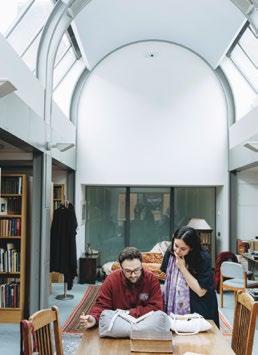
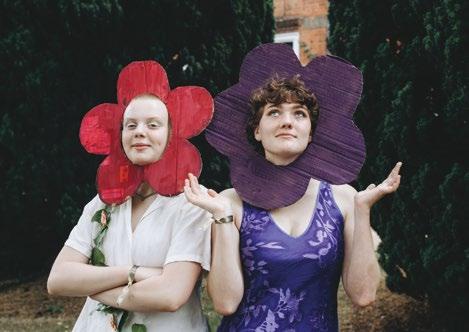
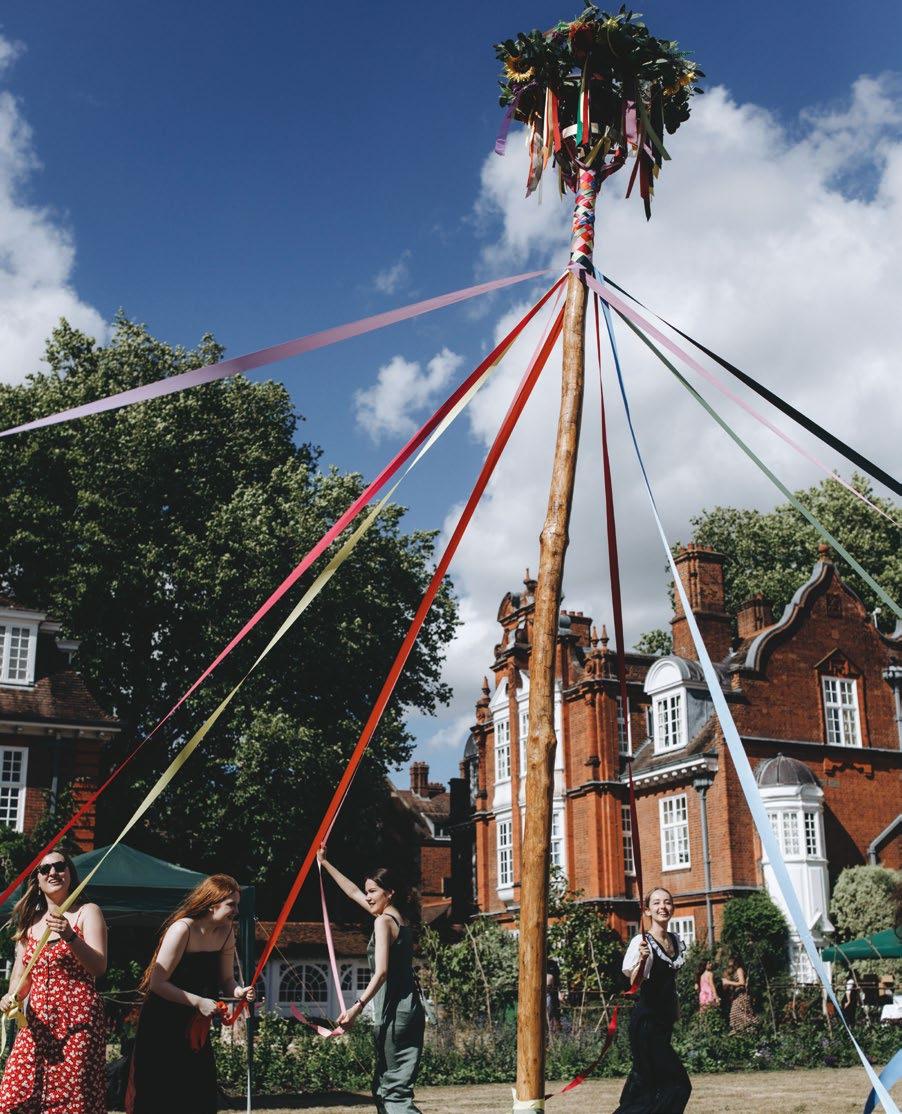
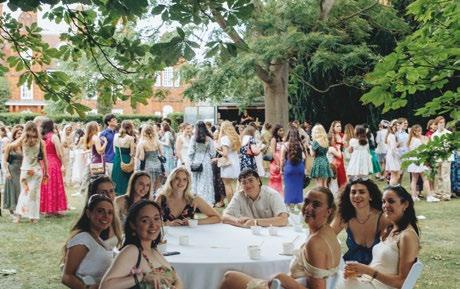
JCR garden party, photograph by Dasha Tenditna
Teaching & Research
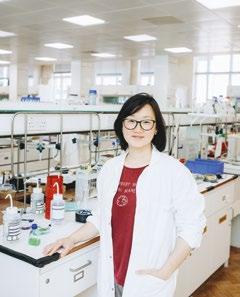
46 Light + water = green power: the research of Dr Jenny Zhang
50 Ready for the challenge: Dr Mezna Qato
54 Key transitions in family life: Professor Claire Hughes and Dr Terri Apter
58 Postgraduate research spotlight: reflections on uncertainty
60 A new vision for teaching by Alice Benton and Dr Sheila Watts
64 When another world was possible: Dr Amy Morris' work on early American culture
The Alumnae Year 70 Highlights of the alumnae year
The Roll President's year by Annette Spencer
Shaping Newnham's Future: update
Shockingly modern by Dr Kathryn Ferry
Alumnae memories
Alumna spotlight: Dr Utheri Kanayo
Alumnae news
Deceased members of the Roll
Donations, legacies and bequests
Alumnae A–Z
158 This place I know: Ash Catley
In this i ssue, we highlight some of the amazing less well-known scientific discoveries of Newnham alumnae.
Helen Chambers (NC 1897)
Lucy Wills (NC 1907)
Inge Lehmann (NC 1910)
Maud Haviland (NC 1915)
Masterman (NC 1929)
Joan (Lady) Curran ( Strothers , NC 1934)
Dr Brenda Milner ( Langford , NC 1936)
Professor Ottoline Leyser (NC 1983)
Dr Hayat Sindi (NC 1995)
Dr Carol Ibe (NC 2015)
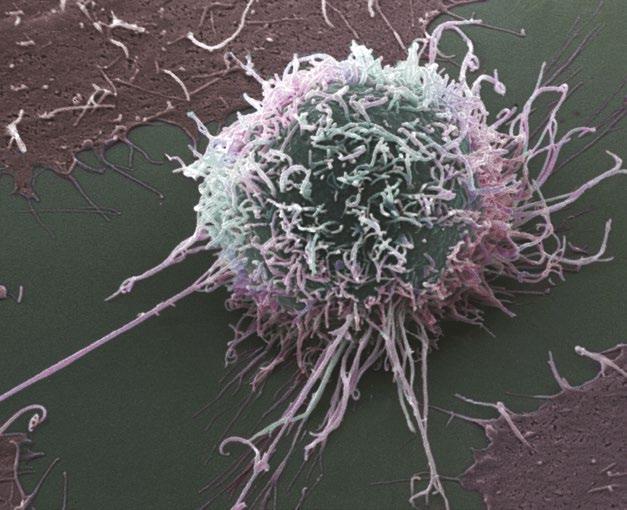
Medicine: Dr Helen Chambers CBE (NC 1897)
Radiotherapy treatment for cervical cancer owes much to Helen Chambers (1879–1935). A trained pathologist, Helen became increasingly interested in the effects of radiation on malignant cells. She noted how radiation, precisely targeted at malignant tumours in animals, could prevent their regrowth. At the time, cervical cancer was the leading cause of cancer deaths in British women, and was treated by hysterectomy, though mortality rates were appallingly high. Helen proposed trialling radium therapy as an alternative approach, and that this treatment be led by women doctors and researchers. This resulted in the women-led Marie Curie Hospital, a specialist cancer treatment centre in London, with vastly higher success rates than at conventional hospitals. Helen saw medical research as key to improving healthcare, visiting leading researchers in Paris with a view to trialling their approaches in Britain. Sadly, she herself died of breast cancer, carrying out her research until shortly before her death.
Opposite page:
photo by Dasha Tenditna
Cervical cancer cell, SEM. Steve
Gschmeissner/Science
Photo
Library
The College Year
Highlights of the College year 2024
SEPTEMBER
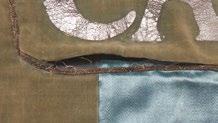
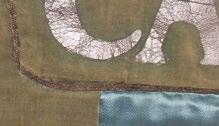
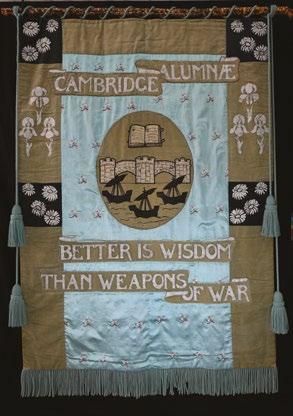
The Cambridge Alumnae Suffrage Banner was returned to display after conservation by the studio of Janie Lightfoot Textiles. The banner was carried by a contingent of 400 women in the great suffrage procession of 13 June 1908. The conservation treatment included cleaning, the removal of creasing using humidification, securing of the frayed cord and fringing, repairs to failing stitching and an improved hanging mechanism so that the banner can continue to be shown in its purpose-built display case by Clough Hall. Upon its return to Newnham at the start of term, the conservators and Curator Laura Dennis gave a presentation to explain the work to repair and preserve this important part of College history.
At the Leavers’ dinner , three long-serving Fellows’ contributions were celebrated. Judy Quinn , Professor of Old Norse Literature, retired after 24 years at Newnham. She directed studies for students of Anglo-Saxon, Norse and Celtic and amongst her many roles at College she
‘Before and After’ images © Janie Lightfoot Textiles
chaired the Valuable Possessions Committee. Gabriela Ramos , Professor of Latin American History, was elected to a Fellowship in 2003 and directed studies for History students. Jenny Morton , Professor of Neurobiology, was a Fellow for 33 years. In that time, she has directed the studies of hundreds of Newnham medics and vets, sat on numerous committees and played a major role as Chair of the Garden Committee. All will maintain their connection to College.
OCTOBER
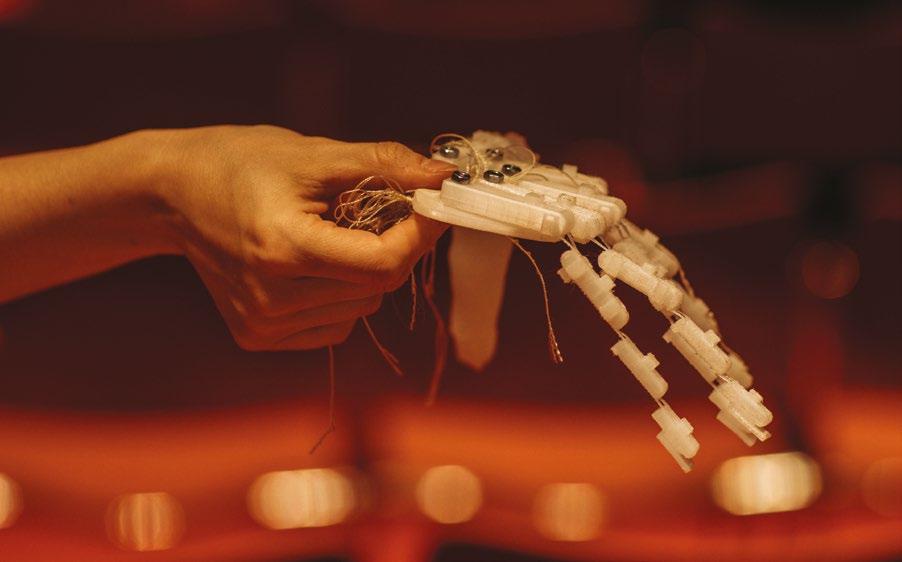
Postdoctoral Affiliate and Marie-Curie Fellow at the University of Cambridge Dr Chapa Sirithunge demonstrated a robotic hand in her Pudding Seminar. She shared her research findings on how understanding robots’ embodied characteristics will allow more capable and adaptive robotic systems to be developed. In March, she hosted a Robotics Workshop in College as part of the Cambridge Festival.
Dasha Tenditna
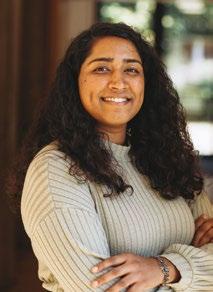
Above: Chapa Sirithunge’s robot hand Left: Chapa Sirithunge
Royal Literary Fund Writing Fellow Professor Pragya Agarwal joined the College. Pragya is a behavioural and data scientist who has worked at various leading academic institutions around the globe, is the author of four non-fiction books and writes for outlets such as The Guardian , New Scientist , Wired , Scientific American and The Times Literary Supplement .
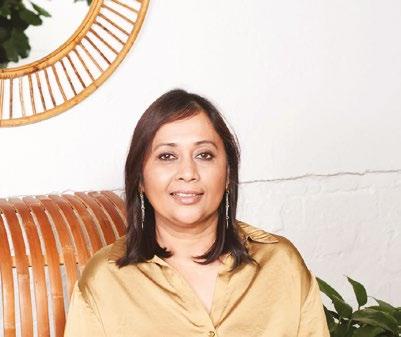
Pragya Agarwal
The Nina Wedderburn Award for students in the Sciences (with a preference for Biological Sciences) was launched at a special event with guest speaker Professor Martha Sedegah of the US Naval Medical Research Center. The award was created by Professor Lucy Wedderburn (NC 1979), in memory of her mother, Dr Nina Wedderburn ( Salaman , NC 1947), who died in 2020.
Two German postgraduate students with Gates Scholarships joined the College, selected for the prestigious programme supporting research that demonstrates a commitment to improving the lives of others. Friederike Hedley’s PhD in Psychology uses data-driven computational modelling to explore how uncertainty is processed during development and how that might link to anxiety; Paula Suchantke is researching the stability of ice shelves in Antarctica using remote sensing and machine learning techniques to produce a dataset of meltwater storage and potential flow pathways on Antarctic ice shelves.
Junior Research Fellow in Electrical Engineering Dr Stephanie Adeyemo , who was featured in the previous issue, was among the first cohort of Career Development Fellows (CDFs) announced by the Royal Society – part of a scheme aimed at addressing under-representation in UK STEM academia.
Newnham students taking part in the Laidlaw Scholars Leadership and Research Programme published their summer projects online and presented their research in College. Jasmine Crosbie researched undergraduate experiences of asexuality and mental health; Caitlin McIntosh carried out a retrospective clinical chart review to evaluate anticancer therapy; Anna Metzger
looked into violence against sexual and gender minorities in humanitarian contexts; and Alex West considered how optimistic reflection on our better nature can lead to positive influence.
NOVEMBER
Bye-Fellow and Special Supervisor
Dr Milena Ivanova , researcher on the ethics of AI, organised the Future of Art Conference, sponsored by the British Society for Aesthetics and held at Newnham. ‘Led by early- to midcareer women and with participants from art, industry and academia, we reflected on how generative AI is impacting artistic practice as well as our relationship with art’, she said. The event set a standard for collaborative, friendly and productive Philosophy conferences.
DECEMBER
Music for the Festive Season was, as ever, a lovely way to end the term, with performances by members of the Raleigh Music Society together with Newnham’s Chamber Orchestra, the Newnham Wind and Brass Ensemble and the Newnham Choral Scholar Consort (and friends) performing festive favourites. The concert began with a rousing performance from the gallery of ‘Deck the Halls’ by Kate Runciman playing the bagpipes. Students performing also included cellist Maria McLoughlin, pianist Lavender Lu and sopranos Naomi Fester and Caitlin McIntosh.
Delphine Mordey
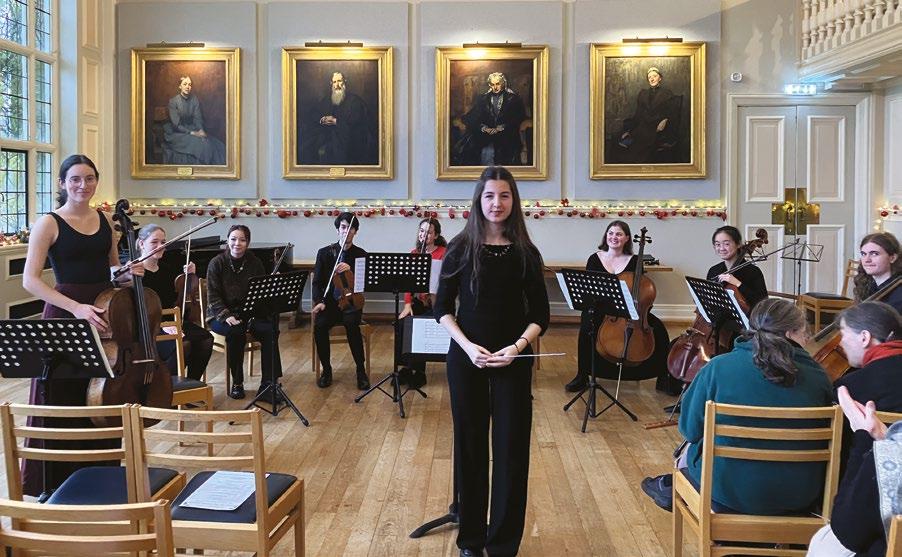
Below: Newnham's Chamber Orchestra
2025
JANUARY
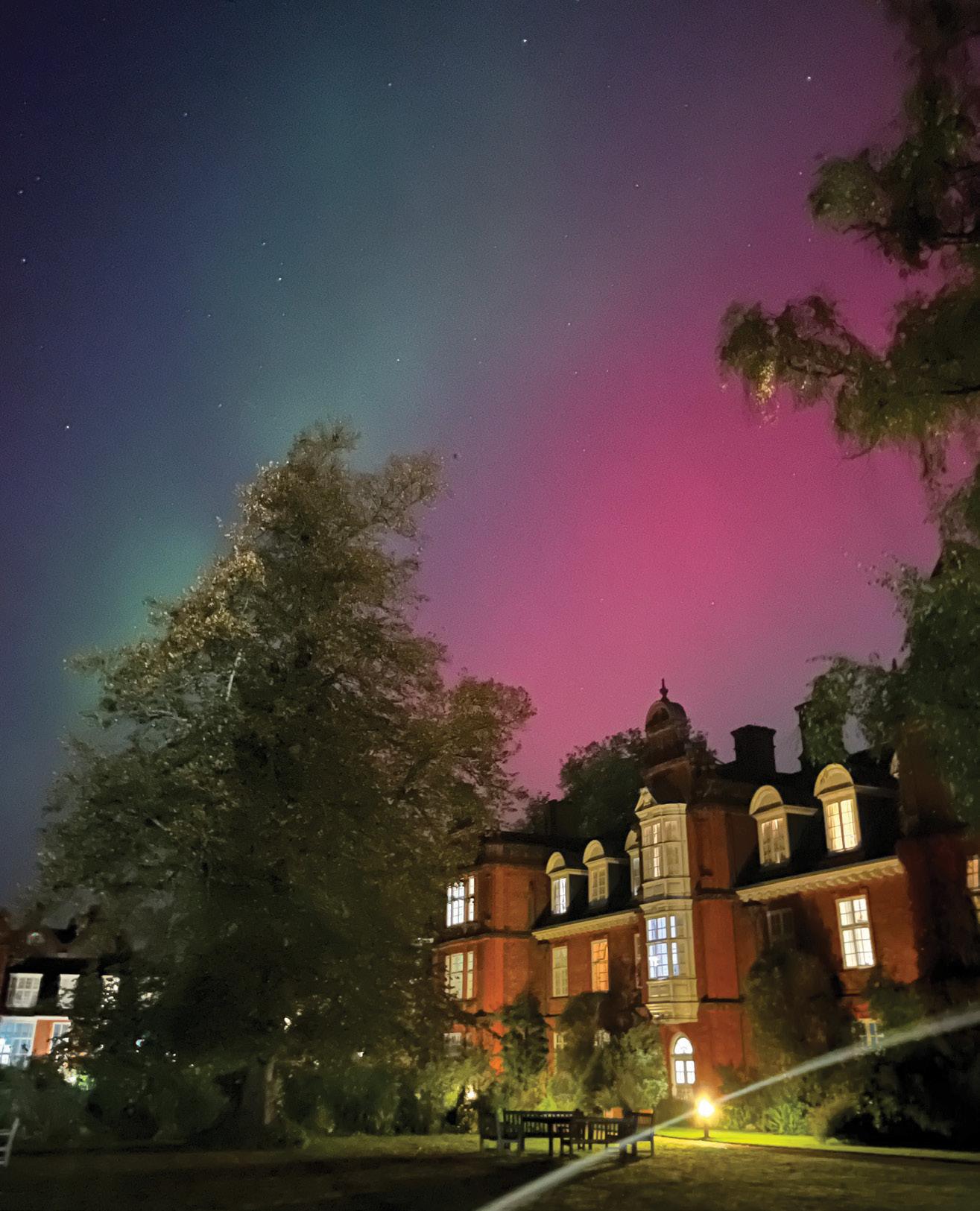
Our student photography competition attracted a beautiful selection of photographs, including Easter term winner Chloe Saw’s photograph of the northern lights over College (front cover).
The Library digitised its fifteenth-century manuscript copy of Epistre Othea (Othea’s Letter) by Christine de Pizan, the earliest professional female writer in Europe. Christine authored the Epistre Othea sometime between 1399 and 1402. Henry Yates Thompson, who purchased the manuscript, wrote that ‘she stood absolutely alone among the women of her generation, and ... it was not for centuries that any woman arose of equal literary reputation.’ The College copy is now online and accessible to students and researchers around the world.
FEBRUARY
Pink Week was marked around College with many events raising awareness of breast cancer and funds for research, including a fundraising formal hall, a speaker session on scientific advancements in breast cancer research and a panel on LGBTQ+ experiences of breast cancer.
Tianhao Wang
Tianhao
Wang
Alice Battersby
Honorary Fellow The Right Honourable Lady (Vivien) Rose of Colmworth DBE PC (NC 1979) visited the College to share insights into her role as a Supreme Court justice at a joint meeting of Cambridge University Law Society and the Seville Law Society – the College society that helps students and aspiring lawyers learn more about and apply to the legal profession, named in memory of Dr Catherine Seville (NC 1984).
Year 10 students from Seven Kings High School in Ilford, Greater London, enjoyed the opportunity to visit Newnham, hosted by Schools Liaison and Outreach Officer Holly Nicholls. Holly is committed to showing students from state schools that selective universities like Oxbridge can be a place for them if they want it to be. The students were given a flavour of university life, advice on admissions and financing, and found the day ‘amazing and unforgettable’.
A networking event for students funded by the Cambridge Trust was held at Newnham to celebrate our strong collaboration over many years. We currently have 92 students with Cambridge Trust Scholarships from 42 countries around the globe (80 PhD students, 7 master’s students and 6 undergraduates).
MARCH
For International Women’s Day , Newnham students organised a variety of events supporting four charities: Becky’s Button, Cambridge Women’s Aid, Victory Afghanistan and Women for Women International. As well as a charity ball (see p. 42), there was a joint JCR/MCR High Tea and a speaker event with Nicola Beauman (NC 1963), founder of Persephone Books; Jane Houng (NC 1977), activist and founder of Becky’s Button, a global movement dedicated to empower women, raise awareness of sexual harassment and advocating for women’s safety; and Ashley Moffett OBE (NC 1967), Emeritus Professor of Reproductive Immunology at the University of Cambridge.
Honorary Fellow Professor Janet Todd (NC 1961) took part in an interactive celebration of 250 years since Jane Austen’s birth hosted by Newnham’s English students. She celebrated the publication of her new book, Living with Jane Austen, a memoir interwoven with her analysis of Austen’s work and what it has meant to her, with a UK book tour and several Cambridge events.
Undergraduate pianist Eliza Ruffle was the joint winner (with saxophonist Jack Marley of Pembroke College) of the Cambridge University Concerto Competition. In the final, Eliza performed the first movement of Rachmaninoff’s Piano Concerto No.1.
Vivien Rose
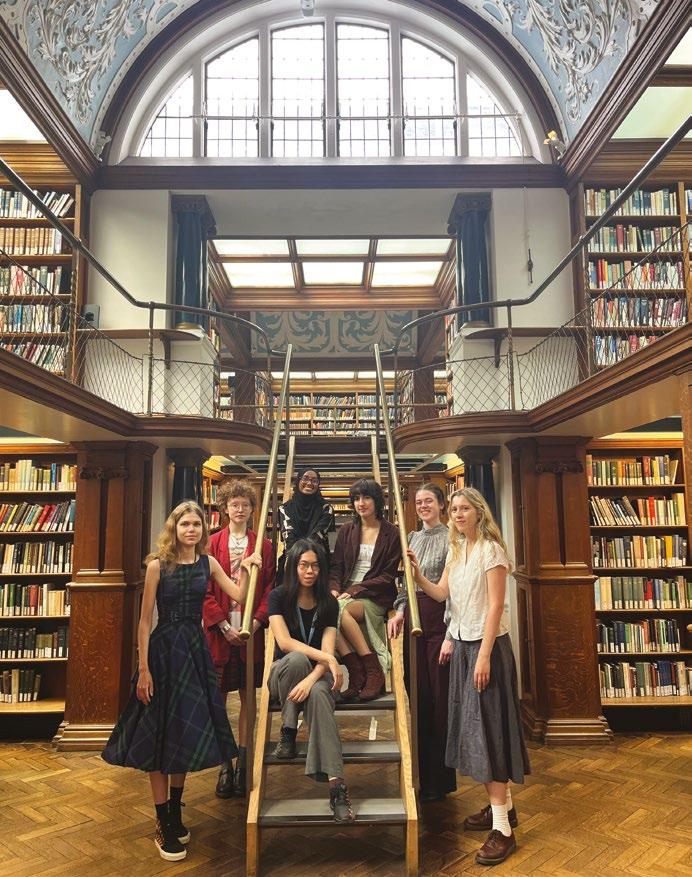
The Horner Markwick Library reopened after a five-month refurbishment project, during which time it was not accessible as a workspace, and access to collections was limited to Click & Collect (The Yates Thompson Library remained open 9am-5pm on weekdays). Alongside much-needed rewiring and the installation of new LED lighting, the building was recarpeted, replastered and painted. The new lights are motion-sensitive, to save energy while maintaining a safe level of lighting regardless of occupancy levels. In a first for the College Library, a team of Student Library Assistants (pictured) helped staff move 18,000 books for the rewiring works, as well as checking reading lists, labelling new books, conducting the stock check and creating book displays.
Below: The Student Library Assistants
Eve Lacey
First-year NatSci student Sakina Dhirani scored a key goal in a tight Varsity Football Match , leading to a home win for Cambridge Blues. Louise Jones and Maddy Wainwright played in the Varsity Rugby Match at StoneX Stadium in North London.
APRIL
Newnham hosted the First Story Outreach Festival dinner, with the Newnham Ambassadors providing tours to the pupils attending the event. First Story, a leading creative writing charity for young people, was founded by Antonia Byatt, daughter of A.S. Byatt (NC 1954), and is championed in Cambridge by one of our Directors of Studies in English, Dr Bonnie LanderJohnson.
MAY
In the Jane Harrison Memorial Lecture , Professor Catriona Kelly, FBA, spoke on ‘Border Crossings, Folk Modernism: From the Literature and Art of Russian Paris to Soviet Film after Stalin’.
The gardens team, always looking to improve biodiversity, participated in No Mow May . Normal service was resumed in June to allow garden parties to take place on the lawns, but there is a permanent meadow at the back near the Old Labs.
English PhD student Juliette Bretan presented a BBC Radio 3 programme on Polish tango. In the programme, she traces the musical adventure of the tango and its interwar explosion eastwards in colder climes like Warsaw. Formerly a freelance journalist covering Polish and East-Central European arts, history and current affairs, she uncovered a rich, unexpected history.
Olive Watt , second-year HSPS student and former JCR LGBTQ+ officer, spoke at the House of Lords as part of the My Maiden Speech programme, run by the Speakers Trust. Olive spoke about the importance of having an LGBTQ+ inclusive education, drawing on their own experiences at school and as a volunteer with the charity Just Like Us .
Newbroke (the joint team of Newnham and Pembroke) won the women’s football Cuppers.
The Department for Science, Innovation and Technology announced the launch of the Spärck AI Scholarships , named after pioneering computer scientist Professor Karen Spärck Jones (1935–2007), Research Fellow from 1965 to 1968, former Newnham Associate and trustee of the Development Trust. This major new initiative aims to nurture the next generation of AI leaders, with the University of Cambridge as a founding partner. One of the most remarkable women in Computer Science, her seminal 1972 paper introduced the concept of inverse document frequency, a fundamental principle still central to information retrieval today.
First-year Classics PhD student Vaiva Vasiliauskaite won the Wood Whistler Medal and £3,000 prize for her essay 'Hermeneutics and Appropriation of Religious Tradition in Varro’s Divine Antiquities’. Vaiva holds the Onassis Special Scholarship for Women in Humanities supported by the Onassis Foundation.
JUNE
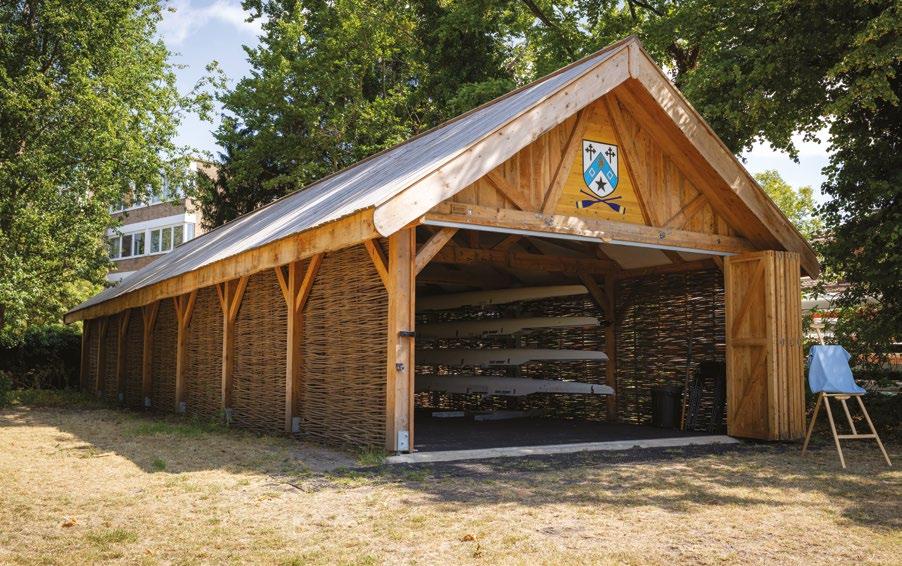
May Bumps weekend presented the perfect opportunity to celebrate our new Boathouse
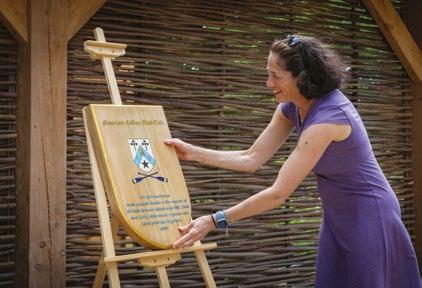
We were delighted to welcome significant supporters Dr Michelle Beretvas Mittelsteadt (NC 1988) and members of her family from Massachusetts, along with 80 guests representing 61 years of NCBC rowing.
In June Newnham held a very successful Black Postgraduate Formal Hall . Chloe Sanyu, MCR Black and Minority Ethnic Officer, said: ‘I realised how there are few spaces, especially in the most formal sense, for Black postgraduates to come together. I thought, why not do something about this? The buzz that filled the Hall, seeing so many Black scholars in College, is something I will never forget. Having the Master of Jesus College, Sonita Alleyne, join us made it even more special.’
Above: The new College boathouse Left: Michelle Beretvas Mittelsteadt (NC 1988) Photography by David Johnson
Nine Newnham SCR members received University academic promotions. Congratulations to Professors Tina Potter (Physics), Felix Steffek (Law), Sinead Agnew (Law) and Amy Tobin (History of Art); new Associate Professors Xia (Lucy) Zhao (NC 2002, East Asian Studies), Shushma Malik (Onassis Classics Fellow), Claire Benn (NC 2009, Philosophy) and Paula Alvarez Cartelle (Physics); and new Senior Teaching Associate Milena Ivanova (Institute for Technology and Humanity). Congratulations also to Kate Baker (NC 2008) of the MRC Cognition and Brain Sciences Unit who was promoted to Professor.
Our annual Raleigh Music Society Summer Concert featured a diverse range of talents
with music ranging from Wallace & Gromit to Beethoven, with much in between. Newnham Wind and Brass, flautists Teodora Sion and Vidhi Thakor, pianist Keyou Zhang, soprano Yi Zhao and Voices of Newnham all performed in this beautiful end of term event.
JULY
Professorial Fellow Manali Desai was appointed as the new Head of the School of Humanities and Social Sciences. She is the first woman of colour to lead any of the Schools of the University of Cambridge. ‘I am committed to raising the global profile of the humanities and social sciences at Cambridge, at this challenging time for universities,’ she said.
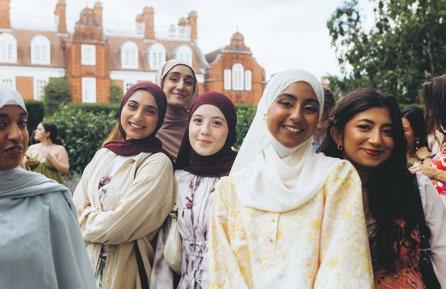
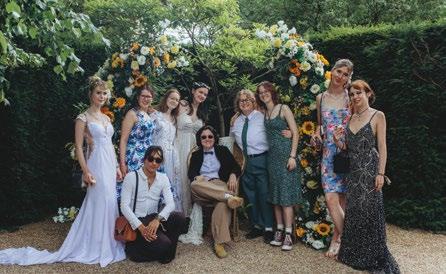
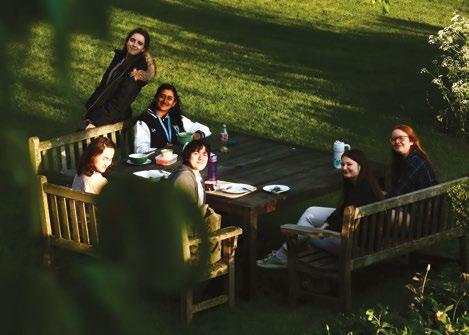
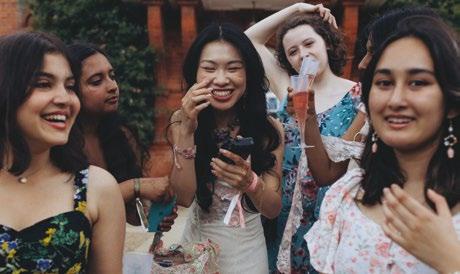
Below: The JCR garden party brightened up May Week in June. Photography by Dasha Tenditna
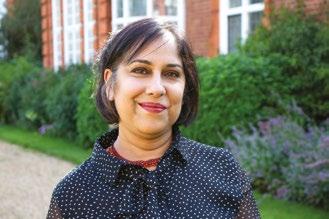
Professor Yael Navaro was made a Fellow of the British Academy in recognition of her work as a social anthropologist who has developed ‘a distinctively affective, spatial and material approach for the study of postwar environments, embedding social, political and psychological anthropology through new methodologies’.
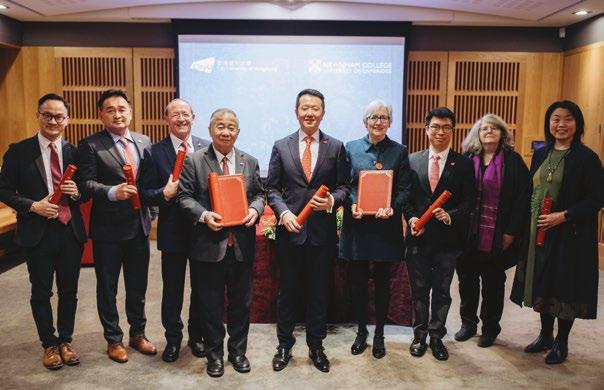
City University of Hong Kong (CityU HK) and Newnham established a new partnership to support exceptional master’s students from CityU HK applying to study at the University of Cambridge. Carol Wai Kun Wong was awarded the CityU Hong Kong Research Master Scholarship at Newnham College for 2025–26 and will join the MPhil in Engineering programme under the joint supervision of Professor Teng Long at the University of Cambridge and Professor Steven Wang at CityU HK.
AUGUST
Postgraduate engineer Sally Musonye was awarded a place on the first SPARK incubator – a four-week residential programme to help students develop bold ideas, early-stage products and social ventures. The programme was created by King’s E-Lab in partnership with Founders at the University of Cambridge. Sally is co-founder, with two colleagues from Churchill, of AshGold Africa Initiative, an edtech business building solar projects to provide sustainable energy in rural Kenya.
Research Fellow Alice Merryweather ’s battery startup Illumion has grown so rapidly that she is to dedicate her time fully to focusing on its development. It was started by Alice with Cambridge colleagues while completing her PhD, and studies materials inside batteries to understand the charging process and material degradation in greater depth, to improve battery technology. Illumion has sold the tool to research groups in the US, Germany and China, and now has ten employees, as well as the two co-founding academic supervisors.
Manali Desai
Below: Alison Rose with representatives from City University of Hong Kong
Joseph Cotton
David Johnson
Biochemistry: Dr Lucy Wills (NC 1907)
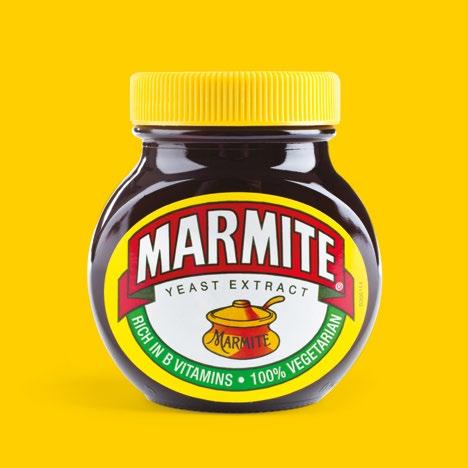
Folate was the only vitamin to have been discovered by a woman; its importance and its effectiveness in curing anaemia was discovered by Lucy Wills (1888–1964), who after studying Natural Sciences at Newnham trained as a doctor at the Royal Free Hospital School of Medicine. She discovered the existence of a crucial substance in yeast extract in 1931, when she fed Marmite to anaemic pregnant women in Bombay, which cured them. Her research provided the first evidence for a previously unknown vitamin called the ‘Wills factor’ until it received the name folic acid ten years later. In The Folate Story , Victor Hoffbrand writes: ‘The story of folate (vitamin B9) is one of outstanding achievements which have advanced major areas of medical practice … This book is dedicated to the heroine of the folate story, Lucy Wills … An outstanding clinical scientist, independent and radical in outlook, she never received the national or international recognition and honours she surely deserved.’
Ellen Moran/Smith/istockphoto
The Principal’s year
ALISON ROSE (NC 1980)
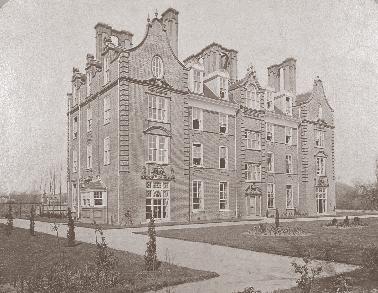
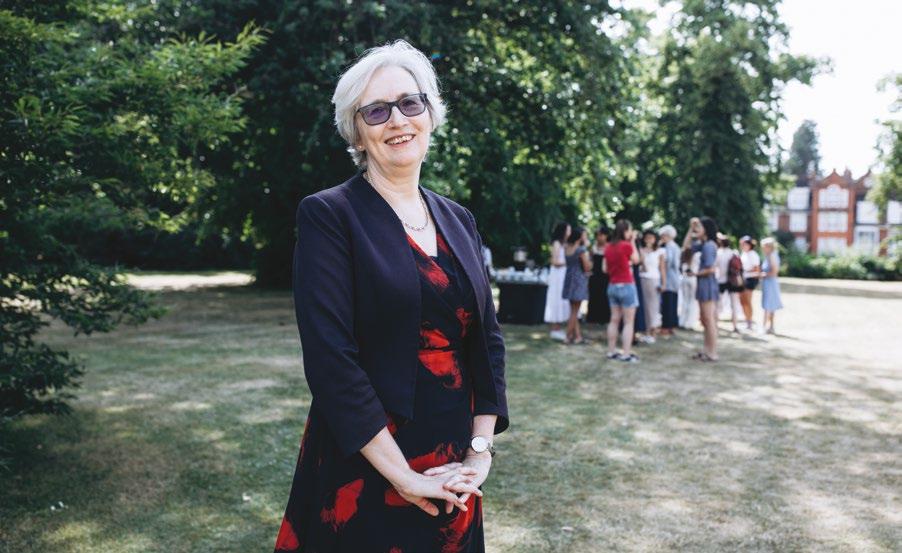
I often think about how quickly Newnham grew from just five students in rented rooms in October 1871 to 30 students housed in its own new hall, which opened in 1875. We celebrated 150 years of that building, now known as Old Hall, at our Garden Party and Campaign Celebration. Basil Champneys’ designs communicate welcome and a sense of home. Visiting pupils and new students continue to comment on the warmth of the red brick, and the light from the white-framed windows, perfectly framed by the gardens.
Newnham’s Principal, Anne Jemima Clough explained her thinking about residential higher education for women to supporters:
‘A little reflection will, I think, shew [ sic ] how much more effectually & with how much less mental strain, a woman can study, where all the arrangements of the house are made to suit the hours of study, where she can have undisturbed possession of one room, – and where she can have access to any books that she may need.’
The classicist Jane Harrison (NC 1874) expanded on this theme in a lecture in 1911. Jane noted that the drawing room was the ‘woman’s province; she must be able and ready to switch her mind off and on at any moment, to anyone’s concerns’ because it was ‘essentially the room into which visitors are shown – a room in which you can’t possibly settle down to think, because anyone may come in at any moment. One of the … signs of the times is that woman is beginning to demand a study.’
And ‘a room of one’s own’ is not just about
physical space. Professor Emily Clark, former Junior Research Fellow at Newnham, told me that the welcoming culture in College introduced her to an intellectual room which she could call her own. Being at Newnham gave her confidence in her own research and ideas, and empowered her to take up her rightful intellectual space.
We live in a time when there is more pressure than ever to be a passive consumer of information, scrolling through our social media. Societal expectations of what a woman should look like seem to be narrowing, and once again demanding inordinate amounts of time and money to achieve. Newnham encourages our students to become confident in their individuality and to deepen their own powers of analysis, evaluation, creativity and innovation. As we have reflected on the College’s legacies of enslavement (see p. 39), we have asked whether there are activities going on today in which society is complicit, but which should be challenged. The ability to challenge the status quo requires the independence of mind and of spirit which we seek to nurture.
Inspiring future generations of potential students is another part of Newnham’s culture. We are delighted this year to have hosted some of the sixth formers who are taking part in Cambridge University’s STEM SMART programme, which aims at raising the quality of teaching in science available to pupils at state schools and to develop their confidence to apply to top universities. As part of the programme, they undertake a four-day residential in Cambridge in August. Given the underrepresentation of women in science, we hope
Dasha Tenditna
this will boost attainment and encourage more young women to consider applying to study Physical or Biological Sciences, Engineering or Computer Science (see our feature on p. 32).
We are enormously grateful for your generosity in enabling us to meet and exceed the campaign target of £25 million set for ‘Shaping Newnham’s Future,’ more than a year ahead (see p. 80 for a campaign update). Higher education continues to be under financial pressure and Newnham is no exception. The welcome increase in October 2025 in home undergraduate fees (which had been frozen since 2017), was far outweighed by the increase in employers’ National Insurance contributions in April 2025, on top of the increase in energy bills which will be familiar to you all. We are doing all we can to raise additional income – for example, by hosting conferences, weddings and events – and to keep our costs down. Thanks to your giving,
despite the continuing financial pressures on us, we continue to assist our students financially. We give rent bursaries to lessen the burden for around one third of our UK undergraduates who are from lower-income families. We also fund scholarships for postgraduates, who are the groundbreaking researchers of the future. We continue to value and to need your support. Balancing the demands of study and family, or studying without any family support at all, are still problems faced by many women today, including those at Newnham. The College continues to provide a ‘room of one’s own’ for women, both in physical terms and through the emotional and intellectual space to develop as a person and as a thinker. We remain passionate about our mission and charitable purpose of providing education and promoting learning and research through the provision of a college for women within the University of Cambridge.
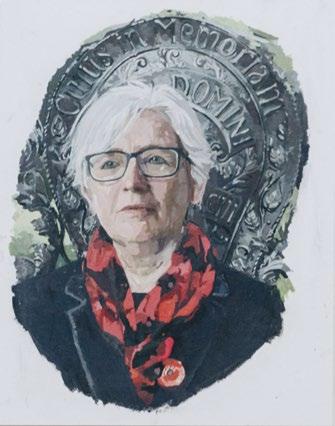
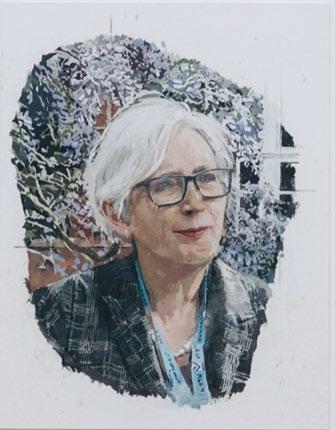
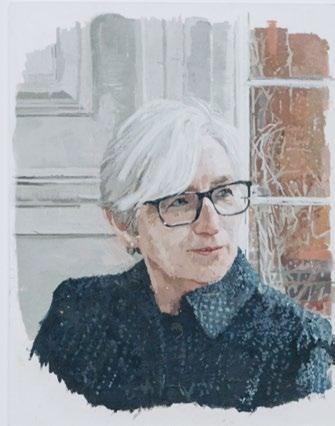
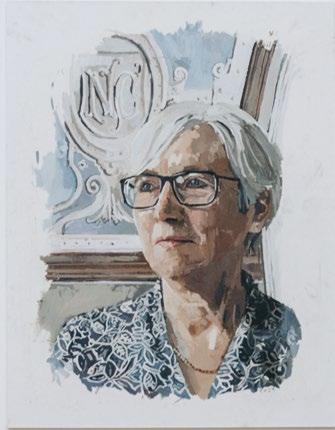
Multiple perspectives: the Principal’s portrait
It is a Newnham tradition to commission a portrait of each Principal, starting with the first, Anne Jemima Clough, whose portrait hangs in Clough Hall. In the spring of 2025, a newly commissioned portrait of Alison Rose (NC 1980) took its place among the collection of Principals’ portraits. The work, by British painter Eileen Hogan, was commissioned by Newnham’s Valuable Possessions Committee on behalf of the Governing Body.
Eileen Hogan trained at Camberwell School of Arts, Royal Academy Schools, the British School of Archaeology at Athens and the Royal College of Art. She is a Professor at the University of the Arts London, a Trustee of the Royal Drawing School and an Ambassador for the Salvesen Mindroom Centre, a Scottish charity and a centre of excellence in neurodiversity.
person in a state of flux as they move mentally through time in the developing narrative,’ said Eileen. ‘In this way, my portraits incorporate the process of oral history as well as my reaction to the sitter and what I am hearing. Returning successively over several months, as I come to know the sitter's facial expressions, noting literal alterations such as a new hairstyle or different clothing. I witness changes in energy and mood, affected by the memories evoked by the dialogue with the historian. Experiencing the process becomes a vital ingredient in the final portraits I create in my studio.’
‘My portraits incorporate the process of oral history as well as my reaction to the sitter and what I am hearing.’
Eileen Hogan
Eileen takes a pioneering approach to portraiture, making each sitting an opportunity for the subject to tell their life story to her collaborator, oral historian Cathy Courtney from National Life Stories. This leaves her free to observe her subject engaged in conversation and helps deepen her understanding. Eileen and Cathy’s joint sessions with Alison took place between February and July 2024.
As a four-panel, composite portrait in oil and wax, the portrait is unique in showing different aspects of Alison’s personality. ‘I capture the
The background settings were chosen collaboratively with Alison as places of special significance to her during her time as a Newnham student (1980–83) and as Principal (2019–26). Alison writes, ‘When I was a student, I lived in Peile Hall, and I love the College gardens in springtime. The Clough Gates symbolise Newnham’s continuing mission to help women achieve their potential, often against the odds. Clough Hall and the Library are two iconic spaces in the College and speak of the importance of community, research and study.’ The portrait is now on display in the Entrance Hall of Newnham. The accompanying audio recordings with Cathy Courtney will be housed in the National Life Story collection at the British Library.
The JCR Presidents’ year
GABRIELLE FARGE
( Human, Social, and Political Sciences)
CARA PEARSON ( Psychological and Behavioural Sciences)
The JCR has had a great year in 2024–25, with officers working hard to keep things running smoothly and also create change when needed. We have worked with the Bursar to ensure that the new Catering Pre-Payment (CPP) system was implemented effectively, with very few setbacks emerging during this process. We have also continued to make sure that the food in the buttery and at formals is accessible and enjoyable for all, launching a specific catering feedback form to address any foodrelated concerns.
The Lent and Easter terms saw the introduction of our Free Prescription Scheme trial, which supports students with the costs of both one-off and repeat prescriptions. This trial has been a great success, and we will be implementing this as an ongoing scheme in the new academic year. We are grateful to the Garden Party Committee for allowing us to use a proportion of the proceeds from their (very successful!) event to fund this.
This year we made changes to support officers in their roles, working with the Wellbeing Advisor to provide liberation and welfare officers with clearer advice on supporting other students through stressful periods. Liberation officers have continued to organise formals that celebrate the diversity of Newnham’s student body: our BME, LGBTQ+ and International Women’s Day formals were all extremely popular and we were very excited to welcome some incredible speakers who inspired many thoughtprovoking discussions. The JCR is very grateful to all the alumnae who have taken the time to attend or speak at our events this year.
We have had a big focus on supporting charity initiatives. In Michaelmas, Newnham made the highest food bank contribution of all the Cambridge colleges, and we continue to collect food bank donations at the end of each term. As well as our usual annual charitable contribution, we held a charity raffle that raised money for six different charities, and we have also collaborated with Newnham Feminist Society to raise money for local LGBTQ+ charity The Kite Trust. This year’s Garden Party also supported our charitable aims, donating to TreeSisters to support reforestation efforts. Looking forward, we have exciting renovation plans for the JCR basement room, where we will be building a new bar space, and for the Clough JCR common room, which we will be giving a fresh new look. With a newly elected full committee we are looking forward to another year of successes in 2025–26.
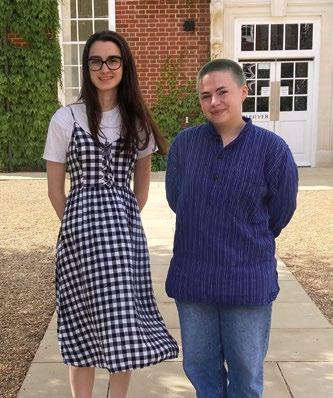
Cara (left) and Gabrielle (right)
The MCR President’s year
PAULINE C. ELLER
( PhD, Multi-disciplinary Gender Studies)
Newnham MCR can look back on a truly memorable year, with a community dedicated to building and growing together. As MCR President I am proud to share with you what we have accomplished across 2024–25. After four years as a postgraduate at Newnham it has been my absolute pleasure to represent the MCR as President this year, and work alongside exceptional students who have made their mark on student life at Newnham.
three new fixed formals were established: a Mentor Formal in Lent bringing together students and their College Mentors for an evening at Middle Table, a university-wide Black Postgraduate Formal in Easter hosted at Newnham and a Postgraduate Graduation Formal at the end of the year. All were well received and are now set in the calendar for future years.
We started off the year with a full and engaging Welcome Week to settle in the new members of our community, offer guidance and introduce them to life at Newnham and the range of possibilities and opportunities that come with it. Supporting our students’ wellbeing remained a central focus across the year as we worked to extend the food options in the buttery to cater for a halal diet, and to increase accessibility to the communal MCR spaces and graduate accommodation via mobility ramps and handrails. Similarly, our liberation officers were keen to foster community and support networks through regular check-ins and events.
Alongside advocacy work, the MCR committee made significant and lasting contributions to our yearly calendar. MCR students had many opportunities during the year to dine at other Cambridge colleges and meet their postgraduate students, and we also got the chance to connect with our Oxford sister college, Lady Margaret Hall. Furthermore,
The two largest and most anticipated events of our academic year were particularly successful, including a wonderful ‘Surreal Soirée’, the MCR Garden Party in our College gardens, a welcome relief in the busy exam term, particularly for our graduating master’s students. Another highlight in our calendar was the Annual Graduate Conference (see feature on p. 58).
Over the year we have strengthened ties with the JCR. Together we asked College to provide a digital gym induction, which will help alleviate the stress and responsibility of the JCR Sports Officer and any student volunteers taking on the flood of incoming students that require access to the gym at the start of the year.
It has been an honour to advocate for the postgraduate community at Newnham and to witness the initiative, care and dedication of the MCR committee and the student body at large. Although the postgraduate community inevitably has a high turnover of students, each year has been a testimony to the College and our ability to offer a sense of belonging.
Fellows and Senior Members during the academic year 2024-25
VISITOR
Lord Sainsbury of Turville, Chancellor of the University of Cambridge (to June 2025)
PRINCIPAL
Alison Rose MA (Cantab)
FELLOWS & SENIOR MEMBERS ENTITLED TO ATTEND GOVERNING BODY
ARCHAEOLOGY
Dr Emma Pomeroy MA (Cantab), MA (Southampton), PhD (Cantab)
ARCHITECTURE
Dr Ekaterina Mizrokhi (Associates’ Research Fellow) BA (Trinity College, Toronto), MPhil (Cantab), PhD (Cantab)
Dr Fiona Smyth (from June 2025) BSc. Arch (Dublin), B.Arch (Dublin), PhD (Dublin), FRHistS
ASIAN AND MIDDLE EASTERN STUDIES
Dr Charis Olszok MA (Oxon), MA (SOAS), PhD (SOAS)
Dr Lucy Zhao BA (Qingdao), MA (East China University of Science and Technology), MPhil (Cantab), PhD (Cantab)
CLASSICS
Dr Carol Atack BSc (London), MA (Cantab), MPhil (Cantab), PhD (Cantab), FRHistS
Dr Shushma Malik BA (Bristol), MA (Bristol), PhD (Bristol)
CRIMINOLOGY
Dr Caroline Lanskey BA (Leicester), MPhil (Cantab), PhD (Cantab), PGCE (Oxon)
ECONOMICS
Professor Helen Bao BA (Dongbei), MA (Dongbei), MA (Cantab), PhD (Hong Kong)
ENGINEERING
Dr Stephanie Adeyemo (Constance Work Research Fellow) BEng (Swansea), PhD (Cantab)
Dr Fulvio Forni BEng (Rome Tor Vergata), MEng (Rome Tor Vergata), PhD (Rome Tor Vergata)
Dr Letizia Mortara Laurea, Diploma di Maturita’ Scientifica (Bologna), BSc (Bologna), PhD (Cranfield)
Dr Sivasakthy Selvakumaran MA (Cantab), MEng (Cantab), PhD (Cantab), CEng, MICE, MIET
Dr Petia Tzokova (Early Career Research Fellow) MEng (Cantab), MRes (Cantab), MA (Cantab), PhD (Cantab), FHEA
ENGLISH
Dr May Hawas BA (Alexandria), MA (AUC), PhD (Leuven)
Dr Hannah Lucas (Newby Trust Research Fellow) MA (Oxon), MPhil (Cantab), DPhil (Oxon)
Dr Chana Morgenstern BA (New College of California, San Francisco), MFA (Bard College), PhD (Brown)
Dr Amy Morris MA (Cantab), MPhil (Cantab), PhD (Cantab)
GEOGRAPHY
Dr Cynthia Kamwengo (Margaret Anstee Centre Research Fellow) BA (UNZA), MA (Flinders), PhD (Durham)
Dr Diala Lteif (Margaret Anstee Centre Research Fellow) BA (Académie Libanaise des Beaux-Arts, Lebanon), MA (Académie Libanaise des Beaux-Arts, Lebanon), MFA (Parsons, The New School for Design, USA), PhD (Toronto)
Professor Emma Mawdsley MA (Cantab), PhD (Cantab)
HISTORY
Dr Kate Fleet (Deputy Senior Tutor, Postgraduate Tutor and Director of the Skilliter Centre) BA (SOAS), MA (Cantab), PhD (SOAS)
Dr Emma Perkins MA (Cantab), MPhil (Cantab), PhD (Cantab)
Dr Mezna Qato (Director of the Margaret Anstee Centre) BA (Chicago), MA (Chicago), MSt (Oxon), DPhil (Oxon)
HISTORY OF ART
Dr Amy Tobin BA (York), MA (Courtauld Institute of Art), PhD (York)
HUMAN, SOCIAL AND POLITICAL SCIENCES
Professor Manali Desai BA (Michigan), MA (UCLA), PhD (UCLA)
Professor Yael Navaro BA (Brandeis), MA (Princeton), PhD (Princeton)
LAW
Dr Sinéad Agnew LLB (Dublin), MJur (Oxon), MPhil (Cantab), PhD (LSE)
Dr Christina Angelopoulos LLB (Athens), LLM (Edinburgh), PhD (Amsterdam)
Professor Felix Steffek LLM (Cantab), First State Examination (Heidelberg), PhD (Heidelberg), Second State Examination (Hamburg), Habilitation (Hamburg)
LINGUISTICS
Dr Hannah Davidson (Joyce Lambert Research Fellow) BA (Southampton), MA (Freiberg), MPhil (Oxon), DPhil (Oxon)
Professor Kasia Jaszczolt MA (Łódź), MPhil (Łódź), DPhil (Oxon), PhD (Cantab), MAE
MATHEMATICS
Dr Orsola Rath Spivack MSc (Milan), MA (Milan), PhD (Open)
Dr Rita Teixeira da Costa BSc (Instituto Superior Técnico, University of Lisbon), MASt (Cantab), PhD (Cantab)
Professor Maria Ubiali BSc (Milan), MSc (Milan), PhD (Edinburgh), PhD (Louvain)
MEDICINE/ VETERINARY MEDICINE
Dr Kate Baker (from May 2025) BA (Oxon), PhD (UCL), MBBS (Royal Free & UCL Medical School), MRCPCH (RCPCH), CCT (GMC)
Dr Jane MacDougall MA (Cantab), MB BChir (Cantab), FRCOG (London), MD (Cantab), MEd (Cantab)
Professor Elizabeth Murchison B.Biomed.Sci (University of Melbourne), PhD (Cold Spring Harbor Laboratory, New York)
Dr Barbara Skelly MA (Cantab), VetMB (Cantab), PhD (Cantab), CertSAM, DipACVIM, DipECVIM, FHEA, MRCVS
Dr Helen Taylor MA (Oxon), MBBS (London), MRCP, FRCR, PGCert Med Ed (Cantab), FHEA
MODERN AND MEDIEVAL LANGUAGES
Professor Jenny Mander MA (Cantab), PhD (Cantab)
Dr Sheila Watts (Senior Tutor) MA (Dublin), PhD (Dublin)
MUSIC
Dr Delphine Mordey MA (Oxon), MSt (Oxon), PhD (Cantab)
NATURAL SCIENCES
Dr Paula Álvarez Cartelle BA (Santiago de Compostela), MA (Santiago de Compostela), PhD (Santiago de Compostela)
Dr Barbara Blacklaws (Vice-Principal) BSc (Aberdeen), PhD (Cantab), PGCertTLHE (Cantab)
Dr Nicole Church (Beatrice Mary Dale Research Fellow) MA (Cantab), MSci (Cantab), PhD (Cantab)
Dr Timothy Hearn BSc (Birmingham), PhD (Cantab), MRSB, AFHEA
Professor Laura Itzhaki MSc (Oxon), PhD (Cantab)
Dr Sue Jones (from May 2025) BSc (Kings), PhD (UCL)
Dr Catherine Lindon MA (Oxon), MA (Cantab), PhD (London)
Dr Alice Merryweather (Henry Sidgwick Research Fellow) MSci (Durham), MRes (Cantab), PhD (Cantab)
Dr Emily Mitchell BSc (Imperial), MSc (Imperial), MPhil (York), MRes (St Andrews), PhD (Cantab)
Professor Róisín Owens BA (Dublin), MA (Cantab), PhD (Southampton)
Dr Adam Pellegrini BA (Colgate), MA (Princeton), PhD (Princeton)
Professor Christina Potter MSci (RHUL), PhD (RHUL)
Dr Erica Watson BSc (Calgary), PhD (Calgary)
Dr Jenny Zhang BSc (Adv) Sci (Sydney), PhD (Sydney)
PHILOSOPHY
Professor Rae Langton BA (Sydney), PhD (Princeton), FBA, FAAAS, MAE
PSYCHOLOGY
Dr Abigail Bradshaw (Amy Whiteley Research Fellow) BA (Oxon), DPhil (Oxon)
Professor Claire Hughes (Secretary of the Governing Body) MA (Cantab), PhD (Cantab)
COLLEGE AND UNIVERSITY OFFICERS
Alice Benton MA (Cantab)
Sarah Carthew (Development Director) BA (UEA), MA (Cantab)
Wendy Evans (Domestic Bursar) MA (Cantab), Grad CIPD (Anglia Ruskin), PG Dip HRM (Anglia Ruskin)
Eve Lacey (Librarian) MA (Cantab), MA (UCL), MCLIP
Christopher Lawrence (Bursar) MA (Cantab), MSc (Durham), ARCM
Dr Sam Lucy (Undergraduate Admissions Tutor, Deputy Senior Tutor and Finance Tutor)
BA (Nottingham), PhD (Cantab), FSA – Archaeology
ASSOCIATE FELLOWS
Claire Bryant-Curtis MA (Cantab), LLB (London)
Dr Carol Cooper MA (Cantab), MB BChir (Cantab), MRCP (London)
Fran James (to February 2025) MA (Cantab), VetMB (Cantab), DipACVS, DipECVS, DipACVSMR, MRCVS
Dr Xiangyu (Sian) Sheng (from February 2025)
BSc (Chongqing), BEng (Chongqing), MSc (Chongqing), PhD (De Montfort), MPhil (Cantab)
OTHER SENIOR MEMBERS
BYE-FELLOWS
Dr Claire Benn MA (Cantab), MPhil (Cantab), PhD (Cantab) – Philosophy
Dr Anna Corrigan (from May 2025)
BA (Cornell), MA (University of St. Andrews, Universidade Nova de Lisboa, Universidade de Santiago de Compostela), PhD (Cantab) – MML
Dr Della David DEUG (Montpellier), MSc (Strasbourg), PhD (Zürich) – Biology
Professor Helen Firth DM (Oxon), FRCP, DCH, FMedSci – Medicine
Dr Nazia Habib BS (SUNY), MPhil (Cantab), PhD (Cantab) – Management Technology
Dr Alexa Horner MA (Cantab), PhD (Cantab) –Admissions
Dr Milena Ivanova BSc (Athens), MA (Athens), PhD (Bristol) – History & Philosophy of Science
Dr Sarah Lloyd-Fox BSc (Reading), PhD (Birkbeck) – Psychology
Dr Janine Maegraith BA (Stuttgart), MA (Stuttgart), PhD (Stuttgart) – History
Dr Aditi Vedi (from May 2025) BSc (UNSW), MBBS (UNSW), MMed (Sydney), PhD (Cantab) – Medicine
FELLOWS EMERITAE
Dr Lucy Adrian MA (Cantab), MA (Wisconsin), PhD (Cantab)
Dr Patricia Altham MA (Cantab), PhD (Cantab)
Dr Claire Barlow MA (Cantab), PhD (Cantab), FIOM3
Professor Mary Beard DBE, MA (Cantab), PhD (Cantab), HonDLitt (Bristol), FBA
Dr Sarah Corbet MA (Cantab), PhD (Cantab), ScD (Cantab)
Dr Laurie Friday MA (Cantab), PhD (Exeter)
Jean Gooder MA (Cantab)
Dr Catherine Hills MA (London), PhD (Birkbeck)
Deborah Hodder MA (Cantab), MA (UCL), MCLIP
Irina Kirillova MBE, MA (Cantab)
Professor Augusta McMahon BA (Bryn Mawr), MA (Chicago), PhD (Chicago)
Professor Jennifer Morton BSc (Otago), MA (Cantab), PhD (Otago), ScD (Cantab), FRSB
Dr Ann Mullinger MA (Cantab), PhD (Cantab)
Professor Susan Owens OBE, BSc (UEA), MA (Cantab), PhD (UEA), ScD (h.c.) (UEA), ScD (h.c.) (Royal Institute of Technology (KTH), Stockholm), FBA, FACSS, HonMRTPI
Dr Rachael Padman BEng (Hons) (Monash), PhD (Cantab)
Dr Susan Pitts MA (Cantab), MSc (Imperial), PhD (London)
Professor Judy Quinn BA (Melbourne), MA (Cantab), PhD (Sydney)
Professor Gabriela Ramos BA (Universidad Católica del Perú), MA (Columbia), PhD (Pennsylvania)
Dr Gillian Sutherland MA (Oxon), PhD (Oxon), FRHistS
Professor Liba Taub BA (Tulane), MA (Chicago), PhD (Oklahoma)
Professor Christine Watson BSc (Glasgow), MA (Cantab), PhD (Imperial), FMedSci
PRIVILEGES OF A FELLOW EMERITA
Dr Terri Apter MA (Cantab), PhD (Cantab) Harry Baker BA (Open), MSc (London Guildhall), DSc (Open)
Dr Lucilla Burn MA (Cantab), DPhil (Oxon), FSA
Dr Janet Carter MA (Cantab), PhD (Cantab)
Dr Clarissa de Waal MA (Edinburgh), MPhil (Cantab), PhD (Cantab)
Katy Edgcombe MA (Cantab), MIMA
Professor Fiona Gilbert MA (Cantab), MB ChB (Glasgow), DMRD (Aberdeen), MRCP, FRCR, FRCPS, FRCP, FRSE, FMedSci
Professor Susan Golombok BSc (Glasgow), MSc (IOE), PhD (Institute of Psychiatry), MA (Cantab), FBA
Frances Hazlehurst BA (Open), MA (Cantab)
Dr Isabel Henderson OBE, MA (Aberdeen), MA (Cantab), PhD (Cantab), Hon FSA Scot
Dr Pam Hirsch BA (CNAA), MA (Essex), MA (Cantab), PhD (CNAA), Cert. Ed (Cumbria)
Professor Jane Humphries CBE, BA (Cantab), MA (Cornell), PhD (Cornell), FRHS, FACSS, FBA, Fellow Cliometrics Society
Carolyn Leigh MA (Cantab)
Dr Linda McDowell CBE, MA (Cantab), MPhil (UCL), PhD (UCL), DLitt (Oxon), FBA
Professor Rosamond McKitterick MA (Cantab), PhD (Cantab), LittD (Cantab), FRHistS, FAE
Gabriele Reifenberg MA (Cantab)
Dr Ros Ridley MA (Cantab), PhD (Institute of Psychiatry), ScD (Cantab)
Professor Lisa Saksida BSc (Western Ontario), MA (British Columbia), MA (Cantab), MSc (Edinburgh), PhD (Carnegie Mellon)
Dr Liz Watson BSc (UCL), PhD (Cantab)
HONORARY FELLOWS
The Rt Hon Diane Abbott MA (Cantab)
Marin Alsop BMus (Julliard), MMus (Julliard), Hon DMus (Bournemouth)
Joan Armatrading CBE, BA (Open), Hon DMus (Birmingham), Hon DLitt (Aston), Hon DMus (RSAMD), DUniv (Open), Hon DLitt (West Indies), Hon DMus (St Andrews)
Professor Jenn Ashworth BA (Cantab), MA (Manchester), PhD (Lancaster), PGCert (Lancaster), FRSL
The Baroness (Joan) Bakewell CBE, DBE, MA (Cantab), Hon FBA
Clare Balding OBE, CBE, MA (Cantab)
Professor Dame Mary Beard DBE, MA (Cantab), PhD (Cantab), HonDLitt (Bristol), FBA
Professor Dame Carol Black GBE, (Principal 2012–2019), BA (Bristol), MA (Cantab), FRCP, FMedSci, MedScd(Hon)
Professor Jane Brown MA (Cantab), PhD (Cantab)
Sharan Burrow BA (UNSW), DipEd (UNSW), Diploma of Special Education (Charles Sturt), Hon.D.Litt (UNSW), HonDLitt (Curtin)
Anne Campbell MA (Cantab), CStat, Hon PhD (Anglia Ruskin)
The Baroness (Jean) Coussins MA (Cantab), DUniv (Open), Hon FCIL (UCL)
Professor Patricia Easterling MA (Cantab), FBA
Professor Dame Uta Frith DBE, PhD (London), FRS, FBA, FMedSci
Rosalind Gilmore CB, BA (UCL), MA (Cantab), Hon RCM
Dame Jane Goodall DBE, PhD (Cantab) +
The Rt Hon The Baroness (Helene) Hayman GBE, MA (Cantab)
The Rt Hon Dame Patricia Hewitt DBE, MA (Cantab)
Dame Patricia Hodgson CBE, DBE, (Principal 2006–2012), MA (Cantab), Hon DSc (City), DU (Essex), LRAM
Dr Brigid Hogan MA (Cantab), PhD (Cantab), DSc (Watson School of Biological Sciences), FRS
The Baroness (Ann) Mallalieu KC, MA (Cantab), LLM
Dr Brenda Milner CC, GOQ, MA (Cantab), PhD (McGill), DSc (Cantab) FRS, FRSC
Rabbi The Baroness (Julia) Neuberger DBE, MA (Cantab)
Dr Mary Beth Norton BA (Michigan), MA (Harvard), PhD (Harvard)
The Baroness (Onora) O’Neill CH, CBE, (Principal 1992–2006), MA (Oxon), PhD (Harvard), FMedSci, HonFRS, FBA
Dame Sue Owen CB, DCB, MA (Cantab), MSc (Cardiff)
Dame Fiona Reynolds CBE, DBE, MA (Cantab), MPhil (Cantab), Hon FBA, Hon ScD
Professor Dame Alison Richard DBE, DL, MA (Cantab), PhD (Queen Elizabeth College), FAAAS
The Rt Hon Lady Vivien Rose of Colmworth, DBE, PC, MA (Cantab), BCL (Oxon)
Professor Patricia Simpson BSc (Southampton), PhD (Paris VI), FRS
Professor Hayat Sindi BSc (KCL), PhD (Cantab) Ali Smith CBE, BA (Aberdeen), Hon DLitt (Aberdeen), Hon DLitt (ARU), Hon DLitt (Cantab), Hon DLitt (Newcastle), Hon DLitt (St Andrews), Hon DLitt (Sussex), Hon DLitt (UEA), FRSL
Professor Elizabeth Thompson MA (Cantab), PhD (Cantab), ScD (Cantab), FRS
Dame Emma Thompson DBE, MA (Cantab)
Professor Janet Todd OBE, MA (Cantab), MA (Leeds), PhD (Florida)
Sandi Toksvig OBE, MA (Cantab), Hon PhD
Claire Tomalin MA (Cantab), Hon LittD
Professor Rosie Young GBM, GBS, CBE, JP, MD (Hong Kong), Hon DSc (Hong Kong), Hon D Soc Sc (Hong Kong Shue Yan), FRCP, FRACP, Hon FHKAM, Hon FHKCP
Professor Froma Zeitlin BA (Radcliffe-Harvard), PhD (Columbia), Hon LHD (Princeton)
ROYAL LITERARY FUND WRITING FELLOW
Professor Pragya Agarwal MA (York), PhD (Nottingham)
COLLEGE LECTURER – FELLOW OF ANOTHER COLLEGE
Dr Carlos Fonseca BA (Stanford), MA (Princeton), PhD (Princeton)
ASSOCIATE LECTURERS
Dr Ágnes Föglein MA (FAU), PhD (Cantab) –Natural Sciences
Dr Cerian Webb BSc (York), MSc (Dundee), PhD (Cantab) – Plant Sciences
POSTDOCTORAL AFFILIATES
Dr Rachana Acharya BTech (NIT Nagpur), MS (UCLA), Dr. rer. nat. (Stuttgart) – Biotechnology
Dr Amber Barton MBiochem (Oxon), DPhil (Oxon), FHEA – Biosciences (Pathogen Genomics)
Dr Tania Bhattacharyya BA (Delhi), BA (Oxon), MPhil (Columbia), PhD (Columbia) – Social History
Dr Yoon Choi BSc (UCL), MSc (UCL), PhD (Melbourne) – Biological Sciences
Dr Shalini Roy Choudhury BSc (Calcutta), MSc (Calcutta), PhD (Jawaharlal Nehru Centre for Advanced Scientific Research, Bangalore) – Human Disease Biology & Therapeutics
Dr Liuba Dvinskikh BSc (Imperial), MSc (Imperial), MRes (Imperial), PhD (Imperial) – Optical Microscopy
Dr Isabel Fuster-Martínez BA (Valencia), MA (Valencia), PhD (Valencia) – Biomedicine & Metabolism
Dr Kian Kadan-Jamal BSc (Ariel University), MSc (Tel Aviv University), PhD (Tel Aviv University) –Bioelectronics & Cancer Therapeutics
Dr Katherine Kentistou BSc (Newcastle), MSc (Imperial), PhD (Edinburgh) – Human Genetics
Dr María López Cavestany BEng (Stevens Institute of Technology), MS (Vanderbilt), PhD (Vanderbilt) – Bioelectronics
Dr Dongxun Lyu BSc (Imperial), MPhil (Cantab), DPhil (Cantab) – Chemistry
Dr Pamela Mackenzie BFA (Concordia University), MA (Concordia University), PhD (British Columbia) – History of Science/Art History
Dr Liana Minkova BA (KCL), MPhil (Cantab), PhD (Cantab) – International Relations
Dr Julia Moreno-Vicente BSc (UAB), MSc (Nottingham), MRes (Southampton), PhD (Southampton) – Cancer Immunology
Dr Onalenna Neo BSc (Bristol), PhD (Birmingham) – Microbial Genomics
Dr Sivan Nir-Luz BSc (HUJI), MSc (HUJI), PhD (HUJI) – Chemistry
Dr Katerina Palios BSc (Sussex), MSc (Kings), PhD (Kings) – Neuroimmunology
Dr Fadia Panosetti BSc (Roma Tre University), MSc (Free University of Brussels), PhD (Free University of Brussels) – Social & Political Sciences
Dr Tamsin Robb BSc (Auckland), BSc (Auckland), PhD (Auckland) – Cancer Genomics
Dr Namami Satoh BSc (Hokkaido University) MSc (Hokkaido University), PhD (Hokkaido University) – Stem Cell & Developmental Biology
Dr Carolin Sauer BSc (Manchester), PhD (Cantab) – Biomedical Sciences/Bioinformatics
Dr Chapa Sirithunge BSc (Moratuwa), PhD (Moratuwa) – Robotics
Dr Apolline Taillandier BA (Po), MPhil (Po), PhD (Po) – Politics
Dr Elena Winheim BSc (Eberhard Karls University), MSc (Eberhard Karls University), PhD (Ludwig Maximilians University) – Immunology, Developmental Biology & Computational Biology
Dr Komal Yasmin BS (Hons) (Punjab), MS (LUMS), DPhil (Oxon) – Microbiology & Molecular Genetics
In memoriam
DR CÉCILE FEZA BUSHIDI
FORMER NEWBY TRUST
JUNIOR RESEARCH FELLOW ( 2016–2018)
1980–2024
Cécile was the Newby Trust Junior Research Fellow at Newnham between 2016 and 2018. She joined the History Forum and gave the annual lecture at the AGM of the Roll in 2017. A historian of East and Central Africa, she published many articles and book chapters on the interrelation between dance and political cultures.
Following a career in the performing arts, she earned a PhD in History from the School of Oriental and African Studies, University of London, in 2017. There followed an academic career in which Cécile held fellowships or taught at Yale University, the NYU Center for Ballet and the Arts, and the Institute of Historical Research, University of London, as well as at Cambridge. Recently Cécile had joined Columbia University as an Assistant Professor of Dance and History, and was finishing a book on dance, culture and politics in colonial Gikuyuland (1880–1963).
‘Those who knew her will recall her engaging presence that lit up the SCR and her fascinating conversations about African culture and dance,
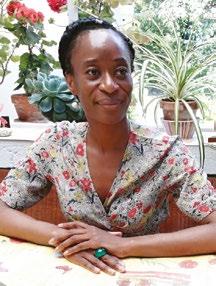
which was her passion. Cécile contributed much to College during the time she was here, not least to the interior design of the Dorothy Garrod Building,’ wrote Professor Jenny Mander. Professor Rae Langton added, ‘I am terribly shocked to hear of Cécile’s death. We met several times to discuss her fascinating work, mostly in 2017, looking especially at questions about the exclusion and invisibility of dance in official colonial records in Kenya, and how this could be seen as a distinctive and significant epistemic injustice. I learned so much from her about dance culture and colonial attitudes to it, not to mention her feminist insight on subtleties of gendered French terms (e.g., in a historic text describing ‘une femme déchue’ – which I had misread as ‘déçue’). It was such a joy to get to know her, a wonderful example of what makes interdisciplinary conversation at Newnham so rewarding.’
Cécile passed away in New York at the age of 43, and is survived by her partner, her son, parents and siblings.
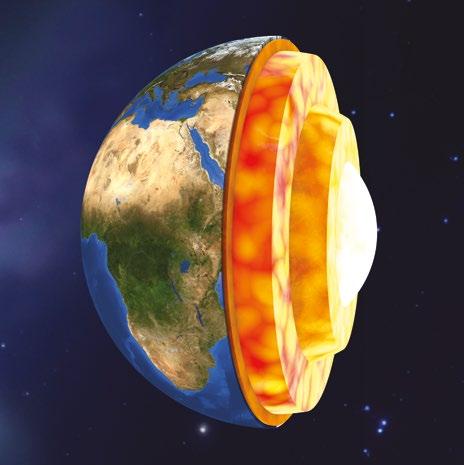
In the 1930s, Inge Lehmann (1888–1993) made a groundbreaking discovery about the nature of the Earth. A mathematician and seismologist, Inge was responsible for the Danish network of seismic stations, tracking earthquakes and analysing how the energy they release travels through the Earth. At the time, the leading theory was that the Earth had an entirely molten core. Inge, however, could see that her own instruments recorded seismic waves from an earthquake on the other side of the world, in New Zealand, something impossible according to the contemporary models. Over the next few years, she analysed more and more data sets, until she proposed a new theory: a solid inner core inside the Earth’s liquid outer core. As so often, it took many years for her to gain formal recognition of her achievements: Inge was eventually awarded a slew of scientific medals, but not until ten years after retirement. Gutenberg-Wiechert discontinuity
Geophysics: Dr Inge Lehmann (NC 1910)
Smart outreach for STEM
Undergraduate Admissions
Tutor Dr Sam Lucy looks back on a year of outstanding events for young women wanting to study Sciences, Technology, Mathematics, Engineering or Medicine.
‘ I just loved the fact that it was all women’ … ‘There aren't many STEM girls in school, so I loved discussing sciences with girls my age!’ … ‘It was truly an experience I’ll remember for being inspiring.’
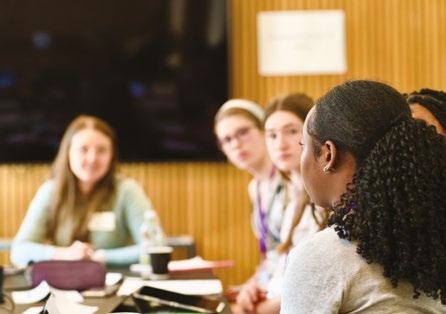
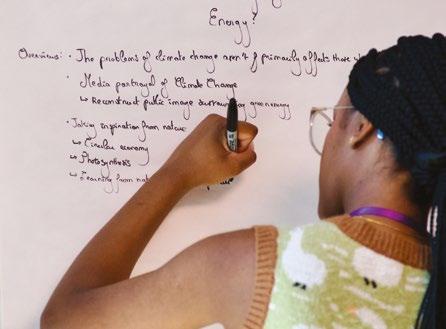
All these are quotes from the feedback we received from attendees of the annual Rosalind Franklin Conference for Year 12 students. Seventy-two young women from all over the country came to experience Newnham for three days over Easter 2025. The focus this year was green energy, with two Newnham Fellows among the speakers: Dr Jenny Zhang (see p. 46 for more on her research on photosynthesis) and Dr Milena Ivanova (who researches the environmental impact of AI). After each lecture, the students broke into groups of eight or nine to discuss the topics further. Eight of our postdoctoral affiliates served as syndicate leaders to help the students clarify and extend the discussion. The intention was to introduce them to a new area and give them confidence to discuss their ideas in a group setting. We also gave an admissions talk, and while not all will apply to Newnham or Cambridge, we want the attendees to feel more confident in applying to the courses and universities they go on to choose.
It’s such a popular residential that we had more applicants than places, and priority was given to those in categories of widening participation: they qualify for free school meals,
might be in care or have other challenges to fulfilling their potential. Attendance has always been free, with travel funded for those who need it. The dedicated funding raised by our former Principal Carol Black has now been fully spent on maximising the benefit of the conferences, and so they are on pause, while we work on an exciting new initiative.
In the summer of 2025, we held our first residential for the University’s STEM SMART (Subject Mastery and Attainment Raising Tuition) programme for Year 12s specialising in the sciences. This is a larger initiative than the Rosalind Franklin conferences: it tracks students throughout Year 12 with a series of online challenges and supervisions to be completed alongside their schoolwork. Despite the fact it’s challenging, there has been great take-up. Those who engage well with the programme through the year are then invited to come to the Cambridge summer residential.
Newnham has supported the programme financially from its launch in 2022, and we are hugely grateful to the College staff for agreeing to delay the summer kitchen closure timings to allow us to host the residential at Newnham for the first time. We hosted nearly 40 young women from around the country, who not only left enthused about science, but also enjoyed nearly a week’s stay at Newnham in lovely weather.
We are very grateful to our wonderful Admissions Team, Catherine Rowley and Holly Nicholls, for their hard work in organising and hosting the
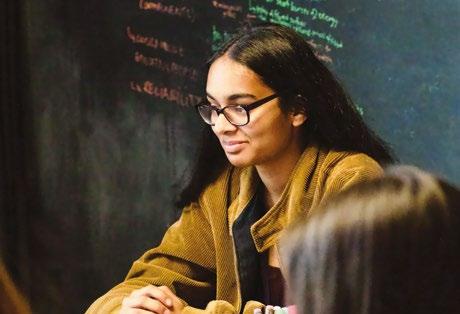

students, and to the enthusiastic Newnham Ambassadors who kept them entertained in the little free time they had (and walked many miles to and from the Cavendish Lab where many of the sessions were hosted).
'A wonderful opportunity to dispel myths about studying at Cambridge, and to enable students with potential to see that they do fit in.'
Dr Sam Lucy
STEM SMART complements the University’s Foundation Year programme (see last year’s Roll Letter ), which has an arts and humanities focus, and it targets students (the STEMSmarties) with great potential but who would benefit from extra academic engagement and support in exploring university-level science.
The programme is not intended as purely a Cambridge recruitment tool – it aims to raise the attainment of disadvantaged and under-represented groups and to increase the number of such students applying and accepting places for engineering and science courses at competitive universities. But of course, it’s a wonderful opportunity to dispel myths about studying at Cambridge, and to enable students with potential to see that they do fit in and that Cambridge really could be for them.
Milly March
A pioneering politician
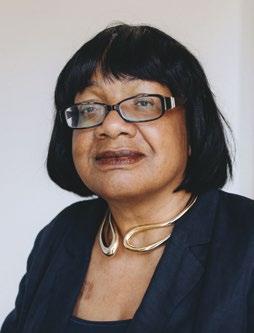
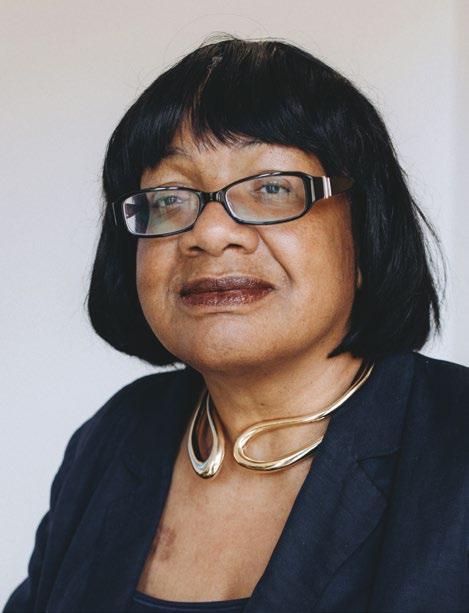
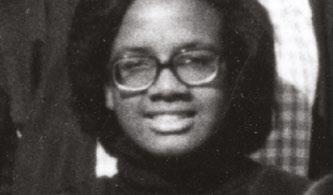
New Honorary Fellow The Rt Hon Diane Abbott MP (NC 1973) reflected on her life in politics and shared advice for life at a ceremony in Newnham.
In a funny aside, Diane Abbott told a story about Harriet Harman inventing the title ‘Mother of the House’ for herself to match the longstanding custom of anointing as ‘Father...’ the longest-serving male MP. After the 2024 election, Harriet called to urge Diane to keep the title going, attend events as Mother of the House and ensure the tradition continues.
It was a story Diane told with a hint of mischief, and that points to the affection between two women who had campaigned together, and then from different wings of the Labour Party, for decades. As the life story she shared at her Honorary Fellowship ceremony at Newnham last June showed, Diane has taken every opportunity, often in the face of discouragement, throughout her pioneering life.
The power of women
As a schoolgirl Diane showed an aptitude for learning, encouraged by her Windrushgeneration parents. Setting her sights on Cambridge, she ignored the teacher who said it was beyond her, and arrived at Newnham in 1973. Sitting in Peile Hall on the first day, she momentarily wondered what she had done, but the College offered an important foundation.
‘Newnham was tremendously formative for me because it had a female Principal, and all the Fellows and tutors were women. I was imbibing the power of women. It taught me women could
Dasha Tenditna
run things, and to have confidence in myself, which has carried me through as a civil servant, working in television, working for Liberty [the National Council for Civil Liberties] and beyond.’
Despite that, her career as an MP was almost over before it began. After several unsuccessful attempts to become a parliamentary candidate, Diane almost decided not to apply when the seat of Hackney North and Stoke Newington came up. At the selection meeting the odds looked to be stacked against her.
While waiting to be called to speak she looked at portraits of former mayors of Hackney. ‘The area was a centre for the Jewish community then and it was as if they spoke to me and whispered, “we were immigrants too and we succeeded, and so will you”.’
In the meeting, she concluded by quoting Maya Angelou: ‘Bringing the gifts that my ancestors gave, I am the dream and the hope of the slave.’
man. Women always feel a need to prove themselves. But women are better politicians than men, because for me politics is a people game. The thing I have always thought was most important was working for my constituents. Women tend to be a little more practical and down to earth.’
The media can be brutal. Diane said she almost quit 20 years ago after a series of untrue
‘ Women are better politicians than men, because for me politics is a people game. The thing I have always thought was most important was working for my constituents. Women tend to be a little more practical and down to earth.’
Lessons for life
The rest is history. Diane won selection and went on to become the first black woman MP in the UK, elected in 1987, and re-elected at every General Election since. Initially she was one of only eleven female MPs. She said, ‘I have seen some progress in that time. Being a woman politician is not necessarily easy, but I have had some examples. Margaret Thatcher was Prime Minister when I first started. We agreed on almost nothing, but she was there.
‘There can still be a tendency to think you are not quite as forceful and effective as a
and unpleasant stories, but was reminded by a colleague how hard she had worked to get there. ‘I feel fortunate. I have been places, given speeches and done things that little Diane Abbott could never have imagined.’ She offered these words of wisdom for students: ‘Knowing what your purpose is will help you; friends have been a great support during difficult times; and it is really important not to let other people tell you what you can and cannot do.’
Diane Abbott’s memoir, A Woman like Me , was published by Viking in 2024.
Newnham
Diane at matriculation
Forty years of the Skilliter Centre for Ottoman Studies
From
its beginnings in a corner of the Principal’s Lodge, to its
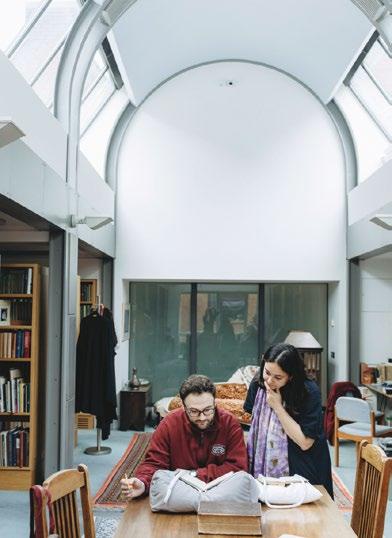
current spacious and beautiful research centre with international renown and impact, the Skilliter is a unique gem at the heart of the College.
Photography by Dasha Tenditna
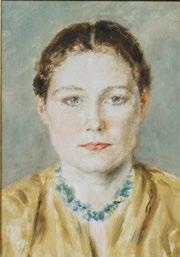
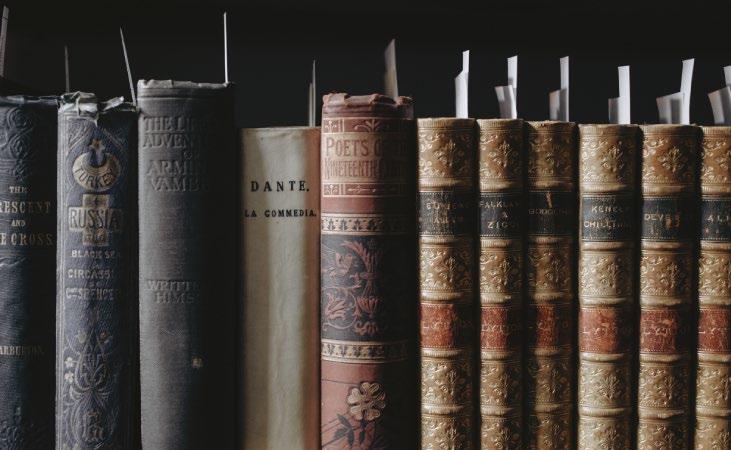
Dr Susan Skilliter (NC 1951) was a Fellow of Newnham and Lecturer in Turkish Studies at the University of Cambridge from 1965 until her death in 1985. She became an international authority in the field with her book William Harborne and the Trade with Turkey, 1578–1582 (OUP, 1977). She was an avid book collector, particularly of rare first editions of seventeenthcentury travellers to the Ottoman Empire. On her death in 1985, Susan bequeathed her collection of some 3,000 books and manuscripts to Newnham, together with funds to form a library and research centre, which she hoped would ensure the continuation of Ottoman Studies in Cambridge.
On 9 July 2025, the Skilliter Centre celebrated its 40th anniversary with its conference ‘The Ottomans and Diplomacy’ and a reception in the College gardens. It was a perfect moment to reflect on Susan Skilliter’s legacy, together with staff, scholars, benefactors and former students of the Centre.
Beginnings
The books were transferred from Susan Skilliter’s home in January 1986 and temporarily housed in the first-floor atrium of the Principal’s Lodge. Dr Kate Fleet has been the Centre’s Director for almost 35 years. ‘Perched uncomfortably on – appropriately – an Ottoman, I was interviewed by the then Principal of Newnham, Sheila Browne’, Kate recalls. ‘I remember nothing of the interview, but I got the job. I began in October 1991 with a remit to “do something about Ottoman studies”. Sheila Browne was fierce, frightening, but a staunch supporter of the Centre, and extremely kind to me. I came to appreciate later the extent to which the Skilliter Centre (renamed from Library in 1992) owed its existence to her determination. She had accepted Susan Skilliter’s request to take her books and create a centre for research in Ottoman studies, made when Susan was
Dr Susan Skilliter , artist unknown
dying and, in the face of objections that there was nowhere to accommodate this, had simply housed the books and the office in the Principal’s Lodge. Later, she successfully battled for a location within the College.’
In 1992, the Skilliter Library opened in the transformed Old Workshops. The first Skilliter Colloquium, ‘The Ottoman Empire in the Eighteenth Century’, was held in the Library that year. Papers were delivered by scholars from Bulgaria, Czechia, France, Germany, Greece, Hungary, Japan, Poland, Turkey, Ukraine and the USA. Dr Skilliter’s vision of an institute for Ottoman Studies had been established.
Growth
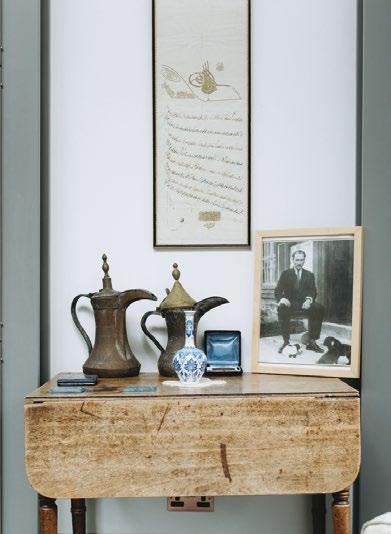
The Centre’s Library and Archive collection has grown enormously since its initial beginnings. The richness of the Centre’s collection stems in part from the generous donations of scholars and benefactors. From the core collection of some 3,000 books, it now comprises over 13,000 volumes. Its holdings are particularly strong in travel accounts and Ottoman material from the nineteenth and early twentieth centuries, and collections of published archival material. In addition to works of history, the Library also has works on art and literature, and a substantial number of offprints. The archive collection includes correspondence, unpublished papers, documentation and
photographic material in discrete special collections.
In 2003, the Centre moved again into a larger space next to the Library in Sidgwick. In 2004, Dr Ebru Boyar, Kate’s former PhD student and now a Professor at Middle East Technical University in Ankara, joined the Centre as Academic Advisor. Thirteen years later, the Centre got its dedicated librarian in Eve Lacey, then Senior Library Assistant in the College Library, and now also the College Librarian. The Centre has become an international intellectual hub, linking scholars across the world through conferences, seminars, workshops, research projects and scholarships that have brought them to the Centre to study, present papers and discuss ideas.
Scholarships
The Centre began a scholarship programme in the early 1990s allowing young scholars from Eastern Europe to spend two months in the UK to undertake research. This programme ran to 2006. Thanks to a very generous donation from Sir Mark and Lady Judy Moody-Stuart (NC 1960), a new scholarship was launched in 2007, for Cambridge PhD students to conduct research in Turkey and to learn or improve their Turkish or Ottoman. It represents a major contribution to the development of Turkish and Ottoman studies in Cambridge.
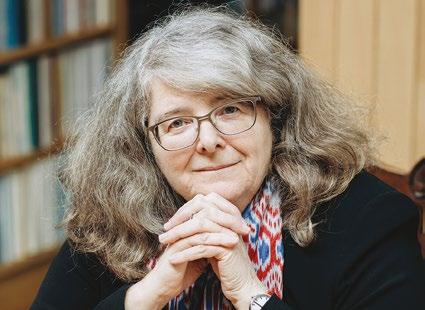
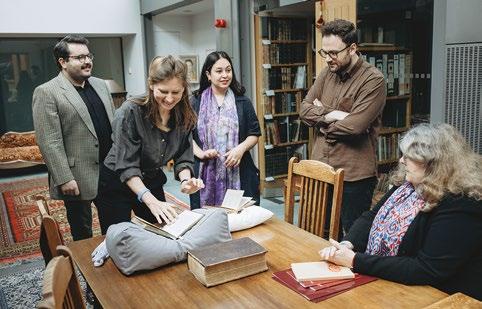
Above, left: Dr Kate Fleet, Skilliter Centre Director; right: Eve Lacey and Kate Fleet with scholars in the Centre
Reflections on Newnham's legacies of enslavement
With an exhibition, panel discussions and working groups, Newnham’s ongoing research on the legacies of enslavement considered what it means to learn from them and address those legacies today.
Our inquiry into Newnham’s links with the transatlantic enslavement economy was sparked by the wider University of Cambridge inquiry in 2019. So, it was appropriate that we responded to the second of the two exhibitions held at the Fitzwilliam Museum to result from that inquiry. Rise Up: Resistance, Revolution, Abolition , among other aims, brought out women’s stories in relation to enslavement.
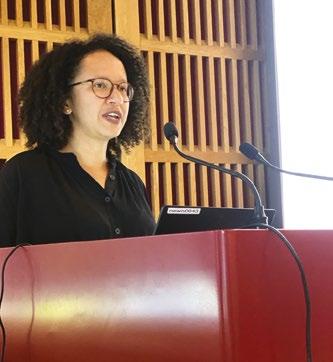
Newnham hosted a public lecture by Dr Mathelinda Nabugodi, formerly a Leverhulme Trust Early Career Fellow at Cambridge, and now Lecturer in Comparative Literature at UCL. One of the authors of the Fitzwilliam exhibition catalogue, Mathelinda spoke about reading archives against the grain to identify hidden stories and challenge the way historical materials have been interpreted. Through the lens of African and Caribbean masquerade culture, she highlighted texts, paintings and objects that on close examination illustrate black culture and resistance in the eighteenth-century Caribbean.
Newnham’s Archivist Frieda Midgley also curated a Legacies of Enslavement exhibition to share Newnham’s main research findings and our wider programme. The exhibition ran from April to December 2025 and was open to Newnham members and other University staff, students and alumnae. This included material identified during student research carried out in 2021 on founders and benefactors who were members of families that generated and inherited wealth from the
enslavement and plantation economy, including Anne Jemima Clough, the co-founder and first Principal of Newnham College. The researchers used stakeholder mapping software to visualise these networks, making enslaved people as visible as possible in the model. Case studies reveal how financial legacies, material bequests and personal ideologies could be at odds, with notable abolitionists still benefitting financially from enslavement.
Mathelinda Nabugodi
Cambridge collaboration
Over the last year we also reached out to our sister college Girton and to others, to open up a conversation around how we can acknowledge and continue to address the issues and themes that have emerged. Girton College’s research led them to a plantation in Virginia owned by a major benefactor. They uncovered the names of enslaved people who, as anthropologist Professor Dame Marilyn Strathern (former Mistress of Girton) said, ‘unwillingly and unknowingly, contributed to Girton's foundation’. Through micro-histories, Girton’s researchers told the stories of enslaved people, including a woman who had to buy the freedom of her husband.
Newnham and Girton co-hosted two joint panel discussions on the legacies of enslavement research at both Colleges, inviting colleagues and students from across the University.
The first panel focused on the research itself, within the context of the wider University inquiry;
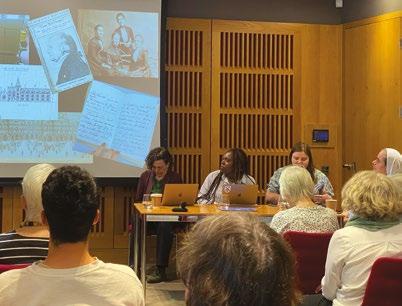
the second considered where the research leads us and possible next steps. The exhibition also explored how to challenge exploitation and modern slavery going on in today’s world, and how we should reflect on systems that harm other human beings.
We are in discussion with Professor Pedro Ramos Pinto, the University of Cambridge convenor of their Legacies of Enslavement Special Initiative, about using Newnham’s legacies of enslavement work as a case study for a master’s level archival teaching programme.
Considering reparative justice
The inquiries carried out so far at Newnham have been greatly enhanced by our students, who undertook the early research in the course of three intense weeks, and picked up the baton from Fellows to invite further speakers for an MCR seminar series. This year they also held a workshop to consider reparative justice. In a sensitively designed session, participants looked at the CARICOM (Caribbean Community) Reparation Commission’s 10-point plan and brainstormed how Newnham could repair injustice resulting from its connections to enslavement.
The College community continues to explore further steps, guided by a working group of Fellows, staff and student representatives. As postgraduate Chloe Sanyu said during the panel discussion, ‘Newnham is a place we care deeply about. We want Newnham to live up to its history as a college for radical women. Slavery complicates Newnham’s radical past. We have tried to confront what it means to have a history shaped by slavery. This work is emotionally and intellectually demanding. Change may be slower than we would like ... This is an ongoing process.’
For more information and to see content from Newnham’s exhibition, please visit https://newn.cam.ac.uk/about/history-college/ legacies-enslavement
Below: Panel with Girton reflects on legacies of enslavement
Ecology: Maud Haviland (NC 1915 & Fellow)
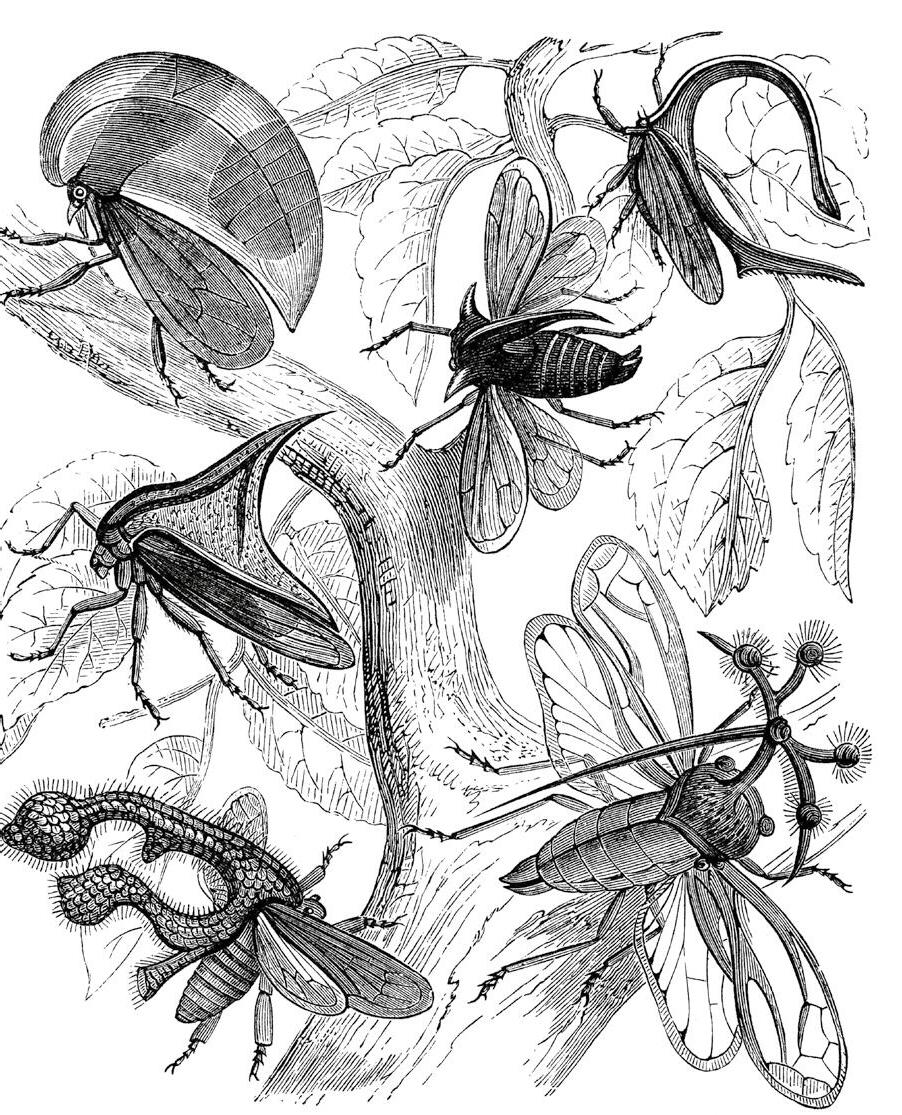
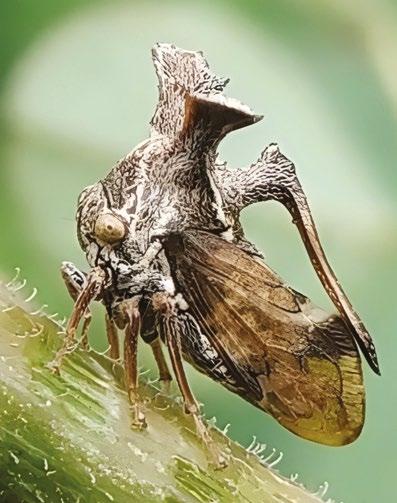
There are many areas in which Maud Haviland (1889–1941) was a pioneer. Even before she came up to Newnham as a research student in 1915, she had joined a scientific expedition to Siberia and published her findings, and worked as an ambulance driver on the front lines of France in the First World War, for which she earned two medals of bravery. As a Fellow, then Associate of Newnham (1919–36) she continued a hugely productive academic career alongside motherhood, and published five books and 47 journal papers in an era when it was extremely rare for women to continue their scientific careers after marriage. She was one of the very few women to teach a formal Tripos course and publish a standard textbook (on the ecology of forest, steppe and tundra). She was part of a new wave of scientists in the early twentieth century who transformed the study of natural history into the science of ecology, and her monograph on the tropical Membracidae (treehoppers) remains influential a century later. She was the first person to document the phenomenon of maternal care in treehoppers. With thanks to Professor Kelley Tilmon.
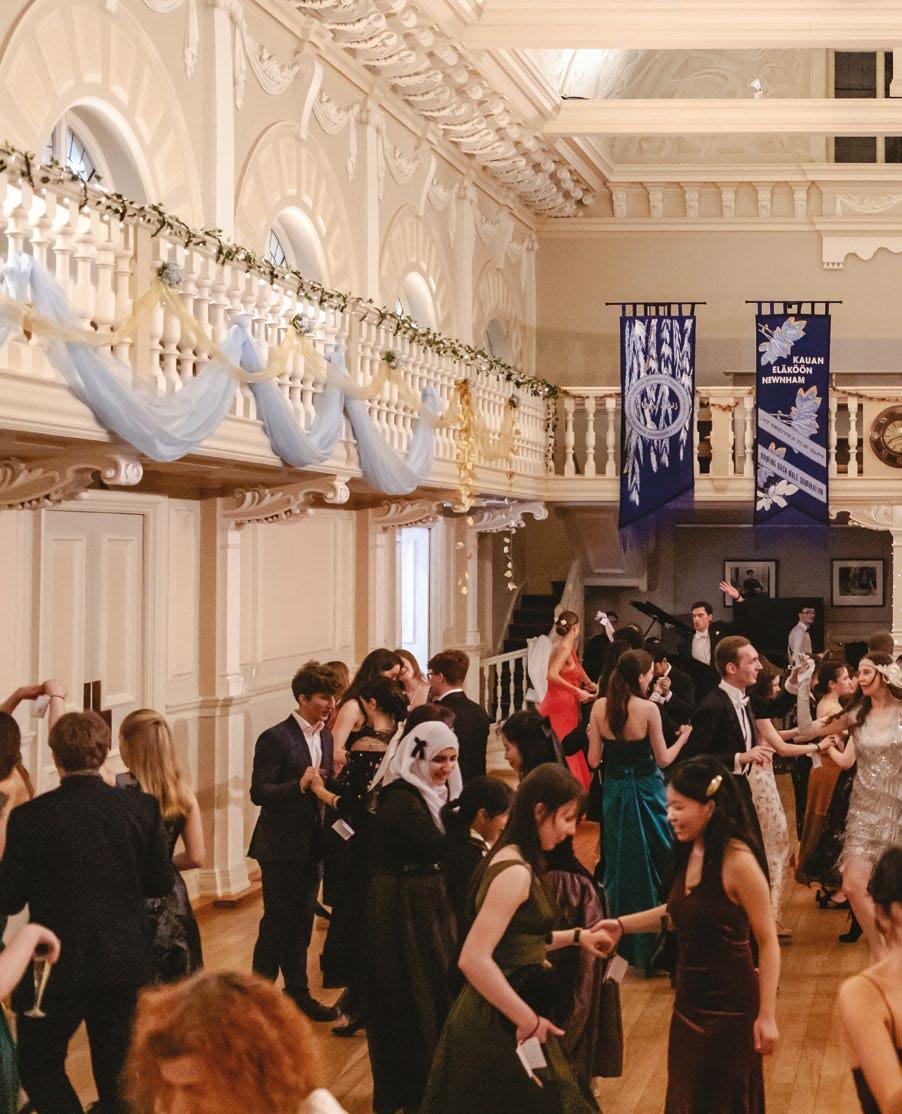
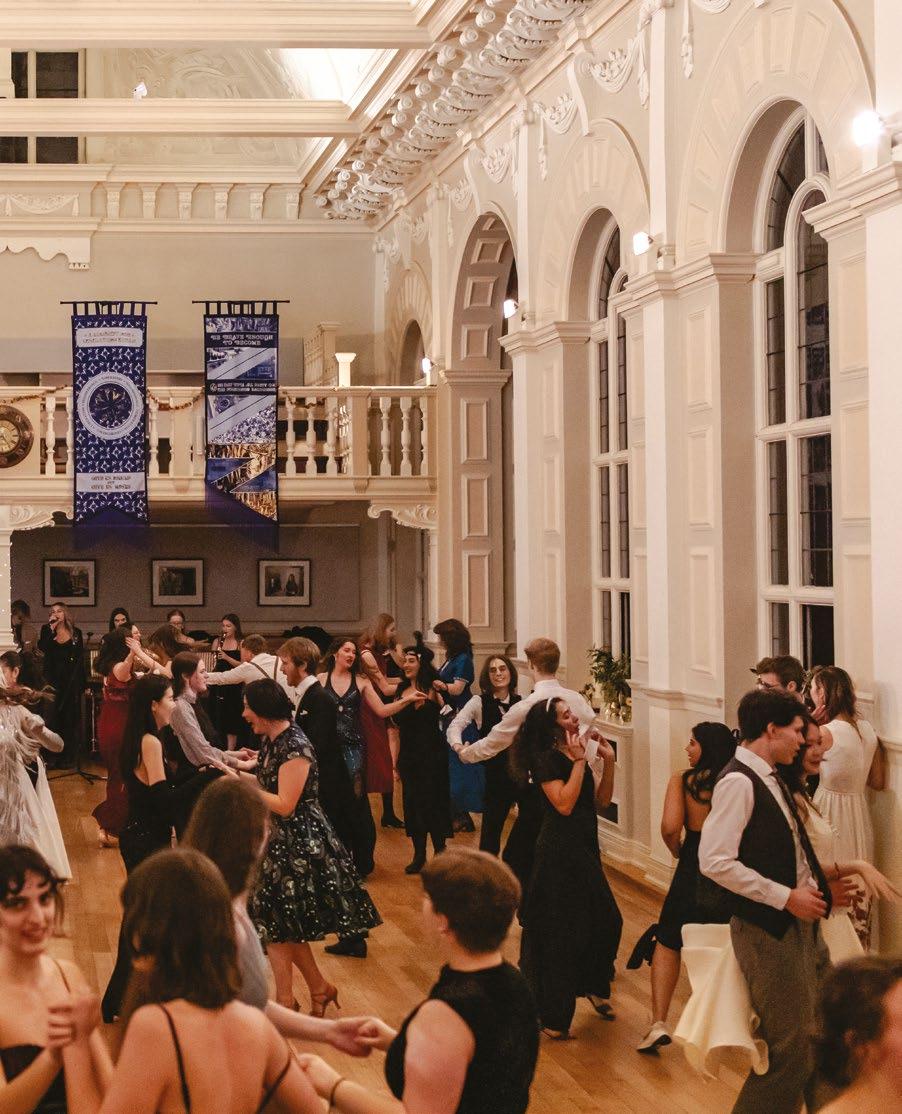
The International Women's Day Ball
Newnham students and friends danced the night away at a special ball for International Women’s Day in March 2025. Highlights of the night included beautiful music from a string quartet and live band, an archival display, ballroom and Latin dance teachers and demonstrations, and dance cards. The event raised an incredible £1,400 for Cambridge Women's Aid, a charity providing specialist services for women and children affected by domestic abuse. A large number of students were involved in making the night a great success, particularly Martha Richmond, Elena Rowe and Tierney Wood.
Photograph by Quing Lu
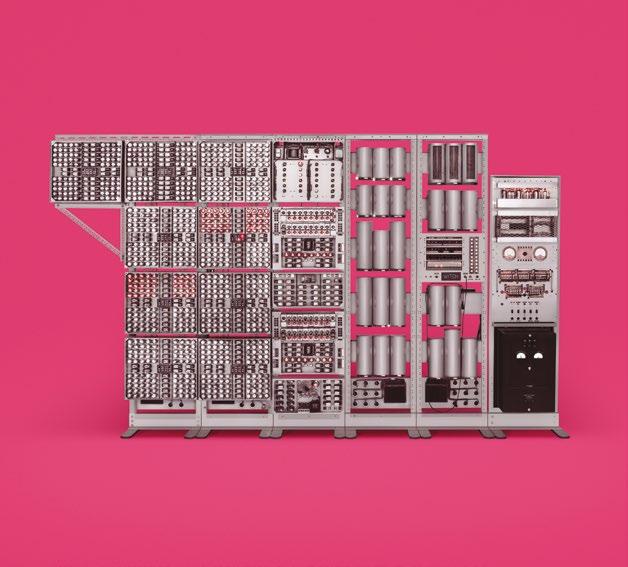
Early computing: Margaret Masterman (NC 1929) Philosopher and linguist Margaret Masterman (1910–1986) has been described as ‘the woman who founded Artificial Intelligence’. A student of the philosopher Ludwig Wittgenstein, Margaret was fascinated by the fundamentals of how human languages work, and how this could be related to the rapidly emerging capabilities of computers. Margaret founded the Cambridge Language Research Unit in 1953, pioneered computational linguistics and was at the forefront of the earliest attempts to develop machine translation. Her background in Philosophy and languages allowed her to think subtly about how communication functions, arguing against predominant academic theories around language. Endlessly ambitious in her goals, she was frustrated by attempts to reshape human language to fit computers, rather than training computers to understand all the subtleties of human speech.
Harwell
Opposite page:
photo by
Dasha Tenditna
Teaching and Research
Light + water = green power
The research of Dr Jenny Zhang
Batteries that recharge themselves; biofuels that don’t compete with food crops; a sustainable, endlessly renewable energy source: photosynthesising bacteria could hold the key, says Dr Jenny Zhang . Her team’s research has the potential to make an immense impact on solving some of the world’s most intractable problems.
a conductive plate when you shine light on them. The first time I saw that, I was just hooked.’ In the lab, rather than plants, Jenny’s team uses photosynthetic bacteria or cyanobacteria, which are incredibly easy and fast to grow. This is a resource that will never run out: bacteria are everywhere and are the most abundant living organisms in the world, because all they need is sunlight, water and air to thrive. These organisms could one day be our living and self-generating energy source.
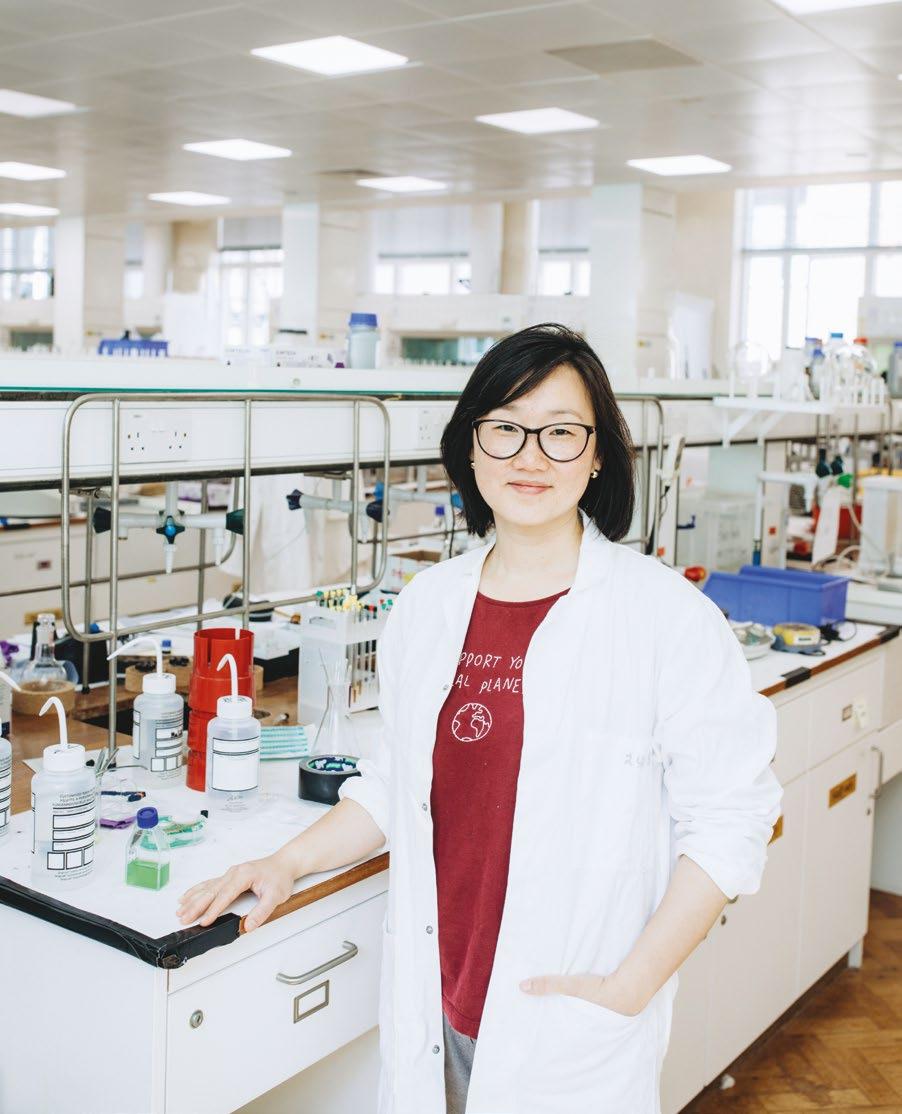
Newnham’s Anne Logue College Lecturer in Chemistry, Jenny runs an interdisciplinary research group looking into the process of photosynthesis in cyanobacteria. Photosynthesis – how plants and bacteria create energy from water and sunlight – creates 99% of the energy that powers life on earth. Inside cells that are photosynthesising, power from sunlight is used to break open water molecules, releasing electrons that flow through the membranes in the form of electricity; this bioelectricity goes toward building bigger chemicals.
‘Studying photosynthesis through the lens of chemistry means looking at what molecules are involved in the key reactions that make up this wonderfully complicated process, and understanding how these reactions can be influenced, for example using synthetic materials, to benefit society,’ explains Jenny, who is also a University Assistant Professor. ‘It's really fun to be able to see cells generating electricity. It's just mind-blowing that you can see a big spike of current coming from cells on
‘We still need massive breakthroughs and we’re not there yet at all,’ cautions Jenny, ‘but my wildest futuristic ambition would be that everyone has an off-grid device powered by bacteria easily found in your pond, say, to use as a source of bioelectricity. This would generate different chemicals that you need: fuels, food, plastics. It would be completely renewable and remove the geopolitical problems that come with dependence on fossil fuels or mined minerals. It may take decades to get there, but that is the dream.’
How it works
Jenny’s team is trying to capture the electrons from a very early point in photosynthesis where electrons are first extracted out of molecules by specialist biocatalysts. Biocatalysts work like can-openers that can open up molecules to take out the electrons stored inside their bonds. Once the electrons are accessible, they can be channelled out to make various useful substances, like food ingredients or fuels, or be used in carbon dioxide capture. ‘For this, we need tools that can interact with the living cells on various scales and levels. To collect the electrons, we need an “electrode”: a scaffold that the cells sit on. When the electrode is connected to a circuit, we can capture the bioelectricity released. To extract the electrons from inside the cells, we can add a molecule that is like a shuttle: it goes into the cell, harvests the electrons to pass onto the “scaffold” and then cycles
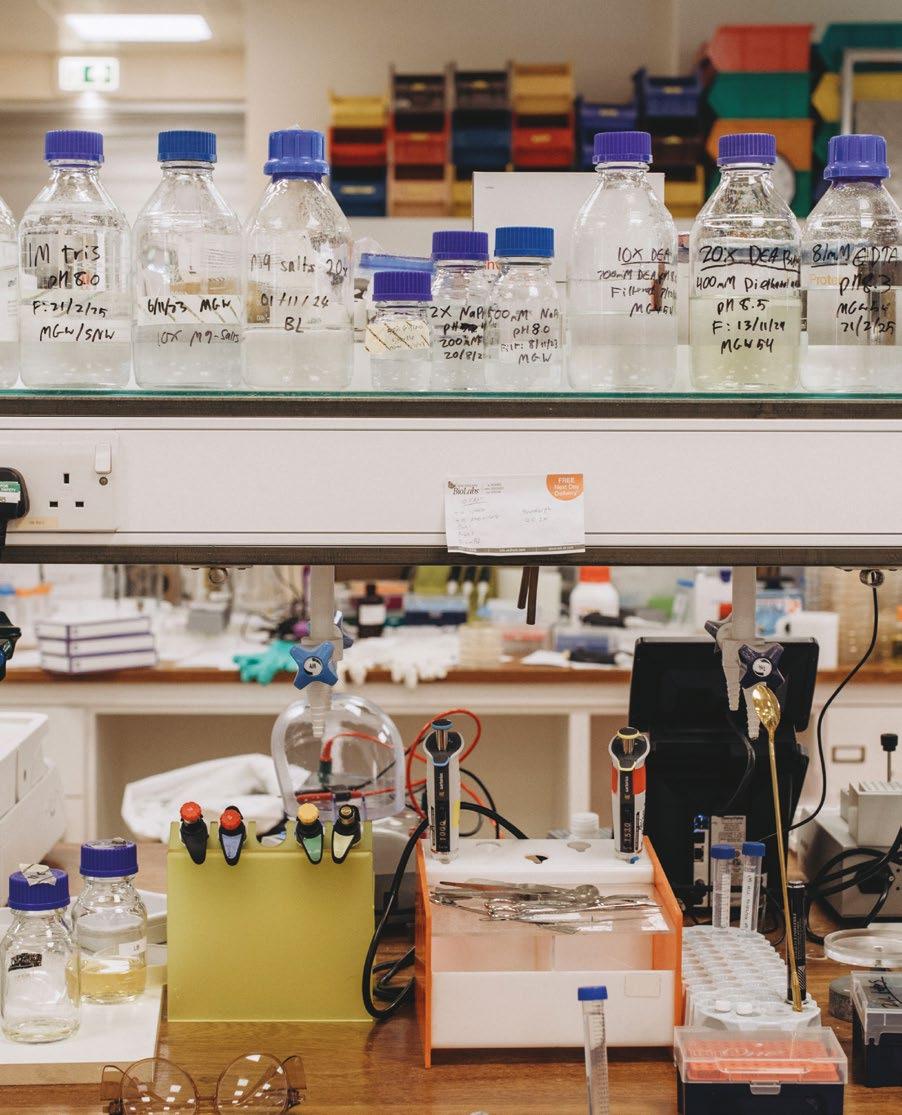
Photos by Dasha Tenditna
repeatedly. The problem becomes almost a drug design problem, where the molecular shuttle must be tuned like a drug that can enter cells and target a specific site. The challenge here is to access as many cells and as many electrons as possible, because it's very difficult to tap into this process fully.’
The principles that Jenny and colleagues are developing can be used in lots of different
technologies and spin-off projects. ‘What's different about my group is that we're not actually focused on electricity generation, because there are lots of really clean sources of power already, such as solar panels. In terms of the green energy transition, the difficulty is with fuel and chemicals. Biofuels are “clean” alternatives to fossil-based fuels, but are extremely problematic because we are making
‘ People tell me they want to come and work in my group because it's not a traditional lab. We look at one problem through many different lenses and that’s what makes it vibrant and fun.’
Dr Jenny Zhang
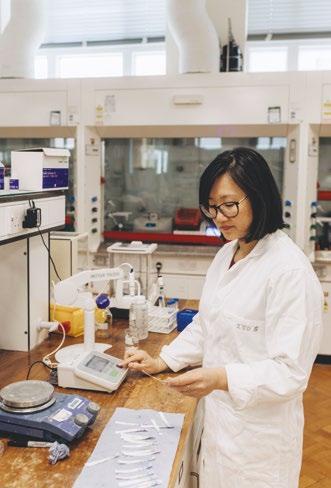
them from crops, which takes up land better used for food production or biodiversity. A lot of scientists are wanting to move away from biology to make this reaction happen with synthetic materials. But the problem there is how hard it is to make that “can opener” catalyst to get the electrons out of molecules. Nature has loads of these biocatalysts, which can break molecules apart or glue new ones together, which are much better than the ones we can invent in a lab.’
Jenny’s angle is to work with living systems to increase our toolbox: use the catalysts available in nature, but wire them into synthetic circuits.
‘Apart from all the potential spin-offs, fundamental understanding of how bioelectricity is regulated inside cells is also a really important part of what we do,’ says Jenny. Chemistry is just one part of the puzzle: ‘We work alongside biologists, physicists, material scientists and engineers. The diverse ways we approach the questions and the tools we use are very complementary and the work is the most powerful when we put many of those together. People tell me they want to come and work in my group because it's not a traditional lab. We look

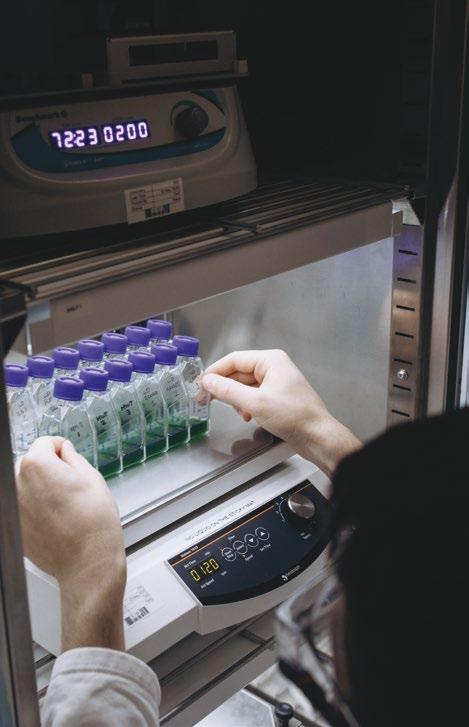
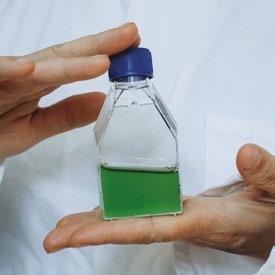
at one problem through many different lenses and that’s what makes it vibrant and fun.’
Taking risks
Jenny herself came at this from a very different field, having done a PhD in Sydney in cancer drug design. ‘Against well-intentioned advice, I listened to my heart to move into photosynthesis and energy. I was awarded a fellowship with funding to develop my own ideas, and luckily, I had a supervisor who was equally adventurous and was happy to take me on with little experience in the field of energetics. It was a big career risk, and learning a completely different field was like doing another PhD. However, if you look back in history, there were many great scientists who swapped into new fields and made big breakthroughs – including Rosalind Franklin. In the end, my change paid off and we made lots of nice breakthroughs. And now, my experience in drug design is extremely relevant, for example in the molecular shuttles we use to extract the electrons from cells.’
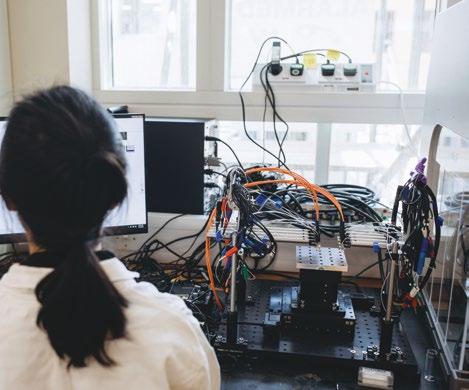
Jenny made the move from Australia to Europe because of the better funding opportunities available to scientists here. ‘That means that people can do more adventurous science, and the wonderful intellectual environment in Cambridge fosters these types of wild ideas that I couldn’t have taken further in many other places. I’m happy to take risks, because I know that whatever happens, my team will learn a lot of amazing things along the way that we can’t even imagine right now.’
Dr Jenny Zhang is the holder of the Anne Logue College lectureship in Chemistry, endowed in memory of Anne Logue ( Bolton , NC 1936).
left: Jenny in the lab. Top left and inset: Leonid
taking samples of cyanobacteria out of the incubator
Left: Linying (postdoc) using a bespoke electrode array for performing electrochemistry screening
Far
(postdoc)
Ready for the challenge: Dr Mezna Qato
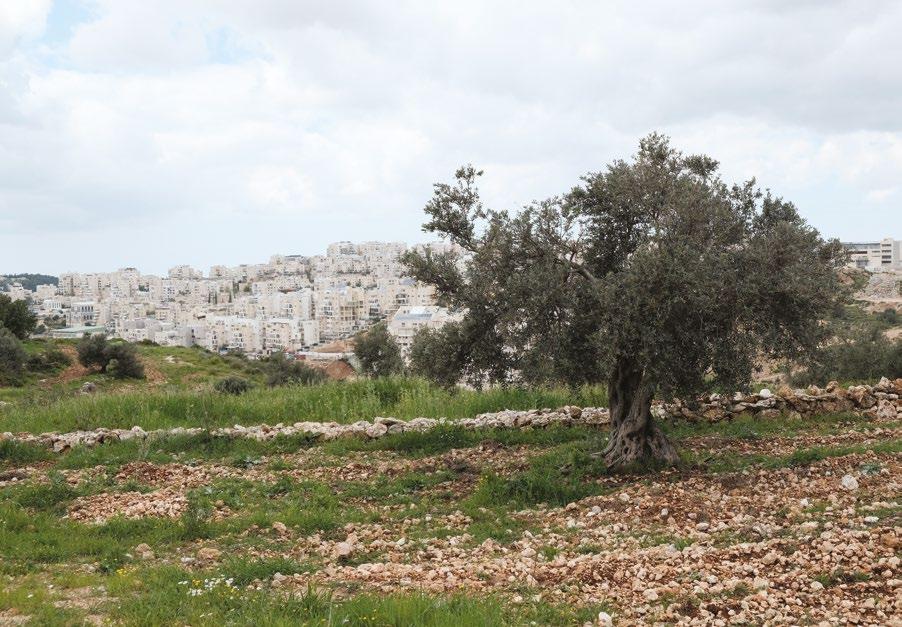
Concerns about international aid and development have come to the fore with the axing of USAID and further cuts to UK government funding. While criticising the wrecking ball approach, Dr Mezna Qato, the new Director of the Margaret Anstee Centre, agrees on the need to explore fresh ways to meet humanitarian needs and empower people to build better lives.
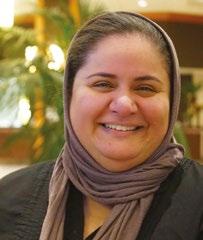
Main image: Olive tree, West Bank, Palestine
Inset: Dr Mezna Qato
Fadia Panosetti
Within the sector, there have been discussions for years about the efficacy of development funding and aid, and the best way to support developing countries. It was the opportunity to explore these issues and more that attracted Mezna Qato to the role of Director of the Margaret Anstee Centre for Global Studies (MAC). The Newnham-based centre supports research into economic and social development and international relations, in and relating to the Global South.
‘Development internationally is being called into question and it's fair for citizens to ask: what does it mean for us to expend resources abroad when our infrastructure is collapsing, our financial condition worsening? People want to understand how aid can support and not, intentionally or unintentionally, do harm. I think in the past people have been hesitant to ask those questions for fear of being seen as rejecting a virtuous act, but they are perfectly legitimate questions.
‘Our institutions have to be spaces where we challenge each other and are challenged by the voices around us, especially those less often heard. And we should hold our ground too when we think we have done the research and have the evidence for our argument. That's what a university should be doing. For us at the MAC, it's a smaller version of that, and with a very particular remit around development and international relations, and the role they can play in building a better future for all.’
The MAC was founded in 2018 thanks to a generous legacy from Dame Margaret Anstee (NC 1944), who read Modern and Medieval Languages. She became the first woman UnderSecretary-General of the United Nations, where her long career encompassed economic and social development programmes, disaster relief and peacekeeping missions.
‘She did so many different things, a true Renaissance woman,’ Mezna said. ‘I was looking through her archival documents, her letters and
correspondence – with everyone from Angolan officials to anti-militarist campaigners, as well as officials within the UN. She engaged with all sorts of people; she even went head-to-head with warlords, because they were powerful and had the guns, so they had to be at the table to discuss disarmament. She had such a refreshingly practical ethos.’
The Centre, Mezna said, has a clear purpose but is dynamic, with room to transform as different people become involved. She aims for the MAC to be a College- and University-wide space welcoming interdisciplinary development scholarship, starting dialogues with people who are not part of the academic ecosystem, but work in politics and policy, movements and organising. ‘We’re setting up a number of opportunities for students and scholars to be in conversation with those other ecosystems propelling change,’ Mezna said.
‘There are all these different ways Cambridge connects to the world and is an incubator of new ideas: different refugee initiatives emerged here, climate efforts and initiatives like Cambridge Global Challenges (addressing the UN Sustainable Development Goals). I see the MAC as a place at Newnham that can be an incubator of new ideas and new relationships, supporting student and scholarly projects: where they can seek advice and cross-pollinate different ideas into more robust initiatives.’
Palestinian education
Mezna’s research and teaching focuses on histories and theories of social, economic and political transformation amongst refugee and stateless communities, as well as the politics and practice of archives, and global microhistories of movements. One project focuses on Palestinians after 1948 as they navigated the world and engaged in political movements. She is also completing a book on the history of education for Palestinians.
‘I'm looking at the first generation of young
people after the 1948 war, and how education came to be the central vehicle for social, political and economic regeneration,’ she said. ‘In the development world, there's a trope that the Palestinians are the most educated refugees in the world. That was a success but also a story of suppression, and the book looks at the tensions that the refugees grappled with.
‘It was a carrot and a stick. As a refugee in a host country, you were welcome to be educated but not to talk about your political desires. The West Bank was under Jordanian rule between 1948 and 1967, and Jordan aimed to incorporate it into its state. So, the bargain with Palestinians was “you can survive, even flourish, but you will never have self-determination”. It was a Faustian bargain, and I write about the consequence of that bargain for social development and regeneration amongst this new stateless population.’
More immediately, Mezna has become increasingly involved in University, UK and international initiatives and discussions on education and reconstruction in Gaza. ‘It might seem removed from the immediate crisis at hand, but in fact, it is Palestinians in Gaza who have spurred on these discussions in the hope of not making the same mistakes made after the 1948 war. I'm involved in supporting Palestinian universities in Gaza, thinking alongside their leaderships and building on the priorities set by those universities for the international development community and other institutions, including Cambridge.’
Wide-ranging brief
Mezna said the wide brief of the MAC allows the Centre to remain nimble and responsive to advancements in scholarship and policies on development, nationally and internationally. Already, in her first year, the 2024–25 programme saw the introduction of three new programming components: masterclasses with development practitioners, training programmes
for students and early career development scholars, and a postgraduate seminar series. The first masterclass was with Bonnie Leask, an indigenous campaigner and government official, who spoke about her life, educational and professional experience in the overlapping governance systems on her traditional lands in Canada.
Ongoing projects include the ‘Archives of the Disappeared’ Programme at the MAC, now in its sixth year. Working with Newnham colleagues Professor Yael Navaro and Dr Chana Morgenstern, and Cambridge alumna Dr Mahvish Ahmad, Assistant Professor in Human Rights and Politics at the LSE, the programme addresses the destruction and disappearance of life-worlds, and the many attempts to document them, particularly in the Middle East, North Africa and South Asia.
The work has involved historians and anthropologists, but artists too, thinking about art as a mechanism to ask these questions in a way that is of a different register. Mezna’s collaborative artwork with A Future Collective was part of the 16th Venice Architecture Biennale, and has been acquired by the Tate Modern, the Whitney Museum, the British Library and others.
She joined Newnham as a historian and Fellow after a BA from the University of Chicago, a doctorate from the University of Oxford, and a spell as Ibrahim Abu-Lughod Fellow at the Center for Palestine Studies, Columbia University. History has been the abiding lens through which she sees the world. ‘Through my teaching, my research, my archival work, public historical and artistic work, I hope to convey the urgency of history-writing; of history as a reminder that things never stay the same and, in thinking historically, they can make change too.’
The Margaret Anstee Centre (MAC) team
Agnes Hoctor works as the MAC Knowledge Exchange Co-ordinator, organising events and training, and supporting the research team to collaborate and engage with external stakeholders. She arranged media training for MAC researchers, including a session on developing their social media profiles; ran Introduction to Knowledge Exchange training, looking at policy engagement, public engagement and commercialisation for researchers; and supported one researcher to run a webinar series on policy and development in the Global South.
Agnes said, ‘The College has a strong track record of producing excellent female scholars who have changed the world. Our researchers are so passionate about their work and the prospect of seeing how that work will benefit
society for years to come is exciting.’
The MAC hosts three Research Fellows Cynthia Kamwengo's work is centred on the geopolitics of shaping a national identity and policy planning in Africa. Diala Lteif explores the role of subaltern populations in the production of space and cities, with a focus on the Middle East. My Hang Thi Bui examines South Korea–Vietnam transnational migration and city diplomacy, focusing on inter-Asian flows of labour, capital and development. The Centre also supports three PhD students and has hosted visiting scholars including Fadia Panosetti, Postdoctoral Affiliate at Newnham, and Rashalee Mitchell, a Visiting Bye-Fellow from the University of the West Indies.

Below: Dr Fadia Panosetti (left) and Agnes Hoctor
Dasha Tenditna
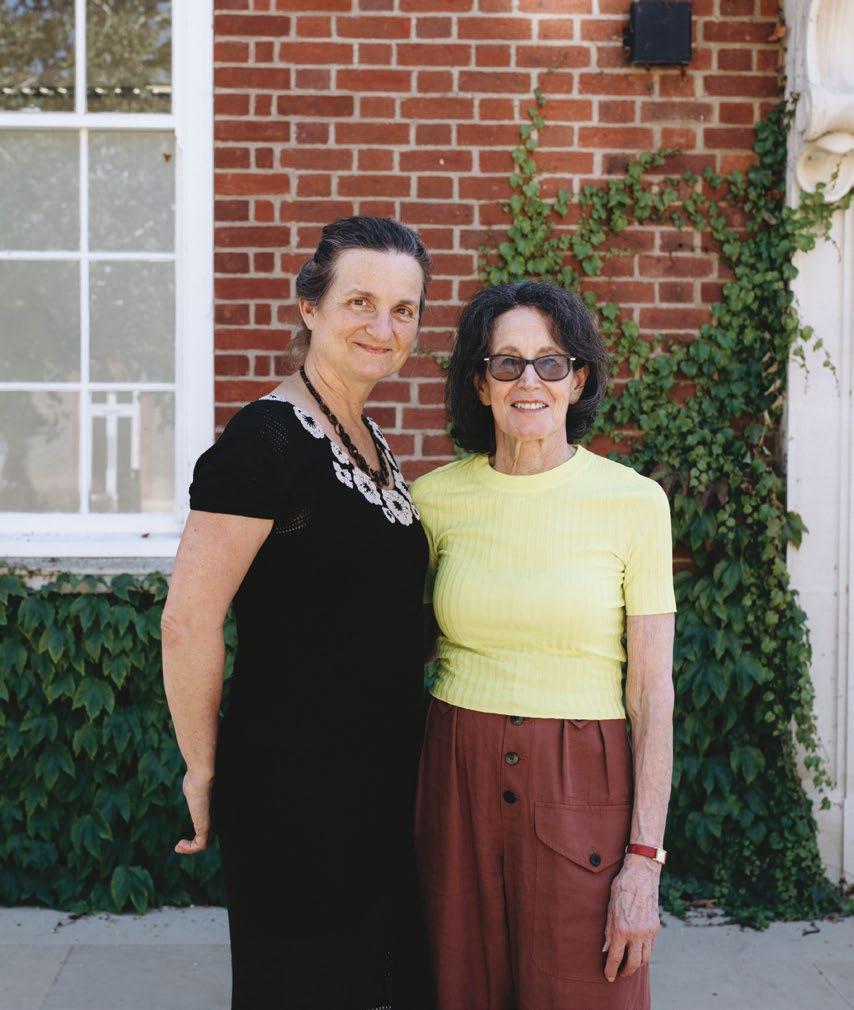
Guiding us through key transitions in family life
Long-term friends and colleagues, Professor Claire Hughes (NC 1986, Fellow and Director of Studies in Psychological and Behavioural Sciences) and Dr Terri Apter (NC 1969, former Senior Tutor) have both recently written compelling and informative books for families going through key transitional stages.
Claire’s recent work has focused on families of children moving from nursery to primary school. Her research has been funded by the Economic and Social Research Council in the UK and by the WEMP Foundation in Hong Kong. Covering an important, yet often tricky transition for families, which can impact later life, her book
aims to make this stage as positive as possible for all involved. The Psychology of Starting School: An Evidence-Based Guide for Parents and Teachers (Routledge, 2024) offers a highly accessible, practical handbook based on cutting-edge developmental research.
Professor Claire Hughes (left) and Dr Terri Apter (right)
Photograph: Dasha Tenditna
Terri’s book Grandparenting: On Love and Relationships Across Generations (September Publishing, 2025) draws on research, her own experience as a grandparent and case studies from across the world to map how the family dynamic shifts when a new generation arrives. She uses these findings to guide new grandparents and parents through another significant transition in family life.
Expectations of traditional family roles have changed quite dramatically in recent decades, particularly in the Western world. These shifts include people becoming parents later, an ‘intensification’ of parenthood, striking increases in fathers’ involvement, and mothers juggling full-time work and family commitments. In this context, and also because they can often expect more healthy years post-retirement,
(each extrapolating a totally different animal from the single detail seen). It’s easy to think we understand the whole picture, when actually those impressions are based on limited experience. ‘You've got to step back and see the whole beast as well,’ she concludes.
Terri agrees a holistic lens and a focus on stages are important. By looking at different stages in life, you can see where patterns emerge in family dynamics and behaviours. Becoming a grandparent brings a great shift in relations across the family, sometimes because ideas about parenting have changed, but also because it upends traditional family dynamics. She gives the example of becoming a new mother. ‘Mothers often feel a need to assert their new role and gain confidence, possibly in the context of their own negative feelings about
‘ Mothers often feel a need to assert their new role and gain confidence, possibly in the context of their own negative feelings about how they were mothered.’
Terri Apter
grandparents can play a key role in a child’s life. The idea that ‘it takes a village to raise a child’ seems to ring true. As Terri and Claire look at the impact of transitional stages on key family relationships and dynamics, what can looking at their work in tandem reveal?
Claire says that looking at the big picture and taking a holistic approach is important, but ‘researchers tend to look at their expert developmental stages in silo’. For Claire, that has traditionally meant her ‘happy place’ was toddlers to early school years, whereas her colleagues might focus on infancy or adolescence. ‘But unless we can talk to each other and learn from one another, then you're only seeing a part of the elephant’, referring to the parable of the blind men and the elephant
how they were mothered themselves. There is in many cases a throwback to much earlier years. In handling your own baby, you may remember being handled as a baby. This sometimes increases a new mother’s appreciation of her mother, but sometimes brings into focus old, buried dissatisfactions. “I don’t want parenting advice from you,” they may think, or even say, and the new grandmother confronts unexpected criticism about small forgotten events in the distant past. Sometimes new mothers see their mother with their child and think, “You were never this patient with me”.’
Correspondingly, Claire observed that school readiness can be either aided or hindered by whether parents’ own experiences of starting school themselves were positive or negative.
‘For parents, understanding what that big transition to school is like for their child involves reflecting on what it was like for them.’ She is keen to help parents join the dots and see how they dealt with big transitions in their own lives. For example, if a parent’s own memory of starting school was laced with trauma or negative experiences, they could be unconsciously passing on those fears and anxieties to their own child. Interestingly, while both aggression and anxiety ‘run in families’, findings from studies with genetically sensitive designs (e.g., studies of twins, or adoptees) suggest that they do so for different reasons, with the family environment playing a much stronger role in the transmission of anxiety than aggression.
Here, a key take-home message concerns the importance of self-awareness and reflection. For Claire, a parent should ‘leave their own baggage at the door’ when dealing with their own child’s transition to school. For Terri, a new grandparent needs to be mindful enough to know that while they may be more experienced as a parent, new parents are going through a monumental transition and need space to navigate parenthood and develop their own approach, while also potentially benefitting enormously from grandparents’ support.
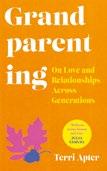
One point both make is the benefit of emphasising children can assert their independence, but come back and ask for support when they need it. That is as true for young children – and certainly teenagers – as perhaps for new mums. Terri said, ‘I think what I would emphasise, is that when they take a step back and say I need support, it's not humiliating.’ Both recognise the need to provide a form of guidance to help navigate these challenging
transitions. Terri aims to enable grandparents to be more mindful of sensitive new mothers while safeguarding their own changed role as a mother and grandparent. She focuses on identifying themes and patterns that can be useful in understanding complex relationships and is pleased that her work is often used by therapists. Likewise for Claire, the educational disruptions of the pandemic highlighted the need for an evidence-based approach to ensuring smoother transitions for children starting school – and inspired her to write a practical book for parents and teachers where she offers impactful and actionable advice, based on academic research and case studies.
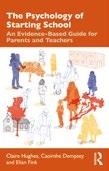
Key transitional stages in family life can have a huge long-term impact on existing relationships and dynamics, and navigating these in a positive and collaborative way can ensure they run more smoothly. Early transitional stages, and how these are dealt with, can influence the success or difficulty of later transitional stages. The ‘modern family’ relies more on crossgenerational input, bringing its own challenges and/ or benefits; selfawareness of one’s own experiences and role within the wider dynamic can have broader implications for how successful a family is in navigating change.
Both Claire and Terri have provided invaluable guides to parents and grandparents, grounded in sound academic research and personal experience, to help transitional stages run more successfully.
POSTGRADUATE RESEARCH SPOTLIGHT:
Reflections on uncertainty
Newnham MCR students showed the wide variety of research underway at College at the annual Newnham Graduate Conference, which was based around the theme of uncertainty. As well as reflecting the volatility of our times, it proved to be a pertinent topic across disciplines. Speakers considered the centrality of uncertainty to quantum mechanics, history and more.
Postgraduate Tutor Dr Kate Fleet said the daylong conference offers an opportunity for students to engage with diverse ideas, foster interdisciplinary dialogue and learn from each other, as well as to hone their skill in explaining their research to non-specialists. We feature two of the many excellent presenters.
Embracing antifragility
The COVID-19 pandemic spotlighted the uncertainty inherent in global crises, exposing the vulnerabilities in education, health and other systems worldwide. While this brought attention to building systemic resilience, Nikita Jha argues for a paradigm shift to refocus on antifragility: the ability to evolve from compounding crises, as opposed to simply aiming to survive, recover and return to where we were before.
PhD student in Education Nikita has done extensive fieldwork with an educational NGO in northern India which, despite severe constraints and limited resources during the Covid crisis, adapted, innovated and leveraged uncertainty as a catalyst for amelioration and growth.
‘This NGO had not only adapted to pandemic restrictions, with teachers creating video lessons
and uploading them to YouTube so pupils could watch on phones, but they also innovated to extend learning to parents, many of whom had never been to school. They asked pupils to teach their parents what they were learning at school, and over time more than 300 illiterate parents learned to sign their names for the first time,’ she said.
‘There were bigger changes in mindset too. Teachers, students and parents talked about becoming more fearless: “We got through the pandemic, so what is a little trouble?”’ School staff also distributed food during the pandemic, demonstrating their broader value as community hubs, and so the parents Nikita interviewed developed a new-found respect for their children’s school
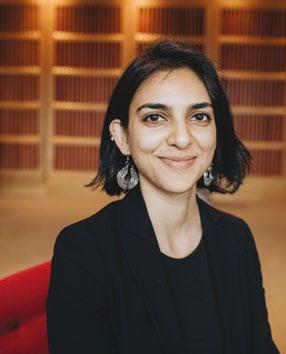
Nikita Jha
and became advocates for education.
Her research, now in its final year, explores how crisis-induced pressures prompted the recasting of educational roles, spaces and processes. Nikita related her findings to Nassim Nicholas Taleb’s concept of antifragility. In education, she argues, there is potential to focus on the benefits and opportunities found in volatile circumstances, rather than on just bouncing back.
How can antifragility be embedded into schools so that they don't just recover from upheavals, but improve and become stronger? With more multifaceted, unpredictable crises on the horizon, Nikita’s focus is on redesigning education, using the lessons of leveraging, adaptation, collaboration and innovation that emerged during the pandemic.
Nikita is completing her PhD with supervisor Dr Nidhi Singal as part of the Cambridge Network for Disability Education Research (CaNDER).
Faith and mercy
‘A spirit of faith and faithfulness equip us to venture into uncertainty' says Theology MPhil student Amy Galliford, who believes that faith animates us all – irrespective of whether we believe in God. Fundamental to Amy's argument is that uncertainty is intrinsic to the human experience: the future is concealed from view, and we cannot predict others’ actions. This could cause fear or despair, but we can manage that by having faith, she says. Whenever we trust, we are having faith in someone. Amy relates this to Hannah Arendt’s notion of the importance of promises and Soren Kierkegaard’s Leap of Faith.
‘Hannah Arendt talks about promises as crucial to the way we mitigate the unpredictability of the future. We make promises to each other and then commit ourselves to a course of action. Whether having faith in a promise or being faithful to a promise, both require allegiance to something unstable and
beyond reason,’ Amy said.
After a BA in Sociology and English in Sydney, Amy switched to study Theology and said it has given her space to consider concepts in a way that is connected to the desires of the heart and the hopes that we have as humans. Her MPhil project is focused on the quality of mercy, an important idea in Christianity, and its treatment by philosophers. In Theology it might be commonly looked at as a divine attribute, but Amy considers mercy as it functions in human relationships.
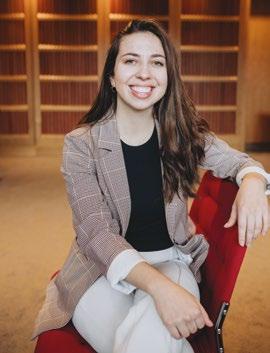
Amy Galliford
Looking at the work of philosopher Martha Nussbaum and others, who think of mercy as a leniency in judgement or lessening of punishment, Amy compares it to a more expansive Christian tradition, where mercy is associated with forgiveness, but also with almsgiving, charity and helping the poor.
‘Mercy seems to have this crucial relationship with suffering, power and justice. If you're asking someone to “have mercy upon me”, you're assuming that they have power over you. It's an immensely uncomfortable position to be in, to be at someone's mercy. And you can't separate it from justice, whether it manifests as forgiveness or punishment or almsgiving. Mercy is a fulfilment of justice rather than a mitigation of it. In a suffering, ailing world, mercy is a necessary mode of establishing justice.’
Photos by Dasha Tenditna
A new vision for teaching in the University and colleges
The College has been very fortunate, over the past six years, to have counted Alice Benton (NC 1984) amongst its Fellows. Alice has just retired from her role as Director of Education Services for the University, where she was responsible for steering student education through Covid, and most recently helped steer a major Teaching Review. Alice sets out the hopes and challenges here, followed by Dr Sheila Watts’ thoughts as Senior Tutor on how Newnham is responding.
Alice writes : In 2023, the University and colleges together commissioned a Review of Teaching. In large part this Review aimed to understand, and address, undergraduate concerns about excessive workload and its effect on their wellbeing. Well students perform better than those who are struggling with mental health issues, and are able to take advantage of the full range of what Cambridge has to offer.
The Review was overseen by a Task and Finish Group, chaired by the Pro-Vice-Chancellor for Education, Professor Bhaskar Vira, with two representatives from Newnham: myself, in my University role as Director of Education Services, and the College Bursar, Chris Lawrence.
The Review was completed, and a set of recommendations made to the University and colleges in Easter term 2025. Throughout, the group worked closely with students, professional staff members and academics from a range of disciplines, to obtain their perspectives and understand their experiences.
A number of key themes emerged from discussions with students, which have shaped
the Review’s focus on the challenges of Tripos and course structure, and how difficult it is for some students to give priority to their own wellbeing.
In terms of structure, students told the Review that courses can be fragmented, and it is often hard to see how they join up. There is too much to do during term, leading to the erosion of term and holidays, so taking time off is very difficult. Some Triposes are poorly organised, which adds unnecessarily to cognitive load.
The pace of work can lead to students not feeling in control of their learning. If courses are fragmented, students struggle to understand the timing and purpose of all parts of their course; they don’t know what to expect and so find it hard to balance demands from each paper. Without a clear understanding, it is hard for some students to set boundaries, as they don’t know when they have done enough.
The Review was also struck by the sense of guilt that many students feel if they are not working 24/7. Everyone else seems to be, including their supervisors and lecturers,
and if they don’t, they feel there’s something wrong with them. Time off too often feels indulgent, and some students seem unable to give themselves permission to rest. The digital culture exacerbates this mindset. Added to that, perfectionism leads many Cambridge students to feel continuous pressure to have the right answer – they don’t see that making mistakes contributes to learning.
The Review made a number of recommendations designed to address these issues, and the factors that contribute to them (see below).
The Review also highlighted staff concerns about their own workload, and the University’s HR Division is taking forward a number of initiatives, some of which will have a dual benefit of addressing both staff and student
‘It is exciting to be heading into a period of positive developments where we figure out how to square all the circles, with University and colleges sharing the same educational vision.’
Dr Sheila Watts
TEACHING REVIEW
workload. Among these is a programme of work in Faculties and Departments to seek ways to rationalise content and choice. Practical ways to make it easier for students to navigate their course are also being pursued. These include asking individual Triposes to use a single digital platform to share their course materials, and to ensure that they clearly articulate intended learning outcomes for students, lecturers and supervisors.
Other recommendations made include the University setting time and day limits on scheduled teaching activities to ensure students get a break from intensive academic work. The Review received reports of supervisions being organised late at night and over weekends, and this recommendation aims to support healthy boundary-setting.
Supervisions are the cornerstone of undergraduate teaching, and the support of supervisors and Directors of Studies will be essential if the workload issues experienced by students are to be tackled. Additional guidance and training are being rolled out to supervisors.
Sheila responds : As Senior Tutor I am responsible for the whole student experience at Newnham, both academically and in terms of students’ residential experience, health and wellbeing. Working closely with our Wellbeing Advisor and Nurse, I see at first hand how stretched many students are as they try to burn the candle at both ends, cramming in essaywriting, labs, lectures, music, sport, theatre and just living. One of the commonest article themes in Varsity is student journalists advising their younger counterparts to have more fun, worry less and learn to embrace ‘good enough’ values.
Pro-Vice-Chancellor Bhaskar Vira was very clear that a lot of the motivation for the Teaching Review was to create space for students to be able to access the world-class music, debating, sport and other activities for which Cambridge is famous. He has argued cogently for having
a spring-clean of Triposes, where, he points out, new material has often been added to weighty syllabuses without clearing out and streamlining what was already there. A syllabus refresh should make it possible to eliminate Saturday teaching, no longer practised at any other university, allowing students and staff time to grow personally as well as intellectually.
Our Directors of Studies, particularly in the Sciences, point out that trimming down syllabus content will lead to some reduction in choice for students, and in some areas that will have to be so. The plan is to have clear pathways of connected papers with less redundancy.
A review of Biological Natural Sciences is already heading firmly in that direction, with new content streams in Biodiversity, Biomolecules, Biomedical Sciences and Biomathematics. Other Triposes are looking to follow suit. Ideas discussed as part of the Review included longer terms, and some Triposes have been experimenting with mid-term breaks in supervision arrangements to try to spread the learning out and give it more space. Here, the pressures of both research intensity and the College's other arrangements for its accommodation compete with the optimal model for learning. For now, eight-week terms will stay, but there will be a clear move towards teaching being restricted to between 8am and 8pm, on five days a week only, over the next two years.
Cambridge as a Collegiate University is traditionally cautious, and the autonomy granted to its parts means any centralised reform will be carefully scrutinised for all its local effects. The University’s experience of the pandemic refreshed its thinking at all levels about both continuity and change. This Review has brought insight into what the next steps will look like. It is exciting to be heading into a period of positive developments where we figure out how to square all the circles, with University and colleges sharing the same educational vision.
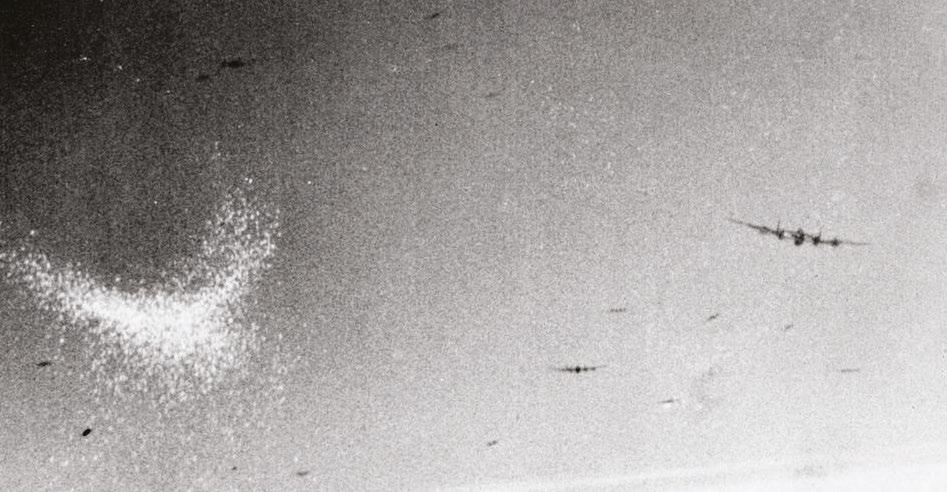
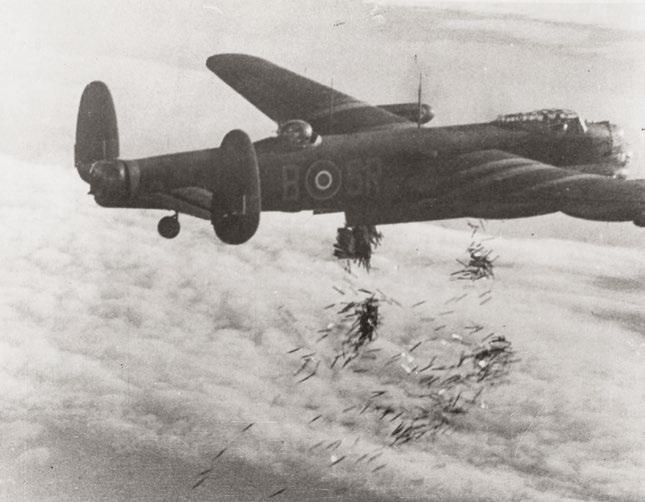
Physics: Joan (Lady) Curran ( Strothers , NC 1934)
Physicist Joan Curran (1916–1999) was honoured for her extraordinary contribution during the Second World War as one of ten women immortalised in 2024 as 8ft-tall steel silhouettes at the International Bomber Command Centre in Lincolnshire. As a young graduate, Joan joined the Air Ministry as a Junior Science Officer, and during the war, based in the Physics department at the University of Exeter, she and her husband Samuel Curran developed the proximity fuse. This device detonates a bomb automatically when it is in close range of its target, and which became vital in the fight against V2 bombs. Together they were transferred to the Telecommunications Research Establishment near Swanage, where Joan was assigned to the radar countermeasures group. She specialised in military red herrings, inventing a technique codenamed ‘Window’ or ‘Chaff’, which consisted of using strips of metal to confuse enemy radar searches. On D-Day, thousands of metal strips were dropped by Lancasters of 617 Squadron to synthesise a phantom invasion force of ships in the Straits of Dover and keep the Germans unsure where the Allies would land. ‘Chaff’ is still in use today by the world’s armed forces.
Imperial War Museums
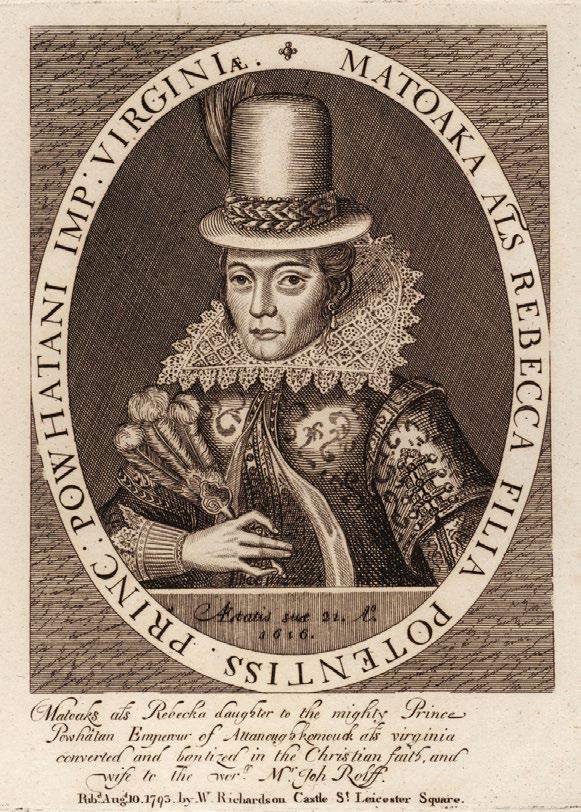
Opposite page: Portrait of Pocahontas, published by William Richardson, after Simon de Passe, line engraving, published 10 August 1793 (first published 1616) NPG D28135 © National Portrait Gallery, London. This portrait appears on the cover of the volume Amy edited, Matoaka, Pocahontas, Rebecca: Her Atlantic Identities and Afterlives
When another world was possible
Dr Amy Morris ( Robinson , NC 1990) focuses on early American literature, from colonial encounters to myths around Pocahontas. In these polarised times she aims to bring diverse voices to the fore and explore lesser-known elements of a contested history.
An early unfinished poem by an English migrant and Harvard scholar, who ended up minister of a frontier church, inspired her initial interest. Edward Taylor’s work reveals a surreal imagination, but also tentative attempts at connection. After encountering Indigenous mythology and huge fossilised mastodon teeth, which he thought were evidence of giants, he sees a convergence between Indigenous mythology and the stories of giants he heard in England. ‘He believed this proved that the stories he heard as a child were not made-up, but have a common source, evidenced in the appearance of the enormous teeth,’ Amy said.
Across her career, University Associate Professor in English Amy Morris has explored early literature in what became the United States of America, and various attempts at mutual understanding, even close collaboration, between settlers and Indigenous people. It’s a tantalising glimpse of a time when another future was possible, with people forging a common future, before the settlement and expansion forced native communities from their land.
‘It's not that he was a maverick, he was a conservative Puritan church minister, but his work reflected a positive response to Indigenous culture. It points to a wider variety of responses to Indigenous people and their belief systems than the fear and conflict which became the dominant narrative.’
Much of Amy’s work has explored the contested area of encounters between Native Americans and settlers, looking at early
literature up to 1800. It’s a field that has become increasingly polarised. ‘It’s difficult to navigate partly because the oral tradition means there were few documents except from settlers. But you can piece things together from different accounts. There is a value of literature as a historical record, even when it’s not great literature, for what it reveals of culture and beliefs,’ she said.
One of the most controversial stories Amy has explored is that of Pocahontas, who in the Disney film version is something of a poster girl for assimilation. She was a Native American, captured by English colonists during hostilities in the early seventeenth century. While captive, she converted to Christianity and was baptised Rebecca, later marrying a colonist, bearing their son and travelling with him to London. Here she was fêted, before dying on the voyage home in 1617.
With another early American literature specialist, Kathryn N. Gray, Amy co-edited a book, Matoaka, Pocahontas, Rebecca: Her Atlantic Identities and Afterlives (University of Virginia Press, 2024). It features contributions from historians, anthropologists, established leaders in the field of Indigenous Studies and an artist. Amy describes it as a ‘sympathetic but difficult book, partly because it’s a difficult subject politically’.
The collection of essays enables different perspectives to sit together, including the late Monacan poet and historian Karenne Wood, and is the first of its kind to focus exclusively on Matoaka (her Indigenous name). It looks particularly at the creation and perpetuation of her cultural image and how that is challenged by new archival research, interdisciplinary methodologies and contemporary creative practice.
‘Some of the Native Americans we invited to the original conference did not want to come and talk about Pocahontas, she's anathema in some circles. But those who came said that once
they got into thinking about her as a real woman living between two cultures, and what that meant, they were keen to reclaim the narrative. Not imagining her as a victim, but somebody who's making choices, surviving and figuring out how to navigate this conflict that she's in the middle of, between her father and the colonists,’ Amy said.
Part of the contested history is due to the way accounts from English explorers have used Pocahontas’ story as part of the national origin story of the USA. There is a large mural of her in the US Capitol building by John Gatsby Chapman, which was created in the nineteenth century at a time of the killings and land theft known as the ‘Indian removals’. In that mural she’s quite Victorian, in a beautiful white dress and with a ray of the Holy Spirit's light coming down upon her as she accepts baptism. Nearby are a crowd of disgruntled looking Native Americans. ‘There's sort of encoded politics there, saying: she's the model, assimilate and become like us and everything will be great. She is used to carry that narrative.’
By contrast, the Mataponi tribe believe her marriage was forced and, rather than her dying of disease, they believe she was poisoned. It’s oral history, passed down for generations, whereas traditionally academic accounts have relied on archival documentation. But Amy points out that the documents, largely by a man called John Smith, were revised over time as the mythology of Pocahontas developed. To make sense of this contested history, Amy and Kathryn worked with Karenne Wood at the University of Virginia to bring in more diverse voices and artists.
‘We were trying to slough off some of the mythology or at least engage with it critically and think, this has been used to underpin a racist takeover narrative. We tried to get as many different perspectives together as possible. Not to say this is how it was, but to sit with the elements which are unclear or contested;
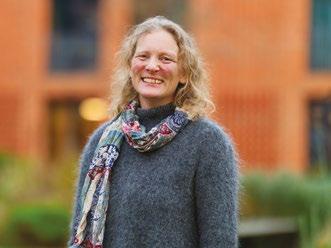
‘ We were trying to slough off some of the mythology or at least engage with it critically and think, this has been used to underpin a racist takeover narrative. We tried to get as many different perspectives together as possible.’
Dr Amy Morris
recognise it is inadequate to rely on documents, and instead invite other people in. There are ways to bring together traditions of scientific analysis with culture and oral literature,’ Amy said.
Amy’s own experience living and raising a family between two continents gives added resonance to her work on cultural encounters. She met her American husband when she was a PhD student on a two-year Frank Knox Fellowship at Harvard, where he was working on medieval literature. He took a fellowship to travel to England shortly after and they have been
studying each other's countries, partly from each other's countries, ever since. Their four children are American citizens and largely raised there, which has involved shuttling back and forwards, as well as extended maternity leave and long periods of remote working.
‘I'm a resident alien there, so I understand the difference it makes to be from somewhere else –and my husband has the same experience here. But it gives you this amazing leverage; you can't rest easy in your own opinions and your own perspectives because you're in a group where there's a different majority view. Sometimes it's subtle, but you have a different set of norms and received ideas. It’s hard, but enriching,’ she said.
Amy’s children are now teenagers and young adults, but when they were younger she worked part-time and even attempted to resign at one point, when the commute became too much. Talked out of it, she was grateful to join Newnham, initially as a Director of Studies and later a Fellow, and has valued being part of a supportive College.
She is talking to colleagues at the Margaret Anstee Centre about her new project on translated bibles, an important element of encounters in the early American story. She found a group of bibles in the Cambridge archives which were bilingual, translated into the Native American language Algonquian, and is exploring the collaboration required to make them. ‘It helped to give native people the tools of literacy and the man who translated it obviously had a lot of help from Algonquian speakers. There’s a mutual meeting ground that is involved in translation itself, which requires recognition of the different ways of thinking in the language being translated into. It’s a collaboration,’ she said. ‘It feels uncomfortable now because of how the cultural takeover progressed, but uncovering that dialogue can help reconstruct that moment when the possibilities of engagement were still open.’
Michael Webb © University of Cambridge
Neuroscience: Dr Brenda Milner ( Langford , NC 1936 & Honorary Fellow)
Working with patients who had suffered brain lesions from accidents or surgery, Brenda Milner made a breakthrough in scientific understanding of which regions of the brain are specialised for memory formation and other cognitive functions. She showed that one patient (‘HM’) was able to acquire new skills, despite suffering severe amnesia after damage to the hippocampus and surrounding regions. This proved that memory resides in multiple parts and systems within the brain. This Kavli Prize-winning discovery is just one of many contributions to science over a long career as Professor in the Department of Neurology and Neurosurgery at McGill University and Professor of Psychology at the Montreal Neurological Institute. On the occasion of Brenda’s 100th birthday, her colleagues Kate E. Watkins and Denise Klein wrote: ‘Brenda did not set out to be a role model for women, but it is difficult to ignore the magnitude of her achievements set against the backdrop of the dominance of men in the field during the early years of her career. … even if it were unintended, at least a part of Brenda’s legacy is to have been a pioneer and role model for women and girls.’
Nopparit/istockphoto
TEN NEWNHAM SCIENCE PIONEERS
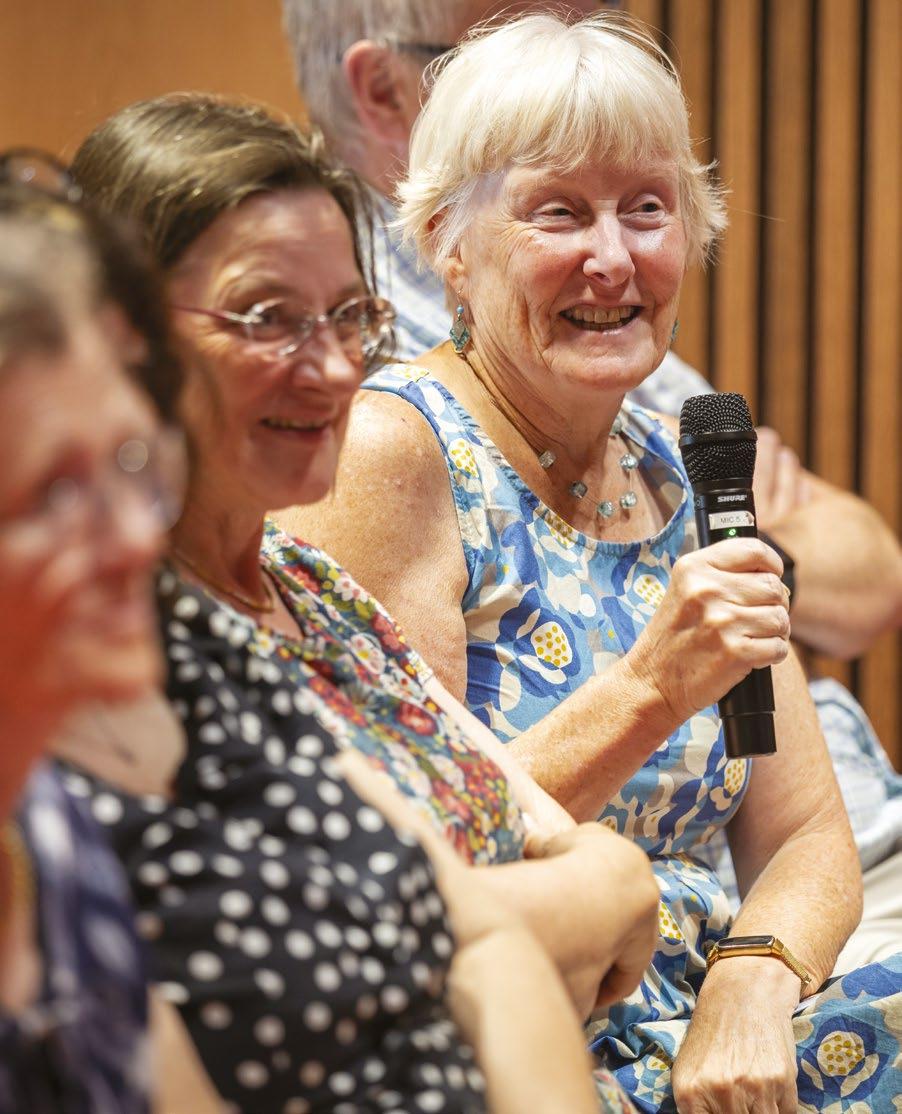
The Alumnae Year
Highlights of the alumnae year
2024
SEPTEMBER
Principal Alison Rose (NC 1980) hosted a dinner for over 60 members of our Principal’s Circle for high-level donors. The event included a talk by Fellow Dr Emma Pomeroy about her research on Neanderthals. Laidlaw scholar Poilina Sidropoulu gave a talk about her research into flexible perovskite solar cells for electrical vehicles and pianist Ellie Tang performed.
Alison Rose and Development Director and Fellow Sarah Carthew visited Singapore and Hong Kong, meeting and reconnecting with alumnae based there and hosting events in both locations. In Singapore Eleanor Great (NC 1987), Sharon Chin (NC 1996) and Hidayah Amin (NC 2010) organised a dinner for over 30 alumnae with matriculation years ranging from 1982 to 2017. There was also a tour of the Haji Yusoff Memorial Museum with fascinating insights into Singapore’s history. Alison and Sarah also met other alumnae at events for lawyers, economists and engineers. In Hong Kong, Joyshan Kung (NC 1989) organised and hosted a dinner for over 30 alumnae at the Hong Kong Club. Professor Claire Hughes (NC 1986) presented updates on her work on school readiness, where she has been able to extend her original research in the UK to Hong Kong (generously funded by the WEMP Foundation).
Over 60 alumnae met for the annual evening drinks and a networking event in the City organised by the London alumnae group.
It was a joy to welcome back to Newnham alumnae who matriculated in 1969, 1984, 1994 and 2004 as part of the University’s Alumni Festival . The Newnham and Bletchley Park: Women’s Work in World War II exhibition was displayed and there was a discussion panel event about the journey of uncovering the hidden war stories with Dr Sally Waugh (NC 1973), Fellow Emerita Dr Gillian Sutherland, College Archivist
Alison Rose and Sarah Carthew with alumnae in Singapore
Frieda Midgley and Jonathan Byrne, Oral Historian at Bletchley Park.
The annual Newnham Conversation took the theme of ‘Greening’ financial systems with ethical finance and investments. The expert panellists were the chair, Beatriz Araújo (NC 1979), former Partner and Head of Corporate Governance at Baker McKenzie, Sarah Breeden (NC 1987), Deputy Governor for Financial Stability at the Bank of England, and Dame Julia Hoggett (NC 1993), CEO of the London Stock Exchange.
OCTOBER
The US Alumnae Committee hosted an online presentation by third-year student Els Curry, the 2024 winner of the US Travel Bursary , entitled ‘Maurice Sendak & Oliver Knussen: A Brief Introduction’, based on their research undertaken at the Maurice Sendak Foundation (Connecticut), the archives of the Boston Symphony Orchestra and major libraries in New York and Washington, DC.
Our 2024 telephone campaign ended on a high with a collective generous response of £200,000 raised from 428 alumnae.
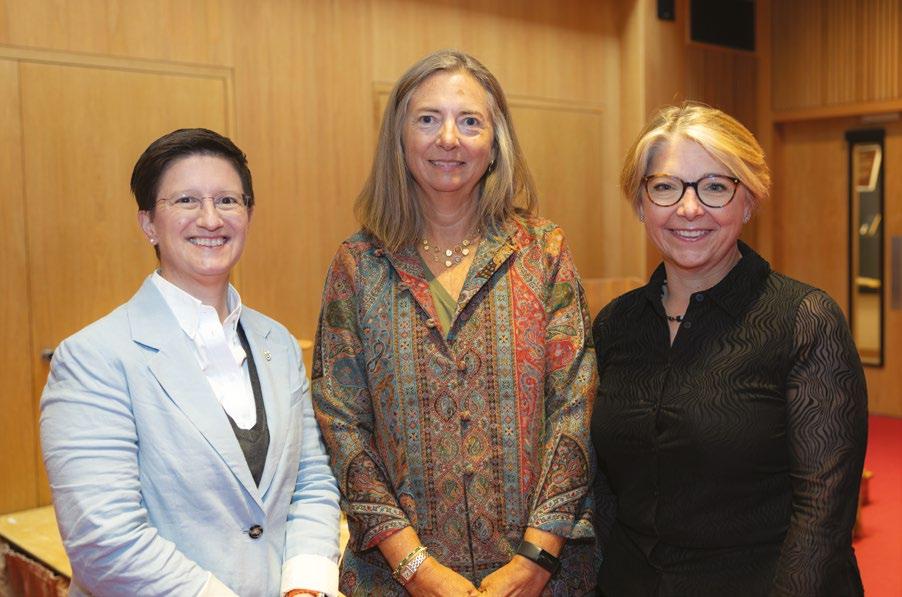
Below: (From left to right) Dame Julia Hoggett, Beatriz Araújo and Sarah Breeden
David Johnson
The North Home Counties group organised a theatre trip to see Blue Stockings in High Wycombe, a play by Jessica Swale about women’s fight for education at Cambridge University in 1896.
Professor Mary Garson (NC 1971) met up with her former supervisor, Dr Anne Lyon ( Butland , NC 1967) after 50 years; their story featured in Chem@Cam magazine
NOVEMBER
Family, friends, former colleagues and students paid tribute to Honorary Fellow Dame A.S. Byatt (NC 1954) at a memorial event at College.
The Newnham Associates held their AGM, along with their career advice clinics for current Newnham students.
Hettie O’Brien (NC 2016) and The Guardian writer Harriet Fitch Little (NC 2009) gave a lecture to Newnham students interested in careers in the media.
DECEMBER
Over 50 local alumnae and family members visited the Newnham and Bletchley Park: Women’s Work in World War II exhibition when it toured to Somerville College, Oxford. Sally Waugh (NC 1973) introduced the evening.
In the 25th anniversary year of Persephone Books, founded by Nicola Beauman OBE (NC 1963), we were pleased to host an event for West Country alumnae at their Bath bookshop. Persephone’s Newnham authors include Amy Levy (NC 1879), Flora Mayor (NC 1892), Amber Reeves ( Blanco-White , NC 1905) and Elizabeth Jenkins (NC 1924). Two talented current students performed: soprano Naomi Fester, accompanied by pianist Ellie Tang.
US-based alumnae attended the ViceChancellor Deborah Prentice’s receptions in San Francisco and New York.
2025
JANUARY
The annual Family Forum organised by Ruth Shin (NC 2007) and Josephine Holt (NC 2012) took the theme of ‘Connecting families and nature: the mutual benefit this brings for children and the environment’.
FEBRUARY
The relaunched alumnae group in the Southwest met for informal drinks in the bar of Walcot House, Bath, organised by Dr Helen Mussell (NC 2010) and Rachael Haggerty (NC 2007).
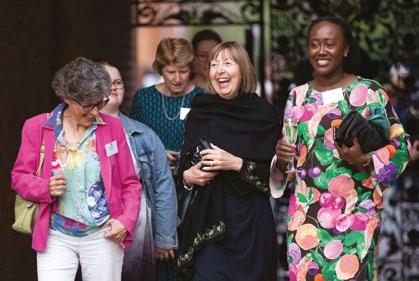
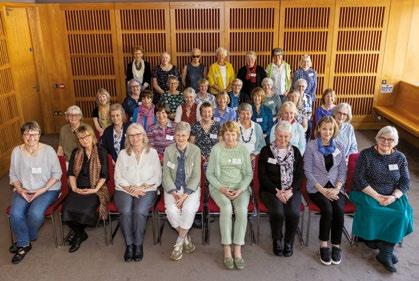
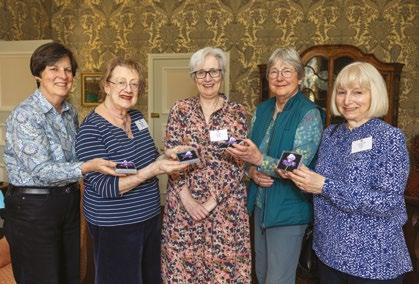
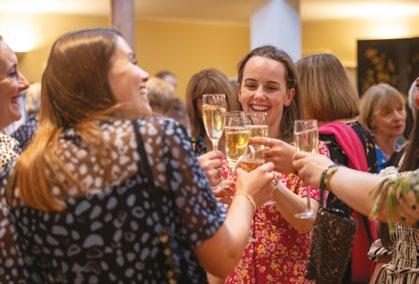
MARCH
The Royal Society visited Newnham with presenters Dame Maggie Aderin-Pocock and Professor Judith Armitage to make a film about biochemist Dr Marjory Stephenson FRS (NC 1903 ), the joint first woman Fellow of the Royal Society. The Royal Society hosted a reception attended by Vice-Principal Barbara Blacklaws to mark the anniversary and embarked on a year of activity supporting and empowering women in STEM.
The Young Alumnae group hosted a Pizza and Prosecco Party for over 40 finalists, to help introduce them to the network of alumnae ready to help them as they leave College.
The Whipple Museum of the History of Science in Cambridge unveiled a new permanent display about Dr Rosalind Franklin (NC 1938) .
APRIL
We welcomed back alumnae for Commemoration weekend , including recent graduates (from 2000 and 2015) to groups from 1955 and 1965, as well as a large contingent from 1975 celebrating 50 years since their matriculation. A highlight of the weekend was the Roll Lecture given by Dr Jane Morris (NC 1971), Chair of the Royal College of Psychiatrists in Scotland, who gave a fascinating talk about University mental health. The dinner speech was given by Honorary Newnham Associate Carol Seigel (NC 1975) former Director of the Freud Museum London and currently Chair of the Old Operating Theatre Museum.
Left: Alumnae reconnecting at Commemoration
David Johnson
Alison Rose and Deputy Development Director Dr Emma Raccagni (NC 2000) spent a week visiting alumnae based in the USA. Events included lunch and a dinner hosted by Lalitha Vaidyanathan (NC 1989) in San Francisco, dinner in Saratoga hosted by Dr Jane Perera ( Critchley , NC 1982), lunch at the Cosmopolitan Club in New York with a talk from Dr Rana El Kaliouby (NC 2001), a talk and dinner with Professor Dame Mary Beard (NC 1973) in conversation with Dr Elizabeth Cropper (NC 1963) at the Cosmos Club in Washington, DC, lunch at the Union Club of Boston, and a supper hosted by Antonia von Gottberg (NC 1988) in her home in Cambridge, Massachusetts.
Several Newnham alumnae were recognised in the inaugural Q100 exhibition – a celebration of 100 LGBTQ+ alumni from University of Cambridge, including Miriam Margoyles (NC 1960), Henrietta Morrison (NC 1987), Honorary Fellow Clare Balding OBE (NC 1990), Dame Julia Hoggett (NC 1993), Kate Marks (NC 2019), Fellow Dr Rachael Padman and Honorary Fellow Sandi Toksvig.
The Daily Telegraph published a previously unknown piece of prose by Sylvia Plath (NC 1955) . ‘Watching the Water-Voles’ is an account of a spring day at Grantchester Meadows.
At the AGM of the Roll, Libby Richards (NC 2005) was elected President of the Roll, succeeding Annette Spencer (NC 1988).
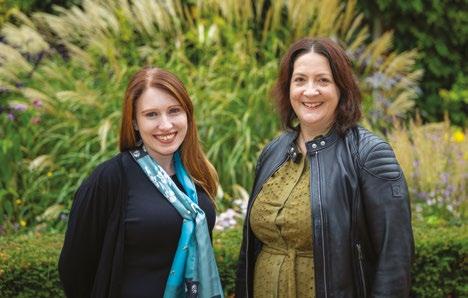
MAY
Newnham alumnae were celebrated at the Institute of Astronomy for their work, including Cecilia Payne-Gaposchkin (NC 1919) , Anne Douglas Malden (NC 1900) and Anna Scott (NC 1908 ) (later Beech, then Griffith). Greenwich Royal Observatory marked the fact three of the first women it ever appointed to its staff were Newnhamites: Isabella Clemes (NC 1876) , Edith Rix (NC 1885) and Harriet (Maud) Furniss (NC 1886)
The Sidgwick Society met for their annual afternoon tea at Newnham in recognition of their pledge to leave a legacy to the College, and heard a lecture by Newby Trust Junior Research Fellow Dr Hannah Lucas on Julian of Norwich.
On the 80th anniversary of VE Day, Margaret Bax ( Priestley , NC 1939) was honoured by the Department of Business and Trade with the naming of a room in the Old Admiralty Buildings. Margaret was involved at Bletchley Park and in major Naval Intelligence (NID 30), where she is believed to have worked with Commander Ian Fleming.
Above: Libby Richards (left) and Annette Spencer (right)
David Johnson
JUNE
The London alumnae group hosted a guided walking tour around Bloomsbury, and focussed on famous women from the area, from secret agents to medical professionals.
Each year the Women of the Year Association partners with the Newnham Associates for an afternoon of dialogue and collaboration, this time exploring the theme of ‘Empowered Wellness: Navigating Women’s Health Through the Decades’. The panel included former
Principal Dame Carol Black, a leading expert in public health and workplace wellbeing, and Vicky Keith-Roach (NC 1991), advocate for holistic women’s health.
Aimee Di Marco (NC 1997), Rachel Smith (NC 2001) and Lourina Pretorius West (NC 2002) attended the Cambridge Boat Race Dinner , where Averil Wootton (NC 1963) (CUWBC 2nd IV 1965, 2nd VIII 1966 Captain), said the grace for the 400 dinner guests.
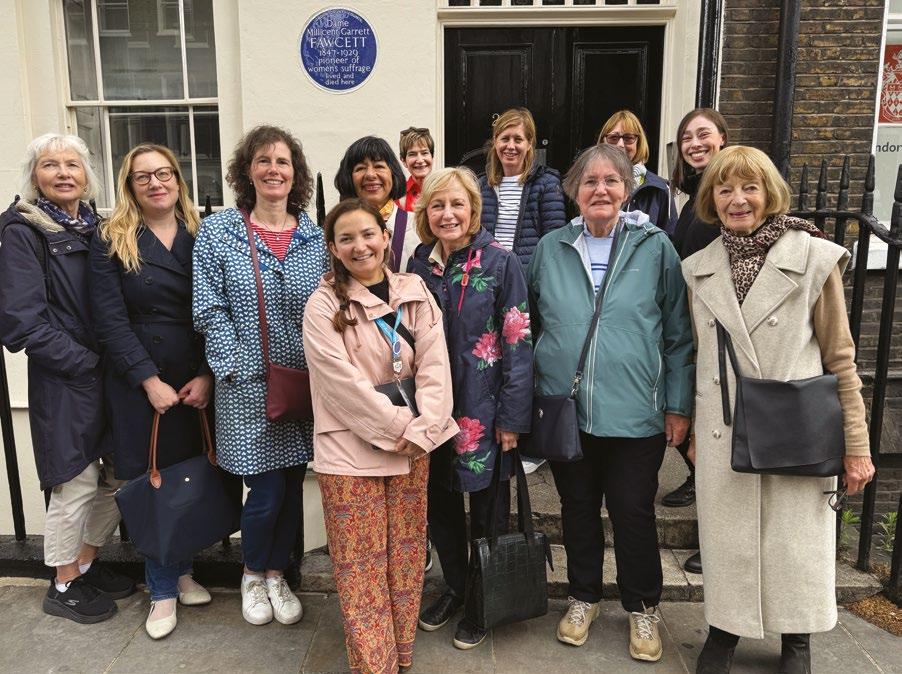
Below: The London alumnae group
Emma Raccagni
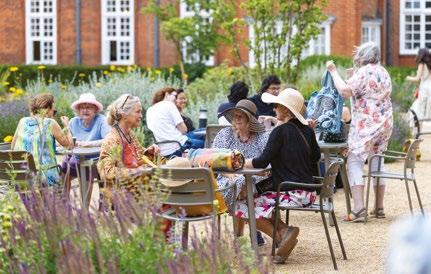
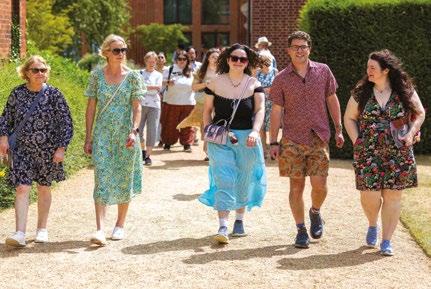
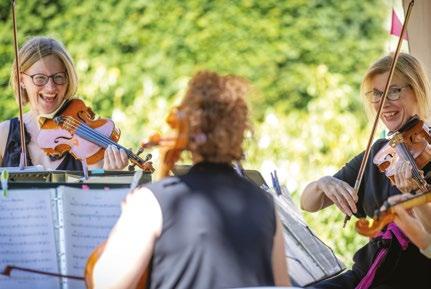
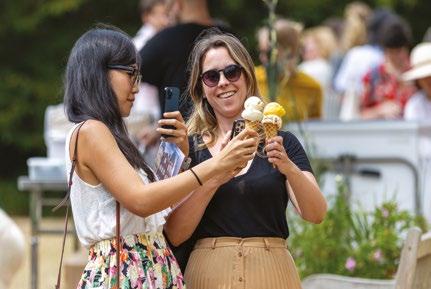
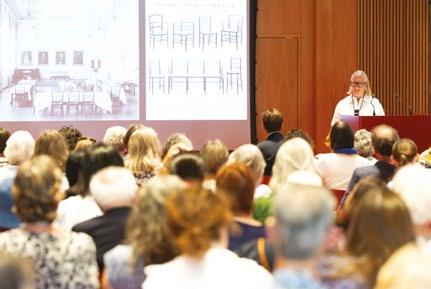
Several hundred alumnae, family and friends joined us for our annual Garden Party , this year marking the 150th anniversary of the opening of Old Hall, the first building established here at Newnham (see p. 83). The party offered the opportunity to get creative in interactive Lego and pottery workshops, unwind with lawn games and live music, as well as take part in tours and informative talks.
JULY
The Bath and Bristol regional group gathered to enjoy an excellent city tour on a darker and more morbid exploration of Bath’s historical diseases and death led by Dr Molly Consibee, whose late grandmother was a great-niece of Henry Sidgwick.
Debby Banham (NC 1986) , Tutor and special supervisor, was thrilled and touched to be presented with her Festschrift, edited by her former PhD student Christine Voth (NC 2010), at a launch party. The volume contains essays by many of Debby’s friends, former students and colleagues, including Martha Bayless (NC 1984), and many more helped her celebrate at the launch, including Katie Haworth (NC 2011), Anna Larsson (NC 2011), Sarah Mercer (NC 2011) and Josie Fairley Keast (NC 2022).
Grand Discoveries , a summer holiday display with hands-on events and workshops at the Grand Arcade in Cambridge, celebrated scientists including Dr Cecilia Payne-Gaposchkin (NC 1919), Professor Dame Dorothy Crowfoot Hodgkin (NC 1932); Rosalind Franklin (NC 1938) and Chantelle Bell (NC 2016).
The US Alumnae Committee welcomed the 2025 US Travel Bursary winner Siao Chi Mok , a PhD student in Algebraic Geometry who addressed a conference held once a decade in Colorado to talk about the significant presence over the years of Algebraic Geometry among Newnham mathematicians. She spent time in New York with Margaret Campbell (NC 1966) and met researchers at Brown University in Providence and MIT in Boston and spent time with Committee member Antonia von Gottberg ( Banks , NC 1988). Runner up for the Bursary, Jennifer Ubenyi (NC 2023) obtained a travel grant to visit New York to do research at the New York Public Library for her project on LGBTQ culture and to obtain material to collaborate on an exhibition with the Cambridge Black Artists Society. She also met with Margaret Campbell and contacts arranged by Committee member Alison Rowe (NC 1980).
AUGUST
Development Director and Fellow Sarah Carthew hosted drinks for 30 Oxfordshire-based alumnae at The Randolph Hotel.
Members of the San Francisco group got together with a summer hike in the East Bay regional park.
The Cambridge regional group enjoyed talks by IT consultant Val Robson (NC 1979), poet Harriet Truscott (NC 1996) and social anthropologist Liz Hales (NC 1969). They also enjoyed a bring and share lunch hosted by Anne Clarke (NC 1980) and ran a successful book group featuring several titles by alumnae.
Left: At the Garden Party, alumnae enjoyed garden tours, crafts, music and talks
The Roll President’s year
ANNETTE SPENCER (NC 1988)
I pick up my virtual pen to draft this report for the last time this year. After four years at the helm as President of the Roll for Newnham alumnae – and eleven years on the Roll Committee in total – I officially stepped down in spring 2025. My only remaining duty was to file this annual report on our activities.
As the first (and I rather hope only) Roll President to be elected on Zoom back in 2021, it was wonderful to see all our regional and international groups back to full in-person programmes of events and activities in 2024–25, bringing Newnhamites together through events, walks, conversations and dinners – and keeping
organised by the London group as a complement to their popular autumn drinks evening.
My time as President has taken me to alumnae gatherings from Edinburgh to Singapore and Sydney, from planting trees for our global tree planting initiative, to grand dinners in hall, and – memorably – judging my first ever dog show at a Newnham Summer Party! As a Committee we have contributed to major projects, from celebrating the College’s 150th birthday to the Shaping Newnham’s Future fundraising campaign (not quite finished yet…), as well as website upgrades, new alumnae group launches, College improvement projects and many,
‘I have met so many exceptional women achieving remarkable things, all with the quiet determination and tenacity that characterises Newnham alumnae.’
us connected with each other. There are too many highlights to choose from, but I pick out particularly some new initiatives among the groups: a wonderful evening of refreshments and music arranged by the (new) Bristol and Bath group in the beautiful surroundings of Persephone Books in December 2024; and a first summer Saturday morning walking tour with a suitably historic and literary theme in June 2025,
many more agenda items. I have met so many exceptional women achieving remarkable things, across at least eight decades of matriculation, and all with the quiet determination and tenacity that characterises Newnham alumnae. Each one has been an inspiration in different ways, and many have also become good friends.
So, there is much I will miss as I step down, although I know I leave the Roll in safe hands
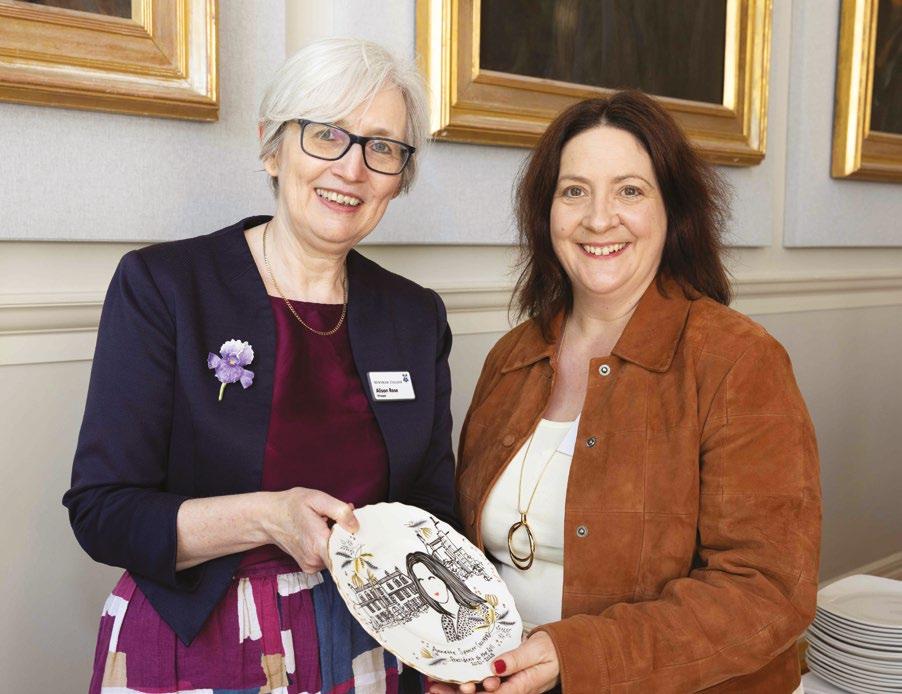
‘There is much I will miss as I step down, although I know I leave the Roll in safe hands.’
with an engaged and creative Committee and my wonderful successor as President, Libby Richards (NC 2005). There are far too many people for me to thank in the space I have here, but to all of you who have given me your support, ideas, time and patience over the past decade or so, or simply enjoyed the things the Committee helped to deliver, you have my heartfelt appreciation. Thank you!
David Johnson
Above: Annette with Alison Rose at the Sidgwick Society afternoon tea
Shaping Newnham's Future: Campaign update
I am pleased to share that the campaign has topped £25 million, of which £2.95 million was raised in the financial year 2024–25.
In July 2025, the Shaping Newnham’s Future campaign stood at £25m, which means we met our target a whole year early. At the time of writing in September, we have now reached an extraordinary £26.15 million. When you read this, there are still six months to go to the end of the campaign. A good moment to take stock, to thank everyone for their support and donations, and to plan for the end of the campaign, culminating in our summer event in the gardens on 27 June 2026. There is still time to give, and every donation will make a difference; please see the special donation request form on the back of the Roll Letter's address sheet.
Supporting our postgraduate students
In May 2025, Newnham College and City University Hong Kong (City UHK) established a new partnership to support graduates from City UHK applying for master’s courses at the University of Cambridge. Two full scholarships will be awarded annually over the next five years, to be held at Newnham. The first recipient, Carol Wai Kun Wong (NC 2025), will be starting an MPhil in Engineering.
In May 2025, Solina Chau of the HS Chau Foundation was inducted into the Court of Benefactors to recognise the wonderful donation made by her foundation for STEM postgraduate support at Newnham. A second award has
been made from the HS Chau Foundation programme to a student taking a PhD in Clinical Neurosciences on multiple sclerosis.
A generous donation from the Woollett family in memory of their mother Enid Woollett (NC 1947), has added to the Enid Woollett Fund, which supports the study of Maths at Newnham. Their support has been recognised in an invitation to become members of the ViceChancellor’s Circle.
The April Trust is funding an annual postgraduate studentship in Medicine, Engineering, Mathematics, Computer Science or Natural Sciences. The first recipient will start in 2025–26. We gratefully acknowledge Trustees Lady Margaret Wall (NC 1964) and Lady Suzanne Warner.
Joanna Buckenham (NC 1980) supported a PhD scholarship in Neuroinformatics in the MRC Cognition and Brain Sciences Unit, and the first recipient will be announced in 2026–27.
Thanks to Helen Steers-Mardinian MBE ( Steers , NC 1981), a new scholarship for students taking an MPhil in industrial systems and manufacture and management, containing an integral element of mechanical engineering, will be awarded in 2025–26.
Meghna Birla is the first holder of the Anne Logue PhD scholarship, researching insulin sensitivity.
Alison Rose (NC 1980), Principal
Other student support
Newnham has continued to lead the Laidlaw scholarship programme, which operates in four Cambridge colleges including our own, supported by the Laidlaw Foundation and especially CEO Susanna Kempe (NC 1984). The 2024 cohort have spent the summer completing their Leadership in Action programmes in countries from France to the USA and Australia, working on research projects such as ‘Exploring autoimmune features in Type 2 diabetes’ and ‘Ecocide in Ukraine’.
Student wellbeing
Supporting our students’ wellbeing continues to be integral to what is special about Newnham. Thank you to everyone who has donated towards this important initiative. We continue to look for further support to enable the role of Wellbeing Advisor to be endowed, so that College will always be able to offer this important service to all our students.
Greening Newnham
Dr Michelle Mittelsteadt ( Beretvas , NC 1988) and Dr Corky Mittelsteadt have given wonderful support for the new, fully sustainable boathouse. Michelle joined us for the formal opening in June 2025 when we also welcomed many of our alumnae who had so generously supported the development of this riverside building. We are now planning the refurbishment of the Kennedy Building.
Supporting academic teaching and research
We continue to fundraise for £1.5 million to jointly establish a permanent University Teaching Officer post with the History Faculty.
Telephone campaign
Since 2019, our telephone campaigns have raised a net total of over £750,000, enabling College to support our students in so many ways. The campaign in September–October 2024
hit the target set and raised around £200,000. Thank you to everyone who gave, and who had wonderful conversations with our student callers. The telephone campaign remains an important element of our fundraising activity.
Both students and alumnae find the experience enriching with one student reporting back:
‘I love our Newnham alumnae. It was such a heart-warming experience of inter-generational solidarity.’ Sandi Cobb (NC 1968) said:
‘Congratulations on a telephone campaign that obviously gives great pleasure to those on both ends of the phone line.’
Legacies
Legacies continue to be incredibly important to the future of Newnham, just as they have been instrumental in the College’s past. I am pleased to announce that we reached the 150th anniversary target of 150 new legacy pledges in 2025. I was delighted to be able to mark this wonderful achievement at the Sidgwick Society event in May 2025, where we celebrate our legators. I was also able to give one of our special iris brooches to the 150th legator, Professor Margaret Deuchar (NC 1971).
A legacy from alumna and former Fellow Dr Alison Newton (NC 1950) and her husband Dr Bruce Newton has funded a Junior Research Fellowship in Natural Sciences. Dr Tatiana Wilson, who is working on the impact of circadian rhythms on treatments for bipolar disorder, is the first holder of this Research Fellowship.
International and regional alumnae groups
With Development Director Sarah Carthew, I travelled to Singapore and Hong Kong in September 2024. Enormous thanks go to the alumnae who hosted such wonderful events (see also p. 70, Highlights of the alumnae year).
Persephone Books in Bath kindly hosted the first event for the new alumnae group based in Bath on 6th December 2024. My thanks to Dr Helen Mussell (NC 2010) and Rachael Haggerty
Right: Capital campaign donation areas, 1 July 2019 to 30 June 2025.
( Ashton, NC 2007) for their leadership and creativeness in bringing the group together, and to Nicola Beauman (NC 1963) and Francesca Beauman (NC 1995) for hosting. I am sure that this new group will go from strength to strength.
At the Roll Committee’s AGM in April 2025, Annette Spencer (NC 1988) stood down as President after staying on for an extra year. The new President is Libby Richards (NC 2005), with Liz Newbronner (NC 1979) as VicePresident. I thank them and all our regional chairs and members of the Committee for their commitment, advice and support.
I was delighted to attend a special dinner in Guildford in March that not only brought the Surrey regional group together, but also enabled us to celebrate the retirement of Headmistress Alice Phillips (NC 1979) of St Catherine's School, Bramley after 25 years.
With Deputy Development Director Dr Emma Raccagni (NC 2000), I travelled to the USA in April 2025, visiting San Francisco, San Jose, Washington and New York. I remain enormously grateful to Margaret Campbell (NC 1966) and her
USA Alumnae Committee for all their help and support (see also p. 74).
The Development Director, Sarah Carthew travelled to Athens in May 2025 to visit the Onassis Foundation as well as our wonderful loclly based alumnae.
In June 2025, Onassis PhD student Vaiva Vasiliauskaite was awarded the Wood Whistler Medal and Prize for 2024–25. Vaiva’s submission consisted of an essay entitled ‘Hermeneutics and Appropriation of Religious Tradition in Varro’s Divine Antiquities.’ Onassis Classics Fellow Dr Shushma Malik has been promoted to Associate Professor.
The Development Office also organised over 35 events over the year against 29 in the previous year. The theme of the 2025 summer party and campaign celebration was our buildings. The theme for the summer party in June 2026 will be people, without whom Newnham would not be the special place it is to so many. I hope that you all continue to enjoy belonging to College and coming to our events. Do visit when you can, you are always most welcome.
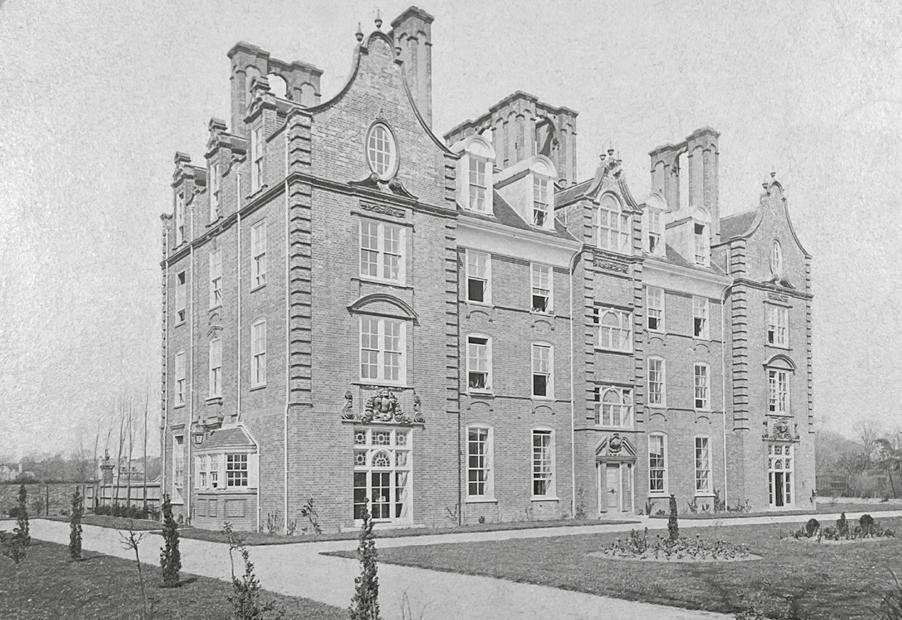
Shockingly modern
In 2025, the College celebrated the 150th birthday of Old Hall with a day of special events. Architectural historian Dr Kathryn Ferry (NC 1995) tells the story of this radical building and its successors.
Above: Old Hall when newly built, photographed by Simpson Bros., Cambridge Newnham College Archives
For architectural historians who specialise in the Victorian period, Newnham is an important place. It’s one of Britain’s best examples of late nineteenth-century Queen Anne-style design. I didn’t know that when I filled in my UCAS form in the mid-1990s, but I knew I liked the buildings and coming from a state school in North Devon that was as good a reason as any to inform my choice of college. I’ve since learned that the welcoming combination of warm red brick and white-painted windows was a very conscious choice by architect Basil Champneys (1842–1935) to make the earliest students feel at home in a university context that was far from hospitable to female undergraduates.
When Champneys made his first designs in 1874, he did so for a site on the rural fringes of Cambridge, the company responsible for creating a new women’s hall of residence having leased 2.5 acres of sheep pasture from St John’s. The building that is now Old Hall stood on its own, shockingly modern to contemporary viewers yet rooted in English architectural traditions of the seventeenth and eighteenth centuries. Champneys was one of a small group of men (women were not yet allowed to train as architects) who found inspiration in the country lanes and cottages of Sussex, advocating local materials and craftsmanship as an antidote to industrialisation. They rejected the strident, angular Gothic favoured at mid-century for a more domestic and artistic architecture. Their style chimed with the burgeoning Aesthetic Movement, which would lead on to the – now better-known – Arts and Crafts Movement. In their so-called Queen Anne style, Champneys and his peers created an English idiom that has become so familiar on housing estates around the country that it is hard to imagine it once had a radical agenda. Newnham is proof that it did.
Following the 1870 Education Act, Queen Anne was chosen as the official style of the London School Board and Basil Champneys showed how suitable it could be for buildings
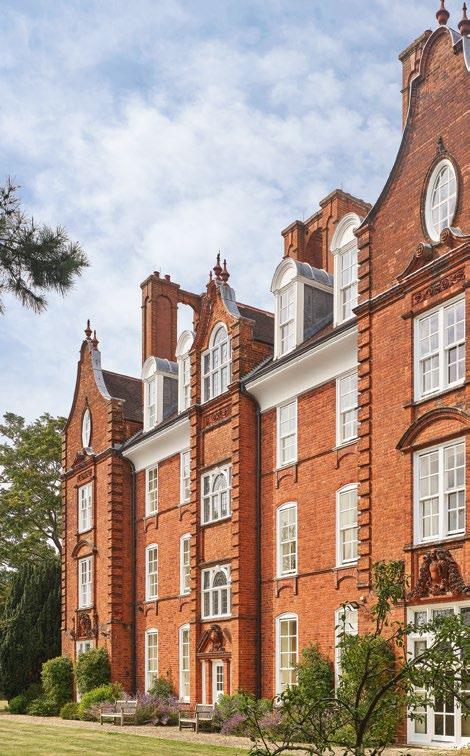
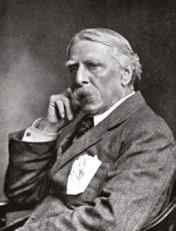
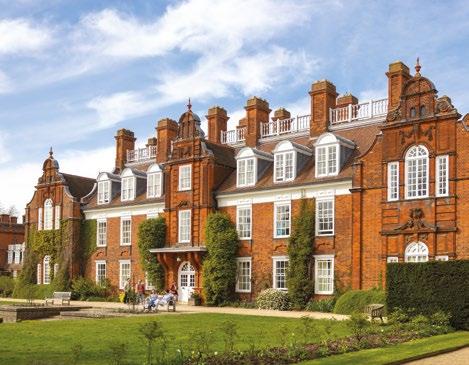
Top: Old Hall. Photo by Will Pryce Middle: Basil Champneys. Photo from Architects of Greater Manchester Bottom: Sidgwick Hall. Photo by Milly March

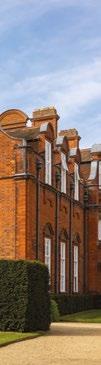
that were imposing, without being intimidating, in his 1872 design for a Board School in Fulham. This no doubt helped recommend him to Henry Sidgwick and Anne Jemima Clough. Old Hall’s roofline of shaped gables and tall chimneys is reminiscent of other Board Schools across the capital, giving it credibility as an educational establishment. The links were also social and political; school boards were nondenominational and allowed voting women members. I never lived in Old Hall, but my second-year room was in Sidgwick, Champneys’ next building, rapidly required as demand from potential students exceeded space. Crossing home from lectures in the History faculty I often wondered why the building’s street front looked so much
My Sidgwick room faced towards Clough dining hall and if any building epitomises the famed ‘sweetness and light’ of Queen Anne it is this one. The exterior is defined by a pair of fullheight oriel windows that project so far from the wall they appear almost detached. Here Champneys was playing with the Oxbridge tradition that used a single bay or oriel to reveal the location of the high table on the building’s exterior. Champneys subverted that idea, his symmetrical pair suggesting a liberal sense of equality among diners. The quality of craftsmanship is sublime too. If you get the opportunity, go and stand in front of Clough and admire the brickwork. Around the dining hall windows, the mortar between the bricks is so finely laid as to be almost imperceptible and
‘Champneys and his peers created an English idiom that has become so familiar on housing estates around the country that it is hard to imagine it once had a radical agenda. Newnham is proof that it did.’
Dr Kathryn Ferry (NC 1995)
like the back. The uninitiated passer-by would have no idea of the beautiful garden elevation, but this was not, as I imagined, an architect’s conceit to keep his best work for College members only. Champneys designed his building the right way around in 1879, it was the road that moved. A published engraving shows horsedrawn carriages passing in front of Sidgwick and early photos feature streetlamps and a postbox in front of the railings that were removed when Sidgwick Avenue was constructed and the Newnham gardens laid out after 1891. It was only at this point that the Pfeiffer Arch was built, and the College halls were united behind a formal entrance.
the decorative swags are made by a technique of brick rubbing that is practised by a mere handful of artisans today. At Clough in the 1880s Champneys hit his decorative peak, adding all manner of ‘twiddly bits’ to the facades, including a sunflower panel that honoured first principal Miss Clough through her favourite flower. My third-year room was on the ground floor underneath that sunflower, though I confess I never noticed it when I lived there. Sometimes you need to go away and come back again with a fresh perspective.
Basil Champneys himself was always coming back again. For nearly 40 years he was Newnham’s architect, completing his work with
the building of Peile Hall in 1910. Thanks to my own career as an architectural historian, a path I discovered at Cambridge, I now realise that for all the similarity of materials and colours, Champneys’ buildings evolved subtly over time; compared to Old Hall, Peile has a much higher ratio of window to wall, making it look more white than red. And I have a far greater respect now for the buildings that were added after Champneys time – even for the now demolished 1960s Strachey, where I spent my first year waiting for my chance to climb up the room ballot.
In its own way Strachey paid homage to Newnham’s historic materials and forms, just as its replacement the Dorothy Garrod Building does today. In its plan, the new building by Walters & Cohen Architects fulfils the unbuilt
Clotilde Brewster
At the garden party in June, one of the most popular events was a tour of two reconstructed student rooms, each offering a fascinating glimpse into different eras of Newnham’s history. Guided by Housekeeping Manager Alison Carman, we stepped back in time to explore the evolution of student life, decor and culture over the decades.
intentions of Elisabeth Scott, designer of the 1937 Fawcett Hall. Scott shot to fame as the first woman to win a major architectural commission in open competition when she beat 70 men to design the new Shakespeare Memorial Theatre in Stratford-upon-Avon in 1928. She was the obvious successor to Champneys and her work deferred to his, bringing a Modernist flavour to the site that deserves greater research and appreciation. In a speech to the Junior Council of the London and National Society for Women’s Service in March 1928 the chair, Miss Ethel Watt, said that she hoped ‘in the future Miss Scott could be known as a “gifted architect” and not as a “gifted woman architect”.’ I like to think that a man as sympathetic to the cause as Mr Champneys would agree.
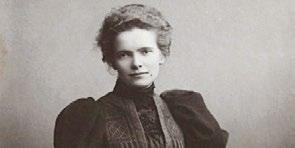
Clotilde Brewster (NC 1893) was the first woman to practise professionally as an architect. Thanks to a new biography by Laura Fitzmaurice, Clotilde Brewster: Pioneering Woman Architect (Lund Humphries, 2024), her contribution to the field is finally being recognised. Described by composer Ethel Smyth as ‘brilliant, sociable, amusing and utterly original’, Clotilde was part of a group of women in the late nineteenth century who broke down barriers in their chosen professions, including the Garretts: Agnes Garrett (an interior designer and a fellow trailblazer, who with her cousin Rhoda opened the first British business to be run by women) and her sister Millicent Garrett-Fawcett, co-founder of Newnham, who guided and aided Clotilde at the start of her career.
Clotilde was raised in France and Italy, and studied Mathematics at Newnham. She began her working life under notable architect Reginald Bloomfield. She explored the minimal themes of Early Modernism. While working under Bloomfield, Brewster met Percy Feilding, whom she would later marry. They collaborated on several projects, including restoring the Tudor Beckley Park, which they bought in 1920, and the restoration of the fifteenth-century Pekes Manor in Sussex. They had close connections with the Bloomsbury Group. Clotilde’s extensive career spanned castles, chapels and fountains all over Europe, Russia and the USA.
Photography by Milly March
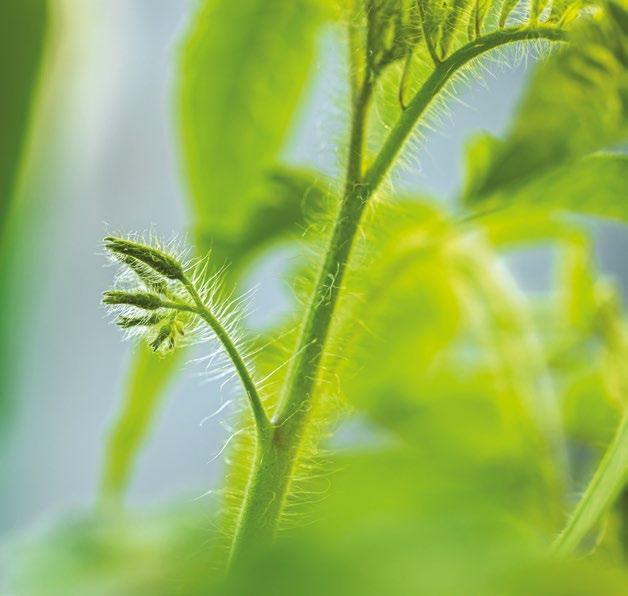
Plant Science: Professor Ottoline Leyser (NC 1983, Junior Research Fellow 1993-94)
Plant scientist Dame Ottoline Leyser addressed the fundamental mechanism of a wellknown biological phenomenon. In other words, she and her team found out exactly how ‘pinching out’ young plants makes them grow bushy new side shoots. (If you haven’t tried this on tomato seedlings, do.) Scientists knew that the plant hormone auxin was effectively preventing side shoots from growing, but how this happened was unclear. In 2005, Ottoline and her team at the University of York identified the specialised hormone receptor within the plant’s cells, a receptor that auxin fitted into like a key in a lock, shutting down branching. Their research was key to understanding biological processes but also has clear implications for increasing the yields of crops and biofuels.
TEN NEWNHAM SCIENCE PIONEERS
Ian Gowland/Science Photo Library
Alumnae memories: above and beyond
After Mary Beard (NC 1973) spoke about how she was inspired by her fellow Classicist and Director of Studies Joyce Reynolds, we asked which Senior Members made the most difference for you during your time at Newnham.
Below: The SCR in 1968. Top row: M Lapage, W Richardson, P M Deane, C Abbott, P J Brown, P Easterling, K W Hughes, A Phillips, A A Newton, E A Robson, J M Munn-Rankin, I Kirillova; Middle row: S Dex, F Bolton, J M Gooder, D M Agar, J M Reynolds, E Welsford, N Chadwick, D Whitelock, S M Edmonds, R L Cohen, M E Grimshaw, J B Mitchell, A B White, S Narasimhan, P Burne, G Sutherland; Front row: M Cock, R H McCabe, J M D Speakman, M W Stanier, E G Relle, [C J] Whistler, J H Oliver.
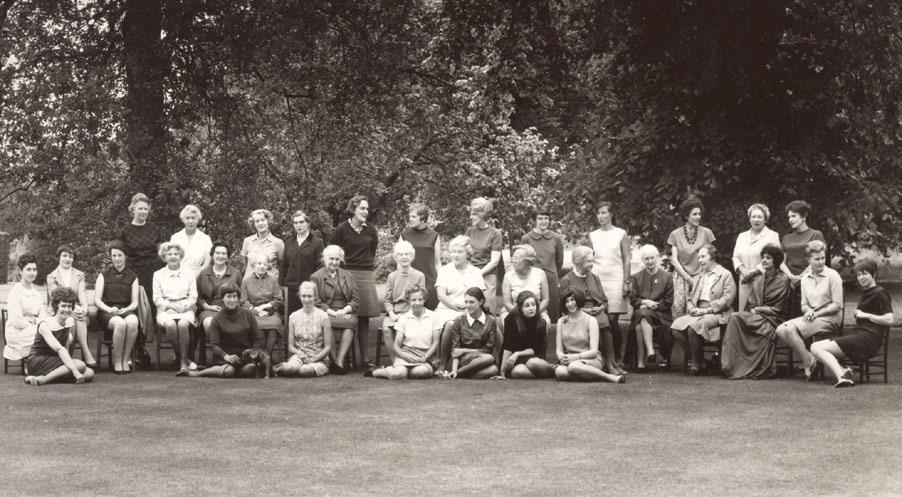
Image: Newnham College Archives
Jean Gooder (NC 1953) was a wonderful, warm and wise Director of Studies who saw more in me than I ever saw in myself. She helped me believe I could write and had something worth saying.
Clare Balding (NC 1990, English)
Ann Mullinger , our Director of Studies. She was based in the Pightle in that lovely room. We used to have supervisions at 3pm and she took us for Cell Biology, which at that time was cutting-edge and exciting. She has kept in touch with us all through the years and followed our careers.
Pauline Barnes ( Duckitt , NC 1970), Jane Fransella (NC 1970) and Chris Oates ( Archer, NC 1970), all Natural Sciences – Biological
Dr Delia Agar ( Simpson , NC 1930). I have very fond memories of Dr Delia Agar from the interview and I am sure she is the reason I got into Cambridge… She was very kind to me.
Kay Curling ( Inglis , NC 1970, Natural Sciences – Physical)
Lucy Adrian (NC 1953) terrified us by using the backs of our old exam answers for writing notes, and we used to stare, transfixed, hoping that none of our own would appear next. But her comments were so thought-provoking, and I still remember many of the things she said, 50 years later.
Margaret Bennett-Samuels (NC 1971, Geography)
‘Miss Reynolds’ went above and beyond for me. I was an American BA with insufficient Latin and Greek when I started the affiliated programme, and she arranged extra tutoring. I remember one funny conversation when we were reading Latin, and we came to ‘corn waving in the wind.’ I objected that corn doesn't wave in the wind. We argued – I'm from Illinois, and I know corn! – until she figured out that I was picturing maize.
Carol Fisher Saller (NC 1974, Classics)
Mary Beard herself, who arrived back at Newnham at the start of my second year studying Classics. She breathed new life into ancient history.
Rachel Edwards (NC 1982, Classics)
Clare Drury . My goodness, did she shake up how I thought and wrote. Sad that she is no longer with us.
Nicola McGowan ( Caffrey , NC 1993, Theology and Religious Studies)
Gosh, I don’t think I could pick out one individual – the community at Newnham in itself was so inspiring.
Christine Walls (NC 1994, MML)
Professor Jenny Mander (NC 1983). What an energy and razor-sharp mind. Tutorials were exciting chances to elevate, and her feedback style gave me a love and self-discipline for drafting and crafting my writing. This was key to a career in documentary scripting and helped inspire me to teach writing.
Soraya Agaoglu (NC 1996, Oriental Studies)
ALUMNA SPOTLIGHT
Utheri Kanayo (NC 2005)
Newnham Associate Dr Utheri Kanayo has established a school with African culture and achievements at its heart, which inspired fellow Newnham alumna Alex West to pursue a career in education.
While working at the Education Department in Cambridge, after a PhD at Newnham, Utheri Kanayo (Susan Kiragu, NC 2005) undertook a project that changed the course of her life. She travelled around East Africa – including her home country, Kenya – and was staggered at the lack of resources in some schools, where children only had a teacher three days a week, and twiceweekly deliveries of water.
'Afterwards I started giving back by fundraising and even climbed Mount Kenya to raise money, as well as encouraging my faculty to donate. I started a scholarship and mentorship programme. I broke all research protocols by getting emotionally involved, but I wanted to do more,' Utheri said. Soon she and her husband Oku quit their jobs and moved to Kenya, where they grew the scholarship and mentorship programme, and eventually founded their own school, Freedom International Schools – Africa (FISA), in Nakuru.
At FISA, they prepare pupils to be global citizens with an education model that fuses their own culture and the International Baccalaureate (IB). This Afrocentric education puts Africa at the heart of learning, so alongside Maths, English and other subjects, they teach local mothertongue languages and focus on Africa’s history
and contributions to civilisation, the arts and sciences. Oku, an experienced software engineer, ensures pupils also have a strong focus on current technology.
'We bring in African and global content, not relying on a curriculum that is a colonial legacy. I would like my students to sit next to anyone and not feel inferior, to love their culture and be proud of Africa,' Utheri said.
'Africa may have many poor people but it also has lots of resources: coffee, oil, minerals. Our skin colour, the melatonin, means we don’t have to worry so much about the sun. I want people to love their skin colour and appreciate its qualities. Classes are named after African icons, from Patrice Lumumba to Madikizela Mandela. The Afrocentric approach infuses everything.' Their progressive approach chimed with research by Newnham Philosophy graduate Alex West (NC 2022). As a Laidlaw scholar, she looked at whether prosocial behaviour, attitudes and aspirations can be fostered by sustained exposure to the portrayal of human nature as innately altruistic. Alex visited FISA in 2024, teaching photography and art, including lessons on artists inspired by African print motifs. She had fundraised among her friends in the UK,
acquired cameras that she donated to the school and supported the school’s marketing campaign when they transitioned to the IB curriculum, designing adverts for social media, billboards and pamphlets.
‘I enjoyed being entrusted with so much and knew everything I was doing was contributing to the school. I’ve never felt more appreciated. The school was inspiring; you can see a difference immediately. They're teaching the children to really love where they're from and motivate them to put back into Kenya. My experience at Nakuru strengthened my passion for education. I had initially planned to become a teacher, but now I am looking into policy work in education,' Alex said.
Utheri has also joined the Newnham Associates, giving talks (including the one that inspired Alex) and mentoring. She said, 'Without Newnham, there would be no Freedom International Schools – Africa. It inspired me to be myself and believe in myself.' She aims to
be a bridge between Newnham and Africa by supporting black or African students studying at Newnham, mentoring those interested in Africa and supporting cultural diversity.
Thank you to former Development Director Penny Hubbard (NC 1979) for suggesting this article. When Penny went to volunteer at the Saidia Orphanage in Gilgil, Kenya last year, she realised that FISA was nearby and Utheri arranged for a visit by some of her students and a teacher. The students took donations of food and Utheri offered an internship to one of the orphanage graduates. Penny said: ‘This is a great example of how the Newnham network stretches around the world.’
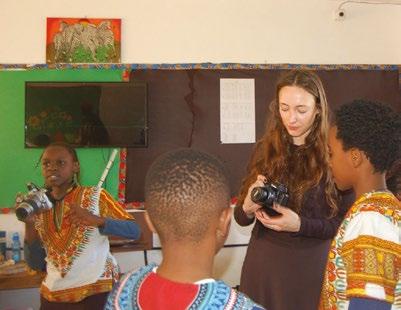
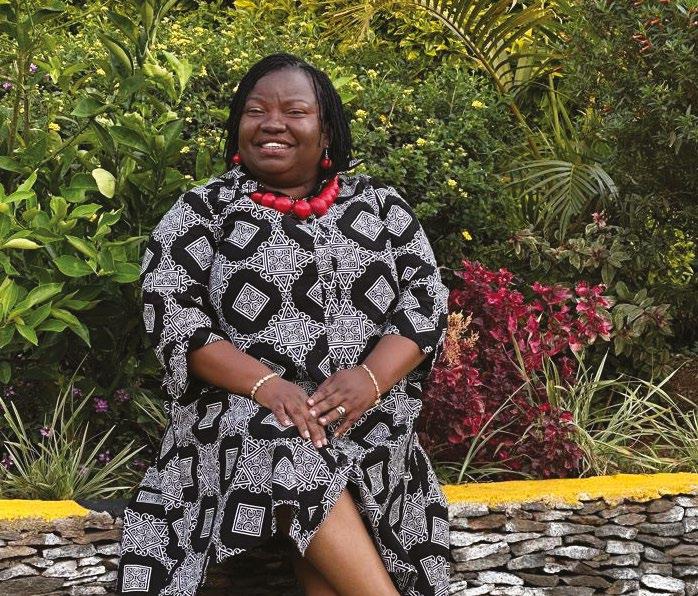
Left: Utheri Kanayo
Above: Alex West visiting the school founded by Utheri
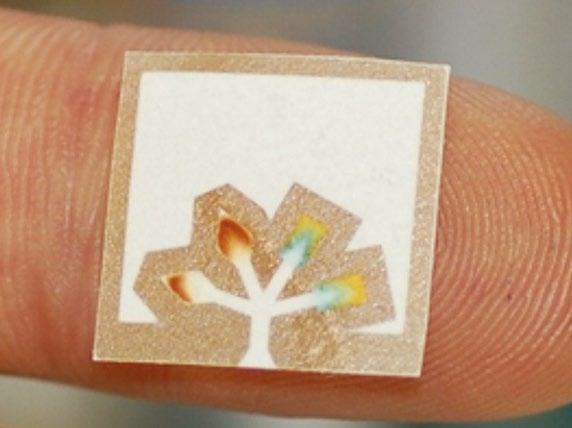
Biotechnology: Dr Hayat Sindi (NC 1995 & Honorary Fellow)
For nearly 20 years, Hayat Sindi has been turning scientific advances into medical devices,focusing on detecting disease. She holds nine patents for a machine that combines the effects of light and ultrasound for use in early detection of breast cancer, for example. But her particular focus is on developing low cost, easy-to-use devices (above) for use in countries with poor medical infrastructure. This began in 2008, as a visiting scholar in a Harvard research lab, when Hayat saw the potential in the new form of diagnostic test the lab developed – a little like the Covid tests we all became so familiar with, but made out of paper rather than plastic, and needed only tiny samples of liquid to work with. Hayat co-founded a non-profit organisation to bring the technology to developing countries. Since then, she’s encouraged other young women from the Middle East to become scientists and innovators.
Alumnae news
All alumnae are warmly invited to share their news, whatever it may be. We would particularly welcome more news of everyday life.
1940s
Hazel Guest ( Rider , NC 1946) is the author of The Walrus’s Handbook: Understanding Ourselves (updated edition, Archive Publishing, 2019), which focuses on the forces that motivate us and how our moods interact with those of the people with whom we mix.
Dame Margaret Drabble CBE (NC 1957) published On The Romantics (Thames and Hudson, 2025).
1960s
On stage, Miriam Margolyes OBE (NC 1960) appeared in pantomime in London and at the Edinburgh Festival Fringe. On screen, Miriam returned to Dr Who for the 2025 Christmas special. Her new film Friend of Dorothy premiered at the Raindance Film Festival and her programme Miriam Margolyes Discovers New Zealand aired on BBC2. Oh Miriam! was listed as one of the best autobiographies of 2025 and her latest book The Little Book of Miriam was published.
.............................................................................
Dr Jane Goodall DBE ( Morris, NC 1961), Honorary Fellow, was awarded a Presidential Medal of Freedom by President Joe Biden. She sadly passed away in October 2025. A tribute will be published in the next issue.
Nicola Beauman OBE ( Mann , NC 1963), founder of independent publisher Persephone Books, was awarded an OBE for services to publishing in the New Year’s Honours 2025. She celebrated her 80th birthday as well as the 25th anniversary of her publishing company.
Mirjana Stojanovic-Rathmell (NC 1963), a member of the Royal Institute of British Architects, practised in Cambridge and completed a number of projects including her house, where she and her husband still live.
Rt Hon Patricia Hewitt OBE (NC 1967) was awarded a DBE in the New Year’s Honours 2025.
.............................................................................
Jill Saudek (NC 1965) published two books of poetry with Austen Macauley, and a further book, The Mind’s Eye, written to be read aloud to children encouraging them to use their imaginative faculty.
.............................................................................
Shelagh Godwin’s ( Claxton, NC 1966) new setting of the Missa Brevis was performed in Godalming.
.............................................................................
Professor Jane Humphries FRHS, FAcSS, FBA, CBE (NC 1967) was awarded the Alice Murray Medal and gave the Alice Murray lecture in Dublin.
.............................................................................
Professor Ashley Moffett CMG (NC 1967) was made Companion of the Most Distinguished Order of Saint Michael and Saint George (CMG) for services to reproductive health in the New Year’s Honours 2025.
.........................................................................
Seven alumnae who all matriculated in 1968 –Barbara Jones , Margaret Gregory ( Fletcher ), Isobel Mosley ( Frame ), Carolyn Smith ( Buckley ), Judith Metcalfe ( Pilling ), Janet Spence ( Blakey ) and Stephanie Hodgetts ( Adler ) – who have kept in touch since graduation, all got together in person for an informal reunion.
Sarah Dunant (NC 1969) published The Marchesa (Whitefox Publishing, 2025) about Isabella d’Este, the first art collector and patron in the Italian Renaissance, and worked with the BBC on a new docu-drama, Renaissance: The Blood and the Beauty 1970s
Baroness Jean Coussins (NC 1970) was interviewed in Varsity about the House of Lords and human rights activism.
Dr Christine Janis (NC 1970) was awarded the Romer-Simpson Medal, the lifetime achievement award of the Society of Vertebrate Palaeontology (Brown University, USA) and was elected into the American Academy of Arts and Sciences.
.............................................................................
Deborah Spring (NC 1972) published Lady Anne Bacon: A Woman of Learning at the Tudor Court (University of Hertfordshire Press, 2024) a biography of the sixteenth-century scholar and courtier.
.............................................................................
Professor Dame Mary Beard DBE , Fellow Emerita (NC 1973) launched a new podcast, Instant Classics , with The Guardian ’s Charlotte Higgins. Two of Mary’s own books made the Evening Standard ’s list of the best books on the
Roman Empire. She took on Elon Musk in an article for The Spectator , wrote about the decline of discussion programmes on TV for The Article and asked which Roman Emperor was most like Trump in The Times . She gave her verdict on the new film Gladiator II in the TLS podcast Friends, Romans … Rhinoceroses? and joined artist Jeremy Deller at the National Gallery in a conversation about acts of commemoration. She was also made an ambassador for the National Trust.
Ms H G (Gabrielle) Maughan ( Green , NC 1973) was inspired by the knitted Newnham insignia jumper featured on the cover of last year’s Roll Letter and created her own version. She has created knitted sculptures exhibited in the Raveningham Sculpture Trail (Suffolk).
Laura Vincent (NC 1975) was appointed by the Secretary of State for Justice as one of seven chairs of the Mother and Baby Units within the female prison estate.
Jackie Kay (NC 1976) became the first Honorary Freewoman of High Wycombe in recognition of her outstanding achievements and long and distinguished record of service to the town and its inhabitants.
Artistic Director of the SHAKE Festival Jenny Hall (NC 1977) directed a reading of The Scapegoat: The Glittering Life of the Duke of Buckingham by Lucy Hughes-Hallett at The Tabernacle, London.
.............................................................................
Jane Houng ( Clarke , NC 1977) was presented with the Elizabeth Emblem by His Majesty the King in memory of her daughter Rebecca Dykes, who was killed while serving as a diplomat in Lebanon. Jane spoke on BBC Breakfast about Becky’s Button, a potentially lifesaving device she developed.
.............................................................................
Caroline Lawrence ( Weiss NC 1977) published her latest young adult historic fiction book Nisus and Euryalus: The Night Raid (Roman Mysteries Publishing, 2025).
.............................................................................
Diane Seymour-Williams (NC 1978) was appointed board chair of SEI Investments Europe.
.............................................................................
Julia Nicholson (NC 1978), former curator and Joint Head of Collections at the University of Oxford’s Pitt Rivers Museum, published Intrepid Women: Adventures in Anthropology (Bodleian, 2025), following the extraordinary stories of six pioneering female anthropologists.
.............................................................................
Dame Emma Thompson DBE (NC 1978) was honoured by the Locarno Festival for her work on stage and screen. Her screen acting this year included Down Cemetery Road, Bridget Jones –Mad about the Boy and The Dead of Winter ; she is the executive producer of a documentary on the Kenmure Street protest and will be starring in and executive producing film thriller Vertical . She is producing and leading an Audible Original, Becoming Meg Dashwood .
.............................................................................
The Right Honourable Lady (Vivien) Rose of Colmworth DBE PC (NC 1979), Justice of the Supreme Court of the United Kingdom, was interviewed about her career by Legal Cheek and Varsity .
Kim Wheatley (NC 1979) published John Cowper Powys and the Afterlife of Romanticism: Re-imagining William Wordsworth and John Keats (Bloomsbury Academic, 2025).
1980s
Professor Rachel Worth (NC 1982) returned to Newnham to give a Pudding Seminar about her research into the role fashion and textiles play in our lives.
Helen Steers-Mardinian MBE ( Steers , NC 1981) was awarded an MBE for Voluntary Service and services to Gender Equality in Business in the New Year’s Honours 2025.
.............................................................................
Alison Cork MBE (NC 1982) published Fit & Fabulous Over Fifty: How to Rewire Your Second Act (AC Publishing, 2025)
.............................................................................
Helena Berry ( Greenwood, NC 1983) retired as a Registered Osteopath and was appointed as a Non-Executive Director of b-side (an Arts Council National Partner Organisation); she is also a Director of the Portland Association.
.............................................................................
Dr Mary Bunn ( Sims , NC 1984) was awarded an OBE in the King’s Birthday Honours 2025 for services to the development of palliative care in Sierra Leone.
.............................................................................
Julie Wakefield ( Chittock , NC 1984) highlighted the long-standing Newnham tradition of College Families. Julie wrote: ‘I don’t have any sons or daughters, so I have never had, nor expected a Mother’s Day card. Then this year, while meeting up with my College daughter Charlie Morecroft ( Fisher , NC 1988), she surprised me with a Mother’s Day card and pressie. We have enjoyed a 37-year mother/daughter relationship.’ She also updated us on her 150th anniversary oak tree. ‘It arrived from the Woodland Trust as a (surprisingly) small sapling and has been planted in Ely Country Park.’
Alexandra Bolton OBE (NC 1985) was interviewed for the Directors’ Dialogues podcast hosted by the Climate Governance Initiative in Cambridge.
Ali Smith CBE (NC 1985) published the first book in her new dystopian trilogy, entitled Gliff (Penguin, 2025). Along with a book tour, Ali took part in the Cambridge Literary Festival and spoke at the Cambridge Union. She wrote about the
refugee crisis for The Observer and contributed to a new book about Scottish queer heritage with Historic Environment Scotland.
Olivia Williams ( Stone , NC 1986) starred in Dune Prophecy (HBO) and will join the cast of The Wheel of Time (Amazon Prime). She was interviewed about her battle with cancer and misdiagnosis.
Consumer Editor of The Guardian Anna Dowler ( Tims , NC 1987) was named Consumer Champion of the Year at the Headline Money Awards 2025.
Julie Etchingham (NC 1988) interviewed the former Scottish First Minister of Scotland Nicola Sturgeon ahead of the publication of her political memoirs.
Joy Tan (NC 1988) was included in Global Investigations Review ’s 100 Women in Investigations 2025.
Judith Varley-Evans ( Belch , NC 1988) has taken up learning brass instruments, starting on the tenor horn, then the cornet, then an E-flat tuba. She now plays in Whitehaven Brass Band, for which she is events secretary, and other brass bands on the west coast of Cumbria.
Annie Warburton (NC 1988) received a Fellowship of the City & Guilds Institute of London for her work in the arts and her commitment and contribution to equity and diversity, presented by HRH The Princess Royal.
1990s
Honorary Fellow Clare Balding CBE (NC 1990) presented the 2025 Boat Race for the BBC. The BBC Sports team, including presenter Clare, won a BAFTA for their coverage of the Paris Olympics. .............................................................................
Claire Jeffs (NC 1991), Partner and Head of the Competition Group at Slaughter and May, was awarded Lawyer of the Year by Global Competition Review .
Viana Gardiner (NC 1993) was involved in organising a dinner for Bahamian alumni of Cambridge University at the British High Commission.
.............................................................................
Dame Julia Hoggett DBE (NC 1993) was featured in the 2025 Pride Power List.
.............................................................................
Francesca Beauman (NC 1995) joined the Monocle Radio podcast to talk about publisher Persephone Books, which she now runs.
.............................................................................
Dr Maitriyodhini Essex (NC 1995) has been ordained into the Triratna Buddhist Order and was given the name ‘Maitriyodhini’ which means ‘Warrior of Love’.
.............................................................................
Canadian Dr Carolyn Barshay-Szmidt ( Szmidt , NC 1995) and Kaoru Nasu-Tada ( Nasu , NC 1995) from Japan met when they shared a flat in the then new Rosalind Franklin building. After finishing their PhDs, in Immunology and Archaeology, respectively, they kept in touch. They met up in Japan recently when Carolyn and her family travelled there. Kaoru works for Springer Nature (Japan) and Carolyn is affiliated with the Penn Museum (USA) as an independent scholar.
Alison Bennett (NC 1996) was elected as the Liberal Democrat Member of Parliament for MidSussex in the 2024 general election.
Nicola Garrard (NC 1997) published her third Young Adult novel, On the Edge (Old Barn Books, 2025). She teaches English at secondary level, recently winning a UKLA teaching award for innovative literacy teaching. She was also a judge in Lucy Cavendish College’s Florence
Staniforth Student Fiction Prize and has given talks at the Universities of Manchester and Nottingham and at the Hay Literary Festival.
Juliette Losq (NC 1997) exhibited an installation of drawings and prints at Positive Light Projects, Exeter.
Radhika Swarup (NC 1997) is writing a new work, tentatively titled Dawn Breaks at the Hermitage . The beautiful Dawn Raga performed at Newnham’s 150th anniversary festival by Ranjini Nair (NC 2019) inspired the project.
Dr Sue-Anne Toh (NC 1997), CEO and Cofounder of NOVI, was recognised by the Founders Forum Group as one of their 100 Women Founders to Watch for launching disruptive businesses and accelerating innovation.
Sara Mohr-Pietsch (NC 1998) temporarily took over hosting BBC Radio 3’s Breakfast and is a new host of the channel’s popular In Tune programme.
2000s
Jo Living’s (NC 2000) company Aces High won the 2025 UK StartUp Award in the Business, Consulting and Management Category (regional finals).
.............................................................................
Jo Read (NC 2000), former Senior Humanitarian Policy Advisor at CARE USA, is now the Senior Technical Advisor for Education in Emergencies at Creative Associates International.
.............................................................................
Nisha Singh (NC 2000), Associate General Counsel, Global Private Banking and Global Head of Private Wealth Solutions at Hong Kong HSBC, has been recognised in the Zubin Foundation Diversity List 2024.
.............................................................................
Olympic Gold medal rower Dr Anna Watkins MBE ( Bebington , NC 2001) joined the debating chamber of the Cambridge Union to debate the motion ‘this house believes that graduates can’t compete’.
Dr Grace Ofori-Attah (NC 2002) worked as a consultant psychiatrist before switching to screenwriting full time. Her first original drama series Malpractice aired on ITV/ITVX in 2023 and was renewed for a second season in 2024. In 2025, her psychological thriller Playing Nice aired on ITV/Studio Canal.
Dr Helen Weavers (NC 2003) was awarded the WICB Early Career Medal by the British Society for Cell Biology and is now a group leader in the Faculty of Health and Life Sciences at the University of Bristol.
Dr Liz Jackson (NC 2005) published Emotions: Philosophy of Education in Practice (Bloomsbury Academic, 2024) and was appointed to the Karen Lo Eugene Chuang Endowed Professorship in Diversity and Equity at the University of Hong Kong.
Janet Shih (NC 2005), Chair of Ricacorp Properties and subsidiaries within Centaline Group, spoke about the Intricacies of Success at TEDx uHK.
Mrs Farah Al Naimi (NC 2006) was featured in a web story for the University of Cambridge about her experience of coming to Cambridge from Iraq, Newnham and her career in engineering.
.............................................................................
Jen Moore ( Powell , NC 2007) is a women’s health campaigner, specialising in endometriosis, adenomyosis and medical gaslighting and sits on the All-Party Parliamentary Group for endometriosis. Her first book Endometriosis was published by Bloomsbury.
.............................................................................
Dr Kate Baker ( Feldman , NC 2008) was promoted to a Grade 11 Professorship in Genetics at the University of Cambridge in 2025.
.............................................................................
Naomi Tarawali (NC 2008), partner in dispute resolution at Cleary Gottlieb, was interviewed by City AM about making it in Law.
.............................................................................
Alex Thompson ( Davies , NC 2008) has married her long-time partner, whom she met singing in Selwyn Chapel Choir.
.............................................................................
Bye-Fellow Dr Claire Benn (NC 2009) is Course Lead for the University of Cambridge MPhil in the Ethics of AI, Data and Algorithms (ADA) and an Assistant Professor in the Leverhulme Centre for the Future of Intelligence. She was named as one of the 100 Brilliant Women in AI Ethics by Women in AI Ethics (WAIE). In 2025 she was made Associate Professor.
2010s
Helena Francis (NC 2011) married Robert Heywood in 2025.
.............................................................................
Alice Evatt (NC 2014) is a Research Fellow working on climate policy at Oxford Net Zero and the Environmental Change Institute, and a Net Zero Fellow at Kellogg College, Oxford. She coordinated the European leg of the Right Here, Right Now Global Climate Summit on Climate and Human Rights, co-hosted with UN Human Rights.
.............................................................................
Annabel Mitchell-Gears BEM (NC 2014), lately political consul, British Consulate General Jerusalem, was awarded Medallist of the Order of the British Empire (BEM) for services to British Foreign Policy in the King’s Birthday Honours 2025.
.............................................................................
Fiona Dobson (NC 2015) is Senior International Policy Officer at the Royal Society for the
Protection of Birds and was on the panel for the Cambridge Institute for Sustainability Leadership ahead of COP16.
.............................................................................
Lottie Mills (NC 2019) published a book of short stories, Monstrum , in 2024 and took part in the British Library ‘Tales of the Weird’ autumn festival.
2020s
Multi-faceted sound artist Talulah aka Talulah Thomas (NC 2020) released her new EP Sola . .............................................................................
Zeynep Olgun (NC 2022) has been awarded a Junior Fellowship in Byzantine Studies at Dumbarton Oaks, a Harvard-affiliated research institute in Washington, DC, one of the world’s leading centres for Byzantine Studies.
Deceased members of the Roll
We are sorry to have been informed of the following alumnae having passed away. Page numbers are given below for alumnae whose life stories are published in this issue.
1930s
Elsie Sales ( Sharples , NC 1932) on 7 September 2007
Betty Clark ( Baume , NC 1934) in 2002
Margaret Treadgold ( Hoggarth , NC 1935) on 27 September 2019
Audrey Willis (NC 1937) on 9 August 2025
1940s
Kosara Gavrilovic (NC 1942) on 5 April 2019
Peggy Musgrave ( Brewer , NC 1942) on 18 August 2017
Elsie (Ursula) Williamson ( Cook , NC 1943) on 9 March 2025
Rita Wilkinson ( Lane , NC 1944) on 31 December 2024
Helen Scott ( Bilby , NC 1945) on 4 August 2024 (p. 125)
Angela Williams ( Russell , NC 1945) on 25 March 2025
June Brett (NC 1946) on 1 January 2025
Brenda Lang ( Bentley , NC 1946) on 14 February 2025 (p. 115)
Janet Riddlestone ( Warham , NC 1946) on 7 December 2024
Carolyn (Carol) Shaw ( Foulds , NC 1947) in January 2025 (p. 126)
Edna Askew ( Wigley , NC 1948)
Janet Longden ( Lloyd , NC 1948) on 20 April 2025
Diana Phillips ( Hakim , NC 1948) on 31 August 2024 (p. 121)
Patience Purdy ( Fairbairn , NC 1948) on 14 February 2024 (p. 122)
Christine Speak ( Myers , NC 1948) on 11 July 2025 (p. 129)
Clare Culverwell ( O’Connor , NC 1949) on 22 November 2024
Rosemary Ellwood ( Hayball , NC 1949) on 30 May 2025
Rachel Warden ( Hudson , NC 1949) on 30 December 2024 (p. 132)
1950s
Mary Shivanandan ( Sheehy , NC 1950) on 24 March 2025 (p. 127)
Jennifer Gosse (NC 1951) on 6 November 2024
Joyce Lowe ( Howarth , NC 1951) on 16 December 2024 (p. 117)
Helen Stowasser ( Platt , NC 1951) on 24 July 2025
Katherine (Mary) Hague ( Roberts , NC 1952) on 17 July 2025 (p. 110)
Mary Tredennick (NC 1952) on 1 August 2024 (p. 130)
Angela Livingstone ( Hobbs , NC 1953) on 20 March 2025 (p. 116)
Elizabeth Papanikolaou ( Cochrane , NC 1953) on 17 April 2025 (p. 120)
Thelma Rowell ( Giles , NC 1953) on 10 December 2024
Charlotte Fischer ( Froese , NC 1954) on 8 February 2024
Mary Galbraith ( Waller , NC 1954) on 22 December 2023
Judith Lund ( Hill , NC 1954) in 2024
1960s
1970s
1980s
Judith Rose ( Linton , NC 1954) on 11 October 2007
Margaret (Maggie) Boden (NC 1955) on 18 July 2025 (p. 103)
Effie Crompton ( Marshall , NC 1955) on 12 May 2025 (p. 106)
Marigold Louis ( Beck , NC 1955) in February 2024
Helen Schofield ( Storey , NC 1955) in May 2016
Valerie Fenwick ( Foulkes , NC 1956) on 3 January 2025 (p. 108)
Anne Martin ( Boyd , NC 1956)
Clare Hohler ( Spencer Bernard , NC 1957) on 22 March 2025
Lorna Kellett ( Burgess , NC 1957) on 3 December 2024 (p. 114)
Sonia Ryder ( Meldrum , NC 1957) on 6 March 2024 (p. 124)
Margaret Weitkamp ( Burrows , NC 1957) on 15 October 2024 (p. 133)
Jennifer Derbyshire ( Cormack , NC 1958) on 23 July 2024 (p. 107)
Elizabeth (Rachel) McMullen (NC 1958) on 2 March 2025 (p. 118)
Jennifer Aston ( Aston , NC 1959) on 18 February 2019
Jose Harris ( Chambers , NC 1959) on 13 September 2023 (p. 111)
Jennifer (Jenny) Brotherton ( Clarkson , NC 1960) on 24 July 2024
Gillian Corner (NC 1960) on 15 November 2024
Creenagh Lodge (NC 1960) on 30 June 2023
Hilary Sinclair ( Burt , NC 1960) on 11 January 2025
Shriyani Worsley ( Kumarasinhe , NC 1960) on 13 January 2025
Janet (Jinty) Nelson ( Muir , NC 1961) on 14 October 2024 (p. 119)
Carolyn White (NC 1962) on 8 March 2025 (p. 134)
Ann Barnshaw (NC 1963) on 14 January 2025
Carol Lim-Waller ( Waller , NC 1965) on 7 January 2020
Jane Ward (NC 1967) in 2024 (p. 131)
Helen Asquith ( Drewery , NC 1969)
Judith Okely (NC 1969) on 30 March 2025
Jane Snowden (NC 1969) on 26 August 2024 (p. 128)
Katharine (Kitty) Holmes (Nicholson, NC 1970) on 24 August 2024 (p. 112)
Adele Charles (NC 1971) on 31 December 2024 (p. 105)
Susan Radice ( Thurling , NC 1971) on 21 February 2025 (p. 123)
Linda Reed ( Penny , NC 1972) on 11 October 2024
Alison Jackson ( Pite , NC 1975) on 31 March 2025 (p. 113)
Jacqueline (Jacquie) Auckland-Cooke ( Auckland , NC 1976) in 2025 (p. 102)
Anne Bullock ( Smith , NC 1976) in March 2025 (p. 104)
Cecilia Bradshaw (NC 1977) in September 2024
Helen Gregg ( McKay , NC 1981) in March 2025 (p. 109)
2010s Paloma Shemirani (NC 2019) on 24 July 2024
Opposite page:
photo by
Dasha
Tenditna
Life Stories
JACQUELINE AUCKLAND-COOKE
1958–2025 (NC 1976)
My great friend Jacquie grew up in Croydon and studied Natural Sciences, specialising in Metallurgy and Materials Science in Part II. She participated in many aspects of Cambridge and Newnham life and gained a Blue in netball. I remember her as a superbly skilled and enthusiastic netball centre, showing her stamina, awareness and agility.
When we met on our first day we had rooms at either end of Newnham's famous corridor. But our surnames were alphabetically as close as possible, which meant that our pigeonholes by the porter’s lodge were right next to each other. I’m pretty sure it also meant we were next to each other in a queue for something early on in that ‘what am I doing here?’ week of nervous anticipation. From day one we met at our pigeonholes, in the student bar (we shared a liking for Smarties, but I can’t remember much drinking there) and simply when we wanted a break from our very different subject areas. Jacquie became a Chartered Patent Attorney and European Patent Attorney. Her experience was mostly in-house and this background meant her advice was always strategic and business-
focused. Later in her career Jacquie studied for a Law degree at London University while working and added an LLB to her qualifications. Her colleagues praised her attention to detail and her ability to step back and see the whole picture, especially in any negotiation. Jacquie also used these skills in her voluntary work: she was particularly appreciated as a school governor and with the NSPCC Schools Service. Jacquie was always so passionate about paving the way for our next generation.
As well as Jacquie’s regular hobbies of swimming, yoga, craft and book clubs, she was open to all new experiences, people and places. More recently she became involved with a widowed support group and helped to set up their walking group online.
As Jacquie’s beloved sons – Michael and Robbie – said in their tribute about her: 'always positive, looking for the best in life, and couldn't sit still’.
Ann Arscott (NC 1976) (friend)
MARGARET ANN BODEN
1936–2025 (NC 1955)
Maggie, as she was known, was a philosopher of Artificial Intelligence and Cognitive Science. At Newnham, she achieved Firsts in Part I (Natural Sciences) and Part II (Moral Sciences).
Colour always mattered to Maggie, and it shaped her life – especially when selecting university! Maggie chose Cambridge, and never regretted it for a moment, because she loved pale blue and loathed navy. Well known for wearing purple, Maggie wore an amethyst dress when, in 2001, she received an OBE from Queen Elizabeth II for her contributions to Cognitive Science. One of her absolute favourite places was Rarotonga in the Cook Islands, which she visited annually for over 25 years. Maggie loved the drumming, dancing and the black pearls. Indeed, her fascination with the South Seas may have begun with a book, The Kon-Tiki Expedition , awarded to her as a school prize at the City of London School for Girls in 1952.
After Cambridge, Maggie lectured at Birmingham University and then went to Harvard for her PhD in Social Psychology. Returning to Britain, Maggie joined the University of Sussex where, in the early 1970s, she brought together
her diverse interests by helping to found the School of Cognitive and Computing Sciences – one of the first centres to unite Philosophy, Psychology, Computer Science and Linguistics. Appointed Professor in 1980, her many books, including Artificial Intelligence and Natural Man (1977) and the two-volume Mind as Machine (2006) shaped thinking across disciplines. Maggie was ‘tickled pink’, as she would have put it, to receive a Doctor of Science at Cambridge in 1990 and to have an annual lecture established in her honour by the Leverhulme Centre for the Future of Intelligence in 2018. Maggie was a loving mother and devoted grandmother. Our home was full of stimulating conversation, playful humour and the colours she loved. Maggie's favourite book, Alice’s Adventures in Wonderland , mirrored her approach – curious, witty and full of delight in the unexpected. She is deeply missed.
Jehane Boden Spiers
(daughter)
ANNE BULLOCK
1957–2025 ( SMITH , NC 1976)
It’s an achievement for anyone to be offered a place to study at Cambridge. For Anne it was a triumph of willpower and application, having missed four years of secondary education due to health issues, which sadly were to be a lifelong challenge.
She arrived at Sidgwick Hall in 1976 to study Classics, and to make the most of everything College had to offer. Friends remember her warmth, enthusiasm, humour, and ready offer of tea and sympathy (no whingeing though). Anne always remembered her tutors with gratitude and stayed in touch with Joyce Reynolds and Pat Easterling.
During her time at Newnham, Anne met her future husband, Mark. After graduating, they moved to London to begin their careers. Once in London, however, the pain in Anne’s spine became debilitating and a full-time job was not possible. Instead, she found satisfaction tutoring local children in English, Maths and French, and in teaching English as a foreign language.
An important benefit of Anne’s time at Newnham was a love of learning and an abiding interest in languages. From Ancient Greek and
Latin, she moved on to modern languages, becoming fluent in French, Greek, Italian and Spanish, and relished mastering them so she could communicate on holiday in Europe. She almost always came home with a new pen friend – a testament to both her language and people skills. In her last couple of years she had started to learn German and Portuguese. In spite of the restrictions imposed on her, Anne had an infectious joy in life and managed to find sources of fulfilment and pleasure. She took up ballroom dancing with Mark, and together they passed their dance exams up to silver level. She was a keen pianist and also loved to paint, specialising in watercolour and pastels. The Courtauld Gallery was a particular favourite of hers.
As life became increasingly restricted, Anne held on to her Christian faith. She shared her faith widely and sent Bibles to many of the friends she had made overseas.
Anne was much loved and is sadly missed by her many friends.
Mark Bullock (husband)
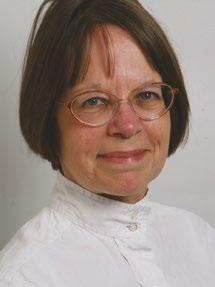
ADELE CHARLES
1952–2024 (NC 1971)
Adele was the truest friend one could wish for. Her unexpected death has left a large hole in the lives of all who knew her.
Adele grew up in Nottingham, the only child of a mother who fled Germany in 1933, and was fluent in German, Hebrew, French and Yiddish. She studied Archaeology and Anthropology before switching to Land Economy, so spending four years at Newnham, the last enjoyed from the bucolic delights of Bottisham.
On graduation she qualified as a Chartered Surveyor, specialising in retail property after training at the Valuation Office. Widely known in the profession, she became a founder member of Kitchen La Frenais Morgan in 1994 and a respected arbitrator and mediator, before retiring in 2009.
Adele had an extraordinarily wide range of interests, reflecting her zest for the outdoors but detestation for the short, dark, days of winter (often beguiled away by Dickens, Trollope and Thackeray). Her love of music was intense and imbued by deep knowledge; Wigmore Hall, the Barbican, the Royal Opera House and Opera Holland Park (where she was a Friend and
volunteer) were favourites. Lucky ‘playmates’ benefitted from her cultural recommendations, not only in London but countrywide.
She was imbued with deep affection for England, including the Royal Family, English history and the delights of London, especially her own neighbourhood of Notting Hill. Summer meant cricket matches (preferably in person, failing which she would follow the radio commentary avidly) and tennis, where Queens Club was an annual fixture, and watching Wimbledon was sacrosanct.
Trekking in Nepal and Bhutan (with associated trips to India and New Zealand) was a passion, while family ties prompted regular trips to the USA. An intrepid rambler and a lifetime member of the National Trust, she comprehensively explored the UK and crisscrossed Europe.
My memories of Adele include her sense of fun, her laughter, her lovely speaking voice, her genuine empathy and willingness to help in times of trouble (though never ‘needy’ herself), her incisiveness and her commitment to living life to the full.
Gillian Smith ( Oppenheim , NC 1971) (friend)
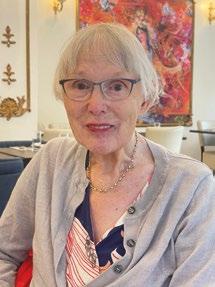
EFFIE MARY CROMPTON
1937–2025 ( MARSHALL , NC 1955)
Effie was born in Worsley, Lancashire. At school, she flourished at poetry readings and became an Associate of the London College of Music. She became a Queen’s Guide and later ran the 36th Cambridgeshire Company for seventeen years.
Effie won a scholarship to read Maths at Newnham, following her sister Kathleen (NC 1953). In Part I of the Tripos she was placed in class I. In Part II she became a Senior Optime after spending a month in an isolation hospital just before the exam. Effie won a Blue in lacrosse, and played for English Universities against American Universities.
After graduation, she gained her CCE and embarked on her chosen career as a qualified Maths teacher. She taught at Bedford High School for Girls for three years before we married, but decided not to teach until she had cared for our children through their early years. She happily worked from home for the Journal of the London Mathematical Society and became co-editor with Dr R. F. Churchhouse. Teaching resumed when she joined the Maths staff at Hinchingbrooke School, Huntingdon.
We moved to Scotland in 1985 and she was appointed head of Maths at Westbourne School for Girls and on merger with The Glasgow Academy, she established its new department of Computing Science. After retirement, Effie gained a first-class degree in Computing Science from the Open University; her dissertation was about neural networks, now an integral element of AI.
Our home moved to Tyndrum, Perthshire, where Effie became Chair of Strathfillan Community Development Trust. She established a children’s summer holiday club and created Strathfillan Community Forest, which is planted with native trees.
Effie was a gentle, humble and caring person who enriched the lives of many people. She was a loving mother for John, Tessa and Virginia, and grandma for James, Nicky, Ted, Tom, Joris, Effie and Kath. When Virginia married Bill, Effie welcomed his sons Sam and Harry into the family.
Effie and I were married for 63 years. She was always my lovely, supportive and inspiring wife and friend.
David Crompton (husband)
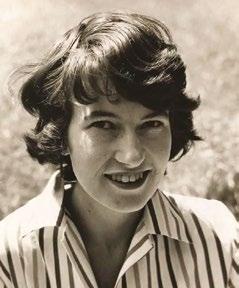
JENNIFER DERBYSHIRE
1939–2024 ( CORMACK , NC 1958)
Jennifer’s earliest memories were of wartime London: hiding underneath the reinforced kitchen table during air raids, rationing, evacuating to Wales and a conscripted father who remained a stranger to her until she was six. It was a traumatic start. In 1950, she attended Streatham Hill School, having failed the 11+ exam. She had little ability at arithmetic, but, in contrast, reading literature was her passion. She devoured books and became a poet from an early age.
At the age of eighteen she applied to Newnham to study English Literature. Being offered a place was a huge achievement and her three years at Newnham were some of the happiest of her life. She loved her degree and read everything on the syllabus and more. She also threw herself into student theatre and acted at the ADC, at one time appearing alongside a youthful Derek Jacobi in Congreve’s Love for Love . When he later became famous in I, Claudius she would remind everyone that he had sharpened his craft by acting with her! It was during her time at Newnham that she met her future husband Brian, who was also
studying English at Queens’. They trained to be teachers at Madingley Hall and she then got her first job at St Paul’s Girls' School. Her teaching career lasted 30 years and involved work in state and private schools. She particularly enjoyed Oxbridge entrance preparation. She passed her love of literature on to her daughter and granddaughter, who both studied English at Cambridge. This was a source of some pride to her.
With Brian she had three children. When the marriage ended, she devoted herself to a new vocation as one of the first female Church Readers, and to her poems, which were regularly published in parish magazines.
In later years she suffered from poor health and she died, surrounded by her family, in a nursing home close to her home in Southwell.
Caroline Derbyshire (daughter)
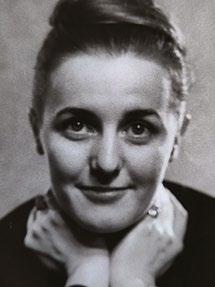
VALERIE FENWICK
1936–2025 ( FOULKE S, NC 1956)
Evacuated to the Devon countryside in the war, Valerie discovered a love of the outdoors and examining things on the ground. At eleven she was joining archaeological excavations during the holidays, staying with local families. Valerie worked ferociously hard at school to be able to study Classics at Cambridge. Once there she had a fine old time and loved Newnham. She made snazzy dinners using only her tiny Baby Belling stove that frequently shorted the College’s power supply.
At the British Museum she learned to preserve, recreate and display artefacts and aged only 25, was sent to Jerusalem to preserve and mount the Dead Sea Scrolls. She married in 1965, and in 1967, with baby Edwina in the wheelbarrow, she set up the renewed excavation at Sutton Hoo, joined in in 1968 by another baby – myself. With the National Maritime Museum, she excavated the Anglo-Saxon Graveney Boat in 1971, which was televised on ITV.
Together with others she founded the Nautical Archaeology Society, which helped to formalise the discipline, and played a crucial role in passing the 1973 Protection of Wrecks Act.
These were two of her proudest achievements. In later life she moved to Suffolk, and with her friend Vic Harrup, published Untold Tales of the Suffolk Sandlings , a book full of riveting historical stories.
Valerie continued to investigate, study and collaborate until her last days dying of bowel cancer at home. She was delighted to learn that the Maritime Archaeology Trust is to create a museum and centre of international learning for nautical archaeology.
She was exceptionally busy, involved and popular, so at times I saw little of her. Yet we were always close, and she was an engaged grandparent. We became even closer in her later life, and together we got her Sutton Hoo article published. The volunteer and NHS support in the community made spending her last months at home together a calm possibility. Caring for her in her dying months, though tough, was a privilege, with a surprising amount of laughter and deep discussions.
Sophie Paul (daughter)
HELEN GREGG
1963–2025 ( MCKAY , NC 1981)
We celebrate Helen’s beautiful life, rich in achievement and filled with happiness. Helen was a proud Scot born in Glasgow, although she spent most of her childhood travelling the world with her family. At Cambridge she read Natural Sciences (Biological), taking Part II Zoology and making strong and lasting friendships. She completed her PhD at Oxford Polytechnic before a successful career as a government research scientist with MAFF, authoring numerous papers. Helen eventually moved to the Central Science Laboratory in York, the city where she met and married Matt and became a wonderful mum to her sons, Alasdair and Ewan. She passed on her passions for learning, birdwatching and just enjoying life. In the early 2000s, Helen began to show signs of multiple sclerosis, but faced her illness with courage and without complaint, leading a full and active life for as long as she could and remaining optimistic to the end. In the words of her husband, Matt: ‘Helen believed in me, she gave me the courage and confidence to go to university. Without her stories of university life I
would never have dreamed of being able to do it. She had a very positive outlook on everything and only ever looked for the good parts in life. With the boys she was always kind, never shouting. She had patience and calmness. As the boys grew up and the MS became more aggressive, the boys learned how to cope and make the best of what was happening. It did mean they had a different home life than most children. They had to do things that children shouldn’t have to; we all did, because we all loved her.
She encouraged the boys to go to university too. Alasdair did Motorsport Engineering at Coventry. Ewan did Astrophysics at Lancaster. She was very proud to see them both graduate. As was I. She is missed so much. I wouldn’t be who I am today without her. She was gentle and bold.’
Matt Gregg (husband)
Mair Rainbow ( Thomas ), Sheila Bennett ( Wearmouth ), Emma Rushton, Sarah Woolven (all NC 1981) (friends)
KATHERINE (MARY) HAGUE
1933–2025 ( ROBERTS , NC 1952)
Mary grew up in Mumbles near Swansea, a place she loved and would return to throughout her life. She attended Llywn-Y-Bryn High School for Girls, Swansea and, despite her teachers’ narrow-minded scepticism and parents’ misgivings – they wanted her an easy train ride away in Swansea – she applied to Cambridge where she read Geography at Newnham. This was truly the time of her life, and where she met fellow student David, who was studying Mathematics at Christ’s, on a blind date. She embraced everything the city and University had to offer and made many lifelong friends.
Married life was not always easy. After their honeymoon, David contracted TB and Mary had an awkward journey to visit him in hospital for over six months. As options were limited to married women in the 1950s, she became a teacher and taught Geography – first in East Ham and then in Hornchurch, Essex, where she and David raised their family of three children and two cats. Her students long after remembered her entertaining blackboard drawings to illustrate her lessons.
Mary made good friends easily and kept them
forever. She was indeed happiest with friends and family around her, sharing her delicious food, drink and stories and enjoying her famed hospitality. Other interests included reading, gardening, the arts and travel. She was an enthusiastic camper, and we enjoyed incredible meals rustled up on camping gas. Her untapped ability as a writer – her dream was to be an advertising copywriter – was demonstrated in her witty holiday diaries, some of which were typed up and put online. A true polymath, she had a sharp brain and, amongst other things, an incredible prowess for remembering poems, songs and ditties, which she brought out at every appropriate moment. Though David succumbed to dementia in 2012, Mary continued holidaying and entertaining until the final months of her life. She was very much loved and will be hugely missed by her many friends, her children Andrew, Sarah and Gareth, and her six grandchildren.
Andrew, Sarah, Gareth Hague (children)
JOSE HARRIS
1941–2023 ( CHAMBERS , NC 1959)
Jose read History at Newnham. A PhD followed, and after teaching at University College London (1964–66), she moved to a research fellowship at Nuffield College, Oxford (1966–69). She then taught for a decade at the London School of Economics.
In 1968 she married the legal philosopher James Harris, whose importance in Jose’s intellectual and personal life was incalculable. They had met as undergraduates at a Christian retreat. They were perfectly matched in values, intellectual interests and a shared Christian faith. After a number of years living opposite the Arsenal football ground in North London, they made North Oxford their home. They had one son, Hugh.
In 1978 Jose took up a Tutorial Fellowship at St Catherine’s College, Oxford; only the second woman Fellow. She was an inspirational Tutor who made a lifelong impression on her students. She thought punctuality an overrated virtue. Visiting speakers in an Oxford seminar would glimpse a slight figure sliding in at the back. She could be relied on to ask, not the first, but the most searching question. Her real Exocets were
reserved for senior scholars.
She was promoted to Reader in Modern History at Oxford in 1990 and Professor in 1996. She was the author of a magnificent biography of William Beveridge that established her as the pre-eminent historian of the British welfare state. The later years of her career were clouded by Jim’s death from cancer in 2004 and she never produced the major last work that many hoped for.
In retirement she relished the company of her two grandchildren. She took great pleasure in her former students’ careers, but her compliments were rarely straightforward: ‘I really enjoyed your book. It was so much better than the one I thought you would write.’
Hugh Harris (son), with extracts from Stuart Jones’ obituary in The Guardian
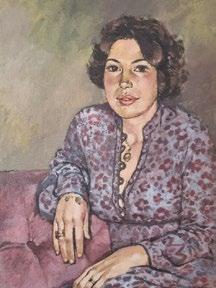
KATHARINE MARY HOLMES
1951–2024 ( NICHOLSON , NC 1970)
On arriving at Newnham in 1970 to read Medical Sciences, Katharine adopted the name Kitty at her Tutor’s prompting, to distinguish her from other Katharines arriving that year.
Kitty was born in Manchester and her family lived in several towns and cities as they followed her father’s work around the north of England. He came to rest as a bank manager in Newcastle upon Tyne when, for the second time in her life, Kitty attended Gosforth Grammar School. The headmaster provided his study for her to sit her entrance exam, and she repaid the courtesy by being the school’s first girl to go up to Cambridge.
She made lifelong friends at Cambridge, living the full undergraduate life. With her friend Sonia Swart (NC 1970) they amused passers-by by walking into the city centre together wearing each other’s clogs: one yellow clog and one red clog each. At Cambridge she met her future husband, Boyd. They were married in Great St Mary’s in April 1975, with Sonia and Barbara Melrose ( Southworth , NC 1970) as two of her bridesmaids.
After graduating in 1973 Kitty studied Clinical
Medicine at St Mary’s Hospital, London, sitting her Cambridge finals in 1976. She was one of the first of her cohort to achieve membership of the Royal Colleges of Physicians.
Kitty and Boyd made their home in Cumbria, where Kitty worked as a family doctor until retiring in 2012. Offshore sailing became their joint pursuit: they were awarded trophies for their six-week Norwegian cruise in 2009 and a circumnavigation of Ireland in 2018.
Kitty’s eldest daughter followed her to read Medical Sciences at Cambridge (Fitzwilliam 2000) and is now a consultant microbiologist. Her other two daughters are chartered accountants. She had six grandchildren.
Kitty was buried in her village churchyard on a sunny late summer’s day in a plot looking across to her treasured Old Vicarage home after a funeral service led by her son-in-law in the village church, attended again by her bridesmaids, and Sue Colwell (NC 1970).
Boyd Holmes (husband)
Peter Harrison
ALISON ASHE JACKSON
1957–2025 ( PITE , NC 1975)
‘For a science candidate to take the opportunity, in the General Paper, to write a sonnet was unusual,’ her Newnham entrance interviewer commented. Alison wondered if that poem was the reason she was offered a place to read Medical Sciences. But she remained an avid reader and student of words throughout her life. In retirement she undertook a Theology degree so she could read the Bible in its original languages: she completed eight out of twelve modules before her life was cut short by ovarian cancer, but she was awarded a full first-class degree because of her excellent marks.
Her parents worked in Nigeria, where Alison lived her first six years. Africans were frequent guests at their home in Worcester. She became a Christian in her teenage years through dedicated youth group leaders. She enjoyed the teaching at CICCU and led Cambridge ‘Christian Medics’. Overseas service was part of her calling into Medicine.
Alison spotted her future husband on the second day of term in 1975, but he was famously slow on the uptake, and they only started dating in their last term. They both moved to London
for clinical studies and were married before their final year. Alison trained as a GP, and they had three children (Philip, Theo and Evelyn). In 1991, they relocated to Malaysia for six years as lecturers in Family Medicine and Haematology. They helped develop postgraduate medical courses and enjoyed mentoring the Christian medical students. She was awarded an MD for research on Malaysian folk beliefs about smoking.
The family returned to UK in 1997, and Alison became a GP principal in Birmingham and then Coventry. Her Part II Psychology prompted her to prioritise patients’ mental health. She was a lifelong opponent of euthanasia, arguing that vulnerable dying patients often had depression and poor family support, and needed better social and mental health care, not assisted suicide. Alison and Nick returned to lecture in Malaysia, 2015–2019. She enjoyed supporting her family, especially when Evelyn and her husband adopted two children in 2022.
Nick Jackson (husband)
LORNA ELISABETH KELLETT
1938–2024 ( BURGESS , NC 1957)
Lorna arrived in Peile from Talbot Heath School, Bournemouth, to read Classics, only to spend her first weeks in the sanatorium with severe flu. Happily she recovered in time to be introduced to Adrian (a Trinity Hall lawyer), by fellow classicist and Peileite Janine Gandon, who had studied A/L Greek with him. Much dancing, canoeing and backpacking round Greece (where Lorna discovered that fluency in classical Greek had much the same impact on the natives as Chaucerian language in modern Britain) led to their engagement on the steps of the Parthenon. They were married in 1962, after Lorna had started her teaching career at St Elphin’s, Darley Dale.
The arrival of three children and moving round the country for Adrian’s career caused only temporary pauses in her teaching of Classics at all levels. Short stints at Wymondham College, Ely High School and Manchester High School were followed by 25 years at the Blyth Jex School, Norwich, Norwich School and Paston Sixth Form College.
Lorna became committed to the promotion of Classics in state schools, and served as National
Secretary of the Joint Association of Classics Teachers. She co-authored the first edition of the Cambridge Latin Course, and was a national examiner and moderator for the Cambridge Schools Examination Board. After several years as the Director of the Latin Summer School in Bath, she focussed on adult education, leading study trips to Greece and Italy (visiting Pompeii over 30 times!), and directing the Reading Latin weekends at Madingley Hall.
Lorna’s achievements in these areas reflected her outstanding organisational skills (e.g., what would you do with fifteen sixth-formers stranded in London at 5.45 pm after visiting the British Museum, when informed that all trains back to Norwich had been cancelled? She got them by a roundabout route to Ipswich, having prompted the Head to organise parental pickups by car…!). But her greatest satisfaction from years of devoted teaching was in encountering long-past students who thanked her for the lasting impact she had made on their lives. As one put it in a funeral tribute: ‘You were my best teacher.’
Adrian Kellett (husband)
BRENDA LANG
1924–2025 ( BENTLEY , NC 1946)
Brenda Bentley was born in Cheltenham with her identical twin sister Naida. Their father was a teacher who had been in the Machine Gun Corps in the First World War, was gassed and won the Military Cross for gallantry. Brenda and Naida were educated in Long Eaton in Nottinghamshire. They attended Derby Road School, Wellington Street School and then Long Eaton Secondary School on scholarships. They were a musical family.
In 1939, the girls had been accepted by Cambridge but deferred their University places to join the Wrens (Women’s Royal Naval Service). Together they went to Bletchley Park in 1943 and entered Naval Section IV, where they dealt with the material produced by the ‘Bombe’ device, interpreting data from Enigma. They recalled happy times at Bletchley but never disclosed what they were doing to friends or family, until the activities of Bletchley Park became common knowledge.
After the war, they both read English, Brenda at Newnham and Naida at Girton. (They were obliged by the University, as twins, to go to different colleges.)
Brenda (left) and Naida visiting Bletchley Park in 2017
Brenda played cricket (as wicket keeper) for Cambridge University. During her time there she met John Lang, a tall and handsome South African. They settled down in Johannesburg to raise a family. John worked as a lawyer and became increasingly involved in the civil rights and anti-apartheid movement. His defence of the Black civil rights protesters at the Treason trial in 1960, as well as his activism brought him into conflict with the apartheid establishment, leading to the family coming back to the UK. After a time in London, they moved to Kenya in 1968. Upon John’s death in 1996, Brenda returned to the UK and moved into Naida’s house in Oxford.
On 26 February 2024 the twins celebrated their 100th birthday with 60 family and friends at a special party in Oxford, complete with birthday cards from Newnham, Bletchley Park and the King and Queen, among many others. Naida and Brenda both died peacefully at home in Summertown, Oxford, six months apart. Their family miss them.
John Tudor (husband of Brenda's daughter Hilary; Selwyn 1978)
ANGELA LIVINGSTONE
1934–2025 ( HOBBS , NC 1953)
Angela Livingstone was Professor of Russian Literature at the University of Essex, a gifted linguist, poet, teacher and renowned translator of twentieth-century Russian poetry and prose, especially that of Boris Pasternak, Marina Tsvetaeva and Andrei Platonov.
Born Angela Hobbs in Hayes, Middlesex, her love of languages was sparked at Greenford County Grammar School and flourished at Newnham, where she encountered several inspirational teachers, and was awarded a double First in German and Russian in 1956. There she met her husband, Rodney Livingstone, who was studying German, and they went to Australia for several years, where Angela taught Russian and had two children, Sonia and Benjamin.
When the marriage broke down, she joined the new University of Essex. She threw herself into building its Department of Literature, with its provocatively comparative and interdisciplinary approach, for more than 30 years. She gained her PhD in 1986, became a Professor in 1992, Head of Department in 1992–95 and Professor Emeritus on her retirement in 2006.
Angela relished the Russian language for its richness, rhythms and the translation challenges it posed, reflecting insightfully on these in her critical essays on Russian literature and her commentaries about translation. She travelled to Russia multiple times for archival research, also doing her best to support her academic friends who worked in difficult conditions behind the ‘Iron Curtain’. Her translations won several prizes, including the Heldt Prize for Tsvetaeva’s The Ratcatcher, a Lyrical Satire in 2000 and the Rossica Translation Prize for Tsvetaeva’s Phaedra (A Drama in Verse) in 2014. She published her own poems as Certain Roses in 2017.
Angela had a talent for sustaining deep friendships over many years. Her home was always open and welcoming to friends and family, colleagues, overseas visitors and students. People dropped by, joined in celebrations, read poetry, played music, talked about things that mattered. She married Alan Palmer in 2014, though they had been together since 1977, and they spent their retirement together doing several of England’s longdistance walks, and spending time with their grandchildren.
Sonia and Ben Livingstone (children)
JOYCE LOWE
1933–2024 ( HOWARTH, NC 1951)
Joyce was born in Lancashire, in the mill town of Waterfoot. She attended Waterfoot Council Primary School, then Bacup & Rawtenstall Grammar School from 1944 to 1951. Joyce’s parents owned a newsagent shop in Waterfoot, and with modest incomes, Joyce succeeded in being awarded the British Government state scholarship, Mary Ewart scholarship and Francis Balfour scholarship.
At Newnham Joyce read Natural Sciences, specialising in Botany, and went on to a PhD in the same subject. Both men and women attended lectures and practical classes together.
Joyce was allocated the same table as Richard Lowe (Sidney Sussex), and they found that while collaborating they achieved more than working separately. In 1957 they married, and this was the start of a romance lasting seven decades.
On leaving Cambridge, Richard joined the Colonial Forestry Service in Nigeria, West Africa, Joyce joined him, and they lived and worked in Nigeria for nearly 40 years, including during the civil war in the 1960s.
Joyce had three children, and became an established botanist, lecturing in Botany at the
University of Ibadan, and also became a Reader. Joyce significantly contributed to the number of species stored in the herbarium at the University, increasing this from 10,000 to nearly 20,000; in addition, she sent numerous specimens to the National Herbarium at Kew. In 2009, Nigeria honoured Joyce with membership of the Order of the Federal Republic. The Nigerian Journal of Botany thanked her for services to Botany.
She retired back to the UK in 1994, living in Newtown Linford, Leicestershire. She enjoyed many years of village life, singing with the choral society and church choir, playing the church organ and attending various local scientific societies.
Joyce passed away at 91½ years. We remember her as a kind and considerate person who saw the world not through what she could achieve for herself, but how she could help others.
Jess Rigg, Hannah Clements and Edward Lowe (children)
ELIZABETH (RACHEL) MCMULLEN
1939–2025 (NC 1958)
Rachel was born in Dublin, the second of Launce McMullen and Claire Campbell’s four children. Her father, Head Brewer at Guinness, encouraged his children to follow his own educational path to England, which for Rachel meant Queen Anne’s School, Caversham and then Cambridge; so, somewhat to her surprise, she arrived at Newnham to study Classics in 1958.
She spent three very happy years at Newnham and made lifelong friendships, including with her tutors in Classics, Joyce Reynolds and Pat Easterling, whom she always credited for the intellectual rigour which was so important in her professional life. After graduation, and a year at The Bookseller magazine in London, she started a Postgraduate Diploma in Social Work at Bedford College.
Rachel inherited her father’s love of sailing, and on a summer cruise in Norway she got to know Drummond Matthews, who had recently completed his PhD in Geology at King’s. Rachel and Drum were married in 1963, their son Patrick was born in 1966, and daughter Juliet in 1968.
Back in Cambridge, Rachel became Child Care Officer and then Generic Social Worker with Cambridgeshire County Council, later specialising in the difficult areas of child protection, fostering and adoption and was valued as a wise and supportive counsellor and friend for both colleagues and clients. After retirement in 1999, she stayed involved as a volunteer for Victim Support and independent panel member for the Coram Adoption charity.
Rachel and Drum had divorced in 1980, and in 2008 she married her long-term partner, David. Always Irish, she hadn’t expected to spend her life in Cambridge, and used a small legacy to buy a cottage in West Cork, which became her favourite place to be.
She was strongly socialist in outlook, a sceptical supporter of the Labour Party, but her great gifts were for friendship, empathy, positivity and laughter. She was loved by many, and at the celebration of her life in the College gardens the marquee was filled with family and friends from all stages of her life, remembering her with huge affection.
David
(husband), Patrick and Juliet (children)
JANET (JINTY) NELSON
1942–2024 ( MUIR , NC 1961)
Jinty was born in Blackpool to Scottish parents in 1942, the eldest of three sisters. She went to Keswick Grammar School, before coming up to Newnham to study History.
After her PhD, Jinty joined King’s College London in 1970, retiring as Professor and Director of the Centre for Late Antique and Medieval Studies in 2007. Elected a Fellow of the Royal Historical Society in 1979, Jinty became the Society's first female President in 2001. Jinty was appointed Dame Commander of the British Empire (DBE) in 2006, and the Jinty Nelson Award for Inspirational Teaching & Supervision in History was established by the Royal Historical Society in 2018.
Her research focused on early medieval Europe, with over 140 papers on kingship, government, political ideas, religion and ritual, and women’s history. Her last book King and Emperor , a biography of Charlemagne, was published in 2019. She is remembered for her passionate commitment to History, her deep interest in students and colleagues, and her collaborative and non-hierarchical approach. Jinty is much missed by her two children, five
grandchildren and lifelong Newnham friends. Sarah Meron remembers: ‘Jinty was the brightest of all those whom I knew. Highly intelligent, diligent and scholarly, and one of the kindest and most empathetic people I have ever known.’ Jan Marsh calls Jinty ‘very modest, even shy, but already special, with the sharpest mind and warmest heart. She helped a blind fellow student manage daily and scholarly tasks. Jinty was chosen to represent Newnham on University Challenge, and in her third year was elected Senior Student. In her end-of-year speech, she brought in both her Scottish identity – very valued – and her feminist values – avant la lettre – quoting Robert Burns, with his “toast to the lassies”.’ Celia Hawkesworth remembers ‘Jinty’s slight figure, her informal clothing, fundamental modesty, her warm readiness to listen to others and make them feel uniquely valued, contrasted with her sharp mind and exceptional academic achievements.’
Lizzie Nelson (daughter) with help from Sarah Meron, Jan Marsh and Celia Hawkesworth (all NC 1961) (friends)
ELIZABETH PAPANIKOLAOU
1933–2025 ( COCHRANE , NC 1953)
My mother was born in Barnet, London and lived in Mill Hill until the end of the war. She then moved to Oxford and went to school in Headington, from where she got a place to read Classics at Newnham. She achieved a First in Part II and was awarded the Hilda Richardson Prize in 1956.
Before she started at Newnham she had visited Greece, since her subject was Classics, and there she met my dad, John Papanikolaou. It was love at first sight, and as a result she overstayed her time in Greece. She promised him that after she finished her studies she would return to marry him, which she did in 1957. Elizabeth lived in Greece for over 40 years and had a daughter, Magda and a son, Nicholas. When her husband passed away, she went back to live in Oxford and we enjoyed travelling together for the last years of her life. In her final days, Dr Harriet Roebuck, Consultant in Palliative Medicine and the Palliative Care team at Colchester Hospital took very good care of Mum, respecting her wishes.
Nicholas Papanikolaou (son) with additional information from the Newnham College Register
DIANA PHILLIPS
1930–2024 ( HAKIM , NC 1948)
Going to Newnham in 1948 (to read History) was life-changing for our mother. She had spent the war years within the limited confines of a girls’ boarding school that had evacuated to midWales. Cambridge gave her freedom – and she absolutely loved it. She was one of the first batch of women to be full members of the University from day one and wrote about this 20 years later in an account for the College Archives: ‘ In practical terms this meant acquiring a gown… These first women’s gowns were not a success. The voluminous sleeves billowed out behind like a parachute… They caught on door handles, knocked over ink bottles and were almost lethal on a bicycle. So they were soon altered, the College employing sewing women to cut a large segment out of each sleeve… Gowns were worn for all lectures, for ‘hall’ every evening, in all college chapels, in the University Library and whenever one went out after dark. In the main we regarded them as a nuisance rather than as a symbol of the equality for which our predecessors had fought so long.’
After Cambridge, Diana passed the highly competitive Civil Service exams, which was particularly unusual for women back then. She joined the Ministry of Public Buildings and Works, where (among other jobs) she became Secretary to the Historic Buildings Council, continuing to pursue her love of History. It was at work that she met Alan Phillips. They married in 1959 and were together for 55 years until his death. After we were born, Diana took a thirteenyear career-break to be a full-time mother. It was to her absolute delight (and ours!) that we both followed her to Newnham in our turn.
Diana returned to the Civil Service when we were at secondary school. She was involved in setting up and joining the staff of English Heritage in 1983. She took early retirement in 1986 and enjoyed an extremely active and happy retirement until she died at the age of 94.
Pat Phillips (NC 1981) and Rachel Phillips (NC 1983) (daughters)
PATIENCE PURDY
1929–2024 ( FAIRBAIRN , NC 1948)
Patience was born in Melbourne, Australia and grew up on a sheep station near Skipton in Victoria. She was the youngest of the four children of Charles Osbourne Fairbairn and Irene Ridley. She was sent to Cambridge to study Engineering Science because her older brother, Charles, had died in the Second World War. She was the first woman to officially graduate in Engineering Science at Cambridge University. After graduation, she worked for Rolls Royce, in the aero-engineering department. There she met my father, John Purdy, who had also attended Cambridge University. Once married, they returned to Cambridge and Mum worked as a computer (a position highlighted in the film Hidden Figures ) in the engineering department.
Four children were produced in the following eight years; Charles and Fiona also studied engineering at Cambridge; Richard, who sadly died aged 43, was a successful engineer with Ove Arup and other civil engineering companies; Helena went into education for business studies and has produced several educational books.
Once her children were settled into school, Mum followed her own interests, and became
the President of the National Council of Women, where she popularised STEM activities for both boys and girls. She became the first female chief governor of the local boys’ public school, Kings. During her time there, she championed the school becoming mixed, because she wanted the best possible students irrespective of gender. She was also passionately concerned about chemicals within our food, particularly aspartame, which has now been recognised as a danger.
In her last few years, she suffered from having two strokes, poor hearing and severe macular degeneration which rendered her legally blind. Despite this she produced Engineers and Women Changed the World: A Memoir (2022).
In the last year she lost a great deal of weight, but she refused to be formally diagnosed. In the final two months her body broke down, but her mind was remarkably clear. I was fortunate to spend three of her last four weeks with her.
Fiona Gaston ( Purdy , NC 1974) (daughter)
SUSAN ELIZABETH RADICE
1953–2025 ( THURLING , NC 1971)
Susan and I met early in our time at Newnham: both reading English, we were assigned the same Tutor for our first term. Walking to Magdalene together, we discovered that we had much in common, both girls of unlikely provenance, both nourished by the Christian tradition. A lifelong friendship was born and it deepened as we went through marriage and childbearing almost in tandem. Susan had four children, three sons and a daughter, to whose education and wellbeing she gave her all throughout her life, relinquishing any potential career to meet greater immediate needs at home. On her sudden death in February this year, she left behind a large extended family including beloved daughters-in-law and grandchildren, all nourished to the end, despite her increasing frailty, at her abundant table. She was a wonderful cook, loving natural ingredients – many grown in her own large vegetable garden and orchard. Ever a provider for body and soul, Susan has also bequeathed her family a collection of her own poetry. I loved her from the start. There was something arresting about her beauty and poise. She held herself with quiet dignity, planted in
the Love that was her secure base. Her gaze was direct, her language measured and clear, often supported by simple movements of arm and hand, rarely betraying the courage it required of her to deliver her utterly unsentimental assessment of a situation or a person. It is telling that her future husband experienced a powerful pre-cognition of their joint destiny in the timbre of her very first words to him. Her sure-footed originality was evident in her academic work. Her dissertation on William Blake broke new ground in the understanding of his writings. This capacity for in-depth research and inspired interpretation continued throughout her life, informing her frank engagement with the people she met and the issues she cared about, from theology to healthcare. She was passionate, even angry at times, and yet always conscious of different perspectives, never forgetting the humanity of those with whom she might be at odds, always a gentle hand lifted up to a higher plane.
Catherine Shea (NC 1971) (friend)
SONIA RYDER
1938–2024 ( MELDRUM , NC 1957)
Sonia was brought up bilingual in French and English in a Christian mission family in Casablanca. Her father, Philip, had been ordained as deacon in Bristol Cathedral. He married Ruth, a Tunisian midwife, and shortly after the birth of Sonia they set off as missionaries to French Morocco. They remained there for nearly 20 years, apart from a perilous evacuation during the war.
Sonia left Casablanca in 1956 to attend Clarendon School in North Wales and came up to study Modern and Medieval languages at Newnham in 1957. There she met and fell in love with Derek Ryder, another linguist. Sonia agreed to his proposal of marriage on the condition that Derek should take up the Christian ministry. Derek took up the challenge and became assistant chaplain at Brentwood School. Later he became Rural Dean of Pewsey. Sonia excelled in her role as vicar’s wife, entertaining lavishly and caring for all the community.
In 1999 Derek and Sonia retired to Calne in Wiltshire and continued an active and productive role in the community. A visitor to their home would not know whether to admire most the
carefully curated antiques, the extensive and erudite library or the connoisseur’s wine cellar. Their son David, born in 1965, had suffered birth anoxia and required additional care. It was in Calne that he died prematurely in 2004. Derek and Sonia were hugely supportive of each other and it was a joy to be in their presence. It was fascinating to watch them conversing together using whichever of English, French or German best suited the meaning they wished to convey. Sonia had a great sense of humour. Asked about supermarkets, she commended Tesco for its role in keeping the crowds out of Waitrose, although she put it more forthrightly.
The loss of Derek in 2015 was a terrible sadness for her and her own illness caused her intense pain for many years. Despite this she had an indomitable spirit and any visit to her left one feeling uplifted by the goodness within Sonia.
Stephen Meldrum (cousin)
HELEN MADGE SCOTT
1927–2024 ( BILBY , NC 1945)
The telegram Helen received on 29 March 1945 bringing her the offer of a place at Newnham changed her life in more ways than one. Just a fortnight into her first term there she met her future husband, Forrest Scott, recently returned from five years of Naval war service. A postgraduate student in English at Jesus, Forrest quickly became the love of Helen’s life (to rival her lifelong devotion to Mathematics). And yet both of these love affairs almost never happened. It was only Helen’s wartime evacuation to a new school which allowed her to study Maths, at a time when many schools allowed girls to take only arts subjects at senior levels.
While at Newnham, Helen continued her love of sport from her school days, when she had been both Head Girl and Games Captain. She was soon selected to play for the Cambridge University netball team, which she later captained.
Following graduation, Helen spent a year teaching Mathematics at Lowestoft Grammar School before marrying Forrest and moving to Sheffield, where he was teaching at the
University. With their three children, they emigrated to New Zealand in 1964 for Forrest to take up a Chair in English Language at the University of Auckland.
It was not long before Helen’s professional talents came to the notice of the Mathematics Department at Epsom Girls Grammar School and she recommenced her teaching career. Later she also lectured at the university, teaching both Pure Maths in the Maths Department and Logic in the Department of Philosophy.
Following retirement, Helen continued to teach on a voluntary basis in the community. A committed Christian, she felt this was her best way to serve. She was active as a teacher until she was 95 years old. Helen had cared for Forrest at home until his death in 2006, and she likewise enjoyed the care of her family during her own final years.
Once aptly described as a ‘rara avis’, Helen always retained her extraordinary zest for life. She never forgot the benefit and blessing of her time at Newnham College.
Deborah Penk (daughter)
CAROLYN CURTIS SHAW
1929–2025 ( FOULDS , NC 1947)
Carol was the first girl from The Mount Quaker School in York to apply for Cambridge (she had to send off for the papers herself), and when she got her place at Newnham to read English, the whole school got a holiday. Carol blossomed at Cambridge, enjoying undergraduate life to the full. She graduated in 1950, before the University began to award full degrees to women, but in 1998 she and her friend Nina Wedderburn, also a Newnham graduate, collected their degrees at last.
In Cambridge she met Richard Robson, studying at Trinity Hall, who became her husband. In 1953, Rikki got a job as an adviser to the Sudanese government. My mother was so nervous about taking a small child to Africa that she filled her coat pockets with National Health orange juice bottles, much to the amusement of the airport officials In Sudan.
Carol worked part time, in the museum in Khartoum and teaching English. After Rikki died in a car accident in 1956, Carol and I came back to live in London. She bravely picked up the pieces of her life and got herself a job with Oxford University Press as a very junior editor
of schoolbooks for Ghana and Nigeria. She asked to be sent to visit the countries where the textbooks she was working on were used, and somewhat reluctantly OUP agreed. She was then able to help change the kind of books that were available, realising that what was needed were pictures and names that reflected the lives of the children who were learning from them. She was a meticulous and excellent editor, and worked for the BBC English by Radio, for Ginn and for OUP in Ethiopia.
Marriage to her second husband, Warren Shaw, in 1975, took Carol abroad again. Warren worked for the British Council, in Munich, Tanzania and Ghana. Carol made her final home in Ealing to be near me and her three grandchildren, and spent contented years gardening, volunteering for Age Concern, visiting galleries, compiling a family archive and writing a book about family recipes.
Cressida Miles (daughter)
MARY SHIVANANDAN
1932–2025 ( SHEEHY , NC 1950)
The third child of Sir John and Lady Jean Sheehy, Mary was born in Rangoon, Burma (now Yangon, Myanmar), where her father was a member of the Indian Civil Service and Deputy Secretary to the Burmese Government. Mary, along with her brother and sister, spent her early childhood in England. She was evacuated to Australia during the war, where she attended the Convent of the Sacred Heart school in Rose Bay, Sydney. After the war she finished her secondary education at St Paul’s Girls’ School in London.
She read Classics at Newnham, graduating with honours in 1954; her degree was elevated to a master’s in 1967. After university, Mary worked for the BBC in London from 1954 to 1956. She emigrated to Toronto in 1956, where she worked as a production assistant for the CBC. It was here that she met and married Dr Kandiah Shivanandan, an astrophysicist. They started their married life in Cambridge, Massachusetts, and then moved to the Washington, DC area in 1962. Mary and Kandy enjoyed almost 50 years of marriage until his death in 2010.
Mary was a scholar at heart. Once her two children left for university, Mary earned her
Licentiate in Sacred Theology (Magna Cum Laude) in 1991 and Doctorate in Sacred Theology (Magna Cum Laude) in 1954, both from the John Paul II Institute at the Catholic University of America in Washington, DC. She went on to become a Professor of Theology at the John Paul II Institute from 1989 to 2012. Before re-entering academic life, Mary spent many years from the early 1970s as a researcher, writer and consultant on marriage, family, sexuality and natural family planning. She is the author of numerous articles and books, most notably Crossing the Threshold of Love: A New Vision of Marriage
Mary and Kandy enjoyed travelling to visit friends and family in Malaysia, Singapore, Sri Lanka, Australia, Ireland and England. As her Catholicism was at the centre of her life, she made two pilgrimages to Lourdes, France.
Marianne Rhatigan (daughter)
JANE ELIZABETH SNOWDEN
1951–2024 (NC 1969)
Jane was educated at St Helen’s Girl School, Northwood, before going up to Newnham to read History. Upon graduation she trained in librarianship. As Assistant Librarian at the Institute of Personnel Management (IPM), she carried out a full re-cataloguing of the library – one of the largest management libraries in Europe – and helped oversee the Institute’s move from central London to new premises in Wimbledon; not something the theatre and art-loving Jane found wholly to her satisfaction. It was at the IPM that she met Steve. They married in 1984 and celebrated their ruby anniversary in June 2024.
After the IPM, Jane was information manager at Lehman Brothers in the City. She then moved to a similar role at Charterhouse, an investment bank, and finally to an outplacement consultancy. She retired in 2010.
The eulogist at her funeral highlighted Jane’s generosity: of spirit, time and money. She was a firm friend to many. She volunteered for many bodies: the Friends of City Churches, where she ‘church-sat’ with her friend Denise every month, the Royal Hospital for Neuro-Disability
and Morden Hall Park, a National Trust property in Southwest London. She was very active in her local church, Holy Trinity, Wandsworth, and enjoyed working with children, in establishing a Mums and Tots group and helping with a Southfields Brownie pack for over 25 years. A friend who knew Jane both at school and at university said that she ‘blossomed’ at Newnham, enjoying everything it had to offer. She certainly made some very close and longstanding friendships lasting over 50 years. Jane and Steve didn’t have any children, but she acted as a loving godparent to those of several of her friends, and was a favourite aunt to Steve’s nephews, nieces, great-nephews and greatnieces.
Jane died of complications caused by motor neurone disease. She was still emailing and texting friends to the last. The church was packed for her funeral; testimony to the love, honour and respect with which she was held. She is greatly missed.
Steve Palmer (husband)
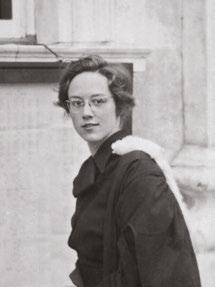
CHRISTINE MARGARET SPEAK
1930–2025 ( MYERS , NC 1948)
Although Christine was born in Uppingham, her family soon moved to Leicester, where she attended Wyggeston Girls’ Grammar School. At Cambridge she read Geography and Theology, made lifelong friends, obtained a rowing Blue and met her future husband, Geoffrey Speak. They married in 1952 and moved to Wakefield, where Christine taught and Geoffrey was ordained in the Anglican Church. It was their shared faith that had brought them together at Cambridge. At a Church Missionary Society meeting, they met the Bishop of Hong Kong, who urged them to move there. So, in 1954, together with their six-week-old baby, they set sail for Hong Kong, which was to be their home for the next 32 years and where the rest of their five children were born.
Christine taught for fifteen years at St Paul’s Boys School and then spent fifteen years as a lecturer in Geographical Education at the University of Hong Kong. She also wrote or coauthored seven geography textbooks aimed mainly at the Hong Kong market and numerous articles for various publications. In 1963, her geographical expertise was also recognised
when she was elected a Fellow of the Royal Geographical Society.
In 1985, Christine and Geoffrey left Hong Kong and moved to a village in Wiltshire where they both were occupied with charitable activities and seeing family. Christine also obtained her MPhil from Bath University in 1988. Travel was a lifelong passion for Christine, starting from when she visited France in 1948 where she researched wine production. Throughout her long life, she travelled extensively and alleged that she had visited more countries than Michael Palin. At the age of 93, undaunted by trials of old age, she returned to Hong Kong to attend the 170th anniversary of St Paul’s, where she had taught, and then travelled on to Australia to see a former colleague. Just before her final illness, she made a last trip to France, where her love of travel had started at eighteen years old.
Rachel
Gardner (NC 1975, daughter)
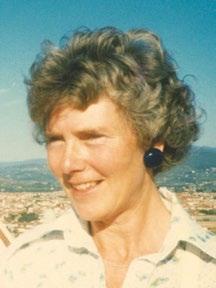
MARY CECILIA TREDENNICK
1933–2024 (NC 1952)
Mary Cecilia Tredennick, a lifelong enthusiast of the Classics, history and music, is fondly remembered for her commitment to learning, teaching and helping others.
Mary’s early childhood was punctuated by her evacuation to Canada during the Second World War, along with her brother and sister. There she developed an appreciation for nature and music, learning both piano and cello. Following in her father, Professor Hugh Tredennick’s footsteps, she studied Classics at Cambridge, beginning a lifelong interest in Greek, Roman and ancient history.
She taught Classics, Divinity, Religious Education and English at various schools across the country, and eventually settled down in Rugby where she served as Vice-Principal and Bursar of William Temple College. She also spent over 25 years tutoring at the Percival Guildhouse in Rugby, where she shared her knowledge of literature, history and art with students.
In her free time, Mary enjoyed travelling, especially in Europe, often on study tours. Her trips were a source of enjoyment and provided stories and photographs she shared with family and friends.
Mary was a very generous person, regularly supporting local and national charities in art, music and the environment, including the Woodland Trust. She valued time outdoors, enjoyed swimming and walking, and found meaning in her connections to places she visited, such as Ireland. Mary was always quick to share a laugh, express her views and encourage others to explore new interests. She will be greatly missed by her family and her many friends.
Richard Tredennick (nephew)
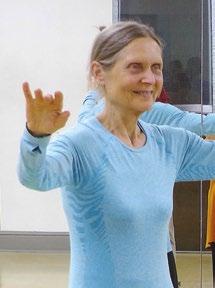
JANE PAMELA WARD
1948–2024 (NC 1967)
‘Jane was a beacon of light and strength, bringing inspiration and encouragement to us all,’ wrote one of the many seniors who joined Jane’s health and fitness classes in the latter part of her life. ‘She was an amazing, strong woman and a role model,’ wrote another in a book of remembrance opened by the Central YMCA in London.
Jane’s life spanned a wide range of commitments and endeavours. She had three careers – working for global human rights, as a professional nurse and promoting health and wellbeing through exercise – all part of a life of international service.
After graduating from Newnham, she worked for seventeen years at the headquarters of Amnesty International – first as the researcher on Europe, then in the Secretary General’s Office coordinating the movement’s international governance. Her life and work took her to countries in all regions of the world.
When she was 41, she changed career, qualified as a State Registered Nurse and worked in cardiac intensive care at St Bartholomew’s Hospital. She was subsequently invited to
help develop the pioneering ‘Prescription for Exercise’ initiative introduced by London’s Islington Council. This enabled doctors, in liaison with local leisure centres, to prescribe exercise for their patients.
This innovative role led to Jane’s third career leading exercise programmes in numerous leisure and community centres and serving as a consultant to the UK’s national Later Life Training programme. To this she brought her 30 years’ experience as a student of Tai Chi and her professional qualifications in Strength and Conditioning exercise.
Throughout her life, Jane maintained her deep commitment to the protection of human rights worldwide. She was a long-time member of the Islington and Hackney Amnesty International Group, and a staunch supporter of numerous organisations, including Freedom from Torture.
Jane wished to continue her life of service after her death by donating her body to medical science for the training of the next generation of doctors. Her life of profound care and unending commitment to others was a deeply meaningful and inspiring gift to us all.
Richard Reoch (husband)
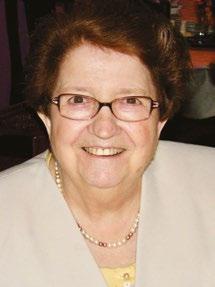
RACHEL WARDEN
1930–2024 ( HUDSON , NC 1949)
Rachel studied Medicine at Newnham before embarking on a long career in the service of others. After completing further medical training at the London Hospital, Rachel married Russell, a Baptist minister, in 1957. They were sent by the Baptist Missionary Society to Belgium to study French and Tropical Medicine in preparation for their calling to missionary work in the Congo (then known as Zaire).
In Pimu par Lisala, Rachel ran the hospital and maternity units, training nurses and often performing emergency operations under challenging conditions, as patients came from a 50-kilometre radius. Her care with a smile and her use of Lingala and Lingombi dialects put patients at ease. Rachel and Russell were a strong team supporting each other and they kept the hospital running even during the Congo Crisis when the other missionaries left. The locals never forgot this. Rachel’s three children were all born and home-tutored in the Congo and inherited a love for Winnie-the-Pooh!
Upon returning to the UK in 1970, Rachel gained further qualifications to become a GP. She also worked in hospitals in Chelmsford
as a registrar in gynaecology and colposcopy clinics before becoming senior partner at the Coach House Stock Surgery. Dedicated to her patients, Rachel often worked very long hours. She continued working as a locum GP until age 75, always passionate about the latest medical advances through ongoing professional development at Addenbrooke's Hospital. Throughout her life, Rachel's faith, determination and caring nature enabled her to be a wonderful wife, mother and doctor. Her commitment to Medicine, which started at Newnham, meant that countless thankful patients benefited from her skills and compassion across continents. Rachel leaves an impactful legacy of service.
Sarah Minter (daughter)
MARGARET ROSEMARY WEITKAMP
1938–2024 ( BURROWS , NC 1957)
Margaret was born in Epsom, Surrey. Her parents supported her to gain a better education than had been available to them and she secured a scholarship to read History at Newnham. At Cambridge she met her husband, Lowell Weitkamp, and made plans to move to the United States.
After her marriage broke down, Margaret embarked on a long and successful career in affordable housing. Initially, she worked as a property manager in the housing cooperative in which she lived, enabling her to develop her career while also supporting her young daughter. Her drive to establish her career in a time when few women worked in the sector was matched by her deep concern for the people she worked with and the individuals living in the housing developments she managed.
In 1977 an opportunity arose for her to join the National Housing Law Project, and she moved west to California where she remained for the rest of her life. Later on, she managed a national inventory of 100s of the most challenging developments. This was made all the more
difficult by the explosion in use of crack cocaine and its impact on inner cities. Her final career move was to an organisation that focused on building and operating housing for seniors. Her legacy can be best seen in those she mentored. She recognised those with an extra spark whether they were just starting out or perhaps whose qualities had been overlooked by others. In doing so she left a mark on people and organisations for years after she had moved on. Margaret leaves behind a daughter, Emma Weitkamp, who lives with her husband, Rod Hafner, and their three children in England, a brother, Paul Burrows, and his family and her long-time partner, Jonathan Vines, in California. Those who wish to honour Margaret with a charitable donation should consider Covenant House or any other organisation focused on helping the homeless.
Emma Weitkamp (NC 1987) (daughter)
CAROLYN MARGARET WHITE
1943–2025 (NC 1962)
Carolyn was very lively, positive and creative, with a wide range of interests which she shared generously, and a great gift for friendship. She had a very distinctive and individual personality which left its mark on everyone who knew her. She was the elder daughter of Rosalie and Stanley White, growing up in Yorkshire and attending Harrogate Grammar School. At the age of seventeen she was awarded an Open Scholarship to Newnham to read History, obtaining a Double First. Newnham and Cambridge History were formative influences and she retained a lifelong love of both, enjoying reunions with fellow students and graduates and keeping abreast of the subject through reading and lectures.
Following her graduation, Carolyn worked for a short time at the British Council and then completed a social work degree at Somerville College, Oxford. Her career was spent as a mental health social worker in the London Borough of Islington at a time of great change and development for social work and mental health. She found the work rewarding and absorbing and had a strong interest in mental
health policy. From the outset she engaged fully in what London had to offer culturally, pursuing her interests in arts and crafts and design, especially at the Victoria and Albert Museum. In her passion for textiles and clothes she combined expert knowledge with immaculate taste.
During her time in London, Carolyn made regular trips to Yorkshire and visited friends in Scotland, making an annual pilgrimage to the Edinburgh Festival and Fringe. But her roots had remained firmly in Yorkshire and on her retirement she returned to the family home in Ripon. There she immersed herself in local life, becoming a member of the Ripon Civic Society, the local branch of the U3A and other groups, renewing friendships from schooldays and resuming her interest in German – making several trips to the country and becoming fluent in the language. She still travelled frequently to London and Scotland and became a keen member of the Newnham North Yorkshire Group.
Margaret Edwards (NC 1961) (friend)
Donations, legacies and bequests
These gifts were received from alumnae during the College’s financial year 1 July 2024 to 30 June 2025. Thank you. Donations received after 30 June 2025 will be recorded in the next Roll Letter .
+ Denotes the donor has passed away
* Indicates gifts received through Cambridge in America (CAm)
Alumnae and Students
1930s
Dr Anne Logue + ( Bolton , NC 1936)
Miss Nesta Phillips + (NC 1939)
Mrs Betty Schofield + ( Whitfield , NC 1938)
1940s
Mrs Joan Clegg + ( Kirkpatrick , NC 1944)
Mrs Brigid Edge + ( Ball , NC 1944)
Mrs Helen Jones ( Stephenson , NC 1943)
Mrs Janet Longden + ( Lloyd , NC 1948)
Mrs Diana Phillips + ( Hakim , NC 1948)
Mrs Constance Rollett + ( Millward , NC 1948)
Mrs Joan Rudd-Jones + ( Newhouse , NC 1943)
Mrs Gillian Stein + ( Matthews , NC 1946)
Miss Helen Walker + (NC 1947)
Mrs Audrey Woodward + ( Blakey , NC 1941)
1950s
Mrs Christabel Ames-Lewis ( Keith-Roach , NC 1959)
Mrs Cherry Baden-Powell + ( Oliver , NC 1954)
Professor Sylvia Barnard (NC 1959)*
Mrs Joan Barraclough ( Ronald , NC 1952)
Mrs Thomasina Beck ( Jeal , NC 1954)
Mrs Claire Biggart ( Moore , NC 1951)
Mrs Jocelyn Blackburn ( Cockcroft , NC 1953)
Dr Shirley Blancke ( Booth , NC 1954)*
Mrs Daphne Boddington ( Fischer-Webb , NC 1958)
Mrs Rachel Boulton ( Gresford Jones , NC 1957)
Dr Barbara Brend (NC 1959)
Professor Janet Burroway Ruppert (NC 1958)*
Mrs Anne Campbell ( Lucas , NC 1959)
Mrs Josephine Campbell ( Gilbey , NC 1958)
Mrs Wendy Cater ( Thompson , NC 1951)
Mrs Janet Ceasar ( Green , NC 1953)*
Dr Eleanor Clarke ( Bray , NC 1950)
Mrs Ruth Clarkson ( Powell , NC 1954)
Dr Kay Clymo ( Luck , NC 1956)
Baroness Janet Cohen of Pimlico ( Neel , NC 1959)
Mrs Diane Cox ( Williams , NC 1959)
Mrs Patricia Croft ( Ainley , NC 1956)
The Revd Christine Crompton ( Kilgour , NC 1958)
Mrs Effie Crompton + ( Marshall , NC 1955)
Dr June Crown ( Downes , NC 1956)
Mrs Joan Cull ( Ross , NC 1952)
Mrs Brenda Davies ( Owen , NC 1958)
Mrs Elisabeth Davies ( Leedham , NC 1955)
Mrs Jill Day ( Mapley , NC 1953)
Miss Anne Dennier (NC 1951)
Mrs Margaret Dougherty + ( Waghorn , NC 1955)
Mrs Anne Duncumb ( Taylor , NC 1950)
Mrs Ruth Dunlop ( Codd , NC 1959)*
Mrs Constance Elliott ( Webb , NC 1956)
Mrs Rosemary Emanuel ( Nabarro , NC 1957)
Mrs Marjorie Evans ( Ashwell , NC 1956)
Ms Beatrice Goldie ( Sachs , NC 1955)
Miss Jean Goose (NC 1957)
Miss Janet Gough (NC 1959)
Miss Meryl Gover (NC 1958)
Mrs Judith Grimditch ( Walls , NC 1959)
Mrs Daphne Groat ( Butterwick , NC 1958)
Mrs Ann Hall ( Stickland , NC 1956)
Mrs Jean Hammerton ( Taylor , NC 1952)
Miss Jill Hancock (NC 1954)
Mrs Anne Harris ( Hughes , NC 1954)
Professor Jose Harris + ( Chambers , NC 1959)
Mrs Bridget Henisch + ( Wilsher , NC 1950)
Dr Shirley Hill (NC 1951)
Mrs Virginia Hole ( Adam , NC 1956)
Mrs Brenda Hopkin ( Clayson , NC 1954)
Mrs Olwen Howard + ( Jenkins , NC 1955)
Mrs Val Humphreys ( Williams , NC 1954)
Mrs Anne Jackson ( Chapman , NC 1959)
Emeritus Professor Sonia Jackson ( Edelman , NC 1953)
Mrs Deborah Jeffs ( Bevan , NC 1951)
Mrs Pat Johnson ( Armstrong , NC 1956)
Mrs Pippa Kilgour ( Johnson , NC 1959)
Mrs Jill Kowszun ( Poyner , NC 1955)
Mrs Mary Lambell ( Dicker , NC 1957)
Dr Pamela Langlois ( Stent , NC 1958)*
Mrs Ruth Lock ( Pembrooke , NC 1957)
Mrs Judith Lund ( Hill , NC 1954)
Professor Ruth Lynden-Bell ( Truscott , NC 1956)
Miss Mary Machen (NC 1953)
Mrs Anne Mathews ( Wilcock , NC 1955)
Ms Jean McKenzie (NC 1952)
Mrs Rosemary Melling ( Lee , NC 1956)
Mrs Mary Mirchandani ( Hoyle , NC 1957)
Mrs Janet Mordike ( Green , NC 1957)
Miss Margaret Morrell (NC 1955)
Dr Hilary Muirhead (NC 1955)
Dr Barbara Mullock ( Stevens , NC 1952)
Miss Jacqueline Muscott (NC 1956)
Miss Janet Newell (NC 1957)
Mrs Anne Newton ( Walker , NC 1958)
Professor Heather Palmer ( Bloom , NC 1957)*
Mrs Fay Pascoe ( Yelland , NC 1954)
Mrs Jane Payne ( Robinson , NC 1958)
Mrs Patricia Peckham ( Hughes , NC 1958)
Dr Ruth Piatkus ( Glynn , NC 1958)
Mrs Bernice Read ( Reeve , NC 1950)
Mrs Anne Renard ( Matthews , NC 1956)
Mrs Carol Riddington ( Timberlak , NC 1958)
Mrs Heather Russell ( Brown , NC 1957)
Mrs Rosalind Scott ( Allen , NC 1959)
Dr Marjorie Sharp ( Hill , NC 1955)
Dr Sheila Shinman + ( Harris , NC 1951)
Mrs Celia Skrine ( Travis , NC 1957)
Mrs Gill Stevens ( Everall , NC 1957)
Professor Kate Stimpson (NC 1958)*
Mrs Elizabeth Summers ( Forster , NC 1952)
Mrs Fiona Sutcliffe ( Forbes , NC 1953)
Mrs Antonia Till ( Clapham , NC 1957)
Dr Kathleen Trustrum ( Johnson , NC 1955)
Mrs Janet Upward ( Hutcheon , NC 1958)
Dr Mary Walbank ( Hoskins , NC 1956)
Dr Helen Walker (NC 1958)
Mrs Sandra Wall ( Hearnshaw , NC 1956)
Mrs Myriam Warburton ( Rozenblum , NC 1955)
Miss Joan Warren (NC 1959)
Mrs Celia Wells ( Cox , NC 1954)
Dr Janet West + ( Abram , NC 1951)
Mrs Meg Weston Smith ( Milne , NC 1952)
Mrs Judy White ( Webster , NC 1951)
Ms Barbara Windle (NC 1959)
1960s
Ms Elizabeth Abbott (NC 1960)
Mrs Lesley Aers ( Inglis , NC 1965)
Mrs Julie Aldridge ( White , NC 1967)
Mrs Mary Appleyard ( Maurer , NC 1968)
Mrs Gillian Ashmore ( Oxenham , NC 1968)
Professor Rosemary Ashton ( Thomson , NC 1969)
Dr Hilary Baker (NC 1965)
Ms Helen Barber ( Mironoff , NC 1965)
Mrs Margaret Barker ( Thomas , NC 1963)
Mrs Margaret Barnet-Lamb ( Parry , NC 1969)
Mrs Frances Barnwell ( McKnight , NC 1967)
Mrs Janet Batchelor ( King , NC 1965)
Mrs Anne Bell ( Robinson , NC 1964)
Mrs Jacqueline Birks ( Stimpson , NC 1965)
Mrs Angela Blackburn ( Bowles , NC 1963)
Mrs Janice Bolton ( Faithfull , NC 1967)
Mrs Gill Booth ( Harvey , NC 1965)
Mrs Jane Boynton ( Lyons , NC 1961)
Mrs Ruth Brazier ( Pappenheimer , NC 1962)*
Dr Helen Brittain ( Sanders , NC 1965)
Ms Sally Brodhurst (NC 1968)
Mrs Rosemary Brook-Arbiter ( Brook , NC 1964)
Ms Ruth Brown (NC 1966)
Mrs Sarah Brown ( Dean , NC 1962)
Dr Alice Browne (NC 1966)*
Mrs Katherine Bryant ( Chesshyre , NC 1965)
Miss Julia Burden (NC 1968)
Mrs Joan Butler ( Bush , NC 1962)
Mrs Christine Canham ( Jones , NC 1960)
Mrs Diane Carr ( Golton , NC 1963)
Mrs Kathleen Carter ( Matchett , NC 1966)
Miss Mary Clark (NC 1965)
Mrs Margaret Clements ( Hirst , NC 1964)
Mrs Sandi Cobb ( Rogers , NC 1968)
Mrs Jan Cobley ( Lowe , NC 1969)
Mrs Marie Collister ( Pirquet , NC 1967)
Dr Frances Cook ( Binney , NC 1965)
Mrs Jacqueline Cove-Smith ( Morgan , NC 1961)
Dr Elizabeth Cropper (NC 1963) and Charles Dempsey + *
Mrs Jo Cundy ( Boyd , NC 1964)
Miss Sara Davies (NC 1968)
Mrs Margaret de Fonblanque ( Prest , NC 1963)
Mrs Janet de Luca ( Mears , NC 1964)
Ms Jenny Desoutter (NC 1964)
Mrs Christine Drewienkiewicz ( Bailey , NC 1967)
Mrs Susan Eden ( Rees , NC 1961)
Mrs Katy Edgcombe ( Padmore , NC 1963)
Miss Margaret Edwards (NC 1961)
Mrs Wendy Ellicock ( Hadfield , NC 1968)
Mrs Kate Emerson ( Booth , NC 1968)
Mrs Mary Emerson ( Thomson , NC 1962)
Mrs Jenny Etheridge ( Hanson , NC 1962)
Dr Ann Farebrother ( Fox , NC 1961)
Dr Gill Farnsworth (NC 1963)
Ms Sally Field (NC 1966)
Ms Amanda Finlay (NC 1968)
Mrs Marie Finnis ( McNally , NC 1962)
Mrs Barbara Fireman ( Mollett , NC 1962)
Mrs Ros Flinn ( Johnston , NC 1965)
Mrs Mary Francis ( George , NC 1967)
Mrs Anna Franks ( Yarrow , NC 1968)
Dr Christine Fraser-Moodie ( Beasley , NC 1965)
Dr Peggy Frith ( Harvey , NC 1967)
Dr Pauline Frost ( Gibson , NC 1962)
Ms Sophy Gairdner (NC 1960)
Mrs Sonia Gilderdale ( Shelmerdine , NC 1965)
Mrs Helen Goddard ( Ross , NC 1965)
Mrs Heather Govier ( Swinburn , NC 1967)
Dr Annie Grant ( Stephens , NC 1965)
Dr Judy Greaves ( Robinson , NC 1969)
Ms Sally Greaves ( Doherty , NC 1966)
Mrs Priscilla Green ( Jenkins , NC 1969)
Mrs Margaret Gregory ( Fletcher , NC 1968)
Ms Avril Groom (NC 1967)
Ms Celia Haddon (NC 1962)
Miss Dorothy Haile (NC 1964)
Miss Jane Hardy (NC 1964)
Dr Hatty Harris (NC 1966)
Mrs Janet Harris ( Northover , NC 1961)
Mrs Sue Harrison ( Read , NC 1969)
Professor Barbara Harriss-White ( Beeham , NC 1965)
Miss Josephine Haslewood + (NC 1960)
Mrs Celia Hawkesworth ( Williams , NC 1961)
Mrs Marie Hildyard ( Jephcott , NC 1961)
Dr Tanya Hoare ( Palmer , NC 1964)
Mrs Vivienne Hodges ( Beddoe , NC 1962)
Mrs Stephanie Hodgetts ( Adler , NC 1968)
Ms Mary Hoffman (NC 1964)
Mrs Caroline Hope ( Bush , NC 1965)
Miss Pattie Horrocks (NC 1968)
Mrs Susan Hothersall ( Ford , NC 1964)
Professor Deborah Howard (NC 1964)
Professor Jane Humphries (NC 1967)
Mrs Joan Hunt ( Ferguson , NC 1965)
Dr Margaret Hunt ( Jenkins , NC 1966)*
Mrs Valerie Imber ( Syson , NC 1964)
Miss Felicity Jackson (NC 1967)
Professor Patricia Jeffery ( Chambers , NC 1965)
Mrs Lesley Jenkins ( Haines , NC 1967)
Mrs Nalini Jeyapalan ( Silva , NC 1962)
Mrs Alison Johnson ( Steel , NC 1960)
Mrs Jane Jones ( Luscombe , NC 1969)
Mrs Gillian Judd ( Graves , NC 1960)
Mrs Pam Judkins ( Cluff , NC 1966)
Dr Elizabeth Kennedy ( Lapovsky , NC 1962)*
Mrs Catharine King ( Boyce , NC 1966)
Mrs Jenny King ( Greatwood , NC 1960)
Dr Christine Kirk ( Humphreys , NC 1967)
Dr Linda Kirk (NC 1962)
Mrs Sibella Laing ( Dorman , NC 1967)
Mrs Jennifer Leitner ( Yates , NC 1963)*
Ms Jean Liddiard (NC 1962)
Ms Margaret Ling (NC 1967)
Dr Louise London (NC 1966)
Professor Gillian Lovegrove ( Lowther , NC 1961)
Mrs Hilary Lowson ( Balsdon , NC 1968)
Mrs Sandra Luscombe ( Luff , NC 1965)
Dr Anne Lyon ( Butland , NC 1967)
Mrs Elizabeth MacFie ( Evans , NC 1963)
Dr Rachel Malloch ( Wood , NC 1968)
Mrs Rosemary Mann ( Bayes , NC 1967)
Mrs Katy Edgcombe ( Padmore , NC 1963)
Miss Margaret Edwards (NC 1961)
Mrs Wendy Ellicock ( Hadfield , NC 1968)
Mrs Kate Emerson ( Booth , NC 1968)
Mrs Mary Emerson ( Thomson , NC 1962)
Mrs Jenny Etheridge ( Hanson , NC 1962)
Dr Ann Farebrother ( Fox , NC 1961)
Dr Gill Farnsworth (NC 1963)
Ms Sally Field (NC 1966)
Ms Amanda Finlay (NC 1968)
Mrs Marie Finnis ( McNally , NC 1962)
Mrs Barbara Fireman ( Mollett , NC 1962)
Mrs Ros Flinn ( Johnston , NC 1965)
Mrs Mary Francis ( George , NC 1967)
Mrs Anna Franks ( Yarrow , NC 1968)
Dr Christine Fraser-Moodie ( Beasley , NC 1965)
Dr Peggy Frith ( Harvey , NC 1967)
Dr Pauline Frost ( Gibson , NC 1962)
Ms Sophy Gairdner (NC 1960)
Mrs Sonia Gilderdale ( Shelmerdine , NC 1965)
Mrs Helen Goddard ( Ross , NC 1965)
Mrs Heather Govier ( Swinburn , NC 1967)
Dr Annie Grant ( Stephens , NC 1965)
Dr Judy Greaves ( Robinson , NC 1969)
Ms Sally Greaves ( Doherty , NC 1966)
Mrs Priscilla Green ( Jenkins , NC 1969)
Mrs Margaret Gregory ( Fletcher , NC 1968)
Ms Avril Groom (NC 1967)
Ms Celia Haddon (NC 1962)
Miss Dorothy Haile (NC 1964)
Miss Jane Hardy (NC 1964)
Dr Hatty Harris (NC 1966)
Mrs Janet Harris ( Northover , NC 1961)
Mrs Sue Harrison ( Read , NC 1969)
Professor Barbara Harriss-White ( Beeham , NC 1965)
Miss Josephine Haslewood + (NC 1960)
Mrs Celia Hawkesworth ( Williams , NC 1961)
Mrs Marie Hildyard ( Jephcott , NC 1961)
Dr Tanya Hoare ( Palmer , NC 1964) Ms Elizabeth Abbott (NC 1960)
Mrs Lesley Aers ( Inglis , NC 1965)
Mrs Julie Aldridge ( White , NC 1967)
Mrs Mary Appleyard ( Maurer , NC 1968)
Mrs Gillian Ashmore ( Oxenham , NC 1968)
Professor Rosemary Ashton ( Thomson , NC 1969)
Dr Hilary Baker (NC 1965)
Ms Helen Barber ( Mironoff , NC 1965)
Mrs Margaret Barker ( Thomas , NC 1963)
Mrs Margaret Barnet-Lamb ( Parry , NC 1969)
Mrs Frances Barnwell ( McKnight , NC 1967)
Mrs Janet Batchelor ( King , NC 1965)
Mrs Anne Bell ( Robinson , NC 1964)
Mrs Jacqueline Birks ( Stimpson , NC 1965)
Mrs Angela Blackburn ( Bowles , NC 1963)
Mrs Janice Bolton ( Faithfull , NC 1967)
Mrs Gill Booth ( Harvey , NC 1965)
Mrs Jane Boynton ( Lyons , NC 1961)
Mrs Ruth Brazier ( Pappenheimer , NC 1962)*
Dr Helen Brittain ( Sanders , NC 1965)
Ms Sally Brodhurst (NC 1968)
Mrs Rosemary Brook-Arbiter ( Brook , NC 1964)
Mrs Patricia May ( Harrington , NC 1964)
Mrs Lucy McCullagh ( Pearce , NC 1967)
Dr Elizabeth McDowell (NC 1966)*
Mrs Susan Meacock + ( Hodge , NC 1962)
Miss Eliza Mellor (NC 1968)
Mrs Judith Metcalfe ( Pilling , NC 1968)
Mrs Valerie Meyers ( Froggatt , NC 1960)*
Mrs Catriona Mill ( Smith , NC 1967)
Miss Alda Milner-Barry (NC 1966)
Mrs Clare Monkhouse ( Newth , NC 1964)
Lady Judy Moody-Stuart ( McLeavy , NC 1960)
Professor Valerie Morgan ( Hopkinson , NC 1962)
Mrs Libby Mountford ( Ingate , NC 1965)
Dr Penny Murray ( Tomlinson , NC 1967)
Lady Anne-Marie Nelson ( Hall , NC 1960)
Mrs Lindsay Nevin ( Greer , NC 1969)
Mrs Jane Nicolov ( Hibbert , NC 1968)
Miss Christine Northeast (NC 1967)
Professor Judith Okely + (NC 1969)
Mrs Rachel O’Leary ( Hambridge , NC 1968)
Professor Judy Owen ( Hunter , NC 1969)*
Mrs Barbara Palmer ( Boot , NC 1961)
Professor Linda Paterson ( Tibenham , NC 1962)
Miss Kate Patterson (NC 1969)
Mrs Avril Pedley ( Uden , NC 1962)
Mrs Sue Perutz ( Gray , NC 1969)
Ms Vivien Perutz (NC 1964)
Mrs Janet Pickering ( Lewis , NC 1961)*
Dr Janet Porter (NC 1965)
Mrs Judy Potter ( Chippendale , NC 1963)
Dr Cecilia Powell ( Poulter , NC 1963)
Dr Judith Purver ( Olding , NC 1966)
Mrs Elizabeth Ransom ( Gee , NC 1968)
Mrs Valery Rees ( Apley , NC 1965) and
Mr Chris Rees
Dr Sally Reynolds ( Wyon , NC 1966)
Professor Alison Richard (NC 1966)*
Mrs Susan Richardson ( George , NC 1964)
Miss Jane Ritchie (NC 1968)
Dr Shelagh Rixon (NC 1966)
Ms Sue Roberts + (NC 1969)
Mrs Susan Roome ( Riddick , NC 1966)
Mrs Ursula Ross ( Levy , NC 1964)
Dr Catharine Roth ( Prince , NC 1967)*
Ms Sue Rudd (NC 1964)*
Mrs Betty Sandars ( Yielder , NC 1961)
Miss Jill Saudek (NC 1965)
Mrs Rachel Schicker ( Parks , NC 1963)
Dr Angela Scholar ( Sweet , NC 1960)
Mrs Viv Sebborn ( Miller , NC 1965)
Dr Agnes Segal ( Henderson , NC 1969)
Dr Lynn Shaw ( Flory , NC 1963)*
Dr Ninka Sheppard ( Scholberg , NC 1960)
Ms Helena Simon (NC 1966)
Ms Anne Singer ( Hallgren , NC 1965)*
Professor Mary Slack ( Slack , NC 1967)
Mrs Catherine Slater ( Malaiperuman , NC 1967) and Mr Gordon Slater
Professor Angela Smith ( Hookham , NC 1962)
Dr Judy Smith ( Fullard , NC 1962)
Mrs Linda Smither ( Bromberg , NC 1966)
Mrs Pat Southworth ( James , NC 1961)
Dr Janet Spence ( Blakey , NC 1968)
Dr Rosie Spencer ( Stewartson , NC 1967)
Mrs Sarah Squire ( Hutchison , NC 1968)
Mrs Jenny Staples ( Lester , NC 1965)
Mrs Glenys Stead ( Thomas , NC 1965)
Professor Anne Stevens ( Ross , NC 1961)
Mrs Sally Stopford ( Woodman , NC 1962)
Mrs Jacqui Stother ( Mott , NC 1964)
Miss Martha Street (NC 1969)
Mrs Jenny Stroud ( Stephenson , NC 1963)
Miss Claire Sullivan (NC 1960)
Mrs Sidney Syson ( Welsh , NC 1966)
Mrs Pamela Taylor ( Higson , NC 1964)
Mrs Liz Taylor-Jones ( Cooper , NC 1960)
Mrs Celia Thomas ( Barratt , NC 1962)
Dr Anne Thomson (NC 1969)
Dr Susan Till (NC 1967)
Professor Judith Todd Copley ( Booth , NC 1969)*
Dr Pam Tomlin ( Hayes , NC 1965)
Mrs Jenny Tomlinson ( Mills , NC 1966)
Mrs Susan Vine ( McCall , NC 1960)
Mrs Joy Virden ( Webber , NC 1964)
Mrs Elizabeth Voak ( Caffrey , NC 1968)
Mrs Emma Wagner ( Johnstone , NC 1968)
Mrs Elizabeth Walder ( Rose , NC 1969)
Mrs Kate Watkins ( Reed , NC 1965)
Mrs Ann Webbley ( East , NC 1968)
Dr Jane Weller (NC 1966)
Mrs Muriel Whitchurch ( Stevenson , NC 1968)
Ms Norma White (NC 1960)
Miss Carolyn White + (NC 1962)
Mrs Liz Whittle ( Sampson , NC 1966)
Mrs Patricia Wightman ( Taylor , NC 1962)
Ms Evelyn Williames ( Ridley , NC 1967)
Professor Faith Williams ( Wright , NC 1963)
Mrs Sue Williams ( Sharpley , NC 1965)*
Mrs Hilary Willmer ( Dimmock , NC 1960)
Mrs Judith Wilsher ( Proudfoot , NC 1960)
Ms Anne Winstanley (NC 1969)
Dr Ann Woodward ( Heard , NC 1966)
Miss Averil Wootton (NC 1963)
Mrs Anne Wright ( Hobbs , NC 1961)
Dr Wendy Yates ( Hill , NC 1965)
Dr Gill Yudkin ( Isaacs , NC 1961)
1970s
Miss Jeannine Addinall (NC 1970)
Dr Chris Algar (NC 1970)
Dr Joanna Amick ( Hawthorne , NC 1975)
Dr Annie Ashman (NC 1978)
Dr Felicity Ashworth (NC 1972)
Professor Maggie Atkinson ( Cragg , NC 1975)
Mrs Alison Attfield ( Jones , NC 1977)
Miss Sarah-Jane Austin (NC 1973)
Dr Cecilia Bainton ( Elliott , NC 1973)
Ms Jo Baktis (NC 1972)
Mrs Jinty Balch ( Milne , NC 1971)
Ms Imogen Barford (NC 1979)
Miss Dinny Barker (NC 1970)
Dr Joanna Bauldreay (NC 1976)
Mrs Sylvia Baylis ( Long , NC 1977)
Ms Amanda Beaumont (NC 1976)
Mrs Liz Bickley ( Pyle , NC 1979)
Mrs Jennifer Blanch ( Baker , NC 1975)
Professor Julia Boffey ( Waddleton , NC 1972)
Mrs Hilary Bosworth ( Suddards , NC 1973)
Dr Jennifer Brailsford (NC 1977)
Miss Anne Braithwaite (NC 1972)
Ms Liz Bridge (NC 1970)
Lady Angela Bridges ( Collinson , NC 1974)
Dr Pauline Brimblecombe ( Wald , NC 1973)
Ms Sheila Brookes (NC 1971)
Dr Alison Brown (NC 1974)
Dr Rosemary Burton (NC 1971)
Ms Chrissie Calvert ( Wells , NC 1971)
Dr Amaryllis Campbell (NC 1975)
Dr Elaine Carter (NC 1972)
Miss Adele Charles + (NC 1971)
Miss Charlotte Chesney (NC 1973)
Ms Sarah Clark (NC 1977)
Mrs Sarah Cobb ( Pryor , NC 1979)
Ms Linda Coe (NC 1975)
Ms Vivienne Dews (NC 1971)
Mrs Andy Collins ( Simcock , NC 1970)
Mrs Julia Collins ( Headington , NC 1974)
Ms Catherine Collis (NC 1971)
Miss Ginny Collyer (NC 1977)
Dr Sue Colwell (NC 1970)
Ms Frances Connelly (NC 1973)
Dr Jane Cope (NC 1972)
Miss Emma Corke (NC 1978)
Dr Jenny Craig ( Hawkings , NC 1978)
Ms Helen Crayford (NC 1971)
Ms Catherine Cresswell (NC 1976)
Mrs Joanna Crowe ( Stewart , NC 1972)
Mrs Jane Curry ( Finch , NC 1972)
Miss Jenny Davenport (NC 1972)
Ms Kate Davenport ( Hackett , NC 1976)
Mrs Catharine Davies ( Freer , NC 1977)
Ms Hilary Davies (NC 1978)
Mrs Jayne Davies ( Whyman , NC 1976)
Mrs Caroline Davis ( Neal , NC 1976)
Mrs Lindsey Davis ( Locke , NC 1978)
Mrs Janet Day ( Edwards , NC 1971)
Ms Gwyneth Deakins (NC 1976)
Dr Tanya Deavall ( Rogers , NC 1979)
Ms Jane Dennis (NC 1972)
Mrs Susan Dennis ( Berry , NC 1972)
Mrs Anthea Dickson ( Hendry , NC 1974)
Mrs Janet Dixon ( Amos , NC 1970)
Miss Elizabeth Dobson (NC 1972)
Dr Louise Dolan (NC 1979)
Ms Sara Drake (NC 1975)
Ms Amanda Edwards (NC 1971)
Mrs Edwina Ehrman ( Johnson , NC 1971)
Dr Anne Eldred ( Taylor , NC 1976)
Miss Jane Ellison (NC 1977)
Mrs Lucy Elphinstone ( Reynolds , NC 1976)
Ms Liz Erett ( Wallis , NC 1977)
Mrs Pauline Evans ( Whalley , NC 1977)
Dr Isobel Falconer ( Nye , NC 1974)
Mrs Jane Ferretti ( Murray , NC 1971)
Mrs Jean Filtness ( Smith , NC 1970)
Mrs Rhiannon Finamore ( Bell , NC 1978)
Ms Jane Fitzgerald (NC 1975)
Lady Ros Floyd ( Arscott , NC 1970)
Dr Judith Ford (NC 1972)
Ms Jane Fransella (NC 1970)
Mrs Amanda Gardner ( Stewart , NC 1979)
Dr Elizabeth Garry ( Kilkenny , NC 1978)
Mrs Carolyn Gibbs ( Lindsey , NC 1978) and
Professor Michael Gibbs
Professor Mary-Louise Gill (NC 1974)*
Dr Ros Given-Wilson (NC 1974)
Lady Patricia Glennie ( Phelan , NC 1972)
Dr Frances Goodman (NC 1977)
Ms Clare Gorst (NC 1971)
Mrs Sarah Gould ( Copeman , NC 1977)
Mrs Ruth Grant ( Allwright , NC 1977)
Dr Elaine Graveston ( Haigh , NC 1972)
Ms Fanny Greber (NC 1973) and Dr Lloyd Raines*
Mrs Abbie Greene ( Webber , NC 1979)
Ms Ruth Greenwood (NC 1979)
Mrs Julia Griffiths ( Wetherell , NC 1972)
Dr Janet Gruber (NC 1976)
Professor Sarah Guthrie (NC 1979)
Ms Clare Hadley (NC 1977)
Mrs Kay Hall ( Harper , NC 1978)
Ms Gill Halliday (NC 1975)
Ms Gail Ham (NC 1975)
Mrs Elizabeth Hamilton ( Driver , NC 1973)
Dr Clare Hamon (NC 1974)
Mrs Griselda Hamway ( Heppel , NC 1975)
Mrs Fiona Hanstock ( McEwen , NC 1974)
Dr Kate Hardy (NC 1979)
Mrs Lesley Harling ( Adam , NC 1970)
Miss Pamela Harling (NC 1972)
Dr Christine Haseler (NC 1977)
Mrs Heather Head ( Otridge , NC 1972)
Mrs Barbara Hennings ( Marshall , NC 1976)
Mrs Petra Herzig ( Rogers , NC 1975)
Dr Wendy Hirsh (NC 1971)
Mrs Lydia Hirst ( Pesate , NC 1976)
Mrs Margaret Hobbs ( MacKay , NC 1979)
Mrs Bridget Hobson ( Main , NC 1976)
Mrs Deborah Hodges Maschietto ( Hodges , NC 1976)
Miss Ann Holden (NC 1974)
Dr Elizabeth Holloway ( Jamieson , NC 1976)
Professor Susanna Hourani (NC 1975)
Mrs Penny Hubbard ( Street , NC 1979)
Mrs Anne Hudson ( Rowse , NC 1970)
Dr Christine Ingram ( Thomson , NC 1973)
Mrs Brenda Jacobmeyer ( Burton , NC 1973)
Mrs Phyllida James ( Dixon , NC 1978)
Professor Dame Anne Johnson (NC 1971)
Mrs Jennifer Johnson (NC 1974)
Mrs Sue Johnston-Wilder ( Johnston , NC 1976)
Miss Charlotte Joll (NC 1973)
Mrs Jill Jones ( Entwistle , NC 1975)
Mrs Olivia Jones ( Webley , NC 1979)
Dr Theresa Jones (NC 1970)
Miss Caroline Kean (NC 1978)
Mrs Margaret Kelly ( Crawford , NC 1974)
Ms Sian Kevill (NC 1979)
Mrs Susan Kew ( Steele , NC 1973)
Dr Sue Kinder ( Kirkup , NC 1974)
Ms Barbara Kirschten (NC 1972)*
Ms Vivien Kitteringham (NC 1971)
Ms Sally Kynan (NC 1971)
Mrs Bridget Langridge ( Bryant , NC 1972)
Dr Susie Lapwood ( Huddart , NC 1976)
Ms Naomi Laredo (NC 1974)
Mrs Sally Laurence Smyth ( Coussins, de Ste. Croix , NC 1971)
Mrs Caroline Lawrence ( Weiss , NC 1977)
Mrs Kathy Lazenbatt ( Mellor , NC 1973)
Ms Sarah LeFanu (NC 1971)
Dr Liz Lightstone (NC 1977)
Ms Denise Love (NC 1970)
Ms Kathy Love (NC 1974)
Ms Jane Lydbury (NC 1972)
Dr Jane MacDougall (NC 1976)
Ms Fiona Maddocks (NC 1974)
Ms Barbara Magid (NC 1979)*
Dame Louise Makin (NC 1979)
Canon Dr Judith Maltby (NC 1979)
Mrs Elizabeth Manning ( Neish , NC 1979)
Ms Hazel Marsden (NC 1971)
Ms Het Marsh (NC 1978)
Ms Liz Martin (NC 1974)
Ms Gabrielle Maughan ( Green , NC 1973)
Mrs Rachel Mayers ( Trevett , NC 1975)
Dr Fiona McCullough Fells (NC 1974)
Ms Wendy McFee (NC 1973)*
Mrs Christine McIntosh ( Murphy , NC 1979)
Ms Liz McLeod (NC 1973)
Ms Jo McMahon (NC 1972)
Ms Annie McManus (NC 1971)
Mrs Sally McMullen ( Croft , NC 1978)
Dr Jill Millar (NC 1971)
Mrs Hilary Miller ( Welland , NC 1970)
Ms Noonie Minogue (NC 1976)
Mrs Barbara Moir ( Hughes , NC 1974)
Mrs Jo Morley ( Hayes , NC 1978)
Ms Heather Morris (NC 1972)
Dr Jane Morris (NC 1971)
The Revd Dr Catti Moss (NC 1972)
Mrs Liz Moyses ( Jessop , NC 1974)
Professor Sheila Murnaghan (NC 1973)*
Dr Caroline Murray ( Thorpe , NC 1970)
Dr Linda Neal (NC 1971)
Dr Catherine Neale (NC 1973)
Dr Fiona Neall (NC 1977)
Dr Liz Newbronner (NC 1979)
Ms Helen Nicholson (NC 1972)
Ms Carol Norfolk ( Ward , NC 1978)
Ms Elizabeth Norman (NC 1972)
Mrs Helen Norman ( Drake , NC 1972)
Ms Maggie Norman ( Spencer , NC 1971)
Mrs Helen Norris ( Chapman , NC 1976)
Dr Chris Oates ( Archer , NC 1970)
Ms Lucy Otton (NC 1973)
Ms Kate Owen (NC 1975)
Dr Julia Palmer (NC 1975)
Ms Barbara Pankhurst (NC 1975)
Dr Elizabeth Peers (NC 1976)
The Right Revd Joanna Penberthy (NC 1978)
Mrs Alice Phillips ( Alban , NC 1979)
Mrs Alison Phillipson ( Jones , NC 1971)
Professor Penny Probert Smith ( Horsburgh , NC 1971)
Mrs Sheila Pugh ( Scott , NC 1977)
Dr Cathy Ragdale ( Hall , NC 1974)
Ms Sita Ramaswami (NC 1971)*
Dr Barbara Randall (NC 1973)
Ms Catherine Rawson (NC 1975)
Dr Sally Read (NC 1979)
Ms Andrea Reid (NC 1977)
Mrs Susan Reizenstein ( Abrams , NC 1974)
Dame Fiona Reynolds (NC 1976)
Lady Biddy Ridley ( Passmore , NC 1970)
Dr Valerie Robinson ( Harpin , NC 1971)
Dame Vivien Rose (NC 1979)
Ms Heyden Rostow ( White , NC 1972)*
Mrs Sue Russell ( Winderam , NC 1971)
Mrs Tina Ruygrok ( Basu , NC 1973)
Ms Carol Saller ( Fisher , NC 1974)
Miss Veronica Schwarz (NC 1978)
Mrs Janys Scott ( Allen , NC 1971)
Mrs Gill Scott-Jones ( Shaw , NC 1974)
Mrs Carol Seigel Eccleshare ( Seigel , NC 1975)
Mrs Diane Seymour-Williams ( Wilson , NC 1978)
Mrs Penny Simms ( Williams , NC 1972)
Dr Penny Simons ( Brill , NC 1979)
Miss Judith Siporin (NC 1977)*
Dr Deb Smith (NC 1974)
Mrs Deborah Smith ( Freeman , NC 1977)
Ms Gillian Smith ( Oppenheim , NC 1971)
Professor Julia Smith (NC 1975)
Mrs Vicky Smith ( Browne , NC 1973)
Dr Alison Snape (NC 1978)
Professor Miriam Solomon (NC 1976)*
Mrs Julie Southern ( Knight , NC 1978)
Ms Deborah Spring (NC 1972)
Mrs Karen Staartjes ( Fielder , NC 1975)
Ms Helen Staddon (NC 1979)
Ms Victoria Stark (NC 1971)
Professor Dr Anne Stephenson (NC 1973)
Professor Susan Stepney (NC 1976)
Ms Pam Stirling (NC 1971)
Mrs Anne Stoye ( Merrilees , NC 1972)
Mrs Kathryn Strachan ( Duncan , NC 1976)
Miss Brigid Sutcliffe (NC 1977)
Dr Judith Talbot ( Cook , NC 1978)
Dr Gwen Tanner (NC 1979)
Dr Virginia Taylor (NC 1970)
Dr Penny Thexton (NC 1973)
Mrs Helen Thompson ( Boutwood , NC 1976)
Mrs Jane Thorp ( Fraser , NC 1975)
Mrs Jane Tilley ( Corby , NC 1975)
The Revd Caroline Titley ( Baker , NC 1976)
Miss Nicola Turner (NC 1973)
Professor Cherry Tweed ( Moore , NC 1976)
Dr Linda Twohey (NC 1976)
Mrs Lindsay Tyndall ( Aston , NC 1971)
Miss Emma Udwin (NC 1978)
Dr Yvonne Underhill ( Terry , NC 1975)
Dr Elizabeth Urquhart ( Otley , NC 1974)
Ms Claire Vane ( Lurie , NC 1975)
Mrs Jenny Vince ( Smith , NC 1975)
Ms Sally Visick (NC 1972)
Miss Hilary Warburton (NC 1976)
Dr Margaret Ward ( Johnson , NC 1970)
Professor Lucy Wedderburn (NC 1979)
Ms Kim Wheatley (NC 1979)*
Ms Janet Wheeler (NC 1975)
Dr Nicky Whitaker (NC 1970)
Dr Clare Wilkie (NC 1972)
Mrs Frances Williams ( Johnson , NC 1970)
Dr Frances Williams (NC 1976)
Dr Susan Williams ( Walpole , NC 1979)
Mrs Jane Willott ( Biddell , NC 1976)
Dr Sarah Wilmot (NC 1978)
Miss Anne Wilson (NC 1979)
Miss Hilary Wilson (NC 1970)
Ms Paula Wittels (NC 1974)
Mrs Susi Woodhouse ( White , NC 1971)
Miss Alinda Woodrow (NC 1979)
Dr Gillian Woollett (NC 1978)
Dr Jo Wright ( Setchell , NC 1976)
Professor Joanna Zakrzewska (NC 1977)
1980s
Prof Melissa Aaron (NC 1986) in honour of Richard Beadle*
Mrs Andrea Abraham ( Potter , NC 1981)
Dr Gillian Acum (NC 1984)
Dr Elizabeth Alam ( Shaw , NC 1984)
Mrs Marie Allen ( White , NC 1980)
Mrs Sally-Ann Angel ( Enoch , NC 1980)
Dr Sophy Antrobus ( Gardner , NC 1988)
Dr Linda Arch (NC 1982)
Mrs Elizabeth Armitage ( Robertson , NC 1986)
Mrs Diane Ashby ( Wheeldon , NC 1980)
Ms Marion Baker (NC 1986)
Dr Tanya Basu (NC 1987)
Mrs Justine Belton ( Wood , NC 1988)
Mrs Elizabeth Bennett ( Cox , NC 1985)
Mrs Sheila Bennett ( Wearmouth , NC 1981)
Mrs Jill Bithell ( Priestley , NC 1987)
Mrs Lydia Bosworth ( Clatworthy , NC 1989)
Mrs Gill Brackenbury ( Huddart , NC 1982)
Ms Sarah Breeden (NC 1987)
Ms Catherine Breheny (NC 1989)
Miss Maxine Briggs (NC 1987)
Miss Sarah Briggs (NC 1986)
Dr Mary Brodey ( Bettey , NC 1984)
Miss Carole Brown (NC 1988)
Mrs Caroline Brown ( Tuckwell , NC 1982)
Mrs Kate Bruges ( Farara , NC 1981)
Ms Joanna Buckenham (NC 1980)
Miss Diana Buckley (NC 1988)
Ms Ali Burdon (NC 1988)
Ms Georgina Burge (NC 1989)
Dr Julia Burkett ( Aked , NC 1983)
Mrs Fiona Byrd ( McLeod , NC 1986)
Mrs Sarah Caffyn ( Wergan , NC 1980)
Ms Jane Campbell (NC 1981)
Miss Claire Campbell Smith (NC 1981)
Dr Ruth Charles (NC 1987)
Dr Emma Chojnowska ( Nate , NC 1983)
Mrs Vicky Chung ( Hancock , NC 1983)
Mrs Victoria Clark ( Melotte , NC 1983)
Mrs Anne Clarke ( Pudsey-Dawson , NC 1980)
Miss Verity Coates (NC 1984)
Dr Laura Cohen (NC 1982)
Dr Emma Coleman-Jones ( Coleman , NC 1989)
Ms Ruth Colenso (NC 1985)
Mrs Jane Collins ( Nelson , NC 1980)
Dr Felicity Cooke (NC 1981)
Mrs Belinda Copland ( Walsh , NC 1985)
Mrs Clare Cornwell ( Hawley , NC 1986)
Mrs Emily Corrigan (NC 1986)
Mrs Alix Coups ( Turner , NC 1989)
Dr Rosie Crabtree (NC 1981)
Mrs Sara Crouch ( Pennington , NC 1982)
Dr Jane Dancer (NC 1981)
Mrs Alison Davies ( Curtis , NC 1984)
Ms Katharine Dexter (NC 1986)
Miss Belinda Dodd (NC 1983)
Mrs Caroline Donaldson ( Bell , NC 1980)
Mrs Anna Dowler ( Tims , NC 1987)
Ms Katie Driver (NC 1987)
Dr Kirsten Duckitt (NC 1983)
Dr Anna Duckworth (NC 1982)
Dr Helen Duncan ( Wood , NC 1981)
Mrs Melanie Duncan ( Powell-Shedden , NC 1987)
Dr Jenifer Dye (NC 1987)
Ms Jo Eames (NC 1983)
Mrs Jenny Elliott ( Biddle , NC 1981)
Professor Penny Endersby ( Corran , NC 1988)
Mrs Helen Evans ( Riley , NC 1987)
Ms Jenny Evans (NC 1980)
Ms Caroline Field ( Siddons , NC 1981)
Dr Laurie Flentye (NC 1982)*
The Revd Sarah Foot (NC 1980)
Mrs Annabel Foulger ( Russell , NC 1984)
Mrs Emma Fowler ( Kelly , NC 1989)
Dr Nia Francis-Scrutton ( Roberts , NC 1980)
Dr Antonia Fried (NC 1987)*
Miss Linda Gaal (NC 1980)*
Ms Gill Gardiner (NC 1982)
Mrs Caroline Gardner ( Burrows , NC 1988)
Mrs Julie Gardner ( Etchingham , NC 1988)
Mrs Anna Garland ( Howatt , NC 1984)
Mrs Carolyn Garner ( Hopkins , NC 1982)
Ms Elizabeth Gee (NC 1980)
Dr Louise Gibbs ( Dickson , NC 1982)
Mrs Alison Glen ( McIntosh , NC 1982)
Mrs Judith Gott ( Lee , NC 1986)
Ms Rachel Goult ( Grafham , NC 1989)
Dr Ruth Grady (NC 1987)
Ms Eleanor Great (NC 1987)
Ms Debbie Green (NC 1984)
Miss Julia Griffith (NC 1982)*
Dr Kate Gurney (NC 1982)
Dr Jackie Hall (NC 1984)
Ms Sarah Ann Hall (NC 1984)
Mrs Carolyn Harrison ( Burns , NC 1987)
Professor Henrietta Harrison (NC 1986)
Ms Susan Haslam ( Kenyon , NC 1981)
Dr Diane Hatton ( Shufflebottom , NC 1984)
Ms Rachel Hatton (NC 1987)
Ms Caroline Hobbs (NC 1981)
Mrs Kathy Hodder-Williams ( Wood , NC 1983)
Mrs Alison Hopper ( Poxon , NC 1986)
Ms Christine Hore (NC 1984)
Ms Gill Houston (NC 1980)
Ms Christine Howard (NC 1989)
Miss Claire Hutchison (NC 1988)
Dr Helen Jacobsen (NC 1980)
Dr Sarah Jewitt (NC 1986)
Mrs Caroline Johnson ( Freyer , NC 1982)
Ms Libby Johnson (NC 1980)
Mrs Claire Johnston ( Ramsden , NC 1988)
Dr Clare Jones ( Strong , NC 1989)
Professor Laurie Kaplan (NC 1988)
Mrs Julia Kempe ( Kenyon , NC 1980)
Ms Susanna Kempe (NC 1984)
Mrs Alice Kilner ( Olliver , NC 1986)
Dr Bobbie King ( Morris , NC 1981)
Mrs Kirsteen King ( White , NC 1989)
Miss Jane Ladlow (NC 1989)
Dr Helen Lambert ( Wiener , NC 1983)
Mrs Claire Lannon (NC 1989)
Mrs Clare Lavender ( Dickson , NC 1983)
Miss Vickie Lee (NC 1986)
Ms Al Levett (NC 1984)
Mrs Kate Lidiard Nelson ( Lidiard , NC 1981)
Ms Karen Lim (NC 1983) & Mr David Wong*
Mrs Lyn Lindsay ( Burgess , NC 1982)
Miss Jennifer Lowe (NC 1984)
Mrs Carmen Malaree ( Garces , NC 1987)
Mrs Frances Marshall ( Batty , NC 1987)
Professor Gail Marshall (NC 1988)
Mrs Sarah Martyrossian ( MacAulay , NC 1981)
Ms Sophie Mavor (NC 1986)
Dr Kirsty McLaren (NC 1988)
Dr Julie McLeish ( King , NC 1981) and Professor Tom McLeish
Mrs Elizabeth Meadows ( Manley , NC 1989)
Dr Penelope Meakin ( Coxon , NC 1981)
Mrs Shefalika Mehta ( Agarwal , NC 1986)
Dr Jane Metter ( Lipton , NC 1980)
Ms Lydia Meyler ( Osmond , NC 1980)
Ms Laura Miller (NC 1989)
Dr Michelle Mittelsteadt ( Beretvas , NC 1988) and
Dr Corky Mittelsteadt*
Ms Tess Moffett (NC 1988)
Dr Alice Morgan (NC 1980)
Mrs Rachel Morgans ( Elsy , NC 1989)
Mrs Lucy Mori ( Malein , NC 1985)
Mrs Popsy Morrison ( Ghandour , NC 1987)*
Dr Mei Ng (NC 1987)
Dr Carolyn Nicholson ( Mowat , NC 1983)
Mrs Clare Normand ( Threlfall , NC 1985)
Ms Marianne O (NC 1984)*
Mrs Romany O’Donnell ( Hughes , NC 1989)
Ms Maureen O’Donoghue (NC 1983)
Ms Sally O’Neill (NC 1980)
Mrs Charlotte Ostoja-Petkowska ( Dahms , NC 1984)
Dr Sophie Otton (NC 1986)
Mrs Janet Pack ( Ray , NC 1984)
Mrs Sally-Ann Paine ( Turrell , NC 1984)
Mrs Gabrielle Parikh ( Downing , NC 1984)
Mrs Penny Parker ( Dyson , NC 1981)
Mrs Dominica Parry ( Pullen , NC 1986)
Dr Deepa Parry-Gupta ( Gupta , NC 1987)
Ms Katharine Parsons (NC 1988)
Mrs Heather Pentney ( McCallum , NC 1984)
Dr Jane Perera ( Critchley , NC 1982)*
Mrs Hazel Petty ( Day , NC 1983)
Ms Pat Phillips (NC 1981)
Mrs Liz Pickard ( Finney , NC 1980)
Mrs Claire Plackett ( Parker , NC 1982)
Ms Felicity Poirier ( Lincoln , NC 1988)
Mrs Kate Porteous ( Pickup , NC 1985)
Mrs Felicity Read (NC 1980)
Ms Caroline Renard Adamyk ( Renard , NC 1982)*
Mrs Jayne Rendell ( Hamilton , NC 1981)
Ms Elizabeth Renshaw (NC 1987)
Mrs Elaine Robinson ( Burkinshaw , NC 1981)
Mrs Sophie Robinson ( Lee , NC 1987)
Ms Vivienne Robinson (NC 1980)
Professor Pippa Rogerson (NC 1980)
Dr Catherine Rohll ( Brodey , NC 1984)
Dr Deborah Rooke (NC 1981)
Ms Alison Rose (NC 1980)
Ms Alison Rowe ( Jonas , NC 1980)*
Mrs Katharine Rowe ( Wilson , NC 1986)
Mrs Sophie Rowe ( Rowlatt , NC 1988)
Ms Reshma Rughwani (NC 1987) and Mr Ravi Pherwani*
Ms Julie Runacres ( Newton , NC 1980)
Mrs Amanda Rupp ( Joyce , NC 1987)
Ms Emma Rushton (NC 1981) in honour of Dr M Mullinger*
Ms Katie Rutter (NC 1984)
Ms Louise Rutter (NC 1989)*
Dr Alison Sansome ( Rhind , NC 1982)
Miss Elizabeth Schneirov (NC 1983)*
Dr Helene Seppain (NC 1982)
Mrs Helena Sikorski ( Boas , NC 1989)
Ms Karen Silverman (NC 1982)
Mrs Jacqui Simpson (NC 1985)
Mrs Debbie Singleton ( Featherstone , NC 1986)
Mrs Julie Smith ( Grimwade , NC 1980)
Mrs Emma Soares ( Howe , NC 1987)
Ms Harriet Stack (NC 1981)
The Ven Dr Jane Steen ( Bastin , NC 1983)
Mrs Helen Steers-Mardinian ( Steers , NC 1981)
Mrs Clare Stevenson Hamilton ( Pooley , NC 1988)
Mrs Anne Stopford ( Patrick , NC 1982)
Mrs Helen Sullivan ( Batchelor , NC 1984)
Dr Jo Sutton ( Reynolds , NC 1989)
Mrs Rosalind Swede ( Shaw , NC 1983)
Mrs Gabrielle Taylor ( Dorland , NC 1984)*
Mrs Anne Thompson-Ahmadova ( Thompson , NC 1982)
Ms Lucy Thorpe (NC 1982)
Mrs Angela Tjay Mazuri ( Grady , NC 1981)
Mrs Melanie Todd ( Thomas , NC 1980)
Mrs Frances Tosdevin ( Stanford , NC 1980)
Mrs Rebecca Triggs ( Farris , NC 1986)
Mrs Jackie Tyler ( Gray , NC 1989)
Professor Wendy Ugolini ( Herbertson , NC 1987)
Ms Jenny Urwin (NC 1987)
Ms Lalitha Vaidyanathan (NC 1989)*
Dr Yasmin Vawda (NC 1983)
Dr Katie Vinen (NC 1984)
Ms Antonia von Gottberg ( Banks , NC 1988)*
Ms Kersti Wagstaff (NC 1980)
Mrs Julie Wakefield ( Chittock , NC 1984)
Ms Annie Warburton (NC 1988)
Dr Rachel Ward (NC 1981)
Dr Rachel Warren (NC 1982)
Dr Emma Weitkamp (NC 1987) in memory of her mother Margaret Rosemary Weitkamp ( Burrows , NC 1957)
Mrs Charlotte Westwood-Dunkley ( Westwood , NC 1984)
Mrs Rosemarie Whitaker ( Nickerson , NC 1986)
Ms Sophie White (NC 1983)
Mrs Anne Williams ( Paris , NC 1980)
Ms Sarah Wilson (NC 1984)
Mrs Carol Winterburn ( Bent , NC 1981)
Ms Sarah Woolven (NC 1981)
Dr Barbara Wyllie (NC 1986)
Dr Sarah Wyllie (NC 1988)
Miss Winnie Yeung (NC 1989)*
Dr Anna Mary Young (NC 1985)
1990s
Dr Mary Argent-Katwala ( Argent , NC 1995)
Mrs Tracy Armitage ( Myint , NC 1996)
Dr Amy Atkinson-Ward ( Ward , NC 1996)
Ms Clare Balding (NC 1990)
Ms Katy Barnes (NC 1998)
Dr Carolyn Barshay-Szmidt (NC 1995)
and Mr Ben Barshay*
Mrs Claire Bennett (NC 1993)
Mrs Julie Bennett ( Delf , NC 1990)
Miss Charlotte Berrow (NC 1994)
Mrs Edel Best ( Logan , NC 1997) and Mr Paul Best
Dr Georgina Bhattacharyya ( Milroy , NC 1994)
Miss Vicki Birch (NC 1996)
Mrs Sarah Blomfield ( Hartley , NC 1990)
Dr Kerry Boardman ( Relph , NC 1997)
Miss Emma Bowman (NC 1992)
Dr Trudi Buck (NC 1991)
Mrs Charlotte Bullock ( Reece , NC 1990)
Dr Helen Burgess ( Poyner , NC 1997)
Ms Laura Burnett (NC 1995)
Ms Lucy Bushill-Matthews (NC 1990)
Miss Emma Bussey (NC 1994)
Mrs Zoe Butler ( Ridley , NC 1990)
Mrs Caroline Cake ( Gledhill , NC 1992)
Dr Rachel Cartlidge-Eighan ( Cartlidge , NC 1990)
Miss Hannah Caven (NC 1992)
Dr Jo Cecil (NC 1990)
Mrs Fiona Chalk ( Steele , NC 1992)
Dr Carmen Chan (NC 1991)
Dr Nicola Chan (NC 1993)
Mrs Beverly La Ferla (NC 1996)
Miss Jessica Chin (NC 1993)
Professor Emily Clark (NC 1998) and
Mr Ron Biava*
Ms Suzanne Coles (NC 1990)
Miss Beth Coll (NC 1994)
Dr Sarah Collinge (NC 1994)
Mrs Jackie Crockford (NC 1997)
Dr Sarah Dare Genna ( Dare , NC 1999)
Miss Rebecca Dawson (NC 1997)
Mrs Phillippa De’Ath ( Pyatt , NC 1999)
Ms Charmaine Dean ( Bickley , NC 1993)
Dr Laura Dean (NC 1995)
Ms Gabriela Dhir (NC 1998)
Dr Aimee Di Marco-Kwasnicki ( Di Marco , NC 1997)
Mrs Edda-Jane Doherty ( Weal , NC 1996)
Mrs Amy Driver ( Thomson , NC 1992)
Dr Naomi Dyer ( Foster , NC 1999)
Ms Anna Egan (NC 1992)
Mrs Tori Ehrlich ( Kenvyn , NC 1997)
Ms Rebecca Eldredge (NC 1995)*
Mrs Imogen Ellis ( Thomas , NC 1999)
Dr Maitriyodhini Essex (NC 1995)
Mrs Sarah Fandrich ( Maclure , NC 1994)
Dr Asma Fikree (NC 1996)
Ms Rachel Foster (NC 1998)
Miss Susan Fowler (NC 1998)
Dr Liz Fox (NC 1994)
Mrs Sarah Frost ( Lee , NC 1990)
Mrs Caroline Gilbertson ( Wakeling , NC 1998)
Ms Amanda Gill (NC 1993)
Mrs Nicola Gilpin ( Houston , NC 1993)
Mrs Hannah Godfrey (NC 1996)
Ms Caroline Godkin (NC 1993)*
Mrs Sophie Goodall ( Labram , NC 1998)
Miss Claire Goodhead (NC 1995)
Dr Susanne Hakenbeck (NC 1999)
Mrs Charlotte Halkett ( Nolan , NC 1997)
Mrs Sophie Hammond ( Bomford , NC 1992)
Mrs Rachael Hayek ( Dickie , NC 1995)
Mrs Suzannah Henderson ( Branigan , NC 1993)
Dr Kathrin Hicks ( Buhr , NC 1994)
Miss Christine Hill (NC 1999)
Ms Emily Hirst (NC 1997)
Dame Julia Hoggett (NC 1993)
Ms Rachel Horsford ( Finneron , NC 1990)
Ms Saskya Huggins (NC 1990)
Ms Rachel Hughes (NC 1991)
Dr Aoife Hulme ( Mulhall , NC 1999)
Mrs Rebecca Hunt (NC 1994)
Mrs Victoria Hunter ( Manby , NC 1996)
Miss Lorrie Ip (NC 1998)
Dr Julia Jackson ( Lennon , NC 1996)
Ms Fran James (NC 1995)
Ms Claire Jeffs (NC 1991)
Miss Tabitha Jenkins (NC 1996)
Dr Ffion Jones (NC 1992)
Miss Rebecca Jones (NC 1993)
Ms Georgina Kon (NC 1998)
Ms Caroline Lamont-Smith (NC 1994)
Ms Sarah Lavelle (NC 1990)
Dr Sophie Lawrance ( Strong , NC 1992)
Mrs Kelly Lee ( Wright , NC 1995)
Ms Rachel Leitch-Devlin (NC 1993)
Ms Rebecca Leong (NC 1992)
Miss Sophie Linton (NC 1993)
Mrs Debra Logan ( Jackson , NC 1998)
Mrs Isilule Lungalang ( Lang , NC 1993)
Mrs Lucy Lynch ( Wilson , NC 1992)
Dr Fiona MacCallum (NC 1991)
Mrs Joanne MacFarlane ( Ganley , NC 1995)
Ms Claire MacKenzie (NC 1994)
Mrs Emily MacKintosh ( Spence , NC 1998)
Mrs Faryal Maggs ( Khattak , NC 1999)
Ms Sam Mardell (NC 1993)
Mrs Louise Marston ( Morrow , NC 1997)
Miss Elinor Mathieson (NC 1991)
Mrs Bridget Matthews (NC 1998)
Dr Katrina Mayson ( Blandy , NC 1992)
Mrs Rosie McTavish ( Bond , NC 1999)
Miss Samantha Mercer (NC 1996)
Dr Danielle Miller ( Taylor , NC 1992)
Mrs Sonja Mitchell ( Whittle , NC 1997)
Mrs Louise Monaghan ( Arter , NC 1990)
Dr Philippa Moore ( Baines , NC 1996)
Mrs Anna Morgan ( Sloan , NC 1998)
Miss Annabel Morgan ( Lawrence , NC 1998)
Ms Beth Morrey (NC 1996)
Mrs Karishma Mughal ( Mujaver , NC 1999)
Mrs Catherine Mungall ( Tighe , NC 1996)
Dr Ileana Naish-Guzman (NC 1999)
Mrs Hannah Nesbit ( Babor , NC 1993)
Mrs Nina Odhams ( Pickett , NC 1997)
Ms Catherine O’Hara (NC 1991)
Mrs Joanna Okroj ( Marshall , NC 1997)
Ms Irene Omaswa (NC 1995)
Mrs Eleanor O’Shea ( Casey , NC 1994)
Dr Sally Parnell ( Washbourn , NC 1997)
Miss Sophie Paul (NC 1991)
Dr Laura Perry (NC 1996)
Dr Tamsin Poole ( Hodgetts , NC 1995)
Mrs Natasha Pope ( Sai , NC 1995)
Dr Laura Pugsley (NC 1995)
Mrs Haley Ramsden ( Tam , NC 1993)
Mrs Jenny Reavell ( Etty-Leal , NC 1994)
Dr Joanna Richardson (NC 1998)
Mrs Eileen Ritchie ( Logan , NC 1995)
Miss Karen Robinson (NC 1996)
Dr Barbara Rucha (NC 1996)
Dr Antonia Ruppel (NC 1998)
Professor Kanchana Ruwanpura (NC 1997)
Dr Kate Salmon ( Maresh , NC 1998)
Mrs Emily Sam ( Brittain , NC 1999)
Dr Athena Scaperdas (NC 1990)
Mrs Laura Shield ( Comber , NC 1996)
Mrs Jo Siddle Brown ( Siddle , NC 1994)
Ms Ellie Simons (NC 1991)
Ms Kate Simpson-Holley (NC 1993)
Mrs Holly Skeet ( Webb , NC 1994)
Miss Fiona Smith (NC 1993)
Dr Merry Smith (NC 1993)
Dr Renuka Sornarajah (NC 1992)
Mrs Michaela Southworth ( Brown , NC 1994)
Dr Vanessa Stefanak (NC 1990)
Dr Tessa Stone ( Niblett , NC 1991)
Ms Lucy Stoy (NC 1998)
Mrs Kimberly Summe ( McCoy , NC 1992) in
honour of Catherine Seville*
Ms Emma Taylor (NC 1993)
Mrs Sarah Taylor ( Harrison , NC 1994)
Mrs Emily Temple ( Weir , NC 1998)
Dr Berrak Teymur (NC 1997)
Ms Carol Thompson (NC 1991)
Professor Hannah Thompson (NC 1992)
Dr Ruth Toulson (NC 1996)*
Ms Cat Tully (NC 1994)
Mrs Franni Vincent (NC 1993)
Dr Arani Vireswer ( Nitkunan , NC 1993)
Professor Carrie Vout (NC 1991)
Ms Antonia Wade (NC 1995)
Dr Elisabeth Wadge (NC 1993)
Ms Sarah Wallace (NC 1996)
Mrs Christine Walls ( Smith , NC 1994)
Ms Charlotte Wassermann (NC 1995)
Miss Panit Watcharawitch (NC 1999)
Mrs Elizabeth Westlund ( Griffiths , NC 1990)
Dr Catherine Wijnands Caro ( Caro , NC 1991)
Mrs Sarah Wilder ( Dowden , NC 1998)
Dr Mary Wilson (NC 1990)
Miss Anna Wishart (NC 1998)
Dr Heather Wolfe (NC 1993)*
Mrs Claire Wolseley ( Harvey , NC 1991)
Miss Cecilia Wong (NC 1998)
Dr Sally Wood (NC 1994)
Dr Alison Woolford (NC 1994)
Ms Ji-Sook Yoon (NC 1996)
Miss Joanna Zinaberg ( Solomon , NC 1993)
2000s
Ms Gemma-Claire Ali (NC 2009)
Dr Becky Anderson (NC 2005)
Ms Kylie Ansbro ( Steven , NC 2004)
Mrs Laura Appleton ( Rouse , NC 2007)
Mrs Claire Ardan ( Dudley , NC 2001)
Mrs Sarah Louise Aykuta ( Mascie-Taylor , NC 2001)
Mrs Kirsty Bell ( Naylor , NC 2001)
Mrs Alice Berry (NC 2002)
Miss Neha Bhatia (NC 2004)*
Miss Ruth Blackshaw (NC 2009)
Dr Victoria Bostock (NC 2001)
The Hon Sophie Bradford ( Drummond , NC 2009)
Ms Becky Bradley ( Bishop , NC 2000)
Mrs Eve Brill ( Woolfson , NC 2001)
Ms Nicola Buckley (NC 2003)
Dr Xiaonan Che (NC 2006)
Dr Manu Chhabra (NC 2006)
Miss Stephanie Choi (NC 2004)
Mrs Lorna Clarke ( Stevens , NC 2003)
Mrs Katherine Claxton ( Guiver , NC 2002)
Dr Ginna Closs (NC 2001)*
Miss Antonia Cobb (NC 2000)
Dr Lizzie Coker (NC 2008)
Miss Bethany Condron (NC 2006)
Mrs Claire Cordell ( Grainger , NC 2002)
Mrs Emma Cox ( Handbury , NC 2001)
Mrs Becky Crawford ( Cupit , NC 2008)
Miss Michelle Cross (NC 2002)
Ms Lucy Cundliffe (NC 2002)
Ms Gemma Dalton (NC 2005)
Ms Julia D’Arcy (NC 2005)
Miss Sophie Davies (NC 2009)
Miss Lois Deasey (NC 2002)
Ms Jenny Delaney (NC 2000)*
Ms Katie Dougan-Hyde ( Hyde , NC 2005)
Miss Tracy Du (NC 2009)
Miss Katie Duffell (NC 2008)
Ms Elaina Elzinga ( Berry , NC 2004)
Ms Rebecca Feldman (NC 2003)
Miss Jess Ford (NC 2008)
Ms Sarah Fuller (NC 2002)
Ms Amelia Garnett (NC 2008)
Miss Rebecca Gemmell (NC 2008)
Dr Liz Gloyn (NC 2001)
Ms Anna Goulding (NC 2007)
Mrs Christina Grant (NC 2009)
Miss Jacqueline Greenwood (NC 2002)
Mrs Jia-Yan Gu (NC 2004)
Mrs Rachael Haggerty ( Ashton , NC 2007)
Dr Kathryn Hall (NC 2005)
Mrs Harriet Haslam-Greene (NC 2006)
Ms Maria Haughton ( Sedelnikova , NC 2004)
Ms Ellie Hayes (NC 2006)
Miss Bee Heller (NC 2005)
Ms Kate Hillman (NC 2005)
Ms Cherry Ho (NC 2006)
Mrs Thea Holford ( Wilson , NC 2002)
Mrs Emily Holton-Walsh ( Walsh , NC 2008)
Miss Helen Hoogewerf-McComb (NC 2009)
Dr Alexa Horner (NC 2005)
Miss Ellie Hughes (NC 2004)
Mrs Jeni Hunsley ( Hine , NC 2008)
Miss Philippa James (NC 2008)
Miss Joanna Jarman (NC 2003)
Dr Zahra Jawad (NC 2000)
Mrs Zoe John ( Taylor , NC 2006)
Miss Helen Jones (NC 2003)
Miss Alice Keen (NC 2002)
Ms Shireen Khattak (NC 2001)
Miss Shirley Lau (NC 2009)
Mrs Saoirse Leonard (NC 2005)
Miss Helen Lomas (NC 2004)
Dr Jenny Long (NC 2001)
Dr Claire Ma (NC 2004)
Miss Victoria Mackay (NC 2005)
Mrs Hannah Madsen ( Lovett , NC 2003)
Dr Jesmeen Maimaris ( Maleque , NC 2000)
Ms Sally Mantell (NC 2009)
Miss Louise Marchant (NC 2000)
Miss Elena Marshall (NC 2004)
Miss Louise Marshall (NC 2008)
Miss Sinead Martin (NC 2006)
Mrs Victoria Maynard ( Batchelor , NC 2000)
Miss Zoe McBride (NC 2007)
Miss Nel McDonald (NC 2008)
Miss Patricia McGill (NC 2000)
Miss Grainne McGread (NC 2008)
Miss Rachael Mell (NC 2005)
Mrs Liz Meneghello ( Simons , NC 2005)
Mrs Lizzie Miere ( Lawrenson , NC 2004)
Miss Naomi Miles (NC 2007)
Ms Daisy Mitchell (NC 2008)
Dr Alice Moore (NC 2009)
Dr Florine Morrison ( de Haas van Dorsser , NC 2002)
Miss Freya Morrissey (NC 2005)
Ms Hannah O’Sullivan (NC 2003)
Miss Hannah Pack (NC 2009)
Dr Sarah Pallas ( Wood , NC 2001)*
Miss Roseanna Pendlebury (NC 2008)
Miss Diana Pilkington (NC 2000)
Dr Judith Plummer-Braeckman (NC 2008)
Miss Victoria Poole (NC 2001)
Miss Kirsty Potter (NC 2007)
Dr Emma Raccagni ( Beddoe , NC 2000)
Dr Agalya Ramanathan ( Sivakumar , NC 2009)
Dr Libby Richards (NC 2005)
Miss Sarah Richardson (NC 2001)
Ms Samantha Riches (NC 2004)
Miss Katherine Roberts (NC 2004)
Ms Bryony Robinson (NC 2007)
Mrs Eleri Robinson ( Jones , NC 2004)
Miss Charlotte Russell (NC 2006)
Ms Selina Russell ( Gough , NC 2002)
Mrs Magda Rutkowska ( Zurkowska , NC 2008)
Miss Jane Saunders (NC 2006)
Miss Ulrike Schneeberg (NC 2003)
Dr Frances Scott (NC 2007)
Mrs Sarah Scott ( Morley , NC 2001)
Miss Mary-Ann Sebborn (NC 2001)
Miss Nicola Shadbolt (NC 2008)
Mrs Rachel Sheridan ( Chadwick , NC 2008)
Ms Sarah Shevchik ( Turner , NC 2001)*
Mrs Ruth Shin ( Innes , NC 2007)
Dr Amita Shortland (NC 2008)
Mrs Ruth Sibley ( Carter , NC 2009)
Mrs Lucy Simson ( Spray , NC 2006)
Mrs Helen Smith ( Webb , NC 2003)
Dr Maya Stavisky (NC 2005)
Mrs Louise Stenfors Eidrup (NC 2007)
Miss Emily Stennett (NC 2008)
Ms Kate Stricklan ( Kosloske , NC 2001)
Mrs Lottie Sugden Heron ( Heron , NC 2004)
Dr Imon Sultana (NC 2004)
Ms Emma Sutton (NC 2005)
Ms Naomi Tarawali (NC 2008)
Mrs Amy Thompson ( Healey , NC 2000)
Mrs Naomi Tiley ( Herbert , NC 2003)
Ms Madeleine Traylor (NC 2004)
Dr Christina Tsouparopoulou (NC 2002)
Dr Anna Watkins ( Bebington , NC 2001)
Miss Sarah Watling (NC 2008)
Mrs Siobhan Westbrook ( Lambe , NC 2001)
Miss Helen Whimpanny (NC 2007)
Mrs Amelia Williams ( Raymond , NC 2001)
Mrs Kim Williams ( Johnson , NC 2002)
Mrs Lucy Williams ( Osborne , NC 2005)
Mrs Grace Wise ( Neal , NC 2002)
Ms Emily Woodhouse (NC 2008)
2010s
Miss Yousra Ahmed-Salim (NC 2012)
Ms Katie Akers (NC 2012)
Miss Onelica Andrade Afonso (NC 2012)
Miss Cat Bar (NC 2015)
Miss Sitara Bartle (NC 2017)
Miss Charity Bhebhe (NC 2018)
Miss Meghan Bird (NC 2015)
Ms Hettie Blohm (NC 2015)
Miss Anastasia Bogatyreva (NC 2010)
Ms Fran Brandon (NC 2011)
Ms Evie Button (NC 2012)
Miss Carolina Campos Santos (NC 2016)
Ms Feilun Cao (NC 2014)
Miss Sarah Cattley (NC 2013)
Ms Emma Charlesworth (NC 2015)
Ms Tiffany Chow (NC 2012)
Dr Ophelia Crawford (NC 2010)
Ms Louisa Dales (NC 2014)
Miss Agnès de Varine (NC 2012)
Dr Jenna Dittmar (NC 2012)
Miss Beatrice Emanuele (NC 2019)
Miss Cait Findlay (NC 2016)
Ms Lottie Frost (NC 2010)
Dr Fang Wen Gan (NC 2011)
Miss Genevieve Gaunt (NC 2010)
Miss Ella Griffiths (NC 2011)
Miss Fliss Hall (NC 2014)
Miss Lea Hampton-O’Neil (NC 2010)
Ms Chloe Harris (NC 2011)
Dr Eva Higginbotham (NC 2014)
Miss Katie Hind (NC 2014)
Miss Molly Hindhaugh (NC 2014)
Dr Josephine Holt (NC 2012)
Ms Merryn Hughes (NC 2017)
Miss Becky Illingworth (NC 2015)
Mrs Ruth Ingleby ( Wheatley , NC 2010)
Miss Kathryn Jones (NC 2016)
Miss Nia Jones (NC 2016)
Miss Sangida Khan (NC 2012)
Miss Shirley Liu (NC 2015)
Miss Carmen Lok (NC 2010)
Miss Georgia Lowe (NC 2014)
Miss Catriona MacKenzie (NC 2017)
Miss Isobel Marchant (NC 2017)
Miss Maire McHugh (NC 2011)
Miss Lottie Mills (NC 2019)
Ms Robyn Moates (NC 2010)
Dr Fionnuala Morris (NC 2013)
Ms Halie Murray-Davis (NC 2016)*
Miss Nikou Nassehzadeh Tabriz (NC 2016)
Dr Claire Nichols (NC 2010)
Miss Elishna O’Donovan (NC 2013)
Miss Zoe Osterloh (NC 2016)
Mrs Hannah Palmer ( Dunnett , NC 2014)
Miss Sofia Papaspyropoulou (NC 2016)
Ms Aleks Pedraszewska (NC 2013)
Ms Klea Ramaj (NC 2018)
Miss Anna Reynolds (NC 2013)
Miss Roxana Rosca-Mead ( Rosca , NC 2011)
Ms Laura Russell (NC 2010)
Ms Sophia Russell (NC 2014)
Miss Hilary Samuels (NC 2012)
Mrs Linda Savin (NC 2014)
Ms Fern Schofield (NC 2012)
Miss Jenni Scurr (NC 2013)
Miss Rachael Shannon (NC 2012)
Ms Imogen Shaw (NC 2014)
Miss Sarah Sheard (NC 2016)
Mrs Imogen Smazanovich ( Butler , NC 2012)
Miss Vicky Smyth (NC 2016)
Miss Georgina Spittle (NC 2012)
Miss Miranda Stewart (NC 2010)
Dr Maria Chiara Storer (NC 2014)
Ms Judith Swinhoe-Standen (NC 2010)
Ms Maariyah Syeda (NC 2011)
Miss Vee Tames (NC 2018)
Miss Britta Tarvis (NC 2010)
Dr Maria Thompson ( Preuss , NC 2011)
Miss Lanxi Tu (NC 2014)
Miss Clare Williamson (NC 2011)
Miss Bryony Willmott (NC 2011)
Dr Keri Wong (NC 2010)
Miss Kin-Ling Wong (NC 2010)
Dr Mengying Xia (NC 2014)
Miss Miranda Xu (NC 2011)
Miss Zeyun Yang (NC 2011)
2020s
Miss Paige Ashley (NC 2022)
Ms Maureen Bartsch (NC 2022)
Miss Bushra Bhuiyan (NC 2022)
Ms Rosamund Drew (NC 2020)
Miss Isabella Gordon-Salem (NC 2023)
Miss Eve Haines (NC 2022)
Miss Lotte Krasemann (NC 2021)
Miss Maithri Krishnan (NC 2022)
Miss Alisha Mafaas (NC 2023)
Miss Nach Manikandan (NC 2023)
Miss Nicky Mathew (NC 2022)
Miss Natasha McKeown (NC 2021)
Miss Millie Sheridan (NC 2023)
Miss Sophie Ward (NC 2022)
Senior Members and supporters of the College
Ms Janet Bell
The Revd William Brown in honour of Professor Dawn Oliver KC FBA*
Mrs Katharine Cheney
Mr Gifford Combs*
Dr Malcolm Cooper, husband of the late Jane Cooper ( Westwood , NC 1958)
Provost Colin Edgar
Dr Michael Gifford
Miss Elizabeth Goodman
Drs Constantine and Sophia Goulimis
Professor Norman Hammond in honour of Dr Jean Wilson MBE (NC 1964)
Professor Percy Hammond, husband of the late Babette Hammond (White, NC 1936)
Ms Jill Hanna
Ms Claire Hotz de Baar in memory of Alison Hotz de Baar ( Cook , NC 1968)
Ms Rachel Isherwood, in memory of Chris Isherwood ( Outhwaite , NC 1965)
Mr Kaifeng Kang
Mr Ian Kemp
Professor Nicholas Manton
Mr Robert Monroe
Dr Alan Munro, husband of the late Mary Munro ( Robertson , NC 1957)
Dr Bruce Newton + , in memory of the late Dr Alison Newton ( Hinds , NC 1950)
Professor Yoko Odawara
Dr John Oxbury, husband of the late Mrs Susan Oxbury ( Gardiner , NC 1956)
Mr Graham Pratten, husband of the late Hazel Pratten ( Pinner , NC 1960)
Mr Alex Prole
Professor Ian Pyle, husband of the late Margaret
Pyle ( Pugh , NC 1952)
Professor Froma Zeitlin*
Dunsmore Charitable Trust
Eleanor Hamilton Educational Trust
Frances Cobb Irrevocable Trust*
Gladstone Memorial Trust
Guild of Friends
Maureen Bateman Charitable Trust
Onassis Foundation
Sutasoma Trust
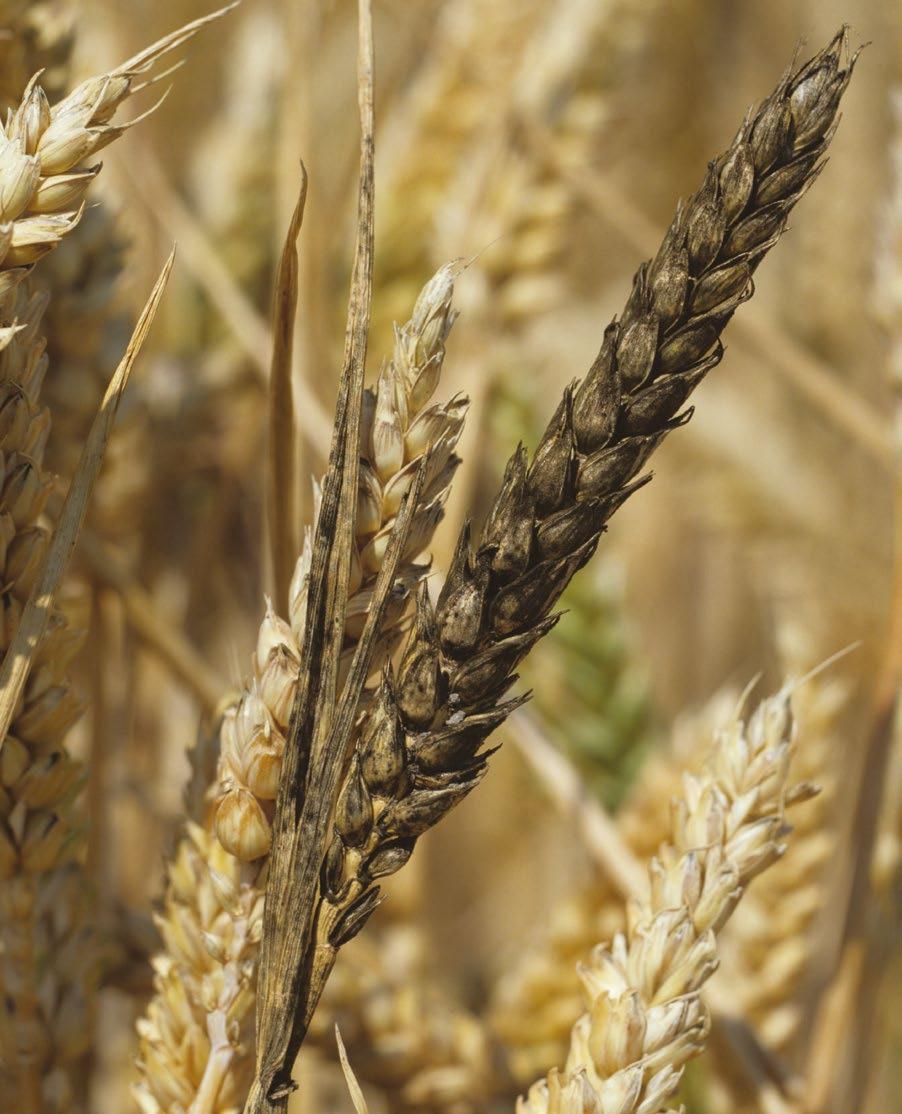
Agricultural Science: Dr Carol Ibe (NC 2015)
To have its full impact, cutting-edge scientific research needs to be brought out of the lab and into the world. Since her early days as a PhD student in Plant Sciences, Carol Ibe has been committed to making that happen. Advanced applied molecular bioscience techniques would enable African scientists and farmers to feed the continent and grow its economy, but Carol realised how much capacity-building needed to happen to achieve that. So, in 2015, Carol set up the JR Biotek Foundation, which has delivered high-level scientific training to over 270 scientists in person (and thousands online) across 19+ African countries – people who, thanks to Carol’s work, are already bringing together bioinnovations and environmental sustainability. Her journey bridges world-class discovery science with grassroots impact, ensuring that insights from the lab, like her breakthrough on wheat disease resistance, are translated into real tools, training, and innovations that strengthen Africa’s capacity to tackle food insecurity and climate change.
Nigel Cattlin/Science Photo Library
Alumnae A–Z
Everything you need to know
While every effort has been made to ensure information was correct at the time of going to press, please note that details might be subject to change.
Any questions? Please contact the Roll and Development Office on 01223 335757 or roll@newn.cam.ac.uk; or consult www.newn.cam.ac.uk for the latest information.
Please don’t forget to contact the Roll and Development Office if you would like to let us know about a change of address or any other information.
Keep updated via the alumnae pages of the Newnham College website and don’t forget to follow our alumnae social media channels:
Instagram: @newnhamroll
LinkedIn: Newnham College, University of Cambridge
Facebook: Newnham College, Cambridge
A LUMNAE BENEFITS
As an alumna of Newnham College, you can enjoy a wide range of benefits:
• The monthly ‘News from Newnham’ e-newsletter
• The annual Roll Letter
• Invitations to a wide variety of events, including reunions, garden parties, networking and book events, talks and concerts
• Local alumnae groups offering regional events and meet-ups
• The opportunity to get involved with the Young Alumnae Group or the Newnham Associates, or to stand for the Roll Committee
• Access to the College Library – with prior notice to the Librarian
• Dining in College up to three times per year at formal halls or subject formal halls
• The option to stay with us at 10% discount
• The possibility of booking meeting rooms and catering at College year-round
Benefits for Cambridge University alumni include:
• Access to journals and online digital resources
• Alumni email address
• CAMCard and special offers
• Lifelong learning and access to the University Library
• University Sports Centre
• International hospitality
For more details visit: www.alumni.cam.ac.uk/all-benefits .
A LUMNAE GROUPS
The following groups are currently active and would love to hear from you. If you would like to set up your own group in an area that isn’t currently covered, please contact the Roll and Development Office.
UK
BATH & BRISTOL
Rachael Haggerty (Ashton, NC 2007) Rachael.c.ashton@gmail.com
Helen Mussell (NC 2010) helenmussell@googlemail.com
CAMBRIDGE
Jo Burch (NC 1983) joannaburch1964@gmail.com
LONDON
Rebecca Ashton (NC 2009) rebecca.lucy.ashton@gmail.com
Rosalind Meehan (NC 2009) rosalind.meehan@gmail.com
Jenny Staples (NC 1965) Jenstaples@hotmail.com
NORTH HOME COUNTIES
(HERTS/BUCKS/BEDS/BERKS)
Contact: roll@newn.cam.ac.uk
YORKSHIRE
Contact: roll@newn.cam.ac.uk
SCOTLAND
Contact: roll@newn.cam.ac.uk
INTERNATIONAL
AUSTRALIA
Melissa Fisher (NC 1996) mfisher@ninewentworth.com.au
HONG KONG
Joyshan Kung ( Lam , NC 1989) newnhamhk@gmail.com
SINGAPORE
Eleanor Great (NC 1987)
egreat@mac.com
Sharon Chin (NC 1996) sharon.w.chin@gmail.com
USA (NATIONWIDE)
Margaret Campbell (NC 1966) margaret.campbell1@verizon.net
USA (SAN FRANCISCO)
Lalitha Vaidyanathan (NC 1989) lvaidyan@gmail.com
Marianne O (NC 1984) marianneO@lumenadvisors.com
YOUNG ALUMNAE ( 35 & UNDER)
Anne Hewitt (NC 2019) youngalumnae.newnham@gmail.com
A SSOCIATES & HONORARY ASSOCIATES
Newnham Associates is a group of 60 friendly and approachable alumnae who focus on using their own work and life experience across a range of job sectors to support current Newnham students thinking about career options. The Honorary Associates are former Newnham Associates who, after completing their maximum ten-year term, have opted to continue their active involvement with the College. The current Co-Presidents of the Associates are Dr Amy Atkinson-Ward (NC 1996) and Sian Sheng (NC 2012). For more information, see www.newnhamassociates.org.
B OOK OF REMEMBRANCE
The Book of Remembrance in the College Library holds memorials to Newnham alumnae. It has been the tradition that a friend of the person to be remembered, a group of alumnae, or the family, makes a donation of at least £200. This will first
cover the costs of the inscription, and any surplus will be placed in the Roll Remembrance Fund (see entry below). Contact the Roll and Development Office for more information.
C OMMEMORATION
Alumnae celebrating their 70th, 60th, 50th, 25th or 10th matriculation anniversary are invited back in spring to enjoy a range of activities in College, and the Commemoration Dinner, which recognises and thanks our Founders and Benefactors. The next Commemoration will take place on 28–29 March 2026, for year-groups 1956, 1966, 1976, 2001 and 2016.
D ATA PROTECTION
Newnham College will use your data to manage and develop the ongoing relationship between you and Newnham, including keeping in touch with you, keeping up to date on your achievements and engaging with you on how you can continue to contribute to College life and otherwise support Newnham. It will not divulge it to a third party (other than to recognised alumnae groups and to agents contracted by Newnham for particular alumnae-related projects). You have the right to inform us at any time if you do not wish your data to be used for any of these purposes. Please see our full Data Protection Statement on the website or request a written copy from the Roll and Development Office.
D ONATIONS
Newnham is fortunate to have an incredibly generous community of supporters, and your gifts really do make a difference. With your help we are ensuring that Newnham is an outstanding place
of education for generations to come. For more information on giving to Newnham please visit the alumnae section of the website. We are always delighted to talk through your options; please email development@newn.cam.ac.uk or phone +44 (0)1223 335757.
E VENTS
The College hosts regular alumnae events, including talks, dinners and garden parties, which are advertised by email, post and on the website. Alumnae will also receive invitations to specific events based on their location, subject and matriculation year.
F AMILY FORUM
The annual Family Forum, organised by Josephine Holt (NC 2012) and Ruth Shin (NC 2007), is a discussion forum for all those interested in contemporary issues affecting families, with invited speakers and audience members all participating in a lively and thoughtful discussion.
G UILD OF FRIENDS
The Guild of Friends Committee manages a fund made up of donations given specifically to support the life of the College, broadly defined. It awards large and small grants to the College, JCR and MCR and to individual students, for special projects, events, travel or improvements.
I RIS CAFÉ
The Iris Café, just off the Porters’ Lodge, is open to all, serving delicious drinks, snacks and light
lunches. It is good to see alumnae using it to catch up, but please do check the website to confirm the current opening hours.
L EGACIES
We are very grateful to the numerous alumnae and friends who choose to leave a legacy to College. Many members choose to remember the College in their will, either with a gift of a capital amount, or a percentage or share of the residue of their estate. There is no need to rewrite your will if you already have one – simply add a codicil. Our legacy brochure provides further information and examples of wording. This can be accessed on our website in the alumnae section – Giving to Newnham. We always recommend you seek professional advice when writing your will. Email sarah.carthew@newn.cam.ac.uk to discuss your plans in confidence.
L IBRARY
While alumnae are welcome to visit and work in the Library during staffed hours, please contact librarian@newn.cam.ac.uk to check current arrangements for access. The Library is delighted to receive copies of publications by alumnae, or donations of books or funds to acquire books and to support special projects such as rare book conservation.
L OST ALUMNAE
Over the years we have unfortunately lost contact with some of our alumnae and would very much like to hear from them again. If you are in contact with any alumnae who have not heard from us for a while, or who are concerned that they may not be on our mailing lists, please encourage them to make contact with us via roll@newn.cam.ac.uk,
and we will gladly update their contact details. Please note that owing to GDPR we cannot use contact details provided by a third party.
M ERCHANDISE
Newnham produces a range of memorabilia, from postcards to scarves and mugs. These are often on sale at alumnae events and via the alumnae section of the website.
N EWNHAM CONVERSATION
This annual event takes place on the Sunday of the University Alumni Festival weekend and involves interesting speakers engaged in topical debate.
N EWS & OBITUARIES – SUBMITTING
If you would like to submit an item of news for the next Roll Letter or alumnae e-newsletter, share a memory or submit an obituary for a Newnham member, please email roll@newn.cam.ac.uk.
P RINCIPAL'S CIRCLE
The Principal’s Circle is a group of our highest level of donors. Members are invited to special events to thank them for their support.
R OLL COMMITTEE
The Roll Committee represents the lifelong, mutually supportive connection of all Newnham alumnae – including all current and former students, Senior Members, Principals and nominated College Officers. The Committee contributes ideas and helps to organise events, celebrations and initiatives within the College in
the UK and around the world. It meets twice a year, in spring and early autumn. Elections take place each spring and, as members may only serve for up to two 3-year terms, there are regular vacancies. Contact Libby Richards (NC 2005) via roll@newn.cam.ac.uk if you are interested in becoming a member of the Committee.
R OLL REMEMBRANCE FUND
Invested as part of the College portfolio, this fund brings in a small income which can be used for grants to present or past students in financial distress or for special research work; to make up any shortfall in funding for the calligraphy in the Remembrance Book, and to replace the book when it is full; and in association with the costs of memorials, flowers or programmes.
S IDGWICK SOCIETY
The Sidgwick Society is a group of alumnae who have let us know that they have made a legacy pledge in their will to Newnham College. Members of Newnham’s Sidgwick Society are invited to special events to thank them for their support.
T ELEPHONE CAMPAIGN
The telephone campaign is an essential part of our regular fundraising, and we are extremely grateful for to all who support Newnham. It is also a fantastic way for us to stay connected with our alumnae. We contact alumnae all over the world, updating you on College news and asking for your support towards Newnham’s fundraising efforts. Our students thoroughly enjoy hearing your stories and we do hope that you enjoy speaking to them too.
U NIVERSITY ALUMNI FESTIVAL
The Alumni Festival Weekend is hosted annually in the autumn by the University of Cambridge, with the next weekend planned for 19–20 September 2026 when we will invite back yeargroups 1971, 1986, 1996 and 2006.
V ENUE HIRE AT NEWNHAM
We can facilitate a range of events for up to 150 guests, from conferences and lectures, to weddings, dinners and away days. Alumnae receive a 10% discount. For up-to-date information, visit the conferences section of the website, or contact conference@newn.cam.ac.uk.
V ISITING THE COLLEGE
Alumnae are always welcome to visit and enjoy the buildings and grounds, but if you wish to bring a group, please contact the Porters’ Lodge in advance.
Y OUNG ALUMNAE
The Newnham Young Alumnae group connects recent graduates (aged 35 and under) through social and networking events.
Z ZZZ… SLEEPING IN COLLEGE
Outside of term, student rooms may be booked via accommodation@newn.cam.ac.uk. Alumnae receive a 10% discount.
This place I know...
Food is a central element of life at Newnham, whether formal halls, picnics in the garden or lunches with friends in the buttery. Deputy Catering Manager Ash Catley reveals what goes on behind the scenes and the changes he has seen in nearly three decades keeping everyone beautifully fed.
Ash’s favourite place was hard to choose, between the kitchens or Clough Hall. Ultimately, he plumped for Clough Hall, where he enjoys chatting to students, staff and Senior Members while overseeing everything from lunches to formal halls and special events. In 28 years at Newnham, he has seen the atmosphere relax and the food transform.
Just as there are students and Fellows from all over the world, so catering now has an international staff team who bring their own influence to bear on the menu. ‘In the past we've done theme nights from around the world but now it feels like it's almost routine to have Indonesian curry, say. We have chefs from Spain, Italy, Malaysia and Bangladesh.’
A passion for food takes Ash out to new restaurants to see how they present food to customers, the wine it is paired with and the service. This attention to detail has played a part in transforming meals at College while he has been here, working with the kitchen team led by Executive Head Chef Rob King and with Catering Operations Manager Daniel Rabaca.
‘When I first started, we did a lot more stews, even for formal halls, and it was silver service. Daniel moved us towards plating the food up, and designing how it looks really, in the kitchen,’ Ash said. ‘You eat with your eyes first; if it looks good, it's going to taste good. When I first came,
food was just food, where now it has become more artistic because we're catching up with the restaurants and expectations have changed. The team make it look wonderful, especially puddings and starters. An attractive starter can set the tone.’
Behind the scenes
Evening dinners are the culmination of a day which begins at 8 am, setting up for morning coffee at events around Newnham, sorting out plans for lunch and thinking ahead to the evening. There is a delivery of fresh vegetables and meat every day from local suppliers, and fish from Essex. Menus are often tweaked with a focus on minimising waste. Ash oversees lunch in the buttery and Clough Hall, or conference lunches and meetings around College. Then after lunch the focus shifts to evening dinner in the buttery and often a formal dinner in Hall as well.
Over time, the busy periods have changed, and summer is now all-hands-on-deck, catering for summer schools, conferences, weddings and College functions. Despite the busy schedule, Ash says the kitchen is relatively calm – although the tension builds just before special events, when the team prepare dozens of meals simultaneously. Ash trained as a graphic designer and photographer, but stumbled into
catering at Jesus College, always working in management and front of house. After a few years he moved to London and worked in hotels and restaurants, including a spell at a private members’ club on Piccadilly catering to royalty, prime ministers and entrepreneurs. Moving back to Cambridge with his wife, Ash brought this experience to Newnham, joining in 1998–99.
Catering to all tastes
Vegetarian and vegan options are now mainstream, despite initial concerns about creating a balanced diet and varied meals. In the last decade the team have adapted to requests for bespoke meals to exclude allergens and address other dietary issues.
‘Generally, we say to people, tell us what you
can eat and then we'll do a special meal or just leave out the problem ingredients. We have got to think of everybody, so no one feels excluded; formal dinners in Hall with Senior Members are unique to Cambridge and Oxford, and always well-attended – we make sure everyone can experience this,’ he said.
Over the years, as the student population and the demands on catering have grown, the kitchens and buttery have been modernised and renovated. For Ash, though, Newnham still feels like home. It is friendly, beautiful and small enough to be unique, but large enough to keep him busy. ‘If you can leave each night and feel like you've done a good job, it makes you feel good. Catering is still the hub of the College, keeping everyone fed and the fires burning.’
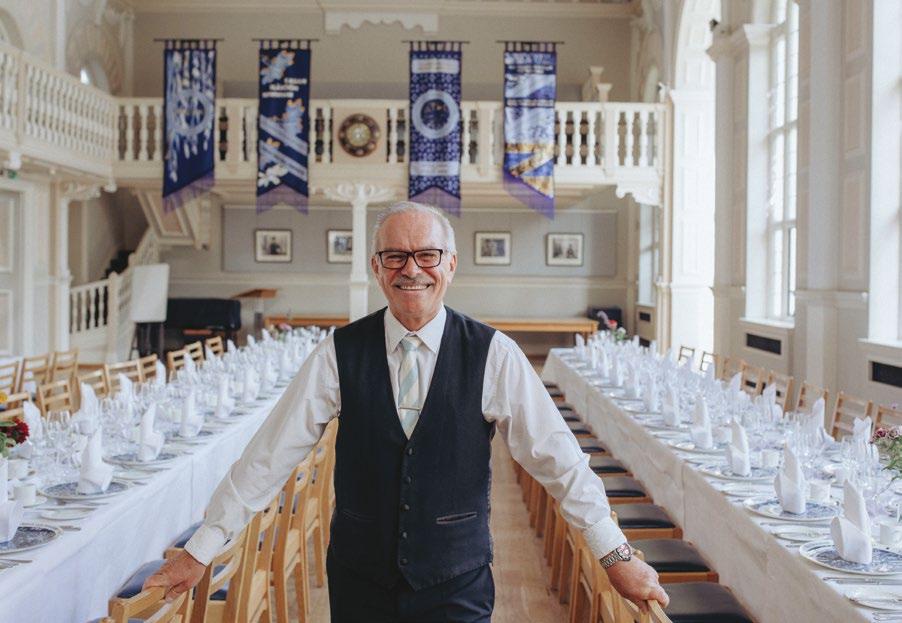
Dasha Tenditna
Editors
Sara Gaines (Director of Communications)
Dr Maartje Scheltens (NC 1995; freelance editor)
Editorial Board
Sarah Carthew (Director of Development)
Lindsey Charlesworth (Roll and Development Office; editor, Life Stories)
Emily Clark (Senior Member)
Cait Findlay (Young Alumnae)
Dr Laurie Friday (Senior Member)
Eleni Kanellas (Director of Communications)
Emma Menniss (Roll and Development Office; alumnae communications)
Frieda Midgley (Archivist)
Dr Emma Pomeroy (Fellow)
Alison Rose (NC 1980; Principal)
Annette Spencer (NC 1983; President of the Roll)
Dr Sheila Watts (Fellow and Senior Tutor)
Thanks also to all the Fellows and staff of Newnham College.
Design: Paul Oldman at Smith (www.smithltd.co.uk)
Printing and mailing: Sterling Solutions
Packaging: 100% home compostable potato starch. Please check local kerbside collections.
The Roll and Development Office Newnham College
Cambridge CB3 9DF
Tel +44 (0)1223 335757 www.newn.cam.ac.uk
Cover photo: The Northern Lights light up the skies above Newnham, 10 October 2024, by student Chloe Saw.
Front inside cover: marbled endpapers, from Tarih-i Cevdet by [Ahmet Cevdet Paşa] (Istanbul: Matbaa-yı Amire, 1856–1892), Skilliter Centre for Ottoman Studies, Newnham College.
Our new digital edition
We are now offering the Roll Letter to read online as well as in print, and a few alumnae have requested they receive the digital version only. If you would also like to opt out of the print edition, please email alumnae.database@newn.cam.ac.uk by 31 March 2026. You can see this year’s edition online at: newn.cam.ac.uk/newnham-community

Wee Keat Chin
Save the date
Alumnae Events 2026
Personal invitations will be sent out for events marked with * . Further details of all events will be shared by email nearer the time.
Saturday 31 January
The Family Forum : Focusing on motherhood in the twenty-first century. All welcome
Shaping Newnham’s Future: e nd of campaign events
Wednesday 11 March Newnham College
Monday 16 March
Supreme Court, London
Tuesday 17 March
The Pump Room, Bath
Monday 23 March Merchant Adventurers’ Hall, York
Tuesday 24 March Dovecot Studios, Edinburgh
Saturday 28–Sunday 29 March Commemoration Weekend*
Welcoming back alumnae who matriculated in 1956, 1966, 1976, 2001 and 2016
Friday 17– Monday 27 April Annual visit to the USA
Saturday 16 May
Sidgwick Society Afternoon Tea*
Saturday 13 June
Newnham Associates AGM and Women of the Year event*
Saturday 27 June
Summer Party and Campaign Celebration
Welcoming all alumnae and their families back to Newnham for a day of activities and talks celebrating the people of Newnham and the end of the Shaping Newnham’s Future campaign
Friday 4 September
Principal’s Circle Dinner*
Sunday 6–Monday 14
September
Annual visit to Hong Kong and Singapore
Saturday 19–Sunday 20
September
Alumni Festival Weekend*
Welcoming back alumnae who matriculated in 1971, 1986, 1996 and 2006
Sunday 20 September The Newnham Conversation
Monday 21 September
London Alumnae Group Drinks
Monday 22 September–Monday 6 October
Telephone Campaign
Saturday 26 September
Women’s Boat Race Centenary Dinner*
Saturday 14 November
Newnham Associates AGM and careers workshops*
Sunday 28 November
Music for the Festive Season from the Raleigh Society
Saturday 5 December
Cooking for Christmas with Sophie Grigson (daughter of Jane Grigson, NC 1946)
Are your contact details up to date?
If you need to update your contact information, please contact the Roll and Development Office on: +44(0)1223 335757 or alumnae.database@newn.cam.ac.uk