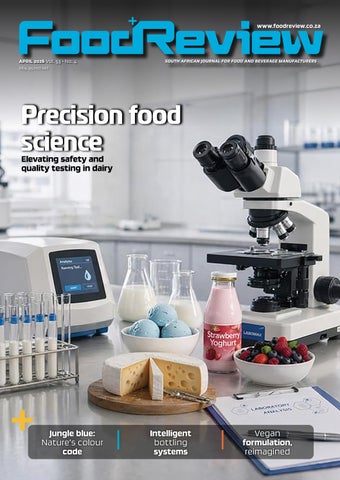

Precision food science

Commercial Banking
Supermarkets don’t slow down. We’re built for that.
The pace of modern retail is relentless. From stock management and working capital to customer experience and expansion, every decision affects the next.
At Nedbank Retail Services, we combine deep sector expertise with practical, specialist guidance and faster decision-making. We offer solutions that are built for scale, built for complexity, and built for you.
So, while you’re running the front line of retail, we’re behind the scenes helping you grow, adapt, and lead.
Think bigger. Think Nedbank Commercial Banking.
For more information about our services, email us at KarenKe@nedbank.co.za


LABORATORY & TESTING
Marking 50 years of design
Analysis of moisture, protein,
Comprehensive testing
High – performance NIR Food
VEGAN INGREDIENTS
A creatine alternative solution

40
FOOD SAFETY & QUALITY ASSURANCE
Elevating food safety standards
Food safe conveyor lubrication

43 BOTTLING & FILLING TECH
Next-gen PET filling solutions
InnoPET TriBlock system innovation
Fast paced soft drink production capacity
Rapid duplex softener solution

Dairy innovation drives analytical excellence
This month Food Review showcases the breadth of our industry, from cutting-edge vegan ingredients processing to advanced bottling and filling technology. However, our largest section remains the powerful convergence of dairy innovation and laboratory equipment—a partnership reshaping quality control across the sector. Bruker's FT-NIR spectroscopy systems, including their MPA III Dairy Analyzer, enable real-time testing from raw milk to finished products. Metrohm's OMNIS NIR Food Analyzer provides rapid, non-destructive analysis of critical parameters like fat, protein, and moisture content with automated workflows.
On the ingredients side, Cargill drives growth in high-protein dairy beverages, capitalising on functional nutrition trends. Synercore demonstrates sophisticated ice cream colloid science, exploring how stabilisers like locust bean gum create superior texture and mouthfeel. Lake International showcases dairy powder evolution, from instant fat-filled milk powder to whey protein concentrates transforming applications across infant formula and sports nutrition. Bragan Ingredients brings clean-label gum acacia solutions for natural stabilisation in flavoured milks and SK Chemtrate introduces botanical colouring through Jungle Blue for vibrant, naturally-coloured dairy products.
Supporting this innovation ecosystem, analytical specialists like MLS National Laboratory Services ensure compliance and quality assurance across the production chain, while precision equipment providers enable the accuracy demands of modern dairy formulation. Our coverage extends to breakthrough vegan processing technologies and state-of-the-art bottling systems, reflecting the industry's diverse innovation landscape.
This convergence of innovative ingredients and sophisticated analytical tools enables manufacturers to push boundaries while maintaining strict quality standards—creating a more agile, responsive industry than ever before.
There's loads more to see inside—make sure to turn every page right through to the end not to miss out.
Enjoy the read!
EDITORIAL
Editor: Kelebogile Nondzaba +27 (0)78 175 9632
kelebogile.nondzaba@media24.com
Layout & Design: Tumi Kunene
Cover Image and current page: Toqan Web UI and Getty Images
ADVERTISING
Key Account Manager: Càndida Giambò-Kruger +27 (0) 71 438 1918
càndida.giambò-kruger@media24.com
INTERNATIONAL SALES
Germany/Austria/Switzerland: Eisenacher Medien
Erhardt Eisenacher +49 228 249 9860 info@eisenacher-medien.de
Italy: Ngcombroker
Giacomo Rotunno +39 370 101 4694
g.rotunno@ngcombroker.com
Taiwan: Ringier Trade Media
Sydney Lai +886 4 2329 7318 sydneylai@ringier.com.hk
CIRCULATION
Circulation Manager: Rae Morrison Email: Rae.Morrison@media24.com
PUBLISHING TEAM
General Manager: Dev Naidoo
Head of Content & Digital Strategy: Varushka Padayachi
Production manager: Angela Silver
Group Art Director: David Kyslinger

MEDIA24 MEDIA
CEO: Minette Ferreira CFO: Lana Goliath
MEDIA24 CORPORATE
CEO MEDIA24: Raj Lalbahadur CFO MEDIA24: Nelmarie Beyers
JOHANNESBURG OFFICE
Building 13, The Woodlands Office Park, 20 Woodlands Drive, Woodmead, Sandton PO Box 784698, Sandton 2146
Tel: +27 (0)11 713 9000
POSTAL ADDRESS PO Box 784698, Sandton, Johannesburg, 2146


Càndida Giambò-Kruger

Kelebogile (Lebo) Nondzaba

Behind every perfect French frythere’s Heat and Control
From precision frying to flawless seasoning - and so much more, we’re the secret ingredient behind the world’s crispiest, golden fries.
Our French fry and formed potato product systems are the workhorses of the industry. We process a broad range of styles, including straight cut fries, crinkle cut fries, curly fries, potato wedges, and a variety of potato co-products.
Working with our strategic partners, we are capable of full turnkey solutions, from potato receiving through palletising.


May
Vitafoods Europe 2026
5 - 7 May
www.vitafoods.eu.messefrankfurt.com
Interpack 2026
7 -13 May www.interpack.com
Food and Beverages Conference (Clean Label & Natural Products) 25-26 May
www.foodandbeverages.foodtechconferences.com


July
IFT FIRST 2026
12-15 July www.iftevent.org
Malaysian International Food & Beverage Trade Fair (MIFB) 2026
15 - 17 July www.mifb.com.my
June
F & T India 2026
4 - 6 June www.fandtindia.com
IDDBA 2026 (International Dairy Deli Bakery Association Show)
7 - 9 June www.iddba.org
Food and Beverage West Africa 2026
9 -11 June www.exposale.net/en/exhibition/fab-westafrica
DrinkTech Expo Poland 2026
9 - 11 June www.drinktechexpopoland.com/en

POP IT, SWIRL IT, BREATHE IT IN
South Africa’s only real spritzer made from wine with flavours, has a new look and campaign evoking a classic and timeless style. Introducing a range with effortless elegance, where real wine meets sparkling sophistication. Pop It, Swirl It, Breathe It In. This is the Bernini ritual, the appealing sensory real wine taste and aroma that is so deeply intertwined to memory. Inviting women to create moments worth remembering. Being present, slowing down, grounding yourself and taking it in. Living life beautifully, your way. Breathe It In. Enjoyed in the sunset aperitivo occasion. There is something undeniably magical about sunset. It’s the golden hour when life feels lighter, real connections linger, and the moments that matter feel longer. That’s where Bernini lives. In the long lunches that stretch into sunsets and weekends that shimmer with possibility. Breathe It In
celebrates this sunset aperitivo lifestyle where laughter floats and time loosens its grip, a quiet exhale between friends .
“There is a quiet but powerful shift happening in how South African women choose to live and experience their world and not the broadcast.”
For more, visit: foodreview.co.za


CARMIÉN TEA LAUNCHES COOKING TEA BAGS
Carmién Tea, founded by Mientjie Mouton 27 years ago, has partnered with respected South African food writer Carmen Niehaus to launch an innovative new product range designed specifically for cooking - Cooking Teabags.
Niehaus and Mouton are twin sisters who share a lifelong love of both rooibos and cooking. Over the years, Niehaus has regularly incorporated Carmién’s Green and Red Rooibos teas into her recipes, using the unique flavours of rooibos to build depth in a wide variety of dishes. The new

CJP’S AQUISITION
Manuchar, a leading distributor of chemicals in high-growth markets headquartered in Antwerp, Belgium, announces it has reached an agreement to acquire CJP Chemicals, one of South Africa’s most established chemical distributors. This strategic acquisition marks an important step in Manuchar’s ambition to strengthen its footprint in South Africa and expand its global chemical distribution platform across high-growth regions.
Founded in 1986, CJP Chemicals is a well-recognized distributor with a strong heritage in the South African market. The company
offers a broad range of industrial and specialty chemicals, serving key sectors such as food & beverages, lubricants & energy, industrial manufacturing, personal care and pharmaceuticals. With operations in all major industrial hubs - Johannesburg, Durban, Cape Town, and Gqeberha - CJP Chemicals employs around 170 people and generates in excess of USD 100 million in revenues each year. They are highly valued for their technical expertise, customer closeness, and reliable supply chain.
From its headquarters in Antwerp, Manuchar operates a local distribution network
cooking tea bags contain carefully balanced blends of herbs and spices that can be added directly to dishes during cooking – much like a tea infusion. This allows flavours to develop gradually without leaving loose herbs or spices in the final dish. Once cooking is complete, the teabag can simply be removed. Carmen has been using these cooking tea bags in her own kitchen for several years as a practical way to build flavour in soups, stews, sauces, and other dishes. With this launch, the technique is now being made accessible.
across North & Latin America, Africa, Europe, the Middle East, and Asia. The company employs 3,000 people worldwide, handles over 4.6 million metric tons of goods, AgroPro Africa 2028 has been officially launched as a dedicated trade platform serving Africa’s food, beverage, and pulp and paper processing industries. Developed to meet growing demand for advanced processing technologies, sustainable production solutions, and stronger regional supply chains, the exhibition will provide a focussed marketplace for manufacturers, technology suppliers, and industry professionals. Co-located with Propak Africa – one of Africa’s long-established packaging, plastics, printing, and labelling shows, AgroPro Africa aims to advance industrial capacity, facilitate business growth, and support innovation across the continent’s processing value chain.
Food and beverage processing and pulp and paper processing are two of the most influential sectors driving Africa’s industrial development. The food and beverage industry - one of the continent’s largest and most rapidly expanding manufacturing sectors - plays a vital role in supporting food security, rural livelihoods, and economic resilience.
TETRA PAK FACTORY OS WINS MIMA 2026 AWARD
Tetra Pak has won the Microsoft Intelligent Manufacturing Award (MIMA) 2026 in the Scale! category for its next-generation automation and digital portfolio, Tetra Pak® Factory OS™. The Scale! award recognises intelligent industrial solutions leading the way in the breadth of value chains, clients or internal processes they impact, across different levels of maturity. Tetra Pak® Factory OS™ _is a suite of modular, open and scalable smart factory technologies designed for food and beverage production. By unifying automation, data and analytics into a consistent, factory-wide operating environment, it connects equipment regardless of age or supplier, transforming fragmented factory data into a unified, contextualised, real-time view.
The judges recognised Tetra Pak® Factory OS™ _for its ability to help food and beverage producers expand output, introduce new products more quickly and reduce production costs in an increasingly challenging geopolitical and economic environment. As rising food prices and input costs place pressure on food producers, the platform enables food and beverage producers to improve efficiency and strengthen operational resilience while safeguarding product quality. Deployable across sites with varying levels of digital maturity, Tetra Pak® Factory OS™ _strengthens operational performance, accelerates digital transformation at scale and opens new growth opportunities by bringing coherence, repeatability and intelligence to end-to-end factory operations.
Built with security-by-design and layered defences to protect operations and data amid today’s heightened geopolitical cyber risk, it provides an A I -ready foundation that turns real-time data into contextualised insights for faster, smarter decisions. Sean Sims, vice president, automation & solutions at Tetra Pak, comments: “Food and beverage producers are under increasing pressure to deliver more with fewer resources, while also remaining competitive in uncertain markets.

This award recognises the real-world impact of advanced industrial automation making factory data usable and actionable at scale.
INCREASED WINE SALES – WITH PET BOTTLES?
Practical packaging that is also sustainable is becoming an increasingly strong sales argument. Northern Europe is considered a pioneer in this respect – including in the wine sector. Studies confirm the trend, highlighting lightweight and robust PET bottles with a high recycled content to reach new target groups.
According to the Wine Packaging Market Report 2024 by IMARC Group, growing demand for sustainable and lightweight packaging solutions is driving the global wine packaging market . Brand image also benefits: “63 percent of respondents perceive brands with sustainable packaging solutions more positively,” emphasizes the Sustainable Product Packaging study by strategy consultancy Simon-Kucher . A strong starting point for additional business.
Today, sustainability is defined primarily by low weight, a favorable energy balance, and high recyclability – criteria that PET bottles fulfill. As a result, they create new purchase incentives and appeal to customer segments that were previously difficult to reach. This development can already be observed in Northern Europe. “Consumer response to PET wine bottles is generally positive, especially among environmentally conscious, convenience focused, and younger wine drinkers. When consumers understand that PET is safe, recyclable, low in CO ₂ emissions, and does not compromise
taste for short term wines, acceptance grows significantly,” says Heidi Melén-Aalto, Director of Packaging Design & Development at Anora, a leading wine and spirits brand house in the Nordic region headquartered in Helsinki.
The company is considered a global sustainability pioneer in the industry. Lightweight, shatterproof, and often more cost-effective, PET bottles also lower barriers to entry. “PET bottles do help reach new target groups. Their light weight and unbreakable design appeal to more casual wine drinkers and people with onthe-go lifestyles. PET’s strong sustainability story attracts eco conscious consumers looking for lower impact choices,” Melén-Aalto explains. As a result, PET wines reach a broad audi ence – from price-sensitive, eco-oriented buyers and outdoor, event, and onthe-go consumers to older people who find heavy glass bottles increasingly difficult to handle.
*References available on request
For more, visit: foodreview.co.za
INDUSTRY STAKEHOLDERS WELCOME THE LAUNCH OF AGROPRO AFRICA 2028
AgroPro Africa 2028 has been officially launched as a dedicated trade platform serving Africa’s food, beverage, and pulp and paper processing industries. Developed to meet growing demand for advanced processing technologies, sustainable production solutions, and stronger regional supply chains, the exhibition will provide a focussed marketplace for manufacturers, technology suppliers, and industry professionals. Co-located with Propak Africa – one of Africa’s long-established packaging, plastics, printing, and labelling shows, AgroPro Africa aims to advance industrial capacity, facilitate business growth, and support innovation across the continent’s processing value chain.
Food and beverage processing and pulp and paper processing are two of the most influential sectors driving Africa’s industrial development. The food and beverage industry - one of the continent’s largest and most rapidly expanding manufacturing sectors - plays a vital role in supporting food security, rural
livelihoods, and economic resilience. In South Africa, its well-established value chain transforms raw agricultural outputs into high-quality products for both domestic consumption and export, creating jobs and stimulating investment across farming, manufacturing, logistics, and retail.
Pulp and paper processing holds equally strategic importance, supplying essential packaging, tissue, hygiene, and fibre-based products that support daily life and broader industrial activity. As Africa moves toward more sustainable, circular economies, the sector is increasingly providing renewable.


Gum acacia transforms modern dairy product development
Consumer demand for clean-label, sustainable ingredients drives dairy manufacturers toward naturally sourced solutions like versatile gum acacia.
The dairy industry is undergoing a shift driven by more conscious and informed consumers. Today’s buyers are not only focused on taste and price, but also on ingredient transparency, sustainability, and nutritional value. As a result, manufacturers are re-evaluating formulations to meet the growing demand for clean-label, naturally derived ingredients that deliver both performance and trust.
CLEAN-LABEL SOLUTION FROM AFRICA'S GUM BELT
Gum acacia, also known as gum ar abic (E414), is emerg ing as a valuable solution in this space. Sourced from Acacia trees in the Sahel region of Africa - often referred to as the “Gum Belt”- this ingredient is harvested naturally with minimal processing. Its origin aligns strongly with clean-label ex
"Its versatility allows manufacturers to simplify formulations while still achieving the desired product performance."
pectations, while its supply chain supports rural communities and contributes to environmental sustainability by helping combat desertification and preserve ecosystems.

In dairy applications, gum acacia is recognised for its multifunctional properties.
It acts as a stabiliser, emulsifier, and texturiser, making it particularly effective in products where consistency and mouthfeel are critical. In flavoured milks, drinking yoghurts, and dairy-based beverages, gum acacia helps prevent separation of ingredients, ensuring a uniform product throughout its shelf life.
OUR STORY
Bragan Ingredients, a Solevo Group company since October 2024, has earned generations of trust as a leading supplier and distributor of raw materials and ingredients across South Africa and sub-Saharan Africa. Serving the food, beverage, bakery, dairy, pharmaceutical, and cosmetic sectors, as well as industrial and agricultural markets - Bragan offers an extensive portfolio to meet the evolving needs of its customers. With ISO 9001:2015-certified warehousing and distribution hubs in Johannesburg, Cape Town, Durban, and Port Elizabeth, we provide national reach with uncompromising quality.
Now powered by Solevo Life Sciences and strengthened by Solevo’s global network, Bragan Ingredients delivers nutrition, safety, and innovation to Africa’s growing industries. From our South African roots to Solevo’s continental platform, we remain committed to shaping a safer, healthier, and more sustainable future for communities across the region.
by Bragan Ingredients
ENHANCED MOUTHFEEL
Its emulsification capabilities allow for better integration of fat and water phases, which is especially beneficial in reducedfat formulations where maintaining creaminess can be a challenge. At the same time, it contributes to a smooth, rounded mouthfeel, enhancing the overall sensory experience without altering the taste or colour of the final product.
Beyond functionality, gum acacia also supports manufacturing efficiency. It remains stable under heat treatment and across varying pH levels, making it suitable for a wide range of dairy processes. Its ability to improve freeze-thaw stability is particularly valuable in applications such as ice cream and frozen desserts, where maintaining texture and quality is essential.
"Gum acacia helps prevent separation of ingredients, ensuring a uniform product throughout its shelf life."

PLANT-BASED
AND HYBRID PRODUCTS
As innovation in dairy continues to expand into hybrid and plant-based alternatives, gum acacia plays an important role in improving dispersion and stability in these more complex systems. Its versatility allows manufacturers to simplify formulations while still achieving the desired product performance. Through its partnership with Alland & Robert, a global leader in gum acacia production, Bragan Ingredients is able to offer consistent, high-quality solutions backed by deep technical expertise and a reliable supply chain. This collaboration ensures access to sustainably sourced raw materials from the Sahel region, while supporting local communities through responsible sourcing practices and ongoing supplier development.

FAST FACT
Gum acacia remains stable under heat treatment and across varying pH levels, making it suitable for diverse dairy processing conditions.


Bragan Ingredients –www.braganingredients.co.za


Light-blocking sleeves enable PET transition
CCL Label's EcoFloat® WHITE shrink sleeves enable South African dairy brands to transition to recyclable PET whilst maintaining essential light protection.
"A new generation of light-blocking shrink sleeves is helping to unlock this transition to more sustainable packaging"
Dairy producers in South Africa are increasingly exploring a shift from traditional opaque packaging toward transparent PET bottles, as pressure mounts to improve recyclability and align with global frameworks such as the Packaging and Packaging Waste Regulation. The challenge remains familiar: how to protect light-sensitive products like fresh milk and drinking yoghurt while moving into more circular packaging formats.
NEW LIGHT-BLOCK ING SLEEVES DRIVE TRANSITION
Historically, the sector has relied on opaque

HDPE bottles for light protection. While effective, these formats can be less optimal within recycling systems compared to clear PET, which is widely collected and processed in South Africa’s established recycling streams. The emerging solution separates function from the bottle itself— combining clear PET for improved recyclability with a light-blocking sleeve for product protection and branding.
CCL Label has developed EcoFloat® WHITE, a low-density polyolefin sleeve designed to support design-for-recycling requirements. When paired with transparent PET, the solution enables dairy brands to maintain shelf life and visual impact while improving compatibility with recycling infrastructure.
Using carbon-free inks, the sleeve delivers effective light protection without interfering with recycling processes. It is also engineered to ensure accurate sorting and efficient separation, a key consideration for maintaining the quality of recycled PET. For South African dairy brands, the combination of transparent PET and functional sleeves presents a practical pathway to balance product protection, regulatory alignment, and circularity goals—while future-proofing packaging against evolving local and global sustainability demands.

"The solution enables dairy brands to maintain shelf life and visual impact while improving compatibility with
recycling infrastructure"
DID YOU KNOW?
Transparent PET bottles are more widely collected and processed in South Africa's recycling streams than opaque HDPE containers. CCL's lightblocking sleeves allow dairy producers to shift to clear PET packaging whilst protecting light-sensitive products like milk and drinking yoghurt.
TIME TO STAND OUT


Functional systems drive dairy innovation
Cem Beysel, Cargill Food META Functional Systems and Strategy senior director, explains how functional systems address evolving consumer demands.
As consumer expectations evolve toward products that combine indulgence, nutrition and convenience, dairy manufacturers are seeking smarter formulation solutions. Cargill Food Middle East, Turkey and Africa (META) region functional systems and strategy senior director Cem Beysel, explains how functional systems, regional innovation capabilities and emerging trends are shaping the next generation of dairy and ice cream products across the META region. Dairy is the central theme of this edition. From Cargill’s perspective, how is the category evolving globally and across the META region? The dairy category is evolving rapidly as consumer expectations shift. Today’s consumers want products that go beyond basic nutrition.
CONVENIENT NUTRITION DRIVES READY-TO-DRINK GROWTH
They are increasingly looking for options that combine great taste, functional benefits and convenience. Across the META region in particular, we are seeing clear growth in ready-to-drink dairy products. Busier lifestyles mean consumers are often on the move, which drives demand for products that can be consumed easily outside the home. Formats such as flavoured milk, drinking yoghurt and dairy-based smoothies are gaining popularity because they deliver both nutrition and enjoyment in a convenient format. At the same time, the industry is responding to a growing demand for what we call “better-for-you indulgence.” Consumers still want products that feel indulgent, but they also expect added nutritional value, whether that means higher protein content, added vitamins or improved functional benefits. This is particularly evident in the Middle East and Africa, where Innova Market Research shows that consumers primarily associate dairy consumption with health benefits, followed closely by taste as a key driver. These trends create new opportunities for
"Today's consumers want products that go beyond basic nutrition. They are increasingly looking for options that combine great taste, functional benefits and convenience"
dairy manufacturers, but they also require greater formulation expertise to achieve the right balance of taste, texture and stability.
DAIRY INNOVATIONS INFORMED BY FUNCTIONAL SYSTEMS
Functional systems are designed to simplify complexity for manufacturers while delivering consistent product performance. In dairy applications, achieving the right texture, stability, mouthfeel and shelf life often requires the precise interaction of multiple ingredients. Our functional systems bring together key components such as stabilizers, texturisers and emulsifiers into integrated solutions that are tailored to specific applications. This approach helps manufacturers reduce formulation complexity while accelerating product development. Instead of working with multiple individual ingredients, they can rely on systems that are already optimised for performance. For manufacturers, this means faster innovation cycles and greater confidence that the final product will meet consumer expectations for both quality and consistency.
ICE CREAM INNOVATION ACCELERATES
Ice cream is a particularly dynamic category because it allows brands to experiment with both indulgence and functionality. One area where we see significant potential is heat-resistant ice cream formulations, which are particularly relevant in warmer climates.

These solutions help improve melt resistance and maintain texture, ensuring a better consumer experience even in challenging conditions. Premiumisation is another major trend. Consumers are increasingly drawn to rich chocolate experiences and distinctive flavour combinations. By combining cocoa expertise with emerging flavour trends, manufacturers can create products that stand out on the shelf. At the same time, we are seeing growing interest in protein-enriched ice cream, which reflects the broader shift toward functional indulgence. These products allow consumers to enjoy a dessert while also benefiting from additional nutritional value. This is particularly relevant in the Middle East and Africa, where more than one in four consumers say that high or source of protein claims influence their purchase decisions for spoonable and drinkable yogurt, according to Innova Market Insights.
META PRODUCT DEVELOPMENT
Collaboration and regional innovation capabilities are key to how we support our customers. One important resource is INFUSE by Cargill™, our pilot facility in Orhangazi, Türkiye. This centre allows us to work closely with customers across the META region to develop and refine new product concepts using our ingredient expertise and functional systems. In addition, we maintain a strong presence across Africa through our regional offices and operations, enabling us to stay close to our customers and respond to local market needs. Our office in Johannesburg plays a key role in fostering direct engagement and collaboration with customers in South Africa. Through this collaborative environment, we can quickly test formulations, adjust textures or flavour profiles, and ensure that solutions are aligned with both regional taste preferences and local production realities.
For example, we see strong potential in products such as flavoured milk, drinking yoghurt, creams and spreadable processed

cheeses, which continue to grow in popu larity across several markets. We are also developing innovative beverage concepts that capture emerging consumer preferenc es. For instance, protein drinks featuring modern flavour combinations like Strawberry Matcha offer high-value positioning and appeal to health-conscious consumers seeking functional benefits. Simi larly, premium drinking yoghurt concepts emphasize texture, flavour complexity, and nutritional value, positioning Cargill as a partner for high-value dairy beverage innovation. By combining global expertise with regional application knowledge, we can help customers bring innovative dairy products to market more efficiently.
WHAT DEFINES THE NEXT DAIRY INNOVATION WAVE?
Several trends are likely to shape the future of the category. First, functional nutrition will remain a major driver, particu


larly products that support active lifestyles and offer higher protein content. Second, flavour exploration and premium experiences will continue to expand. Consumers are increasingly open to bold flavour combinations and globally inspired taste profiles. Finally, convenience and ready-to-consume formats will continue to grow as lifestyles become more mobile. For manufacturers, the challenge will be combining all these elements — indulgence, nutrition and convenience — in products that deliver a consistently enjoyable experience. Our focus at Cargill is to support this process through ingredient science, formulation expertise and collaborative innovation. In the end, successful dairy innovation will depend on turning consumer trends into products that are both technically robust and genuinely enjoyable to drink or eat.

Cargill – www.cargill.com


Natural blue breakthrough in South African dairy
While core categories such as fresh milk and plain yoghurt remain staples, growth is increasingly coming from value-added, flavoured and indulgent dairy products - a trend that Oterra, through local supplier SK Chemtrade, is addressing with innovative natural colour solutions.
South Africa’s dairy sector is changing. While core categories such as fresh milk and plain yoghurt remain staples, growth is increasingly coming from value added, flavoured and indulgent dairy products. From premium ice cream and drinking yoghurts to kids’ ranges and seasonal limited editions, colour is playing a more strategic role in attracting attention and communicating flavour. At the same time, South African consumers are becoming more conscious of ingredients. Clean labels, recognisable sources and a gradual shift away from artificial additives are influencing product development decisions across the food and beverage sector. This combination of visual differentiation and ingredient scrutiny has renewed interest in natural colour solutions that can perform reliably in dairy. One of the most significant recent innovations is Jagua blue, marketed by Oterra under the tradename Jungle Blue, which offers a stable, naturally sourced blue suitable for dairy applications.
NATURAL BLUE FOR DAIRY APPLICATIONS
Jagua blue is derived from the fruit of the jagua tree (Genipa americana). Through a natural reaction process, the pigment forms a stable blue polymer with a deep shade profile closer to traditional synthetic Blue 2. Oterra’s Jungle Blue formulation is water soluble and pH stable, meaning it performs consistently across the neutral and mildly acidic environ-

"Unlike some earlier natural blues, Jungle Blue does not flocculate or precipitate and keeps shade consistency during storage - particularly relevant for products with long distribution chains and extended shelf life."
ments typical of many dairy products. Unlike some earlier natural blues, Jungle Blue does not flocculate or precipitate and keeps shade
APPLICATIONS IN THE SOUTH AFRICAN DAIRY MARKET
Ice cream and frozen desserts: Frozen dairy is still one of the strongest opportunities for Jungle Blue. The colour performs well in low temperature environments and delivers clean, vibrant blue shades in ice cream, frozen yoghurt, and dairy based desserts. It can be used in full mass colouring, ripples, variegates or inclusions, offering flexibility for both mainstream and premium products. By blending Jungle Blue with natural yellows or reds, manufacturers can also create greens and purples, enabling flavours such as mint, pistachio, grape or mixed berry without relying on synthetic colours.
consistency during storage. This stability is particularly relevant for dairy manufacturers whose products may experience long distribution chains, temperature variation, and extended shelf life.
WHY BLUE APPEALS TO SA CONSUMERS
Colour plays a strong role in flavour expectation and indulgence cues. Blue shades are commonly associated with blueberry, bubble gum, berry fusion and novelty flavours, which are popular in:
• Ice cream and frozen novelties, especially in family and impulse segments.
• Children’s dairy products, where visual appeal drives purchase decisions.
• Premium and limited edition ranges, including summer or festive launches.
As retailers compete for attention in crowded freezer cabinets and chilled aisles, colour has become a key point of differentiation. At the same time, the move toward more natural ingredient lists means manufacturers are under pressure to achieve these shades without artificial dyes.
FLAVOURED AND STIRRED YOGHURTS
Flavoured yoghurt continues to be an important growth category, particularly in single serve and on the go formats. Jungle Blue’s pH stability makes it suitable for stirred yoghurts and dairy desserts, where colour consistency throughout shelf life is essential. The pigment can be incorporated into fruit

preparations or yoghurt bases, depending on the desired visual effect.
Dairy based beverages: Drinkable yoghurts, cultured milk drinks, and protein enriched dairy beverages increasingly rely on colour to signal flavour and functionality. Jungle Blue stays evenly dispersed in liquid
systems, helping keep a uniform appearance even under light exposure and during extended distribution.
CLEAN LABEL CONSIDERATIONS
South African consumers are not uniformly demanding “free from” products, but there is
growing awareness around ingredient transparency and natural sourcing, particularly among urban and younger demographics. Jungle Blue supports this shift by enabling blue, green and purple shades from a natural botanical source rather than synthetic dyes. In addition, Jagua Blue is responsibly sourced, aligning with broader sustainability and ethical supply chain narratives that are becoming more relevant for branded dairy products.
MATCHING COLOUR TO PROCESS
As with all natural colours, successful use of Jungle Blue depends on matching the pigment to the specific dairy process. Factors such as heat treatment, fat content and light exposure should be considered during formulation and scale up. Application trials are still an important step, particularly for products undergoing high temperature processing. Experienced colour suppliers can support dairy manufacturers by advising on dosage, blending strategies and complementary colours to achieve the desired shade and stability.

SK Chemtrade – www.skchemtrade.co.za Ottera – www.ottera.com

Jungle Blue


Unsweetened cashew milk sets new creaminess standards
Food Review had the privilege to experience the latest addition to the ButtaNutt’s family delivering on creaminess without compromise, by Kelebogile Nondzaba.
As the demand for plant - based dairy alternatives continues to grow, finding a nut milk that truly delivers on both taste and texture can feel like searching for a needle in a haystack. ButtaNutt's latest offering: Unsweetened Cashew Nut Milk, a product that confidently positions itself as "the sweetheart of nut milks" – and after putting it through its paces, I'm inclined to agree. From the moment you pour this cashew milk, its visual appeal is undeniable. The liquid cascades with a luxurious, ivorywhite consistency that immediately sets it apart from the often thin and watery alternatives that populate supermarket shelves. There's a substantial quality to its appearance that hints at the indulgent experience to come.
TEXTURE THAT TELLS A STORY
What strikes you first is the remarkable creaminess - it does not have the gritty, separated texture that other plant-based milks have. Instead, ButtaNutt has crafted something genuinely velvety, with a mouthfeel that rivals traditional dairy cream. The texture maintains its integrity whether served chilled or at room temperature, a testament to the quality of processing and formulation. The earthiness mentioned in ButtaNutt's description isn't overwhelming or muddy; rather, it provides a sophisticated depth that speaks to the quality of the cashews used. This isn't
FAST FACT
ButtaNutt's cashew milk maintains its creamy texture in both hot and cold applications without breaking down or separating.
"This isn't about settling for 'good enough for a plant milk' – this is about delivering an experience that stands on its own merits."
a product trying to hide behind artificial flavours or excessive sweetening – it's confident enough to let the natural cashew characteristics shine through.
THE SWEETNESS PARADOX
Perhaps the most impressive aspect of this unsweetened variety is how naturally sweet it tastes. While many unsweetened plant milks can be disappointingly bland or even slightly bitter, this cashew milk possesses an inherent sweetness that makes the absence of added sugars feel like a deliberate choice rather than a compromise. The natural sugars present in quality cashews are allowed to express themselves, creating a balanced flavour profile that doesn't require artificial enhancement. Versatility in the kitchen: During my testing phase, I experimented with this cashew milk across various applications, and the results were consistently impressive. In hot beverages, it creates a truly luxurious coffee experience – the creaminess doesn't break down under heat, and it adds a subtle nuttiness that complements rather than competes with coffee's natural flavours. For tropical-inspired dishes, as ButtaNutt suggests, this milk excels. I used it in a Thai-inspired coconut curry, where it provided richness without the sometimes-overpowering coconut flavour, and in a mango lassi-style smoothie, where

its natural sweetness eliminated the need for additional sweeteners. Perhaps most surprisingly, it's equally delightful served simply over ice as a refreshing beverage. There's something calming about sipping this milk chilled – it provides a moment of indulgence that feels both healthy and satisfying.
THE BIGGER PICTURE
What ButtaNutt has achieved here extends beyond just creating another plant-based milk alternative. They've crafted a product that doesn't ask consumers to compromise. This isn't about settling for "good enough for a plant milk" – this is about delivering an experience that stands on its own merits. The unsweetened approach deserves praise in an era where many plant-based products rely heavily on added sugars to mask inferior base ingredients. By allowing the natural cashew flavours to take centre stage, ButtaNutt demonstrates confidence in their sourcing and processing capabilities. ButtaNutt's Unsweetened Cashew Nut Milk successfully bridges the gap between indulgence and health-consciousness. It’s remarkable creaminess, natural sweetness, and versatile application range make it a standout product in the crowded plant-based beverage market.

ButtaNutt – www.buttanut.co.za
Technical Ingredients & Functional Systems for Further Processed Meat
Smart, application-driven and cost-conscious solutions for meat processors in South Africa


Foodinova is a solution-focused ingredient partner with strong technical and commercial experience in the further processed meat industry.
We support manufacturers with functional systems designed to improve yield, texture, shelf life, process stability and overall cost efficiency — while helping them respond more effectively to changing raw material, processing and market conditions.
From brining and emulsification to shelf life extension and meat replacement, Foodinova offers targeted ingredient solutions for processors looking to improve performance, consistency and profitability in industrial production.
Our portfolio is built to address real production challenges — not just on paper, but on the factory floor.

Danien Downing Product Manager
Tel : +27 (0) 11 494 6700
Cell : +27 (0) 61 498 6835
Fax : +27 (0) 11 494 6701
Email : daniend@cjpchemicals.co.za
Web : www.cjpchemicals.co.za
For more detailed information on our EmulTex, ReduMeat, FullFresh, BrineTech and MD-Extender product ranges, please contact our distributor, CJP Chemicals.
CJP Chemicals
Bruker advances dairy spectroscopy technology
From milk to finished dairy products – test the full range along the production chain with just one easy-to-use FT-NIR analyser.
FT-NIR Spectroscopy for milk & dairy analysis Bruker Optics’ dairy portfolio ranges from small footprint dedicated liquid analysers to multiple channel spectrometers for the full range of samples from raw milk to the various dairy products as well as fully automated in-process systems for closed loop control. Bruker’s MPA III Dairy Analyzer with the new software controlled Liquid Sampling Module sets a new standard in routine QC for the analysis of liquid and solid samples. The LSM II has a dual module with homogeniser and peristaltic pump including automated cleaning cycles and visible tubing for easy inspection.
FT-NIR instrument MPA III:
• Transmission measurement through a thermostatted quartz flow cell with 1mm (1,000 μm) path length for all liquids. Viscous samples like concentrates can be pumped through easily, even if they contain small particles or sugar crystals.
• Reflection analysis for all solid and semi-solid sample forms with the integrating sphere in sample cups for powder samples and for semi-solids in disposable polystyrene or alternatively glass or quartz Petri dishes. The sample is rotated during analysis to obtain the average result from a larger sample volume.
The MOVE-T is a space-saving FT-NIR benchtop analyser designed for rapid and accurate testing of liquid samples such as raw milk, finished liquid products, intermediates, and premixes. It integrates cutting-edge spectroscopy with smart sample handling to streamline quality control processes in both dairy and plant-based production environments. Thanks to its dual-mode sample handling system, the MOVE-T enhances operational efficiency and easily adapts to varying testing requirements. This makes it a perfect fit for milk collection points, dairy plants,
DID YOU KNOW?
FT-NIR spectroscopy can determine typical quality parameters such as fat, protein, and dry matter very quickly across diverse dairy products.

and processing facilities seeking a compact, low-maintenance solution that consistently delivers dependable results across a broad spectrum of liquid products.
RAW MILK AND LIQUID MILK PRODUCTS
The homogeniser of the MOVE-T and the MPA III Dairy Analyzer secures excellent precision and repeatability of raw milk analysis and the flow cell is analysing a 20x larger sample volume compared to FT-IR analyzers. Results of tests with certified standard milk samples sets from the dairy laboratory services show excellent accuracy and linearity for fat and protein. Using the peristaltic pump only, even viscous milk products and intermediates such as cream, milk drinks and condensed milk can be analysed.
YOGHURT AND DESSERTS
Many companies produce a wide range of recipes with different flavours and textures, from plain yoghurt and desserts to fruit and chocolate flavoured products. With NIR spectroscopy, the typical quality parameters such as fat, protein and dry matter can be determined very quickly in the lab or at-line in the production area. Only one calibration model per parameter is required, no matter what flavours or ingredients are being added.
CHEESE AND BUTTER
A simple reflectance measurement analyses important quality parameters such as parameters such as moisture in butter, fat, protein and total solids in a variety of cheeses; hard, slicing, cream, soft and processed. Grated cheese is typically sprinkled, whereas softer cheese varieties are spread into the disposable polystyrene Petri dish.
WHEY AND WHEY PRODUCTS
Using whey as a liquid side-product of the cheese making process adds value to cheese producers. The production capacity for whey protein concentrates (WPC) used as an ingredient has increased significantly and thus the need to analyse liquid whey and whey proteins. Samples from different phases of production are covering a broad range of concentrations for protein and total solids which can be analysed with the LSM II.


"The LSM II has a dual module with homogeniser and peristaltic pump including automated cleaning cycles and visible tubing for easy inspection"
Images:
MPA 111 Dairy Analyzer

FT-NIR SPECTROSCOPY
FOOD ANALYSIS


Quality Control in the Food & Beverage Industry
FT-NIR is a powerful and effective technology for control of raw materials, intermediates and finished products. The major application areas of NIR spectroscopy include dairy and meat, beverages, edible oils, bakery ingredients and condiments as well as grains and oil seeds.
In contrast to most wet-chemical and other reference methods, FT-NIR technology is quick, cost-effective, non-destructive and safe, since it does not use chemicals, solvents or gases.
Bruker Optics has the industry‘s most comprehensive FT-NIR product-line:
TANGO:
The next generation FT-NIR spectrometer with touch screen operation and intuitive user interface.
MPA II:
Unrivalled flexibility for your daily QA/QC work as well as for sophisticated method development.
MATRIX-F II:
On-line FT-NIR for direct measurements in continuous or batch processes, enabling a close production control.

Mastering frozen colloid science
Synercore ingredient specialists navigate ice cream's complex colloid engineering, balancing physical chemistry whilst mastering sophisticated formulation challenges for optimal consumer experiences.
For many of us in the South African dairy sector, ice cream is a nostalgic summer staple, a "lekker" treat enjoyed at any occasion. However, for the ingredient specialist it represents "just about the most complex food colloid of all" and one of the most sophisticated challenges in food science. Achieving the perfect eating experience requires a precise balance of physical chemistry, rheology, and material science. Ice cream is a marvel of food engineering that exists in three states of matter, i.e., a solid (ice crystals and fat droplets), liquid (a concentrated sugar solution known as the matrix), and gas (air bubbles). These factors simultaneously make ice cream an emulsion, a solution and a foam.
ESSENTIAL COMPONENTS: FATS, SUGARS, AND PROTEINS
The microstructure is where the magic happens. A typical scoop contains air bubbles, ice crystals, and fat droplets ranging from 0.1 mm to 1 mm in size, all suspended in the viscous matrix. The amount of air incorporated, or overrun, is vital since a 100% overrun means the final volume is double that of the initial liquid mix. This air, stabilised by proteins and emulsifiers, is what gives ice cream its characteristic indulgent lightness. The formulation of ice cream typically involves major components such as fat, proteins, sugars, and water.
• Fats and oils: Whether using dairy fat or vegetable fats like coconut or palm oil, the lipid component is responsible for the creamy texture and the flavour delivery. In general, dairy fat particularly has the most optimal melting profile. Being partially solid between -5°C and +5°C is ideal for structural development during freezing. In contrast, unsaturated fats like sunflower remain liquid
at low temperatures and fail to crystalise and stabilise the foam adequately during freezing.
• Sugars: Other than providing sweetness, sugars are the primary ingredient controlling the freezing point depression of the mix. By increasing the sugar content or using lower molecular weight sugars (like dextrose), manufacturers can reduce the ice content, resulting in a softer, more scoopable product on shelf.
• Proteins: Caseins and whey proteins (and some plant proteins) are essential surfaceactive agents. They stabilise the interface between the aqueous phase and the air bubbles in the mix, ensuring the foam doesn't collapse before it reaches the consumer.
THE UNSUNG HEROES

In the competitive food market, "minor" ingredients like stabilisers and emulsifiers play a major role in shelf-life and sensory appeal. Stabilisers, typically polysaccharides like Locust Bean Gum , Guar Gum, Carboxymethyl cellulose or Carrageenan, function by increasing the viscosity of the mix. This prevents "moisture migration", improves melt down resistance, and controls the presence
"In the competitive food market, 'minor' ingredients like stabilisers and emulsifiers play a major role in shelf-life and sensory appeal"
of large ice crystals that can make the product feel "icy" or grainy. Carrageenan, specifically, is used at very low levels to prevent "wheying off," or phase separation of the ice cream mix. The transition from a liquid mix to a frozen foam involves the processes of supercooling and nucleation in a continuous freezer. To create a smooth texture, ice cream manufacturers aim for rapid freezing, which produces many tiny ice nuclei rather than a few large crystals. If the freezing is too slow, or if the cold chain is disrupted during transport, a common challenge in the South African climate, the ice crystals undergo recrystallisation (coarsening), leading to a gritty unpleasant texture. Understanding ice cream is about managing all the fundamentals of a complex suspension. From the behaviour of the mix during processing to the intricate balance of the sugar matrix, every ingredient has a functional purpose.

FAST FACT
Ice cream exists simultaneously in three states of matter: solid (ice crystals and fat droplets), liquid (concentrated sugar solution), and gas (air bubbles). A 100% overrun means the final volume is double the initial liquid mix.

Images: Supplied by Getty Images
Dairy powders: Strengthening global food security solutions
Anita Mulqueeny, explores how dairy powders have evolved from simple preservation solutions into essential ingredients driving modern food production.

As global food systems expanded, liquid milk alone could no longer meet the requirements of long distance transport, extended shelf life, and consistent quality. Dairy powders were developed to address these challenges by carefully removing water from milk, creating a stable and lightweight ingredient that preserves nutrition while significantly reducing spoilage, transport costs, and reliance on refrigeration.
KEY BENEFITS
• Extended shelf life of up to 36 months without refrigeration
• High nutritional value, rich in protein, calcium, and minerals
• Consistent formulation with precise control of fat and protein
• Versatile use across beverages, bakery, confectionery, and nutrition
• Cost effective due to lower storage, transport, and waste
• Widely used for nutritional enrichment in elderly and clinical foods
Dairy powders deliver the nutrition and functionality of milk in a form that is easier to store, safer to transport, and more consistent to use. For manufacturers, food service operators, and large scale nutrition programmes, offer reliability that liquid milk cannot always guarantee—particularly in warm climates and long supply chains. Today, dairy powders are essential to modern food production, nutrition, and global food security.
"Dairy powders deliver the nutrition and functionality of milk in a form that is easier to store, safer to transport, and more consistent to use."
DAIRY POWDER RANGE
Instant fat filled milk powder (IFFMP) is a cost efficient alternative to full cream milk, offering stability and performance in bakery, confectionery, beverages, yoghurt, ice cream, soups, and dressings.
Full cream milk powder (FCMP) provides the taste and nutrition of fresh milk with longer shelf life for bakery, beverages, chocolate, ice cream, and coffee.
Skim milk powder (SMP) is low fat and high protein, suitable for bakery, processed cheese, infant food, yoghurt, ice cream, and feed.
Buttermilk powder (BMP) enhances texture and flavour in bakery, sports nutrition, soups, sauces, and ready meals.
Sweet whey powder (SWP) adds mild sweetness and functionality in bakery, confectionery, ice cream, sauces, and meat products. Lactose, casein & caseinates, and WPC, WPI & MPC support-controlled sweetness, stability, and high protein applications in nutrition, functional foods, beverages, bakery, and processed foods.


DID YOU KNOW?
• 1 kg of milk powder reduces transport volume by up to 90% compared to liquid milk
• Whey powder was once considered waste—today it is one of the most valuable dairy ingredients globally
• Lactose is critical in infant formula because it closely mirrors the carbohydrate profile of human milk
• Casein digests slowly, making it ideal for sustained protein release in nutrition products
• Milk protein concentrates closely replicate the natural protein balance found in fresh milk
Dairy powders are widely used in humanitarian food aid due to their safety, nutrition, and shelf life. Shelf Life: 18–36 months |
Packaging: 15–25 kg multi lined paper bags.
FAST FACT
Dairy powders can maintain their nutritional value and quality for up to 36 months without refrigeration— compared to just 3-5 days for liquid milk—making them essential for global food security initiatives.

Precision cheese processing enhances production

Heat and Control's dicer technology addresses cheese variations, delivering consistent cuts whilst improving throughput for manufacturers across diverse production applications.
Cheese processing requires careful control at the cutting stage. Natural variation in fat content, moisture levels, density, and temperature can alter how the product performs — directly affecting cut integrity, yield, batch consistency, and presentation of the final product. For manufacturers producing slices, dices, crumbles, and granulations, achieving uniform results despite these fluctuations is a daily priority.
Urschel’s Affinity® Integra-D Dicer addresses these challenges, enabling high-capacity output when processing high-fat, cold-tem-
INDUSTRY TALK
"Cheese is a technically demanding product because it varies batch to batch.”
perature, and traditionally difficult-to-cut products such as cheese, imitation cheese, meat and meat products.
As a more compact version of Urschel’s widely adopted Affinity Dicer, the Integra-D delivers precise small- to mid-range cut sizes well suited to Australian cheese production
Premium Packaging
lines. Heat and Control's compact design also compact design also installs easily into existing production lines with minimal modification, helping manufacturers increase output and improve sanitation without major disruption. “Cheese is a technically demanding product because it varies batch to batch,” says Heat and Control general manager South Africa – Jeff Rossouw.
“With a larger infeed and impeller case, plus updated design enhancements, the Integra-D delivers 20–50% higher throughput than previous models, depending on the application.”

Brand maintenance plus high flexibility –not just now, but in the future too as modular secondary packaging technology surpasses manual capabilities.
Premium chocolates require premium packaging and, as a direct result, premium packaging demands highly capable, but very gentle premium packaging technology.
Highly capable and gentle are just two features of the packaging machines, cells and turnkey lines supplied by global packaging expert Cama Group. High speed, compact, modern technology, flexibility, agility and fully digital complete the picture. As a result, Cama’s technologies see deployment around the world, from the biggest blue-chip multinational, down to the smallest, boutique, local specialist.
One recent beneficiary of Cama’s extensive domain expertise is the Ghirardelli Chocolate Company, an American confectioner, wholly owned by Swiss
confectioner Lindt & Sprüngli. The company set a challenge to Cama to develop a secondary packaging process that would ably replace the existing manual process in terms of dexterity, accuracy, and delicacy.
According to Davide Di Lorenzo, sales engineer manager at Cama Group: “The products being packaged comprised flow packed chocolate squares and seasonally branded flow packed chocolate rectangles. This product-mix challenge is compounded by the design of the secondary packaging, which is a small gable-topped box, into which the products are placed in pairs at a rate of 260 packaged per minute. As well as its diminutive dimensions and slightly irregular shape, the packaging is also very aesthetic – promoting the expected quality of the product inside, as a result, gentle, abrasion-fee handling was essential.”
The first step in the packaging process involves defining the orientation of the packed chocolates to ensure optimum placement into the servo-driven flighted conveyor within the IT280 loading unit, although the technology is tolerant of minimally skewed packages. Once oriented, each product is placed into its own separate pocket or flight, after which a preset train of products is created.
This train is then picked by a triaflex robot – specially developed in house by Cama, specifically for packaging processes – and the products are placed into individual cartons phased on a parallel conveyor.

To access video, check out the Food Review Digimag.
Images: Supplied by Cama
SANITARY, CONSISTENT CHEESE CUTTING
Sanitary design is central to Integra-D, with all mechanical components fully separated from the food zone. Food-contact surfaces are highly polished to an Ra 32 finish, while rounded tube framing and angled surfaces simplify washdown and help deter bacterial growth. Hinged swing-away panels provide easy maintenance access. Precision cutting is maintained through the feed roll and feed drum, which ensure positive, consistent product flow through the cutting stations. For heavier-duty applications, optional outboard bearing supports assist the cutting spindles, with additional heavy-duty components available.
HOW IT WORKS?
The dicer is designed for straightforward operation, with simple controls and clear procedures for maintenance and changeovers. As a three-dimensional cutting system, it accepts product up to 120 mm (4.75″), which is delivered to a feed hopper
and enters a rotating impeller. Centrifugal force holds the product against the inside of the case. Impeller paddles carry the product past the slicing knife, and an adjustable slice gate at the top of the case determines slice thickness. Slices pass between the rotating feed drum and feed spindle before entering the circular knives, where they are cut into strips. The strips then pass directly into the crosscut knives, where the final cut creates a precision dice. The stripper plate removes product from the spaces between the circular knives and acts as a shear edge for the crosscut knives. Strip cuts are produced by removing the crosscut knife spindle.

Integra-D effectively processes all cold-temperature cheeses, including high-fat and imitation varieties. Common applications include blue cheese, cheddar, mozzarella, vegan mozzarella, parmesan, and reduced-fat cheddar. “It’s designed for continuous, high-capacity production and well suited to both specialty batch production or large-scale processing environments,” Rossouw says. “Heat and Control can organise a
no-obligation test cut so customers can see exactly how their product performs on the equipment. "We work closely with you to understand your product and cut requirements, so we can recommend the right machine for the best processing outcome.” Urschel equipment is supplied exclusively in Africa by Heat and Control.

OUR STORY
Established in 1950, Heat and Control is a privately-owned company with a global team that has built an extensive knowledge bank and developed a wealth of experience and expertise. Access to production and technical support from a network of engineers, food technicians, field service technicians, skilled tradespeople, and support teams provide food manufacturers with confidence to achieve production goals.
• Ten manufacturing facilities, 11 test centres, more than 30 offices globally
• Testing, design, engineering, manufacturing, installation commissioning, user training, spare parts, and provision of after sales service.
Heat and Controlwww.heatandcontrol.com

Amplify Your Cheese Shredding
The CCX-D Shredder now features a powerful 15 HP (11.2 kW) motor for peak production. 32” (813 mm) enclosure paired with the SH-14 MicroAdjustable® 14-station shred head offers maximum capacity of precision shreds. Both the shredder and head design provide the ultimate in sanitation.
Explore more cutting solutions at heatandcontrol.com/urschel.


and
Slice | Dice | Strip | Shred | Puree
Steel makes the case for hygienic conveying
Ipco’s steel belts are used across the food industry in processes as diverse as baking, freezing, cooling, solidifying and conveying. The company is one of the larger manufacturers of steel belt conveyors and serves the African market from its regional base in Johannesburg.
Five decades of laboratory excellence and innovation

FAdam Equipment marks 50 years of designing precision balances and scales, serving global markets through parent company Indutrade's extensive network.
Aor many of these applications, the thermal properties of steel are a key consideration. Steel belts can be used at temperatures from - 80°C to +750°C. The belt itself acts as a heat transfer medium, whether removing heat from a food product (e.g. chocolate cooling) or enhancing the baking process.
“The hard, flat, smooth surface of a steel belt ensures easy product release at the end of the conveyor”
dam Equipment, a global leader in the manufacturing of professional scales and balances, is redefining clarity with the launch of its new Polaris lab balances. Made up of semi-micro, analytical, precision and top loading models, Polaris has been developed to make weighing easier and results clearer. Models feature innovations not seen before on Adam balances, including a brightly lit weighing chamber, so samples are easier to see, an expansive digital weight display, Adam’s largest-ever on a lab balance, and, for the 5 decimal-place model, unique technology to divert warm air away from the weighing pan.
ENHANCED CONNECTIVITY
Durability is another factor: steel is more resistant to damage by corrosion, abrasion or impact than any other belt type. This makes it the ideal long-term solution for a whole range of potentially aggressive applications. For many though, it is the cleanability of a solid steel belt conveyor, which is its most important quality. The hard, flat, smooth surface of a steel belt ensures easy product release at the end of the conveyor and enables faster, easier cleaning so the highest standards of hygiene can be maintained.
The negative effect of acrylamide on human health has also made it a health issue and manufacturers are looking to reduce levels of this potentially carcinogenic material. Belt cleaning is a top priority and oven builders now need to consider the cleanability of conveyors.
As well as minimising the risk of harmful acrylamide build-up, the inherent cleanability of a solid or perforated steel belt also means less water consumption, reduced use of chemicals and depending on the cleaning method, less energy expended on heat.
developed by Adam’s in-house design and manufacturing team to be easier to use, with more intuitive operation, a more clearly laid-out display, and – when in checkweighing mode – colour-changing backlight. “Polaris puts the emphasis on clarity, with clearer operation, clearer results and a better experience for users,” said Sam Jones, Adam’s Technical Director. “We’ve thought differently about how we make our balances more accurate, which has resulted in ADT – our new Air Diversion Technology, which diverts more than 90% of warm air from the weighing pan and helps speed-up stabilisation time.
“Warm air can affect readings from high-
REDUCING ACRYLAMIDE LEVELS
One challenge faced by all industrial bakeries is ensuring a clean processing medium. It doesn’t matter how clean the operation, a gradual build-up of carbon residues is virtually unavoidable and can be detrimental to the taste and appearance of a baked product.
Additionally, there are more connectivity options than on previous Adam balances, with RJ45 Ethernet, Bluetooth®, USB and RS-232 for connecting to printers, PCs and LIMS software. The Polaris user interface has been

Compact Belt Tracker (CBT), which works with virtually any belt edge detector system. This device manages tracking by tilting the belt using a linear actuator and is available with a choice of control options. Easy to install with self-supporting construction, the CBT can be used on belt widths from 600mm to 3 000mm.

Belt support needs to be provided by means of cast iron skid bars and Ipco recommends that a minimum of 10 per cent of the skid bars should be graphite.
As the conveyor moves, a deposit of graphite is delivered onto the inside of the belt.
exciting year for Adam. With this range, we’re providing more clarity in weighing than ever, and we’re starting as we mean to go on. There will be more from Adam this year that will take us to the next level – watch this space!”
This reduces friction for optimum performance and increased belt life and protects against rust caused by condensation or general humidity. •
Ipco – www.ipco.com
Adam Equipmentwww.adamequipment.com

All Polaris models are covered by Adam’s 5-year warranty and are available to order now. Learn more at adamequipment.com/polaris.

Images: Supplied by Adam Equipment
Stainless steel belts are ideal for use in bakeries
Analysing, moisture, protein and fat content
Food analysis is critical in today’s food production industry, serving multiple essential functions from quality control to regulatory compliance and economic optimisation.
Three key parameters—moisture, protein, and fat content—stand at the forefront of food analytical chemistry, providing crucial data that impacts everything from shelf stability to nutritional labeling and production economics. This article explores the significance of these parameters and the various analytical methods employed in today’s food laboratories for their accurate determination.
DETERMINATION OF MOISTURE

The moisture content of raw materials, such as grains or finished products can be an indication of their storage stability. Moreover, moisture is one of the parameters that can generate the highest production margins. If there is a limit on the amount of moisture in a product, it is profitable to keep the water content as close to this limit as possible without crossing it. The water content is traditionally measured with moisture balances or titration. Moisture content is also one of the prime examples for NIR analyses, especially for fast and reliable at- and online measurements.
Labotec’s Precision Moisture balances measure moisture content, while the Thermo Scientific Orion Star T940 all-in-one titrator provides flexible pH, redox, and ion concentration titrations. Pairing the titrator with premium ROSS pH electrodes or Orion redox and ion-selective electrodes offers enhanced measurement capabilities.
DETERMINATION OF PROTEIN CONTENT
Proteins are essential nutrients for both humans and animals and an important quality parameter in food production. The primary reference method for measuring protein content of foods is the Kjeldahl method. In

“The water content is traditionally measured with moisture balances or titration.”
this method, protein is broken down to ammonia, the nitrogen content is measured and this value is multiplied by a specific factor to obtain the protein content. Besides the Kjeldahl method, NIR is a well-established technology to determine nitrogen/protein.
Determination of fat content: Fat is an important parameter in food products, such as oilseeds, meat, dairy, and others. Fats have a high energy content, play a vital role as transporters of flavour, and substantially contribute to the mouthfeel of food. Soxhlet extraction is the reference method for the measurement of free or total fat and is preceded by an acid hydrolysis step. The fat is then extracted with an organic solvent. Other methods for fat determination include NIR, NMR, or specific extraction methods depending on the sample type (e.g. Mojonnier for dairy).
LABOTEC: YOUR PARTNER IN FOOD ANALYSIS
Labotec, as the local supplier for all laboratory equipment mentioned in this article including Buchi’s comprehensive range of analytical solutions, provides South African food manufacturers with access to state-of-the-art instrumentation, technical support, and application expertise.
LABOTEC PRECISION MOISTURE ANALYSERS
The MT range of moisture analysers from Labotec Precision Balance Series offers moisture analysis for all industries. This is
made easy with a halogen lamp to ensure uniform heating and reliable results with a readability up to 0.01% and 110g capacity. They also feature built-in memory and a removable pan handler for easy cleaning.
THERMO SCIENTIFIC ORION STAR T940 ALL-IN-ONE TITRATOR
Dedicated automatic all-in-one titrator that makes the conversion from manual to automatic titrations simple and convenient. Perform pH, redox or ion titrations on one easy-to-use system.
Use the Orion Star T940 all-in-one titrator for flexible pH, redox and ion concentration titrations including equivalence point titrations, pre-set pH or mV endpoint titrations plus multiple known addition (MKA) mode for automated known addition of various ions. Pair the titrator option with any premium ROSS pH electrodes or Orion redox and ion selective electrodes or select one of the preconfigured titrator and electrode kits.
Key features:
• Accurate, reproducible results: Automating the titration workflow enables analysis to be run using the same setup parameters and calculations every time
• Faster setup time: Setup and save electrode, titrant and titration parameters once using methods
• Improved lab throughput: Start the titration and let the instrument run unattended
• Reduced cost and downtime: Easily replace titrator parts to minimize maintenance downtime while long lasting electrodes reduce the cost of ownership


Tell - 011 315-5434
Website - www.labotec.co.za
Email - sales@labotec.co.za
Ensuring food safety excellence
In today's food industry, where consumer awareness and regulatory compliance are more critical than ever, accurate nutritional information plays a vital role in supporting informed decision-making and promoting healthier lifestyle choices. In South Africa, nutritional labelling is regulated by the Department of Health under the Foodstuffs, Cosmetics and Disinfectants Act (Regulation R146, 2010), with the updated Regulation R3337 (2023) currently under review to strengthen consumer protection further. These regulations are designed to prevent misleading claims such as "fat-free water" or "cholesterol-free vegetable oil," while ensuring that any nutritional or healthrelated claims like "high in dietary fibre" or "low in sugar" are supported by credible scientific data.
CONSUMER SAFETY
Rather than enforcing blanket nutritional labelling across all food products, the Department of Health focuses on safeguarding consumers by requiring that:
• Nutritional testing is conducted in ISO


17025-accredited laboratories
• All product claims are verified through scientifically validated results
MLS National Laboratory services and supplies plays a critical role in supporting compliance with these regulations. As a fully ISO 17025 accredited laboratory with over 31


years of experience and a national footprint across Midrand, KwaZulu-Natal, and Cape Town, MLS delivers accurate, reliable, and reproducible testing services that meet the highest industry standards.
Technical excellence you can trust: MLS operates under the supervision of 7 microbi-


ology technical signatories and 3 chemistry signatories, ensuring strict quality control, method validation, and proficiency testing. This guarantees that all results are consistent, defensible, and able to withstand regulatory scrutiny.
COMPREHENSIVE TESTING SERVICES
MLS offers a wide range of laboratory services tailored to meet the needs of the modern food and environmental sectors, including:
• Microbiological, chemical, and allergen analysis
• Nutritional profiling and organoleptic assessment
• DNA testing, effluent water analysis, and pesticide/residue testing
• Shelf-life validation and sample collection
• Trend analysis and reporting
With advanced Laboratory Information Management Systems (LIMS), clients benefit from real-time access to results, customised dashboards, and automated reporting—eliminating delays and improving operational efficiency.
ADVANCED PATHOGEN DETECTION
As part of its continued commitment to excellence, MLS has expanded its testing scope to include advanced pathogen detection methods such as:
“Rather than enforcing blanket nutritional labelling across all food products, the Department of Health focuses on safeguarding consumers by requiring that nutritional testing is conducted in ISO 17025-accredited laboratories.”
• Clostridium perfringens enumeration
• Yeast and mould enumeration
• Campylobacter detection and enumeration
• Listeria monocytogenes and Salmonella spp. via SOLUS ELISA

• E. coli STEC/VTEC detection using PCR These capabilities ensure early detection of potential hazards, helping businesses avoid costly recalls and maintain product integrity. Fast, reliable results: Understanding the urgency in the food industry, MLS provides preliminary results within 48 hours and final reports within 5 days for priority testing—enabling clients to make timely, informed decisions.
DID YOU KNOW?
South Africa's food regulations specifically prevent misleading claims like "fat-free water" or "cholesterolfree vegetable oil" - because these products naturally don't contain fat or cholesterol anyway.
DRIVING COMPLIANCE AND SAFET
From regulatory compliance and public health protection to product development and market readiness, MLS delivers scientifically sound testing solutions that support business growth while ensuring consumer safety. By staying ahead of emerging industry trends and continuously enhancing its capabilities, MLS remains a trusted partner in delivering precision testing that businesses can rely on.
In conclusion, MLS National Laboratory services and supplies combine regulatory expertise, advanced technology, and decades of experience to provide accurate, compliant, and reliable laboratory testingprotecting both consumers and brands in an increasingly demanding marketplace.


OMNIS NIR: Lightning-fast food quality control
Metrohm's OMNIS NIR transforms food quality control with lightning-fast spectroscopy delivering precise results in seconds without chemical reagents.
Food production laboratories require fast, reliable analytical information to maintain consistent product quality while managing high sample throughput. Near infrared spectroscopy has become an established technique for routine food analysis, enabling rapid determination of key quality parameters without the need for reagents or complex sample preparation. The OMNIS NIR Food Analyzer from Metrohm is designed specifically for routine quality control of food and agricultural products, including liquid, solid, and viscous samples. Measurements are typically performed within seconds using a non-destructive and chemical free approach, supporting efficient workflows and reduced analysis time.
WIDE-RANGING INDUSTRY APPLICATIONS
In flour and milling applications, near infrared
DID YOU KNOW?
Did you know that traditional food testing methods requiring chemical reagents and lengthy sample prep can now be replaced by non-destructive NIR analysis that delivers results in mere seconds?

analysis is widely used for the determination of parameters such as moisture, protein, and ash. These measurements are critical for incoming raw material assessment, process control, and ensuring consistent baking performance. Similar benefits apply to the analysis of grains and cereals, where rapid screening supports storage management and processing decisions.
Beyond milling, the OMNIS NIR Food Analyzer is used across a broad range of food applications including dairy products, edible oils, animal feed, and processed foods. Typical routine parameters such as moisture, fat, protein, sugars, and total soluble solids can be determined efficiently, supporting quality control from raw materials through to final product release.
Automated workflows, built-in sample recognition, and intuitive OMNIS software reduce operator dependency and improve reproducibility across users and shifts. With optional automation and seamless integration into the OMNIS platform, the OMNIS NIR Food Analyzer provides a practical and scalable solution for routine food quality control in high throughput production environments.

"Automated workflows and built-in sample recognition reduce operator dependency and improve reproducibility across users and shifts."

FAST FACT
The OMNIS NIR Food Analyzer performs complete compositional analysis in seconds—eliminating sample preparation time and chemical waste entirely.


D e s i g n e d f o r r o u t i n e Q C a n d Q A t e s t i n g i n f o o d & b e v e r a g e l a b o r a t o r i e s


Pectin powers plantbased food innovation
Pectin is a plant-based ingredient ideally suited to a range of food and beverage applications, including texturising, gelling, thickening and stabilising, explains Savannah Fine Chemicals in collaboration with Apecx.
Derived primarily from apples and citrus fruits, pectin has established itself as a highly versatile, fully plantbased ingredient for contemporary food and beverage development. Its natural origin aligns with the growing demand for clean label, vegan, and health-focused products, and its functional performance makes it indispensable for numerous applications.
NATURAL GELLING, THICKENING AND STABILISATION
As a naturally occurring component of plant cell walls, pectin provides essential technological benefits. It provides reliable gelling, thickening, and stabilising properties, enabling manufacturers to create appealing textures and ensure consistent product quality. Texture has become a decisive factor in consumer acceptance; even when flavour and appearance are appealing, products must offer a pleasant mouthfeel. Pectin meets this expectation by enhancing creaminess, structure, and stability in both high-acid and low-acid systems. The growing popularity of vegetarian and vegan recipes has increased the relevance of pectin. Traditionally, gelatin dominated
"Texture has become a decisive factor in consumer acceptance; even when flavour and appearance are appealing, products must offer a pleasant mouthfeel"
applications such as fruit gummies, aspics, and dairy desserts. Today, pectin enables plantbased alternatives without compromising texture. Specialised pectins can effectively stabilise and gel low-acid products such as chocolate mousse and marshmallows, demonstrating their adaptability in challenging environments.

DID YOU KNOW?
Pectin naturally occurs in plant cell walls and has replaced gelatin in many vegetarian and vegan applications. When combined with starch, pectin enhances bake stability in fruit fillings whilst improving texture in dairy products and confectionery.
VERSATILE FOOD APPLICATIONS
In many application areas, pectin can complement or replace other texturising ingredients. When combined with starch, pectin enhances the strengths of both ingredients, improving bake stability in fruit fillings and texture in dairy products and confectionery. Similar synergies arise in yoghurt fruit preparations when pectin interacts with locust bean gum or guar. This flexibility enables manufacturers to adjust viscosity, gel strength, and stability according to the requirements of a specific product. Pectin offers functional and sensory advantages across a wide range of applications, including jams, fruit spreads, fruit preparations for dairy and baked goods, beverages, gummy candies, dairy products, plantbased alternatives, sauces, and tomato-based
foods. Its ability to support reduced-sugar and sugar-free formulations is particularly valuable, as consumers increasingly prioritise healthier choices. Specialised pectins maintain desirable texture and storage stability, even when sugar levels are significantly lowered.
PLANT-BASED ALTERNATIVE
With decades of safe use and strict global regulation, pectin is recognised as a reliable, high quality ingredient. Its natural origin supports transparent labelling and strengthens consumer trust. As market expectations evolve, apple and citrus pectins become valuable ingredients for manufacturers looking to create innovative and appealing products for the future. Savannah Fine Chemicals is proud to represent Apecx's comprehensive pectin range in South Africa, bringing European expertise and quality to local food and beverage manufacturers. For more information about our pectin solutions and

and citrus fruits, providing natural gelling and stabilising properties. Specialised pectins can maintain desirable texture and storage stability even in reduced-sugar and sugar-free formulations.

Natural gelling, thickening and stabilization
Pectin obipektin ® is a natural fiber from apples and citrus fruits. It improves the texture, stability, and consumer acceptance of food and beverage products. Obipektin ® can complement or even replace other texturizing ingredients in many applications.
Your benefits with obipektin ®
Plant-based ingredient
Clean labelling

Highly functional Versatile use Halal, kosher, non GMO
Challenger brand launches ultrapure creatine alternative solution
Qura Creatine debuts as premium alternative to market monopoly, offering ultra-purity, excellent solubility, and transparent supply chain verification.
Qura Creatine, a challenger ingredient brand offering a unique combination of ultra-purity, solubility and transparency, is promising a “long overdue” alternative in the market for premium creatine monohydrate. As well as rapidly growing, the global creatine supplements market is diversifying. In addition to traditional benefits for performance, creatine consumers are now targeting areas like brain health, cognition and women’s health, and seeking modern product formats.
BREAKING THE MONOPOLY
But despite its increasingly broad customer base, the B2B market for premium creatine is currently dominated by a single player. For many years brands and formulators seeking high-purity creatine monohydrate backed by comprehensive documentation had to rely on a well-known German supplier. The launch of Qura Creatine, a next generation creatine monohydrate, is set to disrupt this status quo. It promises not just a credible alternative to the current market leader, reducing risks resulting from supply shortages, but also a step change in the category.
Designed for brands seeking to exceed consumer expectations and offer innovative new formats, Qura Creatine is built on three pillars:
• Ultra-purity: Qura Creatine offers the highest purity currently available on the market (>99.95% as supported by independent verification).
• Transparency: Each batch is fully traceable and independently tested in the EU and USA to support safety, provide anti-doping assurance, and meet global regulatory requirements.
• Solubility: Modern creatine delivery systems like stick packs and beverages require high solubility. Unlike traditional creatine monohydrate products, Qura Creatine is specially engineered for excellent solubility and rapid dispersion.
Michael Hekking, co-founder of Qura Creatine, said: “With demand for highquality creatine rocketing and consumers crying out for innovative new products, it’s unsustainable for the market to be a

"Its combination of purity, effortless solubility, transparency and independent verification represents an evolutionary leap forward in the category."
near-monopoly. Qura Creatine will introduce long overdue choice in a segment that has been static for too long, reducing the risk of supply being unable to keep up with demand. But more than that, its combination of purity, effortless solubility, transparency and independent verification represents an evolutionary leap forward in the category. We’re going to redefine what ‘premium creatine’ truly means.”
ENGINEERED FOR MODERN MANUFACTURING
Qura Creatine is carefully designed to meet the parameters required for modern manufacturing. In controlled internal testing, it has demonstrated faster dispersion than a leading premium creatine. Grit and bitter aftertaste have been eliminated, and its mesh size makes it ideal for multiple formats,
including sachets as well as tablets and capsules. Michael Hekking, co-founder of Qura Creatine, added: “In today’s creatine monohydrate market, where consumers want greater choice and brands are moving towards new formats, purity alone is not enough. The future of the category must be about innovation and demonstrable utility: we’re focusing on how creatine performs. As well as offering formulators the quality, scientific substantiation and transparency they now expect, Qura Creatine is specially engineered for the next generation of creatine formats.”
Qura Creatine is produced and co-packed in FSSC 22000 and IFS-certified facilities, and is vegan, kosher and halal-compliant. It will be showcased at Vitafoods Europe (5th to 7th May 2026 in Barcelona) in Hall 6, Stand #6D84L, as well as featuring in the New Ingredients Zone.

OUR STORY
Qura Creatine is a premium, ultra-highpurity creatine ingredient developed for sports nutrition, performance, wellness, and functional health brands that require absolute confidence in quality, safety, and transparency.
Image: Supplied by Qura Creatine


Elevating food safety standards
Partner with Food Consulting Services (FCS) for trusted expertise, cutting-edge solutions, and peace of mind. Safeguard your brand and consumers with FCS.
In today’s dynamic food industry landscape, where consumer demands for safety and quality are paramount, partnering with a reliable laboratory for microbiological testing is not just advisable—it’s essential. At Food Consulting Services (FCS), our commitment to excellence has made us a trusted name since our establishment in 1977.
Trusted expertise: FCS stands as a beacon of quality, boasting ISO17025 accreditation since 2001. Our extensive experience and unwavering dedication to precision make us the go-to choice for food microbiology testing in South Africa. From small-scale food artisans to multinational giants, we cater to a diverse clientele, providing a comprehensive suite of accredited microbiological testing services for foods, swabs, and waters.
Cutting-edge solutions: In our pursuit of excellence, we employ the latest technologies, including the VIDAS methods for pathogen detection. This ensures that our clients receive accurate and timely results, enabling them to make informed decisions throughout the production process.
Protecting your brand: In today’s competitive market, safeguarding your brand’s reputation is non-negotiable. Product recalls due to contamination or safety issues can have devastating consequences, both financially and in terms of consumer trust. By partnering with FCS, you can help mitigate these risks and uphold the integrity of your brand.
Comprehensive testing: Our services cover a wide range of testing requirements and consulting, from routine quality control testing to specialised analyses and
"In our pursuit of excellence, we employ the latest technologies, including the VIDAS methods for pathogen detection."
consultations . FCS Boasts over 32 SANAS accredited microbiological testing methods on full range of foods, swabs and waters. Accreditation matters: Choosing an accredited testing laboratory is crucial for ensuring the reliability and accuracy of results. Accreditation provides independent validation of a lab’s competence, guaranteeing that testing procedures meet the highest standards of quality and precision. At FCS, our ISO accreditation
OUR STORY
Discover unparalleled food safety and testing solutions with Food Consulting Services (FCS), your go-to private laboratory and consultancy in South Africa. For over four decades, we’ve been committed to providing top-notch food testing services and reliable food safety consultation to ensure your business stays ahead of the game.
Our microbiology food testing lab is fully accredited by SANAS to ISO/ IEC 17025, making us the leading experts in food testing across microbiology, chemistry, physical, and sensory areas. Trust us to help you maintain the highest standards of quality and safety for your products.
underscores our unwavering commitment to excellence, giving you the confidence that your products are in safe hands.
PEACE OF MIND
With FCS as your testing partner, you can have peace of mind knowing that your food safety testing programme is in good hands. Our meticulous attention to detail and commitment to excellence ensure that your products meet the highest safety standards, safeguarding both your brand and the well-being of your consumers. In an industry where safety is paramount, partnering with a trusted accredited laboratory for testing is not just a best practice—it’s a necessity. At Food Consulting Services, we combine decades of expertise with cutting-edge technology to deliver unparalleled testing solutions that protect your brand and ensure consumer safety. Choose FCS and embark on a journey towards excellence in food safety and quality assurance. Contact us today to discover how FCS can elevate your testing standards and safeguard the integrity of your brand.


Contact: Shane Rimmell Website: www.foodconsulting.co.za info@foodconsulting.co.za Tel: +27113155007
Food plant sanitation, quality and safety

Approaches to ensuring food quality and food safety have undergone a significant evolution over the years, transitioning from a reactive approach to a proactive strategy known as quality assurance, explains Branson Chemicals.
In the early stages of industrialisation, quality control primarily involved inspecting finished products to identify defects. This reactive method aimed to catch issues after they occur, and it became evident that you can’t inspect quality into food. This led to the emphasis shifting towards preventing defects rather than merely detecting them, which then led to a preventive approach called quality assurance, a comprehensive system that encompasses the entire production process. It emphasizes prevention through process improvement rather than relying solely on inspection. Shortcomings in quality assurance systems were highlighted by the appointment of Pillsbury Foods, of Minneapolis, Minnesota, who were contracted by NASA to supply food for the moon mission in 1969. NASA insisted that the food be 100% safe, and Pillsbury decided that they could not do that, and this led to the development of HACCP (Hazards Analysis and Critical Control Points). HACCP is a systematic, Science – based approach designed to identify, evaluate, and control hazards that may pose a risk to food safety.
FOOD PLANT SANITATION: THE FOUNDATION OF FOOD SAFETY
While HACCP focuses on the systematic control of hazards during production, food plant sanitation is equally critical in preventing contamination and maintaining a hygienic environment. Sanitation involves the application of cleaning and sanitising procedures to eliminate or control microorganisms and other contaminants, such as food spoilage organisms. Key aspects of food plant sanitation include: Cleaning Procedures: Effective thorough cleaning of equipment, surfaces, and utensils to remove dirt, debris, food residues and microorganisms. Sanitising practices: Using chemical sanitiser (for example 200ppm Chlorine, 25ppm iodine or 200pm Q.A.C.) or
heat treatments to reduce or eliminate pathogens and spoilage organisms on cleaned surfaces.
Pest control: Implementing measures to prevent and control pests that could compromise food safety.
Personal hygiene: Enforcing the use of appropriate protective clothing and
"While HACCP focuses on the systematic control of hazards during production, food plant sanitation is equally critical in preventing contamination and maintaining a hygienic environment."
THE HACCP SYSTEM CONSISTS OF SEVEN PRINCIPLES:
• Conducting hazard analysis: Identifying potential hazards associated with the entire production process.
• Determining critical control point (CCP): Identifying points in the production process where control can be applied to prevent, eliminate, or reduce hazards.
• Establishing critical limits: Setting measurable criteria to ensure control at each CCP.
• Establishing monitoring procedures: Regularly observing and measuring at CCPs.
• Establishing corrective actions: Developing procedures to address deviations from critical limits.
• Verifying the system: Confirming that the HACCP system is working effectively.
• Documenting and record keeping: Maintaining records to demonstrate the effective application of the HACCP system.

personal hygiene practices among food handlers to prevent cross contamination.
Regular and systematic sanitation routines are crucial to creating a safe production environment. Failure to maintain sanitation standards can lead to foodborne illnesses, product recalls, and damage to the reputation of food companies, as the recent Listeria outbreak can attest. HACCP and food plant sanitation are interconnected elements in ensuring food safety. While HACCP identifies and controls hazards during the production process, sanitation provides the foundation for these control measures to be effective. The success of one relies on the effectiveness of the other.
In conclusion, the combined implementation of HACCP and food plant sanitation is crucial for safeguarding public health and maintaining the integrity of the food supply chain. These proactive measures not only meet regulatory requirements, but also contribute to consumer confidence in safety and quality of the food products they consume.


Email: eric@bransonchemicals.co.za
Tel: 011 708 0209 / 0215
Cel: 083 4595087 www.bransonchemicals.co.za


Delivering smarter bottling and filling operations
Sidel's advanced bottling and filling technologies provide exceptional efficiency, hygiene, and adaptability to meet evolving food and beverage market demands.
For food and beverage producers, the pressures on bottling and filling operations continue to intensify. Rising energy costs, sustainability targets and rapid SKU proliferation are reshaping production priorities, while consumers expect consistent quality and greater choice. Manufacturers are being asked to increase output and flexibility without expanding their production footprint or stretching already limited resources. In response, many producers are rethinking the role of bottling and filling technology within their operations. Rather than focusing solely on speed, there is growing demand for solutions that deliver efficiency, consistently high hygiene standards and adaptability in equal measure. This shift is particularly visible in the move towards more compact, integrated filling solutions that help producers do more with less.
NEXT-GENERATION PET FILLING SOLUTIONS
For PET applications, advances in filling technology are enabling high performance without the space and complexity that is
traditionally associated with high-speed lines. New generation fillers are designed to support a wide range of bottle formats while maintaining strict hygiene standards and reducing resource consumption. Sidel’s EvoFILL PET solution is a clear example of this approach. Designed for water and still beverages, it uses contactless flowmeter filling to protect product quality while supporting speeds of up to 90,000 bottles per hour. Importantly, it achieves this with a smaller footprint than previous solutions, helping producers make better use of available floor space.
Operational flexibility is another key consideration. As product portfolios expand and packaging formats evolve, the ability to switch quickly between SKUs becomes critical. Simplified machine architecture and ergonomic design allow modern fillers to deliver rapid format changeovers, often in just a few minutes. This reduces downtime and enables manufacturers to respond more quickly to changing market demands, whether that involves launching a new product or adapting packaging for a specific retail channel.
BUILDING SUSTAINABLE OPERATIONS
Sustainability is also playing an increasingly central role in equipment selection. In many regions, water and energy efficiency are not only environmental concerns but operational necessities. Filling solutions that reduce water, chemical and energy consumption can deliver meaningful cost savings over time while supporting wider sustainability goals. Integrated cleaning processes and optimised machine layouts are helping to lower resource use without compromising hygiene or performance, making sustainability a practical outcome rather than an added burden.
The same drive for flexibility and efficiency is evident in can filling, particularly as producers diversify into premium, craft and low-volume beverage segments. Smaller batch sizes and frequent product changeovers require filling solutions that can adapt quickly while maintaining consistent quality. Compact can fillers are increasingly attractive in this context, offering high accuracy and hygiene in a reduced footprint.

SIDEL – www.sideli.com

BMT SMART prototype eliminates costly tooling
BMT's SMART prototyping platform accelerates bottle development while reducing tooling risk through production-representative lab-scale testing and data-driven validation.
In today’s fast-paced FMCG and beverage markets, packaging teams are under increasing pressure to move faster, explore new formats and materials while also meeting ambitious sustainability targets. While rapid prototyping has become standard practice, speed alone is no longer enough. Designs must be validated for performance, processability and material efficiency before significant investment is made. BMT’s SMART prototyping platform addresses this challenge by combining virtual simulation, 3D-printed moulds and lab-scale stretch blow moulding (SBM) testing to accelerate and derisk bottle development, delivering insight, not just iteration.
SMARTER APPROACH
SMART prototyping follows BMT’s established ‘measure, digitise, execute’ methodology, focusing on generating high-quality data rather than relying solely on trial-and-error testing. By capturing real-time insight into temperature, pressure and material behaviour, manufacturers can optimise preform geometry, material selection and processing parameters early in the development cycle, well before mass production quality data rather than relying solely on time consuming trial and error testing. This early visibility is increasingly critical as brands pursue lightweighting, increased recycled PET content and more distinctive packaging, with bottle designs becoming increasingly complex. These trends amplify risk when decisions are made late in the process.
SMART prototyping enables manufacturers to validate designs, materials and processing windows before committing to metal tooling, significantly reducing the likelihood of costly late-stage modifications. Fortune 500 manufacturers have validated bottle designs, achieving up to 20% weight reduction within just five days, accomplishing early, production representative proof of performance before committing to tooling. This data driven validation has enabled teams to avoid up to
"SMART prototyping empowers teams to replace guesswork with evidence."

£150,000 in tooling rework, significantly reduce late stage design changes and accelerate product launches by as much as 70%.
ADDITIVE MANUFACTURING
When used in isolation, rapid prototyping can fall short of production reality where 3D printing a bottle. BMT’s approach closes that gap by integrating 3D-printed moulds directly into its BLOWSCAN lab-scale SBM platform, allowing bottles to be formed under tightly controlled, industrially representative conditions. The result is high-quality printed moulds capable of producing bottles that match production-grade geometry, material distribution and give a quality surface finish – suitable for marketing samples, functional evaluation and early filling trials. Crucially, SMART prototyping goes beyond visual assessment. By capturing real-time data on temperature, pressure and material behaviour, teams gain confidence that production will translate at scale.
ACCELERATING VALIDATION
validate feasibility, performance and processability early – accelerating development while avoiding costly dead ends.
REDUCING RISK
As packaging innovation accelerates, traditional ‘tool-first’ development approaches are becoming increasingly risky and expensive, with decisions made on incomplete information often leading to hundreds of thousands of pounds in costly rework. SMART prototyping allows manufacturers to explore and validate new concepts in a controlled environment, identifying potential performance or processing issues early — before committing to metal tooling or full-scale production.
“In today’s market, manufacturers need more than speed — they need confidence,” says Yannis Salomeia, CEO and co-founder of BMT. “SMART prototyping empowers teams to replace guesswork with evidence. By testing assumptions early, visualising concepts before they’re built, and aligning stakeholders around real data, manufacturers can reduce risk, eliminate costly rework, and accelerate their time-to-market. It’s not just about moving faster — it’s about moving forward with clarity and conviction.” “These enhancements reinforce our mission to deliver actionable insight, not just speed,” adds Jude Cameron, project lead at BMT. “SMART prototyping allows manufacturers to ‘show, not tell’, turning ideas into testable models that expose feasibility and usability early in the process.

For difficult formats, asymmetric thick walled or non-traditional shapes, the risk of committing to tooling too early is even greater. Design novelty, barrier requirements and process sensitivity all need to be validated before scale-up. SMART prototyping allows brands to trial and refine innovation at lab scale, producing representative bottles that can be physically assessed, filled and tested without the upfront investment of production tooling. By combining data-rich lab trials and 3D-printed moulds, BMT enables teams to BMT – www.bmt-ni.com


Boosting soft drink production capacity
Just in time for the start of the high season, soft drinks bottler SLMG Beverages has increased the capacity at its facility in Chhata by 35%. The key driver here is an InnoPET TriBlock from KHS –for the Coca-Cola system in India.

With more than 240 million residents, Uttar Pradesh in the north of India is the most populated state on the subcontinent. It’s also home to a representative section of this extremely ethnically, linguistically and religiously diverse country, as here especially the cultures of the north meet those of the south. The climate is also extreme: during the hot months of March to July, temperatures can soar to a maximum of 50°C. For the people of this region, sufficient intake of fluids is therefore essential to their survival. Accordingly, the potential for the beverage industry is huge. Up until 15 years ago, carbonated soft drinks were still the privilege of rich and middle-class families. This has changed: soda pop is now affordable and accessible to all levels of society, which in view of the logistical challenges prevalent in India is not necessarily a given.
"Soda pop is now affordable and accessible to all levels of society."
BIGGEST COCA-COLA BOTTLER IN INDIA
One of the country’s big players is CocaCola India. The concern itself assumes responsibility in particular for local brand management and marketing. Production and distribution are managed entirely by independent regional bottlers. The largest of these is SLMG Beverages, a
consolidation of four bottlers all run by brothers of the Ladhani family of entrepreneurs. They’ve worked for CocaCola in Uttar Pradesh and its neighbouring regions for more than 30 years. Through the takeover of a further bottler, they recently also secured the license for the state of Bihar. This means that in the future the company will supply around 350 million people with soft drinks. One of its eight associated filling facilities is located in Chhata, not far from the culturally significant metropolis of Agra with the world-famous Taj Mahal.
GROWTH ENGINE TRIBLOCK
The newest of the six beverage lines in Chhata was delivered and installed by KHS. The heart of the line is the InnoPET TriBlock, a modular block system comprising a stretch blow molder, roll-fed labeller and filler that’s particularly low on space. It processes up to 48,000 nonreturnable PET bottles an hour holding between 250 millilitres and two litres. During the high season, the focus is on small single-serve formats. “In 2023, our output rose by almost 35% over the previous year and in 2024 we again grew by 25%,” explains Sriharsha Chilukuri, senior general manager of the plant. “We produce approximately 60% of our soft drinks in PET bottles on the new line.”
HIGH TEMPO
KHS and SLMG Beverages have been
working together for a long time. “We’ve been procuring machines from KHS since we started bottling for Coca-Cola,” says Chilukuri. The most recent examples are two Plasmax machines that coat the insides of PET bottles with an ultra-thin layer of glass. This protects the contents against oxygen pickup and carbon dioxide loss, thus preserving the product’s taste and extending its shelf life. The Dortmund systems supplier was now able to secure the companies’ first joint line project with its InnoPET TriBlock, well known for its low consumption.
Various technological aspects, such as efficiency and an in-house roll-fed station for hot-melt, wrap-around label application, formed the key criteria for being awarded the contract. The promise of quick project implementation in time for the start of the high season ultimately clinched the deal; it is during these few months that the company makes about 80% of its annual turnover. Just 40 days passed from delivery of the machines through installation to validation of the first bottle – an exceptional tempo, as Chilukuri happily remarks. KHS – www.khs.com

FAST FACT
The new InnoPET TriBlock system processes up to 48,000 bottles per hour in minimal space.
KHS InnoPET TriBlock


Engineering tomorrow's beverage lines

To access video, check out the Food Review Digimag.
Filmatic Packaging Systems engineers tailored beverage filling solutions, providing 47 years of expertise whilst delivering complete turnkey production partnerships.
In an era where the global beverage industry demands ever-greater speed, precision, and flexibility, the difference between thriving and merely surviving often comes down to one factor: reliable, intelligent filling solutions. Filmatic Packaging Systems, based in Paarl, South Africa, has spent the past 47 years proving that the best solutions aren’t found in catalogues, they are engineered, tailored, and delivered as complete partnerships. From carbonated soft drinks and energy drinks to mineral water, cordials, and sorghum beer, Filmatic’s beverage filling technologies are designed to meet the exact demands of every product. Whether it’s gravity-fed level filling for foaming liquids like milk or juice, nett-weigh systems for high-value products, piston fillers for viscous blends, or specialist carbonated filling solutions, the company’s range covers the full spectrum of beverage production. But Filmatic does far more than supply machines. It becomes an active partner in solving the real-world challenges that beverage manufacturers face every day: scaling output without sacrificing quality, adapting to new container formats, integrating with existing lines, and maintaining hygiene standards that meet international food-safety requirements.
LIFELONG PARTNERSHIP SUPPORT
What sets Filmatic apart is its insistence on customisation. There are no off-the-shelf “one-size-fits-all” solutions here. Instead, an in-house design and engineering team works closely with each client from the earliest planning stages, analysing product characteristics, factory layout, target speeds (from 800 to 36,000 bottles per hour), and future growth ambitions. Every turnkey line is conceived, manufactured, tested, and commissioned as a seamless system: bottle feeding, filling, capping, labelling, shrink-wrapping, and palletising, all under one roof and one point of
"The difference between thriving and merely surviving often comes down to one factor: reliable, intelligent filling solutions"
accountability. This approach doesn’t just solve today’s problems; it anticipates tomorrow’s opportunities. Equally impressive is the company’s unwavering commitment to its customers after the line is running. Production never sleeps, and neither does Filmatic’s support. A dedicated 24-hour, 7-days-a-week breakdown service ensures that expert technicians, engineers, and spare-parts specialists are always ready, whether the need is urgent remote assistance, on-site intervention, scheduled maintenance, or operator training. With a full in-house parts store and comprehensive documentation, Filmatic minimises downtime and keeps lines running at peak efficiency long after installation.
In an industry where every minute of downtime costs thousands and every new product launch demands speed to market, Filmatic Packaging Systems has positioned itself as more than a supplier, it is a strategic. By combining South African engineering excellence with a global
FAST FACT
Filmatic's beverage filling technologies handle production speeds from 800 to 36,000 bottles per hour. The company provides complete turnkey lines including filling, capping, labelling, shrinkwrapping, and palletising under one roof.
footprint spanning 80+ installations and trust from over 7,000 manufacturers, the company continues to prove that the most effective beverage filling solutions are those built not just for the product, but for the people who produce it. For beverage manufacturers looking to future-proof their operations, the message is clear: the right partner doesn’t just fill bottles. It fills the gaps between ambition and achievement. That partner is Filmatic.

OUR STORY
Since our inception in 1979, our manufacturing facility has been located in Paarl, the middle of the Western Cape winelands district of South Africa. Filmatic is also part of the Trepko Group of companies. As one of South Africa’s top packaging systems design and manufacturing companies, Filmatic supplies packaging equipment solutions that can accommodate packaging of all types of glass and plastic bottles, sachets, tubs, cups and literally most conceivable containers and closures. We provide our services to the dairy, cream, water, beer, fruit juice, jam, honey, shampoo, dish washing liquid, ketchup, vinegar, motor oil, edible oil, wine and cider production industries to name but a few. Combining our own manufacturing of engineered designs through a team of highly skilled mechanical and electrical engineers and the equipment sourced from approved agencies around the world, we are able to provide the complete solution in packaging needs, including all operational aspects of a turnkey packaging line, which is supported by our 24-hour service stand-by commitment through highly skilled technicians and maintenance teams that provide comprehensive services to our clients worldwide.


Inline pump filling equipment

equipment
Round bottle labelling
Gravity filling equipment

Entry level filling equipment

Front and back labelling


Pharmaceutical labelling & coding
Rotary filling


