2026 Winter Edition of New Jersey Realtor® Magazine Part 2
Housing affordability— and I mean housing that is affordable—has become a defining economic issue not just for our industry, but for the success of our state. Homeownership remains a cornerstone of economic stability, but for a growing number of families, affordability is increasingly fragile and far more complex than a purchase price suggests. That’s what we explore in this issue, The Economics of Home. On the other hand, “affordable housing” has taken on a narrow definition over time—one largely shaped by public policy frameworks that focus on subsidized rental housing, while overlooking a growing segment of middle-income households. These are the buyers who should, in theory, be able to afford a starter home, yet are continually priced out of the market. They earn too much to qualify for assistance, but face mounting pressure from rising costs that make both entering and remaining in the market increasingly difficult. And that pressure doesn’t come from a single place. Property taxes, insurance premiums, utilities, maintenance, transportation, child care, and other everyday expenses all factor into whether a home remains affordable long after the transaction is complete. These costs accumulate and can quickly turn what once felt manageable into something far more precarious. The distinction between affordable housing and housing that’s affordable is a critical one. Access matters, but sustainability matters just as much. A home that can be purchased but not comfortably maintained does little to support long-term stability for families or communities or the generational wealth we want consumers to establish. True affordability has to account for the ability to buy and the ability to stay. The articles in this issue challenge us to broaden the way we think about homeownership and affordability, particularly at a time when first-time buyers are entering the market later in life and existing homeowners are feeling the cumulative impact of rising costs. They also underscore the need for policies and solutions that reflect the full economic reality of owning a home—not just the transaction, but the years that follow. Because when we talk about home, the closing table isn’t always the finish line—sometimes it’s the starting point. What do you think? Tell us at editor@njrealtor.com.
NEW JERSEY HOUSING MARKET YEAR IN REVIEW
As Seen in Politico
The Difference Between Affordable Housing and Housing that’s Affordable
When it comes to housing affordability, the term “affordable housing” has picked up a lot of baggage on its half century-long evolution. That baggage—and the narrow framework that comes with it— doesn’t serve the broader conversation, particularly when we talk about first-time homebuyers and existing homeowners struggling to afford to stay in their homes.
While the conversation has two sides, the term “affordable housing” has become framed only through the lens of low-income housing, and density housing in our suburbs and when we limit that definition, we miss out on the crisis affecting middle-income buyers trying to enter the market, or simply remain in it.
Let’s start with how we talk about “affordable housing” as we know it today. Often, it’s in reference to public policy and programs that offer those with low- to moderate-incomes some type of subsidized housing from federal, state, or local programs. In New Jersey, the Council on Affordable Housing (COAH) was established in 1985 after a series of court cases—known as the Mount Laurel rulings—municipalities must provide a “fair share” of housing for low- and moderateincome residents and established several rounds of obligations. COAH established parameters of what the “fair share” is and rules to meet the requirements.
“affordable housing” solutions that have been historically presented. These New Jerseyans make too much to be included in the affordable housing programs, but are all but priced out of an ultra-competitive market. If the goal of “affordable housing” is to provide safe, stable housing solutions to those challenged by the affordability of today’s market, we have to include the middle-income earners in the conversation.
Let’s take it one step further: if a middle-income earner is lucky enough to make it through the market, their expenses don’t magically disappear at the closing table. Now, faced with—at a minimum—a mortgage payment, property taxes, homeowner’s insurance, likely private mortgage insurance—they’re now carrying a monthly financial burden that is beyond traditional affordability. Don’t forget to add in the rising utility costs, necessary minimum maintenance to the house, internet connectivity, and so much more. Each of these costs is a critical piece of the conversation about housing that is affordable that go far beyond the listing price but are often left out of policy discussions and public conversations.
“Affordability cannot just be about getting in the door, but rather having the ability to stay there. We owe it to New Jerseyans to continue to advocate for affordability that accounts for access and long-term stability.”
Affordability cannot just be about getting in the door, but rather having the ability to stay there. We owe it to New Jerseyans to continue to advocate for affordability that accounts for access and long-term stability.
However, in 2015, after decades of litigation and political discourse, the New Jersey Supreme Court dissolved COAH and affordable housing compliance was left to the municipalities to negotiate or litigate their remaining obligations. This history is where affordable housing became highly politicized as it hung in the balance between local control, development, and the goal of housing equity.
What’s left out of the “affordable housing” consideration— and which became painfully evident during the COVID-19 lockdown—was the middle. Middle-income buyers trying to enter the market have been all but excluded from the
While there’s no silver bullet to ease the pain on the middle, there are elected officials of New Jersey who—regardless of their party, district, or background—know we need bold action. We respectfully ask the legislature to create the Housing Opportunities for Middle-Income Earners (HOME) to not only start the conversation, but get real work done.
If we, as a state, fail to address this our average first-time buyers—now almost 36 years old by the time they enter the market—may never get the chance.
JOURNEY THROUGH HUDSON COUNTY
BY ERIN McFEETERS
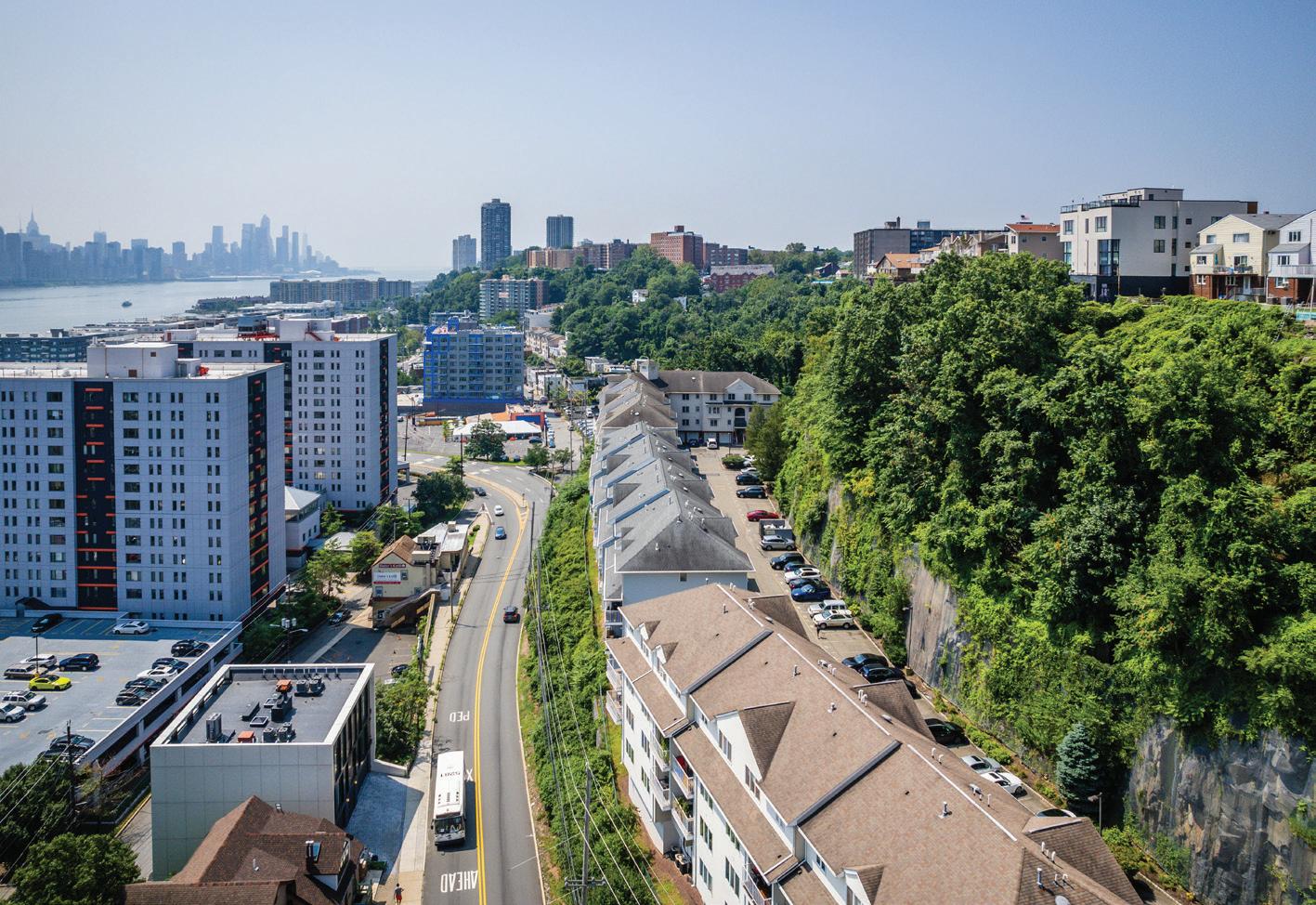
Established in 1840 and named after the English explorer Henry Hudson, Hudson County is an urban cultural hub exuding American Dream ideals. While small in size compared to other New Jersey counties, Hudson County makes up for it with its diverse cities, dedication to the arts, epic skyline views, and a deep-rooted immigrant legacy.
The county’s major cities, Jersey City and Hoboken, have become
business hotspots due to their premier location across the Hudson River from Manhattan, with global corporate companies such as JP Morgan Chase & Co, Quest Diagnostics, Goldman Sachs, Goya Foods, Bank of America, and more building business branches right here in the Garden State. Some have even given Jersey City the nickname “Wall Street West,” according to the Hudson County Chamber of Commerce, and it boasts being the
12th largest downtown in the U.S.
“People think Jersey City is a really big city, and for New Jersey it is, because it’s so densly populated,” said Alessia Aron, Founder of Beyond the Plate Food Tours, which operates out of Jersey City, Somerville, Red Bank, and Kearny. “But there’s still a small town feel here, and especially in the food and beverage industry, everyone knows each other.” Aron has been curating food tours in Jersey City and neighboring towns for the past 12
years. Her goal: Bringing people into the story of a city—it’s history, what it’s like today, and the catalysts for change.
“The thing everyone says, I mean it’s hard not to, is the beautiful thing about diversity. You might not see it as much downtown anymore, but I think it’s the heartbeat of what makes Hudson County what it is,” said Aron. “Because it’s so densely populated, we talk about how more than 50% speak a language
other than English, more than 40 languages spoken in public schools, and more than 30% are immigrant born. So, I think, in that sense, we’d like to believe this is a safe space. That’s what makes it such a wonderful place, beause you can find everything, and people come together and embrace different cultures, which is, and it’s what people want.”
From row homes to sprawling estates, there is a home style for everyone in Hudson County.
According to NJ Realtors® latest housing market data report, the single family median sales price increased 7.4% in Hudson County year-to-date to $625,000. The median sales price is the same in the townhouse-condo market, at $625,000, the same as this time last year. The townhouse-condo market had the most new listings year-todate, with 5,729 new units hitting the market and 2,638 closed sales year-to-date.
TRAVELING AROUND THE COUNTY AND BEYOND
Path Train
Travel back and forth from Hudson County into Manhattan 24 hours a day, seven days a week.
Light Rail
Use the Hudson-Bergen Light Rail to travel parallel to the Hudson River and Upper New York Bay around the county. There are two dozen stops throughout, and adult one-way tickets are just $2.55.
The Hop
Travel around Hoboken City using the free bus, which you can hop on and off throughout the city.
EZ Ride Shuttle
For those who work in the Harmon Meadow area, try taking the EZ Ride Shuttle. It goes to the Meadowlands Convention Center, the Hyatt Plaza Hotel, the Courtyard Marriott Hotel, and the Secaucus Junction Train Station.
Citi Bike
Travel by bike across the county and especially through Jersey City and Hoboken. Download the Citi Bike mobile app to find stations and buy a pass.
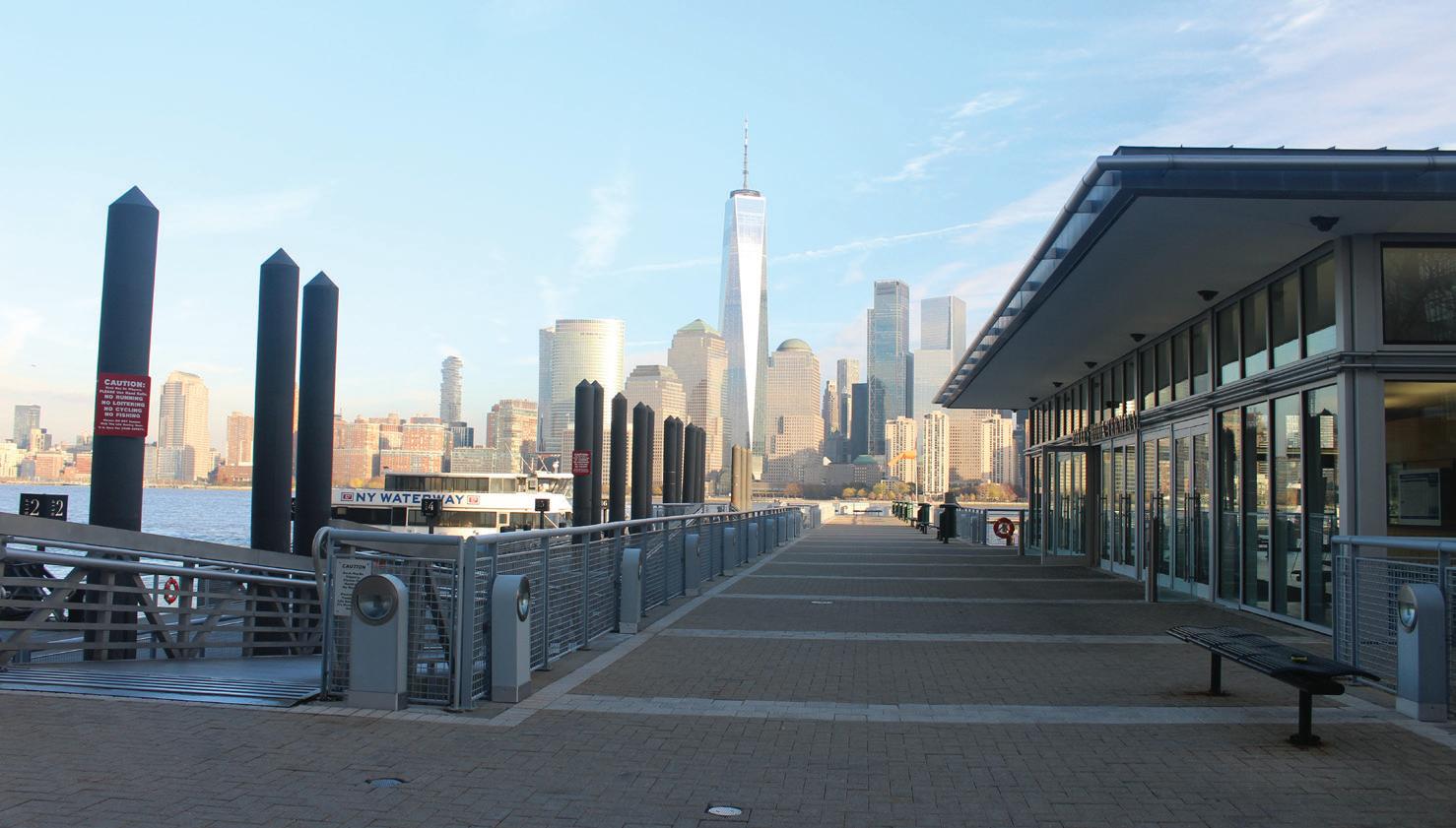
NY Waterway
Running from New Jersey to Manhattan across the Hudson River, there are seven ferry terminals in Hudson County. You can find a terminal in Hoboken, Weehawken, and Jersey City.
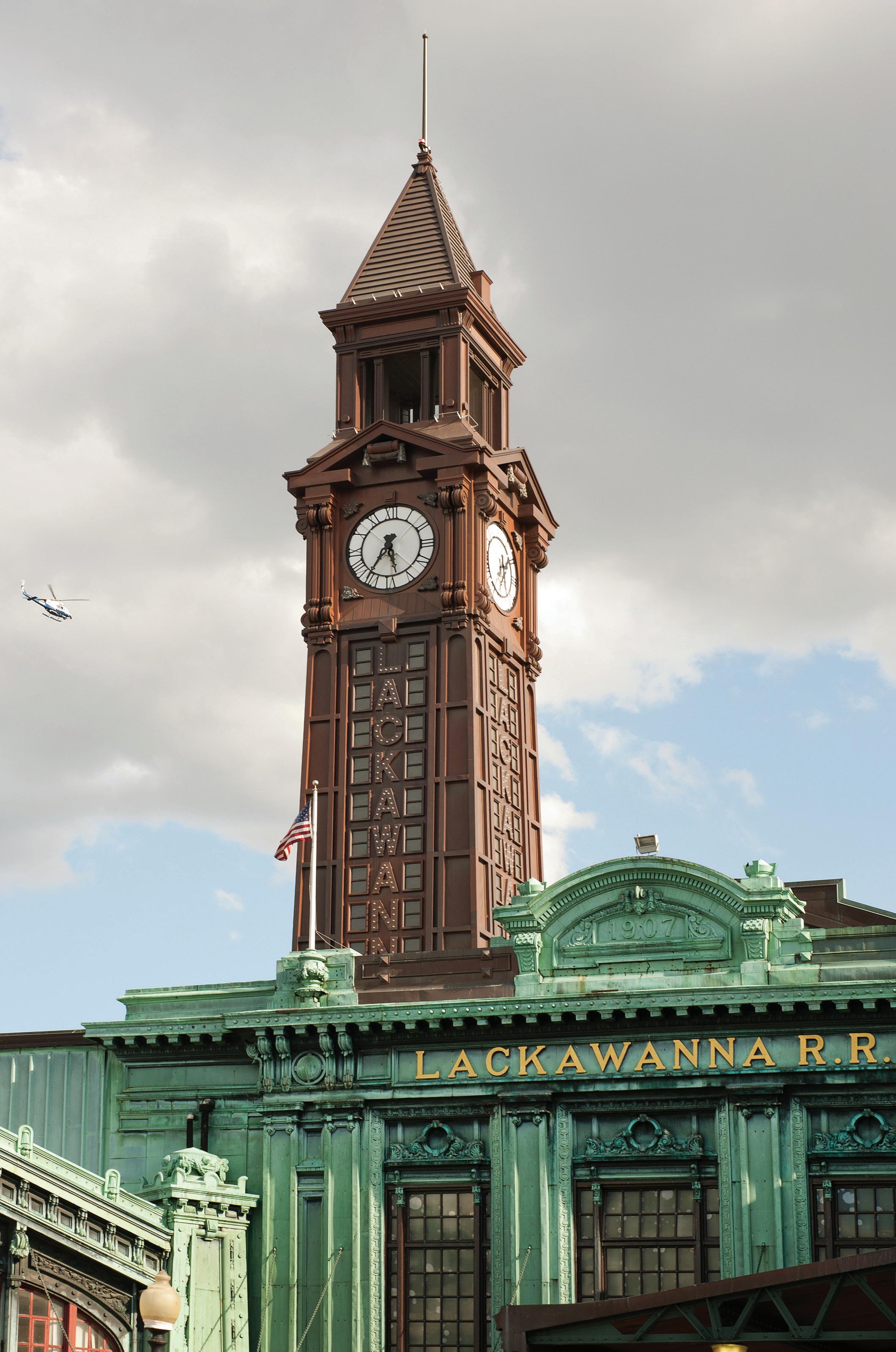
Hoboken Terminal
NY Waterway
HISTORICAL SPOTS TO DISCOVER THE COUNTY’S PAST
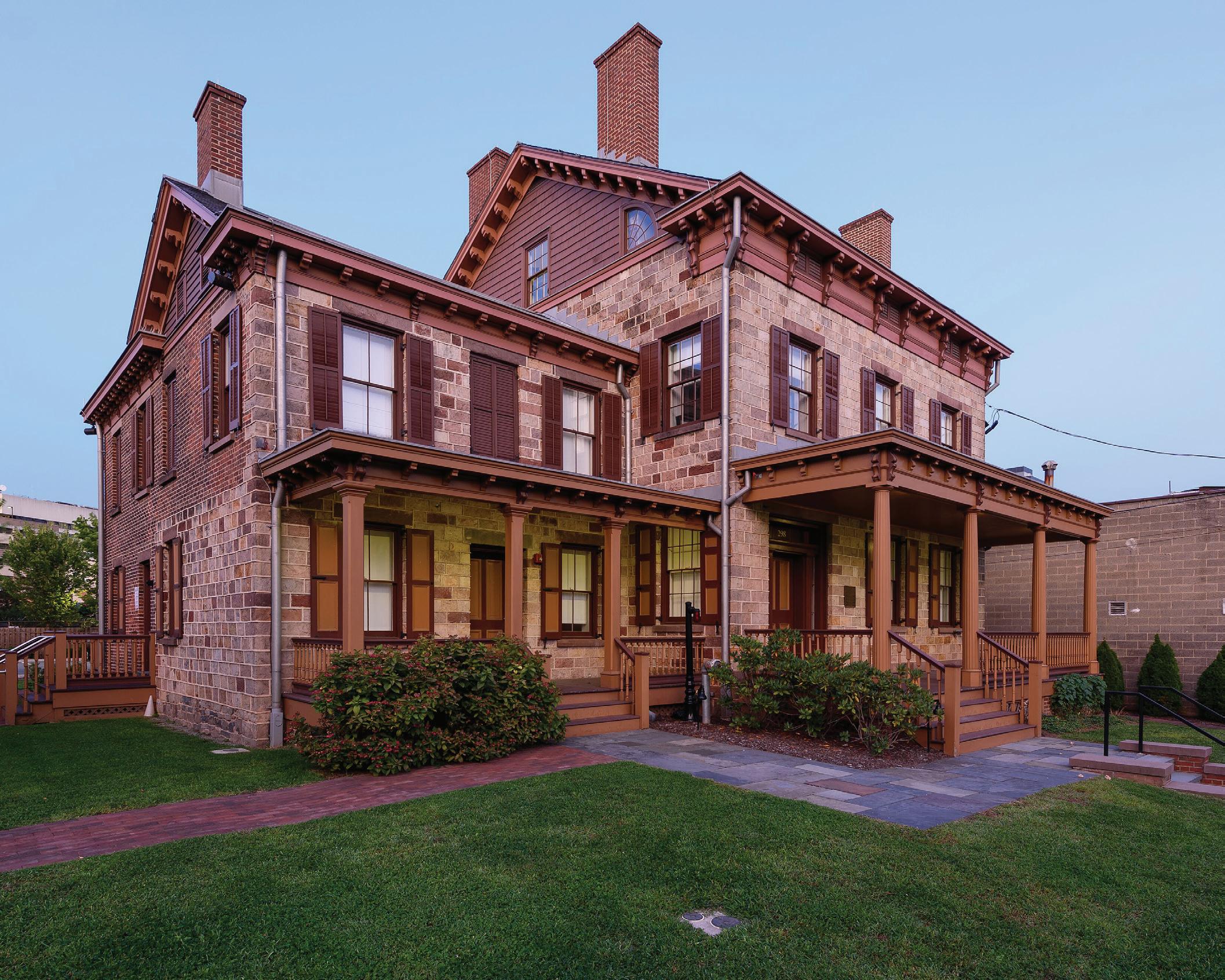
Apple Tree House
Jersey City
Located at 298 Academy Street, this home is said to have both Generals Lafayette and Washington dine under an apple tree in its orchard while planning the army’s retreat through the Jerseys, according to cityofjerseycity.org. Today, visitors can walk through this National Historic Landmark and attend lectures and exhibitions throughout the year.
Berlin Wall
Laurel Hill Park, Secaucus
Did you know there’s a piece of the Berlin Wall right here in New Jersey? As a symbol of peace and the end of the Cold War, Hudson County received a section of the Berlin Wall from Oberhavel County, Germany. The counties have been sister counties since 2000 and have participated in student, cultural, and sports exchanges since then.
Ellis Island
Liberty State Park, Jersey City
Take part in the migrant journey to America at the National Immigration Museum on Ellis Island. Connect with your ancestors’ experiences, follow your family’s path to America, and so much more. Getting to Ellis Island: Purchase tickets through Statue City Cruises to enter the Statue of Liberty Museum or Ellis Island and depart from Liberty State Park.
Hoboken Home Plate
Hoboken
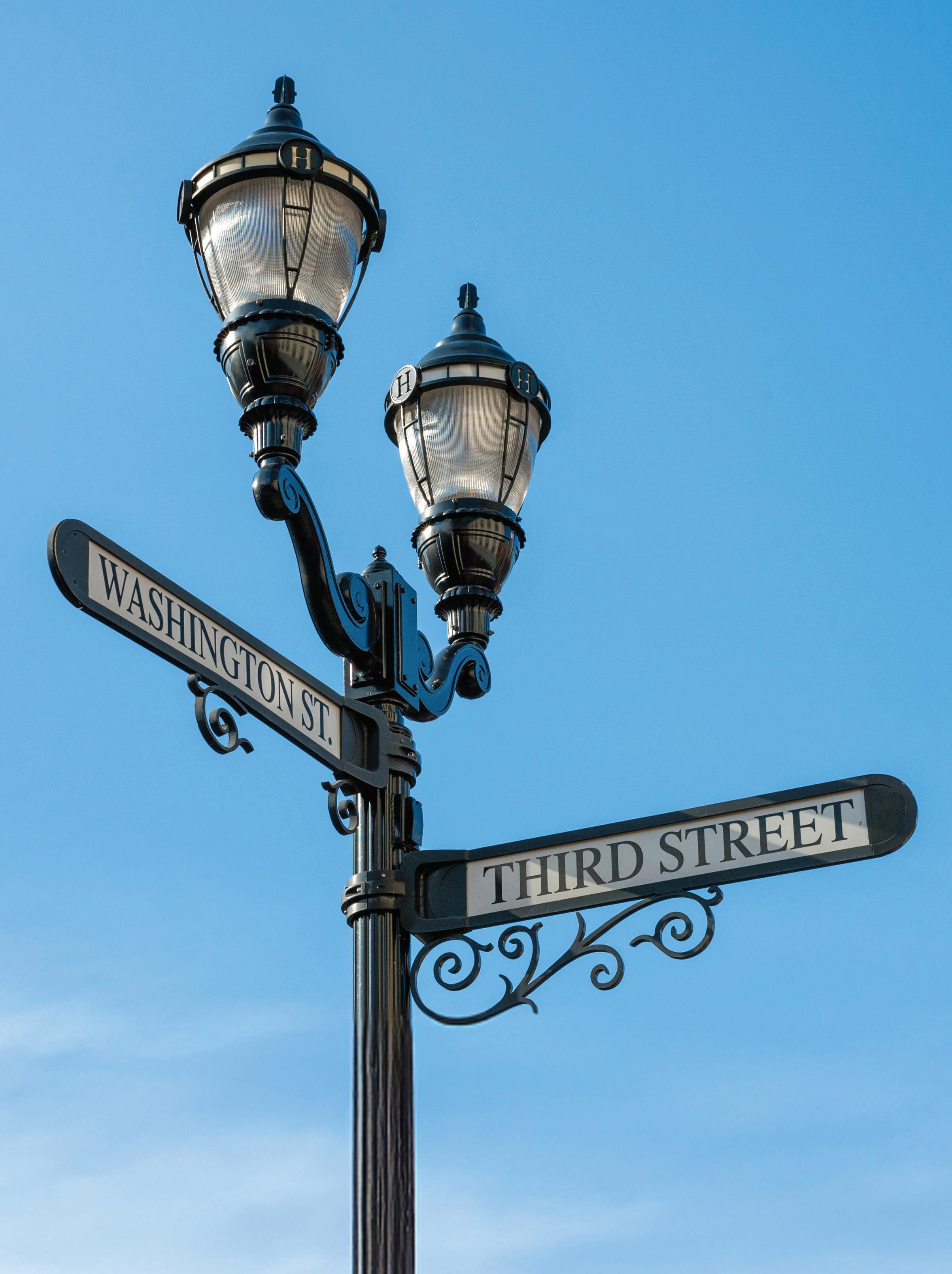
Baseball was born right in Hoboken, New Jersey. Elysian Fields is said to be the site of the first organized baseball game. While only a small portion of the field remains, you can find a historic marker at the intersection of 11th Street and Washington Street.
Weehawken Dueling Grounds
Weehawken
18 known duels occurred right in Weehawken between 1700 and 1884, according to visithudson.org. The famous duel between Alexander Hamilton and Aaron Burr took place here, in which Burr fatally shot Hamilton. If you’ve seen the musical “Hamilton,” it depicts the duel in the song “The World Was Wide Enough.”
Apple Tree House
Photo by King of Hearts, Wikimedia Commons
Hoboken Home Plate
DINERS AND CAFES FOR YOUR
MID-DAY PICK ME UP
Barbara’s Café
Kearny
What to Order: Affogato, hot chocolate, chicken empanadas, or Barbara’s Croissant.
Carnegie Diner & Café
Secaucus
What to Order: Espresso martini, peanut butter and bacon pancakes, or a pastrami sandwich.
City Diner
Jersey City
What to Order: Breakfast quesadilla, chocolate hazelnut French toast, or the hangover burrito with chorizo and chipotle aioli.
Coperaco Café
Harrison
What to Order: Seasonal coffee drinks, avocado toast, and fresh pastries galore.
Griot Cafe
Jersey City
What to Order: Samosas, creole chicken and waffles, and breakfast croissant sandwiches.
Haute Dulce
Secaucus
What to Order: Swiss cheese omelet, Biscoff crunch crepe, or pistachio hot chocolate.
Hybrid Coffee & Kitchen
Jersey City
What to Order: Acai bowl, loaded avocado toast, or a honeycomb latte.
Legends Diner
Secaucus
What to Order: Lox and onion omelet, Monte Cristo, or baked meat loaf.
The Grind Shop
Jersey City
What to Order: Almond Joy latte, brown sugar bubble tea, bagel with butter and hot honey, and specialty sandwiches.
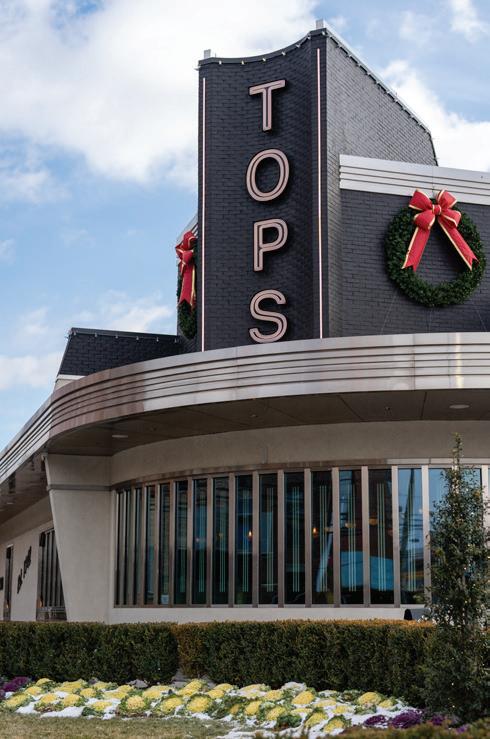
Tops Diner
Harrison
What to Order: Short rib tacos, tuna melt, huevos rancheros, banana pudding waffles, or fried green tomatoes.
River View Diner
North Bergen
What to Order: Baklava, Boston cream pie, corned beef Reuben club, or Oreo pancakes.
KEARNY HISTORIC MONUMENT TOUR
Located between two of New Jersey’s largest cities, Jersey City and Newark, Kearny is rich in history and diversity. These are just some of the historic monuments located throughout town celebrating its notable events and people. Discover more historic walking tours at hcwalkingtours.stqry.app.
Irish Heritage Monument
The Ancient Order of Hibernians dedicated the monument to The Reverend Monsignor Joseph A. Carroll in 1985.
Monument to the Battle of Chantilly
The boulder is from Snake Hill in Secaucus and is in honor of Major General Philip Kearny, who fought in the Battle of Chantilly in Fairfax County, Va.
Wallace Glen
A cairn monument symbolizing embarking on a journey, and is codedicated to Sir William Wallace, a Scottish Patriot, and Kearny Councilman
David A. Wallace, a Scottish immigrant who served Kearny and the State of New Jersey.
of Kearny, it was designed to allow visitors to toss a coin and make a wish. The Kearny Lions Club donated all funds raised to assist the blind.
Monument to the Four Chaplains
At St. Stephen’s Church, this sculpture is in memory of the Four Chaplains, four clergymen who surrendered their life jackets in 1943 to other passengers on the U.S.A.T. Dorchester after being struck by a torpedo.
General Philip Kearny Statue
Located in front of the town’s post office, commissioned by the State of New Jersey in 1868, and was intended to be displayed in Statuary Hall in the U.S. Capitol. After being in storage, it was rediscovered and displayed in Newark’s Military Park. Eventually, it was back in storage and fell into disrepair. In 1995, a copy was made and now sits on some of the original brick from General Kearny’s Residence, Bell Grove Mansion.
Easing the State’s Affordable Housing Crunch Will Take Flexibility, Empathy, and Time
BY DINA CHENEY
Like many states, New Jersey is short on affordable housing.
According to the National Low Income Housing Coalition, the shortfall comes in at 205,063 rental homes. To close this gap, the state has mandated the construction of about 85,000 such units by 2035.
But meeting the goal won’t be easy—especially since buildable lots are rare in the densest state in the nation.
Communities need to get creative. They’ll also need to collaborate and compromise, a tall order when the issue can be contentious, and the many players (the state, towns, developers, residents) have different, often conflicting, priorities and perspectives.
At the top, the state aims to create sufficient affordable
housing units while being “good stewards of the public’s money,” explained Collingswood-based Steve Schoch, AIA, LEED AP, Principal, Thriven Design.
“They want quality construction that will hold up to the abuse of tenants because otherwise they will need to tear down buildings in 20 years and rebuild from scratch.” They also need to ensure homes comply with accessibility regulations, as per the Fair Housing Act and Rehabilitation Act (Section 504).
To meet quality and accessibility standards for these units, they’ve imposed high minimum requirements, known as Uniform Housing Affordable Controls (UHAC), explained Princeton-based Joshua Zinder, AIA, NCARB, LEED AP, Managing Partner, Joshua Zinder Architecture and Design.
“Affordable housing is inexpensive to live in, but it’s some of the best quality construction anywhere in the state, sometimes better than what market-rate builders build,” said Schoch.
UHAC requirements hadn’t changed substantially since 2004, but recently became stricter, said Schoch. For instance, new bathrooms must provide a greater wheelchair turning radius, and the minimum square footage for studios increased from 500 to 550.
“Now some affordable units are bigger than market-rate units, which creates a strange dynamic,” said Zinder. Schoch pointed out he’s created 400-square-foot market-rate studios in Jersey City and Hoboken.
The UHAC requirements have also become more explicit about equitable distribution, specifying that affordable units must be distributed throughout buildings or developments rather than clustered in specific areas (like one floor), said Schoch. These stricter requirements often involve higher costs,
which can pose challenges for builders or developers trying to make the numbers work. These upped requirements have come in “incremental stages,” said Schoch. “One day, you wake up, and it’s, ‘oh my goodness, I can’t build a two-story wood-frame building for less than $200 per square foot.’ It shouldn’t cost that much.”
Residents have also posed obstacles when it comes to building more affordable housing. Neighbors can resist projects for fear they’ll lower the value of their homes or change their community’s character.
“NIMBY-ism [which stands for “Not In My Backyard”] is the biggest hurdle for affordable housing in the state of New Jersey,” said Zinder.
All in all, making progress on affordable housing will require realistic, incremental, and nuanced strategies like these.
With few buildable lots, converting underused non-residential spaces is downright resourceful. Plus, adapted buildings tend to meld well with their surroundings, which can help diminish potential local opposition. Along with factories and schools, here are a few types of structures ripe for repurposing:
• Community centers: In downtown Princeton, an old Masonic Hall no longer functioned well, said Zinder. In collaboration with the local community, his team converted the structure into 10 apartments, two of which are affordable and retained the building’s original signage.
• Downtowns: “In Princeton, like in many downtowns in New Jersey, there’s a huge amount of converted office space,” said Zinder. PostCOVID-19, there’s been less demand for this type of real estate and “a
movement” to bring apartments to downtowns, he added. When compared to residential areas, “municipalities can afford a greater density in their downtowns, which already have physical density.”
• Malls: Developers have been adding residential units to shopping centers, said Schoch. “Now their parking lots are lined with townhouses and there are little main streets or town centers.”
• Office parks: “If an office park is 50% occupied, maybe keep the first two floors as offices and convert the top two floors to housing,” said Schoch.
• Hotels: “In Atlantic City, there are a lot of old casino hotels and the industry is struggling,” said Schoch. “It would be a wonderful housing opportunity to combine hotel rooms into apartments.”
“MISSING MIDDLE” HOUSING
“A lot of times, communities let developers come in and drop in large developments,” said Zinder. “When you drop 200 units next to somebody, it will scare them.” For better buy-in locally, he recommended “missing middle” housing with some affordable housing units.
This smaller-scale housing like duplexes, triplexes, fourplexes, and townhouses, can add affordable units without changing the scale of a community. Plus, according to The National Housing Conference, many believe mixed-income communities are safer and offer more exposure to positive role models than communities entirely composed of affordable housing units.
As an example, in downtown Princeton, Zinder designed Nelson Glass House, a conversion of an industrial building into an apartment building with six apartments, with one apartment that qualifies as affordable housing.
COMMON-SENSE GUIDELINES
Guidelines are necessary to ensure affordable housing is durable and accessible. But they shouldn’t be so restrictive as to significantly damper its development. “When your resources are finite, you have to decide what your priorities are going to be,” said Schoch. “Is it creating the most housing? If that is your priority, you need to scale back on your quality standards.”
In some cases, it might make sense to adjust minimum square footage requirements, said Zinder. “If the average size unit in a project is smaller than the UHAC requirement, you should only have to meet that average square footage,” said Zinder. “A project that has five units and an additional affordable housing unit should not have to meet the same requirements as a midrise building with 200 units. With 200 units, there’s an economy of scale, and you can afford a bigger square footage on affordable housing units.”
MODULAR CONSTRUCTION
Ruju Jasani, ASID, IIDA, NCIDQ, SEED, Founder, Jasani Studio, feels modular construction is underutilized in affordable housing. Modularity offers efficiencies of scale plus doesn’t require as skilled a labor force. Plus, modules with built-in features, like pull-down beds, are space-efficient, which can make smaller units more livable, said Jasani. “You can add and subtract modules based on your lifestyle. By going modular, you can start small and scale up.”
LOWER-PRICED MARKETRATE HOMES
While they don’t technically qualify as affordable housing, many smaller or lower-priced market-rate homes can still help address the affordable housing crisis. By increasing supply, they help stabilize demand, which brings down costs, said Zinder. Take micro houses. Because of their tiny footprint, often 200- to 400-square feet, more can be built, which is a boon for developers, said Zinder.
YOUR FIRST HOME
A SMART GUIDE TO BUYING, BUDGETING, AND BEYOND
BY LAUREN MELVILLE
Buying your first home is an exciting milestone, but it can feel overwhelming. Between closing costs, maintenance expenses, and new monthly financial responsibilities, there’s a lot to learn along the way. With thoughtful planning, smart strategies, and informed decision-making, first-time buyers can feel confident, save money, and create long-term success. These tips are here to help you navigate the journey from “just looking” to happily settled in your new space.
GET YOUR FINANCES READY
Before you start touring homes, take time to understand and organize your finances to ensure a smoother experience and greater confidence in your decision. Review your credit score and look for opportunities to improve to secure a more favorable mortgage rate. Set realistic savings goals for your down payment, and get pre-approved for a mortgage so you know exactly how much you can afford. According to a recent Nationwide Insurance article, you’ll need a solid understanding of your finances to prepare for home buying expenses.
YOU’RE MOVED IN. WHAT’S NEXT?
WAYS TO SAVE IN YOUR NEW HOME
SHOP FOR MORTGAGE RATES
Going with the first mortgage lender you find or sticking with your bank can lead to possible challenges down the road. Instead, apply for mortgages with multiple lenders. According to a recent Freddie Mac study, “as mortgage rates remain higher than recent years, homebuyers can potentially save $600-$1,200 annually by applying for mortgages from multiple lenders.” It may take more time, communication, and paperwork, but it allows you to understand your options and choose the right one for you.
2 3
COMPARE HOMEOWNERS INSURANCE OPTIONS
Once you’re under contract for your dream home and your offer is accepted, it’s a good idea to shop around for different home insurance options. Like mortgage rates, pricing and coverage vary widely between providers, so comparing quotes helps ensure you choose the right policy for you and your budget. Many policies cover common hazards like fire, windstorm, hail, lightning, and vandalism. According to a Finhabits article, “Standard homeowner insurance policies also typically cover water damage from plumbing issues, appliances, water heater, and heating or cooling systems. Some policies include loss-of-use coverage, which helps with temporary housing and living expenses if you’re unable to live in your home during repairs.”
Once you have the keys in your hand, new expenses quickly come into play: monthly mortgage payments, property taxes, homeowners’ insurance, utilities, and possible homeowners association fees. These costs can feel overwhelming at first, making it important to find ways to save for ongoing expenses, routine maintenance, and unexpected repairs.
Here are ways to save once you’re settled in:
• Install a programmable thermostat: Automatically reset your thermostat when you’re sleeping or away from your home and save up to 10% on your heating and cooling bills, according to the U.S. Department of Energy.
• Annual HVAC service: Schedule an annual HVAC service for a more efficient system to prevent costly breakdowns, according to a recent Trane Technology’s blog post.
• Consider removing your Private Mortgage Insurance: Once you reach the 20% equity on your home, you can request a cancellation of your private mortgage insurance or refinance your mortgage with at least 20% equity to avoid your private mortgage insurance fee, according to a Better Mortgage article.
• Review your property tax records: Search for your property tax records on your county’s or municipality’s website and appeal your assessment if there are discrepancies. The State of New Jersey also has property tax relief programs you could be eligible for such as ANCHOR, Senior Freeze, or Stay NJ. Applications are typically available each summer and due in October.
• Utilize state energy audits and programs: Identify energy waste with a home evaluation energy audit to save up to 5-30% on your energy bill, according to njcleanenergy.com.
STAY ON TOP OF HOME MAINTENANCE
Maintaining a home is a job in itself. Keeping up with these tasks is important to keep your property value up, while also being a safe place. Create a monthly maintenance to-do checklist. Here’s an example provided by Freddie Mac:
• Clean faucet aerators and showerheads to remove mineral deposits.
• Inspect and unclog your tub and sink drains.
• Test smoke alarms, carbon monoxide detectors, fire extinguishers and all groundfault circuit interrupters.
• Inspect all of your electrical cords for wear and tear.
• Vacuum heat registers and heat vents.
• Check if indoor and outdoor air vents are not blocked.
• Flush out hot water from the water heater to remove accumulated sediment.
• Seasonal checklists are also helpful, especially as temperatures change.
Winter Tip: According to a Freddie Mac article, buying windows in the winter may offer lower prices and greater flexibility in installation scheduling.
PLAN AHEAD FOR PEACE OF MIND
Unexpected repairs are a part of homeownership, but planning ahead can make them far less stressful. Setting aside an emergency maintenance fund can help cover surprise repairs without added stress. Experts recommend saving at least one to two percent of the price you paid for your home, according to an American Home Shield article. This small but proactive step can help protect your new home and your budget as you grow into homeownership. 6 4 5
Tips for Pre-approval: Boosting Your Credit Score
BY JULIA VENTRONE
FIRST TIME BUYER? NO PROBLEM
As first-time buyers move forward in the homebuying process, navigating mortgage rates, lender requirements, and personal financial readiness can quickly become complex. Preapproval is when a mortgage lender reviews your finances to determine how much money they are willing to lend you to secure your new home. Why is getting pre-approved important? Pre-approval allows buyers to set a budget, enhance their offer with a pre-approval letter, and can help speed up closing by reviewing the buyer’s financial background before they make their first offer. Lenders review your credit score, income, any outstanding debts, and savings. Among these, your credit score is the most important factor in obtaining a mortgage loan. For a conventional loan, most lenders prefer a rate of 620 or higher, according to Better Mortgage. But the higher your credit score, the lower your rate. Here are some tips to boost your credit score and land that pre-approval.
1START BUILDING CREDIT
If you’re a younger buyer, starting your credit journey early matters. The only way to build credit is to use credit. The length of your credit history affects your FICO credit score by about 15%, according to Experian. Reliable payments and healthy credit behaviors for a long period of time can reflect positively on your credit score.
2 CHECK YOUR CREDIT REPORTS
Check your credit reports with credit bureaus like Experian, TransUnion, and Equifax. You will be able to see your entire credit history. Look out for late payments, inaccurate balances, or accounts that don’t belong to you. If anything seems incorrect, report these errors to the Consumer Financial Protection Bureau (CFPB) or the creditor itself. By reporting these mistakes early, you can drastically increase your credit score. Other applications you can use to check your credit score are Credit Karma to check your VantageScore and CreditWise from CapitalOne to check your FICO Score, both of which are updated regularly, if not daily.
3 MAKE PAYMENTS ON TIME
Your payment history, including all on-time, late, and missed payments, affects 35% of your FICO credit score according to Experian. This is the fastest way to improve your credit. If you’re struggling to make payments, set up automatic payments for the minimum amount due. Then focus on allocating your money and paying off the remaining balance slowly. Late or missed credit reports can stay on your account for up to seven years. According to CFPB, “A credit reporting company generally can report most negative information for seven years. Information about a lawsuit or a judgment against you can be reported for seven years or until the statute of limitations runs out, whichever is longer. Bankruptcies can stay on your report for up to 10 years.”
4 PAY DOWN ACCOUNT BALANCES
Credit utilization, the fraction of your credit limit utilized, is also significant in determining your credit score. “A good guideline: Use less than 30% of your limit on any card, but lower is better. The people with the highest scores tend to have credit utilization in the single digits,” according to Nerd Wallet. Steadily improve your score by lowering your credit utilization and making on-time payments. In 2025, first-time buyers reached an all-time low of just 21%, according to the National Association of Realtors® 2025 Profile of Home Buyers and Sellers. Due to low inventory and high prices, paying off your account balances can significantly affect your credit and, therefore, get you a loan for more options.
5 AVOID OPENING NEW CREDIT LINES
Opening new credit lines can temporarily negatively impact your credit score. According to Community Choice Credit Union, when you apply for a new line of credit, creditors will pull your credit report to see how well you have paid your bills in the past. This is known as a hard inquiry and can cause a small infraction on your credit score. It’s best to hold off on opening new lines of credit in the months leading up to pre-approval.
6 PAY DOWN OUTSTANDING DEBTS
If you’re working to pay off outstanding debts, make this a top priority. Budgeting your money accordingly to lower your balance is essential in raising your credit score. Make a spreadsheet to organize your finances or use budgeting apps to track your spending like Rocket Money, Mint, Good Budget, and Monarch, the #1 Best Budgeting App of December 2025 according to Forbes. According to Bankrate, “A [credit] counselor can help you set up a budget and make a plan to lower your balances, which may include negotiating with your creditors to reduce your interest rates and monthly payments.”
7 BECOME AN AUTHORIZED USER
If you are a younger buyer, one way to improve your credit is to become an authorized user on a responsible credit card user’s account. You will benefit from the positive credit activity from the primary cardholder if they make payments on time.
NOTE:
While most mortgage lenders review your FICO scores, a recent regulatory change now allows lenders to use the VantageScore in some cases. According to NerdWallet, “VantageScore incorporates data like rent and utility payments, which can be helpful for borrowers who lack lengthy credit histories.”
When getting pre-approved, shopping around for loans is beneficial to see who will give you the best rate. Don’t settle for the first lender who offers. You can save much more in the long run with a lower rate.
Credit readiness can determine how smoothly a transaction moves from pre-approval to closing. By improving their credit profile ahead of time, buyers position themselves for stronger financing terms and a more confident offer strategy, one that is strengthened even further with guidance from a Realtor® like you.
The Real Cost of Homeownership Starts After the Closing Table
Owning a home is still the foundation of the American Dream, but for a majority of New Jerseyans, the line between that dream and an often unaffordable
moving CosTs
Before a homeowner even sets foot inside their new property, moving costs reduce the cash buffer they need for early repairs, deposits and unexpected expenses.
properTy Taxes
Consistently among the highest in the nation, and often in flux from year-to-year, property taxes dramatically shape monthly housing costs and can push a home from affordable to unsustainable.
private morTgaGe insurance (pmi)
Required for many buyers, PMI increases the monthly payment and limits how much a household can budget for other home-related needs.
And, once homeowners hit the 20% equity needed to release them from PMI, they often have to fight to get it dropped.
reality is paper thin. The finish line of the affordability crisis plaguing New Jersey can’t be the closing table—and the full spectrum of homeownership must be addressed when talking about affordability and built into the decisions and solutions.
utilities + energy
Older homes, common across New Jersey, often have high energy bills, turning everyday utilities into major affordability factors.
properTy improvements + upGrades
Necessary updates to safety, accessibility or efficiency can strain budgets years after purchase.
homeowner’s and/or Flood insurance
Rising premiums, especially in coastal or flood-prone areas, add unavoidable recurring costs that increase the true cost of staying in a home.
home mainTenance + repairs
From roofs to boilers, maintenance is not optional; deferring repairs only compounds costs and risks long-term financial instability.
Here’s a breakdown of both the visible and hidden costs of owning a home:
hoa Fees + dues
These recurring fees, which often rise over time, elevate the total monthly housing cost beyond what buyers initially plan for.
aging home inFrastrucTure
Old electrical, plumbing, septic systems or heating units can require major, high-cost replacements that make long-term affordability precarious.
However, these are only the major associated costs. Outlined on this page are the other real-world costs that everyone must account for.
These secondary expenses don’t operate in isolation—they accumulate, continually building until even typically secure families feel their finances thinning out. Therefore, focusing solely on the purchase price of a home misses the lived reality of almost every New Jerseyan.
When property taxes rise the same year as insurance premiums, or when childcare spikes just as an HVAC system fails, affordability can collapse quickly. Housing affordability begins with helping more New Jerseyans buy a home, but it must also include the ability to sustain homeownership.
Every added cost or percentage rise in inflation erodes the fragile balance of a household budget.
This pressure is already showing in the data. As of October 2025, New Jersey ranks as the 12th highest state for foreclosures in the nation—a clear sign that many households are struggling to manage the ongoing costs of homeownership.
At the same time, New Jersey’s job market remains stable but not immune to national trends. While unemployment is relatively low, wage growth has not kept pace with increases in the Consumer Price Index (CPI) and inflation. Salaries in major industries—education, health care, logistics and professional services— are rising modestly, but not nearly
Commuting + TransporTation
enough to match the escalating cost of housing, transportation, insurance and essentials. This widening gap between income and living costs places even more pressure on homeowners, pushing affordability further out of reach from both sides of the equation.
A home’s distance from job centers directly affects gas, toll and transit costs, making location an affordability issue.
Cellphone + BroadBand
Essential utilities today, they are recurring expenses that shape overall affordability.
healTh insurance
Housing affordability may start with increasing New Jerseyans’ ability to buy a home, but it continues through their ability to sustain that homeownership. It’s time to bring every added cost or percentage rise in inflation that erodes budgets into the affordability conversation.
GroCeries
Higher food costs in the region shrink the budget available for home repairs or emergencies.
Rising premiums and out-of-pocket costs reduce disposable income needed to manage home expenses.
Car insurance
studenT loans
Debt obligations directly impact debt-to-income ratios and monthly financial flexibility for homeowners.
Child Care + Wraparound CosTs
For many families, child care rivals the cost of a mortgage, reducing what they can safely spend on housing.
New Jersey’s high insurance premiums add another fixed monthly cost that competes with housing expenses.
pet CosTs
Veterinary care, food and licensing add up, influencing how much a household can comfortably budget for housing.
CONTINUED BUYER DEMAND PREVAILS IN 2025
BY COLLEEN KING OLIVER
New Jersey’s housing market closed out 2025 with housing prices and buyer demand holding steady, underscoring the resilience of the New Jersey market, according to New Jersey Realtors® year-end housing market data report.
The median sales price across all property types rose 5.4% to $525,000
with 86,440 closed sales statewide in 2025
The average number of days on market increased 8.3% to 39 days, while the percent of list price received saw a modest 0.7% decline to 101.5%, reflecting a stillcompetitive environment.
The single-family market posted the strongest gains in median sales price in 2025, rising 6.4% year-over-year to $585,000
Inventory remained limited, with just 8,978 single-family homes for sale statewide in December, a 7.3% decline compared to last year.
Adult communities also experienced notable price growth, with the median sales price increasing 5.7%, or $20,000, to
$370,000
for the year. This segment led the market in new inventory, recording nearly an 8% increase in new listings compared to 2024. Homes for sale were up 14.4% in December in adult communities, as well.
The townhouse and condominium market saw more modest appreciation, as the median sales price rose 2.9% year-over-year to $422,000
Across all property types, pending and closed sales remained relatively steady, moving only a few percentage points in either direction and signaling a market that maintained similar overall activity levels to the prior year.
Competition and limited supply continued to define New Jersey’s housing market, setting it apart from national trends. Homes sold at or above list price on average, with single-family properties receiving
102.2%
of list price and spending just over 37 days on the market, well below pre-pandemic norms. Inventory remained tight, with a two-month supply of homes statewide, reinforcing seller confidence and supporting continued price stability.
“The strength of New Jersey’s housing market in 2025 reflects sustained demand paired with a long-standing shortage of available homes,” said 2026 President of New Jersey Realtors® Gloria Siciliano. “As mortgage rates began to ease at the end of the year, we saw renewed buyer interest, and if that trend continues, we’re hopeful it could help drive additional activity in 2026, particularly among buyers who have been sidelined waiting for more favorable market conditions.”
The easing of mortgage rates in late December is expected to support buyer confidence heading into 2026, potentially encouraging more households to reenter the market while maintaining the overall stability that characterized 2025.