


By Leo Adam Biga
Kim Louise Whiteside owns diverse writing credits that seemingly belong to several wordsmiths rather than her alone. The Omaha native is a published poet and romance novelist. Her African-American themed novels include several Amazon best-sellers. Playwright is how she mostly identifies today. An article she wrote for Writer’s Digest fulfilled a Bucket List goal. Yet since the 1980s she’s made her living far outside penning dramatic works or magazine pieces as an adult education curriculum writer.
A writer’s life emerged early on growing up in her family’s North Omaha household where she and her late parents shared a “voracious” appetite for reading. Her folks migrated separately to Nebraska from Kansas and met working at Omaha’s VA Hospital. Her father was a cook. Her mother was a laundress.
Kim fondly recalls her father taking her to get her first library card and the magic of checking out mate-
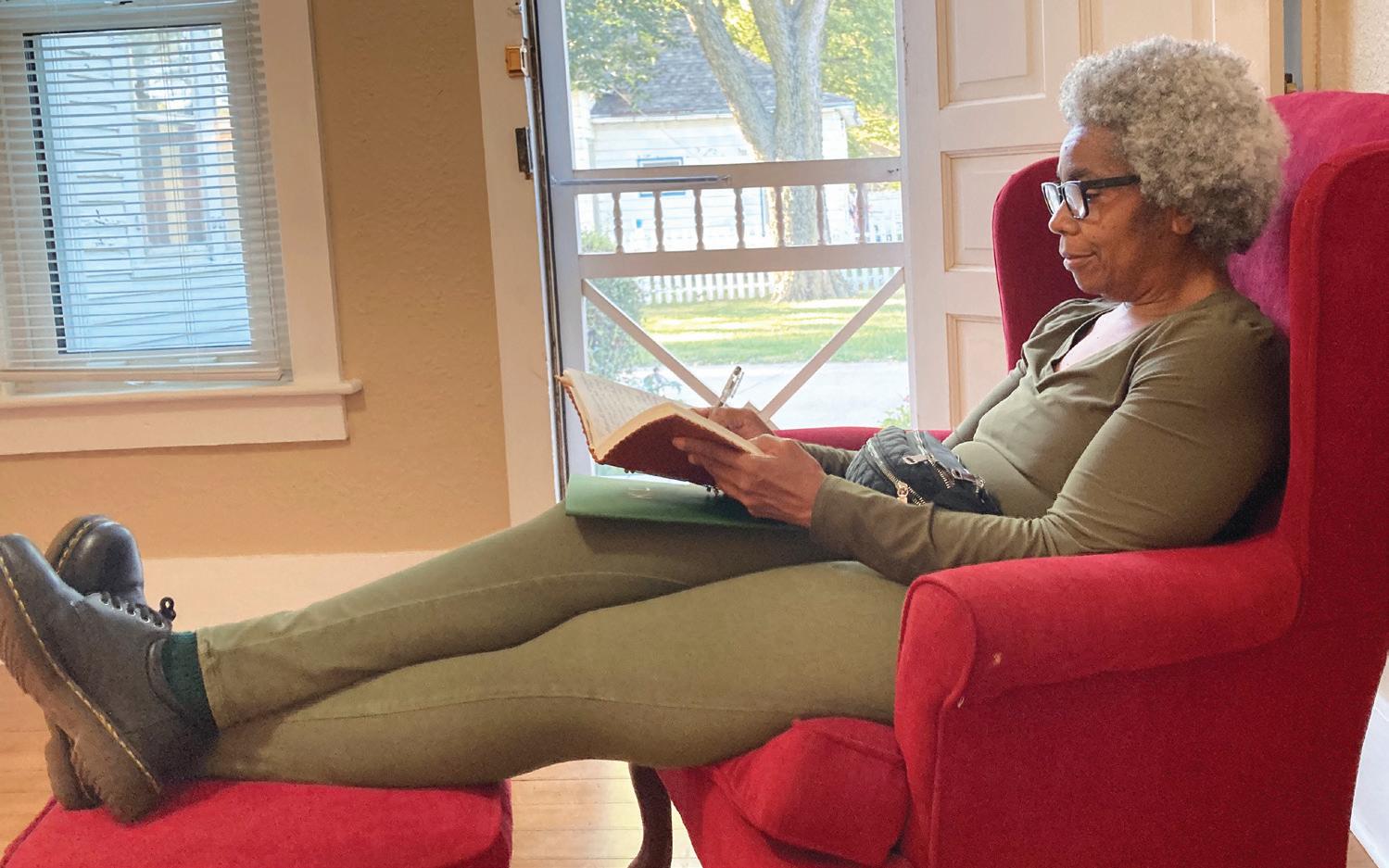
rials from the public library, school library and bookmobile. For Christmas and birthdays she got books. She kept her prized books on a coffee-table at her childhood home. She inherited the table and still uses it to display her literary treasures. Dad read every Omaha WorldHerald daily local edition. Mom binged on romance novels. With household subscriptions to Ebony and Jet magazines, Kim was ex-
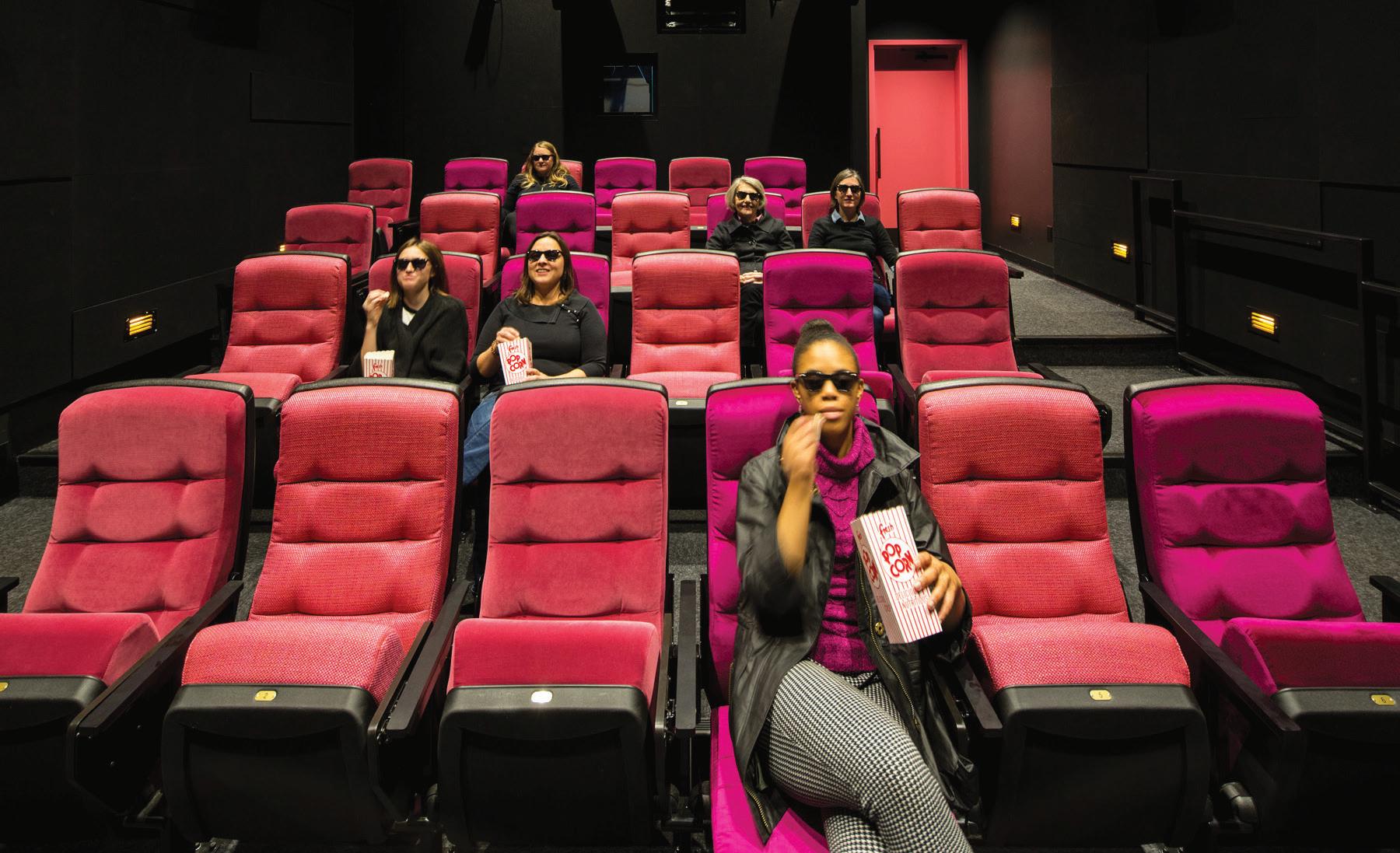
Watching movies allows people to switch off from the troubles that weigh on their minds and be transported to another reality. Learn more about what movies Film Streams in Omaha has to offer, along with the other deals available for older adults on Page 16.
posed to their adult editorial content. She later subscribed to Essence. Recognizing her prodigious interest in reading and writing, her folks purchased her book series. Books on great Black leaders, achievers and thinkers made an impression.
She kept a diary for a time.
In addition to encouragement at home, poems she crafted in junior high earned accolades and admir-
ers at a time when the teen needed validation among her peers. One was featured in a Great Plains Black History Museum exhibition.
“It was something people really appreciated. I connected with people in a way I didn’t even know I could. To be able to connect like that and be accepted, I thought, okay, I know what I can do, and I have been writing ever since.”
A classroom project foreshadowed her future path.
“I distinctly remember being in fourth grade and doing a group project. My group decided to put on a play. We were divvying up who was going to do what and I said. ‘I’ll write it if you guys want to act in it.’ As a card-carrying introvert I didn’t want to speak on stage. I remember writing it and thinking how great it was I wrote these words and people were saying them.”
She attributes her facility for spinning yarns to the tall tales her
--Louise continued on page 9.
By Andy Bradley Contributing Writer
Nebraskans who spend their own money helping care for an older or disabled relative will soon be eligible to recoup some of those expenses. Thanks to the new Nebraska Caregiver Tax Credit, created by the Unicameral last spring, caregivers can receive up to $2,000 in state income tax credits as partial reimbursement for their documented expenses. For example, if a taxpayer owes $2,000 in state income taxes, they may receive up to $2,000 in the form of a credit against those taxes. The credit is $3,000 for those caring for a veteran or person with dementia living in a non-institutional setting.
Several important qualifiers:
• The credit is for 50 percent of eligible realized expenses, and the caregiver must be prepared to show proof of those expenses.
• The legislature authorized only $1.5 million in credits per year,
although that number rises to $2.5 million after two years. The credits are available on a first come (applied) basis.
• The caregiver must have an adjusted federal gross income of less than $50,000 a year, $100,000 for joint filers.
• The credit is not available until January 1, 2026. That gives participants one year, starting January 1, 2025, to collect receipts for eligible out-of-pocket expenses.
Examples include paying for housekeeping, personal care attendants, health care equipment, or home modifications, including accessibility upgrades, among others.
• The person receiving care must require help with two or more activities of daily living, including, among others, feeding, dressing, bathing/grooming, and mobility; and that care must be delivered in a private residence.
• The applicant must be paying
--Relief continued on page 5.


By Andy Bradley Contributing Writer
“Help is closer than you think.”
Michael Osberg, ENOA Caregiver Support Program Coordinator.
ENOA’s Caregiver Support Program features many respite care services designed to give persons caring for an older family member a much-needed break, while possibly postponing the need for residential care.
Respite services include providing an in-home aide six hours a week to spell the caregiver. The aide can also help with light meal preparation, housekeeping, laundry and bathing/grooming.
Another option is to enroll their family member in one of four area day services centers, which provide structured programming, socialization, meals and personalized care.
ENOA will pay for five full days of care every month, or nine half days. Transportation costs are usually not reimbursed. Still other caregivers may choose to hire their own in-home help. ENOA will cover the expenses for this “self-directed care” option up to $500 a month.
Additional services can include home delivered meals for both the caregiver and receiver, and counseling referrals, which may be provided at a free or reduced cost.
An ENOA case manager coordinates and manages all services after developing a written plan of support. The case manager meets monthly with the caregiver to help problem solve, provide guidance, and access other community resources.
ENOA also provides new caregivers a free handbook featuring advice and encouragement from experienced caregivers. The “Caregiver to Caregiver” guide addresses 10 common issues, including, “Things I wish I had known,” “When bathing becomes a battle,” and “Taking care of myself.”
Respite services are provided free of charge for eligible caregivers, regardless of income. Recipients, however, are asked to contribute toward the cost of services according to their means.
Recipients must live in ENOA’s service area (Douglas, Sarpy, Dodge, Washington and Cass Counties), and not be receiving government-funded case management services from another entity.
In addition, care recipients must require assistance in two or more activities of daily living (ADLs) and/or have a diagnosis of dementia. Caregivers can be of any adult age while the care receiver must be older than 60.
While there is no limit to how long services can be delivered, the average length is six years, according to the program’s coordinator Michael Osberg. They can remain “as long as they want to be in the program.”
“Help may be closer than you think,” said Osberg. “The biggest hurdle is sometimes just asking for help.”
Osberg said caregivers have many daunting challenges, including financial, emotional and physical.
“Caregiving can be joyful and pleasant,” said Osberg. “But we have found that if the caregiver is doing 24/7 type of care and they don’t get the regular breaks that they need, it can endanger their health – literally.”
Lack of sleep is a major issue. In a recent survey of local caregivers, 95 percent reported not getting enough sleep, said Osberg, and nearly all of those were caring for someone with dementia.
Currently, ENOA supports 84 caregivers; another nine are in the enrollment process. Last year, about 200 people were served. While the agency doesn’t maintain waiting lists, those seeking services may be asked to call back a month or so later to check on availability of services. Osberg believes the need is much greater than the agency can address.
Inquiries can be made by calling 402444-6536. Additional caregiver resources can be found on ENOA’s website, ENOA. org., or through AARP at aarp.org/caregiving.
In addition, the Alzheimer’s Association has a free around-the-clock helpline at 800272-3900. More information is available at alz.org.
Imagine if we each did a single act of good, how much good we can all do together?
On Tuesday, December 3rd, the Eastern Nebraska Office on Aging (ENOA) will be participating in the metro-wide Giving Tuesday, powered by SHARE Omaha. This designated day focuses on providing opportunities to donate to your favorite charities, purchase needed items from the charity’s Amazon Wish List or

October is Healthy Lung Month. Recognized by several health advocacy organizations, including the American Lung Association and the American Association for Respiratory Care. These groups devote themselves to bringing awareness to celebrate lung health. All month long, advocates nationwide help educate the public about the importance of protecting their lungs against lung disease. Here are five tips for keeping your lungs healthy for life.
As many already know, more than 80% of lung cancer cases involve current or former smokers. Cigarette smoke contains over 7,000 chemicals. Sixty-nine of these chemicals are known carcinogens.
Vape pens or E-cigarettes use liquids that contain nicotine, propylene glycol, formaldehyde, and other hazardous ingredients. When heated and inhaled, these additives can be dangerous to the health of your lungs, heart, and brain.
Smoking can even have devastating consequences to those around a smoker, regardless if they partake in the smoking. Even secondhand smoke contains deadly chemicals that can be boiled down into sidestream smoke and midstream smoke.
Avoiding all kinds of smoking is a wise decision when thinking about positive lung health.
PREVENT EXPOSURE TO POLLUTANTS
Indoor pollutants such as secondhand smoke, chemicals, mold, asbestos, and radon can cause lung disease and lung cancer. Clean the air with HEPA filters and test for these carcinogens. Avoiding pollutants is crucial for keeping your lungs cancer-free and healthy.
Asbestos and radon can be almost anywhere. When ingested, asbestos becomes lodged in the body and puts you at risk of cancers and mesothelimoa.
Radon exposure can occur in enclosed structures at home or work, which can lead to lung cancer.
You can avoid exposing yourself to outdoor pollutants. Pay close attention to the current air quality conditions in your
community. The Air Quality Index (AQI) changes day-to-day. On days where the AQI is poor, avoid prolonged outside time. You should also avoid walking or exercising near busy streets to avoid inhaling car exhaust.
Sometimes exposure to pollutants and deadly chemicals is unavoidable, especially when it’s all in a day’s work. If you or someone you know works on a jobsite where they may be exposed to deadly chemicals such as radon or asbestos, the best thing you can do is to wear proper protective equipment as outlined by OSHA standards.
Wearing proper equipment keeps you and your lungs healthy and safer from unintended consequences.
Respiratory infections can turn into a serious disease long after you leave the job site. For healthy lungs and prevention of cancer, it’s vital to maintain good hygiene, stay up-to-date on all your vaccinations, and avoid large crowds during common cold and flu season.
Lung disease can often go undetected. Routine doctor visits can help prevent serious health issues, including lung disease. Your doctor will listen to your breathing and be sure to ask the right questions. If you are a smoker or a former smoker, it’s vital to get regular lung screenings to check for lung cancer.
EXERCISE IS GREAT FOR LUNG HEALTH
When done regularly, exercise can keep your healthy lungs, well, healthy.
Physical activity forces your heart and lungs to work harder to supply additional oxygen. While exercise strengthens your bones and muscles, it also strengthens your lungs and heart. According to the American Lung Association, physical activity can reduce the risks of illnesses such as heart disease, stroke, diabetes, and even lung cancer.
(Information provided by the Lung Cancer Center).
You have probably heard of the “flight or fight”, but what happens when our nervous system becomes overstimulated to the point of being in a nearly constant state of stress?
The autonomic nervous system is made up of the sympathetic and parasympathetic nervous systems. As humans we are hardwired to have two channels, but only one expresses itself at any one time.
These systems control expression of our hormones, neurotransmitters, reactions, brain and organ functionality, to name a few.
The Stress Epidemic: You don’t have to look far to see
that stress is up. Most Americans are suffering from moderate to high stress.
This combined with more demands from technology, family, work, and even over-exercising can send your sympathetic nervous system into overdrive and put a damper on your health because of an over-reaction of the “fight or flight” response.
How does this over-stimulated state of the nervous system affect your daily life and your overall wellbeing?
• Increased blood pressure
• Heart disease
• Weight gain
• Hair loss
• Sleep problems

New Horizons is the official publication of the Eastern Nebraska Office on Aging. The paper is distributed free to people over age 60 in Douglas, Sarpy, Dodge, Washington, and Cass counties. Those living outside the five-county region may subscribe for $5 annually. Address all correspondence to: Ron Petersen, Editor, 4780 S. 131st Street, Omaha, NE 68137-1822. Phone 402-444-6654. FAX 402-444-3076. E-mail: ron.petersen@enoa.org
• Sexual dysfunctions
• Digestive issues are all signs of a sympathetic nervous system in overdrive
Treatment: The good news is there are proven tools to reduce these stress effects on the nervous system by tapping into the parasympathetic system response of resting, digesting, restoring and healing the body.
Submitted by Kelsey Pruss, Wellness Services Manager, Nebraska Safety Council. To schedule a “Healthier & Happier You” presentation, contact Karen at 402-483-2511 ext. 103 or send an email to kpruss@ nesafetycouncil.org.
Advertisements appearing in New Horizons do not imply endorsement of the advertiser by the Eastern Nebraska Office on Aging. However, complaints about advertisers will be reviewed and, if warranted, their advertising discontinued. Display and insert advertising rates available on request. Open rates are commissionable, with discounts for extended runs. Circulation is 9,000 through direct mail .
Editor................................Ron Petersen, 402-444-6654 Ad Mgr................Mitch Laudenback, 402-444-4148
Contributing Writers.........Leo Biga & Andy Bradley
ENOA Board of Governors: Mary Ann Borgeson, Douglas County, chairperson; Don Kelly, Sarpy County, vice-chairperson; Lisa Kramer, Washington County, secretary; Pat Tawney, Dodge County, & John Winkler, Cass County.
The New Horizons and the Eastern Nebraska Office on Aging provide services without regard to race, color, religion, sex, national origin, marital status, disability, or age.
You’re invited to visit the Fremont Friendship Center, 1730 W. 16th St. (Christensen Field). The facility is open Monday through Thursday from 9 a.m. to 3 p.m. and Friday from 9 a.m. to 12:30 p.m.
A meal is served weekdays @ 11:30 a.m. Reservations, which are due by noon the business day prior to the meal the participant wishes to enjoy, can be made by calling 402727-2815. A $4.25 contribution is suggested for the meal.
This month’s activities will include:
• October 2: Music with Tim Javorsky @ 10:30 a.m.
• October 3: Center Closes @ 12:30 p.m.
• October 3: Funrdraiser Concert with Bill Chrastil @ 7 p.m.
• October 9: Music with Ben Tomasello @ 10:30 a.m.
• October 10: Mobile Library @ 9:30 a.m.
• October 16: Cinnamon Rolls provided from Nye @ 9:15 a.m.
• October 17: Presentation on Family HistoryGenealogy Society @ 10 a.m.
• October 23: Music with The Links! @ 10 a.m.
• October 24: VAS (Volunteers Assisting Seniors) Presentation on Why Open Enrollment is important plus information on frauds and scams @ 10 a.m.
• October 25: Wheel of Fortune @ 10:30 a.m.
• October 30: Music with Pam Kragt @ 10:30 a.m.
• October 31: Halloween Party and Costume Contest followed by Halloween Bingo @ 10 a.m.
Tai Chi offered every Tuesday and Friday from 9:15-10 a.m.
If you can’t stay for lunch with our friends and you currently participate in any activity at the center, you may now order a Grab-n-Go meal to take home for your lunch. Grabn-Go meals must be reserved the day before by noon and the person ordering the lunch must come in to the center to pick it up at 11 a.m. The number of Grab-n-Go lunches are limited to a first come first serve basis. Suggested donation is $4.25.
For meal reservations and more information, please call Laurie at 402-727-2815.
By Paula Crozier
As we age, maintaining our health can become a complex challenge. Many older adults face obstacles when it comes to starting and sticking with a healthy lifestyle. Concerns about physical ailments, fear of falling, injury, and doubts about improvement are common.
However, these concerns need not be barriers to a healthier and more fulfilling life.
Here’s how older adults can address and overcome these objections.
Physical ailments are a significant concern for many older adults considering a healthier lifestyle. Chronic conditions such as arthritis, diabetes, or heart disease can seem like insurmountable barriers.
However, it’s crucial to remember that there are tailored exercise programs designed specifically for those with chronic conditions.
Solution: Consult with a healthcare provider or a certified fitness trainer experienced in working with older adults. They can recommend exercises that are gentle on the joints and adaptable to your current physical condition. Activities such as water aerobics, chair yoga, or resistance training with light weights can be particularly beneficial.


Homes designed with your future in mind! Open concept floor plans with “Universal Design”* standards
• Wider Hallways
• Wider Doorways (most doors)
• One Floor Living
• “Open Concept” design –easy traffic flow
• Step-less Front Door & Garage Entries
• Low-Curb or Zero-entry (per plan) Shower Access
• Low Maintenance Exteriors
• Available in over 20 Communities
Locations available in all parts of the Omaha area For NW/Elkhorn Living: 402-916-9883 For SW/Gretna Living: 402-895-1100 For Papillion Living: 402-896-9200 For Bellevue Living: 402-614-6088

www.RegencyHomesOmaha.com

*This is Universal Design; not ADA Standards.
is crucial for maintaining strength and balance.
Solution: To counteract this fear, focus on exercises that improve balance and coordination. Tai Chi and balance training exercises are excellent for enhancing stability and confidence. Additionally, use safety measures such as supportive footwear and secure environments. It’s also helpful to engage in activities that increase your awareness of your surroundings and improve your reaction times.
The concern about getting hurt while exercising can be a significant deterrent. Older adults may worry that physical activity could lead to strains, sprains, or other injuries.
Solution: Start with low-impact exercises and gradually progress as your strength and endurance improve. Proper warmups and cool-downs are essential to prevent injuries. Working with a professional can help ensure that exercises are performed correctly and safely. Additionally, paying attention to body signals and resting when needed can prevent overexertion.
Starting slowly and gradually increasing intensity can help manage and even alleviate some symptoms of chronic conditions.
The fear of falling is a common issue among older adults, often exacerbated by previous falls or balance issues.
This fear can prevent individuals from engaging in physical activity, which
Many older adults may question whether their bodies can actually improve with exercise, especially if they have been sedentary for a long time or have existing health issues.
Solution: It’s important to understand that improvement is not always about dramatic changes but rather about gradual progress. Even modest increases in activity can lead to significant health benefits, such as improved mood, better sleep, and enhanced mobility. Setting realistic goals and celebrating small victories can help maintain
motivation. Additionally, engaging in regular activity can help manage and improve chronic conditions, making daily tasks easier and more enjoyable.
Sometimes, the biggest hurdle is simply finding the motivation to start and stick with a healthy routine.
Solution: Connect with others who share similar health goals, whether through community groups, fitness classes, or online forums. Having a workout buddy or joining a supportive group can provide encouragement and accountability. Setting personal goals and tracking progress can also help maintain motivation.
The path to a healthier lifestyle as we age can be navigated successfully with the right strategies and support.
By addressing specific concerns such as physical ailments, fear of falling, injury, and doubts about improvement, older adults can embark on a journey toward better health with confidence. Remember, it’s never too late to start, and every step taken toward health is a step toward a more vibrant life.
For more information on safe exercise programs and resources for older adults, contact your local senior center or healthcare provider. Your journey to better health begins today.
Paula is the Director of Marketing and Development at Florence Home Healthcare Center, Royale Oaks Assisted Living and House of Hope Assisted Living and Memory Care. In her spare time, Paula is rediscovering all the things she did as a child that she can still do like painting, coloring, hiking and bike riding.
ChatGPT, an artificial intelligence (AI) chatbot created by OpenAI, has risen in popularity since its release last year. Now, cybercriminals are using ChatGPT’s popularity to lure you into phishing scams. In one of these scams, cybercriminals try to trick you with a fake new ChatGPT feature.
The scam includes a phishing email in-
forming you that ChatGPT has a new feature to help you invest in the stock market. If you click the link in the email, you’ll be taken to a spoofed ChatGPT website and prompted to enter your contact information. Cybercriminals will steal anything you invest in.
For more information, visit KnowBe4. com.
state income taxes to qualify. i.e. the “payment” from the state is in the form of a credit against state income taxes.
• The credit is nonrefundable. This means the credit may reduce your taxes to zero, but no further – the credit does not create an additional tax refund.
Complete application and eligibility details have yet to be released from the Nebraska Department of Revenue, which will administer the program.
The credit was AARP Nebraska’s top legislative priority last session. The bill was introduced by Lincoln Sen. Eliot Bostar and passed with no dissenting votes. “The legislature came through as a unified body,” said Jina Ragland, AARP’s associate state director. “Caregiving is our top priority. We continue to recognize how important caregivers are.”
Modeled after similar legislation adopted in 2023 in Oklahoma, Nebraska is now one of only two states that provides some form of financial relief for caregivers.
Nevertheless, AARP is concerned that the credits won’t stretch far enough. AARP estimates that 179,000 Nebraska caregivers spend an average of $7,242 out of their own pockets to support a loved one at home. If even a small percentage of those caregivers apply for credits, the amount available will fall woefully short.
“We know it’s not enough money,” said Ragland. “We would love to see more but we knew that’s the compromise we were going to have to make to move it forward.”
For now, AARP is pleased with what it was able to negotiate last year. “Sometimes you start with what you can get,” Ragland said. “I would definitely say we won’t stop talking about the issue. We’ll hopefully
be able to show in a couple of years that this wasn’t enough money and we need more to support our caregivers.”
She credits the bills passage to the aggressive backing of Sen. Bostar, the number of proponents that spoke at its public hearing last winter and the strategy of focusing arguments on the financial benefits to the state and taxpayers.
For example, without the support of caregivers, older Nebraska will occupy nursing home beds, many state-funded by Medicaid. The average annual cost of a Medicaid bed here is $62,853.
Bostar told members of the Revenue Committee, “the unpaid care of family caregivers ultimately helped save taxpayer money by delaying or preventing expensive nursing home stays, though often at the cost of caregivers’ own financial security as well as their physical and emotional health.”
Also testifying on behalf of the bill was Suzan DeCamp, AARP’s Nebraska state president. She presented AARP estimates that family caregivers in this state provide $168 million in unpaid care per year.
This equates to nearly $3 billion (calculating the worth of an hour of care at $16.96) of unpaid family caregiving every calendar year.
“Those numbers are absolutely staggering,” said Ragland. “When you start putting those numbers in front of policy makers, that was very eye opening. Many of them around the table have their own caregiving experience and I think they were able to connect.”
When finalized, tax credit application procedures and guidelines will be posted on revenue.nebraska.gov.
For more information, go to aarp.org/NEcaregiving
NEW FEDERAL GUIDE PROGRAM INTENDS TO SUPPORT
Legal Aid of Nebraska operates a free telephone access line for Nebraskans ages 60 and older.
Information is offered to help the state’s older men and women with questions on topics like bankruptcy, homestead exemptions, powers of attorney, Medicare, Medicaid, and Section 8 housing.
The number for the Elder Access Line is 402-827-5656 in Omaha and 1-800-527-7249 statewide.
This service is available to Nebraskans ages 60 and older regardless of income, race, or ethnicity.
The Legal Aid of Nebraska hours of operation are 9 a.m. to noon and 1 to 3 p.m. Monday through Thursday, and 9 a.m. to noon on Friday.
The federal government is increasing efforts to support caregivers for persons with dementia. The federal Centers for Medicare and Medicaid Services (CMS) launched the new GUIDE program (Guiding an Improved Dementia Experience) in July as part of an eight-year pilot project.
It could lead to more coordinated and comprehensive care for persons with dementia and robust supports for their caregivers.
Last summer, 400 sites were announced for the project’s initial rollout, including one in Omaha.
The GUIDE program attempts to develop standardized protocols for the delivery of interdisciplinary, coordinated, person-centered care.
In addition, it establishes a 24/7 information hotline for caregivers, identifies care navigators to help families negotiate the challenging caregiving process, provides
education and training for caregivers, and establishes more options for respite care. Finally, caregivers may be reimbursed for a portion of their out-of-pocket expenses for respite services, care coordination and home modifications.
According to CMS, “the GUIDE model aims to
prevent or delay long-term nursing home care for as long as appropriate.”
The lone current local GUIDE participant is Homaha Senior Care. More providers are expected to follow.
For more local information about GUIDE, access https://www.homahane.com.
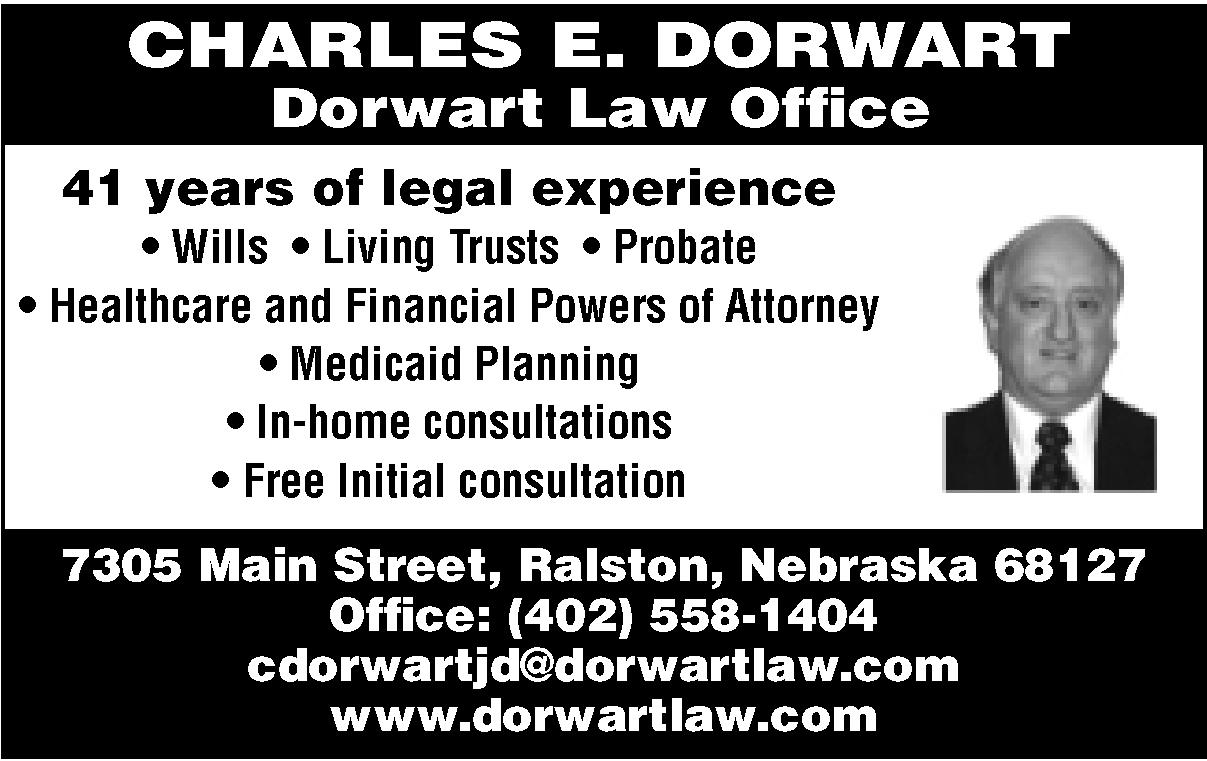

Please see the ad on page 3
$50
Ann Van Hoff
Ellen Holsten
Marilee Kelly
$25
Connie Kudlacek
Gloria Miller
Larry Voorhees
$15
June Kent
$10
Joellen Zuk
Judson Bock
$5
Kathleen Koons
You’re invited to visit the Millard Senior Center at Montclair, 2304 S. 135th Ave., this month for the following:
• October 2: Board Meeting@ 9:30 a.m.
• October 8: Pie and Cobbler Day @ 10 a.m.
• October 9: Sewing group making sundresses and shorts being sent to the Orphan Grain Train @ 9:30 a.m.
• October 9: P.A.W.S (Puzzles & Words with Seniors) @ 9:30 a.m.
• October 15: Archwell discussing Medicare Open Enrollment
• October 24: Open Enrollment with Medicare
• October 29: Book Club: “First Lie Wins” by Ashley Elston @ 1 p.m.
• October 29: Halloween Party and Lunch @ 11 a.m. Tai Chi on Mondays and Fridays @ 9:30 a.m.
Bingo every Tuesday and Friday @ 12 p.m.
Hand-N-Foot Wednesdays @ 8:30 a.m.
MahJongg Wednesdays @ 1 p.m.
Chair Volleyball Thursdays @ 9:30 a.m.
Dominoes Thursdays @ 12:30 p.m. For more information, please call 402-546-1270.
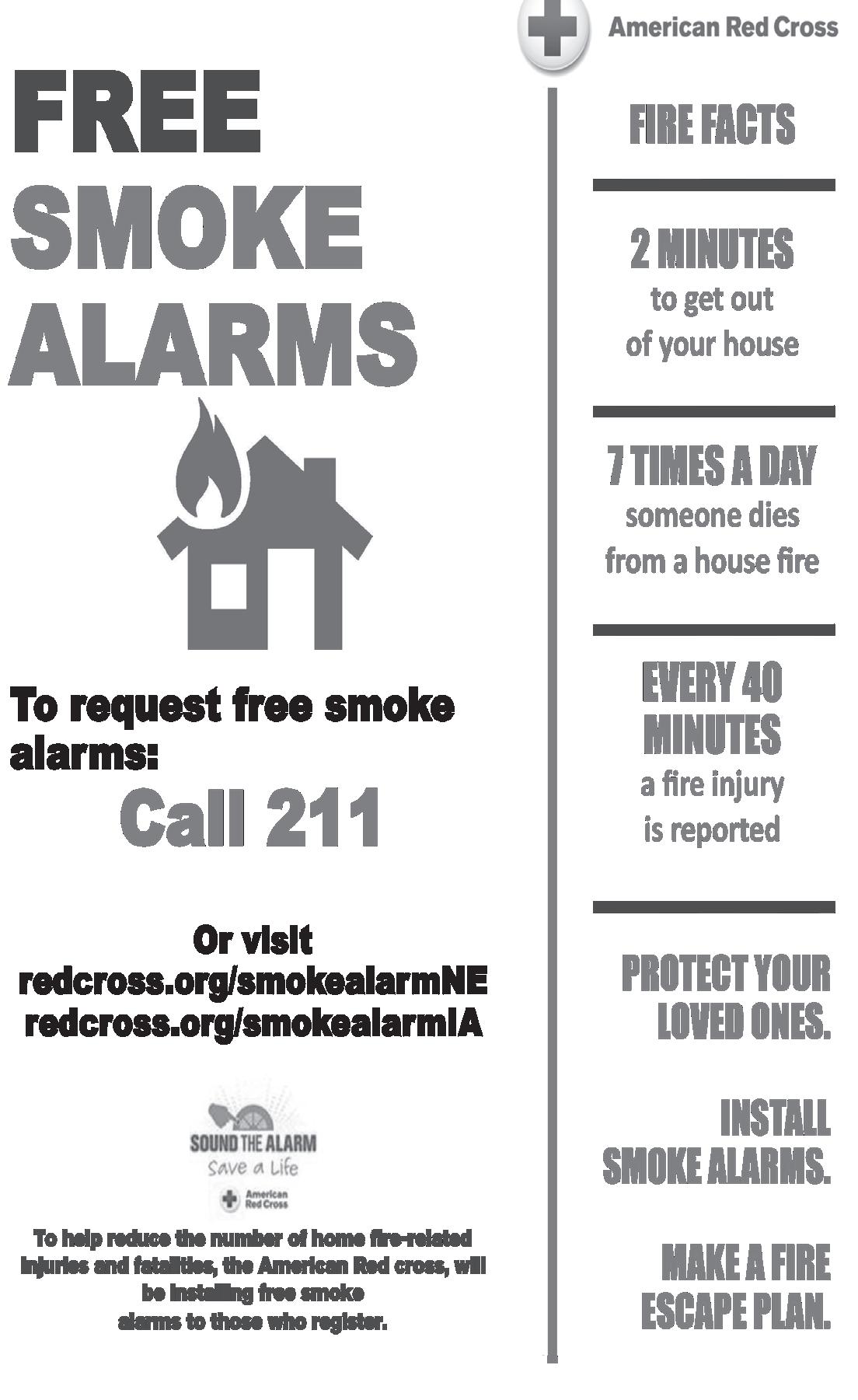
The Omaha Fire Department’s Public Education and Affairs Department will install free smoke and/or carbon monoxide detectors inside the residences of area homeowners. To have a free smoke and/or carbon monoxide detector installed inside your home, send your name, address, and telephone number to Omaha Fire Department at 1516 Jackson St. Omaha, Neb. 68102. For more information, please call 402-444-3560.
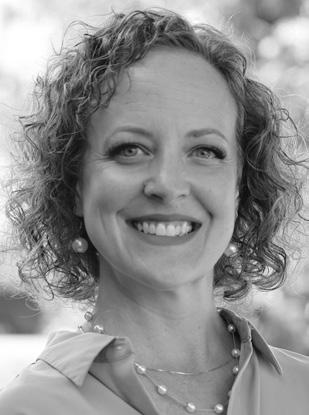
By Dr. Lindsay Huse, Director of the Douglas County Health Department
The Douglas County Health Department (DCHD) looks to serve everyone in Nebraska’s most populous county.
One big focus is prevention, so in this month’s column we will look at the flu season and how it may impact seniors.
If you’re reading this, it’s probably October and that means DCHD has started its annual flu surveillance. That includes tracking the number of people who test positive for the flu,
getting information on hospital emergency room visits with influenza-like illness, people hospitalized with influenza-like illness, school absenteeism and more. And you may think it’s just the flu, but the CDC estimated that the last flu season saw at least 35 million illnesses, 390,000 hospitalizations, and 25,000 deaths from influenza nationwide.
Last flu season there were 7,444 cases of seasonal influenza reported in Douglas County – and that only includes people who were tested by a provider, which is likely only a small percentage of what really happened. There were 12 adult flurelated deaths confirmed, again, probably not the complete picture as adult
flu deaths are not legally required to be reported. Which brings us to our point that you really should consider getting a flu shot if you already haven’t.
The CDC said it is especially important for people at high risk of developing serious flu complications to get the vaccine. This includes people 65 and over, individuals with asthma, diabetes or chronic lung disease. People 65 and over should receive a high dose influenza vaccine.
If you have questions, please talk to your healthcare provider. The vaccine takes two weeks to provide protection, and if it doesn’t prevent the flu, it can be expected to make the illness less severe. That’s a good thing.
Ever dream of taking a fanciful trip to a faraway land? Taming a majestic creature? Chumming up with a pirate gang? Living vicariously through an ultra-peckish caterpillar who can’t help but eat everything in sight? We have good news: To make these dreams come true, you only have to travel as far as the library.
When was the last time you took advantage of your local library’s plethora of programming and resources? Last month was Library Card Sign-Up Month, and you may be overdue for a reminder on how your community library helps form the concept of connection as we know it.
Libraries were created to quell isolation. Have you heard of the “third place” concept? During a typical day, you’ll spend most of your time between two places: home and work. This “third place” is a casual space without obligation—as opposed to a meeting or appointment—meant to harbor human connection and help an individual feel involved in and closer to their community.
Quite frankly, the library is the epitome of a third place: It provides a comfortable environment to learn more about just about anything, go online, participate in an activity or meet with friends. Then, when it’s time to head out, checking out a book, DVD or even a musical instrument allows you to bring a piece of that safe space home.
They provide access in a multitude of ways. It may seem like most modern places—from stores to restaurants and even some homes—are built with able-bodied adults in mind. Libraries provide access in more ways than just borrowing an audiobook or utilizing free internet; they’re also intentionally built around younger and older guests’ needs.
Not only do seniors receive an inviting spot for budding relationships to bloom, libraries provide resources for them to obtain media literacy, learn how to safely browse the net and obtain information through various forms of media.
Libraries are also child advocacy centers by proxy; all children can benefit from story hours and developmentally important information and activities. Just picture the story (or movie) of “Matilda,” where the main character’s visits to the library empower her to learn about the world through books, stand up for herself and seek out mentors to be surrounded and supported by. Make the world a better place. Communication and accessibility are major ingredients to this formula, but there’s many more crucial ideas and features that libraries offer our society. When people make a conscious effort to dive into a brand new topic that contains a different worldly perspective, their sympathy and understanding strengthens.
Better yet: Those who frequent the library may feel inspired to direct their learnings into tangible efforts to make a difference in the lives of others. The importance of being active in your community should never be underestimated— through kindness, collaboration and trust, residents are stronger together.
According to a blog post from leading publishing company Penguin Random House, “More than 90 percent of Americans see their library as ‘very’ or ‘somewhat’ important to their community.” The best way to support this crucial resource is to use it—which starts with simply signing up. Enjoy your library endeavors.
This health tip is brought to you by Tabitha.
CAPABLE stands for Community Aging in Place – Advancing Better Living for Elders. It is a restorative services model: Personcentered, holistic services that help individuals remain independent in their homes, reducing their need for institutional long-term services and supports (LTSS). Restorative or “re-ablement” services are common in other countries but have limited reach in the United States.
CAPABLE is, by design, a time-limited, short-term intervention and is not designed for older adults living in a residential care setting or a nursing home. In fact, CAPABLE cost savings are often measured in comparison to potential nursing home costs, with the idea being that CAPABLE as an intervention may delay or prevent entirely the need for an expensive nursing home stay. Research has suggested that if CAPABLE could delay a nursing home stay by even three weeks, it could be cost neutral to public payers.
CAPABLE’s approach relies on three professionals working in conjunction with the participating older adult to identify and deliver services and supports in
the home over a five-month period: a registered nurse, an occupational therapist, and a handyperson. The registered nurse (RN) makes four home visits and helps the participant with medical-oriented goals. The occupational therapist (OT) conducts six home visits and helps the participant achieve goals related to functional tasks. The OT also helps identify potential environmental barriers in the person’s home to develop a scope of work for the handyperson, who makes those identified repairs/installations with a budget of up to $1,300.
The first major CAPABLE trial began in 2012 with funding from the National Institutes of Health and the Centers for Medicare & Medicaid Services (CMS). Through the CMS Health Care Innovation Award program, more than 100 Baltimore community residents received CAPABLE support. Research from this pilot found that the participants, a majority of whom were Black women, had success in improving their activities of daily living (ADL) performance and decreased home hazards by about half. This pilot also studied participant
The Eclectic Book Review Club, founded in 1949, is announcing its Fall 2024 schedule of author appearances. Each event includes readings and discussion by the noted book’s author. New members are being accepted. The monthly meetings, which include lunch and the author book review, are held at noon at The Field Club of Omaha, 3615 Woolworth.
To reserve a seat, call Jo Ann at (402) 571-5223.
Reservation deadline is the Friday morning prior to the Tuesday meeting.
Authors for fall 2024 include:
• October 15- Carla Ketner, author, and Paula Wallace, illustrator, will present Ted Kooser: More Than A Local Wonder. This book focuses on Ted Kooser, U.S. Poet Laureate Emerita, as a youth celebrating the power of stories and finding oneself through words.
• November 19- Michelle Wieck’s mystery, Finding Maura, tracks the efforts to track down Maura after she leaves for remote get-away. Who doesn’t want Maura found?
First United Methodist Church has some excellent adult curriculums available. They are free for any Christian group, which would like to study prayer, discipleship and beliefs.
Call First United Methodist Church at 402-556-6262 if you wish to receive more information about the list of the studies available.
cost savings and found that CAPABLE saved public payers about $22,120 per participant.
An evaluation of CAPABLE in 2021 studied results in six pilots from across the country. This included urban and rural communities, multiple payers financing the services, six states, and a participant pool inclusive of Black, Hispanic, and white older adults.
Each pilot found that CAPABLE reduced limitations on ADLs, and on instrumental activity of daily living (IADL) among participants. Some pilots also found improvements in falls efficacy, pain manage-
ment, and depression among participants.
CAPABLE has spread to new locations across the country and, importantly, has seen growth in the growth in the types of organizations that offer the intervention, including at least one Medicare Advantage plan and one Program of All-Inclusive Care for the Elderly (PACE) organization. The Department of Veterans Affairs (VA) has adopted the intervention on a pilot basis with plans to deploy it to nine sites throughout Pennsylvania. The VA’s dual role in financ-
ing and providing care for veterans they serve may position the department to fully realize the model’s potential both for consumers and for its own cost savings.
The types of entity that currently deliver the CAPABLE model include:
• Medicaid HCBS (home and community-based services) waivers
• Medicare Advantage plans
• PACE organizations
• Components of the VA health network
• Meals on Wheels/nutrition delivery programs
• Home care agencies
(AARP provided this information).

Reflections from Cindy Vavra, a caregiver for nine years in Bennington
Caregiving is one of the most intimate relationships you will have with another person.
Whether it is your spouse, parent, child or a cherished person in your life, caregiving for your loved one is bound to be an emotional roller coaster.
From the moment you receive a diagnosis, your life as you knew it will never look the same.
Caregiving is one of the most important and life altering decisions you will ever make.
I have been a caregiver for my husband for nine years, starting after he had a massive hemorrhagic stroke.
Every caregiver has their personal struggles with caregiving, which
can be emotional, financial, physical, medical, spiritual and so much more.
I have found that being an advocate for my husband has been one of the most rewarding parts of being a caregiver.
That being said, it has not always been easy.
Talking with doctors, therapists, and society as a whole has not always come easy for me.
I believe the best thing a caregiver can do is ask questions.
When you ask a question, you become more knowledgeable and with that knowledge you become more powerful.
You are then able to make decisions for your loved one and for yourself based on seeking the advice of professionals.
During the process of being a
caregiver, you will go through many different phases. The level of care or assistance may change over time.
The way you feel emotionally, can change from day to day. I have found in my experience that the better the day my husband is having, the happier I feel. It also means that when things are not going so well, life becomes more emotionally and physically draining.
The journey is hard.
Caregiving is hard.
At the end of every day, as I reflect on the happenings of the past 10 hours. I’m thankful I have had the opportunity and resources to do this . . . being a caregiver for the love of my life. My high school sweetheart.
I know from time to time, I have felt like I am on an island, and no one else understands the struggles.
Joining a support group for whatever diagnosis your loved one has can be very emotional. Talking to strangers about what happens on a daily basis is hard.
However, by joining a support group you are able to share experiences, feelings, joys and sorrows, gain knowledge and feel supported. Although everyone’s personal experience is a little different, there are a lot of caring people that can make the journey easier.
I have been a part of the Eastern Nebraska Office on Aging (ENOA) respite support program for the past five years.
This program has helped me in so many wonderful ways. From my initial meeting, I knew ENOA was the best organization to assist me during my personal journey as a caregiver.
AARP released a report that shows an estimated 15,500 Nebraskans on Medicare prescription drug plans will see savings thanks to a new out-ofpocket cap that starts January 1, 2025. The savings are made possible by a provision in the 2022 prescription drug law that AARP championed which caps out-ofpocket prescription drug
costs every year, beginning at $2,000 next year, for America’s 56 million Medicare drug plan enrollees.
The AARP report analyzes the number of enrollees who will benefit from the cap by state, age, gender, and race between 2025 and 2029. The findings indicate that Medicare drug plan enrollees nationwide who reach the new out-of-pocket
cap will see average savings of roughly $1,500, or 56%, in 2025 for their prescription drugs.
“AARP fought hard for the prescription drug law of 2022 because we knew it would provide crucial relief for Medicare enrollees here in Nebraska and across the country by lowering drug prices and out-of-pocket costs,” said Todd Stubbendi-

eck, State Director of AARP Nebraska, which serves nearly 200,000 members age 50 and older in the state. “Knowing they won’t pay a dime over $2,000 next year—maximum—for prescription drugs they get at the pharmacy gives Nebraska seniors on Medicare drug plans some peace of mind as they struggle to keep up with rising costs for other everyday essentials like housing, groceries and utilities.”
Other findings from the report include:
• Between 3 and 4 million Part D plan enrollees nationwide are estimated to benefit from the new out-of-pocket cap every year between 2025 and 2029, including
nearly 21,000 here in Nebraska.
• By 2029, the share of enrollees benefiting from the new out-of-pocket cap is estimated to be 10 percent or higher in 19 states, plus the District of Columbia.
• More than three-quarters of Medicare drug plan enrollees who will benefit in 2025 are between the ages of 65 and 84.
“Limiting how much seniors on Medicare drug plans pay for prescription drugs every year builds on other new and important cost-saving measures, such as capping insulin co-pays at $35 a month and making many vaccines, such as shingles and pneumonia, free,” said Stubbendieck.
You’re invited to visit the Intercultural Senior Center (ISC), 5545 Center St.
The Intercultural Senior Center facility – open weekdays from 8 a.m. to 4:30 p.m. – offers programs and activities from 8 a.m. to 4:30 p.m. Monday to Friday.
The ISC offers a morning snack, and regular or vegetarian lunch.
Come and exercise at the ISC. It’s never too late to learn and have fun. Join their language classes, technology, jewelry and crafts, and field trip options. The garden is green and growing, volunteers are welcome. If people need assistance with their benefits, the ISC can help them out.
Lunch reservations are due by 9 a.m. A voluntary contribution is suggested for the meal.
Monthly food pantries are available for adults ages 50 and older.
For more information, please call 402-444-6529 or visit the ISC website at interculturalseniorcenter.org.
father, paternal uncles, aunts and grandmother told.
“It really came to my attention when my dad was very sick in the hospital. We were all sitting in the waiting room taking turns to go back and see him. And I could not ask any of my relatives a question without them telling a story. I just sat there listening to them talk like that and I thought, this is where I get it from, it’s in the blood. I just come from a line of storytellers.
“I grew up listening to my father’s wild, crazy stories. When I got older I came to find that a lot of these stories were true. For instance, he always talked about our having a cousin that lived in half of a house. Well, when we went down to Independence, Kansas to visit him, sure enough, he lived in half a house. The back part of his home fell into his backyard and was never repaired. Sitting in the living room you could look straight through to the backyard. Weird but true.”
FROM POET TO ROMANCE NOVELIST TO PLAYWRIGHT
Poetry was Whiteside’s first love. She became a devotee of Maya Angelou. Along the way she developed an affinity for horror, science fiction and suspense. Like her mom, she fell head over heels for romance novels. Her first sustained exposure to Black literature came as an undergrad at the University of Nebraska at Omaha, where as a Goodrich Scholar she focused on journalism and Black Studies.
“That’s when I discovered Toni Morrison, Alice Walker, Amiri Barakai – the canon.”
She was on a romantic poetry track when she joined the New African Writers Workshop in Omaha. “We did writing exercises, shared our work and provided feedback,” she said. “It was just a fantastic experience.” Fellow member Lisa Harrison Jackson encouraged her to try her hand at romance novel writing. Whiteside started and stopped and only finished at the urging of Jackson, who was a budding romance novelist herself. The two friends both ended up being published by BET Books
“I’m fortunate to have always been in some kind of writing group,” Whiteside said. “It really helps me to be in the company of writers for the exchange of ideas
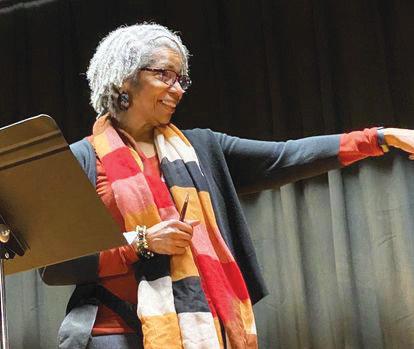
and support. We understand what we’re talking about. We can encourage each other even when providing a critique or criticism.”
Her writer circles have included New York Times best seller authors from Omaha Cheryl St. John and Victoria Alexander.
“I like being surrounded by people who are really serious about the craft and want to learn more. It’s also good to hear other people struggling in the same way you’re struggling, then coming through it with advice, suggestions. For me those groups are essential. They keep me inspired and buoyant.”
Her first novel was published in 2000. All told, she’s had 11 novels and five novellas published, including some by romance heavyweight Harlequin. But like most writing, romance doesn’t pay well unless one’s prodigious or lucky.
To pay the bills she went to work in the information technology area, starting as a customer care assistant at First Data Resources. She found her niche when asked to train a new hire class and proved a natural at it.
“I would have done anything to get off the phones, but I discovered I can take complex information and break it down so people can understand it and use it. I fell in love with training right then and there and I have been doing it ever since. I did it at First Data, Watts Marketing, Integrated Marketing Services and Woodmen of the World (now WoodmenLife).”
The lifelong learner earned a master’s in adult learning from Drake University. She wrote curricula for Bellevue University credit classes.
“I worked in career services and taught a class called Discover Your Value as well as career development classes. I also taught training classes for staff. I love developing and designing courses. But I got to where I didn’t want the classroom presentation part to be a major part of what I do because the older I get the more introverted I get.”
So she became an instructional designer at Metropolitan Community College (MCC). She’s now celebrating 40 years in the adult learning industry. An exception to her vow of no more classroom teaching came facilitating the North Omaha Summer Arts women’s writing workshop for a decade.
She stopped writing romance after getting hooked on playwriting and the expressive power of creating characters and worlds that come alive on stage. It all started attending the annual Great Plains Theatre Commons (GPTC) New Play Conference in Omaha.
“I always thought I might want to write a play and here is this nationally recognized conference in the city where I live. It would be ridiculous for me not to attend it, so I did, every year, and I was so blown away –listening, learning.”
She met Omaha playwright-educator Scott Working and took his playwriting classes at MCC.
“I loved them and that is what really launched me into playwriting,” she said. “It opened my eyes to what plays could really be and the evolutionary process that goes into writing them.”
She assisted Working’s advanced class and volunteered at the conference, gaining networking opportunities with artists and behind the scenes insights into process. She was invited to be in the first cohort of GPTC’s two-year Commoners playwrights residency program.
“It gave us the attention we needed to develop as individual writers. Each year we had a dramatic reading of our work. We got feedback on where the play was, what the strengths were, where there’s room for development, where it could go. That was very helpful. Within the Commoners program we created our own micro community. We supported each other’s work and development. We strengthened the circle of artists we needed to collaborate with.”
She then made playwriting the emphasis of a low residency UNO master of fine arts program that convenes twice a year in Nebraska City.
One of her newest plays, Wynonie!, celebrates the legacy of the late Omaha blues artist Wynonie Harris, who some consider the godfather of rock ’n’ roll.
Writing it was attractive, she said, because “the blues is a genre I love anyway.” It allowed her to research and appreciate a true music legend whose name is all knew before the project.
“I read the book about him, Rock Mr. Blues. I started listening to his music. It was amazing. I fell in love with that guy. If I had been alive when he was singing I would have been the biggest groupie and followed him all over. He’s one of the first performers credited with taking charge of the entire stage and going out directly into the audience and engaging them. His dancing has been credited as the inspiration for Elvis’s dancing and some regard his definitive version of Good Rocking Tonight as the first rock record. I absolutely loved working on that project.”
It dovetailed into writing her first children’s play, Bessie’s Blues Factory, for Omaha’s Rose Theater. It’s single elderly female protagonist holds a yard sale of blues memorabilia from her big old house. When some curiosity-seeking neighborhood kids check out her wares she teaches them about the blues.
Whiteside, who signs her work Kim Louise, intentionally made Bessie as an older woman.
“Parts for women in general dry up after a certain age. African-American women are already limited by the number of parts. Past a certain age you can almost hang it up. I want to change that. I want to write roles for older Black women where they can shine.”
A play she’s currently working on for Anastasis Theatre Co.’s Rising Voices project is based on the Omaha organization’s community-engaged theater model telling stories of marginalized populations. This work in progress is a dramatic representation of women’s personal experiences with incarceration she learned through story circles and interviews. She also draws on the perspective of reentry professionals who deal with that community. Her play will receive a full production by Anastasis in spring 2025.
“It’s the hardest writing I’ve ever done. I’ve been forever changed talking to people and listening to their stories,” said Whiteside. She estimates she spoke to 50-plus people to inform her play.
“They all have their individual stories but they’re all connected. So many simi-
larities came up. I know so much more about the lives of people before tragedy strikes and how a wrong decision or turn in life is made and they end up incarcerated. I learned what it takes to survive being incarcerated and what that experience is like. We have a lot of justice work to do in what we call the criminal justice system.
“I learned a lot about the resilience of people, the importance of connection, support, relationships.”
As taxing as it was for Whiteside, she said the process rekindled a fire to directly help individuals the way she formerly did as a Women’s Center for Advancement volunteer working with domestic violence survivors. She has a heart for helping people realize their best lives.
“That has been a missing part of my life as I’ve been so focused on writing for so long.”
Several years ago she drew on her work with survivors to write the play The Bystanders about the different circumstances women in abusive cycles find themselves in and how some escape.
Being a Black writer in a white-centric city can be isolating. As rewarding as the groups she’s a part of are, she said, “It’s also challenging because I tend to be the only person of color. Quite often I find myself having to explain my culture or why my characters say or do something, defend or reassure that Black people really are this intelligent even though they may speak in slang and African-American vernacular. After doing that for decades it can be exhausting.”
The Omaha Black theater community has suffered some hits recently but she’s optimistic new opportunities will emerge.
“What’s happening across so many arts disciplines now is that people don’t feel like they have to wait for a group. People are feeling empowered to produce their own plays. My hope is there will be a collective and cooperative home that can support people doing things together but also supporting the work of people doing things independently.
“I see theater in North Omaha thriving. A lot of engines are starting and gassing up. I see more immersive and site specific theater.”
Don’t be surprised if she’s in the middle of it all.

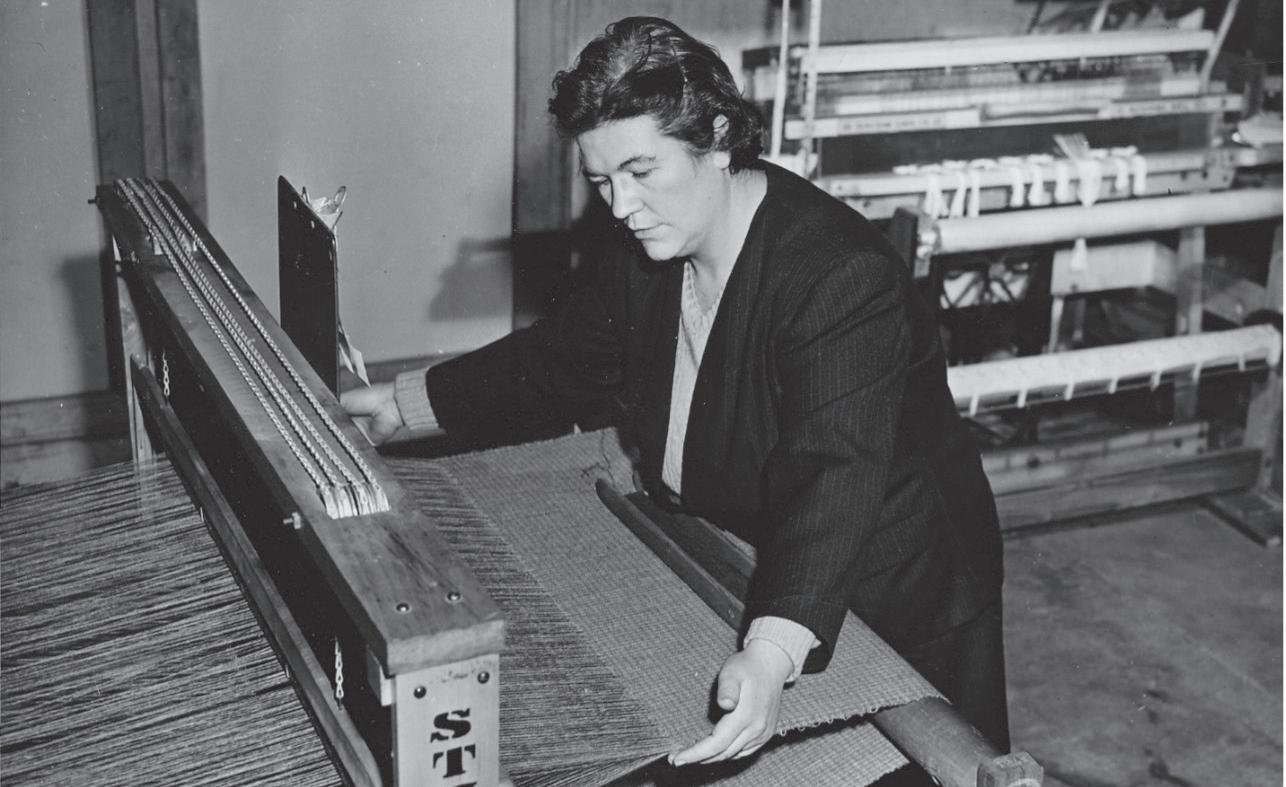
A well-kept secret is a group of Omaha Weavers and Spinners who quietly weave cloth on looms or spin yarn on a spinning wheel. They meet monthly at Underwood Presbyterian Church in Omaha to share information and their skills. Through several special events in 2024 and 2025, this group of fiber artists are going to get noisy as they celebrate their 75th Anni-

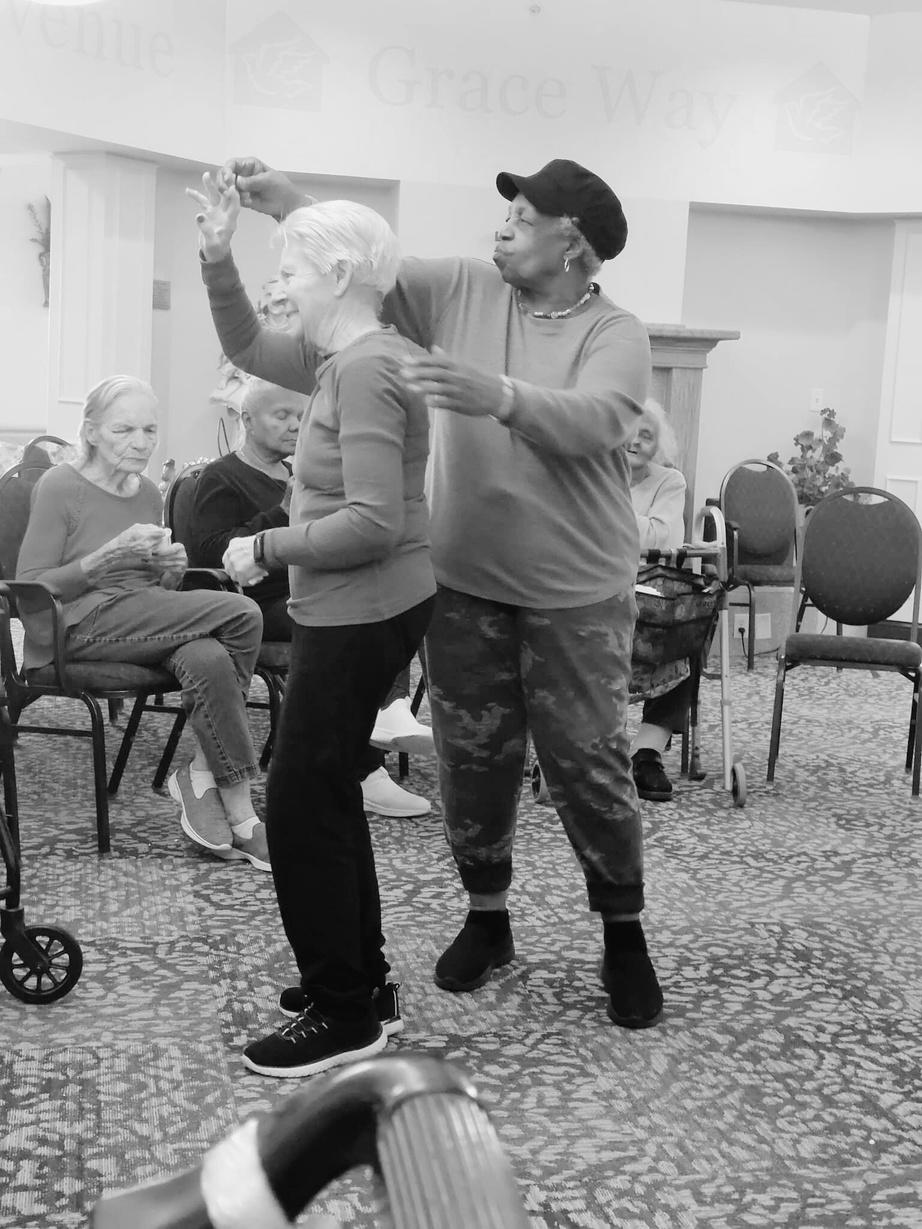
To kick off OWSG’s 75th Anniversary celebration, a “Sheep to Shawl” demonstration event will be held in the main hall of the Western Heritage Museum, 801 S. 10th St. St., Omaha on Saturday, October 12, from 10:30 a.m. to 12:00 p.m. and 1 p.m. to 3:30 p.m.
the Guild Library.
• Do you have questions about the Eastern Nebraska Office on Aging, its programs, or services?
• Do you have a comment about the agency and how it serves older adults in Douglas, Sarpy, Dodge, Cass, and Washington counties?
• Do you have a story idea for the New Horizons newspaper, or would you like to receive a FREE copy each month?
Please send your questions, comments, and story ideas to:
The event will show how fabric is made by carding and cleaning wool fiber from a sheep’s fleece; spinning raw fibers into yarn; then using the yarn to weave a piece of cloth.
On March 17, 1950, the Omaha Weavers Guild was founded by William and Cornelia Nelson with 10 charter members. The first Guild project was a gift of saleable handwoven items to Children’s Hospital. The second project was to begin

The Guild first displayed table linens designed and woven by members for a contemporary china exhibit. Within six months, the membership more than doubled to 23, and plans were underway for the first Guild show held at Joslyn Art Museum.
On May 15, 1973, the craft of spinning was officially recognized by the Guild and the name was changed to the Omaha Weavers and Spinners Guild. Through the years the Guild has given demonstrations at schools, museums, and art fairs to promote our art and craft. Art shows have been held at Joslyn Art Museum, Gallery 72, Craftsman Guild Gallery, Dale Clark Library, the Hilmer Gallery, Franklin Street Gallery, Culinary Services, Hot Shops and Lauritzen Gardens. There’s currently an annual sale on the Saturday before Thanksgiving at the Westside Community Center.
In 1975 when Cornelia moved to Omaha after college graduation, she stopped at the Craftsman’s Gallery in the Old Market and asked the owner if she could connect her with a weaving teacher. Months later Cornelia called her and offered to teach her to weave by giving lessons from her home until she was able to buy her own table loom. Since Cornelia expected her students to become OWSG members, she did. Layna has been weaving since and states that OWSG has been a driving force in her weaving life providing workshops, education and a lifetime of great friends. Today OWSG has grown to 51 members.
In June 2008, the Guild hosted Midwest Weavers Conference, “Roots” at Dana College in Blair, providing classes, vendors and numerous exhibits and tours to approximately 200
participants from across the country.
The Guild library today houses over 230 books and DVD’s on weaving, spinning and related fiber arts. The Guild also owns seven looms, one spinning wheel and drum carder that are available for members.
The second event is a nod to their history with the Joslyn Art Museum, 2200 Dodge St., Omaha. On Saturday, March 22, 2025, from 10 a.m. to 2 p.m., they will present a history of our early beginnings with the Museum and participants can take part in a spinning and weaving demonstration by Guild members.
Finally, the main event will be held at a gallery exhibit at the Roberta and Bob Rogers (RbR) Gallery on 1806 Vinton Street, Omaha. Woven, spun, felted and other textile artwork by current Guild members will be on display, plus woven pieces the Guild has kept from members of our historical past. The gallery will be open Wednesday through Saturday from 10 a.m. to 6 p.m. from April 11- May 3, 2025.
In addition to the events, join them for the OWSG’s annual fiber arts sale on Saturday, Nov. 23, from 9 a.m. to 4 p.m. at the Westside Community Center, 3534 S. 108th St. Beautiful handwoven, hand spun, and fiber arts items will be on sale. Guild meetings are held monthly, programs include all fiber related arts: Weaving, spinning, dyeing, basketry, and even how to raise sheep. They also have a show-and-tell period to see what others are doing. In addition, small groups meet to learn and study various facts of spinning and weaving. For more information about the upcoming events, check out the schedule of all classes and events on their website, owsguild.com or their Facebook page.
Each fall, the Medicare Annual Election Period runs from October 15 to December 7 and offers beneficiaries the chance to make changes to their Medicare Advantage or Part D plans.
When you make changes during the Annual Election Period, your new plan becomes effective on January 1st of the new year.
To prepare, beneficiaries should review their Annual Notice of Change letter and get with their independent agent or SHIP counselor to see if their prescription drug plan is still the most cost-effective for their current list of medications.
Hopefully you’ve heard by now that there are unprecedented changes coming to Medicare Part D in 2025 that will affect both standalone drug plans and Medicare Advantage plans that include Prescription Drug plan coverage. This is not the year to let your plan automatically renew without a review.
Some of the common reasons why people may want to change their plans are:
• Your monthly plan premium is going up
• You have learned that one of your doctors will no longer be in the network
• The plan is dropping one of your important medications or it has changed tiers
• You want to drop Medicare Advantage and go to the more comprehensive coverage provided by a Medicare supplement plan
If you are enrolled in a Medicare Advantage plan, find out if your doctors are still in-network. Ask them if they are satisfied with the plan, or if there is any chance, they’ll be leaving the network. Doctors can change networks at any time of the year.
Have a current list of your medications. Use the medication name that’s listed on the pill bottle so your agent will know if you’re taking the brand name or generic version, include the dosage, whether it’s a tablet or a capsule, and frequency that you take these medications.
If you have never been in a Drug Plan before (also known as Part D) you can use the Annual Election Period to sign up for the first time. Be aware that you may be subject to a late penalty if you didn’t have other creditable drug coverage after you turned 65.
The Medicare Part D late enrollment penalty is a monthly fee added to a person’s Part D premium for each month they went without creditable prescription drug coverage after their initial enrollment period and will be assessed to both stand alone drug plans and Medicare Advantage plans with prescription drug coverage. The penalty is calculated by multiplying 1% of the national base beneficiary premium by the number of months without coverage. The result is rounded to the nearest 10 cents.
If you enrolled in a Medicare Advantage plan and you want to switch from Medi-
care Advantage to Medigap, you can use the Annual Election Period to return to Original Medicare. You can choose a new Part D drug plan as well. However, for the Medigap plan, you will need to apply and, in most cases, will need to answer health questions. There is no guarantee that you will be accepted.
For this reason, you would want to apply for the Medigap plan first with a January 1st effective date. Once you are certain that this new Medigap application is approved, then you can apply for a Part D drug plan which will automatically disenroll you from your Medicare Advantage plan.
If you are not able to qualify for a Medigap plan due to health conditions, you can consider switching to a different Medicare Advantage plan during Fall Open Enrollment.
Your Medigap plan does not change benefits from year to year like Part D plans and Medicare Advantage plans do. However, you may still want to see if you can change your Medigap plan if there has been a premium increase, or simply see if you can get a better rate.
It’s important to know that you can shop for better pricing for your Medigap plan any time of year but in most states, this will require health questions. Never disenroll from your Medicare Advantage plan until you have first applied for and been approved by the new Medigap carrier. Once they notify you of acceptance, then you can disenroll from your Medicare Advantage plan and return to Original Medicare as well as add a standalone Part D drug plan.
In summary, the Medicare Annual Election Period gives you the option to change plans if it benefits you. If you do nothing, your current plan will automatically renew.
Mary Hiatt is President of Mary the Medicare Lady (A non-government entity.) She is a member of a pharmacist-led organization that helps her clients source savings for medications. She offers Educational Workshops on Medicare, Drug Savings, How to Stop Phone Calls, and more at no charge. Not connected with or endorsed by the U.S. government or the federal Medicare program. See www. hiattagency.com or contact licensed independent agent mary@hiattagency.com or call or text 402-672-9449 for more information.
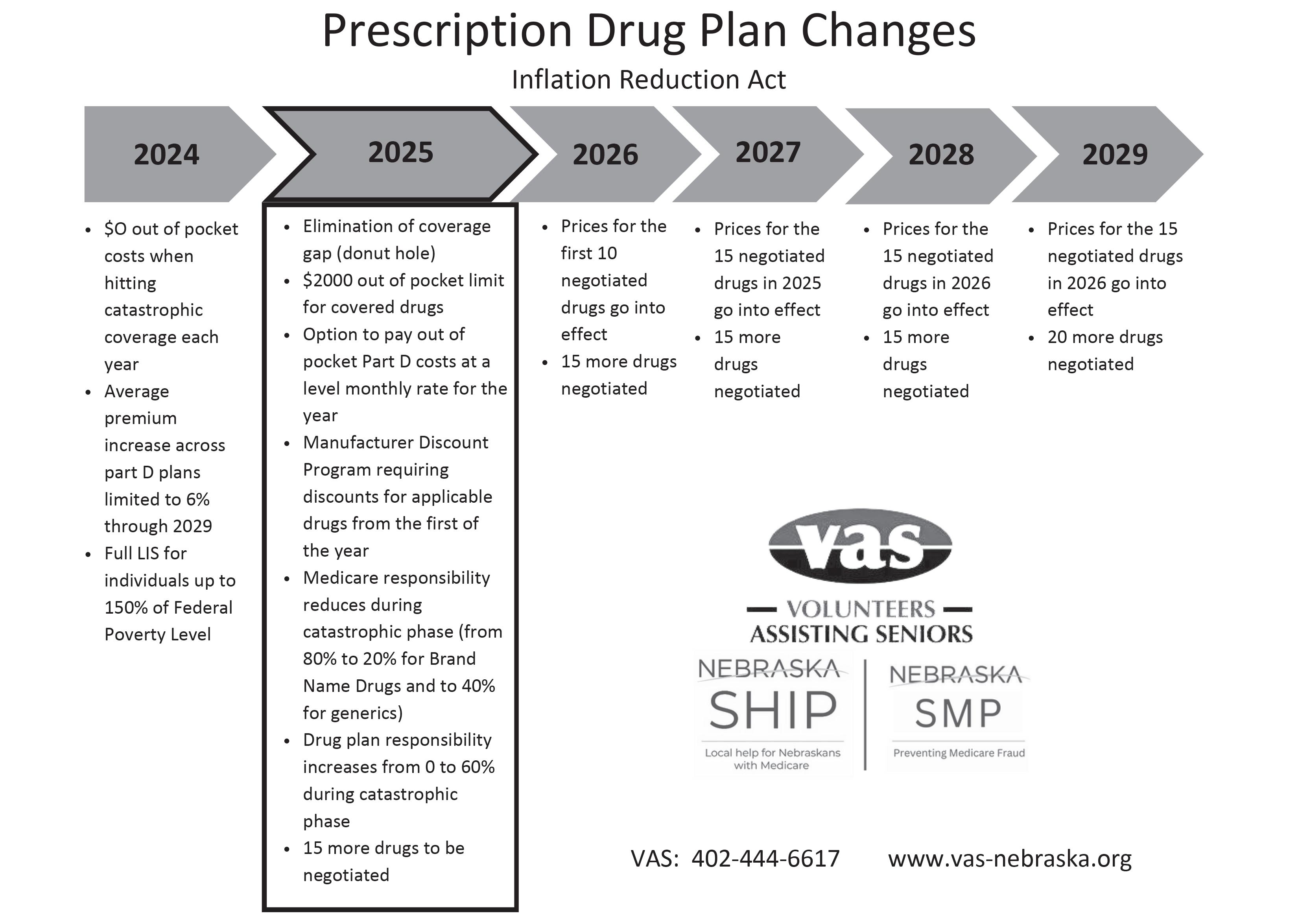
The Inflation Recovery Act of 2022, has affected Medicare part D drug plans and Medicare Advantage plans. The intent of the Act is to lower drug costs for Medicare beneficiaries.
In 2025, The Act ends the Medicare part D coverage gap or donut hole, as it is sometimes called. Beginning in January, 2025, Medicare beneficiaries will have a cap of $2000 yearly out of pocket expense for medications. This chart summarizes the changes in 2025 and future years.
This change affects less than 5% of all Medicare eligible beneficiaries. How will this change be paid for? What will be the response of the part D drug plan companies and Medicare Advantage plans?
Industry speculation has pointed to a possibility of fewer Medicare part D drug plans from which to choose, higher premiums for the plans, and changes to formularies. Some Medicare Advantage plans may react to this change by not offering plans or limiting extra benefits not directly related to healthcare and medication costs. The extra benefits affected could be dental, vision, over the counter dollar stipends for medications, gym memberships, etc.
Information about the 2025, Medicare part D and Medicare Advantage Plans was released on or about October 1.
If you are currently enrolled in a Medicare Part D drug plan or a Medicare Advantage plan, in September, you received a document from the plan called the Annual Notice of Change. This document lists, side by side, the changes in your plan from 2024 to 2025.
WHAT CAN YOU DO TO PROTECT YOURSELF AND OBTAIN UNBIASED INFORMATION ABOUT CHANGES TO YOUR PLAN?
Volunteers Assisting Seniors offers free, unbiased information and assistance in reviewing your Part D drug plan or Medicare Advantage plan.
This year, Volunteers Assisting Seniors will offer in person appointments at in-person counseling events in Douglas, Sarpy, Cass, Dodge, and Washington Counties. Over the phone counseling appointments can also be scheduled.
MEDICARE ANNUAL OPEN ENROLLMENT: WHAT ELSE DO I NEED TO KNOW?
Each year Medicare beneficiaries can take advantage of the Medicare Annual Open Enrollment Period to review their Medicare Advantage plans or Medicare Part D drug plans. The open enrollment period begins October 15 and ends
December 7.
Medicare beneficiaries often have many questions about the Annual Open Enrollment Period. In addition to the changes precipitated by the Inflation Recovery Act, here are other most frequently asked questions, accompanied by answers. What plan changes can I make during this period?
• Switch from one Medicare Advantage plan to another Medicare Advantage plan.
• Switch from one Medicare Part D prescription drug plan to another Medicare Part D prescription drug plan.
• Enroll in a Medicare Part D prescription drug plan if you did not enroll when you were first eligible for Medicare. If you have not maintained other creditable coverage, a late-enrollment penalty may apply.
• If you are enrolled in Medicare A and B, you can enroll in a Medicare Advantage plan.
How can I get free, unbiased help in evaluating my plan? It seems like someone is always trying to sell me something. Volunteers Assisting Seniors counselors are certified counselors providing free, unbiased help to Medicare beneficiaries. Counselors are trained and certified by SHIP (State Health Insurance Assistance Program) which is part of the Nebraska Department of Insurance. Unbiased information is provided to enable you to make the best decision based on your situation.
What if I do nothing? What happens to my Medicare Advantage plan or my Medicare Part D drug plan? If you do nothing, your current plan will roll over automatically for 2025. No
action on your part is required. The effective date for your plan will be January 1, 2025.
If I have a Medicare Part D drug plan, why should I review it with Volunteers Assisting Seniors? SHIP certified counselors can assist in reviewing your plan and help you determine whether your plan is the best option in 2025. The four most common reasons for beneficiaries making a change in plans are:
1. That there will be changes in prices to the medications you take in 2025.
2. That there will be an increase in the premium in your current plan in 2025.
3. That you have discontinued medications or added new medications during 2024.
4. That your current plan may be discontinued and no longer available in 2025.
Volunteers Assisting Seniors assists approximately 1600 people each year and the cumulative savings for those beneficiaries is about $1 million.
If I have a Medicare Advantage plan, why should I review it with Volunteers Assisting Seniors? Medicare Advantage plans combine Medicare Part A, B and usually Part D coverage, in one plan. The plans can also offer services not typically covered by Medicare such as hearing, vision, and dental services. There are two basic components to a Medicare Advantage plan: Health and medication. When you partner with Volunteers Assisting Seniors certified counselors, we help you determine a plan with the broadest possible network of providers, including the providers you currently use, and the least expensive medication option, all in
one plan. The purpose of the Annual Open Enrollment Period is to allow you to review your plan to be sure it is the best plan for you during the following year.
When beneficiaries attempt to review Medicare Advantage plans by themselves, what is the most common mistake made? Often beneficiaries are persuaded to change plans because of information seen on TV ads or received in the mail promoting gym memberships, transportation, and other non-direct health related benefits. Beneficiaries who change plans for these reasons often do not consider the impact of a plan change on their medication costs or their provider networks. While these extra benefits can be important factors, the counselors at Volunteers Assisting Seniors can help you sort through the details of plan benefits prioritizing the network of providers you need and the cost of the medications you take. What if I have a Medicare Supplement plan, do I need to contact the plan to renew my coverage for my healthcare? No, Medicare Supplement plans are not affected by the open enrollment period. If you continue to pay the premium for the supplement plan, the coverage remains in effect. You do not have to contact your plan.
For more information or an appointment to discuss Medicare please contact Volunteers Assisting Seniors. You can also follow Volunteers Assisting Seniors on Facebook at “VAS Nebraska.” Information about Medicare and Fraud are included. “Fraud Friday” is a Facebook feature providing the latest information about phone and email scams.
By Tony Harris AARP NE Information Center
Did you know that Omaha is made up of ethnic groups from many areas of the world and their impact on our community?
On October 16 at 1:30 p.m., anyone is invited to attend the AARP Nebraska Information Center for our October program and learn more about the history of Post World War II Omaha. Jose Garcia from the Mexican American Historical Society of the Midlands will talk about the ethnic diversity of Nebraska in the Post World War II years, including the historical perspective of Omaha.
He will discuss how Omaha is made up of ethnic groups from many areas of the world and their impact on our community. After the presentation there will be a free

tour of the South Omaha Museum of Immigrant History located next door to the AARP Nebraska Information Center in the Center Mall.
Located at 1941 S 42nd St. in suite 220, the Information Center is open on Tuesdays, Wednesdays and Thursdays from 10 a.m. until 4 p.m.
If you are interested in becoming more involved, stop by the Information Center to learn more about the many opportunities to get involved in the community by becoming an AARP Nebraska volunteer.
For more information call the Information Center at 402-916-9309.
Nebraska’s new voter ID law (LB514) requires all registered Nebraska voters to present a photo identification (ID) when voting in an election in the state of Nebraska.
Voter ID begins with the May 14, 2024, primary.
Every election in Nebraska after the May 2024 primary will require voter ID.
Photo IDs:
• Nebraska driver’s license (from DMV).
• Nebraska state ID (from DMV).
• Nebraska college ID (public or private).
• Nebraska political subdivision ID (state, county, city, school, etc.)
• United States Passport.
• Military ID.
• Tribal ID.
• Hospital, assisted-living facility or nursing home record.
ID must have your name and photo. ID can be expired.
How voter ID will work:
• Voting in person at the polls: Present a photo ID or vote provisionally.
• Voting in by-mail precincts or by-mail special elections: Write driver’s license/state ID number on ballot return envelope or enclose a copy of photo ID or reasonable impediment certification in your ballot return envelope.
Active-duty military members, active-duty military spouses, and citizens overseas covered by UOCAVA (Uniformed & Overseas Citizens Absentee
Voting Act) are exempt from voter ID.
If you forget your ID, you will fill out a provisional ballot.
For your ballot to count, you will need to present a photo ID to your county election office on or before the Tuesday after the election.
If you don’t have an ID, you can get a state ID for free (for voting purposes) from the Nebraska DMV. You will need to bring certain documents to get a state ID, so check with the DMV website ahead of your next visit.
If you need a copy of
your birth certificate to get a free state ID, you can get a free certified copy of your Nebraska birth certificate from the Nebraska Department of Health and Human Services.
This is only available if you do not have an ID and need a state ID for voting purposes.
If you cannot get an ID due to disability/illness, religious objection to being photographed, or lack of documents to obtain a free state ID, you can complete a reasonable impediment certification.
Visit VoterID.Nebraska. gov for more information.
You’re invited to visit the Camelot Friendship Center, 9270 Cady Ave., for regular activities, which include Chair Yoga, card games, Tai Chi, Pinochle, 10 Point Pitch, and bingo. This month’s events include:
• October 4: Presentation with Jake Vanderpol/Tyler Hill – Medicare Broker @ 11:45 a.m.
• October 10: Presentation with Archwell with Jennifer James – Medicare Broker @ 11:45 a.m.
• October 11: Presentation with Lily Walker – Medicare Broker@ 11:45 a.m.
• October 16: Jackpot Bingo @ 10 a.m.
• October 17: Presentation with Jake Vanderpol/Tyler Hill – Medicare Broker @ 11:45 a.m.
• October 22: Presentation with Alecia Stepp with Humana “Battling the Aging Brain” @ 11:45 a.m.
• October 23: Entertainment by Kim Eames with Merrymakers @ 11:45 a.m.
• October 24: Presentation with Elder Law of Omaha “Preserving Your Assets & Long Term Care” @ 11:45 a.m.
• October 31: Halloween Party @ 12 p.m.
Every Monday – Card Game: Manipulation @ 10 a.m.
Every Monday – Pickleball @ 10 a.m.
Every Tuesday, Wednesday and Thursday – Kings in the Corner @ 12:30 p.m.
Every Wednesday – Hand & Foot @ 12:30 p.m.
Every Wednesday – Chair Volleyball @ 10 a.m.
Grab N Go meals are available.
For more information, contact Barb at 402-444-3091 or barbara.white@cityofomaha.org.
You’re invited to visit the Florence Senior Center, 2920 Bondesson St.
At the Florence Senior Center, lunch is served at 11:30 am. A select menu is offered Monday thru Friday. Meal reservations must be made one day in advance. Please call by noon the day before for a meal reservation. The center hosts activites such as Tai Chi, annual picnics/special events, bingo, cards, gym & game room access, special guest speakers and socials. They also provide health and nutrition programs. For more information, please call Colleen Metz @ 402444-6333.
A new National Institutes of Health grant awarded to Center for Heart and Vascular Research at the University of Nebraska Medical Center signals the future of UNMC’s leadership in tackling diseases that are the leading cause of death and hospitalization in Nebraska and across the United States.
The Center for Heart and Vascular Research, under the direction of principal investigator Rebekah Gundry, PhD, recently was awarded more than $11.8 million by the National Institutes of Health to create a Centers of Biomedical Research Excellence (COBRE) focused on finding answers for heart and vascular diseases.
The COBRE is a considerable stamp of approval
and source of support from the National Institutes of Health and its National Institute of General Medical Sciences.
“The achievement of this significant and prestigious National Institutes of Health COBRE grant officially marks heart and vascular research as the latest of UNMC’s signature programs of expertise, yet another way we are proud to lead our nation and the world,” UNMC Chancellor Jeffrey P. Gold, MD, said.
“But most important,” Dr. Gold continued, “the work done thanks to this support will someday make a true difference in the lives of our patients, and the families who love them. This is why we go to work every day.”
Dr. Gundry is especially excited that the COBRE goes beyond empowering UNMC’s current accomplished cadre of heart and vascular disease scientists and charges UNMC and the Center for Heart and Vascular Research with developing the next generation of outstanding heart and vascular disease investigators at the medical center and in the U.S.
“The whole idea is to establish a pipeline for which we nurture, we grow, we mentor early career investigators to become independent,” Dr. Gundry said, meaning they ascend to the point that their heart and vascular disease research labs are fueled by NIH or other independent funding.
So, the COBRE doesn’t just support the early career scientist’s ability to do research.
“It’s all tied together,” Dr. Gundry said. “And the reality is we’re better as a group.”
UNMC early-career investigators now receiving NIH funding as part of the COBRE include Jeffrey Salomon, MD, who studies the microbiome in congenital heart disease.
Pediatric cardiac research like this means, “You have the opportunity to set that person up for a better life long-term, with perhaps fewer need for interventions later on,” Dr. Gundry said.
“After so much hard work by so many individuals, it is very exciting to have this
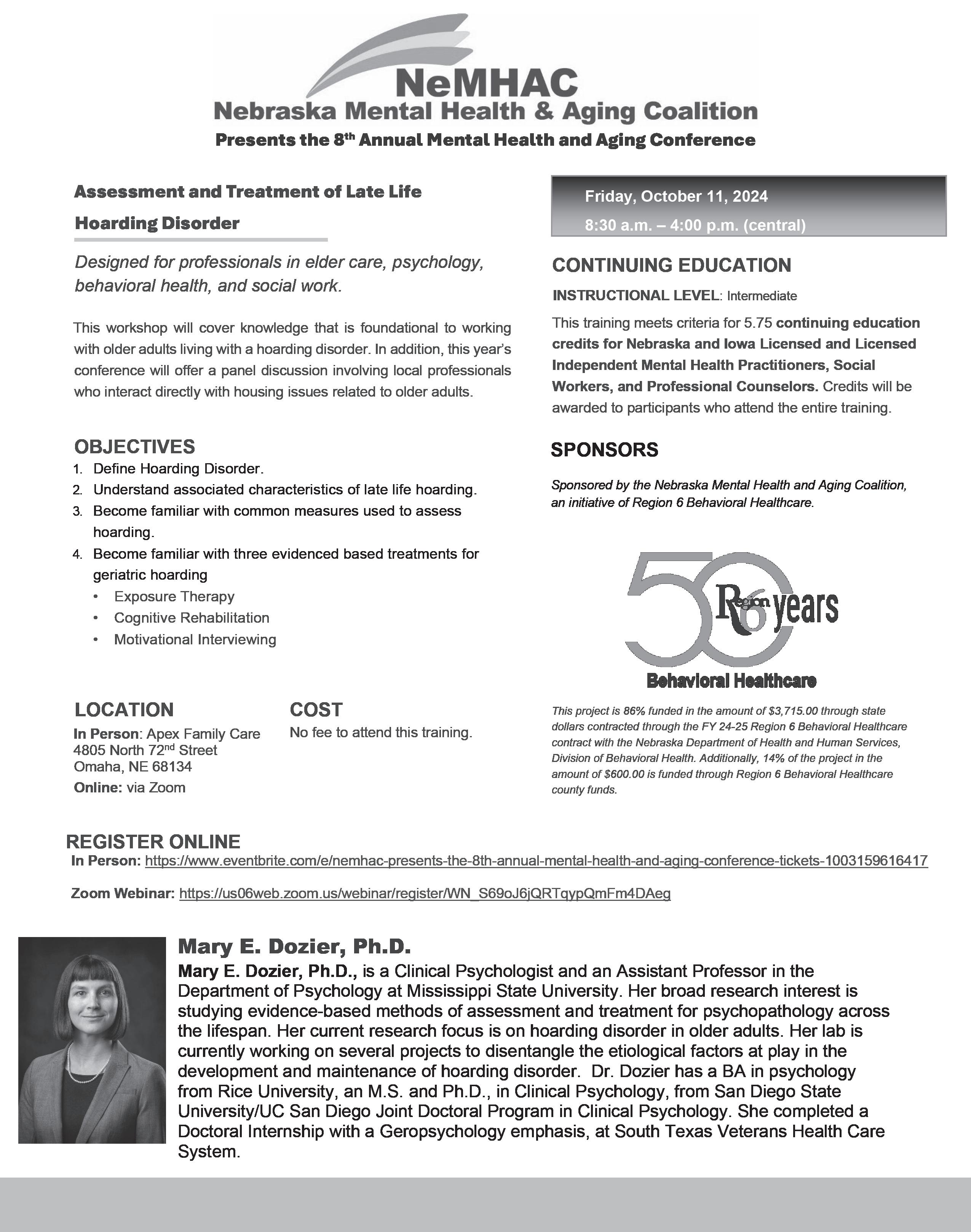
opportunity,” Dr. Salomon said.
Marian Urban, MD, PhD, is just as enthusiastic about the new support for his project: “This grant will provide significant resources to advance the donor organ intervention research and will ultimately increase the number of donor hearts available for transplantation,” he said.
Jason Cook, MD, PhD, also will receive NIH funding as an early-career research project leader as part of the COBRE.
Windy Alonso, PhD, assistant professor of nursing, was to have been the fourth, and she contributed to being awarded the grant.
But meanwhile, she’s already achieved her own independent federal funding. Another deserving research project leader will be identified to fill that spot, Dr. Gundry said.
The COBRE grant also allows UNMC to develop and support critical research infrastructure that catalyzes innovative heart and vascular disease research including a new CHVR Bioassay Core.
The Center for Heart and Vascular Research already capitalizes upon the Nebraska Cardiovascular Biobank and Registry, “one of the most amazing human specimen biobanks that exist,” Dr. Gundry said.
The Center for Heart and Vascular Research also benefits tremendously from a partnership with Nebraska Medicine, which has one of the largest heart failure and transplant programs in the country and one of the busiest academic vascular surgery services in the Midwest.
But the momentum is just beginning.
“One of the practical strategic aspects of doing research is thinking about what can you do that you can do better than anyone else?” Dr. Gundry said. “What can you do that’s different? That will still be impactful, but help you do something that sets yourself apart and above what is possible elsewhere?
“Here it’s really a perfect storm of the right personnel, the right leadership, the right infrastructure, right facilities that are going to do those (impactful) things.”
This is UNMC’s third funded COBRE as an institution, with a fourth set to be submitted for proposal in spring 2024.
Join Flaherty Senior Consulting for a series of Solutions Group gatherings that will address the questions and challenges caregivers face.
Solutions Groups provide opportunities for caregivers to learn how to deal with various issues, obtain skills and knowledge, engage in discussions, and interact with others in similar circumstances.
Upcoming meeting dates and locations are:
• Sept. 10, Nov. 12
St. Vincent de Paul Church 14330 Eagle Run Dr.
• Sept. 28, Nov. 30
Faith Westwood United Methodist Church 4814 Oaks Ln.
• Oct. 3, Dec. 5
The Servite Center of Compassion 72nd St. and Ames Cr.
• Oct. 16, Dec. 18
St. Timothy Lutheran Church 93rd and Dodge streets
The Solutions Groups are facilitated by Nancy Flaherty, MS, CDP, president of Flaherty Senior Consulting. She has extensive experience working with family caregivers and caregiver groups.
For more information, email Nancy at flahertyconsulting@cox.net or call/text her at 402-312-9324.
Life can bring on stress for many of us. Finding ways to relieve stress is important to our overall health and wellbeing.
Caregivers are not immune to this stress.
Please contact Respite Across the Lifespan at edbennett@unmc.edu or 402-559-5732 to find out more about respite services and to locate resources in your area.
You’re invited to visit the La Vista Senior Center, located at 8116 Park View Blvd. The facility provides activity programs and meals Monday through Friday from 8 a.m. to 5 p.m. Please call 402-331-3455 for general Community Center hours.
Meals are served weekdays at 11:30 a.m. Reservations are due by noon the business day prior to the date the participant wishes to attend and can be made by calling 402331-3455.
A $5 contribution is suggested for the meal if you are age 60 and older. If you are under age 60, then the meal cost is $9.50.
In addition to meals being served daily, the La Vista Senior Center offers a variety of activities such as: Bingo, outings, cooking classes, movies with popcorn, arts and crafts, a variety of card games, quilting, tai chi, exercise classes, musical entertainment and various parties.
Please visit our website at cityoflavista.org/seniors for updated information or call 402-331-3455.
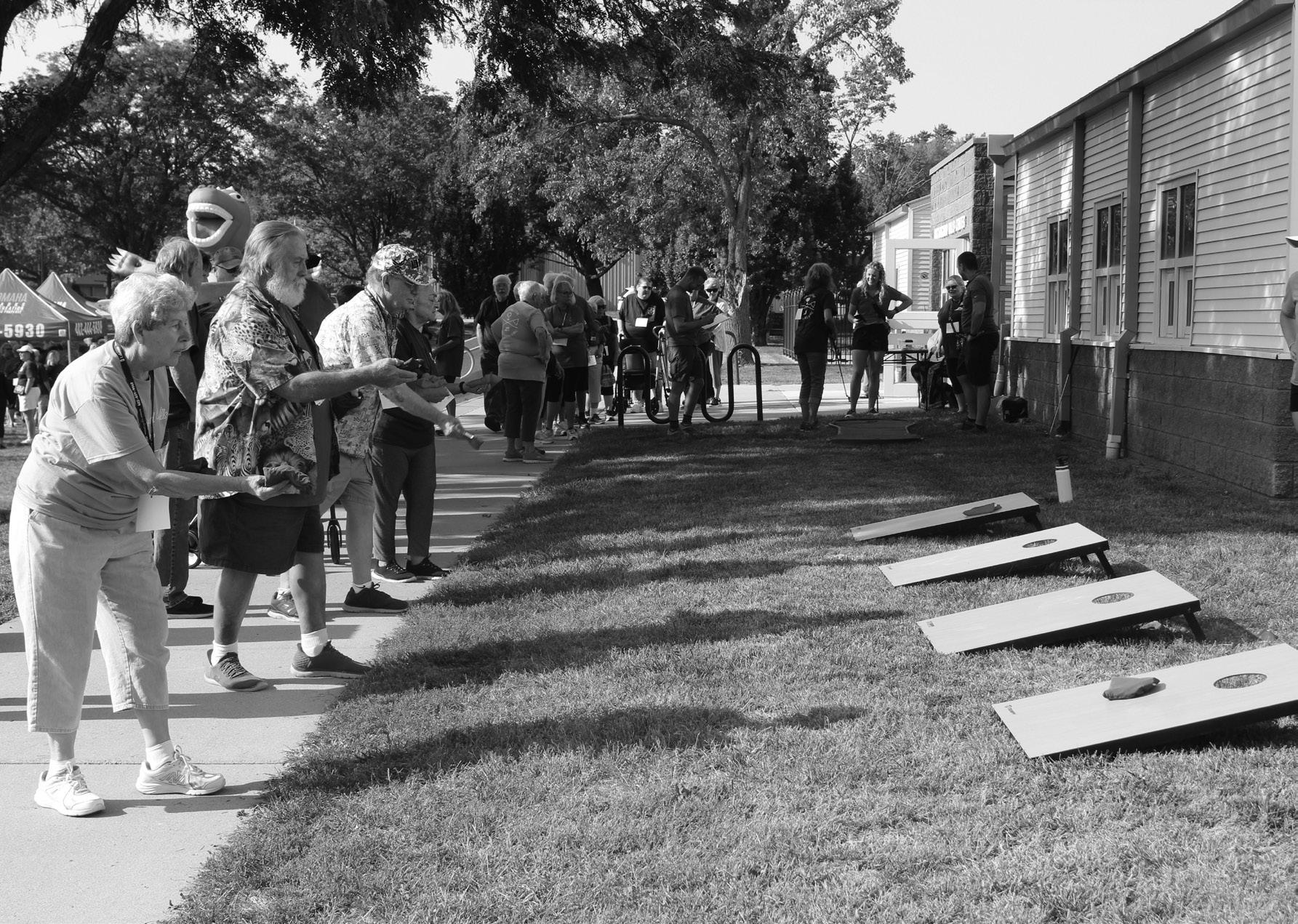
NEW HORIZONS PHOTOS
Community Centers around Omaha showed their competitive side and team spirit at the 2024 Senior Field Day in September. Older adults competed in golf, dominoes, bag toss, mini putt-putt, Jenga, ladder ball and more.
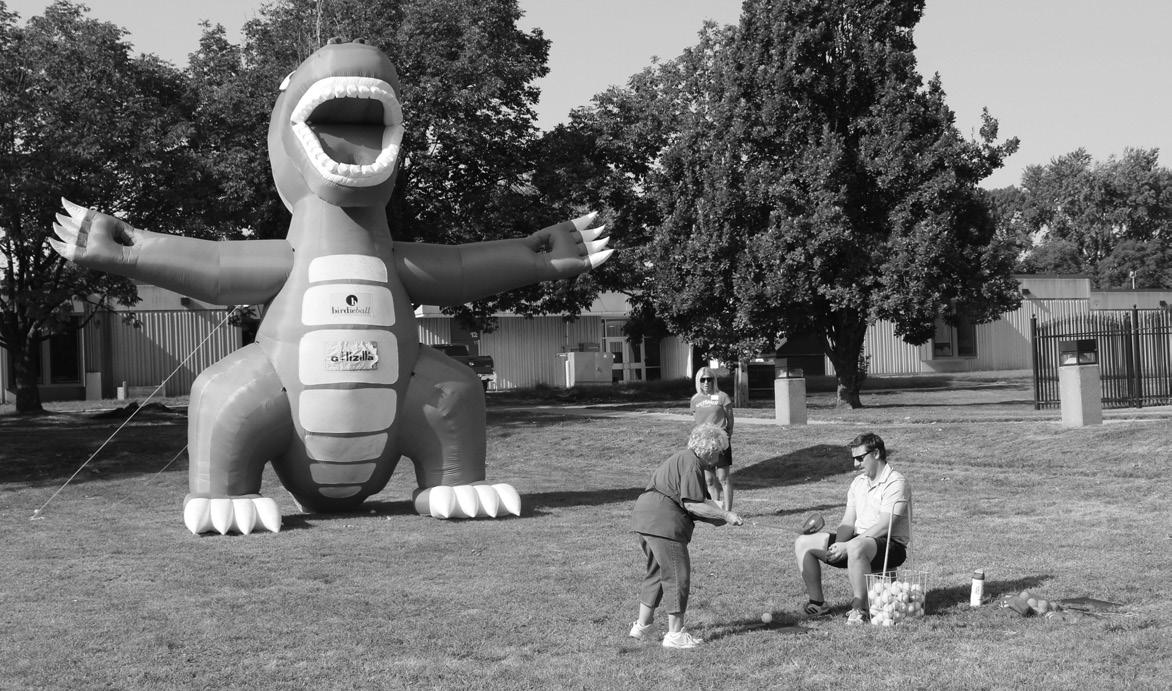



By Ron Petersen
Movies are very popular in the world today.
The advancement in media technology has led to the popularity of movies all over the world. Media is a powerful tool that has spread to almost every part of the world. Those with access to televisions can even watch movies in their homes.
In addition, cinemas are available, and people can go and watch their favorite movies.
Some movies include those classic movies and fan-favorites, to bring back nostalgia and memories of the past.
“We draw in the type of people that are lifelong learners, that are interested in documentaries and new films, along with people who want to engage in foreign film,” Film Streams marketing director, Marie Schuett said. “To be able to bring back films, especially for our senior community has been greatly appreciated.”
In 2007, Film Streams started off as a start-up capital campaign supported by individuals, families, foundations and corporations

Founded in 2005, Film Streams’ mission is to enhance the cultural environment of the
Omaha-Council Bluffs
area through the presentation and discussion of film as an art form.
throughout the Omaha area. In the first decade of operations, they presented nearly 500 first-run American independents, international films, and documentaries and returned 800 classics to the big screen through
their dedicated repertory program. They staged over 200 collaborative screenings with fellow nonprofits and community groups, hosted over 100 special screenings with visiting filmmakers and guest artists, and showed
two-dozen silent films with live musical accompaniment.
All the while, their Daytime Education Program grew exponentially, now serving thousands of students annually from schools and districts throughout the region.
“To this day we play different films every week, and usually a film will be played four times before we replace it with a different one,” Schuett said.
In 2012, Film Streams purchased the portion of the north downtown building that houses the Ruth Sokolof Theater, securing the north downtown home and lessening the organization’s fixed operating costs for investment in film programs. Five years later, more than half a million patrons had experienced Film Streams’ programming — and the biggest development since they opened the Ruth Sokolof Theater was in the works.
In 2017, Film Streams began work renovating Omaha’s 92-year-old Dundee Theater, Omaha’s last surviving single-screen neighborhood cinema, with plans to reopen it by year’s end.
With all of this movement and growth over the years, Film Streams have added different programs,
including the most recent one, the Weekend Essentials program.
Every Saturday and Sunday at 11 a.m., Film Streams will screen a film that is considered historically, socially, culturally or artistically essential viewing.
“This program provides an opportunity for folks to see these classic films for the first time or the 100th time, in a space where they are meant to be seen,” Schuett said. “We’ve had fantastic responses to the past series of films.”
Film Streams also offers many discounts for seniors, including tickets $9 for ages 60 and older, which also includes discounted annual memberships ($35 individual annual memberships and $70 dual memberships.)
“Being able to share the experience of movie theaters across generations is important,” Schuett said. “You catch all of the nuances on the big screen, you wouldn’t see on your own TV. There aren’t scratches and you can really see the detail. It’s a wildly different experience and people can then bring back discussions about the different films around the community.”
To learn more about Film Streams and what films they are showing on the big screen, visit their website at filmstreams.org.