Nebraska’s own, TV legend: Harry Friedman
By Leo Adam Biga Flatwater Free Press
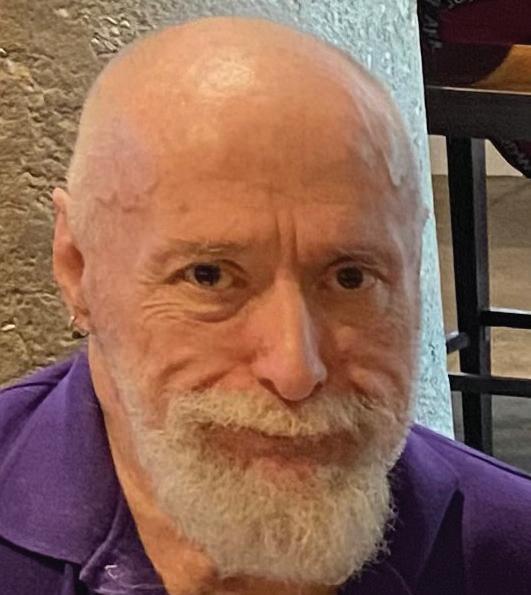
If one of the iconic game shows Harry Friedman brought to new heights used his own bio as a clue, it might read something like this: Over two decades executive producing both Jeopardy and Wheel of Fortune, this native Nebraskan won more Emmy Awards than any one in television game show history.

Decades of these shows were led by Friedman, an unassuming Oma ha boy who became a game show icon.
Friedman’s enhancements to both Jeopardy and Wheel of For tune – eye-popping sets, entertain ing remotes, and capitalizing on champions’ social media buzz –re-energized the brands created by Merv Griffin and sent ratings and revenues soaring. Friedman pro duced thousands of episodes, won 14 Emmys, accepted a prestigious Peabody Award given to Jeopardy in 2012, and got his own star on the Hollywood Walk of Fame just before retiring.
The two hosts he’s indelibly linked with explained his impact to Variety Magazine when Friedman finally hung it up in 2020.
“I will miss his tremendous talent,
his unerring instincts, and his genu ine kindness,” said famed Wheel of Fortune host Pat Sajak. “He is simply the best.”
“Harry is the most creative pro ducer I’ve ever worked with,” said Jeopardy host Alex Trebek months before his death.
Friedman, 75, didn’t hail from a show biz family or study media
production. But growing up in the Golden Age of television sparked an intrigue he nurtured into a career.
His Polish-Jewish immigrant parents, David and Rose, met in Omaha. They belonged to Beth Israel Synagogue. His Mr. Fix-It fa ther owned Aksarben Furniture and Television Repair near downtown. Today, Harry enjoys the symmetry:
Dad a TV repairman; his son a TV content creator.
Friedman’s father saw TV as a household fixture and an opportu nity. The elder Friedman learned TV repair via how-to manuals ordered by mail. Summers, Harry helped in the store. He watched as passersby stood transfixed in front of the TV playing in the front window.
“I suspect none of them had TV in their homes. I can picture those moments so clearly in my mind because I saw, then, the power of television.”
That appreciation for the medium grew when radio comedy stars like Jack Benny and George Burns moved to television.
“I loved those shows because they were sweet and funny and great escapism. It played well with me. I wanted to be a part of that.”
As a kid, Friedman lived out a fantasy when Gregg Dunn, host of KMTV’s fright night show, Grego re, invited Harry behind the curtain.
A 10-year-old Friedman called Dunn at the station and invited him to his Halloween party. Dunn declined, but welcomed the fan to come watch the show, which was broadcast live on Saturday nights. Friedman’s father drove him there.
--Friedman continued on page 8.
Growing older with HIV
By Andy Bradley Contributing Writer
When Jerry Meis learned in 1988 that he and his part ner had HIV, he assumed and expected the worst. “When this all started, we had to grasp the fact that we were going to die, maybe in six months.”


But AIDS would soon become the number one cause of death among persons under the age of 40.
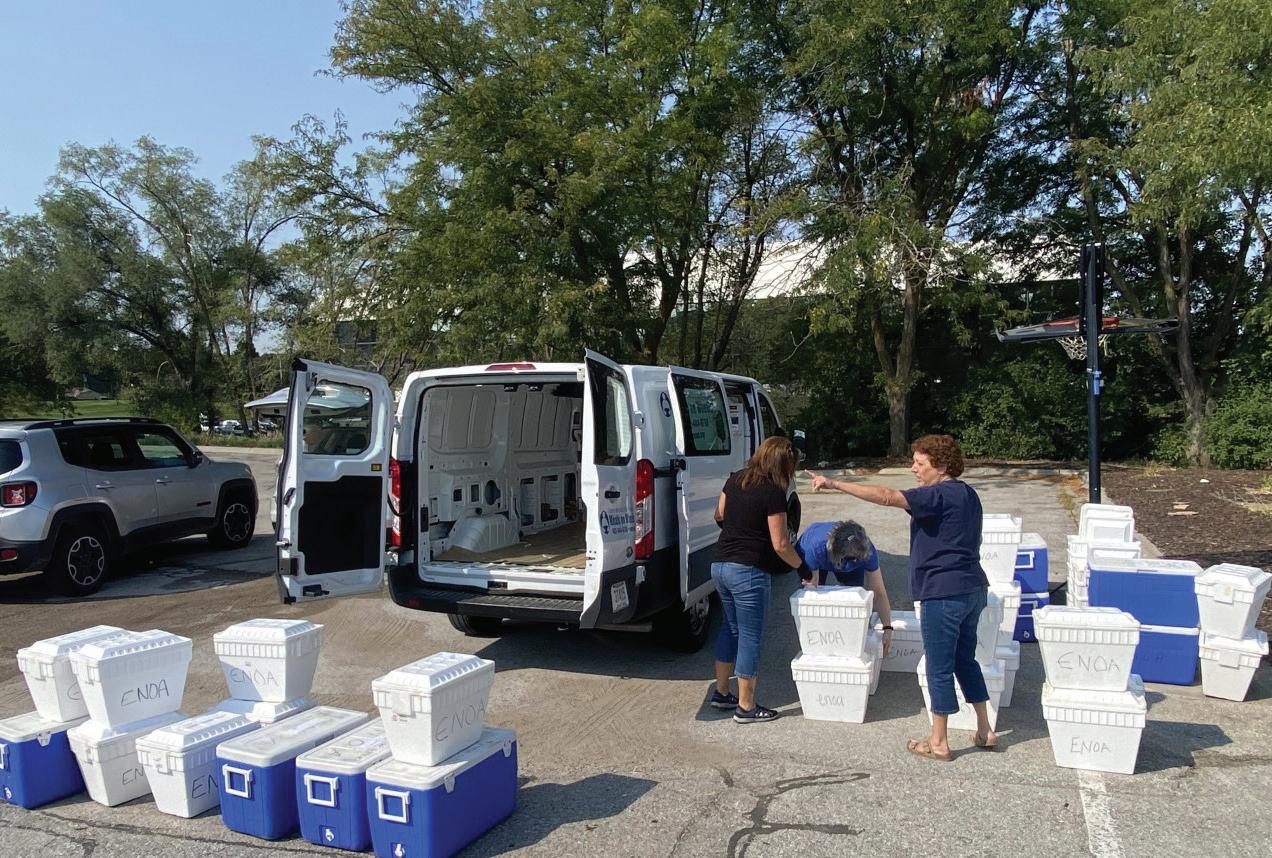

Meals on Wheels program
The Eastern Nebraska Office on Aging’s Meals on Wheels program has filled the nutritional needs of the homebound by providing hot, noon meals, personally delivered by a team of volunteers and paid drivers for 45 years. Read more about the program on Page 16.
That was the typical scenario in the 1980s, when HIV and AIDS became a global epidemic. HIV, or Human Immu nodeficiency Syndrome, is the vicious virus that attacks the im mune system. Left untreated, it quickly progresses to AIDS, which is the last stage of HIV. Medical pro fessionals didn’t know how to treat it throughout much of the 1980s. Trial and error at best. The virus was discovered and named in 1983.
“No one understood what they were dealing with at the time,” said Brent Koster, the executive director of the Nebraska Aids Project (NAP). “Exactly like COVID in its infancy.”
Early attempts to thwart the disease met with limited success, in cluding the anti-viral drug know as AZT. “We took the AZT and waited to die,” said Meis, who was in his late 30s at the time.
Today, he is 72.
He attributes his longevity in the face of dire odds to a dizzying stream of progressive medical and pharmaceutical advances over the last 30-plus years. Those destined to die with the disease in their thirties are now living well into their 70s and older. So as Meis matured into middle and older age, so too did the
New Horizons December 2022 | Vol. 47 | No.12 PRSRT STD U.S. POSTAGE PAID OMAHA NE PERMIT NO. 389
A publication of the Eastern Nebraska Office on Aging
Harry Friedman, Omaha Central graduate, ascended to the top of the TV world, producing “Jeopardy” and “Wheel of Fortune” for decades and winning more Emmy Awards than anyone in television game show history.
Meis
--HIV
continued on page 6.
COURTESY PHOTO
Social Security benefits to jump by 8.7% next year
The Associated Press
WASHINGTON (AP) —
Millions of Social Security recipients will get an 8.7% boost in their benefits in 2023, a historic increase but a gain that will be eaten up in part by the rising cost of everyday living.
The cost-of living adjust ment — the largest in more than 40 years — means the average recipient will receive more than $140 extra a month beginning in January, the Social Secu rity Administration said on October 13.
While Social Security recipients welcomed the benefit increase, many said it wasn’t enough to cover the impact of inflation.
It’s “not much help,” said 85-year-old Shirley Parker, who lives in Chatham on Chicago’s South Side.
Home maintenance costs and high grocery prices are cutting steeply into her budget. “Food is ridiculous. I come out with a bag full of groceries — $50 — don’t have about 10 items,” she said.
A separate government report Thursday showed inflation newly accelerating. The Consumer Price Index rose 0.4% for September after just 0.1% in August and is up 8.2% for the past 12 months.
The Social Security
Administration said the estimated average monthly Social Security benefit for all retired workers will be $1,827 starting in January, according to an agency fact sheet.
The boost in Social Secu rity benefits will be coupled with a 3% drop in Medicare Part B premiums, meaning retirees will get the full im pact of the Social Security increase.
“This year’s substantial Social Security cost-ofliving adjustment is the first time in over a decade that Medicare premiums are not rising and shows that we can provide more support to older Americans who count on the benefits they have earned,” said the Social Security Administration’s acting commissioner, Kilolo Kijakazi.
President Joe Biden on Thursday afternoon echoed the sentiment that the Medi care premium reduction would have some impact on retirees’ wallets. “Se niors are gonna get ahead of inflation next year,” Biden said. “For the first time in 10 years, their Social Secu rity checks will go up while their Medicare premiums go down.”
Jo Ann Jenkins, CEO of the AARP, said the benefits increase “will provide much needed relief to millions of
Americans.”
Several government indexes show that inflation hits older Americans harder than the rest of the popula tion. Medical costs are a big part of the burden.
The Social Security an nouncement comes just weeks before the midterm elections, and at a time when Democrats and Re publicans are sparring about high prices now and how best to shore up the program financially in the future.
William Arnone, chief executive of the National Academy of Social Insur ance, an advocacy organiza tion for Social Security, said the benefit increase is “no cause for celebration,” since it will not help all recipients overcome inflation, espe cially if prices continue to rise.
“There’s already indica tions that health care infla tion is going to be through the roof next year,” Arnone said.
Margaret Toman, a 78-year-old in Garner, North Carolina, who had stopped working to take care of her mother, who has since died, described the 8.7% increase as “quite stingy.”
“I think most of us who are older receiving Social Security are grateful for that Social Security,” she said. “But that gratitude some
times covers up or replaces a certain feeling of anger at having paid into a system for so long and still strug gling to survive.”
About 70 million people — including retirees, dis abled people and children — receive Social Security benefits. This will be the biggest increase in benefits that baby boomers, those born between the years 1946 and 1964, have ever seen. The last time a COLA was higher was in 1981, at 11.2%.
Willie Clark, 65, of Waukegan, Illinois, says his budget is “real tight” and the increase in his Social Security disability benefits could give him some breath ing room to cover household expenses he’s been holding off on.
Still, he doubts how much of the extra money will end up in his pocket. His rent in an apartment building sub sidized by the U.S. Depart ment of Housing and Urban Development is based on his income, so he expects that will rise, too.
Social Security is fi nanced by payroll taxes collected from workers and their employers. The maxi mum amount of earnings subject to Social Security payroll taxes for 2023 is $160,200, up from $147,000 in 2022.
The financing setup dates to the 1930s, the brainchild of President Franklin D. Roosevelt, who believed a payroll tax would foster among average Americans a sense of ownership that would protect the program from political interference.
Next year’s higher pay out, without an accompany ing increase in Social Se curity contributions, could put additional pressure on a system that’s facing a severe shortfall in coming years.
The annual Social Secu rity and Medicare trustees report released in June says the program’s trust fund will be unable to pay full ben efits beginning in 2035.
If the trust fund is de pleted, the government will be able to pay only 80% of scheduled benefits, the report said. Medicare will be able to pay 90% of total scheduled benefits if the fund is depleted.
In January, a Pew Re search Center poll showed 57% of U.S. adults saying that “taking steps to make the Social Security system financially sound” was a top priority for the president and Congress to address this year.
Securing Social Security got bipartisan support, with 56% of Democrats and 58% of Republicans calling it a top priority.
La Vista Senior Center
You’re invited to visit the La Vista Senior Center, located at 8116 Park View Blvd. The facility provides activity programs and meals Monday through Friday from 8 a.m. to 5 p.m. Please call 402-331-3455 for general Community Center hours.
Meals are served weekdays at 11:30 a.m. Reservations are due by noon the business day prior to the date the par ticipant wishes to attend and can be made by calling 402331-3455.
A $4.25 contribution is suggested for the meal if you are age 60 and older. If you are under age 60, then the meal cost is $11.
In addition to meals being served daily, the La Vista Senior Center offers a variety of activities such as: bingo, outings, cooking classes, computer classes, movies with popcorn, crafts, a variety of card games, quilting, tai chi, exercise classes, musical entertainment and various parties.
Please visit our website at cityoflavista.org/seniors for updated information or call 402-331-3455.
Omaha Computer Users Group

Participants
For more information, please call Phill Sherbon at 402333-652.
Page 2 • New Horizons • December 2022
women
and older
their
their
You’re invited to join the Omaha Computer Users Group (OCUG), an organization dedicated to helping men and
age 50
learn about
computers re gardless of
skill level.
will have access to a projector connected to a computer with Microsoft Windows 10 to show users how to solve their computer problems.
Caregiver’s 5 Steps to Self-Care First Aid
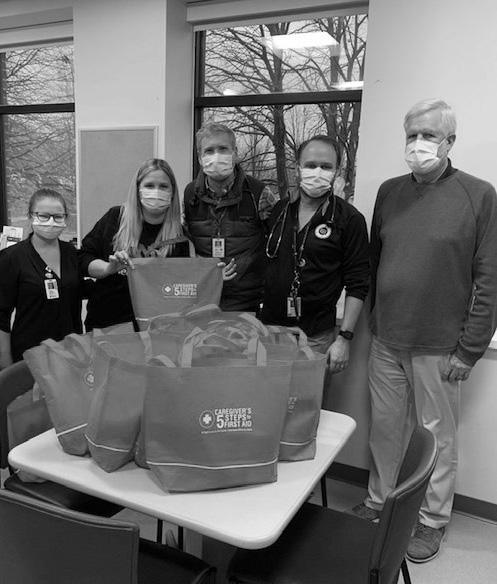
In November, Janelle Cox (CHOICES Division Director) and Michael Os berg (Caregiver Support Program Coordinator) presented
resources to
of
place at the Eagle Run Nebraska Medicine Clinic, 3685 N. 129th St, Omaha. The project is entitled: “Caregiver’s 5 Steps to Self-Care First Aid.” Included in the bag are ideas on maintaining good nutrition and hydration, online video opportunities, and a publication entitled, “Caregiver to Caregiver: A Handbook on the Journey of Caregiving.”
In the photo above, the following staff from the Clinic are included: Pharma cist Caressa Trueman, Clinic Operation Lead Megan Pleshek, Dr. Cory Rohlf sen, MD, and Dr. Joseph Pachunka, MD. (Michael Osberg is also on the right).
This program/project is supported by the Health Resources and Services Admin istration (HRSA) of the U.S. Department of Health and Human Services (HHS) as part of an award during Fiscal Year 2021-2022 totaling $757, 483.00 with 0% financed with non-governmental sources. The contents are those of the author(s) and do not necessarily represent the official views of, nor an endorsement by HRSA, HHS, or the U.S. Government. For more information, please visit HRSA.gov.
Easy ways to prevent food waste
People around the country are shopping smarter these days.
It is important for the environment to keep food waste out of landfills where it produces methane, which is a powerful greenhouse gas.
The United States Department of Agricul ture (USDA) provided four easy tips to save on groceries and the environment.
First, plan ahead. Before going to the grocery story or ordering online, make a list so you don’t buy more than you need.
Second, serve smart. Portion control is
good for controlling weight, and it is also good for reducing plate waste.
Third, love your leftovers. Pack leftovers in small portions in shallow containers, mark the contents and date, then refrigerate and use within three to four days, or freeze immediately.
Fourth, compost, don’t trash. Food scraps can be recycled into compost, an organic material that can be added to soil to help grow plants. Set up a home compost bin or drop off food waste at a local compost center.
New Horizons is the official publication of the Eastern Nebraska Office on Aging. The paper is distributed free to people over age 60 in Douglas, Sarpy, Dodge, Washington, and Cass counties. Those living outside the five-county region may subscribe for $5 annually. Address all correspondence to: Ron Petersen, Editor, 4780 S. 131st Street, Omaha, NE 68137-1822. Phone 402-444-6654. FAX 402-444-3076. E-mail: ron.petersen@enoa.org
Advertisements appearing in New Horizons do not imply endorsement of the advertiser by the Eastern Nebraska Office on Aging. However, complaints about advertisers will be reviewed and, if warranted, their advertising discontinued. Display and insert advertising rates available on request. Open rates are commissionable, with discounts for extended runs. Circulation is 9,000 through direct mail .

The
Horizons and the Eastern
Office on Aging provide services without regard to race, color, religion, sex,
marital
disability, or age. Editor....................................................Ron Petersen Ad Mgr................Mitch Laudenback,
Contributing Writers.........Nick Schinker & Leo Biga
Horizons December 2022 • New Horizons • Page 3
New
Nebraska
national origin,
status,
402-444-4148
ENOA Board of Governors: Mary Ann Borgeson, Douglas County, chairperson; Angie Burmeister, Sarpy County, vice-chairperson; Lisa Kramer, Washington County, secretary; Pat Tawney, Dodge County, & Jim Petersen, Cass County. New
prepared bags of
assist caregivers
family members. The presentation took
COURTESY PHOTO
Call
Volunteer Connect offers a variety of opportunities
D
Private and non-profit agencies are looking for your help.
Please contact Tia Schoenfeld with the Eastern Nebraska Office on Aging’s Vol unteer Connect program at 402-444-6536, ext. 1045 for more information on the following volunteer opportunities:


• Men and women are needed to write greeting cards of encouragement for resi dents living in skilled care and assisted living facilities.
• The American Cancer Society wants volunteers to help provide food and to perform other duties at its Hope Lodge Nebraska.
• Volunteer quilters are needed to create Busy Lap Blankets for long-term care facility residents.
• The Creighton University Medical Center-Bergan Mercy Hospital wants vol unteers to take a dessert cart to new moms
o you have some spare time, a skill to share, and wish to contribute to your community?who recently gave birth and to help out in its mail room.
• The Catholic Charities/St. Martin dePorres Center is looking for volunteers for a variety of duties.
• The Siena Francis House needs volun teers to serve breakfast and lunch.
• Volunteer Connect wants men and women to participate in a focus group.
• Partnership 4 Kids (P4K) is looking for volunteers to serve as Goal Buddies (5th grade) and Group Mentors (6-12th grade).
• Volunteers are needed to knit/sew baby caps/clothing and prayer shawls.
• Boys Town is looking for volunteers to help out at its Visitors Center and Hall of History Museum.

at 402-444-6536
The Eastern Nebraska Office on Aging is look ing for men and women ages 21 and older to join its Long-term Care Ombudsman Pro gram which is co-sponsored by the Nebraska State Ombudsman Program.
ENOA’s Long-term Care Ombudsmen vol unteer in local long-term care facilities and assisted living communities to protect the residents’ rights, well-being, and quality of life.
Long-term Care Ombudsmen must complete 20 hours of initial classroom training and 12 hours of additional train ing every two years.
During the training, the volunteers learn about the resi dents’ rights, aging issues, Medicare, Medicaid, communi cation skills, how to investigate the residents’ complaints, the importance of confidentiality, and about federal and state rules, regulations, and laws regarding Nebraska’s long-term care facilities and assisted living communities.
Before being assigned to a long-term care facility or an assisted living community, new volunteers will make four visits to a site with an experienced Ombudsman Advocate to learn more about what the program entails. After a threemonth probationary period, the new volunteers are certified as Ombudsman Advocates.
Certified Ombudsman Advocates will be assigned to a long-term care facility or an assisted living community where they’ll visit for two hours a week to meet with ad ministrators, residents, and the residents’ family members to address concerns.
Ralston Senior Center
You’re invited to visit the Ralston Senior Center, 7301 Q St., Suite 100 this month for the following:
• December 7: The Merrymakers present music by Billy Troy @ noon
• December 7: Bingo @ 1 p.m.
• December 14: Board meeting @ 10 a.m.
• December 14: Christmas luncheon @ 11:30 a.m.
• December 14: Bingo @ 12:15 p.m.
• December 21 & 28: Bingo @ 12:15 p.m.
Lunch is catered in on Wednesdays @ 11:30 a.m. A $4.50 contribution is normally suggested for the meal. Reserva tions are due by noon on Tuesday. Play games and bingo after lunch. Contact Diane @ 402-885-8895 for reserva tions.
Obtain an annual Ralston Senior Center membership for $10. A current membership is $5 for the remaining calendar year.
Contact Ron Wilson @ 402-734-3421 for further infor mation.
The center may be used on weekends for various activi ties such as weddings, memorial services, anniversaries, family reunions, birthdays, baby showers, wedding show ers, etc. On days the Ralston Public Schools are closed due to the weather, the Ralston Senior Center will also be closed.
For more information, please call Darla @ 402-651-5009 or 402-331-1529.
Corrigan Senior Center
You’re invited to visit the Corrigan Senior Center, 3819 X St. this month for a variety of activities.
The Corrigan Senior Center is open weekdays from 8 a.m. until 3:30 p.m. Lunch is served at noon. A $4.25 dona tion is suggested for the meal. Reservations, which are due 24 hours in advance, can be made by calling 402-731-7210.
December activities include:
• December 2: The Merrymakers present music by Billy Troy @ 11 a.m.
• December 13: Carolers @ 12:30 p.m.
The center will be closed on December 25. Call 402-731-7210 for more information.
Page 4 • New Horizons • December 2022 This plan is not insurance. Discounts are only available at participating pharmacies. SPEND LESS on your prescriptions with the FREE Douglas County Prescription Discount Card This program is offered in a joint effort of Douglas County and the National Association of Counties (NACo). For more information call 1-877-321-2652 or visit nacorx.org AVERAGE SAVINGS OF 20%! • No age requirements. • No income requirements. • Unlimited use for the whole family. • No claim forms to fill out and no annual fee to pay. FREE enrollment for Douglas County residents of all ages who are without prescription drug coverage.
For more information about ENOA’s Long-term Care Ombudsman Program, please call Marsha Peters at 402444-6536. Marsha
ENOA is recruiting volunteers to become Ombudsman Advocates
Older adults adjust spending habits and deal with difficult economic times
By Ron Petersen
Over the past year, Americans have had to navigate dealing with high er prices as inflation has been at its highest in more than 40 years, according to the Labor Department.
This has left older adults and retirees in a tough position when it comes to spending and adjusting their budget.
An online survey that was conducted by the Senior Citizens League in June, revealed that the current high-inflationary environment is jeopardiz ing the financial security of many older Americans. Ac cording to the poll of more than 3,000 participants, per CNBC, half of the respon dents aged over fifty-five have spent their emergency savings. Moreover, 47% admitted that they have visited a food pantry or applied for benefits via the Supplemental Nutrition Assistance Program, or SNAP, and more than 40% of respondents have carried debt on a consumer credit card for more than ninety days.
Studies prove that older
adults aren’t necessarily running out of savings, but there might need to be a reevaluation when it comes to where the money is be ing spent.
While older adults need to be alert on where their money is going, there might be a chance some older adults will have to return to work if they aren’t careful.
In May, Resume Builder surveyed 800 retirees. Exactly 8% reported they were “very likely” to return to the workforce, while 12% are “somewhat like ly.” About 19% said they plan to go back to their last employer, 23% will remain in the same field but try a different company — but over half (58%) will go into a different industry altogether.
Although the study showed that not everyone plans to go back to work, most of those who are unretiring aren’t dreading it. About 14% reported they’re very enthusiastic about getting back to work.
The majority of older adults and retirees would not want to return to
Intercultural Senior Center
You’re invited to visit the Intercultural Senior Center (ISC), 5545 Center St.

The facility – open weekdays from 8 a.m. to 4:30 p.m. –offers programs and activities from 8 a.m. to 3 p.m.
Participants must be fully vaccinated against COVID-19 to attend the ISC. Men and women are asked to wear a mask and bring their vaccination card with them when visiting the center.
During the month of December the Intercultural Senior Center will host the Monthly Health Presentation from Angel’s Care Home Health on December 7th at 12:30 p.m. “Prevent Falls.”
The center will be closed with no programs or activities from December 26th to January 2nd.
The ISC offers a light breakfast, lunch, fitness classes, programs, and activities. Technology classes are held Tues days and Wednesdays @ 10:20 a.m. and Wednesdays and Fridays @ 12:30 p.m.
Lunch reservations are due by 9 a.m. A voluntary contri bution is suggested for the meal. Please call 402-444-6529 for reservations.
Monthly food pantries are available for men and women ages 50 and older.
ISC’s SAVE bus can bring case management services to your doorstep.
For more information, please call 402-444-6529.
Respite Across the Lifespan
Life can bring on stress for many of us. Finding ways to relieve stress are important to our overall health and wellbeing. Caregivers are not immune to this stress.
Please contact Respite Across the Lifespan at edben nett@unmc.edu or 402-559-5732 to find out more about respite services and to locate resources in your area.
workforce unless they were forced to.
For those who do not have to return to work, they still have to manage a world in which the United States is dealing with unprecedented economic times.
According to the Na tional Council on Aging (NCOA) over 15 million older adults aged 65 and older are economically insecure, with incomes below 200% of the federal poverty level ($25,760 per year for a single person in 2021).
Older adults struggle with rising housing and health care bills, inadequate nutrition, lack of access to transportation, diminished savings and job loss so it is important for everyone around the United States to be knowledgeable of infla tion and what is happening in the country.
Being able to manage money while staying on top of savings and debt is important for every older adult.
The Omaha Fire Department’s Public Education and Affairs Department will install free smoke and/or carbon monoxide detectors inside the residences of area homeowners.
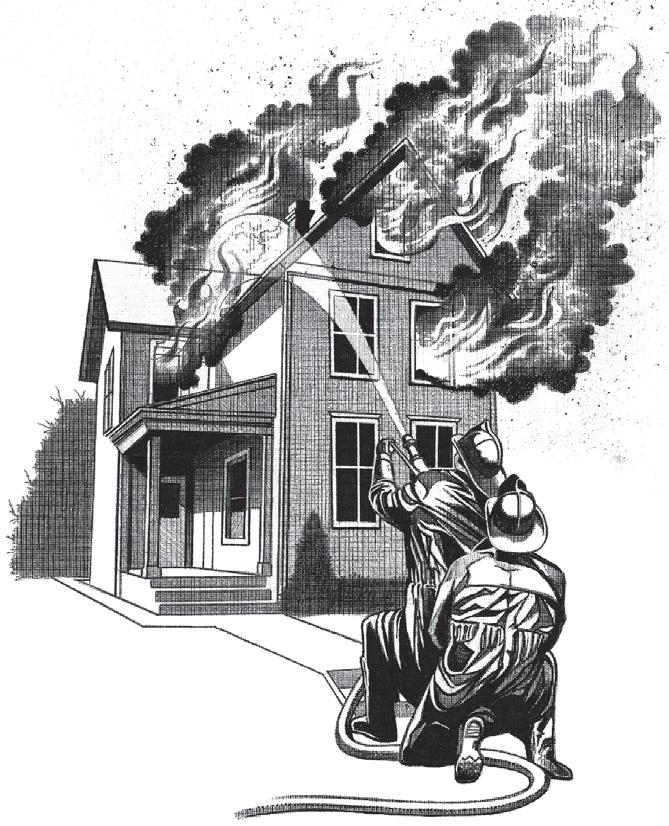
To have a free smoke and/or carbon monoxide detector installed inside your home, send your name, address, and tele phone number to: Omaha Fire Department Smoke/Carbon Monoxide Requests 1516 Jackson St. Omaha, Neb. 68102 For more information, call 402-444-3560.
Want to stay home, but can’t do it alone?
For complete program details call 402.991.0330
December 2022 • New Horizons • Page 5
to
Stay safely in your home AND make sure you get the care you need - with Immanuel Pathways.You will have a team of caregivers and someone
manage and coordinate ALL your services.
PACE participants may be fully and personally liable for the costs of unauthorized or out-of-PACE program services. Emergency services are covered. Participants may disenroll at any time. Serving select zip codes in Douglas, Sarpy, Washington, Dodge, Cass counties 5755 Sorensen Parkway | Omaha, NE 68152
or visit Immanuel.com
PACE®: Program for All-Inclusive Care for the Elderly 23_189
Immanuel Pathways
Omaha Fire Department
ENOA I would like to become a partner with the Eastern Nebraska Office on Aging, and help fulfill your mission with older adults. Please mail your donation with this form to: Eastern Nebraska Office on Aging Attention: Carol Gleason 4780 S. 131st Street Omaha, NE 68137-1822 (402) 444-6536 support! We need your Traditional funding sources are
These
These gifts are tax exempt. Name:_____________________________________ Address:___________________________________ City:______________State:_____ Zip: __________ Phone:____________________________________ $30 = 7 meals or 1.5 hours of in-home homemaker services or 1 bath aide service for frail older adults. $75 = 17 meals or 3.66 hours of in-home homemaker services or 3 bath aide services for frail older adults. $150 = 35 meals or 7.3 hours of in-home homemaker services or 7 bath aide services for frail older adults. $300 = 70 meals or 14.63 hours of in-home homemaker services or 14 bath aide services for frail older adults. Other amount (please designate)__________________________ Please contact me. I would like to learn more about how to include the Eastern Nebraska Office on Aging in my estate planning.
making it more difficult for ENOA to fulfill its mission. Partnership opportunities are available to businesses and individuals wanting to help us.
opportunities include volunteering, memorials, honorariums, gift annuities, and other contributions.
New Horizons Club gains new members
$25
Sharon Allen
Caroline Sedlacek
$15 L. F. Burianek
$10
Delores Wolsleben Debbie Hannigan
Bonnie Scholting Nancy Griswold Lennie Jefferson
$5
Ron, Nancy Kelley Kathleen Koons Sandy Gibilisco Reno Terzo
Fremont Friendship Center
You’re invited to visit the Fremont Friendship Center, 1730 W. 16th St. (Christensen Field).
The facility is open Monday through Thursday from 9 a.m. to 3 p.m. and Friday from 9 a.m. to 12:30 p.m.
A meal is served weekdays @ 11:30 a.m. Reservations, which are due by noon the business day prior to the meal the participant wishes to enjoy, can be made by calling 402-727-2815. A $4.25 contribution is suggested for the meal.
This month’s activities will include:
• December 1: Nye Presentation @ 10 a.m.
• December 2: Bake Sale @ 9:30 a.m.
• December 3: 44th Annual Parks and Recreation Craft Show @ 9 a.m.
• December 7: Christmas Movie with Marv’s Marvel ous Popcorn @ 9:30 a.m.
• December 8: Humanities of NE, Country Christmas Program, followed by Bingo @ 9:45 a.m.
• December 14: Music with Billy Troy @ 10 a.m.
• December 15: Early Bird Bingo followed by Merry Maker’s Music from Mike McCracken @ 9:30 a.m.
• December 21: Entertainment with The Links @ 10 a.m.
• December 22: Christmas Trivia followed by an Ugly Christmas Sweater Contest @ 10 a.m.
• December 26: Center is closed
• December 28: Music by Wayne Miller @ 10:30 a.m.
• December 29: White Elephant Bingo @ 10:15 a.m.
• December 30: New Year’s Eve Party Trivia, Snacks and Games @ 10:30 a.m.
For meal reservations and more information, please call Laurie at 402-727-2815.
Elder Access Line
Legal Aid of Nebraska operates a free telephone access line for Nebraskans ages 60 and older.
Information is offered to help the state’s older men and women with questions on topics like bankruptcy, home stead exemptions, powers of attorney, Medicare, Medic aid, and Section 8 housing.
The number for the Elder Access Line is 402-827-5656 in Omaha and 1-800-527-7249 statewide.
Its hours of operation are 9 a.m. to noon and 1 to 3 p.m. Monday through Thursday, and 9 a.m. to noon on Friday.
medications used to treat the virus. Now, “people living with HIV have nearly the same life expectancy as the average adult in most popu lations,” said Koster.
New HIV diagnoses in Nebraska were fewer than 100 in 2020, the latest data available. About 2,250 Nebraskans lives with HIV. Exactly 39% of those are people over the age of 55.
Dr. Sara Hurtado Bares, the medical director for the Omaha site of the Nebraska/ Kansas Aids Education and Training Center, said many of their patients are now “living into old age with HIV.” For ex ample, 16% of the clinic’s patients are over the age of 60 and 45% are over 50.
“We have definitely seen an aging of our patient pop ulation. More older adults are living a long and healthy life with HIV.”
But not without chal lenges.
“These medicines can benefit you, but there can be so much other damage along the way,” Koster said. For example, comorbidity – the existence of other chronic health conditions in addition to HIV – is commonplace.
“Some of these conditions are related to the disease, and some are related to the medications to treat the dis ease,” said Dr. Bares, who also serves as an associate professor in the Division of Infectious Diseases at the University of Nebraska Medical Center (UNMC).
“For example,” she con tinued, “we see a lot more bone disease in patients with HIV than in patients without HIV. The virus has an effect on the bone, but the medica tions can accelerate bone loss.”
Lingering mental health issues are also pervasive. Koster said the accumula tion of anti-viral drugs in the body over many years can take their toll in terms of dementia and mental ill ness, Dr. Bares agreed.
“People with HIV have higher rates of mental health disorders, such as a ten-fold higher rates of major de pressions and anxiety com pared to the general popula tion,” Dr. Bares said.
Closely aligned with mental health challenges are still-prevalent issues of so cietal stigma and acceptance
as well as strained family relationships.
“The stigma is abso lutely prevalent is smaller communities where it is harder to be anonymous,” Dr. Bares said. “And so we have people who from far away to come to our clinic. We’ve heard many stories of people being mistreated or looked down upon or judged for their HIV status when seeking care in other facili ties.”
Meis, who moved to Omaha from New Orleans in 2005, believes Midwest erners are generally more accepting than what he ob served in the South. While his family, most of whom live in the area, has been supportive, he was appalled “by the way some Southern ers have rejected their fam ily members, thrown them out of the house and never want to speak to them again. It’s gotten better, but I don’t know if that’s completely gone.”
The federal government has embarked upon an am bitions goal of eliminating HIV as a global epidemic by the year 2030. Stunning progress, illustrated by the recent unveiling of newgeneration pre-exposure Prophylaxis (PrEP) drugs has cut the transmittable risk by 99%. With these antiviral therapies, HIV-positive individuals “cannot transmit HIV through sex.” Dr. Bares said.
However, she is disap pointed at the sluggish progress toward the goal of eradication, for surprising reasons.
“More than one patient has told me that they knew they were at risk for HIV and tried to access PrEP, and were denied,” Dr. Bares said. “I’ve heard too many stories like that. We have the tools to end the epidem ic, but there are still barri ers such as providers who are not willing to offer the preventive service.”
In addition, resources locally and nationally were shifted away from HIV re search to COVID research, delaying progress in HIV eradication. “I was really optimistic a few years ago, but how far we are from the 2025 benchmarks is hum bling and depressing. Some of that, for sure, is COVID derailed everything. So many of the people working in HIV and working in the forefront of prevention and treatment got (re)directed to address COVID.”
But despite these recent setbacks, the big-picture progress made to date has been inspiring and life
affirming for so many. “Each new drug has been so wonderful. We now get to the point where the virus is undetectable, which means you can’t infect anyone else,” said Meis. He added, the first time he was told that test results were nega tive, “it just shocked me, it meant having a future as opposed to not.”
Social, support and educa tion needs of not just older persons with HIV, but all older LGBTQ individuals are being met through Owl ish, which was incorporated as a non-profit communitybased agency in April.
Sarah Phelps, the Owlish executive director, estimated 21,000 LGBTQ persons over the age of 50 reside in the Omaha area. In addition to monthly support and edu cation sessions at the Inter cultural Senior Center, 5545 Center St., Owlish supports legislation that benefits their community. Most recently, Owlish has advocated for state laws that prohibit dis crimination against LGBTQ persons in retirement living facilities. Leaders hope to expand services and sup ports statewide.
The University of Nebras ka Medical Center remains in the local and national forefront of HIV-related clinical care and research. Most recently, UNMC played an essential role in the status quo-busting development of injectable long-acting therapy.
“Whereas the standard of care for many years has been oral therapy, as of January, 2021, we for the first time have a long-acting injectable approved for treatment,” Dr. Bares said.
Meis, who is employed as a maintenance specialist at First United Methodist Church of Omaha, credits the Omaha VA Medical Center for his success ful HIV management. “I believe the Omaha VA Hospital has to be one of the top 10 in the nation as far as preventive medicine and everything else I have needed.”
When Meis finally came out to his family, his mother reacted not with admonition but disappointment because he didn’t confide in her ear lier. “She screamed at me, ‘you children never tell me anything!’ And that was her only comment.”
Today Meis would cer tainly please and delight his mother by announcing the full and rewarding life he has lived since contracting HIV three decades prior. Hers would be screams of joy.
Page 6 • New Horizons • December 2022 Please see the ad on page 3
--HIV continued from page 1.
Bares
More participants are needed for UNMC’s study on scam vulnerability
Nearly one-third of Americans have fallen victim to a scam. During the past decade, there has been a significant increase in solicitations targeting older adults.
Elder fraud and abuse are impacting older adults’ life quality and longevity. Frauds and scams may come in the form of so licitations via phone calls, emails, letters, computer pop ups, etc.
These solicitations may ask for donations, assistance, or advertise unnecessary or nonexistent services or products.
The goal is to take advantage of vulner able individuals. Older adults are vulnerable due to loneliness, a desire to help, or due to declines in judgment that puts them at risk for suboptimal decision making.
The Division of Neuropsychology in the
Department of Neurological Sciences at the University of Nebraska Medical Center is conducting a federally funded research proj ect on how changes in practical judgment and problem-solving skills may impact older adults in terms of scam and fraud.
Researchers are recruiting individuals ages 60 to 90, with or without cognitive impairment to examine the role of cogni tion, brain structures, and genetic factors on susceptibility to scam and fraud victimiza tion. The study involves one or two visits and doesn’t require any follow up visits.
Participants will undergo a brain imaging study (MRI), cognitive testing, and genetic testing with compensation for their time.
To learn more, contact Erica Aflagah, PhD at 402-559-3158 or wnl@unmc.edu.
Older adults can benefit from brain games like crossword puzzles, sudoku
Physical activity for older adults is important, but what about games like sudoku and crossword puzzles to keep the mind feeling sharp.
The New Horizons will look a little different this month, with the addition of sudoku and a crossword puzzle.
The new addition to the newspaper provides a differ ent, yet fun element to the newspaper because accord ing to Rebecca Marcus, LCSW, a licensed psycho therapist in New York who specializes in mindfulness, said brain games are impor tant for several reasons:
• They can help to in crease focus, concentration, and memory.
• They can help people to be more present in day-today activities.
• While it doesn’t appear that brain games can prevent age-related cognitive de cline and dementia, growing research indicates that they may slow or delay them.
Brain games for all ages offer a variety of advantag
es, which can enhance the mind and skills of a person, since the mental difficulty of learning abilities and simple games can increase the mental well-being of a human being.
According to a study done in Oklahoma City, brain games can invoke a greater sense of independence, in crease greater understanding of the surroundings, im prove the memory capabili ties, improve motor skills, such as drawing and writ ing, improve concentration level, develop a faster think ing skill, stimulate handeye coordination, enhance reaction and develop social skills. Memory games, word games, puzzle games, card games and trivia games are all meant to enhance mental health.
In one research study, seniors in different groups underwent varied brain stimulation through every day activities – one group focused on learning to quilt, another tried to learn digi tal photography while, yet
another learned both. And in another test group, seniors were asked to do mundane activities and receptive tasks like doing crosswords or reading newspapers.
At the end of the 14-week trial, all the group mem bers were tested thoroughly for memory and cognitive capacities. The group that had engaged in more active learning roles – learning to quilt, handle digital pho tography software and do crosswords and learn new skills scored best in all the tests.
While doing crosswords and reading about a new subject can be insightful and help develop knowledge, it relies too much on passive participation – that is, draw ing on knowledge people already have.
However, pushing the brain to learn a new skill, or teasing the brain to learn easy games for older adults for instance can induce it to grow and develop in an entirely new direction altogether.
Watching out for bank phishing scams
Many people see email as a convenient and effective way to receive information.
Popular banks have even started using email as a primary method of communica tion to send account updates to their cus tomers.
Now, cybercriminals are imitating banks in their phishing emails to try to manipulate you and steal your sensitive information.
To start the scam, cybercriminals send you an exact copy of a real bank email to appear legitimate. The email states that your bank is implementing new security mea sures that will affect your account. Then, the email provides a link that you can click for more information. This link will redi rect you to a spoofed login webpage. If you enter your login credentials, cybercriminals
will be able to use them to access your bank account and steal your money.
Follow the tips below to help you stay safe from similar scams:
• Before you click a link, always hover your mouse over it. Watch out for spelling mistakes or suspiciously long URLs that can hide a website’s true domain.
• Cybercriminals often use urgent or alarming claims to trick you into clicking malicious links. Always visit the organi zation’s website directly to log in to your account.
• Enable multi-factor authentication (MFA) on your accounts when it is avail able. MFA adds a layer of security by requiring that you provide additional verifi cation to log in to your account.
December 2022 • New Horizons • Page 7
This Month’s Sudoku
This Month’s Crossword Puzzle
Hungering for more, Friedman showed up at the station after school one day. No one stopped him, so he kept coming back. He peeked in on newscasts and met on-air tal ent, including future NBC network newsman Floyd Kalber. Finally, someone asked, “Who does this kid belong to?”
“I remember coming back a few more times. The fascination of it never left me.”
Bitten by the bug, Harry per formed in plays and musicals at Central High School. He was Mayor Shinn in Music Man and the lead in Fiorello.
After graduating in 1964, Fried man planned to move to the in dustry. Johnny Carson and Dick Cavett left Nebraska to make it in TV. Henry Fonda and Sandy Dennis made it on stage-screen. Why not him?
“I was naive enough not to think otherwise.”
His parents supported his improb able dream, or at least didn’t try talking him out of it.
“They knew it was a risky thing to do, and yet they also knew it was what I needed to do,” he said. He agreed to a six-month trial. “In my mind, failure was not an option. I had no plan B.”
He found work in L.A. before the self-imposed deadline, writing “pat ter” for cabaret singer Kay Dennis.
Friedman’s break came in 1971, when, while freelancing on Hol lywood Squares, he was offered a full-time job. He stayed a decade, writing jokes for star panelists like Paul Lynde, Rose Marie, George Gobel, and Charlie Weaver.
Friedman also got a front-row seat to what it takes to be a producer – distribution, advertising, market ing, and casting – a real-life educa tion that would soon pay dividends. Harry joined Wheel of Fortune in 1995, added Jeopardy in 1997, then became executive producer of both in 2000. The special place these shows hold in families was never lost on him.

“It seems everyone I’ve encoun tered has a Wheel or Jeopardy story of growing up watching with a par ent or grandparent. It was a bond ing experience. Or they remember a particular Wheel puzzle or Final Jeopardy question they got right but all three contestants missed.”
Friedman thought it would be cool to get paid to go to work every day to do something that makes mil lions of people happy every night.
He got to know the King of Late Night, Johnny Carson, whose Tonight Show taped across the hall from Hollywood Squares. Carson’s younger brother, Dick, directed Wheel for a time under Friedman.
Friedman met many of the comic legends who first inspired him. He taped Jeopardy celebrity clues with heroes Carl Reiner and Mel Brooks.
Nebraska Jeopardy clues sprang from an unusual confluence of na tives on the show: Friedman, writers Steve Tamerius and Gary Johnson, and associate producer Stewart Hoke.
The intimacy of working with the same hosts, staff, and crew promot ed a family vibe. Sajak brought his wife when Wheel taped on location. Harry’s spouse, Judy Friedman, came along, too.
“We’re still friends to this day,” Friedman said.
Remote tapings of both Jeopardy and Wheel displayed the depth of fan passion. Audiences would roar when Pat Sajak and Vanna White were announced.
“The same thing when Alex (Trebek) was introduced. Over whelming applause. But also smiles on people’s faces when they saw these ‘friends’ of theirs in person.”
The beloved Trebek waged a valiant fight against cancer, often hiding the pain and his treatment’s side effects from public view.
On the last tape day Friedman spent on the Jeopardy set, March 11, 2020, Trebek showed up feeling groggy and looking awful.
“By 11, when he was being in troduced for the first show … Alex had somehow been transformed and summoned the strength to be the masterful host everyone knew and loved,” Friedman said.
The staff and crew wrapped for the day, thinking they would be back in a few weeks after this new virus called COVID-19 had passed. It was the last time many saw Trebek in person.
“The last time I spoke with Alex was by phone on Nov. 5, just three days before he passed. We both
knew it would be the last time we would speak,” Harry said.
Trebek’s popularity, Friedman believes, was a product of the fact “he didn’t just read the clues, he presented them.” That ability to paint word pictures, a skill honed as a Canadian broadcaster, resulted from precise timing, phrasing, and emphasis. Trebek also worked dog gedly. Friedman recalled Trebek’s tape day ritual of arriving early to study clues in the five games be ing taped. “More often than not he would say, ‘Hey, you know what I just learned about?’ He would cite something from one of the clues be ing presented that day.

“He was smart as hell and curi ous,” said Friedman who believes Trebek will always be the face of Jeopardy.
As for his own legacy, Friedman regards his run with those careermaking shows as “certainly some thing very special.” He regrets his parents didn’t live to see him lead them.
In 2018, Friedman suffered a serious health scare, though he’s since recovered. “Something like
that makes you reflect on where you are and what you want to do. After I was fully recovered, I made the de cision that when I reached 25 years (since joining Wheel) it would be a nice number to retire on.”
Retirement has been busier than anticipated. He’s consulting for pro duction companies and even enter taining the idea of another full-time gig. Even if that doesn’t happen, he remains good fodder for a trivia puzzler. Friedman doesn’t boast about the Guinness Book of World Records mark he holds for most game show episodes ever produced – 12,540. The low-key producer left Jeopardy and Wheel of Fortune qui etly, at the height of the pandemic, with two Zoom parties – one for each of his work families.
It’s not the way he wanted to say goodbye, but it was fitting for this ultimate man behind the scenes.
The Flatwater Free Press is Nebraska’s first independent, nonprofit newsroom focused on investigations and feature stories that matter. Learn more at flatwaterfreepress.org
Page 8 • New Horizons • December 2022 --Friedman continued from page 1.
Pat Sajak (top left), Vanna White, Harry Friedman and Alex Trebek (right) pose at Friedman’s Hollywood Walk of Fame star ceremony. Friedman developed close friendships with the longtime hosts of both iconic shows he produced.
COURTESY PHOTO
The Nebraska Humane Society not only offers shelter to animals who have no place to call home, but they also provide vital services to them and to the people who love them.
Nebraska Humane Society offers various resources and programs to people around the community
By Ron Petersen
Not only can people adopt a pet from the Nebraska Humane Society, but the Nebraska Humane Society helps provide services for pet owners who may need a helping hand.
The Nebraska Humane Society has services including Animeals, Pet Food Pantry and Project Pet Safe in place to help keep pets out of the shel ter and at home with their loved ones.
The Nebraska Humane Society and the Eastern Nebraska Office on Aging (ENOA) have partnered together to provide people with pets who need pet food through a delivery service.
Once a month, shelter volunteers load up and deliver free pet food to any senior, with a licensed companion animal, who qualifies for Meals on Wheels. It’s important for those older adults to not only get food for them selves but to provide food for their companions.

“The Animeals pro gram is geared towards people who can’t make it here. We’re trying to make it more available for seniors,” Nebraska Hu mane Society community program manager, Tyler Butler said. “We still have seniors that utilize our pantry, but some of those who have trouble getting here can use our Animeals program.”
To learn if you qualify for the Animeals program, ask about Animeals at the Eastern Nebraska Office on Aging when you sign up for Meals on Wheels at 402-444-6766. Animeals currently serves 23 people.
The Nebraska Humane Society’s Pet Food Pantry program is very similar to Animeals, but instead of delivery, the Pet Food Pantry provides a time and location for people to come and grab food for their pets.
The Pet Food Pantry is in place to help tide over pet owners who have fallen on hard times, in particular those people who have trouble paying for dog and cat food.
“We saw the need for those who needed food,” Butler said. “We started handing out free food and we saw the need grow, so we started our Pet Food Pantry program.”
The Pet Food Pantry has 1,741 unique applications in 2022, which has nearly doubled from 2020. They serve about 1,200 to 1,500 pounds a week to 2,500 dogs and 1,400 cats.
The Pet Food Pantry is open on Fridays from 2 to 4 p.m. at the Center for Humane Education. The building is located on the west side of the NHS cam pus, behind Walgreens. There is no appointment needed and food is dis tributed free of charge on a first-come, first-served basis.
Another unique program the Nebraska Humane So ciety offers is the Project Pet Safe program.
The Project Pet Safe program provides tempo rary, safe housing of the companion animals of do mestic abuse victims while those individuals work with an advocate to leave an abusive situation.
“It’s one that we take seriously—when some body’s displaced, hav ing support is important especially when domestic violence is involved,” Butler said.
From October 2021 to October 2022 the Nebras ka Humane Society had 41 cases of domestic abuse victims.
The Nebraska Humane Society works to arrange free, short-term housing for these pets until they can be reunited with their loving owners. The Ne braska Humane Society is constantly looking to add more programs to cater to the needs of pets and pet owners, especially to those people who want to stay home with their pets.
“I’ve been trying to organize and help grow these programs from here on out,” Butler said. “It would be great for the community to know more about the different pro grams we provide.”
To learn more about the resources provided from the Nebraska Humane So ciety, contact Tyler Butler at 402-905-3481.
MCC Digital Express space is coming soon


Welcome to North Omaha’s newest gathering place.
Metropolitan Community College located at Fort Omaha Campus Building 10 at 5300 N 30th Street is creating a space made for everyone.
The Digital Express space will offer:
• One-on-one assistance with technology
• Check out technology including laptops to use in the Digital Express
• Low-cost technology repair and print, fax, and scan
• No cost meeting rooms
Read more about the Digital Express space in a future New Horizons issue.
Healthy holiday eating
The holidays are a great time for friends and fam ily to come together for fun times and lots of food. At the same time, it can be come difficult to maintain waistlines during this when surrounded by amazing holiday food and treats.
This guide will give you some ideas on how to stay on track with your personal goals throughout the holi day season. When attending holiday parties try any of the following healthy tips so you can fully enjoy your time while staying in control of your eating.
• Do not leave the house on an empty stomach – it promotes overeating.
• Avoid standing near the food table, a sure-fire way to overindulge.
• Limit your drinking; al cohol increases hunger and lowers willpower.
• Listen to your stomach; reduce your portion sizes and stop eating when you feel satisfied rather than stuffed.
A big advantage to host ing any holiday meal is be ing able to control what will
be served. It can be easy to find substitutes for high-fat and calorie ingredients and replace them with healthier choices. To help you resist the urge to snack while cooking, keep your mouth occupied with a piece of sugar free gum or sip tea to reduce your urge to sample while you cook.
Cocktails and beverages can play a huge part during the holidays. Remember that some mixed drinks have as many calories as a dessert, but it is okay to indulge in some holiday spirits. Try to keep the following sugges tions in mind:
• Pace yourself; drink water or seltzer between drinks. The more you drink, the more the temptation to snack increases.
• Try ice water with lemon or non-caffeinated soft drinks.
• Consume mixed drinks with diet soda, club soda or tonic water.
For other great resources and services, contact the Nebraska Safety Council at 402-483-2511 or go online to www.nesafetycouncil.org.
Patients are advised to go to annual wellness visits
The Centers for Medi care & Medicaid Services predicts that 31.8 million people will enroll in Medi care for 2023.
With many patients still behind on immunizations and preventive screen ings due to the pandemic, the Annual Wellness Visit (AWV) is especially impor tant for patients, and health
care providers.
More than 60 million Americans are eligible for the Medicare Annual Well ness Visit (AWV) at no cost.
For high-risk patient populations, missing the AWV sharply affects oppor tunities for care mitigation and improvement, contribut ing to potentially avoidable costs.
December 2022 • New Horizons • Page 9
Millard Senior Center
You’re invited to visit the Millard Senior Center at Montclair, 2304 S. 135th Ave., this month for the follow ing:
• December 1: Toiletries accepted for the ladies at the Lydia House
• December 2: Ugly Christmas Sweater day
• December 8: Durham Museum/loading @ 10 a.m.
• December 8: Dominoes @ 12:30 p.m.
• December 12: THEOS (To Help Widow/Widower Socially) @ 12:30 p.m.
• December 14: Board Meeting @ 9:30 a.m.
• December 14: Making shorts, sun dresses to be de liverd to the Orhan Grain Train to be distributed around the world.
• December 16: Christmas party @ 10 a.m.
• December 20: Checking vitals by Remington Heights @ 9 a.m.
• December 23: Christmas treat exchange Line dance Thursdays @ 9 a.m.
Chair volleyball Thursdays @ 10 a.m. MahJongg Wednesdays @ 1 p.m.
For more information, please call 402-546-1270.

Camelot Friendship Center
You’re invited to visit the Camelot Friendship Center, 9270 Cady Ave., this month for the following:
• December 2: Friday Bingo @ 12:15 p.m.
• December 5: Craft Day (Quilling) @ 12:30 p.m.
• December 5-7: Food Pantry Drive
• December 12: “Staying Social” presentation by Ale cia Stepp @ noon
• December 19: Presentation by Bruce McCoy “Bel levue” Nebraska’s Oldest Frontier Town” @ 10:30 a.m.
• December 20: Christmas Light Tour @ 5 p.m.
• December 21: Cookie Exchange and visit from Santa Claus @ noon
• December 23: Entertainment by Bill Chrastil with Merrymakers @ 11:45 a.m.
• December 26: Center is closed for Christmas
Other regular activities include chair yoga, card games, Tai Chi, chair volleyball, chair Zumba, cornhole, and bingo.
Lunch is served weekdays at 11:30 a.m. A $4.25 contri bution is requested. Reservations, which are due a day in advance, can be made by calling 402-444-3091.
For more information, contact Barb at 402-444-3091 or barbara.white@cityofomaha.org.
Naming the top bed rails
There are different kinds of bed rails available on the market. They not only prevent patients from falling out of bed, but also provide support when getting in and out of bed. When choosing a model, you should research the different options avail able since this will provide a higher level of comfort. Some bed rails can be adjusted for size and can accommodate more body weight, while others come equipped with an accessory pouch and padded handle grips.
The newer models come equipped with a motion-sensing LED nightlight for added safety. Once you have an idea of what you want, the bed rail you select comes down to two very important factors: Features and price.
ADIRMED HEIGHT ADJUSTABLE, SLIP RESISTANT BED RAIL
The AdirMed has many great features and is an ideal bedside tool for the elderly or disabled. The unit can be adjusted to fit any size mattress and easily folds for transport. The bed rail has a storage pouch so you can keep your personal belongings safe and has slip-resistant handles.
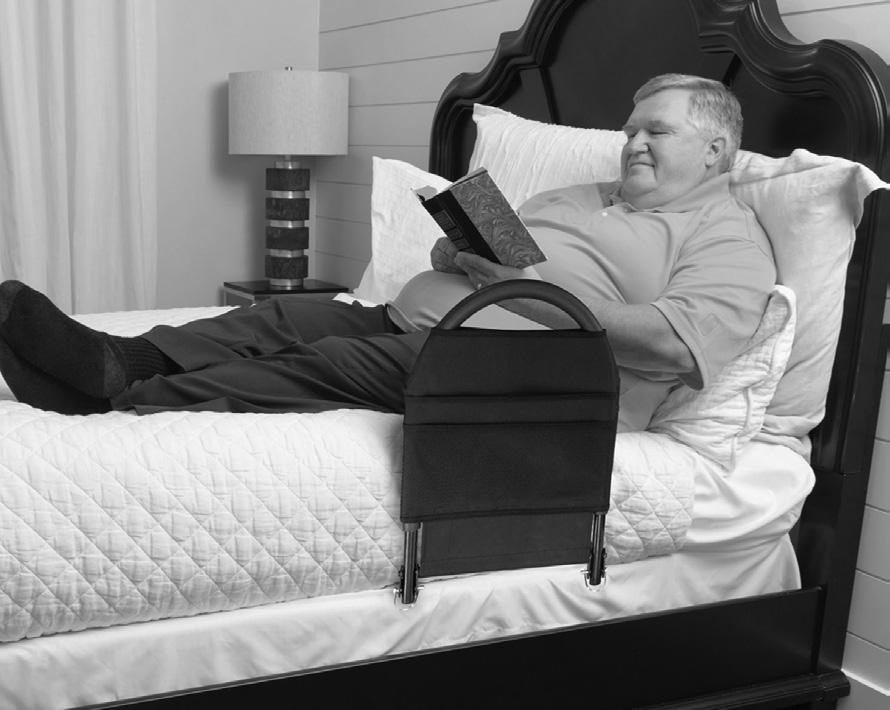
SECURE BED ASSIST RAIL WITH ANCHOR STRAP
The Secure Bed Assist Hand Rail is designed to make getting in and out of bed safe. It supports up to 300 pounds and has non-slip handgrips. It can be adjusted to 8 different heights and has an anchor strap to attach safely to different bed frames. It has a chrome plated steel frame.
ABLE LIFE BEDSIDE MIGHTY HOME BED RAIL
The Able Life Bedside Rail weighs less than 2l pounds but supports people up to 300 pounds. It’s easy to assemble because it requires no tools and can easily fold for storage purposes. The handle is cushioned for easy transitioning in and out of bed. The Able Life Bedside Rail is also equipped with an organizer pouch to keep your per sonal belongings safe.
MOBILITY TRANSFER GRIP, BED HANDLE
The Mobility Transfer Bed Handle is height adjustable and can support up to 250 pounds. The cushioned, non-slip handle is
A bed railing is a safety device that’s in stalled along one or both sides of a bed to prevent falls. They provide stability and support when a person changes positions in bed or moves in or out of the bed.
easy on the hands when getting in and out of bed. It’s durable because of all steel tub ing and easily folds for transport. Assembly can be done within minutes without using any tools.
MEDLINE BED ASSIST BAR
The Medline Bed Assist Bar is durable because it’s made from solid steel. The height can be adjusted to accommodate different size people, and it’s very easy to assemble since it requires no tools. It comes with a storage pouch to safely keep per sonal items.
ABLE LIFE HOME BEDSIDE SAFETY HANDLE
The Able Life Home Bedside Rail can be adjusted to accommodate people of all different sizes. It is made with lightweight aluminum and is very durable, supporting people up to 300 pounds.
LUMARAIL-FS
BED ASSIST RAIL
LumaRail-FS Bed Assist Rail is safe and provides convenience and reliability. It has many key features like padded grips for comfort, a motion sensing LED light, and anchor strap. It’s easy to assemble because it requires no tools and has a powder coated finish. The height can easily be adjusted, and the LumaRail-FS has a motion sensing LED nightlight.
The guide for the top bed rails for seniors is from AssistedLiving.org.
Characterizing risk factors for burden in caregivers to individuals with Alzheimer’s disease and Frontotemporal Dementia
The Department of Ger ontology at the University of Nebraska at Omaha is looking for individuals who are 50 years and older that are currently serving as an unpaid, family caregiver to an individual with Mild Cognitive Impairment, Al zheimer’s Disease or Frontotemporal Dementia.
The study will involve one virtual visit for one hour and will be conducted over the internet. Compensation for
study participation is avail able.
The experiment involves completing online question naires/interview and com puter tasks.
To be eligible for the study, you must be 50 years of age or older and currently serving as an unpaid family caregiver to an individual who is 40 years of age or older with Mild Cognitive Impairment, Frontotemporal Dementia, or Alzheimer’s disease, for 5 hours a week or more, for at least 6 months.
In addition, to be eligible you should have compre hension of written and
spoken English and have completed a minimum of two years of high school or higher. You are not eligible for the study if you have a diagnosis of a neurologi cal or psychiatric disease (e.g., stroke), history of drug abuse, vision, hearing, cog nitive, or motor difficulties, or if you are currently preg nant. For more informa tion about the study, please contact: Naomi Adjei at the Aging Brain and Emotion Lab (402-554-5961) in the Department of Gerontology at the University of Nebras ka at Omaha or by email at (ABELabUNO@gmail. com).
Page 10 • New Horizons • December 2022 10050 Regency Circle, Suite 525 Omaha, NE 68114 5705 402 397 3801 www.seidler seidler law.com A t t o r n e y s a t L a w William E Seidler Jr Delivering quality legal ser vices since 1957
COURTESY PHOTO
2nd Annual Doug Bosse’ State Farm Golf Tournament Check Presentation


COURTESY PHOTOS
State Farm presented the Eastern Nebraska Office on Aging with a check for $2,500. Proceeds were donated from the 2nd Annual Doug Bosse’ State Farm Golf Tourna ment Check Presen tation. In the bottom picture, from the left: Ryan Earith, Phil McClure, Doug Bosse (State Farm), Trish Bergman (ENOA Director), Kelly Berg man (State Farm), Diane Stanton (ENOA Deputy Director). Not pictured Gia Ayala (State Farm).

Alzheimer’s Association online Education Center
The Alzheimer’s Association highlights the online Education Center in the month of December.

The Association offers a number of Alzheimer’s and dementia programs available online, 24 hours a day, at no cost. The Association offers several programs in Spanish.
For more information, check out the Alzheimer’s Associatio website at training.alz.org.
BLUEBARN Theatre proudly presents: Every Christmas Story Ever Told (and then some!)
Instead of performing Charles Dickens’ beloved holiday classic for the umpteenth time, three actors decide to per form every Christmas story ever told – plus Christmas tra ditions from around the world, seasonal icons from ancient times to topical pop-culture, and every carol ever sung.
BLUEBARN Theatre proudly presents: Every Christmas Story Ever Told (and then some!), a madcap romp through the holiday season.
The laugh-out-loud comedy offers a hilarious alterna tive to anthropomorphic Nutcrackers and singing Victorian children.
BLUEBARN Theatre is also continuing its partnership with Eastern Nebraska Office on Aging (ENOA), now in its 15th year.
Ornaments bearing the names of local elders in need will be on sale on the “Giving HeARTs” tree located in the lobby. You can become an elf for the elderly by fulfilling holiday gift needs for seniors in the region.
Tickets are available at bluebarn.org or through the box office at 402-345-1576.
Volunteers needed: Impact of aging on the neural, behavioral bases of social processing research study
The Department of Gerontology at the University of Nebraska at Omaha is look ing for healthy adults and caregivers to an older adult with a chronic disease (e.g., dementia, cancer, cardiovascular disease) to participate in a research study.
Participating in this study will involve an online, at home component (7 hours over 4 days), and one in person visit (2 hours, 30 minutes) which will take place at the University of Nebraska Medical Center (UNMC).
Compensation for study participation is also available.
The experiment involves completing online questionnaires/interview and com puter tasks, taking samples of saliva for hormone analyses, blood draws for DNA methylation analyses and undergoing brain imaging.
To be eligible for the study, you must be 19-90 years of age, have comprehension of written and spoken English, mobility to travel to the UNO campus, and have completed a minimum of two years of high school or higher.
You are not eligible for the study if you have a diagnosis of a neurological or psychiatric disease (e.g., stroke), history of drug abuse, vision, hearing, cognitive or motor difficulties, or if you are cur rently pregnant, have metal implanted in your body, or are taking an antidepressant medication or glucocorticoid-based oral medication or cream (e.g., cortisone).
For more information about the study, please contact: Janelle Beadle, Ph.D. at the Aging Brain and Emotion Lab (402554-5961) or by email at (ABELabUNO@ gmail.com).
December 2022 • New Horizons • Page 11
Gerontology research study
The University of Nebraska Omaha’s Department of Gerontology needs older caregivers for an individual with mild cognitive impairment, Alzheimer’s disease, or frontotemporal dementia for a research study titled Characterizing Risk Factors for Burden in Caregivers to Individuals with Alzheimer’s Disease and Frontotemporal Dementia
The study will examine differences in burdens for caregivers who provide support to recipients with fronto temporal dementia and Alzheimer’s disease.
Although caring for patients with both types of demen tia can result in caregiver burden, it may be caused by different behavioral and psychological issues.
Compensation is available for participants who must be ages 50 or older, an unpaid family caregiver for five or more hours per week for at least six months, able to com prehend written and spoken English, and have completed at least two hours of high school.
Men and women will be excluded from the study if they have a neurological or psychiatric disease, abuse drugs or alcohol, have vision, hearing, cognitive, or mo tor difficulties, are pregnant or breastfeeding.
For more information, contact Naomi Adjei at 402554-5961 or ABELabUNO@gmail.com.
Suffering from too much house
Have you lived in your current house for 20, 30, maybe 40 years or more? Are there rooms or entire floors that you no longer use? Do you have re pairs or main tenance items that you know should be taken care of, but you don’t have the funds or just won’t want to spend the money on?
These are common items for a home owner that is thinking of selling their house and downsizing. Like with any important decision, you need to educate yourself as best you can on the topic, take the time needed to digest the information, and weigh all of your options. Selling a house and moving to a smaller home, apart ment or other senior living arrangement presents many challenges, and raises many questions.
Questions You May Be Asking
Just some of the ques tions you may be asking are: Where will I go? What are the best housing choices for my current and future needs? What are the fi nancial limitations or pos sibilities with a move? Is your present or future health condition a concern? What items do I want to take with me? How much is my house worth in its present condi tion? Are there repairs or maintenance items that need to be addressed to make the house more sellable, and what are the costs of those items?
Is It Time To Sell Your House And Downsize?
• Do you have questions about the Eastern Nebraska Office on Aging, its programs, or services?


• Do you have a comment about the agency and how it serves older adults in Douglas, Sarpy, Dodge, Cass, and Washington counties?
• Do you have a story idea for the New Horizons newspaper, or would you like to receive a FREE copy each month?
Please send your questions, comments, and story ideas to:
enoa.info@enoa.org
We appreciate your interest in ENOA and the New Horizons
want to take on the do it yourself projects that you once did. Maybe these items are not possible because of your current finances, or you just don’t want to spend the money on them.
Is the condition of your health pushing you either to move in with an adult child or possibly move to a community with healthcare options available? This can often be a factor in deter mining that it is indeed time to make the transition to a better living environment, and enjoy life. Is an adult child worried that you’re not safe in your house any longer? Would you like to stay in your house if you didn’t have to worry about repairs, maintenance items, or outside tasks like mow ing the lawn and scooping snow? There are resources available that will allow you to stay in your house and not have to worry about those items.
Items To Consider Before Downsizing
Some things to consider before selling your house and downsizing can include: The timetable you are work ing with in terms of when you’d like to move, your current health, do you need to move sooner than later, and other factors such as what type of living accom modations do you want to move to and what items you wish to take with you.
Choosing The Best Real Estate Professional
would prefer not to do or just don’t want to spend the money on, or don’t want to worry about the “catch 22” of selling your house before you know when you can move into your new home, or moving and worrying about a vacant house.
A direct home buyer may also be a good solution in situations where adult children, who live out of the area, are tasked with get ting a parent or loved one into a senior living arrange ment, and do not have the time or ability to get a house into show ready condition, especially if the house needs repairs and maintenance items addressed.
Listing and putting your house on the MLS (Multiple Listing Service) may be the best solution if you don’t mind those items mentioned above, and want or need to maximize the value from your house. Listing your house will expose your property to the market of buyers and their agents that are looking to purchase.
The best solution to sell your house typically comes down to the benefits a direct home buying company or real estate agent can provide and the value you place on those benefits.
Additional Resources To Serve You
Only you can answer this question. One of the primary items to consider is whether your house is too large or is just not the right housing solution for your current or future needs.
Has the death of a spouse made you ask if now’s the time to move? This can certainly occur after the loss of a loved one.
Has your house become too much of a burden? Maybe walking up and down stairs is a challenge or has become a dangerous activity for you.
Are there repairs or deferred maintenance that needs to be addressed, and seems to keep getting worse? You may no longer
The right real estate pro fessional can be a great asset in the process of selling a house and downsizing. They should have the experience in assisting home owners that are in the various stages of the decision making pro cess of selling their house and downsizing. And, most importantly, they should be able to offer multiple solu tions to accommodate your needs and desires to get your house sold.
The best real estate professional is someone that can offer or facilitate a direct sale of your house in its current “as is” condition and assist with your transi tion schedule to a new home or apartment community, as well as being able to market your house in a traditional manner.
Selling to a direct home buyer can be a great solu tion if you don’t want to show your house, have who knows who coming in and out of your house, do updates and repairs that you
The best real estate pro fessionals will also have ad ditional resources available to make the transition from your house to a new home or apartment as stress and hassle free as possible.
Providing “concierge like” services with connect ing you with a move manag er and/or moving company and possibly a “placement agent” that can discuss your needs of a new home or apartment community can make the transition much easier.
Are You Ready To Take The First Step?
If you’re ready to take the first step with selling your house and downsizing, know that there are many resources available, so you can make the move that’s right for you!
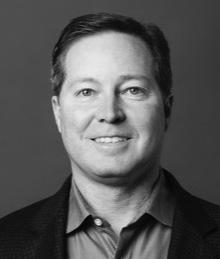
Ben Souchek is an author of the book Home Downsiz ing Secrets, and the owner and founder of Home Down sizing Solutions, a company that specializes in helping home owners transition from their current house to a new home, apartment, or other senior living commu nity for more than 25 years.
Page 12 • New Horizons • December 2022
We want to hear from you.
Souchek
Unanswered questions
The elections are over, thank God! Now we have the answers to our ques tions about who will hold what office over the next few years. But now we have other questions. What laws will be enacted? When will inflation go down? There are always more questions.
These questions and their answers are not sig nificant when compared to the bigger picture. In fact, they are not inspiring and, at times, can be somewhat petty. Too often, we do not ponder how it all fits together. As I seek to live a more expansive and gener ous life in my Third Chap ter, I realize some of these little questions are simply a distraction from what re ally counts.
I heard a podcast re cently by Krista Tippett (I highly recommend her) about questions.
She discusses the kind of questions we might entertain. Some are mind expanding and not easily answered. Many people avoid these questions be cause they are not com fortable with unanswered questions. Unanswered questions can be unsettling because they show us that we are not in total control and that there is so much we do not know.
The quality of the ques tions we ask determine the kind of answers we get. Combative questions result in combative answers. Simplistic questions pro duce simplistic answers.
Meaningful questions
uncover meaningful insights.
Related to politics, there are small questions like, “Who won?” “Who lost?” “What party has the upper hand?”
of my childhood ques tions.) “Is my religion the right religion?” When these are the questions asked, our lives can be reduced to a winning and losing mental ity, worrying about what
Conscious Aging
By Nancy Hemesath
The larger political questions are: “What is the nature of power?” “How does democracy serve the common good?” “How does our political system best serve the citizenry?”
“What are the values that we want our elected of ficials to protect? “If we truly grappled with these bigger questions in dia logue with one another, the small skirmishes would lose their urgency.
Related to the economy, small questions might be: “How can I get more for my dollar?” “How might I climb the economic lad der?” “How can I avoid paying so much tax?” These are in contrast to the big questions: “How much is enough?” “Who should the economy serve?” “Do all people deserve that their basic needs be met?”
“What is fairness?” Each of these questions could lead to deep thought, earnest dialogue, and profound lifestyle changes.
Religion is another area where contrasting ques tions are asked. “What are the rules?” “When is cuss ing a sin?” (This was one
we are doing right and do ing wrong.
The bigger questions move into another realm. “What is the meaning of my life?” “What is the meaning of love?” “What is faith?” “How do I arrive at my beliefs?” “What do I understand about my Higher Power (God?)”
Tippett suggests iden tifying a deep question that roles around in the back of our mind. Bring it forward. Write it down and think about it over a long period of time. What wisdom emerges? While it will likely never be fully answered it could enrich our inner life and expand our world.
German poet Rilke expressed it this way: Be patient with all that is unsolved in your heart…. Live the questions now… so someday you might live into the answers.”
(Hemesath is the owner of Encore Coaching. She is dedicated to supporting people in their Third Chap ter of Life and is available for presentations. Contact her at nanhemesath@ gmail.com.)
Medicare Open Enrollment period
Medicare’s Annual Open Enrollment period begins on October 15 and runs through December 7.
This is the time of year to review your current Medicare Part D coverage or your Medicare Advan tage coverage. By review ing your coverage, you may be able to save money on your prescription drug costs in 2023.
Volunteers Assisting Se niors (VAS) will be avail able to help you review your plan. VAS provides this service free. Counsel ors are not insurance agents nor are they compensated in any way.
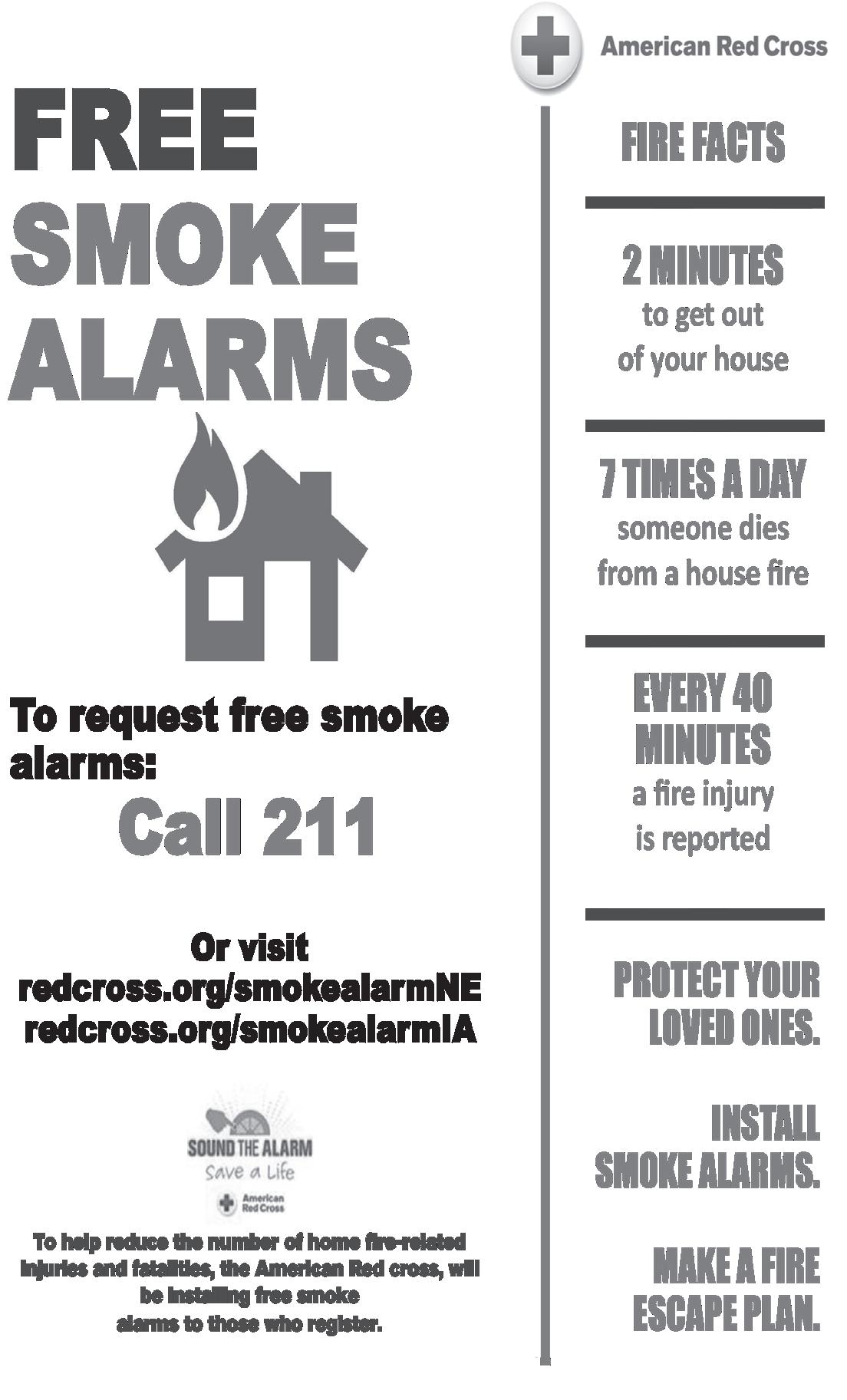
The counseling you will receive will be unbiased. The objective is to provide information and assist you
in making the best choice for your personal circum stances.
Part D drug and Medi care Advantage plan reviews are being offered and over the phone at 402-444-6617. Limited in person counseling is avail able. In person counseling will require the wearing of a mask.
Phone counseling at home sessions will be available daily. Limited evening and weekend ap pointments are also avail able.
Please call VAS at 402444-6617 to schedule your in-person or phone session with one of our trained, certified Medicare counsel ors.
Caring for a loved one is difficult, and the challenges are amplified during a pandemic. Join Flaherty Senior Con sulting for a series of Solutions Group gatherings that will address the questions and challenges caregivers face.
Solutions Groups provide opportunities for caregivers to learn how to deal with various issues, obtain skills and knowledge, engage in discussions, and interact with others in similar circumstances.
Upcoming meeting dates and locations are:
• Jan. 10, March 14, May 9, July 11, Sept. 12, Nov. 14
St. Vincent de Paul Church 14330 Eagle Run Dr.
• Feb. 15, April 19, June 21, Aug. 16, Oct. 18, Dec. 13
St. Timothy Lutheran Church 93rd and Dodge streets
• Feb. 2, April 6, June 1, Aug. 3, Oct. 5, Dec. 7
The Servite Center of Compassion 72nd St. and Ames Cr.
• Jan. 28, March 25, May 20, July 22, Sept. 23, Nov. 18
Faith Westwood United Methodist Church 4814 Oaks Ln.
The Solutions Groups are facilitated by Nancy Flaherty, MS, CDP, president of Flaherty Senior Consulting. She has extensive experience working with family caregivers and caregiver groups.
Registration is required to attend each gathering. Masks are mandatory and social distancing will be observed.
Visit flahertyconsulting.net or call 402-312-9324 for more information. Flaherty also provides private consulta tions with family caregivers to help them develop individu al plans for their loved ones.
For information on private consultations, Solutions Group meeting times, and/or to register to attend a Solu tions Group, email Nancy at flahertyconsulting@cox.net or call/text her at 402-312-9324.
December 2022 • New Horizons • Page 13
Flaherty Senior Consulting
Unless you’re 100% certain you’ll never sleep in a bed other than your own, the portability factor is something to consider when looking to buy a CPAP machine. If you spend a good part of your life on the road, a specially-designed, travel CPAP machine may be the answer. Even if you don’t travel often, there’s always going to be situa tions in which you’ll need to bring your machine to new sleeping environments. A machine that’s lightweight and portable is going to be a better fit than a large,
bulky, heavy machine. Most modern CPAP machines are lightweight, and some even come with a carrying case, so there’s a chance you can find a highly portable ma chine even if it’s not listed as a travel machine. All it takes is paying attention to the weight and finding one that fits your needs.
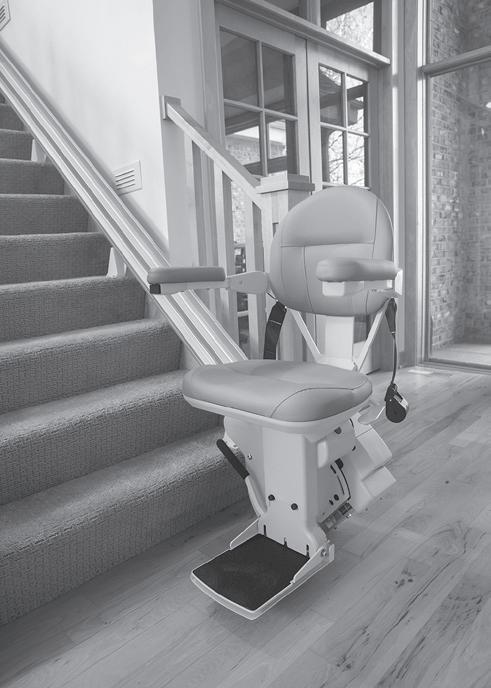
Travel-sized versions of continuous positive airway pressure (CPAP) machines are popular. These de vices include the ResMed AirMini, Somnetics Tran scend, Apex XT Fit, Human Design Medical Z1, and
others. What are the pros and cons of using travel CPAPs? Consider some of the potential benefits and whether the cost is justified for a device that can more easily be used with travel— including while camping with an integrated battery.
WHAT IS THE SIZE OF THE TRAVEL CPAP?
The first question that comes up when considering a portable CPAP device is: How big is it, really? Fortu nately, those who use travel CPAP devices will discover the reduced size makes a
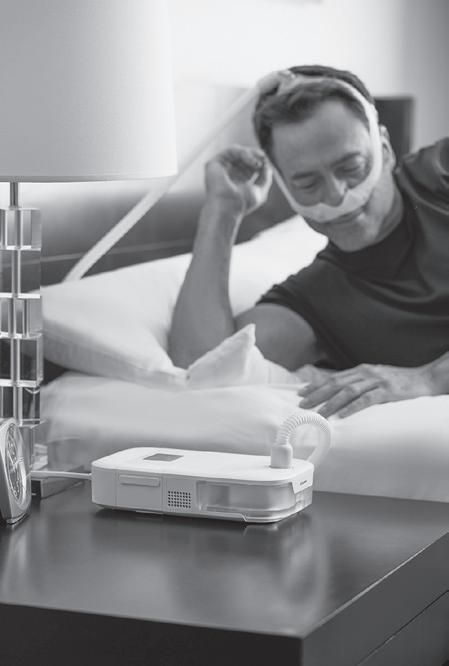
huge difference.
ARE BATTERIES AVAIL ABLE AND HOW LONG DOES A CHARGE LAST?

With the current excep tion of the AirMini, each of the most popular travel models has the option of running the device off a battery. These are available for purchase at an additional cost. The amount of time the charge will last will vary based on the pressure that is being delivered and the potential use of accessory components like a heated
humidifier. As an example, the Transcend/360 has a bat tery that will reportedly last for 1&1/2 nights when the CPAP pressure is set to 10 centimeters of water pres sure (and presumably longer for settings lower than that). In practical use, the battery for most models may be expected to last one to two nights with standard use.
The lithium-ion battery used with travel CPAP ma chines is rechargeable. Un fortunately, the device will be of no use until a power source can be accessed. This may make it less than desir able to be carrying it into the woods on a hiking or camping trip that lasts more than a night or two unless you also get a solar panel charger. These chargers are simply hung over your backpack while hiking to recharge the battery.
SETTING OPTIONS FOR TRAVEL CPAP
Each of the available models has an AutoCPAP option with default pressure settings that can range from 4 to 20 centimeters of water pressure. These settings will be prescribed and refined by your sleep medicine provid er to optimize therapy. As these are medical devices, a prescription is required to obtain the equipment.

PROS OF USING TRAVEL CPAP
Travel CPAP machines have some features that may make them an attractive option for use while away from home. Many possess similar design elements that reflect the standard models.
Kohll of Kohll’s RX
Page 14 • New Horizons • December 2022 Be simply confident on the go www.KohllsRx.com We are spreading cheer this holiday season with our amazing deals! Contact a Respiratory Therapist Now. 402.342.5886 Contact our stairlift and walk-in tub carpenters. 402.964.2349 Hurry – sales end December 31, 2022! Visit any of our locations for comprehensive healthcare services and personal assistance. 12741 Q Street 2915 Leavenworth Street 5002 Dodge Street 808 N 27th Street – Lincoln 403 Main Street - Malvern Continue to live independently in 2023. Are you planning to travel next year? Get the sleep you need. Take 10% off any travel CPAP! Talk with a Respiratory Therapist Today. Discover Bruno® stairlifts. Made in the U.S.A. No shipping - In stock! Purchase any Five-Star SanSpa® and choose 1 of 2 freebies! Get a free toilet, installation included or a grab bar of your choice. This Month’s Sudoku Answers This Month’s Crossword Answers Traveling? Portable CPAP/BIPAP Options
David
AAA launches “Move


Over for Me” campaign Day of the Dead celebrated at ISC
AAA has long been an advocate for “Move Over” laws, requiring drivers to slow down and move over for emergency responders on the roadside, yet there continues to be an alarming number of fatalities. Nearly 350 people are struck and killed outside a disabled vehicle each year, and roughly a quarter of motor ists don’t know that Slow Down, Move Over laws exist in their state. AAA Nebraska hopes to broaden the law and educational efforts with its new “Move Over for Me” campaign that asks drivers to move over for all motorists stuck on the roadside as well as first responders.
“For years, Slow Down, Move Over efforts have focused on emergency responders, and it’s critical that we continue to protect these individuals who come to the aid of motorists,” said Brian Ortner, Public Affairs Specialist for AAA Nebraska. “But as motor ists get flat tires, break down, run out of gas, or find themselves otherwise in trouble at the roadside, they also face the danger ous elements of high-speed traffic and need the same protection.”

A new survey by AAA finds that 97% of motorists are concerned about vehi cles passing at high speeds when they are stopped on the side of the road. This coupled with the rising number of roadway fatali ties reinforces that motor ists need to slow down and move over for all vehicles on the roadside, regardless of if it is an emergency vehicle or tow provider with flashing lights or a disabled vehicle belonging to a driver with their hazard lights on.
AAA hopes to increase awareness of existing Move Over laws with its “Move Over for Me” campaign, beginning in October. The Auto Club Group has cre ated advocacy messages featuring familiar roadside scenarios like getting a flat tire, engine trouble, or run ning out of gas. This cam paign will appear on social media, at events in our communities, on service vehicles and in AAA retail facilities. As one tow truck driver is killed every other week while working on the roadside, the campaign will also utilize AAA’s familiar service providers.
To protect emergency responders, AAA and other traffic safety advocates have led the way in getting Move Over laws passed in all 50 states and the District of Columbia. This year, AAA is also working with the Towing and Recovery Association of America to introduce a federal resolu tion for a National Move Over Law Day. A national day is one more way to re mind drivers of the impor tance of paying attention, slowing down and moving over when they see oth ers at the side of the road working or stranded with a disabled vehicle.
In a proclamation cere mony conducted on Octo ber 3, Nebraska Governor, Pete Ricketts, declared Saturday, October 15, Slow Down Move Over Day across the state. Nebraska’s current law Statute 616,378 protects roadside workers and their vehicles including first responders, tow trucks, and utility vehi cles, but does not yet cover municipal vehicles, road maintenance or disabled vehicles. Research shows that nearly 350 people are struck and killed every year while outside a disabled ve hicle on the roadside in the United States, in Nebraska an average of eight people is killed.
AAA’s tips to protect roadside workers and stranded motorists:
For Drivers:
• Remain alert. Avoid distractions and focus on driving.
• Keep an eye out for emergency vehicles – in cluding tow trucks – that have their lights on as well as cars that have their flash ers on. Move over one lane when you see them and if you can’t move over, slow down to safely pass them.
• Be a good passenger. Help identify roadway is sues and remind the driver to slow down and move over.
• Watch for people on the roadside. People may be in or near a disabled vehicle. Just because you don’t im mediately see them doesn’t mean they aren’t there.

For Stranded Motorists:
• Pull as far over on the shoulder as safely possible to create more distance between your vehicle and passing traffic.
• Turn your hazard lights on so other drivers are aware you are there.
NEW HORIZONS PHOTO
The Day of the Dead altar sits in place during the annual Día de Muertos (Day of the Dead) celebration at the Intercultural Senior Center, on 5545 Center St. The festivities this year included trick-ortreating from the car, traditional decorations and an altar display. The celebration took place on October 30.
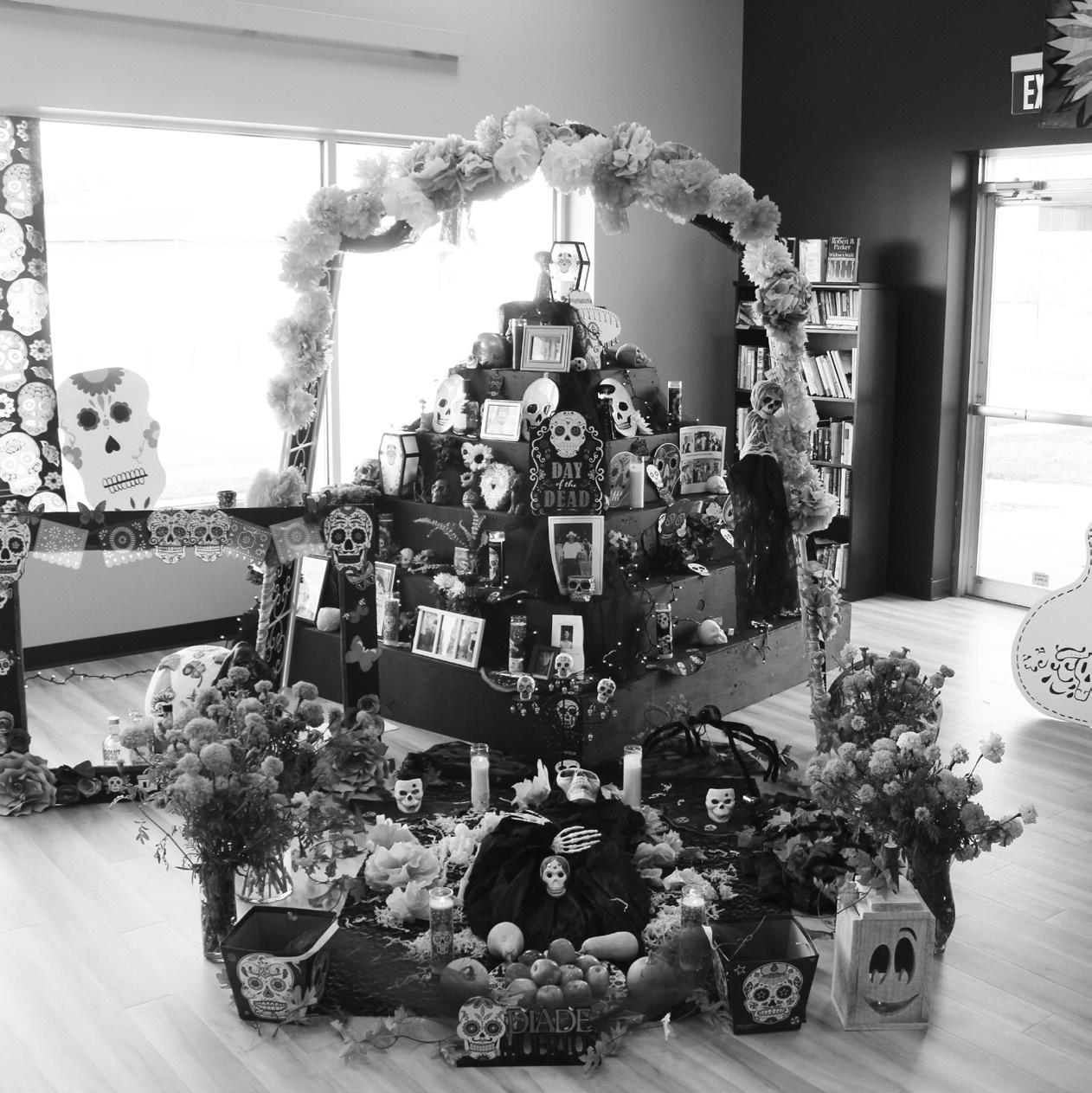
December 2022 • New Horizons • Page 15 CLASSIFIEDS Please call 402-444-4148 or 402-444-6654 to place your ad TOP CASH PAID Best & honest prices paid for: Vintage, Sterling, Turquoise, & Costume jewelry, old watches, old quilts, vintage toys, old postcards, advertising items, military items, pottery, and antique buttons. Also buying estates & partial estates. Call Bev at 402-339-2856 OLD STUFF WANTED (before 1975) Military, political, toys, jewelry, fountain pens, pottery, kitchen ware, postcards, photos, books, and other old paper, old clothes, garden stuff, tools, old household, etc. Call anytime 402-397-0254 or 402-250-9389 GET RID OF IT! Haul away, garage, basement, rental clean out… Call Frank 402-312-4000 Johansen Brothers deFreese Manor 2669 Dodge Omaha, NE 402-345-0622 Subsidized housing for those age 62 and over with incomes under $33,300 (1 person) or $38,050 (two persons) Senior Citizens (62+) We do business in accordance with the Fair Housing Law. Bellewood Courts 1002 Bellewood Court Bellevue (402) 292-3300 Bellewood@KimballMgmt.com Monarch Villas 201 Cedar Dale Road Papillion (402) 331-6882 Monarch@KimballMgmt.com Accepting applications for HUD-subsidized apartments in Papillion & Bellevue. Managed by Kimball Management, Inc. PO Box 460967 Papillion, NE 68046 www.kimballmgmt.com • War relics • Omaha Police Department badges • South Omaha Police Department badges I AM COLLECTING Call 402-551-9038 Follow New Horizons on Facebook @ facebook.com/ newhorizonsnewspaper
A Day in the Life: Meals on Wheels
By Ron Petersen
Do you want to make some one’s day?
One easy way to do so is by delivering a meal to a person who is home bound and unable to get a meal for themselves.
Eastern Nebraska’s Office on Aging (ENOA) Meals on Wheels serves almost seven hundred meals in the metro area, including Blair and Fremont. Meals are catered by Treat America.
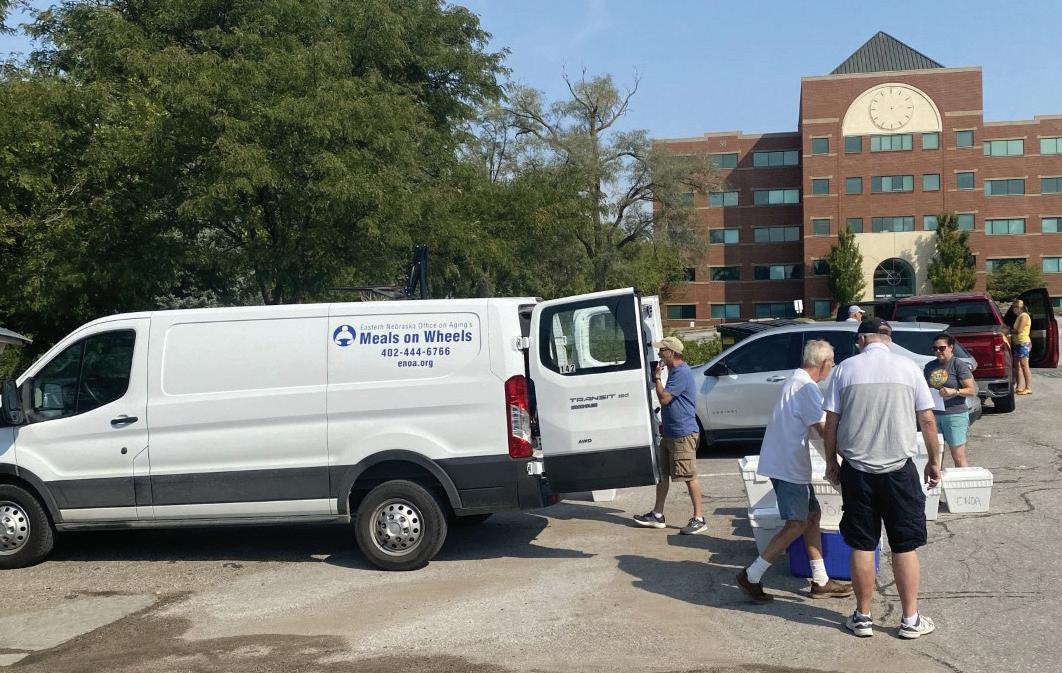
“A lot of the clients are extremely thankful – most likely you are the only person they will see that day,” Home Delivered Meals Director Katelyn York said.
ENOA has twenty-six paid driv ers and a volunteer base of over one-hundred. To reach clients throughout the ENOA service area, meals are divided into forty-six routes, including Blair and Fremont. Each route has multiple clients to deliver to, ranging from five to thirty-five per route.
Vans are loaded with coolers that contain hot and cold food items. This food is delivered to different locations, including 93rd & Dodge, 36th& Lafayette, 60th & Grover, 116th & M and 21st & Franklin in Bellevue, where staff or volunteers pick up their coolers of food and begin delivery. Treat America trans ports directly to sites in Fremont and Blair.
ENOA continues to provide contactless delivery, a practice that began during COVID. Drivers
place the full meal, consisting of a three-compartment tray of hot food, plus a carton of milk, a bread item and a dessert, in a plastic grocery bag at every stop before delivering it to the client’s door. Some clients may want their meals placed in a container by the door, or they have other instructions such as knock and walk-in.
The driver must see or hear the client before they can move to the next person on the list and are un able to leave meals.
The drivers check on each client as they deliver the meal.
“We basically do a wellness check. If they notice any changes in their behavior or health, then they will let the staff in the office know,” York said.
If clients do not answer their door, drivers notify the office staff and emergency contacts for the cli ent are called and asked to check on them. If the driver suspects the cli ent is having a medical emergency, they contact 911 themselves.
“We encourage the drivers to contact the office if they notice other changes so that we can fol low up with them and direct them to ENOA’s Information & Assistance department if needed,” York said.
Route deliveries begin at 11 a.m. and are generally done by early afternoon.
Food is one of the most basic of human needs, yet it is something many of us take for granted.
Meals on Wheels provides the help for those who have no fam ily members nearby and have few options for getting groceries into their homes or for those who may be physically or mentally unable to prepare meals. For these indi viduals, the ability to receive basic, reliable nutrition may mean the dif ference between independence and institution.
To receive Meals on Wheels ser vice, the following criteria should be met by clients:
• Age 60 or older;
• Experiencing difficulties with meal preparation due to physical or mental limitations;
• Unable to attend a senior center;
• Lack adequate cooking facilities and are unable to acquire them;
• Lack the proper nutritional sup port from spouse, family members or caregivers due to burnout, ne glect or abuse;
• Agree to an initial assessment and a periodic reassessment of their need for the program.
If you know of an individual in
Douglas, Sarpy, Dodge, Cass or Washington County who would benefit from receiving Meals on Wheels, call 402-444-6536 and request Information and Assistance. In order for meal delivery to get started an intake will need to be completed. To complete an intake the following information will be needed:
• Name
• Complete address
• Phone Number
• Age and date of birth
• Monthly household income
• Clear directions to the home and any special instructions for drivers to locate the residence
• Any special nutritional needs
• Additional information that may be useful, such as pets in the home or special delivery instructions.
Individuals are asked to contrib ute to the cost of the service, based on their monthly income. Contribu tion statements are sent out monthly. Low-income individuals may be eli gible to have this service covered by the Nebraska Department of Health and Human Services.
Donations to support the Meals on Wheels program are always welcomed!
ENOA’s Meals on Wheels Pro gram is currently looking for parttime paid drivers and volunteers to help deliver meals.
If interested, contact Katelyn York at 402-444-6536.
“It’s a very rewarding job,” York added.
Page 16 • New Horizons • December 2022
For over 45 years, the Eastern Nebraska Office on Aging’s Meals on Wheels program has filled the nutritional needs of the homebound by providing hot, noon meals, personally delivered by a team of volunteers and paid drivers
EASTERN NEBRASKA OFFICE ON AGING PHOTO
