

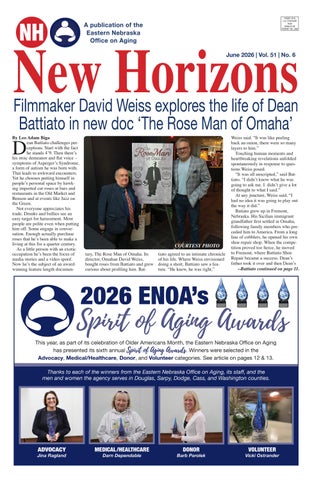
By Leo Adam Biga
Dean Battiato challenges perceptions. Start with the fact he stands 4’9. Then there’s his stoic demeanor and flat voice –symptoms of Asperger’s Syndrome, a form of autism he was born with. That leads to awkward encounters. Yet he chooses putting himself in people’s personal space by hawking imported cut roses at bars and restaurants in the Old Market and Benson and at events like Jazz on the Green.
Not everyone appreciates his trade. Drunks and bullies see an easy target for harassment. Most people are polite even when putting him off. Some engage in conversation. Enough actually purchase roses that he’s been able to make a living at this for a quarter century.
As a little person with an exotic occupation he’s been the focus of media stories and a video spoof. Now he’s the subject of an awardwinning feature length documen-
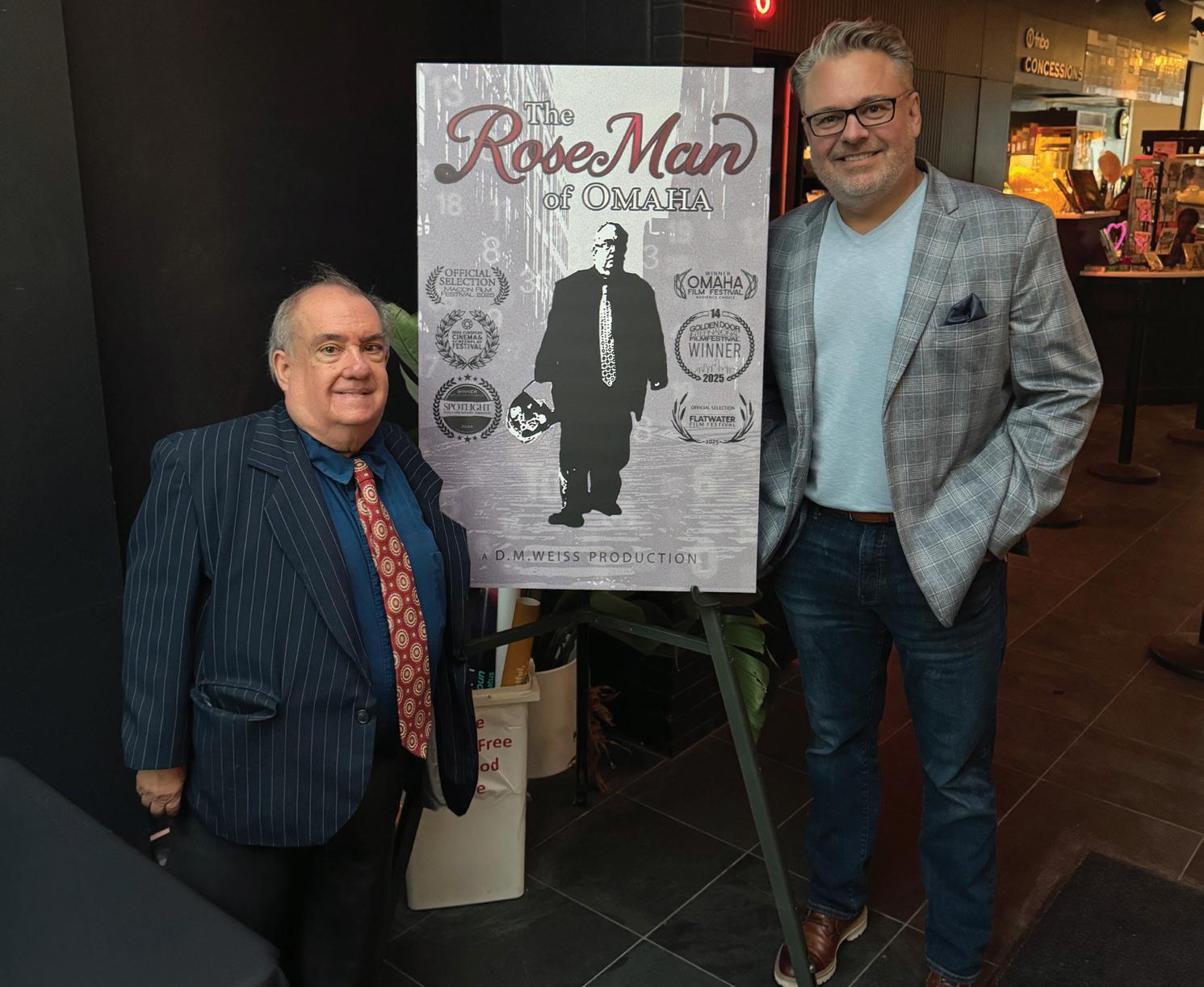
Weiss said. “It was like peeling back an onion, there were so many layers to him.”
Touching human moments and heartbreaking revelations unfolded spontaneously in response to questions Weiss posed.
“It was all unscripted,” said Battiato. “I didn’t know what he was going to ask me. I didn’t give a lot of thought to what I said.”
At any juncture, Weiss said, “I had no idea it was going to play out the way it did.”
Batiato grew up in Fremont, Nebraska. His Sicilian immigrant grandfather first settled in Omaha, following family members who preceded him to America. From a long line of cobblers, he opened his own shoe repair shop. When the competition proved too fierce, he moved to Fremont, where Battiato Shoe Repair became a success. Dean’s father took it over and then Dean’s
--Battiato continued on page 11.
You’re invited to visit the Camelot Friendship Center, 9270 Cady Ave., for regular activities, which include Chair Yoga, card games, Tai Chi, Pinochle, 10 Point Pitch, and bingo. This month’s events include:
• June 2: Presentation with Travis Pond with Hallmark Homecare Guest Bingo Caller @ 11:45 a.m.
• June 3: ENOA Farmer’s Market Voucher Program @ 9 a.m.
• June 12: “5 Wishes” presentation with Lisa Banek, Senior Advisor with Clare Sr. Advisors @ 11:45 a.m.
• June 16: Music with Joe Taylor compliments of Merrymakers/Dreamweavers @ 11:45 a.m.
• June 17: Painting Day with Jinnifer James @ 11:45 a.m.
• June 18: Jackpot Bingo @ 11:45 a.m.
• June 24: Team Trivia Challenge @ 12 p.m.
Every Monday – Card Game: Manipulation @ 10 a.m.
Every Monday – Pickleball @ 10 a.m.
Every Monday and Friday – Bingocize @ 10 a.m.
Every Tuesday, Wednesday and Thursday – Kings in the Corner @ 10 a.m.
Every Wednesday – Chair Volleyball @ 10 a.m.
Everyday – Card Games @ 10 a.m.
Grab N Go meals are available.
For more information, contact Barb at 402-444-3091 or barbara.white@cityofomaha.org.


regardless of age or income
By Andy Bradley Contributing Writer
There’s nothing more delightful than savoring a freshsliced, juicy red tomato. Homegrown. Greater still, layer on a few slices of crisp bacon, a dollop of mayo and a lettuce leaf between two toasted slices of sourdough, and you’ve got the BLT –the greatest summer sandwich ever invented.
While this describes a succulent summer daydream for many, it’s just a pipe dream for others. Many low-income seniors either can’t afford — or have limited access to — the locally grown, bountiful produce of summer — tomatoes, sweet corn, cucumbers, lettuce, apples, radishes, potatoes, and much more.
Fortunately, several local organizations and public agencies make it their mission and purpose to ensure that lower-income residents have access to inexpensive or no-cost produce.
The Eastern Nebraska Office on Aging (ENOA), for example, partners with the Senior Farmers’ Market Nutrition Program (SFMNP), a United States Department of Agriculture (USDA) to distribute the Farmers Market voucher program. This has been a partnership since 2001.
Local vendors, typically area farmers who register as a provider through the Nebraska Department of Agriculture, agree to accept vouchers in return for their produce at area farmers’ markets. Participating vendors post signs at their booths indicating their participation in the program. Vouchers, worth $48, are accepted during the growing and harvesting season, June 1 to October 31.
Vouchers can be distributed through ENOA at area senior centers. The application process is simple but digital, with access to a smartphone or a QR code. Annual income must be less than 185 percent of the federal poverty rate, which, in 2026, is about $25,000 a year for one-person households and $40,000 for twoperson. Last year, ENOA issued more than 1,000 vouchers in its five-county service area, according to Allison Adrian, ENOA’s
nutrition services division director.
The Nebraska Department of Agriculture website — nda.nebraska.gov — lists farmers markets where vouchers are accepted, including ones in Plattsmouth, Ralston, Wahoo, Bellevue, Blair, Papillion — as well as multiple markets throughout Omaha.
While the value of those vouchers is limited, one local organization, Whispering Roots, will double that value when redeemed at vendors affiliated with the agency.
Whispering Roots sponsors about 15 one-day popup produce markets from late July through September, said Anna Curry, director of culinary and nutrition programing at Whispering Roots. Locations include the Charles Drew Health Center, 2915 Grant St., and the One World Community Health Centers throughout the area, among others. Seniors using their SFMNP voucher during these sessions will receive double the voucher’s face value.
Whispering Roots, founded in 2011 and headquartered in South Omaha, provides hands-on education and support for organizations, including senior centers, which manage community gardens. Staff and volunteers assist in the gardening process and provide nutrition and gardening education to the center’s patrons.
More robust year-round food benefits are available through the Supplemental Nutrition Assistance Program (SNAP), formerly known as food stamps. Eligibility is 165 percent of the federal poverty rate, with an asset limit, not including home and vehicles, set at $4,500.
SNAP benefits can be used at many farmers markets to purchase eligible items like produce, meat, dairy and bakery items. For example, at the Omaha Farmers Market in the Old Market, customers can swipe their Electronic Benefits Card (EBC) at the market information booth to receive tokens redeemable at participating vendors.
In North Omaha, residents can pluck ripe vegetables right off the vine at the City Sprouts half-acre
community garden on the corner of 40th and Seward Streets. “Take what you need and leave what you don’t” is the garden’s motto.
City Sprouts also stocks a pantry cabinet and refrigerator available 24-hours a day, every day. Sack lunches are prepared daily as well. Produce is supplied in large measure by City Sprouts’ six-acre urban farm near Carter Lake, which grows and harvests about 16,000 pounds of produce a year, said Executive Director Carol Blood. “We’re able to grow produce eight months out of the year.”
Food products are supplemented by United Way and Saving Grace, which collects leftover food from grocery stores, caterers and restaurants and delivers it to local agencies that serve food-insecure individuals, such as pantries, shelters and senior centers.
Food is provided at no cost and identification is not required. The top three user groups are children, seniors and homeless individuals, said Blood.
“Nobody is going to ask you who you are or where you are from,” she said, “How do you ask a person these questions if they are hungry?”
City Sprouts offers education and community events several times a month throughout the growing season at their Seward Street headquarters.
Free meals are served at each session. “Everyone gets fed,” said Blood. See omahasprouts.org for details.
Other community pantries may offer fresh produce occasionally. The Together Nourish Program at its Choice Food Pantry at 24th and Leavenworth Streets receives fresh produce daily from community partners, including Costco, Walmart, Bakers and Sam’s Club. Food is also supplemented by Saving Grace and the Food Bank for the Heartland.
Pantry officials take pride in their “low barrier” approach to serving area residents, said Lacy Blakeman, director of pantries and community impact for Together. The Nourish program has a simplified eligibility and application
--Produce continued on page 3.
Over the years I have coached people about the retirement transition. The framework I used is one of letting go of the work life and then living through a period of uncertainty until the new chapter emerges. As I myself have spent many years in retirement, it is clear to me that these years are not one big transition but many transitions to realities we cannot fully control. Aging requires multiple adjustments to the realities that emerge. Sometimes the transition is gradual and unavoidable. With physical realities I, and many of my peers, talk about how we wear out more quickly than we once did. I find my walks are shorter. I can only do physical labor for an hour or so before I take a break. Social events are best planned for early in the day and certainly must be over by 10 p.m. I look for shortcuts that make cooking and cleaning easier. We can joke with our peers about these changes because we all get it!
Beyond these subtle physical adjustments, we are faced with decisions about our involvement in all kinds of activities. These choices can be difficult. As retirees
By Nancy Hemesath
we have chosen activities that enliven us and bring satisfaction. We often hear our peers say they are so busy, they cannot figure out how they had time to work! At some point, we may start to wonder how we can keep up the pace or if we should keep up this pace. When our activities start to feel like a burden, it is time to reexamine our commitments.
For example, hosting big family get-togethers on holidays may once have been a responsibility we happily took on. At some point it may feel like too much! Or we may have led a book club that has come to weigh us down. Maybe a committee chairmanship was a wonderful way of giving back, but now you wish someone else would take over.
These feelings raise questions we need to ask in order to make decisions that are good for our mental, physical and spiritual health. Is this commitment something that another
Produce continued from page 2.
process based on trust. “We take your word for it,” said Blakeman.
She hears seniors remarking, “Oh thank God, I don’t have to do this (application process) again and again.” Questions are limited to demographic information and no identification is required. “We are more interested in building relationships,” said Blakeman, adding that staff often refer patrons to other agencies to meet their needs. “Here you are not just a number.”
Patrons can access up to 20 items weekly, said pantry manager Alexis Shalberg. The Together panty is self-serve — users peruse the shelves unaided and help themselves to what they need. “People get to decide what is best for them and their family,” Blakeman said.
Persons with mobility limitations can identify a proxy, often a case manager, to access food on their behalf.
Officials said high demand items include baking products, such as sugar, flour and spices, as well as canned protein. Their Retail Rescue program secures meat from area grocers.
Neighbors can also access their nearby community garden for fresh produce throughout the growing season.
Spokespersons for Together, Whispering Roots and City Sprouts agreed that food insecurity is an ongoing issue, lingering long after the aftermath of the Covid pandemic. Some pantry patrons are “choosing between food, rent or utilities,” said Together’s Shalberg. “They are making choices with finite funds.”
Because of ongoing demands, these organizations have ambitious plans for ex-
could take over? Perhaps others have volunteered, and we declined. Have we cultivated successors or have we always wanted to be in control? Is it time to share the reigns or turn them over? Have we asked for help in carrying our responsibilities? Could I step out of leadership and simply become a participant? How would my own life be less satisfying if I gave up this activity. Would my life be better if I focused on fewer priorities? Would family benefit if I cut back on nonessential activities?
Letting go is never easy. It takes wisdom to know we have done our bit and now it is time for someone else to step in. It also takes wisdom to know that life can be rich, even when we are not running 24/7. Pacing ourselves and staying interested in life can occur even as we slow down. As I mentioned earlier, aging requires multiple adjustments so that our lives can remain rich and meaningful.
panding services.
City Sprouts, for example, is currently constructing a barn and green house at their East Omaha urban farm, which can be used by community gardens for washing and packing produce.
Blood then hopes to embark on an $8$10 million community campaign to refurbish the 40th Street headquarters and build an education complex on the farm.
“This will change forever how we do business,” said Blood. “We can do so much more.”
The organization was founded in 1994 as a community-based response to surging gun violence in North Omaha, said Blood, a former state legislator. She said neighbors asked, “What’s the best thing we can do to build community?”
Community building now includes providing as many as 20 paid part-time internships for high school and college students every summer. In addition, older residents find camaraderie and meaning volunteering in their garden. “They experience a sense of community,” said Blood. “We keep a lot of seniors busy. Some who participate are just lonely.”
Whispering Roots, according to Anna Curry, is working toward providing a delivery service to homebound individuals. And Together’s pantry also hopes to provide home deliveries as well as senior-friendly shopping hours.
So the next time you bite into that succulent BLT, think of all the local growers, volunteers, and community agencies that strive to provide garden-fresh vegetables for everyone, especially those who cannot afford grocery store prices.

New Horizons is the official publication of the Eastern Nebraska Office on Aging. The paper is distributed free to people over age 60 in Douglas, Sarpy, Dodge, Washington, and Cass counties. Those living outside the five-county region may subscribe for $5 annually. Address all correspondence to: Ron Petersen, Editor, 4780 S. 131st Street, Omaha, NE 68137-1822. Phone 402-444-6654. FAX 402-444-3076. E-mail: ron.petersen@enoa.org
Advertisements appearing in New Horizons do not imply endorsement of the advertiser by the Eastern Nebraska Office on Aging. However, complaints about advertisers will be reviewed and, if warranted, their advertising discontinued. Display and insert advertising rates available on request. Open rates are commissionable, with discounts for extended runs. Circulation is 9,000 through direct mail .
Editor................................Ron Petersen, 402-444-6654 Ad Mgr................Mitch Laudenback, 402-444-4148
Contributing Writers.........Leo Biga & Andy Bradley
ENOA Board of Governors: Mary Ann Borgeson, Douglas County, chairperson; Don Kelly, Sarpy County, vice-chairperson; Lisa Kramer, Washington County, secretary; Pat Tawney, Dodge County, & Taylor Boyle, Cass County.
The New Horizons and the Eastern Nebraska Office on Aging (ENOA) complies with applicable federal civil rights laws and does not exclude, deny services to, or otherwise discriminate against any person on the basis of race, color, national origin, disability, age, sex, marital status, veteran status, or religion.




If you have been following the news around weight-loss medications, you may have heard that Medicare is opening the door a little wider for some beneficiaries. That is where the Medicare GLP-1 Bridge Program comes in. For many older adults, the biggest question is simple: Will Medicare finally help pay for drugs like Wegovy or Zepbound if they are prescribed for weight loss? The answer is more promising than it used to be, but it is still not as simple as many headlines make it sound. CMS said the Medicare GLP-1 Bridge is

a temporary program that gives eligible Medicare Part D beneficiaries access to certain GLP-1 drugs beginning July 1, 2026, and it is now set to continue through December 31, 2027.
WHAT IS THE MEDICARE GLP-1 BRIDGE PROGRAM?
The Medicare GLP-1 Bridge is a temporary CMS demonstration program. In plain English, that means Medicare is testing a new way to make certain GLP1 weight-loss drugs are available to eligible people before a broader long-term model is fully in place. CMS also says this program operates outside the normal Medicare Part D payment flow, using a central processor to handle prior authorization, claims, and payment to pharmacies.
That matters because traditional Medicare rules have generally not covered drugs prescribed only for weight loss. The Bridge Program is meant to create a limited path for access while CMS gathers more experience and data.
Not every person on Medicare will qualify automatically. CMS says beneficiaries generally must be enrolled in an eligible standalone Part D plan or an eligible Medicare Advantage plan with drug coverage, and they must meet the program’s prior authorization rules. CMS also
notes that some plan types are excluded unless the person is also enrolled in a standalone PDP.
That is one reason this topic can get confusing fast. A person may have Medicare, may have Part D, and may still need to clear additional clinical requirements before coverage is approved. This is exactly the kind of issue that often leads people to call a local licensed insurance agent for help reviewing their options.
CMS currently lists a limited group of GLP-1 products under the Bridge. As of the latest CMS update, those include certain formulations of Wegovy, Foundayo, and Zepbound KwikPen when they are being used to reduce excess body weight and maintain weight reduction. CMS also says the list was updated in April 2026 after an FDA approval and clarification about which Zepbound formulation is included.
That is important for beneficiaries in Omaha and surrounding communities because many people assume “if one GLP-1 is covered, they all are.” That is not how Medicare works. Drug coverage often depends on the exact product, the exact reason it is prescribed, and the rules attached to that specific program.
One of the biggest headlines around the Bridge Program is the beneficiary copay. CMS said pharmacies will collect a $50 copay from eligible beneficiaries for drugs covered under the Bridge, and the central processor will pay the rest.
But there is a second detail people should not miss: CMS also said that this $50
--Medicare continued on page 5.
copay does not count toward a beneficiary’s Part D true out-of-pocket costs, because the program is outside the regular Part D benefit structure. In other words, even though the monthly cost may look simpler, it does not work the same way as a covered Part D prescription would.
Weight and metabolic health can affect healthy aging.
The National Institute on Aging notes that elevated BMI in older adults can increase the likelihood of health problems such as heart disease, high blood pressure, stroke, and diabetes. NIA also emphasizes that healthy eating, regular physical activity, and medical guidance remain important parts of weight management as people age.
That is why the Medicare GLP-1 Bridge is getting so much attention. It is not just about a popular drug category. For some beneficiaries, it could affect broader health goals, daily function,
Tand long-term medical risk. Still, these medications are not the whole plan. They should be viewed as one part of a larger conversation with a doctor.
One common mistake is assuming the Bridge Program replaces Part D. It does not. Medicare.gov still explains that Part D is the standard prescription drug benefit offered through private plans approved by Medicare.
The Bridge is separate from that structure.
Another mistake is assuming every prescription for Wegovy or Zepbound goes through the Bridge. CMS says some uses of these drugs that are already covered under the basic Part D benefit would not qualify under the Bridge. In those cases, the request stays in the normal Part D system.
A third mistake is waiting too long to ask questions. Rules around Medicare drug coverage can change, and timing matters. A beneficiary who wants access in 2026 or 2027 should not wait until the last minute to understand
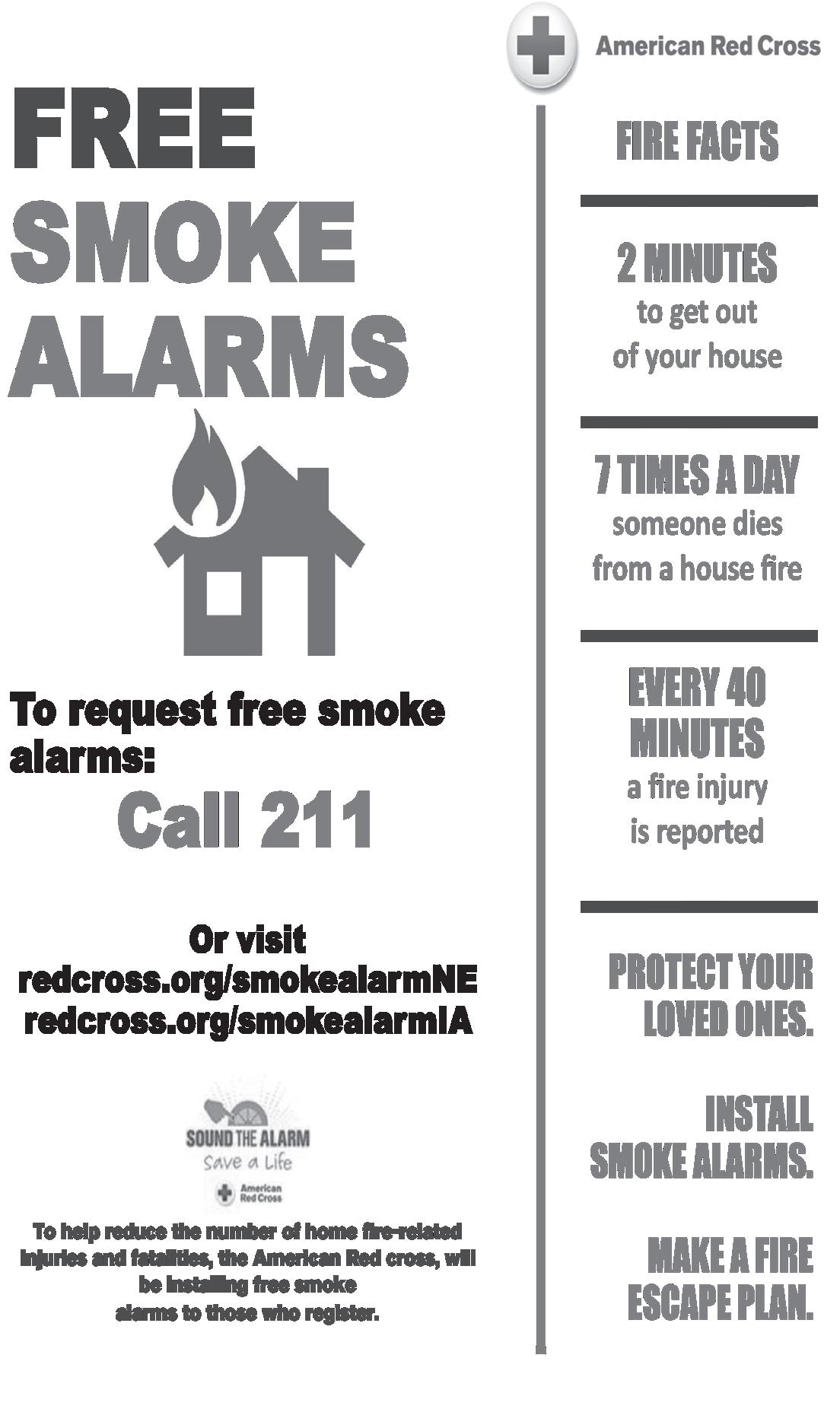
he Omaha Fire Department’s Public Education and Affairs Department will install free smoke and/or carbon monoxide detectors inside the residences of area homeowners.
To have a free smoke and/or carbon monoxide detector installed inside your home, send your name, address, and telephone number to the Omaha Fire Department for Smoke/Carbon and Monoxide Requests at 1516 Jackson St. Omaha, Neb. 68102.
For more information, please call 402-444-3560.
The National Exchange Club is having their Annual Convention from July 9-12 in Omaha.
Omahan’s Tom Helligso, Bill Creger and Kristi Creger are key planners of this event. They are all over 65 years of age and bring years of commitment to this organization. About the National Exchange Club:
• 500 Clubs throughout the country
• 500 rooms reserved at the Hilton Hotel
• This annual meeting coincides with the 250 Celebration of the United States
• United States flags will be lining Abbott Drive and 10 Street
• There will be an 80 foot crane carrying an American Flag that is 30 ft by 60 ft
• This flag will be in front of the Hilton Hotel for 2 days as well
• There will be an interior display at the Hilton of 26 original flags…. including Betsy Ross Flag and the 13 Colonies original Flag Pillars of Services of the National Exchange Club include:
1. Prevention of Child Abuse
2. Americanism
3. Community Service
4. Youth Programs.
For more information, contact Tom Helligso at 402-7405300 or by email at thelligso@npdodge.com.
how their coverage works.
Start by talking with your doctor about whether a GLP-1 medication is medically appropriate for you. Then review your Medicare drug coverage carefully and ask how your plan type may interact with the Bridge Program.
This is also a good time to step back and look at your overall retirement protection. Prescription coverage is only one piece of the picture. Many people who are comparing Medicare options are also reviewing health insurance, dental insurance, Life Insurance, or Long Term Care insurance as their needs change in retirement.
Mary Hiatt is a Retirement & Insurance Advisor and President of Mary the Medicare Lady (A nongovernment entity.) Not connected with or endorsed by the U.S. government or the federal Medicare program. Medicare Supplement insurance plans are not connected with or endorsed by the U.S. government or the federal Medicare program.
ou’re invited to visit the La Vista Senior Center, located at 8116 Park View Blvd. The facility provides activity programs and meals Monday through Friday from 8 a.m. to 5 p.m. Please call 402-331-3455 for general Community Center hours.
Meals are served weekdays at 11:30 a.m. Reservations are due by noon the business day prior to the date the participant wishes to attend and can be made by calling 402-331-3455.
A $5 contribution is suggested for the meal if you are age 60 and older. If you are under age 60, then the meal cost is $9.50.
In addition to meals being served daily, the La Vista Senior Center offers a variety of activities such as: Bingo, outings, cooking classes, movies with popcorn, arts and crafts, a variety of card games, quilting, Tai Chi, exercise classes, musical entertainment and various parties. Please visit our website at cityoflavista.org/seniors for updated information or call 402-331-3455.

I would like to become a partner with the Eastern Nebraska Office on Aging, and help fulfill your mission with older adults.
Traditional funding sources are making it more difficult for ENOA to fulfill its mission. Partnership opportunities are available to businesses and individuals wanting to help us. These opportunities include volunteering, memorials, honorariums, gift annuities, and other contributions These gifts are tax exempt.
$25 = One month of Personal Emergency Response.
$50 = Provides one week of Meals on Wheels for one older adult.
$75 = Provides one week of meals and activities at a senior center.
$125 = Full month of bathing assistance.
$175 = Helps provide respite care for an older adult.
$250 = Provides urgent relief and essential support to individuals during unexpected emergencies.
Other amount (please designate)__________________________
Please contact me. I would like to learn more about how to include the Eastern Nebraska Office on Aging in my estate planning.

Norma Johnson Gates Salistean
First United Methodist Church has some excellent adult curriculums available. They are free for any Christian group which would like to study prayer, discipleship and beliefs.
Call First United Methodist Church at 402-556-6262 if you wish to receive more information about the list of the studies available.

By Kelly C. Bourne
Ascam is defined as “a deceptive scheme or fraudulent act designed to trick individuals or organizations into willingly giving away money, personal information or access to accounts.”
Currently scams seem to be more prevalent than ever and more varied than in the past. Even worse, there doesn’t appear to be any end to them in sight.
No one knows exactly how much is lost to scams every year, because they’re underreported. Most victims are too embarrassed to admit being victimized, don’t think reporting will do any good or don’t know where to report incidents. The FBI pegged losses by Americans to fraud and scams in 2025 at $21 billion. The nonprofit Consumer Federation of America estimates that Americans lose $119 billion annually to scams.
Some of the major types of scams that everyone, including seniors, should be aware of are:
Romance scams are attempts by a scammer to develop a romantic relationship with the goal of obtaining money from the victim. Scammers can initiate contact with potential victims on dating sites, social media sites or by messages sent ‘accidentally’ to wrong numbers.
Investment scams are methods of stealing money from victims by encouraging them to invest their money in ventures that aren’t real.
One form of investment scam is called “pig butchering”. These start with a “wrong number” contact that the scammer develops into a friendship. He or she will convince you to invest your money the same way that they have done.
Ultimately, you’ll lose everything you put into these schemes.
Tech Support scams trick victims into thinking there is something wrong with their computer.
A pop-up message may claim that a virus exists on the computer. If the victim calls the phone number or clicks on the link, the scammers will claim that they can remove the virus for a fee.
There is no virus, but they’ll sell their product anyway. Even worse,
they’ll try to take control of the victim’s computer. If they can do that, they’ll get access to all of the victim’s accounts, including financial ones.
Bank Representative scams are when a victim gets a call, text or email from the scammer who’s pretending to be an employee of their bank telling them that their account has been compromised. They convince the target to withdraw their money and turn it over to the scanners to “protect” it.
Grandparent scams are when criminals call the victim and claim to be a relative that’s in police custody and need to be bailed out. AI is frequently used to imitate the voice and or image of the relative. The victims are frequently, but not exclusively, grandparents of the supposed relative in custody.
Government Imposter scams occur when a victim gets a phone call or text message telling them that some branch of government is looking for them. Their alleged crime might be that they missed jury duty, have outstanding speeding tickets, owe toll road fees or haven’t paid their income taxes. The scammer will attempt to convince them to pay the fines via a cryptocurrency ATM machine. Another common payment method is to get the victim to buy gift cards and send photographs of the numbers on the backs of the cards to the crook.
Recovery scams are one of the more heartless scams. It occurs when a criminal contacts someone who has already been victimized by a scam and promises that for an upfront fee, they will recover money the victim lost in the first scam. Of course, the original losses are never recovered, and the victims end up losing even more money.
Lottery scams try to convince victims that they’ve won a lottery or other prize but have to pay taxes or administrative fees before they can collect it. If the victim pays the requested money, then additional taxes or fees will also be required for this nonexistent prize.
It used to be that hackers and scammers were primarily individuals working on
their own. That’s no longer the case. The bad guys trying to scam you now are no longer kids in their parents’ basements.
They’re professional criminals who belong to sophisticated organizations. These organizations break the work down into specifics jobs, e.g., people who interact with victims, IT personnel, security teams, QA groups, accountants, money mules and money laundering specialists.
There are compounds in Southeast Asia where an estimated 300,000 people are held against their will and forced to scam people seven days a week. These slaves are forced to work 14 to 19 hours a day for criminal groups. Many of their targets are residents of the United States.
Red flags that accompany many scams include:
1. Fear or threats – For example, if you don’t do what the caller says you’ll be arrested or your computer files will be deleted.
2. Urgency – You must take action immediately or severe consequences will occur.
3. Secrecy – you’re warned not to tell anyone about the caller or what you’re being told to do.
4. Requests to send money in unusual ways, e.g., cryptocurrency or gift cards.
The following are some ways that you can minimize your chances of becoming a scam victim:
1. Don’t answer calls or reply to texts from unknown numbers. A legitimate caller will leave a message.
2. If something seems too good to be true, then it probably is. Don’t fall for obviously bogus offers.
3. Do your research on any organization you intend to do business with. If they’re new or don’t have an established record, then be extremely skeptical of them.
4. Be very wary of websites. Don’t be fooled by a website that looks ‘normal’. Creating a legitimate looking website takes very little time using AI or other tools.
5. Listen to your gut. If something feels ‘off’ then back away from the person, business or situation.

By Trish Bergman
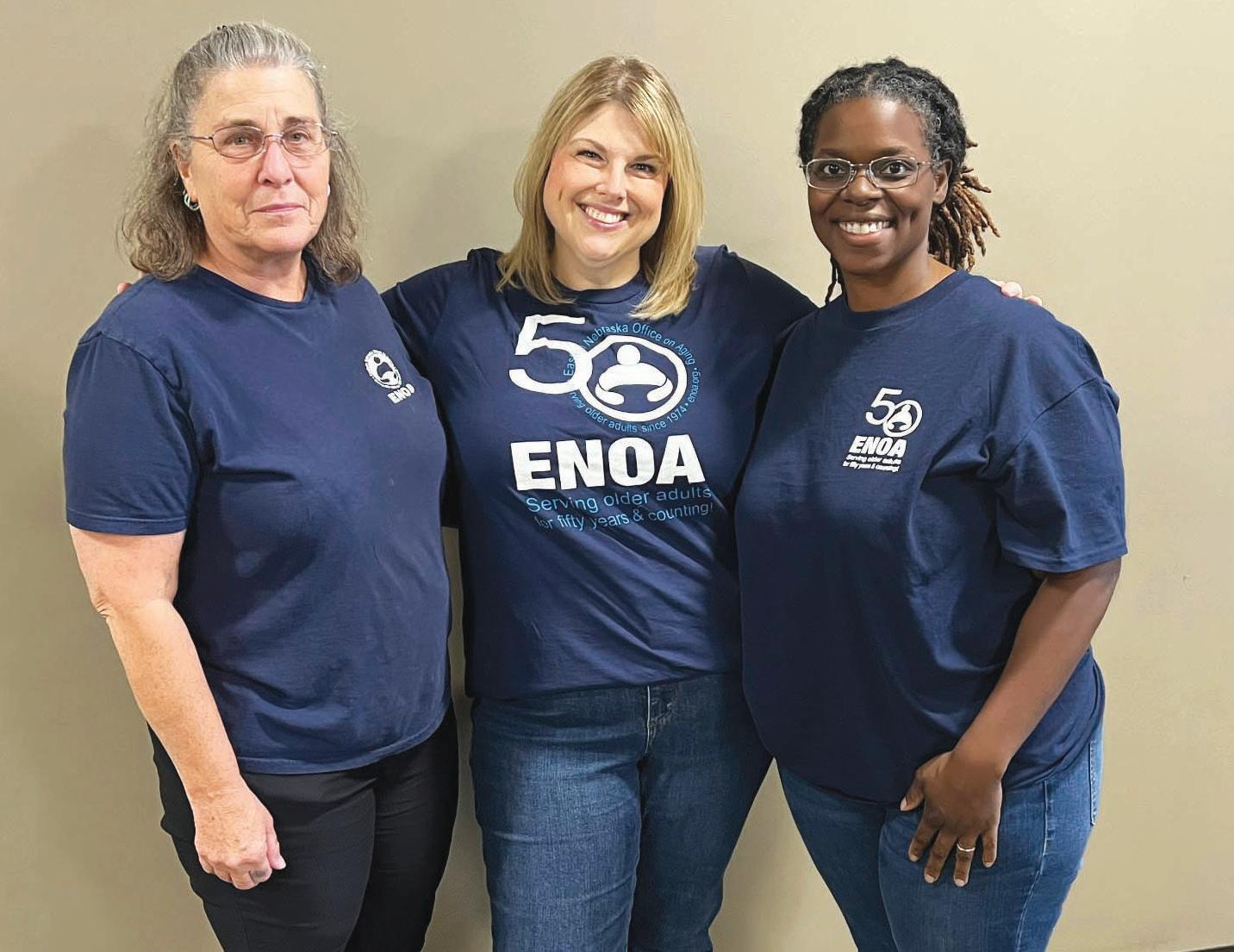
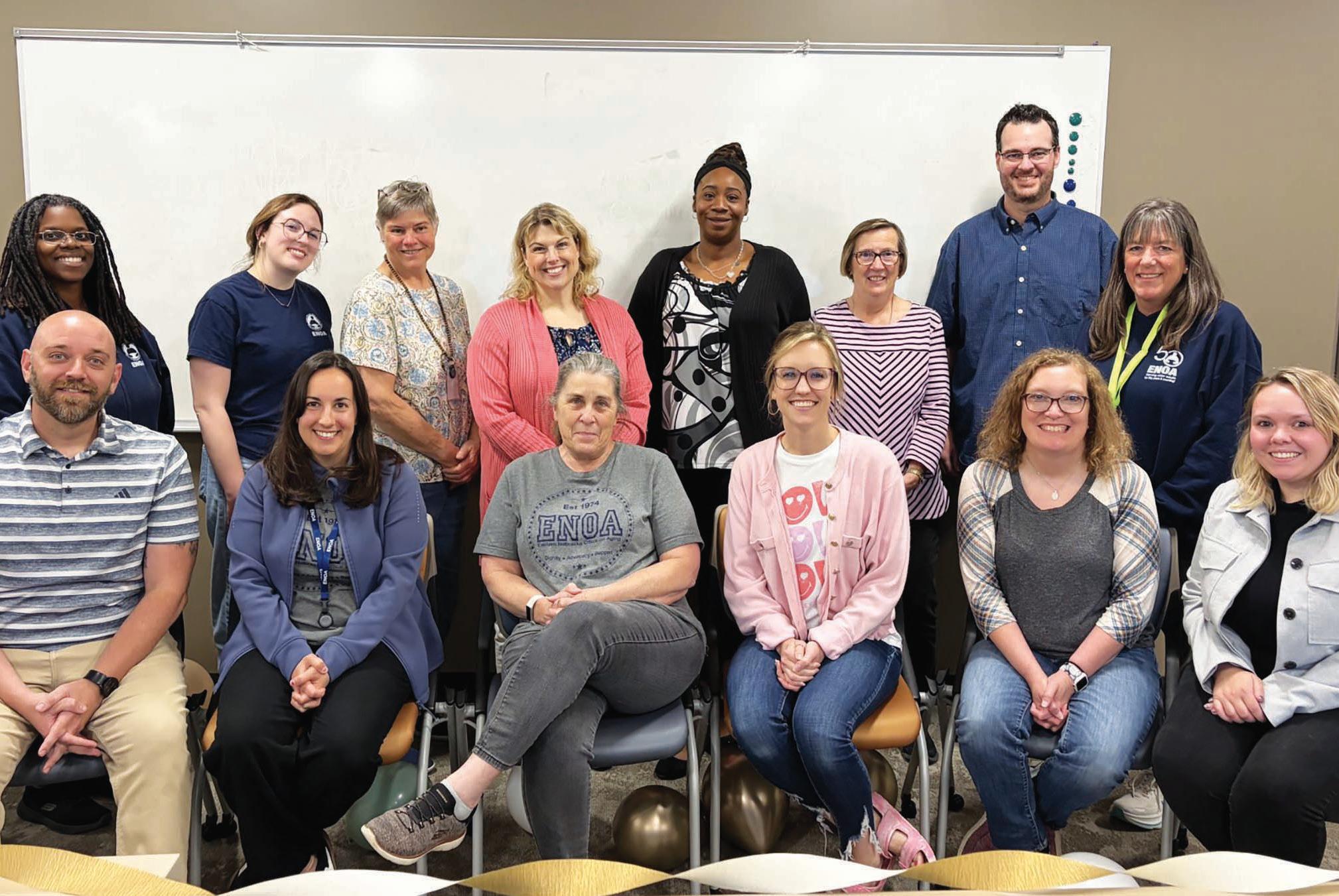
OENOA’s staff has an unwavering dedication to our mission. Their devotion and compassion are a gift to literally thousands of individuals that ENOA helps each year.
lder Americans Month is observed every May and is a time to celebrate the strength, wisdom, and contributions of older adults while promoting healthy aging practices. The 2026 theme is was Champion Your Health, which featured prevention, wellness, and personal responsibility as cornerstones of healthy aging. It encourages older adults and their communities to take an active role in managing and advocating for their health, accessing preventive care, and making informed decisions.
ENOA continues to celebrate the Champion Your Health theme by providing this pullout section of the New Horizons, highlighting some of our services and staff. There is no greater pleasure than being able
to do a shoutout to all the great work that is done each and every day by the staff.
ENOA’s staff has an unwavering dedication to our mission. Their devotion and compassion are a gift to literally thousands of individuals that ENOA helps each year. The daily acts of kindness – small and large – have brought hope and healing to our clients, volunteers, and their families and it’s a contribution that will have a lasting effect on those we serve.
I so appreciate their efforts to work together so we as an agency can stay true to our mission. I can’t imagine a greater privilege than leading this organization.
(Bergman has been the Eastern Nebraska Office on Aging’s Executive Director since July 2020.)
Since 2021, ENOA has honored individuals, businesses, faith-based groups, and community organizations whose dedication and generosity continue to strengthen ENOA’s mission of enhancing the well-being and dignity of aging adults, caregivers, and adults with disabilities. Over the years, these valued community partners have played an essential role in helping older adults remain in their own homes with independence, dignity, and purpose. ENOA is deeply grateful for the ongoing commitment, compassion, and collaboration that make this work possible year after year.
The Spirit of Aging Awards are presented each May to recognize outstanding contributions in the following categories:
• Distinguished Advocate: Honors individuals who consistently champion policies and initiatives that support and protect older Nebraskans.

Every May, awards are handed out during the Spirit of Aging award ceremony.
• Distinguished Donor: Honors individuals, businesses, or organizations whose financial support, services, or goods have positively impacted ENOA’s clients.
• Distinguished in Healthcare: Honors those whose work improves the health and well-being of older Nebraskans through
innovation, education, and/ or compassionate care.
• Distinguished Volunteer: Honors individuals or groups whose long-standing dedication and service have made a meaningful difference for ENOA and those served.
The award winners are announced in the June New Horizons.
ENOA’s programs, services designed to keep older adults living at home
Since 1974, the Eastern Nebraska Office on Aging has been providing a comprehensive package of programs and services for older adults in Douglas, Sarpy, Dodge, Cass, and Washington counties.
One of the nation’s 622 Area Agencies on Aging, ENOA offers care management, nutrition programs, community services, and volunteer opportunities designed to help keep men and women age 60 and older living at home with independence and dignity for as long as possible.
In many cases, the professional support offered by ENOA’s caring staff helps relieve the around the clock burden for caregivers.
After reading this special four-page section, I hope you’ll have a better understanding of the important role ENOA plays in the lives of thousands of older Nebraskans and their families.
Ron Petersen New Horizons Editor
The Eastern Nebraska Office on Aging is governed by the Eastern Nebraska Human Services (ENHSA) and Region VI Governing Board, which is comprised of elected officials from the agencies fivecounty service area.
The board meets the second Wednesday of each month at 3:30 p.m. at ENHSA’s building, located 4780 S. 131st St. Omaha, NE. Governing Board meetings are open to the public.
Here are the members of the 2026 ENOA Governing Board:
Mary Ann Borgeson
Douglas County Chair
Taylor Boyle
Cass County
Lisa Kramer
Washington County Secretary
Pat Tawney
Dodge County Vice-Chair
TDon Kelly
Sarpy County
he Older Americans Act requires each Area Agency on Aging to have an Advisory Council that provides input and guidance. The Council represents the perspectives of older adults and the community, and helps ensure the agency’s plans and services reflect local needs.
Members of the 2026 ENOA Advisory Council are:
Sarpy County
Dr. Julie Masters (Chair)
Dodge County
Kathy Kirby (Vice-Chair)
Douglas County
Dr. Jane Potter
Anne Marcotte
Marilyn Wegehaupt
Carolina Padilla
Cass County
Mel Luetchens
Washington County
Margaret Hanson
Caregiver Support: For many older Nebraskans, informal care provided by a loved one is the primary means of support that allows them to remain living at home for as long as possible.
ENOA understands the challenges and stress that can leave caregivers feeling overwhelmed and isolated. ENOA’s Caregiver Support Program offers case management services to caregivers age 18 and older who provide daily care to an older adult age 60 or older or an adult
diagnosed with Alzheimer’s disease or a similar disorder.
Together the case manager and the caregiver will discuss the importance respite services can play in maintaining the informal caregiver’s health and well-being. The caregiver will work with the case manager to develop a service plan that identifies what types of respite and support best meets the caregiver’s needs whether it be in-home or in the community
For more information, please call 402444-6536.
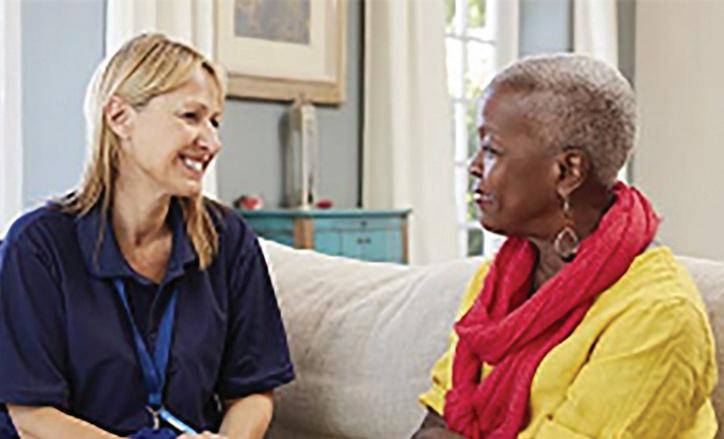
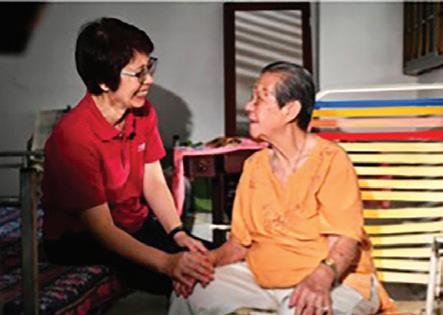


The Aged and Disabled Medicaid Waiver Program supports Medicaid-eligible adults who require nursing facility level of care. If a safe, participantcentered plan can be established, individuals may choose home and community-based services as an alternative to a nursing home.
By utilizing Medicaid funds for cost-effective, non-medical support, Medicaid Waiver offers a variety of services, including assisted living, adult day health, home delivered meals, personal care, companion, chore, assistive technology, non-medical transportation and emergency response systems.
For more information, please call 402-546-1870.
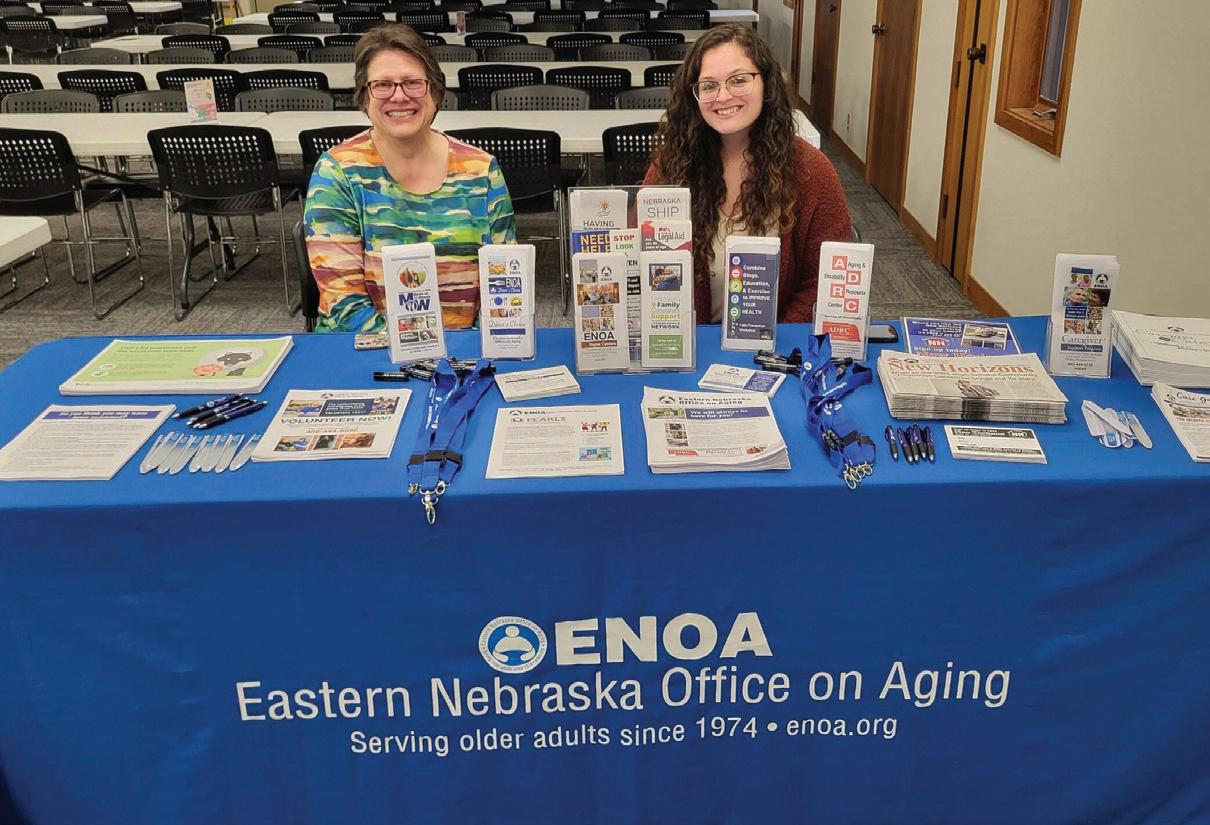

The Eastern Nebraska Office on Aging Information and Assistance line serves as a gateway for caregivers, potential clients, providers, friends, and family members who are looking for information about programs and services for older adults in Eastern Nebraska. Our Information & Assistance (I&A) Specialists can answer your questions about aging services and if appropriate, complete a referral for ENOA’s inhome services, or refer you to an appropriate resource in the community. If you are seeking information about aging services and don’t know where to turn, this is a good place to start. I & A Specialists are available to help. Telephone lines are open weekdays from 8 a.m. to 4:15 p.m. (Walk-ins are always welcome!) The knowledgeable and caring I & A team listens to callers’ questions and concerns, then provides information on community resources and service options to help callers make informed decisions.
I & A staff provide presentations at community health fairs and visits classrooms at universities,
senior centers, community centers, churches, and more to educate and raise public awareness about ENOA’s role in the community and the resources available. In addition, I & A coordinates meetings with members of the Partnership in Aging Network group to promote successful aging locally.
The phone number to call is 402-444-6444. In Dodge and Washington counties, please call 402-426-9614.
The aging and Disability Resource Center (ADRC) assists Nebraskans age 60 and older, persons with a disability, their family members, caregivers, advocates, and providers to locate and access information about local programs and services that can help them meet their longterm needs. ADRC Options Counselors are available by phone or by appointment for face-to-face meetings at the main office. Assistance is available in making informed choices about the services and settings available to meet your current needs. For more information on the ADRC, please call 402-444-6536 and ask to speak to the ADRC options counselor.
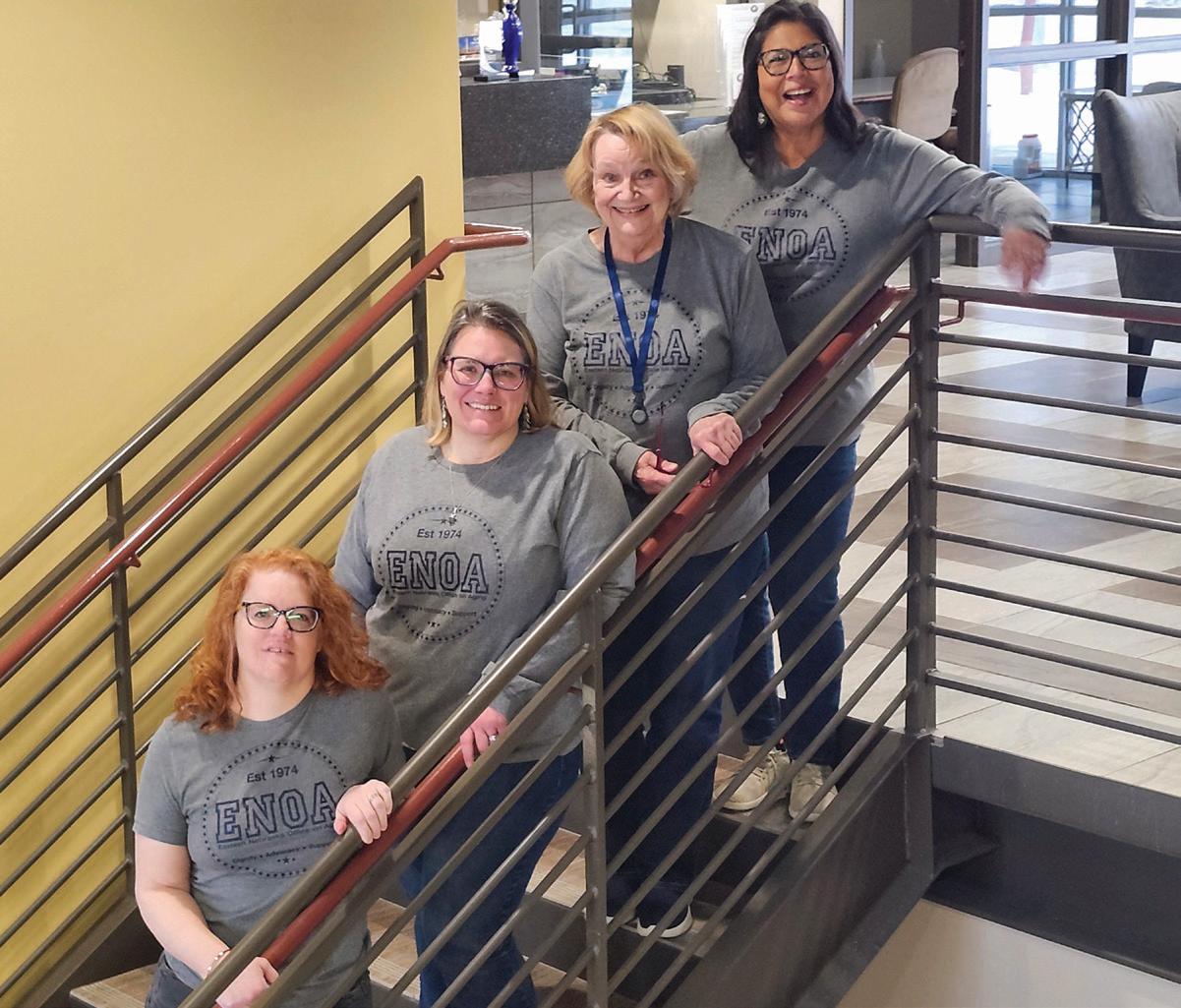
The Eastern Nebraska Office on Aging’s Nutrition Division operates a network of senior centers in Douglas, Sarpy, Dodge, Cass, and Washington counties.
In addition to providing hot, nutritious midday meals for men and women age 60 and older that feature one-third of the recommended daily allowance of nutrients as required by the Older Americans Act, the facilities also serve as resource centers in neighborhoods and rural communities. These centers offer a variety of recreational and social activities, guest speakers, and volunteer opportunities, as well as nutrition and health programs to provide education and to help reduce social isolation.
“At ENOA, our Nutrition Department and senior centers come together to serve food with purpose—fueling wellness, friendship, and independence for older adults across our communities.” said Allison Adrian, Director of the Nutrition Division. “Because of the dedication of the ENOA Nutrition Department staff and our senior centers, every meal is a reminder that care, connection, and community truly matter.”
The Diner’s Choice Program provides meals for men and women age 60 and older from a menu at Hy-Vee stores in Omaha, Fremont, Plattsmouth, Papillion, and Gretna that are available anytime the store is open. Diner’s choice is also offered at Taqueria Chango in south Omaha and 2nd St. Market in Dodge.
ENOA’s Nutrition Division continues to work with the Nebraska Department of Agriculture to provide the Farmers Market program to allow older adults, who meet the income guidelines, to purchase locally grown produce at Nebraska farmers markets. The farmers market program runs from June through October.
For more information, please call 402-444-6513.
In essence, the Public Affairs Division serves as ENOA’s in-house public relations firm.
Its most visible outreach is the New Horizons newspaper, a monthly publication that offers a comprehensive package of information, entertainment, and advertising to its 8,300 subscribers.
To receive a free copy in the mail each month, please call 402-444-6654.
The Public Affairs Division is also responsible for producing ENOA’s brochures, newsletters, and flyers while maintaining the enoa.org website and the agency’s social media pages: Facebook (enoaaging) and Linkedin (ENOA).
ENOA’s Meals on Wheels program ensures that homebound older adults receive the nutrition they need to remain healthy, safe, and independent in their own homes. For over 45 years, volunteers and paid drivers have delivered hot nutritious noon meals, offering not only food, but social connection and peace of mind.
The Meals on Wheels program is currently serving about 600-630 meals per day through 43 routes in the Omaha Metra area, Fremont, and Blair. The program contracts with rural senior centers, an assisted
living facility and a frozen meal provider to serve those individuals outside of Omaha’s delivery area. Menu items are planned to ensure that each meal offers at least 1/3 of the Dietary Reference Intake for an older adult. Each hot meal contains a protein, grain, vegetable, milk, and either fruit or dessert depending on the menu. The program offers a few modified diets such as low sodium, diabetic, and ground meal options. There are also special meal substitutions for participants that might not eat fish, pork, or poultry. Meals are delivered with
the help of 25 paid drivers and 300+ volunteers. “Every meal delivered and smile shared is made possible by our dedicated team of volunteers and drivers.” said Katelyn York, Meals on Wheels Director.
ENOA’s Meals on Wheels program delivers meals Monday-Friday, 11am1:30pm. Participants must be 60 years or older, have difficulty with preparing meals and are homebound or unable to attend a senior center.
If you know someone who may benefit from having meals delivered, please call us at 402-444-6536.
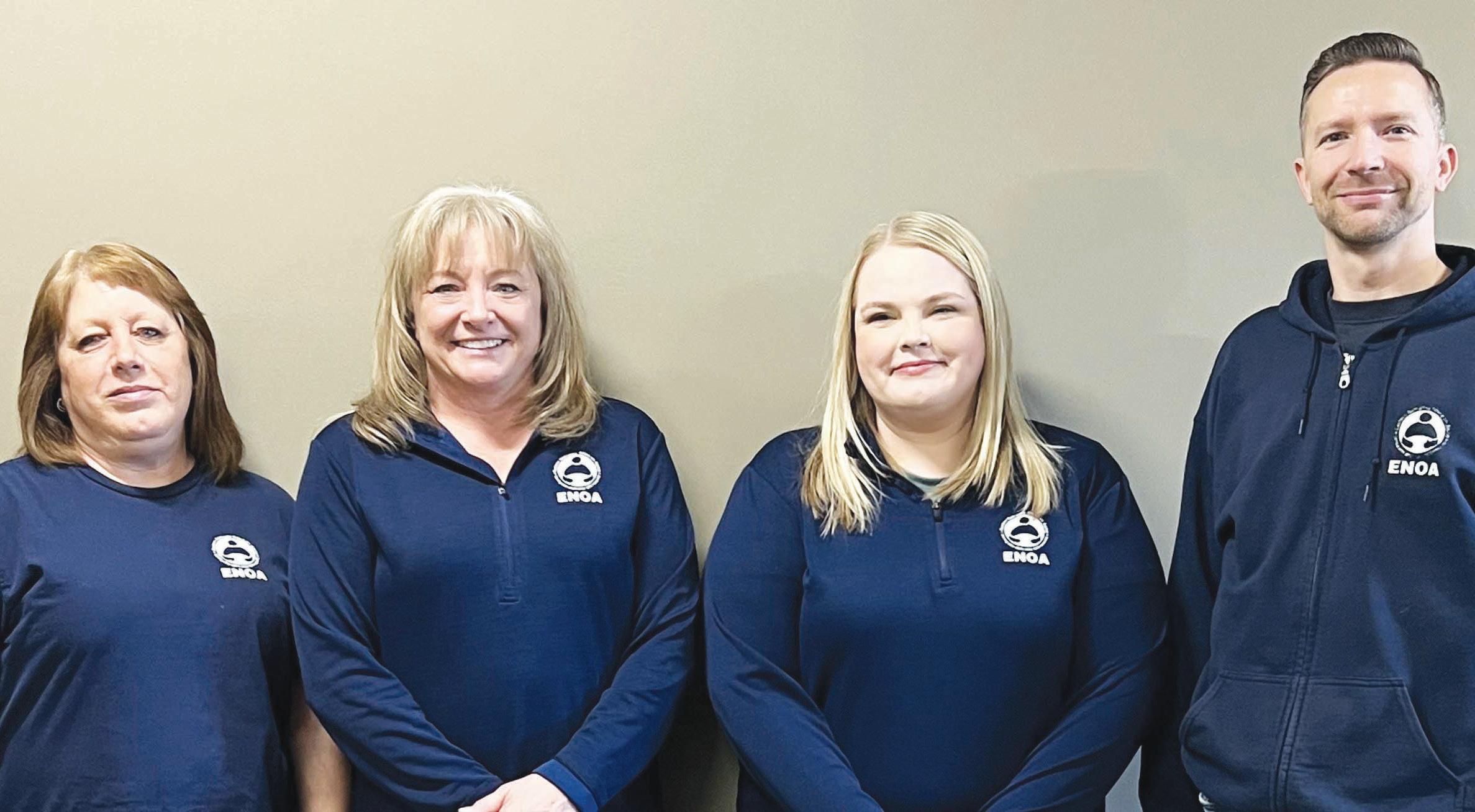
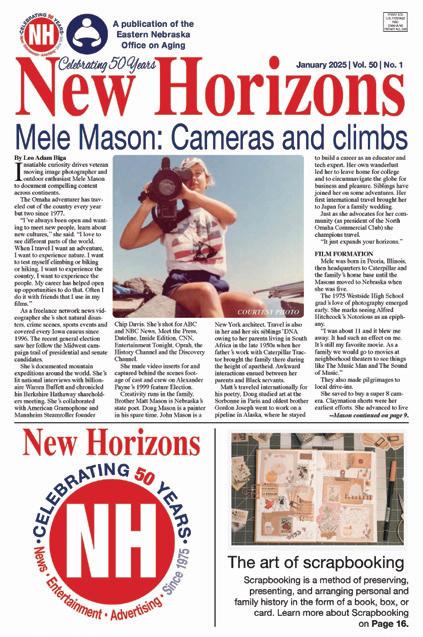
The Public Affairs Director serves as a liaison with local media outlets acting as the agency’s spokesperson and sending out releases publicizing ENOA activities.
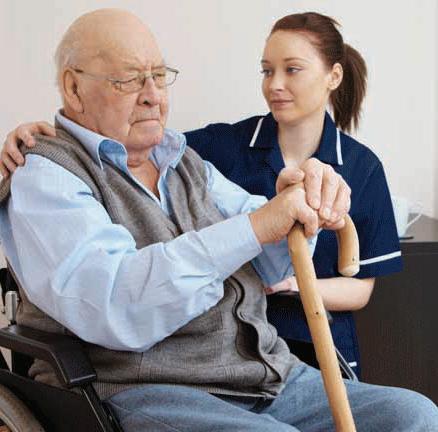

Care Management service provides services based on a sliding fee scale to older adults needing additional services and support to remain safely in their home as they age. The agency’s professional care managers work with older adults to help them navigate through a variety of community resources and services. Together the care manager and the older adult develop a person-centered plan that reflects the older adult’s preferences for services and providers. The care manager provides ongoing monitoring and consultation. Care Management participants must be age 60 or older, live in Douglas, Sarpy, Dodge, Cass, or Washington counties and be willing to engage in a comprehensive assessment to develop an individualized plan that will remain in place for 90 days or longer.
When independence begins slipping away or feelings of isolation or loneliness begin to settle in, it may be time to find out what ENOA offers.
A medical condition, moving into a new
home, or perhaps the loss of a spouse may signal a change in life that requires the help of others.
The agency’s care managers offer eligible participants an opportunity to choose their provider.
For those participants these services include: Homemaker, Personal Care, Personal Emergency Response System, and Chore services.
• Homemaker: Light housekeeping (vacuuming, dusting, changing linens, laundry, dishwashing, etc.) for persons physically unable to perform these tasks is typically available for two hours every other week.
• Personal Care: Bathing, hair washing, and grooming services are provided by contracted home care agencies.
• Personal Emergency Response Systems: Older adults wear a pendant around their neck or on their wrist featuring a button they can push to summon assistance if the client falls or has another type of emergency.
• Chore: Snow removal and lawn mowing.
For more information, please call 402444-6536.
The Eastern Nebraska Office on Aging’s Care Management Programs include Homemaker, Personal Care and Personal Emergency Response. More information can be found about each program on ENOA’s website at enoa.org.
Established in 2022, the Aging with Spirit Foundation is a 501(c)(3) nonprofit organization dedicated to supporting the programs and services of the Eastern Nebraska Office on Aging (ENOA). As the number of older adults continues to grow, so does the need for vital services that help individuals remain healthy, independent, and connected. For many of those served by ENOA, existing resources are no longer enough to meet these increasing needs.
The Aging with Spirit Foundation helps bridge this gap by expanding fundraising efforts, offering donors meaningful tax deductible giving opportunities, and securing additional grants that directly benefit ENOA clients and programs. Through these efforts, the Foundation strengthens ENOA’s ability to respond to today’s challenges while planning for the future.
On a national level, the Foundation has participated in fundraising partnerships with organizations such
More than 400 men, women, and young people answered ENOA’s call to volunteer through Senior Companions, Foster Grandparents, Ombudsman, and SeniorHelp volunteer programs. They provide services worth $4 million per year by volunteering a staggering 100,000 hours helping people. While ENOA’s volunteers come from all walks of life and range in age from 3 to 100, they share a common bond: The desire to help people. Meaningful volunteer opportunities available through the Eastern Nebraska Office on Aging include: Foster Grandparents/Senior Companions: Funded by AmeriCorps Seniors, The Foster Grandparent Program provides meaningful opportunities for individuals age 55 and older to remain physically and mentally active by serving as a positive role model to children and youth in their communities. Foster Grandparents assist children needing special attention in education, healthcare and social development. They volunteer in schools, Head Start Programs, hospitals, and child development centers. Through regular interaction with a Foster Grandparent, children needing special attention have an opportunity to improve their physical, mental, emotional, and social development.
Also funded by AmeriCorps Seniors, the Senior Companion Program recruits and trains volunteers to assist individuals in maintaining their independence. Whether it is someone who is lonely and isolated, physically or mentally disabled, or someone living with Alzheimer’s disease, Senior Companions help people in ways true friends help one another. Senior Companion volunteers visit the homes of older individuals who can benefit from the company of another older adult. They talk with their clients about the day’s news, share stories about family, play cards, read mail, listen to the radio, or perhaps watch television. Some Companions help their clients run errands or go grocery shopping.
Foster Grandparents and Senior Companions must be age 55 or older, meet income guidelines, and complete an enrollment process that includes references and background checks. In exchange for volunteering 10 or more hours a week, Foster Grandparents and Senior Companions receive a $ 4-an-hour tax-free stipend, mileage reimbursement, and supplemental accident insurance. The stipend does not interfere with rent, disability, Medicaid, or other benefits.
SeniorHelp: A program offered by the Eastern Nebraska Office on Aging that coordinates volunteer resources to provide help to older adults trying to preserve their independence. Persons of all ages volunteer for SeniorHelp, sharing their time at no cost with older Nebraskans in ways that support dignity and independence in daily life. Volunteers are screened and matched by trained staff with older individuals needing assistance. SeniorHelp services include companionship, handyman projects, delivery for ENOA projects including Meals on Wheels, lawn mowing, personal/household assistance, one-time clean-ups, painting, snow removal, telephone reassurance/visiting, and yard care.
For more information please call 402-444-6536.
as PetSmart, Subaru, Jiffy Lube, and Charitable Adult Rides & Services (CARS). It also offers employee giving and matching gift opportunities through Benevity and other corporate programs, making it easier for supporters to give in ways that are meaningful to them. For more information about how to support the Eastern Nebraska Office on Aging, please contact the Aging with Spirit Foundation at (402) 561 2243 or via email at diane.stanton@ enoa.org.
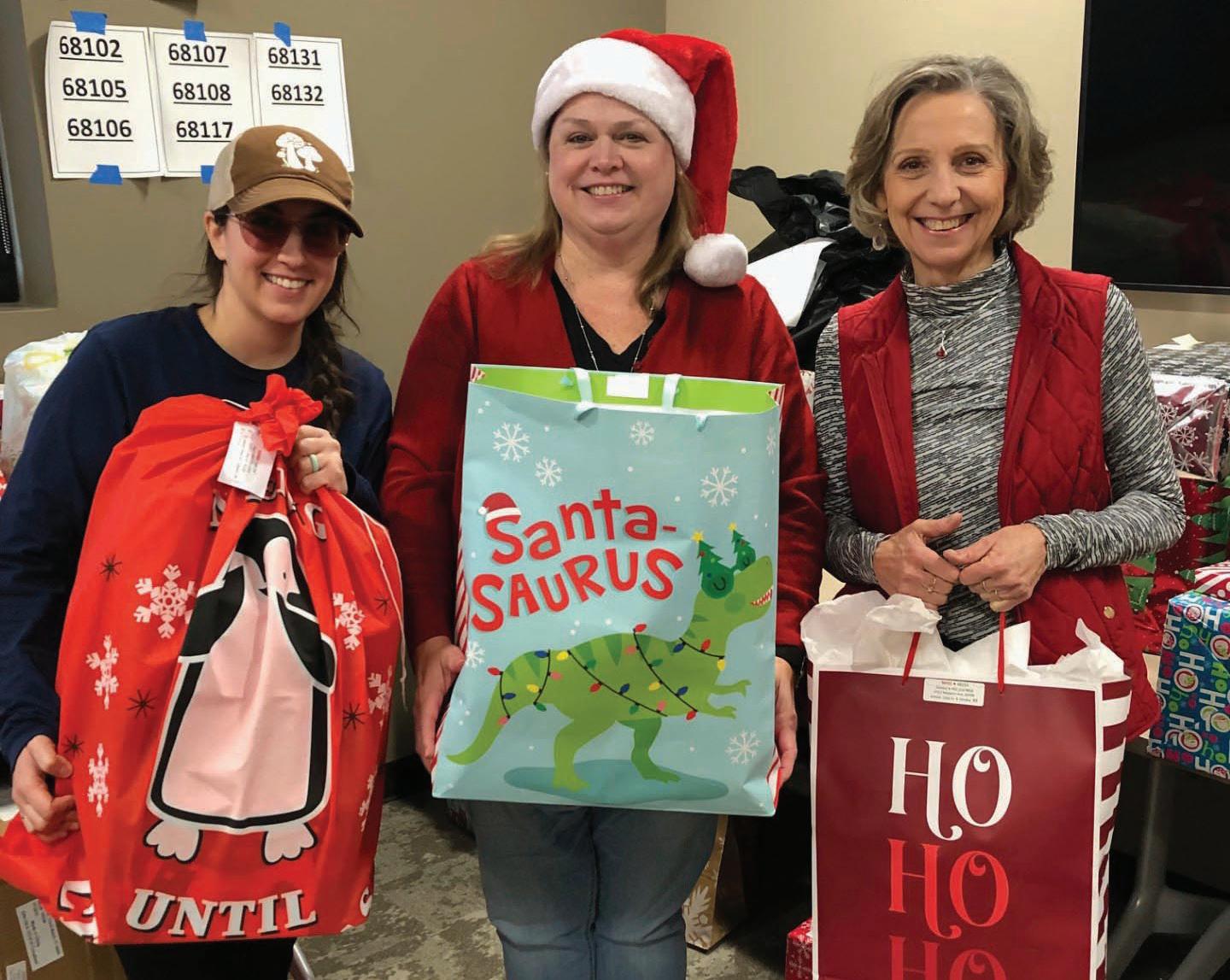
Senior Help volunteers help delivery donated Christmas gifts to those in need every year.
younger brother, who still runs it today. Dean worked in the store as a youth but he had other interests. He studied advertising and broadcasting at the University of Nebraska-Lincoln.
Dean’s parents and siblings knew he was different from infancy. He had trouble expressing emotion. Interpersonal interactions were difficult. But his keen mind and dry wit won over folks who gave him a chance. He’s always worked sales jobs. Neither he nor his family had a name for what made Dean special until an older brother who was a licensed counselor diagnosed him.
Like some autistics, Battiato’s gifted. He’s great with numbers and dates.
He got into selling roses for an employer, then lost that job, before going independent. There were lean times. He ended up sleeping in his car at one point. Then he hit his stride, becoming in the process a local public figure, even legend. Weiss creates a personal portrait that spares few details. In their contract Weiss gave Battiato final cut approval. “If there was something in the film he didn’t want out to the public,” Weiss said, then Battiato had the power to nix it. “I wasn’t here to take away his life, I was here to enhance his life and tell his story.”
Other than mild objections, it was thumbs up. “A couple of the scenes I didn’t think we needed to have in there but he kept them in,” Battiato said. He consented having his final, moving visit with his ailing older brother kept in and even to have his mental health therapist speak about his personal challenges (loneliness, depression, PTSD) on camera.
He even opens up about a savage assault he endured in his own apartment.
How did he summon the courage to be so transparent? “Well, there was some hesitation at first. If it was 20-30 years ago I probably wouldn’t have done it. But I got to the point where I’m in my mid 60s now, I’ve got nothing more to prove. I was concerned maybe people would judge me. But at the end of the day who cares. I mean, I know my history, I know my journey, I know what I’ve done.”
Besides, he came to trust Weiss. “I just saw the way he worked. I saw
his personal side getting to know him. It got to the point where it just kind of all went together. It was a gradual thing.”
Confirmed Weiss, “He had to trust me at some point and then once we crossed over that it was just about us being friends and me trying to tell his story the best I could and get the unique qualities of who Dean is.”
Battiato came to believe as Weiss did that his story can impact others. “If I can do something to help other people through my experience than why not,” Battiato said. “It’s definitely worth it.”
Both men feel the doc has educational value for discussions about resilience, inclusion and autism. “If this film can affect other people in my position then that’s basically the bottomline of why I did it,” Battiato said. Two of its messages, he said, are that “you need to just keep going and it’s never too late.” As for age or afflictions or the past, he said, “It doesn’t matter. I didn’t start doing this (selling roses) until I was 40. You’ve got time to do lots of different things. You’ve just got to keep yourself open to it (and not (limit yourself). If you do those things, anything can happen. I never would have guessed any of this would have happened, or anything close to it.”
Most folks who get to know Battiato like Weiss did end up admiring this unforgettable character.
Weiss said his own storyteller inclinations and Battiato’s poignant life mesh well. “I love to touch people emotionally somehow and Dean’s story just kind of played out that way.”
There’s a scene where Battiato joins Weiss in the car after visiting his ill brother. Weiss asks if he told his brother he loves him. He says no. Battiato then shares the rejection he suffered in high school when he expressed feelings for a girl and she walked away. From that point on, he reveals, he never told anyone, ‘I love you,” including his mother. He regrets he didn’t.
“We would never have known any of that,” said Weis, without he and Battiato bonding. “We had become friends, close friends, like brothers.”
How else did the experience of making the film change Battiato?
“It didn’t change my life
much,” he said. “I still had to work, I still had to do everything else I was doing.”
Perhaps the biggest change has come since its release. “I had gotten recognized by people before this, and now it happens more often. People ask if I sell more roses. No, but I sell faster and easier, with bigger tips.”
Being a street vendor is, he said, “simple, but not easy.”
“When I first started the hardest part was getting to the point of going out every weekend. Just the motivation of the actual going out and doing it.”
He agrees with those who suggest his Rose Man persona is his way of connecting with others. Attractive women take selfies with him. He enjoys the attention. “I think I get energy from the people,” he said. “That’s what gets me to go forward.”’
It turns out he’s been in sales most of his life. As a boy he went door to door in his neighborhood selling tickets to pancake and spaghetti feeds.
“I wasn’t just like, ‘Hey, you want to buy some tickets?’ I had my own sales spill and I did good.”
As an adult he sold advertising for media companies. As a Triple AAA membership specialist he called people who hadn’t renewed to get them re-upped, and, he said. “If they had some objection –my job was to sell ‘em. I did all kinds of telemarketing work.
Thus, selling himself and his wares as the Rose Man is second nature.
But promoting the film is new, especially “the unique experience of being in the room and having people talk about you – not a lot of people go through that.”
Battiato and Weiss hope the film has a long life. It’s now available for streaming.
“Dean will get a percentage of the film – that’s part of the deal,” said Weiss, adding “the hope” is it will help give Battiato an annuity for retirement.
From the time the pair met in 2022 to discuss the project until its finish, it took three years. “It’s been an amazing journey,” said Weiss.
Both men agree they will “be lifelong friends.”
Asked if he’s found a soulmate yet, Battiato said, with a twinkle in his eye, “No, but I’m working on it. I’ve got a couple fish on the line.”
You’re invited to visit the Millard Senior Center at Montclair, 2304 S. 135th Ave., this month for the following:
• June 3: Board Meeting @ 9:30 a.m.
• June 5: Farmers Market vouchers distribution
• June 8: Bunco @ 12:15 p.m.
• June 10: Brunch for Mother’s and Father’s Day@ 10:30 a.m.
• June 17: Sewing Club meet to make sun dresses and shorts @ 9:30 a.m.
• June 19: Deadline to sign up to attend the Melodrama on Sunday the 28th
• June 24: Pot Luck @ 11:30 a.m.
• June 28: Melodrama at Mahoney State Park. “Showdown at Sundown” @ 3 p.m.
Tai Chi on Mondays and Fridays @ 9:30 a.m. Bingo every Tuesday and Friday @ 12 p.m. Bingo callers in need
Hand-N-Foot Wednesdays @ 8:30 a.m.
MahJongg Wednesdays @ 1 p.m.
Chair Volleyball Thursdays @ 9:30 a.m.
Dominoes Thursdays @ 12:30 p.m.
For more information, please call 402-546-1270.

The administration on Community Living celebrates Older Americans month each May. This is a time to acknowledge and reflect on the resilience and strength that older individuals have had throughout their lives – their successes, failures, joys and difficulties. It is also a time to celebrate and thank those groups and individuals who support the community’s older individuals through their contributions in the fields of advocacy, volunteerism, donations and healthcare.
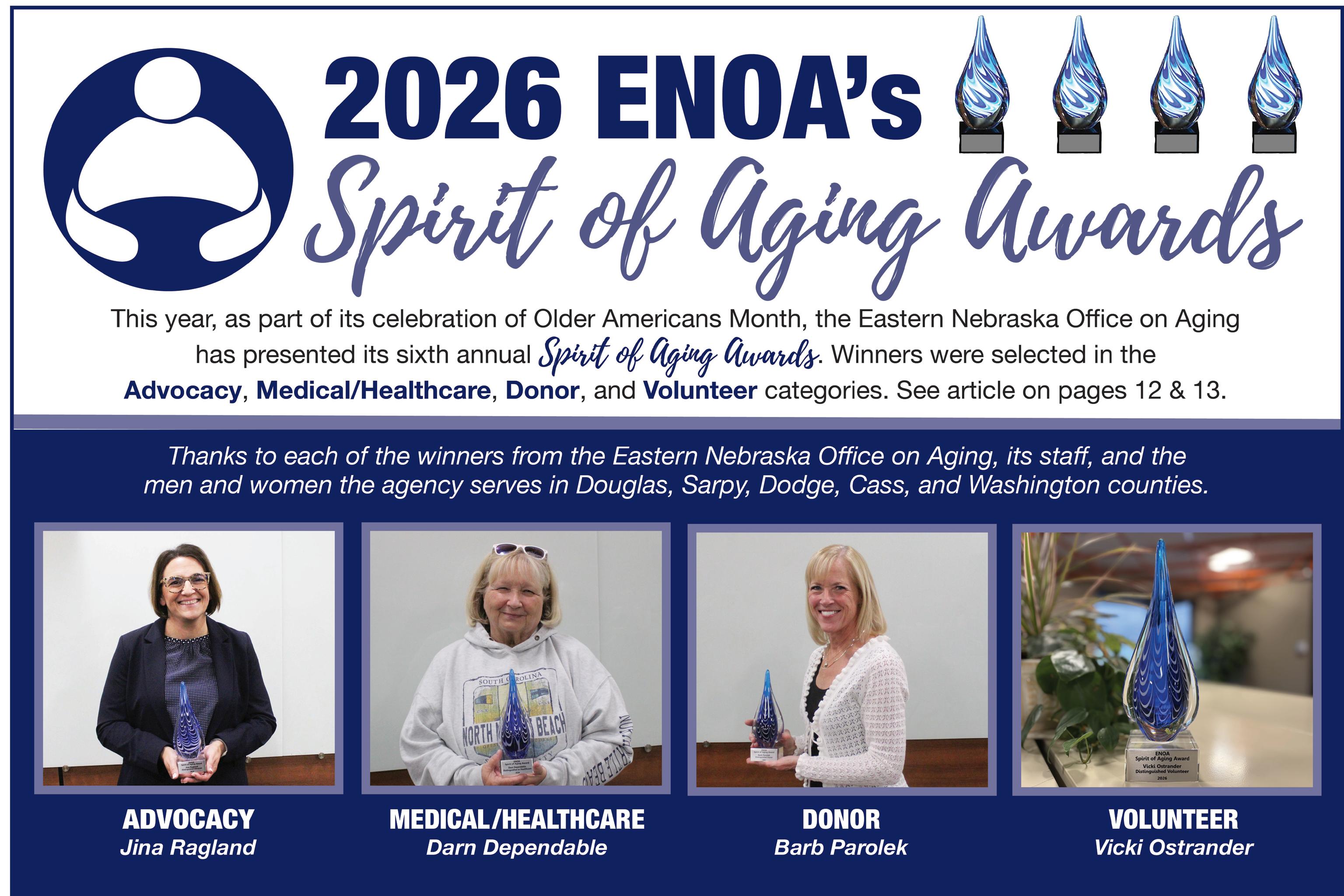
As part of the national salute, the Eastern Nebraska Office on Aging (ENOA) presented its sixth annual Spirit of Aging Awards in the Advocate, Volunteer, Donor and MedicalHomecare categories.
Nominations for the Spirit of Aging Awards came from ENOA staff.
Jina Ragland is the 2026 Spirit of Aging Awards winner in the Advocacy category.
Jina Ragland was nominated for this award


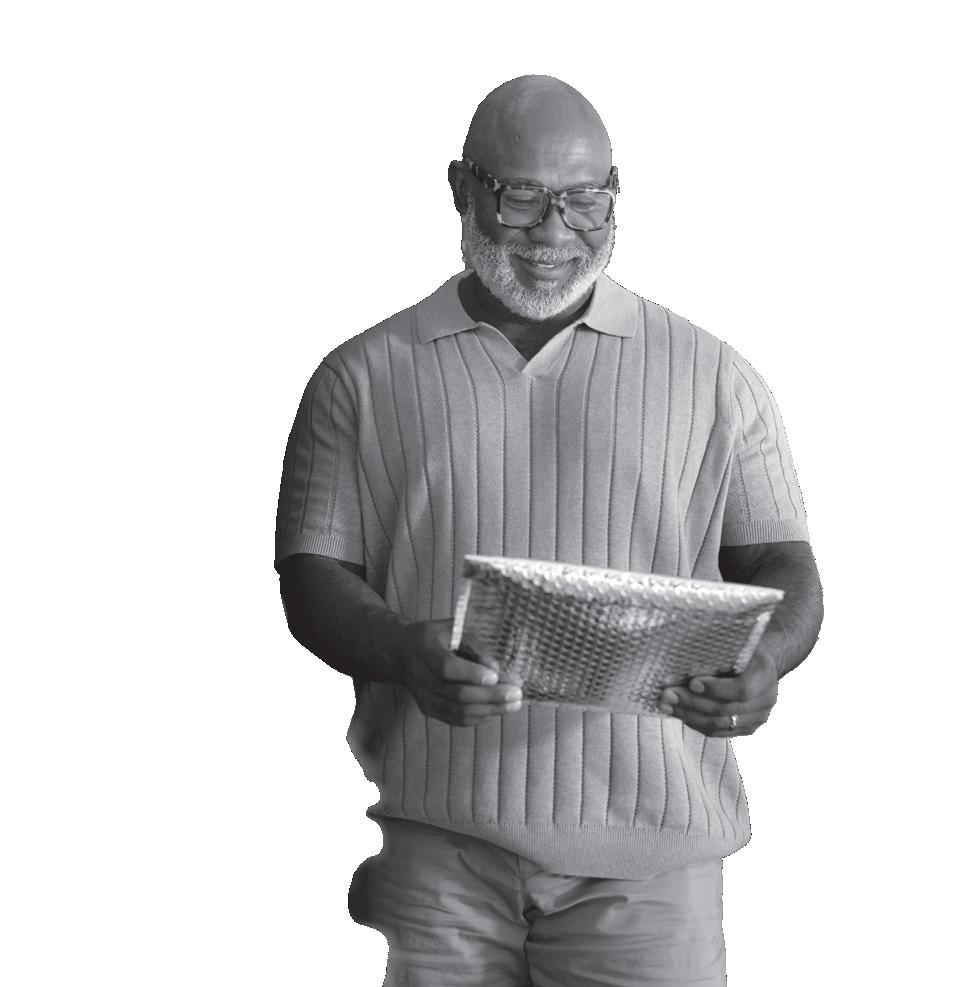

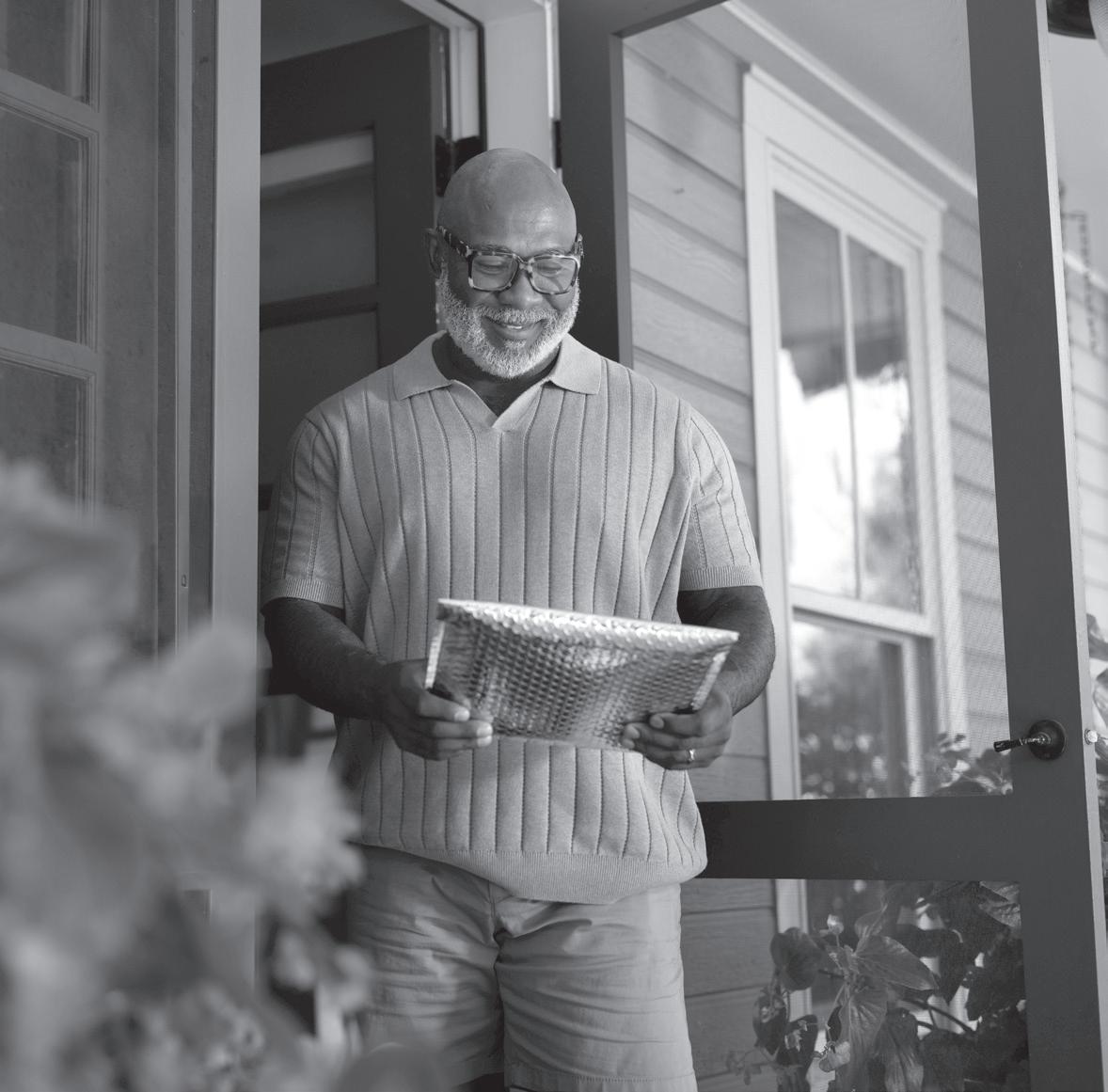

for, “Her unwavering dedication, powerful voice, and steadfast advocacy which has made a profound and lasting impact on older adults not only in ENOA’s counties but across all Nebraska. For years, she has worked tirelessly to support and uplift Nebraska’s Area Agencies on Aging, ensuring that they have the visibility, resources, and legislative backing needed to serve a rapidly growing aging population. Her work bridges communities, agencies, and lawmakers— bringing clarity to challenges that often go unheard and championing solutions that strengthen the continuum of care for older Nebraskans.”
“Jina said it best, Change begins with a voice, and that voice is yours. This sentiment reflects her approach to advocacy: Bold, informed, compassionate, and grounded in the belief that every individual deserves to age with dignity, respect, and opportunity.”
As a trusted advocate, Ragland meets directly with legislative representatives to ensure that the struggles, needs, and hopes of older adults—and the agencies that serve them—are recognized and prioritized. Ragland elevates the real stories of Nebraska’s communities, ensuring they are not only heard but
translated into meaningful policy discussions and actions.
Ragland’s efforts have strengthened partnerships, empowered aging network leaders, and advanced critical issues ranging from long-term care support to community-based services. Through her work, Nebraska’s aging population is better represented, better supported, and better understood.
“Ragland’s commitment embodies the true spirit of aging: Advocacy driven by empathy, leadership rooted in service, and an unwavering belief in the value and potential of every older adult.”
Barb Parolek is the 2026 Spirit of Aging Awards winner in the Donor category.
Barb Parolek has been known as a dedicated, generous, and compassionate donor.
Every year for the Eastern Nebraska Office on Aging (ENOA) Holiday Program, Parolek adopts 10 clients. Once staff submit their wish lists, Parolek thoughtfully purchases every item on each list and often follows up with detailed questions to ensure clients receive exactly what they’ve asked for.
The gifts always arrive beautifully wrapped and clearly labeled.
In addition, Parolek and her husband generously donate turkeys each year to the SeniorHelp program, which collects turkeys for Nutrition meals distributed to ENOA clients.
continued on page 13.
Right now, during Medicare Open Enrollment Period, is a great time to move to ArchWell Health. Our doctors take the time to get to know you — not just your symptoms. With centers right in your neighborhood and same-day sick appointments, we help you make better healthcare a part of your daily routine. Plus, our pharmacy team is always just a call away to ensure your medications are current and delivered right to your door. Take charge of your health today — make the move to ArchWell Health.
Visit ArchWellHealth.com
today.
Darn Dependable is the 2026 Spirit of Aging Awards winner in the Medical-Homecare category.
Darn Dependable Services has been providing Homemaker care for Eastern Nebraska Office on Aging (ENOA) Care Management clients for many years. The company has consistently lived up to their name by continuing to provide dependable and quality services.
“Sue Seefus and her team at Darn Dependable have always gone above and beyond on numerous occasions throughout the years.”
In 2025, County, Darn Dependable Services added both Washington and Cass Counties, allowing more services to be available in rural areas.
“Darn Dependable Services provides excellent customer service, keeping in touch with the clients regularly to ensure they are satisfied with their services,” the nomination read. “They work very hard to continue to work with clients who may also have behavioral or mental health issues. In the rare instance when a client has been dissatisfied with their services, Sue with Darn Dependable has promptly made extensive efforts to resolve any issues to ensure the client’s satisfaction.”
Darn Dependable Services also maintains excellent communication with ENOA, always making sure to notify ENOA of any health or safety concerns that they observe or that have been reported to them during their consistent visits.
“It is unquestionable that the staff at Darn Dependable Services truly care about ENOA’s clients and that they are dedicated to helping ENOA with their mission to keep our older population living independently in the community for as long as possible,” the nomination read.
Vicki Ostrander is the 2026 Spirit of Aging Awards winner in the Volunteer category.
Ostrander applied to volunteer with SeniorHelp in 2012. In Ostrander’s 2012 application to volunteer, Ostrander described herself as homebound. She had recently lost the sister for whom she was caregiving, after losing her mother prior. She wanted to give back to the Eastern Nebraska Office on Aging (ENOA) in some way. She had extra time to offer as she was no longer in a caregiving role.
Ostrander has served 25 homebound clients in all but one of the counties ENOA serves.
She has provided both Telephone

Reassurance (a daily check-in call) and Telephone Visiting (companionship by phone). Most of her calls have been as a companion.
At the time of her application with ENOA’s SeniorHelp Volunteer Program, her personal references described her as «an experienced caregiver, very patient and kind, a good teacher, a good listener, dependable, conscientious, and thorough”. She was described as “goal oriented, detailed and efficient in all she does” with “great people skills that helped her clients feel less anxious.”
Ostrander’s professional background is in business management and personnel, her experience spanning many years with Brandeis and Nebraska Furniture Mart. She served on a nonprofit board of directors that served domestic violence victims. In addition to providing caregiving to her mother and sister, she also provided inhome care to a child with autism and an older adult with dementia.
In one caregiving role, Vicki’s reference said, “Mother’s life has been enriched by having Vicki in her life.” The reference further stated that she did not trust anyone else with her mother, outside of her memory care facility, “only Vicki”.
Presently Ostrander provides Telephone Companionship for five clients, averaging 40 hours per month. She has logged more than 483 volunteer hours in 12 months.
Ostrander is skilled at keeping most of her calls to one hour each and has a specialized skill for wrapping up her conversations. Ostrander spent 12 hours each with that client and with another in phone companionship in a recent month.
“Ostrander has seen the clients she served through many life transitions as they dealt with aging, physical and cognitive changes, pain, mental health challenges, self-harm concerns, loneliness, isolation, and despair, and several with ‘difficult personalities’ that she sometimes described as ‘salty,’ ” the nomination read. “She finds the goodness in every person she serves and provides support in every possible way.”
ENOA honored the award winners on May 21.
You’re invited to visit the Fremont Friendship Center, 1730 W. 16th St. (Christensen Field). The facility is open Monday through Thursday from 9 a.m. to 3 p.m. and Friday from 9 a.m. to 12:30 p.m.
A meal is served weekdays @ 11:30 a.m. Reservations, which are due by noon the business day prior to the meal the participant wishes to enjoy, can be made by calling 402-727-2815. A $5 contribution is suggested for the meal.
This month’s activities will include:
• Everyday: Sip and Chat @ 9 a.m.
• June 1: Home Instead will bring snacks @ 2:30 p.m.
• June 3: Music with Pam Kragt @ 10 a.m.
• June 4: Farmer Market Distribution
• June 10: Music with Tim Javorsky @ 10:30 a.m.
• June 11: Mobile Library @ 9:30 a.m.
• June 17: Music with The Links @ 10 a.m.
• June 18: Tricks and History of Roping presented by Joan Wells @ 10:30 a.m.
• June 23: Board Meeting @ 1:30 p.m.
• June 24: Music with the Johnny Johnson @ 10:30 a.m.
• June 29: Funny/Special Bingo @ 10:15 a.m.
Give Blood on Monday mornings @ 9 a.m.
Craft class on Tuesday afternoons @ 1:30 p.m.
Tai Chi offered every Tuesday and Friday from 9:15-10 a.m.
If you can’t stay for lunch with our friends and you currently participate in any activity at the center, you may now order a Grab-n-Go meal to take home for your lunch. Grab-n-Go meals must be reserved the day before by noon and the person ordering the lunch must come in to the center to pick it up at 11 a.m. The number of Grab-n-Go lunches are limited to a first come first serve basis. Suggested donation is $5. For meal reservations and more information, please call Laurie at 402-727-2815.
•
•

By Lois Jordan
As we age, we carry with us a lifetime of experiences — joyful moments, meaningful relationships, personal accomplishments, and sometimes painful memories or difficult life events. For many older adults, experiences such as military service, loss of loved ones, serious illness, abuse, accidents, or other traumatic events can continue to affect emotional and physical well-being long after the event has passed.
Today, healthcare providers and senior living communities are increasingly recognizing the importance of traumainformed care — an approach that promotes safety, dignity, compassion, and understanding for individuals who may be living with the effects of trauma.
What Is Trauma-Informed Care? Trauma-informed care is a person-centered approach that recognizes how past experiences may influence a person’s emotions, behaviors, relationships, and health. Rather than asking, “What is wrong with this person?” trauma-informed care encourages caregivers to ask, “What may have happened to this person?”
This approach helps caregivers, healthcare professionals, and family members better understand how past trauma may affect relationships, trust, anxiety, reactions to personal care, sleep patterns, mood, memory, and changes in routine.
Trauma affects every person differently. Some individuals openly discuss
difficult experiences, while others may never speak about them at all. Sometimes trauma symptoms appear later in life, especially during periods of illness, memory loss, hospitalization, or transition into a nursing home or assisted living community. An older adult experiencing trauma-related stress may:
• Become withdrawn or fearful
• Resist care or personal assistance
• Startle easily
• Have difficulty sleeping
• Become upset by loud noises, alarms, or unfamiliar surroundings
• Relive painful memories or nightmares
These reactions are not simply “difficult behaviors.” Often, they are signs that a person may feel unsafe, overwhelmed, or emotionally distressed. When caregivers understand a resident’s life story and personal experiences, they can provide care that reduces fear and promotes comfort. Simple changes in communication and caregiving can make a meaningful difference. Interventions that may help include:
• Explaining care before providing it
• Asking permission before touching someone
• Maintaining consistent routines,
• Speaking calmly and respectfully
• Reducing environmental stress and noise
These approaches help individuals feel more secure and maintain a sense of control and dignity.
Florence Home recognizes the importance
of trauma-informed care and is committed to providing compassionate, residentcentered support that honors each individual’s life experiences, preferences, and emotional well-being. Through respectful communication, individualized care planning, and a supportive environment, Florence Home strives to help residents feel safe, valued, and understood.
Families play an important role in supporting trauma-informed care by sharing key life history and preferences with caregivers, noticing changes in mood or behavior, encouraging open communication, offering reassurance during stressful situations, and creating familiar, comforting routines.
Trauma-informed care reminds us that every individual has a unique life story. Behind every resident, patient, or family member is a person who deserves kindness, respect, patience, and understanding.
By recognizing the effects of trauma and responding with empathy, senior living communities and caregivers can create environments that promote not only physical care but also emotional healing, dignity, and quality of life.
Compassionate care begins with understanding — and sometimes the smallest acts of patience and kindness can make the greatest difference.
Lois Jordan, CEO for Midwest Geriatrics Inc. Management company for Florence Home Healthcare Center, Royale Oaks, and House of Hope Assisted Living and Memory Care.
Join Flaherty Senior Consulting for a series of Solutions Group gatherings that will address the questions and challenges caregivers face.
Solutions Groups provide opportunities for caregivers to learn how to deal with various issues, obtain skills and knowledge, engage in discussions, and interact with others in similar circumstances.
Upcoming meeting dates and locations are:
• June 4, Aug. 6, Oct. 1, Dec. 3
The Servite Center of Compassion 72nd St. and Ames Cr.
• June 17, Aug. 19, Oct. 21, Dec. 16
St. Timothy Lutheran Church 93rd and Dodge streets
• July 14, Sept. 8, Nov. 10
St. Vincent de Paul Church 14330 Eagle Run Dr.
• July 25, Sept. 26, Nov. 28 Faith Westwood United Methodist Church 4814 Oaks Ln.
The Solutions Groups are facilitated by Nancy Flaherty, MS, CDP, president of Flaherty Senior Consulting. She has extensive experience working with family caregivers and caregiver groups.
For more information, email Nancy at flahertyconsulting@cox.net or call/text her at 402-312-9324.
You’re invited to visit the Florence Senior Center, 2920 Bondesson St.
At the Florence Senior Center, lunch is served at 11:30 am. A select menu is offered Monday thru Friday. Meal reservations must be made one day in advance. Please call by noon the day before for a meal reservation.
There will be a painting workshop with Kim Darling at 9 a.m. every Wednesday.
The center hosts activites such as Tai Chi, annual picnics/ special events, bingo, cards, gym & game room access, special guest speakers and socials.
Arts and crafts will be held on the third Wednesday of each month. They also provide health and nutrition programs.
For more information, please call Colleen Metz @ 402444-6333.
Legal Aid of Nebraska operates a free telephone access line for Nebraskans ages 60 and older.
Information is offered to help the state’s older men and women with questions on topics like bankruptcy, Homestead Exemptions, powers of attorney, Medicare, Medicaid, and Section 8 housing.
The number for the Elder Access Line is 402-827-5656 in Omaha and 1-800-527-7249 statewide.
This service is available to Nebraskans ages 60 and older regardless of income, race, or ethnicity.
The Legal Aid of Nebraska hours of operation are 9 a.m. to noon and 1 to 3 p.m. Monday through Thursday, and 9 a.m. to noon on Friday.






This Month’s Sudoku Answers
This Month’s Crossword Answers

A Message From ArchWell Health
You’ve probably heard a lot about the importance of fall prevention. After all, falls are the leading cause of injury for older adults — and falling once doubles your chances of falling again. Sometimes we can do everything right and still take a tumble. But what you do next can actually make a big difference — in a good way. Keep reading for practical tips on:
• How to get up safely after a fall
• When it’s safer to stay down
• How to get help
• When to go to the doctor
HOW TO GET UP SAFELY AFTER A FALL
Getting up after a fall can be tricky because we tend to lose some agility and flexibility as we age. However, it’s a skill you can develop with time and practice.
Follow these step-by-step instructions to help you get up safely after a fall:
1. Stay calm. Take a few deep breaths, then stay still for a minute or two to help your body get over the shock of falling.
2. Assess for any pain or
injuries. Only proceed to the next step if you’re not hurt and think you can get up safely without help.
3. If you’re lying down, carefully roll onto your side. Rest again while your body and blood pressure adjust.
4. Look for the nearest chair or another piece of sturdy furniture like a couch or table (or even a large and well-trained dog!) to use for support.
If there’s nothing nearby, scoot your way to a staircase. Put your bottom on the lowest step and use your legs to push yourself up to a higher one. Or sit on the
top stair, put your feet on a lower step and pull yourself up using the railing. If you fall outside, look for stairs, a low brick wall or even a car bumper to help pull yourself up.
5. Slowly push yourself up onto your hands and knees and crawl to the chair. If you have knee problems and can’t crawl, scoot on your bottom or roll your way over.
6. Place your hands on the chair.
7. Slide your stronger leg forward so that your foot is flat on the floor. Keep the other leg bent so that your

knee is on the floor.
8. Push up with your arms and legs to slowly stand up. If you can’t fully stand, turn your body to sit in the chair.
9. Even if you can stand, sit down and rest for a few minutes and reassess for any pain or injuries. It’s important not to get up too quickly and risk falling again.
10. Call your doctor. They can do a thorough exam to see what may have caused the fall and ensure you don’t have hidden injuries or complications.
Note: A partner or caregiver may be able to support you as you use furniture to help yourself up, but if they try to lift you as deadweight, it could cause further injury to both of you.
While you might be in a hurry to get up and put the fall behind you, that’s not always the best course of action. Here are a few instances when it may be unwise to get up after a fall:
• Hazards: If a hazard like a throw rug, slippery floor or uneven sidewalk caused the fall in the first place — and the hazard is still there — it’s safer to stay down.
• Blood: Blood is a red flag telling you not to move. Instead, call 911 and wait for help.
• Visible deformities: Bruising or swelling could indicate a fracture or sprain.
• Pain: If something hurts after a fall, it’s best to stay put. That’s because if you’re seriously injured and you try to get up, it could make the injury worse.
Falling can be scary, but with the help of technology, you can get the assistance you need. Here are a few different options:
• If possible, keep a charged cordless or mobile phone with you at all times.






• Activate voice control on your cell so you can call for help even if you can’t reach the phone. Just say “Hey Siri” (iPhone) or “Hey Google” (Android); then ask the device to call 911.
• If you can’t reach a phone and voice activation isn’t enabled, try to crawl, scoot or roll toward the device.