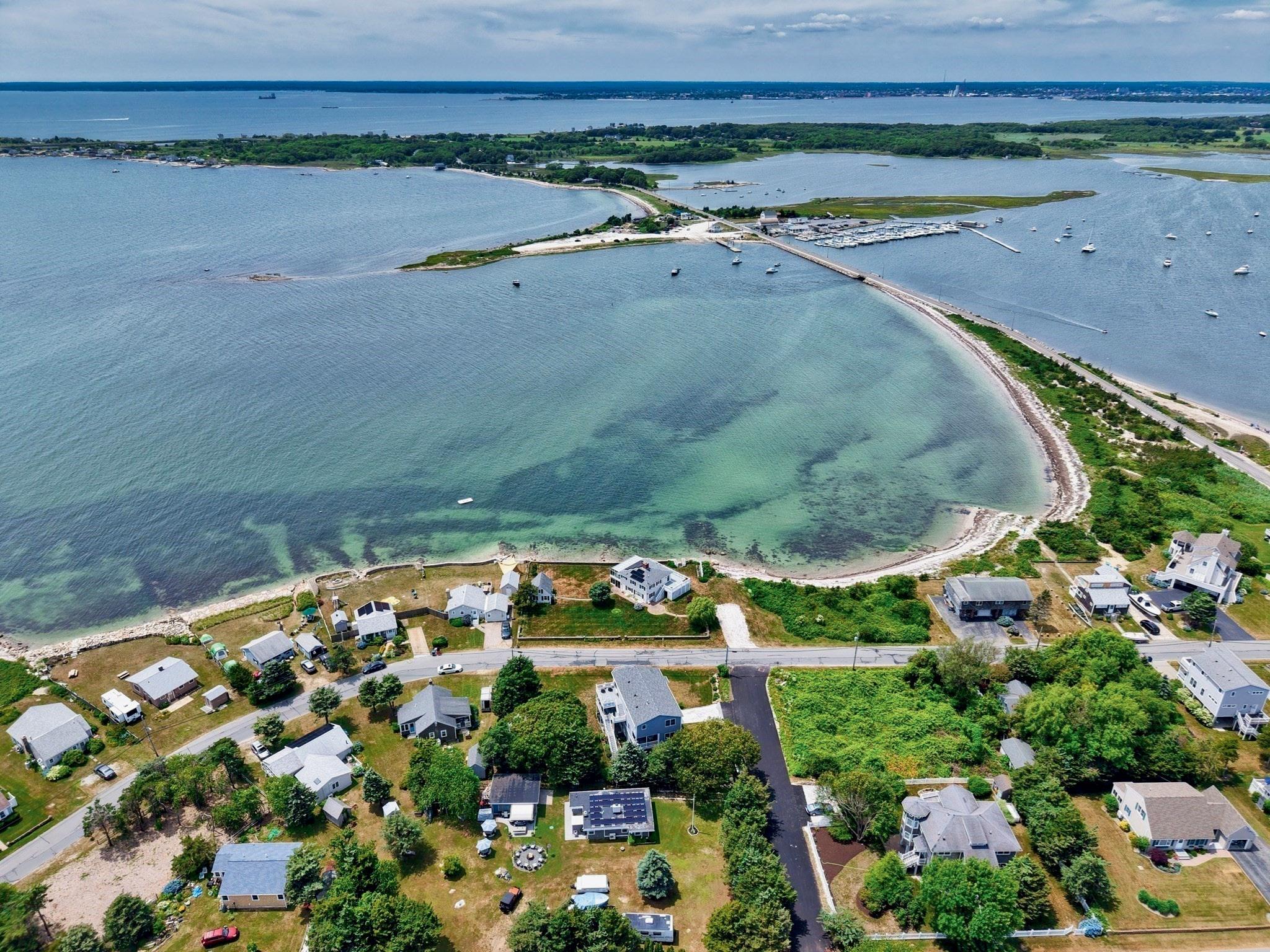

Summer at Last
The Best In Coastal Real Estate In The Most Desirable Locations
Start Packing
We Have Ten Things To Love About Six Destinations
Waiting For Your Arrival
Summer Shoes For Dudes
Revisiting The Classics
We’re Watching Out For You
n How To Make & Keep Your Money Growing
n How To Find A Date And Keep Them Around
n And, How Not To Die On Vacation—Yikes!

Where Will You Spend Your Summer?
Start a Conversation With a Broker Considered to be the Dream Maker of Luxury Real Estate
Connecting clients with the region’s most distinctive coastal communities
Erin Hovan’s work reflects the diversity of the southern New England Coastline—from the working waterfronts and hidden beaches of Massachusetts’ SouthCoast to the Farm Coast and the storied harbors of Mattapoisett, Marion, and Wareham, where the rhythm of daily life follows the tides.
Her personal knowledge and reach seamlessly extend into Rhode Island and Connecticut, where she is also licensed, offering her clients a cohesive perspective across the broader coastal landscape.
From the refined villages of the East Bay and Newport to Connecticut shoreline communities, Erin connects buyers and sellers with properties that reflect both lifestyle and long-term value.
Across all these markets, as a REALTOR®, she brings the same approach: deep local knowledge, far-reaching contacts, absolute discretion, and a level of personal attention that ensures each client’s satisfaction through the utmost care and confidence.
As we enter June, Erin proudly presents an opportunity to experience coastal living with a compelling offering at 39 Ryder Lane in the Village of Marion, Massachusetts.
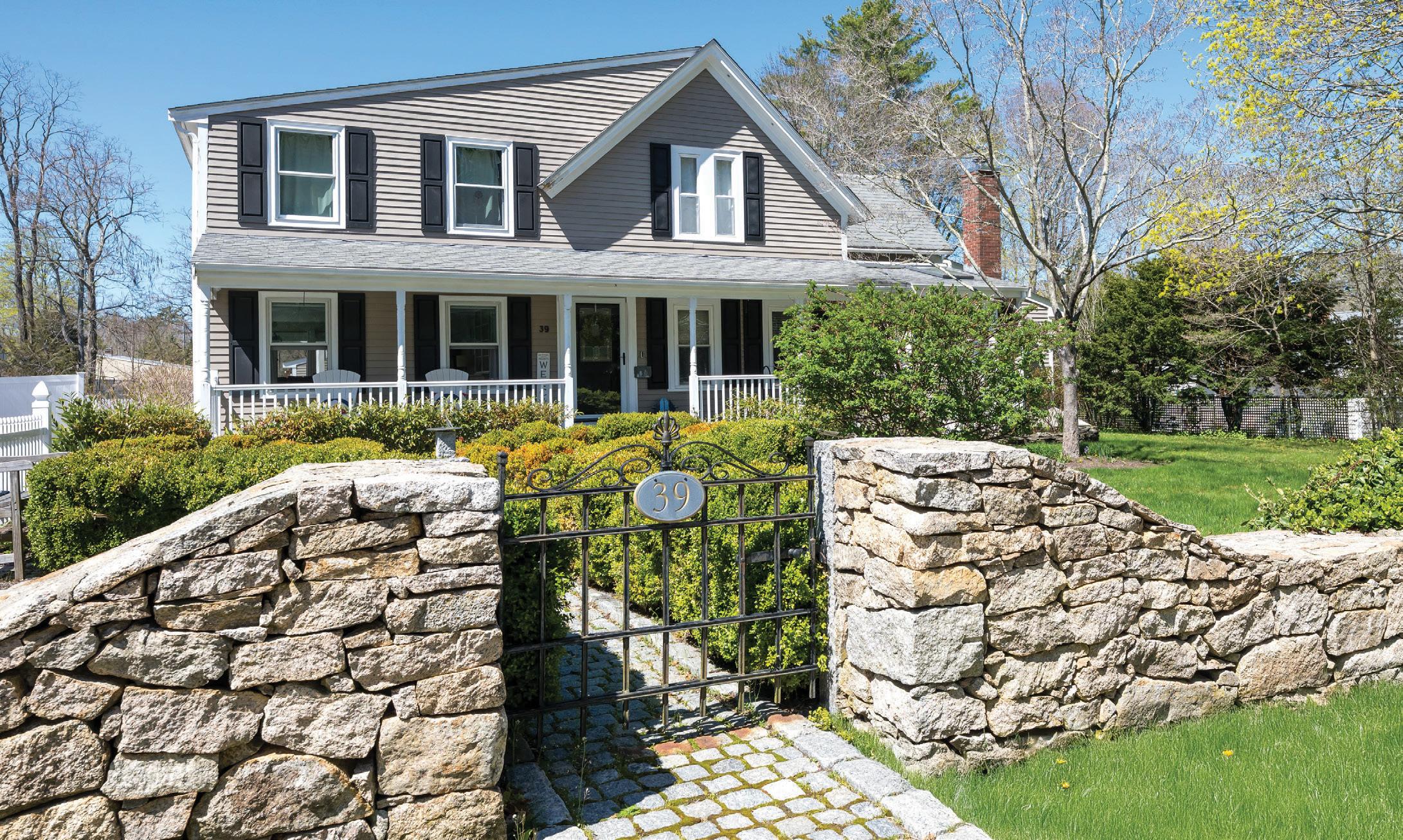
This Month’s Featured Home
A New Journey Begins at 39 Ryder Lane
Where village life unfolds with ease, and every season finds its rhythm
Set
in the heart of Marion Village, just moments from Sippican Harbor, there is an opportunity that is rarely available. It is home that defines a lifestyle, one of walkability, connection, and an authentic sense of community.
Whether strolling to the harbor, the beaches, the village center, or Tabor Academy, daily life here is shaped by sea air and the natural cadence of coastal living.
A legacy home, 39 Ryder Lane is a refined example of coastal living at its best.
Originally built in 1910 and thoughtfully expanded, the home blends timeless character with openness and flow. The main living spaces are designed for both comfort and gathering, anchored by a spacious living room with radiant heat, a fireplace, and sliders that open seamlessly to the outdoors.
The kitchen, featuring custom cabinetry, stone countertops, and a Viking range, serves as the heart of the home, while a dining room with a wood-burning stove creates a warm, inviting setting.
A main-level primary suite adds convenience, complemented by a mudroom, laundry, and well-designed functional spaces.
The second level has multiple bedrooms and flexible areas to accommodate guests, at-home work, or evolving needs. Above the detached three-car garage, a finished recreation room provides additional space for relaxation or entertaining, with potential for conversion to an in-law or guest suite..
The exterior’s curb appeal is complemented by professional landscaping, antique stone walls, a heated saltwater Gunite pool, a fenced enclosure, and expansive decking, creating a private retreat for summer living. Additional features include a cedar wine cellar, an integrated Sonos audio system, and a whole-house gas generator.
Effortlessly combining comfort, flexibility, and an exceptional setting, this new-to-the-market home offers a lifestyle shaped by scenic surroundings, privacy, and an easy connection to the energy of Marion Village. Here, quiet moments at home and in town offer a vibrant coastal living experience in perfect balance—creating a place where you can retreat, gather, and remain connected to one of the SouthCoast’s most cherished seaside communities.
Offered at $1,700,000, it would be my pleasure to invite you for a personal tour of 39 Ryder Lane, in Marion, so you too can feel the connection of a home meant to be cherished by a family for generations.






























EXCLUSIVELY LISTED AT $1,395,000
MARION, MASSACHUSETTS
Custom-designed and built estate set on a 10+ acre estate in the secluded Hammett’s Cove neighborhood in East Marion. This property offers an unparalleled blend of elegance, privacy, and coastal charm. Complete with a 4,000 +/- sq. ft. main home, 3-car garage, gunite pool, pool house, putting green, and access to the association beach and dock, offering easy access to Sippican Harbor!
Welcome to River’s Edge—one of Marion’s most desirable neighborhoods. This move-in-ready 4-bedroom, 3.5-bath home offers 3,592 sq. ft. of updated living space on a private 1.19-acre lot, including a fully finished basement for added flexibility. The chef’s kitchen features high-end finishes and flows seamlessly into spacious living and dining areas, perfect for entertaining. Upstairs, enjoy brand-new hardwood floors throughout, while renovated bathrooms and central air add modern comfort. Step out from the sunroom onto a beautiful bluestone patio to enjoy a stylish, durable outdoor living space.
EXCLUSIVELY LISTED AT $4,650,000
MARION, MASSACHUSETTS
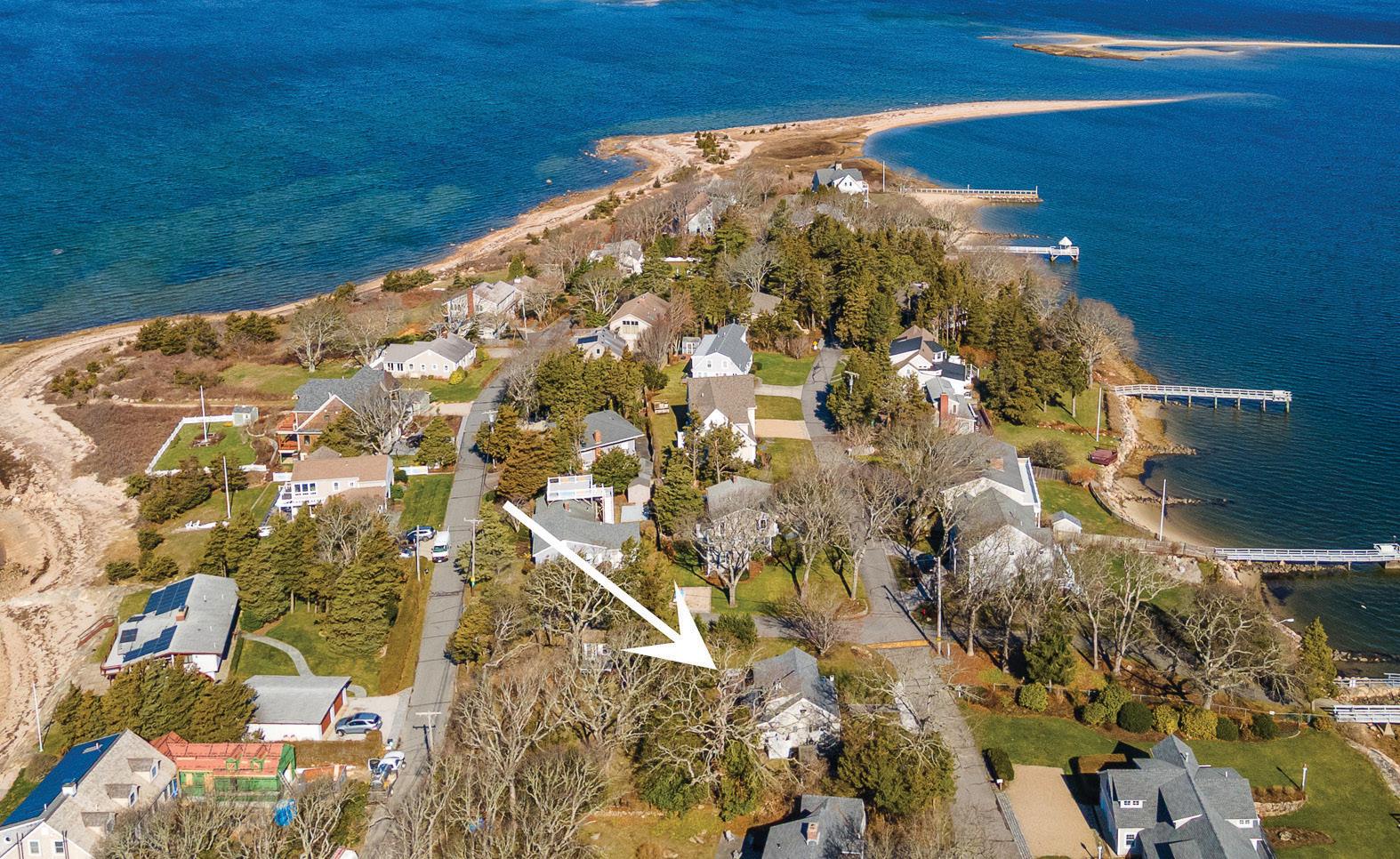
Tucked away on Planting Island in East Marion is this quintessential water-view Cape and adjacent buildable lot. With unobstructed water views and loads of coastal charm, this Cape Cod-style home is ideally located across from the association dock on Planting Island Cove. This 1,242 +/- sq. ft. 3-bedroom, 1 bath home captures the essence of coastal living. What truly makes this property unique is the .18-acre buildable lot included in the sale, offering endless possibilities for expansion, a guest house, a family compound, or added privacy.
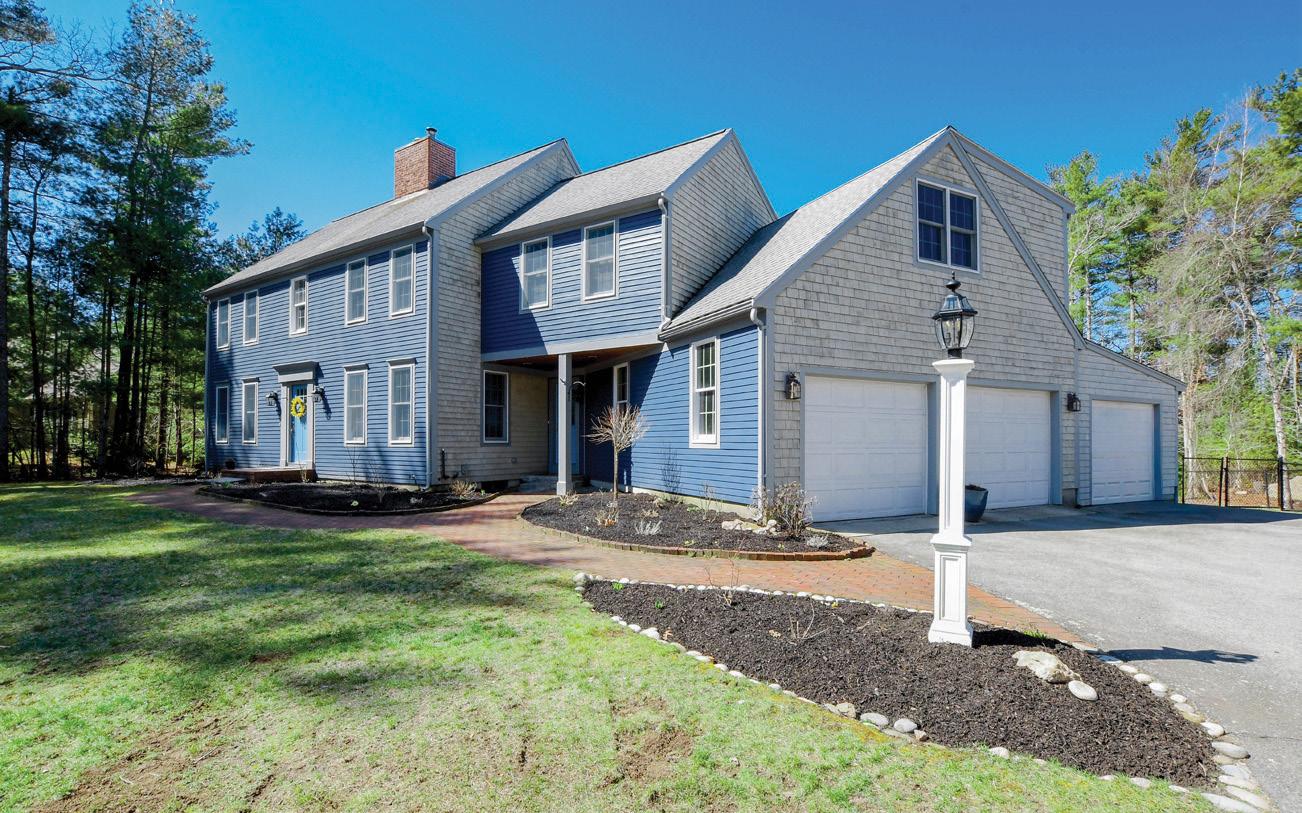
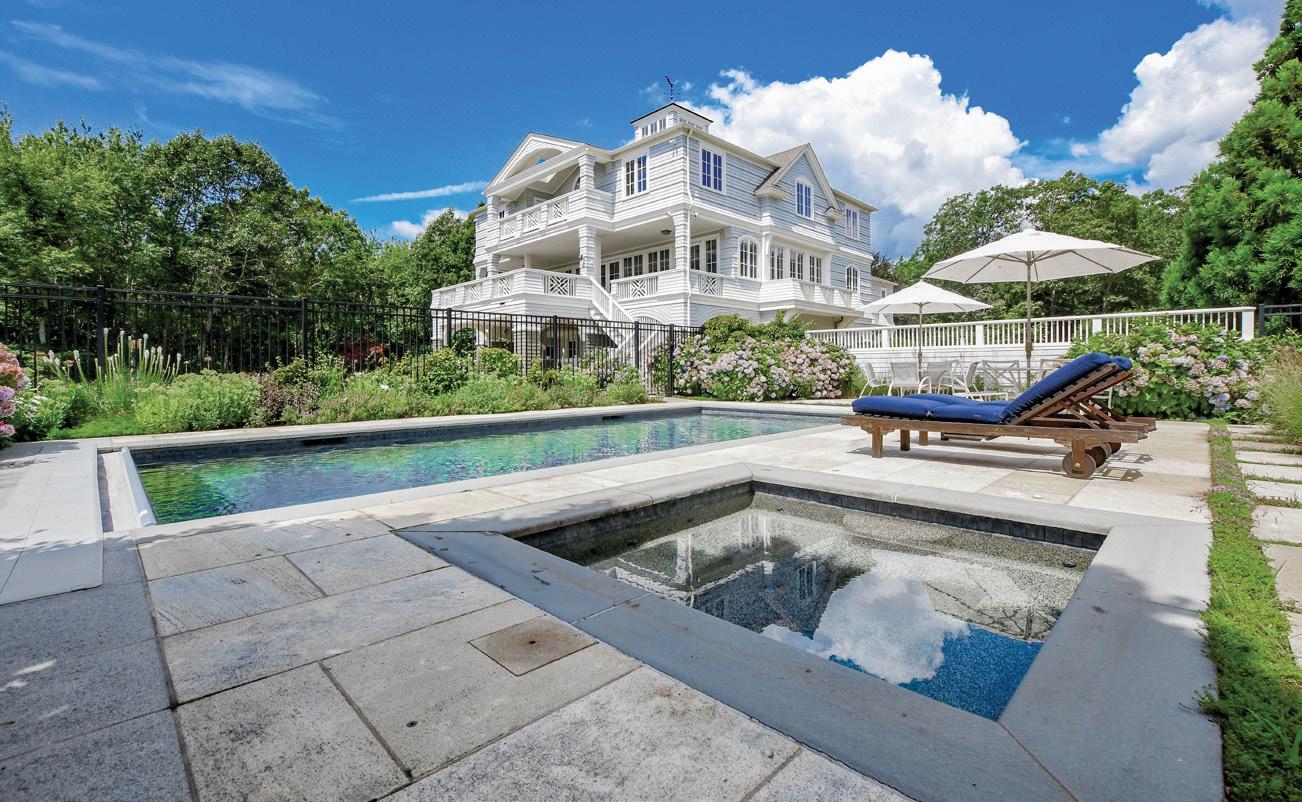
EXCLUSIVELY LISTED AT $1,285,000
MARION, MASSACHUSETTS
Welcome to Marion’s Converse Point, an exclusive waterfront enclave on Buzzards Bay. Set on 2.76 acres, this 5,030 sq. ft. residence offers breathtaking views of Buzzards Bay and effortless coastal living. Built in 2012, this home features 5 bedrooms, 4.5 baths, an elevator, and multiple decks showcasing the sweeping views. The chef’s kitchen features premium appliances and custom cabinetry, flowing to sunlit living spaces ideal for entertaining. Enjoy a heated swimming pool, hot tub, and pool cabana.
INSIDE COVER
Luxury Living. Start a new journey at 39 Ryder Lane in Marion, Massachusetts.


18
IMPRESSIONS
A Legend? Really? You have humbled us with your kindness.

14
DOSSIER
Thoughts From The C-Suite. Bold Words, Secondary To A Bolder Belief. Plus, as the adage goes—with a minor addition, “It’s never a good idea to disparage or disrespect a person, a company, or a team of people who purchase ink in 50-gallon drums, paper by the ton, and admire the U.S. Constitution.

20
COMMUNITY
You’re Not Invisible—At Least To Us. As we all do better, perhaps it’s time we take a moment to notice those who struggle at no fault of their own. It is easy to blame and criticize the defenseless, but it takes character to reach out and show human connection to someone who needs to be seen.

24
STYLE
Well, this is a welcomed change. This month, we corral one of the most important items that men wear, and 90 percent of them pay zero attention to. It’s your shoes, gentlemen, and whether you know it or not, they give away more about you and your potential than an hour-long conversation. Not getting hit up—it’s time for some new footware.

26
SPECIAL REPORT
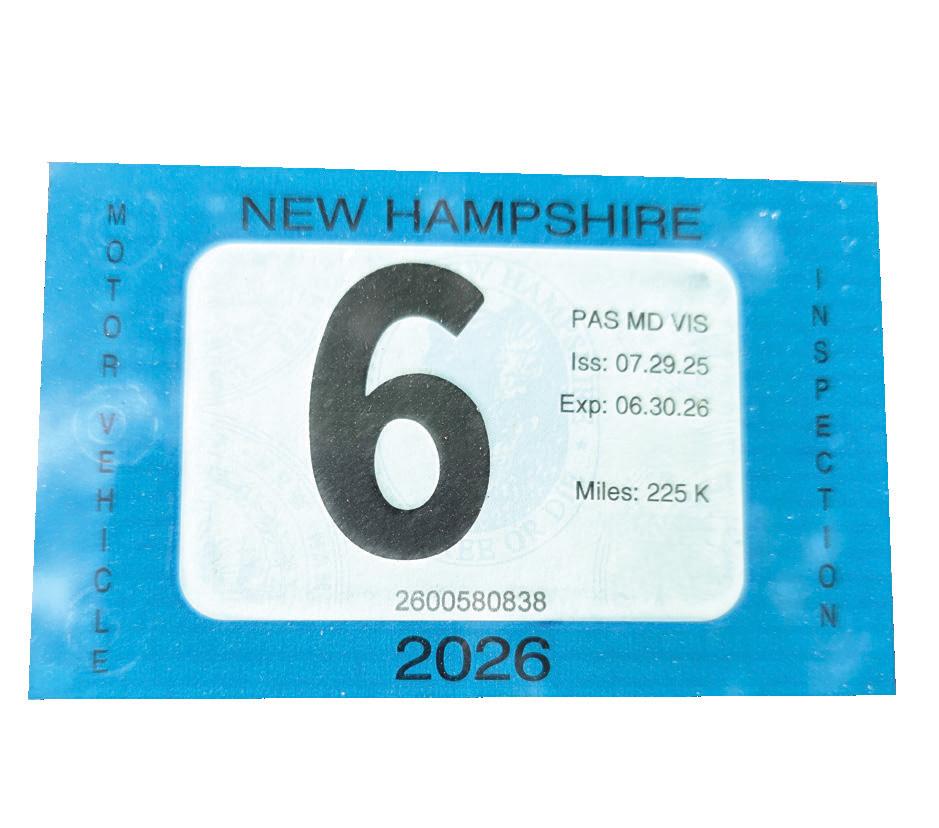
You don’t want to mess with New Hampshire. You can’t make this sort of thing up. Not that long ago, Governor Kelly Ayotte, whom the people love, decided it was time to abolish the annual ‘sticker’ inspection party. You know, each year around your birthday, you get to dish out $40-$50 for the pleasure of wasting your valuable time and money to beep your horn, flash your lights, and show off your tires. Well, no deed goes unrewarded. The company that analyzes
30
LIVING WELL
Crusing For A Disaster. If you haven’t heard, a ship carrying tourists became a petri dish on the high seas. Apparently, another virus has made the news, and deaths have been recorded. Learn the latest about where the ship is and whether this breakout is coming to a town or city near you.
34
INTIMACY
Into The Looking Glass. In probably half of new relationships, the single most serious issue for both sexes is dissatisfaction after meeting someone who honestly believes they are put together and are 9s to 10s, but they are not even close. Really, it’s more common than most people would like to believe. Yet it accounts for more first dates that never see a second one. Considering this, it might be time to level up, face reality, and take the advice from that 1980s Army recruitment ad: “Be The Best You Can Be.” Find out what we learned; it can’t hurt.


36
CAPITAL
Love Letters From Wall Street. It’s true: ‘breaking up is hard to do,’ and many investors are fracturing the hearts of their financial advisers and coaches. The reason? Investors have found a new love that is open and kind, full of great advice, never has a harsh word to say, and is so bright and informative that they keep going back for more. Welcome to AI financial advice. Millions are realizing that the information they need is accessible on their screens 24/7 with depth and bandwidth focused on investing, allocation, thesis development, and discipline; all the same things you should be getting, but might not. On top of all of this, in many cases, it’s free. We broke down the numbers and found that instead of paying, you can start earning.
40

SLICES OF LIFE
A Guide To Your Neighborhood. Here is a tongue-in-cheek parody of class structure which develops over time. Some profiles might be familiar, others you could have had contact with, and in those rare moments, you did everything in your power to totally avoid them. It’s meant to be humorous, but we expect a few complaints— what’s new? While not everyone will be a fan, we advise taking the joke and seeing the humor. And if you don’t, you might just end up confessing your sins.

44 GET PACKING
Ten Things To Love About Six Exciting Places To Visit This Summer. Life is too short to stand still. And because you’re in the hub of New England, there isn’t any reason why you can’t island hop or indulge in a metro vibe whenever you’re in the mood. To lessen the burden of planning and checking where you want to end up, we’ve taken the liberty to list the Best of the Best in the places you want to be. Hurry and pack, your driver is waiting.
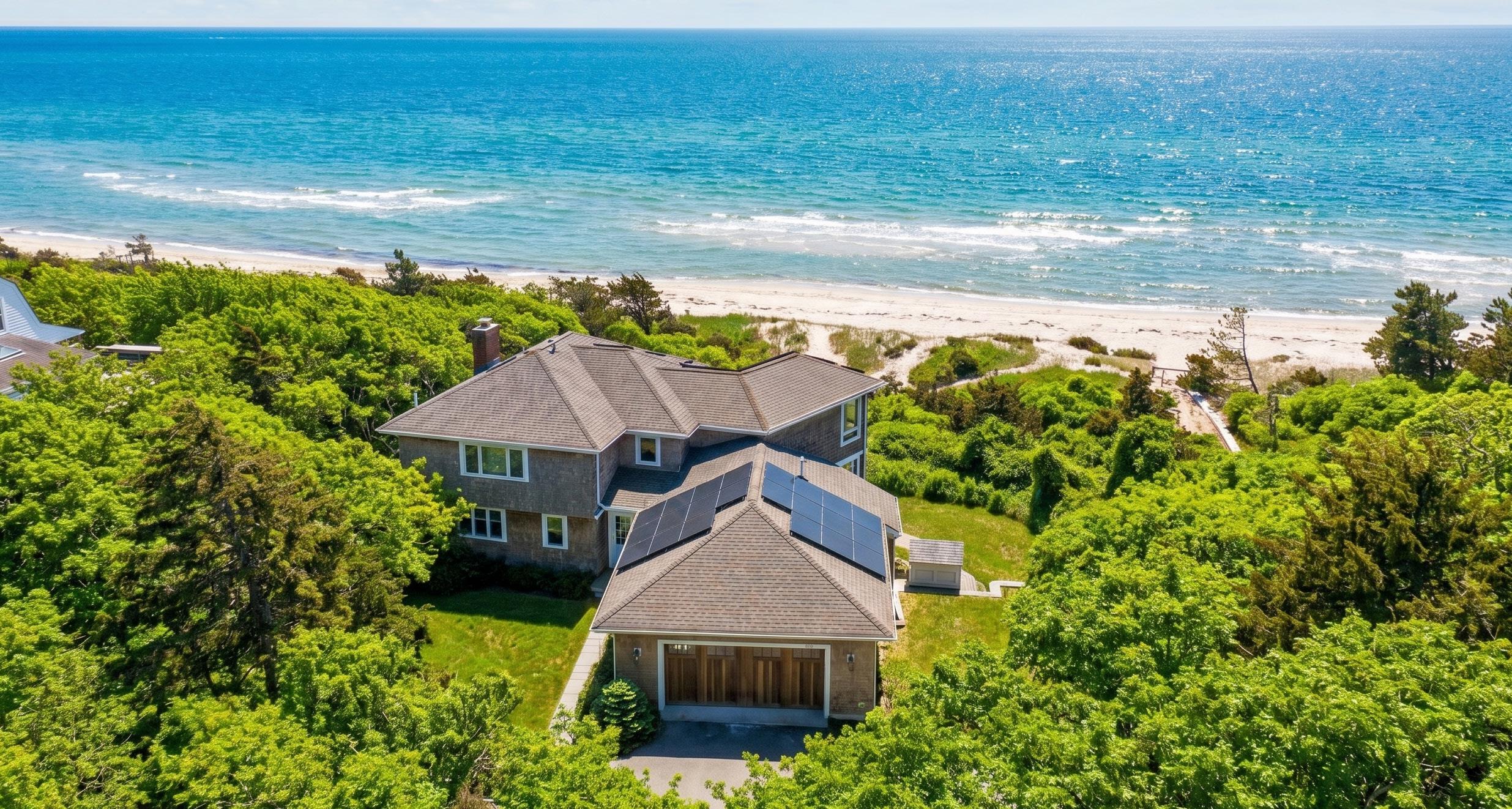
WEST HYANNISPORT $6,500,000
Rare waterfront offering featuring 100 feet of private sandy beach, and a home with a compelling
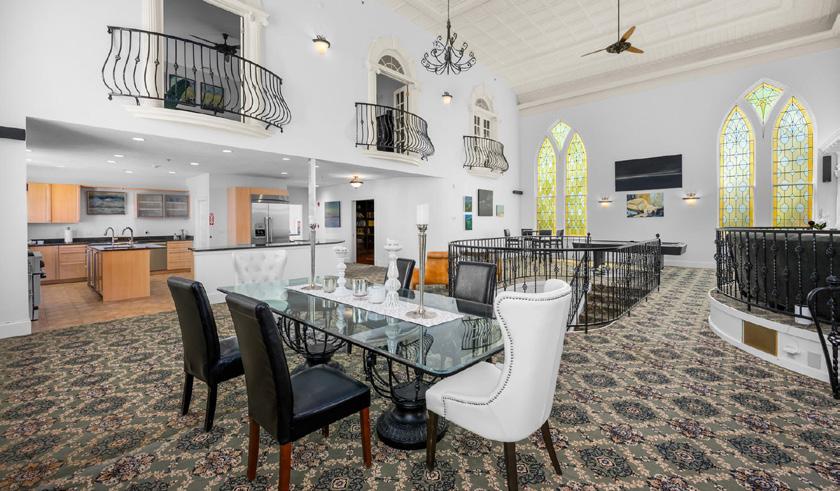
SANDWICH $1,995,000
Historic First Parish Meetinghouse now transformed into a stunning light-filled five bedroom residence.
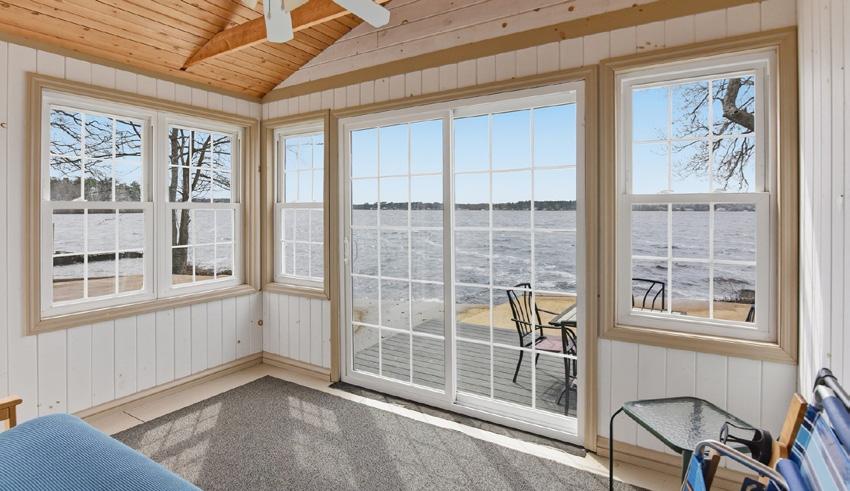
LAKEVILLE $1,025,000
50 feet of frontage on Massachusetts’ largest fully recreational pond.
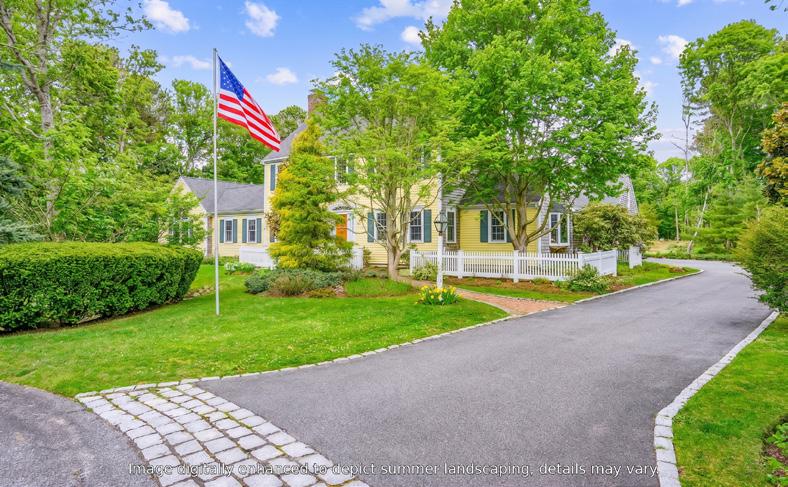
CENTERVILLE $1,550,000
Charming 4-bedroom Colonial with a swimming pool, set on 1.5 acres at the end of a quiet cul-de-sac.
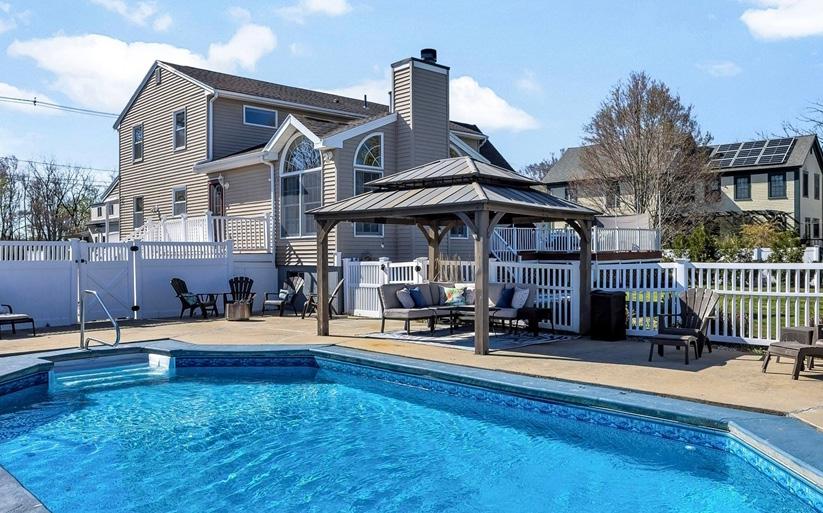
DIGHTON $869,900
Exquisite multi-family estate, gracefully set on nearly an acre with captivating water views.
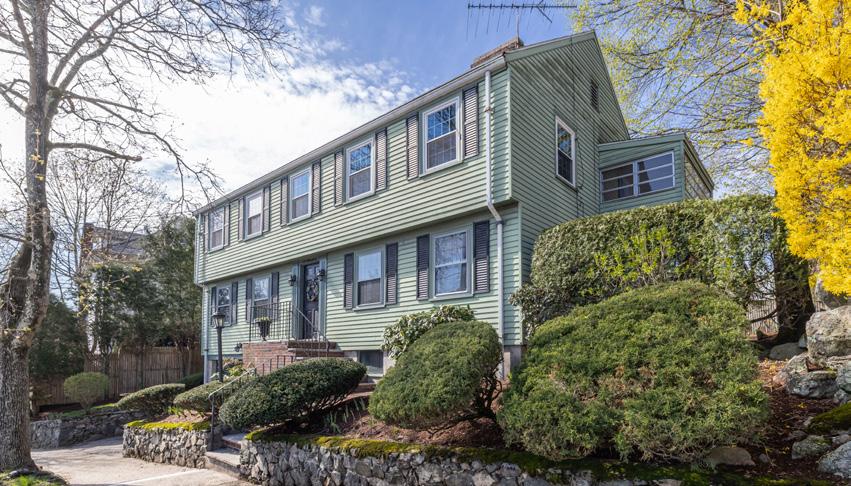
ARLINGTON $1,149,000
Beautiful, sun-filled two-family home ideally located just one block from Mass Ave.

Beautifully renovated coastal retreat has been thoughtfully updated from top to bottom.
WAREHAM $575,000






COMMERCIAL SPACE
AVAILABLE AT THE DEPOT PLAZA 264 MAIN STREET LINCOLN, NEW HAMPSHIRE (KANCAMAGUS HIGHWAY/ROUTE 112)
Property Overview:
Office/Retail/Mixed Use
Approximately 1,370 sq.ft. Lease Type: NNN - CAM, Utilities (includes heat), taxes are tenant’s responsibility
Key Features
WORK FREE OR DIE
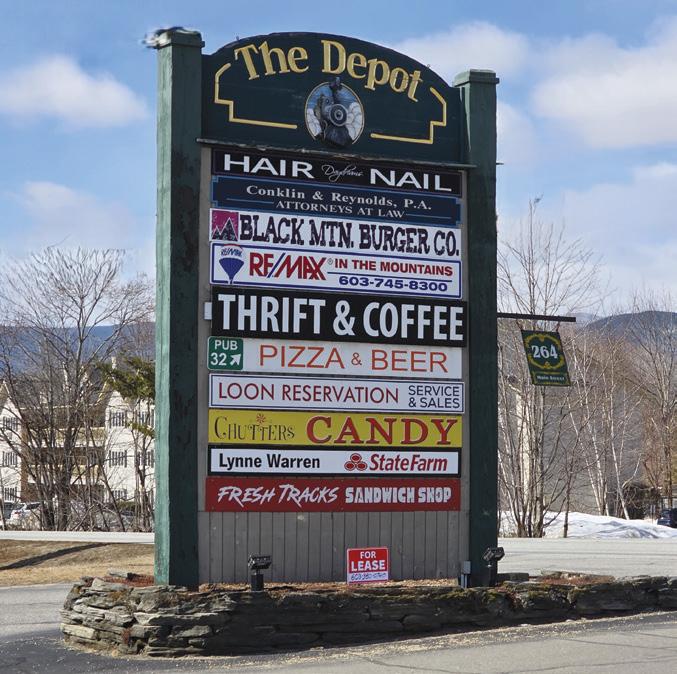

• Highly visible mountain location at a four-season tourist destination
• Located between South Peak & Loon Mountain
• Foot traffic from multiple condo developments and anchor tenants
• Traffic count: Route 112 is a major conduit between Lincoln and North Conway, 6-9k vehicles passing daily
• Excellent curb appeal, with the storefront facing a large parking lot and a roadway at ground level
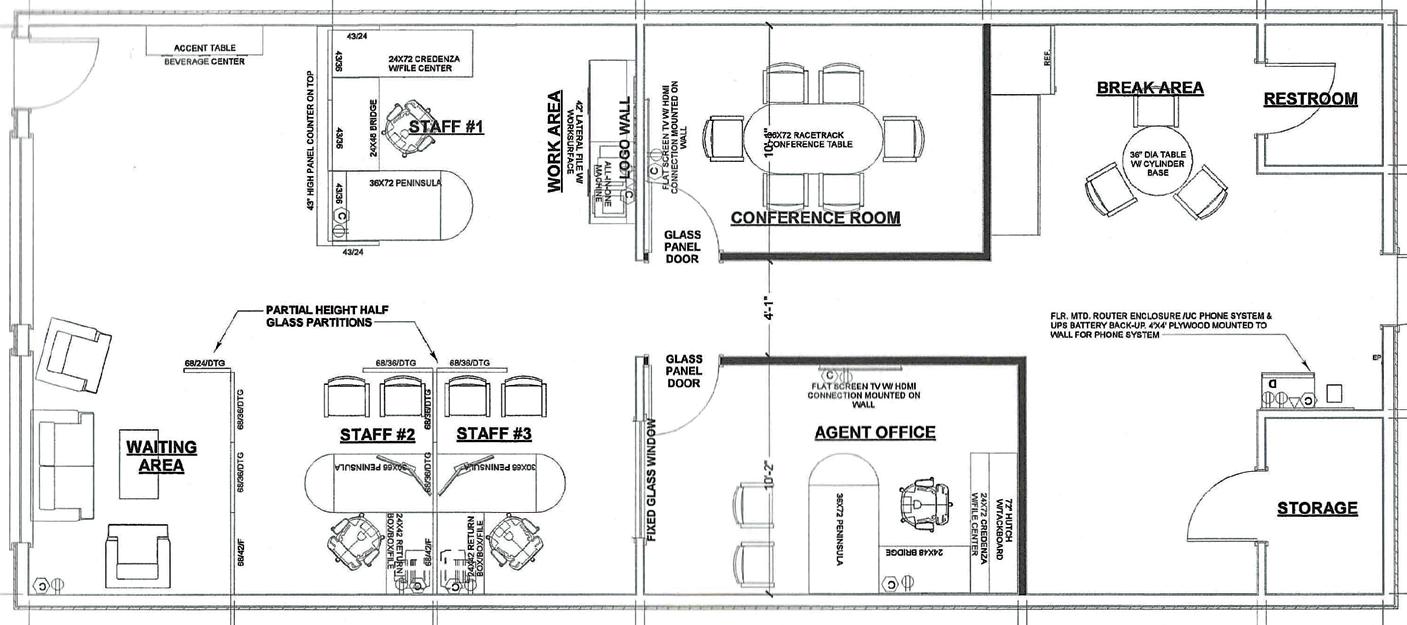
• Central heat & ac, security cameras, newly renovated as an office, offers a flexible floor plan for retail conversion
• Large vertical roadside (double-facing) signage advertising tenants; one sign above the space
• Fees, taxes & utilities: CAM: Utilities (includes heat), taxes are tenant’s responsibility
Available this Summer Lease Term Minimum of 3Yrs + Uses:


THOUGHTS FROM THE C-SUITE

Bold Words, Secondary To A Bolder Belief
The last thing any serious media organization needs to address is a misreading of the First Amendment. And yet, here we are.
To refresh: “Congress shall make no law… abridging the freedom of speech, or of the press.” Ratified in 1791, it stands as one of the most consequential sentences in American history—a firewall between the government and a free press. What the framers could not have fully anticipated was the other kind of pressure. Not legislative. Not judicial. But commercial advertisers who believe that a contract for ad space is also a contract for editorial silence. Patrons who confuse investment with influence. We have experienced this firsthand, and more than our share. Over more than two decades, we endured verbal attacks, profanitylaced recorded messages, and recurring threats to withdraw advertising whenever published commentary fell outside a particular ideological comfort zone. The irony, quietly noted each time, was that content aligned with that same worldview passed without comment. No calls. No complaints. Apparently, a free press is only worth defending when it agrees with you.
The threats, ultimately, were what they always were: uninformed and without consequence.
What those who attempt this kind of pressure consistently misunderstand is their audience—and us. We are not ideologically aligned. We are not a mouthpiece for any party, movement, or cause. We publish a range of voices, perspectives, and opinions without apology. In fact, there are months when the very constituency our former advertiser accused us of appeasing is equally unhappy with what we’ve printed. We hear from them, too.
What we align with is something more durable and considerably harder to argue against: common sense. It is, we have found, the one position that tends to make its critics look rather foolish in the attempt.
Readers are more intellectually diverse, more independent, and more discerning than any single advertiser’s assumptions about them. A publication’s value to its community lies precisely in that breadth—not in the narrow reflection of one sponsor’s preferences.
We hold no bitterness. We do, however, hold the record. And we remain, as we have always been, in print. H

OMoving On…Looking Up
ver the last 12 or so months, we’ve reported on the potential for a major shift in transportation, specifically in personal and commercial flights.
Our interest was prompted by the introduction of electric air taxis, a.k.a. Electric Vertical Takeoff and Landing (eVTOLs), that will soon offer a quiet, very fast, zeroemissions ride, flying over the gridlock faced almost all day long in major metro areas around the country. Names we’ve done in-depth stories about include Beta, Joby, and Archer. Each company has an interesting, individualized beginning and focus, and they are now simultaneously advancing more quickly than predicted.
Making recent headlines is Joby. On April 27, 2026, the aviation company completed the first point-to-point electric airflight demonstration in New York City. Its eVTOL craft departed from the John F. Kennedy International Airport (JFK) to the Downtown Skyport in Midtown Manhattan in under 10 minutes, a trip that normally takes 60-90+ minutes during normal daytime traffic and up to 90 minutes to two hours during rush hour(s), poor weather conditions, holidays, or major events.
In a press release from Joby’s marketing department, we learned that the event came with high praise. “New York has always been a city that defines the future by demanding better,” said JoeBen Bevirt, founder and CEO of Joby. “We first flew here in 2023, and now we’re showing what the next chapter looks like: a quiet, zero operating emissions air taxi service designed to better serve New Yorkers. This week, flying between JFK and Manhattan, we showed what the White House-backed eIPP initiative makes possible and offered New York a look at what’s coming.”
“The bridges, tunnels, airports, and rail lines that the Port
Authority operates move hundreds of millions of people through this region every year, and our job is to make sure that network keeps pace with the future.”
Adding substance and a look to the future, Port Authority Chairman Kevin O’Toole had this to say. “This cutting-edge aircraft is exactly the kind of innovation we have a responsibility to test, understand, and help shape for the good of the region and the public. These flights advance our work to determine how nextgeneration aviation technology can serve the people of New York and New Jersey.
And finally, a fine point was perfectly put on an exciting day. “We operate some of the busiest airports in the world, and with that comes a responsibility to think seriously about what aviation looks like in the decades ahead for our passengers, for our communities, and for the environment,” said Port Authority Executive Director Kathryn Garcia. “These demonstration flights are one data point in a larger body of work we’re building around next-generation electric aviation, and it reflects our conviction that responsible exploration of these technologies now is how we prepare this region for the future.”
Central to Joby’s New York strategy was the 2025 acquisition of Blade Air Mobility’s passenger business, now a wholly owned subsidiary of Joby. Blade’s operational expertise, broad base of passenger infrastructure in Manhattan, and at key New York area airports enabled it to serve more than 90,000 passengers in 2025. Blade provides the foundation for commercial electric air taxi service at scale and will accelerate the city’s transition from helicopters to quiet, emission-free aircraft. H

If Information Is Power, What Does Wealth Provide?
After hearing someone comment that it’s the millionaires across the country keeping the rest of us out of a recession, we decided to investigate. What we found is startling; the short answer is ‘yes,’ and that is the problem.

The numbers are hard to process. According to Yahoo Finance, the U.S. is home to nearly 24 million millionaires, representing roughly 40 percent of all millionaires worldwide. But that headline figure—$1M to just under $1B—represents an enormous range of people, from the retired teacher whose house appreciated and whose 401(k) compounded for 35 years, to the tech founder sitting on $900 million in stock. They are not monoliths; instead, they share enormous collective weight and strength in investment capital.
Backing the answer to our questions, a report from Moody’s Analytics found the top 10 percent of earners drove 49.2 percent of all U.S. consumer spending in the second quarter of 2025—a historic high. That share alone has grown steadily: roughly 43 percent in 2020, 46 percent in 2023, and nearly half today.
Going one tier wider and the picture sharpens further. The top 20 percent of income earners account for 59 percent of all consumer spending in the U.S.—a near-record high. The bottom 80 percent, by contrast, drive only 41 percent—a record low, per Axios.
And as for what Moody’s chief economist Mark Zandi sees, “The U.S. economy is being largely powered by the well-to-do, and as long as they keep spending, the economy should avoid recession— but if they turn more cautious, for whatever reason, the economy has a big problem,” as found on the Yahoo Finance website.
BUSINESS & TAXES: A FINANCIAL ENGINE
Growth goes beyond spending. A large portion of wealthy Americans, either directly or indirectly, own businesses, making
them “the major engine for creating, sustaining, and growing U.S.” employment. They also pay a disproportionate share of federal income taxes, which fund public services across the income spectrum, according to Nasdaq. (From this, it sounds like plenty are paying their fair share).
AN UNCOMFORTABLE FLIP
Reported by CNBC, the top 20 percent of the wealthiest U.S. households owned 71 percent of the country’s total wealth at the end of 2024. The bottom 50 percent of households, by contrast, hold just over 2 percent of the nation’s total wealth, with an average of about $52,000 in total assets. In another study focused on consumer spending, Emory Economic Review found that the top 10 percent share of consumer spending—now nearly 50 percent—is up sharply from 36 percent thirty years ago. What that trend line reveals is not just that wealth is growing at the top, but also that dependence is growing.
Lower-income households are pulling back hard: Synchrony Financial, which services retail-focused credit cards, reported a 4 percent drop in first-quarter 2025 spending among its customer base, and Bread Financial and Citigroup’s retail card units also posted year-over-year spending drops.
WHERE DO THE ANSWERS LIE?
To answer the original question directly: information gives you the ability to act, while wealth gives you the ability to sustain that action—through downturns, disruptions, and the long stretches of time between when you plant and when you harvest.
The data makes the case more powerful than any motivational speech. The wealthy are not keeping everyone afloat out of generosity or civic spirit. They’re doing it as a simple byproduct of having assets that compound, businesses that employ, and purchasing power that doesn’t evaporate when prices rise. The economic floor for millions of Americans is, at this moment, being held up by people who, a generation or two ago, decided to get on the train and invest in their futures and yours.
Side Bar: If we are to continue the prosperity that avoids the bullet of recession, then this next part is a note to anyone young enough to have time on their side. To be frank, wealth provides options beyond your wildest dreams. The freedom to choose your path and to say yes to a myriad of opportunities you can’t fathom today will be the greatest window of opportunity to possibly open.
Today is the first day of the rest of your investing life. This isn’t a warning. It’s an invitation.
THE THESIS
The argument is straightforward. Money, when put to work early, grows in ways that feel almost unfair to anyone who starts late. You do not need to be wealthy to begin. You do not need a financial advisor, a six-figure salary, or a perfect plan. You need a decision, directions, and the discipline to stay on the course. Markets reward patience above almost everything else. The young investor’s greatest asset is not capital—it is time. Write up a simple plan and stick with it—always.
LEAKAGE
Before money can grow, it must survive. Leakage is the quiet enemy—the subscriptions you forgot you have, the daily conveniences that add up to hundreds a month, the lifestyle inflation that follows every raise. None of these things are wrong
on their own. The problem is unconscious spending: money leaves your hands without your full awareness or intention. Watch where your money goes for one month. Not to punish yourself—simply to see clearly. Most people are surprised. What you find will show you exactly where your investment capital is already hiding.
COMPOUNDING
Albert Einstein allegedly called compound interest the 8th wonder of the world. Whether he said it or not, the math is real. When your money earns a return, and that return earns its own return, the growth is not linear—it accelerates. A modest investment made at 22 is worth dramatically more at 60 than the same investment made at 32, not because of the amount, but because of the decade of compounding it received.
Consider this: $200 a month invested consistently at a modest average return from age 22-62 produces a number most people associate only with inheritance or the lottery. The secret is that there is no secret. It is simply time, doing its work.
DISCIPLINE
This is where most people stumble—not because they lack intelligence, but because markets move, headlines panic, and the temptation to react is powerful. Discipline in investing means staying in when everything feels uncertain. It means not cashing out when the market dips, not chasing a trend because everyone around you is excited, and not abandoning a long-term plan for a short-term feeling. Yes, there will be days when a pack of Rolaids could help; otherwise, you will get used to the rise and fall; it’s what markets do.
Discipline is not deprivation. It is the practice of letting your future self benefit from decisions your present self makes. It is the difference between someone who has options at 50 and someone who does not.
LIVE WELL. INVEST FIRST.
None of this means a life without pleasure. Travel. Go to the concert. Buy dinner. Enjoy the years that are meant to be enjoyed. But do it in that order: invest first, then live on what remains, rather than spending first and invest whatever is left—because whatever is left is almost always nothing.
You are not giving anything up. You are staying in control. There is a profound difference between spending money because you choose to and spending it because you have no better plan. One feels like freedom. The other, eventually, does not.
The investment train is not a metaphor for the lucky or the privileged. It runs on time, and right now, yours is running. The only question worth asking is whether you’re on the tracks. H
BY PEET NOURJIAN

The Legend
BACK IN AN OLDER CENTURY
A PUBLISHER SET OUT TO SEA HIS COURAGE BOLD, HIS RIGGING SQUARE IN SEARCH OF STORIES HE COULD SHARE
AT EVERY PORT HE’D WALK THROUGH TOWN SKETCHING HOUSES AND WRITING DOWN WHAT MADE EACH VILLAGE SO UNIQUE HOW PEOPLE LIVE, THE WAY THEY SPEAK
ONE STOP ALONG THAT OCEAN ROUTE BECAME THE KEY IN HIS PURSUIT A LOCAL PAPER IN DISTRESS WAS SELLING OFF ITS PRINTING PRESS
RECOGNIZING EACH WAS IN NEED CONTRACTS WERE DRAWN AND BOTH AGREED THEIR MONTHLY MAGAZINE WOULD HOST THE WORLD AT LARGE FOR THE SOUTH COAST
TEACROFT
A VOYAGE EAST ONE STORMY NIGHT HIS SHIP SAILED TOWARD AN ISLAND LIGHT TOSSED IN A SQUALL AS BLACK AS INK TO HARBOR HOUSES PAINTED PINK
MORNING SUN IN ALL ITS GLORY TOLD BERMUDA’S FABLED STORY OF COBBLED STREETS, PALM TREES ALOFT AND COZY INN THEY CALL TEACROFT
THERE THE CAPTAIN GOT TO SAVOR TEAS WITH AN EXOTIC FLAVOR HE FILLED HIS TRUNK WITH EVERY BRAND FOR CONNOISSEURS WITH CUP IN HAND
MEXICANTINA
A LOSS OF WIND HAD CAUSED ALARM AND LEFT THE CAPTAIN’S SHIP BECALM TO DRIFT ALONG WITH TIDAL FLOW INTO THE GULF OF MEXICO
AT BREAK OF DAWN THEY HIT THE BEACH WHERE MEN ON HORSEBACK HOLLERED, “REACH!” BANDIDOS WAVING GUNS AND SWORD DEMANDED ALL THE GOODS ONBOARD BUT BEING QUITE THE DIPLOMAT THE CAPTAIN SAT THEM DOWN TO CHAT IN NO TIME THEY HAD STRUCK A TRADE FOR SALSA OF THE HIGHEST GRADE
COFFEE CARTEL
CHARTING A COURSE NORTH OF BRAZIL THE CAPTAIN’S NOSE DID QUICKLY FILL WITH PUNGENT SMELLS WAFTING FROM SHORE “DROP THE SKIFF SO I CAN EXPLORE” HE TRACKED THE SCENT INTO THE BRUSH THROUGH DENSE JUNGLE, STEAMY AND LUSH TO HILLSIDES VALLEYS IN BETWEEN WHERE FINGERS PICKED THE COFFEE BEAN
A PLANTER IN A BROAD RIMMED HAT GREETS THE CAPTAIN, TELLING HIM THAT “THE SOIL AND SUN EMBRACE EACH SIP” DONKEYS HAULED SACKS BACK TO THE SHIP
WINE CAVERN
WHILE ANCHORED OFF THE COAST OF FRANCE THE CAPTAIN RAN INTO BY CHANCE BELOVED ARTIST CLAUDE MONET WHO SERVED A GLASS OF BEAUJOLAIS
THE CAPTAIN ASKED IN BROKEN FRENCH “I’VE NEVER KNOWN A WINE TO QUENCH THE THIRST IN ME WITH SUCH DELIGHT” THEY DRANK AND TALKED ALL THROUGH THE NIGHT
BY EARLY MORN THEY’D STRUCK A DEAL IF HE WOULD POSE CLAUDE WOULD REVEAL THE VINEYARD WHERE THE WINE WAS PRESSED AND SOON HIS CELLARS STOCKED THE BEST

CLOSET SAFARI IN ICE BENEATH THE LONDON BRIDGE HIS SHIP WAS FROZEN LIKE A FRIDGE TO GET WARM CLOTHES FOR COLD SHIPMATES THE CAPTAIN STRAPPED ON HIS ICE SKATES
A PAIR OF EYES WATCHED FROM THE DOCK BELONGING TO THAT SLEUTH SHERLOCK WHO WORE A SUIT OF SCOTTISH TWEED HE REACHED OUT TO THIS MAN IN NEED
THEY SHARED REFRESHMENT FROM HIS FLASK THEN HOLMES DID WHAT THE CAPTAIN ASKED “SHOW ME WHERE A GENTLEMAN GOES TO BUY THE FINEST CUSTOM CLOTHES"
SALMON RUN ATTRACTED BY THE NORTHERN LIGHTS THE CAPTAIN MARVELED AT THE SIGHTS ALASKA’S GOLD RUSH FEVER BROUGHT ALONG WITH GIANT FISH THEY CAUGHT
BY FAR THE SALMON WAS SUPREME TWISTING, THRASHING ITS WAY UPSTREAM FOR THE EYE, A SIGHT TO BEHOLD FOR THE TONGUE, SMOKED FLAVORS UNFOLD
THE CAPTAIN HOPED HE COULD DEPART WITH SECRETS OF THAT SMOKEHOUSE ART BUT IN THE END NONE WERE REVEALED SO HE BOUGHT THE FISH VACUUM SEALED. H
The Unseen Value In Every Life

BY CATHERINE HILDERBRAND
It doesn’t take a holiday to be compassionate— just a different perspective
here’s a man who sits outside the corner pharmacy most mornings. He’s got a paper cup, a worn jacket, and soft eyes that have seen things most of us will never experience. The public walks past him the same way they hurry by a mailbox—he’s just there, part of the concrete landscape. To many, he doesn’t exist. And at a time when we are self-absorbed, attempting to make it through each day, our attention and focus are scarce commodities, causing us to guard against interference and distraction, both physical and emotional. We are the lucky ones—we have options—whereas he doesn’t; he’s surrounded by vulnerability.
Something worth contemplating: he wasn’t always the man on the corner, lonely and ostracized; he’s someone’s child, he has birthdays, albeit uncelebrated and lonely year after year. He’s lost count and is uncertain if he’ll have another; life on the street is dangerous and unpredictable.
As much as we try to ignore his humanity, we can’t. Our minds aren’t allowed to expunge curiosity. Does he remember his first day of school, his first love, and moments when he laughed so hard his sides hurt? Was he the kind of person who was available to come to someone’s aid during his previous life? Was he a teacher? Is he a veteran? Perhaps a father, and at some point, a caring husband? We’ll never know, because we treat him as though he is invisible, worse, disposable in a disposable society.
Something happened—maybe a lot of unpleasant things took over his life and derailed his chances of experiencing normalcy, due to closed doors he never got to open or a glimpse of optimism through the keyhole. Don’t believe for a moment that this is the direction he chose. People don’t seek pain, cold, and isolation. No one does, and no one should feel alone and unwanted. Perhaps it was circumstances beyond his control, a life that abandoned him before he could set his sights on a future. These are realities we will never know if we keep walking without ever offering so much as a word of encouragement.
We don’t get to pick when we wake, who will care for our needs, or the environment we’re placed in. Arriving in the world comes with a ticket to life’s lottery; it comes without promises or guarantees. Parents, neighborhoods, schools, money, and access aren’t earned; their level or lack thereof is predetermined for us; it’s the luck of the draw. We don’t get to choose the stability or chaos of the home we grow up in, the presence or absence of people who believe in us, or whether addiction, mental illness, or violence came knocking before we were old enough to understand what any of it meant.
It seems a disconnect occurs when a person’s value isn’t visible to others, for whatever reason. We’re all so caught up trying to sort out our own lives that we have little bandwidth left to consider someone else’s story. As a result, we make do with fragments—a glance, a first impression—and let those instances harden into judgment. We see the polished exterior and assume something noble underneath. We see the fraying edges, we assume the opposite. But it’s often the torn sleeve, a missing button, or mismatched shoes that frame a person incorrectly, and miss the reality that they carry more weight than we’d ever be asked to bear. Underlying our need to block out what we don’t understand is an unseen resilience in lives we’ve been conditioned to overlook.
We tend to think of giving back as writing a check, dropping off canned goods, or volunteering an afternoon at a soup kitchen around the holidays. Each of those things is genuinely good, but if we’re honest, there can be a certain comfort in helping at arm’s length, where gestures ease our conscience without requiring us to truly engage. It’s a bit like attending a religious service once a year and trusting that the goodwill and blessing will stretch until the next year. Don’t laugh, many of us are guilty as charged.
And here’s what doesn’t change regardless of one’s station and agency: value and intrinsic worth, the simple dignity of being alive and sharing this space with the rest of us. It means that every person possesses inherent respect and independence regardless of external factors and circumstances.
A good number of us not only lucked out, but we took that good fortune largely for granted. A steady home, loving parents, teachers who saw something in us, leading to opportunities that set our paths ahead of others—these aren’t achievements, they’re gifts. It’s not that anyone else was less deserving or tried less hard; it’s simply that life isn’t fair. It doesn’t distribute its hardships according to merit or its grace according to need. It unfolds, indifferent and uneven, and where you land on that spectrum is largely a function of things entirely outside your control. That’s not a political statement. It’s an honest one.
And here’s what doesn’t change regardless of one’s station and agency: value and intrinsic worth, the simple dignity of being alive and sharing this space with the rest of us. It means that every person possesses inherent respect and independence regardless of external factors and circumstances.
All persons on this earth, from the executive to the addict, including the man with the hollow stare outside the pharmacy, need a sense of self-identity, even if it is a silent request for acknowledgment and recognition as a co-existence, noncontingent upon accomplishment, appearance, or possessions. The need for emotional connection is baked into us; we are a social culture, and because of this, we long to be treated as worthy of understanding and shared emotions.
Here’s the thing: people matter, and they should be acknowledged for no reason other than the simple fact that they’re each one of millions of fibers stitched into a massive fabric we call society. And it’s because of this interlocking mosaic that we have an obligation to keep repairing and maintaining the weakened area so that the entire structure remains fortified and resilient against further damage.
Giving takes many forms and often costs nothing. A "Good morning." A genuine smile. Eye contact that says, I see you. These small gestures carry more weight than most people realize, especially for those living on the margins of the lives around them, quietly enduring things we know nothing about.
And this isn’t advice reserved only for those who appear to be struggling. In today’s world, there’s no telling what someone is carrying behind a composed exterior. The case for patience and basic kindness extends to every person we encounter—the colleague who snapped, the stranger who seemed rude, the friend who went quiet. Civility, it turns out, has a way of being contagious, and we could use more of that sort of thing.
There’s a reason advice columns are filled with tips on how to make a partner feel seen and heard. It’s based on the need to be wanted, appreciated, and noticed—to be genuinely listened to—it isn’t a weakness or a preference, it’s a human need. We all have it. And most of us aren’t offering it as freely as we should.
Hopefully these words haven’t drifted into lecture territory, but instead land as a simple reminder: we’re in this together, and the power to make a difference is in your hands. It doesn’t require a program, a donation, or a plan. It entails a moment of authentic attention, a willingness to slow down, look up, and let someone know that you see them and that they aren’t invisible to you.
Do remember, everyone you’ll ever pass on the street wants what you want.
They want to be seen. H





Sole Survivors:
The Classic Men’s Shoes That Never Go Out of Style

From
yacht docks to city sidewalks a guide to the footwear that says everything before you say a word
BY MARGO ROBERTS
Here is a truth that no amount of cologne, tailoring, or carefully ironed linen can override: women look at your shoes first. Before you open your mouth, before they register the blazer, or are impressed by the color of your pocket square, the shoes have already filed their report. Scuffed, cracked, or caked in last week’s weather? Case closed. Clean, classic, and cared for? You may proceed. This is not a harsh judgment. In fact, it’s a remarkably forgiving one, because the shoes we are talking about today are not complicated. They require no special occasion or explanation. They are the kind of footwear that has been worn on the decks of sailboats along the SouthCoast, on the cobblestones of Nantucket, and invited to practically every event in Newport for decades. Our line-up includes the penny loafer, Sperry Top-Siders (the original dark brown boat shoe), and the company’s boat sneakers. You’ll also learn about the return of SeaVees’ deck sneakers and Old Navy’s canvas boat shoe that costs less than a decked-out cup of coffee from Starbucks.
1. The Penny Loafer—The Coin That Started a Conversation

The penny loafer’s lineage begins in Norway, where a shoemaker named Nils Gregoriusson Tveranger fashioned a simple, lace-less shoe in the early twentieth century—practical, slipon, no fuss—influenced in part by the moccasins worn by Native Americans. The design crossed the Atlantic, caught the eye of American shoemakers, and by the 1930s had been adopted and refined into the low-heeled, moccasinconstructed slip-on we know today, produced most famously in the United States by G.H. Bass & Co., among many other manufacturers. Penny loafers have earned a secondary reputation
that no amount of heritage can entirely erase: they are, out of the box, instruments of suffering. The break-in of a traditional leather loafer has produced expressions that belong in a dentist’s chair, not at the yacht club. The good news is that the better manufacturers have noticed. Today’s top producers have engineered significant relief into the construction—softer linings, more forgiving leathers, cushioned footbeds—without touching the silhouette that made the shoe worth suffering for in the first place. One brand worth calling out by name: Florsheim, in black or burgundy, they have earned consistent praise for producing a penny loafer that feels like a dress shoe from day one, not a penance.
“Why the penny?” The distinctive diamond-shaped slot across the saddle strap was originally a decorative feature—a signature detail Bass added to differentiate the shoe. College students at Ivy League campuses in the late 1930s and 1940s began slipping a penny into the slot. Part fashion statement, part practical habit: a coin in the shoe meant you always had something in reserve for a payphone call. The practice caught on, the name followed, and the penny loafer has never quite shaken the association with a certain kind of studied ease—blazer-and-chinos ease or standing-on-a-dock-withan-opinion-about-the-wind ease.
In burgundy—a color that sits somewhere between confidence and restraint—the penny loafer becomes one of the most versatile dress shoes a man can own. It elevates chinos to jeans. It softens a sports coat. It signals, without shouting, that the wearer has done this before. As for them, in black, they offer a whole different genre that is sharp and Hamptons-esque, combining a more sophisticated vibe that melds perfectly with a widely eclectic peer group from around the globe.
Coming in from $65 to $80 for solid mid-tier options (Bass and similar heritage brands), to the $150–$200 range for hand-stitched Italian or American Cordovan versions from makers like Allen Edmonds and Alden, some prefer the genuinely extraordinary $300-plus territory, making these shoes more of an investment than a statement.
2. The Sperry Top-Sider—Where It All Began

On a winter day in 1935, a Connecticut sailor named Paul Sperry watched his cocker spaniel, Prince, run across an icy surface with remarkable sure-footedness. Curious, he turned over the dog’s paw and found hundreds of tiny crackled cuts running in all directions across the pads— nature’s answer to grip. Sperry spent the following months carving those same wave-like grooves into a rubber sole, attaching it to a hand-stitched leather upper, and producing a shoe that would not slip on a wet deck. He called it the Top-Sider, and he sold it to the U.S. Navy during World War II. Hundreds of thousands of sailors wore them. After the war, the men brought them home.
Ninety years later, the Sperry Authentic Original 2-Eye in dark brown remains one of the most recognizable shoes in American casual wear. Full-grain leather upper, hand-sewn moccasin construction, the patented ’Wave-Siping’ outer sole—every element is still made as it was, because there has been nothing to improve. It is the boat shoe against which every other boat shoe is measured, and most fall short. The retail price currently sits at around $110-$120 at Sperry and through most major retailers. It’s a relaxed shoe that ages beautifully and will take a polish to preserve the leather from the salt. Amazingly, the ’Top-Sider’ has outlasted trends and inventions because it predates them all.
3. Two Canvas Boat Shoes, One Very Old Grudge
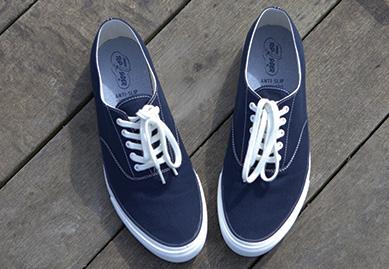
Canvas boat sneakers occupy a very specific place in the coastal wardrobe: paired with rolled chinos or summer linen trousers, they are the footwear equivalent of a well-edited sentence.
Clean. Direct. No wasted motion. Both Sperry and SeaVees make compelling versions, and both have earned the right to that shelf—though they came to it from very different directions, and the rivalry between them has not always been entirely cordial.
Sperry’s canvas boat shoe—the white-and-blue deck sneaker—is a direct descendant of the brand Paul Sperry built. It carries the signature ’Wave-Siping’ non-skid sole, the same 360-degree lacing, and seafaring pedigree. Current retail: around $110-$120.
SeaVees is a different story, one that involves a tire company, a federal antitrust ruling, and a pair of shoes found in a Tokyo secondhand shop 40 years after they were supposed to be forgotten—forever.
B.F. Goodrich launched SeaVees in 1964 as “the new way to go casual.” The concept was ahead of its time: a canvas sneaker refined enough to wear to social events, the club, or a racetrack; positioned explicitly as the first upscale everyday sneaker. Advertisements ran in Playboy, and the shoe found its audience among men who wanted to look sharp without feeling like they were paying a penalty for it. Then Converse acquired B.F. Goodrich’s sneaker division; it was here, the U.S. Department of Justice stepped into the picture.
The federal government determined that the consolidation gave Converse an illegal monopoly over the American sneaker market and, in 1971, ordered the SeaVees brand shut down—not to be sold or rebranded: Closed! Yes, one of the most original casual shoes in American history was discontinued by antitrust overreach, and it remained that way for four decades.
The revival began the way the best stories often do—by accident. A vintage collector and shoe designer stumbled onto a deadstock pair of the original 1964 Yacht Shoes in a Tokyo secondhand shop. He recognized what he was holding, relaunched the brand in California in 2008, and began the painstaking work of rebuilding it. Then, in 2025, SeaVees did something remarkable: it reunited with B.F. Goodrich—the original founder—to produce a stitch-for-stitch reproduction of that very first Yacht sneaker. Vintage-washed canvas uppers, period-correct hand-sanded aluminum eyelets, a natural rubber outsole constructed from stacked wavy rubber pieces that grip a wet surface the way few soles can. Every material and manufacturing method was chosen to be period correct. The only concession to the present: recycled tire rubber in the sole, a technology that simply didn’t exist in 1964. The price is $195.
Before you order, there is a caveat. When we went to grab a couple of pairs, the site clearly stated that under no circumstances are the shoes returnable; if they don’t fit—tough, if they are damaged—that’s your problem. Not believing it, we contacted the small company in California, expecting a concession, we were told straight out, “That’s the way it is.” Apparently, the company’s mindset is also stuck in 1964: we decided to pass.
4. The Old Navy Boat Sneaker— The Best $7.95 You Will Spend This Summer

Let’s set the record straight: no one is comparing Old Navy’s new boat sneaker to Sperry or SeaVees. That would be like comparing a perfectly good diner breakfast to a tasting menu. Both are breakfast, and one is a deal.
Old Navy quietly released dozens of pairs of white canvas boat sneakers in their retail stores and online about eight weeks ago, for the remarkable price of $7.95. They look, at close inspection, nearly identical to shoes that retail at 15 to 20 times that price. The silhouette is right. The color is right. The rubber sole is different but actually looks more durable. For a guy who wants to throw a pair of boat sneakers in his bag for a weekend trip, get sand and salt water in them, and not feel the sting of loss—this is the shoe of choice.
The honest assessment: the materials are what you would expect at this price point. The sole doesn’t look like it will grip a wet deck the way a SeaVees and Sperry’s will, and the canvas might not hold its shape through a full season of regular wear. But for casual summer and early fall use—errands, weekends, outdoor dining, a morning farmers market—they are entirely presentable. If you decide to go down this path (and there are any left), we suggest buying two pairs; who knows what their life expectancy will be for such an unbelievable price.
5. Old Navy, Very Cool And Understated
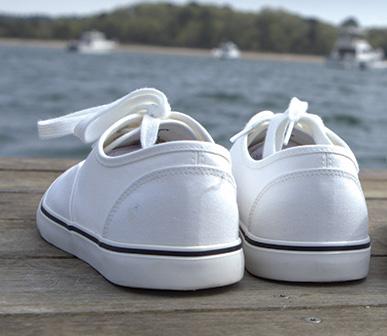
Regardless of your choices, those who wear these shoes well share one habit: they maintain them. A damp cloth, a soft brush, a minute of attention before heading out—that is the entire routine. Treat them like they matter, and they will look like they do. H
How a Kentucky contractor’s losing revenue stream became a constitutional clash over who really governs New Hampshire—and whether a corporation can sue a state for a law it hasn’t broken yet.
Live Free or Die Trying
REPORTED BY JAMES HOLDEN | CONCORD, NEW HAMPSHIRE
Every year, sometime around your birthday, New Hampshire asks you to do something that no one much enjoys: take your car to a mechanic, wait in a plastic chair, and pay about $50 for the privilege of a small sticker on your windshield. For the better part of a century—since 1931, to be precise—this was simply the deal. Then, last summer, the Granite State decided the deal was done. In a move that drew bipartisan applause from lawmakers and, by virtually every poll and account, the majority of the state’s drivers, the New Hampshire legislature voted to end mandatory annual vehicle inspections for passenger cars and light trucks. Governor Kelly Ayotte signed the repeal into law as part of the 2025 state budget. The program was set to expire January 31, 2026. That should have been the end of it.
It wasn’t. Within weeks, a Kentucky-based company called Gordon-Darby Holdings filed a suit in federal court to stop the repeal cold—not because New Hampshire had violated any environmental law, but because the company feared it might someday. That distinction, seemingly subtle on its face, has since ignited a constitutional fight of genuine national consequence, drawing 25 state attorneys general into the fray and raising fundamental questions about who controls the legislative choices of sovereign states.
THE COMPANY BEHIND THE STICKER
Gordon-Darby is not a household name in New Hampshire, but for a quartercentury, it has been the invisible hand in the inspection bay. The company has held the state’s emissions testing equipment contract since 1999, providing the diagnostic hardware that mechanics plug into tailpipes across the state. In 2004, its footprint expanded further. By one estimate, the program it has serviced represents a slice of a market worth between $41.5 and $69.2 million annually to New Hampshire’s vehicle inspection industry as a whole.
When the state notified Gordon-Darby in September 2025 that it intended to terminate its contract effective January 31, 2026, the company did not go quietly. It sent a letter to the commissioners of the Department of Safety and the Department of Environmental Services: End this program without federal approval, and we will sue. In October, the number of inspections performed statewide fell by 24 percent compared to the prior year. By November, as word spread that the program was ending, the drop had deepened to 33 percent. Drivers, it seemed, had already voted with their ignition keys.
Gordon-Darby followed through on its threat in December 2025, filing a citizen suit in the U.S. District Court for New Hampshire under Section 7604 of the Clean Air Act. Its argument rested on a genuine procedural complication: under the CAA, states that include emissions inspection programs in their State Implementation Plans—the federallyapproved roadmaps for meeting air quality standards—must receive EPA approval before removing those programs. New Hampshire had submitted a request for that approval, but the EPA, which has up to 18 months to act, had not yet granted it. On that basis, GordonDarby asked the court to block the repeal in its entirety. Robert L. Quinn, Commissioner of the New Hampshire Department of Safety, and Robert R. Scott, Commissioner of the New Hampshire Department of Environmental Service, listed as Defendants-

Appellants in the case filed by Gordon-Darby, claimed in an appeal in the case with GordonDarby, “A contractor who stood to lose money from the loss of its lucrative inspection program turned to an environmental statute to stop New Hampshire’s democratic initiative in its tracks.”
U.S. District Judge Landya McCafferty sided with Gordon-Darby on January 27, issuing a preliminary injunction that ordered the inspection program to continue. New Hampshire’s Executive Council responded four days later, voting 3-2 to reject a contract extension with GordonDarby—a defiant move that left the state both ordered to run an inspection program
and without a licensed vendor to run it. The Department of Safety declared the program “suspended until further notice.” The state filed notice of appeal to the First Circuit. The fight moved upstairs.
25 ATTORNEYS GENERAL WALK INTO COURT
On May 11, 2026, the Office of the West Virginia Attorney General filed an amicus curiae brief in the First Circuit on behalf of West Virginia and 24 other states, formally urging the appeals court to reverse Judge McCafferty’s ruling. The signatories span the country: Alabama, Alaska, Arkansas, Florida, Georgia, Idaho, Indiana, Iowa, Kansas, Kentucky, Louisiana, Mississippi, Missouri, Montana, Nebraska, North Dakota, Ohio, Oklahoma, South Carolina, South Dakota, Tennessee, Texas, Utah, and Wyoming.
STATES JOINING THE AMICUS BRIEF— FILED MAY 11, 2026
West Virginia (lead), Alabama, Alaska, Arkansas, Florida, Georgia, Idaho, Indiana, Iowa, Kansas, Kentucky, Louisiana, Mississippi, Missouri, Montana, Nebraska, North Dakota, Ohio, Oklahoma, South Carolina, South Dakota, Tennessee, Texas, Utah, and Wyoming—25 states in total, representing more than half the nation’s land mass and a substantial share of its registered voters.
The brief, authored by West Virginia Solicitor General Michael R. Williams and Principal Deputy Solicitor General Holly J. Wilson, advances three interlocking arguments. They are worth understanding in full, because they reach well beyond the question of whether New Hampshire drivers need a windshield sticker.
YOU CANNOT SUE OVER A LAW THAT HASN’T BEEN BROKEN
The brief’s first and most textually grounded argument is deceptively simple: Section 7604 of the Clean Air Act authorizes citizen suits only against someone who “is in violation of” an emission standard—or who “has violated” it on a repeated basis. New Hampshire,
as of the date GordonDarby filed its complaint, had violated nothing. The repeal had not yet taken effect. Inspections were still being conducted. The state was actively engaged with the EPA seeking approval to amend its plan.
The amicus brief draws on a 1987 Supreme Court decision, Gwaltney of Smithfield, Ltd. v. Chesapeake Bay Foundation, to draw this line with precision. In Gwaltney, the Court held that citizen suits under analogous Clean Water Act language require an “ongoing or intermittent” violation—not a wholly past one. The Court used the phrase “a past polluter” deliberately: future-looking concern was always anchored to a history of actual violation. You had to have done something wrong, or be doing it right now, before a private party could haul you into federal court.

“A
Gordon-Darby’s theory inverts that logic entirely. It isn’t suing over a violation that happened. It isn’t even suing over a violation happening now. It is suing over a violation it predicts ’might happen’ once the repeal takes effect and before the EPA acts. The brief frames this with an analogy that cuts to the heart of the matter: “If a driver has not yet run the red light, no one would say the driver ‘is in violation of’ the traffic code.”
Congress reinforced this reading in 1990, when it amended the CAA’s citizen-suit provision specifically to conform to the Gwaltney standard, codifying two, and only two, valid triggers: a repeated past violation, or an ongoing present one. Neither describes New Hampshire’s situation. And the 60-day notice requirement written into the statute— designed to give a violator “an opportunity to bring itself into complete compliance” —becomes an absurdity if no violation has yet occurred. What, precisely, is a fully compliant state supposed to fix in 60 days?
WHO ACTUALLY HOLDS EXECUTIVE POWER?
If the textual argument resolves the case, the constitutional arguments explain why the
contractor who stood to lose money from the loss of its lucrative inspection program turned to an environmental statute to stop New Hampshire’s democratic initiative in its tracks.”
stakes are so high. The amicus brief devotes considerable attention to the separation-ofpowers implications of prospective citizen suits, and the analysis is bracing.
Under Article II of the Constitution, executive power is vested exclusively in the President, who bears responsibility to “take Care that the Laws be faithfully executed.” That responsibility carries with it the authority—and the discretion— to decide when, whether, and how to pursue violations. The Supreme Court made clear in Heckler v. Chaney (1985) that enforcement decisions are presumptively within the executive’s exclusive province, involving “a complicated balancing of a number of factors which are peculiarly within [the executive’s] expertise.”
Citizen suits under Section 7604 already conflict with this framework. They place
what the brief calls “the executive’s most important constitutional function” in private hands. A citizen plaintiff need not be appointed by the President, confirmed by the Senate, or accountable to any democratic constituency. She (the plaintiff) can sue to enforce provisions the executive has chosen to leave be and can channel civil penalties into the federal Treasury—a “quintessentially executive power,” as the Supreme Court noted in Seila Law. Extending citizen suit authority to cover violations that haven’t happened yet compounds this problem dramatically, allowing private parties—including, as this case demonstrates, parties motivated by financial self-interest rather than any genuine environmental concern—to police conduct the executive hasn’t pursued and may never choose to pursue.
STATES ARE NOT FEDERAL HANDMAIDENS
The federalism argument is, in the context of this specific case, perhaps the most viscerally compelling. New Hampshire is not an abstract regulated party. It is a sovereign state that made a democratic judgment, through its elected legislature and governor, about how to govern its own residents. The citizen-suit provision, read the way Gordon-Darby reads it, transforms that judgment into raw material for corporate litigation.
Under the Clean Air Act’s cooperative federalism framework, states bear the primary responsibility for designing and implementing clean air strategies within their borders. State Implementation Plans are precisely that—state plans, reflecting each state’s assessment of local conditions, priorities, and tradeoffs. What the Gordon-Darby suit accomplished— and what Judge McCafferty’s injunction ratified—was to order a state legislature to maintain a regulatory program it had democratically chosen to end, at the behest of a private company whose primary interest was preserving its own contract.
The Sixth Circuit stated the applicable
rule directly in Sierra Club v. Korleski (2012): the Clean Air Act “does not permit citizen suits against state regulators qua regulators.” Allowing such suits to compel states to implement their own plans “is contrary to the sanctions regime” Congress actually established. The sanctions Congress did establish— withholding federal funds, substituting federal plans, and direct EPA enforcement—give the federal government meaningful leverage while leaving state legislative authority intact. A private contractor suing to keep its equipment plugged into the wall does none of that.
THE NUMBERS BEHIND THE STICKER
Lost in the constitutional weeds is a practical question that most New Hampshire residents have already answered for themselves: What did the annual inspection accomplish, and what did it cost?
With more than 1.38 million passenger vehicles registered in the state, and inspections running between $30 and $50 per vehicle, the Josiah Bartlett Center for Public Policy estimated the annual cost to Granite Staters at somewhere between $41.5 and $69.2 million—not including the value of time lost waiting in shops or arranging alternative transportation around the bureaucratic quirk of one’s own birthday month. That is a substantial recurring tax on mobility, imposed on a population that skews rural and is disproportionately dependent on personal vehicles.
What did it buy? According to the National Highway Traffic Safety Administration, vehicle defects are the critical factor in just 2 percent of motor vehicle accidents—and even that figure comes with a caveat that “none of these reasons implied a vehicle caused the crash.” New Jersey ended its annual safety inspections in 2010, citing a lack of evidence that they improved public safety. A peer-reviewed study published eight years later in Contemporary Economic Policy found that doing so “resulted in no significant increase in either fatalities due to car failure or the percentage of accidents due to car failure.”
THE BADGE ON YOUR WINDOW IS NOT THE LAW
Those who oppose the repeal raise legitimate concerns. The New Hampshire Auto Dealers Association and State Police
have argued that annual inspections catch problems drivers might otherwise miss, and that without a structured program, the burden of identifying unsafe vehicles falls on law enforcement officers who may lack the specialized tools of a trained mechanic.
That last point warrants particular attention—because it is also, paradoxically, a strong argument for the repeal. New Hampshire law already prohibits operating an unsafe vehicle. Drivers are responsible, sticker or no sticker, for ensuring their cars have functional brakes, working lights, sound steering, adequate tires, and compliant exhaust systems. Law enforcement officers have always had, and retain, the authority to stop and cite drivers for observable safety violations. A broken tail light is probable cause for a traffic stop regardless of what sticker is on the windshield.
That is, in fact, a more rational enforcement model. Police officers observe vehicles in actual operation, in real conditions, at speed. They see the crooked tire, the cracked windshield, the headlights that have gone dark. They do not need a private company’s annual diagnostic readout to know when a vehicle poses a hazard to other road users. Placing that responsibility with law enforcement—and simultaneously giving officers the probable cause they need to initiate a stop and investigation—is not a deregulatory abdication. It is an honest reckoning with where safety problems actually present themselves.
As State Representative John Sellers put it plainly: inspection stickers are “only good for the moment in which you get them.”
A car that passes its annual inspection in January may have a failing wheel bearing by March. What the sticker accomplished, for too many years, was to give the state a tidy revenue stream, give inspection stations a guaranteed annual customer, and give drivers a false sense of having met some meaningful obligation to public safety.
WHAT COMES NEXT
The case now sits before the First Circuit Court of Appeals. New Hampshire argues that the district court’s reading of Section 7604 was wrong as a matter of law, that Gordon-Darby cannot invoke a citizen suit provision to stop a violation that has not occurred, and that even if the statute were ambiguous, the constitutional avoidance canon requires the court to adopt the narrower reading.
Meanwhile, the EPA—operating under an administration that has expressed openness to allowing states to eliminate emissions testing programs—is still processing New Hampshire’s request to amend its State Implementation Plan. If the EPA grants that approval, the litigation largely evaporates. Gordon-Darby’s hook disappears, and New Hampshire’s democratic choice stands.
What should not evaporate, regardless of how this case resolves, is the question it forces into focus. The Clean Air Act was written to protect air quality—a genuine and important public interest. It was not written to give a private contractor a legal lifeline when its state contract is terminated by a democratic vote. The citizen suit provision exists, in the words of a generation of courts, to fill gaps in federal and state enforcement—not to replace the considered judgments of sovereign legislatures with the financial calculus of a company protecting its revenue.
New Hampshire’s motto is “Live Free or Die.” It was stamped on license plates long before anyone thought to require a sticker on the windshield above them. The First Circuit will decide whether that motto still means something when a corporation in Kentucky decides otherwise. H
Case Reference: Gordon-Darby Holdings, Inc. v. Quinn et al., No. 26-1209, U.S. Court of Appeals for the First Circuit (appeal of U.S. District Court for the District of New Hampshire, No. 25-cv-508, Hon. Landya McCafferty). Amicus curiae brief filed May 11, 2026, by West Virginia and 24 other states.
Sources consulted: NH Public Radio; New Hampshire Bulletin; Union Leader; InDepthNH; Josiah Bartlett Center for Public Policy; The Dartmouth; NH Division of Motor Vehicles; National Highway Traffic Safety Administration; Gwaltney of Smithfield, Ltd. v. Chesapeake Bay Foundation, Inc., 484 U.S. 49 (1987); Seila Law LLC v. Consumer Financial Protection Bureau, 591 U.S. 197 (2020); Sierra Club v. Korleski, 681 F.3d 342 (6th Cir. 2012); Contemporary Economic Policy (2018 New Jersey study); and the amicus curiae brief filed in No. 26-1209 on May 11, 2026.

Cruise Gone

Should We Be Concerned About the Hantavirus Outbreak?
hat was supposed to be a luxurious oceanic escape became a floating petri dish for 88 passengers and 59 crew aboard the Dutch-flagged cruise ship MV Hondius.
On March 20, the 353-foot vessel operated by Oceanwide Expeditions embarked from Ushuaia, Argentina to some of Earth’s most remote corners.
By May 7, eight passengers and crew had become symptomatic with the Andes variant of hantavirus, the only type of hantavirus known to spread person-to-person.
UNFOLDING SITUATION
As of this writing, various outlets such as Medical Xpress report three of those eight people had died: a 70-year-old Dutch passenger who became sick on April 6 and passed on April 11, his 69-year-old wife who deteriorated en route to
Johannesburg and later passed sometime between April 25-26, and a German male passenger who developed a fever that led to pneumonia and his passing on May 2.1
Those showing symptoms have been medically evacuated from the ship and are receiving treatment in the Netherlands and elsewhere.
Notably, at least two dozen passengers, unaware of their potential exposure, had disembarked early from the trip while docked in St. Helena Island on April 24, returning to their home countries. Among them were at least six Americans: Georgia (two), Texas (two), Arizona (one), Virginia (one), and California (unspecified). None were showing symptoms, said state authorities who are closely monitoring them.
The World Health Organization (WHO) has feverishly begun contact tracing, though the process is daunting.
Passengers have dispersed to at least a dozen countries and tracking those who may have had close contact with them during their return journeys is difficult.
BY ROB SAINT LAURENT, M.ED.
On May 10, Spanish authorities evacuated the remaining non-Spanish passengers in the Canary Islands, stating no one else has shown symptoms. A team from the U.S. Centers for Disease Control and Prevention (CDC) accompanied 17 Americans and one Briton on a charter flight back to the U.S., where they will be medically quarantined.
Despite the unusual viral strain, WHO and U.S. health officials maintain the risk to the public is low and another pandemic is unlikely.
THE ANDES VIRUS AND HPS
The CDC says hantavirus is a family of viruses spread by rodents that can lead to serious illness and death. Infection typically occurs by inhaling aerosols from rodent urine, feces, or saliva, often in poorly ventilated areas.2, 3
“Hanta” refers to the Hantan River in South Korea, where it was first isolated in soldiers during the 1950s.
The Hondius passengers were stricken with the Andes virus, the hantavirus strain that can lead to hantavirus pulmonary syndrome (HPS), the most common hantavirus syndrome in the Western Hemisphere. The Andes virus, named for the Andes mountains, was discovered in Argentina in 1995 and is carried mainly by the longtailed pygmy rice rat.3, 4
There is no evidence of any rodents on the ship. The 70-year-old deceased Dutch passenger (“patient zero”), identified as ornithologist Leo Schilperoord, is believed to have contracted the virus while bird watching at a landfill in Ushuaia with his deceased wife.
Person-to-person spread of the Andes virus is “usually limited to people who have close contact with a sick person. This includes direct physical contact, prolonged time spent in close or enclosed spaces, and exposure to the sick person’s body fluids. “It can also spread by touching an object or surface with the virus on it, then touching your mouth, nose or eyes.” 4
Additionally, research suggests the virus can travel via saliva, airborne droplets, the digestive tract (i.e., eating contaminated food), breastmilk, and across the placenta from mother to child.5, 6
Early Symptoms of HPS from Andes Virus4
n Fever
n Fatigue
n Muscle aches (especially in thighs, hips, and back)
About half of HPS patients also experience:
n Chills
n Headaches
n Dizziness
n Abdominal distress (pain, nausea, vomiting, diarrhea)
HPS symptoms of coughing, chest tightness, and shortness of breath typically happen 4-10 days later, but can happen sooner in people with mild illness. Once cardiopulmonary symptoms begin, patients can deteriorate within hours.
The fatality rate can be as high as 38 percent.3 Though authorities note it may be lower with unaccounted people who don’t become gravely ill and require hospitalization. By comparison, COVID’s case fatality rate generally ranged from one to two percent during its height.
People are typically only infectious when they have symptoms, says CDC. The standard incubation period for HPS symptoms
is 4-42 days but could be as much as 56 days in some instances.3, 4
There is currently no vaccine or antiviral cure for the Andes virus.
Early medical attention is critical for disease management if one believes they’ve been in contact with someone who has the virus and are experiencing symptoms, advises CDC.4
U.S. UNPREPARED?
The Trump Administration has come under fire that it hasn’t got the funding or leadership to handle a potential hantavirus outbreak in the aftermath of billions in cuts to the CDC.
In an Oval Office presser on May 11, federal officials dismissed this idea. Said Dr. Mehmet Oz in a defensive posture, “It’s just not true… The country’s prepared, the CDC’s focused on it, and the agency is well aware of the opportunities to actually treat this problem.”
Deflecting to Health and Human Services Secretary Robert F. Kennedy Jr., Kennedy followed with, “I’ve had CDC teams on it from day one…We have this under control, and we’re not worried about it.” 7
THEIR WORDS MAY BE PUT TO THE TEST.
On May 13, WHO chief Tedros Adhanom Ghebreyesus advised national authorities to prepare for a surge in positive cases given the ship’s confinement and long incubation period.
At least 40 Americans across 14 states are now being monitored in the U.S. since the evacuation of the remaining passengers. This includes two people in New Jersey and two in Maryland who weren’t on the ship but may have been exposed during air travel on April 24.
WHO says there are now at least nine confirmed cases of the Andes virus, including one American who tested positive after disembarking the ship.
While containment of the virus is still in question, the outbreak isn’t viewed as the next pandemic because the Andes virus isn’t as contagious as COVID. It doesn’t mutate as easily as COVID, and it infects the lungs more deeply.
However, epidemiologists say it’s impossible to predict with 100 percent accuracy how a virus will behave.
And you can never predict who will be a “super-spreader”— someone who has trouble reigning in the virus or, conversely, sheds more of it.
Scientists seem more concerned about pinning down how the Andes virus spreads versus whether an outbreak is imminent, since managing any outbreak stems from that determination.
Harvard exposure assessment expert Joseph Allen, DSc, MPH has been outspoken about U.S. officials’ presumption that the virus only spreads through prolonged close contact. He cites a New England Journal of Medicine study on the 2018-19 Andes virus outbreak in Epuyén, Argentina that suggests the virus may spread through airborne particles.8
He also notes speaking with a physician onboard Hondius who said not all of the sick passengers may have had close contact with others.8
This raises questions about the potential for more infections in people alongside early returning passengers on April 24.
REDUCING RISK
As of May 15, WHO doesn’t recommend any changes to routine behavior by the general public.9
Nevertheless, for those who wish to take precautions given the initial response to the COVID outbreak, below are current CDC guidelines.
Risk of Andes Virus Person-to-Person Spread 4
n Wash hands frequently
n Avoid sexual activity with and kissing someone who may be infected
n Do not share drinks, cigarettes, vapes, or hookah with someone who may be infected
n Do not share eating utensils or eat food from the plate or bowl of someone who may be infected
n Keep distance from someone who may be infected
The recommendations are eerily reminiscent of early COVID guidelines before face masks became standard protocol.
Optimizing immunity is also essential for lowering disease risk; for example, maintaining blood-vitamin D3 at around 50 ng/ml (nanograms/milliliter) as part of a healthy lifestyle.
AND SO IT GOES
Prior to this event, records show there’s never been a confirmed case of hantavirus in the entirety of the Tierra del Fuego province.10
Ushuaia officials strongly dispute the claim the virus originated in their popular tourist city. “I believe we are facing a smear campaign against this destination,” said Juan Facundo Petrina, epidemiology director for the province.10
Curiously, Australia’s ABC News reported in 2024 that 323 vials of deadly viruses, including two full vials of hantavirus (a virus never seen in humans in Australia), went missing from a freezer at a Queensland virology lab in 2021.11 An investigation later concluded “poor recordkeeping,” though the vials were never said to be in physical possession.

One wonders why CDC funding was slashed in FY 2026 when experts have repeatedly warned of the high potential for future viral outbreaks.
Meanwhile, Wall Street saw a surge in pharma and biotech stocks as investors foamed at the mouth over the prospect of another vaccine or antiviral cash cow.
Be that as it may, authorities assure this viral outbreak is simply a case of a seaborne tragedy, a disease limited mainly to a ship with no major spread anticipated.
As Americans trust this to be true, awareness and preparedness never hurts.
We’ve been there before. H
1. Zinin, A. (2026, May 7). Hantavirus on the Hondius: what we know. Medical Xpress.
2. Centers for Disease Control and Prevention. (2024, April 15). About Viral Hemorrhagic Fevers.
3. Centers for Disease Control and Prevention. (2024, May 13). About Hantavirus.
4. Centers for Disease Control and Prevention. (2026, May 9). About Andes Virus.
5. Chen, R., Gong, H., Wang, X., et al. (2023, August 8). Zoonotic Hantaviridae with Global Public Health Significance. Viruses, 15(8), 1705.
6. D’Souza, M. H. & Patel, T. R. (2020, August 7). Biodefense Implications of New-World Hantaviruses. Frontiers in Bioengineering and Biotechnology, 8 925.
7. PBS NewsHour. (2026, May 11). Watch: Oz, RFK Jr. reject idea U.S. not prepared to handle hantavirus due to funding and staff cuts [Video]. YouTube.
8. Feldscher, K. (2026, May 14). How hantavirus actually spreads is a key question. Harvard T.H. Chan School of Public Health.
9. World Health Organization. (2026, May 13). Hantavirus cluster linked to cruise ship travel, Multi-country.
10. Debre, I. (2026, May 9). Popular Argentinian tourist destination hits back at claims it caused hantavirus outbreak. Independent.
11. Slattery, M. (2024, December 8). Investigation launched into Queensland lab breach, with vials of Hendra virus, lyssavirus, and hantavirus missing. ABC News.






Caregiver Payments
Caring for someone at home? You may qualify for a monthly payment.
Are you facing the challenges of caring for a loved one at home? Perhaps trying to wholeheartedly balance their needs and the daily demands life delivers you?
If this sounds familiar, we are here to assist you in providing an unmatched standard of Adult Foster Care benefits for those striving to stay in their homes.
Mass Care Link is evolutionary, providing a monthly payment to those caring for someone at home while supporting them with a personalized touch.
Costing less than assisted living facilities and nursing homes, with a record of compassion and empathy, we cover the unique needs of our clients.
Families and individuals rely on our services to:
• Ensure caregivers receive a tax-free monthly stipend/payment
• Review and verify MassHealth paperwork and qualifications
• Train and assist with the management and demand of providing 24-hour care
You may not know this fact, but if you qualify as an at-home caregiver, you can earn up to $18,240 yearly.
For a caregiver to meet state requirements, they must:
• Be at least 18 years of age
• Reside in the same home as the person they care for
• Not be the legal guardian or legally married to the person being cared for
• Provide necessary medical care and assistance that meets the needs of the person they care for
For your family member or loved one to qualify for Mass Care Link services, they must meet these eligibility points:
• Be 16 years of age or older
• Be approved for MassHealth insurance
• Live with the primary caregiver in the same home
• Require supervision and cueing, or physical assistance daily with at least one of the following needs: bathing, toileting, ambulation, transferring, eating, and/or dressing.
If this sounds attractive and meets your level of interest, contact us today for additional information or to schedule an appointment.
Mass Care Link, Inc.
99 South Main Street, Fall River, Massachusetts 02721 Hablamos Español | Falamos Português call for more information or visit us online at:
The Quiet Cost of Settling
WHO WOULD THINK THE MOST SUCCESSFUL ARE OFTEN THE LONELIEST
What is different with these people is that they don’t settle, not in life, not in relationships—regardless of the wait
BY STEVEN CHAN

There is a particular kind of loneliness that exists inside successful lives. It hides well behind beautiful homes, demanding careers, social calendars, and carefully cultivated reputations. From the outside, everything appears stable. Yet privately, many accomplished men and women find themselves looking for a partner or are trapped in relationships that feel emotionally undernourished, uninspired, or quietly disconnected. Some wander with false hope of meeting the ‘right’ one, while others remain with a partner because the relationship is tolerable. Others stay because they fear the disruption that honesty would require. And many continue because they have mistaken comfort for compatibility.
Settling rarely announces itself dramatically. It arrives subtly. It sounds like, “This is probably as good as it gets,” or “At our age, everyone has a past,” or “I should be grateful for what I have.” Over time, compromise becomes resignation. The relationship or an attempt to build one may continue functioning operationally while dying emotionally. Two people can share a home, a business strategy, vacations, children, and even affection, while no longer truly seeing one another.
What makes this especially common among educated and successful people is that achievement often teaches us how to manage appearances before it teaches us how to understand ourselves. Many high performers know how to negotiate contracts, lead organizations, and solve complex problems, yet struggle to identify their own emotional patterns with the same clarity. They know how to pursue excellence professionally but accept mediocrity relationally.
The uncomfortable truth is that many people do not attract what they want because they have not become someone emotionally prepared to recognize or sustain it. They continue searching for extraordinary partners while operating from unresolved habits, emotional confusion, guardedness, or fear; simply put, ‘baggage.’ This is not a criticism. It is simply reality. Relationships rarely rise above the emotional maturity of the people inside them.
Those who ultimately build meaningful relationships tend to begin by rebuilding their relationship with themselves. Not through superficial transformation, but through radical self-awareness. They become honest about the patterns they have repeated for years. They stop blaming timing, geography, or “bad luck” for every failed relationship and begin asking more difficult questions.
Why do I continue choosing emotionally unavailable people?
Why do I avoid difficult conversations until resentment forms?
Why do I confuse chemistry with compatibility?
Why do I seek validation instead of connection?
Why am I more comfortable being admired than truly known?
Few questions are more difficult than the ones that expose our own contribution to our unhappiness. Yet without that discomfort, growth rarely occurs.
Most people try to improve their dating life by adjusting their image. The more important work is adjusting their internal life. That means learning to become emotionally
consistent, honest, self-regulating, curious, and accountable. It means developing the ability to communicate clearly without manipulation, withdrawal, or performance.
A surprising number of relationship problems originate from people who have spent years avoiding solitude. They remain constantly occupied because silence forces them to confront unresolved emotions. Yet healthy solitude is one of the great refining experiences of adulthood. A person who cannot enjoy their own company will often ask another person to rescue them from themselves. That burden eventually exhausts even strong relationships.
One of the healthiest things a person can do is build a life they genuinely enjoy, independent of romantic pursuit. Not strategically. Authentically.
Take the cooking class because you enjoy mastering a craft. Learn Italian because the language fascinates you or plan to travel overseas. Join the conservation board, the literary society, the sailing club, or the wine program because it enriches your mind and your palate. Travel alone occasionally, and it will open up new avenues. Attend lectures that challenge your thinking and smooth over hard edges. Host dinners. Read deeply. Develop interests that create substance beneath the surface of your public identity.
A fulfilled person is magnetic, not because they are trying to impress others, but because their life has texture.
There is also tremendous value in becoming more emotionally truthful with friends and family. Many people maintain highly edited versions of themselves in every area of life. They say what sounds appropriate rather than what is real. Over time, this creates emotional isolation.
The ability to say, “I was wrong,” “I am afraid,” “I handled that poorly,” or “I need something different from my life,” requires courage. But courage creates intimacy. Without vulnerability, relationships become negotiations between performances rather than genuine connections between human beings.
For both men and women, another critical shift involves abandoning the fantasy that the “right person” will eliminate discomfort. Mature love does not remove complexity. It simply creates a healthier environment in which complexity can be addressed honestly.
The strongest relationships are rarely built by two flawless individuals. They are built by two self-aware people who are willing to communicate directly, resolve conflicts responsibly, and maintain respect during difficult moments.
It is the kind of relationship that usually emerges slowly.
Which is why the early stages of dating deserve far more patience than modern culture encourages—even dictates. Too many people approach dating like a rapid assessment, aiming for certainty immediately. They begin projecting future outcomes onto near strangers. Expectations accelerate faster than emotional reality. Within weeks, people are mentally assigning permanence to someone they barely understand. These are the very actions that create unnecessary pressure and distorted perception.
A healthier approach is to remain present long enough to observe who someone consistently is over time. Not who they claim to be during the attraction phase. Not who you hope they become, but who they repeatedly demonstrate themselves to be.
ASK YOURSELF:
What
How do they treat servers or anyone in a lower power position?
Do their words align with their actions; are they consistent?
Does their speech about former partners, family, colleagues, and themselves have a theme?
Observe whether they ask thoughtful questions or go through the motions.
When around them, do they create calm or confusion? How do you feel? Think about it.
There is wisdom in allowing people to unfold naturally rather than interrogating about filling a future role in your life. People have an odd ability to show exactly who they are when allowed to be themselves.
It’s a process that requires resisting the urge to immediately overinvest emotionally. Attraction, while emotionally riveting, is not commitment, compatibility is not intimacy,
and shared interests are not shared values. Emotional discipline matters during the early stages because infatuation can temporarily disguise incompatibility, and with an abundance of forgiveness, flaws get overlooked.
Two of the most attractive qualities any person can develop are groundedness and emotional regulation. The satisfaction that comes with enjoying a connection without immediately needing ownership, guarantees, or constant reassurance. Secure people do not attempt to accelerate emotional timelines out of fear.
Ironically, this kind of steadiness often creates stronger relationships because it allows authenticity to emerge naturally. And of course, all of this requires discomfort. Real growth always does.
Self-awareness can initially feel humiliating because it forces us to acknowledge patterns we once justified. Solitude can feel unsettling because it removes distractions. Honest conversations can temporarily destabilize relationships built on avoidance. Slowing down in dating can feel terrifying for people accustomed to chasing intensity.
But avoiding these discomforts carries a far greater long-term cost.
Without self-examination, people repeat the same relational mistakes with different faces. Without honesty, resentment quietly accumulates.
Without emotional growth, attraction becomes increasingly superficial.
Without standards, people remain in relationships that drain them because leaving feels inconvenient.
Without a purpose beyond romance, relationships become emotional dependencies rather than partnerships.
People spend years hoping another person will elevate their life while refusing to elevate themselves first. The reality is that emotionally healthy, high-quality people are not simply looking for beauty, accomplishment, or charisma. They are searching for clarity, peace, depth, and integrity. The very traits a person can handle without constant drama or emotional chaos. These qualities are built privately through reflection, discipline, honesty, humility, and lived experience.
There is also an important distinction between loneliness and emptiness. Loneliness is occasionally unavoidable. Emptiness often results from abandoning oneself. People who ignore their values, suppress their truth, or remain in relationships that diminish them eventually lose connection to their own identity. They begin performing life instead of inhabiting it.
The individuals who ultimately “level up” relationally are rarely the ones obsessively pursuing status or validation. They are the ones who gradually become more complete on their own. They stop trying to win affection from emotionally unavailable people. They

A fulfilled person is magnetic, not because they are trying to impress others, but because their life has texture.
stop negotiating against their own standards. They become more selective, but also more compassionate. More discerning, but less performative.
Most importantly, they become emotionally available themselves, a function some overlook. Everyone wants to meet someone exceptional, but far fewer people ask whether they have become exceptional themselves. Not exceptional in appearance or achievement, but exceptional in character.
Take the time to do a personal inventory:
Can you communicate directly?
Can you tolerate temporary discomfort so you won’t avoid difficult conversations?
Can you apologize with sincerity?
Can you remain calm and in control during conflict?
Can you allow another person freedom without controlling them?
Can you tell the truth even when it risks rejection?
These are the questions that target qualities to which meaningful relationships, long after attraction, stabilize into ordinary life.
The encouraging truth is that this work changes more than dating outcomes. It changes the quality of daily existence. A person who develops self-awareness, emotional honesty, curiosity, and inner stability experiences greater peace whether single or partnered. Relationships stop feeling like desperate attempts to complete an unfinished self. Instead, they become something healthier: two whole people recognizing one another clearly and choosing connection without illusion.
It is not considered settling—it is maturity. H
is their reaction when confronted with disappointment?
High-Growth Investing
Takes On a Different Meaning as AI Reshapes the Financial Landscape

FINANCIAL PLANNING WILL NEVER BE THE SAME—AND THE OLD GUARD KNOWS IT
Skeptics say AI’s massive capex spending will never pay off—that the tools can’t scale and won’t monetize. Others believe we’re watching the early innings of a fundamental shift: one that will give ordinary investors access to information, analysis, and strategy once reserved for the wealthiest and best-connected. From where I sit, the disruption is already here. And it’s just getting started.
BY STEVEN CHAN
This story begins about eight months ago, when one of my brokerage firms reached out to discuss my account.
I was surprised. For years, I had been using them for one purpose: executing trades. Nothing more. They had grown through mergers and acquisitions, and the changes in services and products that followed were more annoying than useful—new features, interfaces, and pesky learning curves. But then I started noticing personalized offers on the login page, promoting advisory resources I’d always assumed were out of reach.
Over the next 30 days, an investment adviser began calling regularly, each conversation longer and more detailed than the last. After weeks of this, he revealed the purpose: the calls were a screening process. If my account met a certain threshold, I’d qualify for an exclusive introduction to an affiliated firm, the largest private investment company in the country, and its specialized wealth management services.
Their pitch was the introduction to a newly modified ‘Family Office,’ tailored to my financial needs. The courtship was deliberate and methodical. Their goal was to enlist me and my capital into an exclusive tier of investors who had met minimum financial requirements and demonstrated strong growth.
I was intrigued and entered their evaluation process, advancing through multiple stages of profiling and review. What they didn’t know was that I had quietly begun exploring AI—not a specialized investment platform, but a general-purpose tool I was using to research market trends, test ideas, and understand how geopolitical events shape the financial landscape.
After months of meetings with various representatives, they concluded: I was ready to sign. In their closing pitch, they assured me of fewer demands on my time and stress-free growth of my wealth. Their services would include portfolio rebalancing, drafting compliance documents, analyzing datasets to develop tailored financial strategies, and providing behavioral coaching and counseling for complex financial decisions.
On paper, the offer was compelling. Their Family Office approach promised comprehensive administration and
oversight—investment management, inhouse tax planning and preparation, estate planning, and insurance solutions—all under one roof. Services traditionally reserved for ultra-high-net-worth families are now accessible to a broader range of affluent clients. Fees started at 1.10 percent annually on the first $1 million, scaling down to 0.50 percent on amounts over $10 million, with room for negotiation as assets grew.
Everything about the proposal was appealing—until I requested a letter of intent (LOI) outlining specific services to be accessible from each of the company’s departments. In my experience, the bestlaid plans tend to leave out an important disclosure, or vital artifacts get lost in transition. The LOI was where I’d find out what they were really offering.
The primary question I needed answered was simple: “What can I expect for appreciation of my equity holdings in one, five, and ten years?”
I’d earned a Verified Compound Annual Growth Rate (CAGR) of 40.09 percent* on my equity holdings. When I finally posed the question on our last call, there was a long pause. Then: “Well, you can’t expect us to get the type of returns you’ve been getting.” Silence followed.
In that moment, the math became obvious. Not only would I have to accept significantly lower compounded growth, but I’d also pay an annual fee that siphons value from whatever the portfolio earns.
When the adviser’s voice returned, it came wrapped in reassurance—fiduciary duty, stringent guidelines, risk minimization. But the numbers had already spoken.
To put this into perspective, I have created a chart comparing my account, Rising Tide, with Market bellwethers.
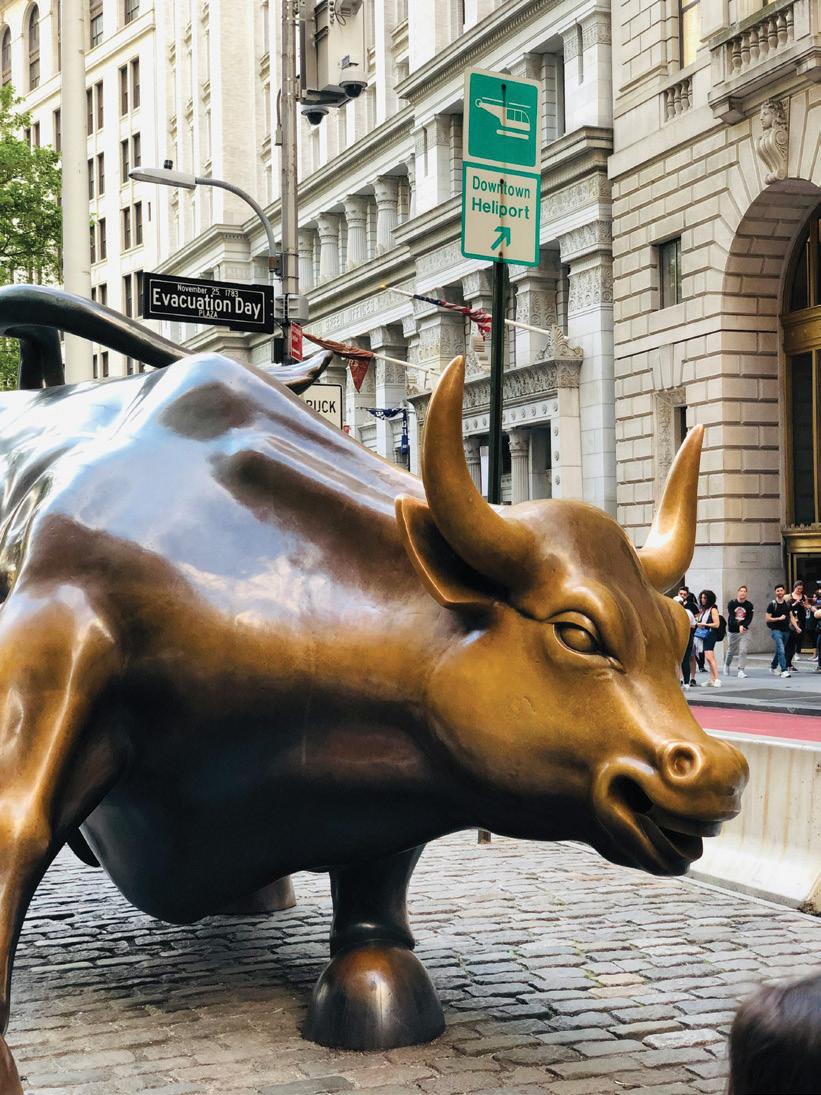
Over the measured period, the portfolio (Rising Tide) achieved a verified Compound Annual Growth Rate (CAGR) of 40.09 percent, compared with the 23.88 percent return of the S&P 500 during the same timeframe. The comparison becomes even more interesting when viewed through the lens of traditional wealth management, where advisory fees steadily reduce longterm compounded returns. Assuming a common advisory fee of 0.75 percent annually, a portfolio producing the same gross return would net approximately 39.04 percent after fees. While that difference may seem relatively small on a yearly basis, over time, the impact can become substantial.
WHAT THIS MEANS OVER TIME*
Compounding has a way of quietly turning small percentage differences into very large financial outcomes. For example:
• A hypothetical $100,000 investment compounding at the portfolio’s verified 40.09 percent annual return would grow to approximately $2.9 million over a 10-year period. (Self Managed)
• The same investment, reduced by a typical 0.75 percent advisory fee and compounding at a net 39.04 percent, would grow to roughly $2.68 million over the same 10-year period.
(With an Advisor)
• By comparison, the same $100,000 invested at the S&P 500’s 23.88 percent annualized return would reach approximately $853,000 over the same period. And if you had a broker making the trades, this amount would be reduced even further.

BUT, LET'S TAKE IT A STEP FURTHER AND USE $1 MILLION AS AN INITIAL INVESTMENT:
• A hypothetical $1 million investment compounding at the portfolio’s verified 40.09 percent annual return would grow to approximately $29.1 million over a 10-year period. (Self-Managed)
• The same investment, reduced by a typical 0.75 percent advisory fee and compounding at a net 39.04 percent, would grow to roughly $26.8 million over the same 10-year period.
(With an Advisor)
• By comparison, the same $1 million invested at the S&P 500 annualized return of 23.88 percent would reach approximately $8.5 million over the same period. And if a broker or adviser were actively managing the account and charging ongoing fees, this amount would be reduced even further.
In real terms, what may appear to be a modest annual fee can ultimately translate into hundreds of thousands of dollars in lost compounded growth over time. As technology and AI-driven research tools continue to place institutional-level information and analysis into the hands of individual investors, many are beginning to question whether traditional investment models—once built largely around access to information—are entering a period of significant change.
THE PATTERN
This wasn’t my first time at the table. I’d met with advisers over the years, but I’d never come this close to signing on. The pattern, however, was always the same.
Not a single adviser ever offered to analyze my existing portfolio, not even its equities. That alone would have instilled confidence and likely moved the needle. Instead, the message was consistent: they had the information and talent, and without them, I would flounder. Some couldn’t even speak the industry’s language with any fluency, which I came to see as intentional—a way to keep clients uninformed and dependent. Because if you understand the fundamentals of the business, you can replicate the operation. Or improve on it. (It should be noted that my chosen AI bot provided me with a comprehensive, 36-page analysis of my portfolio in such detail that I didn’t recognize the diversity and allocations that turned out to meet a variety

MY TRUST, AND NOT THE TYPE YOU’RE THINKING ABOUT
I’d also learned a harder lesson a few years earlier. A so-called friend worked at a high-profile brokerage firm and was widely regarded as trustworthy, ranking highly among his peers. I was days from calling to arrange a meeting when, by sheer coincidence, a stranger at a bar steered our conversation toward the stock market. As I was leaving, he asked if I worked with a broker. I mentioned my friend’s name. The stranger grinned and asked if I knew he’d been fired and investigated by the SEC. Not wanting to believe it, I had to verify the claim. Initial searches came up dry until I found FINRA BrokerCheck and supporting media reports. The stranger was right. The broker had been terminated for cause—and was still working at a smaller firm, possibly with clients who had no idea. Betrayal isn’t a good look on a wealth advisor. Be careful if you take this route.

FINDING MY SPACE
I was stuck. Promises of lower returns. Withholding of information. Halftruths about the level of access to legal, accounting, and strategic coordination. Annual fees that eat into compounding. The Family Office model came closest to what I needed, but it felt like a cookie-cutter product dressed up in bespoke packaging. I looked inward and allowed AI into my most private and closely held business: personal finances.

My objective was to design a custom Family Office that would serve my immediate needs and encompass my family’s legacy. Within weeks, I was interacting with AI daily—into the evening, during overnight trading sessions when the Iranian conflict was driving volatility. I didn’t jump in unquestioningly. I tested and retested, comparing outputs across platforms, asking identical questions and looking for variance. The results were closely aligned.
What surprised me was what the process revealed about my own capabilities. Through practice and a feedback loop with AI, I came to identify a skill I’d relied on for years without naming it: the ability to scan, process, and synthesize large volumes of information across multiple channels—visual, behavioral, numerical, contextual—and extract patterns that lead to actionable decisions.
The trait is known as ‘Pattern Recognition Intelligence.’ It’s the capacity to classify incoming information and data into recognizable forms that generate predictions. It’s difficult to measure in a lab, and critics call it unscientific. But the results speak in outcomes—and AI became the tool that helped me sharpen and apply it with greater precision.
Since my new association with AI, I have completed a pro forma and am currently interviewing for roles in my customized Family Office.
WHAT’S IN IT FOR YOU?
AI is poised to fundamentally reshape wealth management by shifting power from traditional financial gatekeepers to increasingly informed, self-directed investors.
For decades, brokerage houses and advisers maintained their advantage through access to research, financial modeling, market interpretation, and institutional-grade analysis that were largely unavailable to ordinary individuals. AI is rapidly eroding that advantage by democratizing research.
Today, any investor can use advanced AI tools to analyze earnings reports, interpret Federal Reserve policy, compare analyst opinions, evaluate risk, model retirement scenarios, screen investments, and identify inconsistencies in corporate narratives—all within minutes. Tasks that once required research terminals, teams of analysts, or years of financial training are becoming accessible at little to no cost.






As retail investors grow more informed, they’re beginning to question traditional fee structures and the value proposition of advisers whose services center on standardized portfolio construction, generic diversification, or outsourced investment models. Investors increasingly realize they can understand, monitor, and participate in managing their own wealth to a degree that was historically impossible.
The result will be significant pressure on traditional brokerage business models, particularly those built on information asymmetry. Fees will compress.
Competition will intensify. Firms offering little differentiation will face consolidation or decline.
AI will not eliminate the need for human advisers entirely. Complex estate planning, business succession, tax coordination, behavioral coaching, and high-level strategic guidance remain deeply human disciplines where trust, experience, and judgment matter. The strongest advisers of the future will evolve into strategic counselors and long-term decision partners—not stock pickers or portfolio managers.
That’s exactly what I was looking for, and exactly what I found unavailable. The legacy firms saw this disruption coming. Their reaction wasn’t to build a better mousetrap. It was to squeeze more mice into the existing one.
Ultimately, AI will transform investing from a system dependent on institutional access and hefty fees into one where motivated individuals can take informed control of their own financial futures.
THE ROAD AHEAD
None of this is to diminish the role of talented, motivated advisers. At a certain level of wealth—some say $10 million, others say $50 million—individuals and families rightly shift their focus to long-term preservation, and professional guidance. At that point, you take your hands off the wheel.
Until then? Keep an open mind and your hand on your wallet. H

NEIGHBORHOODS
Diverse And Spicy!




THE ULTIMATE FIELD GUIDE FOR LIFESTYLE CONNOISSEURS
WHO ARE DETERMINED TO FIND OUT WHO SUMMERS, WHO WINTERS, AND THOSE WHO SIMPLY NEVER LEAVE
Learning to recognize how long a family has called the coast their home shares insight to how long they will remain.
here are thin, cashmere-soft lines between old money, new money, and too much money—and an even thinner line between new money and the kind of money that has its own zip code, its own dock, and its own opinion about oysters. In the spirit of public service, and because our waitlist for the June escape to the Hamptons has become frankly unmanageable, we present the following rankings for those left behind.
In keeping with tradition, a note on methodology. Please be aware that all entries were evaluated by a panel of judges who wished to remain anonymous, primarily for tax reasons, or by those who told their significant other they would be attending a religious retreat in the Berkshires, which seems to be a stretch.
LEGACY FAMILIES: They display a single tasteful burgee on their mooring indicating club membership. They know what it means, and that’s enough.
TRANSPLANTS: A full display of international maritime signal flags spelling out something cheeky that only their sailing friends will understand. Their neighbors and guests will spend all of cocktail hour Googling its meaning and translation.
NEW ARRIVALS: They commissioned a custom flag bearing a family crest, which was designed last spring by a graphic artist (who only asked for a case of ’Narry’s to produce it), which prominently features a creature that isn’t quite a lion, but more a fluffy golden retriever. The production process was handled entirely by the owner’s wife, who never quite explained why proofing the preliminary product had to be done over a weekend at Killington during New Year’s. Rumors still exist.
THE FAMILY BOAT
LEGACY FAMILIES: Own a wellmaintained wooden sailboat, lovingly restored, with a name like Perseverance or perhaps just the year it was built. No explanation offered or required.
TRANSPLANTS: A screaming center console with twin to quad outboards named something of a sexual nature, or a corny play on nautical terminology. Having been landlocked for generations, they are on the learning curve of coastal living and boating etiquette, and it doesn’t seem to show. How anyone knows, they slipped into the yacht club scene and proudly announce it regularly to locals they’ve never met. They are easily identified because the preponderance of their drinks remain in their bottles of various sizes during consumption. Oh, yes, their outside voices are the only ones they use, regardless of the occasion or location.
NEW ARRIVALS: A topiary installation—12 pieces in total—depicting scenes from their ascent through the private equity industry. The centerpiece, a 12-foot rendering of a hostile acquisition executed in boxwood, was the subject of a brief but memorable planning board hearing. Their attorney handled it; the topiary did not move, but its owners were ordered to put up a blockade fence or face the consequences.
SUMMER READING
LEGACY FAMILIES: A battered paperback of something mid-century, dog-eared in the right places, left face-down on an Adirondack chair. The cover is faded enough to suggest it was not purchased for this occasion. A slightly chilled bottle of Chardonnay with two wine glasses sits on a shared table—it’s noon.
TRANSPLANTS: Someone in the household is ostentatiously working their way through the complete annotated correspondence of someone dead and European with the slipcover removed, so onlookers must ask its origin. It’s on the outdoor table next to it is a half-empty bottle of Grey Goose, two Ambiens, and a single water glass—the clock just struck 9 a.m.

NEW ARRIVALS: Two bottles of Jack; one empty, one soon to be opened, sit on the hood of a brand new grossly oversized pickup truck that was delivered at 7 a.m. to the sound of hooting and hollering. You surmise there’ll be a parade of hangers-on looking for favor and to shmooze over the owner’s personalized leather-bound edition of a business book he technically co-wrote, in the sense that he provided the anecdotes, and a guy named Dave organized them into chapters. Kept on the sundeck in a monogrammed canvas tote his wife picked up at Home Goods, the audiobook was narrated by a voice actor that Dave describes as “nails on a chalkboard.” It’s five o’clock somewhere.
THE BEACH BADGE SITUATION
NEW ARRIVALS: A 74-foot motor yacht christened with a portmanteau of his third wife’s name and her vivacious appearance, (if you catch the drift), which is technically unpronounceable but clearly understood. Moored prominently in the harbor from Memorial Day through Columbus Day, its generator runs around the clock, providing ambient noise for everyone to enjoy. The captain, who holds three maritime licenses, is contractually prohibited from disclosing the monthly fuel bill or his bar tab.
THE GARDEN
LEGACY FAMILIES: Perennial beds that suggest a quiet familiarity with horticulture and perhaps a favorite lying on the potting bench. Hydrangeas, obviously. Quiet, peaceful, and in good taste.
TRANSPLANTS: A cutting garden overseen by someone named either Lars or Constance, who arrives twice weekly and has strong opinions about dahlias that no one dares to challenge. They are under a delusion that their garden was featured in a rarely seen magazine, but it doesn’t disuade them from asking everyone they meet if they’ve seen it around.
LEGACY FAMILIES: They carry the same L.L. Bean canvas beach bag the great-grandfather used to pin his beach pass to, as a means of establishing hierarchy and quietly notifying the small world they live in that his great-grandfather also owned that very same bag and badge. And while the town has stopped issuing that color and iteration, they refused to hang it next to the original, which has led to them being questioned at the entrance on each visit to the beach. Habitually, all the others nearby listen to the same exchange about the badge being void, followed by a boisterous, repetitive claim: “Do you know who we are?”
TRANSPLANTS: They don’t have a beach badge. Their property abuts the water and may be grandfathered into membership (no relationship to the above). Yikes. And while they don’t need a beach badge, they seem fixated to finding ways to mention their access to anyone who will listen.
NEW ARRIVALS: They own their own beach with too many boats to sail, and the blow-up toys that create an eyesore for passing cars, bicycles, and pedestrians. It is a special place, so much so that

the owners got carried away and put up a fence, a wooden walkway, and a beach house 20 feet over the property line. A neighbor filed a complaint (the same one they denied access), only to find their name on the selectmen’s meeting agenda, described in the local paper as “a matter of ongoing discussion.” Their attorney has a folder specifically for this item—boy, are they going to pay for that boardwalk.
THE DINNER PARTY
LEGACY FAMILIES: Restricted to other old families, no more than eight at a time, a long table, regifted wine from the winter holidays opened without ceremony but under-the-breath comments, and a view of the water. Someone brought goods from a bakery that either does not have a sign outside or its hanging by a single nail and the paint has been rubbed off due to decades of storms.
TRANSPLANTS: A seated dinner for 24, who parked their Rovers, Jeeps, Jags, BMWs, and Mercedes on manicured lawns adjacent to narrow streets marked ’No Summer Parking.’ The menu is printed on cardstock and includes the provenance of each protein. The sommelier, who is also your neighbor, Jeff, has prepared tasting notes that he reads aloud while maintaining sincere eye contact with each guest, which goes on much too long. Jeff is very committed to this performance. As everyone departs, most decide to walk home; dare they drive, it’s Friday night, and hearings are not held until Monday morning.
NEW ARRIVALS: It’s an intimate, catered affair for 80 close and dear friends. Guests arrive in ’high dress,’ delivered to the overbuilt palatial mansion by a rented school bus from the local church. The party atmosphere is stunning; it includes torches, fire pits, and both a raw bar and a raw bartender who is separate from the regular bartenders, a fire dancer who was booked before the permit was confirmed, and a cheese display curated by a woman who trained in Lyon and refers to each selection by name, as one would a pet. At least two guests will describe this party, unprompted, for the remainder of the summer. The only remaining question at the close of the evening was, “Who was the woman found in the bushes with that terrible bartender?”
THE RENOVATION
LEGACY FAMILIES: They add second bathrooms or a spare room with care, matching the house so precisely that guests cannot tell it wasn’t original. The contractor doesn’t advertise, so he is found at his co-office, a local bar that opens at three. For this reason, all his clients grind the hell out of him on price—they’d have it no other way.
TRANSPLANTS: A kitchen renovation that took 14 months, leaving the family to live out of the pool house, which they joyfully describe as, “Honestly, it’s kind of wonderful, a reset,” until approximately month nine, when it was not wonderful, and the only one left is the husband, who is sorting things out with the trades.
NEW ARRIVALS: A full compound expansion—main house, carriage house, guest cottage, and a structure whose permit application described it as a “wellness pavilion”—that has been underway for so long the construction crew attended their daughter’s graduation party, were given their own table, and are now, in some meaningful sense, family. The architect, whose name you drop with the ease of a man who has dropped it many times, has a waiting list. You got on it in 2019. The wellness pavilion faces the water and features a cold plunge, an infrared sauna, and a massage room that your wife calls the massage room while everyone else calls it “the spa.”
USING “WE” TO MEAN “THE STAFF”
LEGACY FAMILIES: “We got the dock in early this year.” The husband, wife, and kids dragged that heavy bastard across the lawn and sand once again. Fights broke out, threats were made, and as usual, they won’t speak to each other until July 4.
TRANSPLANTS: “We’ve been so busy getting the houses ready”—referring to the primary residence, the summer house, and what is technically a condominium in a building that used to be a mill and is now the kind of place that describes itself as “curated.”
NEW ARRIVALS: “We” as a concept so expansive it includes a property manager, a landscape team, a caretaker couple who live on-site and whose names you occasionally mix up in a way that everyone is too polite to mention, an account at various boat yards and marine suppliers, a standing reservation at a half-dozen midrange restaurants, and a dog walker who is technically employed by the dog, per an arrangement your accountant has described as “creative but defensible.” H
The editors wish to note that all examples above are entirely fictional and bear no resemblance to any person, watercraft, or topiary currently residing in the surrounding areas. Any similarity to your neighbor specifically is, we assure you, a remarkable coincidence. We’ll see you at the club.
The 10 Things We Love About 6 Wonderful Locations This Time Of The Year
An Accumulation of Staff Favorites
Summer on the East Coast has become less a season and more a state of mind. From cobblestone streets to sheltered harbors and yacht-lined marinas to rooftop cocktails and seaside estates, these destinations define elevated escape. Whether arriving by ferry, private car, or charter flight, each place delivers glamour, culture, cuisine, and unforgettable scenery. Here is a curated guide to the finest experiences in six iconic destinations
10 THINGS TO LOVE IN NANTUCKET
#1. The Arrival
Few arrivals feel as cinematic as stepping off the ferry into Nantucket Harbor, taking a private flight from New York or Boston, or a puddle jumper from the SouthCoast; each adds another layer of exclusivity for summer travelers.
#2. Breakfast at Black-Eyed
Susan’s and Watch For the Reopening of the Downeyflake Donut Shop
One is an intimate island institution known for elegant breakfast plates and polished service; the other is an Island legend.
#3. Lunch at Cru
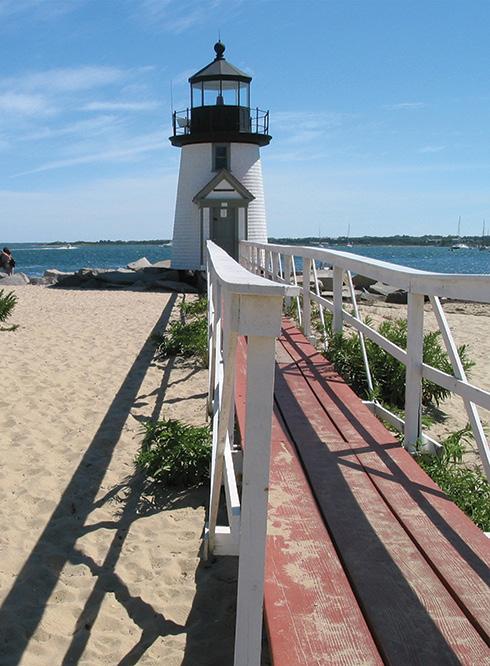
Waterfront seafood, chilled rosé, and harbor views make this a Nantucket ritual.
# 4. Dinner at The Chanticleer or Lola
A refined and upscale island dining experience tucked into the romantic village of Siasconset. For a more summer casual atmosphere, reserve a table at Lola across from the White Elephant.
#5. Accommodations at The White Elephant
The gold standard of Nantucket luxury with harbor-facing rooms and effortless coastal style. Peaceful, elegant, and charming.
#6. Cisco Beach
A favorite for surfers, sunset seekers, and anyone chasing the Island’s relaxed sophistication.
#7. The Artists Association of Nantucket or The Whaling Museum
A polished look into the Island’s thriving art scene and creative heritage. For an educational experience, drop by The Whaling Museum.
#8. Cocktails at The Club Car
Piano music, polished crowds, and classic island nightlife in one iconic venue. It’s a special place with a colorful history.
#9. Brant Point Lighthouse
The quintessential Nantucket photograph and a timeless must-see landmark.
#10. Shop Main Street and the Town Center
Magnificent galleries and quaint shops that have the most wonderful clothing, jewelry, and just about everything you’ve ever wanted but have been waiting for this moment to ask.



10 THINGS TO LOVE IN NEWPORT
#1. The Cliff Walk
Ocean air, crashing surf, and extraordinary views from one of America’s grandest walks.
#2. Breakfast at Cru Café
An upscale yet relaxed start to the morning, steps off the prestigious Bellevue Avenue, with locally loved brunch favorites prepared and served by Newport’s Best!
#3. Lunch at Forty 1° North
Luxurious harbor-front dining, surrounded by elegance and good taste; the food is beyond amazing.
#4. Dinner at the Clarke Cooke House
A yachting-world staple where top-of-the-line dining meets harbor glamour—and the place to be seen.
#5. Rest Your Head at Castle Hill Inn
An iconic waterfront retreat known for understated luxury and unforgettable sunsets. It’s not an Inn, it’s a lifestyle.
#6. Ocean Drive
A 12-mile scenic, looping coastal route winding past rugged Atlantic cliffs, with breathtaking views graced by privately owned historic Gilded Age estates.
#7. Entertainment at The Landing
Live music, interesting characters, and plenty of beauty.
#8. Shop ‘Till Your Significant Other Drops
And they will beg for mercy by the time you get finished touring ‘Thames Street,’ which extends for miles along the harbor with side trips to the wharves hosting additional shops that shouldn’t be missed.
#9. It’s Just Beachy, at Gooseberry Beach
Be a beach bum for the day. It’s a secret no one will tell you about. Gooseberry Beach in Newport, off Ocean Drive, is private, but also open to the public. Located between Bailey’s Beach and Hazard’s Beach, it is best to make a reservation since parking is at a premium.
#10. Sailing the Harbor
A private sail through Newport Harbor offers the perfect glimpse into the city’s maritime legacy—there are plenty of options, from schooners to yachts, the choice is yours.

10 THINGS TO LOVE IN MONTAUK
#1. The Drive East
The journey to Montauk has become part of the culture itself, especially in summer. The ferry from New London to Orient Point gives passengers a taste of what’s to come. Soak it all in.
#2. Breakfast at Joni’s Fresh juices, elevated breakfast fare, and a devoted in-the-know following. It’s very much ‘Island’ atmosphere; but you’ll love it!
#3. Lunch at Duryea’s
The lobster cobb salad and waterfront tables continue to define Montauk chic. It’s scripted for mood, attitude, and enjoyment.
#4. Don’t Miss Dinner at Gigi’s
Located at Gurney’s Montauk, it offers an amazing dining experience that complements one of the most memorable stays of your life.
#5. Bunk at Gurney’s, You’ll be Glad You Did
Incredible rooms, amenities, and features are ready to spoil you and your partner.
#6. Ditch Plains Beach
For luxury, no beach is going to compare to Gurney’s. And no, we don’t get paid a promotional fee; we happen to love the place. But you have to take a day and head up to one of the East Coast’s most famous surf beaches, which is a magnet for stylish crowds—enough said.


#7 & 8 Chills & Spills: The Fire Pit and The Surf Lodge
With regret, we can only share a couple of our favorite evening haunts; there are so many more. The first is the ‘Fire Pit,’ naturally, at Gurney’s. Expect all ages, some minor celebs, and well-known influencers; on weekend nights, it resembles a runway. Never a disappointment due to the NYC metro vibe created by the occupants. Over at ‘The Surf Lodge,’ it’s difficult to describe; you need the experience to understand the genre fully. The most exclusive club on the Island—if not the world. It’s the kind of place where NYC models are plentiful and some of the most recognized actors and performers mill around them like hornets to ladybugs. Rumor is that on some nights, the cover runs into many thousands of dollars per person. Upon your first visit, you might believe that you fell asleep on the beach and are dreaming. However, be warned, respect gets you in and keeps you there, and anything less will get you onto that beach, and you will have your eyes closed.
#9. The Montauk Point Lighthouse
A timeless coastal landmark with dramatic views of the Atlantic Ocean. Sounds like ‘selfie heaven.’
#10. The End
No, we’re not stopping yet. It’s the moniker for the famous seaside village at the furthest point of Long Island’s South Fork. Rugged, yet beautiful, it’s laid back, packed with locals who won’t serve you if you even think about pulling out a cell phone. A commercial fishing harbor, it offers seaside dining. It’s been said that if you can relax there, you can’t relax.
10 THINGS TO LOVE IN GREENWICH
#1. The Sophistication
Greenwich blends old-world wealth with modern luxury, only an hour from Manhattan. Just being there feels good.
#2. Breakfast has to be at Méli-Mélo European café culture with delightful pastries and elegant brunch offerings.
#3. Lunch at L’Escale French Riviera energy directly on the waterfront. Refined and comfortable, you won’t want to leave.
#4. Dinner at The Cottage
An award-winning contemporary American dining restaurant with impeccable presentation and atmosphere. The interior is minimalist, while their food is an art form.
#5. Stay at The Delamar
A refined waterfront hotel favored for discreet luxury and exceptional service. Nothing comes close, but book early; everyone knows this secret.
#6. Greenwich Point Park
Sailboats, shoreline views, and peaceful escapes minutes from downtown. It’s the location of The Greenwich Concours automobile event, held at the end of May this year, making it the perfect time to plan for the 2027 show.
#7. The Bruce Museum
A sophisticated blend of art, science, and architecture. We haven’t visited, but it’s been recommended, so we’ll be making the journey.
#8. Music & Dancing
A destination outside of Greenwich, but it attracts a stylish, all-age crowd with DJs usually spinning Latin genres. Two floors of experienced dancers and those wanting to learn. Known for being a safe environment.
#9. Luxury Shopping on Greenwich Avenue
Designer boutiques and jewelers line one of America’s most affluent streets.
#10. Greenwich Polo
What is there to say? Go because it’s authentic, and not an imitation.

10 THINGS TO LOVE IN BOSTON
#1. The Energy Boston balances historic grandeur with an increasingly modern luxury. Its attraction to international tourism creates a cultural mega-city.
#2. Breakfast at Contessa
An elevated morning overlooking Back Bay with unmistakable style. Dinner is very special too.
#3. Lunch: Head to the Seaport and Indulge at Ocean Prime Combine Legendary seafood, great people-watching, and shopping with the contemporary feel of city life.
#4. Dinner at the Cactus Club Café
An internationally celebrated dining experience that redefines Boston’s culinary scene. It’s also known for its social excitement. It’s a must-visit when in the city.
#5. Book the Best: Boston’s Five-Star Hotel, Raffles Service, accommodation, views, food, nightlife; if you want it, you can find it here.
#6. Museums
There are so many museums that they can’t possibly be visited in a week or two. Plan and book your reservations, then design your stay around those visits.


#7. Newbury Street-Both Sides
Designer boutiques, galleries, and cafés define the city’s fashionable heart.
#8. Cocktails at Rooftop at The Envoy Skyline views and sophisticated nightlife above the Seaport.
#9. Boston Harbor Cruises
Private charters and sunset sails showcase the city from the water.
#10. Medical Care
We hope you don’t need it, but if you do, this is the best place in the country for what ails you.
10 THINGS TO LOVE IN NYC
#1. Showing Up
No city announces ambition and excitement quite like New York. It is by no means a duplication; it’s all original. The attitudes and expectations are real. That vibe is distinguishable.
#2. Breakfast at Balthazar Downtown glamour and Parisian energy continue to draw fashion and media elites.
#3. Lunch at The Polo Bar
Classic Manhattan sophistication with one of the city’s hardest reservations, but it can be accomplished if you’re savvy.
#4. Dinner at Le Bernardin
An enduring benchmark for fine dining in America.
#5. Stay at Aman New York Ultra-luxury hospitality elevated to an entirely new level.
#6. The Metropolitan Museum of Art World-class collections housed inside one of the city’s great landmarks, it’s never boring, always insightful.
#7. The Avenues
Pick one and feel like a New Yorker by walking with a pace of determination and pretend you have a place to be.
#8. Cocktails at Casa Cipriani
A private-club atmosphere with unmatched waterfront views.
#9. Broadway Evenings World-class productions remain central to the New York experience.
#10. Shopping on Fifth Avenue
Luxury fashion houses and flagship boutiques continue to define global style. But nothing says love like purchasing a special gift from Tiffany’s or Cartier, both located on Fifth Avenue.
Warning: Stay the hell away from Times Square—no good is to be found in that pitiful place.
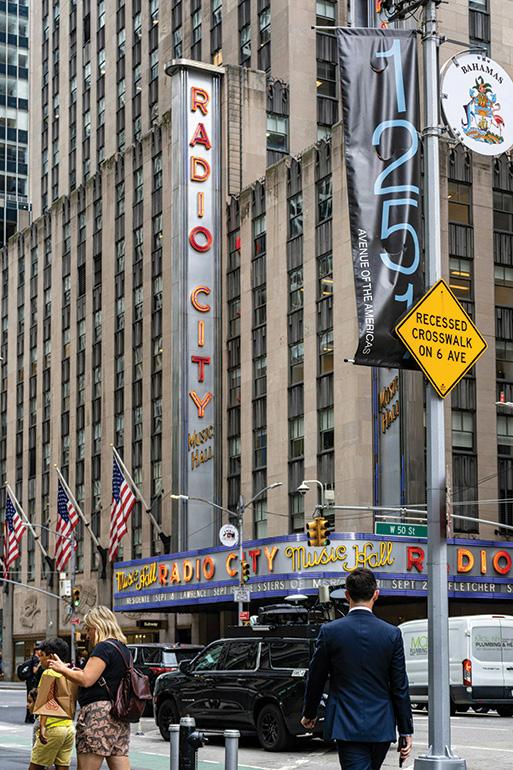

Today’s concept of Luxury travel is less about distance and more about experience. These destinations continue to inspire because they combine beauty, culture, exceptional hospitality, and timeless atmosphere. Whether it is a long weekend in Nantucket, a yachtfilled afternoon in Newport, or cocktails above Manhattan, each journey promises something unforgettable. The only question left is what to pack first. H


You Got This





Model Call-Out For Our Summer Issues
Have you ever thought about seeing yourself on the cover of a magazine?
Of course you have, and this is your chance to live out that dream.
Our model search is open to anyone who wants to step into the spotlight and be seen; no prior modeling experience required, just a fresh face, confidence, and personality.
Whether you’ve always wanted to model or curious about what it’s like, this is the opportunity to be celebrated on our covers.
All you need is the desire to participate and the confidence to put yourself out there: You Got This!
To learn more, send an email to nemedia@earthlink.net or text 508-971-1969.

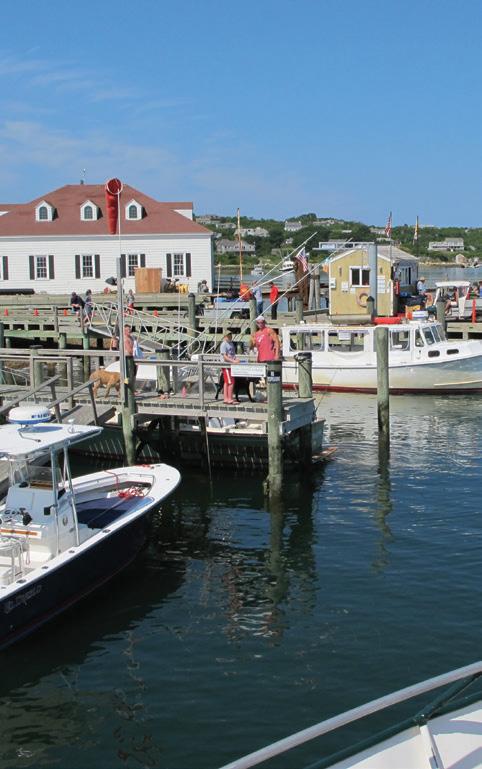


• Depart from New Bedford’s historic waterfront; a short walk to downtown New Bedford’s many restaurants, boutique shops, museums & galleries.
• Enjoy the gorgeous views of Buzzards Bay as you make your way to the laid back island of Cuttyhunk.
• Friday Night Sunset Cruises! Breathtaking scenery, comfortable accommodations, not to be missed excursion.
EARLY SUMMER: MAY 22, 2026-JUNE 18, 2026
SUMMER: JUNE 19, 2026-SEPTEMBER 7, 2026
Depart