
THE ASSAULT ON AMERICA HAS BEGUN
What Will It Take To Stop It?

What Will It Take To Stop It?
While many people know me through my work in real estate, community service has always been equally important to my family.
Keith and I are proud supporters of both The Women’s Center of New Bedford and the Katie Brown Educational Program, two organizations dedicated to preventing domestic violence, supporting survivors, and creating safer communities through education, advocacy, and awareness.
For more than 50 years, The Women’s Center has provided vital services to survivors of domestic violence and sexual assault throughout the SouthCoast, helping women, children, and men find safety, support, and hope. Likewise, the Katie Brown Educational Program is committed to empowering communities to end domestic violence through prevention, education, and equipping young people and families with the knowledge and tools to build healthy relationships and recognize the warning signs of abuse before violence occurs.
On Thursday, August 20, supporters from across the region will gather for one of the most unique and exciting fundraising events of the summer: the Katie Brown Cup.
This extraordinary event offers participants a rare opportunity to sail aboard prestigious America’s Cup 12-Metre yachts while supporting a mission that changes lives. Set against the backdrop of Newport Harbor, guests will enjoy a memorable day on the water while helping fund critical prevention and education programs that reach thousands of students and community members each year.


Whether you are passionate about sailing, committed to strengthening our communities, or simply looking for a meaningful way to give back, the Katie Brown Cup is an event not to be missed!
I hope you will consider joining us on Thursday, August 20 as we support an organization whose work helps create safer, healthier futures for individuals, families, and communities throughout our region.
Learn more and register at https://kbep.org/katie-brown-cup/



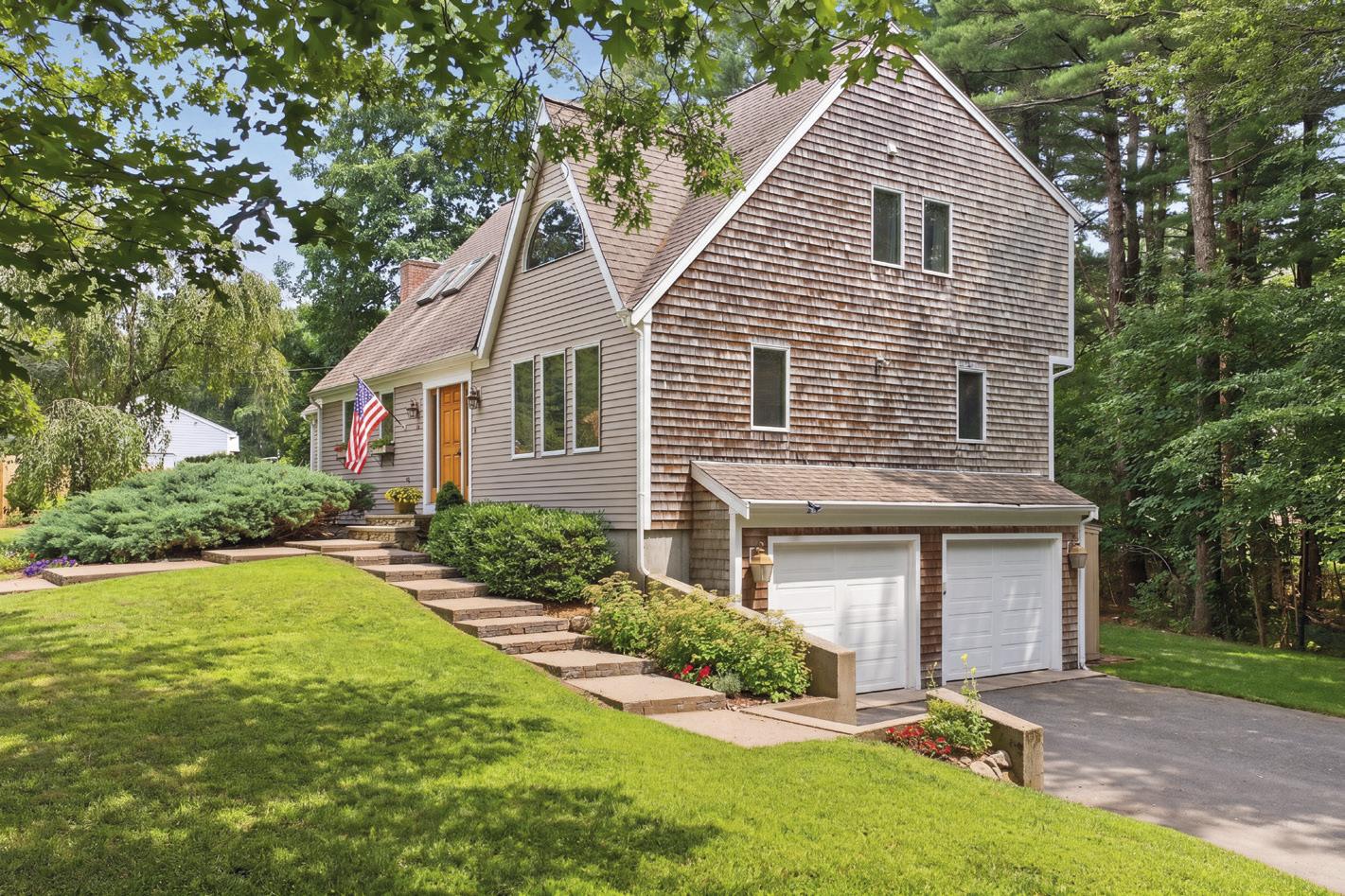
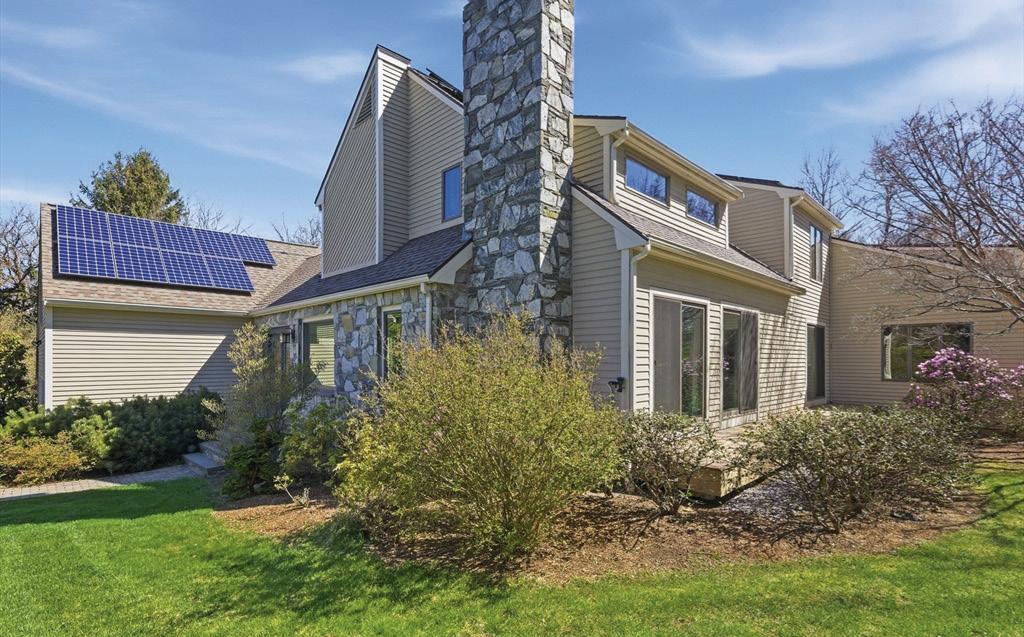
Lovingly maintained, this welcoming Cape blends timeless comfort with thoughtful updates and inviting spaces designed for both everyday living and effortless entertaining. The main level features an expansive living and family room, an updated kitchen with granite countertops and stainless steel appliances, and a breakfast bar. The second level includes a spacious primary suite, complemented by a walk-in closet and private bath, and two additional bedrooms. A finished walk-out at the lower level provides flexible living space for an active family.
The home’s flowing interior opens naturally to a spacious mahogany deck overlooking beautifully landscaped grounds, leading to a private patio with a hot tub, creating an ideal setting for gathering. From quiet mornings to sunset evenings, every detail encourages you to slow down and enjoy the lifestyle that makes Mattapoisett so special. Just minutes from the village, harbor, beaches, shopping, and everyday conveniences. Offered at $945,000.


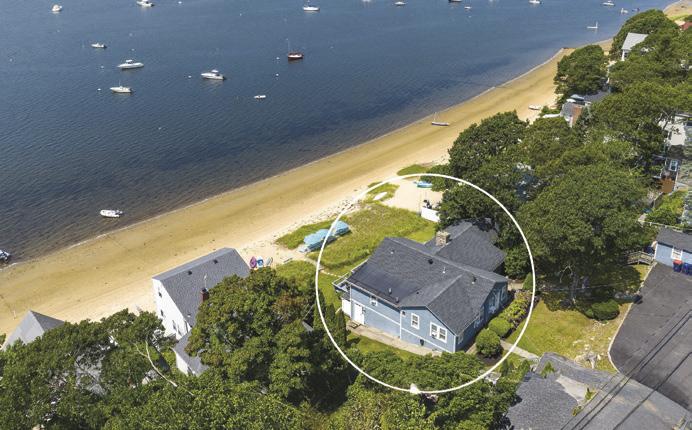

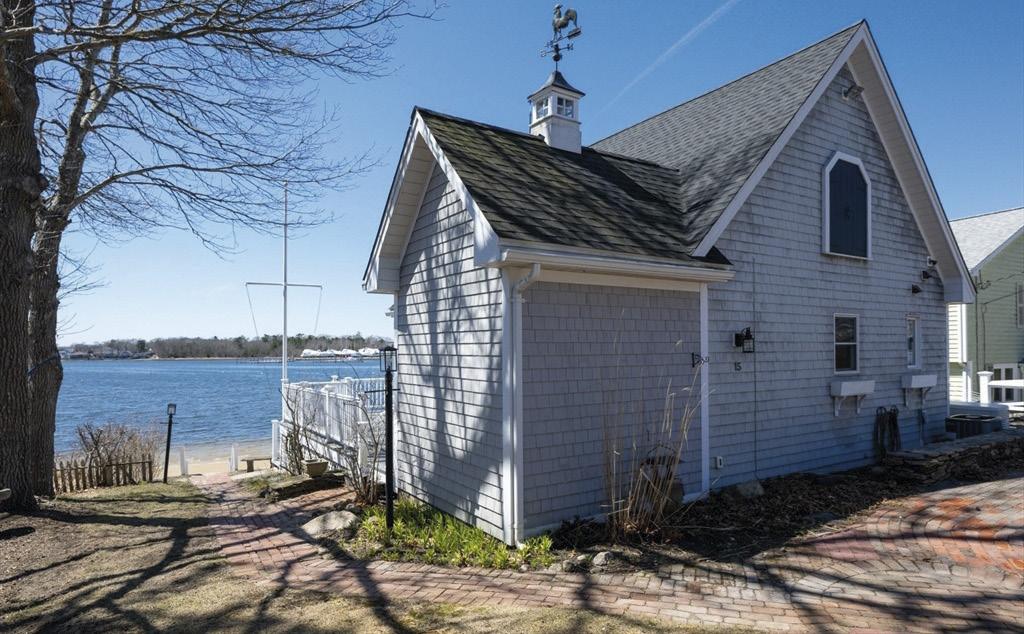
































Luxury Living. A rare opportunity to sail aboard prestigious America’s Cup 12-Metre yachts while supporting a mission that changes lives. Set against the backdrop of Newport Harbor, the Katie Brown Educational Program is committed to empowering communities to end domestic violence through prevention, education, and equipping young people and families with the knowledge and tools to build healthy relationships and recognize the warning signs of abuse before violence occurs.
Thoughts From The C-Suite. Our monthly Op-Ed topic has less to do with politics and more with our economic future and how our free market is being attacked by those who push for an economy controlled by the state.





Score! America loves soccer, and the SouthCoast loves the Portuguese and Cape Verdean players!
A New Take on Farm-to-Table. There’s a new type of farm that has many sitting at the table for a discussion, with some unhappy with the prospect of more on the way.
The Hidden Costs Of Privacy. With the market creating millionaires—and billionaires—and a legendary transfer of wealth never seen before, one would believe the newly rich would opt for yachts, exotic cars, and one-of-a-kind travel experiences. And to be frank, they often do, when not pursuing privacy. It’s not cheap, nor is it easy to protect in a world of unprecedented technology. What would you be willing to pay to go ‘unseen’?
Newport Welcomes A New Neighbor. BayCoast Bank sails into the City by the Sea and celebrates the Grand Opening of its new branch.

“Splish, splash, I was takin’ a bath. Long about a Saturday night, yeah. A rub dub, just relaxin’ in the tub. Thinkin’ everythin’ was alright.” Singer/songwriter Bobby Darin knew a thing or two about bathtubs, but it’s doubtful he regarded his weekly soaking as medicinal, unless it was filled with ice cubes and cold water. Learn what a ‘plunge’ can do for your health.

As more women stay single longer and age in place, evidence shows that the predictions are coming true. Age-gap relationships are occurring with increasing frequency, but with a new influence. Dating trends indicate a significant uptick in women in their 30s and 40s partnering with substantially younger men. Does this mean more civility will follow, and all relationships will be viewed as equal and equitable?
You work hard for your money. So why does it feel that it is never enough? We take a look at how simple economics explains the discontent.


Stopping the madness created by ‘robo’ calls. They’re everywhere and loved by no one, yet we are unable to stop them from ringing our phones morning, noon, and night. This month, we look at the reasons they won’t stop until some point in the future.
Flock Off! Do you know who is watching you? Predicting with razor-sharp accuracy where you will be tomorrow at 2 p.m.? How about that car you bumped into in a parking lot and thought no one noticed? You drove away with a false sense of secrecy. Twenty years ago, we warned our readers this day was coming. Unfortunately, they did not pay attention, and now Big Brother, who has grown up, knows everything about you and those you have contact with, regardless of time, place, or distance.

THOUGHTS
Every generation rediscovers the same argument and calls it new. Should an economy be organized around central planning (Economic Control by the State-ECS) where it sets production targets and allocates resources according to a plan, or around a free economy (FE) where prices are set by supply and demand, telling millions of independent actors what to make, how much to charge, and where to invest their capital?
Too often, this debate gets dressed in ideology, yet underneath it is an engineering question with an empirical answer. Economic history has run this experiment more than once: across countries, using real currencies, and with actual populations. The results are not ambiguous; instead, they offer precise data points.
Start with the clearest natural experiment the twentieth century produced. In 1945, Germany was split into two states that shared a language, a culture, an industrial base, and a war-shattered beginning. West Germany rebuilt around markets and private property. East Germany was rebuilt around ESC, better known as Communism. By the time the Berlin Wall came down in 1989, West German per

capita income was roughly three times that of the East. Consumer goods that were routine in Frankfurt were in short supply in Leipzig. The two populations were genetically and culturally the same, leaving only economic systems as the variable accounting for their differences.
Korea offers the same experiment and example with even less ambiguity, because the starting conditions were closer to identical and the gap has had longer to compound. North and South Korea split from a single nation in 1948. Today, South Korea’s economy is roughly fifty times larger than North Korea’s, and satellite photographs of the peninsula at night show the border as sharply as any chart could: light across the South, darkness across the North, aside from a faint glow around Pyongyang. Both governments had access to the same peninsula, the same population stock, and comparable initial resources. One built an economy on price signals and private
enterprise—the other one, on central allocation. Fifty years later, the difference in outcomes is not a matter of interpretation but an illustration of reality.
Communist China provides a version of the fiscal experiment run on a single population over time rather than across a border. Under ECS during the 1960s and 1970s, the country experienced repeated famine and stagnant growth, including a famine in the early 1960s that is among the deadliest in recorded history. Starting in 1978, the government began introducing market mechanisms: private plots, township enterprises, special economic zones open to foreign investment, and eventually broad market liberalization while the state retained political control. What followed was one of the fastest sustained reductions in poverty any country has ever recorded, with hundreds of millions of people moving out of extreme poverty over the following four decades. The government did not change. The people did not change. The economic mechanism changed, and so did the outcome. Most notably, the Communist State reverted to running the country using free-market tools to right itself.
However, the rise of radicals and extremists attempting to hijack our economic system is enough to alert the many millions of voters, citizens, and new arrivals who come here to escape what these radicals are proposing and attempting to convince the voting public to overthrow your way of life and that of your children, their children, and all that follow in future generations.
The theoretical reason for this is not mysterious, and economists across the political spectrum largely agree with it, even when they disagree about what to do with it. A market price is a compressed piece of information. When the price of a good rises, it tells every producer, everywhere, simultaneously, that this good has become more valuable relative to the resources needed to make it, without anyone having to know why. A shortage in one country, a bad harvest, a new invention, a shift in consumer taste, all get compressed into a single number that adjusts millions of decisions in something close to real time. A central planning board cannot replicate that. It has to gather the information, process it, and issue a directive, and by the time it does, the underlying conditions have usually moved again. The economist Friedrich Hayek called this the knowledge problem: no committee, however well-intentioned or well-staffed, can hold the dispersed, constantly changing information that a price system aggregates automatically. Command economies do not fail because planners are unintelligent or malicious. They fail because the amount of real-time information required to run a modern economy from the center exceeds what any planning apparatus can process, and shortages, misallocation, and stagnation are the predictable result.
Another interesting plank in the ECS platform is the elimination of property rights, even though they are essential for growth and productivity. When a person or firm owns the output of their effort and can keep the proceeds of a good decision, they have a direct incentive to make good decisions, take calculated risks, and improve efficiency. When output is centrally allocated regardless of individual performance, that link weakens, and so does the incentive behind it. We are not making a moral claim, but rather explaining an observable, documented result from measuring human behavior. There is no doubt that incentive structures shape behavior by creating incentives within any system, as evidenced by productivity data from free economies versus those controlled by the state.
None of this means free markets don’t produce problems of their own. Concentrated wealth, monopoly power, environmental costs
that markets don’t price correctly, and gaps in access to healthcare or education can sometimes become frictions that most economists, regardless of their broader views, acknowledge and call for a public policy response. That is precisely why the most economically successful countries in the world are not pure free markets. Denmark, Sweden, and Germany, frequently cited in American political debate as socialist models, are market economies with private enterprise, private property, and price-driven allocation, layered with a substantial public welfare system funded through taxation. That is a different economic structure from central planning, and the distinction is not a technicality. It is the entire difference between a system that keeps the price mechanism and adjusts its distribution afterward, and one that replaces the price mechanism altogether. Nordic-style Capitalism and Soviet-style central planning are not points on the same spectrum with different amounts of the same thing. They are different tools solving different parts of the problem. This being said, it falls under the category of the ‘Robin Hood Effect’, taking from the rich and giving to the poor who aren’t incentivized to improve and rise on the economic ladder. There is a valid argument that some social programs are necessary; conversely, stripping a person or company of its wealth because of its success becomes confiscatory or punitive taxation.
Many leaning towards ESC economic influence will point to the Euro-type system of combining philosophies. Yet, not a single one of them comes close to the U.S.A. in quality of life, economic strength, world power, or the influence the U.S.A. possesses. A view that the rich should be stripped of their earnings to support others is no fairer than demanding that the poor work for their gifts from the state, which are forced from earners—by the state.
What the historical record supports is not only a durable argument that Capitalism, an almost free market system over Communism, which by definition is an economy controlled by a few in control of the state, but that our current free market system is increasing the wealth of population and extending to all classes rising our poorest to a level of living that surpasses a large portion of other country’s populations. Our level of poverty has risen and will continue to do so. The wealthy will also be rewarded for their efforts and risks. Of course, guardrails are necessary, and the reins on political power must be pulled back considerably. Yet, until someone or something devises a plan proven to be more viable, we need to continue, if not accelerate, our economic engine as we celebrate 250 years of productivity. It is closer to an engineering finding, and a reader need not hold any particular political affiliation to weigh it against the evidence.
We welcome the observation that reasonable economists might disagree about the right size and structure of the welfare state layered on top of market economies, and about how to price externalities required to regulate monopoly power; it is a live and legitimate debate. However, the rise of radicals and extremists attempting to hijack our economic system is enough to alert the many millions of voters, citizens, and new arrivals who come here to escape what these radicals are proposing and attempting to convince the voting public to overthrow your way of life and that of your children, their children, and all that follow in future generations. H
BY PEET NOURJIAN


This summer SouthCoast got its kicks
Watching players perform their tricks
Penetrating the tightest hole
To boot the ball through for a goal
Countries from around the world
Watching colorful flags unfurled
And none as proud as SOCO fans
Portuguese and Cape Verdeans
Well-known for gourmet foods they eat
Bacalhau, cachupa, spicy meat
Backyard vineyards, vintage port wine
From heirloom grapes grown on the vine
We know they love to celebrate
Feasts and festivals are first rate
Moody fado, morno singers
Upbeat rhythmic Pimbo swingers
What comes to some was a surprise
At how these players seem to rise
From FIFA’S pack of forty-eight
To sport page headlines shouting “GREAT”
Americans now love the game
And SOCO fans can rightly claim
This pair of nations stole our hearts
A Futebol dynasty now starts…! H

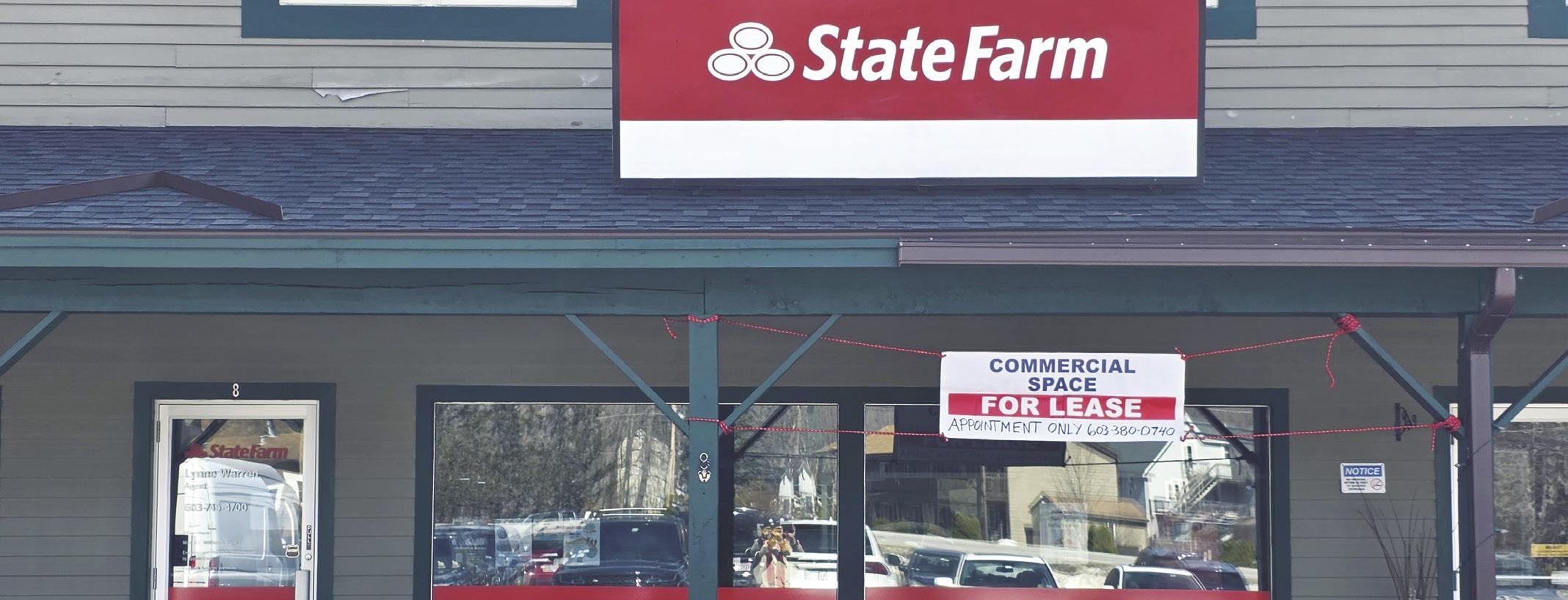
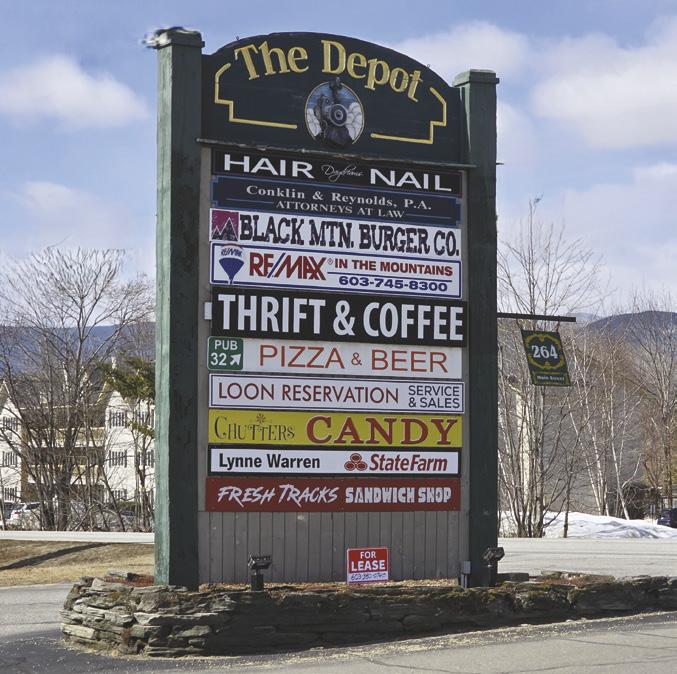
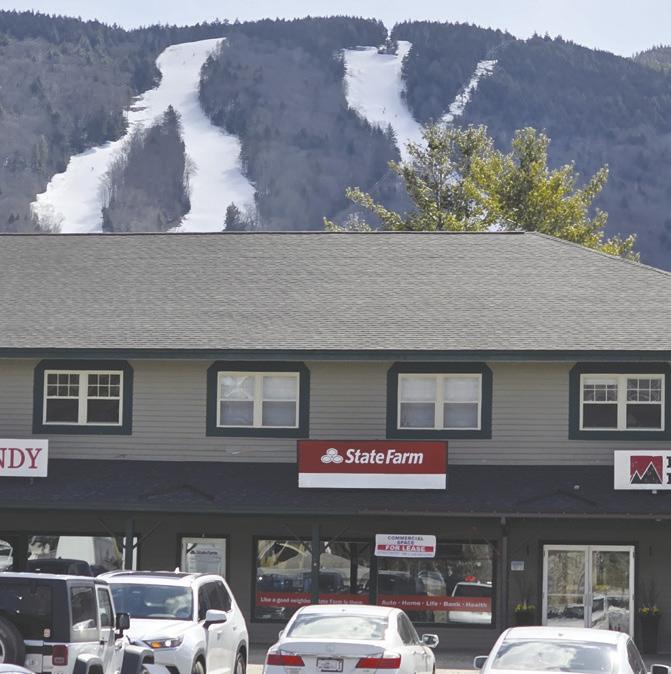
AVAILABLE AT THE DEPOT PLAZA
264 MAIN STREET
LINCOLN, NEW HAMPSHIRE (KANCAMAGUS HIGHWAY/ROUTE 112)
Property Overview:
Office/Retail/Mixed Use
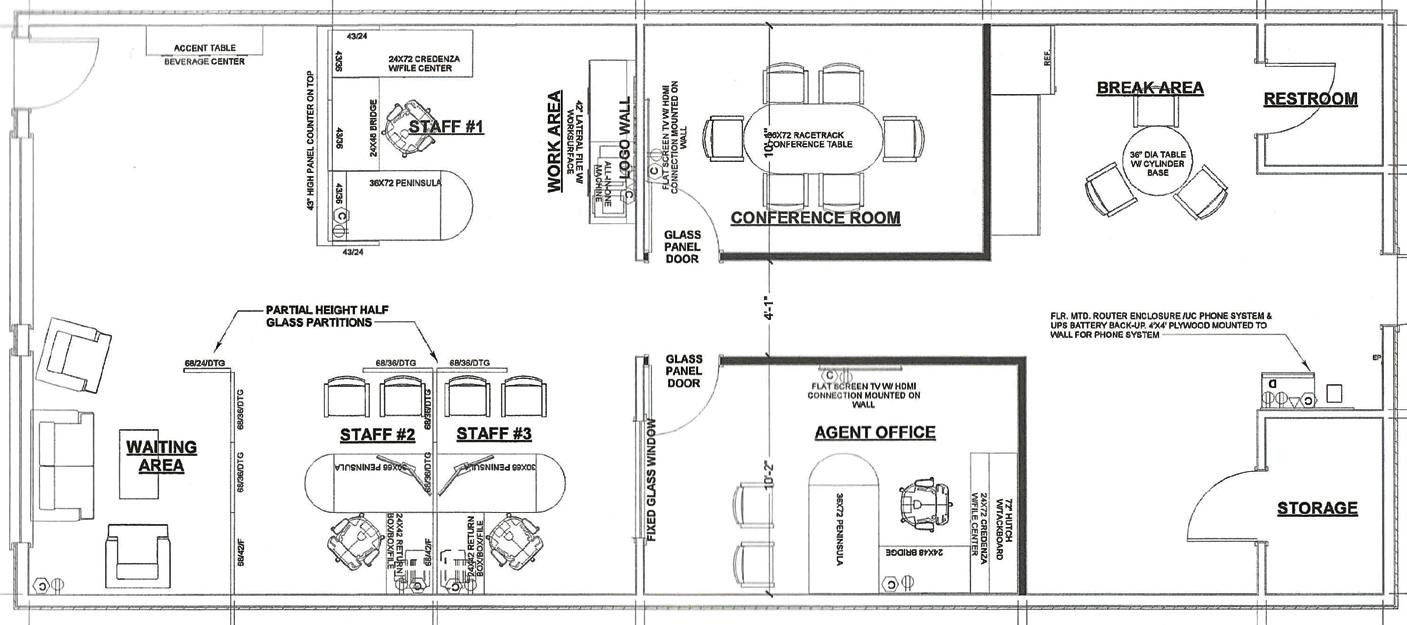
Approximately 1,370 sq.ft.
Lease Type: NNN - CAM, Utilities (includes heat), taxes are tenant’s responsibility Available this Summer Lease Term Minimum of 3Yrs +
• Highly visible mountain location at a four-season tourist destination
• Located between South Peak & Loon Mountain
• Foot traffic from multiple condo developments and anchor tenants
• Traffic count: Route 112 is a major conduit between Lincoln and North Conway, 6-9k vehicles passing daily
• Excellent curb appeal, with the storefront facing a large parking lot and a roadway at ground level
• Central heat & ac, security cameras, newly renovated as an office, offers a flexible floor plan for retail conversion
• Large vertical roadside (double-facing) signage advertising tenants; one sign above the space
• Fees, taxes & utilities: CAM: Utilities (includes heat), taxes are tenant’s responsibility

Fine art, furnishings, collectibles, and accessories for interior design projects, home-sale staging, studio photography, and theatre events—for purchase or lease. Flexible terms available.





Are you facing the challenges of caring for a loved one at home? Perhaps trying to wholeheartedly balance their needs and the daily demands life delivers you?
If this sounds familiar, we are here to assist you in providing an unmatched standard of Adult Foster Care benefits for those striving to stay in their homes.
Mass Care Link is evolutionary, providing a monthly payment to those caring for someone at home while supporting them with a personalized touch.
Costing less than assisted living facilities and nursing homes, with a record of compassion and empathy, we cover the unique needs of our clients.
Families and individuals rely on our services to:
• Ensure caregivers receive a tax-free monthly stipend/payment
• Review and verify MassHealth paperwork and qualifications
• Train and assist with the management and demand of providing 24-hour care
You may not know this fact, but if you qualify as an at-home caregiver, you can earn up to $18,240 yearly.
For a caregiver to meet state requirements, they must:
• Be at least 18 years of age
• Reside in the same home as the person they care for
• Not be the legal guardian or legally married to the person being cared for
• Provide necessary medical care and assistance that meets the needs of the person they care for
For your family member or loved one to qualify for Mass Care Link services, they must meet these eligibility points:
• Be 16 years of age or older
• Be approved for MassHealth insurance
• Live with the primary caregiver in the same home
• Require supervision and cueing, or physical assistance daily with at least one of the following needs: bathing, toileting, ambulation, transferring, eating, and/or dressing.
If this sounds attractive and meets your level of interest, contact us today for additional information or to schedule an appointment.
Mass Care Link, Inc.
99 South Main Street, Fall River, Massachusetts 02721 Hablamos Español | Falamos Português call for more information or visit us online at:







BY ROB SAINT LAURENT, M.ED.
“Everything comes from the land. Once you tear it up, you can never replace it again,” said 82-year-old farmer Ida Huttleston.1
Huttleston and her daughter, Delsia Bare, 54, are salt of the earth who view themselves as stewards of God’s creation. They recently made national headlines for refusing an unsolicited $26 million windfall offer for their generational property in Maysville, Kentucky.
The buyer, yet to disclose itself, is described by local officials as an American Fortune 20 tech company. Public filings show the project is a leviathan: 2,000 acres in Mason County rezoned for six massive data centers totaling roughly 718,000 square feet each, with three large substations. Total capacity is estimated at 2.2 gigawatts, rivaling and exceeding many small nations. 2
In a human-interest story for People [magazine], the women explained their emotional attachment to the land and how they’re living under the threat of eminent domain for their defiant stance.1
Their predicament is among many stories of everyday Americans feeling real-time, local impacts of the Trump Administration’s AI initiative and Project Stargate, announced early last year.
Tech giants, like OpenAI and Google, are spending trillions on global expansion of these computer server warehouses in a sprint to lead the pack in meeting growing demand for AI, cloud computing, and cryptocurrency.
Numbers vary, but Pew Research says more than 3,000 data centers are currently operating across the U.S., and over 1,500 are under development. By some estimates, the U.S. will require about 30,000 in total. The vast majority of those in operation are in urban areas, while about two-thirds of those being planned are slated for rural areas, mostly in the South and Midwest.3
Given what’s at stake, more communities are setting aside political differences and sharing in Huttleston’s resolve to “fight it out” with officials. Citizen activists are vocal about hasty construction, exorbitant water use, pollution, rising electricity costs, and deals between companies and local administrators obscured by non-disclosure agreements.
In Utah’s Box Elder County, billionaire Kevin O’Leary, of Shark Tank fame, is launching his Stratos data center project amid stiff local resistance. Falling under the Military Installation Development Authority, O’Leary and county officials were able to circumvent public input on major elements of the plan, including land use and environmental impacts. Public pressure has led to a six-month pause on further data center development, though O’Leary’s project filing preceded the decision and is allowed to proceed. However, state pressure is forcing the project to scale down and, amid legal challenges, it faces an uncertain future.

“You can’t get food out of a data center, and everything coming out of the data center is going to be poison and destructive.”
After a proposal by Hanton City Investments, citizens in Smithfield, Rhode Island, forced a ban on all data center development. But as in Box Elder County, the initial application was filed before the ban was enacted. While the project is still alive, it faces tough bureaucratic obstacles and public pushback. In Lowell, Massachusetts, home to the state’s largest data center, voters scored the state’s first one-year pause.
In Indianapolis, angry residents successfully forced Google (at least for now) to rescind a billion-dollar data center proposal that would have rezoned about 500 acres in Franklin Township. Common to these projects were concerns about staggering water consumption (roughly a million gallons per day), hyperinflated utility costs, environmental risks, and very few permanent job opportunities.
Allegations of local bipartisan corruption are widespread. In Michigan, for instance, data center developers and utilities are accused of bypassing regulatory processes to speed approvals, while bullying rural towns and doing backroom deals with officials in betrayal of their electorate.
Polls show a majority of Americans favor a national moratorium on further construction, but minority efforts in Congress have failed thus far.
Examining data centers in Virginia, the most data center-dense U.S. state, George Mason University researchers found five main areas of impact: energy costs, water use, air quality, noise, and land use.4
Rising digital demand and grid stress place upward pressure on everyone’s electricity bills, with lower-income families most affected. These afflictions can lead to difficult choices for families facing increased costs for energy, food, or healthcare.
For people in Lake Tahoe, it’s more than spiking electricity costs, as some 49,000 residents face being left in the dark. Nevada’s NV Energy, which supplies 75 percent of its energy to California-based Liberty Utilities, said it will stop supplying power after May 2027 to make way for new data centers.
Author and energy expert Michael Webber, Ph.D. says we still don’t yet know whether tech companies will invest in grid expansion and make electricity more affordable for everyone or compete with the public, continuing to drive up rates.5
These data centers are also thirsty, devouring as much as five million gallons of water a day to keep their servers cool. Such use can strain rivers, lakes, aquifers, and municipal water systems, the researchers explain, especially in drought-prone regions already struggling, such as the American Southwest.
Webber says that even with a closed-water cooling system, more water is still needed to cool it. The question is over continuous water input versus a one-time upload with recycling. He advises a minimum standard of construction acceptable to communities, such as prioritizing air over water cooling.
But developers often keep the sources of energy and water confidential.
Continuous power generation from fossil fuels releases a variety of noxious airborne pollutants, like carbon, sulfur dioxide, nitrogen oxides, and mercury. These are linked to lung and cardiovascular disease and lead to a greater risk of neurological diseases in older adults (Alzheimer’s and Parkinson’s, for example).
Researchers have found that data center power generation from fossil fuels is causing a significant increase in greenhouse gases that trap heat and can affect the climate, worsening pollution. Yet, in all honesty, the trend toward nuclear and renewable energy, albeit slowly, is on the horizon in procurement.
And there’s the noise, the constant white noise. In northern Virginia, the researchers say the 24/7 low-frequency hum that generated complaints measured 40-59 decibels on residential properties. Though moderate and not a threat to hearing, the EPA has long known that steady indoor noise above 45 decibels can interfere with sleep, work, and well-being. Oddly, such data for wind turbines never seemed to move the needle when it came to being built near schools or in residential neighborhoods.
Research behind WHO’s Environmental Noise Guidelines for the European Region shows long-term exposure to vehicle and other environmental noise raises the risk of cardiometabolic disorders like ischemic heart disease and hypertension.6
In ongoing field research, Benn Jordan says even sub-audible pressure waves, called infrasound, from data centers may be causing severe physical symptoms in nearby residents. Infrasound, or any sound below 20 hertz, can lead to several illnesses longterm and at high intensities.7
Speaking with Jordan, Cheryl Shaden, who lives across from the MARA crypto mining plant in Granbury, Texas, says she now suffers from motion sickness, dizziness, nausea, and GI side effects; her ears ring and buzz, and she now has permanent conduction hearing loss. She feels nervous, anxious, and worried. Take note that this problem was discovered early on, but whitewashed for decades when the topic of placing massive wind turbines in areas of population was raised. Turbines are plagued by the same complaints surrounding infrasound, but have been dismissed by activists who supported them, insisting it wasn’t an authentic medical malady. Considering the same problem exists but is viewed differently depending on theoretical positions, the question remains: who is telling the truth, or does it even matter?
Still, the symptoms commonly associated with excessive exposure to infrasound aren’t going away, regardless of the energy source causing the problem.
By the late 2020s, model projections consistently show about 1,300 premature deaths and as much as 600,000 asthma cases annually from data center fallout, for about $20 billion in annual health burden—mostly on the disadvantaged.6
Open green spaces used for data centers can also impact the quality of life. Worse, rural land use, much of which is former farmland, jeopardizes national food security and public health. 8
Said Ida Huttleston, “You can’t get food out of a data center, and everything coming out of the data center is going to be poison and destructive.”1
It’s becoming evident why, in the 2010s and 2020s, technocrat Bill Gates mysteriously got the urge to become the single largest farmland owner with 275,000 acres across 18 states. 8
Jeff Bezos, Larry Ellison, and other tech luminaries got in[to] the agribusiness as well. 8
Webber says we need to decide whether AI’s benefits are worth the costs: economic, environmental, cognitive, relational, etc. He believes the AI revolution will bring innovations such as better cancer treatments and faster development of fusion reactors.
U.K. journalist Iain Davis is the author of The Technocratic Dark State: Trump, AI, and Digital Dictatorship, in which he

makes a well-documented case for how a cadre of tech oligarchs is usurping traditional concepts of money, government, and freedom, bent on power and control.
The question that remains is whether Americans are helping to fund their enslavement, with dozens of states offering generous financial incentives to attract developers and change the landscape.
At a recent conference in Texas, Larry Fink spoke about the need for $10 trillion-plus in data center expansion over the next decade. Who will pay for it?
“Much of this money…is going to be coming from the private sector, from savings accounts, from pension accounts, from insurance companies, and on and on and on.” 9 H
1. Young, S. (2026, May 5). Mom and Daughter Initially Agreed to Take $26 Million Data Center Offer. Why They Changed Their Minds and Refused to Sell (Exclusive). People.
2. Ma, J. (2026, June 1). 2,000-acre land parcel rezoned for data center use in Mason County, Kentucky. Data Center Dynamics.
3. Seets, S. & Radde, K. (2026, April 13). Most new data centers in the U.S. are coming to rural areas. Pew Research Center.
4. Gour, N., Maibach, E., & Ortiz, L. (2026, June 8). 5 ways data centers endanger their local communities and the country as a whole. The Conversation.
5. PBS NewsHour. (2026, June 12). Why communities are revolting against data centers [Video]. YouTube.
6. George, B. (2026). Health Consequences of Large Data Centers: Air Pollution, Noise, Water Use, and Environmental Justice. SocArXiv cnwyb_v1, Center for Open Science.
7. Benn Jordan. (2026, February 18). Data Centers Behaving Like Acoustic Weapons [Video]. YouTube.
8. Terrell, R. (2026, May 26). Data Centers Are Destroying Farmland. New American.
9. 25 News KXXV. (2026, May 7). Gov. Greg Abbott & Larry Fink Announce $30M Investment to Train Texas Electricians [Video]. YouTube.






Many Confuse Wealth With Money. True Affluence Often Means Having The Freedom To Remain Unseen.

BY ROBERT WRIGHT
The world has turned into a circus of performance and attraction, fueled by the media through posts and influence, allowing millions to capture their 15 minutes of fame. Recognizing it as a fad, this too shall fade to gray—thankfully so.
It’s both stunning and amazing to observe how social and cultural changes, driven by a need for recognition, are shaping the illusion of value and worth for new generations. It is as if events and non-events don’t exist without documentation through a handheld photo. Equally intriguing is how experiences have replaced physical artifacts as evidence of one’s existence. The book I got signed by the author, the short time I had to meet and discuss their motivation and messaging, has been replaced with a quick shot of “Me with them.” No story. No interaction. No connection. But—“I was there!”
What was once cherished and passed down within a family has become a sound bite or an image among thousands of others, all of which, when grouped in a single file, appear redundant and lifeless. The same smiles over and over again. Of course, these images will be shared across social media platforms only to be buried, and in many cases, that’s a good thing.
Even though we can’t escape the noise that is part of the production, not all has been lost, for some who have little need to draw attention, or to be in the center of it, they revert to places where they won’t be recognized and opt to associate with others having the desire to enjoy the last true luxury: privacy.
An elusive luxury, privacy is maintained by carefully negotiating and curating both everyday events and special occasions; it entails avoiding the limelight at all costs and being an observer rather than the host to everyone around you. Wealth, on the other hand, ensures the lifestyle and support mechanisms that map out a course and provide transportation to places that protect privacy.

One obvious reason some populations seek obscurity is to avoid becoming a victim. Every day, the headlines read: “Three Stabbed In Knife Attack At Festival.” “Accused Rideshare Driver Was Not Properly Vetted.” “Violence In The Air Causes Jet To Return To Boston.” It is not just unnerving; it serves as a warning that there is no protection in public, since the police show up after an attack, not before, as a preventive measure. There is a long list of reasons why criminals are often repeat offenders who pass through the revolving door of the courts, facing little to no consequence for violent, antisocial behavior.
As far as respect for authority, there is little to be found. Well documented in both small and large public gatherings, protests, and open fist-fighting reminiscent of a blood sport on the streets, attacks take place against the innocent, accompanied by property damage and theft at the very stores the people reading this article shop at. These raves, or whatever they’re called, go rampant and are ultimately posted and viewed online as entertainment.
As for our roads and transportation system as a whole, it’s the Wild West and has turned into a wasteland; unyielding and dangerous, countless drivers projecting a lack of authentic

masculinity covered up by ego-driven oversized vehicles, or a boasting faux importance by cruising at twice the speed limit in vehicles not approved for driving 100+ MPH on highways designed for traffic going 65. These are the same drivers who enhance the chance of a crash by juggling a phone and a meal, cutting through traffic, or evading red lights and stop signs because they lack consideration for others.
According to scientists studying what is termed “Human Friction,” the average person will be confronted, warned, approached, or entangled with another, whether in person, while driving, or on the phone, a minimum of 10.2 times per week; 50 percent of these incidents will be face-to-face, and the other 50 percent will occur in online environments. Daily, the average American faces five stressors, including microaggressions, frustrations, and confrontations in public. This figure excludes being assaulted, robbed, pushed, shoved, or hit by a car or a delivery vehicle.
Then there is the time spent at work. According to the Society for Human Resource Management’s Civility Index, U.S. workers collectively experience or witness 208 million acts of incivility every day. On a more personal level, 57 percent of people interviewed experience or witness rude behavior at least once a week.
Civility is lost, social correctness is never taught, and consequences are never enforced.
The result? High and increasingly frequent gains to unacceptable levels that penetrate even the most calm and incontrol person imaginable.
Likened to our prehistoric ancestors, the public remains on guard for attack at any moment, ready to respond for survival.
Life wasn’t supposed to be this difficult, not with the advances made and the fact that we should have evolved by now and not regressed.
one. For some, that’s simply the texture of modern life, easy enough to move through. For others, it can feel overwhelming, even something they’d rather not encounter day to day. That preference is valid, though it’s often met with a raised eyebrow, as though wanting a bit more calm or courtesy were somehow an unreasonable ask.
What some have decided, instead of arguing the point, is to step back and spend more time among people who share their pace of life. It isn’t a judgment cast on anyone who thrives in the noise and energy of it all. It’s simply the exercise of an equal right: the right to opt for a different and more suitable way of living, in the same measure that others opt for disorganization. Every generation finds its own balance between the two. For some, it includes a bit more privacy, and privacy, done well, tends to come with a cost attached.

Years ago, I heard an off-color joke from a new acquaintance. As part of a group, we were having a few cocktails on the boat that had just docked at a slip in Menemsha, on Martha’s Vineyard, after an offshore tuna trip. We were all tipsy, so the stories and filters flew aimlessly. But there was one I’ll never forget. Puffing on a cigar, with a Scotch in hand, the words slipped from his lips; the outsider, with a tone of superiority, said, “I wonder what the poor people are doing tonight.”
We later attributed the comment to unbridled youth and poor taste. It made an impression that lasted longer than our friendship.
Here we are back to the focus of this article. Searching for an appropriate opening, one thing comes to mind, and that is, “I wonder what the rich people are doing tonight.”
Society, in many corners, feels frayed and unsettling at times. It can also be loud, repetitive, and shaped to appeal to the widest possible audience rather than the most thoughtful
What many have found in that arrangement isn’t indulgence so much as ease, a kind of peace that doesn’t ask for anyone’s attention and never needs to explain itself. It shows up first in private clubs, where membership has less to do with status than with simply finding people who move at the same pace. It shows up in remote vacation resorts chosen less for scale than for distance, with a bit more space between a family and the pace of everything outside it. It’s a personal reason for selecting concierge medicine, where care can be unhurried and personal, without the wait of a crowded office. It means real discussions about personal health and the monitoring of the plan, which means taking personal responsibility for outcomes. It’s a preference to utilize private aviation, which trades the long lines and shared waiting of commercial travel for something a little more direct and discreet. The creation of the family office, a structure built to manage not just wealth but the many decisions that come with it, happens quietly and out of view. It understands the importance of cybersecurity, increasingly treated as a basic form of personal protection rather than an afterthought, since privacy that can be breached by a stray email was never much private to begin with. And it shows up, perhaps most quietly of all, in low-profile philanthropy, giving without a gala or a press release, because for some, the giving itself was always the point.
None of this suggests one way of living is better than another. It’s worth noting that some have chosen the personally induced celebrity, and others prefer to live on the fringe of social toxicity; both are simply choosing what suits them. The difference is that one asks little to sustain it, and the other asks a bit more. And that bit more, increasingly, is what a little peace and quiet tends to cost. H

BayCoast Bank is not just a familiar name in banking, insurance, and investments; it has become a fixture in the many neighborhoods it serves along the coasts of Massachusetts and Rhode Island. Some say you can’t find a better bank than BayCoast, since they seem to be everywhere you need them—and when you need them.
Celebrating its grand opening on July 13, the Bank introduces new customers to its convenience, personal attention, and commitment to the community.
Originally founded in 1851 as The Savings Bank, it has remained at the forefront of both history and the growth of financial services. It is also focused on employee support and advancement, as evidenced by Marie Pellegrino becoming the first woman to serve as the Bank’s President.
Located at 137 Broadway, Newport, Rhode Island, the new branch is full-service, offering a range of essential financial products and services unique to its brand.
For those already familiar with BayCoast Bank, when visiting Newport, they’ll be impressed by how the uniformity across branches is baked into the Bank’s style and identity. Whether it’s South Dartmouth, Newport, or all points in between, everyone is treated like their most valued customer. And that is important,
especially in the digital world, where sometimes having a person to speak with and explain the intricacies of finance and the depth of services can make a world of difference.
Now that the doors are open, the Newport community will have to get used to the quiet yet substantial support that BayCoast is known for providing to its neighbors and local organizations. It is just another indication that they are your bank and support efforts to improve local culture.
For more information about the opening, visit baycoast.bank/en/. H

BY MARGOT ROBERTS
It would be easy to take a pass on the topic, but considering the current heat wave, you might find this idea refreshing.

Ihave found there are two types of people in the world, and what separates them is a willingness to try something new and quite different. It is not something unexplored or unfamiliar; rather, it involves water and ice, but not in a glass; instead, it’s found in a tub.
Some of the people I know who engage in this self-torturous behavior include athletes chasing an edge, special forces candidates being made or broken, beauty-conscious women protecting their skin, and the rest of us who will brave just about anything to prove a point to our own psyche, or simply because it feels so good once it is over. It is called a cold plunge, and in its most extreme form, it involves climbing into a bath of ice water. For those in a hurry who still want the exhilaration and the benefits, a shower set to cold will do much of the same, if not quite as sharply. And for the faint, whose tolerance runs lower, splashing cold water on the face will have to suffice as a morning ritual that gets the blood moving.

The benefits attributed to cold exposure span the medical, the psychological, and the plainly physical, and enough of them are borne out in research to explain why the practice has moved from fringe habit to spa menu item.




Athletes were among the first to make cold plunging a routine, for entirely practical reasons. Submersion in cold water constricts blood vessels and is believed to flush metabolic waste products from overworked muscles, shortening the window between a punishing workout and the next one. Coaches have used ice baths for decades to blunt the soreness that follows competition, and the practice has only grown as recovery science has caught up with what locker rooms already suspected.
Special forces candidates train in cold water for a purpose entirely different from that. The point is not recovery so much as exposure, the deliberate practice of staying composed while the body is screaming otherwise. Selection courses use cold immersion to separate those who can keep a clear head under acute physical stress from those who cannot, on the theory that a mind trained to function in freezing water will function under any form of duress that follows.
Beauty-conscious women have their own case for the cold, and it has less to do with willpower than with circulation. Cold water tightens pores, calms inflammation, and, according to dermatologists and estheticians alike, gives skin a firmer, more lit-from-within appearance. Cold rinses are a well-known finishing step in salons for a reason: they close the hair cuticle, leaving strands smoother and shinier.
As for the rest of us, the appeal tends to arrive somewhere between curiosity and dare. A friend does it and will not stop talking about it. A wellness account promises clarity and mood. Eventually, the temptation gives way to a Tuesday morning experiment, and for many people, that first plunge becomes a weekly appointment with discomfort, kept because the payoff on the other side is real.
1. Reduces inflammation and swelling; particularly useful for sore muscles and joints after intense exercise










2. Improves circulation; the body shunts blood to the core in the cold and then floods it back to the extremities on rewarming
3. Spikes norepinephrines measurably; a hormone and neurotransmitter linked to alertness, focus, and elevated mood
4. Releases endorphins; produces a genuine, if brief, natural high once the cold exposure ends
5. Supports a stronger immune response; some studies link regular cold exposure to fewer sick days
6. Boosts metabolism; the body burns energy to rewarm itself, activating brown fat in the process
7. Helps you sleep; especially when a cold shower is used to lower core body temperature in the evening
8. Reduces stress reactivity over time; repeated voluntary exposure to a controlled stressor trains the nervous system to recover faster from discomfort in general
9. Lifts mental resilience and self-discipline; the psychological residue of having chosen something hard and finished it
10. Tightens, reduces puffiness, and makes your skin look healthier; the same mechanism prized in the beauty world
11. Minimizes and resets anxious or scattered thinking; since the cold demands total presence and leaves little room for rumination
NONE OF THIS REQUIRES BLIND FAITH. IT REQUIRES ONLY THREE MINUTES AND A WORKING FAUCET.
As with most things worth doing, cold plunging comes with a price range, and the experience scales with the budget rather than replacing it entirely.




At the top sits the spa version, a purposebuilt plunge pool heated to a precise, punishing temperature, often paired with a sauna for contrast therapy, and an attendant who hands you a robe on the way out. It is the most comfortable way to suffer, and the cost, often $40-80 a session or a steep membership fee at a private wellness club, can be hard to justify next to a bathtub that already exists at home. One tier down, and considerably closer to free, is a drive to the ocean.
New England’s coastline supplies water cold enough through most of the year to deliver the same jolt without a receipt, and the added benefit of salt water and open sky is everything. The only cost is gas and the willingness to be seen wading in while everyone else is dressed for frigid temperatures.
For those who want the ritual without leaving the house, there is the convenient method: fill the tub with ice from the freezer, run enough cold water to cover the shoulders, and get in. It takes a bag or two of store-bought ice if the home supply falls short, and it recreates the full plunge experience for short money.
And for the simplest way to face off with this newly discovered discomfort, there is the cold shower, which costs nothing beyond the water already running through the pipes. It is the least dramatic version, and for most people, the one they will actually keep doing. It can be very cold and effective.
The first sensation is not cold so much as an alarm. The body reads sudden cold water as a threat and responds with what is sometimes called the cold-shock response: a sharp inhale, a racing heart, and an overwhelming urge to get out immediately. This reaction is the sting people refer to; it is real, though brief.
The trick, according to nearly everyone who does this regularly, is the breath. Slow, deliberate exhales through the first 30 seconds keep the nervous system from tipping into full panic, and most people find the sharpest part of the discomfort passes within a minute. By the second minute, the skin has gone slightly numb, the shaking has often stopped, and something closer to calm sets in. Stepping out afterward brings a rush of warmth as blood returns to the skin, along with a clarity that is difficult to manufacture any other way.
Acclimation is real, but it doesn’t take long. Most newcomers report the first few sessions are the hardest, and by the second or third week, the same water that once felt unbearable begins to feel merely bracing. The body adapts to the stimulus, as it does to any repeated stress, by becoming more efficient at handling it. What does not change is the moment right before stepping in, which seems to remain, for almost everyone, the hardest three seconds of the entire ritual.
It is a small, cold, and entirely optional test, repeated on a schedule of one’s own choosing. For an increasing number of people, in a heat wave or otherwise, that turns out to be reason enough. H

BY STEVEN CHAN
Could it be time to enlarge the tent and put aside outmoded conventions and contrived rules of engagement? The trend, found in more metro areas, is taking hold, the result of cultural change and our focus on self-improvement and satisfaction.
Pour a cup of coffee, or, after 5, a glass of wine, because this is one of those conversations that works better when told slowly.
At a dinner party, a person mentions a friend who just started dating someone 18 years younger, or 20 years older; for a moment the table goes quiet, immediately followed by a social roar, filling the silence. Half the room is charmed. The other half wants to hear the gossip. Almost nobody shrugs and changes the subject because, on some level, everyone at the table probably knows someone living this exact story.
In short, here’s the part nobody says out loud: the old script for how a life is supposed to unfold has been rewritten, and most of us are improvising.
Old School: Graduate. Get a job. Get married in your mid-20s. Buy the house. Have kids. Retire at 65. Get old or pretend you
are. Then wait for the inevitable. It used to be the whole plot, and it worked because everyone was moving through life on roughly the same schedule. Pairing up with someone your own age also meant lining up with someone at your own stage of life. Such predictable obedience explained everything to everyone, and you never had to explain yourself.
So what has changed? What many people find unsettling isn’t the age difference itself—it’s the difference in where two people are in life.
While these examples are usually found in geographically specific areas and are less common in smaller cities and towns with fewer or intermittent social opportunities, take a minute to think about your circle of friends. A 26-year-old who already runs her own studio and has three passports’ worth of stamps.
A 31-year-old who just sold his first company and is figuring out what comes next. A 40-year-old raising two kids solo who finally has a Saturday to herself again. A 58-year-old who got divorced last spring and is dating for the first time since flip phones were cool. None of them move in sync with their birth year anymore, and increasingly, none of them expect the person they fall for to be either.
So a woman in her late 20s builds something real, a business, a body of work, a life she’s genuinely proud of, and looks up one day to notice a lot of her friends are already married. That’s not a complaint exactly. It’s more of a quiet double take. She didn’t do anything wrong. She just built her life first and is meeting the partner second; that reordering used to be rare and is now practically standard.

Meanwhile, a guy in his mid-20s, fully consumed by the life he’s building, keeps meeting people 10 or 15 years older who somehow feel like his speed, more than anyone his own age does. Each of these people used as examples has stopped performing. They know what they want for dinner, and they know what they want out of each day, and there’s something magnetic about a person who isn’t still auditioning for their own life.
Flip it again and you get the story everyone assumes is the only version: someone older, freshly out of a long marriage, meeting someone younger with energy to spare and zero interest in playing games. People love to raise an eyebrow at that one. Yet, talk to the couple for five minutes, and the temperature usually comes down. They aren’t confused about the calendar. They just found someone who wants the same kind of day they do, and that turns out to matter more than matching birth years ever did.
None of these stories is more legitimate than the others, and that’s really the whole point. A 28-year-old bringing home someone 45 isn’t automatically a cliché, and a woman of 50 falling for someone 32 isn’t automatically a headline. They’re two people who ran into each other outside the lane they were supposedly meant to stay in, and it worked anyway.
If you don't believe our observations and interviews, ask around. You'll find the stories everywhere. A 24-year-old physical therapist who married a man 19 years older and says the best part of her week is still just cooking dinner with him on Thursdays, nothing fancy, just the two of them figuring out what’s in the fridge. A 46-year-old surgeon who fell for a 29-year-old chef she met at a friend’s wedding will tell you flatly that he’s more
emotionally put-together than any man her own age she’s ever dated. A 33-year-old and a 51-year-old who met at a pottery class never expected to enjoy each other’s company, and now can’t imagine their weeks without being together. Ordinary people, going about their business, and blessed with extraordinary luck in timing; or at least that’s what they’ll tell you.
Family and friends don’t always come around right away, and that’s fair. An age gap is visible in a way that differences in temperament or values are not. Unfortunately, it’s the first thing people notice and often the last thing that actually matters. Most families soften once they see the couple in an unguarded moment— laughing at something small or finishing each other’s sentences about something nobody else finds interesting. The math stops mattering the second the chemistry becomes obvious in the room.
Let’s be honest about the obvious question, because pretending it doesn’t exist would be its own kind of dishonesty. Does an age gap automatically work? No. Of course not. Nothing automatically works. Shared values still have to be there. So does the plain, unglamorous ability to be kind on a random Wednesday when nobody’s watching and nothing exciting is happening. Emotional maturity doesn’t arrive on anyone’s 40th birthday like a subscription renewal, and it isn’t reserved for people over 40 either. Some 25-year-olds have it wrapped. Some 60-year-olds are still working on it. The number on somebody’s license has never been a reliable stand-in for how ready they actually are to show up for another person.
What’s genuinely changed is the arithmetic of a life stage rather than the arithmetic of age. People simply aren’t following
Love has never been especially interested in calendars.
It’s always been reliant upon timing, and timing, unlike age, has a funny way of showing up exactly when it’s ready to, whether you’re 24 or 64, and whether you were expecting it or not.
the same timetable anymore, on either end of the range, and that’s the story hiding from those who feel compelled to gaze in disbelief. It isn’t a phenomenon of older or younger people; think of it as a compatibility phenomenon that crosses imaginary lines more often than it used to.
It helps to remember that attraction itself isn’t static. It evolves the same way people do, just on its own clock, and that clock runs differently for everyone. In our 20s, a lot of us are drawn to excitement, to momentum, to someone who makes life feel like it’s speeding up. A little later, stability becomes more attractive than adrenaline. Eventually, people realize that true confidence is quieter than they expected and that the most magnetic quality in another person is simply knowing who they are without needing anyone else’s confirmation. None of that timeline is fixed to a particular decade of life. Some people get there at 24. Some get there at 60.
There’s a bigger story tucked inside this one, too, and it’s worth naming plainly. People today are more digitally connected than any generation in history and, by almost every honest account, more personally isolated than ever. The fix probably isn’t another app promising a smarter algorithm. It might be as simple as walking into more rooms outside your own age bracket in the first place. Take the class you’d normally skip. Say yes to the invitation from someone 20 years older or younger than you. Life has inconveniently sorted people by decade with impressive efficiency: young professionals with young professionals, parents with parents, retirees with retirees, and that sorting has quietly cost all of us more stimulating conversations and probably more satisfying relationships than most people realize.
It doesn’t have to be complicated. Volunteer for something you actually care about instead of something that looks good on a profile. Travel with a group instead of a partner. Show up to a national or regional conference of interest, not to an age group. The people worth meeting are rarely sorted neatly by a birth date, and the rooms where everyone looks and sounds like you are usually the least interesting rooms to find yourself in.
The couples who seem happiest rarely spend much energy explaining the gap between them to anyone. They spend it on each other. They’re not managing a narrative for the inquisitive. They’re simply living their lives, which, it turns out, is the most convincing argument possible.
Every life still has something like a first act, building a career, figuring out who you are, making the mistakes that eventually teach you something useful. But a second act, ah yes, the second act in plenty of cases, can be a very early and unexpected one, offering something the first can rarely provide: perspective, freedom, and the confidence to stop chasing a perfect match on paper and start looking, more simply, for somebody who makes an ordinary day feel extraordinary.
There’s also a version of this conversation that skips right past the couples entirely and lands on the individuals, because plenty of the appeal here has nothing to do with romance at all. A 26-year-old who spends real time around people in their 50s tends to pick up a kind of steadiness that’s hard to learn any other way, a sense that most crises are survivable and most deadlines are less permanent than they feel at midnight. A 50-year-old who spends real time around people in their late 20s tends to remember, often to their own surprise, how good it feels to be curious about something for the first time again. Neither one is borrowing the other’s youth or the other’s wisdom. They’re just picking up habits that don’t naturally show up with people their own age and are lucky enough to carry those reminders or discoveries back into their lives.
It’s worth stating that this isn’t a trend confined to one end of the age spectrum being rescued by the other—far from it. The 20-something isn’t the wide-eyed ingenue, and the 50-something isn’t the wise elder handing down life lessons over candlelight, no matter how many movies have regurgitated that story. The origins of these relationships are two people each bringing something the other needs: in both directions, at the same time. The younger partner often has the energy, the momentum, and a willingness to try the new restaurant or book the last-minute flight. The older partner often has the perspective, the patience, and the hard-won knowledge of what actually matters when the trip gets canceled. Both of those things are valuable. Neither one outranks the other. Love has never been especially interested in calendars. It’s always been reliant upon timing, and timing, unlike age, has a funny way of showing up exactly when it’s ready to, whether you’re 24 or 64, and whether you were expecting it or not. H

LESSON TWO: IF WORK WERE EASY, IT WOULD BE CALLED FUN

BY CATHERINE HILDERBRAND
“I’m not paid enough!” These words echo through hospitals, manufacturing plants, restaurants, and most other places where people show up to exchange their time and skills for money. And while most will tell you that they aren’t paid enough, what they seem unable to do is provide evidence supporting such a claim. While unpopular, it’s time to share some facts that rarely see the light of day during debates between employees and employers.
Why the loudest complaints about work and money rarely survive a look at the numbers.
Every trade has its chorus lately. Nurses say the units are short-staffed. Contractors complain that permits and material costs have eaten into their margins. Hotel staff say the guests got ruder while the tips got thinner. Travel agents, line cooks, electricians, and teachers all sing some version of the same verse: longer hours, smaller reward. The complaints are sincere, and the fatigue behind them is real. What is missing from nearly every version of this story is arithmetic. Three separate facts, each measurable and publicly documented, sit beneath the complaints and change their meaning entirely. None require sympathy or cynicism—only a calculator.
Part of why the grievance spreads so easily is that it travels well and is a sermon the congregation never gets tired of hearing. A single frustrated shift, posted online, gets amplified by a thousand strangers nodding along, and the volume of agreement gets mistaken for the strength of the argument. Shared exhaustion is not the same thing as shared evidence. Before signing on to the popular verse, it is worth checking whether the verse is actually true.
No occupation was built to feel effortless. The word “job” has never meant “recreation,” and the paycheck exists precisely because the task is difficult enough that someone needs to be compensated to keep showing up. Fatigue at the end of a shift is not proof that a system has failed a person. It is closer to proof that the system is functioning as intended. Where the complaint becomes worth examining is fit, not difficulty. Contentment at a job correlates far more with matching a temperament to a trade than with reducing the trade’s demands.
A single frustrated shift, posted online, gets amplified by a thousand strangers nodding along, and the volume of agreement gets mistaken for the strength of the argument.
A surgeon who loves the operating room and a line cook who loves the ticket rail rarely describe their 60+ hour weeks in the same bitter tone as someone who took a role for the paycheck alone and never felt fulfilled. Most people who report genuine satisfaction chose their field on purpose, tolerated the learning curve, and grew into the demands rather than resenting them. If the daily grind has become unbearable, the honest question should not be “how do I make this easier?” but instead, “did I choose correctly?” Changing fields, retraining, or starting over in a different trade are legitimate options. Waiting for the field itself to become painless is not, and it will never change.
40-HOUR
Here is where the arithmetic gets uncomfortable, because it points in a direction few employees want to examine, let alone admit. Independent workplace research (yes, let us repeat) independent workplace research conducted separately in the United Kingdom and the United States, repeatedly asked staff to log how much of a paid shift is genuine, focused output, apart from lunch, breaks, phone scrolling, and hallway conversation. The British survey of nearly 2,000 office employees found that the average person logged only 253 minutes of actual output across an eight-hour day.1 A separate American survey of more than 1,000 full-time employees put the figure closer to four hours and 36 minutes. 2 And a third study landed near four hours and 12 minutes.3 Scaled across a standard five-day week, that range runs from roughly 14 to 23 hours of documented focus inside a paycheck that assumes 40.
A 40-Hour Paycheck Does Not Mean 40
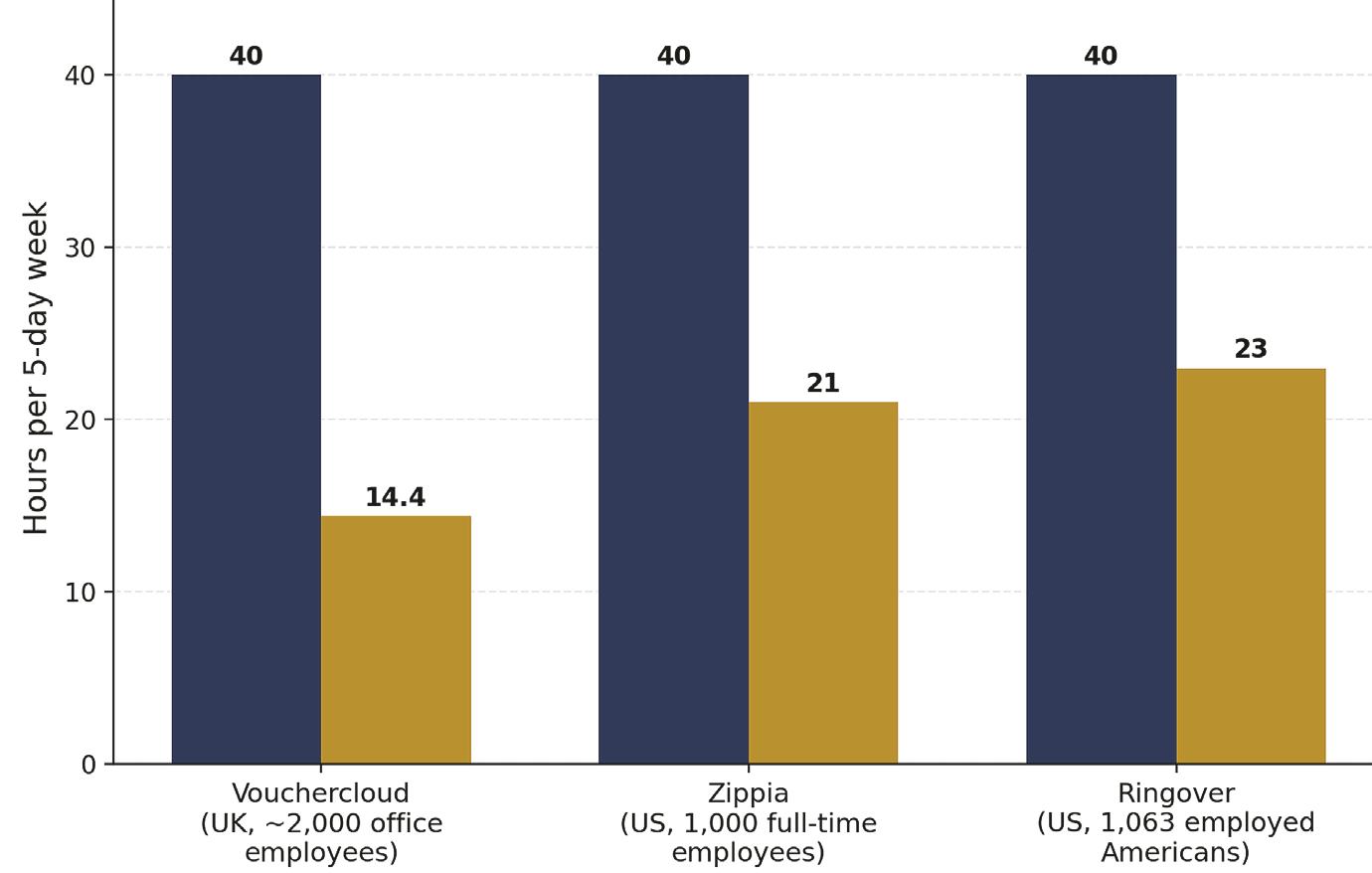
None of this means anyone is lying about how tired they feel. Sitting through an eight-hour shift is genuinely draining even when a portion of it drifts toward a phone screen or a conversation by the coffee machine. The point is narrower and sharper: an employer purchasing 40 hours and receiving something closer to 25 or 30 is absorbing a cost that rarely enters the complaint. Calling that arrangement unfair to the person cashing the check, while ignoring what it costs the person signing it, only tells half the story. Fairness runs in both directions, or it isn’t fairness at all. A shift that feels long can still contain hours that were never fully spent, and both things are true at once.
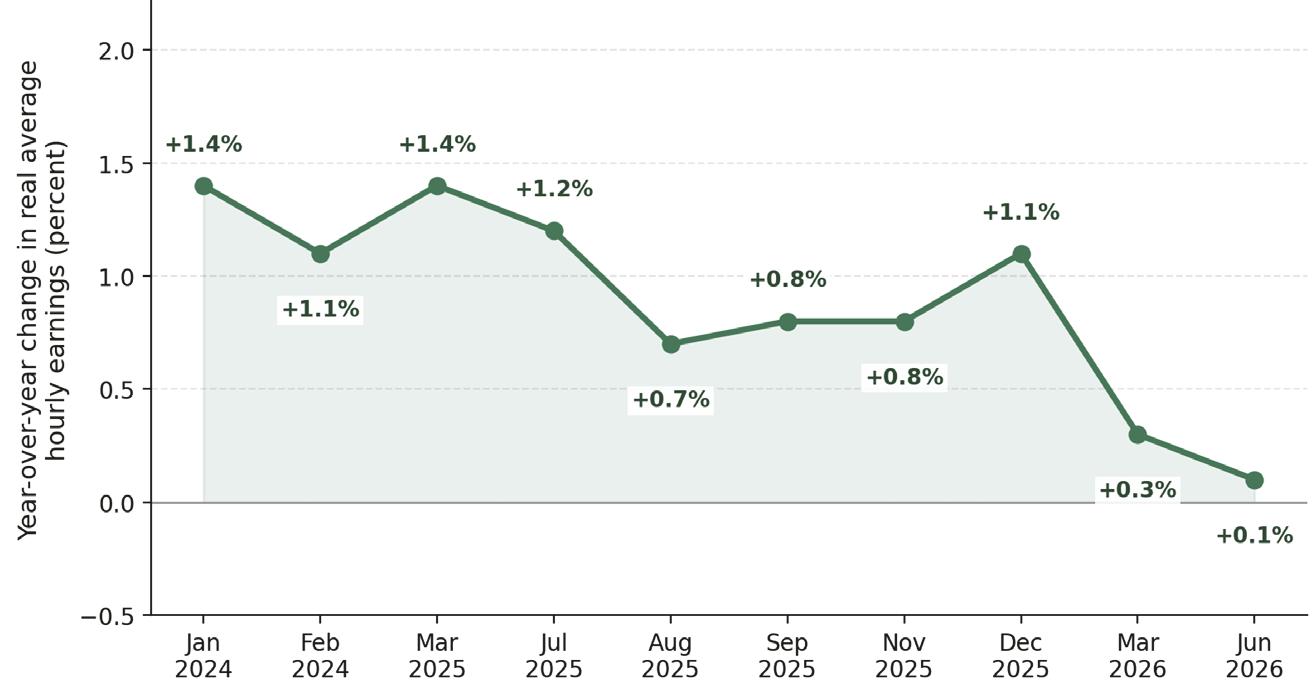
Wages have climbed. Real, inflationadjusted hourly earnings, meaning pay after accounting for the rising cost of everything a paycheck buys, have increased in nearly every 12 month stretch measured by the federal government since early 2024.4 That is not a marginal or cherry-picked stretch. It is a consistent, multi-year trend, and it means the standard of living available to the average household today is higher than it was only a few years ago, not lower.
What almost nobody connects to that same chart is the reason prices rise in step. A raise for one trade is rarely isolated. Higher pay for nurses raises the cost of running a hospital, which raises the price of a hospital stay. Increasing line cooks’ wages raises the price of dinner. Multiply that across every field at once, and the result is a broad lift in prices that erases much of the apparent gain. Cycle economists have been describing it for generations, and it shows up plainly in the same government releases that track pay.5 Everyone rides the same escalator together. Measuring one’s own position against a neighbor’s is also where the exercise becomes genuinely wasted. No two households carry the same skills, risk tolerance, hours logged, or years invested in a craft in a market economy that has never promised to erase differences. It rewards them unevenly on purpose. Comparing a paycheck to someone else’s paycheck, or a lifestyle to someone else’s lifestyle, treats an intentional feature of the system as though it were a mistake in need of correction. It is not a mistake. Nothing about incomes, assets, or outcomes across a free population was ever going to be equal, and chasing equality with a neighbor is a poor substitute for chasing competence in skill or knowledge.
Every bar above is positive: pay kept outpacing prices. The slope shows the pace of that gain shrinking toward 2026, not wages going backward.
Layered underneath wages and prices is a mechanism most people benefit from without noticing. Money invested in real estate, mutual funds, retirement accounts, and public companies exists precisely because it is expected to grow, and growth has to come from somewhere. A public company carries a legal duty to its shareholders. A landlord expects a return on a mortgaged building. A retirement account only functions because the businesses inside it turn a profit year after year. These expectations of return are threaded through nearly everything a household buys. The apartment, the car payment, the tank of gas, and the grocery bill each pass through several hands on the way to a shelf or a driveway, and each hand along that chain adds a small charge to cover its own cost of capital, its risk, and its margin of profit. None of it is free, and it never was. The same paycheck that funds a complaint about prices is, in many cases, also funding the retirement account or pension that quietly benefits from those very prices rising. Resenting the system while participating in it through a 401(k) or an IRA is a contradiction worth noticing before repeating the complaint out loud.
None of this means anyone is lying about how tired they feel. Sitting through an eighthour shift is genuinely draining even when a portion of it drifts toward a phone screen or a conversation by the coffee machine.
FIFTH FACT: THE BUDGET LEAK MOST PEOPLE REFUSE TO LOOK AT Federal household spending figures break the average American budget into clear categories, and the results are worth sitting with before assuming a paycheck is the problem. Housing consumes roughly a third of the typical household’s spending. Transportation takes another sixth. Food, insurance and pensions, and healthcare follow behind. Entertainment sits near the bottom of the list at under five percent of the total.6
Almost nobody today lives strictly within their means, and the gap between income and spending is rarely explained by housing or groceries, which are difficult to shrink on short notice.
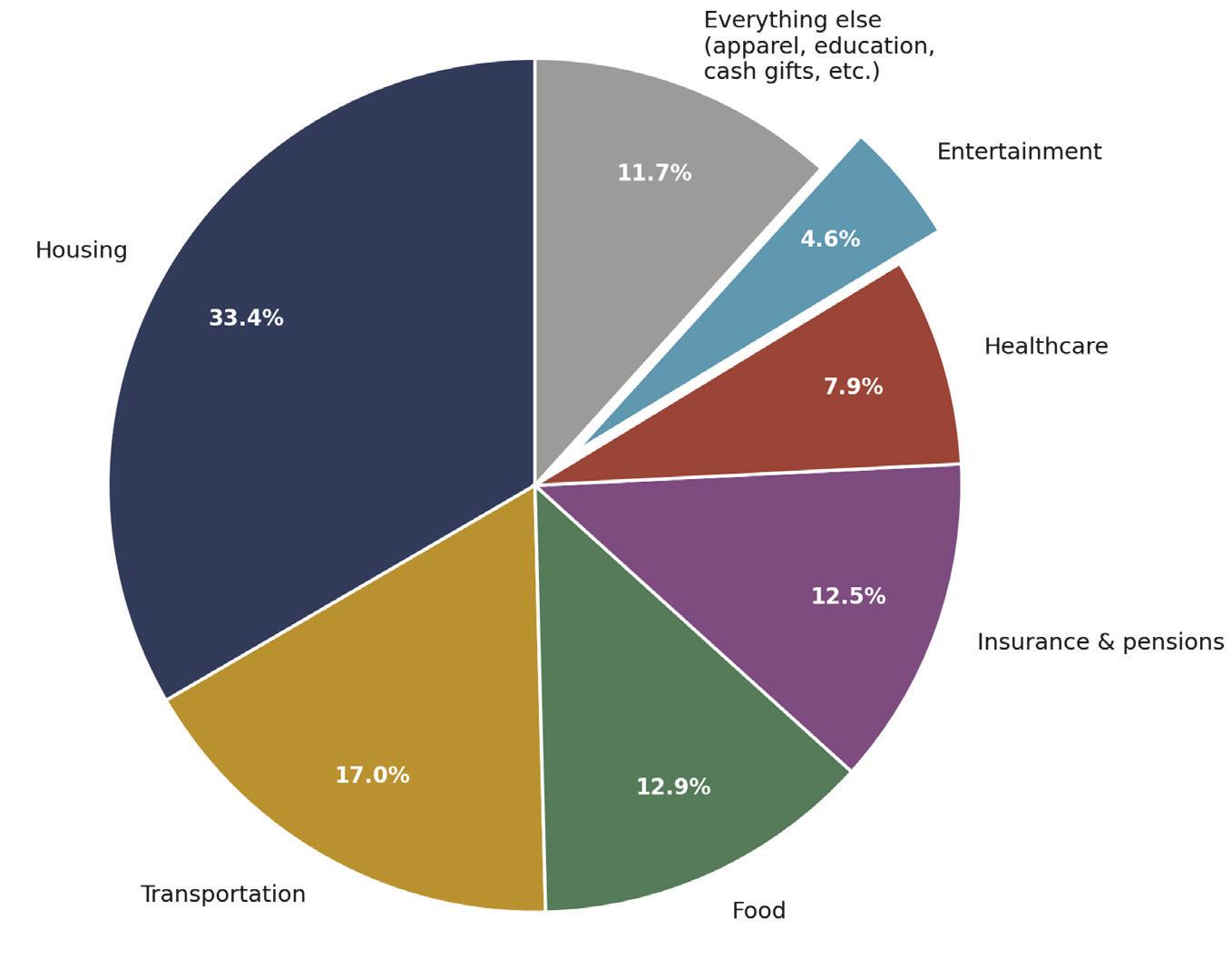
Small as that slice looks on a chart, it is disproportionately the category families describe as fixed and unavoidable, right up until a real conversation about streaming subscriptions, concert tickets, dining out, and gaming purchases reveals otherwise. Almost nobody today lives strictly within their means, and the gap between income and spending is rarely explained by housing or groceries, which are difficult to shrink on short notice. It is explained by the discretionary layer sitting on top of them.
Living within a budget, rather than at its outer edge, means treating entertainment as the flexible category it actually is rather than the fixed one people insist it must be. A household that trimmed even a portion of that slice would find more breathing room than a raise twice the size would provide, because a raise gets taxed and partly inflated away while a spending cut does neither.
None of this is an argument that work has become painless or that every industry treats its staff generously. Genuine mistreatment exists in plenty of workplaces and deserves to be called out plainly when it happens. But the general complaint, repeated across nearly every trade, that effort has increased while reward has vanished, does not survive contact with the arithmetic. Roughly a third of a standard shift is not spent in documented focus. Real pay has risen for several straight years. Prices rise in tandem because the same broad wage growth funds them. Every investment vehicle quietly demands its own return, and that demand is baked into every price tag on every shelf. Entertainment, not the paycheck, is frequently the largest lever families refuse to pull.
Supply and demand do not consult anyone’s feelings before setting a price, and capitalism never promised equal outcomes to unequal effort, unequal risk, or unequal choice. Nothing about that arrangement is going to change because the complaint gets louder or travels farther online. It rewards those willing to run the numbers honestly, adjust what can actually be adjusted, and stop measuring a life against a neighbor’s, an exercise that has never once produced a more productive afternoon or a healthier household budget.
The medical unit, the kitchen, and the job site will remain demanding by design; each was and is a personal choice. What each person does with the arithmetic underneath that demand remains, as it always has, entirely up to the individual. H
1. Vouchercloud survey of nearly 2,000 UK office employees, as reported in Melanie Curtin, “In an 8-Hour Day, the Average Worker Is Productive for This Many Hours,” Inc.com.
2. Ringover, “How Productive Is the Average American Employee?” survey of 1,063 employed Americans.
3. Zippia, “How Many Hours Workers Are Actually Productive,” survey of 1,000 full-time employees, 2026.
4. U.S. Bureau of Labor Statistics, “Real Earnings” news releases, 2024–2026, reporting year-over-year change in real average hourly earnings for all employees, seasonally adjusted (bls.gov/opub/ted).
5. Ibid.
6. U.S. Bureau of Labor Statistics, Consumer Expenditure Surveys, 2024 annual results, “Housing and transportation accounted for 50 percent of household spending in 2024” (bls.gov).

BY JAMES HOLDEN

Why We Can Chart the Red Planet But Can’t Silence Your Phone
Imagine a world where humanity stands on the absolute precipice of sending living, breathing astronauts to Mars. We are talking about an epochdefining feat of engineering that requires us to master complex orbital mechanics, build custom life-support ecosystems from scratch, and maintain flawless deep-space communication streams. It is an awe-inspiring thought.
Yet, while our most brilliant scientists can seamlessly beam high-definition data across 140 million miles of cosmic void, you and I cannot even sit through a peaceful dinner without our pockets buzzing. And who is it on the line? Oh, just an automated robot using a cleverly disguised local number, desperately trying to sell us a fraudulent extended car warranty for a vehicle we sold three years ago. Or worse, a simulated voice of a loved one requesting money and telling you they are in danger.
It seems ridiculous, but to some, this is the harsh reality of cellular phone service.
This mind-boggling technological paradox highlights a frustrating modern truth: landing on Mars is a strictly scientific challenge governed by the predictable, unyielding laws of physics. Stopping robocalls, on the other hand, is a chaotic, exhausting game of regulatory whack-a-mole played against human greed, fractured telecom infrastructure, and hyper-adaptable artificial intelligence. To put it simply, the math required to get to Mars doesn’t actively try to cheat us. Scammers do.
To understand why your phone is under constant siege, we have to look back at how these two networks were built in the first place. Space exploration relies on a beautifully closed system of hyperadvanced, heavily encrypted, and tightly controlled data streams. When NASA talks to a Martian rover, every single packet of data is rigorously authenticated, verified, and explicitly targeted. There is no accidental spam on the interplanetary network.
Our global telephone system—specifically the legacy Public Switched Telephone Network—was built decades ago on a foundation of absolute, innocent trust. It was engineered back when people left their front doors unlocked and accepted a neighborly wave was as good as a contract. The system was designed to connect two lines seamlessly, operating on the polite assumption that the caller was who they claimed to be.
When Caller ID came along, it wasn’t built as a secure authentication protocol. It was essentially just a voluntary tagalong on the ride. This massive foundational vulnerability allowed bad actors to easily hijack the system using Voice-over Internet Protocol technology. They turned a secure public utility into an open highway for automated exploitation.
Thankfully, regulators have been working hard to patch this open highway, and they have scored some real wins recently. A major turning point occurred on December 21, 2023, when the Federal Communications Commission (FCC) adopted a sweeping new rule to protect consumers from unwanted robocalls and robotexts. This policy change didn’t just happen out of nowhere;
it was prompted directly by a hard-charging coalition of state attorneys general, including New Hampshire Attorney General John M. Formella. Together, they pushed the federal government to institute a strict “one-to-one consent” rule.
Before this rule took effect, the system suffered from a massive, incredibly annoying loophole. Deceptive lead-generation websites often hid vague, all-encompassing blanket consent clauses deep in their fine print. You have probably fallen into this trap before— I know I have. You visit a site looking for a single, innocent insurance quote or a quick home repair estimate. You click “submit,” and without realizing it, you just permitted your contact info to be bundled and sold to thousands of separate businesses.
Suddenly, your phone blows up. This loophole triggered an immediate, automated deluge of harassment, often resulting in consumers receiving hundreds of unwanted calls for simply responding to what appeared to be a single offer.
The December 2023 rule effectively smashed that lucrative business model. It mandated that businesses obtain explicit, individualized written consent for each unique seller before making a single automated call or text. As Formella explained in the official announcement, it was a massive step toward putting us back in the driver’s seat, noting that the new rule means consumers must affirmatively agree and opt in before a business can sell their contact information, helping to curb thousands of unsolicited interactions every year.
Of course, as fast as regulators patch a hole in the fence, criminal networks find a way to dig underneath it. The battleground has rapidly shifted from annoying telemarketing to high-tech fraud powered by generative artificial intelligence.
We saw a terrifying example of this right before the 2024 New Hampshire presidential primary. A political consultant deployed deepfaked, AI-generated voice clones of President Joe Biden, blasting out robocalls to voters telling them not to participate in the primary. It was a direct attack on the democratic process, carried out with cutting-edge technology.
But law enforcement didn’t let it slide. It triggered a swift, highly synchronized federal and state crackdown. The New Hampshire Attorney General’s Office jumped into action, deploying its Consumer Protection Bureau to track the digital breadcrumbs. Simultaneously, the FCC used advanced federal tracing tools to isolate the exact digital paths and find the specific carrier routing the fake calls.
The penalty was swift and severe. On September 26, 2024, the FCC finalized a $6 million fine against the orchestrator of the scheme (Steve Kramer, a political consultant). They didn’t stop there, either. The FCC also secured a $1 million settlement with Lingo Telecom, the carrier that allowed illegal traffic onto its network, forcing it to implement much tighter anti-spoofing compliance measures. Formella praised the joint effort, sending a clear warning to the tech world that using AI to disrupt elections or scam citizens will come at a devastating price.
You might be wondering: if we have all these rules, why is my phone still ringing? Well, it’s because scammers are incredibly creative. For a while, the tech world relied heavily on
a cryptographic protocol called STIR/SHAKEN (yes, like James Bond’s martinis). It is a tool designed to verify that a Caller ID actually belongs to the person dialing. It did a great job of curbing traditional neighborhood spoofing—where a scammer fakes your local area code to trick you into picking up.
So, how did the scammers adapt? They stopped faking numbers and just started renting real ones.
Right now, Formella and a massive bipartisan coalition of 49 state attorneys general are actively pressuring the FCC to tighten the screws on the number-resale market. Currently, bad actors exploit blind spots by using fake IDs to rent thousands of legitimate, real phone numbers from wholesale providers. They use a sneaky tactic called “number cycling”—burning through a vast bank of real numbers on a single-use basis so your smartphone’s built-in spam filter never catches them.
State leaders are demanding that the federal government treat phone numbers like a protected national resource. They want strict “Know Your Customer” rules for telecom providers, an end to rapid-fire number cycling, and a total shutdown of the temporary trial lines that scammers use as fuel.
To block a traditional robocall, a network needs to check a database of blacklisted numbers. But how do you block a call when the phone number is completely real, and the voice on the other end sounds exactly like a trusted public figure, a corporate executive, or even your own relative?
To combat this, cellular carriers and tech firms are shifting toward real-time behavioral analysis. Instead of just looking at who is calling, these new systems analyze how the call is being made. Network algorithms monitor massive traffic spikes, flagging accounts that suddenly lease 5,000 numbers and dial them simultaneously.
These intermediate carriers charge a fee to connect calls to the domestic network. Once inside, the traffic masks itself behind real numbers or deceptive IDs it has acquired, making the call look perfectly local.
To shut down this pipeline, the FCC has radically increased its blocking authority. Federal regulators now issue gateway removal orders. If a small international gateway provider is caught repeatedly offering assistance to fraudulent foreign traffic, the FCC can completely sever that carrier’s connection to the national phone network, effectively putting it out of business overnight.
While state attorneys general and federal agencies squeeze the supply chains of these criminal networks, you don’t have to sit by and wait for a total network overhaul. You can actively maximize your device’s built-in STIR/ SHAKEN verified caller protections right now.
While we keep our eyes on the stars and dream of Martian colonies, the battle for our quiet continues right here on Earth. True victory won’t come from just passing piecemeal laws or fining rogue carriers. It will require a total, ground-up rebuild of how our phone networks verify human identity.
On the consumer side, manufacturers are testing localized acoustic fingerprinting software. When an incoming call is answered, the software analyzes the audio stream in milliseconds, looking for the tiny digital artifacts, unnatural pauses, and synthetic distortions left behind by generative voice-cloning software. If a clone is detected, the call is silently routed straight to a spam folder.
Even with the best AI defense tools, American regulators face a massive jurisdictional headache: a huge portion of illegal traffic originates completely outside U.S. borders. Foreign scam syndicates exploit a weak link in the global telecom chain of international gateway providers.
Think of these providers as the digital border crossings of the phone network. A scammer operating an overseas boiler-room call center routes millions of automated dials over the internet via Voice-over Internet Protocol technology. They reroute this traffic to a small, often unscrupulous, U.S.-based intermediate gateway provider.
If you are an iPhone user, open your Settings app, scroll down to Phone, tap Silence Unknown Callers, and toggle it on. This action immediately blocks any number not found in your contacts, recent outgoing calls, or Siri Suggestions, routing it straight to voicemail without ringing.
For Android or Google Pixel users, open the Phone app, tap the three dots in the top-right corner, select Settings, then choose Caller ID & Spam. Toggle on Filter Spam Calls. If you are on a Pixel, you can also enable Call Screen to let Google’s AI answer unknown numbers in the background. It will demand that the caller state their purpose before your phone ever rings, dropping automated bots instantly. Finally, do not overlook your cellular provider’s free network-level blocking tools, such as AT&T ActiveArmor, Verizon Call Filter, or T-Mobile Scam Shield. Activating these apps forces the carrier to cross-reference incoming traffic with their latest cryptographic databases before the call ever reaches your device.
It might appear that launching a rocket to Mars is easier because gravity doesn’t stay up at night inventing new ways to trick our spacecraft. Robocalling is a human problem driven by massive financial rewards. A single successful scam can net a criminal network thousands of dollars, making a few regulatory fines just a minor cost of doing business. Plus, much of this traffic originates in foreign safe havens beyond the reach of local law enforcement.
While we keep our eyes on the stars and dream of Martian colonies, the battle for our quiet continues right here on Earth. True victory won’t come from just passing piecemeal laws or fining rogue carriers. It will require a total, ground-up rebuild of how our phone networks verify human identity. Until we get a true zero-trust system, our phones are going to keep buzzing— even when humanity takes its very first steps into the red dust of Mars. H

BY STEVEN CHAN
Our relationship with the automobile has drastically evolved. For over a century, the car symbolized the ultimate instrument of American freedom. It was a private capsule capable of whisking its occupants down an open highway, entirely decoupled from the watchful eyes of the state or the neighborhood. Today, that capsule has been transformed.
Every modern automobile rolling off the assembly line has been re-engineered into an aggressive, rolling datacollection hub. Equipped with hundreds of onboard computers, built-in 4G or 5G cellular modems, biometric scanners, and multiple interior and exterior cameras, the vehicles we drive are collecting vast troves of personal information.
Simultaneously, a parallel network of tens of thousands of automated license plate readers (ALPRs) lines our public roads, silently logging billions of data points every single month.
The public is caught directly in the middle of a high-stakes tug-
of-war. On one side stand law enforcement agencies and big-data defense contractors who view vehicle monitoring as an indispensable, life-saving modern tool for public safety.4 On the other side are civil liberties advocates, privacy watchdogs, and an increasingly uneasy coalition of local lawmakers who warn that we are constructing an unconstitutional infrastructure for total government surveillance.1 As vehicle tracking morphs from simple traffic management into an omnipresent domestic dragnet, society faces a critical reckoning regarding the good, the bad, and the outright ugly ramifications of the panopticon on wheels.
“The automobile has quietly evolved from a symbol of freedom into a rolling data collection platform.”

For law enforcement and its proponents, automated vehicle monitoring is nothing short of a miracle for public safety. Proponents argue that driving on a public road has never been an absolute right to anonymity. License plates are designed to be visible, and automating their reading merely maximizes police efficiency in tracking down active threats.
The primary champion of this real-time infrastructure is Flock Safety, a company that has quietly deployed over 100,000 AIpowered ALPR cameras across the United States. These cameras don’t just read characters on a plate; they use advanced computer vision to log vehicle make, model, color, and unique identifying markings, such as roof racks, bumper stickers, or body damage.
According to law enforcement officials, including those who testified during a contentious contract renewal by the Harris County Sheriff’s Office in Texas, this network serves as an essential tool for rapid-response policing. When a child is abducted, AMBER Alerts can be instantly paired with ALPR systems to flag the suspect’s vehicle the second it passes an intersection. The technology is routinely credited with:
• Locating stolen vehicles within minutes of a report
• Tracking down fleeing suspects in fatal hit-and-run crashes
• Providing critical leads in complex homicide and human trafficking investigations4
By creating a virtual tripwire around neighborhoods and major thoroughfares, police can instantly map out where a suspect’s vehicle entered or exited a crime scene. In an era of acute police staffing shortages, proponents maintain that vehicle surveillance acts as a powerful force multiplier, protecting communities and solving cases that would otherwise go cold.

Despite the clear investigative benefits, the “Bad” of vehicle monitoring lies in its staggering lack of boundaries. The technology has far outpaced the legal frameworks designed to protect citizens from warrantless searches. When a driver takes their vehicle onto a public road, they are not just being scanned for active warrants. Instead, the movements of millions of completely innocent citizens are being systematically digitized, timestamped, and stored indefinitely in searchable databases.1
This data collection is highly concentrated. Companies like Flock Safety capture billions of vehicle reads, building a comprehensive historical map of where you work, where you sleep, what doctor you visit, and who you choose to socialize with.
Sell Driver Data
Compounding this issue is the secondary market for automotive data. Modern connected cars track biometric information, weight, facial expressions, and even cabin conversations via builtin microphones. According to data compiled by the Mozilla Foundation’s Privacy Not Included survey, 18 car manufacturers are failing basic privacy standards. A shocking percentage of automakers openly reserve the right to share or sell this deeply personal telematic data to third parties, including auto insurance companies—which use it to spike premiums—and law enforcement agencies, often without requiring a judicial warrant.18

The thin line between public safety and dystopian control dissolves entirely when vehicle-tracking tools are abused. When powerful mass-surveillance systems are deployed with minimal oversight, human nature ensures they will eventually be turned inward for deeply personal, criminal, or corrupt motives.
The non-profit public interest law firm, the Institute for Justice, has meticulously tracked the personal abuse of ALPR networks by law enforcement personnel. Their investigations have identified dozens of instances where officers bypassed official protocols to weaponize these databases. Because the systems are so granular and fast, rogue actors can execute terrifying campaigns of personal harassment.9
Recent criminal filings highlight the severity of this systemic failure:
• In Braselton, Georgia, Police Chief Michael Steffman was arrested following an investigation revealing that he allegedly used official license plate readers to stalk and harass multiple individuals, including an ex-romantic partner.
• In Bonner Springs, Kansas, Detective Kyle Rector faced multiple criminal charges for allegedly exploiting ALPR networks to track his estranged wife and two men he suspected she was dating9
• In Florida, Orange City Police Officer Jarmarus Brown allegedly queried ALPR databases more than 100 times over a seven-month period to stalk his girlfriend and her immediate family members.
• In Wisconsin, former Milwaukee officer Josue Ayala reportedly searched the license plate numbers of a personal dating interest more than 120 times.
This “ugly” reality of unchecked technology: automated tools meant to stop criminals are easily transformed into a turnkey platform for domestic abuse and stalking.
Furthermore, the technology’s technical failures can ruin innocent lives. Flawed data entry, misread plates, or uncleared databases regularly lead to “false positive” matches. Innocent citizens have been pulled over at gunpoint by officers executing high-risk felony stops based entirely on a faulty computer alert. As noted by community advocates in recent municipal safety hearings, automated errors have resulted in innocent drivers spending days or weeks in jail for crimes or accidents they had absolutely no connection to.
If companies like Flock Safety represent the eyes on the street, data-mining titans like Palantir Technologies (PLTR) represent the brain. Palantir’s primary data-fusion platform, Gotham, aggregates data from completely unlinked silos into a single, unified intelligence dashboard.
When law enforcement agencies feed Palantir with vehicle tracking data, cell phone locations, financial transactions, social media footprints, and utility records, the software constructs an incredibly detailed, predictive map of human behavior. While Palantir maintains that it operates as a neutral infrastructure provider rather than a direct provider of predictive workflows, its advanced datafusion capabilities allow the state to achieve near-total visibility.
The long-term ramifications of this capability are profound. Government agencies can effectively pinpoint almost any citizen at any given time or predict with mathematical accuracy exactly where a specific individual is likely to appear. It effectively ends the foundational legal concept of reasonable expectation of privacy.
Sociologists and legal researchers, including Dr. Sarah Brayne in her extensive study of data-driven policing, note that this technology
allows police departments to build dense networks of “associates.”
For instance, an ALPR positioned outside a hospital emergency room can automatically log every vehicle that drops off an injured person and speeds away. Over time, algorithms link those plates to build out sprawling webs of family members, friends, and acquaintances, effectively placing individuals under permanent suspicion purely by association, rather than via concrete evidence of a crime.
The democratization of this data presents a chilling risk of centralized control. If a government can track every movement, it can effortlessly monitor political dissidents, map out labor union organizing, track individuals crossing state lines for restricted medical procedures, or compile comprehensive profiles on religious groups. The traditional friction of police work—the physical limits of time and human resources that historically protected citizens from total surveillance—has been completely eradicated by automated AI sorting.
Faced with the reality of an inescapable surveillance dragnet, an aggressive, highly unusual bipartisan backlash is rapidly spreading across cities and states. The pushback is united by a shared alarm over federal overreach and the quiet, unauthorized sharing of local data.
Many municipalities have discovered after the fact that their local police departments were opting into massive data-sharing agreements. Local cameras bought with city tax dollars were routinely feeding data into federal databases, allowing agencies like Immigration and Customs Enforcement (ICE) or the U.S. Border Patrol to bypass local sanctuary city policies and track residents.
As a result, communities are severing ties with surveillance providers. More than 80 cities across states like Oregon, California, Texas, Arizona, and Washington have abruptly terminated or canceled their active contracts with Flock Safety. Even major metropolitan forces are pulling back; the Los Angeles Police Department (LAPD) made waves by halting the use of specific vehicle-tracking camera systems due to unresolved concerns about data integrity, transparency, and oversight.
State legislatures are also stepping in to establish clear boundaries:
• Washington State: Enacted Senate Bill 6002, which strictly limits ALPR operations to active criminal cases, bans data retention for immigration enforcement, and completely prohibits tracking anyone exercising their First Amendment rights
• Virginia: Passed comprehensive legislation explicitly limiting data retention to a strict window, mandating that unassociated vehicle data be completely purged from systems to prevent the creation of permanent travel logs.
• Arkansas, Idaho, and Montana: Enacted sweeping data-privacy laws explicitly designed to shield their citizens’ vehicle telematics and location logs from unauthorized federal queries
On the federal level, the legislative battle is intensifying. Bipartisan congressional leaders have introduced the PRIVACY Act, which would require federal law enforcement agencies to obtain a judicial warrant before querying local ALPR databases. The proposed bill seeks to choke off federal funding for unconstitutional tracking tech and limit data retention to a maximum of 30 days.
An expanding legislative wall demonstrates that the American public is beginning to reject the premise that total surveillance is the mandatory price of public safety. The future of the automobile will not be decided solely by engineering or autonomous software, but by whether society successfully reclaims the car as a vehicle of personal freedom rather than an instrument of state control. H
Sources
1. American Civil Liberties Union (ACLU). (2026). Campaign Against Unrestrained Mass Surveillance Systems. ACLU “Get The Flock Out” Initiative.
2. Institute for Justice. (2026). Exposing Police Misuse of Automatic License Plate Reader Technology. IJ Police Tracking Research Report.
3. The Marshall Project. (2026). The Granularity of Modern Police Databases and the Risk of Personal Abuse. The Marshall Project Surveillance Analysis.
4. PBS NewsHour. (2026). AI-Powered Cameras and the Battle Over the Fourth Amendment. PBS NewsHour Flock Camera Debate.
5. Municipal Research and Services Center (MRSC). (2026). Understanding Washington State’s SB 6002 Camera Restrictions. MRSC Insight Legislative Guidance.
6. Houston Chronicle / Fox 26. (2026). Harris County Renewal Debate Over Automated Enforcement Tools. Fox 26 Houston Report.
7. Truthout. (2026). Supreme Court Geofence Rulings and the Future of ALPR Data Case Law. Truthout Constitutional Law Review.
8. CBS News San Francisco. (2026). Data-Sharing Audits and Regional Intelligence Network Exploitation. CBS Bay Area Investigative Report.
9. Novara Media. (2026). AI Surveillance Networks and Domestic Stalking Within U.S. Police Forces. Novara Media IJ Data Analysis.
10. Brayne, S. (2021). Predict and Surveil: Data, Discretion, and the Future of Policing. University of Texas at Austin / Oxford University Press.
11. SETA Foundation. (2025). Domestic Data Fusion Platforms and the Price of Total Security Networks. SETA Palantir Deep-Dive.
12. AI CERTs News. (2025). Gotham Software, Department of Homeland Security Blanket Agreements, and the Ethics of Pre-Crime Platforms. AI CERTs Technical Review.
13. Stateline. (2026). Privacy Defenses: Why Cities Are Severing Tech Contracts with Surveillance Providers. Stateline State Policy Journal.
14. National Public Radio (NPR). (2026). Uncovering the Hidden Sharing Settings of Municipal ALPR Infrastructure. NPR Automated Tracking Report.
15. Land Line Media. (2025). Virginia General Assembly Imposes Retention Timelines on High-Tech Cameras. Land Line Legislative Tracking.
16. Texas Scorecard. (2026). The Federal PRIVACY Act: Requiring Warrants for Mass AI Surveillance Queries. Texas Scorecard Federal Policy Update.
17. BBC Future. (2026). Connected Telematics and the Monopolization of In-Cabin Driving Data. BBC Future Technology Assessment.
18. Mozilla Foundation. (2025). Privacy Not Included: The Comprehensive Automotive Tracking and Security Standard Audit. Mozilla Research Index.
19. KGET News / Nexstar Media. (2026). False Positives, Community Backlash, and Municipal Re-evaluations of Automated Systems. KGET Local News Coverage.


Have you ever thought about seeing yourself on the cover of a magazine?
Of course you have, and this is your chance to live out that dream.
Our model search is open to anyone who wants to step into the spotlight and be seen; no prior modeling experience required, just a fresh face, confidence, and personality.
Whether you’ve always wanted to model or curious about what it’s like, this is the opportunity to be celebrated on our covers.
All you need is the desire to participate and the confidence to put yourself out there: You Got This!
To learn more, send an email to nemedia@earthlink.net or text 508-971-1969.






• Depart from New Bedford’s historic waterfront; a short walk to downtown New Bedford’s many restaurants, boutique shops, museums & galleries.
• Enjoy the gorgeous views of Buzzards Bay as you make your way to the laid back island of Cuttyhunk.
• Friday Night Sunset Cruises! Breathtaking scenery, comfortable accommodations, not to be missed excursion.