
LAWN & GARDEN
Wise tells how to ‘bale’ out of gardening difficulties
Would you like to grow a small, or perhaps even larger, vegetable garden this year but don’t have a good spot? You don’t want to deal with the digging and stooping?
Farmer par excellence and retired Extension Agent Stanley Wise Jr. has a suggestion that might help.
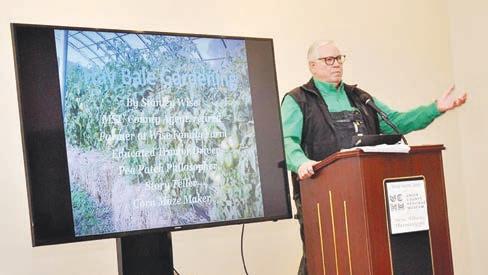
This past week he showed attendees at a Union County Heritage Museum program how to grow a variety of vegetables in hay bales.
You can start with a half bale if you wish, or you can go to 100 if you are that ambitious. You can put them just about anywhere, as long as they get a minimum of six hours of sun each day.
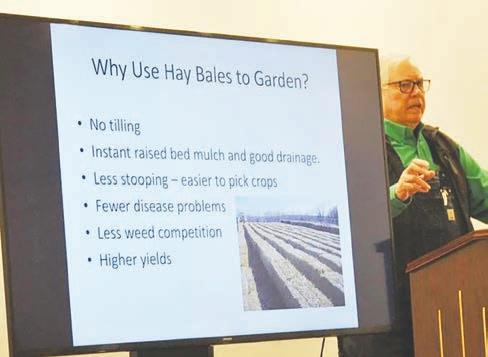
First of all, bales require no. digging and they are high off the ground making them easier to reach. They can provide “a well-aerated diseasefree growing medium” that requires no tillage, Wise pointed out.
The only “catch” is that the bales need a couple of weeks of preparation conditioning, but it isn’t difficult.
“Mixed grass or Bermuda grass hay bales will all work just fine for growing vegetables,” he said. “The hay should not have been treated with herbicides, as some hay field and crop herbicides can affect the growth of vegetables.”
He said older hay bales that have begun to rot tend to work best.
“Fall decorating hay works great! To help this process, it’s best to leave them out all winter before planting into them in the spring.”
When placing a bale in a location, there is an “up” and “down” side.
“A hay baler cuts the hay when baling, and one side will be uniformly cut,” he said. “Place the bales on their narrow side, with the ‘cut side’ on top.” The other side will be folded rather than cut.
If you place the bales on the ground, most weeds will not grow up through the bale and this will allow the roots of your plants to eventually grow into the soil, which will increase fertilizer and water efficiency, he said.
The conditioning step is actually helping the bales decompose by wetting them.
Wise says place the bales in the proper site at least two months prior to the growing season.
“Sprinkle the top of each bale with one cup of 330-0 plus one-half cup of 13-13-13 (commonly known as 13-13-13) plus one-quarter cup of 0-060 (Potassium or Potash).
Mother Nature will carry
these fertilizers into the bale and will speed up the process of composting so that the bales will be ready at planting time.” You could also use manure or other natural fertilizers in place of the inorganic fertilizers. The amount to use will need to be adjusted accordingly.
If you fail to condition the bales properly and plant too early, the method may not produce good results, he cautioned.
Here is Wise’s conditioning schedule;
Day 1: Evenly sprinkle one-half cup of 33-0-0 across the top of each bale. Thoroughly water this fertilizer into the bale and soak the bale of hay with water until it is waterlogged.
Days 2-5: Water the bale again each day until it is completely saturated. A bale can hold as much as 15 gallons of water.
Day 6: Evenly sprinkle one-half cup of 33-0-0 per bale and water the fertilizer into the bale. Also, if you put your hand into the interior of the bale, it should be warm.
Days 7-8: Water the bale again each day until it is completely saturated.
Day 9: Apply one cup of 13-13-13 (commonly known as triple thirteen) plus one-quarter cup of 0-0-60 (Potassium or Potash) water this fertilizer into the bale.
Days 10 - 13: Water the bale each day until it is completely saturated.
Day 14: Check the bale to see if it is ready by putting your hand into the interior of the bale to see if it feels hot! This is the last step in the conditioning process. If the interior of the bale is above 125 degrees wait a few more days until the bale feels cooler on the inside.
“What now exists inside the bale is a dark nutrient and micronutrient-
rich composted organic matter that is slightly warmer than surrounding air and soil temperature as it is still composting,” he said. “It is weed and disease free and has good particle structure that holds plenty of moisture but drains excess water easily.”
Wise said you can grow almost anything in a bale that grows in the ground, but some vegetables do better than others.
“Root vegetables like carrots, potatoes and onions can be grown but have some difficulty,” he said. “Plants like corn tend to be too top-heavy.”
Whether you are planting seeds or seedlings, you just pull the bale apart, place the plant in the opening, add two cups of potting soil and press the opening closed.
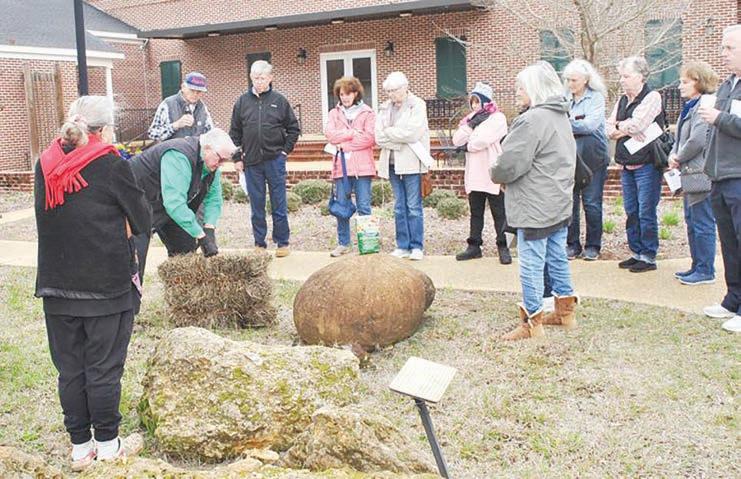

You can plant seedlings or seeds in the bales. Most seedlings can be planted directly into the bale by pulling the bale apart and placing the plant down into the composted material, add two cups of potting soil around the plant and firm the bale material back together.
Wise said that “if you want to plant seeds like beans, place a small layer of compost mixed with soil on the top of the bale, like icing on a cake, and plant the seeds directly into the soil and gently water the planted mixture being careful not to wash the soil off of the seeds.”
He said tomatoes love growing in the bales of hay. Each bale will support two tomato plants, but support stakes are needed (he also said he puts stakes at each end of the bale so it won’t fall apart later as it decomposes).
Another caution was that some vegetables, like tomatoes, require adding additional nitrogen when they start to fruit.


“Calcium Nitrate is the suggested source Wise said you can usually get two tomato, plants. Bales are only good
J. LYNN WEST New Albany Gazette Editor
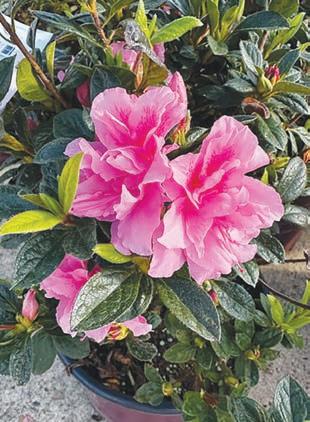
A variety of azaleas bring spring blooms
Few shrubs say “spring in Mississippi” quite like azaleas, and mine are getting ready to burst with blooms.
Azaleas thrive here so well that some gardeners get the impression you can simply stick them in the ground and walk away. Unfortunately, that is not the case.
Azaleas are well adapted to our climate, but they still have some very specific needs if you want them to look their best year after year.
First and foremost, azaleas must have excellent drainage.
These shrubs prefer organic-rich, acidic soil, and soggy conditions are a sure way to shorten their lifespan. One of the best ways to ensure proper drainage is to plant azaleas in raised beds. This allows water to move freely through the soil instead of pooling around the roots when we get heavy rains.
Because azaleas are shallow-rooted, they can dry out quickly, especially when newly planted. It is important to provide supplemental water when the plants are getting established. Mulch is essential to help conserve moisture, moderate soil temperature and protect those surface roots.
Once established, fertilize azaleas twice a year in late winter and again in mid-summer. I prefer using fertilizers labeled specifically for azaleas and camellias. Apply this evenly across the bed.
Prune azaleas right after they bloom, and only as needed. Heavy pruning
after June 30 can reduce next year’s flowers, but light shaping later in the season won’t hurt.
Beyond proper planting and care, smart azalea selection can help you manage weather surprises and stretch your bloom season.
Among the most coldhardy groups are Kurume azaleas and Girard hybrids. By mixing a few of these in with the familiar Southern Indicas, you’re hedging your bets during harsher-than-normal winters.
Late-blooming groups like the Robin Hill hybrids and Satsukis offer another advantage.
The word Satsuki means “fifth month” in Japanese, and these azaleas typically bloom from April into early May. If a late frost wipes out early flowers on other varieties, these are often still ready to make their debut. Even in mild years, they help spread azalea color over a longer period.
Encore azaleas add yet another layer of interest.
Like an encore at a concert, these azaleas bloom again after spring. While the spring display is the most dramatic, it is not unusual to see flowers during summer and a strong show again in fall.
All Encore varieties are smaller than Southern Indicas, usually topping out around 36 to 42 inches tall. Their attractive foliage makes a great backdrop for their bright blooms. The Southern Indica group remains the most popular, and for good reason. These are large, bold shrubs that put on a spectacular spring show. They are cold hardy to
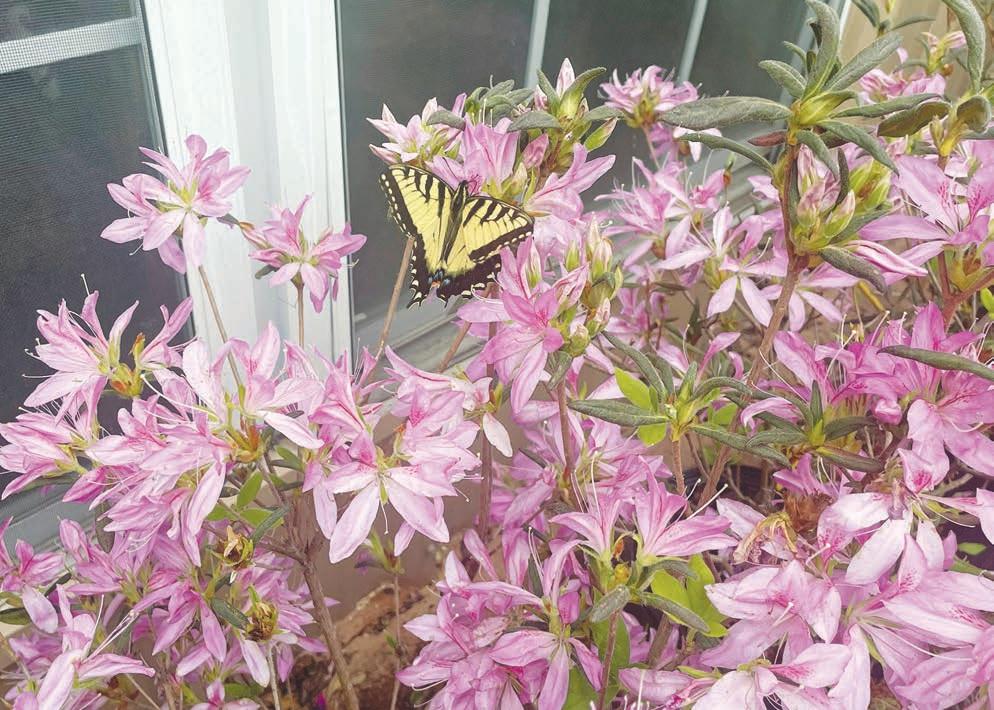
around 10 degrees on average and a favorite of gardeners and butterflies alike.
Well-known varieties include Formosa, G.G. Gerbing, Judge Solomon, George Lindley Taber and Pride of Mobile.
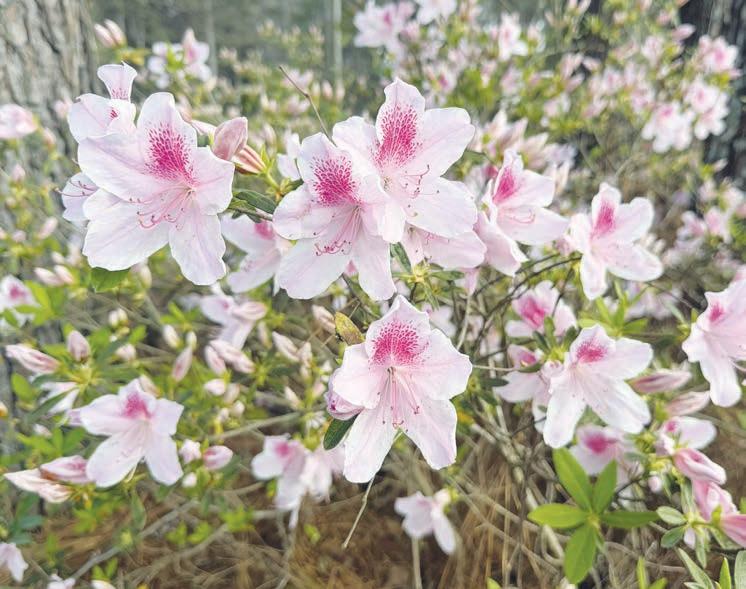
No shrub delivers a photo-worthy moment quite like an azalea in full bloom.
By preparing your flower beds properly and spreading your selections across several azalea groups, you can create a layered look in the landscape and protect your spring display from late freezes. You will also get to enjoy flowers from early spring into fall. That’s a win for both the garden and the gardener.

Whether you’re building, remodeling, or tackling a weekend project, Union Lumber has all you need. right here at home since 1902
Union Lumber is your one-stop source for commercial and residential construction materials in New Albany and surrounding areas since 1902.
Our reputation for great customer service has been earned by helping builders select the right materials for the job, assembling complex orders correctly and delivering them exactly when and where they’re needed.
Our specialty is building supplies, materials, tools and safety equipment for projects.






Ground-nesting, native bees support agriculture
STARKVILLE, Miss.
-- While honeybees are important for crops and as a food source for humans, native bees pollinate as much as 80% of many important crops and should be protected as well.
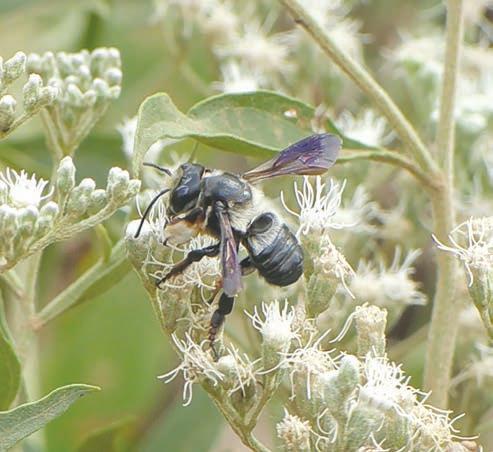
Jeff Harris, bee specialist with the Mississippi State University Extension Service, said the U.S. has about 4,000 species of native bees. Many native bees live in the ground.
“Many of them are struggling to survive in human-inundated landscapes,” said Harris, who is also a Mississippi Agricultural and Forestry Experiment Station researcher. “They need a lot of help, and awareness that they even exist is the first step.”
Many native bees do not sting, and Harris said these native, groundnesting bees are important pollinators for agriculture.
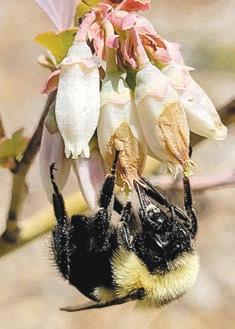
“For example, the Southeastern Blueberry Digger Bee is a very important pollinator of our commercial blueberries in southern Mississippi,” Harris said.
“The blueberry growers are aware of this bee and try to protect nesting areas near their orchards by not mowing or tilling the ground where the bees nest.”
Many farmers encourage nesting in the orchards by offering open grasslands with patchy areas of sandy soil, which is ideal for this bee. Harris said doing this encourages more bees to visit the flowers of their bushes, resulting in higher yields and better fruit quality.
The U.S. Geological
Survey, or USGS, which studies the nation’s lands and resources, tracks the efforts of these pollinators as they increase agricultural yields and boost genetic diversity in plants. About 75% of North American plant species require an insect – mostly bees -- to move pollen from one plant to another to effect pollination.
Many native bees are smaller than a grain of rice. Experts estimate hundreds of native bees have not yet been named or described.
“About 20% to 45% of native bees are pollen specialists, meaning that they use only pollen from one species or genus of plants. If that plant is removed, the bee goes away. If bees are removed, the plant doesn’t reproduce,” the website states.
Some native bees are specialists on plants used as food, including squashes, pumpkins, gourds and sunflowers. According to the USGS, native bees are the primary pollinator or significantly supplement
the activity of honeybees in almost all crops. Even crops such as cotton and soybeans that don’t need a pollinator have a higher yield if they are visited by bees.
Harris said individuals can contribute to efforts to protect native bees through making and recording their observations of these insects.
“I am a regular user of iNaturalist and different websites that track insects and birds,” Harris said.
“They are all fantastic ways for citizen scientists to contribute observational data that can be used by conservationists and others.”
One such organization is the Ground Nesting Bees Community Science Project, or Project GNBee, organized through the Cornell University College of Agriculture and Life Sciences.
Launched in June 2023, Project GNBee leads in the research, conservation and applied management of wild bees by bringing together community scientists, researchers and institutions to establish



a national monitoring program for groundnesting bees.
“We work with community scientists to better understand where native bees nest across the landscape and which environmental and management conditions
support their populations over time,” said Jordan Kueneman with Project GNBee.
The project invites land managers and the general public to report areas where they observe small holes in the ground with bees actively coming and going. “By sharing simple observations -- ideally with photos -- participants can help document nesting sites, identify the bee species present on their properties and contribute to research that improves conservation and management guidance for farms and orchards,” he said.
Project GNBee is expanding their efforts to better include farmers,
growers, orchardists and other managers working on agricultural lands.
“Many native bees nest directly in the soil, often along field edges, farm lanes, bare patches and lightly disturbed ground,” Kueneman said. “These nesting aggregations are critical for crop pollination, yet they are easily overlooked and rarely documented on working lands.”
To make observations, participants will need to create an iNaturalist account, join the project and tag the project in their observation. Learn more by visiting https://www. gnbee.org.











Calendar of home gardening chores
Here are some suggested garden chores from the Mississippi Extension Service for the next few months March
Planting
• Set out most shrubs and trees.
• Cold-weather annuals: sweet William, English daisies, pansies, and calendulas.
• Divide mondo grass, liriope, cannas, coreopsis, and phlox.
• Start seeds for tomatoes, bell peppers, hot peppers, and eggplant.
• Set out herbs such as thyme, lemon balm, oregano, chives, sage, and winter savory.
• Sow seeds of Johnny jump-ups, sweet peas, larkspur, and forget-me-nots.
• Shrubs may be moved at this time. It is best to take a large root ball to save the current root system.
Fertilizing
• Fertilize all ornamental shrubs and trees according to soil test results, or use a slow-release fertilizer.
• Top-dress azaleas and camellias with acid-loving fertilizer.
• Apply lime to peonies, clematis, and boxwoods.
Pest Control
• Spray new rose leaves for black spot disease weekly once leaves are fully emerged
• A soil-drench rose disease control product can be used after leaves are fully developed (South Mississippi).
Pruning
• Prune roses. Remove dead and weak canes. Properly dispose of clippings.
• Prune crape myrtles and altheas for size and shape.
• Cut English ivy back
hard.
• Trim mondo grass and liriope to 4–6 inches tall. Dispose of trimmings.
Miscellaneous
• Dispose of fallen camellia blossoms to prevent blight.
• Pinch off dead flowers from tulips/daffodils. Wait until May to cut foliage, after it turns yellow and dies.
• Graft fruit trees with scion wood collected in January.
• Apply pre-emerge to turf to prevent crabgrass and other summer weeds (late February in South Mississippi).
• Mulch all landscape bed areas—3 inches in new beds and only 1 inch in existing beds. If using pine straw, place up to 3 inches deep.
Home Accent
• Divide or repot overgrown houseplants. Cut back weak parts to encourage new growth. Apply liquid fertilizer every 2 weeks or as labeled.
Blooming
• Okamee cherries, plums, pears, apples, Chinese snowballs, showy jasmines, redbuds, dogwoods, cherry laurels, maples, Japanese hollies, azaleas, sweet olives, weigelas, wisterias, flowering almonds, Lady Banks roses, buckeyes, knockout roses, mock oranges, fothergillas, royal paulownias.
• Bluebells, daffodils, hyacinths, early irises, pansies, violets.
Fruiting
• Maples, leatherleaf mahonias, yaupon hollies, Chinese hollies, cotoneasters, nandinas, high-bush blueberries (South Mississippi).
Planting
April
• Set out most shrubs and trees.
• Divide violets, Shasta
daisies, liriope, ajuga, mums, and other perennials.
• Plant okra, melons, peas, corn, beans, eggplant, cucumbers, and tomatoes after last frost.
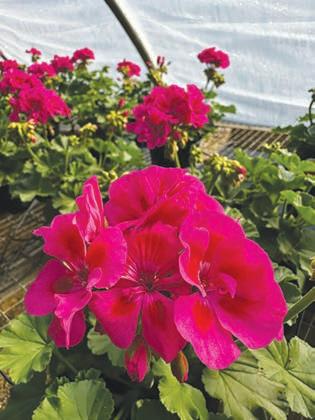
• Set out summer annuals if danger of frost has passed: ageratum, alyssum, begonias, geraniums, dianthus, celosia, marigolds, moss roses, petunias, impatiens, coleus.
• Plant summer/fall blooming bulbs: callas, cannas, dahlias, gladiolus, and gloriosa lilies.
Fertilizing
• Fertilize vegetables at planting according to recommendations.
• Fertilize shrubs if not done in March.
Pruning
• Prune azaleas and other spring-flowering shrubs after blooming.
• Disbud roses and peonies for specimen flowers.
• Lightly shape any formal hedges to remove new growth.
Miscellaneous
• Paint and repair garden furniture and other hardscapes (bird baths, bird houses, mailbox, deck).
• Buy azaleas in bloom to be sure of color.
• Always mulch new plantings to help ensure success.
• A soil-drench rose disease control product can be used after leaves are fully developed (North Mississippi).
Blooming
• Encore azaleas, blueberries, fringe trees, blackberries, pyracanthas, hawthorns, pittosporums, Japanese snowballs, pieris, cliftonia, ginkgos, deutzia, sweetshrubs, sweetspires, cotoneasters, oakleaf hydrangeas, roses, spiraea, rhododendrons, ninebarks.
• Ajuga, alyssum, bleeding-hearts, candytufts, columbines, daffodils, daisies, daylilies, forgetme-nots, grass pinks, irises, Jacob’s ladder, lilies-ofthe-valley, pansies, phlox, primroses, ranunculus, shooting stars, sweet Williams, thrifts, tulips, vincas, violets.
Fruiting
• Maples, leatherleaf mahonias, Chinese hollies, nandinas, blueberries (South Mississippi).
May
Planting
• Select and plant crape myrtles when in bloom.
• Plant annuals and perennials early in the month and keep well-watered.
• Take hydrangea cuttings and let root in coarse sand.
• In the shade, plant impatiens, coleus, sweet alyssum, lobelia, and annual dianthus.
• In full sun, plant verbenas, periwinkle, ageratum, marigolds, zinnias, petunias, wax begonias, clematis, fouro’clocks, and portulaca.
• Plant cucumbers, tomatoes, peppers, squash, peas, beans, eggplant, corn, okra, parsley, watermelons, and cantaloupes.
Fertilizing
• Fertilize warm-season turfgrass after it turns green and has been mown twice.
• Fertilize all ornamental shrubs if not done in March or April.
Pest Control
• Scout for garden pests and diseases: red spiders, thrips, aphids, lacebugs, lacewings, mealy bugs, caterpillars, slugs, snails, mildew, fungus, and crown rot.
Pruning • Prune azaleas, camellias, and gardenias after flowers drop and before new buds form.
• Cutting bouquets regularly will keep your plants pruned and prolong the blooming season. Cut in early morning or late afternoon and put into water immediately.
• Graft pecans using the four-flap method.
Home Accent
• Repot house plants during their active growing period: April through September.
• Repot and divide overwintered ferns.
Blooming
• Big leaf magnolias, pineapple guavas, southern magnolias, gardenias, abelias, Texas sage, gumpo azaleas, smoketrees, chastetrees, crepe myrtles, roses of Sharon, buddleias, cleyeras.
• Begonias, impatiens, salvias, geraniums, clematis, phlox, sweet William, deutzia.
Fruiting
• Green ashes, aucubas, blueberries, redbuds, wisterias.
June
Planting
• Plant crape myrtles in bloom to be sure of color.
• Plant warm-season grasses: Bermuda, centipede, zoysia, and St. Augustine (May to August).
• Replace turf in deep shade with ground cover: liriope, ajuga, vinca, or pachysandra.
• Summer annuals: ageratum, cockscomb, impatiens, marigolds, sunflowers, four-o’clocks, and periwinkle.
• Plant tomatoes late this month to ensure harvest late

into fall. Cherry tomatoes and Bella Rosa varieties are good choices for heat tolerance.
• Select daylilies in bloom for planting in the garden.
• Plant zinnias and marigolds now for a second crop of flowers.
• Gladiolus planted now will give lovely fall blooms.
Fertilizing
• Fertilize all ornamental shrubs/trees and annuals/ perennials with a slowrelease fertilizer.
• Fertilize camellias with azalea-camellia fertilizer if not done earlier in the year.
• Fertilize tomatoes, cucumbers, and zucchini monthly with 5-10-10 and calcium nitrate.
Pest Control
• Scout the landscape/ garden regularly for pests and treat as needed.
• Remove zinnias with powdery mildew and replant.
Pruning
• Prune blueberries after harvest ends.
• Pinch dahlias and mums to ensure a compact growth habit.
• Remove blackberry fruiting canes after harvest. Prune new canes to encourage side branching.
• Remove faded flowers from daisies, daylilies, and other summer flowers.
Blooming
• Chinese parasols, golden raintrees, cletheras, catalpas.
• Ageratum, balloon flowers, bee balm, begonias, butterfly weeds, coreopsis, cornflowers, gladiolus, hollyhocks, nicotianas, petunias, phlox, scabiosas, Shasta daisies, verbenas.
Fruiting
• Green ashes, aucubas, blueberries, redbuds, peaches.
Some gardeners don’t want native plants in their gardens
Native may be the new buzzword for choosing landscape plants, but it often gets in the way of good gardening.
Not knocking native plants; after all, this past president of the Mississippi Native Plant Society grows and lectures on their benefits and uses.
But when it comes to translating their crucial role in supporting wildlife and creating a “sense of place” in our region into tangible action, a lot gets lost in good intentions and lip service. Being native may not be the tipping point for getting them into gardens, at least for most folks.
Sometimes we get put off when they are referred to as wildflowers, which sound weedy, without realizing that when used as just regular garden plants they become cultivated, no longer “wild.”
Oh, we have long routinely planted many natives without thinking of them as such. Think oaks, pines, magnolias, redbud, dogwood, yaupon holly, bald cypress, cedar, yucca, river birch, and yellow Carolina jessamine vine, all widely used because they work as garden plants more than their being native.
Ditto with herbaceous Mississippi plants,

including coreopsis (our official state wildflower), purple coneflower, Rudbeckia (perennial blackeyed Susan), ferns, and phlox, all enjoyed for generations just because they are pretty, and easy to grow in our/their climate.
And even more are showing up in garden centers, in spite of many not looking all that attractive when young and in pots compared to more familiar plants, including red coral honeysuckle, Gaura, blue star (Amsonia), Monarda, New England aster, obedience (Physostegia), blazing star (Liatris), true Louisiana iris, perennial salvias, and Asclepias, the most important host plant for monarch butterflies but which has the unfortunate folk name of butterfly weed. You have to be a pretty keen gardener to recognize just by the label a pot of leafless
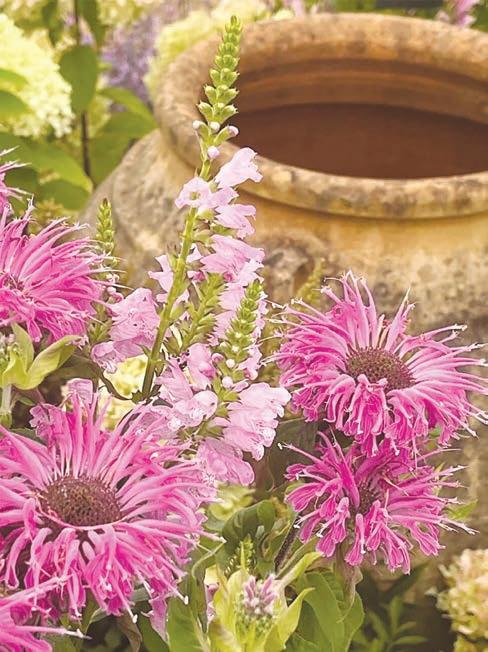
stems called Callicarpa (beautyberry), or small clumps of foliage labeled as Stokes aster or narrow leaf sunflower. And most gardeners pass over little pots of what will be small, very pretty, nonspreading pollinator magnets sold as Solidago once they discover they are types of goldenrod. And truth is, not just natives have great benefits to birds, bees, and other urban wildlife; my old-fashioned, nonstop flowering Abelia shrub, African Blue basil, lantana, and zinnias have
more butterflies than most native flowers. Over a longer season.
What’s most important to garden-variety gardeners is how the plants can be used in regular landscapes where shape, size, foliage and seasonal flower colors are important. Butterflies, bees, hummingbirds, and hover flies are lagniappe. And they can all be used together. This is how it is widely done English, European, and Japanese gardens, where our native plants are just more imports. Nobody

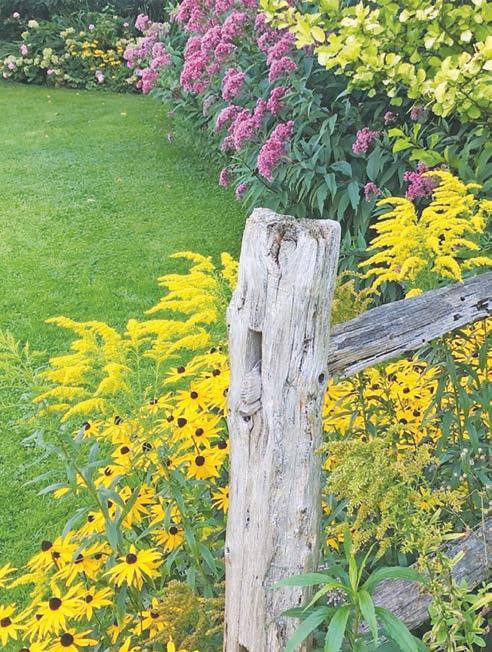
over there makes a big deal, they just plant them as good garden additions, as individuals or small groups right along with daylilies, iris, roses and the like.
I guess what I am saying is that we have grouped and put native plants onto a pedestal, instead of seeing some of them as just regular garden beauties exceptionally adapted to our climate and with added wildlife value.
Here’s what I suggest: Just use the native plants you like best for what they
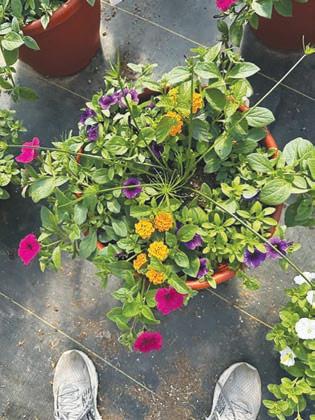
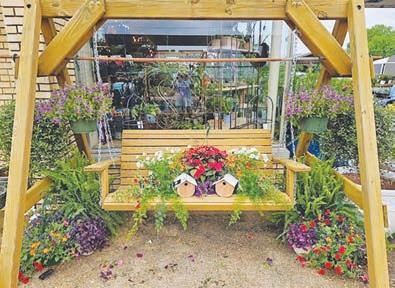
are, more than what they represent. For those that are a bit untidy, don’t just plant wild - group several around an acceptable accent such as a wagon wheel, urn, bit of fence, large piece of driftwood, a group of birdhouses, or a birdhouse. And add some more familiar plants to give neighbors peace of mind. Just enjoy them for what they are and appreciate whatever other benefits they bring. Without all the virtue signaling.


REBECCA McGUIRE, Manager

WHERE YOUR SPRING PLANS MEET SOLID GROUND



How to prepare soil for spring planting
Spring is a season of rejuvenation, and perhaps nowhere is that rebirth more noticeable than in the yard. Each spring, grass begins to grow again as inviting landscapes beckon people outdoors.
Extra sunlight and rising temperatures make spring a great time to plant flowers, grasses and trees. To ensure successful planting, homeowners must take steps to prepare the soil. Healthy soil can provide the ideal conditions for roots to take hold, helping plants establish themselves before potentially harsh summer conditions arrive. Preparing soil might seem like an extensive job, but a simple approach may be all that’s necessary to create conditions that promote plant growth this spring.
• Clean up the previous months’ mess. Whether homeowners live in regions marked by year-round warmth or places where winter typically features heavy snowfall, it’s a good idea to clean up an area prior to spring planting. Fallen leaves, rocks, grass clippings, and other debris can contribute to compacted soil that makes it hard for plants to establish strong, healthy root systems. Clear away any debris prior to planting before taking the next step in your soil preparation routine.
• Loosen the soil. Once debris has been cleared away, loosen the soil. Depending on the size of the area where you’ll be planting, you may need to
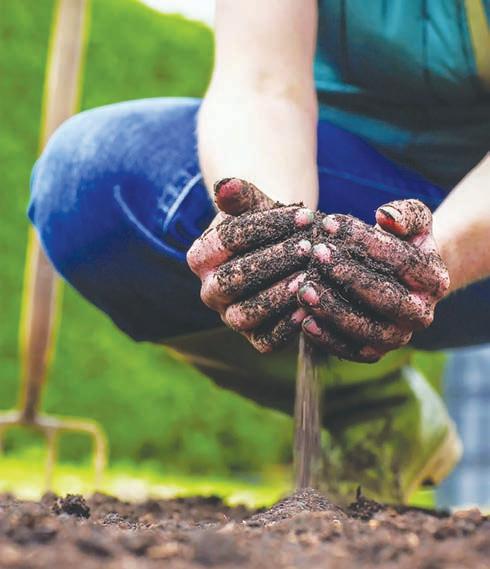
invest in tools like a shovel, spade, spading fork, and/or a lawn edger. If you’re planting in a small area, such as a deck planter box that still has soil from last year’s planting inside it, you can either clean the box and replace the soil entirely or dig around with a handheld trowel, cultivator and/or weeder. It’s important to loosen all of the soil around where you will ultimately plant prior to planting to ensure water can reach the roots and help them establish themselves once planting is completed.
• Test and, if necessary, amend the soil. A simple pH test can help determine the acidity or alkalinity of the soil. This is an important step as soil that is too acidic or alkaline can decrease the availability of nutrients the plants will need to thrive. In addition to conducting a pH
test, which can be purchased at little cost at a local home improvement store, homeowners can contact their local Cooperative Extension Service to test their soil quality.
“You always want to know what you organic matter is, where your pH and where your nutrient level lie,” said Colm McCool of Smith’s Nursery in Saltillo. “You can always use Mississippi State Extension for the.
There’s other soil tests out there but MSU Extension is the easiest. “After that you want to amend it with your preferred fertilizer and according to your soil test needs, and then I always like to top dress with a good organic matter. We offer several different soil amendments, whether they’re for flower bed or gardens or raised beds.”


Landowners face financial, cleanup decisions after storm
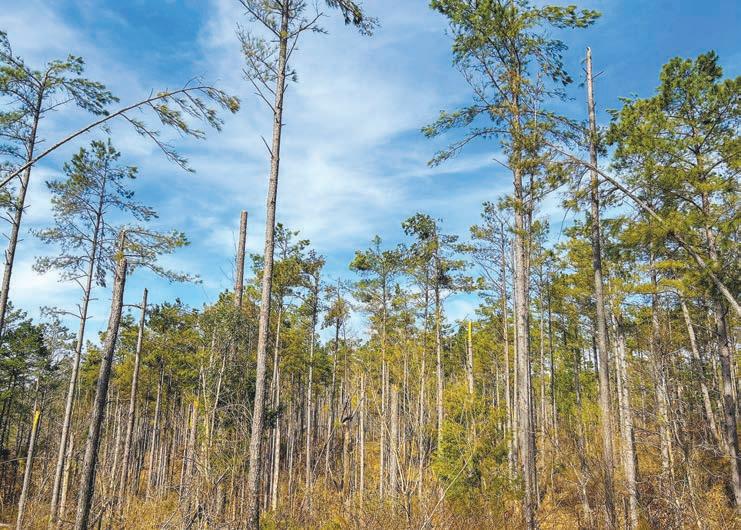
RAYMOND, Miss. -- In the aftermath of the recent winter storm that blanketed many areas of Mississippi in ice for days, timberland owners have some tough decisions to make.
The Jan. 23-27 storm left thousands of acres of timber damaged or destroyed and landowners wondering how to manage this financial loss.
Curtis VanderSchaaf, forestry specialist with the Mississippi State University Extension Service, said damage due to ice storms has historically been considered a casualty loss by the Internal Revenue Service, and some landowners will be able to claim a casualty loss deduction on their federal income taxes.
“Whether or not you should depends on many different factors,” he said.
“And for some people, it may not be worth it. It is a case-by-case basis.”
The IRS recognizes timberland as either a business, an investment or for hobby use. All the classifications qualify for a casualty loss. Because of the major disaster declaration by the president on Feb. 6, hobby owners who use their property strictly for personal recreation can claim a casualty loss.
To claim a casualty loss, landowners must know the fair market value, or FMV, of their timber before and after the loss and their timber basis, or what they have invested in their timber. How the property was acquired or established -- whether it was purchased, planted or otherwise artificially regenerated, inherited or received as a gift -- will also affect basis.
Any further investment such as forest management expenses and property taxes may also increase the basis if these costs have not been previously recovered. But
using basis to reduce timber revenues during thinnings or previous casualty loss claims will reduce the basis.
“Timber is a capital investment, meaning that you’re investing in your timber over many years and hoping it’s going to rise in value,” VanderSchaaf said. “Taxes are only paid on your investment when a gain is realized -- when that standing timber is sold. So, in the eyes of the Internal Revenue Service, if that gain is never realized, the only value in that standing timber is what’s in your basis. That’s why you need to know what this is.”
A casualty loss deduction is based on the FMV and the basis. The amount of the claim is the lesser of the loss in FMV or the basis.
“People should also understand the casualty loss amount is not money they will get back. The deduction reduces the amount of money you owe taxes on,” VanderSchaaf said. “The amount of your deduction is also dependent on your tax bracket and the associated marginal income tax rate.”
For landowners who do not have a basis or do not know their timber’s FMV, a registered forester can help.
“If you had standing timber prior to the ice storm, a certified forester can calculate fair market value before and after the ice storm and your basis, but you need to figure out whether spending the money to have that done is worth it,” VanderSchaaf said. “Foresters with the Extension Service or the Mississippi Forestry Commission can provide some understanding as to whether you should spend the money to have these values calculated.”
While salvage is not required to claim a casualty loss deduction, it is best
practice to attempt salvage anytime there is a loss of timber or timber quality from a storm unless the salvage costs more than what can be gained from the salvage. In some instances, conducting salvage can help reduce site preparation costs if a landowner decides to replant.
“If the damage is light and you still have a manageable timber stand even without the salvage, you might want to skip it because any logging job is going to come with some damage to residual trees,” said MSU Extension forestry specialist Butch Bailey.
“But if the damage rises to the level of stand replacement, such as if there was so much damage that you don’t have a manageable stand left, you should at least attempt salvage. Even if you get pennies on the dollar for what it was worth before the storm, that’s still something,” he said.
However, it is important to consider the damage from the salvage in respect to what is gained from the salvage. This is individual to every stand, and a registered forester can help when making that decision.
Bailey said salvage will not be easy. First, the process to remove the damaged timber can be more difficult and dangerous than a traditional logging job. Second, because there will be a lot of this extra timber hitting the market at once, prices will fall steeply, sometimes to zero.
If landowners make the decision to salvage, it is critical to document the timber that existed before the storm, what was lost, what was damaged but not destroyed and what is left. Also, talk to neighbors to see how they fared. Then, begin making calls to loggers, and document every call.
“My advice to landowners

in this situation is to get ready to do the leg work,” Bailey said. “If you make the decision to attempt salvage, you’re going to have to cast a very wide net and hope you get a response.
“The best case is that you have a relationship with a registered forester who can help you through this process. Landowners who have that existing relationship typically come out better in these situations. If not, call every logger you can get in touch with and hope one of them can squeeze you in. Don’t expect the same prices as you would have gotten pre-storm. But document literally everything. Every call.”
If salvage is not an option, it is best to discuss alternatives with a registered forester because of the variability of individual stands. For some stands, it may be best to leave it alone. For others, hiring someone to clean it up may be best. In other stands, prescribed fire may be an option, but fire can be dangerous and harmful because of the
high amounts of fuel on the ground and the stress to the living trees, Bailey said.
“This is a decision that you really need to have a registered forester help you through,” he said. In the aftermath of the storm, landowners also should monitor forest health closely. Generally, landowners can expect to see slow growth overall for a year or so because of the stress to the trees. Stressed trees are more susceptible to insects and diseases. Wildfire is also an increased risk for a few years because of the extra debris.
“What can happen to the health of a stand is extremely variable and depends on hundreds of factors that make every stand different,” Bailey said. “But typically, we see an increase in Ips beetles, which are pine bark beetles, following widespread ice storm damage in an area. And Ips beetles are what ate our lunch in 2023 and 2024 because of drought.
Landowners need to keep an eye out for signs of bark beetle attacks and be ready to move quickly if they see
any.”
Foresters with both the MSU Extension Service and Mississippi Forestry Commission, or MFC, can help landowners evaluate damaged timber and discuss the best options for stands.
To find an MSU Extension forester, contact a local MSU Extension office. Find offices at https://extension. msstate.edu/county-offices. To find the MFC’s regional and service area foresters, visit their website at https:// www.mfc.ms.gov/contact/ find-your-forester. For more information, download MSU Extension publications on timber casualty losses at https:// msuext.ms/p2619, the basics of basis at https:// msuext.ms/p1983 and family forest management in Mississippi at https:// msuext.ms/p2470. MSU Extension Publication 3871 provides more information about casualty losses of shade trees and landscape elements at https://msuext. ms/p3871.






Walking iris is unique early spring bloomer
One of my treasured plants is the walking iris which I grow in a container. Every March, I look forward to its blooms as a sure sign that spring has arrived.
The walking iris earns its place in my landscape with its graceful, arching, sword-like foliage. But when it blooms, it truly steals the show.
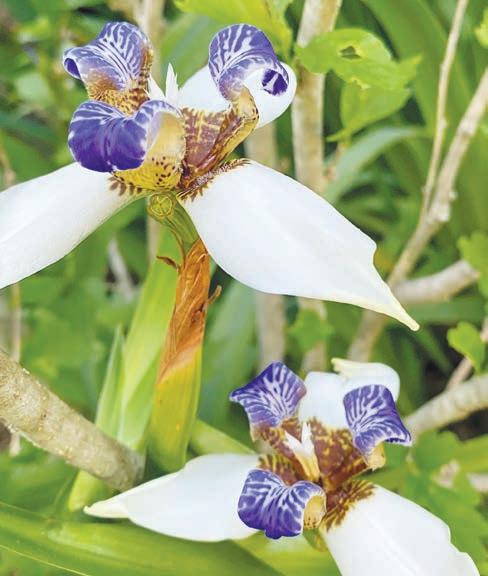
The blooms are nothing short of spectacular and are often mistaken for orchids. Each flower lasts only a single day, which makes catching it at its peak feel special, almost like a reward for paying attention.
Flowers are made up of six petal-like segments arranged in a bold, architectural form. It is impossible to walk by these beautiful flowers without stopping to admire them.
is commonly found in U.S. Department of Agriculture





The three outer petals are a bright, luminous white, broad and smooth, gently drooping and tapering at the tips. They provide the perfect backdrop for the three upright inner petals, which are rich shades of violet to deep blue and finely marked with crisp white striping that looks hand-painted.
At the base of these inner petals are warm tones of bronze and chocolate brown, patterned in intricate markings that give the flower incredible depth and character. The center of the bloom is layered and sculptural.
I grow my walking iris in a container as it allows me to place the plant where it can be enjoyed up close. I can also easily move it, if needed. Known scientifically as Neomarica, the walking iris
Hardiness Zones 8B–11, but container growing adds even more flexibility.
My plant performs best in part sun to light shade where it receives bright light without harsh afternoon sun. Watering is key, especially in a container, and I start with a well-drained potting mix.
I make sure the container never stays soggy, and I also avoid letting it dry out completely. If it dries too much, the leaf tips brown and droop, so I water regularly to keep the soil evenly moist.
A light application of a balanced fertilizer in late winter or early spring helps support strong growth and encourages blooming.
Maintenance is minimal.
I usually leave the spent flower stalks in place as new plantlets are forming, which is part of the fun and the reason behind the name “walking iris.”
These plantlets appear at the tips of spent flower stalks. As they grow, the stalks gradually bend under their own weight until it touches the soil, where the plantlet can take root.
In a container, I sometimes allow the plant to naturally “walk” around the pot, or I gently cut the plantlet and pot it on its own. This is an easy and satisfying way to propagate new plants and share them with friends.
Another reason I love this plant is how well it transitions indoors.
When needed, my container-grown walking iris makes an excellent houseplant. I keep it in a bright window out of direct sunlight and continue regular watering.
Whether growing in my landscape or indoors, the walking iris has become a favorite reliable and beautiful plant I look forward to enjoying every spring.