Medical Directory filled with information about medical issues and a guide to the vast medical community in New Albany and Union County.
Inside you will find a collection of informative articles on how to stay healthy, have a better quality of life and signs to recognize a potential problem. We have included a quick reference with a Medical Directory listing the physicians and clinics by specialty from Baptist Memorial Union County group. We also have an ad-
ditional directory of your Assisted Living Homes, Nursing Homes, Chiropractors, Dentists, Eye Clinics, Pharmacies, Emergency Numbers, and Non-Emergency Numbers and more.
We publish the Medical Directory each year to keep the most up-to-date information available to you.
We hope you will keep this informative directory for reference throughout the year.
For additional copies, stop by our office at 130 W Bankhead Street, downtown New Albany.
Table of Contents
Contributing Writers
Wellness Through the Lifespan: Investing in Your Health at Every Age
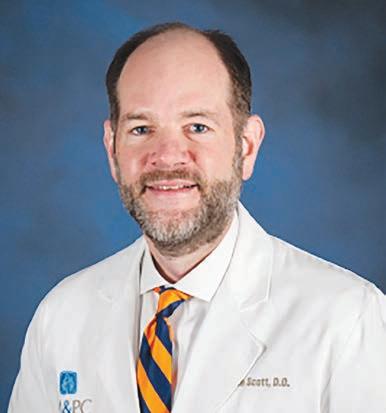
By Dr. Shane Scott, DO Internal Medicine and Pediatric Clinic
In a busy world filled with responsibilities, deadlines, and constant demands, it is easy for personal health to slip down the priority list. Many people wait until something feels wrong before seeking care, treating healthcare as a reaction rather than a proactive investment. However, true wellness is not about responding to illness—it is about maintaining balance, preventing disease, and partnering with a trusted medical provider throughout every stage of life.
At our practice, with two clinic locations offering both internal medicine and pediatric care, we are proud to care for patients of all ages—from infancy through adulthood. This unique scope allows us to focus on wellness through the entire lifespan, emphasizing continuity of care and the importance of staying in tune with your body at every age.
Your Body Is Like a Car—Maintenance Matters
One of the simplest ways to think about wellness is to compare your body to a car. Most people wouldn’t think twice about taking their car in for routine oil changes, tire
DO
rotations, or inspections. These visits help prevent costly repairs, extend the life of the vehicle, and ensure safe performance. Your body works the same way.
Routine wellness visits are the “maintenance checks” that help keep everything running smoothly. Even when you feel fine,
regular exams allow providers to identify small issues before they become larger problems. Monitoring blood pressure, cholesterol, growth patterns, developmental milestones, and other health indicators can make a significant difference in long-term outcomes.
Ignoring maintenance doesn’t just risk breakdowns—it shortens the life of the engine. Prioritizing wellness helps protect your health today while preserving quality of life for years to come.
Wellness Is an Investment in Yourself
Taking time for your health is not selfish—it is essential. Wellness care is one of the most valuable investments you can make, yet it is often overlooked in a fast-paced society. Preventive visits, annual exams, and ageappropriate screenings allow patients to stay informed about their health and empowered to make better decisions.
For children, wellness visits support healthy growth, development, and early intervention when concerns arise. For adults, they provide opportunities to manage chronic conditions, identify risk factors, and address lifestyle habits that impact overall well-being. Wellness care supports not just physical health, but mental and emotional health as well.
By committing to routine care, patients cre-
Dr. Shane Scott,
ate a foundation that supports work performance, family life, and long-term independence. When you take care of yourself, you are better able to take care of those who depend on you.
The New Year: A Perfect Time to Reset and Refocus
The beginning of a new year offers a natural opportunity to reflect, reset, and plan ahead. Scheduling a wellness exam early in the year is an excellent way to establish a clear picture of your current health and create a roadmap for the months ahead.
A wellness visit allows patients and providers to work together to set realistic goals and milestones—whether that includes improving nutrition, increasing physical activity, managing stress, addressing sleep concerns, or monitoring existing conditions. Rather than making vague resolutions, patients can leave with a personalized plan of action backed by medical insight and measurable steps.
Throughout the year, followup visits help track progress, adjust goals, and ensure that small changes are adding up to mean-
ingful improvements. Wellness is not a one-time event—it is an ongoing partnership.
Care That Grows With You
Because we provide both internal medicine and pediatric care, our practice is uniquely positioned to care for entire families under one roof. Patients don’t “age out” of our care—we grow with them. This continuity allows providers to understand medical histories more deeply and
riSHa B oren , a u .D. Doctor of a uDiology
support smoother transitions through different life stages.
From childhood immunizations and adolescent development to adult preventive screenings and chronic disease management, wellness looks different at every age—but its importance never fades. Lifelong care creates consistency, trust, and better health outcomes.
A Proactive Approach to a Healthier Life
Wellness through the lifespan means recognizing that health is not something to check on occasionally—it is something to nurture consistently. Just like routine maintenance keeps a car reliable and safe, regular wellness visits help keep your body functioning at its best.
In a world that constantly asks for more of your time and energy, making your health a priority is one of the most powerful decisions you can make. By staying in check with your body, setting intentional goals, and partnering with a trusted medical team, you can build a healthier future—one visit at a time.
A proactive approach to wellness starts with choosing a trusted partner in your care. Internal Medicine and Pediatric Clinic is committed to supporting patients and families at every stage of life, helping you stay ahead of health concerns and focused on long-term well-being. We invite you to make your health a priority and schedule a wellness visit to begin building a healthier future today.
• Audiologist serving patients all ages
• Focused, individualized hearing assessments and also specializing in Auditory Processing Disorders in children
• Multiple hearing aid manufacturer offerings
• 45-day, money-back guaranty trial period to determine benefit
• Convenient location and easy parking
• Office hours 5-days a week, by appointment
• Various technology levels to meet budget concerns
• Financing available
• Compassionate Expertise from Doctor of Audiology with 30 years of experience
Now Accepting New Patients
Now Accepting New Patients
Now Accepting New Patients
Now Accepting New Patients
New Albany Medical Group is now part of Baptist Medical Group, the largest network of doctors and specialists in the Mid-South. We specialize in primary care, family medicine, preventive/wellness exams, immunizations, X-ray and laboratory services, and much more, while taking all the necessary steps to ensure your safety in these extraordinary times. Get better with Baptist.
New Albany Medical Group is now part of Baptist Medical Group, the largest network of doctors and specialists in the Mid-South. We specialize in primary care, family medicine, preventive/wellness exams, immunizations, X-ray and laboratory services, and much more, while taking all the necessary steps to ensure your safety in these extraordinary times. Get better with Baptist.
New Albany Medical Group is now part of Baptist Medical Group, the largest network of doctors and specialists in the Mid-South. We specialize in primary care, family medicine, preventive/wellness exams, immunizations, X-ray and laboratory services, and much more, while taking all the necessary steps to ensure your safety in these extraordinary times. Get better with Baptist.
New Albany Medical Group is now part of Baptist Medical Group, the largest network of doctors and specialists in the Mid-South. We specialize in primary care, family medicine, preventive/wellness exams, immunizations, X-ray and laboratory services, and much more, while taking all the necessary steps to ensure your safety in these extraordinary times. Get better with Baptist.
Baptist Medical Group
New Albany Medical Group
Baptist Medical Group
Baptist Medical Group
Monday-Thursday, 8:00 a.m.- 4:30 p.m.
Baptist Medical Group
New Albany Medical Group
Friday, 8:00 a.m. to Noon
New Albany Medical Group
New Albany Medical Group
Monday-Thursday, 8:00 a.m.- 4:30 p.m.
300 Oxford Road
Monday-Thursday, 8:00 a.m.- 4:30 p.m.
Friday, 8:00 a.m. to Noon
Monday-Thursday, 8:00 a.m.- 4:30 p.m. Friday, 8:00 a.m. to Noon
New Albany, MS 38652
Friday, 8:00 a.m. to Noon
300 Oxford Road
300 Oxford Road
New Albany, MS 38652
300 Oxford Road
Schedule an appointment today. Call us at (662) 534-8166.
New Albany, MS 38652
New Albany, MS 38652
Schedule an appointment today. Call us at (662) 534-8166.
Schedule an appointment today. Call us at (662) 534-8166.
Schedule an appointment today. Call us at (662) 534-8166.
7 Common Symptoms of RSV in Older Adults
By Rachel Nania AARP
It’s the time of year when COVID-19 and flu are top-of-mind for many. But there’s another highly contagious respiratory virus that spreads in the fall and winter months, and similar to the coronavirus and influenza, this bug can be downright dangerous for older adults.
It’s called RSV, short for respiratory syncytial virus. And while it’s commonly thought of
as an illness that affects babies and young children, RSV sends as many as 160,000 U.S. adults ages 60-plus to the hospital each year, and kills as many as 10,000 older Americans annually, according to data from the Centers for Disease Control and Prevention (CDC).
Doctors and public health experts are hopeful that a suite of new RSV vaccines can help keep these numbers down this year. Health officials recommend that everyone 75 and older get an RSV vaccine if they didn’t get one when the shots
Brad Scott, D.O.
Craig Bullock, M.D.
Lyndie Scott, FNP-C
Correal Garrison, FNP-C
Heaven Robbins, FNP-C
Hailey Davis, FNP-C
Bamby Petty, CNFP
first became available in 2023. The vaccine is also recommended for people 60 to 74 who have underlying health conditions, like chronic heart and lung disease.
What are the symptoms of RSV?
A mild infection
RSV can be tricky to identify, since its symptoms tend to mirror those of other respiratory illnesses, including flu and COVID, says William Schaffner, M.D., professor of preventive medicine and infectious diseases at Vanderbilt University School of Medicine.
While infants and babies with RSV tend to display signs of lethargy, apnea (pauses in breathing) and loss of appetite, the infection in older adults can come with a runny nose, congestion, cough, fatigue, a mild headache and fever. Adults can also have a stuffy nose, sore throat and aches and pains, Schaffner says. When RSV turns severe
While symptoms are usually mild in most, RSV can make some adults really sick, and older adults are at higher risk for complications from a respiratory virus, like RSV. So are individuals with heart and lung disease or a compromised immune system.
RSV can cause lower respiratory infec-
tions like pneumonia and bronchitis, and it can worsen existing health conditions like asthma, COPD (chronic obstructive pulmonary disease) and heart failure.
According to Cleveland Clinic, some symptoms that signal an RSV infection is taking a turn for the worse include:
• Extreme tiredness or weakness
• Low appetite
• Persistent cough
• Wheezing
• Shortness of breath
• Bluish skin, lips or nails
• Sudden change in mental state
Another clue is if your temperature continues to climb, Schaffner says, or if your cough starts to produce sputum (phlegm or mucus), which could indicate that “you’ve developed a complicating pneumonia.” If you notice any of these more serious symptoms, seek medical attention.
Treating RSV symptoms
Both flu and COVID-19 have prescription antiviral treatments that can help keep a mild infection from turning severe, but no such treatment exists for RSV, which is why Schaffer says prevention with the vaccine is crucial.
If you have a mild infection, you can get relief from symptoms with over-thecounter medications. Ann Philbrick, a pharmacist and associate professor and
director of community engagement in the University of Minnesota College of Pharmacy, suggests a pain reliever such as acetaminophen (Tylenol) to curb any aches and pains from the illness, though it’s always important to check with a doctor or pharmacist first to see which type is best for your needs.
For the cough, she recommends guaifenesin (Mucinex) to help “loosen up the mucus.”
Guaifenesin can appear in combination products with dextromethorphan, a cough suppressant, but Philbrick generally recommends steering clear of the latter ingredient. “Because typically when we have an infection, a cough is good to loosen things up and get things flowing through the body,” she says. “Where I do recommend dextromethorphan is if that cough is just keeping you up at night and you absolutely cannot sleep.” Again, before using be sure to check with your doctor or pharmacist.
Pseudoephedrine can help with congestion, but the medication can also affect blood pressure. “So for patients that have blood pressure issues already, that’s something that I would certainly limit or just kind of stay away from,” Philbrick says. And don’t forget fluids, she adds; staying hydrated is key.
ADHD: Not Just for Kids
If you’re easily distracted, can’t concentrate, and are chronically disorganized, you could have ADHD. Here’s how to pinpoint symptoms and find the best treatment options
Courtesy of Womenshealthbase.com
Attention deficit hyperactivity disorder (ADHD) is a highly publicized childhood disorder that affects approximately 3 percent to 5 percent of all children. What is much less well known is the probability that, of children who have ADHD, many will still have it as adults. Several studies done in recent years estimate that between 30 percent and 70 percent of children with ADHD continue to exhibit symptoms in the adult years.
Typically, adults with ADHD are unaware that they have this disorder -- they often just feel that it’s impossible to get organized, to stick to a job, to keep an appointment, to concentrate. The everyday tasks of getting up, getting dressed and ready for the day’s work, getting to work on time, and being productive on the job can be major challenges for the ADHD adult.
Pinpointing the Problem
Diagnosing an adult with ADHD is not easy. Many times, when a child is diagnosed with the disorder, a parent will recognize that he or she has many of the same symptoms the child has and, for the first time, will begin to understand some of the traits that have given him or her trouble for years -- distractibility, impulsivity, restlessness. Other adults will seek professional help for depression or anxiety and will find out that the root cause of some of their emotional problems is ADHD. They may have a history of school failures or problems at work. Because they are so easily distracted, they may be involved in frequent automobile accidents.
To be diagnosed with ADHD,
an adult must have childhood -- onset, persistent, and current symptoms. The accuracy of the diagnosis of adult ADHD is of utmost importance and should be made by a clinician with expertise in the area of attention dysfunction. For an accurate diagnosis, a history of the patient’s childhood behavior, together with an interview with his life partner, a parent, close friend, or other close associate, is needed. A physical examination and psychological tests should also be given. Other conditions, such as specific learning disabilities, anxiety, or affective disorders, may exist as well.
A correct diagnosis of ADHD can bring a sense of relief. The individual has brought into adulthood many negative perceptions of herself that may have led to low esteem. Now she can begin to understand why she has some of her problems and begin to face them. This may mean not only medical treatment for ADHD, but also therapy to help her recapture a sense of selfesteem and cope with the anger she feels about the failure to diagnose the disorder when she was younger.
ADHD Symptoms
The principal characteristics of ADHD are inattention, hyperactivity, and impulsivity. There are three subtypes of ADHD recognized by professionals.
These are the predominantly hyperactive-impulsive type (that does not show significant inattention); the predominantly inattentive type (that does not show significant hyperactiveimpulsive behavior) sometimes called ADD -- an outdated term for this entire disorder; and the combined type (that displays both inattentive and hyperactive-impulsive symptoms).
Hyperactive adults may feel internally restless. They often report needing to stay busy and may try to do several things at once.
Impulsive adults may impulsively choose to do things that have an immediate but small payoff, rather than engage in activities that may take more effort and yet provide much greater but delayed rewards.
People who are inattentive have a hard time keeping their minds on any one thing and may get bored with a task after only a few minutes. If they are doing something they really enjoy, they have no trouble paying attention. But focusing deliberate, conscious attention to organizing and completing a task or learning something new is difficult.
Is It Really ADHD?
Not everyone who is overly hyperactive, inattentive, or impulsive has ADHD. Since most people sometimes blurt out
things they didn’t mean to say, or jump from one task to another, or become disorganized and forgetful, how can specialists tell if the problem is ADHD?
Because everyone shows some of these behaviors at times, the diagnostic guidelines also contain specific requirements for determining when the symptoms indicate ADHD. The behaviors must appear early in life, before age 7, and continue for at least 6 months. Above all, the behaviors must create a real handicap in at least two areas of a person’s life such as at home, at work or in social settings. So someone who shows some symptoms but whose work performance or friendships are not impaired by these behaviors would not be diagnosed with ADHD.
To assess whether a person has ADHD, specialists consider several critical questions: Are these behaviors excessive, longterm, and pervasive? Are they a continuous problem, not just a response to a temporary situation? Do the behaviors occur in several settings or only in one specific place? The person’s pattern of behavior is compared against a set of criteria and characteristics of the disorder as listed in the Diagnostic and Statistical Manual of Mental Disorders (DSM-IV-TR).
What Causes ADHD?
Scientists are studying causes in an effort to identify better ways to treat, and perhaps someday, to prevent ADHD. They are finding more and more evidence that ADHD does not stem from the way in which they were raised, but from biological causes. Over the last few decades, scientists have come up with possible theories about what causes ADHD. Some of these theories have led to dead ends, some to exciting new avenues of investigation. Possible causes include:
1. The physical environment. Studies have shown a possible correlation between the use of
cigarettes and alcohol during pregnancy and risk for ADHD in the offspring of that pregnancy. Another environmental agent that may be associated with a higher risk of ADHD is high levels of lead in the bodies of young preschool children. Since lead is no longer allowed in paint and is usually found only in older buildings, exposure to toxic levels is not as prevalent as it once was. Children who live in old buildings in which lead still exists in the plumbing or in lead paint that has been painted over may be at risk.
2. Brain injury. One early theory was that attention disorders were caused by brain injury. Some people who have suffered accidents leading to brain injury may show some signs of behavior similar to that of ADHD, but only a small percentage of people with ADHD have been found to have suffered a traumatic brain injury.
3. Genetics. Attention disorders often run in families, so there are likely to be genetic influences. Studies indicate that 25 percent of the close relatives
in the families of ADHD children also have ADHD, whereas the rate is about 5 percent in the general population. Many studies of twins now show that a strong genetic influence exists in the disorder. Researchers continue to study the genetic contribution to ADHD and to identify the genes that cause a person to be susceptible to ADHD.
ADHD Treatment
1. Medications. If adults take a medication for ADHD, they often start with a stimulant medication. The stimulant medications affect the regulation of two neurotransmitters, norepinephrine and dopamine. The newest medication approved for ADHD by the FDA, atomoxetine (Strattera®), has been tested in controlled studies in both children and adults and has been found to be effective.
Antidepressants are considered a second choice for treatment of adults with ADHD. The older antidepressants, the tricyclics, are sometimes used because they, like the stimulants, affect norepinephrine and do-
pamine. Venlafaxine (Effexor®), a newer antidepressant, is also used for its effect on norepinephrine. Bupropion (Wellbutrin®), an antidepressant with an indirect effect on the neurotransmitter dopamine, has been useful in clinical trials on the treatment of ADHD in both children and adults. It has the added attraction of being useful in reducing cigarette smoking.
In prescribing for an adult, special considerations are made. The adult may take other medications for physical problems such as diabetes or high blood pressure or for anxiety or depression. All of these variables must be taken into account before a medication is prescribed.
2. ADHD Coach. Although medication gives needed support, the individual must succeed on her own. To help in this struggle, both “psychoeducation” can be helpful. A professional coach can help the ADHD adult learn how to organize her life by using “props” -- a large calendar posted where it will be seen in the morning, lists, reminder notes, and have a special
place for keys, bills, and the paperwork of everyday life. Tasks can be organized into sections, so that completion of each part can give a sense of accomplishment. Above all, ADHD adults should learn as much as they can about their disorder.
3. Psychotherapy. Therapy can be a useful adjunct to medication and coaching. First, just remembering to keep an appointment with the therapist is a step toward keeping to a routine. Therapy can help change a longstanding poor self-image by examining the experiences that produced it. The therapist can encourage the ADHD patient to adjust to changes brought into her life by treatment -- the perceived loss of impulsivity and love of risk-taking, the new sensation of thinking before acting. As the patient begin to have small successes in her new ability to bring organization out of the complexities of her life, she can begin to appreciate the characteristics of ADHD that are positive-boundless energy, warmth, and enthusiasm.
2026 Medical Services Directory
MULTI-SPECIALTY CLINIC
BMH-Union County - Fifth Floor
CARDIOLOGY
Stern Cardiovascular
Christopher Ingelmo, MD (Mon.)
Darrell Sneed, MD (Mon.)
Justin May, DO (Wed.) 901-271-1000
GASTROENTEROLOGY
Gastroenterology Associates of NMS
2nd/4th Thursday
Ernest Williams, MD
John Webb, MD
Sarah Catherine Morrow, CNP
662-234-9888
UROLOGY
Oxford Urology
Mon-Wed, Fri 8 am-12 pm
Andrew Gowdey, MD
Lisa Hooker, CNP 662-234-1448
Urologic
Mon-Thurs 8-5; Fri 8-12
Jeremy S. Archer, MD
Paul B. Farabaugh, MD
C. Stephen Farmer, II, MD
Jonathan R. Kalish, MD
J. Timothy Posey, MD
Jamie Call, FNP-C
Katelynn Pannell, FNP-C 662-432-0700
ENDOCRINOLOGY
Primary Care & Endocrinology
Sarah French, MD
Sabrina Moore, FNP-C Mon-Thurs 8-5; Fri 8-2 460 West Bankhead Street New Albany, MS 38652 662-539-7444
FAMILY PRACTICE
Creekmore Clinic
Brad Scott, DO
Craig Bullock, MD
Correal Garrison, FNP-C
Hailey Davis, FNP-C
Heaven Robbins, FNP-C
Lyndie Scott, FNP-C
Bamby Petty, FNP-C
Mon-Thurs 8-5; Fri 8-3 216 Oxford Road
New Albany, MS 38652
662-534-9042
New Albany Health Care
Associates
Alisha Mason, FNP-C
Wesley Brandon Hutchinson, FNP-C
Staci Lowery, FNP-C
Megan Thompson, FNP-C
Mon-Fri 8:30-5
488 W. Bankhead Street
New Albany, MS
662-598-0007
New Albany Family Medical Clinic
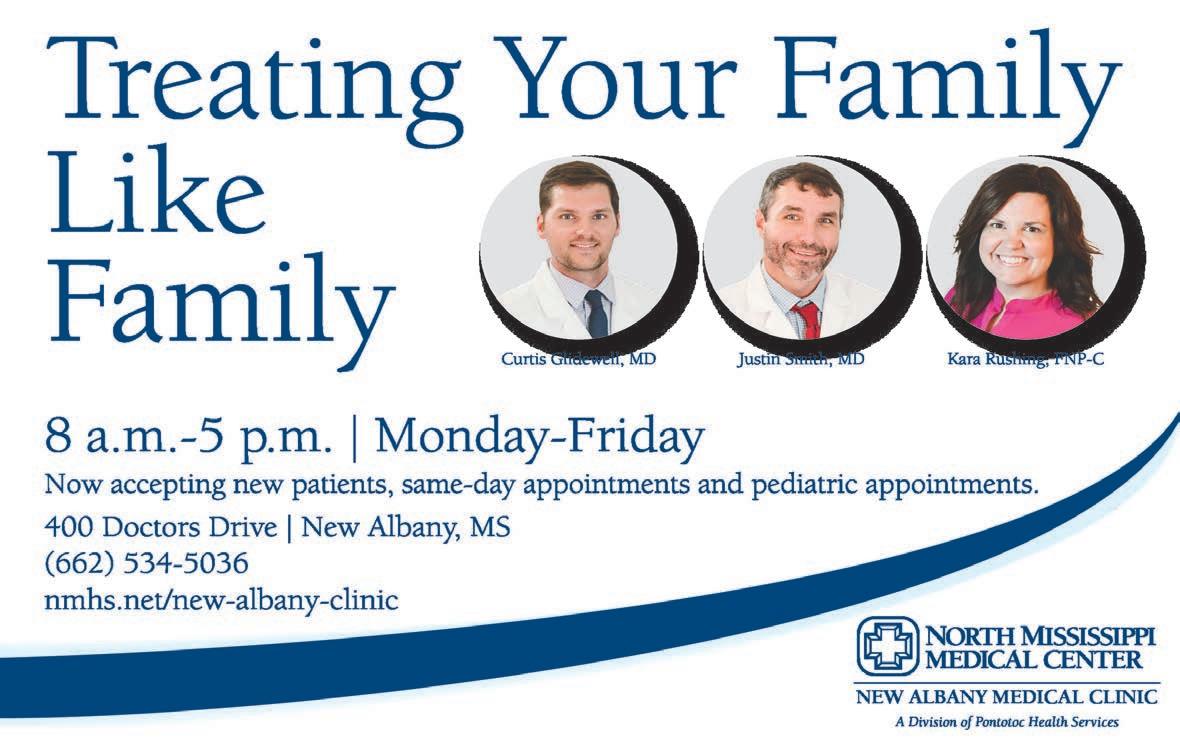
Justin Smith, MD
Curtis Glidewell, MD
Kara Rushing, FNP-C
Mon-Fri 8-5
400 Doctors Drive
New Albany, MS 38652
662-534-5036
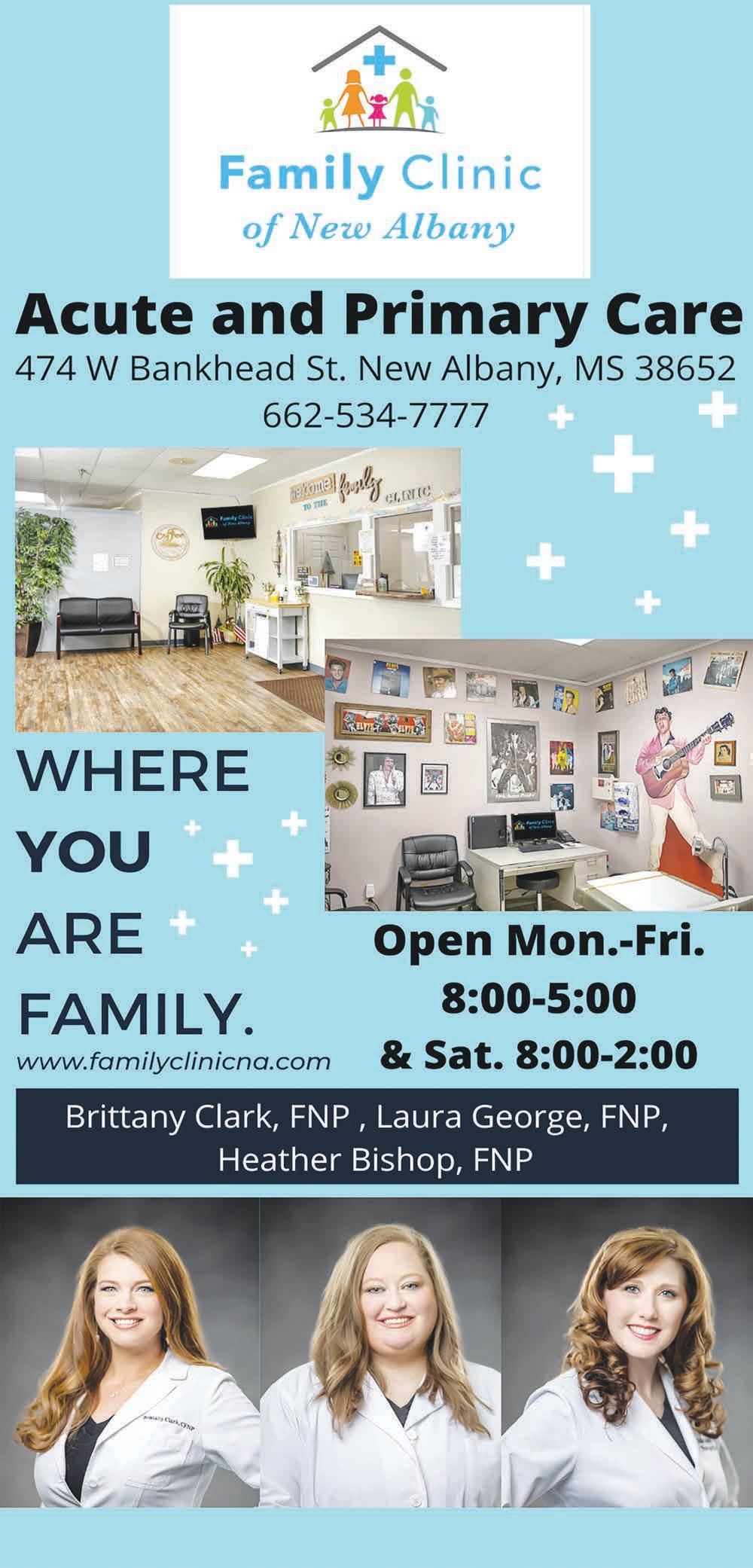
Family Clinic of New Albany
Brittany Clark, FNP-C
Heather Bishop, FNP-C
Robert Vail, FNP-C
Mon-Fri 8-5; Sat 8-2
474 West Bankhead
New Albany, MS 38652
662-534-7777
Fax: 662-598-0052
Friendship Medical Clinic
Allyson Bailey, FNP-C
Tracey Forman, FNP-C
Shelia Tice, FNP-C
Mon-Fri 8-6; Sat. 9-3; Sun 11-5
509 Highway 15 South New Albany, MS 38652
662-534-4330
Steele Medical Clinic
Rob Steele, PA
Paula DeCanter, FNP-C
Mon, Wed, Thur, Fri 8-4:30, Tues 8-2
1757 Highway 178 West
Suite A
Myrtle, MS 38650
662-988-7041
Scott Family Clinic
LaShundra Hall, FNP-C
Mon-Thurs 8 am-4:30 pm
Friday 8 am- 3pm 1557 Hwy 30 West, Suite D
Myrtle, MS 38650
662-480-1997
MegMed Clinic
Megan Harrison, FNP-C
Carly Boyd, FNP-C
Mon-Thurs 8-5, Fri 8-1
210 Highway 30 West
New Albany, MS 38652
662-539-7014
Fax 662-314-9501
MedPlus New Albany
Lucinda Dobbs, FNP
Yesenia Gonzalez, PA
Mon-Fri 7-6; Sat-Sun. 9-5
180 Park Plaza Drive
New Albany, MS 38652
662-222-2273
arcare - Mississippi
Laura George, FNP
Libby Carruth, FNP-C
Mon-Fri 8-5
232 Starlyn Avenue
New Albany, MS 38652
662-486-5122
Primary Care & Endocrinology
Troy Cappleman, MD
Susan Cappleman, DNP
Mon-Thurs 8-5; Fri 8-2
460 West Bankhead Street
New Albany, MS 38652
662-539-7444
RedMed Urgent Clinic
Jennifer Bolen, FNP-C
Chelsea Bullock, FNP-C
Cindy Gee, FNP-C
Erin Grady, FNP-C
Cynthia Lentz, FNP-C
Carly Mahon, FNP-C
Bill Malone, FNP-C
Mon-Fri 7-7; Sat. 9-5; Sun 1-5
188 Starlyn Avenue
New Albany, MS 38652
662-486-2700
GENERAL SURGERY
BMG New Albany
General Surgical Associates
Perrin Roten, MD
Jessica Adams, DO
Candace Mauney, NP
Mon-Thurs 8-5; Fri 8-12
456 West Bankhead St. New Albany, MS 38652
662-534-7474
INTERNAL MEDICINE
BMG-New Albany Medical Group
Thomas F. Barkley, MD
Al Prater, MD
Thomas A. Shands, MD
Bonnie Baggett Mask, FNP-C
Meghan West Foley, FNP-C
Sandra Durrett, FNP-C
Mon-Thurs. 8-4:30; Fri 8-12
300 Oxford Road
New Albany, MS 38652
662-534-8166
Fax: 662-534-8132
INTERNAL MEDICINE/ PEDIATRICS
Internal Medicine & Pediatric Clinic of New Albany
Eric D. Harding, MD
M. Shane Scott, DO
J. Matthew Rhinewalt, MD (Saltillo)
M. Paige Tomsic, DO
S. Griffin Metcalf, MD
Adam C. Coombs, MD
Jackson Browning, MD
Kathleen Minga, PA-C
Terri Pounders, MSN, FNPBC
Ashley Nanney, MSN, FNP-C
Taylor Lunn, MSN, CPNPPC
Katelyn Sanders, DNP, FNPBC
Katrina Frields, MSN, FNPBC
Kimberly Swinney, MSN, FNP-C
Breanna Davis, MSN, FNP-C
Mary Benavidez, MSN, CPNP-PC
Mon-Fri 7-6; Sat. 8:30 - 3 118 Fairfield Drive
New Albany, MS 38652
662-534-0898
OBSTETRICS/GYNECOLOGY
Advanced Obstetrics & Gynecology
Eric Frohn, MD
Leo Bautista, MD
Jennifer Stanton, NP-C Mon-Thurs 8:30-4:30; Fri 8:30-3
726 Coulter Drive
New Albany, MS 38652
662-534-4121
Fax: 662-534-4172
New Albany OB/GYN Clinic
Gregory Mitchell, MD
Ellen Paquin, MD
Katherine Wilson, FNP-C, CNM
Tracy Mitchell, FNP-BC
Elizabeth Harrison, FNP-C
Alice Thomas, FNP-C
Chelsea McCreary, FNP-C
Chelsea Cottrell, FNP-BC
Mon-Fri 8-5
117 Fairfield Drive
New Albany, MS 38652
662-534-0029
Fax: 662-534-0008
ONCOLOGY/HEMATOLOGY
Baptist Cancer Center
Suhail Obaji, MD
Amna Khattack, MD
Kim Hardin, FNP-C
200 Highway 30 West
New Albany, MS 38652
662-538-2535
Fax: 662-534-2882
ORTHOPEDIC SURGERY
Spartan Orthopaedics
Johnny Mitias, MD
J. Heath Thompson, DO
Brad Page, PA-C
Alex Hill, NP
Mon-Thurs 8-5; Fri 8-12
206 Oxford Road
New Albany, MS 38652
662-534-2227
OTOLARYNGOLOGY
BMG New Albany Ear, Nose & Throat
Scott Harrison, MD Mon-Thurs 7:30-4:30; Fri 8-12
452 W. Bankhead Street
New Albany, MS 38652 662-538-2500
PEDIATRICS
New Albany Children’s Clinic
Jim Googe, MD
Mon-Thurs 9-5, Closed Fri 462 W. Bankhead Street
New Albany, MS 38652 662-534-2020
PODIATRY
Spartan Orthopaedics
Clint Jiroux, DPM
Tina Bryan, NP-C
Mon-Thurs 8:30-5
2026 Medical Services Directory
206 Oxford Drive
New Albany, MS 38652
662-534-2227
PULMONOLOGY
BMG North MS Pulmonology Clinic
Yash Sarda, MD
Anne Wait, NP-C
Holly Wilson, NP-C
200 Highway 30 West
New Albany, MS 38652
662-728-2147
662-538-2137
BMG Union County Perioperative Clinic
Nashella Prather, FNP-C
200 Highway 30 West
New Albany, MS 38652
662-538-2680
Baptist Wound Care Center
Allison Russell, NP-C
200 Highway 30 West
New Albany, MS 38652
662-538-2441
OUTPATIENT SERVICES
BMH-Union County
Baptist Sleep Lab
901-405-1023
Lab
662-538-2170
Ostomy Support Group
662-538-2438
PET-CT
662-538-2448
Radiology
662-538-2140
Respiratory Therapy
662-538-2470
Scheduling
662-538-2133
Baptist Outpatient Rehab 123 Fairfield Drive
New Albany, MS 38652
662-539-4044
Fax: 662-539-6056
HEARING SERVICES
New Albany Hearing Services
Dr. Krisha Boren Mon.-Thurs. 8:30 a.m.-4:30 p.m.
Fri. 8:30 a.m. - noon 218 Highway 30 West New Albany
662-539-7111
Miracle Ear
Clay Hardy, BS, BC-HIS, CDP
Drew Hardy, BS, BC-HIS
Richard Hardy, BS- BC-HIS
ABORTION
ALTERNATIVES
First Choice Center for Women
723 Coulter Dr. New Albany Mon. – Thurs. 10:00 a.m. –
4:00 p.m.
662-534-7061
ASSISTED LIVING HOMES
Dogwood Plantation of New Albany
250 Fairfield Dr. New Albany 662-534-7331
Magnolia Place 1515 Munsford Dr. New Albany 662-534-0046
CHIROPRACTIC PHYSICIANS
Frontier Chiropractic, PLLC 125 West Main St. New Albany 662-539-7079
Martin Chiropractic Clinic 512 E. Main St. New Albany 662-534-6330
Medlin Chiropractic Clinic
Dr. Greg Medlin 132 B West Bankhead St. New Albany 662-534-6636
DENTISTS
Perkins Dental Clinic
Dr. Jessica Perkins
Dr. Carla Cole 212 Oxford Rd. New Albany 662-534-8597
Closed on Wed. 484 W. Bankhead St. New Albany 662-534-0101
Weeden Eye Clinic
Dr. Michael Weeden, O.D.
Dr. Kelli Wooten Mullen, O.D.
Dr. Lauren Ferrell, O.D.
Dr. Morgan Mathis, O.D. Mon., Tues., Thurs. 8:00 a.m. –5:00 p.m.
Wed. 8:00 a.m. – 4:00 p.m. Fri. 8:00 a.m. – 2:00 p.m. 303 J.H. Phillips Lane New Albany 662-539-7801
PHARMACIES
Friendship Pharmacy 5532 Highway 15 N. Suite 1 Ecru 662-488-0317
Super Saver Drugs 498 W. Bankhead New Albany, MS 38652 (662) 534-4774
Medical Center
Pharmacy
Magnolia Drugs 1757 Highway 178 W, Ste B Myrtle, MS 38650 662-988-7030
New Albany Pharmacy & Solutions 140 Fairfield Dr. New Albany 662-539-7777
Walgreens Drug Stores 225 State Highway 30 W. New Albany 662-534-8044
Walmart Pharmacy 202 Park Plaza Dr. New Albany 662-534-1859
PHYSICAL THERAPISTS
Outpatient Rehab 123 Fairfield Drive New Albany, MS 38652 662-539-4044 Fax: 662-539-6056
Athletico Physical Therapy, Inc.
206 B Oxford Road New Albany 662-534-4445
Mission Rehab 109 Main Street West New Albany 662-538-8258
Elite Physical Therapy 216 W. Bankhead St., Suite A New Albany 662-539-7046
WEIGHT LOSS
The Center for Weight Loss
Dr. William Johnson 403 Doctors Dr. 662-534-0890
PET CARE
New Albany Animal Clinic
Dr. R.D. Childers
Dr. M.A. Thompson
Dr. A.B. Hardy
218 Oxford Rd. New Albany 662-534-2101
918 A Highway 30 West New Albany 662-534-5176
Computer Vision Syndrome
Courtesy of the Optometric Association
Computer vision syndrome, also referred to as digital eye strain, describes a group of eye- and vision-related problems that result from prolonged computer, tablet, e-reader and cell phone use.
Many individuals experience eye discomfort and vision problems when viewing digital screens for extended periods. The level of discomfort appears to increase with the amount of digital screen use.
The average American worker spends seven hours a day on the computer either in the office or working from home. To help alleviate digital eyestrain, follow the 20-20-20 rule; take a 20-second break to view something 20 feet away every 20 minutes.
Causes and risk factors
Viewing a computer or digital screen often makes the eyes work harder. As a result, the unique characteristics and high visual demands of computer and digital screen viewing make many individuals susceptible to the development of visionrelated symptoms. Uncorrected vision problems can increase the severity of computer vision syndrome (CVS) or digital eyestrain symptoms. Viewing a computer or digital screen is different than reading a printed page. Often the letters on the computer or handheld device are not as precise or sharply defined, the level of contrast of the letters to the background is reduced, and the presence of glare and reflections on the screen may make viewing difficult.
Viewing distances and angles used for this type of work are also often different from those commonly used for other reading or writing tasks. As a result, the eye focusing and eye movement requirements for digital screen viewing can place additional demands on the visual system. In addition, the presence of even
minor vision problems can often significantly affect comfort and performance at a computer or while using other digital screen devices. Uncorrected or under corrected vision problems can be major contributing factors to computer-related eyestrain. Even people who have an eyeglass or contact lens prescription may find it’s not suitable for the specific viewing distances of their computer screen. Some people tilt their heads at odd angles because their glasses aren’t designed for looking at a computer or they bend toward the screen in order to see it clearly. Their postures can result in muscle spasms or pain in the neck, shoulder or back.
In most cases, symptoms of CVS occur because the visual demands of the task exceed the visual abilities of the individual to comfortably perform them. At greatest risk for developing CVS are those persons who spend two or more continuous hours at a computer or using a digital screen device every day.
Symptoms
The most common symptoms associated with CVS or digital eyestrain are:
• Eyestrain.
• Headaches.
• Blurred vision.
• Dry eyes.
• Neck and shoulder pain. These symptoms may be caused by:
• Poor lighting.
• Glare on a digital screen.
• Improper viewing distances.
• Poor seating posture.
• Uncorrected vision problems.
• A combination of these factors.
The extent to which individuals experience visual symptoms often depends on the level of their visual abilities and the amount of time spent looking at a digital screen. Uncorrected vision problems like farsightedness and astigmatism, inadequate eye focusing or eye coordination abilities, and aging changes of the eyes, such as presbyopia, can all contribute to the development of visual symptoms when using a computer or digital screen device.
Many of the visual symptoms experienced by users are only temporary and will decline after stopping computer work or use of the digital device. However, some individuals may experience continued reduced visual abilities, such as blurred distance vision, even after stopping work at a computer. If nothing is done
to address the cause of the problem, the symptoms will continue to recur and perhaps worsen with future digital screen use.
Diagnosis
CVS, or digital eyestrain, can be diagnosed through a comprehensive eye examination. Testing, with special emphasis on visual requirements at the computer or digital device working distance, may include:
• Patient history to determine any symptoms the patient is experiencing and the presence of any general health problems, medications taken or environmental factors that may be contributing to the symptoms related to computer use.
• Visual acuity measurements to assess the extent to which vision may be affected.
• A refraction to determine the appropriate lens power needed to compensate for any refractive errors (nearsightedness, farsightedness or astigmatism).
• Testing how the eyes focus, move and work together. In order to obtain a clear, single image of what is being viewed, the eyes must effectively change focus, move and work in unison. This testing will look for problems that keep the eyes from focusing effectively or make it difficult to use both eyes together.
This testing may be done without the use of eye drops to determine how the eyes respond under normal seeing conditions. In some cases, such as when some of the eyes’ focusing power may be hidden, eye drops may be used. They temporarily keep the eyes from changing focus while testing is done. Using the information obtained from these tests, along with the results of other tests, a doctor of optometry can determine the presence of CVS or digital eyestrain and advise treatment options.
Treatment
Solutions to digital screen-related vision problems are varied. However, they can usually be alleviated by obtaining regular eye care and making changes in how
the screen is viewed.
In some cases, individuals who do not require the use of eyeglasses for other daily activities may benefit from glasses prescribed specifically for computer use. In addition, persons already wearing glasses may find their current prescription does not provide optimal vision for viewing a computer.
• Eyeglasses or contact lenses prescribed for general use may not be adequate for computer work. Lenses prescribed to meet the unique visual demands of computer viewing may be needed. Special lens designs, lens powers or lens tints or coatings may help to maximize visual abilities and comfort.
• Some computer users experience problems with eye focusing or eye coordination that can’t be adequately corrected with eyeglasses or contact lenses. A program of vision therapy may be needed to treat these specific problems. Vision therapy, also called visual training, is a structured program of visual activities prescribed to improve visual abilities. It trains the eyes and brain to work together more effectively. These eye exercises help remediate deficiencies in eye movement, eye focusing, and eye teaming and reinforce the eye-brain connection. Treatment may include office-based as well as home training procedures.
Viewing the computer
Proper body positioning for computer use. Some important factors in preventing or reducing the symptoms of CVS have to do with the computer and how it is used. This includes lighting conditions, chair comfort, location of reference materials, the position of the monitor, and the use of rest breaks.
• Location of the computer screen. Most people find it more comfortable to view a computer when the eyes are looking downward. Optimally, the computer screen should be 15 to 20 degrees below eye level (about 4 or 5 inches) as measured from the center of the screen and 20 to 28 inches from the eyes.
• Reference materials. These materials should be located above the keyboard and below the monitor. If this is not pos-
sible, a document holder can be used beside the monitor. The goal is to position the documents, so the head does not need to be repositioned from the document to the screen.
• Lighting. Position the computer screen to avoid glare, particularly from overhead lighting or windows. Use blinds or drapes on windows and replace the light bulbs in desk lamps with bulbs of lower wattage.
• Anti-glare screens. If there is no way to minimize glare from light sources, consider using a screen glare filter. These filters decrease the amount of light reflected from the screen.
• Seating position. Chairs should be comfortably padded and conform to the body. Chair height should be adjusted so the feet rest flat on the floor. Arms should be adjusted to provide support while typing and wrists shouldn’t rest on the keyboard when typing.
• Rest breaks. To prevent eyestrain, try to rest eyes when using the computer for long periods. Resting the eyes for 15 minutes after two hours of continuous computer use. Also, for every 20 minutes of computer viewing, look into the distance for 20 seconds to allow the eyes a chance to refocus.
• Blinking. To minimize the chances of developing dry eye when using a computer, try to blink frequently. Blinking keeps the front surface of the& eye moist.
Regular eye examinations and proper viewing habits can help to prevent or reduce the development of the symptoms associated with CVS.
Prevention
Prevention or reduction of the vision problems associated with CVS or digital eyestrain involves taking steps to control lighting and glare on the device screen, establishing proper working distances and posture for screen viewing and assuring that even minor vision problems are properly corrected.
Suggestions for computer vision syndrome sufferers
• Don’t take a vision problem to work. Even if glasses are not needed for driving, reading or other activities, they still may
offer benefits for a minor vision problem that is aggravated by computer use. A mild glasses prescription may be needed to reduce vision stress on the job. It’s a good idea for computer users to get a thorough eye exam every year.
• Glasses should meet the demand of the job. If glasses are worn for distant vision, reading or both, they may not provide the most efficient vision for viewing a computer screen, which is about 20 to 30 inches from the eyes. Tell the doctor about job tasks and measure on-the-job sight distances. Accurate information will help get the best vision improvement. Patients may benefit from one of the new lens designs made specifically for computer work.
• Minimize discomfort from blue light and glare. Blue light from LED and fluorescent lighting, as well as monitors, tablets and mobile devices, can negatively affect vision over the long term. Special lens tints and coatings can reduce the harmful impact of blue light. Minimize glare on the computer screen by using a glare reduction filter, repositioning the screen or using
drapes, shades or blinds. Also, keeping screens clean; dirt-free and removing fingerprints can decrease glare and improve clarity.
• Adjust work area and computer for comfort. When using computers, most people prefer a work surface height of about 26 inches. Desks and tables are usually 29 inches high. Place the computer screen 16 to 30 inches away. The top of the screen should be slightly below horizontal eye level. Tilt the top of the screen away at a 10- to 20-degree angle.
• Use an adjustable copyholder. Place reference material at the same distance from eyes as the computer screen and as close to the screen as possible. That way the eyes won’t have to change focus when looking from one to the other.
• Take alternative task breaks throughout the day. Make phone calls or photocopies. Consult with co-workers. After working on the computer for an extended period, do anything in which the eyes don’t have to focus on something up close.
117 Fairfield Drive, New Albany, MS 38652 662-534-0029
621 Hwy 7 South, Suite G, Holly Springs, MS 38635 662-333-1041
Greg Mitchell, M.D.
Katy Wilson, FNP-C, CNM
Chelsea McCreary, FNP-C
Tracy Mitchell, FNP-BC
Chelsea Cottrell, FNP-BC
Elizabeth Harrison, FNP-C
Alice Thomas, FNP-C
2601 Getwell Rd. Ste. 3 Corinth, MS 38834 662-331-8868
1102 Commonwealth Blvd. Tupelo, MS 38804 662-346-8400
Kid
Parent
Influenza: The Flu
Influenza (Flu)
Flu is a seasonal threat that can result in extended illness or hospitalization. Vaccination each flu season is the best way to protect adults and children from seasonal flu and its complications.
Flu Vaccination
Seasonal flu shots are recommended by the CDC each year for everyone six months of age and older. Flu vaccination can reduce flu illnesses and prevent flu-related hospitalizations and death. It takes about two weeks after vaccination for full protection against the flu to take effect.
Where to find a flu shot
Check with your health care provider or pharmacy about this season’s flu shot. County health departments provide flu shots to all children, and to qualifying adults who lack insurance coverage. Make an appointment by calling 855767-0170.
Vaccines for Children (VFC)
If you are enrolled in Medicaid, you can receive low-cost flu vaccinations through the Vaccines for Children program. Visit any MSDH county health department or any VFC provider statewide.
Who should get a flu shot
Yearly flu shots are recommended by the CDC for everyone six months of age and older. Those particularly at risk for influenza complications include young children, adults 65 and older, pregnant women, and those with a chronic illness. Parents and caregivers of those who are at risk for flu should also receive a flu vaccination. Young children: Children, especially those six months through four years old, are more vulnerable to flu and its complications. It’s especially important that children with underlying medical problems such as neuro-developmental or other disorders receive flu
vaccination, since they can be at much higher risk of medical complications for death.
The flu shot is not approved for use in children younger than 6 months of age.
Adults 65 and over: Older adults are the largest group in the nation struck by serious or life-threatening cases of influenza. Older adults should also consider getting pneumonia shots. The pneumonia vaccination won’t prevent pneumonia, but it can greatly reduce the severity and deadliness of pneumonia.
Anyone with a chronic illness: Chronic disease such as diabetes, or a condition like HIV that weakens your immune system, can greatly increase the risk of getting the flu, having it longer, and suffering from more serious medical problems as a result of it. People with diabetes are almost three times more likely to die from flu complications.
Pregnant women or women who will be pregnant during the flu season: Flu can pose a risk both to the mother and her developing child. Pregnancy can change the immune system in the mother, making flu and flu complications more likely. Flu vaccination for the mother can also protect newborns from the flu while they are too young for flu vaccination themselves.
Who should not get a flu shot
A flu shot is not recommended if you:
• Have a severe allergy to eggs
• Have had a severe reaction to a flu shot in the past
• Have had Guillain-Barré syndrome in the 6 weeks following a previous flu shot
Preventing Flu
1. Take time to get a flu vaccination each year
Flu vaccination not only can help prevent the spread of flu, but more importantly, it can save lives. Each flu season, an estimated 20,000 to 60,000 adults nationwide die from the flu, and up to 200 children or more.
Each flu season brings new strains of flu that you need protection against. Flu vaccination can reduce flu illnesses, doctors’ visits, and missed work and school due to flu, as well as prevent flu-related hospitalizations.
Flu vaccinations are widely available, and often covered by insurance. Be sure to get yours soon enough for a full season of protection – preferably before the end of October.
Infants younger than six months of age aren’t protected by flu vaccination. When you take steps to prevent to flu, you’re helping protect them, too.
2. Take everyday preventive actions to stop the spread of germs
Cover your nose and mouth with a tissue when you cough or sneeze. After using a tissue, throw it in the trash and wash your hands.
Wash your hands often with soap and water. If soap and water are not available, use an alcohol-based hand sanitizer.
Clean and disinfect surfaces and objects that may be contaminated with germs.
If you are sick, limit contact with others as much as possible to keep from infecting them. If you have flu symptoms, the CDC recommends that you stay home for at least 24 hours after your fever is gone except to get medical care or for other necessities. (Your fever should be gone for 24 hours without the use of a fever-reducing medicine.)
Avoid touching your eyes, nose and mouth. Germs spread this way.
Get tested for flu if you have symptoms. Detecting flu early can keep you and others healthier.
3. Take antivirals to treat your flu if your doctor prescribes them
Antiviral drugs can make illness milder and shorten the time you are sick. They may also prevent serious flu complications, especially if you take them as soon as possible after symptoms appear.
For those at high risk, antiviral drugs can mean the difference between having a milder illness or more serious illness, hospitalization or death.
Antiviral drugs are only available by prescription.
Antiviral drugs can treat flu once you become ill, but they can’t prevent flu. The flu vaccine has proven to be the best way to prevent the flu.
Protective Hygiene
Clean your hands
Clean hands prevent the
spread of flu virus. Wash your hands frequently and thoroughly to stay healthy.
One of the most common ways to catch the flu is by touching the eyes or nose with contaminated hands. Handwashing also prevents the spread of other respiratory illnesses that circulate during flu season, such as COVID-19 and RSV.
Effective handwashing:
Wet your hands and apply liquid or clean bar soap. Rub your hands vigorously together and scrub thoroughly past your wrists.
Continue for 10-15 seconds — about the time it takes to read these instructions. Soap combined with scrubbing acts to remove germs.
Rinse well and dry your hands.
Avoid touching your eyes, nose or mouth
The flu virus easily enters the body when you touch a contaminated surface and transfer the virus to the eyes, nose, or
mouth.
Stay home when you are sick
You can help protect others from the flu by staying out of public places if you’re ill. If possible, stay home from work, school, and errands when you are sick to prevent the spread of flu.
If you are sick, you should also follow the handwashing guidelines above.
Cover your mouth and nose
Cover your mouth and nose with a tissue when coughing or sneezing to prevent the spread of any illness to others. Wash your hands after using a tissue.
Avoid close contact
Flu spreads easily. Avoid close contact with those who are sick, and if you are sick, avoid contact with others to keep them safe from infection.
Flu shots for children under 18 and for under-insured adults are now available at county health departments.
What is Hospice Care?
6 myths about this end-of-life option
By Diba Mohtasham NPR
Death is a part of life, but decisions surrounding death often can be difficult. Hospice, which is for patients who are in the last phases of their incurable disease, is one option. Every year, about 1.7 million Medicare recipients receive this type of specialized health care.
Former President Jimmy Carter, the longest-living former president in American history at age 99, joined those numbers one year ago on Sunday when his family announced he was entering hospice.
“After a series of short hospital stays, former U.S. president Jimmy Carter today decided to spend his remaining time at home with his family and receive hospice care instead of additional medical intervention,” the statement read. “He has the full support of his family and his medical team.”
Many assumed the decision meant that Carter wouldn’t be alive for much longer. But contrary to popular belief, hospice care isn’t necessarily only for people who have just a few days to live, nor does it mean giving up care entirely.
In fact, according to the American Academy of Family Physicians, hospice care may increase life expectancy, and research has supported that idea. While hospice care doesn’t treat an illness, it manages pain and other symptoms, focusing on the comfort, dignity and quality of life of the person who’s dying.
Here’s the truth about some of the myths about hospice care and how it works.
Myth #1: Hospice care is only for those who have given up on life
Hospice care is as much about how you want to live as it is about how you want to die.
“At the end of life, the concept of hope often changes for people, and their hope shifts to other priorities like quality of life, comfort and peace,” says Amy Tucci, the president and CEO of the Hospice Foundation of America. “They want to be around their loved ones and familiar possessions. And they want to have the best quality of life that they can.”
Instead of focusing on curing an illness or prolonging death, the goal of care becomes to relieve symptoms and give patients the the best quality of life they can have in their remaining days.
Myth #2: Hospice care is only for terminal cancer patients
When it was first created, hospice care was primarily for cancer patients at the ends of their lives. But today, while many hospice patients do have cancer, the majority have other life-limiting diseases such as Alzheimer’s disease, cardiovascular disease and dementia.
Eligibility for hospice care “requires that two physicians agree that the person’s illness state gives them a prognosis of six months or less to live, [but] that does not mean that they have to die within six months,” Tucci says.
If the patient lives longer than six months but doctors continue to certify that they’re terminally
ill, they’ll receive hospice care for as long as needed, she adds.
Myth #3: Hospice is a place
Hospice is rarely an actual location that people go to. The care almost always is provided where a person lives.
“Generally hospice comes to you where your home is,” says Angela Novas, a licensed nurse practitioner and chief medical officer for the Hospice Foundation of America. “So if a home is in a nursing home, that’s where hospice goes. If home is in the family apartment, that’s where hospice is. We go to the patients.”
Hospice patients are assigned a team of providers — a physician, registered nurse, home health aid, social worker and chaplain at a minimum — who regularly check in with them. They work together to provide medical, emotional, spiritual and grief support to not only the patient but also their family, Novas says.
Myth #4: Once you are in hospice care, you have to stay
“One thing that scares people about hospice is that they feel like if they choose hospice, they’re stuck,” says Tucci. But people can leave hospice whenever they want, she says, and there’s always the option to reapply. “So if you decided, for example, that you
wanted to try a drug trial or you wanted to consider some sort of alternative treatment for your illness that hadn’t been tried, you could leave hospice and do that.”
In other words, hospice doesn’t mean you or your family are giving up control over your care, or the ability to choose who provides it.
Myth #5: It’s always the doctor’s responsibility to bring up hospice
“The thing that we hear more than anything from people and their family members is that they wish they had understood hospice better and had accessed it earlier,” says Tucci.
Many patients don’t know that they can initiate hospice care on their own, or how to start that process. Either they are afraid to discuss hospice or they are waiting for a physician to suggest it, which doesn’t always happen, says Tucci.
If a patient is receiving treatments they don’t want anymore, they or a caregiver can initiate hospice by starting the conversation with their doctor or by contacting a local hospice provider directly to ask for an evaluation and determine qualification. Every illness has different indicators for when it might be time to begin hospice, says Tucci.
Myth #6: Hospice care is only for
the elderly
Although most people cared for by hospices providers in the U.S. are over the age of 65, the care is available for anyone with a lifelimiting condition who meets eligibility.
“There are lots of sort of lifelimiting diseases now, such as ALS, that strike typically at an early age,” says Novas.
If you’re 21 or under, you may choose to continue receiving curative treatment alongside hospice care, she says.
WELCOME DR. HARRISON
Dr. Scott Harrison is a board-certified otolaryngologist with over 25 years of experience specializing in ear, nose, and throat care. He earned his Doctor of Medicine from the University of Mississippi Medical Center and completed his residency in Otolaryngology–Head & Neck Surgery there, followed by a fellowship in Pediatric Otolaryngology and Rhinology at the University of Virginia Health System.
In addition to his clinical expertise, Dr. Harrison holds a Master of Business Administration from the University of Denver and a Master of Science in Health Administration from the University of Alabama at Birmingham. He also completed a Health Care Strategy Certificate at Harvard Business School, reflecting his commitment to advancing healthcare leadership and operational excellence.
Dr. Harrison is a Fellow of the American Academy of Otolaryngology–Head & Neck Surgery and the American Academy of Pediatrics. He has served in leadership roles including Past President of the Mississippi Surgical Center and the Mississippi Eye, Ear, Nose and Throat Association, as well as Chief-of-Service for Otolaryngology/Maxillofacial Surgery at Baptist Memorial Hospital in Jackson, Mississippi.
His military service includes a decade as a General Medical Officer with the Mississippi Air National Guard, where he earned the Air Force Achievement Medal for outstanding contributions as an Aerospace Medical Physician.
Phone: (662)-538-2500
Fax: (662) 538-2525
Dr. Harrison has published topics such as sinus surgery outcomes, pediatric infections, and advanced rhinology procedures. Currently, he practices at New Albany Ear, Nose and Throat, where he continues to provide exceptional patient care and contribute to the advancement of otolaryngology.
The staff at Union County Health and Rehab would like to thank the families of our residents and the entire community for voting us “The Best of the Best”
To us, our residents and their families are more than a community — they are family. We are grateful for your trust and support, and we will continue to serve with love, dignity, and respect.