Building Food System Resilience in Kenya’s Rangelands by Integrating Water, Food, and Biodiversity
Kenya’s arid and semi-arid lands (ASALs) cover 80 percent of the country and support millions of people, livestock, and wildlife. Yet recurrent droughts, invasive species, and widespread land degradation have left communities increasingly vulnerable, driving conflict between farmers, herders, and wildlife. Traditional sectoral interventions have struggled to address these interconnected pressures.
The Water-Energy-Food (WEF) Nexus offers a more integrated approach, recognising the interdependence of resources and the need to manage them collectively. This approach was tested through the LISTEN project (Laikipia, Isiolo, Samburu Transforming the Environment through Nexus), which brought together national and county governments, pastoralist and farming communities, civil society organizations, and research institutions. The project demonstrated how cross-sectoral partnerships can transform vulnerable ecosystems, connecting rangeland restoration, water management, and food security.
The Biodiversity–Food Systems Challenge
Pastoralist and agropastoral communities in Kenya’s ASALs face chronic food insecurity and are among the most marginalized groups in the country. Poverty, environmental degradation, and limited resources reinforce one another in a vicious cycle that undermines sustainable land management, reduces productivity, and accelerates rangeland degradation.
Rangelands are vast but understudied ecosystems, and conventional sectoral interventions have largely failed the communities whose livelihoods depend on them. Increasingly degraded landscapes and unreliable water sources threaten pastoralist livelihoods, while biodiversity loss compounds the crisis. It undermines the very ecosystems and resources on which food production and livelihoods depend. Invasive species spread unchecked, indigenous livestock breeds and drought-tolerant crops face genetic erosion, and native vegetation vital to ecosystem health continues to disappear.
Water scarcity adds further pressure, intensifying competition between upstream and downstream users, farmers and herders, and human settlements and wildlife.
KEY TERMS
Water-Energy-Food (WEF) Nexus: An integrated approach recognizing that water, energy, and food systems are interdependent—actions in one sector affect the others.
Rangeland Management:
Systematic planning and management of grazing lands to maintain ecological health and livestock productivity.



Integrated Biodiversity–Food Systems Approach
Rangeland ecosystems in Kenya face overlapping pressures that cannot be addressed through sector-specific interventions. The WEF Nexus offers a more integrated pathway, prioritising landscape- and system-based solutions. In October 2020, Netherlands Development Organization SNV launched the €3.6 million LISTEN project in partnership with the Frontier Counties Development Council (FCDC) and the Alliance for a Green Revolution in Africa (AGRA). The project applied the Nexus approach through a landscape-scale engagement process that connected diverse stakeholders, from herders to government agencies. Water proved to be the critical lever, with improvements in its management unlocking wider benefits for food security, rangeland health, and livelihoods across the Ewaso Nyíro basin.
Village Savings and Loan Associations (VSLAs): Community savings groups providing rotating credit and safety nets for households.
Water Resource User Associations (WRUAs): Local institutions coordinating shared water use and resolving conflicts within catchments.
Agroforestry: Land-use system combining trees with crops and/or livestock to improve soil, water, and income.
BIODIVERSITY ENTRY POINTS
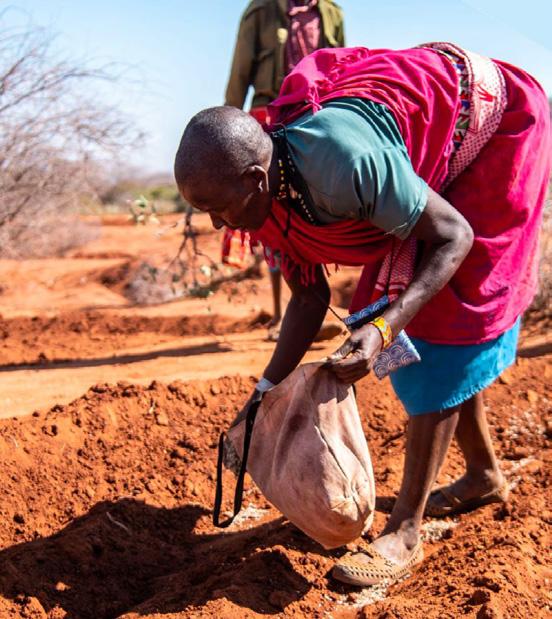
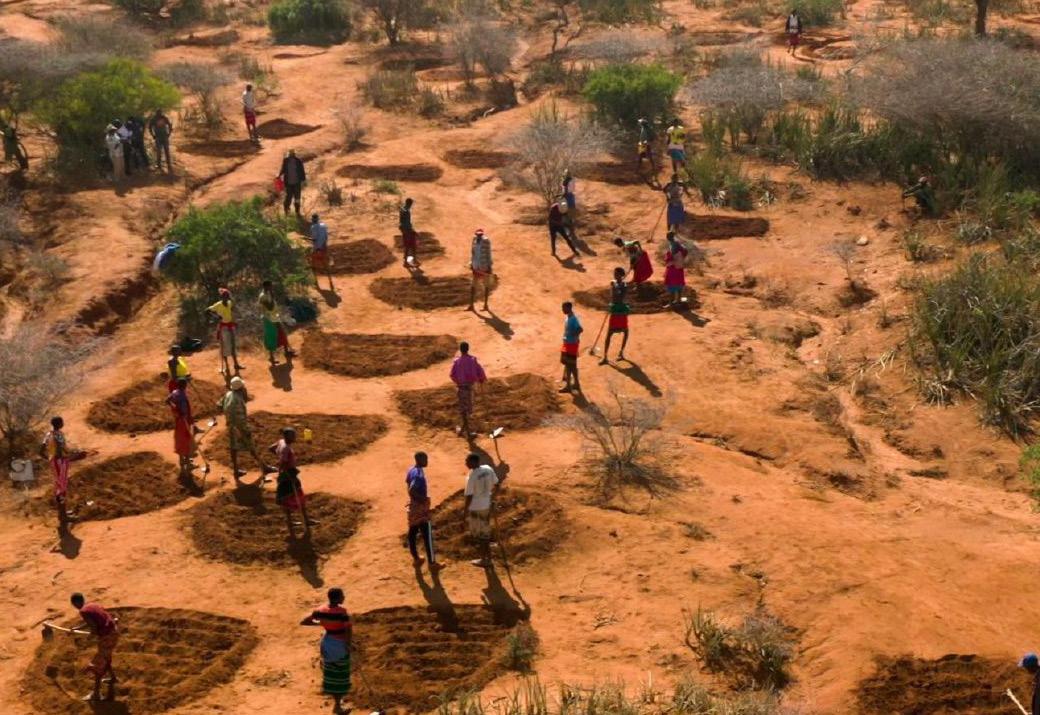
Ecosystem Diversity: Rangeland restoration through reseeding degraded lands, controlling invasive species (e.g., Opuntia), and establishing seasonal grazing plans. Watershed restoration through agroforestry in riparian zones.
Genetic Diversity: Introducing drought-tolerant and early maturing crop varieties, along with improved indigenous livestock breeds.
Species Diversity: Establishing 12 nurseries, propagating indigenous and drought-tolerant species.
FOOD SYSTEM ENTRY POINTS
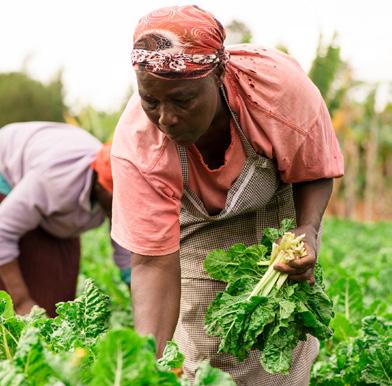
Scaling biodiversity-positive agricultural practices: Conservation agriculture, integrated pest management, and agroforestry. Promoting water harvesting, efficient irrigation, and sustainable land management.
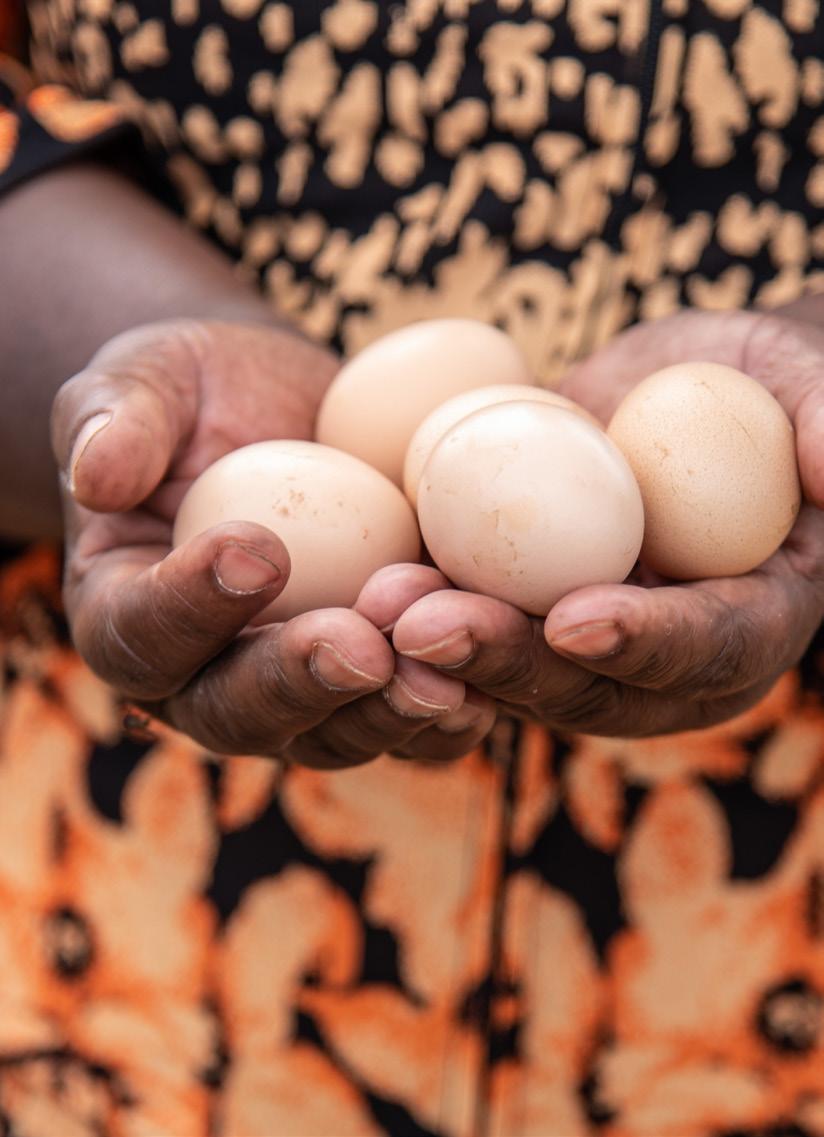
Markets: Enterprise diversification into poultry, vegetable production, and apiculture to reduce over-reliance on livestock. Strengthening market linkages to connect farmers with input suppliers and output markets, with community enterprises developing innovations such as hydroponic fodder that lowered feed costs by 40%.
Governance and Policy: Developing county-level rangeland management policies and climate change acts in all three counties, integrating community-led structures including grazing committees and Water Resource User Associations (WRUAs), supported by formal memoranda of understanding and budget allocations.
Enabling Conditions and Innovations
Enabling conditions were strengthened to allow the WEF Nexus to deliver impact in practice. Innovations in technology, knowledge systems, financial inclusion, and social equity were combined to provide the foundations for communities to adopt and sustain biodiversity- and food-system solutions.
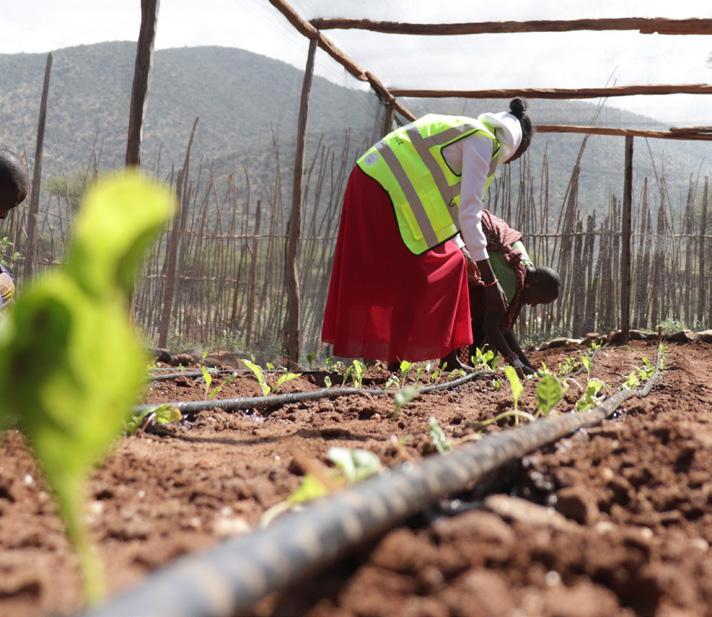
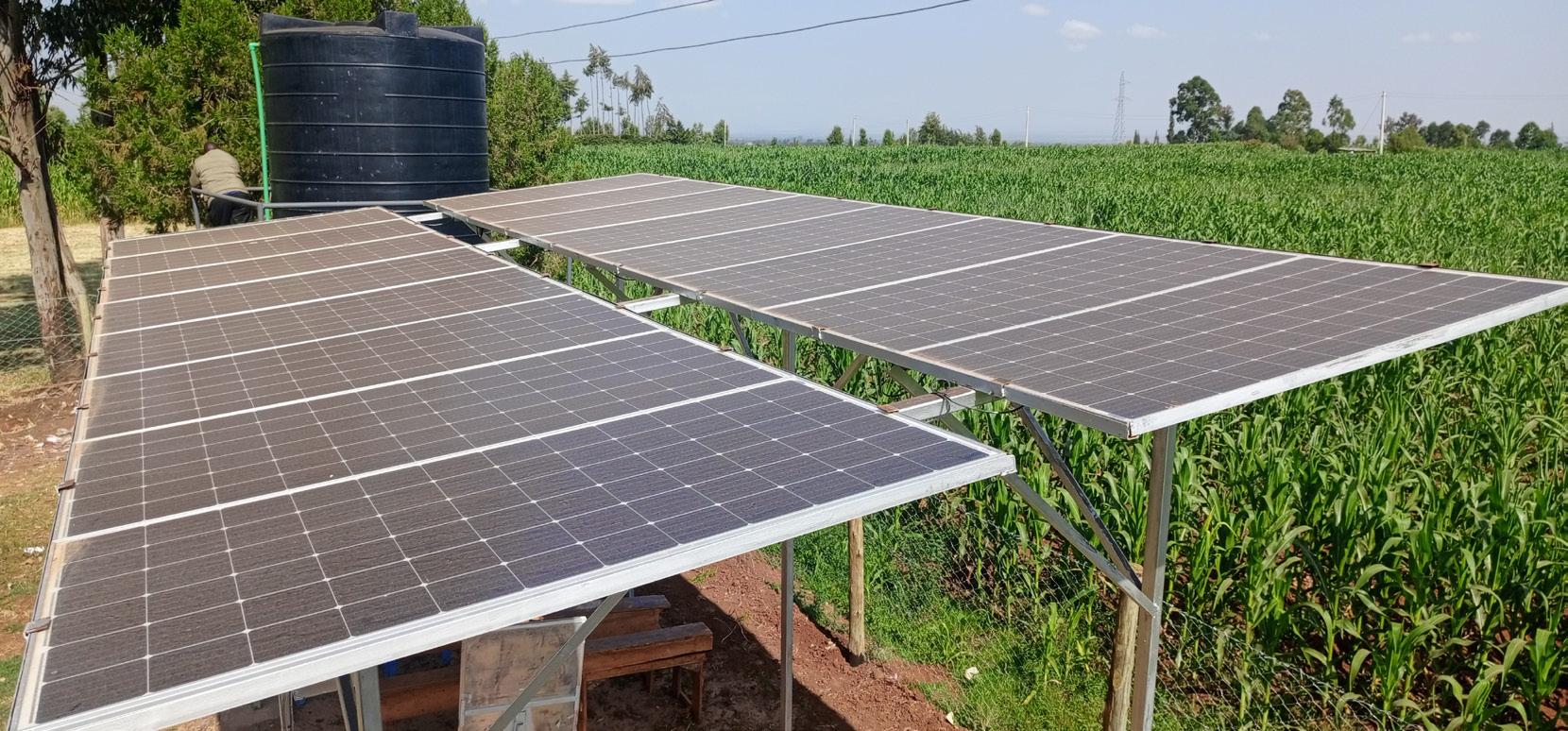
y Solar-powered irrigation, small-scale flood barriers, hydroponic fodder systems, and digital monitoring tools were introduced and tested through farmer training and demonstration plots, with private companies engaged via results-based financing models.
y Climate advisories and early warnings, delivered in partnership with national meteorological services, reached nearly 490,000
“One of the biggest impacts of water–energy–food nexus programming has been the internal shift in understanding how powerful these linkages can be. It’s changing the way we plan and work on the ground.”-SNV Kenya
Multi-Stakeholder Partnership Structure
Through the WEF Nexus, LISTEN established a multi-stakeholder architecture that linked sectors and actors across three levels of governance. At the national and county level, governments and assemblies adopted climate change acts and integrated climate priorities into budgets, creating a policy and financial framework for restoration.
At the landscape level, water resource associations developed sub-catchment management plans that covered more than 20,000 hectares and involved over 6,000 households, while also coordinating grazing arrangements across administrative and ecological boundaries.
At the community level, more than 100 climate and grazing committees, together with Village Savings and Loan Associations (VSLAs), managed day-to-day resource use, revived traditional rangeland systems, and strengthened household resilience. These institutions enabled communities to work collectively at site level while also improving sustainable management at a broader landscape scale.
people daily through community radio stations such as Ujuzi Radio, Radio Ashe, and Radio Angaff, while county learning platforms enabled technical exchange across institutions.
y Eight VSLAs rotated small monthly contributions and payouts, giving households access to credit to diversify into poultry, vegetable production, and restoration-linked enterprises such as tree nurseries and grass harvesting.
y Women and youth were actively involved in these initiatives, with more than 10,000 directly engaged in irrigation and rangeland management activities.
Measuring Change and Impact
The project employed a comprehensive monitoring approach focusing on system-level outcomes rather than simple input metrics:
y Biodiversity: Drones and satellites were used to track rangeland regeneration across 198 hectares and survival rates of planted species in 12 tree nurseries, with riparian restoration documented through bamboo and napier grass.
y Food Production Assessment: Tracked adoption of improved seeds showing 25-50% yield increases above local varieties, monitored conservation agriculture adoption by 15,596 farmers, and documented livelihood diversification into poultry and vegetable production.
y Water Resource Management: Measured improved access through infrastructure like the Sanga sand dam (6,600m³ capacity serving 1,000 households, 10,000 livestock units, and wildlife), and assessed WRUA functionality through membership growth and conflict reduction.
y Institutional and Social Change: Monitored integration of WEF Nexus principles into county plans, tracked functionality of nine ward committees, and measured participation changes in community governance structures. Assessed VSLA membership growth and savings mobilization as indicators of economic empowerment.
y Landscape-Scale Impact: Documented 193 hectares under sustainable land management practices and tracked reduced resource-based conflicts through community-reported incident data.
Learning and Insights
LEARNINGS
Overcoming challenges: The project showed how conflict resolution can underpin rangeland management. In Garbatulla, participatory grazing plans covering 158,477 hectares strengthened local committees. While in Samburu, upstream–downstream tensions were reduced through tripartite agreements between WRUAs, county governments, and the Water Resource Authority.
Social and technical barriers: New enterprises such as poultry initially met cultural resistance, but demand grew once the economic benefits were clear, with chicken prices doubling. High upfront costs for solar pumps and limited access to certified seeds were eased through results-based financing and partnerships with suppliers, leading to 60% adoption of solar technologies and a 30% reduction in post-harvest losses.
Insecurity and resource conflict disrupted uptake, reinforcing that peace is a prerequisite for technology adoption. Coordination across three counties with different policies and cultures also demanded continuous negotiation.
Planning Intentional Investments in Social Change: Planning intentional investments in social change: Balancing land-use trade-offs between grazing, cropping, and conservation created tensions, as did managing water allocation between upstream and downstream users.
Efforts to increase women’s and youth participation at times challenged traditional gender roles. Responding to the complexity of social change required substantially greater investment in peacebuilding, social behaviour change, and communication than originally anticipated.
SUSTAINABILITY AND FUTURE OUTLOOK
The WEF Nexus approach has laid strong institutional and financial foundations for longterm impact. County Climate Change Acts now mandate dedicated climate budget allocations, ensuring that climate priorities remain embedded in county development planning. Integration with national programmes such as Financing Locally Led Climate Action (FLLoCA) provides sustained public funding streams beyond project timelines.
County officials continue actively adopting the Nexus, with Laikipia focusing on water management and resilience programmes, Samburu implementing comprehensive water policy frameworks, and Isiolo integrating WEF principles into water strategy while supporting the RANGE and Food System Resilience projects.
Financial sustainability was also tested through six business cases developed under LISTEN. Together they show how Nexus-linked enterprises can reduce costs, diversify household incomes, and remain commercially viable through established market linkages.
KEY INSIGHTS
Water acted as a critical lever, anchoring the WEF Nexus in practice by linking food production, energy use, and biodiversity in ways communities could engage with.
“Without peace, you cannot adopt technologies - peace and conflict resolution must be explicitly integrated into programming, not assumed to be handled.
“We need to change our attitude while talking to the government and development partners” creating conducive environments for technology adoption requires systemic transformation of development approaches.
“One of the biggest challenges was the dynamics between the counties”multi-jurisdictional coordination requires navigating different policies and political dynamics across administrative boundaries.
Visual evidence through drones and satellites proves ecosystem recovery to communities - “seeing is believing” when it comes to rangeland restoration success.
SCALING OPPORTUNITIES
Institutional policy frameworks and proven enterprise models have laid the foundations for scaling the WEF Nexus approach across Kenya’s ASALs and beyond. The principles can be replicated in other national and county development plans but need to be adapted to diverse governance and ecological contexts in other ASAL counties and the Horn of Africa. It also requires sustained finance and commitment to multi-stakeholder coordination.
Partnerships with agribusiness, fintech, and renewable energy providers can expand sustainable enterprises, while scaling alternative livelihoods can help relieve pressure on rangelands. Sharing knowledge through Kenyan and international platforms can continue to extend learning beyond the original pilot counties.
Biodiversity–Food System Use Cases



Rangelands cover more than half of Earth’s land surface and provide essential ecosystem services to both wildlife and 1-2 billion people. With 2026 designated the International Year of Rangelands and Pastoralists, there is an opportunity to elevate local innovations into global policy debates. Doing so requires continued government leadership on climate finance and coordination, private sector investment in green technologies and markets, and research partnerships to refine monitoring and co-develop context-specific solutions.
Peacebuilding organizations are critical to integrate conflict resolution, while development partners can provide longterm finance and technical assistance to shift from project to programmatic approaches.