Dutch Climate Research Initiative (KIN)
Global Transitions
Lizanne Schepers: l.schepers@nwo.nl
We observe…
Why KIN
We need…
We know the effects of climate change but the transition is moving too slow
A different way to do science
• Societal challenge as a starting point
• Transdisciplinar y cocreation
This requires… Knowledge collaboration that leads to action Goal
• Knowledge exchange
A different way to finance science
• New processes and methods
Examples of KIN activities
Grants
• Knowledge-in-action grant (e.g. Mozambique)
• Network grant
• Transformative Practices and Processes for Climate Transitions
Projects
• Bonaire: developing a knowledge agenda for the climate plan of Bonaire (together with IPDC and WWF)
• Transition pathways: assignment for the Ministry of Infrastructure and Water as input for the National Adaptation Strategy
• …
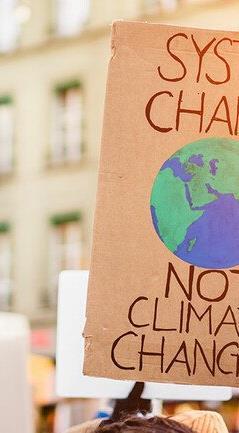
What is needed
Which knowledge gaps or other barriers hinder the application of knowledge in the Global South?
• Central-decentral
• Agenda requires urgent action on different topics
• Differences in lived reality
My dream partnership…
• Is led by local actors
• Is transdisciplinary
• Values different kinds of knowledge
• Pays attention to the collaboration process
• Creates a learning culture
Thank you
Questions? Please do reach out! Lizanne Schepers: l.schepers@nwo.nl
CO-CREATING KNOWLEDGE∞ACTION NETWORKS
Climares is a consortium of 7 African, 7 Dutch universities and societal partners that works with dozens of researchers and actors in DRC, Mozambique, Morocco, Senegal and Uganda to investigate and address climate threats for at-risk populations in a range of governance and socioeconomic contexts in these countries.


Carolien Jacobs, Leiden University, academic coordinator Climares
How do we aim to generate knowledge that is useful for our countries of focus?
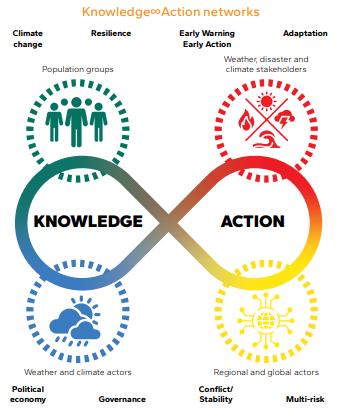
We work with different population groups1 to make data actionable to enhance resilience:
• Share climate-related issues and problems
• Often organized in community-based organizations or advocacy groups
• Similar climate service needs for early warning/ climate projections
• Surrounded by sets of stakeholders that can support early action/ adaptation activities
1 Fisherfolk, smallholders, urban precarious workers, pastoralists, displaced people
Which knowledge gaps or other barriers hinder application of knowledge in the Global South?
- Weather and climate data are becoming increasingly available
But:
- Limited institutional adaptation responses
- Access to data often disconnected from local, on the ground decision-making needs
- Context-specific dimensions of climate impacts often not incorporated in governance responses (overlooking community knowledge and local resilience strategies)
- Local adaptation not linked to global responses to achieve climate justice
Our dream partnerships…
Our dream partnerships…
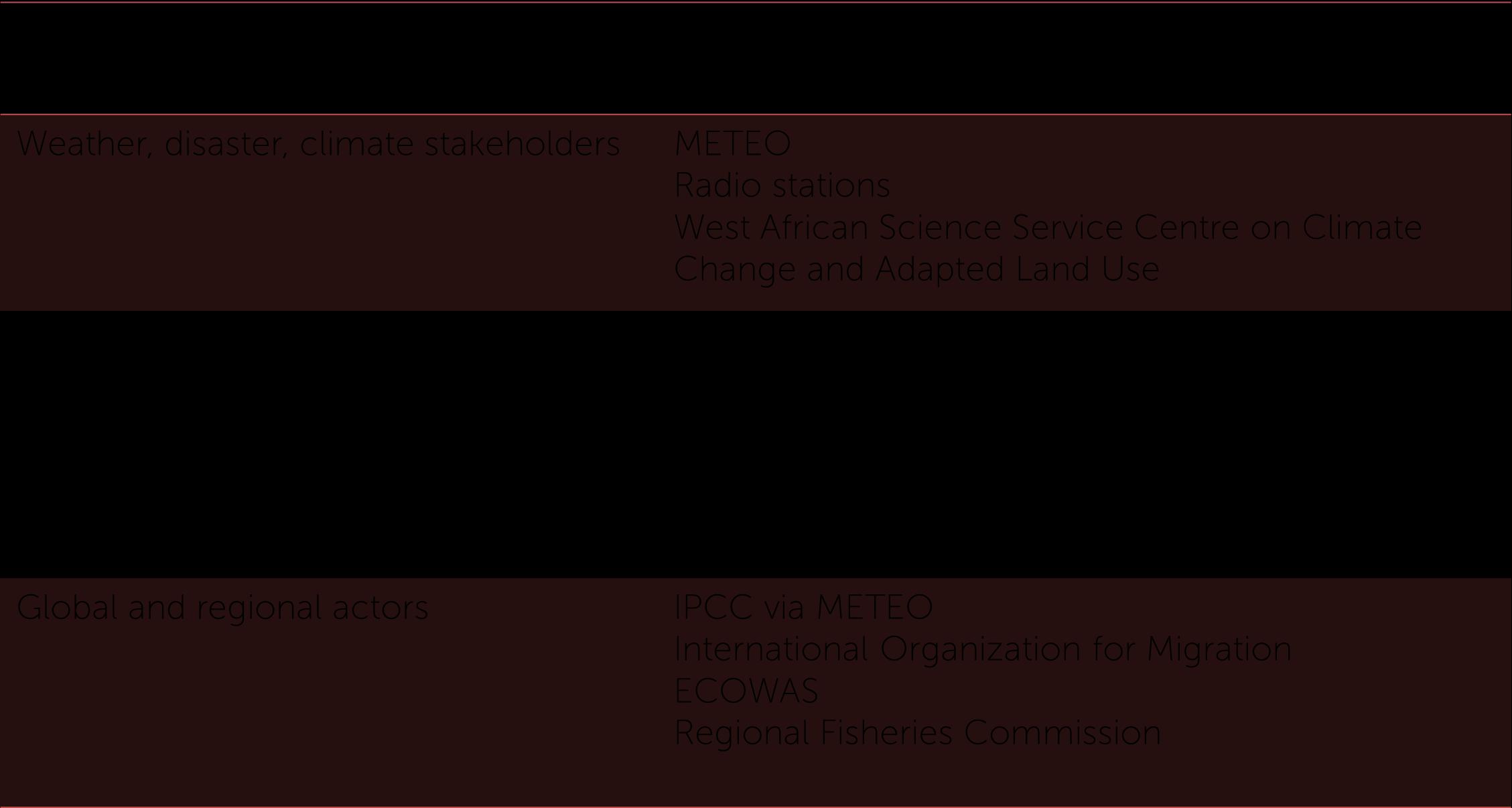
K∞A Networks: example Senegal fisherfolks




















Climate policy pathways & partnerships
Knowledge & Science session – Nederland Klimaatpartner: Mobiliseren voor Klimaatactie
Stephanie Solf, Anteneh G. Dagnachew, Mark Dekker & IMAGE team
International
climate policy & energy research
• MD sector @PBL: Climate Policy, Biodiversity Policy, Nexus, NL in international context
• IMAGE model: assess interactions of human, energy and land system in climate scenarios → emission reduction potential, mitigation burden, costs
• IAM science community remains Global-North centric – few initiatives include perspectives/capacities from developing regions on projections and non-modelling issues
Global emission reduction potential
• Rapid and significant decline in emissions from all sectors is required to achieve Paris goals, alongside enhancement of GHG sinks
• Most emission decline in 1.5-degree happen as a combination of electrification, efficiency improvement, afforestation & reforestation
• Inclusion of national perspectives: Selection/translation of Current Policies is done in coordination with national experts to select high-impact policies
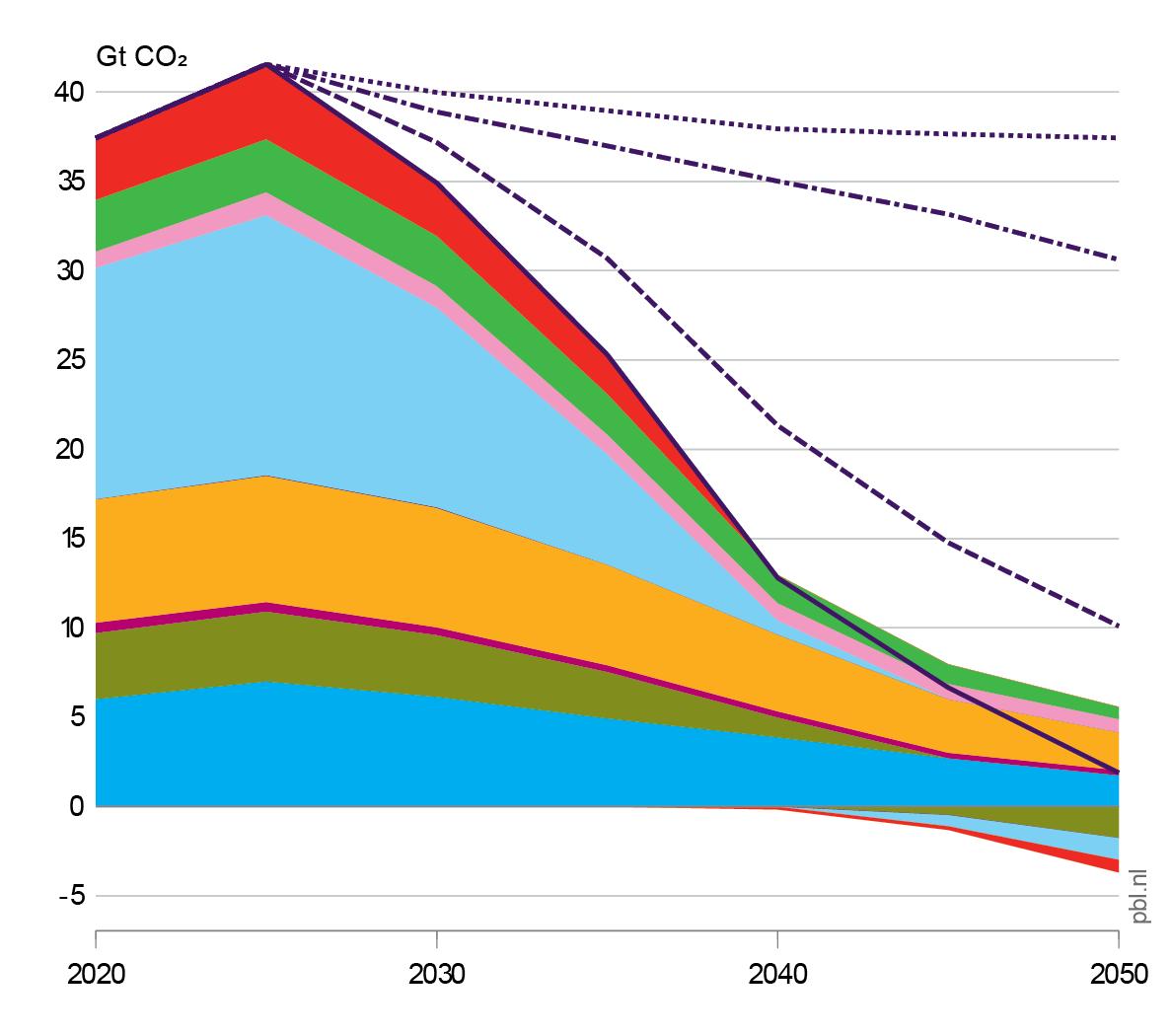
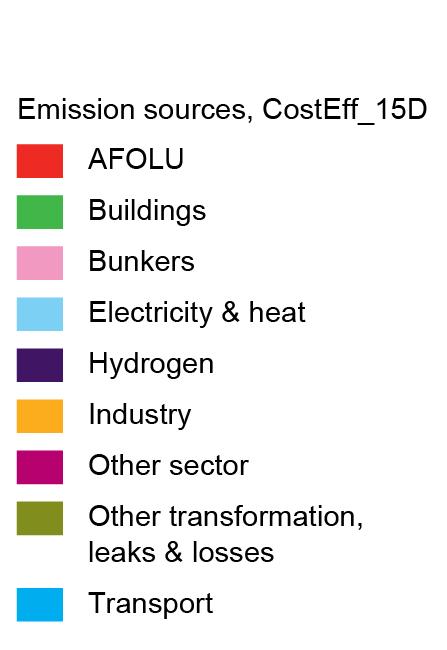
Figure: Sectoral CO2 emissions in the CostEff_15D scenario and
scenarios
Policy cost gap
- Difference between accumulated policy costs of Extended Current Policies and 1.5degree scenario: over USD 50 trillion by 2050 and USD 340 trillion by 2100
- → $2 trillion p.a. (1,1% of AA GDP) / NQCG: $1.3 trillion p.a. by 2035
- Costs vary by region, with North America and Europe facing most costs under Extended NDCs; East and South Asia, and Sub-Saharan Africa have largest cost requirements in cost-effective scenarios
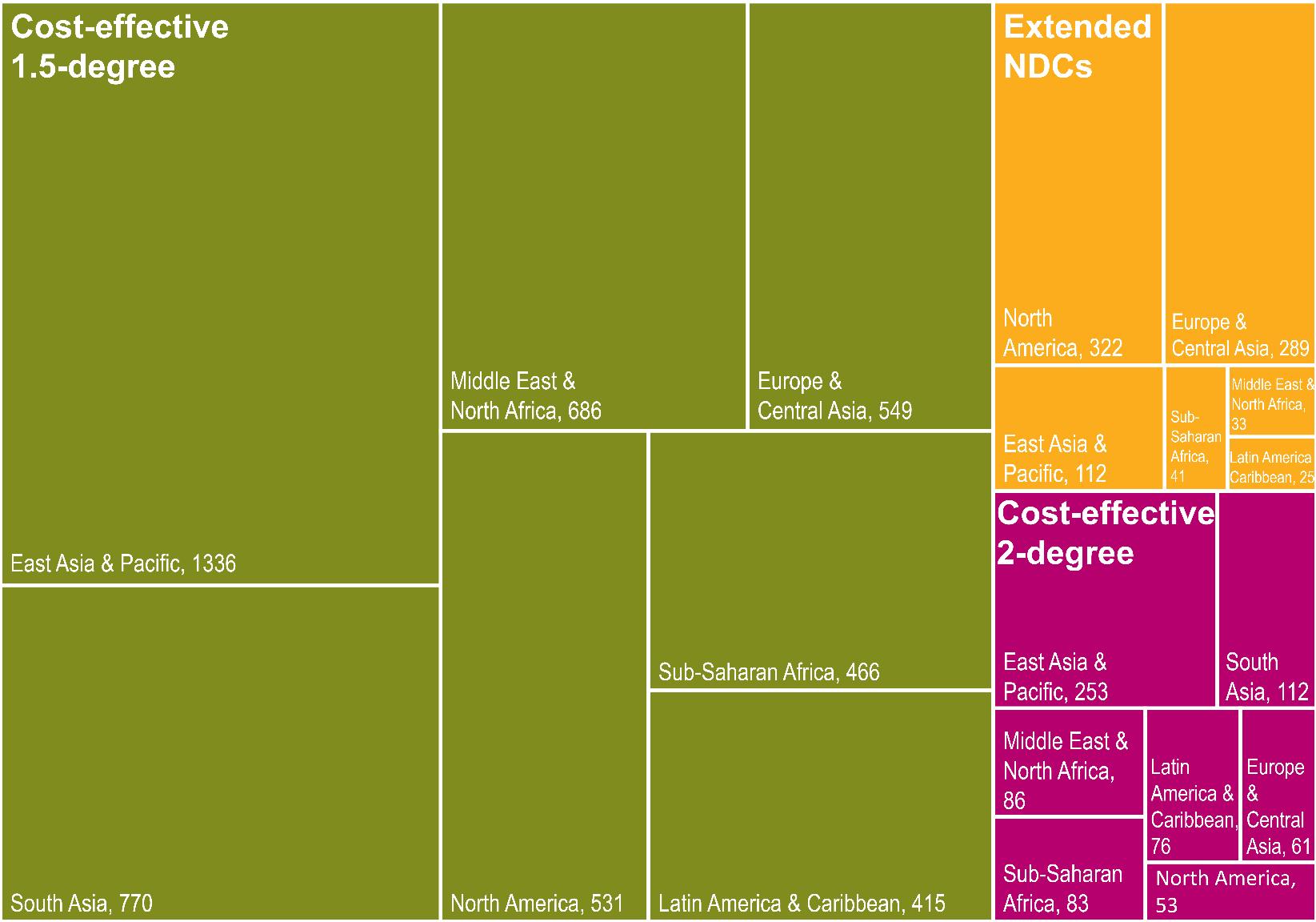
Figure: Cumulative regional policy costs in 2050
Investing in enabling conditions
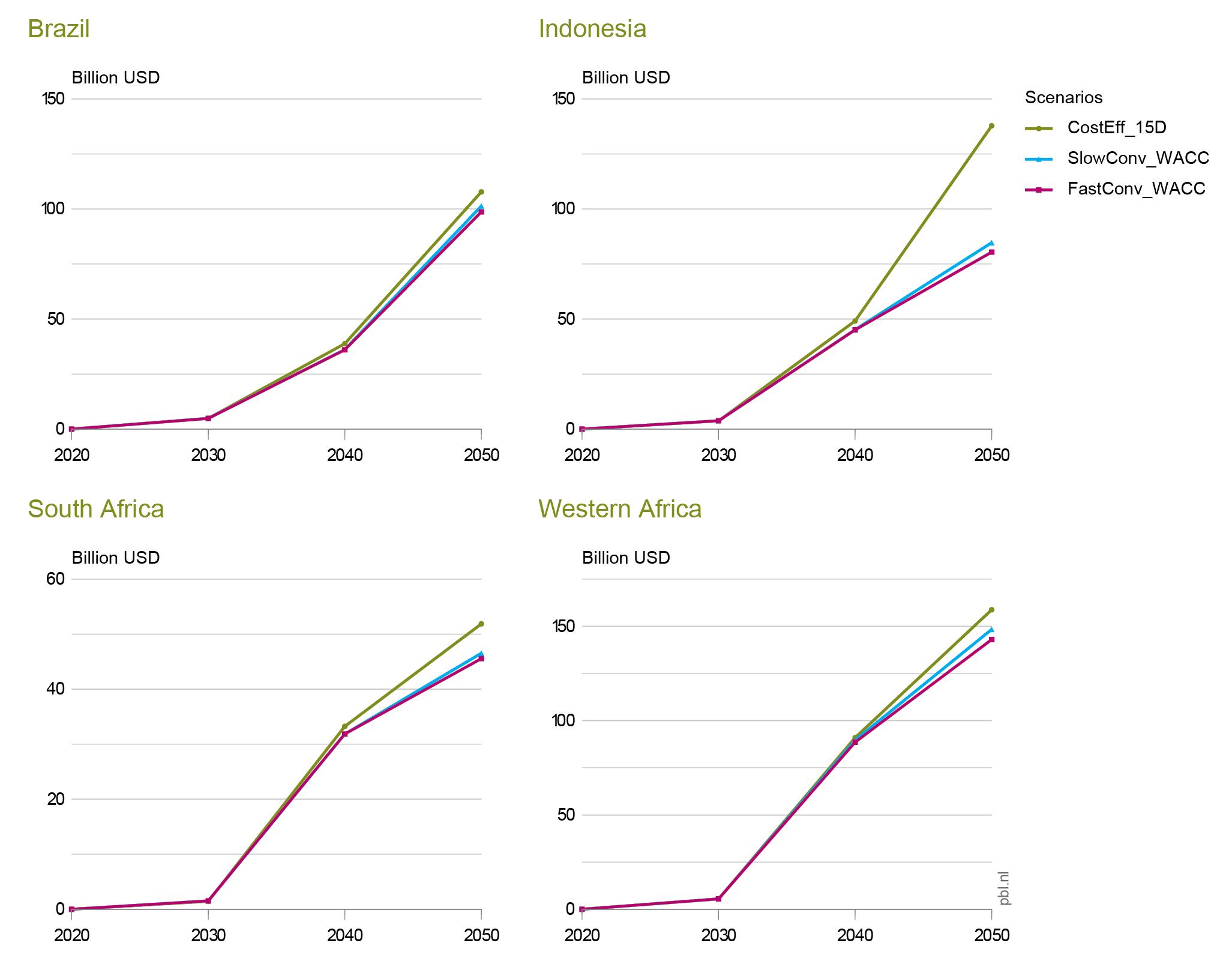
• Significantly higher WACC in LMICs than in developed economies, making capitalintensive, low-operating-cost technologies more expensive
• Rapidly converging WACC reduce financing costs, accelerating renewable energy deployment
• Brazil and Western Africa show significant growth in renewables, Indonesia in wind energy, South Africa in biomass and nuclear energy
• Stronger analysis of different investment conditions through national and international measures, like guarantees from richer countries or financial institutions
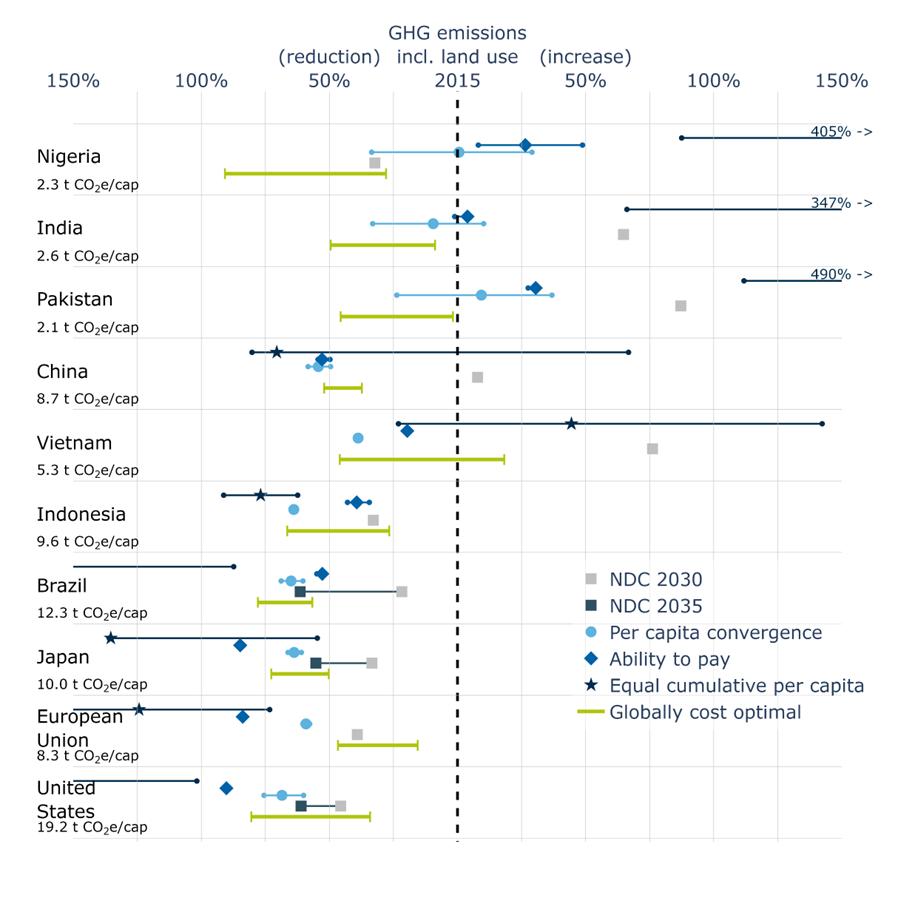
Fairness consideration in NDC targets & implications for financial transfers
• Difference between cost-optimal and equity-based targets can imply financial transfers to reach global targets
• Design and normative assumptions of equity principles matter substantially
• Interaction with Asian national teams on emission peaking plans, historical starting year, development paths & feasibility
• Gap in IAMs/energy-economic modelling requires more interdisciplinary collaboration & representation with Global South partners
• Joint consideration of L&D impacts and mitigation burden will be essential for financial mechanisms
Technology partnerships – the case of green hydrogen
Technology
• Electricity plays the most important role, next to efficiency
• A considerable increase in hydrogen in climate mitigation scenarios and specific technology & demand pushes
Localization
• Equitable partnerships and investments that foster technological transfer and knowledge sharing
• Potential of hydrogen economies in Africa focusing on whole supply chains
• Current JET case study looking at HIVE project stakeholder
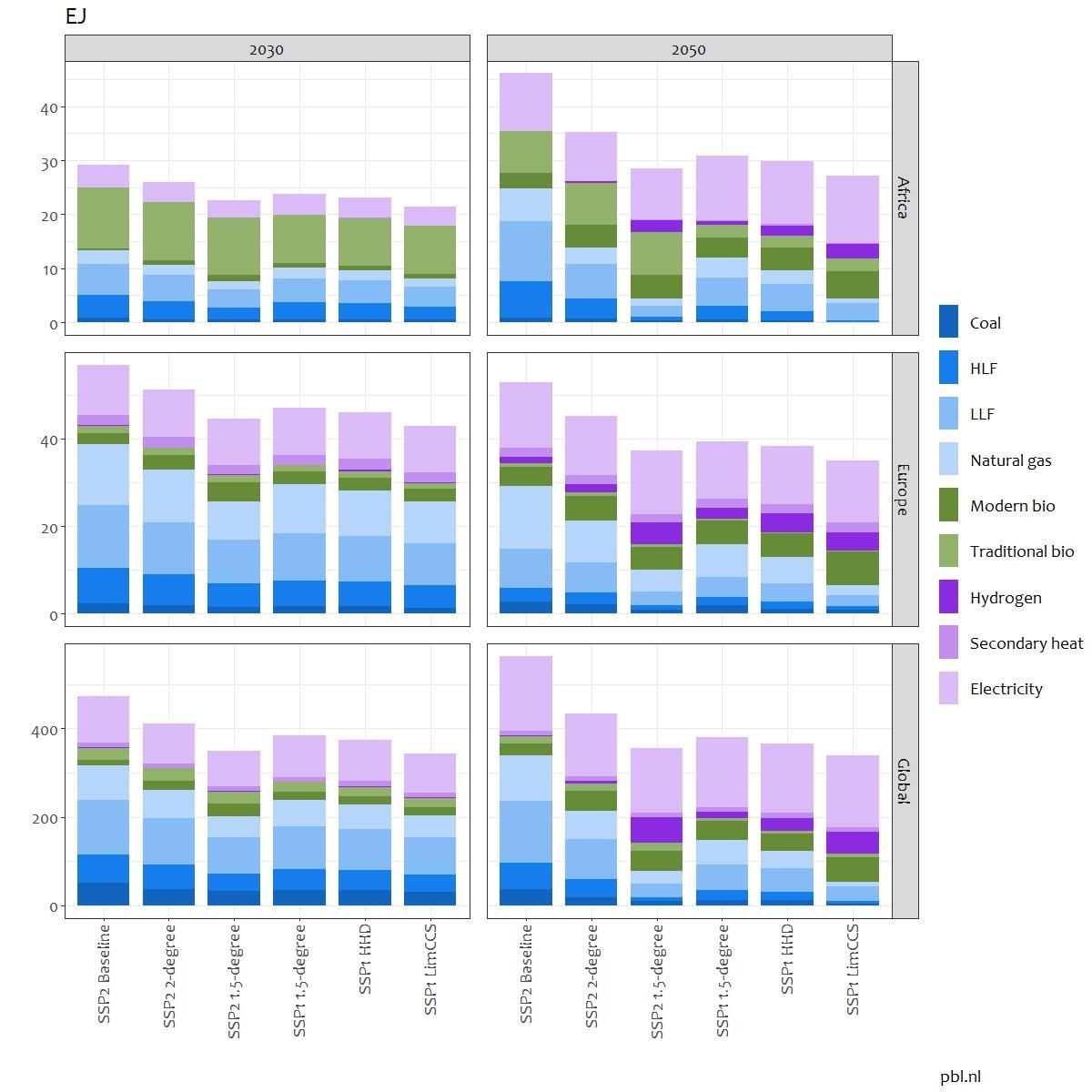
Figure: Final energy demand
Opportunities, barriers & visions…
• Global scenarios that display socio-economic and climate pathways and analyse regionally/nationally responsibilities and capacities
• Explore opportunities/potential of regional energy transition
Dream partnership
+ clear regional/country focus is set
+ continuous interaction with policy actors
• Contextualization of scenario output
• Too broad knowledge dissemination, language issues between science and policy experts & civil society actors
+ national-global model development/exchange is fostered
+ uncover implicit assumptions
NEDERLAND KLIMAATPARTNER: MOBILISEREN
VOOR
KLIMAATACTIE
The Hague | 28 May, 2026
Wiebe Smit

Introducing Clim-Eat
Netherlands-based ‘Think and Do Tank’
• Bridging science and policy for impact
• Bridging food systems and climate change
• Bridging local, to national, to global
Operating in three regions globally (Eastern and Southern Africa, Southeast Asia, and Latin America)

Identifying a ‘niche’, providing advocacy and support to guide implementation
Global advocacy and national pilots

Generating knowledge useful for LMICs and incorporating knowledge from the Global South
Generating knowledge
• Horizon scanning innovations - Bold bets for the future of food Systems (FST dashboard)
• Agricultural insurance in Kenya - Lesson learning to boost climate resilience
• DCAS in Rwanda - Digital extension to boost yields
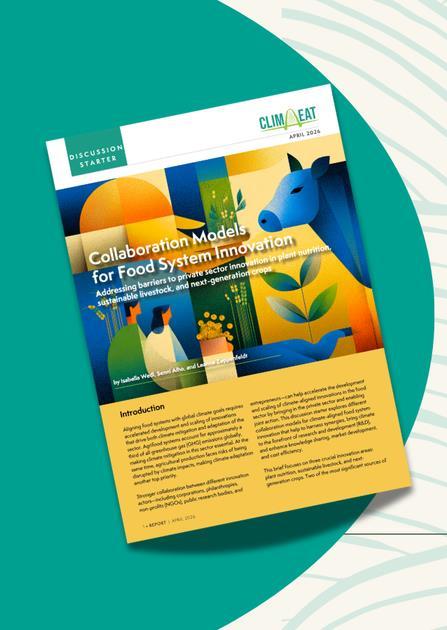
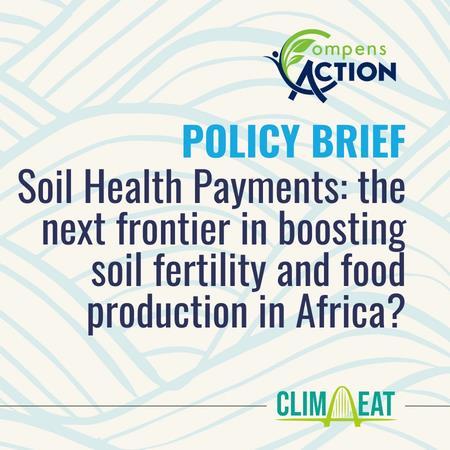
• Developing policy briefs and reports to inform countries
Incorporating existing knowledge
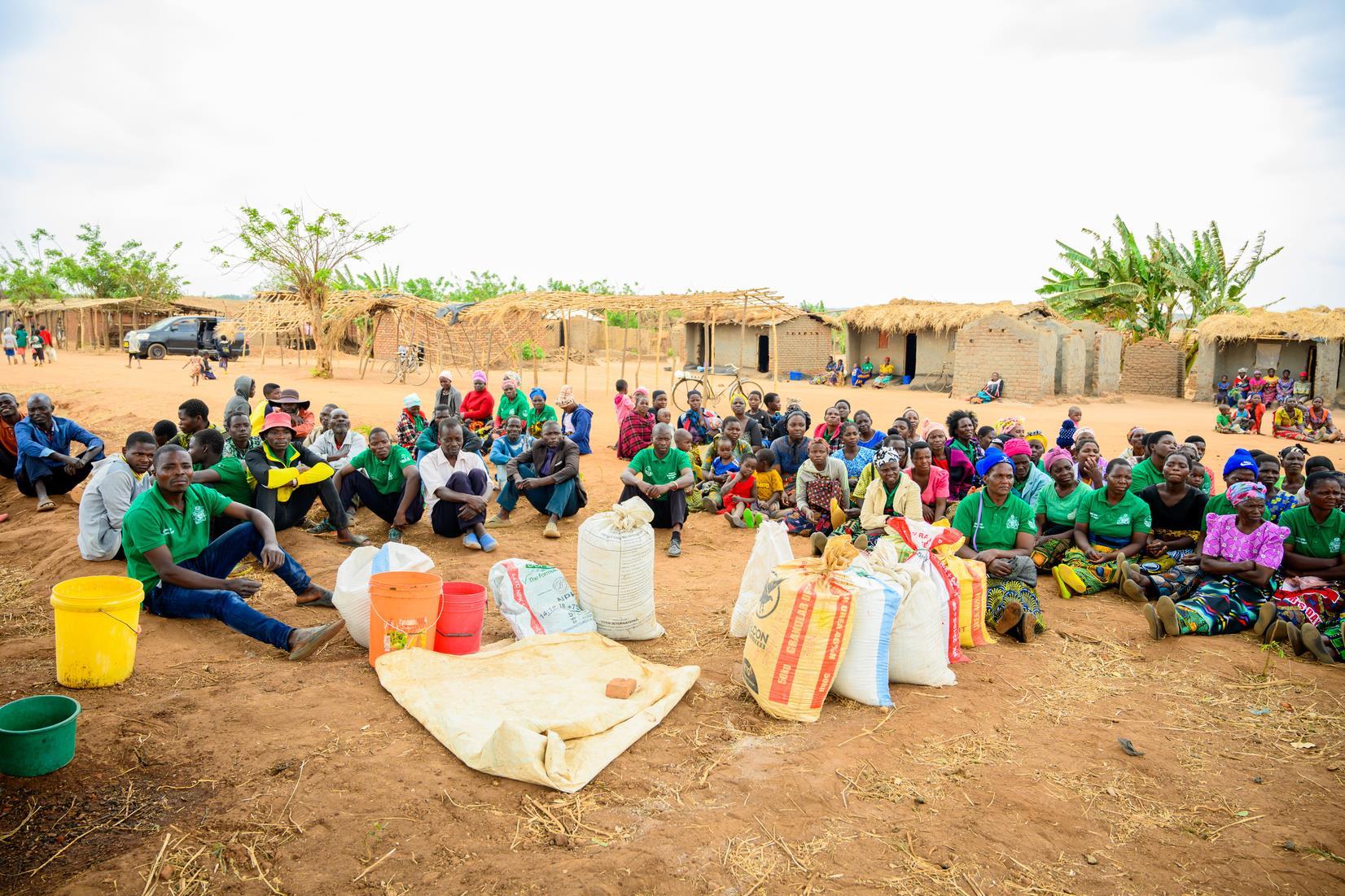
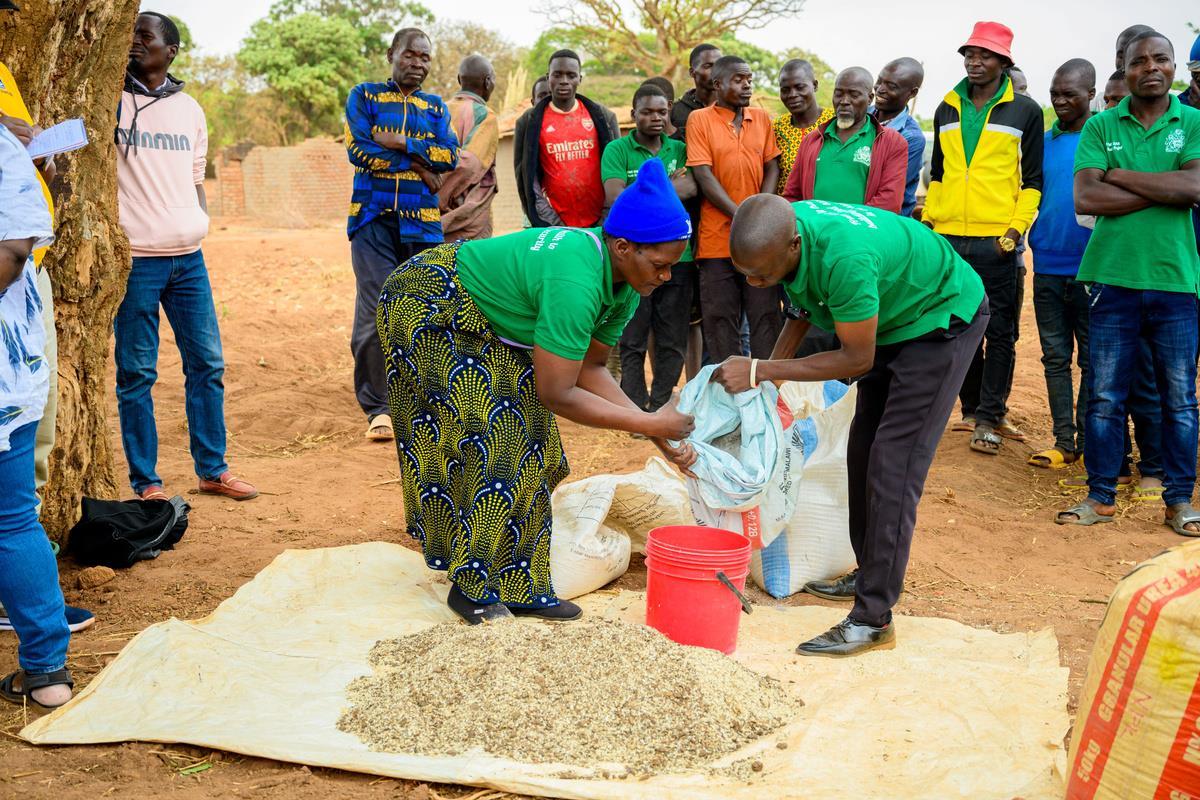
• Repurposing subsidies in Malawi - Organic/Inorganic fertiliser mixtures (farmer-led innovation)
• Voices for Just Rural Transition in Brazil, Indonesia, the Philippines and Tanzania - Civil Society inclusion
SOME OF OUR POLICY BRIEFS AND REPORTS
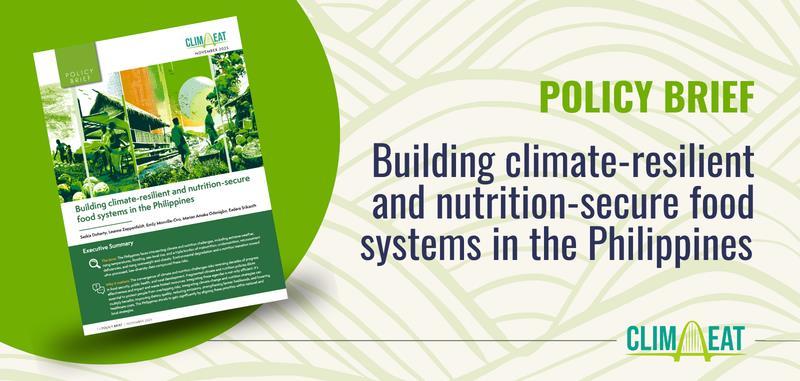
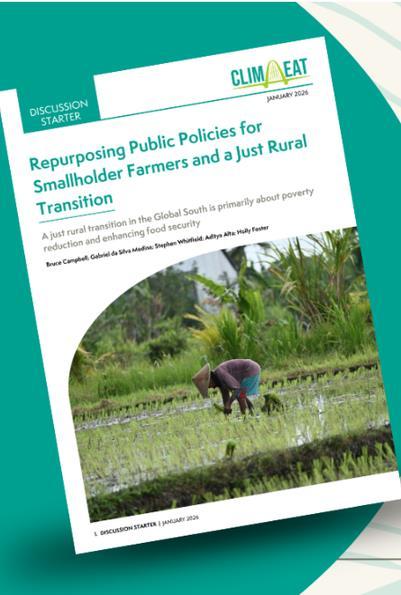

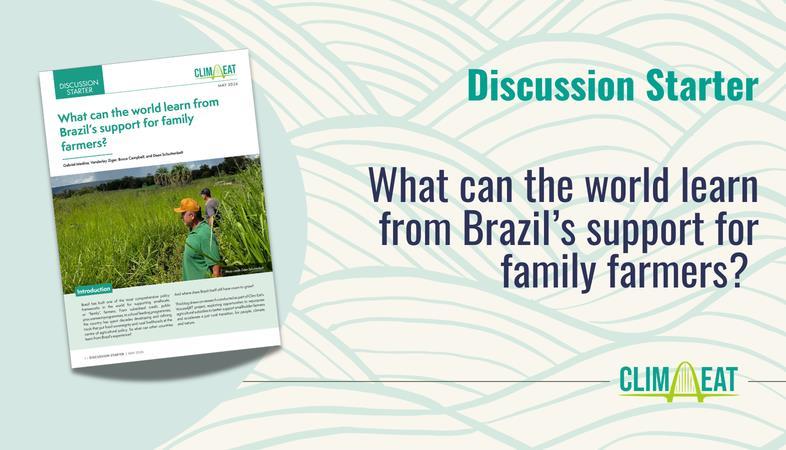
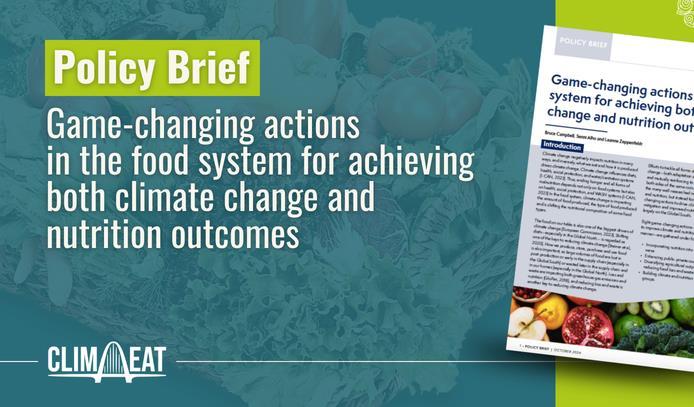
Knowledge gaps or barriers hindering the application of knowledge in the Global South
Knowledge gaps and barriers
• Translating policies (thinking) into action (doing)
⚬ Lack of clear and tangible pathways to action
• Knowledge is often context-heavy - challenge of ‘scaling’ knowledge
• Top-down thinking still exists
• Bureaucracy is still a barrier to effective knowledge application
Potential solutions & workarounds
• ‘Application partners’ for policy and knowledge development & implementation
• Better inclusion of indigenous knowledge - local consultations
• Good understanding of mandates and priorities to enable action
An effective partnership could be one in which...
1. The emphasis is on action
2. Local/indigenous knowledge is included
3. Partners with a mandate for implementation are included from the inception phase
4. A scaling partner is included
Knowledge partner
• Academia
• NGOs • Embassies
THANK YOU!