Forgotten Fisheries
SHELLS, WOMEN AND THE FISHERIES NO ONE WAS COUNTING
Forgotten Fisheries SHELLS, WOMEN
AND THE FISHER -
IES NO ONE WAS COUNTING
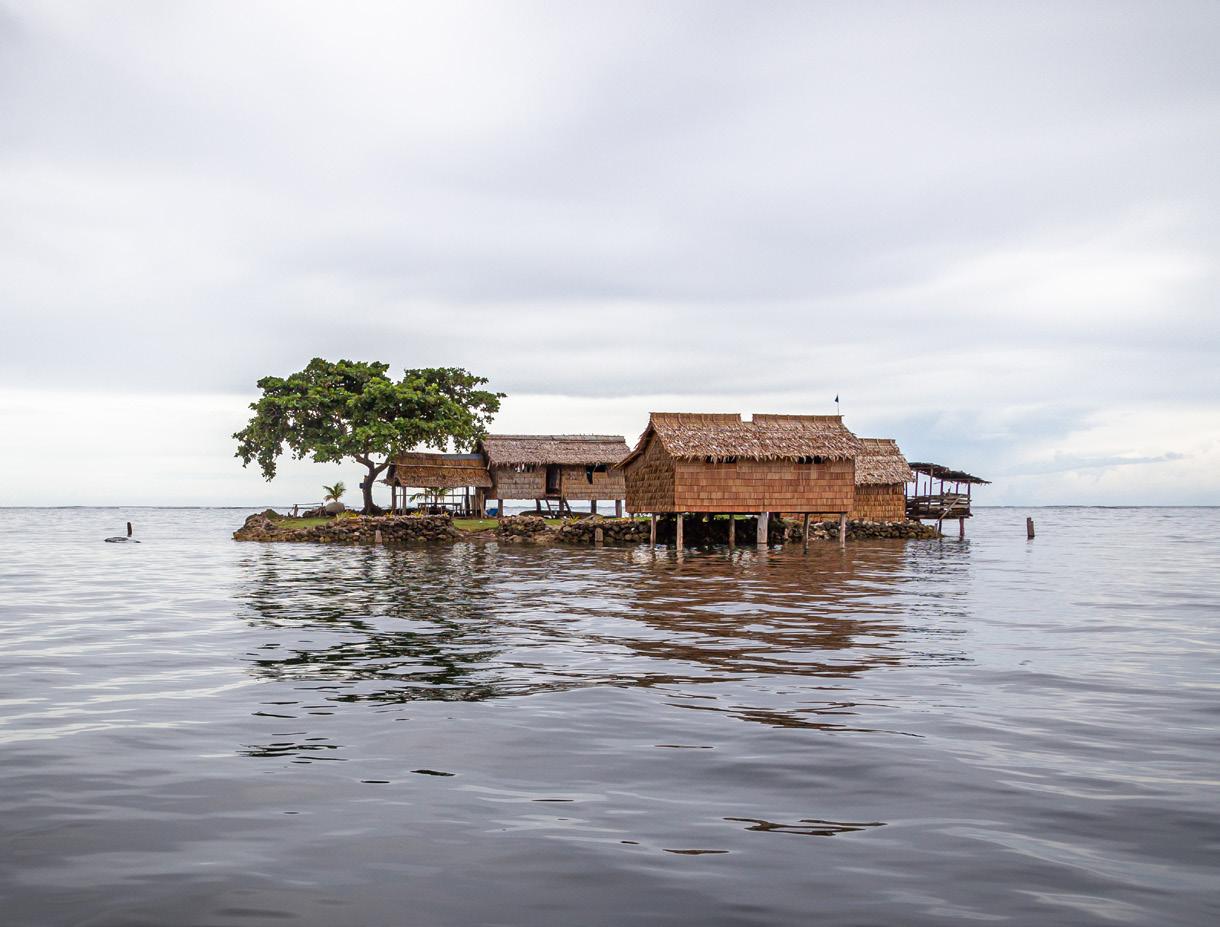
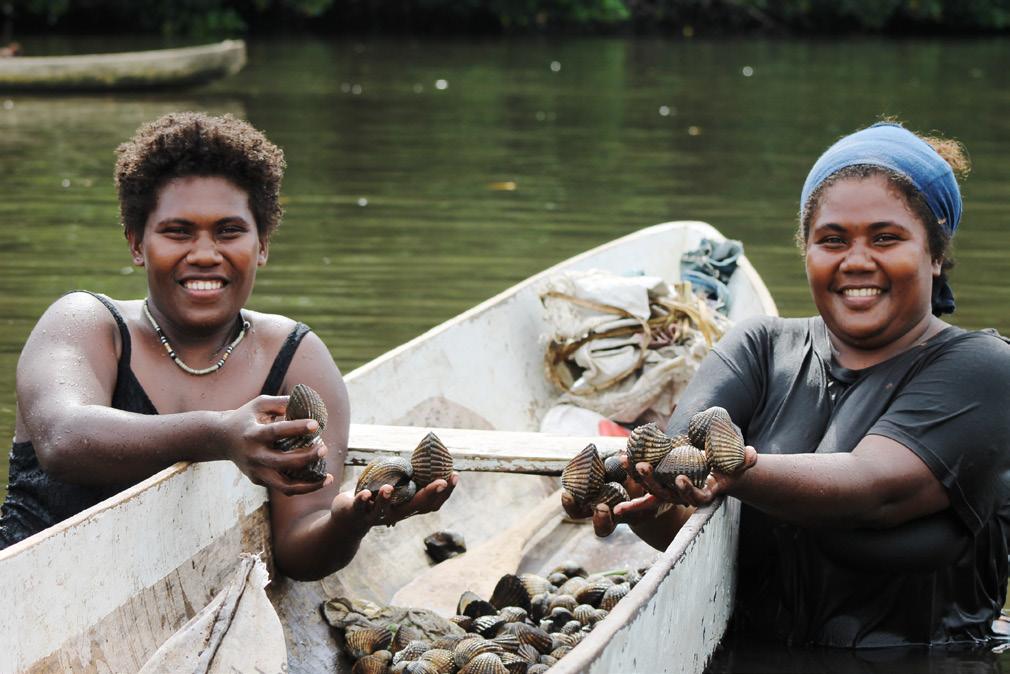
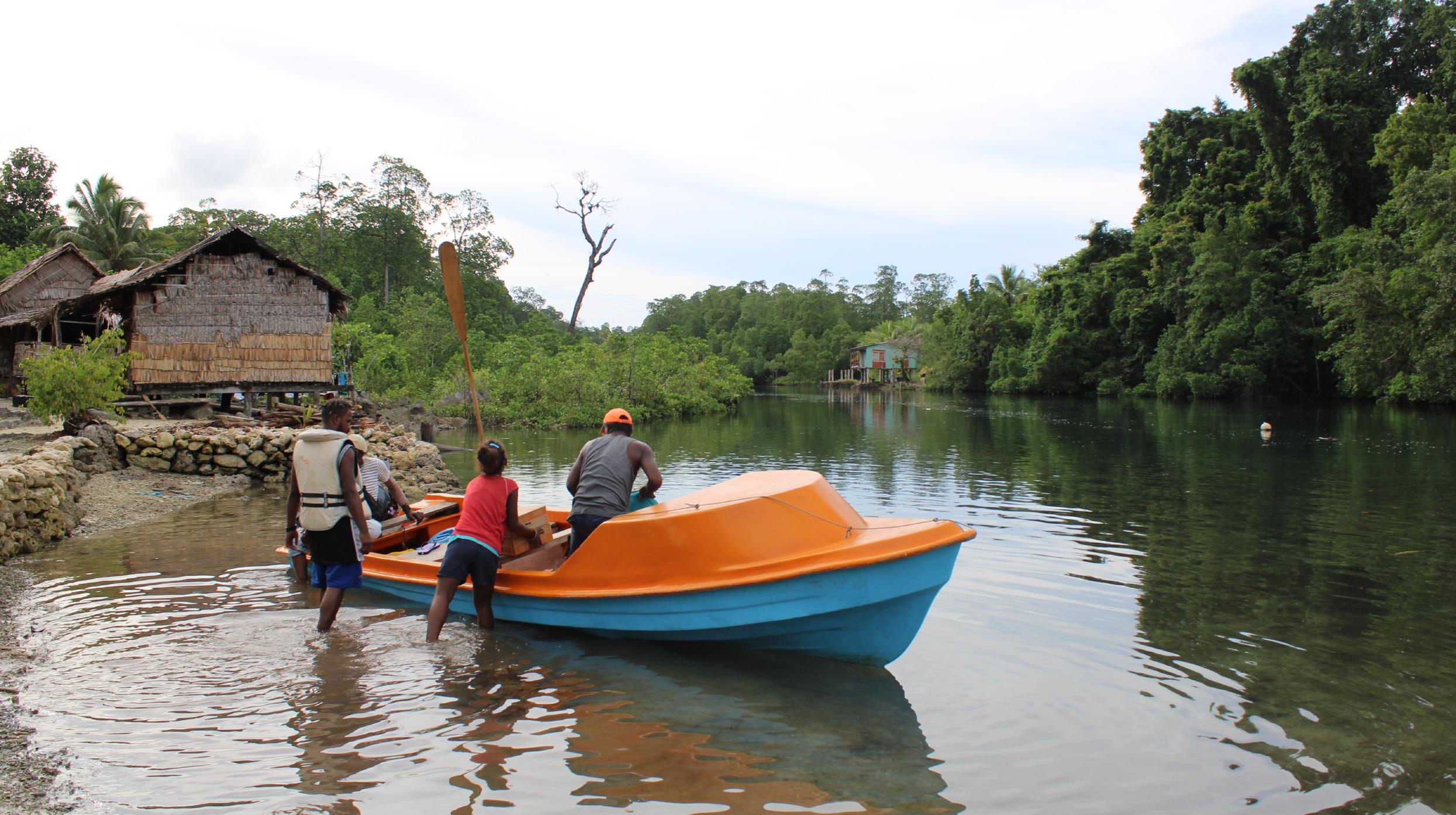
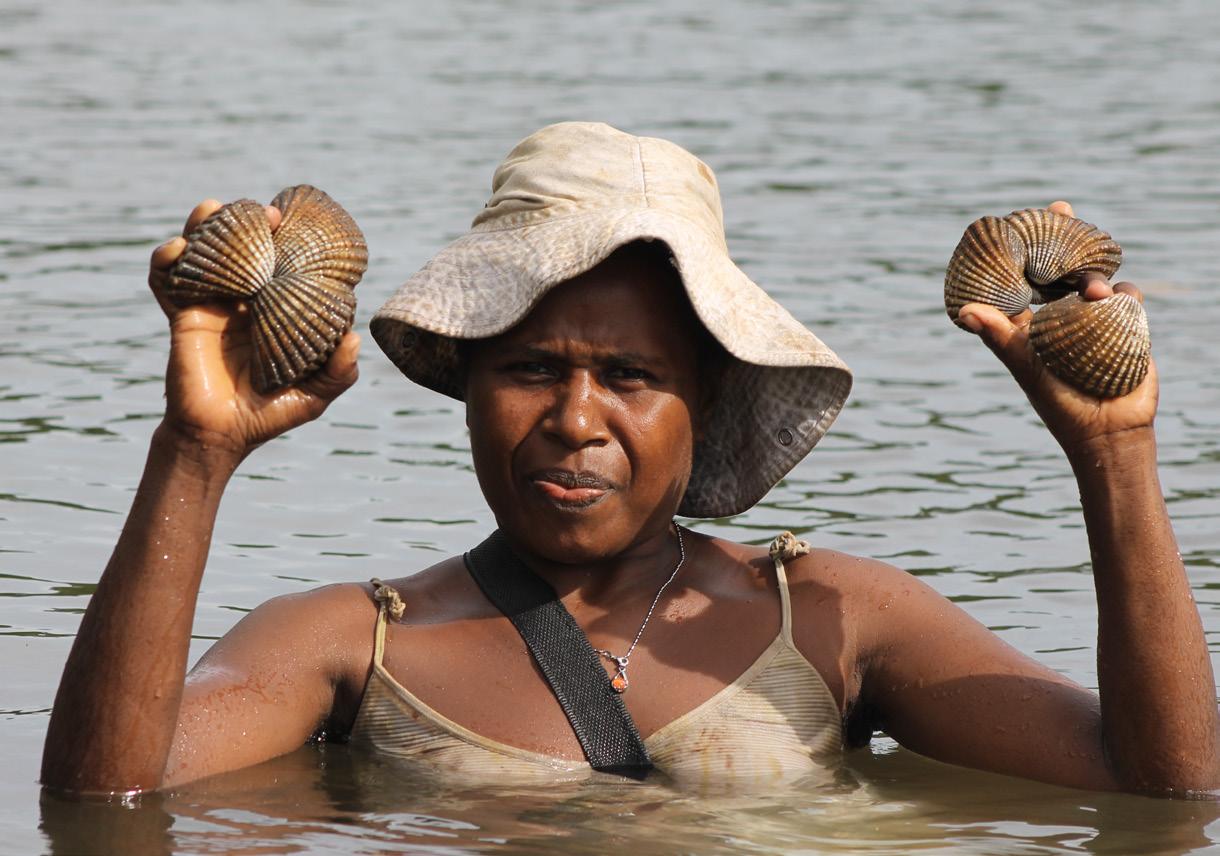
It is 2016, and a small boat is moving slowly through the Lau Lagoon in the northern part of Malaita, in the Solomon Islands. On board, Jan van der Ploeg is conducting a survey of coastal communities and their relationship with marine resources. Across from him sits Janet Saeni-Oeta, who has recently given birth to her second son and returned to the field, to the lagoon where she grew up, where her grandparents built their lives on artificial islands rising from the coral reefs. Between interviews, she pauses to feed her baby. Around the boat, on the reef flats, women are wading and gathering clams. Jan watches. And something becomes impossible to ignore. “When we only look at fish and men, we miss more than half of the picture,” he says. “There’s a whole world going on out there in plain sight, we just have to look differently.”
TEXT
Jasmijn Snoijink PHOTOGRAPHY
Jan van der Ploeg
Janet Saeni-Oeta
That moment in the lagoon is now the quiet engine behind a research project called Forgotten Fisheries, part of the CGIAR Food Frontiers and Security programme, which focuses among other things on food security in small island settings. It is a collaboration between Van Hall Larenstein University of Applied Sciences in the Netherlands and WorldFish, a CGIAR research Center with more than four decades of presence in the Solomon Islands, made possible through the NL-CGIAR Senior Expert Programme. The question they are asking is decep-
“When we only look at fish and men, we miss more than half of the picture.”
tively simple: what happens when science starts paying attention to what has always been there, but never really counted?
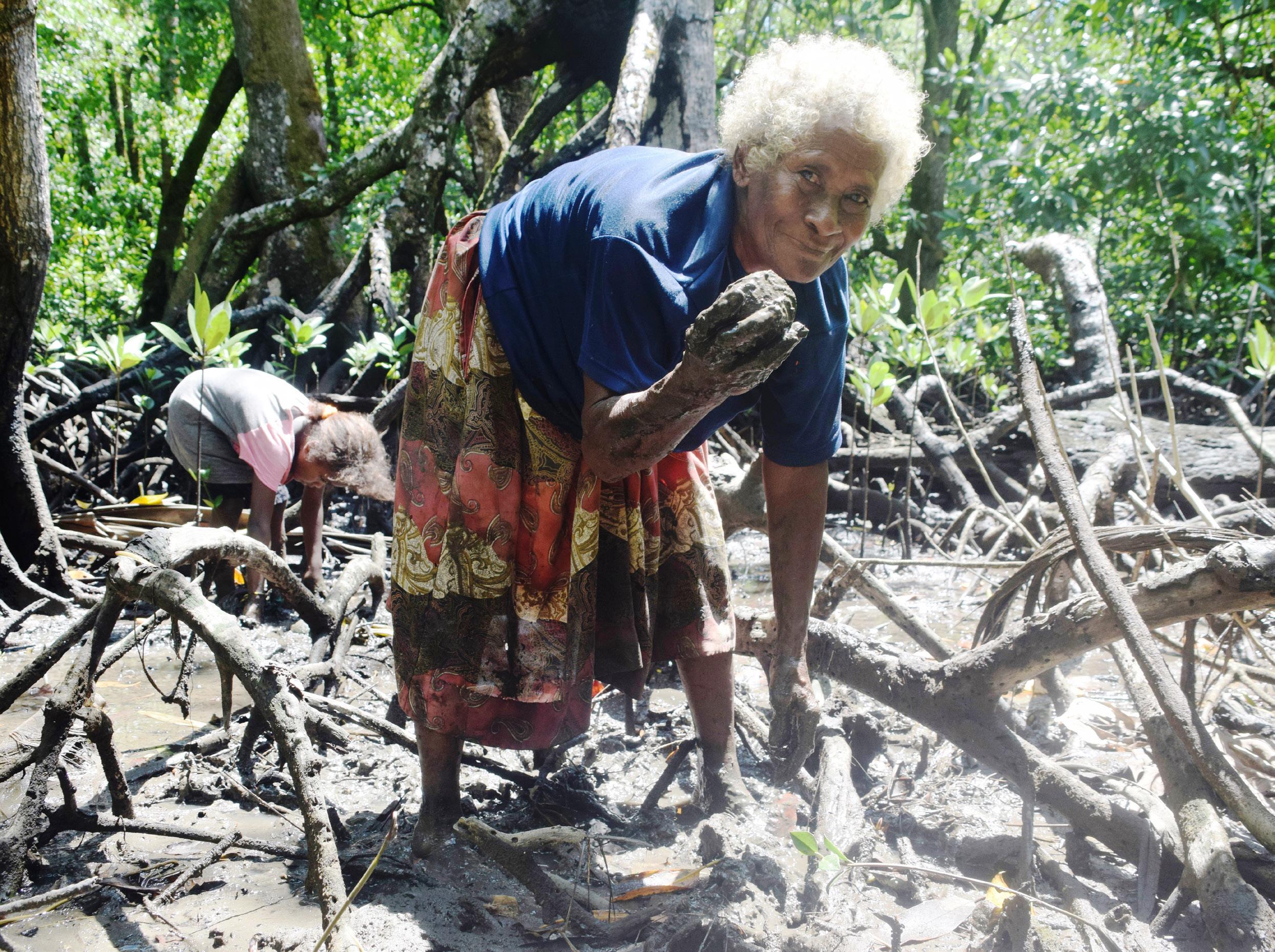
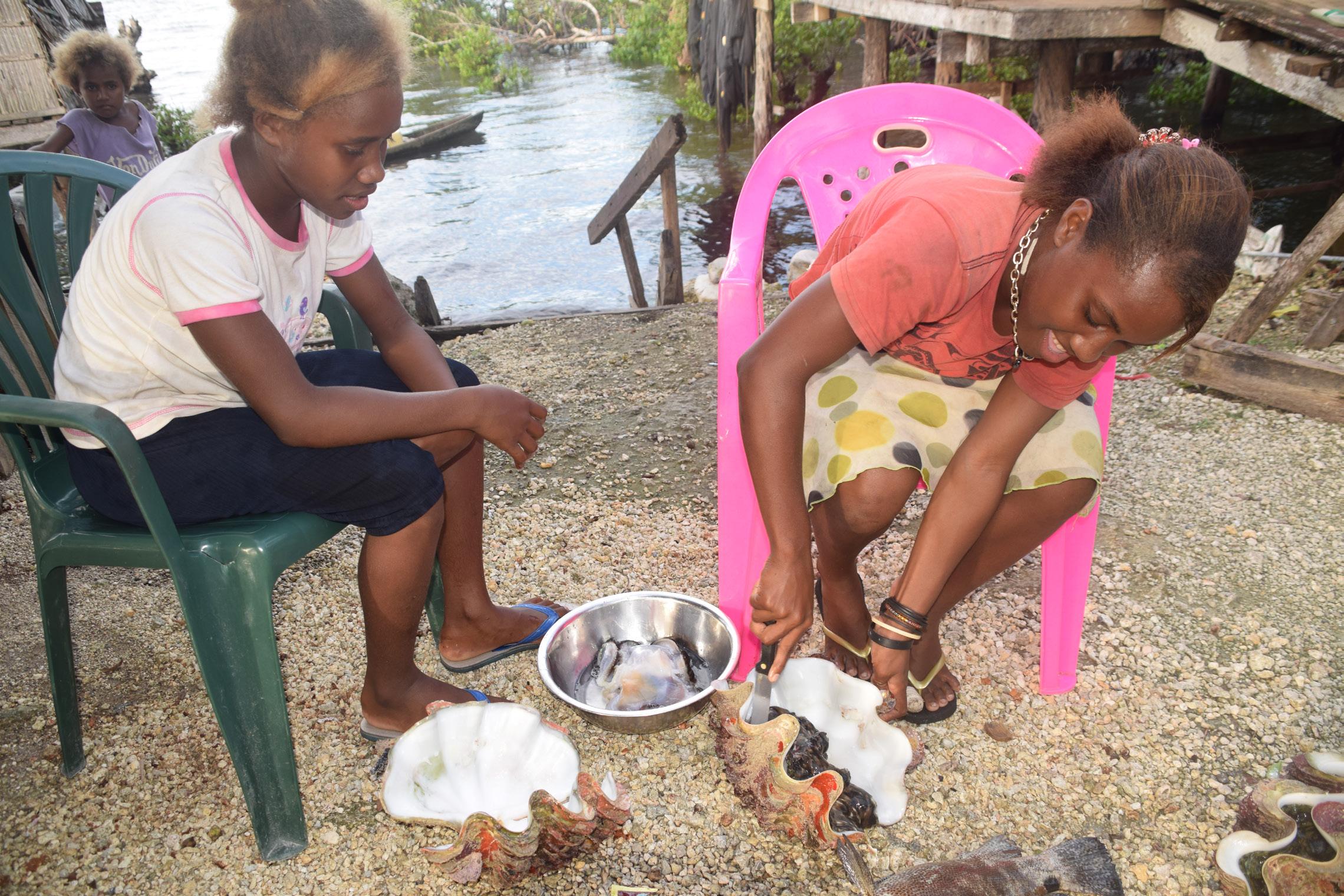
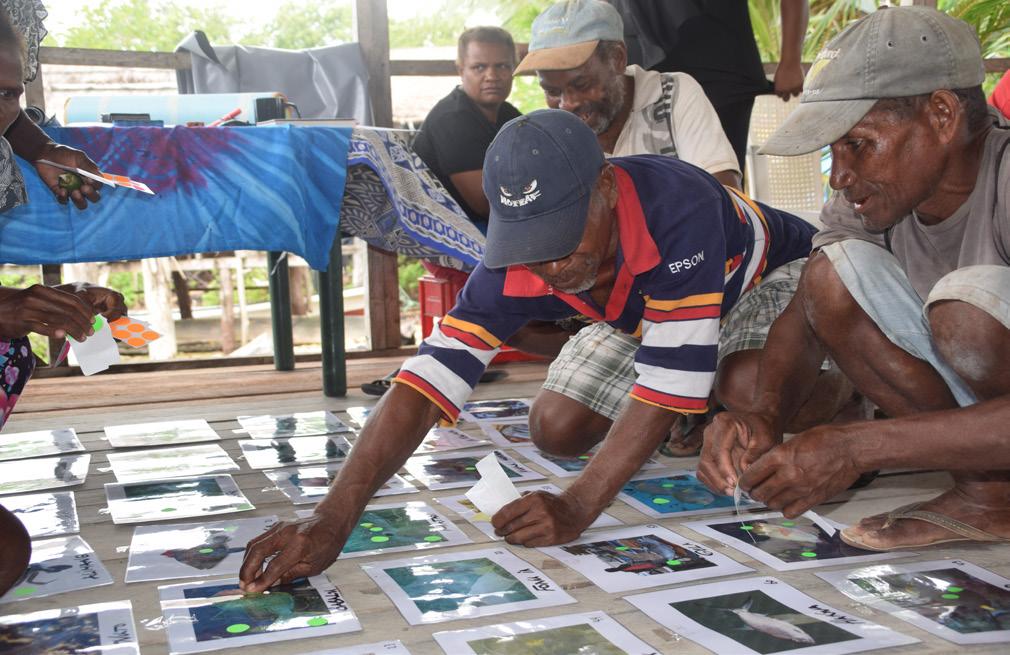
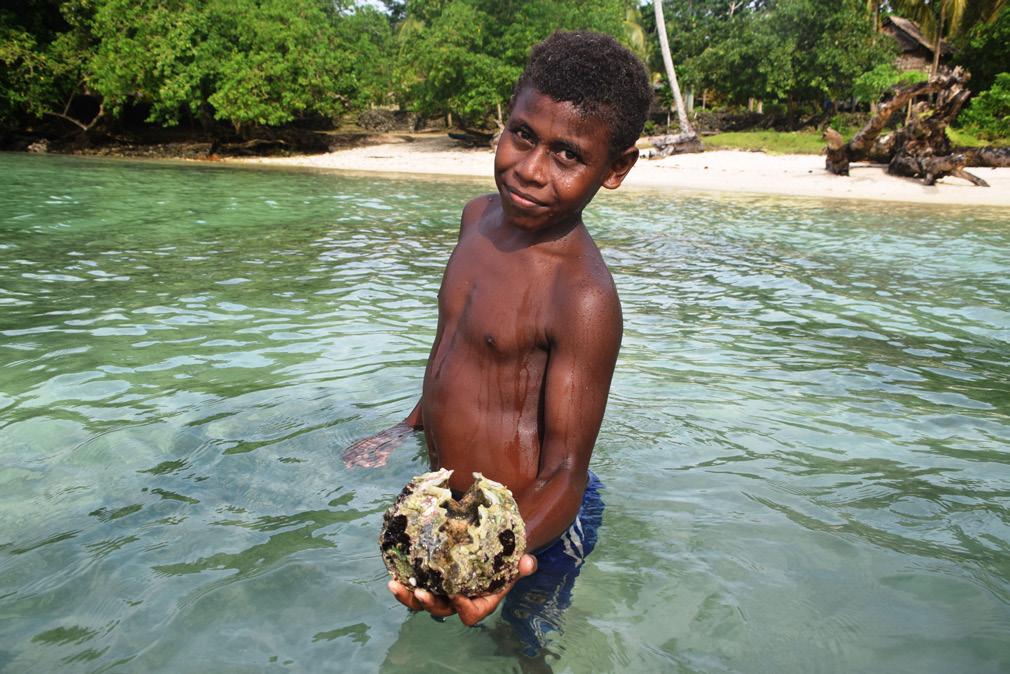
When people think of fisheries, they picture boats, nets and large, pelagic fish such as tuna or mackerel. Jan opens every conversation about his work with a gentle provocation. “Small-scale fishing is not small,” he says, when asked about shellfish. In the Global South, and especially in Pacific island nations, shells, including bivalves such as clams and mussels, and gastropods such as snails, are central to how women earn money and how families eat. The project focuses on documenting the contribution of shellfish to nutrition, income and environmental health. In the Solomon Islands alone, communities use at least 80 different species. Most are barely documented scientifically. People know their names; the ecology behind them
“Small-scale fishing is not small. In the Global South, shells, clams and other invertebrates are central to how women earn money and how families eat.”
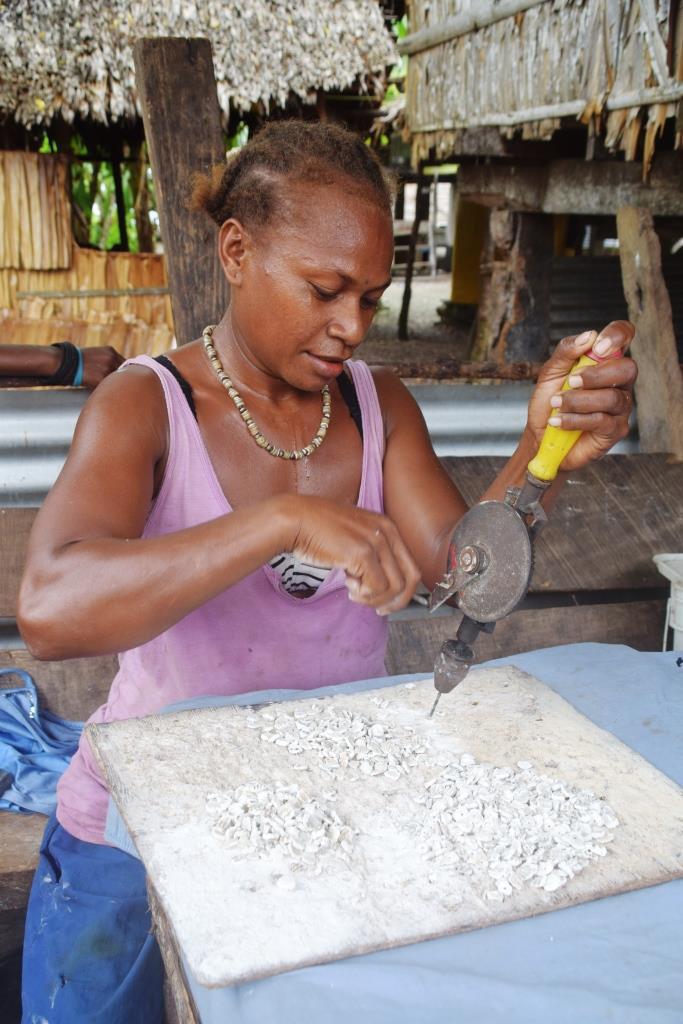
is almost entirely unmapped. These species play a critical role in coastal ecosystems: filtering water, stabilising reefs and supporting the food chains that fishing communities depend on. But the importance of shells goes deeper than food and income. In the Solomon Islands, shells are currency. People use them as a traditional form of exchange, for bride price (the payment made by a groom’s family to the family of the bride), for resolving disputes, for marking social obligations. Women work with hand drills to make beads, polishing and stringing them into long strands that represent relationships, history and identity. Households across the islands hold traditional shell money. It is part of what it means to belong. And it is under threat. Climate change, overharvesting, sedimentation and pollution are putting these resources under severe pressure. Logging and mining companies destroy mangroves, with permission typically granted by men, and the women bear the consequences. This is not only a question of women’s livelihoods. It is a question of an entire economic sector that remains invisible to policymakers, one that sustains families, communities and cultures across the Pacific coast. Fisheries policy that focuses on boats, nets and pelagic fish promotes the visible, male-dominated part of the economy while ignoring everything else.
“Resources that have sustained communities for generations are eroding, often without anyone in a position of authority noticing.”
Janet Saeni-Oeta grew up in the Lau Lagoon, fishing was the heartbeat of daily life. She grew up in a family of boys and was the only girl, but that did not stop her joining the fishing trips, holding the net, casting it, getting on the boat. One thing stayed with her as she grew older: the fish were getting smaller. She is the first woman in her family and from her village to go to university. When she joined WorldFish in 2010, she knew exactly why she was there: to work with coastal communities and to support women in bringing larger catches, and larger shells, to market. She is now Country Director for WorldFish in the Solomon Islands.
“It’s not science to do science - it’s science with a very specific goal: to alleviate poverty, improve rural livelihoods and protect biodiversity.”
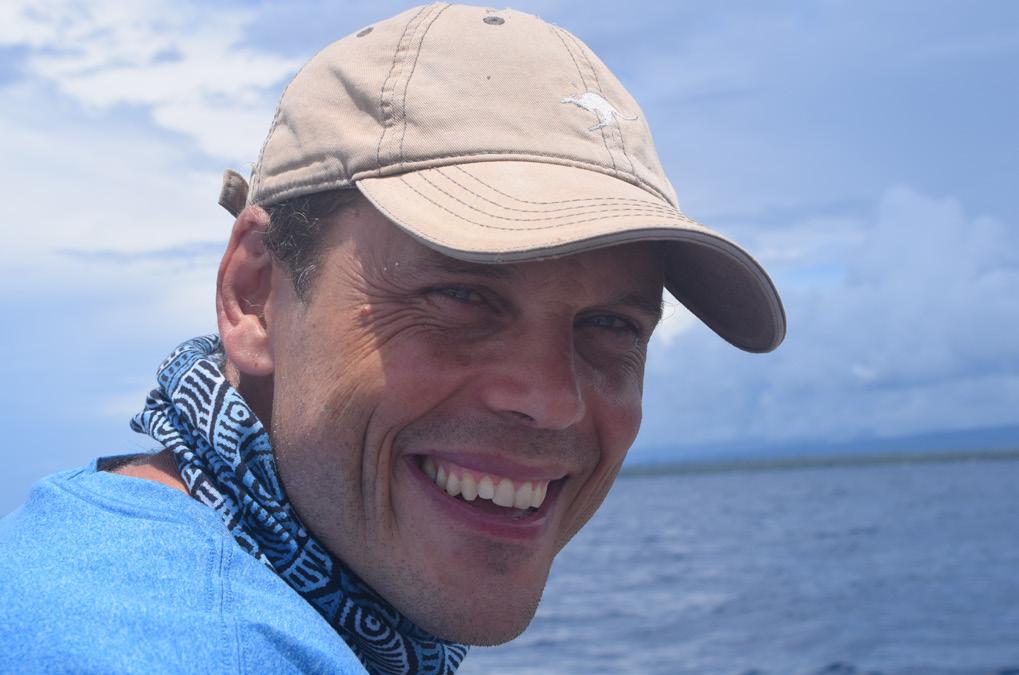
Jan van der Ploeg grew up in Africa, surrounded by different cultures and the ways communities relate to their natural environment. He trained as an environmental anthropologist at Leiden University, completing his PhD on human-crocodile relations in the Philippines. After his dissertation, WorldFish brought him to the Solomon Islands, where he spent three years as part of the WorldFish team. He is now based at Van Hall Larenstein University of Applied Sciences, where his work as a lecturer focuses on practice-based research: finding real-world solutions in close collaboration with local partners, rather than building theory at a distance. He sees that distinction as central to what he brings to this project. “A lot of agricultural research simply does not connect to local reality,” he says. “It is often far too theoretical and general. Vulnerable smallholder farmers and fishers in marginal areas do not benefit from it, and that is especially true
for women, young people and others who are most often overlooked in agricultural research: precisely the people we say we are doing the research for.”
That practice-oriented approach, he argues, is precisely what connects Van Hall Larenstein to the priorities of CGIAR and its national partners. He calls himself a “barefoot conservationist”: committed to working closely with communities, grounded in the realities of people’s lives. Science, in his view, should not be done for its own sake.
When Janet moved into her leadership role in 2023, she identified a gap. The WorldFish team had accumulated deep expertise and years of fieldwork, but most of that work had been heavily focused on implementation. What the team lacked
was support in translating knowledge into scientific publications: the kind of output that shapes policy and carries weight in international research conversations. “I was really happy that our team would be given the chance to have someone to support us in terms of scientific output,” she says. That is precisely what Jan brings. His role within the NL-CGIAR Senior Expert Programme is to support junior researchers in navigating scientific publishing. “Navigating scientific journals and using the right terminology can be a challenge, especially for junior researchers in Solomon Islands,” he says. It is the difference between knowledge that stays local and knowledge that influences how the world understands coastal fisheries. That influence matters beyond academia. The Solomon Islands’ Ministry of Fisheries and Marine Resources looks to WorldFish as their go-to research organisation, for information, training and support for resource management processes and implementation. Scientific output shapes policy. The clearest illustration of this is community-based fisheries management. When Jan first worked in the Solomons, the approach was community by community, intensive, slow and costly.
“If you want to support communities, you have to go through the government.”
But the Solomon Islands has more than 3,000 coastal communities. Reaching them one by one is neither realistic nor sustainable. What Janet’s team demonstrated was a different model: the only way to have impact at scale is to work through the government, strengthening its capacity to support community-based resource management across the country. “You will not make a change just by spending a lot of money in one community,” she says. “You have to think much more strategically. If you want to support communities, you have to go
Jan van der Ploeg
“Sometimes scientists from abroad come in, do their thing, go back to Europe and never report back. Working within the CGIAR is a guarantee that that doesn’t happen.”
through the government.” That insight is now national policy. Community-based resource management is the Solomon Islands government’s official strategy for protecting marine resources. Jan is direct about the politics of international research. Science is international by definition, he says. “People claiming that it is not, don’t know what they are talking about.” Working within CGIAR, in his view, is a model that avoids what he calls “parachute science”. “Sometimes scientists from abroad come in, do their thing, go back to Europe and never report back,” he says. “Working within the CGIAR is a guarantee that that doesn’t happen.” WorldFish has been present in the Solomon Islands for 41 years. That sustained presence means genuine partnerships with ministries, provincial governments and communities. Research agendas are shaped by those stakeholders, not imposed on them. Janet illustrates this from the other side: at the international conference on shellfish fisheries where this interview took place, she encountered research that filled gaps she had been aware of for years, nutritional data on shellfish species that communities depend on but for which she had no numbers to share. “With international collaboration, we can have that information and provide it to communities,” she says. “That can
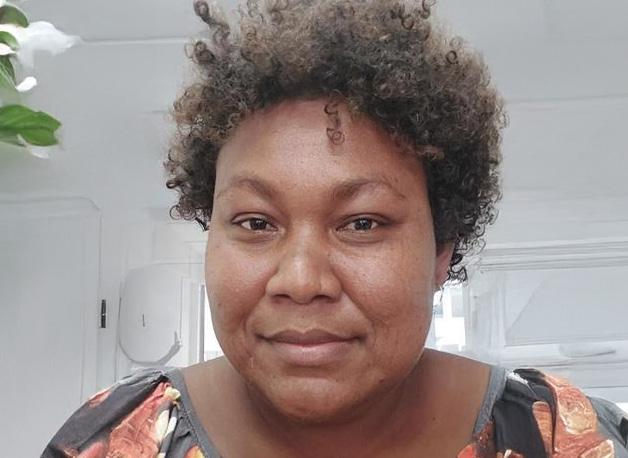
Janet Saeni-Oeta
serve as an entry point to having a healthy diet, or even to better managing the ecosystems where those shells are found.”
Climate change is not a distant concern in the Solomon Islands. Janet describes what communities are experiencing: coastal erosion, sea level rise, salt intrusion into water sources, increased sedimentation, loss of mangroves, coral bleaching, disappearing seagrass meadows. The Pacific Islands have given the world one of the most powerful phrases in climate discourse: “We are not drowning, we are fighting.” WorldFish’s response has been to build resilience through diversity, restoring traditional practices: gardening alongside fishing, maintaining diverse livelihoods so that when a cyclone hits, or fish stocks decline, families still have food and income.
For Jan, the immediate goal is concrete: joint publications led by Solomon Islands researchers, building the scientific capacity of the WorldFish team from within. The deeper ambition is to change how decision-makers think. When a harbour is planned, or when a logging company applies for permission near the coast, the trade-offs should be visible.
“Very often it’s the men deciding,” he says, “and they forget about the sedimentation and the pollution and all the problems downstream. And it’s the women who are feeding their families from those resources.”
Janet is clear-eyed about scale. Forgotten Fisheries is a small project, part of the WorldFish research programme in Solomon Islands built up over many years. Among the initiatives it connects to is the
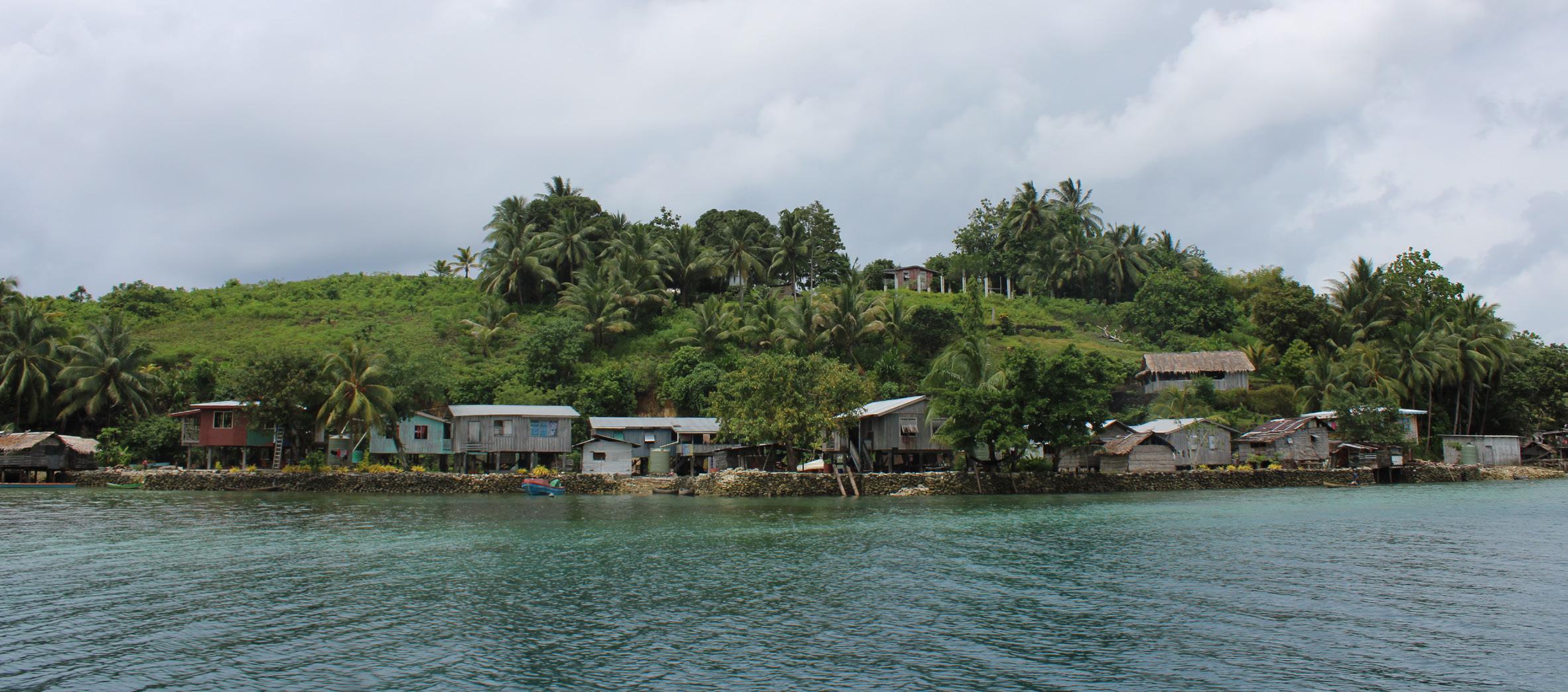
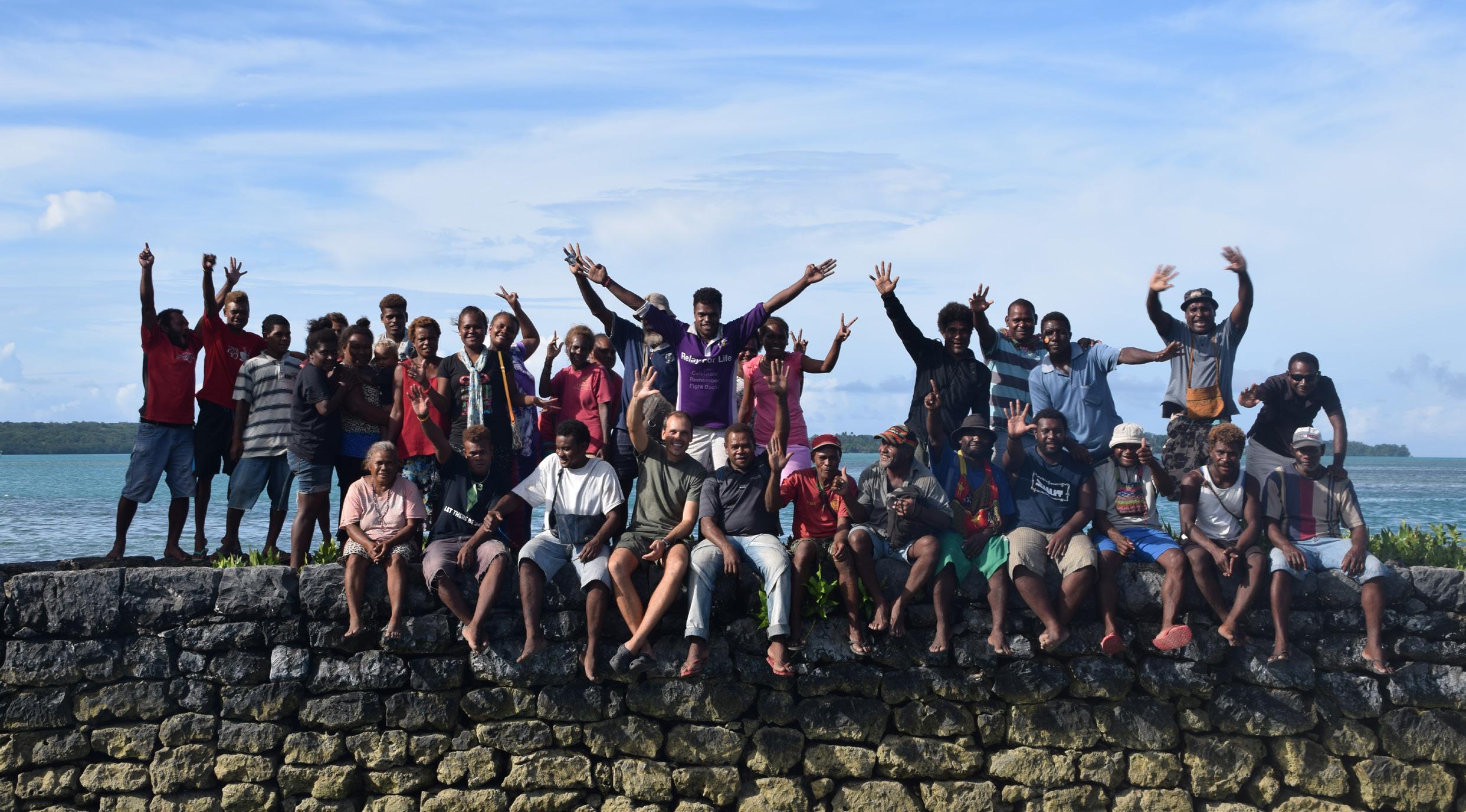
ACIAR Pathways Project, funded by the Australian Centre for International Agricultural Research, which works towards sustainable small-scale fisheries across the Pacific. Its impact must be understood in that context, as one contribution to a national strategy on small-scale coastal fisheries and a growing regional movement. For her, the goal is something harder to measure. It is the realisation, built slowly through years of research and advocacy, that coastal resources are not just food. They are an identity. They are a culture. They are who communities are. Helping to protect those resources, she says, is not only about better management or better policy. It is about helping communities remain themselves.
ABOUT THIS SERIES
Food security, climate resilience, sustainable food systems, these are challenges that no single country or institution can address alone. That is the driving logic behind the collaboration between the Netherlands and CGIAR, the world’s largest publicly funded network of agricultural research centres, working across low- and middle-income countries on the most pressing challenges in food and agriculture. Through the NWO funded Senior Expert Programme in the NL-CGIAR research programme, experienced Dutch researchers contribute their expertise to the CGIAR
Jan allows himself a closing remark, dry and pointed. “Please don’t overestimate the impact of just a small project.” He pauses. “Or, convince the government to give us much more money.” The joke lands, but the point behind it is serious. Forgotten Fisheries is small by design, a precise contribution to a much larger effort that has been building for decades. The ambition is not to solve everything. It is to make sure that the next time a decision is made about the coast, the women gathering shells on the reef flat are part of the picture.
“These coastal resources are an identity. They are a culture. They are who communities are.”
Research Portfolio, bringing Dutch knowledge to where it is needed most, and bringing global insights back to the Netherlands. The programme is designed to strengthen international research collaboration and ensure that science leads to real-world impact. This article is part of a series of interviews highlighting these collaborations. The series is produced by the Netherlands Food Partnership in partnership with the NL–CGIAR working group, which brings together NWO, the Dutch Ministry of Foreign Affairs, and the Ministry of Agriculture, Fisheries, Food Security and Nature.