Habiba Community Regenerates Egypt’s Desert into a Thriving Biodiversity Hub
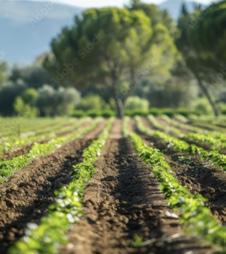
In the arid landscape of Nuweiba, South Sinai – where rain may fall only once every two years – Habiba Community has transformed 16,000 square metres of barren coastal desert into thriving green oases. Habiba, meaning ‘beloved’ in Arabic, is an agroecological living laboratory of regenerative food production, ecological restoration, and Indigenous Bedouin community empowerment that has inspired over 100 farms across the region to adopt biodiversity-positive practices.
The initiative emerged from crisis-driven innovation when the collapse of tourism in 2007 threatened local livelihoods and food security. Originally founded as Habiba Beach Lodge in 1994, it gradually evolved into a broader integrated agroecological model. In 2007, the organic farm was established at the base of the Wadi Watir Delta to strengthen food security and promote more sustainable land use. A learning centre followed in 2013 to provide local Bedouin children with education and skills for a productive, sustainable future. In 2019, Habiba expanded further with the launch of a regenerative farm designed as an open-air laboratory for experimentation and learning, marking its entry into the global Ecosystem Restoration Communities movement.
Biodiversity–Food Systems Challenge
South Sinai faces compounding crises where geographic isolation creates food insecurity, desertification threatens traditional Bedouin pastoralism, and marine biodiversity decline undermines tourismdependent livelihoods. The region lacks social infrastructure, suffers from political instability, and depends heavily on imported food while local Bedouin communities remain marginalized from development. Climate change reduces grazing land availability, disrupting traditional resource management systems that sustained communities for generations.
BIODIVERSITY ENTRY POINTS
y Genetic diversity: Living library of landraces (dates, beans, drought-resilient vegetables) propagated on-site and shared with over 100 partner farms, safeguarding genetic diversity.
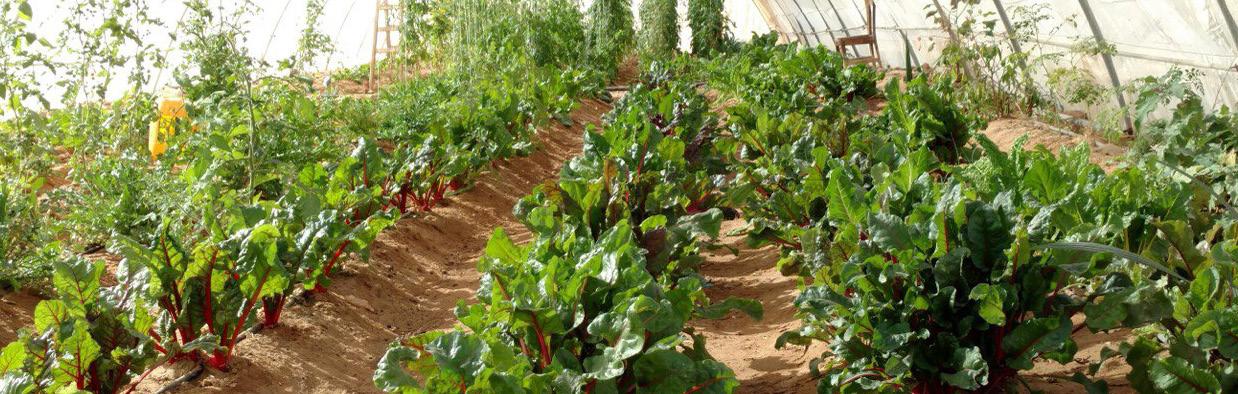
y Species diversity: Cultivation of diverse crops, including native and salt-tolerant species like moringa, neem, acacia, and quinoa.
y Ecosystem diversity: Holistic landscape restoration connecting mountains to coral reefs through integrated land-sea stewardship.
FOOD SYSTEM ENTRY POINTS
y Scaling biodiversity-positive practices: Showcasing organic and regenerative farming through the ‘lighthouse model’ where communities self-select appropriate practices.
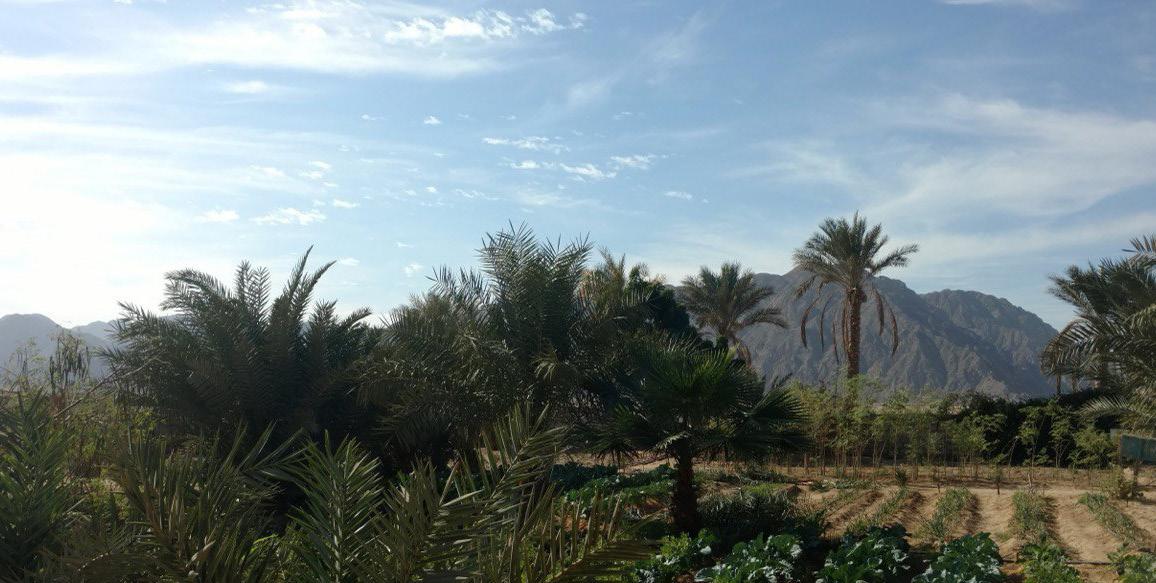
y Agroecological techniques: Piloting solutions including zero tillage, bokashi composting, seaweed mulch, black-soldier-fly frass, agroforestry, biocontrol, drip irrigation, agri-solar, and sandponics.
y Social organization: Community training, employment, women’s groups, and research partnerships through the Habiba Academia platform.
DESERT OASIS REVIVAL
Integrated Biodiversity–Food Systems Approach
Habiba operates as a self-reinforcing ecosystem where each initiative feeds into the next, prioritizing sufficiency over abundance and reinvesting benefits into community and the landscape.
1 MULTI-STAKEHOLDER PARTNERSHIP STRUCTURE
Community partners: The Habiba Community manages integrated operations while local Bedouin communities contribute through land-use planning, cultural knowledge, and co-creation of initiatives. Over 75 Bedouin-owned farms have adopted regenerative practices.
Public sector: Nuweiba City administration governs land-use planning, South Sinai Governorate promotes nationally, and the Ministry of Water and Irrigation supports agri-photo-voltaic (PV) projects (solar energy combined with farming) with international learning exchanges.
Research network: Over 20 universities across Egypt, the United States, and Europe collaborate through the Habiba Academia platform on research spanning cultural heritage, marine ecology, sustainable tourism, and agricultural waste management. An Erasmus+ consortium proposal for an MSc semester in Nuweiba is under review.
Private sector: Hotels, restaurants, and organic retailers sustain local market linkages by sourcing Habiba’s produce across nine shops in Cairo and Sinai, plus the Greenbox subscription model for joint marketing.
2 COMPREHENSIVE COMMUNITY PROGRAMMES
WOMAD crafts cooperative: Women’s empowerment initiative creating livelihood opportunities for Bedouin women through ecofashion and accessories production.
Backyard gardens for widowed women: Supporting vulnerable women with small-scale, self-sustaining gardens.
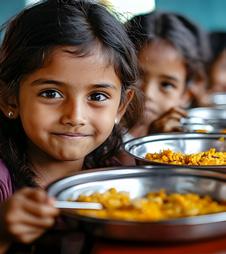
After-school programme: Training local Bedouin children and teenagers in agriculture, nature stewardship, and leadership, with participants showing positive behavioural changes including increased creativity and sharing.
Green corridors project: Planned multi-use corridors connecting fragmented farms to enhance ecosystem function, provide fodder for pastoralists, and enable insect movement between farms.
Economic Model
The Beach Lodge generates revenue to sustain broader initiatives while the 16,000m² organic farm applies regenerative practices, selling produce locally and processing surpluses into dried fruits, kale powder, and beetroot powder using solarpowered equipment. Medjool date plantation profits finance the learning centre, while Habiba World Foundation provides additional funding channels.
Measuring Change and Impact
Regeneration at scale: More than 100 farms, with 48 Bedouin-owned operations, have regenerated desert land across South Sinai, boosting biodiversity and contributing to local food security through regenerative practices adoption.
Social transformation: Introduction of over 60 crop varieties improved dietary diversity. Children in afterschool programmes demonstrate positive behavioural shifts toward creativity, sharing, and environmental stewardship.
Economic outcomes: Products reach local markets through established supply chains while international volunteers apply learned principles in their home communities, creating global ripple effects.
Biodiversity tracking: Habiba is developing comprehensive monitoring systems spanning soil life research, insect biodiversity surveys, native plant documentation, and planned coral reef monitoring to track ecosystem restoration progress across the Nuweiba landscape
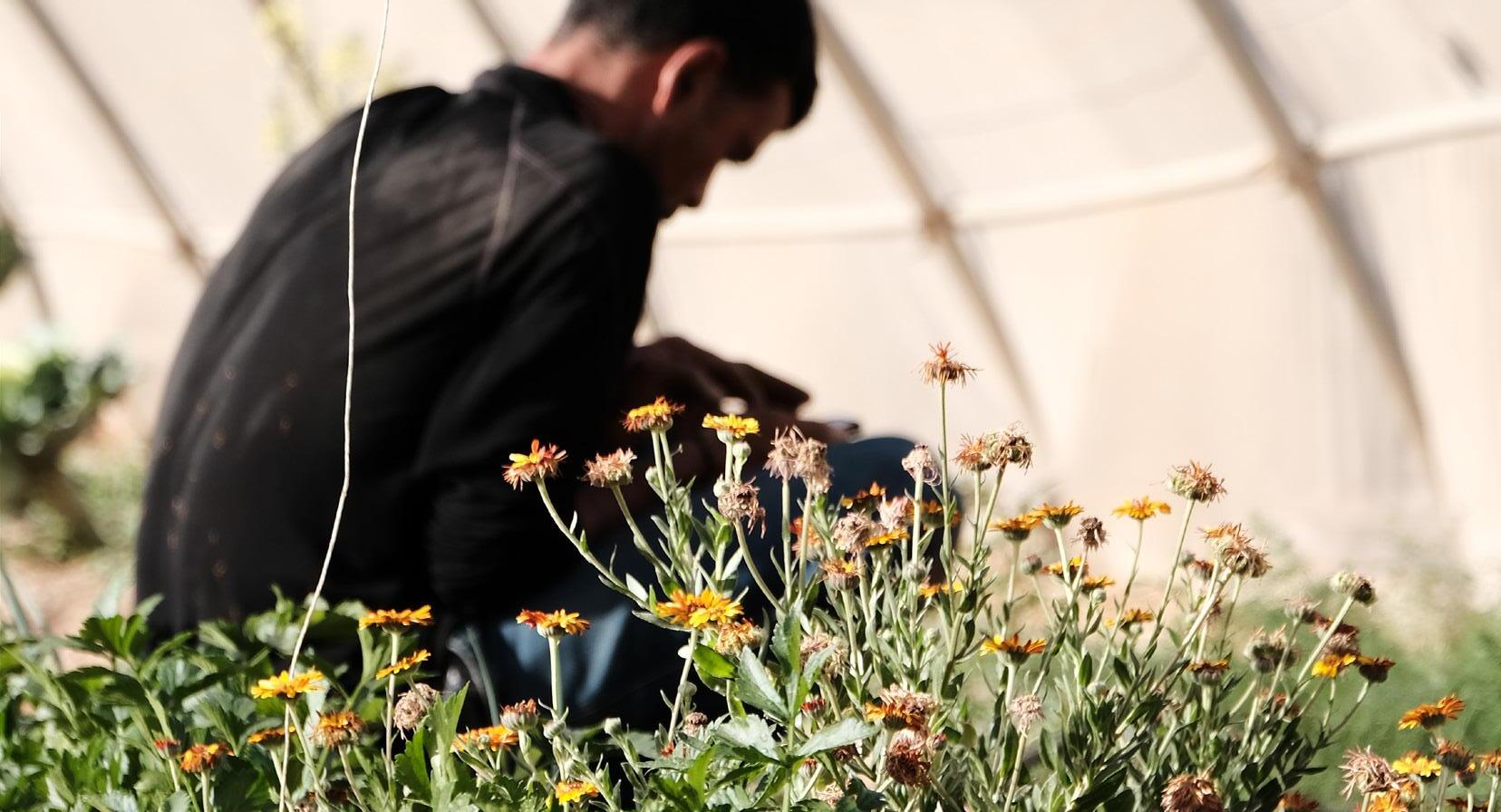
“Throughout the years, experimentation has been essential at our farms. From soil to irrigation, non-native plant species and different vegetable varieties, or perma-culture growing techniques, we’ve tried—and still are—trying everything.”
Learning and Insights
Egyptian Desert Research Centre scientists provided crucial early support through workshops on arid organic farming, sparking broader regional adoption. Research validation also became a bridge between traditional knowledge and innovative practices.
Recognition by South Sinai’s Governor, inclusion in the region’s master development plan, and growing academic partnerships have accelerated momentum, with Habiba now serving as a model for the United Nations Human Settlements Programme (UN-Habitat) in similar coastal arid regions worldwide.
The lighthouse approach works because communities selfselect which practices to adopt rather than having solutions imposed. This creates deeper ownership and more sustainable adoption than traditional extension models - evidenced by 75+ Bedouin-owned farms voluntarily replicating practices.
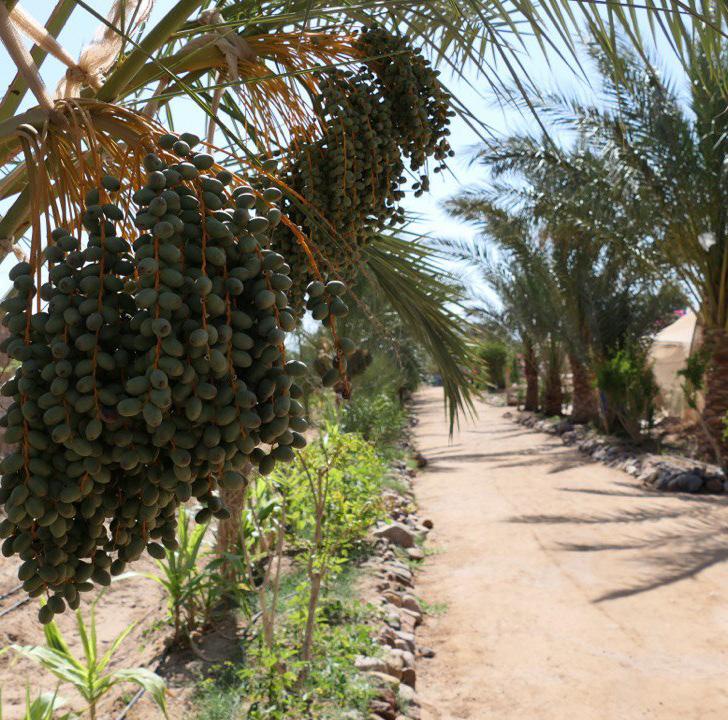
“We learned that there is no dead natural soil on earth but that the microorganisms in it are just dormant. We understood it was on us to wake them up and give a habitat for them to thrive.”
CHALLENGES AND CREATIVE RESPONSES
y Geographic constraints: Remote location and marginalization of Bedouin communities limit economic opportunities and access to skilled professionals.
y Financial restrictions: Budget constraints delay project implementation and equipment acquisition.
y Environmental barriers: High aridity and lack of naturally regenerating freshwater sources complicate agricultural efforts. Initial organic farming approaches exhausted soils before regenerative methods were adopted.
y Mindset change: Farmers often prioritize short-term profit over long-term ecosystem health, a mindset Habiba works to shift through ongoing training and practical demonstrations in collaboration with the Egyptian Desert Research Centre.
KEY INSIGHTS
y Prioritizing soil health, emulating natural ecosystems, and closing nutrient cycles enables nature to deliver unexpectedly strong returns.
y Leading by example through visible successes emphasizing self-sufficiency, product quality, and sustainability inspires widespread voluntary adoption.
y The philosophy of ‘enough rather than abundance’ allows profits to be reinvested in community programmes (WOMAD cooperative, women’s gardens, research) and landscape restoration rather than extracted, creating self-reinforcing regenerative cycles.
SCALING OPPORTUNITIES
At the local level, opportunities include expanding agri-PV pilots to promote energy self-sufficiency, enable groundwater desalination, and create jobs. Green corridors can strengthen farm connections and enhance biodiversity, while further investment is needed in post-harvest processing, expansion of the WOMAD initiative, restoration of the Wadi Watir Delta, and nutrition research.
Regionally, growth can be achieved by building on existing academic and government partnerships across Egypt, including the integration of the approach into the national master development plan and collaboration with the Desert Research Centre.
Internationally, the Habiba World Foundation is fostering global learning by exchanging experiences with similar arid coastal contexts worldwide. The focus is on sharing methodologies through partnerships with UN-Habitat, rather than direct replication.
STRATEGIC COLLABORATION NEEDS
Future progress depends on technical partnerships that bring together private sector equipment and expertise with academic reporting and international networking, alongside contributions from soil research institutes working on arid land restoration, experts in green corridor design, and specialists in coral biodiversity monitoring.
Research institutions have an important role in developing comprehensive monitoring systems and advancing arid soil restoration methodologies. At the same time, development organizations can strengthen global exchange by supporting the sharing of methodologies and experiences between arid coastal communities.
Biodiversity–Food Systems Use Cases