
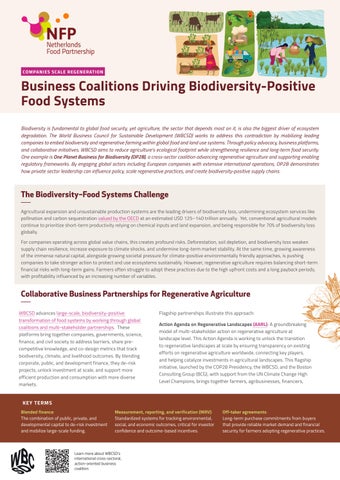
Biodiversity is fundamental to global food security, yet agriculture, the sector that depends most on it, is also the biggest driver of ecosystem degradation. The World Business Council for Sustainable Development (WBCSD) works to address this contradiction by mobilizing leading companies to embed biodiversity and regenerative farming within global food and land use systems. Through policy advocacy, business platforms, and collaborative initiatives, WBCSD aims to reduce agriculture’s ecological footprint while strengthening resilience and long-term food security. One example is One Planet Business for Biodiversity (OP2B), a cross-sector coalition advancing regenerative agriculture and supporting enabling regulatory frameworks. By engaging global actors including European companies with extensive international operations, OP2B demonstrates how private sector leadership can influence policy, scale regenerative practices, and create biodiversity-positive supply chains.
Agricultural expansion and unsustainable production systems are the leading drivers of biodiversity loss, undermining ecosystem services like pollination and carbon sequestration valued by the OECD at an estimated USD 125–140 trillion annually. Yet, conventional agricultural models continue to prioritize short-term productivity relying on chemical inputs and land expansion, and being responsible for 70% of biodiversity loss globally.
For companies operating across global value chains, this creates profound risks. Deforestation, soil depletion, and biodiversity loss weaken supply chain resilience, increase exposure to climate shocks, and undermine long-term market stability. At the same time, growing awareness of the immense natural capital, alongside growing societal pressure for climate-positive environmentally friendly approaches, is pushing companies to take stronger action to protect and use ecosystems sustainably. However, regenerative agriculture requires balancing short-term financial risks with long-term gains. Farmers often struggle to adopt these practices due to the high upfront costs and a long payback periods, with profitability influenced by an increasing number of variables.
WBCSD advances large-scale, biodiversity-positive transformation of food systems by working through global coalitions and multi-stakeholder partnerships. These platforms bring together companies, governments, science, finance, and civil society to address barriers, share precompetitive knowledge, and co-design metrics that track biodiversity, climate, and livelihood outcomes. By blending corporate, public, and development finance, they de-risk projects, unlock investment at scale, and support more efficient production and consumption with more diverse markets.
Blended finance:
The combination of public, private, and developmental capital to de-risk investment and mobilize large-scale funding.

Flagship partnerships illustrate this approach:
Action Agenda on Regenerative Landscapes (AARL): A groundbreaking model of multi-stakeholder action on regenerative agriculture at landscape level. This Action Agenda is working to unlock the transition to regenerative landscapes at scale by ensuring transparency on existing efforts on regenerative agriculture worldwide, connecting key players, and helping catalyze investments in agricultural landscapes. This flagship initiative, launched by the COP28 Presidency, the WBCSD, and the Boston Consulting Group (BCG), with support from the UN Climate Change High Level Champions, brings together farmers, agribusinesses, financiers,
Measurement, reporting, and verification (MRV): Standardized systems for tracking environmental, social, and economic outcomes, critical for investor confidence and outcome-based incentives.
Off-taker agreements: Long-term purchase commitments from buyers that provide reliable market demand and financial security for farmers adopting regenerative practices.
and leading non-state actors to aggregate, accelerate, and amplify existing efforts and new commitments to transition large agricultural landscapes to regenerative practices by 2030.
One Planet Business for Biodiversity (OP2B): A global coalition of 26 companies mobilizing agri-food value chains to scale regenerative agriculture and biodiversity protection. Since 2019, members have mobilized multi-billion-dollar investments, with further commitments through 2030. OP2B has engaged farmers across 24 countries and millions of hectares, with ambition to more than triple this by 2030. It also drives alignment on metrics, reporting, and disclosure standards and advocates for supportive finance and policy.
Landscape Accelerator Brazil (LAB): A multi-actor coalition protecting the Cerrado and Pará landscapes by promoting regenerative agriculture and sustainable land use. LAB addresses policy, finance, and verification barriers to unlock Brazil’s potential to expand soybean and
beef production without deforestation. The initiative aims to increase annual GDP by USD 28 billion and reach over 600,000 farmers and ranchers. Partners include Brazil’s Ministry of Agriculture, The Nature Conservancy, TechnoServe, and global finance institutions. A consensus action package will be presented at COP30.
Sustainable Rice Landscapes Initiative (SRLI): A global alliance uniting WBCSD, United Nations Food and Agriculture Organization, United Nations Environment Programme, International Rice Research Institute, the Deutsche Gesellschaft für Internationale Zusammenarbeit (GIZ) and regional actors across Southeast and South Asia. SRLI focuses on reducing greenhouse gas emissions, restoring degraded land, conserving biodiversity, and building resilience in rice supply chains. Rice sustains 20% of the world’s population, yet climate change could reduce yields by up to 40% by 2100, making this work critical for both food security and ecosystems.
FOOD SYSTEM ENTRY POINTS
y Finance and Trade: Mobilizing innovative financing mechanisms to de-risk investment and create stable markets for regenerative products through procurement commitments, carbon markets, and payments for ecosystem services.
y Policy and Governance: Aligning with national priorities, strengthening regulatory frameworks, and advocating policies that incentivize regenerative practices and farmer equity.
y Scaling Biodiversity-Positive Agricultural Practices: Scaling regenerative agriculture using public–private partnerships, technical assistance, and monitoring systems to transform value chains and supply chains.
BIODIVERSITY ENTRY POINTS
y Ecosystem Diversity: Protecting and restoring high-value ecosystems to conserve habitats and ecological processes.
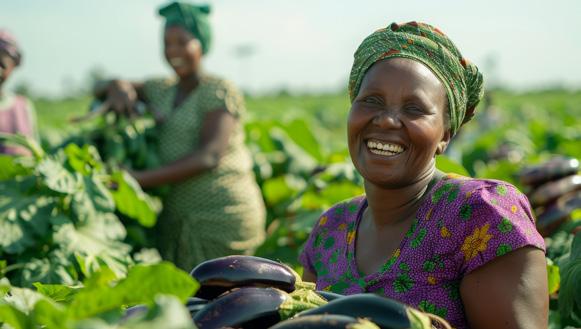
The 26 members of the OP2B Coalition combine complementary capabilities that no single company could achieve alone. Working pre-competitively, they share costs, align metrics, and create the market signals and policy conditions needed for large-scale food system transformation.
Food and beverage producers (Arla Foods, Danone, Diageo, McCain Foods, Mondelez, Nestlé SA, PepsiCo, Unilever, Pernod Ricard, Carlsberg) drive on-farm transformation through sourcing and farmer programmes. drive on-farm transformation through sourcing programmes and farmer engagement.
Fashion and beauty brands (Inditex, L’Occitane, L’Oréal, Kering, Louis Vuitton Moët Hennessy) integrate biodiversitypositive sourcing into textiles and cosmetics. Inditex, for instance, supports Indian farmers with agroforestry and efficient irrigation to secure sustainable fibre supplies.
Knowledge and advisory partners (Boston Consulting Group, Griffith Foods, HowGood) co-develop science-based metrics and value-chain strategies to track biodiversity and climate outcomes.
Cooperative and producer networks (InVivo) support farmercentric regenerative agriculture implementation.
Agricultural inputs and technological (e.g., Yara) supply precision tools and regenerative practice training, such as blending mineral with organic fertilizers to cut emissions.
Finance actors (Rabobank, Tikehau Capital, Mirova, Clarmondial, Livelihoods Venture) provide blended finance and risk-sharing to enable uptake.
Retail and consumer goods platforms (Inter IKEA) provide market pull and off take commitments.
Recent partners such as Landscape Enterprise Networks, European Institute of Innovation and Technology, and the European Association for Regenerative Agriculture broaden engagement across sectors.
To manage the financial and market trade-offs of regenerative agriculture, OP2B promotes tailored support: blended finance to share investment risks, equipment-sharing and service models to cut costs, and crop rotations that include higher-margin species. Its value-chain financing model combines public, private, and development capital, distributing risks to make regenerative practices viable, particularly for small and medium farms.
Between 2019 and 2023, OP2B members invested USD 3.6 billion. With a further USD 2.4 billion committed through 2030.
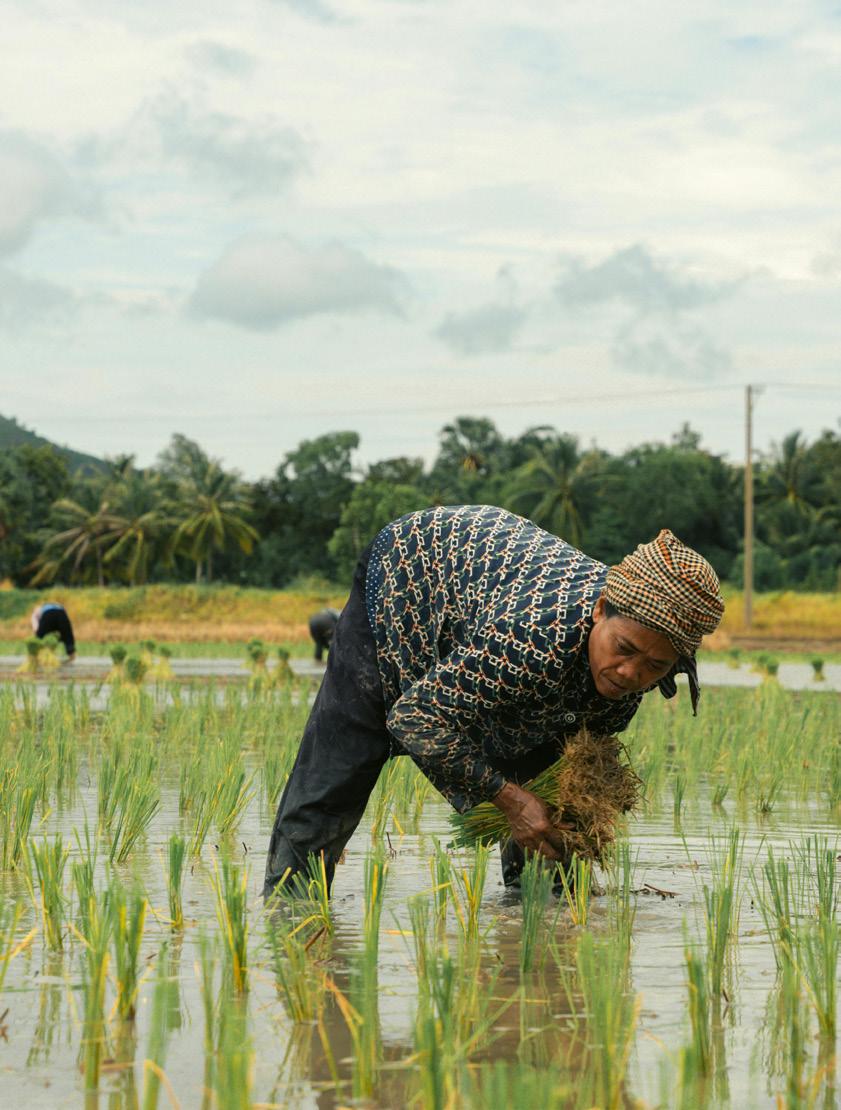
Unilever’s Jasmine Rice project integrates regenerative practices into its core sourcing strategy. In partnership with local farmers and Kasetsart University, the company introduced soil testing, cover cropping, and organic fertilizers, helping farmers cut chemical fertilizer use by 30–40%. Farmers report improved soil fertility, higher yields, and greater resilience to extreme weather. The initiative aims to expand from 4,000 to 20,000 hectares by 2025, as part of Unilever’s goal to roll out regenerative practices across all jasmine rice supply chains. Through OP2B, Unilever leverages partnerships and monitoring systems to track soil health, farmer livelihoods, and biodiversity impacts.
The LAB initiative alone seeks to mobilize finance that could increase Brazil’s agricultural GDP by USD 28 billion while preventing deforestation. The approach relies on blended-finance instruments, farmer incentive platforms, and “one-stop-shop” services linking technical assistance with credit. Financial institutions provide concessional and commercial capital, agrifood companies offer offtake agreements and price premiums, and governments align subsidies and policies to reward positive environmental outcomes.
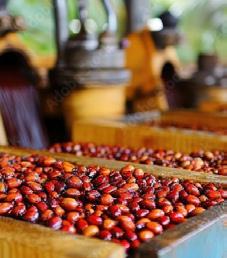
Since 2011, Nestlé has supported more than 21,000 Vietnamese coffee-farming households through agroforestry, efficient irrigation, and disease-resistant seedlings. Farmers have reduced water use by up to 60%, lowered dependence on chemical inputs, and diversified crops to increase incomes. The NESCAFÉ Plan is regenerating over 74,000 hectares, strengthening soil health and biodiversity while sustaining Vietnam’s role as a key global coffee supplier. Ongoing investment and training enable farming communities to adapt to market pressures and climate change.
The OP2B coalition has engaged 300,000 farmers in 24 countries and converted 3.9 million hectares to regenerative practices. Regenerative agriculture provides a practical pathway to improve environmental outcomes, build resilience in farming and value chains, and support long-term productivity. It supports and improves soil health, biodiversity, water resources and climate, while supporting farmer livelihoods.
To accelerate the global transition to regenerative agriculture, WBCSD and SAI Platform bring complementary strengths across the value chain. Together, they drive convergence on outcomebased indicators that link corporate, policy and investor decision-making with actions at the farm and landscape levels. WBCSD leverages its strengths in policy advocacy, value chain collaboration, and mobilizing shared financing and investment. SAI Platform focuses on the technical guidance for the implementation of regenerative agriculture at the farm level and its reporting throughout value chains. Together, both organizations aim to scale regenerative agriculture worldwide by aligning strategic goals with practical action.
A central challenge is the fragmentation of public and private funding streams, which limits support for farmers transitioning to regenerative agriculture. Scaling depends on stronger public–private collaboration to create enabling conditions.
Integrated financial models are essential to overcome this barrier. “One-stop-shop” packages combining public and private capital can cover both upfront and ongoing costs, while concessional finance helps de-risk projects and attract private and institutional investors. Yet a major gap remains: despite multi-billion-dollar investments to date, modelling shows that without incentives farmers face a nine-year payback period on upfront investments. Subsidies and premiums can reduce this to around five years, but significant gaps persist. Transparent, outcome-based incentives and coordinated funding are therefore critical to shorten payback periods, reduce yield-loss risks, and ensure small and medium farms reach profitability within four to five years. Diversifying crops also reduces vulnerability to shocks, building resilience at farm and system level.
Another barrier is the proliferation of monitoring, reporting, and verification (MRV) methods, which complicates adoption and undermines investor confidence. Standardized MRV, aligned on outcomes and indicators, would streamline reporting, reduce duplication, and strengthen the credibility of outcome-based incentives.
Finally, a recurring challenge is balancing the rapid but smallscale transitions of grassroots organizations with the slower but broader shifts of mainstream actors.
Scaling of regenerative landscape initiatives is already under way in East Anglia (UK) and Northern France (2025–2026), with potential expansion to the Netherlands or Northern Spain, targeting 40 million hectares across Europe by 2030.
Greater public–private collaboration is needed to replace today’s fragmented mix of subsidies, loans, premiums, and insurance with comprehensive financing mechanisms that can reach many more farmers.
WBCSD aims to broaden its membership and partnerships, engaging multinational agrifood companies, major retailers, and financial institutions to provide market access, investment capital, and risk-sharing instruments that accelerate adoption and impact.
The cost of inaction has become greater than the cost of change. To tackle climate change, we need to make regenerative agriculture the norm, not the exception.”