Learning to read the field
TWO LEGUME FANATICS ON SCIENCE THAT LISTENS
Learning to read the field
TWO LEGUME FANATICS ON SCIENCE THAT LISTENS
In a field in the Southern Highlands of Tanzania, a farmer’s maize had turned purple. Not the deep green of a healthy stand, but the pale, reddish-purple of young plants under stress. Her extension worker - a local agricultural adviser - showed her an image on a tablet, part of an advisory application. She recognised it at once: it matched what she saw in her own field. The image had a name for what she was looking at: phosphorus deficiency. And it had an answer: apply DAP (diammonium phosphate, a phosphorus-based fertilizer) at planting, next season. She did. The following season, her maize did not turn purple. The crop stood well.
For Jens Andersson, a farming systems scientist at Wageningen University & Research (WUR) whose work draws on his background in sociology, what mattered was not the technical outcome. It was something more consequential. ‘That was exactly the kind of thing that we want to achieve with Agronomy at Scale - farmers learning to read their own fields,’ he says. ‘The advice was a guide. The observation was hers.’
TEXT
Jasmijn Snoijink PHOTOGRAPHY
Jens Andersson
Rohit Pawar
Hadi Rashid, IITA
© 2026 NFP - NL-CGIAR https://nlfoodpartnership.com
Agronomy at Scale is an approach through which Jens Andersson and Frederick Baijukya, a Tanzanian agronomist at the International Institute of Tropical Agriculture (IITA), are collaborating to translate agronomic research into scalable, locally relevant recommendations for smallholder farmers. IITA is part of CGIAR, the world’s largest publicly funded agricultural research partnership. Building on Farmer-MBA, a digital advisory tool that has been operating in southwest Tanzania since 2020, the project - made possible through the NWO NL–CGIAR Senior Expert Programme - is now extending its reach to southern Tanzania and Malawi, and is linked to AgWise, CGIAR’s platform for data-driven, tailored agronomic recommendations.
Frederick grew up in rural Tanzania, in a family that farmed. The question he took to university was the same one he had watched his family wrestle with: how do you keep a field productive, season after season, year after year? That question led him to soil science, then to agronomy, then to a PhD at Wageningen University & Research (WUR), and eventually to legumes. ‘Legumes are the meat of Africa,’ he says: affordable, versatile, nutritious, and eaten by almost everyone regardless of wealth. But legumes also do something for the soil that nothing else does in quite the same way: they fix nitrogen naturally, restore fertility, and reduce the dependency on synthetic inputsinputs that carry a heavy environmental cost both in their production and in their application. Jens arrived at the same destination by a different route. He studied rural development sociology at
The advice was a guide. The observation was hers.
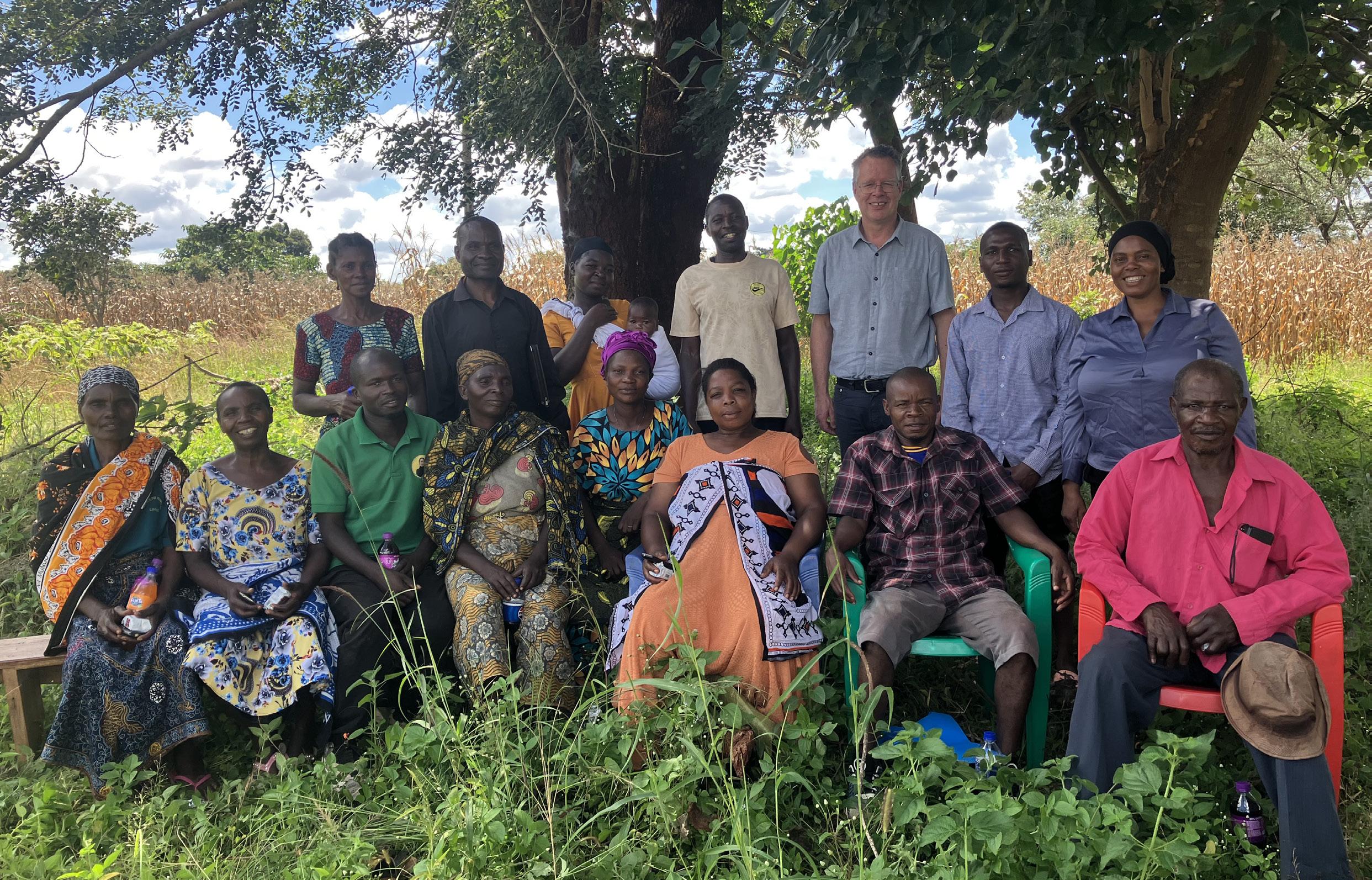
JENS ANDERSSON (TOP ROW THIRD FROM THE RIGHT)
Legumes are the meat of Africa. Affordable, versatile, nutritiousand they give back to the soil.
WUR - a discipline oriented, as he puts it, towards the world outside the Netherlands, with agriculture built in from the start. His first fieldwork took him to Tanzania, where he was asked to find out why potatoes eaten in Dar es Salaam came from an area more than a thousand kilometres away. He ended up studying the migration routes of actual potato varieties - his first serious encounter with the place where the social and the agronomic meet.
His PhD research focused on rural-urban connections in Zimbabwe, and the significance of rural land in the lives of urban migrants. It taught him that farming practices are often tied up with other economic activities, and cannot be understood in isolation. When his wife found work in Malawi, the couple ended up living and working outside the Netherlands for what would become nearly fifteen years. In a postdoc project on migration from northern Malawi to Johannesburg, South Africa, the theme of his PhD re-emerged: migrants often returned, built homes in the countryside, and
rooted their long-term security in the relationship between town and village. That understanding - of how farming fits into broader livelihood strategies, rather than standing apart from them - is central to how Jens approaches his agronomic work today. After returning to Zimbabwe, he was hired by the International Maize and Wheat Improvement Center (CIMMYT), also part of CGIAR, where he worked in the maize-dominated smallholder farming systems of east and southern Africa. Sustaining maize production on the increasingly degraded soils that characterise these systems means that fertilizers are needed - a dependency that often pushes farming families towards other sources of income, including migration. It also makes farmers vulnerable to every price shock and fertilizer supply disruption. Legumes offer an alternative: crops like soya, beans, groundnuts and pigeon peas that fix
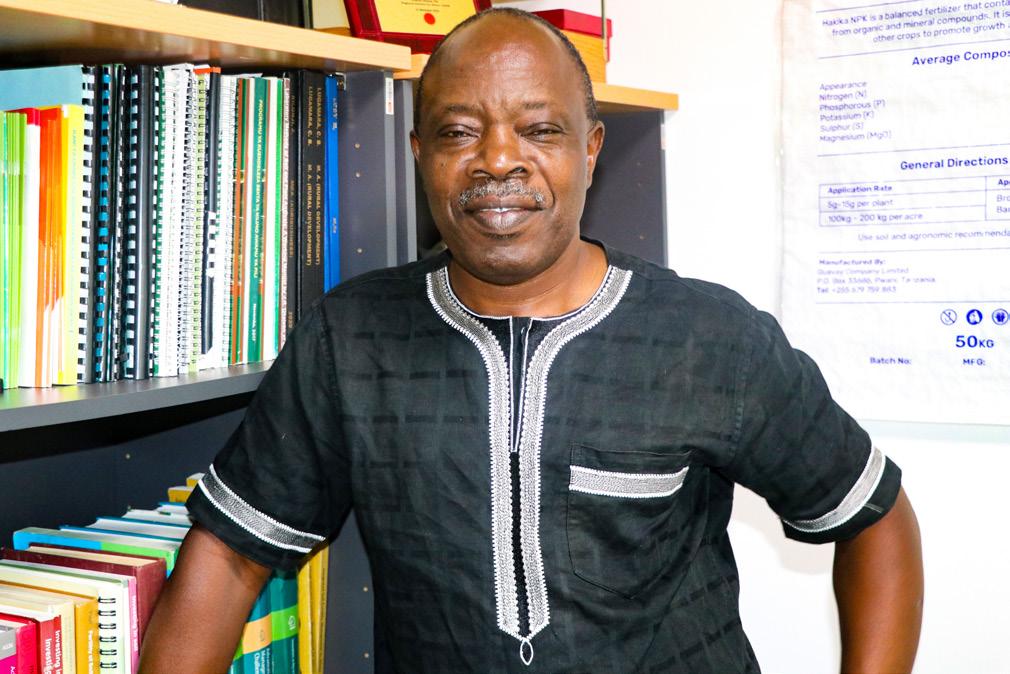
Legume research became my hobby. And then I met Jens, and we became legume fanatics together.
nitrogen naturally, restore soil fertility, and reduce the need for synthetic nitrogen fertilizers. Focusing increasingly on the integration of legumes into maize-dominated farming systems logically led Jens to collaborate with IITA - the leading institution on legume research in Africa. ‘There is always an autobiographical element in anyone’s scientific work,’ he says.
Jens and Frederick did not meet through the Senior Expert Programme. They had been working together through the Legumes for Development project and the Tanzania Sustainable Soybean Initiative - projects that built on N2Africa, a decade-long Gates Foundation-funded programme led by WUR and IITA. What the Senior Expert Programme added was structure and dedicated time. What the existing relationship already provided was harder to manufacture: trust, shared language, and a collaborative instinct that had been tested in the field.
‘Legume research became my hobby,’ Frederick says. ‘And then I met Jens, and we became legume fanatics together.’
Asked to explain - without jargon, for someone who knows nothing about agronomic researchwhat they are doing, Frederick offers this: improving the resilience of farmers against shocks, improving the nutritional quality of the food their families grow, and sustaining the environment they farm in.
Jens adds a second layer. The problem they are trying to solve is not only what farmers grow, but what they know. A vast amount of scientific knowledge has been developed for smallholder farming systems over the decades. Uptake remains limited. The gap, he argues, does not result from a failure of the science itself, but from a failure of design. Most innovations are not developed with a deep enough understanding of how smallholder farming actually works. ‘If farmers are not adopting what researchers have invented,’ Freder-
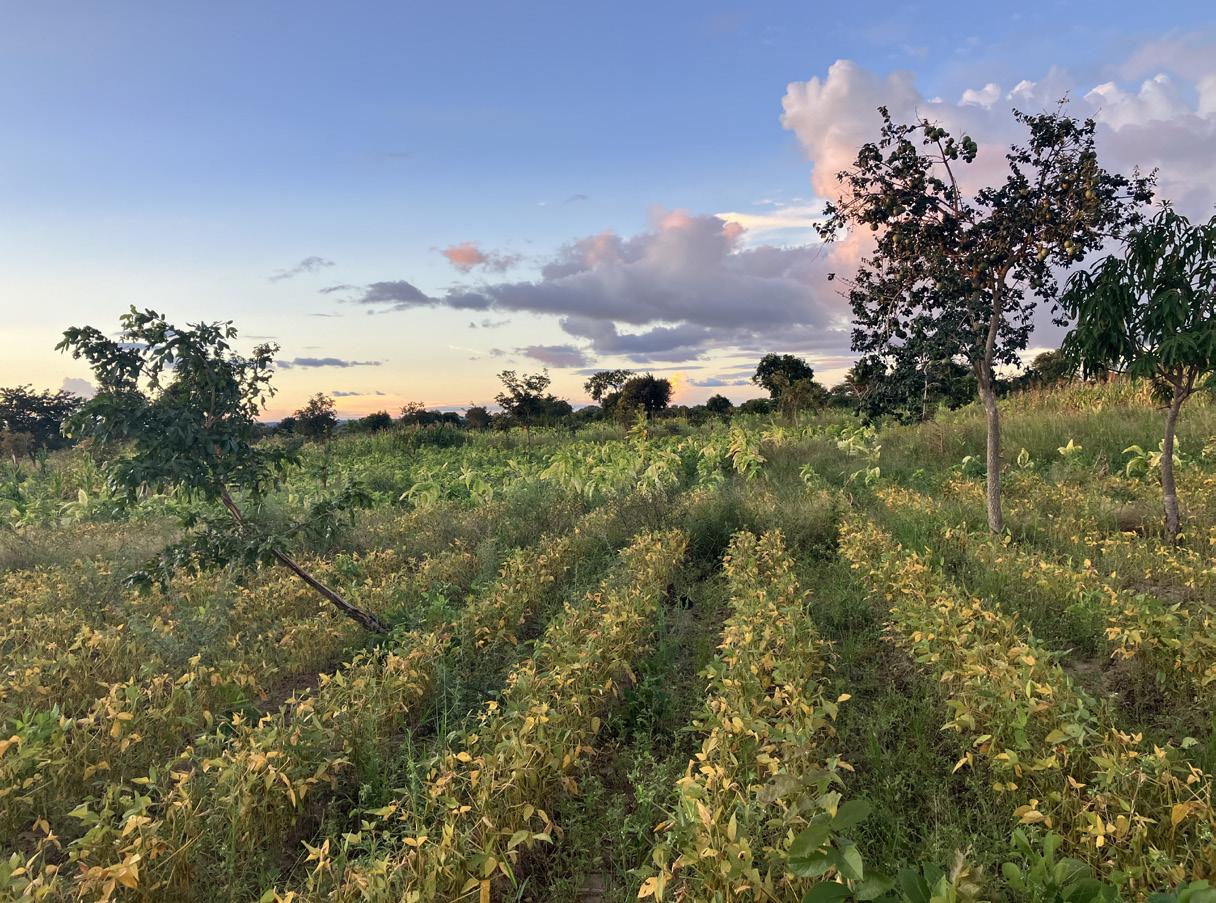
ick says, ‘researchers have not done a good job.’ The tool at the centre of their work is a tablet-based survey administered by local extension agents. When an agent visits a farmer - on their preferred field - it measures the field area, records the most important crop management practices and field conditions through images and simple questions in English or Swahili, and instantly generates agronomic advice - on the fertilizer and seed quantities needed for the measured field area, for the upcoming season. The data is stored and analysed after the season, feeding back into the models and the recommendations. Over time, the system learns from what many farmers do, across many fields. That learning is what makes it different from conventional extension: the knowledge does not only flow from researcher to farmer. It flows back.
This tool feeds into AgWise, a recommendation development platform under the CGIAR Sustainable Farming Science Program that brings together multiple crop-specific tools, including Akilimo for cassava. Farmer-MBA (Management-Based Advice) is a special case within AgWise: unlike other tools, it integrates feedback from the field directly into the development and delivery of advice, making it the only tool in the platform that genuinely learns as it goes. The name carries a double meaning: farmers who use it become Masters of Business Administration of their own fields.
If farmers are not adopting what researchers have invented, researchers
have not done a good job.
FREDERICK BAIJUKYA
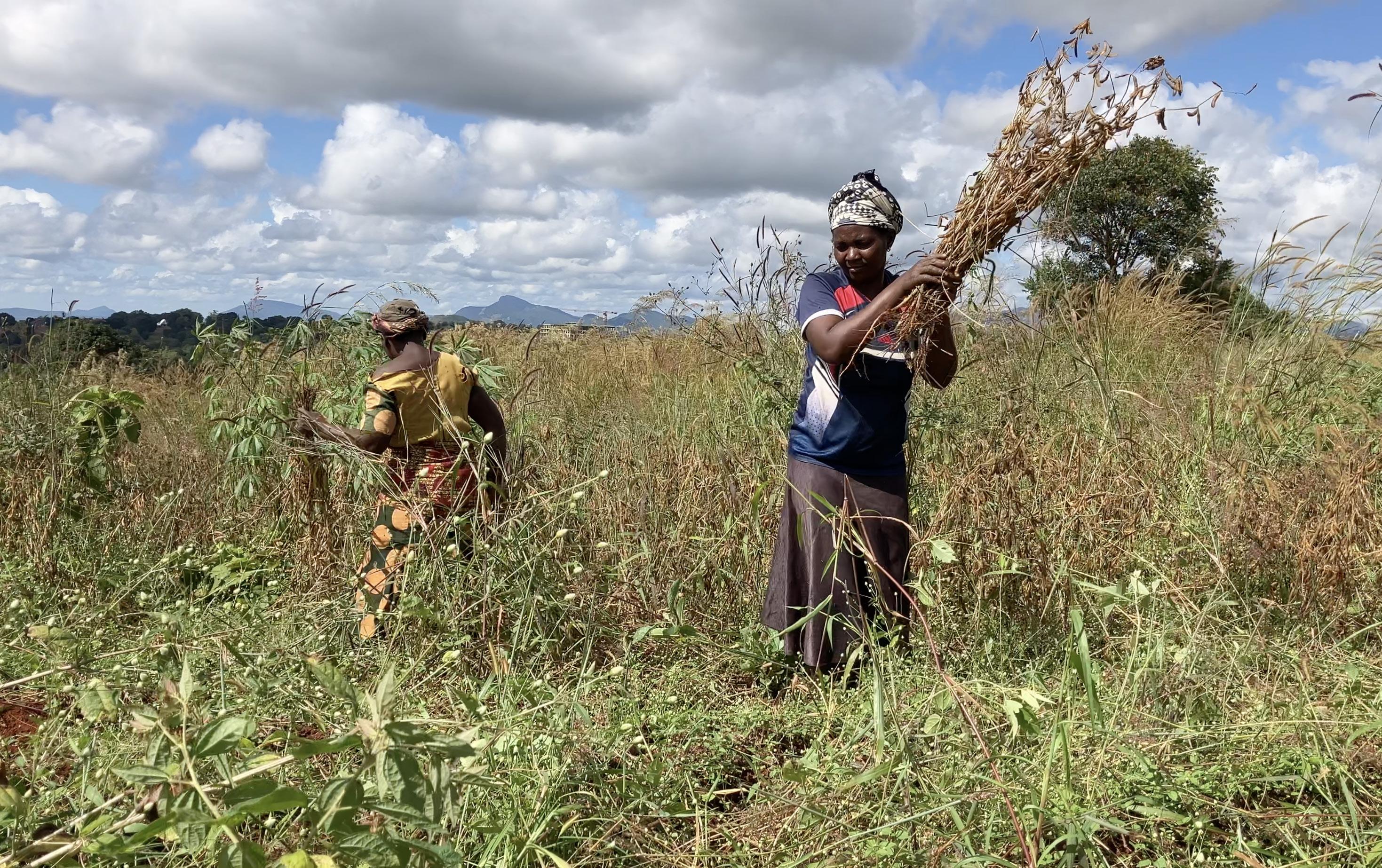
One
reads the farmer. The other reads the crop. Together, they see what neither could alone.
Their different perspectives come together most clearly in a story from the week of the interview. They visited an on-farm experimental site where the farmer had not followed the experimental protocol. She had planted fewer rows of soya than prescribed.
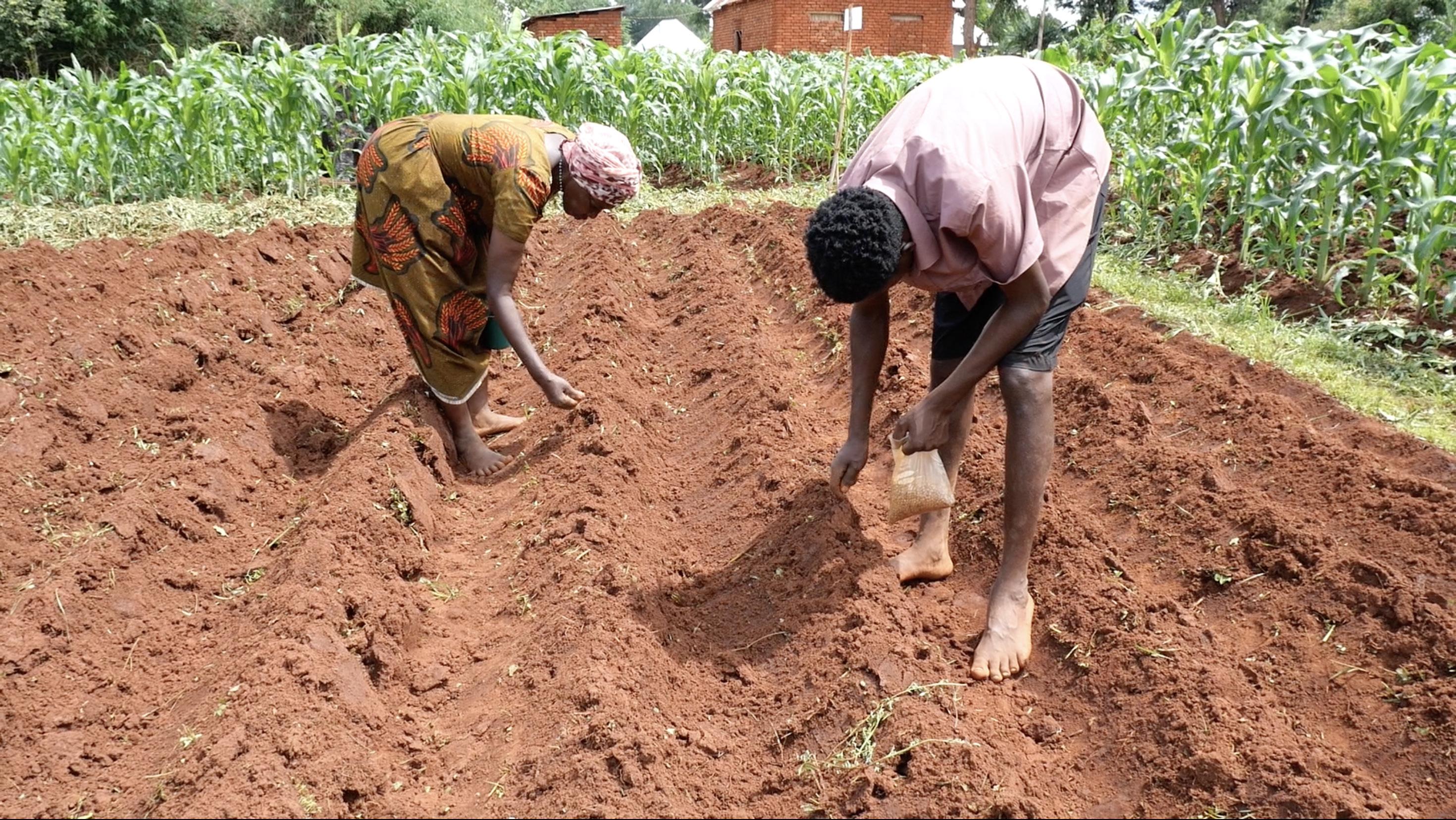
The reason was straightforward. Maize is planted in rows spaced far apart. Soya needs rows much closer together - a plant spacing that smothers weeds and allows the crop to develop properly. But changing the row spacing from one crop to the other means rebuilding the planting ridges, resetting the planting pattern. It is significant labour at a moment when there is already much to do. The farmer’s choice not to do it made sense.
Jens saw a design problem: if the recommended practice requires more work at the start of the
season than farmers have capacity for, the recommendation will not be followed. Frederick saw the agronomic consequence: soya planted too wide apart leaves space for weeds, which means more weeding later in the season, more labour overallnot less. The time saved at the start costs more at the end. One reads the farmer. The other reads the crop. Together, they see what neither could alone. Frederick describes what he has gained from working with a sociologist. Most agronomistshimself included, by instinct - would not naturally start by asking which type of farmer an intervention is actually designed for: whether it is a farmer with more or less land, more or less labour, more or less cash to invest in inputs. Or under what conditions the intervention works. Yet those questions not only shape the research and its outcomes, but also whether the outcomes are, in the end, usable for farmers. It means asking not just what a technology does agronomically, but for whom it works in practice.
The benefits of growing soya go beyond the soya
The goal is not to hand down prescriptions. It is to give farmers the tools to understand what is happening in their own fieldsand that, once learned, stays.
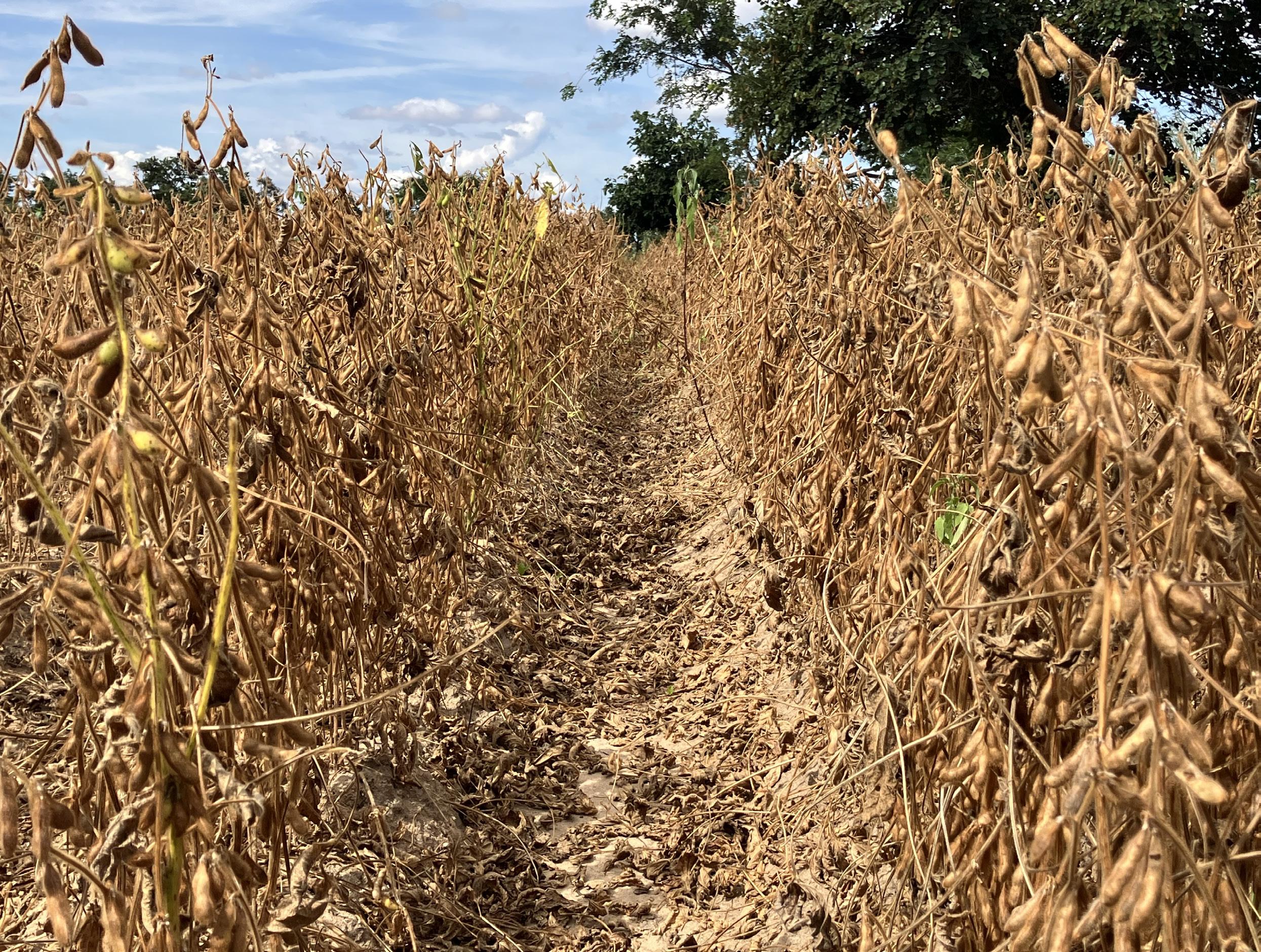
harvest itself. Because legumes fix nitrogen from the air and release it into the soil, a soya crop improves the fertility of the field for whatever comes next. Research from the project shows that fertilised maize grown after an unfertilised soya crop may yield 700 kg per hectare more than maize grown after maize - even when the maize is fertilised in both seasons.
What distinguishes this project from a conventional intervention is not the advice itself, but what happens after it. Farmers do not just follow or ignore a recommendation and move on. When they implement it and watch what happens, they now know what to look out for - and why. In the stakeholder meeting where the farmer with the purple maize spoke, others described moments of exactly that kind of reckoning: farmers who had seen for themselves, in their own fields, the consequences of a choice they had made. ‘The goal is not to hand down prescriptions,’ Frederick says. ‘It is to give farmers the tools to understand what is happening in their own fields - and that, once learned, stays.’
What emerged from conversations with farmers who had received advice for several seasons was something the data had already suggested: insights and practices do not stay with the individ-
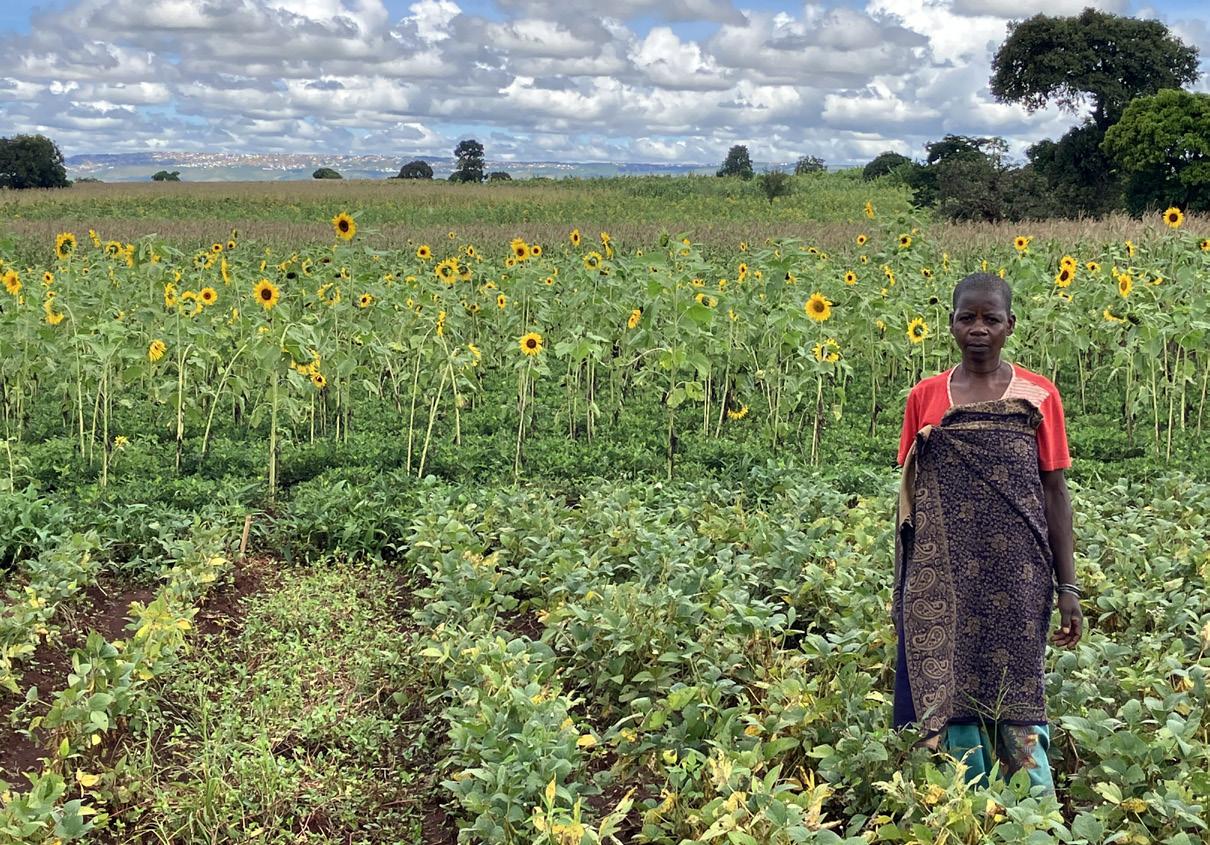
ual farmer who received the advice. They travel. A lower labour burden, a better harvest - it draws questions from family members, neighbours, fellow farmers. What did you do differently? What did you use? Why did it work? The data tell their own story: clusters of farmers in the same area doing strikingly similar things, like intercropping soya with sunflower, which reduces weed pressure, increases soya yields, and provides for another crop harvest. Thirty or forty kilometres away, farmers may not practise this at all. With few extension agents around, farmers mostly learn from their neighbours. Each cluster reflects a local conversation, not a centrally distributed message. That dynamic - science reaching farmers, and farmers reaching each other - is also what makes the question of who sets the agenda so important. Frederick has seen many internationally funded projects arrive in Tanzania with an agenda already set, implement what was planned, and leave. What is different here, he argues, is co-design and co-implementation. The experiments are housed on farmers’ own fields; farmers manage them day to day. Local government and the extension service are part of the process. The results are presented to extension agents at district and regional level, and to policymakers. ‘The research is aligned to country priorities,’ he says. ‘Not imposed on them.’ Jens adds a pointed observation about the assumptions that travel with international collaboration. The idea of ‘low input agriculture’ is often exported from Europe to Africa as best practice. In the Netherlands, reducing the environmental footprint of farming is a meaningful and urgent goal. In Tanzania, it is a different calculation: farming systems already producing at a fraction of their
The feedback loop from farmer to researcher is not an add-on to the science. It is the next step in how agricultural research should work.

potential cannot afford to reduce input use further without pushing families below subsistence. What international exchange can do, when it is working well, is build that understanding in both directions - including in students from WUR, who return from fieldwork in Tanzania with a more complicated picture of what sustainable agriculture actually means.
Both researchers are frank about the current funding environment. CGIAR has faced dramatic budget reductions, not only from the widely reported withdrawal of US support, but from a number of European governments as well. Jens says he has not seen cuts this severe in his career. ‘The consequences will not only be scientific,’ he says. ‘Farmers who cannot sustain themselves in their own environment migrate. The effects travel. They do not stay in Africa.’
What Jens hopes this collaboration will have contributed, in five or ten years, is a methodology of working with farmers that becomes embedded in how the CGIAR system operates. The traditional model of agronomy - design an experiment, learn from it, scale out the messages - is a one-directional process. What this project is trying to institutionalise is something genuinely reciprocal:
ABOUT THIS SERIES
Food security, climate resilience, sustainable food systems, these are challenges that no single country or institution can address alone. That is the driving logic behind the collaboration between the Netherlands and CGIAR, the world’s largest publicly funded network of agricultural research centres, working across low- and middle-income countries on the most pressing challenges in food and agriculture.
Through the NWO funded Senior Expert Programme in the NL-CGIAR research programme, experienced Dutch researchers contribute their expertise to The CGIAR
learning from many farmers simultaneously, in real conditions, and using that learning to continuously refine agronomic advice and the research direction. Frederick frames it as a question for the field as a whole. Not just what technology works for farmers, but what methodology works for science. The feedback loop - from farmer to extension agent to data platform to researcher - is not an add-on to the science. It is the next step in how agricultural research should work.
The interview ended as the rain began to fall on the Southern Highlands of Tanzania. Jens noted it, almost in passing: the timing of the rains, which can vary by two or three weeks across a distance of ten kilometres, is one of the most consequential variables in a smallholder’s season, and one that no platform has yet fully solved. Some things, for now, remain beyond the reach of even the best-designed system. What the project can do is make sure that when the rain arrives, farmers are ready - that they have learned to observe, to record, and to ask the right questions. Not because researchers will always be there to tell them what to do, but because the habit of paying attention, once formed, stays.
Research Portfolio, bringing Dutch knowledge to where it is needed most, and bringing global insights back to the Netherlands. The programme is designed to strengthen international research collaboration and ensure that science leads to real-world impact.
This article is part of a series of interviews highlighting these collaborations. The series is produced by the Netherlands Food Partnership in partnership with the NL–CGIAR working group, which brings together NWO, the Dutch Ministry of Foreign Affairs, and the Ministry of Agriculture, Fisheries, Food Security and Nature.