SOUTH AFRICA RANKED 64TH GLOBALLY ON MOBILE SPEEDS! WE CREATE WINNERS WITH
GOVERNMENT EXPANDS ON CONNECTIVITY!
In 2026, Artificial Intelligence (AI) is no longer a futuristic concept, evidence has proven, it is woven into our everyday life, whether we like it or not.
From customer service chatbots to advanced tools like ChatGPT and Google Gemini, AI systems are transforming how people communicate, learn, and do business.
But behind the convenience lies a critical question: why does AI need the internet?
The answer is simple: without the internet, AI becomes limited, outdated, and far less useful. AI models are trained on vast datasets, but that training only reflects knowledge up to a certain point.
The internet allows consumers to access the information provided by the AI services.
Whether it’s breaking news, financial markets, or weather updates, connectivity ensures AI remains relevant and accurate. In a fast-moving world, outdated information can lead to poor decisions.
Modern AI systems are not just trained once and left alone, they are constantly refined.
On Monday, 20 April 2026, I joined our Head of Marketing, Richard Genlloud at the SABC 1 for an afternoon show, Expressions, where the subject matter included AI.
And, interestingly, a prominent South African journalist who was also a guest on the show, William Lehong, has indicated that AI would be nothing without internet, even though programming, robotics and coding play a critical role.
Lehong spent some time away in the Middle East where he went to learn a lot about the migration to AI, and in the process invented an online musician through he help of AI, and the artist named “Olga” who can respond to questions and give analysis about herself.
“Whether we like it not, AI is here to stay, and we better create a relationship with it,” he told me, while pointing at Olga on the screen (see picture attached here, an AI created musician).
Through internet connectivity, developers can update models, fix errors, and improve performance.
Without the internet, AI could not be used by consumers and data set developed by AI would be less informative. The internet acts as the bridge between users and these high-performance systems, and Lehong admits that tools like Microsoft Copilot and Amazon Alexa function seamlessly.
Without internet access, many AI tools would be less effective than the data originally created.
To me, AI without the internet is like a car without fuel, it may look impressive, but it won’t take you very far.
AUCAMP THRILLED WITH DECADELONG RUGBY FESTIVAL!
Speaking to Evotel Media following the successful Lucas Meyer Rugby Week in Vryheid, school principal Pieter Aucamp, whose institution is named after the experienced rugby guru, expressed pride in how the tournament has grown over the years.
“This is our 10th annual rugby week, and we are very proud as a school to host this great event here at Lucas Meyer Primary. Each year the tournament continues to grow, and we are seeing more teams and more spectators coming through,” he said.
Aucamp highlighted the scale of the event, noting the strong participation across both age groups.
“We have 12 schools participating, with teams competing in both Under-11 and Under-13 divisions. It’s a fantastic platform for young players to gain experience and develop their skills.”
The spirit of schoolboy rugby was alive and thriving in Vryheid, KwaZulu-Natal, as the Lucas Meyer (LMS) Rugby Week 2026 delivered a thrilling three-day showcase of young talent, sportsmanship and community pride.
Hosted by Lucas Meyer Primary School, the 10th edition of the annual primary school rugby festival took place from 26 to 28 March 2026 on the school’s sports fields, attracting a strong turnout of parents and supporters.
The tournament featured 12 participating schools from across the region, further cementing its reputation as one of KwaZuluNatal’s premier junior rugby festivals.
Participating schools included Lucas Meyer Primary School, Howick Preparatory School, Kloof Senior Primary School, Heuwelland Primary School, Dundee Junior School, Nuwe Republiek School, Egerton Primary School, Pongola Academy, and Veld en Vlei Primary School, among others.
The tournament catered for both Under-11 and Under-13 age groups, offering young players the opportunity to test their skills in a structured yet competitive environment.
Aucamp also acknowledged the vital role of sponsors in ensuring the continued success of the event.
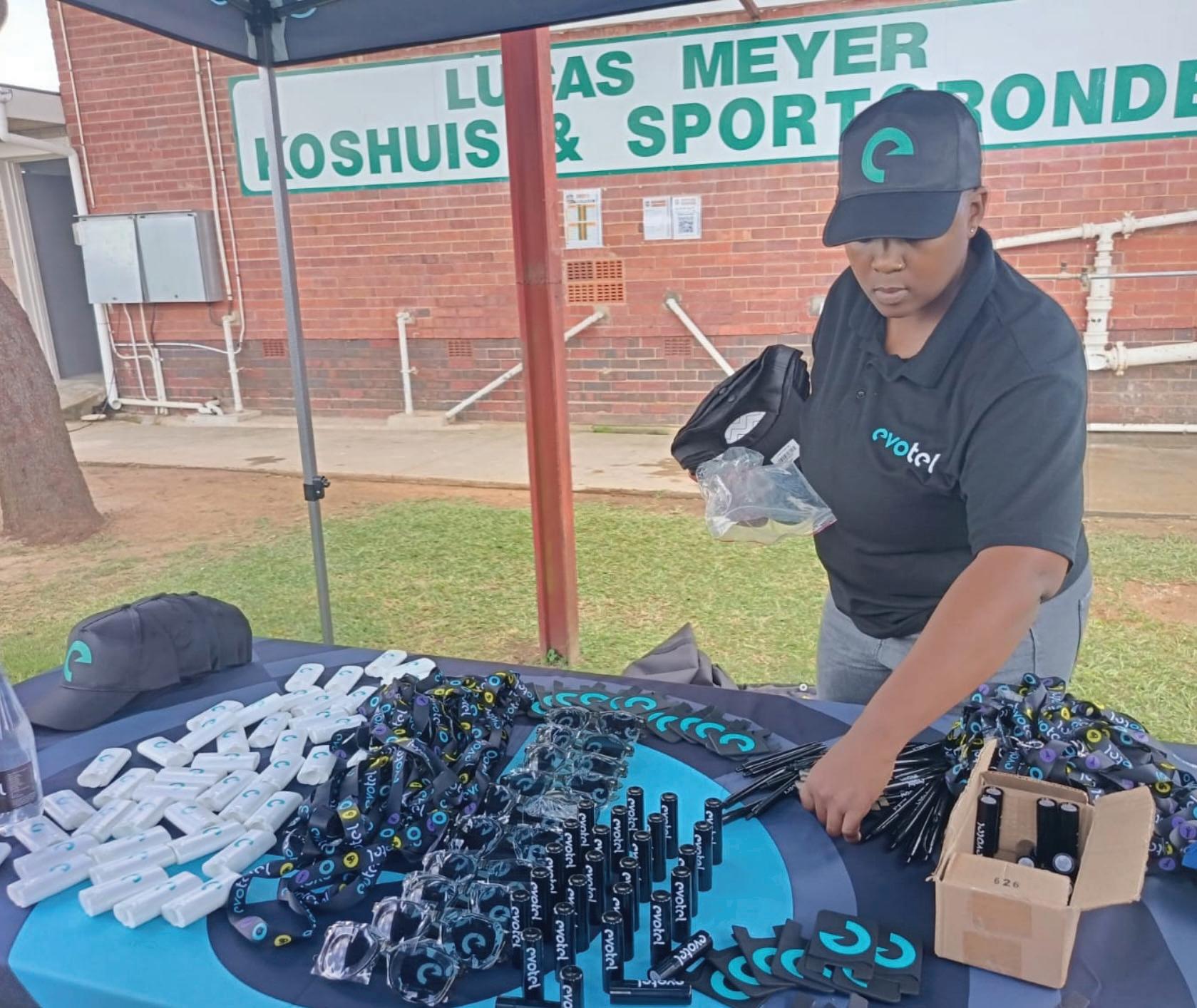
“We cannot host an event of this standard without the support of our sponsors. I would like to thank Evotel for their continued partnership. They have been with us from the beginning, supporting not only this tournament but also providing connectivity to the school,” he said.
On the field, the competition delivered exciting results.
In the Under-13 division, Nuwe Republiek School emerged as champions, with Egerton Primary School finishing as runners-up and hosts Lucas Meyer Primary School securing third place.
In the Under-11 category, Pongola Academy claimed top honours, while Egerton Primary School once again finished second. Lucas Meyer Primary School placed fourth in this division.
Reflecting on his teams’ performances, Aucamp noted the importance of the tournament as a preparatory platform.
“This rugby week is essentially a pre-season tournament. The boys play multiple matches over the three days, which helps prepare them for the upcoming school rugby season in the next term,” he said.
He added that the school remains optimistic about the future of its rugby programme and the talent being nurtured.
“We’ve produced players who have gone on to higher levels, including provincial rugby, and even Springbok representation.
That shows the importance of investing in development at a young age.”
Beyond the results, the Lucas Meyer Rugby Week continues to stand out for its emphasis on development, discipline and sportsmanship.
As the final whistle blew on another successful edition, the event once again demonstrated its value, not only in producing winners, but in shaping the future of rugby at grassroots level.
PLATINUM PROVINCE RELIES ON US!
Residents of Rustenburg are increasingly embracing Evotel fibre internet, and the reasons go far beyond simple connectivity.
Across community conversations, online discussions and industry reviews, a clear picture is emerging of why this network has become a preferred choice in the Platinum City.
At the heart of the appeal is reliability and Corporate Social Investment (CSI) that the company has invested in the Platinum Province.
In a country where connectivity is often disrupted by load shedding, load reduction, and infrastructure challenges, Evotel’s fibre network is widely recognised for its stability.
The company commits to high uptime and uses fibre technology that is less affected by power interruptions compared to wireless alternatives, allowing households and businesses to stay connected for longer periods, one resident indicated.
This is particularly valuable in a city like Rustenburg where small businesses, content creators and remote workers rely on video calls, cloud services and online platforms.
The result is a smoother, more consistent online experience, whether for work or entertainment.
Beyond the technical aspects, community presence has significantly boosted trust in the brand. The company has invested directly in Rustenburg.
Social impact initiatives have further strengthened Evotel’s reputation with the support of local organisations such as the Rustenburg Crime Combating Forum with connectivity, the company has positioned itself as more than just a service provider.
It becomes part of the community’s development, contributing to safety, communication and local empowerment.
Ultimately, the love for Evotel fibre in
This reliability matters deeply in Rustenburg, where many residents depend on the internet for remote work, education and communication with family, and maintenance team is always on guard to correct any potential network break.
Evotel operates an open-access network, meaning users are not locked into a single internet service provider, meaning affordability for those preferring certain speeds as certain prices that suit their pocket.
the love for Evotel fibre in Rustenburg comes down to a combination of reliability, choice, performance and g community engagement.
They can choose from dozens of ISPs offering different pricing and packages.
In communities where cost is a major factor, like Tlhabane and many others deeper in the townships of Rustenburg, this ability to shop around gives residents a sense of control and freedom that traditional fibre monopolies often do not provide.
Evotel offers uncapped and unthrottled internet with symmetric speeds on many packages, meaning upload speeds match download speeds.
SOUTH AFRICA RANKED 64TH GLOBALLY ON MOBILE SPEEDS!
While South Africa stands among Africa’s frontrunners in connectivity, the global fibre race is accelerating at a relentless pace.
For companies like Evotel, reclaiming market share is not just about competition - it is about contributing to a broader vision of a digitally inclusive and globally competitive South Africa.
In this evolving landscape, the real victory will lie in bridging the digital divide and ensuring that fast, reliable internet is not a privilege, but a standard accessible to all.
Tunisia and Algeria are also making significant strides.
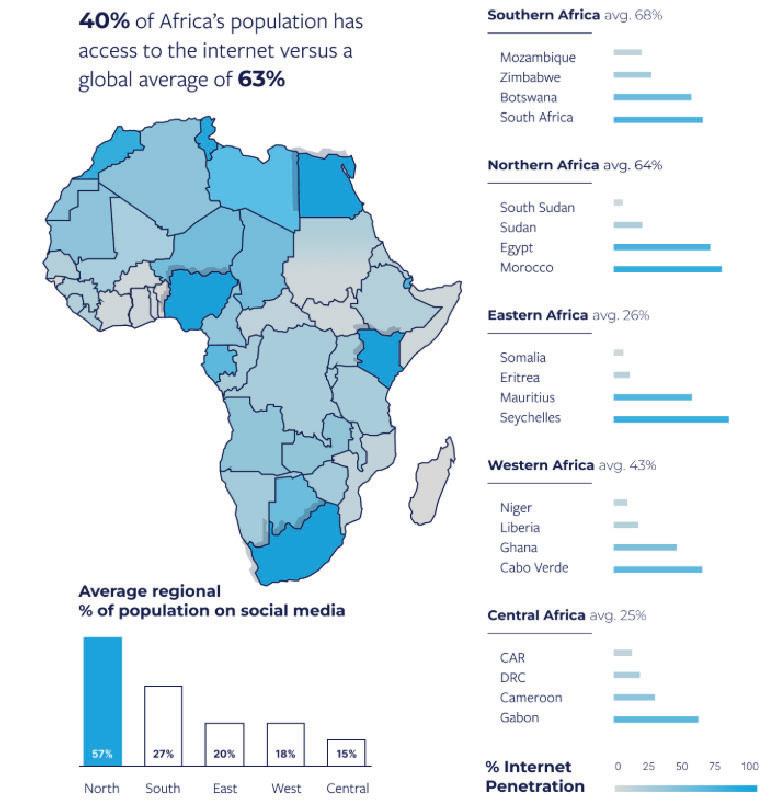
South Africa remains a key player, ranking 64th globally for mobile internet speeds, with average speeds of around 65.7Mbps.
While this places the country among Africa’s leaders, it also highlights the gap between South Africa and top-performing global markets.
As Evotel knuckles down to action in an effort to reclaim its place within South Africa’s competitive telecommunications space, the spotlight naturally turns to how the country measures up against the world’s most techsavvy nations driving the fibre internet revolution.
Globally, the race for faster, more reliable internet is being led by countries that have made aggressive investments in fibre-optic infrastructure and 5G networks.
Nations such as Iceland, Denmark and the Netherlands dominate fixed broadband rankings, boasting average speeds exceeding 180Mbps, thanks to strong government policy, compact infrastructure, and widespread fibre adoption.
In the Middle East, countries like Qatar and the United Arab Emirates have surged ahead through smart city initiatives and cuttingedge telecom innovation, setting the pace for ultra-fast connectivity worldwide.
On the fixed broadband side, South Africa performs relatively well by continental standards, with average speeds around 45–50Mbps, supported by expanding metro fibre networks and a competitive ISP market.
Fibre internet has become the gold standard of connectivity, offering faster speeds, lower latency, and greater reliability than traditional copper or mobile networks.
In contrast, much of Sub-Saharan Africa still relies heavily on mobile networks, with infrastructure challenges, electricity shortages, and rural connectivity gaps slowing progress.
Against this global backdrop, Evotel’s renewed push into the fibre market comes at a critical time, as demand for high-speed internet continues to surge, particularly in underserved communities, fibre network operators have an opportunity to reshape South Africa’s digital future.
Across Asia, tech powerhouses such as South Korea and Singapore continue to lead through deep fibre penetration and advanced digital ecosystems, positioning connectivity as a backbone of economic growth.
On the African continent, the picture is one of rapid growth but uneven development.
Northern African countries, particularly Morocco, have taken the lead in Africa due to early 5G rollout and strong infrastructure investment.
Morocco currently ranks among the top globally in mobile internet performance.
GOVERNMENT EXPANDS ON CONNECTIVITY!
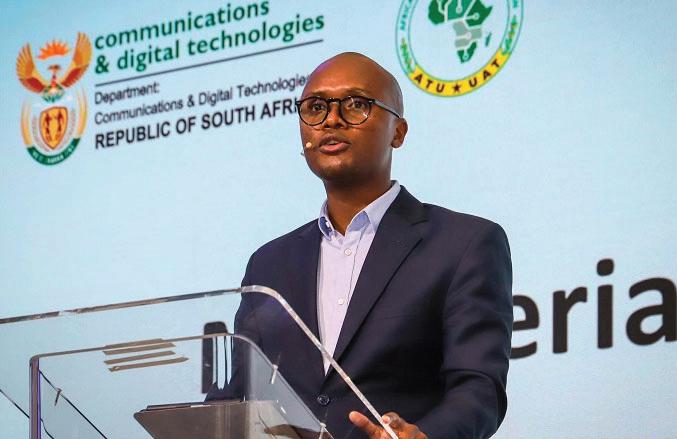
South Africa is ramping up efforts to ensure that affordable, reliable and meaningful internet access reaches every citizen, particularly those living in poor and rural communities, according to Minister Solly Malatsi.
Speaking under the theme, “Digital Lifelines: strengthening resilience in a connected world,” the Communications and Digital Technologies minister emphasised the growing importance of digital infrastructure in modern society.
However, he stressed that simply having network coverage is no longer enough if citizens cannot afford devices, data or the digital skills needed to participate fully in the digital economy.
The country’s focus is now shifting beyond universal access towards meaningful connectivity.
In his recent Budget Speech on 12 May, Malatsi reckons reliable connectivity is now considered essential for education, healthcare, communication, business operations and emergency response services.
While South Africa has made significant progress in expanding connectivity, government acknowledged that major challenges still remain.
A recent Digital Infrastructure Investment Study found that only 2.2% of South African households still lack connectivity access, said Malatsi through his budget speech.
This includes making internet services more affordable, increasing smartphone ownership and ensuring that citizens can use digital platforms to improve their livelihoods and economic opportunities.
The Department of Communications and Digital Technologies reiterated that its primary role is not to directly build towers or fibre networks, but rather to create an enabling environment through effective policy, regulation and collaboration with the private sector.
Several achievements over the past year were highlighted.
The removal of ad valorem excise duties on entry-level smartphones resulted in increased smartphone sales after years of decline, helping more South Africans move from basic feature phones to internet-enabled devices.
Government also launched eight cyber-labs across the country to provide digital skills training for young people, with plans already in place to establish 10 additional labs during the current financial year.
Improvements in governance within key state entities were also noted.
The South African Broadcasting Corporation (SABC) and the State Information Technology Agency (SITA) both recorded improved audit outcomes following years of instability and governance concerns, he indicated.
He acknowledged that limited funding can no longer be used as an excuse for underperformance, emphasising the importance of stronger partnerships with the private sector to accelerate affordable internet access.
Government further admitted that full state ownership of some entities may no longer be sustainable, suggesting that strategic partnerships with private investors could help expand digital infrastructure more efficiently.
South Africa continues to attract strong private investment in the ICT sector, with more than R56 billion recently committed to major digital infrastructure projects.
Despite these gains, government admitted that serious challenges persist.
“The long-delayed analogue switch-off and digital migration process remains unresolved, while several state entities continue to struggle with governance and financial pressures,” he said.
“To improve accountability, government has introduced new oversight measures, including lifestyle audits for leadership across departments and state entities.
“For the 2026/27 financial year, the Department of Communications and Digital Technologies has been allocated R2.549 billion, with a large portion of the budget transferred to entities such as ICASA, the SABC and the South African Post Office.”
“Looking ahead, government plans to modernise telecommunications policies and regulations, increase competition, reduce infrastructure deployment costs and improve affordability for consumers,” he outlined.
“Work is also underway to revise South Africa’s Artificial Intelligence policy following concerns about the irresponsible use of generative AI during the drafting process.”
Government concluded by stressing that the country’s digital future depends not only on network coverage, but also on ensuring that all South Africans can actively participate in the digital economy through affordable, secure and meaningful internet access.
To advertise in this newsletter, let us know! (This space is for our ISPs - Internet Service Providers)
Advertise your brand here: DPS, SPS, vertical and horizonal banner space is available. Contact: nadias@evotel.co.za