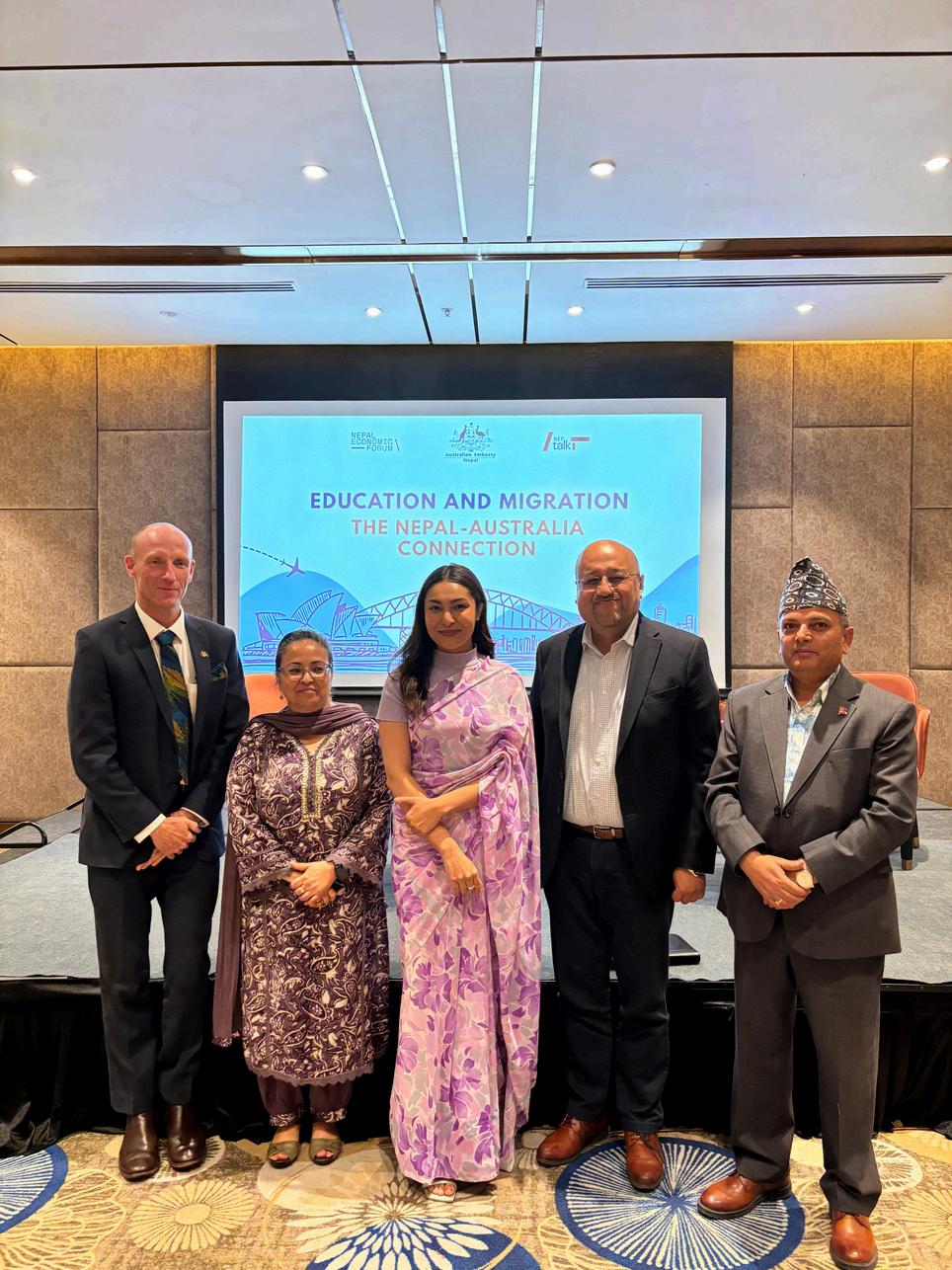




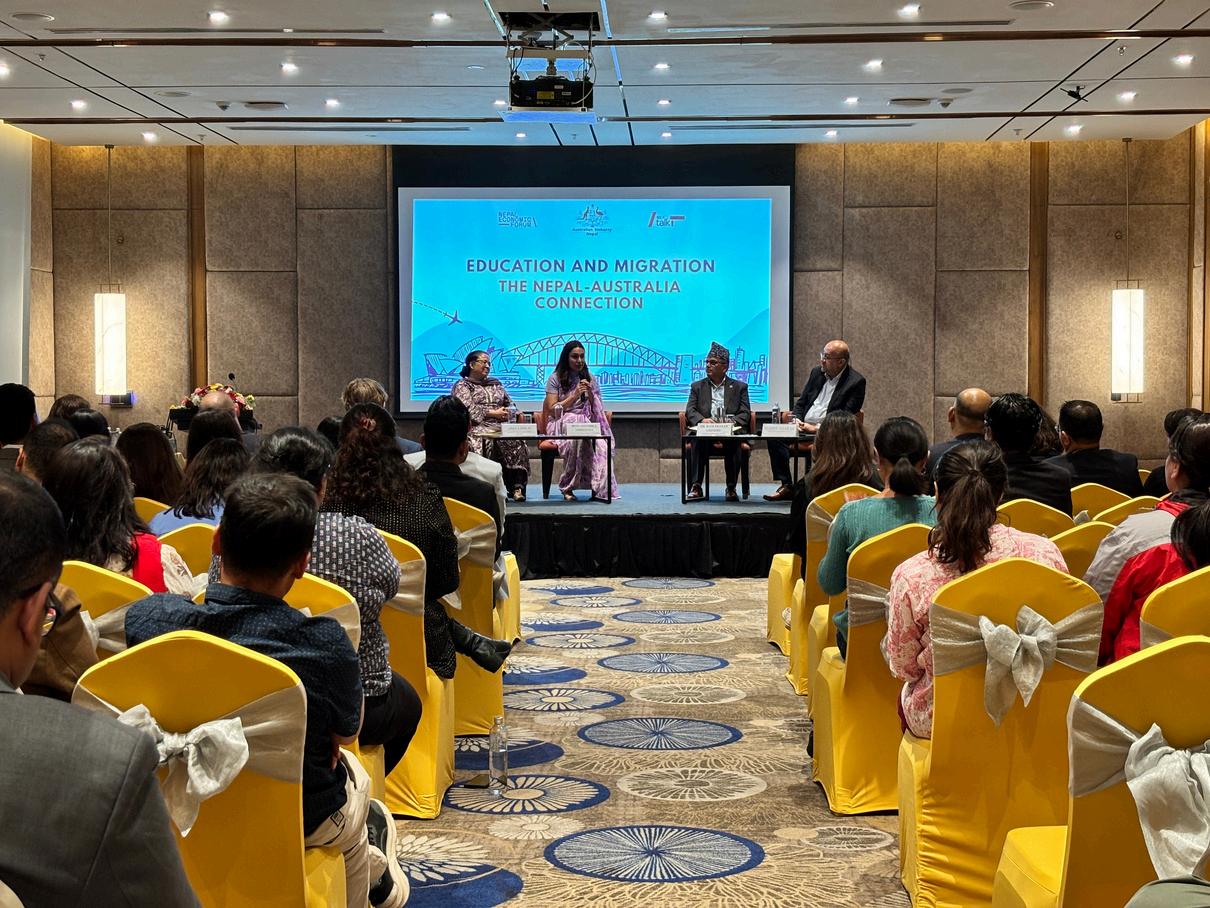
On April 16, 2026, Nepal Economic Forum (NEF), in collaboration with the Australian Embassy in Nepal, hosted a NEFtalk on the theme 'Education and Migration: Nepal–Australia Connection'. The event brought together government representatives, academics, alumni, diplomats, and youth to explore the evolving relationship between educational migration and long-term development for both nations.
Over the past two decades, Australia has emerged as one of the foremost destinations for Nepali students seeking higher education, with over 60,000 Nepali students on Australian student visas in 2022–2023 alone, making Nepal Australia's third-largest source country for international students. Against this backdrop, the NEFtalk examined the growing trend of Nepali students migrating to Australia for higher education, explored the conditions Nepal must create to encourage skilled graduates to return home, and discussed how this relationship can serve the developmental aspirations of both Nepal and Australia.

"The Nepali diaspora in Australia is not only a migrant community, but also a living bridge between the two countries."
Ambassador Simon Ernst opened by emphasizing the remarkable scale of the NepalAustralia education relationship, noting that Nepal's 70,000+ students make it the third-largest source of international students in Australia, and the largest on a per capita basis when compared to China and India. He emphasized that this relationship is not new, tracing its roots back over 70 years to the Colombo Plan of the 1950s, which trained Nepalis in fields like medicine and civil aviation. The relationship has also given rise to landmark outcomes such as Nepal's community forestry program and the globally renowned Tilganga Institute of Ophthalmology. Ernst presented Nepali students as active participants in Australian campus life, contributors to the multicultural fabric of Australian culture, and, crucially, contributors to Nepal's development through public service, commercial investment, and remittances. He pointed to the presence of Australian alumni in Nepal's cabinet and government as proof of the long-term effects of the education collaboration. Looking ahead, he firmly asserted the need and scope for delivering Australian qualifications inside Nepal, citing Gate College's decade-long delivery of TAFE NSW qualifications as a working model, and committed the embassy to fostering further institutional collaborations between Australian and Nepali universities.

"Nepali students who are applying now are better prepared and have stronger profiles; this shows a shift from quantity to quality."
Salina Kafle highlighted the rapid growth in Nepali students going abroad through her presentation. She noted that No-Objection Certificates issued rose from approximately 30,000 in FY 2015/16 to over 110,000 in FY 2024/25, which is 3.7 times increase in just 10 years. She then pointed out that Australia had been the top destination for the past five years, capturing 38% of roughly 550,000 NOCs issued, ahead of Japan at 23.73% and the UK at 16.24%. She highlighted that while fewer students lodged visa applications in FY 2024/25, the number who received their visa was 88.3% higher than the previous year, with an overall approval rate of 49.7%. She described this as a clear shift from quantity to quality. Additionally, Nepalis are also settling permanently, from 4,714 permanent visas granted in FY 2020/21 to more than double that figure by FY 2023/24. Closing, she noted that Australia will remain a top destination for Nepali students, even as the migration pattern is shifting.

You've spent significant time in Australia across different life stages. From your experience working in Nepali higher education and your involvement with the University of Nepal, what is your perspective on the discourse around migration and the evolving purpose of universities?
What can be done at the individual and institutional level to strengthen Australia–Nepal collaboration in education?
Singh shared that she had spent about 12 years in Australia, including her childhood, undergraduate degree, and doctoral degree. Speaking from her experience working in a university in Nepal and her involvement in starting the University of Nepal, she remarked that the discourse around “how do we stop migration” was not very productive, noting that higher education had become more market-driven, with shrinking space for critical and creative learning. She emphasized the need to refocus on the purpose of universities, including teaching, research, and social impact, highlighting that research in Nepal was almost non-existent. She pointed to diversity and interdisciplinary exposure in Australia as valuable and stressed the need for wellrounded education and institution-building.
Singh stated that at the individual level, young people should not go abroad only for education but also to understand how things are done. At the institutional level, she noted the trend of foreign universities opening campuses, though Nepal’s legal framework could be a challenge. She emphasized policy clarity, better distribution of students, and collaboration models, citing examples such as Yale–NUS and Kathmandu University.
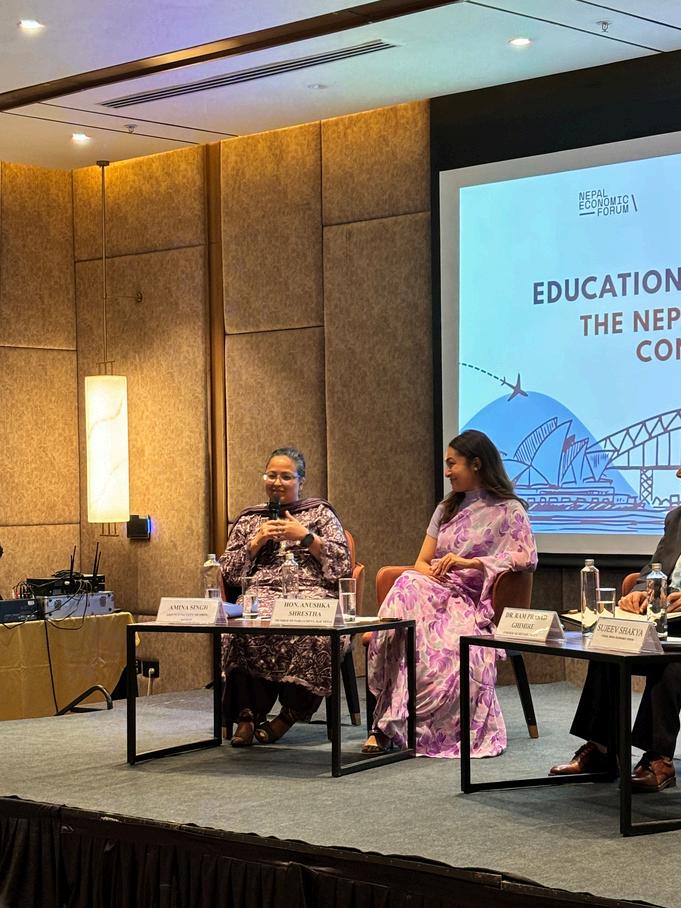
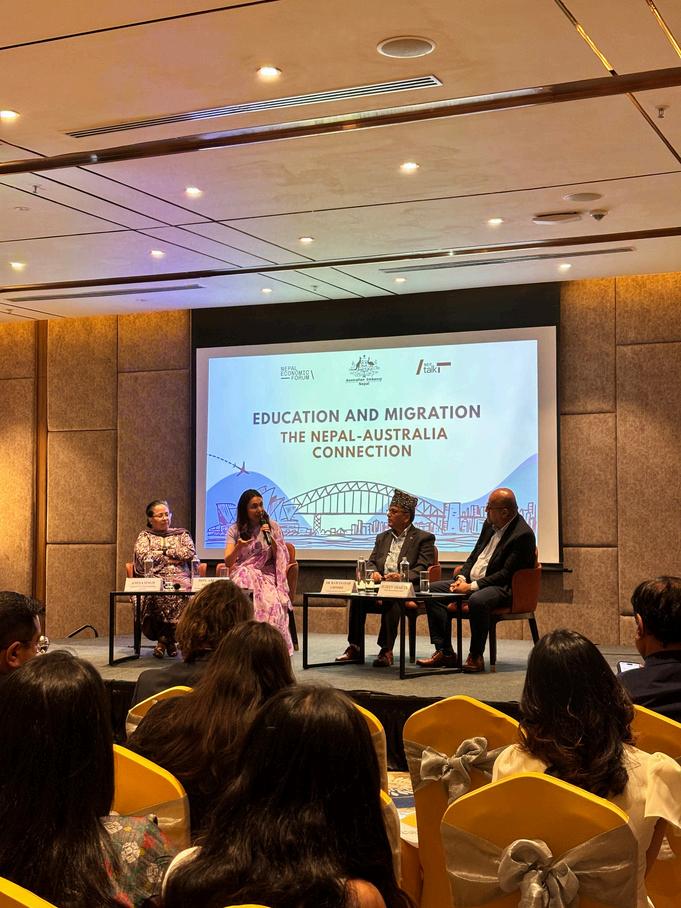
What changing trends have you observed in Nepal-Australia education relations, and how should the growing volume of student mobility be managed going forward?

Moving into your government role, what policy directions are being considered around Transnational Education and academic collaborations between Nepal and Australia?
Anushka Shrestha shared that her academic and professional experiences in Australia significantly benefited her education, career, and personal development. She highlighted the importance of taking full advantage of student support services, which had a significant influence on her career choices. Additionally, she stressed an important career lesson she had learned, that students should not only look for opportunities to contribute, but also seek what they can gain and how they can grow.
From her policy background, Shrestha stressed the importance of showing that Australian education is not a stepping stone to migration, but rather for academic quality and career opportunities.
Shrestha recommended closer academic partnerships between Nepal and Australia to limit brain drain through capacity building. She also stressed the need to manage the growing mobility of students and the risk of reactive policy in the absence of planning.
She highlighted the critical role of Vocational Education and Training (VET) in Nepal's progress, especially to address domestic skill gaps. Concluding, she called for practical governance by addressing basic systems, institutional capacity building, and two-way knowledge exchange to support sustainable development.
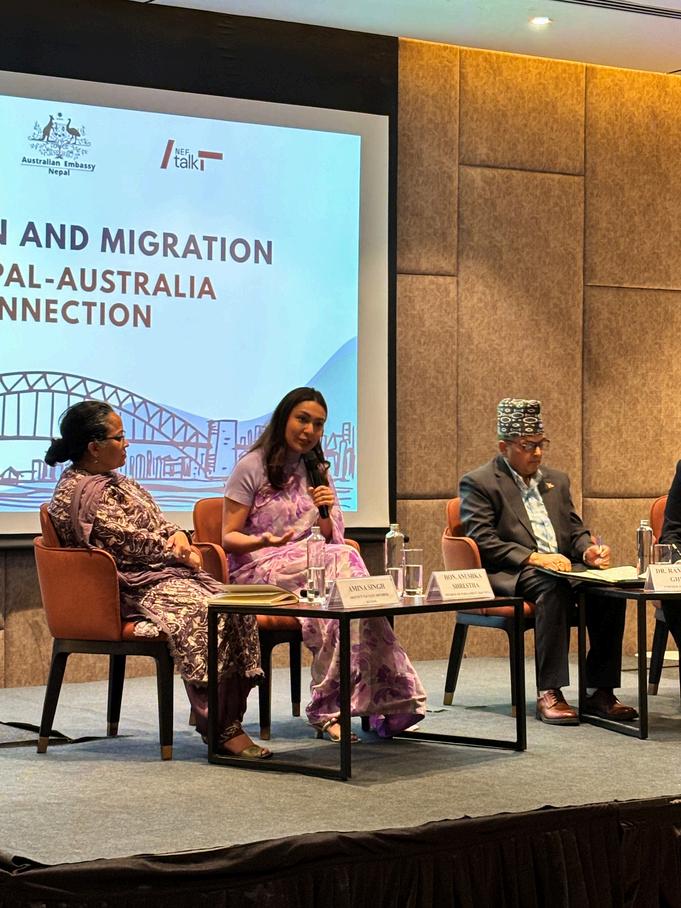
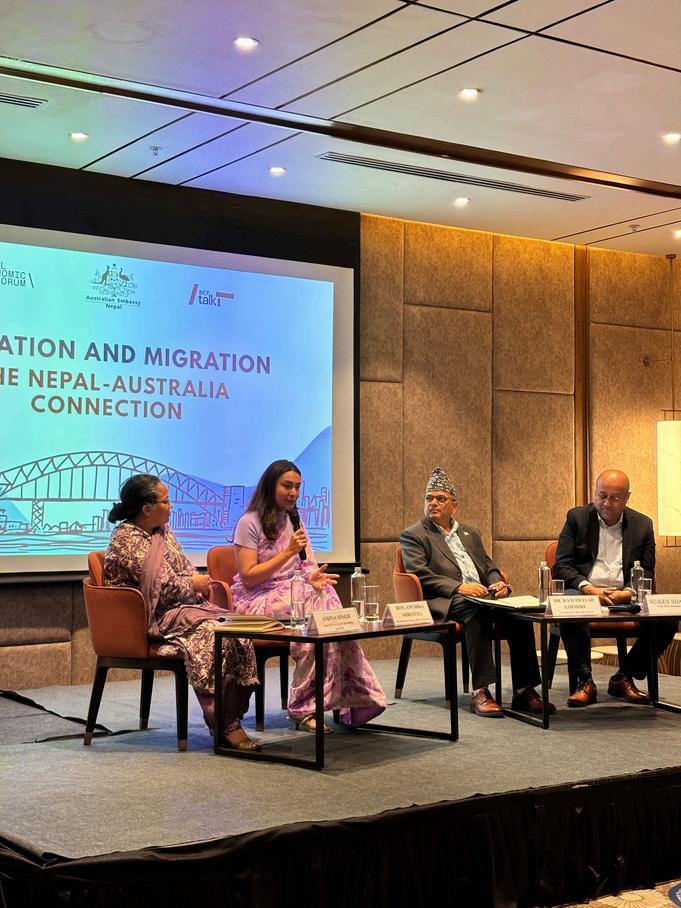
From your time at the Crawford School of Public Policy, how did engaging with academics, practitioners, and retired civil servants shape your approach to policy making upon returning to Nepal?
From a futuristic perspective, what are the key areas where Australia-Nepal collaboration in education and beyond could be strengthened?
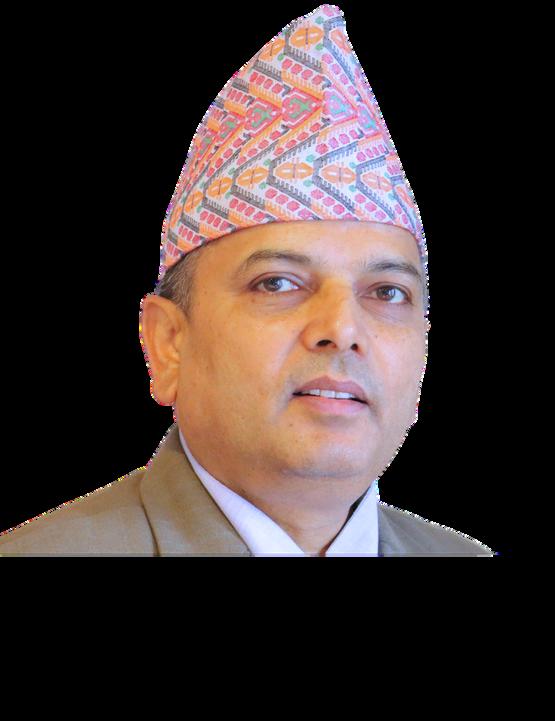
Ghimire stated that he was located at the Crawford School of Public Policy during his doctoral program, which provided opportunities to engage with academics, practitioners, and retired civil servants.
He stated that education had to be improvement-oriented, not enlightenmentoriented. Ghimire emphasized that education migration should not be stopped but highlighted the need to manage the push and pull factors. To strengthen future collaboration, he suggested establishing a campus of a renowned Australian university to attract regional students, alongside promoting trade diversification and increasing Australian foreign direct and diaspora investment in Nepal.
He emphasized that education diplomacy would help achieve this by deepening bilateral ties. He noted that Nepal’s strategic location, neutrality, and non-aligned status make it attractive to students from neighboring countries, highlighting the sector’s strong potential as a key contributor to the national economy. Ghimire stated that he believed in brain circulation rather than brain drain, and that the brain was not constant but could be enlarged and enhanced, and that people who came back from abroad were more empowered, committed, and enthusiastic. He cited his own experience, noting that after returning from Australia, he contributed to formulating social security regulations and schemes at the Ministry of Labor, Employment, and Social Security.
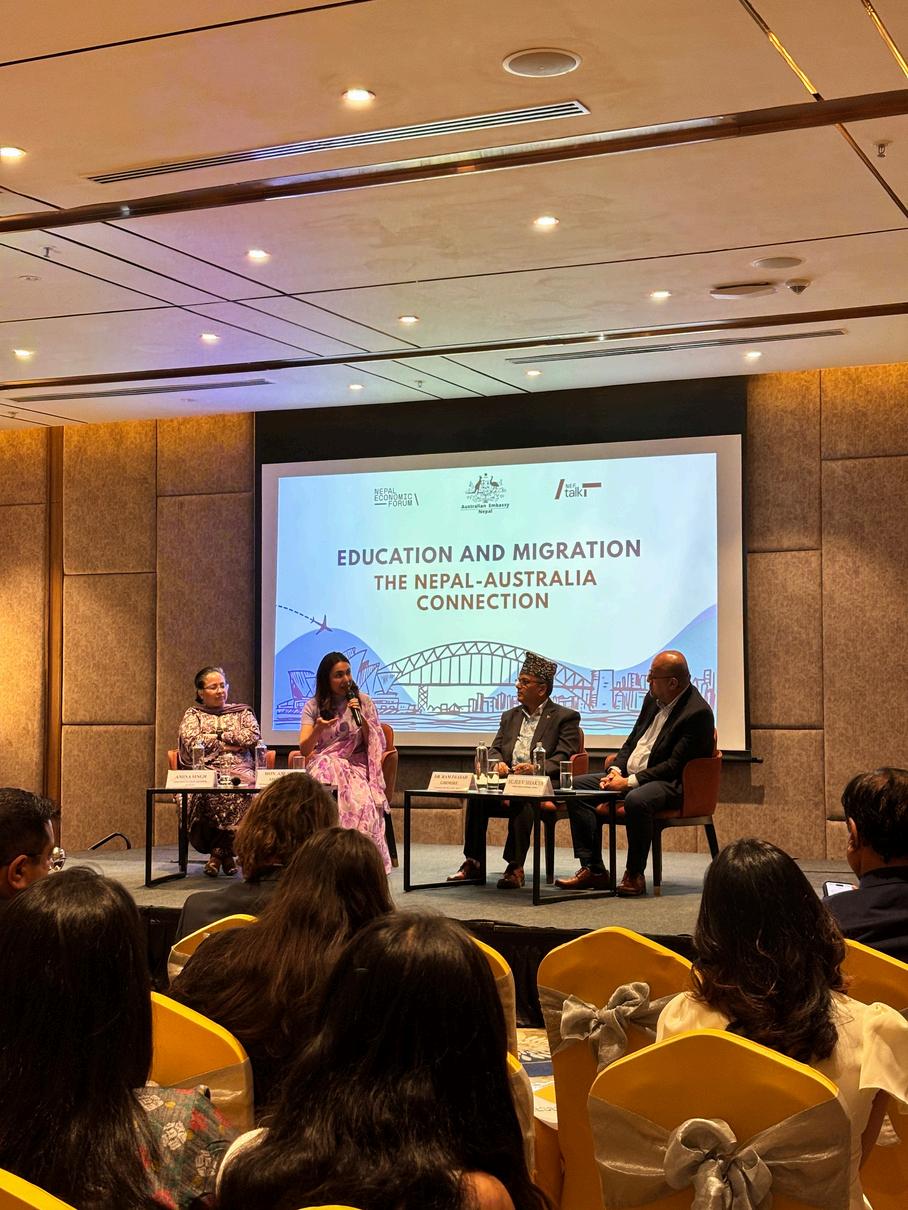

Sujeev Shakya moderated the panel discussion on Nepal-Australia education and migration relations. Drawing on his extensive experience in business, economy, and development, he framed the discussion by contextualizing the deep and growing people-to-people connections between Nepal and Australia, anchored primarily through education and trade. Throughout the session, he steered the conversation toward identifying concrete areas of collaboration between Nepal and Australia, including Transnational Education, institutional partnerships, trade diversification, and diaspora engagement.