It’s a new school year. It is a new time to ”ignite” student interest in science and STEM. In this newsletter, you will find a variety of ideas to use in your classroom as well as resources for the classroom. Also in this newsletter are information and links to our 2026 MSTA Annual Conference. We are back in Meridian for our conference and would love to have you join us there!
Now is the time to begin your paperwork to attend the 2026 MSTA Annual Conference! Registration is online, and you can access by clicking HERE.
Share your professional skills with our membership! Please submit a proposal for a session (or two….). Pick an activity that you use in your classroom and present it! Consider doing a repeat session, as it is hard to be two places at the same time and the membership must choose which sessions to attend. If you present the same session twice, then you will have a new audience the second time! Click HERE to submit a session proposal.
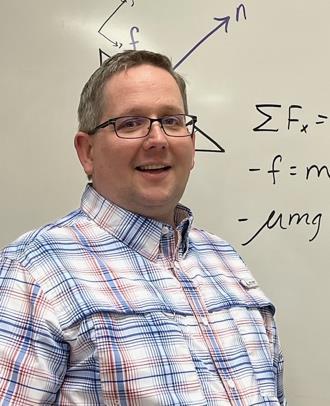
From MSTA President, Dr. Carl Dewitt
Very recently, scientists in Spain found the spectral signature of sugar in a gas cloud near the center of the Milky Way Galaxy. This is exciting and shows that organic molecules can be found some place other than Earth. This does not mean life, but it is a significant step in finding life outside of our little home in the galaxy. As a Star Trek/Star Wars/Orville/ fan, I find this really exciting!
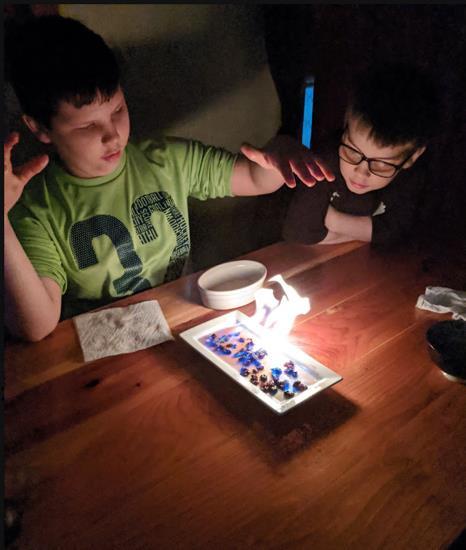
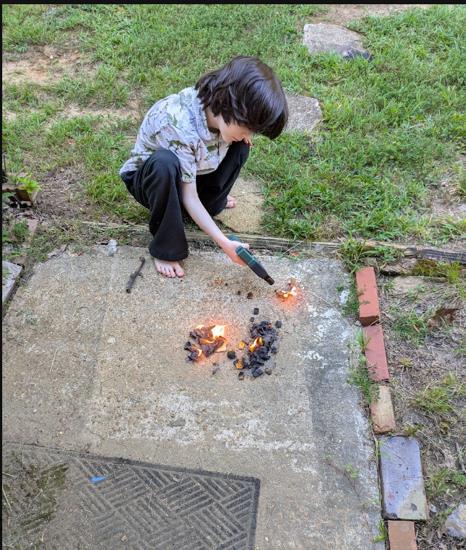
So, how do we identify chemicals? Each element has a specific arrangement of electrons and when those electrons get excited, they jump up to a higher energy state. Just like a cat at the top of the stairs, the electrons will eventually come back down to a lower potential. That drop in potential comes with a specific loss of energy, and that energy is a specific color of light. You can try this yourself! The color something burns, tells you the chemical components of that item.
1.Stick some pencil lead in a fire and it will produce an orange flame.
2.Grab mom’s copper scrubby pad from the sink and throw it in a campfire; it will produce a green flame.
3.Soak a cucumber in potassium chloride (Mrs Dash) instead of sodium chloride for pickling. Stab some forks in the pickle and put a voltage across the forks, and the pickle-bulb will glow pink.
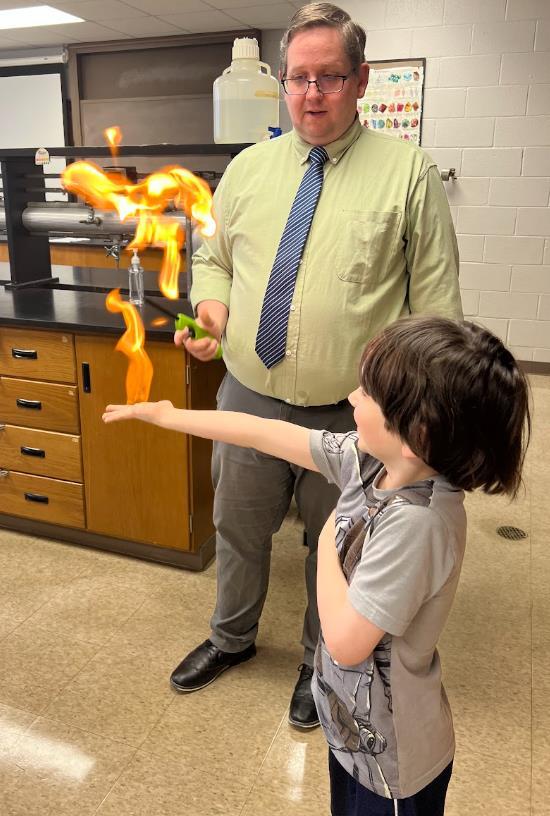
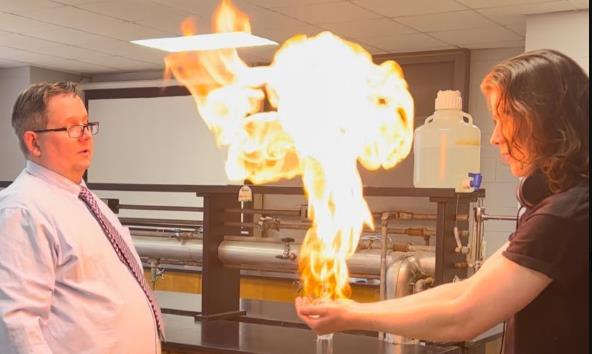
Fire is an opportunity to learn. Be safe with fire, but if those kid’s lives are not in a little bit of danger, they probably aren’t learning enough.
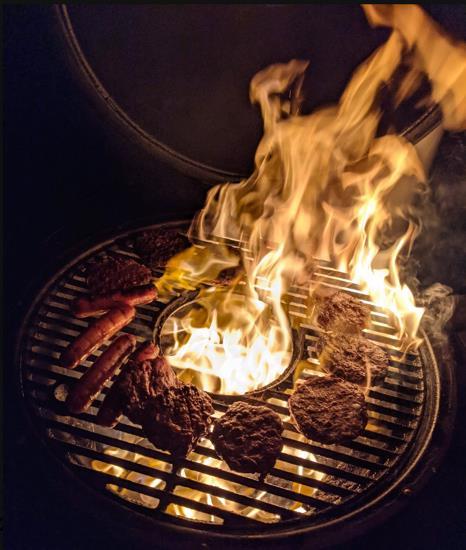
Every fire is an opportunity for learning. Ask me about my kids playing Snap-Dragon. It is one of our Christmas traditions. They have to gather raisins from the flame with their bare hands. Most of the items humans burn are carbon-heavy, like those burgers, and tend to glow orange as a result. News article about sugar found in cosmic clouds https://www.cbc.ca/news/science/sugar-in-space-life-on-earth-9.7281908 Pickle Lightbulb video https://youtu.be/xHWsamFRi1o?si=wTsB74OQomc7wIEn Snap-Dragon game https://en.wikipedia.org/wiki/Snap-dragon_(game)
“Be safe with fire, but if those kid’s lives aren’t in a little bit of danger, they probably aren’t learning enough.” - Carl Dewitt MSTA President and father of 5 wonderful children
Special Announcement
The Bess Moffatt Conference Award
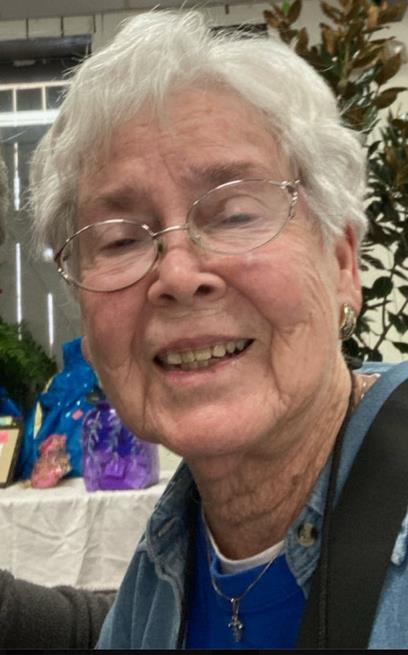
For more than 50 years, Bess Moffatt was a member of MSTA. She was the first PresidentialAwardee for Science (Mississippi) in 1983. She served on the MSTA board of directors for over 40 years and as our Executive Officer for over 30 years. Though Bess is no longer an active member of MSTA, we are honoring her with the creation of a new award for teachers, the Bess Moffatt Conference Award.
The purpose of this stipend award is to support professional growth and active engagement within the Mississippi Science Teaching Association (MSTA) by funding teacher registration for the MSTA State Conference. This stipend is intended to increase conference participation while fostering future presenters who contribute to the ongoing success of the conference.
The scholarship stipend will cover the full cost of the current year’s MSTA State Conference PreRegistration Fee. The stipend amount will be equal to the official pre-registration rate established for that conference year. Note: This stipend does NOT cover hotel, travel, or food.
How does one receive this scholarship stipend? Be an active MSTA member, completeand submit the application by August 30, and agree to present a session at the conference during the same year that you receive the stipend.
Once you are notified that you have been selected as a recipient for the scholarship stipend, you MUST pre-register as soon as possible. The application is found at this link:
Bess Moffatt,
We thank you for all your work in forwarding science education in Mississippi.
The MSTA Board of Directors
Bess Moffatt Conference Award Scholarship
Inquiry First: Using the Toothpick Enzyme Lab to Build Student Understanding
By Heather Thornton MSTA High School Representative | MABE President
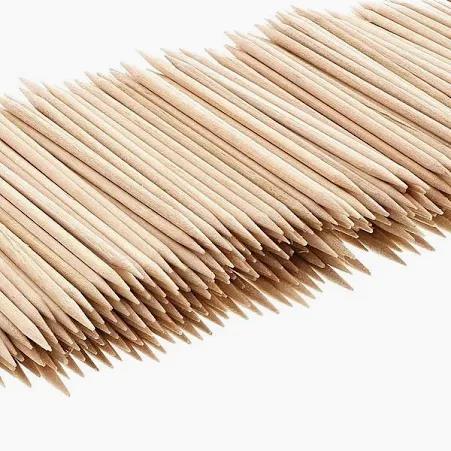
One of my favorite ways to introduce enzymes is by allowing students to experience enzyme activity before they ever hear a formal definition. Rather than beginning with vocabulary and lecture notes, I start with an inquiry-based lab that challenges students to collect data, recognize patterns, and begin asking questions.
There are several versions of the Toothpick Enzyme Lab floating around science classrooms and online. The version I use has been modified over the years from an activity I originally received from Flinn Scientific. With a few adjustments, it has become an engaging introductory investigation that encourages students to develop their own conceptual understanding before direct instruction begins.
The Activity
Students work in groups of three, with each member serving a specific role:
Timer – keeps 20-second intervals.
Recorder – records the cumulative number of toothpicks broken.
Breaker – randomly selects unbroken toothpicks from a container and snaps them in half before returning the broken pieces to the bowl.
The activity continues for multiple 20-second intervals until nearly all of the toothpicks have been broken. Students then graph the cumulative number of broken toothpicks over time.
Without any prior instruction about enzymes, students quickly notice that the reaction starts rapidly but slows as fewer unbroken toothpicks remain available. This naturally leads to meaningful classroom discussions about why reaction rates change.
Aligning Inquiry with the Mississippi Science Standards
Although this activity serves as an introductory exploration, it intentionally supports the inquiry-focused vision of the Mississippi College and Career Readiness Standards for Science. The investigation provides an excellent foundation for Biology Standard BIO 1B.2, in which students design and conduct experiments to determine how enzymes react under various environmental conditions, such as changes in pH, temperature, and concentration, and analyze, interpret, graph, and present data to explain how those conditions affect enzyme activity and reaction rates. After completing the introductory simulation, students are well prepared to design more sophisticated investigations that explore authentic variables affecting enzyme function.
From Inquiry to Instruction
Once students have completed the investigation and graphed their data, we transition into a whole-class debrief. Rather than simply providing definitions, students help construct the meaning of key vocabulary based on what they observed during the simulation.
Together, we define and discuss:
Enzyme
Catalyst
Substrate
Active site
Activation energy
Students then reflect on the activity and identify what each component of the simulation represents. They determine which part served as the enzyme, what represented the substrate, how the force required to snap the toothpick models activation energy, and how the availability of substrates affected the overall reaction rate.
By the time we formally introduce enzyme structure and function, students already have a concrete experience to connect with the new content. This makes the vocabulary much more meaningful and easier to retain.
Why It Works
This activity exemplifies an inquiry-first approach to science instruction. Students begin by making observations, collecting quantitative data, graphing results, identifying patterns, and constructing explanations before receiving formal instruction. Instead of memorizing definitions, they build their understanding through firsthand experience.
The lab also reinforces essential scientific skills by requiring students to:
Collect and organize quantitative data.
Construct and interpret graphs.
Identify patterns and trends.
Develop evidence-based explanations.
Connect a physical model to a biological process.
Students are often surprised that such a simple activity can illustrate such a complex biological concept.
Extension Ideas
One advantage of this lab is how easily it can be modified to investigate additional factors affecting enzyme activity.
Possible extensions include:
Increasing enzyme concentration: Add another set of hands breaking toothpicks to represent additional enzyme molecules working simultaneously.
Introducing an enzyme inhibitor: Add paper clips, beads, or other small objects to the container with toothpicks. These objects interfere with the enzyme's ability to locate substrates, modeling competitive inhibition and reducing the reaction rate.
These extensions transition seamlessly into the investigations described in BIO 1B.2, allowing students to design experiments that examine how enzyme concentration, inhibitors, pH, and temperature influence reaction rates while continuing to strengthen their data collection, graphing, and analytical skills.
Sometimes the most memorable science lessons begin with a simple model that sparks curiosity. By allowing students to discover patterns first and define concepts second, the Toothpick Enzyme Lab transforms vocabulary from something students memorize into something they truly understand while engaging students in the authentic practices of scientific inquiry.
Explore Mississippi’s Natural World with the Mississippi Museum of Natural Science
By Jake Kealhofer, Informal Science Representative
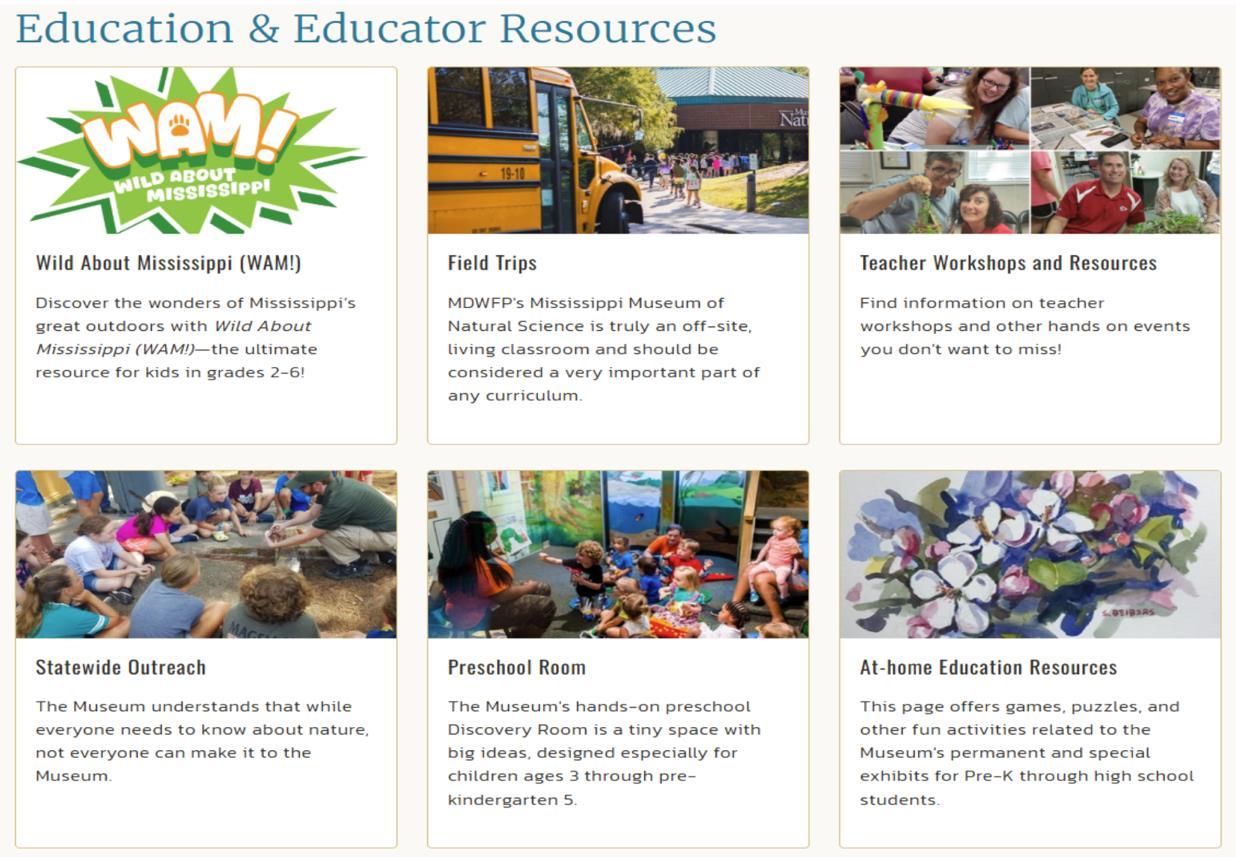
Bring science to life with the Mississippi Museum of Natural Science’s wide range of educator resources! Whether you’re planning a field trip, looking for engaging classroom materials, or searching for high-quality professional development, the Museum offers tools to support teaching and inspire student curiosity.
Educators can take advantage of hands-on field trip experiences, statewide outreach programs, curriculum-aligned classroom presentations, teacher workshops offering CEU opportunities, and loanable resource kits featuring specimens, lesson plans, and educational materials. The Museum also provides free downloadable activities, scavenger hunts, coloring pages, games, and lesson resources for students from Pre-K through high school. Programs are designed to align with Mississippi science standards while fostering exploration, critical thinking, and environmental stewardship.
From the popular Wild About Mississippi (WAM!) resources to nationally recognized environmental education programs such as Project WILD, Project WET, and Growing Up WILD, the Museum equips educators with meaningful, hands-on learning experiences that extend far beyond the classroom.
Whether you visit the Museum or invite their outreach team to your school, these resources help students discover the incredible wildlife, ecosystems, and natural history of Mississippi. Learn more and explore available resources on the Mississippi Museum of Natural Science’s Teacher and Student Resources page.
Have you tried Twinkl? This website states that, “We help educators plan faster, teach better and spend less.” This resource is designed for K-8 teachers. You would need to create a free account. They have thousands of resources (for all curricula - not just science) that are free downloads. MSTA would like to know your thoughts on Twinkl. Click on the image to access the website.
The Smithsonian Museum provides free K-12 lessons with videos/webcasts that are free to use in the classroom. Their lessons correlate to the NGSS. There is a specific set of lessons on how to research using what students see in their neighborhood. Click on the image to access the website.
The National Institutes of Health provide free lessons for K-12. These lessons focus on STEM. There are many lessons that explore upper level biology lessons (for example, biomedical science). Explore the site to find lessons in your teaching area. Click on the image to access the website.
Knowable Magazine provides free lesson resources, including science graphics. This website also provides a Spanish version of most resources. Again, MSTA is interested in your opinion of this resources.
Publicity & Social Media: Christy Sheffield, NBCT (also Exhibits Coordinator)
About the Board of Directors:
The MSTA Board of Directors are volunteers who believe in science education within Mississippi. We receive no payment nor discounted rates for our service.