We are proud to announce that we are now in-network with Blue Cross® Blue Shield ® of Arizona. We also accept all insurance plans, including Medicare, Medicaid, and TRICARE. Even if we are out of network with your insurance, we will honor your in-network benefits in accordance with the No Surprises Act.
The Workouts Your Face Has Been Waiting For
If glowing, lifted, healthier-than-ever skin had a workout routine, ClearLift ® and ClearSkin ® would be its personal trainers.
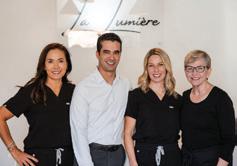
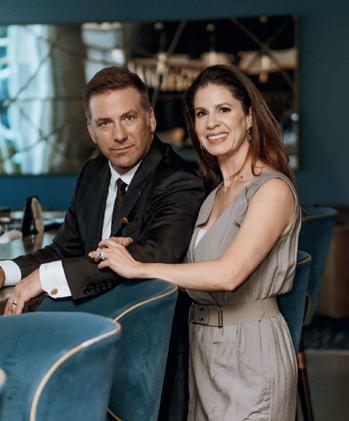
Elaine Lightbourne is famous in Prescott for being an incredible Master Medical Aesthetician and CLT and we are so excited she's joined us here at La Lumiere! Elaine knows everything there is to know about skin! Book now for a FREE skin analysis and let us get you glowing!!!
Anissa Mersiowsky, Dr. Erik Contreras, Lexie Contreras, Elaine Lightborne
Breathe
THAT FRESH AIR, AND GET A MOVE ON
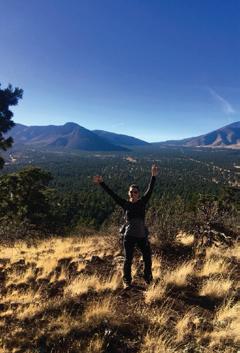
Laurie is an avid hiker and cyclist who loves the outdoors and enjoys the beauty of Prescott. She also has a menagerie of pets to keep her smiling!
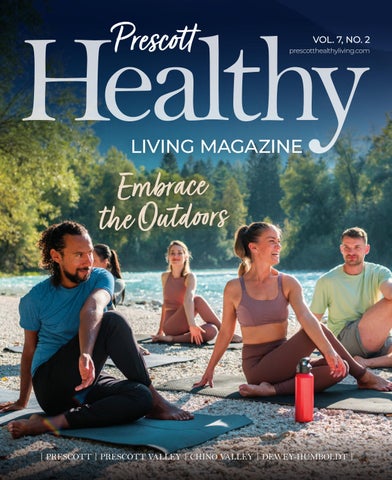
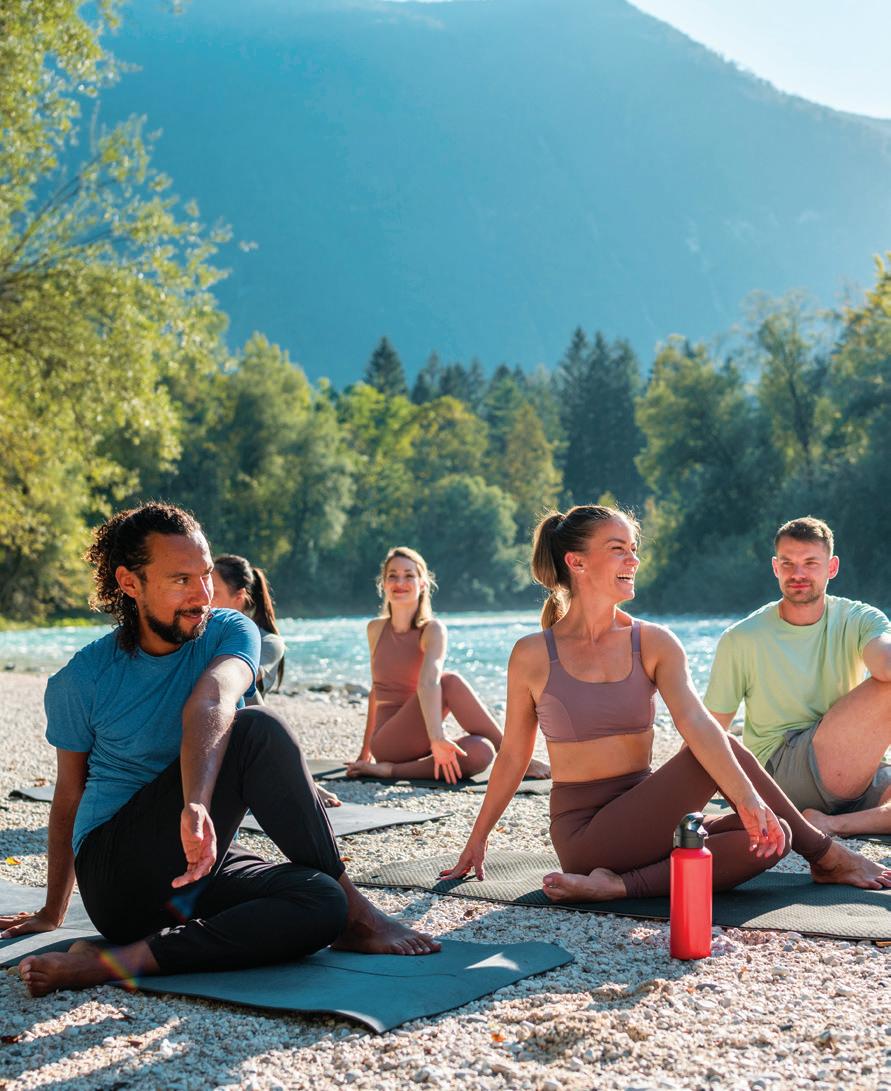
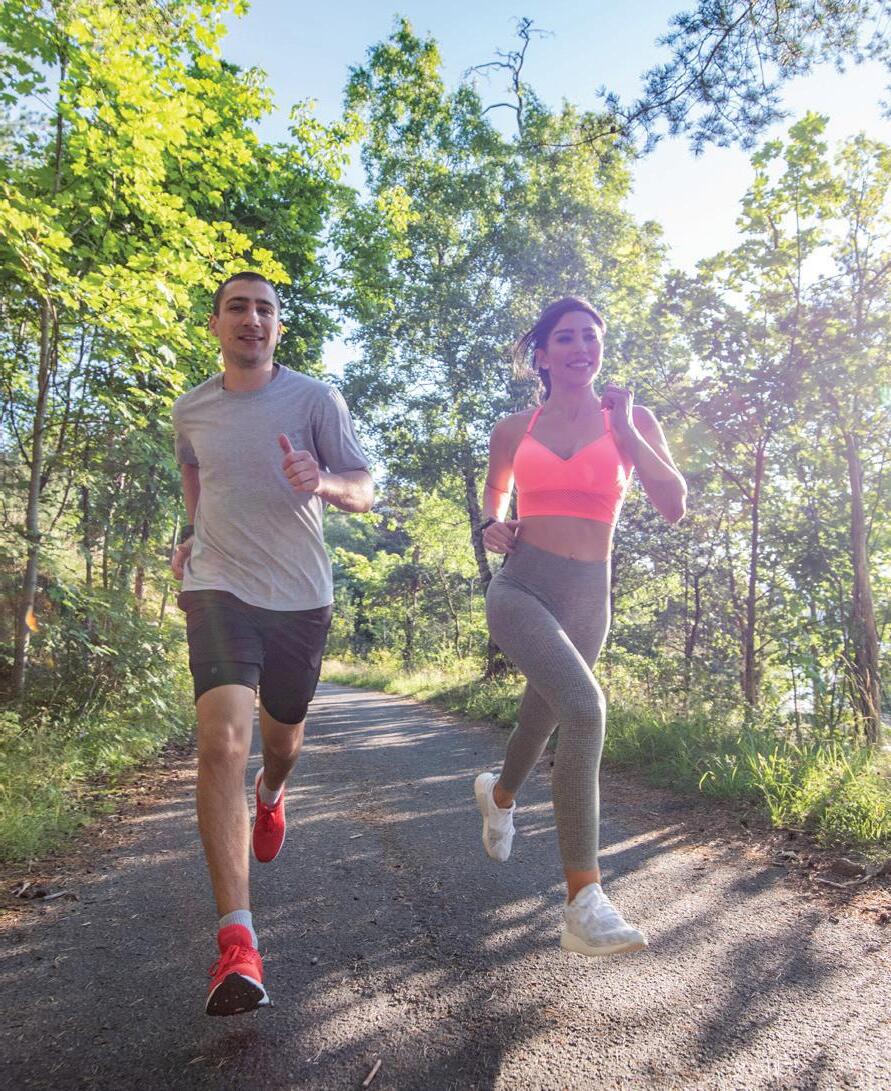
We’ll always be encouraging you to move in any and all manner, but our April/ May Prescott Healthy Living is about embracing moving outside. Is the weather any more perfect than now?
For your outdoor safety and enjoyment, look to indoor efforts for big payoffs. Do you need more aerobic capability to push yourself or more strength to get the most out of your legs and arms?
Learn how Reform Pilates, barbells and even resistance bands help you hike those trails, ride your bicycle and give you confidence to tackle any outside sports.
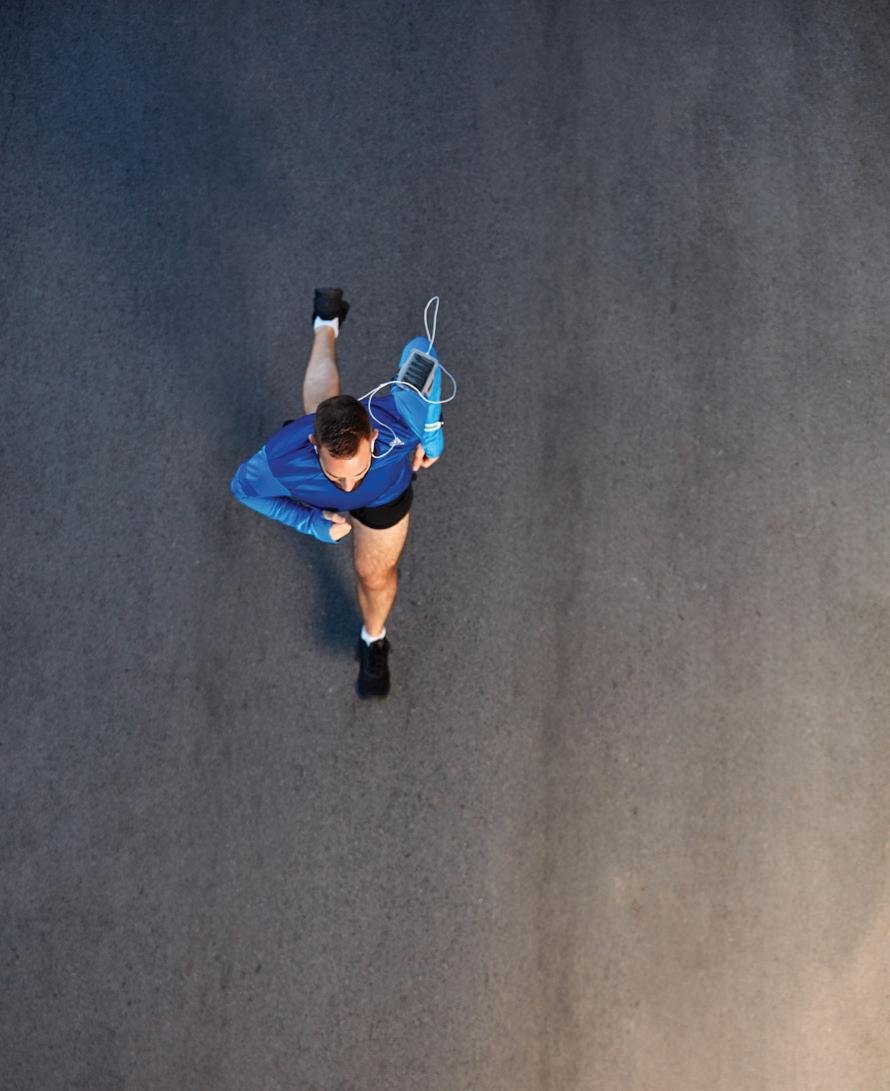
When it comes to running versus walking, we outline the pros and cons. Think running for burning calories in a shorter time but know there’s higher risk injury. Walking, on the other hand, is gentle on the joints, but your cardio gains are fewer. There’s more to learn on this subject.
If you’re raring to join in on Prescott’s 47th annual Whiskey Row Marathon Oct. 10, start training now. We outline how to prepare for the marathon, the half marathon, 10K, and 5K.
So get out there, and … Be Well,
Laurie Associate Publisher
EXECUTIVE PUBLISHER
Elaine M. Earle, CPA
ASSOCIATE PUBLISHER
Laurie Fisher
SALES & MARKETING
Laurie Fisher, Vice President of Sales & Marketing
Julie Turetzky, Director of Marketing Services
Katrina Jones Wildey, Executive Sales & Marketing Assistant
PRODUCTION & DESIGN
Michele Rodriguez, Creative Director
Shannon Price, Digital Media Specialist
EDITORIAL
Julie Turetzky, Managing Editor
Christia Gibbons, Senior Editor
Blake Herzog, Staff Writer
Vickie Austin, Staff Writer
OPERATIONS
Terry Scheib, Delivery Manager
Gabrielle Luciano, Distribution Associate
COMMENTS & IDEAS
editor@roxco.com
SUBMIT AN EVENT calendar@roxco.com | prescotthealthyliving.com
PRESCOTT OFFICE: 130 N. Granite St., Prescott, AZ 86301 928.350.8006
CORPORATE OFFICE: 1670 N. Pinal Ave., No. 11190 Casa Grande, AZ 85130
CEO Elaine M. Earle, CPA
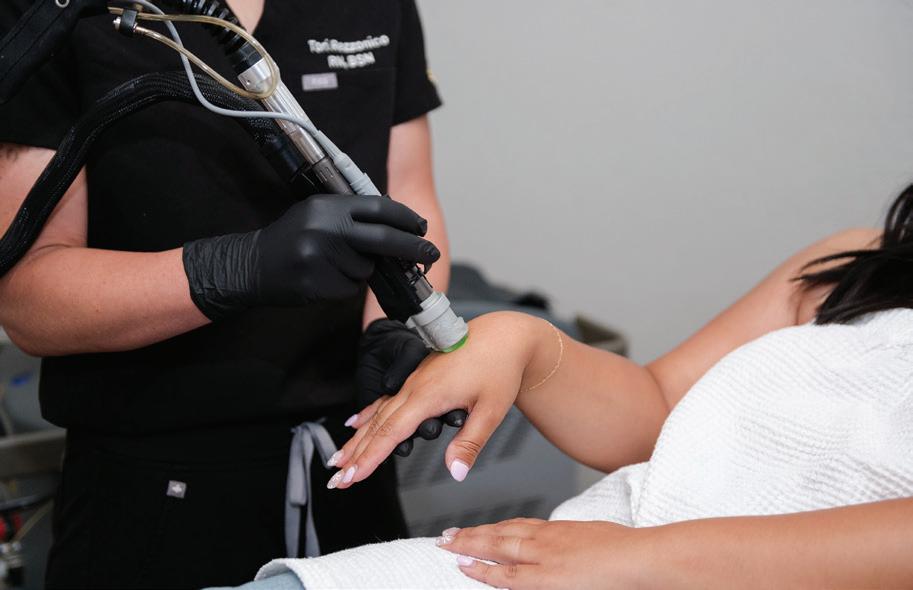
ACHIEVE SMOOTH, LONGLASTING HAIR REDUCTION WITH LASER HAIR REMOVAL
Using advanced laser technology, we target unwanted hair at the follicle to reduce regrowth and free you from the hassles of shaving or waxing. Say goodbye to unwanted hair and hello to silky-smooth skin you can enjoy for months or even years with a series of treatments.
SERVICES BRANDS
Botox/Dysport
Filler
Sculptra
B12 Injections
Medical Weight Loss
Program
Hormone Therapy
IV Therapy
Lumecca/IPL
Men & Women’s Wellness
Vaginal Rejuvenation
Hydrafacial
Microneedling
DiamondGlow
Brow Lamination
Teeth Whitening
Laser Hair Reduction
Morpheus8
Anfisa
Alastin
Epicutis
GlyMed Plus
Hydrinity
Skinbetter Science
Face Reality Skincare
Lumielle
ZO Skin Health
Osea
Colorescience
Vacation ® ( plated )™ Skin Science
www.nazluxuryliving.com/subscribe
LOCAL
HEALTH ENTHUSIASTS
We believe local experiences are important. With that in mind, we’ve partnered with local contributors for their perspectives on a variety of healthy living topics. Here are the writers who helped make this issue possible.
Dannie Blakeley
Mentor Coordinator, The Launch Pad Teen Center
Dannie Blakeley grew up in Prescott. She previously worked for Prescott Unified School District. He enjoys work that supports community, accessibility and fostering relationships between youth and the outdoors.
Ken Lain
Owner, Watters Garden Center
Ken Lain, known as “The Mountain Gardener,” writes weekly columns that are featured nationally. His podcast and YouTube channel by the same name have millions of downloads. During the week he can be found at Watters Garden Center in Prescott.
Moorea Boardman
Personal Trainer/Owner, YellowLizard Strength, All Athletes Welcome Gym
Moorea Boardman is a strength coach who lives and breathes lifting weights. Managing chronic illness at a young age shaped her lifting journey and instilled a deep passion for helping others. She works with all ages and experience levels.
Serenity Lord Owner, L.M.T., Prescott Massage Therapy
Serenity Lord, the owner of Prescott Massage Therapy, has over 17 years of experience as a massage therapist. A Prescott resident since 1984, she’s passionate about bringing health and wellness to our community, including massage, nutrition and exercise.
Heather Burgoyne Owner, Soar Pilates
Coming from the fashion industry’s highly stressful work environment, Heather Burgoyne found a practice in Pilates to be her only outlet. After continuing for over a decade, she decided to make it her career. Her goal is to help those of all ages find their strength through wellness, strength through community.
John Murphy Founder, Make 100 Healthy Foundation & Prescott Food Forest
John Murphy is founder of the Arizona nonprofit Make 100 Healthy, host of the Make 100 Healthy Club podcast, and former Chair of the Mayor’s Commission on Well-Being for the City of Prescott. He founded the Prescott Food Forest and the Gardeners of Destiny Gardening Education Program.
Shelly Crossman
DCNP, FNP-C, Owner, Dermatology & Skin Care by Shelly
Shelly Crossman is a native of upstate New York and has been a nurse for over 20 years. She received her masters degree as an FNP-C at SUNY Upstate Medical University and earned her dermatology certification in 2019.
Dr. Cristina Romero-Bosch & Dr. John A. Robinson
Husband/Wife, The Hormone Zone Prescott
Dr. Cristina Romero-Bosch, NMD, and Dr. John A. Robinson, NMD, known as @TheSexDocs, are the husband-and-wife team behind The Hormone Zone Prescott, an aesthetic clinic in partnership with The Hormone Zone Scottsdale. They also co-host The Longevity Protocol podcast.
Jion Sommer embarked on a healing journey from MS and lupus that led her to discover her heart's work helping others. Through integration of a healthy diet, meditation and Reiki treatments she found restoration and balance.
Bailey Zygutis
Nutritionist and Personal Trainer, The Moore Way Health & Fitness
Bailey Zygutis is a nutritionist and personal trainer with The Moore Way. With a passion for holistic health, she works with individuals in person and online to create customized programs that teach them to more fully enjoy the benefits of good health.
Blayne Soriano
Level 2 CrossFit Coach and CrossFit Kids Coach
Blayne Soriano owns Ten27 CrossFit & Meals by Blayne Soriano. She carries the following certifications: CrossFit Level 2 (L2), CrossFit Kids (CCF), Olympic Lifting (OLY CERT), Precision Nutrition (PN-L1C) and Active Life Professional (ALPCert). Photo: Kai York
Jesse Wasil
Founder & CEO, Summit 4x4 Company
Jesse Wasil, founder and CEO, established Summit 4x4 Company in 2017 to turn his passion for off-roading into a full-time job. Jesse has established himself as a dedicated community member and his business as a local leader for everything adventure.
Aymee Wilson
Aymee Wilson, Owner & Founder, Wilson Aesthetics
Aymee Wilson, RN, is an aesthetic Injector and founder of Wilson Aesthetics, a retreat where clients get compassionate, dignified and exceptionally professional care. Her practice is grounded in the philosophy that aesthetic procedures should accentuate natural beauty and deliver rejuvenating outcomes.
Movement is a medicine for creating change in a person’s physical, emotional and mental states.
–Caroline Myss
Multiple Reasons
‘The
THERE ARE IT’S CALLED
Great Outdoors’
by Vickie Austin
If you’re waiting for inspiration to kick in to get active, you may be in that Barcalounger a long time. Consider these facts: prolonged sitting can increase the chance of venous thrombosis, a potentially fatal form of blood clots. Those who sit in a chair scrolling their phones for hours or watching the latest streaming show have a 70% greater risk of thrombosis, according to Harvard Health Online.
WHATTAYA WAITING
FOR?
You don’t have to rappel cliffs to get active. Small movements during the day can add up to having a big impact on your fitness. While it may seem inconsequential, a brisk walk during the day can increase your overall survival rate, building
muscle strength along the way. According to the folks at Harvard, all you need is 30 minutes of activity a day and you can break that into 10-minute segments. Other small changes that have compound wellness interest include:
* When you’re on the phone, stand or walk around. This also gives you more breath for your conversation and can increase your effectiveness as a communicator.
* Park at the far end of the parking lot to get in some extra steps. This becomes a habit, and those steps make a difference over time.
* Do some wall pushups. Body weight resistance increases muscle mass, and
you don’t have to join a gym to squeeze in a few of these every morning or evening.
MORE RADICAL CHANGES
As you build strength, consider alternative modes of transportation that don’t include sitting for hours. Can you bicycle safely to work? Would you be willing to walk to your appointment? If you opt for mass transit, get off a stop early or do leg lifts in the train vestibule. And it goes without saying that whenever possible, shun the elevator and take the stairs. Unless your office is on the 63rd floor, that stair climb can help build stamina and give you an early morning boost that brightens your day.
Can’t get enough? Consider signing up for courses that get you
outdoors and away from fluorescent lighting. Look for the closest botany class. Check around for hikes, bike paths and other activities that get you up and moving. Is there a mission or cure you’re passionate about? Research their next 5K walk/run and sign up. Ready for more? Take up kayaking or explore camping areas close by. Even just a walk in the woods can do wonders for your deep veins and your endorphins.
The key word in creating a sustainable routine to get outside is “fun.” First, the activity you choose should cheer you up. That doesn’t mean it won’t take work and effort. A good strategy for getting into the great outdoors is to find a buddy or community who shares your interests.
HOME GROWN VITAMINS!
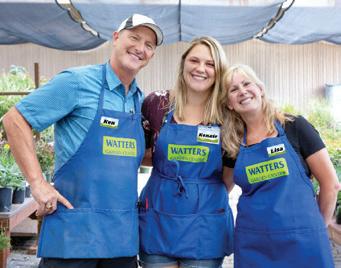
Ken, McKenzie, Lisa Watters-Lain
AND THE
Me Boys
by John Murphy, Host, Make 100
Healthy Podcast
If you really want to know my heart, spend a little time with me and the boys.
Teddy is 16 now — a beautiful little poodle with soft, wise eyes and a spirit that has endured more than most. Years ago, he survived a life-threatening attack by three large dogs. It took over 100 stitches to put him back together. The kind of trauma that could have taken him out. But Teddy never panicked. His blood pressure stayed steady. His temperament stayed calm. The veterinarian later told us that his relaxed, trusting nature likely helped save his life.
That’s Teddy — love and goodness wrapped in a coat of curly white hair.
If Teddy is my son, then Stu is my grandson. Stu is a tiny Yorkie with a huge personality. He’s playful, curious and absolutely adorable. When we head out for walks, the two of them move through nature like explorers — noses down, tails up, taking in every scent as if it’s a message
from the universe.
When my wife Lisa is home, the boys gravitate to their mama first. She’s their comfort, their nurturer, their No. 1. But when she heads to the LA area to visit our daughter for a long weekend, something shifts.
I become the center of their universe. They follow me from room to room. They curl up beside me. It becomes just us — walking together, resting together, sometimes even falling asleep side by side.
There is something sacred about that time. There is this unbelievable bond between me and the boys.
You’ve probably heard that “dog” spelled backward is “God.” It’s more than a clever phrase. Dogs embody unconditional love, loyalty, forgiveness and joy in the present moment. They don’t judge. They don’t worry about yesterday. They simply love.
Yes, I feed them. I protect them. I take care of them.
But in truth, they take care of me just as much. They remind me to slow down, to breathe, to
be present. They soften the edges of a busy life and bring me back to what matters most.
I totally love when the whole family’s together, but I really do enjoy time with me and the boys.
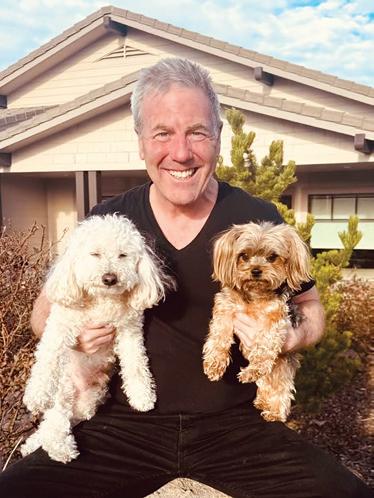
John Murphy and the boys
With a variety of ideas to stay physically and mentally fit, we explore areas including men’s and women’s health, heart health, nutrition, mental health and more, opening the door to a healthy, robust lifestyle for everyone.
Get highlights from each issue of Prescott Healthy Living delivered directly to your inbox by signing up for our newsletter today!
www.prescotthealthyliving.com/subscribe/digital
FOR
Indoor Training Outdoor Adventure
by Moorea Boardman, Personal Trainer/Owner, YellowLizard Strength, All Athletes Welcome Gym
If you’re a lover of the outdoors, you probably devote plenty of time to your pursuit of choice: researching the best gear, packing, preparing and traveling just to get out there. The last thing you want to do is grind away in the gym when you could be outside. Whether your hobby of choice is trail-running, climbing, biking, hunting or hiking — your indoor training program should complement (not compete with) your outdoor time.
IDENTIFY YOUR WEAK LINK
When you’re engaging in your favorite outdoor activity — what fails first? It’s possible your breathing fails on those unforgiving inclines. If you carry out equipment, or your hobby has a high muscular demand, strength may be a priority. Identify that weak link and build on it.
TRAIN TO CREATE THE ADAPTATIONS YOU NEED
Outside we can’t control weather, terrain, temperature. In the gym, we can control all our variables. That means we can get very specific and intentional. If you gas out over big distances, build that aerobic engine inside with stable conditions. If your legs lack strength on your runs, load up a barbell. Make sure your
program is progressive. The idea isn’t that training gets easier — it’s that you get better.
SPECIFICITY DOES NOT EQUAL MIMICRY
Consider a bow hunter. Use of the bow requires strength and stabilization through the upper back and arms. This doesn’t mean you need to recreate your draw in the gym. Rows, pullups and other pulling variations build
upper back capacity. The gym is for adaptation, not replication.
A LITTLE GOES A LONG WAY
If you spend hours on the trails, you need gym time to be effective + efficient. Anyone racking up mileage outdoors knows this well. Perform lower volumes (sets x reps) at higher intensities (heavier weights) with big, compound (multijoint) movements. You want the biggest return on your time, and you don’t need to double it to get there.
BUILD A BODY THAT BUILDS YOUR EXPERIENCE
When you’re in demanding environments, having a reliable body is the real flex. Your training should support your pursuits, so the next time you’re in the middle of an adventure, you can adventure harder, with ease.
Embrace the Outdoors:
A LIFE WELL LIVED Skin Science
FOR
by Shelly Crossman, DCNP, FNP-C, Owner, Dermatology & Skin Care by Shelly
Sun on your face, fresh air in your lungs, time that feels intentionally unhurried. Being outdoors is one of life’s simplest luxuries — and your skin notices.
A physiologic conversation: your skin responds and adapts to sunlight, stress, sleep, habits and consistency.
Physical movement is medicine lowering cortisol, a stress hormone linked to acne, and other inflammatory skin disorders. Better circulation delivers oxygen and nutrients where your skin needs. Of course, restful sleep supports overnight repair and regeneration.
Sun exposure has undeniable perks: vitamin D synthesis, mood enhancement and circadian rhythm regulation. But let’s be honest — too much sun can accelerate collagen breakdown, trigger pigment irregularities and damage cellular DNA. The solution? Daily broadspectrum sunblock SPF 30 or higher. Treat sunblock as a foundational investment; a daily essential, not a seasonal accessory. YES , even on cloudy days.
Don’t make it complicated, just be honestly consistent. Consistency is key. There are so many products out there now that combine the essentials such as: moisturizers with antioxidants, skin protectants and SPF. Head to a skin care professional if you are unsure if what you are doing is right for you. With the amount of products available out there it can become quite confusing.
In the morning cleanse, moisturize and protect. In the evening, cleanse to remove sunscreen, sweat and pollutants, then moisturize to support overnight barrier repair. Exfoliate at night one to two times a week, but avoid aggressive scrubs when spending time in the sun.
Do self-skin exams and get a professional exam. We all know that UV light can cause skin cancer. But did you know that skin cancer can develop anywhere? It is not just sunexposed areas of the skin, and it is not always easy to diagnose visually alone. It is never too late to start.
Embrace outdoors with intention, intelligently and with consistency, because well-protected skin truly ages differently.
Walk or Run, WHATEVER GETS YOU MOVING
One of the best-known maxims about exercise is: The best exercise is the one you'll consistently do.
This holds especially true in choosing between running and walking for fitness.
Running is lauded for its cardiovascular benefits, high calorie burn and what some athletes characterize as a psychological “high.” It’s also vilified for its propensity to cause joint injuries through overuse and other impairments.
Walking is accessible for more people, provides well-documented physical and mental benefits and many find it a relaxing activity. But others find it boring, time-consuming and not enough of a boost to health to be worthwhile.
Of course, it doesn’t have to be an either/or proposition, but deciding where to invest more of your time comes down to looking at their respective pros and cons.
RUNNING PROS
* Higher calorie burn in less time — more efficient for busy schedules, requires shorter distances.
* Boosts cardiovascular fitness quickly improves VO₂ max, an important indicator of overall health.
* Mental health benefits strong endorphin release, stress relief.
* Supports bone density — weightbearing impact strengthens bones.
CONS
* Higher injury risk — knees, shins, hips and ankles take more impact.
* Harder on joints — especially without proper footwear or form.
* Greater recovery needs — may require rest days and extended recovery from injuries.
* Less accessible — can feel intimidating for beginners, shoes are more expensive, and fit is more important for preventing injury.
WALKING PROS
* Low impact — gentle on joints, great for all ages and a good activity for socialization with family and friends.
* Easy to maintain long term — consistency friendly due to lower risk of injuries, fatigue and burnout.
* Still supports heart health — especially at a brisk pace of 3 mph or more or 2 mph while incorporating inclines (i.e. hiking).
* Minimal equipment and recovery — easy to fit into daily life, can be part of a commute, shopping trip or short bursts in the house and yard.
CONS
* Lower calorie burn per minute — takes longer to match running’s output, some estimates put it at twice as long.
* Slower cardiovascular gains — unless pace or
incline increases, though some measures like Vo2 max improve more quickly for those just beginning to exercise.
* Less bone-loading impact — smaller boost to bone density when one foot is always on the ground.
* Injuries can happen — ankle sprains, shin splints, plantar fasciitis and others crop up, especially when overtraining or wearing improper shoes.
WHICH IS BETTER?
It depends on your goal: Short on time? → Running Joint issues or injury history? → Walking Stress relief and daily movement? → Walking Endurance and performance goals?
→ Running Weight loss? → Either — running for fast results, walking to maintain long-term consistency
Bonus tip: Many people get the best of both worlds with run-walk intervals, which lowers injury risk while still improving fitness.
The Guide
In our mountain climate, timing and soil are everything.
‘Oops’
TO GARDENING
by Ken Lain, The Mountain Gardener, Watters Garden Center
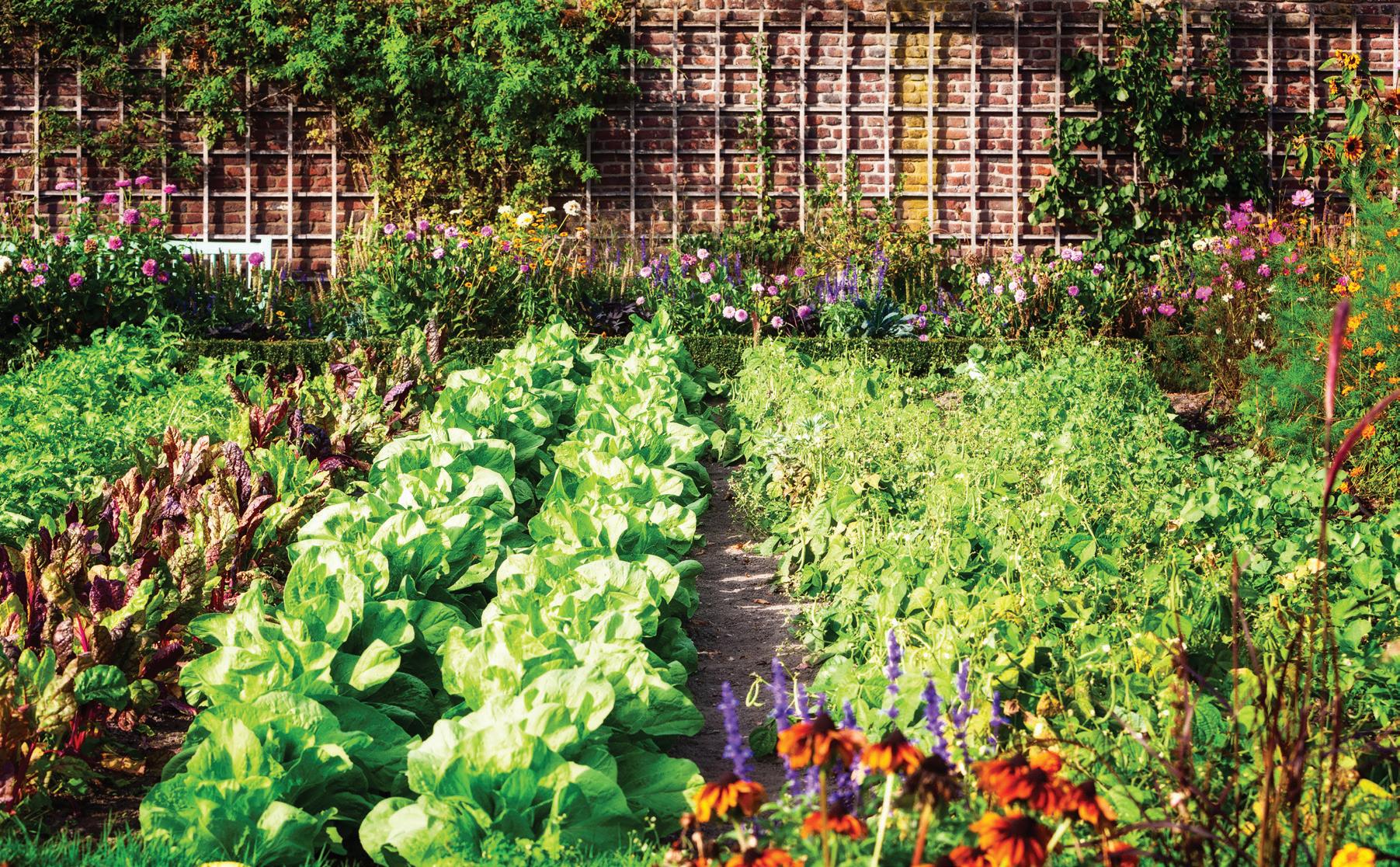
While your kale and potatoes are settled, don't let the spring sun trick you into planting tomatoes before May 1. Yavapai County is famous for that late frost, and rushing the season only leads to heartbreak.
Here is my personal “Oops Guide” to avoid as we plant this spring’s garden.
STARTING TOO EARLY
The planting season starts in March, but frost is expected through April. Ensure early
garden plants can take the freeze-thaw cycle of our county. Leafy plants like broccoli, cabbage, peas and parsley love this early spring weather.
The first of May is our local last frost. You will find the most extensive vegetable selection when you shop early, but have a plan to protect them if a late frost is predicted.
GARDENING IN THE WRONG SPOT
Vegetables require six-plus hours of sun daily. Too little and the fruits are small without flavor. A hose or water
can is needed until summer monsoon rains arrive.
GOING CHEAP ON SOIL AND PLANT FOOD
Plants use up garden soil as they grow. Starting off with poor soil ensures a struggle all season. Refresh annually with manure/ mulch at the start of every planting season. Containers and raised beds need fresh potting soil that revitalizes pots. Earthworms are always a good sign.
PICKING TOO SLOWLY
A plant won’t set more cucumbers or peppers if
its branches are already full. Herbs, like basil and cilantro, benefit from frequent harvesting.
SPACING
Seeds of lettuce, carrots and beets are planted close and thinned as you harvest. Plants set out as seedlings, like tomatoes and peppers, or large plants, like corn and beans, need much more space at maturity. If squashes, pumpkins and cucumbers are in your garden, they require even more room.
DEFERRING MAINTENANCE
Different vegetables have different needs. Tomatoes need water at ground level. Overhead watering can encourage diseases and blights. Vegetables like corn, lettuces and broadleaf plants like squashes are more tolerant of overhead irrigation.
LETTING THE ANIMALS IN
The need for a sturdy fence cannot be overstated. Deer, javelina, rabbits and gophers can wipe out a garden overnight.
Table Mesa THESE TRAILS AT GIVE
RIGS REALITY CHECKS
by Jesse Wasil, Founder & CEO, Summit 4x4 Company
Upper and Lower Terminator sit inside the Table Mesa trail system, but they feel like their own little world. These are the trails people talk about when they say technical. Not because they are long, but because they are constant. The terrain stays demanding, the consequences stay real and you do not get many casual miles to relax. If you are looking for a trail that rewards clean driving, a calm spotter and a rig that is actually dialed, Terminator is it.
LOWER TERMINATOR
Lower Terminator is a rock wash. The obstacles come in a steady rhythm, stacking on each other. Ledges lead into ledges. Tight turns put you in positions where the next move is not optional, it is the move you have to make.
Expect:
* Rock steps requiring controlled throttle, careful tire placement
* Turns that feel tighter once tires are wedged into a line
* Sections where steering effort spikes because the tires are pinned against rocks
* Breakovers that remind you why belly clearance and good skids matter
Lower is also where a lot of people learn a key lesson about Terminator. A bypass does not always mean easy. Sometimes it means less vertical but more off-camber.
Sometimes it means fewer hero moves, but more chances to drag a diff or tag a corner.
UPPER TERMINATOR
Here the obstacles feel more deliberate and more shaped by water and time. It is still a wash style trail, but the lines get more technical, and the “choose your own adventure” moments get more tempting. Where you’ll find:
* Notches that want to pull you off your intended line
* Ledges always tall, but shaped to unload a tire at the worst moment
* Tight squeezes where sliders and body protection stop being nice to have
* Off-camber transitions where spotting and patience matter more than power
Upper Terminator is where groups tend to slow down because the right move is rarely the fast move. The best runs on Upper Terminator feel calm. The driver is listening. The spotter is clear. The rig is doing the work without drama.
These trails show what your vehicle does under load, what your crew looks like under pressure and how good your communication really is when the line is tight and the next ledge is not optional.
Photo courtesy of Summit 4x4
Heavy Lifters
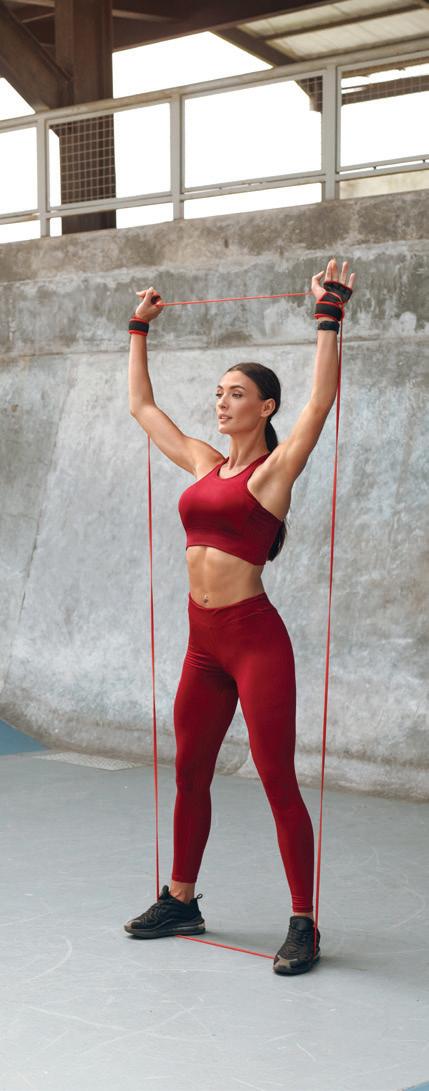
CAN GROW WITH RESISTANCE BAND-ONLY WORKOUT
If you love the feel of heavy iron but don’t always have access to a barbell, resistance bands can be a surprisingly solid substitute.
When used correctly, bands create constant tension, challenge stabilizing muscles and let you push close to failure without needing massive loads. The key is treating them like heavy lifting, not rehab tools. This workout is designed for people who normally lift heavy and want that same intensity using bands only. Choose thick, high-tension bands and combine them if needed. Every set should feel hard by the final few reps.
HOW TO USE BANDS LIKE WEIGHTS
Slow down your tempo. Control the eccentric portion of every rep for three to four seconds. Pause briefly at peak contraction.
This increases time under tension and keeps the work challenging. Aim for 6 to 10 tough reps per set.
THE WORKOUT
1. Banded Squat
Stand on the band with feet shoulder-width apart, holding the handles at shoulder height. Sit back and squat deep, then drive up hard. Focus on pushing through your heels.
4 sets of 6 to 10 reps
2. Banded Deadlift
Stand on the band and hinge at the hips, gripping the handles. Keep your spine neutral and squeeze your glutes at the top. Think slow, controlled power.
4 sets of 6 to 8 reps
3. Banded Chest Press Anchor the band behind you at chest height. Press forward like a bench press,
locking out with control. Step farther forward to increase resistance.
3 to 4 sets of 8 reps
4. Banded Row Anchor the band low. Pull the handles toward your ribs, squeezing your upper back. Don’t rush these.
3 to 4 sets of 8 to 10 reps
5. Banded Overhead Press Stand on the band and press overhead. Keep your core tight and avoid leaning back.
3 sets of 6 to 8 reps
Finish with a brief pump set or isometric hold for arms or shoulders if you want extra fatigue. Resistance bands won’t replace barbells forever, but they can absolutely maintain strength, muscle and intensity when you use them like the heavy tools they are.
The Outdoors
Necessary Adventure IS A
“Wilderness is not a luxury but a necessity of the human spirit, and as vital to our lives as water and good bread.” —Edward
by Dannie Blakeley, Mentor Coordinator, The Launch Pad Teen Center
In my experience as a young adult in 2026, opportunities to embrace the outdoors in one’s life can be difficult to tap into.
The frequency of hobbies that require screen time continues to grow, and today’s youth are grappling with this exhaustingly quick progression of technology. However, in the time I have spent working with youth, I notice that teens are also seeking what humans have sought for thousands of years: meaningful, active and necessary time in the great outdoors.
Thankfully, through my work as a park ranger for the City of Prescott and now at The Launch Pad Teen Center, I witness teens accessing nature in all different kinds of ways. On any average day at The Launch Pad, I can see circus tricks on the outdoor patio,
basketball on the blacktop or someone collecting herbs from the garden to make scented slime.
The twice a month Adventure Club gives teens a chance for more intentional outside time, with visits to local trails, National Parks and cities around Arizona. The last trip involved exploring Jerome, with a stop at a Potato Patch campground. Between searching for potatoes (a fruitless venture) and discovering an old burn area, I was impressed by the teens’ inner creativity for exploring wilderness. There’s nothing like watching a group of teens destroy a rotting log in the woods, like a ‘nature rage room’ as one teen put it.
When people spend time together outside, they have a chance to
Abbey
strengthen their friendships and cultivate new ones.
I am very grateful I have been able to witness nature becoming a common interest within a group, almost by virtue of just getting young people out into nature. Suddenly, teens have something
to discuss that doesn’t need knowledge of pop culture or videogames.
A s I do with teens, I invite you to take inventory of your own life and how you spend time outside. I encourage you to just get out there, adventure is right outside your door.
ROX Media
Start
Training Now
But there’s still enough time for nearly anyone willing to make the commitment to train!
Everyone’s ideal training schedule will vary based on their level of physical fitness and experience with running or walking (you can do either at the “WRM”). There’s a huge number of customizable websites, apps and other tools out there for people looking for guidance. Below, we have some suggested training schedules for new or casual runners setting their first major race goal — adjust based on your own circumstances.
* Run four days per week.
* Two short easy runs (3-6 miles to start, gradually increasing)
* One midweek steady run (building to 6-8 miles)
FOR WHISKEY ROW MARATHON RACES
Prescott’s premier foot race, the Whiskey Row Marathon, is known to have one of the more challenging courses in the U.S. with its mile-high elevation and demanding terrain.
two days (cycling, swimming, strength). Take at least one full rest day. Increase mileage gradually, no more than about 10% per week.
HALF MARATHON (13.2 MILES, 12 WEEKS)
Run three to four days per week.
Two easy runs (3-5 miles)
* One slightly faster or tempo-style run
* One long run (start at 5-6 miles, build to 10-12 miles)
* One speed or interval workout (short bursts with recovery)
* One long run (start at 3-4 miles, build to 6-7 miles)
* Optional crosstraining day.
5K (3.1 MILES, 6–8 WEEKS)
* Run three days per week.
* Two easy runs (2-3 miles)
* One interval day (short, faster efforts)
These training outlines assume you already can jog for 20 to 30 minutes without stopping.
MARATHON
(26.2 MILES, 16-20 WEEKS)
* One long run on weekends (start at 6-8 miles, add 1 mile most weeks, peak at 18–20 miles)
* Cross-train one to
* Strength training once or twice weekly helps prevent injury.
10K (6.2 MILES, 8–10 WEEKS)
* Run three days per week.
* One easy run
* Add light strength work and mobility exercises.
FOR EVERYBODY: No matter the distance, listen to your body. Rest when needed, fuel properly and taper during the final week before race day.
—Alexander Den Heijer
Whiskey Row Marathon Follow Us AS WE TRAIN FOR THE
The leaders of ROX Media, which publishes Prescott Healthy Living, are teaming up to run in the Whiskey Row Marathon events on October 10th.
You get the chance to follow along as they train. Let us tell you a bit about ourselves and why we’re participating.
ELAINE EARLE, CEO, MARATHON
I am a regular runner, having completed over 20 half marathons and two full marathons in the past two years. I have accomplished my personal goals of running a half marathon under two hours, running the Pikes Peak Ascent, becoming a pacer for half-marathons and running a couple of international races.
I don’t follow any specific training regimen other than running approximately 150 miles per month and strength training three to four times per week. In the last two months leading up to a
marathon, I will do a long run once per week (15-20 miles). I also will do a midsize run once per week (10 miles). The remainder of the training runs are approximately 5 miles.
I like to try new races and have heard this route is challenging. It also serves a good cause (the Prescott YMCA).
LAURIE FISHER, VICE PRESIDENT OF SALES & ASSOCIATE PUBLISHER, HALFMARATHON
I maintain a balanced fitness routine centered on strength and endurance. I strength train three days a week at All Athletes Welcome and follow a structured running plan through the Runna app, logging three runs per week ranging from 3 to 7 miles. This combination
keeps me focused on building resilience, consistency and overall performance.
My training regimen includes running three days a week following a structured plan, complemented by strength training to support endurance and injury prevention. An early challenge has been carefully working through a current neck injury while staying consistent and listening to my body.
Being able to take this on alongside such an amazing team makes the experience even more meaningful.
JULIE TURETZKY, MANAGING
EDITOR, 5K
My typical exercise includes weightlifting three times per week, one Pilates reformer session
per week and about 30 minutes of cardio on my days off. I have never trained for a marathon.
In mid-February 2026, my foot was in a walking boot while the metatarsal on my foot heals from an injury. If my foot heals well, I may try to up my distance to the 10K. I’m trying to have realistic and achievable goals. I plan to start cardio training on the stationary bike to work on endurance. I’m hoping my foot will be healed enough by the first of March to start walking and/or running on it. If that happens, I’ll try to do 2-3 miles run/walking or running three times a week and build up from there.
I was challenged by my co-workers to participate in the race. It’s something I’ve always wanted to try.
Events
APRIL 4, MAY 2
Monthly Watson Woods Bird Walk 8 a.m.
Peavine Trailhead www.prescottaudubon.org
APRIL 18
Whiskey Basin Trail Runs
Prescott Circle Trail www.aravaiparunning.com/whiskey-basin
Watters Garden Center - Garden Classes Saturdays 9:30 a.m. www.wattersgardencenter.com
Wednesday Wanderings 1st & 3rd Wednesdays Highlands Center for Natural History www.highlandscenter.org
Yoga & Fitness Classes J Club at Jasper www.jasperaz.com
LET YOUR GARDEN
Help you Grow
The word is out: “forest bathing” is good for your soul. The expression is taken from the Japanese “shinrinyoku,” which describes the experience of being surrounded by green such as when we’re gardening. There’s evidence that exposure to the outdoors through our gardens can reduce stress, manage anxiety and depression and generate a kind of euphoria that contributes to a sunny outlook.
A BUILT-IN SANCTUARY
What is a garden but a built-in sanctuary as well as a laboratory for learning?
Podcaster and psychologist Seth J. Gillihan, Ph.D., grew up gardening, learning from his father’s example. To explore the benefits of gardening, Dr. Gillihan took to his podcast Think, Act, Be and interviewed professional gardener Joe Lamp’l, creator of JoeGardener. com, to discuss how gardening can contribute to good mental health documented on PsychologyToday.com. According to them, being
by Vickie Austin
a gardener makes us more in tune with our surroundings. Is it going to rain? Where does the sun land and how long does it stay? Having a garden takes our focus away from ourselves and forces us to give up, or at least come to terms with, perfectionism. Whether you’re planting flowers along the sidewalk or tilling soil for a full-on vegetable garden, there’s a loss of control and a leap of faith required. You could lose a crop to weather, face a bug infestation or see your hard-earned work turned upside down by hungry rabbits. All there is to do is assess what went wrong, learn more and try again.
EMPOWERED THROUGH GROWTH
Gardening gives us plenty of opportunities to make mistakes. The ability to continue to make mistakes and celebrate them is what Stanford psychology professor Carol Dweck calls a “growth mindset.” Famous for her book Mindset, Dr. Dweck touts the benefits of making mistakes and adjusting to them along the way. Gardens provide ample
chances to succeed and if not, try, try again.
Maybe you planted those seedlings too close together. Perhaps you forgot to bring your plants in from the sun, or you didn’t “wean them” from indoor greenhouse to outdoor garden. Whatever happens, think of your garden as your own laboratory where you can take a leap, plant your favorite things, take good care of them and then hope for the best. Even the podcasters admitted to powers beyond our control.
FOSTERING COMMUNITY
Like any absorbing hobby, gardening can generate a community of friends and like-minded people who love grubbing around in the dirt just as much as you do.
Gardeners are thrilled to share their knowledge and their war stories with each other. They like to share tips and tricks to a healthier garden, and the really good gardeners revel in everyone’s victories. Find your people through community education classes, local gardening centers or the public library.
GET OUTSIDE PROTECT YOUR SKIN YEAR-ROUND
by Aymee Wilson, Owner & Founder, Wilson Aesthetics
Spending time outdoors is one of the best ways to support both physical and mental wellbeing. From hiking and gardening to morning walks and weekend adventures, being outside helps us recharge and stay active.
But while fresh air and sunshine offer many benefits, they also expose our skin to ultraviolet (UV) radiation — making daily
sun protection essential, no matter the season.
Sunscreen is often thought of as a summeronly product, but the truth is that UV rays are present year-round, even on cloudy days and during cooler months. UVA rays, which penetrate deeply into the skin, are responsible for premature aging and are present consistently throughout the year.
These rays, known for causing sunburns, may feel stronger in summer but still affect the skin in winter — especially at higher elevations or when reflected off surfaces like snow or water.
Using sunscreen daily is one of the simplest and most effective ways to protect your skin — and it’s widely considered the No. 1 anti-aging product
you can use. Consistent sunscreen use helps prevent fine lines, wrinkles, sunspots, uneven tone and loss of skin elasticity. By protecting collagen and elastin fibers from UV damage, sunscreen plays a crucial role in keeping skin healthy, firm and youthful.
Beyond cosmetic benefits, sunscreen is also vital for long-term skin health. Daily protection helps reduce the risk of skin cancer and supports overall skin integrity. Modern sunscreens are designed to be lightweight, breathable and wearable under makeup or on their own, making them easy to incorporate into any routine.
To fully embrace the outdoors, choose a broadspectrum sunscreen with an SPF of 30 or higher, and apply it every morning as the final step in your skin care routine. Reapply as needed when spending extended time outside, especially during activities like hiking, swimming or exercising outdoors.
Protecting your skin allows you to enjoy everything nature has to offer — confidently and safely — while investing in your skin’s health for years to come.
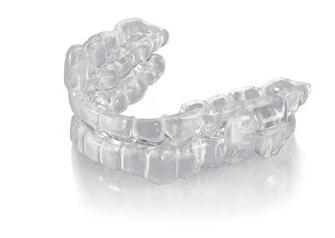
Conveniently Located in Prescott Valley for Over 12 years with satellite offices in Sedona and Flagstaff! Do you or a loved one suffer from snoring, sleep apnea, or can’t tolerate a CPAP? A comfortable oral appliance may be the solution!
• Oral Appliances are a comfortable, effective, and easy to travel with alternative to CPAP.
• We assist in helping set up home sleep testing.
• We are the only full time dental sleep practice that is in-network with most medical insurance plans. Traditional Medicare Patients typically have no out of pocket costs for testing or oral appliance treatment.
Family Healthy GERM PATROL THESE ROOMS TO KEEP YOUR
by Blake Herzog
Anyone trying to defend themselves and those they love from illness can drive themselves crazy trying to annihilate all bacteria, viruses, funguses (including mold), parasites and other pathogens that can mess up our lives for a few days or much longer. Simplifying the task by concentrating on the germiest places in the house can be effective protection against the bugs that come after all of us.
THE KITCHEN
It’s dirtier than the bathroom, according to experts including those at the National Sanitation Foundation. A study the organization conducted by having 22 families swab 30 household items to find out the level of contamination with yeast, mold and coliform bacteria found the most germs in sponges and dishrags kept at the sink, followed by the kitchen sink itself. It turns out moisture and food particles are the perfect breeding ground for germs, including E. coli and salmonella.
To keep a lid on germs here, consider putting wet sponges in the microwave once a day for 2 minutes and replace them every two weeks or sooner. Consider using washable dishcloths, towels and rags, which should be replaced every few days. Disinfect sinks once or twice a week with a disinfecting cleaner or bleach solution.
THE BATHROOM
Though it’s not as germy as the kitchen in most cases, the bathroom’s humidity and the presence of the toilet make it another prime breeding ground for microbes, particularly mold. Areas to remain especially vigilant around include the shower stall or bathtub, drains, faucets, floor surrounding the toilet, bath towels and toothbrushes.
All hard surfaces should be wiped down with disinfectant every day or two. Swap towels out every week and replace toothbrushes every three to four months. Consider disinfecting the shower head by combining 1/3 cup of baking soda with 1 cup of vinegar in a bag,
wrapping it around the head and securing with a rubber band. Leave it there overnight and rinse the head off in the morning to remove any lingering bacteria.
L AUNDRY ROOM
Again, the moisture here is going to accelerate the growth of microbes, especially in a washer full of wet clothes and linens. Remove them from the washer immediately, and if they’ve been in there more than 30 minutes or so you might want to run them through another cycle to destroy anything that might be brewing. Hot or warm water is more effective at killing viruses and bacteria, so use it at least for any clothes that have been worn outside the home.
PET ITEMS
These are strewn throughout every room in many homes. Pet toys and bowls were found in the National Sanitation Foundation study to contain staph, yeast and mold along with bacteria. Bowls should be scrubbed daily and hard and soft toys washed weekly.
Move Well, Live Fully: REFORMER PILATES SUPPORTS
OUTDOOR LIFE
by Heather Burgoyne, Owner, SOAR Pilates
One of the most special things about living in Prescott is how naturally movement fits into our daily lives. We hike Thumb Butte after work, walk the Courthouse Plaza with friends, paddle or kayak on Watson Lake, bike the trails, golf, play pickleball, and still manage to run errands in between.
Movement here is not something we schedule. It is simply part of who we are.
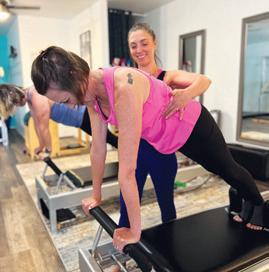
Reformer Pilates supports this lifestyle by helping us move better, not just more. It is a practice rooted in control, alignment and strength that translates seamlessly into the way we experience the outdoors.
Instead of focusing on extremes, reformer Pilates builds the kind of strength that shows up when you are climbing uneven terrain, carrying groceries, rotating through a golf swing or balancing on a paddleboard.
Hiking and mountain
biking demand strong hips, stable knees and responsive ankles. Reformer Pilates strengthens the deep stabilizing muscles that keep us steady and confident on unpredictable ground. For time spent on the lake, whether paddling or kayaking, it builds shoulder stability and rotational strength, helping movement feel fluid rather than strained.
Even the quieter moments matter. Walking around town, standing for long conversations or playing pickleball with friends all rely on posture, balance and coordination.
Reformer Pilates improves body awareness, making everyday movement feel lighter and more supported. Over time, we notice fewer aches,
faster recovery and a greater sense of ease in our bodies.
At its heart, Reformer Pilates is about connection to breath, to movement and to community. It meets people where they are and supports them as they grow stronger, more confident and more capable.
When our bodies feel supported, we show up more fully for adventure, for friendship and for the simple joys of daily life.
In a town built on movement, nature and togetherness, caring for how we move allows us not just to get by, but to truly soar.
Outdoor Sauna Therapy: A CORNERSTONE
OF LONGEVITY MEDICINE
by Dr. John A. Robinson & Dr. Cristina Romero-Bosch, Husband/Wife, The Hormone Zone Prescott
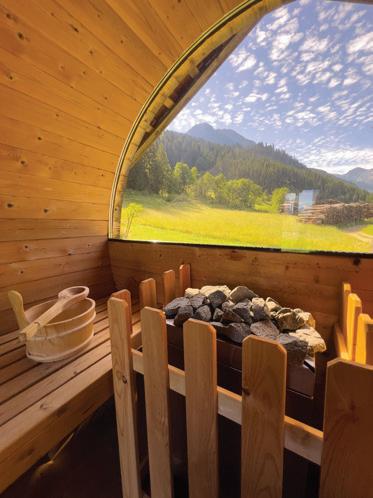
In longevity medicine, we are not chasing trends — we are restoring ancient, evidence-based practices that align physiology with optimal aging. One of the most powerful, accessible and underutilized tools is regular outdoor sauna therapy.
From a hormonal, cardiovascular, mitochondrial and nervous system perspective, sauna use functions as a form of intentional stress inoculation — a hormetic stimulus that trains the body to become more resilient over time. Used correctly, heat exposure doesn’t weaken the body, it strengthens it.
Research from Finland, where sauna use is a cultural staple, consistently demonstrates that frequent sauna bathing is associated with reduced all-cause mortality, lower cardiovascular death, improved blood pressure regulation, and reduced risk of neurodegenerative disease.
Mechanistically, this makes perfect sense. Heat exposure increases heart rate in a way that mimics moderate aerobic exercise, improves endothelial function and enhances
nitric oxide availability — critical for vascular health and longevity.
From a hormonal standpoint, sauna therapy supports growth hormone release, improves insulin sensitivity and helps recalibrate cortisol rhythms. This is particularly valuable in patients who are chronically over-stimulated, under-recovered and metabolically inflamed.
The outdoor environment adds another layer of benefit.
Exposure to natural light, fresh air, circadian cues and temperature contrast amplifies nervous system regulation.
Transitioning from sauna heat to cool outdoor air — or cold exposure when appropriate — enhances vagal tone and autonomic balance. This is where longevity stops being theoretical and becomes lived physiology.
Sauna is not about extremes. Longevity is built through consistency, not punishment. Two to four sessions per week, 15 to 30 minutes per session, at tolerable heat levels, delivers profound benefits without excessive strain.
For many, this becomes a ritual of recovery, reflection
and embodiment — an antidote to the chronic sympathetic overdrive that accelerates aging.
For longevity, outdoor sauna therapy is a foundational pillar. When combined with optimized hormones, proper nutrition, resistance training, sleep alignment
and relational health, sauna becomes a catalyst for extending not just lifespan, but health span.
Longevity is not about living longer at all costs. It’s about preserving strength, clarity, intimacy and vitality into the later decades of life. Outdoor sauna helps us do exactly that.
www.prescotthealthyliving.com/subscribe
Postpartum Posse MOMS NEED A
by Vickie Austin
Having a baby turns your world upside down. Between fluctuating hormones, a body adjusting to postpregnancy changes and nearly guaranteed sleep deficits, those days following birth may not measure up to the photo of those serene mothers on that box of prenatal vitamins.
The American College of Obstetricians and Gynecologists offers a YouTube video in English and Spanish that summarizes postpartum care priorities with two things: having a support network and getting regular postpartum checkups. Why is having a
postpartum posse so vital? First, it can be a stressful, taxing time. Whether the birth was without complications or not, those first 12 weeks after birth are a high-risk time for new moms. Recovery is different with everyone and may be more complicated if it was a cesarean birth.
The best-case scenario is being surrounded by a team of people to help integrate this new little being into the world.
A CAST OF THOUSANDS
That support includes a cast of many: first, the obstetric care team consisting of physician, midwife, nurses or doula, a trained advocate to
assist prior to, during and after giving birth. Other medical specialists may be involved, including lactation consultants to help with breast-feeding, physical therapists to help with pelvic floor recovery and any other physician or specialist needed including counselors. New team members include a pediatrician for the baby’s care and your primary care physician to help with long-term health care.
Family and friends play a crucial role in postpartum care. Whether there’s a fulltime partner or spouse to help with baby care, allowing the new mom to rest as much as possible, or new grandparents
to help with the transition to parenthood, support is needed.
Friends, particularly those who have had their own children, may form a circle around you and shower you with gifts, hand-me-downs and much appreciated advice. Having someone to trust during those weeks following a birth can make the difference between serenity and struggle.
Your support team also can act as an extra set of eyes and ears, spotting concerns that a sleepdeprived new mom doesn’t see. Serving as patient advocates, they may steer you back to the doctor to get checked out. That’s a solid safety net.
WHAT DO YOU DO WHEN YOU CAN'T
Fall Back Asleep?
by Blake Herzog
It’s an issue faced most often by families with new babies in the house, but almost everyone encounters it at least occasionally — waking up in the middle of the night and not being able to go back to sleep immediately.
Trying to will yourself back to slumberland just doesn’t work for some people, instead giving way to worry about why you can’t sleep, often culminating in the conviction you’ll never sleep again.
Here are a few tips from Johns Hopkins Medicine
to help you escape that dark night of the soul.
AVOID LOOKING AT SCREENS, STARTING WITH THE CLOCK
If you don’t keep your phone on your nightstand, the nearest screen is probably going to be the one on your digital clock, making it all too easy to keep track of how long you’ve been awake. This will increase any stress and anxiety you’re experiencing and make it that much harder to relax.
Steer clear of all other electronic devices, including
your phone that’s hopefully not on your nightstand, TVs, laptops and anything else that emits sleepkilling blue light.
MAKE YOURSELF COMFORTABLE
Don’t lie frozen in place, scared that any movement will snap your eyes wide open. Go to the bathroom, fiddle with the thermostat or yank that annoying nightlight out of the socket if you need to.
Get your body in the most comfortable position possible and fix your pillows however you need to, but try not to disturb your partner in the process.
A LAST RESORT— GET OUT OF BED FOR AWHILE
If you think you’ve been awake for 20 minutes or so, it’s time to get out of bed and look for a non-stimulating activity that requires minimal lighting to engage in until you feel sleepy again.
Reading a printed book or listening to an audiobook qualifies; so does journaling, knitting, listening to quiet music and light stretching. Don’t get back into bed until you’re feeling drowsy, since you don’t want your brain to begin associating your bed with wakefulness.
by
photo
Blushing Cactus Photography
GroundingConnects Body with Earth
by Serenity Lord, Owner, L.M.T., Prescott Massage Therapy
One of the wonders of embracing the outdoors is how present or grounded we feel after spending time in nature. The earth is a powerful healer and spending time outdoors will leave you feeling more connected, centered and relaxed.
Grounding is a practice in which an intentional physical connection between the body and the earth aids in releasing the negative charges from the body. Studies show this practice can reduce inflammation, cortisol and even pain in the human body. We are of the earth after all.
To really maximize the benefits, you can lay directly on the sand, grass or dirt, or swim in a natural body of water like a river, lake or ocean. You could sit with your feet in a stream or just go for a barefoot walk in the park. Feel the grass between your toes!
If you cannot make it out into nature as often as you like, here are five ways to get the benefits of grounding in your everyday life.
1. Get a massage. Massage offers stress
relief and nervous system regulation, improves circulation and reduces pain. Touch can be centering and bring us to the present moment.
2 . Try a grounding mat.
These are mats or sheets you put on your bed that plug into the ground outlet on your wall and are said to reduce the negative charge built up during the
day and improve sleep.
3 . Put your feet in the dirt for 10 minutes daily.
Just 10 minutes! Even better if you can do this in direct sunlight. Even a short time of connection to the earth can make a big difference in body and mind.
4 . Try earthing or grounding shoes.
These are shoes made
with a copper conductor so even while wearing shoes you have a connection to the earth.
5 . Take up gardening.
Getting your hands dirty relieves stress, has the same benefits connecting with nature and brings the beauty of the natural world into our everyday lives.
Keep calm, and touch the ground.
With lifestyle, wellness and design articles, we help our readers achieve their aspirations and celebrate all the things that make our lives richer.
Get highlights from each issue of Northern Arizona Luxury Living delivered directly to your inbox by signing up for our newsletter today!
www.nazluxuryliving.com/newsletter
FOLLOW YOUR
Circadian Rhythms WHEN YOU EXERCISE
At 6:12 a.m., the alarm buzzes. You lace up your shoes because you promised yourself you’d become a morning exerciser.
Outside, the street is quiet. Inside, your body feels like it’s still underwater. Every step is stiff. Your lungs protest. You finish the run, proud but oddly drained, and spend the rest of the day wondering why movement feels so hard when everyone says it’s supposed to energize you.
The answer might not be motivation or discipline. It might be timing.
Your body runs on a built-in clock called the circadian rhythm. It’s a roughly 24-hour cycle that influences when you feel alert or sleepy, how your hormones rise and fall, and even how efficiently your muscles use energy.
It doesn’t just decide when you want to sleep. It quietly shapes when your body is best prepared to move.
FOLLOW THE RHYTHM
In the early morning, your circadian rhythm is still nudging you out of rest mode. Core body temperature is low. Muscles and connective tissues are stiffer. Reaction time is slower. For some people, gentle movement at this hour feels grounding and calm. For others, it feels like dragging a suitcase uphill. Neither response is a character flaw. It’s biology.
As the day moves on, things change. By late morning and early afternoon, body temperature rises. Blood flow improves. Oxygen uptake becomes more efficient. This is often when strength, power and coordination quietly peak. It’s why a lunchtime workout can feel
surprisingly strong, even if your day has already been long. Your body is awake now, not just your mind. Then there’s the late afternoon and early evening window. This is when many people perform best, even if they don’t expect to. Muscles are warm. Joints move more freely. Perceived effort drops, meaning the same workout can feel easier than it would in the morning. Injury risk may be slightly lower, too, because your body is more prepared for stress. It’s not laziness to prefer evening exercise. It’s alignment.
BIOLOGICAL VS. REAL LIFE SCHEDULE
Of course, life rarely cooperates with biology. Jobs, kids, commutes and energy levels all matter.
The best workout time isn’t the one science says is perfect. It’s the one you can do consistently without resenting it. Still, understanding your circadian rhythm can help you work with your body instead of against it. If mornings are all you have, ease in. Warm up longer. Keep intensity modest. If afternoons are an option, that’s a good time to push a little harder. If evenings are your sweet spot, focus on movement that winds you down rather than fires you up, especially close to bedtime.
A healthy lifestyle isn’t about forcing yourself into someone else’s schedule. It’s about noticing patterns, listening to your body and choosing rhythms that fit your real life.
CAN HELP OR HINDER: Gluten-Free
Read On
by Vickie Austin
There was the grapefruit diet, then the Atkins diet… then, suddenly, glutenfree eating became a craze. While people have definitely lost weight when they switch to meals that don’t include gluten, that’s usually because they are eating fewer carbohydrates and more fruit and vegetables.
But doctors warn that “going gluten-free” is not to be taken lightly as a fad: it’s a serious treatment for some serious diseases.
Selvi Rajagopal, M.D., MPH, writes: “There’s a lot of buzz around going glutenfree, with everyone from celebrities to pro athletes touting the benefits… but these diets aren’t for everyone.” In the Health
column of Johns Hopkins Medicine, Dr. Rajagopal defines a gluten-free diet, explaining why skipping out on gluten may be the wrong choice for you.
WHO BENEFITS?
People who have medical conditions like celiac disease and gluten allergies or sensitivities are the obvious beneficiaries of going gluten-free. Celiac disease is an autoimmune system response causing the body to attack the small intestine. By eliminating gluten in any form, the person allows the intestine to heal. And for those people, it becomes a source of creative meal-planning to make sure they can participate without missing the fun — only the gluten.
Although celiac disease is sometimes hard to diagnose, it’s estimated
by the National Institute of Diabetes and Digestive and Kidney Diseases that two million people in the United States have the disease. Anyone allergic to wheat should avoid certain foods that also contain gluten, but it’s the wheat that triggers a response, not gluten. Barley and rye are still on the table for them.
WHAT ARE THE RISKS?
For someone who does not have celiac disease, there are risks to going gluten-free.
Whole grains, fiber and micronutrients are important for balanced nutrition, and some foods that contain gluten also are a source of vitamins or minerals such as B vitamins, iron and magnesium. Although carbohydrates have gotten a black eye in the weight loss world, nutritionists recommend 55% to 60% of a healthy diet be made up of
carbs. The addition of whole grains and fiber is good for cardiac and digestive health.
The No. 1 reason to go on a gluten-free diet is the proper diagnosis of celiac disease, which should be done by a qualified health team. To someone with the disease, even a very small amount of gluten can trigger an attack on the small intestine. If symptoms like bloating, constipation or diarrhea, gas and stomach pain are ignored too long, the intestine stops absorbing vital nutrients like calcium and iron. Nutritional deficits can result in osteoporosis, anemia, fatigue, infertility and in some extreme cases lymphoma.
So before you hop on the gluten-free bandwagon, make sure you’re making the right decision and your diet includes all the nutrients you need to support a healthy body.
This issue’s “Embrace the Outdoors” theme is more than a seasonal suggestion — it is a return to rhythm. In Chinese astrology, the Year of the Horse symbolizes vitality, freedom, momentum and purposeful movement. Horse energy is dynamic and forward-driven. It does not stagnate. It runs. Nature operates the same way.
When we step outside — into sunlight, wind, open space — we recalibrate our nervous system. Cortisol lowers. Breath deepens.
Perspective widens. The outdoors invites circulation: of blood, lymph, thought and emotion. Just as the horse thrives in open terrain, the human body thrives in natural environments.
If this is a year of movement, then nourishment must support motion.
Think clean-burning fuel. Seasonal produce rich in antioxidants — berries, leafy greens, citrus — supports cellular repair and reduces inflammatory load. Mineral-rich foods
like pumpkin seeds, legumes and dark greens replenish magnesium and iron, sustaining energy and muscle function.
Hydration becomes essential: electrolytes from coconut water or a pinch of sea salt in water help maintain balance during increased activity. Light, whole food meals allow the body to move without digestive heaviness.
Movement, however, is not only physical. The horse also represents spirited independence and emotional authenticity.
Spending time outdoors provides
space to process what has been buried. Walking trails, ocean air or desert stillness create conditions for reflection. This is where subtle practices like reiki become powerful companions. Reiki supports parasympathetic activation — the “rest and repair” state — allowing the body to integrate change. Just as nature restores ecosystems through balance, energy work restores internal equilibrium.
To embrace the outdoors is to align with momentum rather
than resist it. Take meetings on a walk. Eat lunch in the sunlight. Ground your feet in grass. Breathe with intention. Allow your nervous system to reset.
The horse does not ask permission to run. It trusts its strength.
Perhaps this is the invitation: fuel your body well, move with purpose, clear stagnant energy and let nature remind you what vitality feels like.
Step outside. Breathe deeper. Then move forward.
May all Beings Benefit
LET THE SUN
Shine on You
by Blayne Soriano, Level 2 CrossFit Coach and CrossFit Kids Coach
One of the most beneficial things we can do for our health is embrace the outdoors. Sunlight gives us so many health benefits, so it’s important that we spend time in it.
Benefits of getting outside — besides it being free — include: increased vitamin D production essential for calcium
absorption, immune function and bone strength; improved mental health and mood; boosted serotonin; improved focus; natural light exposure that promotes better sleep quality; lowered blood pressure; and that sunlight also can help control skin conditions such as eczema, acne and jaundice.
Not only is sunlight in a
controlled time frame healthy for your body, it really does improve your mood. Just look around and see how beautiful the outdoors is.
Getting fresh air, going on a hike or a simple morning or evening walk can do wonders for your overall health.
THAT HARM YOUR DIGESTIVE SYSTEM’S MICROBIOME Limit Foods
Your gut microbiome is home to trillions of bacteria that help digest food, regulate immunity and even influence mood.
When things are balanced, you usually feel it. Better digestion, steadier energy, fewer cravings. When they’re not, the signs can show up fast: bloating, irregular digestion, fatigue or frequent sugar cravings.
While no single food will ruin your gut overnight, some foods can quietly disrupt the balance when eaten often. Here are five common culprits worth watching.
SUGARY DRINKS AND SWEETS
Excess sugar feeds harmful gut bacteria while crowding out the beneficial ones. Sodas, sweetened coffees, candy and baked goods can encourage microbial imbalance and inflammation. Over time, this can weaken the gut lining and affect how well your body handles blood sugar. Cutting back doesn’t mean cutting joy. Even small reductions help shift the balance.
HIGHLY PROCESSED MEATS
Hot dogs, sausages, deli meats and bacon often contain preservatives, emulsifiers and additives that interfere with gut bacteria. These foods also are low in fiber, which means they don’t give helpful microbes what they need to thrive. Occasional use is fine, but regular reliance can slowly chip away at microbial diversity.
ARTIFICIAL SWEETENERS
Zero-calorie doesn’t always mean gut-friendly. Some artificial sweeteners have been linked to changes in gut bacteria that may affect glucose metabolism and digestion. If diet sodas or sugar-free snacks are daily staples, your gut may be paying the price even if calories are low.
DEEP-FRIED AND ULTRA-FRIED FOODS
Foods fried in refined oils can promote inflammation in the gut, especially when eaten
frequently. The combination of high heat, oxidized fats and low fiber creates an unfriendly environment for beneficial bacteria. Consider cutting back French fries, fried chicken and many fast-food items.
ALCOHOL IN EXCESS
Moderate drinking may fit into a healthy lifestyle, but regular heavy alcohol intake disrupts the gut lining and alters bacterial balance. This can lead to increased gut permeability, sometimes called “leaky gut,” which allows unwanted substances into the bloodstream.
BETTER CHOICES
The good news is that your microbiome is resilient. Reducing these foods while adding fiber-rich vegetables, fermented foods, prebiotics, probiotics and whole grains can help restore balance.
You don’t need perfection. Your gut responds to patterns, not one-off choices.
WINERY & VINEYARD
Northern Arizona Luxury Living presents the Wine & Vineyard section. Each bimonthly issue shares features on the luxurious enjoyment of wineries, vineyard vacations, emerging wine regions, tastings and more!
“Accept what life offers you and try to drink from every cup. All wines should be tasted; some should only be sipped, but with others, drink the whole bottle.” – Paulo Coelho, Brida
GREEN CHILE CHICKEN ORZO
by Bailey Zygutis, Nutritionist, The Moore Way Health & Fitness, teamvitruvianphysique@gmail.com
This protein-packed dish is delicious, nutritious and made in one pot!
1½ lbs Shredded chicken
8 oz Orzo
8 oz Diced green chiles
½ cup Frozen corn
1 tbs Green chile powder
1 tbs Butter
2 cups Water or broth
Salt and pepper to taste
1Melt butter in a large pot, then add corn, and brown slightly.
2Add in shredded chicken and diced green chiles. Stir to combine, then toss in orzo, broth and remaining seasonings.
3Simmer for 12 to 15 minutes, stirring occasionally, or until orzo absorbs most of the liquid.
4Serve alone or with dollop of sour cream
Serves 4 | Time to Table 15-20 minutes
Photo: Bailey Zygutis
QUICK
15-MINUTE CAPRESE CHICKEN
A fresh, protein-packed twist on the classic caprese — grilled chicken served over crisp greens with juicy tomatoes, creamy mozzarella and fragrant basil.
FOR THE CHICKEN
2 lg Boneless, skinless chicken breasts
1 tbs Olive oil
1 tsp Italian seasoning
½ tsp Garlic powder
Salt and freshly ground black pepper to taste
FOR THE SALAD BASE
4 cups Mixed greens (arugula, spinach, or spring mix)
1 cup Cherry tomatoes, halved
1 cup Fresh mozzarella pearls (or sliced fresh mozzarella)
¼ cup Fresh basil leaves
FOR THE DRESSING
2 tbs Extra virgin olive oil
1 tbs Balsamic glaze or balsamic vinegar
1 tsp Dijon mustard (optional for depth)
Salt and pepper to taste
1Slice chicken breasts in half horizontally to create thinner cutlets for quicker cooking. Rub with olive oil, Italian seasoning, garlic powder, salt and pepper.
2Heat a skillet or grill pan over mediumhigh heat. Cook chicken for 4 to 5 minutes per side, until golden brown and internal temperature reaches 165°F. Remove and let rest for 5 minutes, then slice.
3Divide mixed greens between four bowls. Top with cherry tomatoes, mozzarella pearls and fresh basil leaves.
4Arrange sliced chicken over each bowl.
5Whisk dressing ingredients together and drizzle over the salad just before serving.
Serves 4 | Time to Table 15-20 minutes
FAMILY-FRIENDLY
HEALTHY CHICKEN & BROCCOLI RICE CASSEROLE
Creamy, comforting and lightened up with protein-rich Greek yogurt instead of heavy cream, this casserole delivers classic flavor with a healthier twist.
2 cups Cooked chicken breast, shredded or diced
3 cups Broccoli florets (fresh or lightly steamed)
2 cups Cooked brown rice
1 cup Plain Greek yogurt (2% or full-fat)
½ cup Low-sodium chicken broth
1 cup Shredded sharp cheddar cheese
½ cup Shredded mozzarella cheese
1 sm Yellow onion, finely diced
2 cloves Garlic, minced
1 tbs Olive oil
½ tsp Smoked paprika
½ tsp Dried thyme
Salt and black pepper to taste
FOR THE TOPPING
¼ cup Whole-grain crackers, lightly crushed (or gluten-free crackers)
2 tbs Shredded cheddar
1 tbs Olive oil or melted butter
1Preheat oven to 375°F. Lightly grease
a 9-inch round baking dish or casserole dish.
2In a skillet over medium heat, add olive oil. Sauté onion for 3 to 4 minutes until softened. Add garlic and cook 30 seconds until fragrant.
3In a large bowl, combine cooked chicken, broccoli, brown rice, sautéed onion mixture, Greek yogurt, chicken broth, cheddar, mozzarella, paprika, thyme, salt and pepper.
Stir until evenly combined
4Spread mixture evenly into prepared dish.
5Mix crushed crackers with olive oil and remaining cheddar. Sprinkle evenly over the casserole.
6Bake uncovered for 25 to 30 minutes, until bubbly and lightly golden on top. For extra browning, broil 1 to 2 minutes at the end.
7Let stand 5 minutes before serving.
Serves 6 | Time to Table 45 minutes
WHOLE30
MEDITERRANEAN TUNA STUFFED AVOCADOS
Fresh, bright and protein-packed, these Mediterraneaninspired stuffed avocados make a quick no-cook meal that feels both light and satisfying.
2 ripe Avocados, halved and pits removed
2 (5-ounce) cans Tuna in water, drained
1 med Tomato, finely diced (or ½ cup cherry tomatoes, diced)
2 tbs Red onion, finely minced
2 tbs Fresh parsley, chopped
1 tbs Olive oil
Juice of ½ Lemon
1 tsp Dijon mustard (Whole30-compliant)
Salt and black pepper to taste
1Slice avocados in half and remove pits. If desired, lightly brush the cut sides with olive oil and grill cut-side down for 2 to 3 minutes to create light grill marks (as shown in the photo). This step is optional but adds flavor.
2In a medium bowl, combine drained tuna, diced tomato, red
onion, parsley, olive oil, lemon juice and Dijon mustard. Stir gently to combine. Season with salt and pepper to taste.
3Spoon tuna mixture evenly into each avocado half.
4Top with extra chopped parsley and a squeeze of fresh lemon if desired. Serve immediately.
Serves 4 | Time to Table 15 minutes
KETO
CREAMY TUSCAN GARLIC BUTTER SHRIMP WITH SPINACH
Rich, silky garlic butter sauce meets tender shrimp and fresh spinach in this restaurant-style Tuscan skillet. It’s indulgent yet low in carbs, making it perfect for weeknight dinners or entertaining.
1½ pounds Large shrimp, peeled and deveined
2 tbs Olive oil
3 tbs Unsalted butter
4 cloves Garlic, minced
½ tsp Italian seasoning
1 cup Heavy cream
½ cup Freshly grated Parmesan cheese
1 cup Fresh spinach, roughly chopped
¼ tsp Crushed red pepper flakes (optional)
1 tbs Fresh parsley, chopped
Salt and freshly ground black pepper to taste
1Pat shrimp dry and season lightly with salt and pepper.
2Heat olive oil in a large skillet over medium-high heat. Add shrimp in a single layer and cook 1 to 2 minutes per side until pink and just cooked through. Remove shrimp from skillet and set aside.
3Reduce heat to medium. Add butter to the same skillet. Once melted, stir in garlic and Italian seasoning. Cook for 30 to 45 seconds until fragrant (do not brown).
4Pour in heavy cream and bring to a gentle simmer. Stir in Parmesan cheese and cook 3 to 4 minutes, until slightly thickened.
5Stir in fresh spinach and cook until just wilted.
6Add shrimp back into the skillet. Simmer 2 to 3 minutes to allow flavors to combine.
7Sprinkle with crushed red pepper flakes and fresh parsley. Serve immediately.
Serves 4 | Time to Table 25 minutes
VEGETARIAN
GARDEN FRESH VEGGIE FLATBREAD
Light, colorful and perfect for warmer days, this veggiepacked flatbread brings together caramelized sweet potato, tender pumpkin and red onion with creamy mozzarella on a crisp crust. It’s bright enough for spring entertaining yet satisfying enough for an easy summer dinner.
1 lg Whole-wheat flatbread or thin pizza crust
1 cup Pumpkin or butternut squash, peeled and cubed
1 sm Sweet potato, peeled and cubed
½ sm Red onion, thinly sliced
2 tbs Olive oil, divided
½ tsp Dried thyme
¼ tsp Smoked paprika
1½ cups Fresh mozzarella (sliced or shredded)
¼ cup Grated Parmesan (optional)
Fresh thyme leaves or parsley for garnish
Salt and freshly ground black pepper to taste
1Preheat
oven to 400°F.
Line a baking sheet with parchment paper.
2Toss pumpkin, sweet potato and red onion with 1½ tablespoons olive oil, thyme, smoked paprika, salt and pepper. Spread in a single layer and roast for 15 to 18 minutes, until tender and lightly caramelized.
3Brush the flatbread lightly with the remaining olive oil. Sprinkle with Parmesan if using.
4Evenly distribute the roasted vegetables over the crust. Top with mozzarella.
5Bake for 8 to 10 minutes, until the cheese is melted and bubbly and the edges of the crust are golden brown.
6Garnish with fresh thyme or parsley and a light crack of black pepper. Slice and serve warm.
Serves 4 | Time to Table 35 minutes
health & wellness DIRECTORY
Your guide to Greater Prescott’s medical & wellness professionals
Acupuncture
Healing Kind Health & Wellness
172 E. Merritt St., Ste. C | Prescott, AZ 86301 www.healing-kind.com | 928.642.5382
Pine Grove Acupuncture
450 W. Goodwin St., Ste. 103B | Prescott, AZ 86303 www.pinegroveacu.com | 928.910.6153
1000 Willow Creek Rd., Ste. E Prescott, AZ 86301 www.whwprescott.com | 928.583.7887
Women’s Medical Care
1005 Division St. | Prescott, AZ 86301 www.womensmedicalcareprescott.com 928.776.8428
Women’s Medical Care
3262 N. Windsong Dr., Ste. B | Prescott Valley, AZ 86314 www.womensmedicalcareprescott.com 928.776.8428
Health & Wellness Services
Yavapai County Community Health Services 1090 Commerce St. | Prescott, AZ 86305 www.yavapaiaz.gov/Resident-Services/ Health-Services/Community-Health-Services 928.771.3122
Health Equipment & Supplies
Alliance Homecare
3194 Willow Creek Rd. | Prescott, AZ 86301 928.717.1560
Comfort Mobility & Medical Supplies 1230 W. Iron Springs Rd. | Prescott, AZ 86305 www.comfortmobilityaz.com | 928.778.6466
Goodwin Street Medical Supply 406 W. Goodwin St. | Prescott, AZ 86303 www.goodwinmedical.com | 928.541.1825
Rotech Healthcare 3629 Crossings Dr. | Prescott, AZ 86305 www.rotech.com | 928.775.2202
Holistic Medicine
Arizona Healthcare Freedom 3208 Lakeside Village | Prescott, AZ 86301 www.azhealthcarefreedom.com | 928.298.3349
Body and Nerve Restoration 1660 Willow Creek Rd. | Prescott, AZ 86301 www.bodyandnerverestoration.com | 928.925.0528
The Hormone Zone Prescott 720 N. Montezuma St., Ste. C Prescott, AZ 86301 www.hormonezonemedspa.com 928.813.0366
Hospital
Dignity Health, Yavapai Regional Medical Center East 7700 E. Florentine Rd. Prescott Valley, AZ 86314 www.yrmc.org | 928.445.2700
Dignity Health, Yavapai Regional Medical Center West 1003 Willow Creek Rd. | Prescott, AZ 86301 www.yrmc.org | 928.445.2700
Exceptional Community Hospital 4822 AZ-69 | Prescott, AZ 86301 www.ehc24.com/prescott | 928.534.1950
Northern Arizona VA Health Care 500 AZ-89 | Prescott, AZ 86301 www.va.gov/northern-arizona-health-care 928.445.4860
Integrative Medicine & Acupuncture
Harmony Integrative Medicine 518 E. Gurley St., Ste. 101 | Prescott, AZ 86301 928.776.4895
Internal Medicine
High Mark Internal Medicine: Erik Contreras, MD 214 N. McCormick St. | Prescott, AZ 86301 www.highmarkmedicine.com 928.237.9800
Serve MD 7900 E. Florentine Rd. | Prescott Valley, AZ 86314 www.servemd.net | 928.493.9937
IV Therapy
Elevate IV Bar 107 N. Cortez St., Ste. 201 | Prescott, AZ 86301 www.elevateivbar.com | 928.421.4292
Legendary Total Wellness 8133 E. AZ-69, Ste. C | Prescott Valley, AZ 86314 www.legendarytotalwellness.com | 928.848.7460
LUXE | ABOOST 1320 Iron Springs Rd., Ste. B | Prescott, AZ 86305 www.aboostwellness.com | 928.910.4111
The Hormone Zone Prescott 720 N. Montezuma St., Ste. C Prescott, AZ 86301 www.hormonezonemedspa.com 928.813.0366
Wilson Aesthetics Beauty & Wellness
8196 E. Florentine Rd. | Prescott Valley, AZ 86314 www.wilsonaestheticsaz.com 928.350.5484
Ketamine Treatment
WholeMind Healing Pathways 3613 Crossings Dr., Ste. B | Prescott, AZ 86301 www.wholemindhealingpathways.com 928.550.6705
Massage Therapy
Evergreen Bodywork
329 S. Montezuma St. | Prescott, AZ 86303 www.massagebook.com/biz/ bookwithevergreenbodywork 530.919.8269
Prescott Massage Therapy
1265 Gail Gardner Way, Ste. A Prescott, AZ 86301 www.prescottmassagetherapy.com 928.848.1046
Medical Spa
A Better You Medspa
2245 E. AZ-69, Ste. 5 | Prescott, AZ 86305 www.abetteryoupv.com | 928.800.5979
A Better You Medspa
2852 N. Navajo Dr., Ste. B | Prescott Valley, AZ 86314 www.abetteryoupv.com | 928.772.0689
Aphrodite Aesthetics & Wellness
3619 Crossings Dr., Ste. A | Prescott, AZ 86305 www.aphroditeaestheticsaz.com 928.362.7773
Bellezza Healthcare
3105 Clearwater Dr., Ste. A | Prescott, AZ 86305 www.bellezzahealthcare.com | 928.237.4422
Desert Rose Retreat Salon + Medspa 701 S. Ruth St. | Prescott, AZ 86301 www.desertroseretreat.com | 928.778.9798
Skin Perfection MedSpa 3190 Clearwater Dr. | Prescott, AZ 86305 www.skinperfectionaz.com | 928.541.0003
SkinPlus MedSpa
1747 Willow Creek Rd. | Prescott, AZ 86301 www.skinplusmedspa.com | 928.582.0716
The Hormone Zone Prescott
720 N. Montezuma St., Ste. C Prescott, AZ 86301 www.hormonezonemedspa.com 928.813.0366
1590 Willow Creek Rd. | Prescott, AZ 86301 www.synergywellnessaz.com | 928.227.1899
Synergy Wellness Center
147 N. Cortez St., Ste. 107 | Prescott, AZ 86301 www.synergywellnessaz.com | 928.778.9446
Synergy Wellness Center 8200 E. Jacque Dr. | Prescott Valley, AZ 86314 www.synergywellnessaz.com | 928.227.1899
The Hormone Zone Prescott
720 N. Montezuma St., Ste. C Prescott, AZ 86301 www.hormonezonemedspa.com 928.813.0366
A healthy lifestyle isn’t about perfection — it’s about consistency and balance.
Dr. Robert Benhuri,
OWNER, HEALING KIND HEALTH & WELLNESS
HOW DO YOU DEFINE A HEALTHY LIFESTYLE?
A healthy lifestyle isn’t about chasing perfection — it’s about creating rhythms that support the body over time. Cooking real meals, moving daily, getting outside, and staying connected to nature all matter. Just as important is having compassion for yourself when life isn’t perfectly balanced. Health isn’t something you achieve once; it’s something you cultivate through consistent daily choices.
WHAT ARE YOUR PRACTICES TO KEEP YOURSELF AND YOUR FAMILY HEALTHY?
I have three kids, and each
of them has taught me something different about health.
My oldest, Asher (15), loves video games, so the challenge is helping him unplug and reconnect with the outdoors. My middle son, Azi (12), has a big personality and big emotions — with him we work on mindfulness and learning how to feel emotions in the body instead of suppressing them or letting them explode. And my youngest, Shoshana (8), loves being in the kitchen. With her, it’s about teaching where food comes from and showing that nourishing meals can also be joyful and delicious.
Parenting keeps me honest — kids have a way of reminding you to live the values you talk about.
HOW DO YOU DEFINE SELF-CARE; WHAT IS YOUR GO-TO WAY OF PRACTICING IT?
For me, self-care means paying attention. It’s the practice of slowing down enough to notice what the body and mind actually need. Sometimes that means exercise or meditation. Other times it means stepping away from one more obligation and allowing real rest. My personal anchors are acupuncture and meditation. Both help regulate the nervous system and bring
me back into balance so I can show up fully for my family and my patients.
WHAT ARE YOUR BIGGEST HEALTH/ WELLNESS TIPS?
Start small and stay consistent. Real health is built through everyday habits, not dramatic overhauls.
Cook real food. Take a walk every day. Step outside and breathe deeply when you’re stressed.
These simple practices may not sound exciting, but done consistently they create the strongest foundation for long-term health.
In my experience, the basics done well will outperform any quick fix.
Is Your Heart Sending a Message You Can’t Ignore?
Fluttering feelings or erratic heartbeats aren’t just romantic, they can signal serious arrhythmia. Don’t ignore these abnormal heart rhythms. Untreated, they pose significant health risks. Dignity Health takes your heart health seriously. We’re investing in advanced cardiac care, close to home, right here in Prescott Valley. Your first step to protecting your heart is a checkup with our experts.
Learn more at YRMC.org/Heart
Sculpt, Restore, and Rejuvenate with Sculptra
Turn back time naturally with Sculptra at Wilson
Aesthetics Beauty + Wellness. This collagenstimulating injectable gradually restores volume, smooths fine lines, and enhances your skin’s structure for results that look effortlessly youthful and long-lasting. Reveal a refreshed, lifted appearance that improves over time — because your beauty should never look rushed.