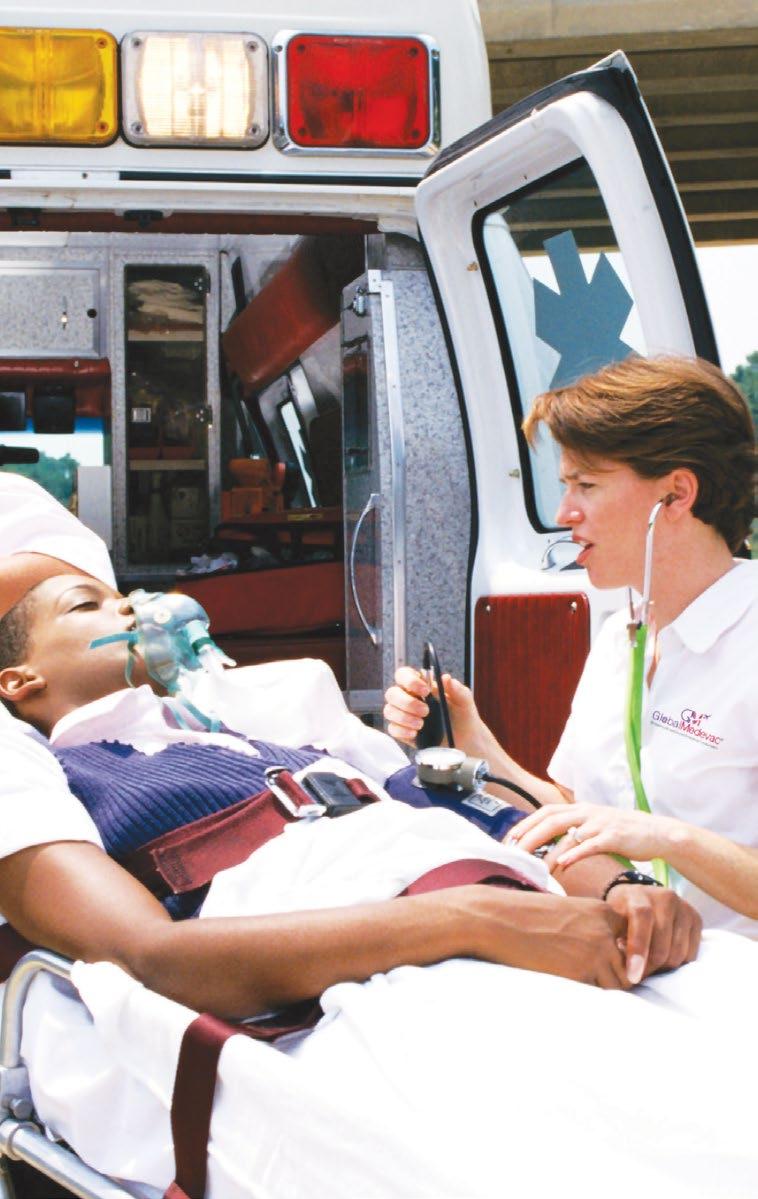
For a small monthly or annual fee, Global Medevac allows you to be prepared and proactive. A Global Medevac Membership covers more than any other option available with 21 members only benefits.
• Women’s well check
• Cosmetic Botox
• Medical Botox
• Dermal filler
• Acne treatment
• Chemical peels
• Body sculpting
• Emsella treatments
• Incontinence Treatment
• Permanent cosmetics
SEXUAL HEALTH CLINIC
• Hormone replacement therapies
• Hormone pellet therapies
• Woman sexual dysfunction
Local HEALTH
Dr. Katie Borchert
Naturopath, LAc
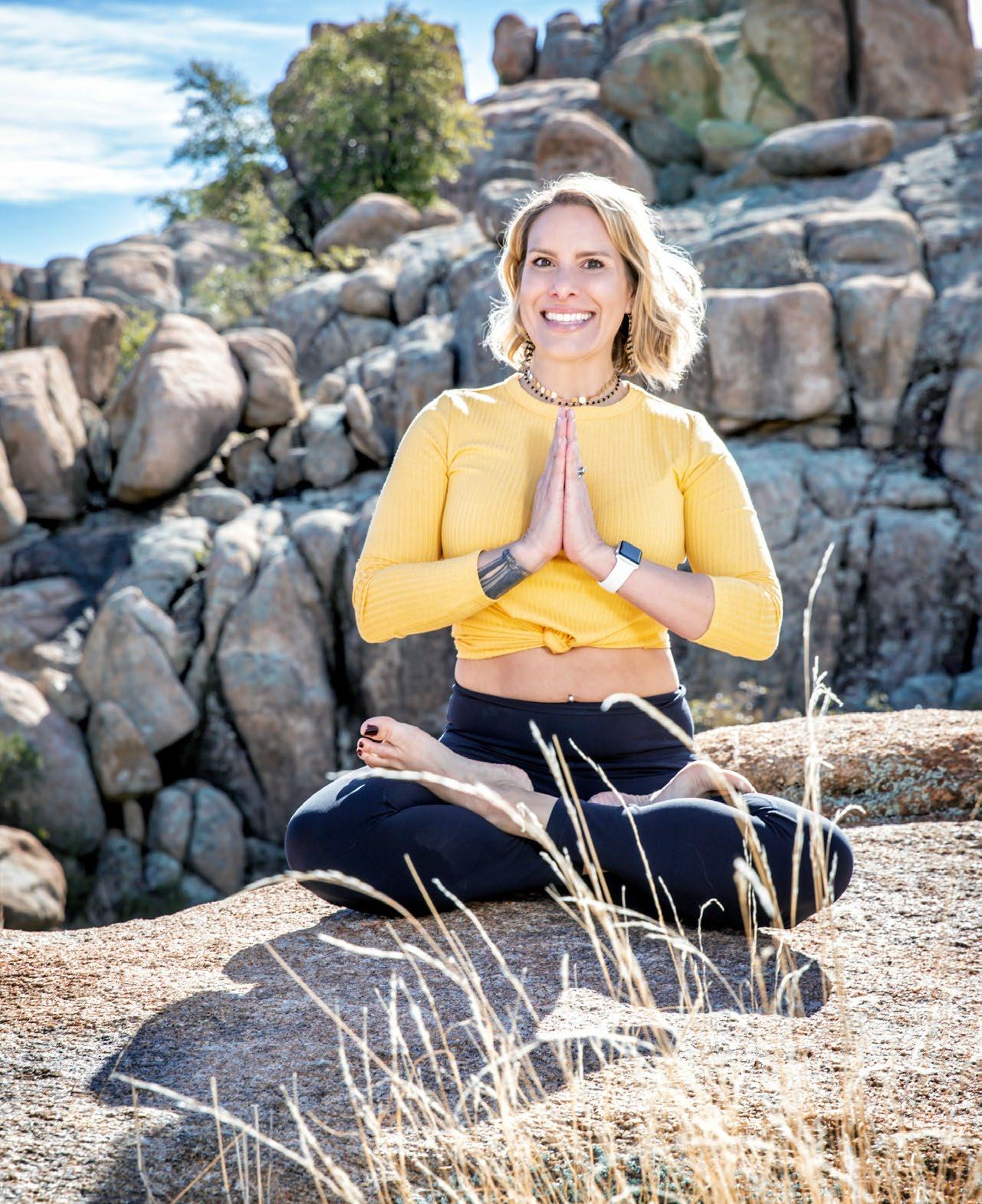
Dr. Katie Borchert uses natural medicine to increase vitality, youthfulness and Qi flow through naturopathic methods. She trained at National University of Health Sciences in Lombard, Illinois, and is a licensed naturopathic physician practicing in Prescott and Prescott Valley.
Lori Durr Owner, Sundara Sanctuary
Lori Durr is the owner of Sundara Sanctuary Wellness Spa & Boutique. She’s spent 25 years focusing on wellness and is a Certified Healing Arts Practitioner, LMT, Licensed Aesthetician, Certified Colon Hydrotherapist and is working on getting board certification in nutrition.
Carmen Catterfield
MA, Honeybee Healing & Counseling Services
Carmen Cartterfield moved to Prescott after receiving her master’s degree in clinical mental health counseling from Lesley University in Boston. She’s worked as a group and individual therapist with adolescents and adults and is now in private practice at Honeybee Healing & Counseling Services.
Justin Elder
Senior Regional Sales Manager, Global Medevac
Justin Elder is the senior regional sales manager for Global Medevac - Emergency Medical Transportation. Based in Phoenix, Justin and his team are currently active in five states throughout the West and Midwest.
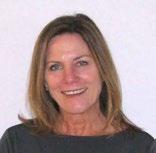
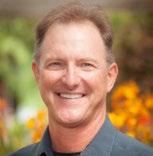
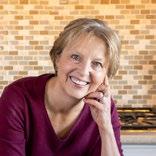
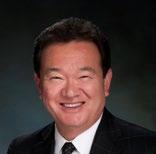
We believe local experiences are important. With that in mind, we’ve partnered with local contributors for their perspectives on a variety of healthy living topics. Here are the writers who helped make this issue possible.
Chef Alex Erickson Chef, The Raven Cafe
Alexander Erickson is the head chef at The Raven Café. He has been part of this team and family for six years. Working there has been a delightful experience for him, as the team brings together a fun mix of personalities and flavors.
Dr. Whitney James MD, Neurosurgery
Dr. Whitney James is a neurosurgeon who applies outpatient surgical solutions to alleviate acute and chronic pain. She specializes in minimally invasive surgical procedures to treat spine fractures, back pain, migraines and other neurological pathologies.
Carl Johns
LMT, Director, Asis Massage Education
Carl Johns has been a massage therapist and educator for 25 years. He practices and teaches many Eastern and Western bodywork styles and has specialized throughout his career in working with people with disabilities and complex health conditions.
ENTHUSIASTS
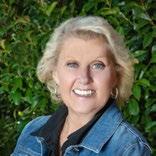
Lori Kennedy
Communications Coordinator, EmbryRiddle Aeronautical University
Lori Kennedy is the communications coordinator for EmbryRiddle Aeronautical University. She has worked in the hospitality industry for 30 years and has been an active participant in the explosive growth of the health and wellness industry.
Brittany Peña
NP, Prescott Women’s Clinic
Brittany Peña is a family nurse practitioner board-certified through American Nurses Credentialing Center. Her passion for women’s health has guided her career as an OB/GYN nurse practitioner. She graduated in 2016 from Olivet Nazarene University in Bourbonnais, Illinois.
Ken Lain
Owner, Watters Garden Center
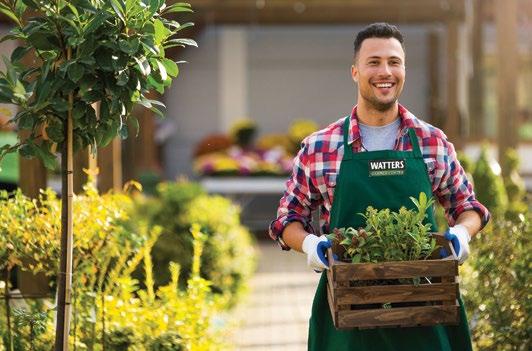
Ken Lain, known as "The Mountain Gardener," writes weekly columns that are featured nationally. His podcast and YouTube channel by the same name have millions of downloads. During the week he can be found at Watters Garden Center in Prescott.
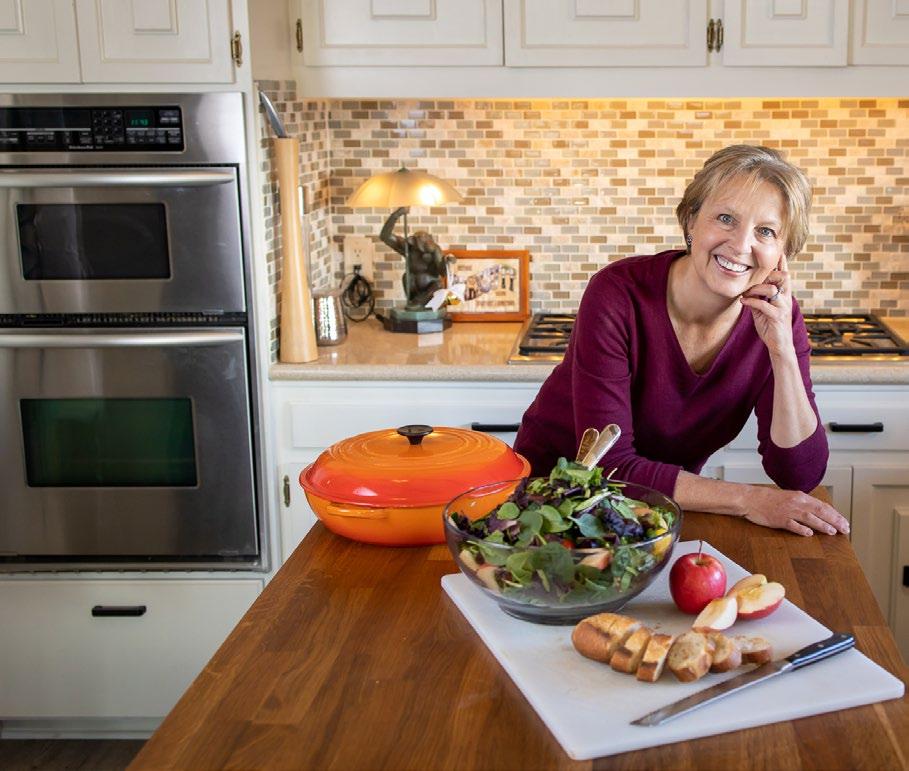
Rita Carey Rubin
MS, RD, CDCES, Host of YRMC’s Your Healthy Kitchen
Rita Carey Rubin is a registered dietitian and certified diabetes care and education specialist who hosts YRMC’s Your Healthy Kitchen, an online video series that features cooking tutorials, local guests and simply delicious, affordable recipes.
Dorian Lange
CEO & Co-Founder, Northern Arizona Pain Institutes
Dorian is responsible for the management, administration and business development for multidisciplinary specialty clinics throughout central Arizona that provide integrative treatment protocols for pain management, physical and rehabilitative medicine.
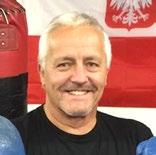
Coach Jarek Slagowski
Owner & Head Coach, Grind Boxing Gym
Coach Jarek Slagowski was born and raised in Poland. He is a certified USA BOXING, INC coach and has been the coach of the Polish Kickboxing National Team. He’s now owner and head coach of Grind Boxing Gym in Prescott.
Bridget O’Gara
Communications, Yavapai Regional Medical Center
Bridget O’Gara is a writer, communications strategist and project manager who specializes in health care. She works with missiondriven organizations, including Yavapai Regional Medical Center.
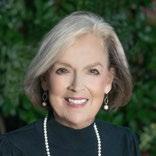
Dr. Billie Orr
Prescott Mayor Pro Tem, City of Prescott
Billie has served as a teacher, principal and associate superintendent for Arizona K-12 public schools and at the national level promoting high standards and accountability. She is a member of Frontier Rotary and serves on the boards of Arizona Town Hall, Western Heritage Foundation and the Phippen Museum, among others.
Loree Walden
Marketing Manager, Yavapai Humane Society
Loree is originally from Honolulu, Hawaii, and moved to Prescott in 2010. Her background spans a variety of careers, including 20 years of tax preparation, eight years of radio traffic and her current position as marketing manager for Yavapai Humane Society, where she is able to do what she loves by helping animals through advocating for them to help them find their furever homes!
Bailey Zygutis
Nutritionist and Personal Trainer, Vitruvian Fitness
Bailey Zygutis is a nutritionist and personal trainer with Vitruvian Fitness. With a passion for holistic health, she works with individuals in person and online to create customized programs that teach them to more fully enjoy the benefits of good health.
CONTINUED Rising
Ad vanced awareness, early detection and research has led the way in improving the chance of success in beating breast cancer; early detection is still critical. In the last 20 years, significant developments have paved the way to increasing survival of a breast cancer diagnosis.
The American Cancer Society estimates 1 out of 8 women will be diagnosed with breast cancer during their lifetime. Early detection of breast cancer, usually before any lumps or other physical symptoms arise, is still the best chance for women to survive the disease — the fiveyear survival rate for women whose breast cancer is detected before spreading beyond the breast is 99%. Those who are diagnosed after it has started to spread are also seeing better survival rates due to improved treatment options.
SuccessDetection
AND TREATMENTS IN BREAST CANCER
Mammograms remain the standard tool for screening, though other technologies have been introduced including 3D mammograms, MRIs and ultrasounds.
The American Cancer Society’s latest recommendations on screening frequency are:
For women of average risk
* Those ages 40 to 44 have the option to start screening with a mammogram every year.
* Ages 45 to 54 should get mammograms every year.
* Ages 55 and older can switch to a mammogram every other year or continue yearly mammograms. Screening should continue if a woman is in good health and expected to live at least 10 more years.
For women of high risk
These women should have a mammogram and breast MRI annually, usually beginning at age 30. They have certain risk factors based on their family or medical history, such as:
* Having a known BRCA1 or BRCA2 gene mutation (based on genetic testing) or a first-degree relative (parent, sibling or child) who has been genetically tested and has this mutation.
* Having radiation therapy to the chest when they were age 10 to 30.
* Have Li-Fraumeni syndrome, Cowden syndrome, or Bannayan-RileyRuvalcaba syndrome, or have first-degree relatives with one of these syndromes.
These Lifestyle Habits
by Rita Carey Rubin, MS, RD, CDCES, Host of YRMC’s Your Healthy Kitchen
Today, 1 in 8 women living in the U.S. will develop breast cancer in their lifetimes, according to data cited by the American Cancer Society. That’s why it’s so important to do everything you can to reduce your risk.
Experts agree that women (and men) can lessen the likelihood of getting breast cancer by moving more and sitting less every day; working up a sweat a few times a week; building some muscle; and cutting back on alcohol. Research shows that Americans could prevent 1 in 3 cases of breast cancer with healthy lifestyle habits.
Move More and Sit Less
Physical activity tops the list of lifestyle practices that provide protection to women and men at every age. According to a study released in 2017 by the American Institute for Cancer Research and the World Cancer Research Fund, 150 minutes per week of regular moderate activity reduces the risk of breast cancer in pre- and post-menopausal women by about 13% when compared to sedentary individuals. An example of moderate activity is walking at a pace that causes a slight increase in heart rate and deeper than normal breathing. Vigorous workouts — exercise that causes a faster heart rate and some sweating — boosts protection
for pre-menopausal women to 17%. Other studies suggest even higher rates of protection when individuals increase exercise time to up to 300 minutes per week.
Moving more and sitting less throughout the day and engaging in regular physical activity likely reduces the risk of breast cancer. This lowers inflammation in the body (a risk factor for many
types of cancer and other chronic diseases), decreases insulin resistance (which lowers blood glucose and insulin levels in the blood), improves immune function, and reduces circulating levels of estrogen. Some research suggests a sedentary lifestyle, or one with little to no physical activity, is a major risk factor for breast and other types of cancer.
Takeaway tips:
* Shoot for a minimum of 150 minutes of moderate, or 75 minutes of vigorous exercise a week.
* If you are new to physical activity, start with 5-10 minutes of activity at a time and gradually build your strength and stamina.
Rita Carey Rubin, MS, RD, CDCS
Be Proactive Self-Breast Exams Breast Health ABOUT YOUR WITH MONTHLY
by Brittany Peña, Nurse Practitioner, Prescott Women’s Clinic
Forty percent of diagnosed breast cancers are detected by women who feel a lump.
Establishing a regular self-breast exam is particularly important for the health of women. October is Breast Cancer Awareness month. It is important for all women to be aware of their breasts and to do their own selfbreast examination, as well as an inspection.
For inspection of the breasts, women should look at themselves in the mirror to assess for any new size difference, nipple retraction or changes to the direction of the nipples, and skin changes such as thickening or discoloration of the breast.
In regard to examination of the breasts, it may be done in the shower or when laying down in bed. It is important to exam all areas of the breasts, which includes into the
axilla (armpit), the whole breast up to the clavicle and down the center of the breasts (sternum).
It is a good idea to do the exams on the same day every month.
As a provider, women
know their breasts better than we do if you are doing your proper examinations. Although eight out of 10 lumps are benign, all require an evaluation. Women should be seen with any suspicious lumps, bumps, discharge or skin changes for further evaluation and assessment. Remember to contact your health care provider to schedule routine physical exams or an office visit if you have any concerns.
Prescott Commission
Well-Being STRIVES FOR ON
Healthy, Balanced Lifestyle for All
by Dr. Billie Orr, Mayor Pro Tem, City of Prescott, and Lori Kennedy, Communications Coordinator, Embry-Riddle Aeronautical University
Congratulations to ROX Media on this tremendous new publication – Prescott Healthy Living, which will help our Prescott area communities become more aware of the many resources available to maintain a healthy, balanced lifestyle. The Prescott Commission on Well-Being is excited to be invited to contribute monthly, and we look forward to sharing ideas about the importance of overall well-being in the vibrant communities throughout the Prescott region.
The inspiration for a Prescott Well-Being Commission came in 2017, when Gallup-Sharecare published the State of American Well-Being rankings*, and Prescott was one of the 186 communities analyzed based on its wellbeing index scores.
Our community scored quite well, ranking No. 9 in overall well-being. The idea of an intentional focus of well-being became the catalyst for forming a small group of citizens to create a Prescott Commission on Well-Being. After researching a diverse group of people with varying expertise and interests, the Commission became a reality in January this year. There are nine appointed commissioners, each with a particular expertise and talent. The meetings are every third Wednesday at City Hall and open to the public.
The vision statement is to become the premier city of well-being in America.
While this may seem to be a lofty goal, we are determined to make every effort to intentionally move our community toward this vision. Our mission statement
is “to engage the citizens who live, learn, work and play in Prescott in the lifelong pursuit of wellbeing through communication, motivation and action.” Toward this end, over the past few months, the commission has created a webpage on the City’s website, developed our logo and created a survey for our citizens to provide feedback.
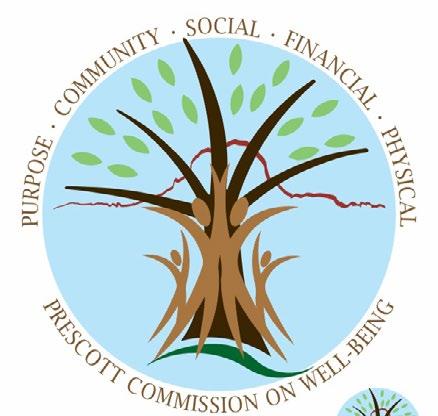
The Prescott Commission on Well-Being emulated the Gallup five elements and incorporated them into its logo, featuring a family supporting five branches of a balanced tree of well-being. Each branch represents an essential element that contributes to a holistic view of a community of well-being.
Community Well-being:
Engagement and involvement in the area where we live. A sense of community thrives when residents like and have pride in where they live and feel connected. It should not come as a surprise to our residents that this is the element where Prescott scored the best with a ranking of No. 4, demonstrating how much we value our connections and have pride in our community.
Financial Well-being:
Understanding and managing our finances increases security and reduces stress and promotes well-being. Prescott ranked quite high at No. 7. While our housing is expensive, there are many opportunities for folks to gather and interact in relatively affordable venues, unlike many areas of the country.
Social Well-being:
Closely aligned to Community is the element of Social Well-Being; having supportive and loving relationships in our lives through family, friends and community engagement. Again, Prescott was ranked very high coming in as No. 9 in the Gallup analysis.
Purpose Well-being:
How we occupy our time/enjoying what we do each day. Setting goals and being motivated to accomplish those goals is an essential part of a well-balanced life. Prescott ranked No. 17 out of the 186 communities in 2017.
Physical Well-being:
Good health and having enough energy to get things done on a daily basis is critical to well-being. No doubt Physical Well-Being is achieved by developing good health habits and energy through balanced nutrition and physical activity. Prescott has many opportunities and great weather for our residents to be outdoors and active and we ranked No. 20 out of 186.
To achieve the commission’s vision and mission, we need our citizens to be engaged in the process. We will be gathering survey input through November and invite everyone to provide feedback about their thoughts on well-being, activities and expectations on what they would like to see developed by the Prescott Commission on Well-Being. We look forward to sharing our progress and invite you to check out our webpage and please take our survey at http://www.prescott-az.gov/
Tapping
INTO YOUR Positive Emotions
by Whitney James, MD, Neuromodulatory Surgery
Emotions are pigments that color our lives. They also directly and substantially contribute to our experience of physical pain, something we treat often in neurosurgery.
It is important to differentiate the actual signal of the pain from what we do with that signal in our brain. Our limbic system can amplify or quiet incoming pain signals. Negative emotions amplify pain signals, positive emotions quiet them. To thrive in any circumstance, including chronic pain, tapping into positive emotions and memories can be medicine in and of itself. Conversely, living in fear, helplessness and
hopelessness are literally toxic to our well-being. This is how pain works: A painful stimulus in our periphery travels and synapses in the dorsal column of our spinal cord. The signal is then passed along and ultimately travels to and through the periaqueductal gray matter before synapsing in the thalamus. From the thalamus, the signal travels to and through our anterior cingulate gyrus, insula,
amygdala and medial temporal lobe prior to reaching its final conscious state in our frontal and parietal cortices.
How can we tap into positive emotional states?
First, we can remember them. Think about your favorite thing to do as a kid. Who was your favorite family member or friend growing up? How did they make you feel? Can you remember a time when you couldn’t stop laughing? Where were you? Who were you with? Did you feel light afterward?
Second, we can practice them. Start with doing things that previously made you feel good, and expand from there. Notice how you feel in different environments and with different people, and put yourself in the environments with people who help you feel your best. Practice actions that make you feel content, at peace and happy. Make a daily gratitude list.
Finally, we can plan. Set aside time to plan for something you love, something you know will make you happy and get to work making it happen.
Power
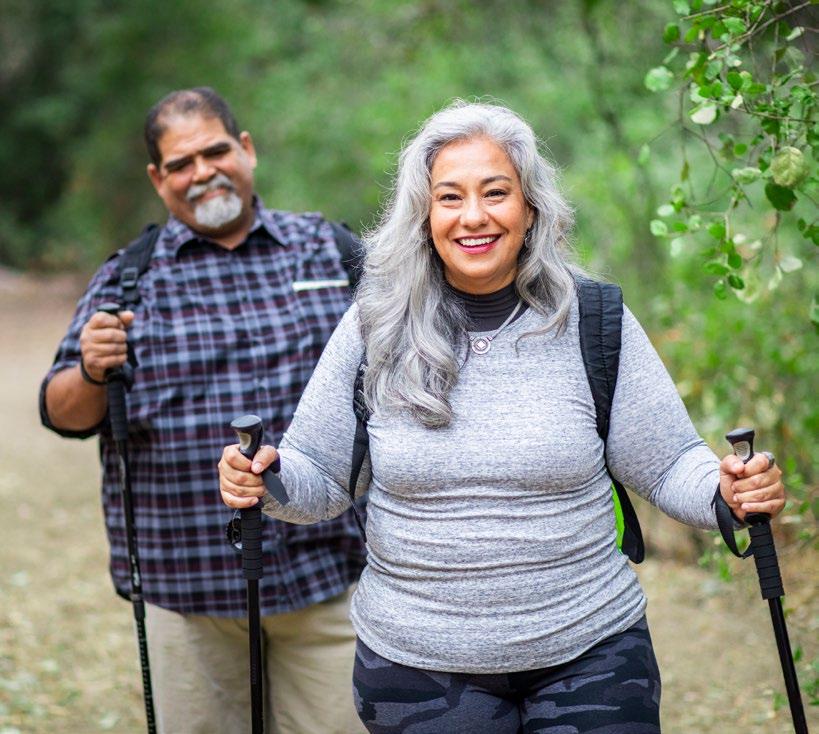
OF GOING FOR A WALK
HERE ARE A FEW OF THE TOP BENEFITS YOU CAN REAP JUST BY WALKING MORE
* Increases cardiovascular capacity
* Aids weight loss
* Regulates blood pressure
* Fights cancer
* Improves circulation
* Reduces risk of diabetes
* Strengthens bones
* Boosts immune function
* Builds muscle strength
* Aids digestion
* Prevents cognitive disorders
* Slows the aging process
* Reduces stress levels
* Enhances, improves mood
* Promotes better sleep
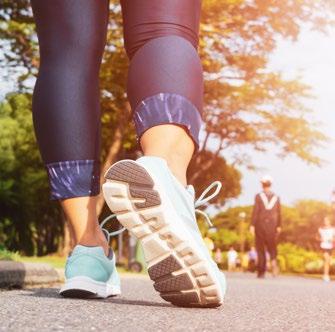
Walking is one exercise that won’t cost you anything beyond time. It requires no equipment and can be performed regardless of where you might be at any given moment.
Mind
A walk is the best way to get some daily sunshine — a surefire way to boost your mood. Serotonin production is signaled in the brain from daily sunshine, which raises your mood. It also helps your body absorb vitamin D, which is responsible for important functions in your body and boosts your immune system.
Body
Walking is easy on the body and still offers multiple health benefits. It can offer similar health benefits as other more rigorous forms of exercise, while being easier on the joints. Walking improves endurance and circulation, prevents weight gain, and
lowers the risk of stroke, chronic disease and cancer. Regular exercise such as walking improves digestion, metabolism, pain and fatigue throughout the day.
Soul
Walking outside can do wonders for the soul. There are many health benefits to spending time out in nature because we human beings simply belong there — breathing fresh air and convening with nature. Even if you only have a few minutes to walk outside every morning, you can experience amazing benefits. You can also engage the kids and pets on your walk and include them!
Muscle
Flexibility
Weight
Watson Lake Loop Provides VARIETY OF VIEWS, WORKOUTS AROUND
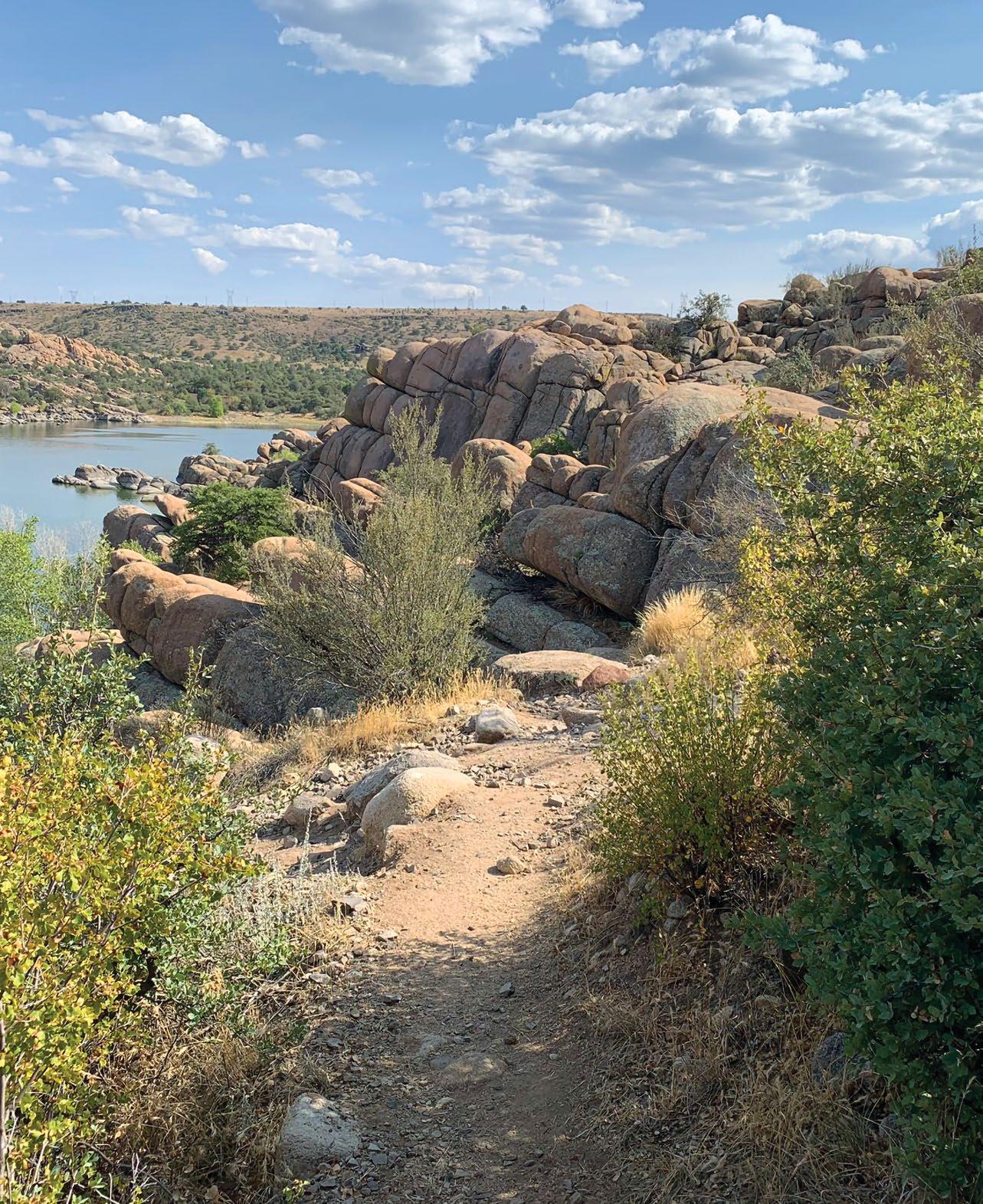
The Watson Lake Loop follows the nearly 5 miles of shoreline around what is probably the most dramatic and famous lake in the Greater Prescott area. It’s composed of portions of several trails.
This is a testament both to the extensive network of multiuse recreational trails here and the untamable shore of the lake itself.
The lake is easily approachable from the south, about a third of a mile north of the head of the Peavine Trail, which follows the southeast shore. You can also cross over to the Discovery Trail, which travels up the southwest shore, the two forming parallel easy-rated paths to be shared by all hikers and bikers — the loop is not recommended for horses.
At about the same point on each side of the lake, an eighth of a mile up, the topography begins to splinter into the rocks and coves the lake is known for, and the Watson Lake
Loop starts to become a little more treacherous.
On the west side, the Lakeshore (aka Fishing) Trail hugs a half-mile of shoreline with a moderately easy (and sometimes crowded) path used by anglers and kayakers. This is Watson Lake’s southern backshore, green and scenic in a markedly different way from the pink and tan granite boulders that dominate most of the lake.
Then you hit the Explorer Trails, a cluster of paths etched over the boulders directly east of the large hilltop ramada in Watson Lake Park, sending hikers scrabbling over them to catch different angles of the lake and terrain, an interesting diversion before heading on to the North Shore Trail.
This trail’s granite base brings hikers straight into the heart of the Dells, heading toward the towering, boulder-strewn hills that define the Dells throughout northern Prescott. You’re rewarded with a great view
of the dam forming the lake and at the end a short side trail to the dam’s back side, a small waterfall.
The Over the Hill Trail moves a bit away from the shore for about a mile, weaving through more of the rocky, yet oddly smooth formations, which have drawn untold numbers of hikers, bikers and climbers to the region.
It also takes you past the not-so Secret Cove, captured in countless photos and frequently explored by kayak and paddleboard, before turning into the Lakeside Trail, which winds closer to the shore. If you have the time, keep your phone or camera ready for still more stunning views of the shore and rock outcroppings jutting out of the lake’s surface.
The Lakeshore Trail eventually joins the Peavine, which gives you a wide, straight path down the rest of the eastern shore, a great way to cool down from your adventure.
Looking south from the Explorer Trails onto the Lakeside Trail on the western shore of the lake.
WATSON LAKE LOOP
Formed by segments of trails that together encircle the craggy shoreline of Watson Lake. The uneven, rocky terrain of the Explorer, Northshore, Over the Hill and Lakeside trails around the north end is rated by the City of Prescott as “difficult,” with the Peavine, Discovery and Lakeshore trails covering the southern end considered easy or moderate. Accessible from the Peavine on the east shore and several trailheads on the western shore.
Parking Fees: $3
Usages: Hiking, Cycling
Mileage: 4.79 miles
Elevation: 5,075 to 5,237 feet
More Information: www.prescotttrails.com
Photo courtesy: Blake Herzog
Local HAVE MORE CHOICES THAN EVER MOUNTAIN BIKERS
Greater Prescott’s rocky, variable terrain is tailor-made for mountain biking, with plenty of trails that put riders in “attack position” and gives them a chance to “shred” with maximum skill, to borrow a couple bits of MTB lingo.
The spectacular scenery is of course a huge draw, but even better for many is the
For beginners — plenty of “easy” trails ideal for young and less experienced riders, such as the ever-popular Peavine, which is wide, flat and has very generous lines of sight.
“And so that’s our easiest. And then we’ve got easy trails, you know, around Willow Lake, on the south shore of Willow Lake all the way to the zoo area,” Hosking adds, including the Willow Lake and Willow Shoreline trails, which form the Willow Lake Loop. A few sections of these are low-water trails, inaccessible when the level rises.
workout that comes with it. It’s a full-body workout that burns fat more efficiently, builds muscle in your legs, torso and everywhere else, and strengthens your heart, especially going through tough, gnarly terrain.
The City of Prescott maintains more than 100 miles of trails open to bikers, hikers and (in most cases) horseback riders, so it can
For intermediate riders — Hosking recommends the Spence Basin area, near the intersection of Iron Springs and Spence Spring roads. The City recently opened access to this section of Prescott National Forest, working with the Prescott Mountain Bike Alliance.
Hosking emphasizes there are assets for all types of users, but this area was designed with this group in mind: “Mountain bikers always want to have more flowy trails, with a good line of sight, you know, whereas hikers typically want to go straight to the view.”
sometimes be tough to know which ones you should try, given how many rides you’ve gone on and what kind of challenge you’re looking for next.
Chris Hosking, trails/natural parklands coordinator for City of Prescott, says bikers at all levels of experience can find courses that will train and challenge
Advanced riders — The Granite Dells, not surprisingly, have the most advanced and technical trails, Hosking said, with slick rock surfaces and extremely narrow paths at some points.
“We have about 25 miles of trail in the Dells, and only if you’re very experienced should you be ready to tackle that area,” Hosking says.
Inexperienced users should also reconsider if they’re thinking about the Missing Link, Little Italy or connected trails in Spence Basin, Spruce Mountain or the Turley and Boyscout trails in Prescott National Forest.
them with a great workout for their legs and core alike.
Photo: Sean Underhill
Women
BOX FOR HEALTH, FITNESS AND FUN
by Coach Jarek Slagowski, Owner & Head Coach, Grind Boxing Gym
In recent years, I’ve noticed more women of all ages discovering the benefits of boxing training, whether with contact, as in sparring and competing, or not. Nocontact training still offers all the benefits of this total-body workout without getting hit.
Like any sport, boxing is based on technical training and attributes like endurance, flexibility, strength and balance. Boxing is one of the best ways of getting into shape for women as they also learn real fighting skills. Boxing training is lots of
fun and very rewarding, but you have to know what you are doing. It is important to find a good gym or coach who will teach you proper stance, footwork, punches and defensive measures.
Weight loss is often a priority for women. A one-hour boxing workout including warm-up, stretching, stamina and balance exercises, strength training, footwork drills and punching can burn 800 to 1,200 calories. Besides the gains in fitness and endurance, other attributes
like flexibility and functional strength are also important for a boxer. These benefits, combined with a nutritional diet, are a great way of controlling body weight.
Another benefit of boxing training is mental toughness. Going through a hard training session practicing your fighting skills improves confidence in yourself under pressure. This translates to self-defense skills. I have coached many Boxing for SelfDefense seminars for women who embraced the boxing principles for their protection.
Over my 40 years as a boxing coach, I’ve seen more and more women take on boxing for health, fitness and enjoyment.
Most are happy with nocontact training, but others want to compete. I coach the All-Ladies Prescott Boxing Team. We have participated in several national and international boxing tournaments including the National All-Female Boxing Championships in Atlanta, Georgia. We’ve enjoyed great results and even some championship belts.
Crucial TO OVERALL FITNESS Strength Training
Fitness training should never be an either/ or proposition. We can’t pick either cardio or strength — we need to do both. The Centers for Disease Control and Prevention recommends that adults include 150 minutes of cardio into their weekly activities PLUS muscle-strengthening activities at least two days each week.
While most people tend to spend more time doing cardio, it is important to give equal attention to weight training. Weight training does many things that cardio just can't.
Here are a few of the advantages that regular strength training provides:
Reduced abdominal (visceral) fat — This is the fat that collects at your midsection and has been linked to a higher risk of heart attack, diabetes, cancer and other life-threatening conditions. Strength training increases lean muscle mass, an important tool for raising metabolism and burning calories more efficiently.
Fewer injuries — Stronger, toned muscles will give you a stronger base for any kind of physical activity, improving your coordination and balance. If muscles
and tendons are too weak they can put stress on other muscles and lead to pain from tendonitis and falls.
Osteoporosis prevention
— Putting light stress on your bones with your own weight or by lifting weights sends signals to your brain to produce added tissue and add to bone mass. Several simple exercises including foot stomps, bicep curls,
squats and leg lifts are especially effective at this.
Higher insulin sensitivity —
This is the opposite of insulin resistance, which is a major factor in the development of diabetes. Our muscles store glucose from our body as glycogen, which is released as fuel every time we use them. If we don’t have enough storage capacity for glycogen in our muscles, that’s when
it tends to collect in our bloodstream and damage many areas of our body.
Healthier aging — Lean muscle mass naturally decreases as you age, with the average 70-year-old left with about 55% of what he or she started out with. Strength training significantly slows this process and gives people the sturdiness needed to maintain an independent lifestyle.
If it doesn't challenge you, it doesn't change you.
Cheyann Copeland
5
WAYS TO TAKE CARE OF YOURSELF Immediately After a Workout
When you’ve completed a hard workout at the gym, at home or on the hiking trail, you could be in for fatigue and soreness if you don’t wind yourself down (and back up) properly. This leads to pain and unpleasantness.
Taking these steps to recovery will make you feel much better and more enthusiastic about making a regular date with your workout, be it aerobic, strength-based or some combination.
In roughly this order, they are:
1Cool down
After an intense workout, it’s a good idea to take at least 10 minutes to cool down with a gentler activity than what you’ve just been doing, whatever qualifies. It could mean slower hiking or jogging than you were doing or something completely different, like a couple laps in the pool or a few yoga poses. This gradually brings your heart rate, breathing and blood flow back to normal levels, while an abrupt halt can lead to dizziness or even passing out.
2Stretch
Stretching is a vital part of every cooldown, and if your workout wasn’t too strenuous it may suffice as your whole cooldown. Stretching the muscles most used during your workout continues the process of slowing down your heart rate and allows your muscles to begin recovering, as well as reduce post-workout soreness. It releases endorphins, increases your range of motion and improves muscular coordination.
3
Rehydrate
Replenishing the moisture just perspired out of your pores should be done at intervals while you’re training if possible, but definitely following a workout. This is yet another step to getting your heart rate back to normal by replacing the fluid that’s been lost from your cells and your plasma. Experts say you can lose 1% to 4% of your body weight in water in an intense workout.
One way to know close to the amount of water you need to rehydrate is weighing yourself immediately before and after exercise without any drinking in between, then drinking at least 100% of your weight loss.
4
Refuel
Plan on eating a healthy snack or meal within 45 minutes of your workout to aid the recovery process and build back your muscles’ energy stores. Some good choices include lowfat Greek yogurt with fruit and granola, banana with almond butter, hard-boiled eggs with toast or a cup of chocolate milk with a handful of crackers.
Many experts suggest finishing your workout shortly before breakfast, lunch or dinner when possible, which encourages eating healthier, more balanced meals. An omelet with a few chunks of roasted potatoes or grilled chicken strips with raw veggies and hummus are good examples.
5Take a cool shower
This doesn’t have to be a freezing cold shower or ice bath, but turning the water down at least a few degrees from your accustomed temperature has been shown to reduce inflammation and soreness after a workout while accelerating muscle repair.
Make sure your canine friend gets the right treats this Halloween
Dog
PEANUT BUTTER TREATS
by Loree Walden, Marketing Manager, Yavapai Humane Society
Halloween is a fun time for us humans, with lots of yummy candy to munch on! But, Halloween can be a very dangerous time for our four-legged fur kids if they get ahold of that candy. Watch out for the ingredient Xylitol, which is a sugar substitute used in many sugar-free candies. Xylitol is toxic to dogs, and it doesn’t take much of it to bring on very serious health complications. Chocolate is another food to keep away from your pets as it is also toxic. Instead, give your fur buddy these Peanut Butter Dog Treats you can make yourself. Consider them a healthy treat for learning more tricks!
1 cup pumpkin puree*
2 eggs
1/3 cup natural peanut butter, NO Xylitol or sugar substitutes
2 cups whole wheat flour (all-purpose can also be used)
1/2 tsp cinnamon
1Preheat oven to 350° Line a large baking sheet with a silicone baking mat or parchment paper
2In a large bowl, combine pumpkin, eggs and peanut butter. Stir until completely combined.
3Add in flour and cinnamon, stirring until combined.
4Lightly flour a flat surface and roll out dough to ¼ inch, using flour as needed to keep dough from sticking.
5Cut shapes out of dough and place on prepared baking sheet.
6Bake 20 to 40 minutes depending on desired level of crunchiness.
7Remove treats from oven and let cool on a cooling rack. Store in an airtight container for up to one month in the refrigerator or six months in the freezer.
* 100% pure pumpkin, not pumpkin pie mix
Local Events
OCTOBER - NOVEMBER 2020
Pumpkin Fest & Corn Maze
Oct 2nd to Nov 1st
Mortimer Farms
Chino Valley Farmers Market
Oct 15th
Olsen’s Grain
Seniors & Caregivers
Conference
Oct 16th to Oct 23rd
Online Event
MORE INFO: SeniorConnectionExpo.us/V-Expo
Remembering Angels
2020 Benefit for YRMC
Breast Care Center
Oct 17th
Los Pinos Mexican Food
2020 Yavapai Humane Society
Walk for the Animals
Oct 24th
Virtual Walk
Costumes for Kids 5k Fun Run
Oct 25th
Virtual Run
MORE INFO: yavapaicasaforkids.org/costumes-for-kids-annual-5k
Ongoing Events
7:30am to 12pm YRMC Miller Valley Lot
Photo: Mortimer Farms
Have Your Kids
DISCOVER THE
fun, benefits
OF PLAYING IN NATURE
There are so many good things children get from playing outside, from the obvious (hands-on learning about nature) to the not-quite-so-intuitive(reduced risk of nearsightedness). And few places have better opportunities for kids to play outdoors than Greater Prescott with a mild climate that still has four seasons to witness and absorb the natural cycles the world is built upon.
The Highlands Center for Natural History, Heritage Park Zoo, Mortimer Farms and Community Nature Center have structured nature-based learning activities for kids, and trails and open space abound in parks and the Prescott National Forest. Here’s a few more of the benefits kids get from outdoor play:
Getting exercise — The CDC recommends children ages 3 to 5 stay active throughout the day and those ages 6-17 get 60 minutes of moderate to vigorous physical activity each day. Research shows they (and adults) are more likely to exercise for longer periods when they are outside. If you give a kid a ball or bike, and a little room to roam, that hour goes by in a hurry!
Exposing to sun — We all need vitamin D, especially kids whose bones are growing and immune systems developing. Solar rays are our chief source of D at all ages, while they play other roles in building immunity, improving mood and encouraging better sleep by keeping us in tune with our circadian rhythms.
Connecting with nature — No matter how advanced technology gets it’ll never replace learning about the natural world by being part of it. Regular outdoor play lets kids observe the seasons, examine leaves, bark and rocks, watch streams flow and see how animals, large and small, interact with the environment.
Taking risks — The uncontrolled nature of nature means it’s inherently riskier, something which can unnerve parents and children. But it also gives kids a taste of what it means to evaluate and navigate the world, making decisions that will have consequences. In most cases a parent or caregiver is nearby but at just enough distance for the child to experience a sense of independence.
Fain Park
US COUNT THE WAYS DOES YOGA HELP YOU? How
LET
It’s no wonder yoga has been practiced for thousands of years; it gives its followers a multitude of advantages hard to pass up.
It has physical, emotional and spiritual dimensions, which converge at the goal of bringing practitioners more in tune with themselves, their immediate surroundings and universal energy.
The journey to those goals is strewn with physical and mental exercises that have been proven to reduce or resolve such health-related problems as:
1
Reduced stress and anxiety
One of the benefits most commonly reported by participants is a post-practice sense of relaxation and inner calm that offers a break from the hectic pace of the world. This is the result of the brain releasing hormones and neurotransmitters, which lower stress and anxiety levels instead of those that raise them, which in turn reduces inflammation and other harmful bodily processes.
2Chronic pain relief
The muscular strength you develop from yoga improves posture and reduces back pain, while stretching extends joints and helps prevent them from breaking down through the loss of cartilage. Spinal disks, like other forms of cartilage, receive most of their nutrients while they’re in use, so the safe use of backbend and twisting poses helps to keep them supple and in place. Yoga can also help reduce arthritis-related pain.
3
Lower blood pressure
Some research has shown yoga practice that includes poses, breathing and meditation can lower blood pressure, while yoga that focuses only on the poses has a lesser positive effect. However, those with untreated high blood pressure are advised to avoid inverted poses that put their heads below their hearts, including headstands, forward bends and Downward Facing Dog.
4
Weight loss
Most forms of yoga aren’t generally considered “cardio,” but some of the more active forms such as vinyasa, hatha and hot yoga are better at revving up metabolism. Research has also shown that restorative yoga, which incorporates slow movement with holding a few poses for extended periods, can help overweight women sustainably lose weight and fat.
Christine Shriver from Your Soul Shine
Using Neuromodulation for Pain Management
by The Team at Northern Arizona Pain Institutes
Living with chronic pain affects not only your body but also your mind. It can make getting around and getting along equally difficult. But with innovation in health technology comes hope. Neuromodulation has been found to be more effective than traditional therapy at relieving chronic pain.
About Chronic Pain
confirmed nerve injury are classified as having CRPS-I (previously called reflex sympathetic dystrophy syndrome or RSDS).
These conditions may cause chronic pain with signs and symptoms such as:
* A burning or freezing feeling
* Throbbing pain
* Sharp pain
Treatment for Chronic Pain
According to the National Institutes of Health, dealing with chronic pain lasting more than six months is a way of life for more than 11% of Americans. Injuries and infections can cause pain and discomfort, but chronic pain happens when the nervous system does not function properly. A common cause of chronic pain is Complex Regional Pain Syndrome (CRPS). CRPS is nerve damage usually caused by an injury. Pain in the limbs may cause them to swell or change in color or temperature. Patients with confirmed nerve injuries are categorized as having CRPSII (also known as causalgia), while patients without
* Pins and needles sensation
* Numbness
* Sensitivity to touch
* Loss of coordination
* Muscle weakness or inability to move part of the body
Traditionally, doctors have prescribed medications to treat chronic pain, including opioids, which can lead to addiction and overdose. Treatment plans for chronic pain may also include physical therapy, psychological interventions, nerve blocks and surgery. When these treatments fail, people with chronic pain can turn to a different therapy. Dorsal column stimulation is an option that blocks pain signals from reaching the brain in the first place.
For this treatment, a surgeon places a small device in your body that sends electrical signals to your spinal cord (think of a pacemaker for the heart — dorsal column stimulators are very similar to that, but for the spine). Research has found that 40% to 50% of people who have CRPS achieve pain relief from dorsal column stimulation.
Let“Massage therapy is not contraindicated in cancer patients; massaging a tumor is, but there is a great deal more to a person than their tumor.”
— Bernie Siegel, MD
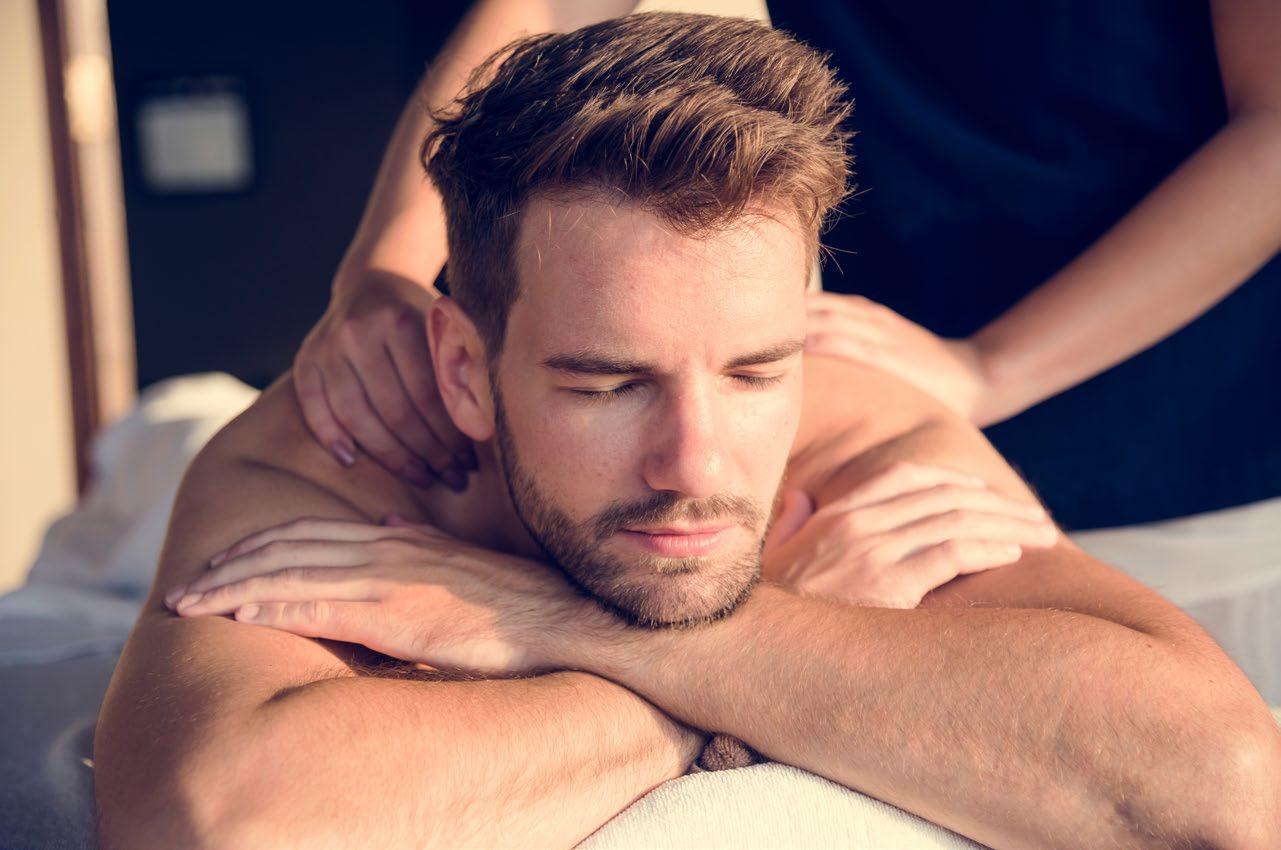
MASSAGE THERAPY
EASE YOUR CANCER JOURNEY
by Carl Johns, LMT Director, ASIS Massage Education-Flagstaff
There was a longstanding myth that people with cancer should not receive massage therapy out of fear it could spread the disease. But as the eminent cancer specialist Dr. Bernie Siegel said, a person is much more than their tumor, and by the 1980s and 1990s many complementary and alternative medicine models came into hospital settings as an adjunct to conventional cancer therapies.
Massage has been by far the most popular of these therapies, reconnecting the patient with a sense
of wholeness through touch to elicit a strong relaxation response.
A cancer diagnosis and the subsequent treatment — often surgery, radiation and chemotherapy — is certainly one of the most stressful times in a person’s life. Massage therapy enhances the function of most of our major body systems by improving sleep, digestion, respiration and circulation, immune function, and our overall sense of well-being.
The role of the therapist is not to fix or to cure but to nurture and promote relaxation and all of its
attending benefits. We accept without judgement all of our clients’ decisions about treatment and work to promote relaxation and wellness during difficult times, enhancing daily quality of life through our presence and our nurturing touch.
If you are a massage therapist, settle into this simplicity and bring the full power of your heart and your hands to each session. If you are a client with cancer, seek out the most comforting and relaxing bodywork you can find and open to the healing power within you.
Bodyweight
Exercises
TO FRESHEN UP YOUR HOME WORKOUT ROUTINE
Bodyweight exercises, in which you use your own weight to provide resistance, save time, money and require nothing but yourself! Such training allows you to move more freely, developing core strength and better spatial awareness.
Bodyweight exercises are so easy to do. So easy, in fact, that it's sometimes a good idea to challenge yourself by trying to make them a little more difficult. Four factors you should consider while working out are speed, airtime, instability and moves.
Speed — Vary your workout accordingly. For example, when you spend four seconds in the lowering portion of a push-up then press back up for one second, your muscles spend more time under tension.
Airtime — Take bodyweight exercises to the next level with plyometric training. This training consists of things like jumps and throws. Plyo push-ups and jump squats are examples.
Instability — Add easy accessories such as a towel or pair of socks to make exercises more challenging.
Moves — Meet the moves to strengthen all the right muscles:
Traditional bodyweight exercises include sit-ups, push-ups, tricep dips, hip bridges, high-knee run or running in place. Here are some others you can add to your routine, and these four variable factors can be incorporated into any of them.
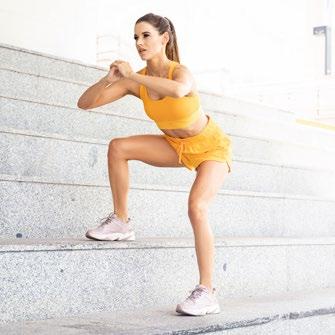
SQUAT — Stand with feet just wider than hip-width apart, toes pointed slightly out, clasping hands at chest for balance. Send hips back and bend at knees to lower down as far as possible with chest lifted. Press through heels back up to starting position. 10-15 reps.
LUNGE — Stand with feet hip-width apart. Step forward with right foot, bending both knees to 90 degrees. Step back, repeat with left foot. Perform this move with
body weight or holding two dumbbells or kettlebells for added challenge. You can also do a reverse lunge (stepping backward) or a walking lunge (continue walking forward as you lunge). 10-15 reps per side.
PLYO LUNGE — Stand with feet hip-width apart. Step left foot back, lower into a lunge, knees forming 90-degree angles. Drive through right heel to jump up, switching legs in the air. Land in a lunge position with left leg forward. Continue alternating lunges with a jump in the middle, aiming to increase time in the air and decrease time on the ground. 10-15 reps per side.
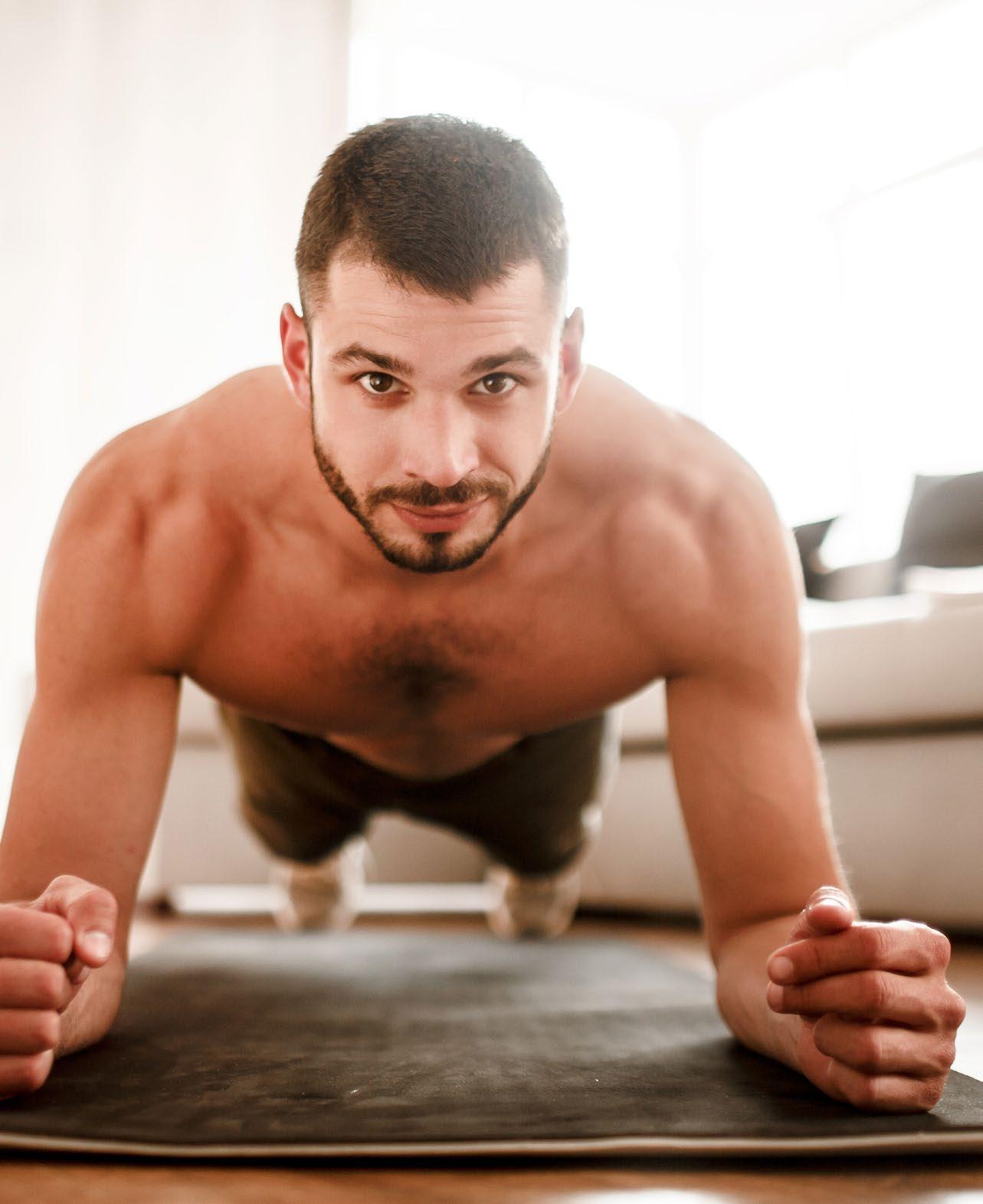
PLANK — On all fours, shoulders over wrists (either use hands or elbows to hold yourself up), step feet back, engaging glutes and thighs to keep legs straight. Body should form a straight line. Think about pushing
the ground away from you, pulling the belly button up toward the spine to keep back flat. Hold 30-60 seconds.
BURPEE — Stand with feet hip-width apart. Place hands down in front of feet, then jump feet back to a high plank position, keeping hips up and in line with shoulders, heels. Drop chest to the ground. Push back up, without arching back, as you jump feet back to hands. Stand and jump up. 10-15 reps.
MOUNTAIN CLIMBER — Start in a high-plank position, shoulders over wrists, core engaged so body forms a straight line. Engage glutes, thighs to keep legs straight. Drive left knee in toward chest, then quickly step it back to plank position. Immediately drive the right knee in toward the chest, then quickly step it back into plank position. Alternate, 10-15 reps per side.
No exercise equipment, no problem!
What ARE YOUR SOCKS TELLING YOU ABOUT YOUR LEG HEALTH?
by Bridget O’Gara for Yavapai Regional Medical Center
Your socks may be doing more than keeping you comfortable when you’re active, they could be signaling you have a health problem.
“If you pull your socks off at the end of the day and see depression lines on your legs, that’s an indication of edema,” said Anil Kumar, MD, FACC, ABVLM, RPVI, RPhS, FSVM, Medical Director of the Vein Center at Yavapai Regional Medical Center.
Finding and treating the underlying causes of edema — a buildup of fluid anywhere in the body — are major goals of the Edema Clinic, which takes place every Wednesday at the Vein Center in Prescott Valley.
“Our clinic takes a comprehensive approach to caring for people with edema,” Dr. Kumar says.
“It’s a serious condition that’s often overlooked and definitely underestimated.”
There are different kinds of edema, including generalized and localized edema. All Edema Clinic patients undergo extensive evaluation, compression therapy and patient education. After evaluation, Dr. Kumar develops individual patient treatment plans that may include ablation therapies or lymphedema therapy.
Moving and using the muscles in your legs may reduce the swelling caused by leg edema. Talk to your doctor to learn more.
To ensure clinic patients receive the full spectrum of lymphedema therapies, Dr. Kumar is collaborating with Donna Hannah, OTR/L CLT-LANA, a certified Lymphedema Therapist. Lymphedema therapies include: complete decongestive therapy, manual lymphatic drainage, lymphedema pump,
exercises, skin care and more. Dr. Kumar — who is board certified in numerous edema-related specialties including vascular medicine, cardiology and venous and lymphatic medicine — oversees patient care.
“Because of the common alliance of venous insufficiency with the lymphatic system,” says
Dr. Kumar, “the American College of Phlebology recently changed its name to the American Vein & Lymphatic Society.”
Want to learn more about the Edema Clinic? Talk to your physician or call the Vein Center at YRMC at 928-759-5890. Visit YRMC. org for more information about the Vein Center.
Photo: Yavapai Regional Medical Center
Quick-Calming
Exercises
YOU
NEED TO LEARN NOW
Everyone has to deal with some sort of stress or anxiety, and at times it can overwhelm you. The sooner you take action to curb their effects, the less damage they’ll do to your mood and your overall health. Here are some simple actions you can take to dial back your tension when a taxing or alarming situation springs up in your life.
Go for a walk — If you’re able to leave the scene for just a few minutes, do a lap around the building or the block to gather your thoughts and push that tension out through every breath you take and every swing of your arms. Any form of physical activity gets your endorphins pumping along with your heart, giving you an instant boost to your energy, mood and ability to tackle whatever life has just dealt you.
Breathe deeply — You can do breathing exercises just about anywhere and doing them steps you back from the heat of the moment. By bringing more oxygen to your body and brain with each inhale and releasing physical tension with every exhale, you’re turning the equation more and more in your favor. There are many different types of breathing exercises, but at stressful times keeping it simple is often easiest.
Practice compassion —
When you’re frustrated with how you or someone else has responded to something stressful, remember everyone is coping with situations that aren’t meeting their needs or wants in one way or another. Identifying the underlying motive behind less-thanideal behavior — for example, yelling at your partner because you want a better relationship than seems possible in the moment — can lead you to compassion for yourself and others.
Grow your gratitude — If you’re overwhelmed by everything life is throwing at you, remembering the good in that life can put the stress and anxiety in perspective. Make a mental or physical list of what brings you happiness and comfort, from the mundane to the sublime. Humans tend to have an “attention bias” toward negative situations; make a regular point of reminding yourself of the positives.
Ease the way TO Preserving Our Yin
by Dr. Katie Borchert, Naturopath
There is a widely accepted worldview that as we age in years, the body deteriorates. However, I know it is possible for everybody to be comfortable in their body, no matter their age. I have worked with inspiring elders who are the epitome of health and vitality.
Then what is the difference between them and elders with chronic health issues? One such root cause is a pattern in Oriental and energetic medicine called yin deficiency. Due to our diets and lifestyles, we tend to burn up yin faster than it can be replenished.
Yin and its counterpart yang make up everything around and within us. Yin as it pertains to the body are the dense, solid, lower and cooler structures. Fluids like blood, lymph and saliva are yin in nature. Structures include bone, kidneys, liver, spleen, uterus and ovaries. Because of the dense nature it can be inherently more work to move fluids and replenish structures.
A woman experiences yin deficiency symptoms when menses are nearing the end. These are classic signs and symptoms like hot flushes, night sweats, dry
skin, thin body frame, thin bones, weak and sore low back and knees. Therapies too hot or aggressive could greatly exacerbate these symptoms.
A more gentle approach is the use of herbs that support yin. These herbs are energetically sweet or bitter and neutral-to-cool in temperature. This list includes lily bulb, goji berry, black sesame seed, privet fruit, American ginseng, asparagus tuber. They can be prepared as tea or used as food. Other foods to make meal staples: pears, honey, lemons, pomegranate, mangos, yams, string beans, peas and watermelon.
The lifestyle side of yin is taking the time to really rest. Ensure good sleep hygiene, feel rested upon waking. Take appropriate rest days after workouts and house projects. Do not take on extra activities if you don’t have ample rest time.
Find balance in your living style to keep the body and spirit fluid, strong and more resilient to the changing environment. This will encourage more youthfulness, playfulness and ease of doing all of your activities.
Protect YOUR HEALTH
AS YOU GET OLDER
As you move through life, your body will inevitably change with time. Bones get more brittle, muscle mass decreases, digestion slows down. But the extent to which these happen depend in large part on the state of your overall health. Making your health a priority throughout your life will have positive consequences on your aging process, and it’s never too late to start having an impact by taking these steps.
* Eat a low fat/low cholesterol diet based on whole foods, including lots of fresh fruits and vegetables, poultry and fish, whole grains and plenty of vitamins A, C, E and B12, folate and other nutrients.
* Be as active as possible through activities like walking, yoga, swimming, biking (either stationary or outdoor) and golfing without a cart. Musclestrengthening activities such as lifting weights, body weight-bearing movements and some forms of tai chi are also recommended.
* Keep on schedule with your exams and appointments with doctors, dentists and other medical professionals, who can catch problems early. Follow your doctors’ instructions on all medications and other preventive measures they suggest.
* Stay connected to family and friends by whatever means are available. Seek out new friends and experiences through church or special-interest
groups, volunteering, fitness or educational classes. Doing this can benefit your mood and lower stress, as well as create more opportunities for physical activity.
* Engage your mind. Games from crosswords and sudoku to specialized brain training activities, including video games and apps, are designed to build brain activity and connections for all ages. Take classes, keep up with world events
and learn to accept change as part of life.
* Make sure you get seven to eight hours of sleep. Sleep patterns often shift as we get older, as in getting up and going to bed earlier, which is usually not a problem as long as you get the recommended amount. However, many older adults have trouble falling and staying asleep, which is something worth asking your medical provider about, as our sleep needs do not change with age.
All the
‘feels’
BRING A MESSAGE, MISSION, GIFT
by Carmen Cartterfield, Primary Therapist, Honeybee Healing & Counseling Services
This article is adapted from Pia Mellody’s concept of emotions and their gifts.
Most of us believe that to be healthy means to be happy. But what if that thought is actually the foundation of our unhappiness?
In our culture, we have been taught that some feelings are good and others are bad and should be avoided. The problem is we don’t get to pick and choose what we feel. So when we feel one of these bad emotions (sadness, anger, fear) our initial instinct is to try to change it.
However, when we attempt to ignore or control our emotional experiences, we are missing important information that our feelings are trying to communicate to us.
Each feeling comes to us bearing a message, a mission and a gift. Stop … listen.
SADNESS
Message: Something has been lost or changed. It may be a relationship, an object, a hope or desire; an expectation of the past or a possibility of the present.
FEAR
Welcome your feelings when they come. Check if the message matches the moment. If it does, invite it in.
Follow the mission. Receive the gift. Breathe, and let it move on.
Health isn’t only happiness, it’s wholeness.
Message: You’re in danger, something is threatening. Mission: Find safety.
Gift: Preservation, wisdom, protection.
ANGER
Message: Shows up to say your boundaries are being violated. Mission: Communicate the violation, set new boundaries. Gift: Strength, power and energy.
GUILT
Mission: Honor what has been lost, changed. Grieve it. Share why it mattered to you.
Gift: Healing, awareness, connection.
Message: I have violated or acted outside of my own core beliefs and values. Mission: To make amends for my behavior so I can be aligned again with my core beliefs, values.
Gift: Values, amends.
HAPPINESS/ JOY
Message: There is something in my life exciting and positive Mission: Celebrate! Gift: Abundance, gratitude.
Animal Certification
■ Monday FREE Classes
Yoga YOUR LIFE? WHICH FORM OF BEST FITS
“Hot yoga” and “power yoga” give you a pretty good idea what you’re getting into, but “yoga flow” is a little vague. While the original Sanskrit names like vinyasa and ashtanga are beautiful, they don’t give primarily English speakers insight as to what the class might entail.
Yoga is difficult to boil down into a quiz, but here’s a simple one to give you an idea of where you might fit:
1. What’s your level of experience practicing yoga?
a. I love inversion poses, not just for fitness but also to awaken my kundalini energy.
b. I practice yoga often, and it’s one of my preferred workouts.
c. I’m heading out or Zooming into class as we speak!
d. I’ve done a few classes, and I know I’ve planked before.
e. It sounds fun…
2. What’s your overall fitness level?
a. I thrive on building muscular and spiritual strength.
b. I relish working out every day and seeing the visible results.
c. I have a regular workout regimen and am in good shape.
d. I work out whenever I have time.
e. I want to try yoga because it’s supposed to be less strenuous than other workouts.
3. Are you looking to become more spiritual in your yoga practice?
a. I’m a spiritual warrior!
b. No, I took it up for fitness and health.
c. I’m pretty spiritual as it is and want to deepen this part of my yoga.
d. Sure, I’m up for almost anything!
e. Just give me something easy, at least to get started.
4. How do you want to feel after yoga class?
a. I want to feel like I tested my spiritual and physical boundaries.
b. I want to feel like I pushed my body to the max.
c. I want to feel like I accomplished something good.
d. I want to feel ready to take on the day.
e. I want to feel peaceful — not stressed like I normally am.
If you answered mostly As:
You’re a longtime yogi who values both the physical and spiritual benefits of the practice. To keep yourself inspired and challenged, you could try a yoga teacher training, Acroyoga, ashtanga yoga or even paddleboard yoga.
If you answered mostly Bs:
You’re a fitness junkie who loves a good challenge and a decent sweat. Working out is your hobby, and yoga is just one of the ways you get to do it. You could enjoy power yoga or Bikram yoga.
If you answered mostly Cs:
You’ve learned all the basics about yoga and want to expand your practice spiritually and physically. You might want to try ashtanga yoga, anusara yoga or kundalini.
If you answered mostly Ds:
You’ve tried yoga before and have no physical or mental issues you’re trying to address — you’d just like to learn more about its spiritual and physical aspects. You could enjoy vinyasa yoga or hatha yoga.
If you answered mostly Es:
You may never have tried yoga and are looking for a gentle way to get active or stretch out as a means for healing injuries or emotional turmoil. You could enjoy a basic, peaceful and passive practice like yin yoga, restorative yoga or gentle hatha.
Alex Hope at the Dells Prescott
Benefits of Gratitude
As the weather cools and the A/C is turned off, it is time to start thinking about fall decorating and how quickly the upcoming holiday season will be here. It also is time to start thinking about what we have to be thankful for.
Gratitude and thankfulness can have tremendous benefits on your quality of life.
Gratitude may be one of the most overlooked tools we all have access to every day. Cultivating gratitude doesn’t cost any money and it certainly doesn’t take much time, but the benefits are enormous:
1More friendships and meaningful relationships
2Improved physical health
3Improved psychological health
4 Enhanced empathy and reduced aggression
"Realize deeply that the present moment is all you ever have. Make the now the primary focus of your life"
— Eckhardt Tolle
5 More peace of mind and better sleep
6 Improved self-esteem
7Increased mental strength
Presence of gratitude is about lack of negativity. It is choosing to live life in the now and be grateful for what you have. We all have the ability and opportunity to cultivate gratitude. Simply take a few moments to focus on all that you have — rather than complain about all the things you think you deserve. Developing an “attitude of gratitude” is one of the simplest ways to improve satisfaction with life.
8 Improved happiness and satisfaction with life
9
More success in work and home life due to mindand-body balance
10 Experience real joy in the presence of today
ATTITUDE OF GRATITUDE
* Develop compassion for people and circumstance
* Do something nice for someone else — and don’t tell anyone about it!
* Don’t snowball your thinking at the start of a bad situation
* Accept that life isn’t fair
* Live in the present moment
* Practice patience — life isn’t an emergency
* Resist the urge to criticize
* Choose your battles wisely
* Make peace with imperfection
* Smile at strangers, look in their eyes and say “Hello!”
Over the past 30 years, POSC has saved patients more than $150 Million! Of that amount, $20 Million would have been out of pocket.
Dr. Siamak Rassadi 308-4285
NOSE AND THROAT
Dr. Derek Hewitt 778-9190
Dr. Mark Strasser 778-9190
Dr. Katie Campuzano 778-4300
Dr. Adam Feingold 776-8428
Dr. Luis Fernandez 776-8428
The choice is yours. Choose one of our excellent Prescott based surgeons for your outpatient surgical needs. You will save money and have the best possible care available.
“The best I have experienced! POSC even topped Duke Medical Center which I have always rated highly. Thanks to the staff.”
Overall Patient Satisfaction: 9.8 out of 10!
“Everything about the place was excellent. Very clean, very professional, very organized and efficient. Thank you for the great care!”
“The best I have experienced! POSC even topped Duke Medical Center which I have always rated highly. Thanks to the staff.”
“Everything about the place was excellent. Very clean, very professional, very organized and efficient. Thank you for the great care!”
“Everyone was awesome. My stress level was zero! Loved the nurses. Linda was so sweet and really awesome. Great experience overall. Thank you all!”
“Everyone was awesome. My stress level was zero! Loved the nurses. Linda was so sweet and really awesome. Great experience overall. Thank you all!”
Over the past 31 years 114,000 procedures have been successfully performed at POSC, saving patients more than $160 million! Of that amount, $21 million would have been out of pocket expenses.
Dr. Josephine Kim 583-1000
Dr. Melinda Martin 777-0070
Dr. Richard Ohanesian 778-4300
Dr. Jeffrey Osburn 778-4300
Dr. Jeanette Pilotte 583-7887
INTERVENTIONAL PAIN SPECIALISTS
Dr. Jonathon Gruneich 778-9770
Dr. Bradley Benson 445-4818
Dr. J. Gabriel Tsang 237-9312
ORTHOPAEDIC SPECIALISTS
Dr. Bradley Benson 445-4818
Dr. J. Gabriel Tsang 237-9312
ORTHOPAEDIC SPECIALISTS
Dr. Daniel Burchfield 778-9250
Dr. Bertrand Kaper 778-9250
Dr. Judah Pifer 778-9250
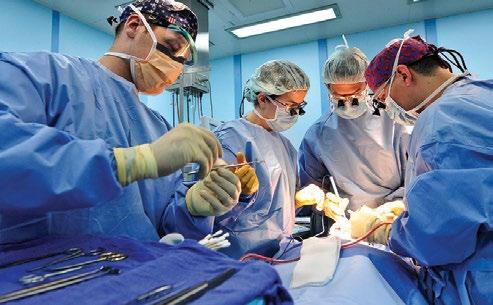
We offer patients and their families a smaller, more comfortable setting than what can be provided by a traditional hospital ensuring that your experience with us is relaxed and worry-free.
The choice is yours. Choose one of our excellent Prescott based surgeons for your outpatient surgical needs and you will not only save money, but will have the best possible environment and care available.
Dr. Daniel Burchfield 778-9250
CARDIOLOGIST
Dr. Siamak Rassadi 308-4285
Dr. Bertrand Kaper 778-9250
Dr. Judah Pifer 778-9250
EAR, NOSE AND THROAT
Dr. Derek Hewitt 778-9190
Dr. Bradley Williams 445-7085
“When I need surgical help, I will always come here. My phone call from Karen was a real delight. When I saw her in recovery I told her she sounded like a song. My anesthesiologist was just great and took time with my questions. I really liked my visit!”
Dr. Bradley Williams 445-7085
PLASTIC SURGEON
Dr. Brian Brantner 776-0325
We perform thousands of procedures every year, providing the efficiency, comfort and convenience available only in an Ambulatory Surgical Center. Our team of professionals are among the highesttrained and most experienced anywhere in Arizona.
PHYSICAL MEDICINE
Dr. Bradley Benson 445-4818
Dr. Mark Strasser 778-9190
PLASTIC SURGEON
Dr. Brian Brantner 776-0325
“Thank you all for the great care you gave me, everyone was awesome made me feel like I was the most important person in there day! Thank you all so very much for taking care of me.”
GENERAL SURGEONS
PHYSICAL MEDICINE
Dr. Thomas Hirasa 771-1011
Dr. Donald Huang 771-1011
Dr. Bradley Benson 445-4818
Dr. Frank Iorio 776-8212
“Joanne the pre-op nurse is awesome, really made me feel at ease. The head anesthesiologist was really terrific and put me completely at ease.”
SPINE SPECIALIST
Dr. Daniel Noble 778-9250
UROLOGISTS
Dr. Paul Nguyen 771-5282
Dr. Jeffrey Sanwick 771-5282
Dr. Michael Stanick 771-5282
Dr. Thomas Rusing 445-9660
SPINE SPECIALIST
Dr. Daniel Noble 778-9250
“This was my 2nd surgery at POSC in 2 months. Both times I received excellent care. Everyone was professional, courteous and all had a great sense of humor. I cannot think of any area that needs improving as I feel 10’s were to be given to everyone there.”
GYNECOLOGISTS
UROLOGISTS
Dr. Katie Campuzano 778-4300
Dr. Adam Feingold 776-8428
Dr. Paul Nguyen 771-5282
Dr. Jeffrey Sanwick 771-5282
Dr. Luis Fernandez 776-8428
Dr. Michael Stanick 771-5282
Dr. Josephine Kim 583-1000
Dr. Melinda Martin 777-0070
Dr. Richard Ohanesian 778-4300
Dr. Jeffrey Osburn 778-4300
First-Responder Community Experiences
SENSE OF RENEWAL
by Justin Elder, Senior Regional Sales Manager, Global Medevac
The Affordable Care Act has done quite a number on our health-care systems over the last few years, specifically regarding ambulance provisions. Where some patients have been helped from the newer policies, most have found it incredibly burdensome. The people most affected live in the rural communities.
It does not take much stretch of the imagination to consider the impact that 2020 has had on health care as a whole. Prior to the COVID-19 outbreak, studies were showing that up to 21% of rural hospitals across America were in danger of closing in 2020 due to lack of funding. Add to this the mess that has played with our economy, and we have ourselves the making of a perfect storm. While there are very much adverse effects of the slowing economy, what has been produced throughout the first-responder community is a sense of renewal. Many services were taxed beyond their means
over the last seven months, but several other avenues for care have evolved.
For instance, the “Golden Hour” — the one-hour time frame needed to provide life-saving care to a patient in an emergency — has never been better. As the pandemic increased, we saw a heightened sense of care
being placed on the basics.
There are currently over 2,000 ground and helicopter ambulance providers in the country and each of them has the unabated gratitude and appreciation of the community they serve. It is job one of any first responder to ensure the safety and security of every American,
and it’s done typically without a proper thank you.
So to everyone on the front lines doing their duty in spite of the fledgling systems, we offer our deepest and most sincere appreciation.
We are in this together, and we will triumph together once this is over!
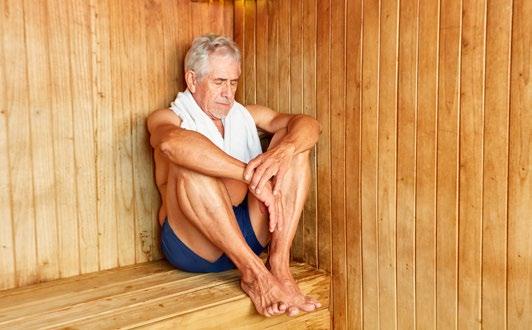
Infrared Saunas PREVENTING, ASSISTING CANCER RECOVERY PLAY ROLE IN
Using heat to treat illness is not new. Over 2,000 years ago, the famous Greek physician Parmenides said, “Give me the power to create fever, and I will cure any disease.”
by Lori Durr, Owner, Sundara Sanctuary
Infrared sauna therapy for cancer patients offers a combination of healing mechanisms that act simultaneously and synergistically. Infrared saunas heat the body and cause an artificial fever; it has been recorded that cancer patients who developed a fever sometimes went into remission. Below is a short list of the many benefits of infrared sauna.
MEDICAL BENEFITS
Eliminates toxins: Without efficient circulation, not only do health-promoting nutrients and oxygen not get into cells, but waste materials cannot get out. Infrared saunas help remove hundreds of toxins such as lead, mercury, arsenic and cyanide; can also help remove nicotine and certain industrial compounds (like phthalates).
Improves the immune system:
Conventional cancer treatments often suppress immune function; using a infrared sauna can boost your immune system. In the infrared sauna, your core temperature increases, and your body produces white blood cells to compensate for the “mini fever.” With regular use, your white blood cell count can increase.
Improves blood flow: Cancer cells grow and reproduce better in lowoxygen environments. Infrared sauna therapy allows for greater absorption of nutrients and oxygen in the area and organs affected by cancer, making the cancer cells more labile to treatments.
Decreases stress levels: It is well known that negative feelings can adversely affect your immune system and promote development of disease. Cancer is linked to stress and depression. Infrared sauna use reduces the body’s level of cortisol (the primary stress hormone). Regular use can relieve anxiety problems and sleep-related issues.
Promotes weight loss: According to the American Institute for Cancer Research, obesity is a known risk factor, not only for cancer, but for cancer death. Cancer is known to hang out in fatty tissue and is hard to metabolize out.
Infrared saunas have been clinically shown to help burn fat and dramatically aid in weight loss.
DOESN'T MARK THE FALL OF YOUR
Make Sure HEALTHY LIFESTYLE Autumn
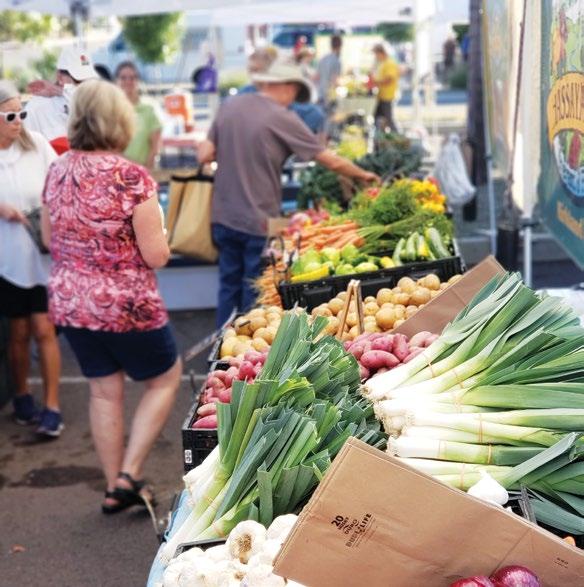
Everybody knows about the “Freshman 15,” but maybe we should just call it the “Fall 15,” because as the weather starts to cool, our propensity to overeat tends to heat up. Born of a deepseated human instinct to prepare ourselves for a long winter with limited food supplies, this is the season “comfort food” begins to get a foothold in many a household. There are plenty of ways to push back against the harmful side of this tendency and still eat good, comforting food by shopping for healthier ingredients, cooking healthy dishes and making sure to keep up with your physical activity.
SHOPPING
* Portion your shopping list and cart like you would your dinner plate. Many experts and the government now say half your plate should be covered with fruits and veggies, with a quarter each going to lean proteins and whole grains, so that’s how to divvy up your basket as well to give your kitchen a strong foundation.
* Look for such in-season vegetables and fruit as apples, beets, Brussels sprouts, cabbage, celery root, cranberries, endive, leeks, okra, pears, persimmons, radicchio, rutabaga and squash. If some of these happen to not be favorites within your household, you can always find delicious recipes built around them, or slip them into your old favorites.
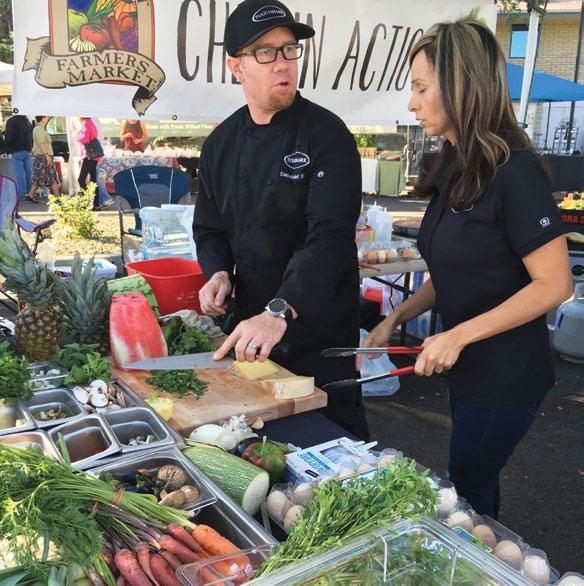
Photo:PrescottFarmers
COOKING
* It’s easy to find healthy and creative recipes to make some of the less-known or popular fall crops more appealing, like glazing Brussels sprouts with olive oil, honey, mustard and other delicious sauces. Try carving your french fries out of celery root for a lower-carb version with the same decadent feel. Grilled radicchio adds an appealing charred taste to sweet sausage.
* Don’t give up on comfort food — just be careful about what you put into it. Soups are perfect for fall as long as they aren’t creamy or cheesy. Put tons of fresh vegetables instead of a bunch of meat into your stews and keep them percolating in your slow cooker so you have something genuinely warm and comforting waiting for you when you get home. Use yogurt or butternut squash to replace some of the cheese in mac and cheese.
EXERCISE
* Remember your daylight hours will be getting shorter, so you may have to shift a few things around to keep your workouts on track, such as when you walk or whether to join a gym.
* Don’t shun exercise in colder temperatures — some studies suggest it might be better for burning calories.
Photo:PrescottFarmers Market Courtesy
SMOOTHIE HELPS BALANCE MY LIFE go-to My
by Alex Erickson, Chef, Raven Café
One of the most important lessons I have learned in my youthful career of being a culinary artist is self-care.
When I have a full plate of tasks and responsibilities at The Raven, my time is narrow and valuable. I have looked for many ways to maintain my health while keeping up with my obligations to The Raven and my personal life. I have considered meal prepping, having full healthy meals at hand. But I have found that it is a little too time consuming and taxing for my taste. Especially considering I “meal prep” for a successful restaurant daily.
My main focus is saving time and getting all the nutrients I need.
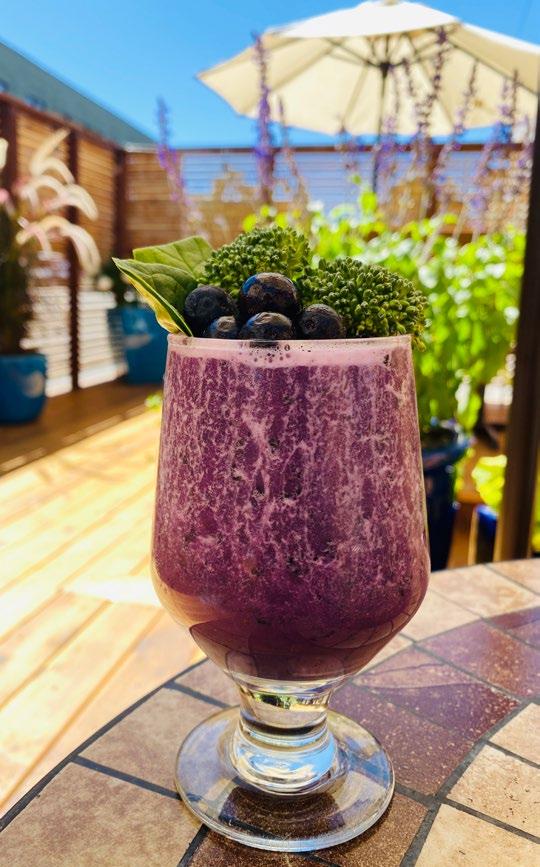
So I began experimenting with smoothies! I am talking about healthy, conscious, full-spectrum-of-nutrition kind of smoothies. I want to feel satiated and nourished using my small timeframes. Smoothies are quick, easy and affordable. My smoothie game keeps me firing on all cylinders.
My go-to smoothie is about 2 cups of spinach, half of a cup of fresh blueberries (or frozen) and half a cup of pineapple for natural sweetness. I then add 1 to 2 tablespoons of chia seeds, which are loaded with omegas. Next, I add ½ of a banana, and when I am feeling frisky, I top that bad mama-jama with some fresh broccoli pieces.
Smoothies need a liquid and my choice is almond milk. I like my smoothies on the thinner side, so I am generous with my almond milk.
I get all of my necessary nutrients: protein, fiber, natural sugars, carbs and omegas. Not a lot of flavor sacrifice. This is a time-friendly, dietary-conscious, single-meal replacement that will leave you feeling energized and satisfied. You will be ready to conquer any obstacle your day throws at you.
Take care of your body and your mind! If my smoothie can help you in any way, I am truly honored to have shared it with you.
“It’s called love…. in return, break bread, pay dollars, make beads, catch buzz.”
Advocates
IS MORE ATTUNED TO OUR BODIES SAY THE Hunter-Gatherer Diet
Followers of the paleo (aka “caveman”) diet are all about getting back to basics — about 10,000 years back.
They believe the human digestive system was designed for the huntergatherer diet and has not evolved yet to meet the massive changes in the kinds of food available once farming began and especially once food processing became ubiquitous.
Several versions of paleo have arisen from people trying to adapt our diets back to what our ancient ancestors most likely lived on. But in general, paleo diets are built on fresh fruits, vegetables, nuts and seeds, fish and lean and grassfed meats, eggs, healthy oils from nuts or seeds including olive and coconut oil, herbs and spices.
Water is the ideal beverage for all occasions, but many adherents include coffee and tea, and the very occasional glass of wine is fine for an indulgence. No soft drinks or juices with added sugar.
Foods on the “avoid” list include grains, dairy, legumes (including peanuts and beans), trans fats, refined sugars, low-fat or diet products, and all highly processed food.
Paleo proponents say the low-carb, high-protein and fat diet resulting from this way of eating promotes weight loss, regulates blood sugar and reduces inflammation, which can especially benefit people with diabetes, heart disease and other conditions.
Some limited studies provide evidence for these claims, though there hasn’t been much research addressing paleo’s effects for children, pregnant women or older adults. When in doubt, ask your doctor before starting a new diet. Physical activity is the other key ingredient for paleo diets, as people try to get as much exercise as our
hunting and gathering forebears. There’s no set regimen, though most suggest choosing “natural” exercise done throughout the day versus going to a gym, and short bursts of high-intensity cardio over longer sessions of moderate cardio.
What is Too Much Sugar?
The American Heart Association recommends no more than 6 teaspoons (25 grams) of added sugar a day for women and 9 teaspoons (36 grams) for men. But the average American gets way more: 22 teaspoons a day (88 grams).
Sugar adds calories to our food with no additional nutrients or vitamins. Too much sugar can lead to many conditions including heart disease, obesity and Type 2 diabetes. Natural sugars, on the other hand, are fine to consume in moderation and are not counted as “added sugars.” These natural sugars are found in foods that also provide water, fiber, micronutrients, vitamins and minerals, including fruit and milk.
What can you use instead of sugar? Sweeteners from
natural sources such as maple syrup, molasses and honey can be less harmful than refined sugar and contain some nutrients. Other natural sugar substitutes are available such as stevia, xylitol and erythritol. You should research the food ingredients before deciding on what sugar alternative is best for you.
Good food choices to satisfy the sweet tooth:
* Fruit such as apples, oranges, bananas, grapes
* Berries of any sort (strawberries, raspberries, blueberries, etc.)
* Dark chocolate (more than 70% cocoa)
* Whole food snack bars
* Protein shake with fruit added
* Sugar-free chewing gum or mints
* Legumes (these help increase feeling of fullness)
* Yogurt
* Dates and prunes
* Sweet potatoes
Healthy Herbs for the Kitchen Growing
by Ken Lain, the Mountain Gardener, Watters Garden Center
Who wouldn’t love freshly picked herbs right from their own garden just as sautéing requires?
Most mountain herbs can be grown outdoors on a seasonal basis, but a few can be produced right through winter.
Herb top choices — Five herbs outshine the rest with several close runners-up. Rosemary, lavender, thyme, oregano and basil top the list. Mint, sage and cilantro come in a close second. Use a fullspectrum light inside, herbs can grow anywhere in your home, including a basement.
Herb soil — The No. 1 ingredient when growing herbs in a container is the soil. Use Watters Potting Soil and plant your herbs directly into this super nutrient soil. Don’t use soil dug from the outdoor garden; it becomes dry and very hard.
Herb food — To maximize the harvest and fragrance, fertilize indoor herbs every other week with Watters
Root & Grow compost tea. Never use salt-based fertilizers or water on plants.
Herb size — Herbs in the yard become very large, but I’m assuming indoor herbs will be harvested more often with easy indoor access. Plants like dill, fennel and tarragon are quite large and probably need a square foot of space with 2 clearance feet above them. Smaller plants like thyme, chives, oregano and garlic need only 1 foot of clearance. If space allows, peppers, spinach, lettuce and other vegetables can be grown indoors.
Herb windows — East facing windows grow the best plants. North facing windows require the addition
of full-spectrum lights to keep plants healthy.
Herb greenhouse — There are more greenhouses in the area than you would imagine and even more Arizona Rooms, much like an indoor greenhouse. These are bright rooms with lots of light where plants thrive. They extend your growing season indefinitely. I set up an inspirational indoor greenhouse board on Watters Pinterest that readers can enjoy.
Herb irrigation — Those new to growing herbs indoors are far more likely to overwater plants. Plants help each other keep cool and increase the humidity within the room.
Roasted Chicken with Potato Pepper Medley
by Bailey Zygutis, Nutritionist, Vitruvian Fitness
2 chicken breasts
4 Yukon Gold potatoes
1/2 red pepper
1/4 red onion
1 tbs coconut oil
2 sprigs fresh rosemary
1 tsp sage pink salt (to taste) black pepper (to taste)
RUB: 2 tbs each dried rosemary, oregano, basil
Food for Thought
1Chop potatoes, onion and pepper.
2Heat frying pan to medium.
3Add coconut oil, potatoes and salt.
4Cook 5-7 minutes before adding onions and peppers.
5Heat an additional 8-10 minutes until veggies are soft and potatoes are browned.
6Tenderize chicken.
7Coat in dry rub.
8Grill or stove top, 8-10 minutes each side, until done.
9Add fresh rosemary as garnish and serve on bed of greens.
Serves 2 | Prep Time 27 min More info: www.thevitruvianway.com
Potatoes are a great source of carbohydrates, which supply the body with easily accessible energy! They’re also a good source of vitamin C, potassium and iron. Paired alongside protein, potatoes are great for building muscle!
Enjoy this healthy recipe with the whole family.
FAMILY FRIENDLY
1 lb boneless beef sirloin steak, trimmed
2 tbs reduced-sodium soy sauce
2 tbs lemon juice
1 tbs sesame oil, plus 2 teaspoons, divided
3 cloves garlic, minced
1 tsp ground ginger powder
¼ tsp crushed red pepper flakes
6 oz whole-wheat linguine
4 cups broccoli, chopped into florets
½ cup water
½ cup onion, slivered
⅛ tsp ground black pepper
1 tsp toasted white sesame seeds lemon wedges (optional)
1
Thinly slice partially frozen beef across the grain into bite-size strips. Combine the next six ingredients, mix well and pour over the beef, place in resealable plastic bag and shake to coat. Refrigerate for 30 minutes, turning the bag once.
2
Cook linguine for 1 minute less than directed on package. Drain, reserving 1/2 cup of the cooking water.
3While the pasta cooks, combine broccoli and ½ cup water in a wok or nonstick skillet. Bring water to boil over medium-high heat, steam broccoli until the water is evaporated, 3 to 4 minutes. Add the remaining 2 teaspoons sesame oil, onion and ground black pepper. Cook, stirring occasionally until the broccoli is crisp-tender about 3 minutes. Transfer the broccoli
Serves 4 | Prep Time 30 min
mixture to a bowl; cover and keep warm.
4
Drain the beef, reserving the marinade. Add half of the beef to the skillet; cook, stirring, until slightly pink in the center, 3 to 5 minutes. Transfer to a plate and keep warm. Repeat with the remaining beef and add to plate when cooked.
5Combine the reserved pasta cooking water and marinade in the skillet. Add the noodles and cook over medium heat until the noodles are tender and the sauce has thickened slightly, 2 to 3 minutes.
6Divide the noodle mixture among four plates or bowls. Top with the beef and the broccoli mixture. Sprinkle with sesame seeds and serve with lemon wedges, if desired.
Sesame Beef with Broccoli and Whole Wheat Linguine
A healthy beef and broccoli stir-fry recipe the whole family will love! This recipe is suitable for the 1,500 calorie diabetes meal plan with less than 370 calories per serving.