Reports that indoor air pollution may be 2-5 times more polluted than outdoor air, even in major metropolitian smoggy cities. US DEPARTMENT OF ENERGY
Reports that installing a whole house fan is most cost-efficient way to cool your home.
UNIVERSITY OF CALIFORNIA - UCLA
Released a study comparing a Title 24 home and an alternative home, a whole house fan essentially eliminated an air conditioner in 10 of the 16 California climate zones.
CENTERS FOR DISEASE CONTROL AND PREVENTION
Per the CDC, one of the four best things you can do for your home as it concerns the recent COVID-19 outbreak is to increase ventilation by opening windows.
HARVARD UNIVERSITY
Harvard has found that ventilation is a crucial part of how viruses and bacteria spread within indoor environments. Recirculating air in buildings such as your home can lead to a higher risk of infection during outbreaks. Even slight ventilation cut influenza transmission as much as having 50 to 60 percent of the people in the building vaccinated.
Mental Health
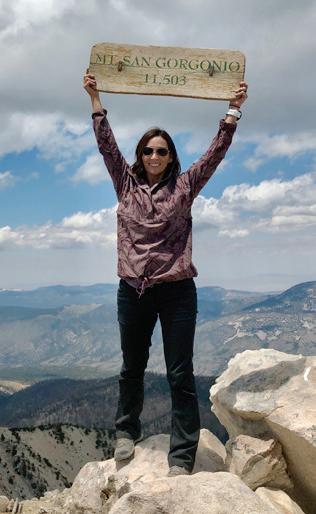
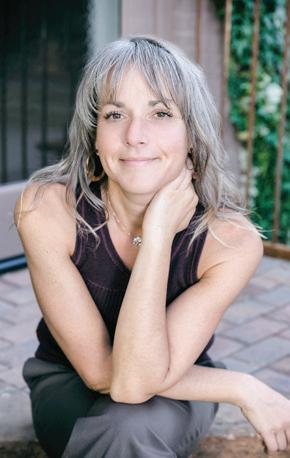
Laurie is an avid hiker and cyclist who loves the outdoors and enjoys the beauty of Prescott. She also has a menagerie of pets to keep her smiling!
IS KEY TO ENJOYABLE
ALIFE
s we move into May, we focus on mental health. Our mental health impacts how we think, feel and behave in our daily lives. It influences how we cope with life’s stressors, overcome hurdles, develop relationships and recover from challenges.
Having strong mental and emotional health does not mean you will never go through hard times or experience pain. Pain, disappointment and change are all normal parts of life, but strong emotional health allows us to bounce back from adversity, trauma and stress.
The goal of this issue is to provide you with the tools needed to cope with difficult situations while maintaining a positive outlook on life. By adopting such practices as mindfulness and yoga to calm your mind, writing gratitude lists or inhaling a calming scent, you can find small ways each day to elevate your mood and enjoy your life more. Whether you are looking to cope with a specific mental illness, handle your emotions better or simply feel more positive and optimistic, there are plenty of ways to take control of your mental health.
PRESCOTT OFFICE: 130 N. Granite St., Prescott AZ 86301 928-350-8006
CORPORATE OFFICE: 442 W. Kortsen Road, Suite 101 Casa Grande, AZ 85122 520-426-2074
“Our mission is to connect & provide you with the personalized, integrative healthcare you deserve, in a comfortable setting of your choice, so that you can live the life you love.”
GIVING ACCESS TO HEALTHCARE YOU DESERVE Now Accepting New Patients. Dr. Karissa Walton is a licensed Naturopathic Medical Doctor (NMD) who specializes in treating chronic pain and neurological conditions. 140 N. Granite Street | Prescott (928) 298-3349 info@themobilehealthdoc.com @mobilehealthdoc
Don't Let Your Pain Determine the Outcome of Your Day
SELECT SERVICES INCLUDE:
KYPHOPLASTY
A minimally invasive surgery used to treat a spinal compression fracture
STEM CELL THERAPIES
An injection procedure that relieves pain and helps your body heal injured tissue
EPIDURAL STEROID INJECTION
A steroid is injected into the epidural space to treat irritation of the spinal nerves
VERTIFLEX PROCEDURE
A procedure for treating spinal stenosis pain with an implanted spinal spacer
Local HEALTH ENTHUSIASTS
Dr. Hojat Askari
Founder & Medical Director, Thumb Butte Medical Center
Dr. Hojat Askari, or "Dr. A," is founder and medical director of Thumb Butte Medical Center at 3124 Willow Creek Road, Prescott, with over 20 medical professionals specializing in family medicine, internal medicine, cardiology, allergy treatment, and foot and ankle surgery.
Deanna Elder
Director of Marketing & Development, West Yavapai Guidance Clinic
Deanna Eder moved to the Prescott area in 2004 and immediately got involved through volunteering while raising her three boys. After joining WYGC in 2019, she found her passion and enjoys educating our residents about the importance of mental health.
Dr.
Katie Borchert
Naturopath, MSOM
Dr. Katie Borchert uses natural medicine to increase vitality, youthfulness and qi flow through naturopathic methods. She trained at National University of Health Sciences in Lombard, Illinois, and is a licensed naturopathic physician practicing in Prescott and Prescott Valley.
Michelle Fain ACE certified Personal Trainer
As a former elite and Division 1 collegiate gymnast, fitness has always been a part of Michelle Fain’s life. She is an ACE certified Personal Trainer, a NASM Senior Fitness Specialist, and has a CrossFit Level 2 certification.
Carmen Catterfield
MA, Honeybee Healing & Counseling Services
Carmen Cartterfield moved to Prescott after receiving her master’s degree in clinical mental health counseling from Lesley University in Boston. She’s worked as a group and individual therapist with adolescents and adults and is now in private practice at Honeybee Healing & Counseling Services.
Amanda Foster Owner, The Hike Shack
Amanda Foster is an outdoor enthusiast who has lived in Prescott most of her life. In 2011 she became one of the owners of The Hike Shack where she currently is the owner, buyer, and manager.
Cathy Clements
Nutritionist & Life Coach, NASM CNC, CPT, FNS, WFS
Cathy Clements is a certified personal trainer and nutrition coach. She has experienced challenges in her fitness and nutrition and is helping women over 40 regain their youthful energy. She will meet you wherever you are on your journey.
Brad Hayman
DPM, Complete Foot & Ankle Care
Dr. Brad Hayman has been a podiatrist for over 40 years. After having a successful practice in Sun City, he moved to Prescott in 2006. He’s board certified by the American Board of Foot and Ankle Surgeons and in wound care.
Lori Durr Owner, Sundara Sanctuary
Lori Durr is the owner of Sundara Sanctuary Wellness Spa & Boutique. She’s spent 25 years focusing on wellness and is a Certified Healing Arts Practitioner, LMT, Licensed Aesthetician, Certified Colon Hydrotherapist and is working on getting board certification in nutrition.
Lesley Jenkins
Alzheimer’s Association Regional Executive for Northern Arizona
Lesley Jenkins is the northern Arizona Regional Director for the Alzheimer’s Association Desert Southwest Chapter. Jenkins joined the association in February of 2019 and oversees the Association’s care and support services across northern Arizona.
We believe local experiences are important. With that in mind, we’ve partnered with local contributors for their perspectives on a variety of healthy living topics. Here are the writers who helped make this issue possible.
Carl Johns
LMT, Director, ASIS Massage Education
Carl Johns has been a massage therapist and educator for 25 years. He practices and teaches many Eastern and Western bodywork styles and has specialized throughout his career in working with people with disabilities and complex health conditions.
Blayne Soriano
Level 2 Crossfit Coach and Crossfit Kids Coach
Coach Blayne Soriano is a Level 2 Crossfit Coach and Crossfit Kids Coach at Redtail Crossfit. She does one-on-one training and helps her clients with meal prep using her PN-L1 nutrition certification. She carries other certifications including Olympic lifting. Photo: Kai York
Ken Lain Owner, Watters Garden Center
Ken Lain, known as "The Mountain Gardener," writes weekly columns that are featured nationally. His podcast and YouTube channel by the same name have millions of downloads. During the week he can be found at Watters Garden Center in Prescott.
Loree Walden Marketing Manager, Yavapai Humane Society
Loree Walden is originally from Honolulu, Hawaii, and moved to Prescott in 2010. Her background spans a variety of careers including 20 years of tax preparation, eight years of radio traffic and her current position as marketing manager for Yavapai Humane Society where she is able to do what she loves by helping animals through advocating for them to help them find their furever homes!
Shayla Marciano is a registered nurse with a bachelor’s degree from Grand Canyon. She practiced as a labor and delivery nurse for 10 years and has been in nursing management the last five years. She is currently the clinical nurse manager at Prescott Women’s Clinic.
Dr. Karissa Walton
Founder
&
Medical Director,
The Mobile Health Doc
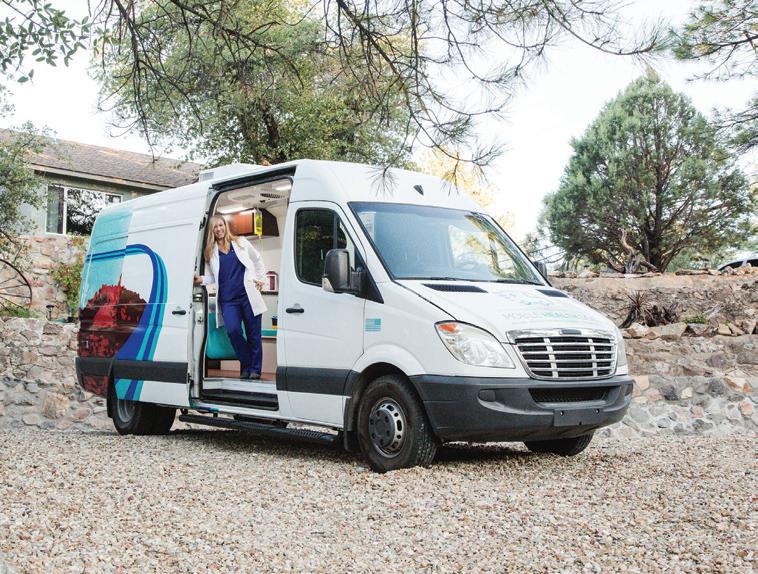
Dr. Karissa Walton is a licensed naturopathic medical doctor (NMD) who specializes in treating chronic pain and neurological conditions. She is passionate about teaching her patients how to optimize their health and performance so they can live the life they love.
John Murphy Chair, Prescott Commission on WellBeing
John Murphy is chairman of the Prescott Commission on Well-Being and founder of the Make 100 Healthy Foundation, whose mission is to reduce diabetes and obesity though nutrition and gardening education. He's a proud husband, father and real estate agent.
Donna Werking Owner, Northern AZ Social, LLC
Donna Werking is the owner of Northern Arizona’s premier marketing firm. She specializes in the latest digital and traditional marketing strategies for businesses. She dedicates her time on committees and boards to support local nonprofits and organizations in her community.
Chef John Panza Owner, BiGA
After working in restaurants in Phoenix, San Diego and Prescott, Chef John and his wife Cassandra created SENSES, a unique, pop-up dining concept and took ownership of BiGA. Since then, Chef John has been creating seasonal menus at BiGA that reflect his expertise and spotlight our local farms.
Bailey Zygutis Nutritionist and Personal Trainer, Vitruvian Fitness
Bailey Zygutis is a nutritionist and personal trainer with Vitruvian Fitness. With a passion for holistic health, she works with individuals in person and online to create customized programs that teach them to more fully enjoy the benefits of good health.
Mental Health
Supports Body, & Vice Versa
Most people find it easy to talk about their physical health, even with relative strangers. Heart rates, calories burned, miles run, diets tried — all are common fodder in the gym, in the park and in online forums.
Mental health is different. Many prefer the anonymity online platforms provide for what’s considered a deeply personal issue to be discussed with close family or friends, if anyone. The stigma of mental illness is still strong enough that it’s easier for those with anxiety and difficult emotions to feel more comfortable keeping it under wraps.
Our mental health includes our emotional, psychological and social well-being, and determines how we cope with stress, communicate with others and make choices that affect every area of our lives:
PHYSICAL HEALTH
We can be too depressed to see the point of going for a walk or run, too anxious to want to go to the doctor for a checkup, or too dependent on emotional eating to feel like we can stop. Anxiety can quickly rack up a significant sleep deficit that can affect us in an untold number of negative ways, including a weaker immune response. Mental illness shortens lives.
FINANCIAL STABILITY
The Pan American Health Organization reported in 2019 that mental health issues are the largest single cause of disability in the world, responsible for 20%
of healthy workdays lost to disability and that globally, only 10% of the population gets the help it needs for mental health conditions.
Those who have been diagnosed with a mental health disorder earn up to 40% less than those who are not, and people experiencing the stressors, particularly at a young age, are more likely to suffer from a mental illness.
FAMILY RELATIONSHIPS
One family member’s mental health struggles affects everyone else in the household, whether it manifests in alcoholism, depression or serious mental
illness such as schizophrenia. The stress of related issues like job loss and instability can leave its mark to the point that the whole family needs to go into recovery with the one needing mental illness treatment.
QUALITY OF LIFE
It may go without saying but suffering from mental health issues just isn’t fun. They are devastating to our level of happiness, our relationships, our careers and our ability to continue dealing with what seem like insurmountable problems. We all need to tend to our mental health just as much as our physical health, even
if we’re not among the 46% of Americans who will meet the criteria for a diagnosable mental illness at some point in their lives, according to a 2005 Harvard study.
Yoga, meditation, physical activity, nurturing family and social connections, avoiding abuse of alcohol and other drugs and even forcing yourself to smile more are all ways to fight anxiety, stress, depression and other negativity that make your life more difficult.
And don’t be afraid to reach out for more help, whenever you need it. Help is out there, and you are not alone.
YOUR WAY TO AN
Think Optimistic Attitude!
Many of us are familiar with the adage “you are what you eat.” Yet, you can eat well and still feel self-doubt, loneliness, fear, while at other times intense joy, confidence and happiness.
by John Murphy, Chair, Prescott Commission on Well-Being
In fact, years of wisdom from those who have lived a happy and healthy life would agree — you are what you think!
To empower mental wellness, you need to create the thinking habits that will guide your day. Your mind has this amazing ability to influence many other areas of your body and life.
The good news is you can harness your inner strength to fuel better, more powerful thinking habits — as with any other habit. It is that simple in concept. By implementing new thinking habits, or ways of “communicating to yourself,” you can achieve better overall wellness. One important thinking habit is optimism. The
Harvard School of Public Health first reported in 2001 that in older men, those with a more optimistic outlook had a lower risk of heart disease. This clear linkage of optimism with a distinct health outcome, like reduced heart disease, is encouraging and a tangible physical benefit.
You have much to gain and little to lose by choosing the habit of optimism — the conscious choice to see life from an empowering standpoint. Another interesting fact is that positive thoughts stimulate the neurotransmitters in your brain, and these in turn enhance your information processing abilities.
So, the habit of optimism can improve how you process all that information you get every day. In today’s world of information overload, this can be a great asset.
To help you make optimism a daily habit,
be sure to use simple tools to strengthen this area. One of those tools is called an affirmation — a positive statement that reaffirms a belief you hold as important.
Here are some examples:
* “Understand that your past does NOT = the future!”
* “Realize it’s not what happens to you, it’s about how you respond to what happens to you”!
The healthiest people learn to channel negative thoughts and replace them with more helpful, optimistic ones.
Remember, your thoughts create your future. If you think you can, you probably will. If you think you can’t, you most likely won’t. Either way, you create your own destiny by your perspective and attitude.
• Women’s well check
• Cosmetic Botox
• Medical Botox
• Dermal filler
• Acne treatment
• Chemical peels
• Body sculpting
• Emsella treatments
• Incontinence Treatment
• Permanent cosmetics
SEXUAL HEALTH CLINIC
• Hormone replacement therapies
• Hormone pellet therapies
• Woman sexual dysfunction
Worth IS IT Asking for Help
So
many of us find it hard to ask for help. We let our own suppositions get in the way of doing what should be natural.
by Carmen Catterfield, MA, Honeybee Healing & Counseling Services
MY PROBLEMS
AREN’T THAT BAD — People often convince themselves that their pain is somehow not important or big enough to deserve attention.
But, similar to a medical diagnosis, when we leave our emotional struggles untreated, they can escalate into something much more serious. Seeking someone to talk to can be an important preventative measure.
ASKING FOR HELP MEANS
I’VE FAILED TO FIX IT ON MY OWN — This is a big one. Going to therapy is often associated with words like “weakness” or “failure.” Almost everywhere else in our lives we will hire someone to help us complete a task that we don’t know how to do, and yet we treat mental health differently.
Therapists are simply people trained to deal with emotional stressors and they can help you manage them, similarly to the way a doctor would treat an illness.
I DON’T KNOW WHERE TO START — Even if you are ready to seek help, it can feel overwhelming. Psychology Today has an easilyaccessible online database that allows you to search for therapists in your area. It also offers filter options, so you can find a clinician who works specifically with the issue you are struggling with, as well as making sure they take your insurance.
I CAN’T AFFORD IT — This may be a very tangible barrier
for some. Many therapists work on a sliding scale, which you can ask about when you make an initial appointment. Also, due to COVID-19, most insurance companies have waived fees for teletherapy appointments. And finally, online platforms like Talkspace or BetterHelp counseling offer more affordable access to a variety of mental health services you can access from home. The process of starting therapy is never easy, but it is always worth it.
FLU SEASON
Emotional Health, Too Your Doctor CAN HELP WITH
by Dr. Hojat Askari, Founder and Medical Director, Thumb Butte Medical Center
The mind-body connection has been studied for years by researchers looking into how emotional problems can trigger physical symptoms and vice versa. This has led to new understanding about the primary importance of emotional health in our patients’ lives.
People emotionally healthy are aware of their feelings, what influences them and how to manage them appropriately. They cope with the inevitable ups and downs of life in positive ways, have good self-esteem and maintain healthy relationships. Many situations can disrupt your emotional health, however. Almost any life change is accompanied by stress, whether it’s been wanted and planned for or a sudden detour from the expected.
When you experience excessive stress or anxiety in response to any life situation it can lead to physical symptoms including higher blood pressure, lowered immune response, digestive problems, premature aging and other symptoms.
There are many techniques that can help you manage your emotional response to sudden or chronic stress, and you’re better off integrating them into your life before you encounter the kind of major life event that can understandably tax your system.
ASK YOUR HEALTH CARE PROVIDER Emotional health challenges have been tied to
numerous other symptoms, including loss of appetite, insomnia, back pain, heart palpitations and fatigue.
If you seek medical advice for these types of issues while also experiencing stress, anxiety or unusual moodiness, be sure to mention both to your provider. Possible physical sources for the condition will be looked at first, and
if they’re ruled out you and your health care provider can discuss ways you may be able to cope with negative emotions more effectively. These can include meditation or mindfulness practice, developing a stronger support system, building self-esteem, counseling and embracing a healthier lifestyle.
If these interventions don’t work or don’t seem doable, your doctor may suggest you try medication or refer you to a specialist, but in most cases that will not be the first course of action. It generally is best to focus on personal, natural paths to emotional health.
Mental Health Awareness Month has been observed in the U.S. since 1949. Each year millions of Americans face the reality of living with a mental illness. During May, let us join the national movement to raise awareness about mental health.
by Deanna Eder, Director of Marketing & Development, West Yavapai Guidance Clinic
Let’s help to fight stigma, provide support, learn to take time for ourselves, seek professional help when needed, and check in on family, friends and neighbors. The global pandemic forced us to cope with situations we never imagined, and many of us struggled with our mental health. Throughout, people who had never experienced mental health challenges found themselves struggling for the first time.
Remember, working on your mental health and finding tools to help takes time. By focusing on small changes, you can move through the stressors of the past year and develop long-term strategies to support yourself on an ongoing basis. Consider taking a mental health screening. There are several online resources including one with West Yavapai Guidance Clinic, a local behavioral health provider
Here are a few tips for taking care of yourself:
ACCEPT YOURSELF AS YOU ARE
Try your best to accept the person you are and where you are in life right now.
FOCUS ON THE BASICS
Focus on steps to ensure you are living a healthy lifestyle. For example: showering, eating healthy foods, drinking water, moving your body, decreasing clutter in your life, keeping your living environment clean and orderly, getting good sleep, soaking up sunshine
(safely), taking five minutes to do some deep breathing and reaching out to have a conversations with a friend or family member.
FIND WHAT MAKES YOU HAPPY
Find things you can do to make you feel accomplished, happy. For example: music, art, a good book, a walk outdoors, gardening, cooking or a little road trip.
PRACTICE MINDFULNESS
Take a few slow, deep
breaths, focus on each of your senses and try to be fully present in whatever you are doing.
MAKE SMALL GOALS
Be patient, focus on small daily tasks, set small goals you want to accomplish for yourself.
SET BOUNDARIES
Sometimes the only way to increase self-care is to lessen the amount of time or energy you are giving away to others.
REMEMBER YOU ARE NOT ALONE
Everyone struggles from time to time, try not to get down on yourself. Ask your friends or family to help when you need to take some time for your mental health. It is possible to find balance between life’s ups and downs and continue to cope with challenges brought on by life and the pandemic. We can be reached at www.wygc.org
EQUALTrue Balance Planes of Motion 3
Everyone is encouraged to “move” for fitness, whether it’s a walk in the park, doing push-ups or climbing mountains. Being involved with physical activity on any level is at the core of any kind of fitness regimen.
But you do need to think about your range of motion in different directions — up and down versus side to side or front to back. Instability in any one of these planes of motion can lead to joint injuries or falls that, in some cases, turn into major setbacks to your pursuit of fitness.
Everyone needs to maintain their range of motion in all directions as they work out, either on their own or by choosing wellrounded routines that do it for them.
The three planes of motion are defined by mentally separating the body into sections:
* Sagittal plane (forward and backward movements): Cuts the body into left and right halves.
* Frontal plane (side to side movements): Cuts the body into front and back halves.
* Transverse plane (twisting movements):
Cuts the body into top and bottom halves.
T he majority of exercises are built predominantly on the sagittal plane; running, walking, squats, jumps, curls, downward dog in yoga, etc. These are an essential part of any workout, but they don’t address movements to the left and right or rotating the body, which put different demands on the same joints and muscles.
A ny weaknesses along any plane of motion can cause trouble.
Workouts need to incorporate plenty of motions along the frontal
and transverse planes to strengthen threedimensional movements. Here are some examples:
* Frontal — Lateral arm and leg raises, side lunges, side shuffles, standing side bends, triangle pose in yoga and inversion and eversion of the feet (important in balance training).
* Transverse — twisting lunges, side plank, pushups, swinging a
golf club or baseball bat, revolved triangle pose in yoga.
D aily life requires many complex combinations of movement, often in rapid succession (such as bending down to pick up a shopping bag, then twisting to put it in your car). Exercises that incorporate movements along different planes are called compound exercises and are becoming much more common for training.
Kids Should Hike
EARLY & OFTEN
If you live in or around Prescott and have kids of a certain age, you’ve probably at least thought about taking them hiking. And that “certain age” can be a lot younger than you may think.
With the last of the snow and freezing temperatures safely behind us, there’s no reason not to take your children out with you to imbibe in the pleasures and benefits of exploring our forests, dells, meadows, lakeshores, creek beds and neighborhoods by rambling along a winding trail.
The younger kids start hiking, the more they will see it and other forms of exercise as normal and
important parts of daily life. Here are some ways to adapt your family hikes to younger children.
AGES 0-3 — Very young babies will need to be brought along in a front carrier, if you hike with them at all. Most will be able to sit up in a back carrier once they’re 6 months old and weigh about 15 pounds. Once they’re past their first birthday and securely into the toddler phase, you can
begin planning short nature walks with them and taking them out of the carrier periodically on longer hikes so they can explore at their own close-up level.
Leave time for plenty of snacks and diaper/ potty breaks and you’ll be able to take older toddlers for 2 miles or longer, depending on their ability and the terrain.
AGES 4-7 — These ages love adventures and challenges, so that’s a good
way to sell them on hiking. It might be easier if you don’t call it “hiking” — one Saturday you can go on a “forest adventure,” and the next on a “jumping over puddles” challenge. Let the kids lead the way as often as you can, and you don’t need to set goals like “we’re hiking to Spruce Mountain and back.” Let it be all about the journey.
It’s best to not set limits on how long they can hike, but it’s better to stick to routes under 5 miles or so.
Photo: Blushing Cactus Photography
Katie Borchert, NMD,
Groom Creek Loop Hike Spruce Up YOUR DAY WITH
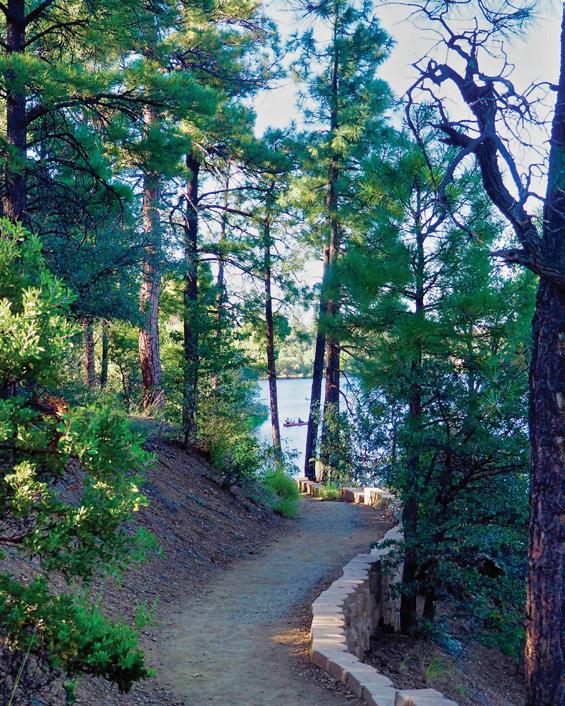
People come to Prescott, especially from the desert, to see tall ponderosas, shady trails, creeks with running water, colorful wildflowers in spring, maybe some snow in the winter, lots of wildlife and a cheery hometown feel.
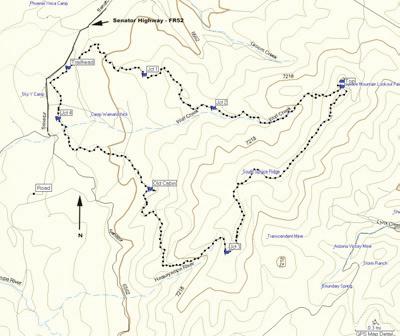
Spruce Mountain is the ideal place to find almost everything you’re looking for in a Prescott trip, all of it accessible through the popular Groom Creek Loop Trail No. 307. Its circular path brings users up to its summit, which affords spellbinding views of Prescott, Granite Mountain, Chino Valley and many other expanses of our beautiful region.
It’s also one good workout, with a 1,200-foot elevation gain and lots of challenging surfaces to test your core and balance. Despite its popularity, there are other times (particularly during the week) where it’s a perfect place to find some peace and a refuge from the busyness of everyday life.
As with many loop hikes that go up the side of a mountain, the direction you decide to hike will have a big impact on your experience. From the trailhead, if you head to the right you’ll be heading in a counterclockwise direction that will give you a more gradual, meandering ascent to the top with opportunities for wildlife and horizon watching, which will take you through the majority of the loop.
Hikers and runners looking for a more intense cardio workout heading uphill and mountain bikers looking for longer downhill action can turn to the left for a steeper uphill climb. Either way you see lots of ponderosas and Douglas firs, the latter of which may have been mistaken for spruce by whoever named the mountain. Whatever way you get there, the views from around the base of the watchtower are splendid and get even more so if the tower happens to be open for public use.
GROOM CREEK LOOP TRAIL NO. 307
You reach this gorgeous trail by taking Mt. Vernon Street in downtown Prescott south for about 7 miles as it becomes Senator Highway, passes Goldwater Lake and rolls through the picturesque community of Groom Creek. The trailhead sign will be on your left, across the street from Groom Creek Horse Camp.
Given its location it’s not surprising a lot of horseback riders use the trail along with hikers and mountain bikers, so you need to be mindful of how to interact with these users in particular. Horses should always be given the right of way, with other users slowing down and pulling to the side of the trail. Say hello and ask the rider what you should do if you’re not sure.
Don’t stand silently, but you also shouldn’t speed past the horse, yell or do anything else that might spook the horse. If you’re approaching the horse from behind, announce yourself well in advance and ask the rider what you should do.
Parking fees: None
Uses: Hiking, mountain biking, horseback riding
Distance: 8.7 miles
Level of difficulty: Moderate to difficult
Elevation: 5,500 feet to 7,700 feet
Photo: Michelle Haynes | Map: arizonahiking.org
BUT DON’T FORGET TO
Clean Up Go Outside and Play,
In the last year with COVID-19, people have been getting out on our trails more than ever. It is a great way to get exercise and clear the mind.
by Amanda Foster, Owner, The Hike Shack
We have hundreds of trails surrounding Prescott, and many volunteers, the City of Prescott, along with the Forest Service maintain our trails very well.
Adopt-A-Trail through the USDA Forest Service is a good way to ensure the trails we love remain in good condition.
With so many people finding their way to the outdoors to run, hike, bike, ride horses, kayak and do other activities, there is also more trash and opportunity to destroy the nature we are enjoying. Together we can protect and clean up our outdoor spaces to keep them healthy for generations to come.
Please practice Leave no Trace and clean up after others. A common misconception is to think orange peels, sunflower seeds, and other sorts of food items can be thrown on the ground. Orange peels take at least six
months to decay, and if it is a wet season at all, can last indefinitely. Our trash and food can make wild animals sick and even kill them.
Many of the people exploring the outdoors are new to it. Especially coming into the summer months, be sure you are prepared for whatever Mother Nature has in store that day. Water, sun protection, and maps are all very important.
Since Arizona heat can be excessive, be sure you have at least one liter of water for every hour you are out. If you are entering the wilderness with friends, you might want to take extra water to share in case someone you are with or that you run into needs some assistance.
Taking smaller drinks of water more frequently is better than guzzling larger amounts of water quickly. Electrolytes can be helpful — they come in many forms such as powders, drops, liquids, even chews. Sometimes water isn’t enough.
Especially if you are sensitive to sun, protection is mandatory. Hats, shirts with UPF, sunscreen, even sun gloves can make your experience much more enjoyable.
The City of Prescott trails map is only $1. A QR code and
trails information are online.
Get out there! We have trails for many skill levels, distances, views and experiences. If you need help with finding the gear or trails that fit your needs, check in with your local outdoor gear store.
Photo: Blushing Cactus Photography
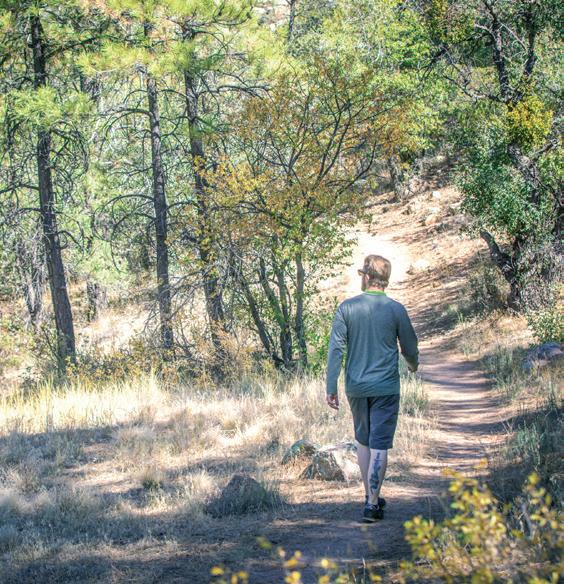
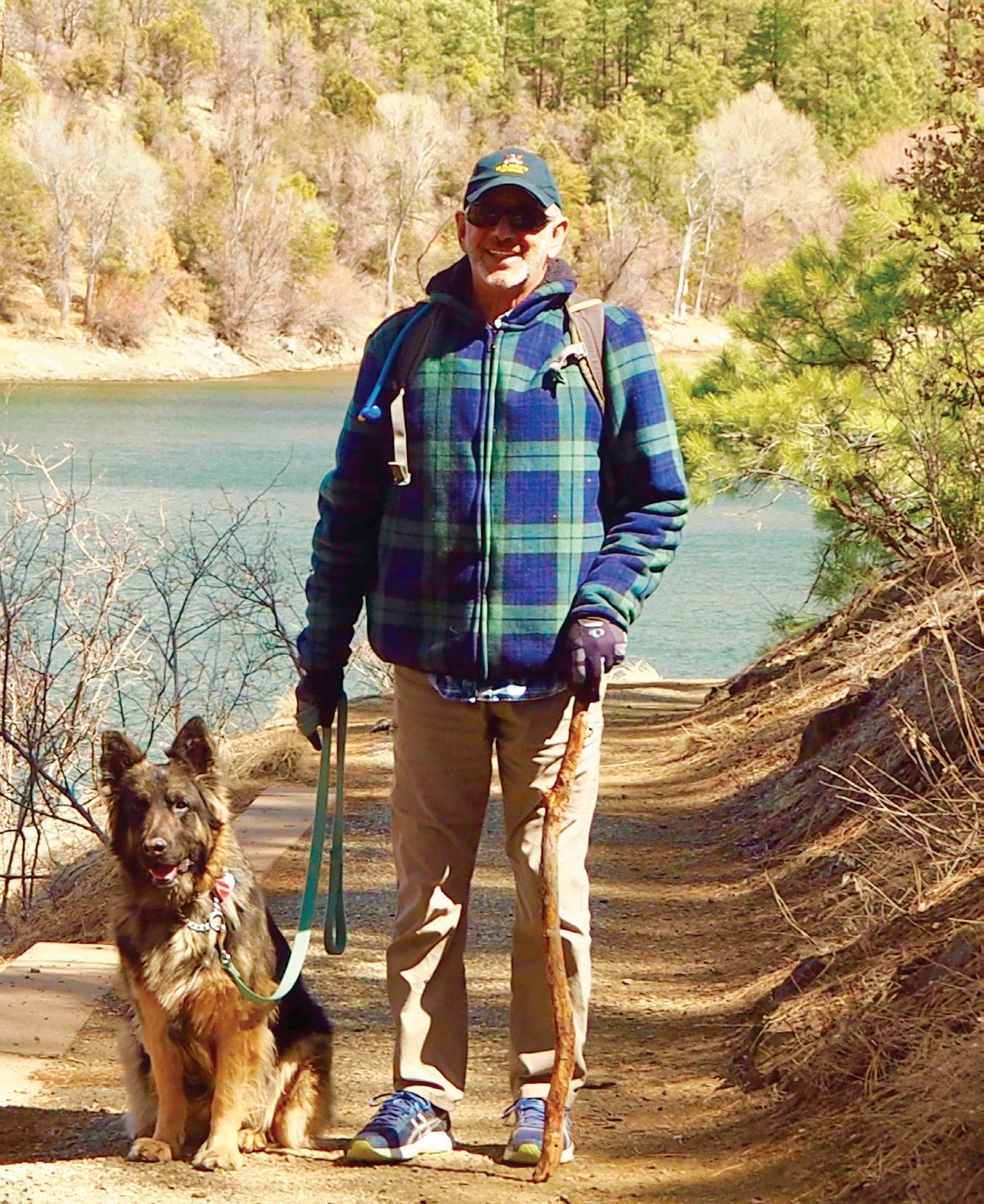
Ken Hodne and his dog Sasha at Lynx Lake.
Photo: Karen Shaw
Summer Fun Growth
IS TIME FOR
The school calendar has stabilized for most campuses, so parents are getting ready for a fairly typical summer with their children coming back from class and spending all day at home. Families welcome this time with their kids and the chance for them to have a break.
But it’s still a schedule change that must be juggled and can be especially awkward for parents working from home. While the kids are home for distance learning it’s easy to keep them busy with homework. Here’s a few ideas for keeping them productively entertained that can be enjoyed inside or out, depending on the weather.
ART AND CRAFT STATION
Instead of having to haul out all the supplies for arts and crafts activities and putting things away when they’re done, let them happen spontaneously by setting up a small area with a table or easel, paint, coloring books, crayons, paper, scissors, glue, clay and other supplies as age-appropriate. The station can be set up indoors or in the yard outside an office window.
NEW EDUCATIONAL TOYS AND BOOKS
Have a Christmas in June for fun presents kids can enjoy all summer long, instead of in the middle of the school year when they may not have time to play or read them and lose interest, or they even get lost or broken. This may mean there’ll be less money left over for the holidays but if so, this can be a good introduction to the concept of living within your means.
HULA HOOPS
A great physical activity that builds coordination, endurance and flexibility. It can be done indoors if there’s room, and it’s another relatively stationary outdoor activity easy to keep an eye on. There’s an endless number of games kids can play or invent, and decorating them is a great arty diversion. Put some favorite music on and make it a hula hoop dance party!
PODCASTS AND AUDIOBOOKS
Some kids are auditory learners and excel at retaining knowledge through listening. There’s an infinite number of educational podcasts from which they can learn about fascinating facts and places. Audiobooks can be a great way to introduce them to literature above their reading level. When there’s time, kids love to have an adult sit and read to them too.
Photo: Blushing Cactus Photography
Rim to Rim Strength Training for
So you decided that you’re going to hike the Grand Canyon rim to rim. You realize that it’s important to train by hiking, but what more can you do to prepare for the 24-mile trek?
by Michelle Fain, ACE certified Personal Trainer
Think legs, glutes and lungs. The workouts don’t have to be long, just effective.
You don’t need any equipment to get in shape. Body weight movements such as lunges, squats, planks, jumping jacks and mountain climbers are great exercises to train for your upcoming hike. If you’re unsure about how to correctly perform these movements, there are plenty of YouTube videos from reputable trainers online to show you proper form.
There are many ways to incorporate a quick workout into your training regimen. A short interval workout with two or three lower body and core exercises will both strengthen your muscles and increase your cardiovascular capacity.
One example is to do 20 seconds of work and 10 seconds of rest for eight rounds, then rest for 2 minutes, pick another exercise and repeat. This particular type of interval is called Tabata. You can
even download an interval timer app onto your phone so you’re ready to exercise whenever you have a few extra minutes in your day.
Another great workout is to pick one or two exercises and set your interval timer for 30 seconds of work and 30 seconds of rest. Depending on the amount of time you have, you can do anywhere
from 10 to 20 rounds.
Always make sure you do at least a short warmup before beginning any workout. You need to get blood flowing to the muscles that you will be using to help avoid injury.
By adding some of these workouts into your training, you should increase your cardiovascular endurance. This will help you when
you are trudging uphill after having crossed the vast expanse of the canyon floor. With about 8 miles still to go, you will need to rely on all of that training to climb your way to the top. When you successfully complete that last switch back and arrive at the top, you will be thankful for all of the hard work you put in leading up to your trek.
Minds & Bodies Pets Calm Our
Our pets play an integral role in our mental health. Pets are attuned to us, our behavior and our emotions. They not only understand many words, but they can also interpret our tone of voice, gestures and body language. Have you ever had one of those days where you just want to crawl under the covers and escape from the world? All it takes is your dog looking you in the eyes telling you, “I’m here and I’ll make everything better!” And guess what? They DO make it better, even if just for a moment. Our pets live in the moment and can’t really comprehend anything beyond the here and now, so they truly are WITH you at your time of need!
by Loree Walden, Marketing Manager, Yavapai Humane Society
HERE’S A FEW FACTS ABOUT HOW PETS AFFECT OUR HEALTH:
* Playing with or petting your dog or cat can elevate levels of dopamine and serotonin, which calms and relaxes you.
* Dogs and cats can greatly reduce stress, anxiety and depression, improve
cardiovascular health, ease loneliness, and help encourage you to have more play and exercise time.
* Pets have a significant effect on Alzheimer patients.
Patients experience less stress, and emotional outbursts are less frequent. The touch of an animal can be a soothing experience as pets are able to interact nonverbally, which can be comforting to someone whose communication skills are dwindling. In addition to reducing stress, the presence of a pet has shown to encourage more social engagement from Alzheimer’s and dementia patients. They can also increase physical activity through tasks such as going for a short walk, combing a dog’s fur, or playing with a cat’s toy. Some patients
have even been known to have increased appetite after interacting with an animal.
* Having an animal has been credited to decreased blood pressure, lower cholesterol and triglyceride levels, and the positive feelings that having a companion provides.
Mental stimulation is needed by almost every living being. It keeps us healthy, helps us stay more alert, promotes learning and growing, and it helps to keep us from becoming depressed or bored. Our minds need to be challenged and so do our pets. Mental stimulation, combined with physical stimulation, helps both of you learn, grow, stay healthy and have fun together!
Mental Health is not a destination, but a process.
Pets, for Better Mental Health
Interaction with pets and therapy animals has been linked to improved mental health for people in numerous settings — homes, hospitals, nursing homes, schools, prisons, first responder stations, workplaces, rehab centers, community centers and many more places.
The common thread in all these settings is people who are dealing with stress, anxiety, loneliness, depression, addiction, eating disorders, PTSD or other types of mental distress. Everyone, regardless of whether they’ve ever been diagnosed with a mental health disorder, must deal with stress or negative feelings at one point or another.
The Human Animal Research Bond Institute, a nonprofit that maintains the world’s largest online library of human-animal bond research and funds further studies, reports on its website about the numerous situations in which pets or pet therapy was found to benefit humans’ mental health, including:
* Child-dog interactions may prevent the evolution of emotional problems into fullfledged mental, emotional or behavioral disorders during adolescence or during adulthood. According to a cross-sectional study of over 600
children in a primary care setting, having a pet dog in the home was associated with a decreased probability of childhood anxiety
* A study of 400 homeless youth found that 23% of those surveyed reported owning pets. Those who did report owning a pet reported experiencing less depressive symptoms and loneliness than their non-pet-owning peers.
* In a study examining an intervention of animal-assisted activities on hospital patients submitted to chemotherapy, symptoms of depression were shown to improve by as much as 50% in the group receiving the intervention.
* A systematic literature review funded by the Human Animal Research Bond Institute provides a comprehensive overview of empirical research on animalassisted intervention
for trauma. The review concludes that results have been predominantly positive, showing shortterm improvements in depression, PTSD symptoms and anxiety.
* One study of elderly patients with Alzheimer’s disease found that after the introduction of an aquarium into the facility, patients experienced higher
food intake and weight gain and a reduced requirement of nutritional supplementation.
* Pets also were found to contribute to a stronger sense of identity in pet owners with mental health conditions, including reducing negative perceptions of a mental health condition or diagnosis.
Photo: Blushing Cactus Photography
Plank to Strengthen
YOUR CORE
Strengthening your midline is one of the key components to overall body strength. Think core to extremity. Your midline is practically the home base to all movements.
by Blayne Soriano, Level 2 Crossfit Coach and Crossfit Kids Coach
One of the most valuable workout moves to build this strength is plank exercises. Planking from your forearms, planking from your hands, side planks, all plank variation movements. Make sure when doing this your shoulders are stacked in line with your
elbows or hands, you are pulling your ribcage down to your hips and sucking your belly button in toward your spine. Think hollow body positioning. Keeping it all tight.
I recommend starting with 15 to 20 seconds, increasing time from there.
Second and third core
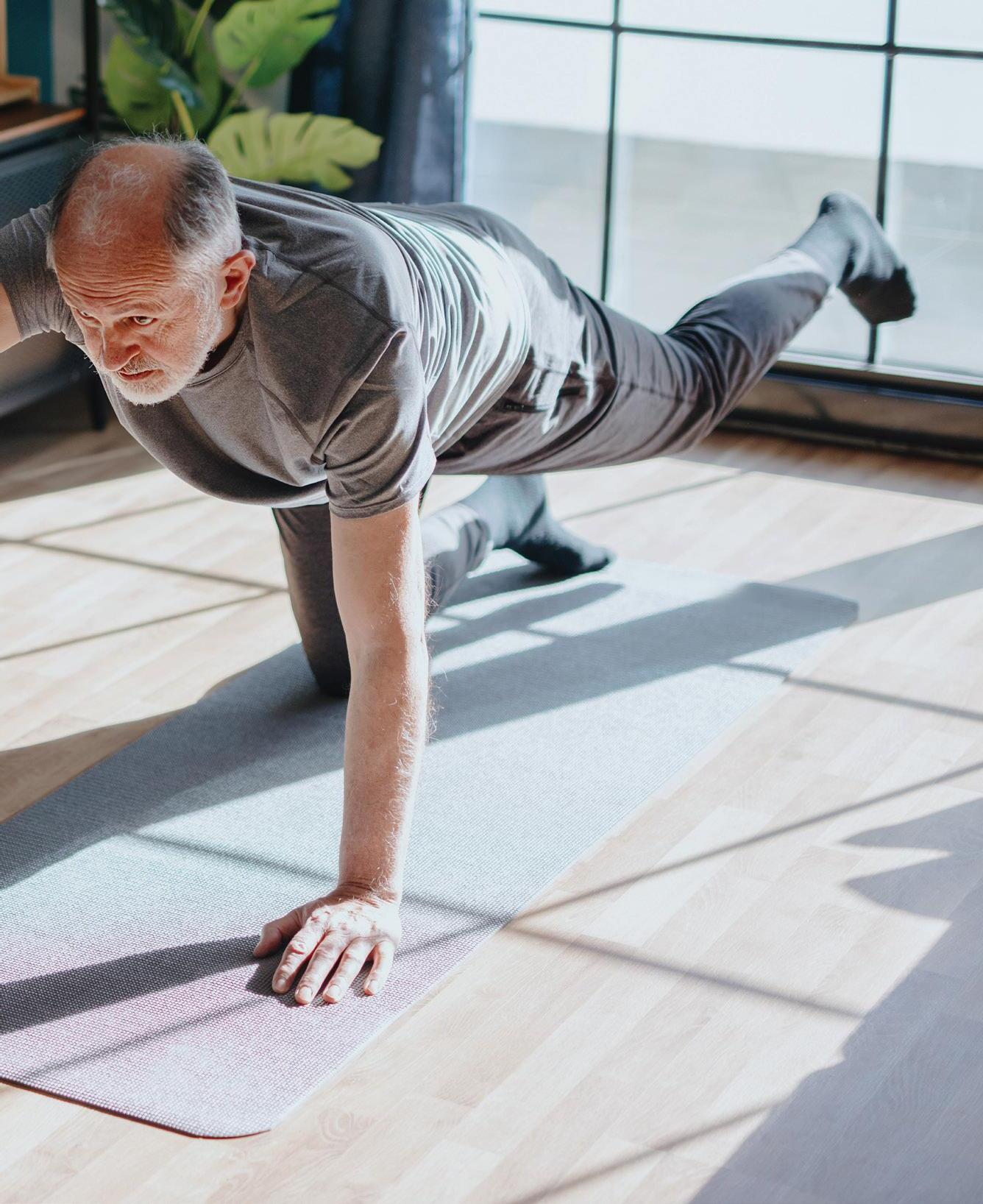
movements I recommend are the bird dog and superman planks. The bird dog is when you are on all fours, stretching out your opposite arm and leg slowly in line with your spine and then bringing it back in, switching to the other side. You can do repetitions of 10, three
times on each side. W ith superman, you lay face down, keeping your head in line with the spine as you slowly lift arms and legs up and down in an extensions. Keeping both arms and legs straight. I recommend three sets of 20 to start! Have fun with it!
Benefits 10
OF PLAYING TENNIS
Tennis is having a moment in the sun in the age of social distancing. Tennis racquet sales have shot up and court schedules have filled out within the past year as people sought ways to work out with people they don’t happen to live with — but not too close, and definitely outside.
Af ter years of shedding players faster than it could replace them, tennis is starting to grow as people recognize just how much they can gain by playing this full-body drill of a sport. Your legs, core, back, shoulders, arms, hands, neck, brain and everything else gets in on the act. So don’t miss out on all these benefits!
* CARDIO — All that running and jumping will definitely get your heart pumping and incorporates both endurance and highintensity interval training.
* STRENGTH — A lessdiscussed aspect of the game, but nearly every muscle in the body is used by playing tennis, and the act of hitting a ball coming at you anywhere from 50-ish to 150 mph does test your strength.
* WEIGHT LOSS — The average person burns 300 to 500 calories an hour when practicing and hitting balls, and 550 to 750 calories in competitive play, according to CaptainCalculator.com, which analyzes activity and burned calories.
* RANGE OF MOTION — All the graceful swings and reaches involved in your game are fantastic ways to expand and maintain your range of motion in all directions, but remember to warm up first, especially when you’re just beginning to play the game.
* BALANCE — Tennis requires dynamic balance, or holding your center of gravity, while moving in many different directions and while hitting the ball in a specific direction. Just
staying on your feet during some of those reaches is an accomplishment in itself.
* OSTEOPOROSIS PREVENTION — Every weight-bearing exercise you do can strengthen your bones by training them to rebuild and be resilient. All that pounding on your legs and arms (within reason) is good for a lot of things, including the reduction of your risk for osteoporosis.
* AGILITY — Tennis is not a straight-line activity. Being nimble on your feet as you move forward and backward, from side to side and into the air is as fundamental a skill for this sport as being able to hit the ball.
* MOTOR CONTROL — Being able to hold some parts of your body still
while others are moving, as in swinging the racquet, ensures you not only have control over your body but control of the ball, which is what keeps you competitive.
* VITAMIN D — With most matches played outdoors under the big blue sky, tennis’ moments in the sun also mean exposure to the sun, which triggers receptors contained in many of our cells to synthesize vitamin D, one of the most important nutrients for our bodies.
* SOCIAL LIFE — The other thing you need to play tennis is at least one other person to play with. Tennis requires and reinforces social connections, which are essential for your mental health.
Jamie Procknow
|
Photo: Blushing Cactus Photography
INVEST IN INVEST IN
Joy, Yourself
There is a subtle but distinct difference between happiness and joy, one you need to be aware of.
Happiness, codified in the Declaration of Independence, is clearly worth pursuing but is more transitory in nature and based on external triggers — other people, events, places, objects and sensory pleasures like good food or a spectacular view. Joy is a deeper, more complex emotion that comes from within, based on self-acceptance, gratitude, compassion and generosity. It can exist with sadness and pain, and indeed makes those emotions more tolerable when they inevitably arise. We have much more control over our joy through our words, actions and beliefs, and it’s something we can and should cultivate throughout our daily lives.
* Find ways to serve others — Acts of service remind you life is much bigger than yourself and pulls you out of much
of the emotional drama you experience. When you ask how you can help others, it expands your thinking into what you bring to the table for other people: your ability to listen compassionately, think critically, advocate for others or set a vision for the future.
* Practice gratitude — Think of three new reasons to be grateful every day. It’s terribly easy to get into the rut of thinking the same thoughts about the same things, make the same decisions and get the same results. Interrupting those patterns with thoughts of gratitude for what is in your life pushes your mind to move in new directions and uncover different approaches to issues, as well as simply creating a more joyful you.
* Be your authentic self — This means being true to your instincts when you plot your own path in life, regardless of what other people say you should do. Your life is your own, and you should not be spending it trying to be something you’re not, even if it seems like it would be advantageous in some ways. If you’re not sure what path you should take, meditation can put you in touch with the stillness at the core of your being, where your truth and joy are found.
* Choose your influencers wisely — Think about those who you spend most of your time with, whether family, friends, coworkers or social media stars. Pay attention to who is always positive,
supportive and inspirational to you. That’s a pretty high bar and you don’t want to cut everyone who doesn’t meet it out of your life, but remember to pay attention to those who consistently leave you feeling positive and forward-looking.
* Accept and love yourself — One of the most human of all our tendencies is to look at other people’s lives as a reference point to where we should or want to be, but letting go of that allows you to see everything you need is within you. Practicing self-compassion means accepting and appreciating compliments and praise; don’t berate yourself over small mistakes. Value and value who you are. Stand up for yourself.
Your Mind Reset Great Outdoors
IN THE
Are you in a funk? Feeling agitated by a personal issue or world events? Or maybe, just a little out of sorts? What happens in our mind affects our overall well-being in emotional, physical, mental and spiritual ways.
by Dr. Karissa Walton, Founder & Medical Director, The Mobile Health Doc
Our emotions are powerful and need to be acknowledged, validated and sorted through with a friend or licensed healthcare practitioner at times. Getting outdoors in the beauty of creation can have a major impact on resetting our mental outlook. The term “green exercise,” which refers to engaging in physical activity while exposed to nature, has been studied for almost 20 years. Numerous scientific studies reveal that being outside increases mood and brain
function while decreasing the amount of time one spends on the negative aspects of their lives.
Green exercise can improve positive engagement, self-esteem and decrease negative feelings of anger and depression. Studies have shown that the first 5 minutes of green exercise has the greatest impact on mood and self-esteem.
This means that something as simple as getting out for a quick walk around the neighborhood with a friend, either the human
and/or furry kind, can give a whole new perspective to what has been swirling around in your mind.
Fortunately, we live in an incredibly beautiful area and climate that affords us the opportunity to engage in an abundance of outdoor activities.
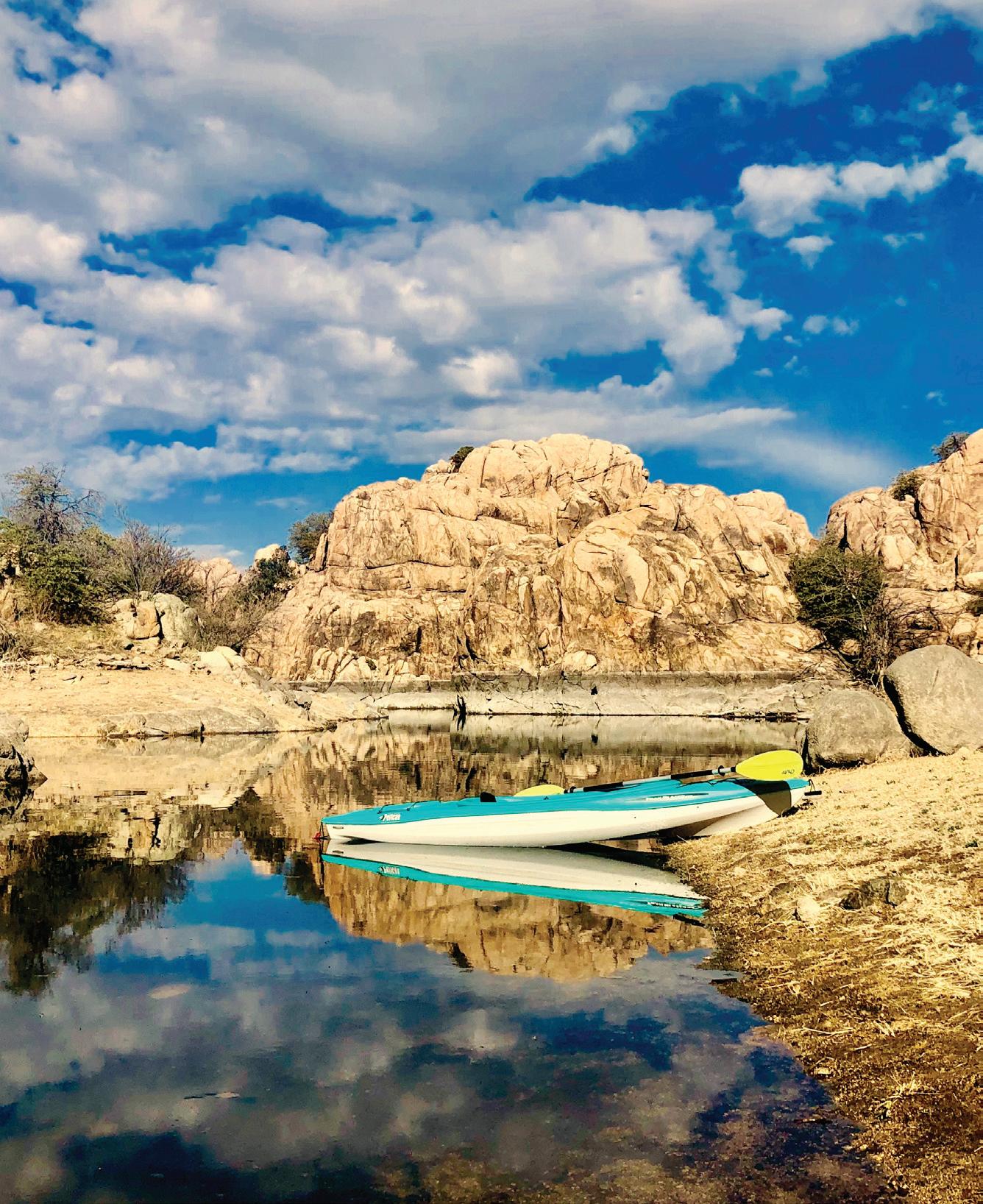
The fresh scent of pine trees while on a hike can bring a refreshing bout of gratitude that will help restore the soul. Kayaking on one of our beautiful lakes and exploring the nooks and crannies of a hidden area can inspire a wealth of thankfulness,
not to mention seeing intriguing wildlife. Bike riding at a good cardio pace can clear the cobwebs of confusion to a problem and even provide new action items or solutions to tackle the issue.
The best time to start is now. You’ll be amazed to see how your body and overall health benefits from the sights and smells of the great outdoors!
Disclaimer: If you have any underlying medical conditions, please consult a physician before engaging in strenuous physical activity.
Photo: Karen Shaw
6/12/21
The Doctor is in the House How to Heal Sick Plants 9:30 a.m. at Watters Garden Center
YOUTH EVENTS & ORGANIZATIONS:
YMCA Aquatics Center (Lap Swim, Family Swim & Group or Private/ Semiprivate Lessons Available)
YMCA Dance Program
Team Gymnastics at the YMCA
2021 Youth Basketball League
Ongoing EVENTS
Photo: Blushing Cactus Photography
Connecting the Body & Mind
THROUGH TOUCH
“Awareness is like pure sunlight shining into a cellar, making it possible for healing to happen and growth to take place. One has to do nothing with it.”
—Gerald May, Simply Sane
by Carl Johns, LMT, Director, ASIS Massage Education-Flagstaff
Awareness is our somatic sense of ourselves and our surroundings — somatic being our perception through our sensing body — seeing, hearing, smelling, and most importantly, touching. All living things move toward what feels good and away from what does not. Both sides of this equation teach us and are important, but our deepest nature is our drive for what feels pleasing, which can be
externally or internally felt. The boundaries between external and internal are not easily defined, and each undoubtably has effect on the other.
Ultimately when we feel comfort, pleasure, joy, ease, exhilaration we move toward the inner felt sense of health and vitality. This is a body-mind connection that allows our deeply intertwined inner systems to work optimally together to create not just a felt sense, but actual health and vitality.
There are few things as illuminating for the body-mind than the fullbody sensory experience of receiving any of the myriad forms of massage and bodywork available. In the words of Deane Juhan: “The bodyworkers hands are like flashlights shining awareness into the darkened room on the body.”
By facilitating awareness, bodywork can start to shift all of us toward that felt sense of health and vitality,
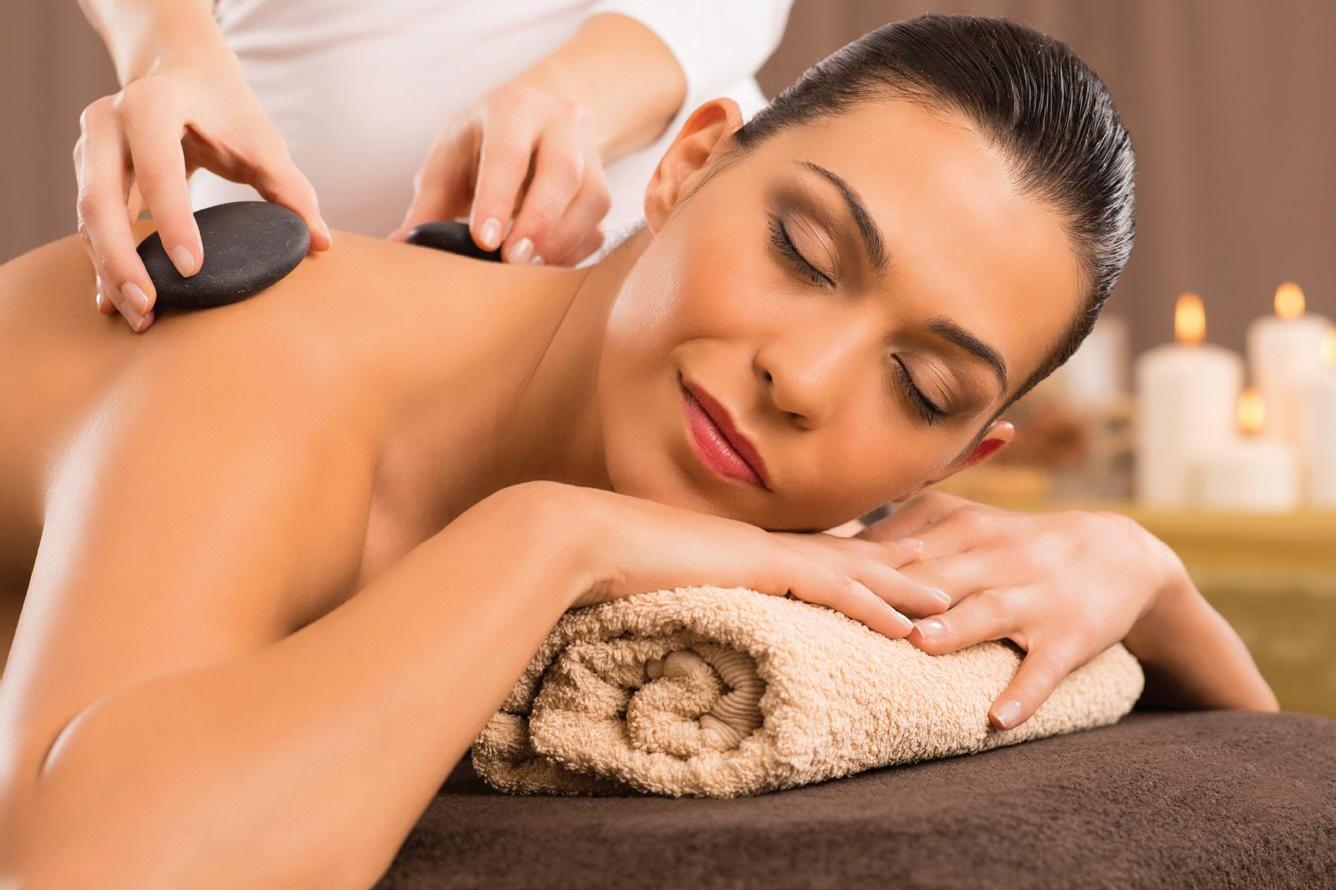
and not only physical health, but mental health as well. In the last few years, the review of research has shown that massage therapy has a very positive effect on mental health, particularly around anxiety and depression. We can become what we feel, and when we feel the pleasant sensations of massage, we are allowing a little pure sunlight to shine into our cellars, and all we have to do with it is follow the sense of feeling better, healthier and more alive.
Use Barre Workouts
TO BUILD YOUR CORE
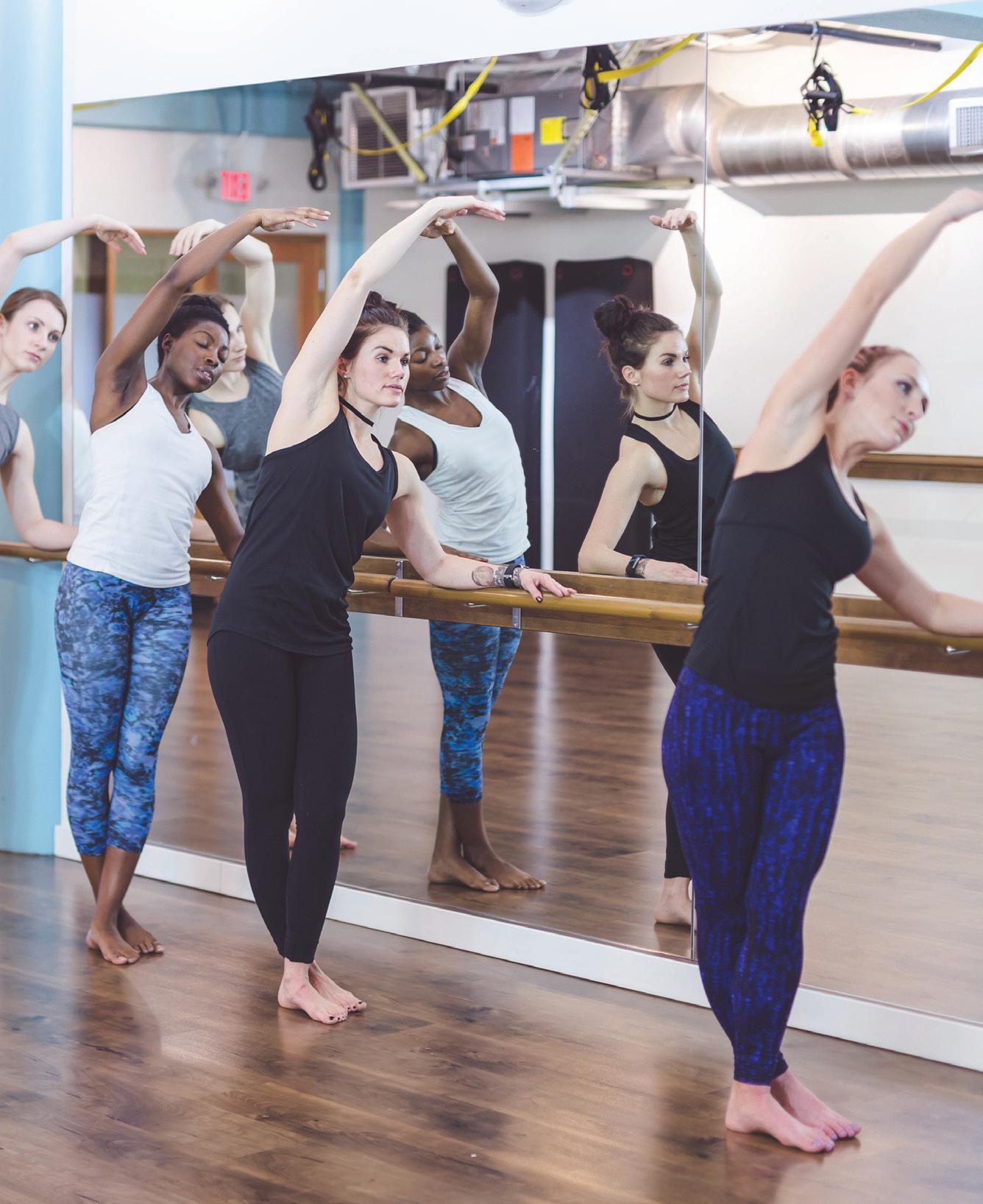
Barre classes and workouts are one of the newer additions to the fitness world’s catalogue of workouts, one that may seem less accessible than most because the primary piece of equipment can be difficult to find outside of a dance studio.
But they are showing up in more and more gyms and yoga and Pilates studios as the benefits become more widely known. You can also follow online barre classes from home as long as you have a sturdy chair or table to use for stability, and perhaps a yoga mat and some light weights — if no dumbbells are lying around you can simply use a can of food or filled water bottle.
The movements in many barre classes put an intense focus on core strength, flexibility and stability, while others incorporate more cardio movement either at or away from the barre. Either way, there are many benefits to participating:
MUSCLE STRENGTH
Barre develops your muscles through isometric movements that use specific muscles or muscle groups, often stretching them from many different angles. Your core, arms, thighs, glutes and pelvic floor muscles see the most effect. You remain stationary as you do the exercises and they’re especially well-adapted for those who have limited workout space or are experiencing knee pain or discomfort.
FLEXIBILITY
Even though your muscles don’t expand or contract you do a lot of stretching at the barre, helping you maintain your flexibility and balance while improving the range of motion of your joints. You will be able to move through the world with much more confidence and less fear of falling or other mishaps.
POSTURE
Strengthening the
muscles of your core and thighs will have you standing up straighter and sitting more erect — just like a dancer! It takes pressure off your spine by distributing your weight more evenly across your bones and muscles, which helps prevent future back pain and injuries.
Barre training can be a key part of your training regimen, building up your body in ways that make cardio and strength training more effective.
DAYS WITH A
Fight Calming Yoga Sequence OVERWHELMING
When it feels as if life is throwing everything at you at the same time, calming yoga poses can support you by grounding your consciousness and giving you the space you need to release the tension from whichever part of your body it tends to settle in.
This sequence is designed to remove the tension from your shoulders and hips by releasing the stagnant energy that’s holding you back from a peaceful existence.
1. DIRGA PRANAYAMA (Three-Part Breath)
The “three parts” are the abdomen, diaphragm and chest. From a seated position, take a deep inhale first into your belly, then into your ribs, and finally, into your heart (chest). Exhale slowly to empty this air through your nose, drawing your navel toward your spine. Repeat about seven times.
2. KUNDALINI CIRCLES (Seated Torso Circles)
Move through seven to eight breath cycles clockwise, then an equal number going counterclockwise.
Ground your hands on the floor beneath your shoulders. Lengthen your torso, relax your neck, bend knees slightly and hold for five breaths.
4. UTTHAN PRISTHASANA (Lizard Pose)
Stay in Lizard Pose with a long spine. Try using your breath to release tension in your hips and legs. Hold this pose for five breaths and repeat on the other side.
5. EKA PADA RAJAKAPOTASANA (Pigeon Pose)
Place a pillow underneath the lifted right hip for support. Bring your forehead down to the mat or another prop. Melt into this pose for five breaths, then switch to the other side.
6. SETU BANDHA SARVANGASANA (Bridge Pose)
Inhale to lift your pelvis off the floor as you clasp your hands under your tailbone. Stay in this pose for up to 1 minute, then gently exhale to slowly roll your spine back onto the mat.
7. VIPARITA KARANI (Legs-Up-The-Wall Pose)
Can be done with or without a wall for support. Close your eyes and release into this pose for 10 breaths.
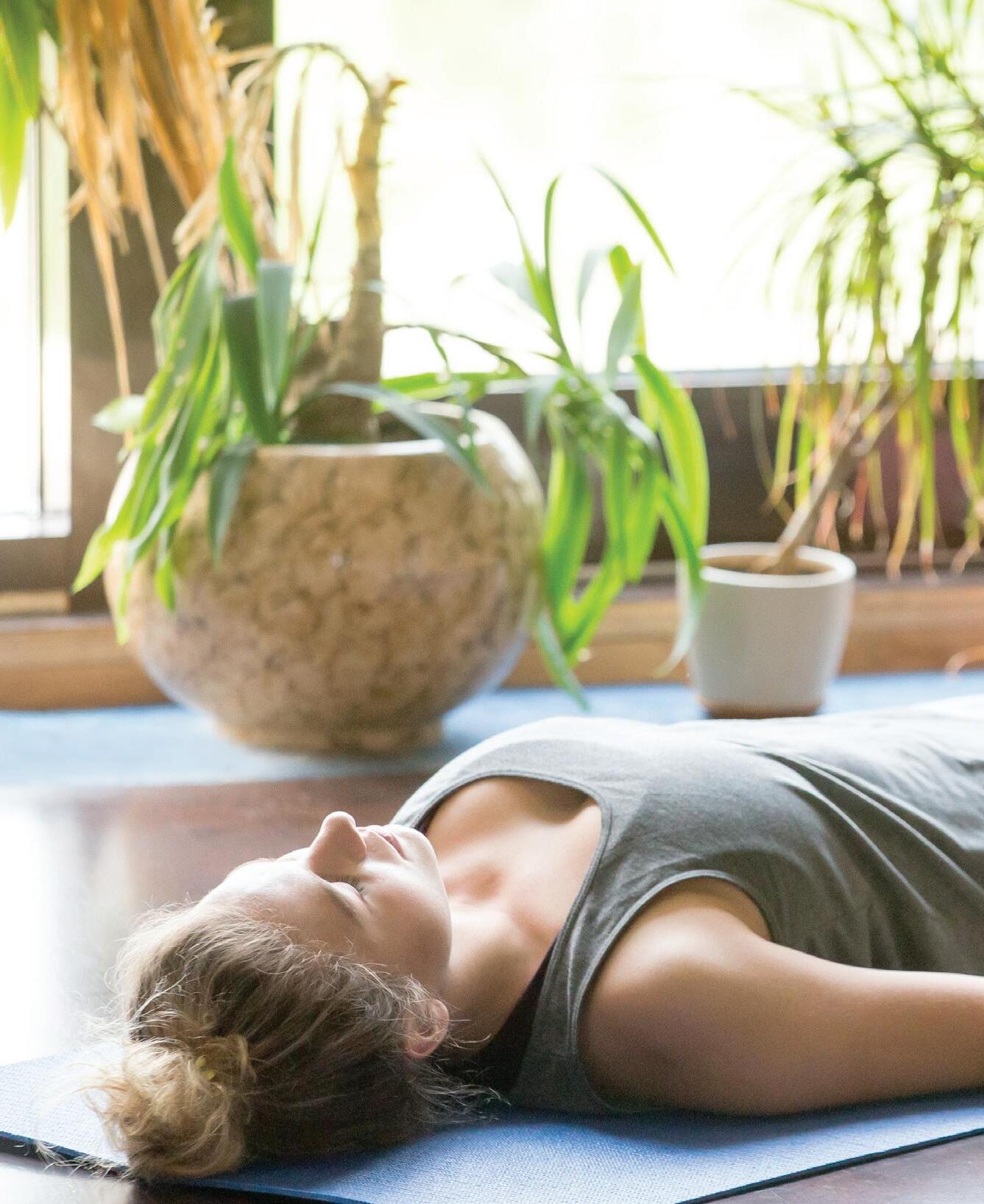
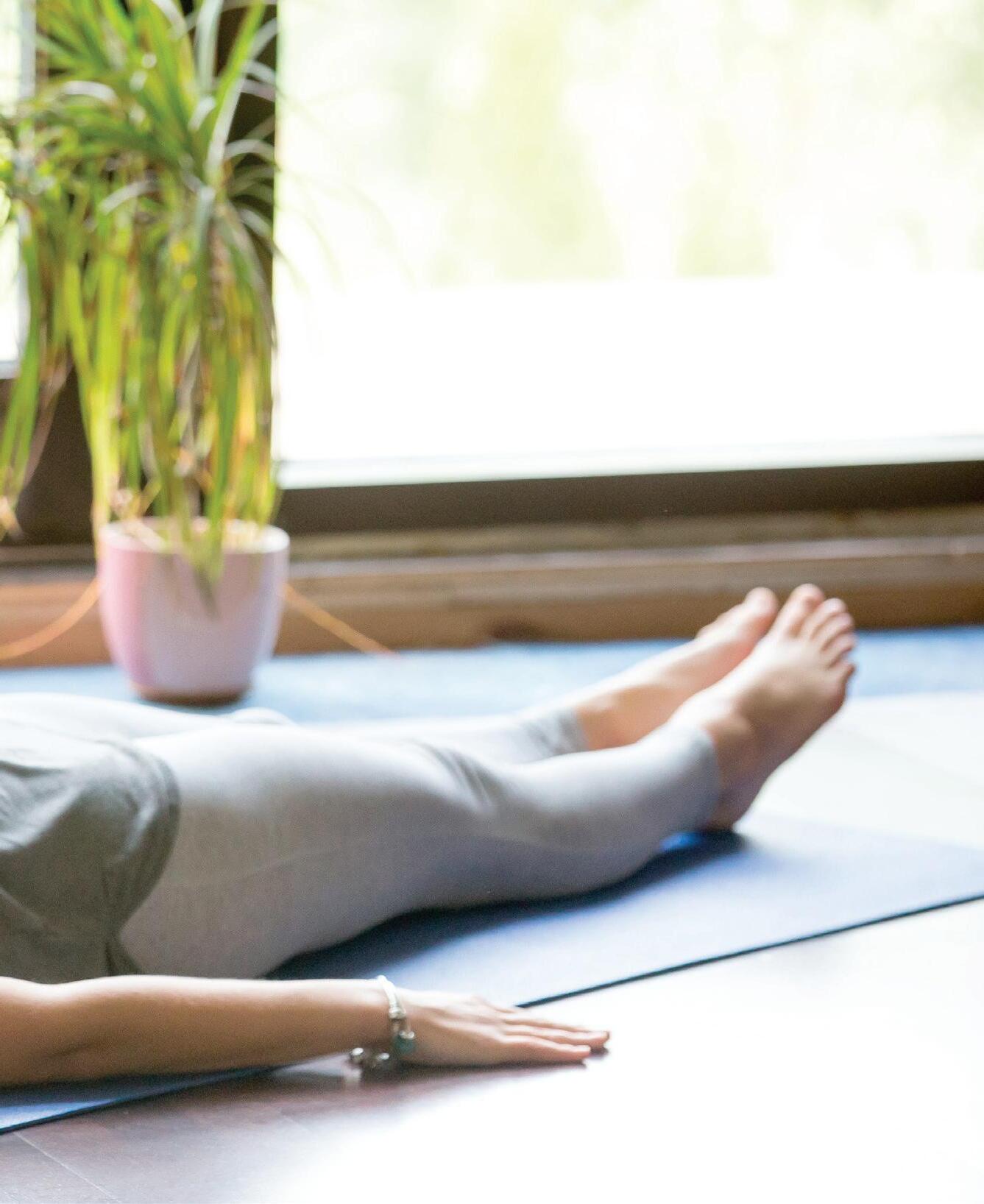
8. SAVASANA (Corpse Pose)
Stay in this pose for at least 5 minutes, your palms facing upward to receive energy or on the floor for grounding energy.
Using Acupunctureto Treat Liver, Improve Mental Health
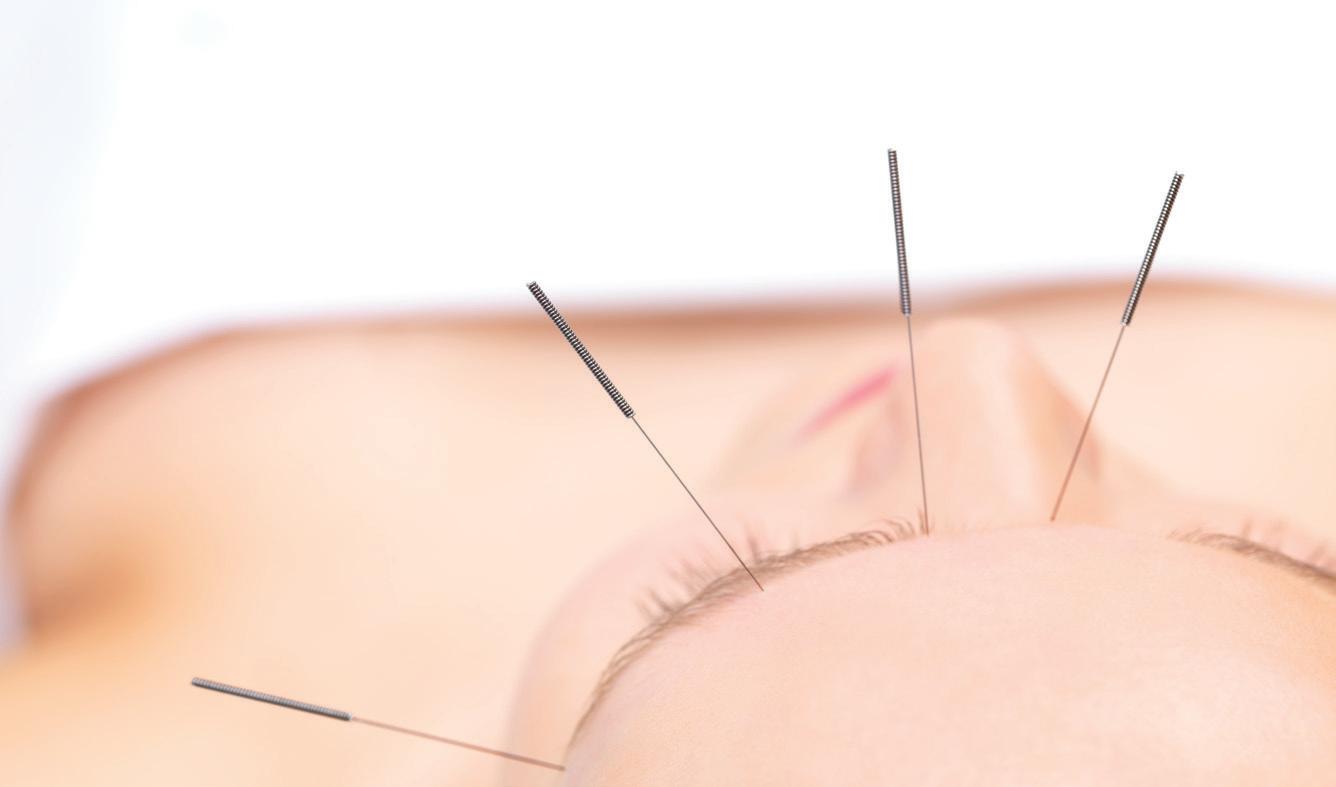
One of the reasons I love giving acupuncture treatments is hearing and seeing the feedback when people feel the shifts in their disposition, outlook and emotional stability.
In my training we used this pattern diagnosis of “shen disturbance” to describe the state of being mental and emotionally unwell, to the point where we can actually see it in outward appearance.
Careful observation of the physiological systems — tongue and pulse — should give an accurate roadmap to best bring overactive thinking or unstable emotions into balance. This is because the five important zang organs store different elements of our spirit but
also can be damaged by certain emotions.
The most often affected organ system is the liver, with its associated spirit of hun. This spirit has a lot to do with movement: going forward with plans and projects, creating relationships, even moving in dreams. We often find overtraining to be very taxing to the liver system with all of the extra movement. Emotions that damage the liver are no stranger to a westernized adult. Anger, vexation, frustration and irritation can
cause extreme stagnation in the flow of qi, blood, hormones and digestive fluids in the liver. This can translate to tense muscles and depressed mood. This is usually addressed first and regularly with acupuncture treatments. Aside from acupuncture, there is a useful image and tool for day-to-day convenience. It is the practice of stopping, breathing, smiling a genuine smile, sending thanks and gratitude to
the liver (and gallbladder as they are paired organs).
A heartfelt smile melts tensions from all muscles, particularly muscles in the face that communicate to the higher centers in the brain. This lifts the mood. Sending that smile to the liver can relax internal organ tension and also help feel more balanced in our movement patterns. It really can be that simple to keep mentally and emotionally well!
Mental Health Lack of Mobility
CAN AFFECT
by Brad L. Hayman, D.P.M., Complete Foot & Ankle Care
The practice of medicine, including the medical and surgical management of leg, ankle and foot problems, is about quality of life. To me this directly equates to mental health.
If anyone has difficulty walking it affects every part of their life. Hiking, walking for exercise, going to the store, activities of daily living: all involve walking.
The human body is designed to walk upright. This is unique in the animal world and allows us to do things with our hands other creatures cannot. When people are in pain and have difficulty standing, walking or have balance issues, their quality of life is greatly diminished. By extension, many of these people become depressed, anxious and
otherwise suffer from mental health issues. While I am not a psychiatrist or psychologist or a mental health professional, I can recognize the common elements of these conditions and how they can affect a person’s quality of life.
Medical care often involves visits to doctors, hospitals, clinics, emergency departments and other health professions that contributes to stress and anxiety, not only with the treatment but as an interruption to one’s life. This includes affecting family and friends.
The “ripple effect” of one person’s health care is often under appreciated.
In today’s health care world I would be remiss not to mention the stress and anxiety caused by the financial strain faced by many people who require health care. Many delay seeking care due to financial reasons. Not only does this cause increased pain and suffering, but often a delay in care makes a medical problem worse. All health care professionals would likely encourage people to have regular medical care, manage chronic disease
and treat acute problems as soon as possible.
The issue of mental health is complex and involves the care of people by professionals in many disciplines. To me, mental health and quality of life are intertwined. It would be hard to imagine one without the other.
While my expertise is in podiatry, I feel it is my professional duty to ultimately help people stand and/or walk better. This allows them the freedom of mobility and opportunity to enjoy life, and I hope, contribute to their better mental health.
RENEWInvite
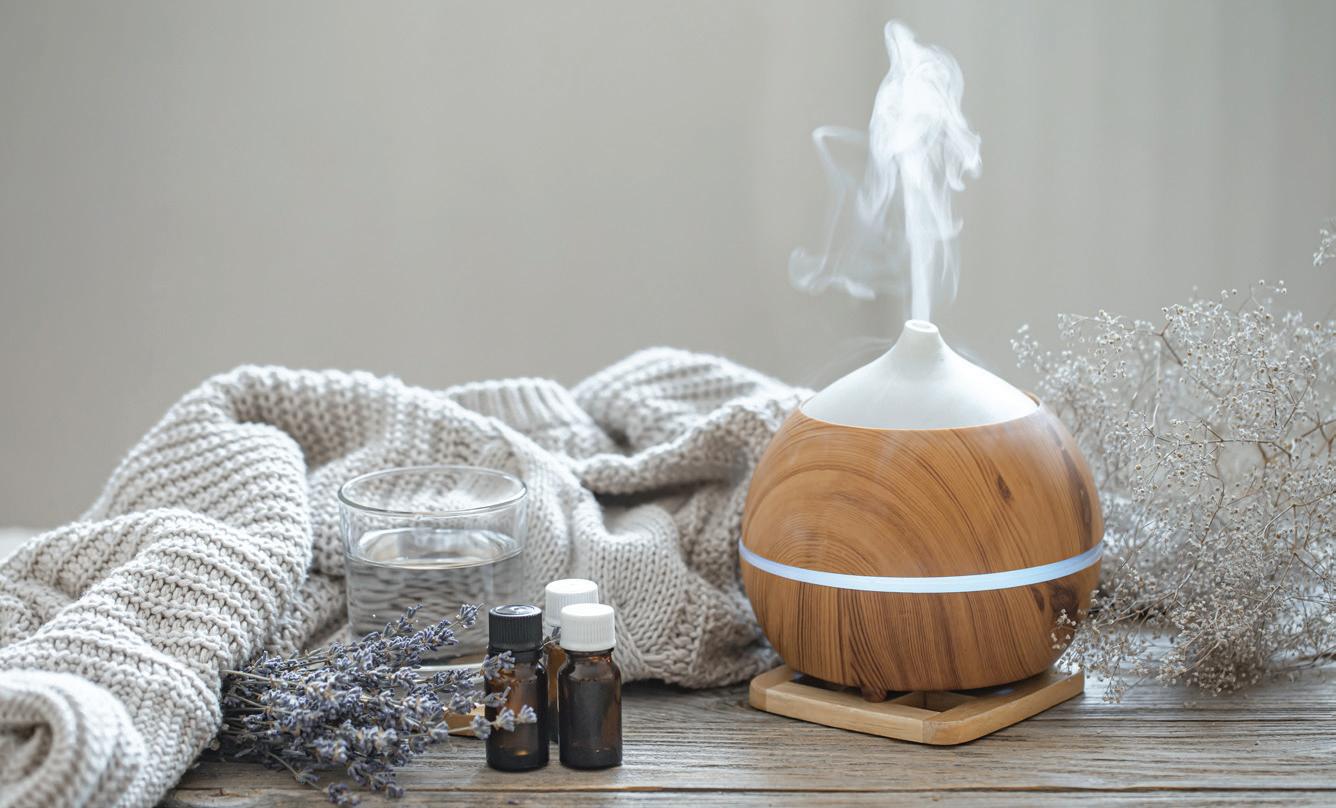
Out of the five senses, smell is the one that has the strongest connection to the seats of emotions and memories in your brain. This helps to explain why aromas can be such evocative reminders of long-ago times and places and why aromatherapy is a $1.6 billion industry worldwide.*
Sc ents, particularly those derived from essential oils, have been used to promote relaxation for thousands of years. And, far more recent science has suggested the brain reacts to the scent of linalool, the compound that gives lavender and many other flowers their scent, the same way it responds to well-known anti-anxiety medications including Valium.
Next time you need to unwind from an especially stressful day, try using a candle or diffuser to infuse important rooms or your whole home with one of these exceptionally soothing scents:
BERGAMOT — Produced from bergamot oranges, which are similar in size and shape to more familiar oranges but have a yellow or green skin. The invigorating citrusy quality is also used to make Earl Grey tea.
CHAMOMILE — Used most frequently in teas intended to calm nerves, digestion, pain and colds, chamomile oil can be applied to your skin (as a few drops within a diluting agent) or drizzled into bathwater.
JASMINE — Another floral scent long treasured for its rich, exotic qualities, jasmine has built its reputation as an
aphrodisiac. It is notable among the essential oils for promoting relaxation without leading to drowsiness.
JATAMANSI — This lesser-known essential oil is believed to connect powerfully to the brain’s centers of emotion and memory and may help relieve symptoms of depression by increasing the level of GABA neurotransmitters in the brain.
LAVENDER — Perhaps the most widely used scent for relaxation, its longtime use means it can affect people by directly tapping into their relaxation receptors and through association with prior events when it was used as a calming agent.
YLANG YLANG — Found in a plant native to the shores of the Indian Ocean, this scent is both fruity and flowery. Small studies have found it increases self-esteem while relieving anxiety.
*Several essential oils and fragrances are toxic or fatal to pets. Learn more at www.foundanimals.org/essential-oils-toxic-pets or speak with your veterinarian.
The paper content of this publication has been certifiably reforested via PrintReleaf – the world’s first platform to measure paper consumption and automate reforestation across a global network of reforestation projects. LEARN MORE AT PRINTRELEAF.COM
Ways to Manage Stress,
BE A HEALTHIER CAREGIVER
Are
you so overwhelmed by taking care of someone with Alzheimer’s or other related dementia that you’ve neglected your own physical, mental and emotional well-being?
by Lesley Jenkins, Alzheimer’s Association Regional Executive for
Northern Arizona
To avoid putting your own health at risk, consider these tips:
TAKE A BREAK
Respite care services can give you a temporary rest from caregiving while the person with Alzheimer’s continues to receive care in a safe environment. Visit www. alz.org/care to learn more.
SEEK OUT COMMUNITY RESOURCES
Visit Alzheimer’s Association and AARP Community Resource Finder (www. alz.org/CRF) to access a database of dementia and aging-related resources in your area. Adult day programs, in-home assistance, visiting nurses and meal delivery are some of the services that can help you manage daily tasks.
BECOME AN EDUCATED CAREGIVER
As Alzheimer’s and other related dementias progresses, new caregiving skills may be needed. The Alzheimer’s Association offers programs to help you understand and cope with common behavioral
and personality changes that often accompany Alzheimer’s. Visit www. alz.org/care to learn more and access care training resources, including free online workshops.
GET HELP, FIND SUPPORT
Our 24/7 Helpline (800272-3900), ALZConnected online social networking community (www. alzconnected.org) and local support groups (www.alz. org/CRF) are good resources.
MAKE LEGAL, FINANCIAL PLANS
Putting legal and financial plans in place after an Alzheimer’s diagnosis allows the person living with the disease to participate in decision-making. Having these plans in place can provide comfort to the entire family. Many documents, including advance directives, can be prepared without the help of a legal professional. However, if you’re unsure about how to complete
legal documents or make financial plans, you may want to seek assistance from an attorney specializing in elder law, a financial adviser who is familiar with elder or long-term care planning, or both.
KNOW YOU’RE DOING YOUR BEST
Remember the care you provide makes a difference and that you’re doing the best you can. You may feel guilty because you can’t do more, but care needs increase as Alzheimer’s
progresses. Regardless of how care is delivered, you can make sure the person living with the disease is well cared for and safe.
VISIT YOUR DOCTOR REGULARLY
Take time to get regular checkups and pay attention to any exhaustion, stress, sleeplessness or changes in your appetite or behavior. Ignoring symptoms can cause your physical and mental health to decline.
For more information visit www.alz.org/dsw
Stem Cell Therapies
BECOMING A
COMMON TREATMENT
Presently, the use of stem cells is becoming common practice with orthopedics as it may help deter a knee replacement or surgical procedure and improve function of joints following injury. Practitioners today are also using stem cells within such disciplines as pain management, cardiology, rheumatology and neurology.
by Donna Werking, Northern AZ Social, LLC
Why Choose
Stem Cell Therapy?
A s do other cells in our body, stem cells also age as we do. That is why the Northern Arizona Pain Institutes provide stem cells derived from umbilical cord tissue/ blood. This is a natural healing therapy with cells native to our body. Our regenerative stem cell injections are derived from an umbilical cord tissue/blood product that captures all the greatest regenerative properties of this otherwise discarded tissue. Our brand of stem cell injectables uses a proprietary method of
isolating growth factors, cells and stem cells giving our patients the best possible benefits from a regenerative medicine product.
The use of cells, stem cells and growth factors have all shown to be one of the best therapeutic methods to help aid in tissue healing and repair.
Mesenchymal stem cells, or MSCs, are multipotent stromal cells (a type of cell that makes up certain types of connective tissue) that can differentiate into a variety of cell types, including osteoblasts (bone cells), chondrocytes (cartilage cells), myocytes (muscle cells) and adipocytes (fat cells).
Our regenerative medicine product is produced in compliance with FDA CGMP (Current Good Manufacturing Practice) and GTP (Good Tissue Practices) standards, which assures quality and safety in this product. Research has shown that umbilical cordderived stem cells are not susceptible to malignant transformation in a serum-free medium, making them safe for therapeutic use in patients for cell therapy.
How Does It Work?
Stem cells have the capacity to migrate to injured tissues, a
phenomenon called homing. This occurs by injury/disease signals released from the distressed cells/tissue. Once stem cells are delivered to a site of injury or deployed into the blood stream they go to these distressed signals and dock on adjacent cells to commence performing their job.
If you have an injury, or if you have tendons or ligaments that have become inflamed, stem cell therapy may help. It uses your body’s own stem cells to help heal damage. It may help you avoid surgery. Learn more at www.NorthernArizonaPainInstitutes.com
Be Aware: Postpartum Depression or Baby Blues?
Did you know that almost 17% or 1 out of 6 women experience some form of postpartum depression or anxiety during the first year after delivery?
by Shayla Marciano, RN, BSN, RNC-OB, Prescott Women’s Clinic
Postpartum depression is typically associated with anxiety symptoms, panic attacks, lack of interest, impaired concentration, and loss of appetite. It can also include thoughts of harming yourself or your baby, and overwhelming feelings of guilt.
Postpartum depression differs from the baby blues. The baby blues typically peak at five days after giving birth but usually resolve within 2 weeks.
Baby blues are experienced in up to 85% of the general population. Symptoms of the baby blues include feeling overwhelmed or anxious, irritable and sad with or without crying, and can cause sleep disturbances. While these symptoms impact the family unit, they do not interfere with the mother’s ability to care for her baby
whereas postpartum depression does.
Postpartum depression screening and awareness is imperative in helping mothers get the treatment they need. Treatment differs from person to person including psychotherapy, counseling, social and familial support, and/or medication. Some complementary alternative medicine options are also being studied such as yoga, expressive writing, and bright light therapy.
Untreated postpartum depression can have many adverse effects on both the family and the infant, including maternal bonding, and impaired cognitive and motor development of the infant.
Unfortunately, there are still stigmas associated with postpartum depression that prevent women from seeking help if they
are having symptoms of postpartum depression. The more awareness and recognition there is surrounding postpartum depression will help empower women to ask for help and honestly self-report symptoms of postpartum depression so that treatment
options can be discussed and implemented. If you or someone you know might be having symptoms of postpartum depression, please reach out to our office to schedule an appointment in either Prescott or Prescott Valley call 928-778-4300.
Invest Your Healthcare Dollars Wisely!
Convenient • Friendly • Helpful • Caring •
Over the past 30 years, POSC has saved patients more than $150 Million! Of that amount, $20 Million would have been out of pocket.
Overall Patient Satisfaction: 9.8 out of 10!
Dr. Derek Hewitt 778-9190
Dr. Mark Strasser 778-9190
Thomas Rusing 445-9660
Dr. Katie Campuzano 778-4300
Dr. Adam Feingold 776-8428
Dr. Luis Fernandez 776-8428
The choice is yours. Choose one of our excellent Prescott based surgeons for your outpatient surgical needs. You will save money and have the best possible care available.
“The best I have experienced! POSC even topped Duke Medical Center which I have always rated highly. Thanks to the staff.”
Overall Patient Satisfaction: 9.8 out of 10!
“Everything about the place was excellent. Very clean, very professional, very organized and efficient. Thank you for the great care!”
“The best I have experienced! POSC even topped Duke Medical Center which I have always rated highly. Thanks to the staff.”
“Everything about the place was excellent. Very clean, very professional, very organized and efficient. Thank you for the great care!”
“Everyone was awesome. My stress level was zero! Loved the nurses. Linda was so sweet and really awesome. Great experience overall. Thank you all!”
Dr. Jonathon Gruneich 778-9770
Dr. Josephine Kim 583-1000
Dr. Melinda Martin 777-0070
Dr. Richard Ohanesian 778-4300
Dr. Jeffrey Osburn 778-4300
Dr. Jeanette Pilotte 583-7887
INTERVENTIONAL PAIN SPECIALISTS
Dr. Jonathon Gruneich 778-9770
Dr. Bradley Benson 445-4818
Dr. J. Gabriel Tsang 237-9312
ORTHOPAEDIC SPECIALISTS
Dr. Daniel Burchfield 778-9250
Invest Your Healthcare Dollars Wisely!
Invest Your Healthcare Dollars Wisely!
Overall Patient Satisfaction 9.9 out of 10!
“Everyone was awesome. My stress level was zero! Loved the nurses. Linda was so sweet and really awesome. Great experience overall. Thank you all!”
Invest Your Healthcare Dollars Wisely!
Dr. Bradley Benson 445-4818
Dr. J. Gabriel Tsang 237-9312
Dr. Siamak Rassadi 308-4285
Dr. Bertrand Kaper 778-9250
Over the past 31 years 114,000 procedures have been successfully performed at POSC, saving patients more than $160 million! Of that amount, $21 million would have been out of pocket expenses.
Over the past 30 years, POSC has saved patients more than $150 Million! Of that amount, $20 Million would have been out of pocket.
ORTHOPAEDIC SPECIALISTS
Invest Your Healthcare Dollars Wisely!
Over the past 31 years 114,000 procedures have been successfully performed at POSC, saving patients more than $160 million! Of that amount, $21 million would have been out of pocket expenses.
The choice is yours. Choose one of our excellent Prescott based surgeons for your outpatient surgical needs and you will not only save money, but will have the best possible environment and care available.
The choice is yours. Choose one of our excellent Prescott based surgeons for your outpatient surgical needs and you will not only save money, but will have the best possible environment and care available.
Overall Patient Satisfaction 9.9 out of 10!
Dr. Daniel Burchfield 778-9250
“When I need surgical help, I will always come here. My phone call from Karen was a real delight. When I saw her in recovery I told her she sounded like a song. My anesthesiologist was just great and took time with my questions. I really liked my visit!”
Dr. Bertrand Kaper 778-9250
Dr. Judah Pifer 778-9250
Over the past 30 years, POSC has saved patients more than $150 Million!
Dr. Judah Pifer 778-9250
NOSE AND THROAT
Dr. Bradley Williams 445-7085
“When I need surgical help, I will always come here. My phone call from Karen was a real delight. When I saw her in recovery I told her she sounded like a song. My anesthesiologist was just great and took time with my questions. I really liked my visit!”
Dr. Derek Hewitt 778-9190
Dr. Bradley Williams 445-7085
The choice is yours. Choose one of our excellent Prescott based surgeons for your outpatient surgical needs. You will save money and have the best possible care available. Overall Patient Satisfaction: 9.8 out of 10!
PLASTIC SURGEON
Dr. Brian Brantner 776-0325
Dr. Mark Strasser 778-9190
“Thank you for all the great care you gave me, everyone was awesome made me feel like I was the most important person in there! Thank you all so very much for taking care of me.”
PLASTIC SURGEON
Dr. Brian Brantner 776-0325
“Thank you all for the great care you gave me, everyone was awesome made me feel like I was the most important person in there day! Thank you all so very much for taking care of me.”
PHYSICAL MEDICINE
GENERAL SURGEONS
PHYSICAL MEDICINE
Dr. Thomas Hirasa 771-1011
“Joanne the pre-op nurse is awesome, really made me feel at ease. The head anesthesiologist was really terrific and put me completely at ease.”
Dr. Bradley Benson 445-4818
SPINE SPECIALIST
Dr. Daniel Noble 778-9250
UROLOGISTS
Dr. Donald Huang 771-1011
Dr. Bradley Benson 445-4818
Dr. Frank Iorio 776-8212
“Joanne the pre-op nurse is awesome, really made me feel at ease. The head anesthesiologist was really terrific and put me completely at ease.”
Dr. Thomas Rusing 445-9660
“This was my 2nd surgery at POSC in 2 months. Both times I received excellent care. Everyone was professional, courteous and all had a great sense of humor. I cannot think of any area that needs improving as I feel 10’s were to be given to everyone there.”
Dr. Paul Nguyen 771-5282
SPINE SPECIALIST
Dr. Daniel Noble 778-9250
GYNECOLOGISTS
“This was my 2nd surgery at POSC in 2 months. Both times I received excellent care. Everyone was professional, courteous and all had a great sense of humor. I cannot think of any area that needs improving as I feel 10’s were to be given to everyone there.”
Dr. Jeffrey Sanwick 771-5282
Dr. Michael Stanick 771-5282
“The best I have experienced! POSC even topped Duke Medical Center which I have always rated highly. Thanks to the staff.”
“The
“Everything about the place was excellent. Very clean, very professional, very organized and efficient. Thank you for the great care!”
“Everyone was awesome. My stress level was zero! Loved the nurses. Linda was so sweet and really awesome. Great experience overall. Thank you all!”
Dr. Katie Campuzano 778-4300
UROLOGISTS
Dr. Adam Feingold 776-8428
Dr. Paul Nguyen 771-5282
Dr. Luis Fernandez 776-8428
Dr. Jeffrey Sanwick 771-5282
Dr. Josephine Kim 583-1000
Dr. Michael Stanick 771-5282
Dr. Melinda Martin 777-0070
Dr. Richard Ohanesian 778-4300
Dr. Jeffrey Osburn 778-4300
Dr. Jeanette Pilotte 583-7887
INTERVENTIONAL PAIN SPECIALISTS
Dr. Jonathon Gruneich 778-9770
Dr. Bradley Benson 445-4818
Dr. J. Gabriel Tsang 237-9312
ORTHOPAEDIC SPECIALISTS
Dr. Daniel Burchfield 778-9250
Dr. Jonathon Gruneich 778-9770
Dr. Bertrand Kaper 778-9250
Dr. Bradley Benson 445-4818
Dr. Judah Pifer 778-9250
Dr. J. Gabriel Tsang 237-9312
Dr. Bradley Williams 445-7085
ORTHOPAEDIC SPECIALISTS
PLASTIC SURGEON
Dr. Daniel Burchfield 778-9250
Dr. Brian Brantner 776-0325
Dr. Bertrand Kaper
PHYSICAL MEDICINE
Dr. Bradley Benson 445-4818
SPINE SPECIALIST
Dr. Daniel Noble 778-9250
UROLOGISTS
Dr. Paul Nguyen 771-5282
Dr. Jeffrey Sanwick 771-5282
Dr. Michael Stanick 771-5282
HealthMentalDay
Take with Spa Wellness Treatments
Maybe this sounds familiar — you wake up and just cannot go to work. You don’t have a fever or a cough but your brain is drained, and every fiber of your being is saying “no way.”
Discover why mental health is a serious wellness necessity. Learn how spa and wellness treatments like massage, floating, sauna and yoga are excellent ways to soothe your mind as well as your body.
by Lori Durr, Owner, Sundara Sanctuary
WHY SUNDARA SANCTUARY WELLNESS
SPA WAS CREATED
I first opened Sundara Sanctuary in a fitness center offering massage, skin care and sauna. I people watched and noticed most were overweight and not healthy, but these people were working harder in the gym, at their jobs, and at home than most anyone I knew.
I realized that all these people were in a constant state of fight or flight, not allowing their bodies or minds to enter the rest and digest state. This was keeping them mentally and physically stressed and in full cortisolmaking action. This is when I had the vision of expanding to offer treatments that would assist the community becoming mentally and physically healthy.
TAP INTO CONSTRUCTIVE WAYS TO FIND REST, REJUVENATION
Float therapy (deprivation tank) allows you to unplug from everyday stimulus, bringing the brain into the beta waves; 60 minutes in the tank is found to be equivalent to four hours of sleep.
Massage therapy can be the perfect answer allowing the mind and body to relax. A growing body of research is supporting the positive impact of massage therapy for relief of stress, anxiety and depression. Many studies indicate it can provide benefits similar to psychotherapy for certain conditions.
Heat therapy, as experienced in an infrared sauna, increases release of
beta endorphin into our brains and blood. This rise in endorphins corresponds to a feeling of pain relief and well-being after a sauna session. Endorphins produce a feeling of calm, happiness and well-being, and have been shown to be important in mitigating symptoms of depression and anxiety. In one study, a decrease in cortisol was found; cortisol is a stress hormone associated with depressed immune function and diseases of chronic stress.
Yoga releases healthy brain chemicals like endorphins and dopamine. This helps balance mood and combat common mental health issues like depression. Therapists recommend yoga for mental peace, concentration and improved mood.
Grab Boost Your Mood THESE FOODS TO
Life is tough for everyone at times and can leave you feeling depressed, anxious, and/or overwhelmed. There’s no reason to feel guilty when you’re struggling with such emotions, but there are a lot of ways you can counter them naturally, including through healthy diet choices.
Many foods in their natural state contain substances that encourage the release of hormones that elevate your mood and calm your nerves, while highly processed foods and simple carbohydrates have been associated with lower spirits, increased anxiety and turbulent highs and lows.
Nutrition and mental health experts advise patients to adopt broader eating patterns as well, such as eating at regular intervals which include a breakfast meal, choosing whole grains over refined sugars, consuming a variety of foods and drinking plenty of fluids.
Foods known to contribute to positive feelings include:
OILY FISH
Salmon, trout, tuna, herring, kippers, mackerel, sardines and whitebait are among the standouts from the fish family in terms of omega-3 fatty acids. There are three categories of omega-3 acids — DHA and EPA are believed to have the most impact on mental health. They trigger the release of serotonin and fight brain inflammation.
MILK
BAKED BEANS
A half-cup of canned plain or vegetarian baked beans contains 26% of recommended daily intake of zinc, which is crucial for fighting stress on the mind as well as the body. Zinc helps to maintain your cortisol levels over time and is depleted during high-stress periods. Since the body has no natural storage of zinc it must be replenished regularly. Other foods high in zinc include oysters, beef, lobster and pork chops.
DRIED CRIMINI MUSHROOMS
It’s good to keep a few of these in stock as a good source of vitamin B6 — which contributes to the production of serotonin, which regulates mood — and norepinephrine, which helps the body respond to stress. Low dietary levels of B6, also known as pyridoxine, have been linked to depression and related mental issues. This vitamin also helps produce melanin, essential to maintaining circadian rhythms and regulating sleep.
Milk and other dairy products are high in tryptophan, the same amino acid found in turkey reputed to make you sleepy Thanksgiving night. Tryptophan boosts serotonin and melatonin production, while the liver functions uses it to produce niacin, a necessary component for metabolizing energy, which shows up in your own energy levels. Tryptophan should be consumed with some form of carbohydrates to be absorbed; it’s the lone amino acid not blocked by insulin, which is what carbs become after being broken down in the digestive system.
SPINACH
This and other dark leafy green vegetables carry loads of folate, the lack of which has been tied to depression and other mood disorders. Researchers believe low levels of folate, also known as folic acid or vitamin B9, may hamper production of serotonin, norepinephrine and dopamine.
OF BIG CITIES Moves Out
Change Local Garden Trends
We have experienced some interesting trends over the past year as more people are attracted to plants and gardening. Hashtags like #PlantParenthood are common.
by Ken Lain, The Mountain Gardener, Watters Garden Center
Many folks who visit the garden center this spring are seeking their first experience with plants. I’ve asked these new gardeners what compels them. They say the current economic and health scare turned them into wannabe gardeners ready to try their hands at growing food.
A quote from a WebMD article caught my attention: “Take advantage of the gym growing right outside
your front door.” Now, Watters Garden Center never thought we were in competition with local fitness centers, but it is a natural transition. People facing gyms closed by a COVID scare have sparked a robust interest in the health benefits the garden provides — fresh air and physical activity.
The WebMD article, Get Fit in the Garden reads: “Gardening is a good way to whittle down your
waistline. Thirty minutes of garden exercise (for a 180-pound person) burns calories from activities like planting seedlings-162 calories, weeding-82 calories, and general gardening-202 calories.”
A NEW TREND... MIGRATION BACK TO RURAL AREAS
We are at the leading edge of a new trend by those “ditching” big city living in favor of less densely populated areas. As we’ve seen this spring, the importance of herbs, vegetables, fruits and farm-related products is a recurring trend. This is an excellent opportunity for renewed interest in and expansion of the Yavapai 4-H and FFA programs. Certainly, the 4-H Pledge is attractive to the next generation.
Maya Shetreat-Klein, M.D., shares these fascinating thoughts in her recent article The Dirt Cure. “Our connection to plants, the soil and nature has been with us since the beginning
of our existence. It is part of our DNA. During stressful times, gardening and getting our hands in the soil can be just what’s needed. What I have learned is that ultimately, it all begins with dirt. Dirt means exposure to microbes, eating fresh food from healthy soil, and spending time in nature.
“Instead of letting children get dirty, we have sanitized them. We’ve sanitized their bodies with antibiotics and hand sanitizer, their homes and schools with bleach, their food with pesticides, and their very lives by living more indoors. This is a problem because the bio-terrain inside our bodies is connected intricately to the ecoterrain outside our bodies.”
Dr. Shetreat-Klein goes on to say, “Soil plays a profound role in our health and happiness. Indeed, the health of our inner terrain, the internal environment of our bodies, reflects the health of our outer terrain, i.e., the world around us.”
Protein Lurks Delicious Places
We’re all aware that protein is a crucial nutrient for our diet (it’s one of the three broad categories of nutrients, along with carbohydrates and fats), and for generations we’ve been conditioned to look to meat and dairy products to get it into our systems.
While most of us have discovered its existence elsewhere by now, particularly from protein powders, some good go-to plant-based foods are still not as well-known as they should be for ratcheting up energy and building muscles, bones, tissues and organs.
PULSES
This is an ancient term for the dry seeds of legume plants including beans, peas, lentils and chickpeas that appears to have entered general dietary discourse when the United Nations declared 2016 the International Year of the Pulses — a good enough reason!
Pulses all happen to stand out as powerhouse wellsprings of protein, which is why the UN chose to promote them as a primary source of the nutrient. Lentils are the king of protein-rich pulses, with the humble
black lentil carrying the most per cup at 24 grams. Also hovering near the top are split peas and chickpeas (16 grams) and black beans (14 grams).
SOYBEANS
About 97% of the soybeans grown for food in the U.S. are used to produce animal feed, but the other 3% still manages to provide a lot of protein for humans through products such as milk, edamame, tofu, tempeh, soy nuts, miso, natto and soy sauce.
One cup of soybeans can provide up to 70 grams of high-quality protein.
The U.S. Food and Drug Administration has found that adults who consume 25 grams of soy protein daily as a replacement for animal protein can reduce their levels of LDL cholesterol by up to 5%, having the biggest effect on those who start out with high levels of the “bad” cholesterol.
VEGETABLES, FRUIT
There are a few veggies and even fruits out there that can compete with meat on protein content, including broccoli, kale, spinach, artichokes, guava, avocado, jackfruit, blackberries and apricots.
COULD BE
Being Outside Just What you Need
How are you feeling? How are you eating? Are you exercising? Are you sitting in your home and not getting out?
by Cathy Clements, Nutritionist & Life Coach, NASM CNC, CPT, FNS, WFS
Iknow a lot of you have been keeping your distance from others until you are completely vaccinated. Being alone can be good for you to get grounded. But, being alone for a long time can take you to a point of experiencing loneliness. These are two different things.
Let me clarify, I am not a mental health professional. Depression is real and during this trying time, there are professional people some of us should turn to for grounding.
But, what can we do on our own? Get outside!
The weather has finally turned and it’s warm enough to get out during different times throughout the day.
Do you need to go for a long hike when you haven’t been working out? NO! Start small. The worst thing you can do is start big and hurt yourself. Go sit in the sun, or the shade, and enjoy the warmth of the air and sun.
Eat in a way that fuels your body. For most of us, sweets and heavier carbohydrates bring us down and slow us down. Limit these foods for now. Eat lighter and you will feel lighter; more vegetables, lean proteins. These foods will fill you but not make you feel bloated and heavy.
The days are getting longer, too. Sleeping well will add to feeling well. Try to have less caffeine; it stays in your system longer than you are aware. The half-life of caffeine is three to five hours. That means it takes that long for us to eliminate half of the caffeine we consumed.
I am not saying to cut it completely out, but cut down. Instead of four cups of coffee, try for only two and consume it earlier in the day. You can also substitute another warm beverage for your caffeine. Instead of coffee or tea have herbal tea or water with lemon. Either
will fulfill that desire for a warm beverage without giving you the caffeine. To recap: Get outside in the nice weather,
move a little more than you have been, eat lots of vegetables and lean proteins, limit caffeine and get quality sleep.
Photo: Martha Court
HEALTHY
Recipes
Savory Ground Beef
If cooking with coconut oil or liquid aminos for the first time, you might be interested to know that while high in saturated fat, the saturated fat in coconut oil is comprised of medium-chain fatty acids that can raise good cholesterol levels and are easily handled by the body. As for liquid aminos, they look and taste much like soy sauce and are naturally vegan and gluten-free.
by Bailey Zygutis, Nutritionist, Vitruvian Fitness
2 tbs Coconut oil
1 lb Ground beef
1 Red pepper
1 Yellow onion
2 tbs Liquid aminos
Pink salt
Black pepper
Food for Thought
1
In large saucepan, add 1 tablespoon coconut oil, diced peppers and onions. Salt generously and cover with lid. Cook until soft, and remove.
2Add another tablespoon coconut oil to brown ground beef. When beef is near complete (most beef is brown), add back pepper and onions
Serves 4 | Prep Time 30 min
along with 2 tablespoons liquid aminos. Fold together and let simmer 1-2 minutes before serving!
3
Can be served with rice or used as the protein in many other dishes! Look for next month’s dish as an example use of leftovers!
Peppers are a powerful source of polyphenols, which are potent antioxidants that help protect our internal health in a myriad of ways, including immune-boosting and toxin-removal.
This salad is perfect for a summer lunch or dinner with loads of sweet strawberries, hearty pecans, smooth avocado and tangy spinach, as well as the barbecued chicken. The marinade is also the dressing, making this paleo dish easy to make as well as enjoy.
1
Place all the balsamic dressing ingredients into a 1-cup mason jar. Close the lid and shake well.
2
Put the chicken breasts in a container and pour 1/4 cup of the dressing over the top. Turn the chicken so it is well coated in the marinade; set it aside for 1/2 hour.
3
As the chicken is marinating, place the spinach, arugula, strawberries, pecans and diced avocado in a large
Serves 2 | Prep Time 40 min
salad bowl. Preheat your grill to medium-high.
4Remove the chicken from the marinade and place it on your barbecue. Grill the chicken for 15 minutes, turning halfway. Remove the chicken from the grill and use two forks to shred the meat into bitesized pieces.
5Add the chicken to the salad bowl, pour the remaining dressing over the top and toss to coat. Serve immediately.
PALEO
Prosciutto Egg Cups
These unique on-the-go bundles of keto-friendly eggy goodness are great as a snack or meal!
They can be enjoyed at room temperature as well as warm, so you can take them to work or your workout as a protein pickup. Ham is a good substitute if you don’t have any prosciutto handy, and you can experiment with using different cheeses and replacing the salt with herbs to reduce sodium content a bit.
2 tbs Butter, melted
6 lg Prosciutto, thinly sliced (about 1/3 pound)
1/3 cup Mozzarella, shredded
1/4 cup Parmesan, grated
1/4 cup Baby spinach leaves (packed), chopped 1/4 cup Red peppers, (roasted), chopped
6 lg Eggs
1/4 cup Heavy cream
Kosher salt
Black pepper, freshly ground
1
Position an oven rack in the center of the oven and preheat to 400°F.
2Brush six standard muffin cups with butter (butter will pool on the bottom of the cups). Line each cup with a slice of prosciutto, folding and overlapping so that the entire surface of the cup is covered and no metal is visible. Divide the mozzarella evenly among the cups. Repeat with the parmesan, spinach and roasted red pepper.
Serves 3 | Prep Time 30 min
3Whisk the eggs and cream in a large measuring cup or small pitcher; add some salt and a few grinds of pepper. Pour the egg mixture into each cup, making sure not to overfill.
4Bake until the eggs are set and wobble only slightly, 10 to 12 minutes. Let cool 5 minutes while eggs continue cooking, then use an offset spatula to loosen the prosciutto from the edges of each cup and transfer to a plate for serving.
Vegan Alfredo sauce:
1-2 tbs Olive oil
1/2 White onion
4 lg Garlic cloves
1/2 cup Cashews, raw; soaked
1 cup Veggie broth (or water and bouillon)
2 tbs Nutritional yeast
1/2 tbs White miso paste
1/2 tsp Salt
1/8 tsp Nutmeg
Pasta:
5 oz Dry pasta, cooked to package directions
1 cup Peas, fresh peas (or frozen), or sub snow peas or steamed broccoli
8 oz Mushrooms, sautéed, or try smoked mushrooms
Garnish with pepper, chili flakes, lemon zest, Italian parsley
1
Set salted water to boil in a large pot and cook pasta according to directions. If using fresh or frozen peas, you can add them to the pasta water, during the last minute of cooking.
2
Heat oil over medium low heat, and sauté onion and garlic until tender and golden.
Place in a blender along with soaked or boiled cashews, veggie broth, nutritional yeast, miso, salt, nutmeg. Blend until creamy and smooth.
3
Sauté or smoke the mushrooms. If sautéing, heat olive oil in a skillet
Serves 2 | Prep Time 10 min
over medium heat. Add mushrooms and sauté 6-7 minutes until golden and tender, sprinkling them with salt.
4Drain the pasta, add to a large pan along with the Alfredo sauce, toss, and gently warm over low heat. Add the mushrooms and toss to coat, keeping a few aside for garnish. Divide among two bowls.
5
Garnish with lemon zest, pepper, chili flakes and chopped parsley.
VEGAN
Pasta with Vegan Alfredo Sauce
Impress your partner with this healthier version of Alfredo sauce atop your favorite size, shape and color of pasta. Leaving out the dairy makes for a much lighter and more summer-friendly dish anyway!
The cashews in this recipe should be softened ahead of time, either by soaking them for 4 to 8 hours if you can or boiling for 10 to 15 minutes if you don’t have the time. Higher-powered blenders do a better job of creating the creamy consistency you’re looking for. Hemp seeds are a nut-free alternative that don’t need any prior prep.
FAMILY-FRIENDLY
Orzo with Roasted Shrimp
Bring the family together over this delightful blend of seafood with pasta and fresh (if possible) herbs, which can be made ahead for a super-easy dinner — the longer it sits, the better it gets!
3/4 lb Orzo pasta
1/2 cup Lemon juice, freshly squeezed
2 lbs Shrimp (16 to 18 count), peeled and deveined
1 cup Scallions, minced
1 cup Dill (fresh), chopped
1 cup Flat-leaf parsley (fresh), chopped
1 Hothouse cucumber, unpeeled, seeded, and medium-diced
1/2 cup Red onion, diced
3/4 lb Feta cheese, diced
Olive oil
Kosher salt
Black pepper, freshly ground
1
Preheat oven to 400°F
2
Fill a large pot with water, add 1 tablespoon of salt and a splash of oil, and bring it to a boil. Add the orzo and simmer for 9 to 11 minutes, stirring occasionally, until it’s cooked al dente. Drain and pour into a large bowl. Whisk together the lemon juice, 1/2 cup olive oil, 2 teaspoons salt and 1 teaspoon of pepper. Pour over the hot pasta and stir well
3Meanwhile, place the shrimp on a sheet pan, drizzle with olive oil, and sprinkle with salt and pepper.
Serves 6 | Prep Time 20 min
Toss to combine and spread out in a single layer. Roast for 5 to 6 minutes, until the shrimp are cooked through.
4Add the shrimp to the orzo and then add the scallions, dill, parsley, cucumber, onion, 2 teaspoons salt, and 1 teaspoon pepper. Toss well. Add the feta and stir. Set aside at room temperature for 1 hour or refrigerate overnight to allow the flavors to blend
5If refrigerated, taste again for seasonings and bring back to room temperature before serving.
health & wellness DIRECTORY
Your guide to Greater Prescott’s medical & wellness professionals.
Ali Askari, MD, FACP
Amy Schlaifer, MD
Ayad Agha, MD
Bardia Sinaei, DMD
Chad Norris, PA
Hemant K. Pandy, MD
Hojat Askari, MD
Jaffrey Kazi, DMD
Jeffrey Osburn, MD
John Alessi, DO
Thumb Butte Medical Center
3124 Willow Creek Road | Prescott, AZ 86301 www.thumbbuttemedicalcenter.com
Thumb Butte Medical Center
3124 Willow Creek Road | Prescott, AZ 86301 www.thumbbuttemedicalcenter.com
Thumb Butte Medical Center
3124 Willow Creek Road | Prescott, AZ 86301 www.thumbbuttemedicalcenter.com
Thumb Butte Medical Center
3124 Willow Creek Road | Prescott, AZ 86301 www.thumbbuttemedicalcenter.com
Northern Arizona Pain Institutes
3769 Crossings Drive | Prescott, AZ 86305 www.northernarizonapaininstitutes.com | 928-683-5600
Thumb Butte Medical Center
3124 Willow Creek Road | Prescott, AZ 86301 www.thumbbuttemedicalcenter.com
Thumb Butte Medical Center
3124 Willow Creek Road | Prescott, AZ 86301 www.thumbbuttemedicalcenter.com
Thumb Butte Medical Center
3124 Willow Creek Road | Prescott, AZ 86301 www.thumbbuttemedicalcenter.com
Prescott Women’s Clinic 919 12th Place, Suite 1 | Prescott, AZ 86305 www.prescottwomensclinic.com
Thumb Butte Medical Center
3124 Willow Creek Road | Prescott, AZ 86301 www.thumbbuttemedicalcenter.com
Internal Medicine & Cardiology
Urology & Urogynecology
Interventional & Vascular Radiologist
Dentistry
Physicians Assistant
Neurology
Internal Medicine
Medicine
Joseph Machuzak, DO
health & wellness DIRECTORY
Thumb Butte Medical Center
3124 Willow Creek Road | Prescott, AZ 86301 www.thumbbuttemedicalcenter.com
Prescott Women’s Clinic
Katie Compuzano, MD
Kaveh Karandish, MD
Maddie Assar, MD
Maryam Emami, MD
Michele McCormick, NP
Mohammad Golparian, MD
Richard Ohanesian, MD
Robert J. Brownsberger, MD
Savana Howe, Psy.D
Serj Nazarian, DPM
Seyed Mohsen Sharifi Takieh, MD
919 12th Place, Suite 1 | Prescott, AZ 86305 www.prescottwomensclinic.com
Thumb Butte Medical Center
3124 Willow Creek Road | Prescott, AZ 86301 www.thumbbuttemedicalcenter.com
Thumb Butte Medical Center
3124 Willow Creek Road | Prescott, AZ 86301
www.thumbbuttemedicalcenter.com
Thumb Butte Medical Center
3124 Willow Creek Road | Prescott, AZ 86301 www.thumbbuttemedicalcenter.com
Northern Arizona Pain Institutes
3769 Crossings Drive | Prescott, AZ 86305 www.northernarizonapaininstitutes.com | 928-683-5600
Thumb Butte Medical Center
3124 Willow Creek Road | Prescott, AZ 86301 www.thumbbuttemedicalcenter.com
Prescott Women’s Clinic
919 12th Place, Suite 1 | Prescott, AZ 86305 www.prescottwomensclinic.com
regard. For example, we need clean water, fresh air, healthy relationships, therapeutic movements, sunlight, a proper sleep cycle and proper nourishment, as do most residents of earth. Trying to go against this almost always results in disease.
WHAT TYPE OF EXERCISE (WEIGHTS, CARDIO, YOGA, PILATES, ETC.) DO YOU PREFER AND WHY?
Yoga is one of my most favorite activities. It can be a kick-butt workout or a spiritual ceremony, or
both. It’s a lifelong practice that is empowering and humbling at the same time.
WHAT ARE YOUR PRACTICES TO KEEP YOU AND YOUR FAMILY HEALTHY?
We spend a lot of time outside in a natural setting. Personally, I start my day with specific breathing, meditation and qi gong exercises. We eat organic produce, prepare food at home together and genuinely enjoy being together. I keep plenty of dried herbs and homeopathic
remedies at home to tackle almost any ailment.
WHAT IS YOUR FAVORITE HEALTHY FOOD/SNACK?
Raw ceremonial cacao plus a date from Sanchez date farm. It’s as close to a doughnut as I’m ever going to eat.
WHAT IS YOUR BIGGEST HEALTH AND WELLNESS TIP?
Embark on a food journey to eat cleaner foods that serve your body mind and spirit to your highest potential.