








Laurie is an avid hiker and cyclist who loves the outdoors and enjoys the beauty of Prescott. She also has a menagerie of pets to keep her smiling!
One of the things I love most about living in Prescott is the beautiful setting we have around us and the many amazing recreational opportunities available. From hiking and camping to boating and fishing, the opportunities for outdoor adventure are endless.
Over the course of my life, I have developed a deep love of hiking. When I am not feeding my animals, you can find me discovering new trails or mastering my old favorites. For me, spending time in nature is the greatest release and way to maintain my health. Whether you are sitting under a tree reading a book, playing sports in the park, participating in an outdoor yoga class, joining friends for a picnic, or embarking on a new adventure — being outside is an effective and speedy way to boost health and happiness. Getting outside anchors us in the present moment and helps us to feel connected to something bigger than ourselves. It helps us be more active and focused, reduces our blood pressure and elevates our mood as our stress dissipates. So commit with me this month to go on a few exciting adventures and get outside every chance we get.

Laurie Associate Publisher
EXECUTIVE PUBLISHER
Elaine Earle, CPA
ASSOCIATE PUBLISHER
Laurie Fisher
SALES & MARKETING
Laurie Fisher, Director of Sales & Marketing
Julie Turetzky, Director of Public Relations
Julie Kahn, Sales & Marketing Manager
PRODUCTION & DESIGN
Aaron Tipton, Creative Director
Michele Rodriguez, Design Director
Shannon Price, Lead Graphic Designer
Manda Corral, Social Media Manager
Keith Dobie, Social Media Coordinator
EDITORIAL
Bea Lueck, Editor-in-Chief
Christia Gibbons, Senior Editor
Blake Herzog, Staff Writer
OPERATIONS
Terry Scheib, Delivery Manager
COMMENTS & IDEAS
editor@roxco.com
SUBMIT AN EVENT
calendar@roxco.com | prescotthealthyliving.com
SUBSCRIPTIONS
info@roxco.com | prescotthealthyliving.com
ADVERTISING INQUIRIES info@roxco.com | prescotthealthyliving.com
PRESCOTT OFFICE: 130 N. Granite St., Prescott AZ 86301 928-350-8006
CORPORATE OFFICE: 442 W. Kortsen Road, Suite 101 Casa Grande, AZ 85122 520-426-2074








“Our mission is to connect & provide you with the personalized, integrative healthcare you deserve, in a comfortable setting of your choice, so that you can live the life you love.”
GIVING ACCESS TO HEALTHCARE YOU DESERVE Now Accepting New Patients. Dr. Karissa Walton is a licensed Naturopathic Medical Doctor (NMD) who specializes in treating chronic pain and neurological conditions. 140 N. Granite Street | Prescott (928) 298-3349 info@themobilehealthdoc.com @mobilehealthdoc



y?


As other cells in our body, stem cells also age as we do. Thatʼs why we provide stem cells that are derived from umbilical cord tissue/blood. This is a natural healing therapy with cells that are native to our body.
Our Regenerative Stem Cell injections are derived from an umbilical cord tissue/blood product that captures all the greatest regenerative properties of this otherwise discarded tissue. Our brand of Stem Cell injectables uses a proprietary method of isolating growth factors, cells and stem cells giving our patients the best possible benefits from a regenerative medicine product. The use of cells, stem cells and growth factors have all shown to be one of the best therapeutic methods to help aid in tissue healing and repair.
Mesenchymal stem cells, or MSCs, are multipotent stromal cells (A type of cell that makes up certain types of connective tissue) that can differentiate into a variety of cell types, including: osteoblasts (bone cells), chondrocytes (cartilage cells), myocytes (muscle cells) and adipocytes (fat cells).
Our regenerative medicine product is produced in compliance with FDA CGMP (Current Good Manufacturing Practice) and GTP (Good Tissue Practices) standards, which assures quality and safety in this product.
Learn more at www.NorthernArizonaPainInstitutes.com

Dr. Hojat Askari
Founder & Medical Director, Thumb Butte Medical Center
Dr. Hojat Askari, or "Dr. A," is founder and medical director of Thumb Butte Medical Center at 3124 Willow Creek Road, Prescott, with over 20 medical professionals specializing in family medicine, internal medicine, cardiology, allergy treatment, and foot and ankle surgery.

Molly Auman
Committee Member, The Launch Pad Teen Center of Prescott
Molly Auman is an associate broker with Russ Lyon
Sotheby’s International Realty, has lived in Prescott most of her life and loves running and hiking. She sits on several committees with The Launch Pad Teen Center of Prescott and chairs its Fund Development Committee.

Cathy Clements
Nutritionist & Life Coach, NASM CNC, CPT, FNS, WFS
Cathy Clements is a certified personal trainer and nutrition coach. She has experienced challenges in her fitness and nutrition and is helping women over 40 regain their youthful energy. She will meet you wherever you are on your journey.

Lori Durr
Owner, Sundara Sanctuary
Lori Durr is the owner of Sundara Sanctuary Wellness Spa & Boutique. She’s spent 25 years focusing on wellness and is a Certified Healing Arts Practitioner, LMT, Licensed Aesthetician, Certified Colon Hydrotherapist and is working on getting board certification in nutrition.

Dr. Katie Borchert
Naturopath, MSOM
Dr. Katie Borchert uses natural medicine to increase vitality, youthfulness and qi flow through naturopathic methods. She trained at National University of Health Sciences in Lombard, Illinois, and is a licensed naturopathic physician practicing in Prescott and Prescott Valley.

Heather Burgoyne Owner, Soar Pilates
Coming from the fashion industry’s highly stressful work environment, Heather Burgoyne found a practice in Pilates to be her only outlet. After continuing for over a decade, she decided to make it her career. Her goal is to help those of all ages find their strength through wellness, strength through community.

Brad Hayman DPM, Complete Foot & Ankle Care
Dr. Brad Hayman has been a podiatrist for over 40 years. After having a successful practice in Sun City, he moved to Prescott in 2006. He’s board certified by the American Board of Foot and Ankle Surgeons and in wound care.

Carl Johns
LMT, Director, ASIS Massage Education
Carl Johns has been a massage therapist and educator for 25 years. He practices and teaches many Eastern and Western bodywork styles and has specialized throughout his career in working with people with disabilities and complex health conditions.
We believe local experiences are important. With that in mind, we’ve partnered with local contributors for their perspectives on a variety of healthy living topics. Here are the writers who helped make this issue possible.

Ken Lain
Owner, Watters Garden Center
Ken Lain, known as "The Mountain Gardener," writes weekly columns that are featured nationally. His podcast and YouTube channel by the same name have millions of downloads. During the week he can be found at Watters Garden Center in Prescott.

John Murphy
Chair, Prescott Commission on Well-Being
John Murphy is chairman of the Prescott Commission on Well-Being and founder of the Make 100 Healthy Foundation, whose mission is to reduce diabetes and obesity though nutrition and gardening education. He's a proud husband, father and real estate agent.

Loree Walden
Marketing Manager, Yavapai Humane Society
Loree Walden is originally from Honolulu, Hawaii, and moved to Prescott in 2010. Her background spans a variety of careers including 20 years of tax preparation, eight years of radio traffic and her current position as marketing manager for Yavapai Humane Society where she is able to do what she loves by helping animals through advocating for them to help them find their furever homes!

Dr. Karissa Walton
Founder & Medical Director, The Mobile Health Doc
Dr. Karissa Walton is a licensed naturopathic medical doctor (NMD) who specializes in treating chronic pain and neurological conditions. She is passionate about teaching her patients how to optimize their health and performance so they can live the life they love.\

Jarek Slagowski
Owner & Head Coach, Grind Boxing Gym
Coach Jarek Slagowski was born and raised in Poland. He is a certified USA BOXING, INC coach and has been the coach of the Polish Kickboxing National Team. He’s now owner and head coach of Grind Boxing Gym in Prescott.

Blayne Soriano
Level 2 Crossfit Coach and Crossfit Kids Coach
Coach Blayne Soriano is a Level 2 Crossfit Coach and Crossfit Kids Coach at Redtail Crossfit. She does oneon-one training and helps her clients with meal prep using her PN-L1 nutrition certification. She carries other certifications including Olympic lifting. Photo: Kai York

Donna Werking
Owner, Northern AZ Social, LLC
Donna Werking is the owner of Northern Arizona’s premier marketing firm. She specializes in the latest digital and traditional marketing strategies for businesses. She dedicates her time on committees and boards to support local nonprofits and organizations in her community.

Bailey Zygutis
Nutritionist and Personal Trainer, Vitruvian Fitness
Bailey Zygutis is a nutritionist and personal trainer with Vitruvian Fitness. With a passion for holistic health, she works with individuals in person and online to create customized programs that teach them to more fully enjoy the benefits of good health.

A lot of things change in the summertime, but not everything.
Once schedules are switched around to accommodate seasonal changes it’s easy to get stuck in a routine again, one that may not set aside enough outside time for optimal physical and mental health.
Spending time outside is known to reduce stress, improve mood and lead to better quality sleep, along with many other benefits.
Even around Prescott, we can get into the mindset of “work” being something done inside, while outdoor pursuits usually fall into the “play” category and can get shunted aside in a time crunch. So here are some really good reasons to slap on the sunscreen, find your shades and hurry outside for a sunny breath of pine-scented air:
1. WAKE UP!
Try to move at least part of your morning routine outside if you haven’t already; our cool mountain mornings have already tempted many of us! Breakfast and coffee on the deck with a view, yoga in the garden and even a skin care routine in your nook of the side yard can be a much more pleasant and effective way to rise.
2. KICK YOURSELF OUT OF THE OFFICE
If you’re fortunate enough to be living or vacationing in Greater Prescott and have an office job that can be done outside at least some of the time, take advantage
of it whenever you can. Find yourself a shady spot in your yard or a nearby park. You can even make a challenge of seeing how deep into the wilderness you can go while staying within communications range. .
3. WALK WHILE YOU WORK
At least catch up on your voicemail while walking around the block or on a flat trail that won’t require too much of your attention. The Peavine and Iron King trails on a weekday are a couple that come to mind.
4. MOVE YOUR WORKOUTS OUTSIDE
Even if you’re using a treadmill or similar equipment, see if you have any outdoor outlets with adequate juice to operate them. And make sure to put exercise on your regular schedule and treat it like the priority it is.
5. SHUFFLE YOUR WEEKLY ROUTINE
Consider the stores you usually go to during the course of the week. Is walking or biking to any of them feasible? Are there nearby alternatives where you can shop? You could also check out the farmers markets in Prescott, Prescott Valley and Chino Valley or even the smaller outdoor markets
and swap meets to see how many needs you can fill.
6. VOLUNTEER YOUR TIME
Seeking outdoor volunteering opportunities can make you feel good on a couple of different levels. Summer camps, environmental research groups and educational organizations are just a few of the places you can look for ideas.
7. CAMP!
Don’t knock it ‘til you try it. Head out with some friends or family and pitch a tent in Prescott National Forest for some unforgettable immersion into nature.
by John Murphy, Founder, Make 100
From my own personal experience, nothing is better than enjoying the amazing outdoors here in Prescott. From hiking Thumb Butte to canoeing in Watson or Goldwater lakes, the options are vast and plentiful — great exercise and a way to greet and meet neighbors and visitors to our great city. Or maybe you just want to sit and enjoy the beautiful views from so many different vantage points throughout Prescott. How about a family picnic in one of our many parks?
My wife and daughter regularly hike Thumb Butte. They love it! In fact, they hiked over 250 times in the last year. It’s a wonderful way for them spend to time together and a tough physical challenge as well. (Especially if you take the hard side.) It’s a great example on how we can mix exercise and quality family time rolled up into one. It truly is a bonding experience for them.
The Willow Lake Trail around the Granite Dells is scenic and great for hiking, biking or running. I enjoy hiking the full loop that
goes all the way out to the Heritage Park Zoo and back through The Dells. I also love hiking Constellation Trail and walking through the neighborhood in Prescott Lakes. Granite Mountain features a great hiking trail, too.
My daily outdoor activities are a morning swim and hot tub exercise session. The view of the Dells, with San Francisco Peaks in the background, is spectacular. It is almost surreal how
beautiful the views are.
Many friends have an electric bike to scoot around the area. This helps deal with the hills and elevations that make traditional biking a challenge for some. For more organized outdoor activities, Prescott has great pickleball and tennis programs.
Some folks enjoy the outdoors to capture the scenic beauty of our area by painting and photographing all of
nature’s breathtaking elegance. Or maybe you like to tend to your backyard garden. It’s all outdoors and part of summer fun in the sun. Whatever you want to do outside, there are many options to consider here in Prescott. The spirit of outdoor adventure always peaks during the summer months. So get outside. Plan to do a new outdoor activity and explore the great outdoors. You’ll be glad you did.
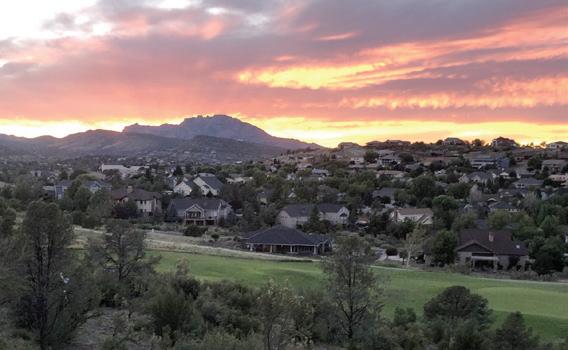


We’ve gone into detail in these pages about many of the most popular and healthy outdoor adventures Greater Prescott offers — hiking, cycling, mountain biking, kayaking, camping, to name a few. But there’s a lot more you can do around here; some add a twist to the activities you’ve already tried, while others are in leagues of their own!
This is a great way to build your strength and endurance while chasing your personal best through our forests and mountains. Softer dirt and gravel surfaces are easier on joints, and while uneven terrain slows you down, it provides valuable interval-like training.
This one is a true adventure in which you use GPS coordinates to find trinkets in cleverly hidden containers, many locked by a puzzle that must be solved first. The Prescott area alone has thousands of caches,
many requiring some significant hiking to get to.
This lower-tech treasure hunt takes walkers and hikers all over creation hoping to spot or photograph rare, migratory, native and other avian species. Greater Prescott’s location and climate attracts a lot of birds, as well as people. Watson and Willow lakes are deemed an
“important bird area” by Audubon, and bald eagles headline the diversity at Lynx, Goldwater and other forest lakes. .
This is another outdoor quest, this time the search for edible foods in the wild. Take a guidebook with you to determine which vegetation is healthful versus toxic and know any applicable regulations before heading out. For example, the U.S. Forest Service requires a permit
for collection of plants or plant material for as little as $20. Once you have an idea what you’re doing, you can find a considerable culinary selection, starting with prickly pear fruit.
You can make this activity as adventurous or relaxing as you want it to be. Fain Lake in Prescott Valley along with Watson and Willow lakes in Prescott; and Goldwater, Lynx, Granite Basin and Mingus lakes in Prescott all are periodically stocked by the Arizona Game and Fish Department. For details visit www.azgfd.com/ fishing/locations/prescott


• Women’s well check
• Cosmetic Botox
• Medical Botox
• Dermal filler
• Acne treatment
• Chemical peels
• Body sculpting
• Emsella treatments
• Incontinence Treatment
• Permanent cosmetics
SEXUAL HEALTH CLINIC
• Hormone replacement therapies
• Hormone pellet therapies
• Woman sexual dysfunction

by Cathy Clements, Nutritionist & Life Coach, NASM CNC, CPT, FNS, WFS
This is the perfect weather to get outside! It is said that people are specific seasons — I agree with that and feel I am a summer person!
I love the warm weather and being outside when it is sunny. It doesn’t matter to me if it is early morning, mid-day or late afternoon. I was raised mostly in the Valley and lifeguarded through college. I love the outdoors.
Our area is perfect for all kinds of activities, and since
the heat of the summer hasn’t set in, it is the perfect time to be outside. No matter how conditioned you are, there is definitely something for you.
If you rise early, hiking trails around Commerce Street are great; not too long or difficult. In that same area, I see early pickleball players in the park! These activities can be done anytime but definitely early before the day becomes warm.
If these don’t fit the
activities you enjoy doing, what can you do?
Just get out and walk through your neighborhood or drive into town and walk around the Courthouse, or drive to the mall and walk around the outside or the inside if it is too warm. Pools are starting to reopen, too. So get in a pool and walk or swim laps or take a water aerobics class.
If you decide to go downtown you can make a day of it by shopping. Then, pick up a to-go meal
and have a picnic on the Courthouse grounds. Although I only mentioned the trails closer into town, there are about 60 miles of trails around Prescott; easy to advanced. Find a friend of equal fitness and go for a hike on one of those trails. If you enjoy other activities like running or cycling, do that! This is the perfect time of year to re-invigorate your fitness. Start where you are and work toward where you want to be.
Katie Borchert, NMD, MSOM


A short 2-hour drive from Prescott takes you to one of the seven natural wonders of the world, the Grand Canyon.
by Molly Auman, Committee Member, The Launch
Hiking in the Grand Canyon is majestic, but can be daunting. You should be prepared for the rugged terrain and intense weather. It can be 20 degrees on the rim and over 100 at the base of the canyon near Phantom Ranch.
Starting at Bright Angel Trail Head, you can hike down to the 1.5-mile house, the 3-mile house, Indian Garden (approximately 5 miles from the rim) or to Plateau Point (6 miles from the south rim). Plateau Point overlooks the Colorado River and is a beautiful
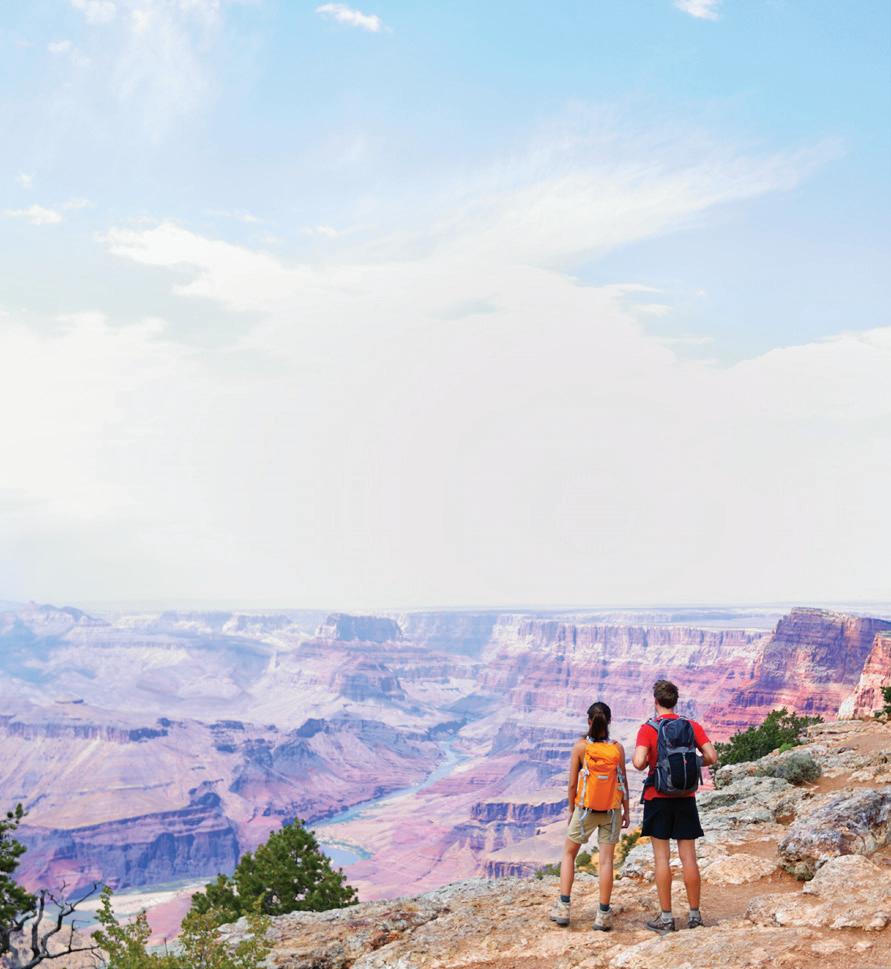
place to enjoy lunch while taking in the scenery.
Always make sure you have enough food and water. There is water along the trails, but it is oftentimes turned off for maintenance, a broken pipeline or seasonally.
The best way to check for hiking conditions and water availability is visiting www.nps.gov/grca. Proper hiking shoes and trekking poles also are a great idea as the trails are rugged and the grades are steep.
The Launch Pad Teen Center of Prescott plans the annual Rim to Rim Trek for
Teens the first weekend of October. For this endeavor an abundance of training is encouraged, and it is always a good idea to spend a little bit of time in the Grand Canyon prior to this event to get your “feet wet.”
For more information on this event, visit www. thelaunchpadteencenter. org needed, and check in on family, friends and neighbors.
The global pandemic forced us to cope with situations we never imagined, and many of us struggled with our mental health. Throughout, people
who had never experienced mental health challenges found themselves struggling for the first time. Remember, working on your mental health and finding tools to help takes time. By focusing on small changes, you can move through the stressors of the past year and develop longterm strategies to support yourself on an ongoing basis. Consider taking a mental health screening. There are several online resources including one with West Yavapai Guidance Clinic, a local behavioral health provider.


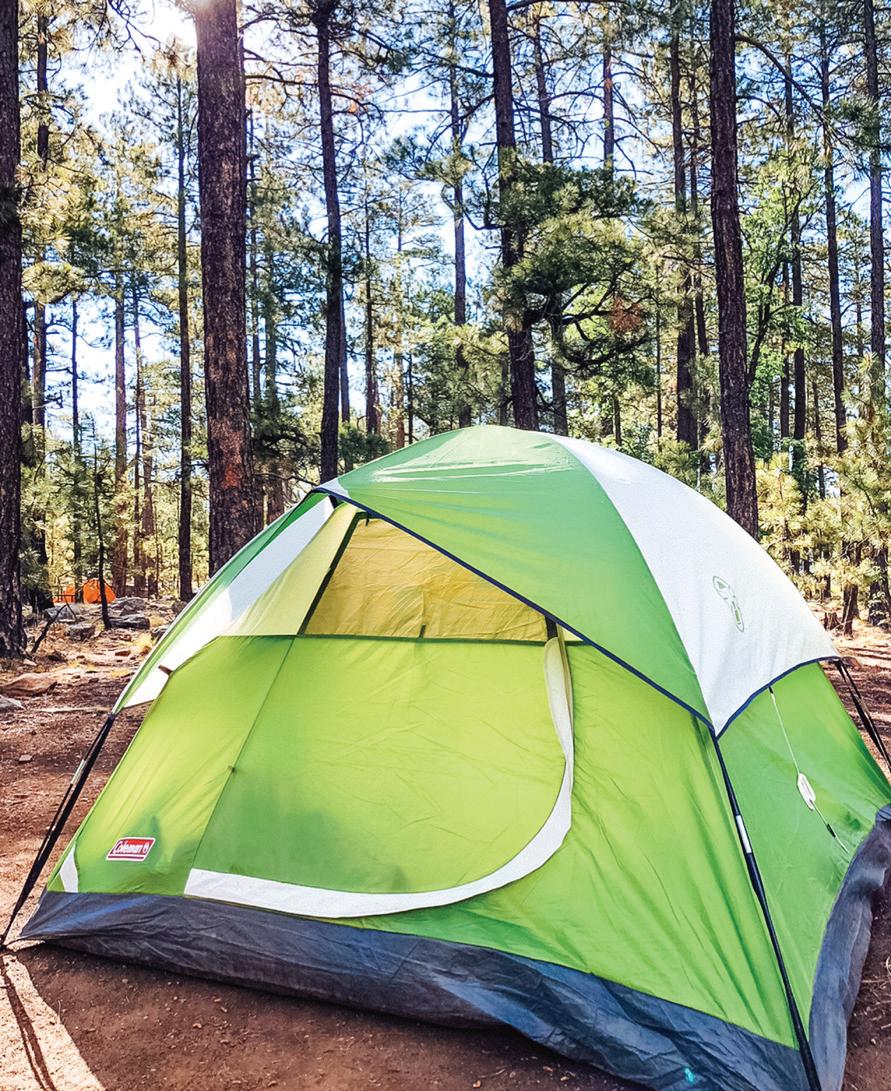
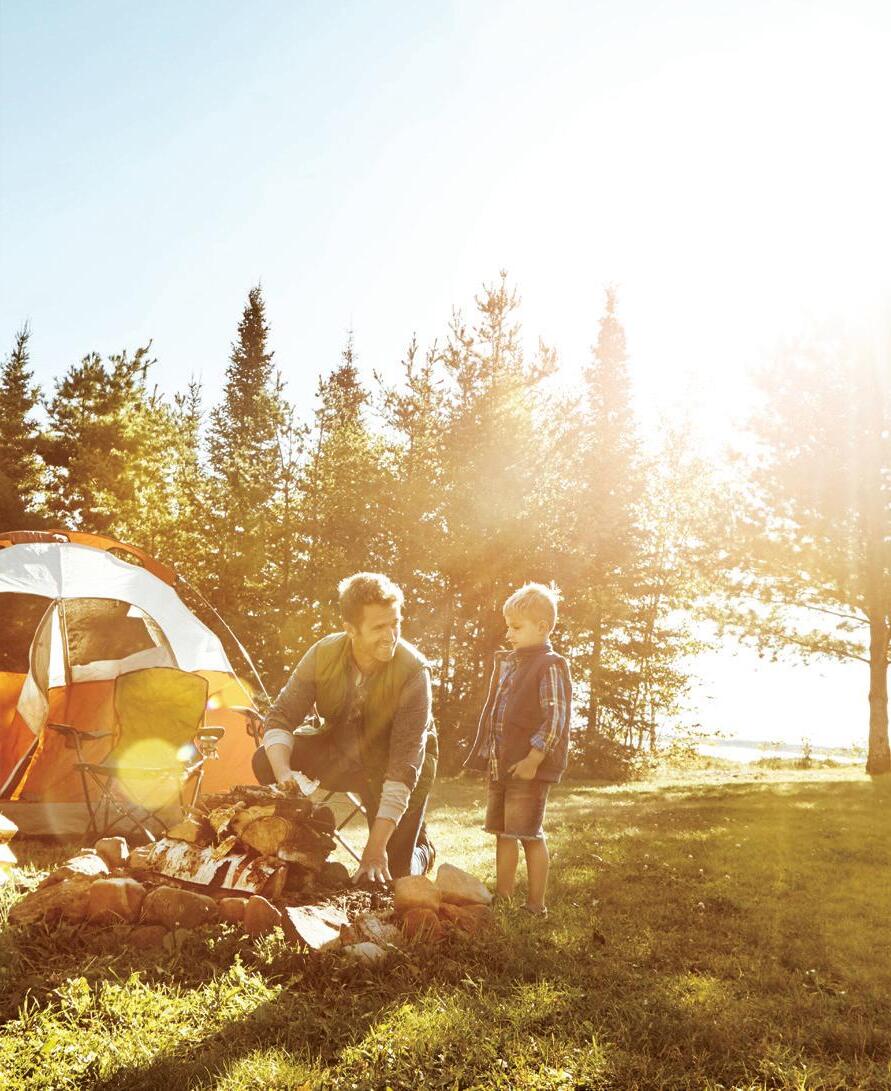
When you’re ready to take a weekend or more off to attend to your physical and mental wellness, consider the joys of camping. Whether you prefer the conveniences of an RV or the absorption into nature that tents provide, it takes you off the daily grid and out of the daily grind, letting you focus on what’s most important:
* Physical activity
* Stress reduction
* Unplugging from electronics
* Plugging into people
* Learning new skills and confidence
Prescott-area campsites can offer all of this and more to you and your family, though unplugging from electronics is easier to do from more remote locations where reception is spotty.
If you’re in a truly remote area that doesn’t have coverage from any wireless towers you won’t be able to place even a 911 call, so you’ll want to keep that in mind or have a satellite phone or other solution on hand.
Greater Prescott’s geographic diversity provides varied scenery,
adventures and degrees of seclusion. Here’s just a taste of what you’ll find.
No RV hookups are currently available at any of these campgrounds.
LYNX LAKE RECREATION AREA
Hilltop and Lynx campgrounds have a combined total of 77 campsites, and both have drinking water, vault toilets and garbage service. Lynx has two flush toilets as well, but — when available — its maximum RV lengths range from 22 feet to 35 feet, while Hilltop can accommodate up to 40 feet. Both are open April 1 to Oct. 31. Daily fees are $18 per campsite, $5 for an extra vehicle and $36 for a double campsite, available only at Lynx.
There are 52 campsites here for RV, trailer and tent camping, 12 open year-round and the rest subject to seasonal closure. Has vault toilet year-round and drinking water during peak season. Daily fees are $10 to $28.
Lower Wolf Creek Campground has 20 spaces with grills and fire rings, vault toilets and garbage service but no drinking water. Can accommodate RVs from 22-feet to 40 feet depending on availability. Spaces are first-come, first serve.
GRANITE BASIN RECREATION AREA
Yavapai Campground has 21 campsites, drinking water, compost toilets and garbage service. Maximum RV length is 40 feet. Daily fees are $18 per campsite, $5 for an extra vehicle and $36 for double campsite.
Allowed free of charge in designated areas of the national forest, dispersed camping generally lacks modern services including water, restrooms and garbage pickup for a much more “rugged” experience and the perks and perils of being in the middle of nature and wildlife.
* Reservations: www.recreation.gov or 877-444-6777
* More info: www. fs.usda.gov/activity/ prescott/recreation/ camping-cabins
Camping available Thursday-Monday nights, with 19 reservable spaces and 15 first-come firstserve. Dry camping only, but showers and restrooms are available to paid guests. Daily fee $20.
* Reservations: 928-771-1121
* More information: www.prescott-az.gov/ recreation-events/ recreation-services/ facility-rentals/ campsite-rentals
More than 100 spaces available, all with RV hookups, water, sewer and picnic table. Includes laundry facility, restrooms and showers, and WiFi is available (no video streaming). Accommodates RVs up to 46 feet, depending on availability. Daily fees $46 to $51.
* Reservations and more information: www. pointofrocksrvcampground.com
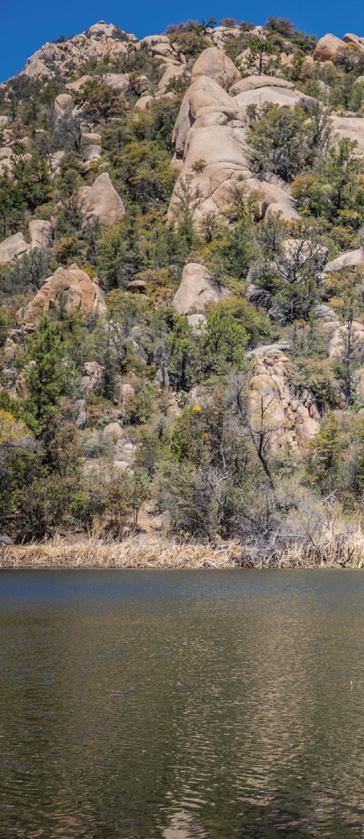
Granite Mountain’s 7,625-foot peak has stood sentry over Greater Prescott for millennia as the tallest mountain on the horizon and temptation to the brave and foolhardy. Once known as Mount Gurley, and before that as Wi:kvte:wa to the Yavapai, it’s a magnificent jumble of boulders miniscule to enormous.
It’s also surrounded by the Granite Mountain Wilderness, which has additional protections than the rest of Prescott National Forest — all motorized vehicles and bicycles are prohibited. It is a refuge for deer, javelina, foxes, lizards, snakes, birds and nature-attached humans, most of whom treat the 9,700-acre refuge with the care that’s called for.
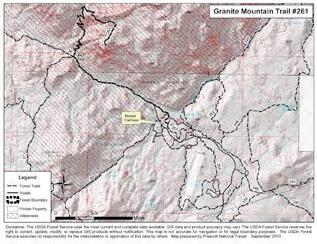
There are no official trails that go all the way to Granite Mountain’s peak, but the U.S. Forest Service’s Granite Mountain Trail No. 261 comes closest, curling around the top to a grand vista 500 feet below it with sweeping views all the way to Sedona and the San Francisco Peaks on clear days.
You get to enjoy so much more on the way up, too. When you start out from the Metate Trailhead next to Granite Basin Lake you
have plenty of shade from ponderosas, cottonwoods, alligator juniper and many more species, as well as the first views of the mountain’s granite ledges.
Soon the trail crosses the boundary of the Granite Mountain Wilderness and dips down into a wash, then climbs back out and keeps climbing. You will pass one huge pile of boulders as you leave the forest and enter the open chaparral with shrubbier mesquite and manzanita trees as a series of switchbacks begins, boulders helping to mark the trail and guide the users.
At Blair Saddle about three-quarters of the way up, there’s a three-pronged fork. To the left is Little Granite Mountain Trail No. 37, which loops back to the south around the peak of the same name. Straight ahead is White Rock Spring Trail No. 39, part of a wider loop back to the trailhead.
Keep right to continue on No. 261, with the incline continuing as it winds back through more ponderosas to its end at breathtaking Vista Point. This calorietorching workout takes an average of two hours, and you can choose to take one of the other trails back or return the way you came.


When we think about boxing, everybody pictures a boxing gym full of special equipment: boxing ring, heavy bags, double-end bags, speed bags, etc. Boxers also frequent weight lifting gyms full of weights and special machines to work on their strength and power.
by Coach Jarek Slagowski, Owner & Head Coach, Grind Boxing Gym
But for the most important attribute in boxing, cardiovascular endurance (conditioning), boxers can find great workout options outdoors.
There are two types of conditioning: general and special. Special conditioning can be achieved in the boxing gym by working on heavy bags, target mitts (pads), and sparring. General conditioning is a base for the special conditioning workout.
One of the best general workouts is jogging outdoors. Jogging is a very

important type of exercise for all boxers, whether you box for competition or you simply box for fitness. An effective jogging routine is done two to four times a week. Two to 5 miles is plenty because boxing is not a long-distance sport.
Action in a boxing bout varies. So jogging can be mixed with quick marching and shadowboxing. Mixing running with shadowboxing is most beneficial for boxers because it keeps it real from the fighting point of view. A good ratio is to
stop jogging every 10 to 15 minutes and do 1 to 2 minutes of shadowboxing.
Another great way to work on endurance is riding a bicycle either on the street or by mountain biking. You can create an effective bicycling routine similar to the jogging routine by mixing hard riding with slower speeds or even getting off the bike to shadowbox.
Jogging and biking are aerobic activities, but for boxing you also need anaerobic training.
The best outdoor anaerobic
workout is sprints. You can run sprints at the track (stadium) or just a flat terrain. Sprints can be done in 60- or 100-meter distances. Elongated sprints like 400 (one lap) or 600 (one and half lap) meters are also great for building cardiovascular endurance.
It is a good practice to check and record times on your sprints to know if you are achieving progress.
This time of year, I remind all of my boxers that a good outdoor workout is not only beneficial for their training but can also be a lot of fun.
by Donna Werking, Northern AZ Social, LLC
The epidural steroid injection allows anti-inflammatory medicine (steroid) to be injected into the epidural space to treat pain caused by irritation of the spinal nerves.

the epidural steroid injection can be given in the neck (cervical), middle back (thoracic) or lower back (lumbar).
OVERVIEW
A protective covering called the dural sac surrounds the spinal cord. This sac contains spinal fluid that bathes and nourishes the spinal cord. The space between the outer surface of the dural sac and the bones of the spinal column is the epidural space. Nerves that go from the spinal cord, through the spinal column and to the body pass through the epidural space.
D epending on the location of your pain,
T he epidural steroid injection is an outpatient procedure done in the Northern Arizona Pain Institutes’ ambulatory surgery center under strict sterile conditions.
For your safety and comfort, the doctor may decide to connect you to monitoring equipment (EKG monitor, blood pressure cuff, and a bloodoxygen monitoring device). You will be positioned on your stomach and the doctor will inject some numbing medicine. Then,
the doctor will insert a needle with the assistance of a special X-ray machine called a fluoroscope and inject a radiopaque dye (contrast solution) to confirm the needle is in the correct place.
T he doctor will inject a mixture of numbing medicine (anesthetic) and anti-inflammatory medicine (cortisone / steroid). It is possible you will feel pain similar to your normal back pain as the medicine is injected. This is a good sign and means the medicine is going to the right place. The pain usually disappears quickly.
You may experience some weakness and/
or numbness in your legs (lumbar injection), arms (cervical injection), or chest wall (thoracic injection) for a few hours. If so, do not engage in any activities that require lifting, balance and coordination. If the doctor prescribes physical therapy, it is important that you continue with the physical therapy program.
A lthough you may feel much better immediately after the injection (due to the numbing medicine), there is a possibility your pain may return within a few hours. It sometimes takes a few days for the steroid medication to start working. Watch the procedure at: www. nazspineandpain.com/ epidural-steroid-injections

Kids receive so many benefits from outside play, from better eyesight to improved fitness to greater independence. Put them on a playground and the positives are magnified as they learn how to get along with other kids and start to weave themselves into the fabric of society.
Playgrounds, no matter how sparsely furnished, are always better for them than playing inside. Here are reasons why:
Daily exercise in a playground helps children lose weight and prevent future obesity, according to numerous studies. The playground is a space where they can get fullbody workouts benefitting their cardiovascular and neurological systems.
It helps children develop motor skills and fitness. A swing set alone makes kids grasp, balance, turn, land, jump, push, use their
pectoral muscles and more. Slides are great for encouraging climbing and teaching kids how to share and learn.
Children ages 3 to 5 need to use certain types of large equipment for optimum physical development, including bars just out of reach to promote reaching and grasping, according to a 2004 University of Texas study.
The playground is a space where no limits are put on kids’ imaginations. They
can invent their own games and rules, tell their own stories and engage fully in the creative play process.
Public and school playgrounds allow kids to play with others from different races, ethnicities and income groups free from society’s preconceptions, as well as those with different abilities. One 2020 survey of 1,000 parents by Voice of Play, an initiative of the International Play Equipment Manufacturer’s
Association, found 92% of parents felt playgrounds help teach children to be inclusive of those of different backgrounds and abilities.
Kids have both good and bad experiences on the playground, and learning how to cope with both helps them become well-rounded people able to modulate their emotions, according to a 2013 study. Children must master self-control to fully enjoy the playground.
by Loree Walden, Marketing Manager, Yavapai Humane Society
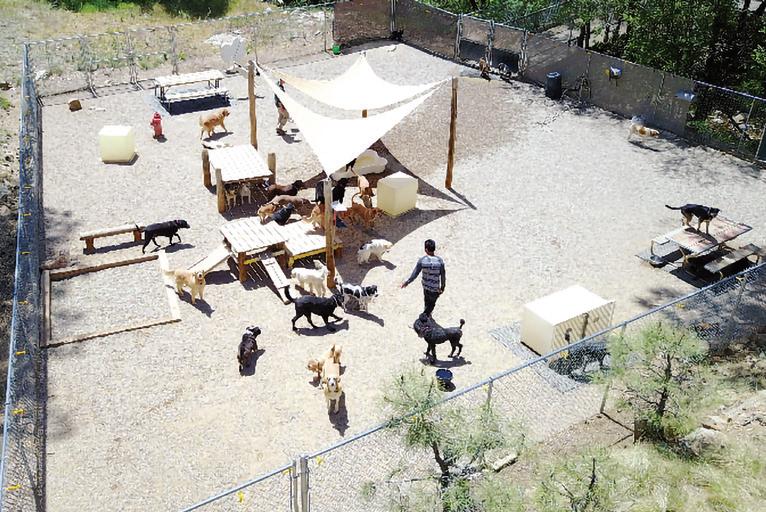
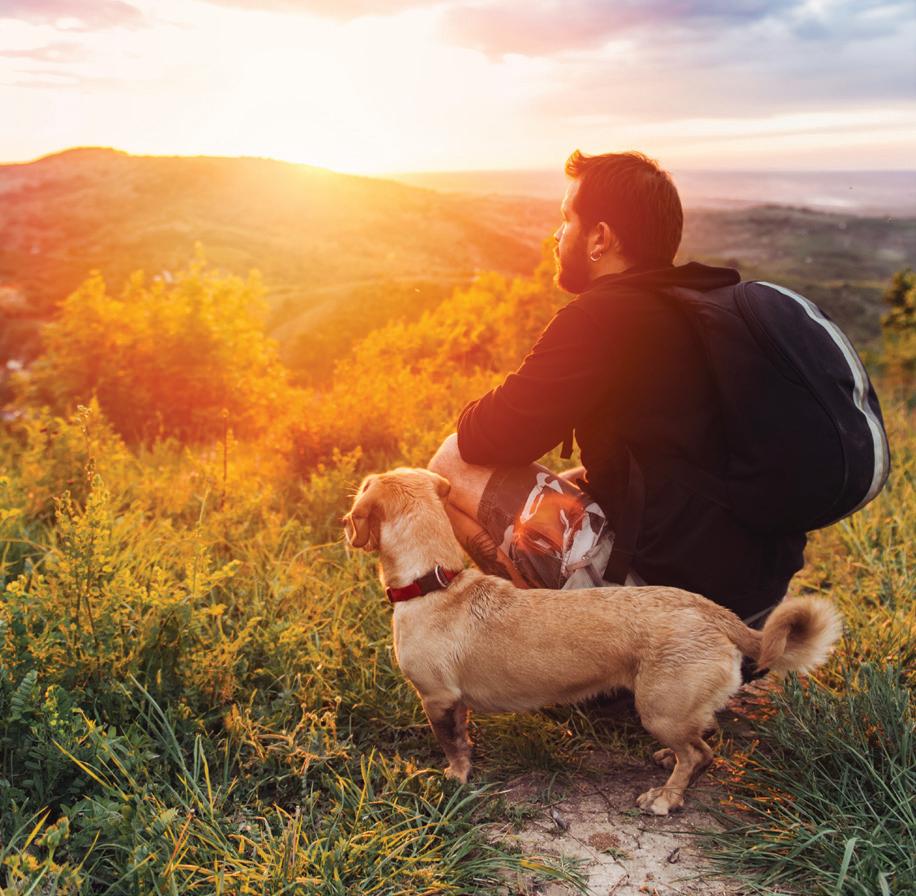
One of the best things about Prescott is how many activities there are to do outdoors, and most are pet friendly!
It’s that time of year when we want to spend more time outside enjoying fresh air and beautiful weather. It’s even better when we get to bring our dogs with us!
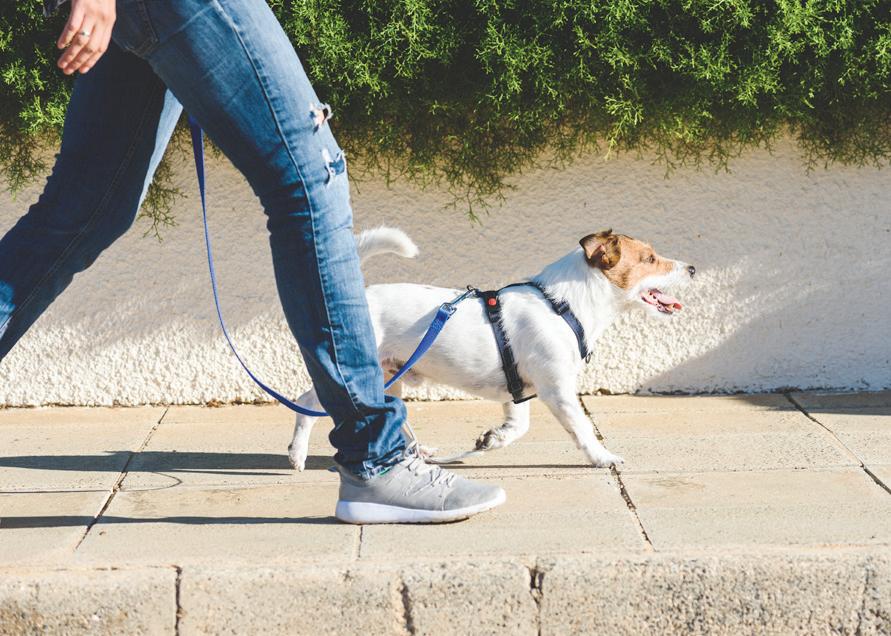
We have so many beautiful trails here, and most of them allow you to bring your dogs as long as they are on a leash.
Exploring mountain trails or those at the various lakes is a great way to spend time with your dog. What makes it even more
fun is every time you hit a trail it’s different because nature changes every day!
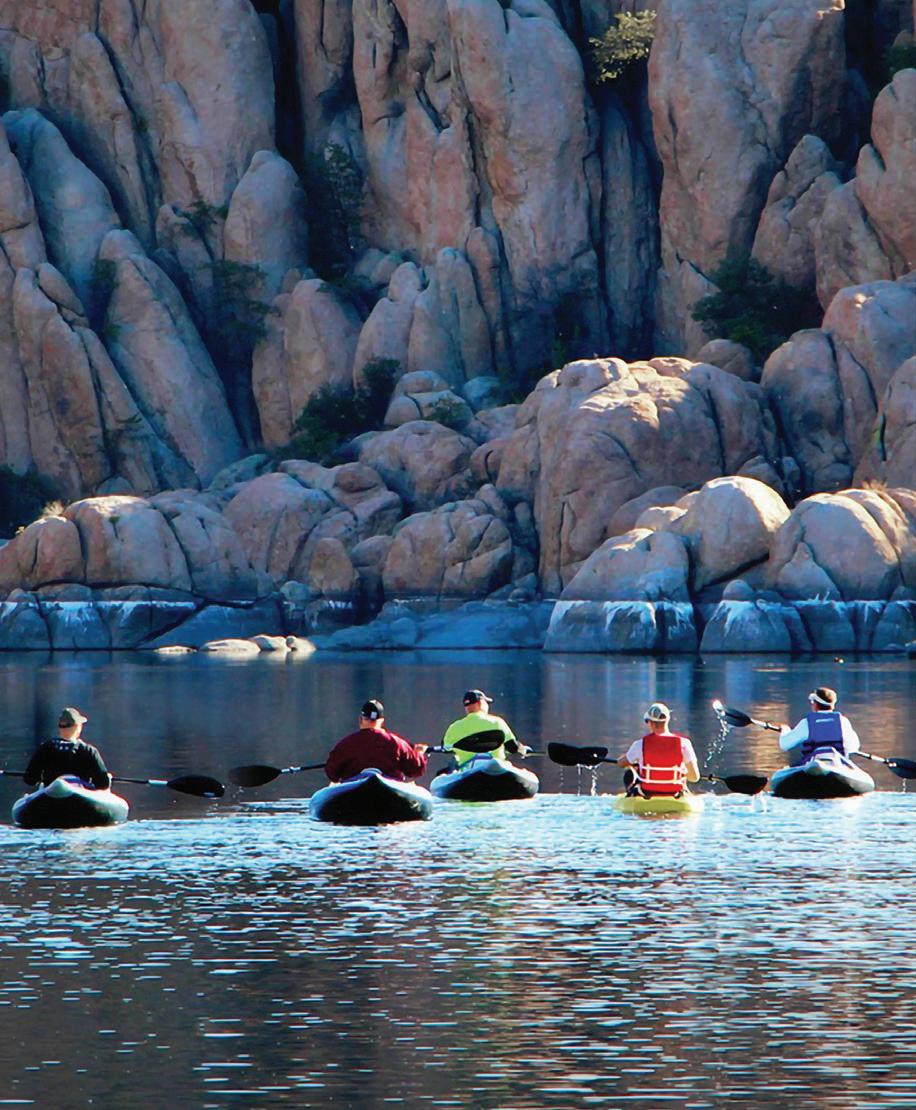
If you’re looking for fun on the water, Born To Be Wild Adventure Tours & Rentals allows you to bring your dog along with you in a kayak. There is always something happening at our Courthouse Square, and dogs are usually welcome! (It’s a good idea to check if you are going to a specific event.)
At any given time when going downtown you will find people walking with their dogs and enjoying the outdoors. It’s a great
way for both you and your four-legged friend to make new friends while enjoying the soft green grass, sunshine and everything the Courthouse Square has to offer.
Prescott is also known for having many pet-friendly restaurants that allow you to bring your dog for outdoor seating. BringFido. com states that there are 31 pet-friendly restaurants here and will send you a list of them, but it’s probably a good idea to check directly with whichever restaurant you choose to make sure it’s allowed.
However you decide to
spend your time in the great outdoors, be sure to have plenty of water on hand for you and your furry best friend. Watch for signs of them getting overheated so they don’t fall victim to heatstroke, and make sure to stay aware of the temperature of the ground so their delicate paws do not get burned (If you place the back of your hand on the ground/ pavement and can hold it there for seven seconds, it’s safe.) Remember, if it’s too hot for you, it’s too hot for them.
Grab a leash and head out for some fun in the sun!


We spend a lot of time obsessing over human diets, but many of us don’t know exactly how to put together a healthy, nutritious eating plan together for our dogs. We may have never really learned how, or else we’re
exhausted from trying to sort through all the information we see online.
If your pup isn’t obviously ill, you’re probably doing it right. But here are a few basics you should know to help ensure your pup is eating a well-rounded diet, according to the ASPCA:

* There are six essential nutrients dogs need to have in their diets to promote health and well-being: water, protein, fats, carbohydrates, minerals and vitamins.
* The amount you should feed your adult dog depends on their size and energy output. Those who have a normal energy level likely should be fed a maintenance diet, which your veterinarian should be able to advise you about.
* Lap dogs may require only 10% or so of that maintenance level. Working dogs in public safety, guide, medical assistance, herding or other kinds of service may require 40% to 70% above the maintenance level.
* Most dogs should be fed twice daily, eight hours apart. Simply divide the total daily recommended diet in half. Some dogs who don’t tend to overeat when given 24-hour access to food can have
free-choice feeding; otherwise, portioncontrolled manual feeding or timed feeding is the way to go.
* Dogs should always have access to water, both inside and out.
* Treats should make up no more than 5% of a dog’s diet, with the rest coming from a nutritionally complete dog food. This includes treats given as motivation for tricks and other tasks.
* Dogs may be overweight if you can’t feel their ribs or backbone easily through their skin, or if they don’t have a “waist” between their rib cage or their hips or their tummy hangs down between their rib cage and thighs. Consult their vet before starting any weight-loss program.
* Their “senior” diets should begin at about 7 years for dogs under 50 pounds, age 6 for 50-90 pounds and at age 5 for dogs over 90 pounds.
Continuing on from last months’ core workouts, let us move forward and add in lower body movements — air squats and static lunges.
by Blayne Soriano, Level 2 Crossfit Coach and Crossfit Kids Coach
The feet are extremely important when it comes to lower body movements such as squat variations, lunge variations, etc. How your feet are positioned and planted is a major key to good and safe form. Following proper feet position, would be the positioning of your hips in these movements and then the placement of your knees.
Plant your hips in a good position along with both feet, and then let your knees track your toes for the starting position for most lower body movements.
One of the best exercises is a squat, weighted or bodyweight. Think of sitting down and standing up, you do it multiple times a day.
You want to stand shoulder width apart, both feet fully on the ground,

weight in your heels but toes down, as well. Then, push your hips back, bending your knees and descending your hips lower than your knees, making sure your knees track the toes; squeeze your glutes on the way back up, back down and up repeatedly.
The second movement is static lunges. They are great for working all the major muscles of the hips, glutes and thighs. In this basic lunge version you simply drop your knee down rather than stepping back or stepping forward, repeating left to right.
Starting with body weight and then adding weight as you advance, along with good form, can be very strengthening for the overall lower body in these two movements.







Few areas are as well-positioned as Greater Prescott for year-round outdoor recreation. Its four mild seasons allow us to get outside nearly every day of the year, and the boundless natural beauty surrounding us gives us all kinds of fantastic places to exercise, play and learn.
by Dr. Hojat Askari, Founder & Medical Director, Thumb Butte Medical Center
Way beyond the fun factor, enjoying outdoor activities spurs benefits that bolster us long after we’ve been gallivanting in the forest, on the trail or in the park. Our lives get longer, fuller and healthier from the time we spend outside.
Time spent outdoors has been linked in many studies to a higher-functioning immune system from vitamin D and plantproduced phytoncides. People tend to be more physically active outside in nature due to boosted energy and a perception of the exertion as less strenuous. It improves children’s vision and helps prevent vision loss in adults. The causes and symptoms of inflammation, which increase your risk for heart disease and cancer, are reduced by going outside. Also, being “out there” feeds into your circadian rhythms and promotes better sleep at night.
Outdoor sports and competitions build connections between players, their families and the community around them. Taking part in outdoor activities makes it easier to meet other people, whether you’re walking the dog, helping to clean up a park or hiking Thumb Butte for the 25th time. The quality of family time also is greatly improved
Stress and anxiety are reduced by exposure to the sun and fresh air, which helps you distance yourself from the pressures of daily life. Your mood is improved as your brain releases more endorphins and symptoms of depression are reduced. The outdoors is a great place to practice mindfulness, which helps us relax in the moment and regain our focus.
Spending time outdoors in nature, especially away from electronic screens, improves your creativity for other tasks. Taking walks in the countryside has been shown to enhance shortterm memory in ways other kinds of walks don’t. Outdoor play is especially important for kids because it helps develop executive function — the ability to plan, prioritize, negotiate and exhibit self-control.




For many of us summer is when we get to spend the most time outdoors, with fewer responsibilities pinning us down at work or school and the weather making it easier than ever to walk, run, hike, mountain bike, rock climb, kayak or do any of our other favorite outdoor workouts.
But jumping right back in without any training can be dangerous. If you haven’t been able to do much for a while, picking it up with the same intensity can lead to injuries that could sideline you for the rest of the season.
Here are some ways you can prepare for that summer burn you’ve been craving, with tips for some of our favorite activities.
* Begin training six to eight weeks before your first race, if you’ve picked one out.
* Newbies should start out walking for 20 to 30 minutes four times a week for at least two weeks. Then you can start run-walk interval training. Build yourself up to 6 to 8 minutes of running for every 30 seconds to 1 minute of walking, however long it takes.
* Start training about eight weeks before your first long hike, which can be as short as 5 miles, depending on your experience level and the terrain.
* Begin with exercises like jump squats, hip rolls, stepping (including heel-down steps), squat overhead press with lightweight barbells and more. Alternate strength training with cardio sessions such as running and mountain biking. Mix in rest days.
* Alternate home and cardio workouts with climbing gym sessions if you have access to one for about six to eight weeks before your first intense climbing or bouldering trip. Focus on hand, finger and grip strength at the gym.
* Your exercise routine should include arm stretches with a resistance band, jump and single-leg squats, side planks with resistance bands and pushups, all concentrating on upper-body strength.
* For about six weeks before your first major outing, alternate three strength training sessions per week with two aerobic exercise sessions and two rest days per week. Concentrate on your core muscles so they will be able to take some of the paddling load off of your arms.
* Optimal training exercises include skater with uppercut
motions, open-book stretches to extend your reach, kneeling chop, kneeling lift and pulldown exercises with a resistance band and crunches with twists.
* Again, you should get about six to eight weeks training before your first major biking run, and since biking is an all-body workout you need to give some love to all your muscle groups, starting slowly and alternating strength exercises with cardio sessions, hopefully including other forms of cycling.
* Recommended strength exercises include planks with dumbbells, jumping lunges, speed skaters, and others that challenge your hamstrings, quads and abdominals.
Check with your health care provider or certified personal trainer before any big changes in your fitness regimen, and there are many websites with resources to help you build your best training routine.
* www.rei.com
* www.livestrong.com
* www.muscleandfitness.com
* www.active.com
* www.acefitness.org
The weather has been nothing short of perfect the past month, and we are so happy to get outside and get moving! Except, however, when we are miserable with seasonal allergies.
by Katie Borchert, NMD, MSOM, Pain Recovery Therapy & Esoteric Acupuncture
However, working with the basic guidelines that determine health on Earth, we can successfully enjoy the benefits nature and all the sunshine, fresh air, and pollen have to offer. Making the most of the cornerstones of great health — breathing, hydrating, nutrition, sleep and rest, exercise or activity — will help tackle any concern.
Adequate water consumption of the purest quality attainable does wonders for hydrating the colon. This improves
elimination, which leads to less mucus and reactivity overall. Eating nourishing fresh foods that don’t contribute to allergen load is important for allergies. It can be difficult to discern which foods one is sensitive to, but a food journal plus symptoms of allergies is the best
place to start. By eliminating foods that cause reaction, the gut lining and immune system are strengthened, and we can be more tolerant of the environmental exposure.
Of course getting proper sleep helps us be more resilient to challenges, and seasonal allergies are no different. It can be an obstacle if congestion, runny nose, coughing or sneezing prevent good sleep. Try an air purifier when sleeping to prevent this. Also, wash linens frequently enough with soap nuts (without using fabric softener or dryer sheet) to leave the bedding clean and hypoallergenic.
Being active helps most people feel less congested and improves breathing. It does not have to be
intense or at a gym to be therapeutic. Designing a specific stretch routine to do indoors with the air purifier or outdoors when the wind is low and away from peak pollen times is great for any body.
Even if breathing freely is compromised due to allergies, it is important to practice breath work. Aware breathing is one of the best ways to calm the nervous system. We can actually become better breathers by having a practice to strengthen the lungs and diaphragm.
This state of vibration and being softens us and lets us be in the present with full awareness. Otherwise stated, loving the process of experiencing allergies, making the appropriate changes and then experiencing feeling better is a tremendous victory.


MLS Cold Laser | Bunions | Hammertoes | Heel Pain | Diabetes
Neuromas | Neuropathy | Foot and Ankle Pain | Fungus Toenails

Water makes up about 60% of the entire body. How amazing is that? Our brains are 73%, our lungs are 83%, and our muscles are 79% water. Every cell in the human body requires water to function. There’s no question that water is absolutely vital for our bodies to be at peak performance.
by Dr. Karissa Walton, Founder & Medical Director, The Mobile Health Doc
As we welcome another beautiful Prescott summer, and are finally able to increase outdoor activity, we must also increase our water intake. Proper hydration is paramount in the dry and warm climate we live in. We must continually replenish our body’s water reserves as much is lost through the rapid evaporation of sweat when we exercise outdoors.
The average adult typically requires a minimum water consumption of half of one’s body weight in ounces daily (e.g. 75 ounces for a 150-pound adult). However, the hydration demands are even higher as outdoor temperature and activity levels increase. The amount of additional water varies depending on the individual and activity being performed.
PROPER HYDRATION HAS NUMEROUS HEALTH BENEFITS INCLUDING:
* Lubricating joints, preventing injury
* Promoting smoother, healthier, younger looking skin
* Increasing energy and physical performance
* Improving brain function and overall mood
* Helping detox the body through better digestion and elimination
How do you know if you’re not getting enough water?
First and foremost, if you are thirsty, your body is telling you that it is already dehydrated. Other symptoms of dehydration include headaches, dark urine, minimal urine output, dizziness, dry

mouth, muscle cramps, fatigue and confusion.
One of the best ways to take care of your body this summer is to drink the right amount and type of fluids. Adding high-quality electrolytes to your water is often needed to ensure the body is able to absorb and use all that wonderful water you are drinking. It is best to avoid traditional sports drinks as they often contain high levels of sugar and/or additives that could be detrimental to your health.
Another excellent way to optimize hydration is to treat yourself to routine intravenous (IV) therapy! There are many different nutrients (electrolytes, vitamins, minerals, etc.) that can be added during the IV treatment to boost your overall health as well. Please seek out a licensed health care practitioner who can evaluate if this would be a safe and effective treatment for you.
Happy trails and cheers with an ice-cold water!
Over the past 30 years, POSC has saved patients more than $150 Million! Of that amount, $20 Million would have been out of pocket.
Dr.
Dr. Mark Strasser 778-9190
Thomas Rusing 445-9660
Dr. Katie Campuzano 778-4300
Dr. Adam Feingold 776-8428
Dr. Luis Fernandez 776-8428
The choice is yours. Choose one of our excellent Prescott based surgeons for your outpatient surgical needs. You will save money and have the best possible care available.
“The best I have experienced! POSC even topped Duke Medical Center which I have always rated highly. Thanks to the staff.”
Overall Patient Satisfaction: 9.8 out of 10!
“Everything about the place was excellent. Very clean, very professional, very organized and efficient. Thank you for the great care!”
“The best I have experienced! POSC even topped Duke Medical Center which I have always rated highly. Thanks to the staff.”
“Everything about the place was excellent. Very clean, very professional, very organized and efficient. Thank you for the great care!”

“Everyone was awesome. My stress level was zero! Loved the nurses. Linda was so sweet and really awesome. Great experience overall. Thank you all!”

Invest Your Healthcare Dollars Wisely!
“Everyone was awesome. My stress level was zero! Loved the nurses. Linda was so sweet and really awesome. Great experience overall. Thank you all!”
Dr. Jonathon Gruneich 778-9770
Dr. Bradley Benson 445-4818
Dr. J. Gabriel Tsang 237-9312
Dr. Josephine Kim 583-1000
Dr. Melinda Martin 777-0070
Dr. Richard Ohanesian 778-4300
Dr. Jeffrey Osburn 778-4300
Dr. Jeanette Pilotte 583-7887
INTERVENTIONAL PAIN SPECIALISTS
Dr. Jonathon Gruneich 778-9770
Dr. Bradley Benson 445-4818
Dr. J. Gabriel Tsang 237-9312
ORTHOPAEDIC SPECIALISTS
Dr. Daniel Burchfield 778-9250
Dr. Siamak Rassadi 308-4285
Dr. Bertrand Kaper 778-9250
Invest Your Healthcare Dollars Wisely!
Over the past 31 years 114,000 procedures have been successfully performed at POSC, saving patients more than $160 million! Of that amount, $21 million would have been out of pocket expenses.
ORTHOPAEDIC SPECIALISTS
Overall Patient Satisfaction 9.9 out of 10!
Dr. Judah Pifer 778-9250
Over the past 30 years, POSC has saved patients more than $150 Million! Of that amount, $20 Million would have been out of pocket.
Over the past 31 years 114,000 procedures have been successfully performed at POSC, saving patients more than $160 million! Of that amount, $21 million would have been out of pocket expenses.
“When I need surgical help, I will always come here. My phone call from Karen was a real delight. When I saw her in recovery I told her she sounded like a song. My anesthesiologist was just great and took time with my questions. I really liked my visit!”
Dr. Daniel Burchfield 778-9250
Dr. Bertrand Kaper 778-9250
Over the past 30 years, POSC has saved patients
Dr. Judah Pifer 778-9250
The choice is yours. Choose one of our excellent Prescott based surgeons for your outpatient surgical needs and you will not only save money, but will have the best possible environment and care available.
The choice is yours. Choose one of our excellent Prescott based surgeons for your outpatient surgical needs and you will not only save money, but will have the best possible environment and care available.
Dr. Bradley Williams 445-7085
The choice is yours. Choose one of our excellent Prescott based surgeons for your outpatient surgical needs. You will save money and have the best possible care available.
Dr. Bradley Williams 445-7085
“When I need surgical help, I will always come here. My phone call from Karen was a real delight. When I saw her in recovery I told her she sounded like a song. My anesthesiologist was just great and took time with my questions. I really liked my visit!”
Dr. Derek Hewitt 778-9190
Dr. Mark Strasser 778-9190
“Thank you for all the great care you gave me, everyone was awesome made me feel like I was the most important person in there! Thank you all so very much for taking care of me.”
PLASTIC SURGEON
Dr. Brian Brantner 776-0325
PLASTIC SURGEON
Dr. Brian Brantner 776-0325
“Thank you all for the great care you gave me, everyone was awesome made me feel like I was the most important person in there day! Thank you all so very much for taking care of me.”
PHYSICAL MEDICINE
SURGEONS
PHYSICAL MEDICINE
Dr. Thomas Hirasa 771-1011
“Joanne the pre-op nurse is awesome, really made me feel at ease. The head anesthesiologist was really terrific and put me completely at ease.”
Dr. Bradley Benson 445-4818
SPINE SPECIALIST
Dr. Daniel Noble 778-9250
UROLOGISTS
Patient Satisfaction: 9.8 out of 10!
Dr. Donald Huang 771-1011
Dr. Bradley Benson 445-4818
Dr. Frank Iorio 776-8212
“Joanne the pre-op nurse is awesome, really made me feel at ease. The head anesthesiologist was really terrific and put me completely at ease.”
“This was my 2nd surgery at POSC in 2 months. Both times I received excellent care. Everyone was professional, courteous and all had a great sense of humor. I cannot think of any area that needs improving as I feel 10’s were to be given to everyone there.”
Dr. Paul Nguyen 771-5282
SPINE SPECIALIST
Dr. Daniel Noble 778-9250
Dr. Thomas Rusing 445-9660 GYNECOLOGISTS
“This was my 2nd surgery at POSC in 2 months. Both times I received excellent care. Everyone was professional, courteous and all had a great sense of humor. I cannot think of any area that needs improving as I feel 10’s were to be given to everyone there.”
Dr. Jeffrey Sanwick 771-5282
Dr. Michael Stanick 771-5282
“The best I have experienced! POSC even topped Duke Medical Center which I have always rated highly. Thanks to the staff.”
“Everything about the place was excellent. Very clean, very professional, very organized and efficient. Thank you for the great care!”
“Everyone was awesome. My stress level was zero! Loved the nurses. Linda was so sweet and really awesome. Great experience overall. Thank you all!”
Dr. Katie Campuzano 778-4300
UROLOGISTS
Dr. Paul Nguyen 771-5282
Dr. Adam Feingold 776-8428
Dr. Luis Fernandez 776-8428
Dr. Jeffrey Sanwick 771-5282
Dr. Josephine Kim 583-1000
Dr. Michael Stanick 771-5282
Dr. Melinda Martin 777-0070
Dr. Richard Ohanesian 778-4300
Dr. Jeffrey Osburn 778-4300
Dr. Jeanette Pilotte 583-7887
INTERVENTIONAL PAIN SPECIALISTS
Dr. Jonathon Gruneich 778-9770
Dr. Bradley Benson 445-4818
Dr. J. Gabriel Tsang 237-9312
ORTHOPAEDIC SPECIALISTS
Dr. Daniel Burchfield 778-9250
Dr. Bertrand Kaper 778-9250
Dr. Judah Pifer 778-9250
Dr. Bradley Williams 445-7085
PLASTIC SURGEON
Dr. Brian Brantner 776-0325
PHYSICAL MEDICINE
Dr. Bradley Benson 445-4818
SPINE SPECIALIST
Dr. Daniel Noble 778-9250
UROLOGISTS
Dr. Paul Nguyen 771-5282
Dr. Jeffrey Sanwick 771-5282

Dr. Michael Stanick 771-5282

Physical activity is the key to reaching your prime health and fitness goals. When paired with a healthy lifestyle, it makes us stronger, happier and better equipped to ward off heart disease, cancer and diabetes, along with infectious diseases.
That’s the reason why so many of us go to the gym day in and day out. But exercising outside when possible multiplies the good that’s happening when we’re running on a treadmill or following a YouTube class at home.
Physical exercise generates many positive mental health effects such as reducing stress, anxiety and depression, but outdoor activity may be especially good at boosting self-esteem. Research from the University of Essex found that “green exercise” led to better moods and higher selfesteem in all age groups, with the change most pronounced in children, young adults and those who’d been diagnosed with a mental illness.
We understand that the whole point of indoor fitness is to do what we need to do in a climate-controlled setting, but when you do that most of the other rough edges are smoothed out as well. In the great outdoors you encounter a variety of surfaces and conditions forcing you to constantly focus and adjust your approach. This sharpens your mind and varies your movements to help you avoid repetitivemotion injuries.
All those little challenges on our outdoor escapades add up to additional calories burned, on top of the fact we tend to work out longer and more vigorously when we are outside. At least one study from Ohio State University has found runners tend to run at a faster pace outside than on a treadmill, but feel they haven’t exerted themselves as much as they did on the treadmill.
Outdoor air quality is often better than what you’re likely to breathe inside buildings, even in larger metro areas with higher levels of air pollution, according to the U.S. Environmental Protection Agency.
As we all know it’s much easier to pack on the pounds than to take them off, and it’s largely the fault of metabolism, our body’s process for converting fuel to energy. It’s a magnificent system that keeps us functioning in between meals and even as we sleep, but that means it also hangs on to as much stored fat as it can.
Trying to outsmart our metabolism sometimes feels like a full-time job, but here are some unusual solutions research has shown may be useful allies in our battle with the bulge:
Researchers have long linked spicy foods to short-term spikes in metabolism by researchers, but scientists at Oxford Polytechnic Institute reported that the relatively mild spiciness in one teaspoon of mustard can increase metabolic rate by up to 25% for several hours.
2014 randomized controlled trial at the Federal University of Vicosa in Brazil found that participants (all male) who ate most of their carbohydrates in the evening, rather than at lunch, exhibited a higher metabolism the following day compared with those who ate their carbs at lunch and a control group.
Egg yolks do have some cholesterol but also contain fatsoluble vitamins and essential fatty acids known to fire up your metabolism as well as choline, an essential compound that has been shown in animal research by the Institute of Medicine Committee on Military Nutrition
Research to reduce the storage of fat around the liver.
High-intensity interval training has become the regimen du jour for

shedding calories as well as saving time, and researchers at Colorado State University and the University of Colorado found in 2012 that all it took to burn an extra 200 calories per day was five 30-second bursts of maximum-intensity pedaling on a stationary bike, each followed by 4 minutes of very low intensity pedaling.
Vanderbilt University scientists endeavored to measure the energy expenditure of “genuine laughter” in 2007, concluding 15 minutes spent laughing per day can burn up to 40 calories.


CENTEROFDISEASE CONTRO AND PREVENTION
Per the CDC,one ofthe best thin syou can dofor you homeasitconcernsyour healthistoincreasethe ventalation ofyourhome
USENVIRONMENTAL PROTECTIONAGENCY
Reportthatindoorair pollution is2-5 times more pollutedthanoutdoor air


“Ah, not to be cut off, not through the slightest partition shut out from the law of the stars. The inner — what is it? if not intensified sky, hurled through with birds and deep with the winds of homecoming.”
by Carl Johns, LMT, Director, ASIS Massage Education-Flagstaff
Most of us think of massage therapy as a decidedly indoor activity, but it does not have to be that way.
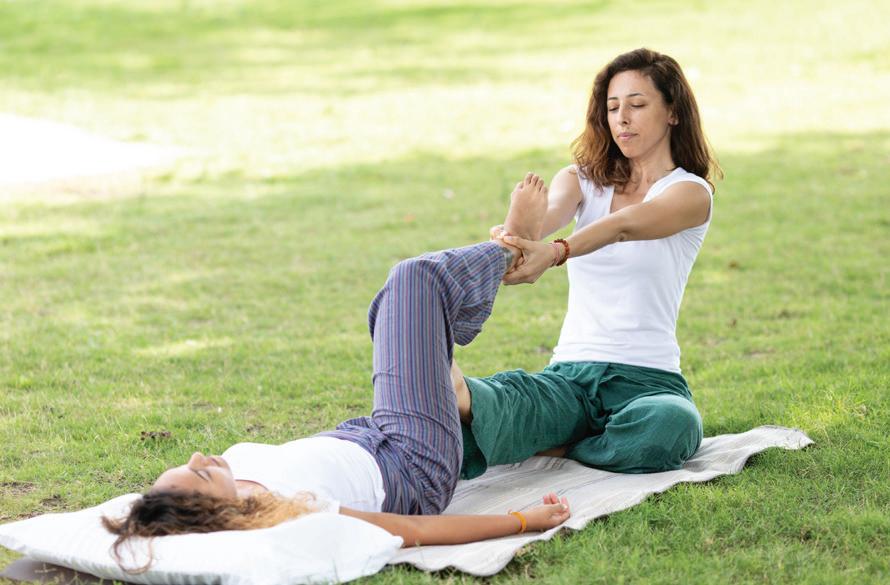
In the same way we might go out into nature to practice yoga or martial arts, we can have the experience of massage and bodywork in the outdoors, connecting the microcosm of the body with the macrocosm of nature. Two of the most well-known bodywork modalities practiced over clothes and traditionally on the ground are shiatsu and Thai massage.
Thai massage is based in the principals of yoga and incorporates intricate patterns of stretching with some compressive work to open the energy channels of the body and promote balance, vitality and good health.
Shiatsu is a Japanese form based in the concepts
of Chinese medicine that primarily used compression with rocking, stretching, brushing and percussion to open the energy channels of the body and promote balance, vitality and good health.
We are starting to see a theme about balance, vitality and good health. These bodywork modalities in their cultures — Thailand and Japan — are seen as primary health care. If used in this way, at the first sign of distress in the body, further intervention will not likely be needed.
And while there are many skilled practitioners of these styles, it is not necessary to engage a professional therapist to receive the benefits of these ancient styles of
bodywork. For instance, it is a tradition in Japan to teach shiatsu to the children in the family. The one who displays the most talent will be the family practitioner. Now imagine yourself learning one of these simple and profound forms of bodywork and using them while hiking out into a beautiful forest meadow with your family
— Rainer Maria Rilke
or friends. There you can lay out a blanket and work over clothes, giving and receiving bodywork in nature all day long — experiencing the power of touch as you are touched by the sights, smells, sounds and sensations of nature.
It just doesn’t get any better.

by Heather Burgoyne, Owner, Soar Pilates
One of the top questions I get as a Pilates instructor is: “What can I do at home to help me with my practice in the studio?”
My enthusiastic response: “Oh, you can do so many of the mat exercises! Like the series of five to get your core strengthened, some pelvic lifts and bridging; don’t forget to work on your roll down ... .” Then, I always see the glaze.
I know how easy it is to say to practice these things at home, but when it comes to doing it, who wants to? I’m just
as guilty. I’ll start, but I get distracted and take a phone call, or I get tired and find myself resting more than I would if I was in the studio taking a class.
So now, I tell them instead to go on a hike or a walk and sprinkle in your Pilates movement principles.
Think of your alignment when walking. Are you hunched over and rounded in your shoulders because you’re fatiguing? Can you engage navel to spine and draw your shoulder blades together to help pull your body upright? This helps
your posture and opens your rib cage, which in turn leads to deeper breaths.
When hiking up that hill, instead of leaning into your toes and relying on your quads, put your body weight into your heels as you step to activate the backside of your body; just as you would in a lunge.
They are so powerful, and because they often are overlooked, we end up leaning forward, which in turn leads to tight hip flexors and low back pain.
Once you get to the top of the hill, find a rock or a log, take a forward fold and
stretch your back body, then bring your shoulders over wrist and step your legs back and find that plank. Maybe add a single leg lift with some pulses to get that booty up!
Find your plank again and add a few pushups before switching to the other side. And if you tire, pike your hips up and back and you’re in a downward dog.
There are so many things we can do every day if we are conscious of our own body; it’s talking to you, take a moment to listen and give it what it needs.
It’s never too late, or early, to start considering how you can maintain and improve your brain health. Here are just a few of the ways you can keep your mind engaged in learning and growing, which research suggests can help to prevent or lessen cognitive decline later in life. And more than that, they’re just fun!
No matter how many you already know, picking up another can build new neural connections that combine to weave a safety net of sorts. One research team from Concordia University in Canada theorized the brain activity involved with speaking more than one language helps people to build a “cognitive reserve,” which allows them to access other parts of the brain to compensate for the effects of Alzheimer’s disease or other forms of dementia.
Such tasks as doing laundry or pulling weeds may be tedious, but they may also keep your brain and body active enough to engage with the world and prevent decline. A 2018 study reported that seniors with no or mild cognitive impairment who were physically active had more gray matter, the tissue that processes information for the brain.

Doing crossword puzzles has long been touted as protective of brain function, but number games such as sudoku may also have a significant impact. In an online study of nearly 20,000 adults aged 50 and older published in 2019 by the University of Exeter, significant correlations
were found between those who said they frequently did number puzzles and improved performance on cognitive tests.
This refers to any phrase, rhyme, acronym, image or other memory aid used to help you remember
a piece of information (One common example is the acronym HOMES to remember the names of the Great Lakes — Huron, Ontario, Michigan, Erie and Superior). Use the ones you already know and invent new ones to fill in the gaps. Doing this builds your brain along with aiding memory.
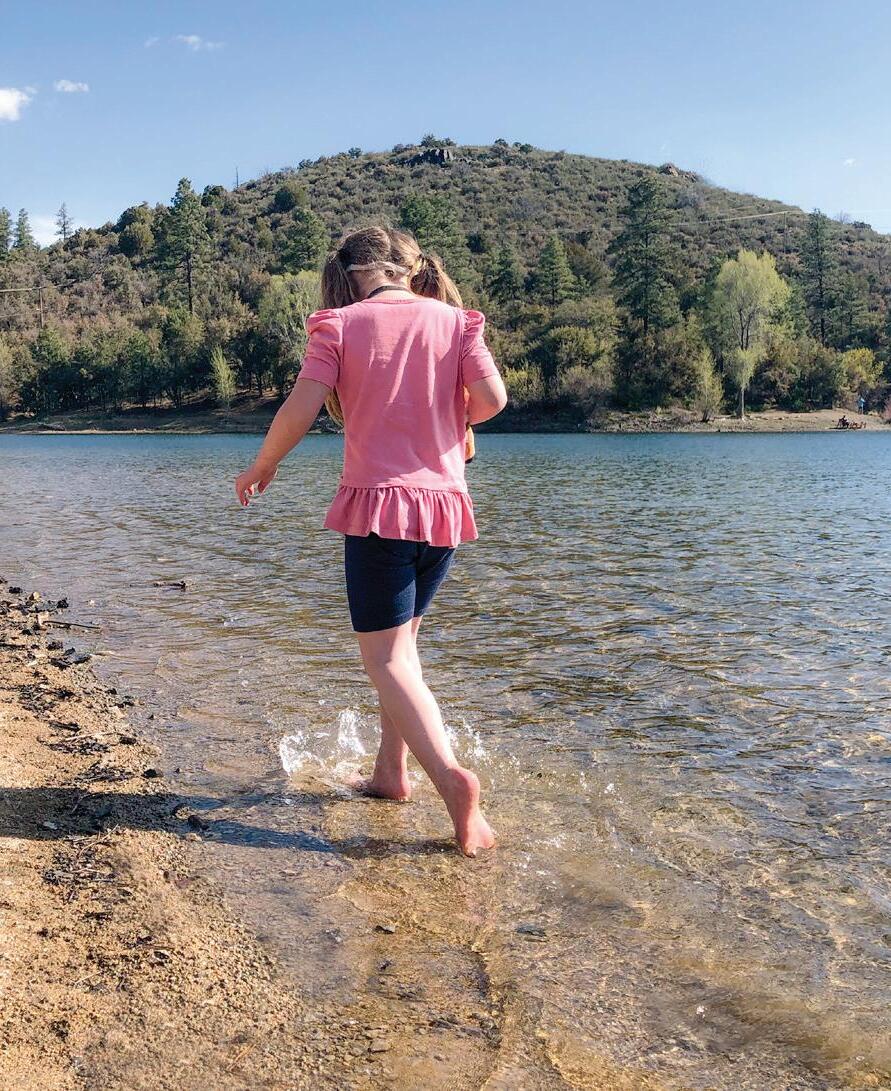
“Summertime is always the best of what might be”
– Charles Bowden
by Brad Hayman, DPM, Complete Foot & Ankle Care
Arizona is a great state for outdoor activity, particularly hiking.
In the local area, the City of Prescott, state and federal lands offer miles of scenic trails and maps to assist in hikes at all levels of ability.
Shoes, boots and orthotic inserts are important to protect and maintain good foot health while enjoying outdoor activities. While shoes and boots are mainly for protection of feet while walking, they also serve the function of support to minimize the risk from foot pain and injury.
When venturing out to explore Arizona’s trails it is important to take precautions against such things as
dehydration, injury, getting lost or contact with wild animals, snakes, cactus or other desert creatures.
Being prepared is important while hiking.
A backpack with water, electrolytes, cellphone, first-aid kit, GPS and even a satellite phone can be a lifesaver when navigating the desert and/or national forest.
Certain boot brands are well suited for hiking such as Hoka
and Altra. A proper fit is critical including wearing high quality cotton socks and protective inserts or orthotics. Orthotics can be over-the-counter or a custom fit devices most often
prescribed and fitted by a podiatrist.
Assessing one’s physical ability is important. If hiking is a new activity starting slow is advisable on relatively level ground. As conditioning and experience improves more challenging trails can be hiked safely.
Finally, as with many activities, it is always a good idea to hike with another person or group. If something does happen help can take quite awhile to get to you, particularly in more remote areas of Arizona.
Have fun, be safe and enjoy our amazing state.




Here at Prescott
Healthy Living
we’re all about making the small lifestyle changes and healthy swaps that add up to a stronger you, physically and mentally. Trying to make drastic changes can be daunting, and as a result we often miss the mark. Committing to a series of small changes can bring noticeable changes to how you feel and look while building your confidence for bigger switches and challenges in the future.
Here’s a look at four rather small but

significant changes you can take on this summer and see how much improvement you see in the next three months!
TAKE A MORNING WALK
Even a short walk early in the day will get it off to the right start with all those good things that happen when you get outside, especially here in our fresh mountain air! You’ll come out of it happier, less stressed and more focused as you begin your day.
This will be a hard one for those who have been
drinking regular or diet soda for years. But sugary soda’s calories and excess sugar have been linked to weight gain and Type 2 diabetes, while diet soda’s artificial sweeteners may also help trigger these conditions and the metabolic syndrome that can lead to them. Try naturally flavoring water with lemon, lime, mint or other options.
TAKE THE STAIRS
There aren’t too many multistory buildings around here outside of historic downtown Prescott, but don’t skip any opportunities to use
the stairs to reach a store or office. If you have the time you can even take on some extra flights to get your heart rate up, burn calories and build muscle tone and mass, especially in your legs.
STAND AND WALK
We should try to remember to get up from our seats every 20 to 30 minutes or so to disrupt some of the risks associated with living a sedentary life; Type 2 diabetes, heart disease, some forms of cancer. This applies any time of the day, whether you’re working at a desk or not.
From hiking around Lynx Lake to floating in a kayak at Watson after pickleball games in the sun, it is officially the season for outdoor activities. And while running around outside is great for our well-being and our bodies, these long hours spent in the sun can have a damaging effect on our skin. So, before heading out to the field, a hill or lake this spring or summer, make sure you and your skin are prepared.
by Lori Durr, Owner, Sundara Sanctuary
Not sure where to start? Check out our ultimate outdoor activities skin care guide:
RULE NO. 1:
WEAR SUNSCREEN
Choose a broad-spectrum sunscreen that is both water-resistant and has a high SPF. You should reapply your sunscreen every 2 hours. But when sweating or swimming you should reapply at least every 40 minutes just to play it safe.
RULE NO. 2:
DRINK UP!
All that running around can work up a sweat and, in turn, dehydrate you. To stay hydrated, make sure you keep a water bottle in tow whenever you head outdoors. If regular old H2O is not your style, jazz it up with some fruit and herbs to give it some flavor.

RULE NO. 3: WASH YOUR FACE
After sweating with or without makeup on it’s important to wash off that sweat and oil from your skin’s surface. Skipping this all-too-important skin-care step can lead to clogged pores and breakouts. We recommend cleansing your skin no later than 10 minutes after finishing up a sweaty activity.
RULE NO. 4: MOISTURIZE
Once you’ve cleansed the sweat and excess oil from your face, follow up with a hydrating moisturizer, just like you would after cleansing during your regular skin-care routine. We recommend sticking to something light; a lightweight moisturizer floods the skin with hydration while rebuilding the protective moisture barrier.
RULE NO. 5:
PACK A FACIAL MIST
After running around in the sun all day, your skin could use a little pick-me-up in the form of a facial mist. Facial mists are a great way to hit your complexion’s refresh button with a quick spritz of hydration. Just one spritz delivers an immediate, soothing sensation. For an extra kick of cooling comfort, store your face mist in the fridge. After working up a sweat, you will be instantly refreshed.

June 14-18 & 21-25
Summer Camp -
Wild Explorers & Highlands Adventurists
8 a.m. to 4 p.m. at Highlands Center for Natural History
June 16
Best Mountain Fruit Trees and How to Summer Plant
9:30 a.m. at Watters Garden Center
June 19
Perennial Plants That Thrive in Summer
9:30 a.m. at Watters Garden Center
July 3
Gardening for Newcomers
9:30 a.m. at Watters Garden Center
July 10
Plant Better Berries & Grapes
9:30 a.m. at Watters Garden Center
YMCA Aquatics Center (Lap Swim, Family Swim & Group or Private/ Semiprivate Lessons Available)
YMCA Dance Program
Team Gymnastics at the YMCA
2021 Youth Basketball League

It’s always a great idea to eat fresh foods in season where you live. They are more likely to be grown nearby and less likely to be trucked long distances, which impacts nutritional value and carbon footprinting.
They’ll also be tastier, and they’re often cheaper because more of it is available on the market. The globalization of the food market has drastically widened the food available to us throughout the year, but at the price of losing all sense of what’s “in” or “out” at any given time.
So here’s a list of some of the most nutritious crops being grown now in Arizona and California.
FIGS
One of the few truly seasonal fruits left, these scrumptious but delicate fruits mostly grown in California hit the fresh produce shelves in the summer, with a smaller crop arriving in June and a bigger one in in August and September. Figs are rich in antioxidants for heart health and calcium and magnesium for bones — pick up the dried varieties the rest of the year.


They’re ubiquitous year-round but summer is their season in Arizona and California. Now is the time to get specimens that look and taste like you think they should. They are most consumers’ primary source of lycopene, a powerful red-hued antioxidant that keeps free radicals in check and may slow progression of prostate, breast and other types of cancer.
Grown throughout the summer in our region, these great low-calorie veggies still contain a lot of nutrients: calcium, vitamin K, cucurbitacin, fiber, manganese, potassium and magnesium. Cucumbers have all of that and a lot of water, too, making it another great choice for hydration.

This isn’t one of the most popular veggies out there, but try it in season and you may feel differently! It’s a great source of two of the most effective antioxidants, anthocyanins and nasunin. Eggplants have been found to fight precursors to heart disease, especially in women, and contain 2.5 grams of fiber per cup.


Another crop with strong summer associations, it’s going to be richer and juicier in season and has several benefits. It’s actually a grain, not a vegetable, and comes with all those whole-grain perks including lowered risk of heart disease, Type 2 diabetes, cancer and stroke.
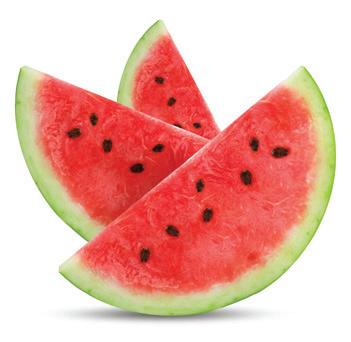
The quintessential summer fruit can be hard to find other times of the year, but when in season they’re glorious. The 92% water content hydrates us at a time we need all the help we can get with that, and its cheery red color comes from high levels of lycopene, too!

These are more of a late summer and fall crop for California and Arizona, so start looking in July for the most flavorful and nutritious ones. Apples do live up to their doctor-recommended reputation by lowering cholesterol and blood pressure, aiding digestion, fighting tooth decay, fighting lung and other forms of cancer and could even help prevent Alzheimer’s disease.
Flowers are a mixed blessing for allergy sufferers.
Still, not all flowers trigger allergies. The more hybridized the plant, the less likely it will have a high level of pollen. The plants that transfer their pollen by wind are the real culprits.
by Ken Lain, The Mountain Gardener, Watters Garden Center

The worst offender for allergy sufferers is the daisy family (Asteraceae), including asters, dahlias, daisies, Gerber daisies, chamomile, chrysanthemums and sunflowers.
There are some exceptions. The hybrids classified as “formal doubles” have virtually no pollen. These are the fluffy flowers with lots of petals and stamens
that have evolved into pollen-less staminodes.
Some pollen-free sunflower varieties, like Apricot Twist and Joker, are listed as hypoallergenic because their pollen is too heavy to be wind borne.
For decades poor goldenrod has been mistaken for ragweed. Ragweed is the bane of every allergy sufferer. While goldenrod isn’t as bad as ragweed, it can cause some reaction in high wind areas.
Baby’s Breath packs
a lot of pollen. So, go for the hybridized double flower varieties that have been bred for beauty without the pollen count.
Start with plants grown for their foliage. Hosta, dusty miller and cactus are all superior choices. Azalea, begonia, bougainvillea, camellia, clematis, columbine, geranium, hibiscus, hydrangea, impatiens, iris, lily, orchid,
pansy, petunia, phlox, rose, snapdragon, thrift, verbena, viola, and zinnia provide allergy-free color in your garden.
Most spring bulbs are shallow in pollen, including crocus, daffodils, hyacinth and tulips. While lilies have a bit of pollen, it is effortless to remove the stamens and the pollen-laden anthers with a pair of scissors. Be aware, though: yellow pollen can stain clothes and fingers, and stems can exude a sap causing skin irritation to some.
If you find yourself sneezing, take a look at your trees. The biggest offenders are arborvitae, junipers, and some of the pines as they spew pollen.
Many trees are monoecious, meaning they have separate male and female flowers. For the pollen to get from the male flower to the female flower, it has to travel, and the wind is often the easiest way to disburse it. Unfortunately, some pollen makes its way to your nose instead of to the female flowers.

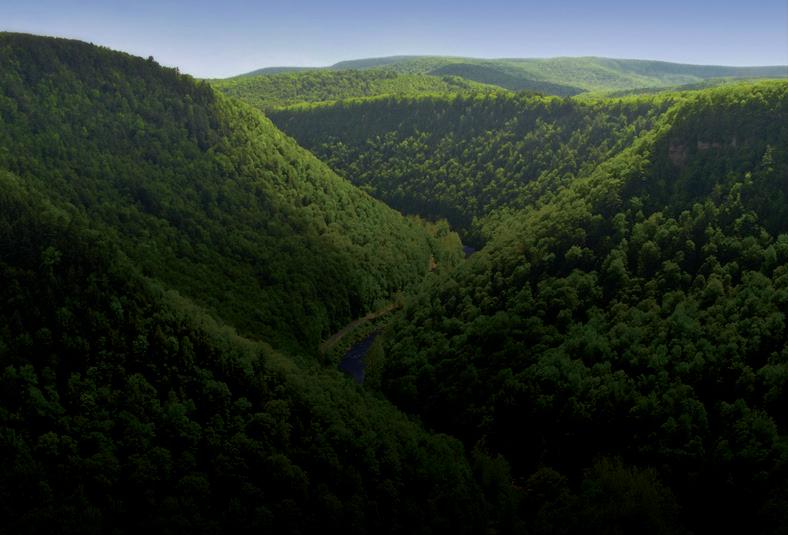

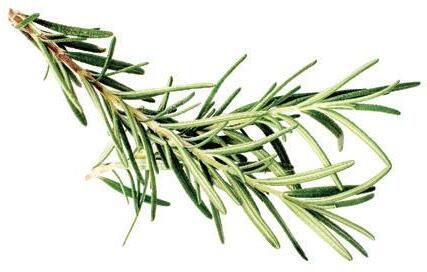







Breakfast may or may not be the most important meal of the day, but it is the most important one to get right.
People are generally in a hurry to get breakfast over with, but those grabbing a bagel or piece of fruit on the run with their coffee are bound to see their energy ebb mid-morning. Adding protein and fiber will go a lot further in sustaining and satisfying you until lunch. And it’s easier than it sounds!
A LITTLE OF THIS, A LITTLE OF THAT
Having a variety of foods at breakfast is the easiest way to get the balanced fueling to get your morning off to a decent start. If you’re going heavy on healthy carbs from oatmeal or wholewheat toast, add a healthy spoonful of nut butter, avocado or other sources of protein or healthy fats to keep your energy levels strong and predictable through the morning. Something as simple as avocado toast with egg and a few berries on the side can accomplish this.
FOR BREAKFAST
If you’ve never been a big fan of breakfast food or have gotten into unhealthy ruts with sweet cereals or greasy bacon, who says you can’t just fast-forward to a healthy lunch? Try a healthy protein bowl of beans and sweet potatoes with some avocado, or toss together a refreshing salad for a cool start to summer mornings. Try sauteing a filet of any fish that sounds good to you in the same time it would take to scramble eggs. Just follow the same principles as you would do for any healthy lunch, and look for ways
to shave off a few calories if it begins to sound a bit too heavy for morning.
PLAN AND PREP AHEAD
If all this sounds like a lot to think about when you’re still trying to wake up, try prepping ahead as much as you can. Overnight oats, chia pudding and other breakfast faves can be handled the night before, and you can chop veggies and fruits ahead for smoothies, omelets and many more recipes. Or try weekly mealprepping for breakfasts — when it’s just for one meal it isn’t as daunting!
Sleep seems to get more important to our health every time somebody decides to study its benefits. It’s enough to make you lose sleep over trying to get enough sleep.
But there’s one easy way to improve your sleep quality — avoid foods known to interfere with sleep when consumed too close to bedtime. The right cutoff time varies between foods and people, but all of these should be avoided for a minimum of two to three hours before you plan to go to sleep.
AMOUNTS OF ANYTHING
Big meals naturally take longer for your body to process than smaller ones. Shifting more of your calories to lunch could be a big help with getting to sleep.
FRIED OR GREASY FOODS
Your body will be digesting these well into the night if you eat them too close to bedtime, raising the odds of indigestion and other issues that disturb your sleep.
HIGH WATERCONTENT FOODS
Watermelon, cucumber and others in this category can be sneakier than water itself because we’re less aware of their ability to fill our bladders and wake us up in the middle of the night.
It’s almost as famous for disrupting sleep as it is for inducing it. It may seem to help initially but messes with our sleep cycles later on and reduces overall REM sleep.

This is the big one, a stimulant that nobody expects to aid with sleep (and it doesn’t). Remember that it can show up in unexpected sources like desserts, non-cola sodas, pain medications, weightloss pills, and it’s been added to some of the foods you’d least suspect — oatmeal, sunflower seeds.
CARBONATED BEVERAGES
Even without caffeine, these can cause indigestion that will keep you up and have the same effect on your bladder or any other drink, when consumed to excess.
Lowering your stomach’s overall production of acid cuts down on acid reflux and related issues. This is a big group including alcohol, soda and carbonated drinks, grains, sugary foods and some dairy and meat products.
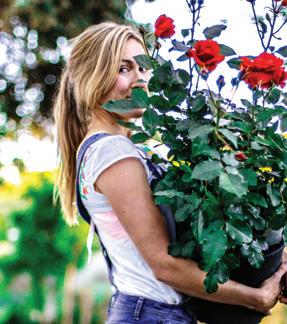
Watters specializes in roses that actually smell like a rose with larger flowers, higher pedal counts for bushes of sheer beauty! Heirlooms, old-fashion and English rose your grandmother only dreamed of. 1300 stunning roses are grown each spring here at Watters that tickle the eyes, delight the nose and get your garden blood flowing!


Vitamin A is foundational to our health in so many ways, and deficiencies of it are rare in the U.S., according to the National Institutes of Health. So, we don’t pay as much attention to it as other nutrients more difficult to consume enough of.
But it’s still important to understand the role vitamin A plays in our development and where to find it in our food chain. There are two groups within the population more likely to experience vitamin A deficiency: premature
babies and those who have cystic fibrosis. This vitamin is critical for maintaining our vision, immune and reproductive systems, heart and lung health, kidneys and other organs. It has shown some promise in reducing the risk of lung and prostate
The foods highest in vitamin A include:
PLANT-BASED SOURCES
* Sweet potato
* Winter squash
* Kale
* Collard, turnip greens
* Carrots
* Sweet red pepper
* Spinach
* Mango
* Cantaloupe
ANIMAL SOURCES
* Beef liver, other organ meats
* Cod liver oil
* King mackerel
* Salmon
* Bluefin tuna
* Goat cheese
* Butter
* Limburger cheese
* Cheddar cheese
cancer and age-related macular degeneration.
Vitamin A has two kinds of dietary sources; preformed, which comes from animal products and can be used by the body right away, and proformed, which comes from plant products and
can be converted into it.
Beta carotene, abundant in many vegetables, is the most common dietary source of proformed vitamin A, and dairy products and cereals are often fortified with vitamin A as well, along with many nondairy alternatives.


































































































































2 cups Organic frozen potatoes
6 oz Leftover Savory Ground Beef (May recipe)
2 Whole eggs, pasture-raised Pink Salt to taste
Black Pepper to taste
Avocado oil nonstick cooking spray
1
by Bailey Zygutis, Nutritionist, Vitruvian Fitness
It’s quick, it’s filling, it’s tasty, and it’s fun to say! Hash – the name comes from the French word “hacher,” with means to chop – was created specifically to use up leftovers. Have at it!
Coat large saucepan with nonstick spray (here I used an avocado oil spray) then add 2 cups organic frozen hash potatoes. Cook on medium-high until browned (roughly 2-3 minutes each side).
2Add leftover Savory Ground Beef, heating 2-3
Serves 2 | Prep Time 20 min
minutes before adding eggs.
3While potatoes and beef heat, scramble 2 eggs with pink salt and black pepper.
4Add eggs, heat and scramble until cooked through.
5Served here topped with Tomatillo Sauce.
Salt is the salt of the earth! Our bodies need electrolytes like sodium for many bodily processes, including supplying the body with energy Think: electrolytes = energy. However, not all salt is created equal. Opt for the minimally processed stuff like Pink Himalayan and/or Sea Salt.
This will become your go-to for a quick, healthy lunch for two that’s keto, paleo, low-carb and gluten-free. Either fresh or frozen shrimp can work; fresh shrimp may lend more flavor but the convenience of thawed frozen shrimp that’s already been peeled and deveined is hard to beat. This can suffice as a light lunch for two or serve with soup, cheese or keto-friendly bread. It can also serve as an appetizer to a large meat- or veggie-based main dish.


8 oz Shrimp, raw, peeled and deveined
1 large Avocado, diced
1 handful Cherry tomatoes, diced 1/2 Red onion, minced
2 tbs Butter, salted, melted
1 tbs Lime juice
1 tbs Olive oil
Freshly chopped cilantro or parsley
Salt and fresh cracked pepper
1
Toss shrimp with melted butter in a bowl until thoroughly coated.
2Heat skillet over mediumhigh heat. Arrange shrimp in a single layer on the skillet without crowding, searing for 1 minute or until it starts to become pink around the edges, then flip and cook until shrimp are cooked through, less than 1 minute.
Serves 2 | Prep Time 15 min

3
Transfer shrimp to a shallow plate to cool.
4Add avocado, tomato, red onion and cilantro to a large mixing bowl. Drizzle with olive oil and lime juice and toss to mix everything together.
5Add cooked shrimp and stir quickly to mix. Season the shrimp avocado salad with salt and pepper to taste.

1.5 lbs Chicken breast, raw OR 3-3.5 cups cooked chicken
1 cup Paleo mayonnaise
2 tbs Curry powder
2 tbs White wine vinegar
2 tbs Lime juice, fresh
2 tsp Dijon mustard
1 Mango, skinned, seeded, diced
3 tbs Cilantro, chopped; more for garnish
3/4 cup Celery, chopped
1/4 cup Green onion, diced
1/3 cup Almonds, sliced
1/4 cup Raisins
Salt and pepper
Paleo-approved and gluten-free, this versatile chicken salad can be served on salad greens, as a wrap or as a sandwich as long as you get the right bread to stay on plan. The blend of two of India’s dominant flavors, dreamy mango and earthy curry, elevates this dish to something you’ll be turning to again and again!
1
Cook chicken, if not using precooked. Preheat oven to 350 degrees. Salt and pepper each breast, and bake for 22-25 minutes, or until cooked through. Let cool for at least 10 minutes, then cut or shred the chicken into small pieces.
2Meanwhile, make your dressing. In a high-powered blender or food processor, blend mayonnaise, curry powder, vinegar, lime juice, mustard,

Serves 6 | Prep Time 45-55 min
mango, chopped cilantro, and a pinch of salt until completely smooth.
3
In a large bowl, combine chicken, dressing, celery, onion, almonds and raisins. Refrigerate until ready to serve, preferably for several hours until the flavors fuse together into a unique blend.
4Once ready to serve, top with additional fresh cilantro. Serve over greens or in a wrap.
This super-simple side salad is vegan and vegetarian-friendly, though it is not gluten free. The main ingredient is Israeli couscous, also sold as pearl couscous, Jerusalem couscous, or in Israel itself as ptitim. Formed in significantly larger balls than regular couscous, this is a form of pasta made from semolina or wheat flour.


1 cup Israeli (pearl) couscous, dry
15 Cherry tomatoes, finely chopped
1 sm Cucumber, finely chopped
1 handful Basil leaves, fresh, finely chopped
10 Artichoke heart quarters
1/2 sm Purple onion, finely chopped
1/2 cup Kalamata olives, halved
1 thumb Vegan feta cheese
1 tsp Olive oil
1 tsp Balsamic vinegar
1 tsp Salt
1/2 tsp Black pepper, ground
1
Cook 1 cup of dry couscous in salted water, then drain.
2Add all the chopped veggies, fresh basil, olive oil, salt and pepper, then stir.
3Serve warm or cold.
Serves 2 | Prep Time 10 min

2 tbs Extra virgin olive oil, plus more for drizzling
4 Shallots or 2 small sweet onions, chopped
4 cloves Garlic
1/4 cup Basil, fresh, chopped
2 tsp Thyme, fresh, chopped
5-6 Roma tomatoes or 4-5 vine-ripened tomatoes, sliced ¾-inch thick
2 medium Yellow squash, cut into 1/4 inch slices
1 medium Zucchini, cut into 1/4 inch slices
3/4 cup Parmesan cheese, freshly grated
Salt and pepper

This is a wonderful dish to use up some of those seasonal veggies you’ve been trying to cram into your diet all in one delicious main dish!
It’s colorful enough to impress friends and family alike, and no one will even think about the “missing” potatoes!
1
Preheat oven to 375°. Spray a 7”x11” baking dish with nonstick spray then set aside.
2
Heat 2 tablespoons extra virgin olive oil in a large skillet over medium heat. Add shallots or onions, season with salt and pepper, and then sauté until softened, about 5-7 minutes. Add garlic then sauté for 1 more minute. Add fresh basil and thyme then stir to combine. Transfer to prepared baking dish, then spread into an even layer in the bottom.
3Put sliced zucchini and yellow squash into a large bowl, then drizzle lightly with extra virgin olive oil and season with salt and pepper.
4Layer vegetables in somewhat slanted rows until you run out of room or vegetables are used up. Season top with salt and pepper, cover the baking dish with foil and bake for 30-35 minutes or until the vegetables are tender. Remove foil, then sprinkle parmesan cheese on top.
5Return to oven uncovered and bake until cheese is golden brown, 1015 minutes.
6Let sit for 10 minutes before serving.
Serves 6 | Prep Time 65-80 min
Here’s a fun, adventurous dish that has lots of healthy omega-3 fatty acids from the tuna and avocado and healthy nutrients from edamame, carrots and radish slices served on top of rice.
Get the highest-quality fresh ahi tuna you can, preferably sushigrade, or you can sear or grill a tuna steak instead if you’re uneasy about serving it raw.*


1/4 cup Low-sodium soy sauce
2 tsp Rice vinegar
2 tsp Sesame oil
1 tsp Ginger, freshly grated
2 Green onions, thinly sliced; plus more for garnish
1 tsp Sesame seeds, toasted; plus more for garnish
1 lb Sushi-grade ahi tuna, cut into bite-size pieces
Pinch of crushed red pepper flakes
For serving:
Cooked white or brown rice
Sliced avocado
Sliced cucumber
Edamame
Shredded carrots
Sliced radish
1
In a large bowl, whisk together soy sauce, rice vinegar, sesame oil, ginger, red pepper flakes, green onions and sesame seeds. Add tuna and toss to coat. Refrigerate for at least 15 minutes or up to 1 hour.
Serves 4 | Prep Time 20 min
2
To serve, put preferred amount of rice at the bottom of four bowls. Top with tuna and toppings of your choice. Garnish with green onions and sesame seeds.
*The U.S Food and Drug Administration advises against serving uncooked fish to children younger than 5.


Your guide to Greater Prescott’s medical & wellness professionals.
Ali Askari, MD, FACP
Amy Schlaifer, MD
Ayad Agha, MD
Bardia Sinaei, DMD
Chad Norris, PA

Hemant K. Pandy, MD
Hojat Askari, MD
Jaffrey Kazi, DMD
Jeffrey Osburn, MD
John Alessi, DO
Thumb Butte Medical Center
3124 Willow Creek Road | Prescott, AZ 86301 www.thumbbuttemedicalcenter.com Internal Medicine & Cardiology
Thumb Butte Medical Center
3124 Willow Creek Road | Prescott, AZ 86301 www.thumbbuttemedicalcenter.com Urology & Urogynecology
Thumb Butte Medical Center
3124 Willow Creek Road | Prescott, AZ 86301 www.thumbbuttemedicalcenter.com
Thumb Butte Medical Center
3124 Willow Creek Road | Prescott, AZ 86301 www.thumbbuttemedicalcenter.com
Northern Arizona Pain Institutes
3769 Crossings Drive | Prescott, AZ 86305 www.northernarizonapaininstitutes.com | 928-683-5600
Thumb Butte Medical Center
3124 Willow Creek Road | Prescott, AZ 86301 www.thumbbuttemedicalcenter.com
Thumb Butte Medical Center
Interventional & Vascular Radiologist
Dentistry
Physician Assistant
Neurology
3124 Willow Creek Road | Prescott, AZ 86301 www.thumbbuttemedicalcenter.com Internal Medicine
Thumb Butte Medical Center
3124 Willow Creek Road | Prescott, AZ 86301 www.thumbbuttemedicalcenter.com Gastroenterology
Prescott Women’s Clinic 919 12th Place, Suite 1 | Prescott, AZ 86305 www.prescottwomensclinic.com
Thumb Butte Medical Center
3124 Willow Creek Road | Prescott, AZ 86301 www.thumbbuttemedicalcenter.com
Medicine
Joseph Machuzak, DO
Thumb Butte Medical Center
3124 Willow Creek Road | Prescott, AZ 86301 www.thumbbuttemedicalcenter.com
Prescott Women’s Clinic
Katie Compuzano, MD
Kaveh Karandish, MD
Maddie Assar, MD
Maryam Emami, MD
Michele McCormick, NP
Mohammad Golparian, MD
Richard Ohanesian, MD
Robert J. Brownsberger, MD
Savana Howe, Psy.D
Serj Nazarian, DPM
Seyed Mohsen Sharifi Takieh, MD
919 12th Place, Suite 1 | Prescott, AZ 86305 www.prescottwomensclinic.com
Thumb Butte Medical Center
3124 Willow Creek Road | Prescott, AZ 86301 www.thumbbuttemedicalcenter.com
Thumb Butte Medical Center
3124 Willow Creek Road | Prescott, AZ 86301
www.thumbbuttemedicalcenter.com
Thumb Butte Medical Center
3124 Willow Creek Road | Prescott, AZ 86301 www.thumbbuttemedicalcenter.com
Northern Arizona Pain Institutes
3769 Crossings Drive | Prescott, AZ 86305 www.northernarizonapaininstitutes.com | 928-683-5600
Thumb Butte Medical Center
3124 Willow Creek Road | Prescott, AZ 86301 www.thumbbuttemedicalcenter.com
Prescott Women’s Clinic
919 12th Place, Suite 1 | Prescott, AZ 86305 www.prescottwomensclinic.com
Northern Arizona Pain Institutes
3769 Crossings Drive | Prescott, AZ 86305 www.northernarizonapaininstitutes.com | 928-683-5600
Thumb Butte Medical Center
3124 Willow Creek Road | Prescott, AZ 86301 www.thumbbuttemedicalcenter.com
Thumb Butte Medical Center
3124 Willow Creek Road | Prescott, AZ 86301 www.thumbbuttemedicalcenter.com
Thumb Butte Medical Center
3124 Willow Creek Road | Prescott, AZ 86301 www.thumbbuttemedicalcenter.com
Northern Arizona Pain Institutes
Stephen Sirota, MD
3769 Crossings Drive | Prescott, AZ 86305
www.northernarizonapaininstitutes.com | 928-683-5600


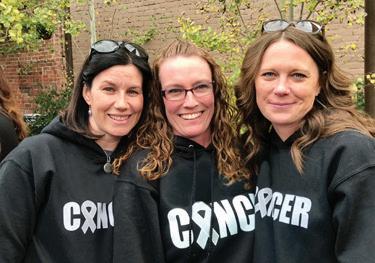
HOW DO YOU DEFINE A HEALTHY LIFESTYLE?
A good balance of work, play, family and friends.
HOW DID YOU COME TO PRACTICE IN YOUR CAREER FIELD?
Amanda was working in this field in high school and worked up to owning The Hike Shack. Kam and Raigan bought into the business in 2011 when they left the car business. We all grew up playing in the outdoors.
WHAT TYPE OF EXERCISE DO YOU PREFER AND WHY?
Anything outside — walking, bicycling, hiking, paddle boarding, climbing, backpacking, pickleball.
WHAT DOES YOUR EXERCISE SCHEDULE LOOK LIKE ON A TYPICAL DAY OR WEEK?
We all try to get outside to play a few times every week.
HOW OFTEN DO YOU EXERCISE AND FOR HOW LONG?
Amanda exercises probably more than Raigan and Kam. She is doing something fun almost every day.
WHAT ARE YOUR PRACTICES TO KEEP YOURSELF AND YOUR FAMILY HEALTHY?
Eating as well as we can and staying active with our kids. We also try to listen to our bodies and do what is necessary to stay healthy.
HOW DO YOU DEFINE SELF-CARE, AND WHAT IS YOUR GO-TO WAY OF PRACTICING IT?
Knowing our personal limits and sticking to them. We all try to do too much and have to slow down sometimes. We try to take fun vacations throughout the year to keep us motivated when we are working.
WHAT IS YOUR FAVORITE HEALTHY SNACK/FOOD?
Popcorn, fruit and nuts.
WHAT IS YOUR FAVORITE HEALTHY MEAL?
Salads. We all three love salads especially from lots of the amazing downtown restaurants.
WHAT IS YOUR BIGGEST HEALTH AND WELLNESS TIP?
The three of us all try to maintain balance and don’t let ourselves get too run down or overworked and instead take time for ourselves.
WHAT IS YOUR NEXT GOAL IN YOUR HEALTH AND WELLNESS JOURNEY?
Learn more about the homeopathic world that is out there.