Neighbourhood Media | CBD Magazine | February 2026
SHARKS IN THE HARBOUR
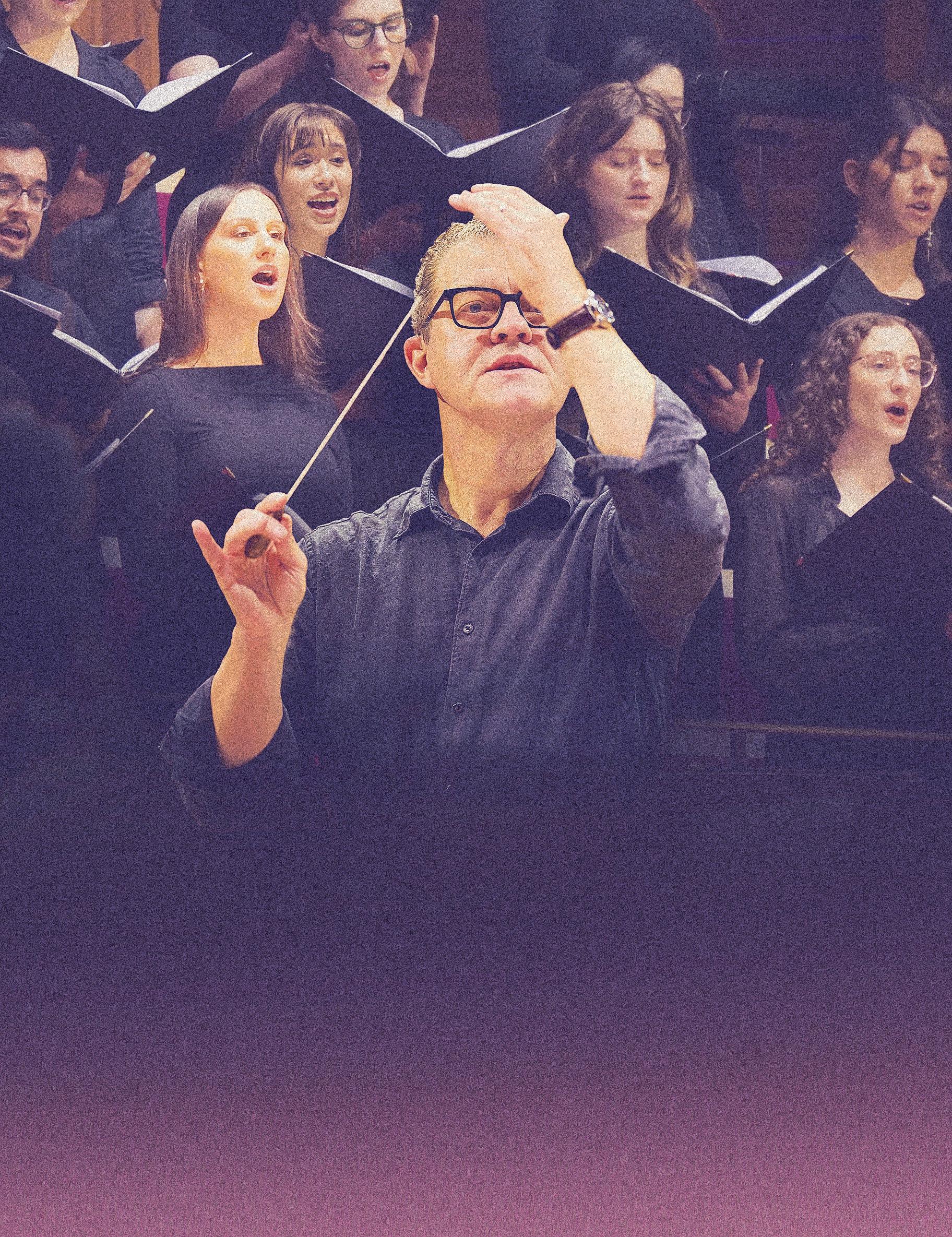
STREET CHOIR
HISTORY OF TROPFEST
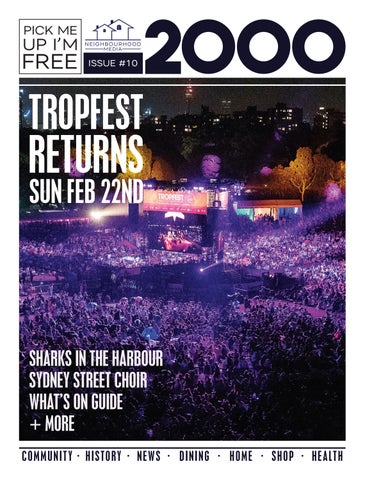
TROPFEST
This Year’s Festival - Feb 22nd
HISTORY
Convict’s Great Sea-scapes
IN THE HOOD
WILDLIFE WATCH
THIS year is packed with culture, community, and unmissable events.
We’re back for another year, and 2026 is already shaping up to be huge. In this first issue, we’ve got it all - a look back at the city’s iconic Tropfest, daring convict great escapes, and so much more.
We’re putting local talent in the spotlight with our cover star ?, taking you inside the city’s tallest building, and even checking out sharks in the harbour. Community shines too, from a much loved street choir bringing voices together, to the return of one of the world’s best exhibitions.
If culture and arts and entertainment is your shtick, you are in for a treat, with highlights from Sydney Dance Theatre and the Philharmonic, plus a What’s On guide to get you amped for 2026. And for those nesting at home, clever herb hacks will get your Autumn sorted.
So grab a coffee, dive in, and let this issue guide you through a year packed with inspiration, excitement, and everything happening that makes this city great.
See you out there to get amongst it! The Neighbourhood
Sydney’s Tallest Building Review: Ette Sydney Autumn Herb Hacks
Sydney Street Choir
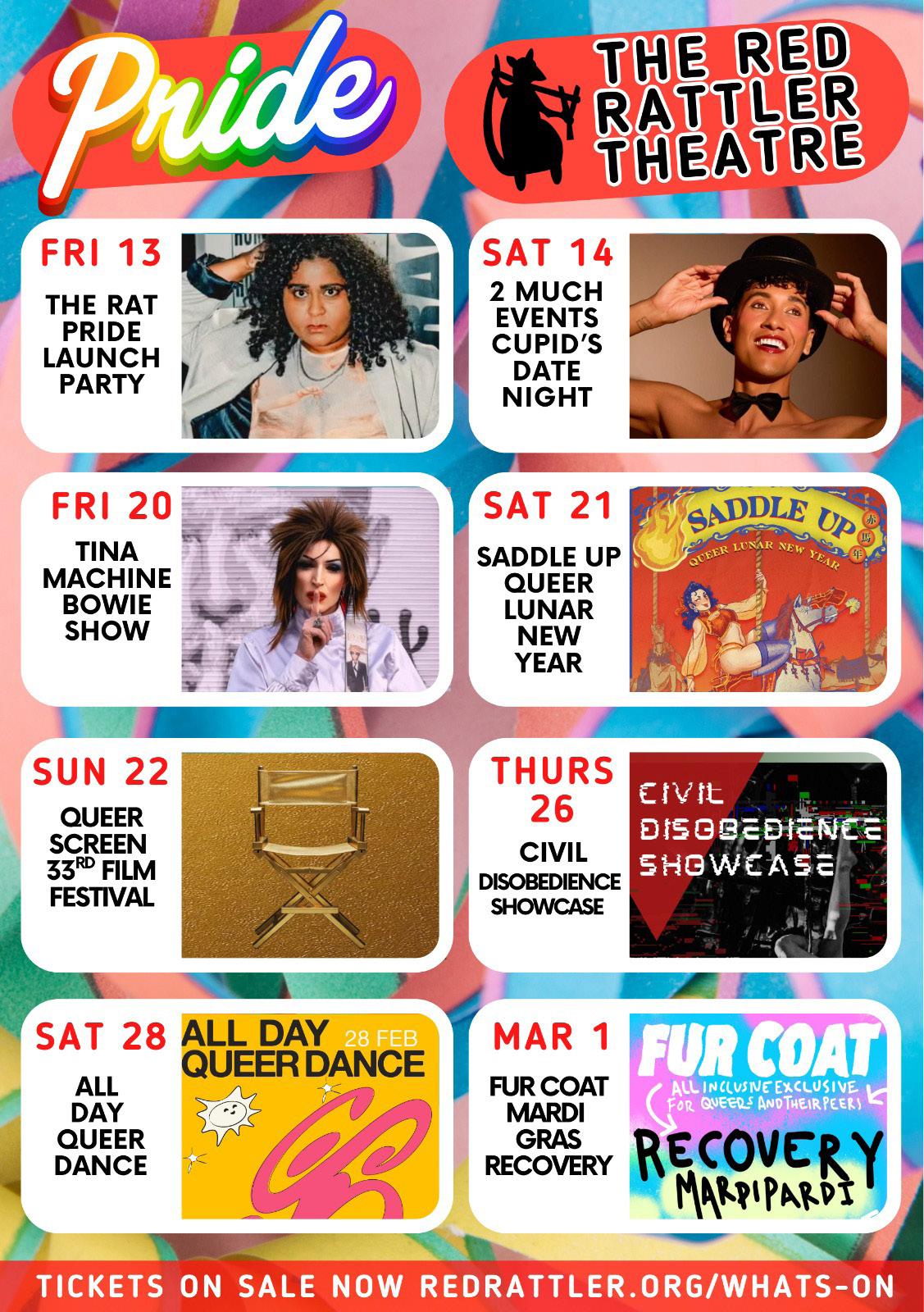
The Best Local Arts & Entertainment
Support, Spend Local Bull Sharks In the Harbour A Brief History of Tropfest
ARTS & ENTERTAINMENT
You Have All The Answers? Check Out What’s In Store
By Jamie Apps
TFrom Surry Hills To The World: The Accidental Empire Of Tropfest.
IT started with a spring roll. Let’s be specific. A film whimsically titled, Surry Hills: 902 Spring Roll, which its creator, John Polson, once dismissed as pretty average. That humble, almost apologetic beginning in 1993 is the wonderfully unglamorous seed from which Tropfest, now branded as the globe’s largest short film festival, accidentally sprouted. Picture the scene. Two hundred people crammed into the Tropicana Caffé in Darlinghurst. No red carpet, no media wall, certainly no whisper of future grandeur. Just a filmmaker showing his work and a crowd that showed up. A happy accident, absolutely. But that chaotic, uncurated energy? It became the festival’s defining signature for the next three decades. What happened next feels like a local legend now. That modest screening ignited something potent. It lit a fuse under a generation of storytellers ravenous for a platform without gatekeepers or astronomical budgets. Tropfest became that platform. It grew not like a cultivated rose, but like a stubborn weed, pushing through every crack in the established film industry’s pavement. From those 200 seats, it ballooned. It spilled out of cafes and into parks, drawing thousands, then tens of thousands. At its peak, live audiences nudged 100,000 souls gathered under the stars. Honestly, how many homegrown cultural inventions ever reach that scale?
THE QUIRKY ENGINE OF CREATIVITY
Tropfest’s secret weapon, and a huge part of its charm, is the gloriously odd Tropfest Signature Item. Each year, every entered film must include a specific, seemingly random object. A balloon. A key. A Kiss. For 2026, it’s the ‘Hourglass’. On the surface, it’s a gimmick, sure. But scratch deeper, and you find a creative hand grenade tossed into filmmakers’ laps. It forces invention. This arbitrary object becomes the essential puzzle piece
around which an entire narrative must be built.
The beautiful part? It’s the great equaliser. A hefty budget can’t buy your way out of the constraint. Everyone, from the kid with an iPhone to the team with a professional rig, wrestles with the same peculiar puzzle. Meaning that the democratisation of creativity is stitched right into the festival’s DNA.
THE ROLLERCOASTER AND THE RETURN
We can’t gloss over the nap the festival took. After 29 main events in Sydney and years of global expansion, Tropfest went quiet. The 2020 hiatus wasn’t a planned intermission. It just stopped. For a generation of filmmakers and audiences, its absence felt disorienting. A fixed point on the summer cultural calendar had vanished. Parks felt emptier. Short films lost their biggest, loudest public stage. In the fast-moving world of arts and culture, a six-year silence is an eternity. Many reasonably wondered if the party was over for good.
The comeback story, therefore, grips almost as hard as the origin tale. The 2026 edition isn’t merely a revival. It’s a full reinvention. This marks the festival’s official transition into a not-for-profit Foundation. That’s a significant pivot. The goalposts have been moved from staging one magnificent annual show to building a permanent, enduring structure for nurturing talent. The new board reads like a who’s who of Australian cultural leadership, with Sarah Murdoch as chair alongside figures like Bryan Brown and Polson himself. Tropfest is set to relaunch on February 22 in Centennial Park, with sixteen finalist films premiering live and streaming globally on YouTube. Plus, in a quintessential Tropfest coup, the jury will be headed by Academy Award nominee Margot Robbie. “Tropfest has long been an important launchpad for filmmakers,” Robbie said, highlighting its role as a place where creativity meets tangible opportunity.
Polson’s own rallying cry echoes the festival’s scrappy spirit: “You don’t need a big budget or anyone’s permission. If you’ve been sitting on an idea, this is your sign.”
A STAGE FOR THE WORLD
While Tropfest’s heart beats firmly in Sydney, its ambitions have always been telescopic. It never just waited for the world to come to it. It packed its bags. Over the years, Tropfest has staged satellite events from New York to Shanghai, Johannesburg to Tokyo. This global seeding reinforced its reputation while constantly scouting for fresh, international talent. And then it embraced the digital age, supercharging its reach. The live event in Centennial Park remains the beating heart, but the festival’s YouTube channel pumps that content to millions worldwide. A film that premieres in Sydney at dusk can be dissected in Stockholm by breakfast. That’s one heck of a journey from a Darlinghurst café.
The consistent ability to attract cinematic royalty underscores Tropfest’s industry credibility. Margot Robbie follows in the footsteps of Nicole Kidman, Cate Blanchett, Baz Luhrmann, and even Samuel L. Jackson. Their involvement was never mere star power for its own sake. It acted as a powerful validation, signalling to the industry that this was a serious incubator, a place where the next generation could be spotted.
So what has Tropfest actually built? Perhaps without fully intending to, it created a viable infrastructure for emerging Australian filmmakers. Short films often exist in a weird limbo,
TROPFEST
By Jamie Apps
Why Tropfest 2026 Is Sydney’s Free Cultural Event You Can’t Afford to Miss.
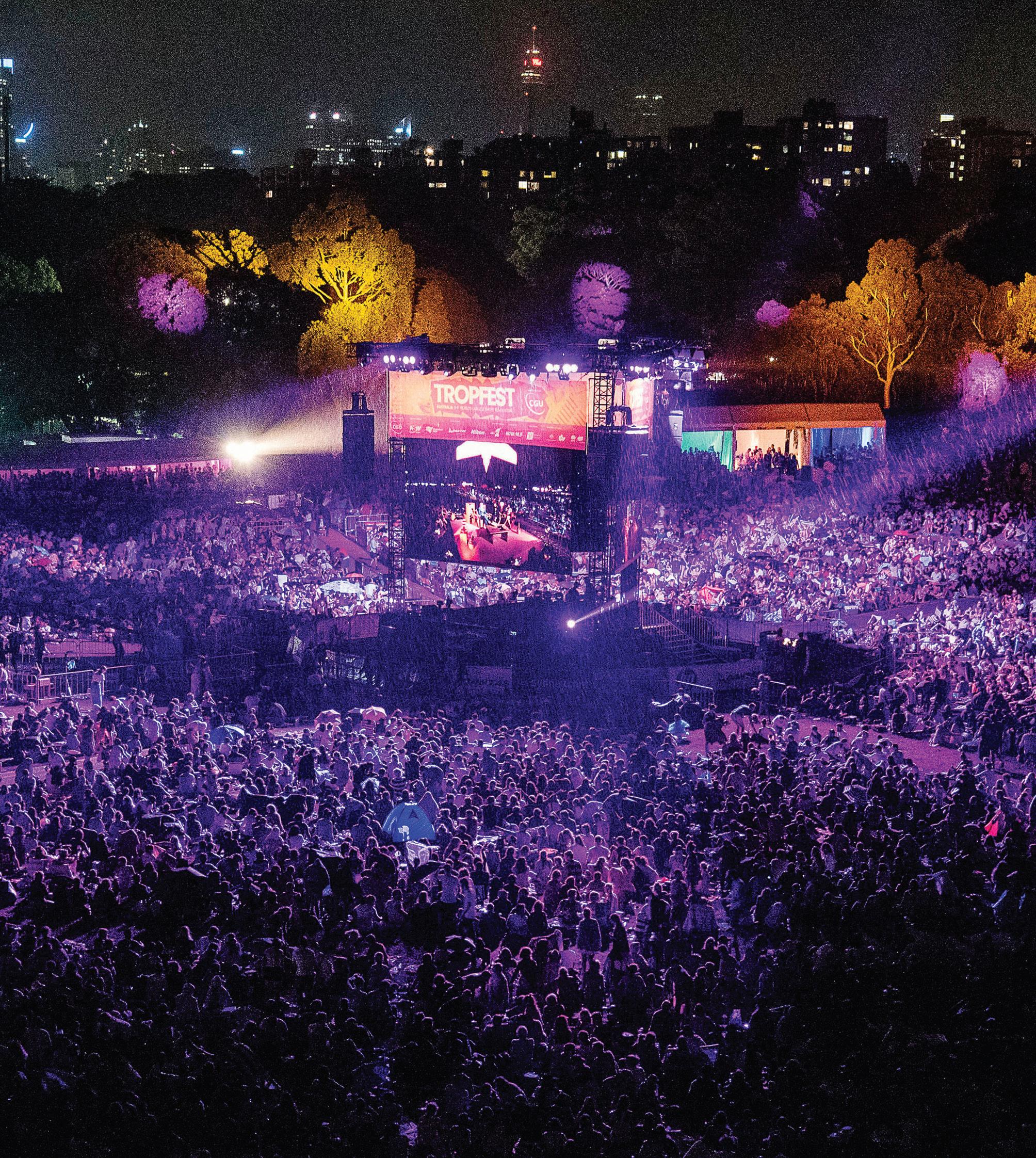
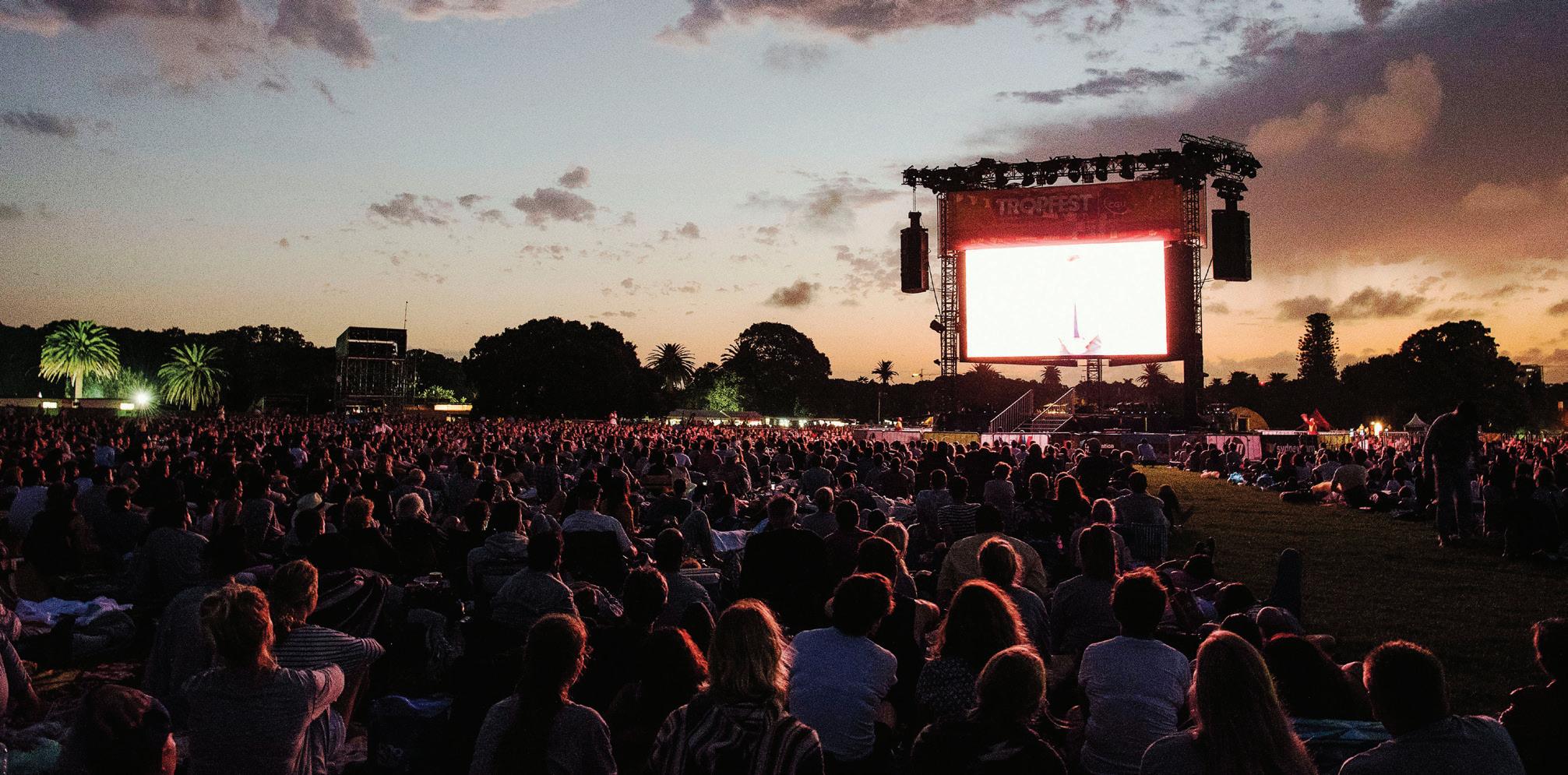
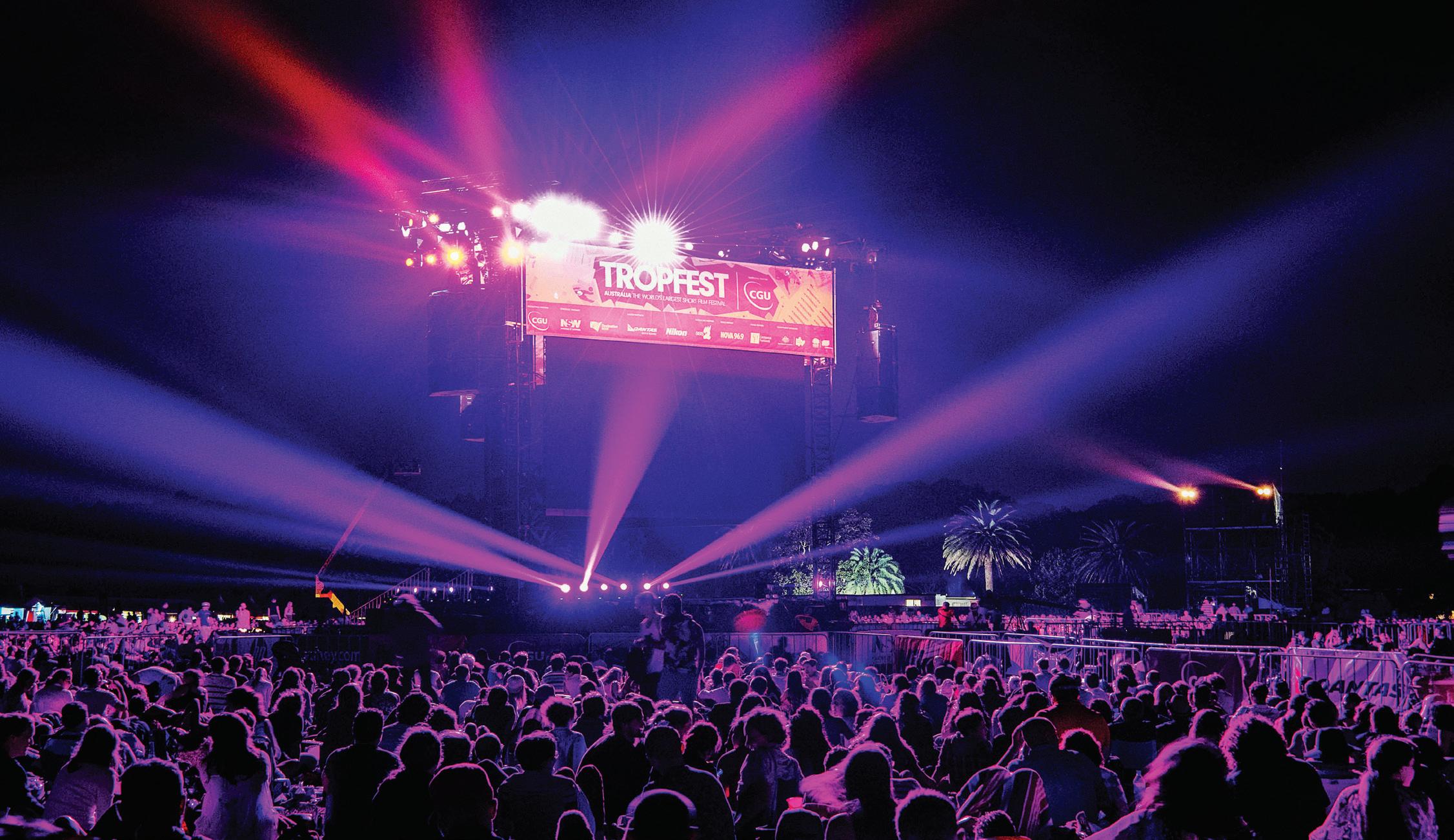
FFORGET hushed theatres and polite applause. Tropfest, returning on Feb 22 to Centennial Park after six quiet years, runs on a very different wavelength. Think thousands spread across picnic rugs as the sun sets, food trucks buzzing and a giant screen glowing beneath the Moreton Bay figs. This is cinema as a shared public experience - and its return has been long awaited.
On screen: 16 finalist short films, seven minutes each, watched once, together. Selected from hundreds, each must feature this year’s creative twist - the hourglass. The films premiere simultaneously to the park crowd and a global YouTube audience, creating an energy no traditional cinema can match.
WHY SYDNEY NEEDS TROPFEST
Sydney’s cultural calendar is packed, let’s be honest. But how many events feel genuinely, collectively owned by the people? Tropfest fills that specific, gnawing gap. Its accessibility is radical in its simplicity: no tickets, no dress code, no prerequisite film degree. You just show up. Families plant kids on blankets. Film students scribble notes. Friends share bottles of wine as the sky darkens.
THE NUTS, BOLTS & MUST-DO’S OF THE NIGHT
Rule number one? Arrive early. Prime real estate vanishes faster than an ice cream in the summer sun. Be preparedthe festival isn’t a passive viewing experience. Past events have pulsed with live bands, roaming performers, and impromptu gatherings. Practicalities matter. Bring layers; February evenings are fickle.
A FOUNDATION FOR THE FUTURE
This comeback chapter is structurally different. Tropfest now operates as a not-for-profit Foundation, a shift from a yearly event to a sustained talent incubator. The board, chaired by Sarah Murdoch and including heavyweights like Bryan Brown, signals serious, long-term intent. “It’s a true privilege to welcome Margot Robbie home to lead the Tropfest Jury in
2026,” founder John Polson said, framing her involvement as reflective of the festival’s renewed ambition.
Tangible support accompanies the spotlight. The new CommBank Tropfest Emerging Filmmakers Fund offers a $100,000 prize pool. For filmmakers typically funding projects on maxed-out credit cards, that isn’t just prize money; it’s a lifeline to the next project, a real chance to build momentum.
THE UNSCRIPTED HIGHLIGHTS YOU CAN’T PLAN
Predicting which seven-minute gem will shatter the audience is impossible. That’s the point. But certain moments are guaranteed. Watch the crowd. This isn’t a polite theatre crowd. It’s a vocal, reactive beast that erupts in laughter, collective gasps ripple, applause builds or stutters in real time. You’re viscerally part of a shared response.
The winner’s announcement, after all sixteen films have unspooled, crackles with invested tension. By then, you’re committed. You have fierce opinions. You’re debating strangers. And the unofficial after-party, that buzzing exodus from the park as thousands dissect what they’ve just witnessed, is where the community feeling truly solidifies. The conversation spills out, lasting longer than the credits.
In a cultural landscape increasingly locked behind paywalls and memberships, Tropfest’s free entry is its most powerful statement. It allows pure, uncommitted curiosity. It lets people stumble into a world they might love. It creates a gloriously mixed demographic of students, families, and retirees, all sharing the same patch of grass. That democratic spirit is the festival’s bedrock.
SO MARK THE DATE. FEBRUARY 22.
CENTENNIAL PARK.
Come for the free films, sure. But stay for the reminder of what happens when a city gathers not for commerce or sport, but simply for the shared, unpredictable thrill of a story told well. In our often fragmented Sydney, that’s not just an event. It’s a minor miracle.
TANYA PLIBERSEK
FEDERAL MEMBER FOR SYDNEY
Cheaper medicines
The Albanese Labor Government has delivered the biggest cuts to the cost of medicine since the creation of the Pharmaceutical Benefit Scheme by a Labor Government in 1948.
Having cut the cost of a general script from $42.50 when we were elected to $30, medications listed on the PBS now cost no more than $25 per script.
to protect creatives and their works from being used without permission and without payment to train artificial intelligence. We have ruled out a Text and Data Mining Exception in Australian copyright laws.
1800MEDICARE
Registered nurses at 1800MEDICARE are there 24/7 to provide you with free advice and refer you to the service you need, whether that’s your regular GP, the local hospital or a Medicare Urgent Care Clinic.
Any day, between 6pm and 8am, if you need urgent GP care, the triage nurses can connect you to a free telehealth session with a 1800MEDICARE GP via phone or video.
A 1800MEDICARE GPs provide the free care you need such as an emergency prescription for regular medication, or treatment for an illness or injury. Just call 1800MEDICARE (1800 633 422) or download the app.
The last time PBS medicines cost $25 was 2004 – more than 20 years ago.
Pensioners and concession cardholders will continue to pay just $7.70 until 2030.
This is in addition to: a 25% reduction in the number of scripts a concessional patient must fill before the PBS Safety Net kicks in; and 60-day prescriptions for millions of Australians with ongoing health conditions.
Better and cheaper health for women
We’ve added new medications for contraception, menopause, endometriosis and IVF treatment to the PBS. We’ve also boosted Medicare support for IUDs and implants, to train more doctors in menopause care, to open new specialist endometriosis and pelvic pain clinics, and to tackle longstanding health gender bias.
These are some of the biggest PBS upgrades in decades and will help women save hundreds of dollars.
Medicare Mental Health Check In
The Albanese Government’s Medicare Mental Health Check In is now online, delivering free, early support for Australians experiencing mild mental health challenges.
Run by St Vincent’s Health Australia, the service will initially provide evidence-based resources to help people manage symptoms.
From 30 March, the service will include low-intensity cognitive behavioural therapy, delivered by trained professionals via phone or video.
By Jamie Apps
at Tropfest long before he embodied Tom Buchanan in The Great Gatsby or gave one of the most profound performances of the past year in Train Dreams, which is now streaming on Netflix amid growing award season whispers. Joel’s brother Nash took a parallel path behind the camera, with his short Deadline preceding his creation of the brilliantly gritty series Mr Inbetween.
“Scroll through old finalist lists now, and it reads like a contemporary who’s who. Joel Edgerton. Rebel Wilson. Sam Worthington. Mia Wasikowska. Murray Bartlett.”
Murray Bartlett submitted Muffled Love years before winning an Emmy for his unravelling resort manager in The White Lotus, a role that catapulted him to HBO’s The Last of Us
Then there’s Rebel Wilson. Her short Bargain! offered early flashes of the comedic timing that would define Pitch Perfect. Sam Worthington appeared in A Matter For Life before becoming the face of Avatar
The connection isn’t magic. It’s timing. Tropfest captured these artists at a raw moment, offering not just validation but something more tangible: proof of a live audience connection.
BEHIND THE LENS, WHERE LEGACIES FORM
The festival’s impact isn’t confined to the spotlight. Some of its most profound work happens in the director’s chair or the producer’s office. Bruna Papandrea screened Paris Texas at Tropfest. She later became the prolific force behind Big Little Lies and Nine Perfect Strangers. Director Robert Connolly presented Rust Bucket before helming The Dry, a landmark in recent Australian commercial cinema. Justin Kurzel (Nitram), Abe Forsythe (Wolf Like Me), and Genevieve Clay-Smith of Bus Stop Films all screened early work on the Topfest platform. Their paths highlight the festival’s quieter function. It doesn’t just spotlight performance. It reveals foundational craft. The industry is always watching, taking note.
TMeet The Tropfest Alumni Who Conquered Film
THE NEXT WAVE, ALWAYS WAITING
and Television.
TROPFEST loves calling itself a launchpad. The proof, however, isn’t in the slogan. It’s in the staggering roster of faces and names who cut their teeth there before conquering screens everywhere.
For three decades, this festival has operated as a chaotic, vibrant proving ground. Some entrants won trophies. Many just showed up with a camera and a wild idea. What unites them is what happened afterwards: proper careers.
FILM AND TV LUMINARIES
Scroll through old finalist lists now, and it reads like a contemporary who’s who. Joel Edgerton. Rebel Wilson. Sam Worthington. Mia Wasikowska. Murray Bartlett. These are global names today, but at Tropfest they arrived as nervous unknowns with seven minutes to make an impression.
Consider the trajectory. Joel Edgerton screened Monkeys
Organisers are wise not to play fortune teller. There’s no official list of “next big things.” Instead, they build infrastructure.
This year, the festival introduces the CommBank Tropfest Emerging Filmmakers Fund, a $100,000 pool meant to fuel careers, not just congratulate them. The rules remain deceptively simple: seven minutes, and include the Signature Item, which this year is an hourglass.
The context, however, has exploded. Today’s finalists premiere simultaneously to a sprawling Sydney park audience and a global online viewership. The exposure is immediate, terrifying, and public. Some careers will pivot from that night. Others will simply ignite.
History suggests a pattern. Today’s unknown becomes tomorrow’s footnote, then a headline, then something lasting. Not because the festival predicts it, but because it provides the chaotic, beautiful conditions for it to happen. The launchpad is open. The fuel is creativity. The trajectory, as ever, is anyone’s guess.
Experience the joy of singing in a choir. We have six choirs for singers of all abilities, including newcomers.
Sing with us at the Sydney Opera House and beyond.
Festival Chorus ChorusOz
Audition now – sing with us in London 2026
DBy Alec Smart
The Seaward Escapes Of Sydney Convicts.
DURING the early years of the British penal colony experiment in Sydney Cove, only a few convicts escaped custody due to its remote location and inhospitable climate. Among the successful escapees, a few joined Indigenous clans and effectively ‘went native’, whilst those who purloined a boat or joined the crew of a visiting ship had a greater chance of success.
The environment surrounding the Sydney settlement was fraught with threats, from known dangers, such as snakes and sharks, to the unknown, including venomous creatures and poisonous plants not yet recorded by science. Several escapees were killed by Aboriginals or just vanished; whilst others perished through starvation.
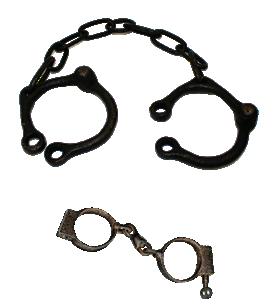
Most of the convicts who escaped the colony’s harsh conditions were recaptured and severely punished.
and only one shipyard - the King’s Dockyard, established on the Western Shore of Sydney Cove in 1800 – was permitted to build new boats.
Although a number of vessels were constructed at the turn of the century, both in the dockyard and by independent boatbuilders, it wasn’t until 1855 that Australia’s first privately-run dry dock was opened, in Mort Bay, Balmain. During the convict era (1788–1868), approximately 165,000 convicts were transported to Australia, with about 80% of them convicted of theft, often for minor offences driven by poverty. Petty theft was the most common reason for transportation, with sentences often lasting seven or 14 years for offenses involving small, low-value items.
“The pursuit and capture of whales was extremely dangerous.”
Some tried stowing away. At least six convicts were discovered on the First Fleet transport ships Alexander, Friendship, and Prince of Wales as they prepared to depart to Sydney return to Britain in mid-1788 after Governor Arthur Phillip ordered a search of all departing vessels
After the Sydney penal colony was founded in January 1788, it was two years and eight months - September 1790 - before the first successful flight to sea in a stolen vessel by escaped convicts John Turwood and his four accomplices. Later, when international whaling, sealing and trading ships anchored in coves around Sydney Harbour, including Walsh Bay, Campbells Cove, Moores Wharf (Millers Point) Circular Quay, Watsons Bay and Great Sirius Cove (Mosman Bay), for mooring, repairs, and processing blubber, some were hungry for crew members and often smuggled aboard escaped convicts to supply that demand.
For the convicts, many of whom were serving long, harsh sentences for crimes that today would be considered misdemeanours, an opportunity to escape was capitalised upon.
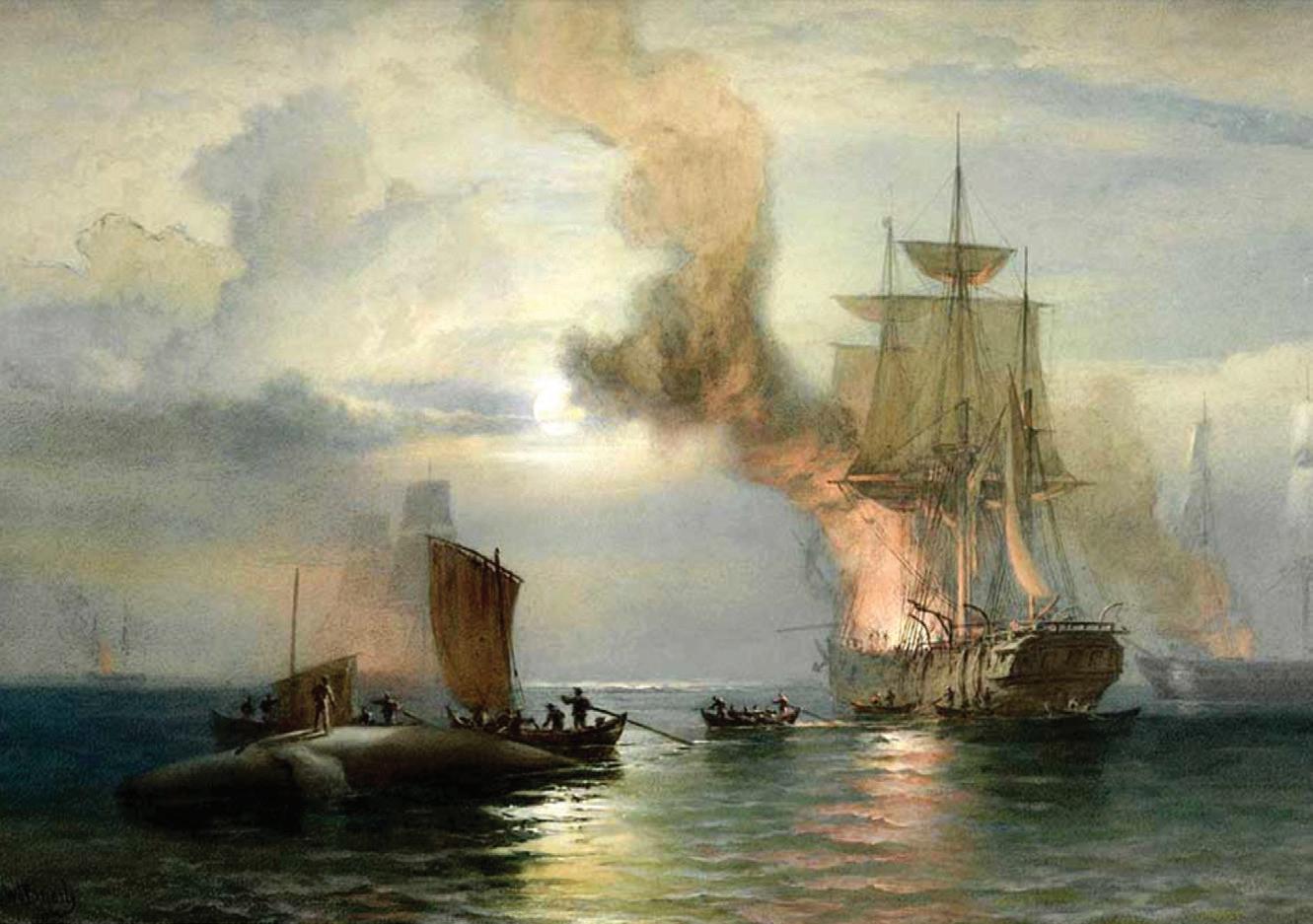
Whaling and sealing companies began regularly operating from Sydney in the 1790s, capitalising on the annual whale migration along the East Coast of Australia between May and November every year. Whaling ships first arrived in Sydney in 1791. Five of the 11 vessels of the Third Fleet – Active, Britannia, Mary Ann, Matilda and William & Ann, all owned by the merchant Enderby family - began whaling in the South Pacific soon after disembarking their human cargo.
The Britannia was the first European ship to catch and kill a whale off the Australian coast on 10 November 1791. Whaling became vital to the developing colony, with whale products among Australia’s primary exports prior to the discovery of gold and coal.
To deter the theft of water craft by convicts, British authorities limited the number of vessels allowed to operate in Sydney
The whaling industry, which required a crew of up to 40 for the larger ships and barks, and around 20 for the smaller brigs and schooners, often recruited escaped convicts as
cabin crew.
The whaling vessels spent long months at sea, and until whales were sighted, the journeys could be monotonous, with the on-board hierarchy very rigid. The pursuit and capture of whales was extremely dangerous, involving six-man crews launched in rowing boats (four oarsmen, a boat-header who steered and commanded, and a harpoon thrower). They manoeuvred alongside the moving leviathan and thrust harpoons attached to ropes into its exposed flank.
“In the early 1800s, New Zealand was also a magnet for escaped convicts because it was not yet colonized by a European nation.”
The crew’s wages were dependent on the sale of the numerous parts that the whale was dissected or rendered down into. After the ship owner paid expenses and took his commission, there mightn’t be much left of the sale proceeds to distribute among the ship hands. Often sailors were paid in advance and remained indebted to the company if the season’s catch was poor.
This meant it was a very unattractive option for professional sailors, but acceptable work for escaped convicts and other miscreants evading authorities, especially those with
maritime skills.
American whalers began anchoring in Chowder Bay below Middle Head from the late 1820s. The first dedicated whaling station on the Australian mainland (previously the sea mammals were dismembered on board the ships or towed to beaches) opened at Twofold Bay (near Eden) in 1828.
Mosman became renowned as a centre for whaling after the opening of Sydney’s first commercial whaling station in Mosman Bay (then Great Sirius Cove) by Archibald Mosman and John Bell in 1833. By 1837, there were 42 whaling ships based in Sydney, employing around 1300 crew.
It soon became known that American whalers and merchant trading ships had enabled the disappearance of fleeing convicts.
The frequency of convicts escaping on American ships created diplomatic tensions between the British and American authorities. This threat to maritime trade prompted the United States to appoint a consul to Sydney, James Hartwell Williams, in 1836, who was specifically tasked with controlling renegade seafarers. A consulate office opened in Sydney in 1839, ensuring American ships did not disrupt local colonial laws by harbouring runaway convicts.
In the early 1800s, New Zealand was also a magnet for escaped convicts because it was not yet colonized by a European nation. Most of the escapees worked in maritime trade, especially the seal and whaling industry. Many worked for Sydney merchants who dropped gangs on islands to harvest seal skins and oil for export to China and England.
The Sydney Herald estimated in 1837 that there were between 200 and 300 former convicts residing in New Zealand, a large proportion of them ‘bolters’.
The last convict ship to Sydney, the General Palmer, arrived in 1850 (although transportation officially ended in 1868 in Fremantle, Western Australia). By then the whaling and sealing industry had declined due to over-production and a severe reduction in wildlife from unsustainable mass slaughter.
The Great Sirius Cove whaling station in Sydney Harbour had already closed following the bankruptcy of Archibald Mosman and his business partners in 1844.
In 1851, discovery of gold in Ophir, near Bathurst, triggered a major ‘gold rush’ with the arrival of thousands of immigrant speculators, and Australia’s economy transitioned from marine to agricultural and forever changed.
IN THE HOOD
By Rita Bratovich
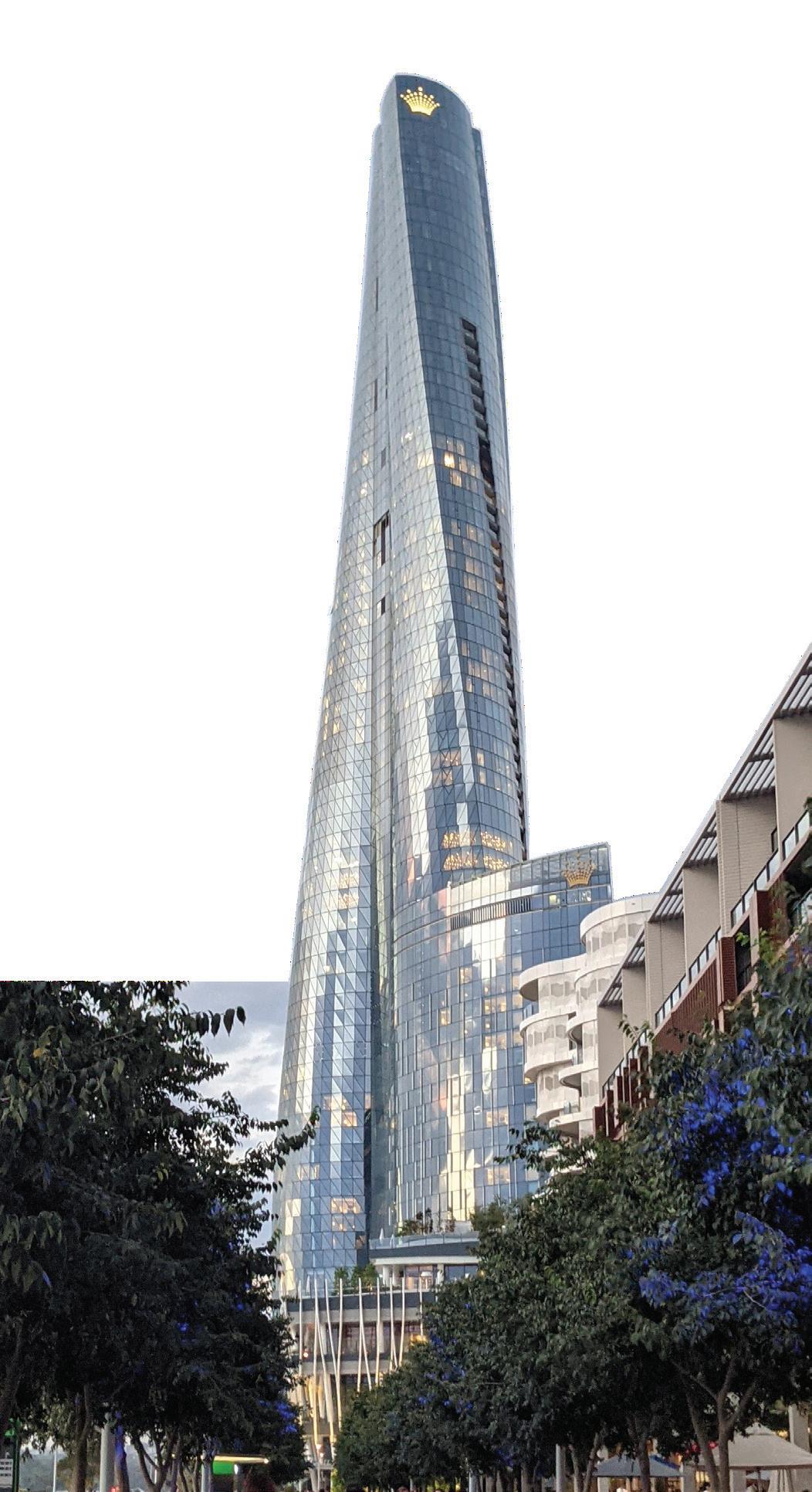
A MONOLITH of glass, steel and concrete, tapering towards the top with an elegant twist, Crown Sydney has dominated the city skyline since 2020, claiming the title of Sydney’s tallest building.
AAt 271 metres tall, it can be seen from the outermost suburbs of greater Sydney, easily distinguished due to its separation from the main cluster of CBD skyscrapers.
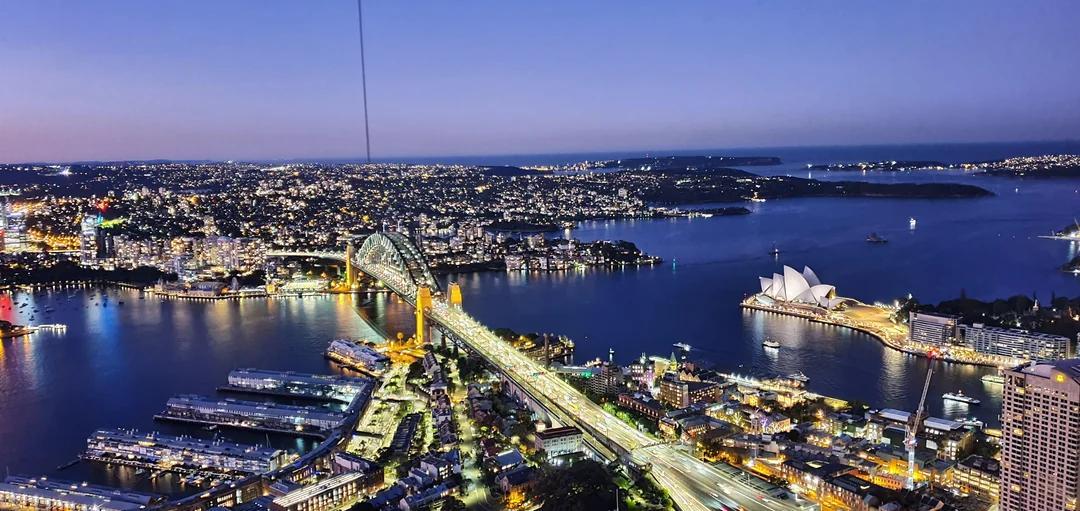
To say its construction was controversial is an understatement; not since the plans for the Sydney Opera House were unveiled had the city been so vocal and divided about a new building. Like the now world famous “sea shells” on Bennelong Point, Crown Sydney drew attention because of its design and its conspicuous location on the Sydney Harbour shoreline.
The building itself is a serious feat of engineering and design. Conceived by London-based architecture firm, WilkinsonEyre, the tower’s sculptural form is inspired by three overlapping flower petals. The structure rotates a full 60 degrees from base to crown, a complex twist achieved through parametric modelling and realised in a shimmering skin of around 7,000 uniquely shaped glass panels. The effect is dramatic: a constantly shifting reflection of harbour, sky, and city.
The building’s orientation and curved façade were carefully designed to maximise sightlines to the Sydney Harbour Bridge and Sydney Opera House, giving residents and guests some of the most prized panoramas in the country.
The tower’s interior is as impressive and opulent as its exterior suggests. The lower podium levels house hospitality venues and the casino floor. Above that, between levels 6 and 32, sits a 349-room ultra-luxury hotel marketed with “six-star” flair. Higher still are just 82 private residences, followed by exclusive penthouses, sky villas, and upper service levels. Near the top, a public observation deck offers Sydneysiders and visitors a rare chance to see the harbour from roughly 250 metres above sea level — a perspective once reserved for helicopter passengers. The history of Crown Sydney is folded into the history of the Barangaroo precinct. Once industrial wharves, the land was reclaimed in the mid-20th century before being earmarked as part of the massive Barangaroo urban renewal project. Early proposals for a hotel tower on the headland were
It was reviled, mocked, and protested against before it even had a girder in place, but now Crown Sydney stands as an iconic harbourside landmark. It was reviled, mocked, and protested against before it even had a girder in place, but now Crown Sydney stands as an iconic harbourside landmark.
rejected after public backlash. The project resurfaced in 2012 when the NSW Government entered negotiations with Crown Resorts for a luxury casino resort, pushing the plan through an unsolicited proposals process that drew scrutiny from the start.
Those who opposed the tower argued that it privatised land intended as public open space. They questioned transparency in the approval process and expressed concern about broader social impact of expanding high-end gambling in the city.
Just before its grand opening, in 2020, a public inquiry examined Crown’s suitability to hold a casino licence, uncovering serious compliance failures at other venues.
As a result, the glittering new casino floor sat idle when the building opened in December 2020. Crown was later deemed unsuitable to operate the licence, underwent major reforms, and was eventually acquired by global investment firm Blackstone. After regulatory changes and oversight conditions, the casino finally opened in 2022, with its licence fully restored in 2024.
While opinions still vary, Crown Sydney has now secured its place in the city’s story and skyline.
BE WORLD READY
At IGS, we’ve been embracing bilingual learning and unity through diversity since 1984. Upon one single dream, a thousand beautiful traditions have been built.
‘What does IGS mean to me?’ IGS Worlds conceptualised by students from Early Learning to Year 12.
Equipping students to be world ready.
Enrol Today
WILDLIFE WATCH
By Alec Smart
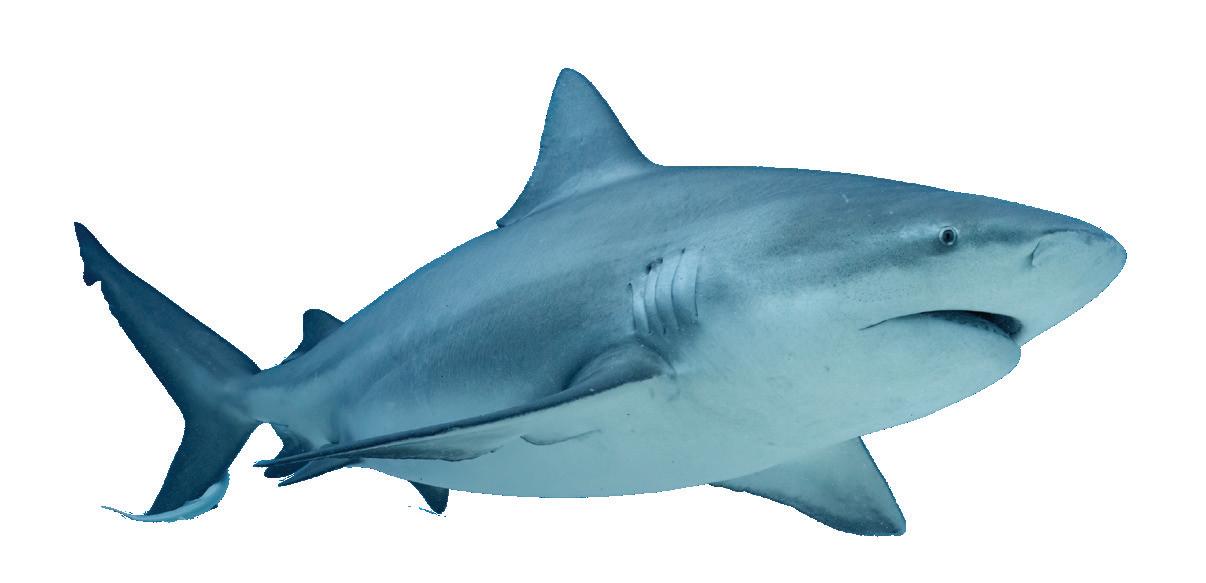
OA closer look at one of Sydney’s apex predators - the Bull Shark.
A closer look at one of Sydney’s apex predators - the Bull Shark.
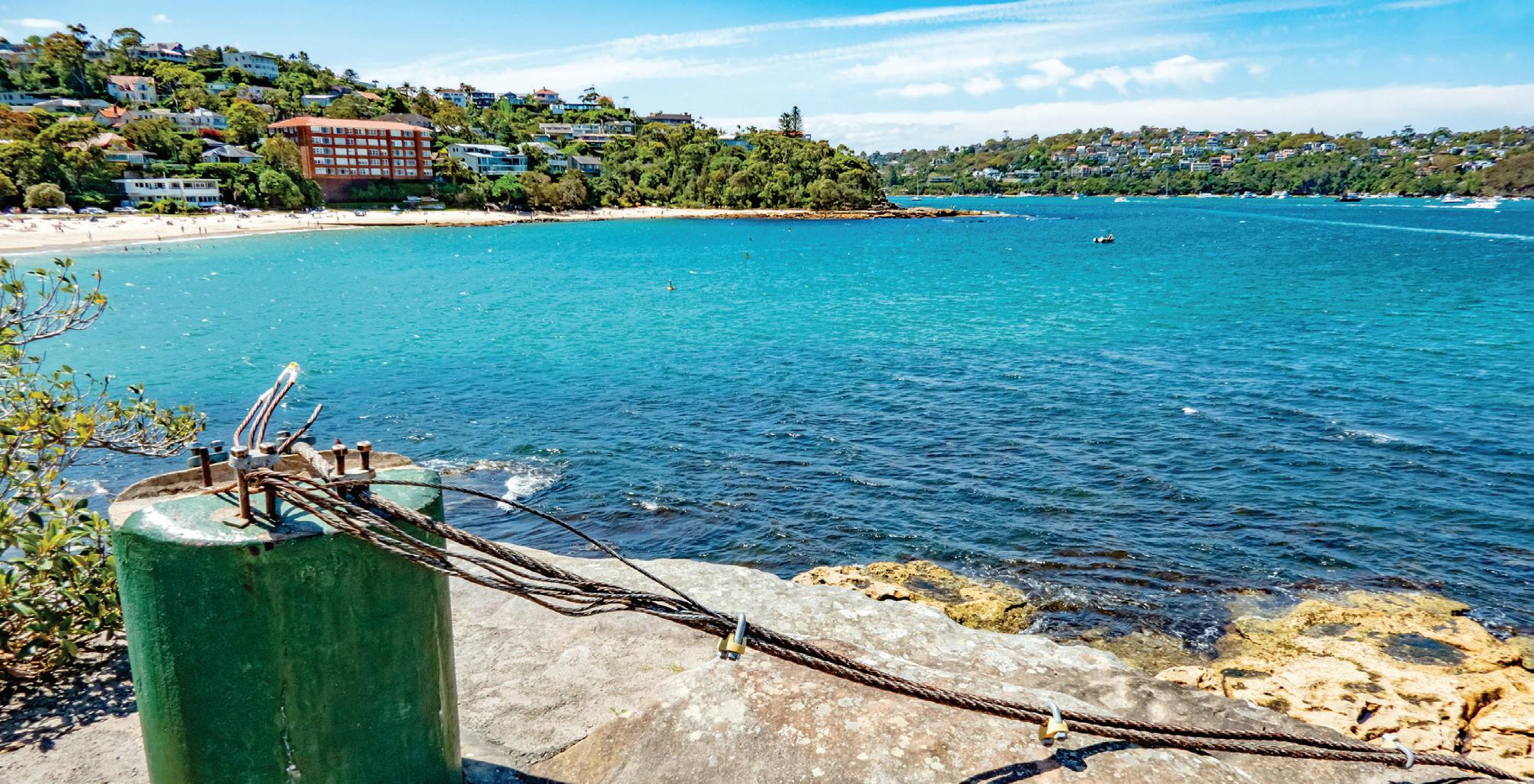
ON Sunday 18 January 2026, a 12-year-old boy sustained fatal injuries after he was horrifically mauled by a shark in Sydney Harbour, west of Nielsen Park, Vaucluse.
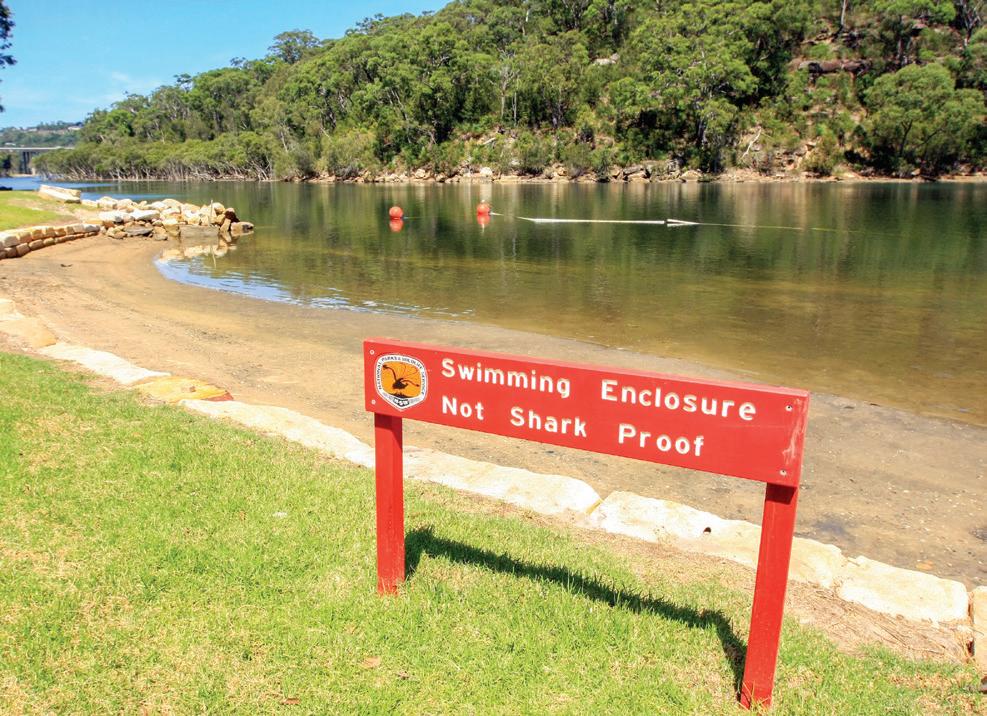
The beach alongside where he was swimming is named, not ironically, Shark Beach, and it features a netted swimming enclosure that is popular in summer. However, the boy, Nico Antic, was swimming outside of the netted area with a group of friends who were jumping off a rock. Although the incident took place around 4.20pm, when sharks are less likely to attack (dawn and dusk are statistically higher), the water was reportedly turbid following days of heavy rain – which favours the ambush predator. (In the 48 hours after the Vaucluse tragedy, there were several more non-fatal shark attacks in NSW, including two on Sydney’s Lower Northern Beaches.)
Several swimmers have been attacked by sharks within Sydney Harbour in recent years, including a woman who was bitten on the leg whilst swimming near a wharf at Elizabeth Bay in January 2024.
Sydney Harbour is a habitat for a large variety of sharks, especially during the warmer months of the year, including the three species of sharks most responsible for fatal attacks on humans: whites, tigers and bulls.
BULL-HEADED BITERS
Bull sharks (Carcharhinus leucas), widely considered one of the most aggressive, territorial, and dangerous shark species in the world, the adults range in size from 2.0 – 3.2 metres. They tend to occupy shallower waters (less than five metres) but usually near steep drop-offs where they can linger in the depths and ambush prey swimming overhead. Most of the attacks - and all of the fatalities - that resulted from deadly encounters with the dorsal finned predators within Sydney Harbour waters are credited to bull sharks. The numerous coves around the Middle Head peninsula,
from Mosman to Balmoral, and inland along Middle Harbour to Bantry Bay and under the Roseville Bridge, are among the most popular cruising zones for the more dangerous bull sharks.
A section of water between Kirribilli on the North Shore, and Garden Island and the Opera House to the south is also a ‘Bermuda Triangle’ of high bull shark activity.
Although larger sharks travel north during the cooler months, several of the mangrove-lined stretches of rivers that flow into Sydney’s four main ports – Pittwater, Port Jackson, Botany Bay and Port Hacking - are popular breeding grounds for the bulls.
Freshwater lurkers
Bull sharks breed in brackish (low salt) waters such as estuaries and further upstream where tidal seawater meets freshwater flowing down from creeks. Females give birth to litters of between 1 and 13 young, which remain in estuaries for up to five years.
These low-salinity environments, especially mangroves, effectively become bull shark nurseries because they offer high protection for the developing pups from predators, especially other sharks that prefer saltier waters. Which is why bull sharks are often found in the upper reaches of Parramatta and Lane Cove rivers and Middle Harbour Creek, where tigers and white sharks seldom venture.
Bull sharks are unique because, unlike most species of shark, they’ve evolved to survive in both salt and fresh water, due to unique kidney and rectal gland functions that regulate salt and water balance. This process, called osmoregulation, makes them euryhaline (tolerant of varying salinities).
In most sharks, a significant reduction in water salinity would cause swelling and bursting of vital organs, but the
Join our community
“Bull sharks tend to occupy shallower waters but usually near steep drop-offs where they can linger in the depths and ambush prey swimming overhead.”
started tagging them with electronic monitors in Sydney Harbour in 2009.
Around 90 bull sharks have since been tagged in Sydney Harbour and their movements are recorded, especially if they approach beaches with high human activity. There they alert electronic sensers and life savers will often clear the water of swimmers and surfers until the shark has left the area.
bull shark’s ability to retain vital salts enables them to travel far up tidal rivers and into freshwater creeks and lakes to hunt and breed.
However, their adaptability increases the potential for dangerous attacks on humans, who favour freshwater swimming in warmer countries, where they are less likely to encounter sharks.
ATTACKS IN SYDNEY HARBOUR
Although the first recorded shark attack fatality was off the coast of Sydney in 1791, according to the Australian Shark Incident Database, there have been 64 recorded shark bites around Sydney Harbour between 1807 (Cockle Bay, in which the victim survived) and 2025. The first documented fatality in the harbour was in Woolloomooloo Bay in 1840. 53 of the recorded attacks in Sydney Harbour have been identified as bull sharks, 28 of those were fatal. In fact, all of the fatal attacks around the harbour and the rivers that feed into it were attributed to bull sharks, except for one in Sirius Cove in 1919, when the species wasn’t identified. Middle Harbour has a documented history of deadly shark attacks, with several fatalities occurring in the mid 20th century, mainly around Bantry Bay, Sugarloaf Bay and the Roseville Bridge.
Middle Harbour is classified as a ‘drowned valley’, which consists of varying depths. Although it has an average depth of 13 metres, there are deep channels and holes that plummet to a reported 37 metres – ideal locations for large predators to lurk undetected.
The first recorded fatality in Middle Harbour was 1907, followed by a tragic attack in 1916 when a Castlecrag man was bitten on the arm and succumbed to his wounds in shallow water off Sugarloaf Point.
There were two more fatal attacks in 1942 in Bantry Bay, followed by Sugarloaf Bay in 1955, and beneath Roseville Bridge in 1960. Prior to the 2026 tragedy off Vaucluse, the last fatal attack was in 1963, in the mouth of Middle Harbour.
TAGGING
According to SharkSmart, the NSW Government shark awareness website overseen by researchers from the Department of Primary Industries (DPI), very little was known about eastern Australian bull sharks until the DPI
SharkSmart has found:
• Tagged bull sharks have often been detected in the Great Barrier Reef in Queensland during winter and spring before migrating south to Sydney Harbour for the summer and autumn, travelling a distance of 1800km.
• Bull Sharks are present when seawater temperatures average 20 degrees or warmer; when the water cools below 19 degrees they swim north again.
Safety Tips for Swimmers.
• Avoid murky or turbid water, as it provides camouflage for ambushing sharks.
• Avoid swimming after rain, especially near river mouths, as it attracts sharks seeking drowned creatures washed downstream.
• Swim during daylight hours and avoid dawn, dusk, and overnight, when sharks are hunting.
• Check water temperature (above 20°C means more bull sharks) and use apps/websites such as Dorsal Watch for reports of recent shark sightings or electronic tag monitoring.
Safety Tips For Swimmers:
• Swim in netted enclosures:
North Shore: Greenwich Baths, Maccallum Pool (Cremorne Point), Clifton Gardens (Chowder Bay, Mosman), Balmoral Baths, Northbridge Baths (Sailors Bay, Middle Harbour), Clontarf Reserve Baths, Forty Baskets Beach (Balgowlah), Fairlight Beach Rockpool, Manly Cove (Manly), and Little Manly Cove (Manly).
South Shore: Dawn Fraser Baths (Balmain), Marrinawi Cove (Barangaroo), Murray Rose Pool (Double Bay), Shark Beach (Vaucluse), and Camp Cove Beach (Watson’s Bay).
COMMUNITY
By Rita Bratovich
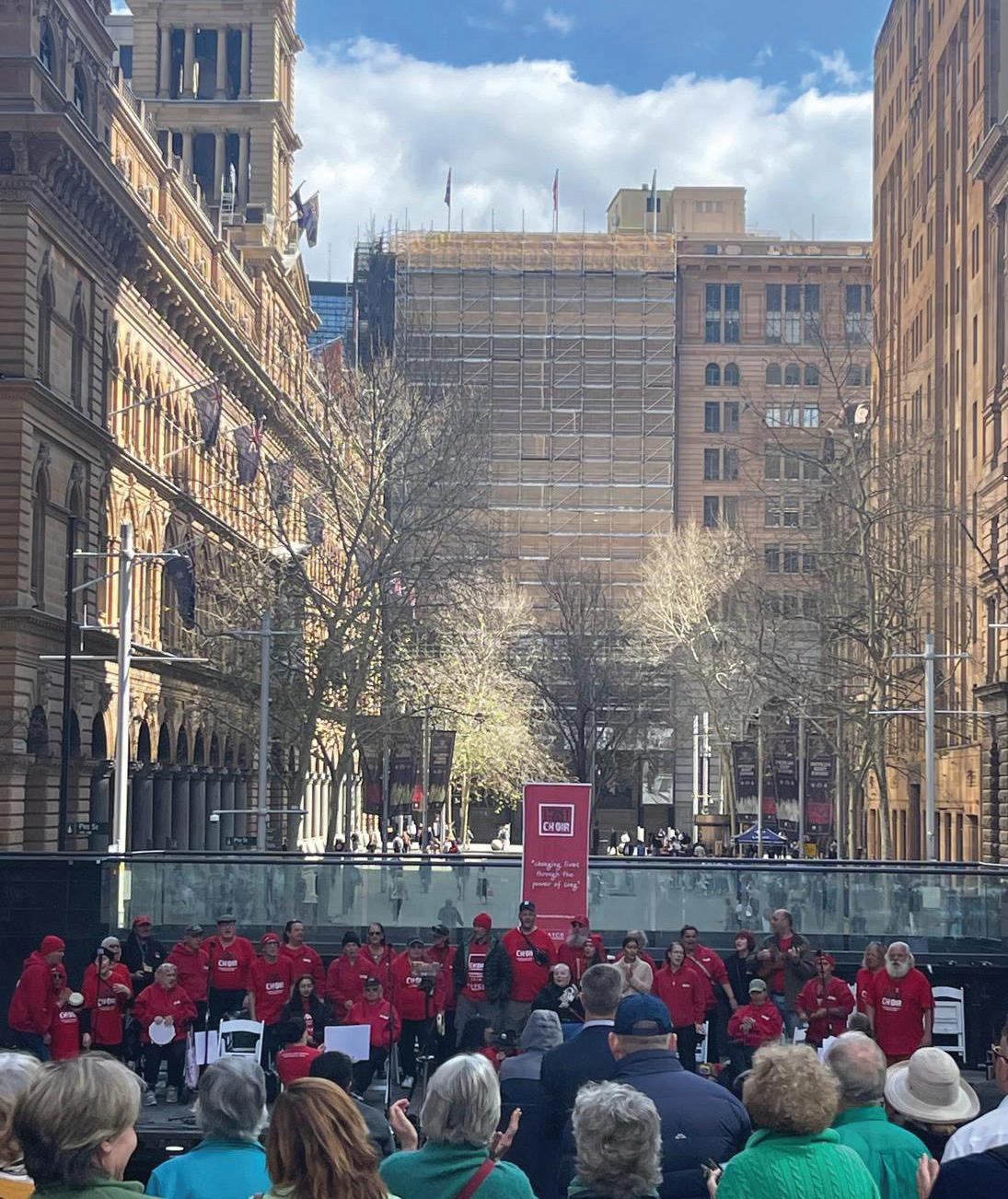
OUsing camaraderie and song to rise above hardship, a truly harmonious choir. Using camaraderie and song to rise above hardship, a truly harmonious choir.
ON any given week in Sydney, you might hear something extraordinary drifting out of a community hall in Redfern, a space in Liverpool, or even the walls of Dillwynia Women’s Prison. It’s not just a choir rehearsal — it’s a lifeline set to music.
For more than two decades, the Sydney Street Choir has been transforming lives through song. Founded in 2001 by acclaimed performer and social advocate Jonathon Welch AO, the choir is now the longest-running program of its kind in Australia. But longevity is only part of the story. What truly sets this choir apart is the power of its purpose. This is not your typical community ensemble. Many
members have experienced homelessness, mental health challenges, domestic violence, or deep social isolation. Here, they find something that can’t be handed out in a care package: connection, confidence and a sense of belonging. Rehearsals are as much about friendship as they are about harmonies. Performances are celebrations of resilience. And perform they do — often. The choir maintains a busy schedule, appearing at community gatherings, corporate events and festivals, sometimes dozens of times a year. Their voices have travelled well beyond Sydney too, with
“Music is the heartbeat, but support runs deeper. Behind the scenes, a dedicated social welfare program helps members navigate real-life challenges.”
tours to regional NSW, Melbourne, Tasmania and the Northern Territory. Along the way, they’ve shared stages with big names including Dami Im, Deni Hines, Angry Anderson and Leo Sayer.
Music is the heartbeat, but support runs deeper. Behind the scenes, a dedicated social welfare program helps members navigate real-life challenges — from housing insecurity and financial hardship to employment pathways and counselling. Individualised support and referrals to specialist services ensure that no one is left to struggle alone. The choir becomes a kind of extended family, offering stability in lives that may have known very little of it.
Today, more than 100 members sing with the Sydney Street Choir each week across its three programs. While the choir itself has been active since 2001, the Sydney Street Choir Foundation was established in 2010 to provide the administrative and financial backbone that keeps everything running. Managed by a small volunteer board, the registered charity focuses on one clear mission: using music and community to benefit people experiencing disadvantage. The impact of the choir has resonated far beyond its own members. Corporate organisations have embraced the Sydney Street Choir’s volunteering workshops as a powerful team-building experience. Instead of trust falls and PowerPoints, employees raise their voices together, discovering empathy, vulnerability and joy in the process. Companies like AMP, Sydney Water, PwC and Macquarie have all taken part, finding that singing side by side can break down barriers in ways few boardroom exercises can. Young people are part of the picture too. The choir’s high school workshop program, designed for students aged 14 to 18, focuses on self-esteem, self-expression and helping teenagers find their voice in a supportive, non-judgmental environment. It also opens conversations about mental health and homelessness, building understanding alongside musical skills.
Through every rehearsal, workshop and performance, the Sydney Street Choir proves one simple truth: when people sing together, they don’t just make music — they build community, dignity and hope.
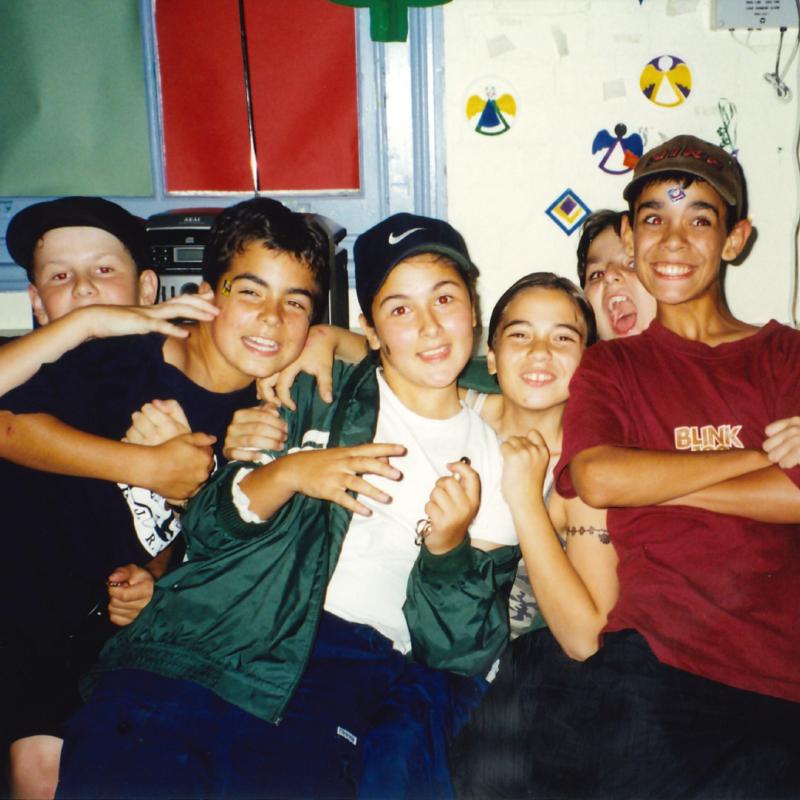
IIN an ochre-brick, white-topped heritage building on the corner of Riley and Arthur Streets, Surry Hills, is an oasis called the Girls & Boys Brigade. A place where locals can find reprieve from danger, boredom, and mischief and instead find friendship, creativity, and hope.
It began in 1882 when two influential newspaper executives recognised the vulnerability of young boys living on the streets. They set up The Boys Brigade, providing an innerCity safe haven with entertainment and education in practical skills. The Brigade evolved to include girls and offer more services and ultimately help thousands of children, youth, and families across the decades.
Today, The Girls and Boys Brigade provide a range of services and programs free of charge to families in need in the City of Sydney catchment. They cater for young people aged 5 to 18, but continue support in some instances well beyond adulthood. Programs are designed around educational support, recreation, life skills, vocational
IIN the heart of Surry Hills - a community known for both its vibrancy and vulnerability - The Girls & Boys Brigade has been a beacon of hope for over 144 years. Recently, while seeking a prize donation for an upcoming event, they were introduced to the team at ESCA Hospitality (masterminds behind Nour, Henrietta’s, Aalia & more).
The initial request was simple: a prize donation for their event. However, after learning more about their impactful community work, ESCA was moved to contribute far beyond expectations. They introduced menu items where $1 from each sale would directly benefit the charity, and they have supported The Girls & Boys Brigade’s ‘family dinners’. These communal meals offer more than just sustenance; they provide an opportunity for the community to share stories, alleviate stress, and cultivate a sense of belonging. In another remarkable gesture of support, ESCA hosted a fundraising dinner for the Brigade’s donors at the prestigious Aalia restaurant, raising tens of thousands of dollars. Yet, the most profound aspect of this partnership has been the
You can support and learn more about the Girls & Boys Bridge at: girlsandboysbrigade.org.au This non-profit organisation has been providing a safe, nurturing space for local children and youths for over 144 years.
workshops and tailored assistance for family challenges. The Riley St building is a welcoming space for children and youth. Here, they can spend time with other people, play games and sports, be creative, or receive mental health support and specialised care. The Girls and Boys Brigade is not affiliated with any religious organisations, nor does it receive government funding. It relies on donors, corporate partners, trusts and foundations and most importantly, on the generosity of the wider community.
If you are able, please support this worthy community cause by making a donation. If you are unable to give money, there are other ways you can help. Visit the website for more information. girlsandboysbrigade.org.au
ten-week hospitality course ESCA initiated for the youth of The Girls & Boys Brigade.
During the course, youth learned from some of Sydney’s most renowned chefs, who shared their own stories of struggle and triumph. Among these youth, two stood out for their dedication and work ethic. Their commitment earned them the opportunity to participate in the charity event at Aalia, where they thrived in the bustling environment. For one of these individuals, the experience was life changing after he was offered a position at an ESCA restaurant. Through this partnership, The Girls & Boys Brigade and ESCA Hospitality have crafted a narrative of hope and transformation, proving that with community support, even the most vulnerable can rise to fulfil their potential.
Sydney’s 25th Biennale:
Contemporary art exploring memory, identity, and immersive experiences.
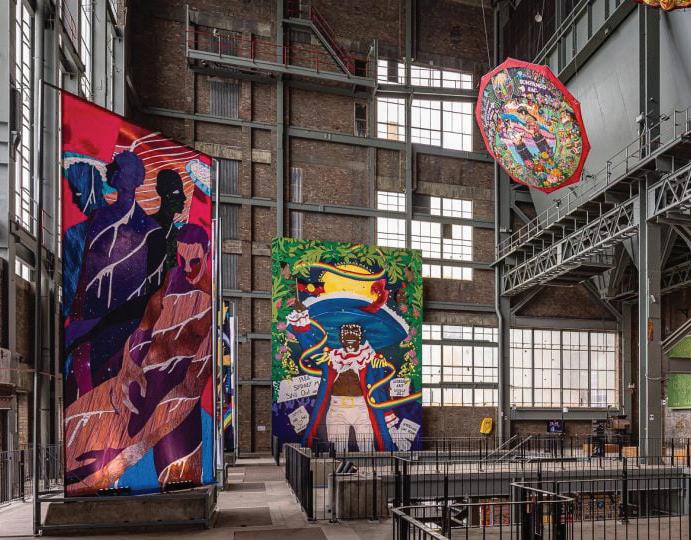
RETURNING from 14 March, the 25th Biennale of Sydney — Rememory — is set to be a bold, thought-provoking celebration of contemporary art. Curated by internationally acclaimed Hoor Al Qasimi, the festival draws inspiration
from Nobel-winning author Toni Morrison’s concept of rememory, inviting audiences to explore how memory, history and identity intertwine and shape our understanding of belonging.
Free to the public across five key sites — White Bay Power Station, the Art Gallery of New South Wales, the Chau Chak Wing Museum, Campbelltown Arts Centre and Penrith Regional Gallery — the Biennale’s reach reflects a commitment to accessibility and engagement across Sydney and Western Sydney.
This year’s program features dozens of artists and collectives from 37 countries, presenting works that range from immersive installations to site-specific projects addressing memory, migration, resilience and overlooked histories. Highlights include Nikesha Breeze’s immersive Living Histories, Nancy Yukuwal McDinny’s monumental mural amplifying First Nations voices, Cannupa Hanska Luger’s sound installations, Tuan Andrew Nguyen’s film works and Dread Scott’s photographic explorations.
The Biennale experience extends beyond the galleries. Opening night sees the concert Lights On at White Bay Power Station, while Art After Dark evenings, Family Days, artist talks and food markets bring Rememory’s themes into social, communal spaces.
Whether you’re drawn to monumental new artworks, performances that spark conversation, or interactive programs for all ages, the 2026 Biennale of Sydney promises a compelling encounter with art that challenges, inspires and lingers long after the exhibition ends.
25th Biennale of Sydney - Rememory 14 March - 14 June White Bay Power Station
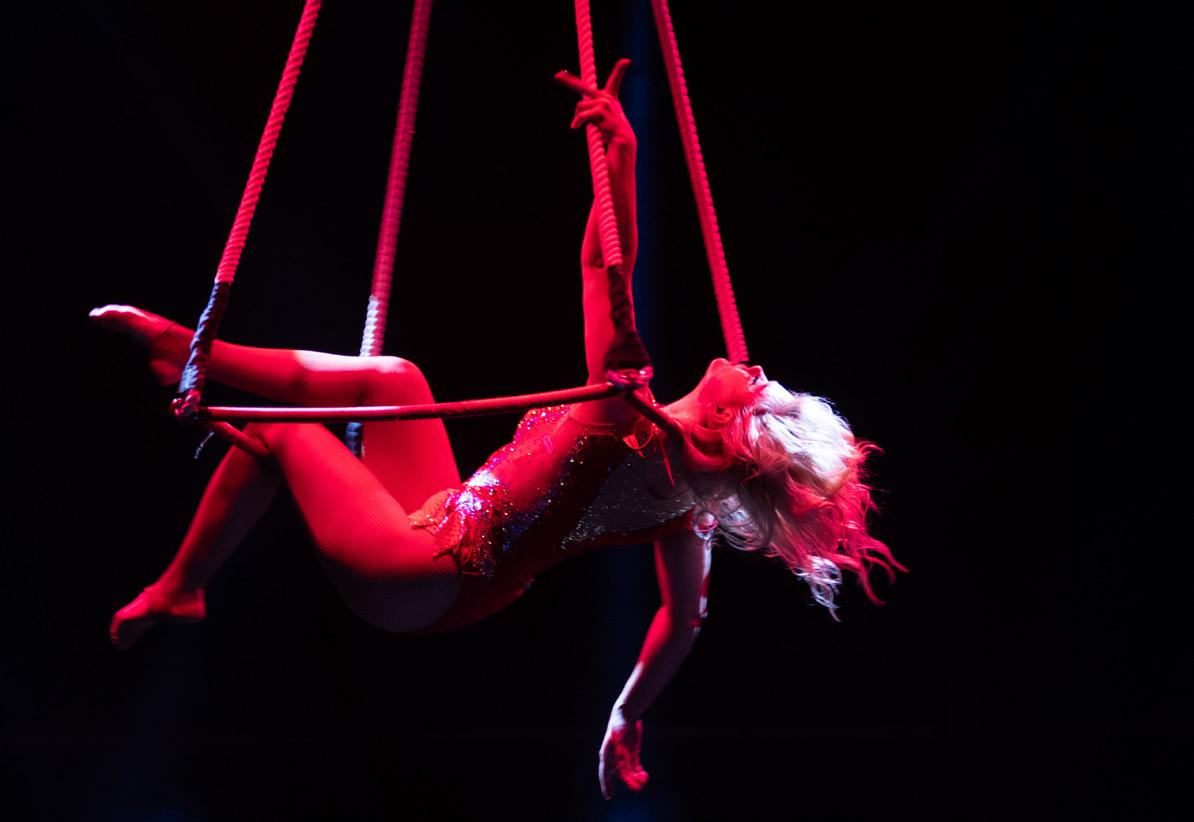
SCOTT MAIDMENT and the Strut & Fret team have curated a beautiful selection of theatrical sweets and presented them as delicacies on a plate that is La Ronde. This production feels more intimate and pure in the way it allows the performers to be the central focus.
Intimate yet spectacular, brimming with talent and charisma.
The La Ronde performers have enough personality to fill the spacious theatre tenfold. Expertise, sexiness, humour, and charm are paramount and present in spades. The mood is set with red-hued lighting and a giant mirror ball on stage. Then the spotlight hits powerhouse singer, Geniris (Dominican Republic) who enters like royalty, with a majestic voice to match.
Each act performs twice or more, with comic interludes and songs breaking up the heart-stopping action.
“An exciting and classy show that you’ll want to see with a bunch of friends.”
On now at The Grand Electric, 199 Cleveland St, Surry Hills larondetheshow.com
SEASON 2026
Experience the incredible energy of the human voice – in the audience or singing on stage. Pure joy!
S
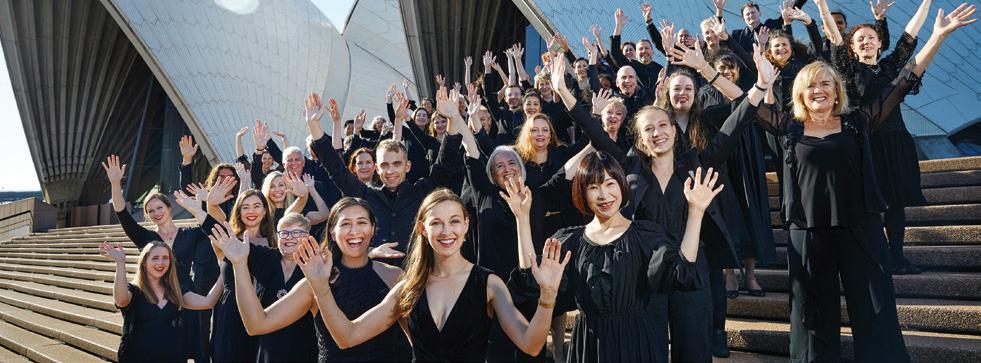
SYDNEY Philharmonia Choirs’ 2026 concert season celebrates sublime music, from beloved Baroque favourites such as Bach’s St John Passion to awe-inspiring masterpieces like Britten’s War Requiem, alongside thrilling works by today’s composers. Whether an exquisite baroque program with the Chamber Singers at Pier 2/3, the youthful sounds of VOX at White Bay Power Station, or the wall of sound that comes from the
400-voice Festival Chorus in the Sydney Opera House, the Choirs presents music that will excite every musical taste. And you needn’t just enjoy it from the audience seats: make 2026 the year you sing in the choir yourself. ChorusOz is your opportunity—whether you’re a shower star or a curious can’t-sing-a-note—to join 999 others on stage at the Sydney Opera House. Perform with a real orchestra and world-class opera stars in Verdi’s grand tragedy, Aida. Past participants call the experience “life-changing,” and many return year after year.
Later this year, you could join our Christmas Choir and sing in Handel’s Messiah at the Opera House. Hallelujah! 2026 is also the year our young adult choir VOX turns 25, the average age of its members. Renowned for its contemporary choral sound, virtuosic a cappella harmonising, and themes of spirituality, environment, and community, VOX will mark the milestone with World O World, a gorgeous anniversary concert in November at White Bay Power Station.
If you’ve never experienced the Choirs before, the season opening concert Gloria! at Pier 2/3 in Walsh Bay is the perfect introduction. Hear Vivaldi’s brilliant Gloria in D, Handel’s fiery Dixit Dominus and JS Bach’s radiant Cantata No.12 right on Sydney Harbour as the sun sets over the water. Could there be a better setting? And after the concert, join the choristers for a drink to celebrate the beginning of the season.
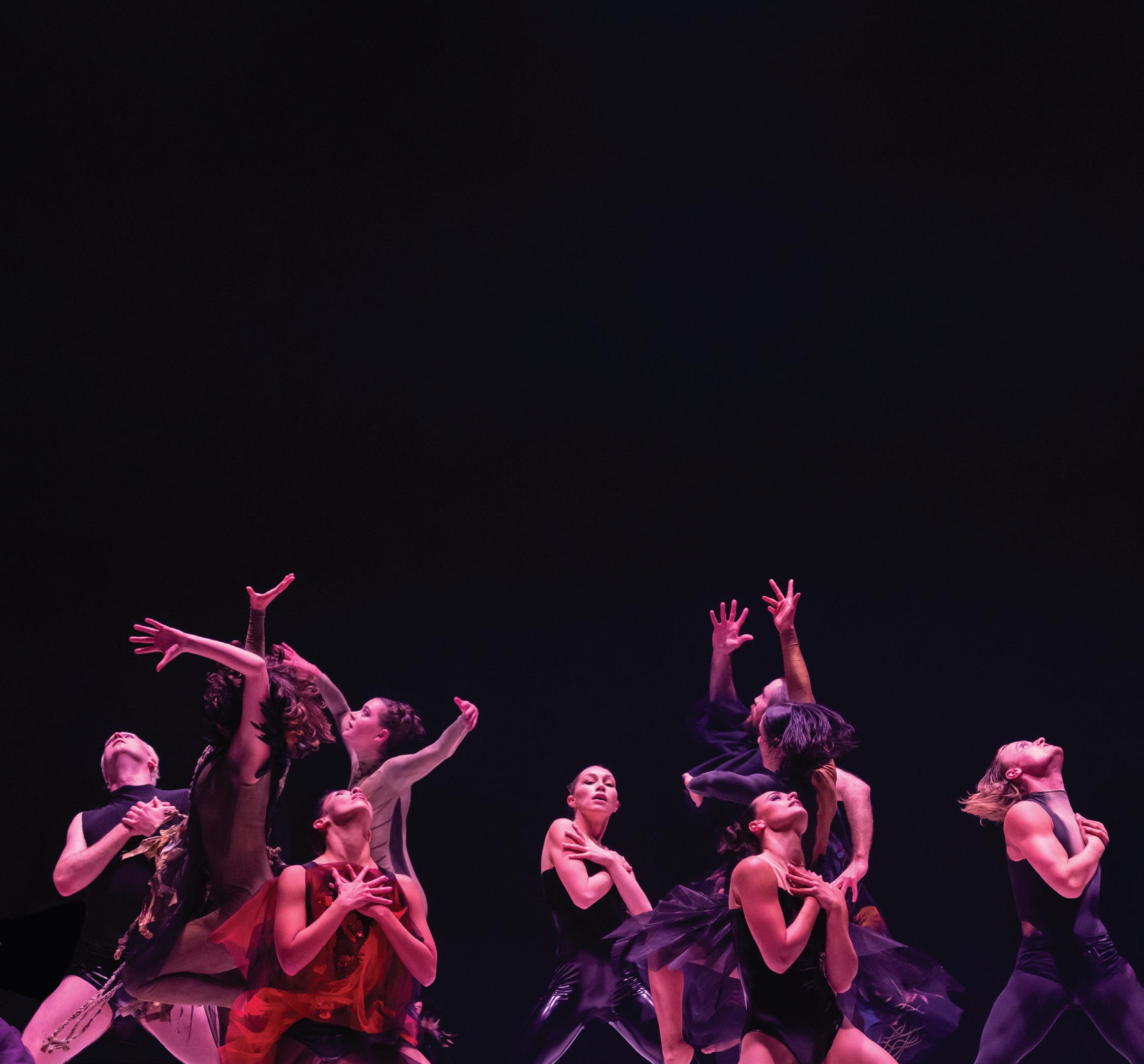
A fearless season of collaboration, innovation and contemporary dance at its most powerful.
I
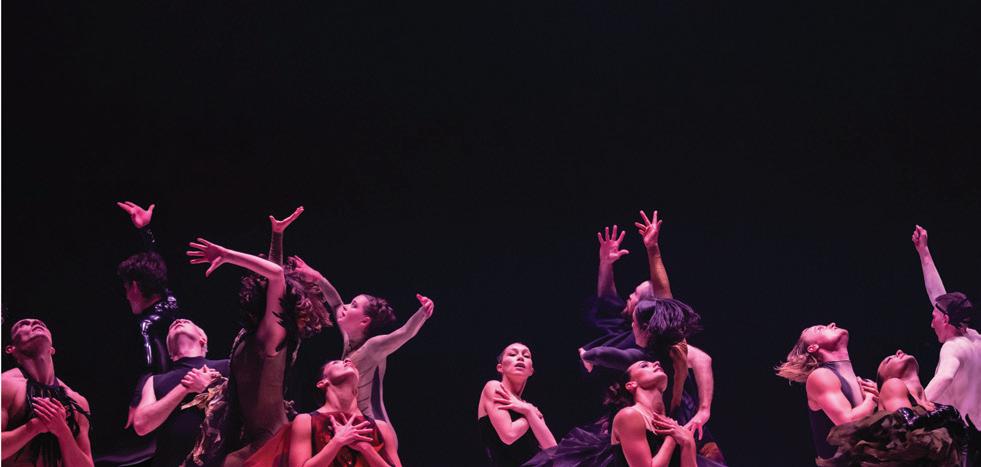
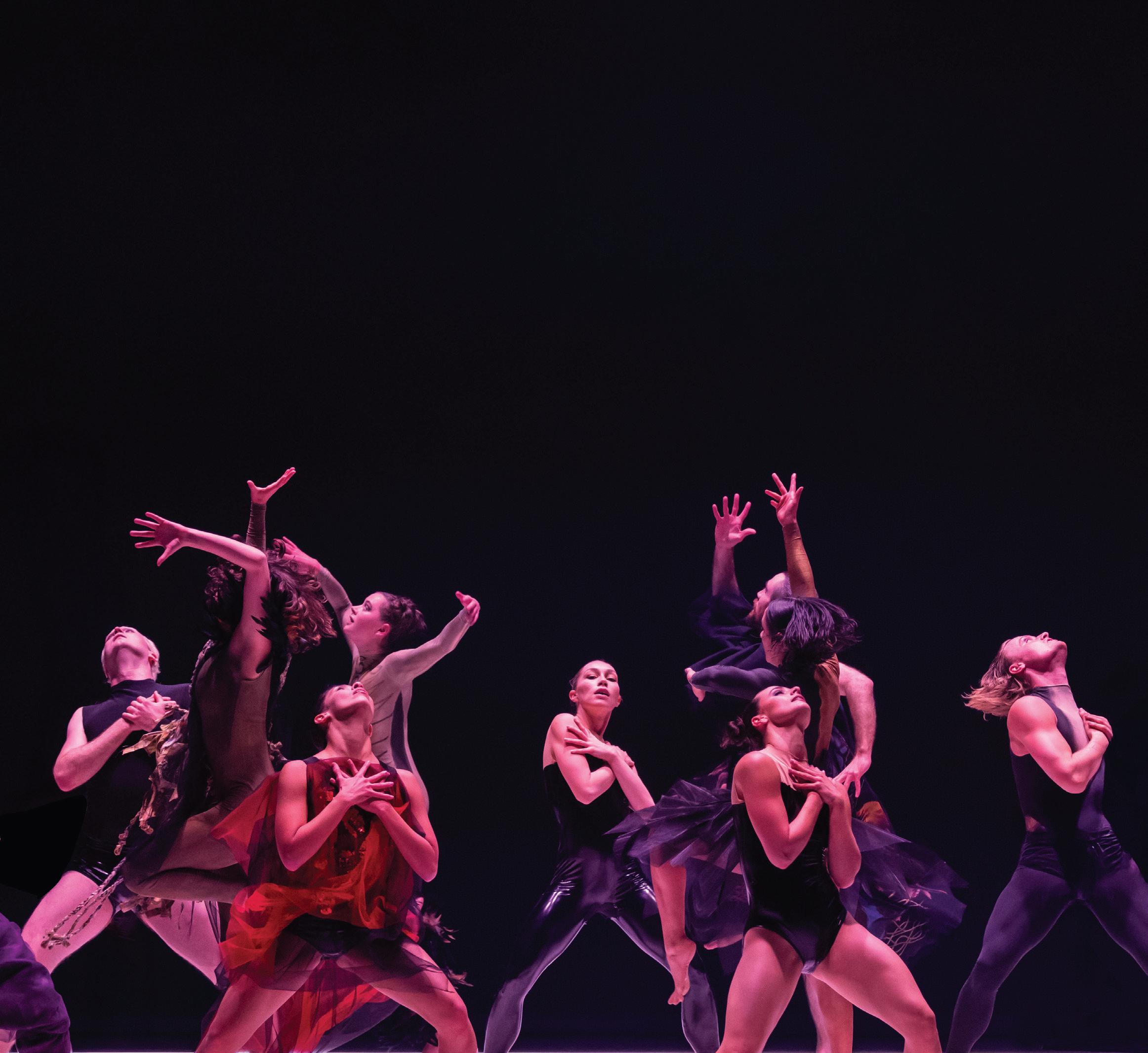
IN 2026, Sydney Dance Company ignites a year of bold artistic collaboration, presenting powerful choreographic ideas in a season defined by empowerment, curiosity and fearless exploration. Reflecting the Company’s rich legacy while forging new creative pathways, 2026 celebrates the evolving landscape of contemporary dance across major stages, intimate spaces and ambitious programs supporting independent artists.
Season One launches in June at the Sydney Opera House with Engine, a striking triple bill uniting three extraordinary choreographic voices. Artistic Director Rafael Bonachela premieres The Journey Itself is Home, featuring a score by Grammy Award-winning composer Bryce Dessner and inspired by the poetry of Matsuo Bashō. The program also marks the Australian premiere of The Mass Ornament by Berlin-based Spanish choreographer Fran Diaz, set to the music of Henryk Górecki, and the
return of Melanie Lane’s viral sensation Love Lock . A reimagined folk dance of the future, Love Lock features costume design by Akira Isogawa and a pulsing score by UK electronic artist Clark.
Across August and September, the Company celebrates 40 years at Walsh Bay Arts Precinct, culminating in Season Two’s Current at the Neilson Studio. Featuring new works by Raghav Handa, Jenni Large and Azzam Mohamed, alongside Bonachela’s E2 7SD, Current offers an intimate, electrifying portrait of contemporary Australian dance.
The year also sees the fifth edition of INDance, reaffirming Sydney Dance Company’s commitment to nurturing independent dance and connecting adventurous ideas with curious audiences.
Join us at Pier 2/3 right on Sydney Harbour as the sun sets for two of the most dazzling
– and the exquisite, contemplative contrast of J.S. Bach’s Cantata No.12. Bar open following the concer t.
Saturday 7 March | 3pm | Pier 2/3 Walsh Bay
of the Easter stor y
masterpiece has a theatrical power that feels utterly real and immediate
Saturday 4 April | 1.30pm | Sydney Opera House
Baroque choral works – Vivaldi’s Gloria and Handel ’s Dixit Dominus
Glorious!
This Easter, the Symphony Chorus, Sydney Philharmonia Baroque Orchestra and conductor Brett Weymark bring you the St John Passion –Bach’s vivid and dramatic telling
Bach’s
Don’t miss it!
EAT & DRINK
II’M genuinely kicking myself for not discovering Ette sooner. As someone always on the hunt for city spots to host clients, catch up with friends or sneak in a pre-show drink, this venue would have come in handy more times than I can count. Consider this my belated love letter to a place that somehow flew under my radar - and one I’m now quietly adding to my regular rotation. You know the kind: a spot you half want to keep to yourself, but can’t help recommending because it’s just that good.
SThe award-winning Sydney Brewery brand expands to White Bay, with Sydney Brewery Rozelle now open.
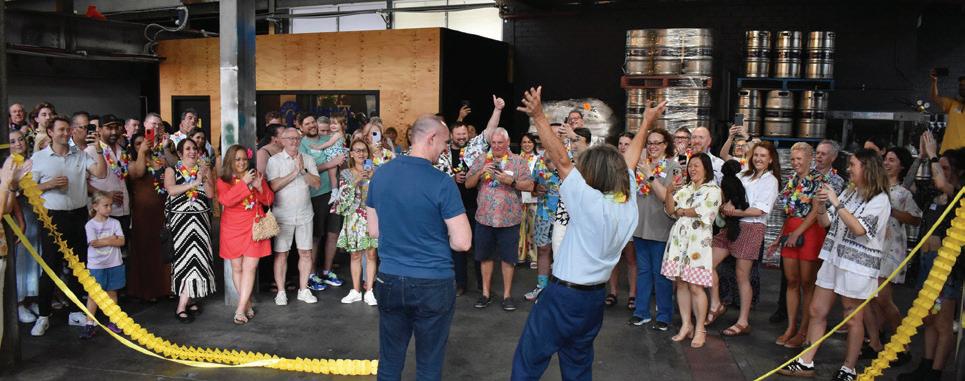
SYDNEY BREWERY has officially expanded into Rozelle, opening the doors to its newest venue at White Bay and marking an exciting new chapter for the much-loved Sydney-born brand.
Founded in Surry Hills in 2005, Sydney Brewery has built a strong reputation for quality, taste and consistency, earning a loyal following across its venues in Surry Hills and Alexandria. Now, with Sydney Brewery Rozelle open, locals and visitors can enjoy the same award-winning beers and ciders in one of the Inner West’s most historically rich locations.
The new brewery is housed within a 150-year-old former steelworks on the south-western tip of White Bay, close to Sydney Harbour and the evolving Bays Precinct. Sydney Brewery announced the purchase of the former White Bay Brewery site in September 2025 and moved quickly to revitalise the space, welcoming its first patrons in early December.
The history of the site and suburb has also influenced the brand’s presence in Rozelle. The suburb’s name is linked to the Rosella bird, which inspired the top half of Sydney Brewery’s iconic logo character, paired with the
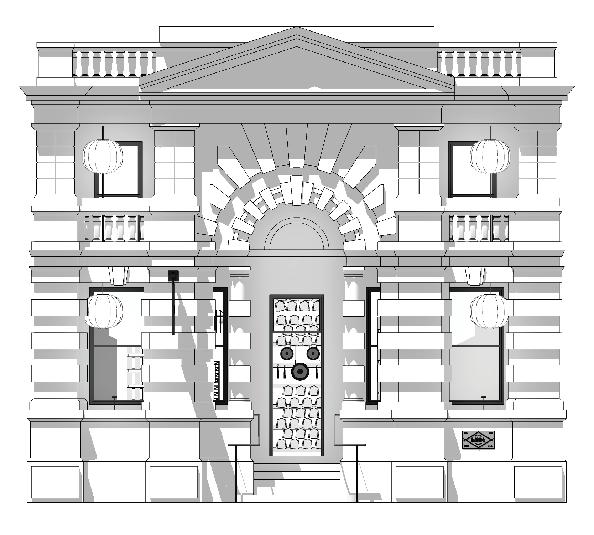
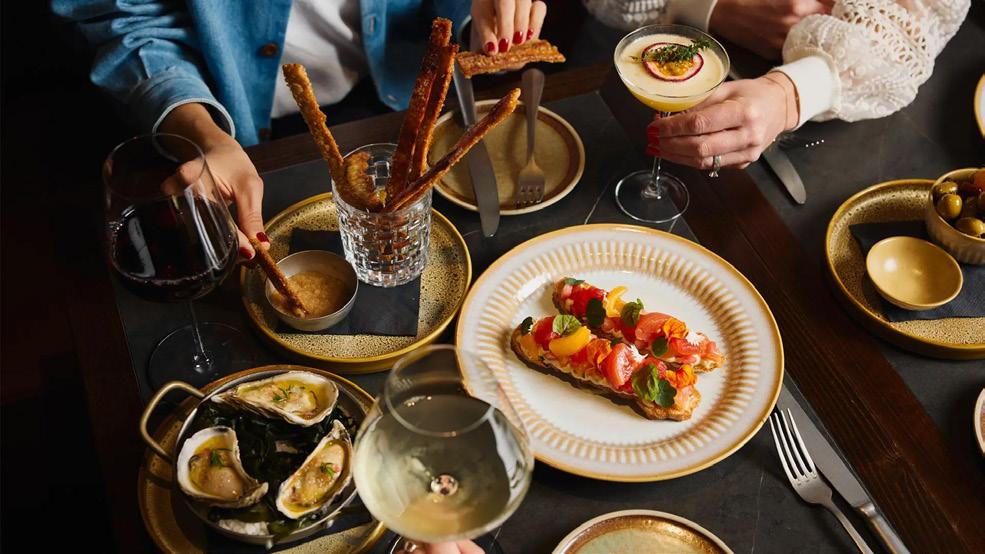
Ette is tucked almost unassumingly within the lobby of a corporate building at 10 Bridge Street in the heart of Sydney. Step inside and the outside hustle melts away into a lowlit hum of dark, moody interiors and after-dark confidence. At the centre of the room is the open-plan kitchen, where flames lick the grills and chefs move in a kind of controlled choreography that’s quietly hypnotic. Service mirrors the energy - attentive, accommodating and impressively knowledgeable throughout.
The menu champions seasonal ingredients, treated with enough creativity to keep things interesting without tipping into fussiness. It works just as well for a few snacks as it does for a full meal, with a smart mix of share plates, confident entrées and mains. The drinks list is equally thoughtful, pairing clever house cocktails with classics and an extensive wine list that encourages lingering.
We started with the Zucchini Flower ($9), fried to a perfect crisp and stuffed with silky cream cheese, jalapeño and wild honey - utterly indulgent. The Sashimi Mosaic followed: kingfish and salmon cured ceviche-style and arranged atop passionfruit, finger lime and coconut. Almost too beautiful to eat.
For a quick, flavour-packed bite, Ette’s ‘conettes’ punch well above their size, offering four elegant options ranging from Yellowfin Tuna Tartare to Beetroot Tartare with goat’s curd. Effortlessly versatile, Ette suits everything from a relaxed lunch to an intimate dinner - but it truly shines as a stylish after-work or pre-show haunt. A discreet gem you’ll want to return to again and again.
unmistakable tiger below - a nod to the local NRL team. The Rozelle brewery also opens the door to innovation, allowing Sydney Brewery to expand its range of beers and ciders. New releases are planned for the coming months, including the brand’s first packaged low-carb beer, alongside its established core range and seasonal brews. Sydney Brewery’s credentials speak for themselves. The brand was named Champion Cider Producer at the 2025 Australian International Beer Awards, with additional gold medals awarded across both beer and cider categories, including its Pilsner, South East Ale and Lemon Twist Cider. With its relaxed atmosphere, deep Sydney roots and “All Kinds of Different” ethos, Sydney Brewery Rozelle is already proving a welcome addition to the Inner West - and, by all accounts, it feels right at home.
Sydney Brewery Rozelle 26B Mansfield Street, Rozelle sydneybrewery.com
Photo: Pedro Greig
HOME & LIVING
ABeds Australia was founded on the belief that sleep is the third pillar of health. Partnering with Australia’s most respected heritage manufacturers, drawing on generations of expertise from AH Beard (1890s), Sealy (1920s) and SleepMaker (1930s). This shared commitment to Australian made craftsmanship and quality, is proudly embodied in their name Beds Australia.
SUSTAINABILITY
Sustainability is a collaborative approach. Beds Australia is a proud founding member of The Australian Bedding Stewardship Council, a voluntary industry-led initiative that is backed by the Federal Government.
TRENDS IN BEDROOM FURNISHINGS
Timeless bedroom furnishing trends favour softer textures and warmer tones. Whilst style is personal, simplicity with classic lines remains popular. Natural colours and pure linen fabrics are preferred. When purchasing bespoke beds, customers consider practicality to maximise versatility, allowing seasonal refreshes through quilt covers and throws. Appetites are far more creative with stand-alone headboards, including vibrant colours, bold patterns and dimensional textures. Often a focal point; expressed as a piece of art; with boldest examples extending wall-to-wall or floor-to-ceiling.
NEW MATTRESS CONSIDERATIONS
When purchasing a new mattress, take your time as it’s a long-term investment. Consider whether retaining size and existing linen against the opportunity to size up or down. Ensure you have a solid base - which is the essential foundation. Prioritise comfort: firm for tummy and some
back sleepers, medium for most side sleepers, and plush for extra pressure relief. Understand the support system: inner springs offer high durability with better airflow, whilst pocket springs reduce partner disturbance with extra contouring for hips and shoulders. Brand trust and reliability go hand-inhand. Other factors include temperature regulation, edge support, materials, sensitive choice, and warranty period. Our knowledgeable specialists are available to help you make an informed decision over the phone, via our website or in our incredible showroom.
THE IMPORTANCE OF SLEEP
This is a common question and is best answered by the likes of Matthew Walker, a neuroscientist who published the book “Why We Sleep”. Essentially, significant scientific progress into sleep has only occurred in recent years. It’s worth a read and validates many commonsense principles we would intuitively understand. Regularity is absolutely key; waking and sleeping at the same time every day has direct positive biological, cognitive, physical, mental and emotional benefits. Good habits also include regular daily exercise earlier in the day in addition to a cut-off time for caffeine. Light plays a critical role, firstly through daily exposure to direct morning sunlight and ensuring a dark, cool bedroom that is screen free.
How autumn condition support healthy herb growth.
A
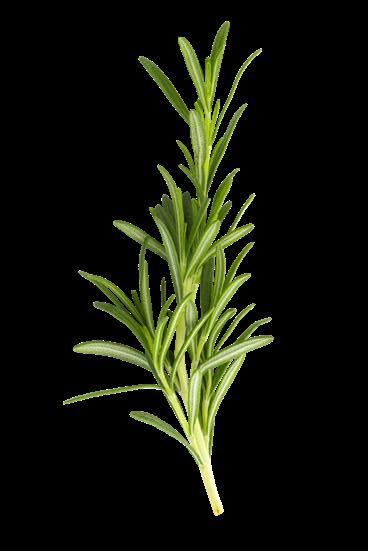
AUTUMN is a wonderful season for growing herbs. As summer heat fades, daytime temperatures become milder while the soil stays warm, creating comfortable growing conditions. Increased rainfall and fewer pests make it easier for herbs to establish strong roots and develop healthy leaves. Both leafy herbs and hardy perennials flourish during this season, making autumn perfect for planting a productive and flavourful herb garden. Choosing the right herbs for autumn ensures a healthier, more productive garden. By planting during cooler weather, you encourage strong roots, vibrant leaves, and lasting flavour that can be enjoyed well into the colder months.
Parsley
Chives
Rosemary
Coriander Sage Thyme Mint
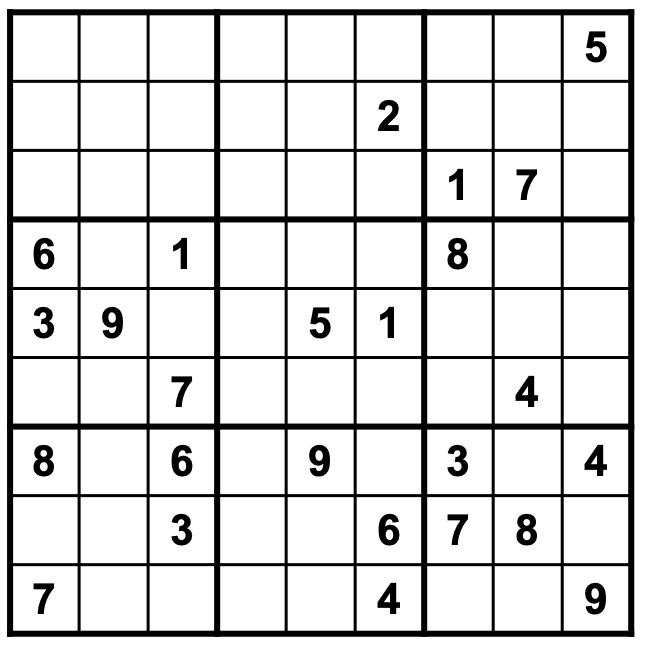
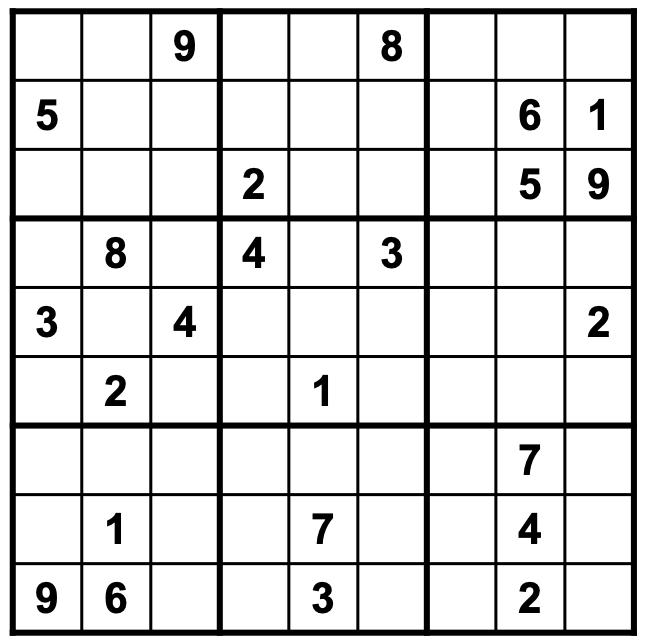
PUZZLES
Major 2026 contemporary art festival, themed Rememory - ________ of Sydney.
Inner Sydney suburb where Sydney Street Choir rehearsals are held.
Sydney Brewery has just expanded to this nearby harbourside suburb.
The third pillar of health, alongside diet and exercise?
Creative element inspiring this year’s Tropfest films.
Aboriginal clan that sheltered escaped convicts at Port Stephens.
Founder and social advocate behind the Sydney Street Choir - Jonathon _____.
Sydney’s famous festival of light, music, ideas and food.
Brand new contemporary Japanese restaurant at 127 George St, The Rocks.
Sydney parklands hosting Tropfest 2026.
Number of finalist films screened at Tropfest.
The Girls & Boys Brigade support local _____.
4. Major 2026 contemporary art festival, themed Rememory - of Sydney.
Hospitality group supporting The Girls & Boys Brigade.
6. Inner Sydney suburb where Sydney Street Choir rehearsals are held.
12. Sydney Brewery has just expanded to this nearby harbourside suburb.
EASY
13. The third pillar of health, alongside diet and exercise?
16. Aboriginal clan that sheltered escaped convicts at Port Stephens Down
7. Number of finalist films screened at Tropfest
8. The Girls & Boys Brigade support local
Term used for escaped convicts in colonial Australia. Australian mattress brand established in the 1920s.
1. Founder and social advocate behind the Sydney Street Choir - Jonathon
9. Hospitality group supporting The Girls & Boys Brigade.
Actor leading the Tropfest jury in 2026, ______ Robbie.
15. Creative element inspiring this year ' s Tropfest films
2. Sydney's famous festival of light, music, ideas and food.
3. Brand new contemporary Japanese restaurant at 127 George St, The Rocks.
5. Sydney parklands hosting Tropfest 2026
NOT EASY
10. Term used for escaped convicts in colonial Australia.
11. Australian mattress brand established in the 1920s.
14 Actor leading the Tropfest jury in 2026, Robbie