
EDITION EIGHT: SERVING FARMINGDALE OCTOBER 2022 • PUBLISHED BY LONG ISLAND MEDIA GROUP • WWW.LONGISLANDMEDIAGROUP.COM Fall Special FREE Fire Pit With Any Patio 1,000 Sq. Ft. Or More Expires 10/31/22 401842AH100522Licensed & Insured SEASON Harvest







2 HARVEST SEASON October 2022 For More Information, Call 631.226.2636www.longislandmediagroup.com/harvest EDITION EIGHT Printed & Distributed By South Bay’s Neighbor Newspapers Call 631.226.2636 • www.southbaysneighbor.com BUY DIRECT FROM THE MANUFACTURER AND $AVE MANUFACTURER SHOWROOM & OUTDOOR DISPLAY LOCATED AT 565 BROADHOLLOW ROAD STE 15, FARMINGDALE, NY 11735 SHOP LOCAL MADE IN THE USASTEELSHEDS.US 631-789-6500 HEAVY DUTY STORAGE SHEDS ALL 100% GALVANNEALED STEEL SHED SALE • Outlasts All Wood, Vinyl, Aluminum Sheds • Rodent Proof, Fireproof, Will Not Warp • Expect Many Decades Of Use • Low To No Maintenance • Coated Galvannealed Steel Resists Corrosion • No Painting Necessary, But Can Be Painted No Primer Needed • Heavy-Duty Construction, Fully Welded With Channel Ribs For Strength • Customizable And Expandable At A Later Date Made Of Steel - Built To Last ™ 10’ X 10’ SHED • ONLY $2,399 SALE PRICE! 6’ DOUBLE DOORS OPTIONAL $349. OTHER SIZES AVAILABLE 10’ X 7’ BACKYARD SHED • ONLY $1,999 SALE PRICE! WINDOW OPTIONAL $199 OURMOSTPOPULAR 631-789-6500 STEELSHEDS.US www.STEELSHEDS.com STRONGEST, LONGEST LASTING SHEDS ON THE MARKET, MADE IN THE USA SINCE 1950 Since 1950 TM 10’x5’ $1795 $1559 10’x7’ $2300 $1999 10’x10’ $2765 $2399 10’x12’ $3225 $2799 10’x15’ $4100 $3599 10’x20’ $5500 $4799 10’x25’ $6895 $5999 10’x30’ $8200 $7199 3’x5’ $765 $649 3’x10’ $1200 $979 3’x15’ $1550 $1299 5’x5’ $825 $699 5’x6’ $975 $849 5’x7’ $1150 $999 5’x8’ $1325 $1149 5’x10’ $1795 $1559 5’x12’ $2100 $1799 5’x15’ $2535 $2149 5’x20’ $2895 $2499 Weighs 1,000 lbs! REGULAR PRICE REGULAR PRICE REGULAR PRICESALE PRICE SALE PRICE SALE PRICE FREE DELIVERY & ASSEMBLY - MOST LOCATIONS SHED SIZE PRICES SHOWN ARE FOR 6’ 10” HIGH SHEDS (7’10” & 8’10” HEIGHTS AVAILABLE ) All Prices Good Till 11/30/22 SHED SIZE SHED SIZE AS LOW AS $399 - MANY SIZES Protect And Safely Use Your Generator OR Secure Your Garbage From Critters And Others - Comes With Locking Handles GENERATOR/TRASH CAN SHEDS CUSTOM CELLAR DOORS 100% GALVANNEALED STEEL WITH EASY LIFT HYDRAULIC LIFTERS Call For a FREE Measurement From $1895* Delivered *Most Sizes 401771H100522 HURRY! HOLDING OUR LOW PRICES




3HARVEST SEASONOctober 2022 For More Information, Call 631.226.2636www.longislandmediagroup.com/harvest EDITION EIGHT Contour Mortgage Corporation, 990 Stewart Avenue, Suite 660, Garden City, NY 11530. | Tel: 516.385.6900 | This is not a commitment to lend. Restrictions apply. Licensed Mortgage Banker – NYS Department of Financial Services Mortgage Banker License #B500843. (NMLS ID#34384 www.nmlsconsumeraccess.org) 990 Stewart Avenue, Suite 660, Garden City, NY 11530 | NMLS ID#34384 516.385.6900 Contour Mortgage Is Your Hometown Lender PURCHASE | REFINANCE | RENOVATE SCAN THE QR CODE TO GET STARTED ON YOUR Free Home Loan Pre-Approval Hello Autumn This season when purchasing a home, begin with Contour Mortgage. FIND OUT HOW MUCH YOU MAY BE ABLE TO AFFORD. 401656BH100522















4 HARVEST SEASON October 2022 For More Information, Call 631.226.2636www.longislandmediagroup.com/harvest EDITION EIGHT August 4, 2020 Hurricane Isaias: No power for over 450,000 PSEG customers. 108,000 still out 6 days later. SOURCE: News12 Online Never be without power again! The best time to buy your stand by generator is when you don’t need it. Flex Financing Permits and Filing Cer tified Factory Trained Installers Full Product Support Warranties and Service Installation and Repair 128 Pulaski Road, Kings Park, N.Y. 11754 (6 31) 544 -040 0 www.GetGenReady.com • office@GetGenReady.com • Licensed and Insured As a New York State essential business, we have made adjustments in our business practices in accordance with the CDC recommendations to help STOP the spread of the COVID-19 virus, during our installations. *WITH THIS AD ONLY. RESTRICTIONS MAY APPLY Generac Automatic Standby Generator NASSAU LICENSE #H0107000000 SUFFOLK LICENSE # 2740-ME Our new Sales Center is open. Please call for an appointment. FREE EXTENDED WARRANTY!* 0% Financing Available* 9760_Ad_Kim_7.375x4.5B.qxp_Press 4/8/22 1:25 PM Page 1 401657H100522 401857H100522

5HARVEST SEASONOctober 2022 For More Information, Call 631.226.2636www.longislandmediagroup.com/harvest EDITION EIGHT 401842BH100522 Fall Special FREE Fire Pit With Any Patio 1,000 Sq. Ft. Or More Expires 10/31/22 Licensed & Insured
Autumn Is Here!
Vineyards, pumpkin patches, orchards, fall festivals and so much more make the Harvest Season so lovable. Whether you are looking for Halloween craft ideas for kids, a list of out east destinations or a delicious seasonal recipe, we’ve got you covered! Flip through the pages and enjoy all of the featured content.
We look forward to bringing you two more themed magazines before year's end, but until then, enjoy the beautiful autumn season! Looking to advertise? Visit www.longislandmediagroup.com, call 631.226.2636 x239 or email info@longislandmediagroup.com for more information.

Island
8 Sights To See At Fall Harvest Festivals Ladle Up A Warm And Hearty Soup Halloween Craft Ideas For Kids Harvest Season On Long Island Tips To Simplify Thanksgiving Entertaining 08 12 14 19 20 565 Broadhollow Road, Suite 3, Farmingdale, NY 11735 Office: 631.226.2636 • Email: info@longislandmediagroup.com Published By Long
Media Group Publisher: Jeff Lambert • Art Director: Josh Marlowe Editor: Felicia Edwards • Marketing Manager: Noelle LAMBERT Copyright © 2022 by Long Island Media Group, LLC. All rights reserved. Reproduction in whole or in part without permission is prohibited. The publisher will not be responsible for errors in advertising beyond the cost of the space occupied by the error, and such responsibility, if any, shall be limited to the first use of advertising, in the case of repeated use. The publisher reserves the right to edit or reject any advertising at its sole discretion. The advertiser shall represent that all artwork and copy provided by the advertiser is owned by the advertiser, and it has the right to utilize such in this publication. www.longislandmediagroup.com HIGHLIGHTS Harvest
6 HARVEST SEASON October 2022 For More Information, Call 631.226.2636www.longislandmediagroup.com/harvest EDITION EIGHT






7HARVEST SEASONOctober 2022 For More Information, Call 631.226.2636www.longislandmediagroup.com/harvest EDITION EIGHT FEB 9th - Apr 2nd 2023 APR 27th - JUNE 18th 2023Nov 10th - Jan 1st 2023 JULY 6th - AUG 27th 2023 SEPT 15th –OCT 23rd 2022 Broadway Comes to Babylon! the 2022-2023 Main stage season! Join us for our spectacular line up of BROADWAY-CALIBER THEATRICAL PRODUCTIONS. Single ticketson sale now! “Full of dance, romance, and glorious gershwin“ SEASON TICKET PACKAGES ON SALE NOW! for as low as $250 Become a 2022/23 season ticket holder and receive a FREE* TICKET to *For a limited time only. argyletheatre.com | 631.230.3500 | 34 w. main street, babylon ny 11702 $10 Off* WITH cOde: BAY *Not to be combined. Discount valid off individual, premium mainstage tickets only. 401351H100522
8 Sights To See At Fall Harvest Festivals
Justas summertime is synonymous with concerts and carnivals, fall is a prime time for its own opportunities for seasonal entertainment, such as harvest festivals. Certain features overlap between summer carnivals and fall festivals, but the latter offers some unique offerings as well. The following are some things to expect when the fall festival season hits full swing.
1. Seasonal fare
Many fall harvest festivals are built on the foods harvested in the fall for that region. In Wisconsin, that may be cranberries, while in Massachusetts it could be oysters. Apples also turn up in many areas starting in September. For those who can’t wait to bite into food picked at the peak of its season, a fall harvest festival can’t be beat.
2. Wagon rides
Farms and the tools of the farming trade are part of harvest festivals. Wagons transporting crops are a classic sight, even if they’re no
Fresh Produce
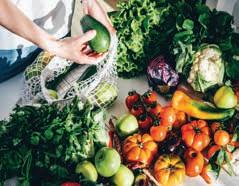
To Enjoy This Fall
longer heavily relied upon on the farm. Rather than a cargo bed full of corn or apples, harvest festivals tote families around on wagon rides or on hay bale beds towed by tractors.
colorful with non-edible gourds in shades of white or yellow.
6. Leaf-peeping opportunities


As
hot, humid days give way to cool fall temperatures, it is prime time to enjoy a new bounty of fresh vegetables. Homeowners may be ready to pick the vegetables they have been growing the past several months. While many home vegetable gardeners focus on early spring plantings that yield the tomatoes, cucumbers and squashes of summer, they also should consider summertime sowing that will yield tasty offerings throughout fall. Some of these cooler-weather stock can be harvested just before frost sets in. Individuals ready to bite in to produce plucked at the peak of fall have many different options to look forward to. Here are some of common fall produce items that will be available at farm stands near you well into November.
• bok choy
broccoli
cauliflower
kohlrabi
leaf lettuce
mustard greens
spinach
Swiss chard
turnips
beets
Brussels sprouts
cabbage
green onion
kale
peas
radishes
3. Apples galore
Candied and caramel apples and many other apple products feature prominently at many harvest festivals. Apple fritters, apple turnovers, apple pies, fried apples, and others are bound to be sold by vendors, along with traditional fair foods, like funnel cakes.
4. Cider stations
Lemonade stands that are staples of summer give way to hot or cold cider offerings come the fall. Cold ciders are perfect for an unseasonably warm fall day while warm varieties are tailor-made for days when there’s a chill in the air.
5. Pumpkin patches
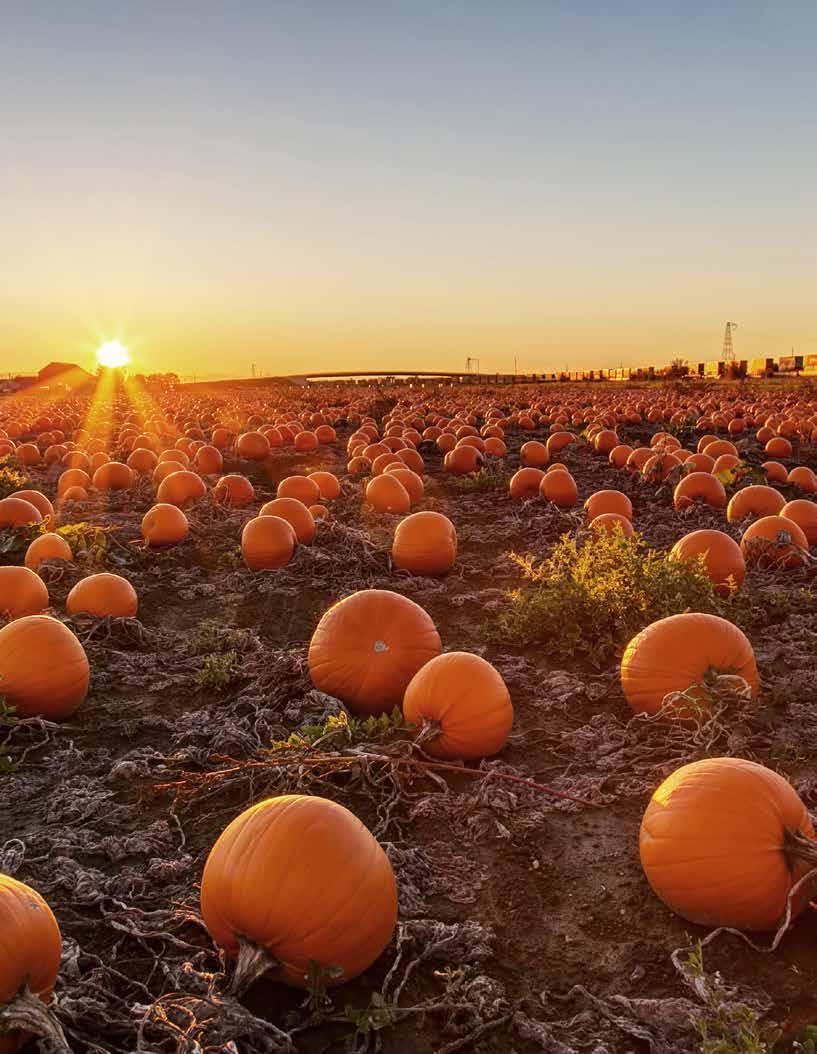
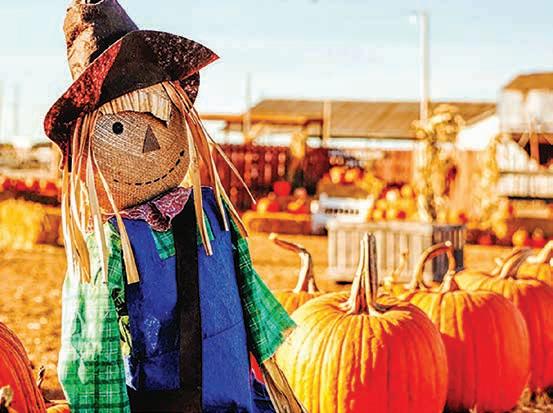
Fall harvest organizers pick and display pumpkins in fields to make it easier for youngsters to find the perfect pumpkin for Halloween carvings. It’s a sea of orange this time of year, and things may get more
Some festivals are geared around chances to view the fall foliage that abounds in primarily rural areas. A mountain or forest backdrop adds vibrant color to any event. Coastal areas may set up fall foliage cruises that let guests see the leaves from a new perspective.
7. Corn mazes
Fall festivals set up adjacent to or on farms may have corn mazes for the kids. These mazes may be kept up throughout October and repurposed into haunted mazes for older kids looking to get a scare for Halloween.
8. Wine tastings
Many grape varieties are harvested in the fall, so fall harvest festivals may capitalize on that and invite local vineyards to set up tables providing tastings of their vintages. Vineyards also may host their own fall festivals, featuring sips and snacks with live music.
•
•
•
•
•
•
•
•
•
•
•
•
•
•
•
8 HARVEST SEASON October 2022 For More Information, Call 631.226.2636www.longislandmediagroup.com/harvest EDITION EIGHT










9HARVEST SEASONOctober 2022 For More Information, Call 631.226.2636www.longislandmediagroup.com/harvest EDITION EIGHT 1220 Hicksville Road, Seaford, NY 11783 Now providing state of the art imaging services right in your neighborhood in a warm and safe environment SERVICES OFFERED: MRI, Low Dose CT Scan, Cardiac Services, Ultrasound, Digital X - ray, DEXA (Bone Density) Comprehensive Breast Imaging Services 3 D Mammography, Breast Ultrasound, Breast MRI Breast Biopsies including Ultrasound - Guided, MRI- Guided and Stereotactic 1220 Hicksville Road, Seaford, NY 11783 Now providing state-of-the-art imaging services right in your neighborhood in a warm and safe environment. MRI, Low Dose CT Scan, Cardiac Services, Ultrasound, Digital X-ray, DEXA (Bone Densisty) 3-D Mammography, Breast Ultrasound, Breast MRI Breast Biopsies including Ultrasound-Guided, MRI-Guided and Stereotactic SERVICES OFFERED: Comprehensive Breast Imaging Services Appointments: 516-266-3456 401843H100522 www.northwell.edu/imaging/locations/massapequa October is Breast Cancer Awareness Month CALL TODAY 631-842-6091 565 ALBANY AVENUE, AMITYVILLE, NEW YORK • www.dominicanvillage.org When You’re Here, You’re Home DOMINICAN VILLAGE INDEPENDENT LIVING SPECIAL LIMITED TIME, FIRST MONTH FREE •ALL INCLUSIVE PROGRAMS & SERVICES • COUNTLESS SOCIAL EVENTS & PROGRAMS •SPRAWLING 13-ACRE CAMPUS The Lifestyle You Deserve! The Ultimate Experience in Independent and Assisted Living Join us for one of our Open Houses! Thurs. Oct. 13th 1-3pm Sat. Oct. 15th 11am-1pm Thurs. Oct. 20th 1-3pm Sat. Oct. 29th 11am-1pm 397914H100522
The Best Pumpkins For Pie (And Other Desserts)
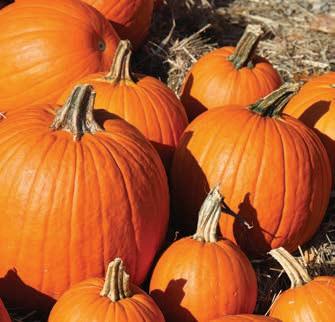
Beginning in early fall, pumpkins begin to arrive at farmer’s markets, supermarkets, nurseries, and fall harvest festivals. Pumpkins are versatile in that they make colorful fall home decorations, but also can be utilized in all sorts of recipes. In fact, pumpkins are a type of winter squash. While some people may be quick to think that the larger the pumpkin the better it is for baking up delicious treats, that’s actually not the case. According to the gardening resource Gardener’s Path, although most pumpkin cultivars are edible, the big pumpkins carved into jack-o-lanterns for Halloween tend to be pretty bland, watery and stringy. They’ve been hybridized to produce a large Halloween-friendly shape, not for flavor. Those traits are not ideal for delicious pumpkin pie or pumpkin chocolate chip oatmeal cookies. The best pumpkins for purees used in recipes are those that were specially cultivated for cooking. When shopping for pumpkins for your next recipe (if you’re opting for fresh, rather than canned puree), select one of the following:

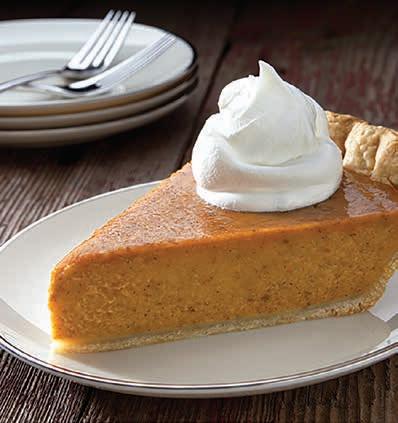
Classic Pumpkin Pie Serves 8
Pastry for 9-inch pie crust
eggs, well beaten
cup firmly packed brown sugar
teaspoons McCormick® Pumpkin Pie Spice
tablespoon flour
teaspoon salt
can (15 ounces) pumpkin (or equivalent in fresh puree)
teaspoon McCormick® All Natural Pure Vanilla Extract
can (12 ounces) evaporated milk
Directions:
Preheat the oven to 425 F. Line a 9-inch pie plate with pie crust.
eggs, brown sugar, pumpkin pie spice, flour, and salt in a medium bowl until smooth. Stir in pumpkin and vanilla. Gradually add evaporated milk, mixing well. Pour into pie crust.
Bake for 15 minutes. Reduce oven temperature to 350 F. Bake 40 minutes longer
until knife inserted in center comes out clean.
Serve warm or cold. Garnish with whipped cream and sprinkle with additional pumpkin pie spice, if desired. Store covered in refrigerator.



2
1⁄2
2
1
1⁄2
1
1
1
Mix
or
10 HARVEST SEASON October 2022 For More Information, Call 631.226.2636www.longislandmediagroup.com/harvest EDITION EIGHT
ALL PHASES OF CLEANOUTS:

11HARVEST SEASONOctober 2022 For More Information, Call 631.226.2636www.longislandmediagroup.com/harvest EDITION EIGHT PRINTED & DELIVERED BY HERALD/PRIMETIME • 516-569-4000 DEMOLITION REMOVAL • CLEANUP WWW.1866WEJUNKIT.COM 631.608.9099 1-866-935-8654 FULLY LICENSED & INSURED: Nassau H3900100000 • Suffolk 45336-H SAME DAY SERVICE FREE ESTIMATES ALL SIZE DUMPSTERS AVAILABLE 5, 10, 15, 20 & 30 Yard Sizes MENTION COUPON CODE: EXPRESS GET $25 OFF ANY DEMOLITION, CLEANOUT OR DUMPSTER RENTAL Discount may not be combined with any other offer. Coupon must be submitted at time of service. DEMOLITION RUBBISH REMOVAL CLEAN-UPS CLEAN-OUTS DUMPSTER RENTALS DEMOLITION OF: •Pools, all types • Bathhouses • Sheds •Dormers • Garages • Kitchens/Baths •Complete House Demolition • Buildings •All Phases of Interior and Exterior Demolition for Contractor Projects • Concrete Patios, Sidewalks, Driveways, Stoops
•Fire and Flood Damage • Garage Cleanouts •Attic Cleanouts • Shed Cleanouts • Lot Clearing •Estate Cleanouts • Complete House and Apartment Cleanouts • Entire Building Cleanouts •Warehouse Cleanouts • Construction Cleanouts •Eviction Cleanouts • Yard Debris Cleanouts 146943Y A Division of R&C Rubbish Removal & Demolition 821529 Printed & Distributed By Long Island Media Group • Call 631.226.2636 • www.longislandmediagroup.com 381746N031721 401081N051122 DEMOLITION OF: JUNK REMOVAL DEMOLITION • CLEANUP 401891N100522
Ladle Up A Warm And Hearty Soup
Asthe days cool, autumn cooking starts to heat up. If soup hasn’t yet been on the menu, then now is the time to explore new recipes that can warm us up from the inside out. Soup can be customized with flavors that evoke the spirit of autumn. Ingredients like pumpkin, warming spices like cinnamon and cayenne, and peanut butter come together in this recipe for “Vegan Pumpkin Peanut Butter Soup,” courtesy of The National Peanut Board and Abra Pappa of “Abra’s Kitchen.”

Vegan Pumpkin Peanut Butter Soup
Serves 10
2 large leeks, sliced
1 tablespoon coconut oil
8 cups fresh pumpkin puree
1 cup creamy peanut butter
4 cups vegetable broth
14 ounces coconut milk (1 can)
2 teaspoons salt
2 teaspoons Chinese five-spice powder (or 1 teaspoon cinnamon)
1⁄4 teaspoon cayenne pepper
Toppings: Sriracha sauce
Vegan coconut yogurt
Freshly Roasted Pumpkin:
Purchase a “pie pumpkin” (also called a “sweet pumpkin”), which is typically around 2 to 4 pounds. On average, each “pound” will yield about 1 cup of pumpkin puree. Using a sharp knife, carefully cut the pumpkin in half lengthwise. Use a sharp spoon or ice cream scoop to scoop out all seeds and strings (reserve the seeds for roasting). Drizzle the pumpkin with olive oil, salt, and pepper. Line a cookie sheet with parchment paper and place the pumpkin halves' skin side down. Using the tip of a sharp knife, carefully place a few slits in the skin of the pumpkin. Roast in a 375 F oven for 40 minutes to 60 minutes. It will entirely depend on the size of your pumpkin. Remove from oven and allow to cool. When cool enough to handle, scoop out the flesh and set it aside.
Pumpkin Soup:
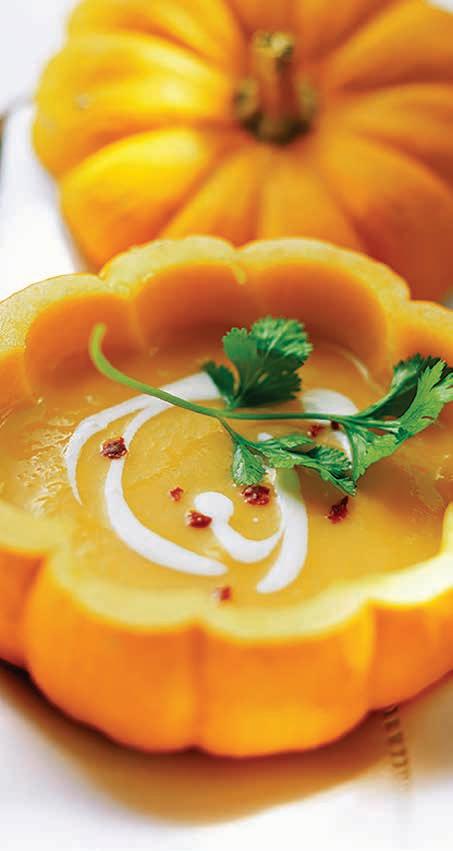
In a large pot over medium-high heat, melt coconut oil. Add sliced leeks and 1⁄4 teaspoon salt. Sauté for 5 to 8 minutes or until the leeks are soft and creamy. Add vegetable stock, pumpkin puree, peanut butter, coconut milk, and spices to the pot. Stir well to combine, and allow to simmer for 15 minutes.
Working in batches, add soup to a high-speed blender and blend until smooth, return to pot and taste for seasoning adding more salt if needed. Serve with a drizzle of sriracha and a spoonful of vegan (plain, unsweetened) coconut yogurt.
12 HARVEST SEASON October 2022 For More Information, Call 631.226.2636www.longislandmediagroup.com/harvest EDITION EIGHT


13HARVEST SEASONOctober 2022 For More Information, Call 631.226.2636www.longislandmediagroup.com/harvest EDITION EIGHT 631.563.4927 Serving Long Island For Over 25 Years kastelandscape@aol.com • kastelandscapingDA.com • Nassau Lic. #H208026000 • Suffolk Lic. #43299-H KASTE LANDSCAPE & DESIGN INC. $300 OFF Any Job of $3,000 or More $500 OFF Any Job of $5,000 or More With This Coupon. Not Valid With Other Offers or Prior Purchases. With This Coupon. Not Valid With Other Offers or Prior Purchases. $1000 OFF Any Job of $10,000 or More With This Coupon. Not Valid With Other Offers or Prior Purchases. Make Your Landscape Beautiful. Sod Lawns • Overseeding & Aeration Ornamental Shrubs • Privacy Planting Mulch Seasonal Plantings • Land Clearing • Debris Removal 401637H100522 Call Now to Schedule Your FREE Consultation for Landscape & Fall Tree & Shrub Plantings A beautiful, healthy lawn in 2023 starts This Fall with aeration & overseeding or Call today for your FREE sod lawn estimate!
Halloween Craft Ideas For Kids
Halloween is an enjoyable holiday for all, but particularly for children. Kids enjoy the opportunity to channel their whimsy and imagination, whether that involves choosing a clever costume or helping design the theme and scope of home decorations. Parents, guardians and educators can channel the creativity inspired by Halloween into various craft projects. Crafts can not only keep children busy when the “I’m bored” lamentations inevitably turn up, but crafts also are a way to keep children off of screens. Plus, the items that children create can be used to decorate rooms in the house — helping to curb added expenses on commercial decor.
The following are some Halloween crafts children can make alone or with the help of older siblings and parents.
Jack’s Slime
The toothy grins of jack-o’-lanterns can be seen just about everywhere come Halloween, and the bright

orange color of pumpkins heralds the start of fall. What better way to say “Halloween is here” than with a craft that can be displayed and also
Halloween, Masks, And Coverups
Itis impossible to identify the first Halloween costume and which masks the earliest celebrants donned in efforts to keep away the evil spirits during Samhain, which historians believe is the Celtic precursor to Halloween. According to Lesley Bannatyne, an author who has written extensively about the history of Halloween, masks, and coverups were designed to symbolize ghosts and the souls of the dead, first for Samhain and later for the custom of “souling,” which was intended to cut back on pagan influences. Costumes of saints and evil spirits also were popular during this time. When immigrants brought Halloween customs to North America, early 20th century costumes featured much of the same — ghosts and ghouls. It wasn’t until the 1920s and 1930s that pop culture began to infiltrate costumes. In fact, one of the first costume companies, J. Halpern Company, began licensing pop culture images like Mickey Mouse and Popeye around this time. By the 1960s, costumes were largely store-bought, spurring entire industries. Many 1980s kids recall buying boxed costumes that consisted of rigid plastic masks with eye holes (and tiny holes by the mouth and nose) that stayed in place with thin elastic straps, and a plastic sheeting costume that went over clothes. Modern costumes have evolved into outfits that are far more complex.
played with? Slime is something that’s always a big hit with kids. Here’s a recipe for slime, courtesy of The Best Ideas for Kids.
• 6 ounces of Elmer’s glue (substituting with another brand of glue may not produce the same results)
• Orange food coloring to create desired hue
• 1⁄2 teaspoon of baking soda
• 1 1⁄2 tablespoons of contact lens solution (one that contains boric acid in the ingredient list, as that is what causes the chemical reaction to form slime)
• Optional: 2 tablespwoons of water added to the glue before the baking soda if you desire a stretchier slime
• Black felt or black construction paper, cut into the eyes and mouth of a jack-o’-lantern

• Small mason jar with a lid Decorate the mason jar using a bit of glue to stick the black paper or felt face pieces to the outside of the jar. Mix all the ingredients of the slime in a small bowl and pour into the decorated jar.
Forest Spider
Take a trip to a nearby forest or wooded trail and gather up round pinecones that have fallen. Purchase brown pipe cleaners and cut four of the cleaners in half to form eight legs. Glue the legs on the
pinecone and attach several small googly eyes and two larger ones to form the eyes of the spider.
Paper Roll Treat Holders
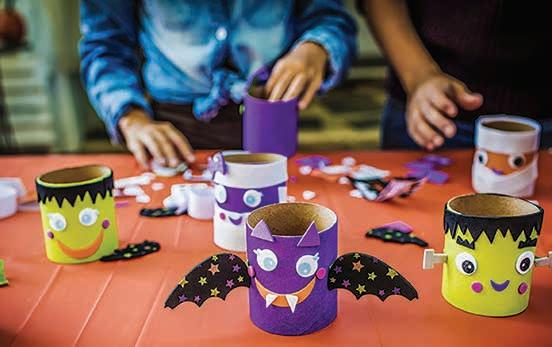
Rather than discarding the tubes inside of paper towel or toilet paper rolls, let kids transform them into monster craft treat holders. They’ll be perfect for party favors or even to give out to neighborhood trick-ortreaters. Cover the bottoms of the rolls with masking tape so treats won’t fall out. Paint the outside of the cardboard rolls and let dry. An alternative is to cover the rolls in colored paper for less messy fun. Then use markers or paper cutouts to form faces of the monsters. Fill the rolls with treats, then stuff a piece of tissue paper in each top to add even more personality to the creations and hide the treats inside.
Ghostly Leaves
Make a truly eco-friendly craft on Halloween, with ghosts made out of leaves, eliminating the need to use extra paper. Paint large leaves with white paint. On the narrowmost point on top of the leaves, paint black eyes and mouths. When completely dry, scatter on a table or sideboard for some scary fun, or use double-sided tape to stick to windows and doors.
14 HARVEST SEASON October 2022 For More Information, Call 631.226.2636www.longislandmediagroup.com/harvest EDITION EIGHT

401339H100522

16 HARVEST SEASON October 2022 For More Information, Call 631.226.2636www.longislandmediagroup.com/harvest EDITION EIGHT
17HARVEST SEASONOctober 2022 For More Information, Call 631.226.2636www.longislandmediagroup.com/harvest EDITION EIGHT 401844H100522
Carrot Cake
A Favorite For Halloween Entertaining



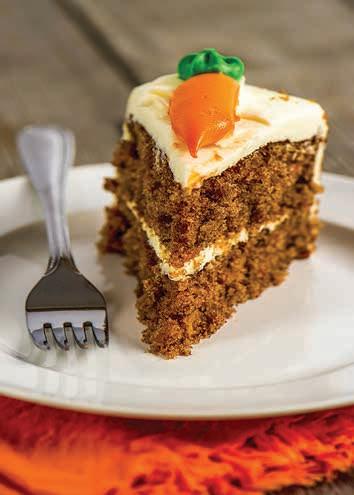
Somany sweets are on display around Halloween that it can be difficult to pick a favorite. When hosting a gathering of trickor-treaters or the adults waiting for their hordes of candy mongers to return, it’s handy to have plenty of desserts available to tempt various palates. Carrot cake boasts an antioxidant-rich main ingredient and offers some semblance of nutrition amid the sugar rush of other offerings. Plus, its orange hue fits in perfectly with the season. This recipe for “Carrot Cake” from “Throw a Great Party: Inspired by Evenings in Paris with Jim Haynes” (iUniverse) by Mary Bartlett, Antonia Hoogewerf, and Catherine Monnet yields two cakes, perfect for feeding a crowd.
Carrot Cake

Makes 25 servings
4 cups sugar
8 eggs
2 cups oil, canola or safflower
2 1⁄2 teaspoons vanilla
4 cups flour
4 teaspoons baking powder
2 teaspoons salt
2 teaspoons cinnamon
2 pounds carrots, grated
2 cups nuts, chopped
2 1⁄2 cups raisins (optional)
Directions:
Beat the sugar and eggs together until well blended. Stir in the oil and vanilla. In a separate bowl, mix the flour, baking soda, salt, and cinnamon. Combine the egg mixture. Fold in carrots, nuts and raisins.
Divide the batter between two (9- x 13-inch) greased baking pans. Refrigerate the batter between baking times. Bake the cakes in a moderately hot oven (350 F) for approximately 40 minutes. Let cool completely. Frost with cream cheese frosting. The cakes may be left in the pans for ease of serving.
Cream Cheese Frosting
8 ounces cream cheese
5 ounces butter
1 1⁄2 pounds powdered sugar
1 1⁄2 teaspoons vanilla
Directions:
Bring the cream cheese and butter to room temperature. Cream the two together until smooth. Add sugar gradually, shaking it through a strainer to get rid of the lumps and beat until smooth. Add the vanil la. Cover and refrigerate until it has a good spreading consistency.
18 HARVEST SEASON October 2022 For More Information, Call 631.226.2636www.longislandmediagroup.com/harvest EDITION EIGHT
Harvest Season On Long Island!
There are many advantages to living on Long Island, but come autumn they are abundant! Whether you’re looking to spend a leisurely afternoon strolling through apple orchards, or you prefer pumpkin picking and drinking apple cider, there is so much around our island this season that the whole family can enjoy. Stop by one of the following out east destinations for some autumn fun and beautiful scenery!
Stakey’s Pumpkin Farm
270 West Ln, Aquebogue 631.722.3467
KK’s The Farm
59945 Main Rd, Southold 631.765.2075
Fink’s Country Farm 6242 Middle Country Rd, Wading River 631.886.2272
Haydens Orchard
561 Hulse Landing Rd, Wading River 631.929.1115
Sparkling Pointe
39750 County Road 48, Southold 631.765.0200
Windy Acre Farm 3810 Middle Country Rd, Calverton 631.727.4554
Woodside Orchards - Jamesport 116 Manor Ln, Riverhead 631.722.5770
Waterdrinker Family Farm & Garden 663 Wading River Rd, Manorville 631.878.8653
Jason’s Vineyard
1785 Main Rd, Jamesport 631.238.5801
Hallock’s Cider Mill
1960 Main Rd, Laurel 631.298.1140
Breitenbach Farms 460 Main Rd, Aquebogue 631.722.3839
Andrews Family Farm 1038 Sound Ave, Calverton 631.929.0038
Shamrock Christmas Tree Farm 20685 Main Rd, Mattituck 631.298.4619
Happy Fall Y’all!
Milk Pail U-Pick Farm 50 Horsemill Ln, Water Mill 631.537.2565
Holzman’s Family Farm
988 Doctors Path, Riverhead 516.993.7307
Seven Ponds Orchard 65 7 Ponds Rd, Water Mill 631.726.8015
Corey Creek Tap Room 45470 Main Rd, Southold 631.765.4168
Macari Vineyards 150 Bergen Ave, Mattituck 631.298.0100
Jamesport Vineyards l Little Oak Wood Fired Kitchen 1216 Main Rd, Jamesport 631.722.5256
Breeze Hill Farm 31215 County Road Route 48, Peconic 631.876.5159
Harbes Family Farm Mattituck 715 Sound Ave, Mattituck 631.482.7641
19HARVEST SEASONOctober 2022 For More Information, Call 631.226.2636www.longislandmediagroup.com/harvest EDITION EIGHT
Tips To Simplify Thanksgiving Entertaining
Preparing
Thanksgiving dinner for a houseful of close friends and relatives can be a tad overwhelming. Thanksgiving is a food - and tradition-centric holiday and all eyes will are typically on the dinner table. Pulling off a feast of this magnitude — multiple courses, side dishes, and desserts — takes considerable effort. These tips, tricks, and timesavers can be a Thanksgiving host’s saving grace.
Pick The Menu Early
Don’t leave menu planning and shopping to the last minute. Decide what you’ll be cooking in addition to turkey several weeks before the big day. Select two or three side dishes, preferably items that can be prepared in advance and then reheated on Thanksgiving. These can include a baked macaroni-and-cheese casserole, mashed potatoes, roasted vegetables, and cornbread stuffing.
Brine Your Bird
Turkey is the centerpiece of the feast, so give it every opportunity to shine. No one wants a dry turkey, but unfortunately, this lean poultry can dry out easily. Meats typically lose about 30 percent of their weight during cooking. However, by soaking the turkey in brine prior to cooking it, you can reduce this moisture loss to as little as 15 percent, according to Dr. Estes
Reynolds, a brining expert at the University of Georgia. Brining the fowl for a day or more can infuse flavor and moisture. Food Network personality Alton Brown has a fan-favorite roast turkey recipe with an aromatic brine that has garnered five stars and was featured on his show “Good Eats” (www.foodnetwork.com/ recipes/alton-brown/good-eats-roast-turkeyrecipe-1950271). A simple salted water soak also can work.
Start Prep Work A Few Days Before Thanksgiving
Take some stress out of Thanksgiving by cutting all vegetables and/or preparing some dishes a few days early. Label and organize prepared ingredients by recipe and store them in the refrigerator. Make extra room in the fridge by removing nonessential items and placing them in a cooler with ice and cleaning out any old food or condiments. Plan your table settings and label which bowls and other serving dishes will be used for which items. This will make it much easier to set the table on Thanksgiving.
Serve Batched Cocktails
It can be challenging and expensive to have a full bar for guests. Mulled wine, hot cider, and punches are ideal ways to service a crowd
looking for delicious spirited drinks.
Create Simple Centerpieces
Use seasonal sights for your centerpieces or place settings. These can include small squashes, gourds, citrus fruits, nuts, or acorns. A hollowed-out pumpkin filled with fresh flowers also can be eye-catching.
Thanksgiving is a time to celebrate the bounty. Treat guests to a great experience by learning some hosting tips to make the holiday easier to manage.
Unique Ways To Cook A Thanksgiving Turkey
Thanksgiving is a beloved holiday. Families may have their own unique Thanksgiving traditions, but one staple of this kickoff to the holiday season is bound to make its way to Thanksgiving dinner tables no matter how unusual families’ holiday celebrations may be: turkey. Much effort goes into picking and preparing a Thanksgiving turkey. Depending on the size of the bird, turkeys can take many hours to cook. Thanksgiving celebrants are no doubt familiar with oven-roasted turkey, which is the most traditional way to cook a turkey. But this year hosts who want to expand their horizons and think beyond the oven can consider two popular alternative methods to cooking a Thanksgiving turkey.
1. Deep Frying
Deep frying is a popular way to prepare food at outdoor events. For example, stroll through the parking lot on game day and you’re liable to find football fans deep frying their favorite foods at their tailgate parties. Turkey can be deep-fried and this method makes for an ideal option for hosts who want to enjoy the great outdoors while welcoming friends and loved ones to their homes. Deep frying imparts a juicy flavor that can be hard to replicate when roasting a turkey. Deep frying is a much faster way to cook a turkey than cooking it in the oven. However,
deep frying also can be more dangerous, so it’s imperative that cooks remain attentive when setting up the fryer and while the turkey is frying. Where to deep fry the turkey also bears consideration. The turkey experts at Butterball® recommend deep frying the turkey outside on a flat surface that’s far away from structures, including your home, garage, deck, etc. The time required to deep fry a turkey will depend on the size of the bird, but experts note that it typically takes about 3 to 3.5 minutes per pound. Electric fryers may significantly take less time, and they typically require less oil, so this is another option to consider. Many experts note that it’s best to deep fry turkeys that are 15 lbs. or less, as the turkey will need to
be completely submerged in oil when frying. In addition, turkeys larger than 15 lbs. may cook unevenly, which can affect flavor.
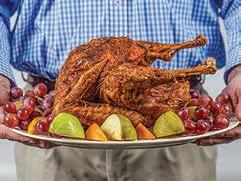
2. Smoking Smoking has grown in popularity in recent years as grills that make this method possible have become more affordable. Smoking is a “low and slow” method of cooking, so this option is ideal for people who intend to be home all day on Thanksgiving and want to infuse their birds with a smoky flavor. However, even busy hosts can still consider smoking, as electric smokers now allow cooks to remotely control the temperatures in their grills. That’s important, as smoking requires cooks to periodically check the temperature on their grills to ensure it has not dropped too low or risen too high. Smoking a turkey typically requires maintaining a temperature between 225 and 250 F. Cooking times for smoked turkeys are typically around 30 minutes per pound, though it can take longer if the temperature is lower. Because of the extended cooking time, hosts may want to pick a turkey that weighs around 15 lbs., especially if they don’t have much experience smoking.
This Thanksgiving, hosts can try something new by deep frying or smoking their turkeys.
20 HARVEST SEASON October 2022 For More Information, Call 631.226.2636www.longislandmediagroup.com/harvest EDITION EIGHT
A Look At The Oldest Halloween Traditions
As with many celebrations, Halloween is steeped in traditions — many of which can be traced back quite some time. Since Halloween is believed to have originated from Celtic pagan, ancient Roman, and early Christian events, its traditions are varied. The following is a deep look at some old traditions associated with Halloween.

Bonfires
Historians trace many traditions of Halloween to a Celtic holiday known as Samhain (pronounced sow-in). The Celts lived 2,000 years ago in parts of what is now Northern France, Great Britain, and Ireland.

During Samhain, people believed that the door between the worlds of the living and the dead was blurred. On Samhain, Celts believed the ghosts of the dead returned. Also, Druids made predictions about the future at this time of year. It was customary to build large, sacred bonfires and burn crops and other
sacrifices to the Celtic deities.
While large bonfires are not typically part of Halloween celebrations today, revelers can light fire pits in their yards that are reminiscent of ancient celebrations.
Trick-Or-Treating
Christianity spread throughout Celtic regions and blended with other rituals. Pope Gregory III expanded on a holiday Pope Boniface IV established to honor Christian martyrs including all saints and martyrs. All Saints Day on November 1 commemorates the venerable saints, and All Souls Day on November 2 celebrates loved ones who went on to eternal rest. All-Hallows Eve (Halloween) was a time to pay homage to the dead. Poor children would go door to door in more affluent neighborhoods offering to say prayers for residents’ deceased loved ones in exchange for some food or money. This was known as “souling,” which became the basis for trick-or-treating. Later the tradition became known as “guising” in areas of Scotland,
where children would go around in costumes.
Witches

Images of witches riding broomsticks are everywhere come Halloween, and witch costumes remain a standard. Almanac.com indicates that, during the Middle Ages, women who practiced divination were dubbed “witches,” from the Anglo-Saxon word “wicce,” or “wise one.” It was believed the witches could go into a trancelike state and would do so in front of their fireplaces. Superstitious people believed the witches could fly out of their chimneys on broomsticks and terrorize others with magical deeds.
Bobbing For Apples
Bobbing for apples is not quite as popular as it once was, as more people have become concerned about spreading germs. During the Roman festival for Pomona, which occurred around November 1, Pomona, the goddess of fruit and


orchards, was celebrated. Romans believed the first person to catch a bobbing apple with his or her teeth would be the first to marry. It also was believed apple peels contained the secrets to true love.
Carving Pumpkins
Removing the insides of pumpkins and carving them into funny or fearsome faces may be messy work, but it’s tradition on Halloween. Turnips were the material of choice in ancient Ireland but were replaced by pumpkins when immigrants came to America. The “lanterns” were made with scary faces and lit to frighten away spirits.

21HARVEST SEASONOctober 2022 For More Information, Call 631.226.2636www.longislandmediagroup.com/harvest EDITION EIGHT LOOKING TO LOSE 10-20 LBS. BEFORE CHRISTMAS? LOOKING FOR HOLIDAY CASH BEFORE CHRISTMAS? ASK ME HOW TO GET “FIT” FOR HELP WITH BOTH! CALL OR TEXT LUCILLE FOR WEBSITE LINK & HOW TO GET 30% DISCOUNT 631-383-1087 401864H100522 NNWWW.EDPDENTAL.COM • Immediate Activation • This Is Not Insurance Enroll Now: 631.272.5230 *LAB FEES NOT INCLUDED Starting As Low As $119/YR $119 $199 $249 Single Plan* Couple* Family* *PLUS $19 NON REFUNDABLE REGISTRATION FEE Thousands of Dentists Nationally! 3 MONTHS FREE With Purchase of 1 Year Membership. New Members Only When You Mention South Bay's Neighbor Newspapers. START SAVING UP TO 60% OFF ON DENTAL CARE JOIN THE EDP DENTAL PLAN TODAY General Dentist Procedure Without EDP With EDP 6 Month Check – Up $60 $20 Routine Cleaning $90 $42 Filling (1 Surface) Amalgam $110 $52 Root Canal (Anterior) $600 $350 General Dentist Procedure Without EDP With EDP *Crown (Porcelain) $995 $595 *Complete Upper Denture $1,495 $675 Tooth Extraction $150 $75 X-Ray (Full Mouth) $120 $50 Plus Save 25% on Braces and Implants *LAB FEES NOT INCLUDED Sample List of Savings 405327H100522
The





22 HARVEST SEASON October 2022 For More Information, Call 631.226.2636www.longislandmediagroup.com/harvest EDITION EIGHT GOLDEN OAK RAILINGS NY CORP. QUALITY WORKMANSHIP... CUSTOM DESIGNS “Make Your Staircase Beautiful” SAVE NOW COUPON With A Minimum Order Of $1,000 10% OFF Not to be combined with any other offer. Expires 12/31/22 397995H100522 Toll Free 1-877-236-9304 VISIT OUR SHOWROOM: 2481 Charles Ct., Bellmore • 516-809-9747 www.goldenoakrailingsinc.com The hands that sign your contract, are the hands that build your dream. Quality Craftsmanship & Service for Over 25 Years ALL PHASES OF CONSTRUCTION Nassau #H18A0030000 Suffolk #14278-H - Roofing - Vinyl Siding - Windows - Doors - Kitchens - Baths - Finished Basements - Interior / Exterior - Same Week Repairs - Certified Installer GENSLER HOME REMODELING, LLC. OWNER OPERATED 401861H100522 631-363-8833 • 516-523-1633 www.tomgenslerhr.com Head To...
Long Island Fall Festival! Head to Heckscher Park in Huntington, NY for the 2022 Long Island Fall Festival! You won’t want to miss this family-friendly event, which will feature hundreds of vendors, three stages of entertainment and a world-class carnival. Dates & Times: FRIDAY, OCTOBER 7TH 5:00pm - 10:00pm SATURDAY, OCTOBER 8TH 11:00am - 9:00pm SUNDAY, OCTOBER 9TH 11:00am - 9:00pm MONDAY, OCTOBER 10TH 11:00am - 5:00pm
Offer:


10% Off





First Week


You Mention

23HARVEST SEASONOctober 2022 For More Information, Call 631.226.2636www.longislandmediagroup.com/harvest EDITION EIGHT 917.387.4516 • www.seventhstreettutoring.com Get 10% Off Your First Week When You Mention This Ad Valid For New Clients Only. Expires November 15, 2021. Is your child’s schooling not going as planned? It’s not too late to make a change! Teachers still available for the 2021-2022 school year. Call today. You Can: • Hire a teacher to fully homeschool your child • Hire a teacher to teach the subjects you need some help teaching • Hire a teacher for tutoring throughout the week as often as needed We
• Services for Pre-K through grade 12 • Certified teachers • Individualized curriculum • We come to you! We service all of Long Island. 394854H1013 Get
Your
When
This Ad! Valid for new clients only. Expires November 5, 2022. Teachers still available for the 2022-2023 school year! Call today. 401338H100522
Fall



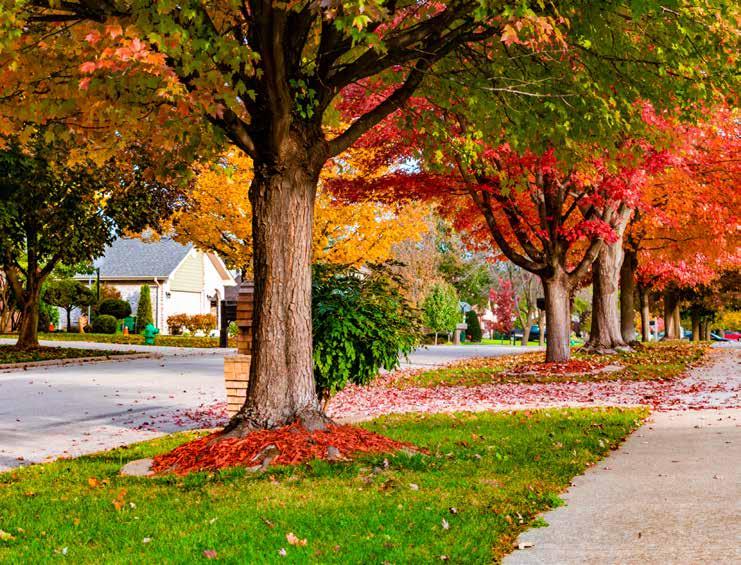
990 Stewart Avenue, Suite 660, Garden City, NY 11530 | NMLS ID#34384 516.385.6900 Scan Here! 9 THINGS YOU SHOULD DO TO YOUR HOME FOR THE Fall Season Contour Mortgage Corporation, 990 Stewart Avenue, Suite 660, Garden City, NY 11530. Tel: 516.385.6900 | This is not a commitment to lend. Restrictions apply. | Licensed Mortgage Banker – NYS Department of Financial Services Mortgage Banker License #B500843. (NMLS ID#34384 www.nmlsconsumeraccess.org)
For Long Island’s Best Hometown Lender 401656CH100522
