1INTRODUCTION
Inaconstantly-evolvingfinancialworld,youngadultsfacechallengeswhilegainingtheir financialindependence.Withmoretargetedadvertisementsforgoodsonsocialmedia, pushingofnewcryptocoinsbyinfluencers,andtoo-good-to-be-truefinancialoffersthat arelikelyscams,youngpeoplefacenewchallengestoprotecttheirfinancialstarts.These newchallengescomealongwitholdchallenges:financingpostsecondaryeducation,understandingcreditcards,andfiguringouttheircurrentandfuturebudgets.Onestrategyto equipyoungpeoplewiththeknowledgeandskillstonavigatethesechallengeshasbeen torequirepersonalfinanceinstructionbeincludedinhighschoolcurricula.
Researchhasconsistentlyfoundthatrequiringpersonalfinanceeducationinhigh schoolcourseworkimprovescreditanddebtbehaviorsintheshortandmediumrun(Brown etal.,2016;Harvey,2019;Urbanetal.,2020;StoddardandUrban,2020;Mangrum, 2022).However,thereislessresearchthatquantifiesthecostsassociatedwiththeserequirements(Urban,2023).Thispaperseekstoestimatethecausaleffectofamandatory onesemesterpersonalfinancecourseforeveryhighschoolstudentpriortoearningtheir diplomaoneducationalcosts.Doesthenewstatewiderequirementcauseschoolstospend moreoneducationasawhole?Aremoreteachershired?Aresomeotherpositionscut?
Iexplorethiseducationalfinancequestionusinganaturalexperimenttogaugethecost ofthestatewidepolicy:whenstatesrequireafullsemesterofpersonalfinancepriortohigh schoolgraduation,howmuchmoredoschoolshavetospendtoaccommodatethis?The statewidepolicychangerequiresthatallschoolsimplementthecourserequirementbya specificgraduationcohort(e.g.,theclassof2007).Toimplementthenaturalexperiment,I usedatafromtheNCESCommonCoreofDataforthe2000–2001throughthe2018–2019
academicyears.Ipairthesedatawithinformationonthetimingoffivestates’passageof standalonepersonalfinancecourserequirementsbetween2007and2017.Toestimate causaleffects,Icompareschools(orschooldistricts)withinthesamestatebeforeand aftertherequirementwentintoplacetoschools(orschooldistricts)instatesthatnever requiredpersonalfinanceinhighschoolsfortheentiretimeframeusingatwo-wayfixed effectframework.
Thisworkcontributestotwoliteratures.First,itspeakstotheliteraturequantifyingthe costsandbenefitsoffinancialeducationinschools.Thereisalargeexperimentalliterature dedicatedtounderstandingthebenefitsoffinancialeducationinK-12schoolsworldwide (See,forexample,(KaiserandMenkhoff,2020;Frisancho,2023a;Bruhnetal.,2016; Sconti,2022;AlanandErtac,2018)).2 Thisliteraturelargelyfindsthatfinancialeducation improvesknowledgeandattitudes.Frisancho(2023a)furtherfindsthattherearetrickle upbenefitstoteachers,whichcouldpotentiallyoffsetcostsofpreparinganewcourse. Infollow-upwork,Frisancho(2023b)furtherfindstrickleupbenefitstoparentsoflowincomechildren.
Asecondstrandofliteraturelooksatthecausaleffectsofstatesrequiringfinancial educationinhighschoolcurriculaonlong-runobservablefinancialoutcomes.Thisliteraturefindsthatfinancialeducationimprovescreditscores(Urbanetal.,2020;Brownetal., 2016),reducesdelinquencies(Urbanetal.,2020;Brownetal.,2016),reducespayday borrowing(Harvey,2019),improvesinitialpostsecondaryborrowingdecisions(Stoddard andUrban,2020),andimproveslong-runstudentloanrepaymentforstudentsfromlower-
2Ameta-analysisofrandomizedcontrolledtrialsofallfinancialeducationinterventionsinallsettings— notjustschools—showsthatfinancialeducationimprovesfinancialknowledgeandbehaviorsinacosteffectiveway(Kaiseretal.,2022).
incomefamilies(Mangrum,2022).Whilerequiringfinancialeducationimprovesoverall subjectivefinancialwellbeing,itlowersthesubjectivefinancialwellbeingofthosewho endedtheireducationwithahighschooldiploma,makingthemmorerealisticabouttheir futurefinancialsituation(Burke,CollinsandUrban,2025).HarveyandUrban(2023) showthattherearenolong-runimpactsoninvestingdecisionsoramountsininvestment accounts.Onlyonepaperinthisspace,Urban(2023)considersthepotentialcostofthe policy.However,thatpaperfocusesonlyononeoutcome:on-timehighschoolcompletion.Thefindingssuggestthatrequiringafullsemesterofpersonalfinanceeducation doesnotreducethelikelihoodofon-timegraduationforstudentsasawholeorformore vulnerablesubgroups.
Second,thisworkcontributestotheliteratureonschoolfinancethatseekstounderstandthecostsassociatedwithaddingcoursestorequiredhighschoolcurricula.Goodman (2019)showsthatincreasingtheminimummathrequirementimproveslong-runearnings forBlackstudents,withoutreducinggraduationrates.Hedoesnotspecificallyconsider thecostoftheserequirements.Deneault(2022)studiesarequirementinLouisianaforall highschoolstudentstocompletetheFAFSA.Usinganaturalexperiment,shefindsthat therequirementimprovedtherateofFAFSAcompletion,collegeattendance,andscholarshipaidreceived.Sheestimatedthedirectcostsofthenewrequirement,thoughshedid notconsiderchangesinspendingfordistrictsaftertherequirementwentintoplace.
Theresultssuggestthatpersonalfinancecourserequirementsdonotmeaningfully increasedistrictperpupilspendingoverallorspecifictosalariesinthefirstyearofimplementation,comparedtothedifferenceacrossstateswithandwithoutgraduationrequirementsbeforeandafterthecourserequirementtookeffect.Theserequirementsdonot
expandthenumberoffulltimeequivalentteachersperstudent.Iseenodifferencesinthe effectoftherequirementonthenumberofteachersperpupilacrossschoolswithhigher andlowerlevelsofpovertyoracrossruralandmoreurbanareas.Ifindsomeevidenceof spendingmoreonsalariesforteacherswithinnon-coresubjectsandcareerandtechnical education(CTE)withareductioncomingfromsalariesforteachersincoresubjectsand specialeducationteachers.
Theseresultscomportwithtwopartsofthepolicydiscussionsurroundingpersonal financeeducationinhighschools.First,personalfinancegraduationrequirementsare oftenunfunded,leavingschoolsanddistrictstofigureouthowtoimplementthenew courserequirementontheirown.Withoutadditionalfunding,itwouldmakesensethat districtsarefiguringouthowtoshufflefundstomakebudgetswork.
Second,indiscussionswithgroupswithinstatesimplementingpersonalfinancegraduationrequirements,acommonthemeisthatteachertrainingisconstructedtore-deploy existingteachers(Urban,2022).Myestimatessuggestthatthestatepolicyrequiringafull semesterofpersonalfinanceeducationdoesnotexpandthevolumeofteachersinaschool. Itdoespotentiallyshiftthefocusofthecurrentteacher’scourses.
Thisanalysisreliesupontwodatasets:educationfinancedataandfinancialeducationstate mandatedata.Idescribebothofthesebelow.
2.1StateMandates
IusestateclassificationsfromUrban(2023),wherefivestatesimplementedarequirement thatallstudentscompleteonesemesterofpersonalfinanceeducationpriortoobtaining theirhighschooldiploma:Alabama(2017),Missouri(2010),Tennessee(2013),Utah (2009),andVirginia(2015).Another16statesneverrequiredanypersonalfinancecontent withintheirhighschoolcurriculaduringthesampleperiod(2000–2001throughthe20182019academicyears).3 Idropthestatesthatembedpersonalfinancerequirementsinto othersubjects,aswellasthethreestatesthatpassedrequirementsjustasorafterthe sampleperiodended(Iowa,Mississippi,NorthCarolina,Nebraska).Ifocusonstateswith astandalonecourserequirementfortworeasons.First,theserequirementsarelikelyto costmoremonetarilythananembeddedcoursethatmayormaynotalreadyexist.This allowsmetoestimateanupperboundoncosts.Second,itensuresthatalldistrictsare infacttreated.Priorresearchfindsthatwhenpersonalfinancecontentisembeddedin anothercourse,fewerthanhalfofschoolsactuallyimplementtherequirement(Luedtke andUrban,2023).
2.2EducationSpendingData
IthendrawupontheSchoolDistrictFinanceSurvey(F-33)DatafromtheNCES.These dataincludeinformationonexpendituresfromtheuniverseofschooldistricts(commonly referredtoaslocaleducationalagenciesorLEAs)byfiscalyear.Statesreportthesedata tothefederalgovernmentintheF-33surveyorusingtheiraccountingtables.Categories arelargelyconsistentovertime,thoughsomehavebeenaddedinlateryears.Iconsider
3TheseincludeAK,CA,CT,DC,DE,HI,MA,MD,MT,NM,PA,RI,SD,VT,WA,WI.
overallexpenditures,generaladministrativespending,totalsalaryspending,instructional salaryspending,andspendingbyteachertype(regular,specialeducation,careerandtechnicaleducation(CTE),andotherteachers).Surveydataissubjecttomeasurementerror. Researchsuggeststhatthemeasuresforaggregatespendingandgeneraladministrative spendingarethemostreliablemeasures(Berry,2007;Murray,EvansandSchwab,1998).
Spendingonsmalleritems,liketextbooks,ismuchlessreliable.Ialsofollowtheresearch intrimmingoutliersfromthedata:Idropdistrictsbelow25percentofthebottom5th percentileofthespendingdistributionforthestate-yearanddistricts200percentabove the95thpercentileofthespendingdistributionforeachstate-year(Berry,2007;Murray, EvansandSchwab,1998).
FollowingShoresandSteinberg(2019)andprecedingliterature,mymainoutcomes willbemeasuredasdistrictspendingperpupil.Irestrictthedatatobefrom2000–2001 academicyearthroughthe2018–2019academicyear.Iremovedistrictsthatdonotinclude highschools(e.g.,elementary-onlydistricts).Ifurtherremovedistrictswithoutafull panel,meaningeachdistrictappearsinthedataforatleastsevenyearsofdata.Ionly trackdistrictswithintreatedstatesforthefirstyearofthecourserequirement.Anyfinance changesinlateryearsaremorelikelyduetoadditionalchangesthatmayormaynotbe correlatedwithpersonalfinancechanges.4
Beginningwiththe2003–2004academicyear,teachersalaryspendingbydiscipline isavailableacrossfourcategoriesbutnotuniversallyacrossschools.Thesecategoriesare: regularprograms(e.g.,Math,LanguageArts,Science,SocialStudies),SpecialEducation, Vocational(CTE),andotherprograms(e.g.,electives).Thesedataaremissingforsmaller
4Infact,whenIlookatyearsfurtherfromtherequirement,Ifindthatspendingactuallyfallsinstates thatpassedrequirementcomparedtothetrendincontrolstates.
districts.
Isupporttheschoolfinancedataatthedistrictlevelwithstaffingdataattheschool levelfromtheNCESCommonCoreofData.ThisgivesthenumberofFTEteachersby school.Irestrictthesedatatohighschoolsonly,basedonthemaximumgradelevelofthe schoolandthedocumentedleveloftheschool.Iremoveschoolswithnoenrollmentorno teachers,andIagainensurethatthereisapanelofatleastsevenyearsofdata.
3EMPIRICAL STRATEGY
Iestimatethecausaleffectofarequiredstandalonepersonalfinanceclassoneducational spendingusingEquation1. Y j,s,t isalternativelyadistrict( j)orschool-leveloutcomein state s andyear t relatedtoschoolfinance.Themaincoefficientofinterest(α1)isthe estimateforthecausaleffectofthestatepolicyonspendingorstaffing.Thismodelalso includesstatefixedeffects(δs)andyearfixedeffects(γt ).Iclusterstandarderrorsatthe stateleveltoaccountforthelevelofthepolicyvariation.
InEquation1, ˆ α1 identifiesthecostsofmovingfroma“schoolschooserequirements” toa“stateschooserequirements”model.Robuststandarderrorsareclusteredatthestate leveltoaccountforthelevelofpolicyvariation.
Twowayfixedeffects(TWFE)methodsrequirethreemainassumptions.First,there canbenocontaminationinthecontrolgroup.Eveninstateswithoutgraduationrequirements,schoolscanrequireallstudentstocompleteapersonalfinanceclass.Instates
withoutpersonalfinanceschoolpolicies,ninepercentofstudentsareinschoolswherea fullsemesterofpersonalfinanceisrequiredforgraduation(LuedtkeandUrban,2023).It isreasonablethatdistrictsinstateswithoutgraduationrequirementsmaylooksimilarto schoolsinstatesinyearspriortoagraduationrequirementbeingenacted,makingthem thebestcontrolgroupavailable.
Second,noothersimultaneouspoliciesarepassedatthesametimeastheimplementationofpersonalfinancegraduationrequirements.Thisisreasonablebecausetheimplementationofthepolicyhappensthreetofouryearsafterthepassageofthepolicy.Further, thepolicyprocessesacrossthefivestatesstudiedweresubstantiallydifferentfromeach other,andIensurethatonestatealoneisnotdrivingtheresults.
Third,thetrendsinoutcomesacrossthetreatmentandcontrolstateswouldhavebeen parallelhadthegraduationrequirementnotgoneintoplace.Thisisnotdirectlytestable.
Todeterminethelikelihoodthattheassumptionholds,Iestimateeventstudiestodetermine theparalleltrendsassumptioninthepre-policyperiod.
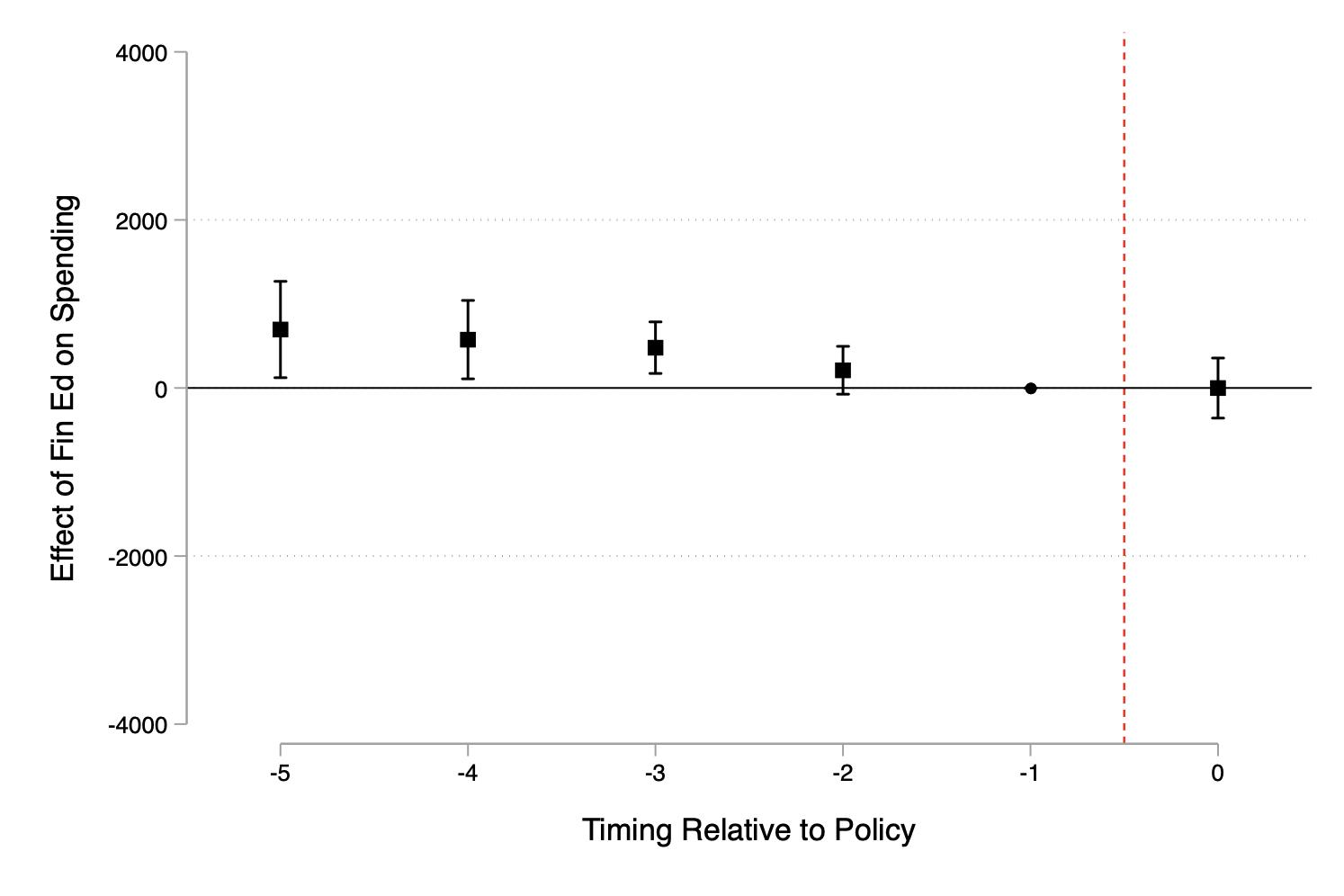
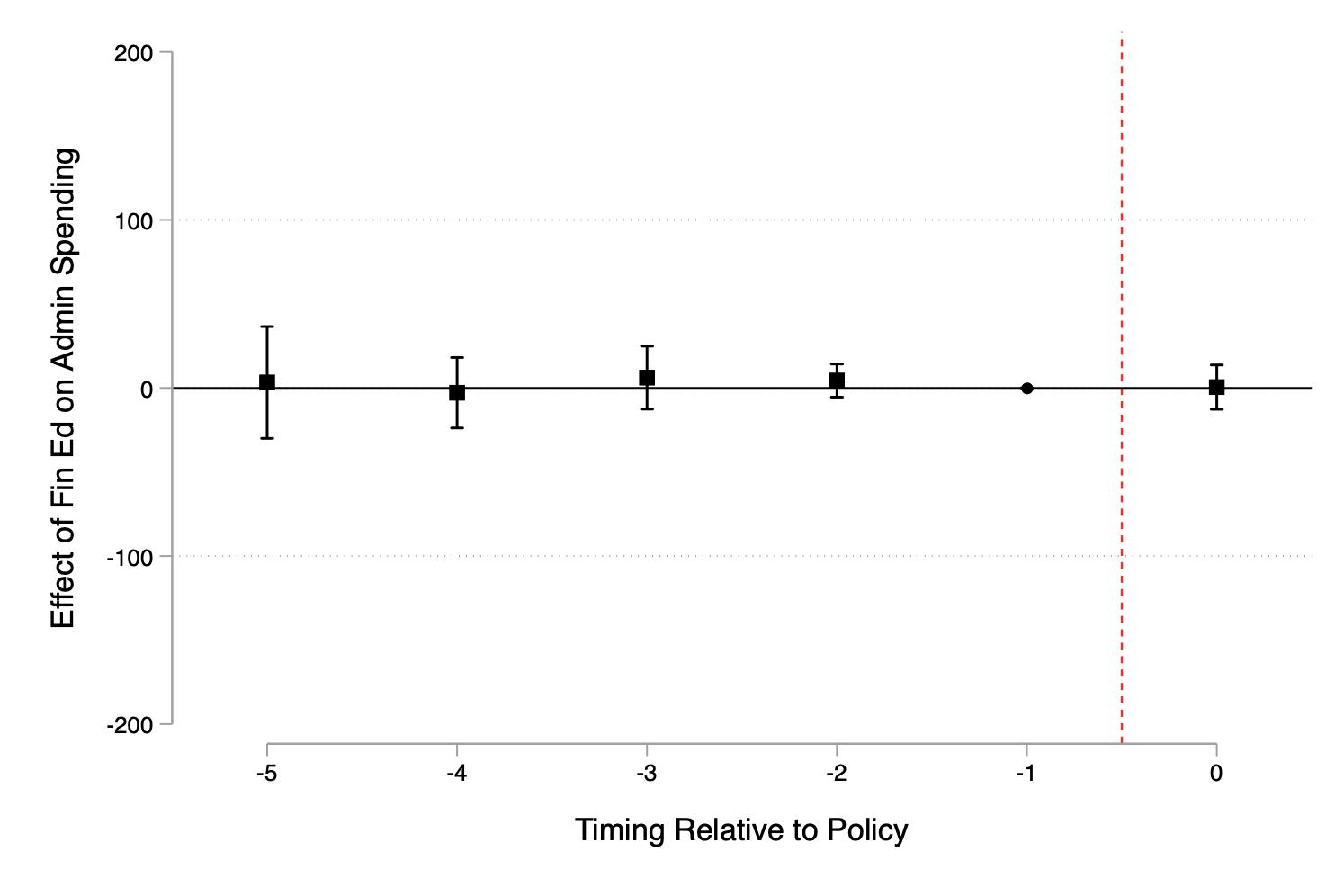
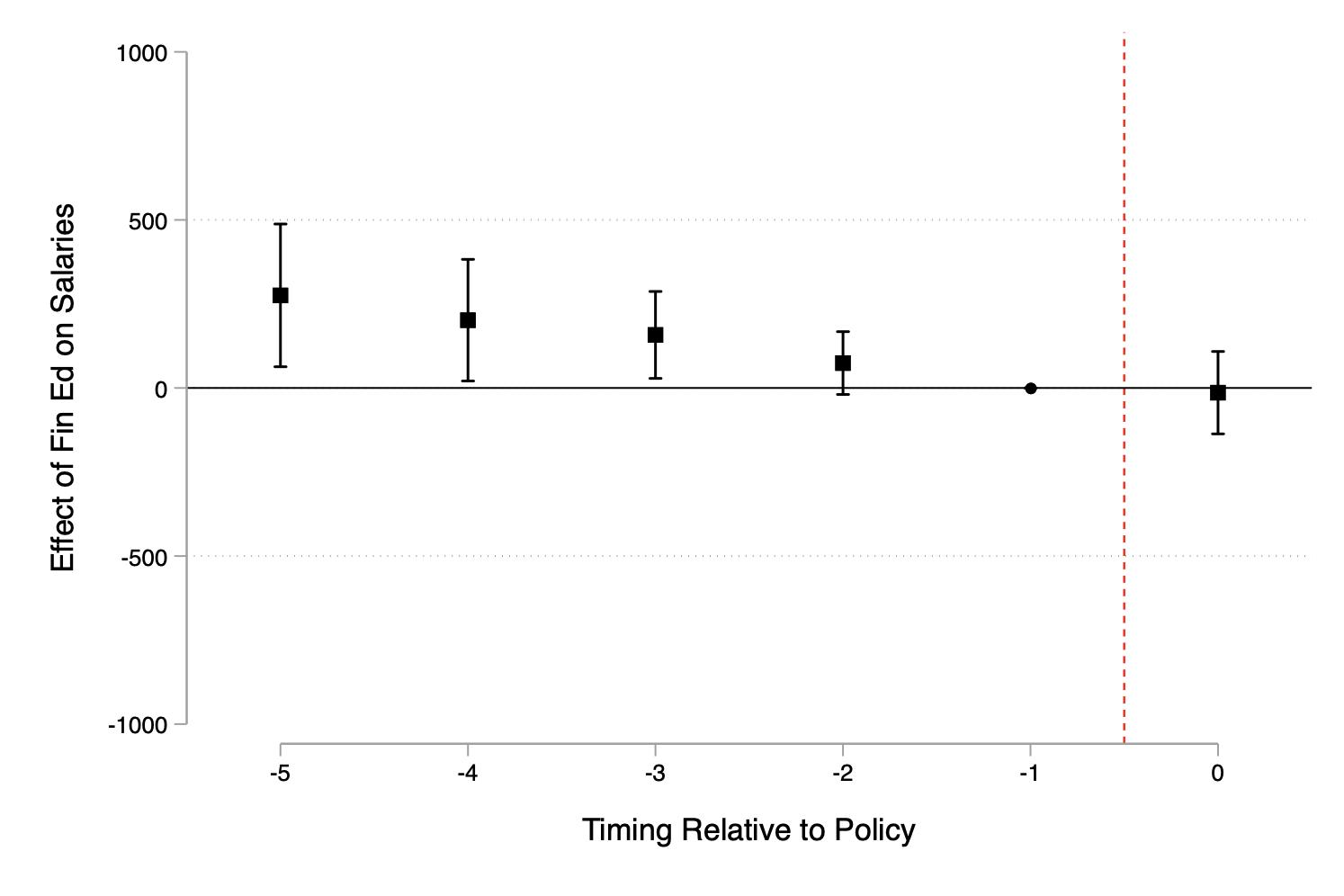
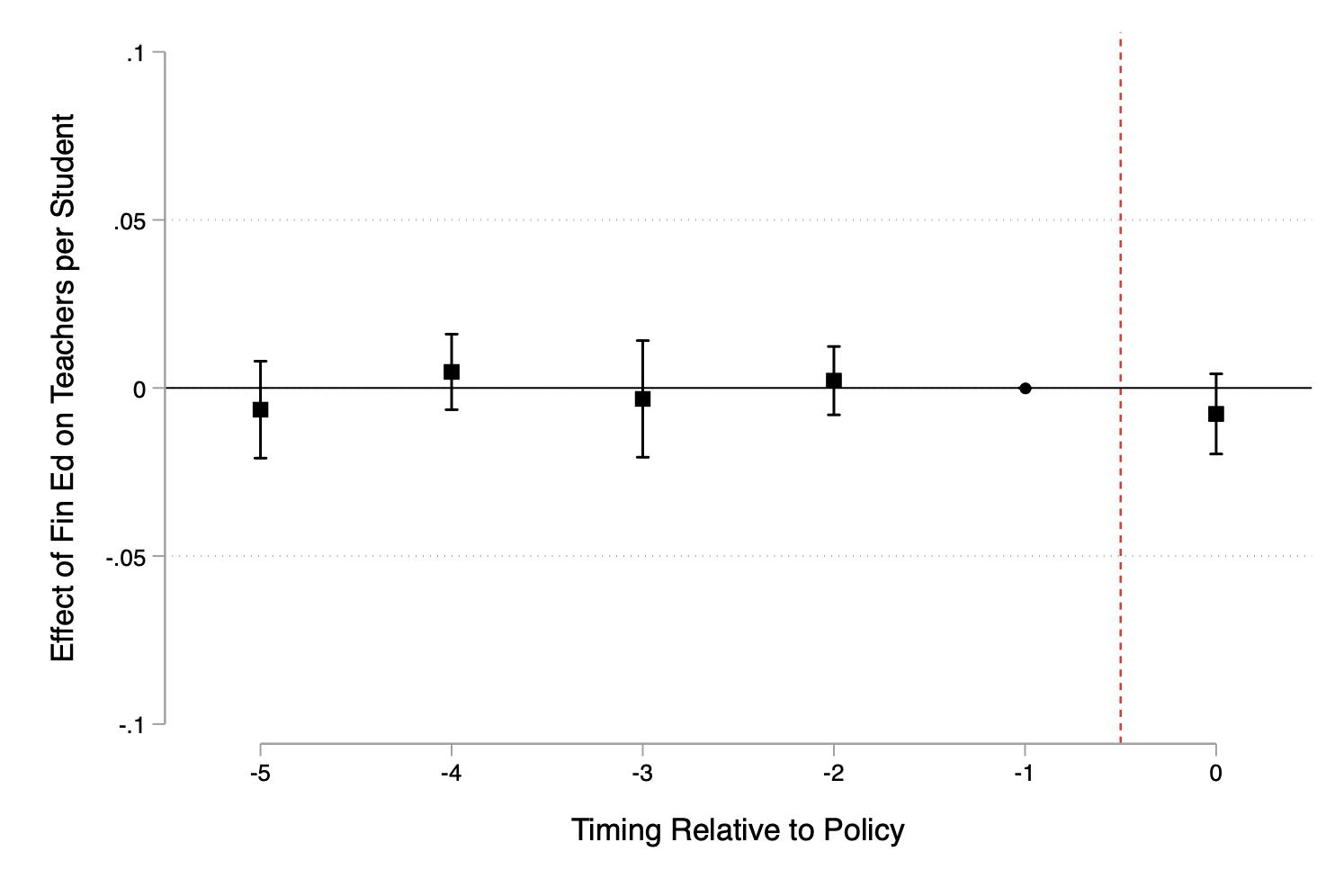
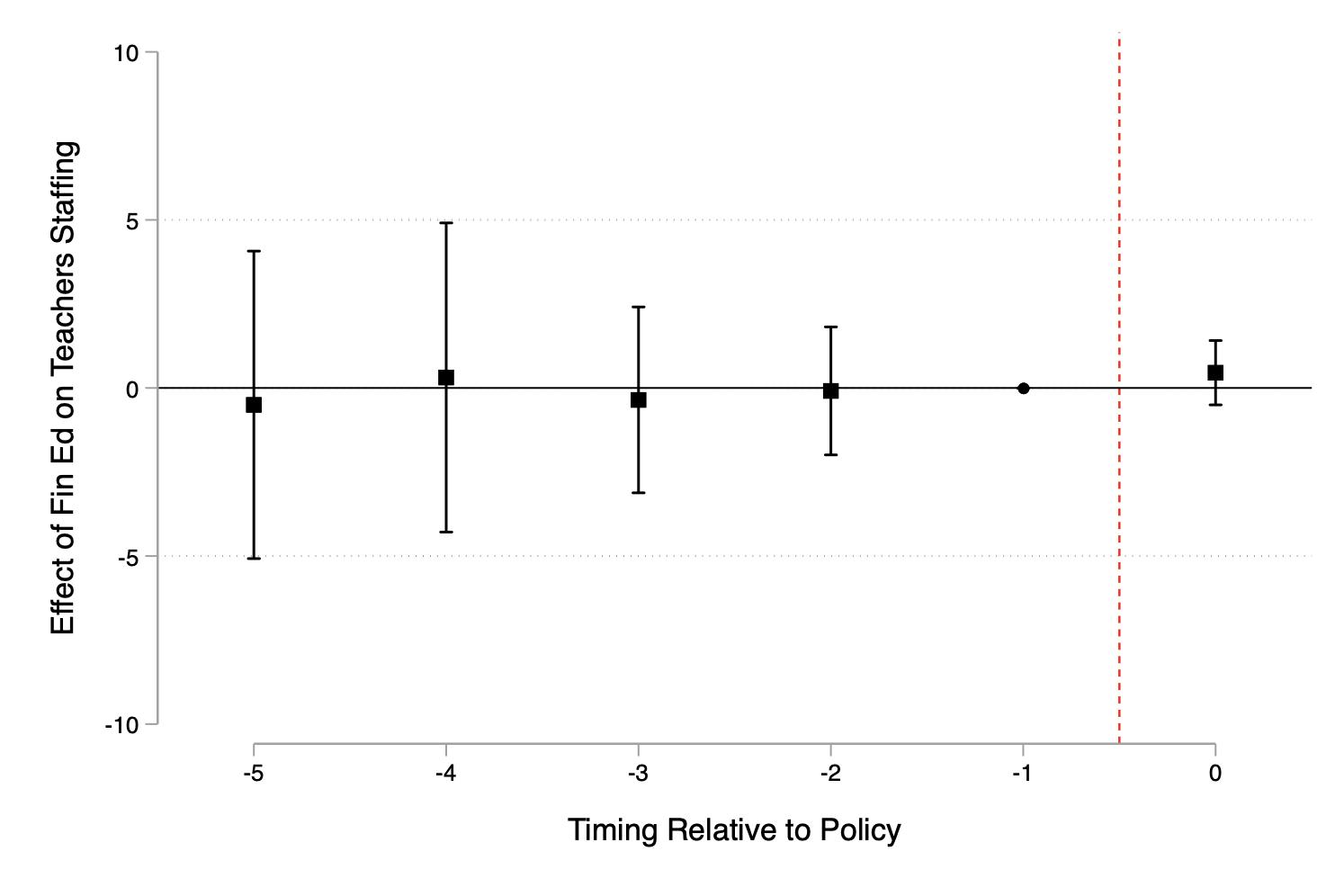
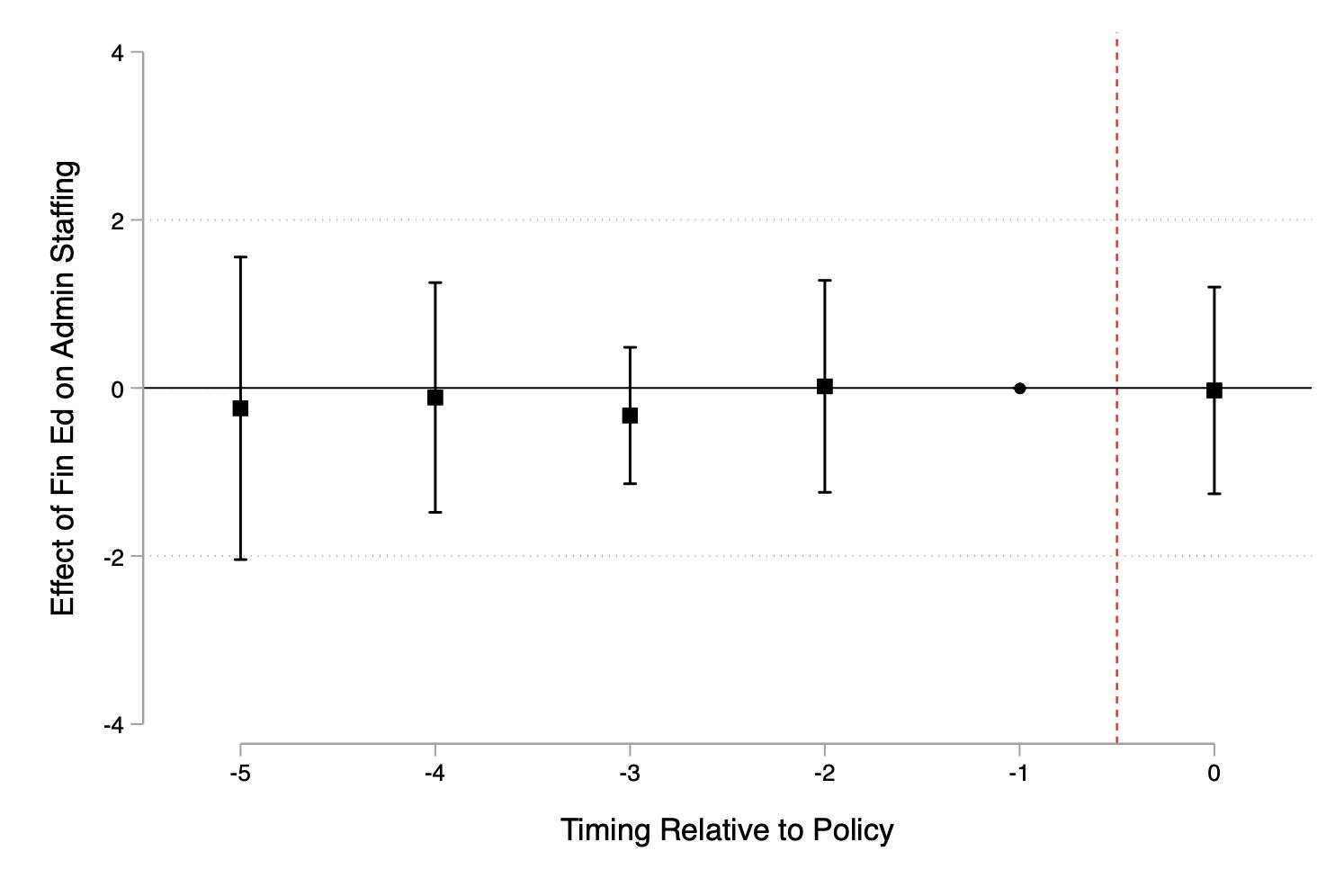
IploteventstudiesforeachspendinginFigures1-3.
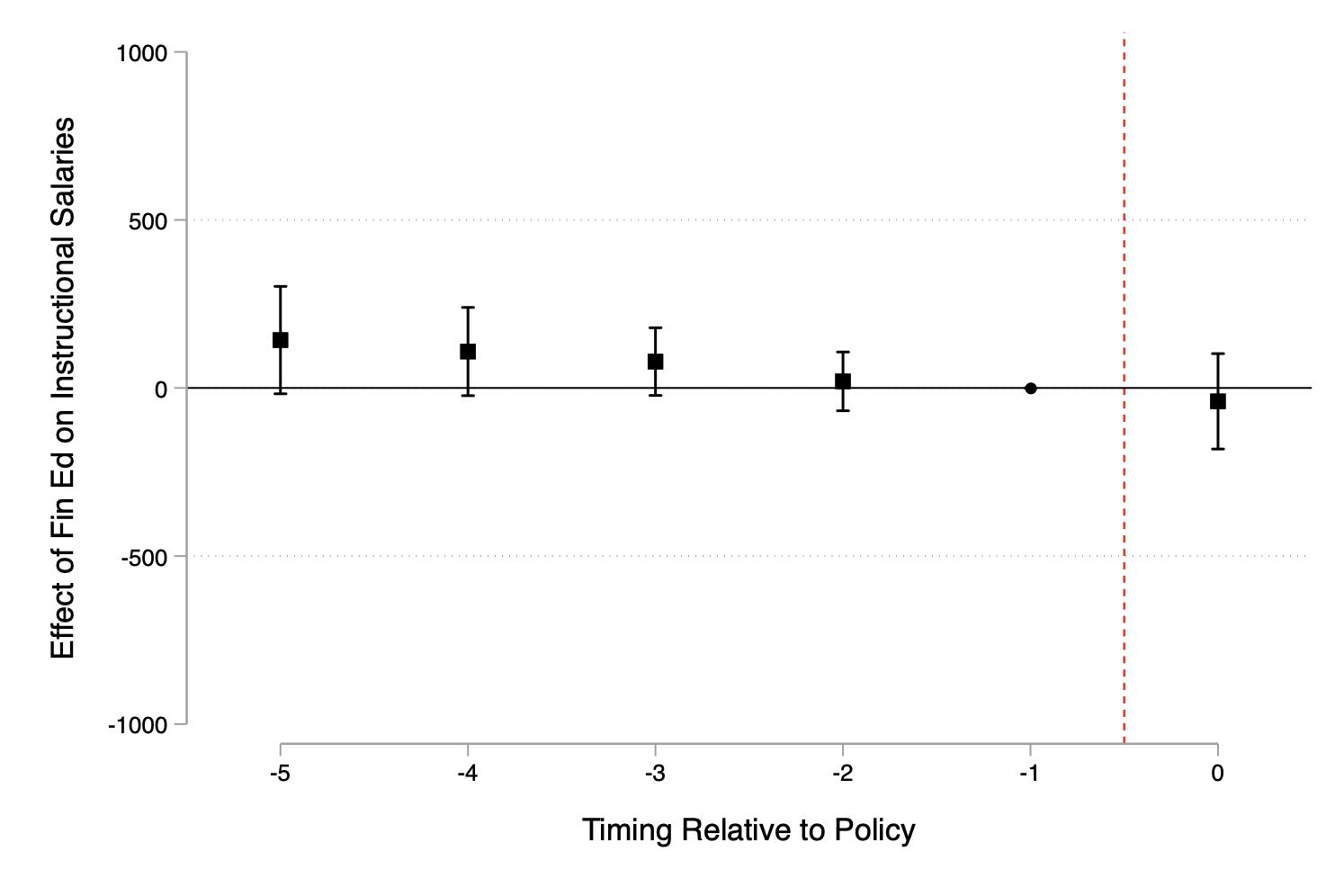
Figure1plotstheeventstudyforspendingoutcomes,withalloutcomesmeasuredper pupil.Forthegeneraladministrativespendingandinstructionalsalarycategories,thelack ofpre-trendisclear:thedifferencesacrossthetreatmentandcontrolgroupsintheperiod justbeforethepolicyisnotstatisticallydifferentfromthedifferencefiveyearsthrough twoyearsbeforethepolicybegan.Fortotalexpendituresandtotalsalaries,thereisa slightdownwardtrendinthepre-period,thedifferencesacrossthetreatmentandcontrol statesarenotstatisticallydifferentforanyperiodsfrom t 5through t 2.
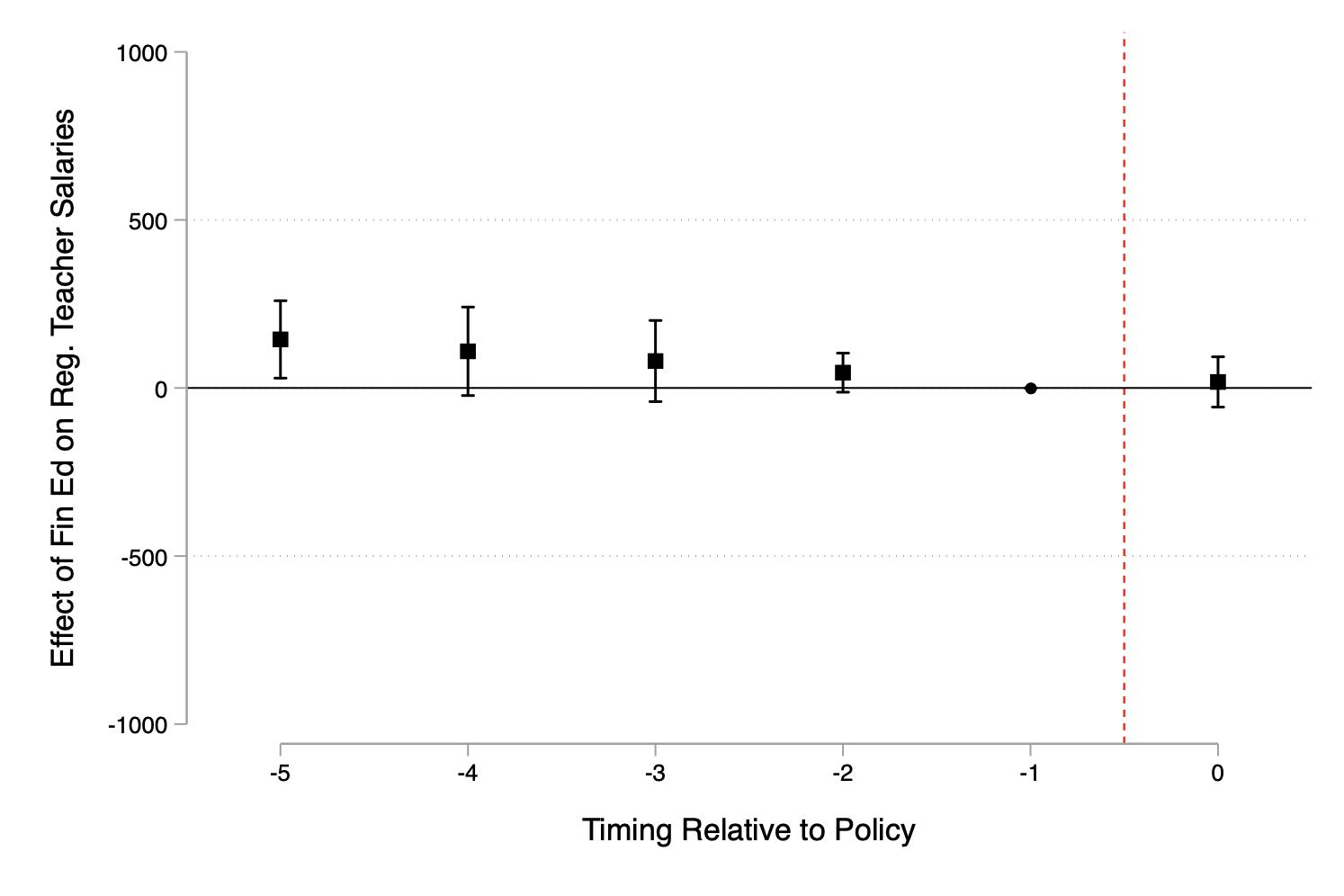
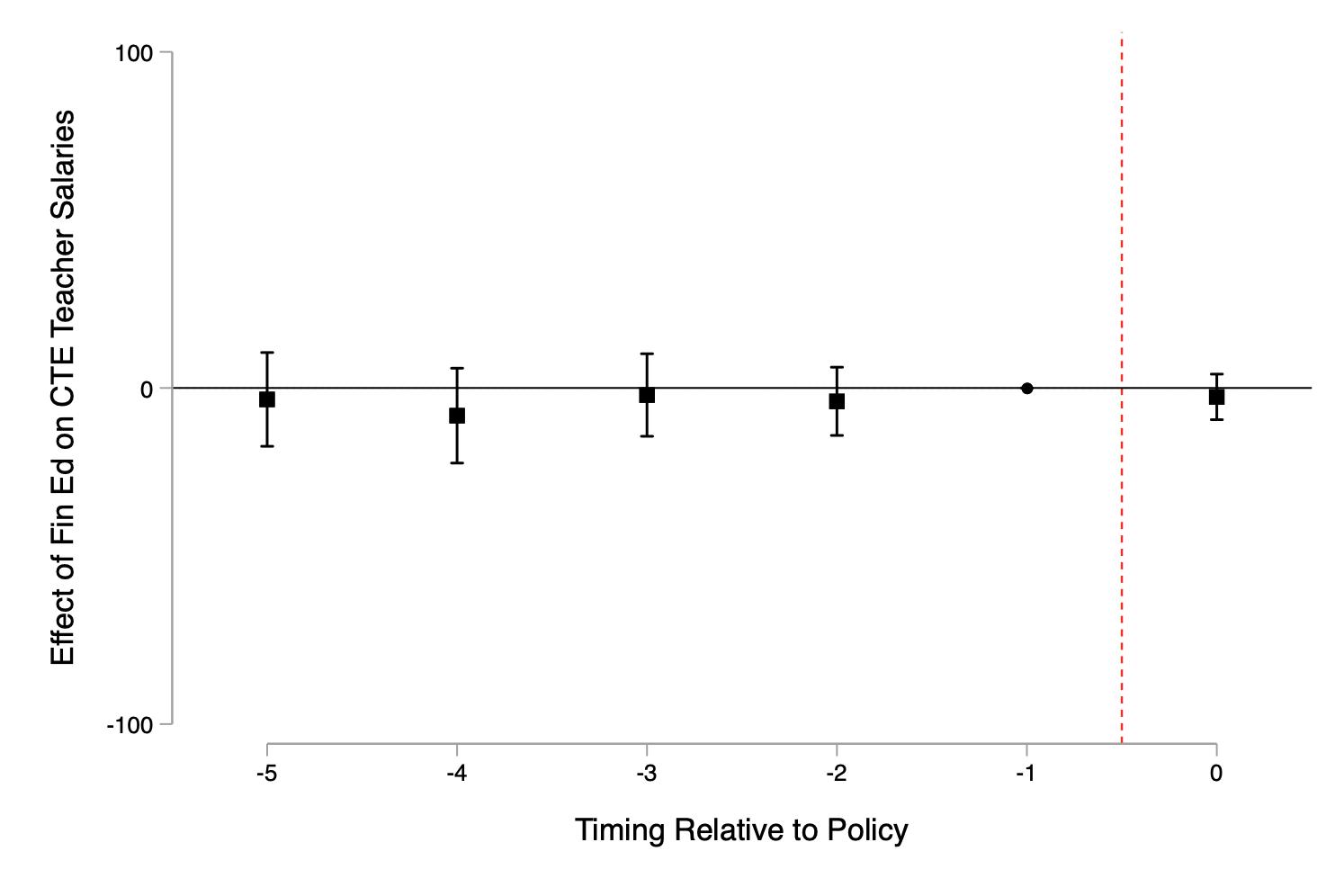
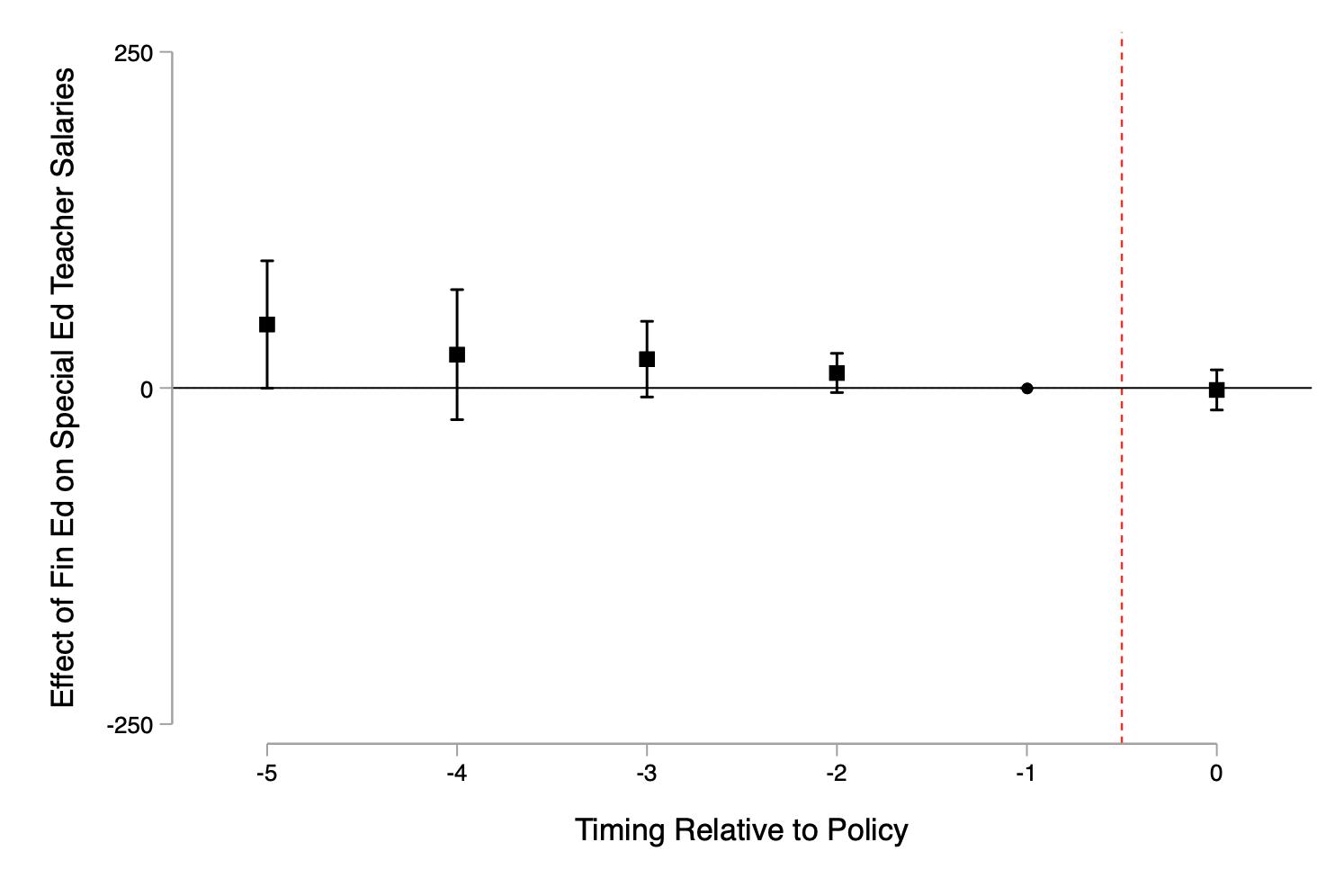
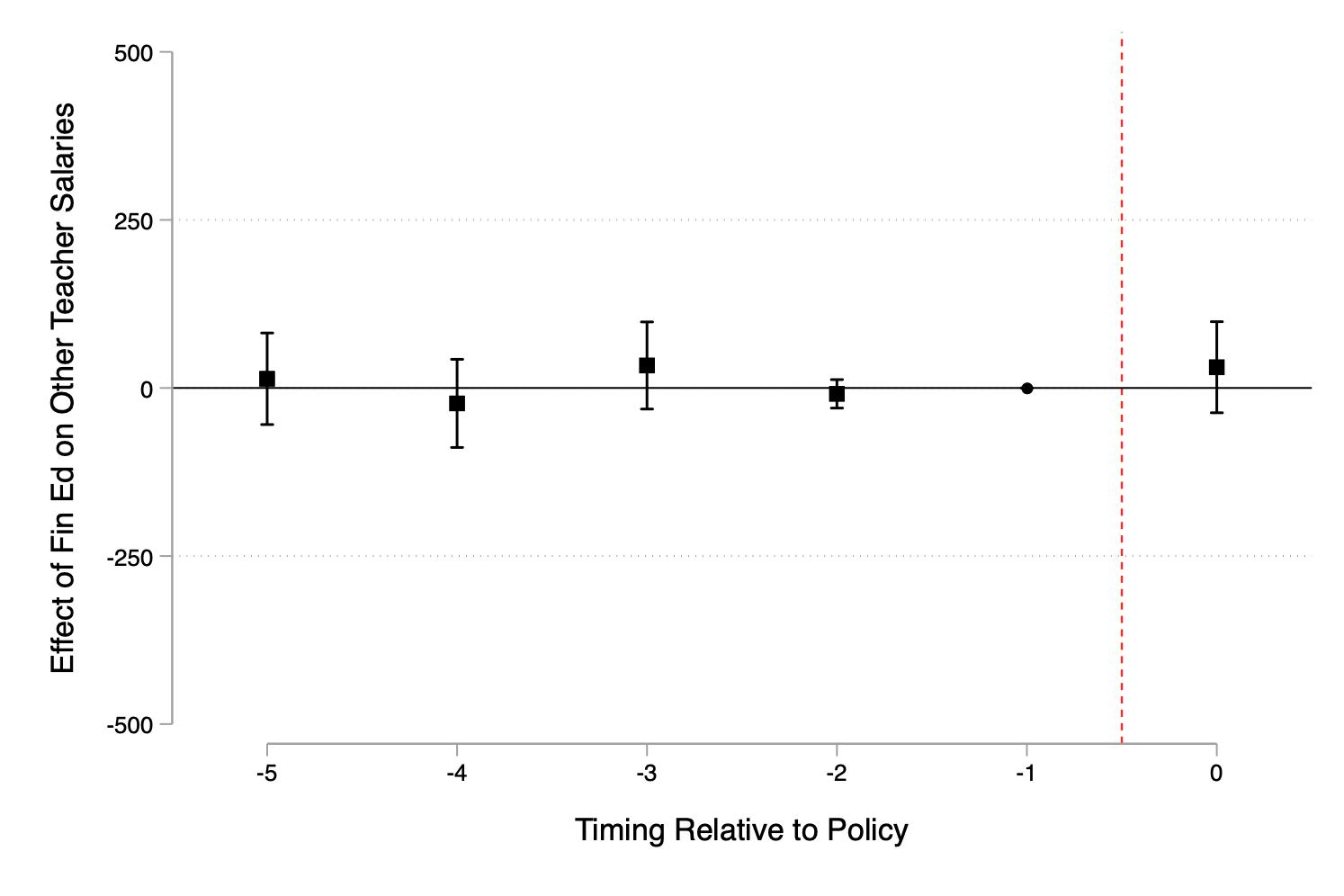
LookingatspecificteachersalarycategoriesinFigure2,thereisnoclearpre-trendin
totalteachersalaryperpupilacrossanyofthefourcategories.
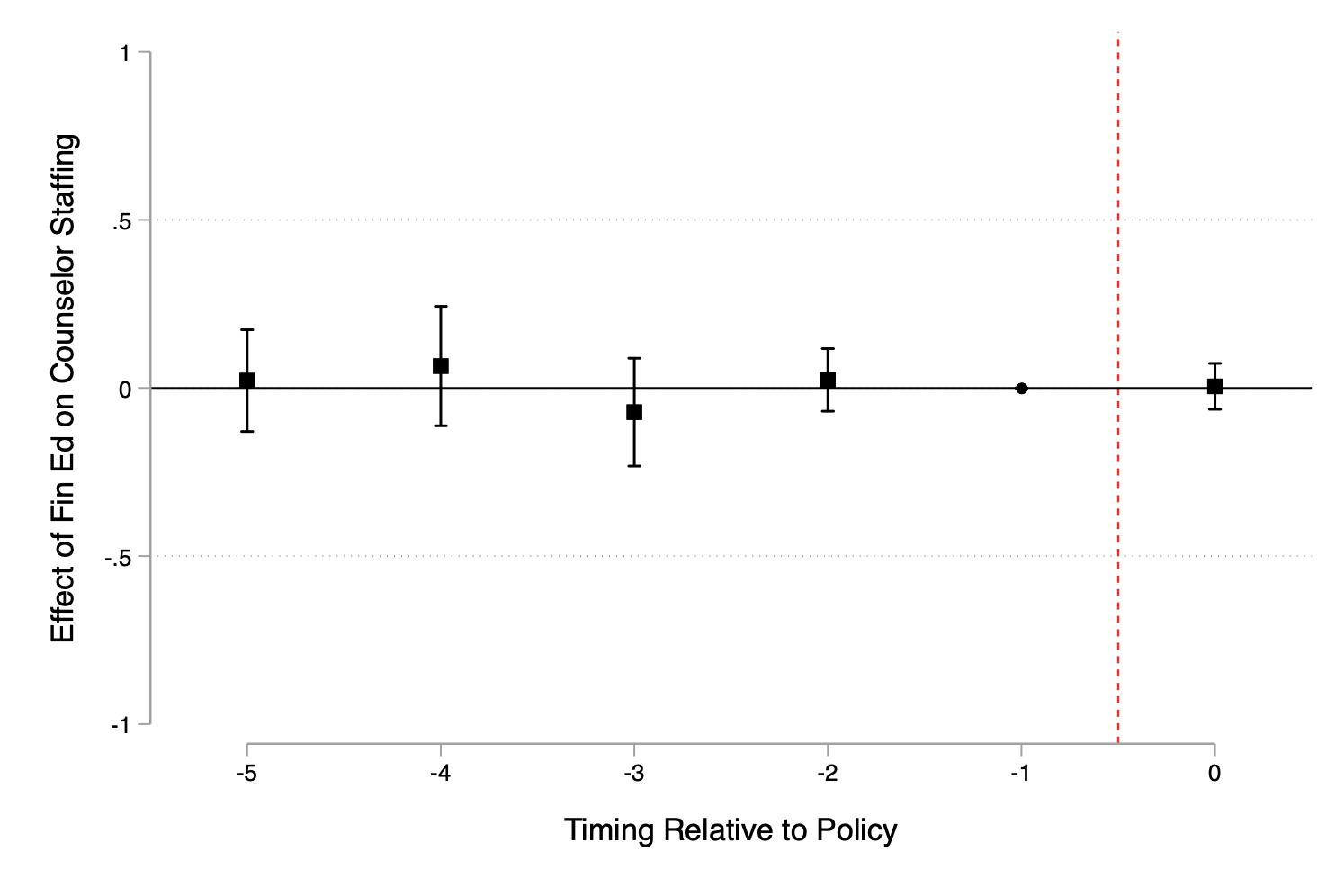
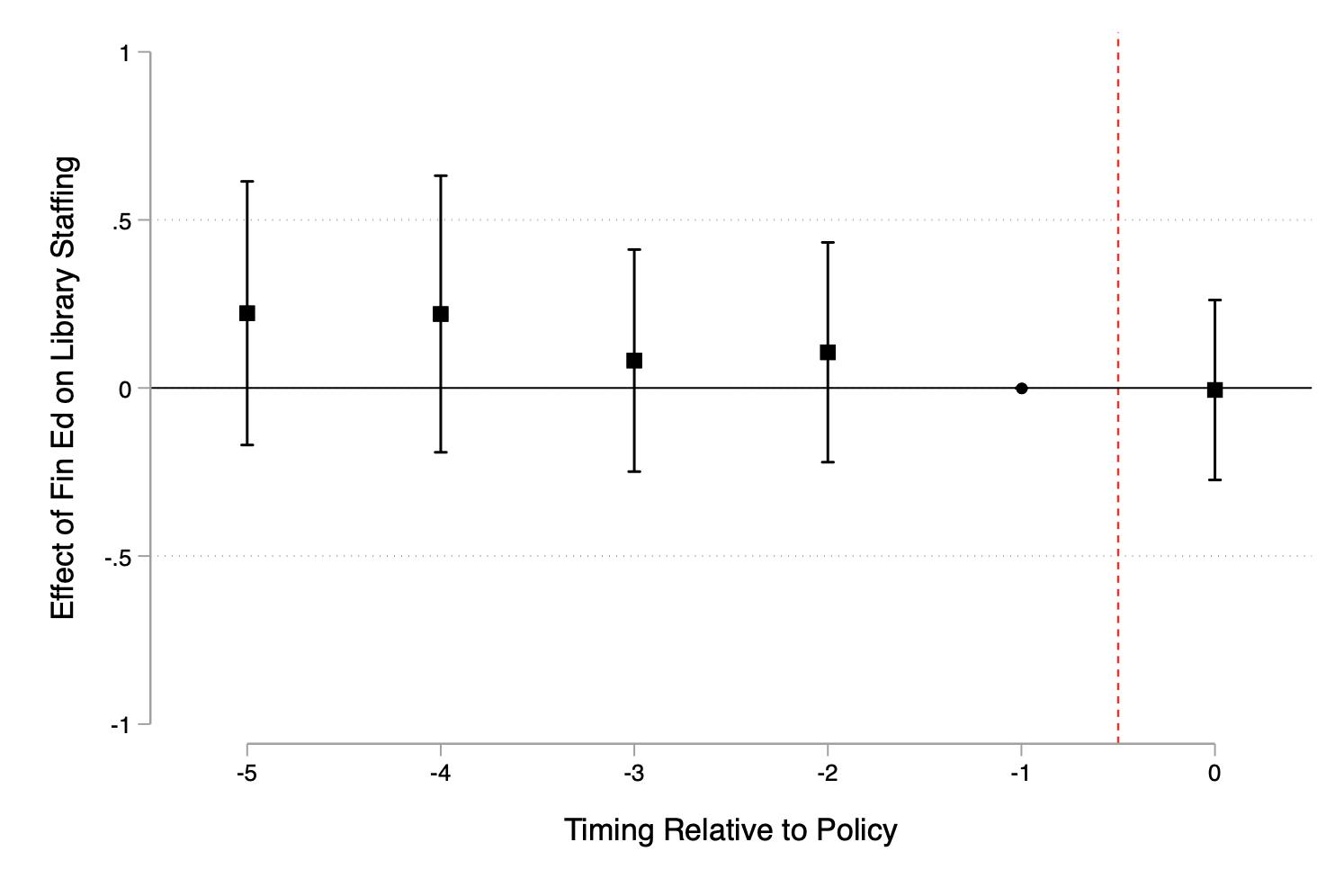
Figure3usesthehighschoollevelFTEteachersdatatoseeifthereisatrendin hiringbeforetheimplementationofthepolicy.Again,Isonoevidenceofchangesin FTEteachersperpupilattheschoollevelleadinguptothepolicychange.Irepeatthis withthedistrictstaffingdataonteachers,administrators,libraryworkers,andguidance counselorsinFigure4.Therearenotrendsinthesespecificstaffcategoriesleadingupto theimplementationofthepolicy.
Takentogether,theeventstudiesprovideevidenceinsupportofmeetingtheparallel trendsassumptionrequiredforTWFEestimation.Sincesomeschoolswithinstatesimplementtherequirementintheyearsleadinguptothefirstcohortthathastohavethe course,thismodelmayunderstatethecost.IfIinsteadimplementadonutstrategythat removestheyearbeforethepolicyandusestwoyearspriorastheexcludedgroup,Ifind comparableresults.
4RESULTS
Howmuchdoesrequiringasemesterofpersonalfinanceforhighschoolgraduationcost districts?Toanswerthis,Ibeginwithhigh-levelspendingoutcomes,asthesearethemost reliablemeasuresintheF-33files(Berry,2007).Iturnbacktotheeventstudiesfrom Figure1.Inallofthespending-relatedoutcomes,Iseethattheyearafterimplementation, totalexpendituresperpupil,generaladministrativespendingperpupil,andinstructional salaryspendingperpupilarenotstatisticallydifferentacrossthetreatmentandcontrol groupcomparedtotheyearpriortothepolicy–oranyofthefiveyearspriortothestart
ofthepolicy.Totalsalaryperpupilistrendingdownwardtowardsthestartofthepolicy, andthedifferenceinthepostperiodisstatisticallydifferentand lower thanthedifference acrossthetreatmentandcontroldistrictsinthethreethroughfiveyearspriortoimplementation(butnotdifferentfromtwoyearspriortothepolicychange.
Whiletheeventstudiesshowvalidityfortheparalleltrendsassumptionandfitaflexiblefunctiontounderstandtheeffectsofthepolicyondistrictexpenditures,estimating theeventstudyrequiresadditionalpower,aseachpre-periodisseparated.Inextestimate ˆ α1 fromEquation1toseetheoveralleffectofthepolicyonspending.Table1shows theseresults,wheretheeffectofthenewgraduationrequirementontotalspending,administrativespending,andinstructionalsalariesisnotstatisticallydifferentfromzeroat thetenpercentlevel.Thecoefficientestimatesarenoisy,wherethe95percentconfidence intervalcannotruleoutsixpercentdeclinesintotalspending.Importantly,allestimates reportedarenegative,suggestingitismorelikelythatthechangesactuallyresultina shiftinfundsthat reduces spending.Fortotalsalaries,Iseeatwopercentdeclineintotalsalaries,thoughagain,thepre-trendssuggestthatthiswasperhapsadownwardtrend anyway.Takentogetherwiththeotherspendingresults,itislikelythatthepolicydoesnot increasespending.
Tofurtherdisplaythechangesininstructionalsalaries,Figure2andTable2showthe eventstudyandEquation1estimatesonsalaryspendingbyteachertype,respectively.All foureventstudyfiguresshowevidencethattherearenochangesinsalaryspendingby teachersubjectareacomparedtothepre-periodaftertheimplementationofthegraduation requirement.Similartotheeventstudy,Table2furthershowsthatthefinancialeducation graduationrequirementdoesnothaveaneffectonsalaryspendingthatisstatisticallydif-
ferentfromzeroatthe90percentlevelacrossallcategories.However,thesignsofthe estimatessuggestamovementawayfromspendingonsalariesforregularteachers(e.g., thoseteachingcoresubjects)andspecialeducationteacherstowardsspendingonvocationalteachers(CTE)andteachersinspecialtopics(otherteachers).Thechangedoesnot sumtozero,asdataonCTEandspecialtopicsteachersislessavailableacrossschools.
Takentogether,theevidencesuggestthatthereisnotanoverallchangeinsalariesby teachertype,thoughthereissomeevidenceforashiftinspendingtowardsspecialtopics andCTEteachersandawayfromcoresubjectandspecialeducationteachers.
Next,Iturntostaffingchanges.Theeventstudiesin3and4showthatthereisnoclear changeafterimplementationinFTEteacherstaffingatthehigh-schoolordistrictlevel. Therearealsonochangesinadministrativestaff,librarystaff,orguidancecounselorsafter implementation.Table3showsthatthereisnostatisticallydetectablechangeinteachers, administrators,orcounselorsatthe90percentlevel.However,Iseeareductioninlibrary staffingof1librarystaffmemberper10,000pupils.Whilethisseemssurprising,Iexpect thatoneoftencoefficientswillbestatisticallydifferentfromzeroatthe90percentlevel bychance.AsIamtestingmanyoutcomes,itisnotsurprisingtodetectthisrelationship.
ItheninvestigateteacherhiringatthehighschoollevelinTable4.AnaddedadvantageoftheCCDhighschooldataisthepresenceofdetailedschoolcharacteristicsand anabilitytoestimateaneffectmoreprecisely.Sinceschooldistrictsarethespending authority,changeswillbenoisier.Lookingspecificallyathighschoolsaddsprecisionto theestimates.Ilookatoveralleffectsandeffectsbyschoolcharacteristics.Particularly,I considerhigherandlowerpovertyschools,thosewithover50percentofstudentsreceivingfreeandreduced-pricelunch(FRPL)andthosewithlessthan50percentofstudents
receivingFRPL.Ialsosplitschoolsintotwogeographiccharacteristics:thoseinmore ruralareas(allNCESclassificationsastownsandruralareasthatarenotinsideCBSAs) andthoseincitiesorsuburbs.Iseenostatisticaldifferenceintheeffectsizeacrossthese groupsofschools,suggestingspecificgroupsofschoolsarenotmoreorlesslikelyto adjusttheirstockofteachersbasedonthegraduationrequirements.
5CONCLUSION
Thispaperestimatesthecausaleffectsofapolicyrequiringallstudentswithinastatecompleteafullsemesterofpersonalfinancecourseworkpriortoreceivingtheirhighschool diploma.Insteadoffocusingonthebenefitstostudentoutcomes–asthisisafocusofa largeliterature(Brownetal.,2016;Harvey,2019;Urbanetal.,2020;StoddardandUrban, 2020;Mangrum,2022),thispaperbuildsuponasmallerliteratureattemptingtoquantify thecostsofthepolicy(Urban,2023).Iestimatetheeffectsofthegraduationrequirement onschooldistrictspendingandstaffing.
Overall,Ifindnoevidencethatthegraduationrequirementincreasesexpendituresper pupiloverall,administrativeexpendituresperpupil,totalsalariesperpupil,orinstructionalsalariesperpupil.Thiscoincideswithfactthatthesemandatesarealmostalways unfunded.Whenthereisfundingassociatedwiththelegislation,itisoftentofunding teachertrainingprogramswithinthestateorthestateadministrationofthenewpolicy. Rarelyisanyfundingallocatedtoschools.
Ialsoseenoevidencethatadditionalteachersarehiredtosupportthenewrequirement.Thereissomeevidencetosuggestthatsalaryspendingoncoresubjectteachersis
substitutedtowardsspecialtopicteachersandvocationalteachers.However,thoseestimatesareimpreciselyestimatedandindistinguishablefromzeroatthe90percentsignificancelevel.Thesefindingssuggestthatcommonwisdomfromschoolsthatthestate-and non-profit-providedteachertraininginthesefivestatesallowedthemtoobtainadequate trainingforteacherstransitioningtothenewcourse(Urban,2022).
REFERENCES
Alan,Sule,andSedaErtac. 2018.“Fosteringpatienceintheclassroom:Resultsfrom randomizededucationalintervention.” JournalofPoliticalEconomy,126(5):1865–1911.
Berry,Christopher. 2007.“Theimpactofschoolfinancejudgmentsonstatefiscalpolicy.” Schoolmoneytrials:Thelegalpursuitofeducationaladequacy,213–242.
Brown,Meta,JohnGrigsby,WilbertvanderKlaauw,JayaWen,andBasitZafar. 2016.“FinancialEducationandtheDebtBehavioroftheYoung.” ReviewofFinancial Studies,29(9).
Bruhn,Miriam,LucianadeSouzaLe˜ao,AriannaLegovini,RogelioMarchetti,and BilalZia. 2016.“Theimpactofhighschoolfinancialeducation:Evidencefroma large-scaleevaluationinBrazil.” AmericanEconomicJournal:AppliedEconomics, 8(4):256–295.
Burke,Jeremy,JMichaelCollins,andCarlyUrban. 2025.“Doesstate-mandatedfinancialeducationaffectfinancialwell-being.” JournalofMoney,Credit,andBanking, Forthcoming.
Deneault,Christa. 2022.“CollegeEnrollmentandMandatoryFAFSAApplications:EvidencefromLouisiana.” AmericanEconomicJournal:EconomicPolicy,Forthcoming.
Frisancho,Veronica. 2023a.“Isschool-basedfinancialeducationeffective?Immediateandlong-lastingimpactsonhighschoolstudents.” TheEconomicJournal, 133(651):1147–1180.
Frisancho,Veronica. 2023b.“Spillovereffectsoffinancialeducation:Theimpactof school-basedprogramsonparents.” JournalofFinancialLiteracyandWellbeing, 1(1):138–153.
Goodman,Joshua. 2019.“Thelaborofdivision:Returnstocompulsoryhighschoolmath coursework.” JournalofLaborEconomics,37(4):1141–1182.
Harvey,Melody. 2019.“ImpactofFinancialEducationMandatesonYoungerConsumers?UseofAlternativeFinancialServices.” JournalofConsumerAffairs,53:731–769.
Harvey,Melody,andCarlyUrban. 2023.“Doesfinancialeducationaffectretirement savings?” TheJournaloftheEconomicsofAgeing,24:100446.
Kaiser,Tim,andLukasMenkhoff. 2020.“Financialeducationinschools:Ametaanalysisofexperimentalstudies.” Economicsofeducationreview,78:101930.
Kaiser,Tim,AnnamariaLusardi,LukasMenkhoff,andCarlyUrban. 2022.“Financialeducationaffectsfinancialknowledgeanddownstreambehaviors.” JournalofFinancialEconomics,145(2):255–272.
Luedtke,AllisonOldham,andCarlyUrban. 2023.“Highschoolfinancialeducation coursesintheUnitedStates.:Whatistheimportanceofsettingstatepolicies?” Journal ofFinancialLiteracyandWellbeing,1(3):431–449.
Mangrum,Daniel. 2022.“PersonalFinanceEducationMandatesandStudentLoanRepayment.” JournalofFinancialEconomics,146(1):1–26.
Murray,SheilaE,WilliamNEvans,andRobertMSchwab. 1998.“Education-finance reformandthedistributionofeducationresources.” AmericanEconomicReview,789–812.
Sconti,Alessia. 2022.“Digitalvs.in-personfinancialeducation:Whatworksbestfor GenerationZ?” JournalofEconomicBehavior&Organization,194:300–318.
Shores,Kenneth,andMatthewPSteinberg. 2019.“SchoolingduringtheGreatRecession:Patternsofschoolspendingandstudentachievementusingpopulationdata.”
AERAOpen,5(3):2332858419877431.
Stoddard,Christiana,andCarlyUrban. 2020.“TheEffectsofStateMandatedFinancialEducationonCollegeFinancingBehaviors.” JournalofMoney,Credit,andBanking,52(4):747–776.
Urban,Carly. 2022.“BestPracticesImplementingFinancialEducationinHighSchools.” Schoolmoneytrials:Thelegalpursuitofeducationaladequacy, https://papers. carlyurban.com/MTBestPracticesReportFINAL.pdf
Urban,Carly. 2023.“Doesstate-mandatedfinancialeducationreducehighschoolgraduationrates?” EconomicsofEducationReview,95:102427.
Urban,Carly,MaximilianD.Schmeiser,J.MichaelCollins,andAlexandraBrown. 2020.“Theeffectsofhighschoolpersonalfinancialeducationpoliciesonfinancialbehavior.” EconomicsofEducationReview,78.