

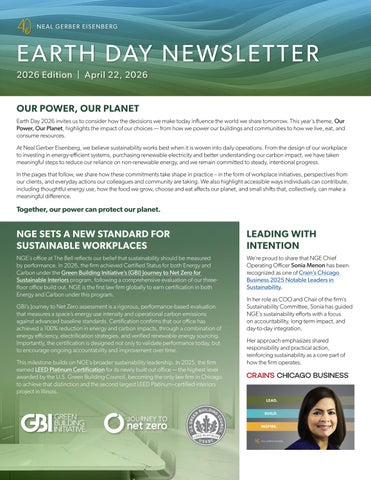
2026 Edition | April 22, 2026
Earth Day 2026 invites us to consider how the decisions we make today influence the world we share tomorrow. This year’s theme, Our Power, Our Planet, highlights the impact of our choices — from how we power our buildings and communities to how we live, eat, and consume resources.
At Neal Gerber Eisenberg, we believe sustainability works best when it is woven into daily operations. From the design of our workplace to investing in energy-efficient systems, purchasing renewable electricity and better understanding our carbon impact, we have taken meaningful steps to reduce our reliance on non-renewable energy, and we remain committed to steady, intentional progress.
In the pages that follow, we share how these commitments take shape in practice – in the form of workplace initiatives, perspectives from our clients, and everyday actions our colleagues and community are taking. We also highlight accessible ways individuals can contribute, including thoughtful energy use, how the food we grow, choose and eat affects our planet, and small shifts that, collectively, can make a meaningful difference.
Together, our power can protect our planet.
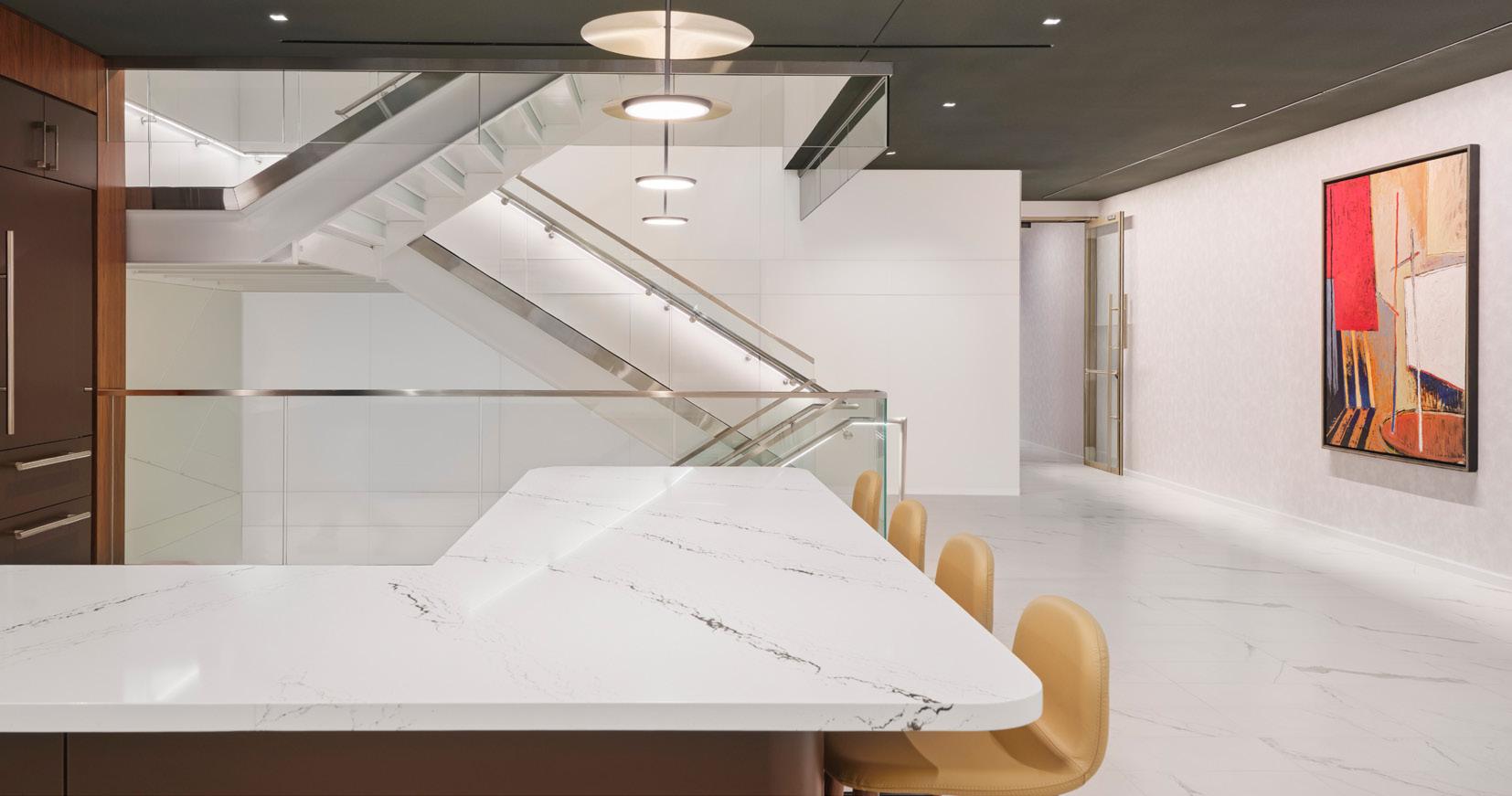
NGE’s office at The Bell reflects our belief that sustainability should be measured by performance. In 2026, the firm achieved Certified Status for both Energy and Carbon under the Green Building Initiative’s (GBI) Journey to Net Zero for Sustainable Interiors program, following a comprehensive evaluation of our threefloor office build out. NGE is the first law firm globally to earn certification in both Energy and Carbon under this program.
GBI’s Journey to Net Zero assessment is a rigorous, performance-based evaluation that measures a space’s energy use intensity and operational carbon emissions against advanced baseline standards. Certification confirms that our office has achieved a 100% reduction in energy and carbon impacts, through a combination of energy efficiency, electrification strategies, and verified renewable energy sourcing. Importantly, the certification is designed not only to validate performance today, but to encourage ongoing accountability and improvement over time.
This milestone builds on NGE’s broader sustainability leadership. In 2025, the firm earned LEED Platinum Certification for its newly built out office — the highest level awarded by the U.S. Green Building Council, becoming the only law firm in Chicago to achieve that distinction and the second largest LEED Platinum–certified interiors project in Illinois.


We’re proud to share that NGE Chief Operating Officer Sonia Menon has been recognized as one of Crain’s Chicago Business 2025 Notable Leaders in Sustainability.
In her role as COO and Chair of the firm’s Sustainability Committee, Sonia has guided NGE’s sustainability efforts with a focus on accountability, long-term impact, and day-to-day integration.
Her approach emphasizes shared responsibility and practical action, reinforcing sustainability as a core part of how the firm operates.

When NGE undertook its first office relocation in decades, the goal extended far beyond a change of address. The move to The Bell was a deliberate opportunity to create a workplace that reflects our values — efficient, inclusive, and environmentally responsible.
As the Chicago Lawyer recently reported, the project was the result of close collaboration among NGE leadership and our design, construction, and sustainability partners. Over the course of a year, every decision, from mechanical systems to furniture selection, was evaluated through the lens of long-term performance and environmental impact.
We are grateful to our partners at Onni Group, CBRE, Clune Construction Company, Gensler, and NovoSustainability for their expertise, creativity, and shared commitment to advancing this work thoughtfully.
You can read more about how we accomplished our goals in the publications below. Chicago Lawyer | OfficeSnapshots

Reducing environmental impact requires understanding where emissions come from and how they change over time. For the past six years, NGE has tracked its Scope 2 and Scope 3 greenhouse gas emissions, enabling us to assess the impact of our energy and operational decisions year over year.
A key driver of NGE’s progress has been the firm’s decision to purchase 100% renewable electricity for our operations, significantly reducing emissions associated with energy use. At the same time, we have focused on improving efficiency across our workplace and evaluating indirect emissions tied to how we operate, including upstream and downstream activities captured in Scope 3.
As a result of these combined efforts, NGE has reduced its carbon footprint by 1,215.1 metric tons of CO2e over six years. Using the EPA’s GHG equivalency calculator, this reduction is comparable to:

Driving 3,094,325 miles in an average gasoline powered vehicle

Growing 20,092 tree seedlings for ten years

Powering 163 homes for one year

Fully charging 98,236,914 smartphones

Consuming 136,728 gallons of gasoline

Using 55,821 propane cylinders for home barbecues
We view these results as both a milestone and a benchmark. Tracking emissions over time allows us to see the impact of specific decisions, from energy sourcing to workplace design, and provides a foundation for continued improvement as expectations, technologies, and standards evolve.

1,215.1

This spring, NGE colleagues participated in our first Spring Photo Scavenger Hunt, capturing plants and wildlife reemerging across our neighborhoods, parks and forest preserves. Here are a few favorite submissions — reminders to pause, look around, and reconnect with nature.






Food systems play an important role in environmental impact, affecting energy use, land, water, and emissions. While dietary choices are deeply personal, they also represent one of the more accessible ways you can make a meaningful environmental contribution at an individual level.
Research shows that food production accounts for a significant share of global emissions, with animal agriculture and food waste among the largest contributors. Shifting toward more plant-forward meals and wasting less food are practical ways you can help reduce environmental pressure while supporting healthier, more efficient systems.

Food production is responsible for 30% of global greenhouse gas emissions.
Plant-based proteins require 72%-99% less water than animal-based proteins.

Food waste generates methane, a greenhouse gas far more potent than carbon dioxide.

CHOOSE LOWER-IMPACT PLANT-BASED PROTEINS
Tofu, beans, peas and lentils have some of the lowest carbon footprints per gram of protein for plant-based proteins.
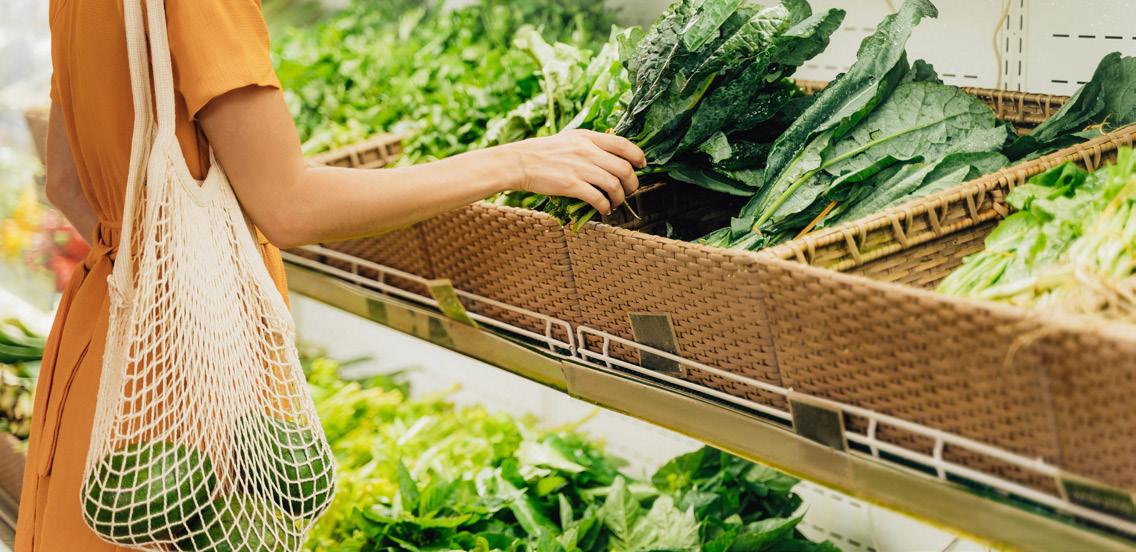
LIMIT PACKAGING AND HIGHLY PROCESSED OPTIONS
Choosing foods with minimal or no plastic packaging reduces emissions tied to manufacturing and disposal.
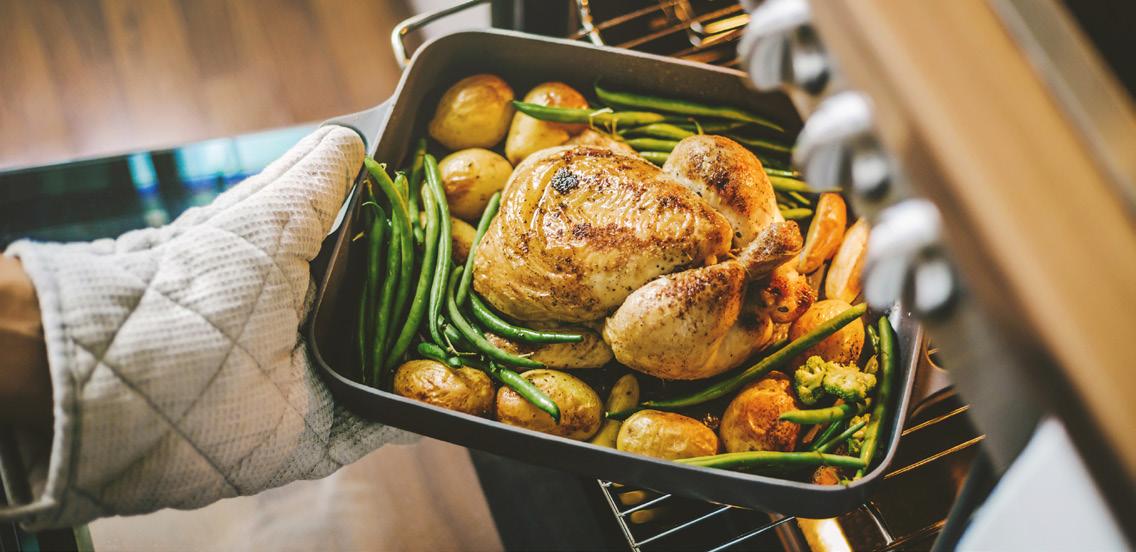
MAKE SMALL PROTEIN SWAPS
Replacing beef with chicken can reduce diet-related emissions by up to 35%.
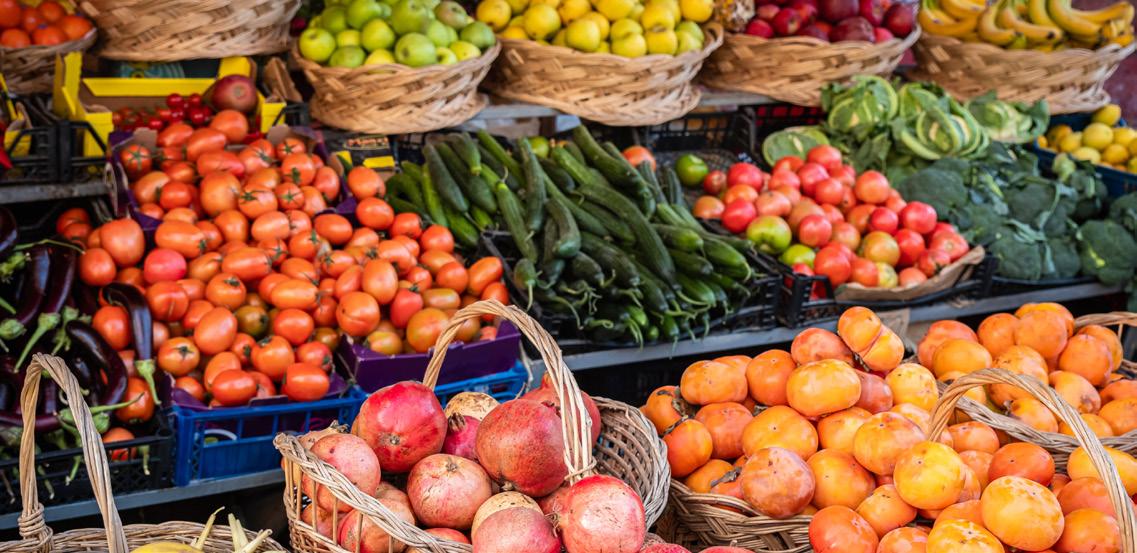
BUY SEASONAL AND LOCAL
Seasonal, locally grown foods often have 10-20% lower emissions than out-of-season or heavily transported options.
For ideas and inspiration, explore the UN’s Food Challenge, a curated collection of simple, plant-forward recipes drawn from cuisines around the world that highlight how small food choices can support sustainability.

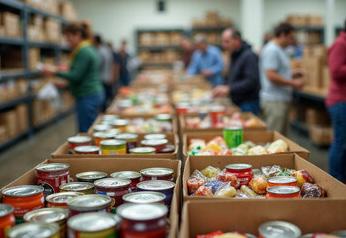
As food banks across Chicagoland faced increased demand this year, NGE colleagues responded with generosity and purpose. Through a firmwide campaign, the NGE community raised more than $11,000, enough to provide 35,190 meals for families in need across the city.
In addition, the firm donated six cases of fruit to the RTW Veterans Center, helping expand access to nutritious food options while reducing waste. These efforts reflect NGE’s commitment to supporting community well-being and addressing food insecurity through both financial support and thoughtful resource sharing.
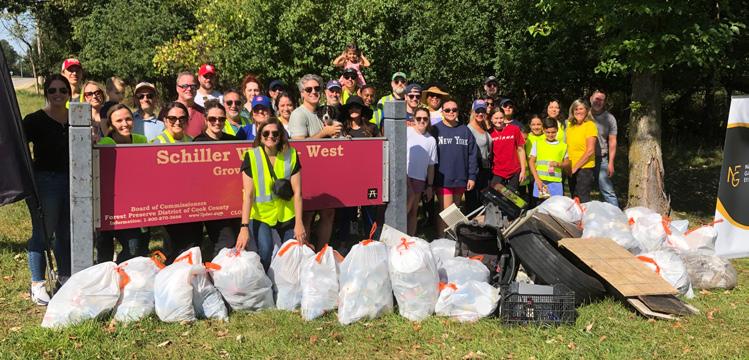
Through our ongoing partnership with Clean Up Give Back, NGE continues to divert plastic bags and soft plastics from landfills and waterways. Since 2022, we have diverted more than 550 pounds of plastic bags and other soft plastics, which have been upcycled into park benches. We also remain committed to our annual park cleanup at Schiller Woods, where colleagues and families work together to help our environment and restore the park to its natural habitat.
This winter, NGE colleagues donated more than 75 coats, along with blankets, gloves, hats, and other essentials, to support new Chicagoans facing cold weather. By extending the life of these items, our community helped meet immediate needs while keeping usable materials out of landfills.
In celebration of Earth Day, NGE colleagues are embracing simple yet impactful changes that support a more sustainable future – showing how small swaps can add up over time.
Several colleagues are focused on reducing energy use at home. Kim Soto turns off lights in unoccupied rooms, relies on natural daylight when possible, and uses timers to limit devices and lighting use. Tarsha Harris has transitioned to rechargeable wireless lighting indoors and solar-powered lighting outdoors. Brian White has taken a broader approach by prioritizing energy efficient lighting and appliances, and he recently upgraded his home’s siding and windows to improve insulation and overall energy performance.
Sustainability efforts also extend beyond the home. Angela Elbert volunteers with the Cook County Forest Preserves, helping maintain local natural spaces. Riis Stricker repurposes household waste by shredding mail to use as bedding for his pet bird, Monty – reducing waste while securely disposing of sensitive documents.
Others are finding new ways to reduce waste through recycling and composting. Patty Cain recently subscribed to Ridwell, a service that collects and responsibly recycles hard-to-process materials, and she composts with her family to further reduce household waste.
Together, these everyday actions reflect our shared commitment to sustainability and demonstrate how individual choices can contribute to a healthier planet.






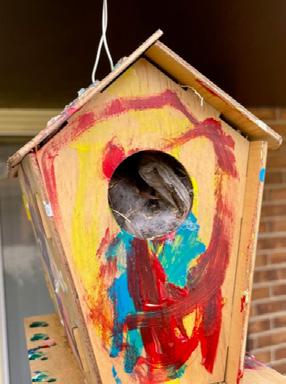
Antony Train recently worked with his son to build and decorate a backyard birdhouse — a small project that turned into an unexpected sustainability lesson.
Before long, birds moved in, bringing with them a mix of found materials. The nest includes natural elements like grass and compost, along with more surprising additions such as shed dog fur and bits of repurposed material. Watching the nest come together offered a small reminder that sustainability doesn’t always require complex solutions. Sometimes, its about paying attention to the small, inventive ways nature shows us how reuse works – and making space for it to happen.



Sustainability often begins close to home. This year, we’re highlighting the ways colleagues are reconnecting with food and nature through gardening.

Emily Murphy is collaborating with her neighbors in their four-unit apartment building in Noble Square to create a shared food garden designed to be both affordable and sustainable. Their goal was to maximize growing space while keeping costs low, an effort that relied on reused and organic materials collected over time.
Together, the group built a large raised garden bed using food-safe materials and a layered, soil-building approach that allows organic matter to break down naturally and retain moisture. This reduces the need for large quantities of new soil while creating nutrient-rich conditions for healthy plant growth.
The garden will produce a variety of fruits, vegetables, and herbs, which the neighbors plan to enjoy fresh and preserve for later use. For Emily, the project reflects how sustainability can be practical, collaborative, and rooted in everyday choices, bringing people together around food while reducing waste and resource use.
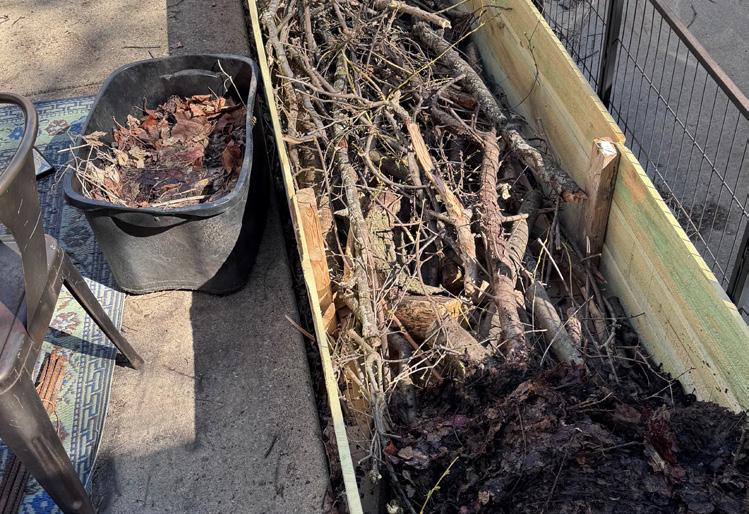
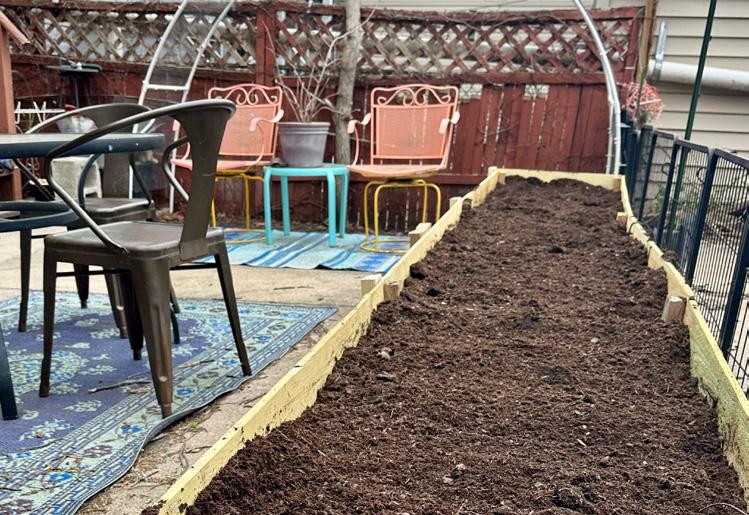

This year, Andrew Fraker is taking a multi-stage approach to expanding the growing space on his city lot in Edgewater. His efforts include rebuilding and enlarging an in-ground garden, adding raised beds, and installing a trellis for berry bushes, all designed to make better use of limited urban space.
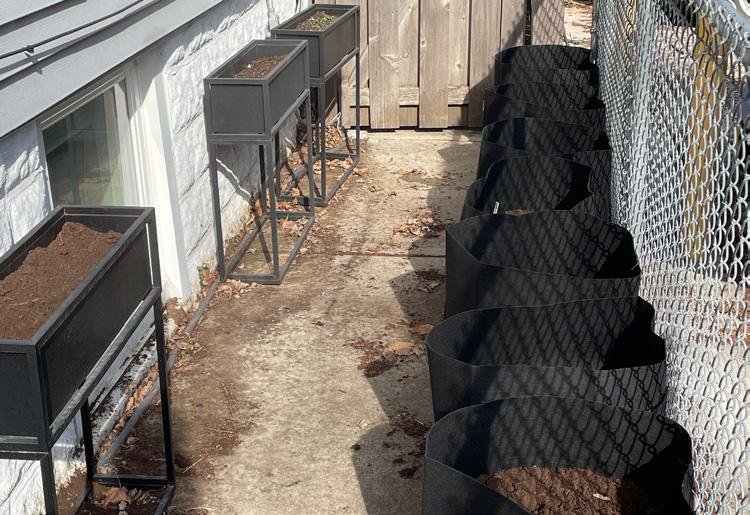
One of the more creative elements of the project came from an idea by Andrew’s mother: transforming an otherwise barren, south-facing walkway into productive growing space. What began last year with herbs in portable planters has expanded this spring to include grow bags for potatoes, sweet potatoes and leafy greens, with arugula already emerging.
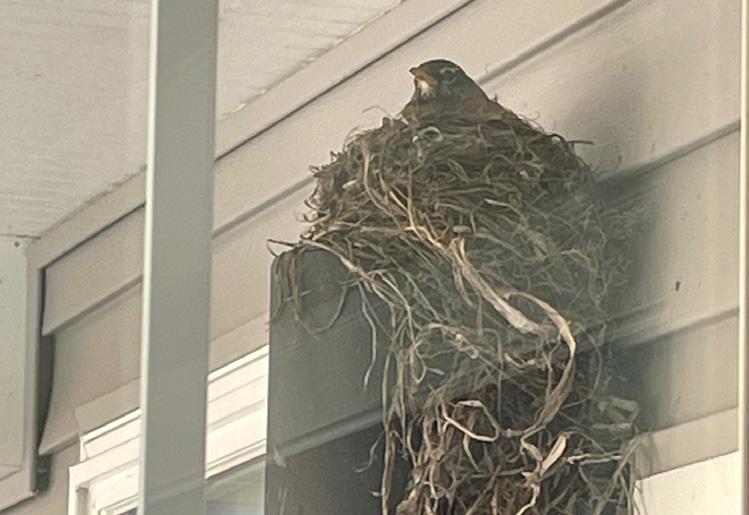
Andrew and his wife are also sharing their garden with a mother robin, who decided the porch light made a good home for her family.
Gardening offers both environmental and personal benefits: fresher food, less waste, and a tangible connection to the natural systems that sustain us.

Josh Altman was inspired by a visit to a friend’s thriving “garden of eat’n” in Wisconsin, where his children happily snacked on fresh fruit and tomatoes straight from the plants. Josh set out to recreate a version of that experience for his family — adapted to city living in Chicago.
With limited space, the garden took shape on the family’s garage roof deck using a raised VegTrug and a collection of planters. Each spring, Josh plants lettuce, greens, sugar snap peas, and herbs, transitioning later in the season to summer crops like cherry tomatoes, cucumbers, basil and other warm-weather favorites.
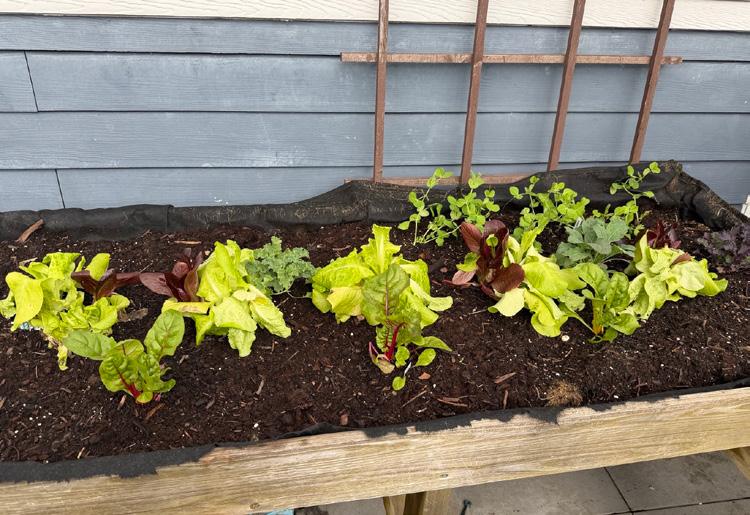
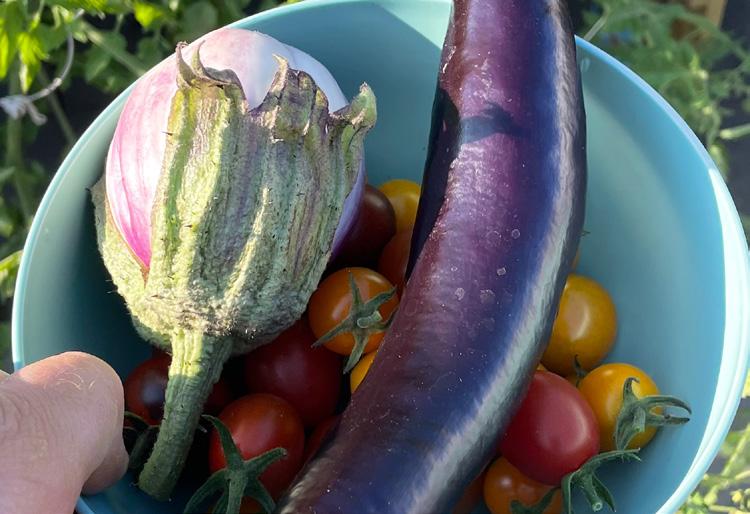
Throughout the summer, the family enjoys fresh produce straight from the garden, with tomatoes and strawberries rarely making it indoors before being eaten. Garden and kitchen scraps are composted, helping reduce household waste.
For Josh, the garden’s greatest impact goes beyond the harvest. It has become a way to spend time with his children — planting, weeding, and getting their hands dirty together — while building a lasting connection to where food comes from and an appreciation for fresh, seasonal eating.

In this year’s Client Corner, NGE’s Chief Operating Officer Sonia Menon talked with Kasia Bednarz, Founder and CEO of FARE, a Chicago-based fast-casual restaurant concept centered on seasonal, scratch-made meals and thoughtfully sourced ingredients. Kasia shared her perspective on everyday food choices, responsible sourcing, and how FARE approaches sustainability in a way that fits into real life.

The Earth Day 2026 theme is Our Power, Our Planet. What does that theme mean to FARE, particularly as a food company making choices about ingredients, sourcing, and how people eat every day?
For us at FARE, it’s about everyday decisions. The power is in how we cook, what we source, and what we choose not to use. There’s no shortcut to doing this the right way — everything we serve is made from scratch, cooked in olive oil (we don’t use seed oils), and built around real ingredients with full ingredient transparency.
It’s more difficult at our size, but our standards don’t change. When you’re feeding people every day, those choices add up. We see it as a responsibility to serve food that respects both people and the planet.
FARE has built its model around real, seasonal, scratchmade food in a fast-casual setting. How do those choices shape FARE’s approach to sustainability and responsible growth as the company expands into new neighborhoods and markets?
We’ve built FARE around simple, seasonal, scratch-made food, and that naturally keeps us more responsible. Smaller menus, rotating ingredients, and cooking fresh every day help reduce waste and keep sourcing intentional. Wherever possible, we try to source as locally as we can, which supports regional producers and reduces how far our food travels.
As we grow, those pillars don’t change. When food is in season and handled properly, it speaks for itself — you don’t need additives or shortcuts to make it taste good. Growth also gives us the ability to go further, whether that’s strengthening sourcing partnerships, expanding composting efforts, or continuing to reduce our overall footprint.

Food plays an important role in both personal health and environmental impact. How does FARE think about offering plant-forward, thoughtfully sourced meals in a way that feels accessible and realistic for everyday life?
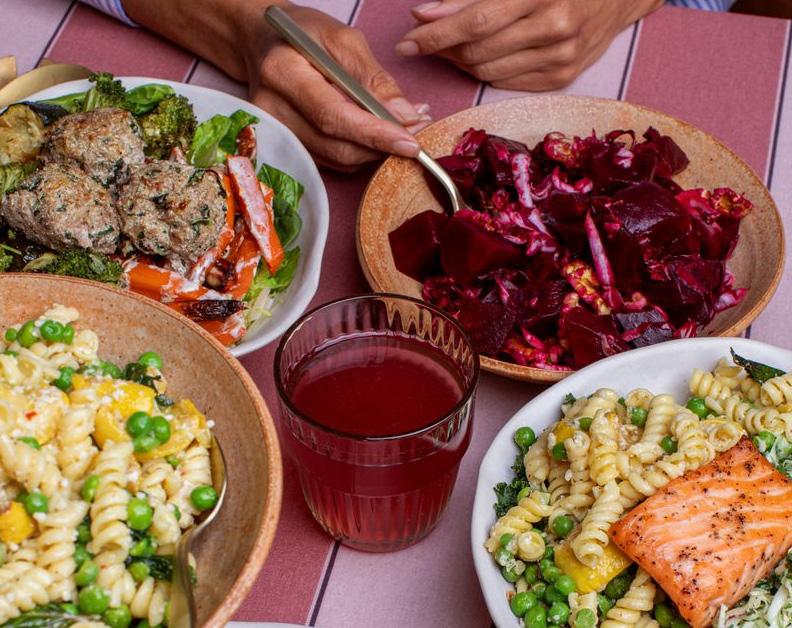
We focus on making it easier to eat well. That means plant-forward sides, clean proteins, and meals that feel balanced but still craveable — served fast and priced so people can come back multiple times a week.
Food has to fit into real life, especially long days and busy weeks, so convenience matters just as much as quality. We recently launched Take Home Sides and Proteins and Family Meals so people can pick up real food in bulk, whether as an alternative to meal prep or something easy to grab on the way home.
At the end of the day, it has to taste good or people won’t eat it. We still offer more indulgent options, like mac and cheese, but they’re made with high-quality ingredients and no fillers. We believe in balance — when you get that right, eating well becomes something people actually enjoy and stick with.
Based on FARE’s experience, what advice would you offer to businesses or individuals who want to make more thoughtful food choices without overcomplicating things?
Start with ingredients you recognize and food that feels like something you’d make at home. Cook a little more, rely less on packaged shortcuts, and focus on consistency over perfection.
Simple habits go a long way. Use the whole fruit or vegetable when you can to reduce waste — and when it makes sense, keep the skin on (that’s where a lot of the nutrients and fiber are). Choose organic when it’s practical, but don’t let “perfect” get in the way of better.
Thoughtful eating isn’t about doing everything—it’s about doing a few things well, every day. When you start with high-quality, inseason ingredients, the flavor does most of the work.
To learn more about FARE and their mission, visit the link: FARE
The interview has been condensed and edited for clarity.