DEPARTMENT DIRECTORY Governor Kelly Armstrong ADMINISTRATIVE DIVISION Game and Fish Director: Jeb Williams Deputy Director: Casey Anderson Chief, Administrative Services: Brian Hosek Grant Management Services Manager: Corey Wentland Administrative Staff Officer: Justin Mattson Administrative Assistant: Lynn Timm Building Maint. Supervisor: Brandon Diehl Human Resources Services Manager: Melissa Long Administrative Officer: Alan Peterson Financial Services Manager: Angie Morrison Accountant: Ashley Hillerson Business Services Manager: Vacant Technical Operations Lead: Alan Reile Data Scientist: Shane Wegner Licensing Services Manager: Randy Meissner Assistants: Amanda Anstrom, Tracy Price, Tana Bentz, Tanya Mikkelsen, Elizabeth Klein Administrative Assistant – Dickinson: Stephanie Richardson Administrative Assistant – Devils Lake: Lisa Tofte Administrative Assistant – Jamestown: Tonya Kukowski Administrative Assistant – Riverdale: Mattea Bierman Administrative Assistant – Williston: Stephanie Wellman CONSERVATION AND COMMUNICATIONS DIVISION Division Chief: Bruce Kreft, Bismarck Communications Manager: Mike Anderson, Bismarck Editor: North Dakota OUTDOORS: Ron Wilson, Bismarck Communications Specialist: Zach Eshleman, Bismarck Marketing Coordinator: Cayla Bendel, Bismarck Digital Media Editor: Lara Anderson, Bismarck Photographer/Videographer: Ashley Peterson, Bismarck Marketing Specialist: Jackie Ressler, Bismarck Information Specialist: Dawn Jochim, Bismarck Graphic Artist: Kristi Fast, Bismarck Education Supervisor: Marty Egeland, Bismarck Education Coordinator: Jeff Long, Bismarck Hunter Education Coordinator: Brian Schaffer, Bismarck Outreach Biologists: Doug Leier, West Fargo; Greg Gullickson, Minot; Jim Job, Grand Forks Conservation Supervisor: Patrick Isakson, Bismarck Conservation Biologists: Sandra Johnson, Elisha Mueller, John Schumacher, Aaron Larsen, Greg Schonert, Bismarck Administrative Assistant: Amber Schroeter, Bismarck ENFORCEMENT DIVISION Division Chief: Scott Winkelman, Bismarck Investigative Supervisor: Jim Burud, Kenmare Investigator: Blake Riewer, Grand Forks Operations Supervisor: Jackie Lundstrom, Bismarck Warden Pilot: Mike Linden, Bismarck Region No. 1 Warden Supvr: Michael Sedlacek, Jamestown District Wardens: Corey Erck, Bismarck; Andrew Dahlgren, Milnor; Erik Schmidt, Linton; Greg Hastings, Jamestown; Noah Raitz, LaMoure; Nick Tschepen, Fargo Region No. 2 Warden Supvr: Paul Freeman, Devils Lake District Wardens: Jonathan Tofteland, Bottineau; Jonathan Peterson, Devils Lake; James Myhre, New Rockford; Alan Howard, Cando; Drew Johnson, Finley; Sam Feldmann, Rugby; Gage Muench, Grand Forks; Dale Skalicky, Langdon; James Myhre, Sheyenne Region No. 3 Warden Supvr: Joe Lucas, Riverdale District Wardens: Shawn Sperling, Minot; Keenan Snyder, Williston, Josh Hedstrom, Tioga; Riley Gerding, Kenmare; Clayton Edstrom, Turtle Lake; Conner Folkers, Garrison; Luke Aamold, Watford City Region No. 4 Warden Supvr: Dan Hoenke, Dickinson District Wardens: Kylor Johnston, Hazen; Zachary Biberdorf, Bowman; Courtney Sprenger, Elgin; Zane Manhart, Golva; Jerad Bluem, Mandan; Zachary Schuchard, Richardton; Dominic Falch, Killdeer Administrative Assistant: Lori Kensington, Bismarck WILDLIFE DIVISION Division Chief: Bill Haase, Bismarck Assistant Division Chief: Levi Jacobson, Bismarck Game Mgt. Section Leader: Stephanie Tucker, Bismarck Pilot: Jeff Faught, Bismarck Upland Game Mgt. Supvr: Jesse Kolar, Dickinson Upland Game Mgt. Biologist: Rodney Gross, Bismarck Migratory Game Bird Mgt. Supvr: John Palarski, Bismarck Migratory Game Bird Biologist: Mason Ryckman, Bismarck Big Game Mgt. Supvr: Bruce Stillings, Dickinson Big Game Mgt. Biologists: Brett Wiedmann, Dickinson; Jason Smith, Jamestown; Ben Matykiewicz, Bismarck Survey Coordinator: Chad Parent, Bismarck Wildlife Veterinarian: Dr. Logan Weyand, Bismarck Wildlife Health Biologist: Ryan Herigstad, Bismarck Game Management Biological Technician: Nate Rykerd, Bismarck Wildlife Resource Management Section Leader: Kent Luttschwager, Williston Wildlife Resource Mgt. Supvrs: Brian Prince, Devils Lake; Brian Kietzman, Jamestown; Dan Halstead, Riverdale; Blake Schaan, Lonetree; Judd Jasmer, Dickinson; Jens Johnson, Bismarck Wildlife Resource Mgt. Biologists: Randy Littlefield, Lonetree; Rodd Compson, Jamestown; Todd Buckley, Williston; Jake Oster, Riverdale; Andrew Ahrens, Devils Lake; Broden Ullyott, Dickinson Wildlife Biological Technicians: Tom Crutchfield, Jim Houston, Bismarck; Dan Morman, Robert Miller, Riverdale; Jason Rowell, Jamestown; Scott Olson, Devils Lake; Zach Eustice, Williston; Colton Soiseth, Quentin Corcoran, Lonetree Private Land Section Leader: Kevin Kading, Bismarck Habitat Manager: Nathan Harling, Bismarck Private Land Field Operation Supvrs: Curtis Francis, East Region, Bismarck; Colleen Gleason, West Region Private Land Biologists: Zach Johnson, Colin Penner, Bismarck; Jaden Honeyman, Ben Reith, Dickinson; Ryan Huber, Riverdale; Renae Schultz, Jeff Williams, Jamestown; Terry Oswald, Jr., Harvey; Erica Sevigny, Williston; Brandon Ramsey, Matthew Parvey, Devils Lake Procurement Officer: Dale Repnow, Bismarck FISHERIES DIVISION Division Chief: Greg Power, Bismarck Fisheries Mgt. Section Leader: Scott Gangl, Bismarck Fisheries Supvrs: Russ Kinzler, Riverdale; Paul Bailey, Bismarck; Brandon Kratz, Jamestown; Aaron Slominski, Williston; Bryan Sea, Devils Lake; Lucas Rott, Riverdale Fisheries Biologists: Todd Caspers, Devils Lake; Mike Johnson, Jamestown; Jeff Merchant, Dickinson; Zach Kjos, Riverdale Fisheries Biological Technicians: Phil Miller, Devils Lake; Justen Barstad, Bismarck; Brian Frohlich, Riverdale; Ethan Krebs, Jamestown, Sanden O’Connell, WIlliston Production/Development Section Supvr: Jerry Weigel, Bismarck Aquatic Nuisance Species Coordinator: Benjamin Holen, Jamestown Aquatic Nuisance Species Biologists: Mason Hammer, Jamestown; Kyle Oxley, Bismarck Fisheries Development Supvr: Bob Frohlich, Bismarck Fisheries Dev. Proj. Mgr: Wesley Erdle, Bismarck Fisheries Development Specialist: Kyle Hoge, Jacob Heyer, Joe Fladeland, Bismarck Administrative Assistant: Janice Vetter, Bismarck ADVISORY BOARD District 1 ....................................................................................................Nathan Hovde, Alexander District 2 ..................................................................................................................Travis Leier, Velva District 3 ................................................................................................ Edward Dosch, Devils Lake District 4 ....................................................................................................... Karissa Daws, Michigan District 5 ............................................................................................... Doug Madsen, Harwood District 6 ......................................................................................Jordan Svenningsen, Luverne District 7 ..................................................................................................Jody Sommer, Mandan District 8 .............................................................................................................. Rob Brooks, Rhame
Contributing photographers for this issue: Mike Anderson, Hanna Edens (USFWS), Zachary Eshleman, Sandra Johnson and Ashley Peterson. Official publication of the North Dakota Game and Fish Department (ISSN 0029-2761) 100 N. Bismarck Expressway, Bismarck, ND 58501-5095 Website: gf.nd.gov • Email: ndgf@nd.gov • Information 701-328-6300 • Licensing 701-328-6335 • Administration 701-328-6305 • North Dakota Outdoors Subscriptions 701-328-6363 • Hunter Education 701-328-6615 • The TTY/TTD (Relay ND) number for the hearing or speech impaired is 800-366-6888
Periodical Postage Paid at Bismarck, ND 58501 and additional entry offices. Printed in the United States POSTMASTER: Send address changes to: North Dakota OUTDOORS 100 North Bismarck Expressway Bismarck, ND 58501-5095
Report All Poachers (RAP) 701-328-9921 In cooperation with North Dakota Wildlife Federation and North Dakota State Radio.
The mission of the North Dakota Game and Fish Department is to protect, conserve and enhance fish and wildlife populations and their habitats for sustained public consumptive and nonconsumptive use. ■ Editor: Ron Wilson
■ Graphic Designer: Kristi Fast
■ Circulation Manager: Dawn Jochim
JULY 2026 • NUMBER 1 • VOLUME LXXXIX
CONTENTS
The number of roosters heard during the North Dakota Game and Fish Department’s 2026 spring pheasant crowing count survey was up 9% statewide from last year.
2
The Missouri Gets Its Stripes
6
Creatures of the Night
12
95 Years and Counting
16
Pedaling the Whooper Highway
20
Buffaloberry Patch
25
Back Cast
North Dakota OUTDOORS is published 10 times a year, monthly except for the months of April and September. Subscription rates are $15 for one year or $30 for three years. Remittance should be by check or money order payable to the North Dakota Game and Fish Department. Indicate if subscription is new or renewal. The numbers on the upper right corner of the mailing label indicate the date of the last issue a subscriber will receive unless the subscription is renewed. Permission to reprint materials appearing in North Dakota OUTDOORS must be obtained from the author, artist or photographer. We encourage contributions; contact the editor for writer and photography guidelines prior to submission. The NDGFD receives Federal financial assistance from the US Fish and Wildlife Service and the US Coast Guard. In accordance with Title VI of the Civil Rights Act of 1964, Section 504 of the Rehabilitation Act of 1973, Title II of the Americans with Disabilities Act of 1990, the Age Discrimination Act of 1975, and Title IX of the Education Amendments of 1972, the NDGFD joins the US Department of the Interior and its Bureaus and the US Department of Homeland Security in prohibiting discrimination on the basis of race, color, national origin, age, disability, sex (in education programs or activities) and also religion. If you believe you have been discriminated against in any program, activity, or facility as described above, or you desire further information, please write to: ND Game and Fish Department, Attn: Chief of Administrative Services, 100 N. Bismarck Expressway, Bismarck, ND 58501-5095 or to: Office of Civil Rights, Department of the Interior, 1849 C Street, NW, Washington, DC 20240.
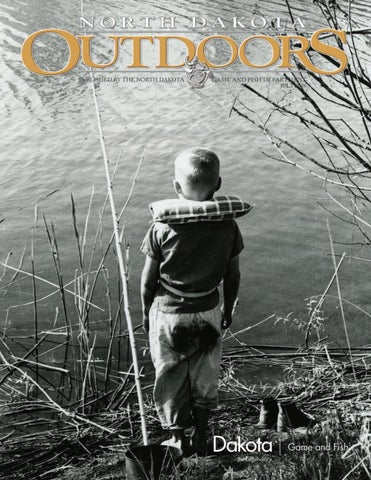
Front Cover
In celebration of North Dakota OUTDOORS turning 95, we look back at a young, shoeless angler fishing a small water in Oliver County in 1963.
Tiger trout
2 ■ ND OUTDOORS ■ JULY 2026
BY ZACHARY ESHLEMAN On a windy May morning below Lake Sakakawea, crews from the North Dakota Game and Fish Department made runs back and forth from the Garrison Dam National Fish Hatchery to the banks of the Missouri River, towing trailers full of fish. Among the usual loads of rainbow trout came something new: 11,420 advancedfingerling tiger trout. Their bold markings twisting around their sides and down to their dark bellies made them stand out from the rest. For the first time in North Dakota, these fish have reached the Mighty Mo. Tiger trout are sterile hybrids that can sometimes show up in the wild on their own. Most of the time, though, they’re created by human intervention. Hatchery crews fertilize eggs from female brown trout with milt, or sperm, from male brook trout. The young fish grow fast and fight hard when hooked. Since they cannot reproduce in the wild, managers can add them to existing fisheries without much risk of extra pressure on native populations. The Department can also adjust future stockings based on survival rates and angler feedback without long-term worries regarding natural reproduction. ND OUTDOORS ■ JULY 2026 ■ 3
The Department first brought tiger trout into North Dakota waters in 2023. Staff chose a handful of cool, clear waters that already supported good trout fishing. Hooker Lake in the Turtle Mountains and Fish Creek in Morton County received the first fish. Additional waters have been added since then, and the early results have been strong. Last winter, Minot angler Evan Trottier pulled a new state record from the ice at Hooker Lake. That fish weighed 6 pounds, 2 ounces and measured nearly 25 inches. The catch showed what these hybrids can become when conditions are right. Now the Missouri River has its turn. The fingerlings stocked this spring went primarily into the tailrace below Garrison Dam, a stretch already popular with trout anglers. The cold, well-oxygenated water
4 ■ ND OUTDOORS ■ JULY 2026
below the dam provides excellent habitat for these fast-growing fish. “Tiger trout are a unique fish,” said Jerry Weigel, the fish production and development section supervisor for the Department. “They definitely act like the brown part of their parents. Brown trout like to hug the bottom, and these seem to do that. And they’re fish-eating trout, way more so than rainbow trout, which are more interested in insects.” Missouri River anglers looking for a new challenge will probably find these fish in the deeper holes and current seams, where fast and slow water meet. The tailrace area offers good bank and boat access, and the fish should spread south down the river as they grow. Weigel said that in summer, the warmer temperatures of Lake Oahe will probably keep them farther north. However,
it is possible they could move all the way to South Dakota in winter. The main goal of adding them here is to give people one more reason to get out on the water and to create fresh experiences for North Dakota anglers. “We’re always looking for fish species and opportunities that the Department can provide that will spark some interest and create a unique opportunity out there,” said Weigel. Now that they’re in the water, anglers will help shape the early story. Any tiger trout caught in the first few seasons on the Missouri stands a real chance of becoming a new state record. That possibility alone has already created extra buzz along the river, and your odds will only go up in the next few years. “We typically go with around a 3-to-5-year stocking routine to give them a good, honest chance,” said Weigel. “Our management staff also surveys the river
“We’re always looking for fish species and opportunities that the Department can provide that will spark some interest and create a unique opportunity out there,” said Weigel.
and tracks all the different salmonids; they monitor year-class strength and other data.” I’m excited to hook into my first tiger trout, but the real value of this stocking lies in what these fish represent. North Dakota’s fisheries managers continue to look for ways to improve angling opportunities while protecting the resources we have. Tiger trout fit that goal perfectly. They grow quickly, fight well, and give anglers something fresh to chase without complicating the river’s existing balance. Early stockings in prairie lakes proved the concept. The move to the Missouri River expands that success to one of the state’s most important and heavily used waterways. The tiger trout are here now, and you just gained another reason to grab a rod and head to the river. Watch for those bold markings and feel the strong pull when one takes your line. This is good news for North Dakota anglers. It’s the kind of steady improvement that keeps people excited about getting on the water. What are you waiting for? Time to go meet them.
ZACHARY ESHLEMAN is North Dakota Game and Fish Department’s communications specialist.
ND OUTDOORS ■ JULY 2026 ■ 5
Creatures of the Night BY GREG SCHONERT
Townsend’s big-eared bat
6 ■ ND OUTDOORS ■ JULY 2026
For those old enough to remember Rodney Dangerfield, his signature line was “No respect, I don’t get no respect.” When it comes to wildlife, bats are the Rodney Dangerfield of the animal kingdom due to a host of misconceptions and negative connotations which have led them to be feared rather than respected. In this article I will help shed some insight into these amazing creatures of the night and give them the respect that they deserve. Bats belong to the order Chiroptera, which translates to “hand wing.” While other mammals like lemurs and squirrels glide or parachute, bats are the only mammal with true sustained flight, often very fast and for long distances. They are the second largest order of mammals with more than 1,500 species worldwide. Bats are split into two suborders, Megachiroptera and Microchiroptera. Megachiroptera includes “fruit bats,” which eat fruit, nectar and pollen. Microchiroptera, primarily insect-eating bats, are found distributed across the world, making up most of the bats in North America. Often incorrectly referred to as “flying mice,” bats are not even closely related to rodents; they are more genetically related to whales, mountain lions and cows. Unlike rodents, which reproduce quickly and have large litters, bats give birth only once a year and most species only have one offspring. Bats also have much longer lifespans than rodents, living on average three times longer than other mammals of equal size. The oldest wild bat on record was 41 years old.
ND OUTDOORS ■ JULY 2026 ■ 7
Big brown bat
At some point in your hunting endeavors, someone may have told you that you are as “blind as a bat.” Although this phrase has been around for ages, it is not true. While vision varies from species to species, all bats have functional eyesight, and some can see exceptionally well. Not only can all bats see, but most species also have another means to navigate and find food called echolocation; a sophisticated method of using sound that enables them to orient themselves, forage for food, and avoid obstacles while flying. In a nutshell, bats produce echolocation by emitting high frequency sound pulses through their mouth or nose and listening to the echo. From the echo, the bat can distinguish the size, shape, distance and even the texture of objects in its environment. When a bat detects an insect it wants to eat, it produces a rapid series of calls to pinpoint the exact location of its prey and then swoops in and devours its dinner either directly in the air or by gleaning them off the surfaces of foliage, trees, or ground. To humans, echolocation is a very complex and fascinating behavior, but for bats, it’s just another day in the office as they have been echolocating for about 50 million years. 8 ■ ND OUTDOORS ■ JULY 2026
Bat foraging behavior also varies in how they echolocate and each species has their own unique call pattern. These calls, when recorded on acoustic devices capable of recording high frequency sounds inaudible to humans, are what enable biologists to help determine species. Bats do not just use sound for echolocation; they also produce social calls for communication with other bats. Some bats can even sing, primarily to attract mates and to defend their territories. When navigating in the darkness, communication is key, and bats are very good at it. North Dakota has 11 bat species, all insect eating and strictly active at night. Most bats in North Dakota are migratory and are only present from the middle of April until the end of October. During this time, bats need areas to roost and to forage. The most common roosting sources include trees, rock crevices, badlands features, buildings, bridges, and even clusters of leaves or pine needles. Dead and dying trees are of special importance for bats and other wildlife because they contain loose bark and cavities and crevices that allow shelter from the elements. Foraging habitat for bats includes riparian areas, forest or woodland inte-
riors and edges, and urban areas where water is also present in some capacity. Bats not only need water to drink, but also bodies of water are home to a rich community of insects. During spring and summer, male bats are generally solitary, and females of various species form maternity colonies which can be quite large. Although there are exceptions, females give birth to a single pup in June through July, and pups are completely dependent on their mothers for 4-5 weeks until they can fly and forage on their own. Bats will breed in fall, but females will not give birth until the following spring. This tactic, called delayed fertilization, allows bat moms to give birth at an optimum time for survival when ample prey items are available and temperatures ideal. During winter, many species of bats find refuge in places called hibernacula such as caves, abandoned mines, buildings and subterranean rock crevices where high humidity and abovefreezing temperatures exist. During this time, bats are in a physiological state called torpor, where they reduce their body temperature and metabolism and wait for the seasons to change and emerge again when conditions are right. Not a bad way to spend winter if you ask me,
although I admit that I would miss ice fishing. Just like many wild animal species, coming into direct contact with bats should be avoided. Racoons, skunks, coyotes, foxes, bats, and several domestic animals are all known to carry rabies. Rabies is a rare but serious public health concern; but contrary to societal views, it should be noted that less than 1% of bats carry the virus. Rabies is primarily transmitted from the bite of a rabid animal. If you ever suspect you’ve been bitten or had other direct contact by any potentially rabid animal, you should call the state health department immediately. If you get a bat inside your home or suspect you may have them roosting in an attic space or elsewhere, there are humane methods to remove them. There are a host of resources online to help with this safely on your own or contact a professional that specializes in humane removal. If you do exclude bats from a structure, consider placing a bat box in the vicinity to keep them around in a place they can be tolerated. You may question why we should care about bats? The answer is simple. The essential role they play in pest control, plant pollination and seed dispersal is enormous. The insect-eating
Silver-haired bat
ND OUTDOORS ■ JULY 2026 ■ 9
By bringing awareness to their importance and recent drastic declines, I hope that people will understand that they fill a huge niche and become a little more intrigued by them. The next time a clumsy Junebug hits you on the head sitting around a campfire, I bet you will be wishing nature’s most efficient night shift workers were there to have prevented it.
bats are ferocious predators of many kinds of bugs, including pests such as mosquitoes, beetles and moths. A single bat can consume up to 1,000 mosquito-sized insects in one hour and they can consume up to 30-100% of their own body weight in just one night. Across the globe, bats consume an extraordinary number of insects. That knowledge alone should help people want to cheer for bats. They are so efficient at hunting insects that many insect species, particularly moths, have developed ways to elude them, or at least try. Bats in response have developed strategies to counter those techniques. An evolutionary arms (or wings) race so to speak. Bats eat so many bugs that they are a major benefit to agriculture and studies have shown that the pest control services they provide are estimated to save the industry billions annually in avoided crop damage and reduced pesticide use. Insects that are key economic pests of corn, canola and soybeans in North Dakota, such as corn rootworm, diamondback moths, and clover worms are targets of bats, particularly in their adult stage. Most of the pest damage to crops come from the larval stage; however, when bats consume adults of these species,
10 ■ ND OUTDOORS ■ JULY 2026
fewer eggs are laid, translating to less damage to crops and fewer pesticides. Across the world, there are many other agricultural and forest pests that are consumed by bats. Estimating the economic importance of bats in these systems is particularly challenging; however, bats have vast potential to influence the economics of agriculture and forestry. Non-insect-eating bats also are important for agriculture. Several species in tropical areas eat nectar and many types of plants rely on bats for pollination including guava, coconuts, bananas, avocados and agave. Next time you have some guacamole and a sip of a margarita, tip your hat to bats. For the fruit-eating bats, they play an important role in seed dispersal for a variety of foods including figs, almonds, papayas, cashews and mangos. The best part of the services bats provide to agriculture is that they come free of charge to producers and consumers. Unfortunately, all is not well with bats. In 2007, a fungus called Pseudogymnoascus destructans, or Pd, was discovered in a cave in New York, and its origin is believed to have been inadvertently introduced by humans. Pd thrives in cold, damp places, including caves and mines where bats like to hibernate. The fungus attacks and grows on bats while they are in hibernation, causing them to become active and burn up energy needed to survive winter and causes them to starve or freeze to death. These behaviors and symptoms are referred to as white-nose syndrome. This has resulted in catastrophic declines in several bat populations and is one of the most severe wildlife diseases in modern history. Since discovery in the U.S., the disease has spread to more than 40 states, including North Dakota in 2019, and nine Canadian
provinces. Over 6 million bats in North America are estimated to have died as a result. This has caused several bat species to be listed under the Endangered Species Act, including the northern long-eared bat found in North Dakota. While there are ways to slow the spread of WNS, there is no cure yet to completely stop the disease. The WNS response team, comprised of over 150 organizations, has made great steps in treatment options such as vaccines, UV light treatment and probiotic bacteria. There is hope that an option can be developed that can be used in any situation and benefits bats for years after a single application. In addition to treatments, decontamination protocols to prevent spread, restricting cave use where bats are hibernating, and population monitoring are all important tools for limiting the spread of WNS and keeping tabs on bat populations affected by this devastating disease. In addition to WNS, bats face other threats much like other wildlife. Habitat loss has contributed to bat declines and wind energy has taken its toll on several bat species susceptible to injury and death, particularly during migration periods. Prior to 2009, very little research had been done on bats in North Dakota. Since that time, professors and students with North Dakota State University and United Tribes Technical College, as well as a host of partners, have joined forces to learn more about the distribution, habitat use, genetics, and status of populations of North Dakota bats. Tremendous strides have been made in the last 15 years with research on North Dakota bats, but there is more work to be done, especially post-WNS arrival to the state. To facilitate this, a working group was recently formed to help guide conservation and management of bats in North Dakota. While most people consider bats as scary,
what is even scarier is a world without them. Bats play a vital role in our ecosystems both locally and globally. We often fear the unknown, and the negative associations surrounding bats have not helped.
GREG SCHONERT is a Game and Fish Department conservation biologist.
ND OUTDOORS ■ JULY 2026 ■ 11
BY RON WILSON Nearly a century ago, North Dakota OUTDOORS was introduced to readers. Fittingly referred to then as a bulletin as the number of pages of the first publication could be counted on one hand, NDO was first published in August 1931, as the Great Depression escalated globally. Turning 95 is significant. It’s a marker that deserves pause, if only briefly, to recognize the Game and Fish Department’s effort, as the authors at the time put it, to include “items of conservation news as may be of interest to the sportsmen and lovers of wild life over the state.” While these “items of conservation news” haven’t changed much in 95 years, the narrative at times has certainly gotten louder and more widespread. For the sake of nostalgia, and for some insight into topics that have remained of interest for decades, we take a brief look at NDO that first year. 12 ■ ND OUTDOORS ■ JULY 2026
Not withstanding the fact that the fee for resident fishing licenses was increased to $1.00 on July 1, there will be an increase in the sale of fishing licenses this year … it appears safe to predict that the sales of fishing licenses this year will exceed those of 1930 by fifty percent.
With this issue the North Dakota OUTDOORS makes its entry into the extensive list of publications devoted to the cause of conservation and propagation of wild life in America. It is the hope of those responsible for this compiling of this bulletin that its contents will be such as to provoke serious thought on the part of the readers to the problems of perpetuating and conserving the many varieties of game that are native to the state.
For the first time since 1922 there will be an open season on deer in North Dakota … for a short period of time in November. The taking of one antlered deer only during the open season will be legal. The fee for a resident big game license is Five Dollars and for a non-resident big game license, Fifty Dollars. Deer are unusually plentiful this year and those who follow the sport will have an opportunity to secure one specimen each during the season. Hunters are required to wear red caps.
Hungarian partridges, sometimes termed as the European gray partridge, were first introduced in the state in the spring of 1924. The stockings programs have been carried out practically every year from that period to date. Surveys and observations show that they readily adapt themselves to nearly every section of the state, although the results of plants in the Red River Valley are questionable. It seems that this bird prefers rolling land with a light soil, as in the extreme western part of the state we find these birds in unusually large numbers. ND OUTDOORS ■ JULY 2026 ■ 13
It may be of interest to the readers of this bulletin to know that the department has during the past winter distributed ten thousand, four hundred and fifty pheasants and one thousand, five hundred and fifty-nine Hungarian partridges over the state.
On Saturday at noon of October 17th approximately 10,000 sportsmen were gathered in Richland, Sargent and Dickey Counties for a day and a half of shooting the wily ringneck pheasant. Farmers are beginning to realize the value of the pheasant and all other game birds, and to have a general recognition of their worth. When the hunter places himself upon a mutual footing with the farmer, who raises and protects the game bird, there will be a better understanding why privately owned land is posted. Today public land is practically depleted of game, and private land is being posted in order to save what is left.
The first open season on deer since 1922 closed Friday evening, November 20th. Approximately twelve hundred licenses were issued, and estimates of the number of deer killed range from four hundred to eight hundred. Since the majority of these were legal bucks, it is apparent that no loss of consequences has been suffered by the deer. In spite of the many wild rumors to the contrary, comparatively few does and fawns were killed. In fact, in view of the number of hunters in the field, the kill of illegal deer was smaller than the normal average experienced by other states, a fine tribute to the North Dakota sportsmen.
Ron Wilson is editor of North Dakota OUTDOORS
It is time we realized that the steady decline of waterfowl to the present lowest point in history is not due to over-shooting but to the vital, far reaching misuse of our land and water resources.
14 ■ ND OUTDOORS ■ JULY 2026
ND OUTDOORS ■ JULY 2025 ■ 15
Mike Forsberg (left) and Andy Caven ride north on ND Highway 200 Alternate as part of their 2,500-mile bicycle ride tracing the migration path of whooping cranes.
“Cranes are very charismatic. They’re very humanlike in their mannerisms, and they’ve been a part of human culture for millennia,” said Forsberg. “Right here in North America we have the most populous crane species of all and the rarest.”
16 ■ ND OUTDOORS ■ JULY 2025
By Zachary Eshleman
O
n a rainy June afternoon in Bismarck, Mike Forsberg and Andy Caven joined a small cadre of birders and conservation professionals under a picnic pavilion at Pioneer Park. This was just one of many stops along their 2,500-mile journey as they traced the narrow migration corridor of whooping cranes entirely by bicycle. They spoke about what they had seen along the way and held a conversation with the group about the present and future state of the cranes’ habitat. To describe the discourse as hopeful would be a bit of an exaggeration, but this adventure isn’t about blind hope for the two men. It’s about staring reality in the face, and sharing the down-to-earth habitat concerns the cranes themselves faced as they passed through weeks earlier. Forsberg, a conservation photographer
and storyteller from Nebraska, has spent years telling the story of these birds through photography, writing and film. Caven, an ecologist raised in South Dakota, directs Central Flyway programs for the International Crane Foundation. They describe the whooping crane as an ambassador for this landscape, and there are a lot of traits that make that so. They stand 5 feet tall with an 8-foot wingspan. They are long-lived, sometimes reaching 40 years old or more in the wild. Pairs generally stay together for life, and they invest heavily in their young. Usually only one chick survives from a clutch of two eggs, and that chick learns the entire migration route and the best stopover sites from its parents. Their diet is broad, from snails and fish to waste grain, but they are picky about where they nest and rest, relying on shal-
ND OUTDOORS ■ JULY 2025 ■ 17
Andy Caven surveys bird species at the MacLean Bottoms Wildlife Management Area. This stop is part of a larger project chronicling plant and bird species along the whooping crane migration path.
18 ■ ND OUTDOORS ■ JULY 2025
low wetlands, wet meadows and open prairie, far from tall trees and human disturbance. “Cranes are very charismatic. They’re very human-like in their mannerisms, and they’ve been a part of human culture for millennia,” said Forsberg. “Right here in North America we have the most populous crane species of all and the rarest.” The two also view whooping cranes as an umbrella species because efforts that protect them protect other cranes, dozens of other migratory waterfowl and birds, and other local wildlife as well. The recovery of their main migratory population, from fewer than 20 birds in the 1940s to roughly 550 to 560 today, stands as one of the great conservation successes in North America. Growth has averaged about 4% per year over eight decades, though the rate has slowed to roughly 2-3% in the last decade. These birds remain rare enough that every stretch of good habitat matters. The two men set out on May 11, 2026, for this ride that would take them the full length of the “migration highway” under their own power, from the Texas coast to Central Saskatchewan. They averaged 50 to 60 miles a day on gravel bikes, while a support vehicle carried gear and helped with logistics. Their goals were simple but demanding: feel the distance the cranes travel, see every mile of the corridor, and bring the story of that landscape and the plight of the whooping crane to light. North Dakota sits at a critical spot within that story. Here the Missouri River turns west, and the whooping cranes bend west as well. South of the state the birds rely on a mix of river bottoms,
playas and managed wetlands. However, north of Lake Sakakawea they shift almost entirely to prairie potholes the rest of the way. As they pedaled, the men felt a shift in the landscape as well. Climbing out of flatter prairie and into the Missouri Coteau, the hills began to roll, and the bird life changed. “We got into big chunks of grass, and it just made me elated,” Caven said. “North Dakota is really neat because that’s where the whooping cranes really bend west. And I also feel like we’ve entered the province of sparrows.” In the good native prairie remnants south of Bismarck the grassland bird community exploded around them. Vesper sparrows, savannah sparrows, grasshopper sparrows and Nelson’s sparrows all called out along their path. The men conducted daily surveys to track everything they saw and heard as they rode. At the first grassland or wetland they reached each morning, they would record plants in a 10- by-10-meter plot and count birds, noting species, for 10 minutes. They conducted their surveys wherever they could, but at wildlife management areas they reveled in their ability to get away from the road and out into the habitat. During these surveys, they logged nearly 350 plant species and more than 150 bird species by the time they reached central North Dakota. Forsberg was reminded of the past during one particular stop near McLean Bottoms Wildlife Management Area. Four years earlier he had flown over, and then explored the same spot during a historic April blizzard. “It’s really cool to be back here now, four years later, at a completely different time of year,” Forsberg said, “I’m getting to
Whooping cranes in flight near the Missouri River in North Dakota during the spring migration.
wander around in a place that I’ve only stepped foot on when there was 4 feet of snow.” When he was there before, whooping cranes had been stuck on that WMA, surviving by picking waste grain on the ridges where the wind had blown the snow clear. This time, the hills were green, and life flourished in this oasis. Seeing it again in the context of this journey showed him how much these birds rely on every acre of preserved land. The men described how along the way they’ve seen both loss and causes for hope. Across the Great Plains, roughly 2 million acres of grassland and temporary or seasonal wetlands disappear each year. Invasive grasses, especially smooth brome and crested wheatgrass, have spread through many remnants in the Dakotas, and human intervention continues to alter the landscape by converting diverse grasslands and wetlands into simplified, single-use agricultural fields and development. Yet despite this, they still found high-quality prairies where native warm-season grasses dominated, and the bird community felt complete. Protected areas, waterfowl produc-
tion areas, WMAs and national wildlife refuges function as safe havens along the corridor. “If we didn’t set those aside back in the day, there wouldn’t be anything left,” said Forsberg. “Those are just this string of pearls up and down the heart of the continent.” They also noted in their discussions that working ranches keeping grass on the ground matter just as much. “If it doesn’t pay, it doesn’t stay,” Forsberg said, observing that sustainable ranching and conservation need each other. Forsberg often returned to the deeper reason for the trip. “The muse is the whooping crane, this lovely bird that was nearly lost, but there’s a lot more to it than that,” he said. The ride let them experience the landscape the way the cranes do, slowed down, with every sense engaged. “We’re hoping to not just see this but feel it,” Caven added, “and feel the miles between these patches just like the monarch butterfly or a greater yellowlegs or a whooping crane would when they migrate.” Forsberg also spoke about the
human side of the journey. “Doing this under our own power allows us to tell our story, the crane’s story, and most importantly of all, it helps us to tell other people’s stories that we come in contact with along the way and lift them up,” he said. They publicized their route online before leaving and invited many people to join in on the journey as they went. Successful conservation is about scale and repeatability. Individual birds, animals, and acres matter, but the totality of the ecosystems they make up is what will keep vulnerable species thriving for generations to come. For Forsberg and Caven, this journey is about sharing the scale of the Central Flyway, its challenges, and piecing the links of this ever-important chain of habitats together for all of us to see. That part of the story doesn’t end when they step off their bikes in Saskatchewan; it will continue as long as people value what the cranes need and what the land is meant to be.
ZACHARY ESHLEMAN is North Dakota Game and Fish Department’s communications specialist. ND OUTDOORS ■ JULY 2025 ■ 19
BUFFALOBERRY PATCH
Counting Crows The number of roosters heard during the North Dakota Game and Fish Department’s 2026 spring pheasant crowing count survey was 23.2 crows per stop, up 9% statewide from last year. “Overwinter survival of adult pheasants has been outstanding. Typically, we lose up to 75% of our pheasant population each winter, but that has not been the case as of late,” said RJ Gross, Department upland game management biologist. By region, observers heard 32.7 crows per stop in the southwest, up 5% from 2025; 22.2 crows per stop in the northwest, up 4%; and 23.1 crows per stop in the southeast, up 24% from last year. The count in the northeast, which is not a primary region for pheasants, was 9.3 crows per stop, up 43% from 2025. Crowing counts are just one part of the picture, providing a glimpse of the population going into the breeding season. But Gross expects more good news as the peak of the pheasant hatch approaches. “Entering the nesting season, residual grass cover looked good,” Gross said. “We have received ample precipitation that has led to increased growth in nesting and brood rearing cover across the state. Combined with high overwinter survival over the past three years and near ideal nesting habitat conditions, things are looking great for pheasants in North Dakota.” Pheasant crowing counts are conducted each spring throughout North Dakota. Observers drive specified routes, stopping at predetermined intervals, and count the number of roosters heard crowing. The number of pheasant crows heard is compared to previous years’ data, providing a trend summary. As always, the late summer roadside counts conducted in July and August will give a better idea of brood production and the hunting outlook for fall. 20 ■ ND OUTDOORS ■ JULY 2026
Breeding Duck Numbers Decline The North Dakota Game and Fish Department’s 79th annual spring breeding duck survey conducted in May showed an index of about 2.4 million birds, down 9.5% from 2.66 million birds in 2025 and 2.9 million in 2024. The 2026 breeding duck index dipped below the 19482025 average for the first time since 1993, according to John Palarski, Department migratory game bird supervisor. In these spring waterfowl surveys, Palarski said they’re counting a portion of what remains of last year’s fall flight. Duck production in North Dakota has been poor in recent years and midcontinent duck populations continue to decline. “Waterfowl here in North Dakota have to have those wetlands in order to nest. But many species like mallards, pintails and blue-winged teal that are upland nesting ducks, also need grass,” he said. “And so, we’ve seen a couple million acres of grass in the form of CRP come off the landscape in recent years. Between those declines and wetland loss due to drainage and consolidation, that’s going to impact our ability to produce ducks into the future, which has acute impacts for waterfowl hunters here in the state, but also has continental impacts, because North Dakota is the Duck Factory.” Historically, duck numbers in North Dakota paralleled wetland conditions closely. In the heyday of North Dakota duck hunting from 1994-2016, the breeding duck index frequently topped 4 million birds, but it is unlikely for that to happen again, even in the wettest years, until habitat availability improves. Indices for individual species were variable. Mallards (up 6.8%), pintails (up 23.7%) and green-winged teal (up 20.9%) indices increased from 2025 while blue-winged teal, gadwall, widgeon and most diving duck species decreased. Although mallards are up from 2025, they’re still down 15.3% from their long-term average. Palarski and crew covered more than 1,800 miles of
transects counting wetlands and waterfowl down to the species and social grouping on both sides of the road. This spring, the wetland count was similar to last year but 34.9% below the long-term average. The Department’s July brood survey will give a better idea of duck production and insight into the fall hunting season.
Launching and Loading Boats
Fur Harvester Classes Scheduled The North Dakota Cooperative Fur Harvester Education Program is holding classes Aug. 4, 6, and 8 at the North Dakota Game and Fish Department in Bismarck and Oct. 1, 2 and 3 at the Velva Wildlife Club in Velva. Fur harvester education classes are 16 hours in length, free, voluntary, and cover topics associated with trapping and fur hunting. Much of the instruction includes hands-on experience with traps and equipment commonly used for harvesting furbearers and properly caring for the pelts. Successful completion of this training provides certification recognized by other states where mandatory trapper education training is required. Participants can enroll for either of these classes on the Game and Fish Department website at gf.nd.gov/education/furharvester. The North Dakota Cooperative Fur Harvester Education Program is also hosting a training seminar on using cable devices in North Dakota Oct. 10 from 9 a.m. to 4 p.m. at the Velva Wildlife Club. The seminar is free and available to anyone who would like information and experience using cable devices. All aspects of cable device construction, care, use, ethics, responsibility and legal requirements are covered. Much of the instruction includes hands-on field application and set construction. Preregistration is required by contacting Rick Tischaefer at 701-460-1055.
The North Dakota Game and Fish Department encourages boaters to plan accordingly when launching and loading a boat. Here are a few simple reminders to ensure a fluent transition at the ramp: LAUNCHING • Don’t pull onto the ramp until your boat is ready to launch. • Prepare for launching in the parking area. Remove covers, load equipment, remove tie downs, attach lines and put in drain plug before backing onto the ramp. • When ready, pull in line to launch. Wait your turn. Be courteous. LOADING • Don’t block the loading area with your boat until your tow vehicle is ready to load. Wait until you are clear of the launch area to unload gear. • As soon as your trailer is in the water, load and secure your boat to the trailer. • Remove boat and trailer from the water as quickly as possible. • Get clear of the ramp. Pull into the parking area to finish securing your boat, unload gear, drain all water and inspect for and remove any vegetation. Remember to leave plugs out when transporting your boat.
Report Boating Accidents Regardless of how safe and cautious boaters are on the water, accidents happen. If a boating accident involves injury, death or disappearance of a person, an accident report must be completed and sent to the North Dakota Game and Fish Department within 48 hours of the occurrence. If property damage exceeds $2,000, but no deaths or injuries occur, a boat operator has five days to file a report. These reporting requirements are mandatory whether there is one or more boats involved. A boat accident form is available on the Game and Fish Department website, gf.nd.gov, at any Game and Fish office or by contacting a local game warden.
ND OUTDOORS ■ JULY 2026 ■ 21
Watchable Wildlife Photo Contest
Watchable Wildlife Photo Contest Photographers interested in sending photos for the North Dakota Game and Fish Department’s Watchable Wildlife Photo Contest are asked to follow the guidelines for submitting their work. Photographers should go to the Game and Fish Department’s website at gf.nd.gov/wildlife/watchablecontest. Then it is a matter of providing some pertinent information about the photo and uploading it. Doing so helps both with ease of submitting photos for the photographer and managing those images for Department staff. The contest is now open and the deadline for submitting photos is Oct. 2. For more information or questions, contact Patrick Isakson, Department conservation supervisor, at pisakson@nd.gov. The contest has categories for nongame and game species, as well as plants/insects. An overall winning photograph will be chosen, with the number of place winners in each category determined by the number of qualified entries. Contestants are limited to no more than five entries. Photos must have been taken in North Dakota. By submitting an entry, photographers grant permission to Game and Fish to publish winning photographs in North Dakota OUTDOORS, and on the Department’s website.
gradable, but are often found wedged in cattails, drifting or washed up on shore. Tires, mattresses and kitchen appliances have found their way to public use areas. This illegal dumping is costly to clean up and takes a significant toll on the environment. Not only does it spoil the beauty of the land, it destroys habitat, has the potential to pollute North Dakota waters and can injure wildlife.
Boat North Dakota Course North Dakota state law requires youth ages 12-15 who want to operate a boat or personal watercraft by themselves with at least a 10-horsepower motor must pass the state’s boating basics course. The course is available for home study by contacting the North Dakota Game and Fish Department. Two commercial providers also offer the course online, and links to those sites are on the boat and water safety education page on the Game and Fish website at gf.nd.gov. While the home-study course is free, there is a fee to take it online. The online provider charges for the course, not the Game and Fish Department. The fee remains with the online provider. The course covers legal requirements, navigation rules, getting underway, accidents and special topics such as weather, rules of the road, laws, lifesaving and first aid.
Go Hunt. Go Fish. Leave No Trace Outdoor recreationists are encouraged to keep it clean this summer by packing out all trash. All garbage should be placed in proper trash receptacles. If trash cans aren’t available, or full, dispose of trash at home. It is not uncommon to see garbage piling up around full trash containers. Styrofoam containers are not biode22 ■ ND OUTDOORS ■ JULY 2026
Go Eat!
Were you lucky enough to bag a turkey in spring? Check out the latest installment of Cayla’s Kitchen featuring Souvlaki, which translates to “small skewer” in Greek. Marinated in lemon juice, olive oil, garlic and oregano before going on the grill, this turkey recipe is the perfect fit for a summertime cookout. Find this field-to-table inspired recipe and more at gf.nd.gov/ caylas-kitchen.
Grouse Surveys Each spring, North Dakota Game and Fish Department staff count the number of male sharp-tailed grouse, greater prairie chickens and greater sage grouse dancing on leks, while also tallying the number of male ruffed grouse drumming in suitable aspen habitats. These surveys serve as relative indices of spring breeding populations. “The sharp-tailed grouse counts were mixed across the state this spring, which resulted in an unchanged statewide count compared to 2025,” said Jesse Kolar, Department upland game management supervisor. This result was better than expected following poor reproduction and decreases in adult sharptail densities in last summer’s roadside surveys and the 24% decrease in hunter harvest last fall. “Thus, we expected to see very poor numbers for lek counts this spring, but we suspect that our mild winter led to minimal mortality and helped minimize losses after the cool and wet summer of 2025,” Kolar said. By district, observers saw 4.9 males per square mile in the southwest, down 8% from 2025; 5 males per square mile in the prairie potholes, up 2%; and 2.9 males
per square mile in the drift prairie, up 10% from last year. The only remaining survey block in the Red River Valley is Grand Forks County, which is not a primary region for sharptails but was up 9% from last year. Ruffed grouse survey results indicated an uptick in drums heard in the Turtle Mountains (+40%) and a decrease in the Pembina Hills (-15%) compared to 2025. “In contiguous forest habitats, ruffed grouse numbers usually rise and fall in cycles, but because habitat in North Dakota is isolated and fragmented, we have not seen these peaks, but the population has been increasing slightly since 2019,” Kolar said. Small greater prairie chicken populations remain in Grand Forks County and the Sheyenne National Grasslands but overall, North Dakota no longer holds enough suitable, intact tallgrass prairie to support a huntable population. Only one male and one female sage grouse were observed in 2026. Both sage grouse and greater prairie chicken hunting seasons will remain closed. Overall, the long-term outlook for our native prairie grouse remains a concern due to grassland conversion, fragmentation and woody encroachment on prairies.
STAFF NOTES
Left to right: Casey Anderson, Department deputy directory, Kay Power, Greg Power, Department fisheries chief, and Jeb Williams, Department director.
Power Earns WAFWA Award Greg Power, Game and Fish Department fisheries chief, won the 2026 Phillip W. Schneider Lifetime Achievement award at the Western Association of Fish and Wildlife Agencies annual meeting in June. The award recognizes an individual who has dedicated their entire career to conservation of fish and wildlife resources in the West. “Greg exemplifies a lifetime of dedication to fisheries conservation through more than 40 years of service with the North Dakota Game and Fish Department,” said Casey
Anderson, Department deputy director. “Rising through every level of the fisheries division to become fisheries chief, he guided fisheries management with a science-based, practical approach that balanced ecological sustainability with high-quality recreational fishing opportunities while keeping regulations simple and accessible for the public.” Throughout his career, Power advanced numerous conservation initiatives and programs, including fisheries monitoring, habitat enhancement, stocking programs, and the expansion of public fishing waters in North Dakota from 186 in 1990 to more than 420 today. He also contributed to major efforts such as the U.S. Army Corps of Engineers Master Manual, the Bureau of Reclamation’s Garrison Diversion Project, and the creation of North Dakota’s aquatic nuisance species program. Strong partnerships with federal hatcheries helped create new fishing opportunities for anglers across the state. “As a leader and mentor, Greg fostered a culture of scientific rigor, collaboration, and public service, helping shape the next generation of fisheries professionals,” Anderson added. “He was also known for his accessibility and commitment to public engagement, carefully considering public input and ensuring fisheries issues were thoughtfully addressed.” ND OUTDOORS ■ JULY 2026 ■ 23
Rykerd Hired for Wildlife Position Nate Rykerd was named game management biological technician for the North Dakota Game and Fish Department in Bismarck. A 2017 graduate of North Dakota State University in Fargo, Rykerd came to the Department with extensive experience in a variety of seasonal wildlife positions. Before joining the agency, he worked as a wildlife technician for the Wyoming Game and Fish Department beginning in 2023. Robert Miller, left, and Jeb WIlliams, Departmeent director.
Miller Earns Midwest Award
Department PLI staff from left to right: Terry Oswald, Jr., Ryan Huber, Jaden Honeyman, Matt Parvey, Jeff Williams, Erica Sevigny and Jeb Williams, Department director.
Private Lands Staff Honored The North Dakota Game and Fish Department’s private lands section won the 2026 Excellence in Conservation award at the Midwest Association of Fish and Wildlife Agencies annual gathering in June. “The Department’s private lands team exemplifies what the award is designed to honor: innovation, partnership, and measurable, landscape scale conservation success. Their work strengthens wildlife habitat, expands public access, supports agricultural communities, and safeguards the state’s outdoor heritage for future generations,” said Kevin Kading, Department private lands section leader. “Through dedication, creativity, and deep collaboration with landowners, this team has transformed private lands conservation in North Dakota.” Through their efforts, it was noted, wildlife habitat in North Dakota is improving, public access is expanding, and the state’s outdoor heritage is being strengthened for generations to come. 24 ■ ND OUTDOORS ■ JULY 2026
Robert Miller, North Dakota Game and Fish Department wildlife biological technician, was awarded the Midwest Association of Fish and Wildlife Agencies 2026 Fish and Wildlife Technician of the Year award in June. “Robert Miller has dedicated more than 30 years of service to the Department as the wildlife technician in Riverdale, and his long-standing commitment to our mission is evident in everything he does,” said Casey Anderson, Department deputy director. “An avid sportsman, he understands the importance of conserving North Dakota’s wildlife resources and has spent his career putting that understanding into practice.” Anderson said Miller continuously seeks new ways to enhance the quality of our wildlife management areas, often researching new habitat practices or management strategies to ensure we provide the best possible conditions for wildlife. “If there is someone you can count on to uphold the Department’s mission, it’s Robert. He embodies the dedication, innovation, and professionalism that this award is meant to recognize,” Anderson added.
BACKCAST S
tanding on a gravel beach with a verdant backdrop of vegetation over his casting shoulder, Marvin Howe, dressed head to toe in camouflage, blends in. That said, I can’t shake just how much he stands out. As he repeatedly casts a simple rig of a worm threaded on hook into the Game and Fish Department’s OWLS Pond, Marvin says that today, June 25, marks his 144th day of fishing this year. He knows this because he keeps written records of his time on the water and the species of fish caught and how many, and so on. In 2025, his notes tell him, he fished 283 days, putting in roughly 1,630 hours into doing what he enjoys. To anyone who fishes, or engages in whatever activity in North Dakota’s outdoors, that stands out. A decade ago, Marvin, a longtime deputy county attorney in eastern Montana, retired on his 66th birthday, and moved with his wife of 47 years to Bismarck to be closer to their grandchildren. Between casts, Marvins tells me that Bismarck is at the top of the list of the places he’s lived. He likes the fact that it’s easy to get around town and that he’s close to where he spends most of his time on the water. Nelson Lake. Heart River. Fish Creek Dam. OWLS Pond. Crown Butte. For the bulk of June, Marvin’s silver pickup was already in the Game and Fish parking lot when I got to work. I knew he’d been here before sunrise and likely caught and released his first fish of the day before I rolled out of bed and made my way to the shower. At 76, Marvin looks fit enough that he could jog from his home to the OWLS Pond if he wanted. And it doesn’t surprise me when he talks about playing tennis with friends, pheasant hunting mostly on his own and wading the Heart in spring to retrieve two tom turkeys he harvested on the opposite side of the river. I asked him what he did after he shot his turkeys, knowing the answer I was pretty certain to get.
“Once you get a turkey in the morning and clean it, you got the rest of the day, so you have to go fishing,” he tells me with a smile. Without having to reference the small notebook he carries in his pocket, Marvin knows he catches, by far, more bluegill than any other species throughout the year, followed by crappie and bass. “Crappie are my favorite because there are days you can catch one after another … my record is 18 casts in a row at Nelson Lake,” he says. “Bluegill are kind of like that too, but they’re not as exciting as crappie. Marvin and I have been visiting for about 30 minutes, and I know that I’m holding him up but he’s too polite to say. Yesterday, he had a great day wading the Heart River in hip waders for walleye and smallmouth bass. He was hoping for a repeat today, his 144th day of fishing thus far this year, once I finish peppering him with questions. “I fish because it’s so much fun,” he says. “Another reason is that I don’t know for sure how many more years I can do this. I mean, I’m 76 years old and in good health, but you just see things happen.”
RON WILSON is editor of North Dakota OUTDOORS. ND OUTDOORS ■ JULY 2026 ■ 25
North Dakota Outdoors Magazine North Dakota Game and Fish Department 100 N. Bismarck Expressway Bismarck, ND 58501 To renew your subscription or change your address, call 701-328-6300 or go to gf.nd.gov/buy-apply.
Trolling an orange flatfish on Lake Metigoshe nearly three quarters of a century ago, this angler came away with three northern pike and a walleye. The photo was taken in July of 1952. At that time, North Dakota OUTDOORS had been around for about 20 years.
connect with us gf.nd.gov/connect