Editor: North Dakota OUTDOORS: Ron Wilson, Bismarck
Marketing Coordinator: Cayla Bendel, Bismarck
Digital Media Editor: Lara Anderson, Bismarck
Photographer/Videographer: Ashley Peterson, Bismarck
Marketing Specialist: Jackie Ressler, Bismarck
Information Specialist: Dawn Jochim, Bismarck
Graphic Artist: Kristi Fast, Bismarck
Education Supervisor: Marty Egeland, Bismarck
Education Coordinator: Jeff Long, Bismarck
Hunter Education Coordinator: Brian Schaffer, Bismarck
Outreach Biologists: Doug Leier, West Fargo; Greg Gullickson, Minot; Jim Job, Grand Forks
Conservation Supervisor: Patrick Isakson, Bismarck
Conservation Biologists: Sandra Johnson, Elisha Mueller, John Schumacher, Aaron Larsen, Greg Schonert, Bismarck
Administrative Assistant: Amber Schroeter, Bismarck
ENFORCEMENT DIVISION
Division Chief: Scott Winkelman, Bismarck
Investigative Supervisor: Jim Burud, Kenmare
Investigator: Blake Riewer, Grand Forks
Operations Supervisor: Jackie Lundstrom, Bismarck
Warden Pilot: Mike Linden, Bismarck
Region No. 1 Warden Supvr: Michael Sedlacek, Jamestown
District Wardens: Corey Erck, Bismarck; Andrew Dahlgren, Milnor; Erik Schmidt, Linton; Greg Hastings, Jamestown; Noah Raitz, LaMoure; Gavin Herbert, Steele; Nick Tschepen, Fargo
Region No. 2 Warden Supvr: Paul Freeman, Devils Lake
District Wardens: Jonathan Tofteland, Bottineau; Jonathan Peterson, Devils Lake; James Myhre, New Rockford; Alan Howard, Cando; Drew Johnson, Finley; Sam Feldmann, Rugby; Gage Muench, Grand Forks; Dale Skalicky, Langdon; James Myhre, Sheyenne
Region No. 3 Warden Supvr: Joe Lucas, Riverdale
District Wardens: Michael Raasakka, Stanley; Shawn Sperling, Minot; Keenan Snyder, Williston, Josh Hedstrom, Tioga; Riley Gerding, Kenmare; Clayton Edstrom, Turtle Lake; Conner Folkers, Garrison; Luke Aamold, Watford City
Administrative Assistant: Lori Kensington, Bismarck
WILDLIFE DIVISION
Division Chief: Bill Haase, Bismarck
Assistant Division Chief: Levi Jacobson, Bismarck
Game Mgt. Section Leader: Stephanie Tucker, Bismarck
Pilot: Jeff Faught, Bismarck
Upland Game Mgt. Supvr: Jesse Kolar, Dickinson
Upland Game Mgt. Biologist: Rodney Gross, Bismarck
Migratory Game Bird Mgt. Supvr: John Palarski, Bismarck
Migratory Game Bird Biologist: Mason Ryckman, Bismarck
Big Game Mgt. Supvr: Bruce Stillings, Dickinson
Big Game Mgt. Biologists: Brett Wiedmann, Dickinson; Jason Smith, Jamestown; Ben Matykiewicz, Bismarck
Survey Coordinator: Chad Parent, Bismarck
Wildlife Veterinarian: Dr. Logan Weyand, Bismarck
Wildlife Health Biologist: Vacant
Game Management Biological Technician: Ryan Herigstad, Bismarck
Wildlife Resource Management Section Leader: Kent Luttschwager, Williston Wildlife Resource Mgt. Supvrs: Brian Prince, Devils Lake; Brian Kietzman, Jamestown; Dan Halstead, Riverdale; Blake Schaan, Lonetree; Judd Jasmer, Dickinson; Jens Johnson, Bismarck
Wildlife Resource Mgt. Biologists: Randy Littlefield, Lonetree; Rodd Compson, Jamestown; Todd Buckley, Williston; Jake Oster, Riverdale; Andrew Ahrens, Devils Lake Wildlife Biological Technicians: Tom Crutchfield, Jim Houston, Bismarck; Dan Morman, Robert Miller, Riverdale; Jason Rowell, Jamestown; Scott Olson, Devils Lake; Zach Eustice, Williston; Colton Soiseth, Quentin Corcoran, Lonetree
Private Land Section Leader: Kevin Kading, Bismarck
Habitat Manager: Nathan Harling, Bismarck
Private Land Field Operation Supvrs: Curtis Francis, East Region, Andrew Dinges, West Region, Bismarck
Private Land Biologists: Zach Johnson, Colin Penner, Bismarck; Jaden Honeyman, Ben Reith, Dickinson; Ryan Huber, Riverdale; Renae Schultz, Jeff Williams, Jamestown; Terry Oswald, Jr., Harvey; Erica Sevigny, Williston; Brandon Ramsey, Matthew Parvey, Devils Lake
Procurement Officer: Dale Repnow, Bismarck
FISHERIES DIVISION
Division Chief: Greg Power, Bismarck
Fisheries Mgt. Section Leader: Scott Gangl, Bismarck
Fisheries Biologists: Todd Caspers, Devils Lake; Mike Johnson, Jamestown; Jeff Merchant, Dickinson; Zach Kjos, Riverdale
Fisheries Biological Technicians: Phil Miller, Devils Lake; Justen Barstad, Bismarck; Brian Frohlich, Riverdale; Ethan Krebs, Jamestown
Production/Development Section Supvr: Jerry Weigel, Bismarck
Aquatic Nuisance Species Coordinator: Benjamin Holen, Jamestown
Aquatic Nuisance Species Biologists: Mason Hammer, Jamestown; Kyle Oxley, Bismarck
Fisheries Development Supvr: Bob Frohlich, Bismarck
Fisheries Dev. Proj. Mgr: Wesley Erdle, Bismarck
Fisheries Development Specialist: Kyle Hoge, Jacob Heyer, Joe Fladeland, Bismarck
Administrative Assistant: Janice Vetter, Bismarck
ADVISORY BOARD
District 1 Nathan Hovde, Alexander
District 2 Travis Leier, Velva
District 3 Edward Dosch, Devils Lake
District 4 Karissa Daws, Michigan
District 5 Doug Madsen, Harwood
District 6 Jordan Svenningsen, Luverne
District 7 Jody Sommer, Mandan
District 8 Rob Brooks, Rhame
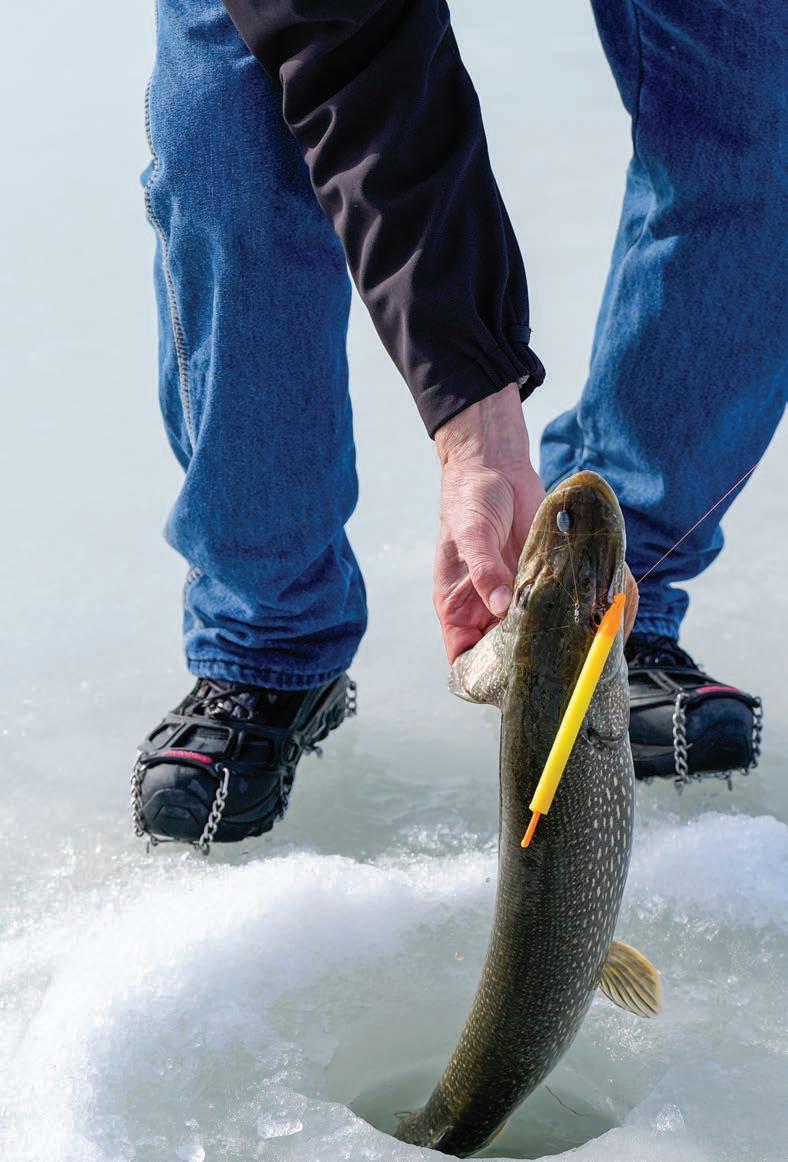
Many of North Dakota’s waters harbor good populations of northern pike targeted by anglers in winter and open water months. The northern pike was named the state’s fish nearly six decades ago.
The mission of the North Dakota Game and Fish Department is to protect, conserve and enhance fish and wildlife populations and their habitats for sustained public consumptive and nonconsumptive use. FEBRUARY 2026 • NUMBER 7
North Dakota OUTDOORS is published 10 times a year, monthly except for the months of April and September. Subscription rates are $15 for one year or $30 for three years. Remittance should be by check or money order payable to the North Dakota Game and Fish Department. Indicate if subscription is new or renewal. The numbers on the upper right corner of the mailing label indicate the date of the last issue a subscriber will receive unless the subscription is renewed.
Permission to reprint materials appearing in North Dakota OUTDOORS must be obtained from the author, artist or photographer. We encourage contributions; contact the editor for writer and photography guidelines prior to submission.
The NDGFD receives Federal financial assistance from the US Fish and Wildlife Service and the US Coast Guard. In accordance with Title VI of the Civil Rights Act of 1964, Section 504 of the Rehabilitation Act of 1973, Title II of the Americans with Disabilities Act of 1990, the Age Discrimination Act of 1975, and Title IX of the Education Amendments of 1972, the NDGFD joins the US Department of the Interior and its Bureaus and the US Department of Homeland Security in prohibiting discrimination on the basis of race, color, national origin, age, disability, sex (in education programs or activities) and also religion. If you believe you have been discriminated against in any program, activity, or facility as described above, or you desire further information, please write to: ND Game and Fish Department, Attn: Chief of Administrative Services, 100 N. Bismarck Expressway, Bismarck, ND 58501-5095 or to: Office of Civil Rights, Department of the Interior, 1849 C Street, NW, Washington, DC 20240.
PHOTO BY ASHLEY PETERSON, BISMARCK.
PHOTO BY ASHLEY PETERSON, BISMARCK.
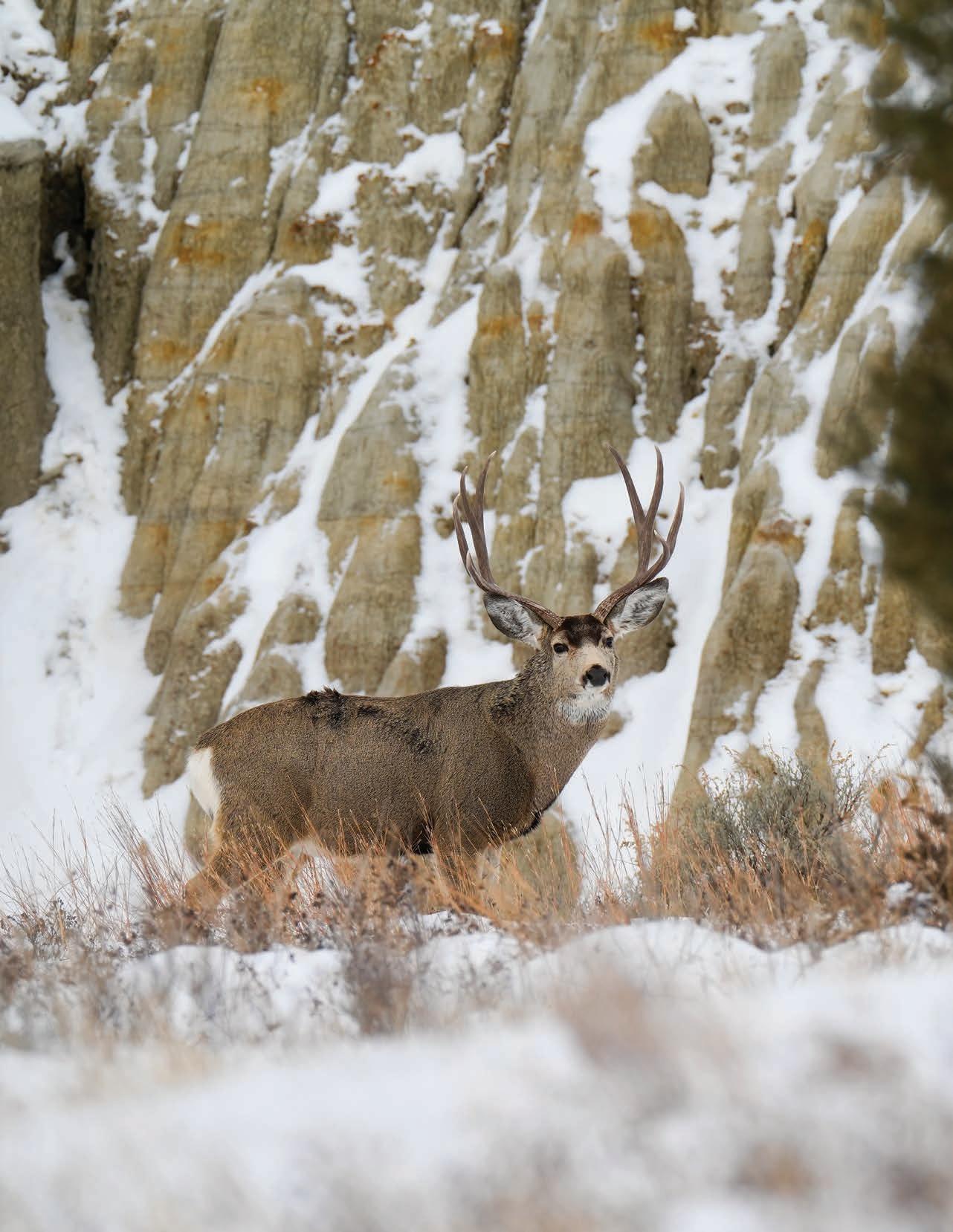
Mule deer buck in the badlands.
2025
Deer drawing
By Ron Wilson
While more than 7,800 fewer licenses were made available for the deer gun season in 2025, the process remained the same to draw a license.
The format used to present the results of the deer drawing — plus drawings for pronghorn and spring and fall turkey — is consistent with the last five years.
The tables provided show the first-choice results in the first lottery. Using deer hunting unit 2J1 for any antlered deer as an example, the numbers read like this: 140 hunters with zero bonus points applied for an any antlered deer license and 135 were successful in drawing a license (135/140); 15 hunters with one bonus point applied and 12 were successful (12/15); 5 points applied and 4 were successful (94/187); and on it goes.
In short, the tables show the results for those hunters with the same number of bonus points applying for a particular license in a particular hunting unit.
It’s important to note that the deer lottery results do not include the 1% of licenses state law requires the Game and Fish Department to make available for nonresident hunters. Nonresident applicants who apply for a deer gun license compete only against other nonresident hunters including nonresident landowners and nonresident outfitted hunters.
Also of note, the results in the 2024 deer gun lottery show only those hunters who were in the drawing, not those hunters who bought bonus points and had no intention of hunting deer last fall.
RON WILSON is editor of North Dakota OUTDOORS.
2025 DEER LICENSE LOTTERY RESULTS
2025 DEER LICENSE LOTTERY RESULTS
How the Lottery Works
There are always questions concerning the Game and Fish Department’s lottery. Using deer as the example, though turkey works the same way, this is how it works.
If you fail to draw your first license choice in any given year, you receive a bonus point. You do not have to apply in the same unit, or for the same deer type each year, to qualify. You get an additional bonus point each year you apply and do not receive your first license choice. You maintain your accumulated bonus points as long as you apply in the first drawing at least once every two years.
You receive additional chances in the drawing for each bonus point accumulated. For points one through three, you are entered in the drawing two times the number of points you have. So, if you have two points you would get four additional chances to be drawn, compared to a person who got his or her first choice the previous year. If you’re both competing for the same license, you have five chances, he or she has one.
When you accumulate four or more points, the number of additional chances is determined by cubing your bonus points. So, when you have four points, you will be in the drawing 64 additional times, 125 times if you have five points, and so on. Bonus points are accumulated if you do not draw your first license choice and apply in the first drawing at least every other year. You do not receive bonus points in years you do not apply.
Each drawing is still random, but the more bonus points you have, the better your odds. When you receive your first license choice, you lose your bonus points and start over. Bonus points can only be earned, or used, in the first drawing for each species in each year.
The license lottery consists of four separate drawings, one for each choice on the application. First, we hold a drawing for the first unit/first deer choice. When those are issued, we draw for the first unit/second deer choice, then the second unit/first deer choice, and finally the second unit/second deer choice.
2025 FALL TURKEY LOTTERy
2025 Lottery Notes
The number of deer gun licenses made available to hunters:
• 2016 – 49,000 deer gun licenses.
• 2017 – 54,500 deer gun licenses.
• 2018 – 55,150 deer gun licenses.
• 2019 – 65,500 deer gun licenses.
• 2020 – 69,050 deer gun licenses.
• 2021 – 72,200 deer gun licenses.
• 2022 – 64,200 deer gun licenses.
• 2023 – 53,400 deer gun licenses.
• 2024 – 50,100 deer gun licenses.
• 2025 – 42,300 deer gun licenses.
Drawing a buck license in 2025 was not easy. Randy Meissner, Game and Fish Department licensing manager, said after 11,598 resident gratis licenses and 423 nonresident licenses were subtracted from the overall license allocation, just 16,125 buck licenses were available for the 60,958 hunters who applied for them as their first choice in the lottery.
2025 PRONGHORN LOTTERY
2025 Lottery Stats
DEER
• 74,445 – Number of people — not including 11,820 gratis applicants — who applied for deer gun lottery licenses, down from 75,874 in 2024.
• 31.9 – Percent of successful applicants, excluding gratis and nonresidents, for deer gun and muzzleloader licenses.
• 22 – Maximum number of bonus points for any applicant (nonresident mule deer buck applicants).
• 15,694 – Applicants with four or more bonus points.
• 13.85 – Percent of applicants with four or more bonus points.
• 54.02 – Percent of applicants with four or more bonus points who applied for a muzzleloader buck license.
TURKEY
• 8,547 – Number of spring turkey licenses available to hunters, up from 8,137 in 2024.
• 91.7 – Percent of successful applicants for the spring season.
• 90.2 – Percent of applicants who received their first license choice for the spring season.
• 4,310 – Number of fall turkey licenses available, down from 4,545 in 2024.
• 84.8 – Percent of successful applicants for the fall season.
• 82.5 – Percent of applicants who received their first license choice for the fall season.
PRONGHORN
• 18 – Number of hunting units open.
• 1,310 – Number of licenses available to hunters, up 45 from 2024.
• 15,651 – Number of people who applied for available licenses, up 1,562 from 2024.
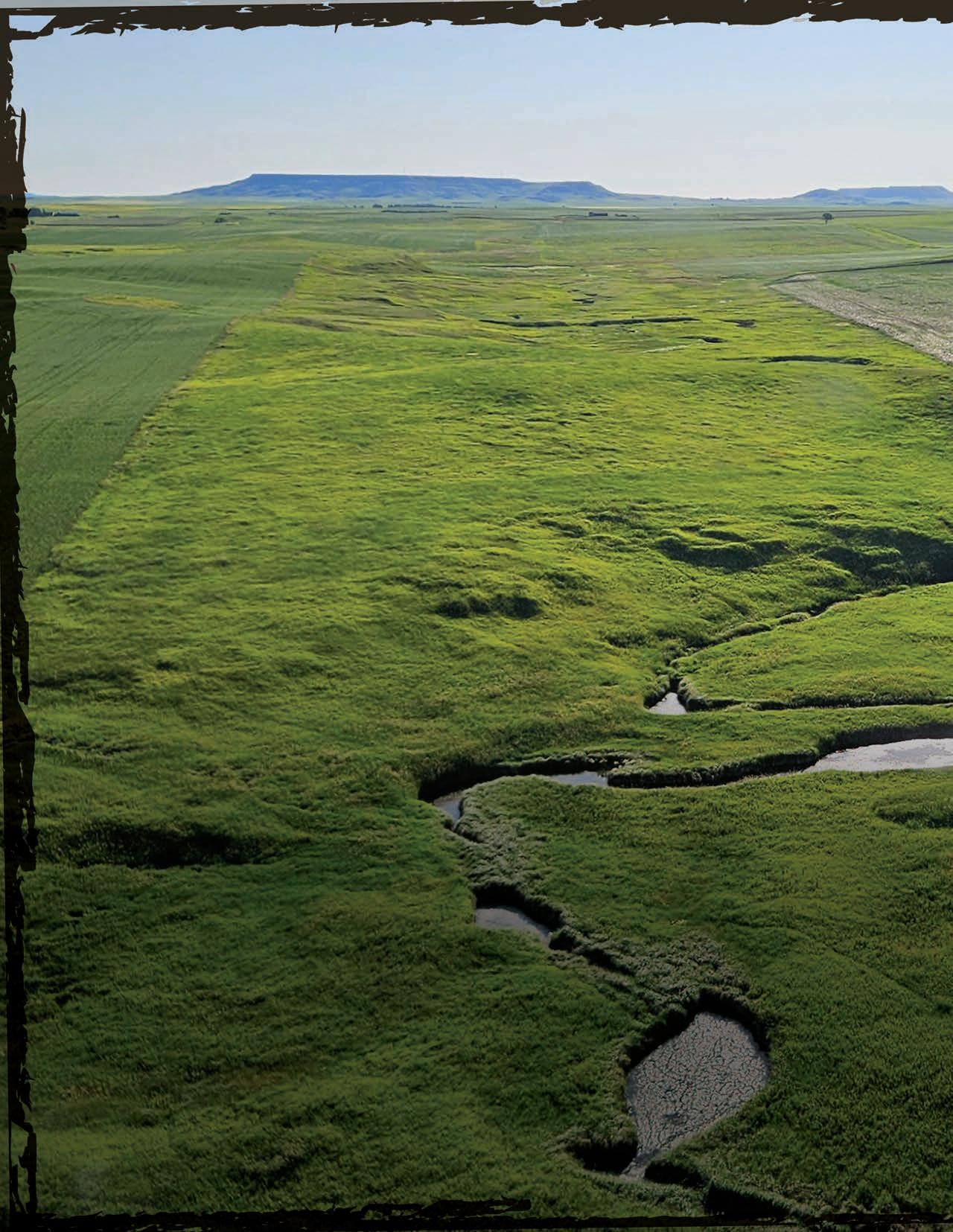
In late January, Gov. Kelly Armstrong introduced a cooperative effort to improve soil health and wildlife habitat on marginally productive cropland across North Dakota’s rural landscape.
The goal of the Governor’s Legacy Soil Health and Habitat Program is to help North Dakota farmers strengthen cropland productivity and resilience with perennial grass cover, while improving soil health, water retention and creating much-needed wildlife habitat and access to hunters.
“This joint effort will help preserve and promote our rich heritage of farming and hunting for generations to come ...”
Gov. Kelly Armstrong.
“This joint effort will help preserve and promote our rich heritage of farming and hunting for generations to come, while also showcasing the spirit of cooperation that makes North Dakota special,” Armstrong said. “Healthy soils and wildlife habitat are essential to our strong economy and the unmatched quality of life that makes North Dakota the best place to live, work and raise a family. We appreciate the ag, conservation, hunting and energy stakeholders who worked with Game and Fish and the soil conservation districts to make this program possible with Outdoor Heritage Fund support.”
The North Dakota Game and Fish Department partnered with the North Dakota Association of Soil Conservation Districts who secured a $4.3 million Outdoor Heritage Fund grant to pilot the effort. That money has been teamed with nearly $2.1 million in cash, in-kind and partner contributions.
The aim of the program, which received broad support from agricultural groups and others before its unveiling, is to eventually seek dedicated funding to execute the program on a larger scale.
“We want this program to be a positive experience for landowners and stakeholders involved. There are always various other programs or grant opportunities we might look into if they align with the Governor’s Legacy Soil Health and Habitat program,” said Rhonda Kelsch, executive director of the North Dakota Association of Soil Conservation Districts. “But overall, our hope is that landowners in North Dakota see the
importance for soil health and conservation and habitat development in the state. Also, by working with our legislators and demonstrating the need and the funding required for this program to be successful would lead into a revolving conservation fund for the state of North Dakota.”
Kelsch said the Legacy program will be administered by the North Dakota Association of Soil Conservation Districts, with local delivery through soil conservation districts and partners.
To start, the plan is to establish 10,000 acres of perennial grass cover on cropland throughout the state.
“The intent of the program is not to take productive land out of production and seed everything back into grass. We are looking more into the fragmented acres, riparian acres, acres around a wetland,” Kelsch said.
“We have not set a direct cap on the acre enrollment per producer … that will be taken into a case-by-case basis.”
Program details include 5-year agreements to establish and manage grass; annual rental payment based on the average county rental rate; cost-share for grass seed and seeding ($50 per acre for seed and $50 per acre for establishment); $10 per acre crop insurance premium reduction for every acre of perennial grass established; and an optional $15 per acre public access agreement through the Game and Fish Department’s Private Land Open To Sportsmen program.
Kevin Kading, Department private land section leader, said that while the program will provide soil
health and water retention benefits, there will also be pluses on the wildlife habitat side of things.
“The program will provide valuable nesting cover at times of the year that are very important for pheasants, ducks and other grassland nesting birds. Another important aspect is the fawning cover it will provide for deer,” Kading said. “Hopefully, some of these acres can be enrolled in the PLOTS program, and hunters can access them that way. Even if they’re not enrolled in PLOTS, we’re hoping that some landowners will be willing to grant permission when asked. So, there will be benefits to the hunting public.”
Even though the Legacy program is in its infancy, and some acres will be planted with perennial grasses come spring in some areas, Kading said the expectation is to have the effort take root statewide and be available to producers anywhere and everywhere.
“We’re really hoping that we get a good cross-section of the state, good interest from producers and good representation of what the program is really trying to look at, which are those marginal acres, odd areas, places that are maybe just a little unproductive or out of the way that just make it easier for the producer to farm. And we’ll also get a little wildlife habitat out of it at the same time,” he said.
Kading said the program is getting some traction and is already being well received by producers, commodity and ag groups.
“I’m expecting there will be good interest in it because of the nature of it, because of that shorter term agreement, that quicker flexible process that’s involved,” he said. “It’s a program that’s going to help producers over-
all on their operation while still keeping those working lands active. It’s a good fit for all those features.”
Kelsch and Kading said the “we” in the establishment of the program wasn’t simply the Game and Fish Department and the North Dakota Association of Soil Conservation Districts.
“There are several other partners that spent a lot of their time with us over the last year, sitting at the table having discussions and they all had a hand in helping shape this and forming what the program will look like,” Kading said. “Their feedback and input was very valuable. And so, we want to make sure that we give credit to those organizations, groups and people who had that seat at the table with us. This program wouldn’t be possible without that collaborative effort.”
For landowners interested in the effort to improve soil health and wildlife habitat, contact the North Dakota Association of Soil Conservation Districts at ndascd.com or their local soil conservation district.
“With this program, it’s our chance as a state and as ag, conservation and energy partners to leave a legacy and try to continue the heritage we have in our state for hunting and agriculture,” Kading said. “It’s a good time right now to have these discussions and for this program. We’re very hopeful that it continues on past the Outdoor Heritage Fund grant and that it becomes something that’s a statewide, dedicated source of funding that continues into the future.”
RON WILSON is editor of North Dakota OUTDOORS.
2025 ENFORCEMENT
By Scott Winkelman
As we look back on 2025, I am proud to highlight the outstanding work of North Dakota Game and Fish Department wardens and the meaningful impact they had across our state. Their commitment to law enforcement, resource protection and public service continues to exemplify the best of our profession.
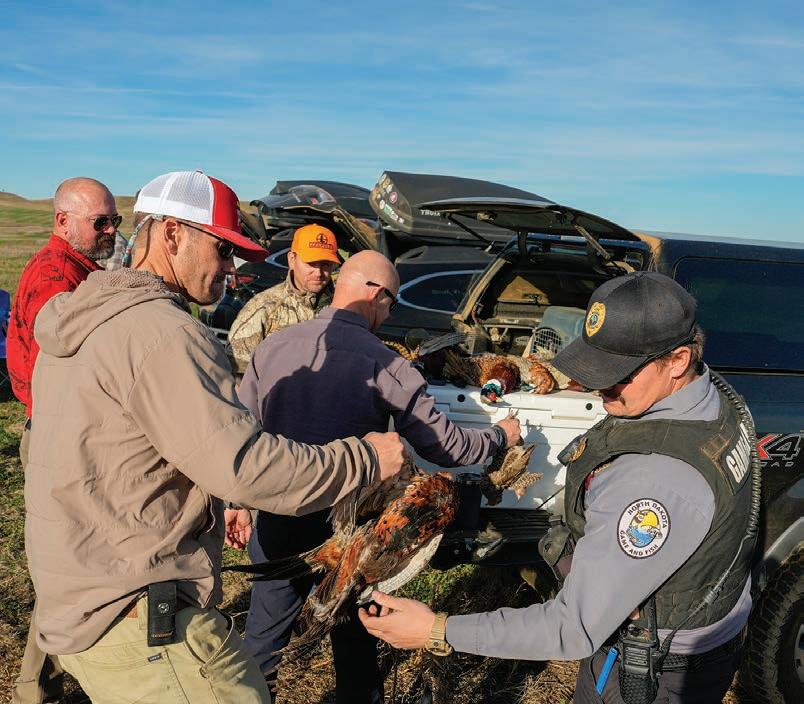
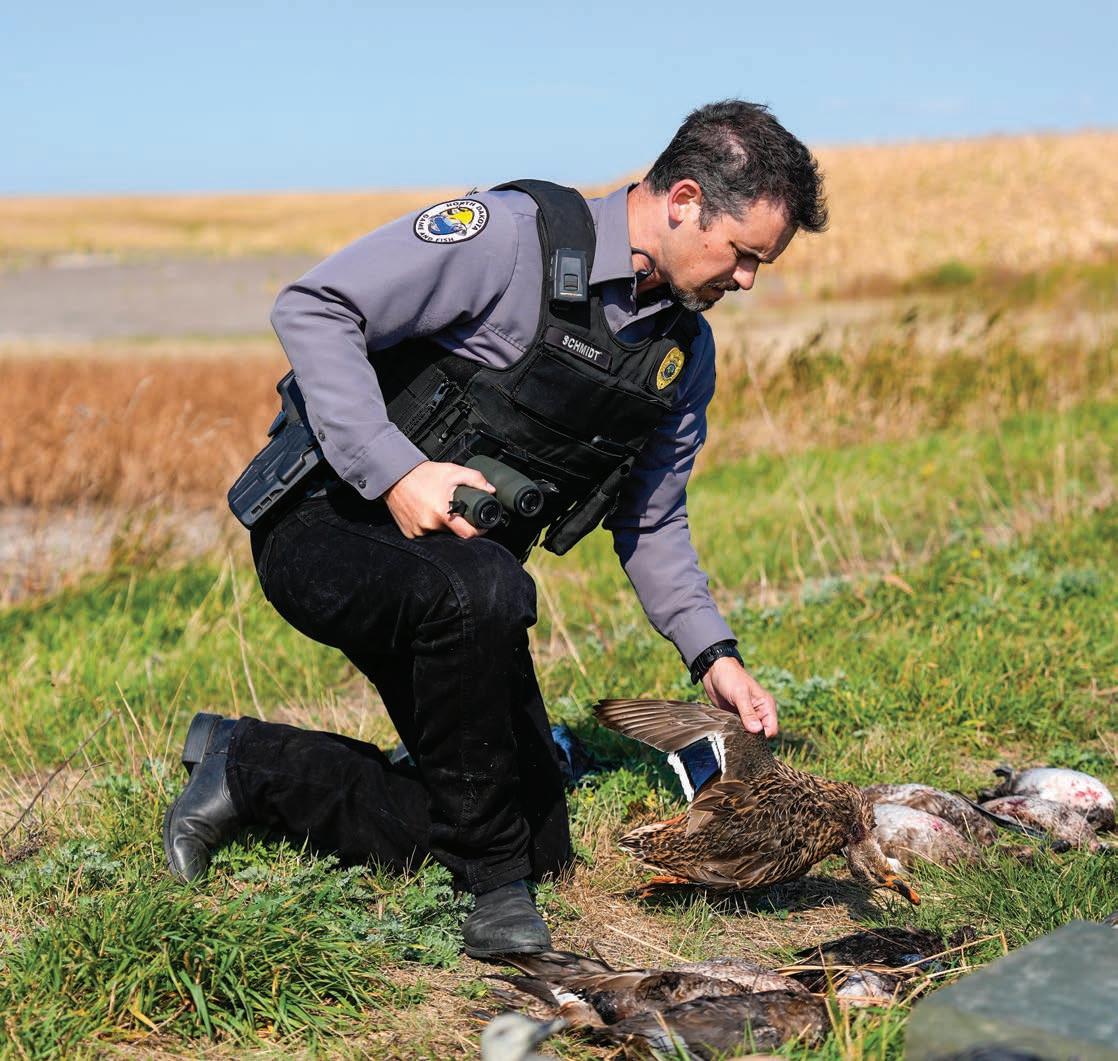
This past year, game wardens remained on the front lines of natural resource law enforcement, ensuring fair chase, human safety and protection of public trust resources. Through nearly 50,000 contacts in the field with hunters, anglers and others, wardens focused not only on enforcing the law, but also on educating sportsmen and women, helping build a strong culture of compliance and respect for wildlife.
Search and rescue missions again underscored the versatility and readiness of our officers. From incidents on the water to remote backcountry responses, game wardens worked closely with local agencies to locate missing individuals and assist those in distress, often in challenging conditions.
Strong relationships with landowners remain foundational to our success. Department wardens partnered with producers and rural communities to address access concerns, resolve conflicts, and support working landscapes that benefit both agriculture and wildlife. These partnerships strengthen trust and keep communication open across the countryside.
In wildlife management, game wardens played a key role alongside biologists, contributing critical field observations, assisting with surveys, and helping implement management strategies that sustain healthy populations.
The accomplishments of 2025 reflect professionalism, compassion and a deep commitment to North Dakota’s people and natural resources. I am grateful for the dedication of our wardens and confident in the continued positive impact they will make in the years ahead.
SCOTT WINKELMAN is the Game and Fish Department’s chief warden.
JOHNSON EARNS TWO AWARDS
Drew Johnson, North Dakota Game and Fish Department district game warden in Finley, is the state’s 2025 Wildlife Officer of the Year. Johnson was honored by Shikar-Safari Club International, a private conservation organization that annually recognizes wildlife officers in each state.
Scott Winkelman, Department chief warden, said Johnson started at the newly created post in Finley in 2019 and his patrol district includes Griggs, Steele and Traill counties.
“Drew spends a great deal of his time patrolling in and around his patrol district by vehicle, boat, snowmobile and ATV. His value to the enforcement division is felt year-round as he patrols his district with enthusiasm for game law enforcement,” Winkelman said. “Warden Johnson’s work ethic and can-do attitude are exemplified in his commitment to becoming more skilled and efficient with each passing year and is a very deserving recipient of this award.”
Johnson was also named North Dakota’s Boating Officer of the Year for 2025.
“Drew’s prior work experience on Devils Lake seasoned him into a more successful boat and water safety officer as he had worked extensively on Devils Lake, one of North Dakota’s busiest natural lakes,” Winkelman said. “Warden Johnson is dedicated to boat safety enforcement of both recreational boaters and anglers alike.”
TURKEY FEDERATION’S TOP WARDEN
Shawn Sperling, North Dakota Game and Fish Department district warden in Minot, was named the National Wild Turkey Federation’s Wildlife Officer of the Year for 2025.
“Warden Sperling’s district contains portions of Ward, Renville and McHenry counties. This area of the state historically boasts a strong population of wild turkeys. Shawn has a passion for turkeys both professionally and personally, as he is an avid turkey hunter himself. Shawn diligently patrols for turkey hunting activity and addresses violations accordingly,” Turkey Federation officials said. “Hs also a skilled investigator and has used his talents to make strong cases involving illegally taken turkeys. Warden Sperling’s dedication to the wildlife resources in his district, as well as his district’s constituents, make him a great fit for this award.”
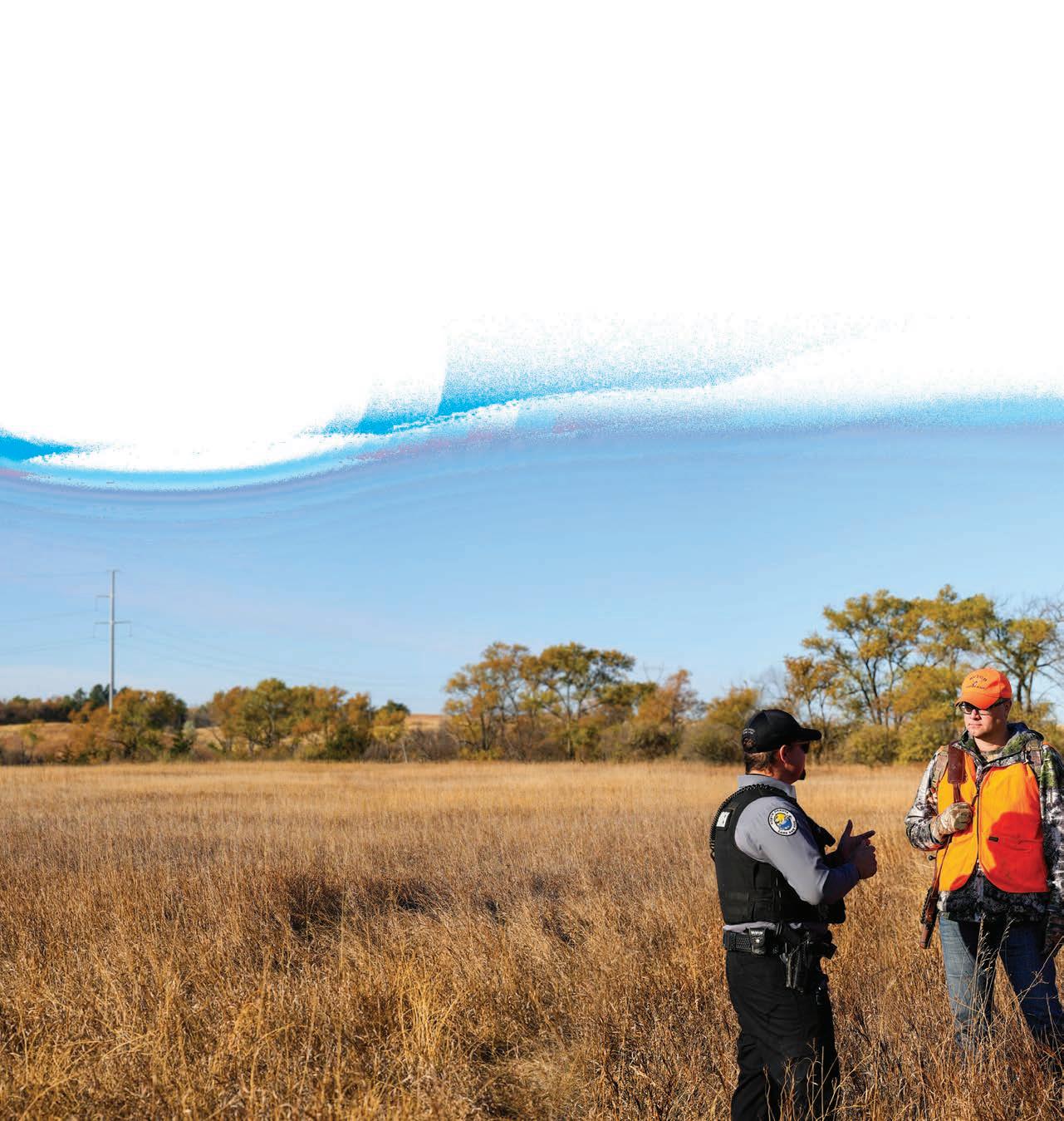
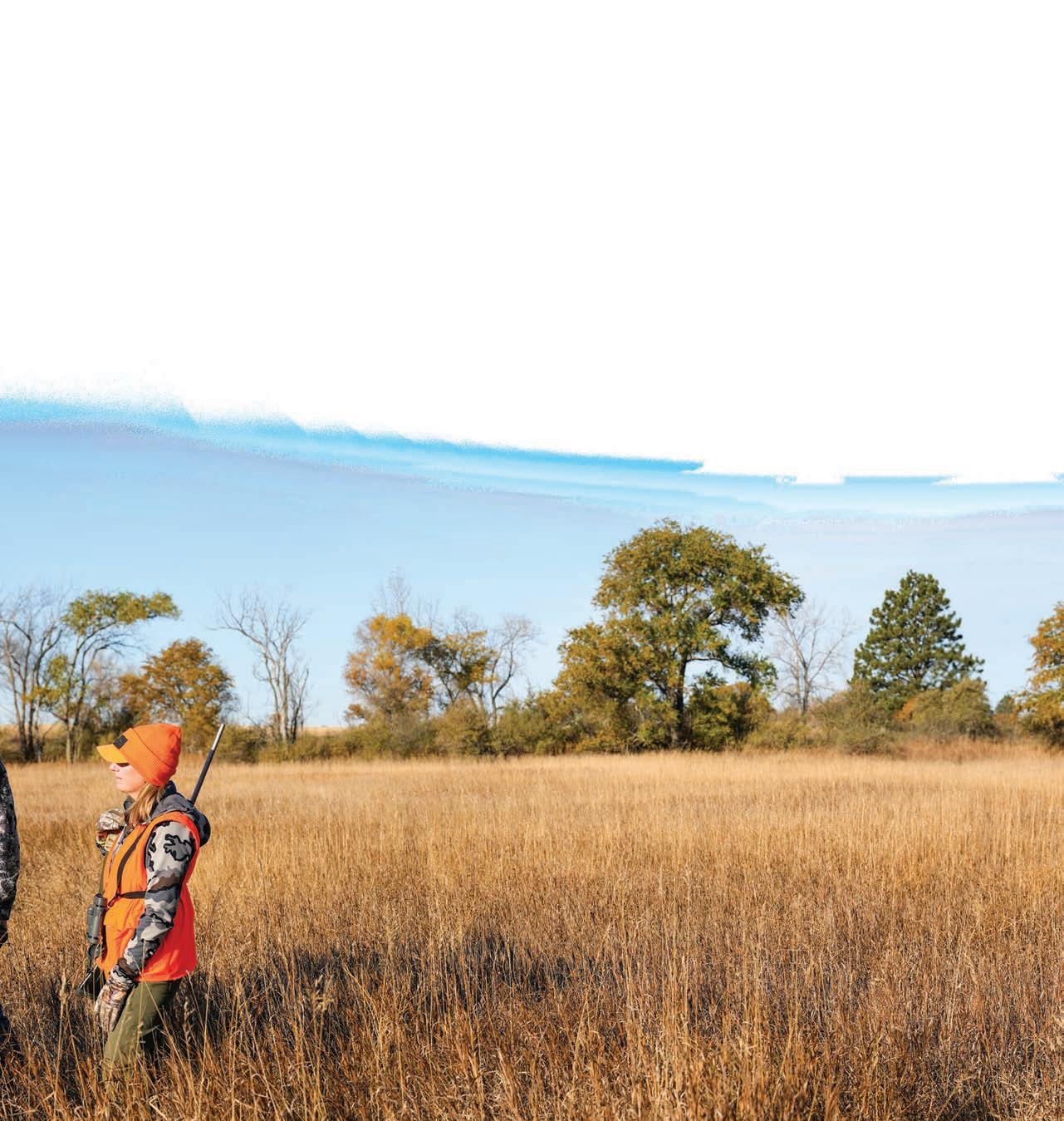
North Dakota Game wardens made nearly 50,000 contacts in the field with both resident and nonresident hunters and anglers in 2025.
2025 SUMMARY OF VIOLATIONS
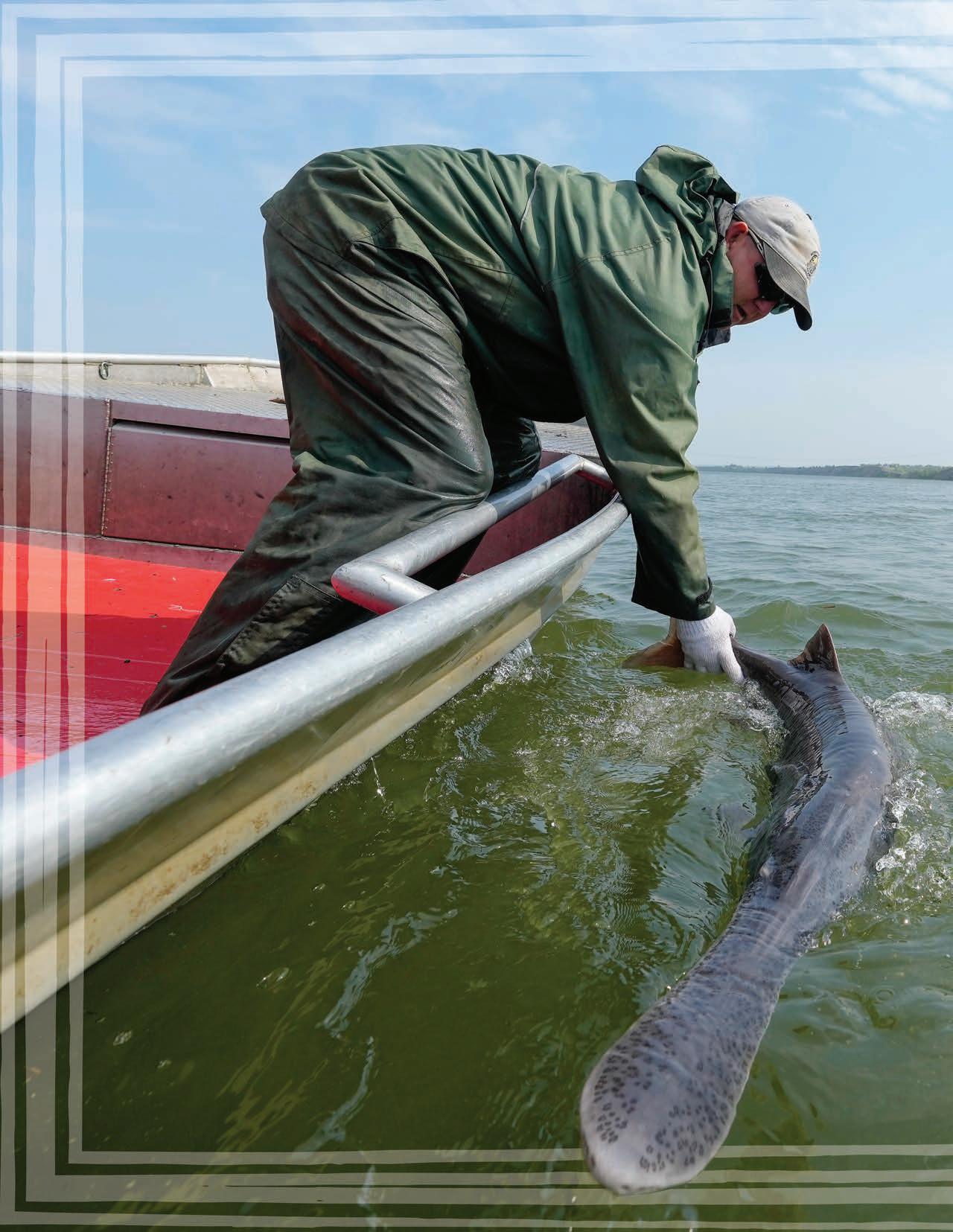
Justen Barstad, Department fisheries biological technician, releases a paddlefish back into the Missouri River north of
Bismarck.
By Paul Bailey, Russ Kinzler and Aaron Slominski
Obtaining an estimate of exploitation (the percentage of fish anglers harvest annually from a population) is most often the primary reason the North Dakota Game and Fish Department undertakes a fish tagging study. Assessing exploitation allows us to determine if current harvest regulations are compatible with the long-term sustainability of that fish population, an important piece of information for maintaining the best fishing possible for anglers to enjoy.
However, lots of other information is revealed through tagging studies including the timing of angler harvest, how anglers treat fish of various sizes (harvest or release), spawning periodicity (how often does an individual spawn), spawning site fidelity (does an individual fish return to the same spawning site year after year or venture somewhere else), and fish movement.
Fisheries biologists care about fish movements because it is crucial for understanding survival and reproduction. Biologists and anglers alike love learning about where a fish may have traveled throughout its life.
Fish tend to move to give themselves the best chance of survival (like finding food, escaping predators, and locating preferred temperatures and habitats) and reproduction. As such, movements generally follow a stereotypical pattern for that species of fish.
For example, paddlefish are great long-distance swimmers due to their torpedo body shape, powerful and deeply forked tail, and highly vascularized flesh rich in lipids and myoglobin. Lake Sakakawea’s paddlefish tend to wander throughout the reservoir in search of zooplankton forage. Then, every 1-2 years mature male paddlefish, and every 2-3 years female paddlefish, undertake a spawning migration, sometimes several hundred miles long, from Lake Sakakawea and into the Yellowstone River to spawn.
Walleye, on the other hand, tend to lead much more sedentary lives. They lack the extremely hydrodynamic body shape of great long-distance swimmers and have poorly vascularized flesh low in lipids and myoglobin designed for short bursts of movement rather
than sustained swimming. This leads to walleye having wonderful, white, flakey flesh prized as table fare.
This combination of body shape, muscle physiology and palatability is also contrasted in the avian world among great long-distance flyers (snow geese) and their more sedentary counterparts (pheasants).
While most animals adhere to their species’ norms regarding movements, outliers do exist. For example, it is fair to say that most people and walleyes are couch potatoes but, there are marathon runners in both groups. What follows are some of those interesting outliers regarding fish movements and capture histories from past Department tagging studies.
Paddlefish #NDGR 8695
Thousands of paddlefish passed through Garrison Dam, either over the spillway or through the emergency release tunnels, during the 2011 Missouri River flood. Many fish did not survive this passage and those that did typically sustained severe injuries. One such fish was first encountered and tagged by the Department in 2018. The Department was collecting and tagging paddlefish in the Garrison Dam spillway channel and transporting them above Garrison Dam to Lake Sakakawea’s Government Bay to investigate if these fish would resume their periodic spawning movements up the Yellowstone River.
On June 5, 2018, a 38-pound paddlefish was caught and tag #NDGR 8695 was affixed to its jaw. This fish had torn gill covers and dermal abrasions indicating that it passed over the Garrison Dam spillway in 2011. It was then transported over the dam and released in Lake Sakakawea.
The U.S. Army Corps of Engineers released surplus water over the spillway during summer 2018 to pass excess water. When spillway flows ceased in late summer, corps personnel inspected the spillway apron and found three stranded, dead paddlefish. One of these fish had a tag attached, NDGR 8695, indicating it had passed over Garrison Dam twice, once in 2011 and again in 2018.
Northern Pike #NDPIKE 259
Like walleye, northern pike tend to be more sedentary, however, exceptions do occur. For example, pike #NDPIKE 259. This 18.4-pound female pike was tagged on April 10, 2020, at Lake Oahe’s Beaver Bay. A
South Dakota angler reported catching and harvesting this fish March 28, 2021, at Oahe’s Whitlock Bay. This 102-mile movement is the longest documented for a pike tagged in North Dakota.
Paddlefish #ND 8841
This paddlefish was netted by the Game and Fish Department fisheries personnel near the Montana border on the Yellowstone River in spring 2007 and transported to Garrison Dam National Fish Hatchery. At the fish hatchery it was used as a brood fish and its eggs were collected to raise fingerling paddlefish for stocking. After spawning, the fish was tagged and released at Government Bay in early June. The fish was 48 inches long from the eye to the fork in the tail and weighed 87 pounds when it was tagged. Eighteen years later, an angler snagged and harvested this fish on May 2, 2025, during the paddlefish snagging season upstream of Williston. It had an eye to fork length of 51 inches and weighed 98 pounds when it was harvested.
SAKAKAWEA HOMEBODIES
Several walleye tagging studies have been conducted on Lake Sakakawea since the mid-1990s. These studies divide the lake into three regions: upper (that portion of the lake above the New Town bridge); middle (the area from the New Town bridge to just below the Little Missouri Arm, including Van Hook Arm); and lower (the area just below the Little Missouri Arm to Garrison Dam).
All the tagging studies have shown the same trend that fish in all three regions are generally homebodies and are recaught in the same region they were tagged. However, the upper region fish tend to move the most and when they do move it is generally downstream. The middle region fish tend to move less, but when they do move, it is also generally down the reservoir. The lower region fish are truly homebodies as the most recent tagging study showed 96% of the walleyes tagged were recaptured in the lower region.
Here are a few interesting tag returns from Lake Sakakawea.
Walleye #5438
This walleye was a 16.9-inch male tagged April 26, 1995 at White Earth Bay during Department spawning
operations. It was recaught during spawning operations at White Earth Bay on April 26, 1998, May 1, 1999, April 24, 2003, April 25, 2005, and April 24, 2006. Those years correspond to the years we tagged and spawned at White earth Bay and show the spawning site fidelity of walleye in Lake Sakakawea. It’s only a guess as to how many times fisheries personnel would have seen this fish if Department spawning operations were at White Earth Bay every spring.
On June 22, 2007, this walleye was harvested by an angler near Parshall Bay showing that downstream movement of upper region fish.
Walleye #8351
Another example of both spawning site fidelity as well as some movement, was this 20.1-inch female walleye tagged during the spawn at Snake Creek on May 18, 1996. It was recaptured during spawning operations on May 19, 1997, May 15, 2002, and May 10, 2005. It was also caught and released by an angler on June 19, 2005, near Douglas Bay and then caught and harvested by an angler on Aug. 6, 2005, near Mckenzie Bay some 40-plus miles upstream of where it spawned that spring. It was 26 inches long when caught.
Walleye #68206
Anglers on Lake Sakakawea are harvest orientated but there are lots of examples of fish being released. This walleye was a 14.1-inch male tagged at White Earth Bay on April 21,.2021. It moved downstream and was caught and released by an angler near Saddle Butte Bay on July 25, 2021. On July 17, 2022, it moved farther downstream and was caught and released by another angler near Nishu Bay, 75 river miles downstream from where it was tagged. On June 5, 2025, it moved back upstream and was caught and released by an angler in the Van Hook arm and was 18.2 inches long at that time.
Walleye #68351
Another example of a fish being caught and released multiple times with a unique ending is this 20.8-inch female walleye tagged April 21, 2021, at White Earth Bay. It was caught and released by an angler on Oct. 19, 2023, near Hunts Along Bay and three days
later was caught and released by another angler near Hunts Along Bay. On Jan. 29, 2024, it was caught and released at Bear Den Bay by the same angler who caught it three months earlier Near Hunts Along Bay.
Walleye #10710
Most walleye tag returns happen within a few years of when they were tagged. This walleye was a 20.5inch female tagged May 8, 1997, at Parshall Bay and was caught and harvested by an angler Oct. 5, 2025, in the Van Hook Arm. This fish apparently avoided anglers and Game and Fish Department spawning nets for 28 years after it was tagged. This is an extreme example of fish recaptures from tagging studies.
Northern Pike #NDPIKE 1217
Northen pike on Lake Sakakawea tend to be caught near where they were tagged but this pike moved both upstream and downstream. This 15.3-pound female was tagged April 14 2017, at Deepwater Bay. It was caught and released on April 27, 2019, during the walleye spawn at Parshall Bay, approximately 21 miles from where it was tagged. On May 18, 2020, it was caught and released by an angler at Douglas Bay some 59 miles from where it was last caught.
Walleye #67833
While most walleye don’t move far from where they were tagged, a few move extreme distances, and some leave the lake all together. An example of a fish moving upstream out of Lake Sakakawea is walleye #67833, a 22.8-inch female tagged April 18, 2021, at White Earth Bay. This fish moved 277 river miles upstream and was caught and released by an angler below Fort Peck Dam on Aug. 21,2023.
NORTH DAKOTA GAME AND FISH DEPARTMENT fisheries supervisors Paul Bailey, Bismarck, Russ Kinzler, Riverdale, and Aaron Slominski, Williston, authored this piece.
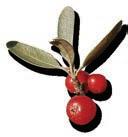
BUFFALOBERRY PATCH
Midwinter Waterfowl Survey Numbers
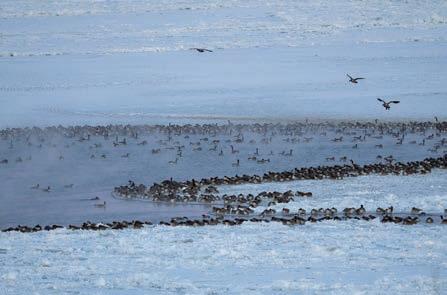
The North Dakota Game and Fish Department’s annual midwinter waterfowl survey in early January indicated about 135,000 Canada geese and 9,500 mallards in the state.
Mason Ryckman, Department migratory game bird biologist, said numbers were pretty similar to years when Lake Sakakawea is still open, besides the record year (2024) of 300,000-plus Canada geese in 2024.
“Unlike last year when Lake Sakakawea was completely frozen at the time of the survey, this year a portion of the lake remained relatively ice free from Garrison Dam to the mouth of the little Missouri River,” Ryckman said. “We were able to count 39,000-plus Canada geese on the lake this year. We would have probably overwintered more waterfowl if we didn’t receive the snow we did in late November and early December. It likely pushed birds south of the border due to not having access to waste grain in ag fields. However, the snow didn’t last long, which helped the birds that did stay until the time of the survey.”
During the 2026 survey, an estimated 109,112 Canada geese were observed on the Missouri River and Lake Sakakawea, another 16,894 on Nelson Lake in Oliver County, and an additional 8,500-plus geese in other parts of the state. Ryckman said Game and Fish staff and partners with the U.S. Fish and Wildlife Service recorded an additional 9,500 mallards across the state.
The 10-year average (2017-26) for the midwinter survey in North Dakota is 115,950 Canada geese and 13,400 mallards. The survey helps biologists gauge wintering distribution of waterfowl in North Dakota, and other states throughout the Central Flyway.
Big Three Lottery
Elk, moose and bighorn sheep applications must be submitted online before midnight March 25.
To apply online, visit the Game and Fish website, gf.nd.gov. Paper applications are not available. Hunters who have received a license through the lottery in the past are not eligible to apply for that species again.
In 2025, 27,279 people applied for the 288 moose licenses; 25,388 applied for the 956 elk licenses; and 21,221 applied for the seven bighorn sheep licenses.
Winter Wildlife from Afar
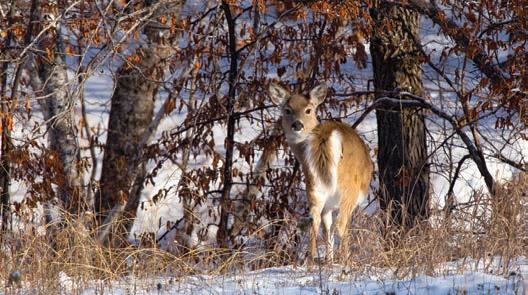
Wildlife managers urge outdoor enthusiasts to consider where they recreate during North Dakota’s leanest months to spare already stressed animals simply trying to survive the elements. This advice is true during any Northern Plains winter.
Game and Fish Department managers understand North Dakotans want to get outdoors and have fun in winter because we have several months of it. Even so, the tougher the winter is, it is important that people riding snowmobiles, shed hunting, crosscountry skiing or doing whatever are cognizant about where wildlife are and to view them from a distance.
That means waiting to shed hunt until later in the spring so that you’re not pushing deer in and out of thermal cover where they’re trying to just conserve energy. Animals forced into the open are exposed to the elements a lot more, which adds further stress. Also, people need to realize that harassing wildlife from
snowmobiles or other machines is illegal in North Dakota.
It’s common for snowmobilers and others to ride in areas where snow has accumulated, such as near shelterbelts and other wooded habitat because that’s where the drifts are, but people also must realize there could be deer or other wildlife within those areas to get out of the weather. So, every time animals are pushed from those areas, it increases the amount of energy they expend to survive the next day.
These same warnings, for shed hunters, skiers and others, also apply on Game and Fish Department owned or operated wildlife management areas where many animals gather to weather the winter months.
Spring Light Goose Conservation Order
North Dakota’s spring light goose conservation order opens Feb. 21 and continues through May 10.
Residents must have a 2025-26 (valid through March 31) or 2026-27 (required April 1) combination license; or a small game, and general game and habitat license. Resident youth under age 16 only need the general game and habitat license. The 2026-27 license is available for purchase beginning March 15. In addition, all hunters need an electronic waterfowl restoration stamp.
Nonresidents need a 2026 spring light goose conservation order license. The cost is $50 and valid statewide. Nonresidents who hunt in spring remain eligible to buy a fall season license. The spring license does not count against the 14-day fall waterfowl hunting season regulation.
Nonresident youth under 16 can purchase a license at the resident fee. A federal duck stamp is not required for either residents or nonresidents. Yet, like resident hunters, nonresidents also need an electronic waterfowl restoration stamp.
Resident and nonresident licenses are available online at the North Dakota Game and Fish Department website, gf.nd.gov.
Hunters must register annually with the Harvest Information Program prior to hunting in each state. The HIP number obtained for North Dakota’s spring conservation order is also valid for North Dakota’s fall hunting season. The number can be obtained online on the Game and Fish website.
The spring conservation order is only open to light geese –snows, blues and Ross’s. Species identification is important because white-fronted and Canada geese travel with light geese. The conservation order is closed to whitefronts, Canada geese, swans and all other migratory birds.
For more information on regulations refer to the 2026 Spring Light Goose Hunting Regulations on the Department’s website.
Tax Checkoff for Wildlife
North Dakota citizens with an interest in supporting wildlife conservation programs are reminded to look for the Watchable Wildlife checkoff on the state tax form.
The state income tax form gives wildlife enthusiasts an opportunity to support nongame wildlife like songbirds and birds of prey, while at the same time contributing to programs that help everyone enjoy all wildlife.
The checkoff — whether you are receiving a refund or are having to pay in — is an easy way to voluntarily contribute to sustain this long standing program. In addition, direct donations to the program are accepted any time of year.
Pack Out Trash
Winter anglers must clean up the ice after fishing. This not only applies to trash, but fish as well.
It is not only unsightly, but it is illegal to leave fish, including minnows used for bait, behind on the ice. According to state fishing regulations, when a fish is caught, anglers must either immediately release the fish unharmed, or reduce them to their daily possession.
It is common practice for some anglers to fillet fish on the ice, which is allowed if fish entrails and other parts are removed from the ice and properly disposed of at home.
In addition, all trash, including aluminum cans, cigarette butts and Styrofoam containers, must be packed out and taken home.
Attention Subscribers
The North Dakota Game and Fish Department no longer mails subscriber renewal notices for North Dakota OUTDOORS as the majority of subscribers renew their subscriptions online at gf.nd.gov.
To check the status of your subscription, the subscription expiration date appears on the address label on the back of the magazine.
Also of note, don’t miss an issue of NDO by changing your address online on the Department’s website. Each month we receive a number of magazines with “no longer living at this address” return labels. Act now to ensure you stay updated with all the latest issues from the Game and Fish Department.
Go Hunt. Go Fish Go Eat!
Check out the latest installment of Cayla’s Kitchen featuring a hearty, homestyle pheasant pot pie that’s perfect for chilly North Dakota days. Flaky crust, savory pheasant, and comforting vegetables come together in a classic dish that’s sure to become a family favorite. Whether you’re cooking up this new recipe or looking for more creative ways to enjoy your wild game, visit gf.nd.gov/caylas-kitchen for a full collection of delicious, field-to-table inspirations that makes the most of every harvest.
STAFF NOTES
Wiedmann Named to Wall of Fame
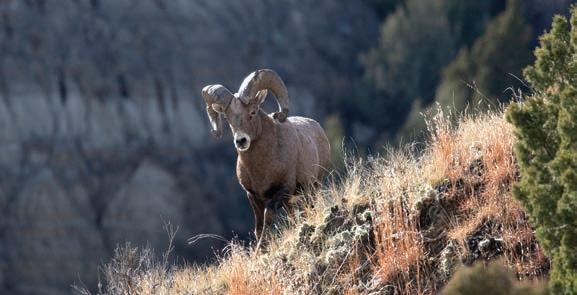
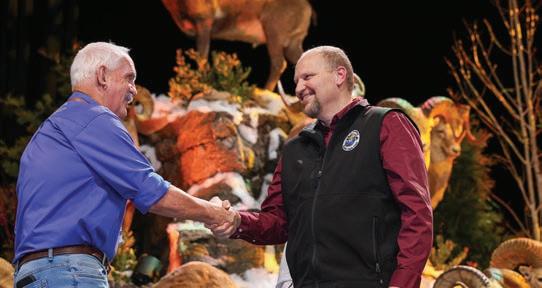
The Wild Sheep Foundation named Brett Wiedmann, North Dakota Game and Fish Department big game management biologist, as the 19th member of the Wild Sheep Biologist’s Wall of Fame.
Wiedmann was honored in January at the foundation’s awards banquet in Reno, Nev. This prestigious honor, established in 2006, recognizes peer wild sheep biologists for career-long dedication to wild sheep conservation, sound biological management, and quality hunting opportunities across North America.
“Over the past 24 years, Brett has demonstrated exceptional passion, commitment, and vision in building and managing North Dakota’s bighorn sheep program,” said Bill Haase, Department wildlife division chief. “His leadership has been instrumental in improving herd management, elevating the profile of North Dakota’s bighorn sheep resource, and enhancing hunting opportunities and the quality of rams harvested by hunters.”
Haase added that this recognition reflects not only Wiedmann’s outstanding career accomplishments, but also the long-term commitment of the Department to sciencebased wildlife management and conservation excellence.
BISMARCK
WEEKLY NEWS BROADCAST
KFYR TV – Sat. 6 p.m.
KXMB TV – Sat. 6 p.m.
DMA – Sat. 9 a.m.
KNDX TV – Fri. 9 p.m.
BEK TV – Sun. 8 p.m. (Statewide) FARGO
KVRR TV – Sun. 9 p.m.
WDAY TV – Sun. – 7 a.m. (Statewide)
GRAND FORKS
KVRR – Sun. 9 p.m.
WDAY – Sun. 7 a.m. (Statewide)
WILLISTON
KUMV TV – Sat. 6 p.m.
KXMD TV – Sat. 6 p.m.
MINOT
KMOT TV – Sat. 6 p.m.
KXMC TV – Sat. 6 p.m.
DICKINSON
KQCD TV – Sat. 5 p.m. (MT)
KXMA TV – Sat. 5 p.m. (MT)
Kevin Hurley (left), Wild Sheep Foundation vice president of conservation, congratulates Brett Wiedmann on his induction to the Wild Sheep Biologist’s Wall of Fame.
BACK CAST
Ihave one jackrabbit in the freezer, but the sum of its lean, dark, vacuum-sealed meat isn’t enough for a dish I’ve been stewing on in my head. This fussing over a meal that may or may not come to play isn’t uncommon for those of us searching for a distraction this late in winter as we lean into February with only a rumor of spring.
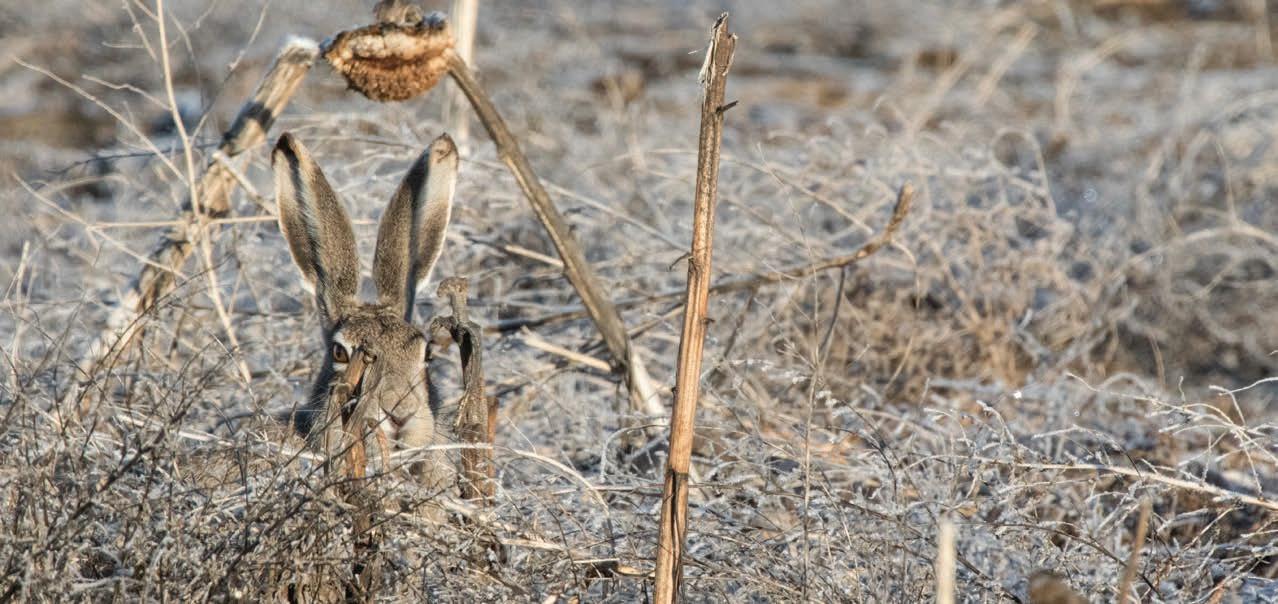
The white-tailed jackrabbit my son rolled in the snow with upland loads while pheasant hunting looked impressive back at the pickup hanging by its back legs from his right hand compared to the rooster hanging from his left. While it’s said these hares can weigh up to 10 pounds, this one wasn’t that big, but notable, nonetheless.
I know that jackrabbits are in truth, hares, because scientists tell us their young are born above ground and covered in fur, while rabbits are born underground and are naked at birth. Yet, we still call the long-legged, long-eared critters rabbits because it’s in their name and who shouts “hare” when you bust one from a tree row to make sure your hunting partner is ready?
You’ll get some pushback from some about eating jackrabbits but not from me. I’d prefer a mess of cottontails in the Dutch oven, but jackrabbits work if you cook them low and slow and the meat is easily picked from bone.
When I was a kid, sometime in the early 1970s, I ate my share of jackrabbits skewered on a stick and roasted over a campfire because that’s all I knew. Potatoes were fried in small, silver mess kit frying pan off to the side and eaten out of the pan with the pocketknife used to clean the rabbit and slice the potatoes.
While I remember hunting jackrabbits through the
sagebrush and junipers, I don’t remember if I enjoyed what I ate but gutted it out because I was taught to eat what I shot without complaint.
That was a different time and some of it has faded. I know I could walk across town, population 2,000, wearing a backpack and a .22-caliber rifle thrown over my shoulder without being hassled or barely drawing second looks. Then again, no one ever offered to give me a lift and shuttle me to the outskirts of town where small homes gave way to sage, high desert, jackrabbits, mule deer, coveys of quail, coyotes and the occasional bobcat.
While still in need of a white-tailed jackrabbit for my dish, I leaned in the direction of what I know, familiar places where I remembered bumping rabbits while deer hunting or chasing sharp-tailed grouse — mostly open country with patches of knee-high, dark brush and the random buffaloberry patch where deer and other animals had flattened the understory to bed and get out of the wind.
In one such patch on the south side of hill where the sun hits nicely and brown vegetation pokes through the snow here and there, I cut a confusion of rabbit tracks and kick with the toe of my boot frozen, dark, round droppings.
I don’t know if the tracks were made by just one jackrabbit or many, but what’s apparent in this out-of-thewind buffaloberry hideaway is that nobody is home.
Which, if someone drove by and knew for certain what I was doing, is how they would likely describe me.
RON WILSON is editor of North Dakota OUTDOORS.
North Dakota Outdoors Magazine
North Dakota Game and Fish Department
100 N. Bismarck Expressway
Bismarck, ND 58501
To renew your subscription or change your address, call 701-328-6300 or go to gf.nd.gov/buy-apply.
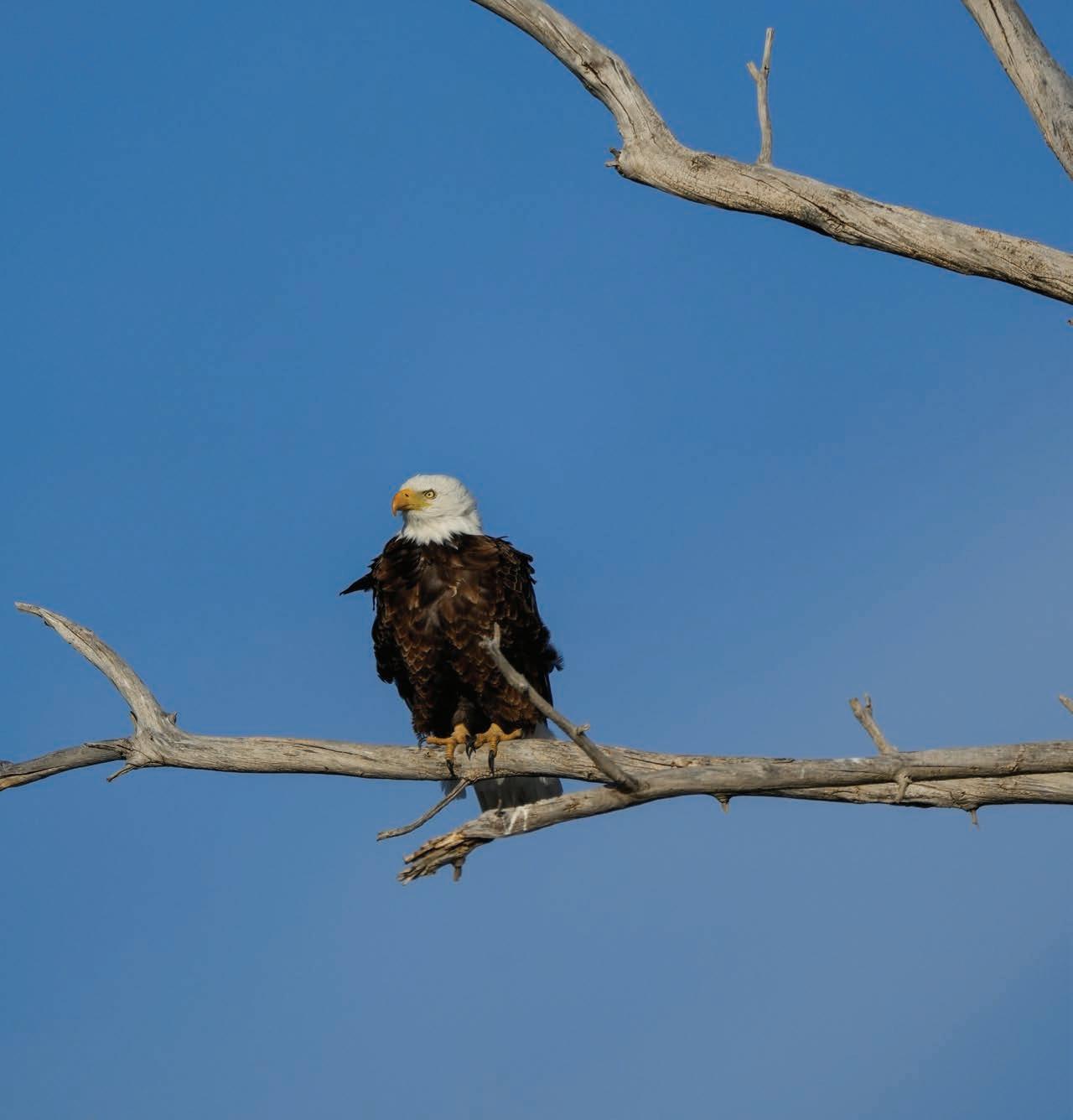
Once declared federally endangered in 43 of the lower 48 states, spotting a bald eagle in North Dakota was once an uncommon treat. Following decades-long recovery efforts, bald eagles are a common sight today across the state’s landscape.