

• Morgan State was founded in 1867 as the Centenary Biblical Institute
• The college moved to its present location in 1914
• Morgan State College was granted university status in 1975 by the state of Maryland
• Today, Morgan State is designated Maryland’s preeminent urban research university and is a Carnegie high research (R2) institution
• Morgan State has an enrollment of over11,000 students, offers 140 academic programs leading to degrees from the baccalaureate to the doctorate and sits on a 185-acre campus
• Morgan State students were the first college students to stage a successful lunch counter sit-in against segregation laws during the civil rights movement in 1955 at Read’s Drugstore in downtown Baltimore.
• The Morgan State Choir has been designated ‘America’s Best College Choir’ by Reader’s Digest Magazine and our Marching Band (The Magnificent Marching Machine) has played in venues around the world.
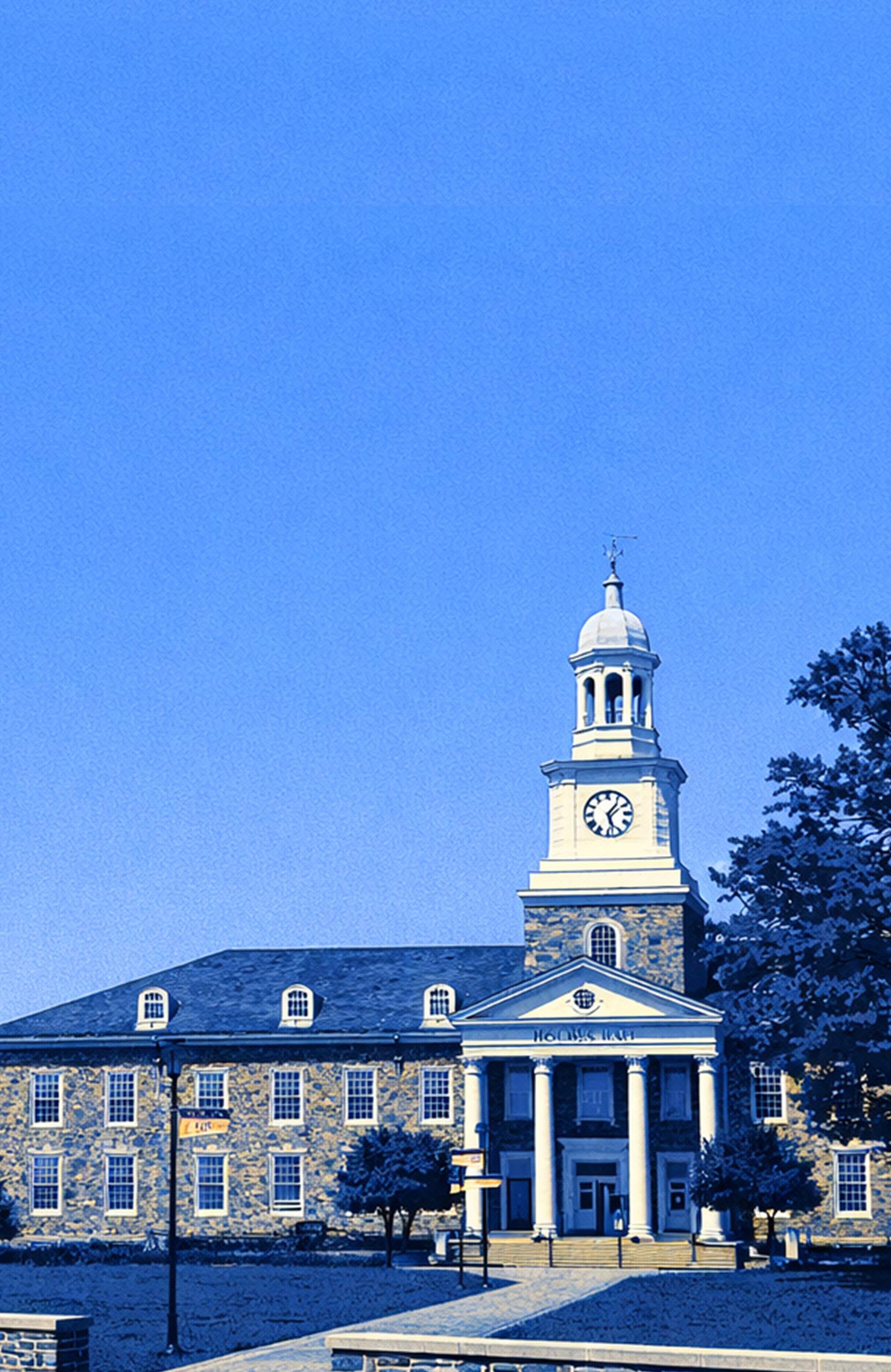
Due to the historical significance of our campus and its buildings, Morgan State University has been deemed a “National Treasure” by the National Trust for Historic Preservation. We are the only university in the nation given that designation.
It can take more than an hour to walk the entire Morgan State campus. The campus runs north-south along Hillen Road and intersects Coldspring Lane and Argonne Drive. The campus is divided into several sections – North Campus, the Quad, Morgan Commons, and West Campus. It is a very walkable campus that is connected by three pedestrian bridges that spares students from crossing streets and frees the campus of vehicular traffic.
When walking the campus please be respectful of the plots and monuments honoring the university’s Greek-letter sororities and fraternities, and social fellowship organizations. We also ask that you stay to your right when walking to avoid creating bottlenecks.
This is a self-guided tour. Please use the campus maps and building signage to orient yourself to the campus.
Should you need emergency assistance while on campus, please contact the Office of Police & Public Safety at 443 885-3100 or use the “Blue Light” intercom stations on the campus.
North Campus is accessible by the pedestrian bridge next to Banneker Hall and crosses Chinquapin Run, a stream that runs through the campus.
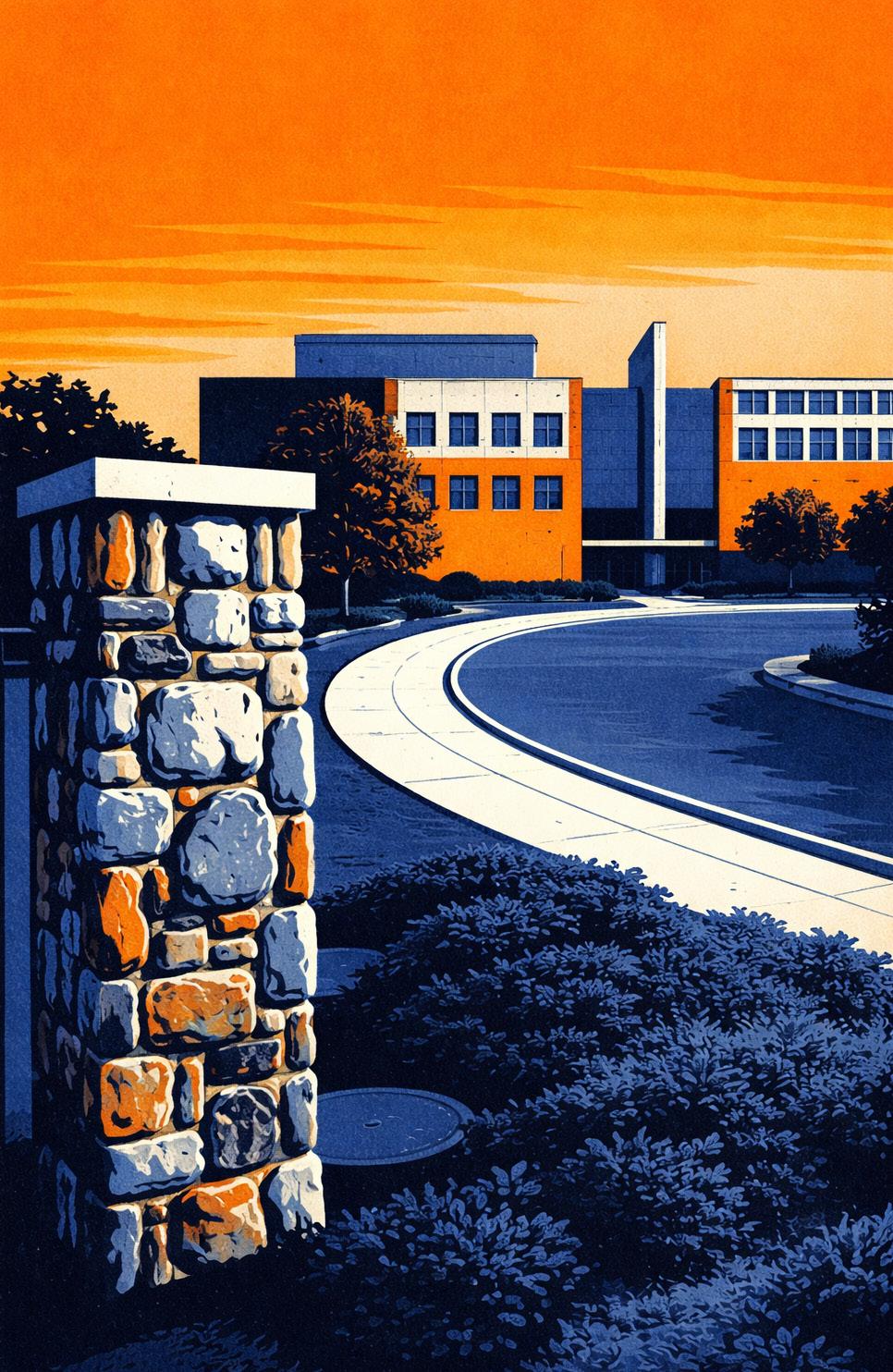
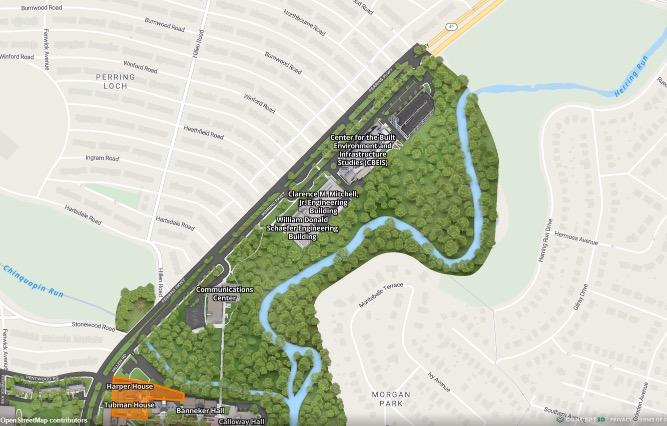
This building houses the School of Global Journalism & Communication, and the campus radio station, WEAA 88.9FM.
Clarence M. Mitchell, Jr. Engineering Building
Home of the School of Engineering. The building is named for the late Clarence M. Mitchell Jr., Baltimore native, civil rights leader, and head the Washington Office of the NAACP.
William Donald Schaefer Engineering Building
Home of the School of Engineering, the Division of Research & Development, and the Office of Technology Transfer. The building is named after the late Mayor of Baltimore and Governor of Maryland, William Donald Schaeffer.
Center for the Built Environment and Infrastructure Studies (CBEIS)
This building is the home of the School of Architecture & Planning and some classes of the School of Engineering.
North Garage
Located behind CBEIS is the North Garage, an indoor vehicular parking garage.
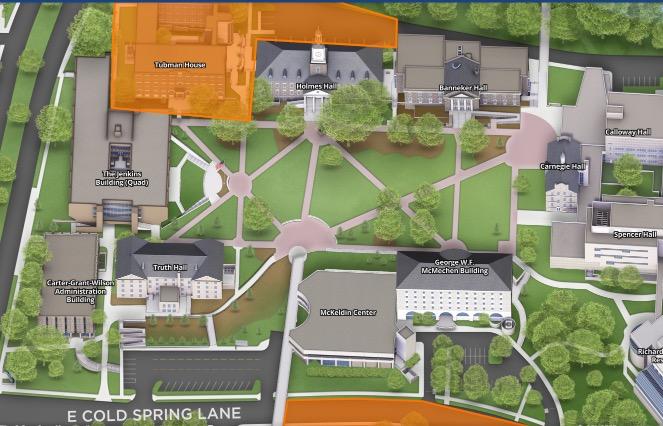
The quad is the historic lawn of the original campus of Morgan State and is the oldest section of the university campus.
Carnegie Hall
Carnegie Hall is the oldest building on the Morgan State campus, and the first building constructed in 1919 when the university relocated from West Baltimore to its present site. Carnegie Hall was made possible through a gift from wealthy industrialist Andrew Carnegie. The university Actuarial Science and Mathematics Departments are in this building.
Calloway Hall
Calloway Hall is home to the Computer Science program. This program will move into the new $350 million science and mathematics building under construction on East Coldspring Lane.
Key Hall
Key Hall houses the School of Computer, Mathematical & Natural Sciences. These programs will move into the new $350 million science and mathematics building under construction on East Coldspring Lane.
McMechen Hall was constructed in the mid-1970s and is named for the first graduate of Morgan State University, George W.F. McMechen. After graduating from Morgan State, Mr. McMechen went to Yale Law School and earned a law degree. He spent his life as a prominent attorney and civil rights activist in Baltimore. The university’s Public Relations & Strategic Communications Department and ROTC program are in this building.
Banneker Hall
Banneker Hall was originally Soper Library, the main campus library. It also once housed the Department of Communications. Today, Banneker Hall is the home of the School of Education and Urban Studies. The building is named in honor of famed Black astronomer and mathematician Benjamin Banneker, who owned a farm outside of Baltimore.
Holmes Hall
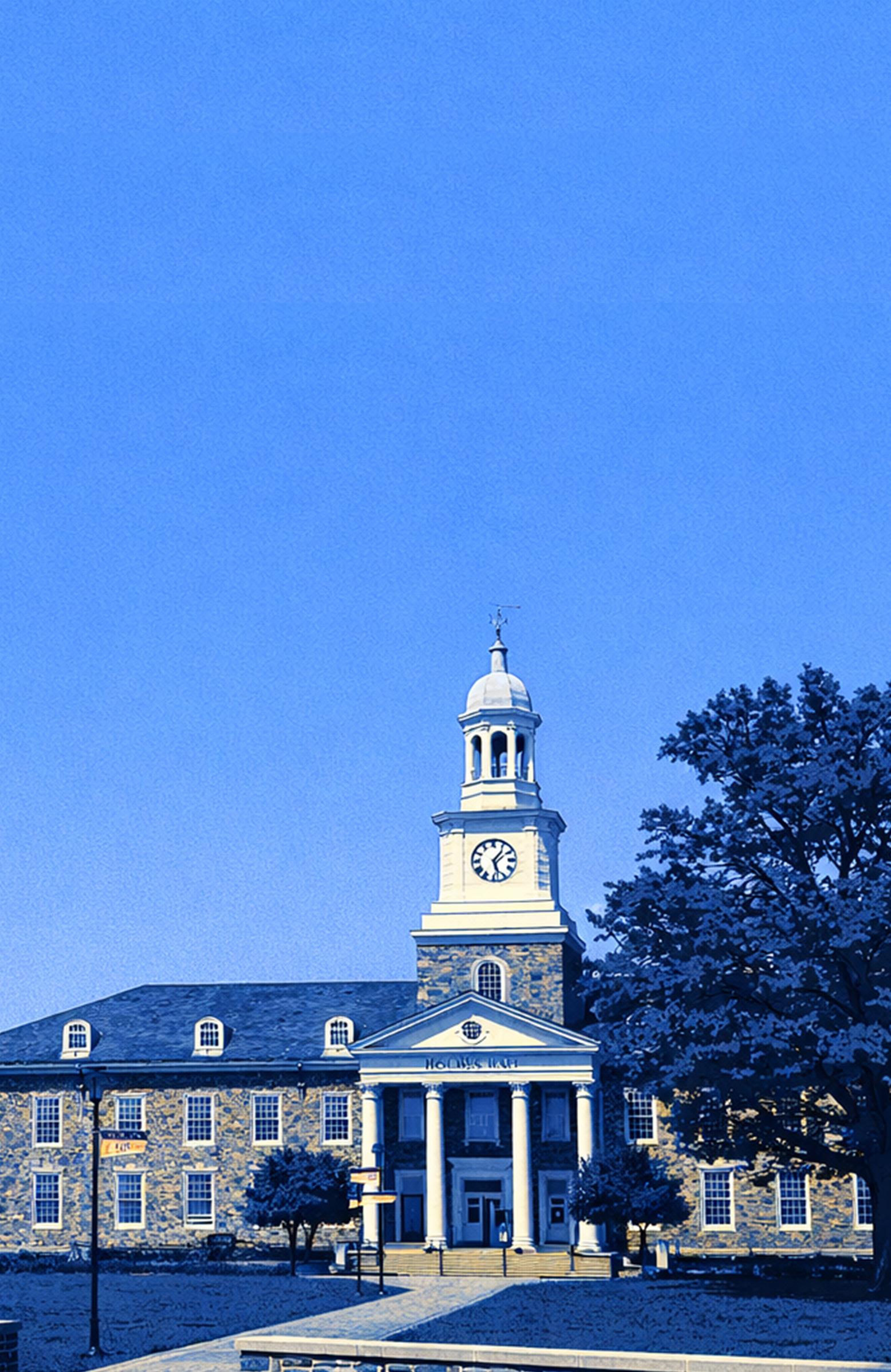
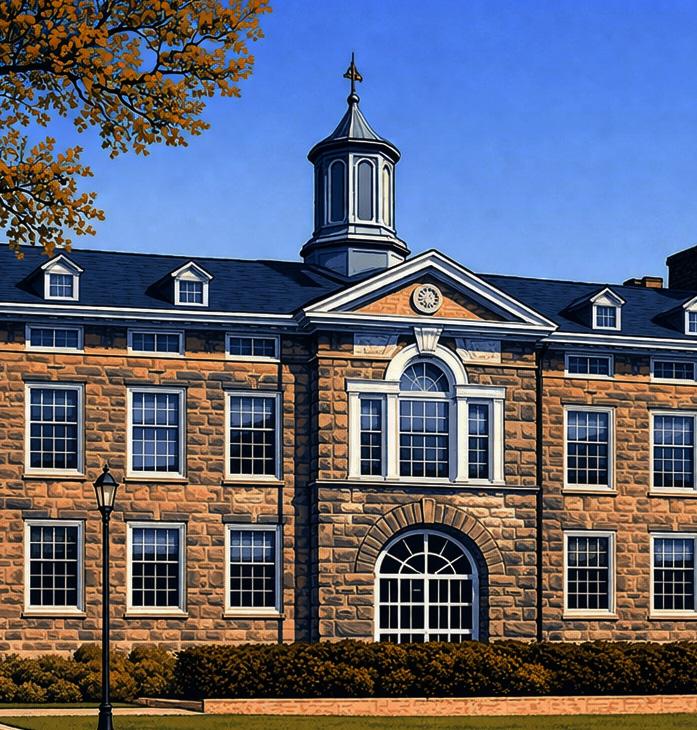
Holmes Hall is the focal point of Morgan State University and serves as the symbol of the university with its prominent clock tower and columns. The building is named in honor of the first Black president of Morgan State University, Dwight Oliver Wendell Holmes. Holmes Hall is often the backdrop of many university events. The building is home to the James H. Gilliam Jr. College of Liberal Arts.
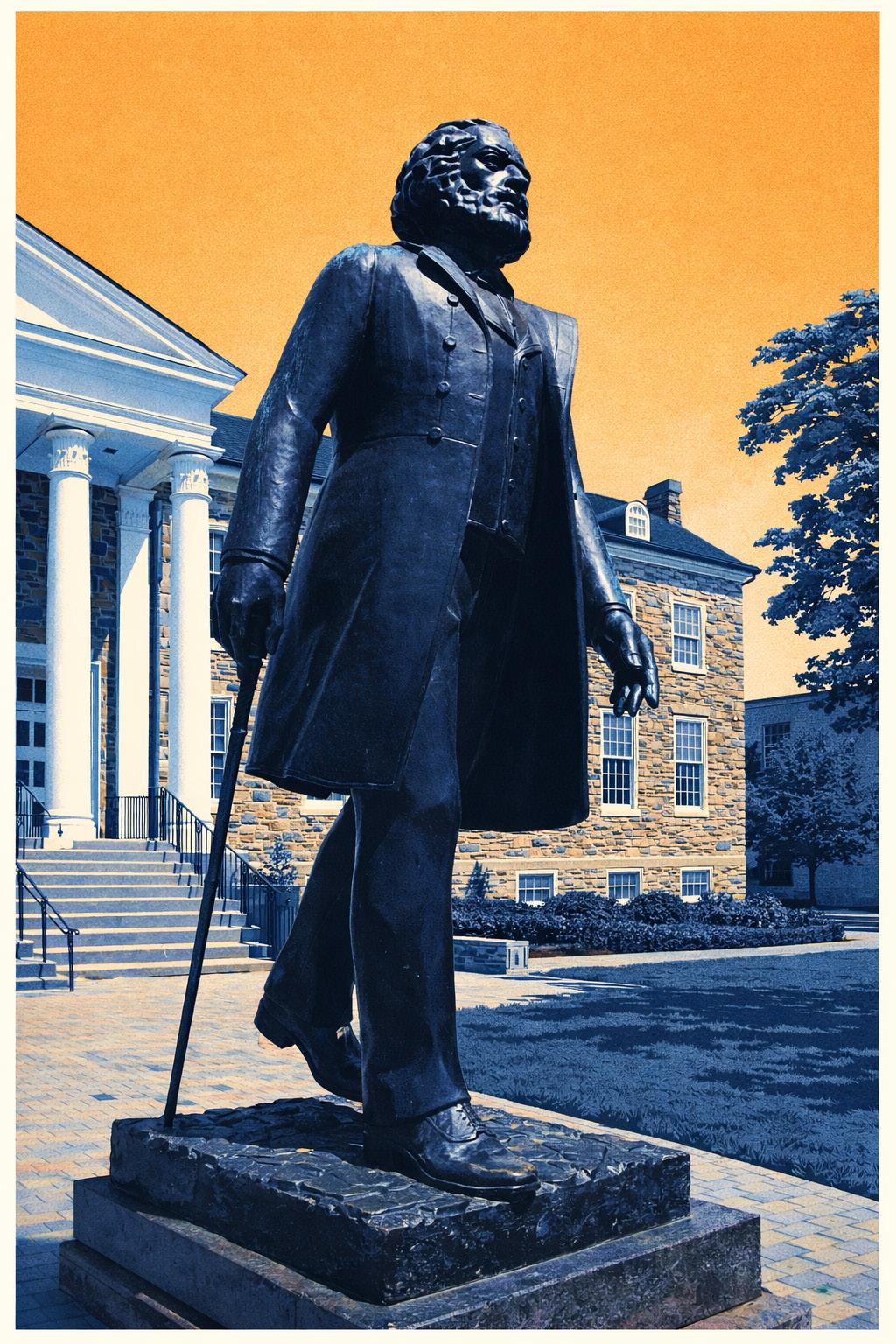
The path leading to Holmes Hall and the Frederick Douglass is the Sesquicentennial Walkway, a path that celebrates Morgan State’s 150th anniversary. The path includes bricks with the names of Morgan State’s founders, alumni, family members, Greek letter organizations and campus clubs.
This beautiful statue is a likeness of Maryland-born abolitionist Frederick Douglass. The statue is the work of the late Morgan State professor James Lewis, a renowned sculptor and artist. The James Lewis Museum of Art on campus is named in honor of Professor Lewis.
Truth Hall was originally a dormitory but is now houses the university administration, including the Office of the University President. The building is named in honor of abolitionist Sojourner Truth.
This building once housed most of the behavioral science disciplines at the university. Today, the Jenkins Building houses the university’s Nursing program and Honors College. This building has been replaced by a new Martin D. Jenkins Hall on the west campus. The Jenkins Building and Jenkins Hall bear the name of a beloved former president of Morgan State University, Dr. Martin D. Jenkins, who was a nationally recognized scholar.
These buildings are two the residence hall facilities on campus. Harper House and Tubman House are two legacy dormitories on campus and are currently being full renovated. All the original dormitory halls on campus are part of a renovation program to bring them up to 21st century standards.
This pedestrian bridge crosses Coldspring Lane and connects the campus. It is one of three bridges that connect sections of the Morgan State campus. This bridge is named in honor of the late Maryland State Senator Verda Welcome, a Morgan State alumna and the second Black woman to be elected to a State Senate in the United States. Senator Welcome was instrumental in Morgan State receiving university designation in 1975.
This is the section of the campus located at the southern end of the Welcome Bridge, walking away from Holmes Hall.
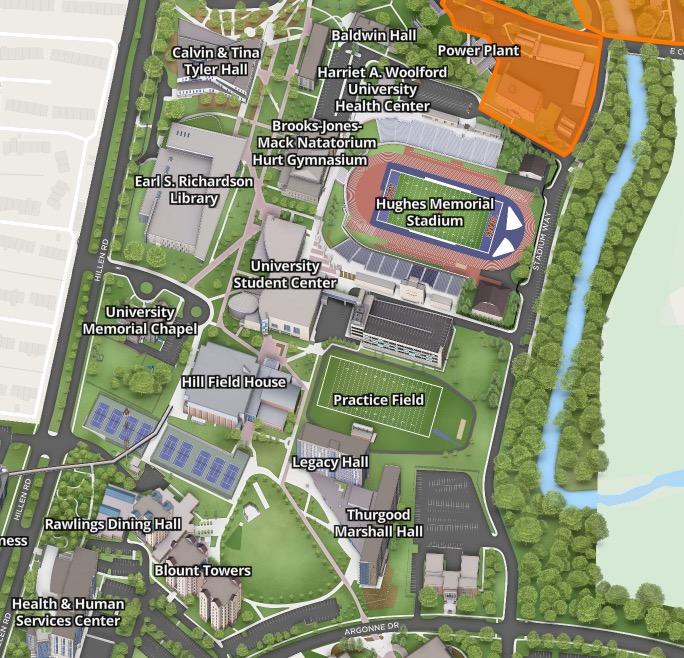
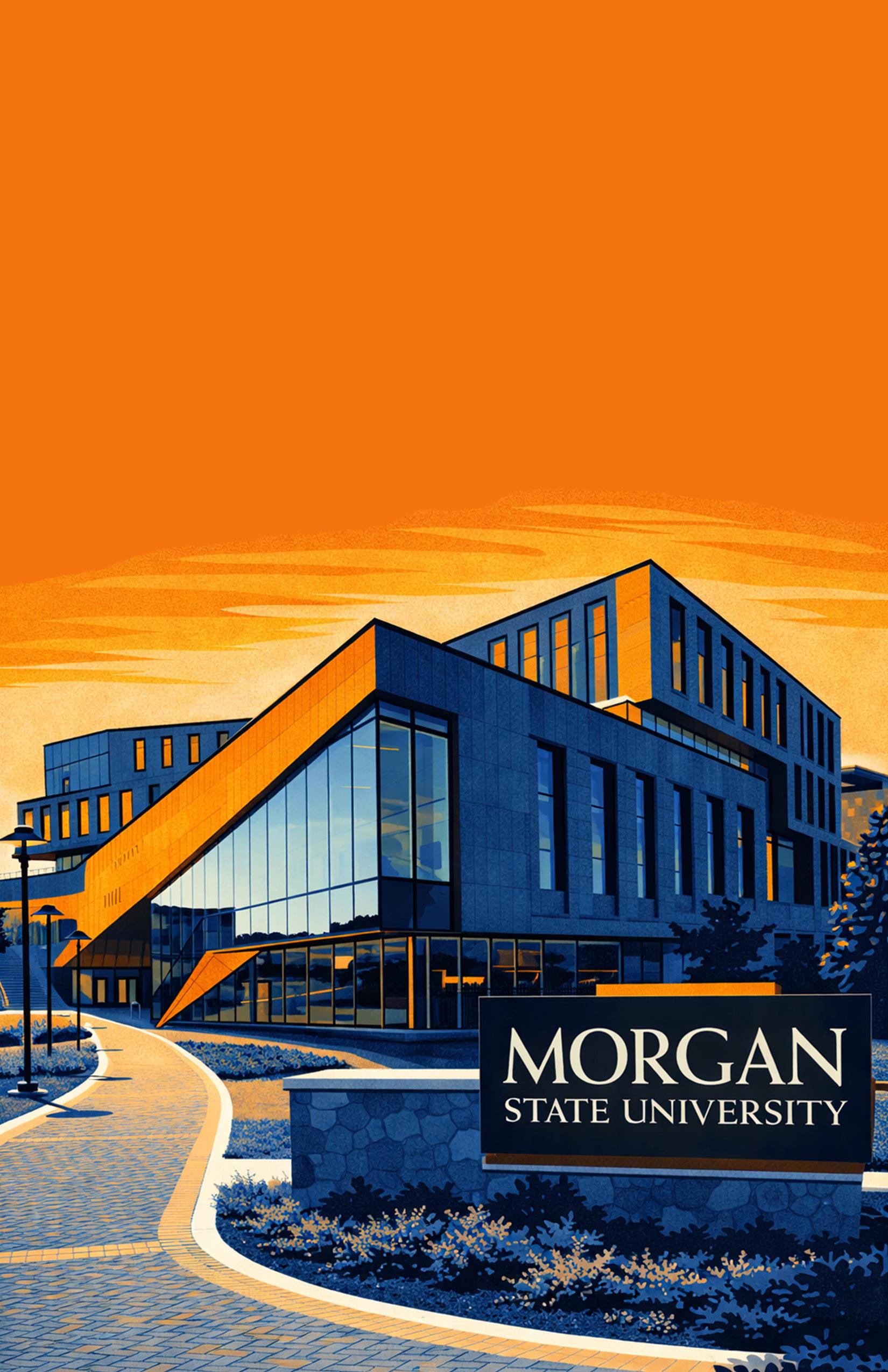
Tyler Hall is one of the latest additions to the Morgan State campus. The building has earned multiple awards for its design and environmental compatibility. Tyler Hall is named for Morgan State alumnus Calvin Tyler and his wife, Mrs. Tina Tyler. The Tylers contributed one of the largest financial gifts in the history of historically Black colleges in the nation to Morgan State University, $21 million dollars. Tyler Hall houses student services departments, including the Office of Admissions, Bursar, Enrollment Management, and Financial Aid.
These are two legacy dormitories that have been fully renovated. They are part of a larger campus-wide initiative to bring the oldest buildings up to 21st century standards. These two residence halls welcomed students back in fall 2024.
Hurt Gymnasium is the original gymnasium for the university. It is currently undergoing an upgrade and complete renovation. Within the gymnasium complex is the Brooks-Jones-Mack Natatorium, the university’s pool and diving center. Hurt Gymnasium houses the Physical Education Department.
Hughes Stadium is the home field of the Morgan State football and track and field teams. It is also the site of the university’s May Commencement. The stadium is located directly behind Hurt Gymnasium.
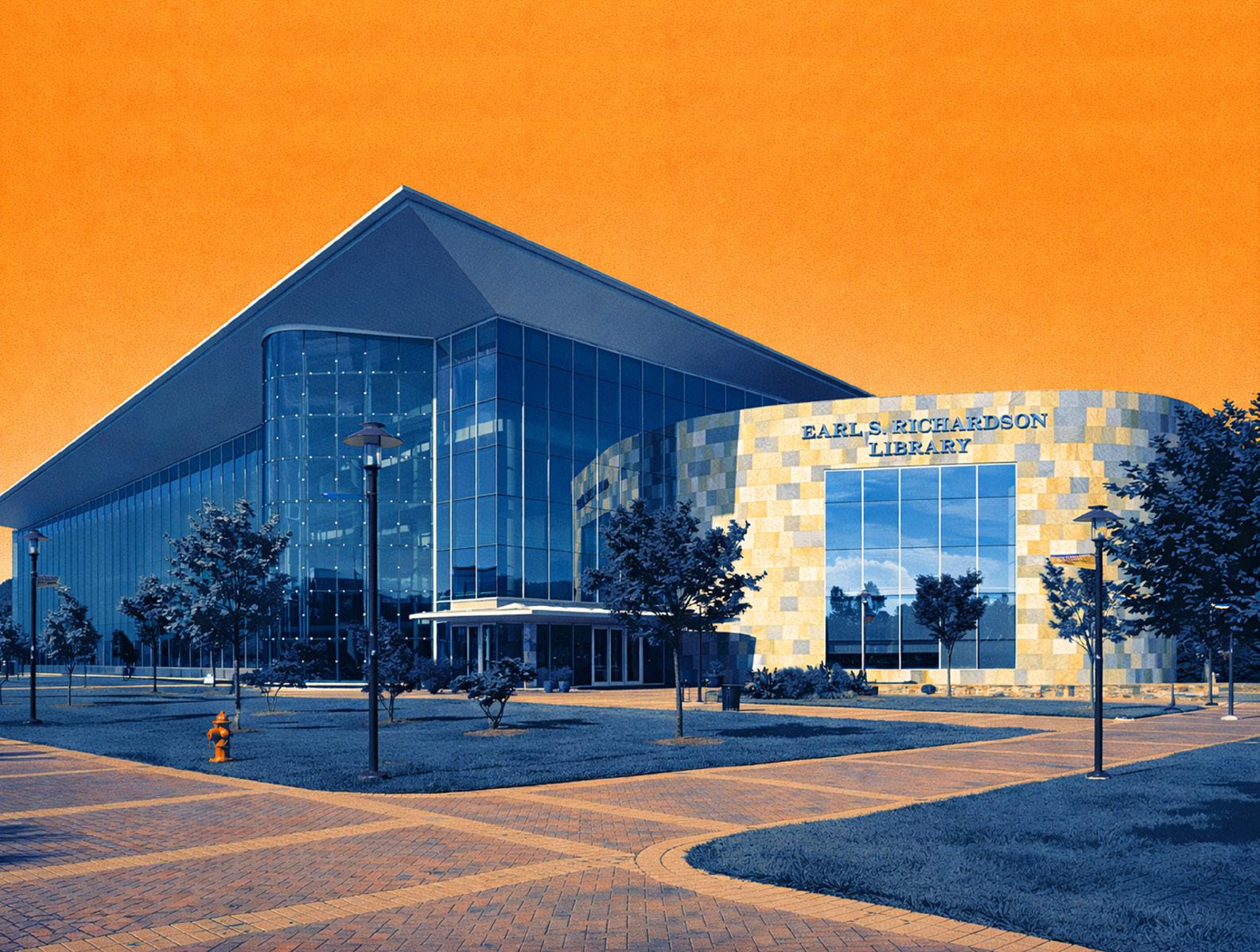
This is the main library of Morgan State University and is named after the tenth president of the university, the late Dr. Earl S. Richardson. As president, Dr. Richardson launched a period of growth for Morgan State that continues today under our current president, Dr. David K. Wilson. The university also houses the Office of General Counsel, University Historian and University Board of Regents.
The University Student Center is the focal point of student activities on campus. The building includes a cafe, conference rooms, a ballroom, lounge areas, a game room, theater, and offices for the student government association. The Office of Student Life and Development is in this building.
Legends Plaza honors two of Morgan State’s most successful athletic coaches, the late Talmadge Hill and Earl C. Banks. Both men are in national Halls of Fame (Track and Field and College Football) and are legendary figures in intercollegiate athletics. The Morgan State Athletic Department has produced four members of the National Football League Hall of Fame, members of Super Bowl teams, and members of the National Track and Field Hall of Fame and Olympic champions.
Hill Field House
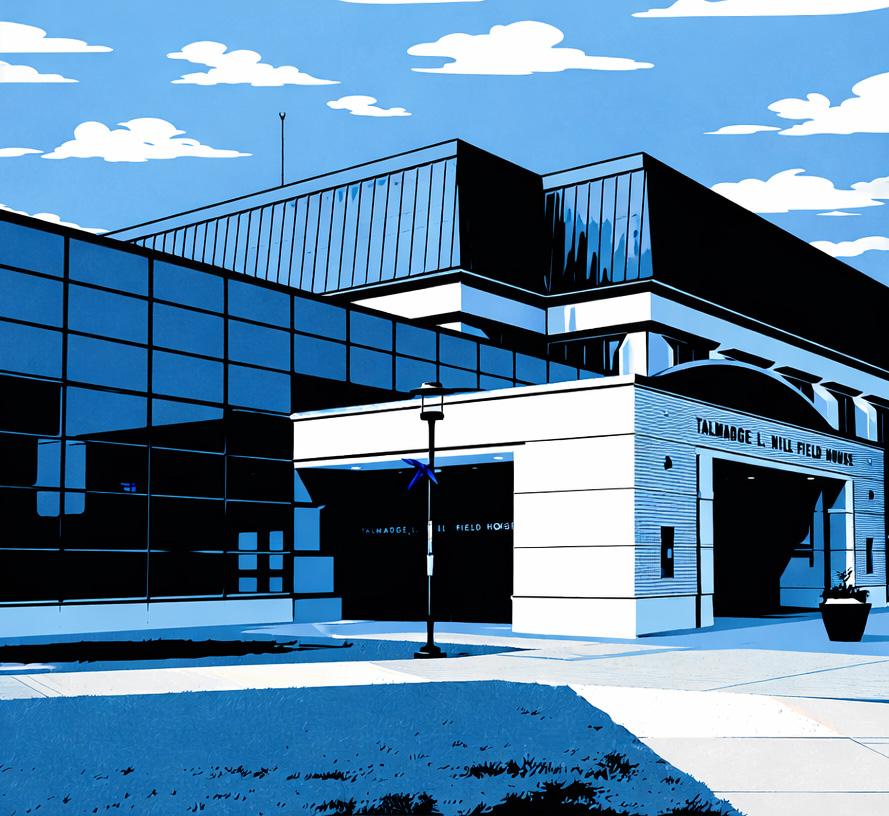
Hill Field House is the home arena for the NCAA Division I Morgan State Men’s and Women’s basketball teams, Women’s Volleyball, Men’s Wrestling, Women’s Tumbling and the Morgan Cheer Bears. The arena is named in honor of legendary Coach Talmadge Hill.
University Memorial Chapel
The University Memorial Chapel is a nondenominational center of worship for the Morgan State community. The chapel was dedicated in 1941 and is listed on the National Registry of Historic Places.
Thurgood Marshall and Legacy Hall
These are two of the new residential buildings on campus. The Thurgood Marshall Hall is named for Baltimore native and the first Black Supreme Court Justice, Thurgood Marshall. Located between both towers is the Thurgood Marshall Dining Hall that serves residents of both buildings, and guests.
Rawlings Hall and Blount Towers
Located across from Thurgood Marshall and Legacy Halls are Rawlings Hall and Blount Towers, two residence halls that include a student dining hall in Rawlings. Rawlings is named for Morgan alumnus, the late Maryland Delegate Howard “Pete” Rawlings, the first African American to chair the House Appropriations Committee. Blount Towers is named for Morgan alumnus, the late Maryland State Senator Clarence W. Blount, the first African American to serve as Majority Leader in the Maryland Senate.
Health and Human Services Building
This building is the most recent addition to the Morgan State campus. It houses the Department of Nursing, School of Social Work, School of Community Health and Policy, Center for Urban Health Equity, and other health related programs.
The West campus is accessible by the blue and orange pedestrian bridge that is adjacent to Hill Field House and crosses Hillen Road.
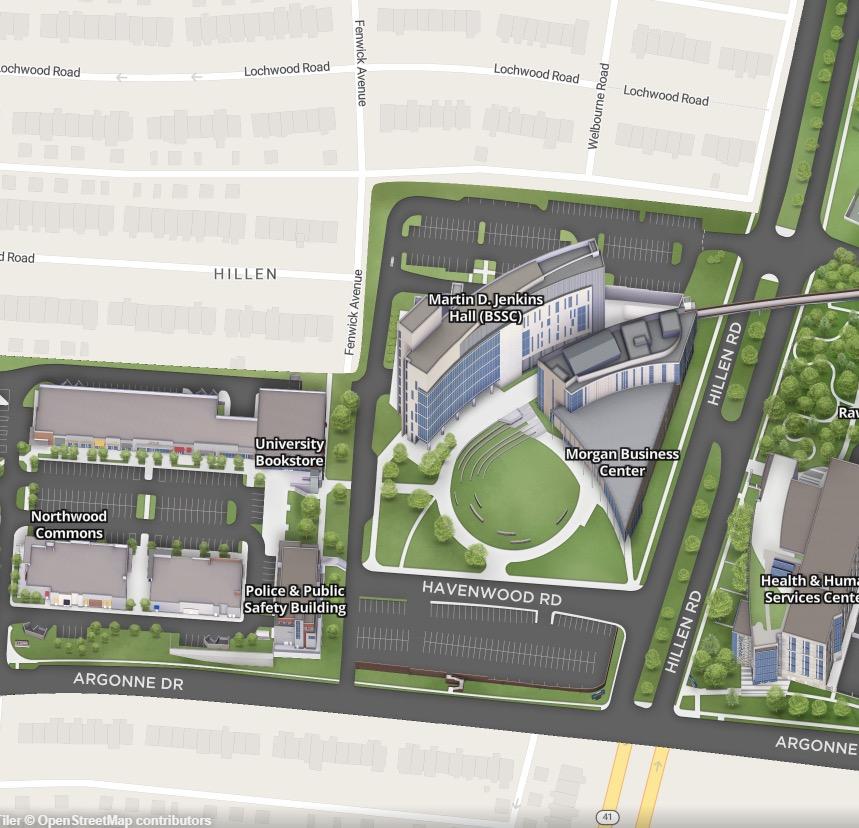
Morgan Business Center
This building houses the Earl G. Graves School of Business, named for Morgan alumnus the late Earl G. Graves Sr., founder and CEO of Black Enterprise Magazine. The Graves School is now ranked as one of the top 70 college business schools in the country. A prominent feature of the building is the Capital Markets stock trading center, suspended from the ceiling over the building’s atrium.
Behavioral & Social Sciences Center (Martin D. Jenkins Hall)
Jenkins Hall is home to the History & Geography, Political Science, Psychology, Sociology & Anthropology, and Economics Departments.
Barnes & Noble University Bookstore
The campus bookstore is in the Northwood Commons shopping mall, directly behind the Morgan Business Center and Martin Jenkins Hall.