
OVERCOMING BARRIERS TO CULTURALLY SAFE AND APPROPRIATE DEMENTIA CARE SERVICES FOR INDIGENOUS PEOPLES IN CANADA
There is an urgent need for services to support Indigenous people with dementias. The Indigenous 1 seniors’ population in Canada is growing rapidly and there are higher rates of risk factors for dementias within this population, compared to the nonIndigenous population.
Indigenous seniors often have complex health needs and face multiple barriers to getting dementia care services in their communities. In order to address their needs for these services, programs must reflect their preferences as well as the practical realities they face. This fact sheet provides an overview of the challenges and barriers to dementia assessment, diagnosis, and care in Indigenous communities, current services available for Indigenous seniors, and culturally appropriate and
safe dementia care services. This information is derived from the National Collaborating Centre for Indigenous Health’s * 2018 report, Overcoming barriers to culturally safe and appropriate dementia care services and supports for Indigenous Peoples in Canada. 2
Challenges and barriers to dementia assessment, diagnosis, and care in Indigenous communities
Indigenous people with dementia - and their families - face challenges in accessing dementia assessment, diagnosis, and care services. These challenges can include poorer health status, geographic isolation, socioeconomic inequities, racism, and jurisdictional issues. Many of these challenges are related to colonialism and its impacts.
These impacts have left Indigenous seniors with higher rates of chronic diseases and other conditions, compared to non-Indigenous seniors. These include risk factors for dementia, such as diabetes, hypertension, and obesity.
Fewer Indigenous seniors (52%) live in large population centres than non-Indigenous seniors (80%). As health services are more limited in rural and remote locations, many Indigenous seniors must travel to urban centres for health services beyond basic care. This can result in delayed diagnosis, poorer quality care, and impacts to their quality of life.
* On May 30, 2019, the National Collaborating Centre for Aboriginal Health (NCCAH) officially became the National Collaborating Centre for Indigenous health (NCCIH).
1 The term ‘Indigenous’ is used through this document to refer to First Nations peoples, Inuit, and Métis peoples collectively, regardless of registered status or location of residence. When referring to specific Indigenous groups, the terms ‘First Nations,’ ‘Inuit,’ and ‘Métis’ will be used.
2 Please refer to this report for a full reference list for the information provided in this fact sheet.
sharing knowledge · making a difference partager les connaissances · faire une différence
Formal senior care services are underutilized by some Indigenous seniors because of unique barriers such as lower levels of education, language and cultural differences, experiences of racism in the healthcare system, lack of affordability, and jurisdictional ambiguities about who pays for services off reserve. The healthcare system may also fail to provide Indigenous seniors with culturally safe and appropriate care, which could include opportunities to communicate in their own languages, participate in ceremonies, or eat traditional foods.
Current health services for Indigenous seniors with dementia
Services and programs available to assist Indigenous people with dementia and their caregivers vary across Canada. The federal government’s Ministry of Indigenous Services Canada offers three general programs that can provide some assistance: The First Nations and Inuit Home and Community Care program; Assisted Living/Adult Care program; and the Non-Insured Health Benefits Program. These programs have been thinly spread, resulting in numerous gaps in available health care services.
Underfunding and excessive restrictions result in denials and delayed approvals for health benefits, including medical transportation. There is also a lack of round-the-clock care or rehabilitation, respite care, crisis support, emergency services, and mental health services in Indigenous communities.
While most Inuit living in Inuit Nunangat 3 have access to culturally safe long-term care facilities in or near their communities, only 1% of First Nations communities have access to such facilities. In addition, there is a lack of culturally appropriate dementia care resources that incorporate Indigenous knowledges.
Culturally appropriate and safe dementia care services
Research evidence suggests that Indigenous seniors prefer holistic, strengths-based care that incorporates Indigenous cultural and linguistic programming and involves families and communities.
Services need to be tailored to unique local needs and focus on ensuring Indigenous seniors with dementia are able to remain in their homes and communities for as long as possible, with the support of friends and family. Culturally appropriate and safe dementia care services must be developed for Indigenous people with dementia and their caregivers. This entails the following:
∙ Building community capacity through culturally appropriate health information and training;
∙ Adopting greater health system and service flexibility;
∙ Ensuring community and inter-agency collaboration;
∙ Providing holistic services that address socioeconomic barriers to health care, focus on direct health needs, and enhance the quality of life and well-being of Indigenous seniors with dementia and their caregivers;
∙ Using innovations that allow Indigenous seniors with dementia to access specialized care closer to home; and Providing cultural safety training for nonIndigenous health care providers.
3 Inuit Nunangat is the traditional homeland of the Inuit. It is comprised of four regions in northern Canada: the Inuvialuit Settlement Region in the western Arctic; Nunavik in northern Quebec; Nunatsiavut in Newfoundland and Labrador; and the territory of Nunavut. 2
Some examples that incorporate one or more of these factors include:
∙ Programs that support a traditional lifestyle, such as participating in food gathering or naturebased ceremonies, eating traditional foods, holding storytelling sessions, and speaking local Indigenous languages;
∙ Telehealth to provide dementia care in rural and remote communities, such as northern Saskatchewan’s interdisciplinary memory clinic that provides one-day per week assessment and follow-up services by diverse health specialists, using a family-centred approach and in the patient’s Indigenous language if desired;
Integrated care provided through Indigenous community-based and other health programs to offer a wide range of culturally appropriate dementia care services; and
∙ Development of culturally grounded education tools for health practitioners, Indigenous families, and communities (e.g., by I-CAARE, the Indigenous Cognition and Aging Awareness Research Exchange in Ontario, and the Illes Group of National Core for Neuroethics for the Tahltan in BC).
More support is needed at the federal, provincial, and territorial policy levels and the health system level, including:
∙ Reduction of jurisdictional and bureaucratic barriers, specifically to address inequities between services available for Métis, non-status First Nations, Inuit, and First Nations people living on and off reserve;
∙ Improved availability of culturally appropriate long-term care facilities;
∙ More subsidies so Indigenous seniors can better access the care facilities of their choice;
∙ Better and more consistent support and resources for caregivers; and Consideration of the unique needs and circumstances of Indigenous populations in strategies, policies, and services for seniors, including for people with dementia (e.g., the federal government’s Age Friendly Communities Initiative).
VIEW, READ, OR DOWNLOAD THE FULL REPORT
ISBN (print): 978-1-77368-191-7
ISBN (online): 978-1-77368-192-4
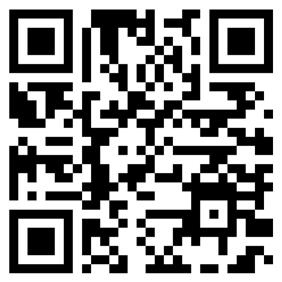
This publication is available for download at: nccih.ca/495/culturally-safedementia-care.nccih?id=243
Citation: Halseth, R. (2018). Overcoming barriers to culturally safe and appropriate dementia care services and supports for Indigenous peoples in Canada. National Collaborating Centre for Aboriginal Health.
La version française est également disponible sur le site Web ccnsa.ca sous le titre : Surmonter les obstacles aux services de soins de santé et aux mécanismes de soutien appropriés et adaptés aux réalités culturelles des personnes atteintes de démence parmi les peuples autochtones du Canada.
Acknowledgements
The NCCIH uses an external blind review process for documents that are research based, involve literature reviews or knowledge synthesis, or undertake an assessment of knowledge gaps. We would like to acknowledge our reviewers for their generous contributions of time and expertise to this manuscript.
All NCCIH materials are available free of charge and can be reproduced in whole or in part with appropriate attribution and citation. All NCCIH materials are to be used solely for noncommercial purposes. To help us measure impact of these materials, please inform us of their use.
For further information, or to obtain printed copies of the full report, please contact:
National Collaborating Centre for Indigenous Health (NCCIH) 3333 University Way Prince George, BC, V2N 4Z9 Canada
Tel: (250) 960-5250
Fax: (250) 960-5644
Email: nccih@unbc.ca
Web: nccih.ca
© 2025 National Collaborating Centre for Indigenous Health (NCCIH). This publication was funded by the NCCIH and made possible through a financial contribution from the Public Health Agency of Canada (PHAC). The views expressed herein do not necessarily represent the views of PHAC. Report summary header photo © Credit: iStockPhoto.com, ID 117610243.